



A shaved head on a woman is not a retreat. It can look sharper than a bob, cleaner than a pixie, and a lot more deliberate than people expect. The phrase shaved head styles for women sounds narrow at first, then you start looking at the details — the guard length, the fade line, the shape at the temple, the way a little color or texture changes the whole mood — and it opens up fast.
The haircut itself is only part of the story. A close crop can feel sporty, polished, rebellious, elegant, or almost minimal to the point of sculpture. One inch of hair left on top reads one way. A skin fade reads another. A shaved side with a long sweep of hair on the other side says something else entirely. Same category. Very different energy.
Texture changes everything.
Coils, waves, straight hair, thick hair, fine hair — each one takes a shaved cut in a different direction, and that’s what makes this such a good style family to explore. Some versions are low-maintenance. Some ask for regular clipper work. A few are bold enough that earrings and makeup start doing half the heavy lifting. Start with the one that feels closest to how you want to show up, and the rest gets easier.
1. The Classic Buzz Cut
A clean buzz cut is the blunt instrument of short hair, and I mean that as praise. Among shaved head styles for women, this is the one that strips everything back and leaves you with shape, bone structure, and confidence doing the talking.
The length usually sits somewhere between a #1 and #3 clipper guard, which means the hair is short enough to feel fresh but not so short that every little scalp detail screams for attention. That matters. A very close buzz shows more of your head shape, and a slightly longer one softens the look in a way people often prefer the first time they go short.
What to Ask For at the Chair
- Ask for an even buzz all over with no hard fade if you want a simple finish.
- Keep the hairline soft at the temples if you do not want a severe edge.
- Go shorter on the sides only if you want the top to feel a touch fuller.
- Book a cleanup every 2 to 3 weeks if you want the shape to stay tight.
A classic buzz works because it has no tricks. There is nowhere for the cut to hide, which is exactly why it looks so clean when it is done well. If your hair grows fast, or your crown swirls in a visible way, this cut will show it. That is not a flaw. It is the point.
Best for: anyone who wants the shortest possible cut without fully shaving the scalp.
2. The Platinum Buzz Cut
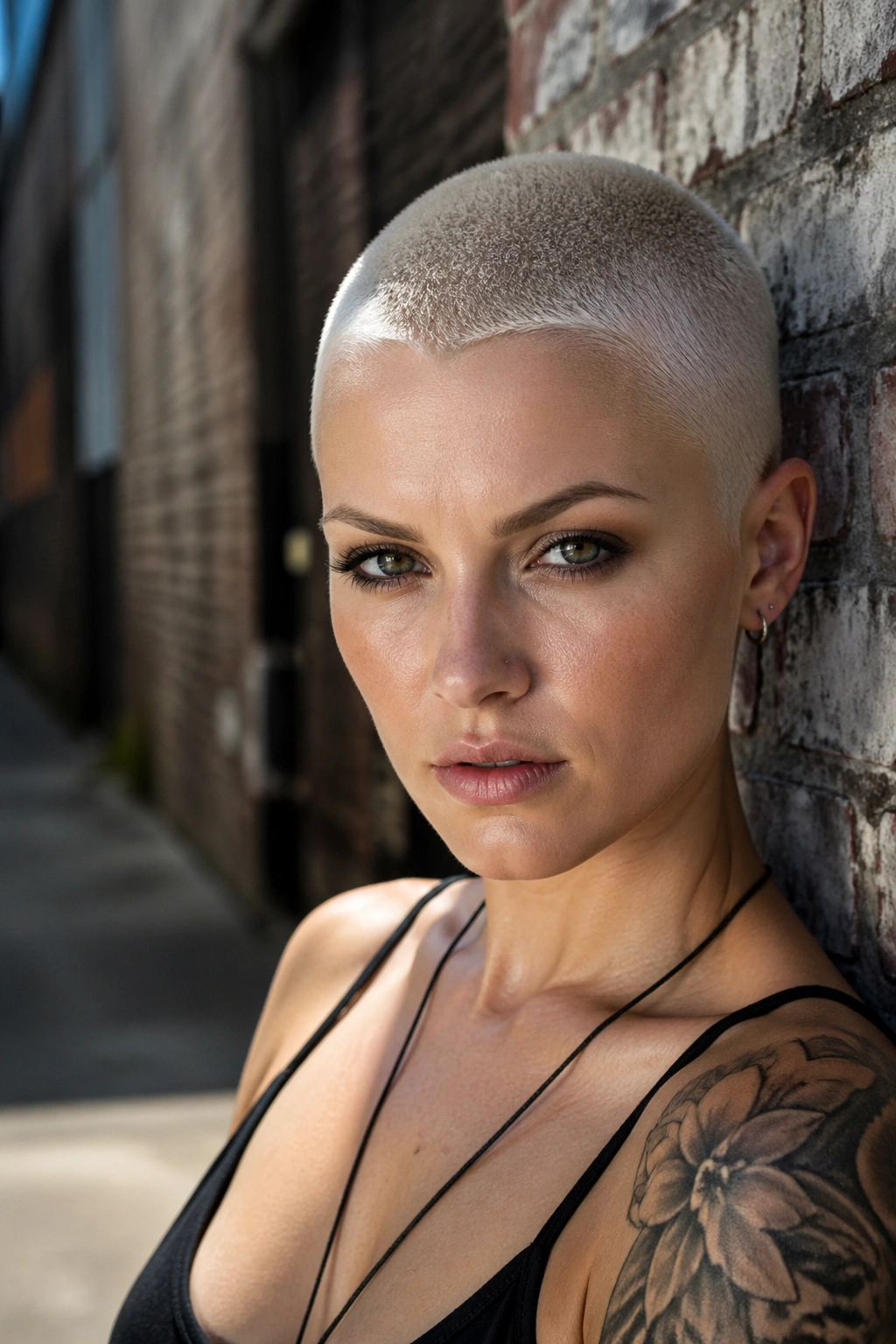
Platinum makes a buzz cut feel louder without adding length, and that’s a fun contradiction. The shape stays severe and simple, but the color turns it into something much more polished and fashion-forward.
A platinum buzz needs a scalp that can handle bleach without getting angry. That means healthy roots, no open irritation, and a realistic plan for toning. On short hair, brass shows fast because there is nowhere for color to disappear into layers. You notice every yellow cast, every patch of warmth, every fade at the nape. If you like cool, icy hair, this is where maintenance starts to matter more than people expect.
The payoff is worth it when the tone is right. On a close crop, platinum can make the face look brighter and the eyes look stronger. It also pairs nicely with dark brows, strong liner, and one good pair of earrings. The whole look gets a crisp edge, almost like jewelry for the head.
Do not rush this one. A rushed bleach job on short hair is still a bad bleach job, and on a buzz cut the damage is harder to cover. If your scalp is sensitive, a silver-beige tone can be kinder than a stark white blonde, and it still reads bold from across the room.
3. The Skin Fade Crop
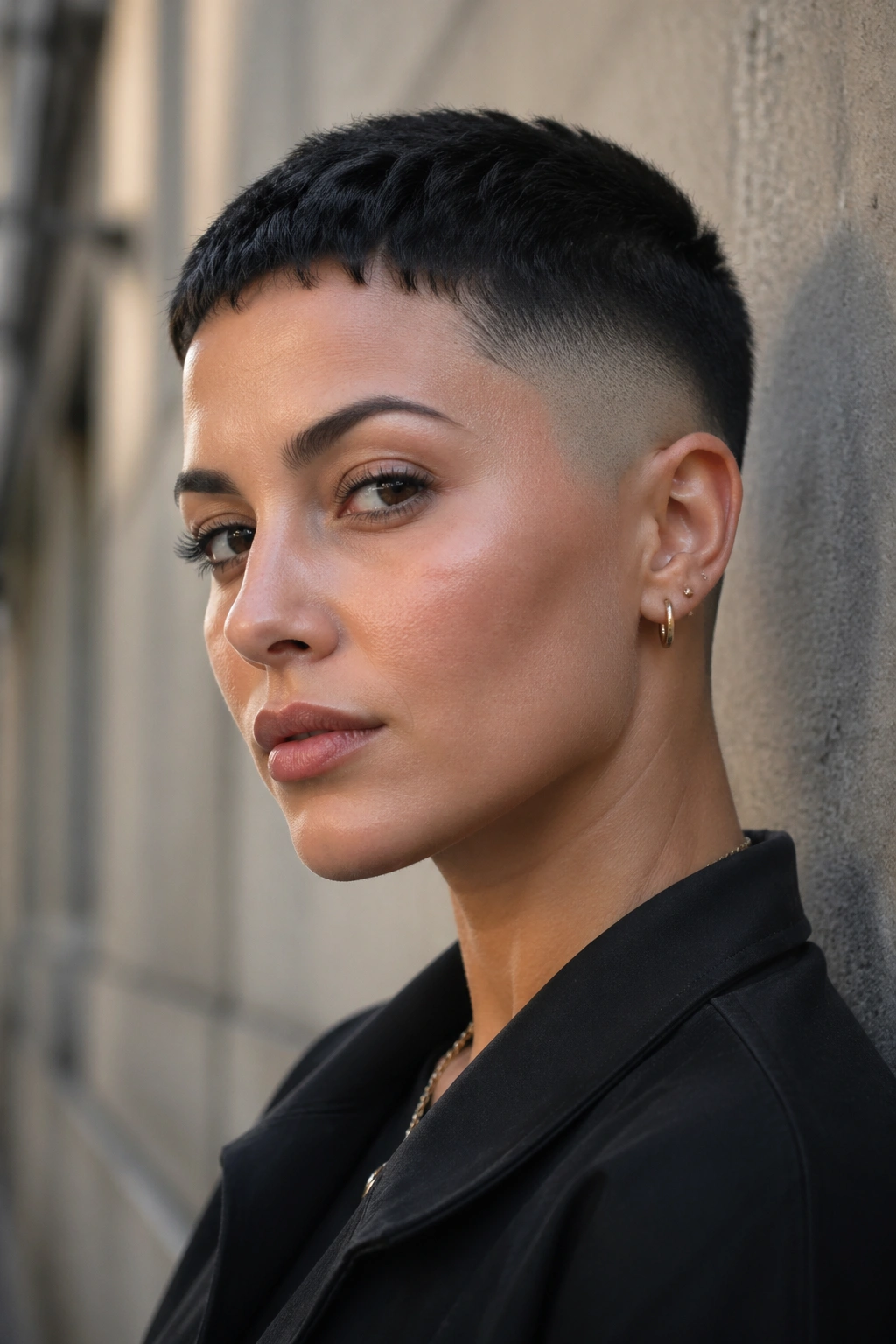
Why does a skin fade crop look so sharp? Because the haircut doesn’t end all at once. It melts from bare skin into a short crop, and that slow change makes the whole head look more intentional.
This is a strong choice if you want something that lives between a buzz cut and a pixie. The top stays short — often half an inch to two inches — while the sides drop down to skin around the ears and nape. That taper changes the profile. It makes the jawline look cleaner and gives the head a little more shape, even when the top is almost clipped to nothing.
The Barber Detail That Matters
The fade should climb gradually. A jump from skin to a heavy band of hair looks harsh and boxy. A good fade feels soft at the base, then denser near the top. If your barber or stylist uses a clipper with no guard, then a half guard, then a closed lever, they are building the shape in layers, not hacking at it.
This cut looks especially good when the top has a little texture. A matte cream, a tiny bit of paste, or even no product at all can work. The beauty is in the cut line itself. Keep the neckline tidy every couple of weeks, and the style stays crisp without needing much else.
4. The Side-Shaved Pixie
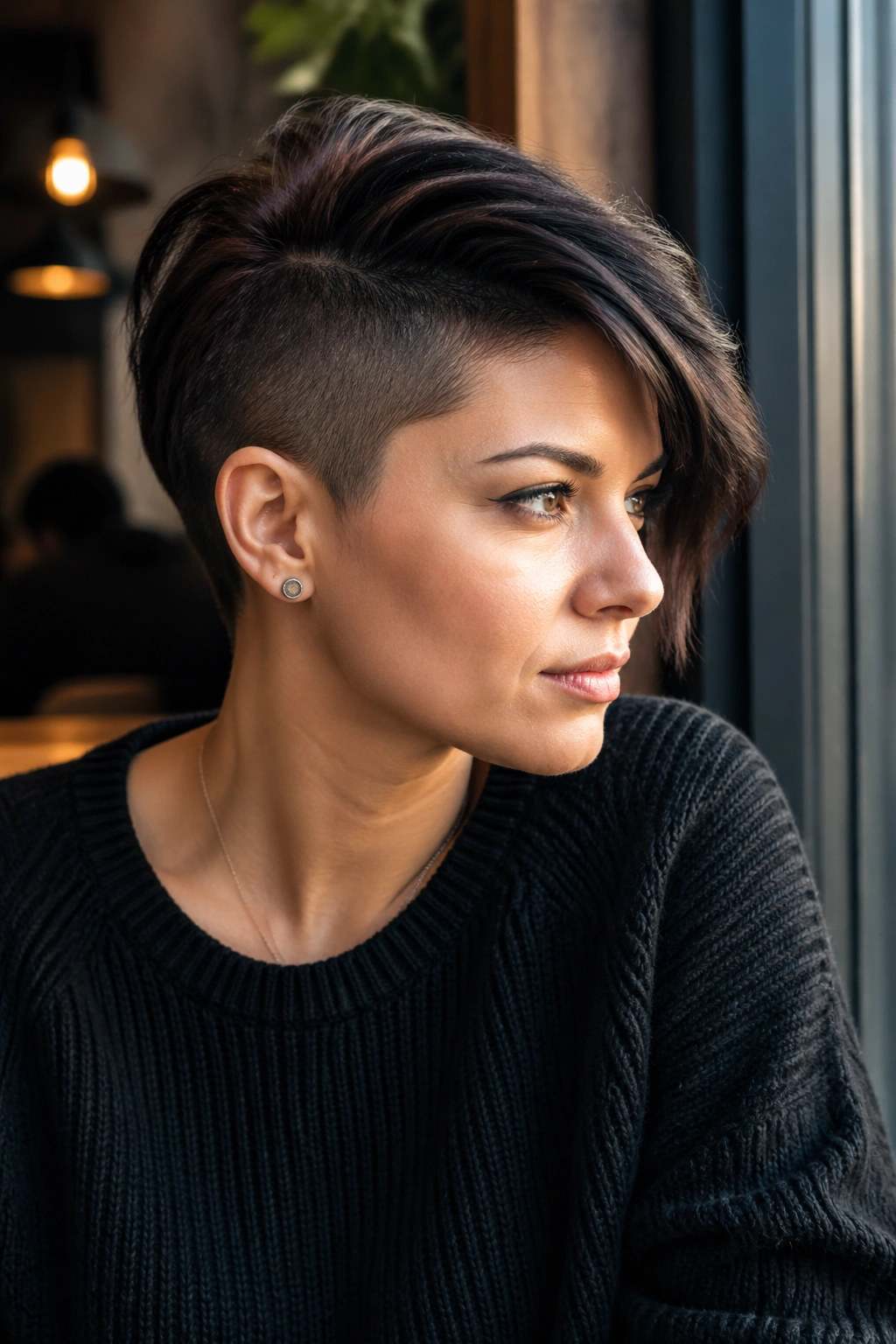
A side-shaved pixie is what happens when you want softness and edge in the same haircut. One side stays cropped close. The other keeps enough length to sweep, tuck, or fall across the forehead in a loose arc.
This cut works because it creates a clear contrast. The shaved side makes the longer side look fuller, and the longer side stops the shaved panel from feeling too severe. People with straight hair tend to get a sleek line, while wavy hair picks up more movement. Coily hair can look gorgeous with this shape too, especially when the top is left just long enough to show a little bend.
The easiest way to wear it is with a side part and a blow-dry that pushes the longer section away from the shaved side. A pea-sized amount of cream or paste is usually enough. Heavy gel can make it look stiff, and that defeats the point. You want the long side to move when you move.
This is one of those cuts that looks expensive when the edges are clean. Not flashy. Clean. There’s a difference.
5. The Hidden Undercut Bob
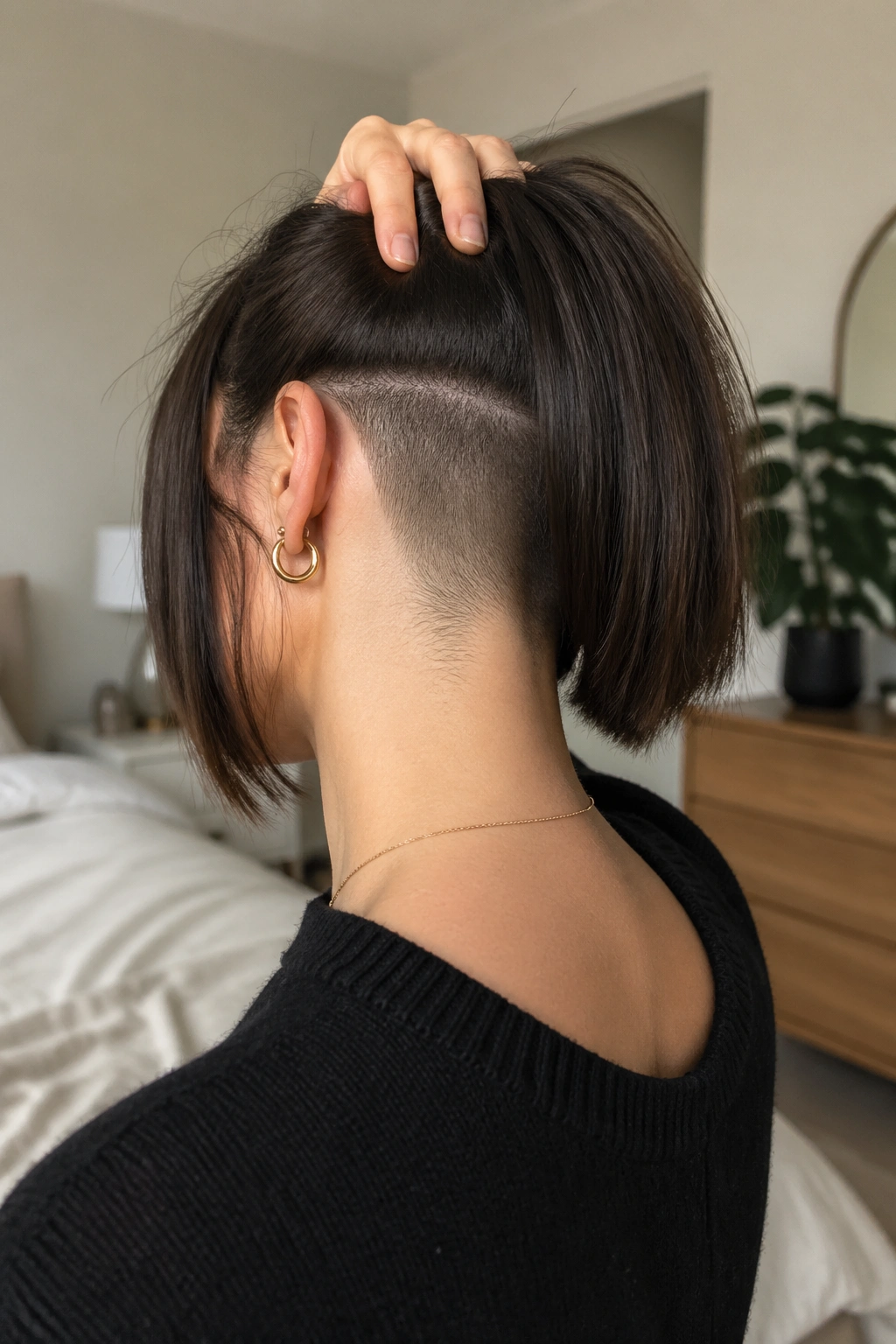
A hidden undercut bob is the quiet troublemaker of this whole list. From the front, it can look like a normal bob. From the back or underneath, there’s a shaved section that changes everything.
That hidden shave helps a lot if your hair is thick. A dense bob can feel hot, heavy, and puffy at the nape, especially in humid weather or after a long day. Shaving the underside removes bulk where you do not see it, which means the visible hair falls better and sits closer to the head. You get less triangle shape, less puff, less daily fighting with the brush.
The best thing about this cut is control. Wear the hair down and the shave disappears. Pull it into a low bun, clip one side back, or tuck the top behind your ears, and the undercut flashes through like a secret. That’s a nice trick if you want a little edge without announcing it every second.
It does need upkeep. Hidden doesn’t mean forgotten. Once the nape starts to grow, the whole bob loses that clean swing, and the undercut becomes less useful. Every 4 to 6 weeks is a good window for a tidy-up if you want it to keep its shape.
6. The Geometric Line Design
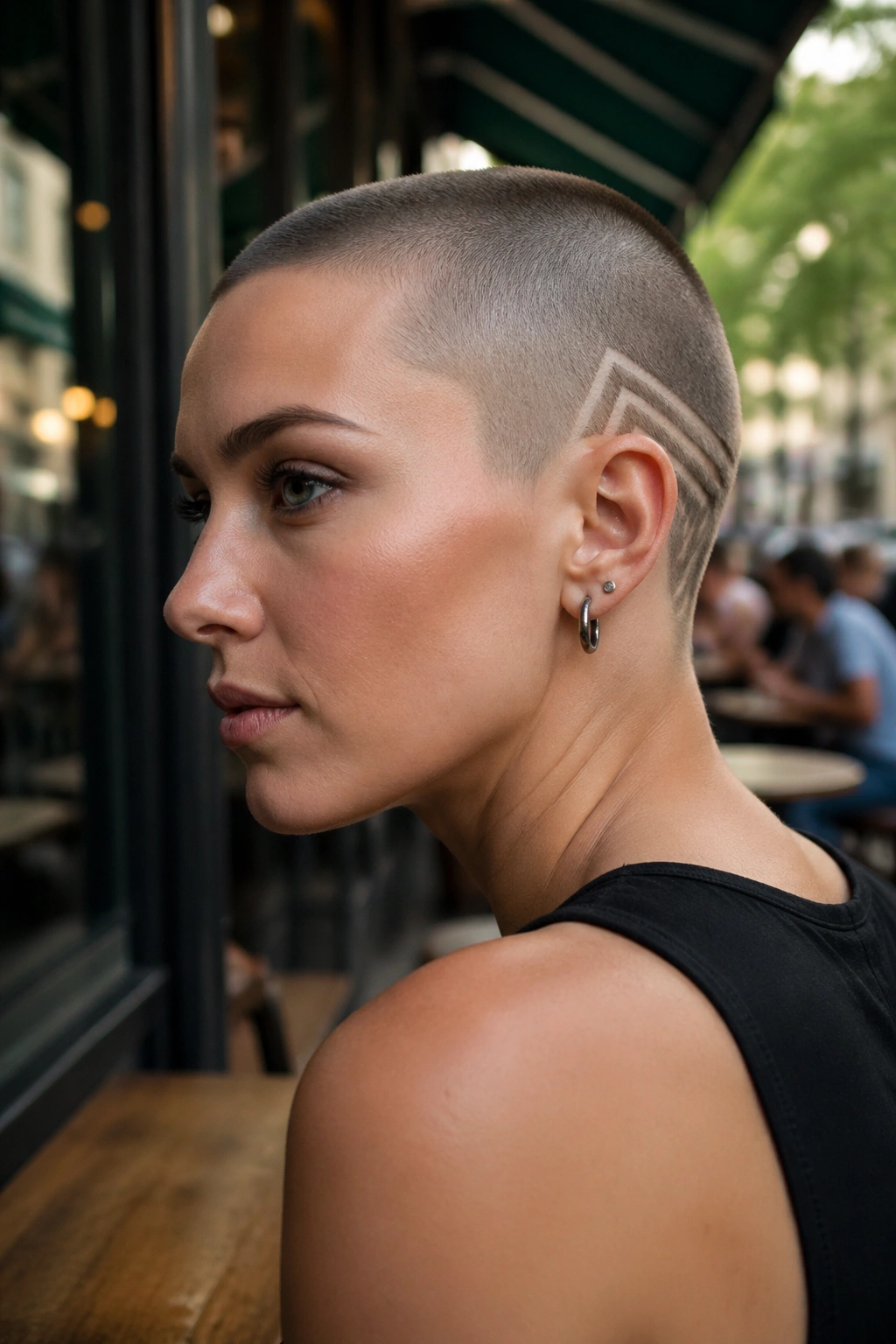
A shaved design works when it is clean enough to look intentional from six feet away. Anything fuzzy, crooked, or too busy reads like an accident. Anything sharp, balanced, and placed with care reads like style.
Line designs can be simple or graphic. One diagonal slash at the temple. Two parallel lines above the ear. A curved swoop that follows the head shape. A boxy outline near the nape. The best ones use the haircut’s natural lines instead of fighting them, which is why a good barber matters so much here.
Where the Design Sits
- Temple lines feel bold and obvious.
- Nape designs are more hidden until the hair is lifted.
- Curved lines soften a short cut that might otherwise feel severe.
- Repeated shapes look strongest when the rest of the cut is very short and even.
This is not the place for a vague request. Bring a photo, or at least describe the placement in plain language. “One thin line behind the ear” is easier for a stylist to translate than “something cool.” A detail this small can make the whole cut feel thoughtful.
Keep in mind that line work grows out fast. The design can blur in a week or two, especially on fast-growing hair, so this style is best if you like touch-ups and do not mind a frequent chair visit.
7. The Curly Top Fade
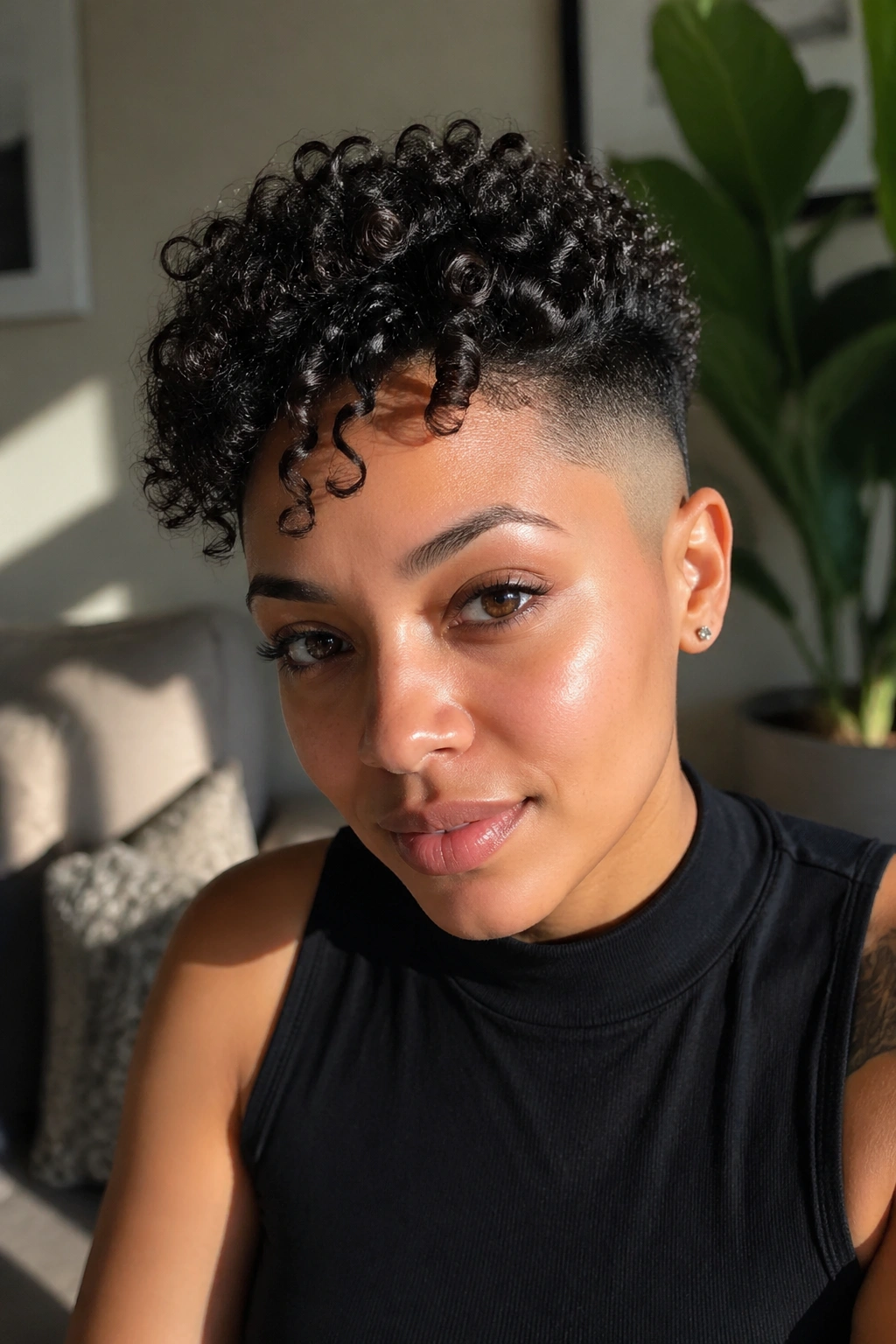
What if you do not want to lose your curls? Then don’t. A curly top fade keeps the texture up top and shaves the sides low enough to give the curls room to breathe.
This cut is one of the smartest choices for coily and curly hair because it removes bulk where it tends to build up the most. Instead of fighting the sides, the hair sits higher and looks more defined. The fade also gives the top a shape that feels deliberate, not accidental. That matters with texture that can swell fast and go wide if it’s left unchecked.
What to Use on the Top
- A light curl cream for softer definition.
- A leave-in conditioner if the hair feels dry after clipping.
- A small diffuser if you want height without frizz.
- A curl sponge if your hair is tight and you want a more sculpted finish.
The best curly top fades look balanced, not overloaded. You do not need a mountain of product. You need the curl pattern to be hydrated and the sides to stay clean. That is enough.
If you have a strong crown swirl or a thick hairline, ask your stylist to shape the top with your natural growth pattern in mind. Cutting against the grain can leave the top puffier than you wanted. Small adjustment. Big difference.
8. The Faux Hawk Fade
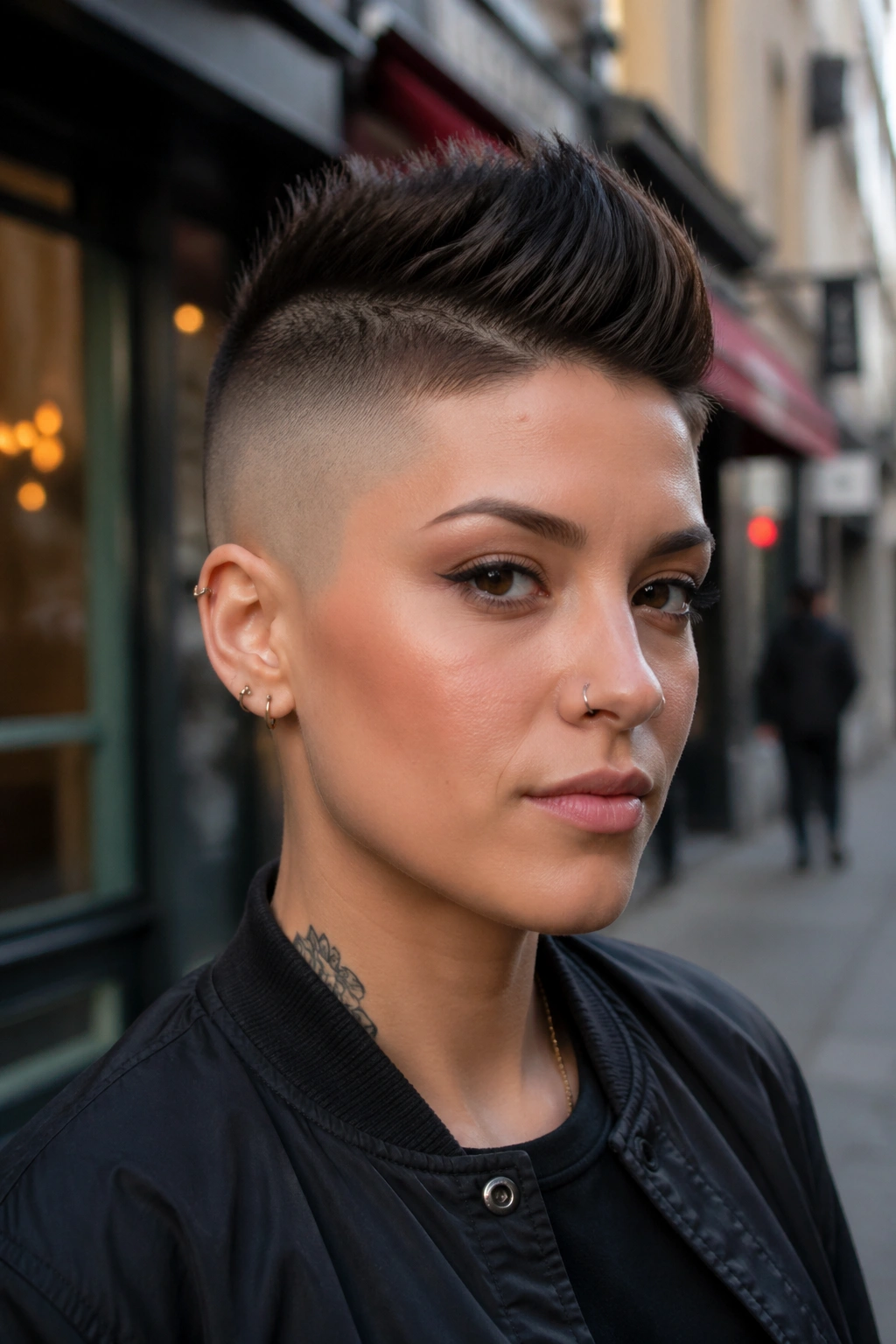
A faux hawk fade has attitude, but it still behaves. That’s the charm. You get a raised strip through the middle, shaved or tightly faded sides, and a look that feels bolder than a cropped cut without fully crossing into mohawk territory.
The difference between a faux hawk and a true mohawk is mostly in the sides and the commitment. A mohawk leaves a more obvious strip. A faux hawk softens the edges, so you can wear it slicked, spiked, or pushed forward without looking like you are in costume. That makes it easier to live with, which is why people keep coming back to it.
This shape works especially well on thicker hair because the center strip has enough body to stand up without collapsing. A little mousse, a small brush, and a blow-dryer can give it lift. If you want it messy, pinch the top with your fingers and let the ends stay uneven. If you want it smooth, direct the hair up and back while the dryer is still warm.
It is a good cut when you want to look sharp on purpose. Not polished. Sharp.
9. The Asymmetrical Crop
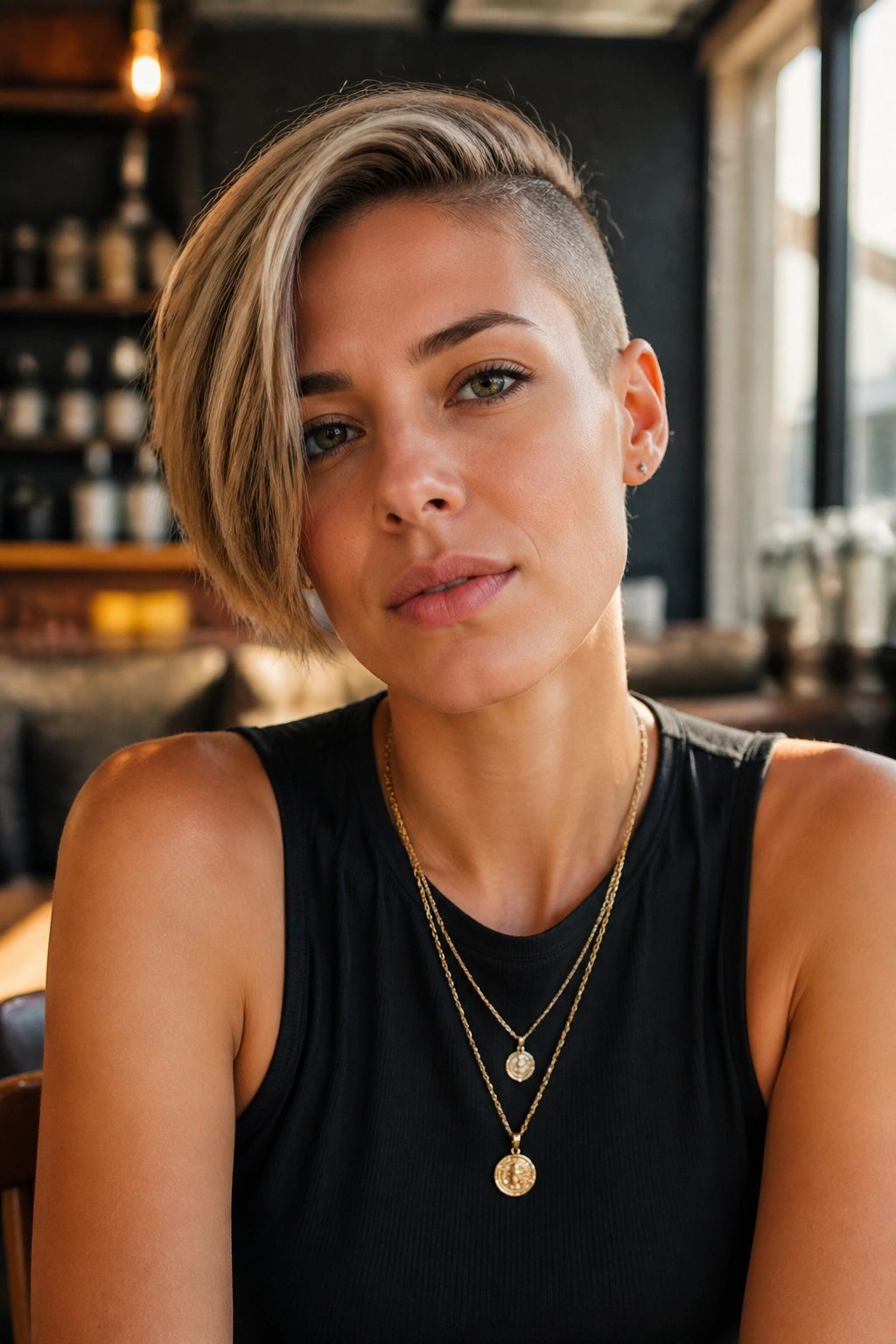
Symmetry is not required. In fact, one of the strongest short styles is built around the idea that one side can do more than the other.
An asymmetrical crop usually keeps one side longer, with hair sweeping across the forehead or cheekbone, while the other side is clipped much shorter or shaved close. The imbalance is what gives it energy. The longer side softens the face, and the shorter side keeps the shape from feeling sweet or predictable.
This style can be really flattering if you like strong angles. A side that falls across one eyebrow can draw attention to the eyes. A tighter side near the ear opens up the jawline. If your face is round, the length on top helps add height. If your face is long, keeping the sweep lower and fuller can balance things out.
Ask your stylist to keep the long side deliberate. Random length looks unfinished. A good asymmetrical crop has a clear line of intention, even if it feels a little unruly when you run your hand through it. That’s the good part. The cut should have edge, but not chaos.
10. The Half-Shaved Head
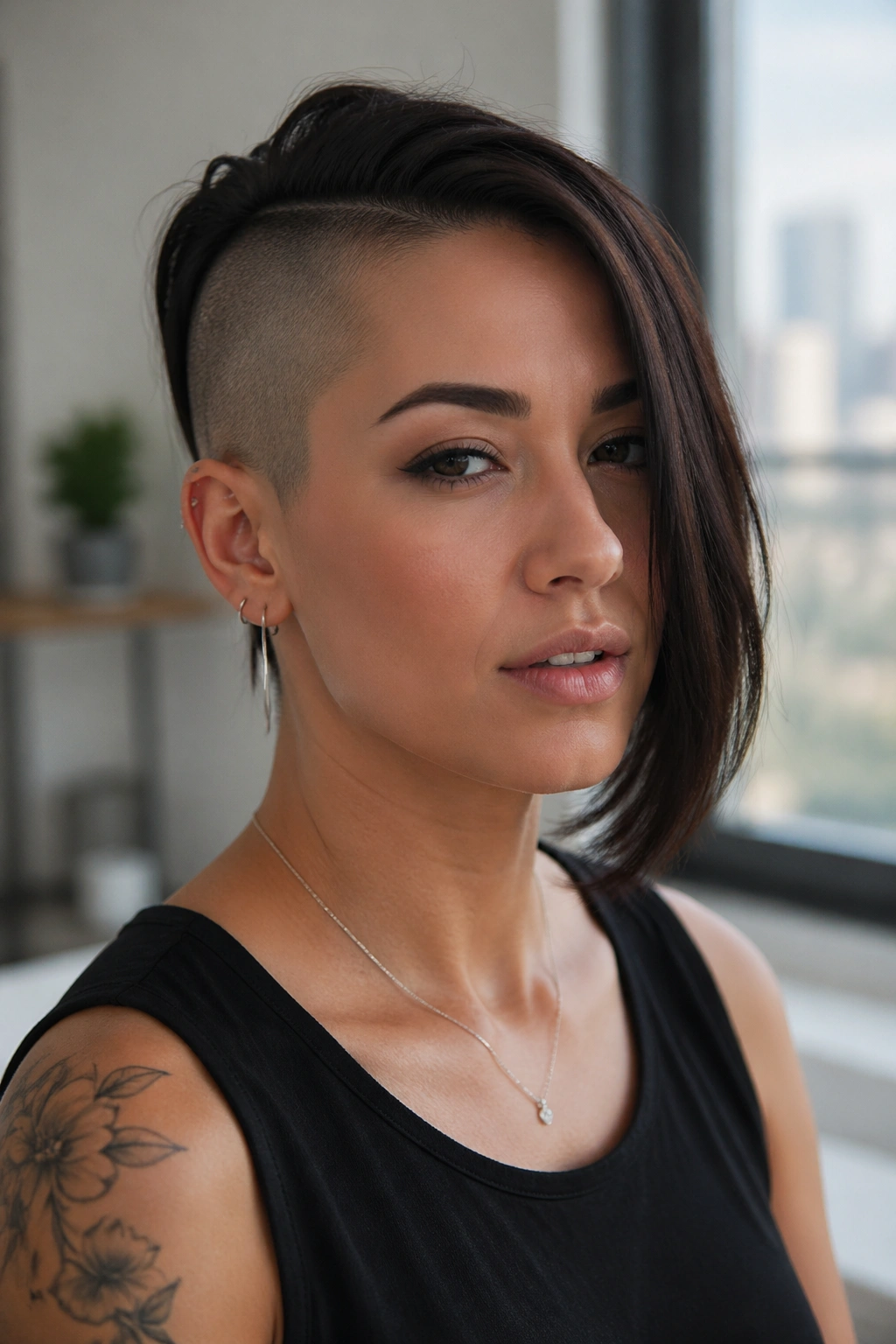
One side gone, the other side not. That’s the whole appeal, and honestly, it never gets old. A half-shaved head makes the contrast the headline, so you do not need much else to make it work.
The look can be worn with a deep side part, a slicked-over top, or hair that falls across the shaved side in a clean sweep. Some people keep the long side chin-length. Others go shorter, more like a long crop that just barely clears the jaw. Either way, the shaved side gives the cut its bite.
There is a nice flexibility here that people sometimes miss. The style can feel polished with a smooth blow-dry and a little shine cream. It can feel punk with rough texture and a matte finish. It can even feel elegant if the long side is tucked behind the ear and the shaved side is completely clean. Same cut. Three moods.
The grow-out is part of the story, too. A half-shave usually starts looking softer before it starts looking messy, which gives you some breathing room if you decide to grow it out later. That matters. Not every bold cut needs to feel permanent to be worth wearing.
11. The Bold Color Buzz
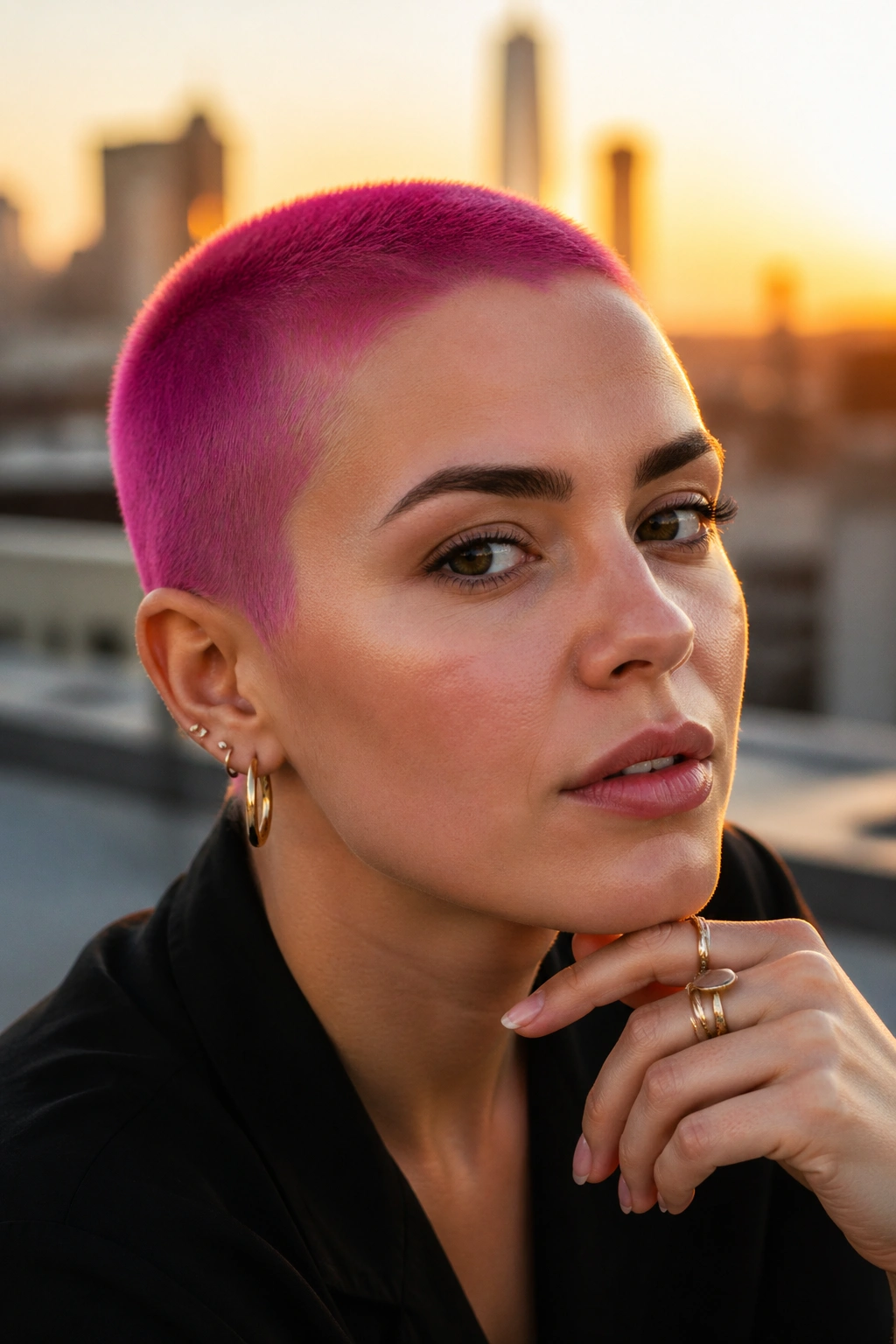
Color matters more when there is less hair. A buzz cut gives pigment nowhere to hide, which is exactly why bold shades look so vivid on it.
You can go copper, cobalt, lavender, cherry, silver, or a deep inky black with blue tones. On a close crop, the scalp becomes part of the look, so the shade needs to work with your skin tone and not against it. A vivid red on short hair can look fierce and warm. A cool blue can feel harder and cleaner. A muted rose gold can read softer than people expect, especially when the hair is freshly clipped.
Shades That Stand Out on a Short Crop
- Copper and auburn bring warmth and suit more skin tones than people think.
- Platinum and silver make the cut feel crisp and sculptural.
- Blue-black gives depth without looking loud.
- Pastel pink or lavender reads playful, but needs lightened hair underneath.
Color on a buzz cut also fades in a more honest way. Roots show quickly. Tone shifts show quickly. If you like that lived-in look, fine. If you want the shade to stay true, plan for regular color refreshes and a gentle shampoo routine.
This style is strongest when the color is clean from root to tip, or at least from root to visible tip. Patchy color on short hair is a lot harder to ignore than patchy color on long hair.
12. The Nape Shave
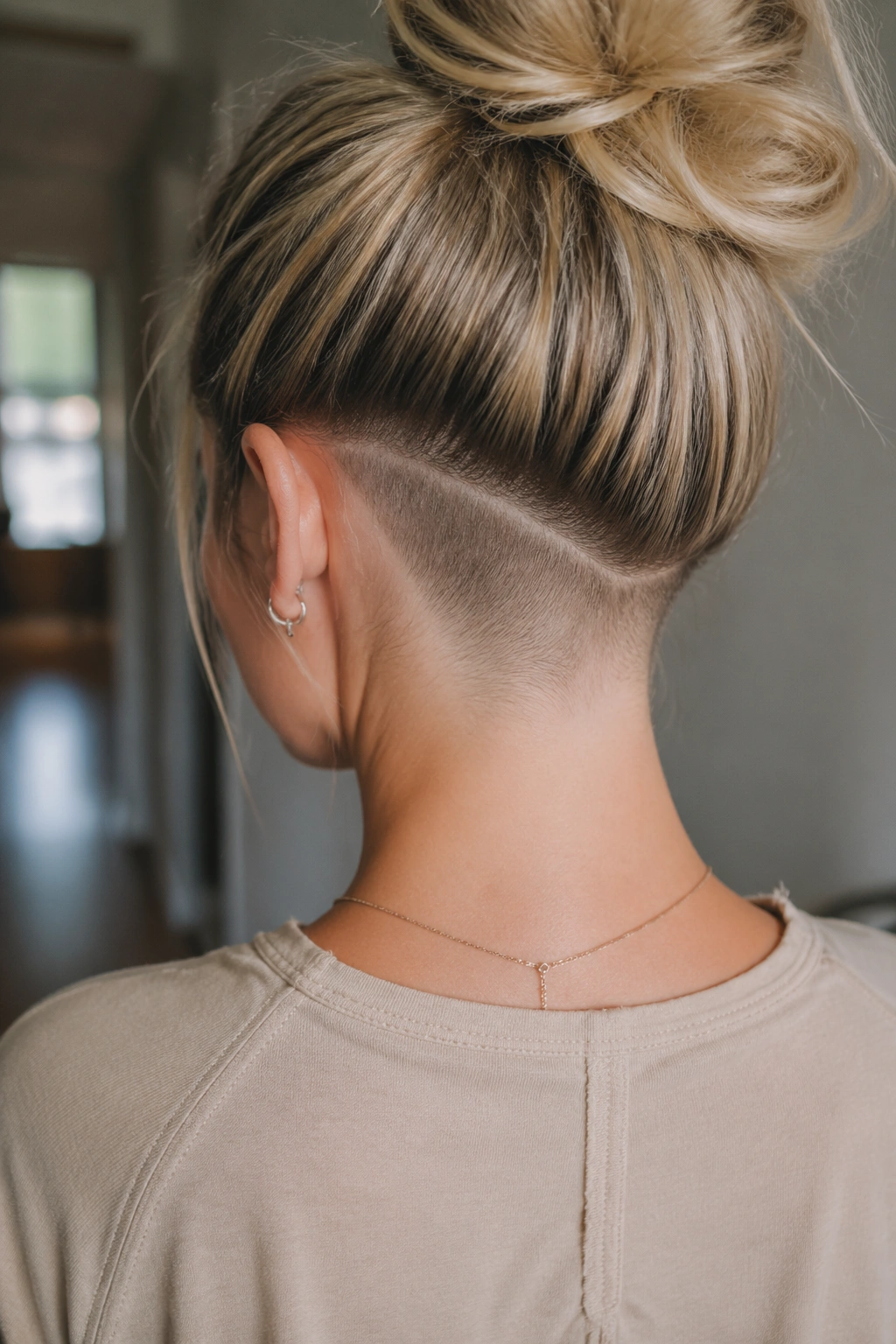
A nape shave is the best option if you want a little edge and don’t want to announce it every time you walk into a room. From the front, the haircut can still look soft and ordinary. From the back, there’s a shaved panel that changes the silhouette.
This style helps a lot with thick hair and low buns. The nape sits flatter, the neck feels lighter, and updos stop bulking out in that awkward way that makes them look too round. If you wear your hair up often, that’s a real practical win. Not glamorous. Useful.
Unlike a full undercut, a nape shave stays hidden more often than not. That makes it a good choice for someone who wants flexibility at work or in more conservative settings. Wear the hair down and nobody needs to know. Pull it up and the cut suddenly has personality.
What to Tell the Stylist
Ask for the shave to follow the natural hairline at the back, not just a straight block. A curved or gently tapered nape tends to grow out better and sits cleaner under longer layers. If your neckline tends to get fuzzy fast, a trim every 3 to 5 weeks keeps the shape neat.
13. The Fully Shaved Head
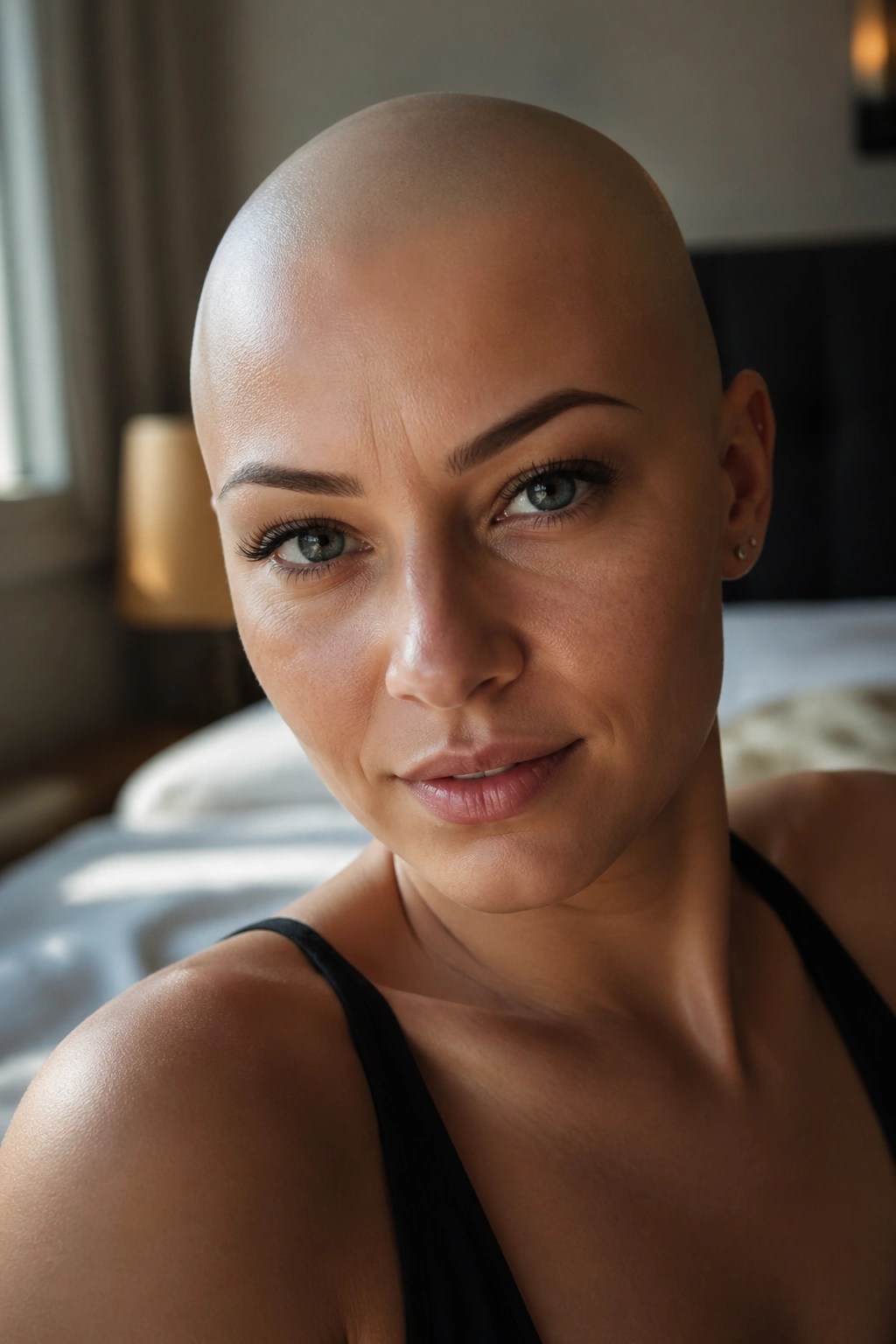
No hair means no hiding. That is the truth of a fully shaved head, and it is exactly why the style can feel so powerful.
A bare shave puts every part of the face on display — brows, cheekbones, ears, neck, scalp shape. That sounds intense because it is. It also means the style can look clean and striking when everything else is kept simple. Good brows help. A clean neckline helps. Earrings help. So does a scalp that has been moisturized and protected from sun and dry air.
This cut works best when you treat the scalp like skin, because that’s what it is. A gentle cleanser, a lightweight moisturizer, and a careful shave routine matter more than people expect. If you shave at home, use a fresh blade and a slick shaving cream or gel. A dry pass across the scalp is a fast way to get irritation and little nicks along the crown.
One sentence can carry a lot here: the shave is only the first step.
The grown-out phase is another reason people hesitate, but it’s also where the shape starts to evolve. Stubble, then a tight buzz, then a softer crop — each stage has its own look. So if you are thinking about it, think in stages, not as a one-way door.
14. The Braided Crown with Shaved Sides
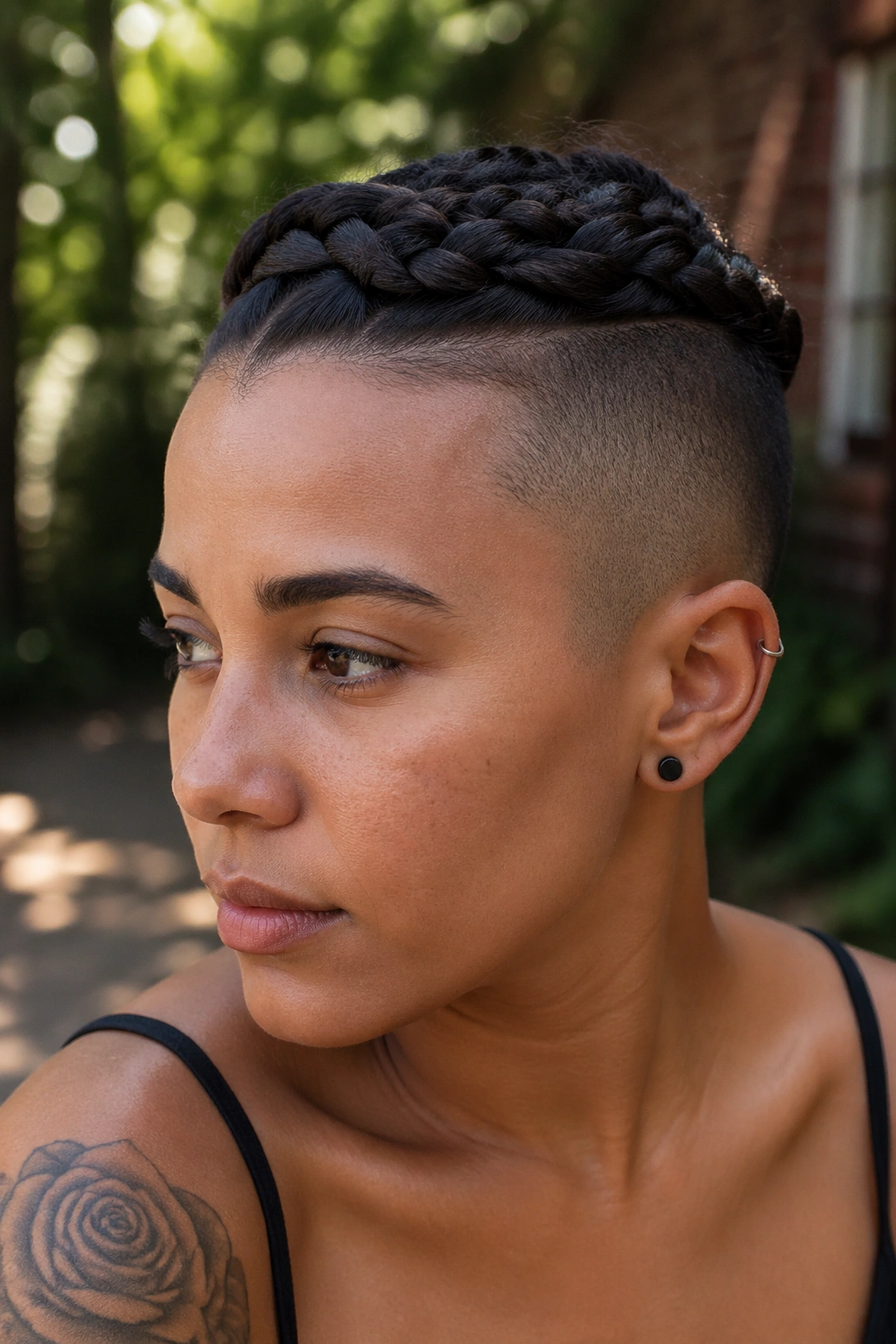
Can a shaved style still feel decorative? Absolutely. A braided crown with shaved sides gives you texture on top and a close, clean finish underneath, which is a strong mix if you want detail without a lot of length.
The top can be built with small braids, cornrows, twists, or a braided strip that runs from forehead to crown. The sides stay shaved or very closely faded, so the braids become the main shape. That contrast is what makes the style work. The hair on top gets lifted by the clean sides, and the shaved sections make the braids look more defined.
This style is smart for textured hair because it offers control. Braids protect the top section, while the shaved sides cut down on bulk and heat. It also gives you a clear way to change the look without cutting everything off. Unbraid it, and the shape changes. Retwist it, and the style feels fresh again.
When This Cut Works Best
- You want a short style with more structure on top.
- Your hair is dense enough to hold braids or twists.
- You like changing the finish without changing the cut.
- You do not mind keeping the sides trimmed often.
The only real drawback is maintenance. Braids need care, and the shaved sides need clean-up. If you can handle both, the result is bold in a way that feels layered, not flat.
15. The Crescent Undercut
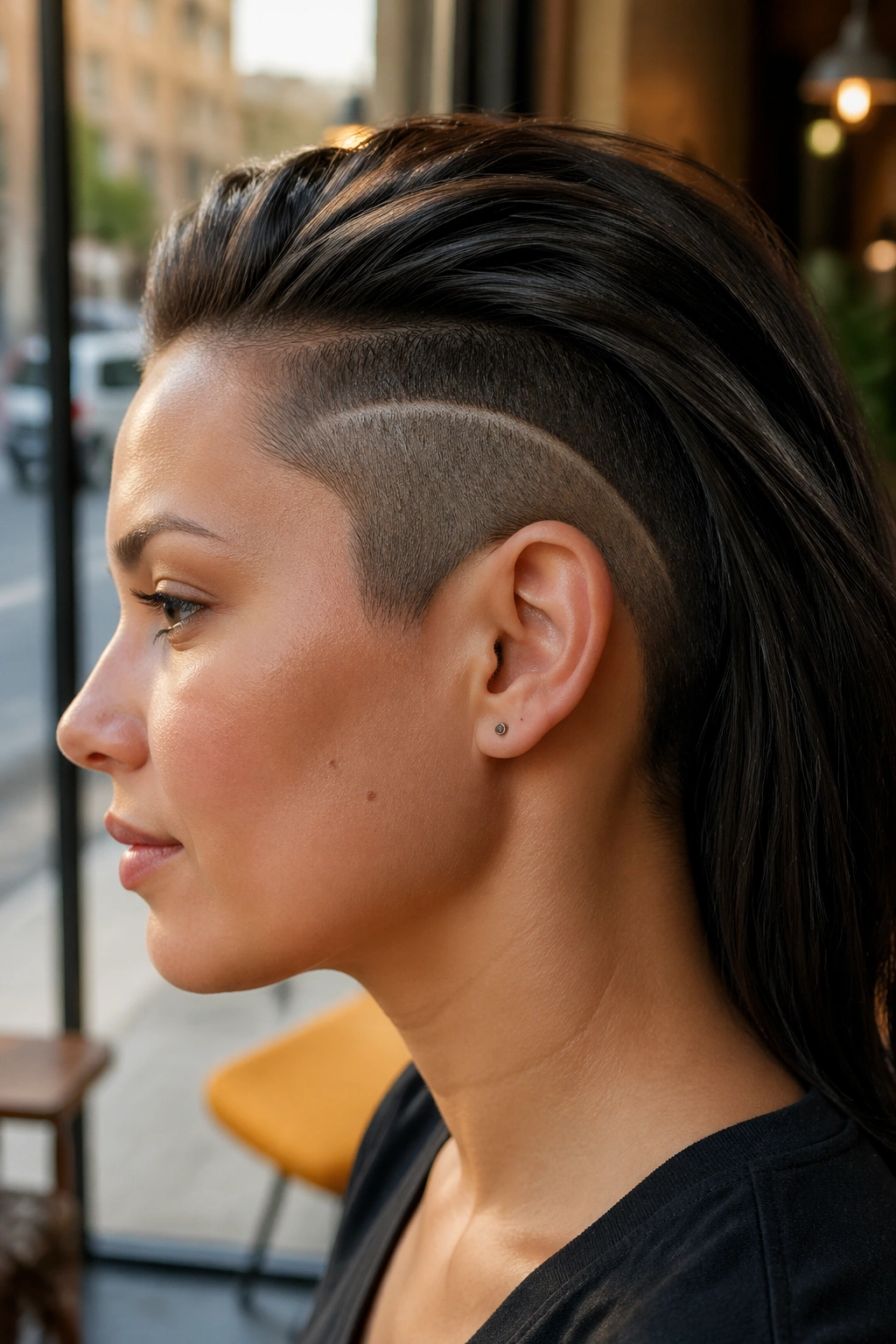
A crescent undercut is the kind of detail people notice only after they look twice, which makes it sneakier than a full side shave and more graceful than a hard block of clipped hair.
The shape curves from one temple around the back in a soft arc, leaving a shaved band that peeks out under longer layers. It can be hidden most of the time, then revealed by a tuck, a low bun, or a flipped part. That makes it useful if you want a cut that can disappear when needed and show off when you want it to.
The curve matters. A straight undercut can feel severe fast. A crescent shape follows the head more naturally and gives the whole haircut a smoother line. It also grows out in a way that looks a little more forgiving, which is handy if you are not eager to be back in the chair every few weeks.
This style tends to work beautifully with thick hair, because the shaved section removes weight where it usually piles up. The top falls better, the neck feels lighter, and updos stop ballooning out at the base. That’s not a tiny thing. It changes how the haircut behaves all day.
Final Thoughts
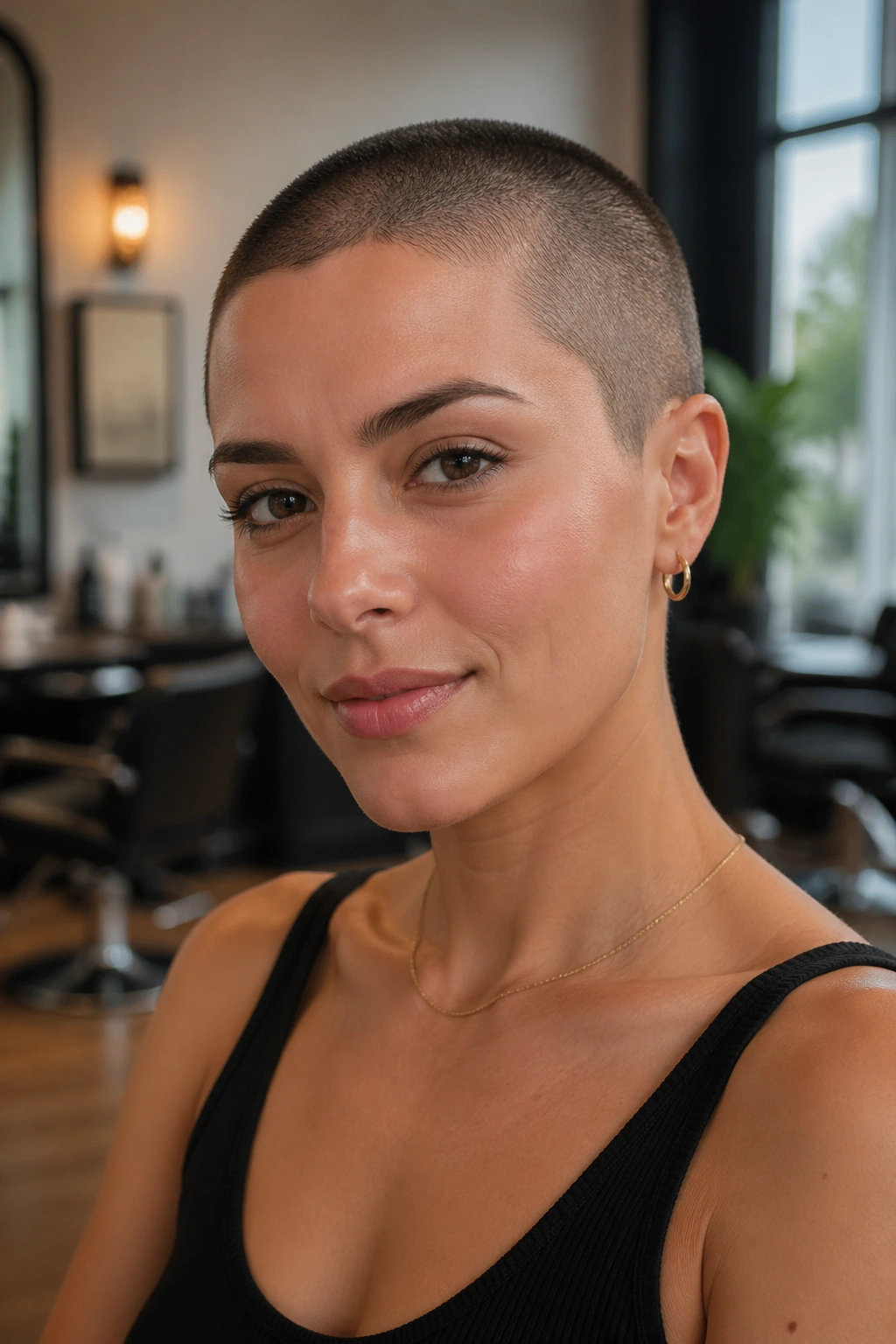
The strongest shaved cuts share one trait: they commit. A little shave hidden at the nape has a different job than a full buzz, and a line design does something entirely different from a platinum crop. Pick the version that matches your tolerance for upkeep, because that part matters more than the mood board.
Hair grows. Fast, usually. So the smartest choice is not always the boldest-looking one on day one. It’s the one that still feels good when the fade softens, the line blurs, or the buzz starts to blur at the edges.
Bring photos, yes, but bring one more thing too: a real answer to how often you want to maintain it. That answer will save you from a cut you love for three days and resent by week two.
