



Straight hair is unforgiving.
If a bob sits a quarter inch too low, or a layer is cut too aggressively, you see it the second the hair dries. No curl pattern steps in to soften the line. No bend hides a blunt corner. That’s why short haircuts for women with straight hair need shape, not guesswork.
The flip side is better. Straight hair can make a clean cut look almost architectural. A sharp jaw-length bob looks crisp. A tiny fringe can look deliberate instead of fussy. A cropped nape shows off the neck in a way wavy hair sometimes can’t, because the outline stays visible from every angle.
The mistake I see most often is this: people ask for “movement” and end up with hair that feels thin, see-through, and oddly tired. Straight hair usually needs a clear perimeter first. Texture comes after that, and only where it actually helps. Otherwise the haircut loses its spine. Fast.
1. Blunt Chin-Length Bob
A blunt chin-length bob is the haircut I reach for when straight hair needs a spine. The line sits around the jaw, so the ends read as deliberate instead of wispy, and the shape gives fine hair a thicker outline without asking for a lot of styling.
What Makes It Work on Straight Hair
Straight strands show the perimeter cleanly, which is exactly why this cut looks so strong. If your hair is medium or thick, ask for the bulk to come out from inside the shape, not from the edge. You want the line to stay dense.
- Best for fine to medium straight hair
- Styling time: about 5 minutes with a flat brush
- Salon note: ask for a blunt perimeter with only a tiny bevel at the ends if they feel too boxy
- Grow-out: neat for about 6 to 8 weeks before the line starts to blur
Tip: If your jaw is wide, place the length a half-inch below it. That tiny bit of extra length softens the frame without taking away the sharpness.
2. French Bob With Soft Fringe
The French bob is short enough to feel a little mischievous and long enough to stay useful. It usually lands at the cheekbone or just above the jaw, with a soft fringe that skims the brows instead of sitting like a hard shelf. On straight hair, that combo looks effortless in the best sense of the word — not messy, just easy.
What people love here is the balance. The fringe pulls focus upward, which helps if your face feels longer or your forehead is the feature you want to soften. The bob itself stays compact, so the ends don’t spread out and make the head look wide. That matters more than most people think.
The catch is maintenance. A fringe on straight hair grows in quickly and shows every little mismatch. If you hate trim appointments, keep the bangs a touch longer and let them graze the lashes instead of cutting them super short. That version is friendlier and still keeps the French feel.
3. Side-Part Classic Bob
Why does a side part change a simple bob so much? Because straight hair falls where you tell it to, and a side part gives the crown a lift the middle part can’t fake. The result is softer at the face and a little fuller at the roots.
How to Wear It
This cut works especially well if your hair is fine and tends to lie flat by midday. A deep enough side part, even just 2 inches off center, makes the top look taller and the shape less severe. The bob can sit at the chin or just below it; both lengths work, but the longer version gives a touch more swing.
Ask your stylist to keep the bottom line clean, then add only a bit of internal weight removal if your ends get bulky. Too much layering kills the point.
A side-part bob also grows out more gracefully than a center-part bob. Small shift, big payoff. Seriously.
4. A-Line Bob With Longer Front Pieces
I’ve seen an A-line bob rescue straight hair that used to feel boxy. The back stays shorter, the front drifts forward toward the collarbone, and the whole cut makes the neck look longer without screaming for attention.
The Shape That Does the Work
The angle matters more than the length here. Even a subtle A-line — think half an inch to an inch longer in front — changes the way straight hair falls around the face. It narrows the look of the jaw, keeps the nape neat, and gives you that little bit of movement around the front.
- Best for round or square faces
- Good for medium to thick straight hair
- Ask for a soft angle, not a dramatic wedge
- Flat-irons can overdo the front, so keep the finish smooth, not pin-straight flat
Practical note: Blow-dry the front pieces forward first, then tuck them under with a round brush for a soft bend. If you force everything straight down, the angle loses its shape.
5. Inverted Bob With Clean Nape
A stacked back isn’t old-fashioned when it’s done with restraint. The inverted bob builds a little lift at the crown, then drops longer toward the front, which gives straight hair a shape it often lacks on its own. You get volume where it helps and length where it frames.
The real value here is structure. If your hair is fine, the stacked back makes it look fuller without teasing or a pile of product. If your hair is thick, the shorter back removes some heaviness so the whole cut sits closer to the head. That “close to the head” part matters; otherwise the cut starts to balloon.
This is one of those styles that looks polished with almost no effort, but the cut has to be precise. A sloppy inverted bob gets bulky at the occipital bone and weirdly narrow at the front. A good one feels clean from the first shampoo to the last day before your trim.
6. Layered Lob That Skims the Collarbone
Unlike a chin-length bob, the layered lob gives straight hair room to breathe. It still counts as short for a lot of women, but the extra length around the collarbone makes it safer if you’re nervous about going too far. You can tuck it, clip it, bend it under, or let it fall flat and still look intentional.
The layers should be soft and long. No choppy staircase. Straight hair hates that kind of over-layering because the ends start to look separated instead of full. Ask for a few internal layers to keep the shape from dragging at the ends, then leave the outline mostly intact.
This cut is the one I’d suggest if you’re moving down from longer hair and don’t want a dramatic jump. It grows out cleanly, works with a center part or side part, and can be air-dried if you don’t mind a more relaxed finish. For straight hair, that flexibility is gold.
7. Sleek Pixie With Long Top
A sleek pixie with a long top is for anyone who wants short hair without giving up styling options. The sides and back stay tight, while the top keeps enough length to sweep over, slick back, or angle to one side. Straight hair makes the shape look sharp instead of fluffy.
Why It Stays So Useful
The long top gives you control. On day one, you can wear it smooth with a little cream. On day three, you can push the front upward with paste for a more piecey look. That range is what keeps this cut from feeling repetitive.
- Ask for the sides to be tapered, not shaved, unless you want a harder edge
- Keep the top at least 2 to 3 inches long if you want styling choices
- Use a pea-sized amount of lightweight pomade or cream
- Trim every 4 to 6 weeks to keep the silhouette clean
Tip: Blow-dry the top in the direction you want it to live. Straight hair remembers the shape better than you think.
8. Textured Pixie With Choppy Fringe
A choppy fringe can make straight hair look lighter without making it fuzzy. That’s the sweet spot. The front is broken into little pieces, so the line across the forehead feels softer, and the rest of the cut can stay close to the head without reading severe.
This version suits people who like a bit of edge but don’t want a full crop. It’s especially nice if your forehead is narrow and a blunt fringe would feel heavy. The texture around the brow opens the face up. It also gives you something to work with on mornings when you can’t be bothered to style much.
Ask your stylist for point cutting at the fringe and a little roughness through the top. Not a lot. If the texture gets too aggressive, straight hair starts looking frayed instead of lived-in. A touch is enough.
9. Bixie Cut
What sits between a bob and a pixie without looking stuck in the middle? The bixie. It keeps some bob length around the face, chops the back and sides shorter, and usually leaves the top with enough softness to move around.
How to Ask for It
Bring a picture. Really. A bixie can lean more bob-like or more pixie-like, and that difference changes the whole mood. On straight hair, I like a version with a little length around the ears and a longer crown, because it keeps the cut from looking helmet-like.
The bixie is good for women who want shorter hair but don’t want the full commitment of a cropped pixie. It can be styled sleek, tucked, or a little messy with a matte paste. That flexibility is the point. You’re not stuck with one mood.
It also grows out in a nice way. The bob part takes over first, then the pixie pieces catch up. No awkward shelf if the cut is balanced right.
10. Shaggy Bob With Razored Ends
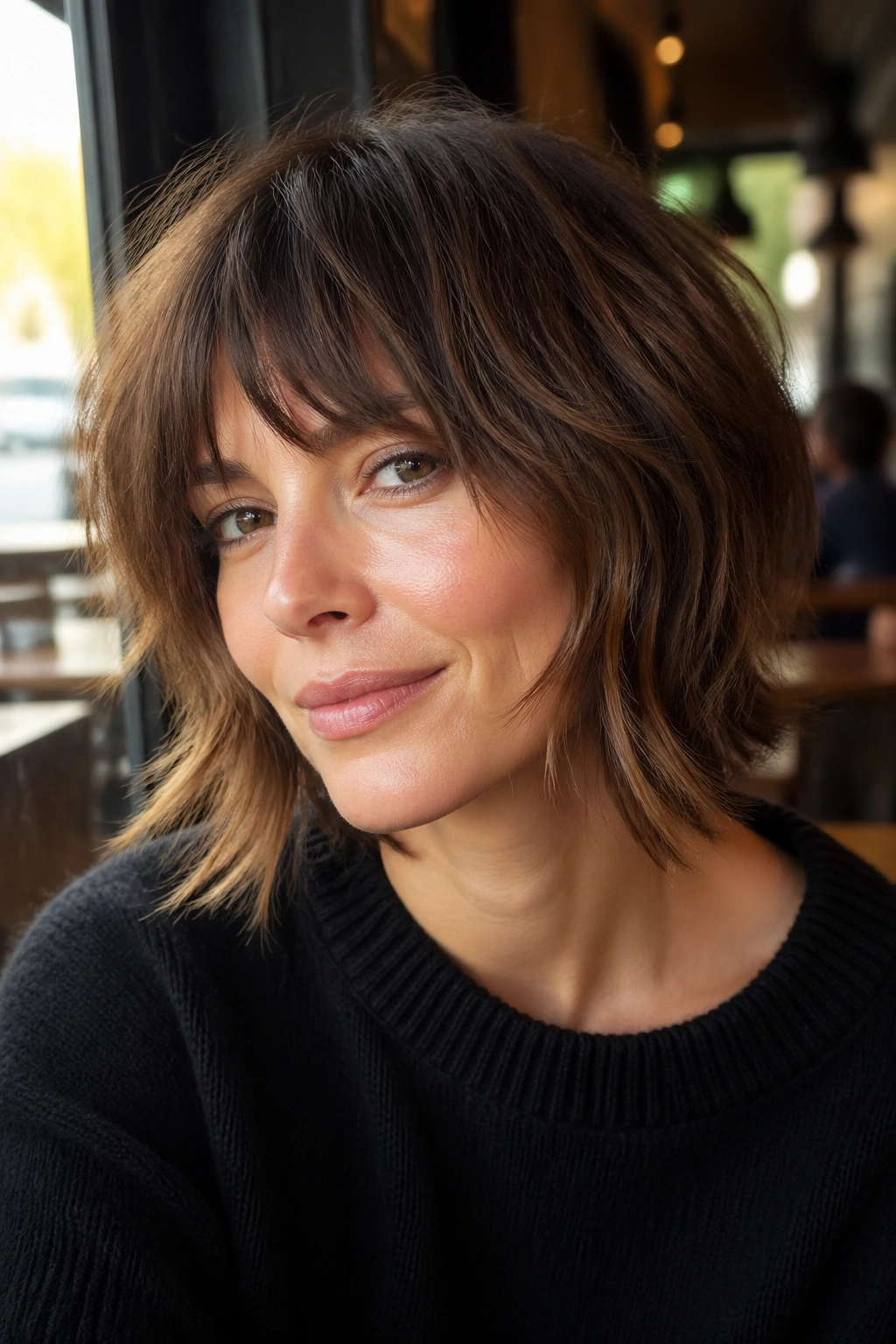
If your straight hair falls flat by lunch, the shaggy bob is worth a hard look. It uses softer ends and internal layers to break up the mass, so the hair moves instead of sitting in one heavy block. The trick is not to overdo the razoring.
A little roughness goes a long way here. Too much and the ends look see-through. Too little and the haircut turns into a regular bob with a bad attitude. The sweet spot is a perimeter that still feels full, with just enough texture to let the hair bend and separate.
What to Watch For
- Best on medium-density straight hair
- Good if your hair tends to collapse around the face
- Ask for soft razor work only at the ends
- Pair with a light texturizing spray, not a sticky mousse
A shaggy bob is casual by nature, but it still needs a shape underneath. Otherwise it looks accidental. And accidental hair rarely ages well.
11. Ear-Length Crop

Ear-length cuts are brave in a good way. They put the whole face on display, which sounds harsh until you see how clean and modern the outline can look on straight hair. The ears become part of the shape, and earrings suddenly matter more than they do with longer hair.
This cut works because it’s decisive. There’s no middle ground to hide in. The line sits high, the nape stays neat, and the silhouette feels light. If your hair is fine, that lightness can be a blessing. If your hair is thick, the haircut needs good internal removal so it doesn’t puff out at the sides.
I like this cut on people who wear glasses, sharp collars, or simple jewelry. It has a graphic quality that flatters those details. The downside is obvious: it grows out fast, and you’ll notice every new millimeter. But if you enjoy crisp hair, that’s part of the appeal.
12. Asymmetrical Bob
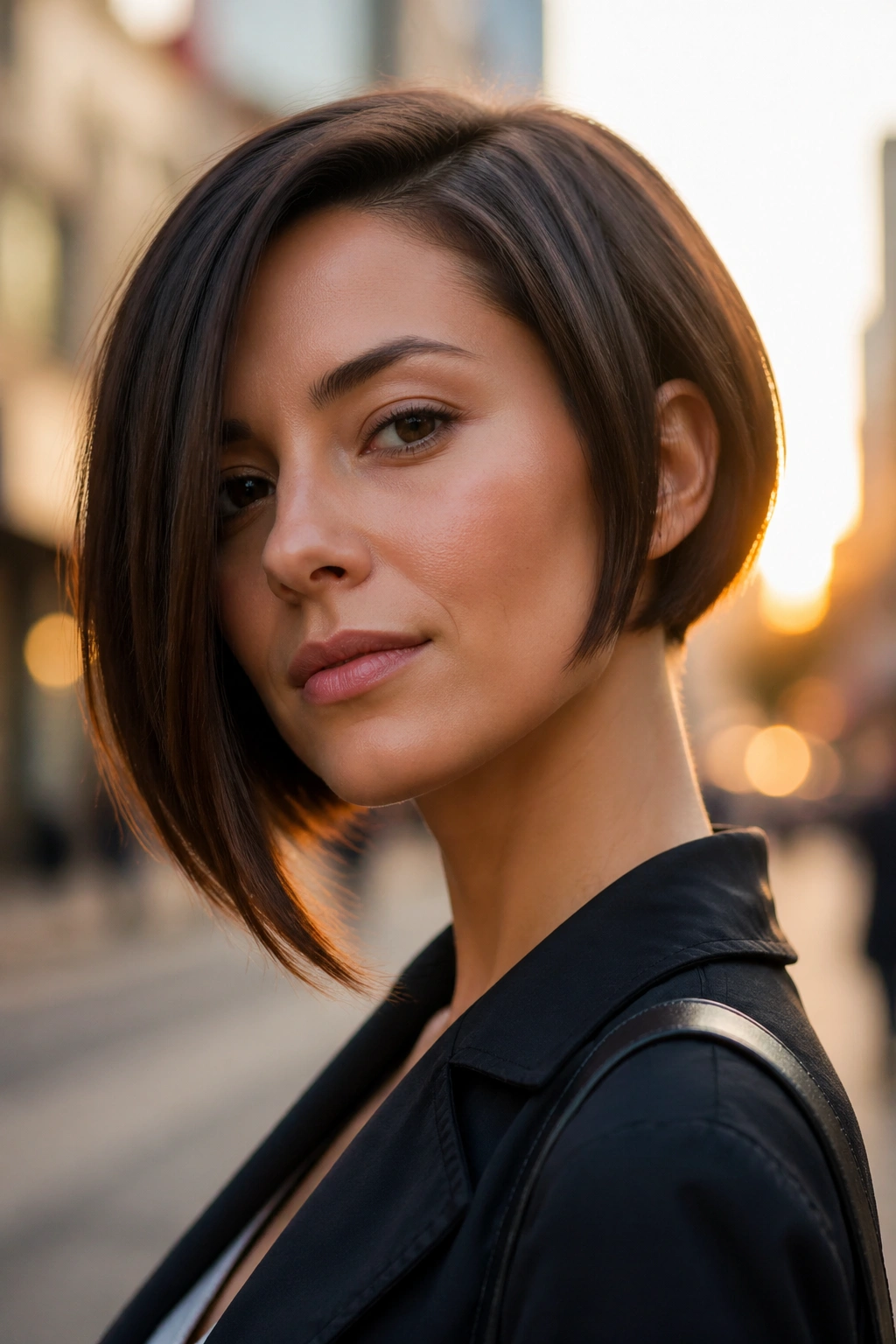
Unlike a symmetrical bob, the asymmetrical bob uses imbalance on purpose. One side stays a little longer, which makes straight hair look sharper and more intentional. The angle can be subtle or obvious; either way, it gives the haircut a point of view.
Why It Feels Different
Straight hair is perfect for this shape because the longer side reads cleanly. There’s no curl to blur the line, so the asymmetry shows up exactly as designed. That’s why this cut feels so strong when it’s cut well. It’s not trying to be soft.
It suits anyone who wants a little drama without going full edgy. The shape can slim a round face, draw attention to the jaw, and make the neck look longer. If one side of your face is your favorite angle, this cut can play that up without looking like a gimmick.
Keep the styling smooth. Heavy waves hide the point of the cut. A flat brush and a touch of shine cream work better here than any big styling routine.
13. Rounded Bob
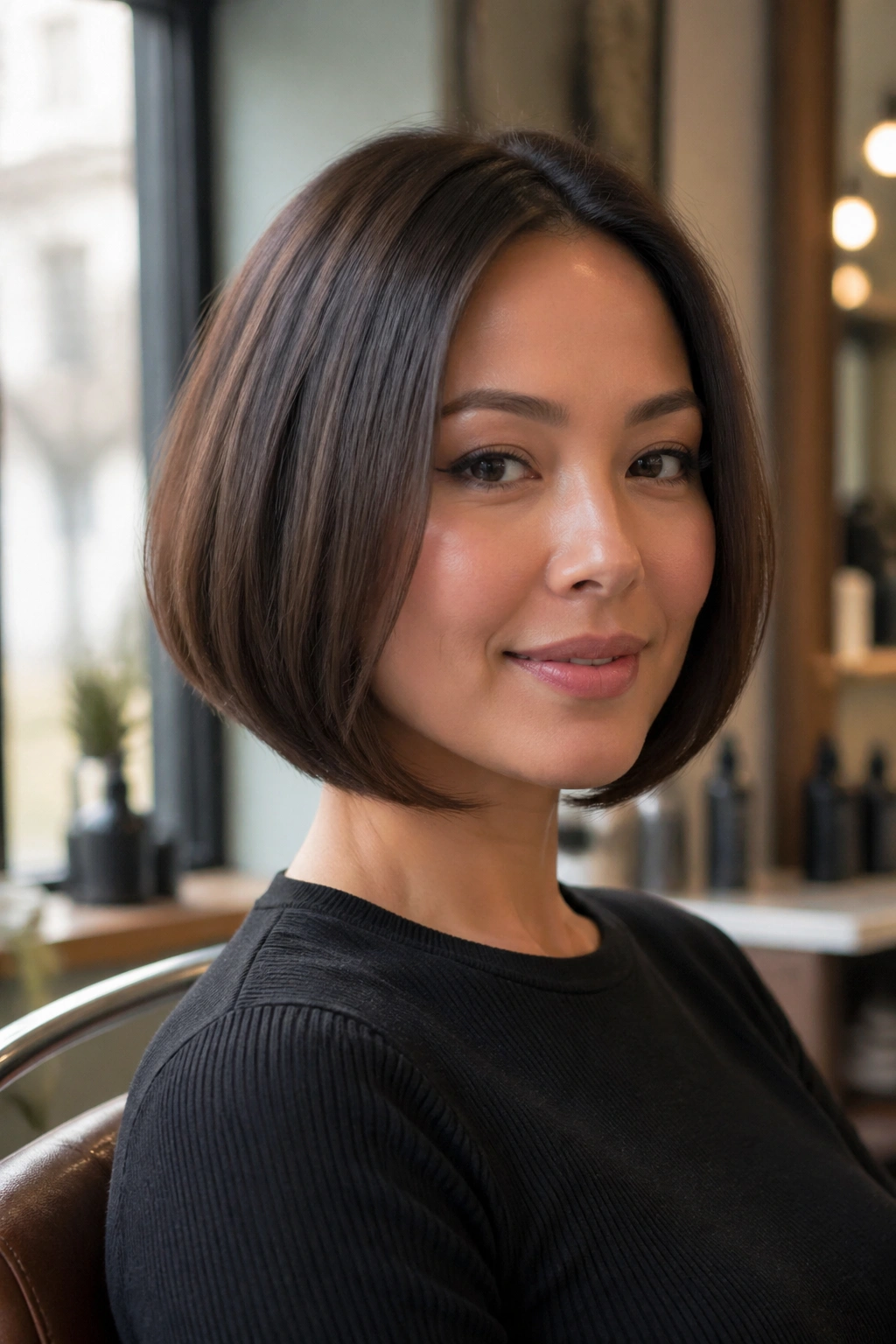
A rounded bob is what happens when you let the shape curve gently under the jaw instead of sitting flat and square. On straight hair, that curve can look polished, almost tailored. It softens a strong chin and takes some edge off a wide jaw.
What Makes the Curve Matter
The perimeter usually sits around chin level, with the ends slightly tucked in. That small bend changes the whole mood of the haircut. It feels neater than a loose lob and softer than a blunt bob. If your face is long, the rounded line can help balance it by adding width at the sides.
- Good for straight hair that needs a softer frame
- Useful if you wear your hair tucked behind the ears often
- Ask for a rounded finish rather than a straight-across cut
- A blow-dryer nozzle and round brush help the shape hold
Small warning: If your hair is very thick, too much roundness can make the cut puff out. Keep the curve subtle, not bulbous.
14. Pageboy Cut
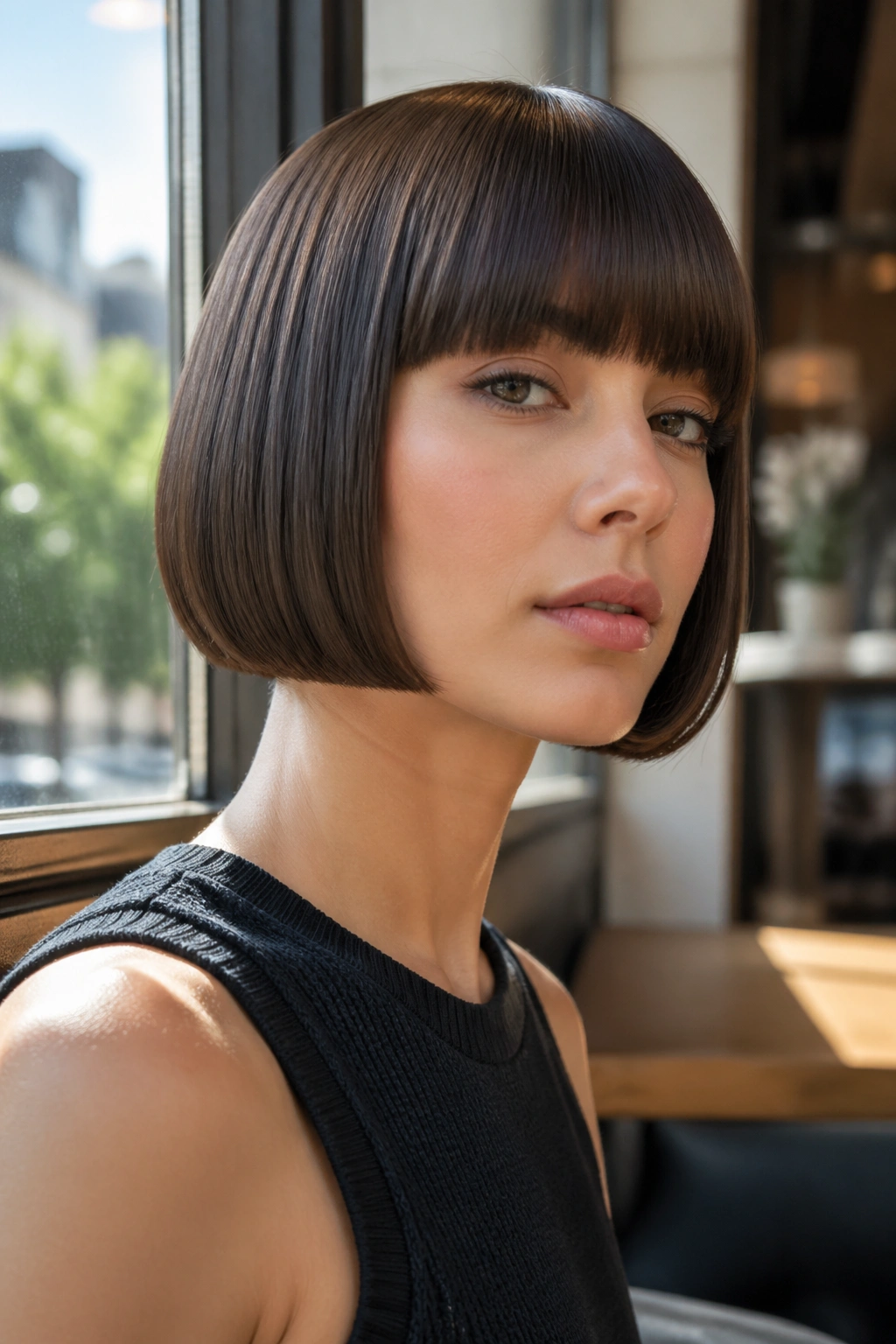
The pageboy is the haircut that proves straight hair can look architectural. It has a blunt outline, a smooth undercurve, and usually a strong fringe or a long, face-framing front. Done right, it feels intentional, not costume-y.
The reason it works so well on straight strands is simple: the shape depends on a clean line. Wavy hair can muddy the silhouette, but straight hair gives it that glossy, controlled finish. If you like precision, this is one of the most satisfying short cuts you can wear.
The downside is that it leaves no room for sloppy styling. A pageboy wants a neat blow-dry, a little serum, and a trim schedule you actually stick to. If you can live with that, the payoff is a haircut that looks expensive in the plainest sense of the word — clean, balanced, and very hard to mess up once it’s cut well.
15. Feathered Crop
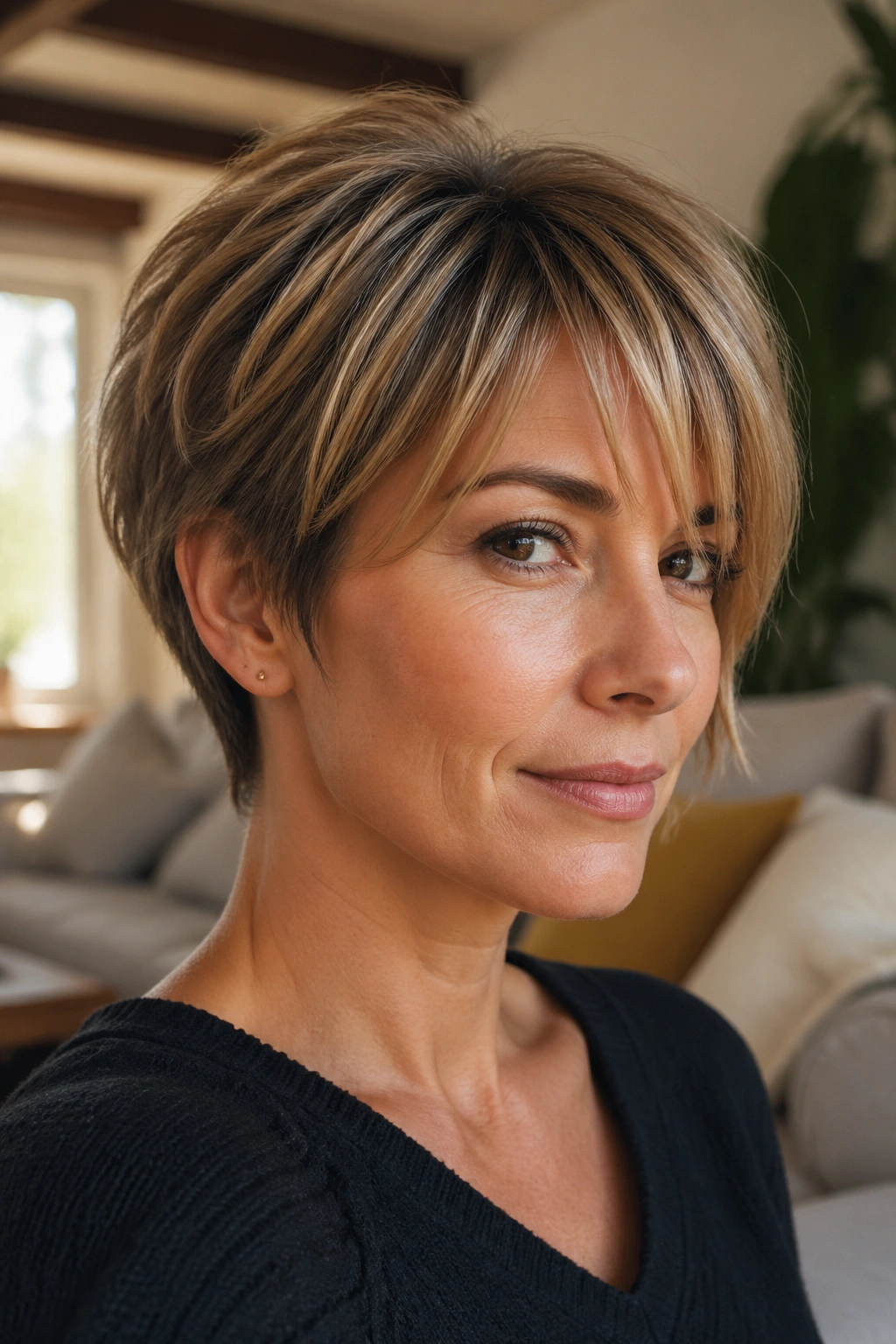
Why do feathered ends move so well on straight hair? Because the cut removes weight in a way that lets the pieces lift and separate instead of hanging like a curtain. Feathering around the temple and crown gives the head a lighter outline without making the haircut fluffy.
How to Get the Most From It
Ask for the feathering to stay controlled. That’s the key. You want soft edges around the face and a little lift through the top, not a ragged halo. A feathered crop is especially useful if your hair is fine but plentiful, because it keeps the cut from feeling flat and heavy at once.
It also suits women who want a softer alternative to a pixie. You still get short hair, but there’s a gentler feel around the hairline. A light styling cream and a quick blast with the dryer usually do enough.
No need to overthink this one. The beauty is in the restraint.
16. Neck-Length Bob With Curtain Bangs
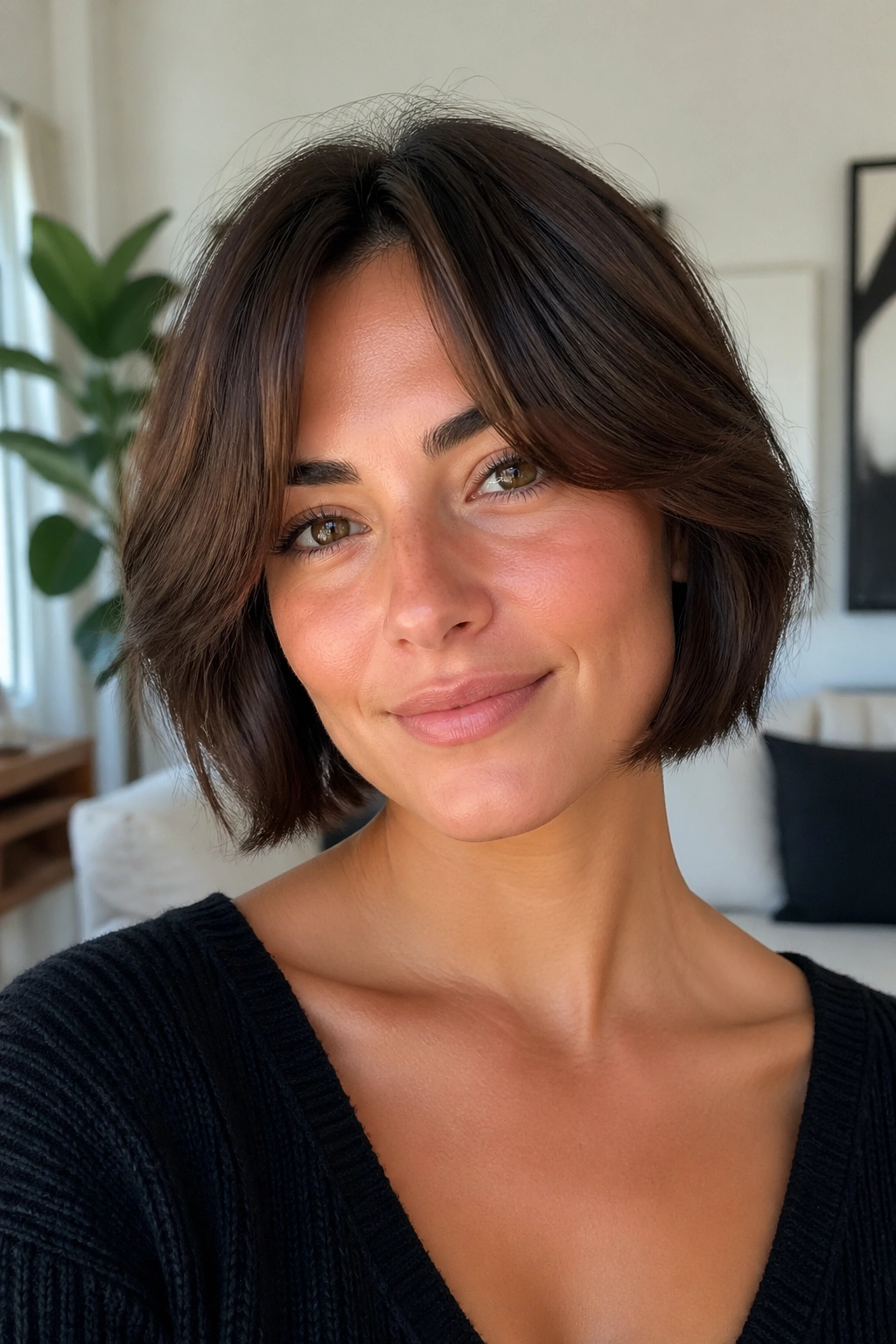
A neck-length bob with curtain bangs gives you short hair without cutting off all the softness around the face. The bob stays around the base of the neck, while the bangs split in the middle and sweep away from the cheeks. On straight hair, that frame looks clean and easy to live with.
I like this cut for people who tuck their hair behind their ears a lot. The bangs keep the face from looking too open, and the length still gives you some movement at the collar. It also grows out in a forgiving way. Curtain bangs are less demanding than blunt fringe, and straight hair usually cooperates with the part.
The styling trick is to bend the bangs away from the face, not curl them dramatically. A round brush or a flat iron turned just slightly at the ends is enough. If the bend looks too perfect, the cut starts to feel stiff. A soft sweep is the whole point.
17. Micro Bob
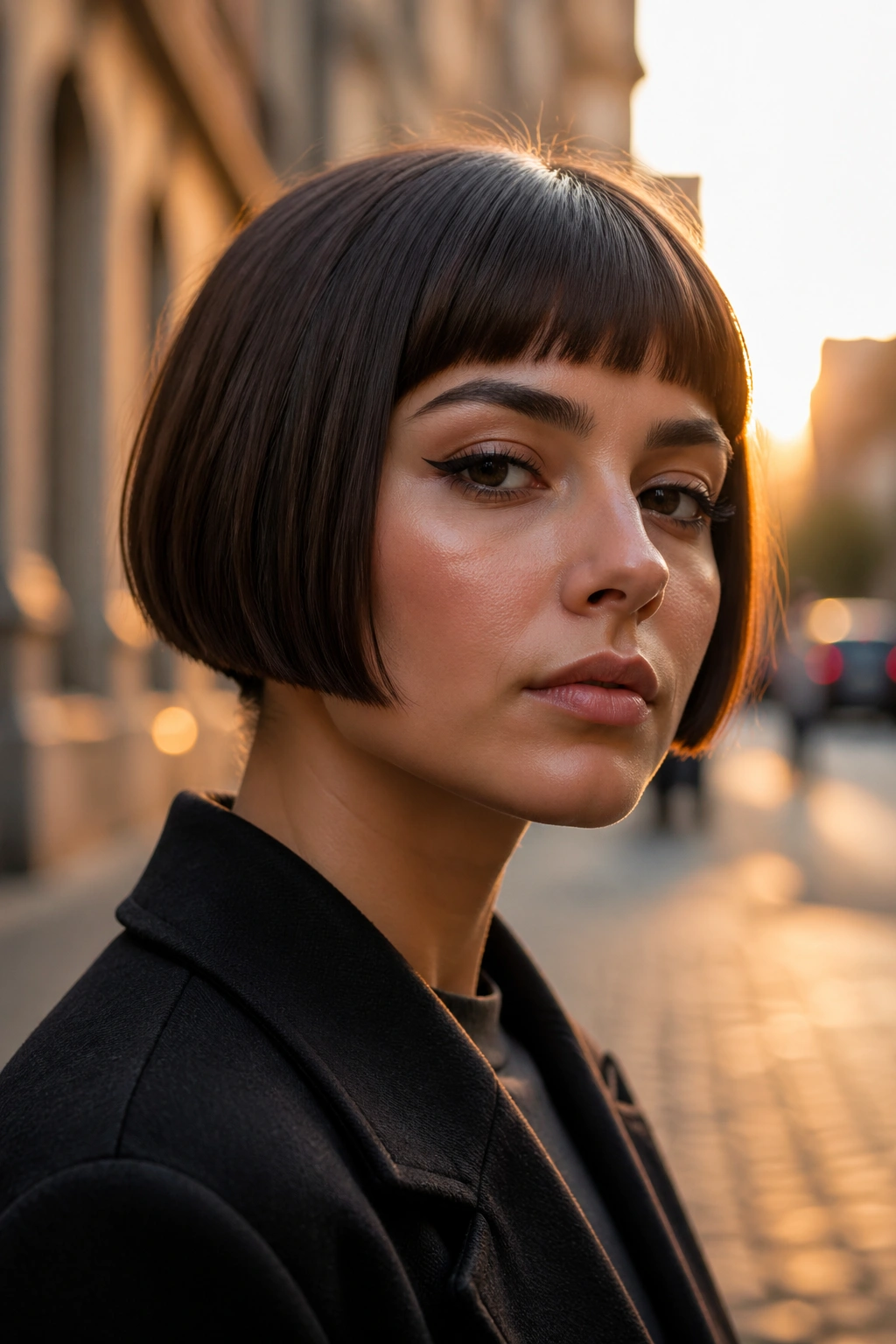
A micro bob is tiny, sharp, and not at all shy. It usually sits above the jaw, sometimes grazing the cheekbone, and it makes straight hair look almost graphic. There’s nowhere for the shape to hide, which is exactly why it’s so striking.
This cut asks for confidence and regular trims. The line grows out fast, and straight hair will show the change almost immediately. If you like neat edges and don’t mind seeing your stylist often, that can be part of the fun. If you hate maintenance, this is not the easy option.
A micro bob also shines when the rest of your look is simple. Clean knitwear, structured jackets, big earrings — it all makes sense with this shape. Keep the makeup soft or sharp, depending on your mood. The haircut can handle both.
18. Tapered Nape Pixie
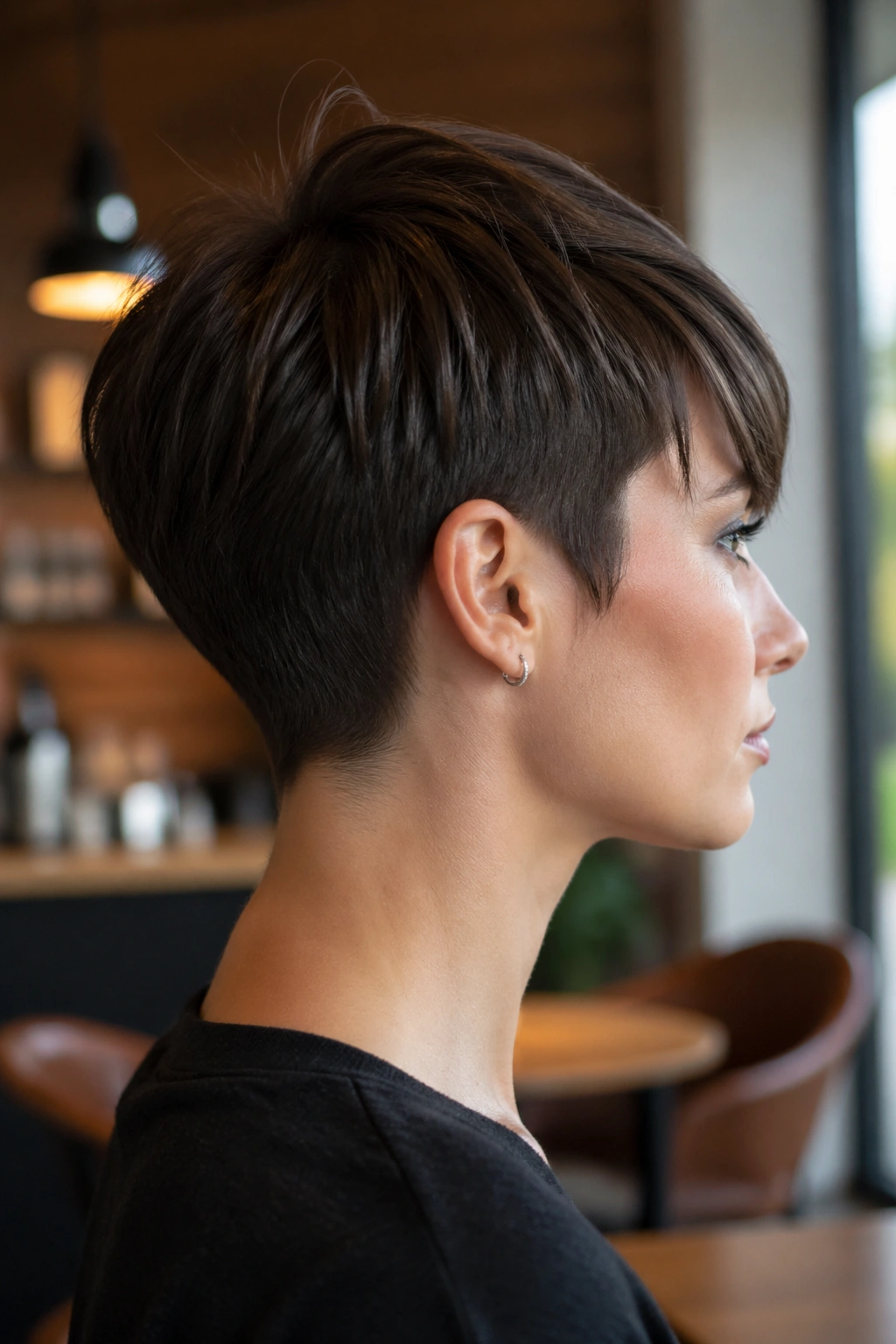
Unlike a long-top pixie, the tapered nape pixie puts the focus on the neckline. The back is cut close and neat, then it softens as it rises toward the crown. That taper makes straight hair sit close to the head in a way that feels neat, not flat.
For people with strong cowlicks at the nape, this cut can be a blessing or a headache. It depends on the direction your hair grows. A good stylist will work with the natural pattern instead of fighting it. If the nape sits weird when it grows out, ask for a slightly longer taper next time.
Best Pairings
- Strong brows
- Small hoops or studs
- Lightweight styling cream
- 4-week trims if you want the taper to stay crisp
The clean back gives the style its polish. Without that, it turns mushy fast.
19. Box Bob
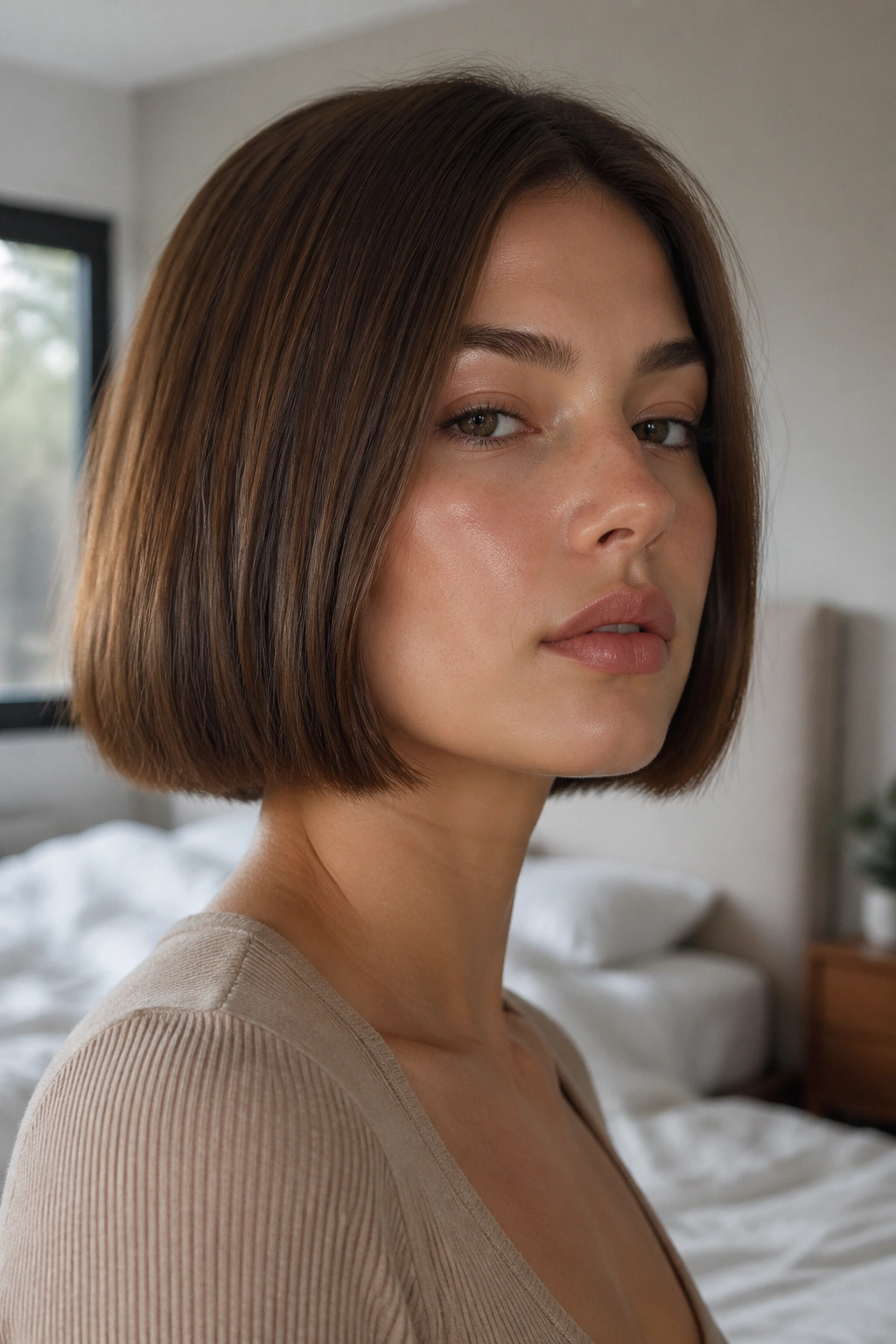
A box bob has a square silhouette, and on straight hair that square reads with real force. The sides hang with a little more heaviness, the ends stay blunt, and the overall shape feels denser than a soft bob. If you like a strong outline, this one delivers.
What to Ask For
Tell your stylist you want the perimeter to stay heavy. That matters. A box bob loses its point if too much is removed from the lower sides. The shape should feel almost graphic, with just enough internal shaping to keep it from puffing out.
This cut works beautifully on hair that’s naturally straight and thick because it can support the width. Fine hair can wear it too, but the cut needs precision so the ends don’t look scraggly. It’s also one of the easier cuts to style on a busy morning: dry it smooth, tuck it behind one ear, and go.
A box bob is blunt, but it doesn’t have to be severe. The right length and a neat finish make it look clean rather than hard.
20. Long Pixie With Side-Swept Bangs

A long pixie with side-swept bangs is the gentle exit ramp if you want shorter hair but not a full crop. The top stays long enough to sweep over the forehead, the sides stay close, and the overall shape feels light without being too exposed.
Straight hair makes this cut easy to move around. You can wear the bangs across the brow, push them back with a little product, or split them for a looser feel. That flexibility is the selling point. A lot of short cuts lose styling options. This one keeps them.
It’s also a smart choice if you’re testing short hair for the first time. The grow-out stage is forgiving, which helps. The cut slowly turns into a neat bob shape instead of collapsing into awkward layers. That alone makes it appealing to a lot of people.
21. Short Wolf Cut
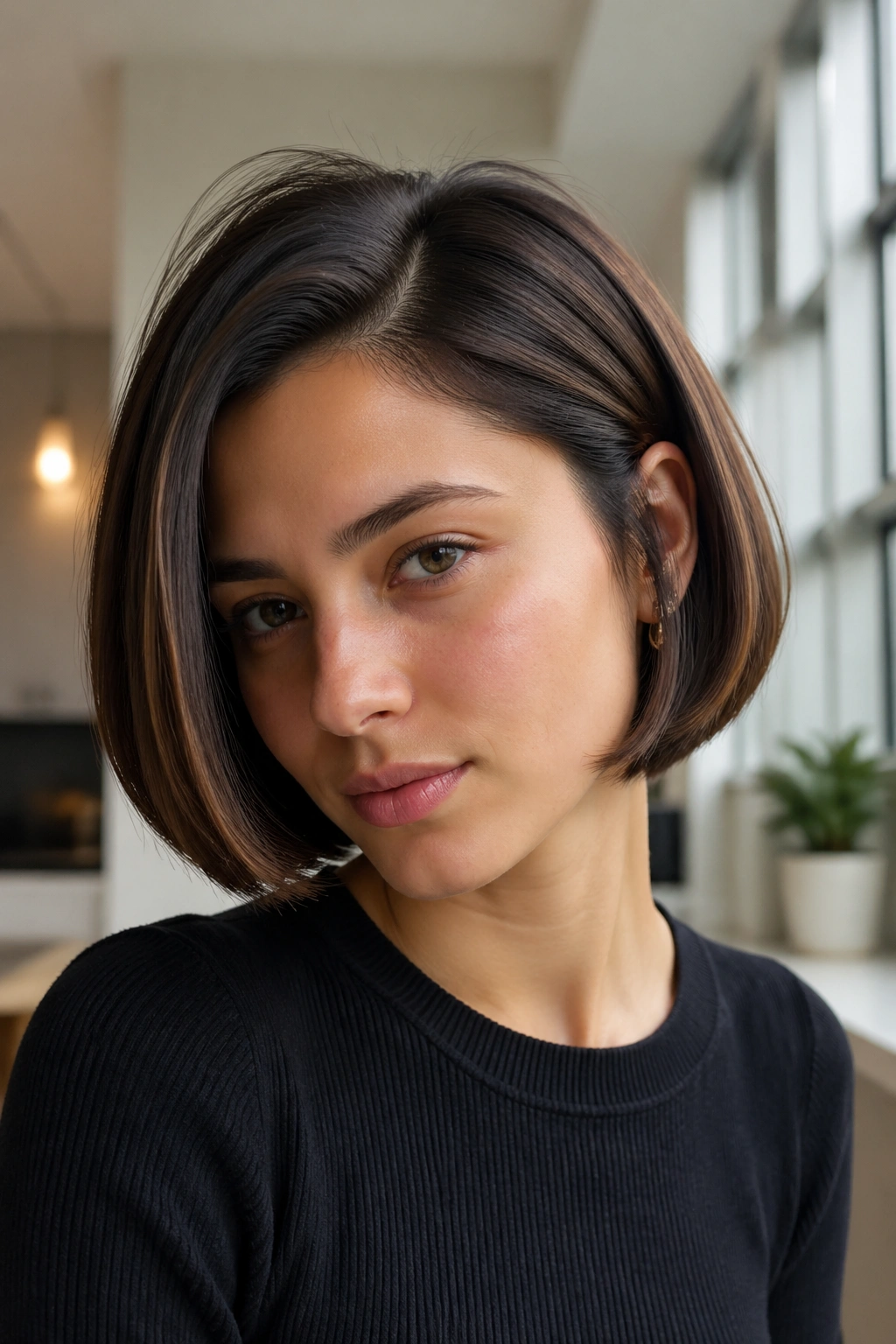
Can a wolf cut work on straight hair? Yes, if the layers are controlled. Straight hair won’t give you the same wild bend you see in curlier textures, so the shape has to come from the cut itself: shorter crown layers, a softer perimeter, and enough length in the back to keep it from becoming a mullet.
How to Keep It Balanced
The trick is not to over-texturize. Straight hair can go limp fast when too much is removed, and then the wolf cut loses its body. Ask for softer layering around the top and cheeks, with a little more weight left in the ends. That keeps the haircut from looking stringy.
This is a good pick if you like a messy finish but still want structure. A dry texturizing spray at the roots helps, and a quick bend with a flat iron on a few face-framing pieces can bring the whole thing to life. Don’t chase perfect symmetry here. The cut looks better with a little roughness.
22. Undercut Pixie
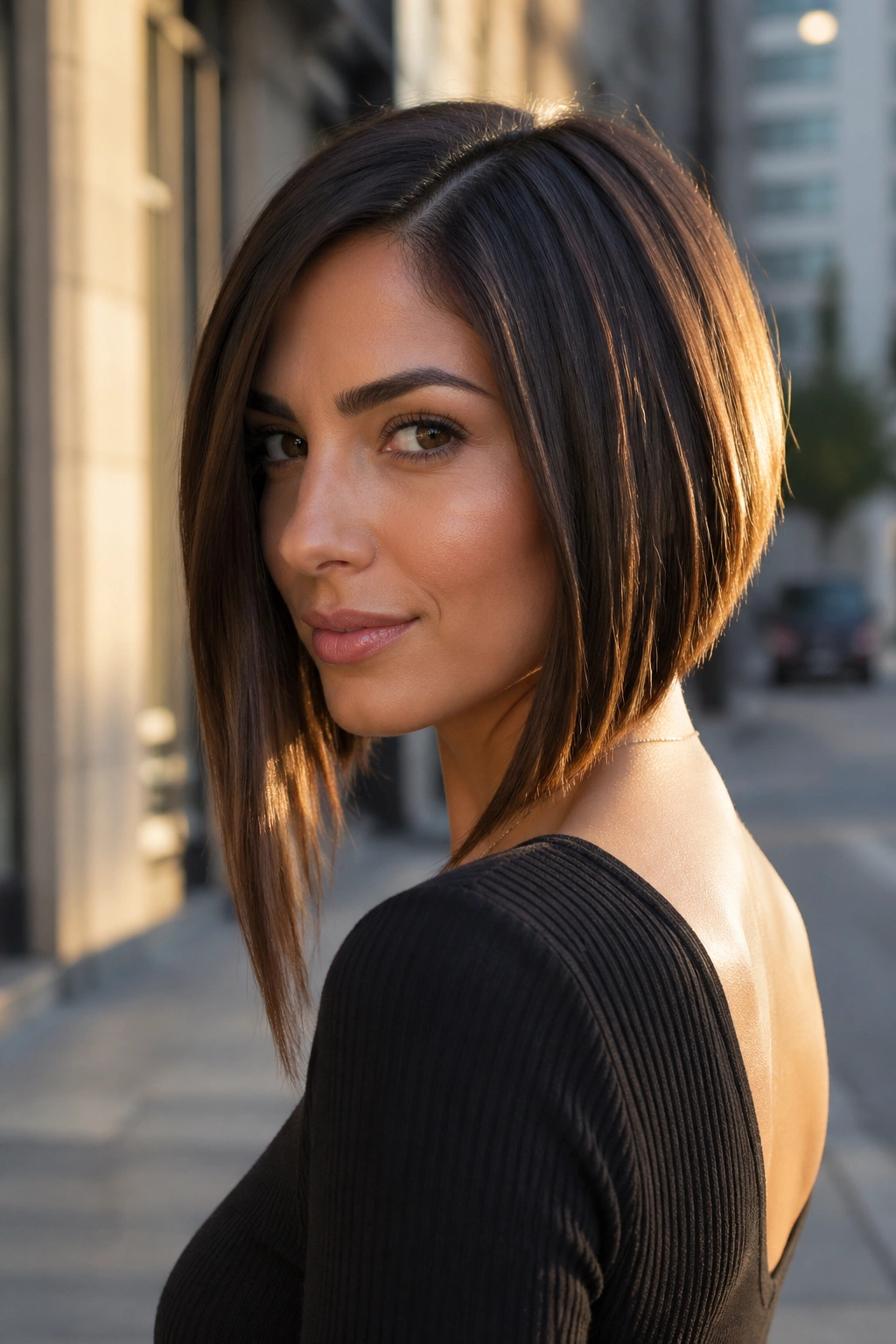
An undercut pixie removes bulk where straight hair tends to sit heaviest. The lower sections are clipped shorter, sometimes very short, while the top stays longer and softer. That contrast gives the haircut a bit of bite, and it keeps thick straight hair from turning into a helmet.
A Few Things to Know
- Hidden undercuts are easier to grow out
- Visible undercuts make the shape sharper
- The top needs enough length to cover or reveal the undercut depending on the day
- Best if you like styling with paste, cream, or a small amount of wax
This cut suits women who want a real shortcut and don’t mind a little attitude in the shape. It can be worn sleek for a tidy feel or lifted at the top for more edge. The important part is the balance between the short sides and the longer top. If the top gets too thin, the whole thing starts to feel disconnected.
No pretending here. This is a bold little haircut.
23. Invisible-Layer Bob
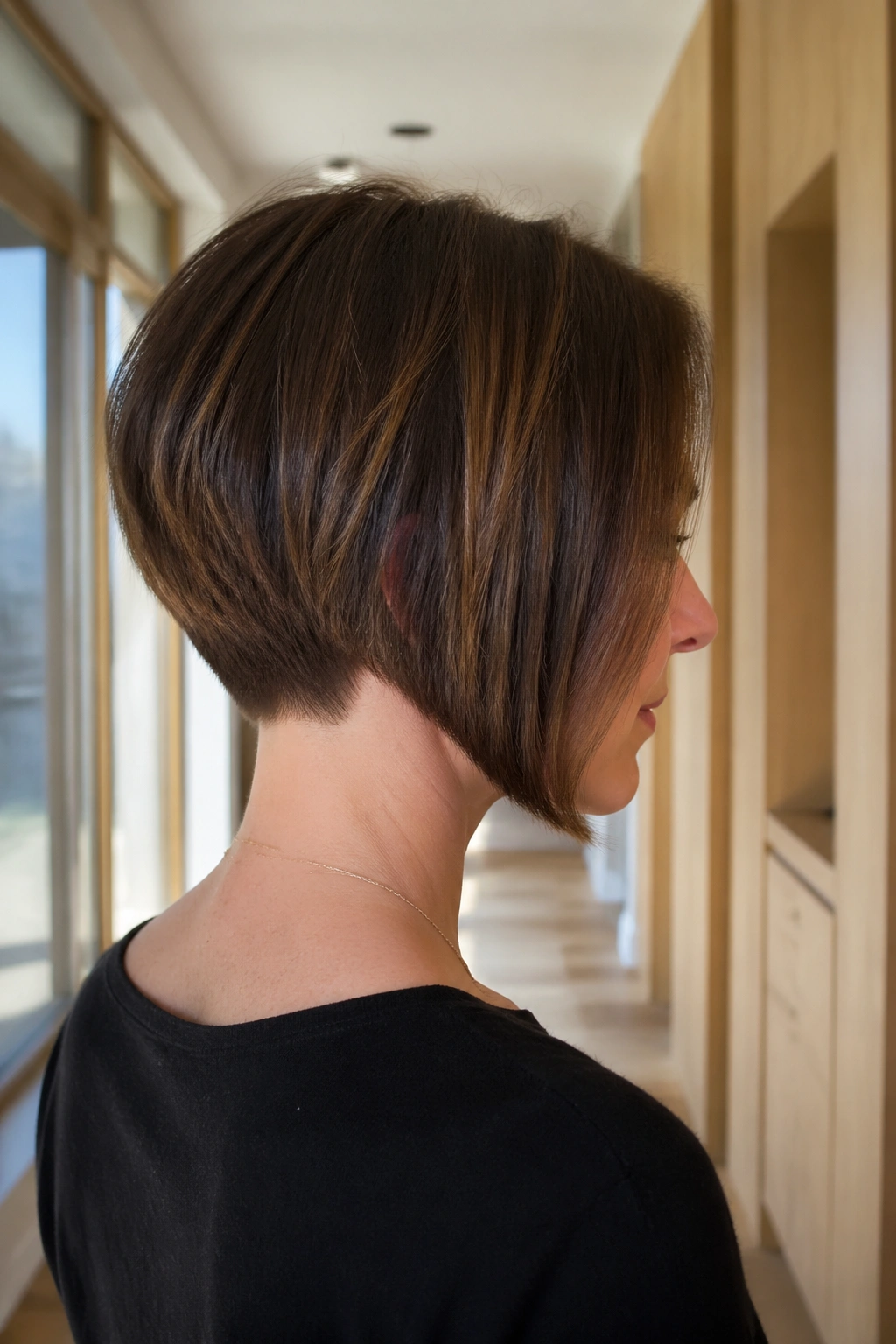
The invisible-layer bob is one of my favorite fixes for thick straight hair that looks heavy at the ends. From the outside, it still reads like a smooth bob. Underneath, there’s hidden layering that takes out some weight so the shape can sit flatter and move better.
That hidden structure matters because straight hair can look blocky fast. Visible layers often solve one problem and create another. Invisible layers give you a lighter feel without breaking the clean outline. It’s the sort of cut that looks simple until you try it and realize the hair falls better all day.
This one is especially good if you want a bob that behaves but don’t want to sacrifice fullness. Ask your stylist to keep the surface line blunt and do the real weight removal underneath. That way the haircut stays polished from the outside and less bulky in motion. Easy to wear. Hard to ruin.
24. Grown-Out Pixie Bob
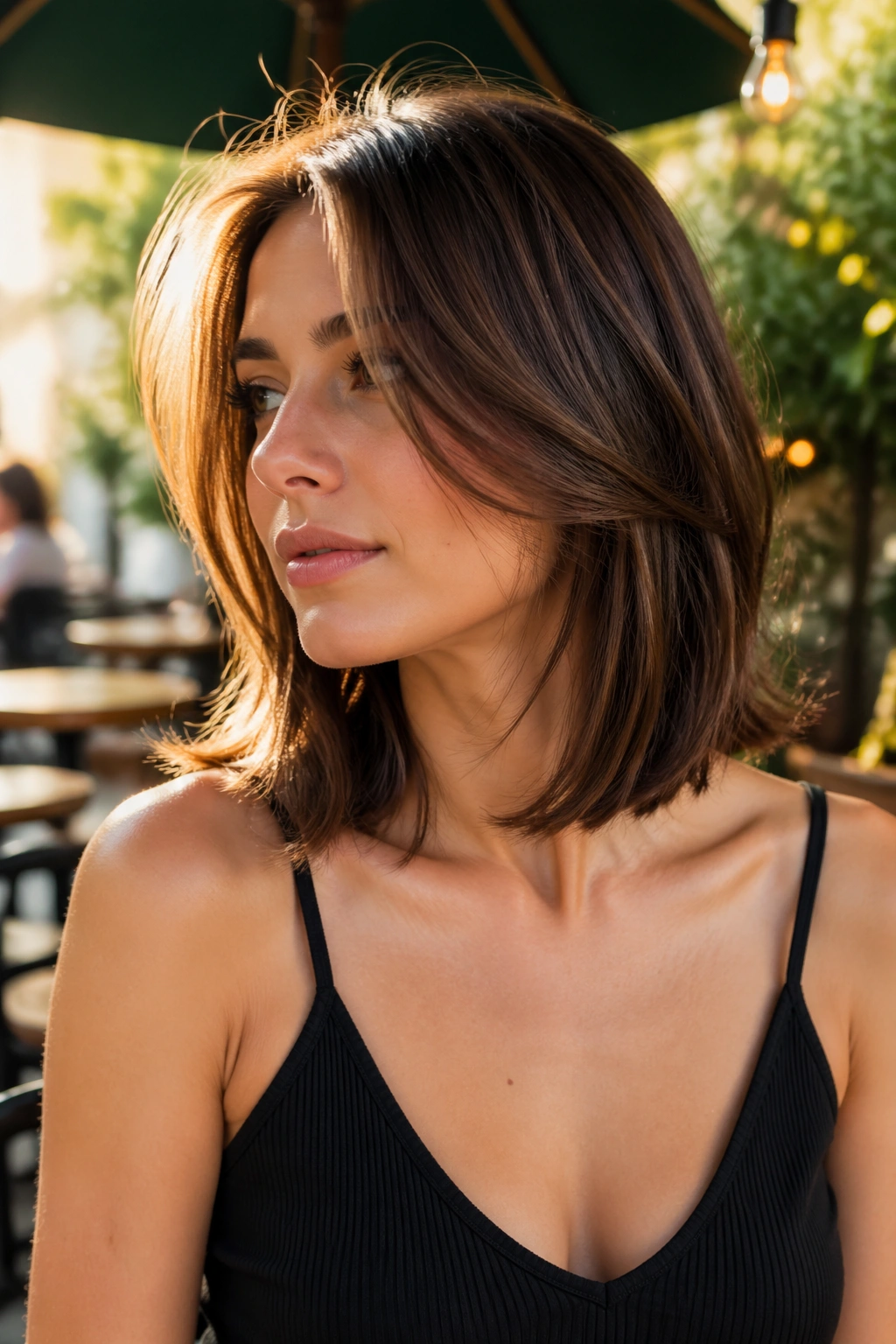
Unlike a fresh pixie, the grown-out pixie bob gives you a little ear length and softer edges. It sits in that comfortable middle zone where the haircut feels short but not severe. On straight hair, the shape reads clean because the longer pieces around the ears stay visible.
This is a smart choice if you’re moving away from a pixie and want the grow-out to look intentional. The sides can stay neat, the crown can keep a bit of lift, and the back can taper into a short bob line. That mix prevents the awkward “what is this length supposed to be?” phase.
It also suits women who like hair that can be tucked, pinned, or clipped back without losing its shape. A small barrette or tuck behind one ear changes the whole mood. That kind of flexibility is worth a lot when your cut is short but not too short.
25. Deep Side-Part Crop
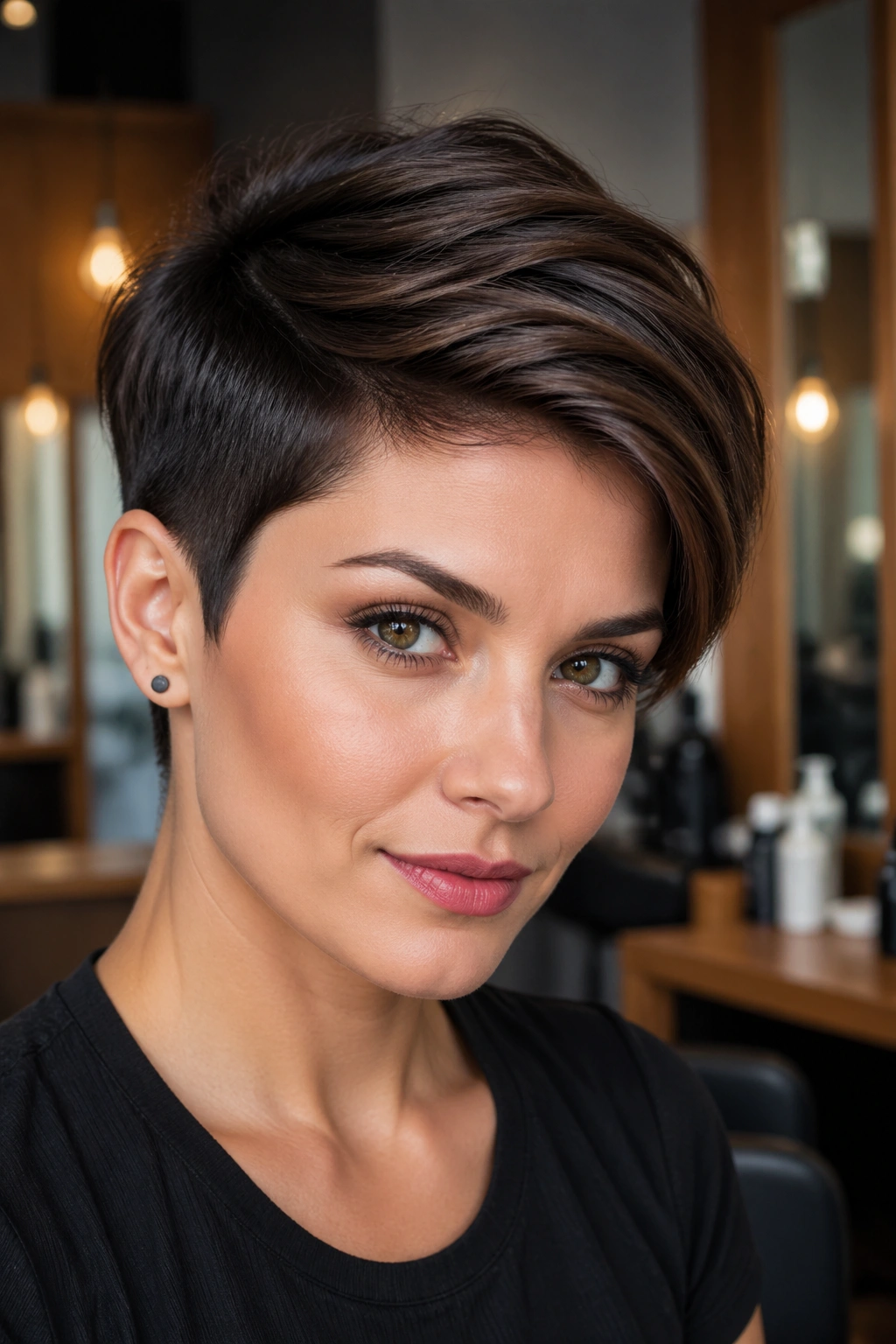
A deep side-part crop does one thing extremely well: it makes straight hair look polished with almost no length. The part drives the direction, the front falls across the forehead or cheek, and the short back keeps the shape tidy. It’s clean, a little dramatic, and very easy to wear once you know how much product you like.
Styling Notes That Matter
Use a small amount of cream or light pomade, then push the hair into the part while it’s still slightly damp. That helps the shape settle where you want it. If you wait until the hair is fully dry, straight strands can resist and spring back in odd ways.
This cut looks especially good if you wear bold glasses, a strong lip color, or structured clothes. It has enough edge to stand on its own, but not so much that it takes over your face. If you want a short haircut that feels intentional from the first second, this one makes a strong case.
26. Soft Mushroom Cut
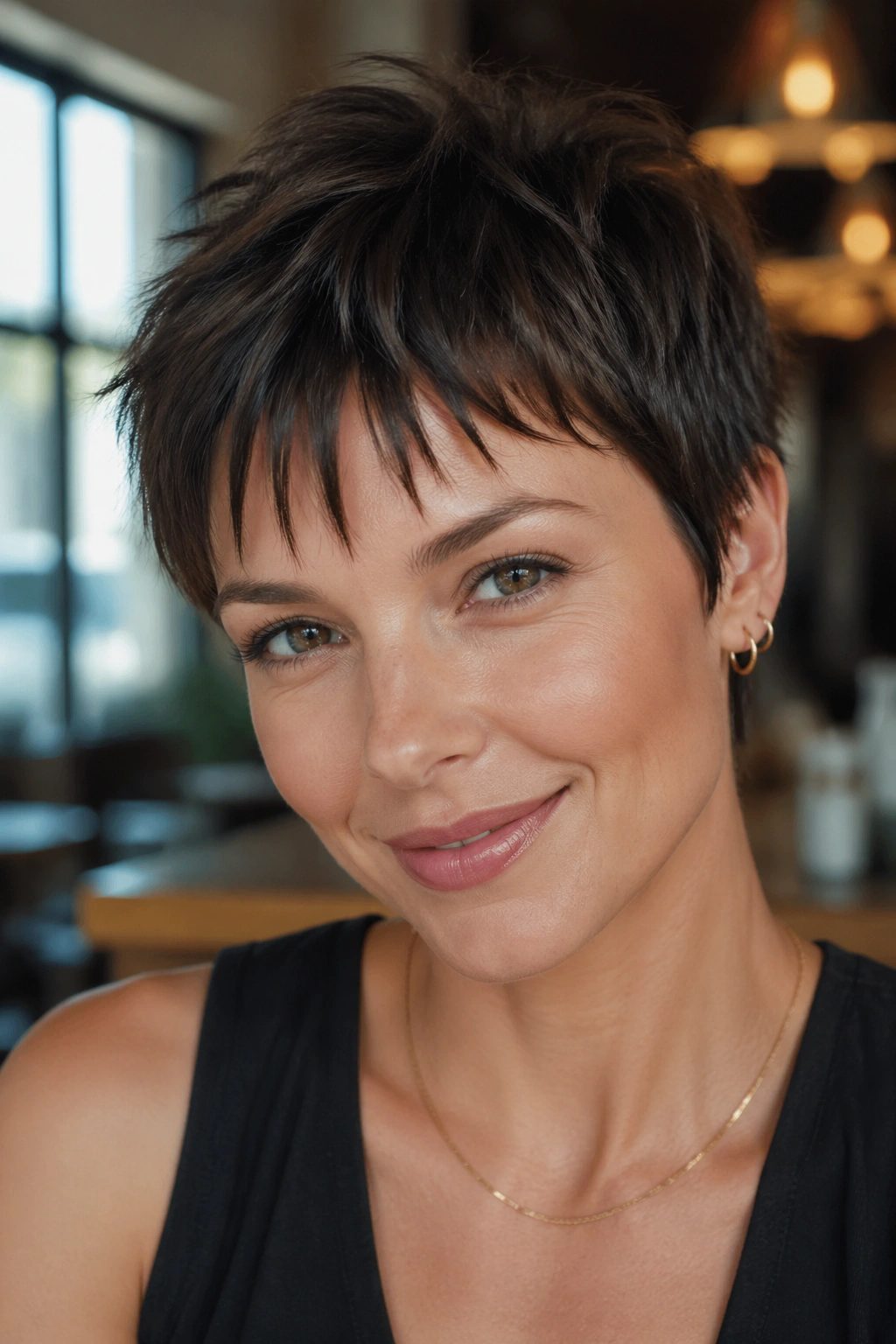
A soft mushroom cut sounds dramatic, but it doesn’t have to look old-fashioned. The shape curves around the head, usually with a rounded fringe or a softly closed front, and the edges are smoothed out so the whole cut feels modern rather than stiff. On straight hair, that rounded line can look surprisingly elegant.
What makes it work is control. The outline needs to be curved without becoming puffy, and the fringe should blend rather than sit like a helmet. If your hair is very straight, this shape can look almost sculpted. If your hair is thick, the stylist has to remove enough weight inside so it doesn’t swell out at the sides.
I like this cut for people who want something different but still neat. It’s not a shouty haircut. It’s a quiet one with a clear shape. And straight hair, when it’s cut like this, has a way of making that shape look cleaner than any texture spray ever could.
Final Thoughts
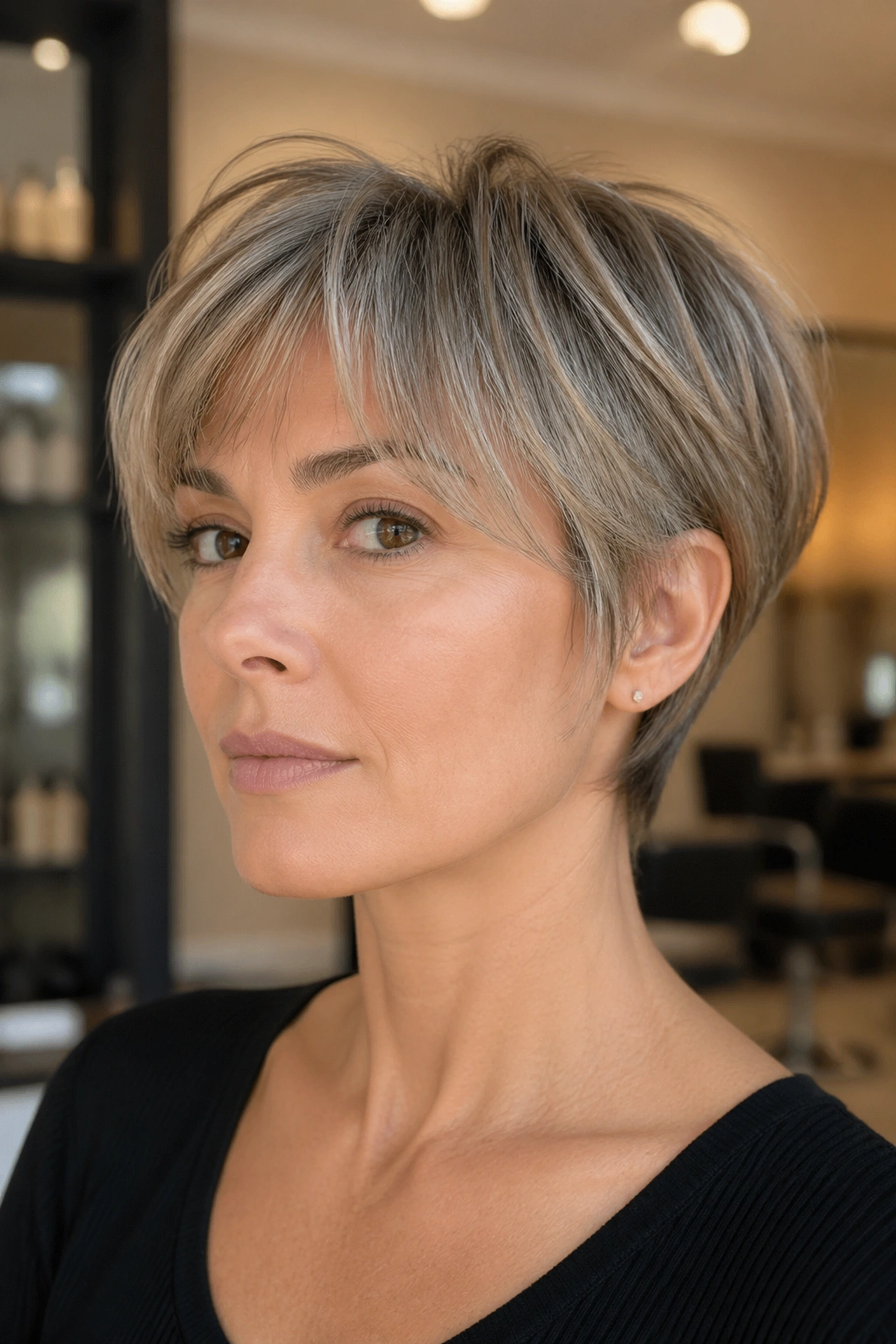
Straight hair rewards a clear outline. That’s the part people miss when they ask for softness first and shape second. A blunt bob, a short crop, or a layered cut with restraint usually looks better than a heavily thinned cut that needs constant fixing.
If you’re torn between two lengths, start with the one that gives you the cleanest grow-out. That’s usually the safer bet. A sharp bob can turn into a lob. A pixie can become a neat crop. A bad haircut, though, just keeps asking for attention.
And if you want the simplest rule of all, here it is: straight hair looks its strongest when the cut knows exactly what it wants to be.
