



Caramel balayage has a way of making hair look richer without looking forced. The right placement reads like sunlight that took a polish cloth to itself, and that is why the best versions look expensive instead of stripey.
The trick is not the caramel shade alone. It’s the contrast, the softness at the root, and the way the lighter pieces travel through the haircut. A deep brunette base with thin ribbons around the face can look far more luxe than a brighter blonde-on-brown mix that never quite settles.
Hair that looks expensive tends to look deliberate. Clean blend. Controlled warmth. A gloss that leaves the ends smooth instead of fuzzy. A color that grows out without shouting every three weeks. That is the whole game.
Some of the styles below stay subtle. Others lean warmer and more visible, with brighter money pieces or deeper root shadows. Either way, the thread is the same: dimension that feels finished, not loud.
1. Chestnut Base with Soft Caramel Ribbons
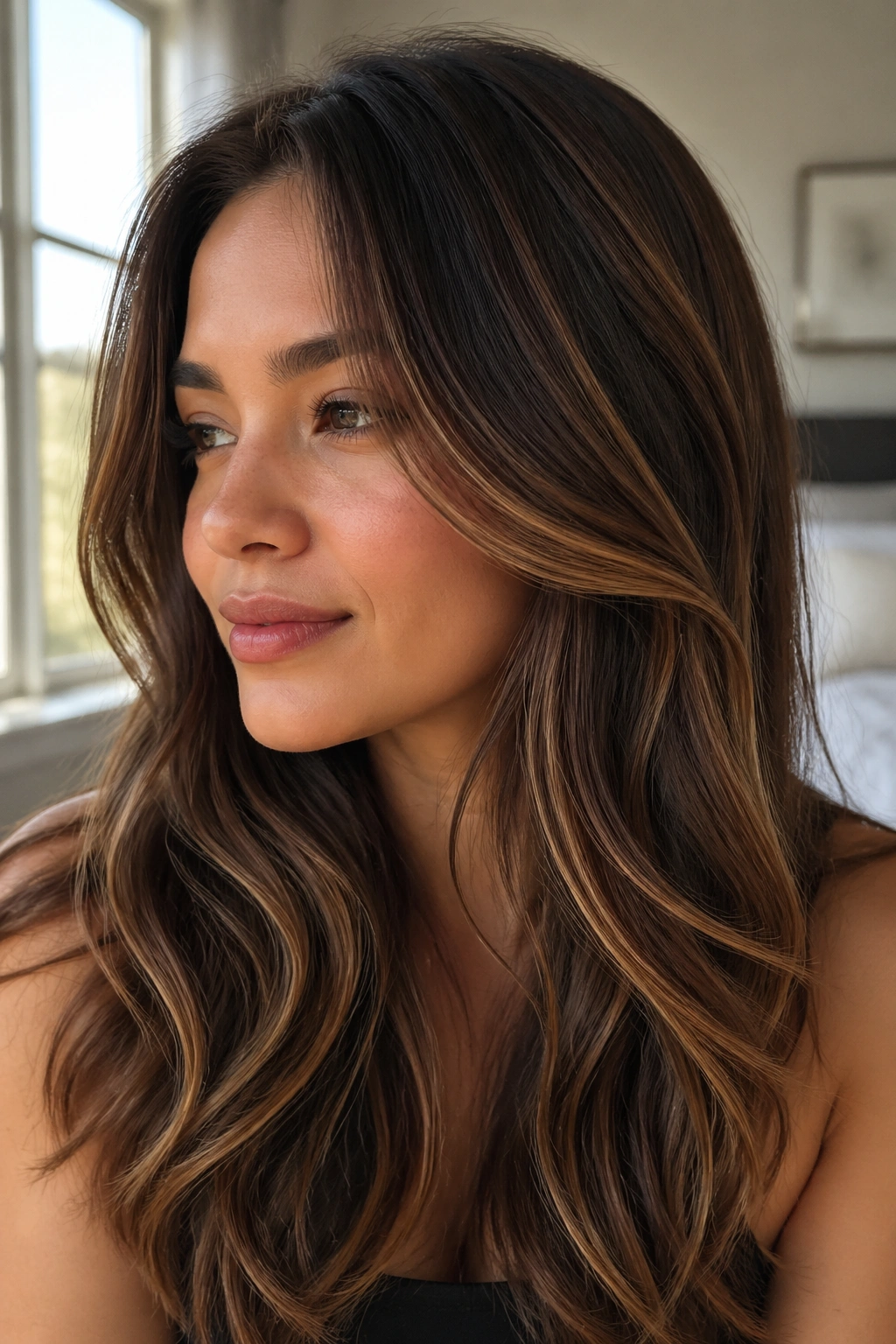
This is the safest expensive-looking caramel balayage on the list, and I mean that in the nicest way. A chestnut or mocha base with thin caramel ribbons can make hair look thicker, shinier, and a little more tailored without screaming for attention.
The magic is in the contrast. Keep the ribbons only one to two levels lighter than the base, and ask for them to sit mainly through the mid-lengths and the outer layer. If the lighter pieces are too bright, the look starts to drift into obvious highlight territory. Nobody wants that when the goal is a soft, costly finish.
Why It Looks So Polished
A chestnut base gives the caramel something rich to live against. That darker depth matters. It keeps the color from looking washed out, and it makes the lighter pieces feel intentional instead of random.
Best for: medium brown hair, layered cuts, and anyone who wants dimension without a big change.
Ask for: soft hand-painted ribbons, a gentle root melt, and a beige-caramel gloss.
Avoid: chunky streaks near the crown. They break the illusion fast.
Tiny tip: keep the brightest pieces just around the face and top layer. That’s enough.
2. Espresso Hair with Honey Caramel Ends
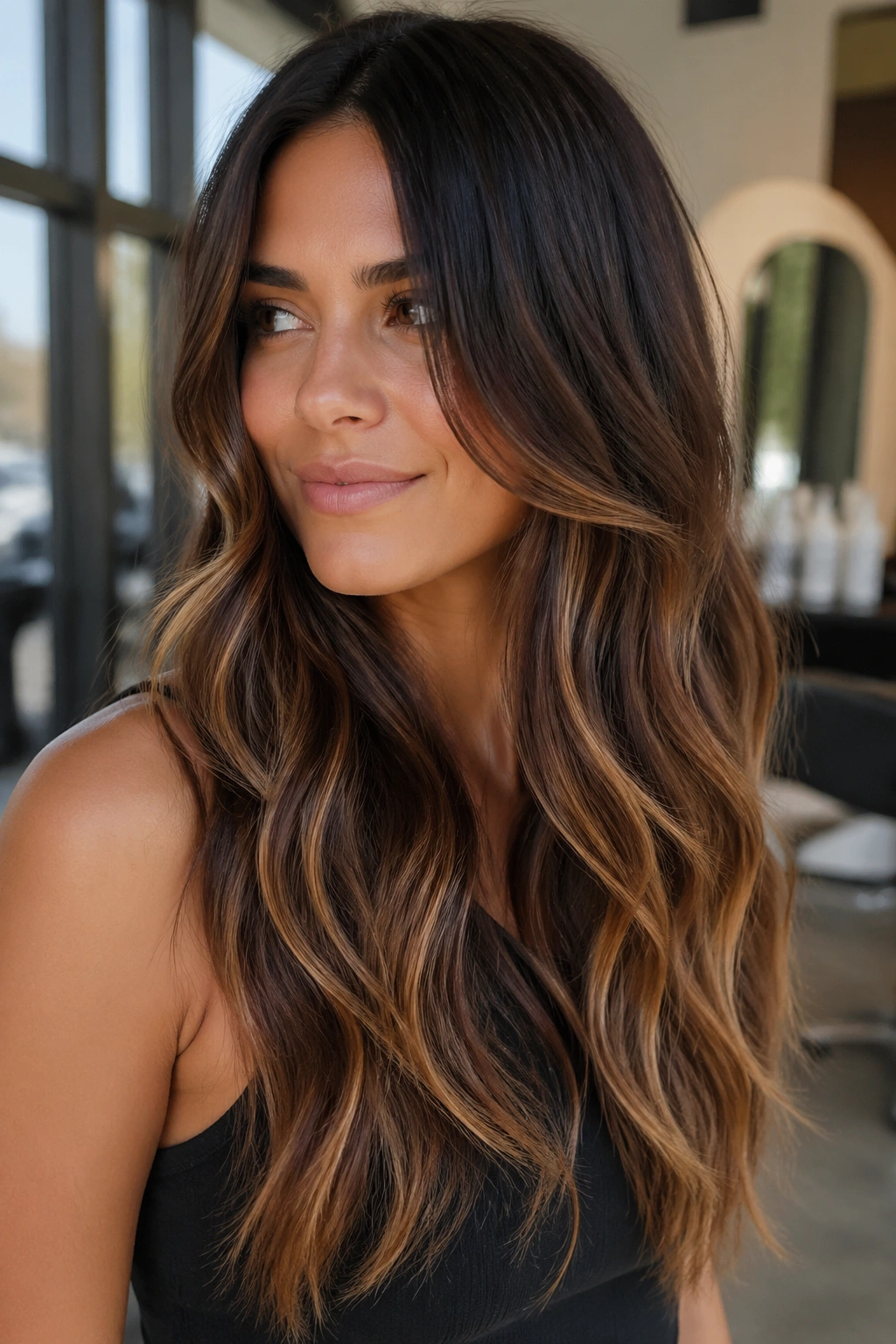
Want darker hair to look lighter without giving up the depth that makes brunette color feel expensive? This is the one. Espresso roots fading into honey-caramel ends give you the richness of dark hair and the softness people usually chase with lighter blonde work.
The placement matters more than the tone here. The lighter pieces should start around the cheekbone or below, then feather out through the ends so the color feels like it’s sinking into the haircut. When the lighter shade begins too high, the whole thing can look patchy. Too low, and it looks like nothing happened.
What Makes It Work
This style loves long hair because the length gives the fade room to breathe. If your hair hits the shoulders or longer, the gradient reads clean and deliberate. On shorter cuts, it can still work, but the transition needs to be softer so it doesn’t look chopped.
Honey caramel is warmer than beige caramel, so it works best if your skin has golden, peachy, or neutral undertones. If your hair tends to pull orange, ask for a neutralizing gloss at the end. That small step changes the finish a lot.
A full, glossy blowout helps here. Straight hair shows the fade in a sleek way, while loose waves make the honey ends look almost molten.
3. Butterscotch Money Piece
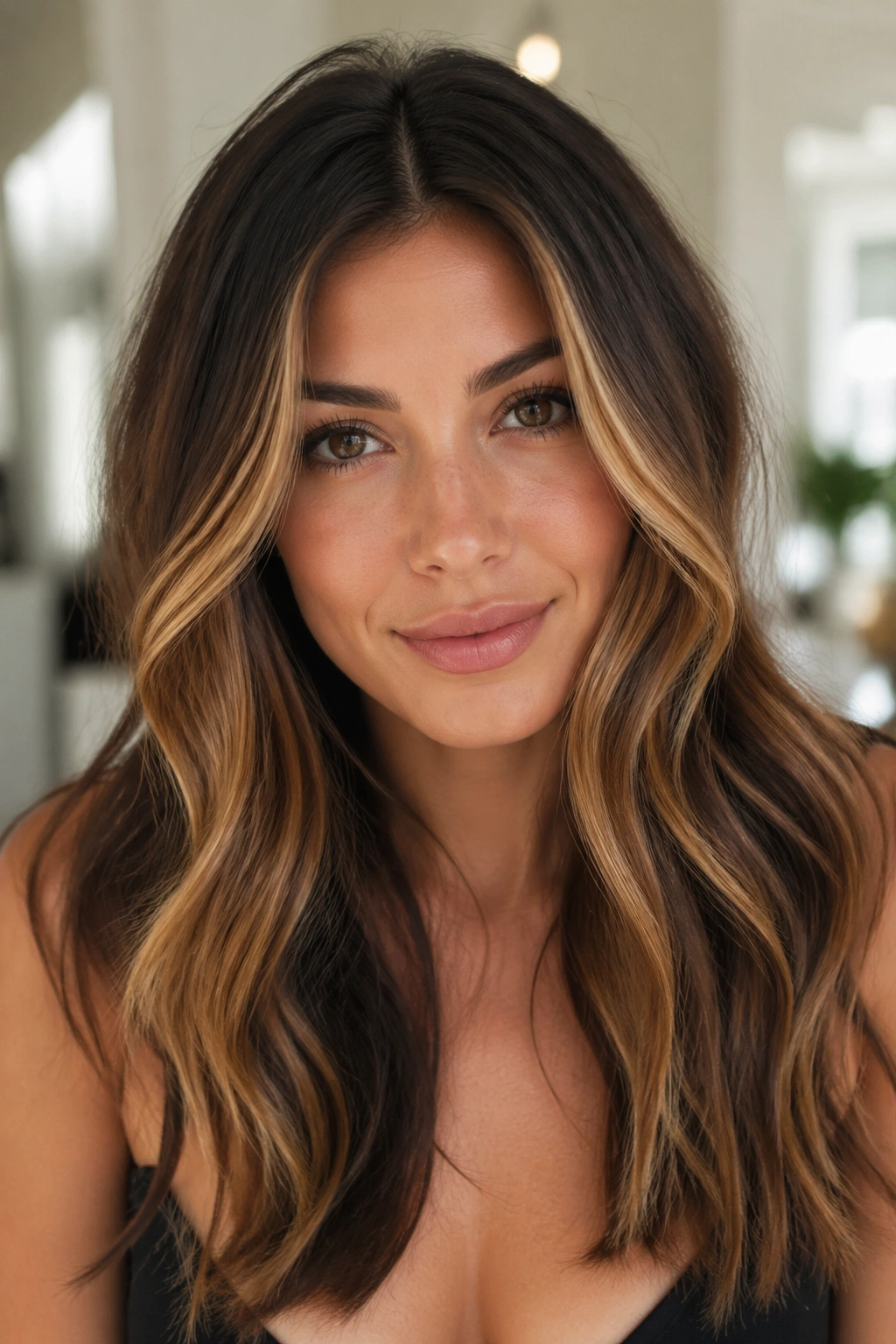
A money piece changes the whole conversation. The second those front panels get brighter, the face wakes up, and the rest of the hair suddenly looks more expensive too.
This version uses a butterscotch caramel rather than a pale blonde. That’s the move. It gives brightness without losing the warm brunette feel that keeps the color grounded. Ask for the front pieces to be soft at the root and brighter from the cheekbone down, not a hard stripe from the hairline.
How to Wear It
A butterscotch money piece works especially well with ponytails, claw clips, and half-up styles because the front remains visible even when the rest of the hair is pulled back. That makes it one of the few color choices that looks good on a lazy hair day. Always a win.
- Keep the front pieces wider than a pencil, but not chunky.
- Blend the edge into the base with a soft glaze.
- Style with a loose bend so the front falls naturally.
- Use a shine spray on the finished hair, not near the roots.
One warning: if the money piece is too pale, it stops looking rich and starts looking disconnected.
4. Toffee Balayage on Long Layers
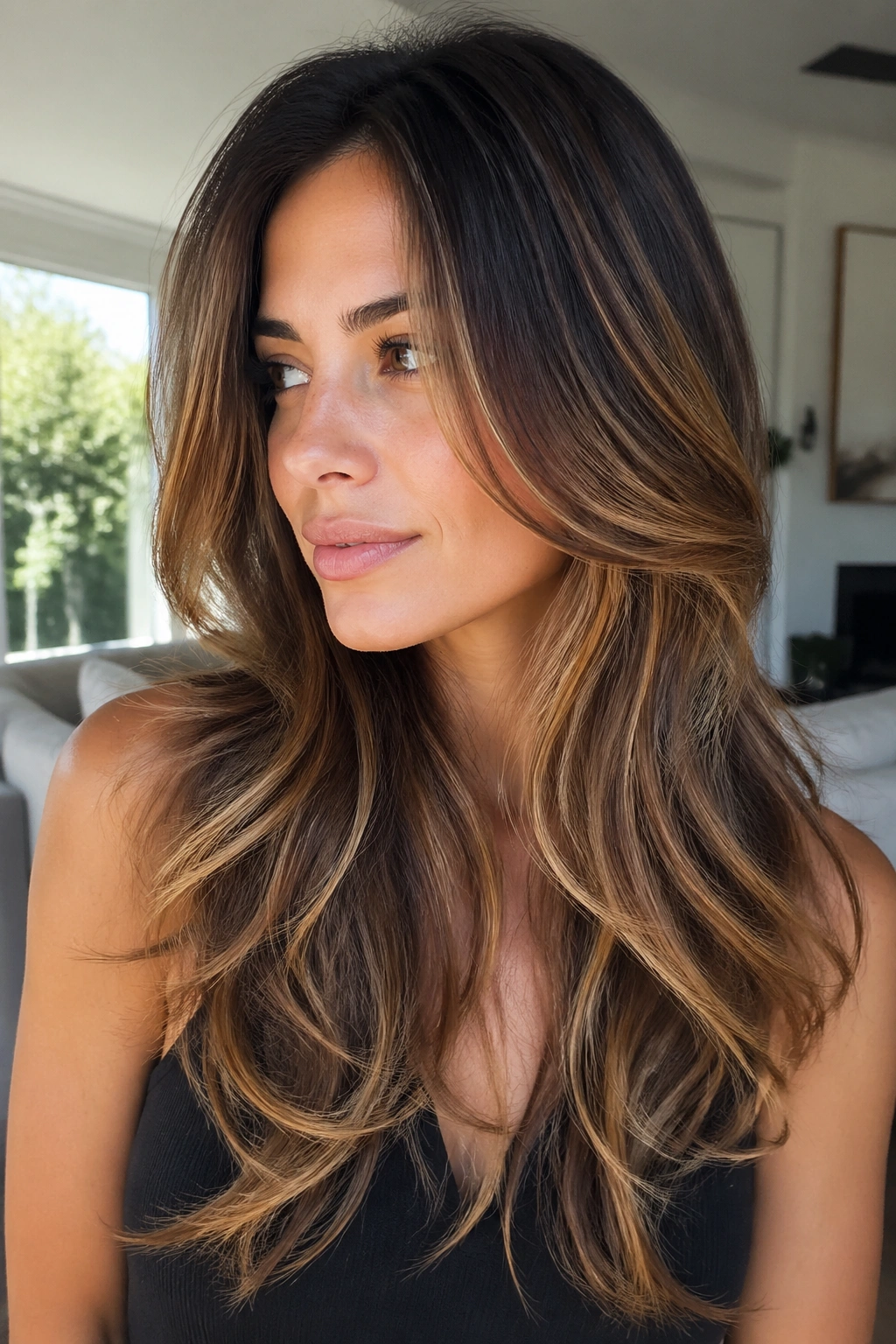
Long hair does not need more highlights. It needs better ones.
That’s why toffee balayage on layered lengths works so well. The layers give the lighter pieces places to show up, and the toffee tone sits right in that sweet zone between warm brown and soft gold. It reads full, glossy, and expensive without relying on a big color change.
What to Ask For
Tell your colorist you want the lightness to follow the movement of the cut. The brightest points should land where the layers flip out or bend inward. That keeps the color from looking painted on top of the hair like a stripe.
- Ask for diffused ends, not hard lines.
- Keep the crown darker for depth.
- Let a few ribbons fall through the mid-lengths.
- Finish with a clear or beige gloss for extra shine.
Long layers and toffee balayage love each other. The haircut creates motion, and the color gives that motion something to show off. If your hair is thick, this can also stop the style from looking heavy at the bottom.
5. Cinnamon Caramel on a Wavy Lob
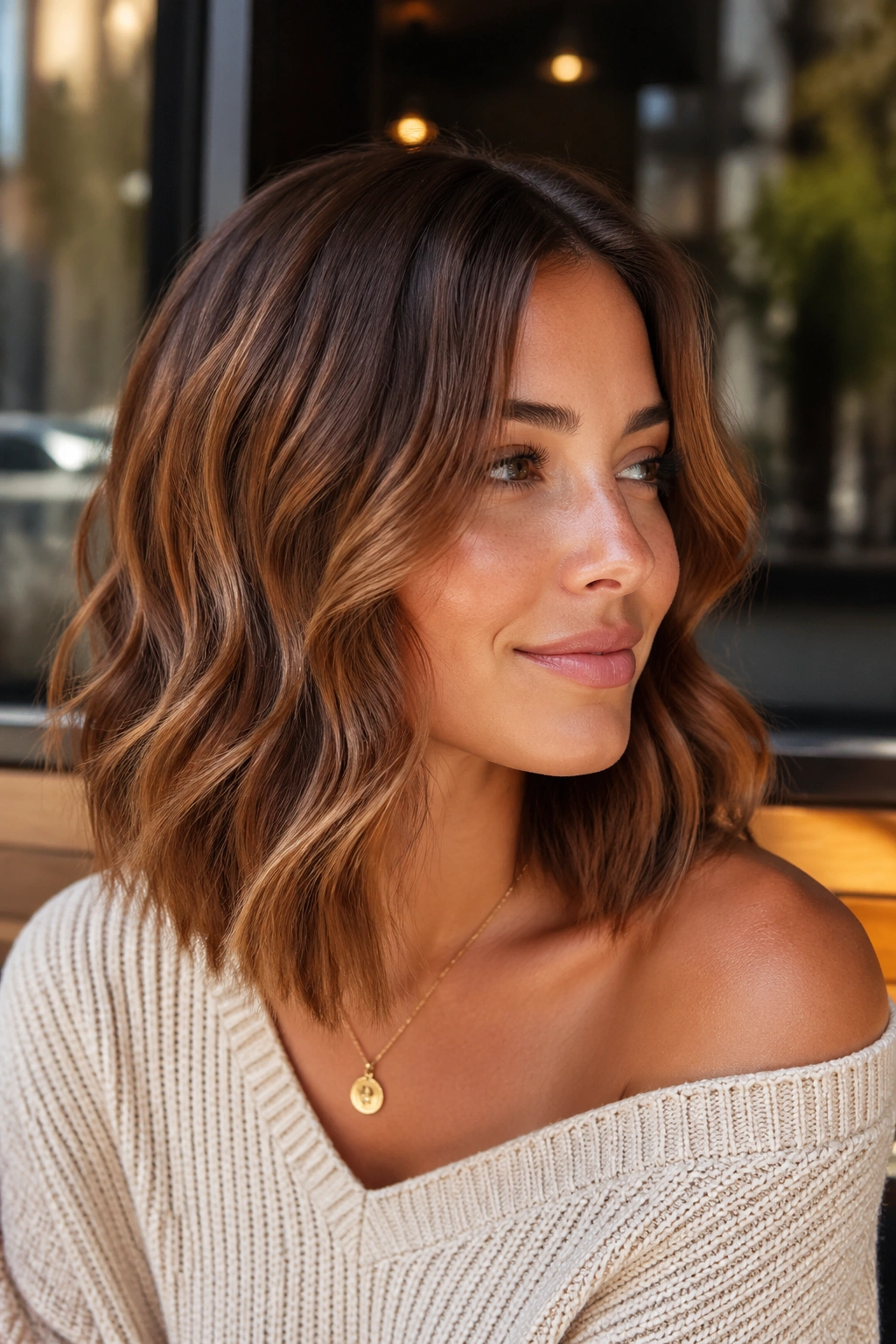
A wavy lob gives caramel balayage some attitude, and cinnamon is the warmest, plushest way to do it. The color sits between brown, amber, and a soft red-gold, which makes it look richer than a plain golden tone.
The best part is how the waves break up the color. On a lob, the ends usually graze the collarbone or just below it, so every bend creates a tiny shift in tone. That movement makes the color feel alive. It does not need a ton of brightness to do the job.
Why It Reads So Rich
Cinnamon caramel works best when the base is a medium brunette and the lighter pieces are painted in broad, soft strokes. Too much orange makes the hair look coppery in a flat way. A controlled cinnamon tone, though, can look like a luxury gloss service.
Keep the roots slightly deeper and let the warmth live through the middle and ends. That gives the haircut shape. It also keeps the look from turning fuzzy when the hair grows out, which is a real concern with warmer tones.
If your waves are loose and undone, this style has a very polished-but-not-trying feel. That is exactly why it works.
6. Mocha Brown with Creamy Beige Caramel
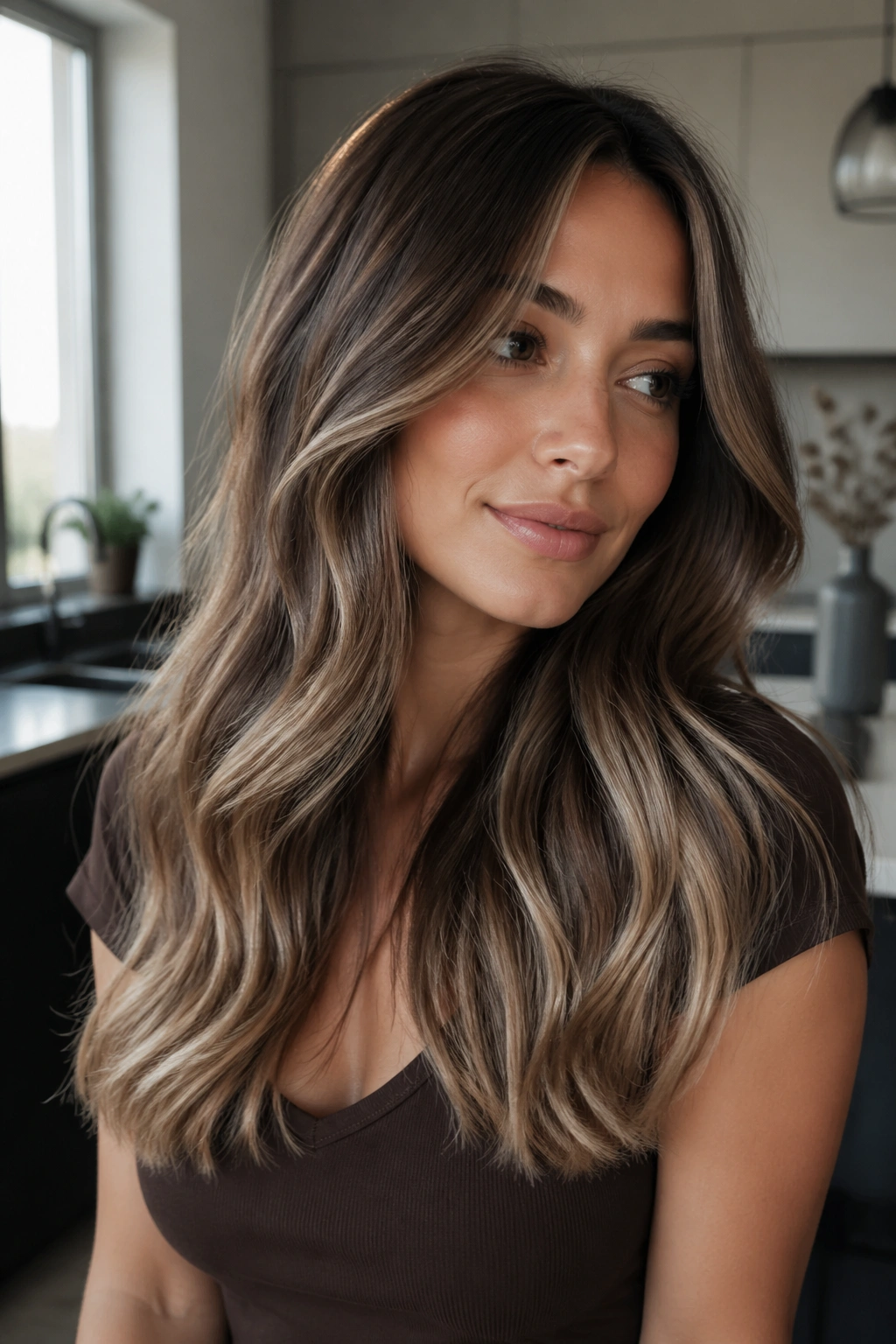
Not everyone wants gold. Some people want their brown hair to look expensive in a quieter, cooler way, and creamy beige caramel does that job better than almost anything else.
This is a brunette-first color. The mocha base stays in charge, and the caramel shows up as soft, creamy pieces that never go brassy. If your hair pulls orange, this is the style to ask for before the color wheel starts bossing you around.
The Toner Matters
A beige gloss or a neutral toner is the backbone here. Without it, beige caramel can drift yellow fast. With the right finish, though, the whole look feels smooth and expensive, almost like the hair has been filtered in real life.
What to request
- A mocha root shadow.
- Thin beige-caramel ribbons around the face.
- Soft mids and slightly brighter ends.
- A cool-beige gloss to keep warmth under control.
This style is especially good if you wear your hair straight or in a sleek blowout. The smooth finish lets the color placement do the talking, and the creamy tone keeps it from looking harsh.
7. Golden Caramel on Curly Hair
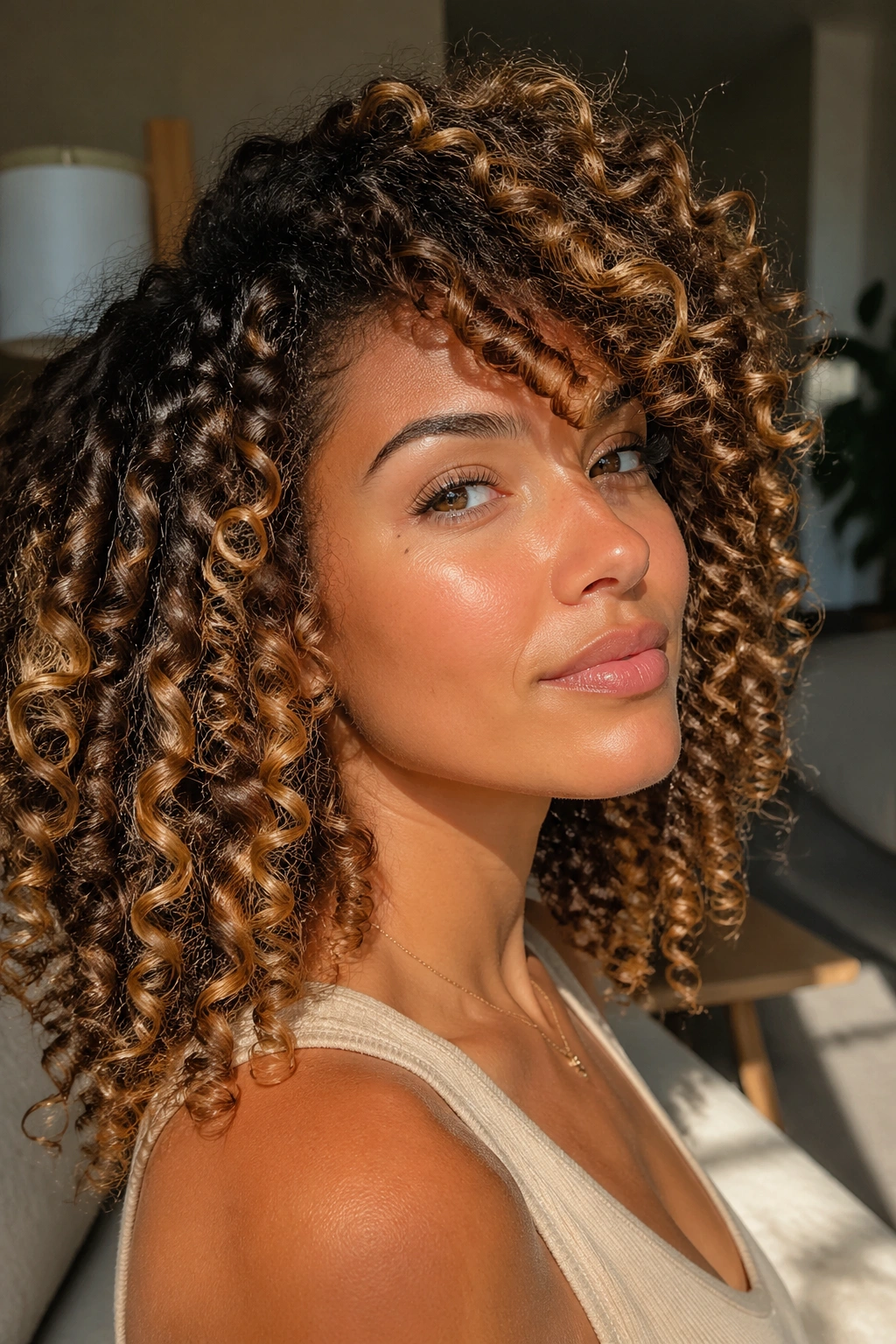
Curly hair takes caramel in a way straight hair just can’t match. The light lands on every curve, so a few smartly placed golden pieces can make the entire head look brighter and more dimensional.
The placement has to respect the curl pattern. If the lightener is painted too uniformly, curls lose shape and the style starts to look dry. That’s the mistake people make. The color should sit where the curls naturally rise toward the surface, with a little more brightness on the outer canopy and around the face.
Why Curly Hair Loves This Shade
Golden caramel gives curls a warm halo without flattening the texture. It looks best when the hair is hydrated and defined, because healthy curl clumps reflect light in a way that straight strands often don’t.
A few practical notes:
- Ask for hand-painted ribbons, not uniform stripes.
- Keep the ends soft, not over-lightened.
- Use a moisturizing mask so the color doesn’t look dusty.
- Diffuse or air-dry for the clearest shape.
Curly caramel balayage can look expensive fast, but only if the curl pattern stays the star. The color should frame the curls, not fight them.
8. Beige-Caramel Ribbon Balayage on Straight Hair
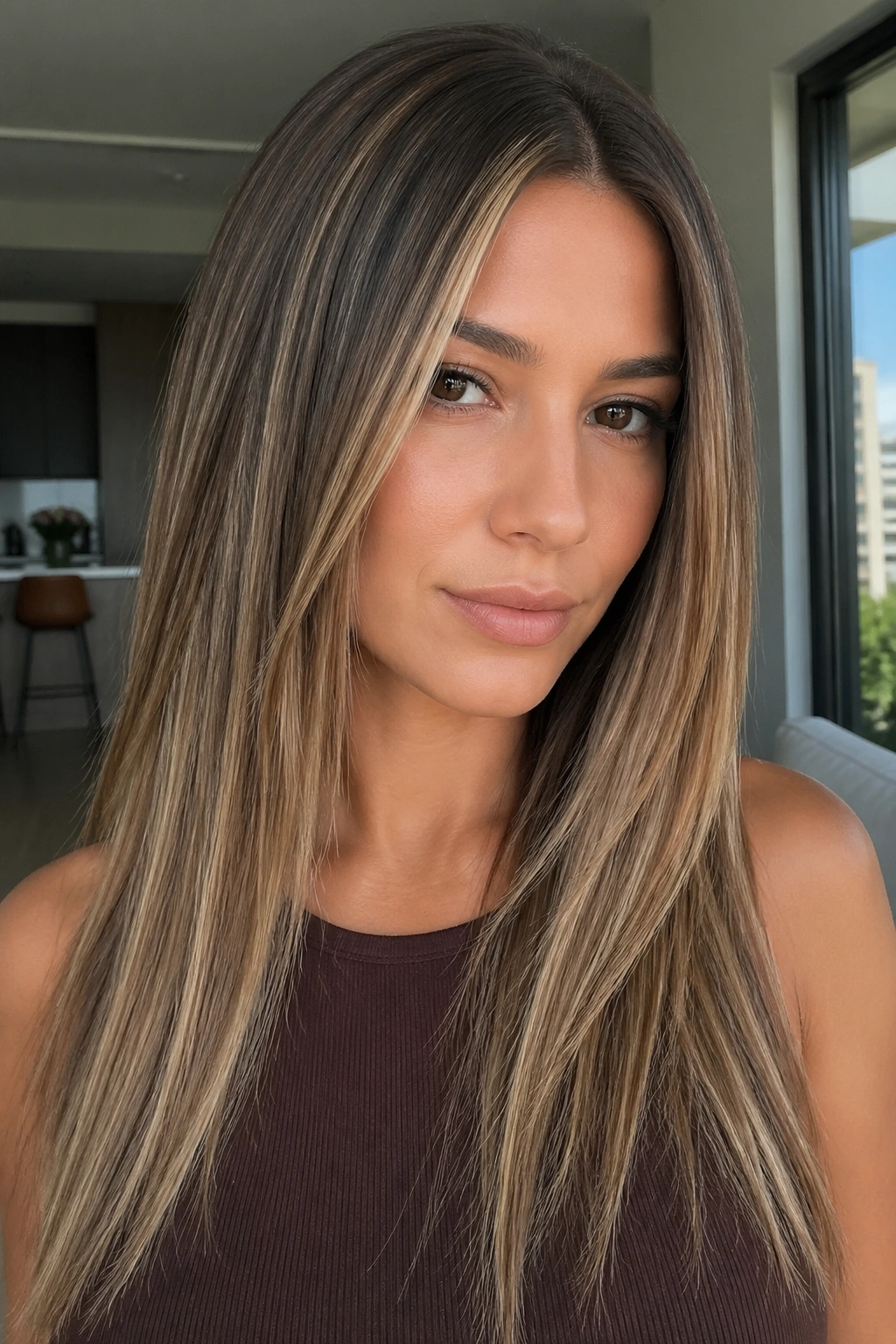
Straight hair is unforgiving. Every line shows. Every mistake shows. That’s why this style needs finer ribbons and a calm hand.
Beige-caramel ribbon balayage works because it adds movement without turning the hair into a checkerboard. On straight styles, the eye sees everything at once, so the color has to be quietly smart. Thin ribbons through the top layer, a few stronger pieces near the front, and a soft gloss across the lengths are usually enough.
What Makes It Different
Unlike wavier styles, straight hair doesn’t hide chunky placement. That means the color needs to feel almost woven into the cut. Think smaller sections, softer lift, and a smoother transition from root to tip.
This look is excellent for a center part, a tucked-behind-the-ear finish, or a sharp glass-hair blowout. It looks expensive because it feels controlled. Not stiff. Controlled.
If your hair is very fine, don’t overload it with too many light pieces. A handful of well-placed ribbons can give more depth than a dense set of highlights that compete with each other.
9. Rooted Caramel Bob
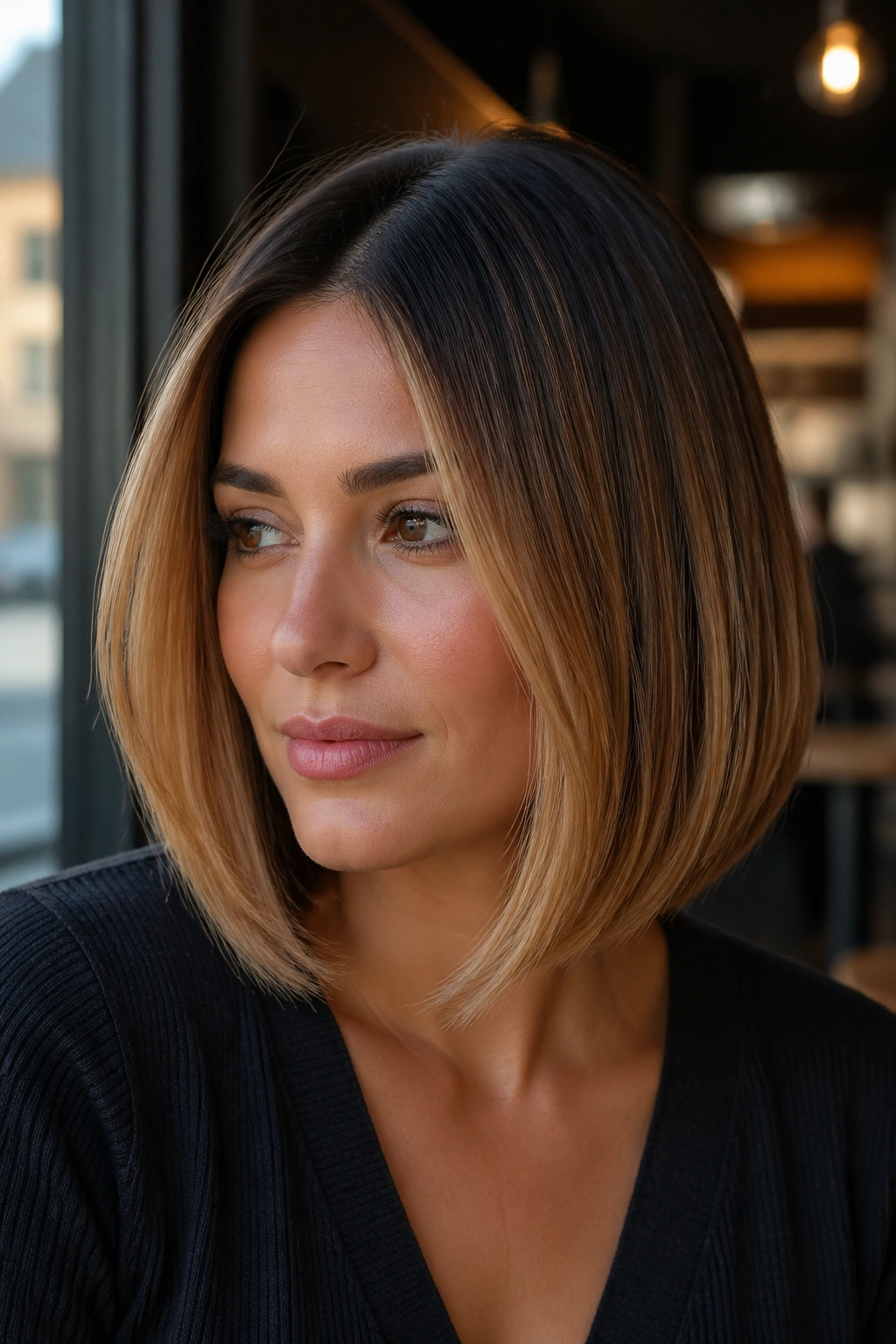
A bob is where caramel balayage can get genuinely chic. The shorter shape gives you less room to hide color mistakes, so the root shadow has to be clean and the lighter pieces have to support the cut instead of overwhelming it.
A rooted caramel bob usually starts with a deeper brunette base, then opens up around the cheekbones and ends with soft toffee or gold. That darker root keeps the bob from looking helmet-like, which is a strange thing bobs can do when the color is too light all over.
What to Ask For
Ask for brightness where the hair moves: around the face, at the ends, and through the top layer. Keep the nape softer and darker. That contrast makes the bob feel fuller and far more deliberate.
- Best on blunt bobs and long bobs.
- Works especially well with a side part.
- Needs a gloss every few weeks to stay shiny.
- Looks best when the ends are beveled or softly curved under.
There’s also a practical upside. Rooted color means less drama as it grows out. Nice.
10. Auburn-Caramel Blend
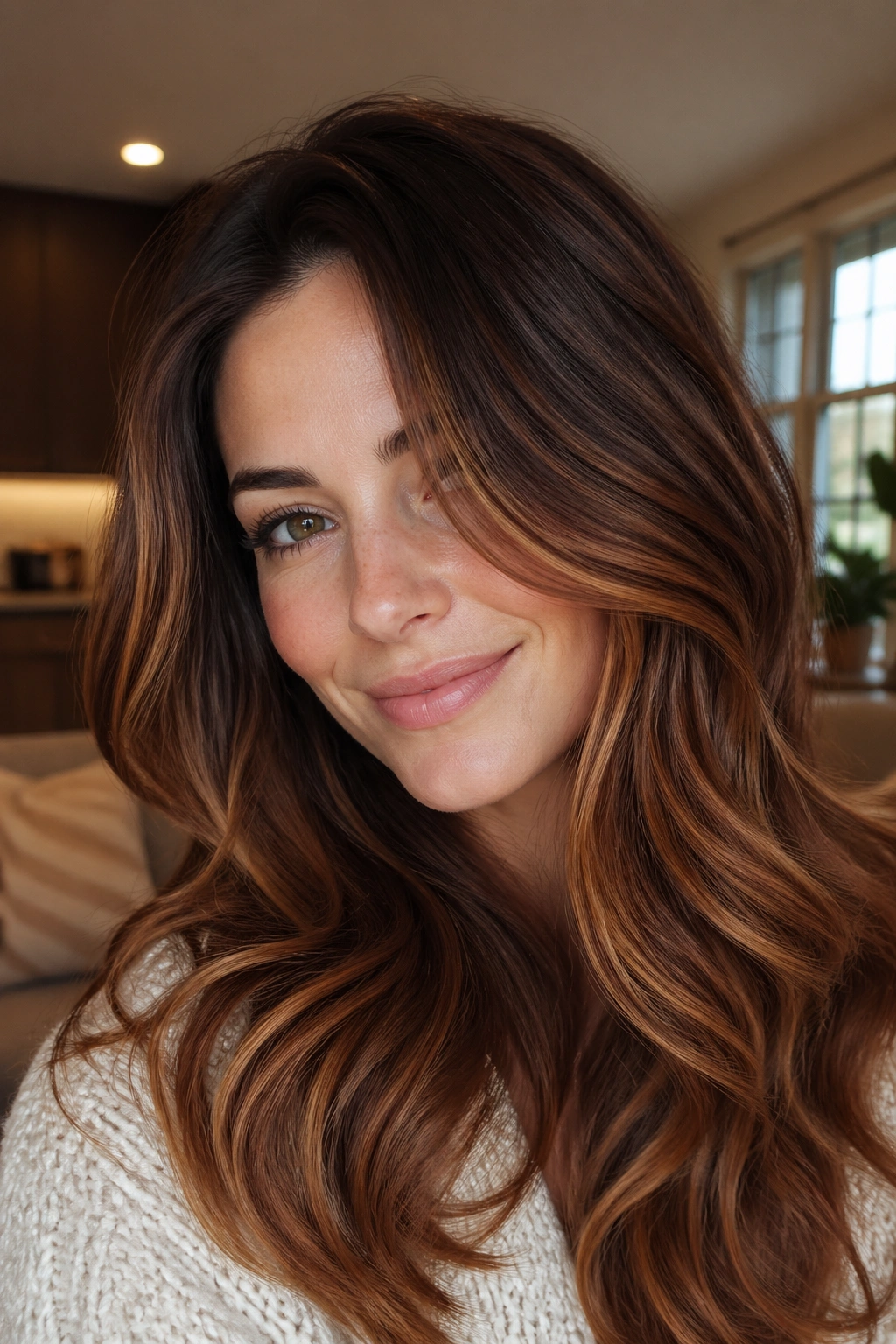
If plain brown feels flat, a little auburn can wake it up without pushing the whole head into red. Auburn-caramel balayage gives you warmth, depth, and a slightly jewel-toned finish that looks richer than standard gold.
The best version is subtle. You want the auburn to live in the caramel, not take over the entire color story. A chestnut or dark brown base with soft amber-red ribbons through the mid-lengths can look expensive in a very old-money sort of way, if that phrase means anything useful anymore.
Where It Works Best
This style loves medium to long hair, especially layered cuts. The added red-brown warmth catches on bends and waves, which makes the color feel dimensional even in low light.
It’s a smart option if your skin has peach, olive, or golden undertones. If your complexion runs cool, keep the auburn touch lighter and ask for more caramel than copper. That keeps the effect rich instead of fiery.
A color-safe shampoo matters here. Warm tones fade fast when the wash is too harsh, and once the auburn slips away, the whole look loses its depth.
11. Almond Caramel on Thick Hair
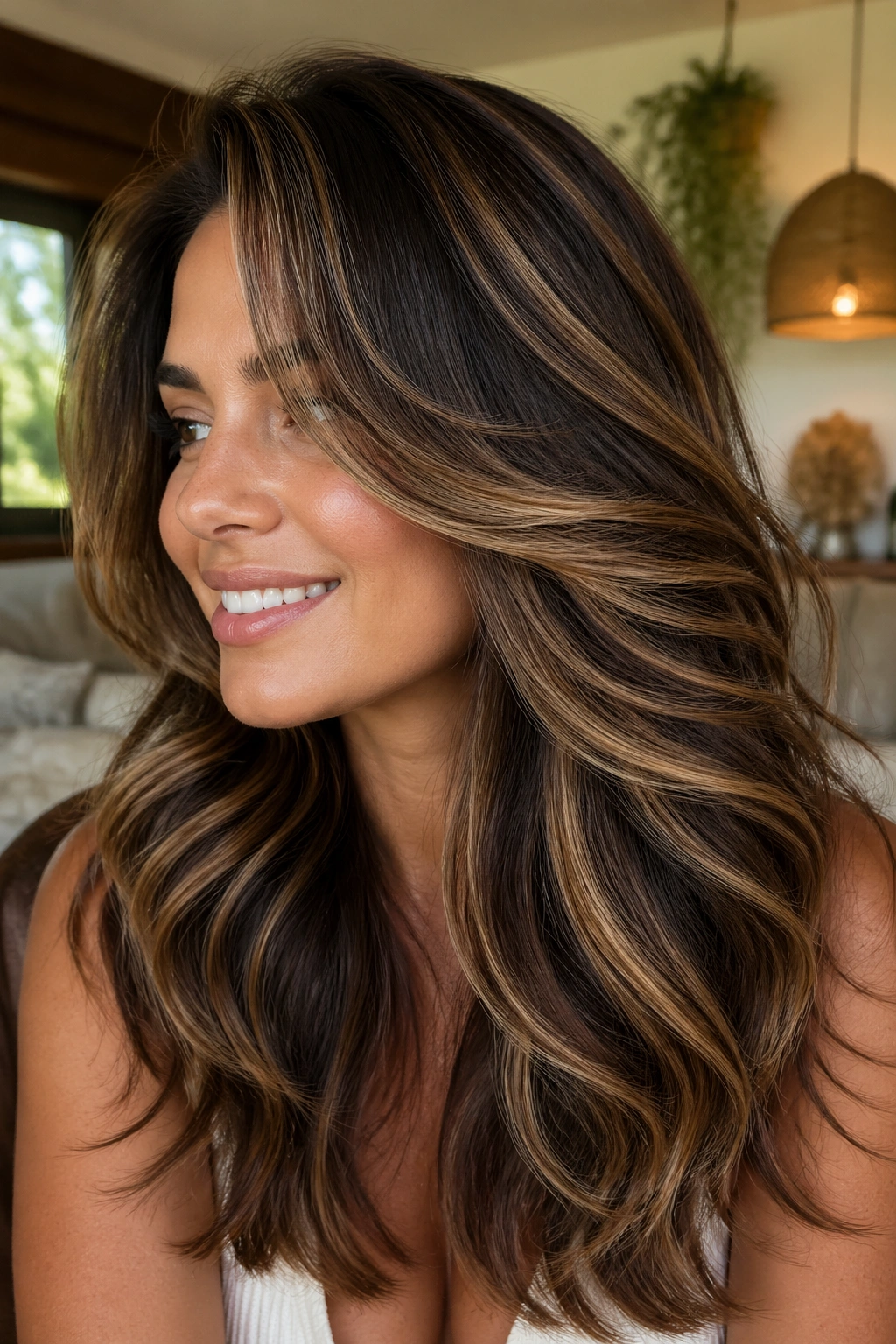
Thick hair can swallow color if the placement is too timid. Almond caramel fixes that by giving the strands enough contrast to show movement, even when there’s a lot of hair in the room.
The trick is to use broader ribbons and a few stronger pieces underneath the top layer. That prevents the hair from looking dusty or overly blended, which can happen when dense hair gets too many tiny highlights. You want the color to show up from a distance and still look soft up close.
The Best Placement
Why it works
Thick hair has a lot of surface area, so the caramel needs room to breathe. Almond tones sit between beige and gold, which means they keep the finish warm without pushing it too yellow.
How to wear it
- Add brighter pieces through the mid-lengths and outer layers.
- Leave some depth underneath so the color has contrast.
- Style with loose bends or big waves.
- Keep the roots deeper than the mids for a cleaner grow-out.
This style is one of the easiest ways to stop thick hair from looking heavy. It gives shape without asking the cut to do all the work.
12. Toasted Caramel with Shadow Root
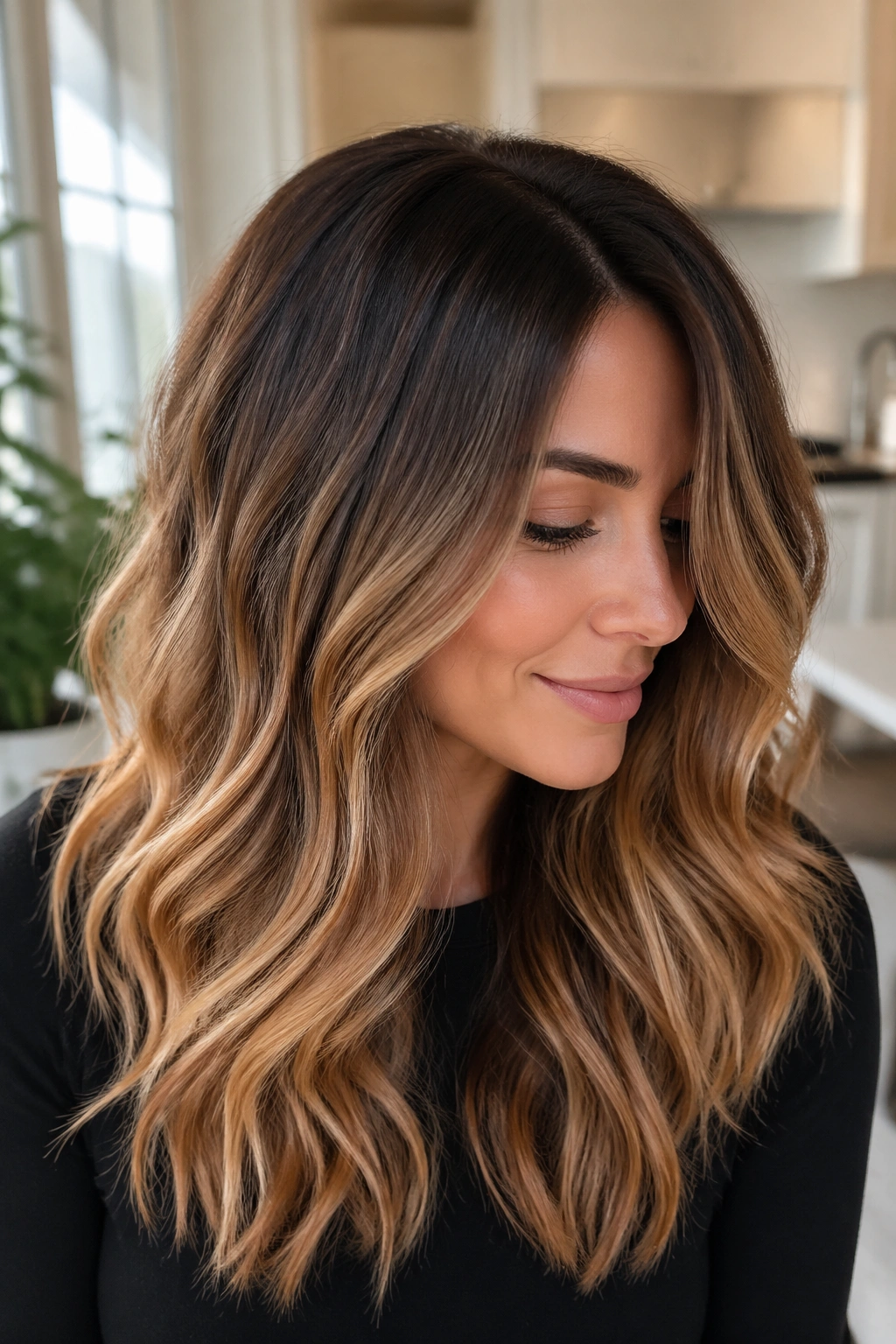
A shadow root does a lot of heavy lifting. It softens the grow-out line, gives the color more depth, and keeps caramel from drifting into a flat, one-note blonde-brown blur.
Toasted caramel with a shadow root is especially good if you want the hair to look done without needing constant salon touch-ups. The darker root makes the lighter lengths feel richer, and the toasted tone through the ends adds a warm finish that looks smooth rather than brassy.
The look sits in that smart middle ground where the base is clearly brunette, the mids carry the warmth, and the ends catch the light in a controlled way. It’s not flashy. It’s expensive-looking because it doesn’t try too hard.
This is also a strong choice if your hair lifts unevenly. The rooted depth can hide a lot, which means the final color looks more even than the raw lifting process might suggest.
13. Micro-Balayage for Subtle Dimension
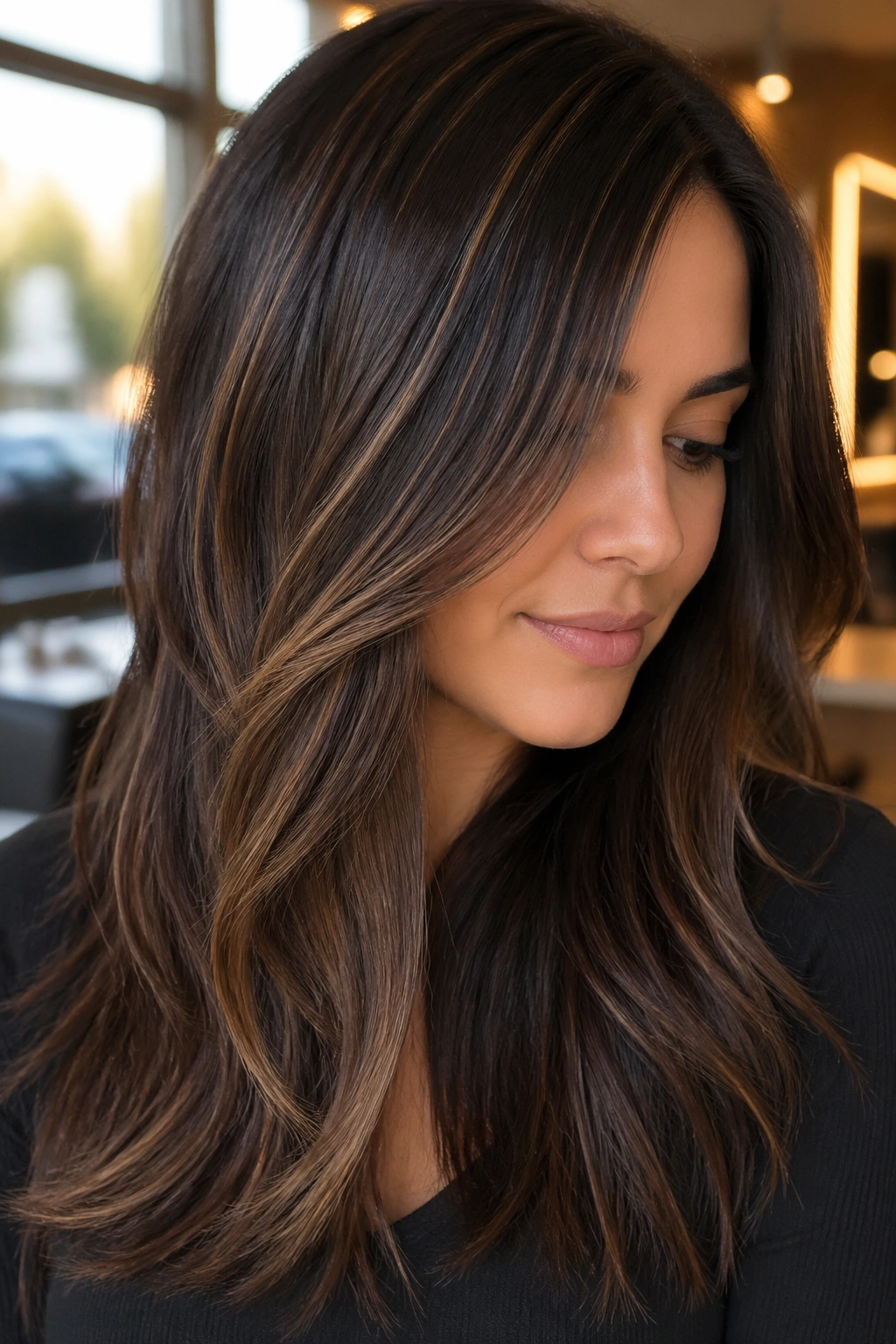
Not every expensive hair color has to announce itself. Micro-balayage is for the person who wants people to say, “Your hair looks good,” not “Did you change it?”
The pieces are thinner, finer, and more scattered than a standard caramel balayage. That’s the point. Instead of obvious ribbons, you get tiny shifts in tone that make the hair look deeper and softer at the same time. On brunette hair, that can be enough to make the whole head feel polished.
What to Watch For
Micro-balayage works best when the hair already has a nice cut and a healthy shine. Since the color is subtle, the haircut and finish matter more. A blunt edge, a tidy long layer, or a clean bob can all make the color read better.
- Great for first-time color clients.
- Good for office-friendly hair.
- Best on bases that are already medium or dark brown.
- Needs a shine serum or gloss to keep the dimension visible.
The downside? If you want a dramatic change, this won’t give it to you. But that’s not the brief. This is quiet money hair.
14. Sunkissed Caramel on Medium Brown
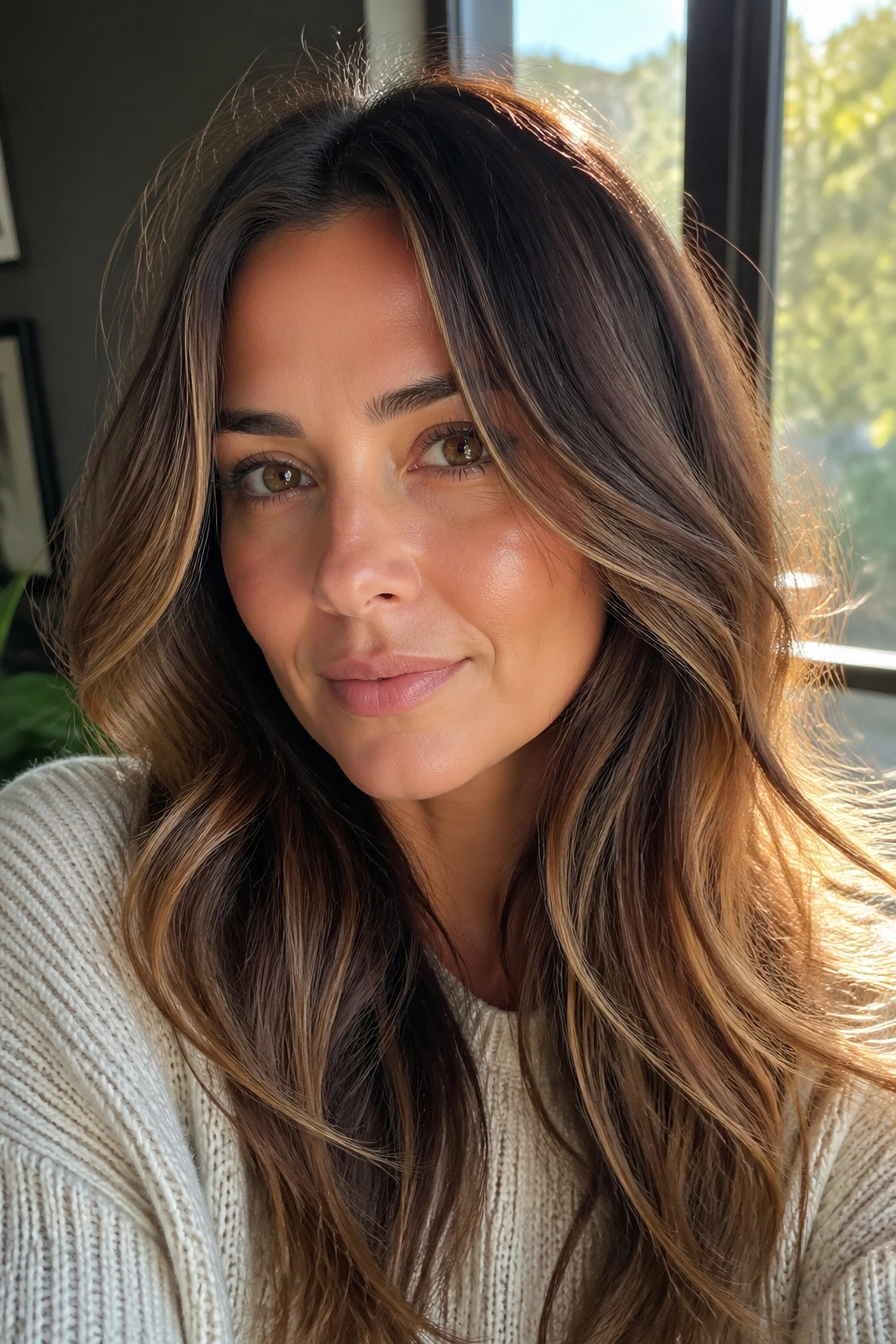
Medium brown hair can take more lightness than people think. The trick is keeping the caramel close enough to the base that it still feels believable.
Sunkissed caramel does exactly that. The pieces are painted as if the sun found the outer layer first, then left the deeper parts alone. You end up with a soft, lived-in look that feels airy without becoming blonde.
Why It Looks Natural
The color lives in the top layers and around the face, which gives a gentle brightening effect. Since the base is still visible, the style keeps the richness that makes brunette hair look expensive in the first place.
If the caramel tone is too warm, it can skew orange in daylight. If it’s too cool, it can lose that sunkissed feeling. Beige-gold usually lands in the right place. It’s warm, but not loud.
This is a good style for people who wear their hair in loose waves, messy buns, or clipped-back styles. The contrast stays soft, and the movement keeps the color from feeling flat.
15. Caramel Balayage with Curtain Bangs
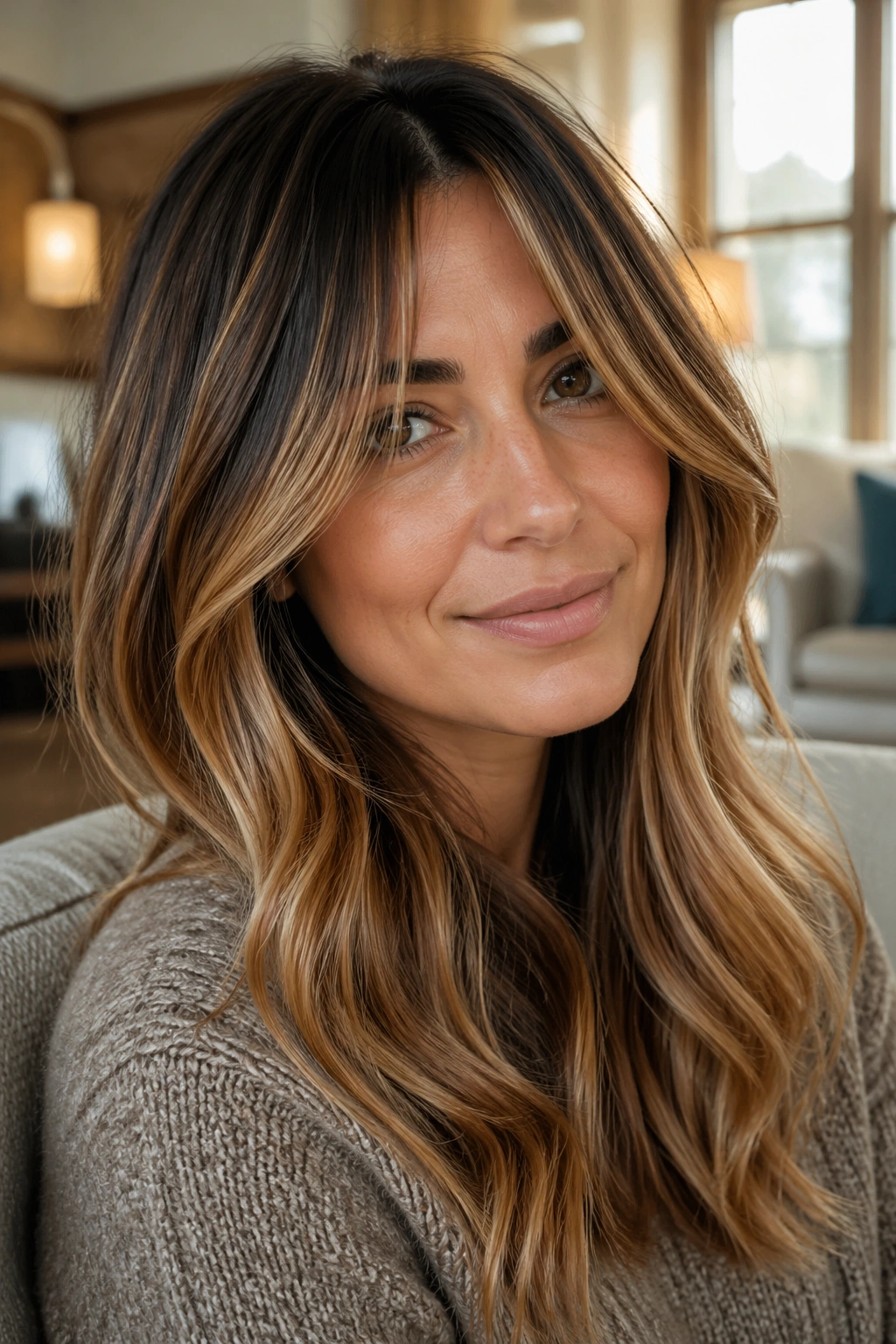
Curtain bangs change the whole placement story. They need enough light to frame the face, but not so much that they look separate from the rest of the haircut.
Caramel balayage with curtain bangs works best when the brightness begins just off the part and softens as it moves into the bangs. You want the fringe to feel blended into the face-framing pieces, almost like the color is traveling through the cut rather than sitting on top of it.
Where the Light Should Land
A lot of people make the mistake of over-lightening the bangs. That can make them look stripped and fussy. Instead, keep the caramel slightly deeper in the fringe and brighter in the longer face layers.
A few things help:
- Keep the shortest layers softer and warmer.
- Let the bangs connect visually to the front panels.
- Style with a round brush or large Velcro roller so the fringe bends.
- Use a light gloss to stop the front from going dull faster than the rest.
The result is flattering without being overworked. Curtain bangs already soften the face; caramel balayage just gives them a little extra polish.
16. Dimensional Caramel on Layers
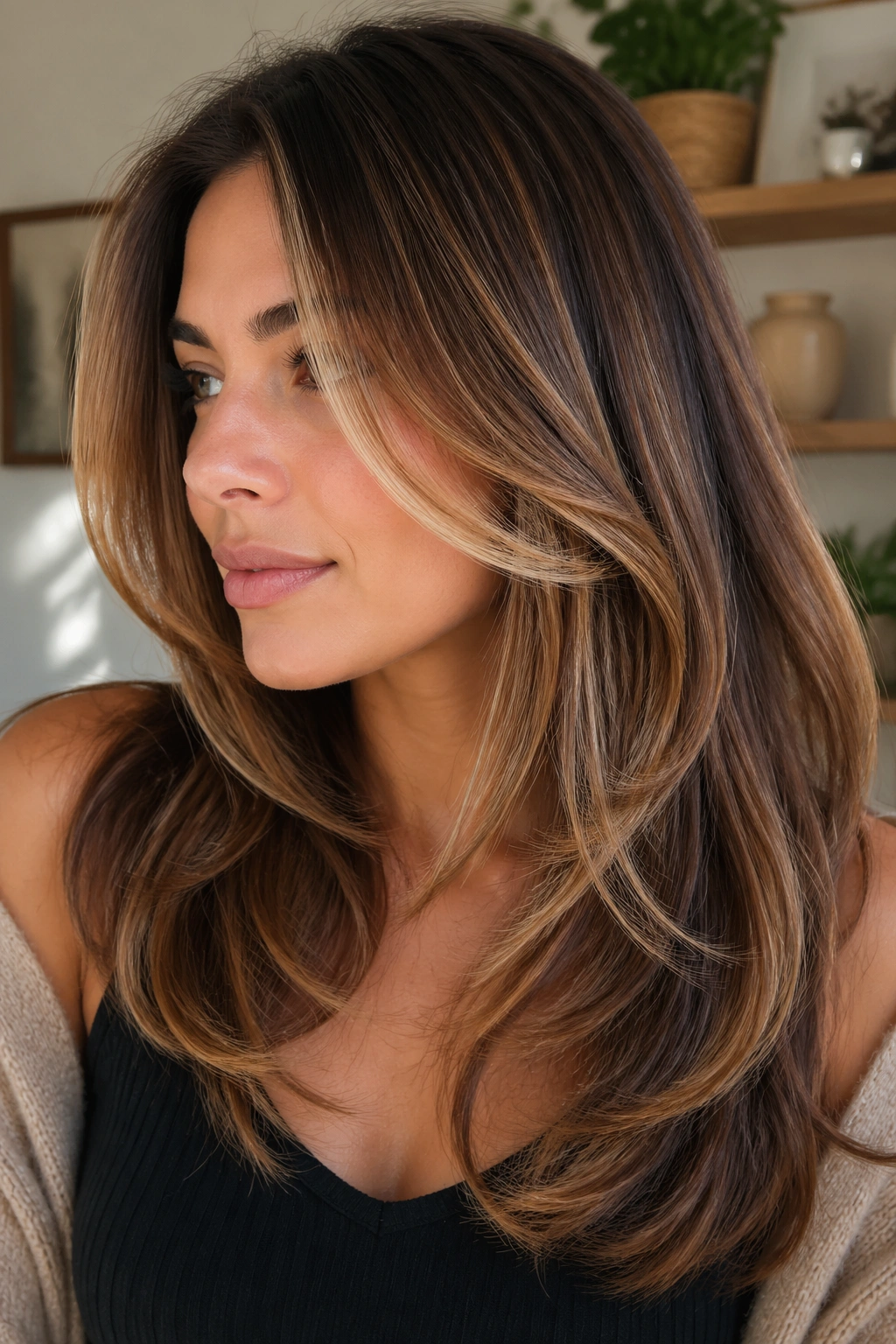
Three tones can do what one tone can’t. That’s the main reason dimensional caramel looks so good on layered hair.
Use a deeper caramel near the base, a toffee tone through the mid-lengths, and a brighter honey note around the face or ends. The mix should feel blended, but not identical. If every strand lands in the same shade family with no variation, the hair can look washed out instead of rich.
The Three-Shade Rule
Layered cuts are already built for movement, so the color should echo that movement instead of fighting it. The darker shade adds depth, the medium shade keeps the body of the style visible, and the brightest shade creates those small flashes that make hair look cared for.
This is one of the best styles for someone who wants dimension in photographs and in real life. It looks especially good when the hair is curled away from the face or blown out with a large round brush.
A little note: if the haircut is too blunt, the three shades can look stacked instead of fluid. Layers help the color breathe.
17. Smoky Brown-Caramel Blend
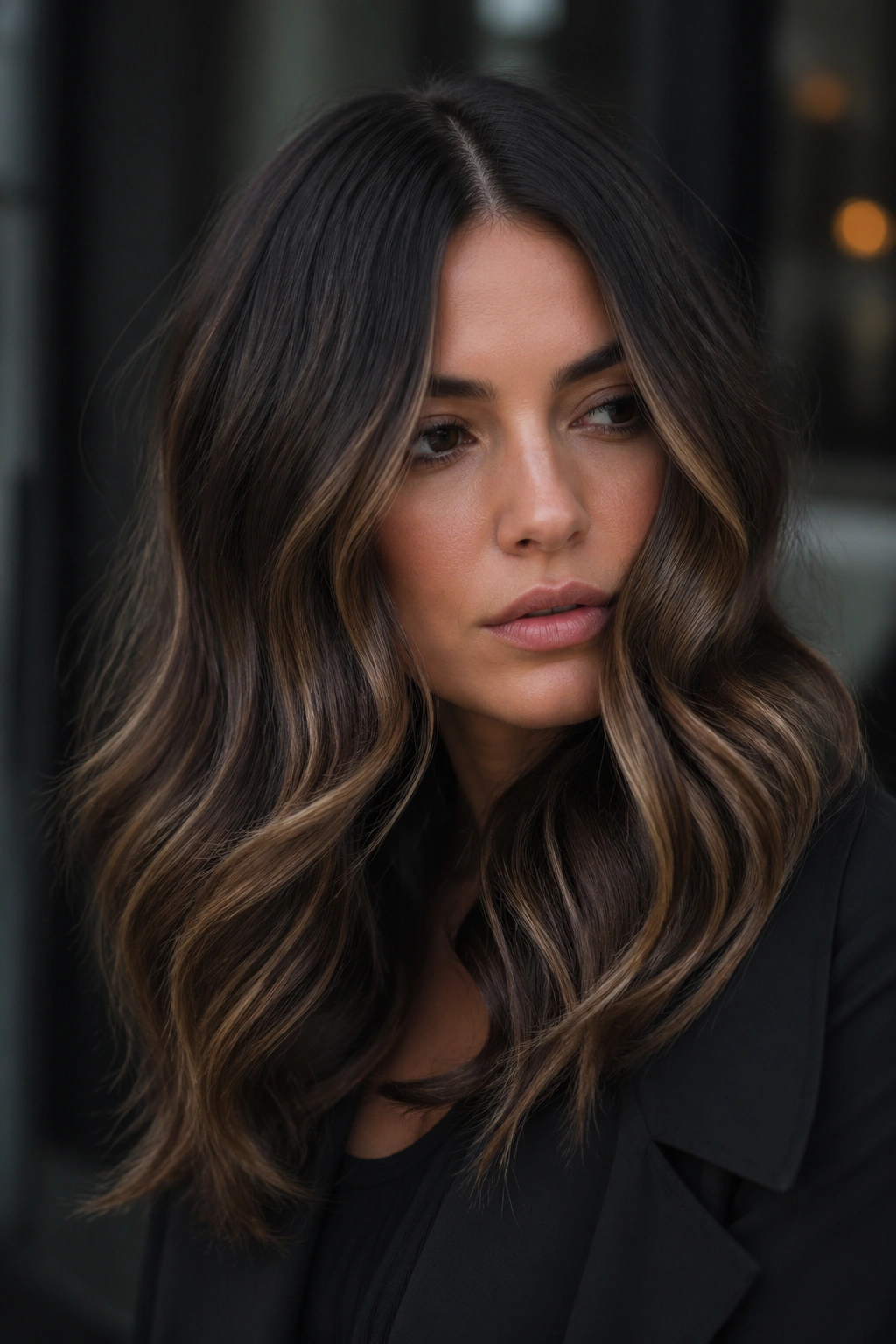
Can caramel feel cool instead of warm? Absolutely. You just need the right base and the right gloss.
Smoky brown-caramel blends use muted tones rather than bright gold. Think espresso brown with a caramel that has a beige or slightly ash-brown edge. The result is softer, moodier, and a little more modern than the warm caramel everyone expects.
Who It Suits
This version flatters people who do not want obvious warmth near the face. It also works well on naturally cool brunettes, because the color doesn’t fight the undertone of the hair. If your hair tends to go orange, this is the safer path.
A neutral gloss is the hero here. Too much warmth and the smoky effect disappears. Too much ash and the hair can look flat. You want the finish to feel deep, polished, and still alive.
This style looks especially good with a middle part and loose, brushed-out waves. The softness of the wave keeps the smoky tones from feeling hard.
18. Golden Toffee Waves
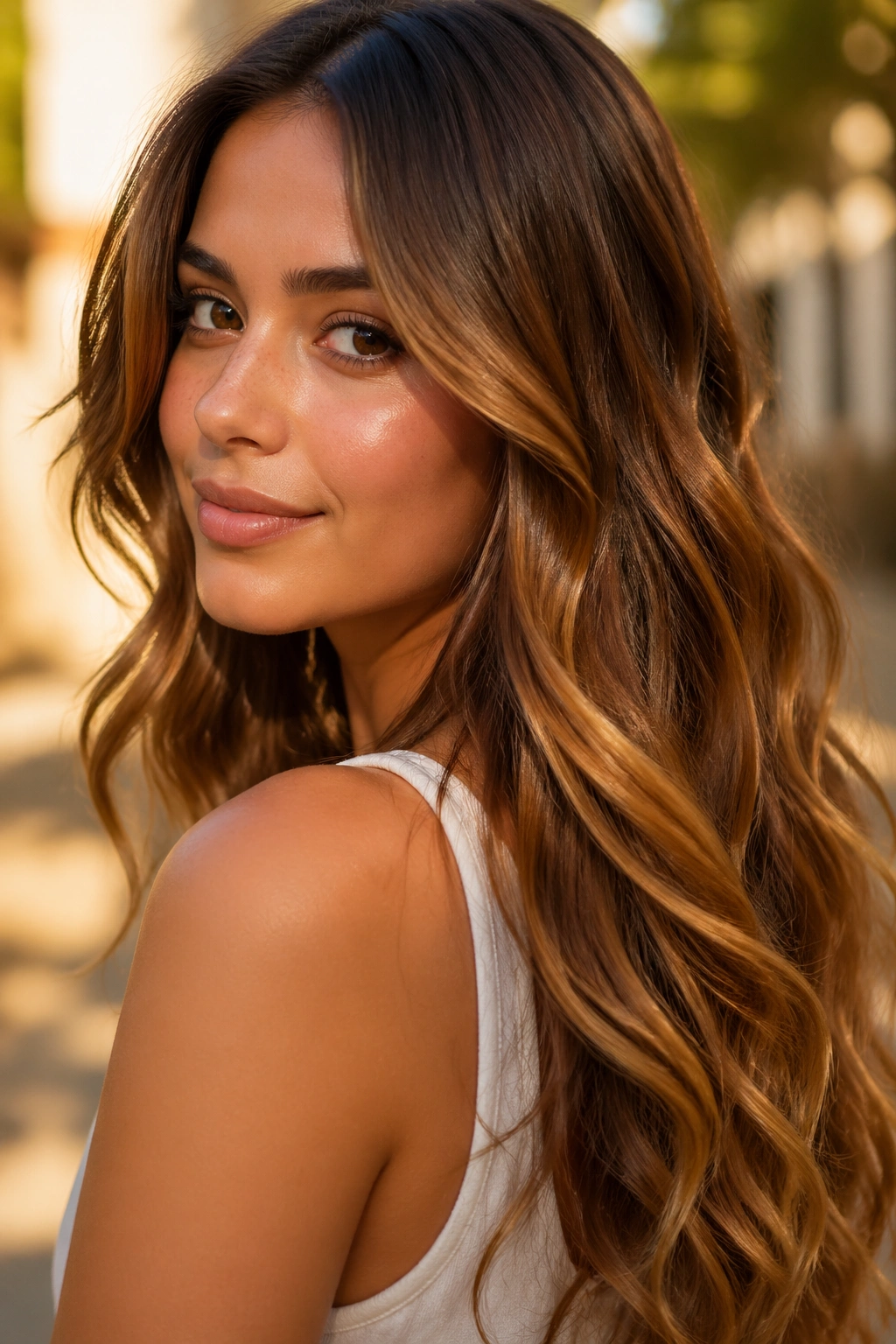
Golden toffee waves are the caramel balayage version of a good silk blouse. The color is smooth, warm, and polished, and it gives hair that expensive shine people notice without knowing why.
The reason it works is simple: golden toffee sits right in the sweet spot between brightness and depth. It’s lighter than chestnut caramel, but it stops well before blonde. On waves, that balance looks rich because every bend catches a slightly different tone.
What Gives It the Shine
A glossy finish matters here more than almost anywhere else. The cuticle needs to lie flat or the gold can look fuzzy. A leave-in cream, heat protectant, and a clean blow-dry finish are the difference between warm and flat.
- Best on medium to long hair.
- Strong on loose waves or barrel curls.
- Great for neutral and warm undertones.
- Needs a gloss service when the shine starts fading.
This is one of those shades that can look plain in a flat photo and gorgeous in motion. Hair rarely stays still, which is why this color works so well in real life.
19. Soft Rooted Caramel Gloss
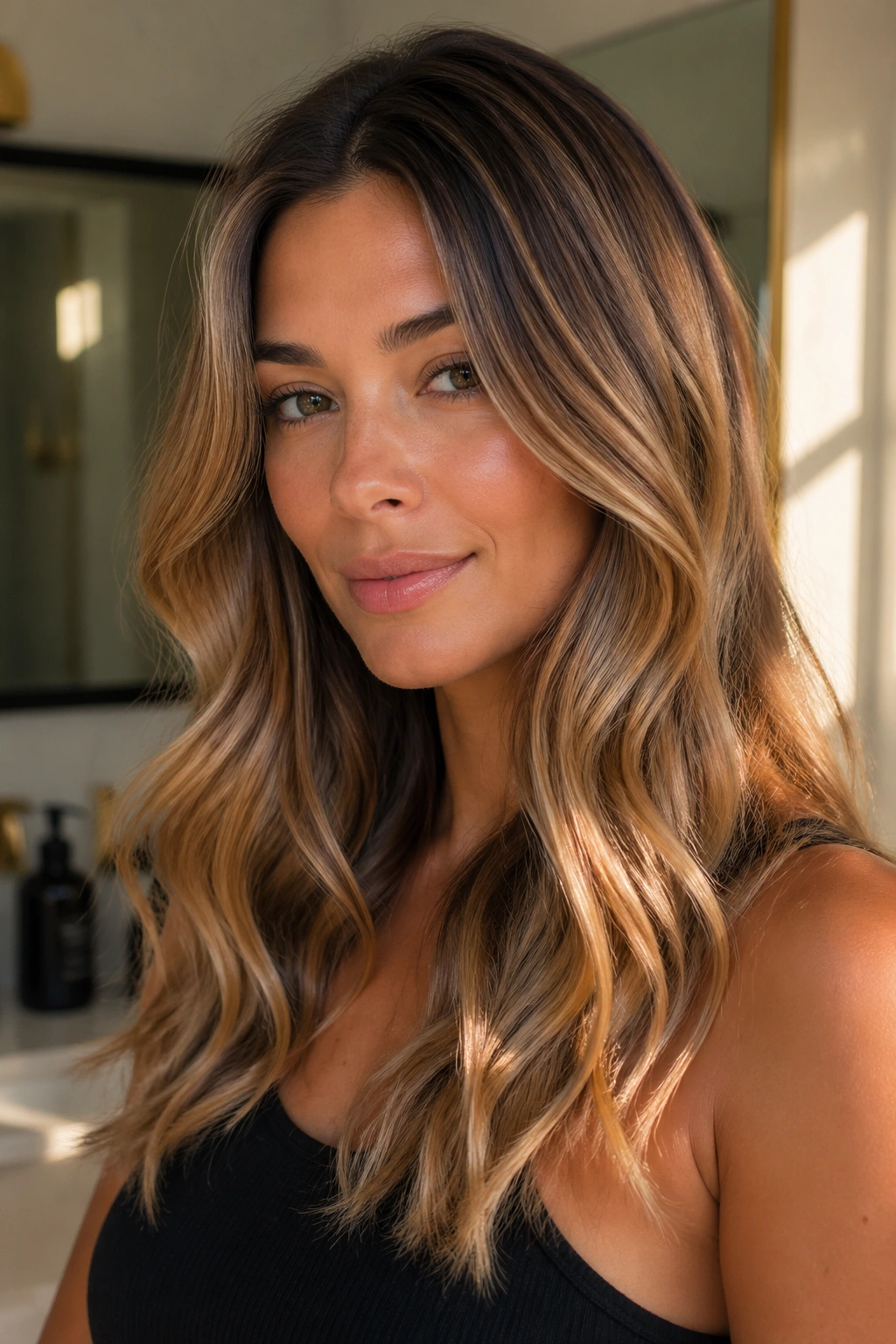
The gloss is the part people skip, and it’s usually the reason the color doesn’t look expensive.
A soft rooted caramel gloss starts with balayage placement, then finishes with a demi-permanent glaze that smooths the tone and adds shine. The root stays a little deeper, the mids stay creamy, and the ends get that sealed, reflective finish that makes the whole style look cared for.
Why the Finish Matters
Bleached hair can look dry even when the color placement is good. A gloss fixes a lot of that visual roughness. It helps the caramel read as a single rich family of tones instead of a collection of separate highlights.
Tell your colorist you want the root to be blurred, not painted over. That subtle root shadow gives the color more body and keeps the grow-out soft. It also makes the ends look brighter by comparison, which is a neat trick when you want dimension without extra lightening.
If your hair feels coarse, this is one of the smartest caramel balayage options on the list. The shine sells the whole thing.
20. Caramel Peekaboo Pieces
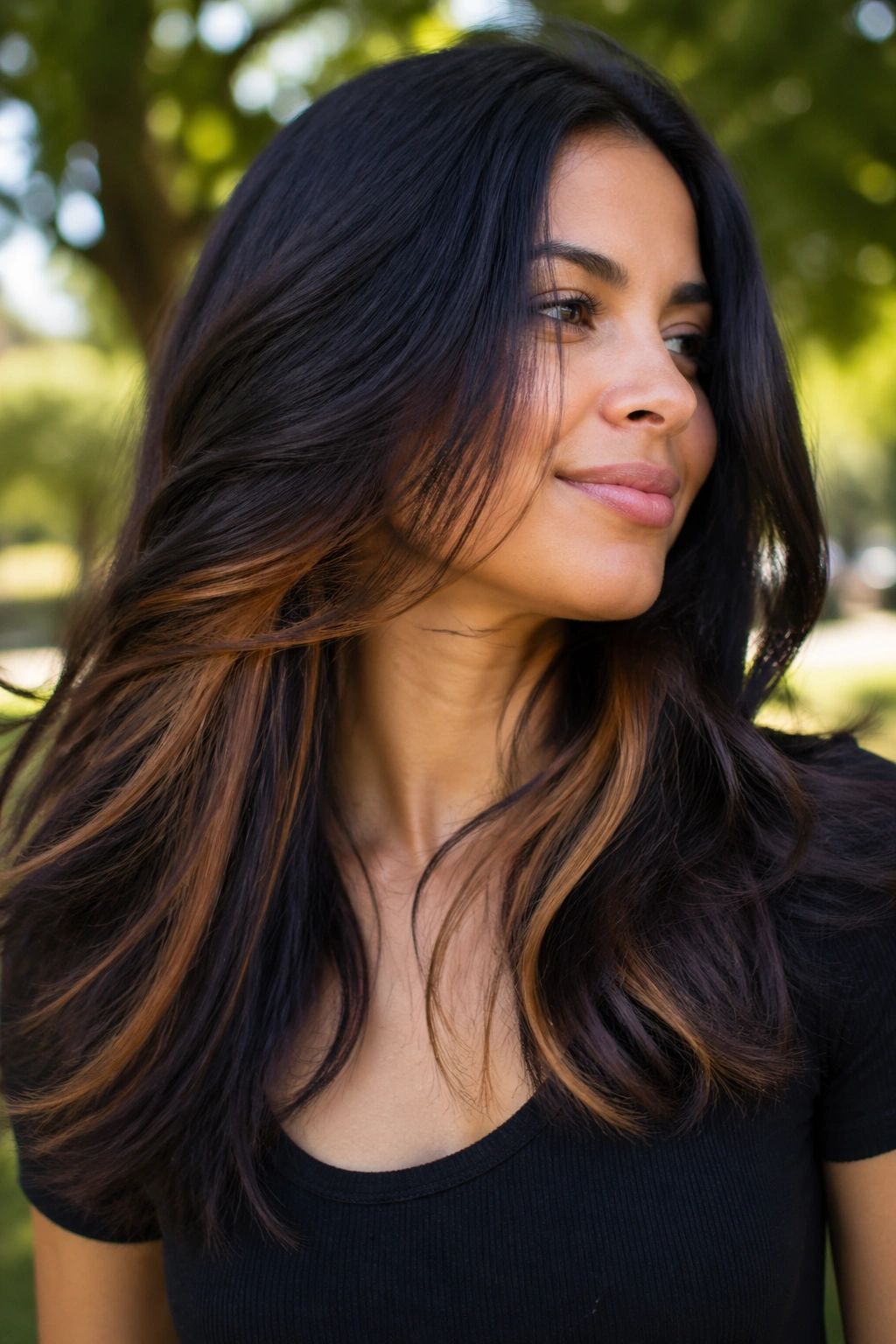
Peekaboo color is for the person who wants a little mischief in the hair. The caramel lives under the top layer, so it stays mostly hidden until the hair moves, flips, or gets pulled into a half-up style.
That interior placement is why it looks expensive. The hair feels layered and intentional from every angle, and the color never competes with the base. On darker brunette hair, peekaboo caramel can look especially good because the contrast flashes instead of sitting there all the time.
Where It Shows Up Best
- Under curls and waves.
- Around the nape in lifted styles.
- At the temples when hair is tucked behind the ears.
- In braids, where the lighter pieces weave through the darker ones.
The best versions keep the top layer rich and low-key. That way, the caramel stays a surprise rather than a headline. If you want a little more drama, let a few face pieces connect the hidden color to the front.
This is also a practical choice for someone testing the waters before going lighter overall.
21. Face-Framing Caramel Veil
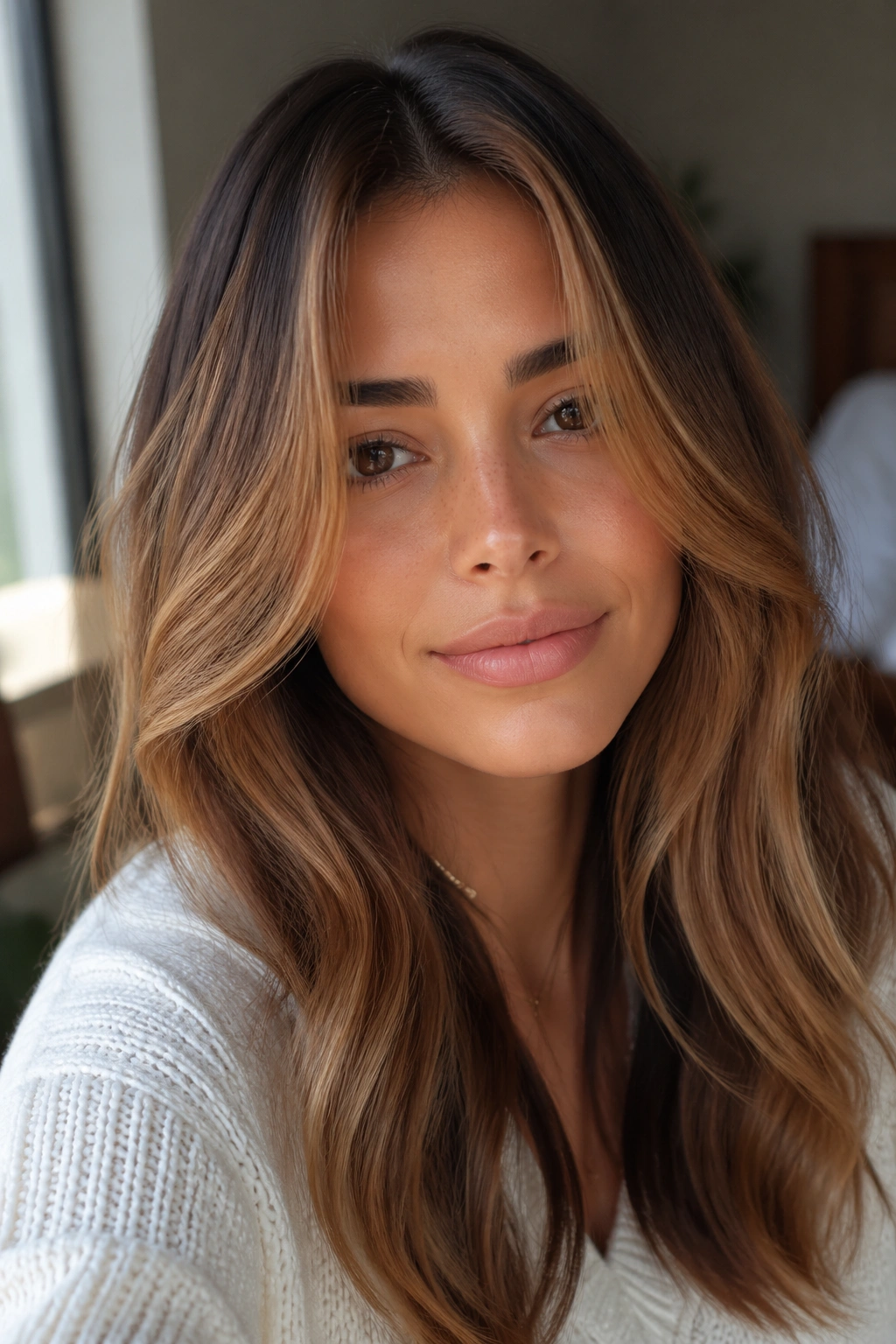
A money piece is sharp. A face-framing veil is softer. That’s the difference, and it matters.
This style wraps a broader, gentler sweep of caramel around the face instead of dropping a single bright front panel. It works beautifully on layered cuts because the light can move from the bangs or front fringe into the sides without a hard break.
Why It Feels Rich
The veil effect makes the face look lit from all sides, but in a calm way. You still get brightness near the cheekbones and jaw, yet the transition stays blurred. That blurred edge is what keeps the look from reading high-contrast or stripy.
If you wear your hair down a lot, this is one of the most flattering placements you can choose. It also grows out nicely because the lighter pieces aren’t confined to one obvious chunk. They fade with the haircut instead of fighting it.
Ask for the lightest pieces to begin around the cheekbone and soften as they move past the jaw. That detail keeps the frame gentle and polished.
22. Luxe Brunette Melt with Caramel Ends
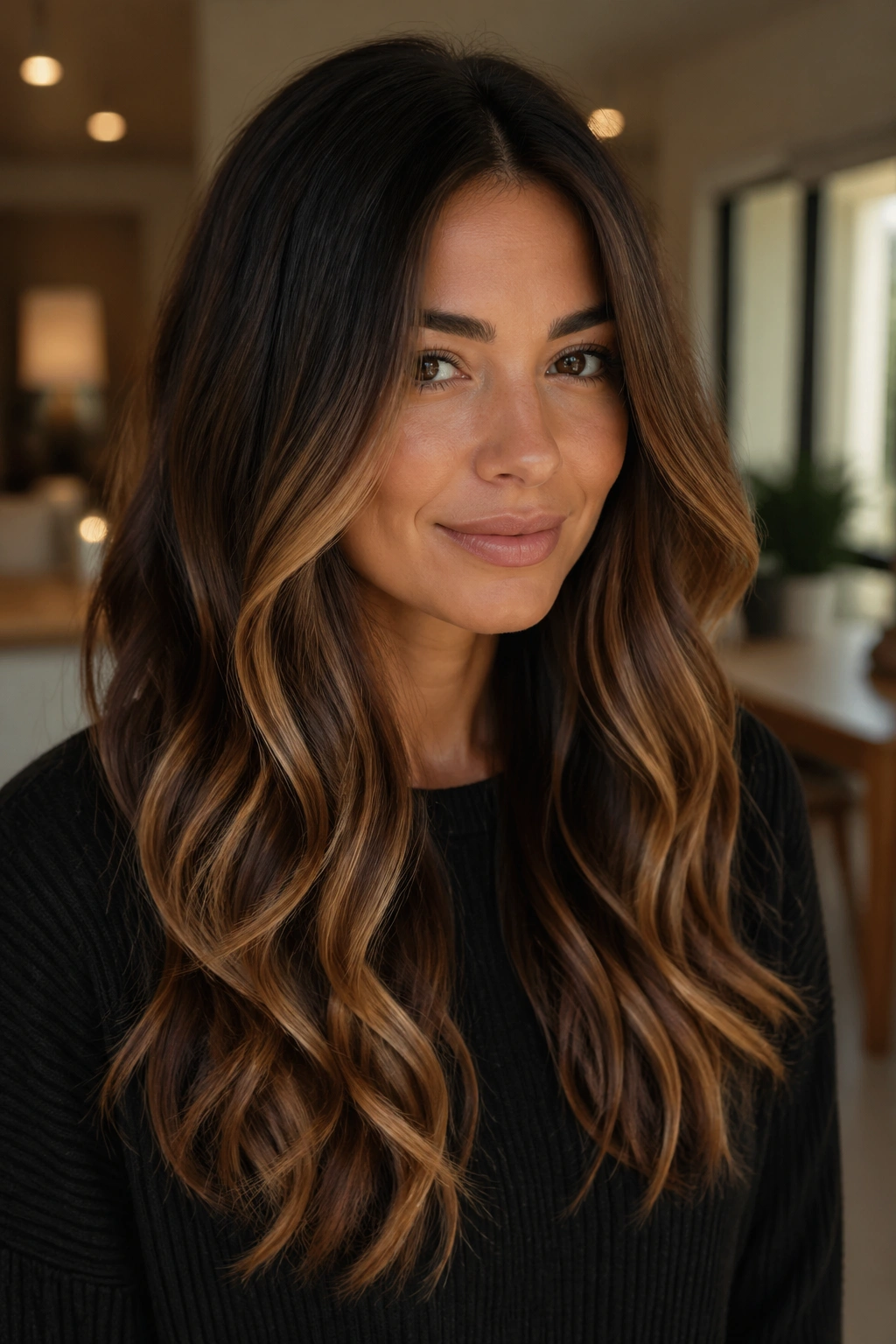
This is the style that makes people think you spent more time at the salon than you probably did. A luxe brunette melt keeps the root deep, eases through soft caramel in the mids, and finishes with ends that are lighter but still brown enough to feel grounded.
It’s not an ombré with a harsh line. It’s a melt. That distinction matters. The gradient is smooth, the contrast is calm, and the whole head looks like it belongs together. When done well, this is one of the richest-looking caramel balayage styles a brunette can wear.
Final Notes on Choosing It
If you want the hair to look expensive with minimal fuss, this is the strongest finish in the bunch. It flatters long layers, wavy lengths, and thicker hair especially well, but it can work on medium hair too if the blend is soft.
The secret is restraint. Keep the brightest caramel concentrated toward the lower half, leave enough depth at the root, and ask for a gloss that makes the ends look sealed rather than dry. That tiny bit of shine changes everything.
Some colors shout. This one doesn’t. It just makes the hair look like it has good taste.
