



Pink hair highlights can be whisper-soft or loud enough to stop traffic. The trick isn’t the pink itself; it’s the placement, the base color underneath, and how much contrast you want people to notice from across the room. A level 9 blonde and a level 5 brunette do not wear the same pink the same way. They just don’t.
Pink hair highlight ideas work best when you treat the color like part of the haircut, not a random streak dropped on top. A thin ribbon near the cheekbone can make a blunt bob look sharper. A few hidden panels under the crown can turn a plain ponytail into something worth turning around for. And a dusty rose balayage can look softer than a classic blonde highlight because the pink picks up the shape of the hair, not just the shine.
There’s also the practical side, and that matters more than people admit. Pink fades in its own way. On porous ends, it can cling longer and go a little peachy before it washes out; on smooth, healthy hair, it can drift lighter and softer much faster. A good colorist thinks about that before mixing anything. So should you.
1. Rose Gold Pink Hair Highlight Idea for the Face Frame
Rose gold around the face is one of those pink hair highlight ideas that feels easy, even when the work behind it isn’t. The shade sits between blush, peach, and soft copper, so it flatters blondes, light brunettes, and anyone who wants pink without that toy-like finish. It also catches the eye exactly where you want it: temples, cheekbones, and the front bend of the hair.
Why It Works on So Many Bases
The warm gold in rose gold keeps the pink from reading cold or chalky. That matters on hair that already has beige or honey tones, because the color looks blended instead of painted on. On a wavy lob, it moves like a soft filter.
- Best on level 7 to 9 hair
- Looks clean in foils or a gentle money piece
- Grows out softly if the root stays a shade deeper
- Works with center parts and side parts
Ask for thin front pieces, not a heavy stripe. The difference is huge.
2. Bubblegum Peekaboo Streaks
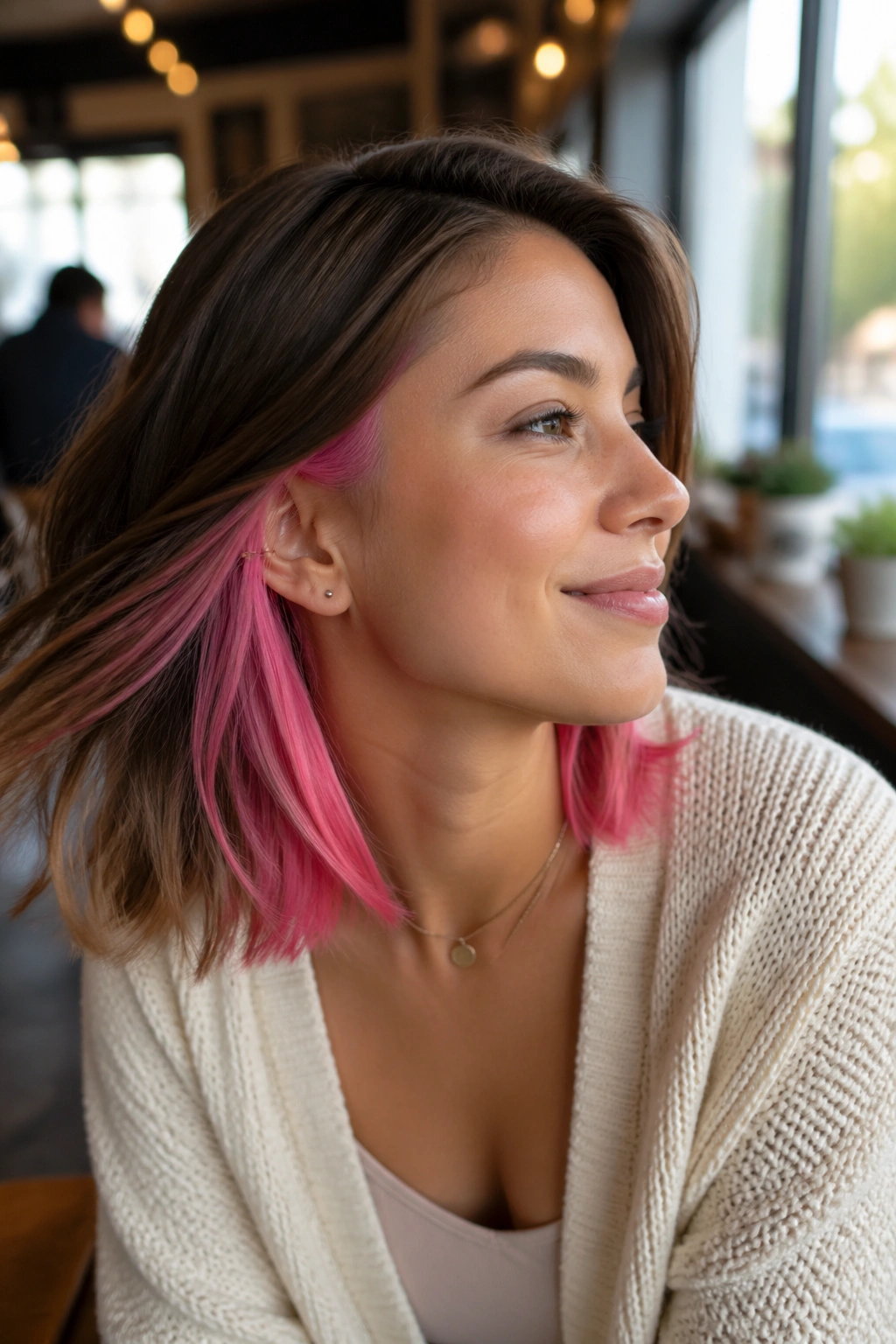
Bubblegum peekaboo streaks are for people who want the color switch to show up on purpose, not all day, every day. The pink hides under the top layer and flashes when the hair swings, gets tucked behind an ear, or is pulled into a half-up style. That little reveal makes it feel playful instead of obvious.
A peekaboo placement is smart if you work in a conservative setting or you’re testing pink before going bigger. The top layer stays calmer, which means the look grows out more gracefully. On straight hair, the streaks feel graphic. On curls or loose waves, they read softer because the movement breaks the line.
If your hair is dark, the panels may need pre-lightening underneath. If your hair is already blonde, a direct dye can give you that bright bubblegum look with less fuss. Either way, the magic is in the hidden contrast. It’s a small trick. Very effective.
3. Dusty Pink Balayage
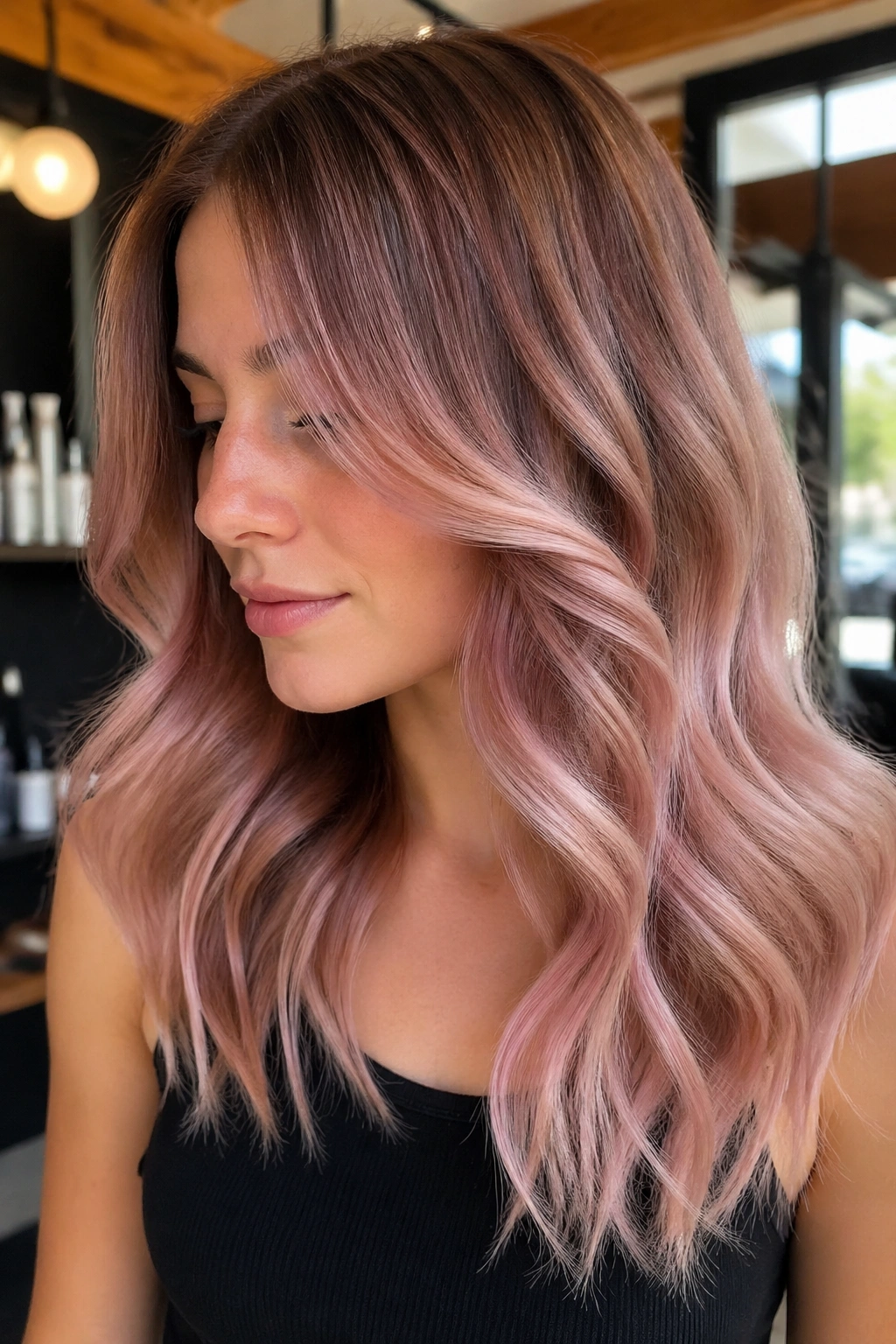
Why does dusty pink balayage look richer than a brighter pink, even though the placement is similar? Because the shade has gray and mauve in it, which calms the color down and makes it feel lived-in rather than candy coated. On longer hair, that muted pink can look almost like silk that’s picked up a little blush at the ends.
How to Wear It Without Losing the Softness
The hand-painted placement matters. You want soft ribbons through the mid-lengths and ends, not a solid blanket of color from root to tip. A colorist will usually keep the pieces wider near the ends and lighter around the face, which keeps the whole look airy.
- Best on layered cuts
- Sits nicely on beige blonde or light brown bases
- Needs a gloss to keep the pink from turning flat
- Looks best when the waves are loose, not overly styled
A dusty pink balayage is the kind of color that grows out with some grace. That alone is worth a lot.
4. Hot Pink Money Piece
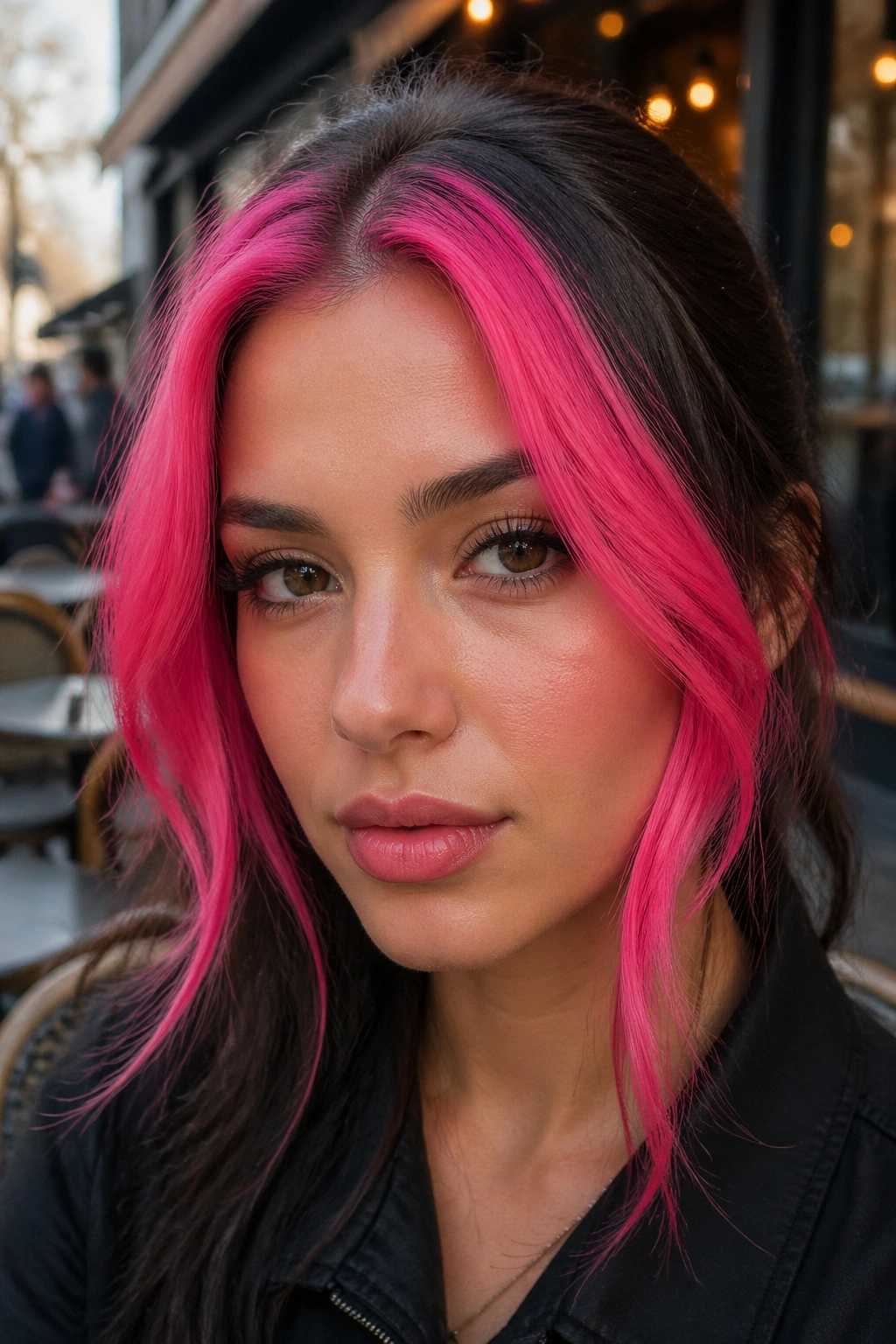
Put a hot pink money piece around a blunt bob and the haircut wakes up immediately. That front section acts like a frame, and because the pink is saturated, it pulls attention right to the eyes and jawline. There’s no hiding it. That’s the point.
The look works best when the rest of the hair stays cleaner and quieter. Think dark brunette, neutral blonde, or even a cool ash base. Too many competing tones can turn the whole thing messy, and hot pink has enough energy on its own. On short hair, the result feels sharp. On long layers, it can read a little rebellious in a good way.
What to Ask For
- A bright pink front panel from hairline to just past the temple
- A clean edge, not a fuzzy smear
- Enough lift underneath for the pink to stay vivid
- A gloss at the end so the color looks glossy, not dry
Keep the rest of the color simple. The money piece should do the talking.
5. Cotton Candy Ends
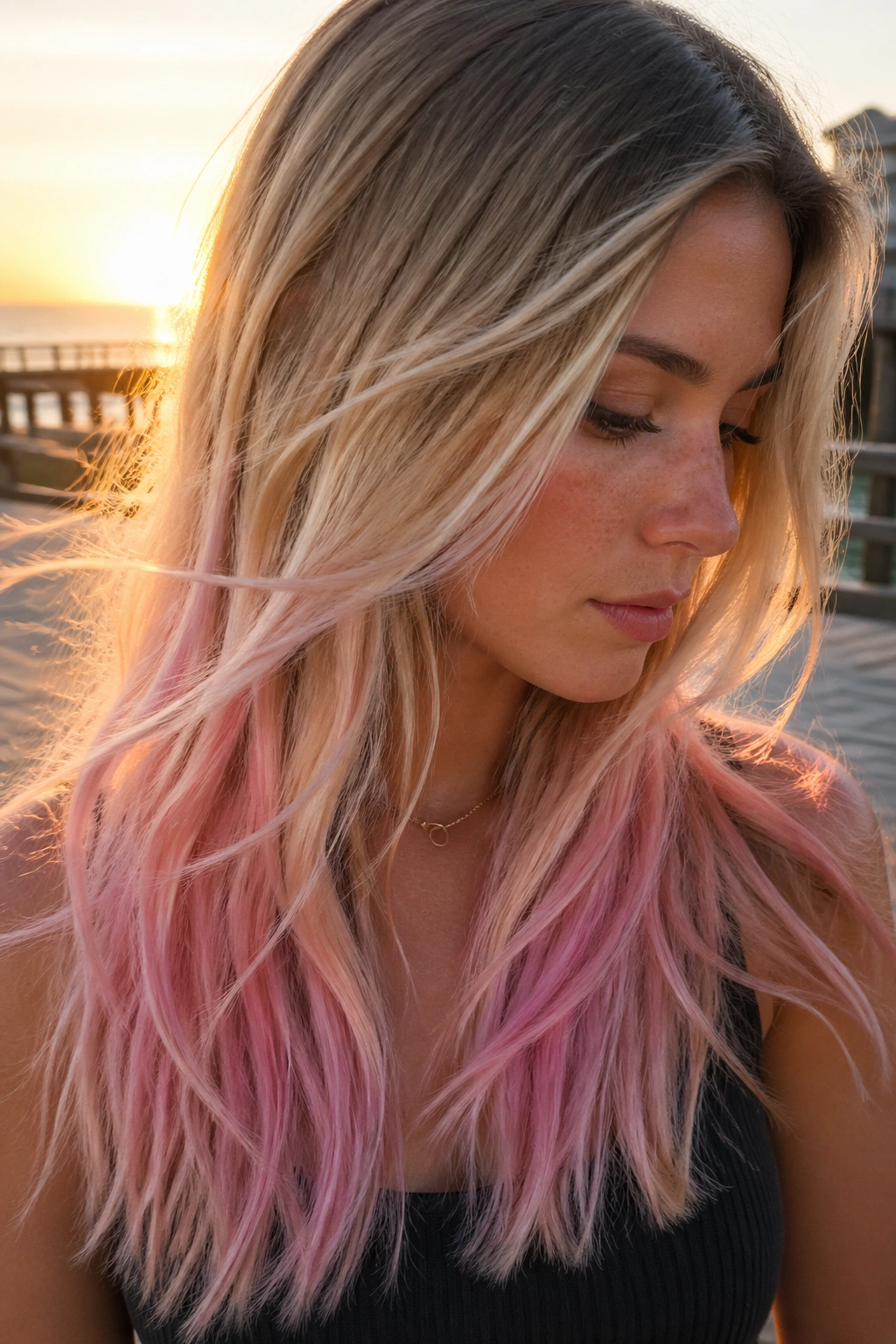
Cotton candy ends are softer than they sound. The pink starts pale and airy, then melts into the last few inches of the hair so the finish looks light, not heavy. On blonde hair, the effect feels almost weightless. On light brown hair, it reads a little more like rose sugar.
This style loves movement. The ends bend, flutter, and catch light in a way that makes the pink show up in flashes rather than as one flat band. Long layers help. So do soft curls. Very straight hair can still wear it, but the transition has to be clean or the ombre line will look blunt.
It’s also a smart choice if you want color but not a ton of upkeep at the root. The roots stay alone. The ends carry the fun. Easy enough. And if the pink fades, it usually fades in a way that still looks intentional, which is rare and useful.
6. Magenta Underlights
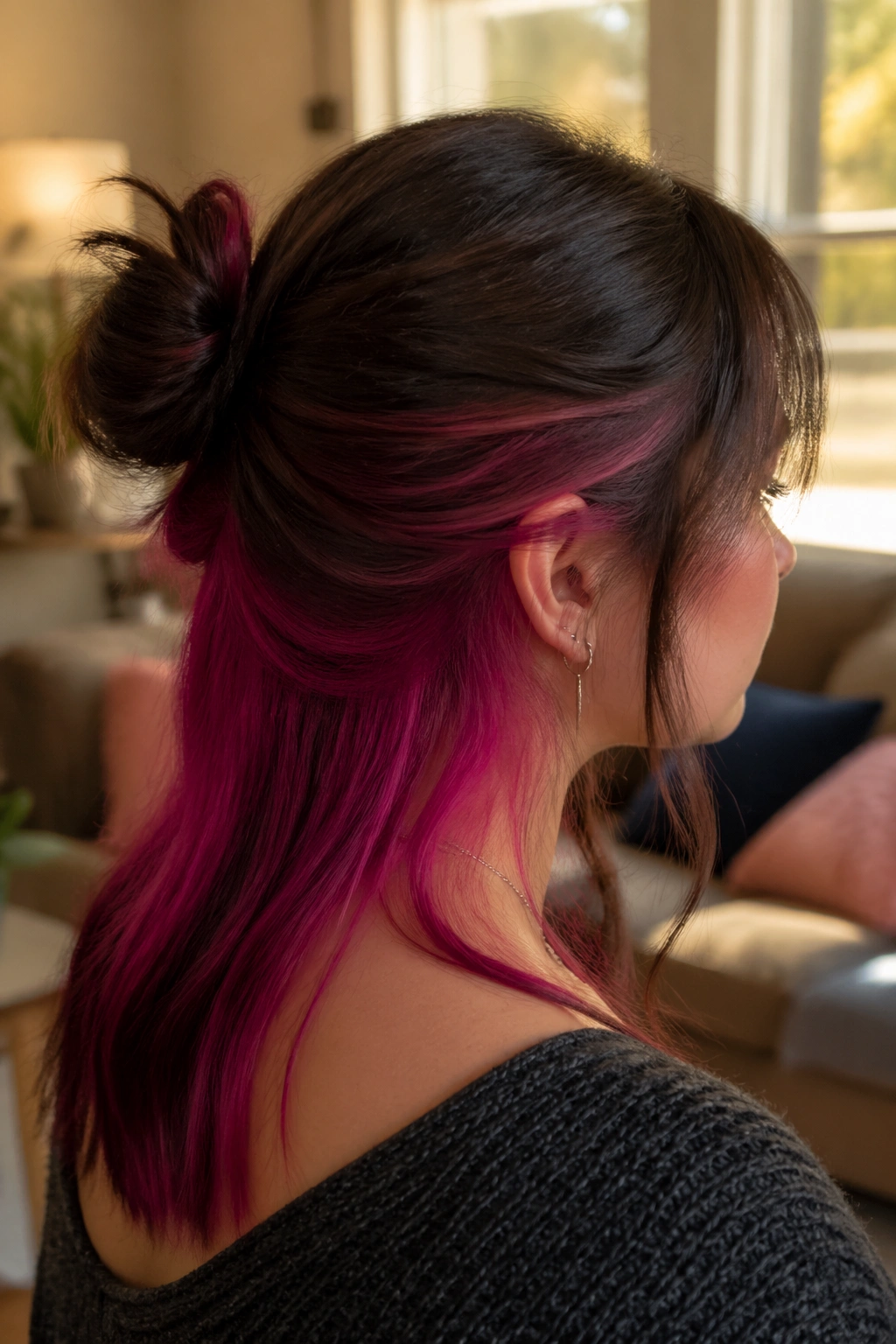
Unlike surface highlights, magenta underlights stay hidden until the hair moves, which makes them feel a little secretive. The top layer can stay brunette, blonde, or black, while the lower layer carries all that deep pink-purple energy. It’s a good choice if you like contrast but don’t want your whole head shouting.
This placement works especially well on longer hair and on styles that get tucked, pinned, or tied back. A half-up knot lets the magenta show near the neck. A braid pulls it through in bands. Straight hair keeps it sleek and graphic, while waves break it up into flashes of color.
If you want the shade to stay rich, ask for a berry-leaning magenta rather than a neon pink. It’s easier to keep looking polished, and it plays better with darker bases. That’s the kind of detail that matters when you want color with depth.
7. Blush Babylights on Blonde
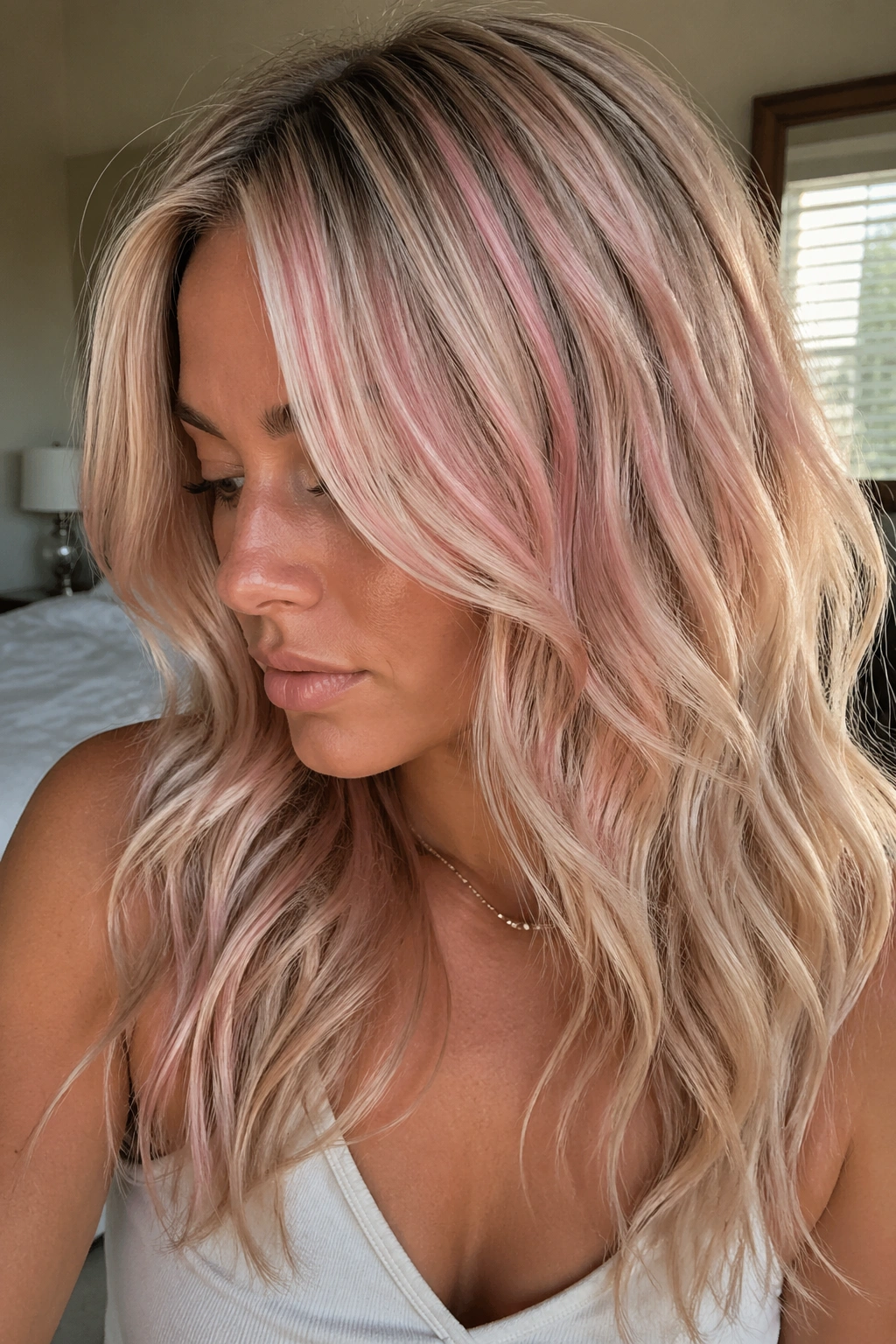
Blush babylights are the closest thing to pink hair highlight ideas that can pass as “something changed” without announcing themselves. The pieces are tiny, woven close together, and placed so lightly that the pink reads like a tint over blonde rather than a full dye job. On fine hair, that softness can look expensive in the plainest, least annoying sense of the word.
What Makes Them Read Soft
The smaller the section, the less visual noise you get. That’s the whole game. Babylights also let the blonde underneath do most of the work, which keeps the color airy instead of dense. If your hair is level 9 or lighter, blush will show clearly without needing a big commitment.
A good version usually includes:
- Fine woven foils through the crown
- A pale pink gloss rather than a strong dye
- Slightly warmer pieces near the ends
- A root left untouched for contrast
This is the pink for people who hate fuss. It grows out gently and doesn’t need constant correction.
8. Neon Pink Panel Highlights
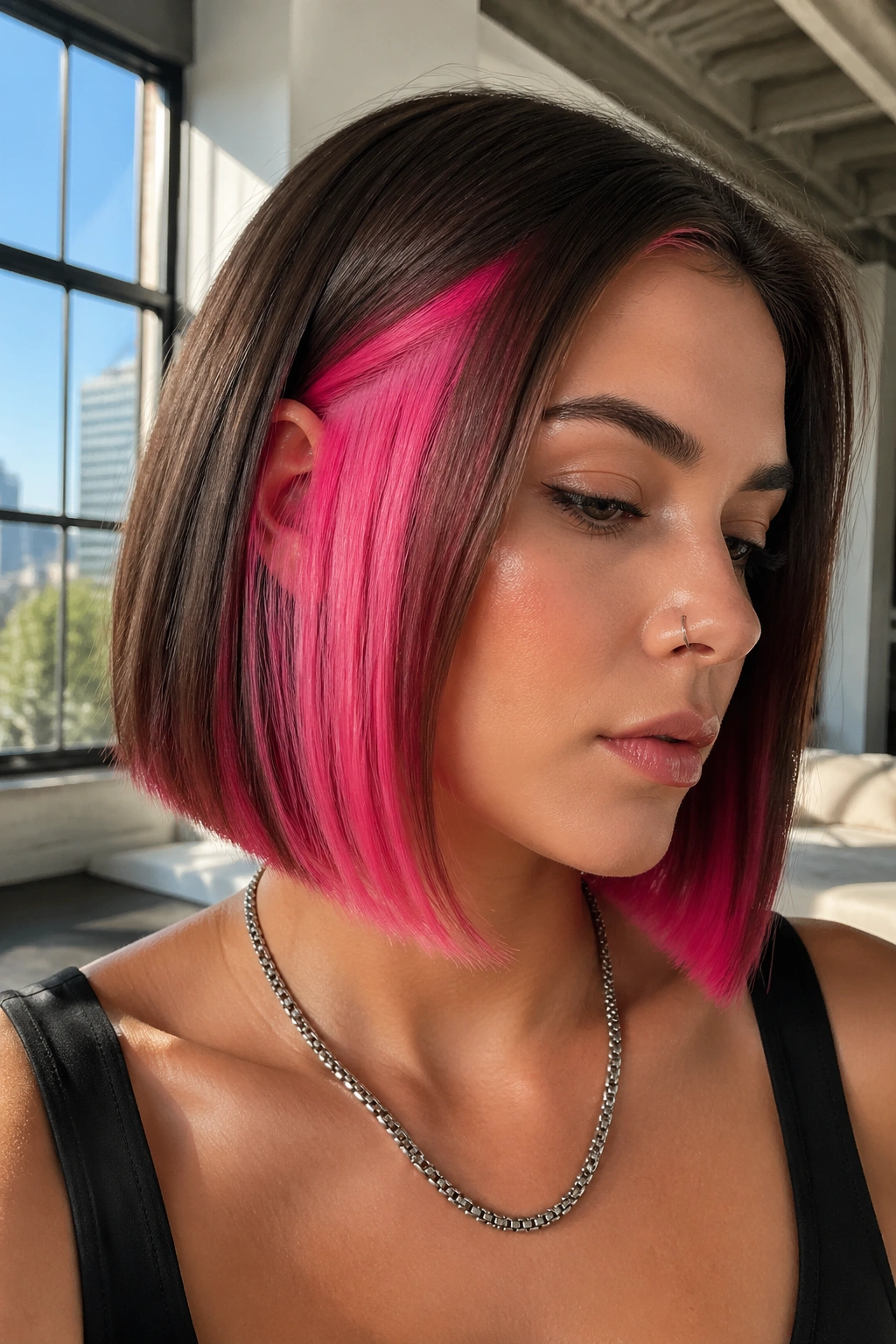
Can a few thick panels look cleaner than thin streaks? Yes. When the color is neon pink, chunkier placement often works better because it gives the shade room to breathe. Thin neon ribbons can look busy. Wide panels look deliberate.
This style likes blunt cuts, sharp bobs, and straight hair that shows off the edges. The panels can sit near the temple, through the nape, or just in one heavy slice on each side. That keeps the color from spreading everywhere and turning into a blur. It’s a bolder answer to pink hair highlights, and it’s not trying to be subtle.
If your base is dark, the neon will need a very light blonde underneath to stay true. If your base is already pale, you can get the effect with less lift and more direct pigment. Either way, this is the look that says you know exactly what you want. Good. That confidence fits it.
9. Strawberry Pink on Copper Hair
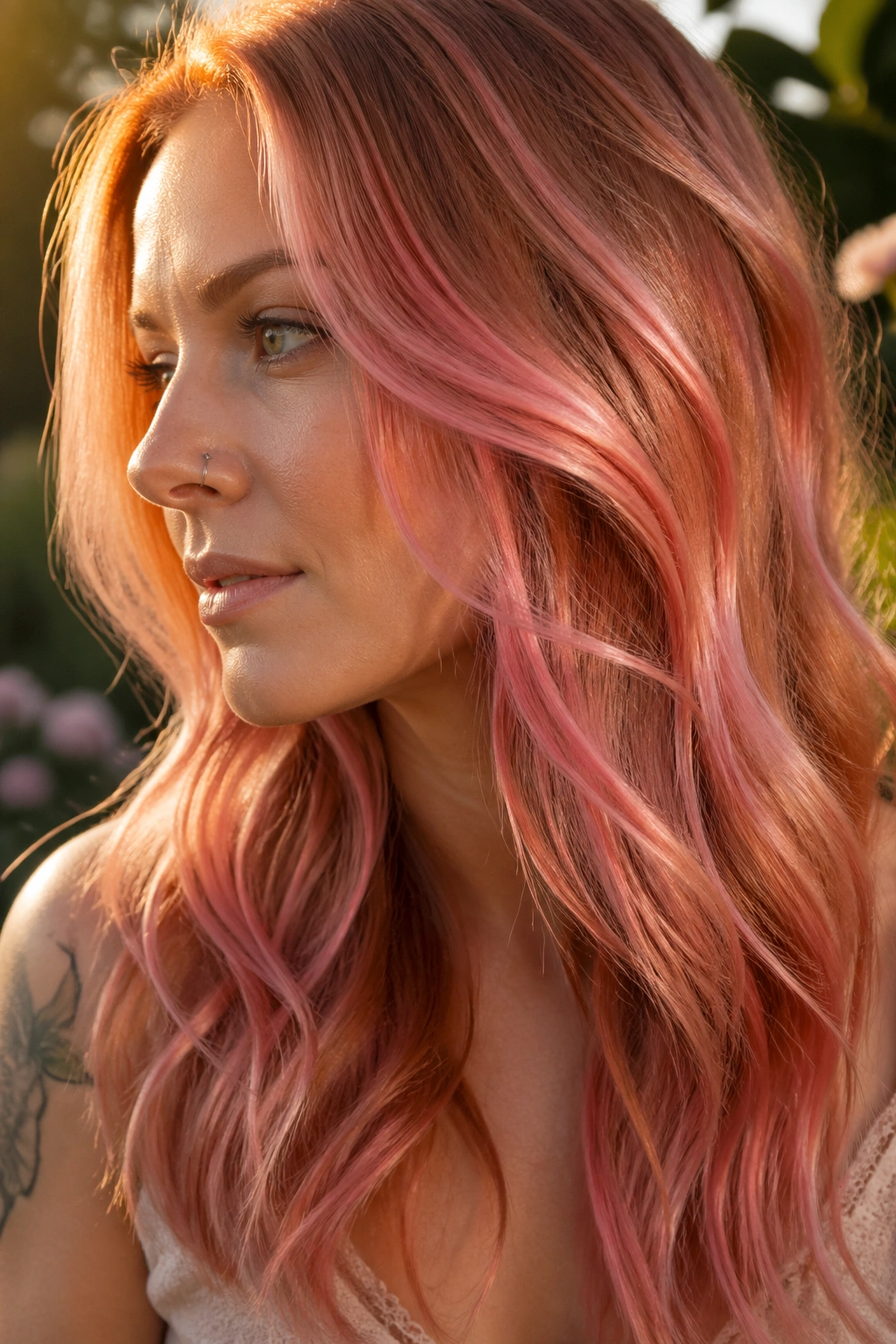
If your hair already leans copper, strawberry pink fits in without a fight. The warm base and the rosy overlay meet in the middle, so the result feels glossy and dimensional instead of pasted on. That’s why redheads often wear this blend better than a colder pink.
Why Red Bases Love This Shade
Copper hair carries enough warmth to keep strawberry pink from looking flat. The pink picks up the orange undertone and turns it into something soft and glowing. On layered hair, the shade seems to change as the strands move.
A colorist usually doesn’t need to push the hair as pale for this look as they would for bubblegum or neon. That can mean less stress on the hair, which is never a bad thing. Still, the pink has to be chosen carefully. Too much blue in the mix and the warmth disappears. Too much orange and the pink gets lost.
This one is good if you like color that feels rich rather than loud. It sits in that sweet spot where people notice the shine before they notice the formula.
10. Pastel Pink Ombre
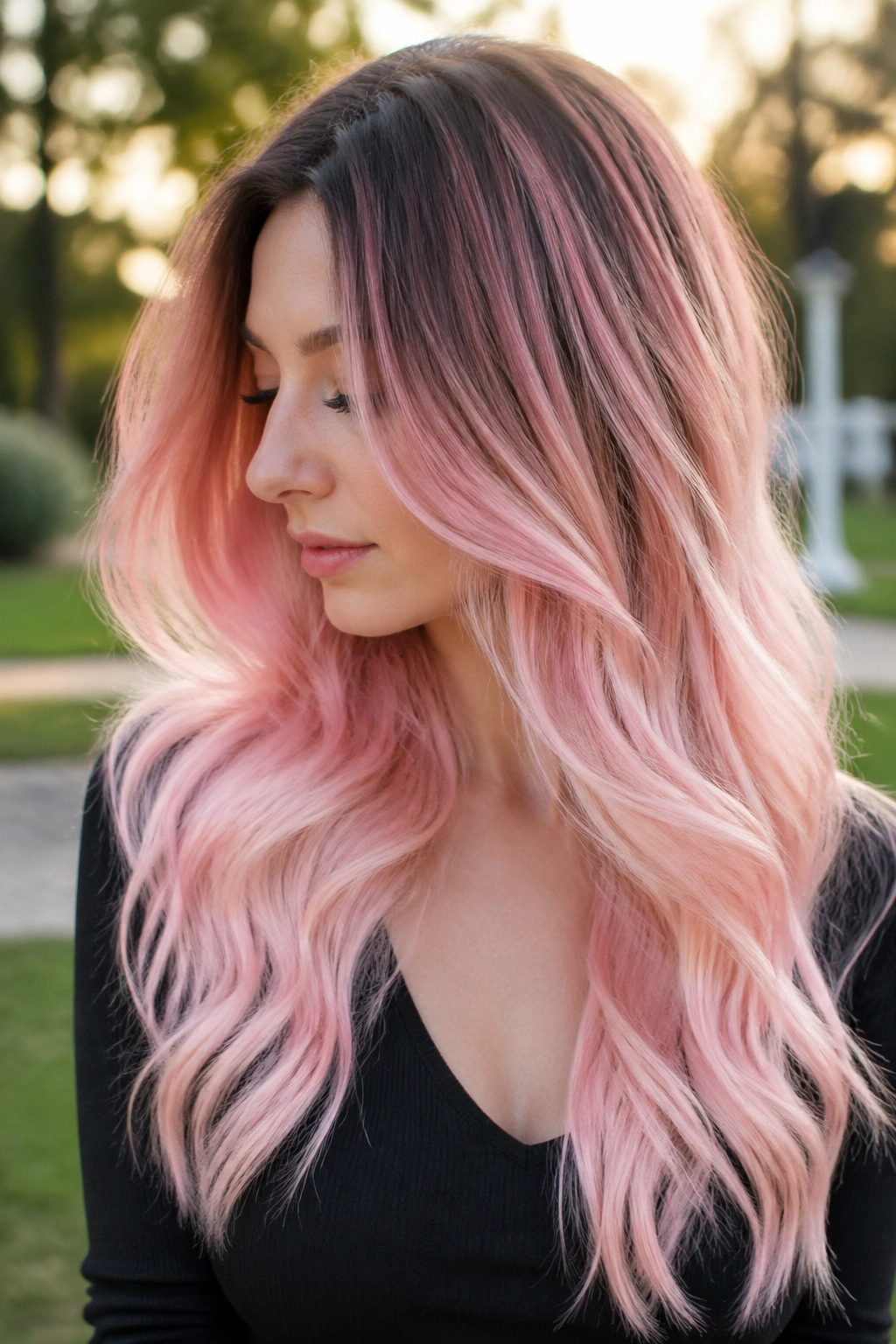
Pastel pink ombre is all about the fade. The roots stay natural or softly lightened, and the pink slips gradually toward the ends until it feels almost airy. On long hair, that slow shift can be gorgeous because it gives the eye something to follow.
The key is restraint. If the pink starts too high, the whole look turns heavy. If the transition is too sharp, it stops being ombre and starts looking like a stripe. A good pastel ombre moves in a long, soft slope, with the brightest area sitting low on the hair shaft. It’s the kind of style that rewards healthy ends and a little patience.
I like this one on layered lengths, especially when the cut has movement. The fade gets broken up in a nice way, and the pink doesn’t feel glued to one line. It also works well if you want pink hair highlight ideas that feel dreamy rather than edgy. Soft can still be interesting.
11. Pink Ribbon Highlights in Brunette Hair
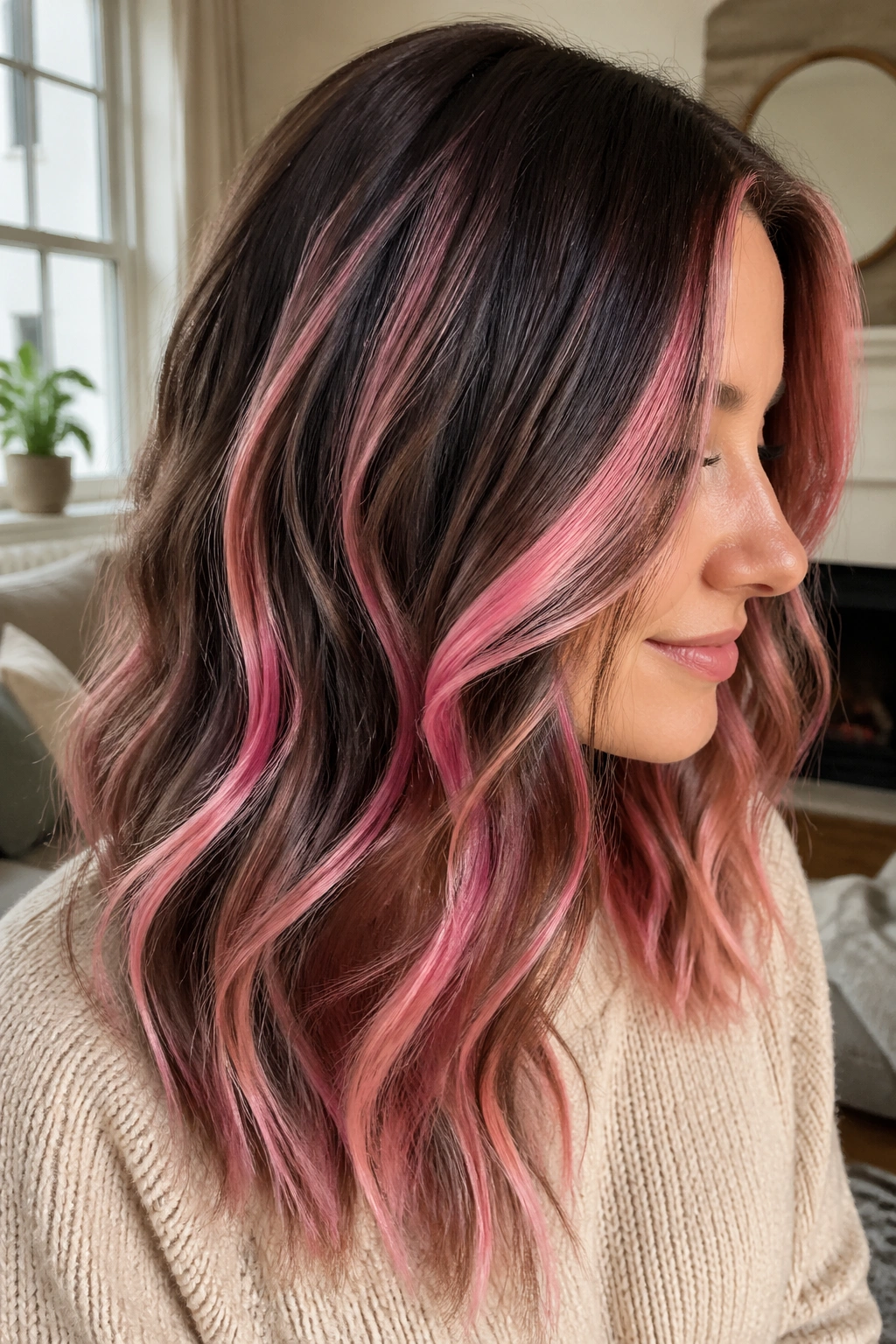
Ribbon highlights wind through the hair the way satin strips do through a braid — long, visible, and a little fluid. On brunette hair, that shape matters because the pink needs space to contrast against the darker base. Thin wisps can disappear. Wider painted ribbons keep the color readable.
Unlike chunky streaks from years ago, ribbon highlights don’t need to sit in one block. They can curve through the mid-lengths, open up near the ends, and sit just under the surface so the hair still looks dimensional. That’s especially nice on waves, where the pink shifts in and out of view.
If you want to ask for this at the salon, think in terms of freehand painting and soft sectioning, not a solid stripe. Half-inch to one-inch ribbons are usually enough to make the shade show. More than that and the brunette base starts losing its job.
12. Mauve Streaks for Deep Brunettes
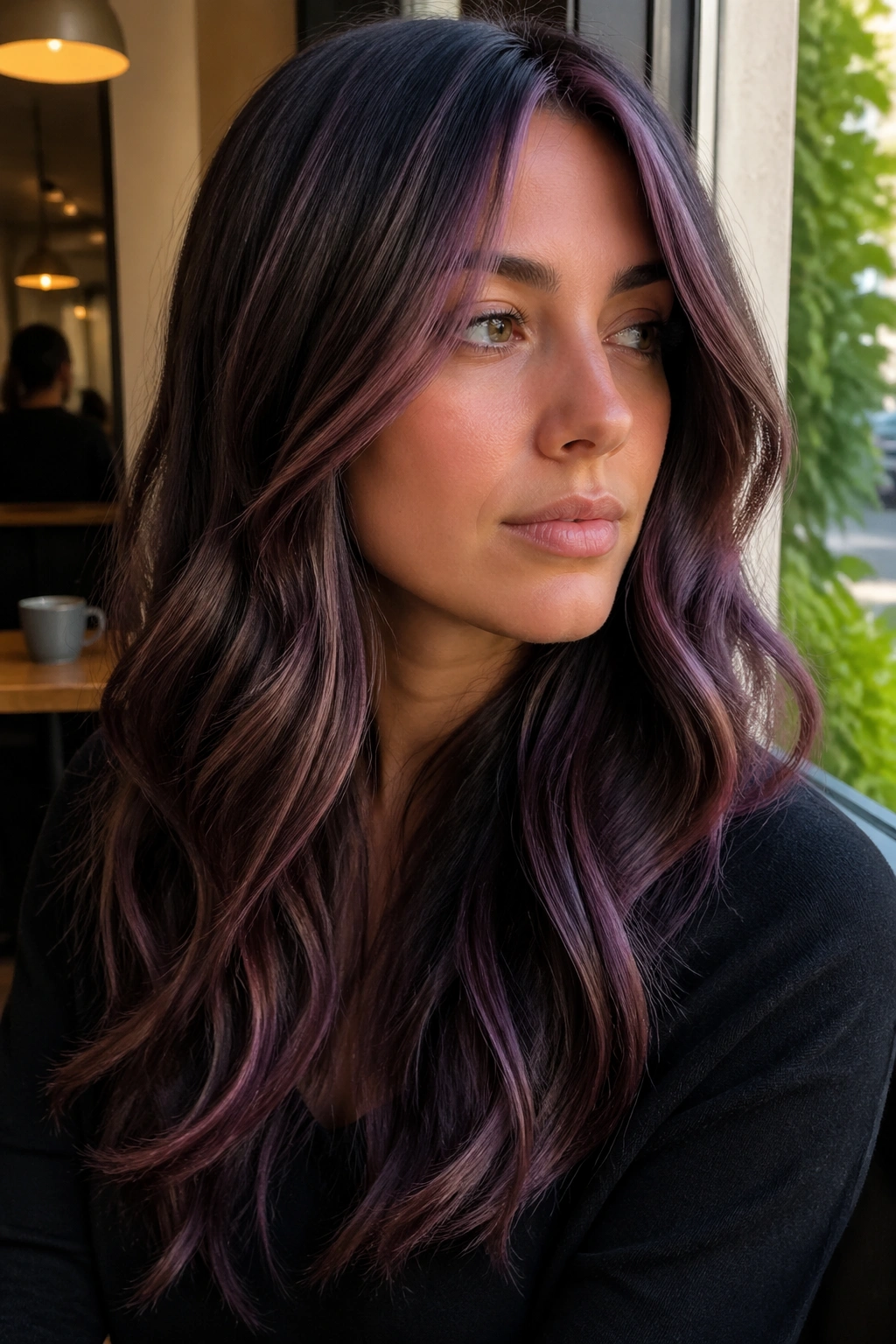
Mauve is the pink shade that usually makes sense when bubblegum would feel too loud. It carries a gray-violet cast that softens the color and lets it sit against deep brunettes without looking childish or harsh. On black-brown hair, mauve streaks can look almost smoky.
How to Keep It from Turning Muddy
The biggest mistake is letting the lifted base stay too yellow. Mauve needs a clean blonde canvas underneath or the pink-purple mix can go swampy fast. A level 8 or 9 lift is usually safer if the hair can handle it.
- Ask for cool-toned pre-lightening
- Keep the mauve pieces medium-width, not razor thin
- Finish with a clear gloss if the tone starts looking flat
- Expect the shade to fade toward soft lilac, then beige pink
Mauve streaks are for someone who wants dimension more than flash. They don’t scream. They sit there and make the hair look richer.
13. Coral Pink Highlight Veil
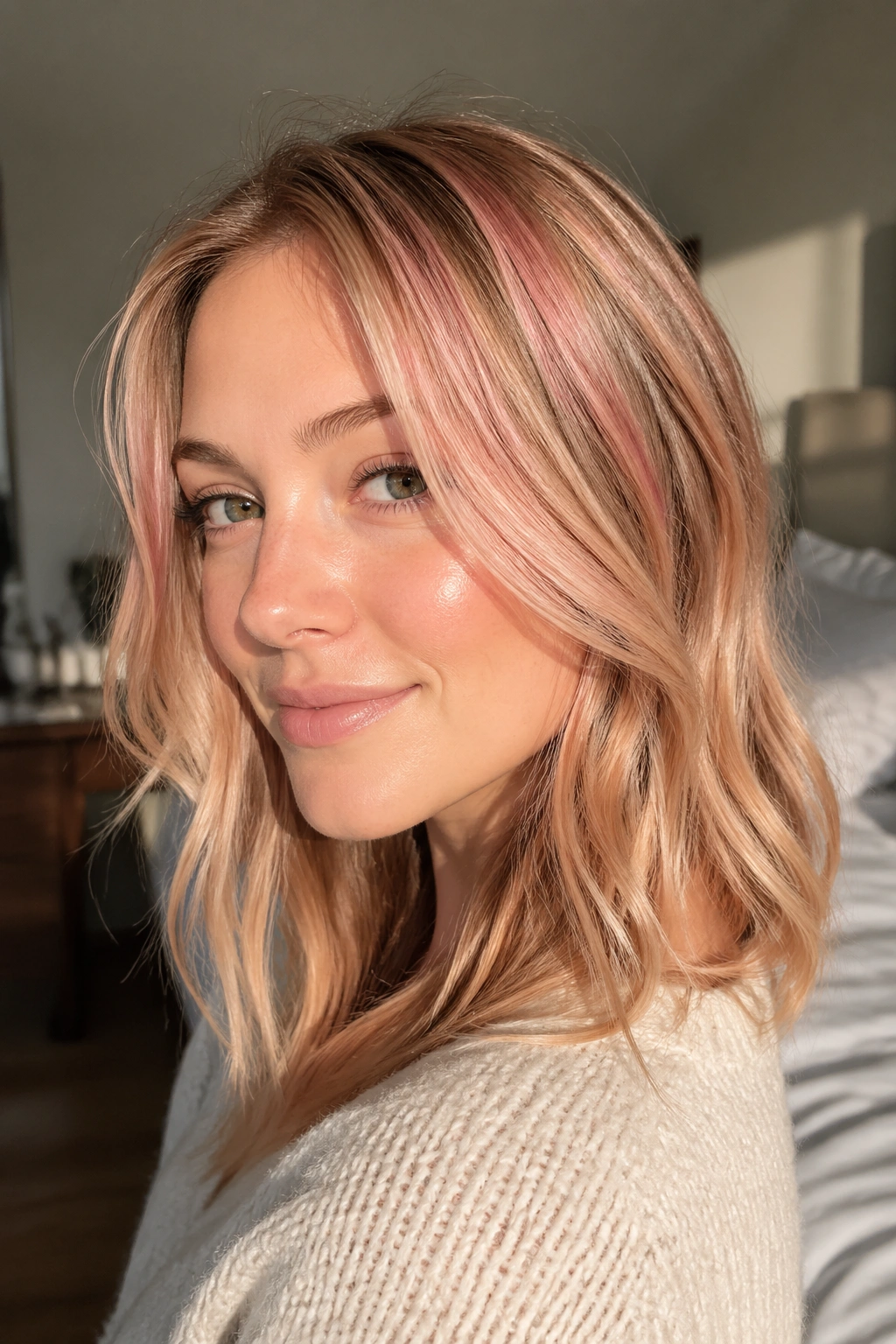
Coral pink has more peach in it, and that one detail changes the whole mood. The color feels warmer, friendlier, and easier to wear on hair that already has honey or copper tones. On a highlight veil, it sits across the top layer in a sheer wash, so you get brightness without a hard line.
You can think of the veil as a lighter version of balayage. The pieces are painted softly enough that the pink doesn’t separate from the base; it just floats over it. That’s useful on medium-length hair, where too much contrast can make the cut look choppy in the wrong way.
Coral is a smart choice if you want something pink-adjacent without drifting into candy territory. It looks good in daylight and under indoor light, which matters more than people think. Some shades only work under one kind of bulb. This one is more forgiving.
14. Fuchsia Tips on Curls
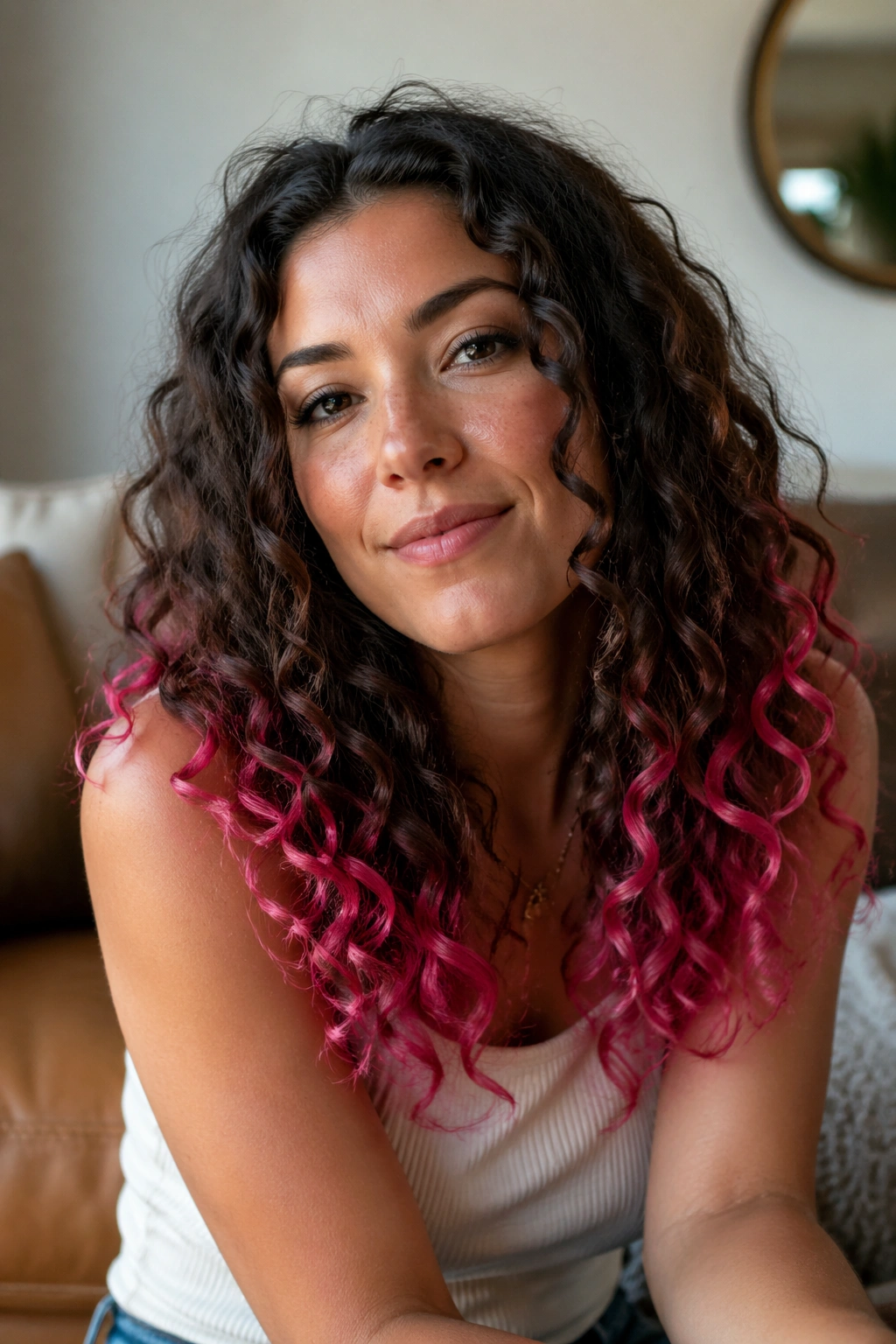
Curly hair can wear fuchsia tips better than straight hair in some cases because the curl pattern breaks the color up into little flashes. The ends catch light at different angles, so the pink never sits as one heavy block. It feels playful, but not messy.
What Makes It Work on Texture
The curl shape gives the color movement even before you style it. That means the pink can stay concentrated on the last two to four inches and still look lively. On a coilier pattern, the pigment can almost seem woven into the shape of the curl.
A few things help:
- Keep the base healthy so the tips don’t frizz out
- Use a curl cream that doesn’t dull the color
- Trim the ends before adding the pink, not after
- Choose a fuchsia that leans berry if you want more depth
This is one of those pink hair highlight ideas that feels strongest when the hair is worn down and touched. It loves motion.
15. Pink Skunk Stripe
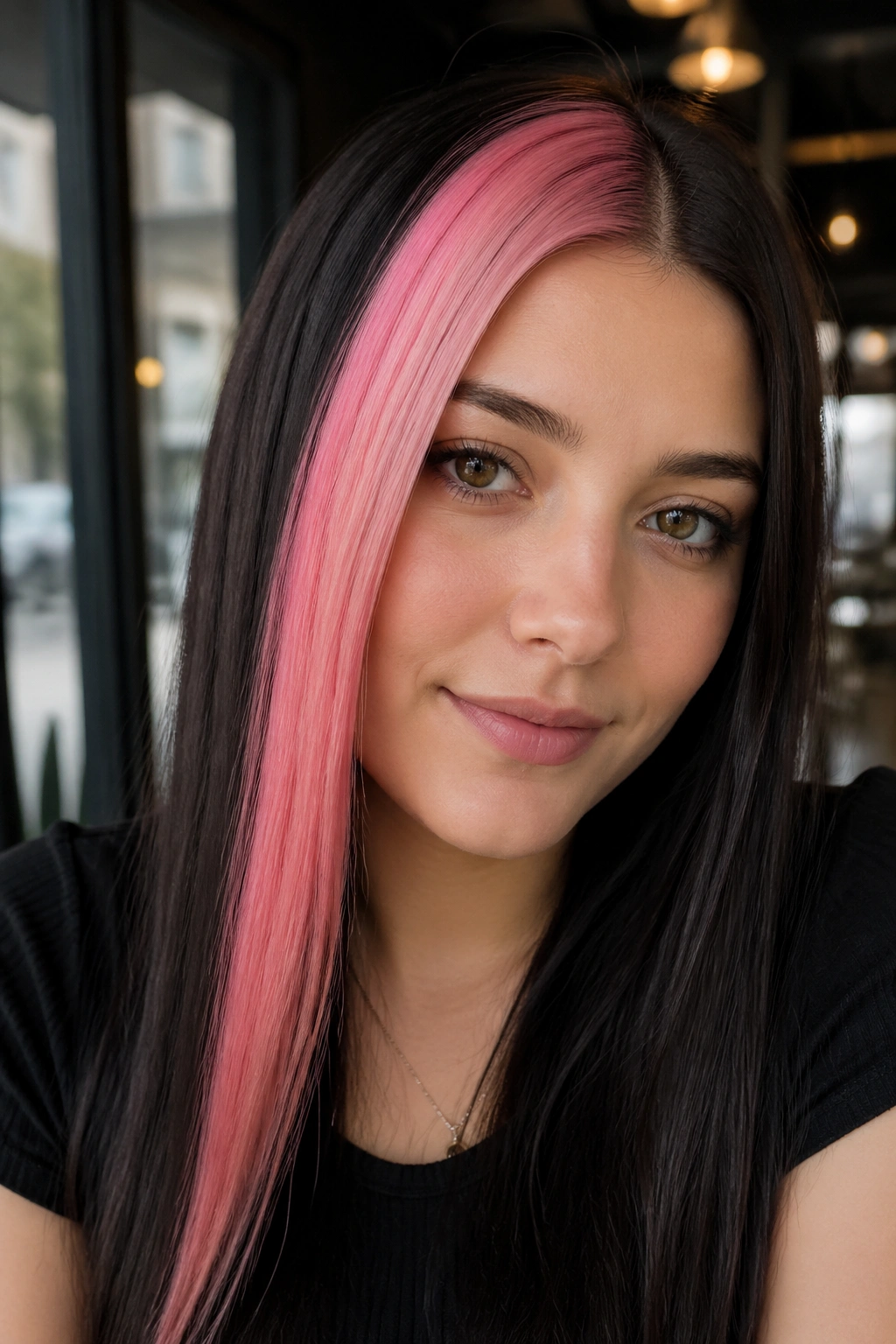
The skunk stripe works because it commits. One wide pink stripe near the front or through the part line gives the hair a clear graphic shape, and that clean contrast is what makes it cool instead of confused. If the rest of the hair stays dark or neutral, the stripe looks even sharper.
This style is especially strong on straight or blown-out hair, where the line can stay crisp. It also plays well with half-up styles and sleek buns, because the stripe still shows from the front. That makes it a useful choice if you want a look that reads hard-edged without needing a full head of pink.
A stripe like this needs a tidy section and a good root placement. Too much feathering around the edges makes it lose the point. One clear panel beats three half-ideas. That’s the whole reason this look has lasting appeal.
16. Rose Quartz Contour Highlights
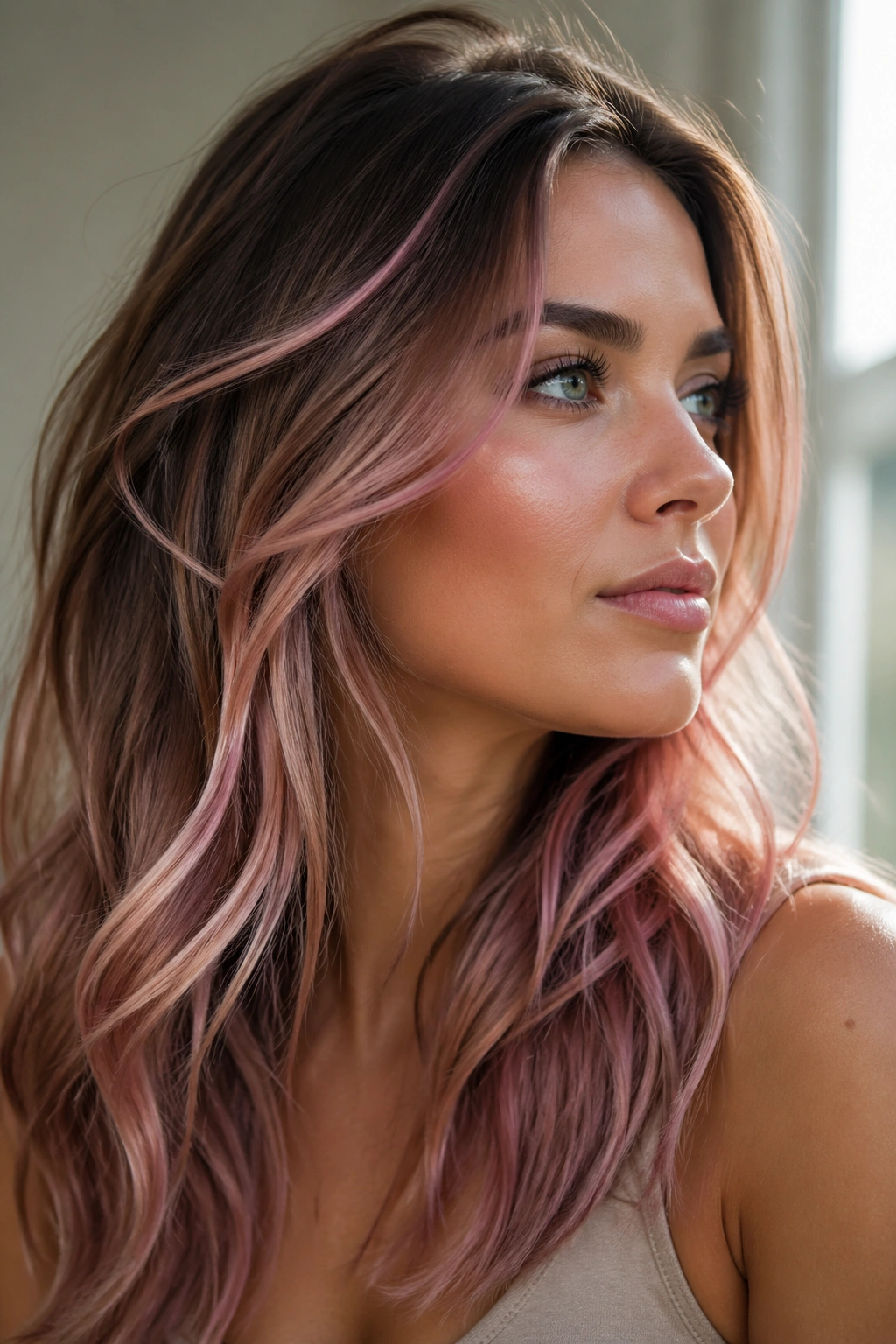
Rose quartz contour highlights are placed where the face needs a little light — around the cheekbones, at the temples, and through the crown where the hair lifts naturally. The pink stays soft, but the placement shapes the haircut in a way that feels intentional. It’s color used like makeup, which is a nice way to think about it.
Where the Light Should Fall
This look works because the pink isn’t evenly spread everywhere. The front pieces can be lighter and warmer, while the crown carries just enough tint to keep the color moving into the rest of the hair. On layered cuts, that gives the whole shape more lift.
- Best on shoulder-length or longer hair
- Looks good with loose bends, not stiff curls
- Needs careful sectioning around the part
- Can be toned cooler for a dusty rose finish
It’s a quieter version of pink highlights, but not a boring one. There’s shape here.
17. Cranberry Pink Lowlights
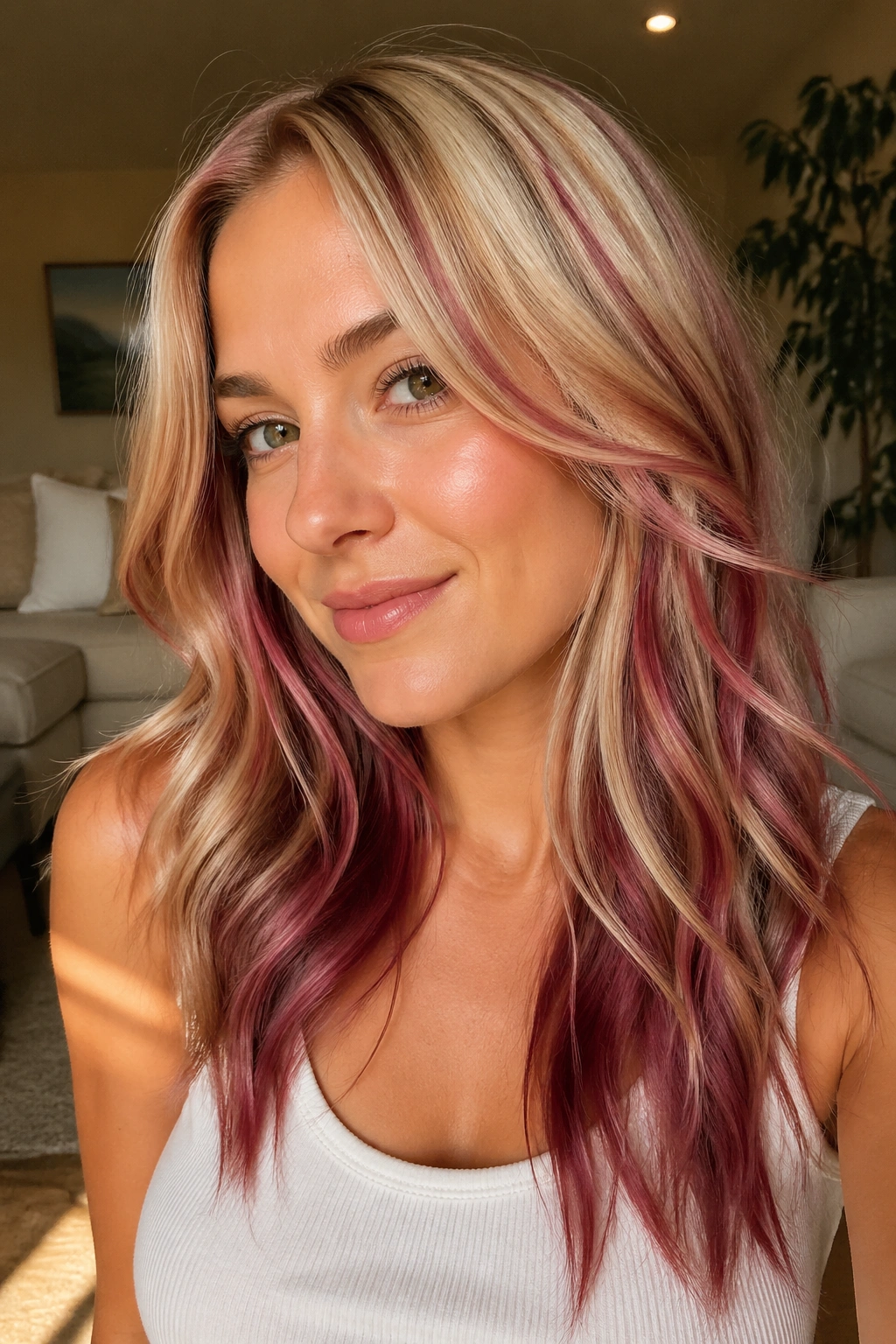
Most people chase lighter. Cranberry pink lowlights are for the moment when the hair needs depth instead. The darker pink sits inside blonde or light brown hair and creates shadow, which makes the surface highlights above it pop more. That’s a useful trick when a color starts looking flat.
Unlike bright pink streaks, lowlights don’t need to dominate the eye. They work best when they hide until the hair moves or the light hits at an angle. On layered blonde hair, they can add a kind of velvet finish that plain highlights never quite manage.
This shade is especially handy if your blonde is starting to feel too bright or too one-note. A cranberry lowlight brings back some weight without taking the color dark. It’s pink, yes, but it behaves like structure. Quietly useful. Not flashy for the sake of it.
18. Salmon Pink Dimensional Weave
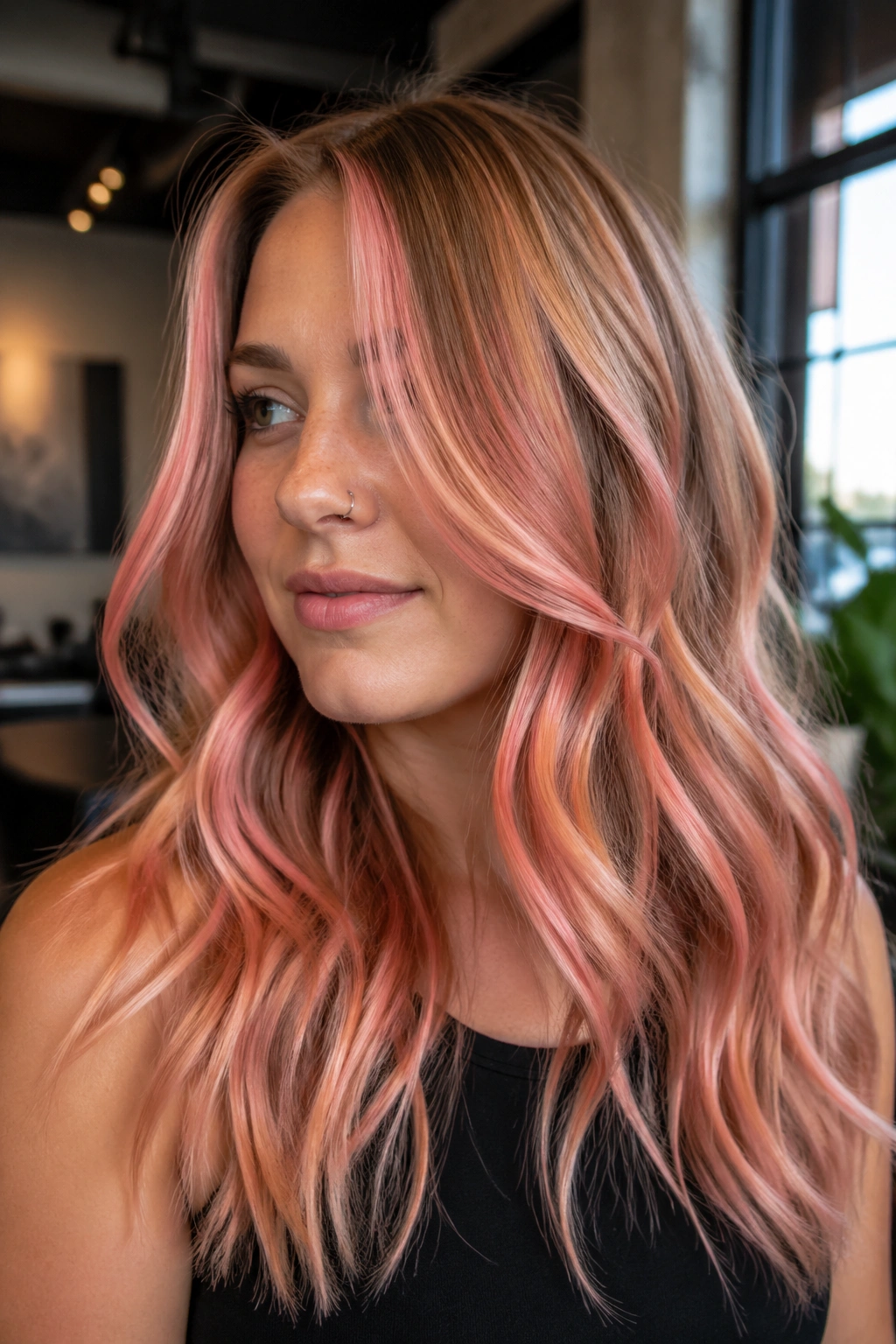
Salmon pink sits in a sweet middle ground between peach and rose, which gives it a softer, almost skin-like warmth. On a dimensional weave, the color is spread through alternating slices so the hair doesn’t read as one flat panel. That’s what keeps it interesting.
Why Salmon Reads Softer Than Neon
The pigment is lighter and warmer, so it plays well on beige blonde, light caramel, and pale copper bases. It can also help a highlight blend look less icy if the blonde underneath went too cool. A lot of people want pink, then realize they actually want warmth with a blush edge. Salmon gets there.
A weave like this usually looks best with:
- Fine and medium slices mixed together
- A root area left slightly deeper
- A soft gloss every few weeks
- Loose styling so the pieces can separate
It’s a good choice for someone who wants pink without the bubblegum effect. That alone makes it more wearable than people expect.
19. Watermelon Pink on Platinum
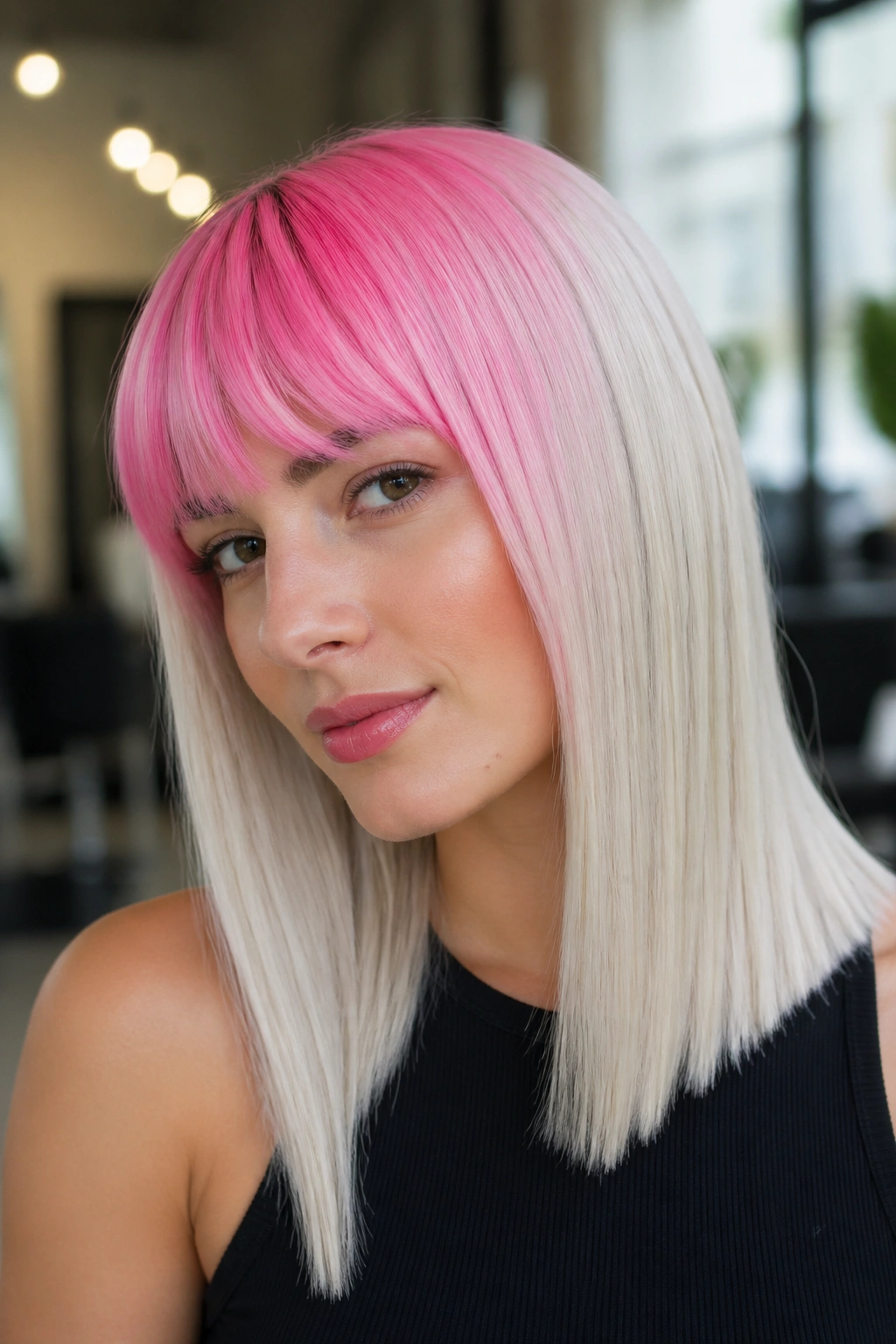
Platinum hair can carry watermelon pink in a way darker bases can’t, because the pale canvas lets the color stay bright and clean. The shade has a juicy, saturated feel — more vivid than rose, less harsh than neon. On very light hair, it almost glows.
The trick is making sure the platinum is clean before the pink goes on. If the blonde still has too much yellow, the pink can skew coral or peach. If the blonde is too porous, the color can sink in unevenly and look patchy at the ends. That’s why this look rewards a careful prep job.
Watermelon pink works especially well on straight, shiny hair and on blunt cuts, where the color can act like a solid block of pigment with dimension hidden inside it. It’s one of those shades that feels loud at first glance, then oddly elegant once you see the shine. Strange, but true.
20. Soft Pink Foilayage
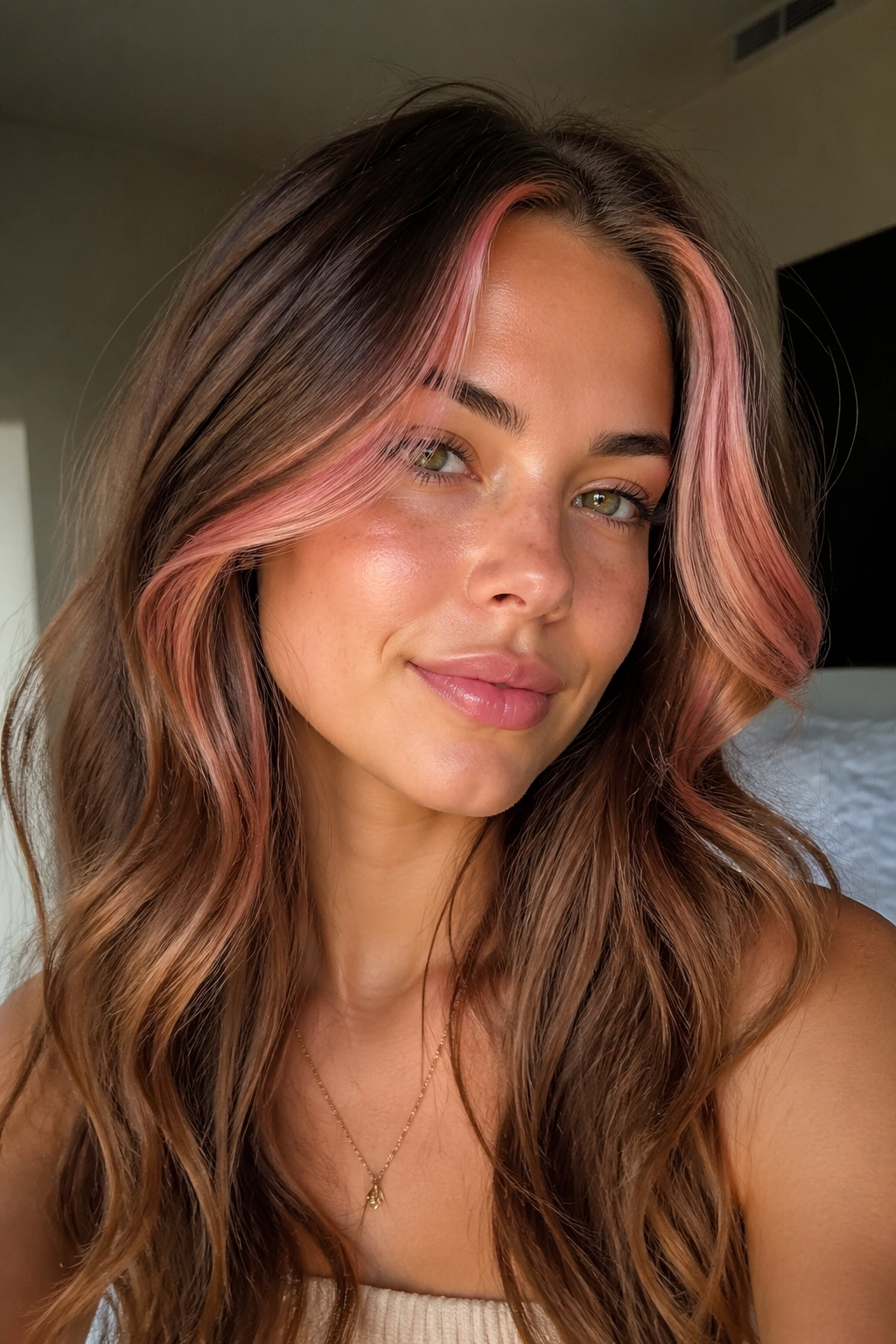
Soft pink foilayage is what happens when you want the lift and control of foils with the airier movement of balayage. The result is pink highlights that don’t feel stamped on. They feel placed. There’s a difference, and you can usually see it from the first turn of the head.
This approach works well when you want pink to fade from brighter near the crown to softer at the ends. The foils help the lift stay even, while the hand-painted sections keep the transition loose. That makes it a strong option for anyone with layered hair, because the pieces can live inside the cut rather than on top of it.
The best part? It can be tuned to almost any base, from light blonde to medium brunette, as long as the hair can handle the lightening it needs. Some looks shout. This one speaks in a calmer voice, and that’s part of the charm. Pink doesn’t have to be loud to feel like a switch.
Pink hair works best when the tone fits the base and the placement fits the cut. That’s the part people miss when they screenshot a pretty photo and hope the result will land the same way on their own head.
Bring that photo, sure. Bring a few of them. But also bring a little realism about your starting level, your hair’s porosity, and how much upkeep you’ll actually tolerate. That is usually where the smart choice gets made — not in the picture, but in the mirror after the third wash.
