

Pink hair doesn’t have to mean candy-bright ends and a lifetime subscription to purple shampoo. It can look soft, smoky, expensive, punchy, or almost invisible until the light hits it and the whole thing wakes up.
That’s the part people miss when they ask for “pink.” Pink is not one color. It’s a whole range, and the shape of the color matters as much as the shade itself. A level 10 blonde can wear a whispery blush. A darker brunette usually needs either selective lightening or a deeper berry-based pink that lives closer to mauve, raspberry, or magenta than cotton candy.
The best salon conversations are specific ones. Bring two photos, not one. Show your colorist the tone you want, the placement you like, and the kind of fading you can live with, because pink pigments tend to lose their punch faster than brown or red shades. That is not a flaw; it’s part of the charm. Pink changes fast, and sometimes the halfway stage is the prettiest stage of all.
Below are 21 pink hair color ideas that cover soft, wearable shades and louder, high-contrast looks, so you can walk into your next appointment with an actual plan.
1. Soft Blush Pink on a Pale Blonde Base
Soft blush pink is the one shade that can make a whole head of hair look expensive without screaming for attention. It sits in that delicate zone between pastel and neutral, which means it reads polished rather than sugary. On a very light blonde base, it can look like a rose petal had a quiet morning.
The trick is the base. If your hair is lifted to a pale yellow or near-white blonde, a blush formula with a clear gloss mixed in will look airy and sheer. If the blonde is too warm, the pink goes peachy. If the blonde is too dark, the result turns muddy fast. That’s why this one works best on people who already commit to lightener and don’t mind touch-ups.
I like this shade on sleek bobs, straight cuts, and soft waves. It has a clean shape. No clutter.
A good salon ask sounds like this: “I want a transparent blush pink, not a neon pink, and I want it light enough that it still looks blonde from a distance.” That one sentence does a lot of the work. It tells the colorist you want tone, not saturation.
2. Rose Gold Melt
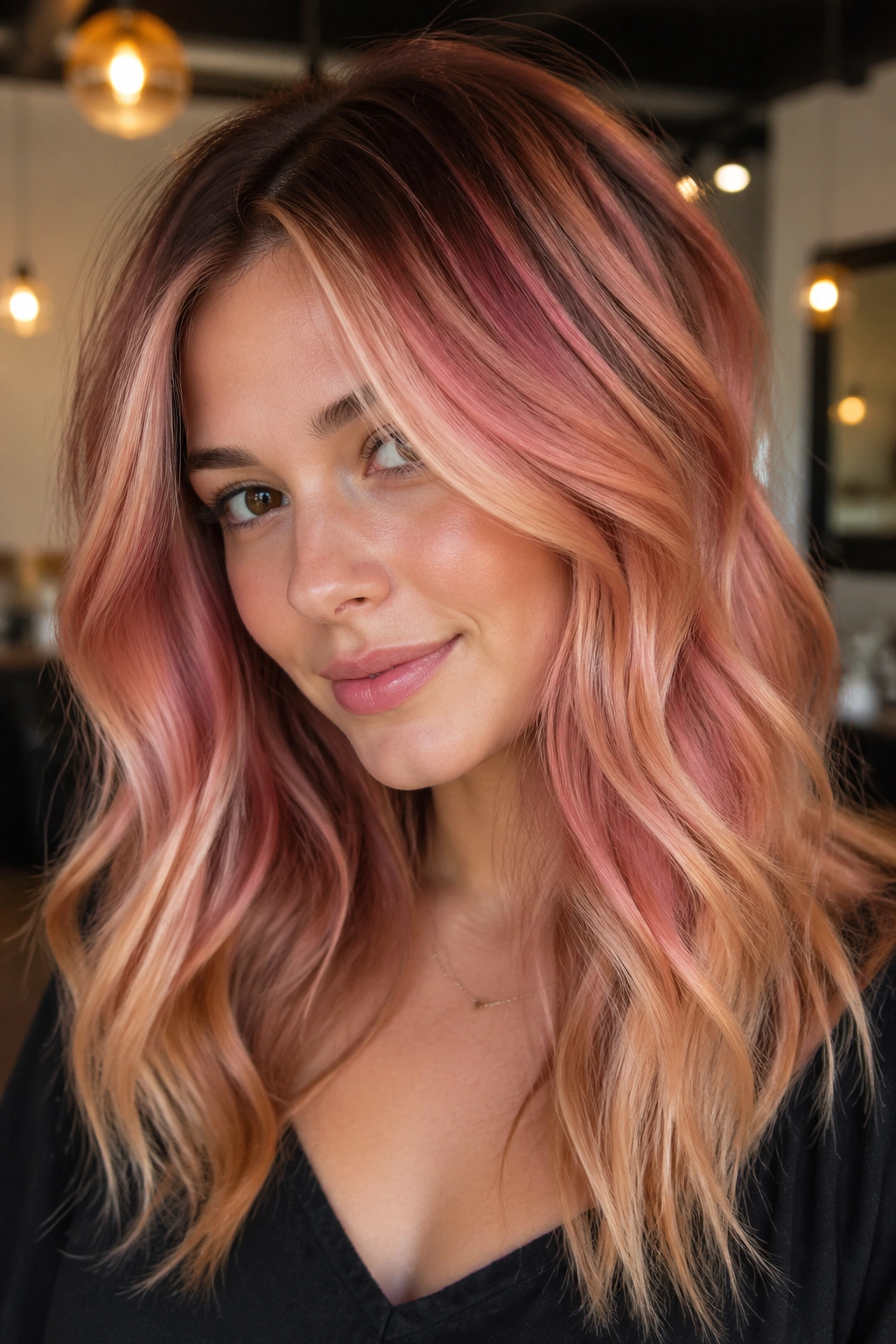
A rose gold melt is what happens when pink grows up a little and learns how to sit next to warmth. It’s flattering because the gold keeps the pink from drifting into baby-doll territory, and the pink keeps the gold from looking too yellow or brassy.
Why It Feels So Wearable
This shade is especially kind to people who already have honey blonde, beige blonde, or light copper in their hair. The roots can stay a touch deeper, then melt into rose midlengths and lighter gold-tinged ends. That soft transition hides regrowth better than a flat all-over color.
What to Ask For at the Salon
- A root shadow that stays a shade or two deeper than the mids
- A rose-toned gloss with gold or beige warmth mixed in
- Soft blending through the midlengths, not harsh stripes
- Loose waves after styling, because the movement helps the colors separate
This is one of those pink hair color ideas that looks calm in daylight and richer indoors. It is not loud. It is not shy either. The middle ground is the whole point.
3. Cotton Candy Pink Balayage
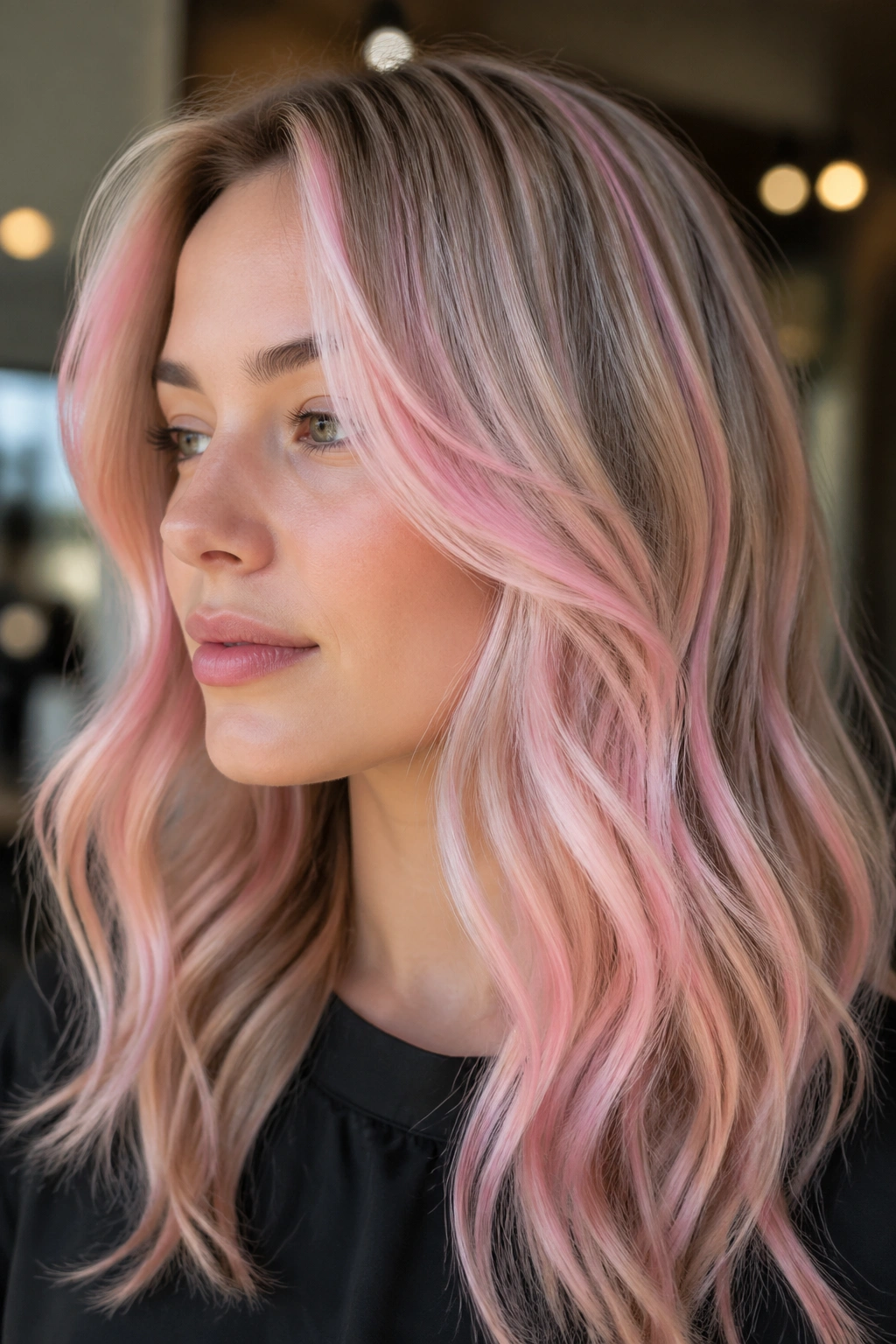
Cotton candy pink balayage is for people who want the fun of pink without turning every strand into a solid block of color. The soft ribbons give you movement, which matters more than people think. When the highlights are painted in irregular sections, the hair keeps its dimension and doesn’t flatten out.
What Makes It Different
Balayage works best when the pink sits on prelightened pieces that are placed around the face, through the crown, and near the ends. That gives you a soft drift of color instead of a line that says, “Here is where the dye starts.” On wavy hair, the result looks airy and a little playful. On curls, it can look surprisingly chic because the color breaks up naturally across each bend.
Who Should Try It
- Medium to long hair with layers
- Blonde or light brown hair that can be lifted safely
- People who want pink but don’t want full-coverage upkeep
- Anyone who likes a bit of softness around the face
Best tip: ask for a pastel pink toner over very pale ribbons, not a heavy opaque dye. It keeps the color light instead of chalky.
4. Dusty Mauve Pink
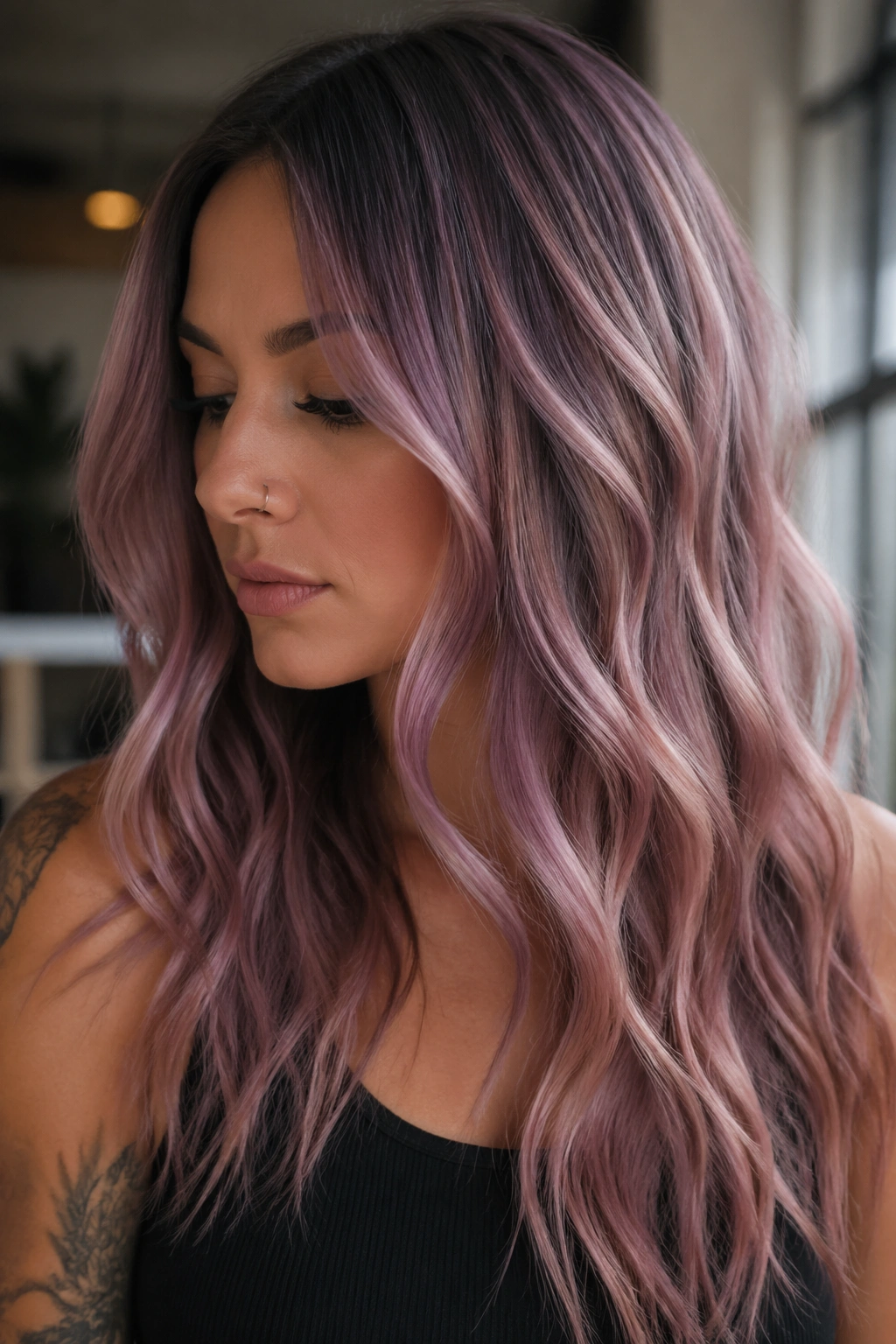
Dusty mauve pink is the pink I recommend to people who are nervous about pink. It has enough rose in it to feel intentional, but the smoky undertone keeps it from looking like bubble gum. On a brunette base, it can read as a fashion color; on blonde hair, it turns velvety and calm.
The nicest thing about this shade is how it fades. Instead of disappearing into nothing, it usually leaves behind a muted blush cast that still looks put together. That matters. A lot of bright shades fall apart after the first few shampoos and start looking patchy. Mauve holds its shape better because the color is already softened.
It also plays well with blunt cuts and shoulder-length hair. Sharp lines plus muted pink is a strong combination. The cut gives the color a frame, and the color stops the cut from feeling harsh. That balance is what makes it interesting.
If you wear silver jewelry, cool eyeliner, or a lot of black clothing, this shade makes sense. It doesn’t fight the rest of your look. It belongs there.
5. Neon Magenta Money Piece
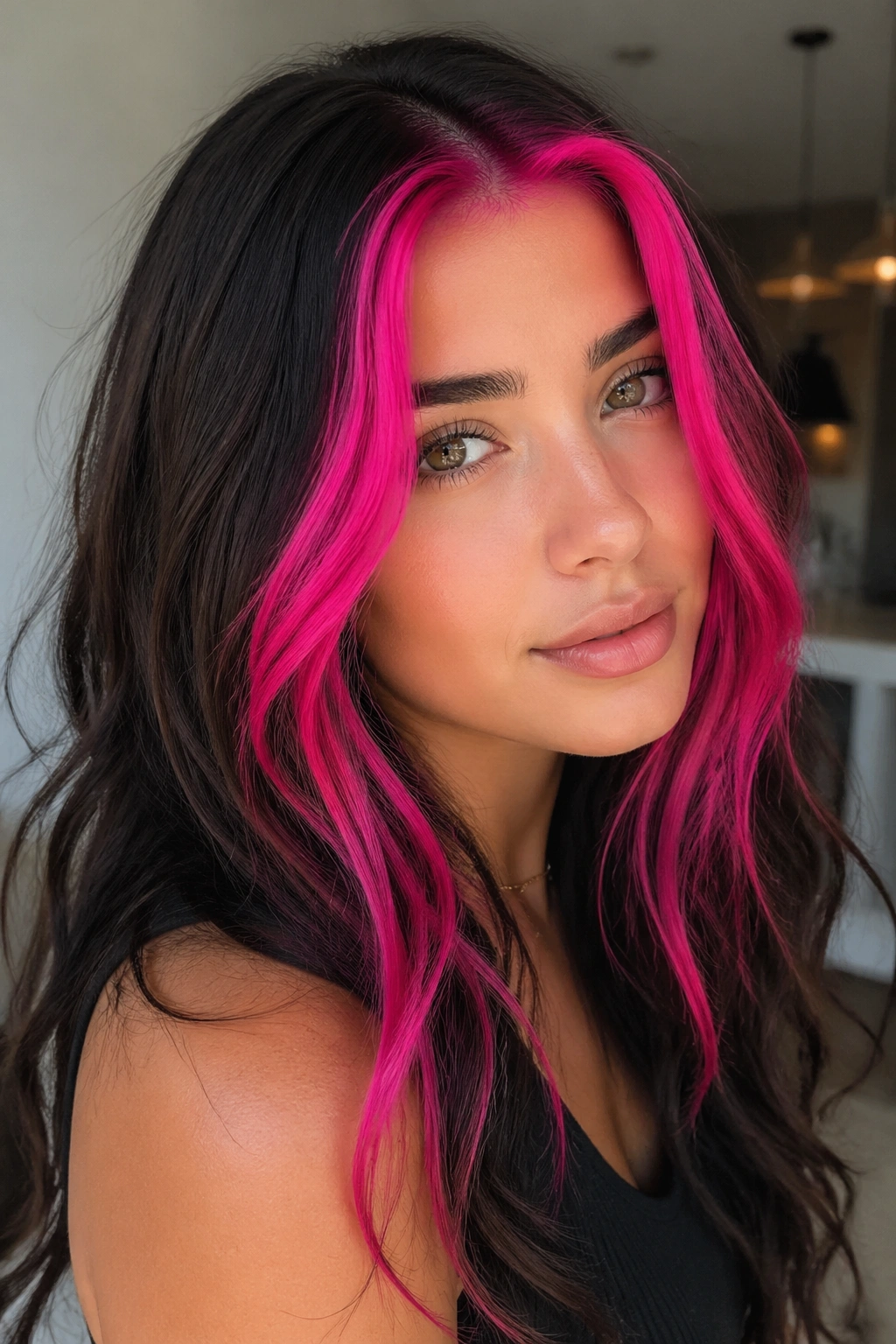
Do you want pink without changing the whole head? Then a neon magenta money piece is the move. A bright face frame can change the mood of a haircut instantly, especially when the rest of the hair stays dark, blonde, or brunette.
How to Wear It
The money piece should sit right around the front hairline, usually with a few extra ribbons through the crown if you want it to feel connected. On straight hair, the contrast is crisp. On curly hair, it becomes softer and more dimensional because the curl pattern breaks the color apart.
This idea works well if you love ponytails, top knots, clips, or half-up styles. The color shows even when the hair is tied back. That is half the fun. And because the rest of the hair can stay natural, the maintenance stays more manageable than an all-over neon shade.
A few things make this look work:
- The magenta has to be saturated enough to read from a few feet away
- The placement should be symmetrical unless you want an intentionally uneven feel
- The front sections should be lightened well enough that the pink doesn’t look dark and muddy
If you’ve been circling pink hair color ideas but can’t imagine full coverage, start here. It’s loud in a smart way.
6. Strawberry Pink Blonde
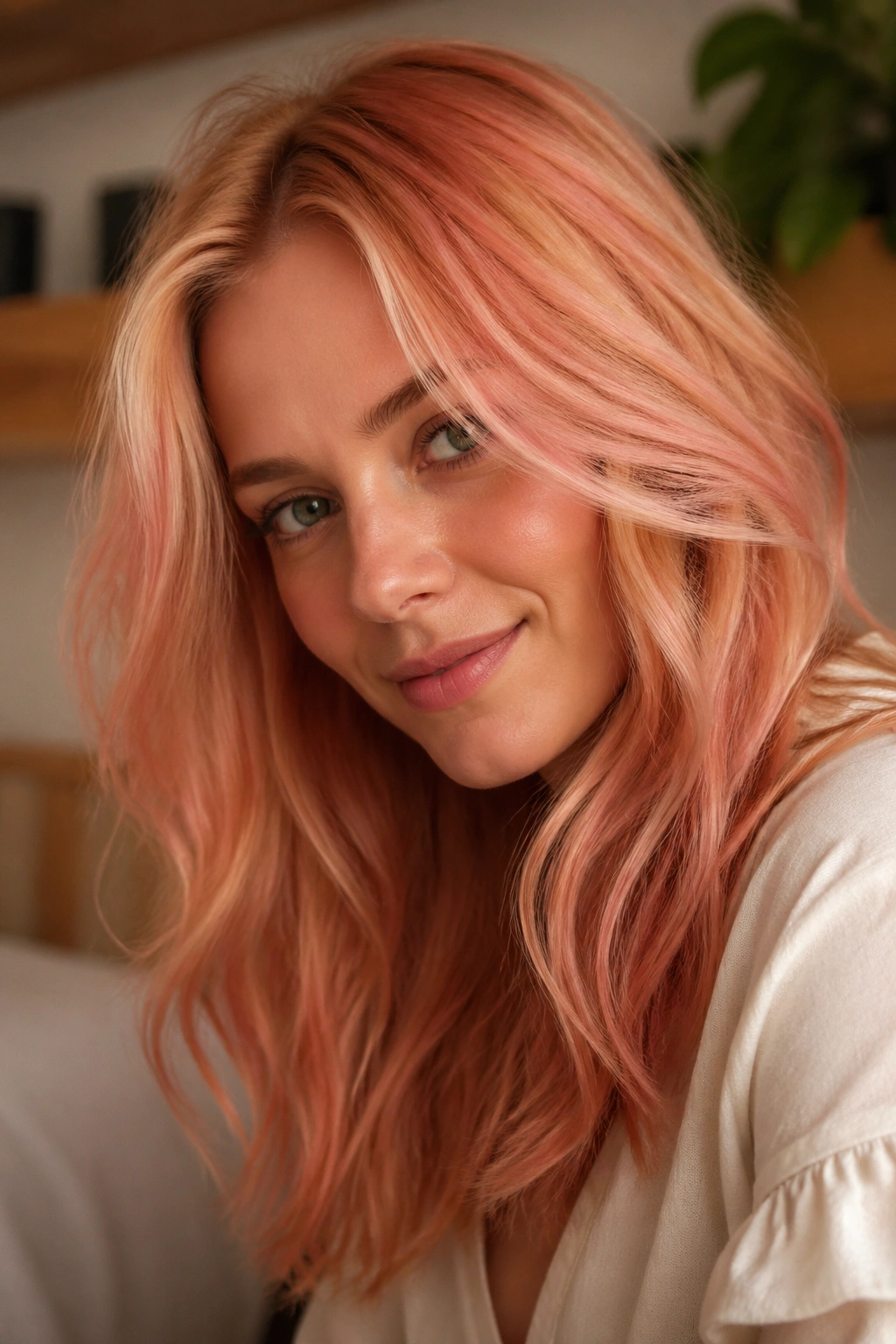
Strawberry pink blonde sits closer to warmth than most pinks. Unlike rose gold, which leans soft and shiny, strawberry pink feels fresher and a little fruitier. It’s the shade that makes blonde hair look like it spent time outdoors without turning orange.
This color works best when the base is blonde enough to hold pink, but not so pale that the result turns powdery. Think beige blonde, warm platinum, or soft champagne blonde. The goal is a tint, not a costume color. If the formula is balanced well, the pink lives inside the blonde instead of sitting on top of it.
I like this for people who wear warm makeup: peach blush, brown mascara, soft bronzer, maybe a lip color with a little coral in it. The whole look feels connected. If your wardrobe leans cream, tan, camel, or washed denim, it fits even easier.
Unlike icy pastel pink, strawberry pink blonde can fade into a peachy blonde and still look good. That matters. A fading path that still flatters is worth more than a perfect first day.
7. Raspberry Root Smudge
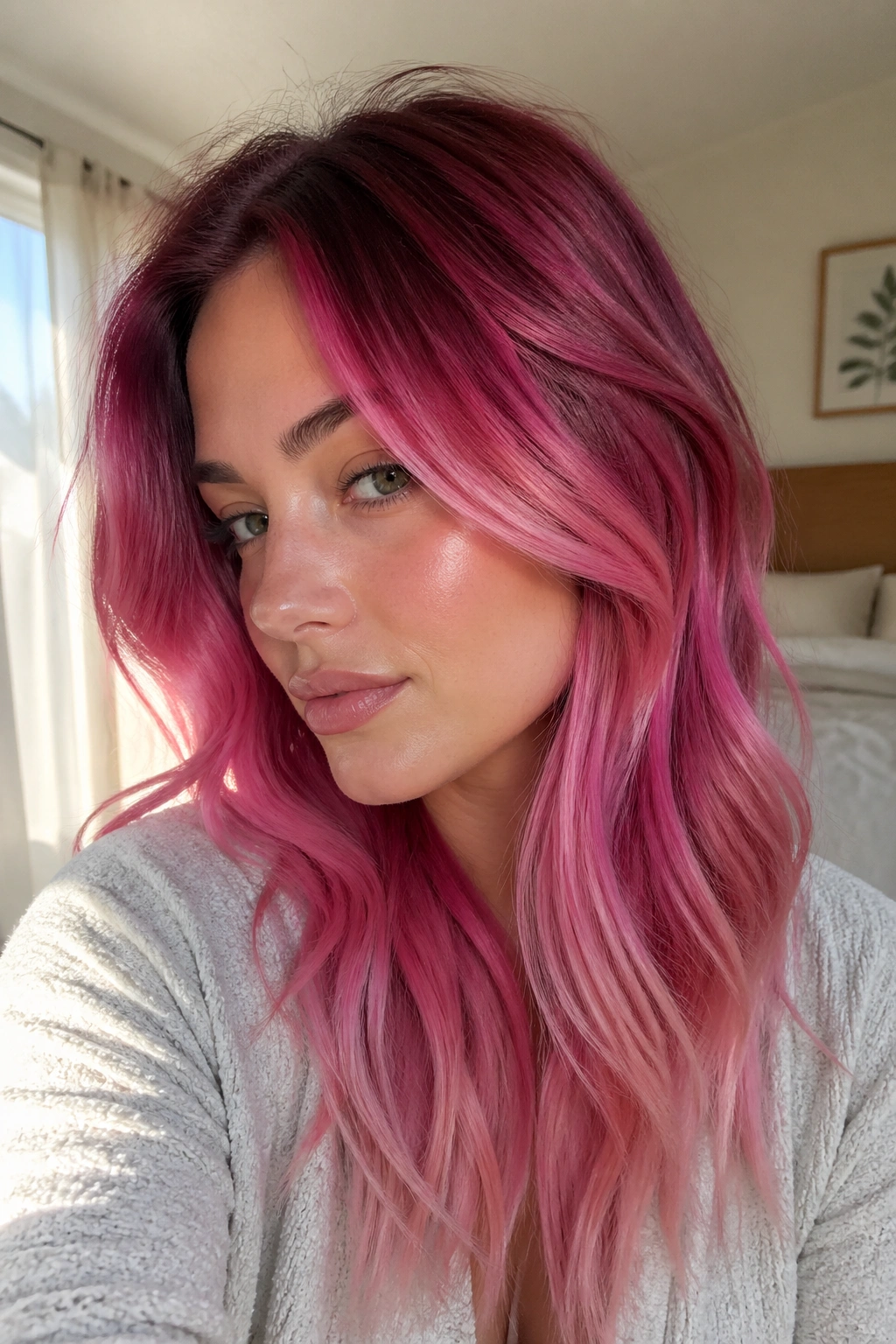
Raspberry root smudge has a nice bit of tension in it. The roots stay deeper, often close to brunette or wine, and the mids and ends open into a bright berry pink. The smudge keeps the top soft so the grow-out line does not jump out at you two weeks later.
Why It Works in Real Life
The root area acts like a buffer. It gives the brighter color below it a place to start, and it makes the whole style feel a little more grown-up. On longer hair, the dark-to-pink shift can be dramatic without looking flat. On a lob, it feels punchier and more modern.
Ask Your Colorist For
- A deep raspberry root shadow
- Midlengths with a berry-pink melt
- Lighter ends for contrast
- A glossy finish so the colors stay reflective rather than dusty
One detail people forget: the root area should not be so dark that it eats the pink. You still want a visible transition, not a hard stop. If you love contrast but hate harsh regrowth, this is one of the smartest pink hair color ideas on the list.
8. Bubblegum Pink All Over
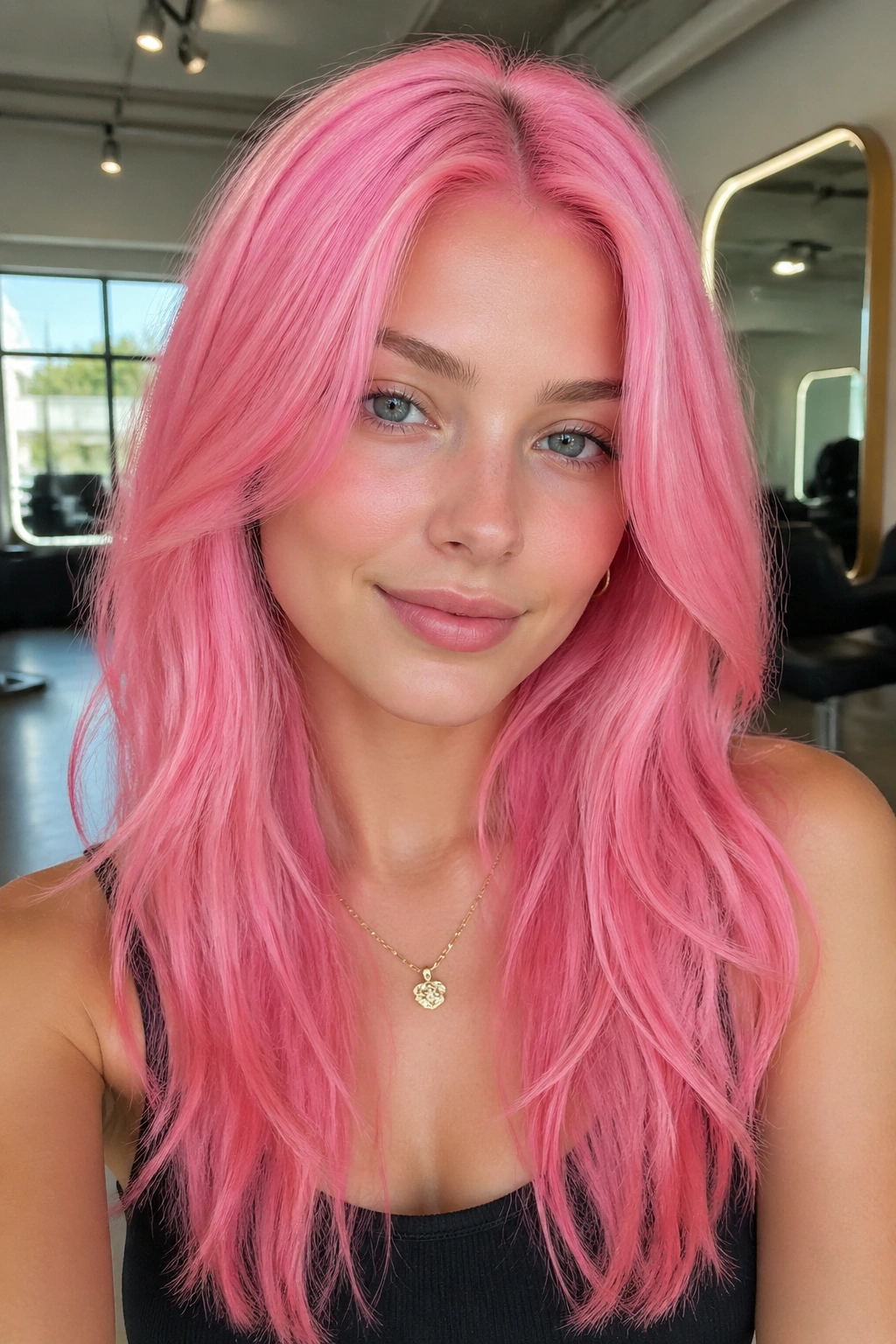
Bubblegum pink is bold in the way a loud jacket is bold. There is no hiding it, and that is the appeal. On a clean cut, the color looks playful. On layered hair, it can feel almost graphic.
The best versions start with a very pale blonde base and a direct dye that stays bright rather than transparent. If the hair has yellow left in it, the result can shift toward peach. If the hair is too porous, the ends can drink up too much pigment and go dark. That is why this shade asks for good prep, even application, and honest maintenance.
This one suits people who like a clear style identity. Short bobs, blunt lobs, and smooth blowouts wear it especially well because the shape keeps the color from feeling messy. It also looks good on textured styles, but the saturation has to be even or the shade can read patchy.
Be ready for upkeep. Bubblegum pink fades fast, and wash day matters more here than with muted shades. Sulfate-free shampoo, cool water, and a color-depositing mask help keep the color from going dull too soon.
9. Pink Peekaboo Panels
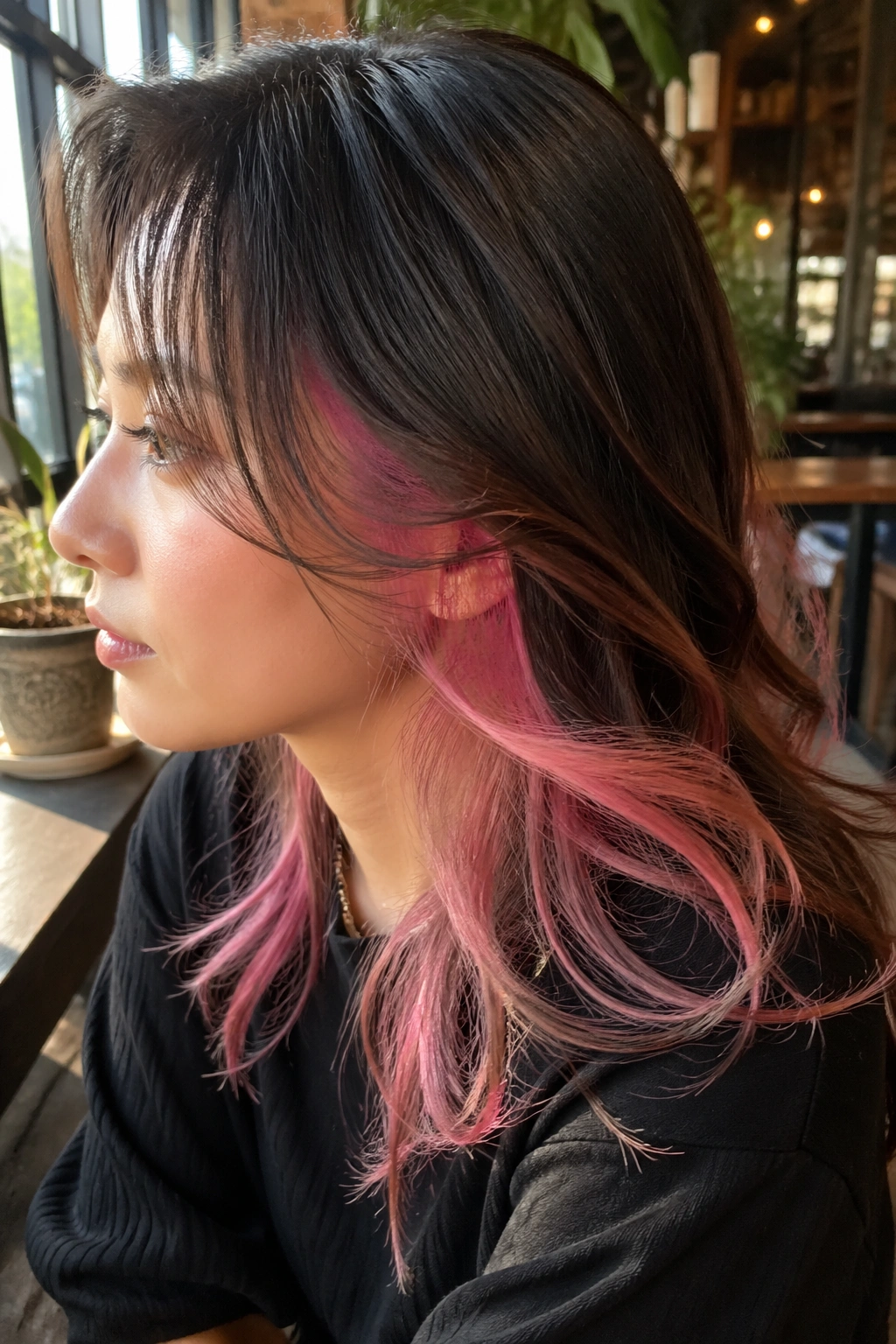
Peekaboo panels are the sneaky version of pink hair, and I mean that as a compliment. The color sits under the top layer or inside interior sections, so you get flashes of pink when the hair moves, flips, or gets tied up. Quiet at first glance. Not quiet when you catch it in a braid.
A Salon Story That Makes Sense
This is the shade I often imagine for someone who works in a conservative setting but still wants a little bite in their hair. The top layer stays natural or softly toned, while the pink lives underneath like a secret. You can show it off or hide it in seconds.
The placement matters more than the exact pink. A brighter pink under dark hair gives strong contrast. A dusty pink under blonde hair feels softer and more blended. Both work. You just need to decide how often you want the color to show.
- Great for half-up styles
- Easy to keep subtle at work
- Looks especially good in braids and ponytails
- Lets you test pink before going full coverage
One honest note: if you have very fine hair, the panel placement needs care or the color can disappear too easily. Ask for interior sections that still move.
10. Coral Pink Balayage
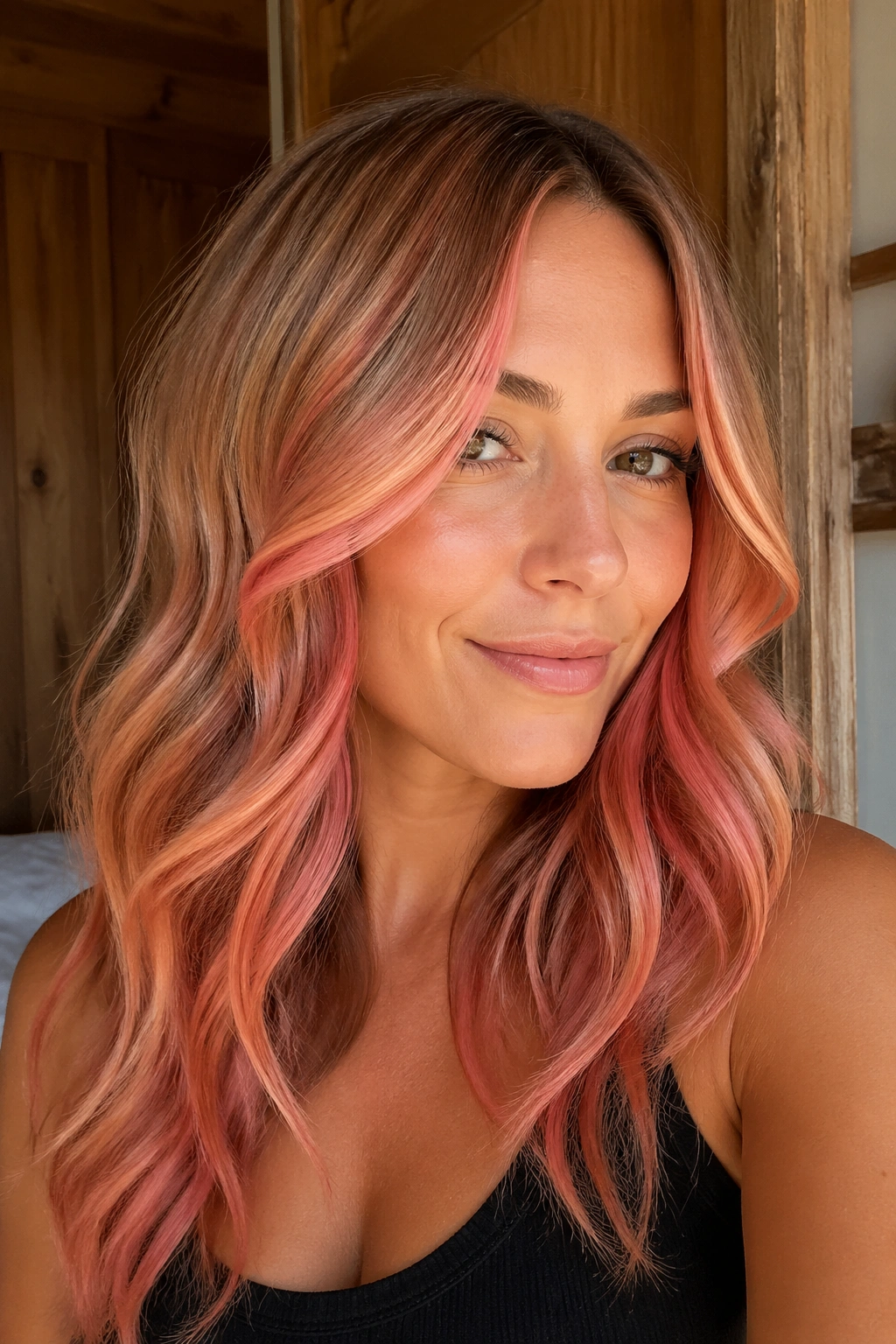
Coral pink balayage is the warm cousin in the family. It sits between pink and peach, which keeps it lively without going into orange territory. On golden brunette hair, it can look like sun-warmed color with a pink edge.
Why Coral Works When Plain Pink Doesn’t
Plain pink can look flat on some warm bases. Coral solves that by sharing the warmth already present in the hair. The result feels brighter and more natural at the same time, which is a strange but useful combination. It gives the colorist more room to paint soft ribbons through the ends and around the face.
If your hair already has honey, copper, or caramel tones, coral pink is easier to live with than a cooler pastel. The warm undertone helps the shade stay clear as it fades. It also tends to look less harsh against skin that runs peach, olive, or golden.
Best ask: “I want pink with a coral undertone, blended like a lived-in balayage, not a solid dye job.” That wording keeps the look soft and dimensional.
11. Smoky Rose Brunette
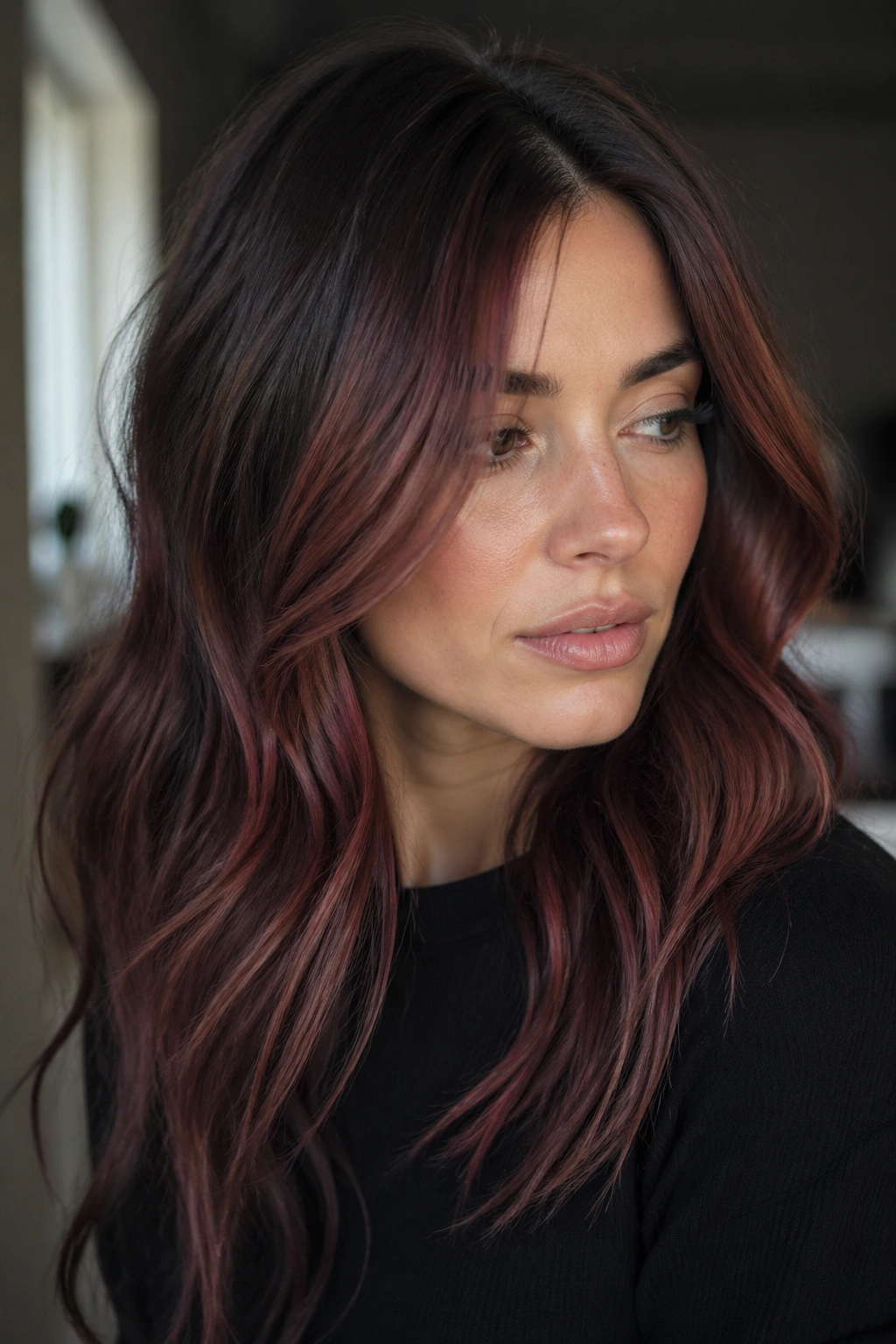
Smoky rose brunette is one of my favorite pink hair color ideas because it doesn’t ask brunettes to abandon their base color. Instead, it folds pink into the hair like a filter. The result can be very subtle in some light and unmistakably rosy in others.
The key is restraint. The pink should not sit too bright on top of brown hair or it starts looking disconnected. A smoky rose formula uses muted red-pink pigment, usually in a gloss or a softly lifted panel, so the brunette still does most of the talking. That contrast is what makes it cool.
This is especially good on medium brown hair with a little natural warmth. The pink reflection picks up movement and shine instead of flattening the cut. Loose waves help, but even straight hair can look good because the color shifts as the hair moves.
One thing I like about this shade: it does not panic under fluorescent light. Some pinks do. Smoky rose stays composed, which is a nice quality in a hair color.
12. Watermelon Split Dye
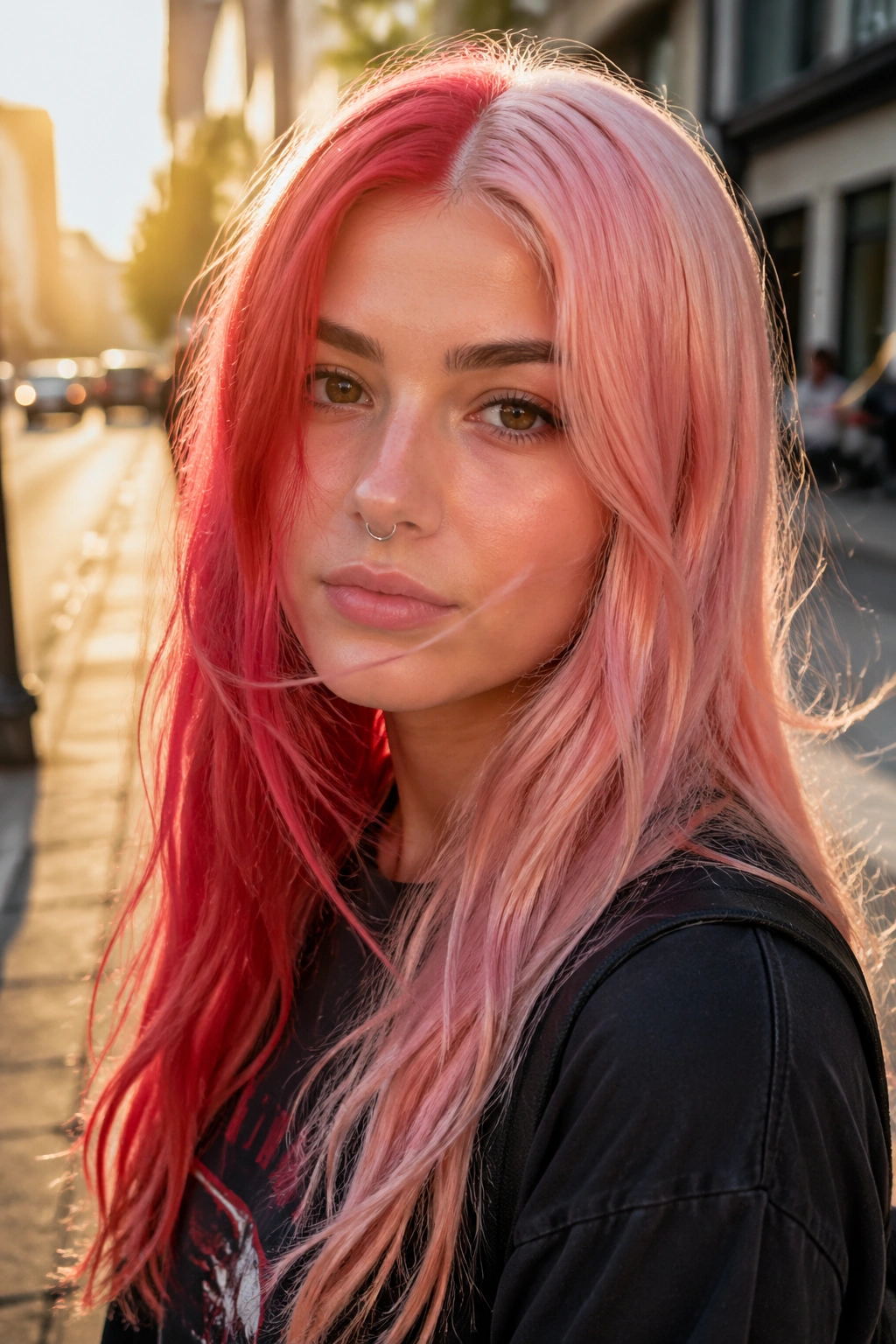
Watermelon split dye is for people who like a clear statement. One side, or one panel, leans pink-red. The other can stay lighter, deeper, or differently toned. The contrast gives the style a sharp shape, and that shape is what makes it work.
Unlike dip-dye, which keeps the color mostly at the ends, split dye organizes the hair by section. The line can run straight down the middle, or it can be offset for a more custom look. On a layered cut, that line gets broken up in a way that feels cooler and less costume-like. On straight hair, the divide is crisp and graphic.
This style is best for medium to long hair or a short cut with a strong shape. It needs enough surface area to show the split cleanly. If the hair is too fuzzy or too heavily layered, the effect gets muddy.
I’d only recommend this if you enjoy maintenance and don’t mind people asking about your hair. A lot.
13. Cherry Blossom Pastel
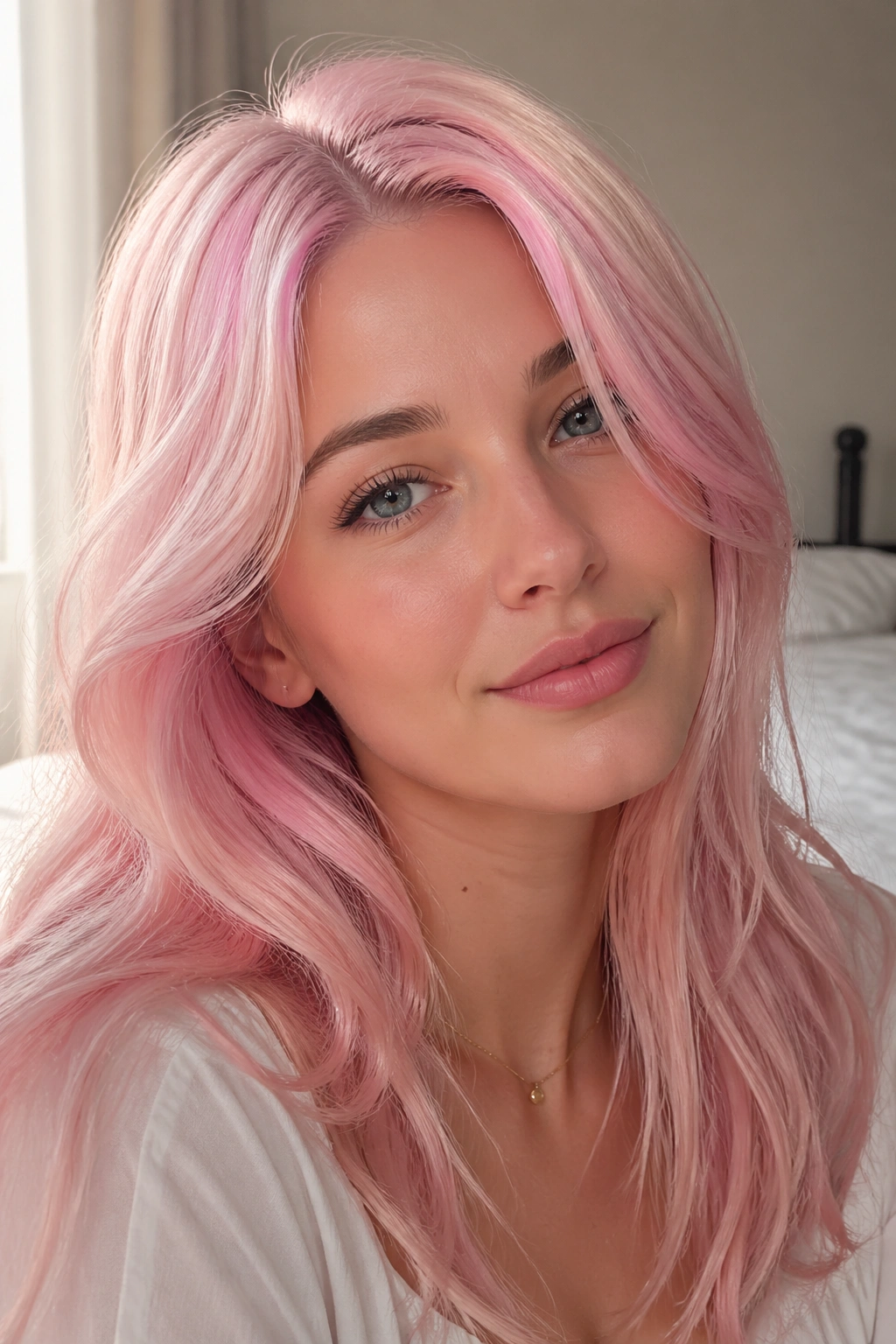
Cherry blossom pastel is the softest kind of pink, the one that almost disappears into blonde until you get close. It has a milky quality, which means the shade needs a very light starting point and a careful hand with toner. Too much pigment and it turns baby pink. Too little and it vanishes.
What Makes It Pretty
The beauty of this shade is its quietness. It looks airy on straight hair and almost petal-like on waves. Because the color is so light, the cut matters a lot. A blunt bob makes the shade feel clean. Long layers make it feel floaty. Curls give it a softer, cloudlike finish.
How to Get the Most From It
- Start with a pale, even blonde base
- Ask for a transparent pastel formula rather than a thick opaque dye
- Keep heat styling low so the ends don’t dry out
- Use a color-safe conditioner every wash
One warning: cherry blossom pink fades into almost nothing faster than deeper pinks. That is the deal. If you want a shade that lingers, choose mauve or rose instead.
14. Fuchsia Underlayer Bob
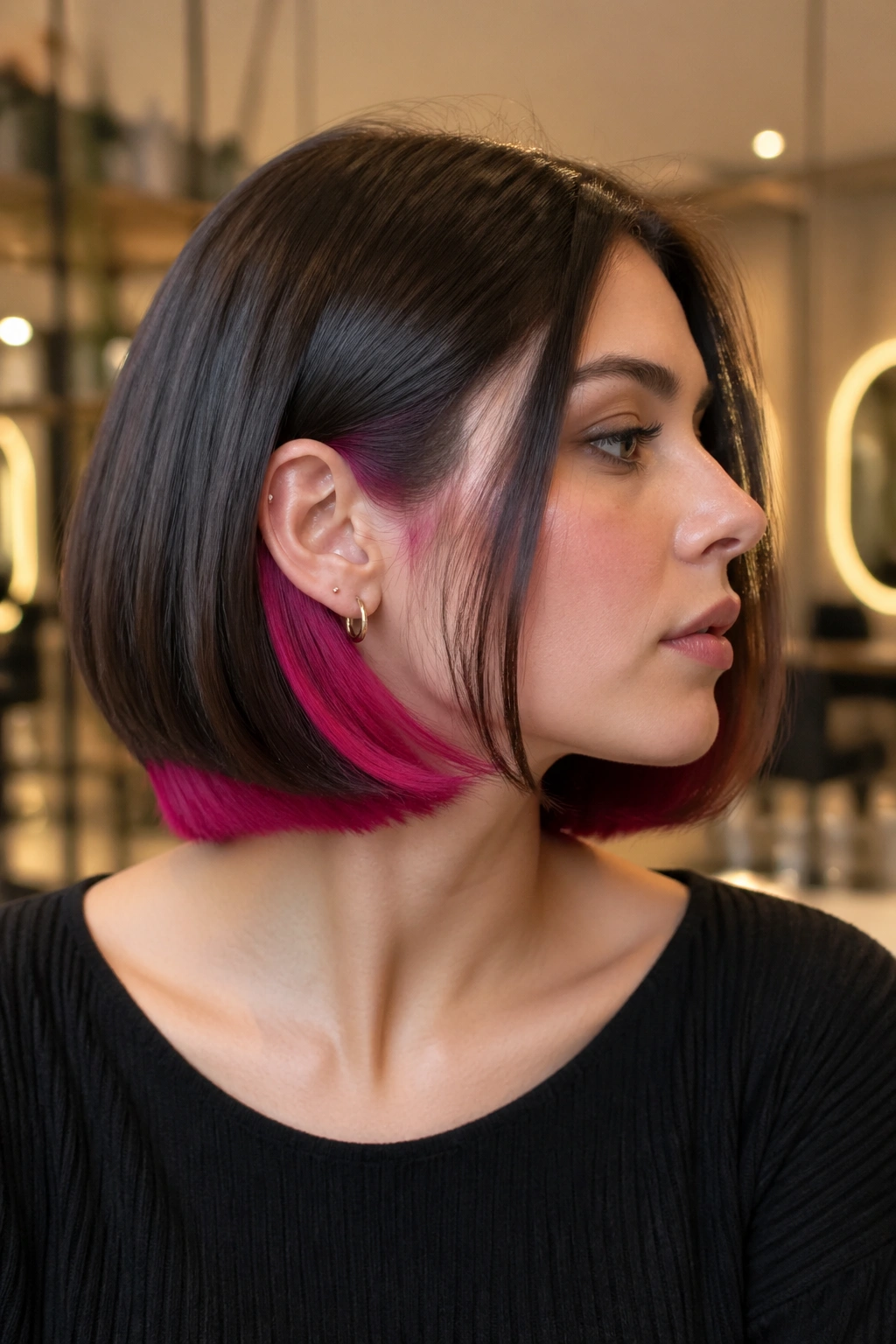
A fuchsia underlayer bob is one of those styles that looks calmer than it sounds. The haircut does a lot of the work. Once the bob is blunt and clean, the hidden fuchsia layer gives it movement every time you tuck the hair behind your ears or swing it side to side.
Why Short Hair Loves This Idea
Short cuts can handle stronger color because the shape keeps everything tidy. The underlayer stays hidden enough for work or formal settings, then flashes out when the hair moves. It’s a good way to wear bright pink without committing your whole head to it.
This look also makes styling easier. You do not need perfect waves or a blown-out finish. Even a simple flat iron bend or air-dried texture can show enough color to matter.
If you want it to feel intentional, ask for the fuchsia layer to sit slightly deeper than the top layer and to be concentrated around the nape and lower sides. That gives the cut a clean edge and prevents the color from peeking out in random spots.
15. Pink Champagne Highlights
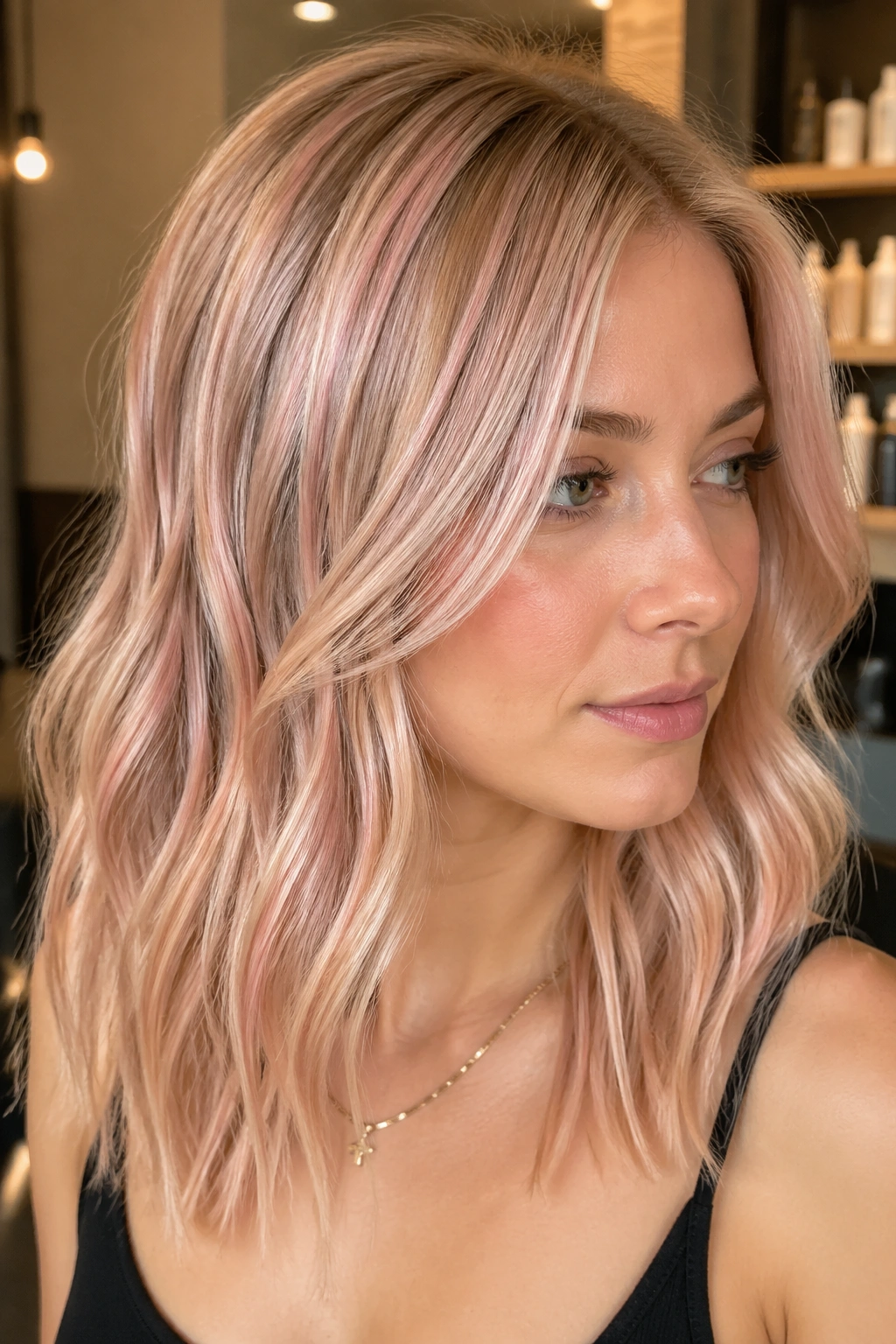
Pink champagne highlights are softer than balayage and less obvious than chunky streaks. Think fine, woven pieces of pink-blonde color threaded through light hair so the whole head looks more luminous than dyed. The effect is delicate, but not flat.
A good version uses very thin highlights, often babylight-style, then tones them with a pink-beige gloss. The result can look expensive because the color stays fractured rather than solid. It is especially nice if you hate blocky color and want something that moves in the light without shouting.
Useful Details to Mention at the Chair
- Ask for fine highlights, not wide ribbons
- Keep the pink on the beige side, not hot pink
- Leave some blonde between the colored strands so the contrast stays soft
- Style with loose bends rather than tight curls
This shade is one of the easiest pink looks to wear with soft makeup and everyday clothes. It does not ask for a costume. That’s the appeal.
16. Orchid Pink Gloss
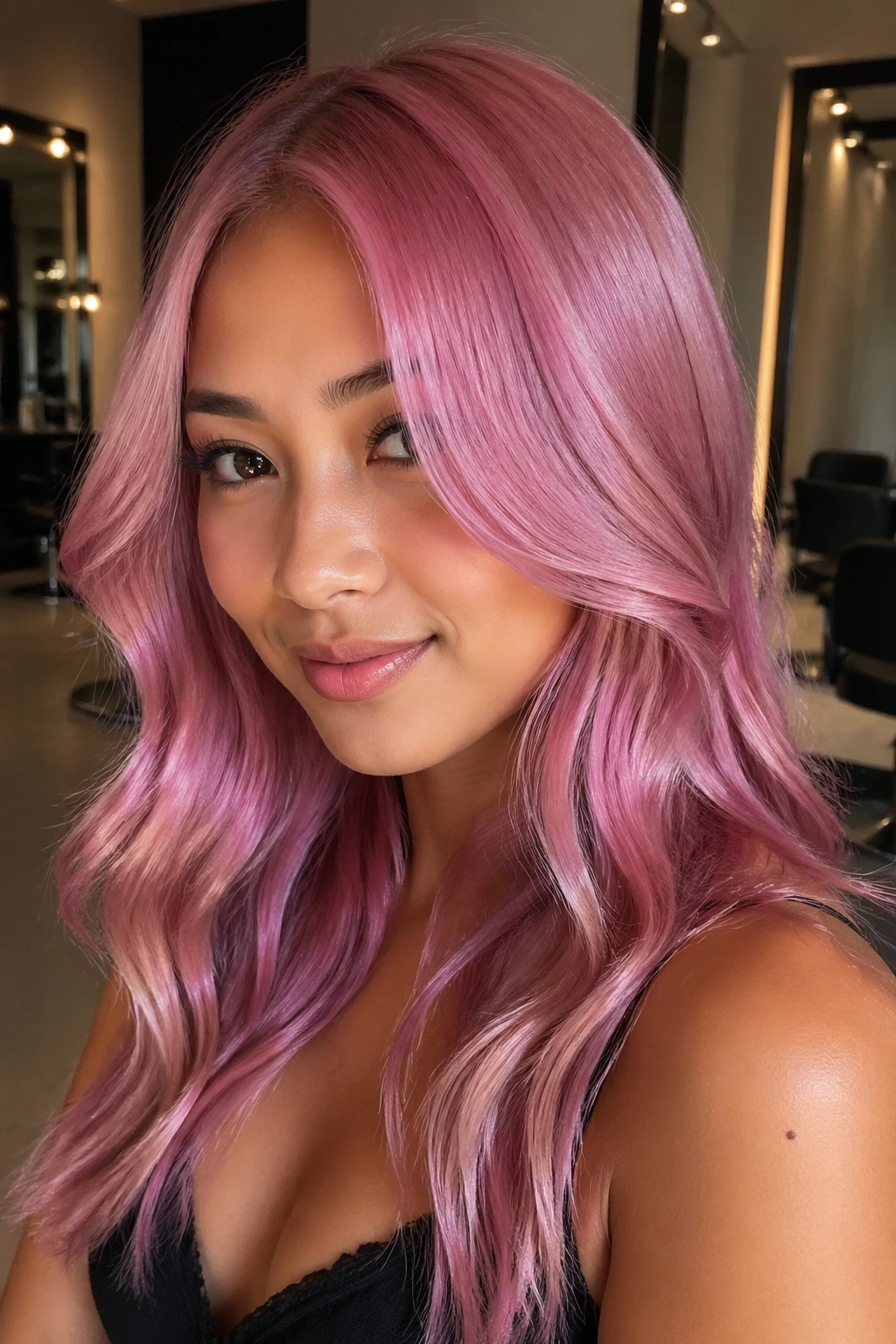
Orchid pink gloss sits between pink and violet, which is why it looks a little richer than a standard pastel. It has a cooler edge, but not the icy feeling of silver pink. There is depth here. A gloss is the right format because the finish should stay shiny and translucent, not opaque.
How to Keep It from Turning Flat
The biggest mistake with orchid pink is making it too purple. Once that happens, the shade loses the airy orchid feeling and starts looking closer to plum. A colorist can keep the formula balanced by mixing pink with just enough violet to cool it down, then applying it as a gloss over a prelightened base.
If your hair tends to go yellow fast, this is a helpful choice because the cooler tone can keep brass in check while still giving you pink. That said, overusing purple shampoo can push the hair too ashy and make the pink look dull. Less is more there.
This look suits sleek styles, face-framing layers, and medium-length cuts with shine. It likes gloss. It needs shine. Otherwise the color loses its point.
17. Blush-Toned Silver
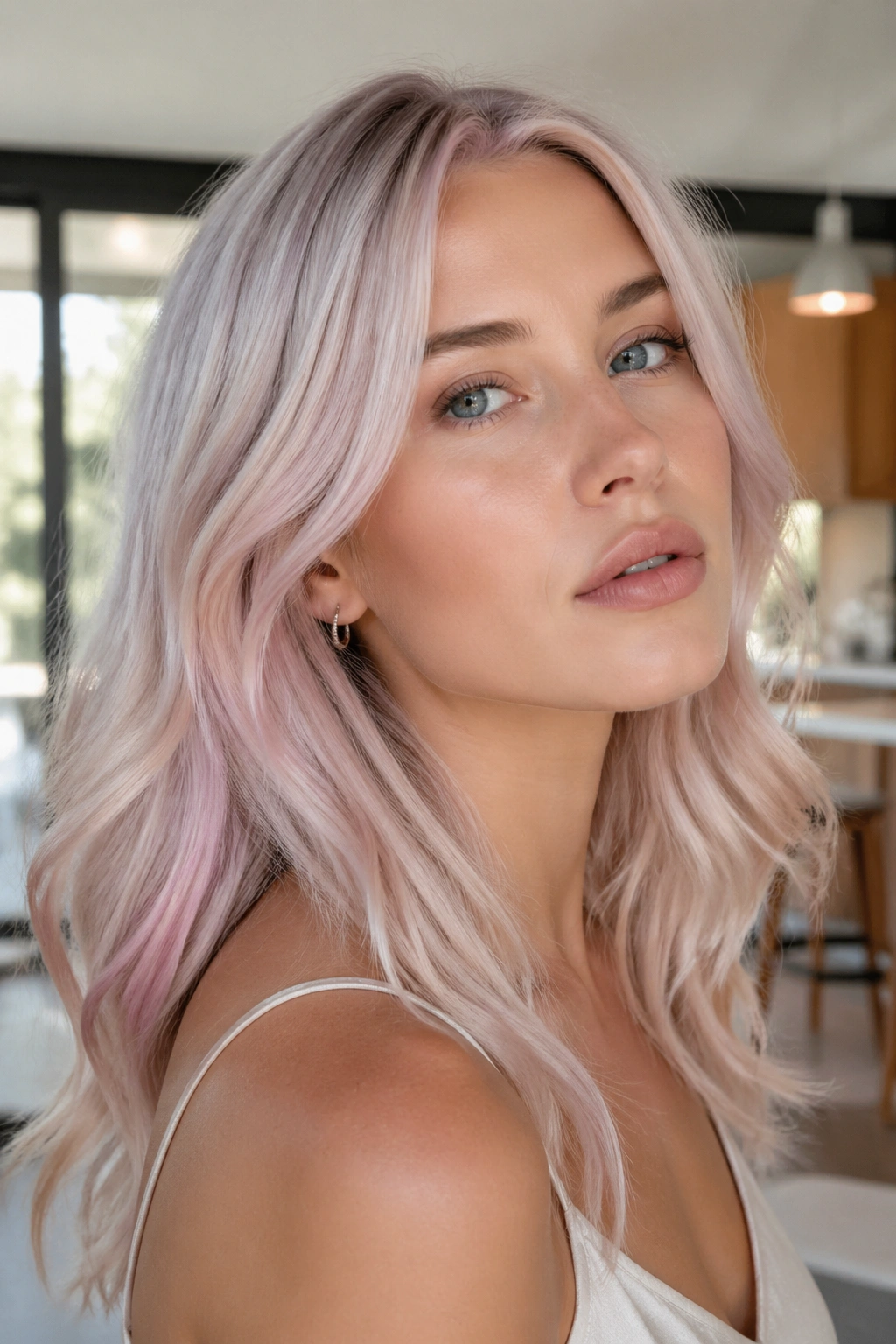
Blush-toned silver is one of the prettiest hybrid shades because it softens the edge of silver with a pink cast. The pink does not sit on top like a separate layer. It hovers inside the silver, which makes the whole thing feel cooler and less severe.
This is a shade for very light blonde or platinum hair. There isn’t much room for error. If the base is too yellow, the pink and silver fight each other. If the base is too porous, the color can grab in ugly ways and lose its soft finish. Clean lift matters here.
What I like most is how this shade pairs with blunt cuts, polished waves, and even short crops. It can look futuristic or gentle depending on the styling. That flexibility is rare for a cool tone.
A practical note: this is not a low-maintenance color. It needs careful washing, heat protection, and toner refreshes. But if you love cool hair with a little warmth in it, the effect is hard to beat.
18. Punky Pink Face Frame
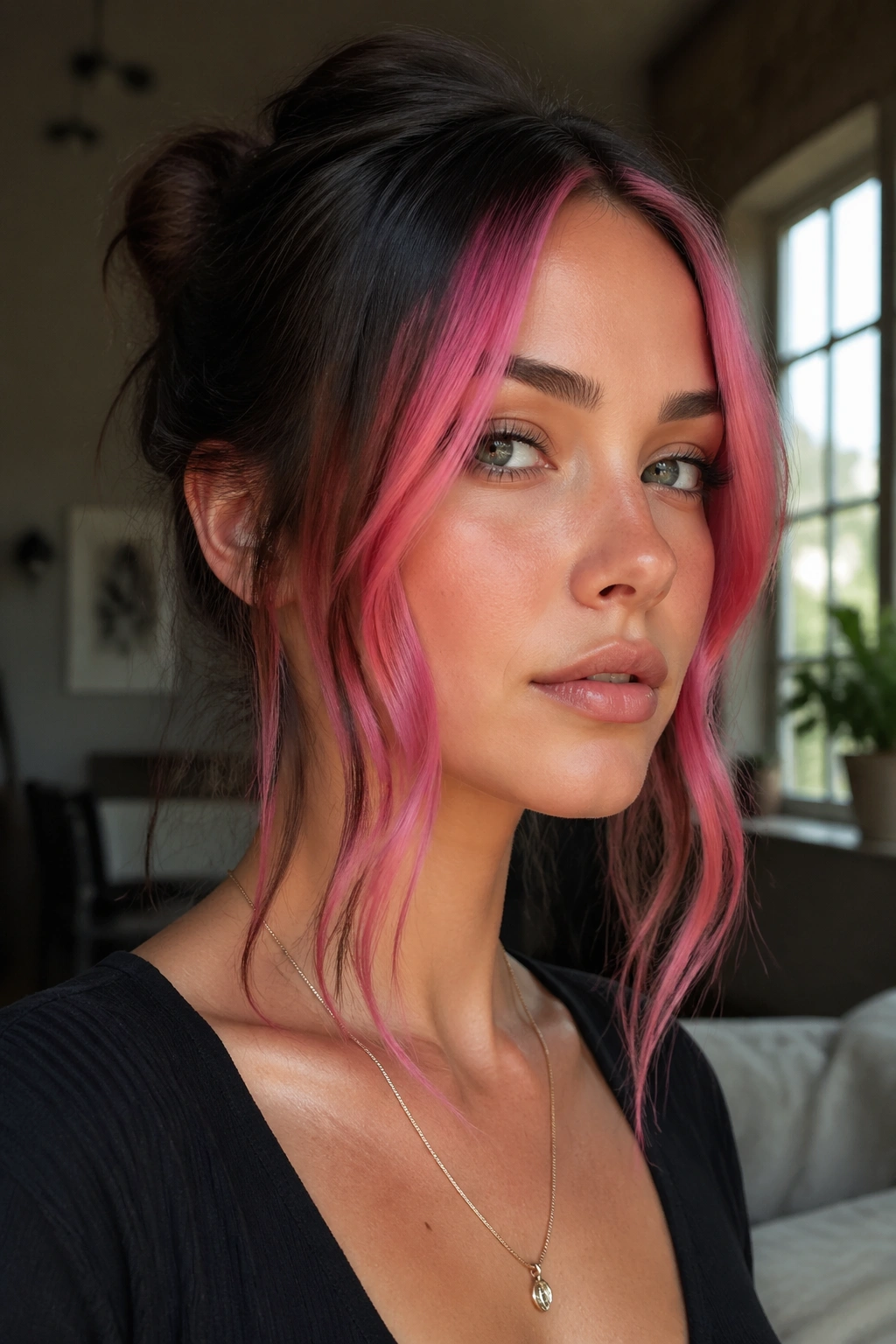
Punky pink face framing is the short road to a strong pink look. The color stays concentrated around the hairline, temples, and sometimes the first few inches of the front layers, while the rest of the hair can stay dark, blonde, or natural.
Unlike full color, this idea gives you instant contrast without making the whole head bright. That makes it a smart pick for first-timers, especially if you wear your hair down most days. It also works beautifully with ponytails, slick backs, and claw clips because the front pieces still show.
Who It Fits Best
- People who want a punchy change without full commitment
- Shorter cuts with layers around the face
- Brighter makeup looks or bold brows
- Anyone who likes to switch styles often
The pink itself can be neon, bubblegum, or berry, depending on how loud you want it to be. The framing is the point. It changes the face shape a little, too, which is why stylists reach for it so often.
19. Peach-Rose Melt
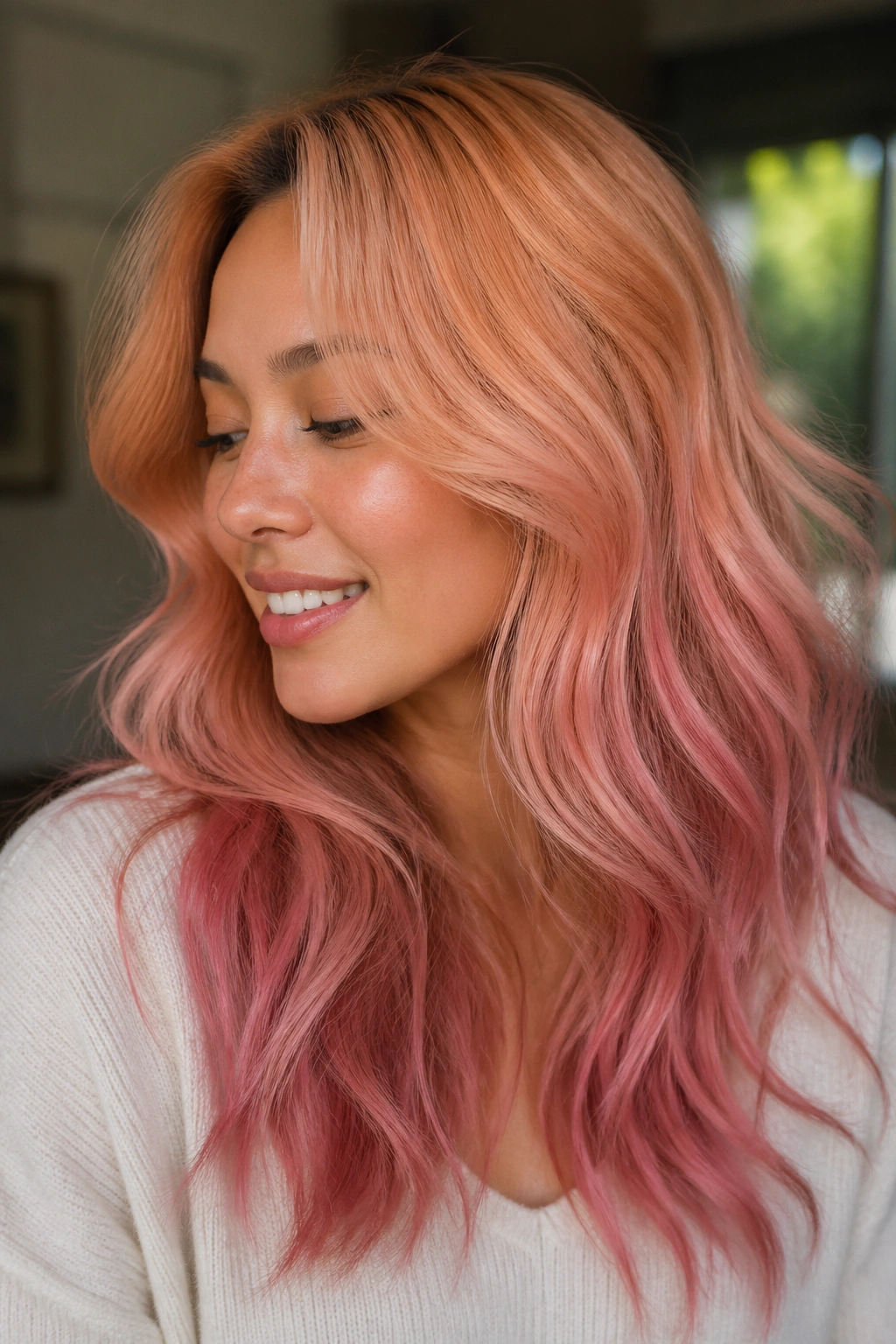
Peach-rose melt is warmer and softer than it sounds. The color starts with a peachy tone near the top or around the face, then slides into a rose pink through the mids and ends. Done well, the shift is smooth enough that you notice the warmth before you notice the individual colors.
Why This Blend Works
The peach makes the pink feel friendlier on golden skin, and the rose stops the peach from drifting too orange. That balance is the whole trick. On blonde hair, it looks playful. On light brown hair with lifted ends, it feels richer and more grounded.
A good melt should not have a clean line between shades. If you can point to the exact place where peach ends and rose begins, the blend probably needs more work. The best version feels brushed together.
- Great for long layers
- Nice on soft waves and blowouts
- Easy to personalize with more peach or more rose
- Lets the roots stay deeper without feeling harsh
This is one of those colors that sounds sweeter than it looks in person. That’s a good thing.
20. Full Fuchsia Lob
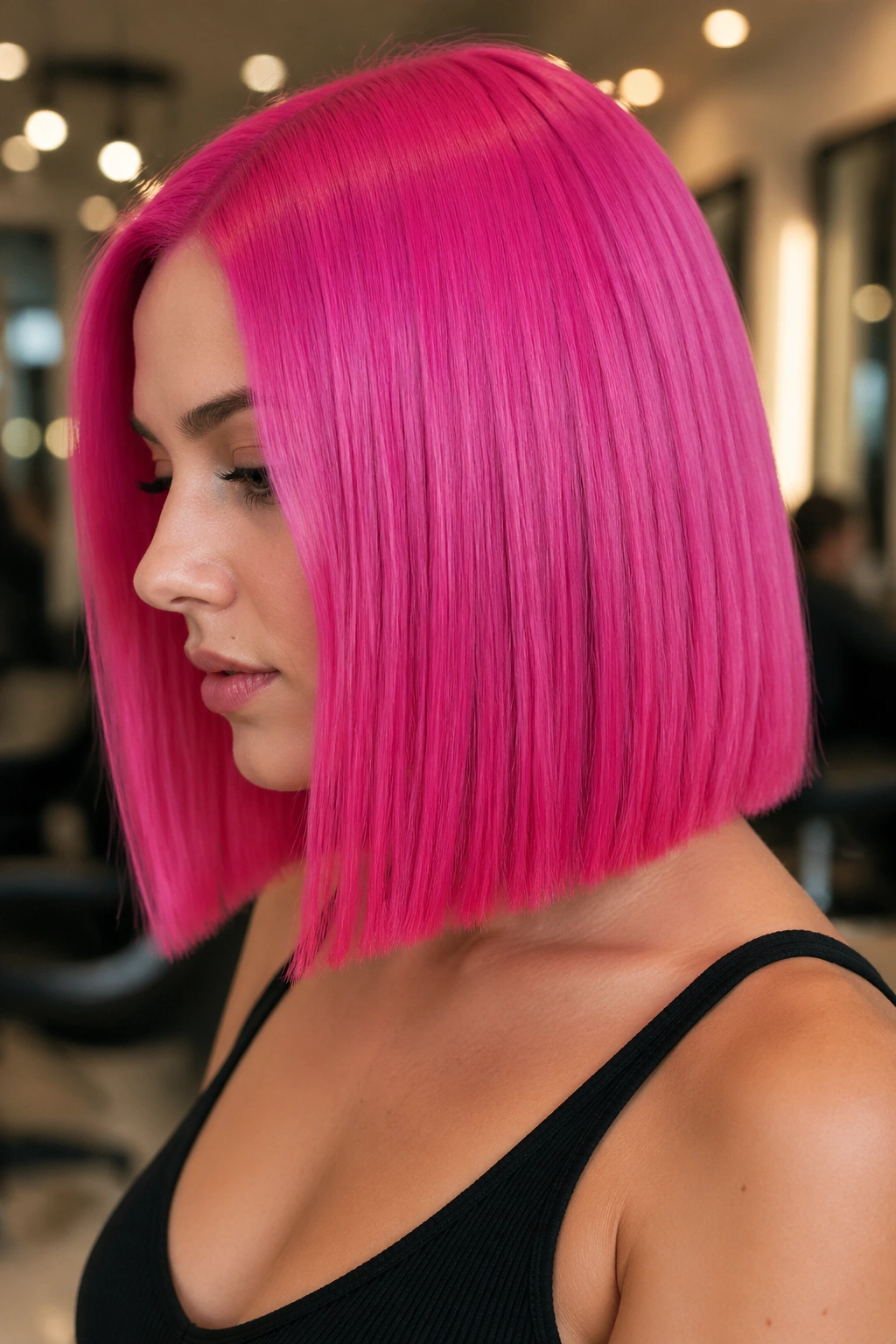
A full fuchsia lob is not shy. It’s a blunt, confident color that looks best when the cut has a strong line and the pigment is saturated from root to tip. If you want pink hair that reads polished instead of playful, this is the one.
The lob shape helps because it gives the color a clear edge. A shoulder-grazing cut with a clean perimeter lets the fuchsia show off its depth and shine. Too many layers can scatter the color and make the finish look uneven. A smooth blowout or straight style makes the shade even stronger.
This is also one of the few pinks that can handle a little darkness underneath. If your hair lifts to a warm level 8 instead of a perfect blonde, a deep fuchsia often still looks rich. It does not need to be pastel to be useful.
Plan on refreshes. Bright saturated pinks fade fast, and if you love the bold look, touching up every 4 to 6 weeks keeps the color from slipping into dull red. That schedule is part of the trade-off.
21. Petal Pink Pixie
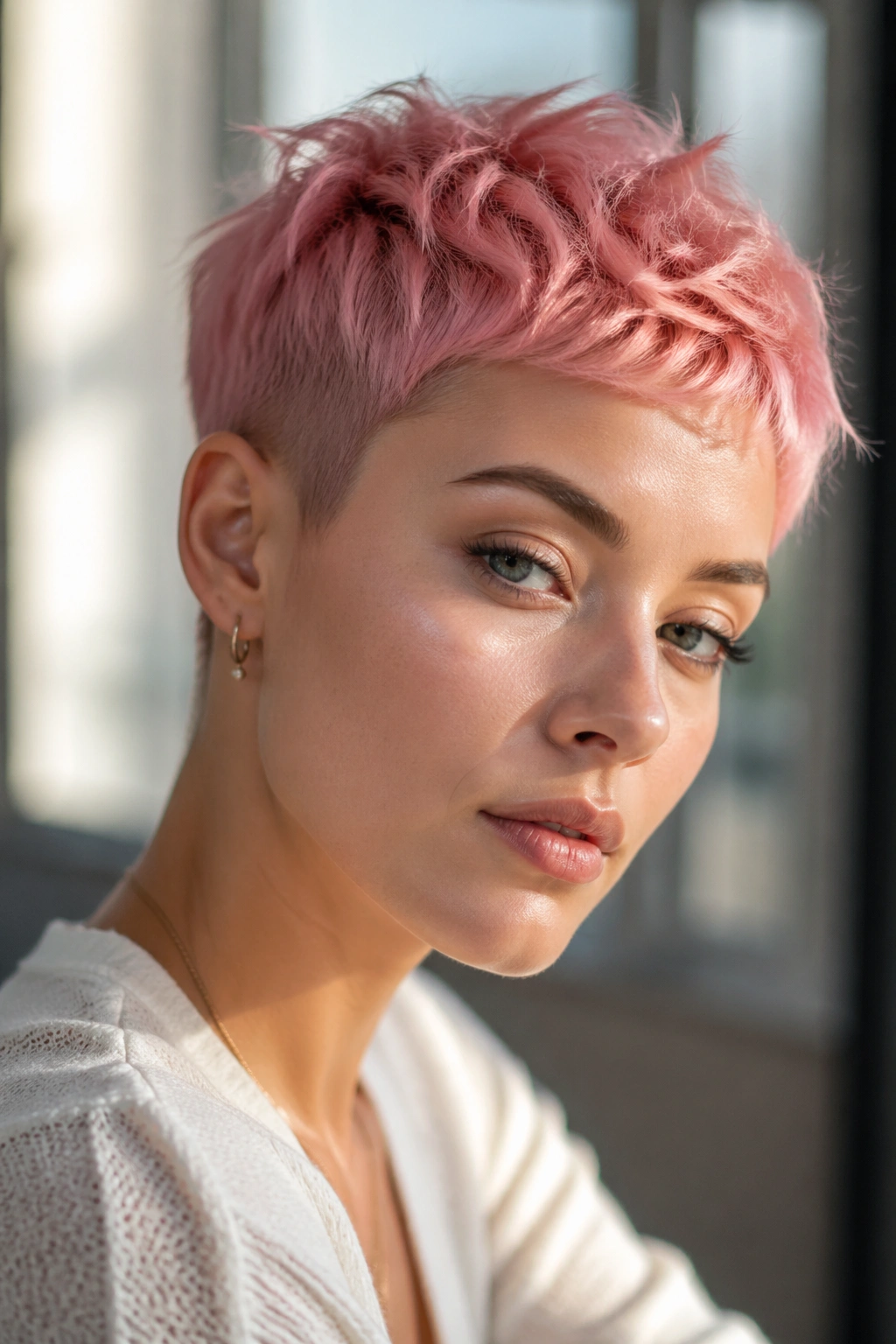
Petal pink on a pixie cut is delicate in one moment and sharp in the next. Short hair shows color fast, so a soft pink can look surprisingly strong when it sits against clean edges and close-cropped layers. There is nowhere for the shade to hide, which is exactly why it works.
A Small Cut, a Big Payoff
Pixies take pastel better than people expect because the shape keeps the look tidy. If the pink is too heavy, the cut can start to feel crowded. Keep it sheer, and the style stays airy. The top layers will show the most color, while the sides and back keep things neat.
This is a good idea if you like changing hair color often but do not want to deal with long-hair maintenance. Short hair takes less product, dries fast, and shows tone shifts almost immediately. The trade-off is that every fade is visible, so you’ll want glosses or color-depositing conditioners ready.
- Best with choppy texture on top
- Softest on a very light blonde base
- Easy to pair with undercuts or tapered sides
- Looks crisp with minimal styling
Petal pink on short hair has a kind of honesty to it. No room for fluff. Just color and shape.
Final Thoughts
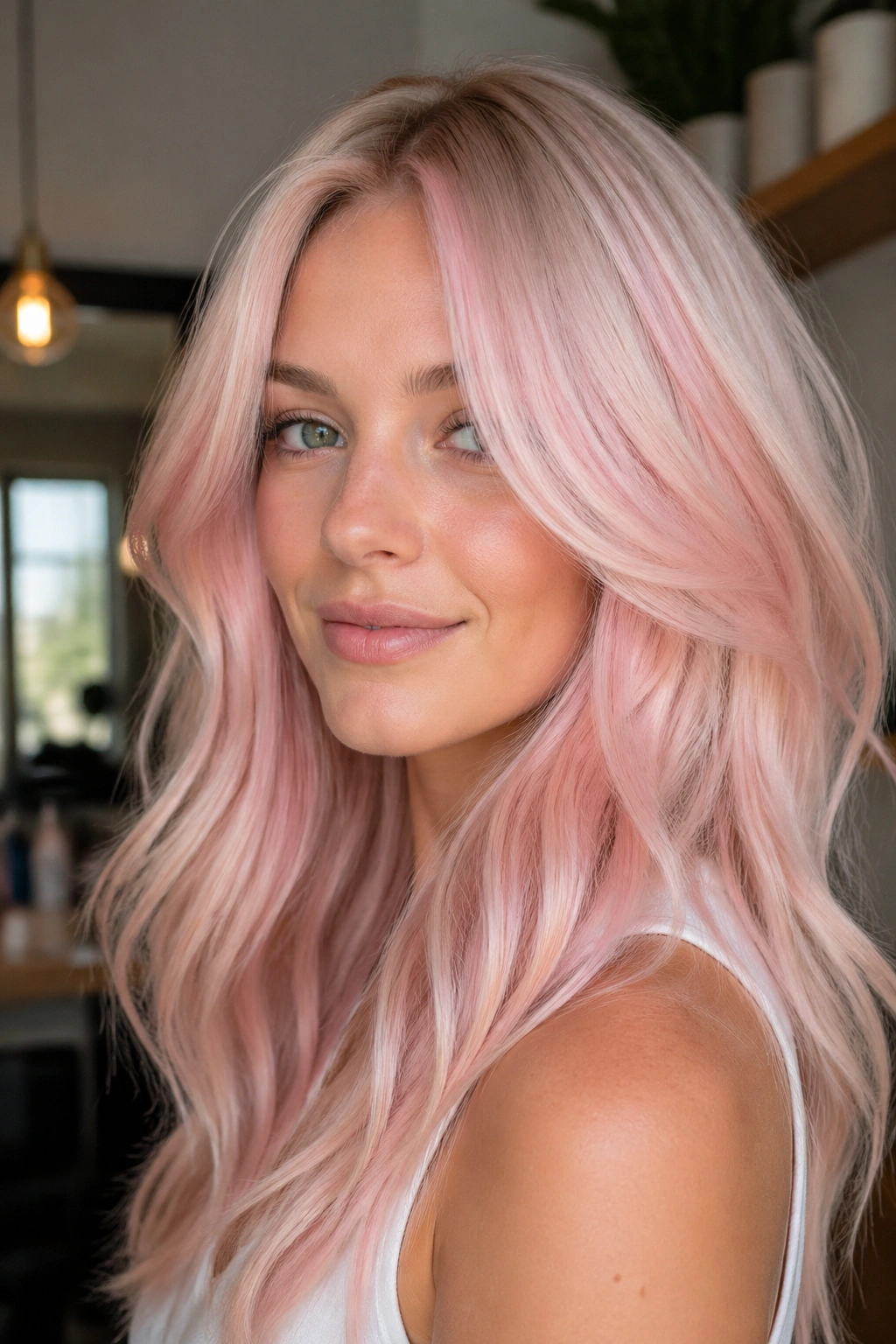
Pink hair works best when the shade matches the haircut, the base color, and the amount of upkeep you’re willing to put up with. That sounds obvious, but it’s where most bad color appointments go off the rails. The shade itself matters less than the plan around it.
Bring references, yes. Bring a second photo of what you do not want, too. That saves time in the chair, and it helps a colorist see whether you want soft blush, strong magenta, or something in the middle that fades gracefully instead of falling apart.
One last thing: the most convincing pinks usually have a little depth at the root or a little softness in the finish. Pure neon can be fun, but the shades that keep getting compliments are often the ones with some shape to them. Those are the hair colors people notice twice.