

Grown-out roots are not a mistake.
Done right, blonde hair with dark roots looks softer, richer, and far easier to live with than a one-note blonde that needs constant babying. The dark base gives the color somewhere to rest. It also keeps the hair from looking like one flat strip of yellow from scalp to ends, which is the problem nobody wants to admit out loud.
The best versions use a shadow root, a root melt, or a careful balayage that leaves your natural depth in place near the crown. That’s where the magic lives. Too much contrast can look stripey at the part, and too little can make the whole style look vague and muddy, so the root shade matters more than most people think.
These 19 ideas cover soft beige blondes, honey tones, icy lifts, pearl finishes, bronde blends, and a few high-contrast looks for people who like a little drama. Some are low-maintenance. Some need toner love. All of them are built to grow out with less panic.
1. Soft Beige Blonde With a Shadow Root
This is the safest place to start if you want blonde that still looks polished when it’s growing out. A soft beige blonde keeps the ends bright, but the root stays just deep enough to blur the regrowth line instead of shouting about it.
Why it works on grown-out hair
Beige sits between warm and cool, so it does not fight your natural base. If your hair is a medium brown or dark blonde, a root around level 5 or 6 can melt into beige lengths that sit around level 8 or 9 without looking harsh. The result is calm, not busy.
A lot of people ask for blonde and then hate the upkeep. This version fixes that problem by making the grow-out part of the design.
- Ask for a shadow root at the part line, then let the beige piecey blonde start lower through the mids.
- Keep the ends soft, not white. Beige reads more expensive than stark platinum on most hair textures.
- Best on straight to wavy hair, where the color melt shows cleanly.
- A toner with beige and a touch of violet keeps the blonde from turning yellow.
Tip: If you wear your hair in a middle part, ask for a root tap that is a little softer right at the center. That tiny detail keeps the line from looking painted on.
2. Honey Blonde Balayage With a Brunette Root
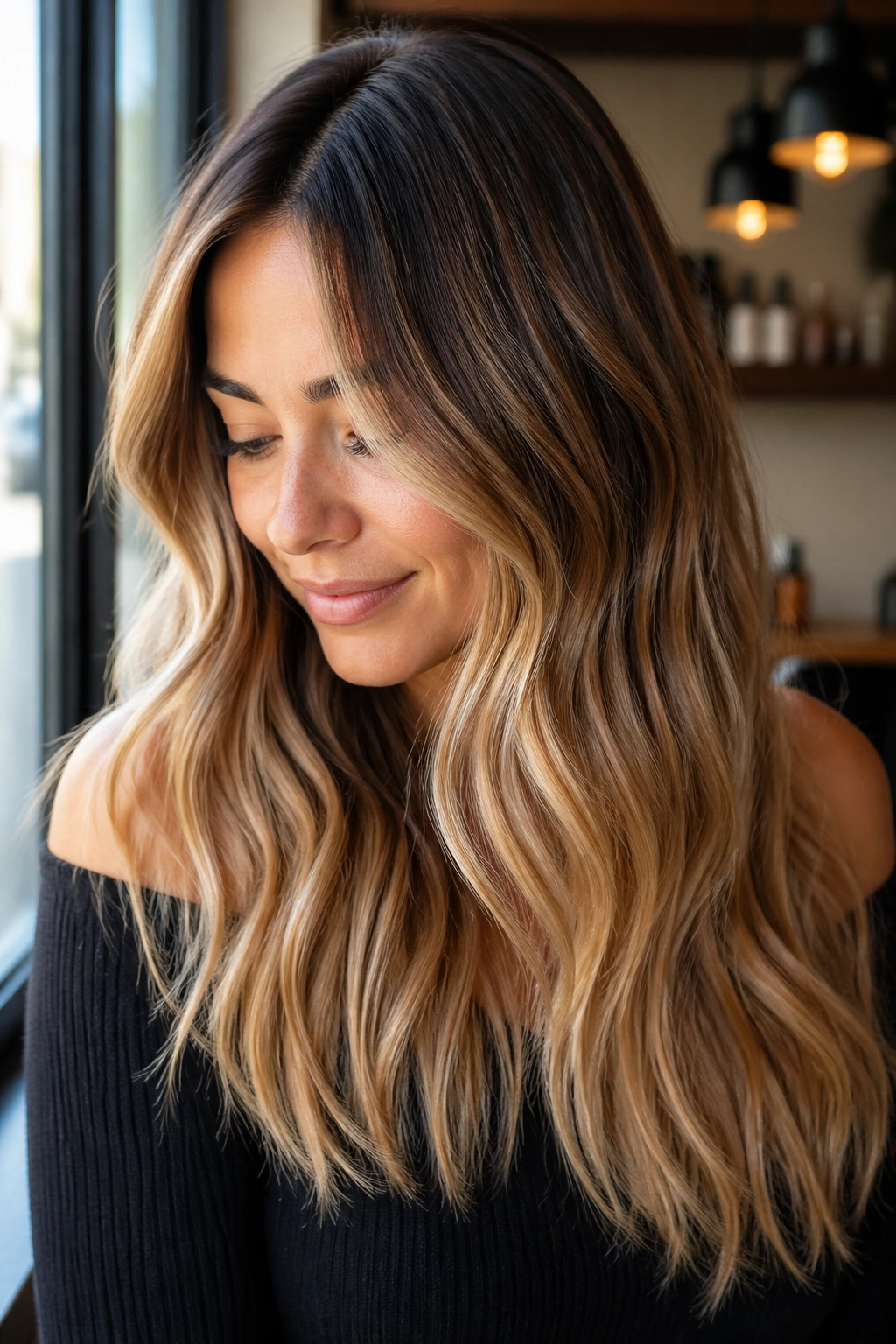
Honey blonde balayage is one of those looks that makes dark roots work for you instead of against you. The warmth catches light fast, and the deeper root makes the honey ribbons look brighter by comparison.
If you like warmth but do not want your hair to drift into orange territory, this is a smart lane. A brunette root around level 4 or 5 gives enough depth to anchor the style, while hand-painted highlights through the mids and ends keep it airy. It grows out cleanly because the light pieces are placed away from the scalp, not packed into a hard line.
This is the blonde I’d pick for someone with naturally brown hair who wants less salon maintenance and more movement. It also plays nicely with waves, because the highlight placement breaks up the hair in a way that looks natural when it bends.
And yes, it’s flattering on thicker hair. The contrast helps the cut show.
3. Icy Blonde With a Smoky Root Melt
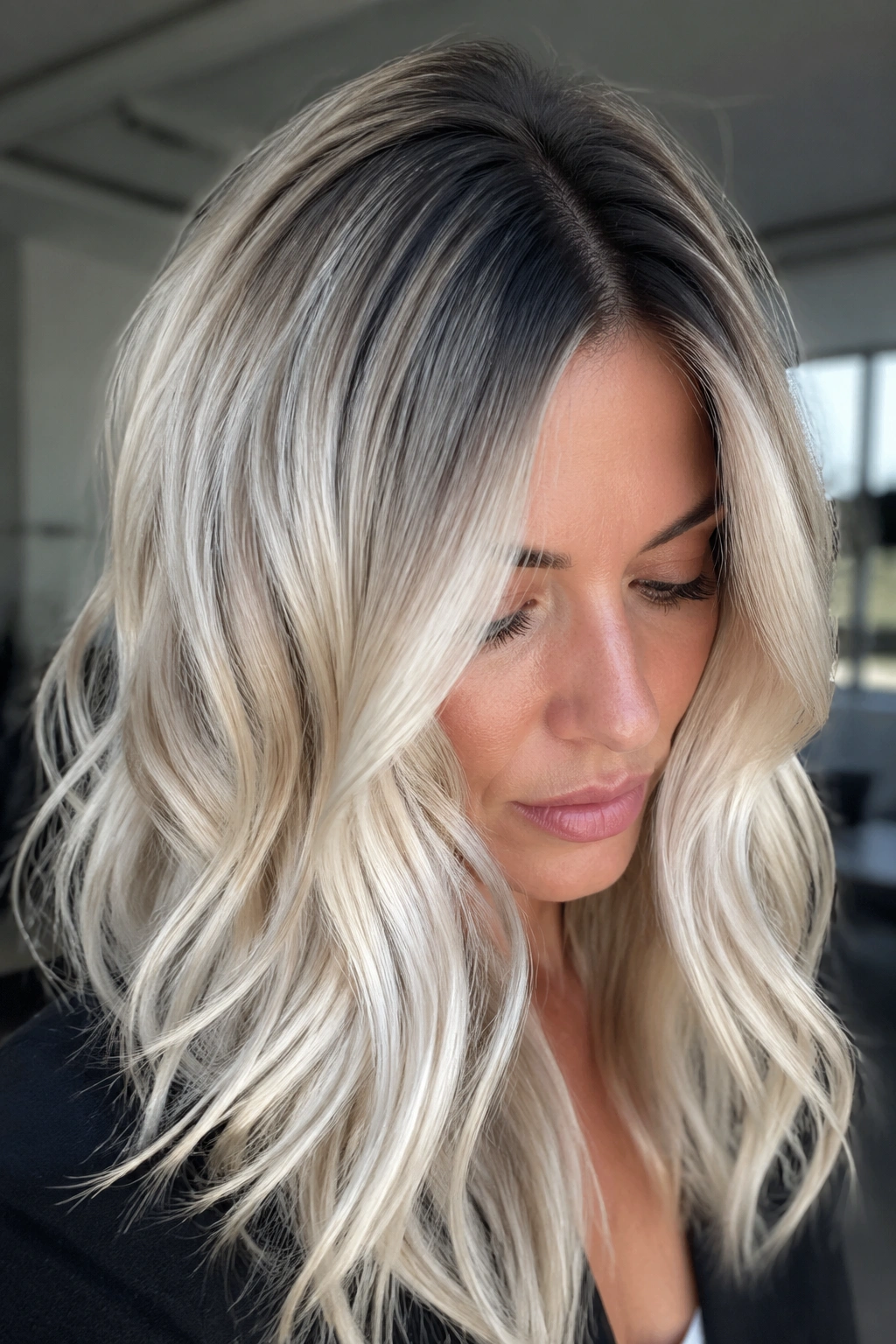
If your hair tends to look flat when it grows out, a smoky root melt gives it some shape back. The cool root keeps the icy blonde from floating around without definition, which is a problem on a lot of very light blondes.
What makes the contrast work
Think of this as a deliberate dark base, not a correction. The root usually lives in an ash-brown or neutral-brown lane, then fades into a pale blonde that has silver or pearl tones. The mix keeps the whole head looking crisp even when the regrowth starts showing.
A lot of icy blondes need too much cleaning up at the bowl. This one is different. Because the dark root is part of the style, the grow-out line feels softer and less urgent.
- Best when your natural base is already medium brown or darker.
- Needs a purple shampoo once or twice a week, not every wash.
- Looks sharp on straight hair and very modern on blunt cuts.
- The ends should stay cool, not chalky.
One warning: if your skin is warm and golden, too much ash can look tired. Keep the toner smoky, not gray.
4. Buttery Blonde Waves With a Diffused Root
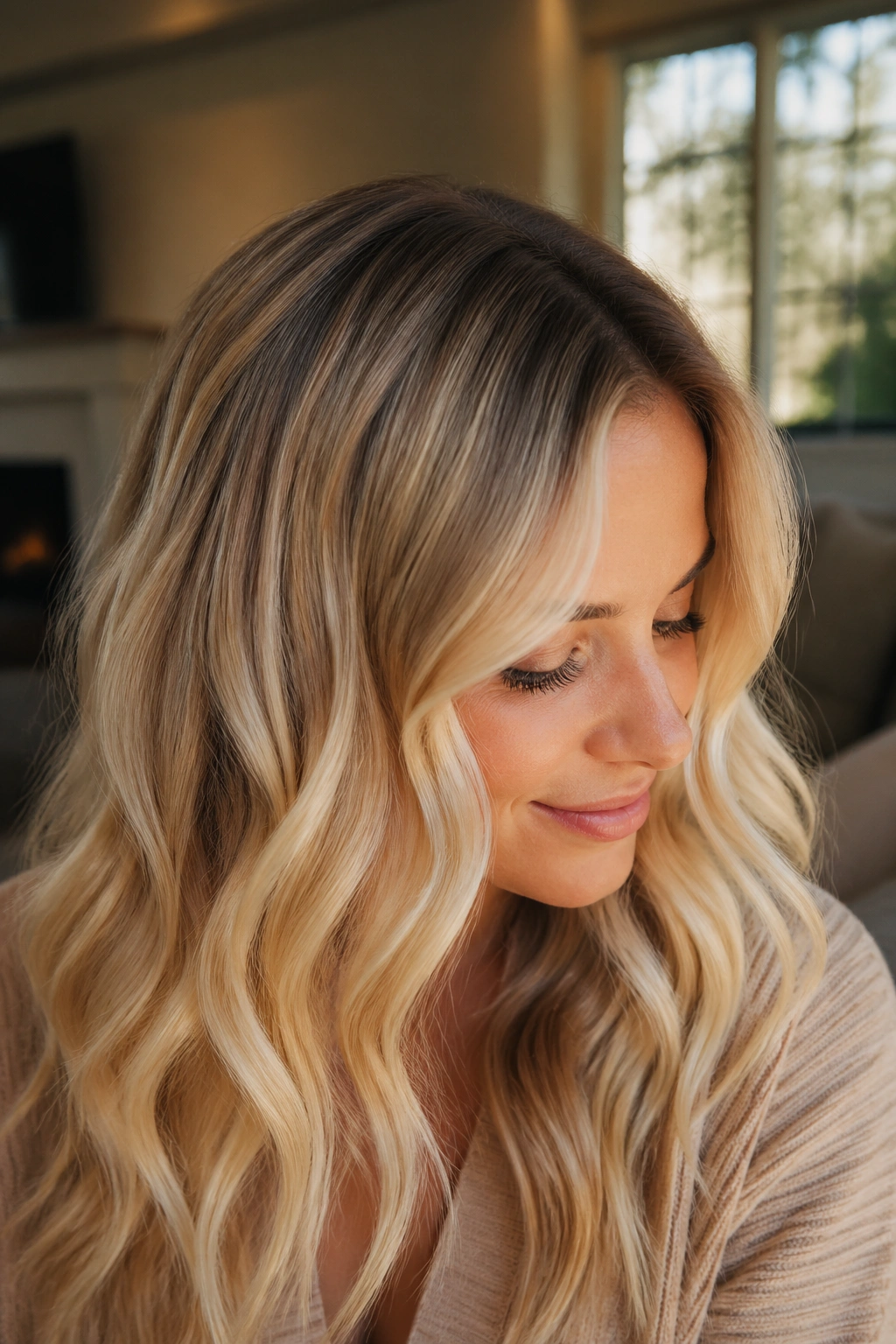
This is the easygoing blonde. Buttery blonde has that soft, almost creamy warmth that makes hair look thick and touchable, and the diffused root means the regrowth is part of the vibe instead of a problem to hide.
The nicest version usually starts with a natural root that is softened just a shade or two, then gets brighter through the mid-lengths and ends. Nothing about it should feel sharp. You want a creamy ribboning effect, not a hard highlight pattern. On wavy hair, the movement helps the blonde and the darker base blend together in a way that looks lived-in rather than overworked.
It’s a good choice if your natural color is medium brown and you want something that can go a little longer between toning visits. Warm blondes do need upkeep, but the root stretch buys you breathing room.
This is also one of the few blondes that looks better when the wave pattern is a little loose and imperfect. Flat-ironed hair can make it feel too tidy.
5. Face-Framing Money Piece and Dark Root Stretch
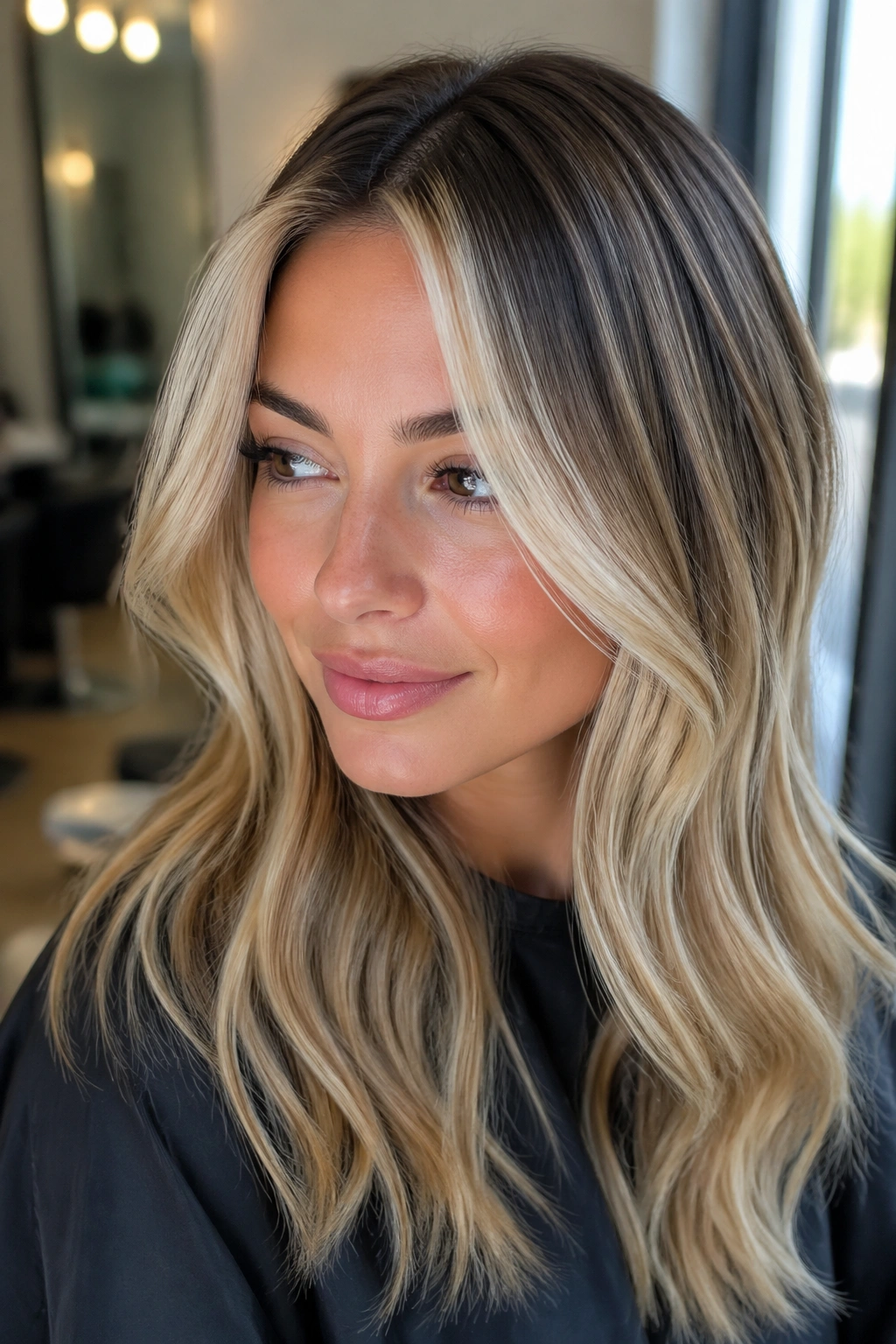
Want brightness where it counts? Keep the face-framing pieces lighter and let the rest of the crown stay rooted.
That setup works because the eye goes straight to the front. You get the lift and glow of blonde without having to bleach every inch near the scalp. The money piece can be a pale beige, champagne, or even icy blonde, while the root through the top stays deeper and stretches into the lengths.
What to ask for at the salon
- Keep the front pieces 1 to 2 levels lighter than the rest of the blonde.
- Ask for a root stretch of about an inch or two at the crown.
- Let the back stay softer and a little deeper so the color does not feel busy.
- Ask for face-framing brightness that starts near the cheekbone, not all the way at the hairline.
This works especially well if you like wearing your hair up. The front still looks intentional when the rest is pulled back, and you do not need a full highlight refresh every time you step into the salon. Small detail, big payoff.
6. Mushroom Blonde With Cool Beige Ends
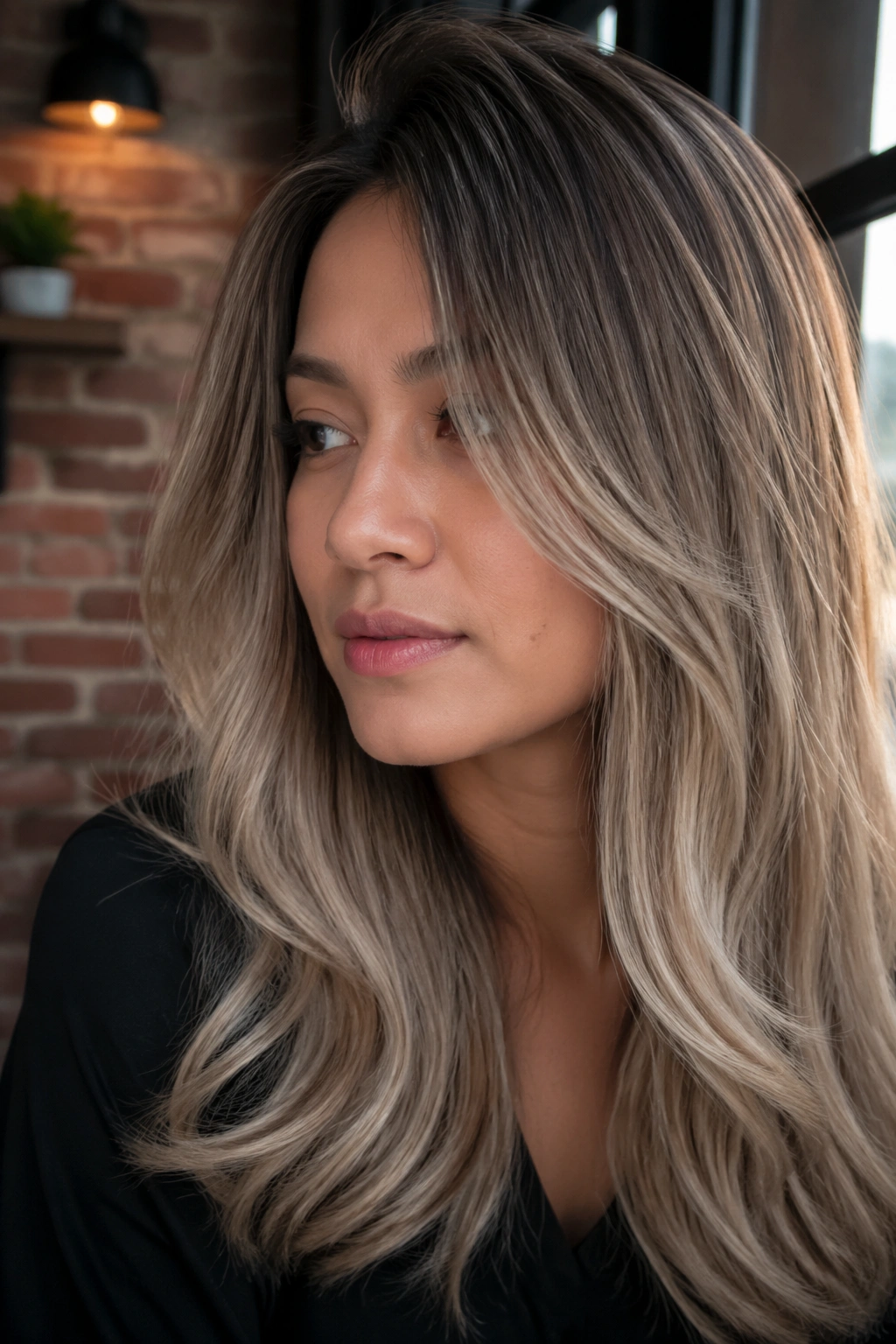
Mushroom blonde is the quietest, smartest blonde in the bunch. It lives between brunette and blonde, with ash, taupe, and beige tones that feel soft instead of yellow.
Unlike golden blonde, this one does not try to look sunny. That’s the point. The dark root and muted mids give it a hazy, slightly expensive-looking depth that works especially well if your natural hair is a cool brown or dark ash blonde. The blonde ends are still there, but they are filtered through a cooler lens, so the grow-out barely announces itself.
This is the look I’d send to someone who says, “I want blonde, but I don’t want to look blond-blonde.” It’s also a nice match for cooler skin tones, freckles, and blunt cuts. The shape matters here. A neat bob or collarbone cut makes the color read cleanly.
Ask for neutral lowlights and a beige-toned toner. If the ash goes too far, the whole thing can look dull. The sweet spot is soft and smoky, not gray.
7. Champagne Blonde Lob With a Soft Root Tap
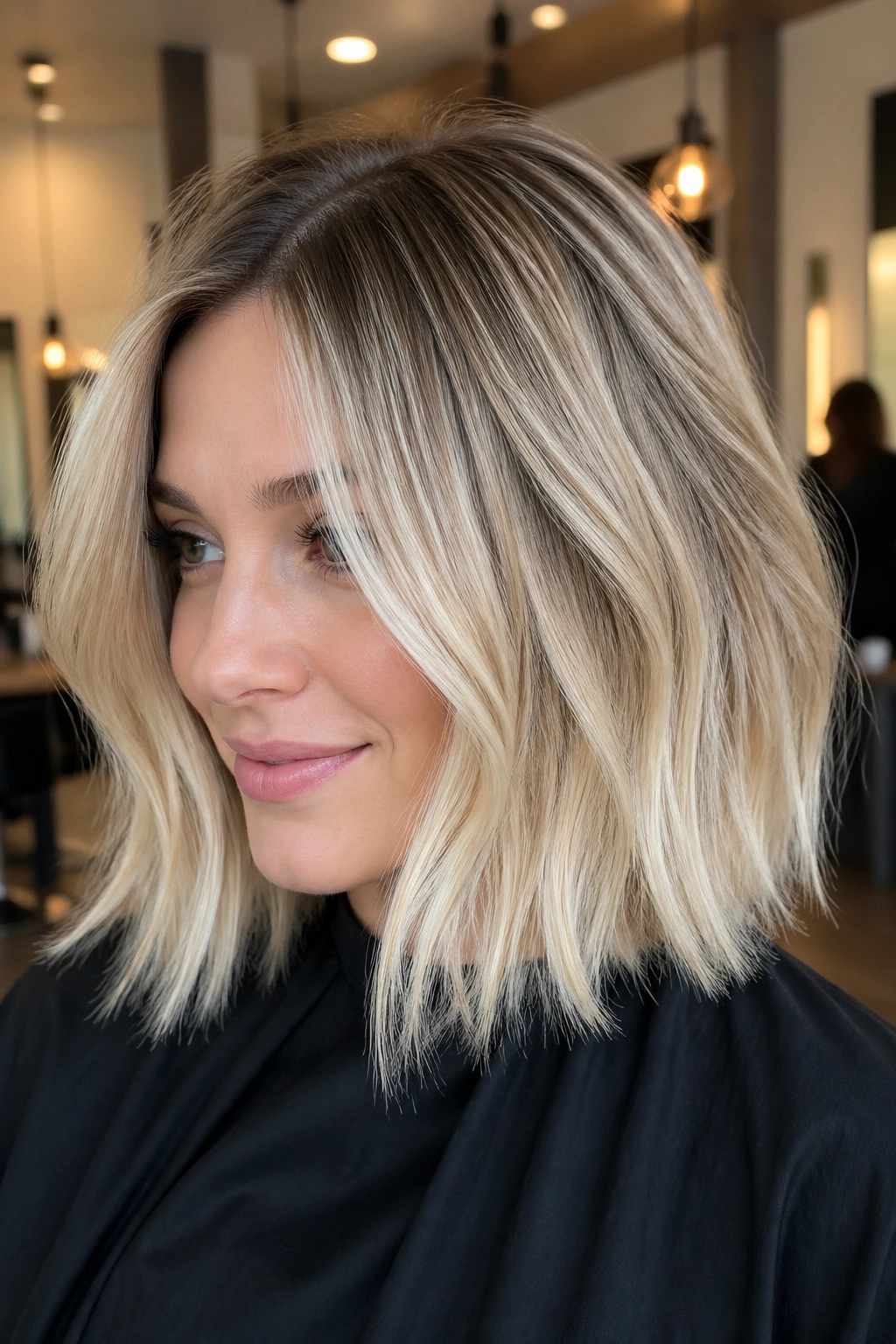
A champagne blonde lob is one of those styles that looks expensive without trying to make a speech about it. The color is light, bright, and slightly bubbly in tone, but the soft root tap keeps the regrowth from taking over the room.
Why it reads polished instead of grown out
The lob gives the color structure. Because the cut is blunt or only slightly layered, the blonde looks fuller, and the rooted top keeps the scalp area from looking too bright. That matters on medium-density hair, where too much lightness at the crown can make the whole style feel thin.
This version works best when the root is only softened for a short distance — think half an inch to one inch, not a heavy dark band. The blonde can be lifted toward a pale champagne or soft pearl, but it should still have a hint of warmth so it does not turn icy and stiff.
- Great for people who want brightness with less salon pressure.
- Looks tidy on straight hair and airy on loose waves.
- A good choice for shoulder-length cuts.
- The grow-out stays easier when the root is tapped, not packed with color.
My honest take: this is one of the easiest blondes to live with if you dislike obvious regrowth but also hate constant upkeep.
8. Golden Blonde Curls With Extra Depth at the Crown
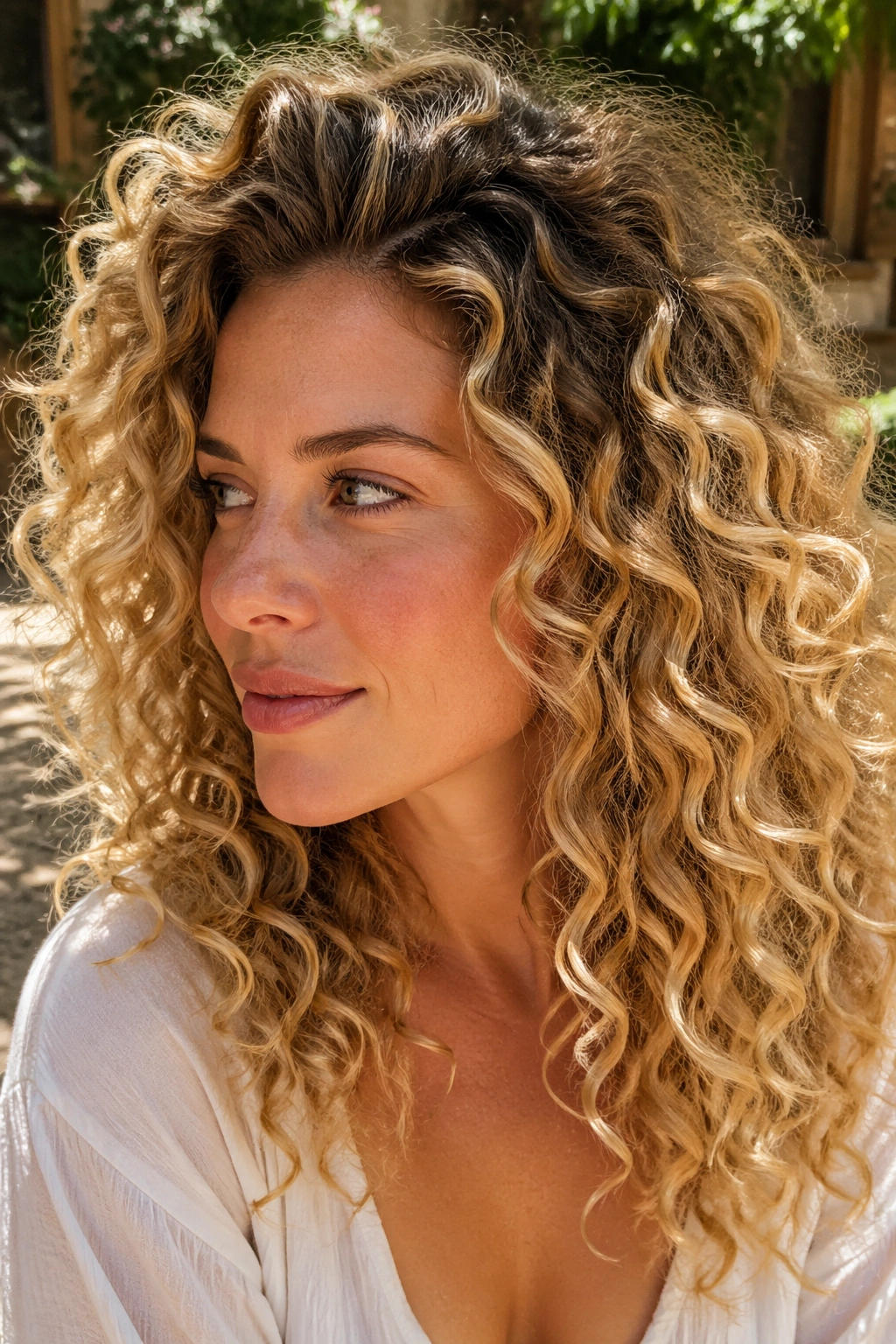
Curls love a darker root. They need it, honestly. Without that depth at the crown, golden blonde can look frothy and a little unfinished, especially when the hair expands as it dries.
The contrast makes the curl pattern easier to read. A deeper root — usually a natural brown or softly glossed brunette shade — holds the top in place visually, while the golden blonde through the lengths and ends gives movement and warmth. On curly hair, that balance matters more than perfect evenness. The color should follow the curl, not fight it.
A nice detail here is keeping the brightest pieces lower on the hair shaft, where the curl bends and catches light. That gives the style more dimension than lightening the roots all the way up. Air drying usually shows this best, but diffusing works too.
One-sentence version: curly hair wears rooted blonde better than most people think.
If you’ve ever felt like blonde made your curls lose shape, this is the fix. The dark crown gives the eye a place to rest.
9. Vanilla Blonde With a Root Glaze
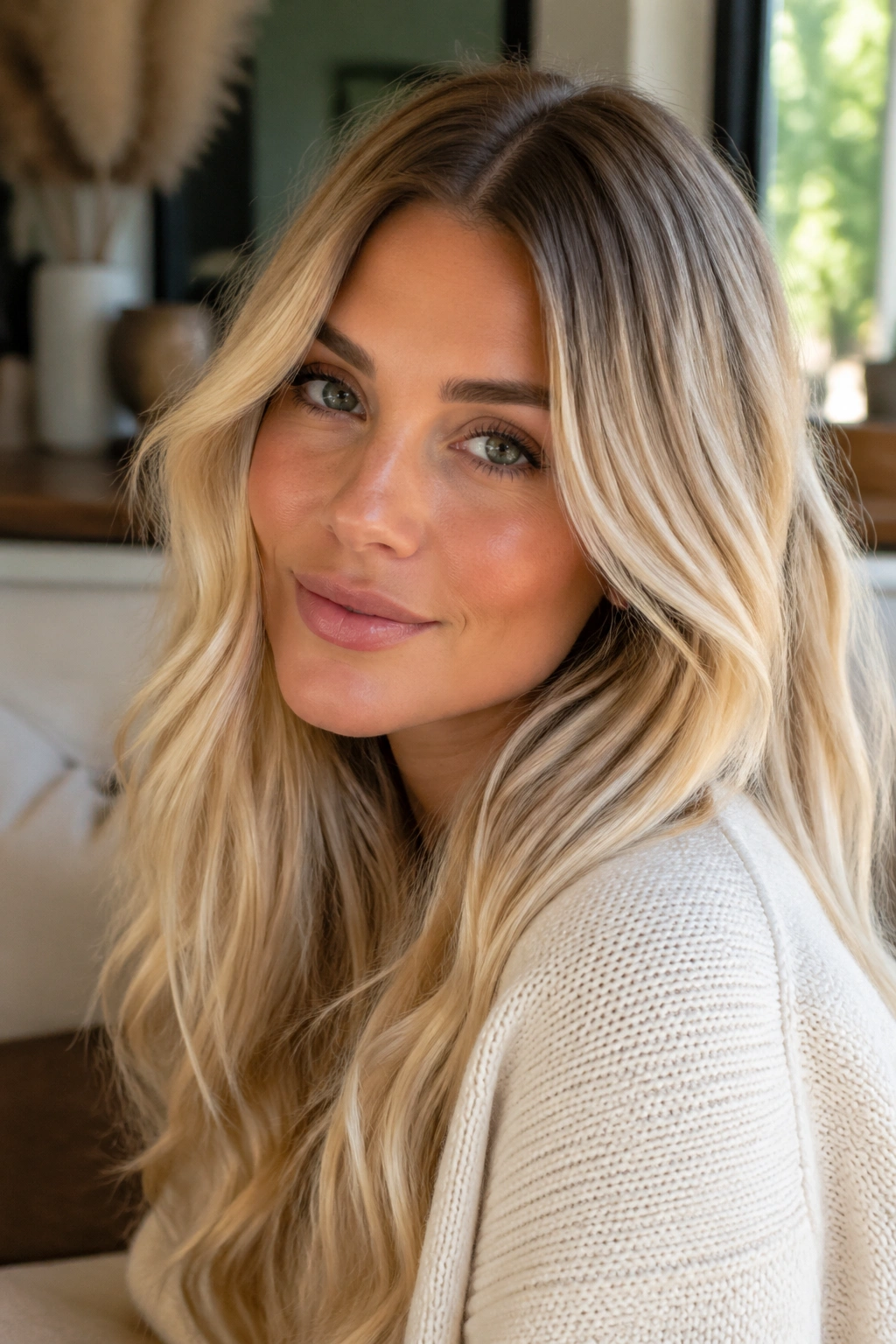
I keep coming back to vanilla blonde for clients who want lightness without the hard edge of a cool platinum. It has a creamy, pale finish that sits somewhere between beige and pearl, and a root glaze keeps the top soft instead of stark.
The glaze is the whole trick. A translucent root color or gloss smudges the line where your natural brown meets the blonde, which means the regrowth does not hit your eye all at once. Vanilla tones can look flat if they are lifted too evenly, so the slightly deeper root gives the shape some life.
What keeps it from looking muddy
- The root should be cool-neutral, not warm red-brown.
- Ends need to stay pale but not white.
- A gloss every few weeks helps the vanilla tone stay creamy.
- Best on layered cuts or long waves, where the light color can move.
This look feels especially good if you want something soft enough for daily wear but light enough to still read as blonde from across a room. It’s easy to mess up by making it too yellow. Keep the tone clean.
10. Bronde With Blonde Ribbons
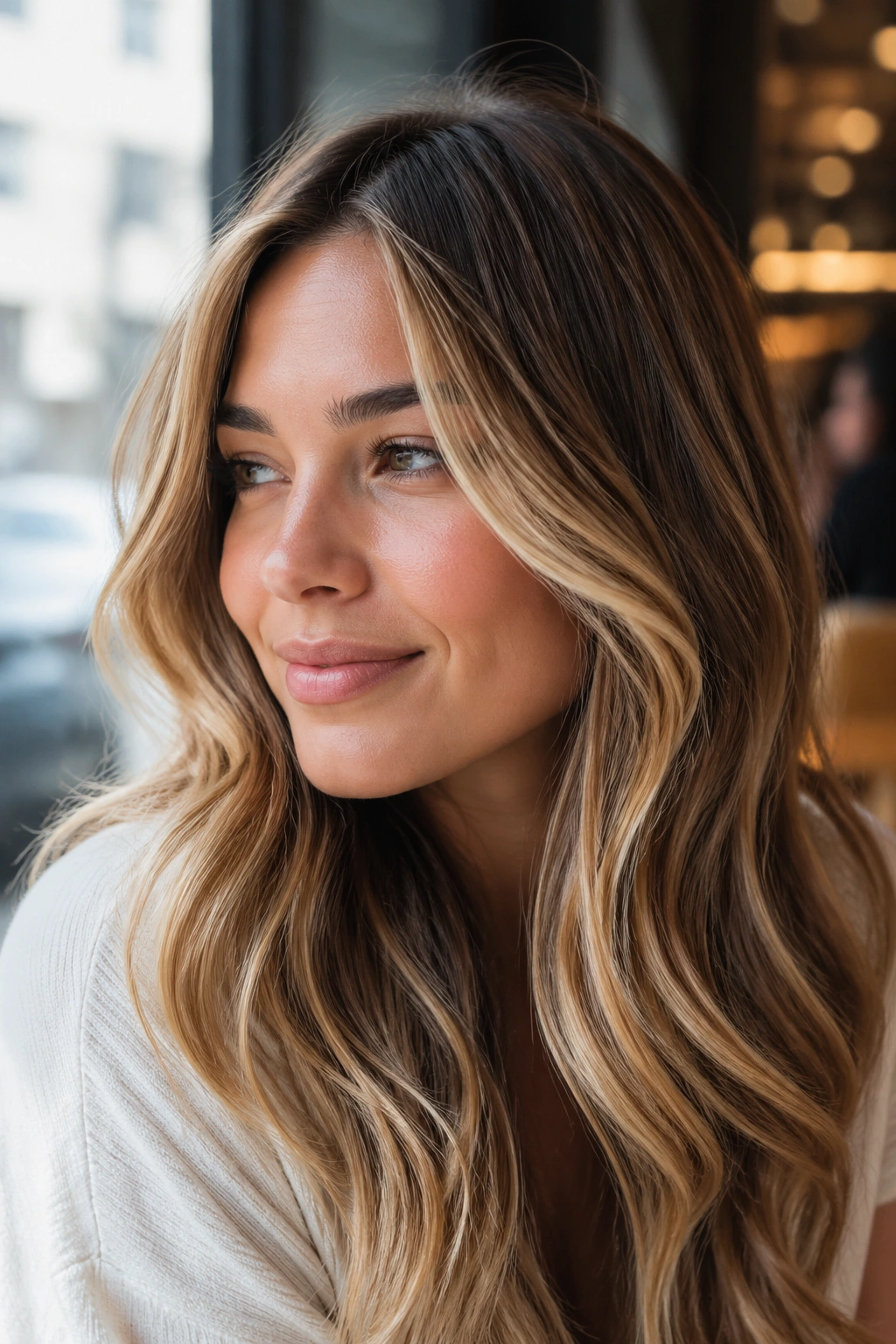
Bronde is not a compromise. It’s a strategy.
If you want blonde hair with dark roots but don’t want your hair to look like it’s trying to be something else, this blend of brown and blonde is one of the smartest options. The base stays rich, the ribbons are lighter, and the whole thing feels natural because there is no obvious break between the two.
The best bronde has blonde pieces scattered through the top layers, around the face, and through the ends. Not all over. That placement matters because it leaves enough depth at the root to stretch the grow-out while still giving you brightness where people notice it most.
This style is especially nice on medium to long hair, where the ribbons can move around. On short hair, bronde can look muddy if the contrast is too soft. On longer cuts, it becomes dimensional and low-fuss.
If you have naturally dark blonde or light brown hair, this may be the easiest blonde-adjacent color to live with. It usually buys you more time between touch-ups, and it looks less demanding when the roots start showing.
11. Platinum Pixie With Smudged Roots
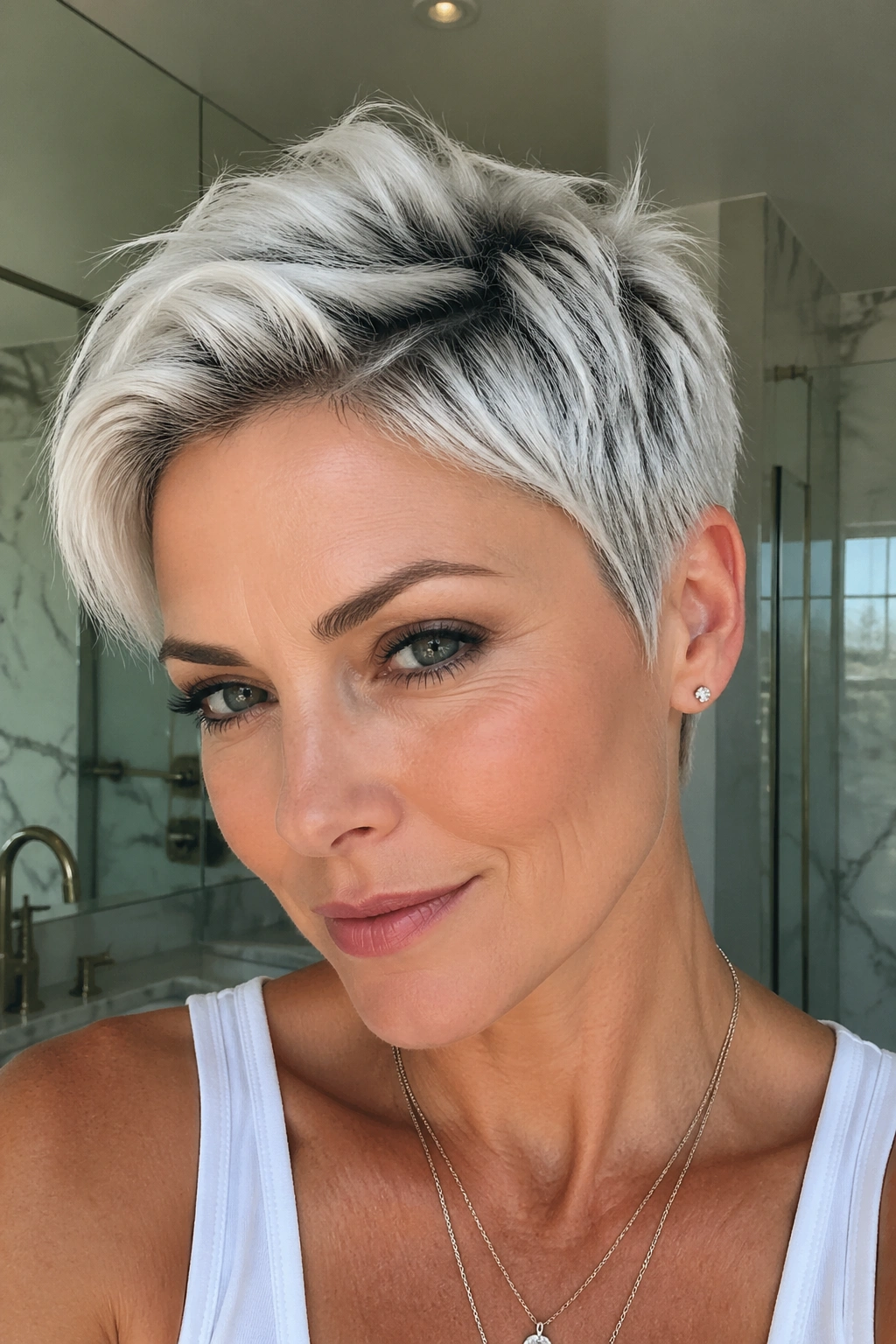
Short hair can handle more contrast than long hair. That’s why a platinum pixie with smudged roots works so well.
You get the punch of platinum near the top and the clean shape of a pixie, but the smudged root keeps the look from becoming helmet-like. On a longer style, the same contrast might feel too sharp. On a cropped cut, it reads as deliberate and sharp-edged in a good way.
What to ask for
Tell your colorist you want the root to stay soft for about one-half to one inch before the platinum starts. That keeps the line from looking pasted on. If the hairline is very visible, a tiny bit of darkness there can make the whole cut look more balanced.
The best part is how little actual color you can see before the style lands. The cut does a lot of the work. Strong cheekbones, a neat nape, and a little texture on top all help the rooted platinum look intentional rather than overprocessed.
This is not the most forgiving option if your hair is fragile. It is, however, one of the most striking.
12. Sandy Blonde Bob With a Shadowed Part Line
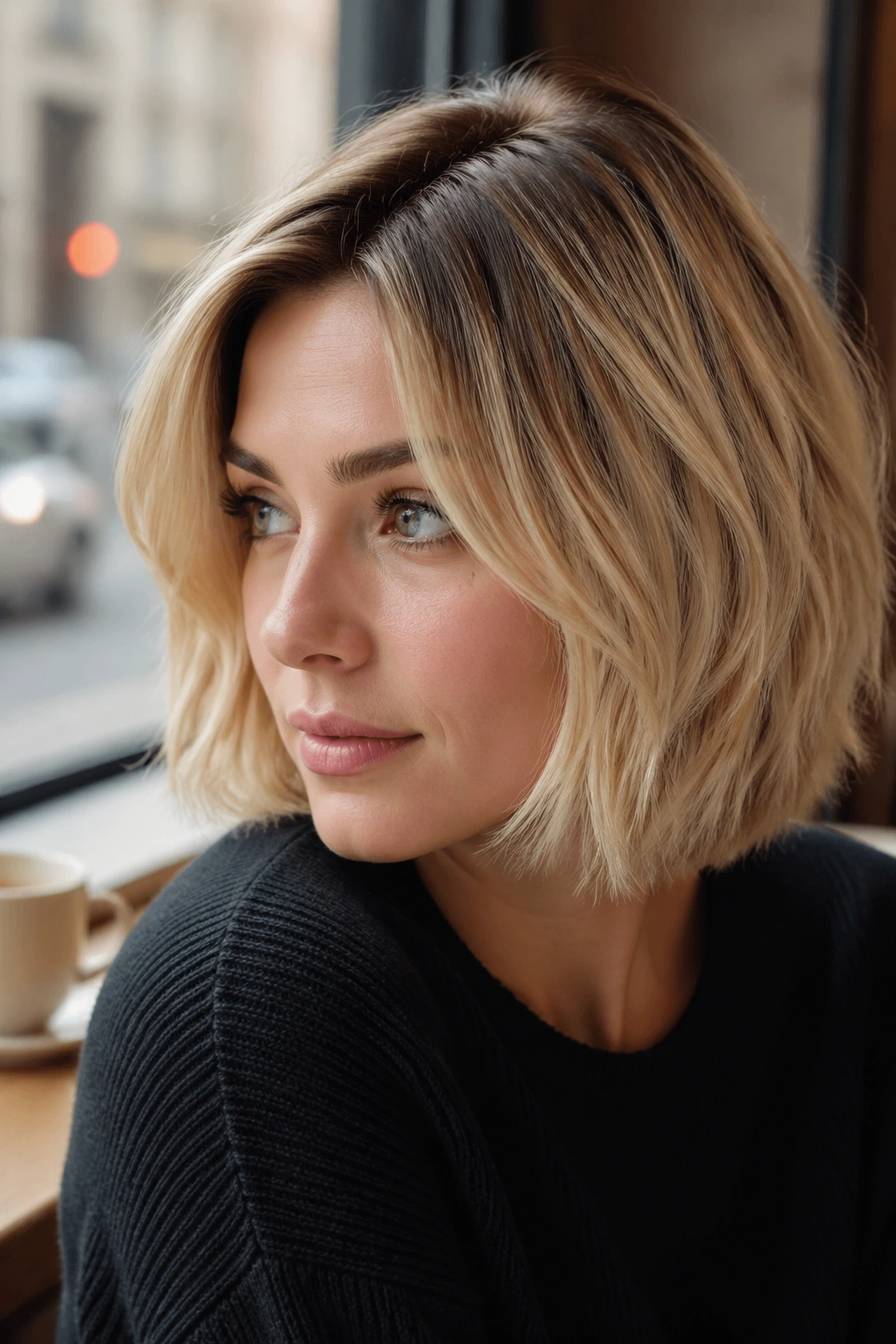
A sandy blonde bob is what happens when you want blonde that feels soft, wearable, and not remotely high drama. The shadowed part line makes the scalp area look fuller while the sandy lengths keep the overall tone light.
Compared with icy or champagne blonde, sandy blonde has more beige and neutral warmth in it. That makes it easier to blend with a natural dark root, especially on fine hair. The part line stays a shade deeper, so the top does not look over-lightened. That matters a lot on bobs, where every inch is visible.
This is a smart pick if your skin tone sits in the middle and you hate hair that turns yellow or chalky. It’s also a strong option if you style your bob straight. A clean shape plus a soft root gives the color a tidy frame.
If you want one sentence to take to your colorist, make it this: keep the part line deeper and let the blonde bloom through the mids.
13. Strawberry Blonde With Deeper Roots
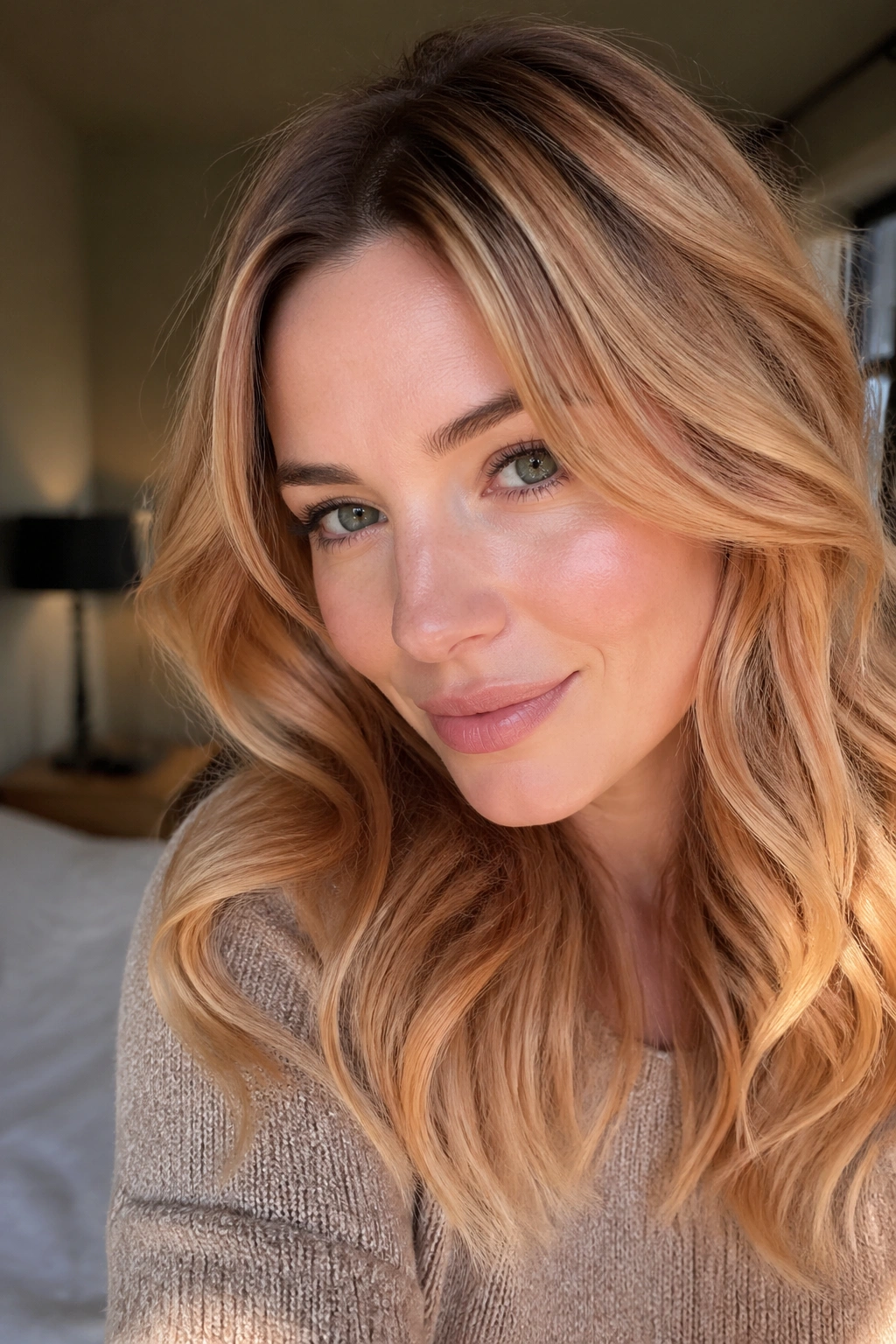
Strawberry blonde can go too sweet, too fast. A deeper root fixes that.
The darker base gives the copper-gold blend a little seriousness, which sounds odd until you see it on hair. Then it makes sense. The darker root keeps the red from looking washed out, and the blonde pieces through the mids make the strawberry tones glow instead of flattening out.
I like this look on people who want warmth but not a full copper commitment. The root usually sits in a natural brunette or dark blonde lane, and the strawberry tone is built on top with a soft glaze or low-lift highlights. That creates a much better grow-out than trying to paint red all the way to the scalp.
Tone tips that actually matter
- Keep the strawberry more peach-gold than orange-red.
- Ask for a root that is one to two shades deeper than the mids.
- Refresh the gloss when the warmth starts to fade.
- Soft waves show the color blend better than pin-straight hair.
This one has personality. That’s the appeal.
14. Cream Soda Blonde With Soft Root Blur
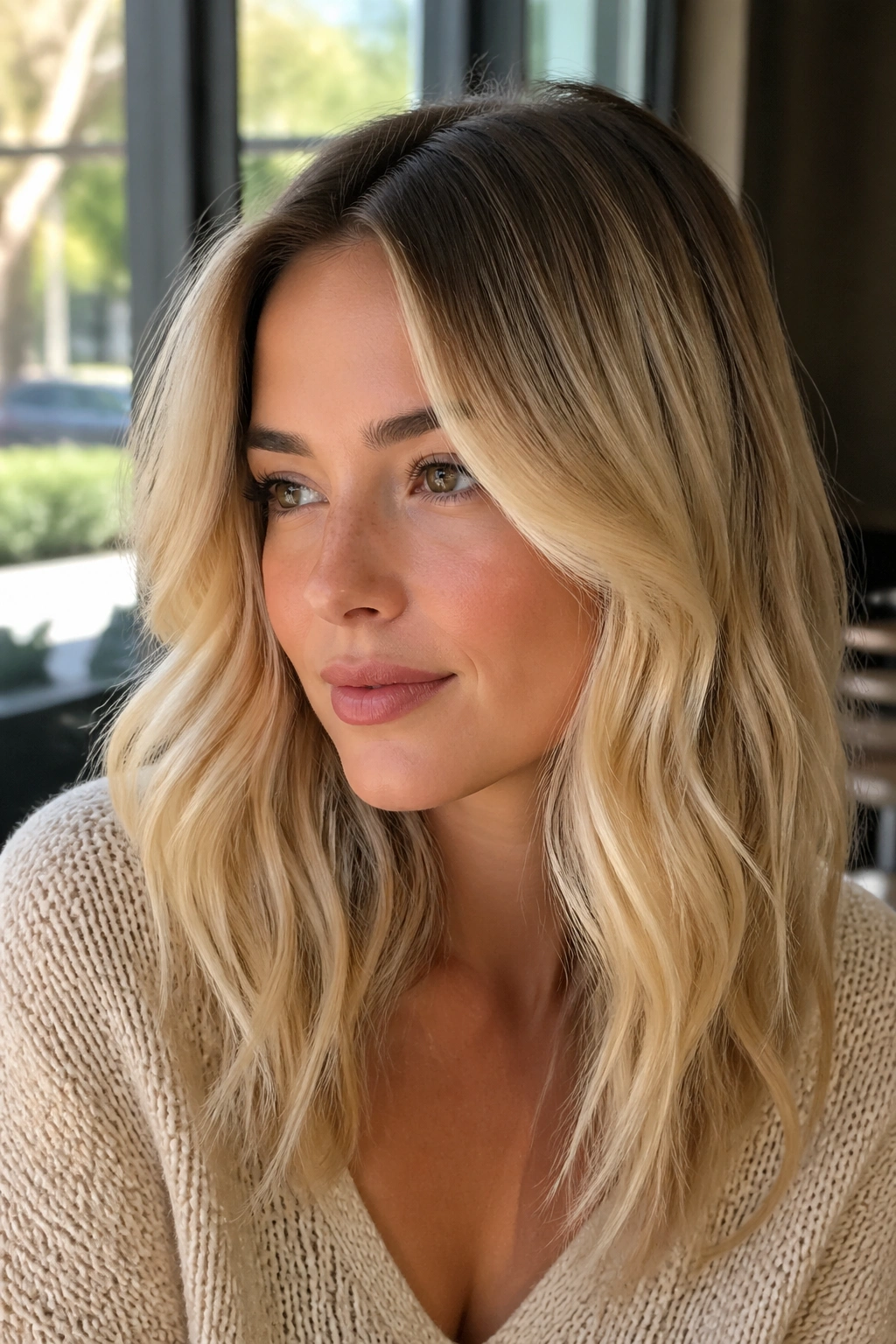
Cream soda blonde is warm in a gentle way, like pale caramel mixed with cream. The soft root blur gives it room to grow without losing that easy, bright feeling.
The color works because it does not chase a white-blonde finish. It stays creamy. That means the roots can remain a little darker without looking disconnected from the rest of the hair. On medium brown hair, this is a very forgiving grow-out because the blur at the scalp gives the eye a soft landing.
This tone is especially good if you like soft layers, curtain bangs, or long waves. It doesn’t need a sharp cut to hold its shape. The depth at the root and the creamier ends already do enough work.
If your hair tends to pick up brass, ask for a beige-gold toner instead of something overly yellow. A tiny shift in tone makes a huge difference here. The best cream soda blondes look rich, not syrupy.
15. Reverse Balayage With Dark Lowlights
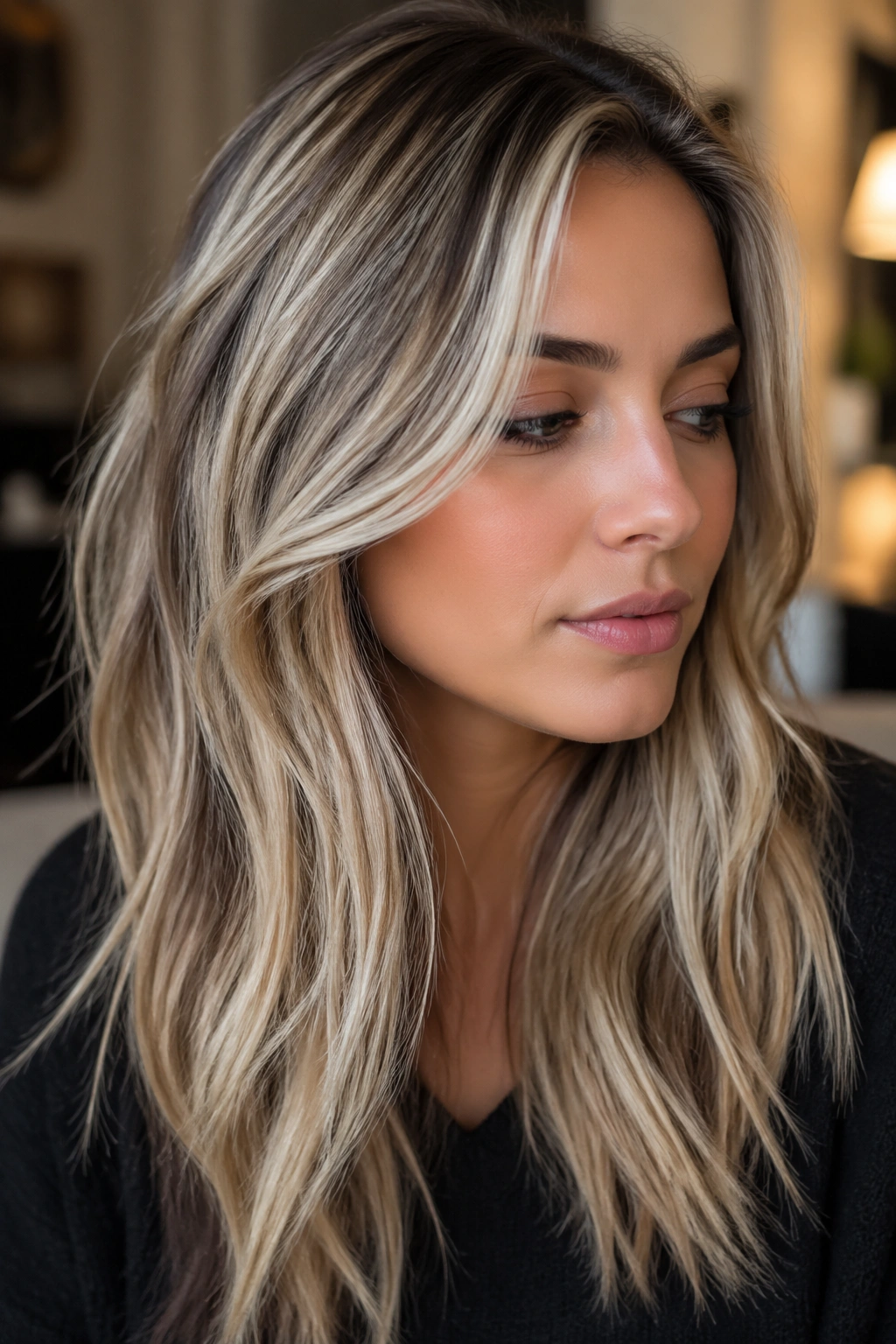
Reverse balayage is the move when blonde has gone too bright and you want the color to breathe again. Instead of lightening, you add dark lowlights and root depth to bring the whole look back into balance.
That sounds simple. It isn’t lazy. It’s a real fix for hair that has too many light pieces and not enough contrast. The darker strands slip in between the blonde sections, and suddenly the grow-out looks softer, the ends look fuller, and the whole head feels more grounded.
Where this works best
- On very light blonde that has become thin-looking.
- On long hair where the ends need more depth.
- On styles that feel striped or over-foiled.
- On anyone who wants less maintenance and more shape.
I like this for people who are ready to stop chasing lighter and lighter color. Sometimes the answer is not more blonde. Sometimes it’s a few carefully placed lowlights and a darker root that gives the hair its backbone back.
16. Ultra-Long Surf Blonde With a Root Stretch
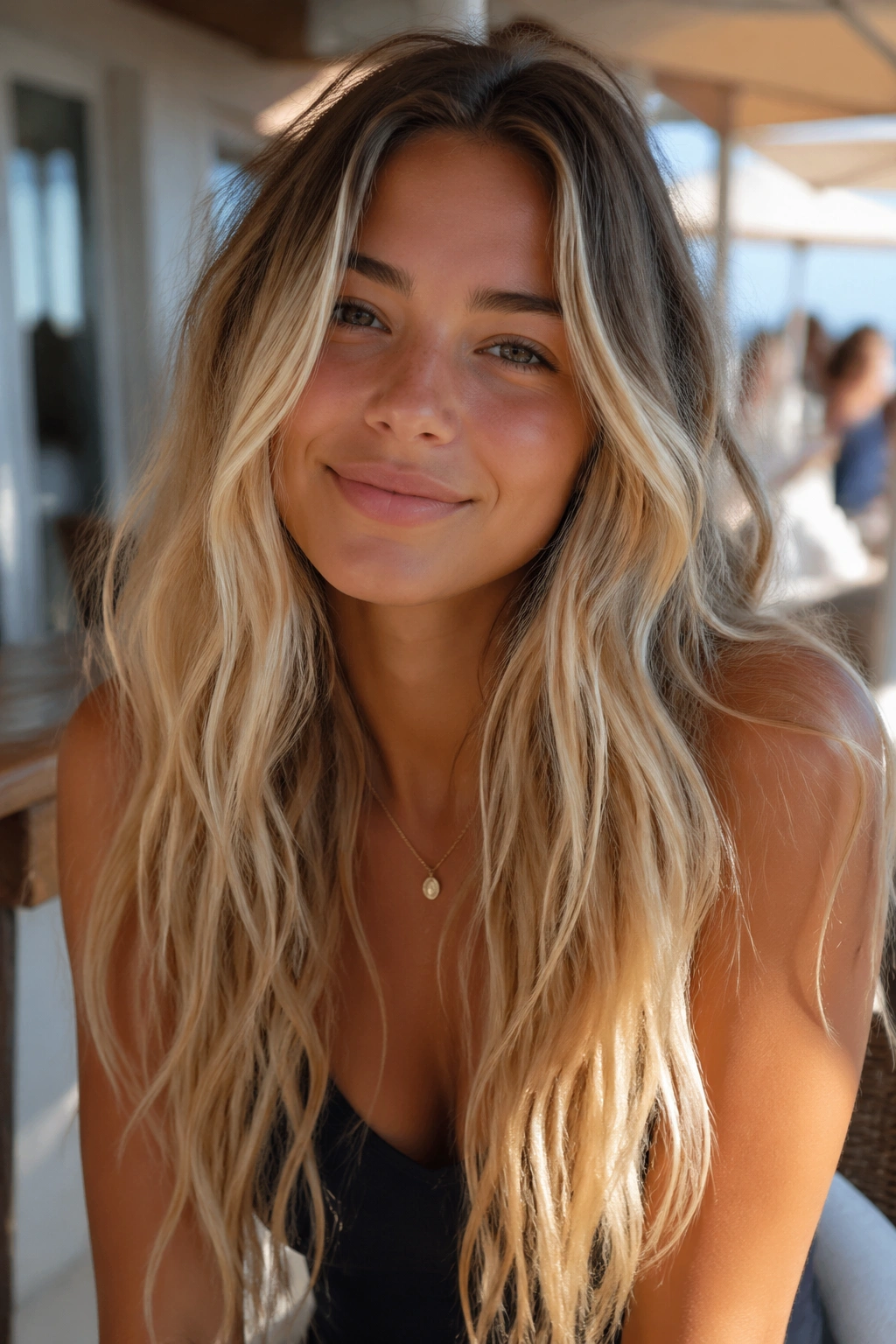
Long blonde hair can get expensive fast, so the root stretch matters. A surf blonde with a dark base gives the length room to stay bright without forcing the scalp area to carry every highlight.
Picture soft waves, sun-lightened ends, and a root that keeps the top from looking patchy. That’s the idea. The color is usually painted with a heavier brightness toward the mid-lengths and ends, while the top remains shaded just enough to hide the hard line of regrowth. It’s a practical style for anyone who likes a beachy look but does not want the color to look freshly done all the time.
This style needs good placement more than it needs perfect toning. If the highlights are chunky, the grow-out can get busy. If they’re woven with a softer hand, the root stretch looks natural for a longer time.
It’s a little messy in the best way. The whole point is that the hair should look like it has lived outside for a few weeks, not like it was packed in a box and sent to a salon chair.
17. Pearl Blonde With an Ashy Root Melt
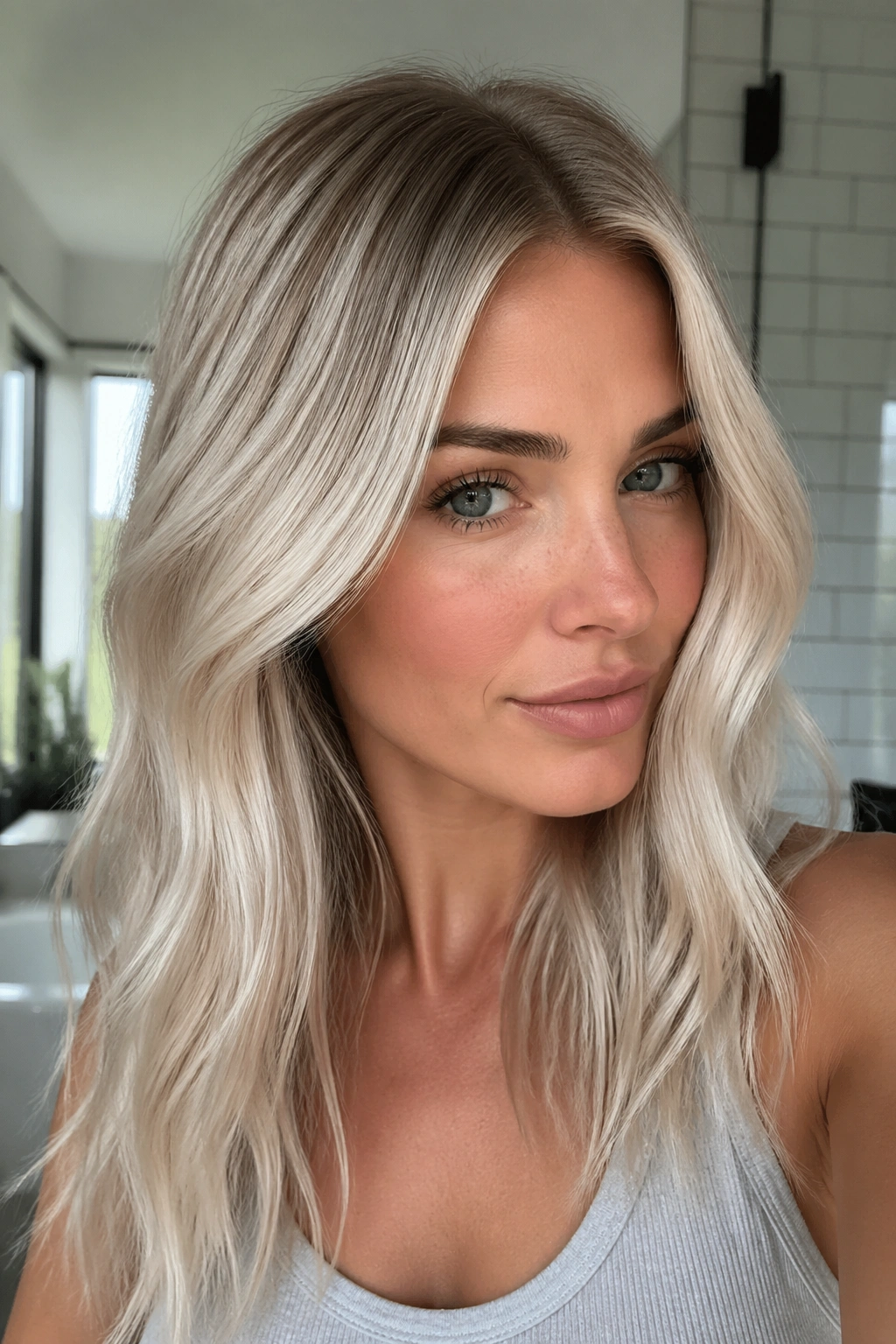
Pearl blonde has that soft, reflective finish that looks almost sheer in certain light. An ashy root melt keeps it from floating off the scalp and turning too delicate.
What makes this style tricky is the line between pearl and gray. Go too cool, and the blonde can look flat. Keep the root too warm, and the pearl tone loses its clean sheen. The sweet spot is a neutral-to-ash root that slowly fades into pale blonde lengths with a faint opalescent cast.
How to keep it from going gray
Ask for cool beige at the root, not a heavy charcoal brown. That gives the melt a soft base without making the whole head look smoky. The ends should stay pale and reflective, but not paper-white. On finer hair, this can look especially elegant because the cool tones make the shape look crisp.
This is a good choice if you wear minimal makeup or like cleaner clothing colors. It has a tidy, almost polished feel that pairs well with simple cuts.
18. Caramel Blonde With a Neutral Root
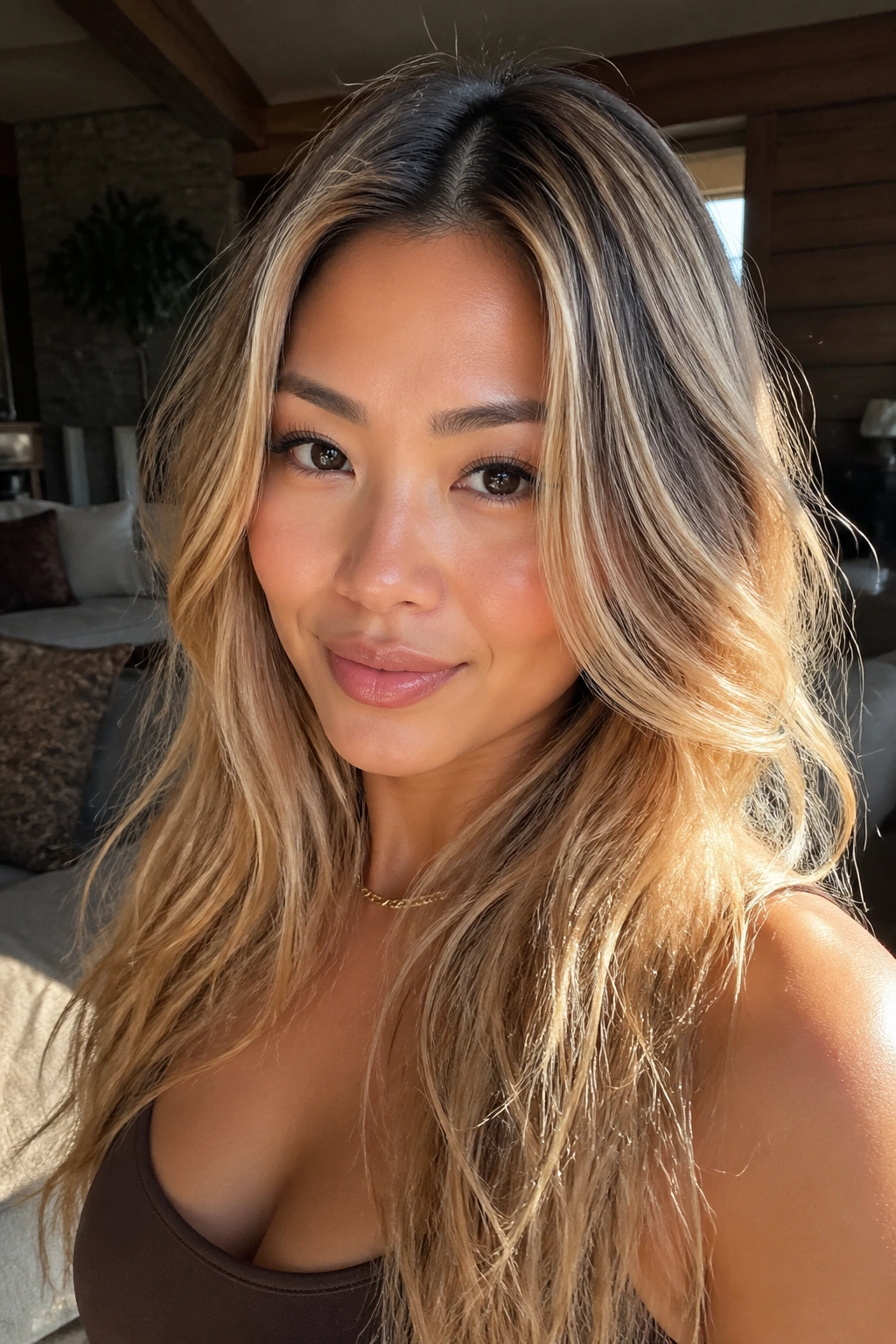
If honey blonde feels too warm and beige blonde feels too soft, caramel blonde sits right in the middle. A neutral root keeps it steady and makes the grow-out less fussy.
The darker base does a lot of quiet work here. It keeps the caramel mids from becoming too orange and lets the blonde ribbons settle into the hair in a way that looks expensive rather than overly processed. This is a strong look for brunettes who want lighter pieces but do not want the upkeep of a full blonde.
Unlike high-lift platinum, caramel blonde is forgiving on textured hair and thick hair. The depth helps the color stay visible even when the hair expands. It also works well with layered cuts because the different lengths catch the warm light in different ways.
My advice: ask for neutral brown at the root, then let the caramel show through the mids and ends. If the root gets too red, the whole thing can turn brassier than planned.
19. Rooted Beige Blonde for the Easiest Grow-Out
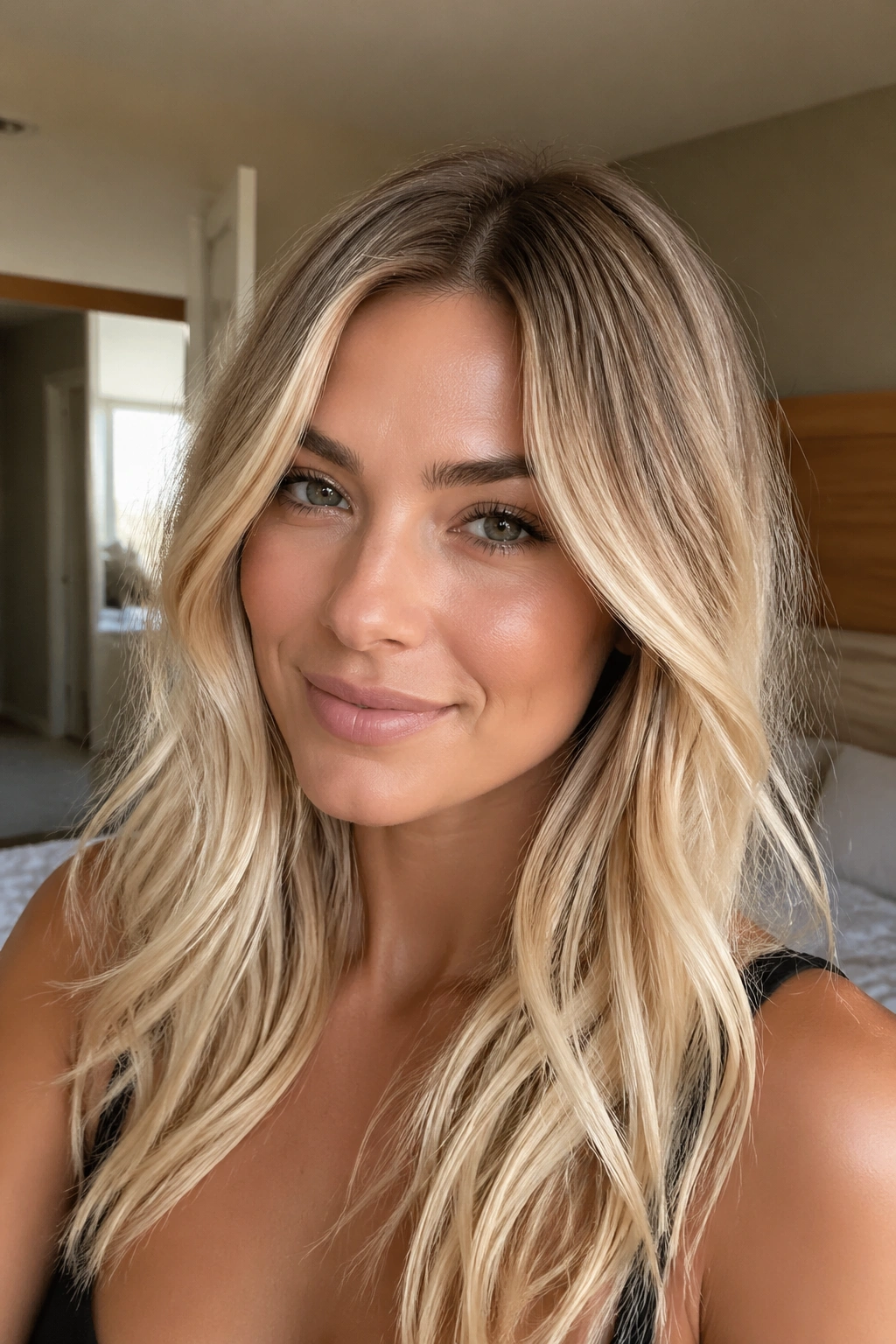
If you want one blonde that tends to look the least stressful as it grows, this is the one. Rooted beige blonde gives you softness at the scalp, lightness through the lengths, and a grow-out that looks intentional instead of accidental.
Beige is the useful middle ground. It works with a lot of natural base colors, it doesn’t go as yellow as warm blonde, and it doesn’t go as icy as platinum. The root stays deeper by design, and the blonde gets lighter in a slow, believable way. That means fewer harsh lines when the new growth starts coming in.
What to ask your colorist for
- A natural root shadow that matches your brows or one shade lighter.
- Beige toner through the mids and ends.
- Soft foils or balayage, not full saturation at the scalp.
- A finish that looks creamy, not chalky.
This is the version I’d choose if someone told me, “I want blonde, but I’m tired of chasing my hair every few weeks.” Fair request. Reasonable, too.
Final Thoughts
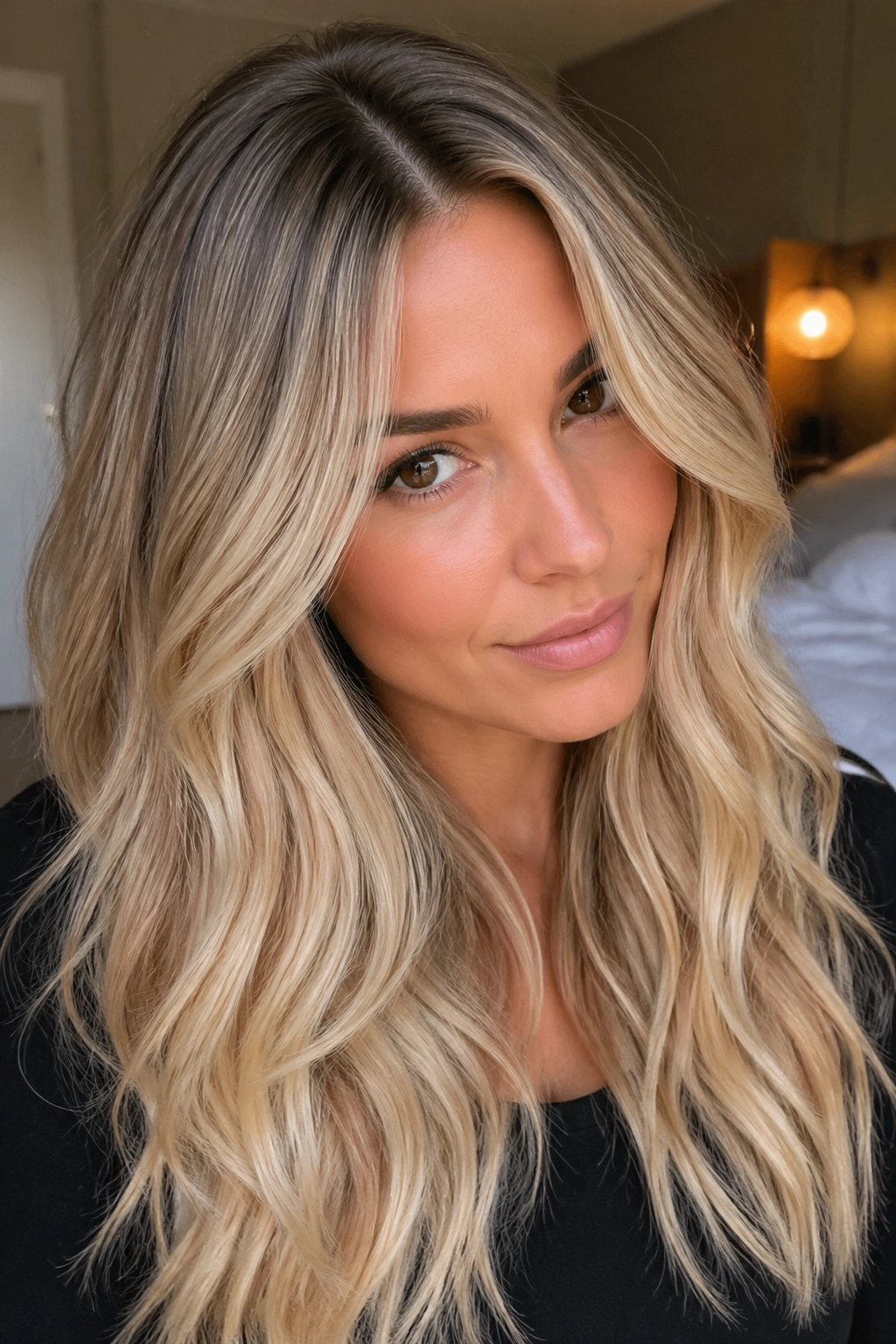
The best rooted blonde is the one that works with your natural color instead of bullying it into submission. That’s why these looks age so well: the dark root gives the eye a break, and the blonde still does the brightening where it matters.
If you’re stuck between warm and cool, start with a soft shadow root and a beige or honey finish. That combination tends to be the easiest to live with, and it usually grows out with fewer awkward surprises.
The prettiest blonde is often the one that still looks good when you miss your next appointment.