



A good haircut after 50 should make your hair look awake before you do a thing to it. That’s the real test.
Haircuts for women over 50 work best when they give shape where hair has gone flat, movement where it feels heavy, and enough polish that you don’t need to wrestle with a round brush every morning. Age changes hair texture. It just does. Some strands come in finer, some turn wiry, some lose a little spring at the ends, and some suddenly behave like they’ve got opinions. A cut that once looked easy can start feeling fussy fast.
I’ve always thought the smartest approach is not to chase youth or hide age. Better to build a haircut that flatters your face, respects your texture, and looks clean whether you air-dry it or take ten minutes with a dryer. That usually means a stronger shape than people expect. A sharp jawline bob. A collarbone lob. A feathered pixie. A shag that has movement but doesn’t fray into chaos. The trick is choosing the right kind of shape for the hair you actually have.
1. Soft French Bob
A soft French bob gives the face instant definition. The length usually sits around the jaw or just below it, and that tiny difference matters more than people think. Too short, and it can feel severe. Too long, and the whole point gets lost.
What makes this version feel modern is the softness at the edges. The perimeter stays clean, but the finish has a little bend, not a helmet effect. That’s why it works so well with glasses, earrings, and a side part that isn’t trying too hard.
- Best for: straight to wavy hair
- Ask for: jaw-skimming length, a blunt base, and very light texturing at the ends
- Style with: a 1-inch round brush or a flat brush and a touch of smoothing cream
My favorite detail: tuck one side behind the ear and leave the other loose. It gives the cut a little attitude without extra effort.
2. Collarbone Lob with Invisible Layers
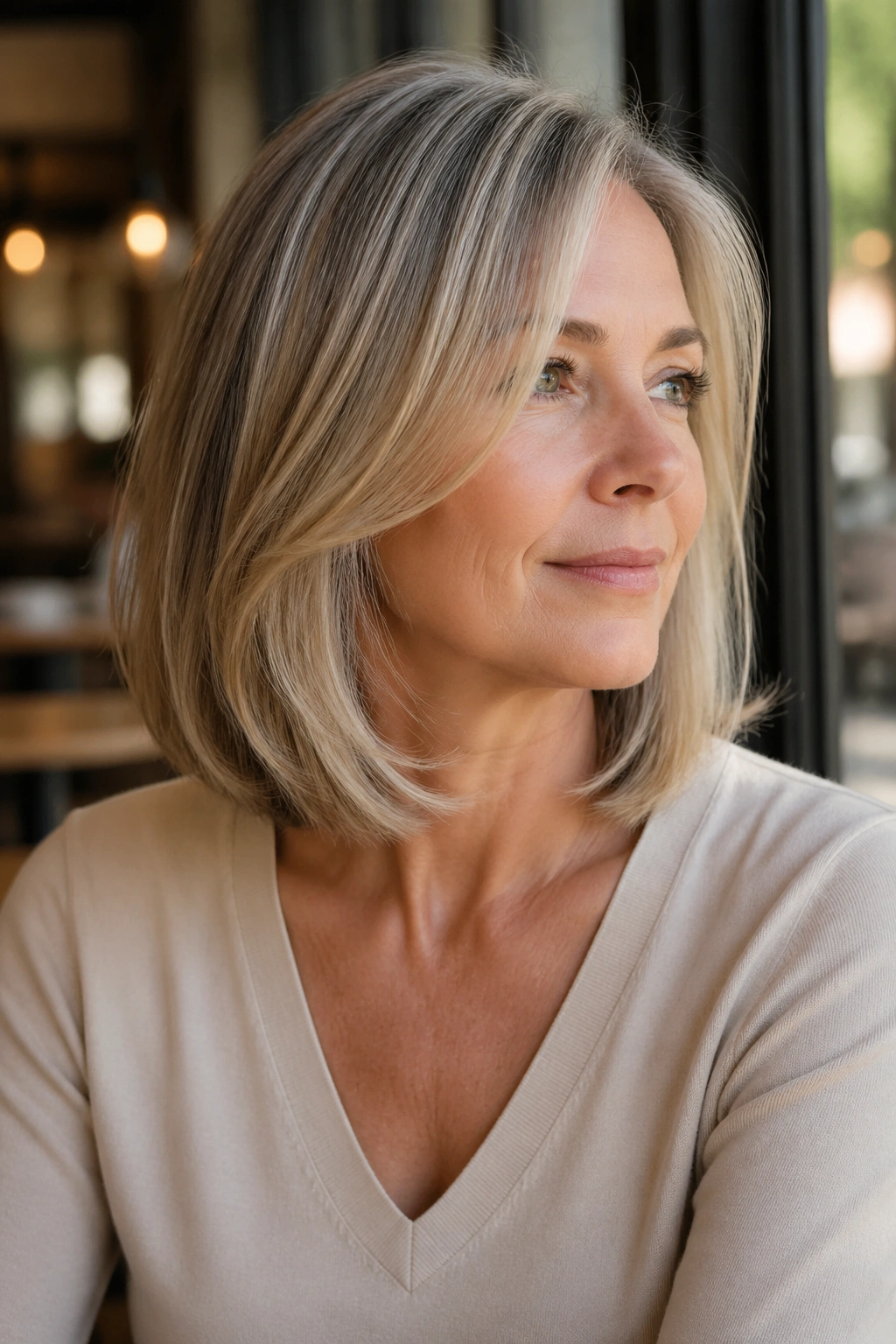
Why does the collarbone lob keep showing up in good salons? Because it grows out politely. That’s rarer than it should be.
The cut lands right at the collarbone, so it brushes the neckline and keeps some swing. Invisible layers matter here. They take out weight without carving obvious steps through the hair, which helps if your hair is fine and you hate seeing thin ends. If your hair is thicker, the same cut can stop it from puffing out at the bottom.
How to ask for it
Tell your stylist you want a lob that moves but still looks full at the ends. That phrase usually gets you closer than asking for “some layers.” You want the shape to stay solid from the front, with quiet movement tucked inside.
This is the kind of cut that handles a center part, a soft side part, or messy waves without falling apart. It’s practical. Not boring. There’s a difference.
3. Feathered Pixie
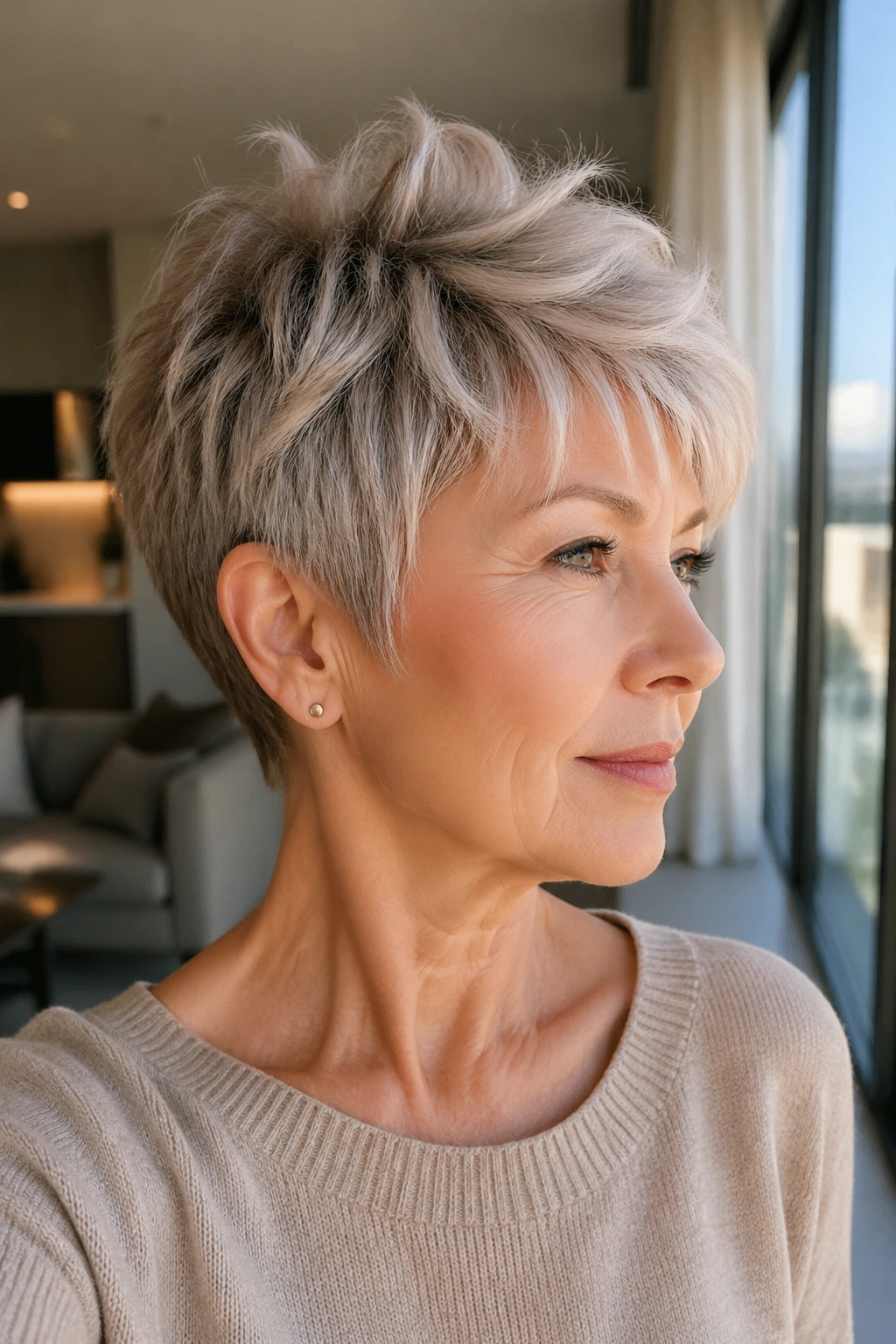
A feathered pixie is what happens when you want short hair with air in it instead of a hard shell. The layers are cut to lift away from the head, especially around the crown and fringe, so the whole cut feels light instead of boxy.
I like this cut for women who are tired of hair sitting on the neck or collapsing by noon. It opens the face fast. It also makes earrings, brows, and cheekbones do more of the work, which is a nice trade-off when you’ve had enough of dragging longer hair around.
What to watch for
A feathered pixie needs softness in the top layer and a tapered nape. If the top gets cut too short or too choppy, the shape can turn puffy. If the sides are left too heavy, it stops looking feathered and starts looking helmet-like. Nobody needs that.
A little mousse at the roots and a quick finger-dry are often enough. That’s the charm. Not five products. Not a 40-minute detour.
4. Bixie Cut
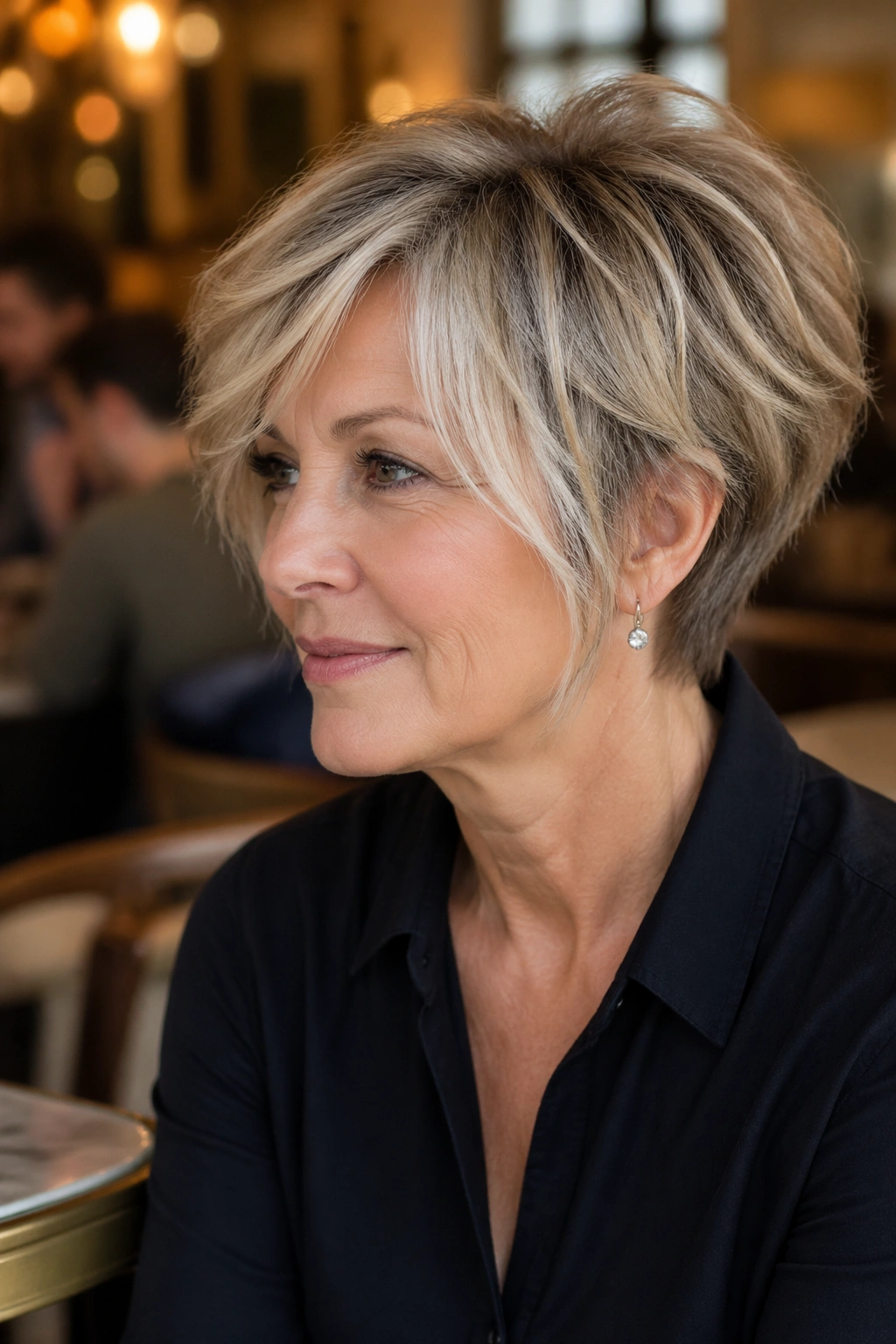
The bixie sits between a bob and a pixie, and that in-between length is exactly why so many women like it. It gives you short hair energy without the commitment of a full crop.
The shape usually has a bit more length in the front and around the ears, with shorter, stacked layers through the back. That makes the haircut feel playful rather than severe. It’s especially good if you wear glasses or want a cut that doesn’t flatten the side of your face.
A bixie also has a nice little advantage: it can look polished when tucked behind the ears, or a little cheeky when you rough it up with texture paste. It’s one of those cuts that does not ask for a perfect styling session. Good news, because perfect styling sessions are a scam for most people.
5. Long Shag with Curtain Bangs
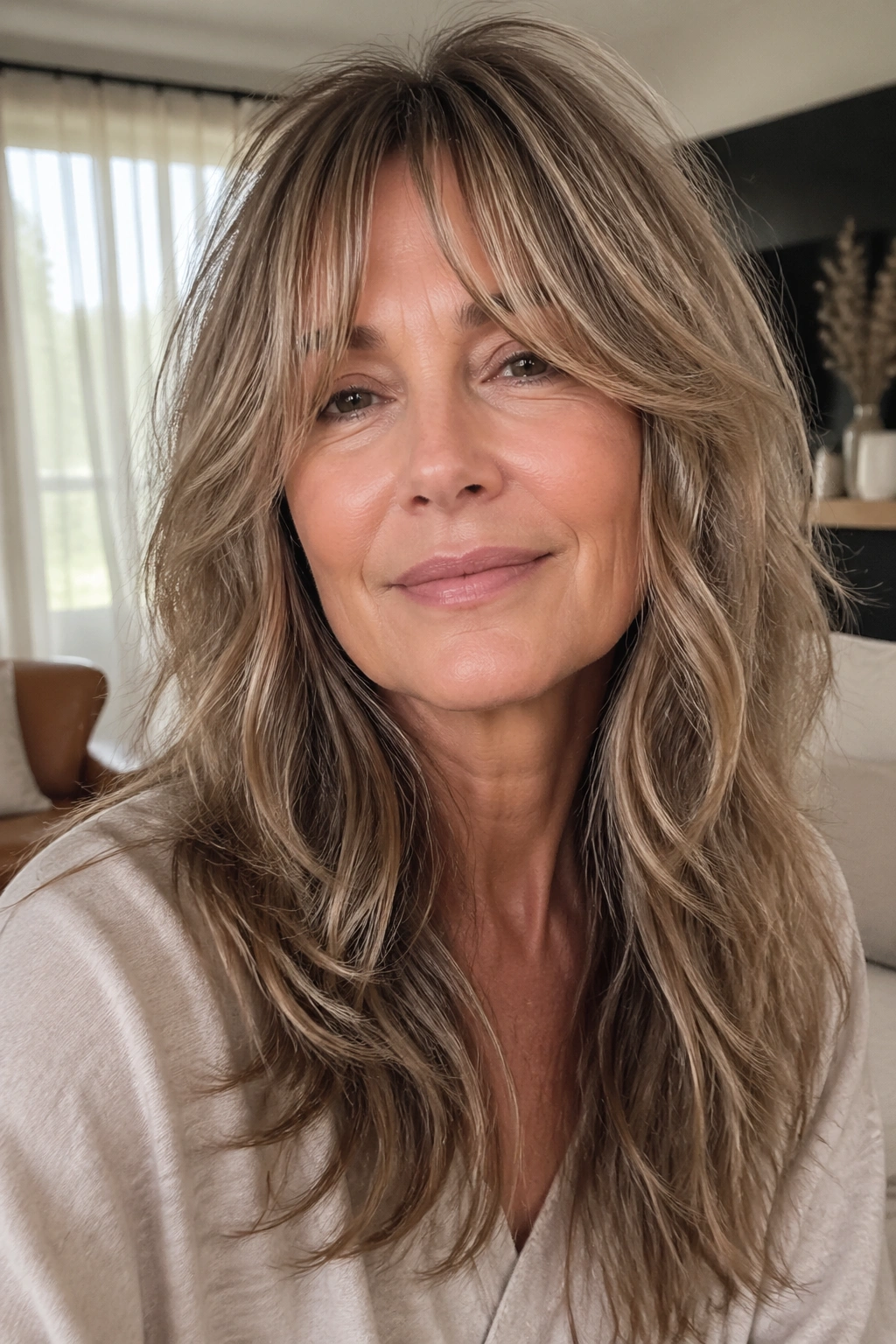
A long shag with curtain bangs solves a common problem: hair that feels heavy at the bottom and flat at the top. The layers build lift through the crown and sides, while the curtain fringe opens the face instead of closing it off.
This cut works especially well on wavy hair, because the layers let the movement show up instead of getting trapped under one long sheet of hair. It also works for fine hair if the layering is done with restraint. Too much slicing and you lose the body. Too little and the shag stops shagging.
Why the fringe matters
Curtain bangs are forgiving. They split off the center, sweep away from the eyes, and grow out more gracefully than blunt bangs. If you’re nervous about fringe, this is usually the safest doorway in.
A bit of styling cream and a medium round brush can shape the front without making the rest of the cut look overdone. The best shags have a lived-in feel, but they still need structure. Messy is not the same thing as careless.
6. Blunt Chin-Length Bob
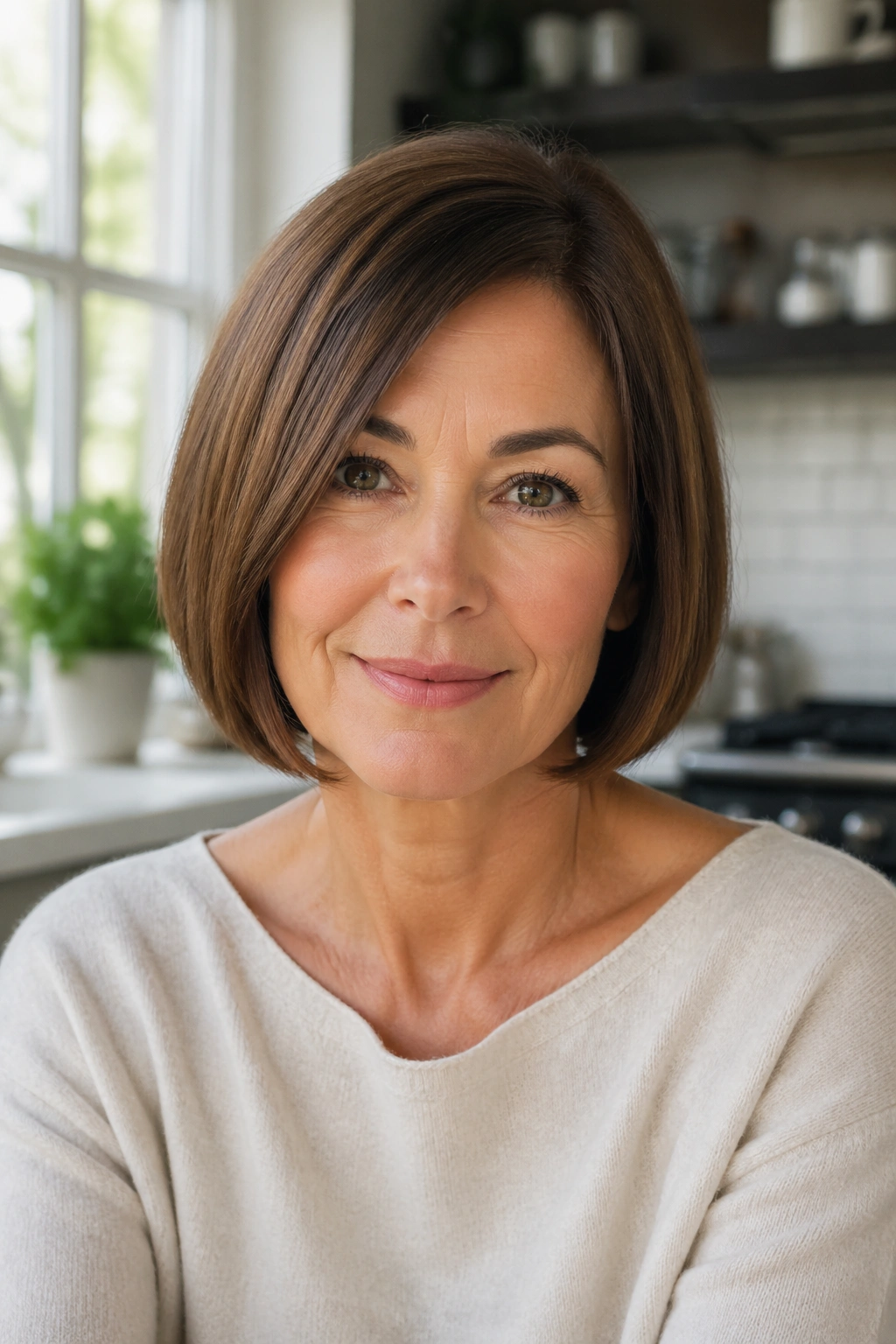
Layers are not always the answer.
If your hair is fine, thin at the ends, or a little tired from too much coloring, a blunt chin-length bob can make it look stronger in one appointment. The clean line creates the impression of density, and the chin length frames the jaw in a way that feels crisp but not hard.
This cut has attitude. It also has limits. On very curly hair, the line may need a softer hand so it doesn’t flare outward. On thick hair, your stylist may need to remove bulk underneath without disturbing the outer edge. That’s the part people miss when they ask for a blunt bob and expect the same result on every head.
A center part looks sharp with this cut. A side part softens it. Either way, the ends should look deliberate, not wispy. That’s the whole point.
7. Angled Bob with Side Part
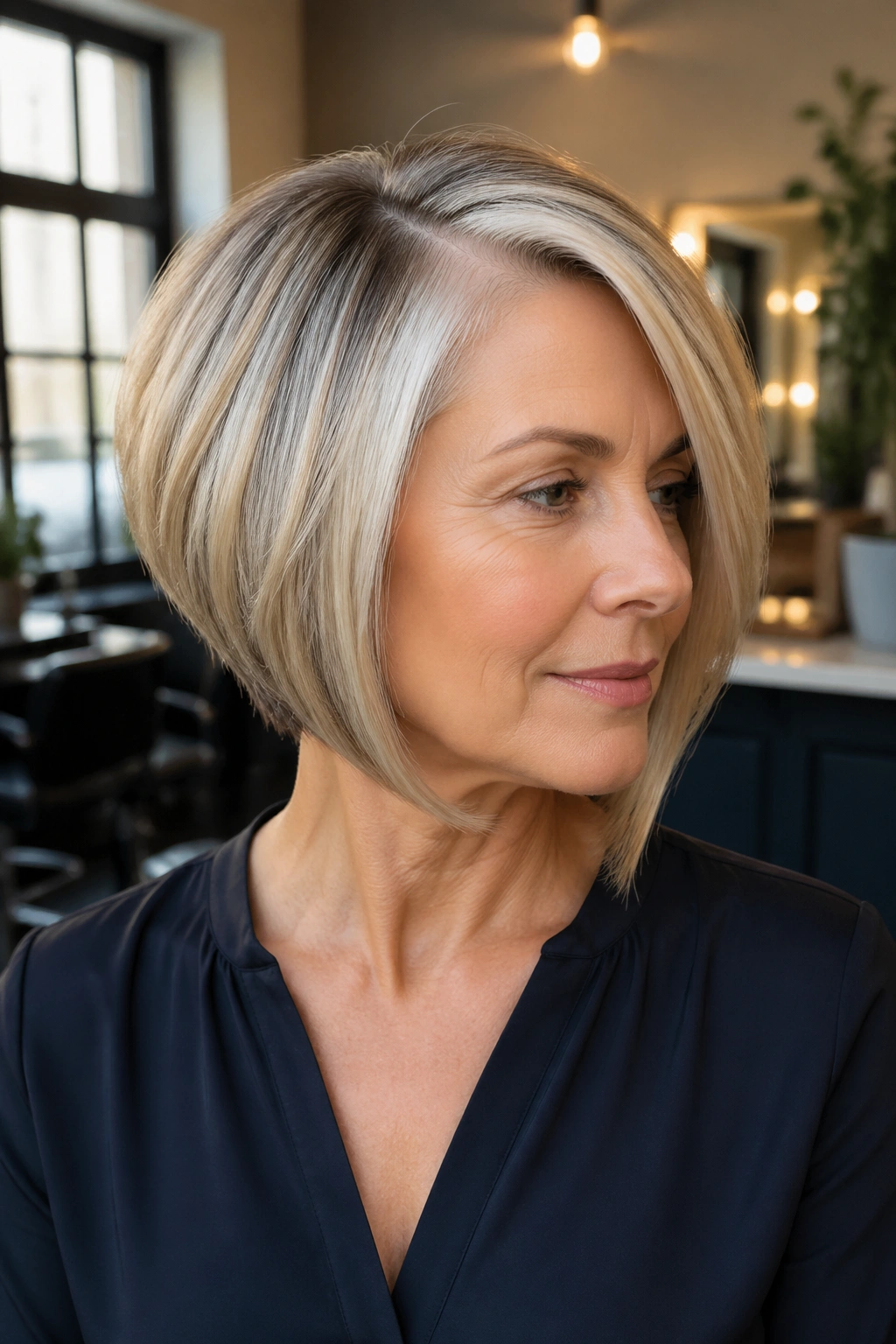
An angled bob gives you lift without teasing, which is a nice deal if you like structure but hate fussy styling. The back sits shorter, the front drops a little longer, and the side part pushes volume toward the crown.
That diagonal line does a lot of work. It draws the eye forward and can lengthen the face visually, especially if the front grazes the chin. The result feels tidy, but not stiff. I think that matters. Some bobs look like they belong in a meeting room from another era. This one doesn’t.
What to ask for in the chair
- A slightly shorter back with a longer front angle
- A side part that gives the top some lift
- Light texturing only at the ends, not through the whole shape
This haircut shines on straight and slightly wavy hair. If you like a quick blow-dry and want the shape to stay put, it’s a smart pick.
8. Shoulder-Grazing Layered Cut
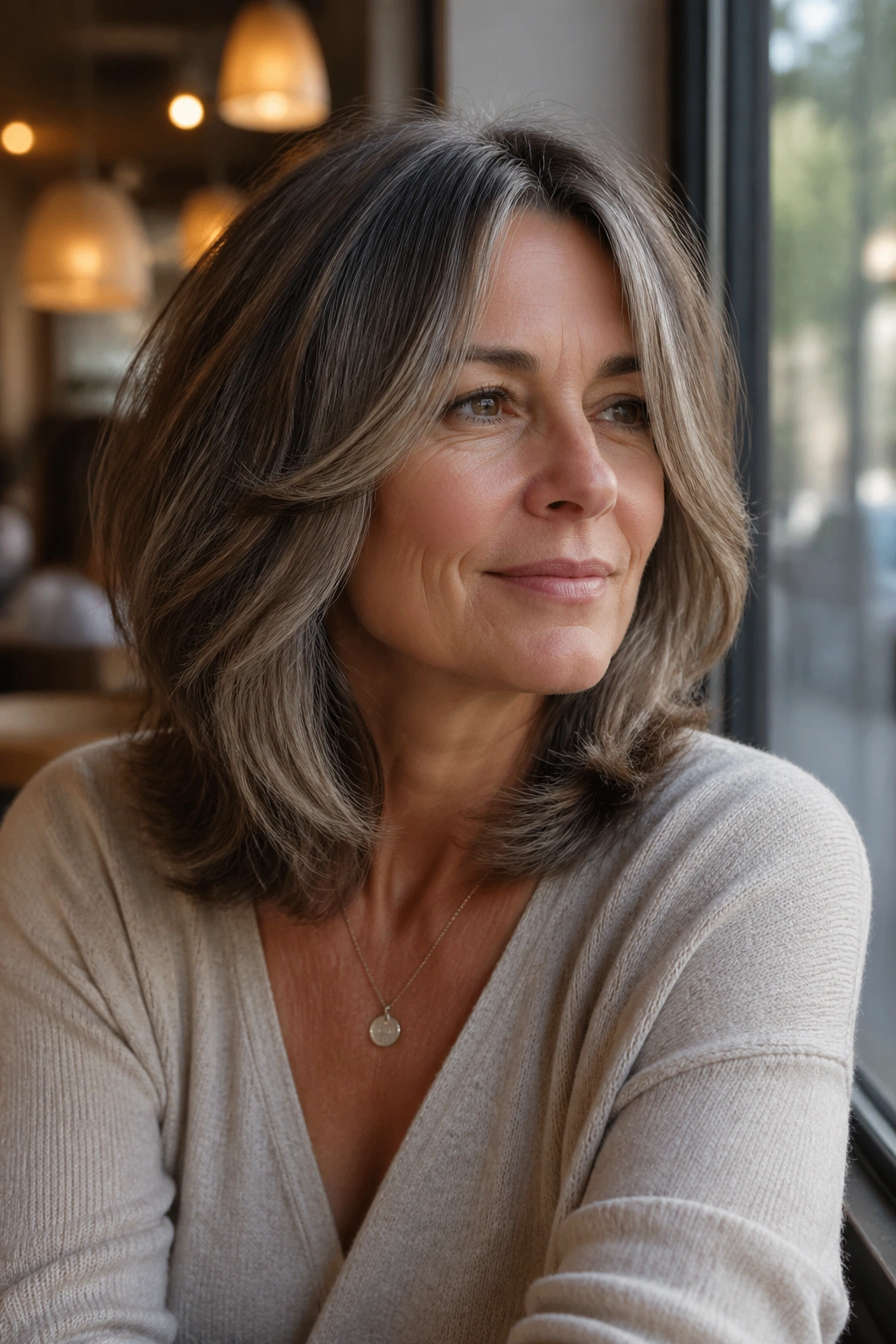
Shoulder-grazing cuts have a nice, easy swing to them. They move when you walk, they still fit into a clip or low bun, and they don’t feel as heavy as longer hair can after a while.
The key is where the layers start. If they begin too high, the cut can look flimsy. If they begin too low, you just end up with a long block of hair that feels tired. The sweet spot is usually around the cheekbone or lip line, with longer layers that melt into the rest of the shape.
One sentence says it all: it’s the cut that behaves.
If you air-dry often, this shape can be a gift. If you blow-dry, a round brush at the front and a quick flip at the ends are usually enough. It doesn’t ask for a lot, and that’s part of its charm.
9. Tapered Crop for Natural Gray
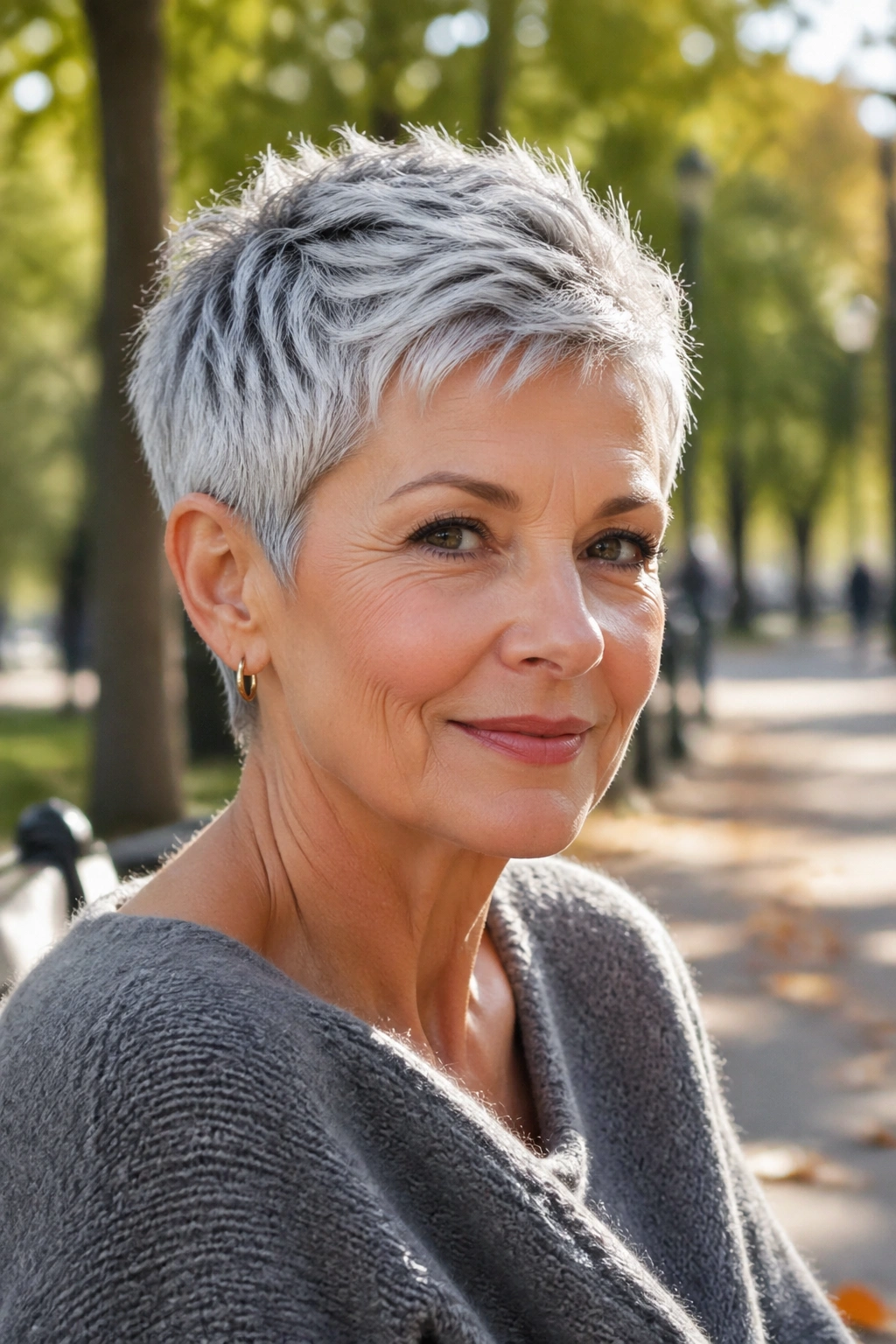
Why does gray hair often look better in a tapered crop? Because silver strands can be wiry, and shorter hair gives that texture somewhere to go.
The taper keeps the sides and nape close to the head while leaving a little more height on top. That balance helps the cut feel shaped, not shorn. It also lets natural gray and silver tones catch the light in different places, which is more flattering than a bulky cut that hides all the variation.
What to keep in mind
- Ask for soft tapering at the neck and ears
- Keep the top long enough to brush forward or to the side
- Use a light cream, not a heavy wax, unless your hair is very coarse
This cut can feel especially fresh with a clean brow and a pair of bold earrings. It’s practical, but it doesn’t look practical in that dull, utilitarian way people fear. Done well, it feels crisp and confident.
10. Soft Wolf Cut
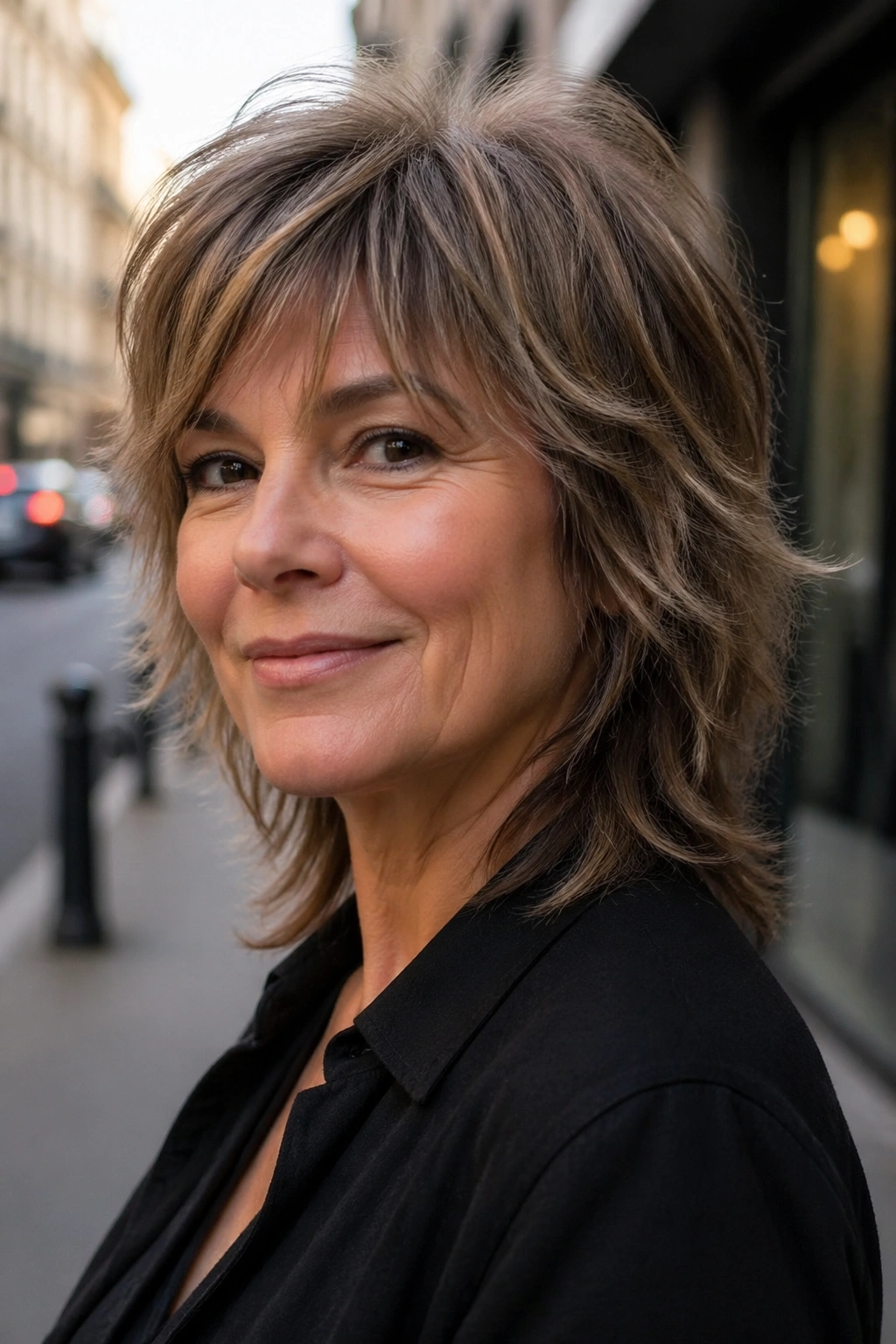
A soft wolf cut is the unruly cousin of the shag, but toned down enough to wear in real life. The crown has lift, the lengths taper out, and the ends stay a little piecey so the whole haircut has movement.
I like this on wavy hair because the cut amplifies what the hair already wants to do. On straight hair, it can still work, but it needs a little bend from a blow-dry or a flat iron wave. If you’re hoping for a tidy, classic shape, this is not your cut. If you want energy and a little edge, it makes sense fast.
The softened version matters. Too much disconnection can look choppy, especially on finer hair. Ask for controlled layers rather than a wild chop. The difference is subtle on paper and obvious in the mirror.
11. Curly Shag
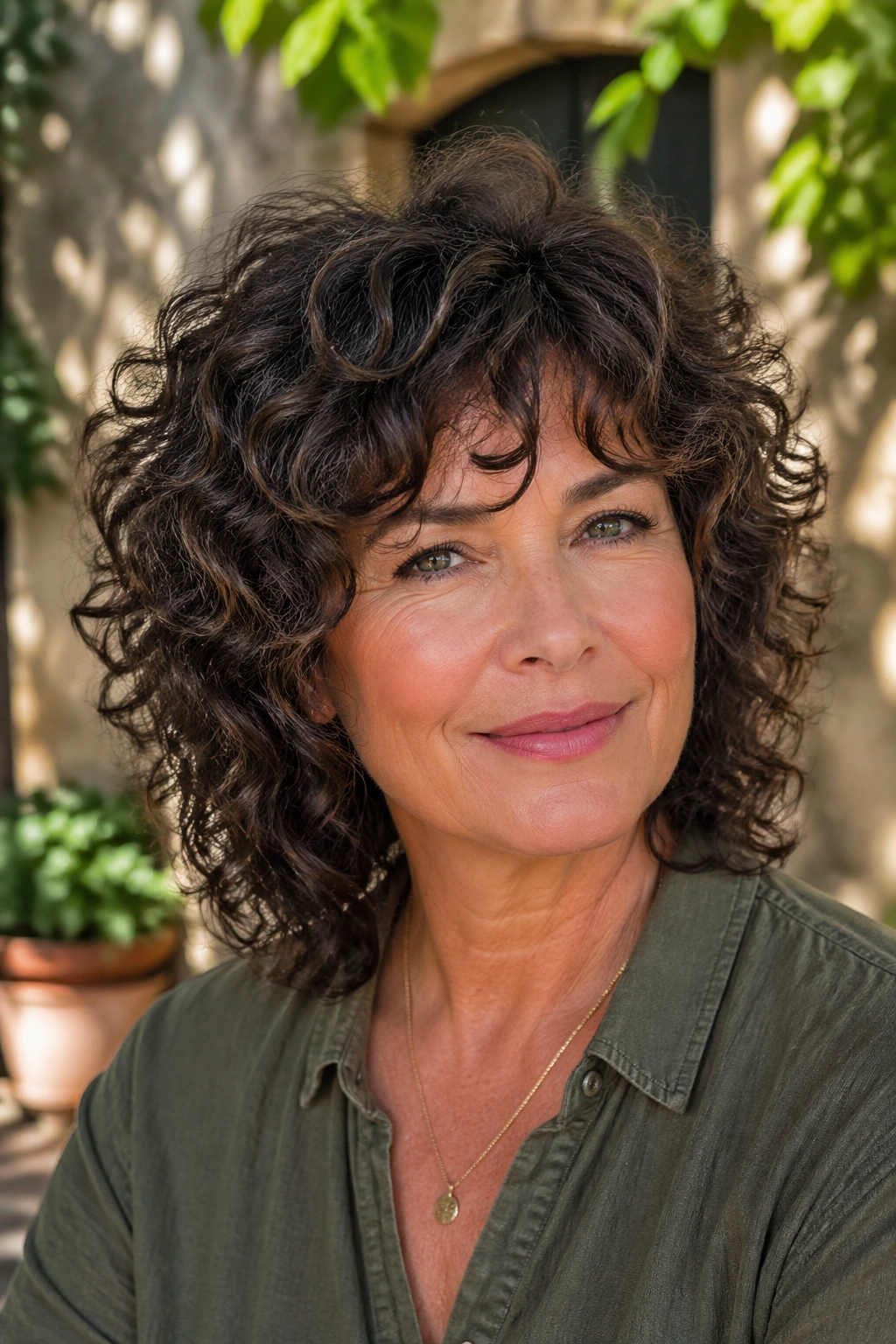
Curly hair needs room. A curly shag gives it exactly that.
The shape is built with layers that let curls stack instead of ballooning in one block. That makes the cut lighter, gives the face more definition, and keeps the bottom from looking triangular. The best curly shag respects the curl pattern instead of fighting it, which means a good stylist will often cut it dry or mostly dry.
A small but useful detail
If your curls spring up a lot, ask for the perimeter to be left a touch longer than you think you need. Curly hair always shrinks more than straight-haired people expect. Always.
This cut suits women who want shape without losing texture. A cream or gel cast can help define the curl, but the real star is the cut itself. If the shape is right, the styling becomes a lot simpler.
12. Pixie with Sweeping Fringe
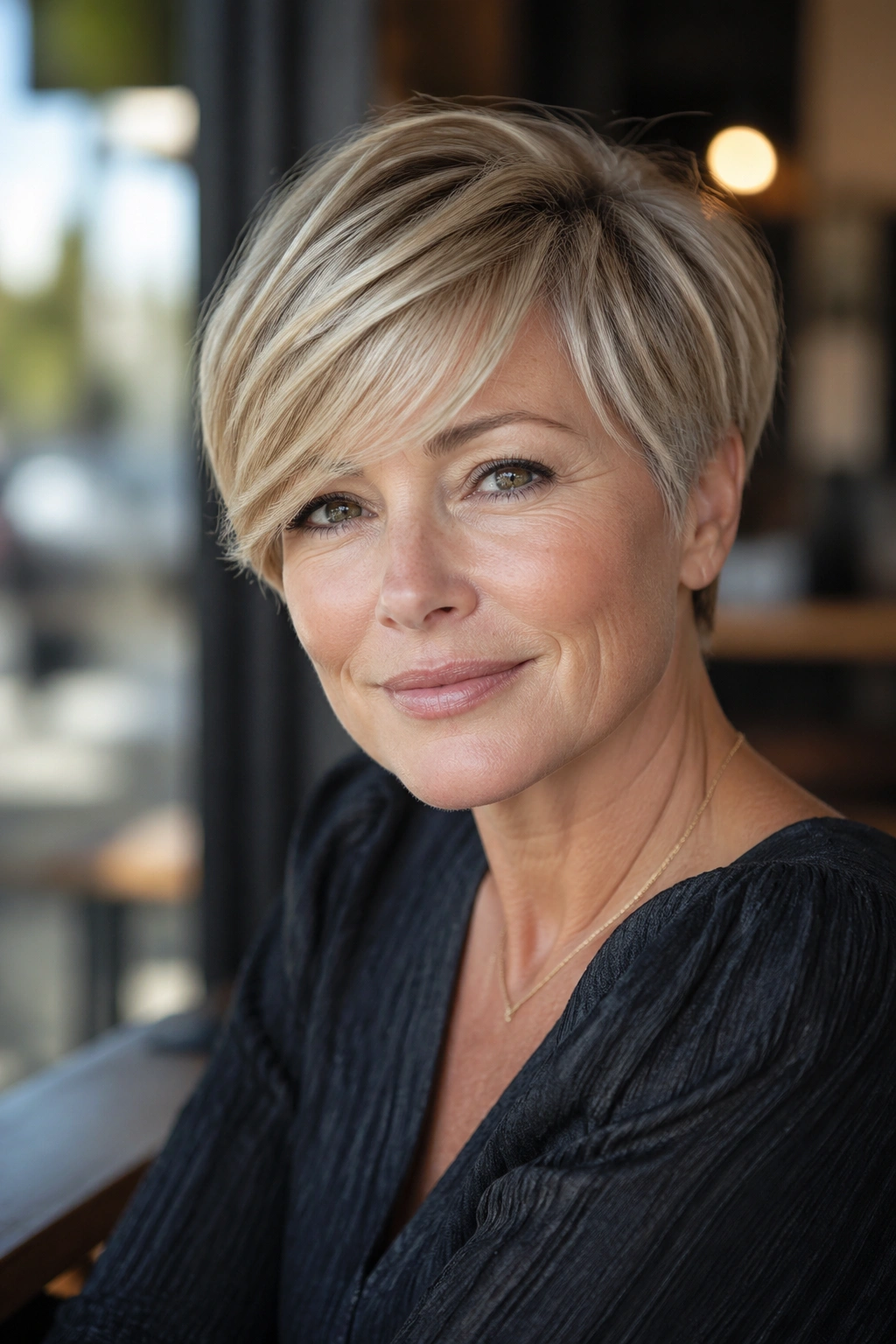
A pixie with a sweeping fringe softens the forehead and adds a little drama without turning the whole cut into a statement piece. The fringe can be brushed across the brow, tucked slightly to one side, or left loose enough to break up the face shape.
This version of the pixie is especially good if you want short hair but don’t want your forehead fully exposed. It also plays nicely with glasses, because the fringe creates a soft line above the frames instead of crowding them.
Why it works
The top stays a little longer, the sides stay neat, and the nape is clean. That gives the cut lift at the crown and keeps the overall shape tidy. It’s one of those cuts that looks even better on day two, when a little texture has settled in.
A dab of pomade on the fingertips is enough. Too much product makes the fringe heavy, and then the whole thing loses its lift. Keep it light.
13. Asymmetrical Bob
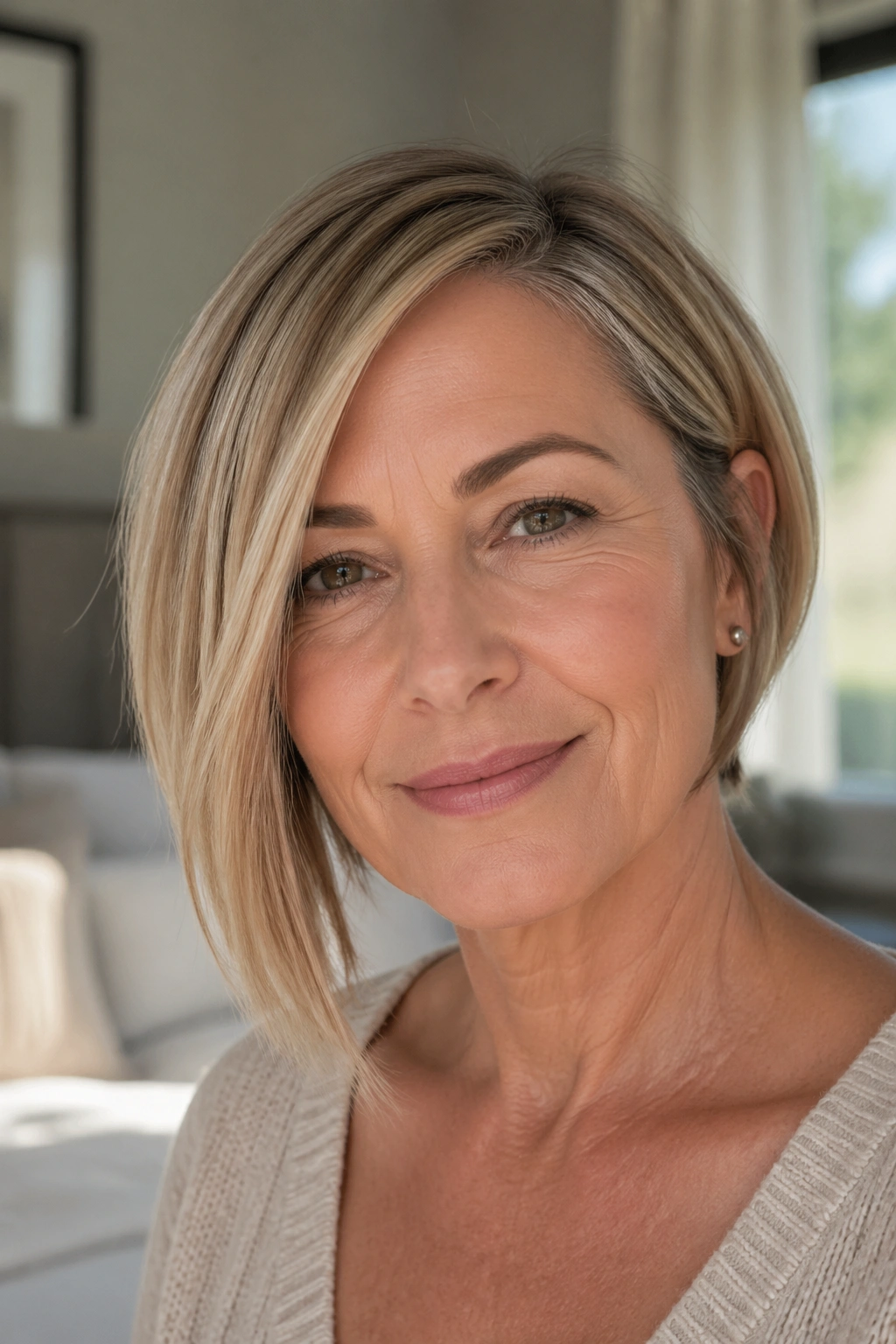
An asymmetrical bob is a quiet way to change the whole mood of a haircut. One side sits a little longer than the other, which creates movement before you even style it.
That slight imbalance can be flattering on round or square faces because it breaks up the symmetry and gives the eye something to follow. It’s not a loud haircut. It’s a smart one. The best versions look subtle enough that people notice the shape before they notice the trick.
If your hair is straight, this cut can look especially crisp. If it’s wavy, the asymmetry becomes softer and less graphic. Either way, the line should be deliberate. A sloppy asymmetrical bob looks accidental. A good one looks like the stylist paid attention.
This is a solid choice if you want something modern without going short-short.
14. Face-Framing Long Layers
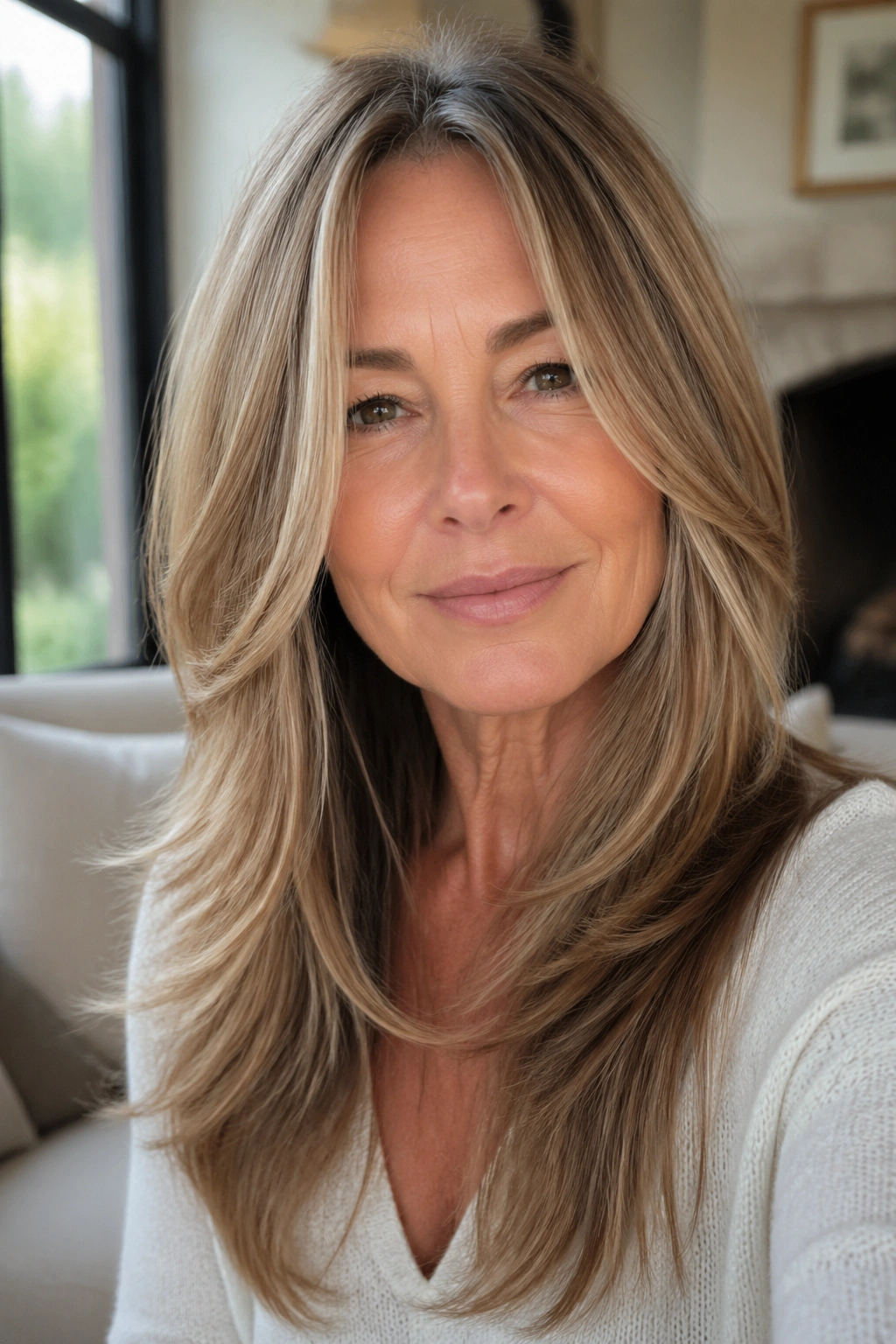
Long hair after 50 needs structure, not surrender.
Face-framing long layers can keep the length you enjoy while adding movement around the eyes, cheeks, and jaw. The trick is where those shorter pieces start. If they begin too high, the cut can feel dated. If they start around the cheekbone or chin, the shape stays flattering and grown-up in the best way.
This kind of cut works best when the ends stay healthy. Split ends make long layers look thin fast, and thin ends are the quickest way to lose the whole effect. A trim every 8 to 12 weeks keeps the outline from fraying.
A middle part gives this style a polished feel. A soft side part gives it some lift. Either way, the layers should be long enough to move, not so short that they separate into little strips around the face.
15. Modern Wedge
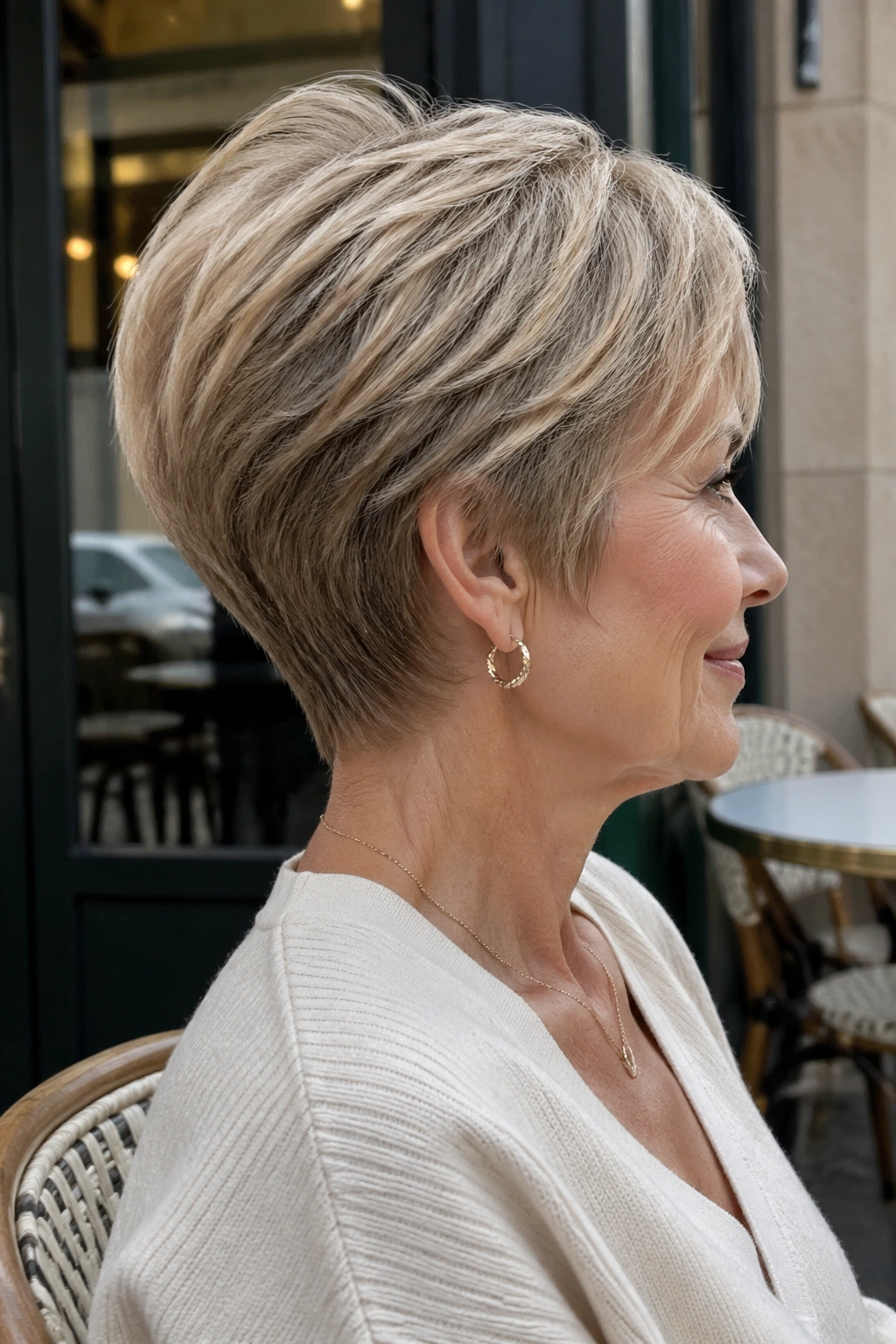
If you like a haircut with shape that stays put, the modern wedge deserves a look.
The classic wedge had a strong stacked back and a rounder top, and this updated version keeps that architecture but softens the edges. That makes it feel fresh instead of frozen in time. It’s especially useful for straight or slightly wavy hair that benefits from a defined outline.
What makes it different
The back creates lift. The sides taper in toward the cheek and jaw. The crown has enough height to avoid a flat helmet effect, which is a problem in a lot of older wedge cuts. Done well, the shape is neat from every angle, including the back. That matters more than people admit, because a haircut you can only like from the front is a bad deal.
You’ll probably want a round brush or a blow-dryer brush for this one. It rewards a little effort. Not much. Just enough to keep the line sharp.
16. Shattered Bob
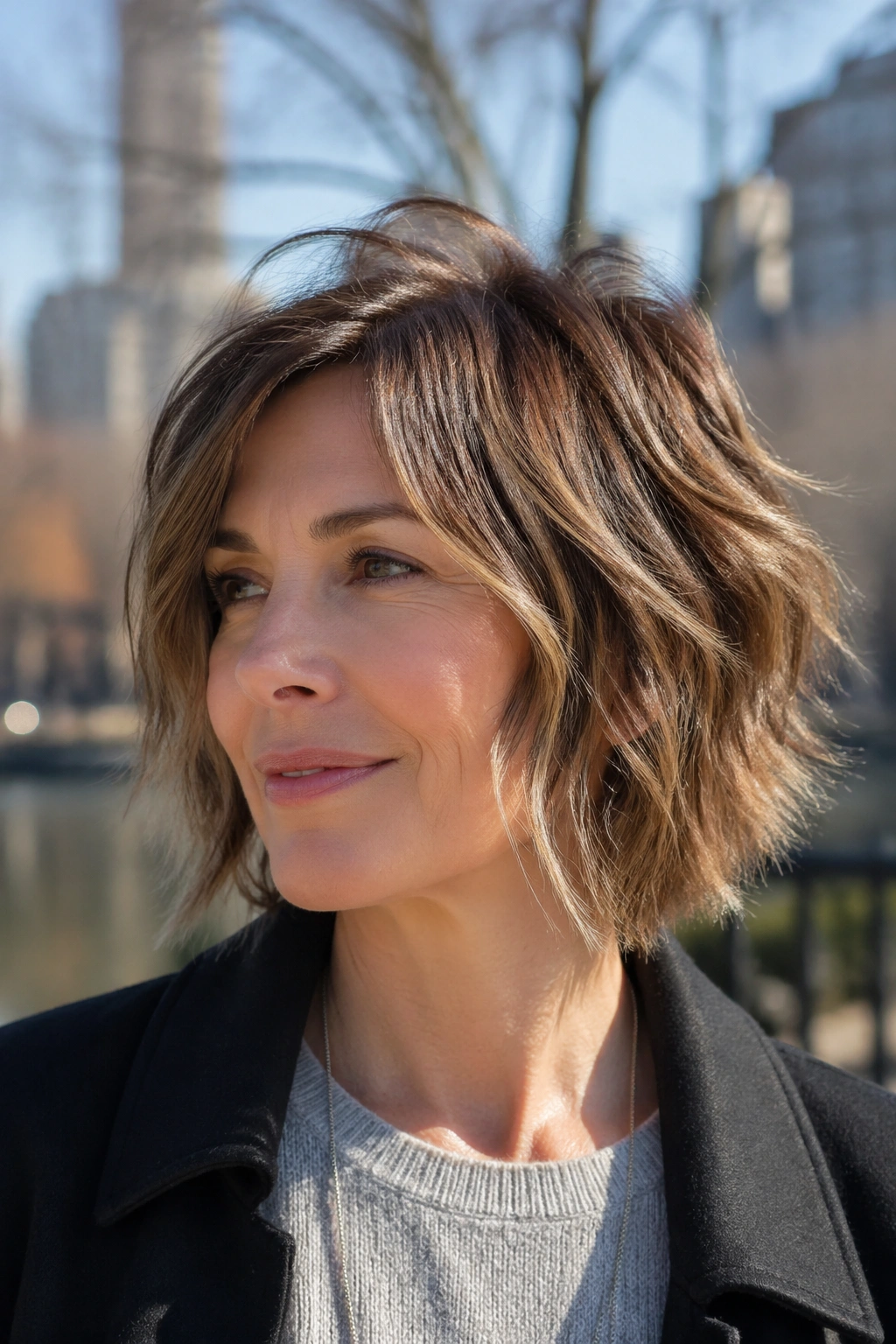
What happens when a clean bob gets a little edge? You get a shattered bob.
The term sounds harsher than the cut looks. In practice, it means the ends are broken up with light texture so the bob doesn’t fall into one flat, solid sheet. That makes it a good choice for thicker hair that wants to puff at the bottom or for straight hair that needs movement.
The caution here is simple: too much shredding at the ends can make hair look frayed. You want energy, not damage. Ask for soft piecey texture at the bottom, not a heavy razored finish all the way through.
A tiny bit of dry paste or texture spray can make the shape come alive. It’s a little less polished than a French bob, but that’s the appeal. It has some bite.
17. Sleek Midi Cut
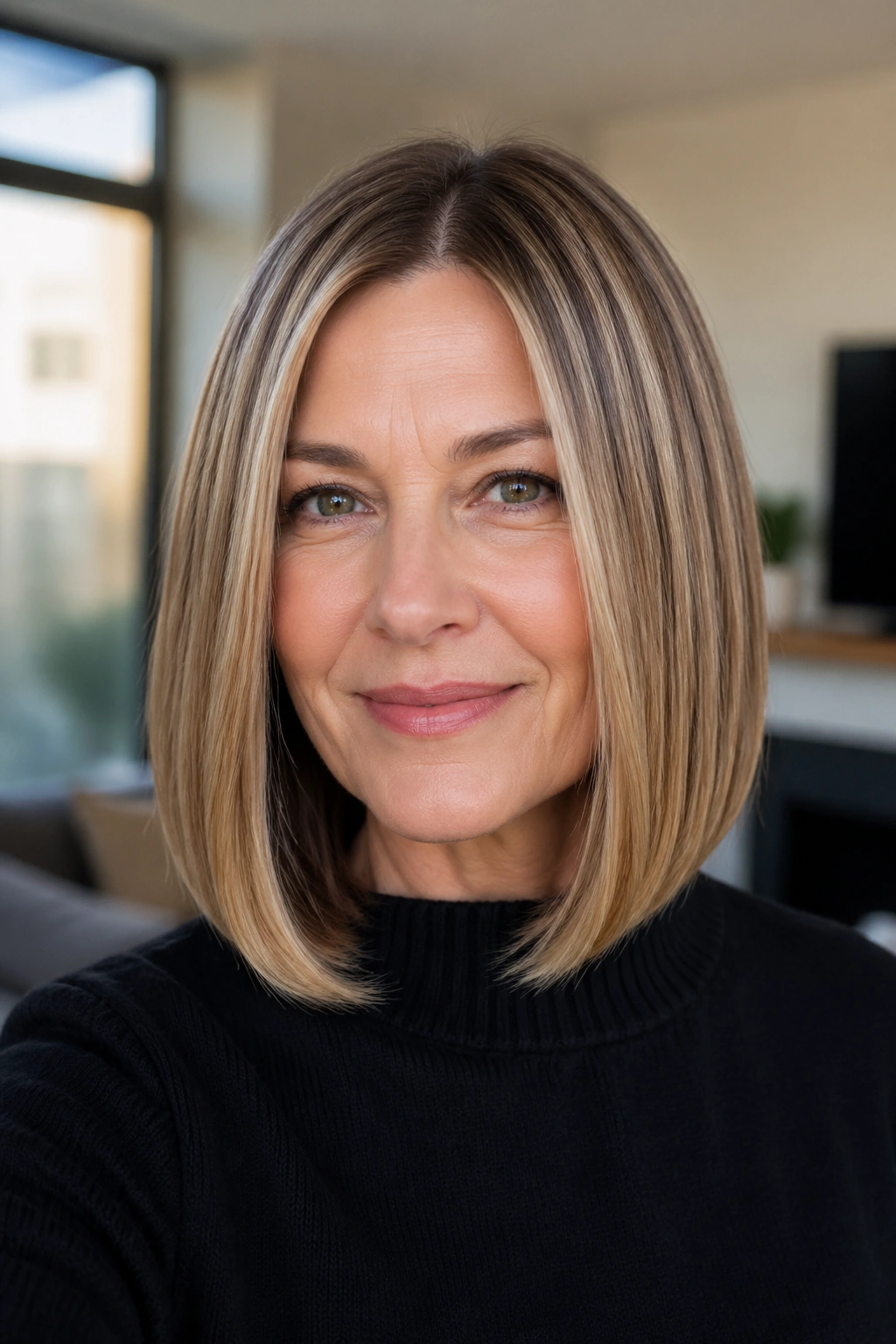
A sleek midi cut sits in that sweet zone between long hair and a lob, and that middle ground is a nice place to be when you want polish without excess length. It usually lands somewhere between the collarbone and the top of the chest.
This cut is good for women who like a cleaner outline. Not stiff. Clean. The ends can be blunt or just barely layered, depending on how much movement you want. A center part makes the shape feel modern and tidy. A side part softens it fast.
A little shine serum goes a long way here. So does a flat iron passed only over the surface, not over and over the same sections. Too much heat makes the cut look tired instead of sleek. One smooth pass is plenty if the haircut itself is strong.
18. Textured Crop with Nape Detail
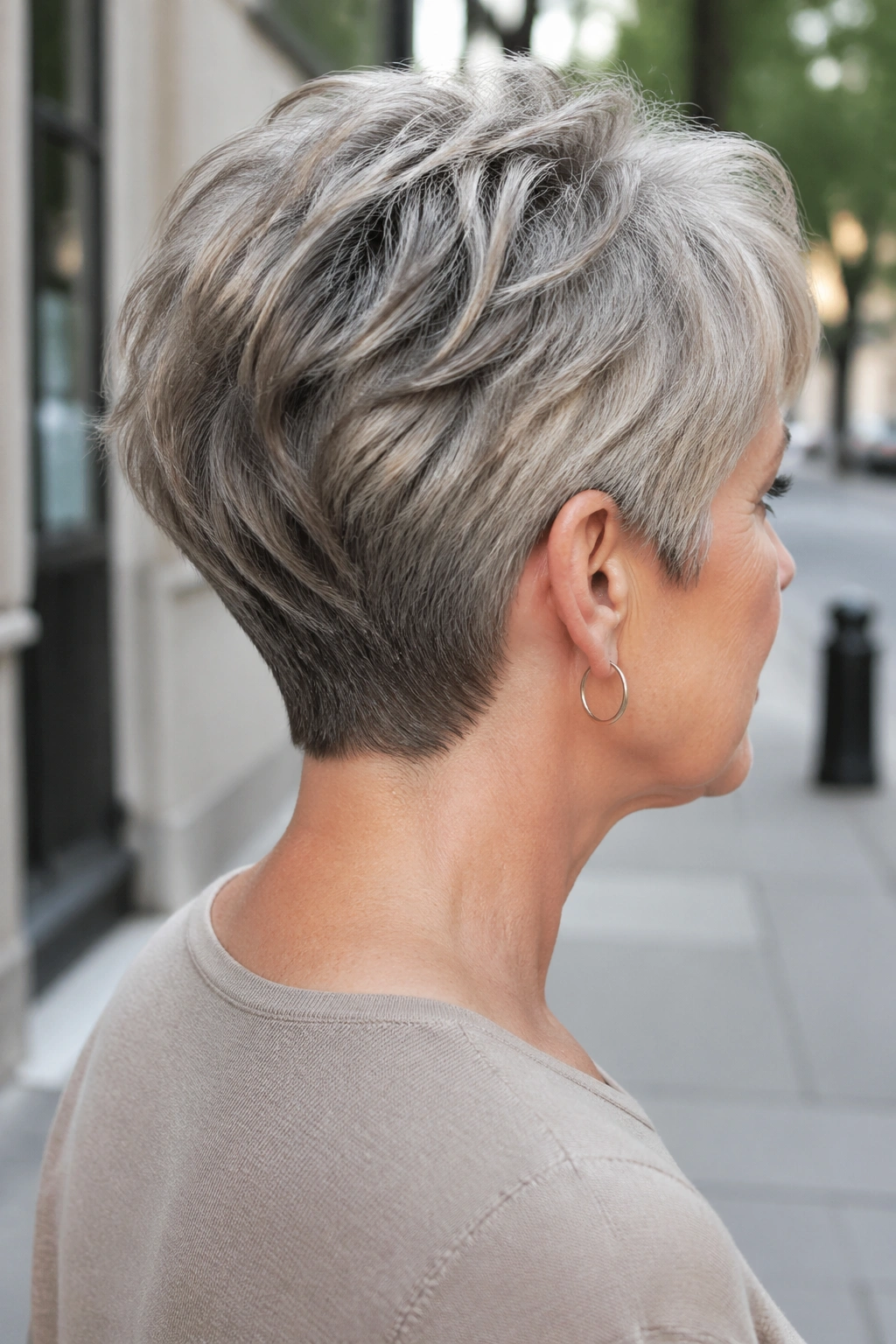
The back of a haircut matters more than most people think. A textured crop with nape detail proves it.
This cut keeps the sides close, leaves enough texture on top to create height, and shapes the nape so the whole style feels finished from behind. That detail is especially nice if you wear collared shirts, jackets, or small hoops. The neckline stays visible. The haircut does some of the styling work for you.
Why this shape feels fresh
The crown has lift without a lot of bulk. The sides stay neat without feeling severe. And the short length means you can get out the door fast, which is often the real reason people end up loving short hair. One quick blow-dry, a little paste, and you’re done.
If you have a strong cowlick at the back, tell your stylist before the scissors come out. That little patch can change the whole cut. A good crop works with the growth pattern, not against it.
19. Shoulder-Length Waves with Deep Side Part
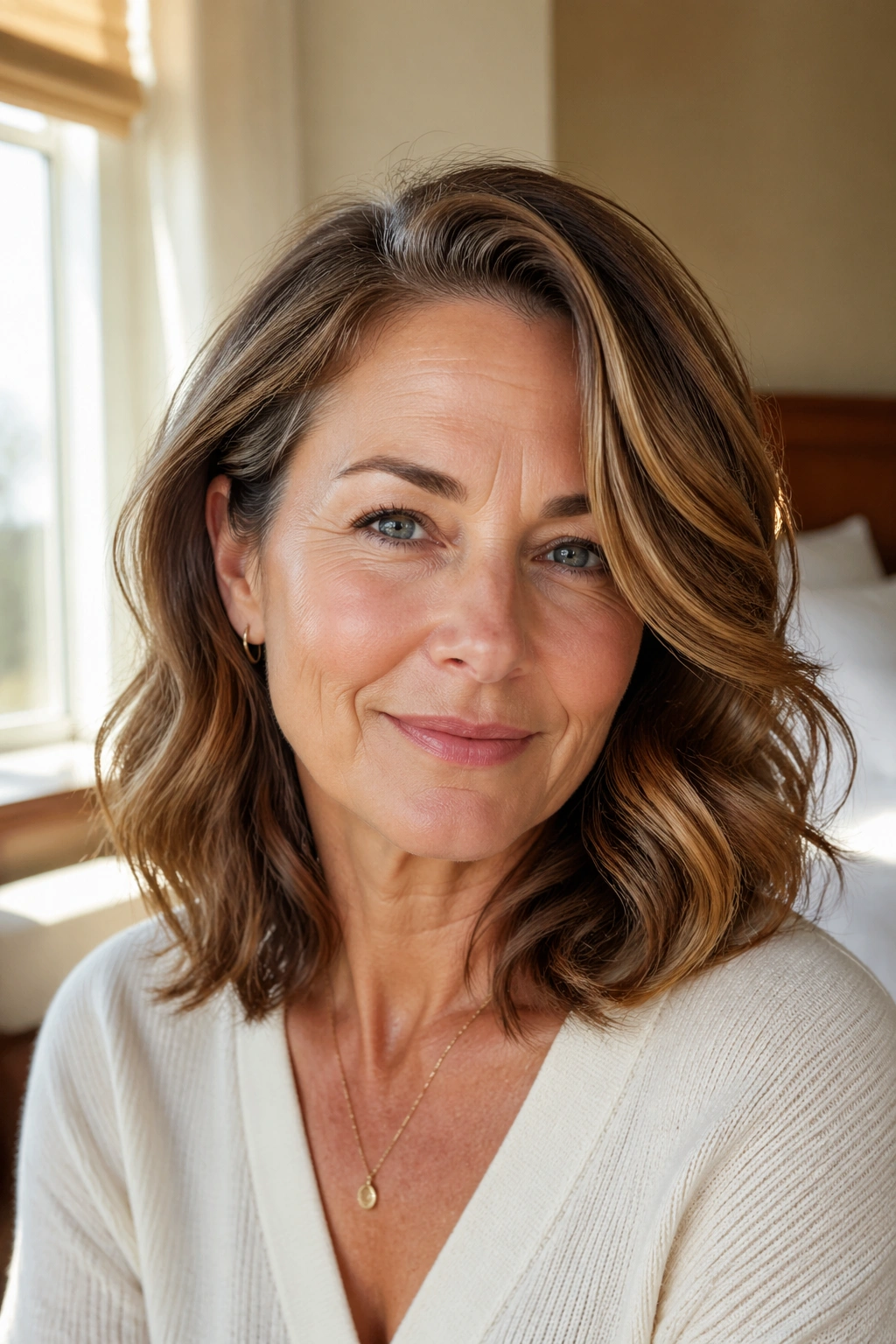
A deep side part can do more for shoulder-length hair than a whole round brush session. It builds lift at the root, opens one side of the face, and gives the waves a more flattering sweep.
Shoulder-length waves are useful because they keep enough weight to look full, but not so much that the shape goes limp. The side part keeps the style from feeling plain. A middle part can work too, but the deep side part adds a bit of lift that many women want once the crown starts lying flatter.
- Use a 1.25-inch curling iron for loose bends
- Let the curls cool before brushing them out
- Finish with a light spray, not a stiff shell
This cut is especially good if you like the feel of medium-length hair but want it to look more deliberate than “grown out.” There’s a difference.
20. Rounded Bob with Crown Volume
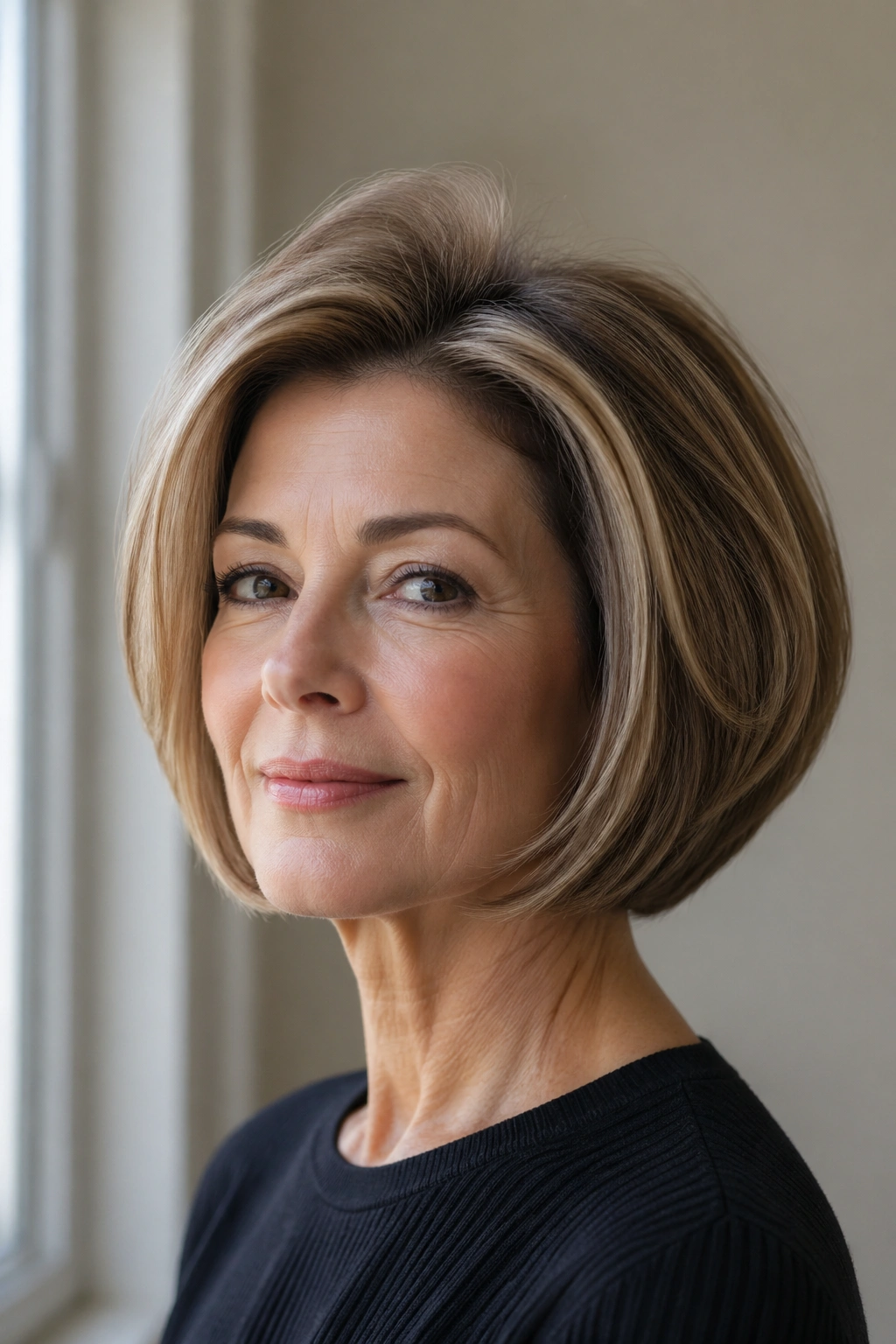
A rounded bob gives the head shape and keeps the silhouette soft. The volume sits mostly at the crown, while the sides curve gently in toward the cheeks and jaw.
That rounded top can be a lifesaver if your hair has gone flatter at the roots. It creates height without needing a mountain of backcombing. The key is restraint. Too much roundness and the bob turns puffy. Too little and the shape disappears. The right version sits in the middle and looks tailored.
How to keep it from puffing out
- Blow-dry the crown upward first
- Smooth the sides with a brush
- Keep the ends a touch softer than the top
This shape flatters many face shapes because it adds lift where the face needs it. It feels neat, but not stiff. And that’s the whole reason people keep coming back to it.
21. Soft Layered Lob with Curtain Fringe
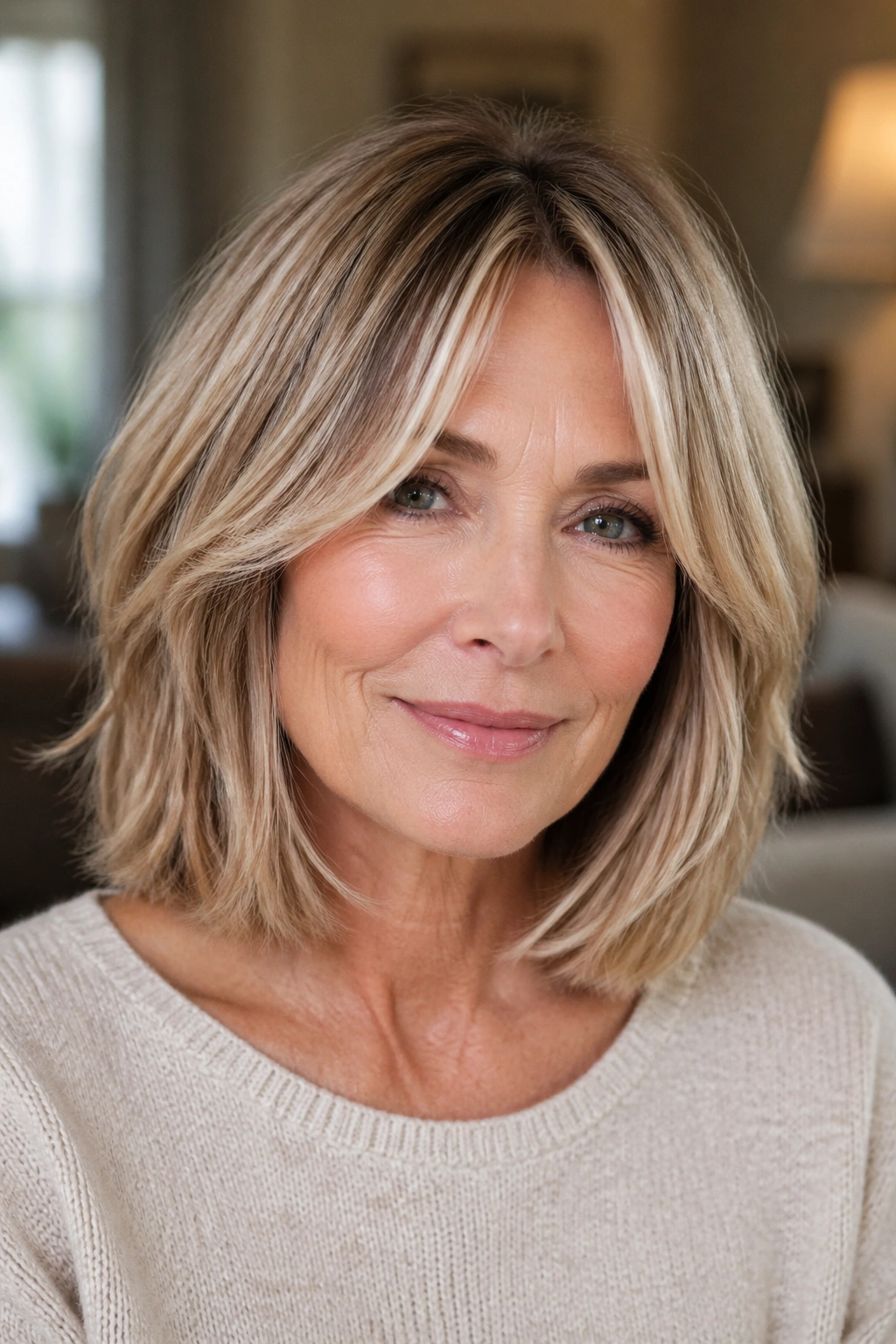
A soft layered lob with curtain fringe feels modern without trying too hard. The length lands around the collarbone, while the fringe parts away from the center and frames the face in a loose, open way.
This is a good choice if you want some softness near the eyes but don’t want to commit to blunt bangs. It also works if you’re growing out fringe and need a middle ground. The layers keep the shape from sitting heavy, and the curtain pieces make the front feel lighter.
The fringe makes it easy to live with
The curtain fringe blends into the sides, so it doesn’t create a hard line across the forehead. That makes styling less fussy. A quick blow-dry away from the face and a little bend at the ends usually does the job.
I like this cut on hair that has some natural movement, but it can work on straight hair too. The important part is the balance between the front and the rest of the cut. If the fringe is too short, the whole thing can feel youthful in the wrong way. Keep it soft.
22. Airy Razor Cut
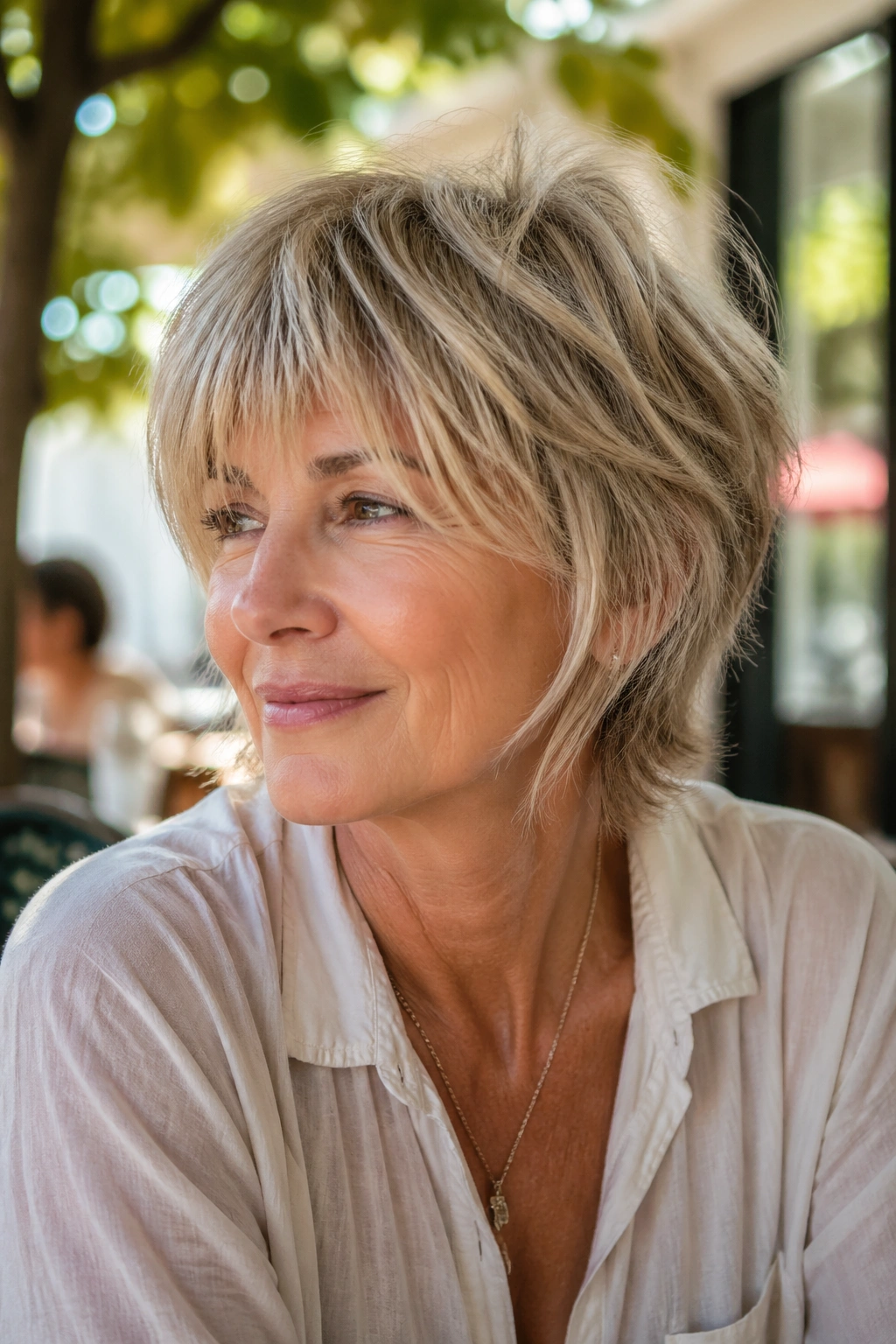
A razor cut can be lovely on the right head of hair, and a mess on the wrong one. That sounds blunt because it is.
The airy version uses the razor to remove some weight and create softer edges, which helps thick hair move instead of sitting in a heavy block. It can also give straight hair a little swing. But if your ends are already fragile or your hair is very fine, too much razor work can make the finish look wispy fast.
This is where an honest stylist matters. If you have coarse, dense hair, the razor may be a gift. If your hair is delicate, ask whether point-cutting or light internal layering would get you the same movement with less risk. There’s no prize for choosing a technique that your hair does not enjoy.
The finished look should feel airy, not shredded. That distinction saves a lot of regret.
23. Chin-Length Bob with Micro-Layers
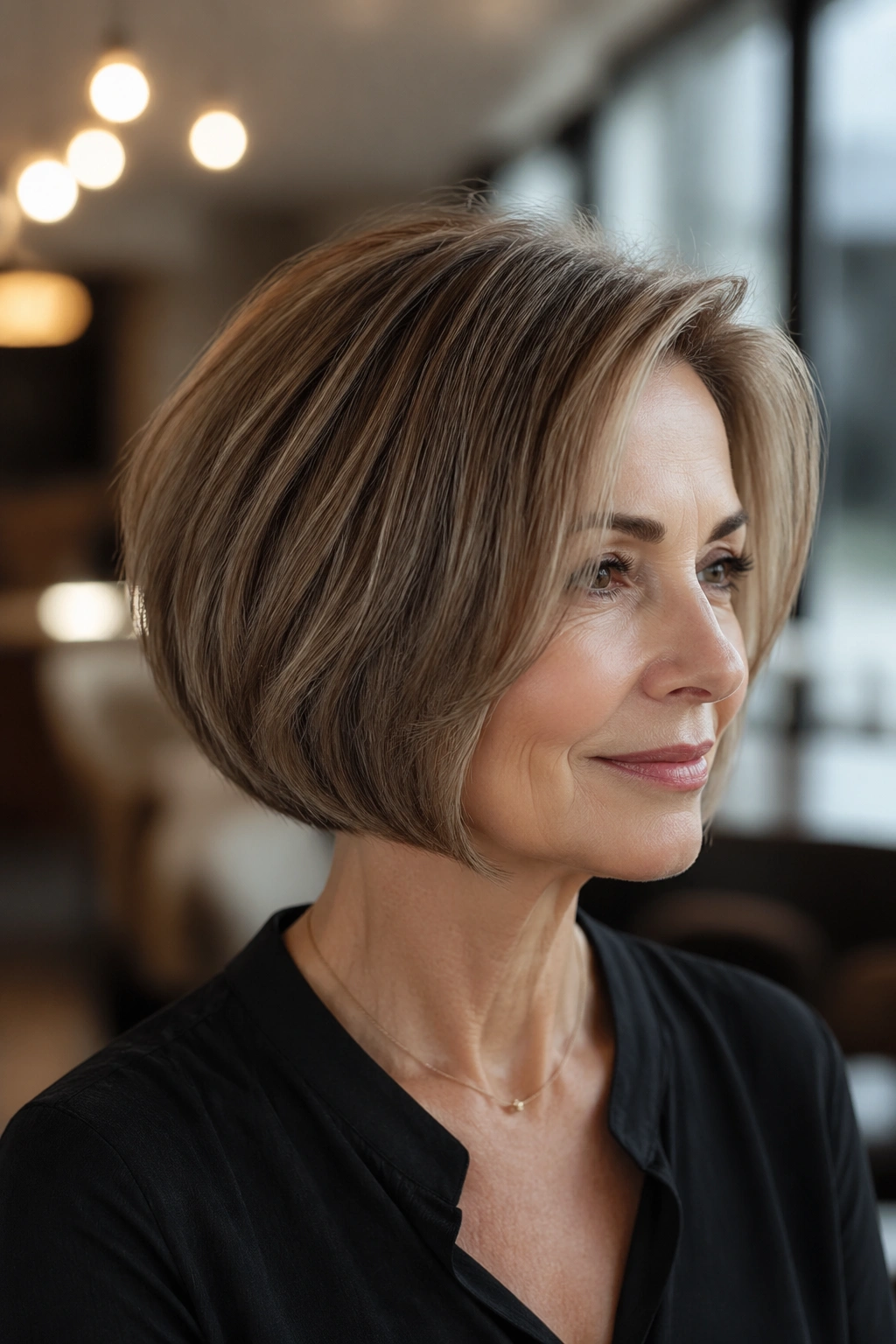
A chin-length bob with micro-layers gives you shape without sacrificing the strong outline that makes a bob look expensive. The layers are tiny and tucked inside the haircut, so they add lift without breaking the surface into obvious steps.
That detail helps if your hair is straight, slightly wavy, or fine and tends to collapse near the chin. It can also be flattering for women who wear glasses, because the bob lands right in the frame line and creates a clean border around the face.
If your hair is curly, this cut can still work, but the chin length may spring higher than you expect. That’s not a flaw. It just means you need to account for curl shrinkage before the first snip.
This is one of my favorite cuts for a crisp look that doesn’t feel severe. The shape is simple. The micro-layers do the quiet work.
24. Elegant Long Cut with Polished Ends

Long hair after 50 can look elegant, but only if the ends are handled with care. A polished long cut keeps the length, adds enough shape around the face to stop the hair from feeling heavy, and preserves a clean edge at the bottom.
The biggest mistake with long hair is letting the ends get thin and see-through. Once that happens, the whole style starts to read as tired, even if the color and texture are fine. A good long cut keeps the perimeter honest. It also usually benefits from very subtle face-framing pieces rather than aggressive layers that make the hair look stringy.
A quick trim every 8 to 10 weeks helps the shape stay intentional. So does a glossing cream or a light oil on the last inch or two. Keep the finish smooth, not greasy. The goal is movement with discipline, not a curtain of length that keeps asking for mercy.
And if you love long hair, keep it. Just keep it shaped. That’s the difference between hair that feels like yours and hair that feels like something you’re carrying around.
