

Flat hair can be stubborn. You can blow it out, flip it under, spray it in place, and still watch it sink by lunchtime. The right short layered cut fixes that in a smarter way: it keeps a strong outline where hair needs weight, then lifts the crown, bends the ends, or opens space around the face so the whole shape reads fuller.
That is why some short layers look airy and expensive while others make hair look thinner. Too much removal near the bottom leaves wispy ends. Too little movement near the top leaves the cut boxy. The sweet spot is placement. A bob with a blunt perimeter and soft crown layers can look denser than a longer style that has been thinned to death.
Fine hair, thick hair, curly hair — all of it can benefit, but not in the same way. Fine hair usually wants fewer, longer layers and a crisp edge. Thick hair usually wants weight removed from the right spots so it stops puffing out in the wrong places. Curls need shape that follows the curl pattern, or they turn into a triangle. Bit of a headache, honestly, if the cut is wrong.
The styles below lean on those ideas in different ways: blunt ends, stacked backs, airy fringes, rounded crops, and a few slightly edgier shapes that still keep the hair looking full. The best one is the one that gives your hair a stronger outline without stealing the body you already have.
1. Blunt Bob with Hidden Crown Layers
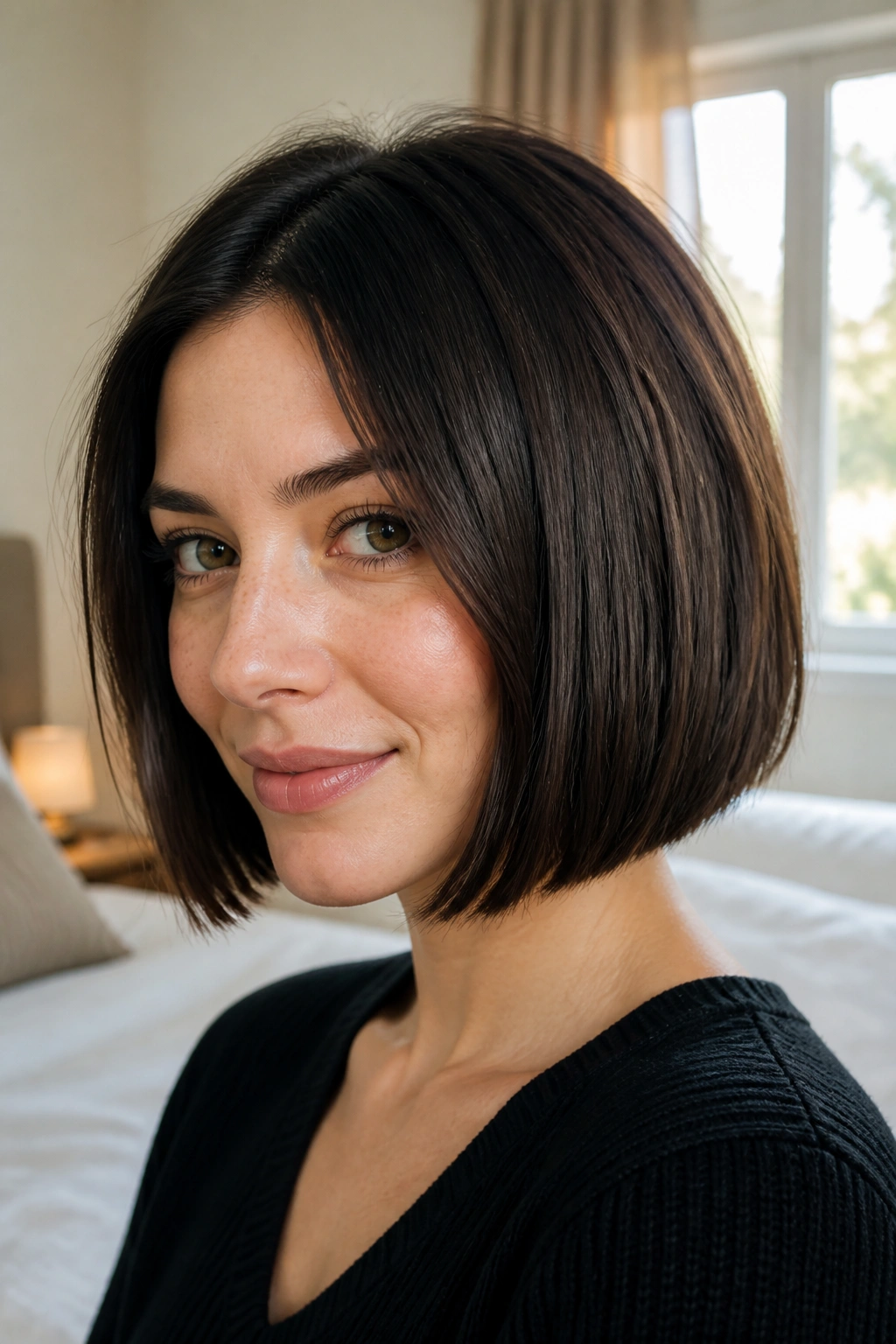
A blunt bob with hidden crown layers is the haircut I reach for when hair needs body more than drama. The outer line stays clean at the chin or just below it, so the ends look dense instead of see-through. Then the stylist places short internal layers near the crown, usually not visible when the hair hangs straight. That little lift at the top does a lot of work.
Why It Looks Fuller
The blunt edge gives the eye a solid shape to read. The hidden layers stop the top from lying flat like a cap. Together, they make fine hair look like it has more strands than it does.
- Ask for minimal thinning at the ends.
- Blow-dry with a small round brush at the roots.
- Finish with a light root spray, not heavy cream.
Best on: straight or slightly wavy hair that goes limp fast.
2. French Bob with Airy Fringe
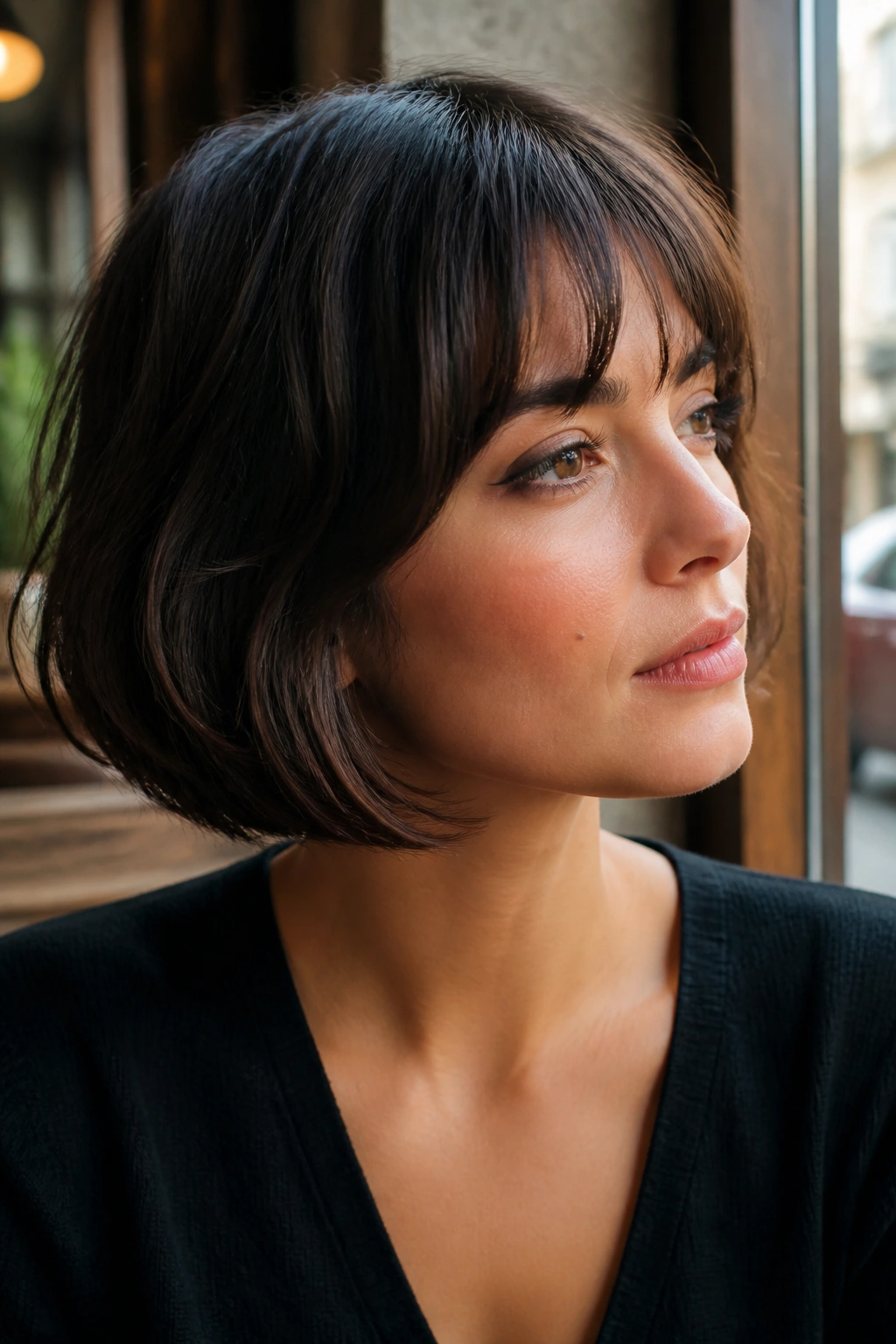
A French bob earns volume by staying short where the head is widest. That usually means a cut that lands around the cheekbones or jaw, plus a fringe that breaks up the forehead just enough to soften the shape. The result is compact, but not flat. It feels cheeky, a little lived-in, and far less fussy than people expect.
The airy fringe matters because it keeps the front from looking like one solid block. A solid block can be chic, sure, but it can also drag the face down if the hair is fine. A light fringe adds movement right where the eye lands first. Ask for texture only through the fringe and the surface, not through the bottom edge. That bottom line should still look firm.
3. Textured Pixie with Long Top Pieces
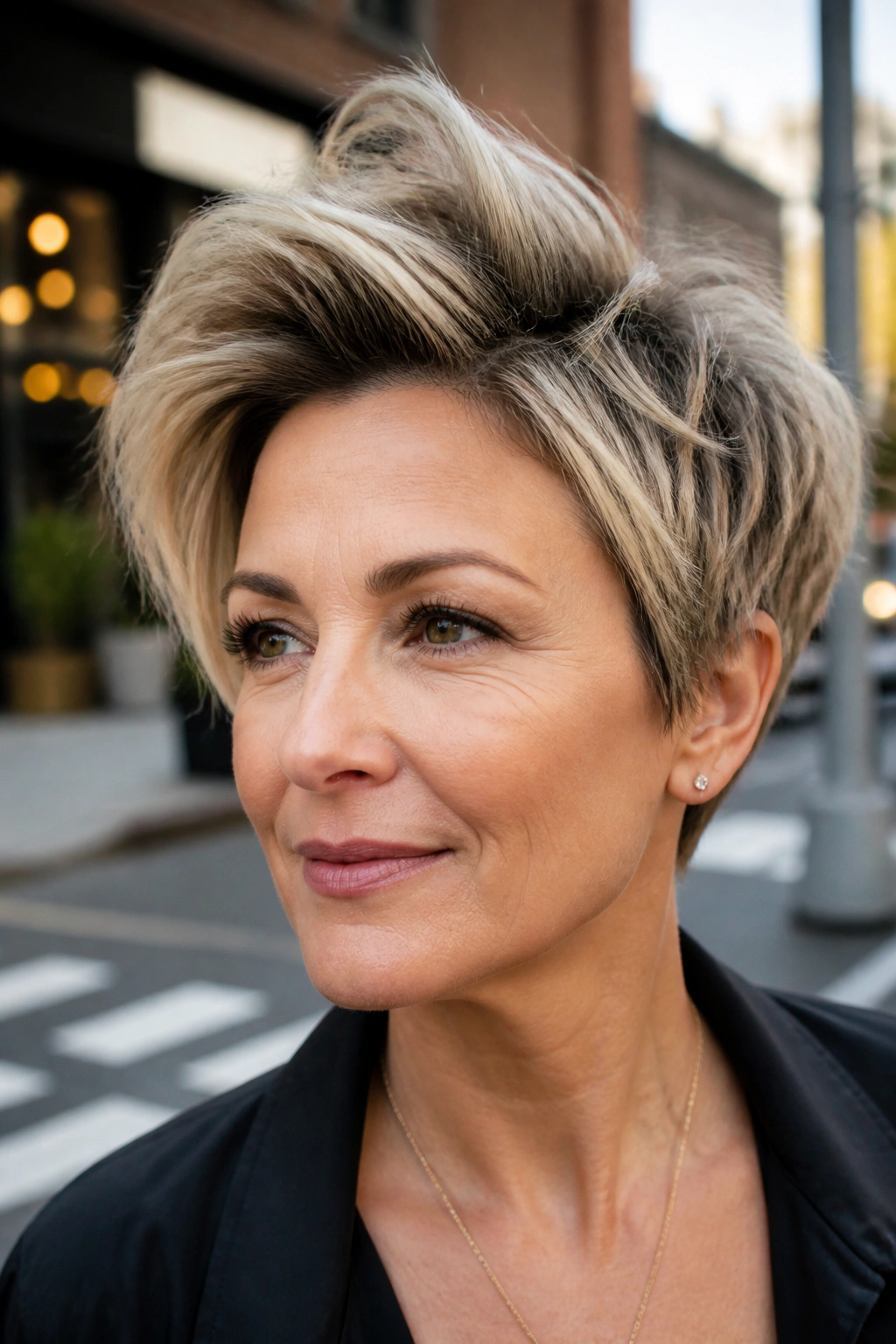
This is the cut that cheats height. Short sides remove bulk, while the long top gives you something to push upward, sweep over, or piece out with your fingers. The contrast makes the crown look thicker because the top is carrying the shape instead of hiding under it.
How to style it
Use a pea-sized amount of matte paste or a light cream on dry hair. Work it through the top only, then pinch a few pieces at the front and crown. Keep the sides cleaner so the volume at the top has room to show.
- Dry the roots in the opposite direction of your part.
- Leave the last inch of the top pieces a little softer.
- Skip heavy oils. They collapse short pixies fast.
It’s a sharp look. Not delicate. And that’s the point.
4. Bixie Cut with Choppy Ends
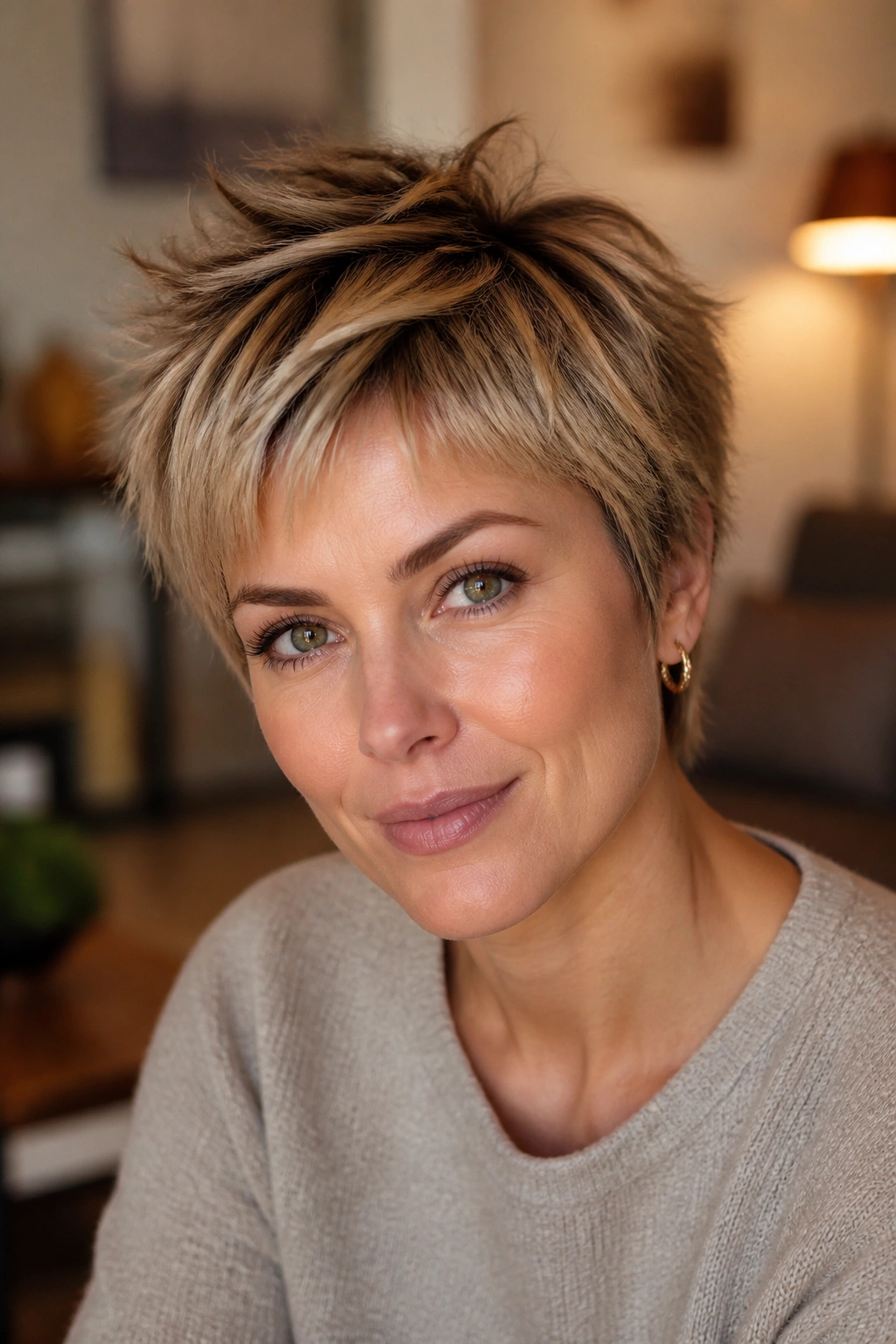
A bixie sits between a bob and a pixie, which is exactly why it makes thin hair look fuller. You get enough length to keep a shape, but not so much that everything drags downward. The choppy ends create separation, and separation reads as texture, which hair often needs when it’s sparse or flat.
I like this cut on hair that has a bit of natural movement but not enough density for a heavy bob. The trick is to keep the choppiness on the surface, not all the way through the length. If every layer is too short, the cut turns airy in the wrong way and starts to look see-through. A good bixie has some bite. A bad one looks like someone got carried away with thinning shears.
5. Stacked Bob with Tight Back Graduation
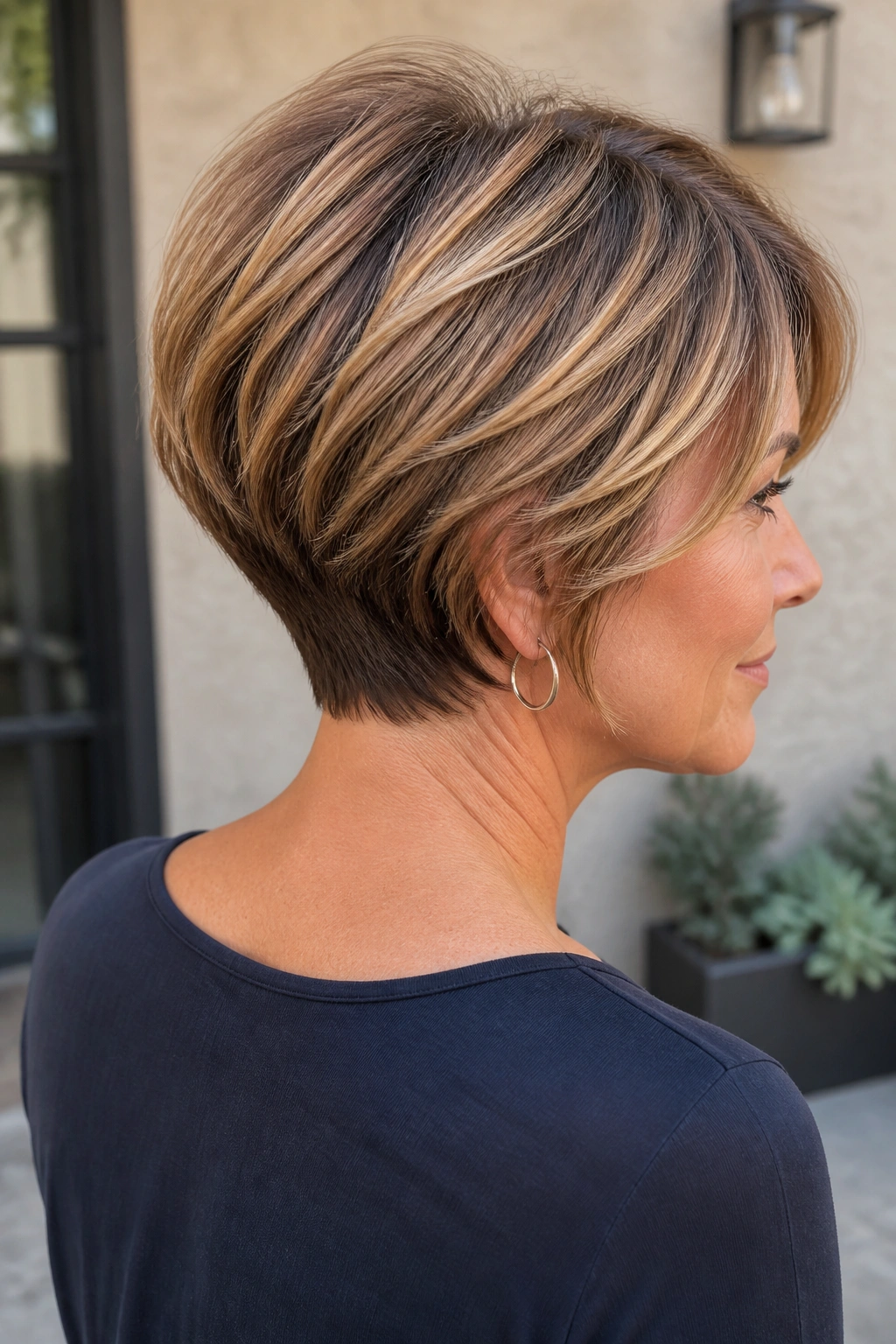
A stacked bob is built to fake lift, and it does that job well. The back is cut shorter with clear graduation, so each section sits a little higher than the one below it. That creates a rounded back shape that makes the crown look fuller right away. When hair is flat at the roots, this is one of the fastest fixes.
The danger is overdoing the stack. Too much can make the haircut look wedge-shaped, which is not the same thing as full. The best version keeps the back neat and lifted, then lets the front soften slightly toward the jaw. If you like a polished finish and don’t mind a shape that shows off the back of the head, this one has real payoff.
6. Shaggy Bob with Piecey Ends
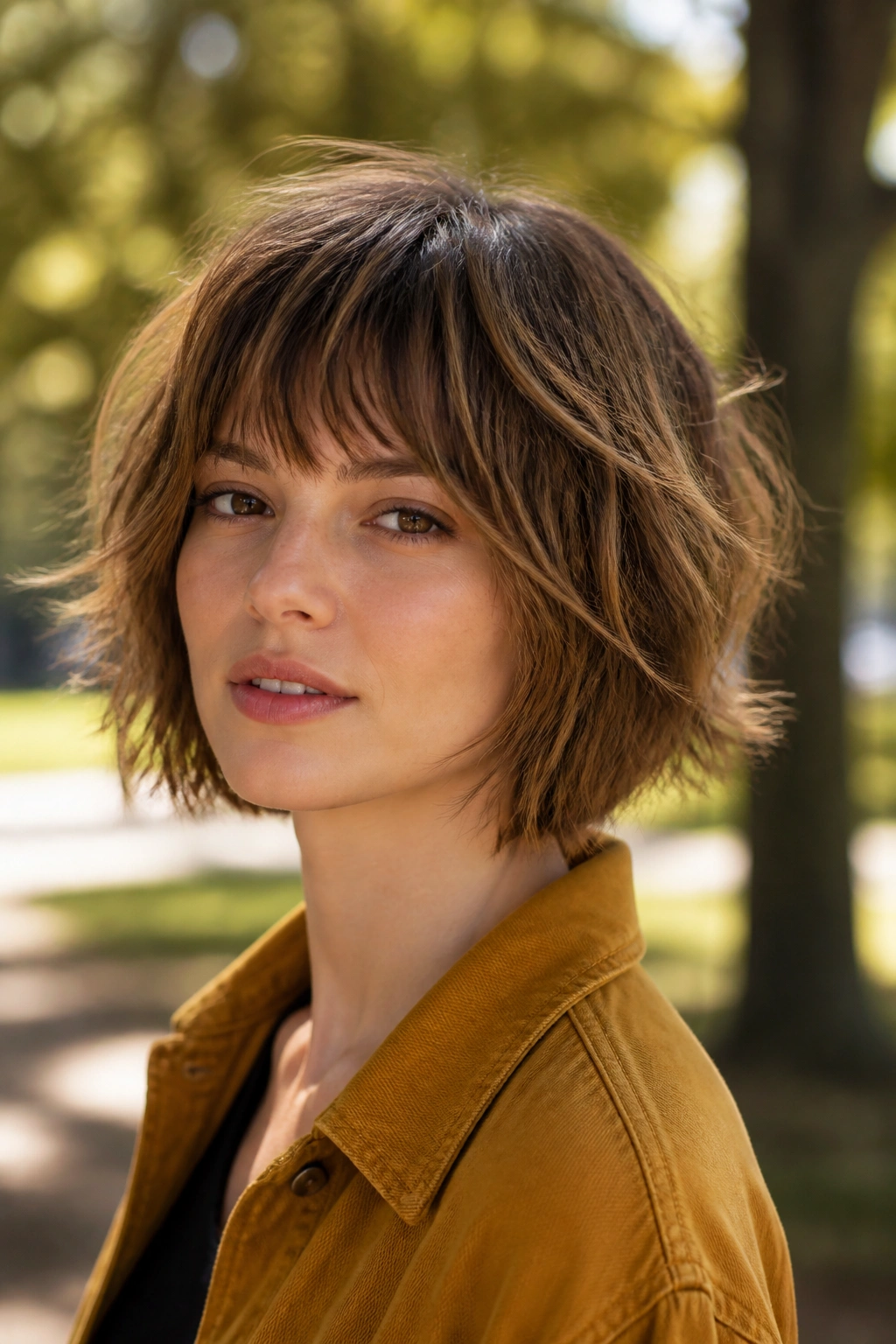
A shaggy bob works because it keeps motion away from the bottom edge and pushes it through the middle instead. That middle movement makes the whole cut feel thicker. The ends stay piecey, which stops the bob from sitting like a heavy helmet. Good texture here is controlled, not messy.
What makes it work
The layers should start high enough to give lift around the cheekbones or temples, but not so high that the bottom loses all weight. That balance matters a lot. If you have fine hair, ask your stylist to keep the perimeter soft but not shattered.
A sea salt spray or light mousse helps this cut hold its shape. Scrunch the hair a little while it dries, then separate a few pieces at the end with your fingers. Don’t comb it into perfection. The slightly uneven finish is what makes the hair look fuller.
7. Angled Bob with a Clean Diagonal Line
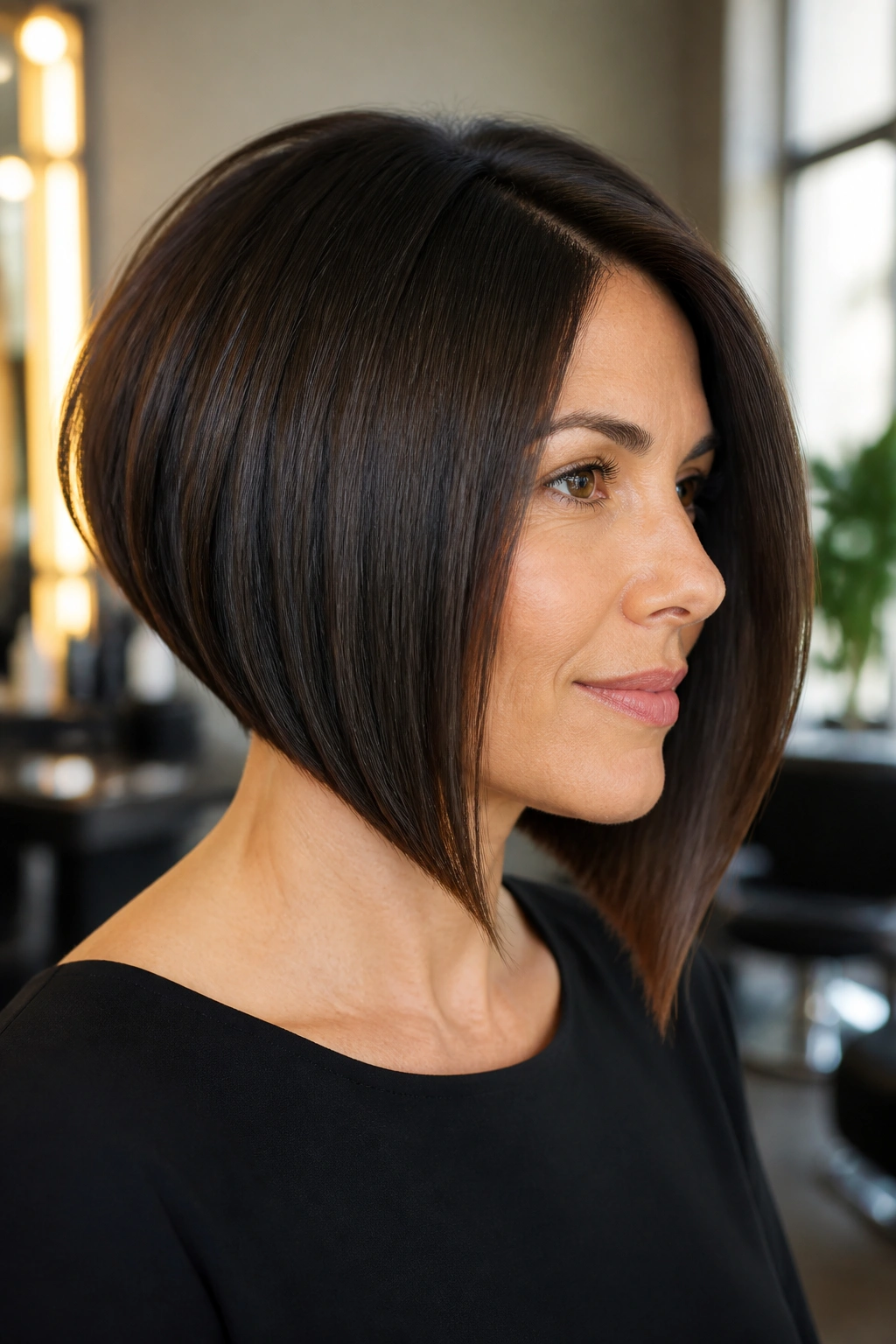
An angled bob has one of the smartest silhouettes for thinning hair. The back is shorter, the front stays longer, and that diagonal line gives the eye something strong to follow. It feels sharper than a one-length bob, but it still keeps the ends dense.
That diagonal also helps because it avoids the wide, boxy look that can happen when short hair spreads out at the sides. Instead, the cut narrows toward the back and opens a little around the face. If your hair sits flat on the crown but puffs at the cheeks, this shape can pull everything together. It’s tidy. It’s clean. And it photographs well in real life, not just on a screen.
8. Jaw-Length Lob with Invisible Internal Layers
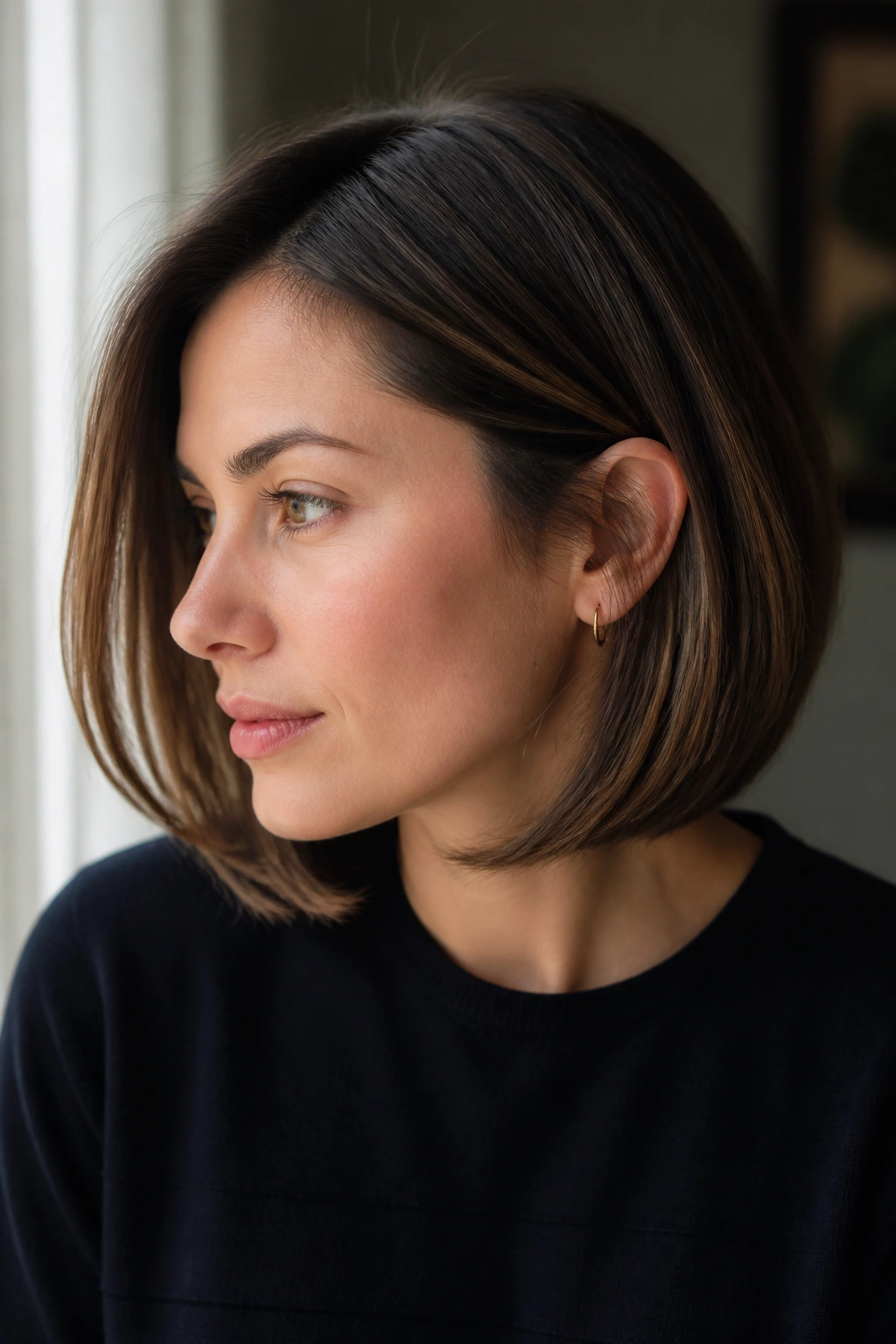
A jaw-length lob sounds almost too simple, which is why people underestimate it. The secret is invisible internal layers. They sit inside the shape, take out weight where hair gets heavy, and leave the outer line looking full. You get movement without losing density at the ends.
This is a strong choice if you want short hair without going all the way to a pixie or classic bob. The lob gives enough length to tuck behind the ears or flip under, while the hidden layers keep it from falling limp. Ask for the layers to begin inside the head shape, not at the perimeter. That way the edge stays solid and the haircut still moves.
9. Chin-Length Cut with Soft, Flipped Ends
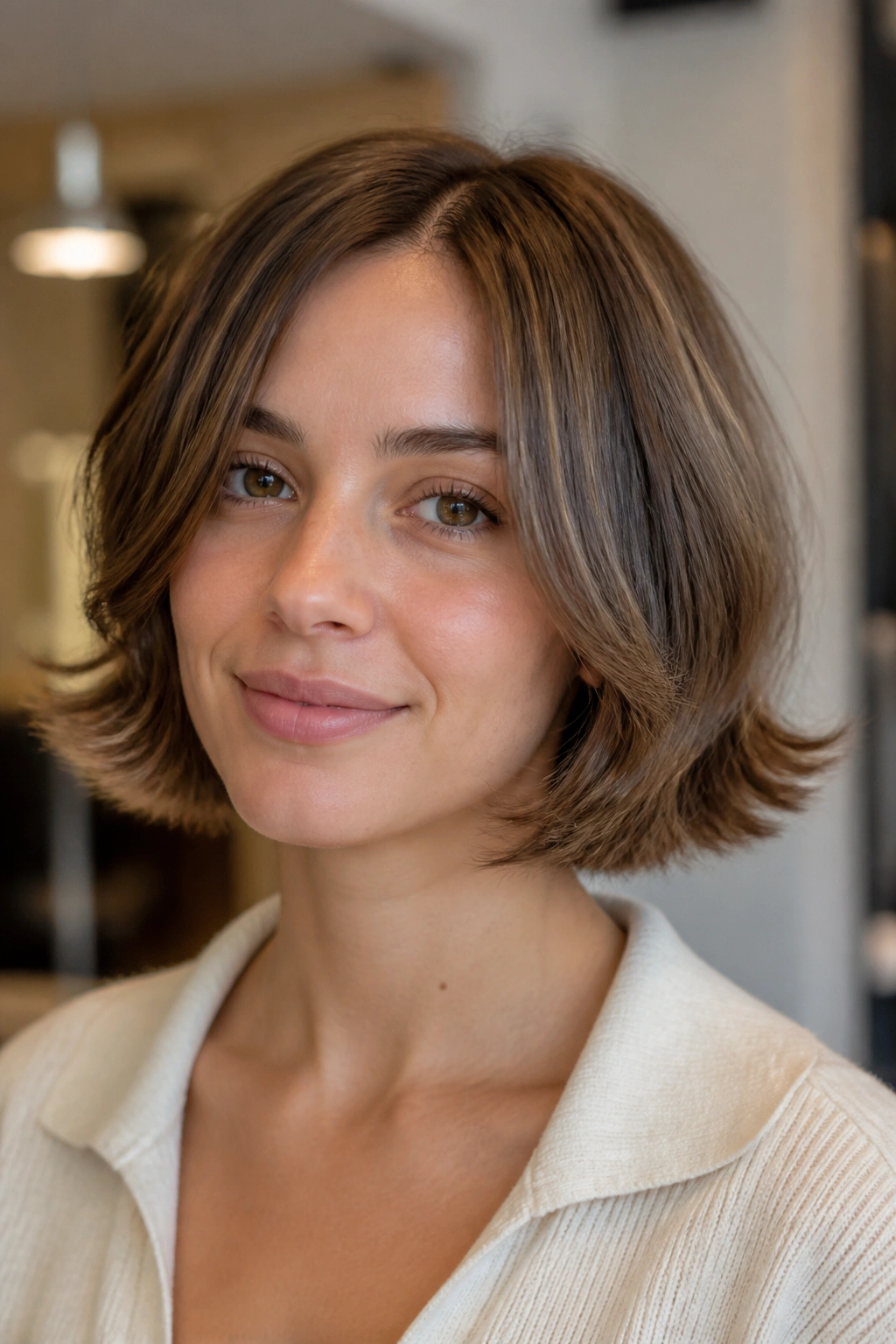
A chin-length cut with softly flipped ends has a very simple trick: it puts the widest part of the shape right where people notice fullness most. The ends curve out a little, which adds width at the jaw and stops the style from hugging the face too tightly. For finer hair, that small flip can make the whole head look less narrow.
Styling note
Use a round brush or a flat brush with a quick bend at the ends. You do not need a perfect curl. Just a soft flick. Keep the root area lifted and leave the last inch or so with some movement.
This cut is especially good when the hair needs body but still has to feel feminine and neat. It’s one of those styles that looks polished with almost no effort, which is a phrase I don’t say often. There’s a catch, though: if the ends get too wispy, the shape loses its charm fast.
10. Curly Crop with Rounded Layers
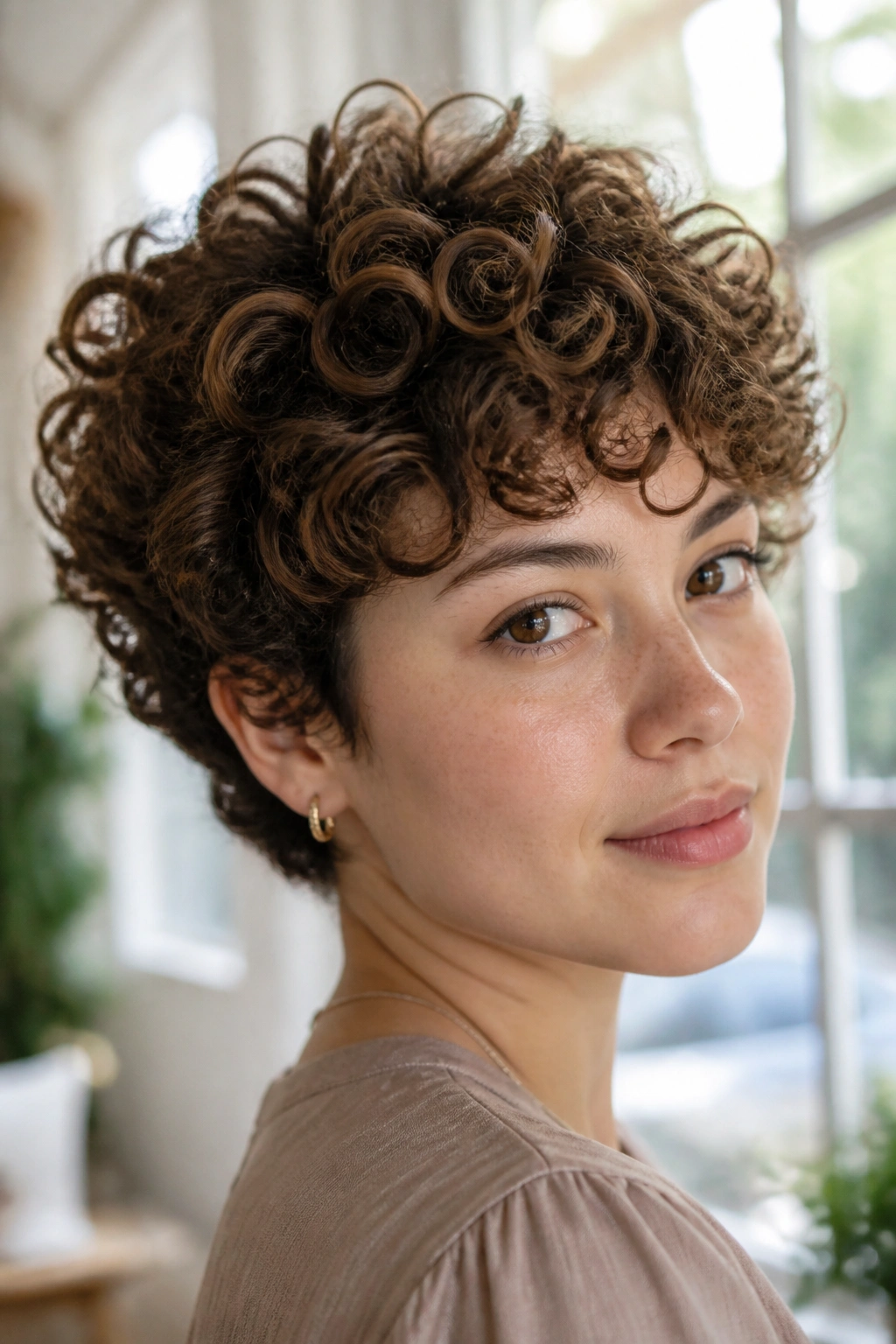
Curly hair needs shape that respects the curl pattern, and a rounded crop does that better than a blunt, boxy cut. The layers follow the natural curve of the head, so the hair doesn’t flare out at the sides or collapse at the crown. Instead, the curls stack on themselves and read as richer, denser hair.
A rounded crop is especially useful when curls are loose enough to droop but tight enough to spring. The stylist should cut it dry or mostly dry, watching how the curls land in their real state. Wet curly cuts can be useful, but with short hair they sometimes hide too much. A rounded shape with a little lift at the crown gives you body without building a triangle. That triangle is the enemy here.
11. Micro Bob with a Heavy Perimeter
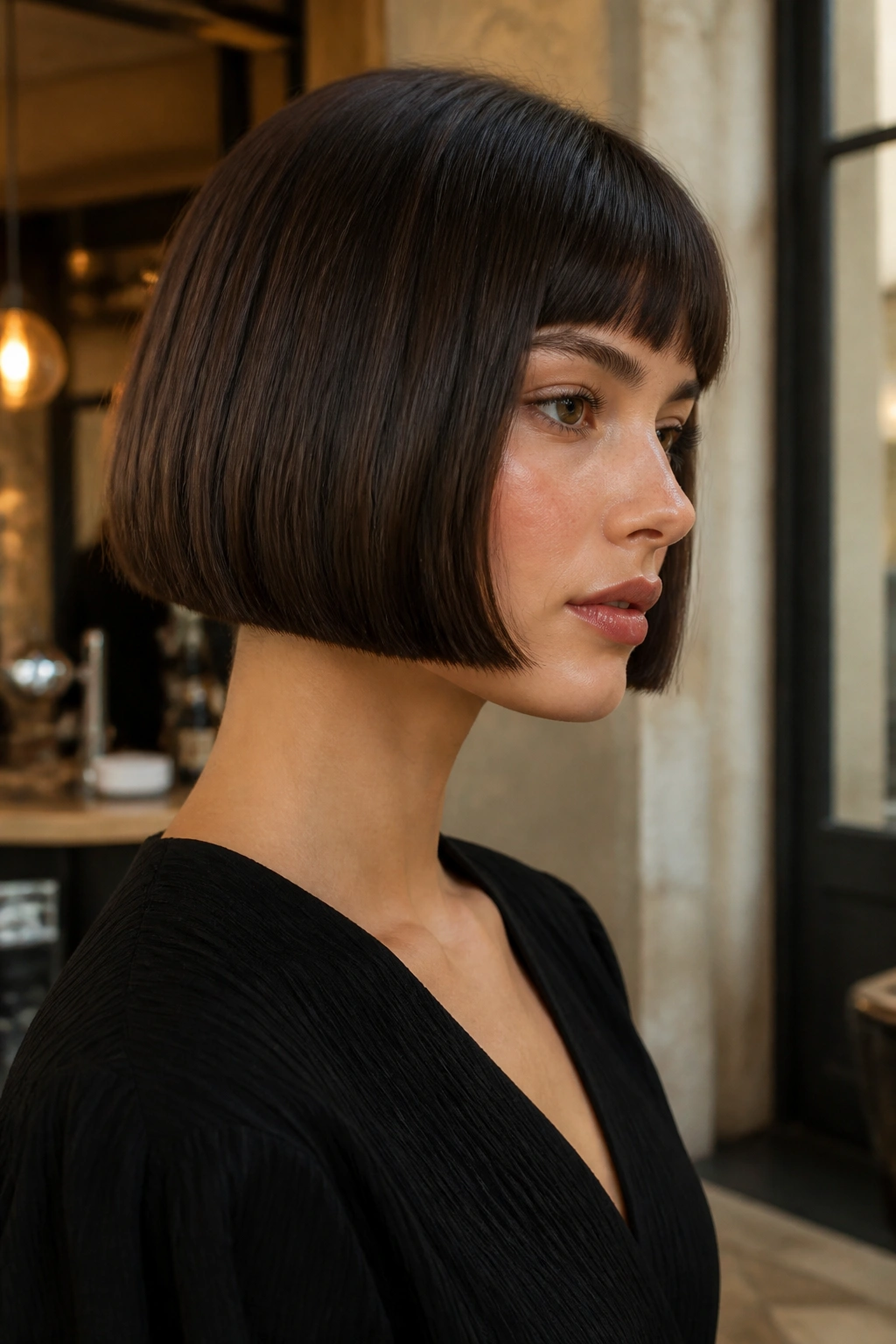
A micro bob sits above the chin and keeps almost all of its weight at the bottom edge. That heavy perimeter is the point. Fine hair can look sparse when the ends are too broken up, so a tight, blunt line creates the feeling of thickness right away. The shorter length keeps the shape crisp and modern.
The best version has very little layering through the ends. Maybe a touch around the crown if the roots are flat, but that’s it. Too many layers and the style starts to fray. A micro bob asks for confidence because it shows the hair’s outline plainly. If the line is sharp, the cut looks expensive. If it’s uneven, you notice immediately.
12. Feathered Pixie with Side-Swept Bangs
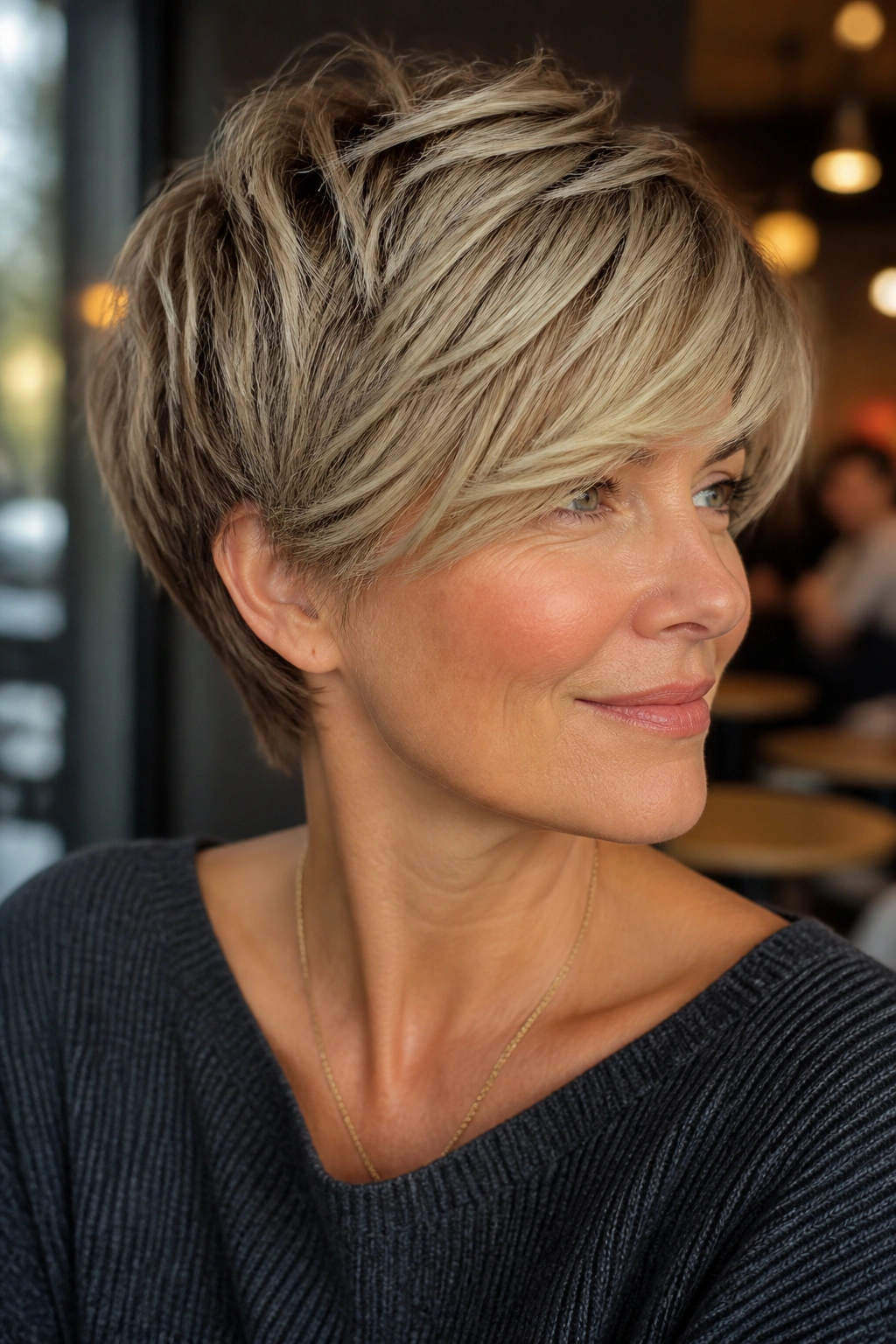
A feathered pixie can look much fuller than people expect because it uses softness in the right places. The feathers around the temples and sides stop the cut from hugging the head too closely, while the side-swept bangs give the front a thicker-looking frame. Together, they make the top half of the hair seem more substantial.
Who it suits
- People who want a light, airy shape without losing height.
- Fine hair that needs movement near the face.
- Thick hair that needs a little breakup around the edges.
Keep the bangs long enough to sweep across the forehead, not cut so short that they stand up on their own. A little bend in the fringe makes the whole cut feel fuller. And yes, this one needs trims. Short feathers grow out fast and lose their clean shape if you ignore them.
13. Wolf Cut Lite for Short Hair
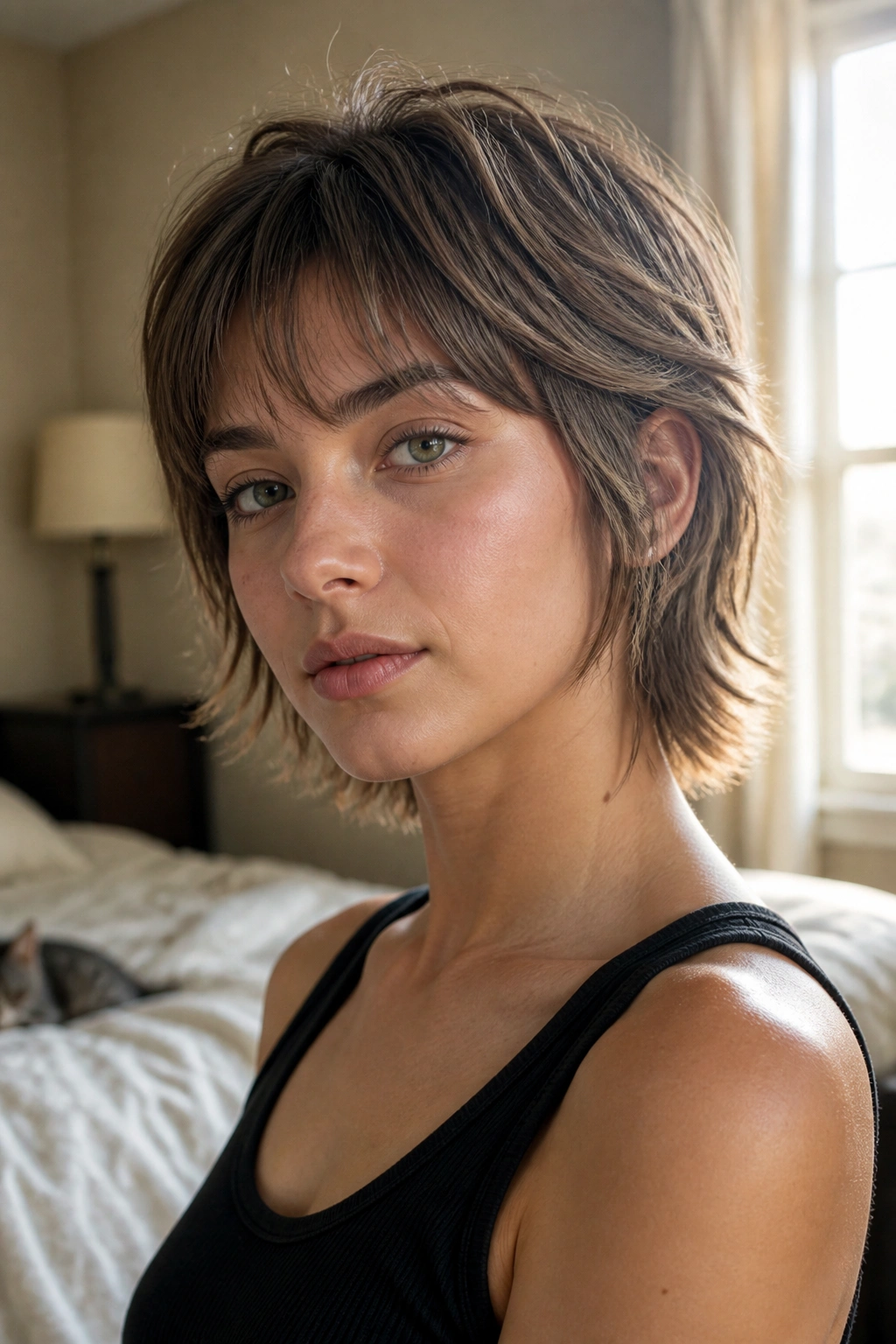
A full wolf cut can be a lot. The short version is easier to live with. It keeps the crown pieces a bit shorter, the sides softer, and the bottom less blunt, so the shape has lift without looking like a costume. That lighter version works well when you want texture to carry the illusion of thickness.
What I like here is the contrast. The top has enough choppiness to build height, while the lower layers still hold some weight. If the cut gets too shredded, the ends go fuzzy and the hair looks thinner. Keep the edges a little cleaner than you think you need. The style will still read as shaggy, only more controlled. That balance matters.
14. Deep Side-Part Bob with Root Lift
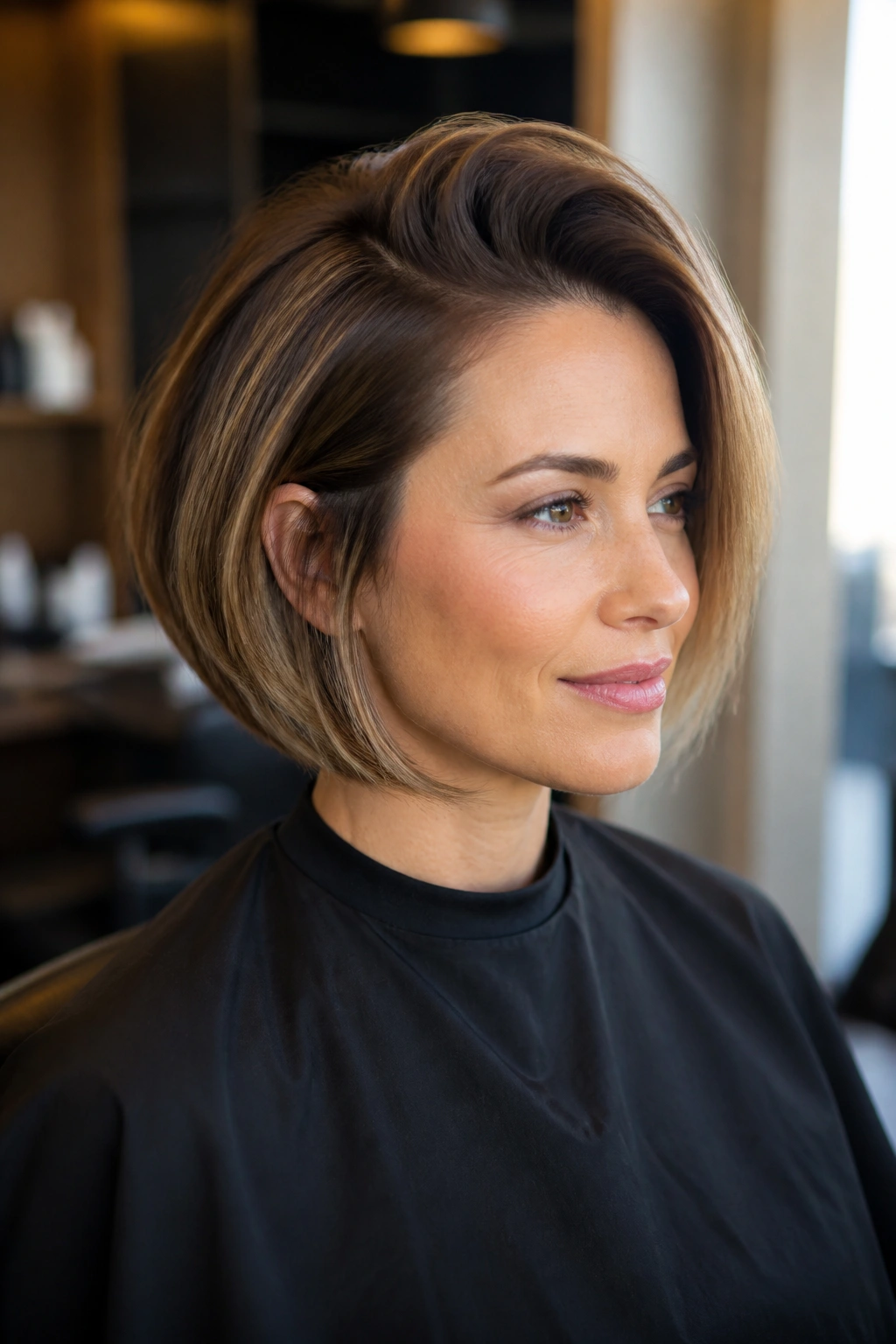
A deep side part can make hair look thicker faster than almost any cut trick. It shifts more mass to one side, lifts the roots where the part is pushed over, and creates the feeling of a bigger head of hair. Pair that with a bob that has a bit of internal layering, and the effect gets stronger.
How to get the most from it
Dry the roots in the opposite direction of the part first. Then flip the hair back into place. Use a lightweight mousse or root spray before blow-drying, not after. The bend at the roots is what matters.
This is a sneaky good option for hair that goes flat on one side no matter what you do. It also helps if the crown is narrow. The one thing I’d warn against: if the layers are too short, the side part can expose more scalp than you want. Keep the cut full around the outline.
15. Short Layered Cut with Curtain Bangs
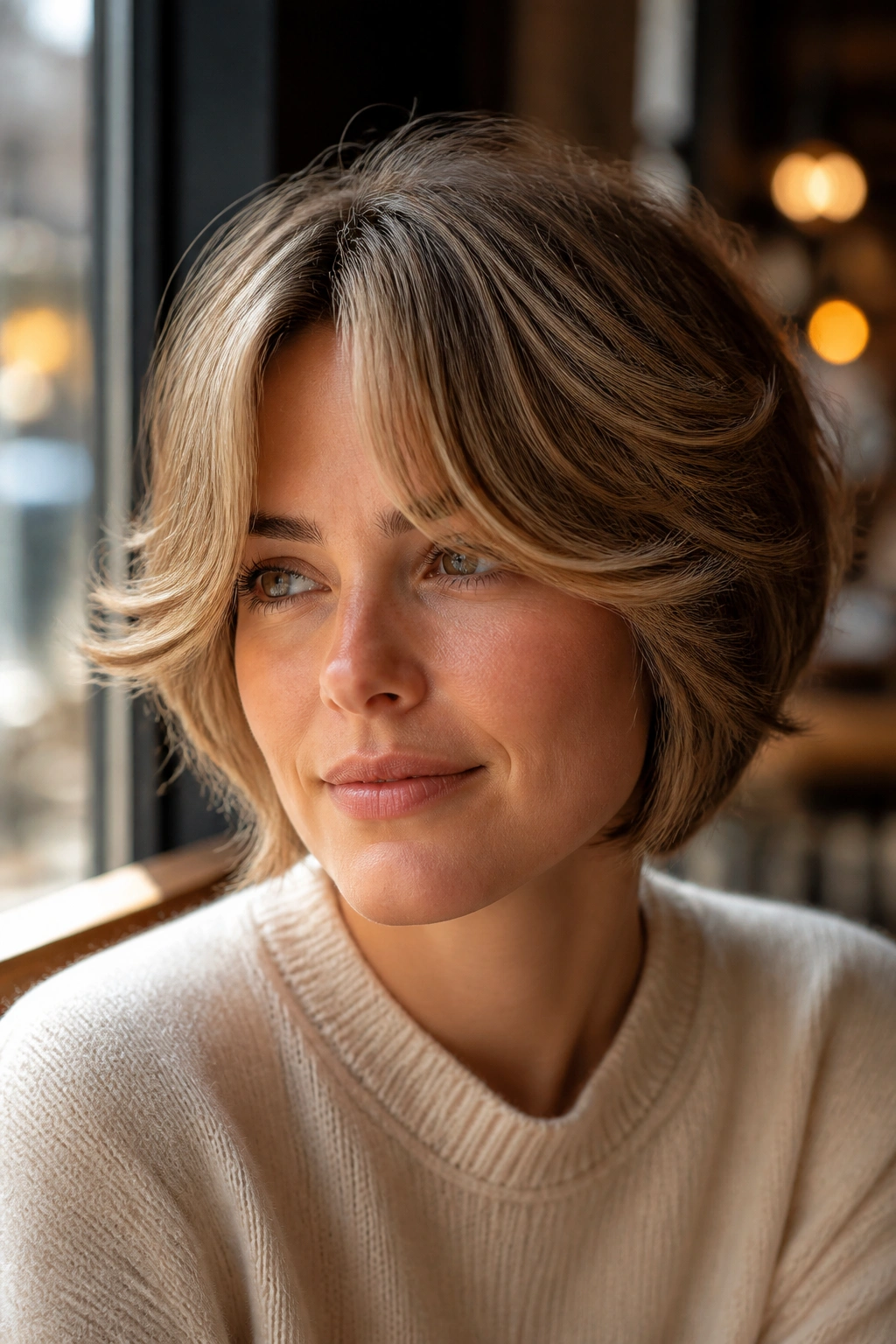
Curtain bangs do a lot of heavy lifting on short layered hair. They open the face without cutting a hard line across the forehead, and that softness makes the rest of the cut feel fuller by comparison. The layers around the crown and temples connect the bangs to the body of the hair, so the shape feels intentional instead of chopped up.
This cut works especially well if you want movement around the eyes and cheekbones. The bangs should part easily and fall into the sides, not sit in one stiff curtain. A little bend at the ends keeps them from separating too much. If you have fine hair, ask for a soft, long fringe rather than a very short bang. Short bangs can be cute, but they don’t always help with density.
16. Razor-Cut Bob with Airy Movement
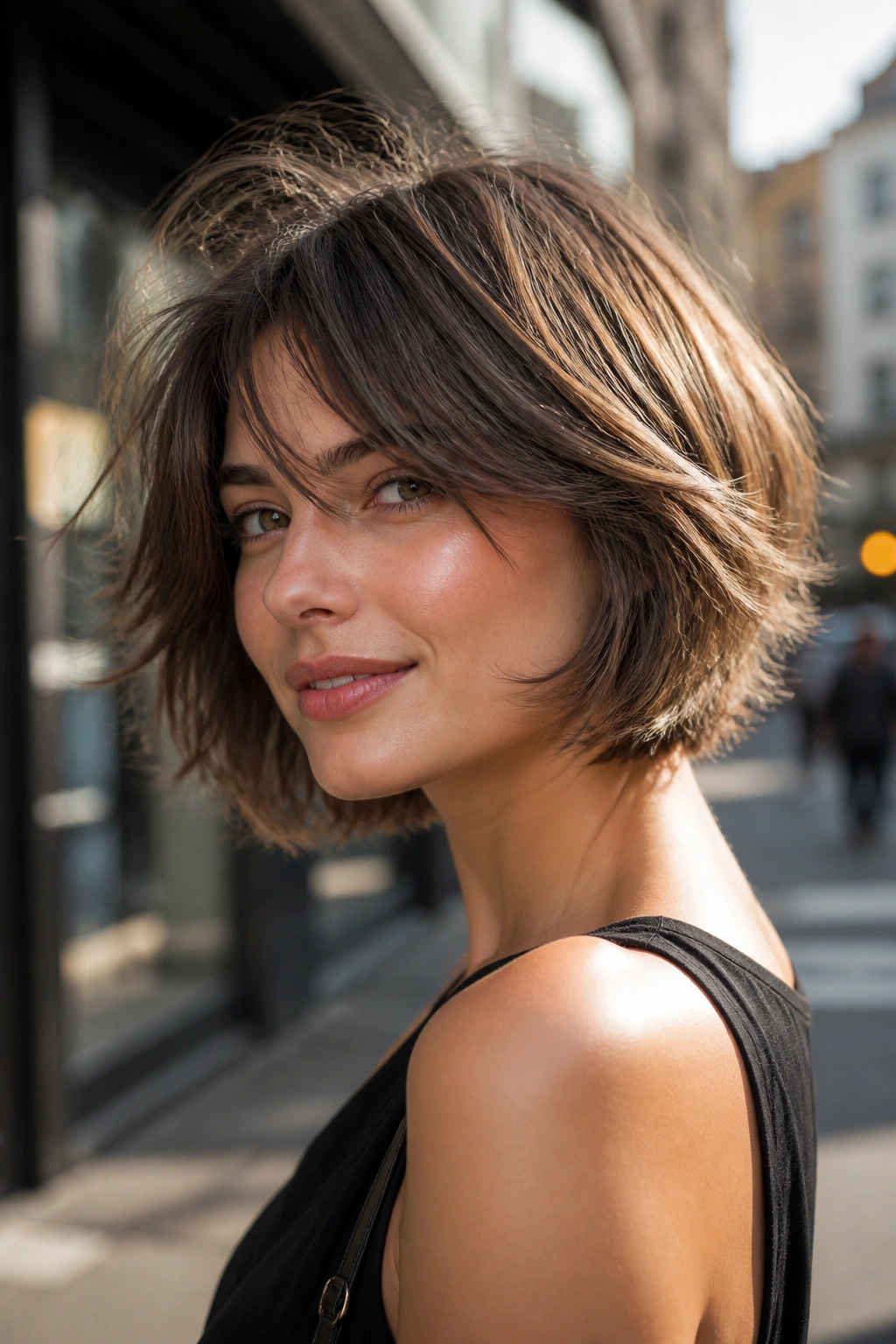
A razor-cut bob can be lovely on the right hair, but it is not a haircut to hand out casually. The razor softens the ends and creates a lighter swing, which makes thicker hair move better and stop looking bulky. On dense hair, that airy finish can make the whole style read as fuller because the movement is clearer.
What to watch for
- Best on medium to thick hair.
- Not a great match for fragile, very fine ends.
- Needs a stylist who knows where to stop.
The danger is obvious: too much razor work can make the edge look shredded. If you want thickness, you still need a visible line somewhere. Ask for the perimeter to keep some strength, then let the interior pieces carry the softness. That way the haircut has motion without looking thin.
17. Undercut Pixie with Full Top
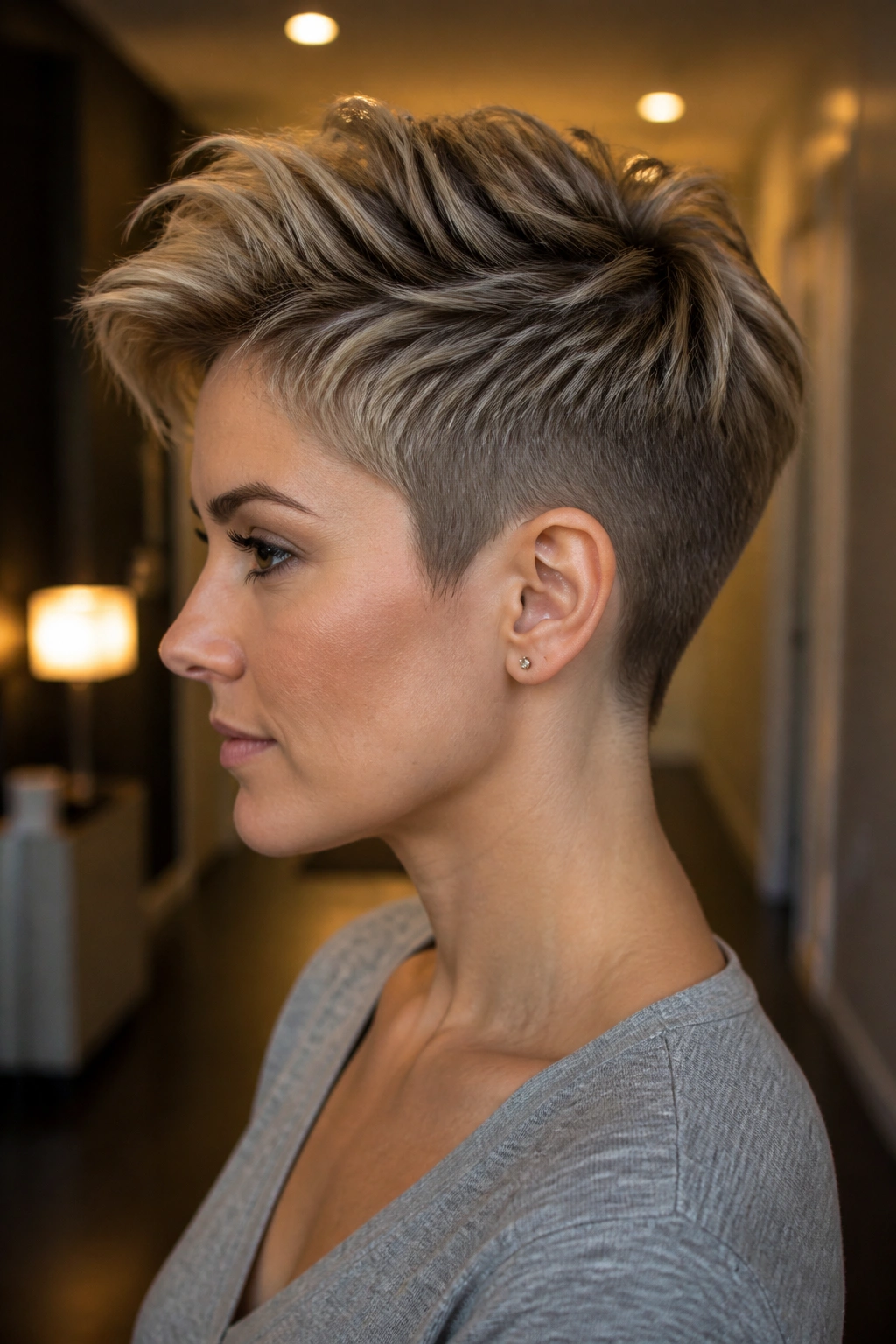
An undercut pixie sounds bold because it is. The sides and nape are clipped shorter underneath, which removes bulk and lets the top sit higher. On thick hair, that can be a gift. The top looks fuller because it is no longer fighting against all that weight below it.
This is one of those cuts that looks sharpest when the top is styled with intention. Push it forward, sweep it back, or make it messy with your fingers, but keep the crown lifted. The undercut itself does not need to be dramatic to work. A hidden undercut can do the job if you want a softer look. Just know that grow-out takes patience. Not a disaster. Just a thing to plan for.
18. Tucked-In Bob with Graduation at the Nape
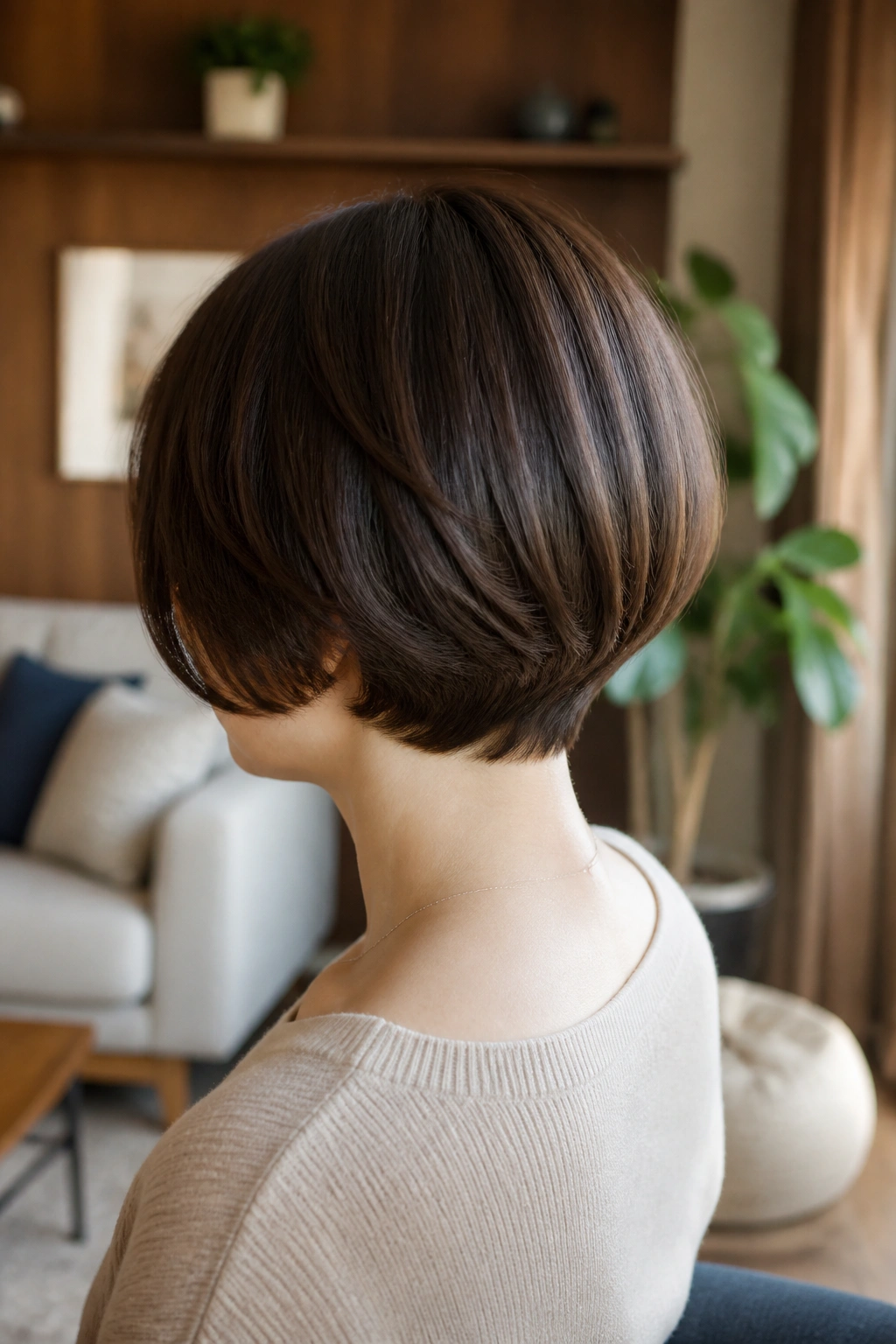
A tucked-in bob is all about the back shape. The graduation at the nape builds a rounder base, and when the hair curves inward, it looks plush instead of flat. This is a good cut for anyone who likes neat lines but still wants the illusion of more hair.
The styling is straightforward. Blow-dry the back with a paddle brush or round brush so the ends hug in slightly. Let the front rest a little longer around the cheekbone or jaw. That contrast gives the haircut structure. If the nape is too short, the shape can collapse; if it’s too long, you lose the tucked-in effect. That narrow middle ground is where the fullness lives.
19. Tousled Crop with a Long Fringe
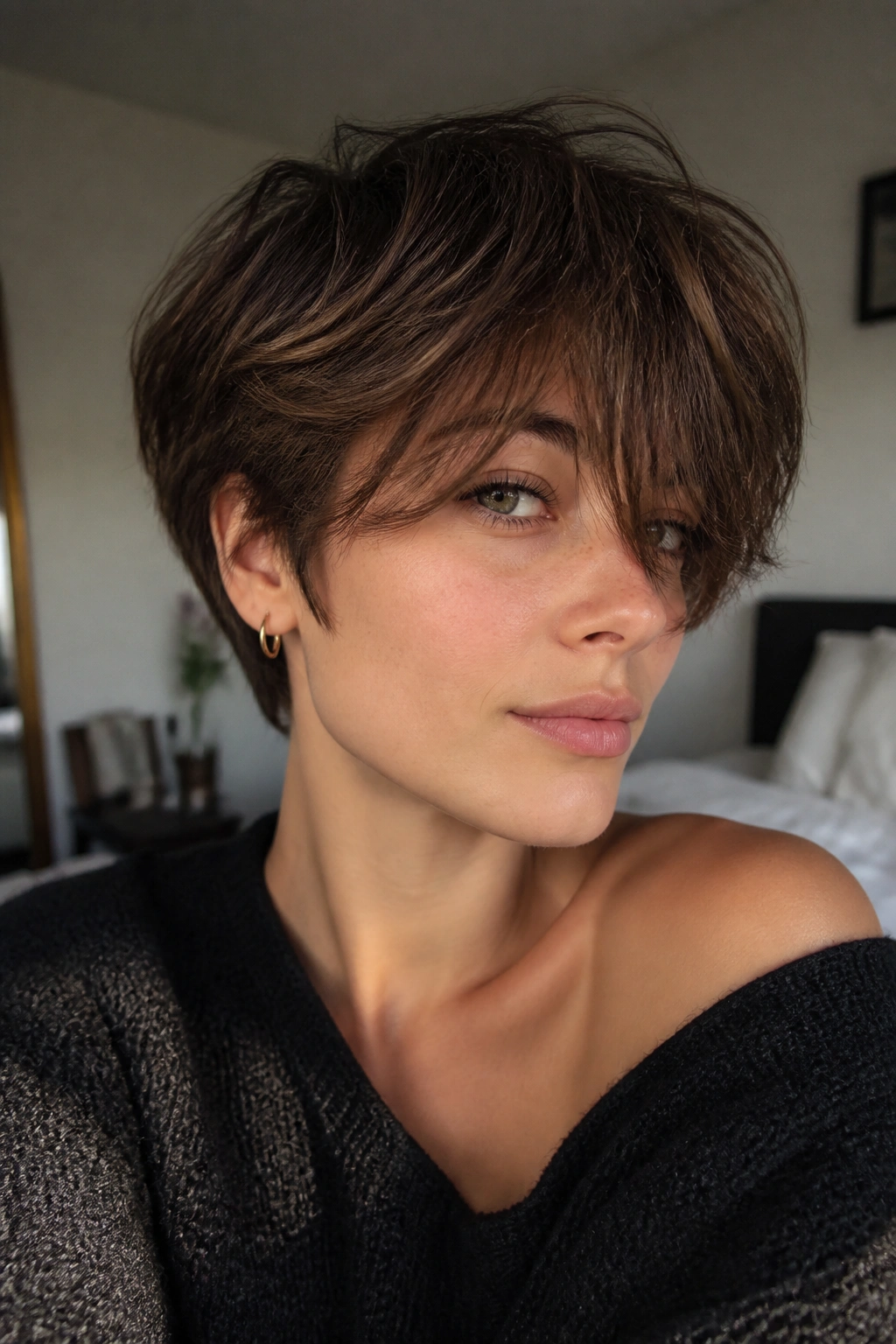
A tousled crop with a long fringe does something clever: it keeps the top loose and the front heavy enough to feel substantial. The fringe pulls attention forward, while the cropped sides stop the shape from getting bulky. The result is airy, but not thin.
Styling it without wrecking the shape
Work a small amount of mousse through damp hair, then rough-dry with your fingers. Once it’s dry, use a dab of paste on the fringe and crown. You want separation, not spikes.
This cut is good when you like texture and don’t want a severe outline. It also works on hair that grows in different directions, because the fringe can disguise some of the chaos. The key is not to overdo the product. Too much and the hair clumps; too little and the crop loses its lift.
20. Fine-Hair Bob with Micro Layers
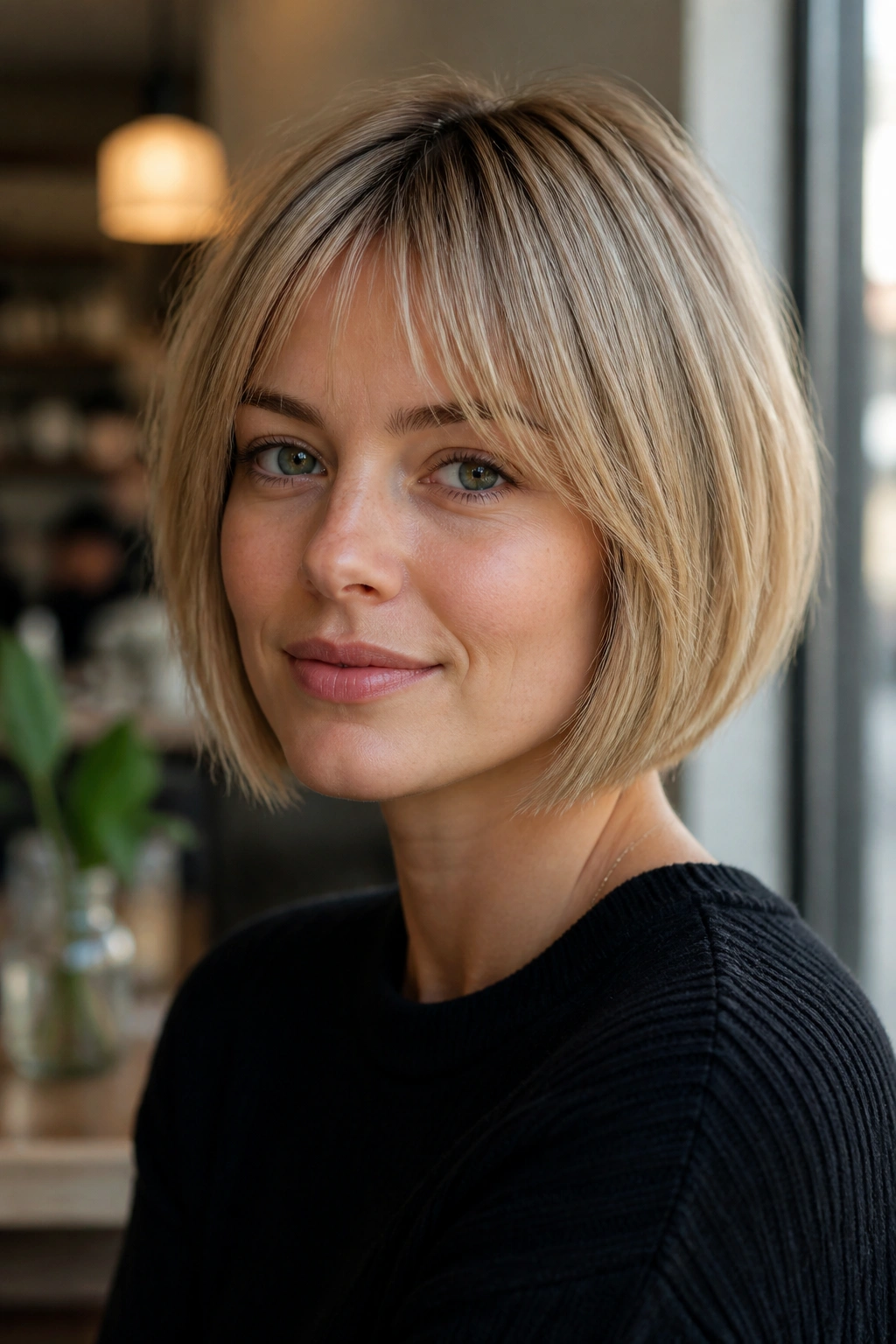
A fine-hair bob needs restraint. Micro layers give it just enough lift to stop the crown from lying flat, but they don’t chew up the perimeter. That matters. Fine hair often looks fuller when the outer edge stays blunt and the movement stays inside the cut.
The best micro layers are almost invisible until the hair moves. They create a little space under the top sections, which makes the head of hair seem more crowded than it really is. Ask your stylist to keep the layers long and soft, not piecey. If the cut gets too broken up, you lose the very fullness you were chasing. A good fine-hair bob is subtle. That’s the whole trick.
21. Wavy Shag Bob with Soft Face Framing
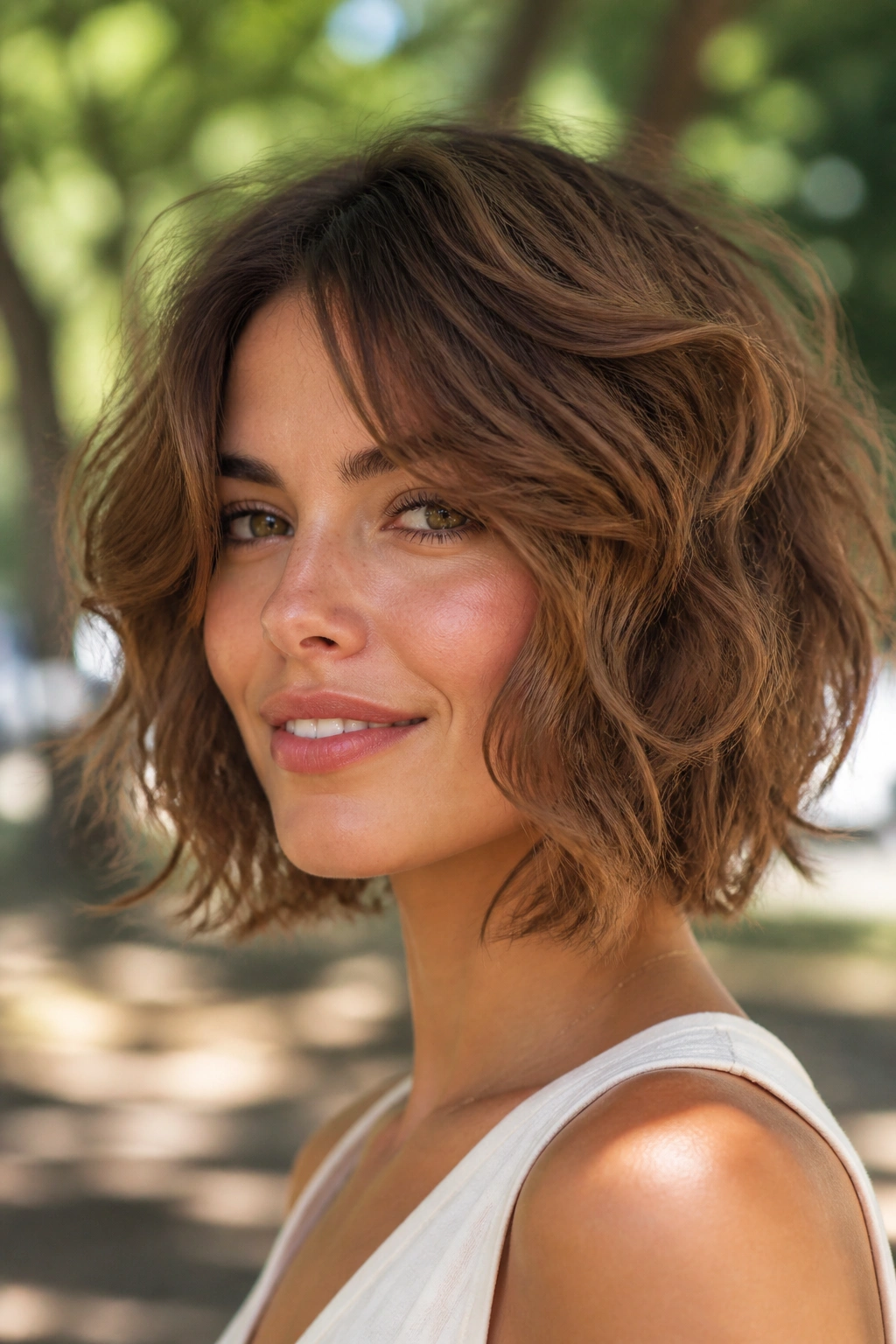
Wavy hair loves a cut that follows its bend instead of fighting it. A shag bob with soft face framing gives the wave room to spring, especially around the cheekbones and jaw. The layers help the wave stack on itself, and that makes the hair look thicker in motion than it does when it hangs straight.
Why this shape works
The face framing pulls the eye to the front, while the shorter crown pieces keep the top from collapsing. You want enough layering to let the wave breathe, but not so much that the ends turn stringy.
Air-drying works well here. Scrunch in a light cream, then leave the hair alone until it’s nearly dry. A diffuser helps if you need more lift. The fringe or front pieces should fall softly, not cling to the forehead. That softness is part of the thickness trick.
22. Rounded Coily Crop with Layered Shape
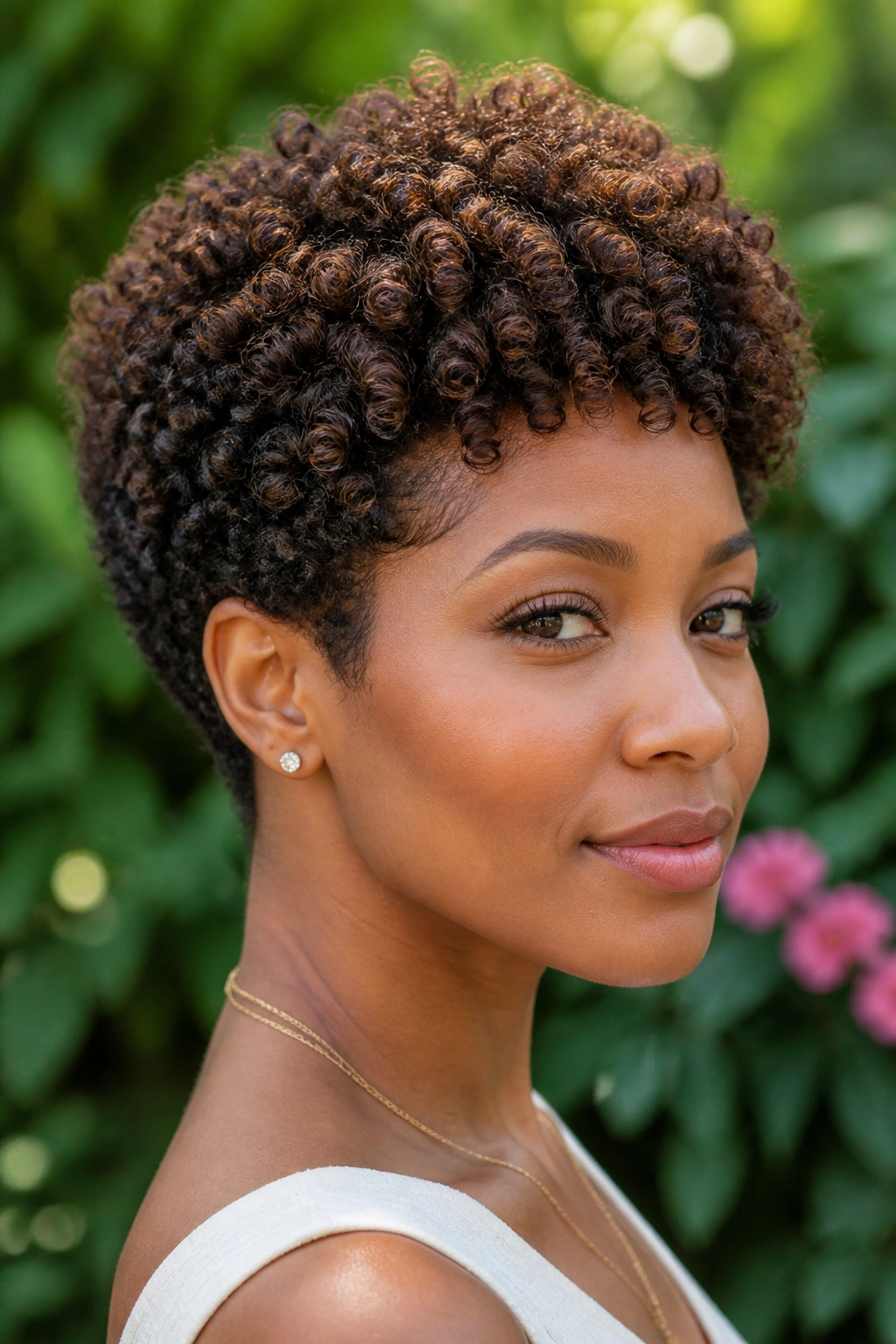
Coily hair can look incredibly full in a short cut when the shape is rounded on purpose. A layered crop lets the curls or coils stack upward and outward without making the sides flare into a triangle. The silhouette matters more than almost anything here. If the outline is good, the hair looks dense.
A dry cut is often the smarter move because coils shrink so much once they dry. The stylist can see where the body naturally sits and place layers to support that shape. Keep the layers balanced around the crown and sides so the cut feels even. Too much removal at the ends can make the style look light in a bad way. You want spring and shape, not gaps.
23. Sliced Bob with a Light, Swingy Edge
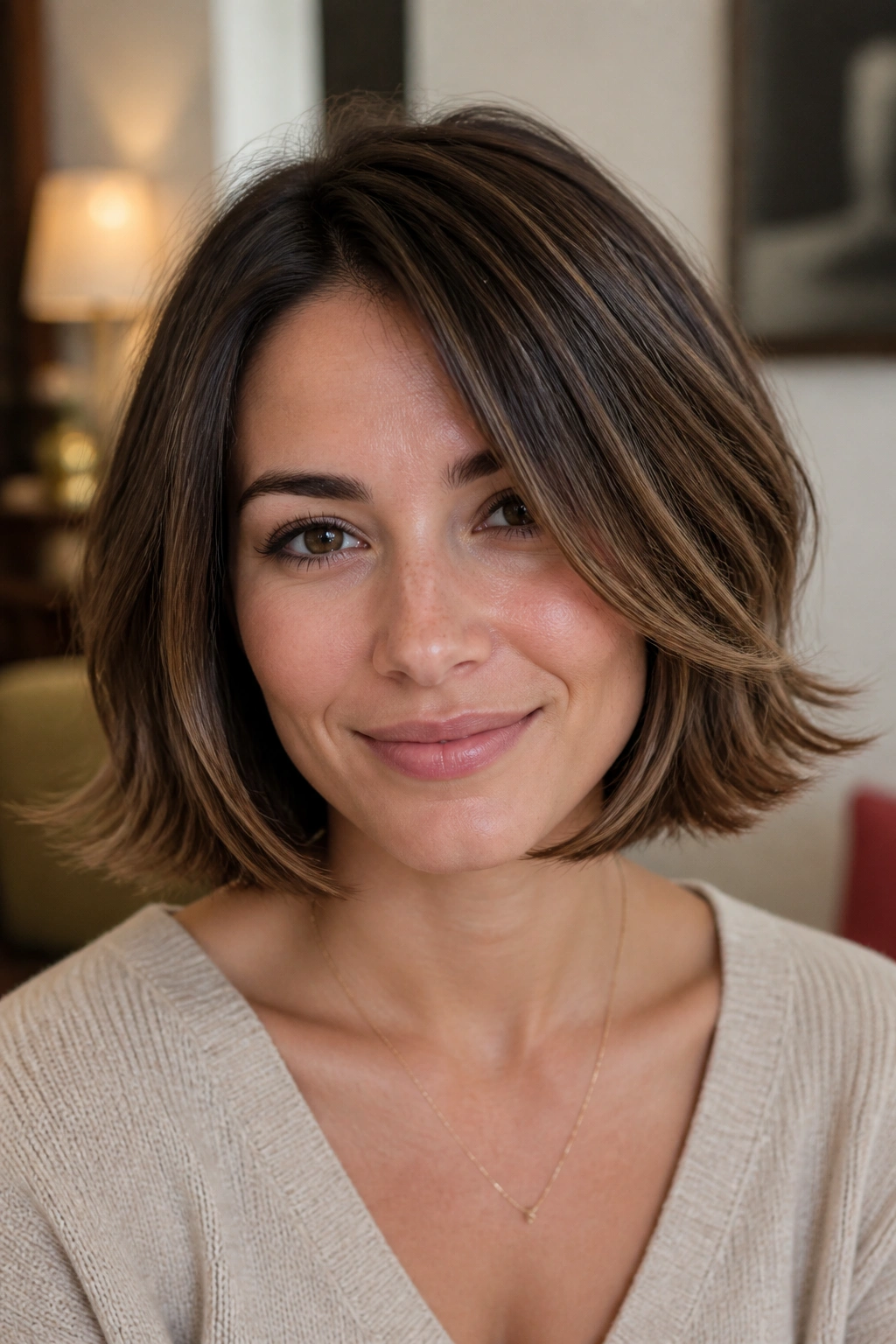
A sliced bob uses a softer cutting motion to loosen the ends without shredding them. That gives the haircut a swingy edge, which can make thicker hair feel less heavy and fine hair look more alive. The difference between this and a razor-cut bob is subtle, but it matters. Slicing keeps more structure. The bob still has a shape.
This is a smart choice if your hair gets puffy when it’s cut blunt but goes limp when it’s over-layered. The sliced ends move just enough to keep the outline from feeling blocky. Ask for the slicing to happen mostly through the midlengths and not the very bottom. A little softness goes a long way. Too much, and the bob starts to fray.
24. Soft Pixie with Crown Volume
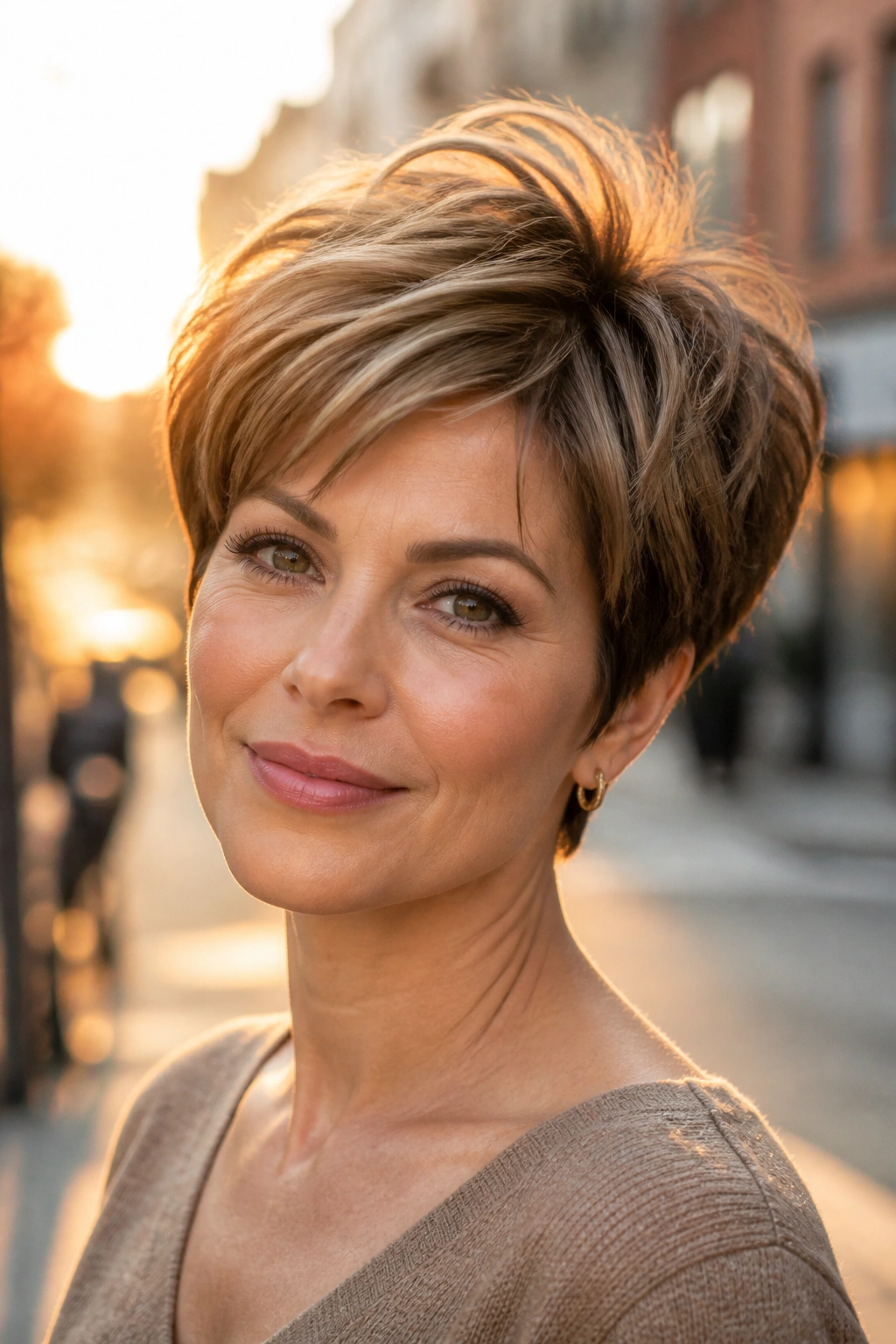
A soft pixie with crown volume is one of the easiest short layered ideas to wear if you want lift without a hard edge. The sides stay close enough to keep the cut neat, while the crown is shaped to rise a little higher than the rest. That rise makes the whole head of hair look fuller because the top has somewhere to go.
This cut is especially friendly to fine hair that collapses in humid air or after a long day. A bit of root spray, a quick blow-dry at the crown, and a finger finish can make a huge difference. Keep the top pieces long enough to separate, but not so long that they fall heavy. Softness matters here. So does shape.
If I had to leave one practical thought behind, it would be this: thickness is often a shape problem, not a hair problem. Short layered cuts work when they keep enough edge to look dense and enough movement to avoid flatness. Get that balance right, and even the finest hair can look fuller than people expect.