



Medium-length hair and balayage get along better than most people expect. There’s enough length for soft ribbons of color, but not so much that the lighter pieces disappear under the weight of a long cut. The sweet spot for balayage hairstyles for medium length hair sits somewhere between the chin and the collarbone, where hand-painted highlights can move with the haircut instead of fighting it.
The placement matters more than people think. A level-7 brunette with caramel painted only on the ends reads very differently from the same brunette with a bright money piece at the cheekbone and a few whisper-thin ribbons under the top layer. One version grows out quietly. The other wakes up the whole face. Medium hair is such a good canvas because the color can do a lot without feeling loud.
There’s also a practical side. Shoulder-grazing cuts tend to be the length where people notice brass, flatness, or chunky highlight lines the fastest, especially when the hair is blunt or straight. Balayage helps soften that, but the cut still matters. A shag, lob, layered collarbone cut, or curved bob will all show the color in a different way.
So let’s get specific. Some of these looks are warm and soft, some are cooler and more polished, and a few flirt with bolder contrast without turning into a maintenance headache.
1. Caramel Ribbon Balayage Lob
A caramel ribbon lob is one of those styles that makes medium-length hair look expensive without trying too hard. The base stays brunette, but the lighter pieces are painted in long, soft strokes so the color moves instead of sitting in blocks. It’s easy on the eyes.
Why It Works
The lob has enough length to show off those caramel ribbons, and the haircut keeps the color from feeling heavy at the ends. Ask for ribbons that are about one to two shades lighter than your base, with the brightest pieces around the front and lower mid-lengths. That keeps the grow-out soft and stops the look from turning stripey.
- Works best on loose waves or a round brush blowout.
- Looks especially good on medium to thick hair.
- Needs a gloss every 6 to 8 weeks if you want the caramel to stay warm, not brassy.
- Sits well with a root shadow, which gives the color more depth.
Best tip: leave the last inch of the ends a little darker. It makes the cut look fuller.
2. Ash Brown Balayage with Curtain Bangs
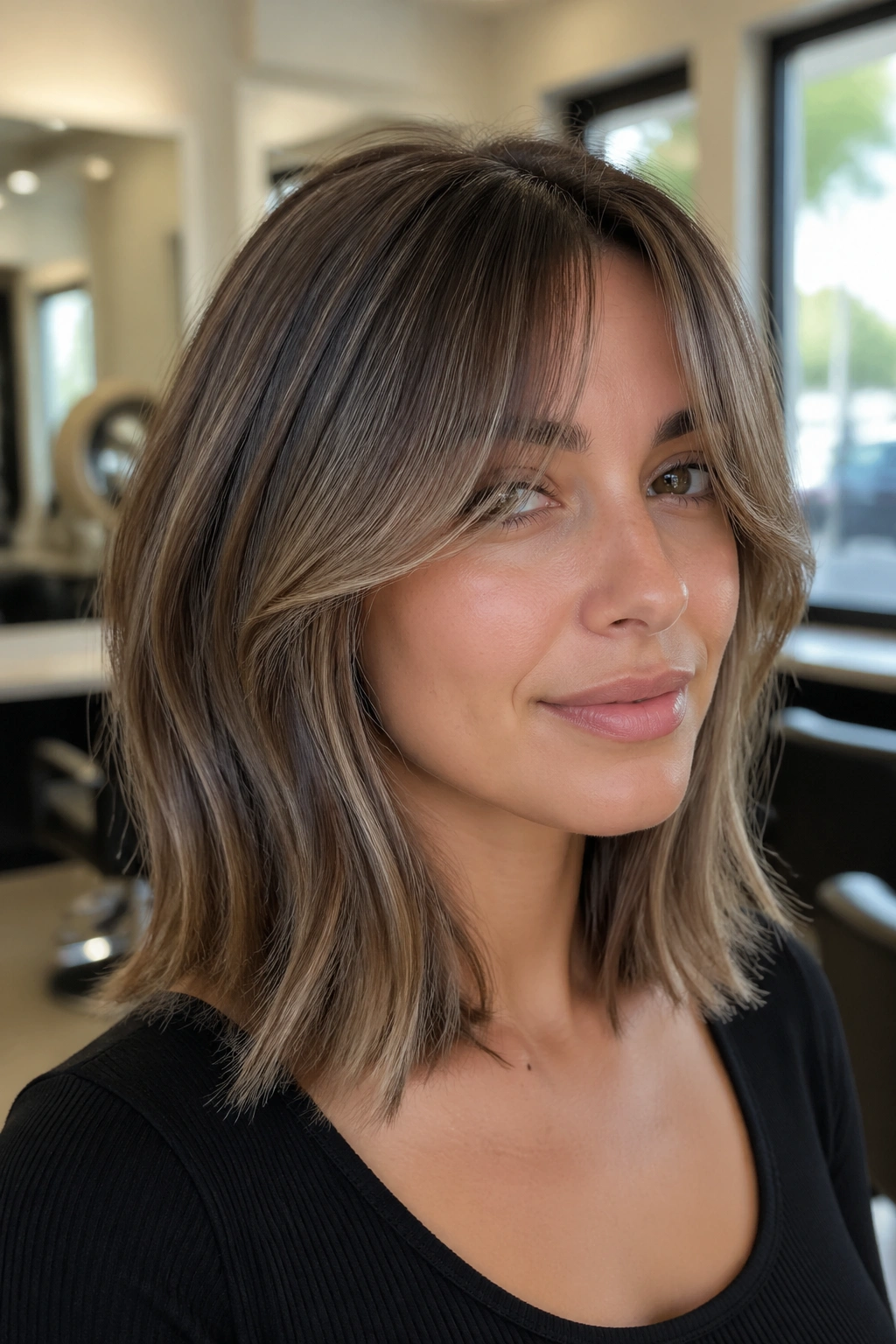
Cool tones can be a relief when warm brunette hair starts looking orange in the wrong light. Ash brown balayage pulls that warmth back and gives medium-length hair a sharper, cleaner edge. With curtain bangs in the mix, the whole cut looks deliberate instead of overdone.
The reason this pairing works is simple: curtain bangs open the face, and ash-brown ribbons keep the rest of the hair from looking flat. The tone reads soft gray-brown, not silver, which matters a lot. If the color goes too icy, the bangs can start to feel disconnected from the rest of the cut.
This is a smart pick if your natural shade sits somewhere around light brown to medium brunette. It also behaves well on straight or softly bent hair because the cool color shows off every curve in the fringe. A center part can feel sleek; a slightly off-center part makes it a little less serious.
3. Honey Balayage on Wavy Shoulder-Length Layers
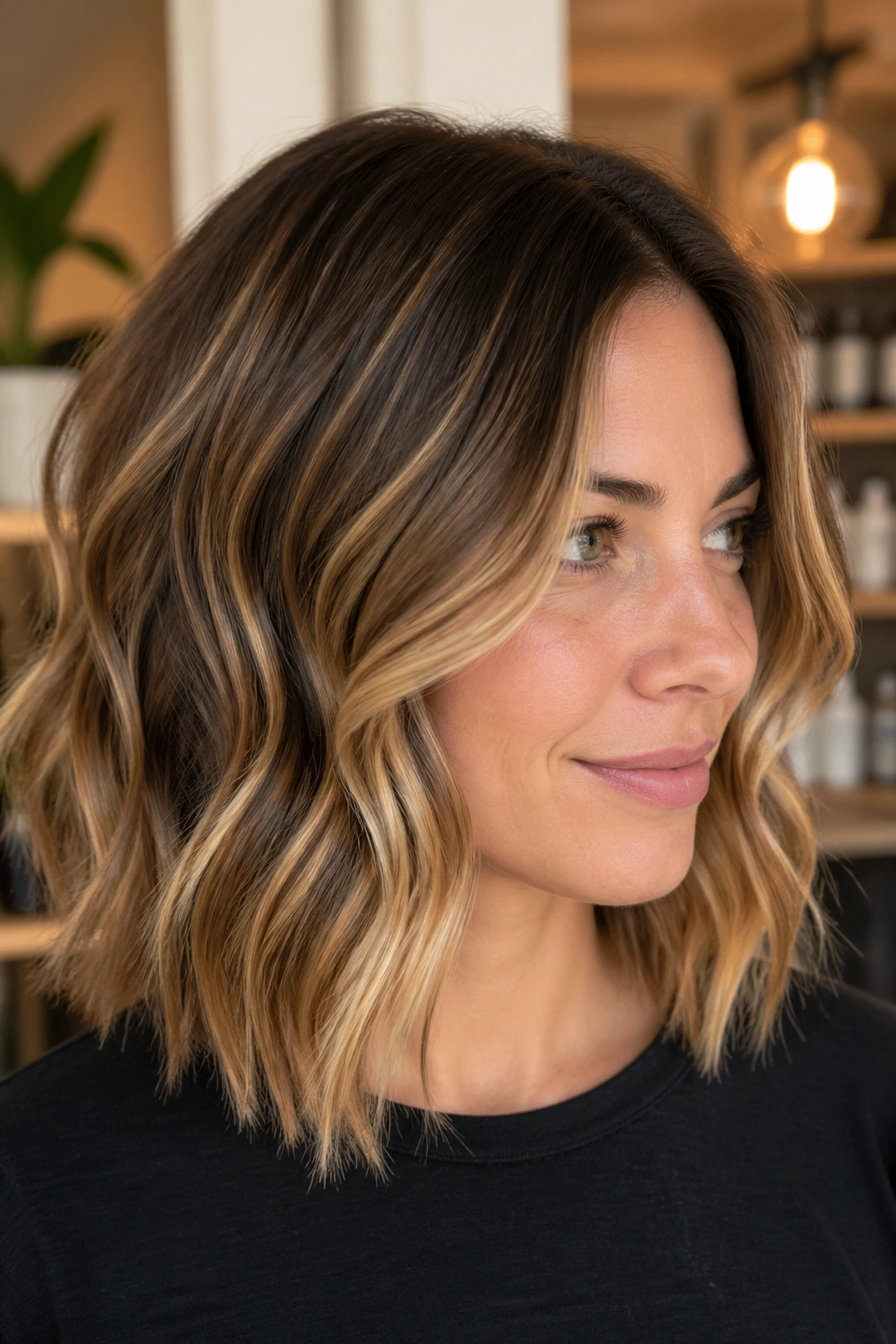
Why does honey balayage look so easy on shoulder-length layers? Because the cut gives the color places to land. Each wave catches a different strip of gold, and the result feels sunlit without tipping into yellow.
The trick is keeping the honey pieces soft and staggered. If the highlights start too high, the look can get chunky fast. If they stay too low, the brightness disappears once the hair is curled or tucked behind the ears. A good colorist will weave in fine pieces through the top layers and save the wider strokes for the ends.
How to Style It
Use a 1-inch curling iron or wand and leave the last inch out. Then brush the waves out with your fingers so the ribbons blend instead of looking looped. A light cream or mousse helps the style hold its shape, especially if your hair slips flat by lunchtime.
This one is warm, approachable, and very wearable. It’s the kind of balayage that still looks good on day three.
4. Blonde Balayage on a Textured Collarbone Cut
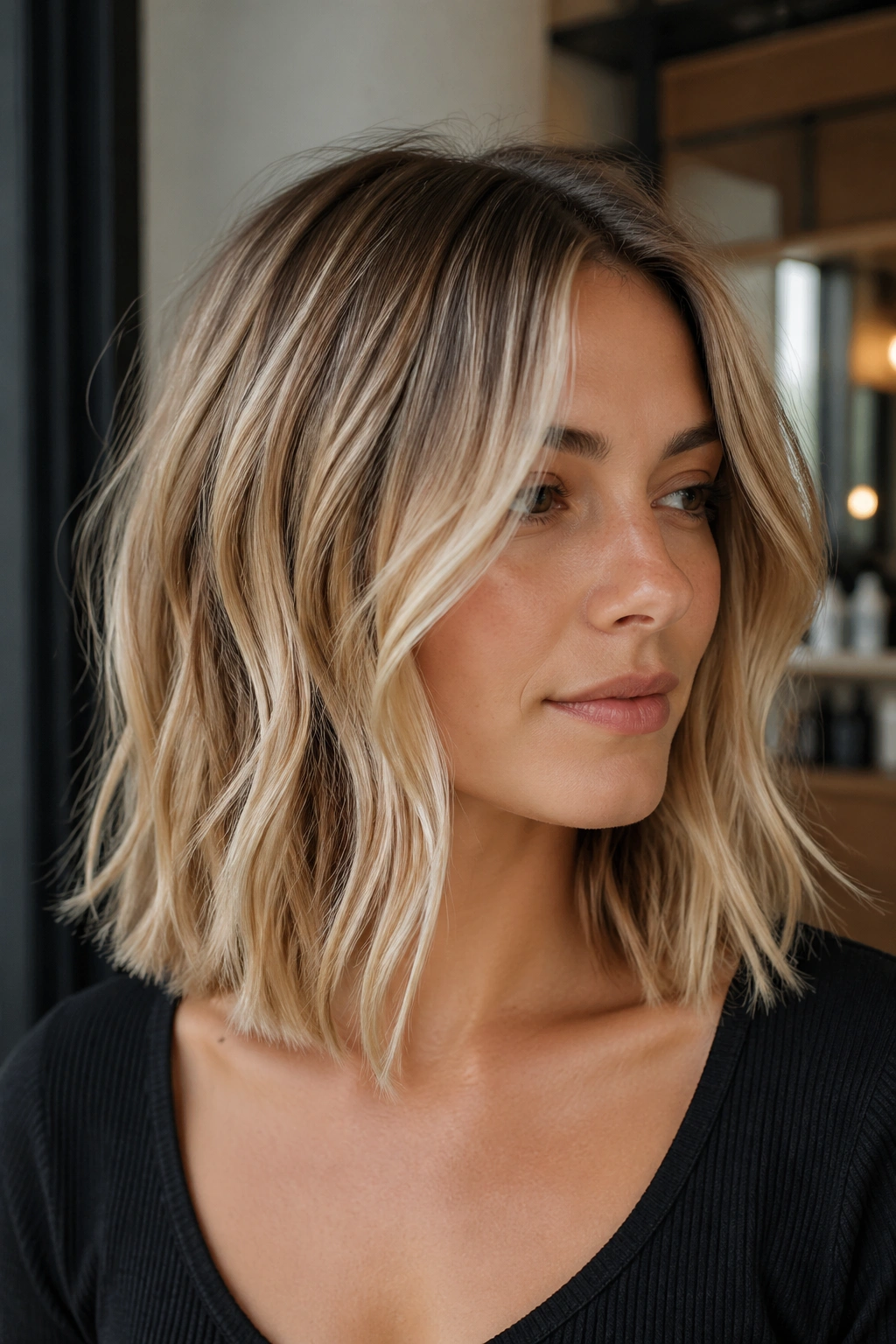
If your hair goes limp at the ends, texture is the part that saves this look. Blonde balayage on a textured collarbone cut feels airy because the layers break up the light pieces and keep the color from sitting like one bright sheet.
Here’s the thing: blonde on medium-length hair needs movement. Without texture, the lightness can make the cut look boxy. With choppy layers or a soft razor finish, the balayage starts to look expensive in the useful sense of the word — not flashy, just well placed.
- Ask for fine blonde ribbons near the face and top layers.
- Keep the base one or two shades deeper than the lightest ends.
- A sea-salt spray or light volume mousse works better than heavy cream.
- Blow-drying the crown up and away from the scalp helps the blonde show.
One good haircut makes this color twice as flattering. No exaggeration.
5. Chocolate-to-Copper Balayage on a Shag
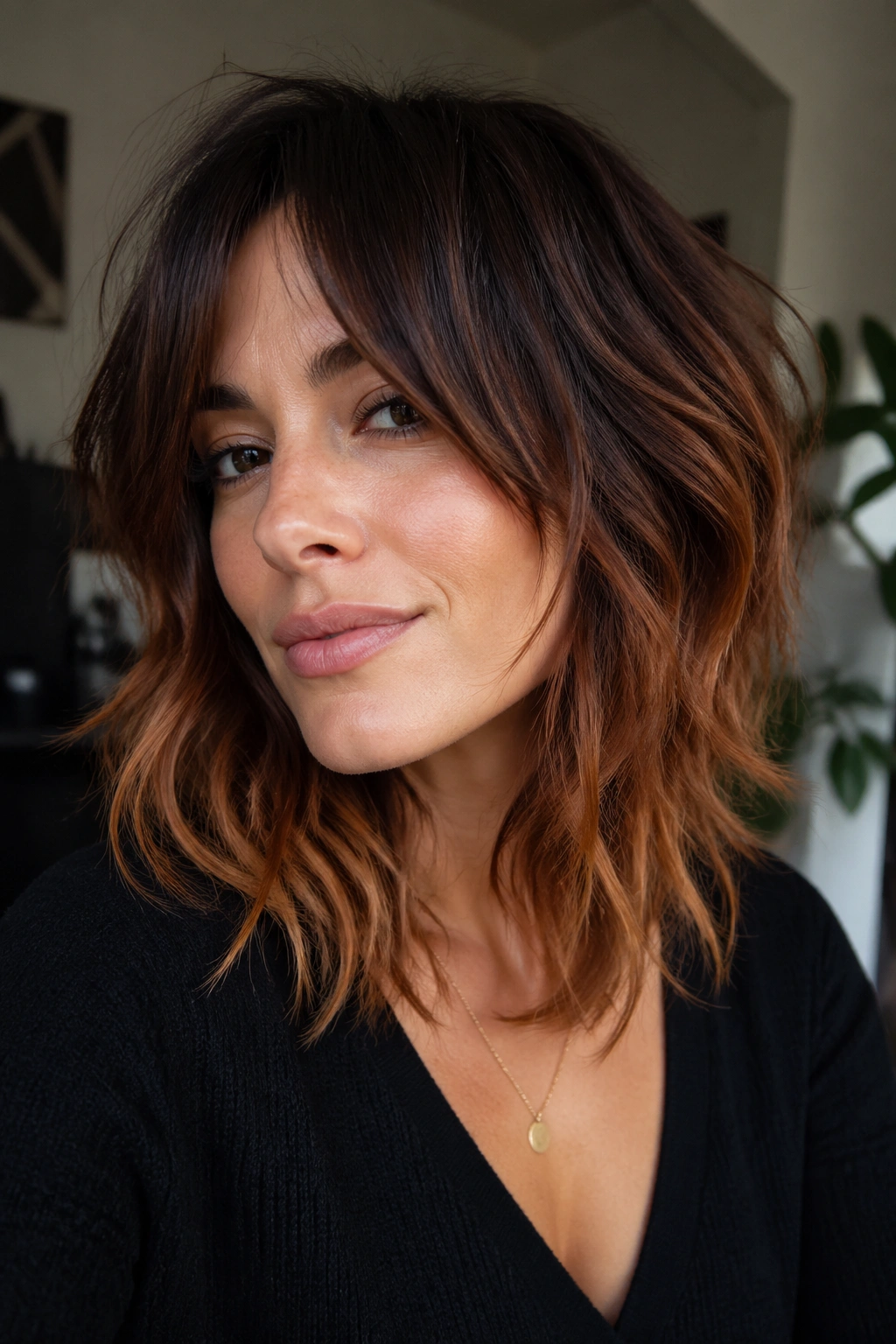
Chocolate roots melting into copper ends give a shag cut a little heat and a lot of attitude. The layers are the whole point here. They separate the tones, so the eye sees movement instead of one flat color block.
I like this look on medium hair because the shag already has a messy, lived-in shape. Copper can look loud on a blunt cut, but on a shag it feels woven in. The darker chocolate keeps the style grounded, while the copper lights up the outer layers when the hair flips or bends.
This is a good choice if you want warmth but don’t want to go full red. Copper is richer than blonde, and it photographs with more depth than plain caramel. It also looks best when the finish is slightly undone. Think air-dried waves, a diffuser, or a rough blow-dry with your fingers lifting the layers.
The color needs a gloss now and then, since copper fades faster than brown. Worth it.
6. Face-Framing Balayage on a Long Bob
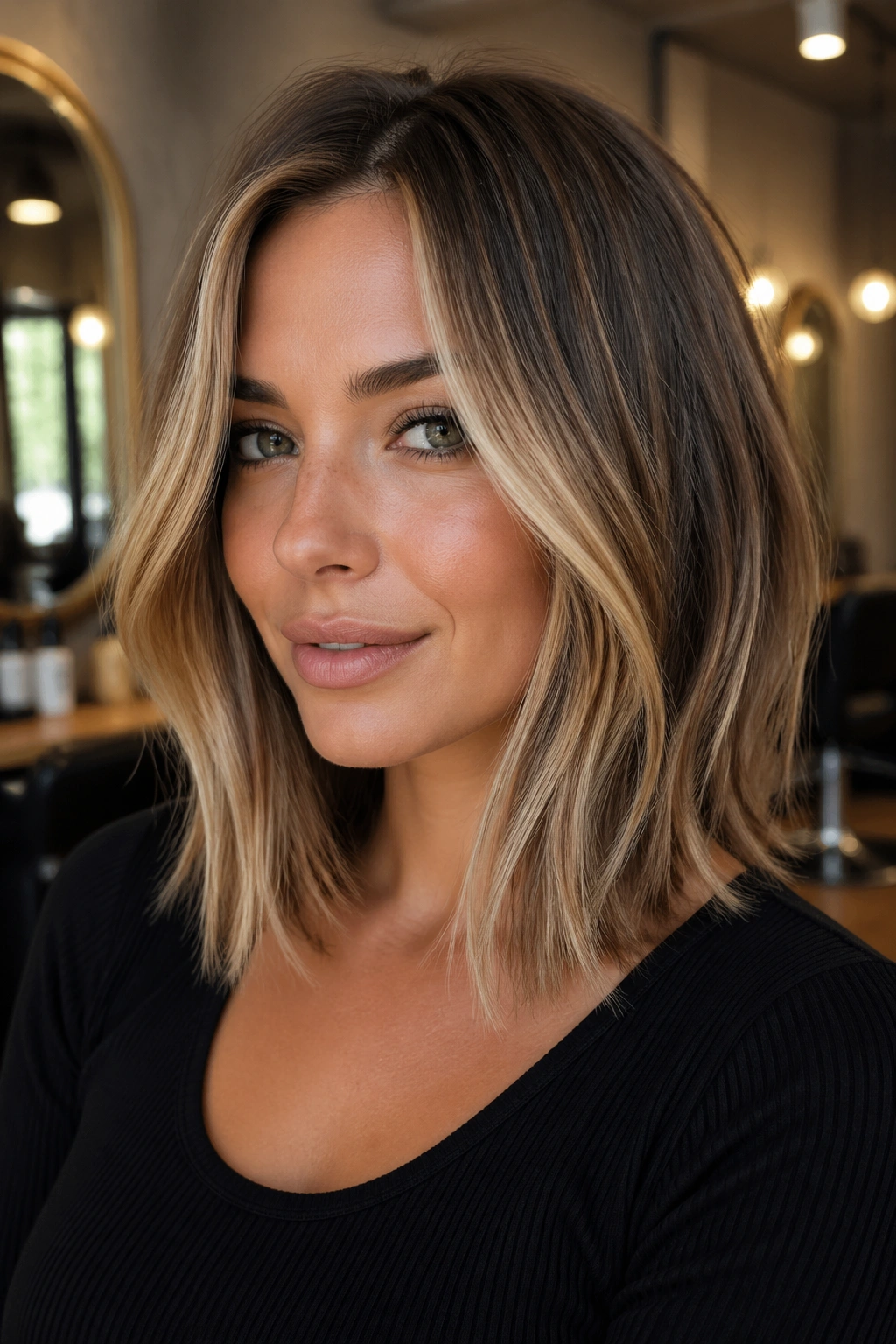
Face-framing balayage on a long bob does one thing better than most color jobs: it brightens the face without making the whole head lighter. That’s a huge reason people keep coming back to it.
Unlike all-over lightening, this style concentrates the color where the eye lands first. The front pieces usually start around the cheekbone or just below the jaw, then fade into softer ribbons through the rest of the cut. On a lob, that placement feels clean and modern, not fussy.
This is the style to pick if you want a noticeable change but do not want to babysit your roots. The grow-out is gentler, and the face-framing bits stay flattering even when the rest of the hair gets a little lived-in. It also works well with glasses, since the brightness stays around the eyes and temples instead of competing with them.
Ask your colorist to keep the contrast moderate. Too much contrast on a long bob can make the front pieces look like stripes. Nobody needs that.
7. Mushroom Brown Balayage for Straight Hair
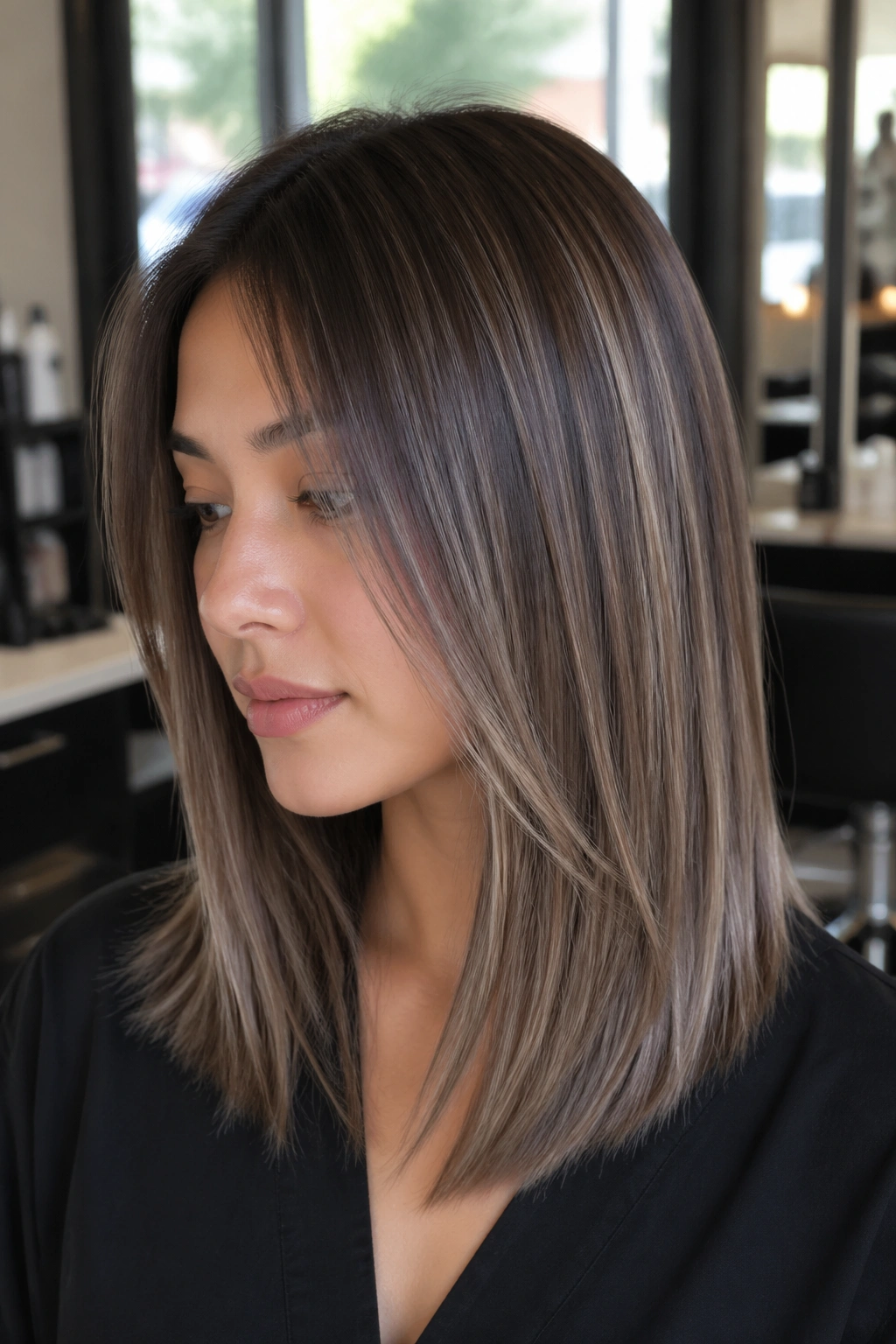
Straight hair shows every line, which is exactly why mushroom brown balayage makes sense here. The cooler beige-brown tone softens the edges, and the low-contrast placement keeps the style from looking too sharp.
What to Watch For
Mushroom brown is not ash blonde in disguise. It sits in that gray-beige-brown space that can look expensive when the tone is even and the ribbons are fine. On medium-length straight hair, the goal is a mist of color, not obvious streaks.
- Ask for soft lift, not high lift, especially if your base is already brown.
- Keep the root area smoky and a touch deeper.
- Add the lightest pieces under the top layer so the hair still looks dense.
- Finish with a shine spray, because straight hair can show dryness fast.
I like this on a blunt collarbone cut or a smooth lob. It feels polished, and the color does the work of making the shape interesting.
8. Warm Toffee Balayage on Feathered Layers
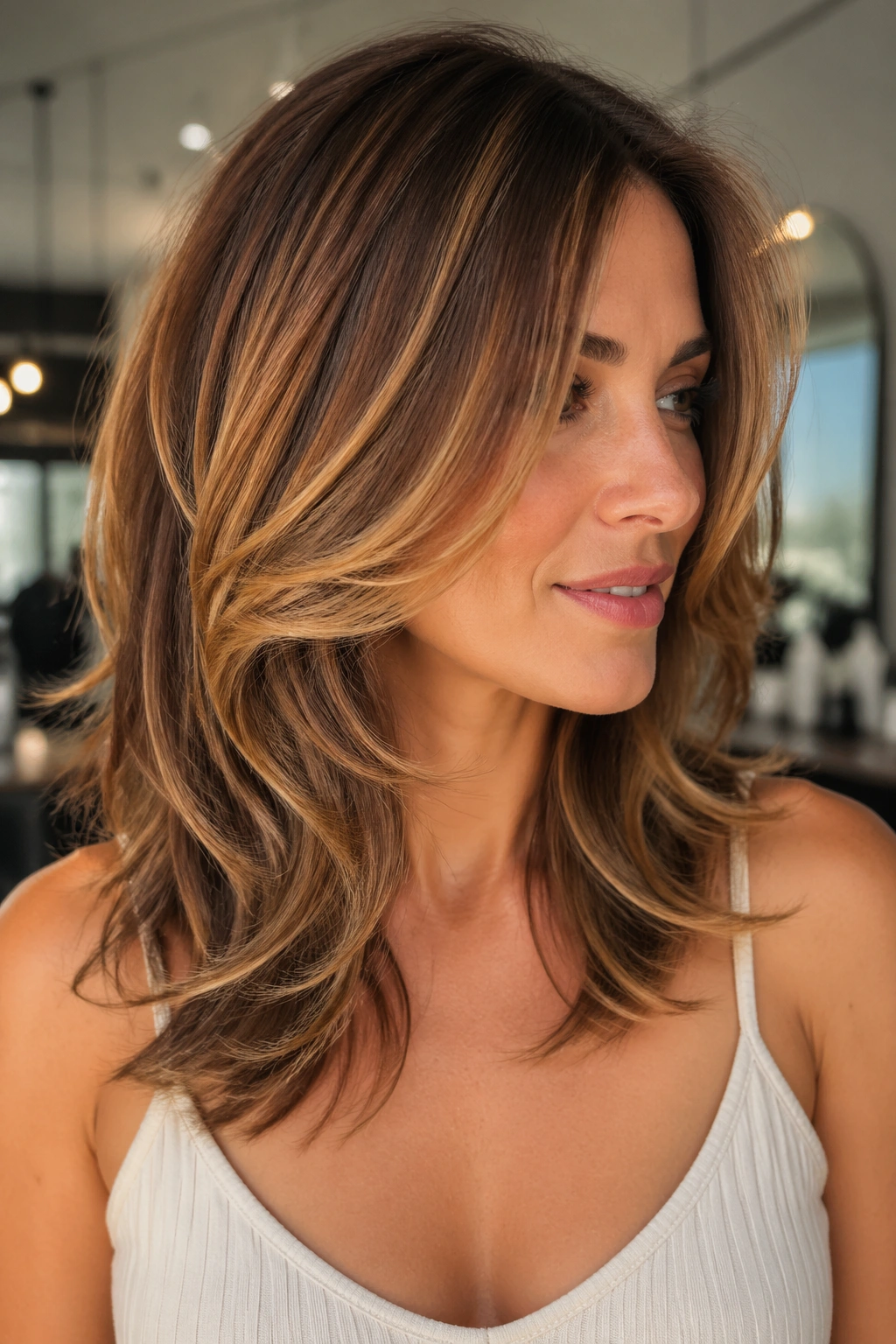
Can brunette hair look sunlit without turning gold? Absolutely. Warm toffee balayage is the answer when you want softness with a little richness, and feathered layers help it breathe.
The feathering matters because it stops the toffee from settling into one flat band. Each layer catches the light differently, so the color looks more expensive than a simple surface highlight. Medium-length hair is especially good for this because there’s enough length for the ribbons to show, but not so much that the lighter pieces get lost.
How to Get the Softness
Ask for light toffee pieces that start mid-shaft and become a touch brighter near the ends. The front can hold a little extra brightness, but the look should still feel blended. If the highlights are too wide, the softness disappears fast.
This is a low-drama color with a lot of payoff. It plays nicely with blowouts, soft bends, and even air-dried hair that’s been misted with a light texturizer.
9. Beige Blonde Balayage with Soft Curls
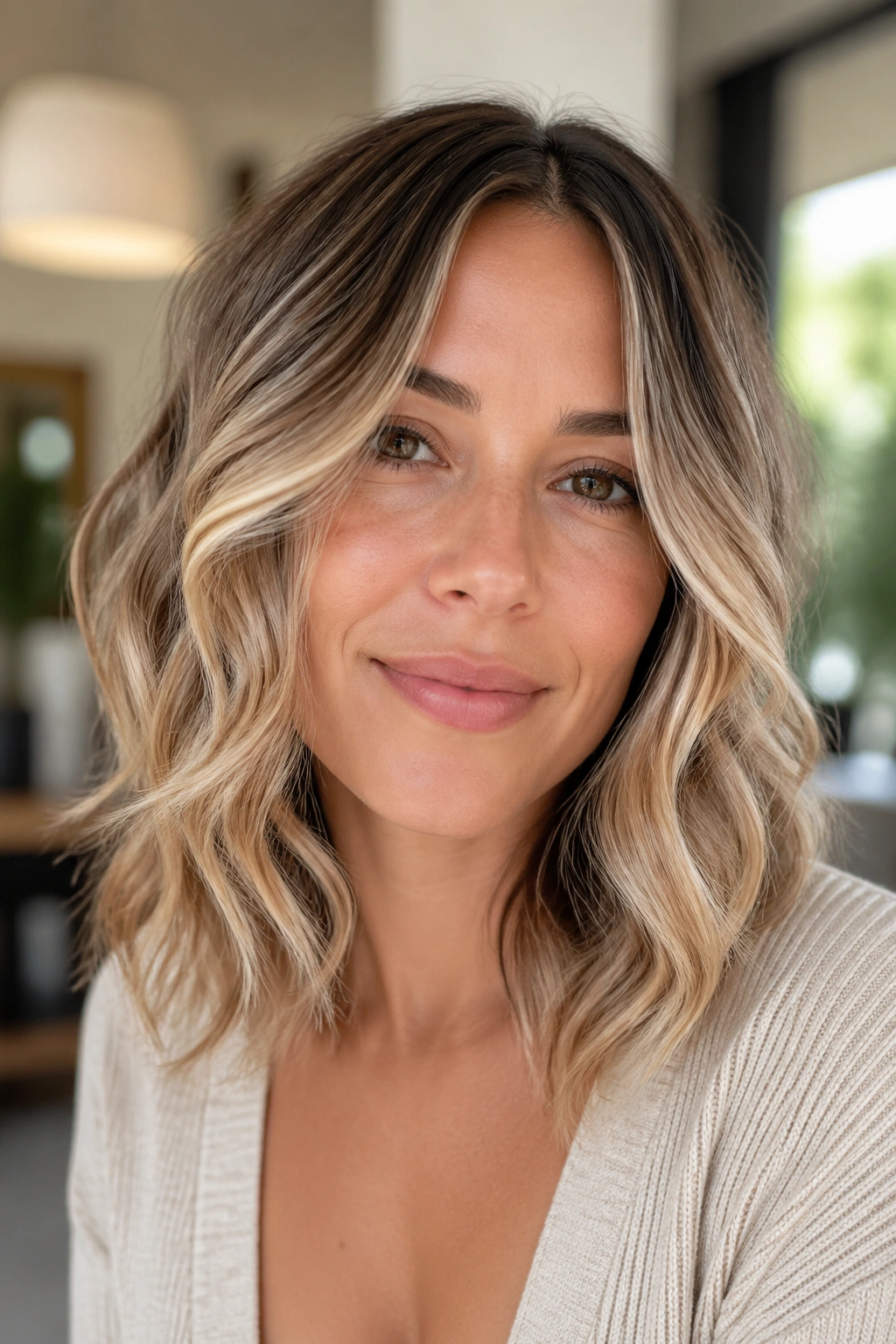
Beige blonde is the sweet spot for anyone who wants blonde that feels calm instead of icy or brassy. On soft curls, the tone looks creamy and expensive, and the curls keep the brightness from going flat.
The best version of this style uses multiple beige tones, not one flat shade. A little warmth near the face, a cleaner beige through the ends, and a touch of depth underneath keep the hair looking full. If all the light pieces are the same color, the result can read a bit too uniform.
That’s the charm of this look: the color moves with the curl pattern. One curl turns brighter, the next one softens, and the whole cut looks dimensional in a way straight hair can’t always give you. If your curls are more loose than tight, even better. The balayage gets room to spread.
Use a curl cream that does not weigh the hair down. Too much product will dull the beige and make the curls clump.
10. Chestnut Balayage on a Deep Side Part Lob
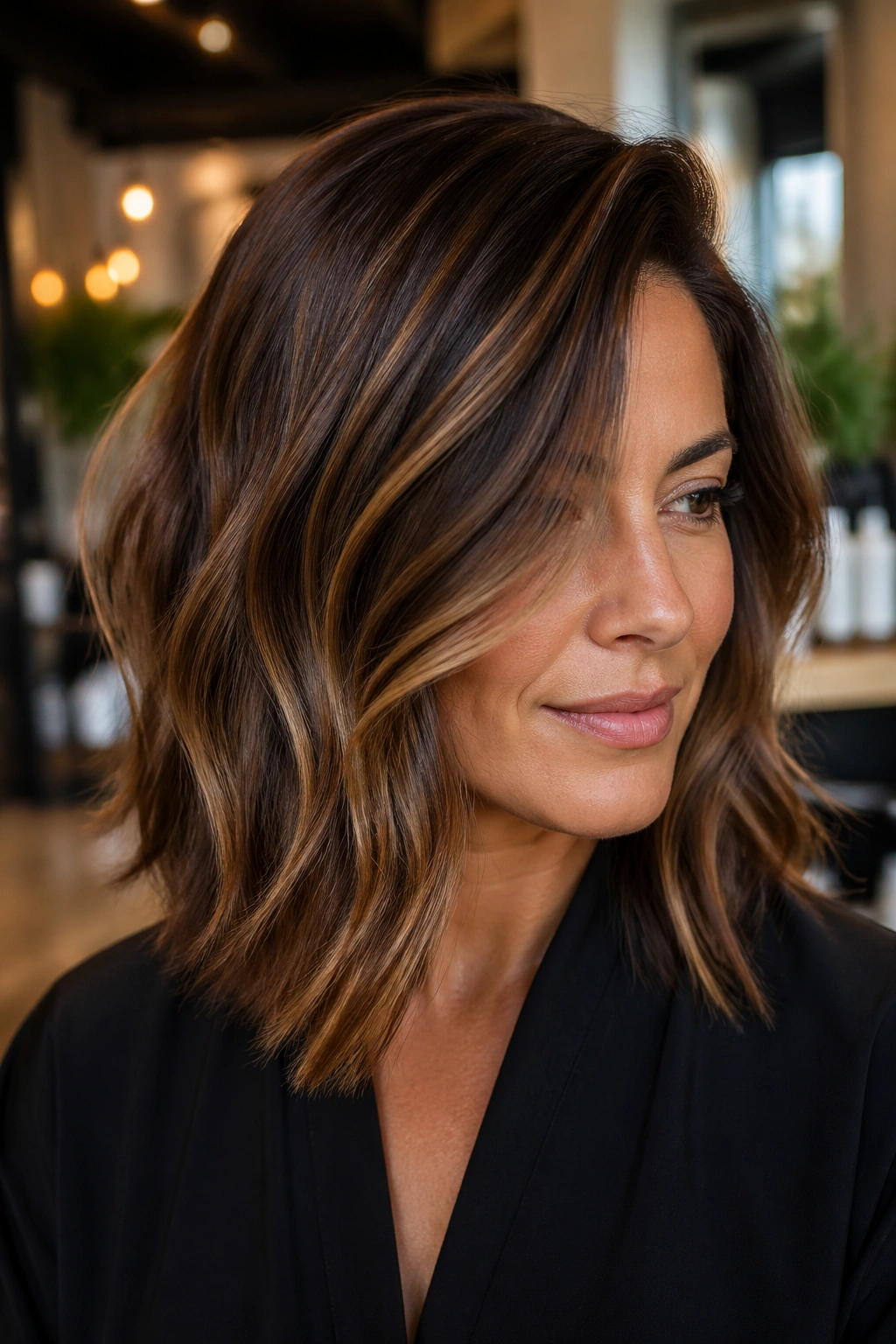
A deep side part can change a lob faster than a haircut sometimes. Add chestnut balayage, and the whole thing gets fuller, richer, and a little more dramatic without becoming high maintenance.
This works because the part creates natural lift on one side, then the chestnut ribbons echo that volume with warm depth. It’s a good move if your hair tends to fall flat at the crown. The color gives the illusion of density, especially when the lighter chestnut pieces are placed around the cheekbone and across the heavier side of the part.
Compared with a center part, a deep side part makes the balayage feel less symmetrical. That matters if you want softness but not sameness. The side sweep also lets the color catch around the face in a way that feels flattering rather than obvious.
If you like a blowout with movement at the root, this one is easy to love. It’s polished, but not stiff.
11. Bronde Balayage with Money Pieces
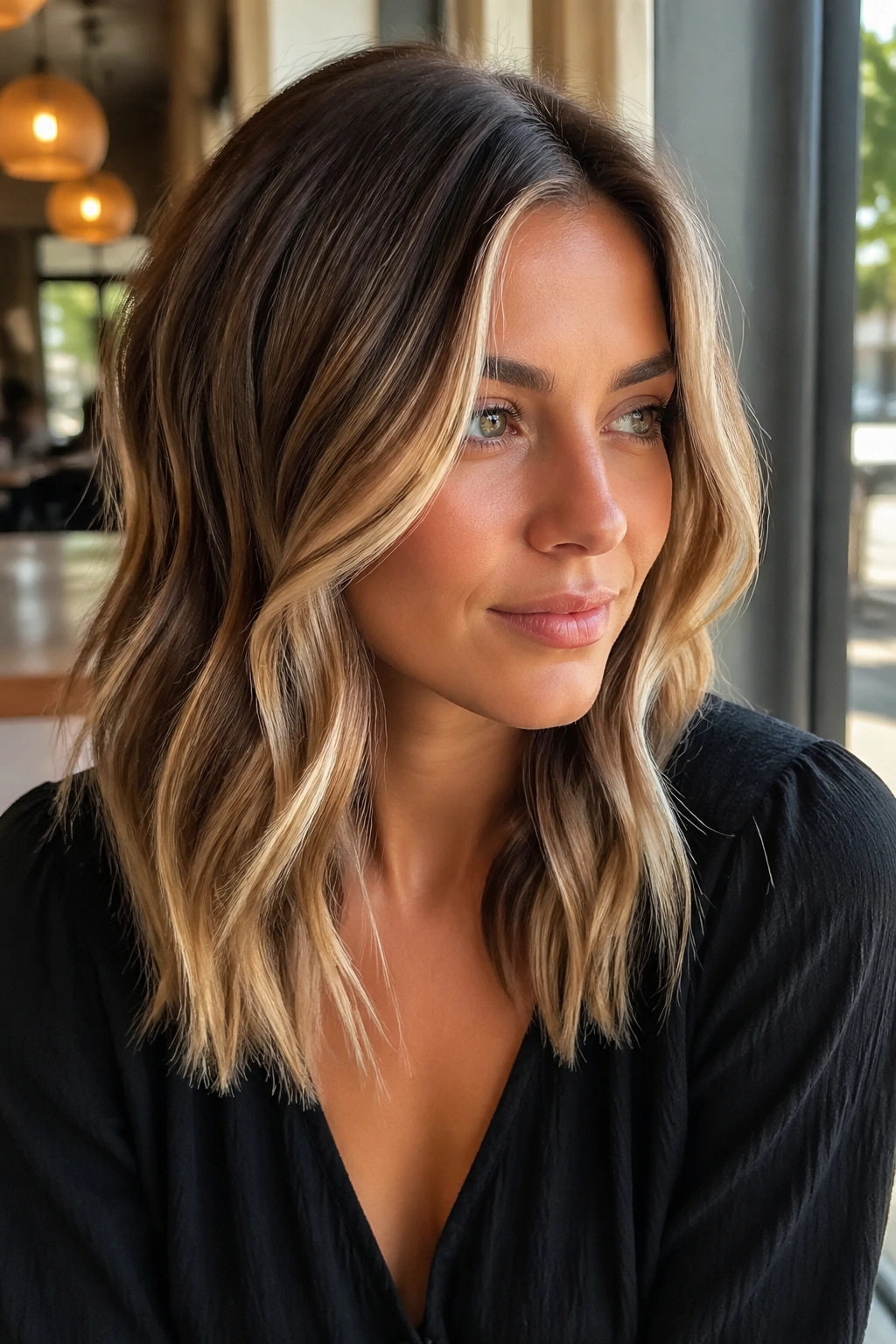
Bronde is the easygoing middle ground that a lot of people pretend not to love, then end up wearing for years. It sits between brown and blonde, and on medium-length hair it gives you enough brightness to look fresh without forcing a dramatic shift.
The money pieces are what make this version work. A brighter strip at the front, usually one to two levels lighter than the rest of the hair, opens the face and makes the whole color feel intentional. The rest stays softer and lower contrast, which keeps the grow-out smoother than a full blonde job.
This is a smart choice if you want color that does not shout for attention every time your roots appear. It’s also useful if you wear your hair both straight and wavy, because bronde changes character with the texture. Straight, it looks neat. Wavy, it feels sun-kissed.
Ask for the money pieces to start around the cheekbones, not the hairline. That little detail keeps them from looking like a strip.
12. Cinnamon Balayage on a Tousled Mid-Length Cut
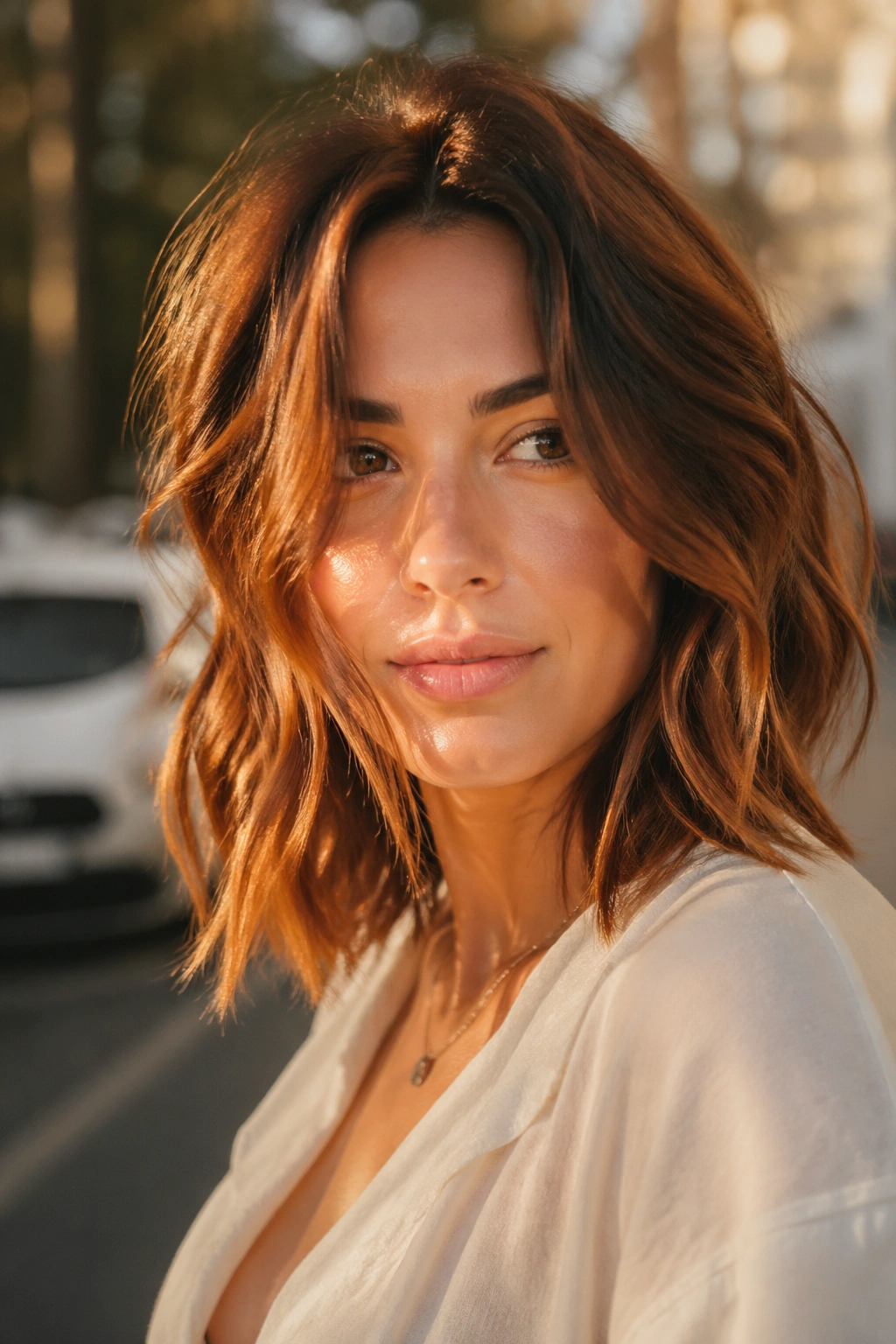
Cinnamon balayage has a way of making medium-length hair feel warm before you even style it. The shade sits between copper and brown, so it carries enough color to be noticed but still looks believable on real hair.
A tousled cut is the right partner because cinnamon likes movement. The little bends and bends-in-the-wrong-direction bits are part of the appeal. They stop the color from reading flat, and they make the warm pieces flicker through the layers instead of sitting on top.
I’d choose this for someone who wants a richer brunette with a little spice. Not red-red. Not strawberry. Just enough warmth to make the hair look healthy and thick. The best version usually has deeper roots, a cinnamon mid-band, and ends that are only slightly brighter.
Glossing helps here. Cinnamon fades toward copper if you let it, which can be lovely, but not if you were hoping for a brown finish. Keep an eye on that.
13. Smoky Beige Balayage on a Blunt Lob
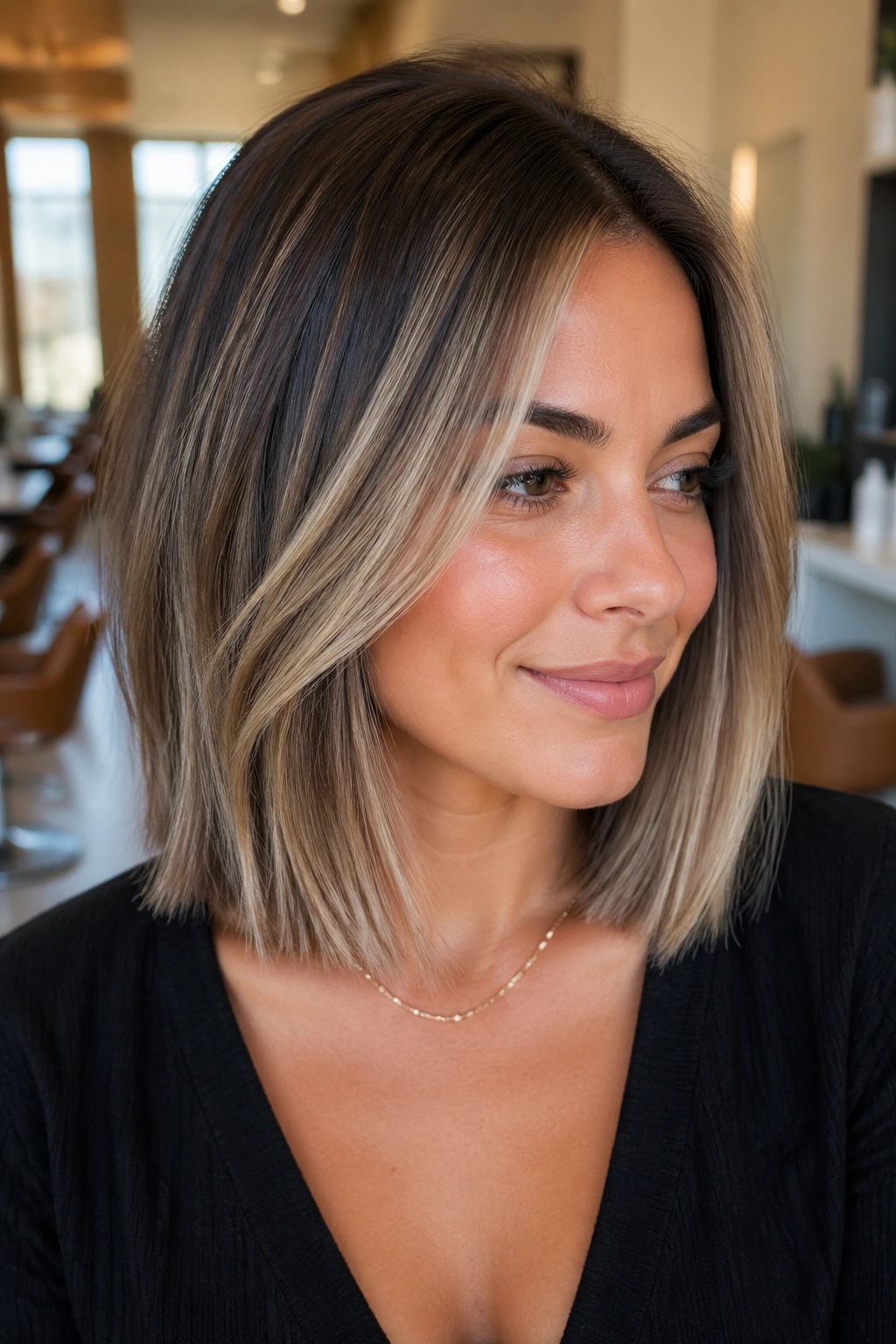
Why does smoky beige stop a blunt lob from looking heavy? Because the tone does the softening that layers usually do. A blunt cut has clean lines; smoky beige takes the edge off those lines without turning the hair blonde.
The Color Formula
Ask for a cool beige base with soft, diffused highlights through the surface. The brightest pieces should live around the face and top layer, while the ends stay a touch deeper. That keeps the shape crisp while giving it depth.
A blunt lob can go helmet-like fast if the color is too solid. Smoky beige solves that by creating tiny shifts in tone. It is subtle, but not boring. The hair still looks rich from a distance, then layered up close when the light hits the mid-lengths.
This is one of the better choices for straight hair or loose bends. Heavy curls can hide the crispness of the cut, which is a shame here. A flat iron bend at the ends or a soft wave will show the color better.
14. Golden Balayage on Airy Layers
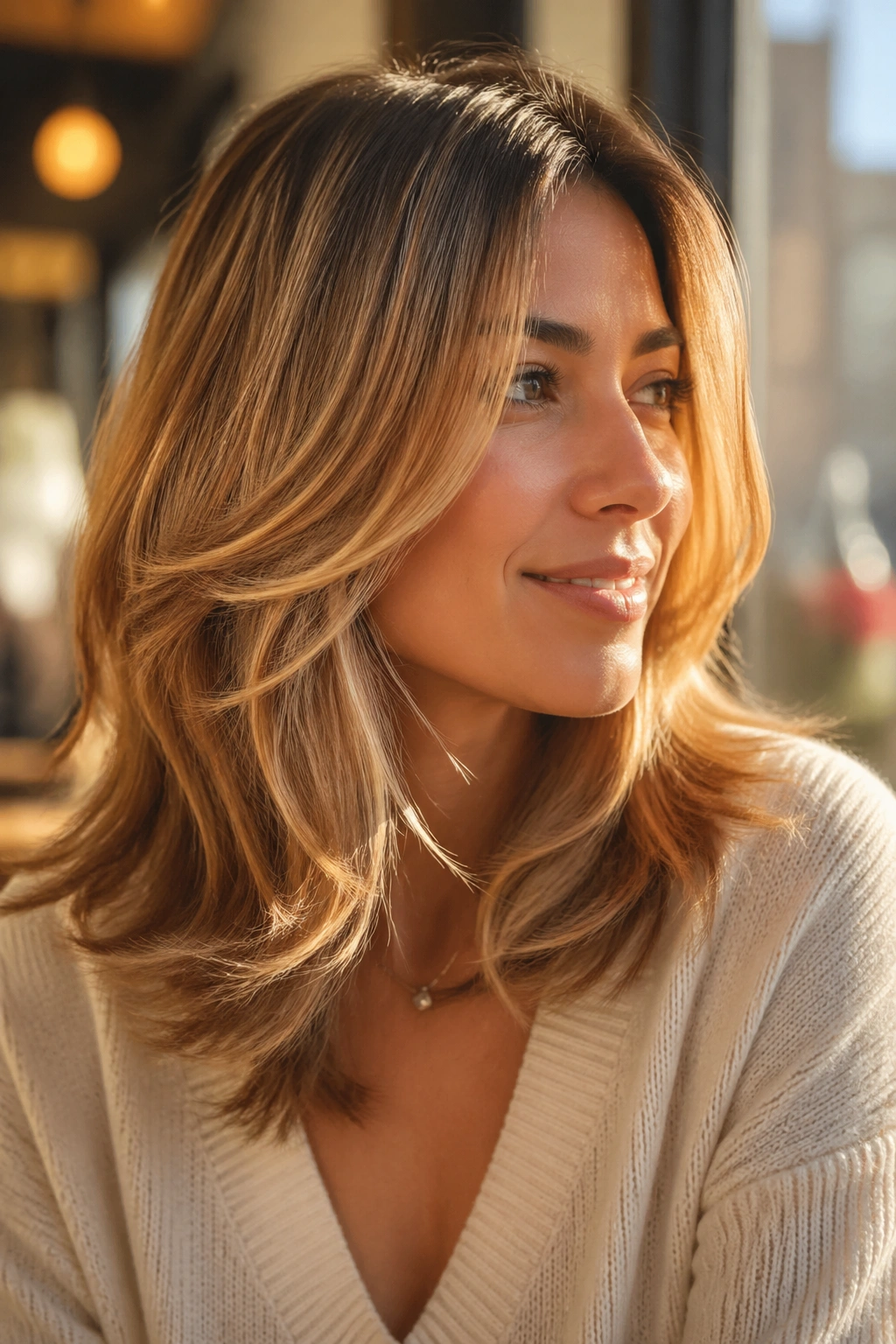
Golden balayage looks its best when the haircut has air in it. Medium-length layers give the color places to catch and move, so the gold reads as soft glow instead of chunky brightness.
Picture the hair when it swings. The lighter pieces do the talking. That is what makes this style feel alive. It works especially well if your natural shade is dark blonde, light brown, or brunette with warm undertones, because the gold has something to blend into.
- Keep the highlights fine near the crown.
- Let the lighter pieces widen slightly toward the ends.
- Use a round brush or loose wave to show the dimension.
- Skip heavy oils near the top, or the color can look flat.
The thing to watch is tone. Gold is lovely when it’s warm and soft. If it gets too yellow, the whole look can go dull fast. A beige-gold gloss usually keeps it in line.
15. Platinum-Softened Balayage on Dark Roots
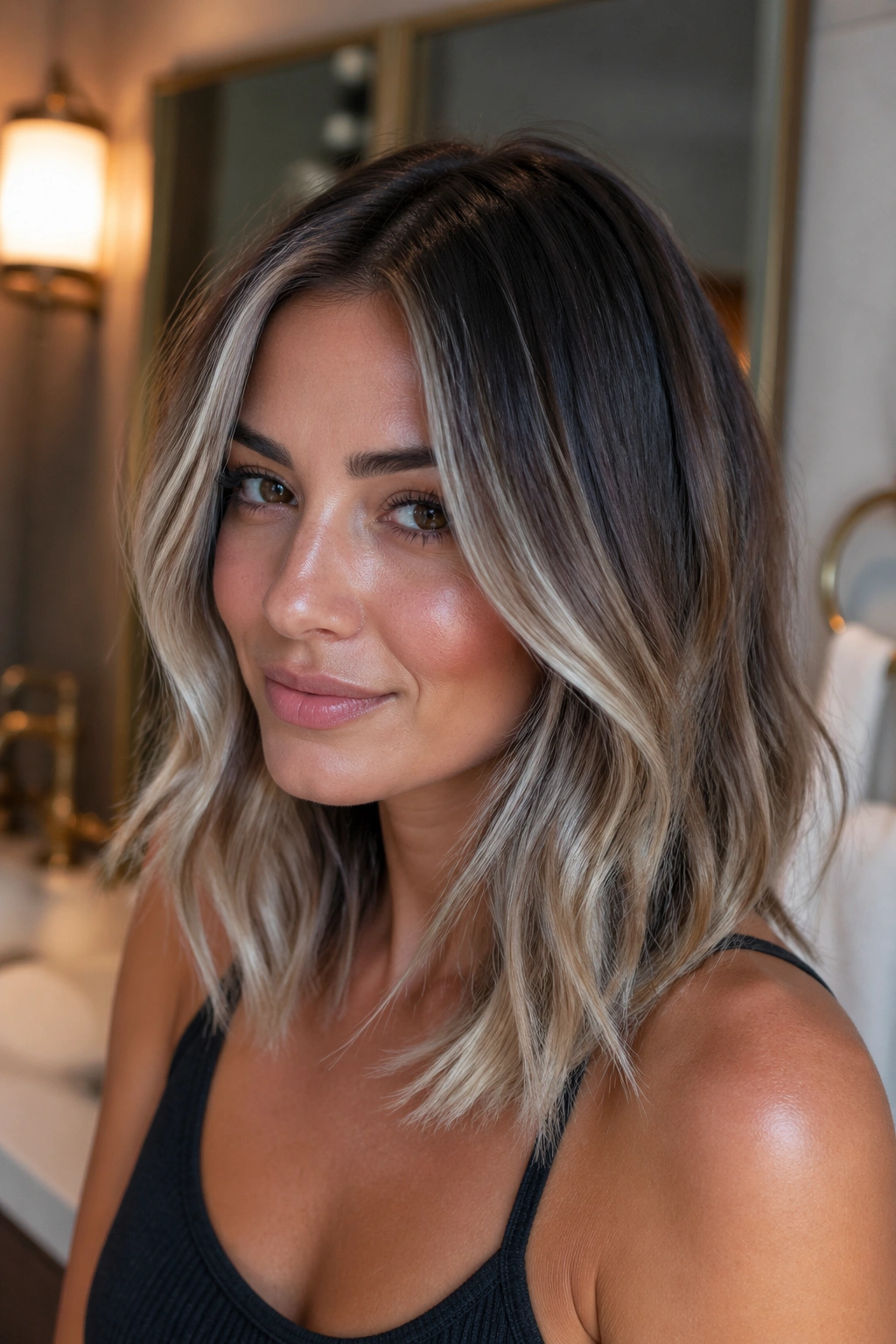
This is for the person who wants drama but does not want the upkeep of a full platinum head. Platinum-softened balayage keeps the roots dark and lets the lighter pieces live where they matter most: around the face, through the mid-lengths, and on the ends.
The softened part is key. You are not asking for harsh contrast at the scalp. You’re asking for a controlled lift that makes the hair look brighter without turning it into a high-maintenance project. On medium-length hair, that balance matters even more because the color has less space to fade gracefully if the placement is wrong.
It looks especially good on wavy cuts with a bit of body. The contrast between dark roots and light ends gives the style shape, and the medium length keeps the platinum from feeling overwhelming. Still, this is one of the more maintenance-heavy options on the list. Tone matters. Moisture matters. A lot.
If you like a cooler, sharper finish and do not mind regular glosses, this one has real presence.
16. Red-Brown Balayage on a Wavy Lob
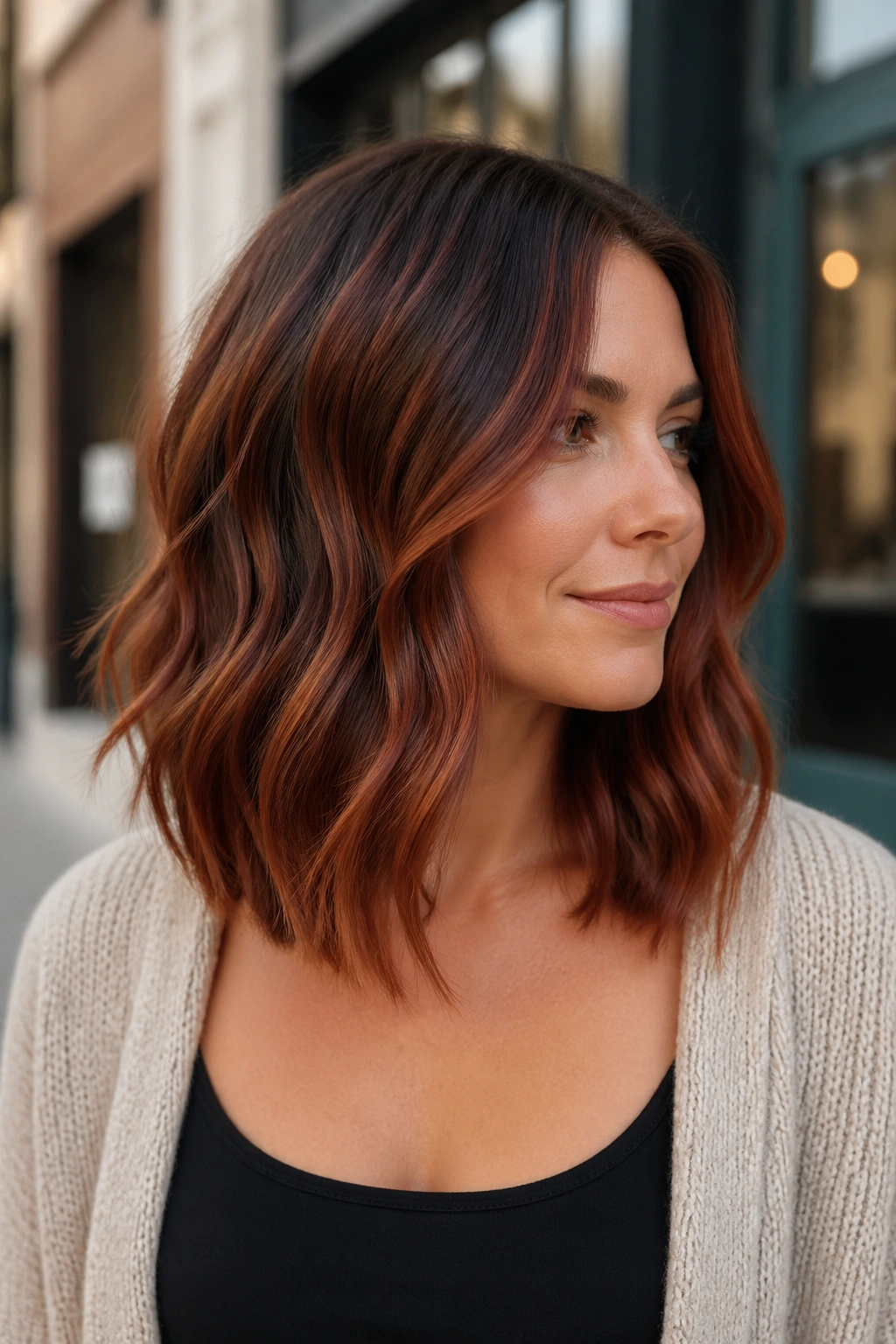
Red-brown balayage sits in a nice middle zone. It has more depth than copper, more life than plain brunette, and on a wavy lob it can look rich without drifting into orange territory.
Compared with brighter red shades, red-brown is easier to wear day to day. The color feels grounded, especially if your base is already medium brown. The balayage pieces can stay soft and thin, or they can get a little bolder around the front. Either way, the wave pattern helps the color move.
This is a good match for someone who wants warmth but not a flashy tone. The wavy lob gives the red-brown room to flicker through the cut, and the length keeps the color from looking too dense. A center part feels calm. A slightly off-center part gives the style more lift.
Use a color-safe shampoo and don’t wash too aggressively. Red-brown fades if you bully it.
17. Face-Framing Caramel Balayage with Bangs
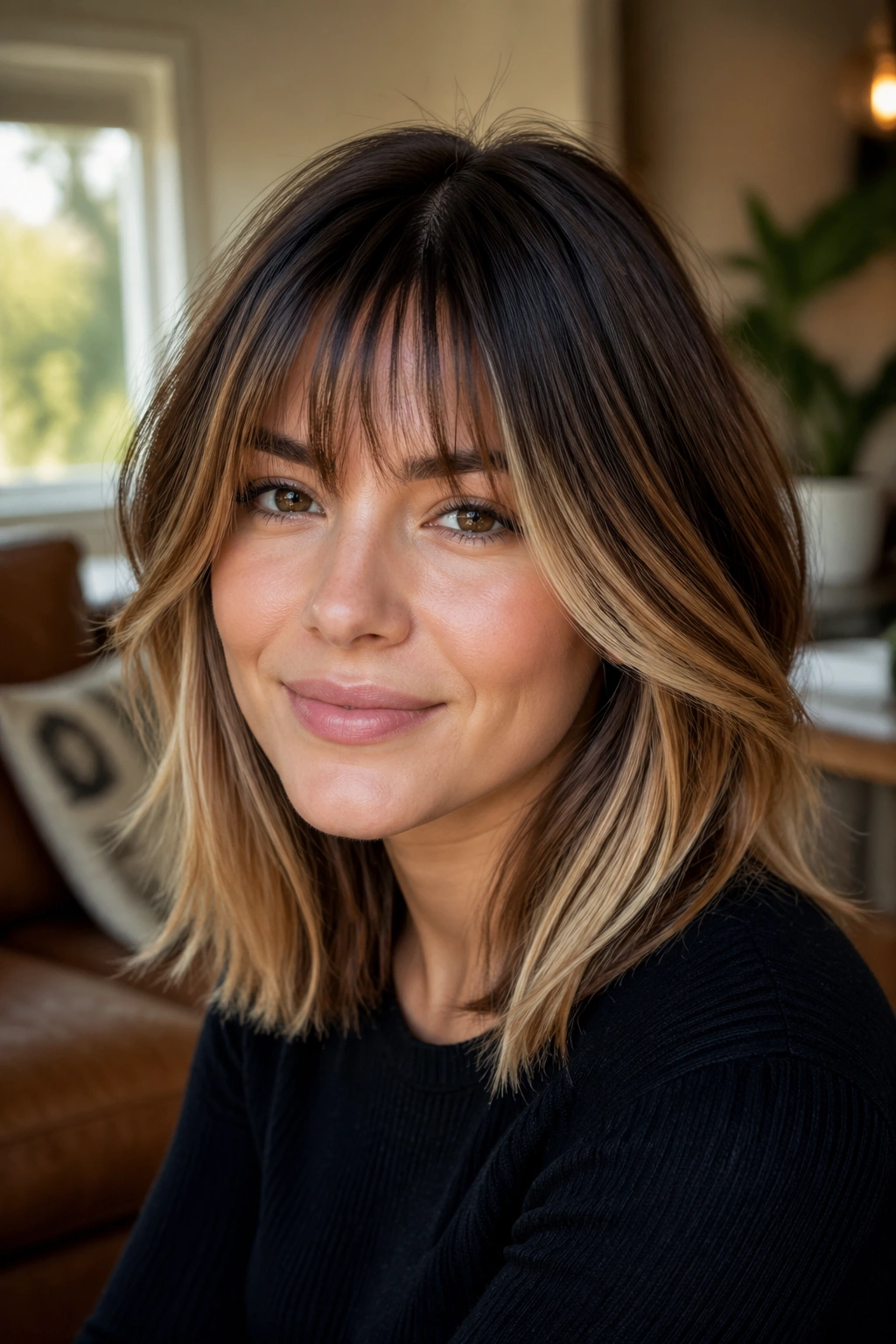
Bangs and balayage can work together, but the placement has to be smart. If the brightest pieces sit too high, the fringe and the color start competing. If the caramel is tucked mostly below the bangs, the whole cut looks balanced.
What Makes It Work
The best approach is to keep the boldest caramel around the cheekbones and outer layers, then let the bangs stay a touch darker or more blended. That keeps the focus on the eyes and the face shape, not just the color.
- Works well with curtain bangs, bottleneck bangs, or a soft full fringe.
- Looks good on shoulder-length waves and layered lobs.
- Needs a clear plan for styling the fringe on wash day.
- Benefits from a light root lift at the front so the bangs do not look heavy.
This is one of those styles that looks effortless only when it has been planned carefully. The color and the cut need to talk to each other. Otherwise the bangs swallow the dimension.
18. Cool Espresso Balayage on a Sleek Medium Cut
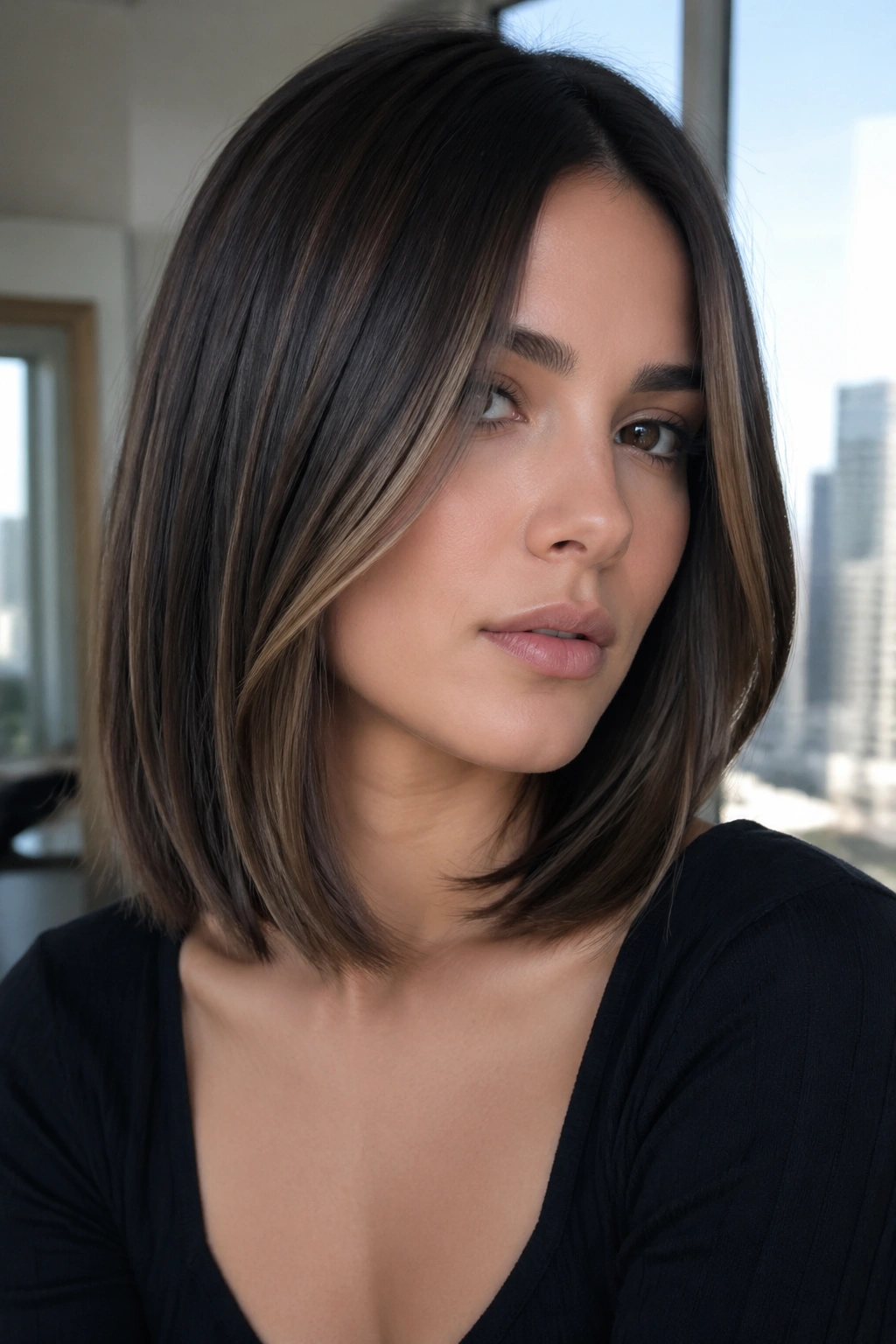
Some balayage is about brightness. Some is about depth. Cool espresso balayage lives in the second camp, and that is exactly why it works on a sleek medium cut.
The hair stays dark, but the balayage adds a fine shift in tone so the surface does not look flat. Think of it as movement you notice when the light changes, not when someone shouts across the room about their hair. The cooler espresso ribbons are subtle, almost shadow-like, which makes the shine stand out more than the color itself.
This style loves a smooth finish. A flat iron pass, a round-brush blowout, or a polished air-dry with a smoothing cream all suit it. If the ends frizz, the effect gets muddy, so healthy-looking hair matters here more than on some of the other looks.
I like this on medium cuts with clean edges. It feels grown-up without feeling stiff. Quiet, but not plain.
19. Sunlit Sand Balayage on Loose Beach Waves
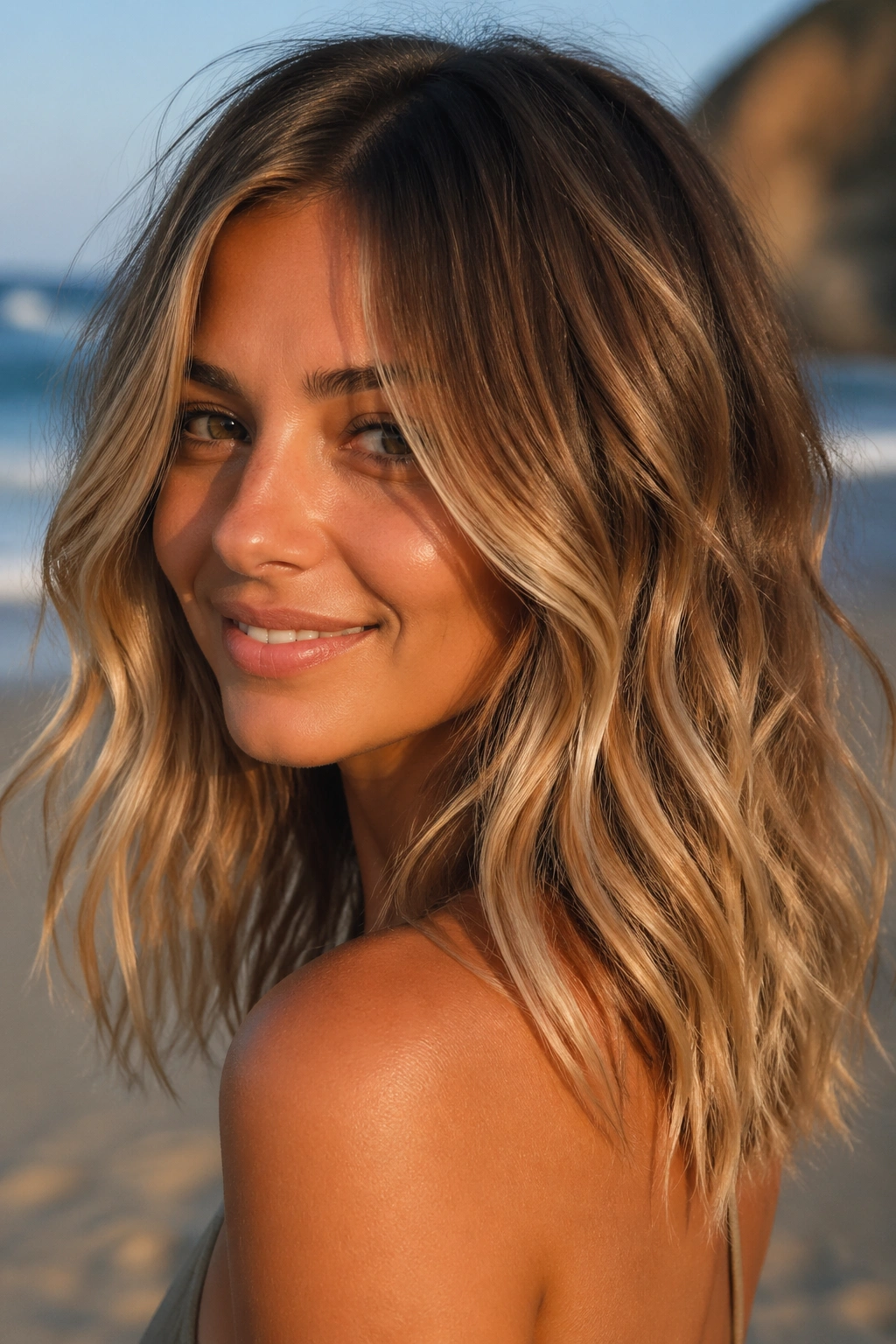
What if you want that bright, beachy look without going all the way blonde? Sunlit sand balayage is the answer. The tone sits between beige and soft blonde, and loose waves let it spread in a way that feels casual, not cosmetic.
The best base for this is usually dark blonde or light brown. From there, the sand pieces can be painted in thin layers so the color looks like it was lifted by sun, not by a foil packet. The waves matter because they break the lighter shade into smaller flashes.
This style looks especially good when the hair is medium density. Too fine, and the ends can look see-through. Too thick, and the waves need a bit more product to keep their shape. A salt spray helps, but a sticky one can make the lighter pieces look dry, so keep it light.
It is a cheerful color without being sugary. That matters.
20. Multi-Tonal Beige and Honey Balayage
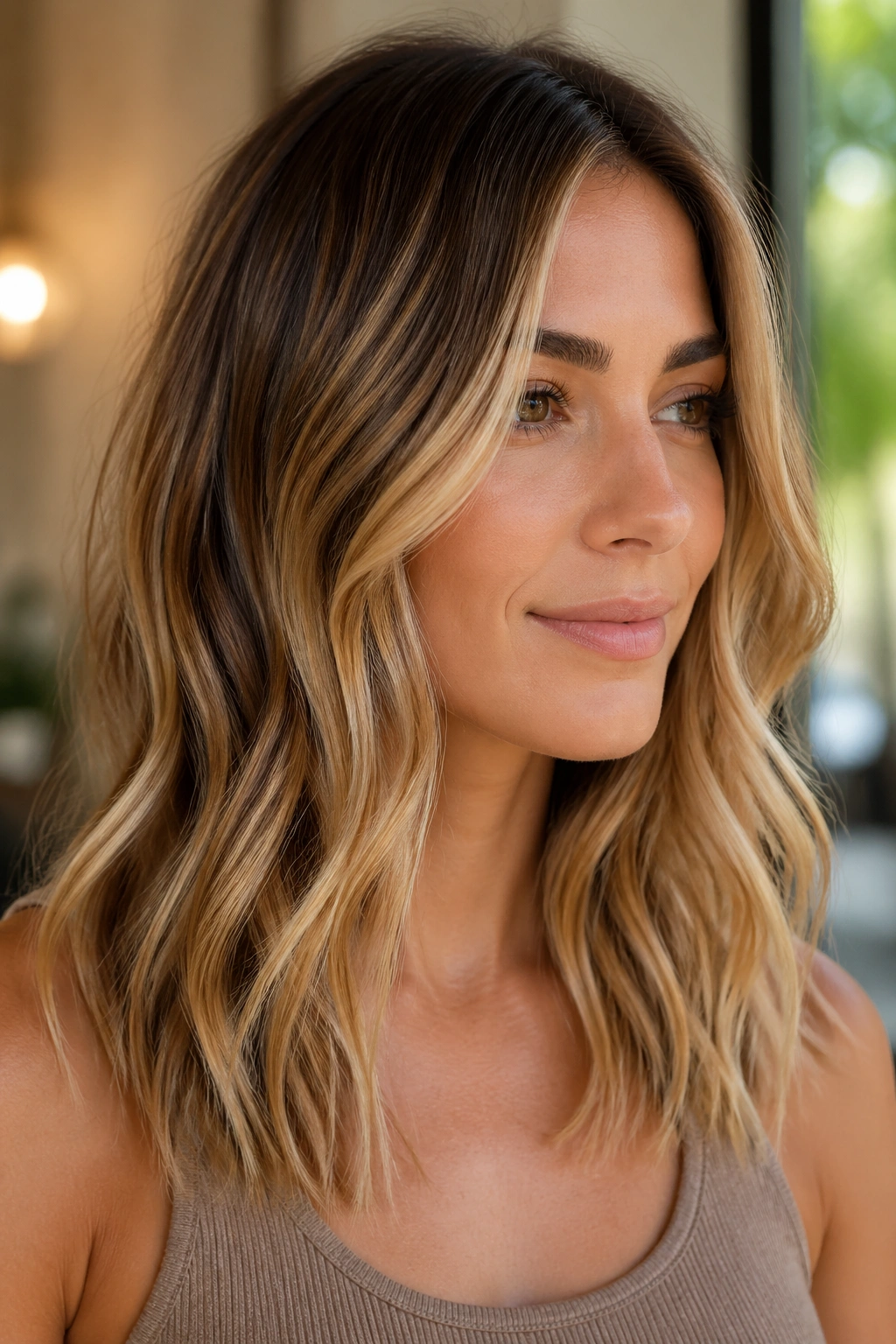
A single highlight shade can work, but multi-tonal color usually looks more natural on medium-length hair. Beige and honey together give you depth at the root area, warmth through the middle, and brightness at the ends without obvious lines.
The real advantage is how the tones shift in different light. Beige keeps the look calm. Honey brings warmth back in. Put them together and the hair feels layered even before you touch the haircut. This is one of the better choices for shoulder-length cuts that need dimension more than drama.
If your hair has a little wave, even better. The tones separate just enough to show movement, but not so much that they look patched together. A round-brush blowout gives it a softer finish; loose waves make the honey pieces pop more.
This is the kind of balayage that works on a workday and a night out. Not because it tries to do everything. Because it simply doesn’t get in the way.
21. Soft Auburn Balayage on Mid-Length Curls
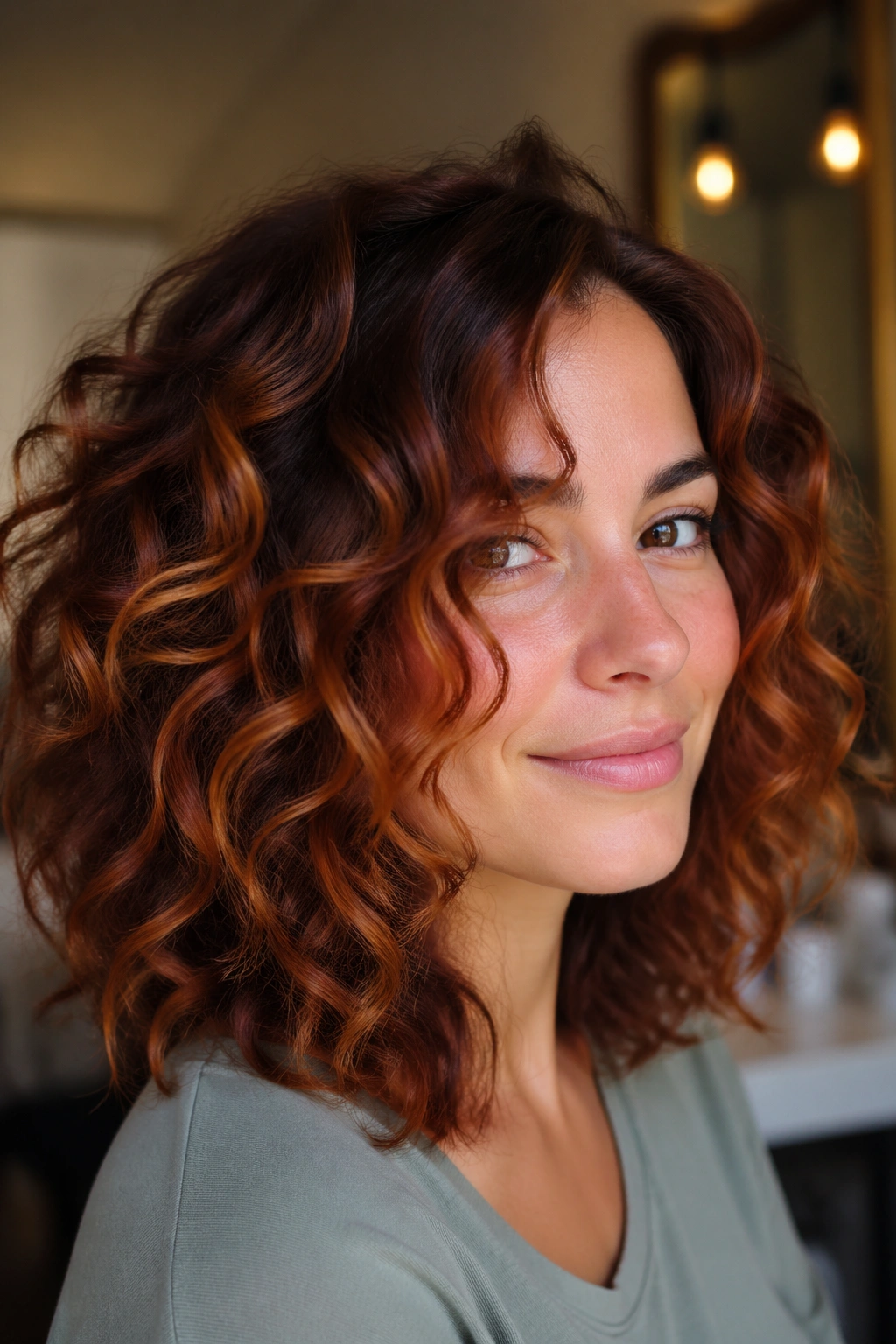
Soft auburn on curls brings out the shape of the haircut in a way straight styles sometimes can’t. The curls catch the auburn pieces at different points, so the color looks richer and deeper as the hair moves.
This is a nice option if you want warmth with a little red in it, but not the full commitment of a vivid red shade. Auburn has enough brown in it to feel wearable, and that helps on medium-length hair, where the lighter pieces need to blend into the cut rather than sit on top of it.
How to Keep the Curl Pattern Happy
Use a curl cream that gives slip, not stiffness. Then scrunch the hair while it is damp so the balayage pieces form around the curl rather than fighting it. If the auburn is placed mostly on the outer curls and the face frame, the style will look brighter without losing depth.
It is a beautiful match for anyone who wants the color to feel alive even on a lazy hair day.
22. Rose Gold Balayage on a Textured Lob
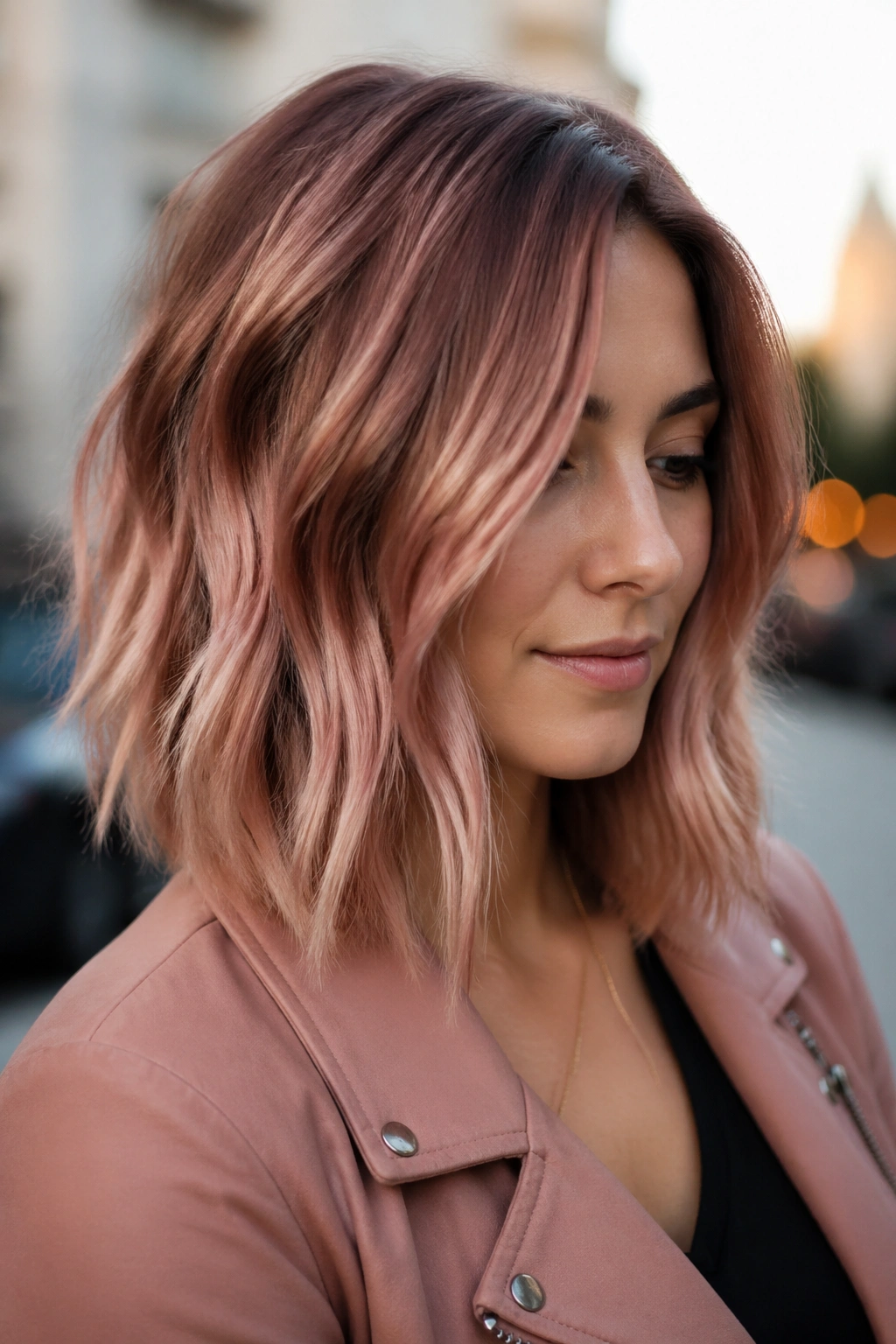
Rose gold on medium-length hair is for someone who wants warmth with a little edge. On a textured lob, the color stays wearable because the rougher cut keeps it from feeling too sweet.
Compared with copper, rose gold has a softer pink cast. Compared with strawberry blonde, it’s less sunny and a little more muted. That makes it a fun middle ground if you like fashion color but do not want something loud enough to dominate your whole look. The texture helps here a lot. It breaks the color into small pieces and keeps the pink-beige tone from reading flat.
This is one of the easiest ways to test the waters with a playful shade. Ask for the rose tones to stay diluted through the ends and face frame, with the base kept closer to a warm brunette or dark blonde. That keeps it grown-up, if that is the right word, and stops the color from fading into a strange peach.
A soft wave sells it. A sleek finish can make it look more copper. Both work.
23. Icy Beige Balayage with Volume at the Crown
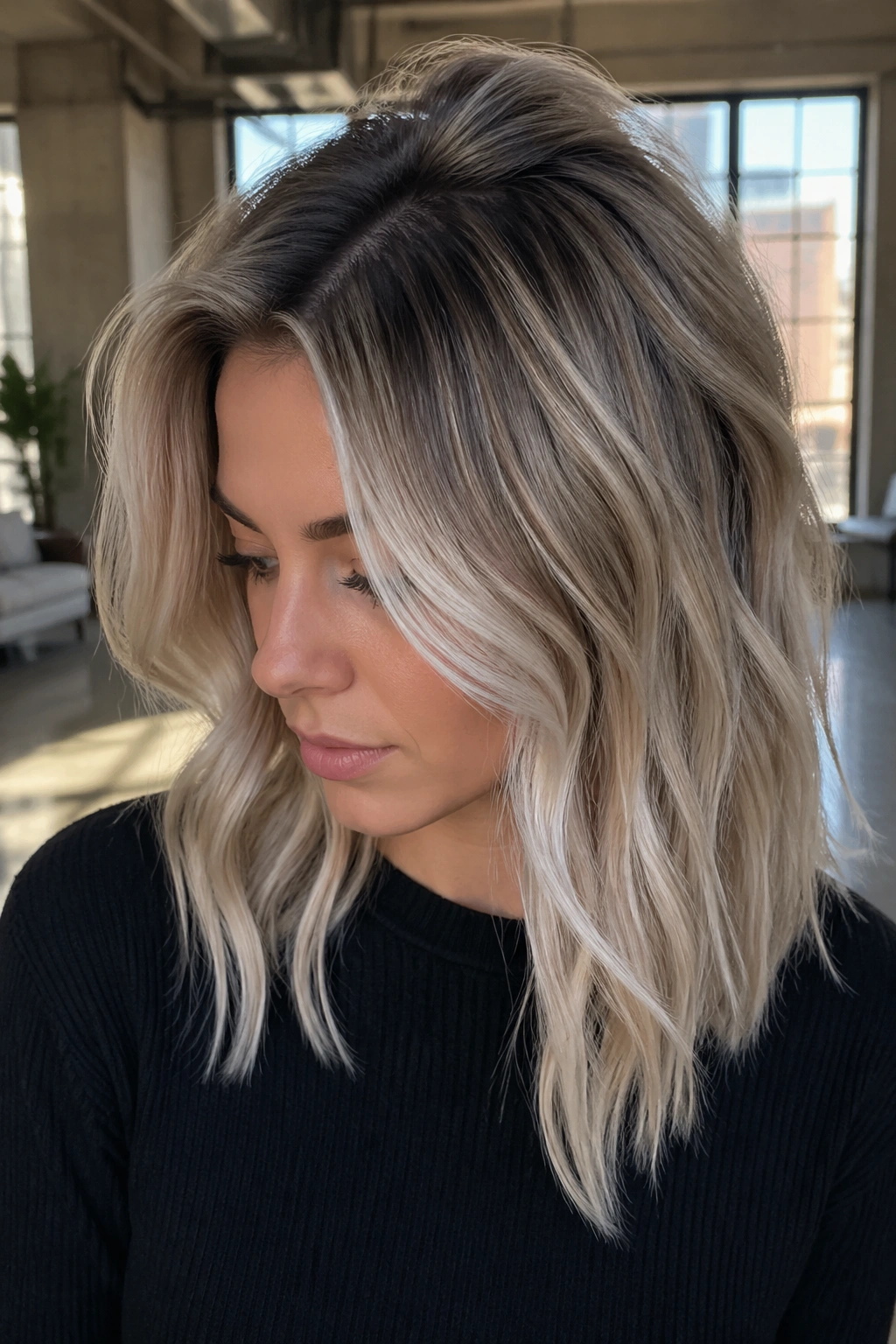
Icy beige balayage needs volume. Without lift at the crown, the lighter tones can flatten out and make medium-length hair look wider than it is. With a little height at the top, the color turns crisp and modern.
The nicest version of this look keeps the root a shade deeper, then lets the icy beige show through the mid-lengths and ends. That contrast gives the cut shape, especially if the hair lands at the shoulders or just below the collarbone. It’s cool without feeling washed out.
This style suits thicker hair particularly well because the added volume supports the contrast. Fine hair can wear it too, but the placement has to stay delicate. Too many light pieces near the crown will make the top look sparse.
A root-lifting mousse, a round brush, and a cool-toned gloss go a long way here. The finish should feel polished, not frozen. That’s the difference between stylish and harsh.
Final Thoughts
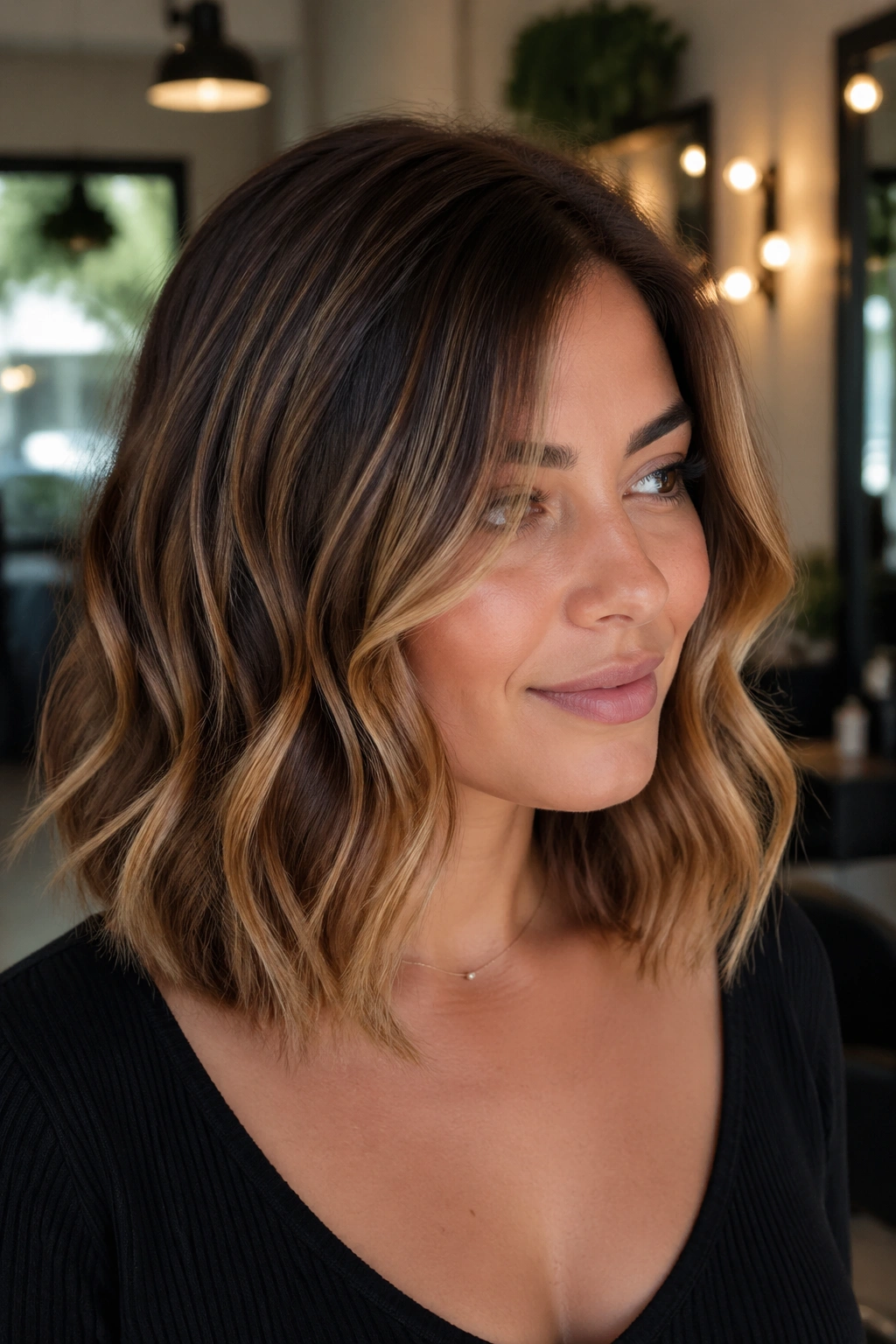
Medium-length hair gives balayage a rare kind of balance. There is enough length for color to move, but not so much that you lose control of the shape. That is why these looks work so well across lobs, shags, collarbone cuts, and layered mids.
The smartest choice is usually the one that fits your haircut first and your shade second. A great color can still look wrong if the placement fights the cut. Bring reference photos, yes, but bring one for the shape too. That part gets skipped all the time, and it matters more than people think.
A good balayage should look intentional on day one and forgiving on day forty. If it does both, you picked the right one.
