



Short haircuts for oval faces have a funny habit of looking effortless when they are anything but. An oval face gives you room to play, sure, but the haircut still has to land in the right place: too much height at the crown can stretch the face, too much width at the cheeks can throw off the balance, and a bang line that sits wrong can make the whole cut feel a little off.
That’s why the same bob or pixie can look sharp on one person and strangely heavy on another. Oval faces usually have that balanced, slightly longer shape with the cheekbones acting as the widest point, so the haircut’s job is less about “fixing” anything and more about deciding what to emphasize. Eyes. Jawline. Cheekbones. Neck.
Length placement does the heavy lifting.
A good short cut for an oval face isn’t about hiding anything. It’s about choosing where the eye lands first. Some cuts sharpen the bones. Some soften the face with movement. Some do a little of both, which is often the sweet spot if you want something flattering without looking overworked. Start with the chin-length bob and you can see the whole logic in one clean silhouette.
1. Chin-Length Bob for Oval Faces
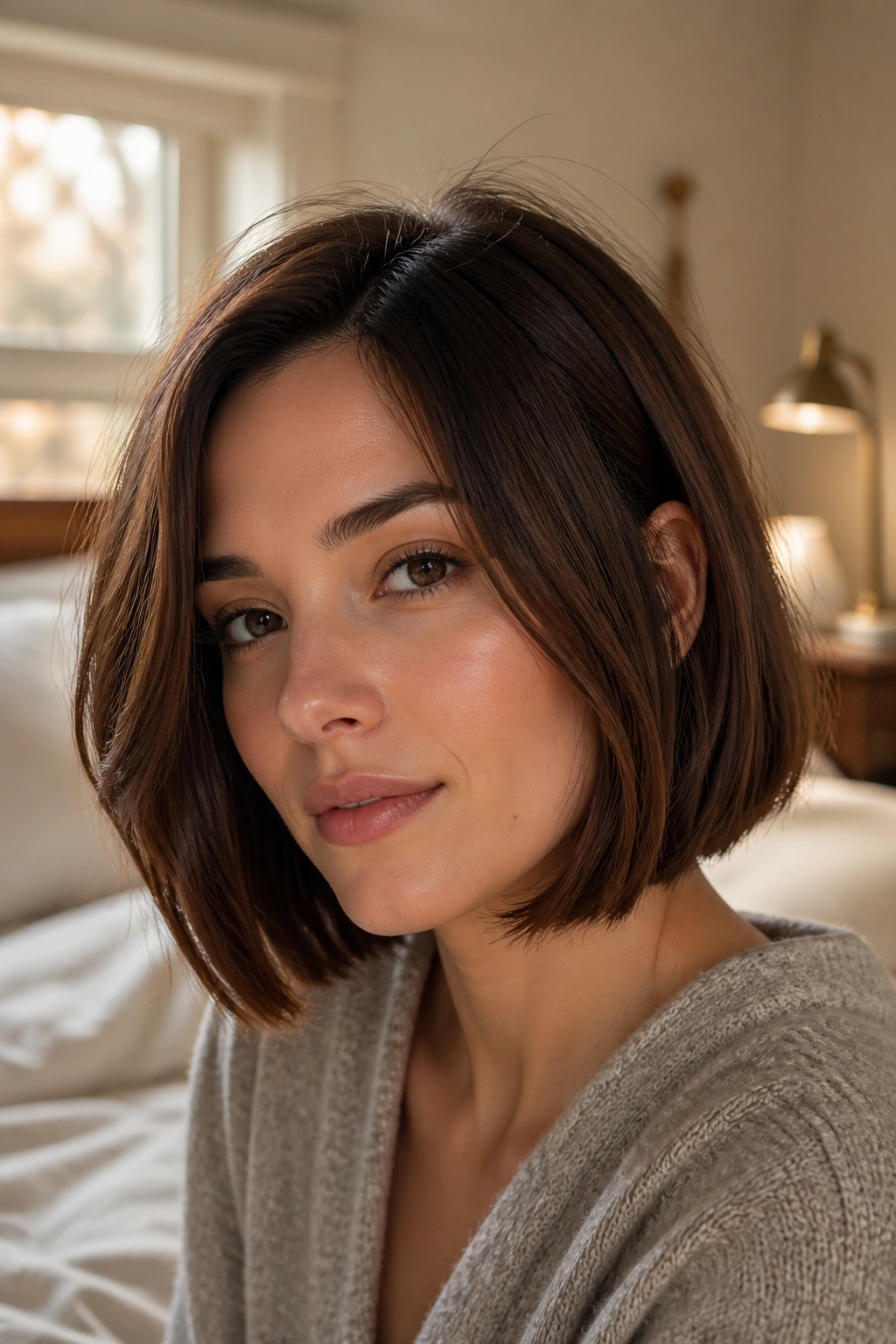
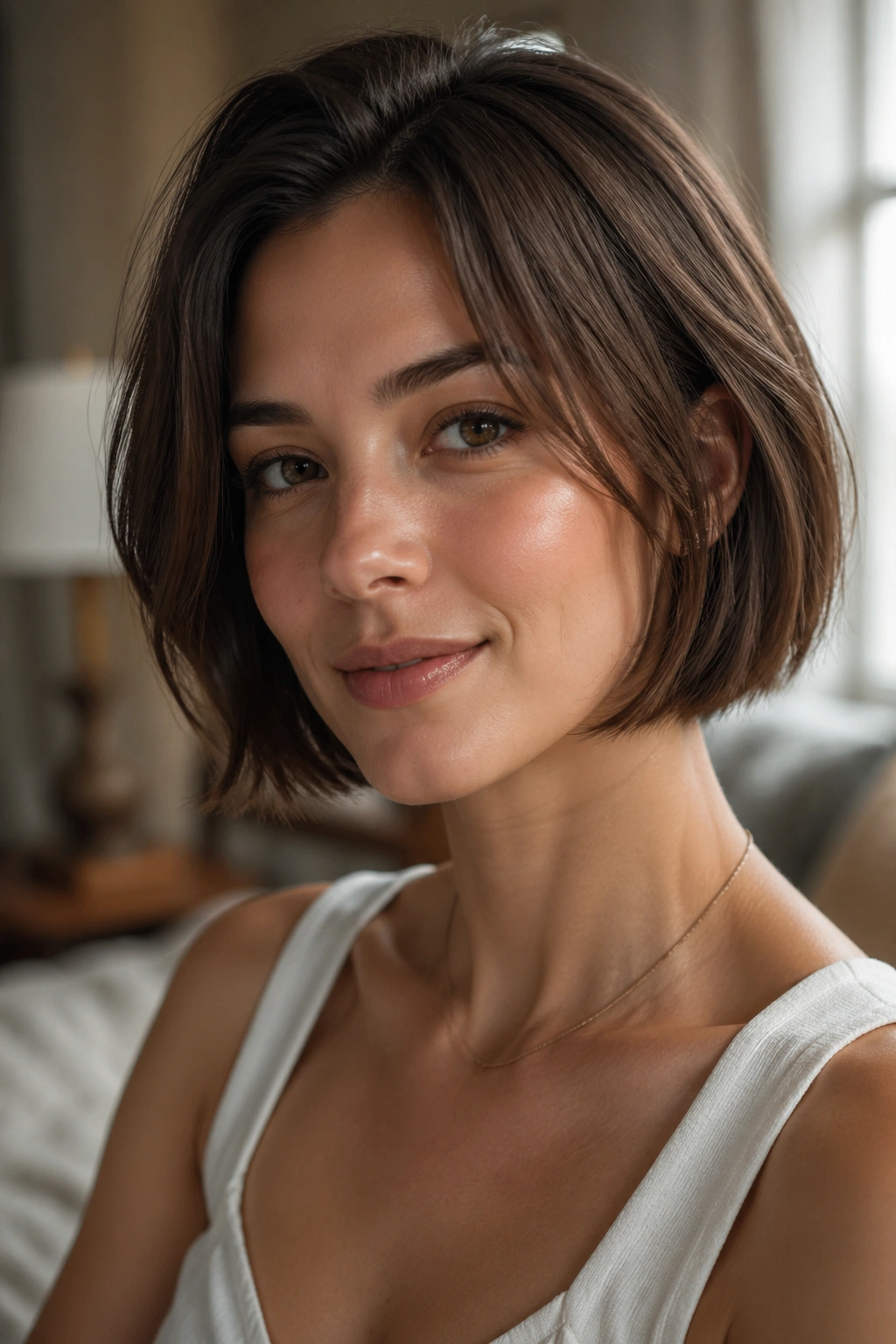
A chin-length bob is the haircut I’d hand to someone who wants structure without committing to something severe. On an oval face, it sits right where the jaw begins to matter, which gives the whole look a neat frame and keeps the face from appearing stretched.
Why the Length Works
The chin is a useful stopping point because it draws attention back to the lower half of the face. If your hair is straight or slightly wavy, that line looks crisp. If your hair has more bend, the ends soften just enough to keep it from feeling boxy.
Ask for the bob to land right at or slightly below the chin. That tiny difference matters. A cut that lands too high can make the face feel longer; a cut that falls too low starts to lose the clean frame.
- Best with a side part or a soft off-center part
- Works well with fine to medium hair density
- Looks especially good with tucked ends and a light bend at the front
Pro tip: If you wear glasses, keep a few longer pieces in front so the frames and the bob don’t fight each other.
2. French Bob With Soft Fringe
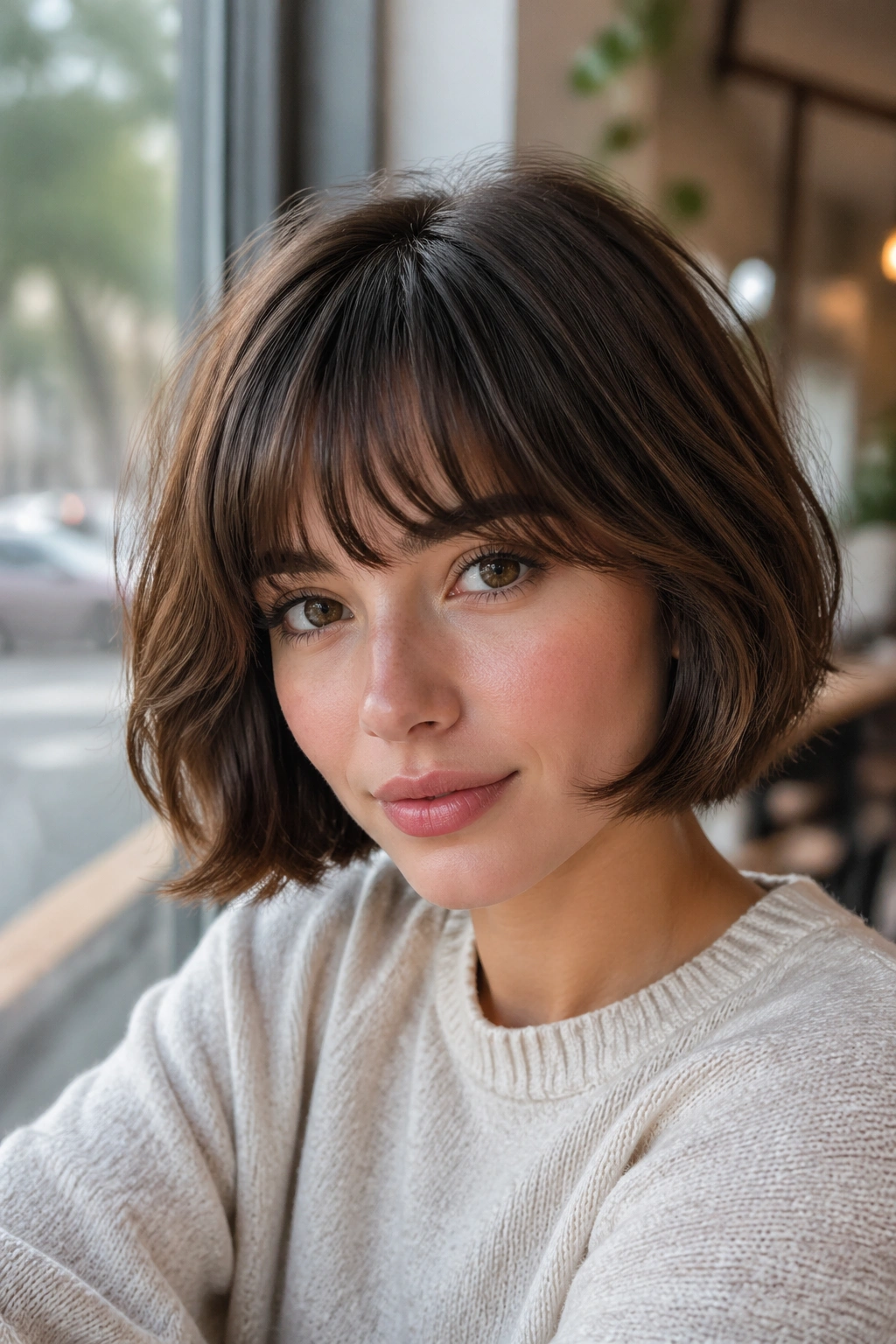
Why does the French bob keep coming back? Because it does a lot with a small amount of hair. On an oval face, the short length and gentle fringe pull attention toward the eyes and upper cheek area, which keeps the face lively instead of long.
The fringe matters more than people think. I like a soft fringe that grazes the brows or lands a touch below them, not a hard, square line that cuts straight across the forehead. That softer edge lets the style breathe. It also makes the cut easier to wear on days when you do not feel like styling every strand into place.
This cut works best when the ends are a little imperfect. A blunt edge can feel chic, but a slight bend or a touch of texture keeps it from looking stiff. If your hair is naturally straight, a quick pass with a flat iron and a slight inward curve at the ends is enough. If it’s wavy, let some natural movement stay in. That looseness is part of the charm.
3. Textured Pixie Cut
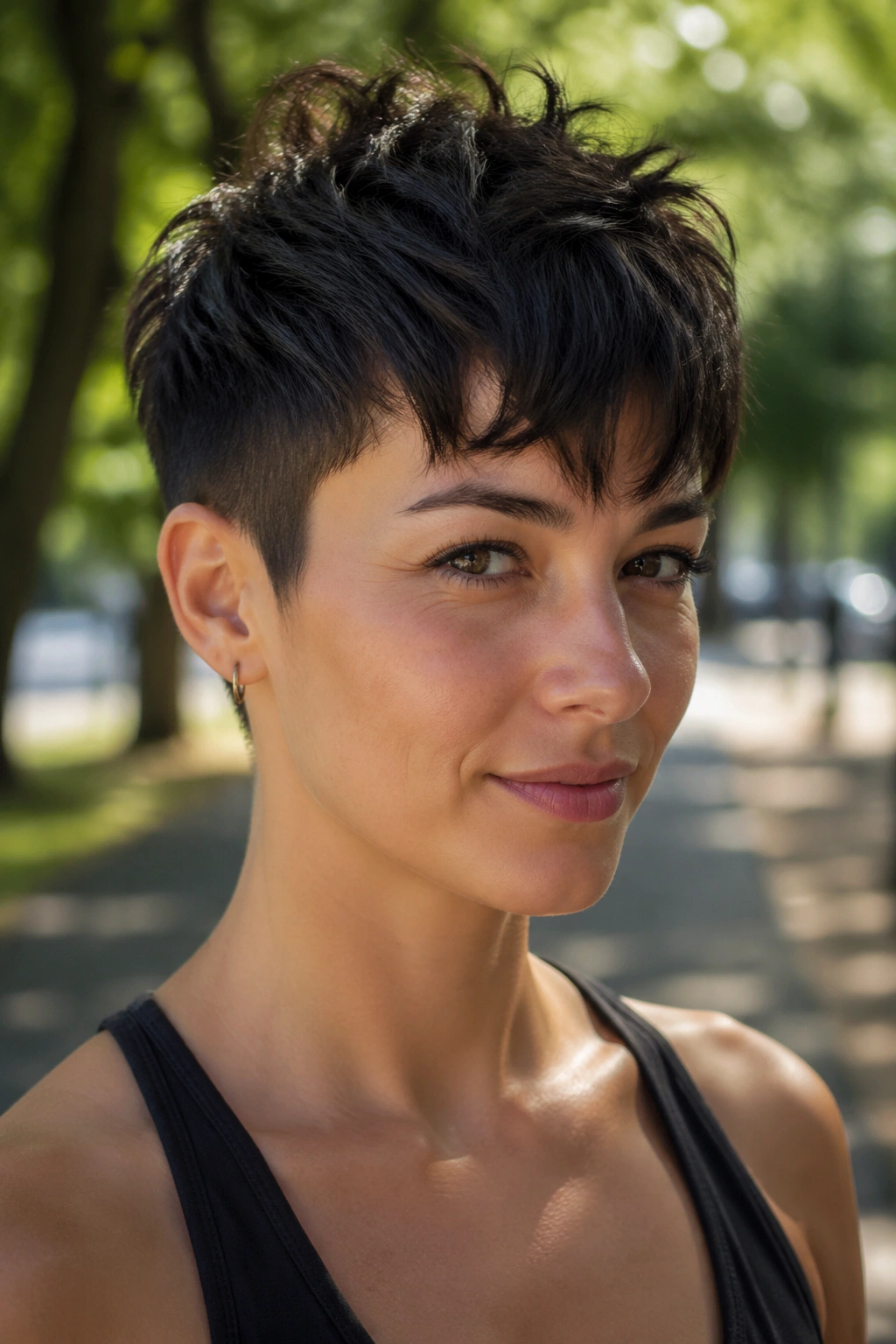
A textured pixie can be softer on an oval face than a bob, which surprises people. The reason is simple: the eye goes to the piecey top and the broken-up fringe, not to one heavy line across the face. That creates movement fast.
What to Ask For
Ask for short, tapered sides and a top length that still gives you something to play with. If the top is cut too short, the style can turn flat and a little helmet-like. If the top is left too long, it starts to look like an overgrown crop rather than a pixie.
- Tapered sides that sit close to the head
- Choppy top layers, not a smooth helmet shape
- A fringe that can be brushed forward, up, or to one side
- Matte paste or light styling cream for definition
This cut is great if you like waking up and styling in under five minutes. It’s not zero-effort, though. You still need a little product and a quick pinch-and-lift with your fingers. The payoff is that the face stays open and bright, especially on oval shapes that can handle a lot of freedom around the brow and cheekbones.
4. Bixie Cut
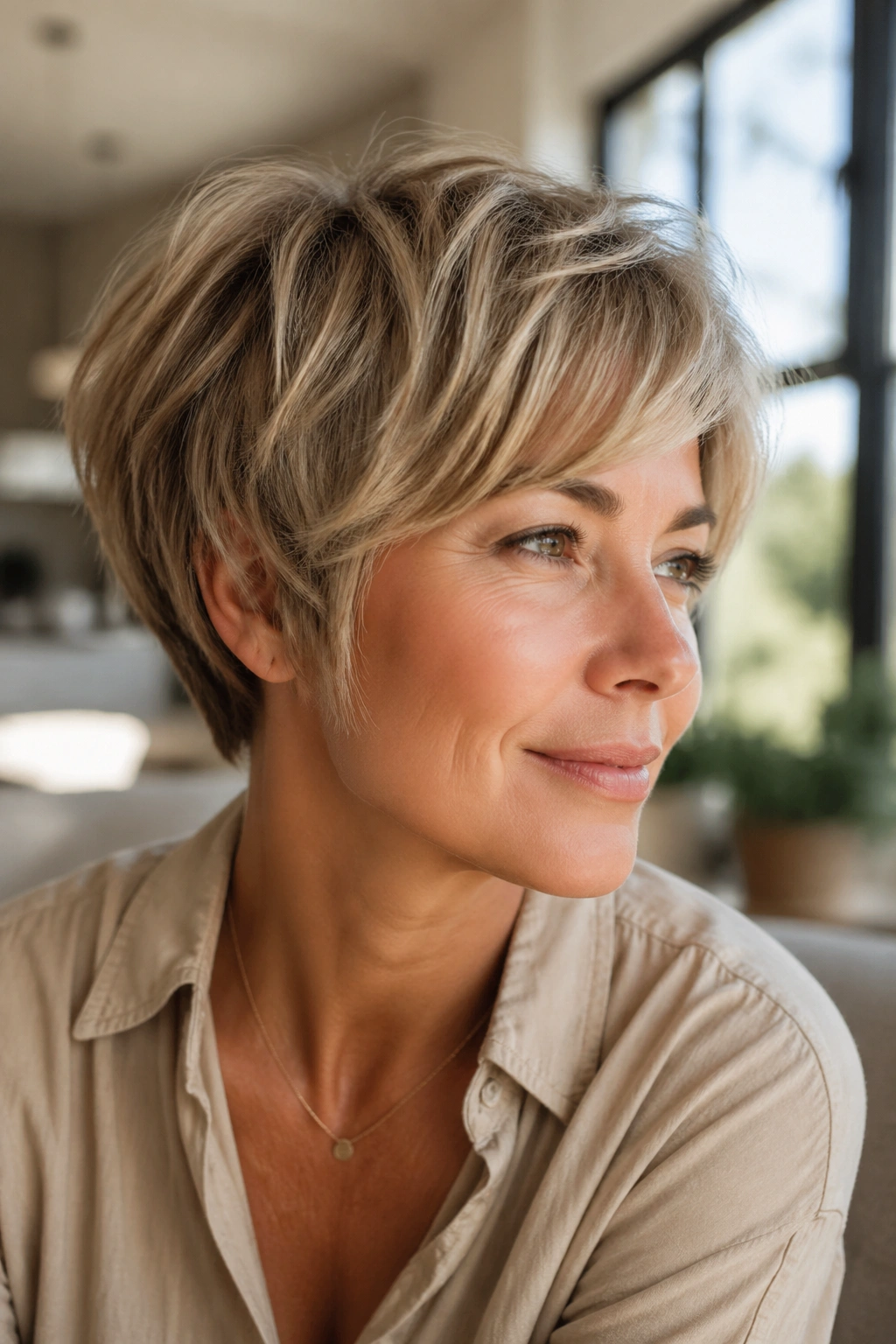
If you want shorter hair without jumping straight into pixie territory, the bixie sits in the useful middle. It has the softness of a bob at the edges and the lift of a pixie through the crown, which keeps an oval face from looking too long or too round.
The best bixies keep a little softness around the temples and a bit of length near the front. That front section matters more than the back, honestly. It gives the cut shape and keeps it from becoming too boyish unless that is what you want. A good bixie should move when you turn your head. It shouldn’t sit there like a block.
I like this cut on hair that has some body, because the layers show up better. Very fine hair can wear it too, but the top needs restraint so the crown doesn’t get stringy. A light mousse at the roots and a rough dry with your fingers is usually enough. If you want the shape to last, ask your stylist to leave the nape tapered and the front a little longer than the back.
5. Jaw-Grazing Blunt Bob
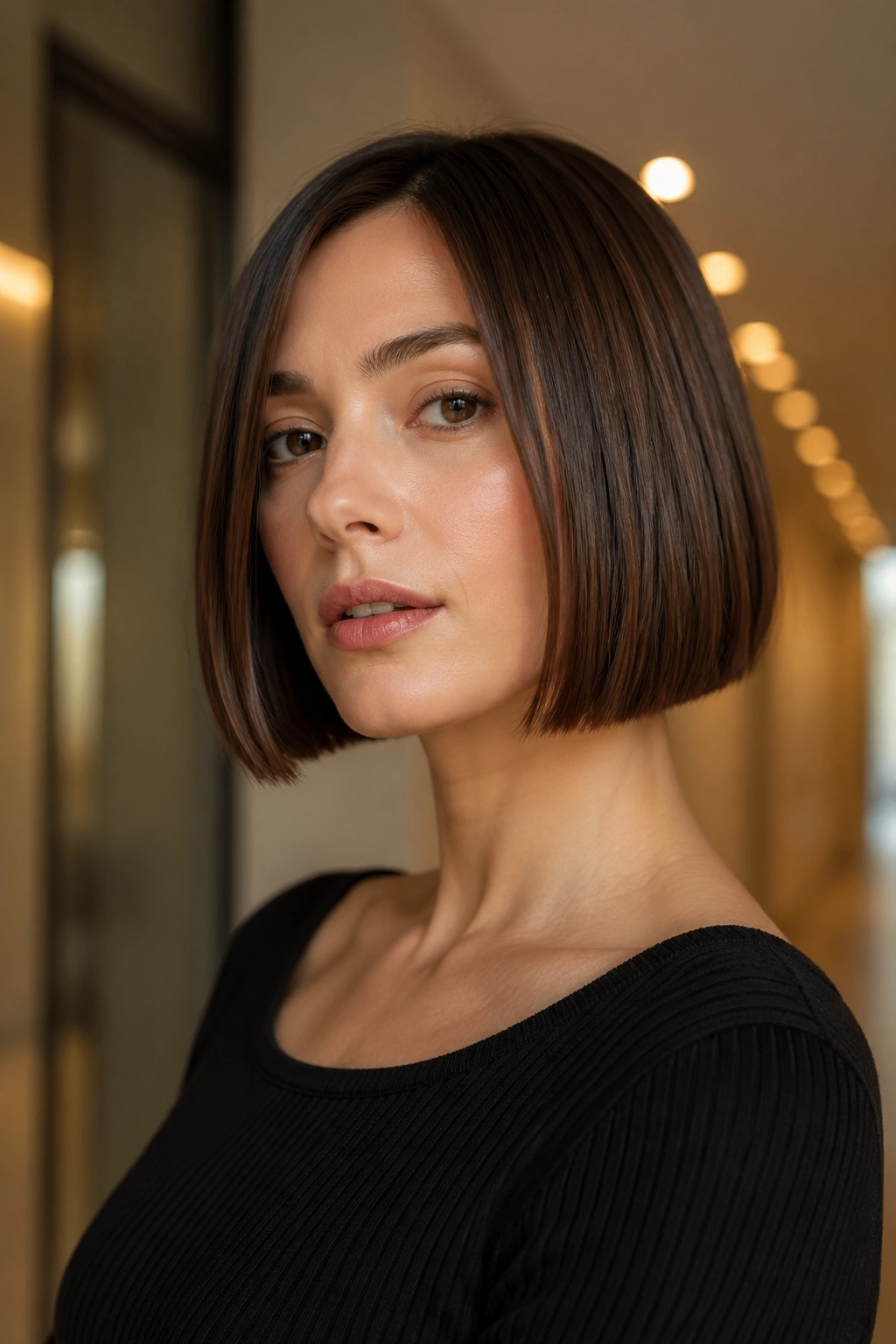
A blunt bob that skims the jaw is a clean, graphic haircut, and oval faces can wear it beautifully because the face already has balance. The strong line gives the bones something to stand against. It feels sharp. A little dramatic, too.
This is not the cut to pick if you want soft movement everywhere. It looks best when the edges are kept precise and the shape stays dense at the ends. That density is what gives the bob its weight. If the ends are thinned out too much, the whole cut loses the point.
Straight hair makes this shape look expensive without trying too hard. Wavy hair can wear it, but you’ll need either a quick blow-dry or a smoothing cream to keep the line from fraying. Trims matter here. Every five to seven weeks is a good rhythm if you want the jawline hit to stay crisp.
The reason it works so well on oval faces is that it frames the lower face without crowding it. Clean. Simple. No extra fuss.
6. Layered Crop With Side Sweep
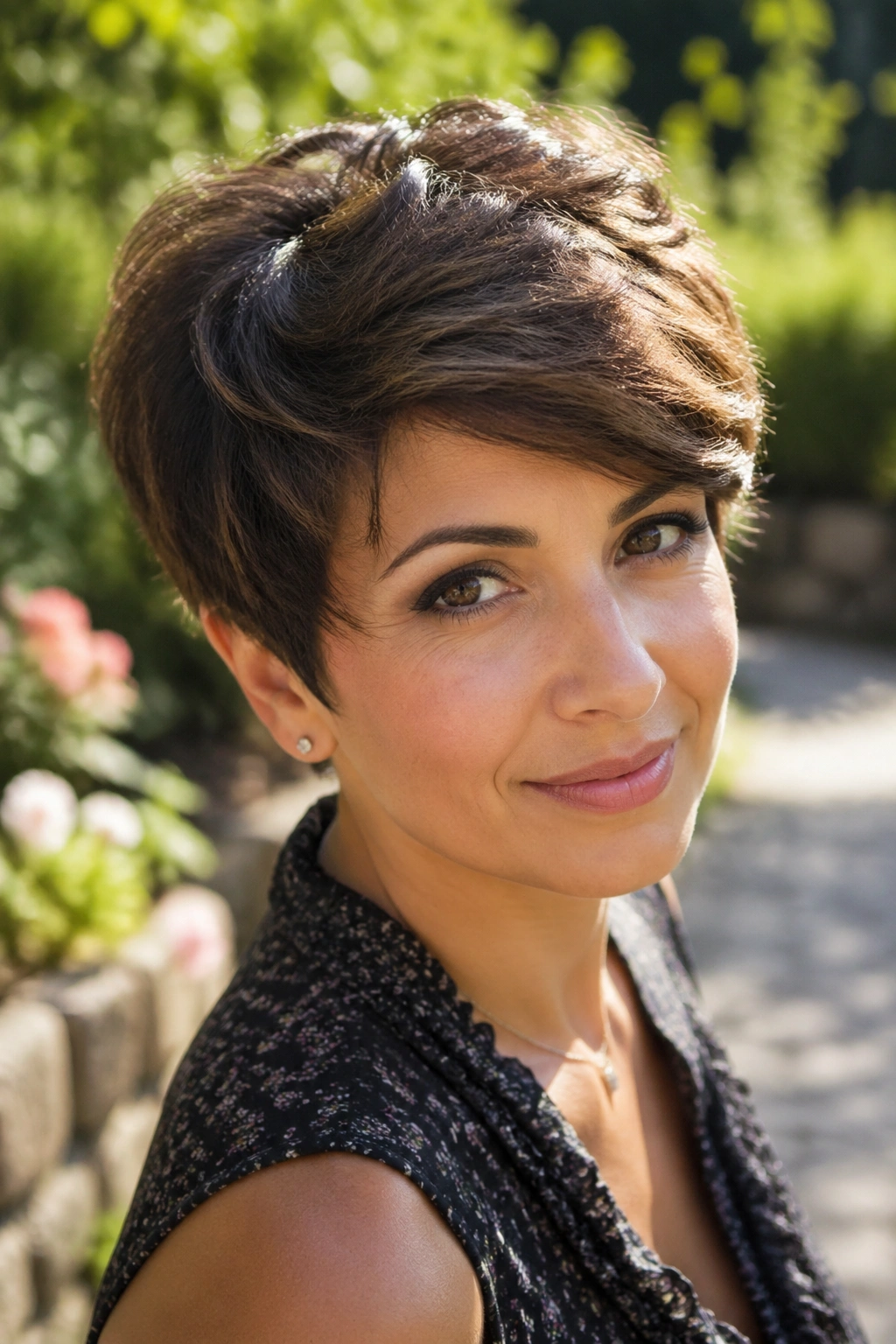
Why does a side sweep matter so much on an oval face? Because it breaks up the symmetry just enough to keep the cut from looking overly neat. That slight imbalance is what gives the style life.
A layered crop with a side sweep keeps the top soft and the sides close, but the fringe moves across the forehead instead of sitting in a straight line. That diagonal shape shortens the look of the upper face a touch, which is useful if your forehead is on the longer side of oval. It also gives you an easy way to change the mood of the haircut with almost no effort.
Styling That Helps
- Blow-dry the front in the direction of your part first
- Use a pea-size amount of cream or paste
- Push the front across the forehead, then let a few pieces fall loose
- Keep the crown light so it doesn’t get puffy
This cut works especially well if your hair has a bit of natural bend. Straight hair can still wear it, but it needs some texture at the front or the sweep will collapse into a flat sheet. Nobody wants that.
7. Curly Short Shag
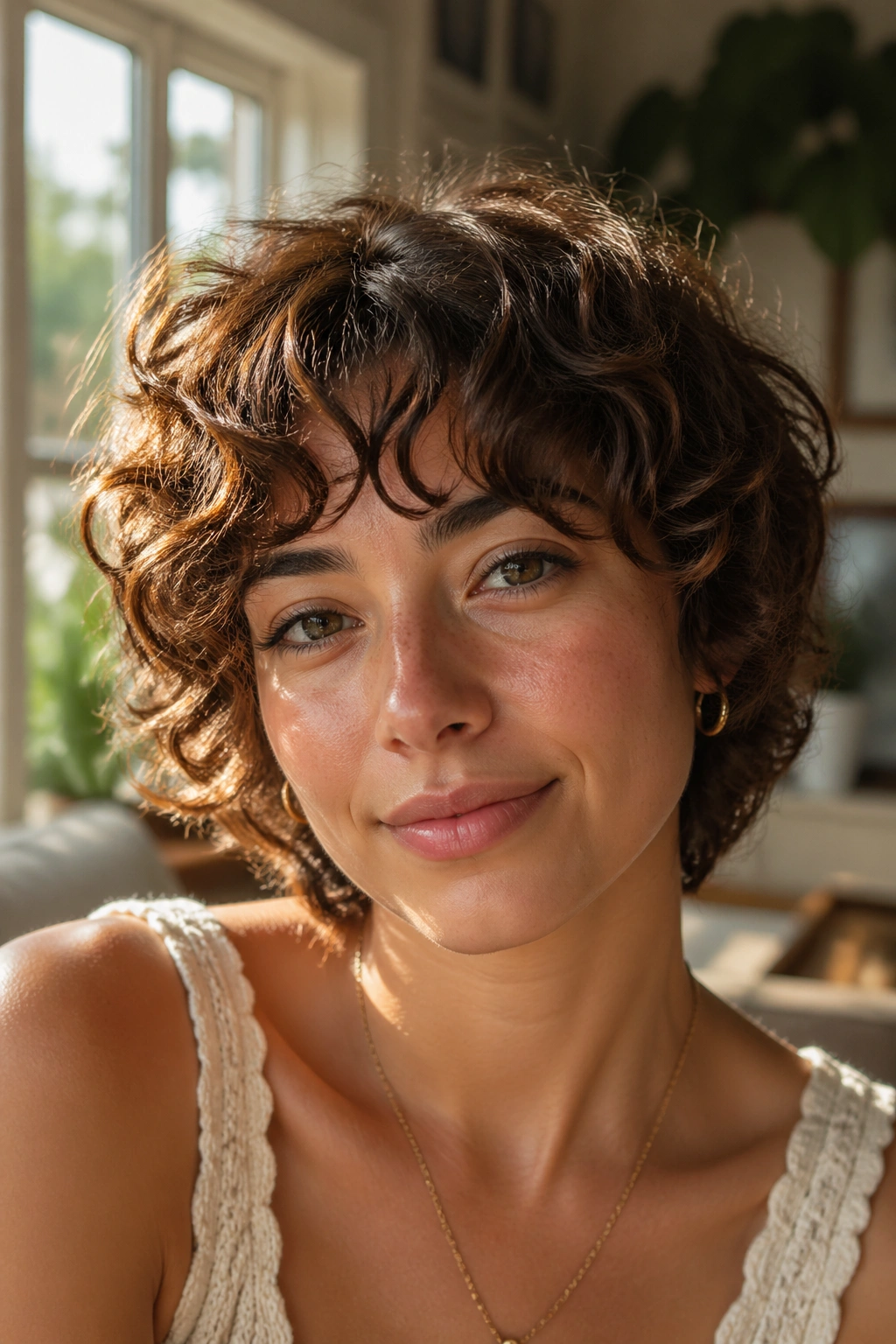
Curly hair and short shag layers get along better than people expect. On an oval face, a curly short shag adds shape without turning the silhouette boxy, because the curls themselves create soft width around the cheekbones and temples.
The trick is where the layers begin. If they start too high, the crown can balloon. If they start too low, the cut loses its lift and becomes bulky at the bottom. The sweet spot is usually somewhere around the upper cheek to temple zone, depending on curl pattern and density. That placement keeps the curl pattern lively and stops the hair from hanging like a triangle.
A diffuser helps, but don’t overwork it. Scrunch in curl cream on damp hair, tilt your head, and let the curls set with minimal touching. Once it’s dry, break up any hard cast with a tiny bit of oil on your fingertips. The finished shape should look airy, not crunchy.
Oval faces wear this well because the added texture fills space without fighting the face shape.
8. Slick Tucked-Behind-Ears Bob
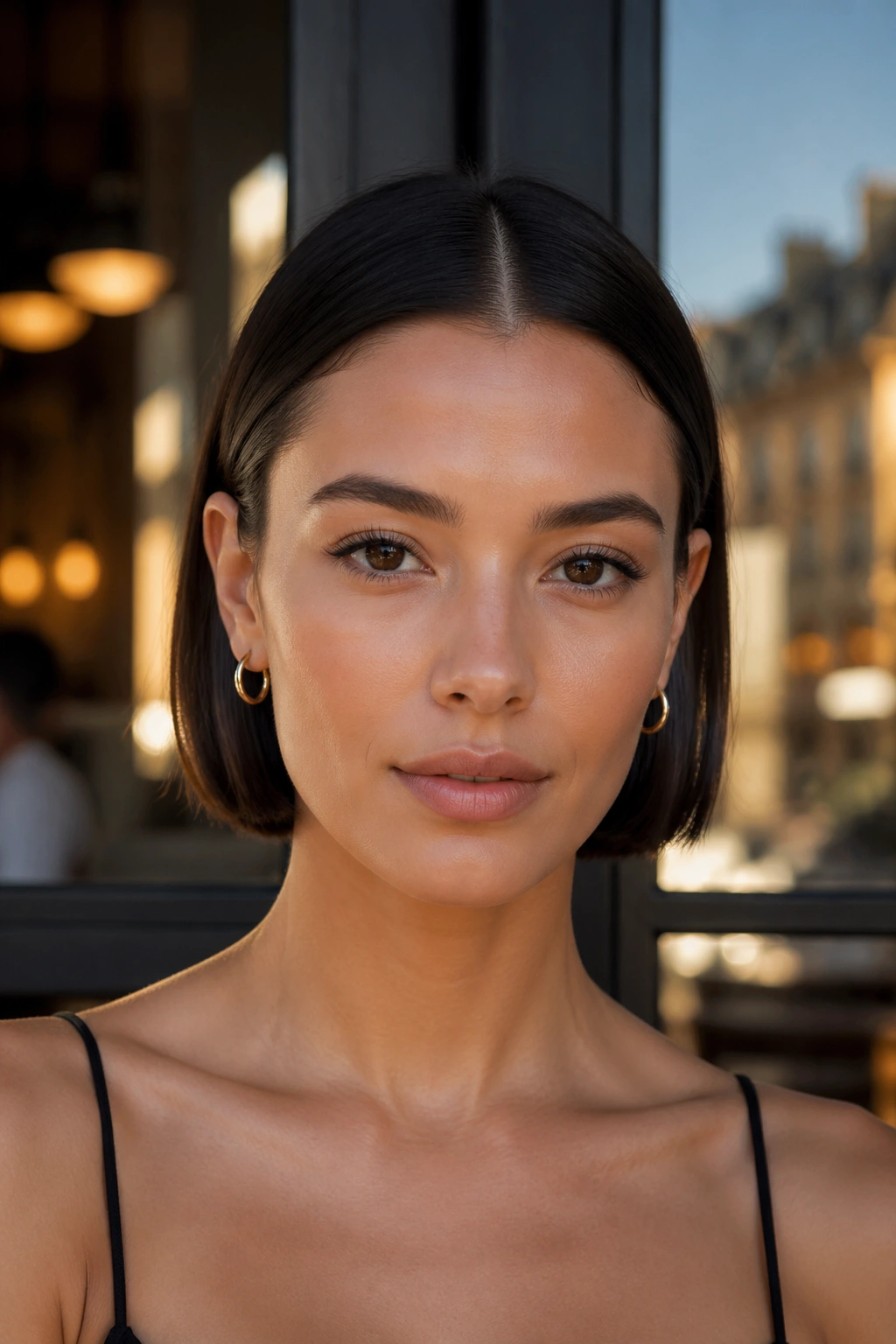
Some haircuts look better when they’re a little restrained. This is one of them.
A slick tucked-behind-ears bob works on oval faces because it exposes the jaw, cheekbones, and the curve of the neck all at once. That can sound severe, but on a balanced face shape it reads polished rather than harsh. The key is keeping enough length to tuck, usually somewhere between the ear and the jaw.
This cut shines when the hair is smooth and the part is sharp. A center part gives a clean, even feel. A deep side part gives a little more drama and can soften a longer oval face if you want less vertical emphasis. I prefer this style on hair that can hold a smooth finish without fighting back every ten minutes.
Use a lightweight serum on the mid-lengths and ends. Then tuck the hair firmly behind both ears and let a few short pieces fall loose near the temples. That little bit of mess keeps it from looking over-processed. Clean, but not stiff.
9. Asymmetrical Bob for Oval Faces
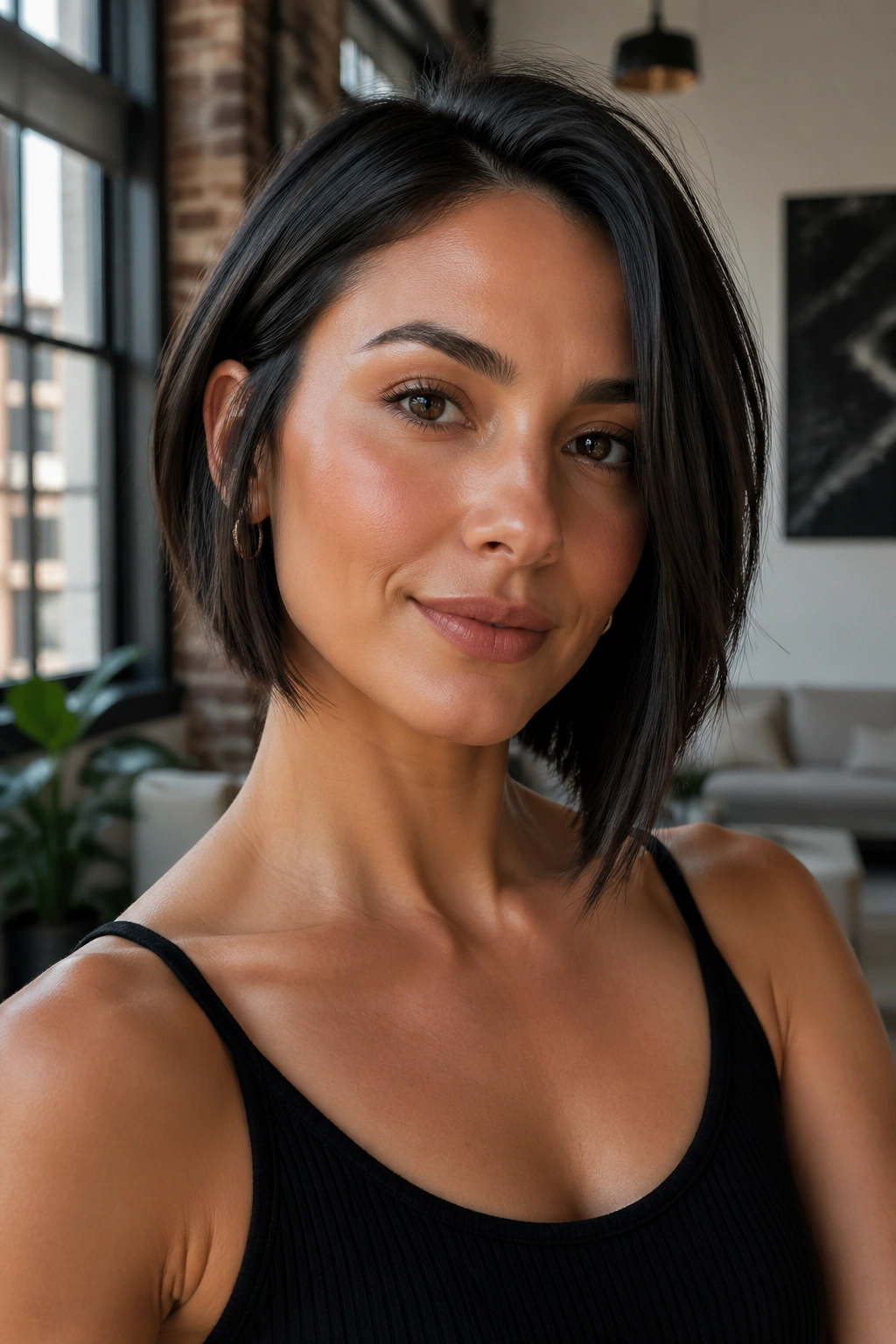
An asymmetrical bob sounds bold on paper, but on an oval face it can be surprisingly easy to wear. One side sits a little longer, the other feels tighter, and that off-balance shape creates movement without needing a lot of layering.
The reason it suits oval faces so well is that the face shape can carry asymmetry without looking lopsided. A stronger side part or one longer front panel gives the cut direction. It also keeps attention on the cheekbones and eyes, which is usually where the flattering stuff happens anyway.
Who Should Try It
- People who like a haircut with some attitude
- Anyone who wants a shape that feels fresh without going ultra-short
- Wavy or straight hair types that can hold a clean line
- Hair that’s medium to thick, since the shape needs enough weight to show
If you want this cut to look intentional, ask your stylist to keep the shorter side neatly tucked and the longer side soft at the ends. A blunt finish on both sides can feel too rigid. A little softness near the front solves that fast.
10. Feathered Pixie
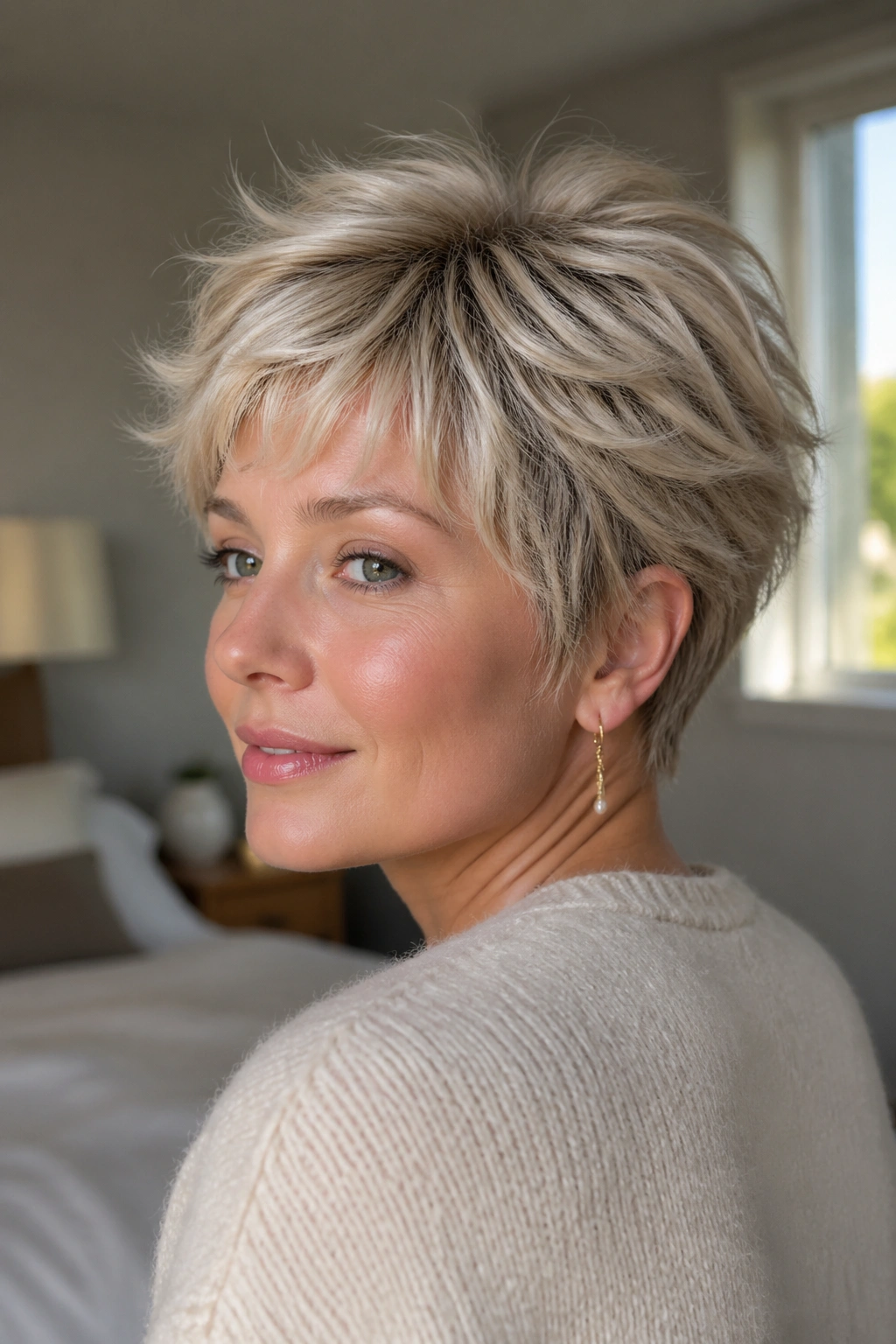
A feathered pixie is softer than a classic cropped pixie, and that softness matters on oval faces that already have natural balance. The feathering breaks the shape into light, airy pieces instead of one solid cap of hair.
What makes this cut different is the way the layers lift away from the head without stacking up too heavily. It’s a nice choice if your hair is fine and you worry about flatness. The feathered layers create the look of movement with less bulk, which can make the face feel open instead of weighed down.
If you have a strong cowlick at the front, mention it before the cut starts. Feathered pixies are sensitive to growth patterns. A tiny change in direction can make the fringe sit exactly where you want—or completely ignore you. That’s why a good stylist will cut in the natural fall of the hair instead of fighting it.
This is one of those cuts that looks best when it’s a bit lived-in. Too much polish takes away the lightness.
11. Rounded Micro Bob
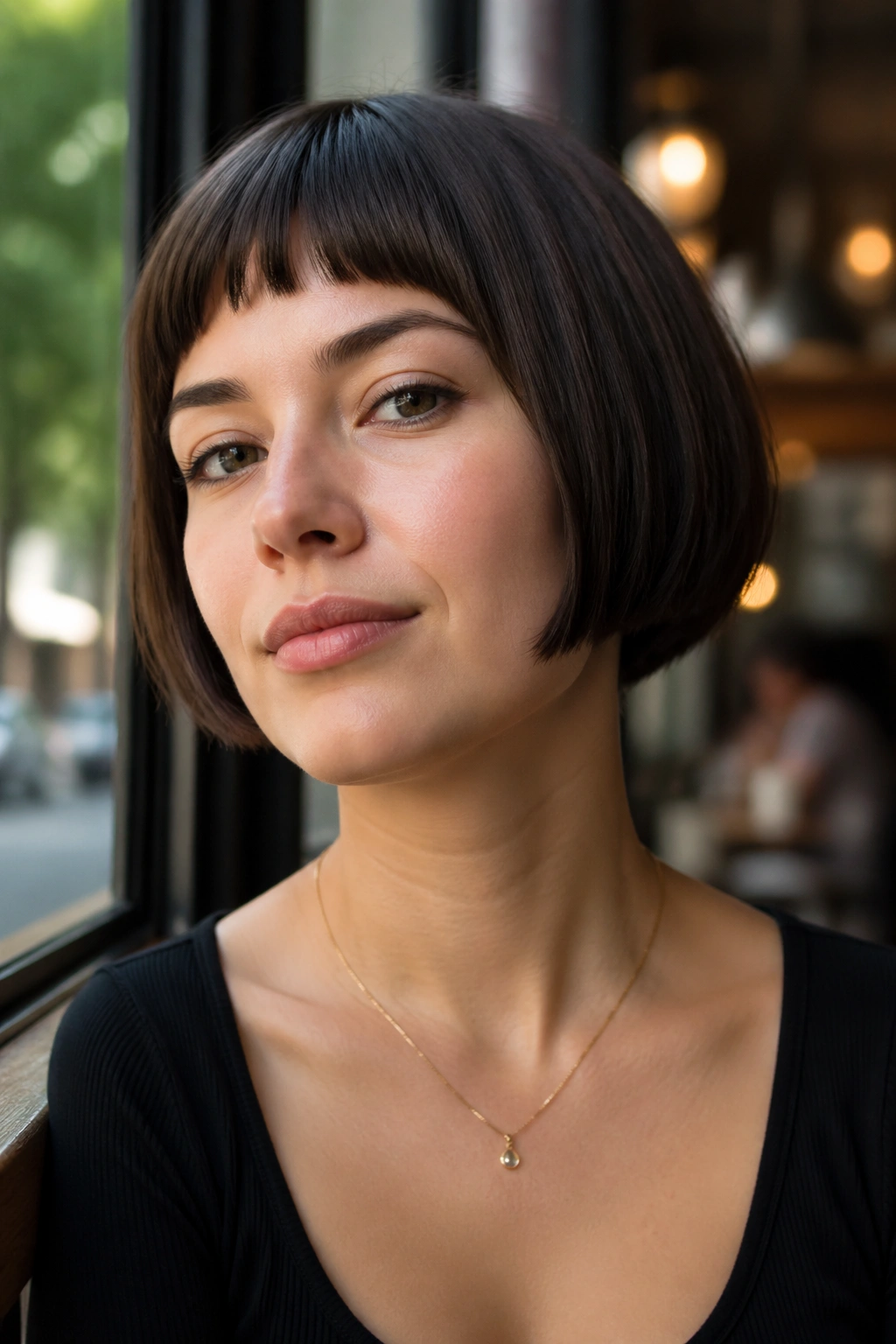
A rounded micro bob is a tiny haircut with a clear shape. It sits higher than a chin-length bob, often just below the ears or brushing the upper jaw, and the outline curves inward slightly so the ends hug the face.
On an oval face, that curve can feel neat and modern. The face shape already has balance, so the rounded line adds structure without needing bangs or heavy layering. I like this cut when someone wants short hair but doesn’t want the sharpness of a blunt bob or the lift of a pixie. It has a cleaner mood.
The catch is that it needs the right density. Very fine hair can lose the round shape and start looking sparse at the ends. Very thick hair may need internal weight removal so the curve doesn’t puff out. A smoothing cream and a quick round-brush blow-dry usually do the trick.
This is a haircut with a point of view. If you want hair that looks deliberate even in a plain T-shirt, this is a good lane.
12. Ear-Length Cut With Tapered Nape
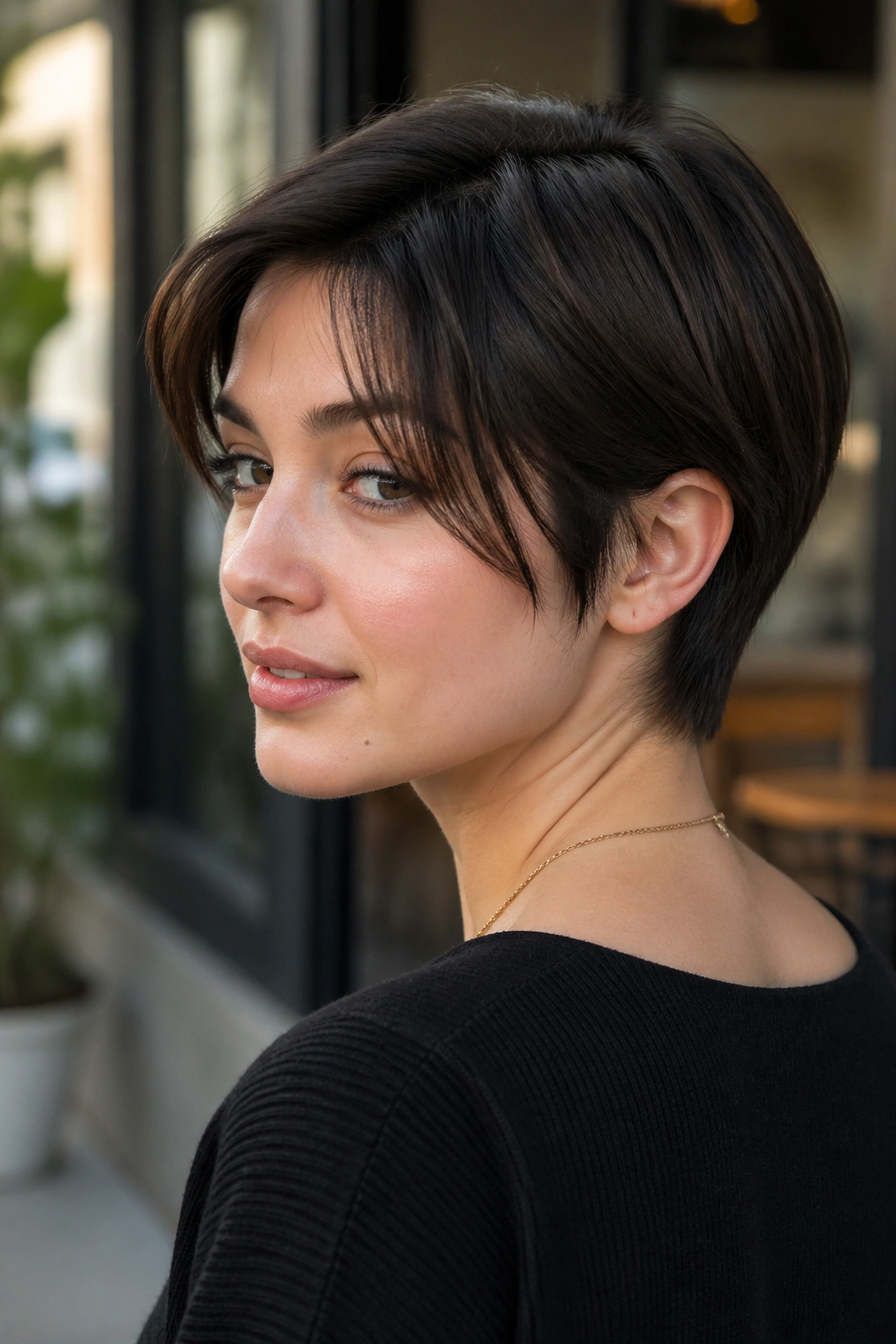
Ear-length hair exposes a lot, which is exactly why it can look so good on an oval face. The proportions are already balanced, so the cut doesn’t need to hide behind extra length. It can be clean. Direct. A little daring.
The tapered nape matters here. Without it, the back can end up boxy or bulky, and that ruins the silhouette. A neat taper keeps the neckline visible and stops the cut from spreading outward. The top should still have some softness, though. You want the style to feel shaped, not clipped into place.
Best Styling Moves
- Blow-dry the nape first so it lies flat
- Use a small round brush at the sides to keep them tucked
- Add matte paste only to the top layers
- Keep the ears visible or only partly covered
This cut is sharpest on straight or lightly wavy hair. Very curly hair can wear it too, but the shape needs more frequent reshaping. If you want the line to stay neat, trims every four to six weeks are worth it.
13. Italian Bob
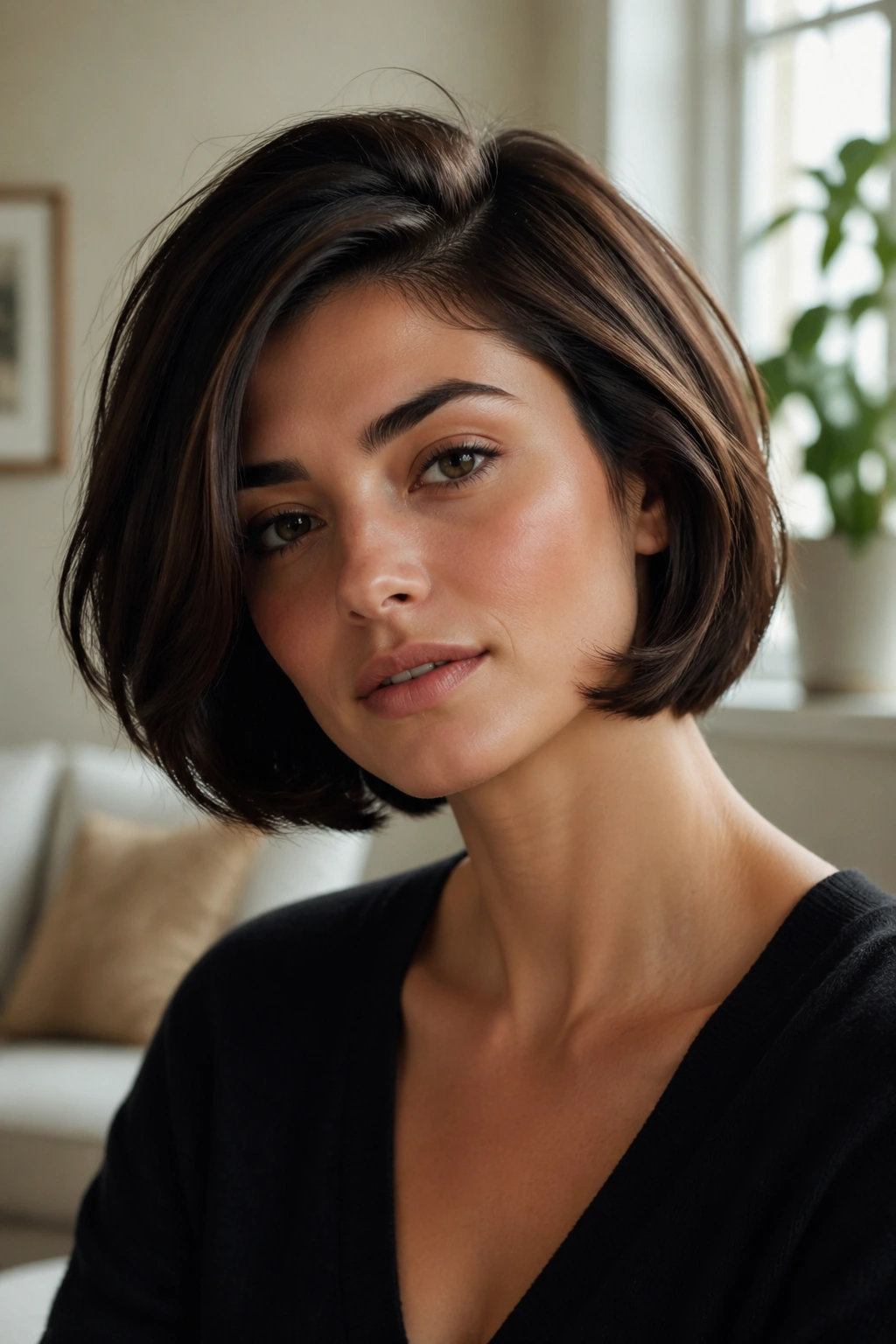
The Italian bob has a little more body than a classic bob, and that extra fullness is what makes it interesting on oval faces. It usually lands around the jaw or just below it, with enough weight at the ends to create a lush, sculpted shape.
It’s not fluffy. That’s a common mistake. The best version has a controlled bend, a rounded edge, and enough density that the hair looks rich from the side. A side part gives it a softer mood, while a center part keeps it cleaner. I tend to like it with a bit of bend at the ends, almost like the hair took the time to settle naturally.
This cut works especially well if your hair is medium to thick. Fine hair can wear it, but you may need a root lift spray and a round-brush blow-dry to keep the body from dropping by noon. The nice part is that once the shape is in place, it does a lot on its own.
Oval faces can take the fullness without looking crowded, which is why this bob feels plush instead of heavy.
14. Undercut Pixie
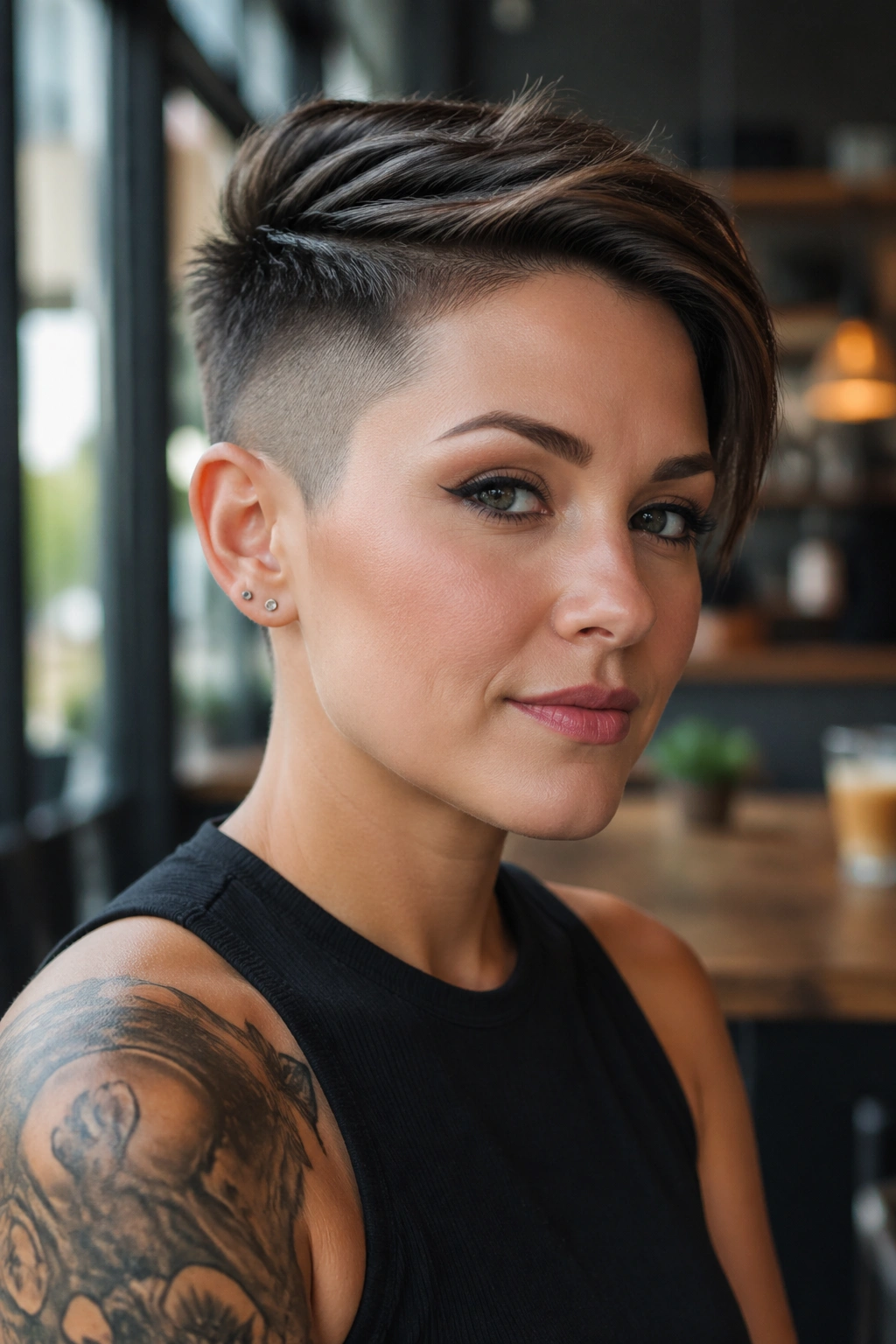
An undercut pixie sounds severe until you see how much easier it makes the top layer move. On oval faces, it can look clean and flattering because the shape still respects the face’s balance while removing weight where it doesn’t help.
The undercut is the hidden part most people don’t see first. That’s the point. It reduces bulk around the back and sides, so the top can sit lighter and more textured. If your hair is thick, this can be a lifesaver. If your hair is fine, though, be careful. Too much removal can leave the top too thin, and then the shape loses its punch.
This cut works best when the top is left long enough to sweep forward or to one side. A bit of fringe softens the effect and keeps the style from feeling too hard. Use a paste with some grip, not a wet gel that makes the top separate into strands you didn’t ask for.
It’s tidy, but it still has edge. That combination is hard to beat.
15. Shattered Bob
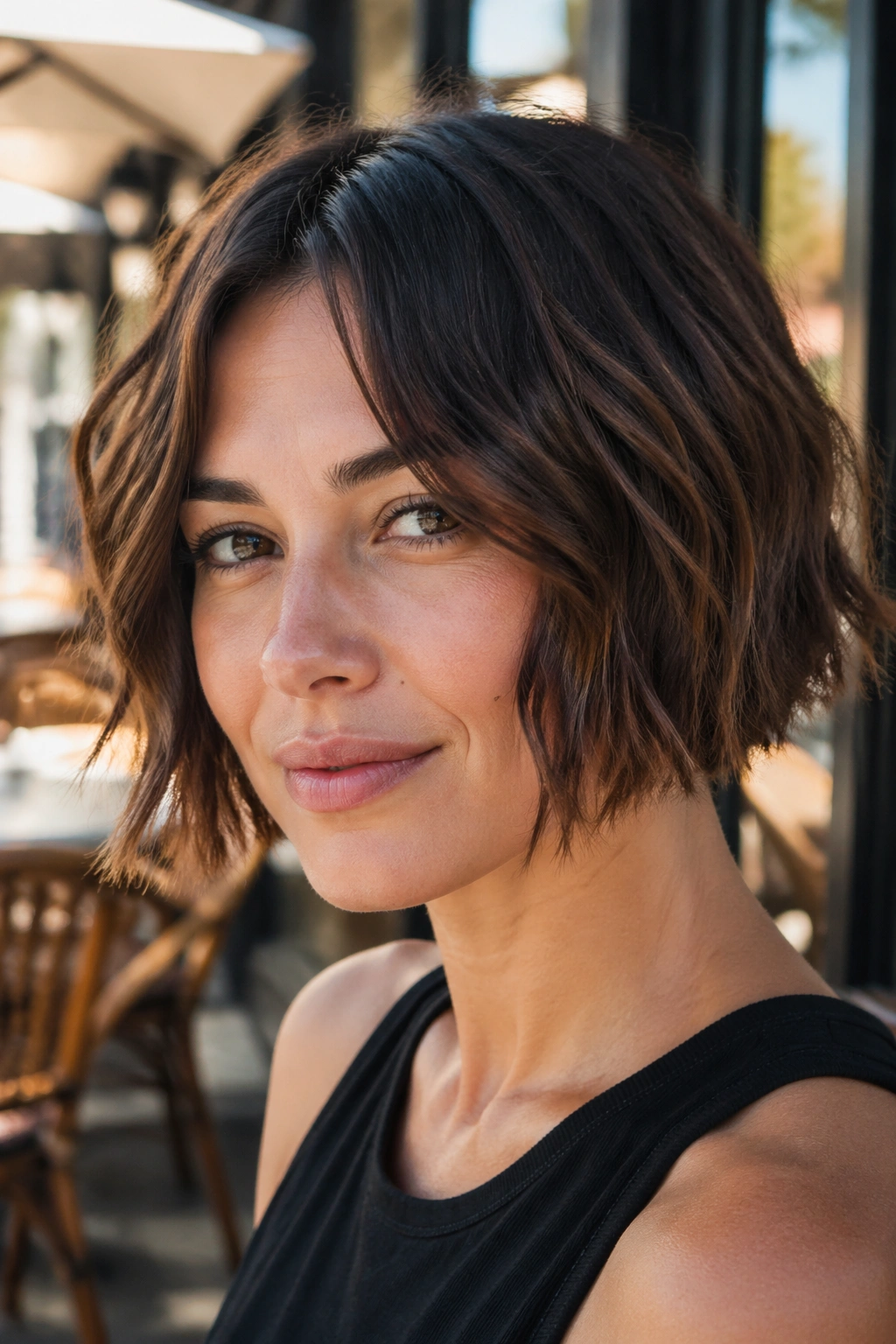
A shattered bob is what happens when a blunt bob gets a little rough around the edges in the best way. The ends are cut with texture, not sliced into one hard line, so the haircut moves more freely around an oval face.
The texture helps if you want a bob that feels less formal than a classic one. It also works better on hair that doesn’t hold a perfectly clean edge. Wavy hair especially benefits, because the broken ends blend into the bend instead of fighting it. The cut can sit at the jaw or a touch below it, depending on how much softness you want near the face.
What Makes It Different
- Ends are point-cut or softly shattered, not blunt
- The shape keeps weight through the middle, so it doesn’t puff out
- It can be air-dried or rough-dried
- A little sea-salt spray gives the ends some separation
This is a good choice if you like hair that looks touched and lived in, but not messy. There’s a difference, and the haircut depends on that difference.
16. Chin-Length Curly Bob
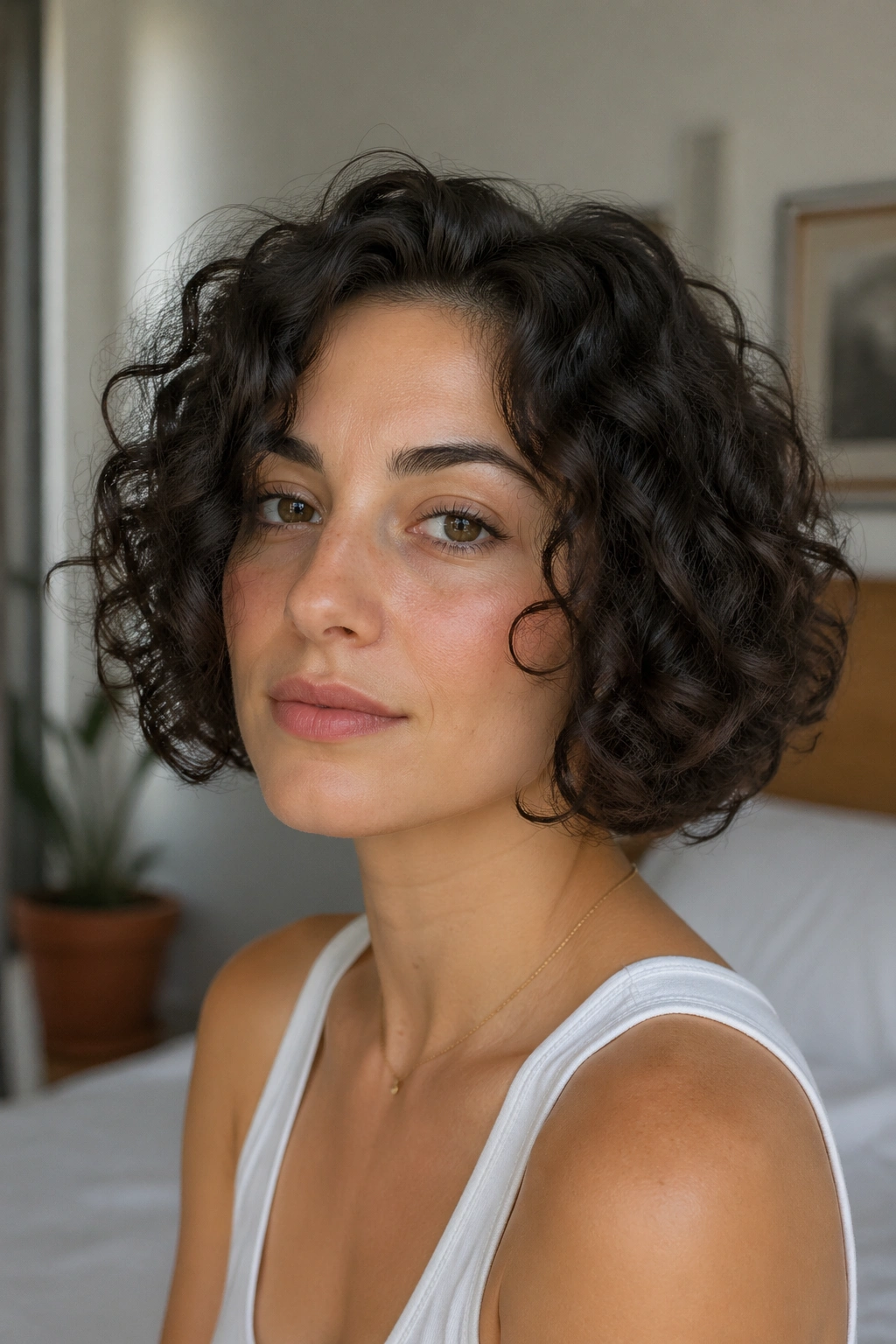
A chin-length curly bob looks especially good on an oval face because the curls sit right where the face needs a frame. The bounce at the jaw and cheeks creates shape without squeezing the features into a tight outline.
Dry cutting helps here. Curly hair shrinks, and shrinkage can turn a thoughtfully shaped bob into a much shorter, stranger cut than you expected. Ask for the cut to be done on dry or mostly dry curls if your stylist works that way. That makes the final length easier to judge.
The best version keeps some room at the front so the curls can move rather than sit as one compact ring. If the cut is too short at the sides, the cheeks can look crowded. If it’s too long, the shape loses the point. There’s a narrow sweet spot, and it’s worth being picky about.
A curl cream with a little hold and a diffuser are usually enough. Don’t rake through it once it’s dry. That’s how you turn definition into fuzz.
17. Crop With Curtain Bangs
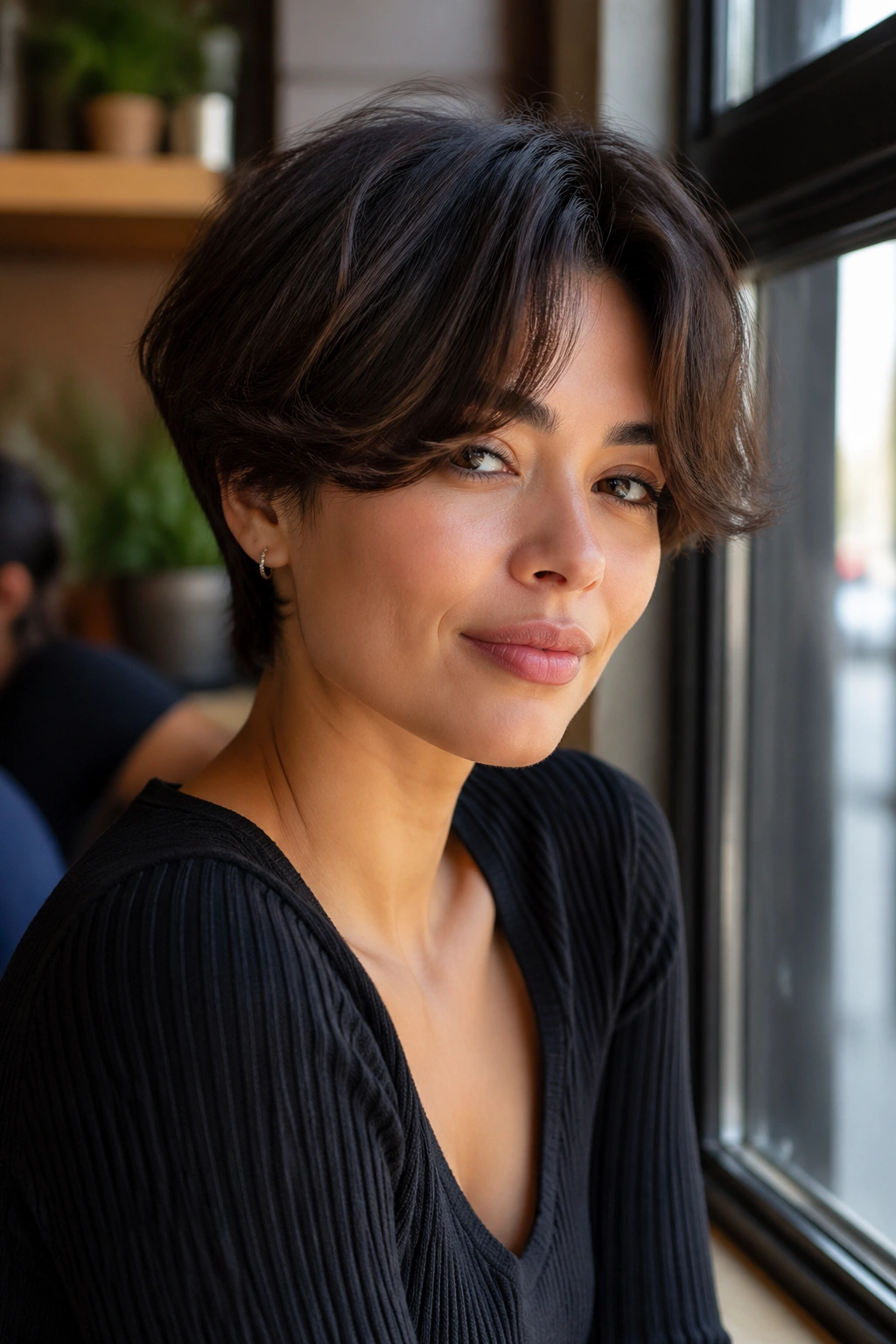
Can curtain bangs work on short hair? Absolutely. On oval faces, they can be one of the nicest ways to add shape without taking too much length away.
Curtain bangs split at the center and sweep out toward the cheekbones, which means they add width where the face can handle it. That keeps the cut from drawing everything straight down the middle. The rest of the crop can stay fairly short and neat, while the bangs soften the front and make the style feel less stark.
How to Ask for It
- Keep the shortest point around the bridge of the nose or a little higher
- Let the outer pieces drop to the cheekbone area
- Ask for soft layering, not a hard curtain line
- Style with a round brush or a quick bend from a flat iron
This cut works on straight, wavy, and even fine hair if the bangs are not over-thinned. The one thing I’d watch is volume. Too much lift at the roots can make the bangs float away from the face, and then the whole shape loses its ease.
18. Short Wolf Cut
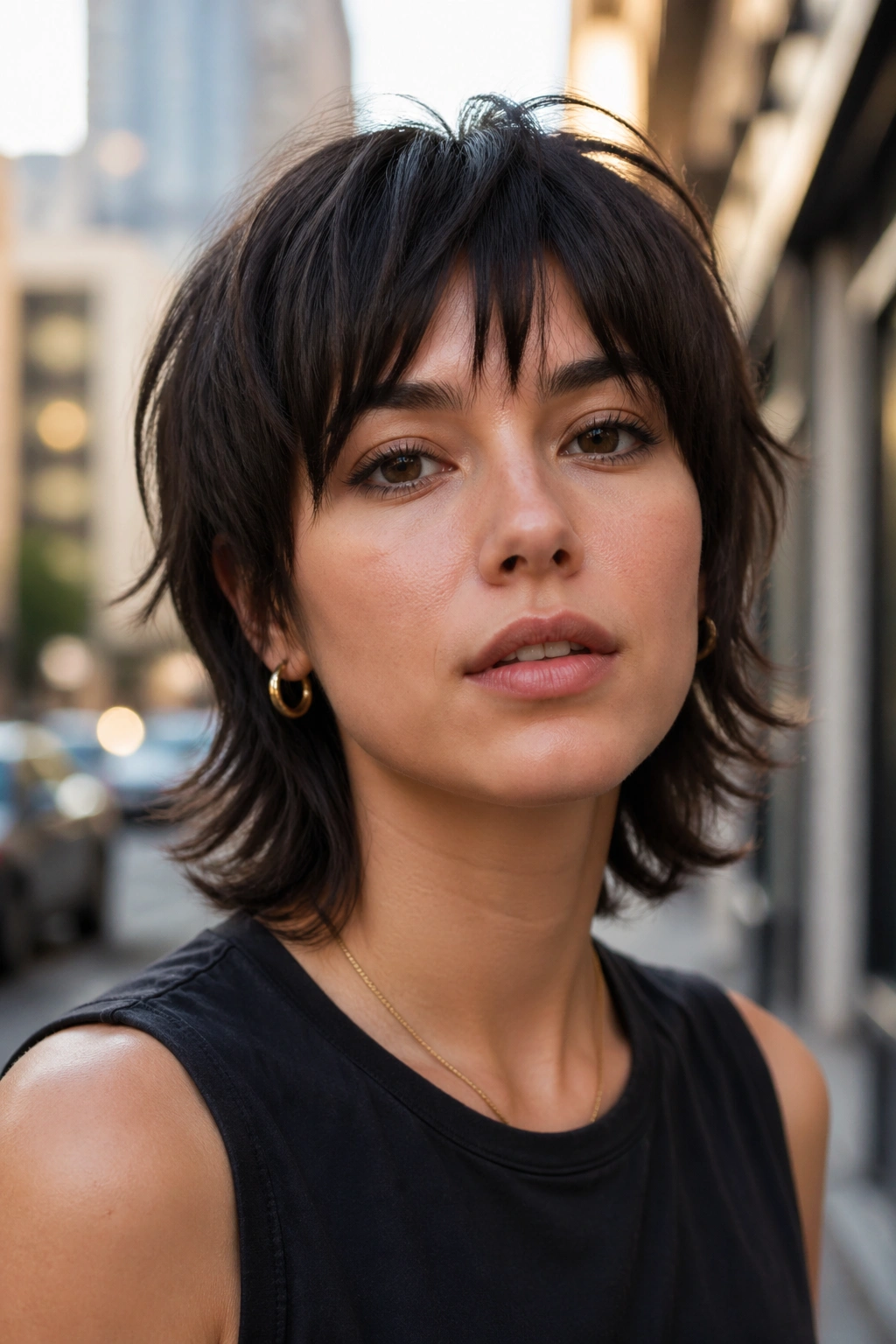
The short wolf cut can be a mess if it’s overdone. It can also be one of the best short haircuts for oval faces when the layers are controlled and the shaggy shape stays compact.
What makes it work is the contrast between the shorter crown, the piecey top, and the softer ends. That creates movement around the face without making it too round. On an oval face, the shape feels edgy but still balanced, especially if the length stays around the chin or a little above it.
I’d be careful with this one if your hair is very fine and limp. The layers can eat too much weight, and then you end up styling more than you expected. If your hair has some natural bend, though, the cut comes alive quickly. A bit of mousse, a diffuser, and finger shaping are often enough.
This is not a quiet haircut. It has texture, it has attitude, and it needs a little confidence from the person wearing it.
19. Sleek Mini Bob
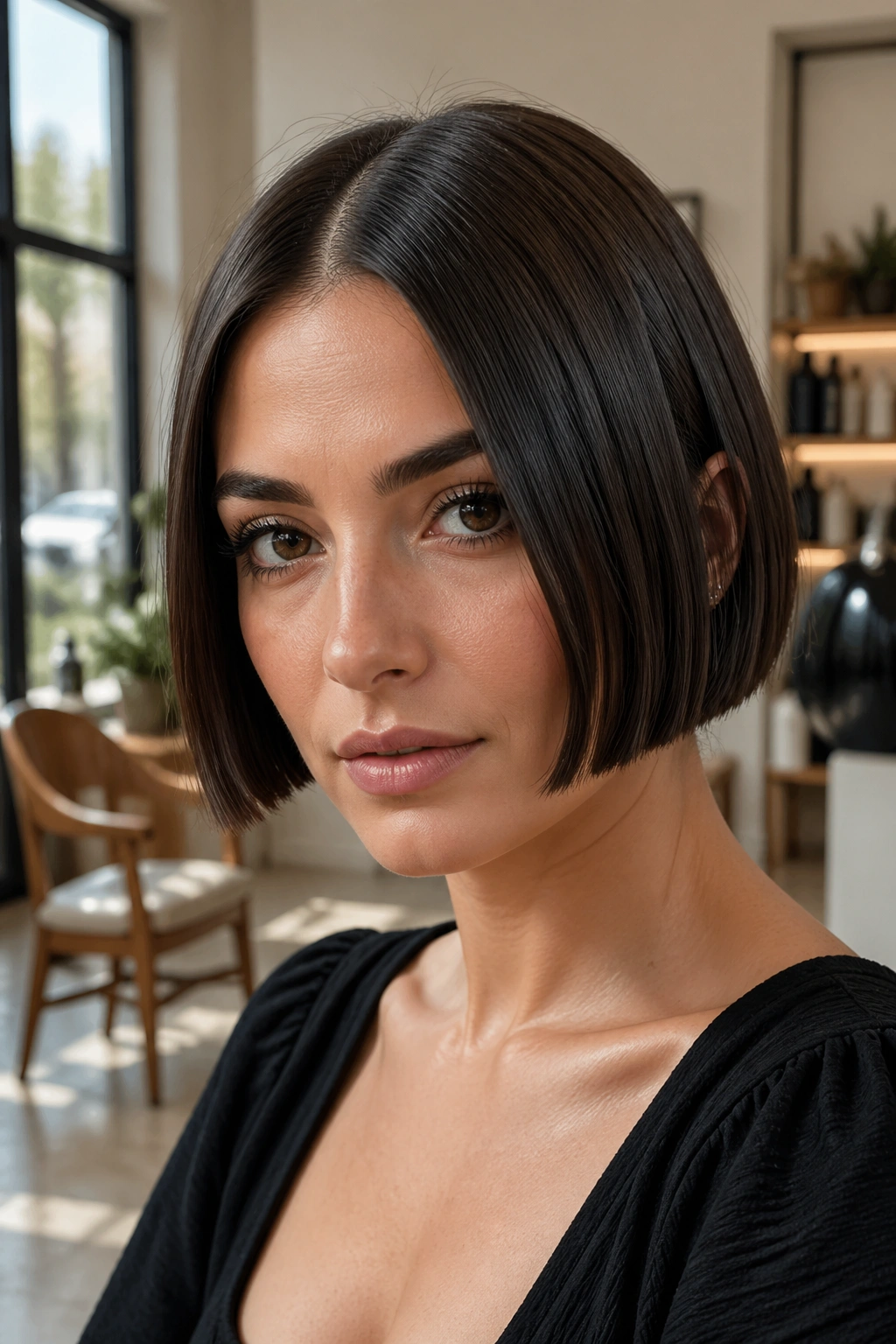
A sleek mini bob is the minimalist version of short hair, and oval faces can carry it because the face shape already gives the hair a balanced frame. The bob is cut short enough to sit just below the ears or around the upper jaw, then smoothed into a clean line.
The appeal is in the simplicity. No choppy ends. No dramatic layers. Just a controlled outline and a glossy finish. It looks especially strong with a center part, though a deep side part can make it feel softer if you want less symmetry. The cut works best when the ends are precise and the surface is smooth.
This one needs a little maintenance. A mini bob shows growth faster than longer short cuts, especially around the nape and around the ears. If you want it to keep its neat shape, trim it before the ends start flipping out or breaking the line.
It’s a sharp haircut without much noise.
20. Soft Pixie for Oval Faces
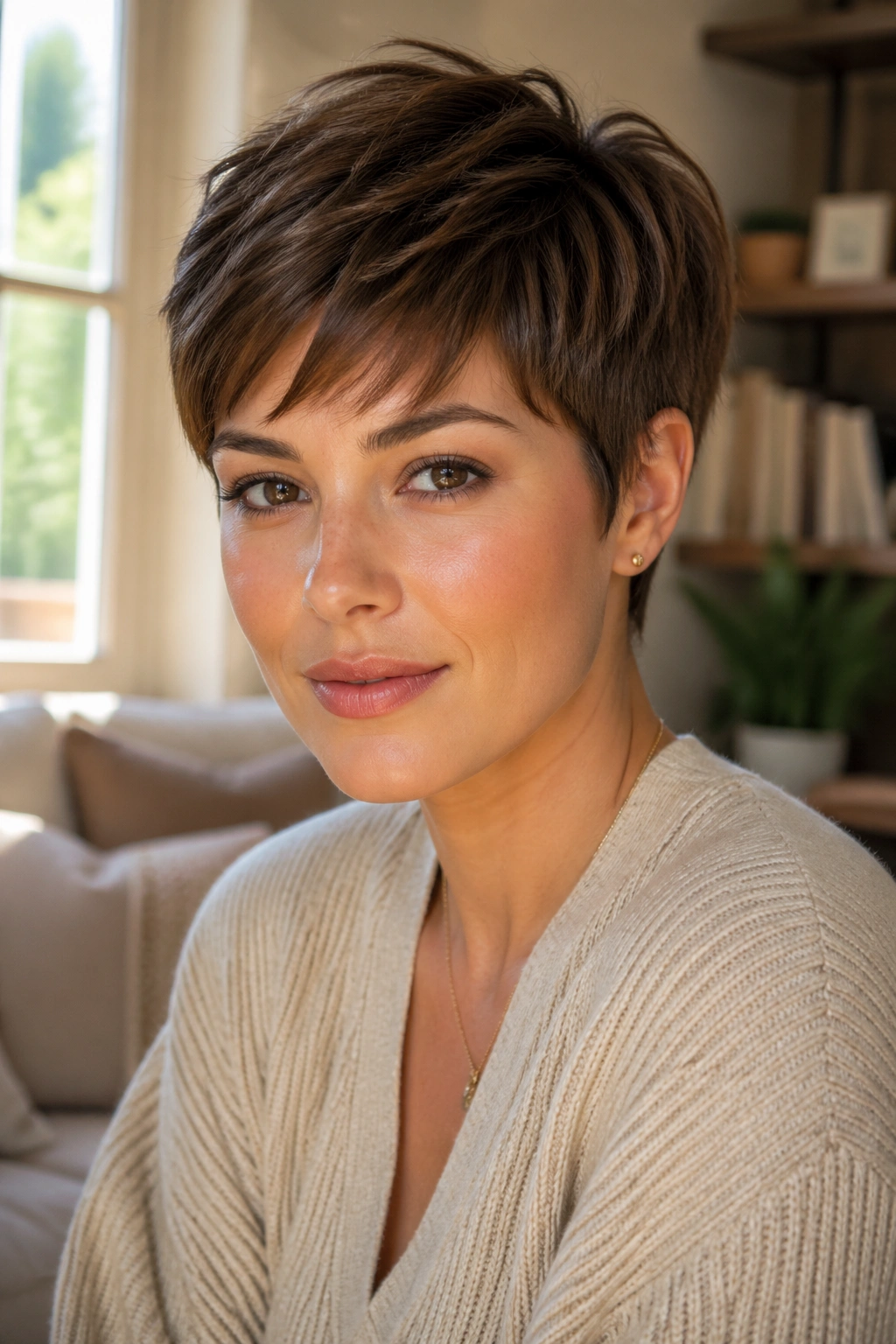
A soft pixie is the least intimidating of the very short cuts, and on oval faces that balance can be a good thing. It keeps the neck open, lifts the eyes, and still leaves enough length on top to feel feminine, edgy, or somewhere in between.
The softness comes from the fringe and the crown. Instead of cutting the top into a stiff shape, the stylist leaves enough length to push forward, sweep sideways, or lightly tousle. The sides stay tapered, but not shaved too close unless that’s the look you want. That small amount of length is what keeps the cut wearable day after day.
Best for People Who Want
- Short hair without a harsh outline
- Easy styling with a bit of paste or cream
- A cut that grows out without turning awkward too fast
- Something that shows off earrings, cheekbones, and the jaw
If you like hair you can fix with your fingers in under two minutes, this is a strong choice. If you want one short cut that feels light but still has shape, this is probably the one I’d put at the top of the stack.
One Last Thing
Oval faces make short hair easier, but they do not make every short haircut equal. The real difference comes from where the length stops, how much weight stays at the sides, and whether the fringe opens the face or drags it downward.
If you want the safest starting point, the chin-length bob and the French bob are hard to beat. If you want something lighter and bolder, the pixie family gives you more room to play. The smartest move is to match the cut to your hair’s natural behavior, not the photo you saved three months ago.
That part saves a lot of frustration.
