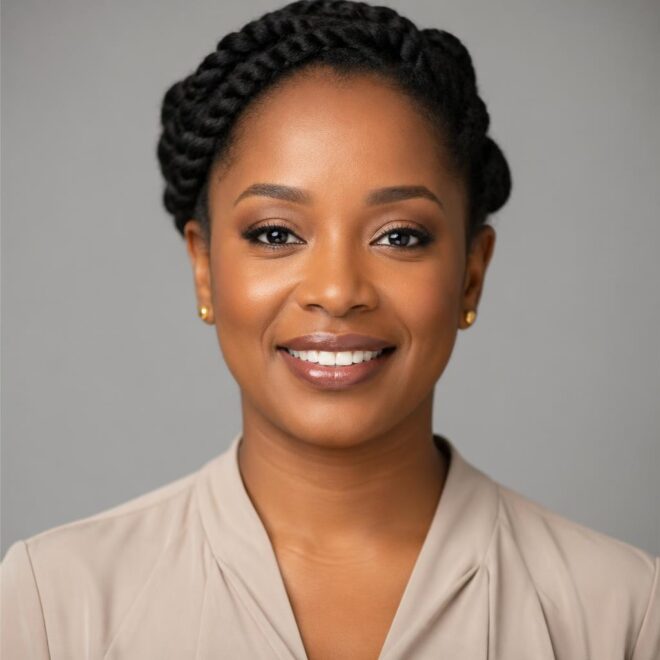


Brown braids with hidden blonde pieces have a way of looking polished without feeling stiff. Blonde and brown peekaboo box braids do that especially well, because the lighter shade shows up when you move instead of sitting there and shouting for attention.
The brown does the grounding work. It softens the blonde, keeps the face from getting washed out, and makes even a honey tone feel lived-in rather than loud. That’s the part a lot of people miss: peekaboo color is less about flash and more about where the flash lands.
Shade choice matters, sure, but placement matters more. A deep brown base with blonde tucked under the top layers reads calm; shift the blonde toward the sides or the nape and the whole mood changes. Length does the same thing—short braids give you quick contrast, while long braids let the darker and lighter strands braid into each other like ribbon.
The styles below range from soft and wearable to bolder and more dramatic, because the same color combo behaves differently on each braid size and parting pattern. Start with the placement that matches how you actually wear your hair, not the placement that only looks good in a screenshot. That saves you from choosing a pretty style that fights your real life.
1. Chocolate Brown Base with Honey Blonde Peekaboo Panels
This is the safest entry point, and I mean that in the best way. A chocolate brown base with honey blonde tucked into the lower layers gives you contrast without turning the whole head into a color block.
What I like here is the rhythm. The brown carries most of the braid, then the blonde shows up around the nape, behind the ears, and in a few interior rows so it flashes when you turn your head. It feels neat, not busy.
Why This One Stays Easy to Wear
If you’re new to colored braids, this is the version that feels forgiving. The honey blonde can be kept to about one braid in every four or five, or even just a few panels near the back if you want a softer reveal. That keeps the style from reading stripey.
- Best on medium box braids
- Works well with #2, #4, or dark chocolate braid hair
- Lets you wear the braids down, half-up, or in a low bun
- Hides regrowth and scalp buildup a little better than all-over light color
Small tip: ask for the blonde panels to start below the crown. That one placement choice keeps the style looking expensive instead of loud.
2. Medium Box Braids with Caramel Underlayer Ribbons
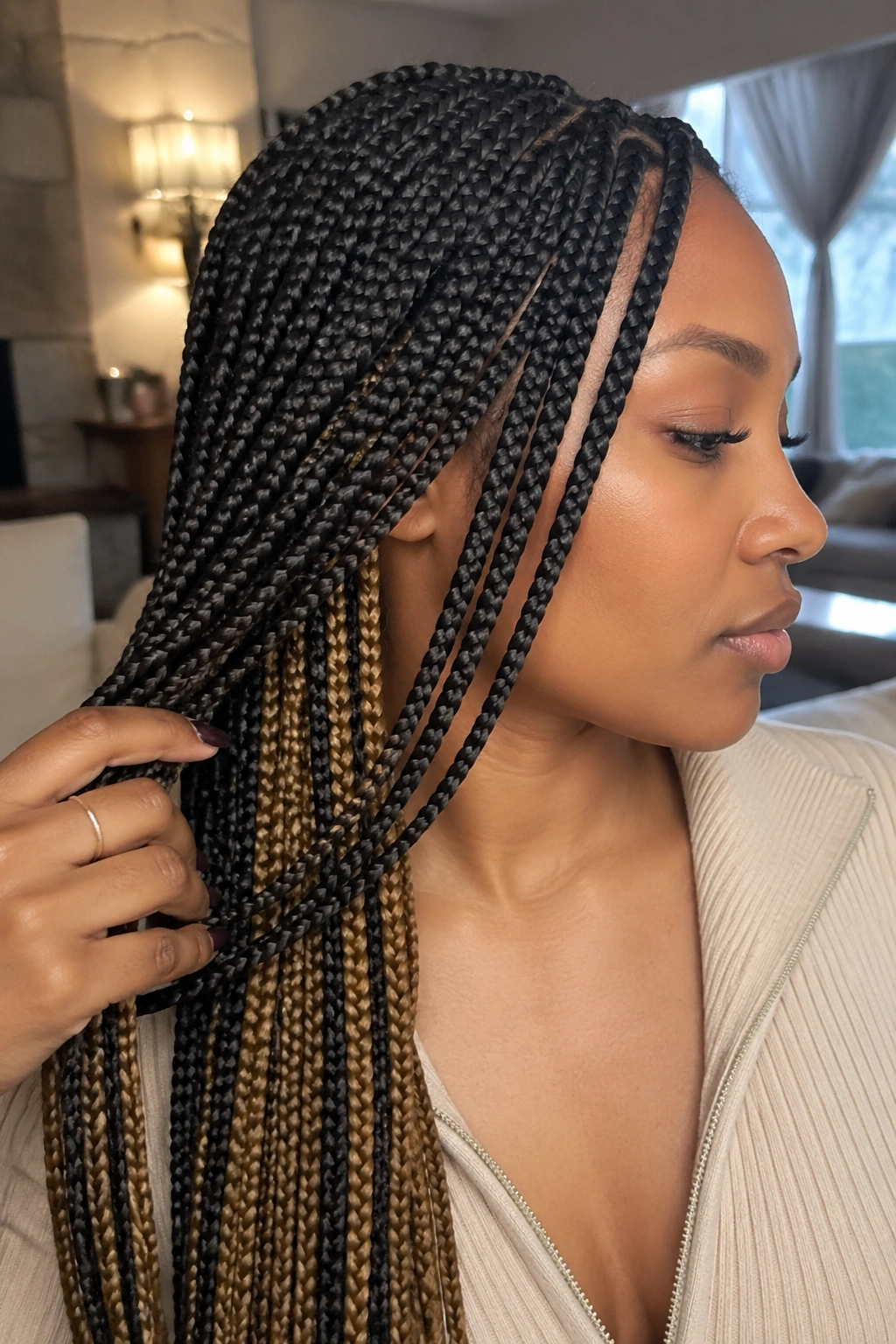
Want the color to show only when you want it to? Medium braids with caramel underlayer ribbons do that nicely. From the front, the style stays brown and easy; from the side, the lighter strands peek out like a quiet surprise.
Medium size helps because each braid is thick enough to hold color, but not so thick that the blonde gets lost. Caramel is also a smart choice if you want warmth without pushing all the way into pale blonde territory. It sits beside brown hair with less tension in the color story.
Color Placement That Actually Matters
The trick is to keep the caramel mostly underneath the outer curtain of braids. If the lighter pieces sit only on top, the style starts looking flat. Underlayers make the color work when the hair swings.
- Put caramel near the ears, nape, and lower back section
- Keep the top rows a deeper brown
- Use small clusters, not one giant block of light color
- Let a few ends stay brown so the blonde doesn’t take over
This is the kind of style I’d point to if someone says they want peekaboo braids but don’t want the color to wear them. That’s the sweet spot.
3. Jumbo Peekaboo Braids with Toffee Blonde Streaks
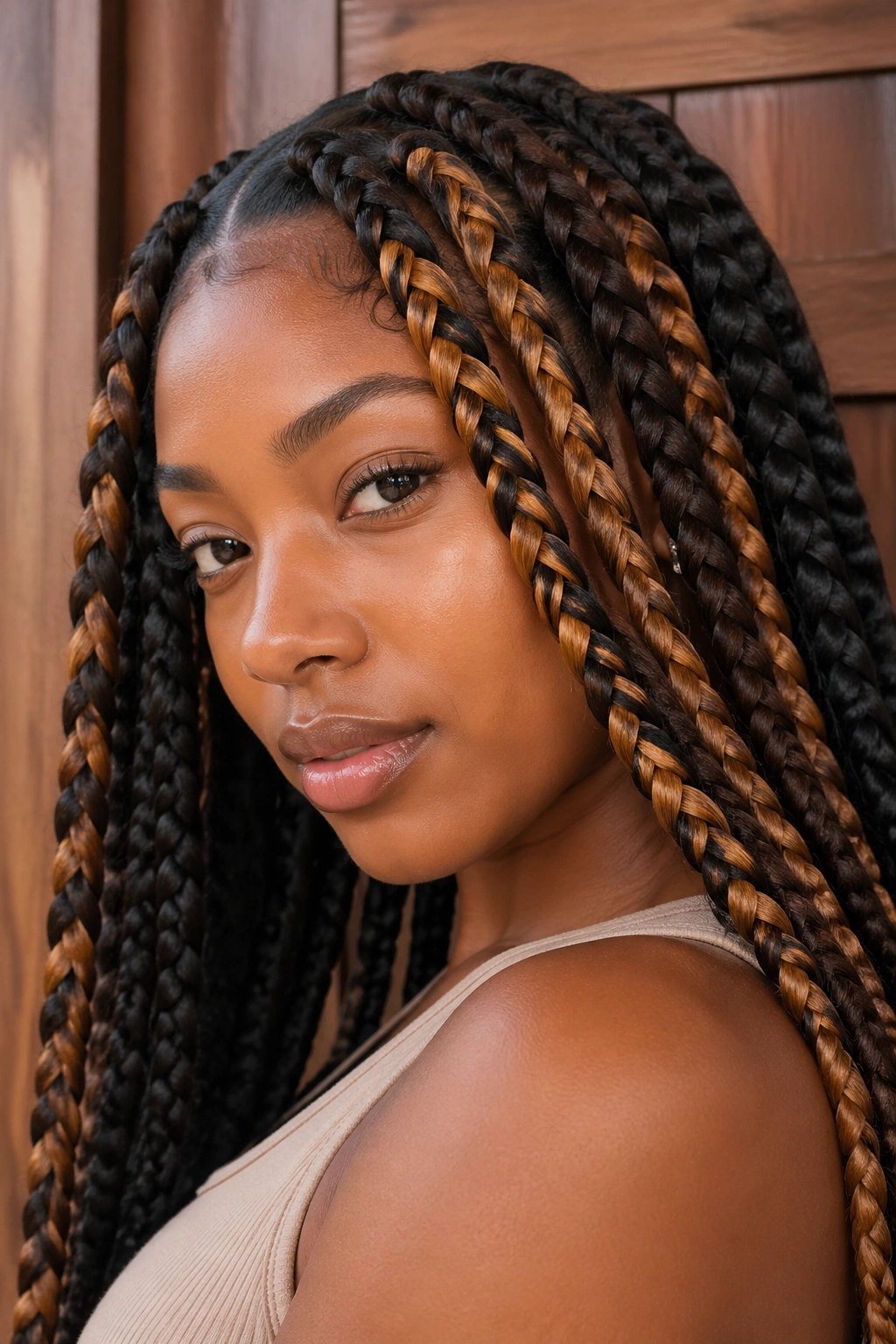
Jumbo braids are not shy. They show everything. That’s exactly why they work so well with peekaboo color.
Because each braid is larger, every blonde streak reads more clearly, even when the lighter pieces are buried under brown rows. Toffee blonde is a smart middle ground here. It gives you the lift people want from blonde, but it doesn’t glare against a dark base the way a very pale shade can.
Chunky braids do not hide anything.
Best Uses for This Look
Jumbo braids suit people who like a style with a little weight and a little drama. They’re also a good pick if you don’t want to sit in a chair forever; fewer braids usually mean a faster install, though the exact timing depends on part size and length.
What to Watch For
- Keep the blonde streaks wider at the bottom than the top
- Ask for clean, square parts so the large braids don’t look messy
- Don’t overload the head with too many shades at once
- Use light mousse to keep the braid surface smooth
This style shines when the blonde only appears in motion. Let the brown dominate, then let the toffee sections swing through when you walk. That contrast feels intentional.
4. Knotless Box Braids with Chestnut and Blonde Frame Pieces
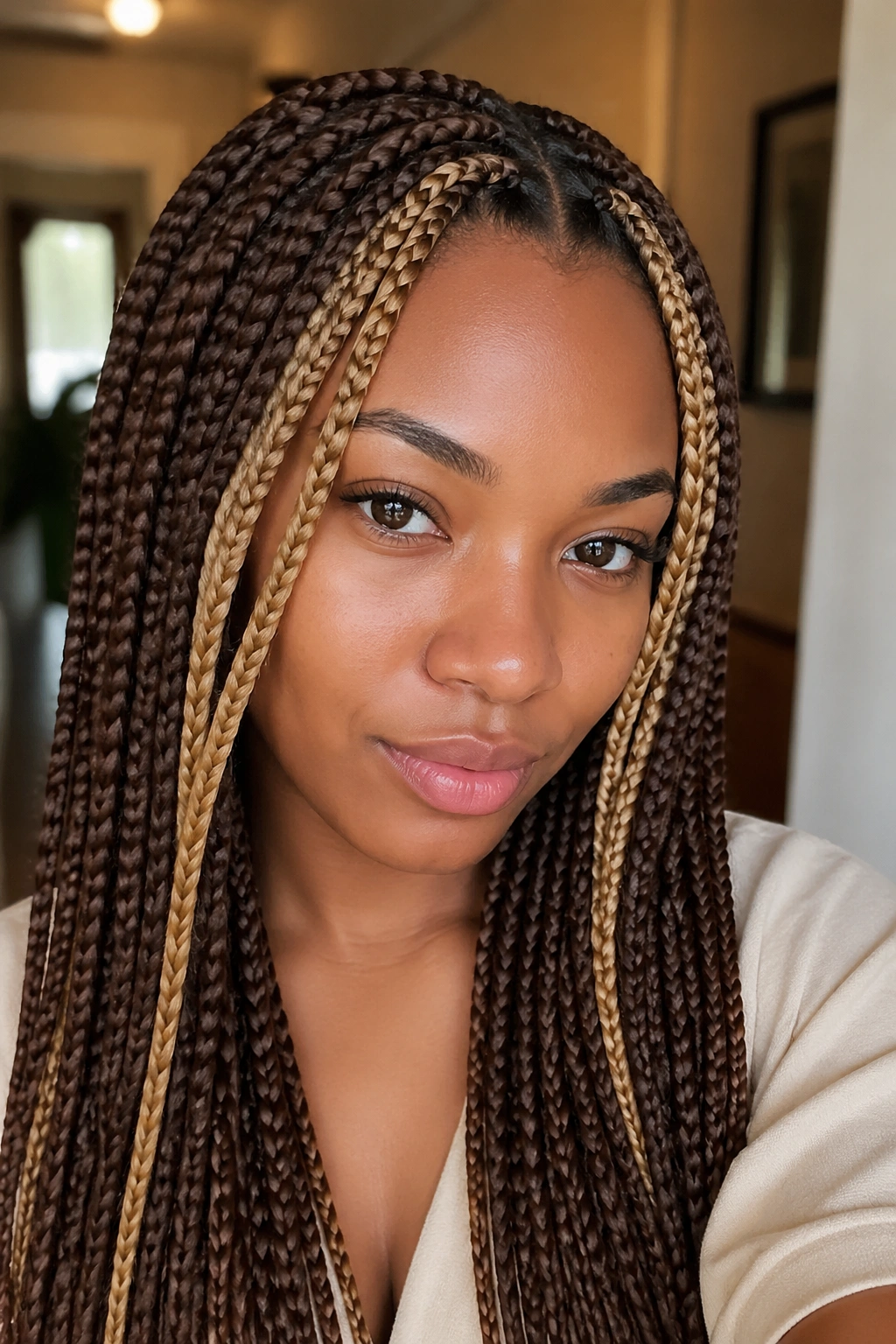
Knotless braids have a softer root, but that does not mean they need to look plain. Add chestnut brown with a few blonde frame pieces near the temples, and the whole face changes shape a bit.
The smooth root makes the color transition feel cleaner. That matters when you’re mixing shades, because the eye has less tension to deal with at the scalp. Blonde around the front two or four braids can lift the face without making the whole style bright.
What to Ask Your Braider For
Ask for chestnut through the main body, then bring in blonde on the front edge and a few interior rows. If you want more movement, keep the blonde concentrated in the middle-to-lower third of the braids instead of at the root. That gives you a gentle reveal, not a loud stripe.
Knotless braids also sit flatter, which helps if you wear scarves, headbands, or glasses. The style stays sleek around the hairline, and the color does the talking farther back.
A small note: if your hair is thick, keep the blonde panels narrow. Wide light pieces on knotless braids can start to feel heavy in the visual sense, even when the hair itself feels light on the scalp.
5. Side-Part Braids with Hidden Golden Brown Swirls
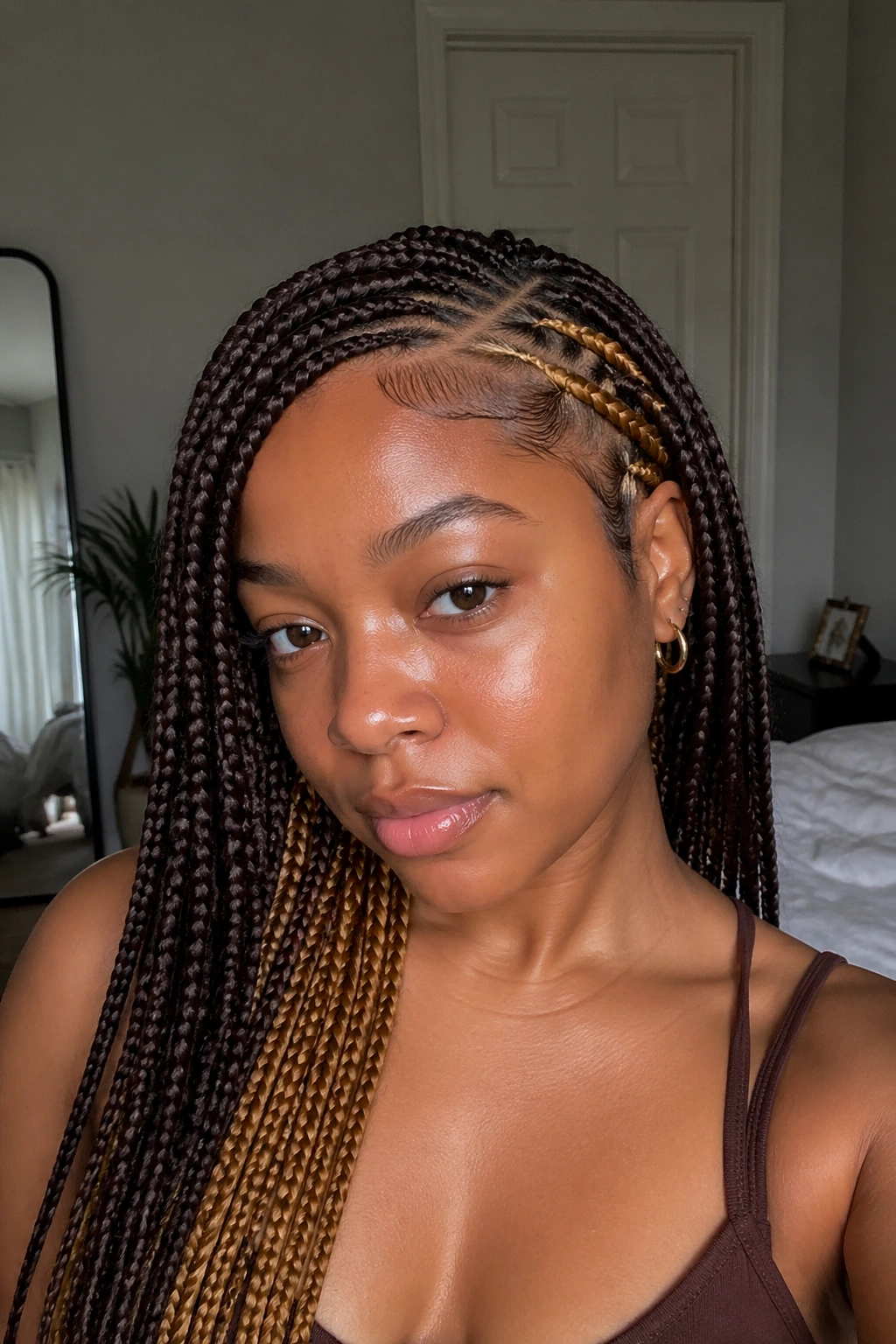
If you always tuck one side behind your ear, side-part braids are already doing half the work. Add golden brown swirls underneath the heavier side, and the peekaboo effect gets more obvious without getting messy.
The side part creates a built-in reveal line. One side carries more of the braid curtain, and the other side opens up the face. That makes it easy to place the lighter braids where they’ll show when the hair shifts.
Why the Part Matters
A clean part changes the whole read of the style. With a side part, the blonde doesn’t need to be spread evenly across the head. It can sit under the part, around the ear line, and in the lower back section where it gets exposed naturally.
You can ask for:
- A deep side part for a stronger reveal
- A soft side part if you want the look to feel quieter
- Blonde swirls placed under the part line
- Brown-heavy front rows so the face stays grounded
This is one of those styles that gets better the more you wear it. The braids settle, the part stays crisp, and the color reveals itself in small, pleasing pieces instead of all at once.
6. Shoulder-Length Peekaboo Braids with Warm Blonde Ends
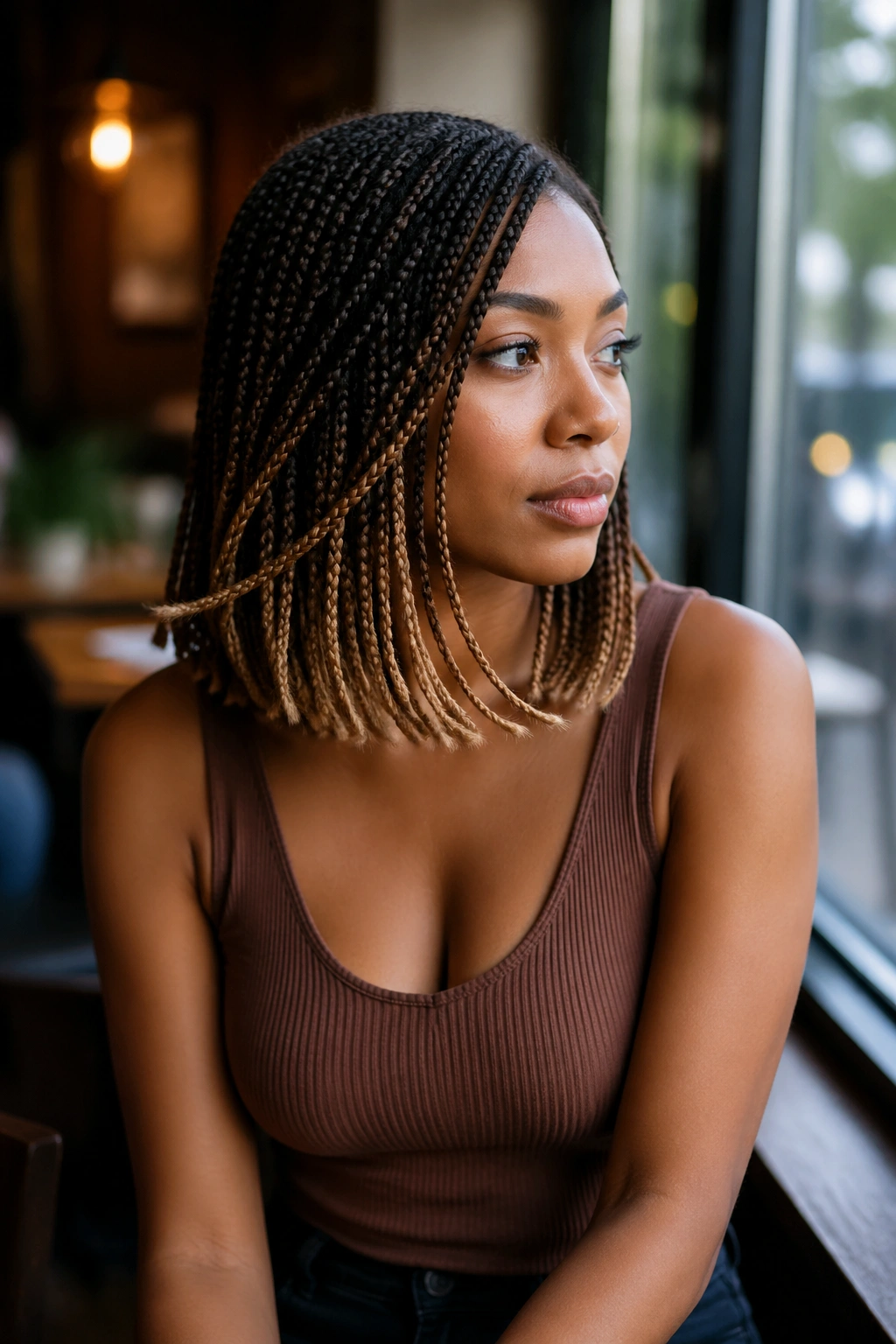
Shoulder-length braids keep the idea simple. Less length means less fuss, and the color has nowhere to hide. Warm blonde ends on a brown base give you a quick hit of lightness right where the hair brushes your shoulders.
I like this version because it doesn’t try too hard. The shorter length keeps the braid weight manageable, while the blonde ends make the movement obvious. You get the peekaboo effect every time the braids swing, which is half the fun.
The style also works well if you wear your braids up a lot. Shoulder-length braids are easier to gather into a half-up top knot or a low puff at the crown. The blonde ends then peek out from the bottom, which gives the whole thing some movement even when it’s pinned.
Shorter braids can look blunt if the color is too flat. Warm blonde at the ends breaks up that heaviness. It’s clean, easy, and not overdesigned. That matters more than people admit.
7. Waist-Length Braids with Espresso Roots and Blonde Midsections
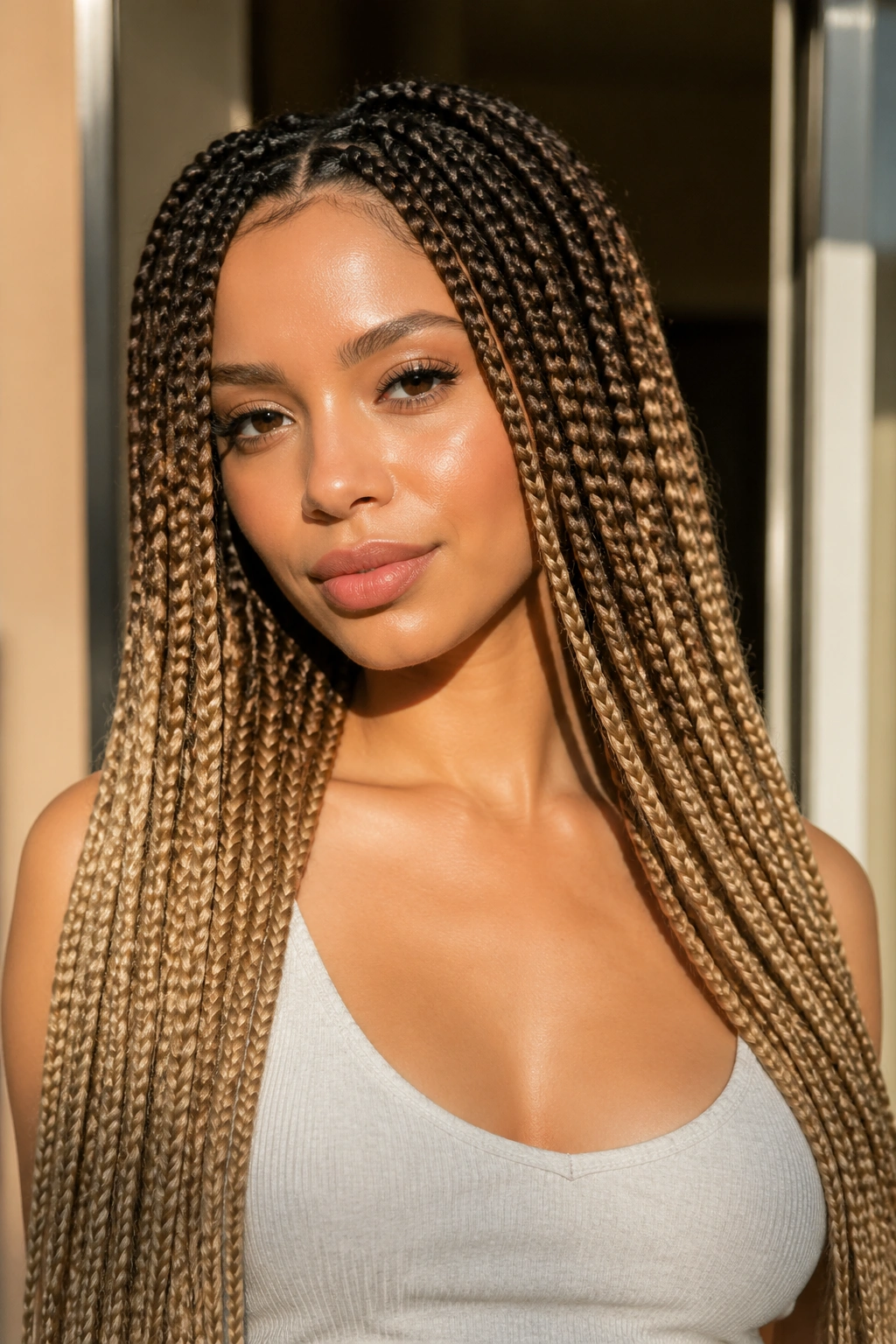
Long braids can carry color, but they can also swallow it. That’s why waist-length braids work best when the blonde sits in the midsections instead of only at the ends.
Espresso roots keep the base rich and dark. Then the blonde starts a little farther down, so it shows up where the braid bends, folds, and moves. That middle placement makes the color easier to see from the side and from the back.
How the Gradient Reads
A three-shade blend can work well here: espresso at the root, medium brown through the upper lengths, and honey blonde in the middle third. The effect is softer than a blunt ombre and less predictable, which is exactly why it looks good.
- Keep the blonde out of the root zone
- Let the lighter pieces start around chin to collarbone length
- Use brown ends if you want the style to feel deeper
- Choose long, smooth parts so the color transition doesn’t look choppy
This style is for someone who likes length and doesn’t mind a little visual drama. If you want a long-braid look that still feels controlled, this is a strong pick.
8. Triangle-Part Box Braids with Blonde Flip Sections
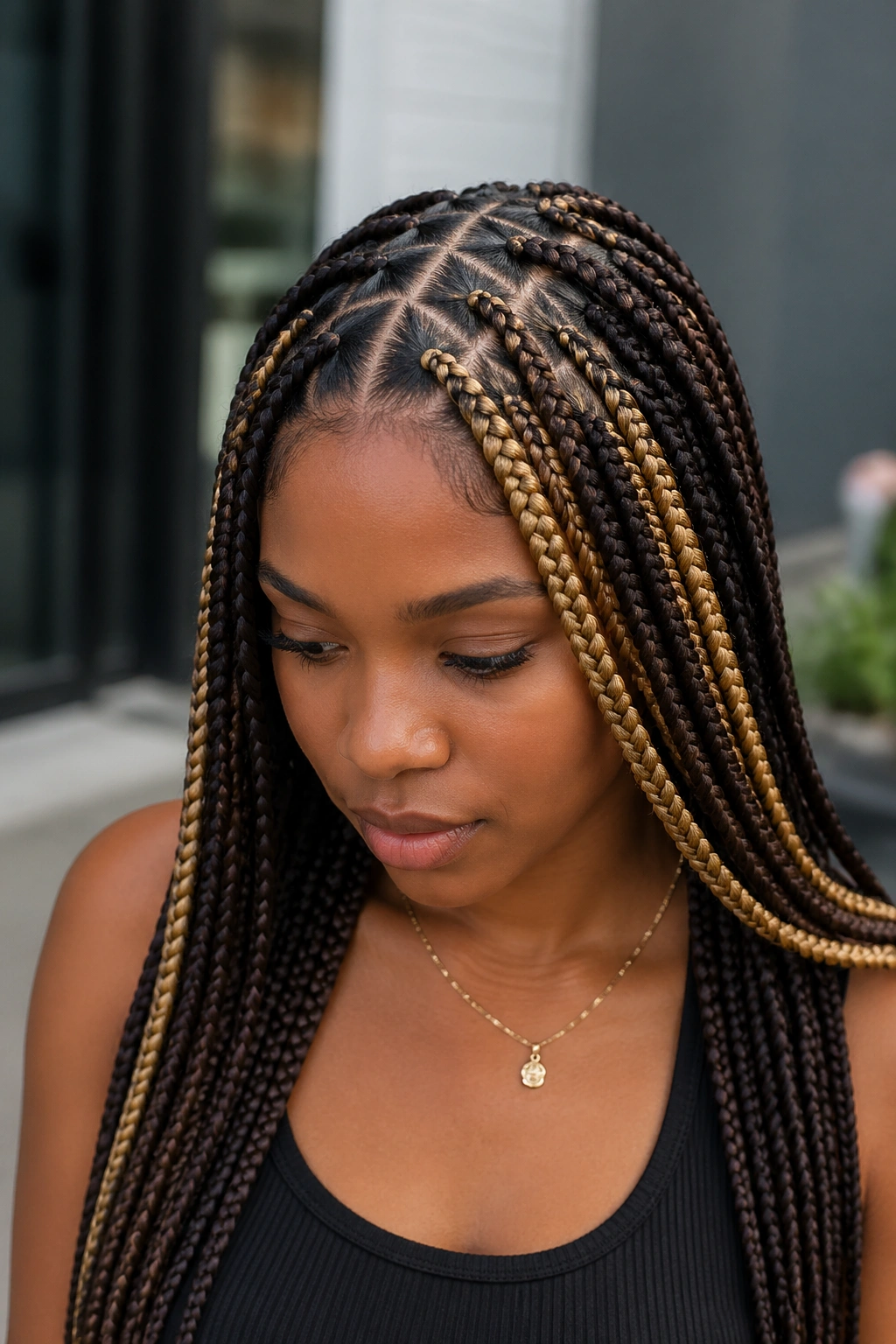
Triangle parts change the mood fast. Square parts are neat; triangle parts feel sharper, a little more graphic. Add blonde flip sections into that pattern, and the braid layout starts doing some of the styling for you.
The triangles create little angles that catch the lighter pieces at different points across the head. Instead of one big reveal, the blonde appears in little flashes. That can feel more expensive than a heavier color block because your eye keeps finding new spots.
Why Triangle Parts Change the Vibe
The part shape changes how the color sits on the scalp. With triangle parts, the blonde can be placed on alternating sections around the crown, then echoed again near the nape. That keeps the style from looking repetitive.
A good setup usually looks like this:
- Brown on most of the crown
- Blonde on every other triangle near the sides
- A few lighter pieces in the back rows
- Clean edges so the shape reads clearly
Use medium-sized triangles, not tiny ones. Tiny parts make the color look busy, and once that happens, the whole style loses its edge. Keep the shapes readable and the color will look deliberate.
9. Bob-Length Box Braids with Mocha Base and Light Blonde Pockets
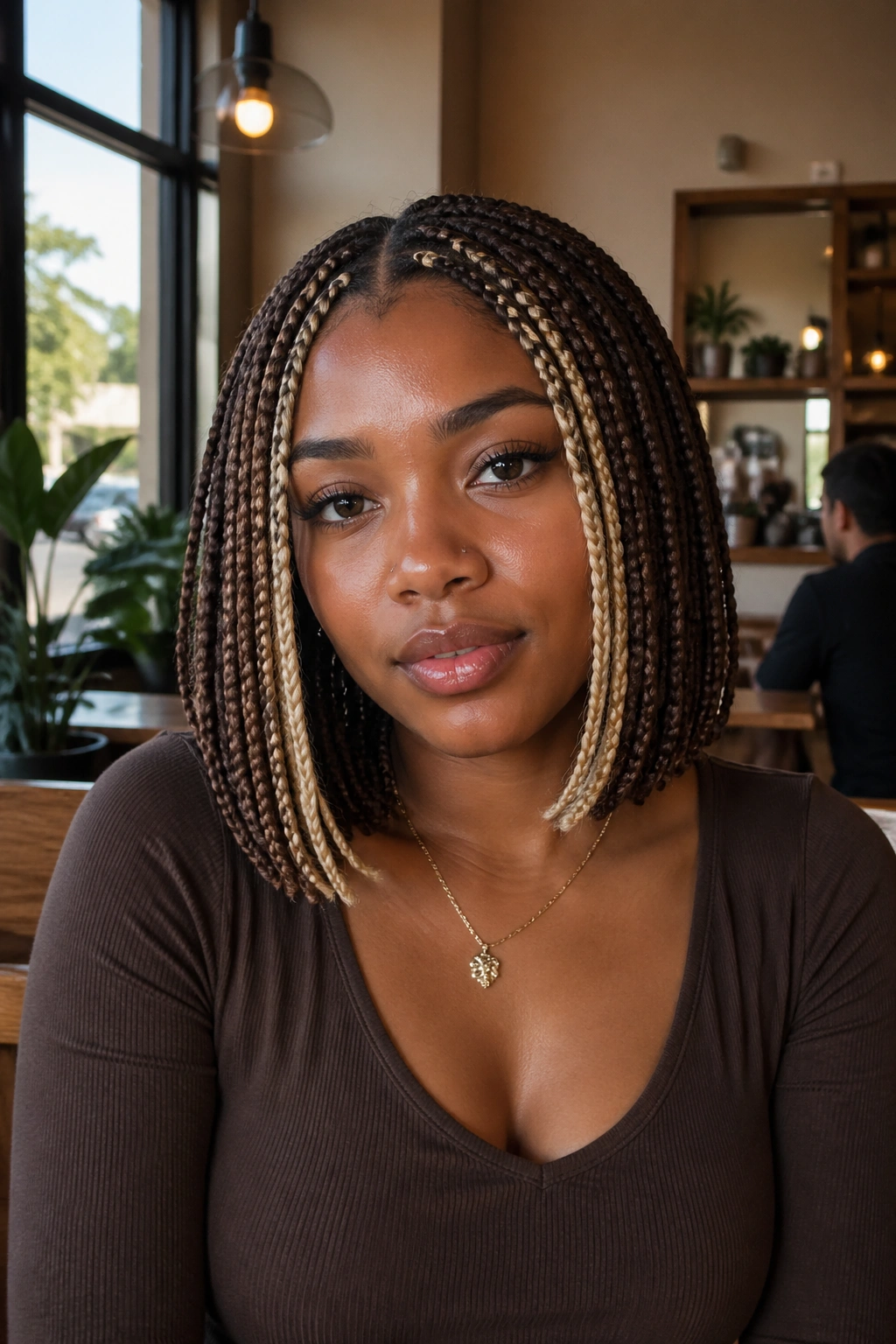
Bob-length box braids are blunt in a good way. They sit close to the jawline, show off the neck, and make the color story easier to read because there’s less hair competing for attention.
Mocha brown works well here because it softens the silhouette. Then you tuck light blonde pockets near the temples, the lower back rows, or a few ends around the face. The result is a style that feels neat but not flat.
No extra length required.
That’s the charm. A bob-length cut lets the peekaboo color do the work without asking you to manage heavy braids past the chest. If you like easy morning styling, this is one of the smartest options on the list.
I also like bob-length braids because they pair well with earrings, collars, and strong necklines. The lighter pockets frame the face, while the mocha base keeps the whole thing from drifting into high-contrast territory. It’s tidy, but not boring. That’s a rare combination.
10. Half-Up Half-Down Peekaboo Braids with Soft Brown Contrast
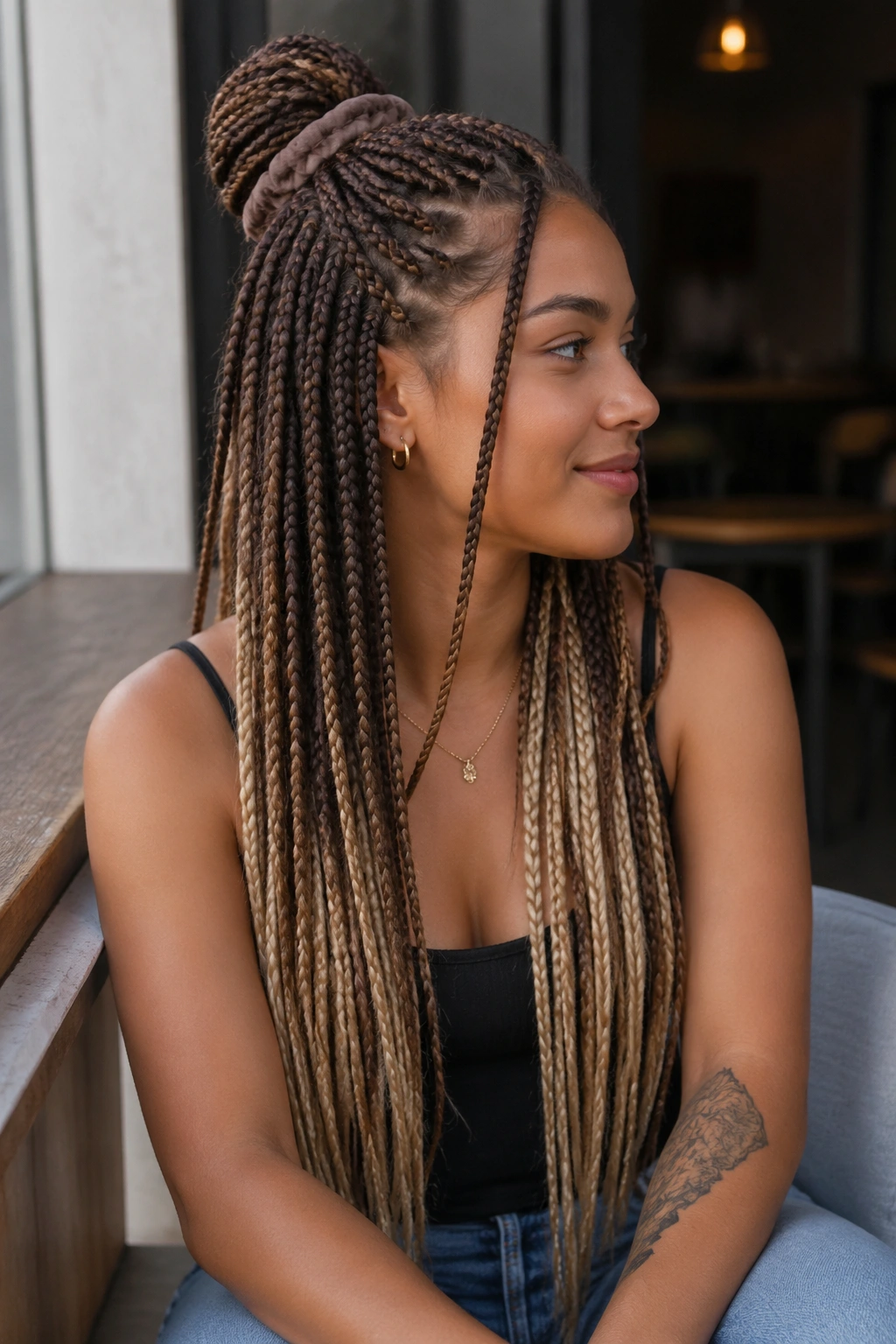
Why does half-up hair make peekaboo color feel bigger? Because it lifts the dark curtain.
When you pull the top half into a bun, ponytail, or clip, the hidden blonde underneath gets a moment to show off. The brown still leads from the front, but the nape and lower sections suddenly come alive. It’s one of the easiest ways to make hidden color feel intentional.
How to Style It
The style works best when the lighter braids sit in the lower half of the head, not the top. That way, each time you lift the upper section, the blonde beneath has room to show.
- Use a strong but soft hair tie so the top section doesn’t pull too tight
- Keep the brown rows around the hairline
- Let the blonde live in the back curtain and lower sides
- Add a cuff or wrap if you want one accent, not five
This style is a solid choice for busy days because it changes mood fast. Down, it reads relaxed. Pinned up, it reads sharper and more styled. That kind of range is useful, and not enough braid styles give it to you.
11. Goddess Box Braids with Blonde Curly Leave-Out
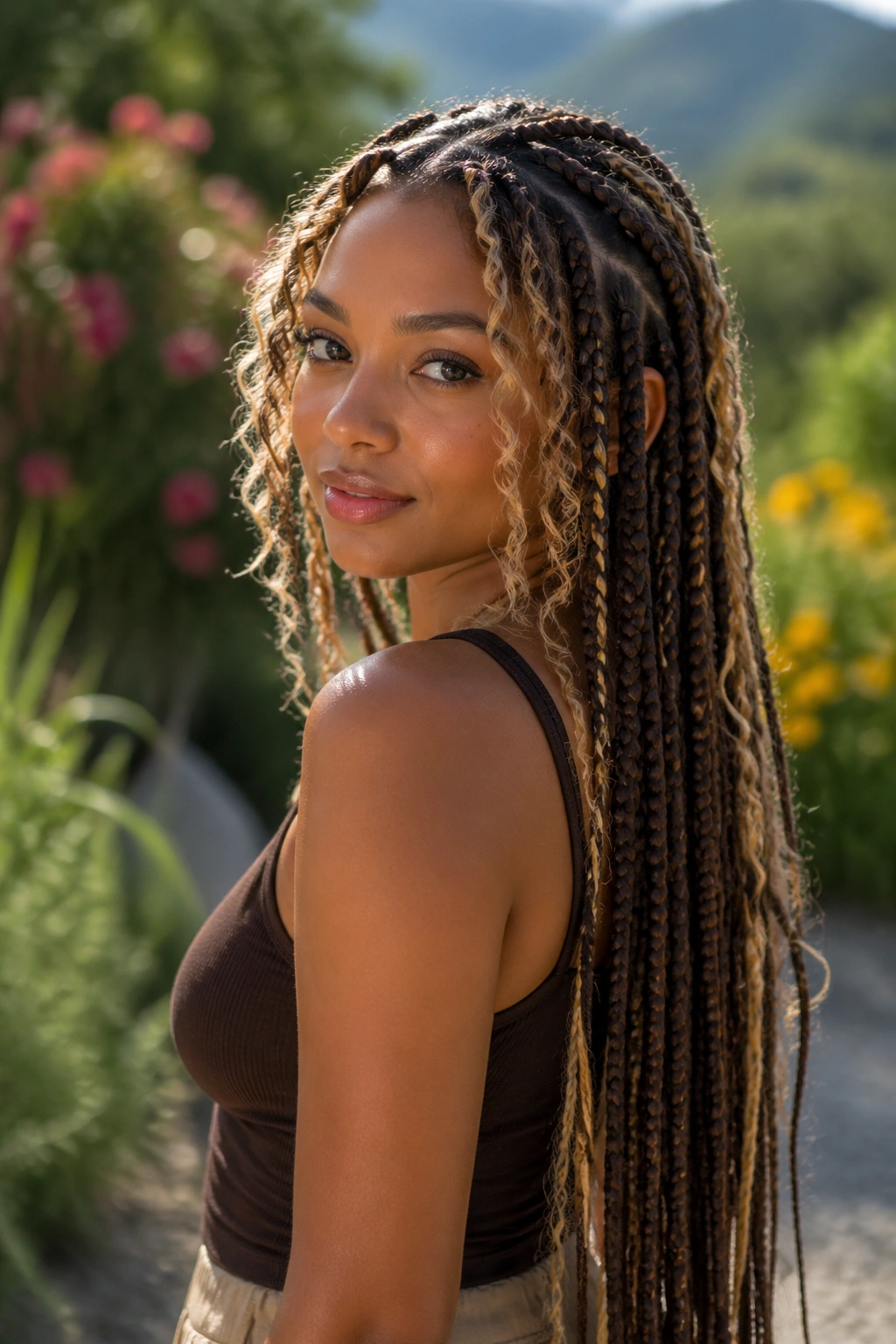
Loose curls change the whole temperature of the style. Add them to box braids with blonde and brown peekaboo color, and suddenly the look feels softer around the face without losing the structure of the braid.
The curls give the lighter pieces a place to sit that feels airy. Brown braids hold the shape, blonde curls break up the weight, and the combination keeps the style from looking boxy. If you like movement, this one is hard to ignore.
What Makes It Different
The leave-out curls are the part people notice first, even though the braid color is doing plenty of work underneath. Blonde curls tucked between brown braids can make the whole style feel lighter around the edges.
Keep these points in mind:
- Curl pieces should be medium density, not too thick
- Blonde curls work best near the front and crown
- Brown braids should stay dominant so the curls feel like accents
- A little mousse helps the curl pattern stay separated
One more thing: don’t drown the curls in oil. They’ll lose their shape fast. A light mist and a little finger separating goes a lot farther.
12. High Bun Box Braids with Hidden Nape Blonde Pieces
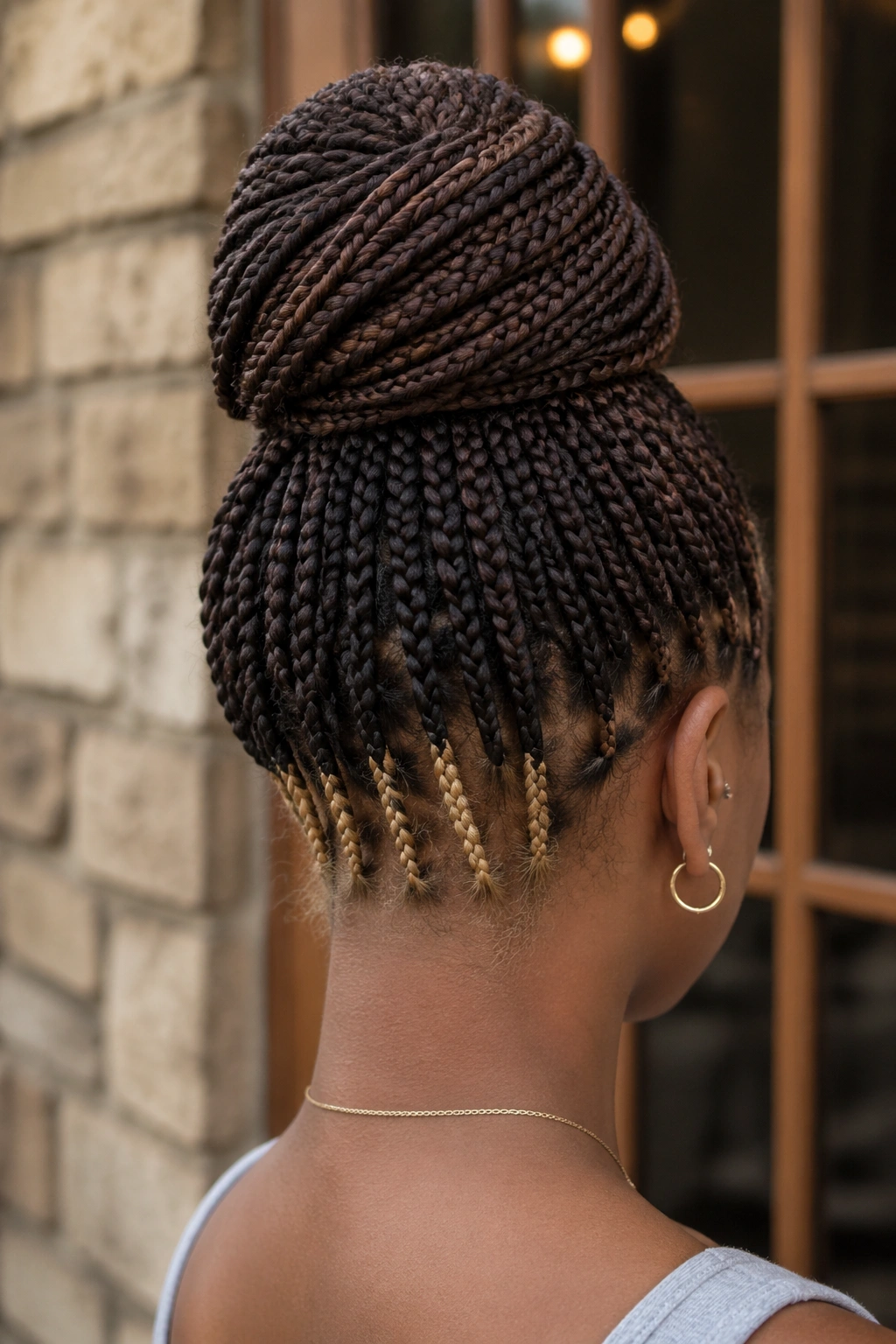
From the front, this can look like a clean, classic bun. From the back, it tells a different story. That’s the fun part.
A high bun with hidden blonde pieces at the nape gives you contrast where most people don’t expect it. The upper braids stay dark and tidy so the bun holds its shape, while the lower blonde pieces peek out when the hair is gathered. It feels neat without being plain.
Where the Surprise Sits
The nape is the right place for surprise color because it doesn’t steal attention from the bun itself. You can keep two to four lighter braids there, then leave the rest in brown shades. When the bun is wrapped, the blonde still shows in the back and sides.
This style is especially handy if you like having your hair off your neck but still want a bit of color movement. It works for errands, long stretches at a desk, or any time you want the hair to stay put.
A few practical notes:
- Keep the bun base brown-heavy
- Place the blonde in the bottom rows only
- Use a satin scarf at night to keep the braid line smooth
- Don’t place too much weight at the crown; it can make the bun sag
It’s a simple style, and that’s why it works.
13. Layered Box Braids with Face-Framing Blonde Money Pieces
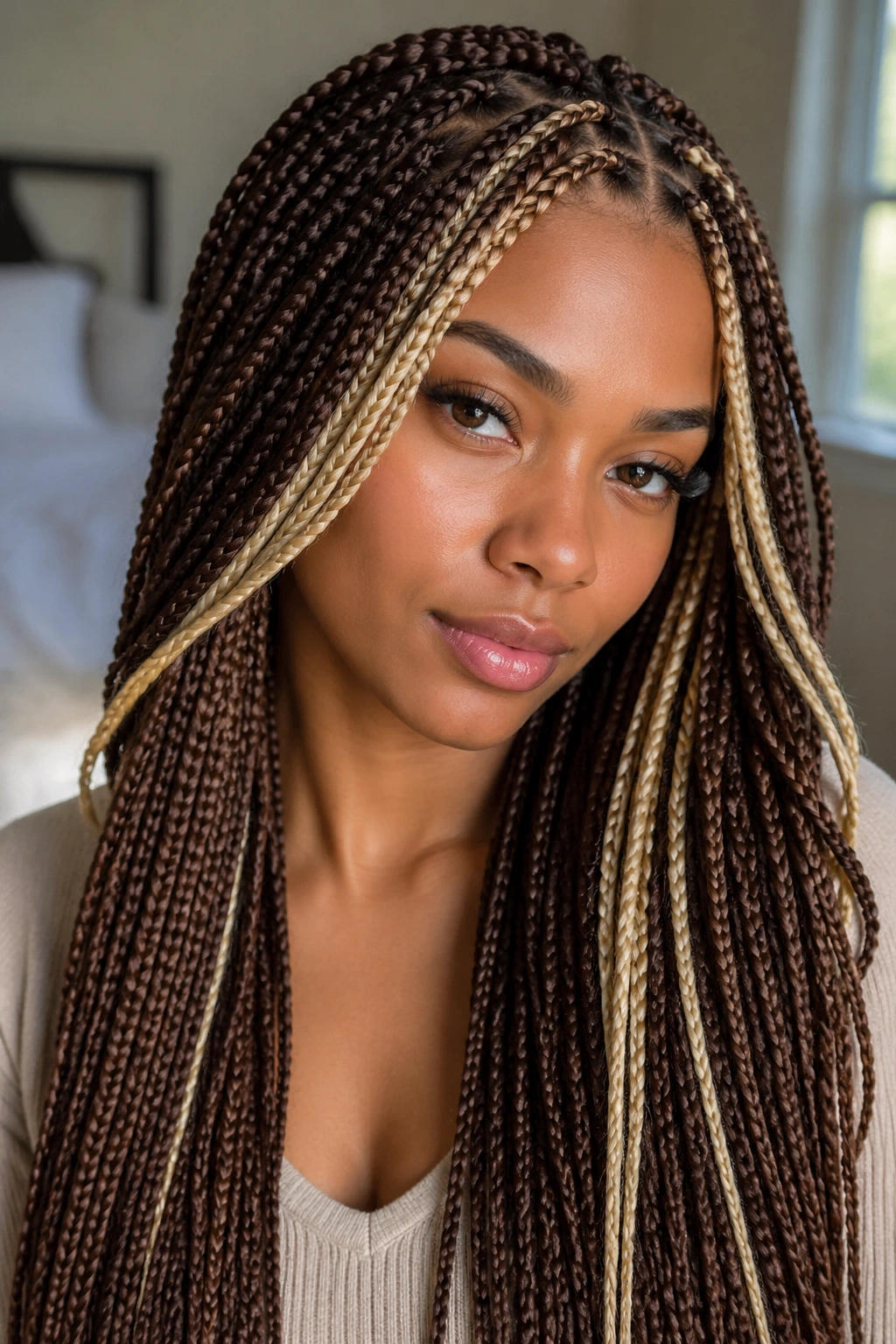
Money pieces in braids can go wrong if they’re too thick. When they’re done well, though, they give you brightness right where the face needs it, and the rest of the braids can stay brown and calm.
Layering helps here. The shortest pieces can sit around the chin, the next layer around the collarbone, and the longest rows fall past the chest or back. That keeps the blonde from feeling pasted on. Instead, it looks like part of the cut.
I’m a fan of this version because it does a lot with a little. Two lighter braids near the temples can change the whole face frame, especially if the rest of the head stays in mocha, chestnut, or dark brown. It’s a restrained move, which is rare in color braids and worth appreciating.
If you wear glasses, keep the front pieces a touch wider so they don’t disappear behind the frames. If you like center parts, place the blonde pieces just outside the part line. Small choices like that make the style read clean instead of random.
14. Curved-Part Peekaboo Braids with Walnut and Honey Blend
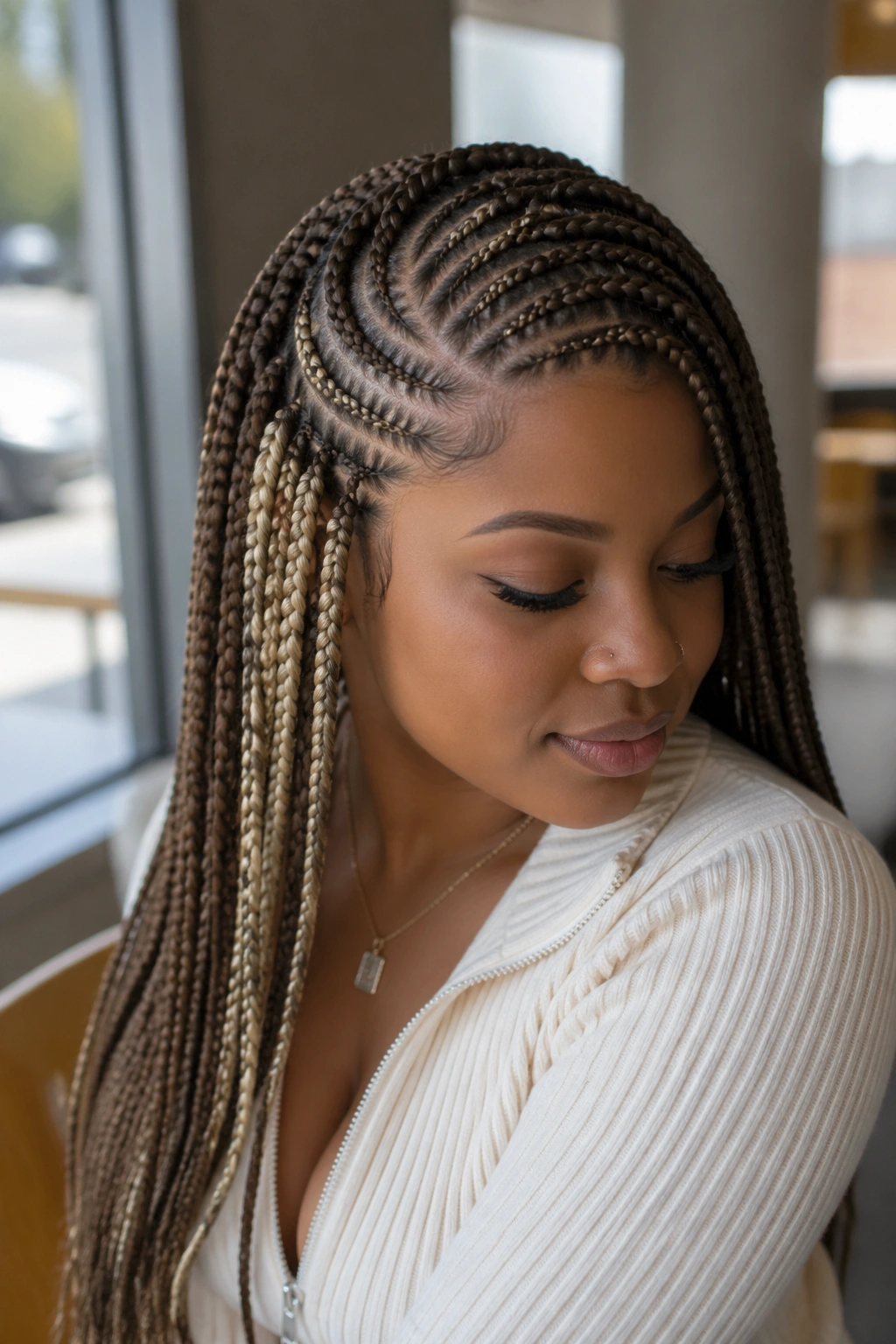
A curved part softens the whole style before the braids even start. Instead of a rigid grid, you get a sweep that feels a little more fluid, and the color can follow that curve in a way that square parts can’t.
Walnut brown with honey blonde tucked into the inside of the curve creates a nice visual arc. The lighter braids don’t need to be all over the head; they just need to live where the part naturally opens up. That’s enough.
What the Curve Changes
The curve guides the eye. That means the blonde can sit in the bend of the part and still feel visible, even if it’s not sitting at the hairline. It’s a softer approach, and I think that helps the style feel less rigid.
A good request for your braider would be:
- A soft side curve, not a hard zigzag
- Blonde placed on the inside of the curve
- Walnut or mocha brown on the outer rows
- Clean part lines so the curve stays readable
This style suits people who like structure but don’t want their braids to look boxed in. The color follows the part instead of fighting it, and that makes the whole style feel more settled.
15. Extra-Long Box Braids with Dimensional Brown-to-Blonde Depth
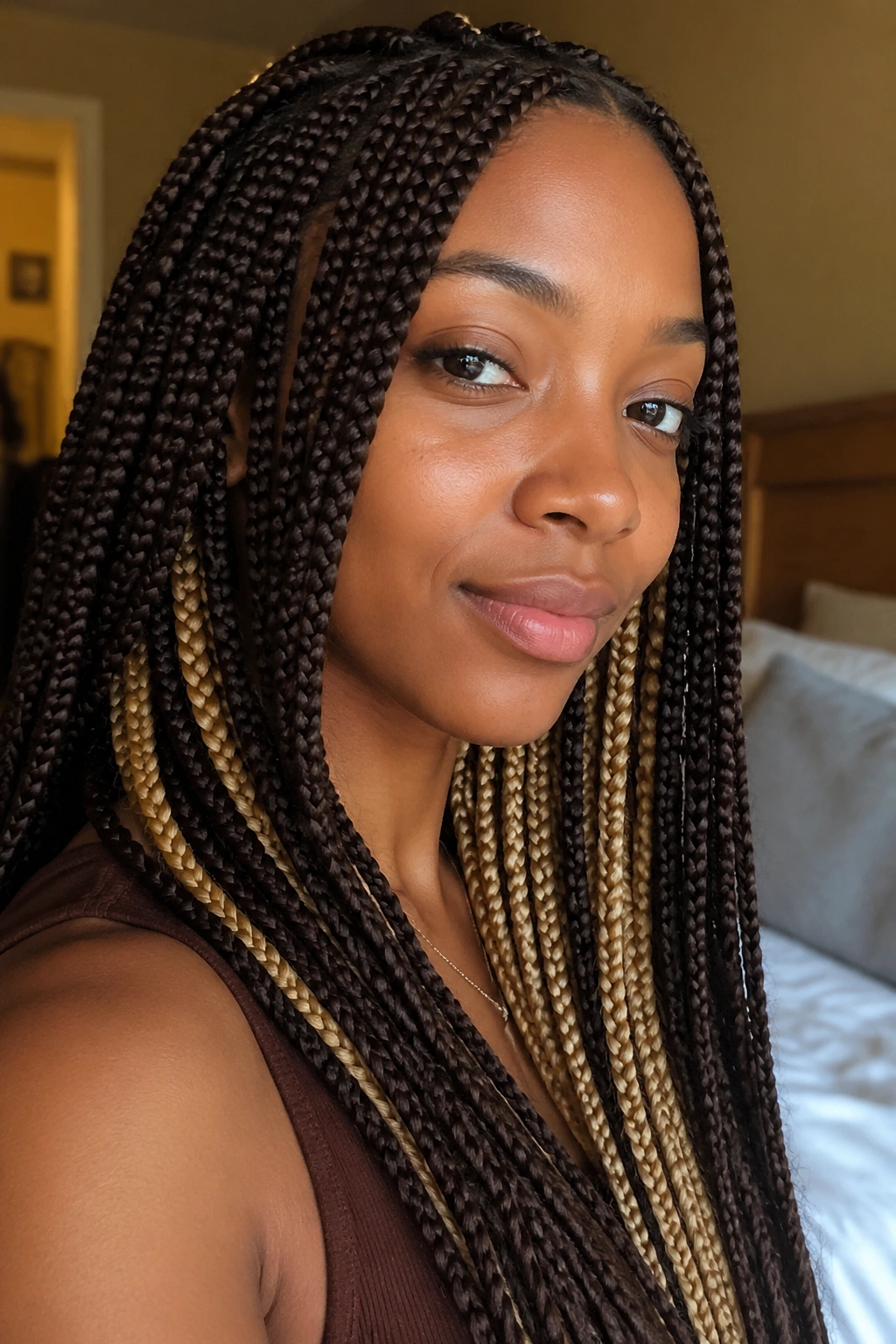
Long braids give you room to layer color in a way shorter styles can’t. If you want blonde and brown peekaboo box braids that feel rich rather than loud, extra length gives you the space to build that depth.
The smartest version uses three shades: espresso near the root, chestnut or medium brown through the middle, and honey blonde tucked into interior panels. That keeps the braid from turning into one flat stripe of color. The light pieces show up in motion, which is where peekaboo braids make the most sense anyway.
A Practical Note Before You Sit Down
Ask your braider to keep the blonde sections a little thinner than the brown sections. That small adjustment helps the lighter color behave like an accent instead of a block. It also makes the braid surface look smoother from a distance.
A few things to keep in mind:
- Long braids need even tension so the weight doesn’t pull at the scalp
- Blonde should sit mostly in the middle and lower third
- Brown at the root keeps the style from feeling harsh
- Satin at night helps the color layers stay neat and separated
This is the style I’d pick if I wanted the color to stay interesting for a long stretch of wear. It has movement, depth, and enough contrast to keep showing new pieces as the braids settle in. And that’s the part that matters most: a good color placement still looks good after the novelty wears off.