


Small ombré box braids have a way of looking calm up close and sharp from across the room. The smaller the braid, the cleaner the color shift reads, because each tiny section carries its own little fade instead of one heavy block of color.
That matters more than people think. On a small braid, a dark root that slides into brown, copper, burgundy, or blonde doesn’t fight the texture — it works with it. The braid pattern stays neat, the color gets its moment, and the whole style feels lighter on the eye than a chunky ombré install.
The trick is timing the fade well. If the lighter shade starts too high, the root disappears. If it starts too low, the ends look like an afterthought. The sweet spot is usually somewhere in the lower third of the braid, where the eye catches the transition without losing the depth at the base.
Some of the best-looking versions are quiet. Others are loud in a good way. All of them depend on the same thing: a clean parting grid, a smooth blend, and a color choice that fits the person wearing it rather than the box on the hair shelf.
1. Classic Black-to-Brown Fade
Warm brown is the easiest place to start, and I mean that in the best possible way. A black-to-brown fade on small braids gives you depth at the root and softness at the ends without looking flashy.
Why the brown fade works
The reason this version stays popular is simple: it looks finished without trying too hard. If your natural hair is dark, a 1B root into color 30 or a soft chocolate brown at the tips keeps the transition believable. That makes the style forgiving as the braids loosen a little over time.
Small braids help the brown read even better. There’s enough surface area for the color to show, but not so much bulk that the shade shift turns blocky. A neat square part and a 0.5- to 0.75-inch section size usually keep the braid looking crisp.
- Ask for dark roots with a lower-third fade if you want the change to stay subtle.
- Brown ends pair well with gold hoops, beige tops, and makeup with warm undertones.
- Shoulder-length or mid-back length both work, but the fade shows faster on longer braids.
- This is the safest pick if you want ombré without going bright.
Best tip: keep the root color close to your own hair shade. The closer the match, the cleaner the whole install looks.
2. Honey Blonde Dip Ends
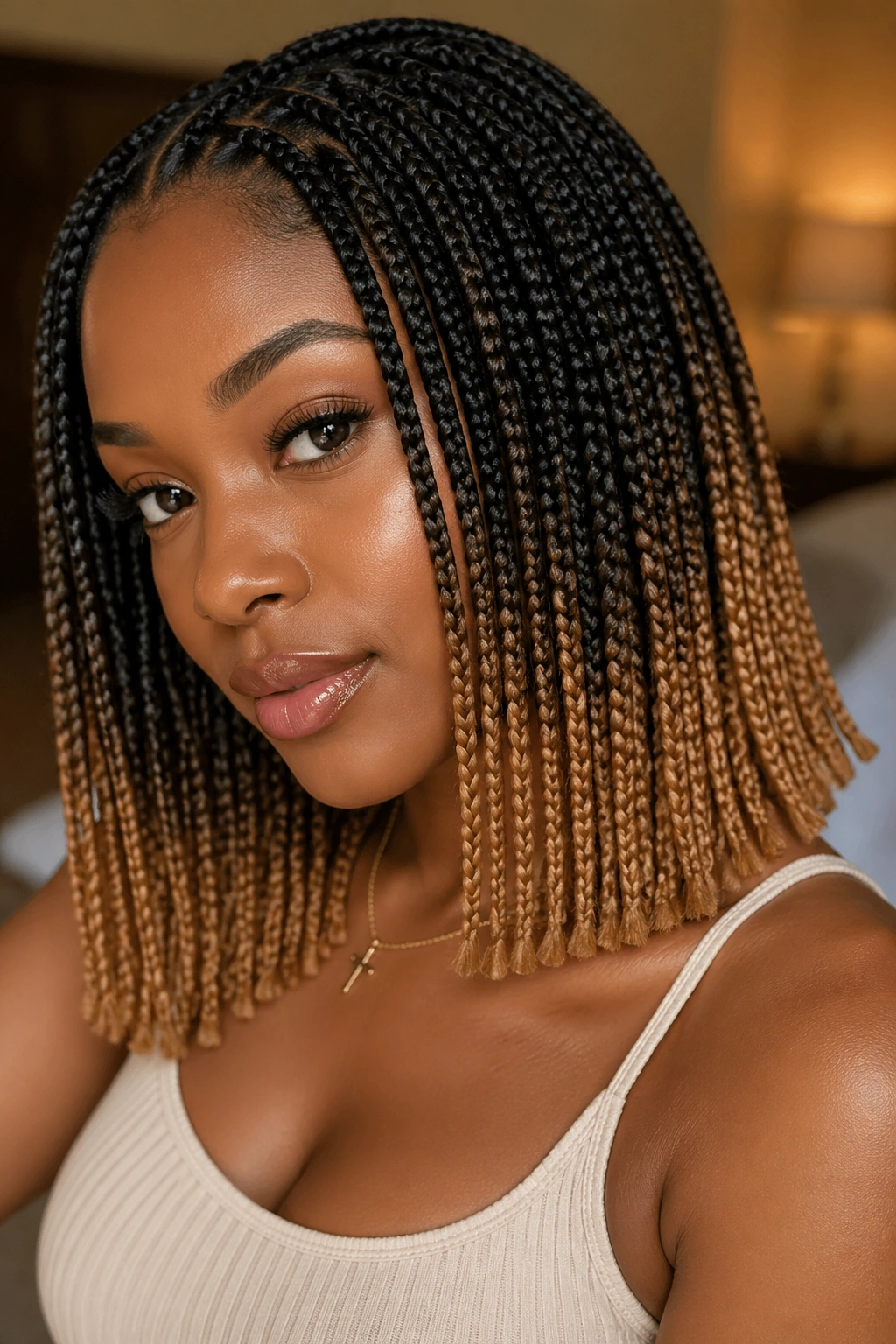
Honey blonde changes the mood fast. It turns small ombré box braids from neat and low-key into something brighter, sunnier, and more noticeable the second the light hits the ends.
The smart version is not platinum at the root and not yellow at the tip. It’s a dark base, usually 1B or deep brown, sliding into honey or soft gold around the last few inches. That keeps the style wearable. When the blonde starts too high, it can wash out the braid pattern. When it stays down near the ends, the hair still looks dimensional.
I like this shade most on braids that fall around the collarbone or below. The movement matters. Every swing gives you a little flash of gold, and on small braids that flash gets multiplied across the whole head. That is the whole trick, really.
If you want the color to stay rich instead of brassy, use a warm toner on the lighter hair before install or choose pre-blended braiding hair that already leans honey, not lemon. That small decision makes a bigger difference than people expect.
3. Burgundy Ends on Dark Roots
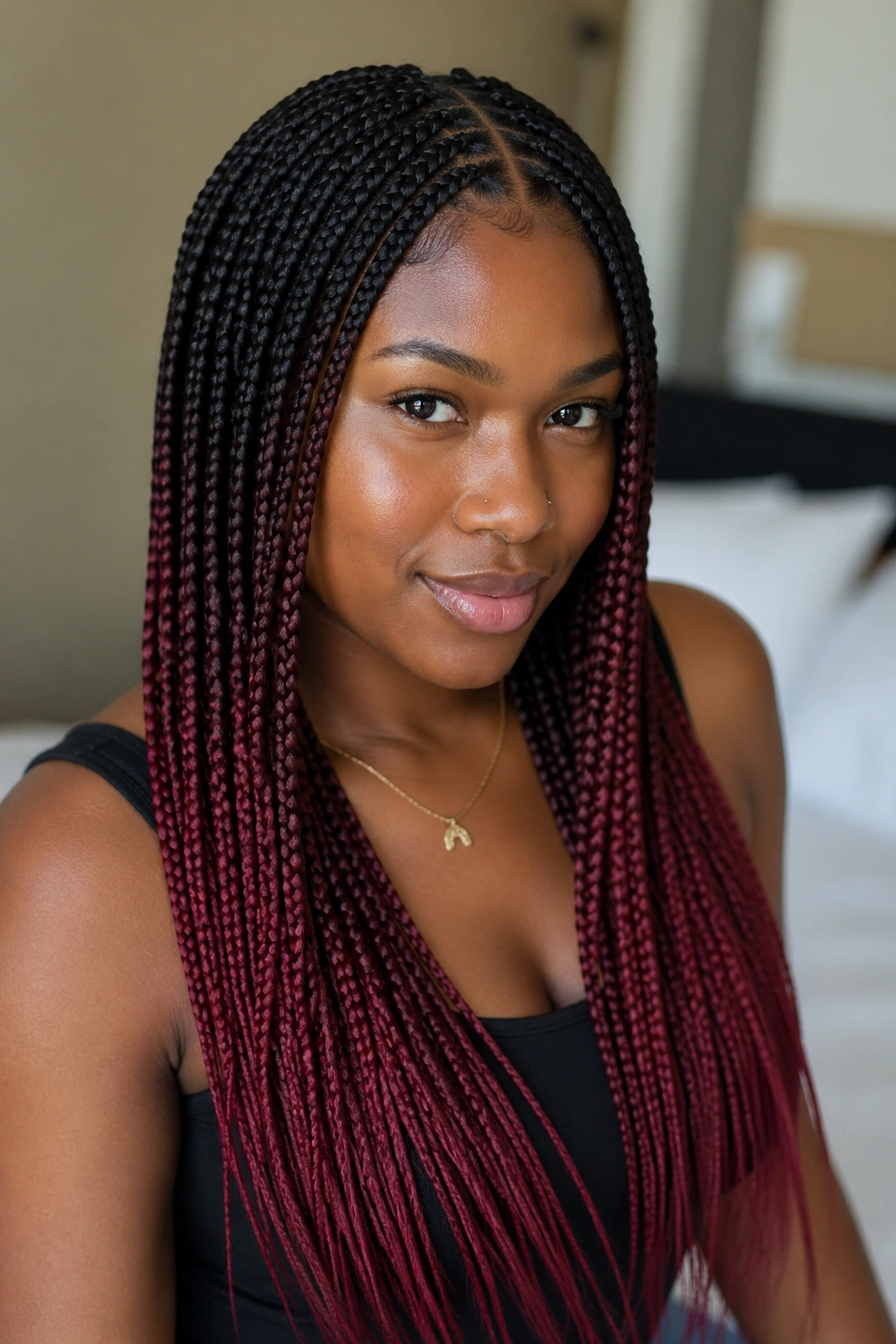
Why does burgundy look so good on small braids? Because it gives you color with weight. It has that deep wine tone that feels rich instead of sugary, and on tiny braids it comes across as polished rather than loud.
How to ask for the blend
Tell your braider you want the burgundy to start low, not at the scalp. A dark root into 99J, wine red, or a similar deep red shade usually gives the cleanest fade. The root keeps the style grounded; the burgundy carries the personality.
This version works especially well when the hair is parted neatly down the middle or in a slight off-center part. The symmetry helps the color look deliberate. If the braids are small and long, the burgundy reads from a distance without turning flat.
A small detail that matters: keep the red tone deep, not cherry-bright, unless you want the whole look to shout. Burgundy is better when it has a little shadow in it. That makes it easier to wear with denim, black, cream, or even office clothes that don’t need extra drama.
It’s one of the few color choices that can look serious and fun at the same time. That’s rare.
4. Copper Ombré With Triangle Parts
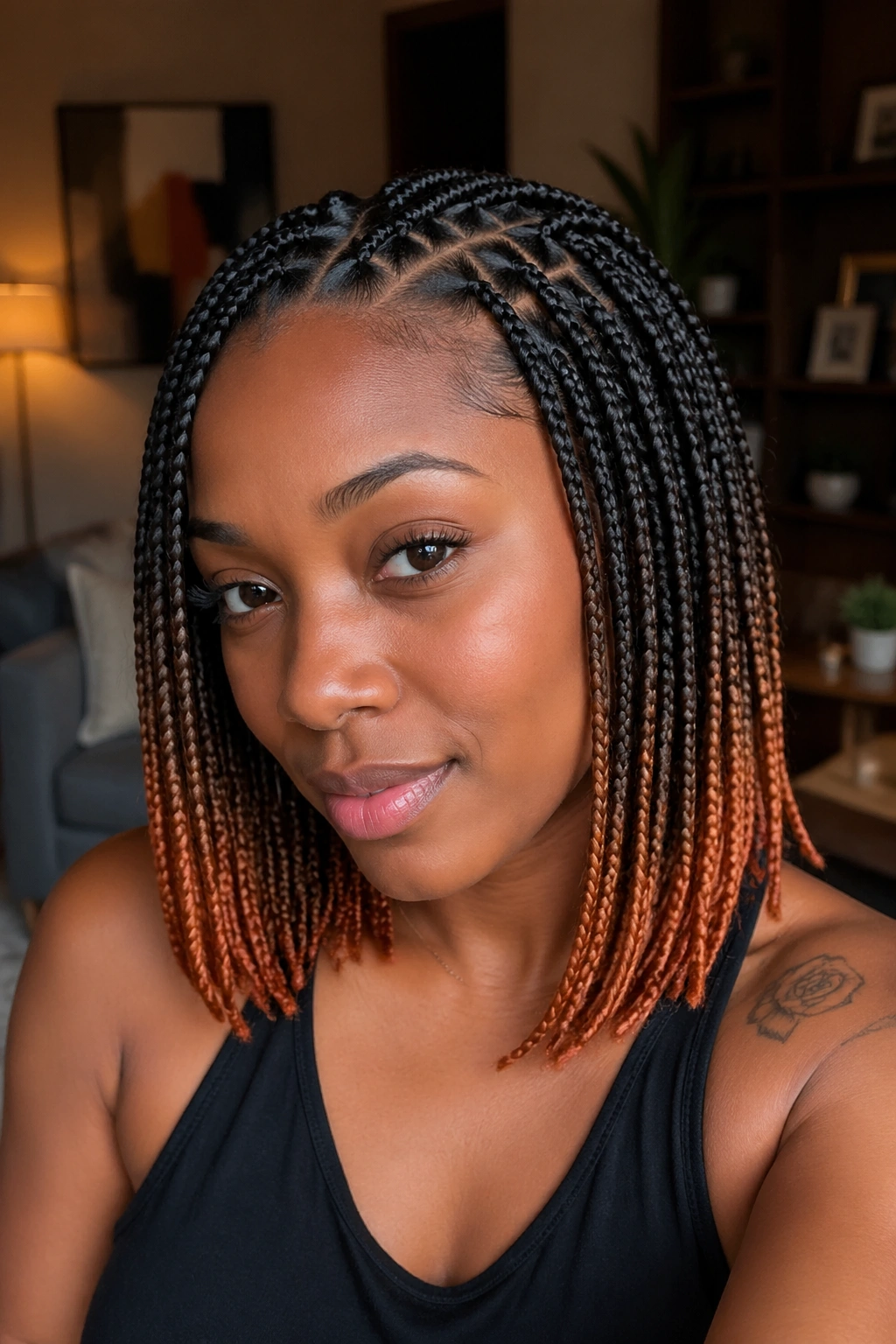
Picture small box braids with triangle parts and copper ends peeking out at the shoulders. The shape does half the work before the color even gets a chance, because triangle parts break the grid and make the whole style feel more modern.
Copper is a smart warm-toned choice when you want more heat than brown but less brightness than blonde. On small braids, the warmth shows up in little flashes rather than one long streak, which keeps it from feeling heavy. The best copper fades usually start from a dark brown or black base and land in a soft orange-gold copper near the bottom third.
- Triangle parts make the copper feel slightly more graphic.
- Gold cuffs look good here, but one or two per side is enough.
- Shoulder-length braids keep the copper punchy; waist-length braids make it feel softer.
- Terracotta makeup, brown liner, and cream sweaters all sit nicely with this shade.
One thing I’d avoid: too many accessories. Copper already has enough going on. Let the color lead.
5. Ash Brown to Beige Blonde
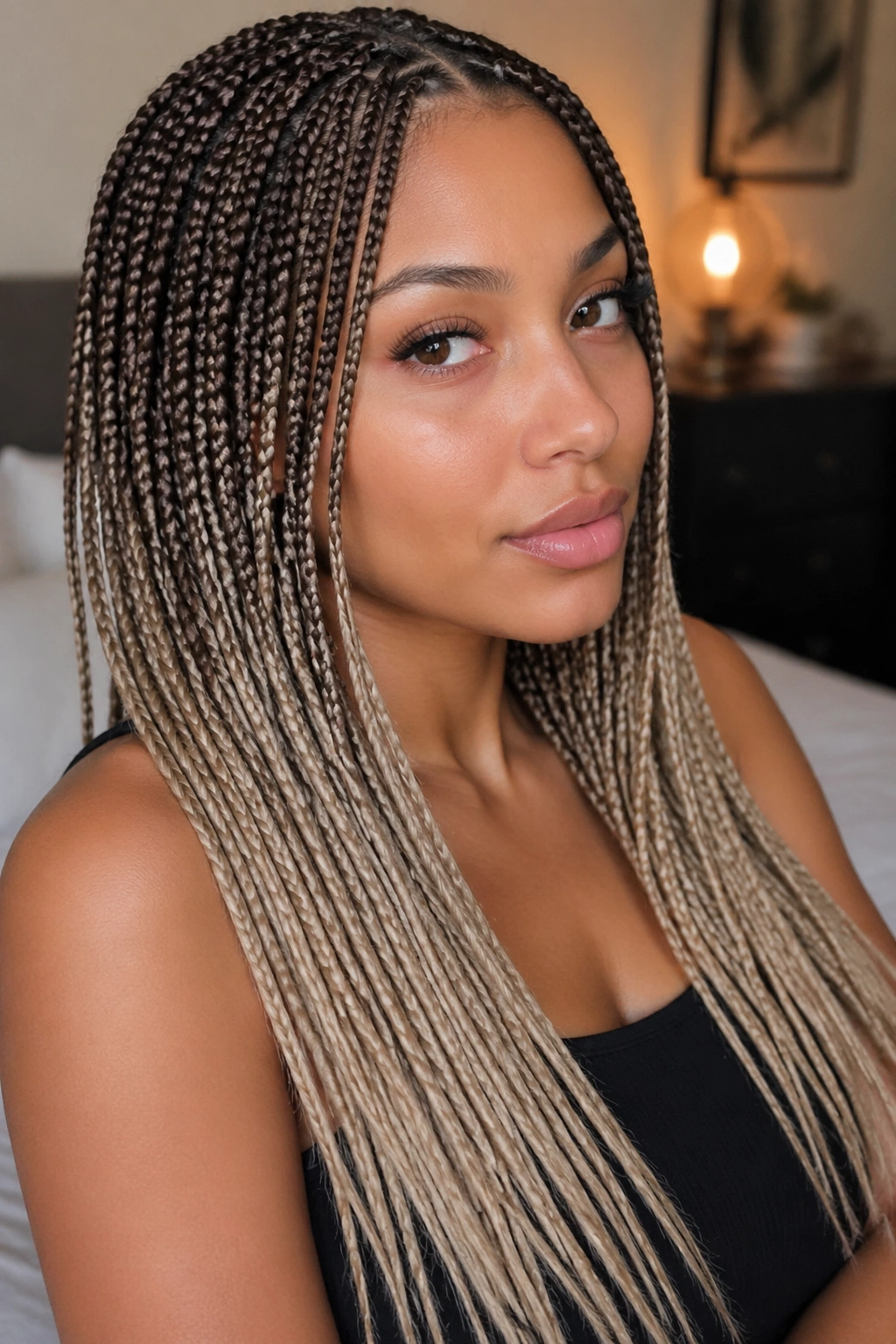
Ash brown is for people who hate brass. It gives small ombré box braids a cooler, cleaner finish, and the whole style feels more muted than honey or copper without slipping into dull territory.
The best version starts with a smoky brown root and fades into beige blonde, not bright yellow. That matters. Beige keeps the ends soft and light, while ash at the top keeps the braid from reading orange under indoor lighting. If you have a wardrobe full of silver jewelry, gray knits, black tees, or crisp white shirts, this color story makes sense right away.
This is also one of the easier blonde looks to live with. The fade doesn’t scream, so a little frizz at the ends won’t ruin it. That’s a nice bonus if you wear your braids for weeks and don’t want the style to look worn the second it loosens.
I think the biggest mistake with ash blondes is going too pale too fast. A braid this small already gives you plenty of contrast. You do not need a high-voltage platinum end to make it work. A soft beige tip can be enough.
6. Blue-Black Into Indigo Tips
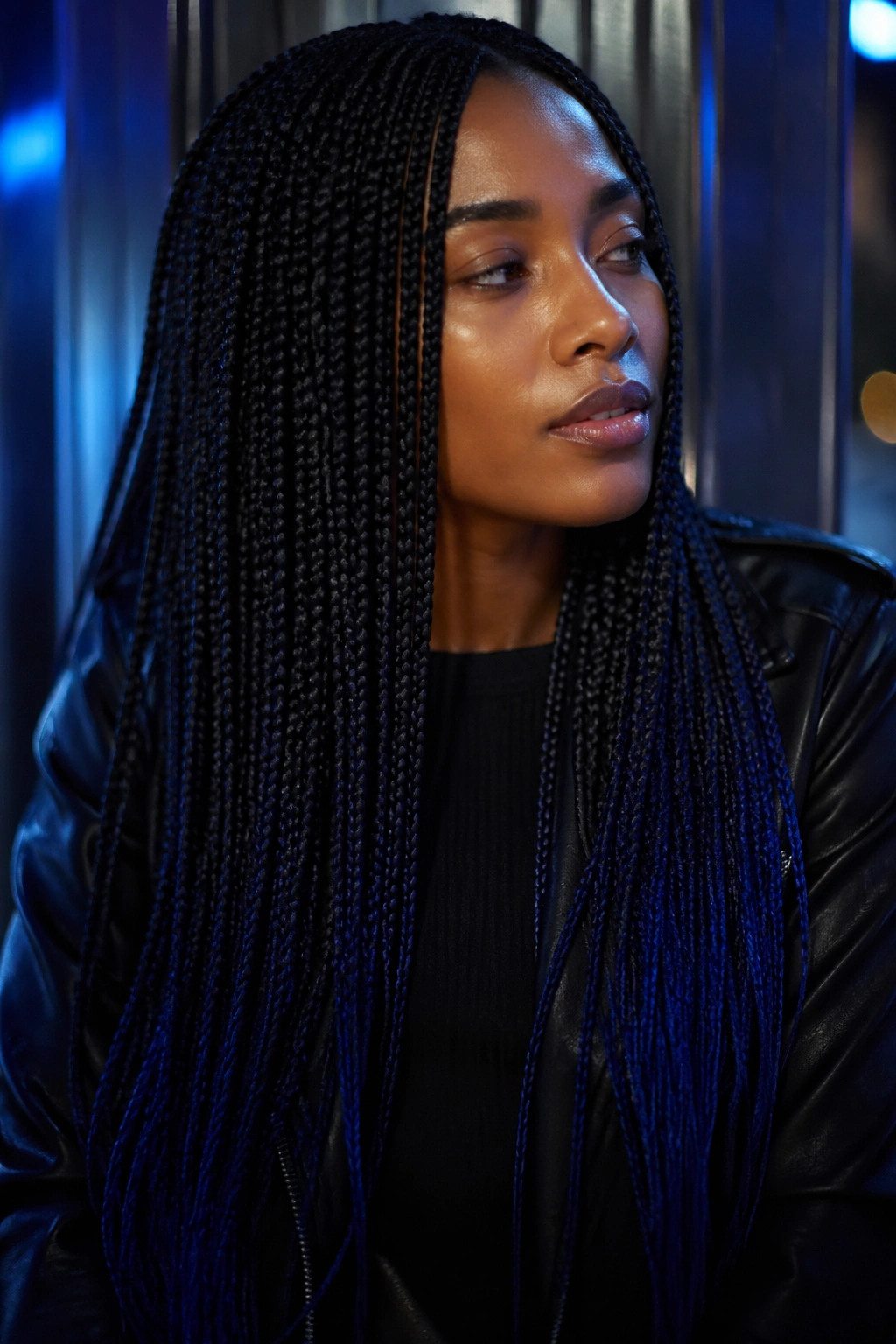
Unlike bright blue, blue-black stays dark until the light hits it. That’s exactly why it works on small ombré box braids. You get the depth of black, then a cool blue edge that shows up when the hair moves.
This is the version for someone who wants color but doesn’t want to look like they raided a costume closet. Indigo tips feel smoother than neon blue, and on small braids the shade shift is more elegant because the strands are thin enough to catch the light one by one. The effect is subtle at rest and noticeable in motion.
Small braids also help the color stay controlled. A chunky braid with blue ends can look like a stripe; a tiny braid turns the same shade into texture. That’s a much better look if you like black clothes, silver jewelry, or smoky makeup.
If you want to go this route, keep the indigo low. About the last quarter of the braid is usually enough. Any more and the style starts to lose its dark base, which is the whole point here.
7. Plum Ends With Gold Cuffs
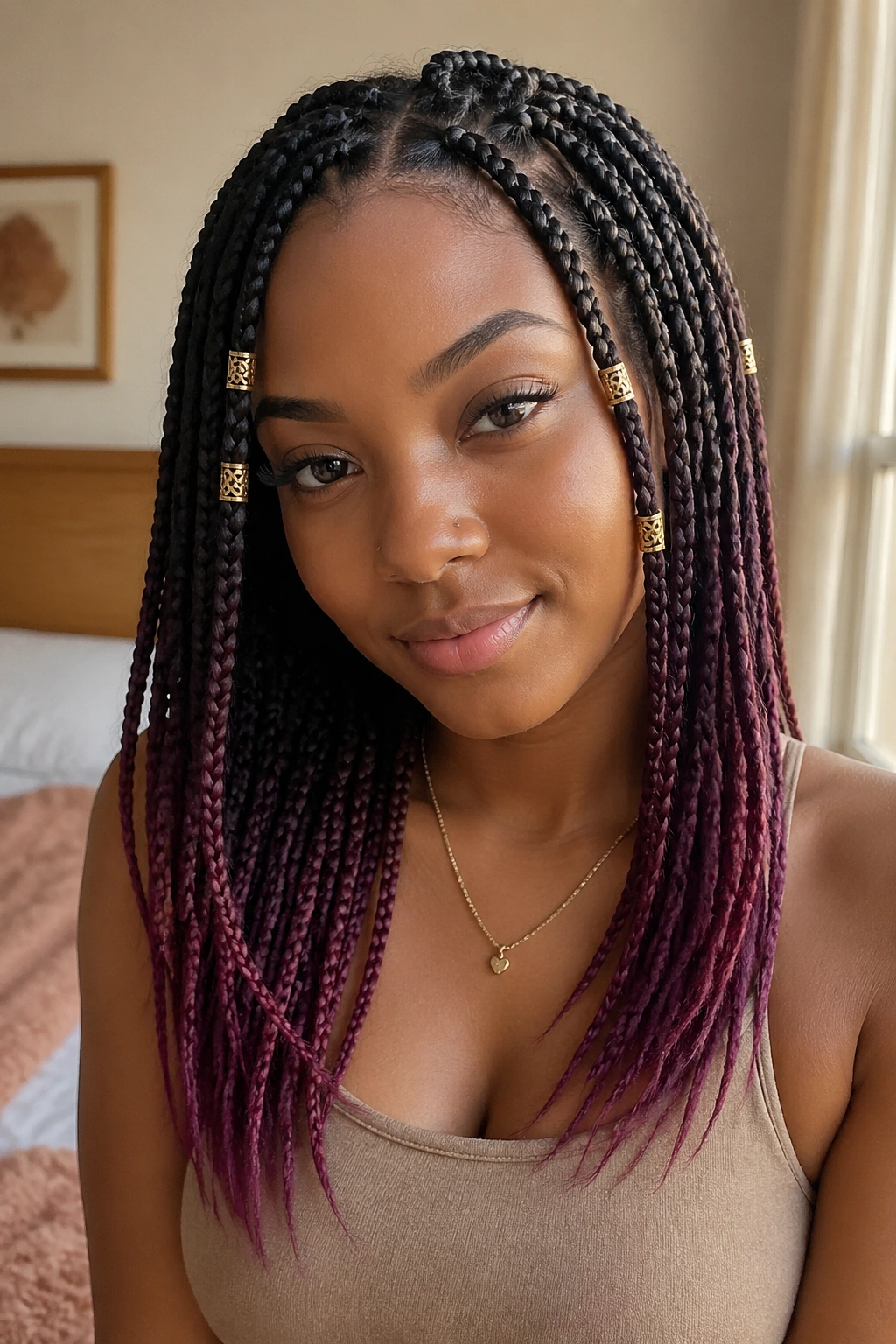
Plum sits in that narrow lane between brown and purple, and it does a lot with very little. On small braids, it looks soft in some light and almost jewel-like in others, which keeps the style from feeling flat.
How to style plum without losing the point
Gold cuffs are the obvious match, but use them with a light hand. Two or three cuffs near the face-framing braids are enough. If you cover every braid with metal, the plum gets crowded out and the whole head starts to feel busy.
Plum works best when the ends are allowed to stay visible. That means medium or long length, not a tiny bob hiding the fade. The color needs room to show itself, and the lower half of the braid is where it earns its keep.
- Plum looks strongest on dark roots with a clean fade line.
- Gold cuffs warm up the purple so it doesn’t go too cool.
- A middle part keeps the look balanced.
- Soft makeup shades — berry lip, brown liner, warm blush — fit it well.
I like this shade because it has range. It can feel quiet or dramatic depending on the light, and that’s more interesting than a color that only does one thing.
8. Smoky Grey Fade
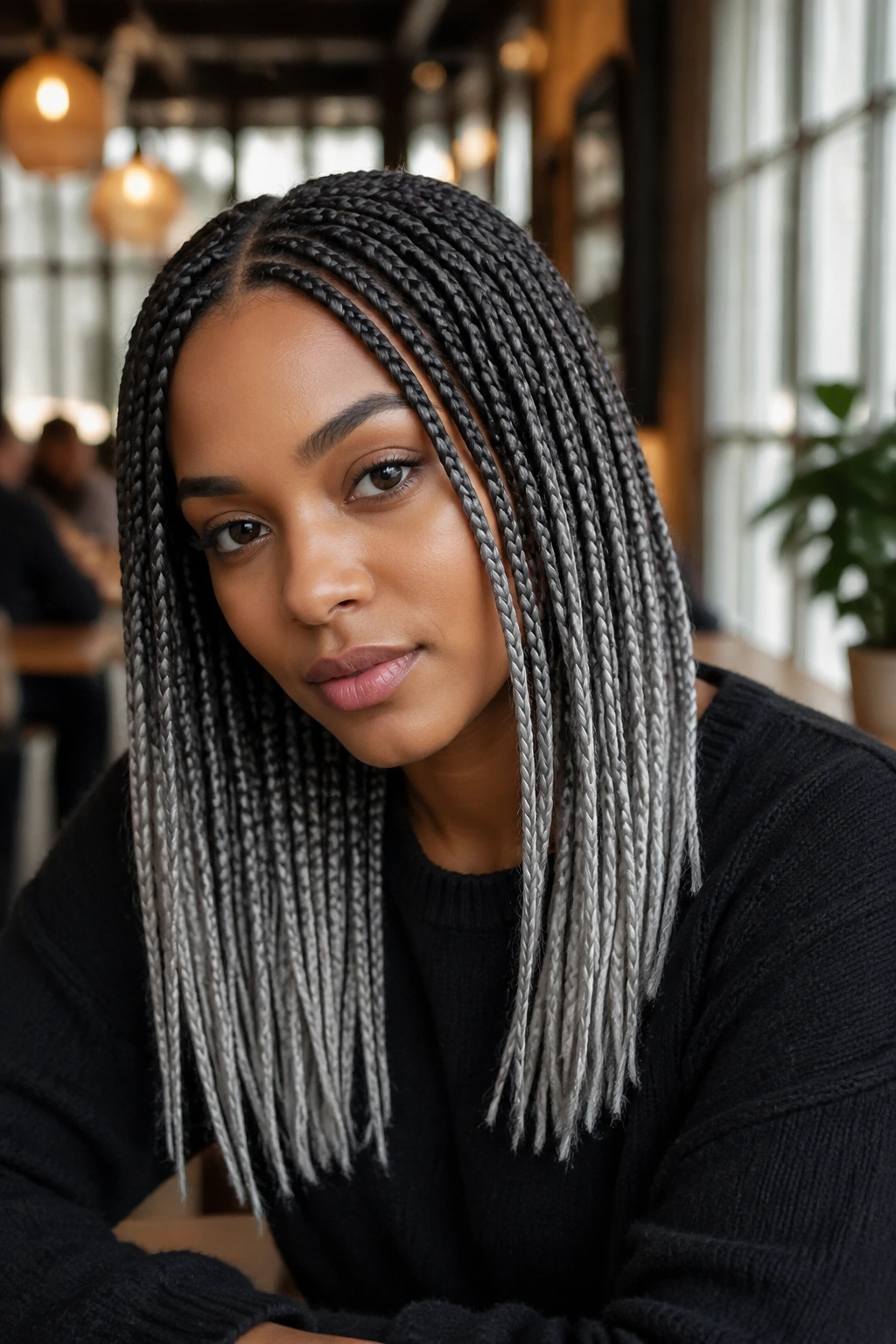
Can grey look soft on box braids? Yes — if the root stays dark and the grey is handled with a little restraint. On small ombré braids, smoky grey can look sleek instead of severe.
The best version starts with charcoal, slate, or dark brown and fades into silver-grey near the ends. That keeps the style grounded. If the grey starts at the root, the whole head can flatten out. If it stays near the bottom, the braid pattern gets to stay visible while the color gives you contrast.
This shade works especially well with neat parts. A sharp middle part, a tidy side part, or triangle sections all help the silver read cleanly. Loose or fuzzy parting can make the grey look muddy, and that is not the same thing at all.
There’s also a practical upside. Grey ends don’t always need the same warmth balancing that blonde or copper does. They can look cool, almost icy, and that gives you a strong style even when the rest of the outfit is plain.
9. Rose Gold Ends
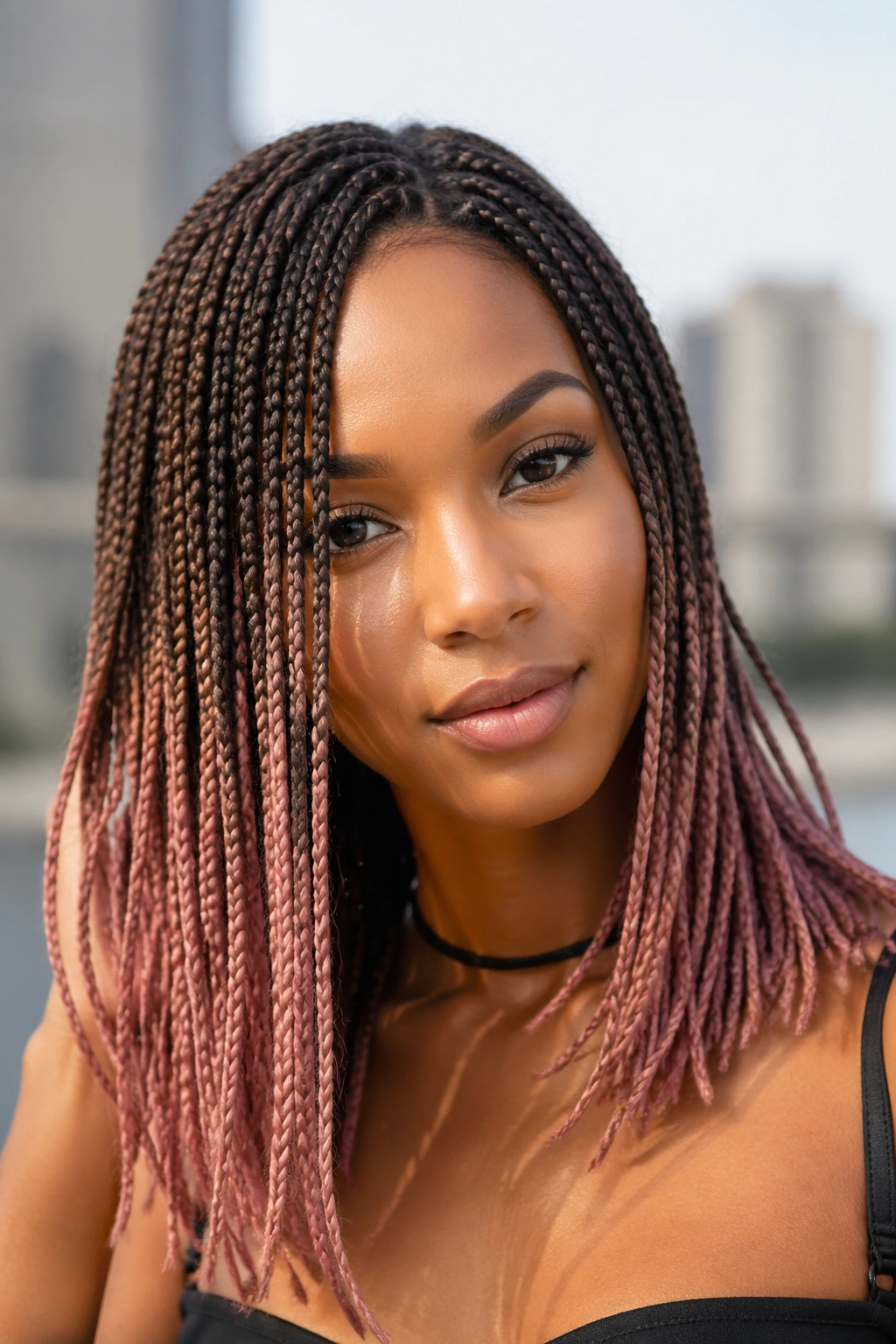
Rose gold is the shade for someone who wants warmth with a little shine. It’s softer than red, lighter than copper, and a lot easier to wear than people think.
A friend with small braids once chose rose gold because she wanted color that didn’t take over her face. Smart move. On tiny braids, the pink-gold tone appears in little flashes, so the style feels pretty without turning sugary. That makes it useful if you wear a lot of black, cream, denim, or muted earth tones.
What makes rose gold work
The color looks best when the fade is blended, not striped. A brown or dark root into peachy blonde, then into dusty pink-gold at the tips, keeps the whole thing smooth. If the pink lands too hard, the style looks playful in a cheap way. If it’s feathered through the blonde, it feels richer.
A few details help:
- Rose gold likes collarbones-length or longer.
- A half-up style shows off the ends.
- Soft curls at the tips make the color look warmer.
- Keep the accessories minimal; the shade already has enough interest.
The whole point is gentle shine. Not glitter. Not loud pink. Just enough glow to make the braid ends matter.
10. Auburn and Cinnamon Blend
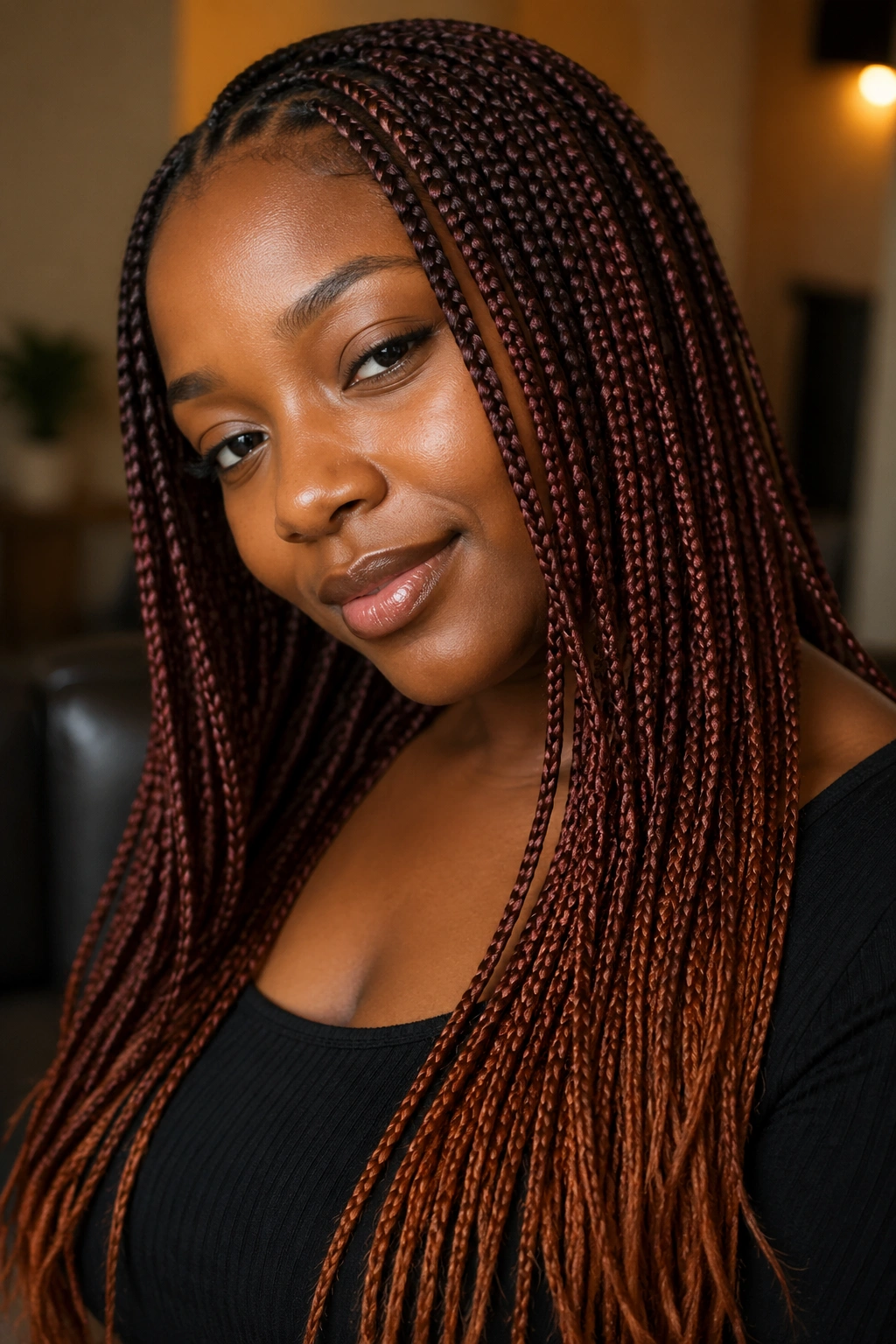
Auburn has a habit of looking expensive. It sits somewhere between brown and red, and on small braids that middle ground is exactly where the style starts to look considered instead of plain.
Cinnamon at the ends deepens the warmth. The result is a fade that feels earthy, a little spicy, and easy to wear with everyday clothes. Dark denim, oatmeal sweaters, tan coats, gold jewelry — all of it sits comfortably next to this color story.
Small braids help because the red-brown shift can be lost on larger sections. On tiny braids, every strand carries its own bit of color, so the auburn shows up as texture and tone at once. It’s one of those looks that gets better the closer you stand to it.
I’d choose this shade if you want warmth but not blonde brightness. It has enough color to feel styled, but it still plays well with natural makeup and low-key outfits. That balance is not easy to find, and auburn does a decent job of it.
11. Teal Tips for a Sharp Pop
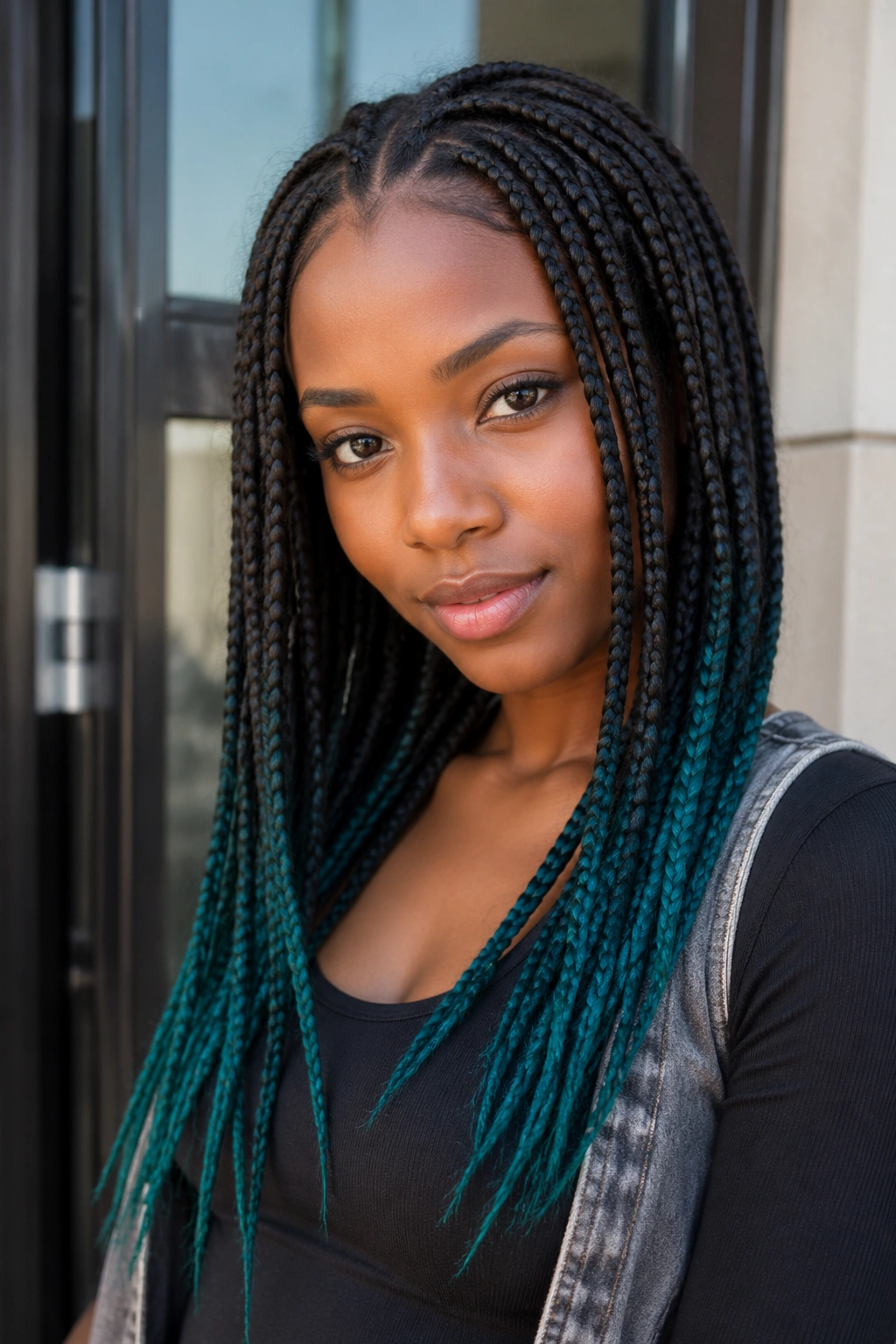
Teal tips are a cleaner choice than a full teal head. That’s the appeal. You keep the roots dark, then let the color break open at the bottom where it can do its job without taking over the whole style.
This works best when the teal is kept to the last quarter or third of the braid. Any higher and the hair stops looking like ombré and starts looking like a split-color install. The smaller the braid, the faster that line becomes visible, so the fade has to stay smooth.
Teal is also one of the most outfit-sensitive shades on this list. Black, white, gray, and denim make it look crisp. Brown and olive can pull it warmer. A neon-heavy teal, though, can look harsh unless that is exactly the point.
I’d recommend this for people who want a strong color story without committing to a bright head of hair. It reads like a decision. That’s the charm.
12. Green Ends With Gold Cuffs
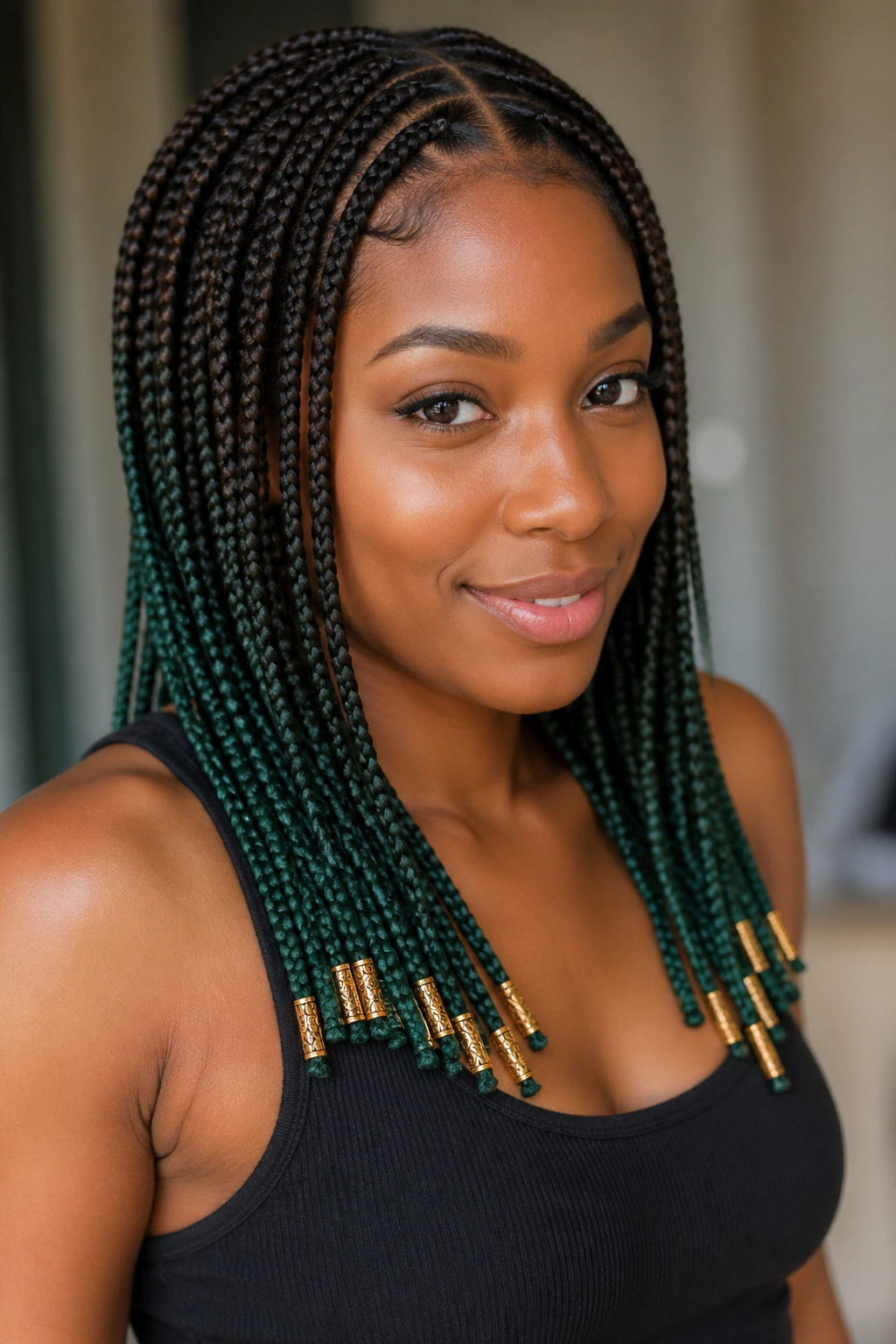
Green ends are sharper than people expect. Forest green, emerald, even a deep olive can look surprisingly elegant on small ombré box braids when the fade stays low and the accessories stay simple.
Where the green should start
The safest version begins with a black or deep brown root and moves into green below the midpoint. That way the dark base still frames the face and the color appears where the braid tapers. Gold cuffs warm the green immediately, which keeps it from looking too cold or too costume-like.
This is one of those shades that looks better when the braids are clean and the parts are precise. Small braids already give you structure, so the green can play off that geometry instead of fighting it. If the parting is messy, the color loses some of its punch.
- Forest green feels more wearable than bright neon green.
- Gold cuffs or a single gold ring near the tip are enough.
- Side parts soften the look a little; middle parts make it sharper.
- Olive tops, black tees, and warm brown makeup all sit well with it.
My take: keep the accessories sparse. Green already has a strong voice.
13. Platinum-Tipped Knotless Small Braids
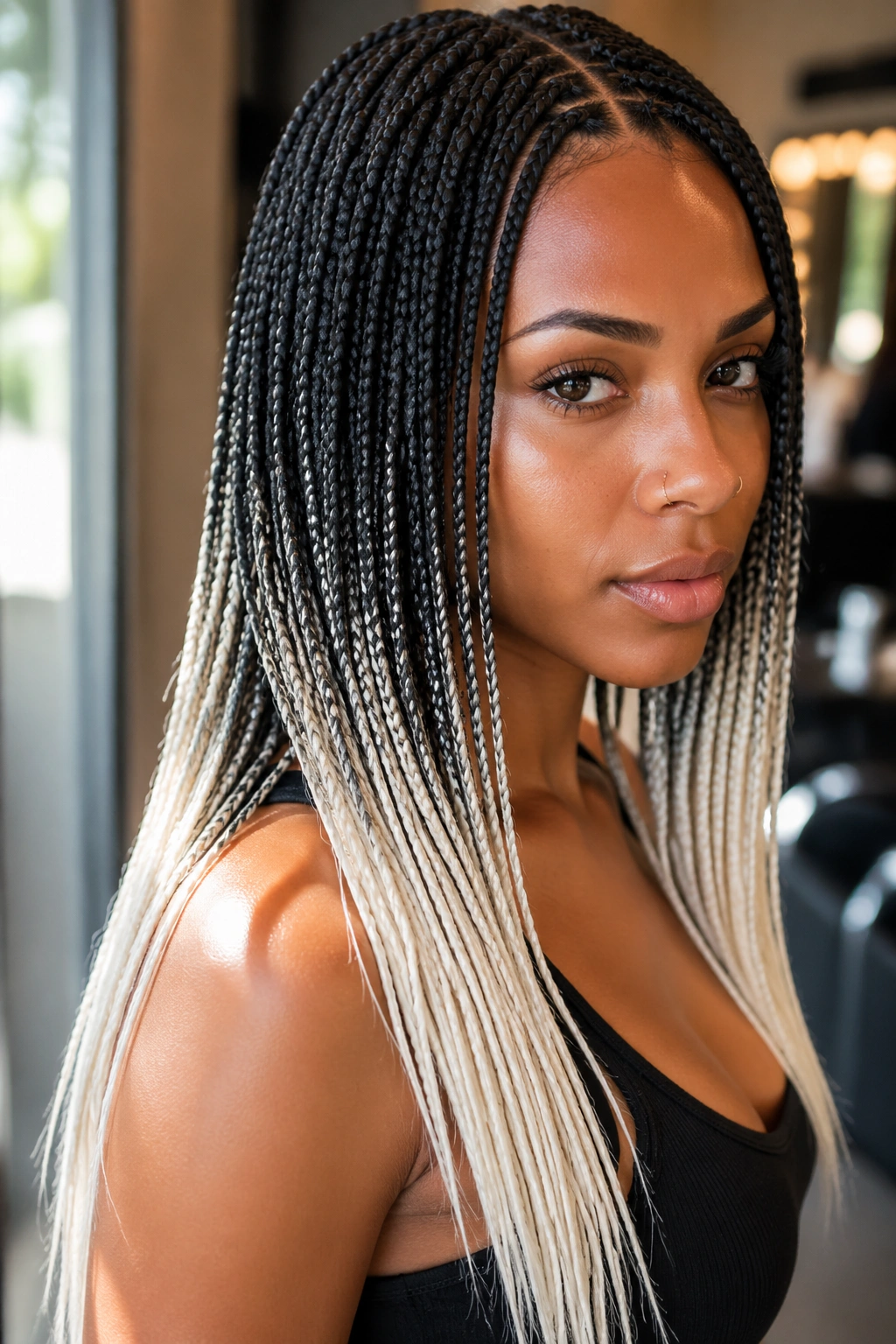
Platinum-tipped knotless small braids change the whole shape. The knotless base makes the scalp line flatter and cleaner, and that matters when the ends are this light.
Why does that help? Because platinum is unforgiving. A bulky start can make the style feel top-heavy, while a knotless install lets the braid flow into the blonde more naturally. On small braids, that difference is easy to see. The braid line stays sleek, and the pale tips feel like part of the design instead of an afterthought.
This version is for someone who wants the brightest end of the ombré range. Not yellow. Not honey. Real pale blonde. It looks best when the rest of the install is crisp and the parts are tight enough to support the contrast. If the sections are uneven, platinum calls attention to every little mistake.
It does need maintenance. Light tips show frizz faster, and the clean look depends on mousse, a satin scarf, and a little patience after installation. Still, when it’s done well, the effect is hard to beat.
14. Small Ombré Box Braids Bob
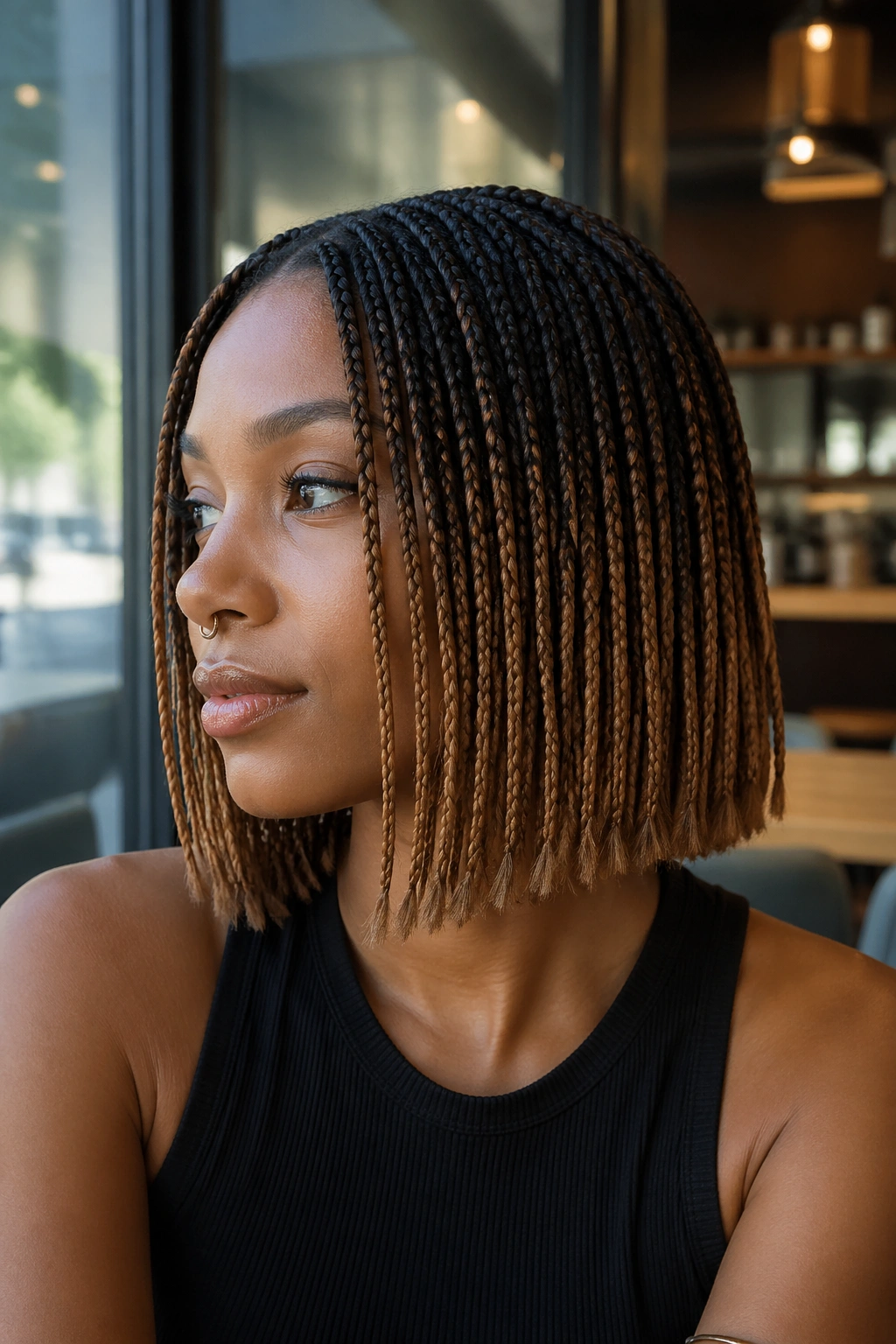
Can a bob still feel dramatic? Absolutely. Small ombré box braids in bob length make the fade read faster because the eye catches the ends almost immediately.
That shorter length is useful. You get less weight, less tangling, and a shape that sits close to the jaw or shoulders. A black-to-caramel or black-to-blonde fade looks especially clean here because the color is condensed into a tighter space. There’s no waiting around for the ends to show up.
Keeping the ends blunt
The cleanest bob versions usually have ends that sit in a straight line or a very soft taper. If the tips are too uneven, the shorter style can look messy fast. A bob already carries a lot of shape, so the color and the cut need to work together.
- Chin-length bobs look sharper with darker fades.
- Shoulder-length bobs give blonde or copper more room.
- Middle parts make the silhouette feel neat; side parts soften it.
- A light edge control at the hairline helps keep the look tidy.
This is the one I’d suggest for someone who wants small braids but doesn’t want the drag of long hair. It’s practical, but it still has a point of view.
15. Waist-Length Small Ombré Box Braids With Curled Ends
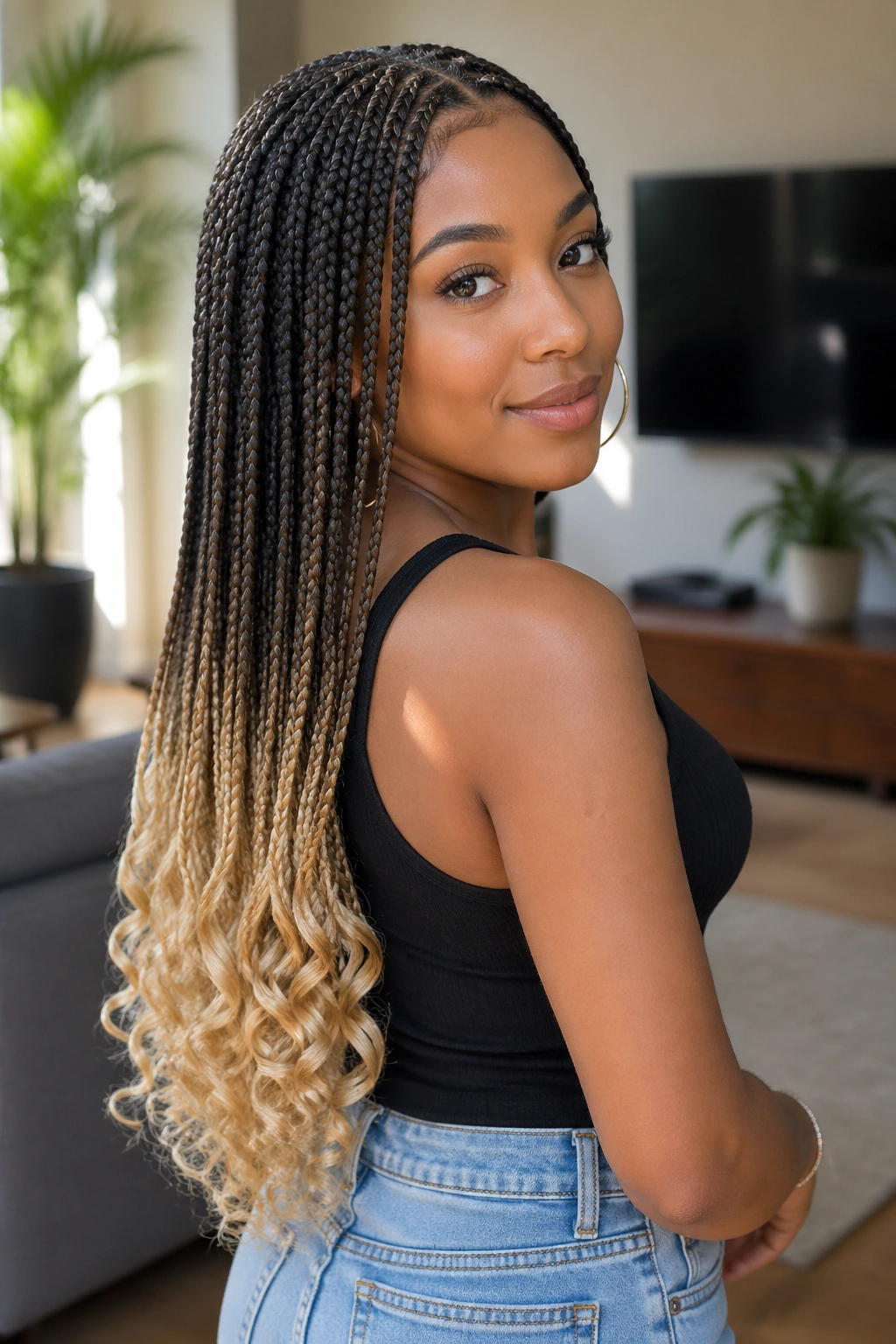
Long braids need something to keep them from going flat. Curled ends do that, and on a small ombré install they make the fade move instead of sitting there like a straight line.
The color starts speaking the moment the curls bounce. Honey ends, auburn ends, even silver-grey ends look livelier when the last few inches are set with flexi rods or carefully dipped after braiding. That bend at the bottom keeps the lightest color from looking heavy.
A few small details make this work better:
- Leave the last 1 to 2 inches unwound if you want the curl to look soft.
- Use mousse before setting the ends.
- Let the hair cool fully before touching it.
- Keep the lighter shade at the very tips so the curl frames it.
Curled ends are not for everyone. They add a little upkeep, and they can frizz faster than straight ends. Still, if you like movement and you want the ombré to look more fluid, they’re worth the extra few minutes.
16. Triangle-Part Small Ombré Box Braids
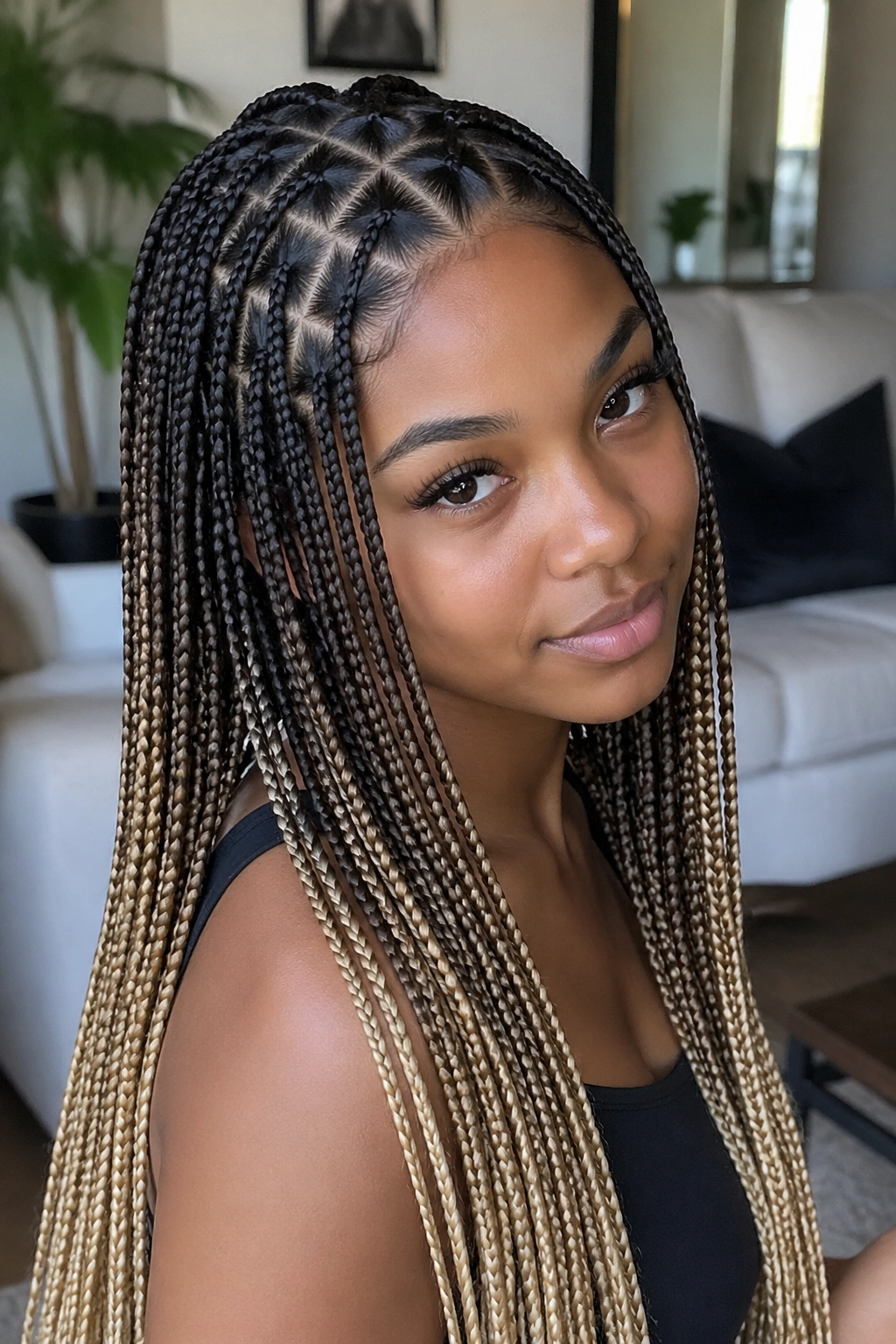
Triangle parts give the color more edge. The parting pattern changes the whole mood of small ombré box braids, even before you decide whether the ends will be brown, blonde, or red.
Square parts feel orderly. Triangle parts feel a little more modern and a little less rigid. On small braids, that shape helps the ombré look almost mosaic-like, because the color shifts sit inside a less predictable grid. It sounds subtle. It isn’t, really. You can see the difference as soon as the hair moves.
This version is especially good if you want a standard color fade but don’t want a standard look. Black to caramel, black to burgundy, and dark brown to blonde all take on a bit more personality when the parts themselves break the pattern. The fade becomes one layer of interest; the sectioning becomes another.
If your scalp is sensitive, ask for clean triangle parts without making them tiny for the sake of it. The parting should support the braid, not fight your comfort.
17. Beaded Small Ombré Box Braids
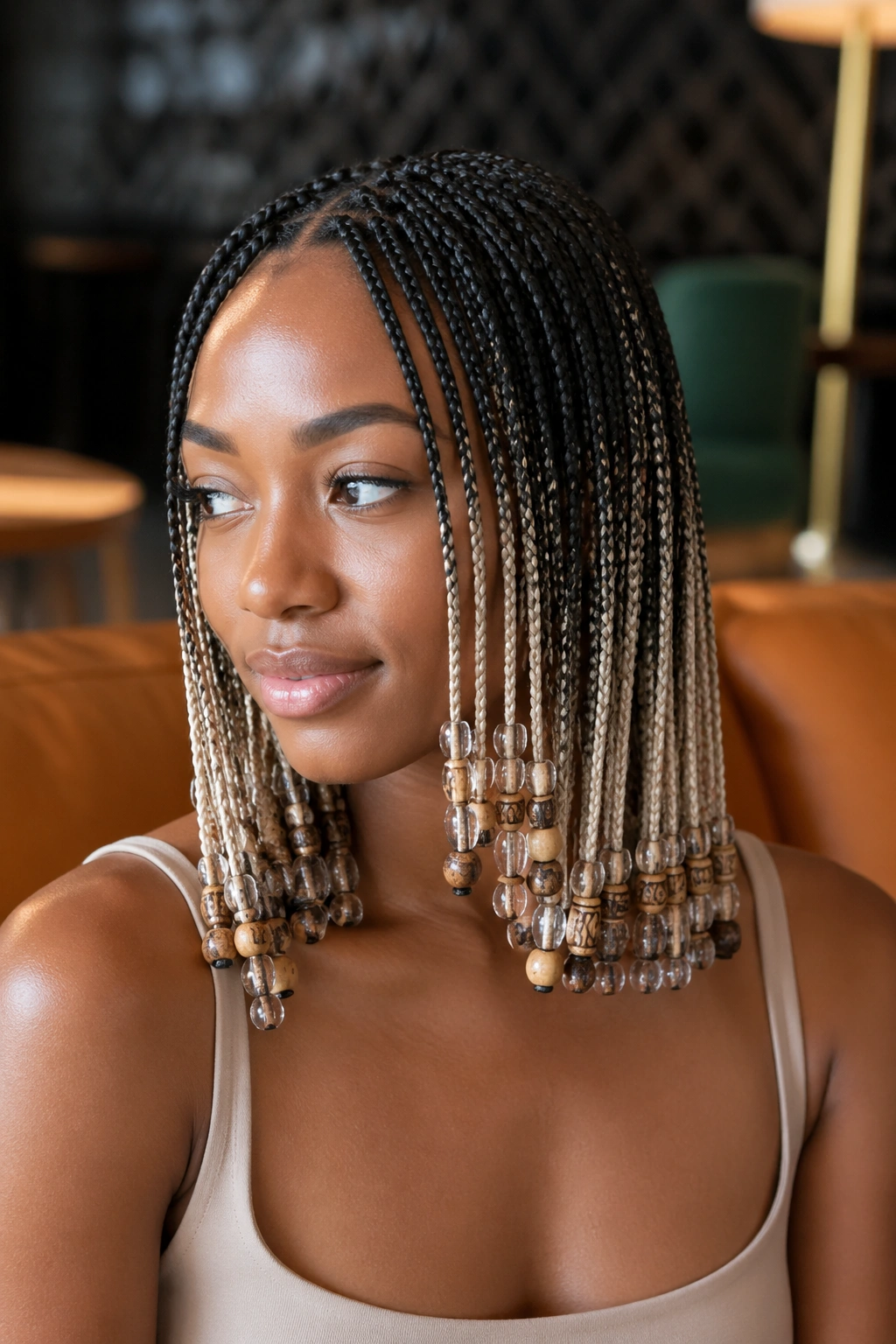
Beads add weight, so use them on purpose. On small ombré box braids, they can either sharpen the style or clutter it, and the difference comes down to how many you use and where they sit.
Unlike cuffs, beads have movement. They tap, swing, and pull the eye straight to the ends of the braid. That makes them useful on shorter lengths, where the ombré might otherwise disappear into the shape. Clear beads let the color stay in charge. Wooden beads warm the look. Metal beads push it harder.
A few smart choices keep the style from getting too busy:
- Put beads on just the front braids or just the lower third.
- Use lighter beads if the braid ends are blonde, grey, or rose gold.
- Keep the braid lengths even so the beads sit at a similar point.
- Choose beads with smooth edges so they don’t snag the ends.
This is a good option if you want your braids to feel playful without turning childish. The color fade does most of the work. The beads just finish the sentence.
18. Face-Framing Small Ombré Box Braids
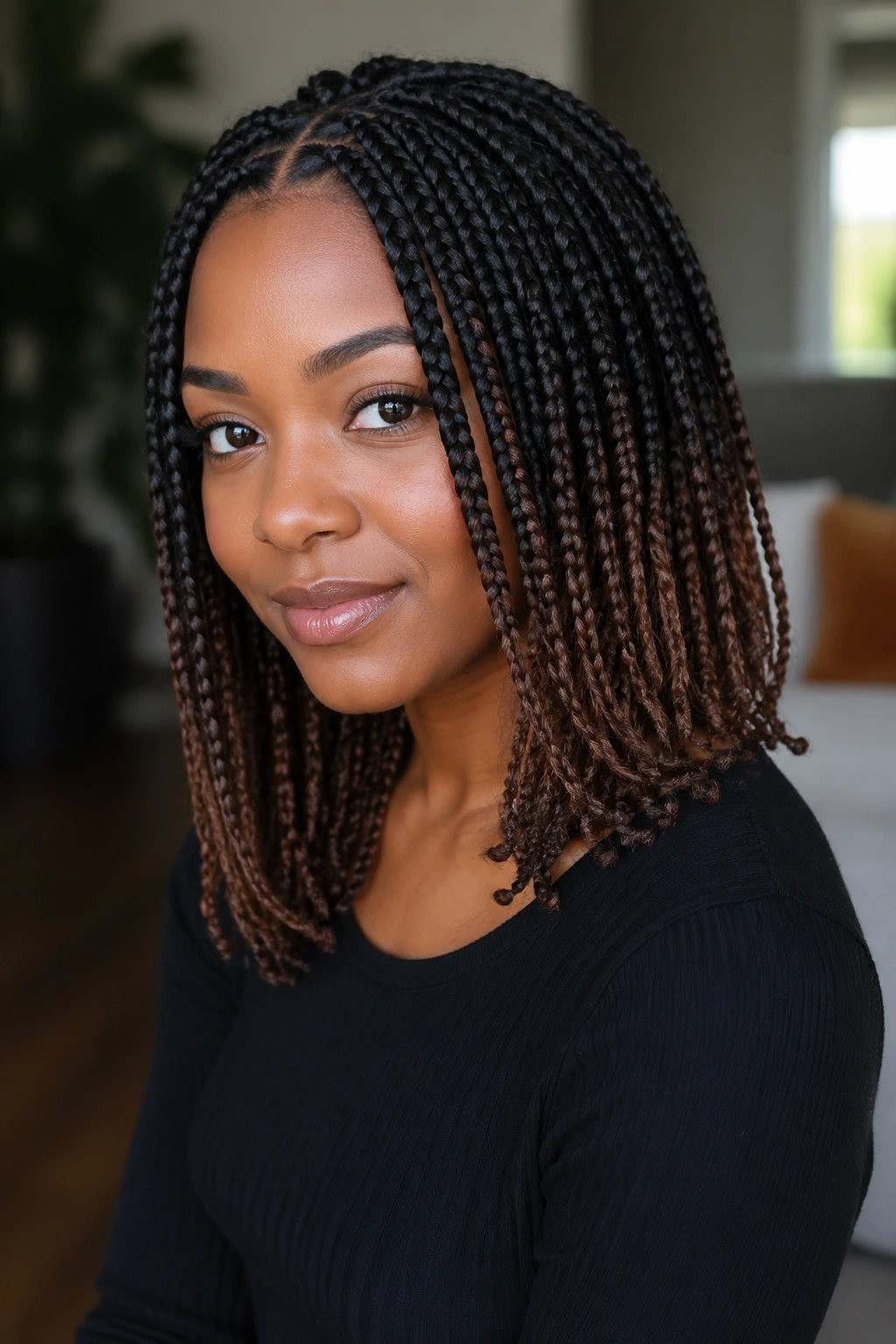
Face-framing color pieces are the easiest shortcut to impact. You keep most of the head dark and calm, then let the front braids shift into a lighter shade a little faster than the rest.
That little move changes the whole balance. A few lighter braids near the face can pull attention upward, which is useful if the rest of the install is long, dense, or very dark. Honey, copper, burgundy, and even platinum all work here, but the key is restraint. Two to four front braids are enough. More than that, and the style can start to feel chopped up.
I like this version for anyone testing ombré for the first time. It gives you the color story without committing every braid to the same fade. If you decide you want more later, you can always lean brighter on the next install. If you love the contrast, the look scales up easily.
The best part is how low-risk it feels. The base stays wearable, the face gets a little light, and the small braid size keeps the whole thing neat. That is a solid place to end up.
If you are torn between two shades, choose the darker one for the bulk of the head and let the front pieces carry the lighter tone. That usually gives the cleanest result.