


Short peekaboo knotless box braids with beads have a sneaky kind of charm. They look neat when you’re standing still, then the hidden color shows up when you turn your head, and the beads add that soft clicking movement that makes the whole style feel alive.
The knotless base matters more than people think. It sits flatter at the scalp, gives the braid a cleaner start, and takes some of the bulk out of the root, which is a big deal when the length is short and the bead work is doing extra visual work. That flatter start also helps the peekaboo color blend in instead of shouting from the first inch.
Beads change everything. Clear beads keep the look airy, gold beads make it feel dressed up, wooden beads warm up darker hair, and small glass beads sharpen the ends without making the whole style heavy. Too many large beads can drag the braids down and make short lengths look clumsy. Tiny mistake. Big difference.
The versions below all use the same basic idea, but each one shifts the parting, the hidden color placement, the braid shape, or the bead finish so the style feels fresh instead of repetitive.
1. Honey-Blonde Center-Part Braids With Clear Beads
Honey-blonde peekaboo color is one of the easiest ways to warm up short knotless braids without changing the whole head into a bright block. The color flashes at the nape and around the ears, which keeps the look soft even when the beads are doing a little extra work.
A clean center part makes this version feel calm and balanced. The symmetry lets the hidden blonde show only when the braids move, so you get a quick hit of brightness instead of a full-on color statement. I like this with short braids that sit right at the jawline or just below it. Any longer and the shape starts losing that crisp, cropped feel.
Clear beads are the smart move here. They let the honey tone stay the star, and they don’t fight the warmth in the hair.
Best bead choice: 8 mm clear or lightly frosted beads.
Best placement: Two to three beads per braid, mostly near the ends.
Small win: Keep the peekaboo color in the lower rows only. That keeps the front neat and the movement interesting.
2. Burgundy Side-Part Braids With Brushed Gold Beads
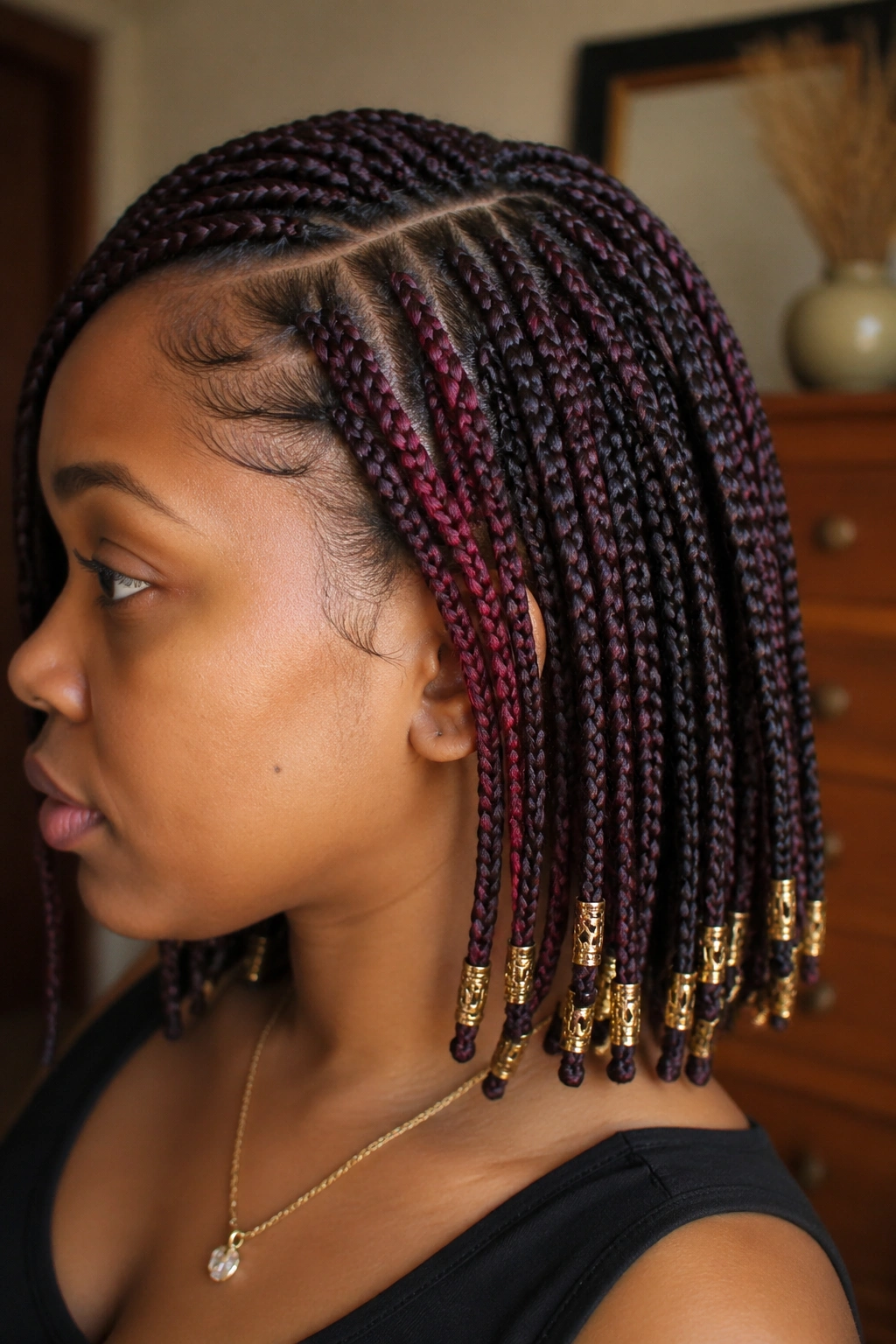
A deep burgundy peekaboo layer can make short knotless braids look richer than they should for the effort. The color sits close to the scalp and then slips out at the back and one temple, which gives the style a little drama without turning it loud.
Why the side part works
The side part changes the whole face line. It softens strong color, opens up one cheekbone, and gives the braids a direction instead of a straight-down look. That matters with short braids, because short hair can start to look boxy if the parting is too strict.
Brushed gold beads suit burgundy better than shiny chrome does. The warmth matches the red tones instead of fighting them, and the finish feels a little older, a little more grounded.
- Keep the burgundy on one hidden side and the lower back rows.
- Use 6 mm to 8 mm beads so the ends stay light.
- Leave the front braids bead-light if your hairline is delicate.
- Let one or two braids fall forward across the cheek.
Best for: Anyone who wants the style to feel polished but not plain.
Best move: Put the largest beads only at the very ends. No stacking.
3. Triangle-Part Braids With Violet Peekaboo and Amber Beads
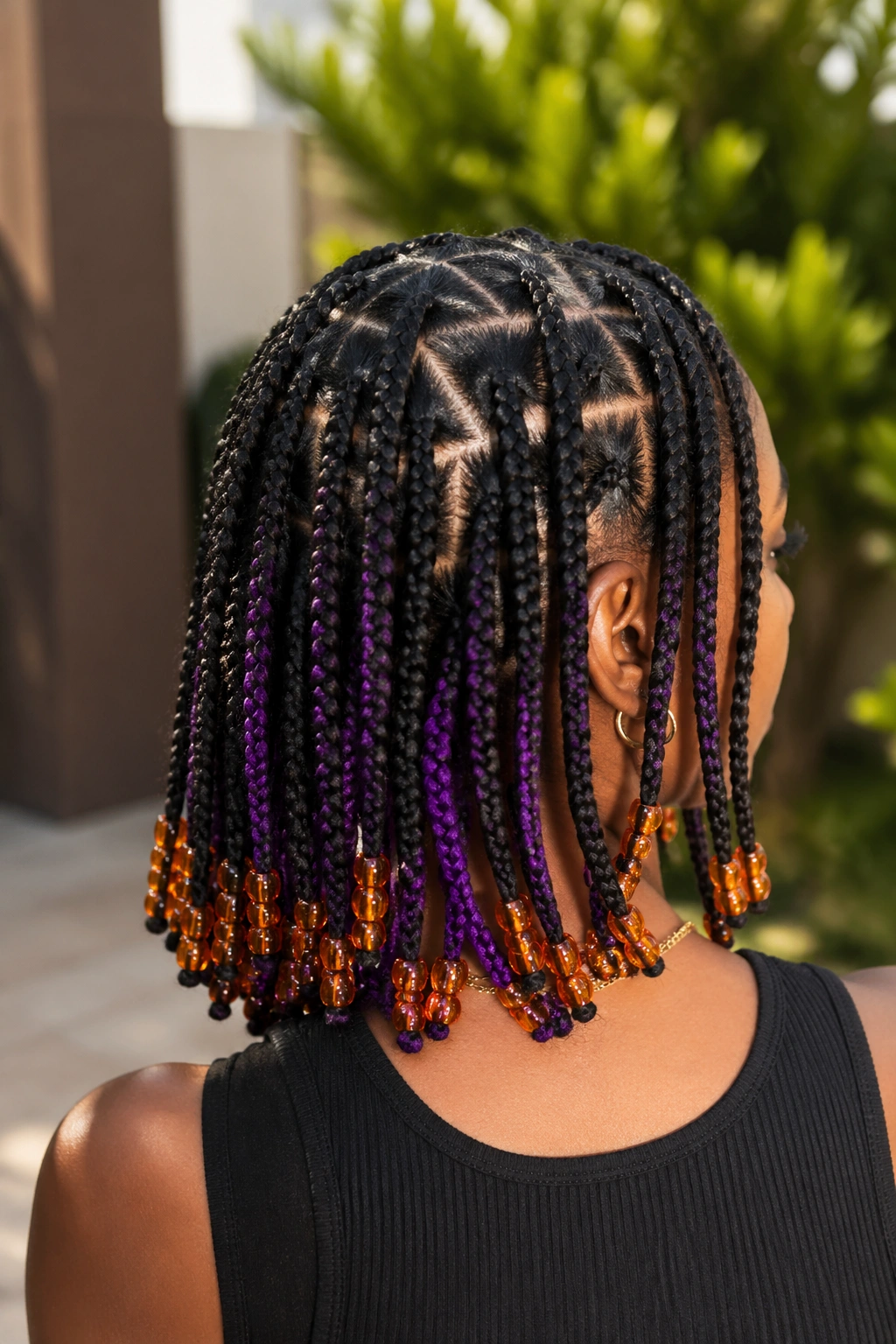
Why do triangle parts change the whole braid set? Because the scalp pattern becomes part of the design, not just the foundation. A regular square grid looks tidy. Triangle parts look sharper, and on short braids they add enough shape that the peekaboo color does not need to do all the heavy lifting.
Violet hidden underbraids gives this style a cool edge. It shows up most at the nape and the back corners, where short braids tend to swing and separate a little. Amber beads help because they bring a warm contrast to the cooler purple tone, which keeps the look from feeling flat.
How to keep it from looking busy
Use medium triangles, about the size of a fingertip pad. Tiny triangles can look fussy on short braids, and giant ones make the scalp pattern too loud. You want people to notice the geometry without feeling like they’re staring at a map.
- Keep the peekaboo violet in the underside only.
- Choose one bead color, not three.
- Stick to 8 mm beads near the tips.
- Let the first two rows stay bead-free if you want a cleaner front.
Best result: A braid set that looks sharp from every angle.
4. Half-Up Short Braids With Pink Peekaboo and Mixed Beads
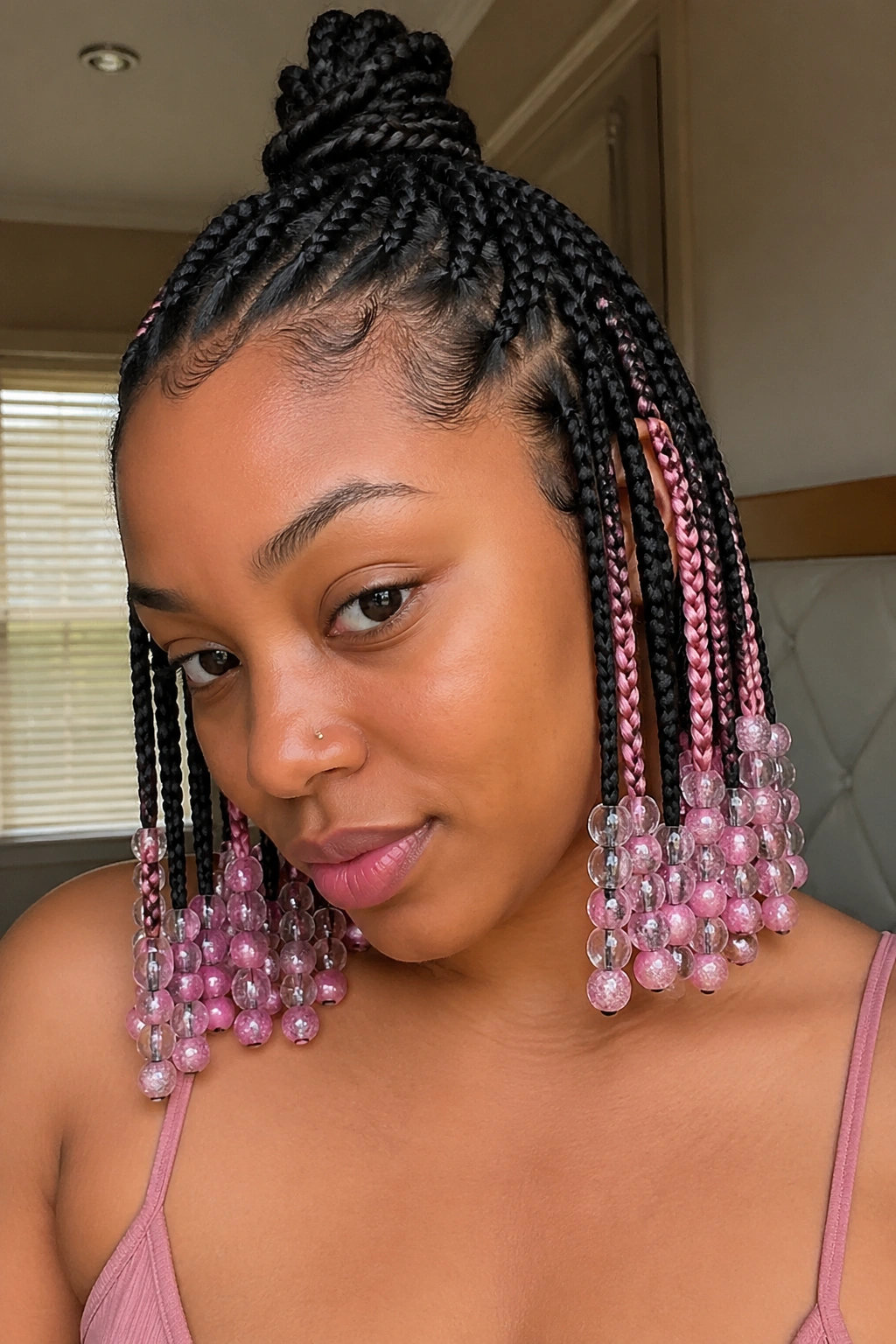
Picture short knotless braids that you can pull into a small half-up style without hiding the fun part. That’s where pink peekaboo color earns its keep. The top section lifts off the face, the lower section keeps moving, and the hidden pink flashes out when the braids fall back into place.
The half-up shape works especially well when the braids stop around the chin or collarbone. Any shorter and the gathered top can feel too small to matter; any longer and the short-braid appeal starts slipping away. The bead work should stay concentrated on the loose lower half, not the top. That keeps the style from looking crowded near the crown.
Where the pink should live
- Put the pink in the back layers and lower sides.
- Leave the lifted top section mostly black or dark brown.
- Use mixed beads only on the lower tails.
- Keep the bead mix to two finishes at most, like clear and blush.
A tiny top knot or clip changes the vibe fast. Soft, neat, and a little playful. That’s the sweet spot.
Best for: Busy mornings, school days, and anyone who wants a quick updo option.
5. Side-Swept Layered Bob With Turquoise Beads
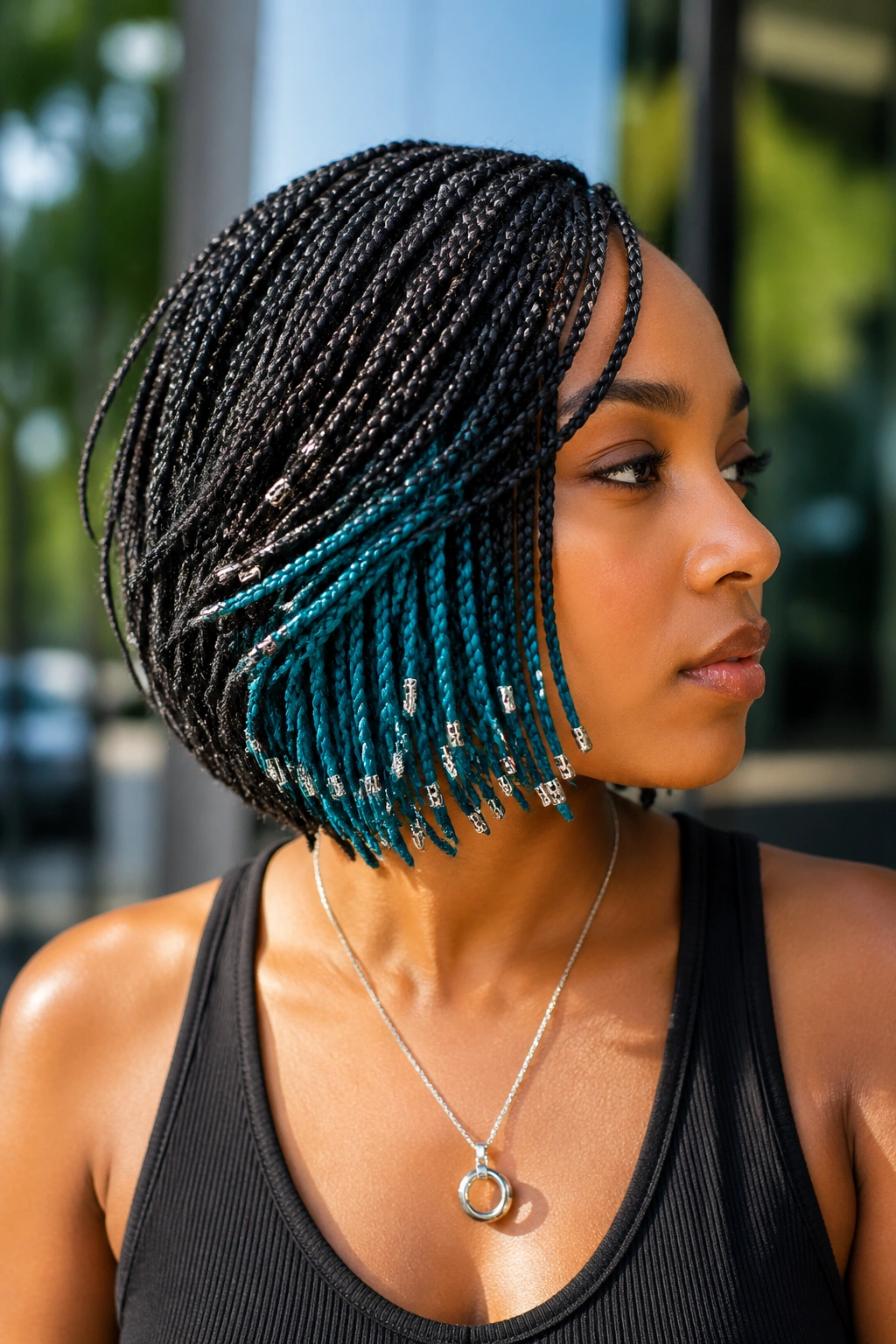
Unlike longer braids, a side-swept bob does not need a heavy bead stack to feel finished. The cut already does some work for you. The short length keeps the weight down, and the side sweep makes the hidden color show in little flashes instead of one big panel.
Turquoise peekaboo color under one side gives the braid set a cool, beachy edge. Not beachy in the cliché sense. More like crisp and bright, with a little contrast against dark hair. Silver beads fit this better than warm-toned ones because the cool metal keeps the color story clean.
This is the style I’d pick for anyone who wants movement without fuss. Short braids that curve to one side tend to sit nicely around the jawline, and the bead ends bounce without slapping around. That matters. A lot.
Good detail: Keep the longer side just past the chin and the shorter side near the ear.
Good bead choice: Small silver or clear beads, nothing bulky.
6. Chunky Front Braids With Red Peekaboo and Black Beads
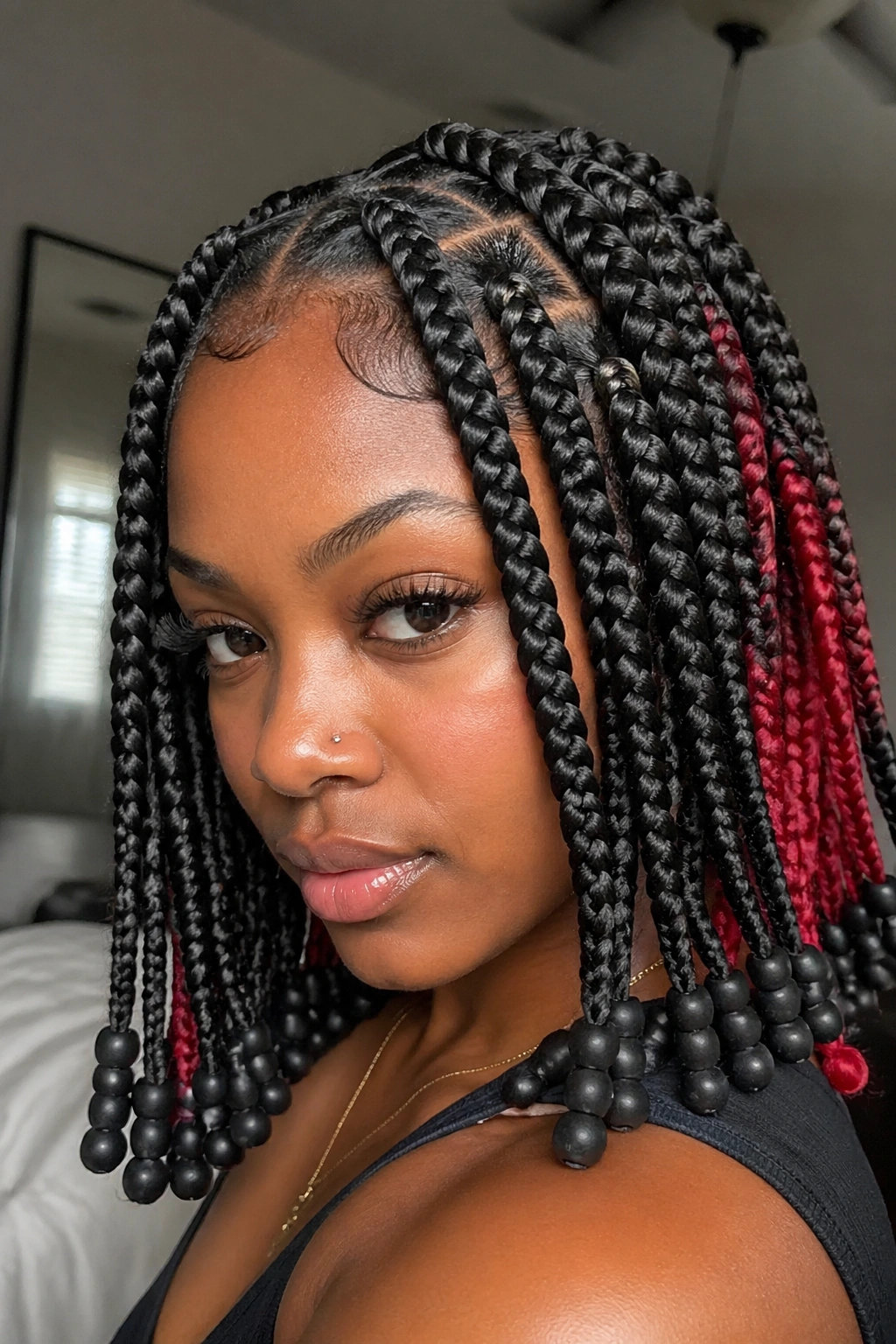
Chunky braids in the front and finer braids in the back do something useful: they frame the face first and leave the color to the lower half. Red peekaboo underneath makes the back feel hotter than the front, which is exactly why the style works. The eye gets a neat front view, then the color hits when the hair moves.
Black beads are the right call here. Red already has enough attitude. It does not need glittery extras or mixed bead colors fighting for space. A matte or satin black bead keeps the ends grounded and lets the red color stay sharp instead of cartoonish.
Less is better here.
Two or three beads per front braid is enough. If you stack too many, the chunky front starts looking heavy and the whole shape loses its bounce.
The best part is the contrast. Neat front. Loud back. No confusion.
7. Zigzag-Part Braids With Crystal Beads and Plum Peekaboo
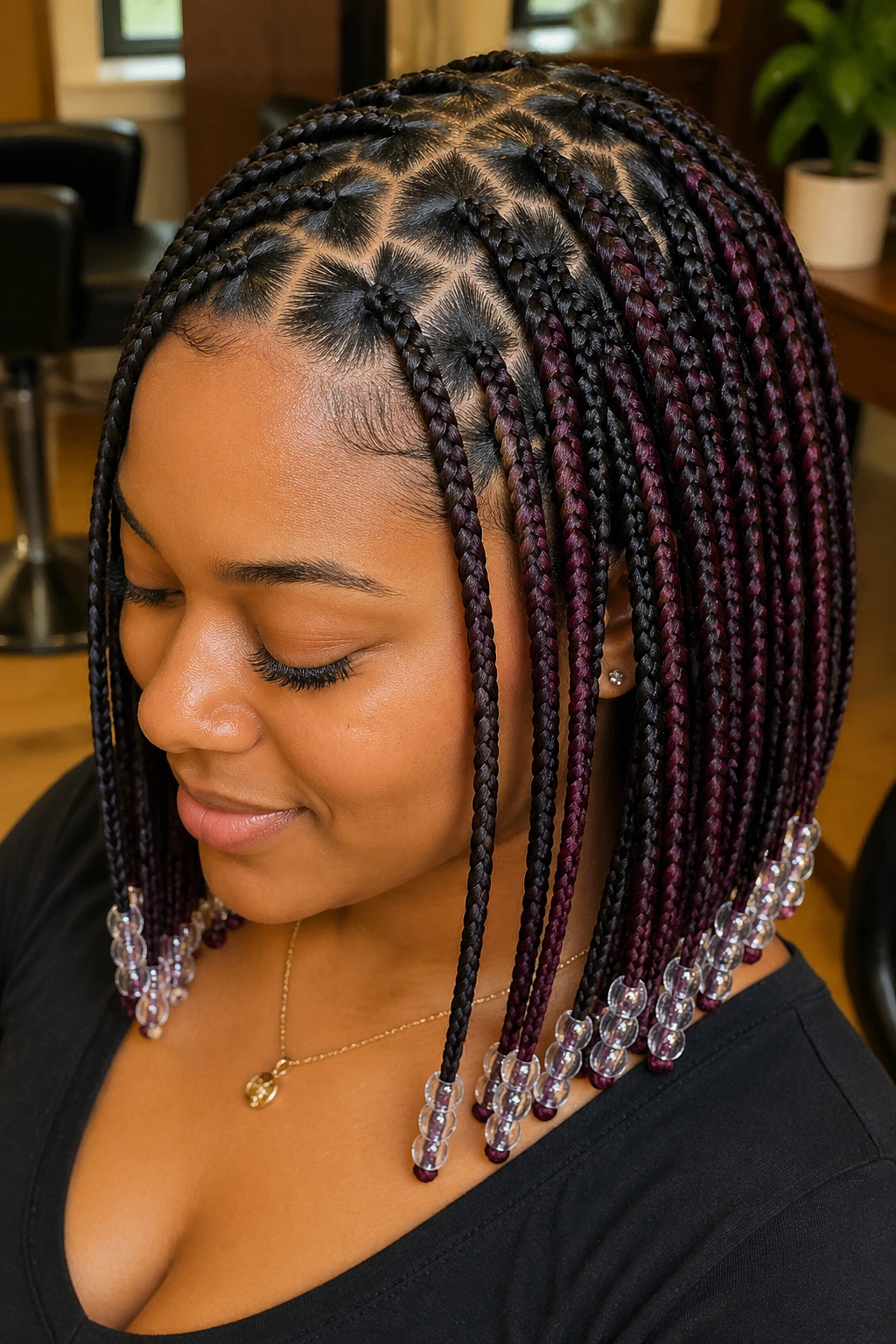
Zigzag parts are for people who want the scalp pattern to matter as much as the braid length. A straight part can feel neat, but a zigzag brings motion before the braids even start. On short knotless box braids, that matters because the style needs enough shape to hold its own.
The parting is the point
The zigzag lines break up the grid and make the peekaboo plum color feel more hidden, which is half the charm. Use the violet-plum shade in the underside and at the back corners, then keep the outer rows darker so the contrast lands in small flashes. Crystal beads work because they stay light-looking and don’t compete with the busy scalp pattern.
- Use medium-width zigzags, not tiny scribbles.
- Keep the plum hidden under the crown and nape.
- Choose clear crystal beads for the ends.
- Avoid bead clusters on every single braid.
A style like this looks best when the braid rows are tidy. If the parting is messy, the whole point disappears.
Best result: A playful set that still reads clean.
8. Face-Framing Blonde Pieces With Gold Cuffs and Beads
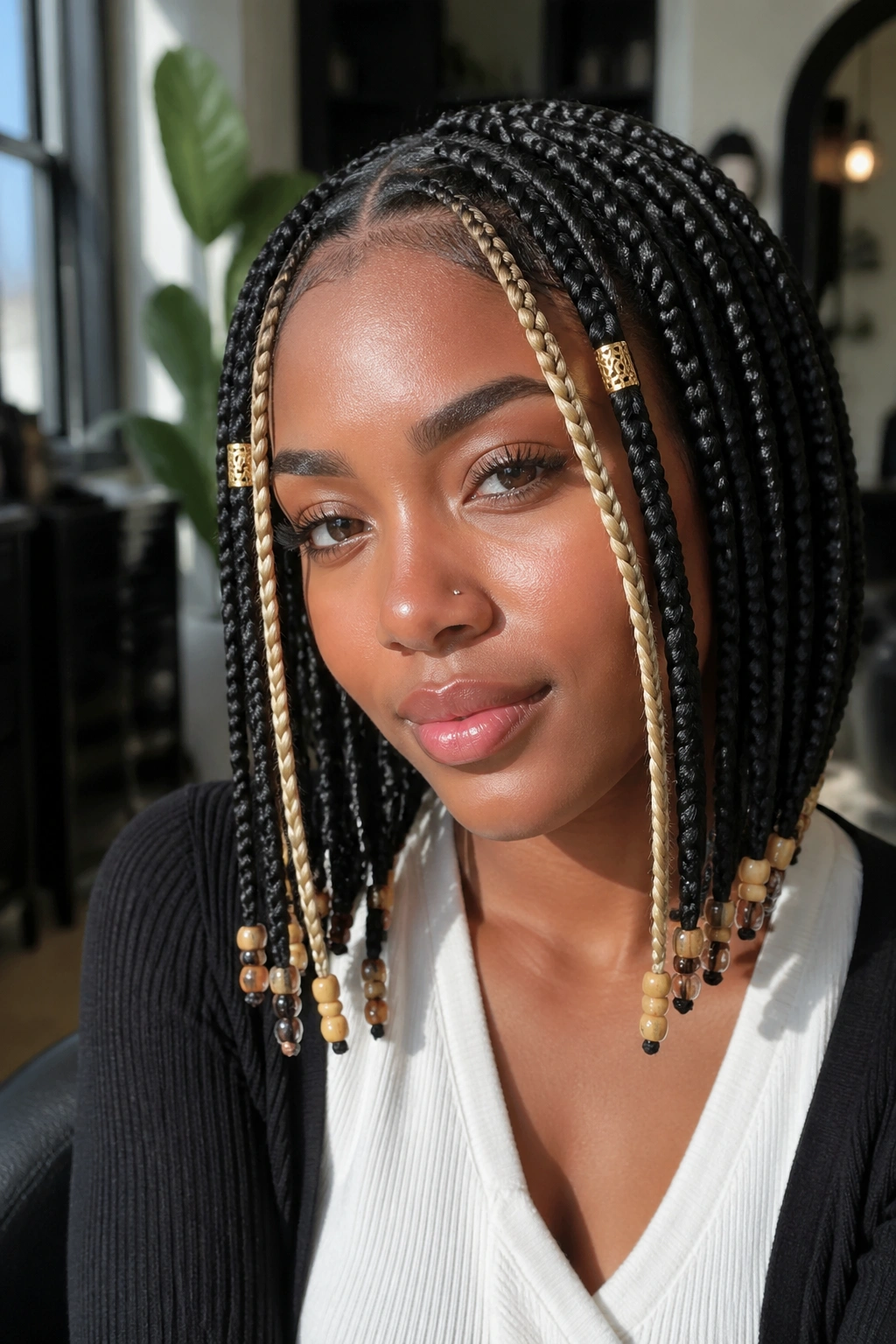
Some mornings you want the color near your face and nowhere else. A few blonde peekaboo braids at the temples do the job without making the whole head light. The face-framing pieces brighten the skin, and the hidden blonde underneath keeps the style from feeling too flat.
Gold cuffs and beads suit this look better than a full bead stack. One or two cuffs near the temple braids, then small beads at the ends, and you’re done. The front pieces stay open, which works well if you wear glasses or large hoops. It also keeps the style from crowding the cheekbones.
Where to place the bright pieces
- Put the blonde at the front corners and lower back rows.
- Keep the center braids dark for contrast.
- Use gold cuffs on only two or three braids.
- Save the beads for the tips.
I like this version because it does not try too hard. A few bright braids can do more than a full head of highlight color if the placement is smart.
9. Black Braids With Neon Green Peekaboo and Matte Beads
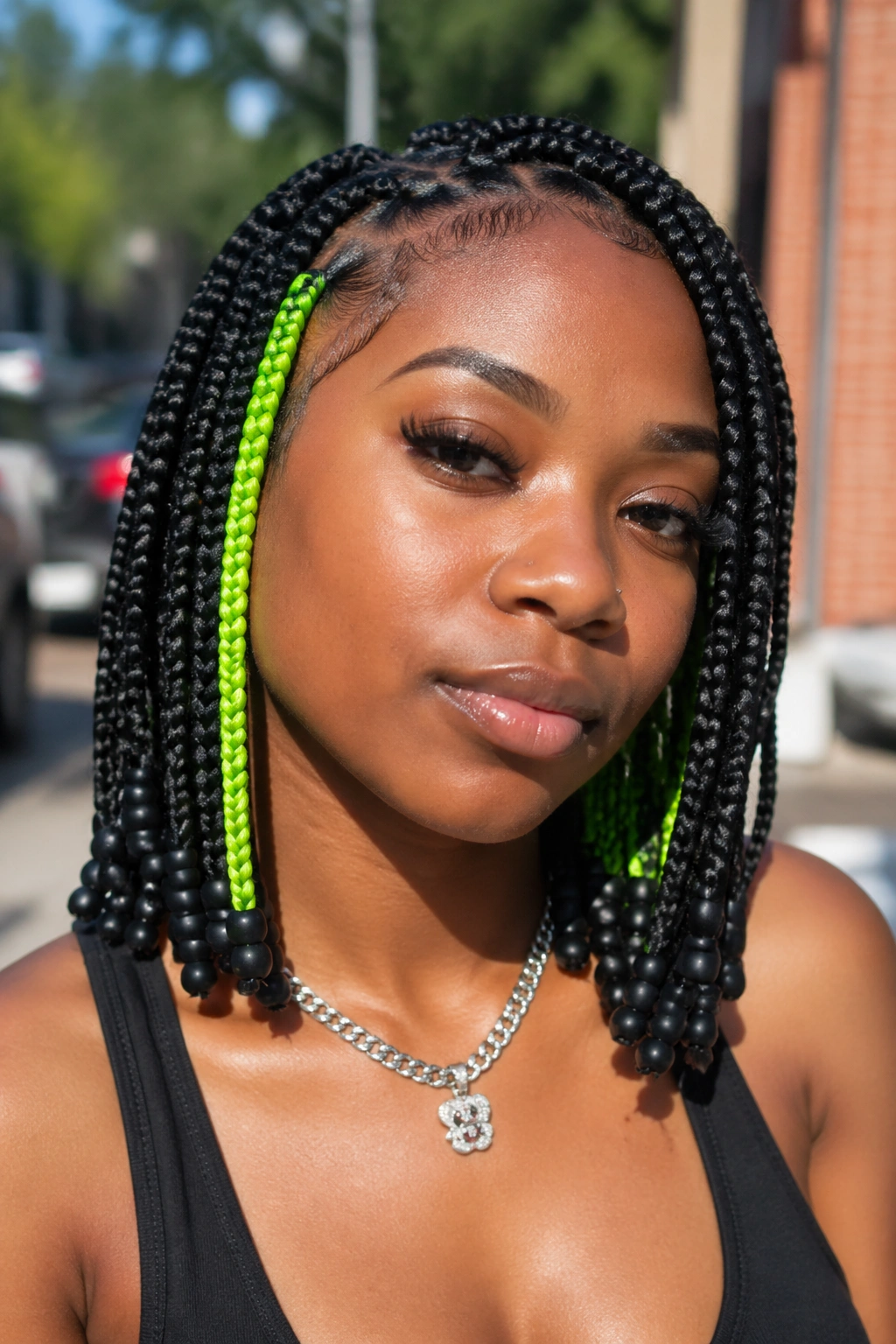
Beads do not have to be soft or earthy to work. A neon green peekaboo layer under black knotless braids turns the whole style into a graphic shape, and the short length keeps it from feeling costume-like. The hidden green stays tucked low, then flashes out when the hair shifts.
Matte black beads are the move here. Glossy beads would steal attention from the color, and that would be the wrong fight. The matte finish keeps the ends dark and lets the neon live in the braid body where it belongs.
This look is for people who want contrast. A lot of it. If you like subtle hair, skip it. If you like a braid set that looks sharp with a black tee and clean sneakers, this one makes sense fast.
Keep the bead count low: the color is already doing the loud part.
Best placement: One neon braid near the temple, the rest hidden underneath.
10. Tapered Short Braids With Copper Peekaboo
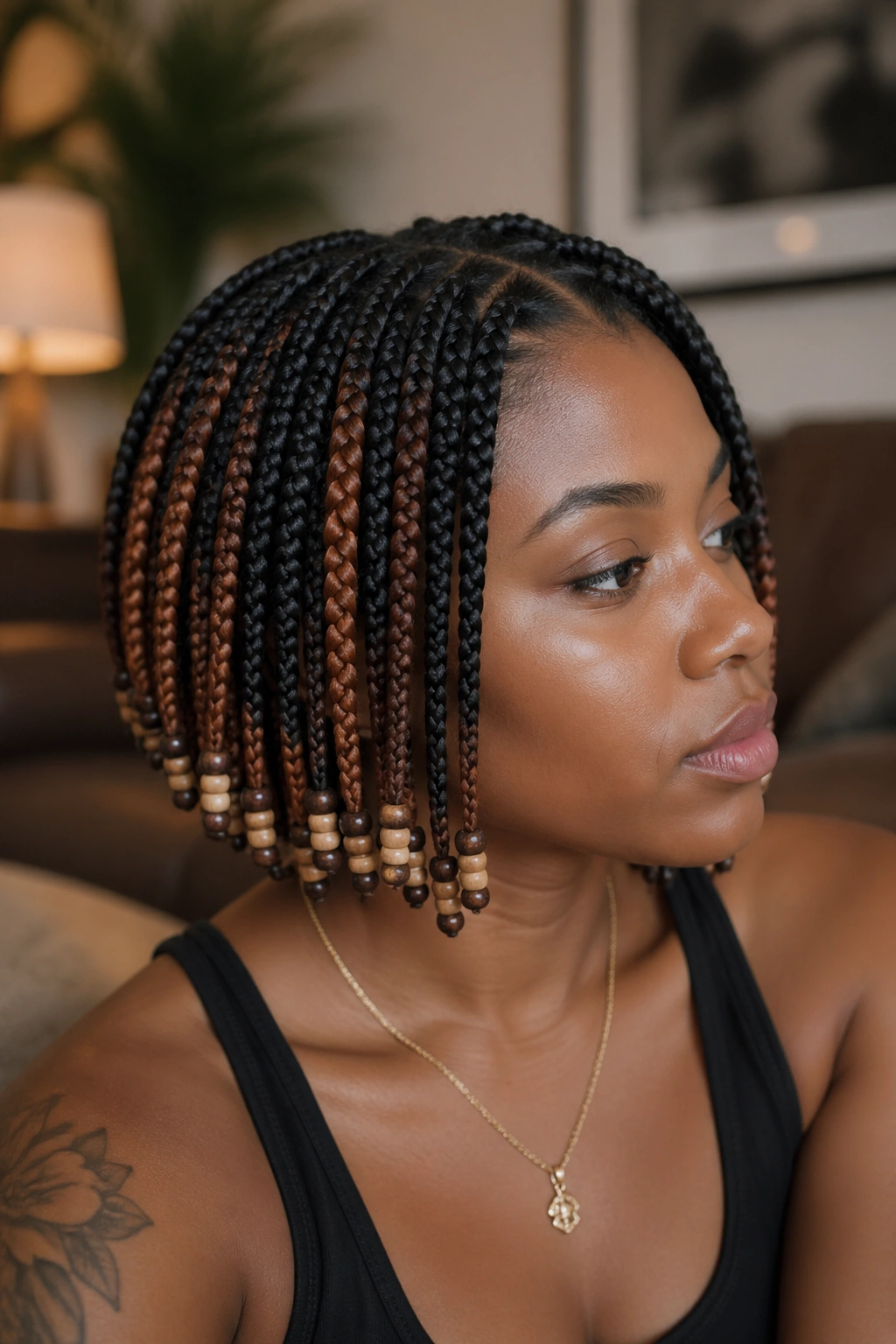
Can short braids still look soft? Yes—if the cut tapers at the nape and the hidden color leans copper instead of orange. Copper has warmth without screaming for attention, and on dark hair it gives the braid set a burnished, worn-in feel.
The taper matters because it stops the style from looking like a block. Fuller at the crown, slimmer at the neckline, and shorter toward the bottom. That shape works especially well with beads, since the ends have room to move instead of bunching up. Gold or clear beads both fit, but I slightly prefer clear here because the copper already has enough warmth.
A small detail makes this version work: keep the bead stacks at the very tips, not halfway up the braid. If you lift the beads too high, the taper gets lost and the shape turns heavy.
Short and tidy. That’s the appeal.
11. Center-Part Bob With Blue Peekaboo and Pearly Beads
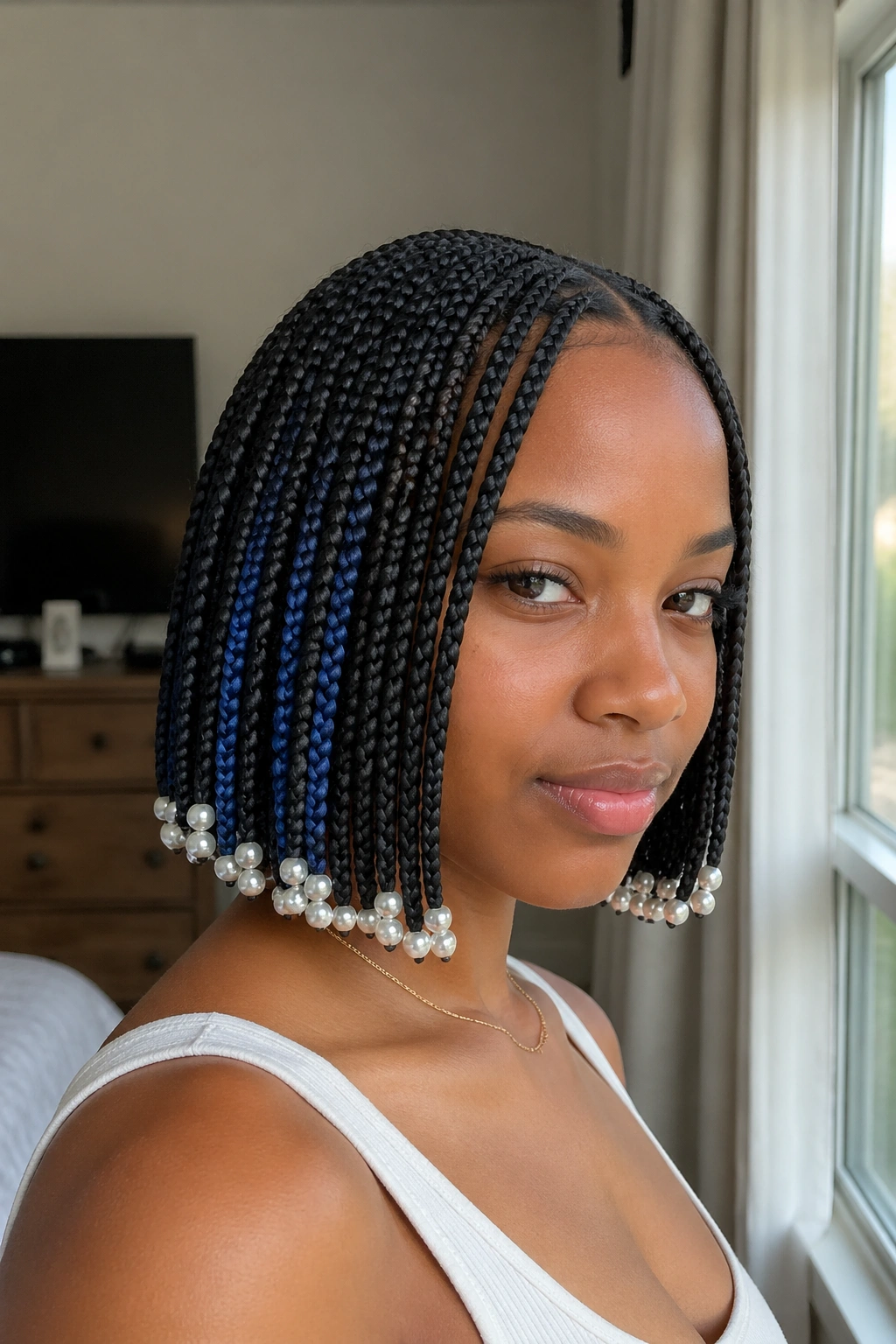
A chin-length center-part bob with blue hidden pieces and pearly beads has a neat, almost tailored feel. The center line keeps the whole thing balanced, while the blue peeks out under the back rows and at the sides when the braids swing.
Pearly beads work because they soften the blue instead of making it colder. If you use opaque white or pearl-finish beads, the ends read clean and a little dressy. That combination is good when you want the braid set to sit between casual and polished without pushing too hard in either direction.
The blue should stay underneath, not spread through the front. That gives you the peekaboo effect without losing the clean bob silhouette.
Good ratio: One blue accent section for every three dark sections.
Good bead move: Two pearl beads per tail, max.
12. Crisscross-Part Braids With Emerald Peekaboo and Wood Beads
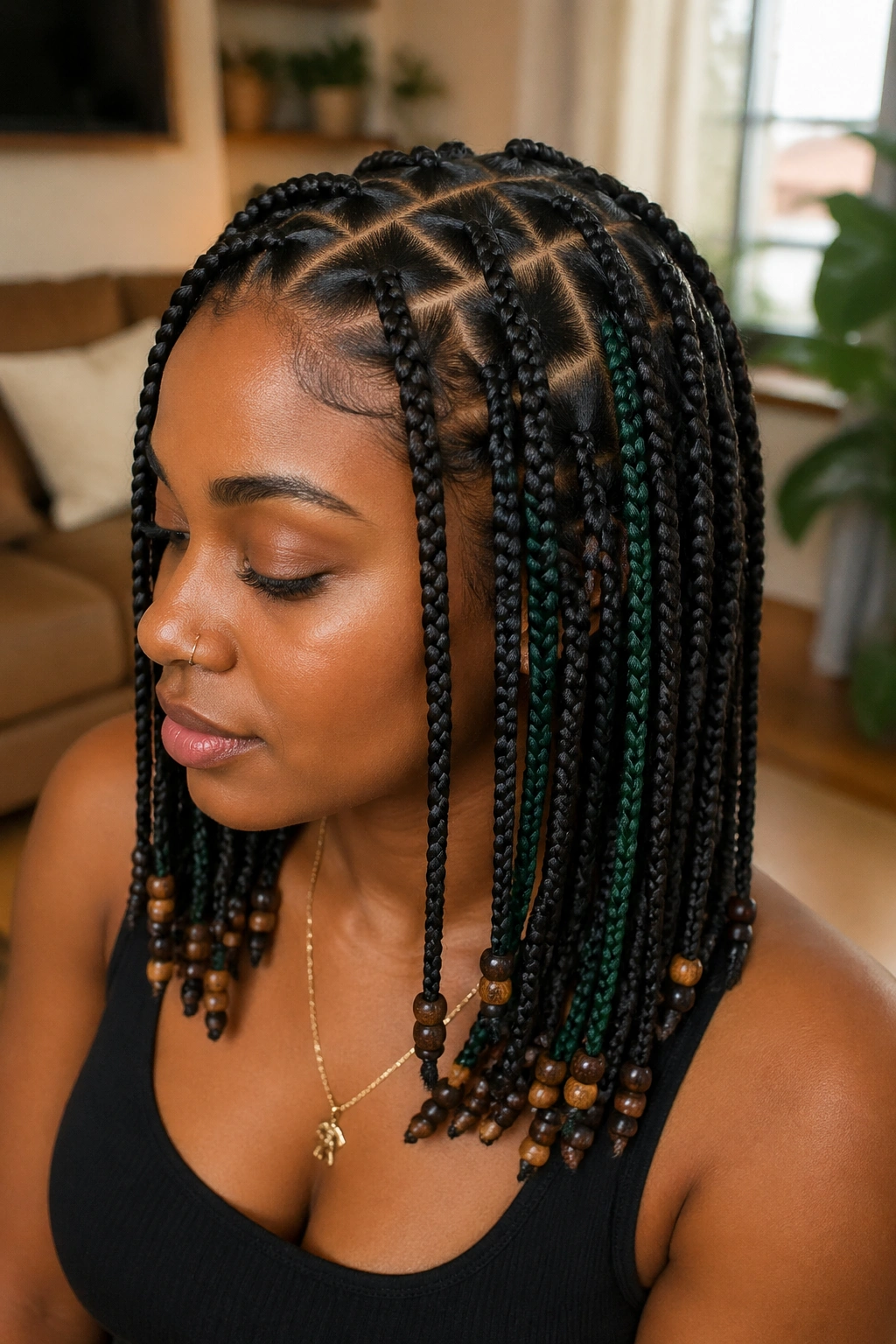
Crisscross parting gives short box braids a little architecture. The lines move across the scalp instead of sitting in straight rows, so the braid set looks hand-finished in a way that plain grid parts sometimes miss. Emerald peekaboo color underneath turns that geometry into something richer.
Where the color lands
The emerald should stay in the back half and under the crown. That way the crisscross pattern stays visible from the front, and the green flashes only when the braids shift. Wood beads are a smart match because they soften the edges of the parting and keep the ends from feeling too glossy.
- Use medium wood beads, around 10 mm.
- Keep the emerald hidden under the upper back rows.
- Let the front braids stay dark and clean.
- Avoid mixing wood with metal beads here.
This version works well when you want the hair to feel grounded. Not plain. Grounded. The wood brings warmth, the green brings depth, and the parting keeps the whole thing interesting.
13. Short Braids With Deep Plum Peekaboo and Tiny Glass Beads
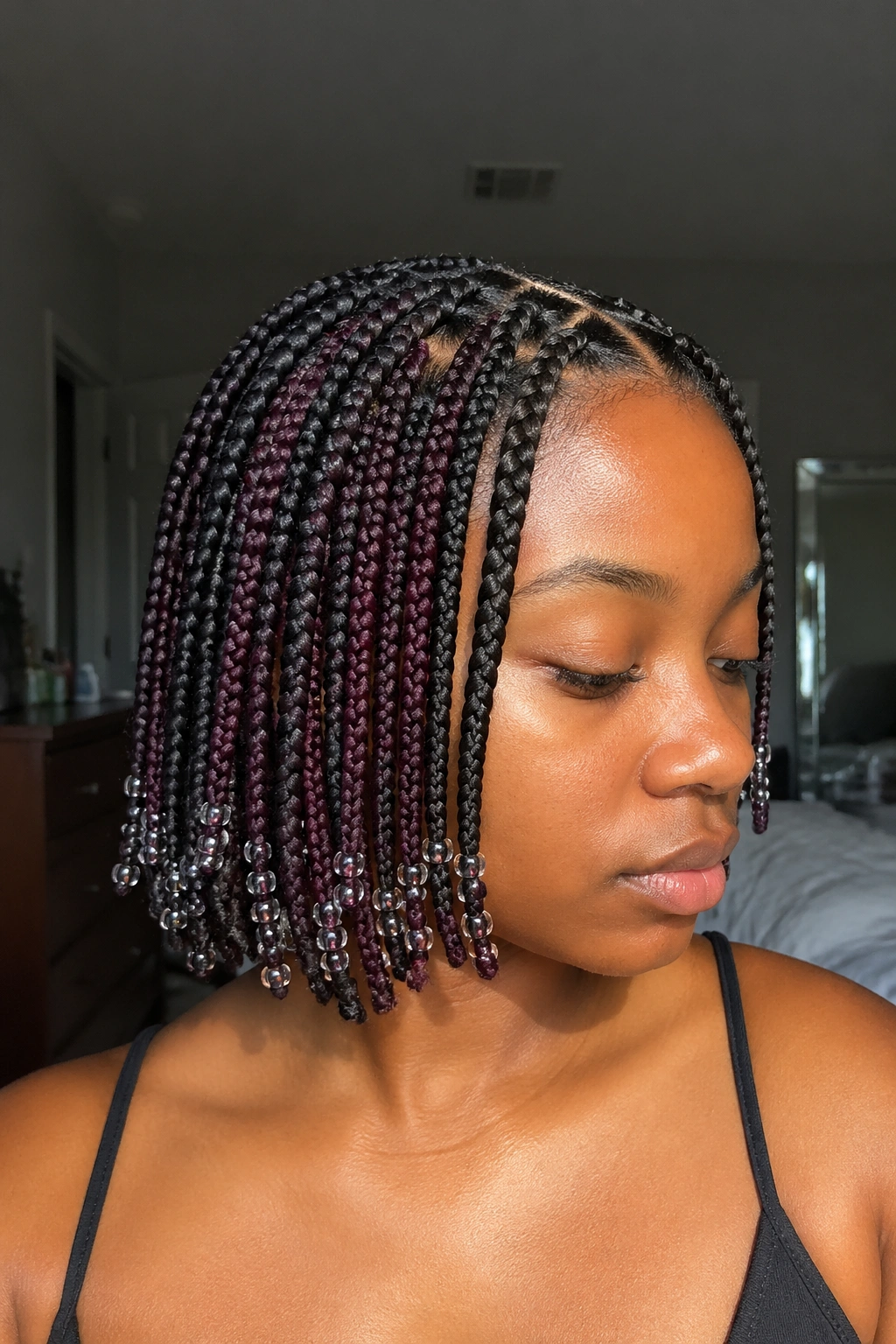
Tiny beads and chunky beads are not the same mood at all. With deep plum peekaboo color, small glass beads give short knotless braids a sharper finish because they keep the ends light and let the color sit in the braid body instead of shouting from the bottom.
That matters if you hate the clatter that comes with bigger beads. Small beads move more quietly, and on short braids they avoid the “too much at the tip” problem. The plum color can stay mostly hidden under one side and at the nape, which gives you a nice dark-to-color shift without a big reveal.
This is the version for people who want short braids to feel neat, not noisy. It still has personality. It just doesn’t announce itself from across the room.
Best bead size: 4 mm to 6 mm.
Best placement: A thin scatter on the lower half only.
14. Beaded Ends Only With Caramel Peekaboo
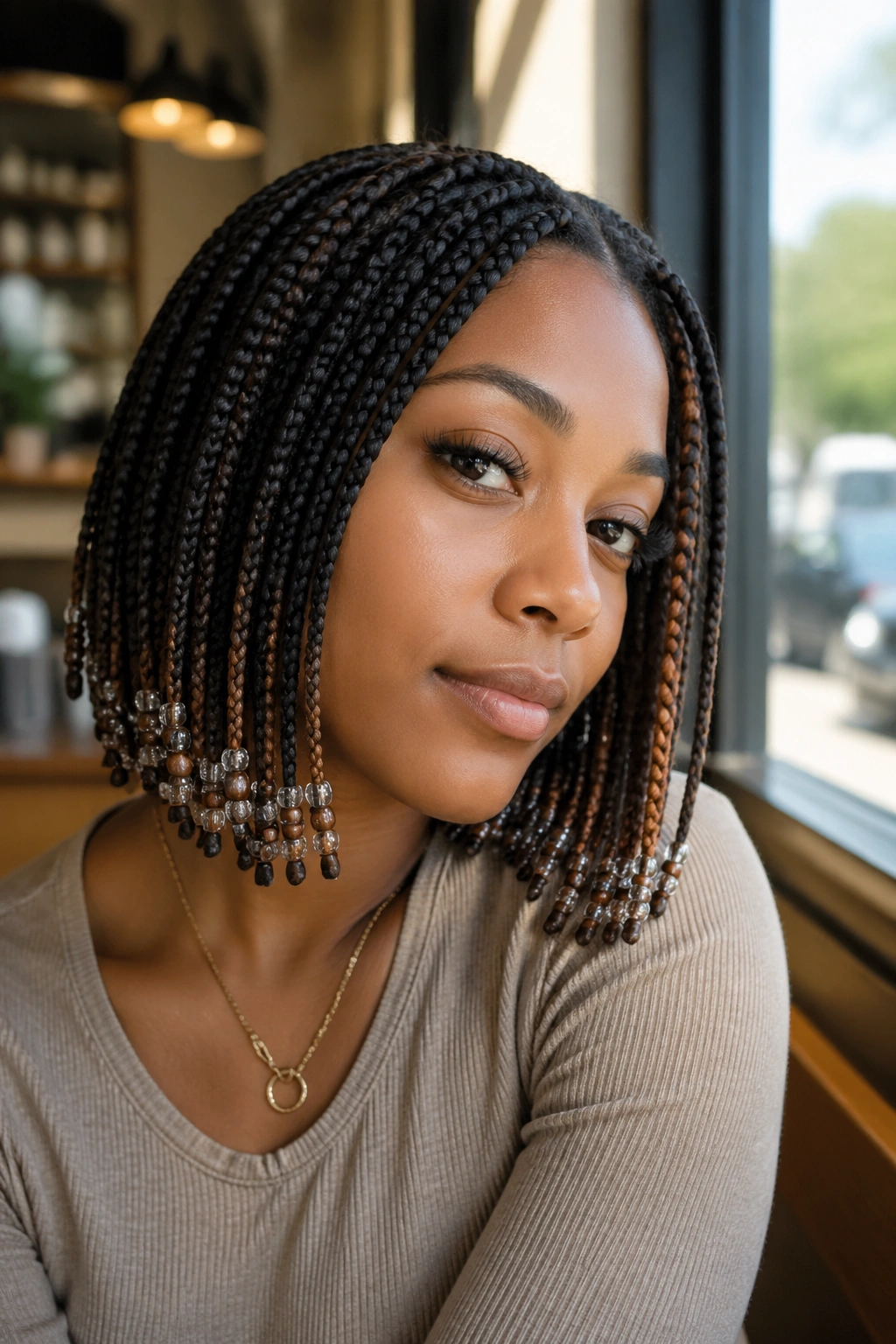
Not every braid needs bead work from root to tip. Beads only on the lower third can make short braids feel finished without cluttering the scalp or dragging down the length. Add caramel peekaboo color underneath, and the whole style starts reading warm and easy.
This approach gives you room to play with bead sizes. A few 8 mm clear beads, a couple of amber ones, maybe one gold accent on each side if you want a little shine. That mixed-end treatment feels deliberate without looking fussy.
Why this version stays useful
- It works on braids that sit at the jawline or collarbone.
- It keeps the crown light and clean.
- It gives you a faster morning routine.
- It leaves space for earrings, makeup, or a bold lip.
The caramel shade matters because it shows up as a soft glow instead of a hard block. If you want low drama with a little movement, this is the one.
15. Rainbow-Underlayer Braids With Transparent Beads
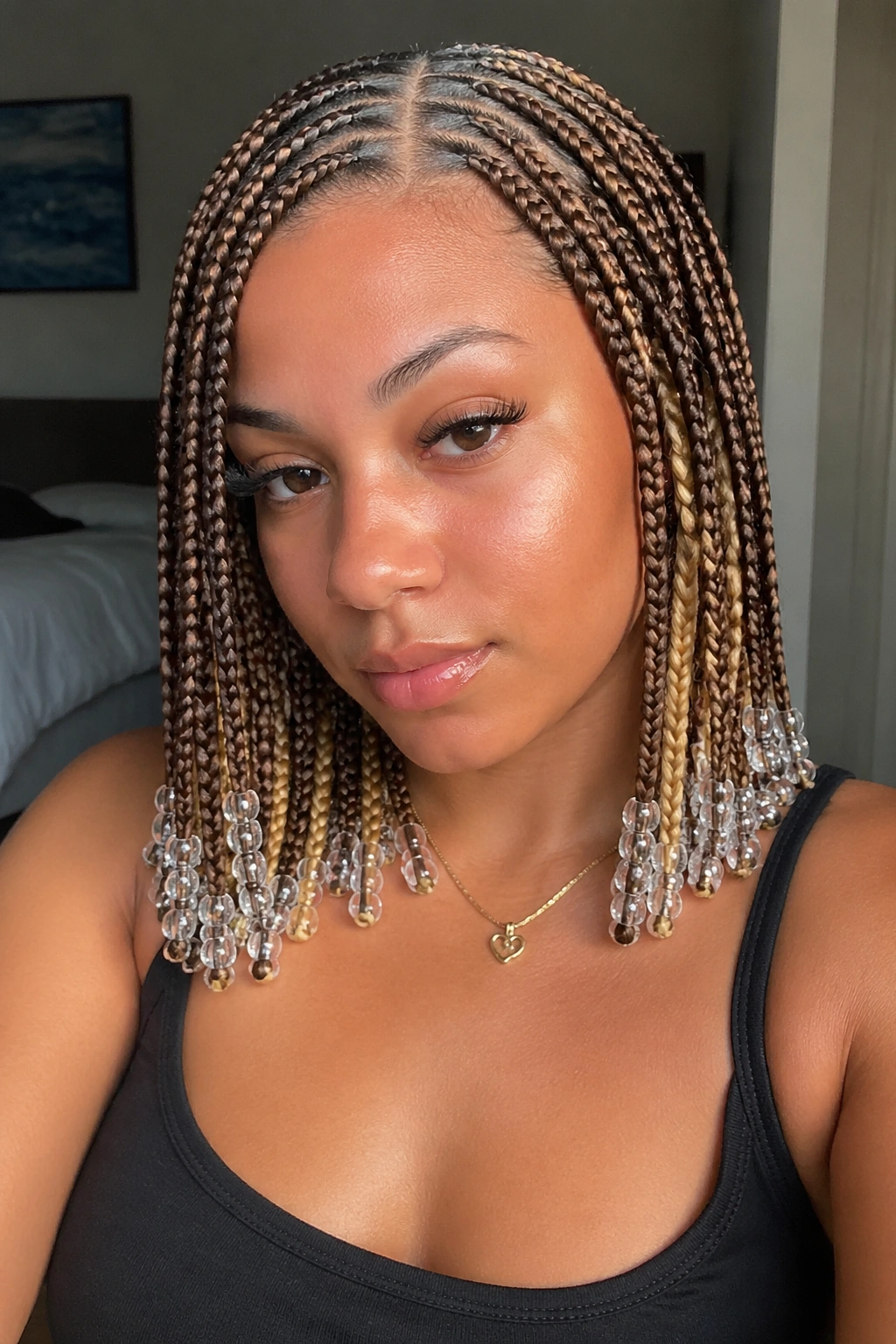
The most playful version is the one that keeps the bead choice clear and lets the hidden color do the talking. A rainbow underlayer on short knotless box braids gives you several flashes at once—blue, red, yellow, green—without turning the whole head into a color mash. Transparent beads hold the line together.
That transparency matters. Opaque beads would compete with the color story, while clear beads let each shade show through as the braids move. Keep the rainbow tucked under the top rows and focus the brightest pieces near the nape and the back corners. The top should stay dark enough that the hidden color feels like a surprise.
This is the version I’d hand to someone who wants the style to feel fun, but still wearable. Short length keeps the color from getting overwhelming. Clear beads keep it tidy. The braid shape does the rest.
That balance—clean base, hidden color, light bead work—is what keeps the look lively instead of messy.