
Long hairstyles for women over 60 can look sharp, soft, glamorous, or a little rebellious — they do not have to look polite. The mistake people make is assuming that length itself is the problem. It usually isn’t. It’s the shape, the weight line, and the way the hair sits around the face.
A heavy sheet of hair with no movement can drag everything down. A good long cut, though, gives lift at the cheekbones, a cleaner neckline, and a little swing when you turn your head. That matters more as hair changes texture with age, because strands often get drier, finer, or a touch coarser, and the same blunt style that worked at 35 can start behaving like a curtain.
Dead ends do the opposite.
What makes long hair feel fresh after 60 is usually some mix of layers, lightness, and a shape that suits the real texture on your head — not the one you wish you had. Silver hair, highlighted hair, deep brown hair, curls, waves, straight strands: they all look better when the cut gives them something to do. Flat is the enemy. Flat always ages a style faster than length does.
1. Soft Face-Framing Layers for Women Over 60
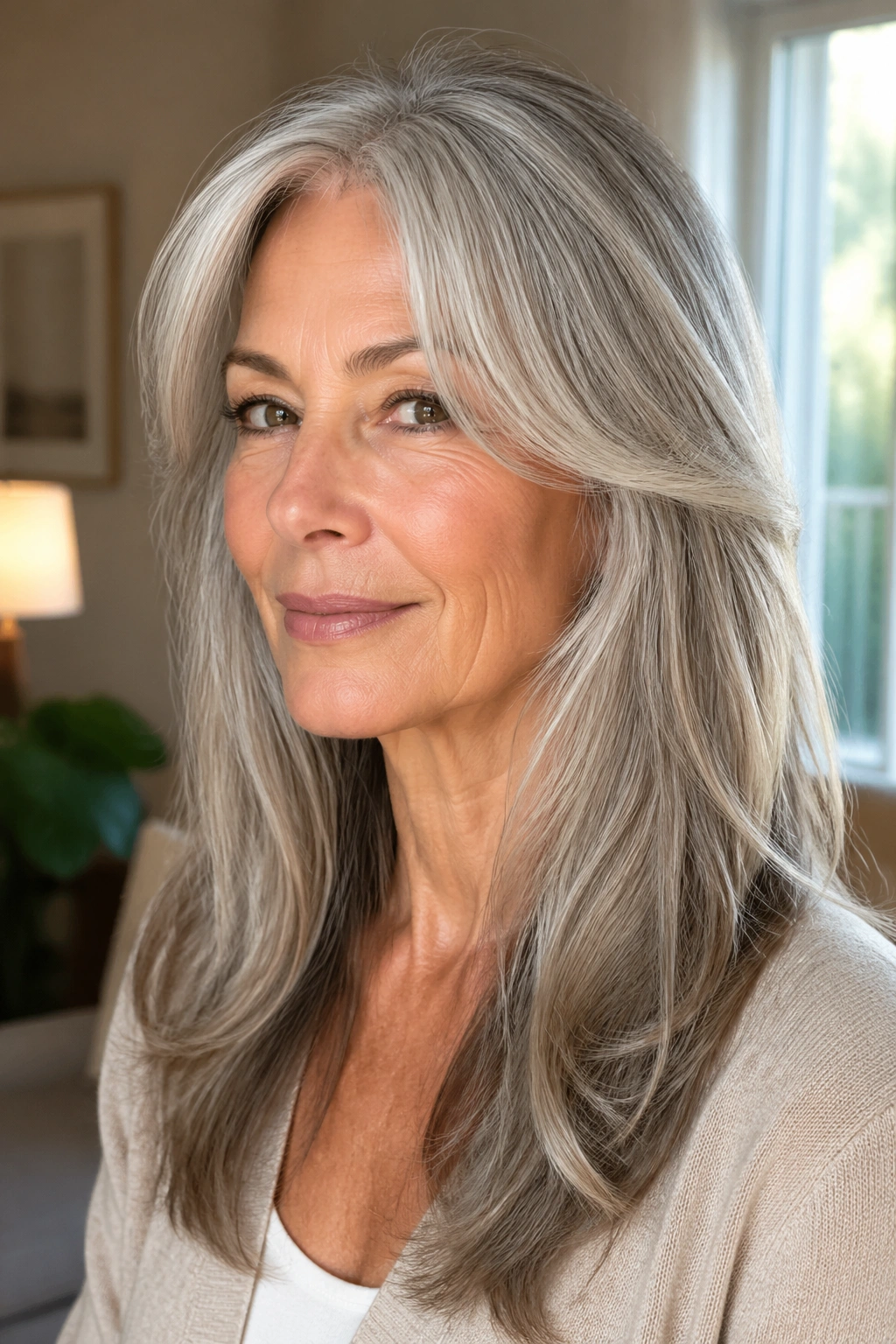
Soft face-framing layers are one of the easiest ways to keep long hair from looking heavy. They skim the face instead of hanging like a solid block, and that tiny bit of movement makes a big difference around the eyes and cheekbones.
Ask for layers that start around the cheekbone or lip, then melt into the rest of the length. You want softness, not choppy steps. If the front pieces are too short, the whole cut can start feeling dated fast. If they’re too long, you lose the point and end up right back where you started.
This style works especially well if your hair is fine but you still want to keep length. The trick is to remove weight only where the hair needs air. Thick hair likes this cut too, though it usually needs more internal shaping so the sides do not puff out. A round brush and a quick bend at the front are often enough to make it look styled without looking stiff.
One small detail matters here: keep the layers light near the jaw, not jagged. That little adjustment keeps the whole shape clean.
2. Curtain Bangs That Blend Into Long Hair Over 60
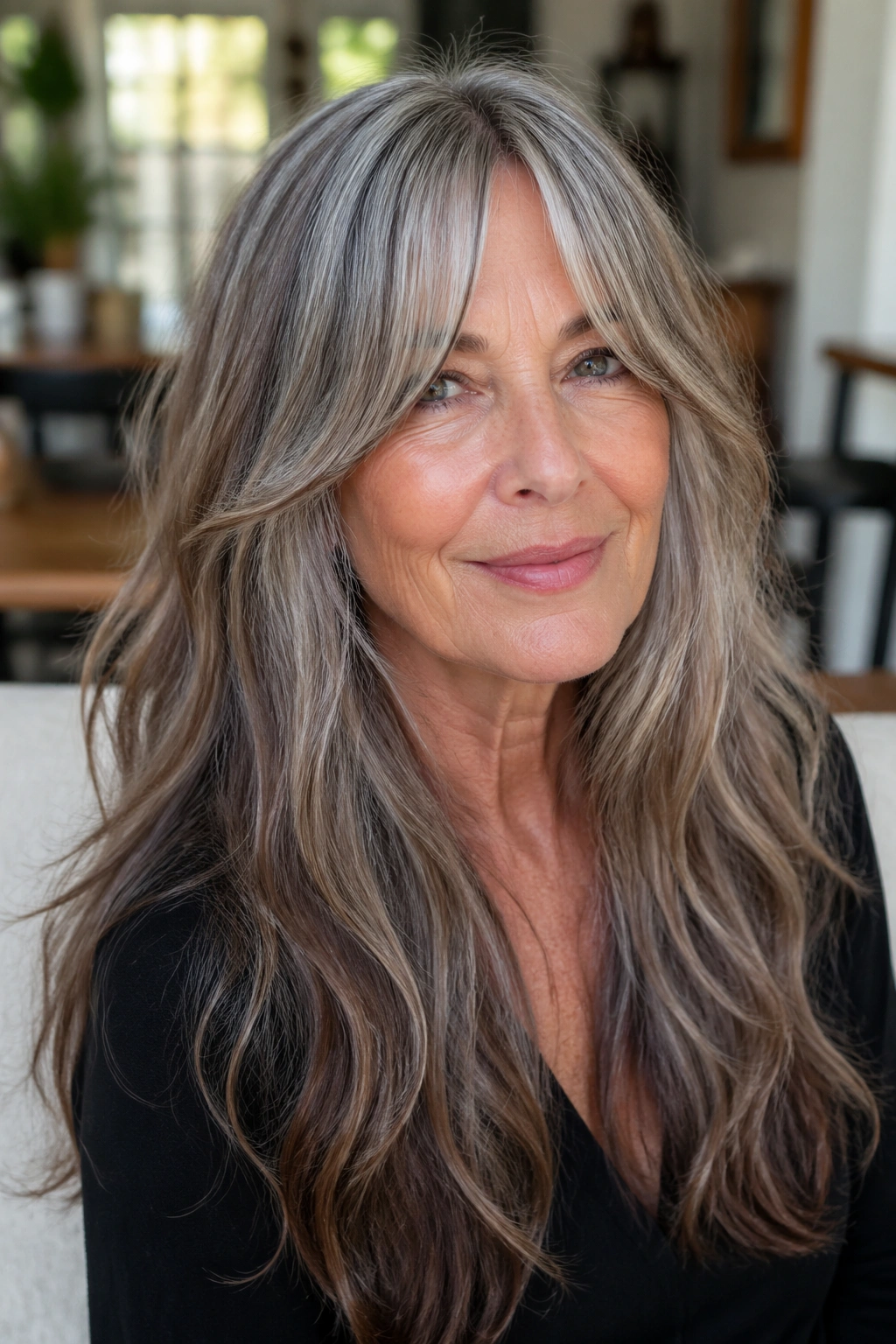
Do curtain bangs count as a long hairstyle? Absolutely. In fact, they’re one of the smartest ways to wear length after 60 without letting the whole look go limp. They give you face framing, a little lift at the front, and enough softness to keep long hair from feeling severe.
Why They Work
Curtain bangs open up the face without boxing it in. They’re shorter in the center, longer at the sides, and they blend into the rest of the hair instead of ending in a hard line. That makes them kinder than blunt bangs if your hairline has changed or if you prefer not to have hair sitting straight across the forehead.
A good curtain fringe also buys you options. Wear it parted in the middle, tuck it behind one ear, or let it fall forward on a windy day. It’s flexible. That matters.
How to Style Them
- Blow-dry the fringe with a 1 to 1¼-inch round brush, pulling the hair away from the face.
- Aim the dryer at the roots first for about 10 seconds to build lift.
- Finish with a light mist of flexible-hold spray, not a stiff shell.
- Trim every 4 to 6 weeks so the center does not grow into your eyes.
Curtain bangs are one of those details that make long hair look considered instead of accidental. Tiny piece. Big payoff.
3. Loose Waves With Invisible Layers
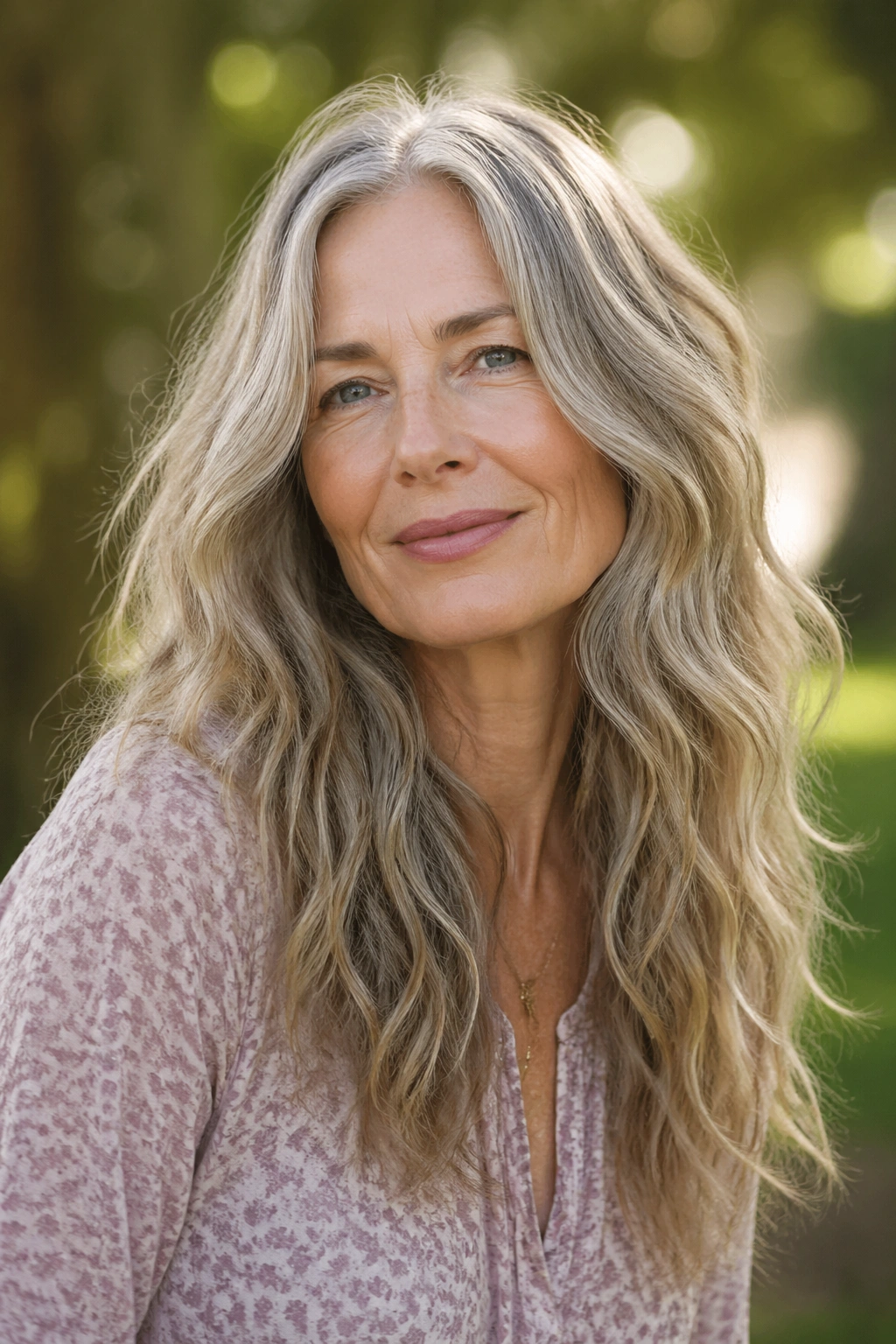
If your hair falls flat the second you leave the house, loose waves can fix that faster than almost anything else. The good version of this style doesn’t look curled. It looks touched by movement, like the hair decided to bend a little on its own.
Invisible layers are the real trick. They remove weight inside the shape without leaving obvious stair-steps in the outline. That means you get bounce, but the ends still look full. It’s a better choice than heavy layering if you want softness and length to stay the main story.
A 1¼-inch curling iron or a medium hot brush usually gives the right bend. Wrap the sections away from the face, leave the last inch out, then let the waves cool before you touch them. If you run your fingers through too early, the whole thing drops. Ask me how annoying that can be.
Best when: your hair is naturally straight, slightly wavy, or resistant to heavy curl.
Avoid if: you want a polished, glassy finish with no texture at all.
One quick tip: finish by misting a little texture spray through the mid-lengths, then scrunch once. Not three times. Once.
4. A Deep Side Part and Sleek Ends
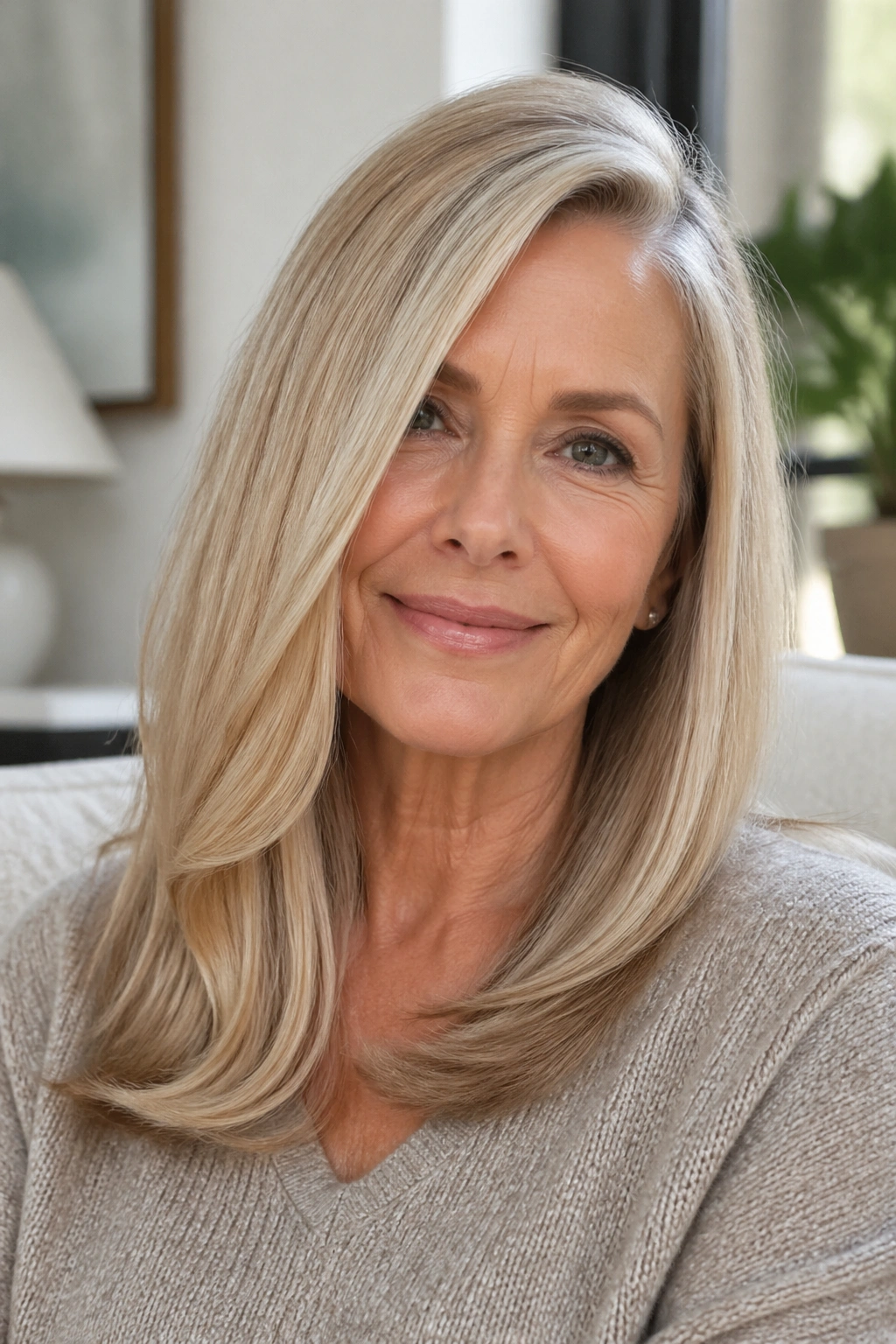
A deep side part changes the whole mood of long hair. It adds instant drama, but not the costume kind. More like the sort of shape that makes your eyes look brighter and your cheekbones look a little sharper.
This style is a clean answer if your hair is naturally straight or only softly wavy. Keep the length smooth through the mid-lengths and let the ends rest with a gentle bend rather than a stiff poker-straight line. A single pass with a flat iron — around 300°F to 350°F, depending on hair type — is usually enough. You do not need to press the life out of it.
Shifting the part a few inches off center also helps if you’ve been wearing the same middle part forever. The change feels small. The visual effect does not. It gives the roots some lift and stops the style from sitting too flat against the head.
A shine serum on the ends, a light touch at the roots, and a tuck behind one ear. That’s the whole mood.
5. The Long Shag With Airy Movement
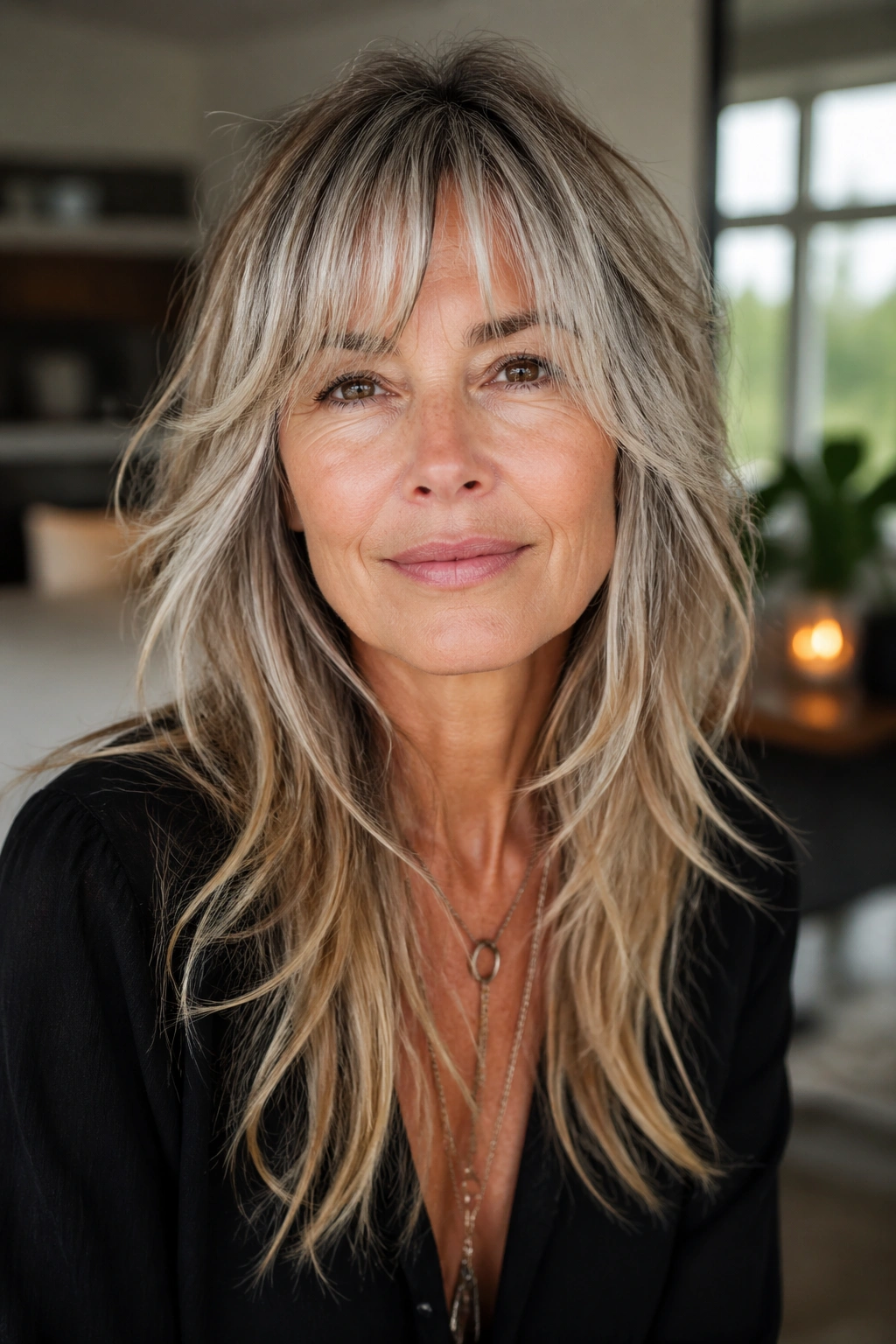
A long shag is for women who want hair with a little edge, not hair that just behaves itself. It has pieces, lift, and movement in places a blunt cut would never bother touching. And that’s exactly why it works so well on longer hair that starts to feel too heavy.
The cut usually includes layers around the crown, cheeks, and neckline, but they’re spread out enough that the shape still reads as long. The fringe can be wispy, curtain-like, or pushed to the side. If the layers are done well, the cut keeps breathing as it grows out, which is one reason it stays interesting between salon visits.
It’s a strong match for wavy or thick hair. Straight hair can wear it too, but you’ll probably want a little styling cream or mousse to keep the layers from lying dead flat. Air-drying gives it a relaxed feel. A diffuser brings out more shape if you want the texture to show.
And yes, it can be elegant. Shag does not have to mean messy.
6. Silver Hair With a Glossy Blowout
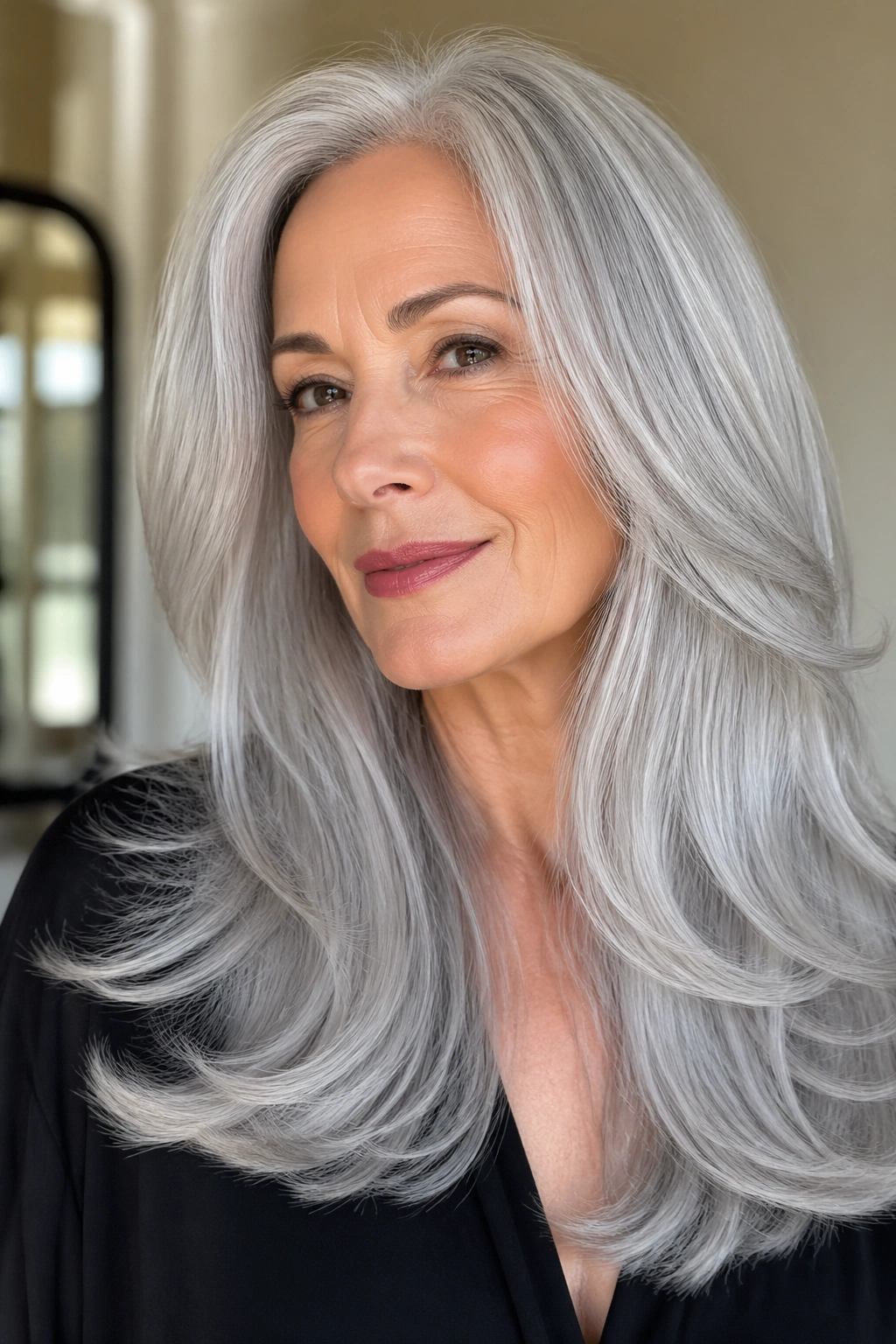
Silver and white hair look best when they’re treated like they matter. They’re not “aging hair.” They’re hair with a different finish, and the right blowout can make that finish look rich instead of dry.
The first job is moisture. White and silver strands often need more conditioning because they can feel wiry or fuzzy at the ends. A weekly mask on the mid-lengths and ends helps. Purple shampoo can be useful if yellow tones creep in, but don’t overdo it or the hair can take on a dull cast.
A glossy blowout changes everything here. Use a round brush, lift the roots, and direct the air down the hair shaft so the cuticle lies flat. That gives the hair a smoother look and helps the light reflect evenly. A boar-bristle brush can help at the end if your hair is medium to thick.
The best part? Silver hair with shape looks deliberate. Not old. Deliberate.
7. Brushed-Out Curls That Feel Soft and Full
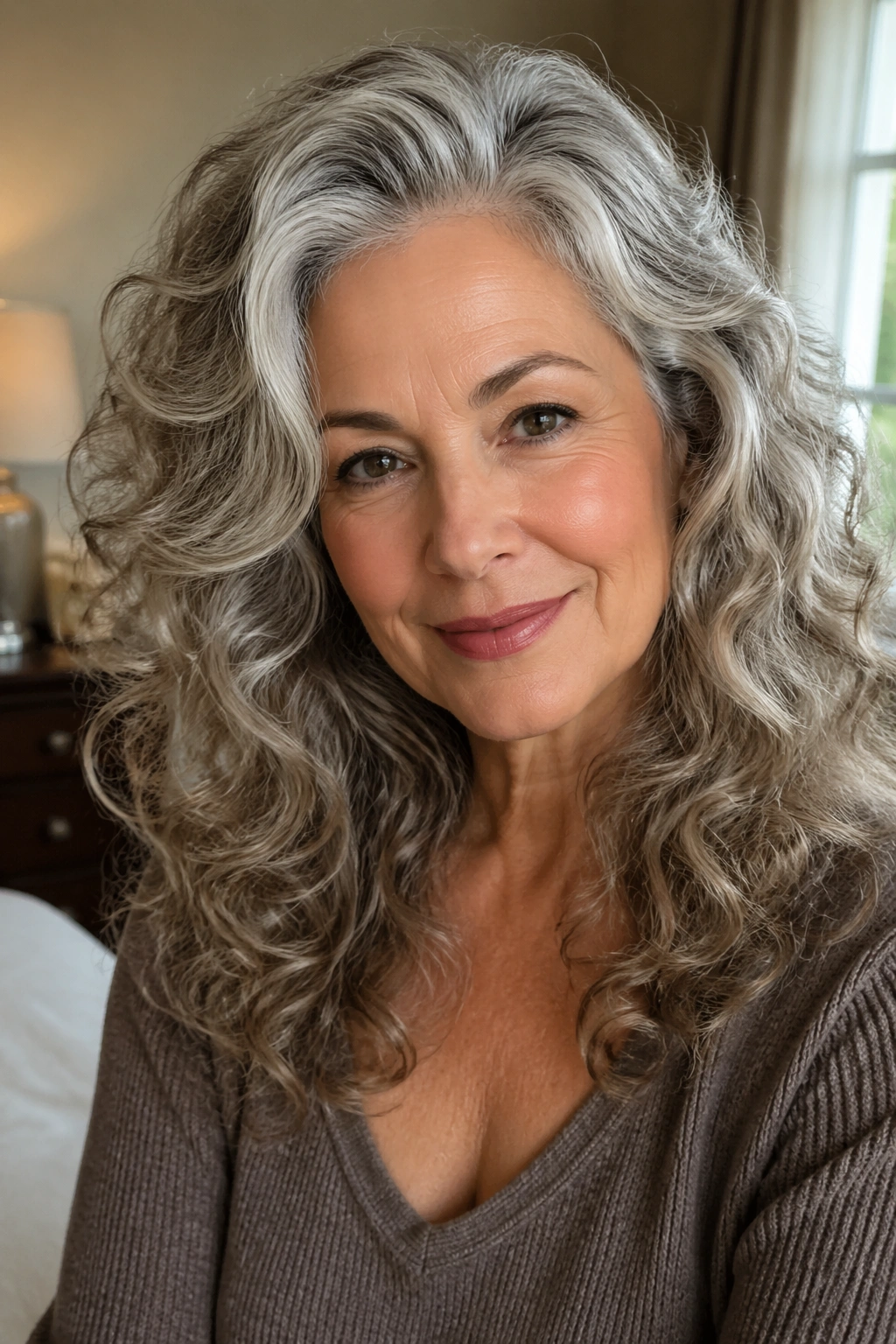
Brushed-out curls are one of my favorite answers for long hair that needs volume without looking stiff. The curls start defined, then get loosened after they cool, which leaves you with body instead of tight ringlets that can feel too formal or too young.
Set the Curls First
Use a curling iron in the 1¼-inch to 1½-inch range, depending on how much bend you want. Wrap medium sections, hold for a few seconds, and let every curl cool before brushing. That cooling step matters more than people think. Warm curls collapse fast.
Then Loosen Them
Once the hair is cool, use a paddle brush or wide-tooth comb and go through the curls gently from the ends upward. You’re not trying to erase the shape. You’re trying to soften it. A little serum on the palms can keep the finish from turning fluffy.
This style looks especially good on medium or thick hair because there’s enough weight to hold the volume. Fine hair can wear it too, but you’ll want a root-lifting spray at the crown before you curl. Otherwise, the style can flatten out faster than you’d like.
It’s dressy without feeling formal. That’s a nice place to be.
8. The Half-Up Twist With Crown Lift
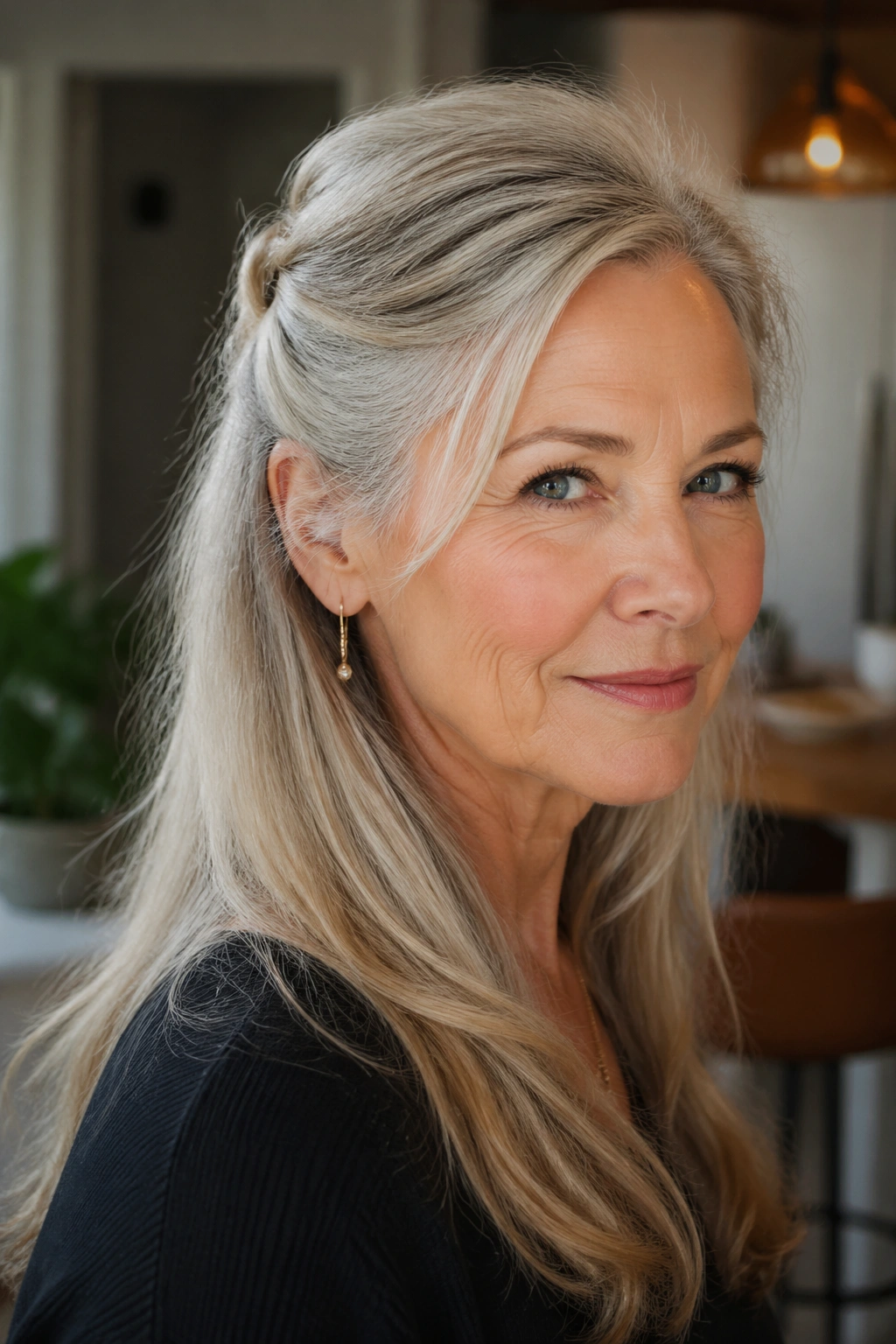
Some styles solve a real-life problem and still look polished enough to leave the house. The half-up twist is one of them. It keeps hair off the face, gives the crown a little lift, and makes second-day hair look intentional instead of tired.
Start by taking the top section from temple to temple and lightly backcombing the roots if you need height. Twist each side back, meet them at the back of the head, and pin the sections under a small bit of hair. You can hide the pins completely, or leave them a little visible if you’re using decorative clips. Either way works.
This style is especially good when the ends are still decent but the roots need help. It also gives you a nice way to show off layers, because the top stays controlled while the rest of the length moves freely. If you have fine hair, use a texturizing spray first so the pins have something to grab.
Quick, easy, and not boring. That’s the whole point.
9. A Low Ponytail With a Wrapped Base
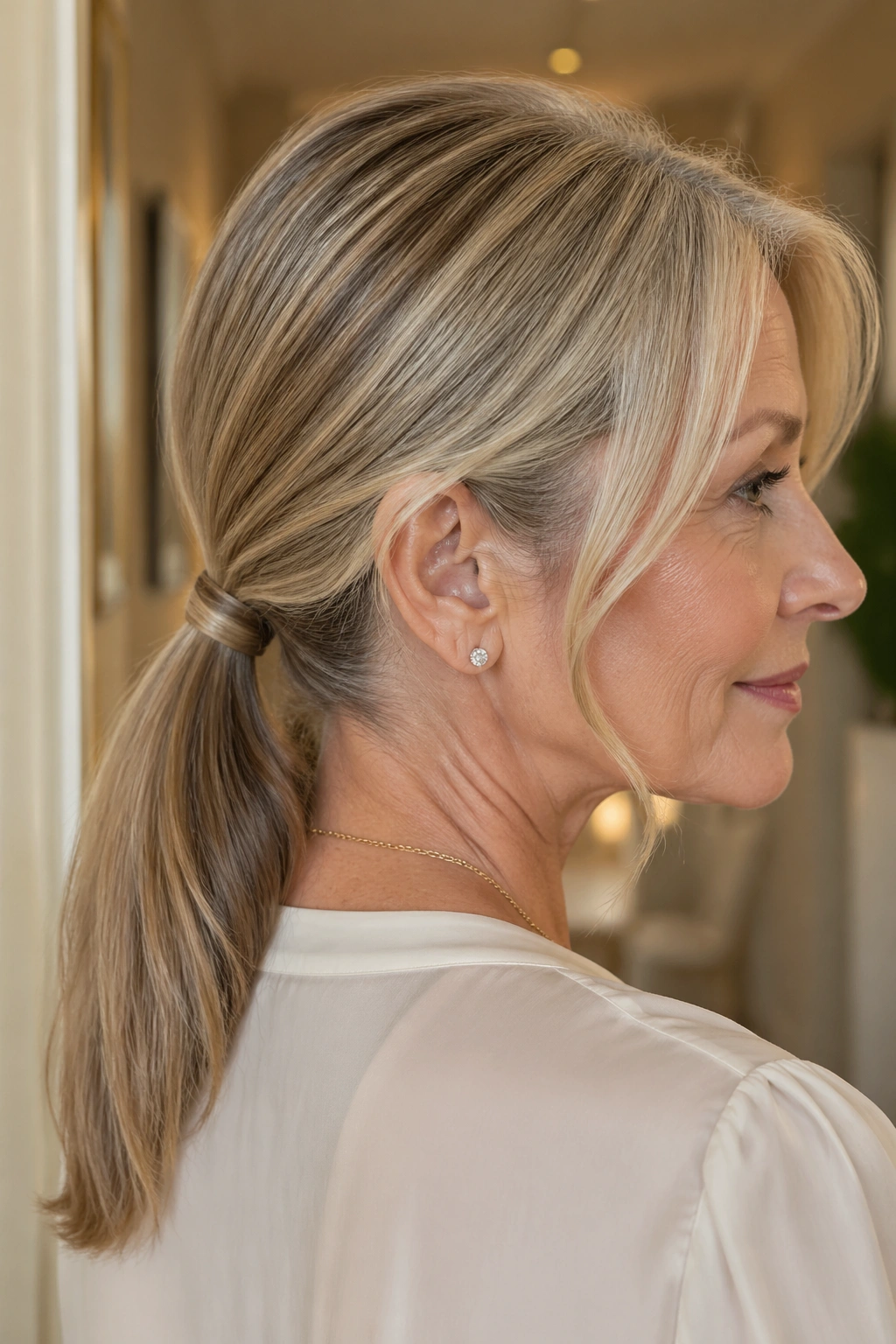
A low ponytail sounds plain until you do it the right way. Then it becomes sleek, grown-up, and a little bit chic in the useful way — the kind of style that works for dinner, errands, or a day when your hair simply refuses to cooperate.
The trick is to keep it low at the nape, not tight at the crown. Smooth the top gently with a brush or your hands, then secure the ponytail with an elastic. Take a small strand from underneath, wrap it around the base, and pin it beneath the elastic. That hides the band and makes the whole style look cleaner.
A few face-framing pieces can help if you want the look to feel softer. Leave them straight, bend them slightly with a flat iron, or curl them away from the face for a more finished shape. The ponytail itself can be sleek, wavy, or even curly. The base is what makes it feel grown-up.
Tight ponytails pull the face back. Low ones do not.
10. The Soft French Braid
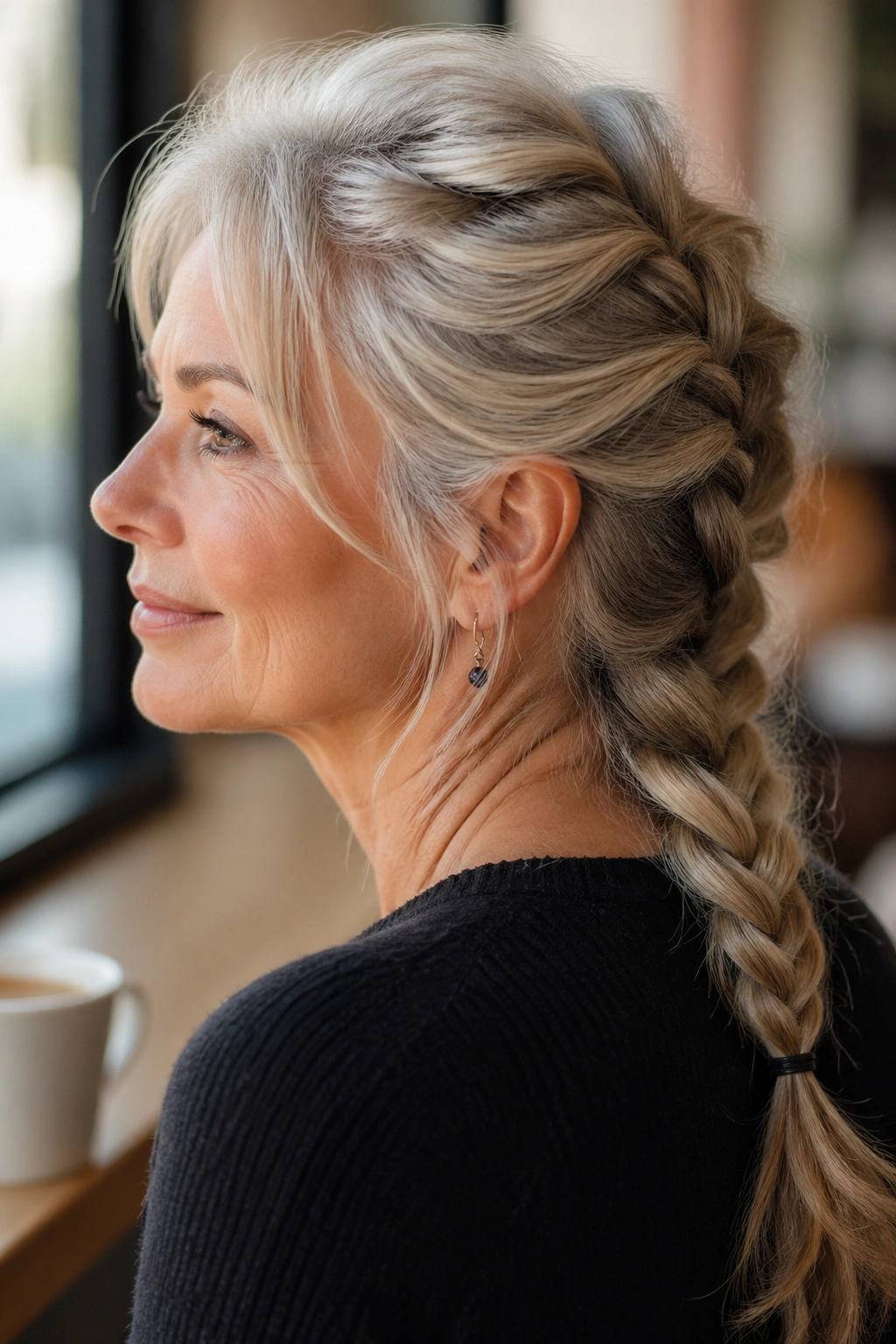
Why does a braid feel fresher than a plain ponytail on long hair? Because it gives the eye something to follow. It has texture, line, and a little detail at the back of the head, which is exactly why a soft French braid can look so good on women over 60.
The braid should not be tight enough to flatten the scalp. Keep the tension loose, especially at the crown, so the braid has a little width. Once it’s secured, tug gently at the outer edges to widen it. People call this “pancaking,” and yes, the name sounds silly, but the result is useful. It makes the braid look fuller.
How to Wear It
- Start at the top or just behind the hairline.
- Braid down to the nape, then finish with a small elastic.
- Pull a few fine pieces free around the face.
- Mist with a light-hold spray so the braid keeps its shape without feeling crunchy.
This style works well for travel, warmer days, or any time you want your hair off your neck but don’t want it to disappear completely.
11. Braided Crown With Loose Pieces
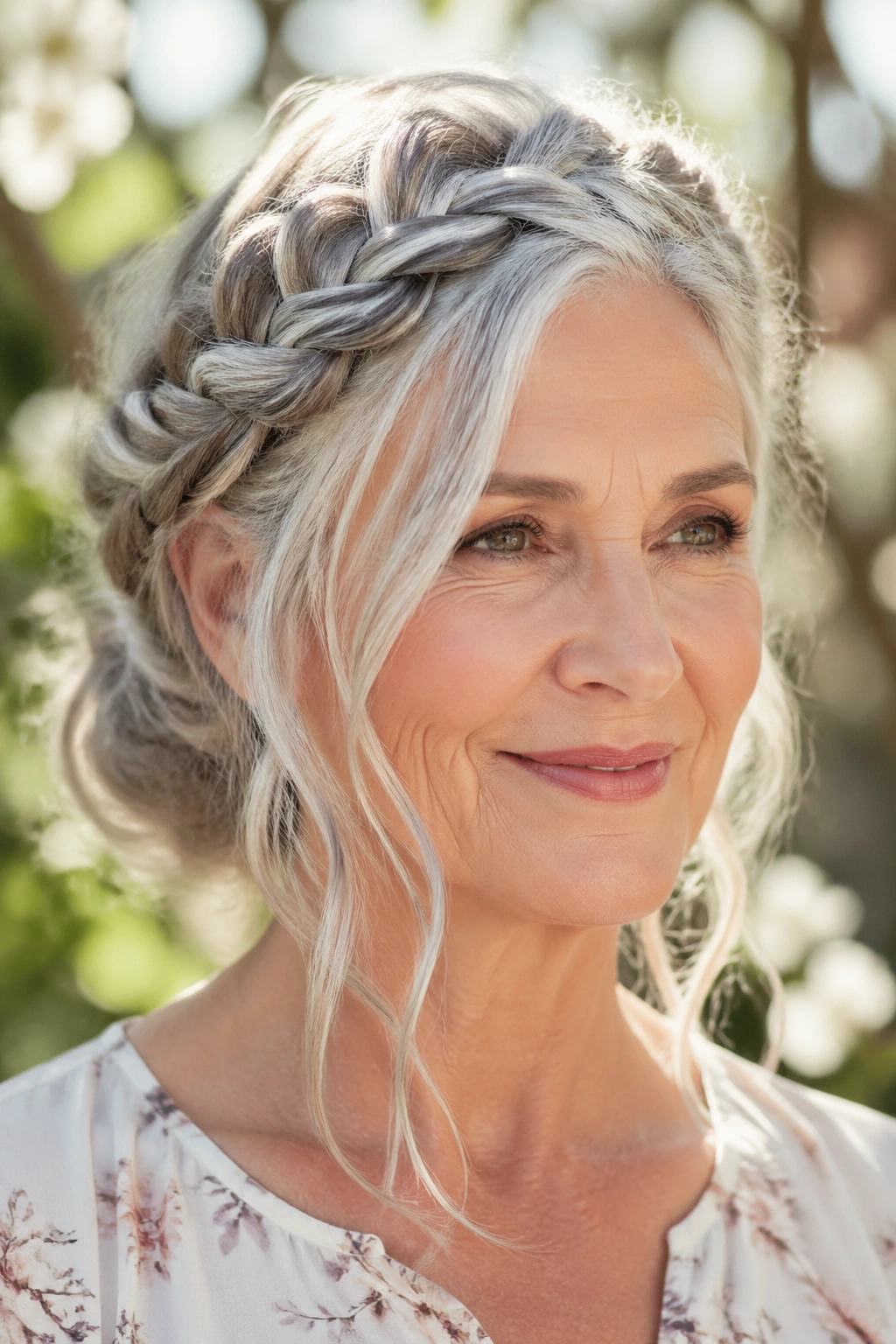
A braided crown has a little romance to it, but it does not have to feel fussy. Done loosely, it can look relaxed and wearable rather than bridal. The shape moves around the head, which gives long hair structure even when the rest of the length is tucked away.
The braid usually starts near one temple or above one ear, then curves across the back and around to the other side. Pin it under the hair rather than on top of it so the finish looks smoother. Leave two or three narrow strands free around the face if you want softness.
This is a good style for hair that has a bit of grip. Very silky hair may need a little mousse or dry texture spray first, or the braid can slip. If your hair is layered, you may need extra pins hidden under the braid so shorter pieces do not poke out.
It’s a smart pick for weddings, dinner, or any event where you want long hair present but not hanging in your soup.
12. The U-Cut That Keeps Length but Removes Bulk
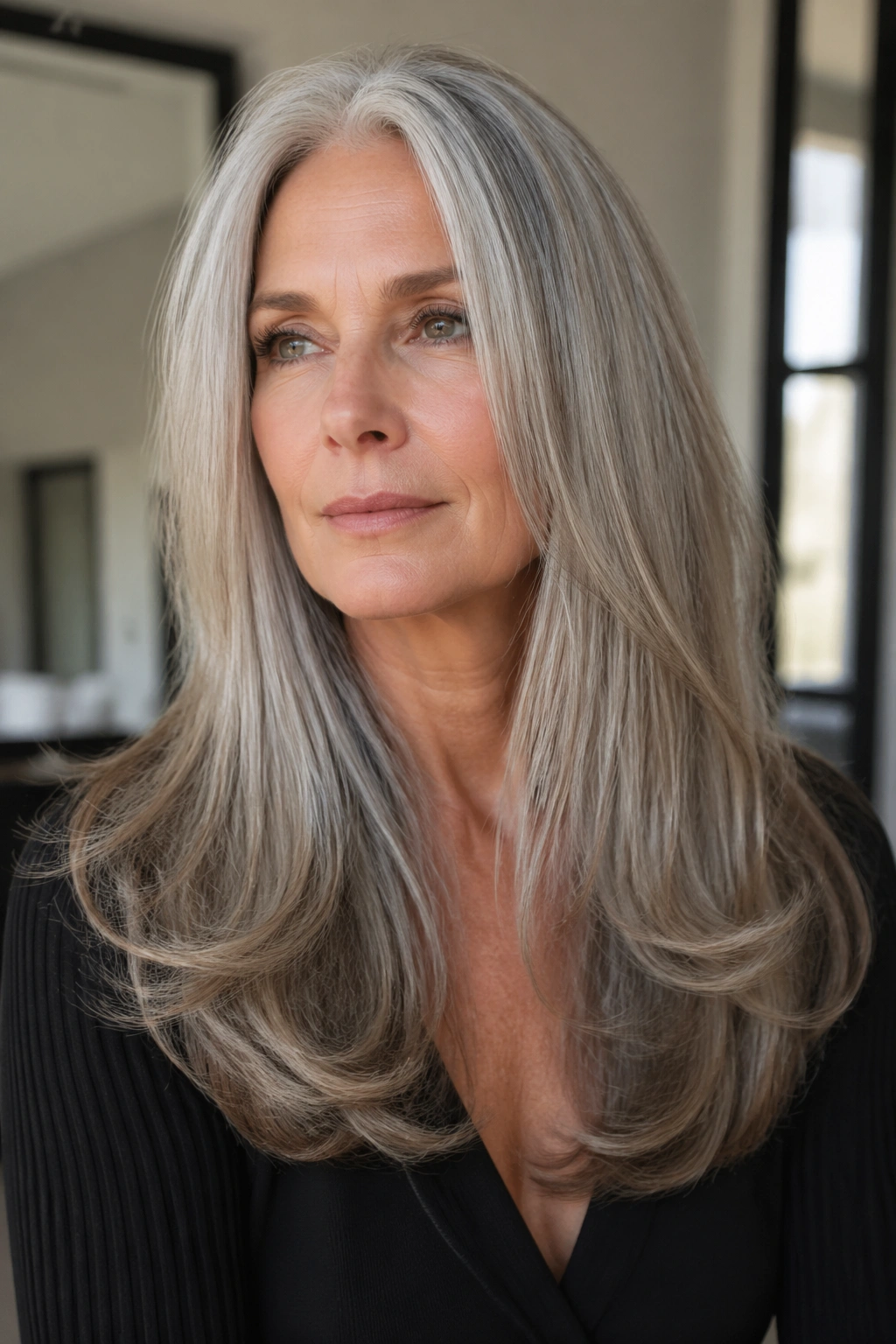
The U-cut is one of those shapes that sounds minor but changes the whole feel of the hair. Instead of a straight line across the bottom, the length curves gently upward at the sides, making the silhouette look softer and more lifted.
What the Shape Does
That curved hem keeps long hair from looking like a solid sheet. It also lets the front pieces sit a little nearer the shoulders, which can make the face look more open. If your hair is thick, a U-cut removes the sense of bulk at the perimeter without taking away the length you worked to keep.
Who Should Ask for It
Women with dense straight hair tend to love this shape, because a blunt hem can feel heavy fast. Fine hair can wear it too, but the curve should stay subtle so you don’t lose too much fullness at the edges. The best version has a smooth outline and very little drama, which sounds boring until you see how much better the movement is.
If you wear your hair down most days, this cut is worth asking about. It behaves well in a ponytail too.
13. Butterfly Layers Around the Face
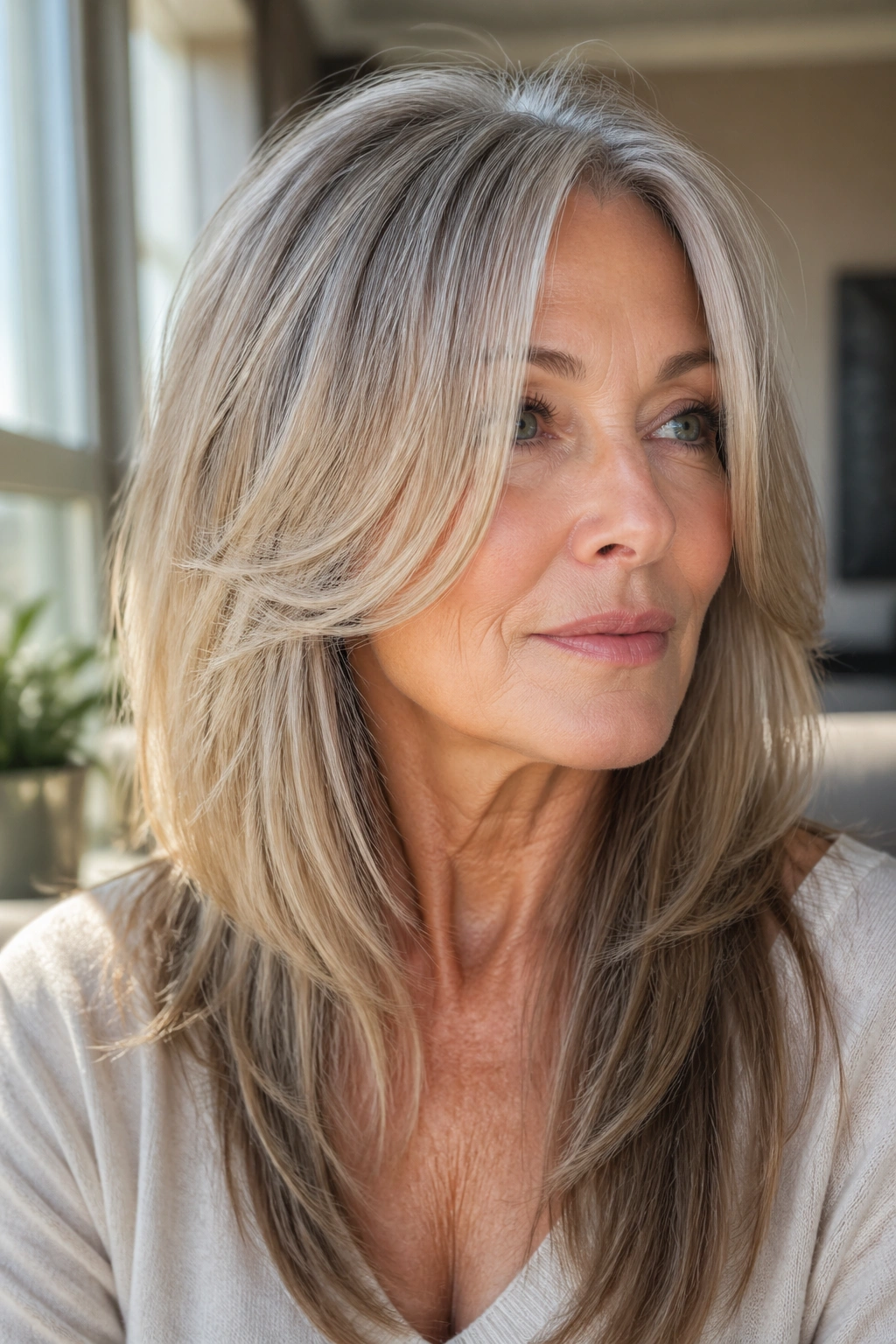
Butterfly layers are for the days when your hair feels too heavy at the front and too plain at the sides. They create shorter pieces near the face while keeping the long underlayer intact, so you get movement without giving up the length.
Think of it as a cut with two jobs. The upper pieces create lift and shape near the cheekbones, while the longer bottom section keeps the style feeling full. That split can be flattering on round, square, or long faces because it brings the eye inward without making the ends look thin.
What to Ask For
- Shorter face-framing pieces that brush the cheekbone or chin.
- Longer layers underneath that keep the overall length.
- A blowout that flips the front pieces away from the face.
- Soft finishing, not blunt edges.
This style likes a round brush and a little patience. The front has to move. If the layers are left flat, the whole point gets lost. But when they’re styled with a bit of lift, the result feels light and expensive without trying too hard.
14. Side-Swept Glamour Waves
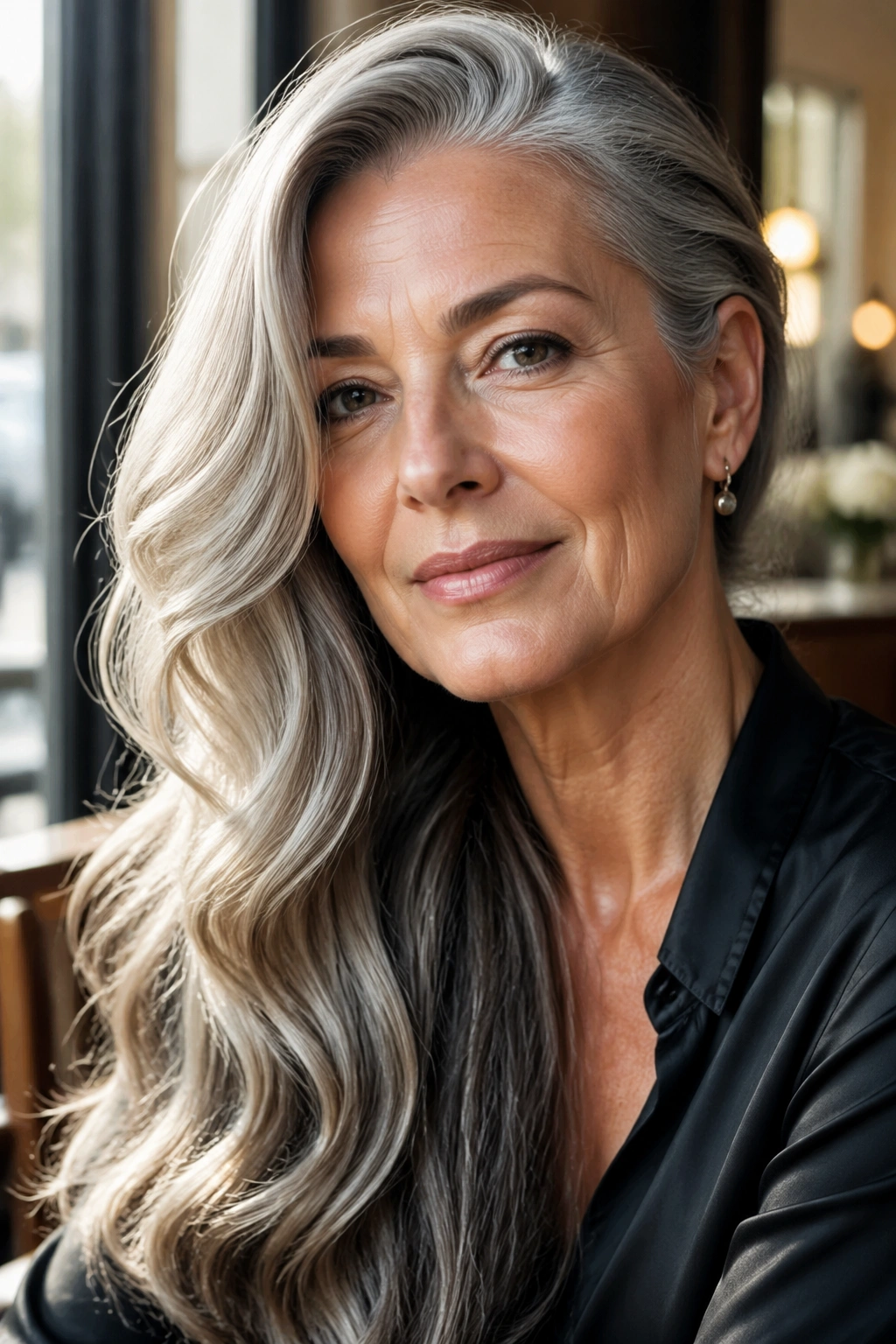
A deep side sweep can turn long hair into something a little more dramatic without making it feel overdone. It’s the kind of style that works when you want to look finished, maybe even a little dressed up, but you do not want a hard set curl pattern.
The side part creates immediate volume at the root, and the hair gets pulled over one shoulder or tucked behind one ear. If you curl the lengths in large sections and keep the ends soft, the wave pattern stays elegant rather than tight. A large-barrel iron or hot rollers can help here, especially if your hair resists holding shape.
One detail makes this style work: pin the heavier side back at the nape or just behind the ear before you start setting the waves. That keeps the style from sliding out of place halfway through the evening. A light mist of shine spray on the surface can finish it without making it greasy.
It’s not every day hair. That’s fine. Not every style should be.
15. Natural Curls With Hydration and Shape
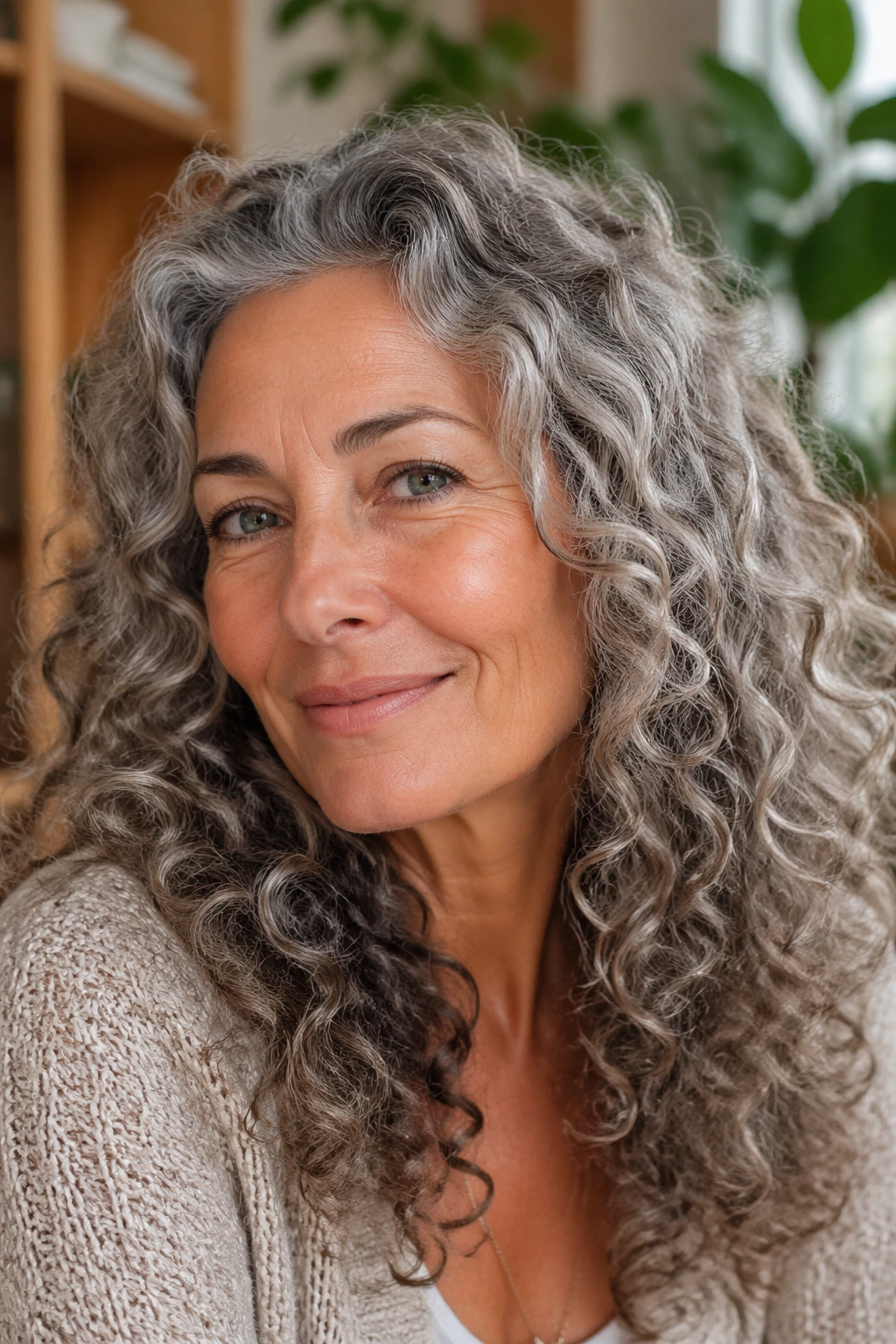
Natural curls after 60 can look gorgeous when they’re cut for the curl pattern instead of fought into submission. The right long curly style keeps the shape light near the crown, lets the curl spring where it wants to, and avoids the triangle effect that so many curl cuts accidentally create.
What Helps Most
Hydration first. A leave-in conditioner and curl cream on damp hair can keep the curl clumps smooth and reduce the fuzz at the ends. Scrunch the product in, then diffuse on low heat until the hair is about 70% dry. That leaves enough moisture for the curls to settle without becoming crispy.
What to Avoid
- Heavy oils all over the top, which can flatten the crown.
- Brushing curls dry, which breaks the shape apart.
- Over-layering the top, which can make the cut puff out.
A good curly cut should follow how your curls actually fall when dry. That usually means more shape, not more cutting. And if your curls have changed over time, that’s normal. The hair still wants help, just not the old kind of help.
16. Blunt Length With Tiny Internal Layers
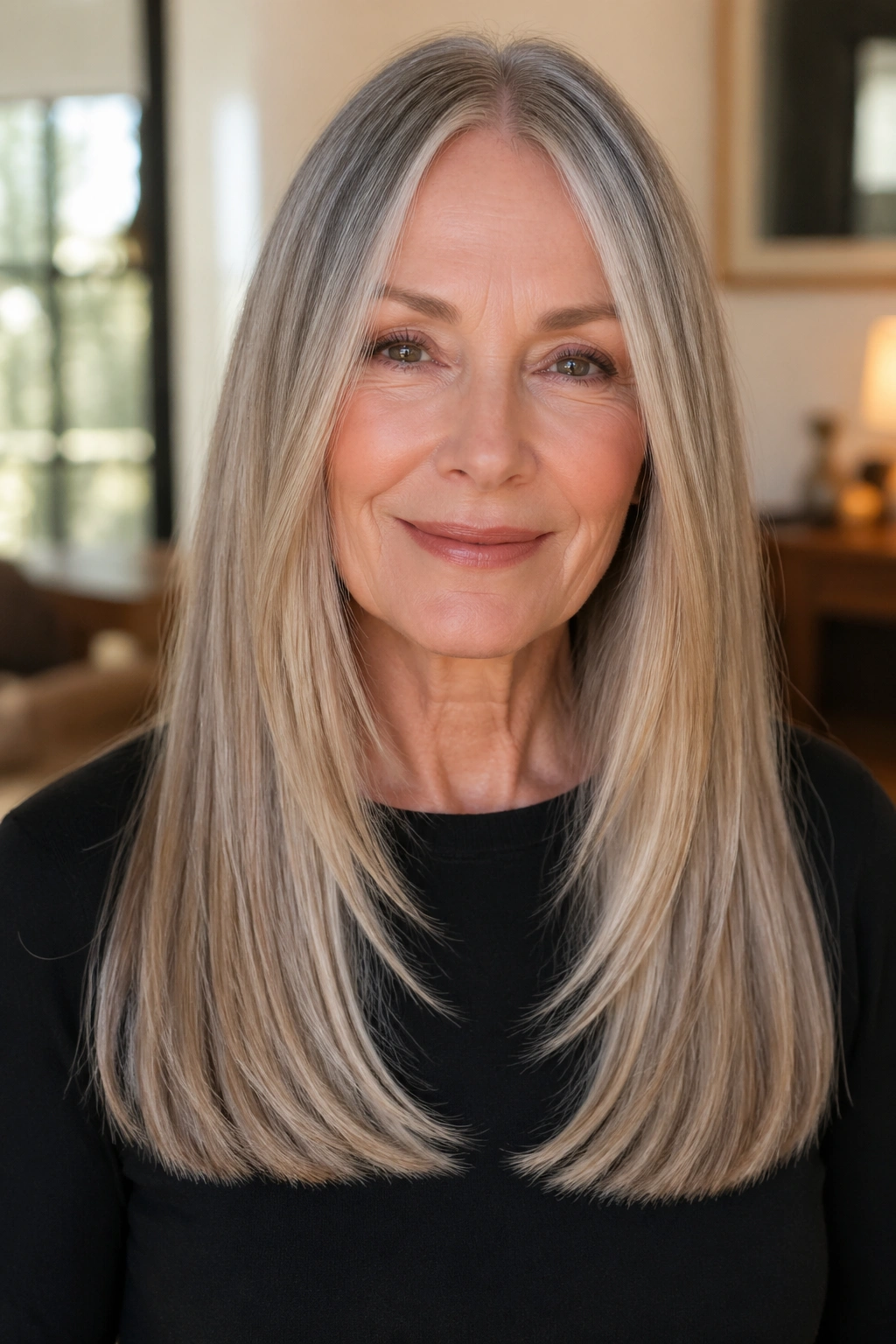
A blunt long cut gets written off too quickly. People assume it has to look severe or plain, but on healthy hair with enough density, a crisp line can look rich and modern. The secret is restraint. You want the outline clean, not heavy.
Tiny internal layers can keep the inside from feeling bulky while the outer edge stays solid. That’s what gives the style polish without making it stiff. If you’ve got thick hair, this cut can tame the width. If your hair is fine, it can make the ends look fuller than they would in a heavily layered shape.
The best version usually falls between the collarbone and the chest. Too short, and the line can feel blunt in a bad way. Too long with damaged ends, and the whole point disappears. Shine matters here. A clean hemline on dry, frayed hair looks unfinished fast.
A center part, a side part, or a tucked-behind-the-ear finish all work. The line does the talking.
17. The Half-Up Bun With Full Length Left Down
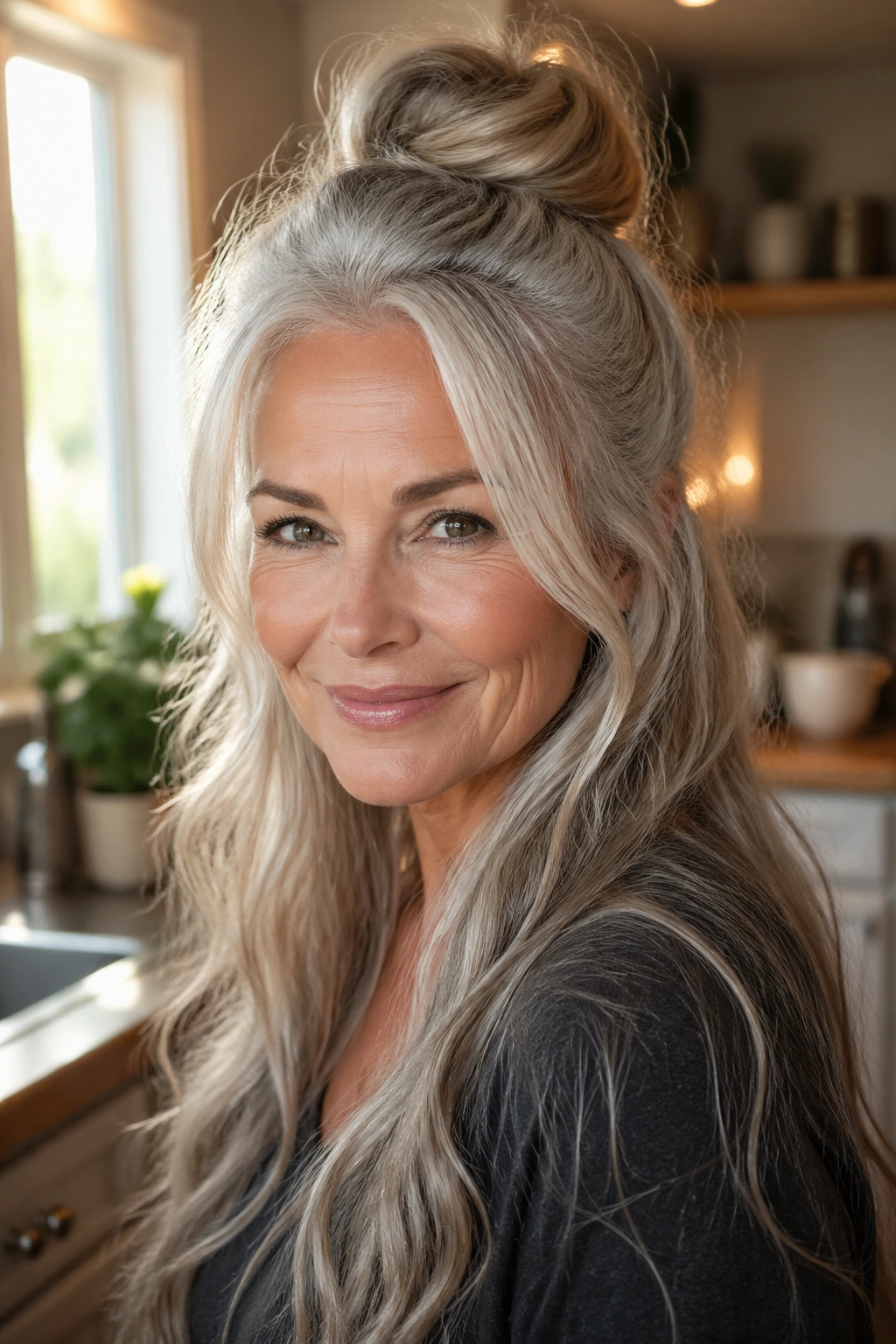
A half-up bun is a practical style, but it does not have to feel sloppy. When the bun sits at the crown or slightly below it, and the rest of the hair stays loose, the whole look gets a nice balance of control and softness.
Start by taking the top third of the hair and twisting it loosely before coiling it into a small bun. Secure it with pins or a clip, then leave the lower length alone. If your hair is layered, some pieces will fall out around the face and temples. That’s fine. They make the style less rigid.
This one works well on hair that is a day or two past wash day. Clean hair can be too slippery, especially if it’s fine. A little dry shampoo at the roots gives the bun some grip and keeps the crown from collapsing. You can also make the bun into a knot, a twist, or a tiny topknot if the mood is more casual.
It’s a good “I have things to do” hairstyle. It still looks finished.
18. Waist-Length Layers With Soft Fringe for Women Over 60
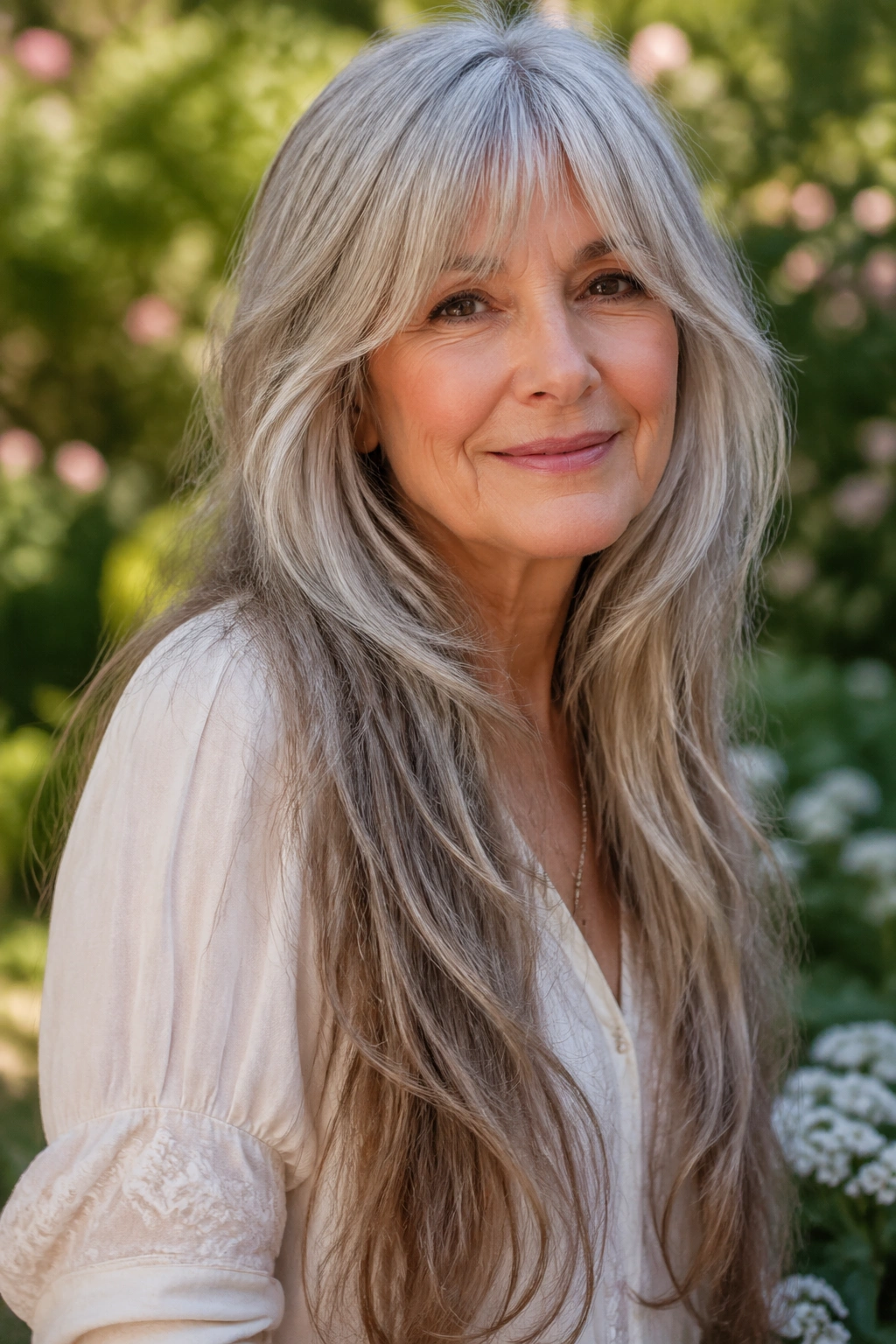
Waist-length hair after 60 is not a stunt. It just needs a shape that gives the length a reason to exist. A soft fringe or long curtain pieces near the face help break up the expanse, while layers through the body stop the hair from hanging like a heavy rope.
The important part is condition. Long hair only looks good when the ends are still carrying their share of the load. If the last few inches are see-through, no amount of styling will hide that. A trim every 8 to 12 weeks keeps the hem from looking ragged, and a leave-in on the ends helps them stay supple.
This style works best when you lean into softness instead of perfection. A slight bend at the front, a clean middle part, or a loose side sweep can all keep it from feeling flat. If you like your hair long and you’re willing to care for it, there’s no reason to apologize for it. The trick is not cutting it short out of fear. The trick is giving the length shape, shine, and movement so it feels like a choice.
That’s what makes long hair after 60 look good. Not the age. The shape.