



Wash and wear hairstyles for older women work because they stop asking for a morning negotiation with the mirror. A good cut should still look like a haircut after you shampoo, squeeze out the water, and leave the house with damp roots and no interest in a round brush.
No one wants a style that only behaves after twenty minutes of coaxing. Hair changes over time — texture can get coarser, density can thin out at the crown, and a once-friendly wave can start doing its own thing — so the smartest cuts are the ones that take those shifts in stride.
I keep coming back to styles that have a clean outline, a little movement, and enough softness around the face to keep things from looking severe. That’s the sweet spot. Too blunt and you lose life. Too layered and the hair can go fuzzy or see-through fast.
The cuts below are the ones that make real mornings easier. Some are short, some sit at the jaw, and a few keep more length than you might expect, but all of them are built to dry well, move well, and stay flattering without a lot of fuss.
1. Wash-and-Wear Feathered Pixie with Crown Lift
A feathered pixie earns its keep the minute you skip the blow-dryer. It looks neat in seconds, and it still has enough top length to keep the style from feeling clipped down to the scalp.
Why It Works
The crown should stay a little longer than the sides — think about 1½ to 2½ inches on top, with the nape and around the ears kept tighter. That small contrast gives the cut lift where you want it and keeps the outline tidy where you do not.
- Best for fine to medium hair that needs a little body.
- Works well with glasses, because the sides stay out of the frames.
- Helps a round or softly oval face look a touch longer.
- Lets silver or salt-and-pepper strands show their texture instead of hiding it.
Ask for the top to be point-cut, not hacked bluntly. Point cutting leaves soft broken ends that move; blunt cutting can make a pixie feel stiff and boxy.
2. Chin-Length Bob with a Side Part
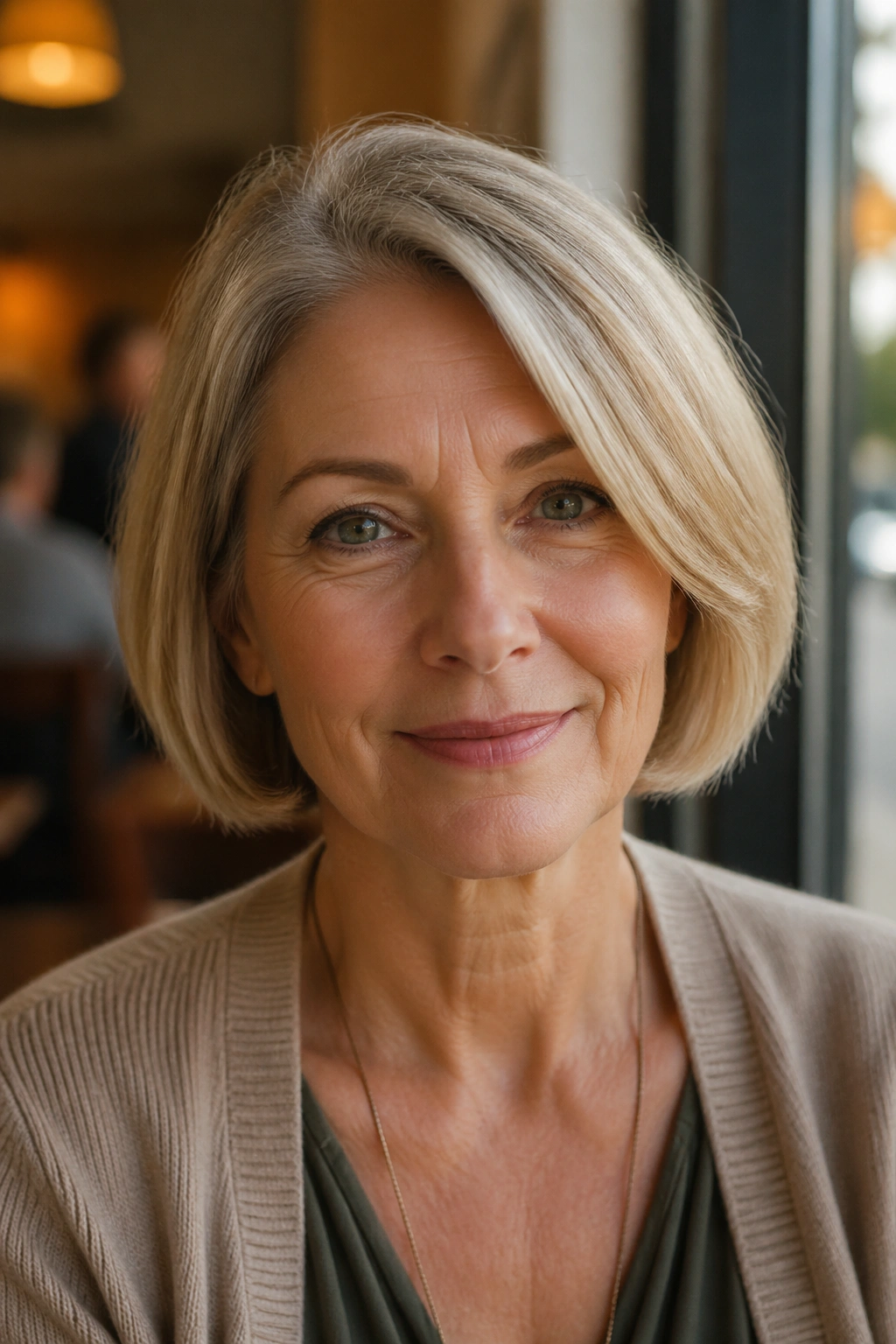
A chin-length bob is not boring when the line lands at the right place. In fact, it can be one of the most flattering wash and wear hairstyles for older women because it frames the jaw without sitting heavy on the neck.
The side part matters more than people think. A center part can pin the style flat against the face, while a side part gives the front a little swing and makes the cut feel softer straight away. If your hair dries with a slight bend, this bob will often fall into place on its own after a quick towel squeeze.
I like this one for hair that is straight or only slightly wavy. It behaves best when the ends are clean and not thinned out too much, because thin, wispy ends can make a bob look tired. Keep the perimeter solid. That is the trick.
3. Wash-and-Wear Shag with Air-Dried Movement
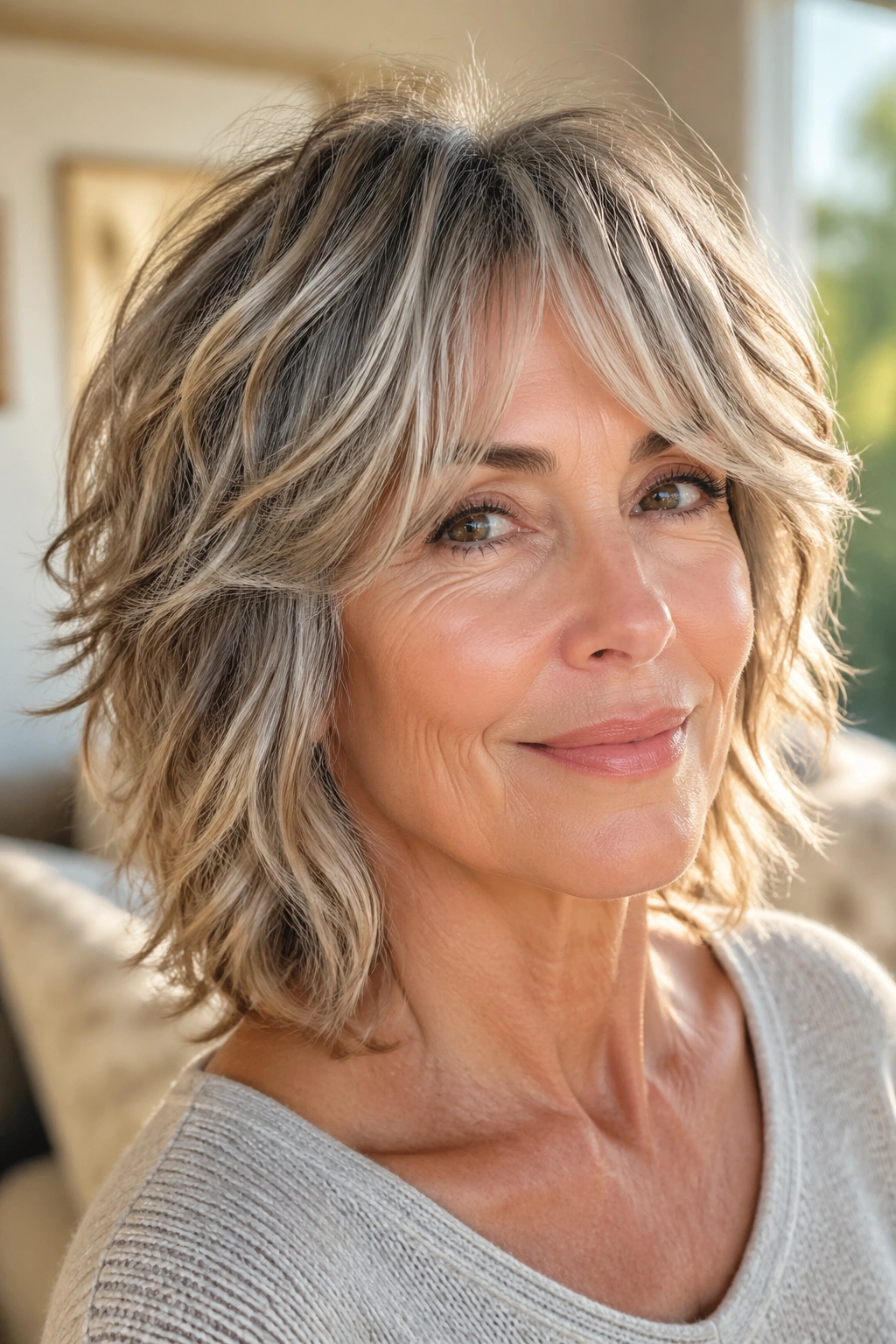
Want texture without the helmet effect? A shag can do that, but only if the layers are kept loose and the overall shape stays readable.
How to Ask for It
Tell your stylist you want soft face-framing layers that begin around the cheekbone or lip line, not a stack of tiny choppy pieces all over the head. The shortest bits should help the hair move, not make it puff out.
- Keep the crown long enough to sit down when air-dried.
- Let the front pieces skim the face instead of hanging in one hard line.
- Leave the perimeter a little longer than you think you need.
- Skip heavy texturizing if your hair already frizzes.
A good shag should feel airy, not wild. That’s a real difference. When the cut is done well, you get bend, swing, and shape without needing to set your hair with a curling iron every morning.
4. Tapered Crop with a Soft Fringe
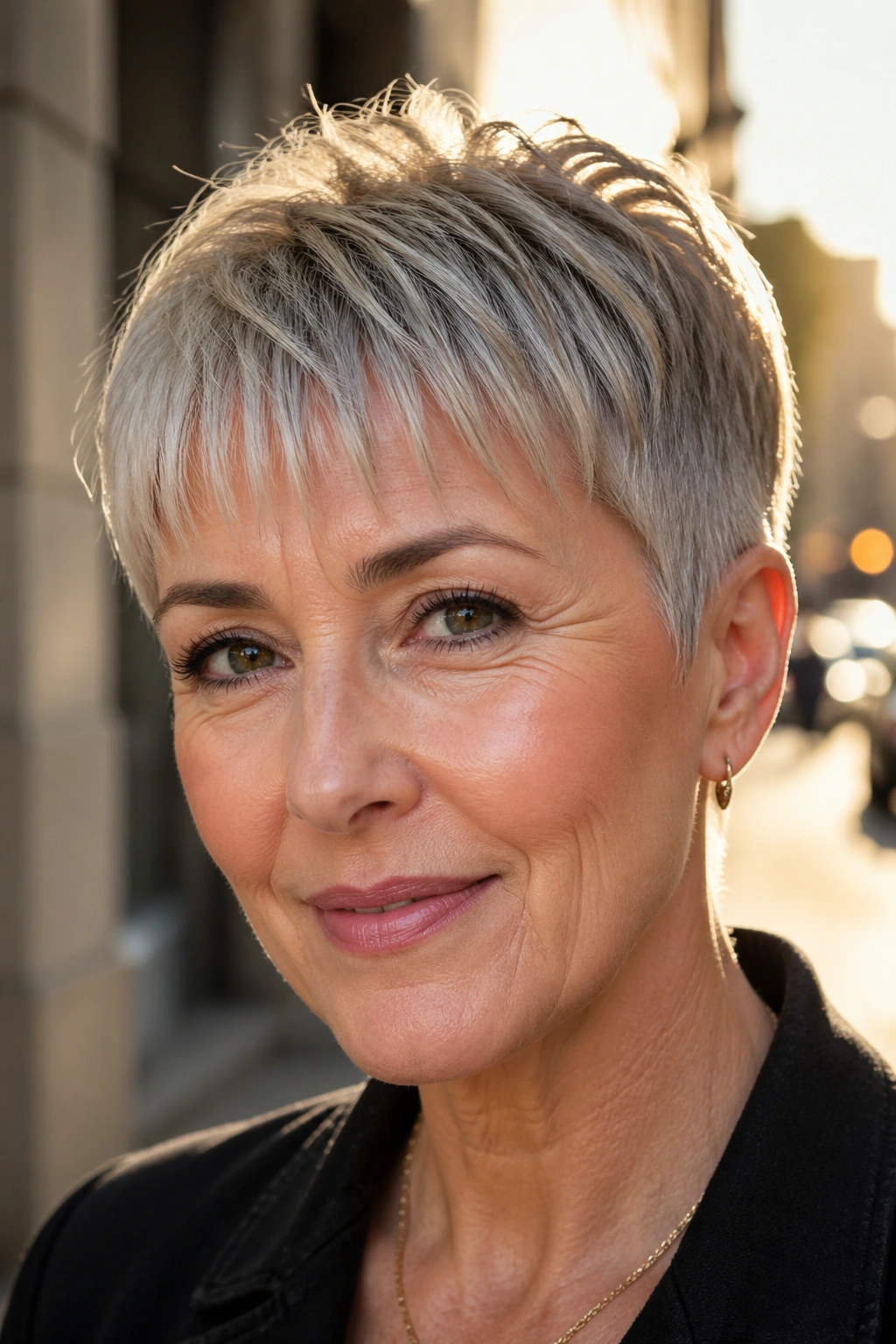
Picture hair that sits close at the sides, lifts just a bit at the top, and falls forward in a light fringe that brushes the forehead. That’s the appeal of a tapered crop.
It works because the cut removes bulk where older hair can get boxy — around the temples and nape — while keeping just enough softness in front to avoid a severe look. The fringe should stay wispy, not dense. Heavy bangs can drag the whole style down and make you reach for a clip by noon.
A tapered crop is a smart choice if your hair dries fast and you want the shortest possible routine. You can scrunch a little cream through the top, run your fingers through the fringe, and be done. If your hair has a stubborn cowlick near the front, this shape often handles it better than a longer cut because there’s less weight fighting the swirl.
5. Neck-Length Blunt Bob That Holds Its Line
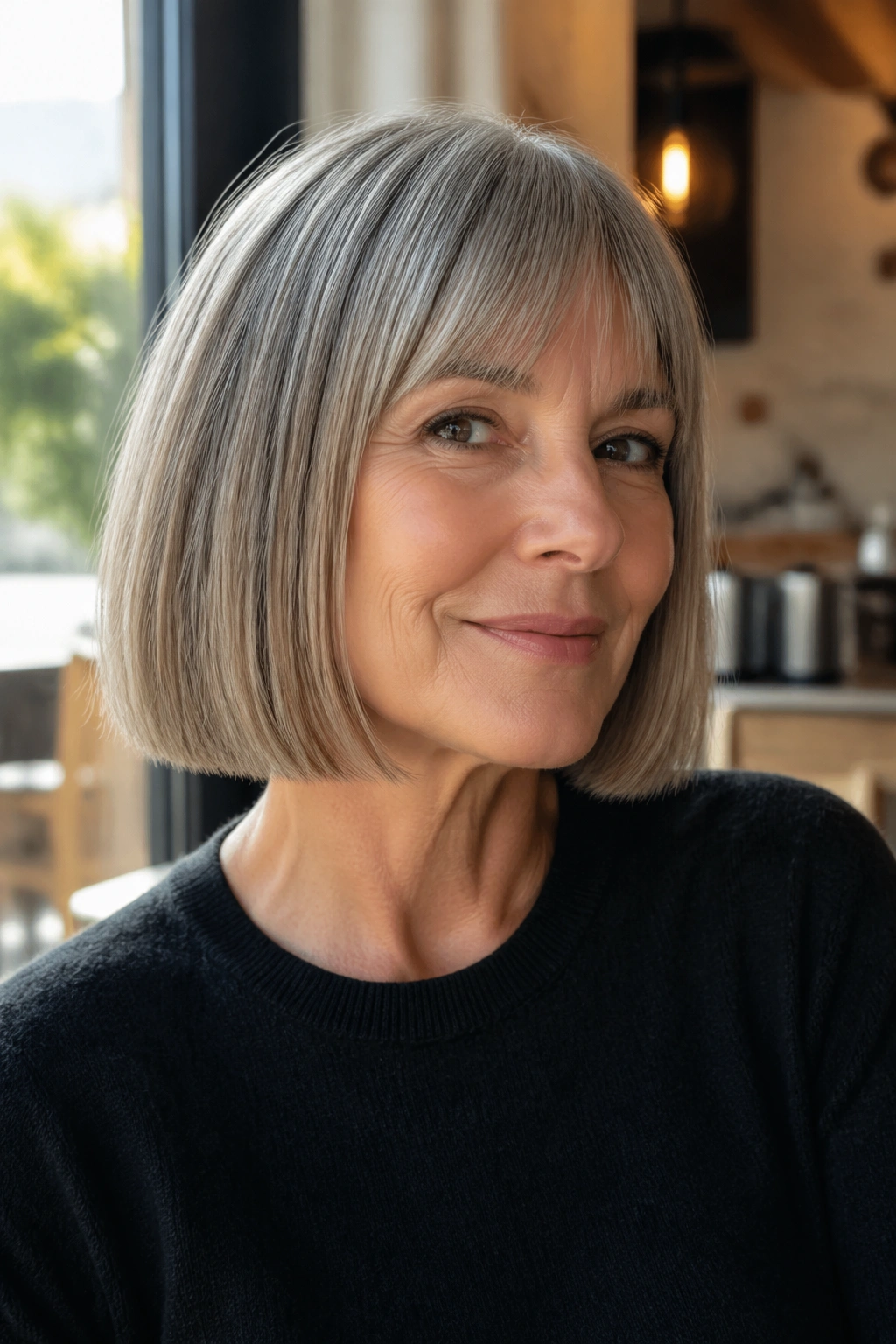
Blunt does not mean harsh. When the ends land cleanly at the neck, a blunt bob can look fresh, full, and calm in a way that layered cuts sometimes miss.
I like this one for straight or slightly wavy hair that tends to thin out at the ends. A blunt perimeter makes the hair look denser, which is especially useful if the sides have lost some fullness over time. Keep the length around the neck, not down on the shoulders, or the shape starts to lose its crispness.
The real mistake is over-layering it. People think more movement always helps, but on fine hair that often creates a see-through edge and steals the strength from the cut. A clean line gives you the shape. A little bend in the front gives you the softness. That’s enough.
6. Curly Crop That Keeps Its Shape
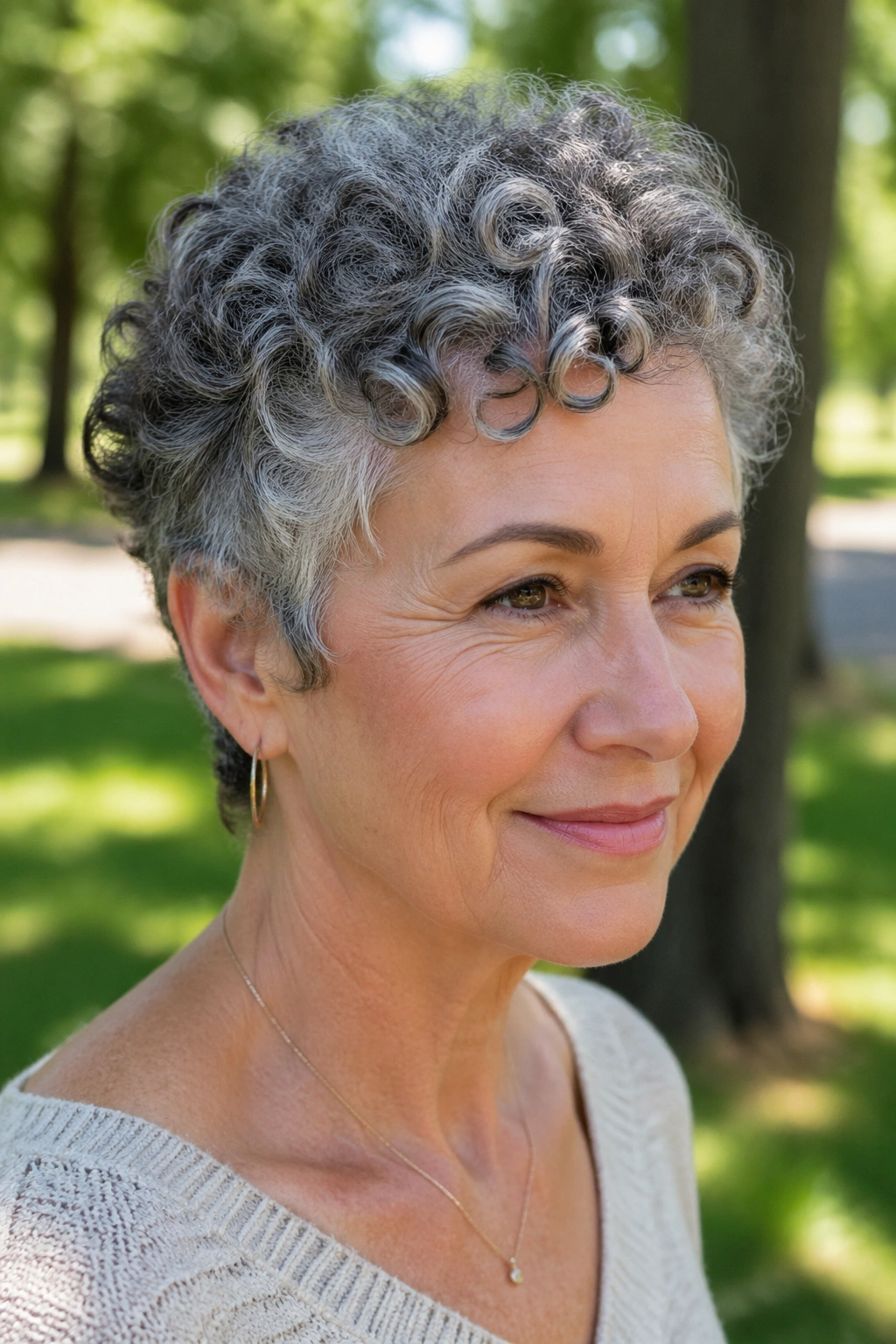
Unlike a straight bob, a curly crop needs room to spring. If you cut curls too short in the wrong places, they stack up and make a triangle. Nobody wants that.
The best version keeps the sides shaped to the curl pattern and leaves the top with enough length to fold and settle naturally. A good stylist will usually cut this kind of crop with the curl’s spring in mind, not against it. Drying it with a diffuser is optional. Air-drying works too, as long as the cut has been built with the curl pattern in mind.
What to Look For
- A rounded outline, not a flat shelf.
- Soft layers that follow the curl instead of fighting it.
- Enough length at the crown to avoid a mushroom shape.
- A nape that stays neat so the cut does not swell at the back.
If your curls have a mind of their own, this is one of the most forgiving short styles around.
7. Shoulder-Grazing Layered Lob
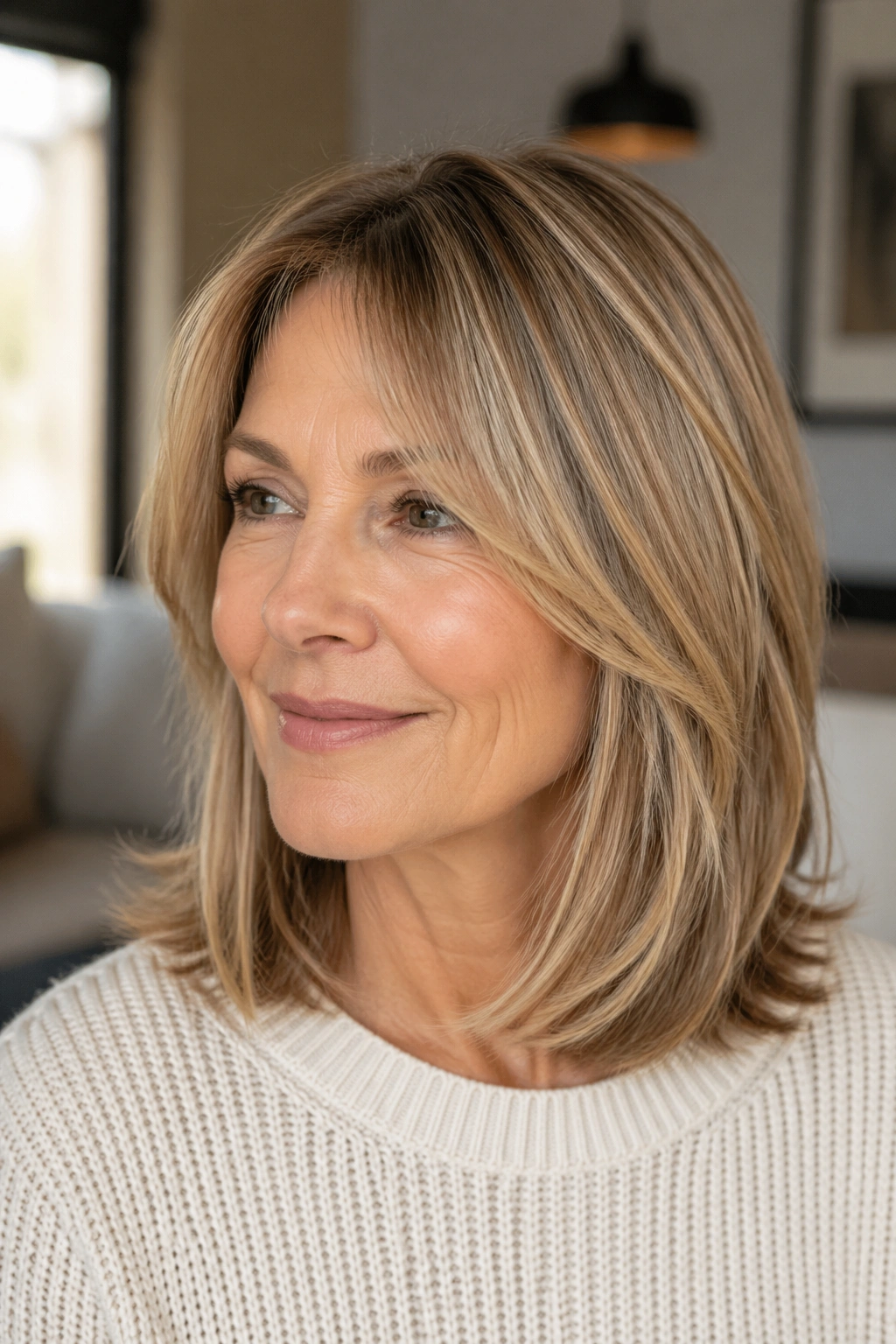
A shoulder-grazing lob buys you options. That alone makes it worth a look.
The length sits in that useful zone where you can tuck it behind the ears, clip half of it back, or leave it loose and let the ends brush the shoulders. A few long layers keep the cut from hanging like a sheet, and the extra length means you do not have to give up ponytail days if you are not ready.
I reach for this suggestion when someone says they want low maintenance but cannot imagine going short. Fair enough. The lob is usually the bridge cut. It is long enough to feel familiar, short enough to dry faster, and easy to refresh with fingers and a little leave-in conditioner.
8. Textured Crop with Long Top Layers
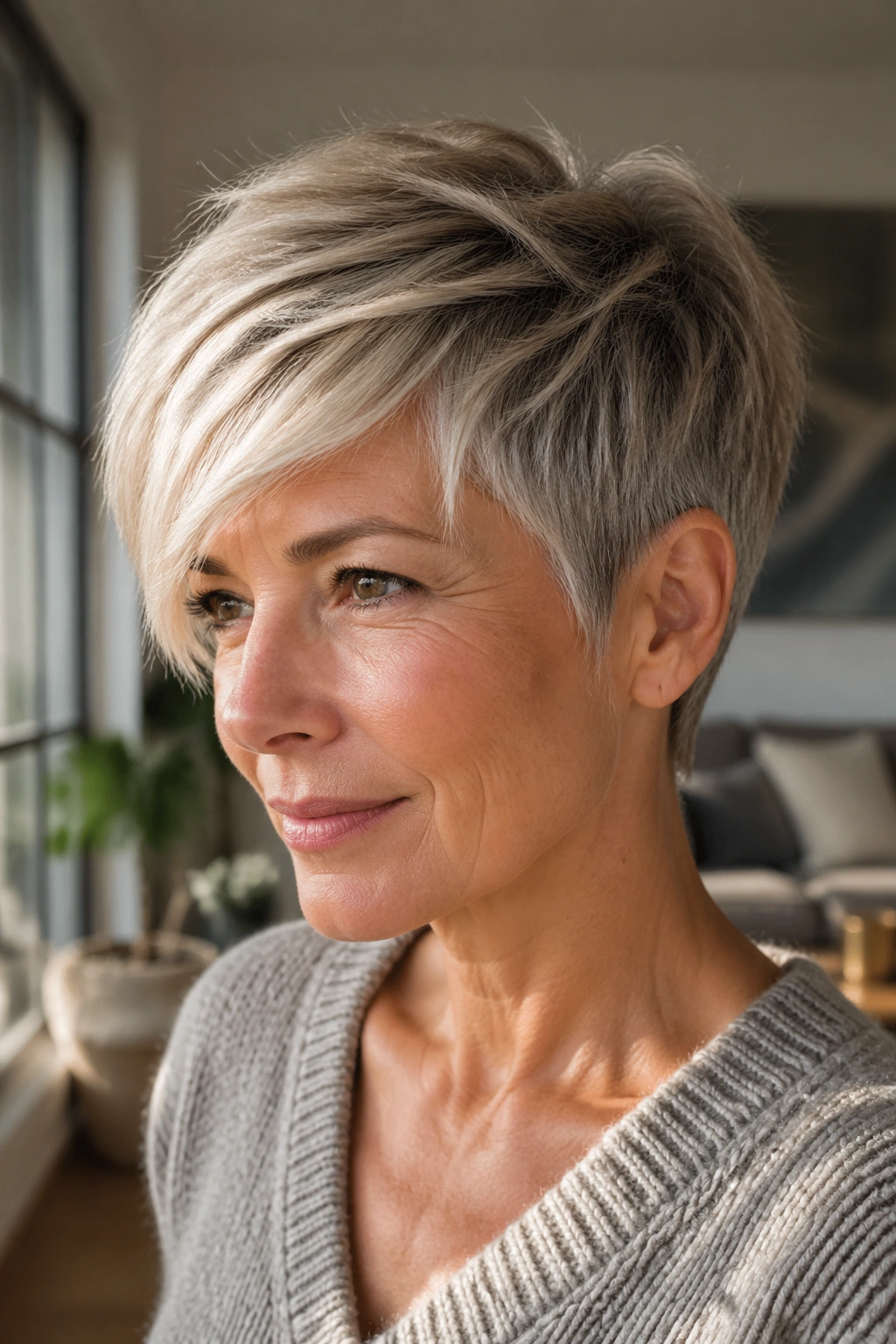
Fine hair loves a little height, but not drama. That is why a textured crop with long top layers works so well.
The top should stay long enough to brush forward or up with your fingers, while the sides stay close to the head. That contrast creates the illusion of fullness without making the style look spiky. I prefer this on hair that lies flat around the crown, because the longer top pieces can be lifted with almost no effort.
It also behaves well on silver hair. Coarser gray strands often stand out on their own, so a crop like this can look lively even when you do not do much to it. Use a small dab of matte cream if you want separation, or leave it alone and let the texture do the talking. Either way, it should still look finished after an air-dry.
9. Side-Swept Pixie with Ear Tuck
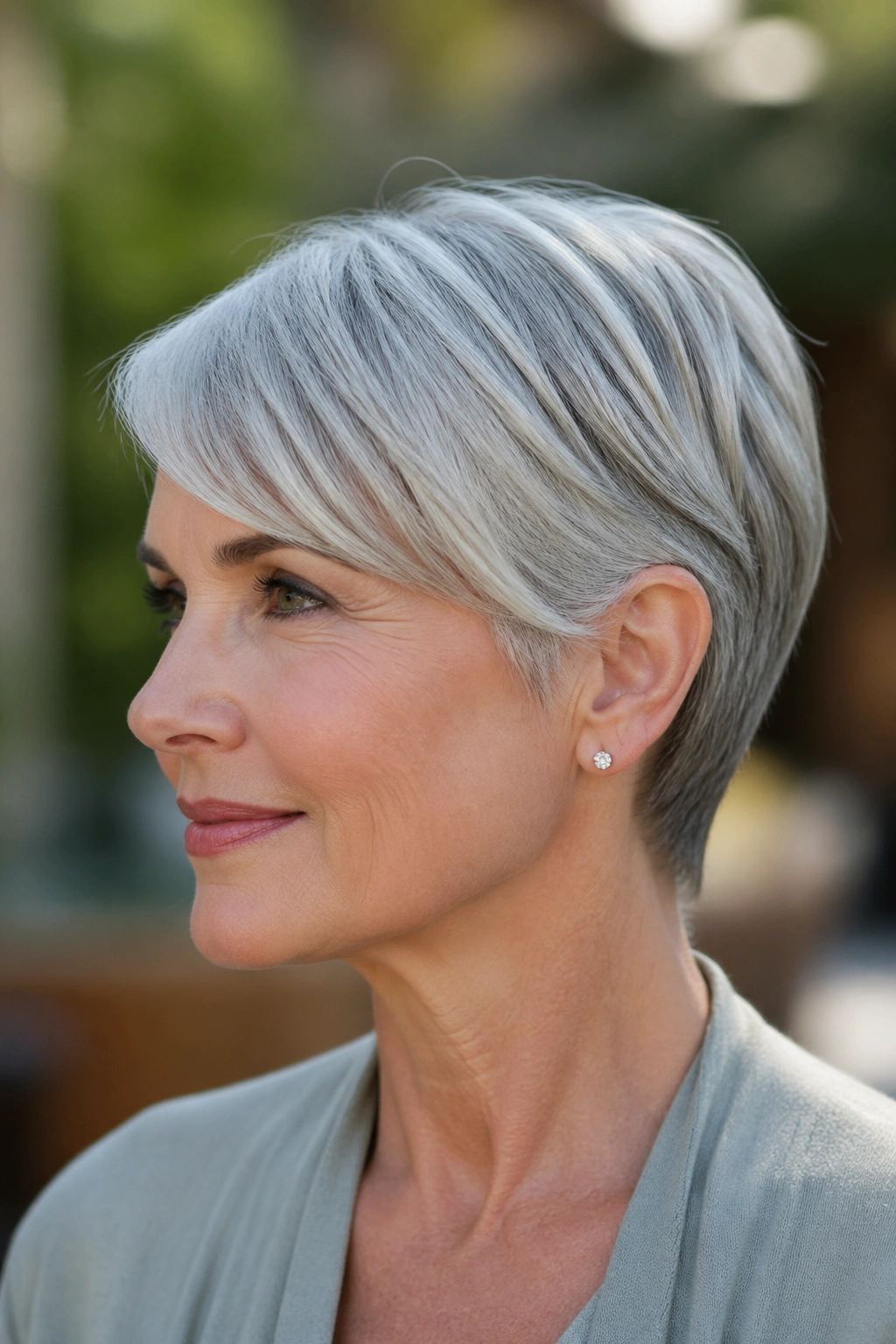
Some cuts look better once you stop fighting the side part. A side-swept pixie is one of them.
The long front section can slide across the forehead, soften the face, and then tuck neatly behind one ear. That little asymmetry does a lot of work. It gives the cut motion, keeps it from feeling too severe, and plays nicely with earrings or glasses.
Who It Suits Best
- Women who want a short style with softness in front.
- Hair that falls straight or with a slight bend.
- Faces that look better with a little diagonal line across the forehead.
- Anyone who likes one side tucked and one side loose.
This is not a cut that needs constant shaping. A quick finger-comb, a dab of cream, and you are out the door. The side-swept front does most of the styling for you.
10. Wavy Midi Cut with Invisible Layers
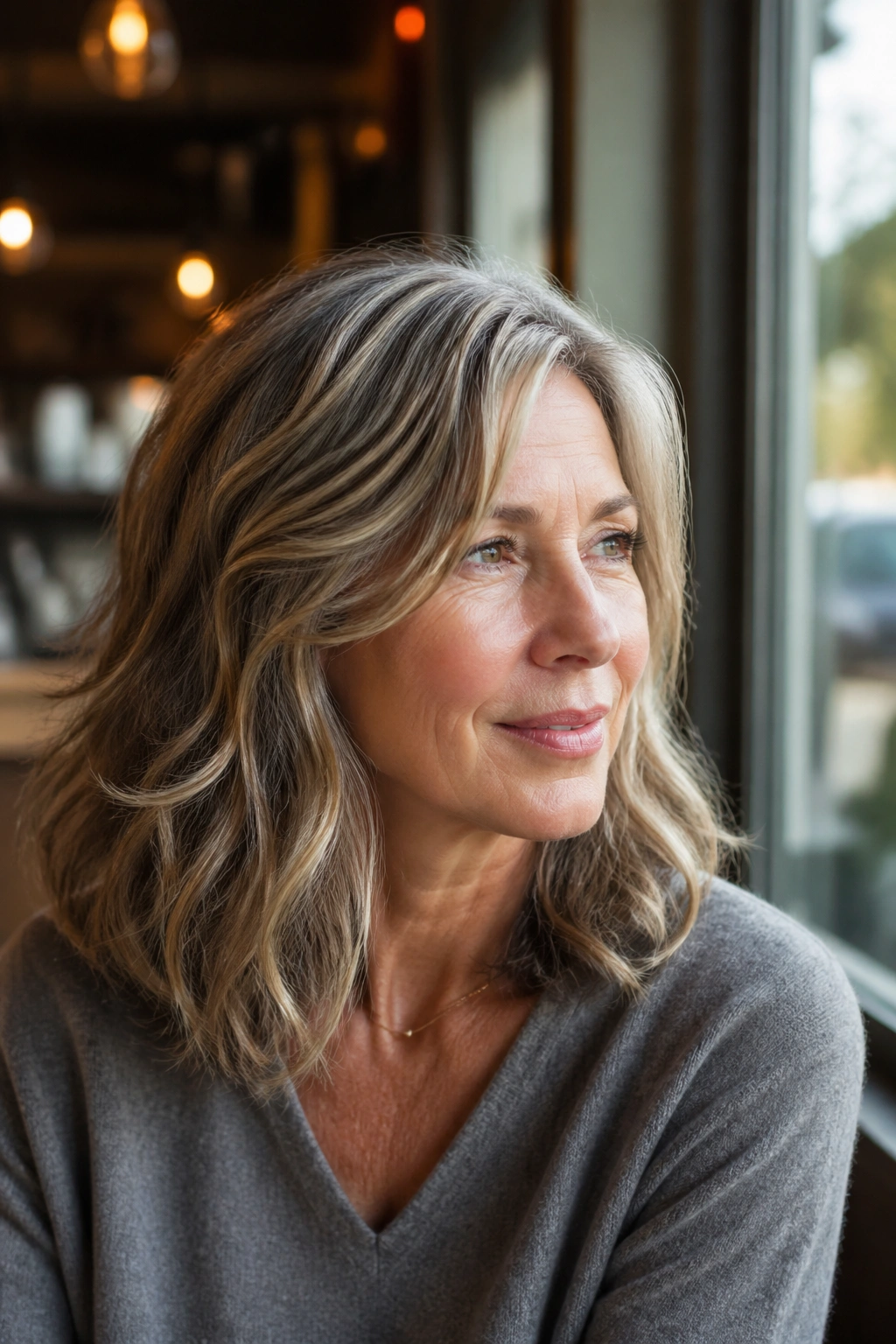
Invisible layers are the friend of hair that has wave but not quite enough curl to make a big statement on its own. You get movement without obvious steps.
The length usually sits between the shoulders and collarbone, which keeps the style versatile and easy to wear loose. The layers are hidden inside the shape, so the haircut still looks smooth from the outside. That matters. Visible choppy layers can make a medium cut feel busy in the wrong way.
This is a good choice if your hair tends to puff at the ends after washing. The hidden layers take out some weight underneath, so the wave can settle instead of ballooning. A little leave-in conditioner through the mids and ends is enough for most people. If you like a softer finish, let it dry while tucked behind one ear, then flip it back once it’s dry. That small trick changes the shape more than people expect.
11. Wash-and-Wear Silver Pixie with a Soft Taper
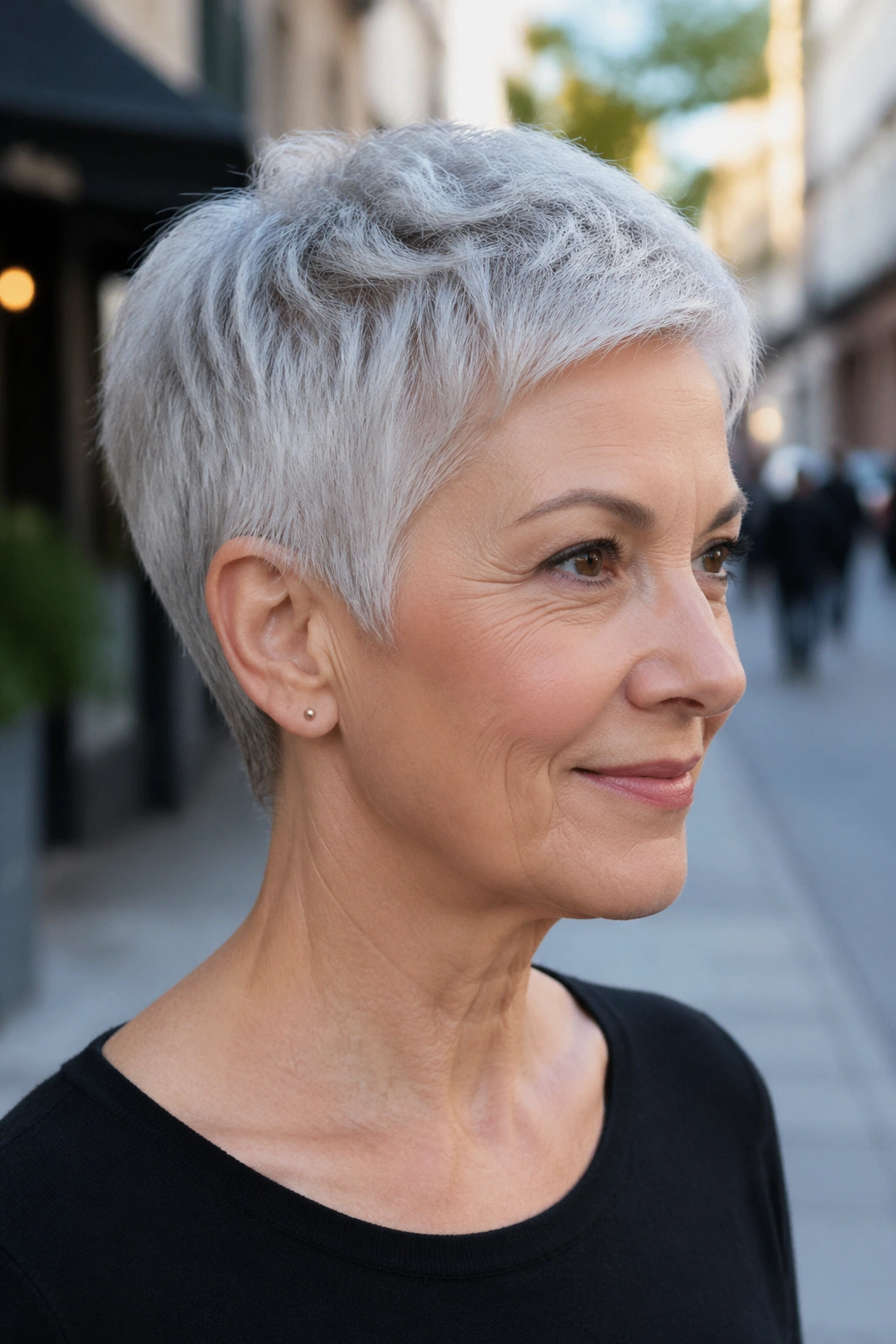
Gray hair can look crisp or fuzzy; the taper decides which one you get.
A soft taper around the ears and nape keeps the grow-out graceful and prevents the style from reading blocky. Silver strands often have a bit more stiffness, which is a blessing and a curse. The same texture that gives the hair body can also make it stick out at the edges if the cut is too blunt.
I like this pixie when the top has enough length to sweep slightly to one side. It keeps the color visible and lets the hair catch light in a natural way. Not in a shiny, salon-photo way. In a real, wearable way. If you want a cut that looks polished without a lot of work, this is one of the strongest bets in the bunch.
12. Rounded Bob for Fine Hair

This is the haircut I point to when someone says their hair falls flat by noon.
The rounded bob builds a little curve through the back and sides, which keeps fine hair from hanging limp along the jaw. The trick is subtle shaping, not fluffy volume. Too much layering will eat up density. Too little shaping and the bob can droop.
- Keep the length around the chin or a touch below it.
- Ask for a soft round shape in the back.
- Use a side part if the crown needs lift.
- Leave the ends full rather than razor-thin.
The whole point is to make the hair look thicker without making it look styled. If your hair dries straight and stubborn, this cut usually behaves with very little push from you.
13. Soft Mullet Shag for Natural Texture
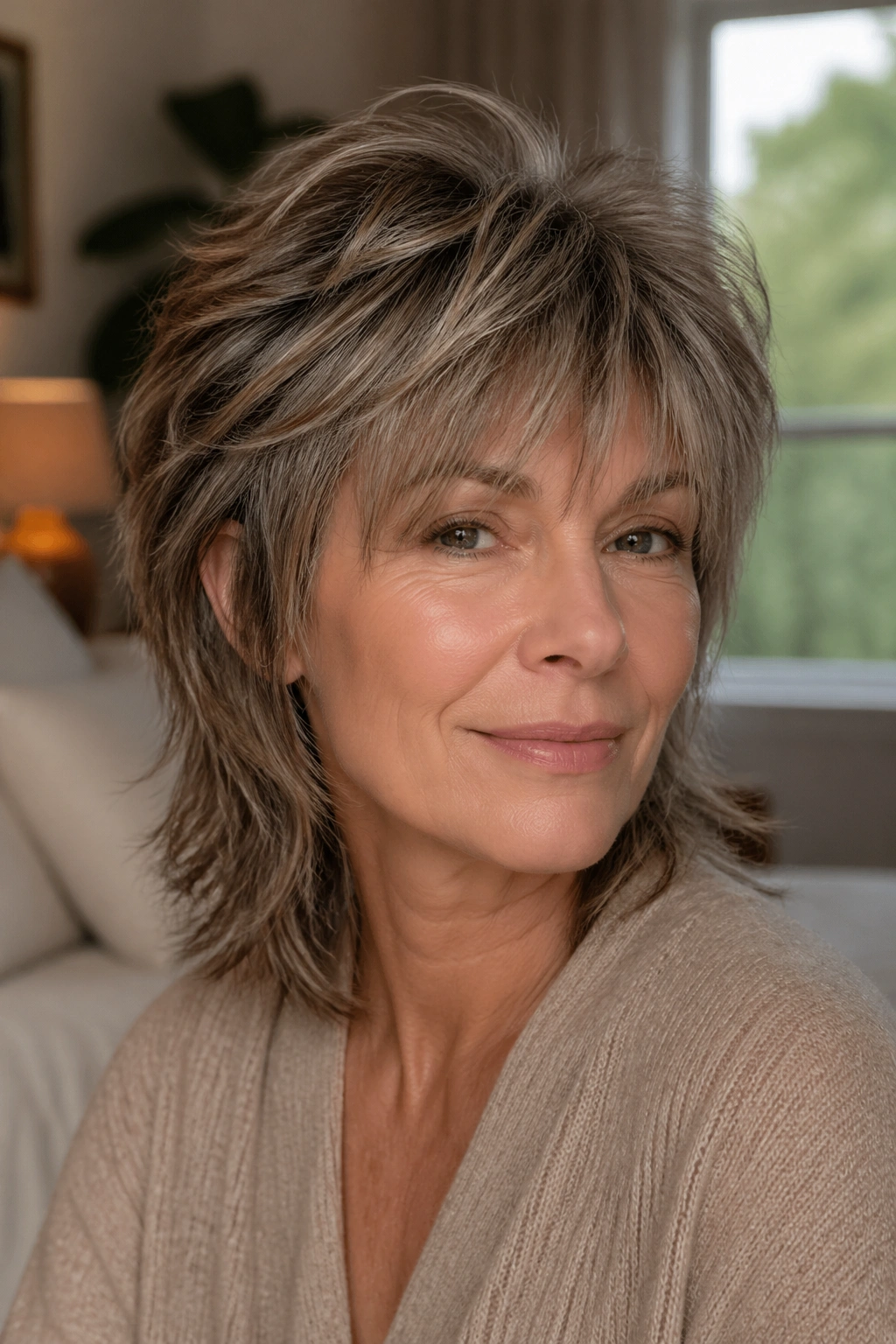
The word mullet scares people off for no good reason. The soft version is a different animal.
What makes it work is restraint. The crown stays lifted, the back keeps a little more length, and the front blends into the face with soft layers. Nothing should feel harsh. The shape is what creates the interest, not a lot of edge-cutting or dramatic contrast.
Why It Reads Soft, Not Punk
- The layers are blended, not chopped.
- The nape is longer, but not shaggy in a messy way.
- The front stays close enough to the face to keep things flattering.
- Natural wave or bend makes the whole shape easier to wear.
This cut is smart for women whose hair has lost some fullness at the crown but still has enough texture to move. It is a little bolder than a standard bob, and that is part of the appeal. It does not try to hide the hair. It lets it do something interesting.
14. Short Cut with Long Bangs
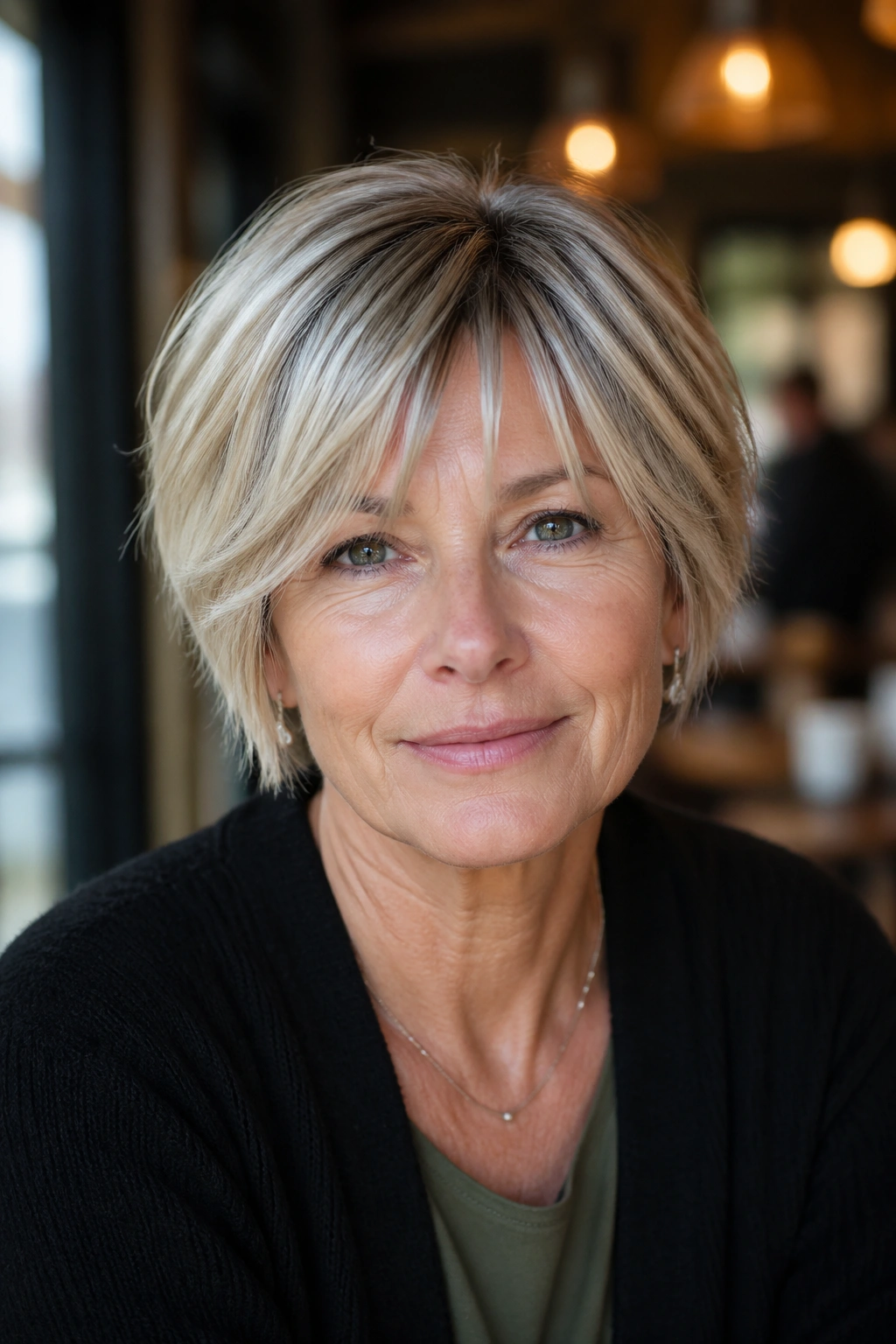
Can long bangs make a short cut harder to maintain? They can, if they are too heavy. Done well, though, they soften the face and keep a short style from feeling too exposed.
The bangs should be light enough to move, not dense enough to sit like a curtain. I prefer them to skim the brow or sit just below it when dry, because bangs always shrink a little as they lose moisture. That little bit of extra length keeps them useful between trims.
This style is good if you want some coverage around the forehead without giving up the ease of a short cut. It also works well for women who wear their hair pushed off the face on most days but want one section that can fall forward when they feel like it. That small bit of flexibility is often the difference between a haircut that gets worn and one that gets pinned back forever.
15. Airy Layered Cut for Thick Hair
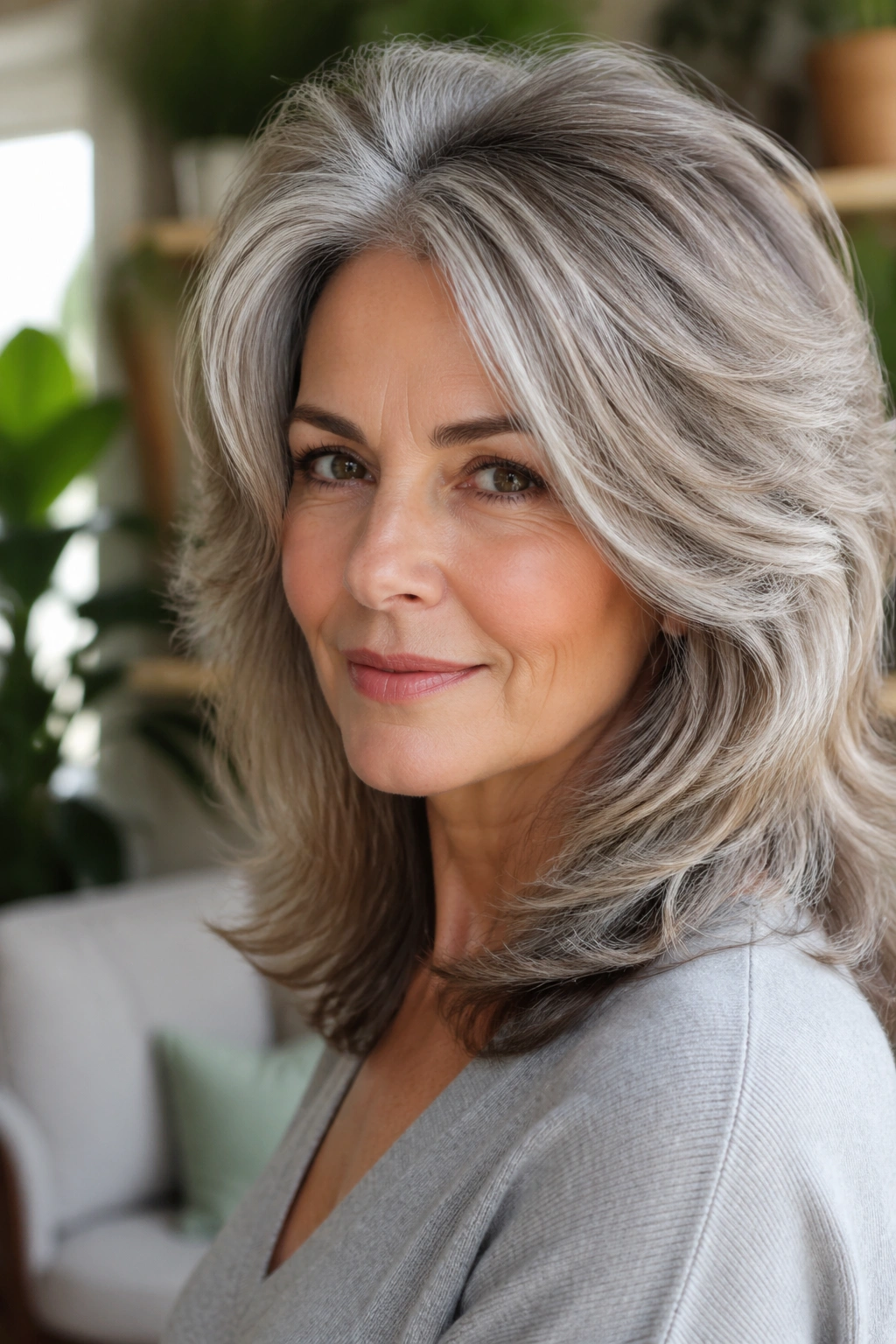
Thick hair feels heavy when it dries into a block. You can hear it, almost. It lands with a thud around the shoulders and ignores the shape you asked for.
An airy layered cut fixes that by removing weight from the right places — usually through the mids, not at the ends. That matters. If the stylist thins the perimeter too much, the bottom can fray and flip out in odd directions. Better to keep the outline full and let the inside carry the reduction.
What to Ask For
- Internal layers to break up bulk near the crown.
- A smooth perimeter that still looks thick at the ends.
- Face-framing pieces that start around the cheek or chin.
- No aggressive razoring if your hair already frizzes.
This kind of cut air-dries into shape faster than a dense one because there is less mass sitting on itself. It is one of the few styles that can make thick hair feel lighter without making it look thin.
16. Inverted Bob That Lifts the Back
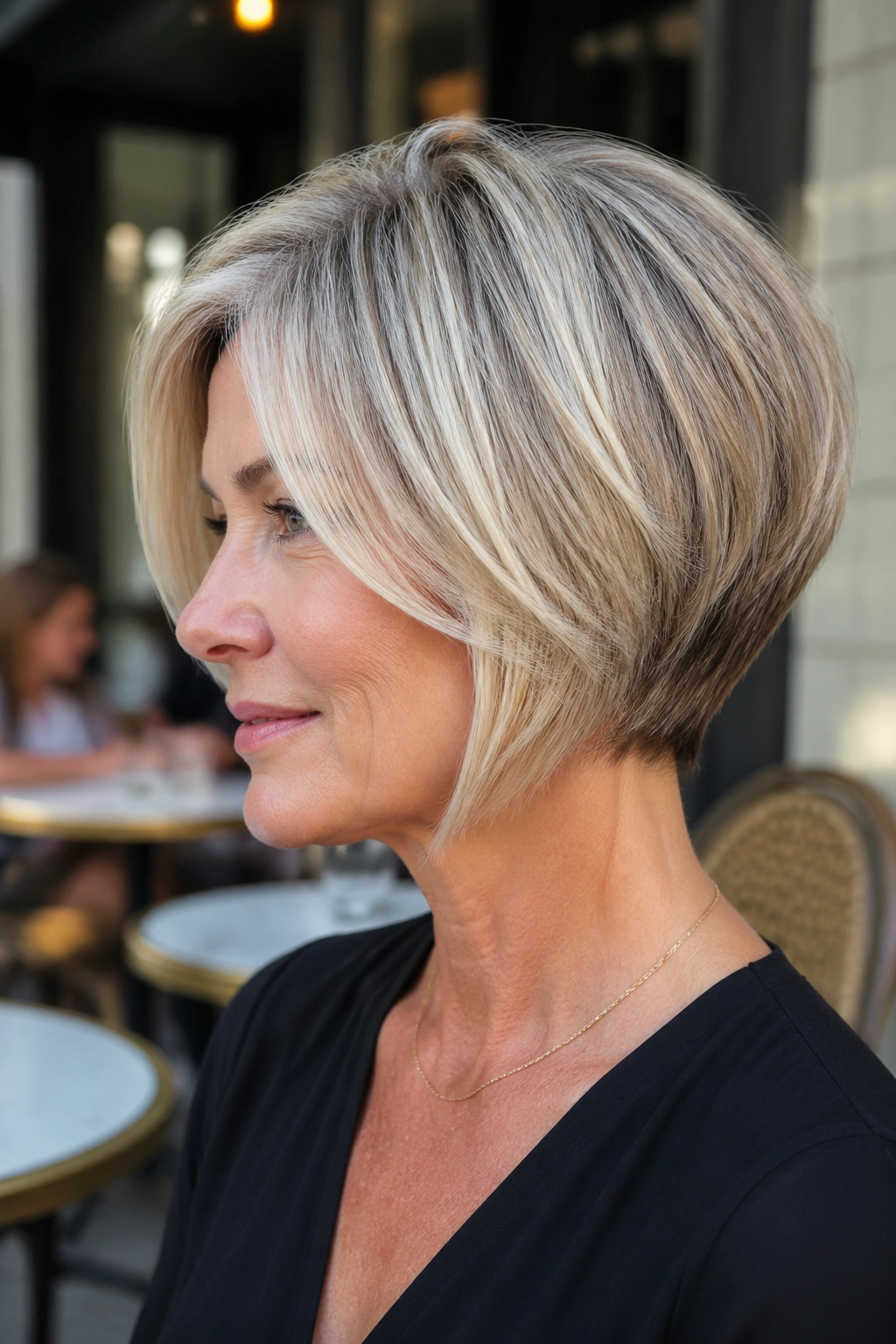
A standard bob sits the same length all the way around; an inverted bob lifts the back and angles the front downward. That slight change does a lot.
The shorter back keeps the neckline clean and helps the crown sit a little higher. The longer front gives the face some soft framing, which keeps the style from feeling too abrupt. If your hair tends to collapse at the nape, this shape gives it structure where it needs it most.
I would not suggest an inverted bob to someone who hates obvious shaping. The angle is part of the look, and you can see it. But if you want a cut that feels neat with very little daily work, it’s a strong choice. It especially suits straight hair that likes to lie flat and people who want their neck to feel clear, not hidden under length.
17. Wash-and-Go Curls with Shape at the Sides
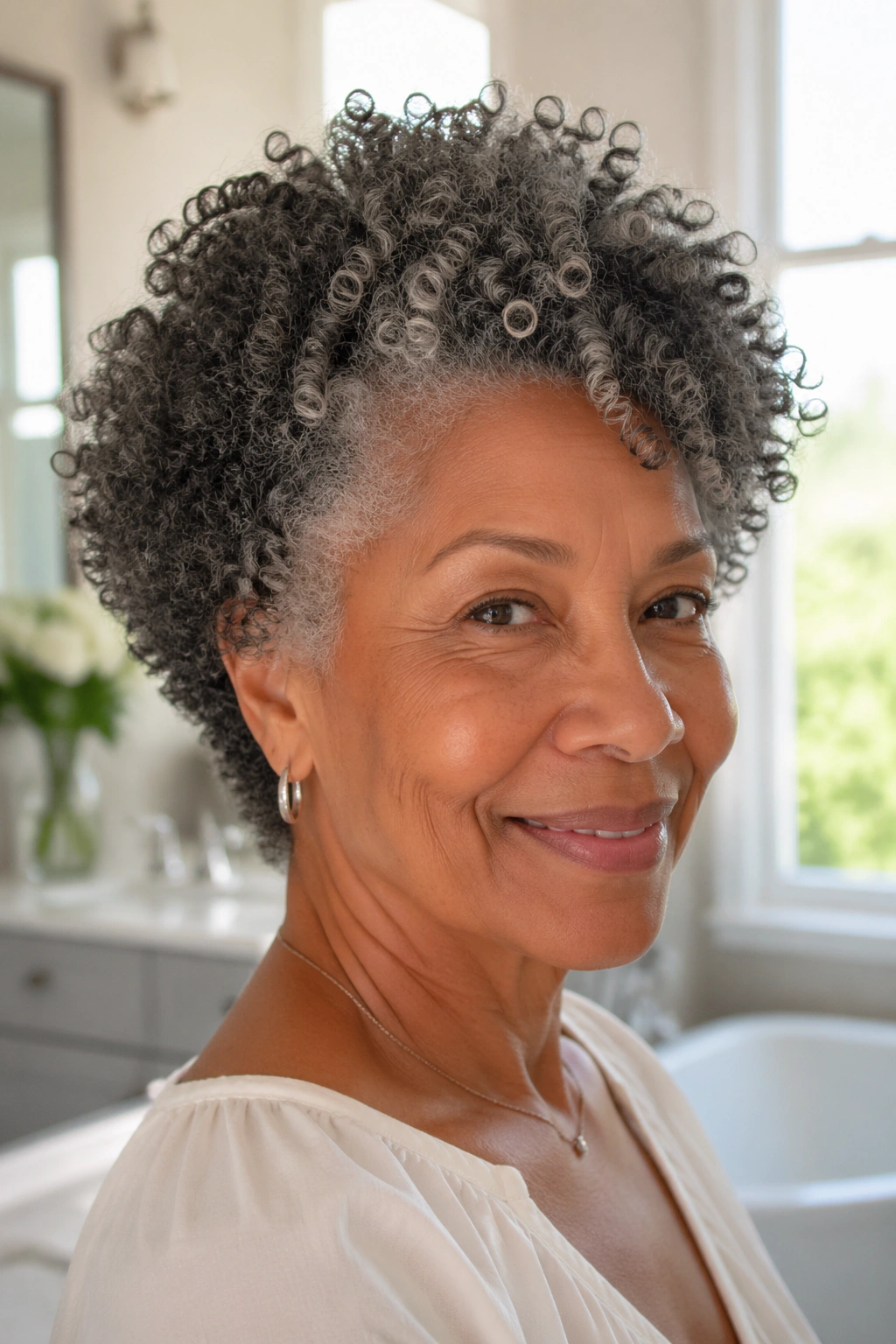
Curls need a shape that follows their own spring line. If the sides are left too wide, the style turns square. If the top is cut too short, it can balloon.
How the Shape Should Fall
The best wash-and-go curl cuts keep the silhouette rounded through the sides and leave enough length at the crown for the curls to stack gently. The perimeter should follow the curl pattern rather than forcing a straight edge that the hair will ignore anyway.
What to Avoid
- Cutting curls too wet if the shrinkage is unpredictable.
- Over-thinning the sides.
- Leaving the nape too bulky.
- Treating every curl pattern the same.
This cut works because it respects the hair instead of arguing with it. A curl that lands in the right place after a shower saves far more time than one that needs heat and clips and prayers.
18. Cropped Cut with a Nape Taper
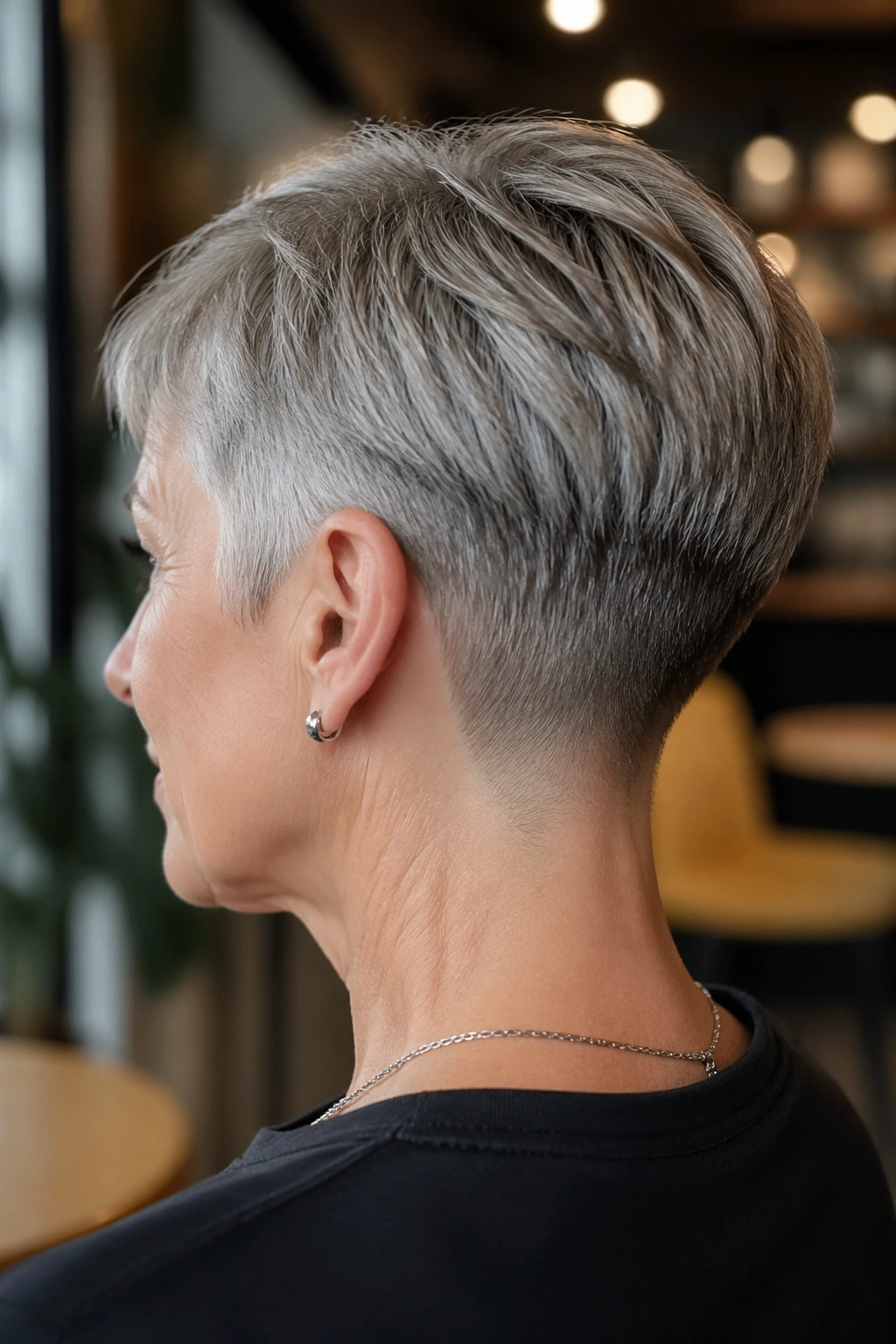
The nape is where neat cuts either win or lose. Get that area right, and the whole style feels sharp.
A tapered nape keeps the back close to the head, which helps the haircut dry fast and prevents that fluffy collar effect that can happen when short hair grows out a little. It is a small detail, but it changes the whole read of the cut. Suddenly the style looks intentional again, even after a rough sleep or a humid day.
This is a good pick for women who wear collars, scarves, or jackets that brush the neck. The clean taper stops the hair from catching and puffing up. It also suits people who like short hair but do not want a lot of visible styling. A little shape at the nape goes a long way.
19. Low-Maintenance Wash-and-Wear Lob with Soft Ends
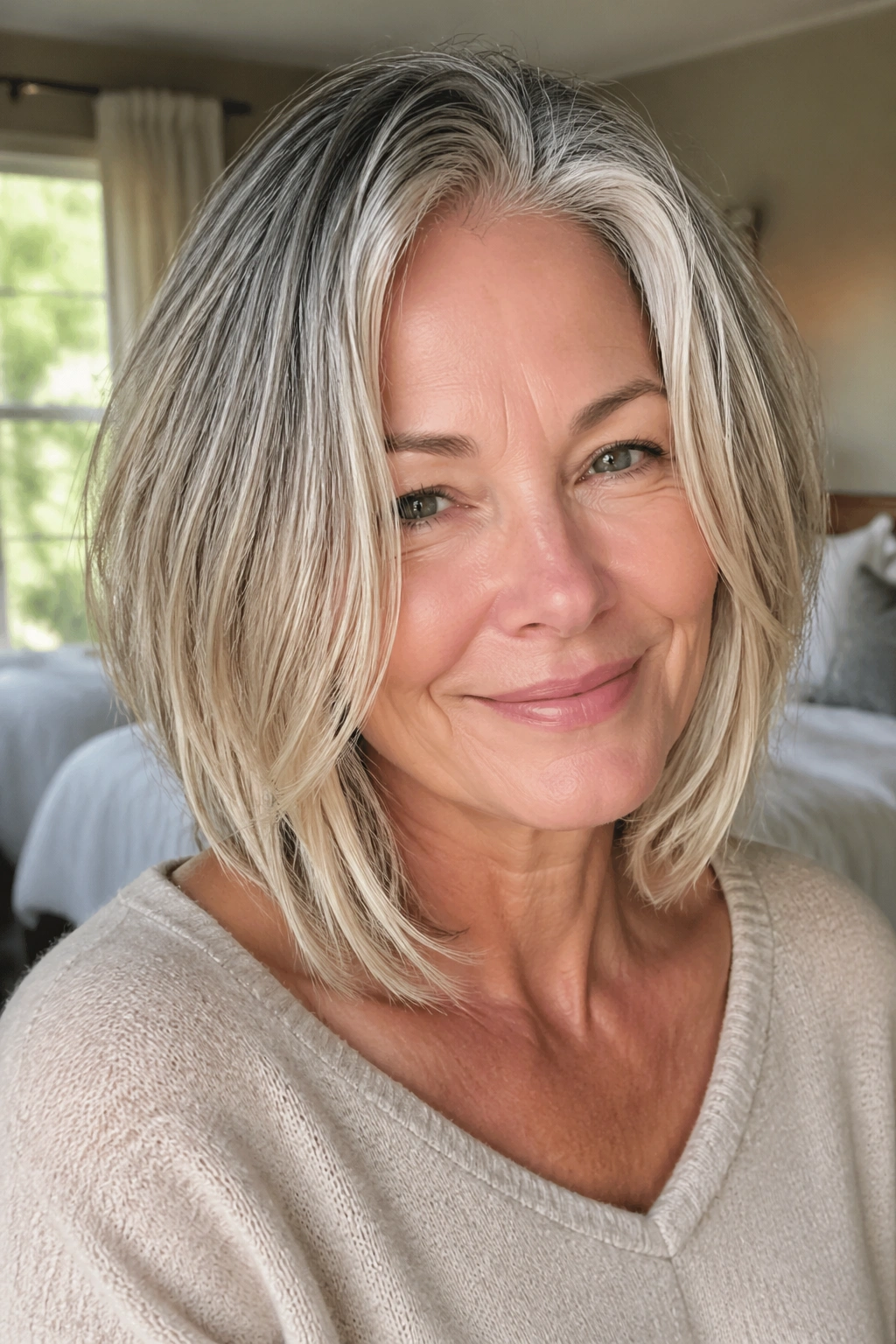
A lob is often the safest cut for women who want length without a lot of work. Safe, though, does not have to mean plain.
The version I like sits around the collarbone with soft ends and a light face frame. That length dries quickly, still moves when you walk, and can be tucked or clipped without looking like you ran out of ideas. Soft ends matter here. If they are too thin, the style can start to look stringy before the next haircut.
This is also a good transition cut. If you have worn your hair long for years and are not ready to go short, the lob gives you a real change without the shock of a big chop. It is one of those cuts that looks even better when you do less to it, which is the whole point of a wash-and-wear shape.
20. Long Layered Cut That Still Air-Drys Well
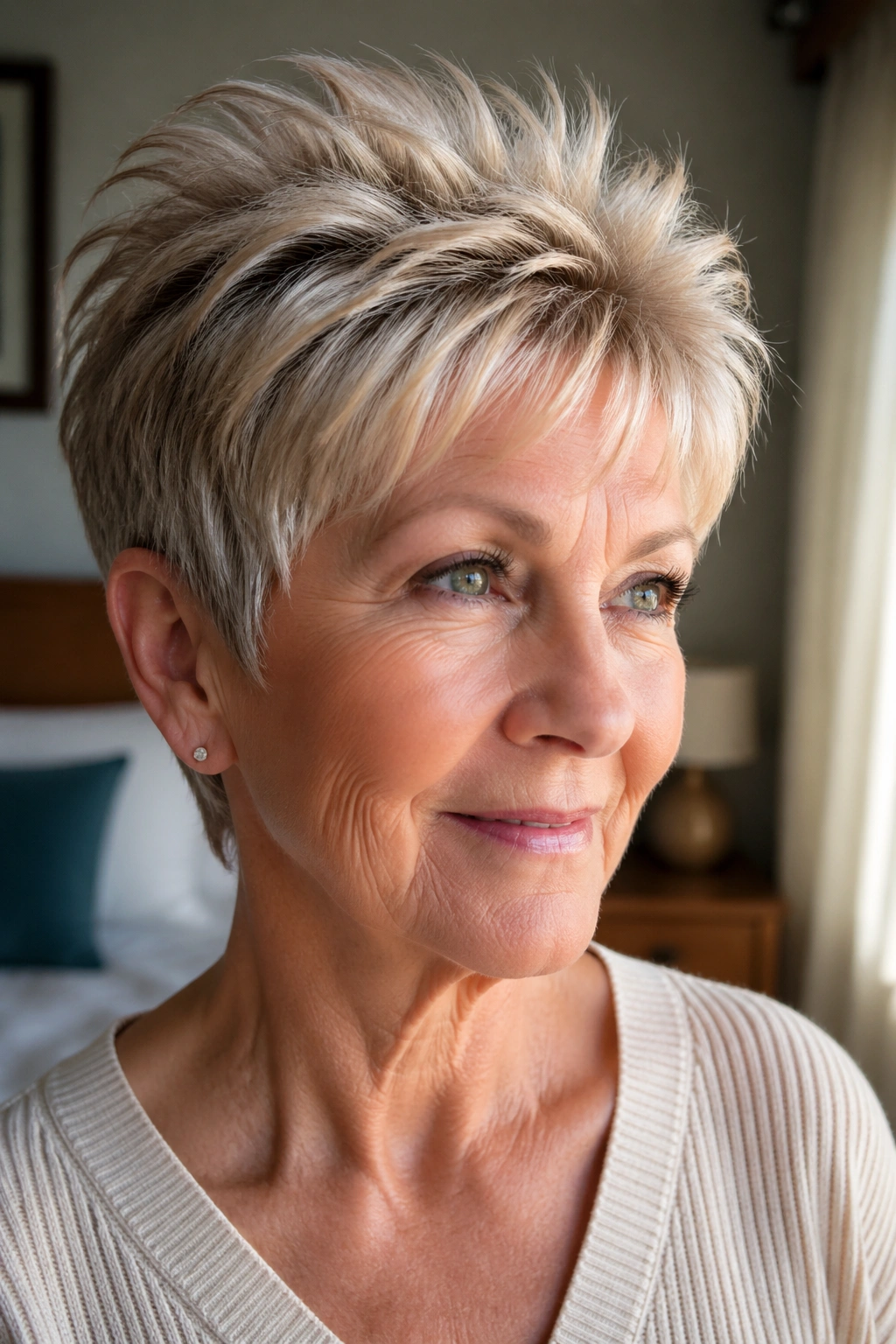
Not every low-maintenance style has to be short. If you love your length, keep it — but make the cut do more of the work.
Long layers can stay easy if they are kept long enough to move and short enough to stop the ends from hanging flat. Face-framing pieces around the cheekbone or chin help the hair look shaped even when it air-dries. The ends should feel light, not wispy. That balance is what keeps a longer style from looking tired.
I like this option for women who want the freedom to wear hair up, half up, or loose on the same week without feeling locked into one look. It is also kinder to thick or wavy hair than one blunt block of length. If you want a finish that feels relaxed rather than styled, this one has a lot going for it.
And honestly, that’s the real test. If a haircut still looks good after a shower, a towel squeeze, and a walk out the door, it’s doing its job.
