



Pink hair paired with long waves creates an instantly memorable aesthetic that blends romance, confidence, and bold self-expression. Whether you’re drawn to soft millennial pink, striking hot pink, or dusty mauve-toned waves, this combination offers something genuinely transformative—it’s not just about the color, but about how wave texture softens edges and adds dimension to even the most vibrant shades.
The beauty of long wavy hairstyles in pink is their versatility. Pink reads completely different depending on the tone, undertone, and how the waves catch the light. A pale rose gold looks ethereal and dreamy, while a deeper fuchsia commands attention and presence. Waves add movement and texture that prevent the color from feeling flat or costume-like—the interplay of light and shadow across the waves makes the pink feel more nuanced and sophisticated than a solid, blunt cut would deliver.
Long length combined with waves also gives you genuine styling flexibility. You can wear these styles sleek and polished, tousled and textured, with face-framing pieces, half-up, or fully down. The pink color makes even simple styling feel intentional and fashion-forward. Whether you’re maintaining your natural hair in this color or working with an extension-based approach, the length and wave pattern create a canvas for endless creative expression.
1. Bubblegum Pink Beachy Waves
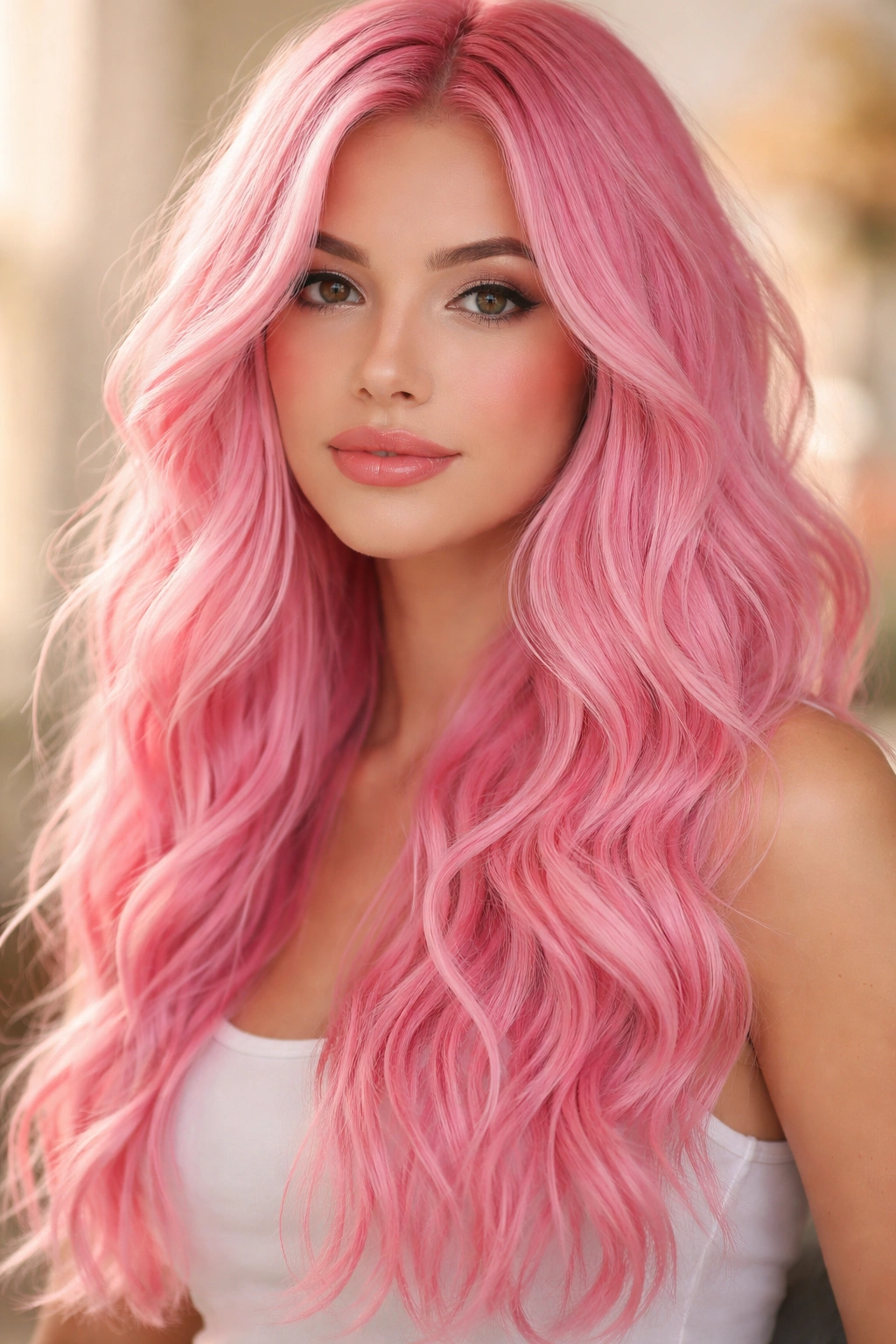
Bubblegum pink is the most playful choice in the pink spectrum—bright, unapologetic, and instantly energizing. When paired with soft, beachy waves that look naturally effortless, this style skews romantic and youthful without feeling costume-like. The waves don’t need to be uniform or perfectly crimped; loose, organic texture is actually what makes this work. Light catches the bubblegum tone differently as the waves move, preventing the color from feeling one-dimensional.
Why This Works
The brightness of true bubblegum pink needs soft, flowing movement to balance the saturation. Sharp lines or blunt cuts would make the color feel aggressive, but waves diffuse that intensity. The irregular texture of waves means the pink hits your face and shoulders differently from every angle, creating visual interest and dimension. This style works especially well if you have naturally wavy hair or if you’re open to using a sea salt spray and letting your texture work naturally—it actually looks better when it’s not perfectly styled.
Best Styling Approach
Apply a lightweight sea salt spray to damp hair and let it air dry for that genuine beachy feel. You can scrunch gently to encourage wave formation, or use a diffuser attachment on your blow dryer set to low heat. Once dry, run your fingers through the waves to break them up and create that lived-in texture. A side part adds softness to the face, and this style genuinely works better when it looks a little undone.
Pro tip: Bubblegum pink fades faster than darker pinks, so use a purple-toned hair mask weekly to keep it vibrant and prevent it from turning peachy.
2. Rose Gold Waves with Darker Roots
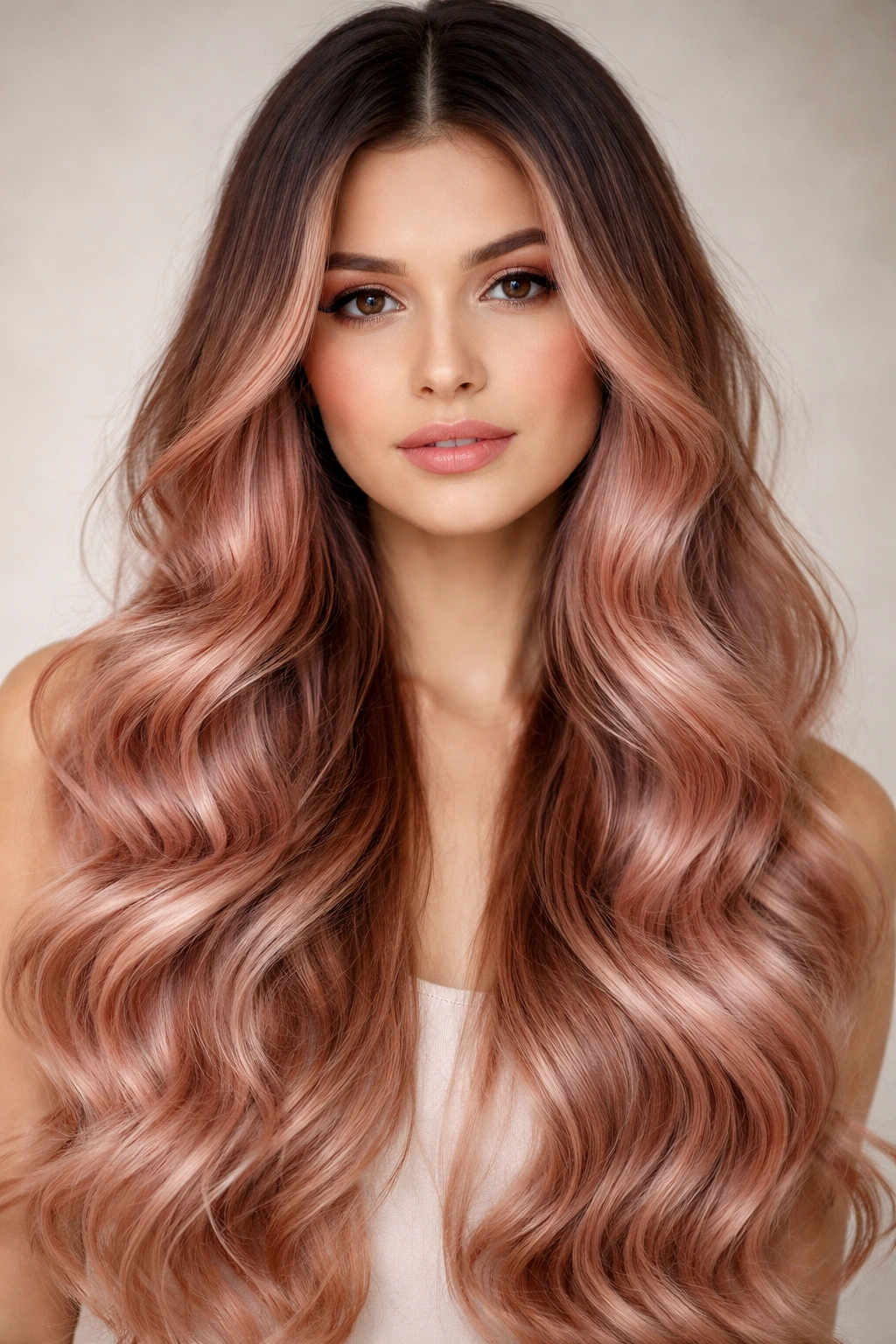
Rose gold sits in that magical middle ground between pink and blonde—sophisticated enough for professional settings while still being undeniably pink. When you intentionally keep darker roots (whether your natural color or a created shadow), the contrast adds depth and makes the rose gold waves shimmer even more dramatically. This style is remarkably flattering because the darker roots frame the face while the rose gold waves reflect light beautifully.
Why This Works
Dark roots serve multiple purposes here. They lower maintenance significantly, they add dimension and prevent the hair from looking flat, and they create a cohesive look that feels intentional rather than like your color is fading. The contrast between dark and rose gold makes the lighter color more luminous. Additionally, this root situation works with a wider range of hair colors—if you have naturally darker hair, the contrast is built-in, which means less frequent root maintenance than keeping a solid bubblegum pink.
Creating the Effect
If you’re starting from scratch, ask your colorist for a shadow root or balayage technique where the top 1-2 inches remain darker while the mid-lengths and ends get the rose gold treatment. The waves then help blend the transition between the two tones. This strategy works beautifully with balayage application too—lighter placement on the surface of the waves, darker underneath, creates three-dimensional movement in the color itself.
Worth knowing: This look is significantly easier to maintain than a solid pink, making it practical for anyone who wants pink hair but also wants to extend the time between salon visits.
3. Hot Pink Mermaid Waves
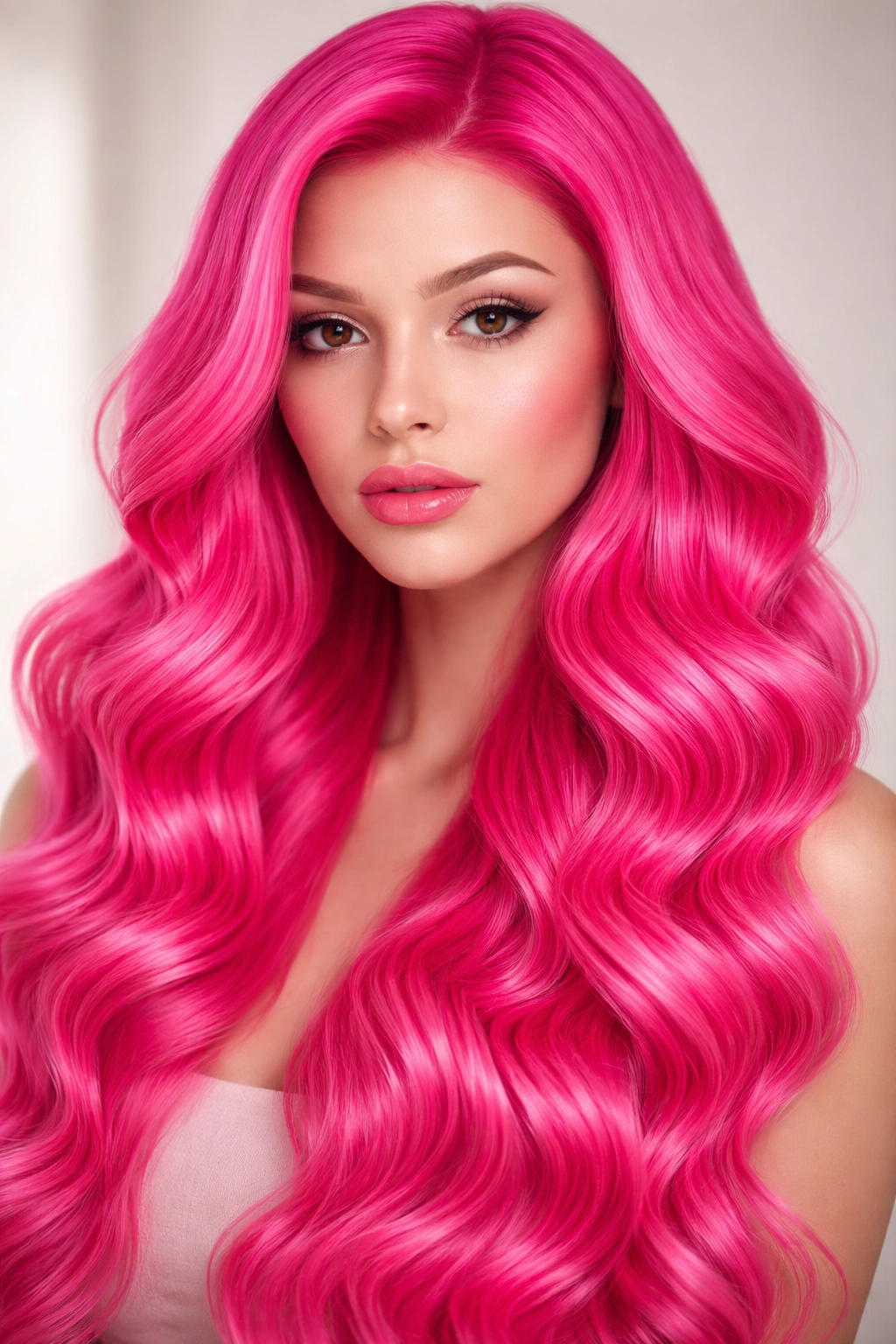
True hot pink—saturated, bold, and almost neon in its intensity—demands waves that are structured and deliberate rather than loose and casual. Mermaid waves, with their S-curve pattern and compact, defined texture, look almost like a specialized effect when paired with this vibrant shade. The waves catch and reflect the hot pink in a way that creates a genuinely magical visual impact, especially in sunlight or certain lighting.
Why This Works
Hot pink is bold enough that it needs an equally confident styling choice. Mermaid waves have that polished, intentional quality that matches the boldness of the color. The S-shape of the waves creates multiple planes for light to hit, which actually makes the hot pink glow rather than scream. This isn’t a casual hairstyle—it’s a statement piece that says you’ve put thought into your appearance and you’re committed to the look.
How to Create Mermaid Waves
Mermaid waves typically require either heat styling with a curling iron or getting them done at a salon. Section your hair and curl sections away from your face, then alternate the direction (one section toward your face, the next away, continuing alternately). Let the curls cool completely before running your fingers through them gently—this creates that loose mermaid texture. A light hairspray keeps the definition without making it look stiff.
Pro tip: Use a heat protectant and consider getting this style done at a salon first to see the exact technique your stylist uses—it’s easier to replicate once you’ve watched it being done.
4. Dusty Mauve Waves with Curtain Layers
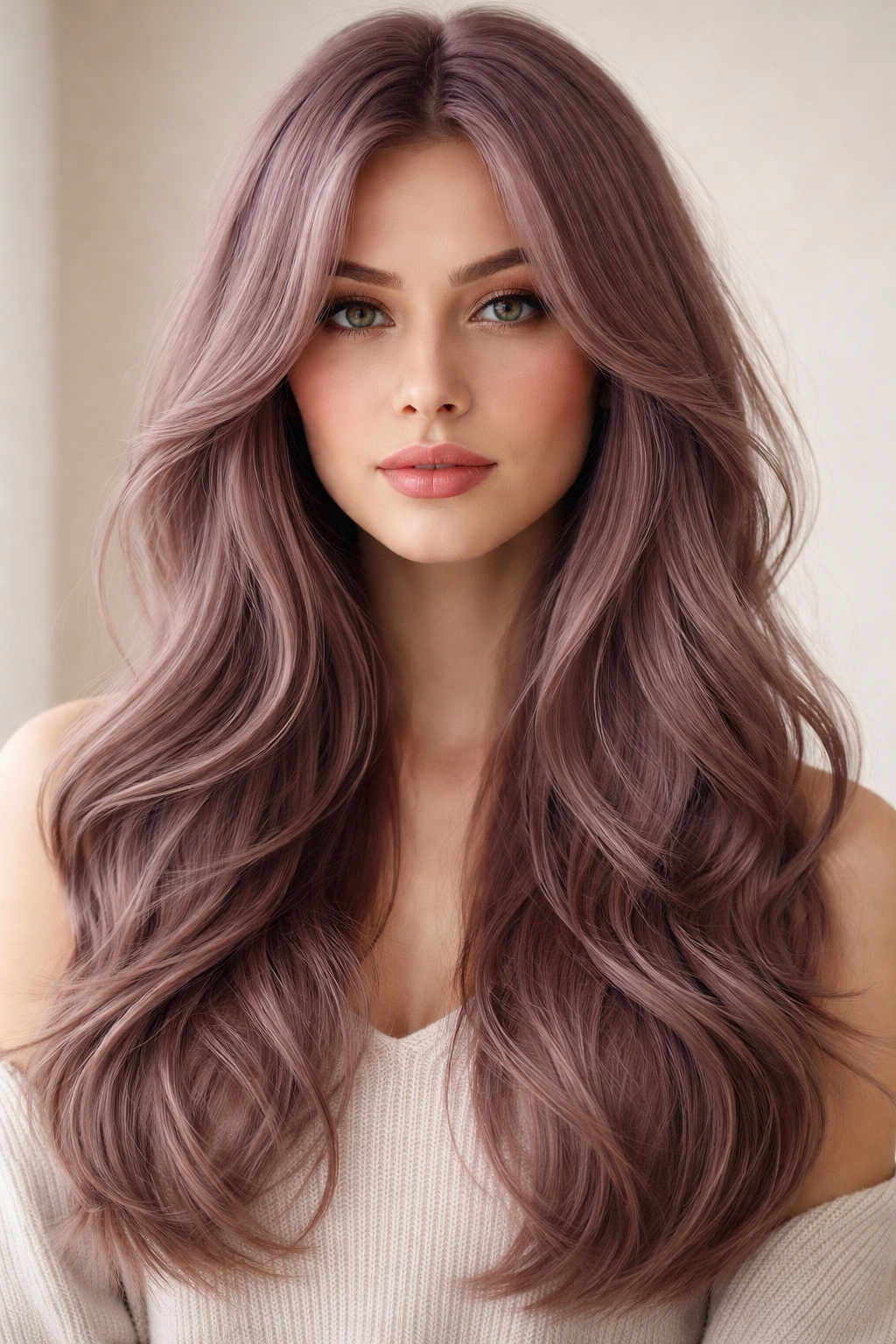
Dusty mauve is pink’s quieter, more sophisticated cousin—muted, cool-toned, and unexpectedly wearable even in conservative settings. When cut into long curtain layers, the waves have somewhere to move and separate, creating visible texture and movement without the style feeling chaotic. The mauve tone combined with curtain layers creates an effortlessly cool vibe that feels fashion-forward without trying too hard.
Why This Works
Curtain layers are having a significant moment because they genuinely work with wave texture—the layers fall naturally into waves without requiring excessive styling. Dusty mauve softens the boldness of pink into something that reads more as “trendy hair color” than “statement hair color.” This opens the style up to more contexts and situations. The undertones in mauve (which often skew slightly purple or gray) make the waves look more dimensional because the color isn’t uniformly saturated.
Layering and Texture
Curtain layers work best when they’re cut with intention—ask your stylist for face-framing layers that start around chin-length and gradually get shorter toward the face, with longer layers in the back. This creates natural separation and encourages waves to sit in distinct sections rather than as one heavy mass. The waves themselves can be created with heat styling or by enhancing your natural texture.
Insider note: This exact color and cut combination is what you see on fashion-forward stylists and beauty influencers constantly—it’s become somewhat of a “professional pink hair” uniform.
5. Pastel Pink Loose Waves with Balayage
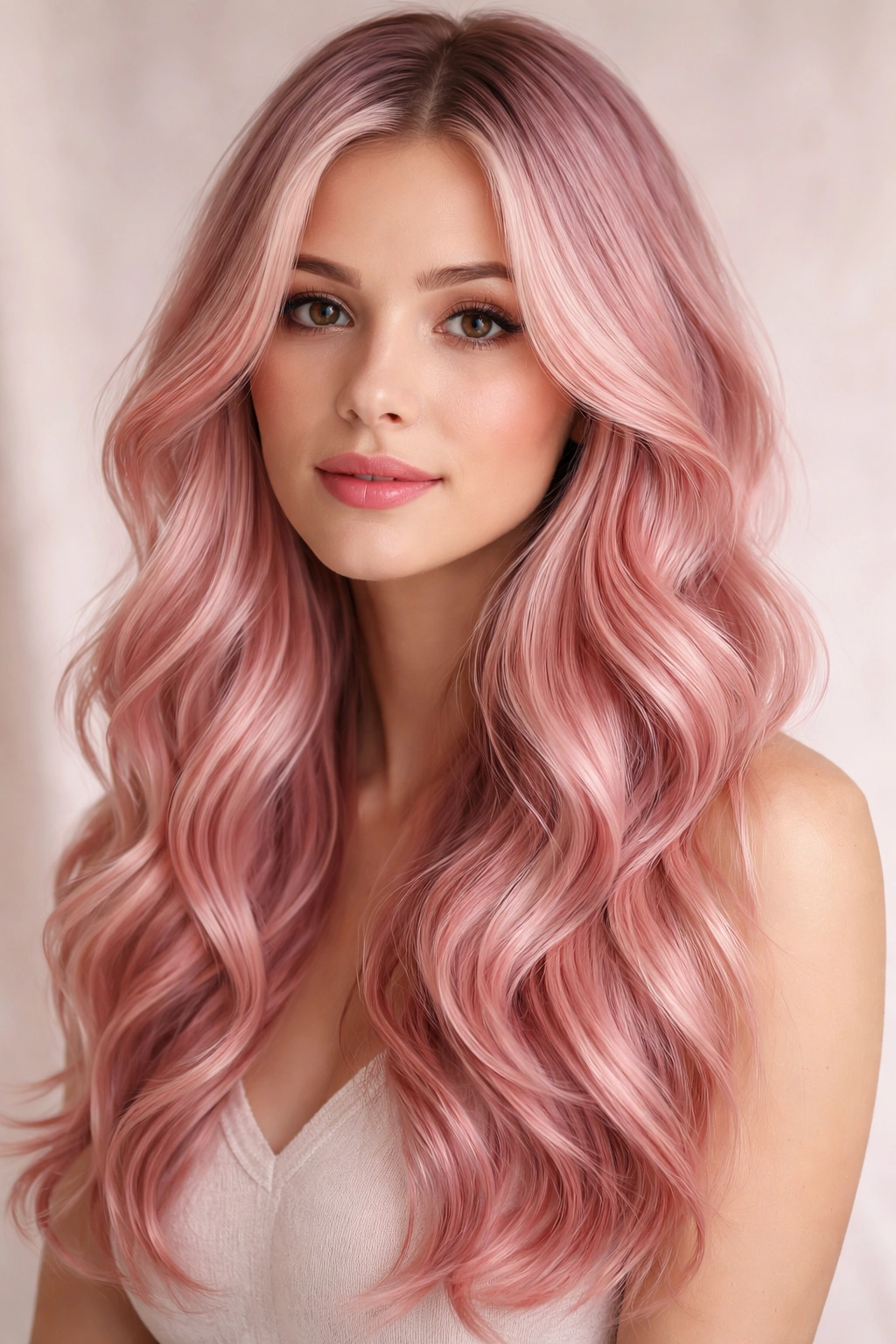
Pastel pink—so pale it’s almost rose-tinted white—is ethereal and dreamy in a completely different way than hot pink or bubblegum. When combined with balayage application (lighter on top, slightly deeper in the depths), the waves create shadow and dimension that prevents the paleness from looking washed out. Loose waves prevent the delicate pale pink from reading as fragile; instead, the movement makes it look confident and intentional.
Why This Works
Pastel pink can risk looking a little flat or ghostly if it’s applied uniformly and worn straight. Waves solve this by creating areas of shadow and highlight. The balayage technique adds subtle depth—the slightly deeper pink underneath the waves creates dimension that makes the lighter color actually stand out more. This is a genuinely romantic, soft aesthetic that still feels modern and intentional.
Maintaining Pastel Pink
Pastel shades require more frequent toning to prevent yellowing or brassiness. Plan for weekly or bi-weekly purple-based toning treatments. The benefit is that pastel pink is actually more flexible when it begins to fade—as it lightens further toward white-blonde, the look can actually feel intentional rather than looking like faded color. Using a sulfate-free shampoo designed for color-treated hair is essential for preserving the tone.
Pro tip: Pastel pink looks stunning with cooler skin tones and can actually make warm skin tones look warmer—choose your shade of pastel with your undertone in mind.
6. Blush Pink Waves with Peachy Undertones
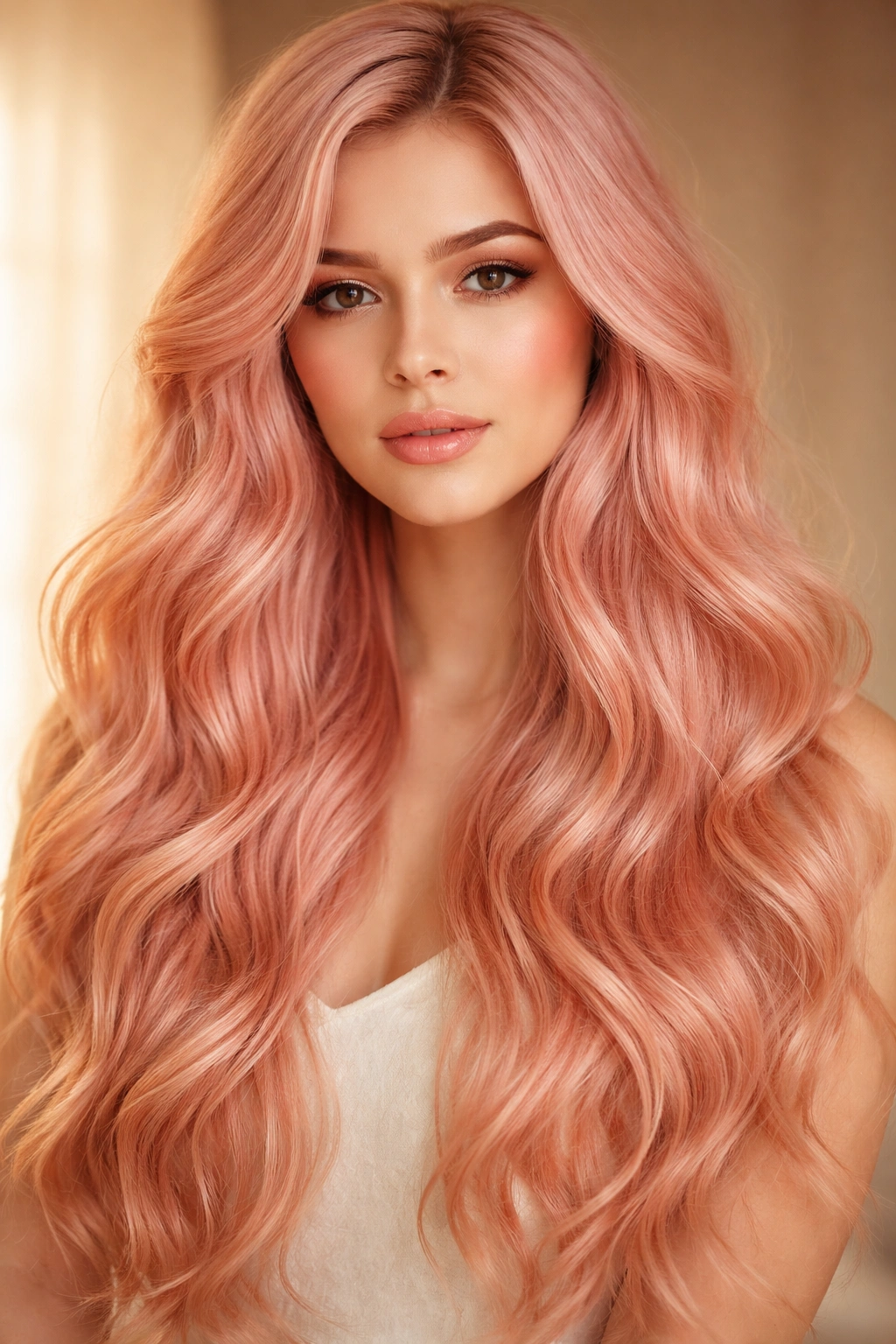
Blush pink—that soft, romantic shade that exists somewhere between pink and peach—is flattering on a remarkable range of skin tones. When the pink has peachy undertones, it warms up and becomes wearable even for people who usually can’t pull off pink. Long waves in this tone look soft and approachable while still being distinctly a “fashion choice.” The peachy undertones prevent blush pink from reading as too feminine or delicate.
Why This Works
The peachy-undertone version of blush pink is more forgiving than true cool-toned pinks because it has warmth built in. This warmth makes it work better with golden skin tones, olive skin, and even deeper skin tones that might struggle with cooler pinks. Waves add movement and prevent the soft color from looking flat or washed out. This is genuinely wearable for people who want the pink aesthetic but need it to work with their undertone.
Color Matching to Your Skin
Blush pink with peachy undertones works best if you hold up swatches of the color near your face and check how it interacts with your complexion in both natural light and indoor light. If the color makes you look healthy and glowing, it’s your shade. If it washes you out or clashes, move toward a cooler pink or a more saturated blush. The beauty of this tone is that it genuinely works for most people—it’s just about finding the exact shade variation that suits your specific undertone.
Worth knowing: This color is often called “dusty rose,” “mauve pink,” or “blush” depending on the salon—all of these names usually indicate that same soft, warm-leaning pink.
7. Fuchsia Waves with Underneath Color
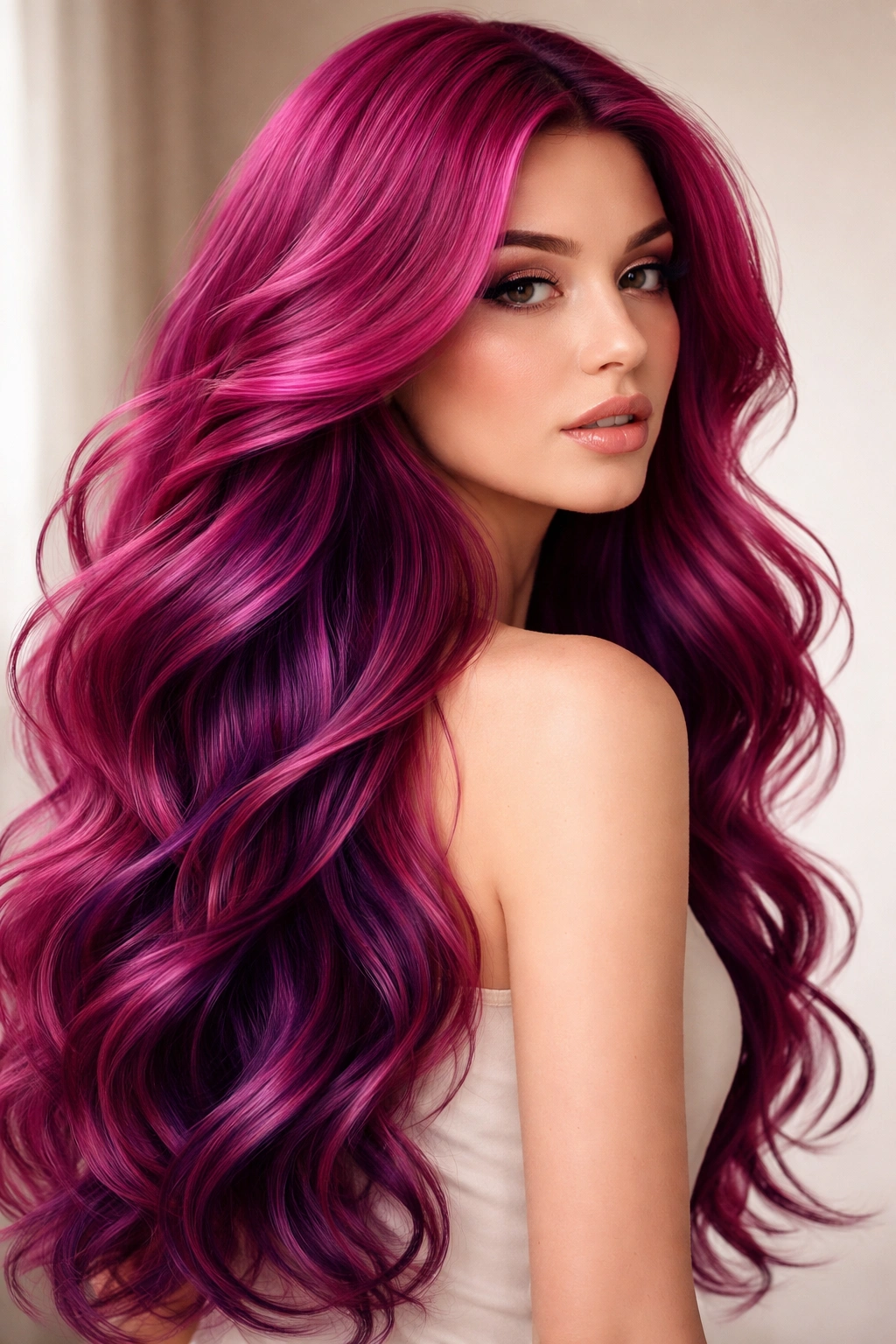
Fuchsia is hot pink’s bolder, deeper cousin—nearly magenta in its intensity, but with more sophistication than neon hot pink. When you hide a contrasting color underneath (a deep purple, a rich burgundy, or even a muted plum), you create a style with built-in visual surprise. As the long waves move and shift, flashes of the underneath color peek through, adding complexity and intrigue.
Why This Works
The fuchsia-on-top/contrast-color-underneath approach solves a real problem: bold pink can feel one-dimensional or costume-like when it covers every strand uniformly. By hiding another color underneath, you create visual depth and give yourself styling flexibility. Wear your hair down to show the fuchsia, flip it up in a ponytail or bun to reveal the surprise color underneath, or style it in a way that shows both. This is a way to have an even bolder look while also building in subtle variation.
Creating the Two-Color Effect
This requires either a two-process coloring (fuchsia on top, contrasting color underneath) or using extensions strategically colored to match your vision. Ask your colorist whether your hair’s condition allows for this degree of color processing. Some people choose to do this with clip-in extensions in the contrasting color, which gives you the option to wear the full effect or the single color as your mood dictates.
Pro tip: If you’re new to pink hair, start with the underneath color variation so you can ease into the boldness while maintaining flexibility—you can always go full fuchsia later if you’re loving it.
8. Coral Pink Waves for Warm Undertones
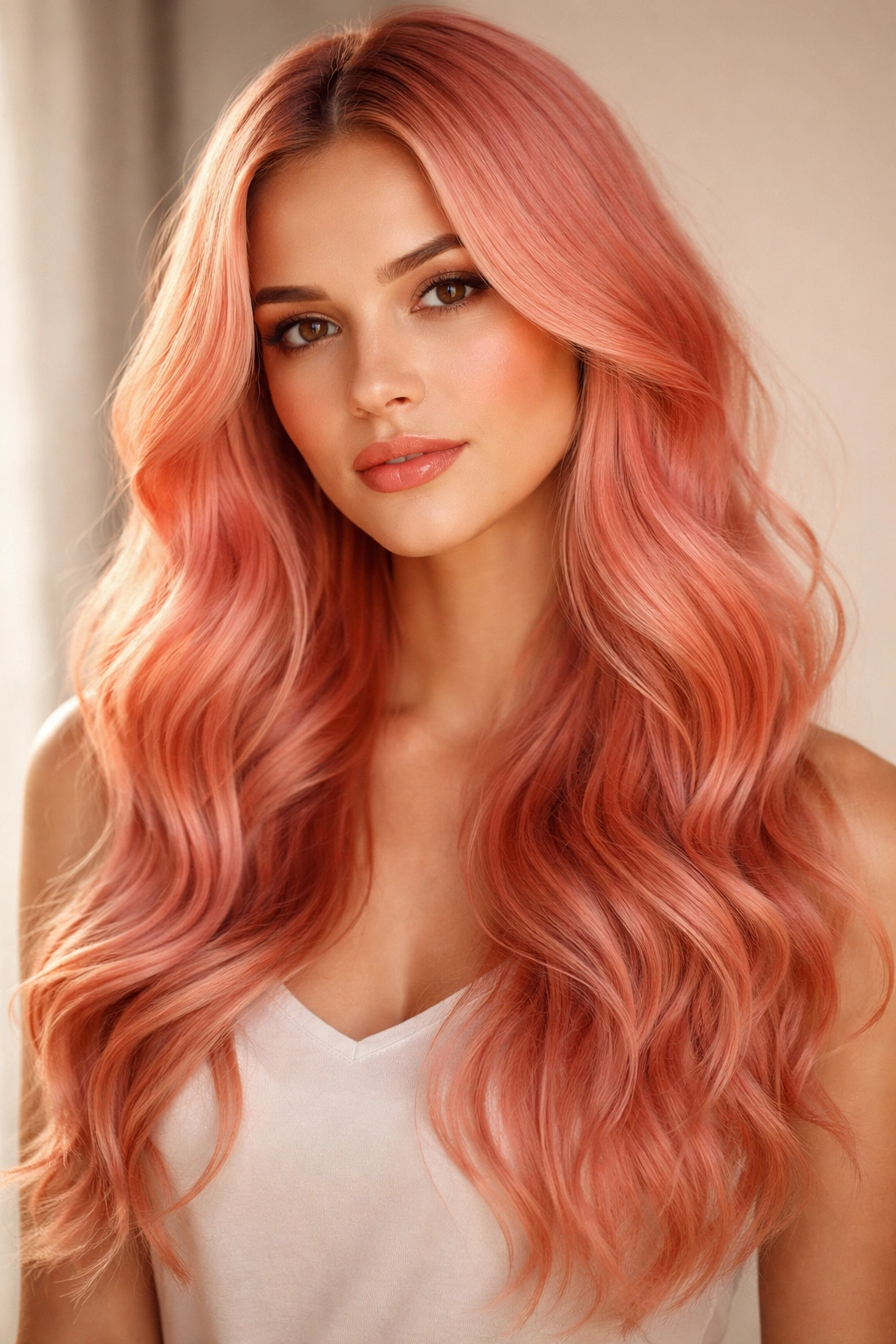
Coral pink is perhaps the most universally flattering shade in the pink spectrum—it has enough warmth to work with golden and warm skin tones, but enough pink to read as genuinely pink rather than as a warm peach. Long waves in coral pink look soft and romantic while also being incredibly wearable. The color reflects light warmly and tends to make skin look healthier and more glowing.
Why This Works
Coral pink has yellow and orange undertones mixed with the pink, which means it naturally complements warm skin tones in a way that cool pinks simply can’t match. For people with warm undertones who’ve always wanted pink hair, coral pink is the answer. The waves add movement and texture that makes the warm tone feel modern and intentional rather than dated. This color is surprisingly practical—it actually wears well in professional environments because it reads more as a warm hair color than a statement color.
Complementary Tones
Coral pink pairs beautifully with bronze, copper, or rose gold accessories and makeup tones. If you have warm skin undertones, coral pink creates a cohesive, harmonious overall aesthetic when paired with warm-toned everything—makeup, jewelry, clothing. This level of built-in coordination actually makes styling easier because the color works with what you already have in your wardrobe.
Insider note: Coral pink is the shade most requested by people of color and people with deeper skin tones—it’s flattering across a wider spectrum of skin tones than most other pink shades.
9. Bubble-Gum Pink Ombré to Blonde Waves
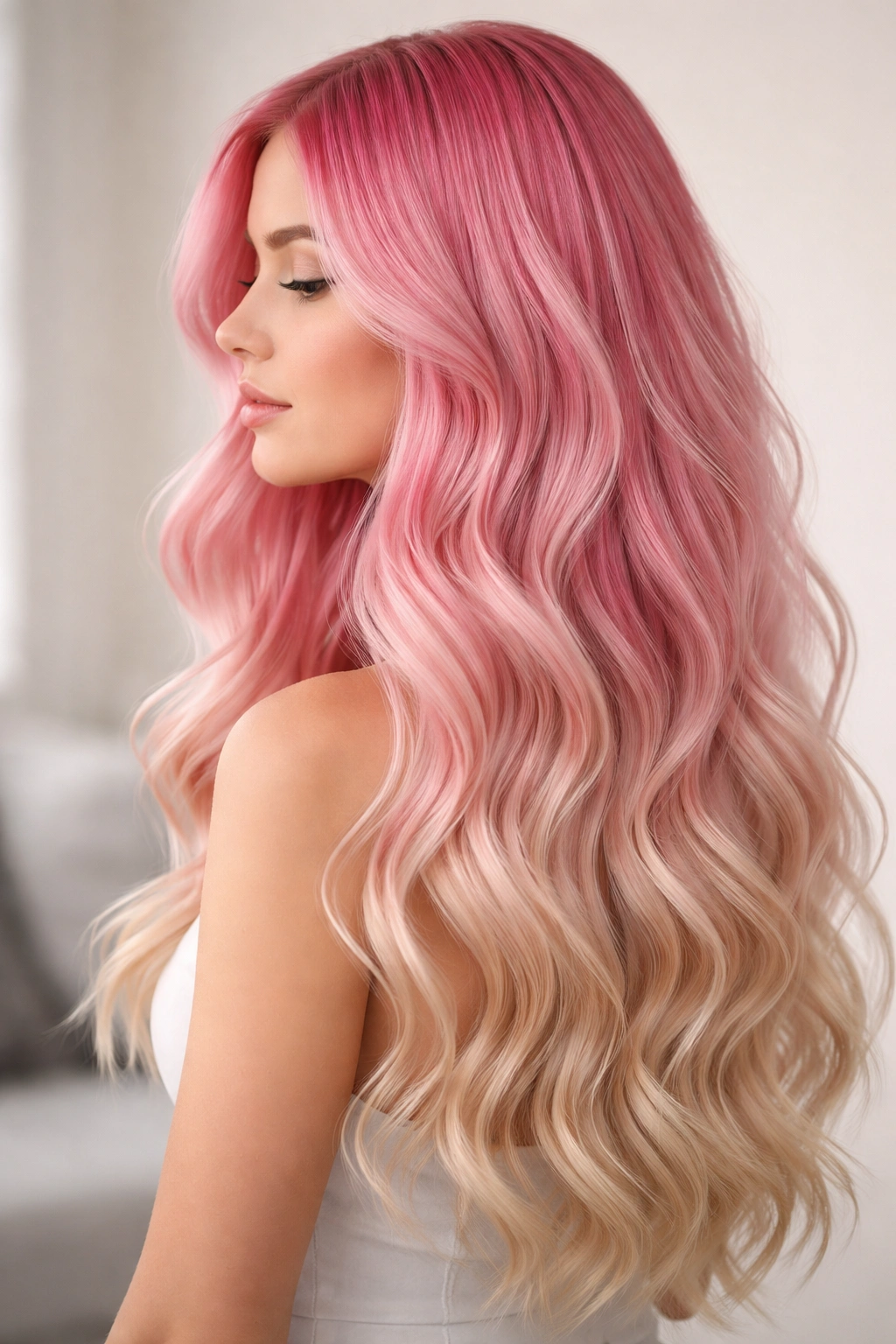
An ombré that transitions from saturated bubblegum pink at the roots to pale blonde at the ends creates a genuinely eye-catching aesthetic that’s also practical in terms of maintenance. The transition happens gradually across the length of the hair, and the long waves mean the color shift happens across three-dimensional curves rather than in a linear blunt line. This makes the ombré look more intentional and sophisticated than a sharp line would.
Why This Works
The ombré approach solves a real maintenance issue: keeping pure bubblegum pink vibrant requires frequent root touch-ups. By blending into blonde at the ends, you’re creating a look where the transition actually helps disguise regrowth. The waves add dimension to the color transition itself—lighter areas of the hair in the wave highlight catch light differently than darker areas, making the ombré feel more natural and less painted-on.
Achieving the Gradient
This typically requires a skilled colorist who understands how to blend colors across a gradient rather than creating a hard line. The application should be subtle at first—the roots can be true bubblegum, the mid-lengths start the transition, and the ends are mostly blonde with just a whisper of pink. Ask your colorist about dimensional application across the wave pattern rather than doing it section by section, which will make it look more cohesive.
Worth knowing: This look is actually easier to maintain than full-length pink because you can let the roots grow in and the effect evolves naturally—eventually becoming more blonde, more pink, or whatever you choose to do at your next appointment.
10. Magenta Waves with Black Underlayer
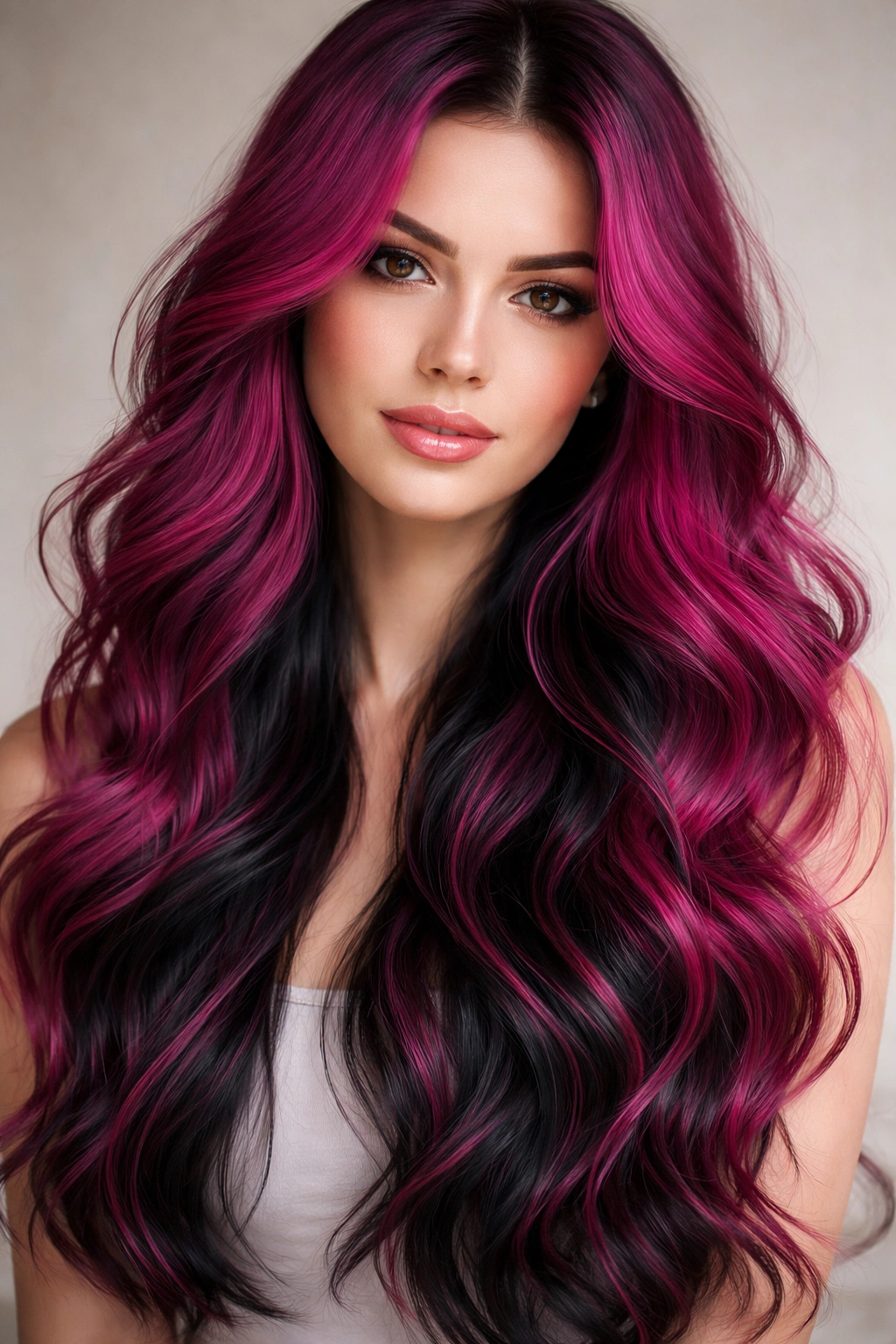
Magenta—that perfect blend of red and pink that feels both edgy and romantic—paired with a completely hidden black underlayer creates a style that reads differently depending on how you style it and how light hits it. When your hair is down in waves, the magenta dominates and the look is bold and fashion-forward. When you put it in a bun or pull sections back, the black underlayer reveals itself and the vibe shifts completely.
Why This Works
This two-color approach gives you genuine versatility without requiring multiple haircuts. Wear it one way for work or events where you need to tone it down, wear it another way when you’re out with friends and want to be bold. The waves are important because they create texture and movement—a sleek magenta-and-black style looks sharp and intentional, while wavy magenta-and-black looks softer and more romantic. The movement prevents the color combination from looking costume-like.
Styling Considerations
If you’re creating this with a cut and color, ask your stylist to cut longer layers on top (magenta) that fall over and conceal most of the black underneath unless you deliberately move the hair. This way the magenta is what people see by default, but the black is always there when you want it to show. Alternatively, you can create this effect with extensions if you don’t want to process your entire head of hair that intensely.
Pro tip: Style the waves loosely enough that they naturally separate and shift—you want movement that occasionally flashes the black underneath rather than a style where the colors are rigidly separated.
11. Soft Pink Waves with Subtle Highlights
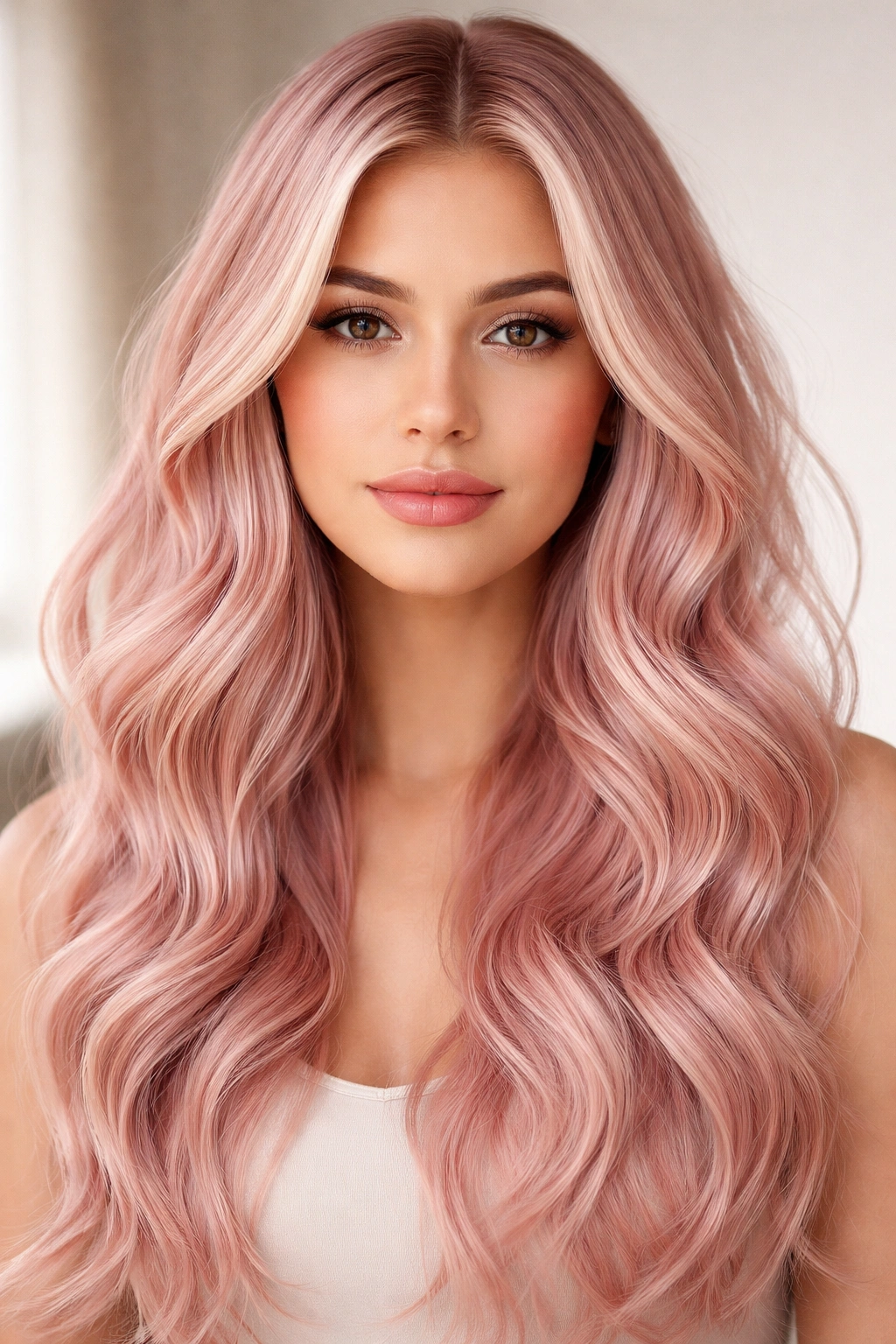
This approach keeps your base color a very soft, pale pink while adding subtle face-framing highlights that are even lighter—almost white or champagne-blonde. The waves create shadow and highlight naturally, but the added lighter pieces create even more dimension and make the face look brighter and more lifted. This is an incredibly wearable, sophisticated take on pink hair that reads as intentional and professional.
Why This Works
Soft pink with subtle highlights is the “professional pink hair” move because it feels refined and considered. The highlights add dimension without the shock value of a totally contrasting color. The waves allow the highlights to sit naturally—they don’t need to be placed in a super specific way because the wave pattern itself creates areas where light hits differently. This gives the overall style a natural, lived-in quality rather than a stiff, heavily styled appearance.
Highlight Placement
The most flattering placement for highlights with this soft pink base is typically around the face, along the natural part line, and on the surface layers where light will hit most frequently. Ask your colorist for a “money pieces” application where the lighter pieces frame your face, or for a subtle balayage that places lighter tones throughout the surface of the waves. The goal is dimension without obvious color blocking.
Insider note: This is the exact style you see on fashion editors, architects, and other creative professionals who want pink hair that still reads as intentional rather than recreational.
12. Candy Pink Waves with Intermittent Darker Sections
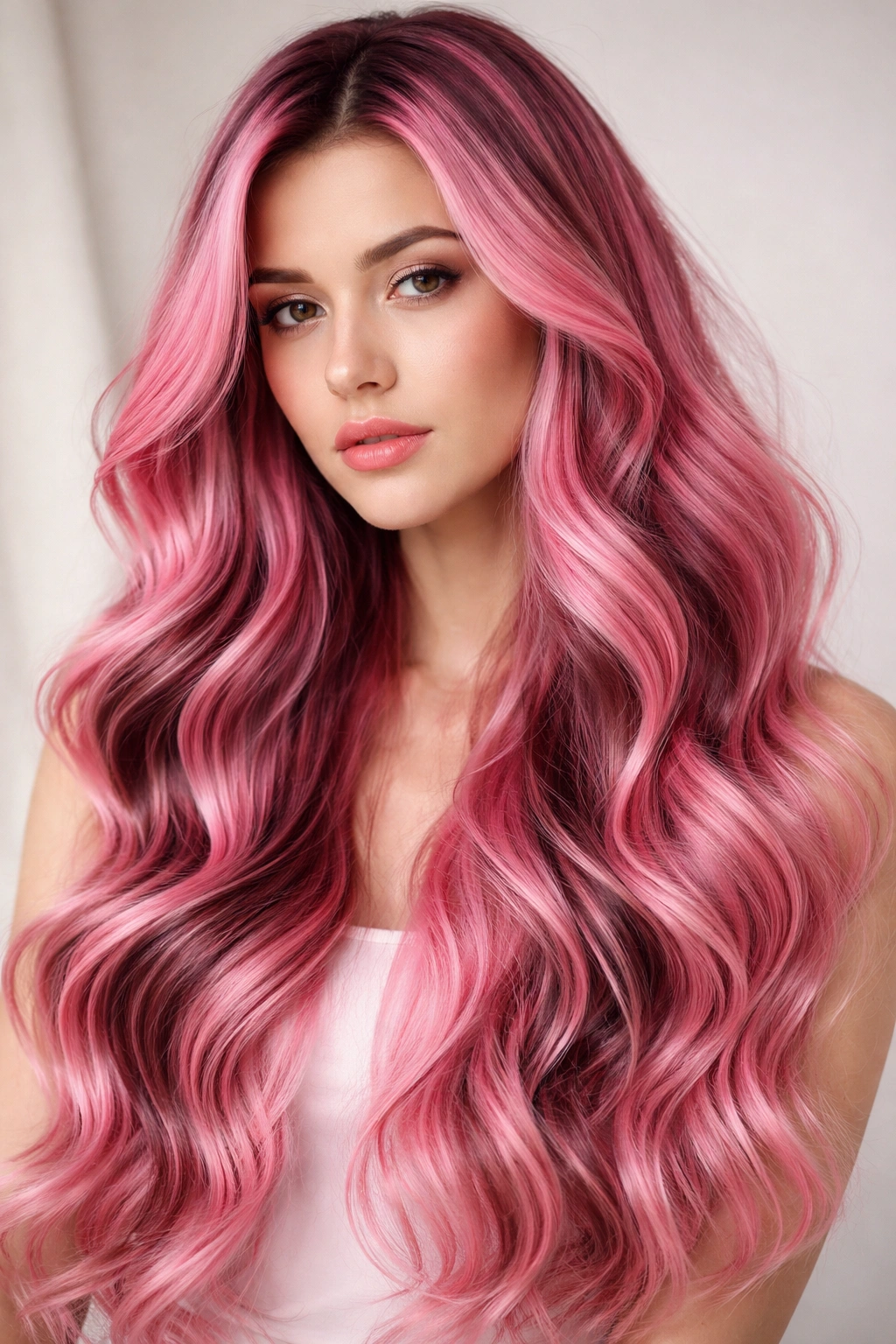
Candy pink is that brilliantly cheerful, almost artificially bright shade that skews distinctly playful and youthful. When you interrupt the candy pink with strategic sections of a deeper tone (a mauve, a dusty rose, or even a muted burgundy), you create visual interest and prevent the single bright shade from feeling monotonous or costume-like. The waves make the color transitions look intentional and modern rather than like accidents.
Why This Works
The intermittent darker sections serve as visual anchors and prevent the candy pink from reading as flat or one-dimensional. The placement creates vertical interest that draws the eye, and the waves ensure that these darker sections are integrated throughout rather than in obvious blocky sections. This technique also reduces the maintenance challenge—you don’t need every strand to be perfectly saturated candy pink because the intentional darker sections give your look polish and purpose.
Creating the Effect
This can be achieved through strategic balayage (placing deeper color in certain areas), or through a technique where you color-block sections intentionally. Ask your stylist to think about where these darker shades would look balanced on your wave pattern—usually the sides, underneath layers, and maybe some subtle pieces at the back. The goal is that someone should be able to see there’s intentionality here, not that the color has faded unevenly.
Pro tip: Use the darker sections to frame your face subtly—a few darker pieces around the face can actually make your features appear more defined.
13. Millennial Pink Waves with Lived-In Styling
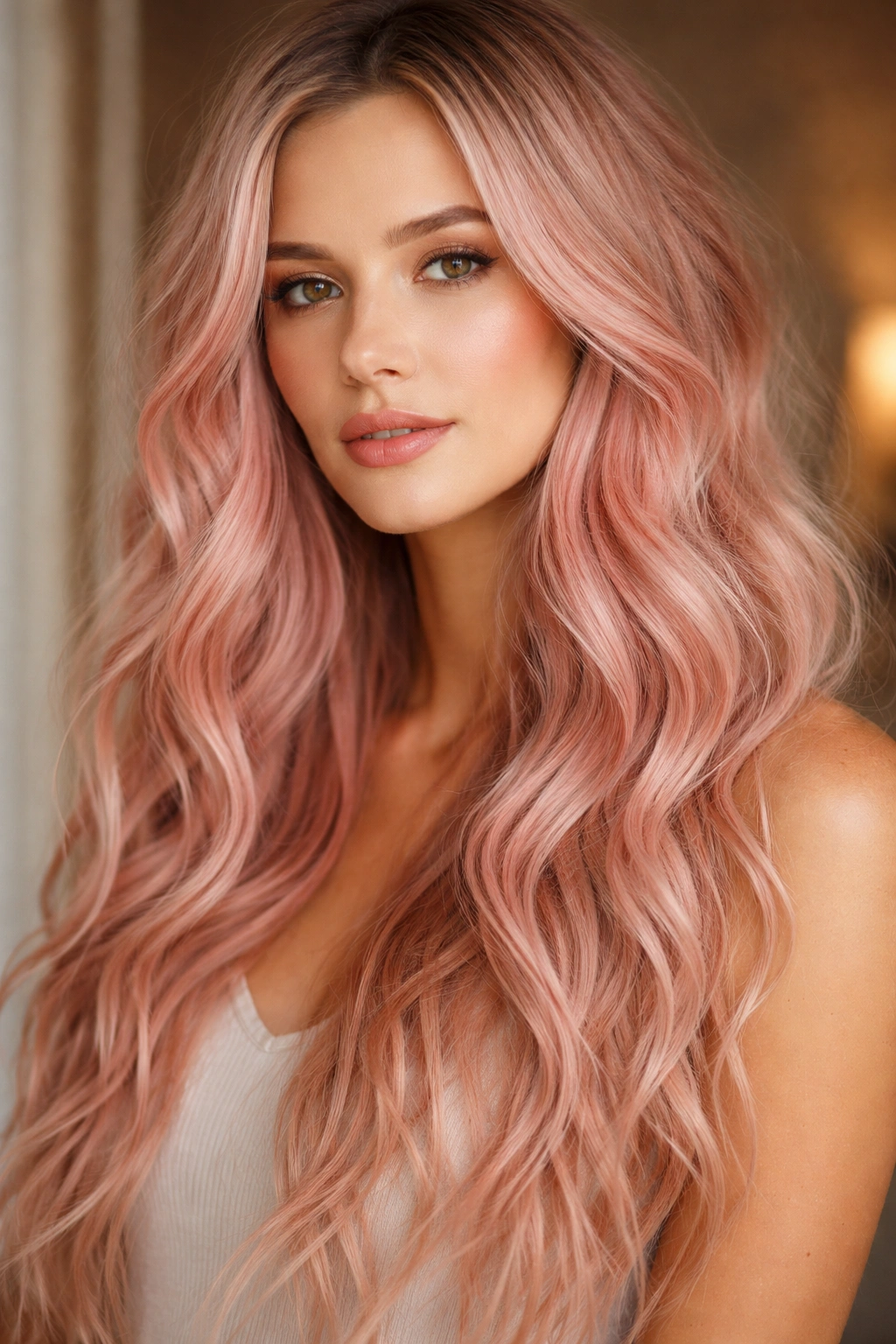
Millennial pink—that specific muted, cool-toned rose that dominated the cultural zeitgeist—has actually aged beautifully and continues to be wearable despite moving away from being the trendiest color. When paired with deliberately lived-in, undone waves, it reads as effortlessly cool rather than trying-too-hard. This is the pink hair equivalent of “expensive looking”—it looks like you woke up with perfect waves, even though you probably put some effort in.
Why This Works
The beauty of millennial pink is that it’s muted enough to feel subtle, yet distinctive enough to feel intentional. The lived-in waves prevent the look from feeling stiff or overdone. This combination creates an aesthetic that reads as someone who is fashion-aware but not obsessed with always looking perfect—someone cool and confident enough that their hair can just be without needing to be flawlessly styled. The waves give the color dimension, and the undone styling prevents the whole thing from feeling too polished.
Achieving the Lived-In Look
Sleep waves (using braids or a curling iron on damp hair, letting it sit overnight) create genuinely natural-looking waves that look like your hair naturally does this. Sea salt spray enhances texture and makes waves look more touchable and less engineered. The goal is waves that you can see and feel, but that also look like they could have been there all along without deliberate styling.
Worth knowing: Millennial pink has a shorter longevity than some other pink shades because the cool undertones can shift toward mauve or purple as it fades—but many people actually like how it looks as it fades gradually.
14. Hot Pink Waves with Silver Roots
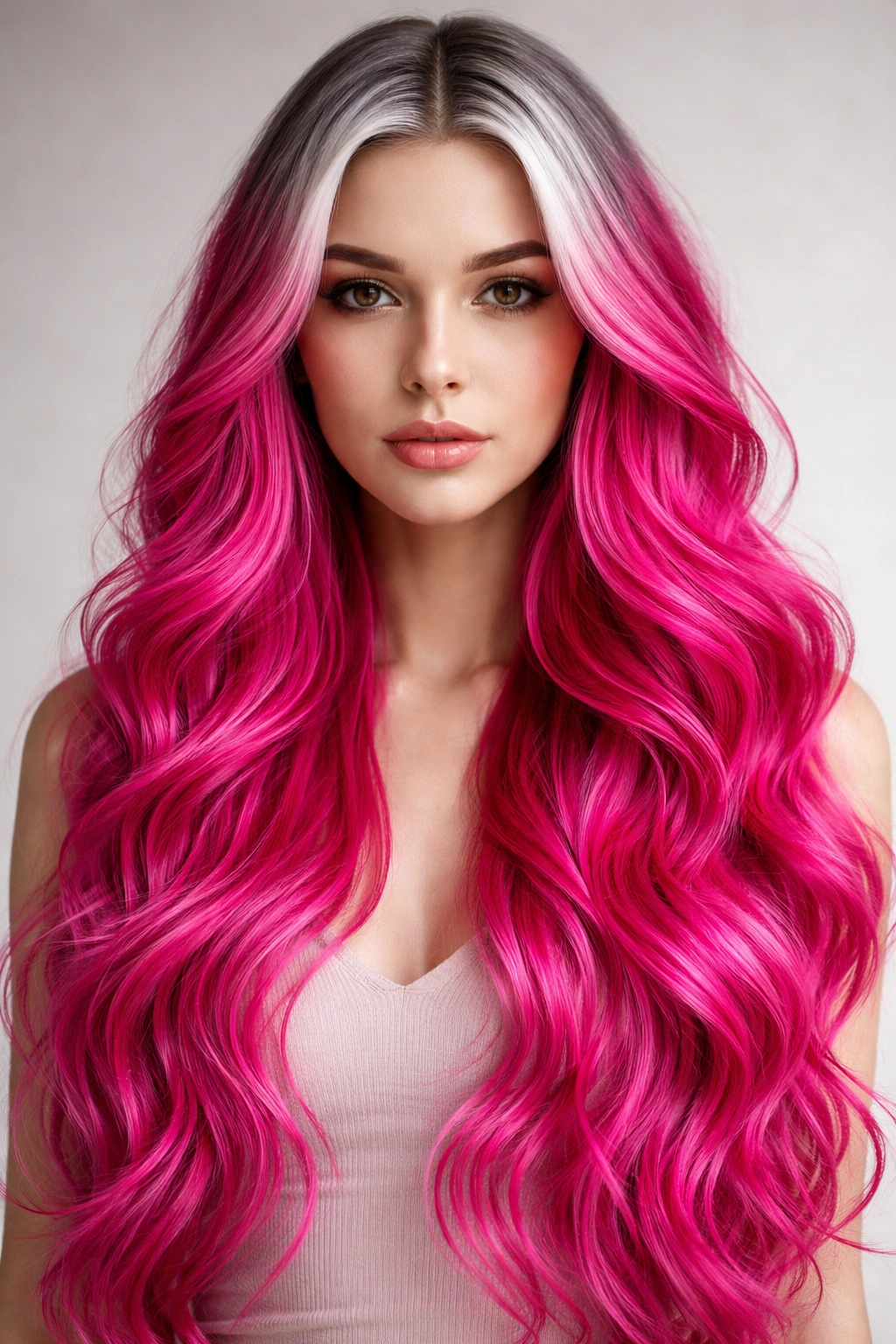
Hot pink paired with intentional silver or platinum blonde roots creates a striking contrast that’s modern and fashion-forward without feeling costume-like. The silver-blonde roots frame the face and create lift, while the hot pink waves draw attention and create energy. This is a look that requires commitment and confidence, but it reads as intentional and editorial.
Why This Works
The silver-blonde roots serve multiple purposes: they brighten the face and provide contrast that makes the hot pink appear even more vibrant, they reduce the frequency of root touch-ups needed (silver-blonde actually conceals regrowth relatively well), and they create a sophisticated two-tone effect that feels modern. The waves prevent this color combination from feeling harsh—the soft texture of waves balances the boldness of the color choices.
Creating the Effect
This requires either growing out intentionally silver-blonde roots or having the roots done in a cool platinum blonde that photographs as silver. The transition from silver to hot pink should be fairly clear—ask your colorist whether they want to do a gradient transition or a more defined line. With waves, even a fairly defined color line looks natural because the wave pattern breaks it up visually.
Pro tip: This look photographs beautifully and tends to photograph even more striking than it looks in person—perfect if you enjoy sharing photos of your hair online.
15. Dusty Rose Waves with Dimensional Texture
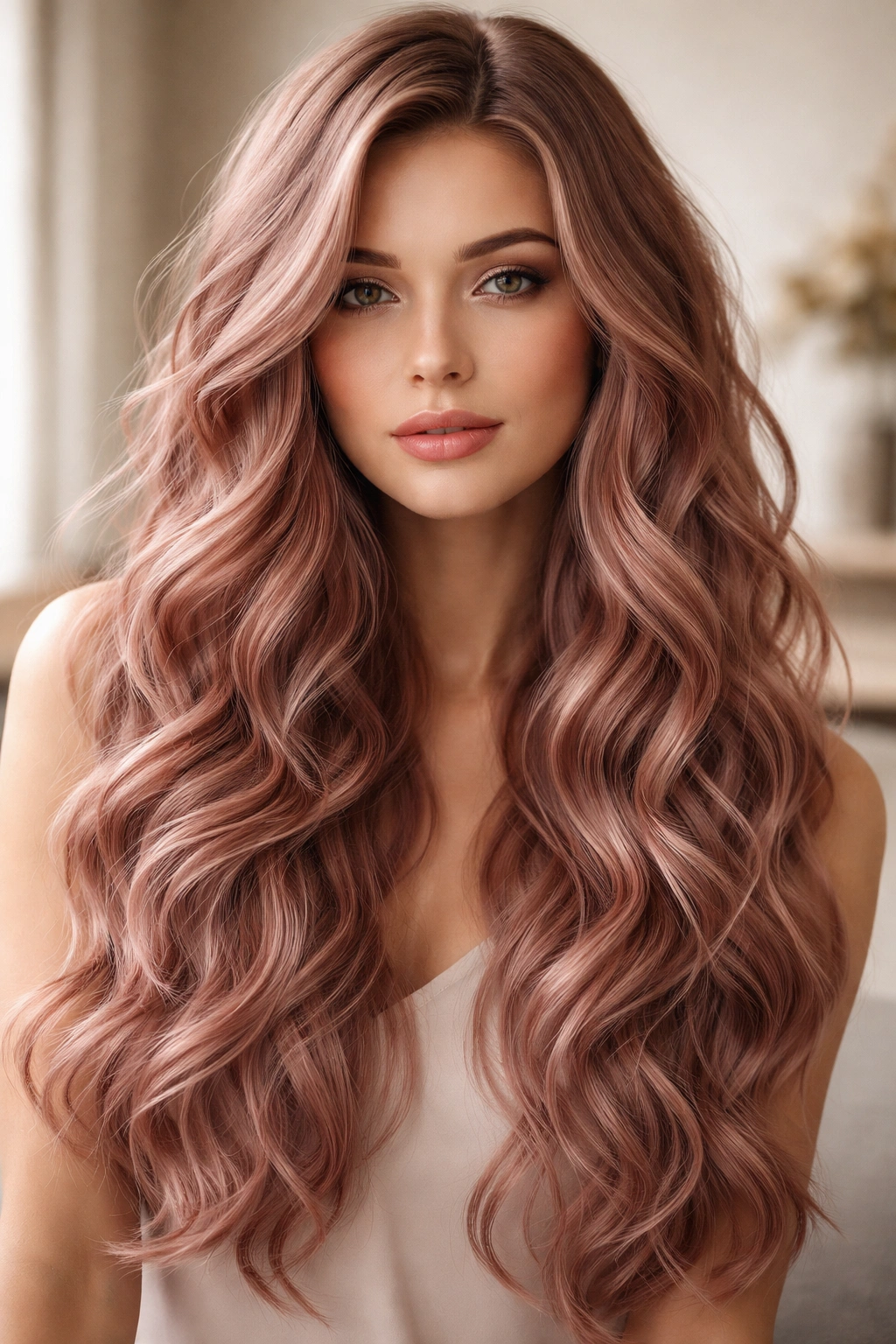
Dusty rose is arguably the most universally flattering shade in the pink spectrum—warm enough for warm skin tones, cool enough for cool undertones, and neutral enough to work with almost any eye color. When paired with genuinely dimensional wave texture (where some waves are tighter and others looser, creating varied surface texture), the result is sophisticated and wearable in virtually any context.
Why This Works
Dusty rose has a gentle, romantic quality that works in professional settings, casual contexts, and everything in between. The dimensional texture prevents even this soft color from looking flat—the varied wave sizes mean light hits the hair differently depending on where you’re looking, creating depth and visual interest. This is a genuinely timeless version of pink hair—it doesn’t read as trendy or temporary, but rather as a thoughtful color choice.
Creating Dimensional Waves
Ask your stylist for mixed wave sizes—some tighter barrel-curled waves, some looser undulating waves, with some straight sections left in to break up the texture. This is more sophisticated than uniform waves across the entire head. The varying textures create a lived-in, dimensional quality that looks intentional and editorial.
Insider note: This exact color and texture combination is what you see recommended by colorists when someone wants pink hair that will still look good in five years.
16. Neon Pink Waves with Purple Undertones
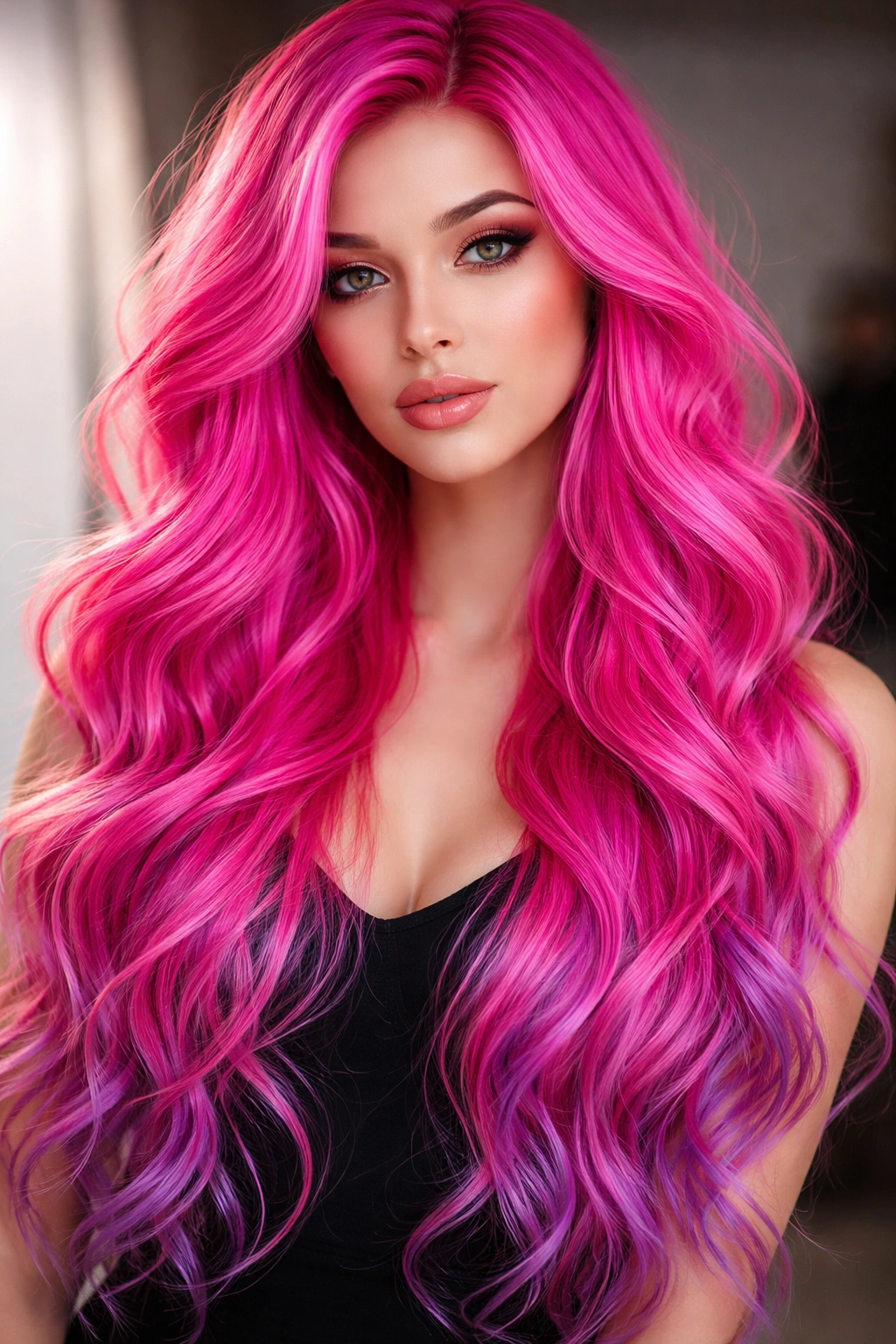
Neon pink with purple undertones is the boldest option on this list—it’s unapologetically bright, distinctly fashion-forward, and reads as a genuine style statement rather than a casual choice. The purple undertones in the pink prevent it from reading as cheap or costume-like; instead, the slight cooler tone adds sophistication to the brightness. Long waves ensure the neon doesn’t overwhelm—the movement and texture distribute the bold color across your entire head rather than concentrating it densely.
Why This Works
Neon pink with purple undertones occupies a fascinating space between bold and wearable. The purple tones bring sophistication to the neon, while the neon brings edge and fashion-forwardness to the purple. The long waves are essential because they break up what could otherwise feel like an overwhelming amount of bright color. The movement allows the eye to travel across the hair and take in the color gradually rather than all at once.
Maintenance and Care
This shade requires actual commitment to maintenance—it fades relatively quickly and demands a purple-toning routine to keep the purple undertones from disappearing first. Using a color-safe, sulfate-free shampoo and keeping heat styling to a minimum helps preserve the color. The investment pays off visually though—this color genuinely turns heads and creates presence.
Pro tip: If you’re going this bold, commit to it for at least three to four months to give yourself time to enjoy it and see how you feel. The maintenance and boldness mean this isn’t a casual decision, but if you love it, the impact is absolutely worth it.
Final Thoughts
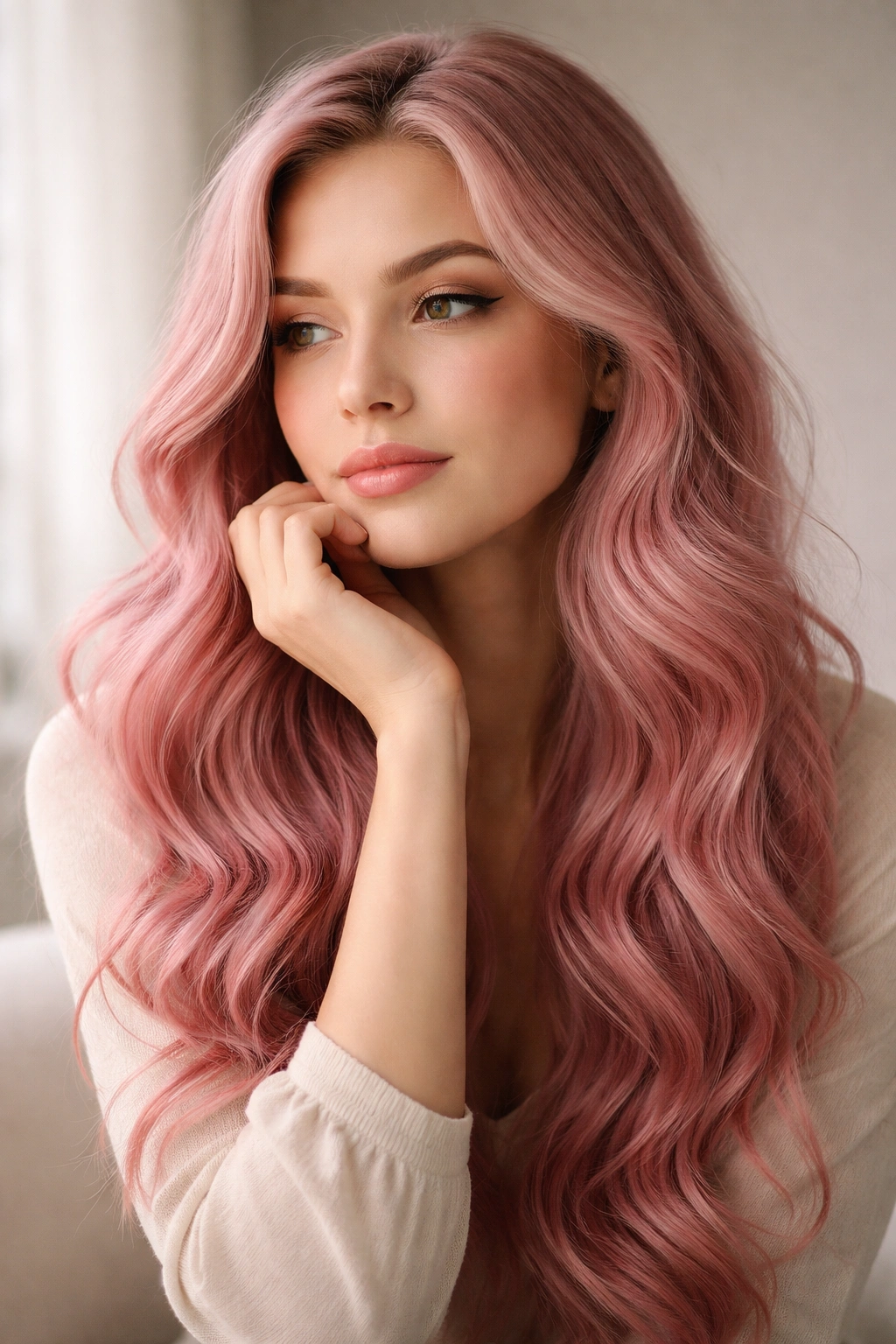
Pink waves offer genuine versatility in tone, intensity, and style—from barely-there blush pink to stop-you-in-your-tracks neon magenta, there’s a pink wave option that works for virtually any person and any context. The wave texture is what elevates pink from looking costume-like to looking intentional and modern; the movement and dimension prevent even the brightest pinks from reading as flat or one-dimensional.
The key to pulling off pink waves is matching the specific shade to your skin tone undertone and choosing a wave texture that feels authentic to your personal style. Whether you want waves that look naturally effortless or waves that clearly required heat styling and intention, the pink-and-waves combination communicates confidence and creativity regardless of which specific shade you choose.
Whatever pink and wave combination resonates with you, the most important part is that you feel genuinely like yourself when you look in the mirror—not like you’re wearing someone else’s hair or playing a character, but like you’ve found a color and style that expresses something true about who you are.
