



A round face shape is beautifully balanced, but that symmetry can sometimes feel too soft or wide without the right haircut to add dimension and visual length. Wavy layered haircuts are genuinely one of the most flattering styling choices for round faces because layers create movement and texture that break up the face’s width, while waves add the kind of visual elongation that elongates those soft angles. The key is finding a cut that works with your natural texture rather than against it, combines strategic layers that hit at the right points around your face, and creates that effortless, undone wave aesthetic that’s infinitely more forgiving than stick-straight hair for this face shape.
The challenge isn’t finding a wavy layered cut—it’s finding the right one for your hair type, length preference, and lifestyle. Some of these styles work best with fine, delicate waves, while others come alive with thicker, more textured waves. Some are designed to be styled daily, while others deliver that tousled vibe with minimal effort. Understanding how each cut enhances a round face shape, what kind of waves work best with the layers, and how to style and maintain each one will help you choose the haircut that’ll actually make you feel confident every single day.
1. The Choppy Shoulder-Length Cut with Textured Waves
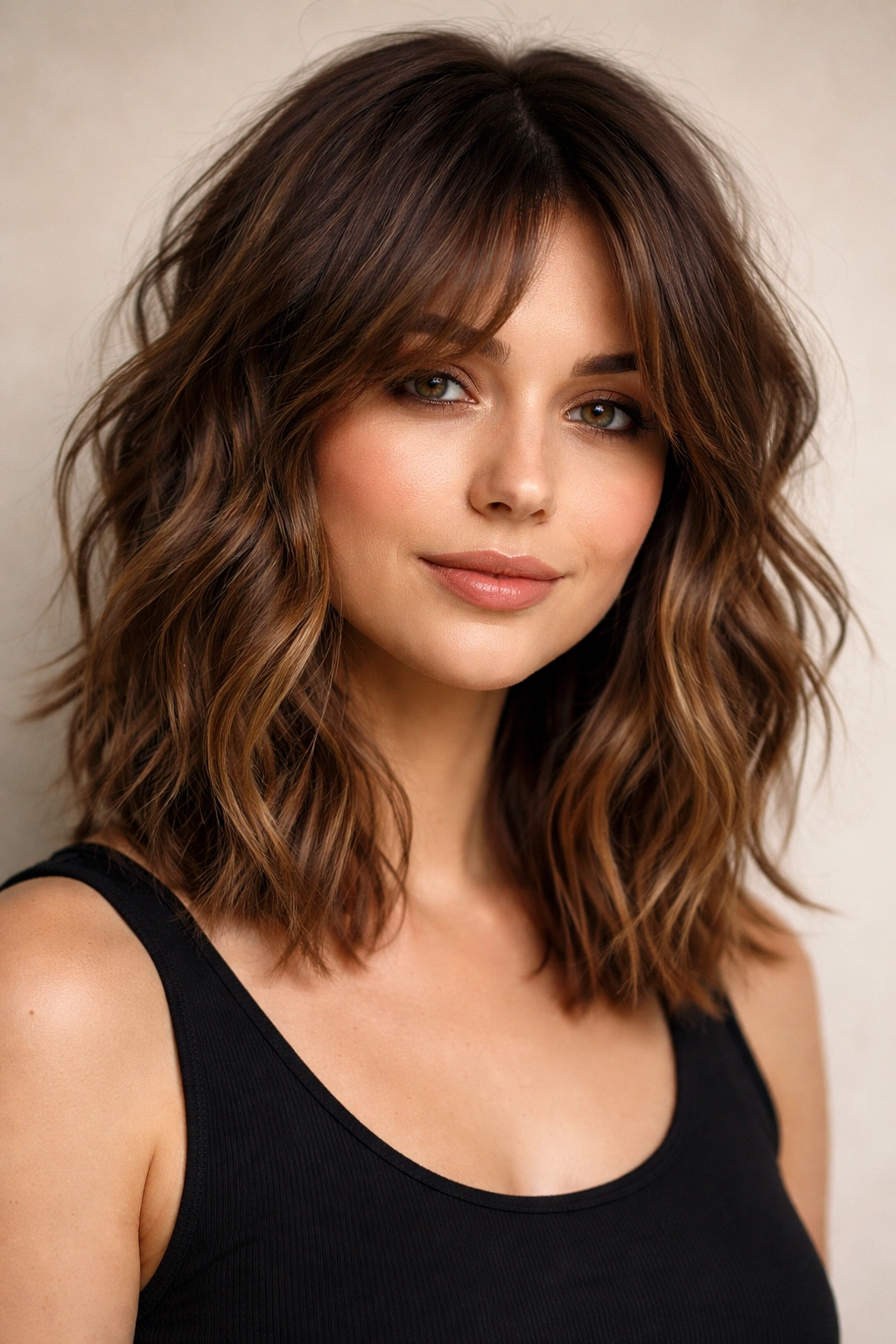
This cut sits right at shoulder length with an intentionally choppy, disconnected layering pattern that creates serious texture and movement. The choppy layers are cut throughout the crown and mid-lengths, creating pieces that bend and sway independently rather than falling as one solid unit. This fragmented approach immediately breaks up the roundness of your face because the layers pull your eye upward and outward rather than hugging your jawline.
Why It Flatters Round Face Shapes
The choppy layering technique creates visual width at the crown and temples, which shifts the focus away from the widest part of a round face (usually the cheekbones and jawline). The textured pieces frame the face naturally without being too structured or severe, and the shoulder-length landing point hits right at that sweet spot where your hair has enough length to elongate without becoming heavy. The waves amplify the texture effect, making each layer visible and distinct rather than blending together.
How to Style and Maintain It
- Blow-dry with a round brush while scrunching sections upward to emphasize the wave pattern and texture
- Use a texturizing spray or sea salt spray before waves to make the choppy layers more pronounced and separated
- Refresh waves on day two or three by misting with water and reapplying sea salt spray, then finger-combing into shape
- This cut does require regular trims every 6-8 weeks to keep the choppy lines crisp and prevent the layers from growing out too blended
2. The Long Layered Shag with Soft Waves
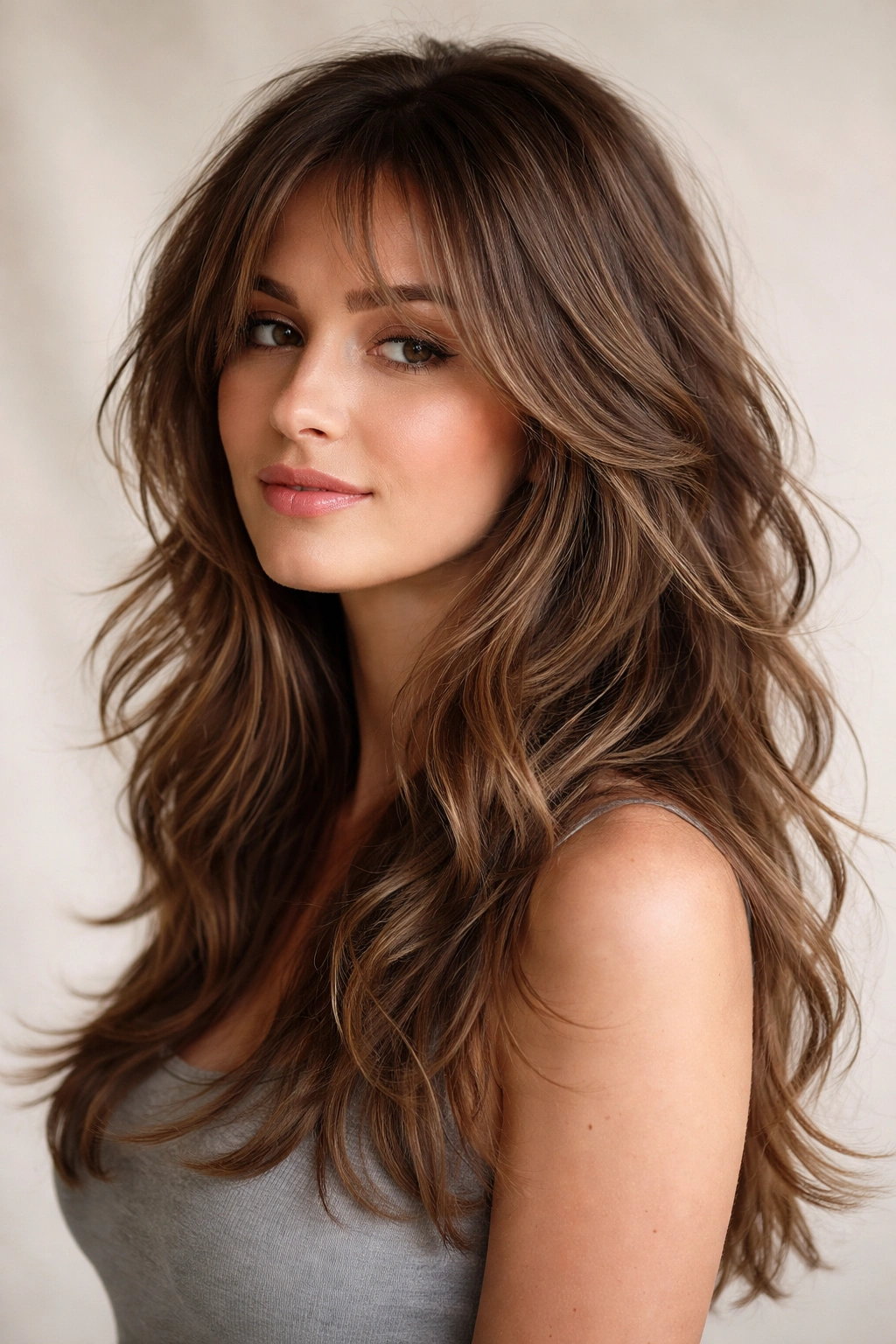
A shag is all about abundant, face-framing layers that start higher up (often around the ears or cheekbones) and progressively get longer as you move down. The waves in a shag haircut are meant to be soft and tousled, almost like bedhead but intentional and polished. For round faces, a shag works because those face-framing layers create angles and movement right at the widest part of your face, instantly making it appear more sculpted.
How It Addresses Round Face Proportions
The shorter face-framing layers in a shag cut create a visual lifted effect that elongates the face, while the longer underneath sections add length and flow. Soft waves through the entire cut prevent the layers from looking too sharp or severe, maintaining that approachable, effortless vibe. The shag’s inherent movement means your hair is never flat against your face, which is exactly what you want with a round face shape.
Styling Tips That Make It Work
- Apply waves with a curling iron or wand by wrapping sections away from the face, then tousling with your fingers for that signature undone shag texture
- Dry shampoo on days two and three enhances the texture and prevents the shag from looking limp
- The beauty of a shag is that it actually looks better when it’s slightly messy and piece-y rather than perfectly polished
- Get trims every 8-10 weeks to maintain the layering pattern, especially the face-framing pieces
3. The Long Layered Cut with Ribboned Pieces
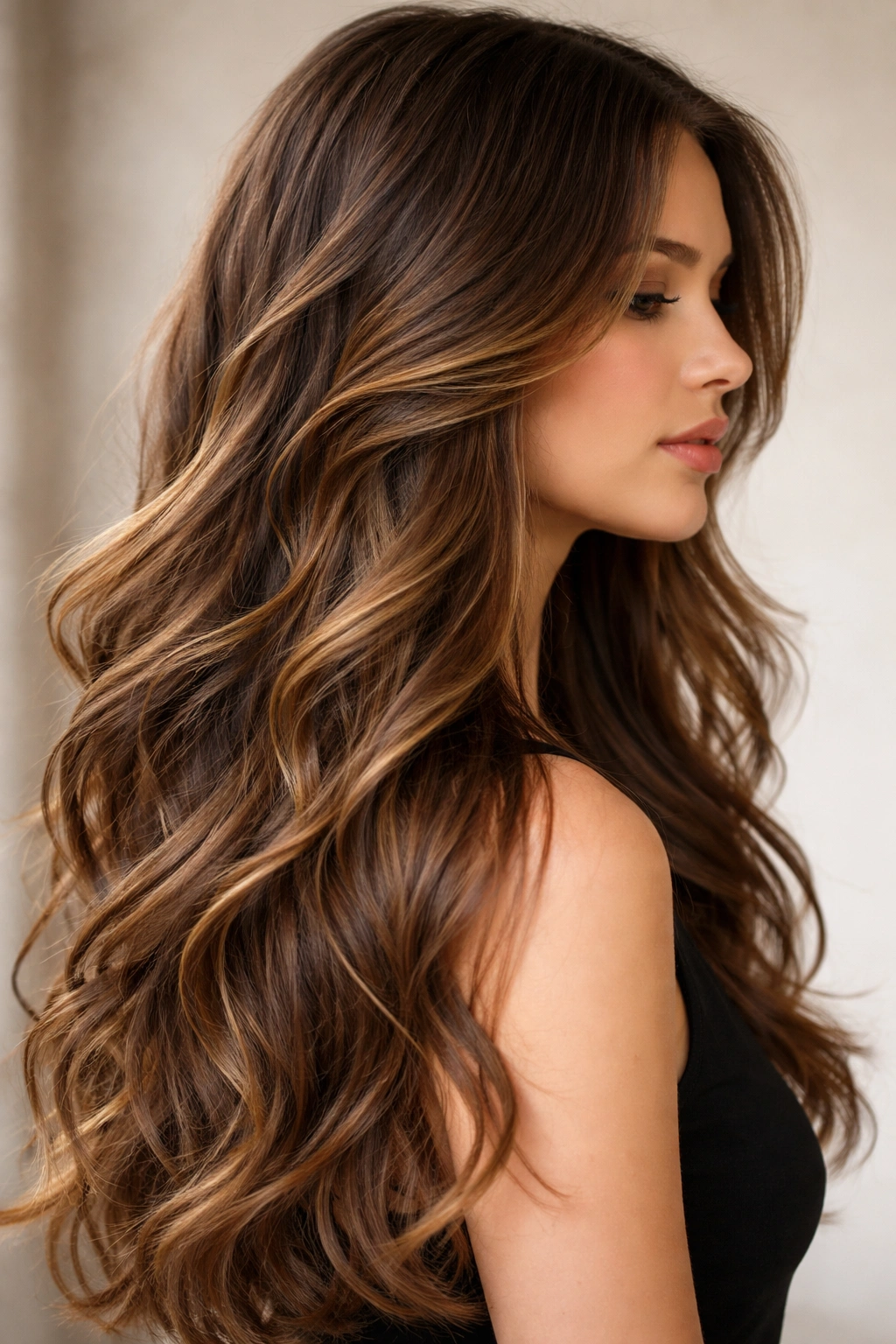
This style features long, wavy layers with a specific technique where the stylist cuts “ribbons” of shorter pieces throughout the lengths rather than creating traditional uniform layers. These ribbon pieces flutter and move independently, creating tons of texture and visual interest. For round faces, the ribbon technique is genius because it creates so many movement points that your face shape becomes secondary to the dynamic texture.
Why Round Faces Love This Cut
The ribboned pieces break up any heaviness that can come from long hair on a round face, because the hair isn’t one solid, thick length—it’s broken into shorter, fluttery sections that create visual angles. The waves through all these different-length pieces mean light bounces off the hair in multiple directions, creating dimension that elongates rather than widens. This cut genuinely works for almost every wave pattern because the technique is designed to work with texture rather than fighting it.
Maintenance and Styling Approach
- This cut actually gets better with your natural waves—the more you lean into your texture, the better it looks
- Minimal styling works here: apply a wave cream or mousse, scrunch, and air-dry or diffuse for a tousled texture
- The cut lasts well between trims because the varied lengths mean you don’t see a harsh demarcation line as it grows out
- Trim every 12 weeks to refresh the ribboned effect and keep pieces from looking too stringy
4. The Curtain Bangs with Wavy Layers
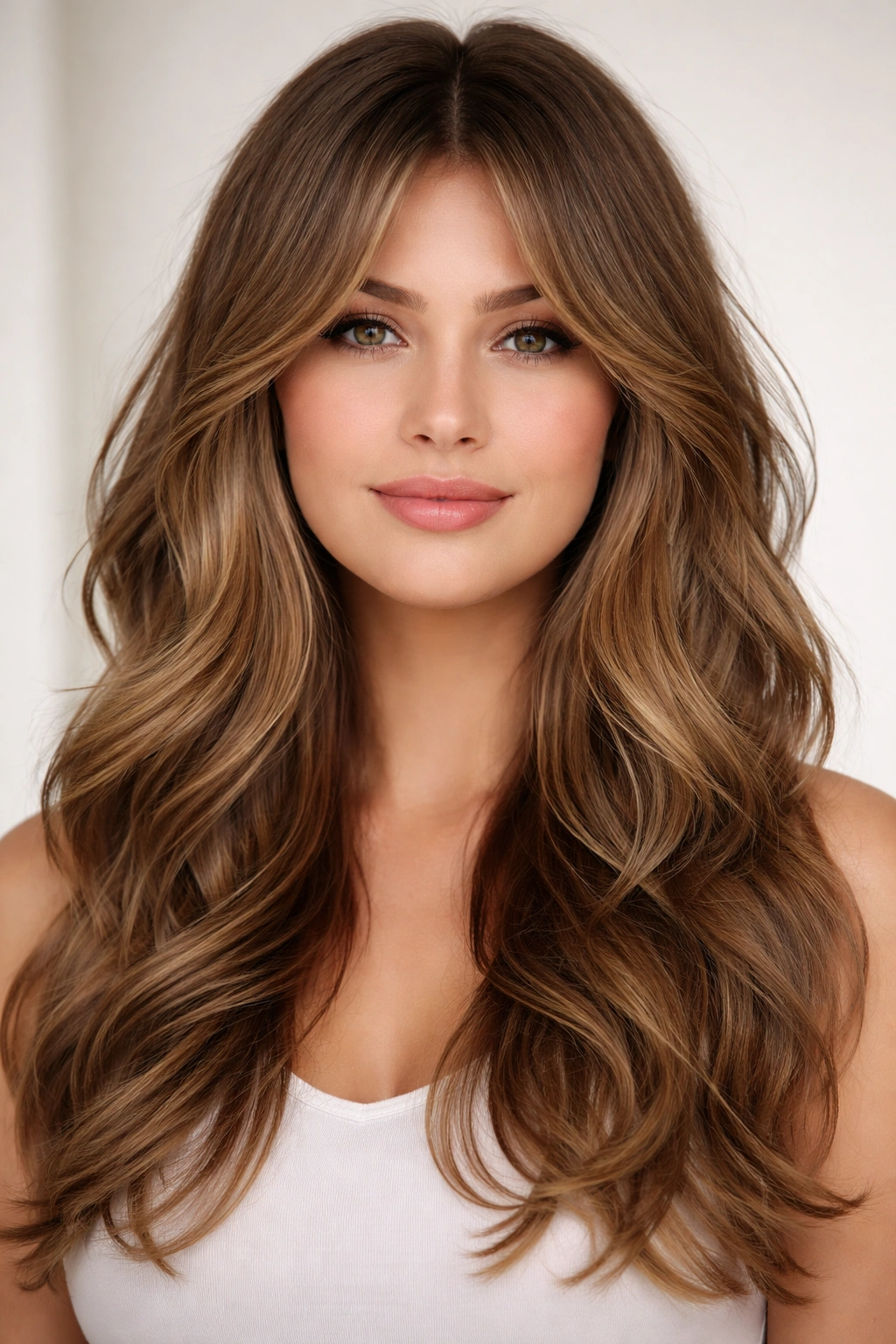
Curtain bangs—those face-framing pieces that part in the middle and sweep outward—paired with wavy layers throughout is a combination that genuinely flatters round faces. The bangs create angles at the center of your face, while the layers add movement and texture that elongates. This style has serious staying power because the face-framing element is timeless, and it works with virtually any hair texture.
How Curtain Bangs Reshape Round Faces
The central part of curtain bangs creates a lengthening line right down the middle of your face, which is a classic technique for making wider faces appear more oval. The bangs themselves are longer and feathered so they don’t sit bluntly on your forehead (which can emphasize roundness), but instead frame the upper portion of your face with soft movement. Combined with wavy layers through the lengths, the overall effect is movement and texture that pulls the eye upward and outward rather than around.
Styling and Care for This Look
- Blow-dry the bangs first, using your fingers to direct them away from your center part
- The bangs require more frequent styling than the rest of your hair to maintain that swooping shape
- Trim bangs every 4-6 weeks to maintain the length and angle—they grow quickly and can look heavy if left too long
- Use a lightweight wave cream through the layers to encourage natural waves without weighing the cut down
- The beauty of this style is that it actually looks better tousled than overly styled
5. The Mid-Length Textured Layers with Deep Waves
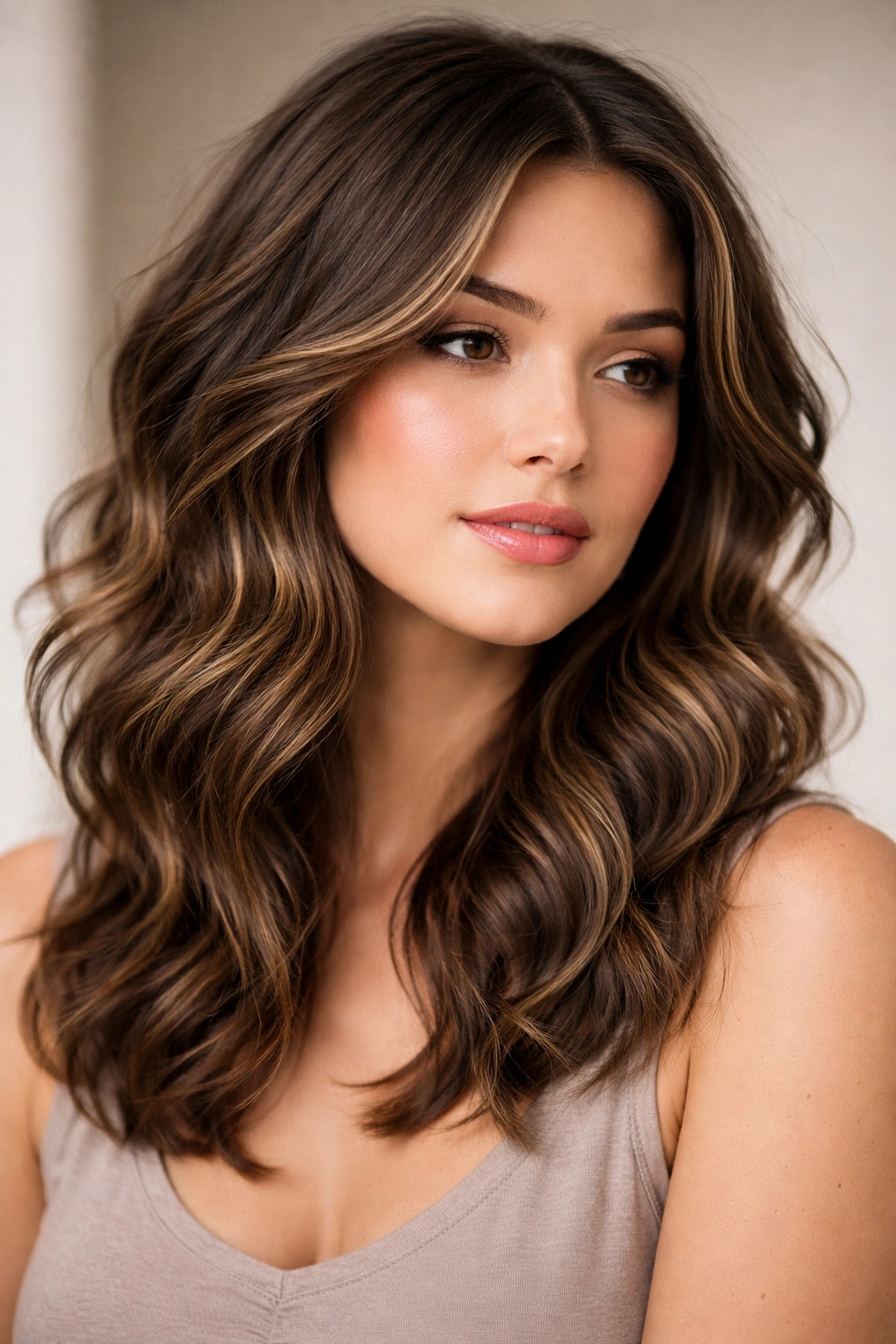
This cut sits somewhere between chin and shoulder length, with deep, pronounced waves throughout and strategic layers that begin around ear level. The waves are intentionally deep and defined rather than subtle, which means they create visual height and dimension immediately. For round faces, deep waves create an almost columnar effect that visually elongates, and the mid-length landing point avoids the trap of hair that’s too short (which can emphasize width) or too long (which can be heavy).
Why Deep Waves Transform Round Face Proportions
When waves are intentionally deep and consistent, they create a zigzag visual pattern that draws the eye vertically rather than around horizontally. This is exactly what you want for a round face. The textured layers (especially shorter pieces around the crown) add height and prevent the thick length of the hair from sitting flat, which is what rounds out a round face even more. The result is a style that genuinely looks like it elongates your face shape.
How to Create and Maintain Deep Waves
- Wave this cut using a curling iron or wand, wrapping each section tightly and leaving the curl in place for several seconds before releasing
- Use a curl-defining spray or mousse applied to damp hair before waves for longer-lasting definition
- These waves actually hold better than subtle waves because the deep pattern has more structural integrity
- Refresh waves on day two by misting with water and re-curling just the ends and lower lengths
- Trim every 8 weeks to maintain the layering and keep waves looking sharp rather than straggly
6. The Face-Framing Pixie-to-Bob Hybrid with Waves
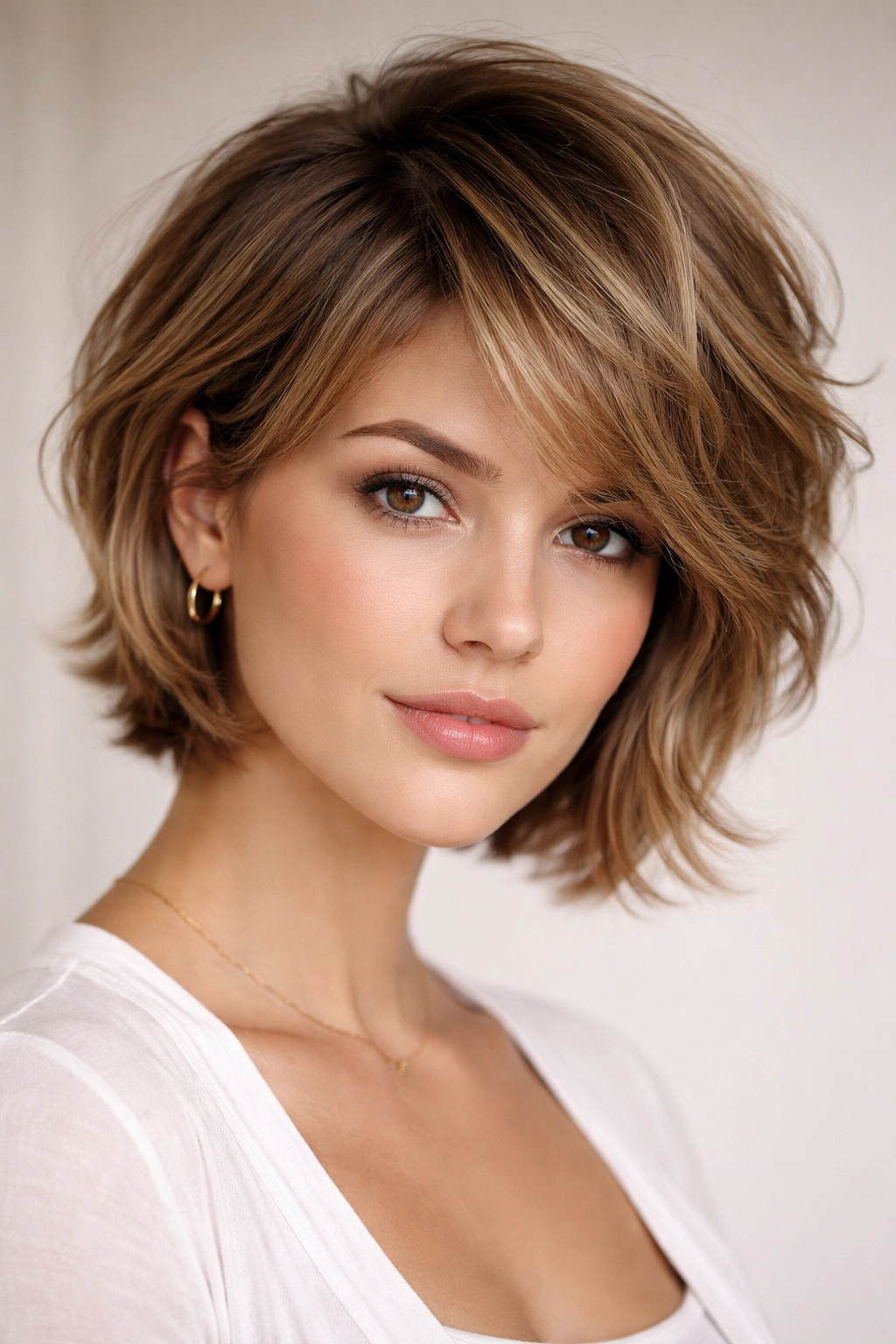
This style blends a short, textured pixie situation at the crown with longer wavy layers throughout the lengths, landing somewhere around chin or jaw level. It’s choppy and modern, with the shorter crown section creating serious height and the longer wavy underneath pieces creating flow and movement. For round faces, the height at the crown is absolutely transformative because it immediately shifts the face’s proportions.
How a Hybrid Cut Addresses Round Face Shape
The shorter pixie-like layers at the crown create a lifted, sculptural effect that visually adds height to your entire face. The longer wavy layers prevent the style from looking too severe or boyish, keeping it soft and accessible. The combination of short and long creates contrast and complexity that’s far more flattering than a simple, blunt cut. The waves through the longer pieces ensure movement rather than weight sitting flat.
Styling Strategy for This Bold Cut
- This cut requires styling—blow-dry the crown with fingers upward to enhance the height and texture
- Apply texture spray to the crown before blow-drying for extra grip and definition
- The longer wavy pieces can be styled naturally with waves or with a curling iron for more defined curls
- You’ll need trims every 4-6 weeks to maintain the sharp pixie-like crown section
- This style genuinely transforms your look and commands attention—it’s a bold choice, but incredibly flattering for the right person
7. The Long Wavy Cut with Subtle Layers and Face-Framing
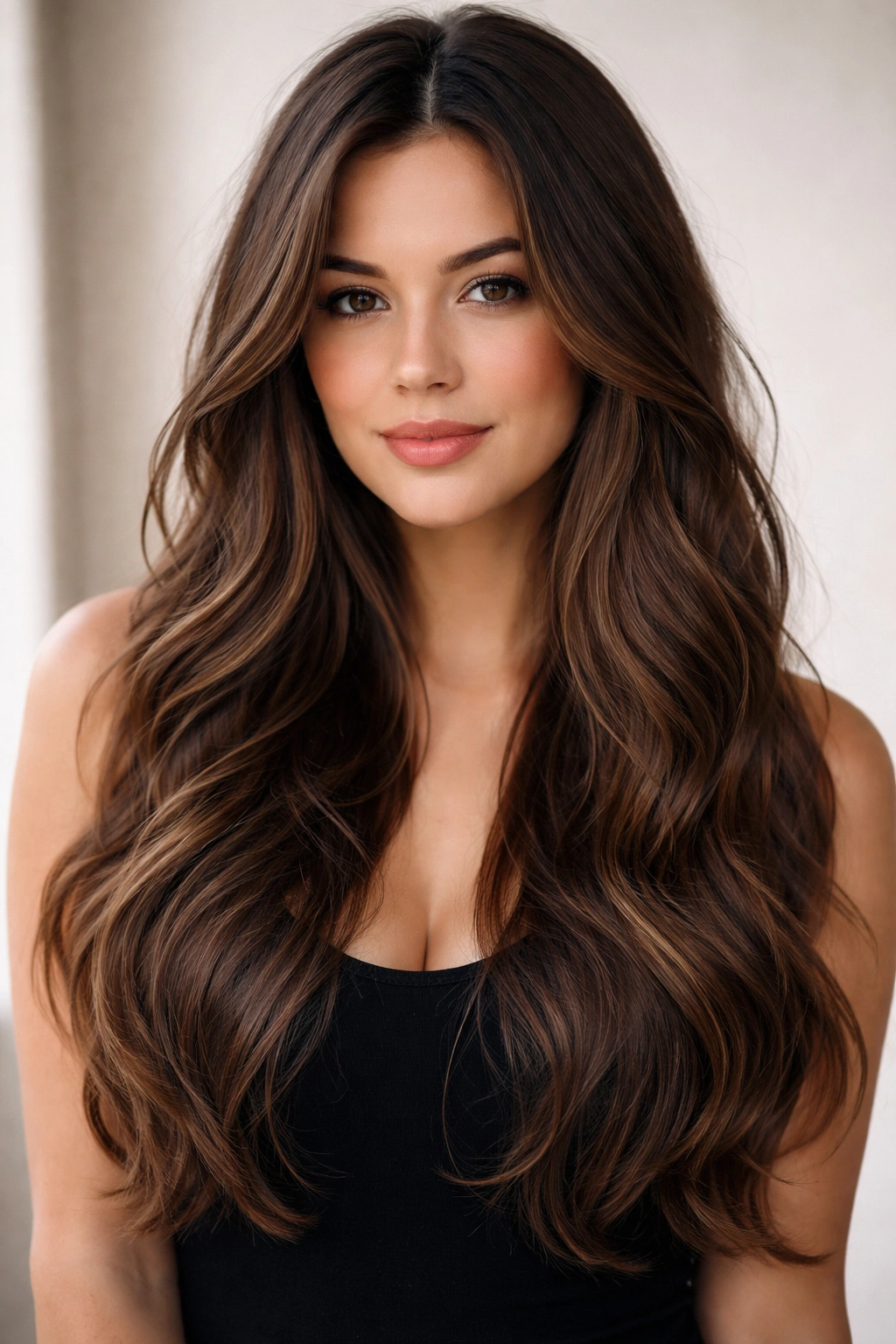
Sometimes the most flattering approach is simplicity: very long hair (mid-back or longer) with subtle layers that primarily frame the face and blend throughout the lengths, paired with soft, natural-looking waves. This style doesn’t rely on choppy texture or architectural layering, but rather on length, movement, and strategically placed shorter pieces around the hairline. For round faces, the extreme length provides elongation, and the face-framing pieces create angles right where you need them.
Why Subtlety Works for Round Face Shapes
Long hair automatically elongates your face visually, and the subtle layers ensure the length doesn’t become a heavy, flat curtain. The face-framing pieces are shorter and more textured than the rest, creating movement and dimension at your cheekbones and jawline. Soft waves throughout keep the entire style from feeling weighed down or severe. This approach is less trendy and more timeless, meaning you can wear it for years without it feeling dated.
Caring for Long Layered Waves
- Long hair requires more frequent conditioning to prevent the ends from looking scraggly, especially with layers
- Waves in very long hair often need a curling iron or wand styling because gravity works against natural waves the longer the hair gets
- Use a lightweight, hydrating leave-in conditioner through the lengths, focusing on the ends
- Trim every 10-12 weeks, removing just enough to eliminate dead ends while maintaining your length
- Sleep waves often look better on second or third day, so don’t worry if first-day waves aren’t perfect
8. The Blunt Lob with Chunky Layers and Waves
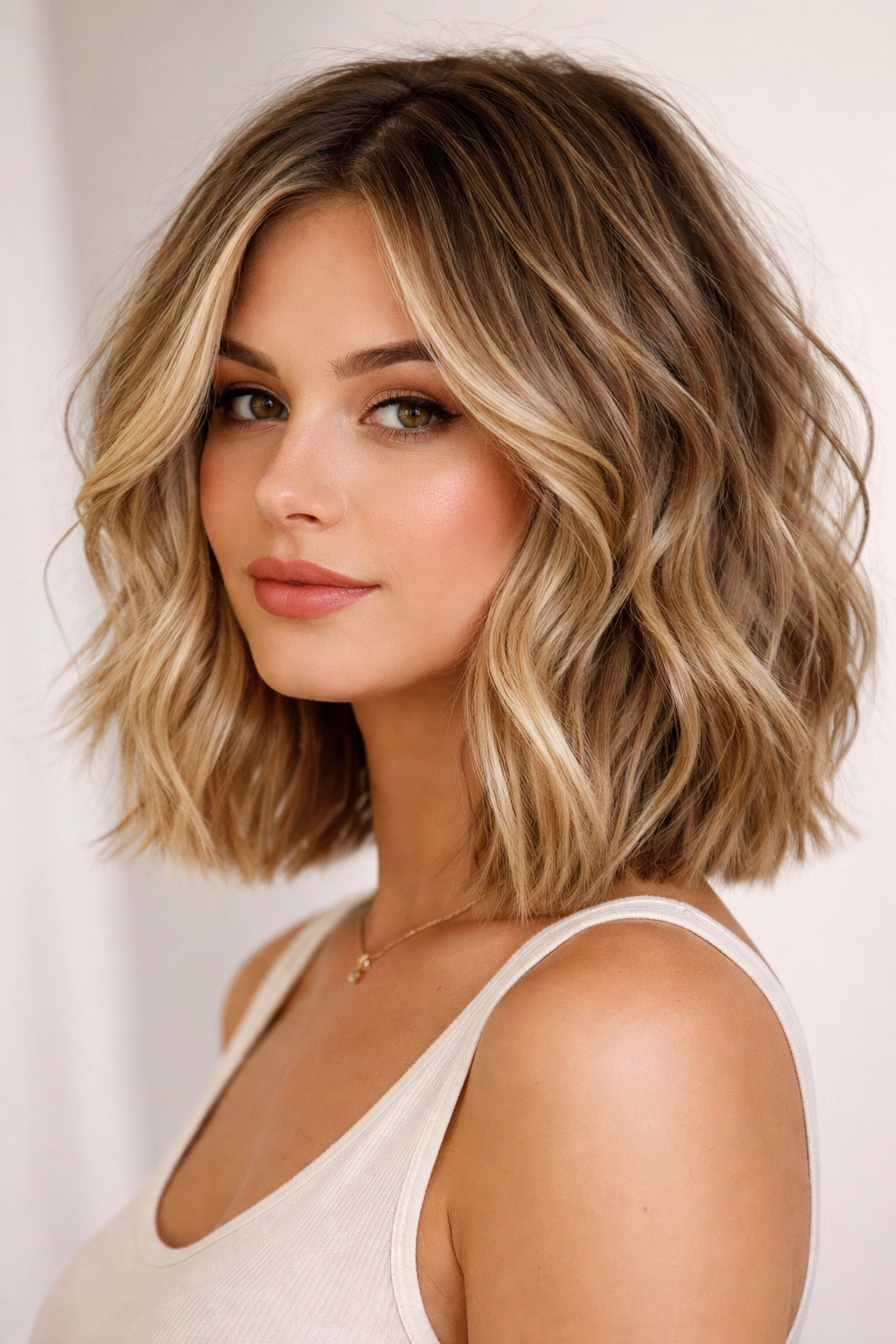
A lob (long bob, usually chin-length or slightly longer) paired with chunky, disconnected layers creates a modern, architectural cut that’s surprisingly flattering for round faces when done right. The chunks are deliberate, separated pieces rather than uniform, blended layers, and waves are worked throughout. The blunt perimeter at the bottom combined with the choppy layers creates a cut that’s both strong and soft simultaneously.
How Chunky Layers Reshape Round Face Proportions
The chunky layers create movement and angles rather than one solid weight of hair, which is what you want to avoid with a round face. The blunt perimeter creates a defined line that adds structure, while the chunky layering prevents that structure from feeling harsh. Waves amplify the separation between chunks, making each layer visible and distinct. The result is a cut that looks modern and intentional rather than simply grown out.
Styling and Maintenance Requirements
- Blow-dry by sections, using a round brush to curve the ends slightly outward (not under, which would emphasize roundness)
- Apply a wave cream to damp hair before drying for natural-looking texture
- Use a flat iron on just the perimeter to keep the blunt line crisp, or let it wave naturally depending on your preference
- Trim every 6-8 weeks to maintain the blunt line and chunky layer definition
- This cut looks best with intentional styling rather than just throwing it in a ponytail
9. The Modern Shag with Longer Length and Soft Waves
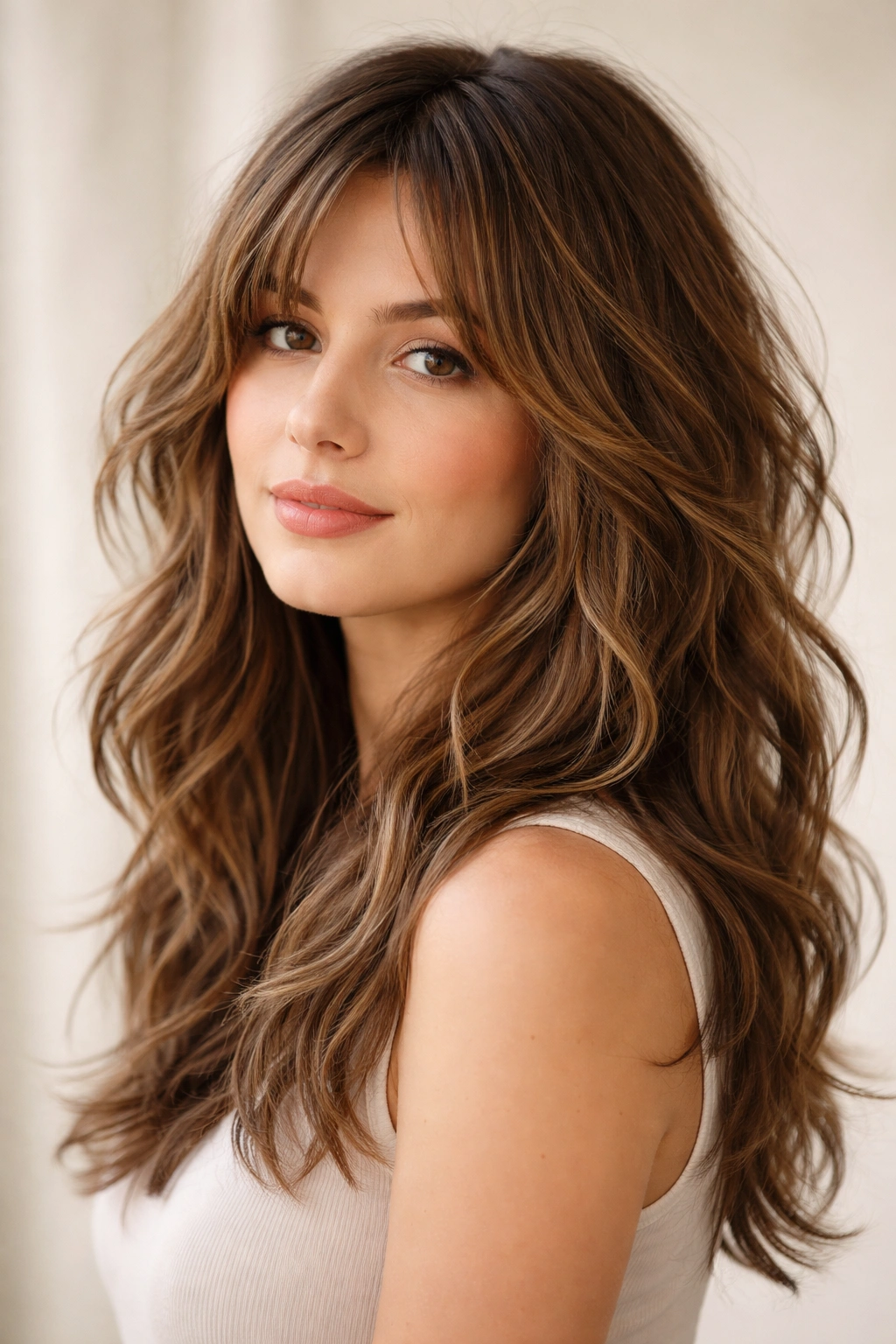
This updated take on a shag features longer overall length (past shoulder) with abundant layers that start higher up and create tons of movement throughout. The waves are soft and romantic rather than rock-and-roll-textured, giving it a more contemporary feel than a ’70s-inspired shag. For round faces, the length and layering create that crucial elongation, and the soft waves keep it from looking too edgy or severe.
Why Modern Shags Flatter Round Face Shapes
The modern shag’s key advantage for round faces is the combination of length and abundant layering—you get elongation from the length without the weight, because the layers prevent it from sitting flat. The soft waves mean the hair moves away from your face rather than framing it closely, which is exactly what you want. The shag’s inherent texture means it rarely looks too blunt or severe, maintaining an approachable, effortless vibe while still being flattering.
How to Achieve and Maintain Modern Shag Waves
- Waves in a modern shag work best with a combination of natural texture and styling—if you have naturally wavy hair, you’re halfway there
- Use a curling iron to add waves to air-dried or blow-dried hair, focusing on the face-framing pieces and mid-lengths
- Dry shampoo is your friend with a shag—it enhances texture and prevents the style from looking limp by day two or three
- Trim every 8-10 weeks to maintain the layering pattern without the entire cut growing out and losing definition
- The shag actually looks better when it’s slightly undone rather than perfectly polished
10. The Wispy Layers with Long Waves
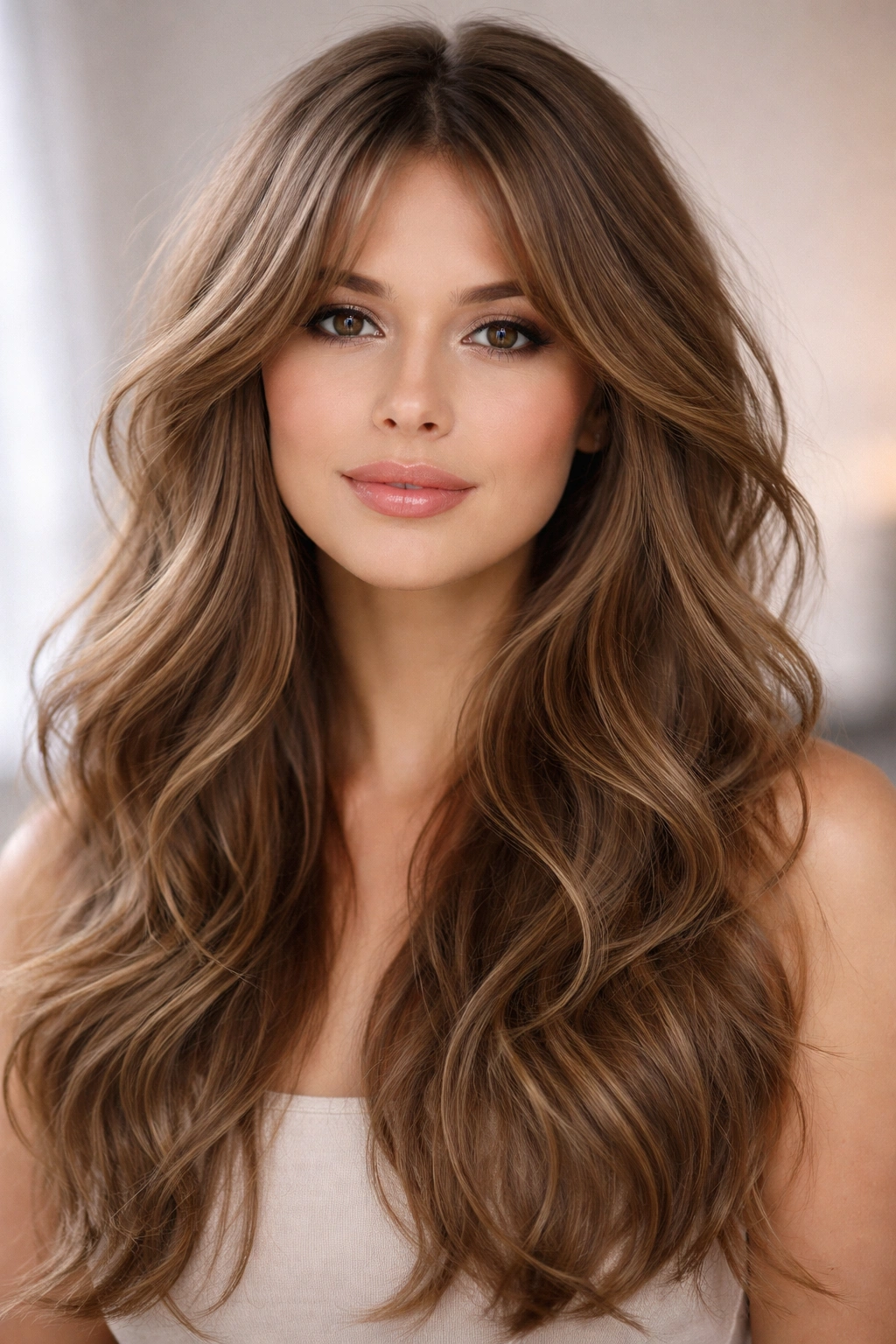
Wispy layers are shorter, more delicate pieces distributed throughout your hair (especially around the face and crown) that create an incredibly soft, feathered texture. Combined with long, flowing waves throughout, this creates a romantic, ethereal aesthetic that’s remarkably flattering for round faces. The wispy pieces break up any heaviness, while the waves create movement and flow that elongates.
Why Wispy Layers Transform Round Face Appearance
Wispy layers are especially flattering for round faces because they’re short enough to create height and texture at the crown without being so short that they draw attention to face width. The pieces flutter and move independently, creating angles and dimension rather than one solid shape. Long waves through everything ensure that the wispy texture doesn’t look stringy or thin—instead, it looks intentional and romantic. The overall effect is softness and movement rather than weight and width.
Styling Approach for Wispy Waves
- Wispy layers look best with enhanced waves—air-drying typically won’t give you enough definition
- Use a curling iron or wand to create waves throughout, especially the wispy pieces (they curl more easily because they’re shorter)
- Apply a light wave spray or texturizing spray before styling to help waves hold longer
- This cut requires regular trims every 6-8 weeks because wispy pieces get stringy quickly as they grow out
- A light styling cream or serum through the mid-lengths and ends prevents the wispy texture from looking dry or frizzy
11. The Textured Bob with Wavy Layers and Angled Front
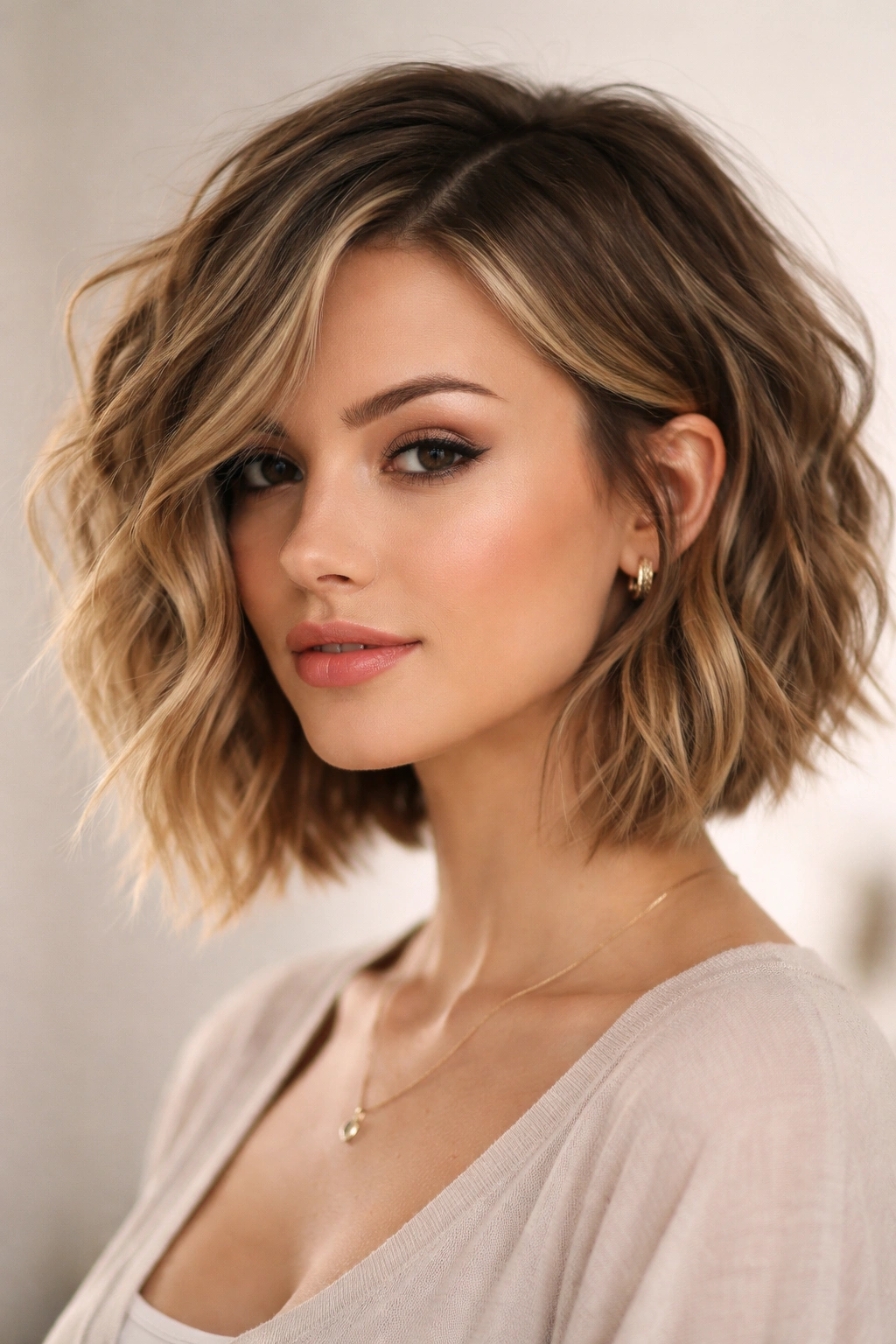
A textured bob sits around chin length with multiple layers throughout that create choppy texture, and an angled front section that’s slightly shorter on one side. Waves run through everything, and the angled front creates a directional movement. For round faces, the angle creates a visual line that elongates, while the textured layers ensure no one length sits flat or heavy against your face.
How an Angled Front Reshapes Round Face Proportions
The angled cut creates a diagonal line that draws the eye downward and to the side, visually lengthening your face. The shorter side of the angled front creates asymmetry, which breaks up the symmetry of a round face beautifully. The textured layers throughout prevent the bob from looking blunt or heavy, and the waves amplify the movement created by the angle. This is a bold, modern cut that genuinely transforms how your face shape reads.
Styling and Maintenance for an Angled Textured Bob
- Blow-dry the angled front in the direction you want it to sit (usually away from your face)
- The shorter angle requires slightly more styling attention to maintain its shape
- Apply waves with a curling iron, paying special attention to creating waves in the shorter front section
- Trim every 5-6 weeks to maintain the angle and the textured layers
- This cut looks best when intentionally styled rather than just air-dried
12. The Piece-y Layers with Tousled Waves
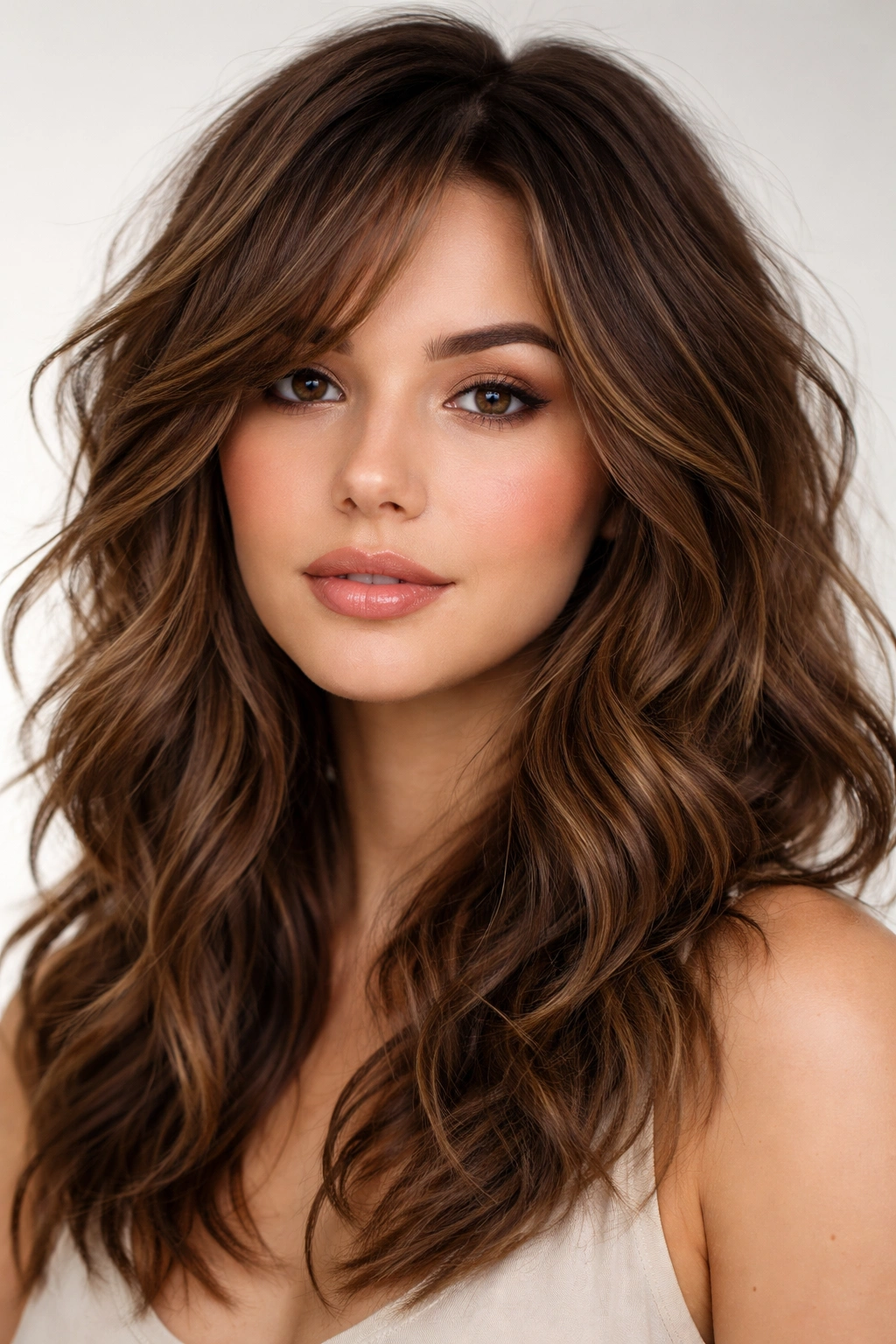
Piece-y layers are cut in a way that makes individual pieces of hair visually distinct and separate from one another, creating a hyper-textured, almost undone aesthetic. When combined with tousled waves, this creates the illusion of effortless texture and movement. For round faces, the piece-y technique is ideal because it breaks up the face’s soft outline with so much dimension and visual interest that the roundness becomes secondary.
Why Piece-y Layers Are Ideal for Round Faces
Piece-y layers create visual chaos (in a good way) that distracts from face shape. The technique deliberately separates sections of hair so they move independently rather than as one unit, which prevents the heavy, flat appearance that can emphasize roundness. Tousled waves through piece-y layers amplify this effect—every piece waves at a slightly different angle, creating depth and dimension. The result is a style that looks lived-in and textured rather than structured and defined.
How to Achieve and Maintain Piece-y Waves
- Piece-y waves look best with a combination of air-drying and deliberate tousling—don’t try to create perfect, uniform waves
- Apply a texturizing spray to damp hair and scrunch with your hands while air-drying or diffusing
- Use a curling iron loosely to add waves, then break them up with your fingers rather than leaving them perfectly spiraled
- Dry shampoo is essential for maintaining the piece-y texture—it adds grip and prevents everything from looking sleek and flat
- Trim every 8 weeks to maintain the piece-y cutting technique
13. The Long Textured Layers with Face-Framing Pieces and Waves
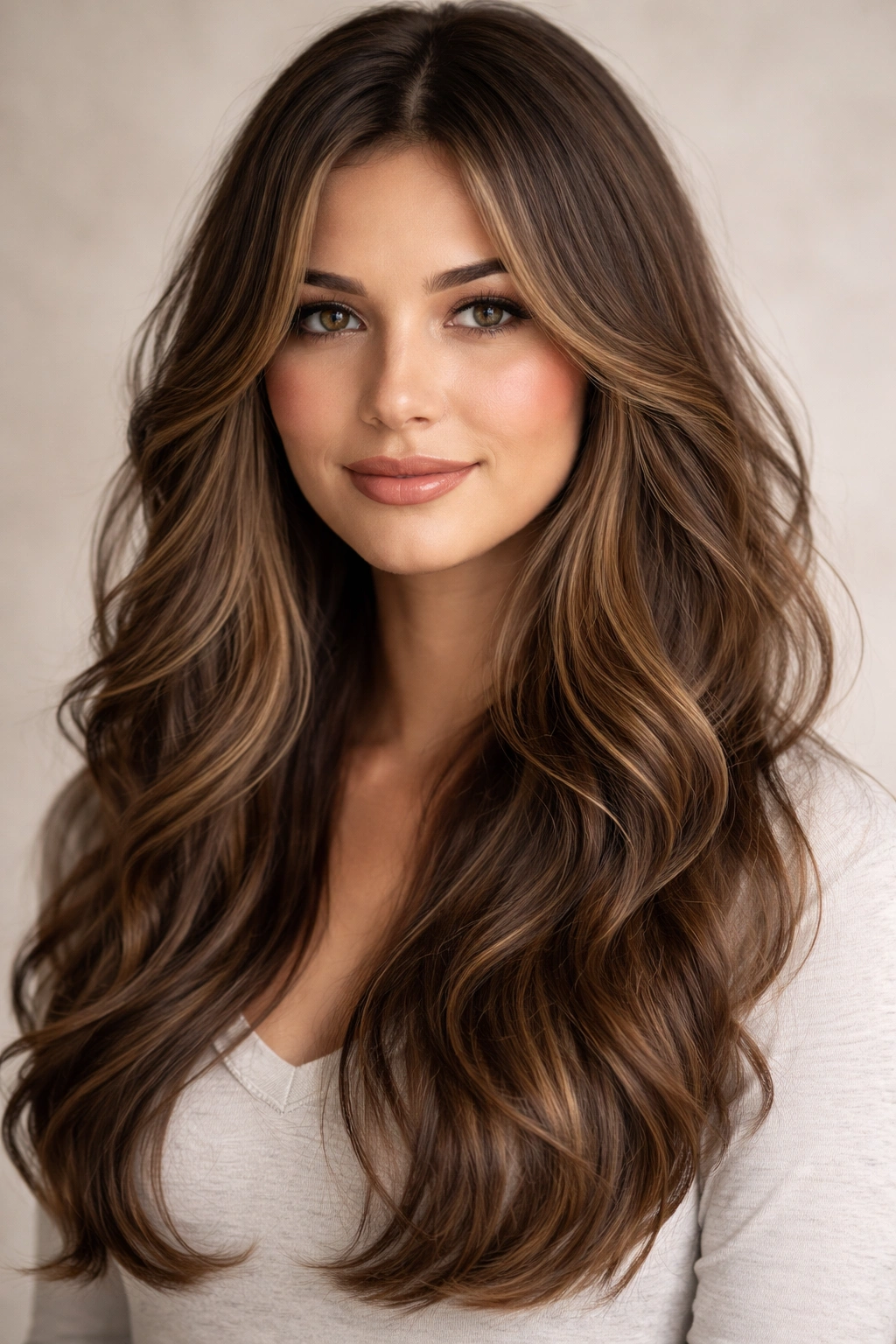
This style features long hair (past shoulder) with strategic layers that begin around the ears or cheekbones and create texture throughout, plus specially cut face-framing pieces that are a few inches shorter. The waves are intentional and defined rather than subtle. For round faces, the face-framing pieces create angles right at your widest points, while the long length ensures elongation.
How Face-Framing Pieces Specifically Address Roundness
Intentionally cut face-framing pieces that are shorter than your main length create a visual frame that draws the eye inward and downward, elongating your face shape. The textured layers prevent the longer underneath sections from becoming one heavy, flat curtain. Defined waves throughout ensure the entire style moves away from your face rather than hugging it. The combination creates the perfect balance of length (for elongation) and texture and framing (for flattering shape).
Styling and Care for Long Textured Layers
- Blow-dry the face-framing pieces first, directing them away from your face
- Apply waves throughout the rest of the hair using a curling iron or wand
- Use a lightweight wave cream to encourage your natural waves and enhance the textured layers
- Long hair requires trims every 10-12 weeks to maintain the face-framing pieces and keep ends from looking scraggly
- Use a hydrating, lightweight conditioner throughout the lengths to prevent the textured layers from appearing dry
14. The Shoulder-Length Cut with Choppy Crown Layers and Soft Waves
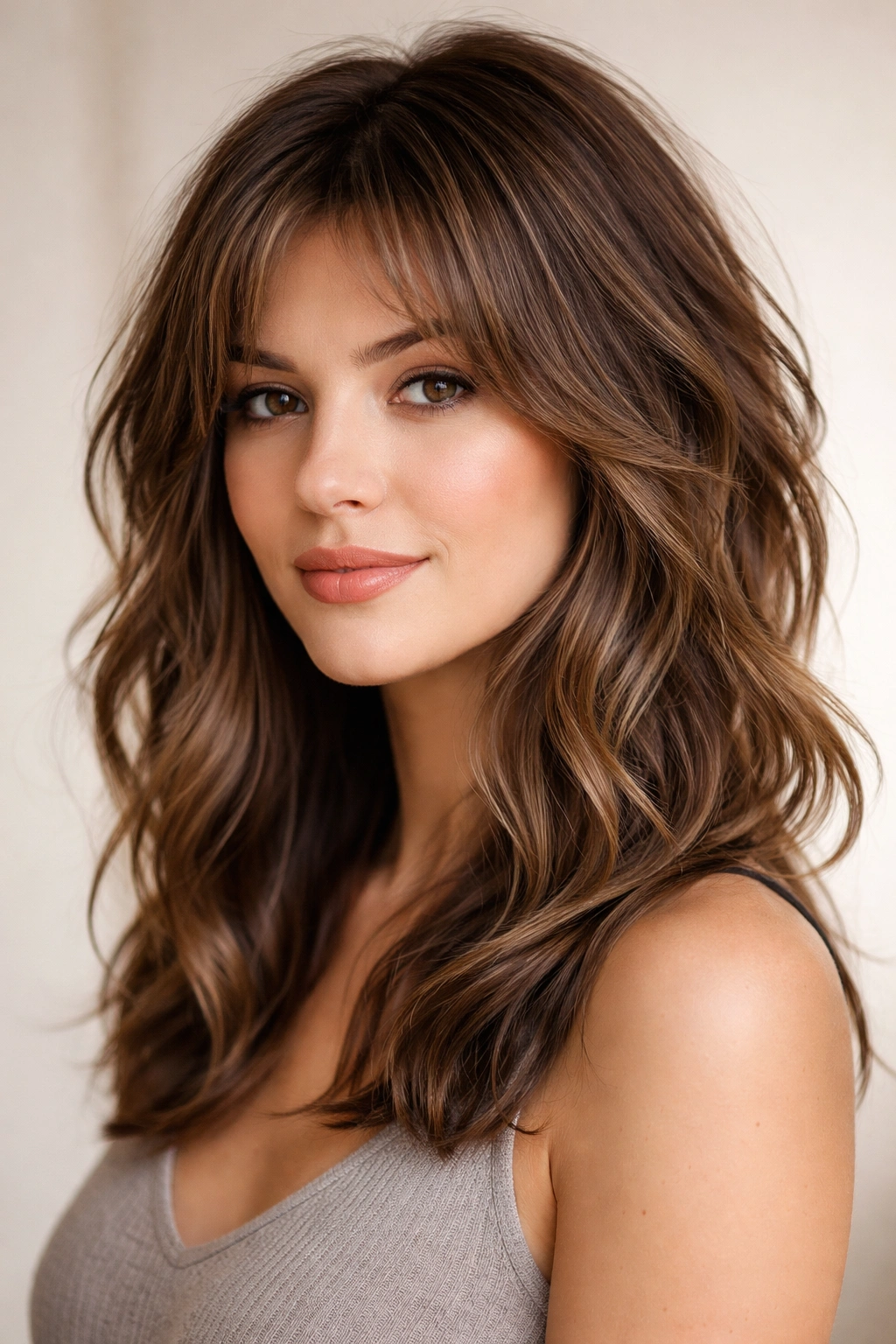
This cut pairs shorter, choppy layers at the crown (for height and texture) with a softer layered approach through the mid-lengths and longer underneath sections. The overall landing point is around shoulder length, and soft waves run throughout. The contrast between the choppy crown and softer lengths creates visual interest and movement. For round faces, the crown height immediately changes face proportions.
Why Crown Height Transforms Round Face Shapes
The choppy crown layers create lift and texture that visually adds height to your face, which is exactly what you need to elongate a round shape. The softer layered approach through the rest prevents the style from looking too harsh or severe. Soft waves throughout ensure the whole cut feels accessible and approachable rather than edgy. The shoulder-length landing point is the sweet spot for avoiding both the “too short” trap and the “too heavy” trap.
Achieving and Maintaining This Cut
- Blow-dry the crown with your fingers, lifting upward to maximize the height and texture
- Apply texture spray to damp hair before blow-drying for extra grip
- Waves throughout can be natural or created with a curling iron, depending on your hair texture
- Trim every 6-8 weeks to maintain the choppy crown section and keep the overall shape defined
- This cut genuinely looks better slightly tousled than overly polished
15. The Beachy Layers with Loose Waves and Longer Length
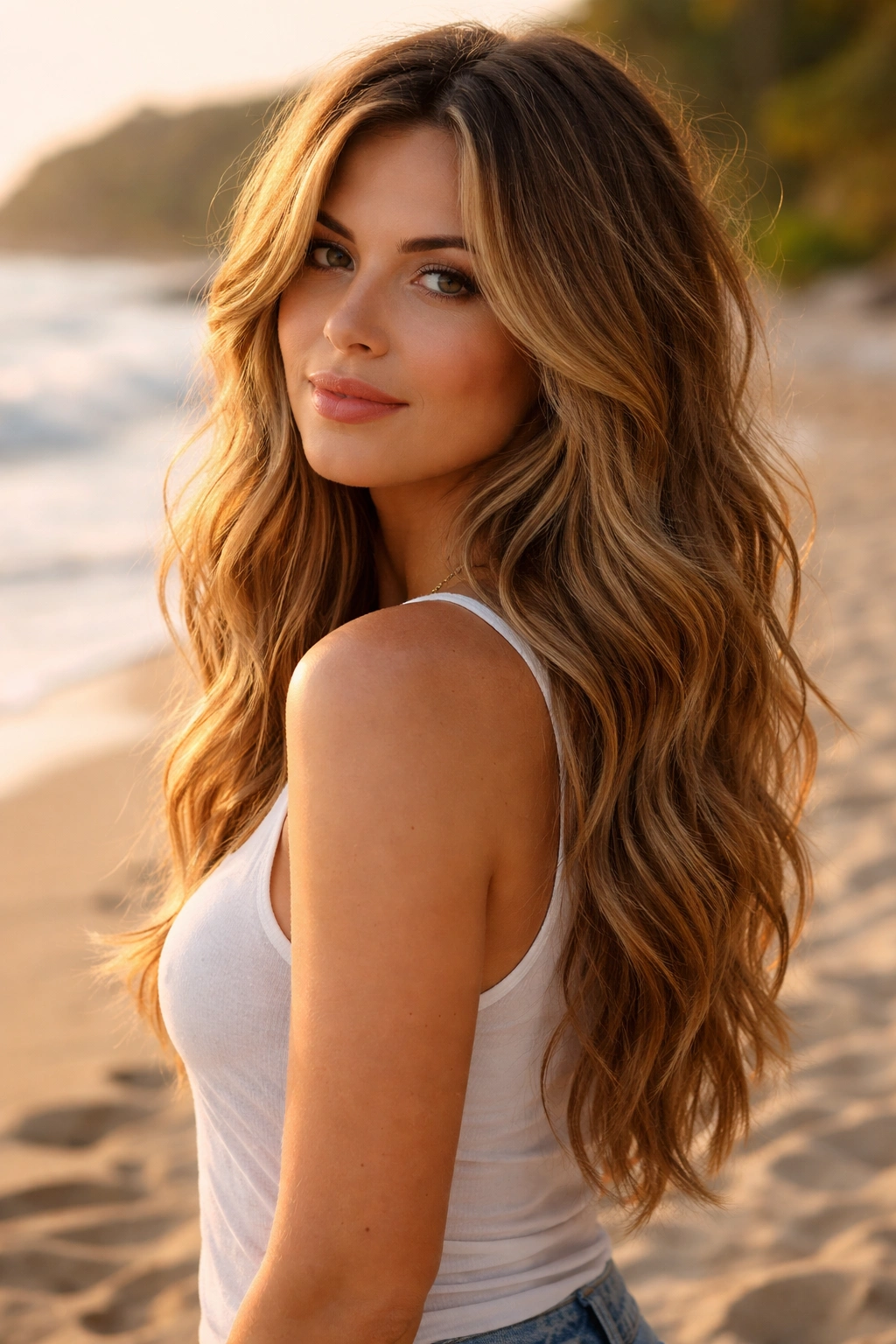
This style embraces a beachy, vacation-hair aesthetic with longer length (past shoulder), abundant soft layers throughout, and loose, effortless-looking waves. There’s nothing choppy or architectural about it—the layers blend smoothly and the waves look like they happened naturally in the ocean. For round faces, the combination of length and soft movement creates elongation without any harsh lines or severe structure.
How Loose Waves Elongate Round Faces
Loose waves create a gentle, flowing movement that pulls your eye downward and creates visual length. Unlike choppy layers that create angles, beachy layers create softness and flow, which is flattering for round faces in a completely different way—it’s romantic and approachable rather than modern and edgy. The longer length combined with abundant soft layers ensures the style never sits flat or heavy. The effect is effortlessly elongating without trying too hard.
Styling and Maintaining Beachy Waves
- Beachy waves look best with texture spray applied to damp hair, scrunched in by hand
- You can air-dry with texture spray for a truly effortless look, or use a diffuser and light blow-dry
- Create looser waves with a curling iron or wave iron by using wider sections and lighter pressure
- Refresh waves on day two or three by spritzing with water and texture spray, then scrunching
- Trim every 10-12 weeks to maintain the blended layers—harder to see grow-out in beachy layers than choppy ones
- Sleep waves often look better than day-one waves with this style, so don’t style it too tightly before bed
16. The Feathered Layers with Cascading Waves
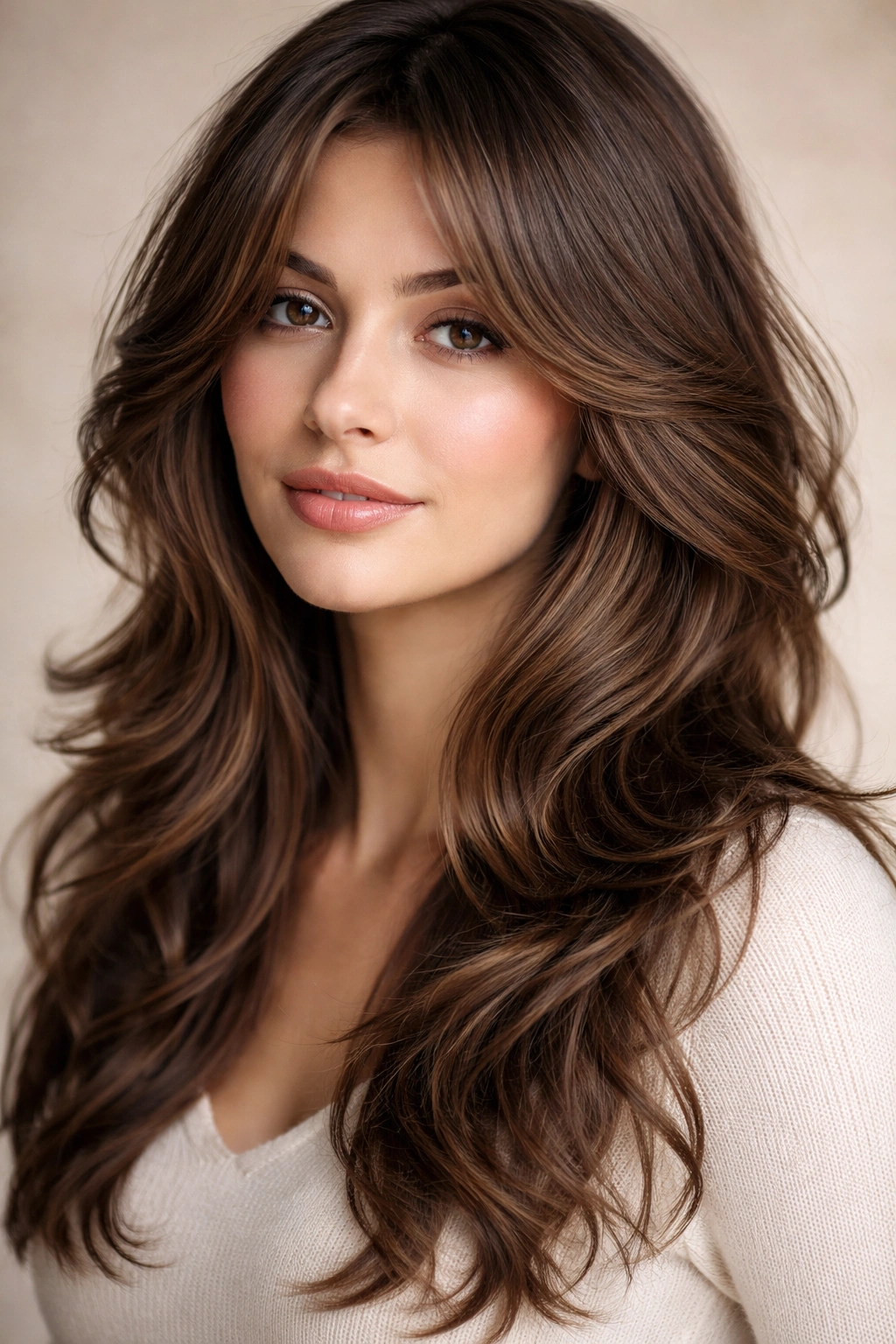
Feathered layers are cut so the outer edges of each layer are shorter and gradually taper to longer pieces underneath, creating a feathered appearance where each layer seems to cascade into the next. Combined with cascading waves that flow from crown to ends, this creates a romantic, almost mermaid-like aesthetic. For round faces, the feathered technique creates soft angles that flatter while the cascading waves ensure movement and elongation.
Why Feathered Layers Flatter Round Face Shapes
Feathering creates subtle angles and texture without being choppy or harsh, which makes it ideal for round faces that need flattering without looking severe. The technique creates automatic movement because each layer feathers outward slightly, pulling hair away from your face naturally. Cascading waves amplify this effect, creating a flowing visual line that elongates. The overall aesthetic is soft and feminine while still being structured and intentional.
Creating and Maintaining Feathered Waves
- Feathered layers work beautifully with natural waves because the technique is designed to enhance texture
- Apply a light wave cream or mousse to damp hair and scrunch for natural-looking waves
- Use a curling iron to create cascading waves by curling away from your face on both sides, then downward through the lengths
- Trim every 8-10 weeks to maintain the feathering technique and keep the layers from blending together as they grow
- This cut actually improves as your hair gets slightly longer because the feathering becomes more pronounced
Final Thoughts
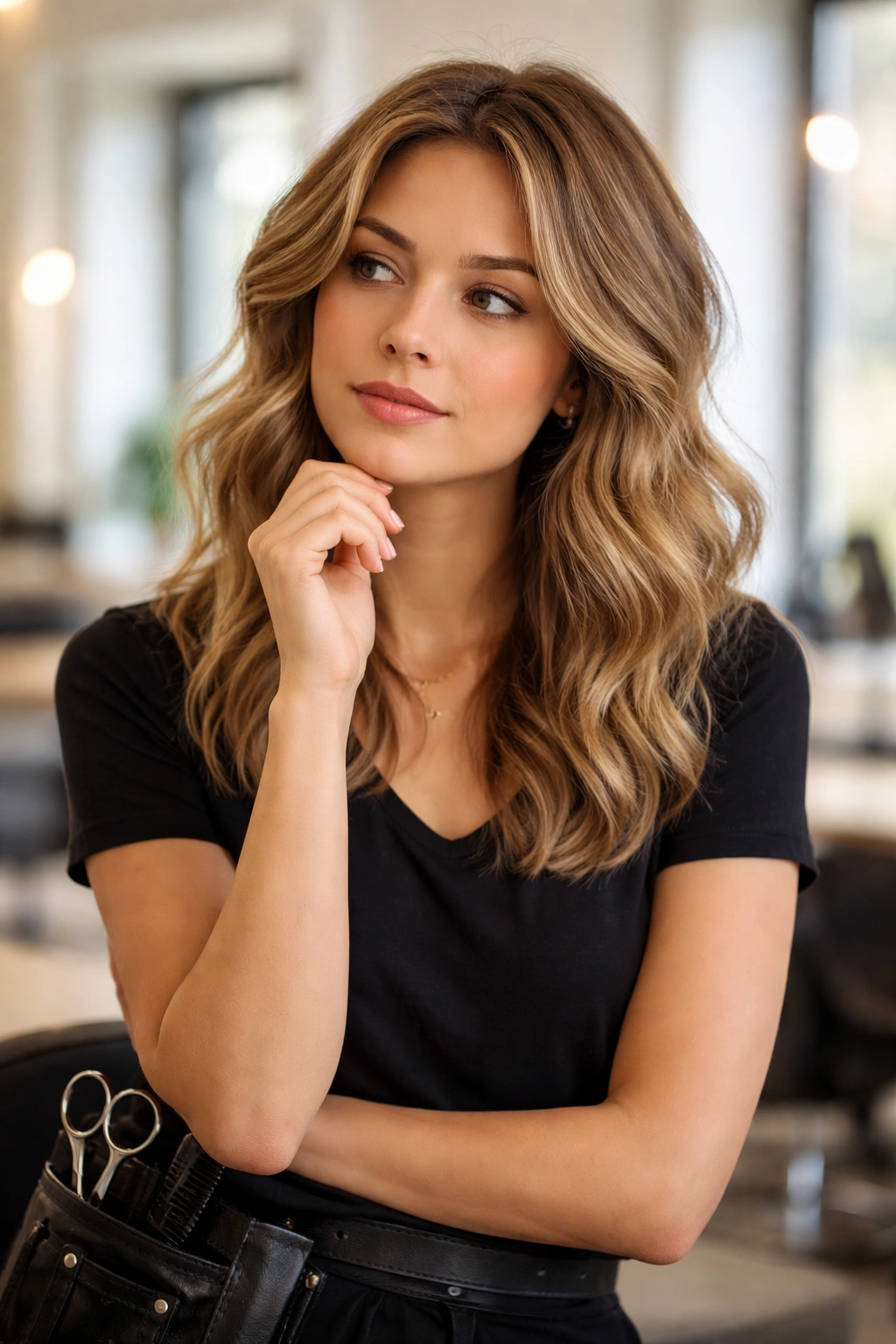
Choosing a wavy layered haircut for a round face comes down to understanding what you want the cut to accomplish: do you need height at the crown, angles around your face, length through the overall style, or a combination of all three? The best cut for you depends on your natural hair texture, how much styling you’re willing to do daily, and what aesthetic resonates with you—whether that’s modern and textured, romantic and soft, or bold and architectural.
The most important principle is that layers and waves work together to create movement and break up the solid appearance of hair sitting flat against a round face. Whether you choose a choppy, textured approach or something softer and more feathered, the key is ensuring nothing feels heavy, nothing sits completely flat, and your face is framed in a way that creates visual elongation.
Bring reference photos to your stylist showing specifically what you like about each cut—the length, the type of layers, the wave pattern. Discuss your hair texture, how much time you’re willing to spend styling, and your lifestyle. A great stylist can customize any of these cuts to work perfectly with your hair’s natural wave pattern and your daily routine. The moment you find the right cut is transformative—you’ll understand why wavy layered haircuts are genuinely the most flattering choice for round faces.
