



A perfectly polished ponytail is one of those deceptively simple styles that separates effortless-looking elegance from an afterthought grab-and-go situation. The difference between a “just threw my hair up” moment and a sophisticated, intentional style often comes down to small technical details—the placement, the texture, how you secure it, the finishing touches. When these elements align, a ponytail stops looking casual and starts looking like the kind of polished hairstyle you’d see on someone who’s genuinely put thought into their appearance.
The luxury factor in a great ponytail isn’t about expensive extensions or complicated techniques. It’s about precision, intentional texture, strategic placement, and the kind of refined details that signal confidence and care. A sleek ponytail that costs nothing to create can look just as upscale and considered as any expensive salon service—sometimes even more so, because it’s tailored specifically to your hair type and face shape rather than following a generic template.
What follows are fifteen ponytail styles that have that expensive, carefully curated aesthetic. Some are polished and minimalist, others play with texture and dimension. Some work best for thick hair, others for fine or medium textures. Each one includes the specific techniques that elevate it from ordinary to genuinely impressive, so you’ll know exactly what creates that high-end appearance instead of guessing why a style doesn’t quite land.
1. The Glass-Smooth High Ponytail
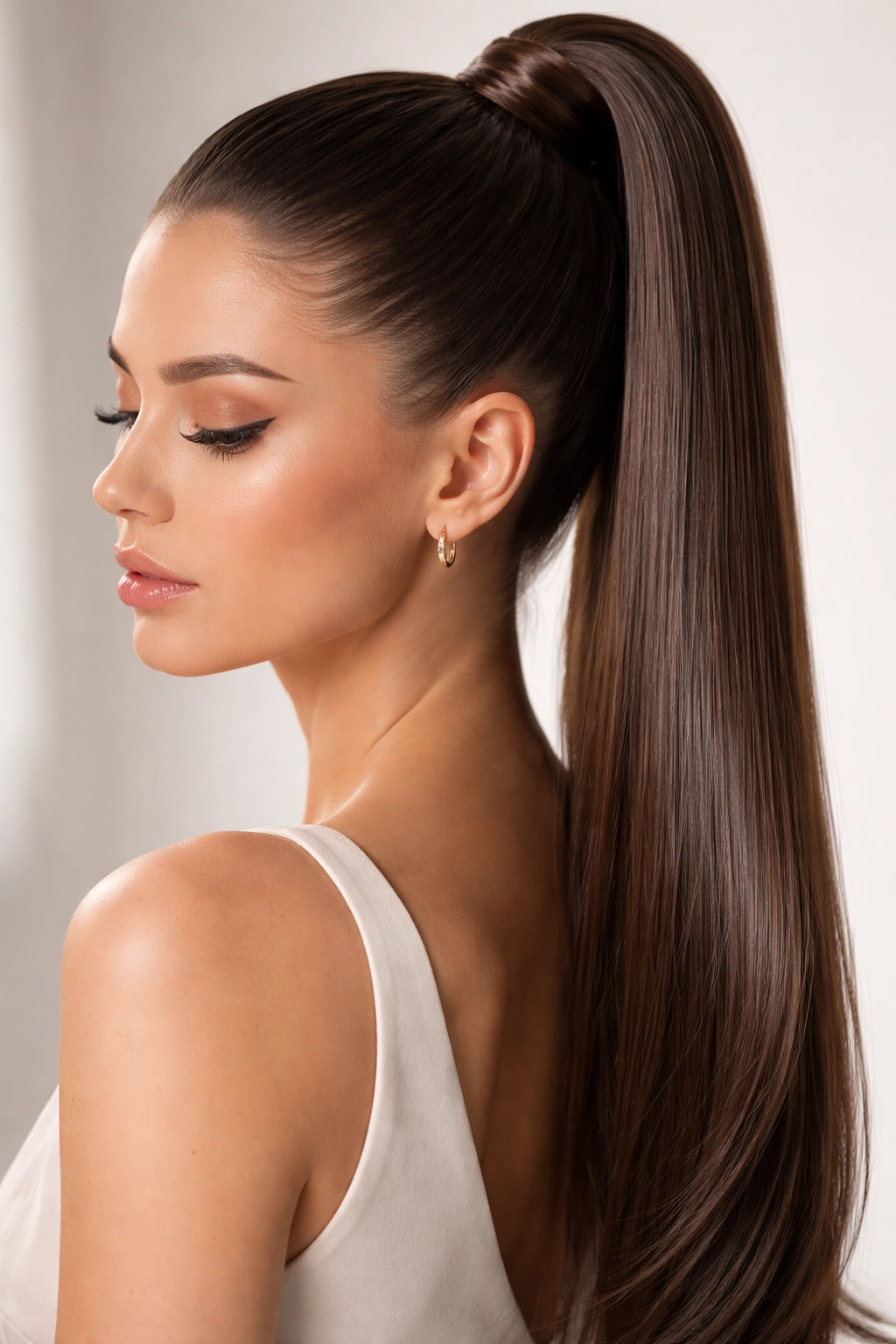
A genuinely sleek high ponytail is harder to execute than most people realize, which is exactly why it reads as polished and intentional. This style sits at the crown of your head with absolutely no flyaways, bumps, or texture irregularities visible—just a clean, smooth base that catches light. The hair appears to be one unified, glossy element rather than individual strands, and the tail itself has weight and movement despite its slickness.
Why It Reads as Luxury
Ultra-smoothness signals precision and effort, which is the opposite of careless. A high placement combined with perfect smoothness elongates your face and neck, which is inherently flattering and expensive-looking. This style is favored by people who can afford professional blow-outs and styling, which is why it carries that inherent association with polish.
How to Achieve The Glass Effect
- Use a smoothing serum or lightweight anti-frizz cream on damp hair before blow-drying, focusing on mid-length to ends
- Blow-dry your entire head straight using a paddle brush to create a smooth base—don’t skip this step, as air-drying creates micro-texture that breaks the glass effect
- Brush your hair into a high ponytail using a fine-tooth comb, pulling every piece tight against your scalp
- Seal flyaways with a lightweight smoothing balm or clear gel designed for this purpose—apply only to the hairline and any strays, not to the bulk of the ponytail
- Consider a silk or satin hair tie instead of elastic, which creates a smoother visual line and causes less breakage
Pro tip: Apply your smoothing products to damp hair, not dry—this allows them to coat the hair cuticle more evenly and creates a more cohesive shine rather than a greasy appearance.
2. The Intentional Undone Slicked-Back Ponytail
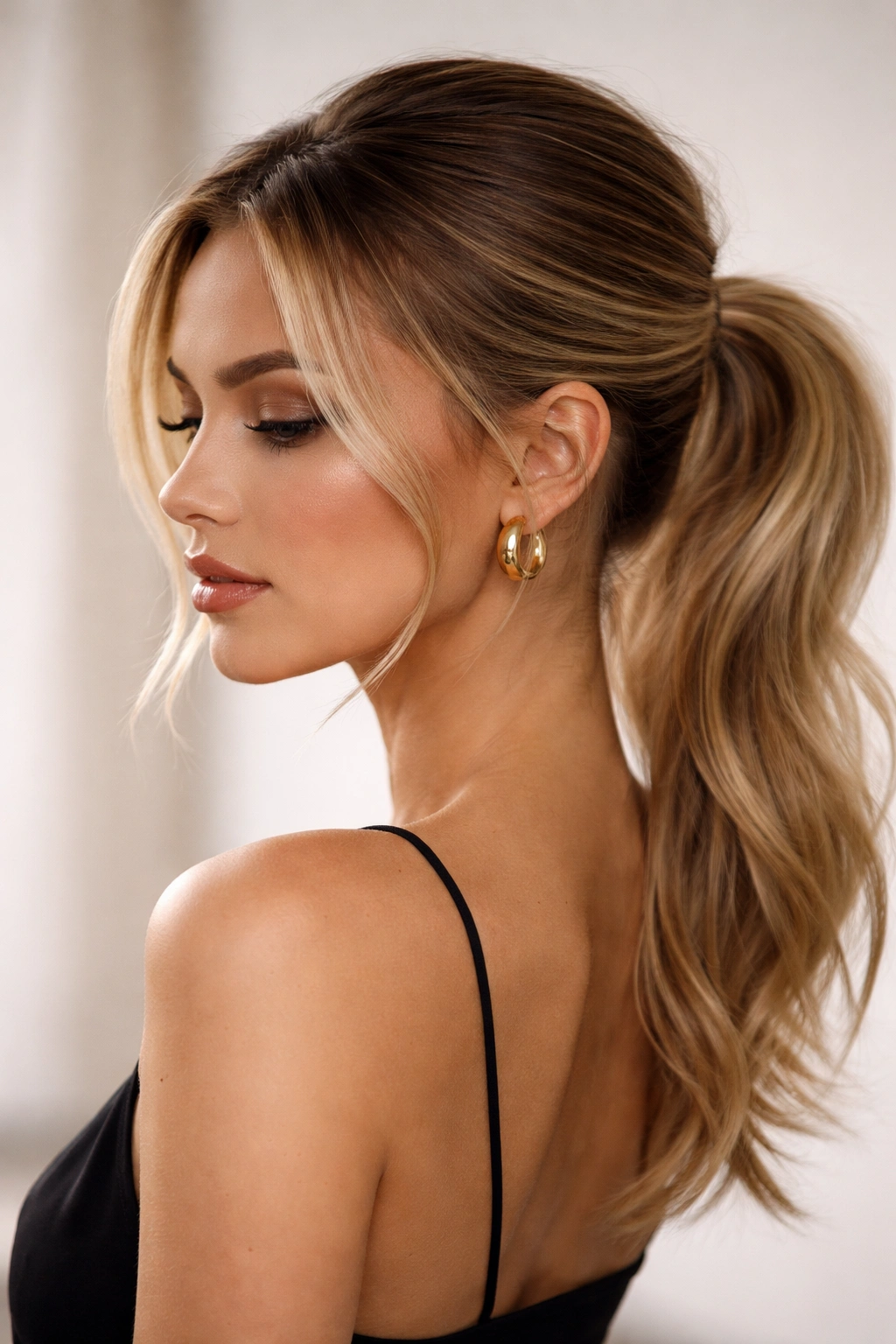
This style looks deliberately styled rather than carelessly thrown together, which is what makes it read as expensive. The hair is pulled back smoothly but not rigidly—there’s a slight texture to it, maybe some softness around the face, but the overall direction is unmistakably intentional. It’s the ponytail equivalent of “expensive effortless,” where the polish comes from precision rather than over-grooming.
Why This Works Beautifully
An undone slicked-back style reads as modern and elevated rather than casual, because the slicked-back element shows intentionality while the texture prevents it from looking dated or severe. This is a style that works across age groups and face shapes because the softness around the face prevents it from being harsh. It’s also incredibly versatile—you can wear it to work, to casual dinners, or to more formal events.
The Technique for Intentional Texture
- Blow-dry your hair with texture—rough-dry it with your fingers or use a texturizing spray before blow-drying for better grip and movement
- Apply a light smoothing serum or wax to your hands and run your fingers through the crown area, creating height and soft texture
- Brush the sides and back smoothly back, but leave the crown slightly textured rather than plastered flat
- Secure with an elastic that matches your hair color, and pull out 1-2 smaller pieces around your face to frame it
- Consider leaving a few wispy pieces at the base of the ponytail (at the nape of your neck) slightly loose—this adds movement and softness
Worth knowing: The key is the contrast between the slicked-back front and sides versus the subtle texture at the crown and back—this combination reads as carefully considered rather than undone.
3. The Low Rounded Ponytail With Hidden Elastic
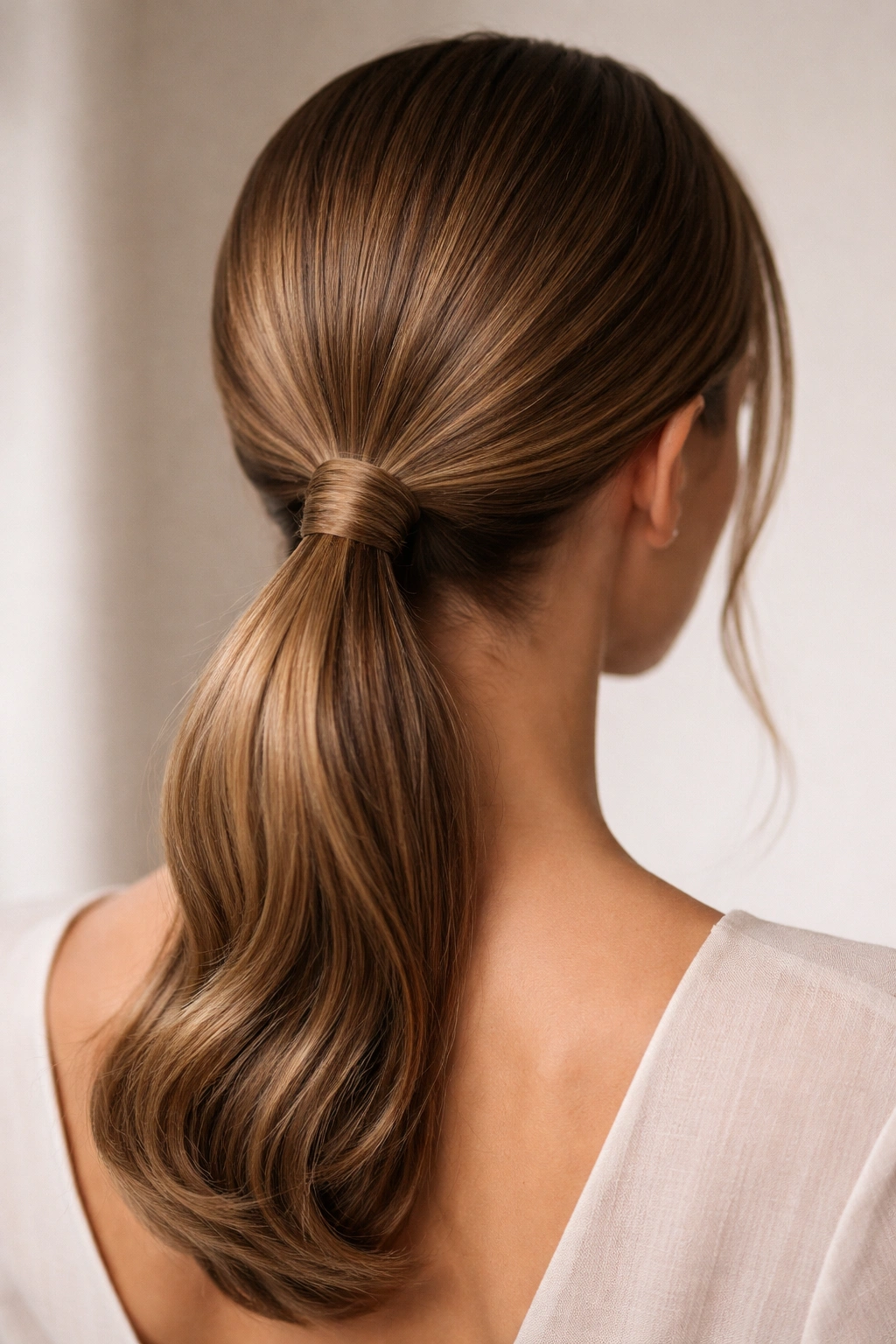
This style appears to be held together by magic rather than a visible hair tie, which immediately reads as more expensive and refined. The ponytail sits low at the base of your skull, and the hair is gathered so smoothly that you can barely see where the elastic sits—it looks almost like the hair has naturally formed a rounded shape. The effect is feminine, timeless, and sophisticated.
What Makes It Appear Luxury
This style is specifically designed to minimize the visual appearance of the hair tie by hiding it within the hair itself rather than sitting on top of it. A low placement is inherently more mature and refined than a high ponytail, and the rounded shape (rather than a tight, thin tail) looks more voluminous and expensive. This is a signature style of the wealthy because it requires enough hair to round out nicely and enough skill to gather it smoothly.
Creating The Hidden Elastic Effect
- Blow-dry your hair with volume at the root, focusing on the crown and back areas
- Brush all your hair back into a low ponytail at the base of your skull (not at the nape, but higher—about 2 inches above where your neck starts)
- Use a clear elastic or an elastic that matches your hair color, and secure loosely first—you’ll tighten it once it’s positioned correctly
- Take a small section of hair from the underside of the ponytail and wrap it around the elastic to conceal it completely
- Secure that wrapped section with a bobby pin inserted into the ponytail base, hiding the pin completely within the hair
- Gently tease the tail area slightly so it rounds out rather than lying flat against your head
Pro tip: If you have fine hair, skip the teasing step and instead blow-dry your ponytail hair upside down to create natural volume at the base—this gives the rounded effect without creating tangles.
4. The Sleek Bubble Ponytail With Separated Sections
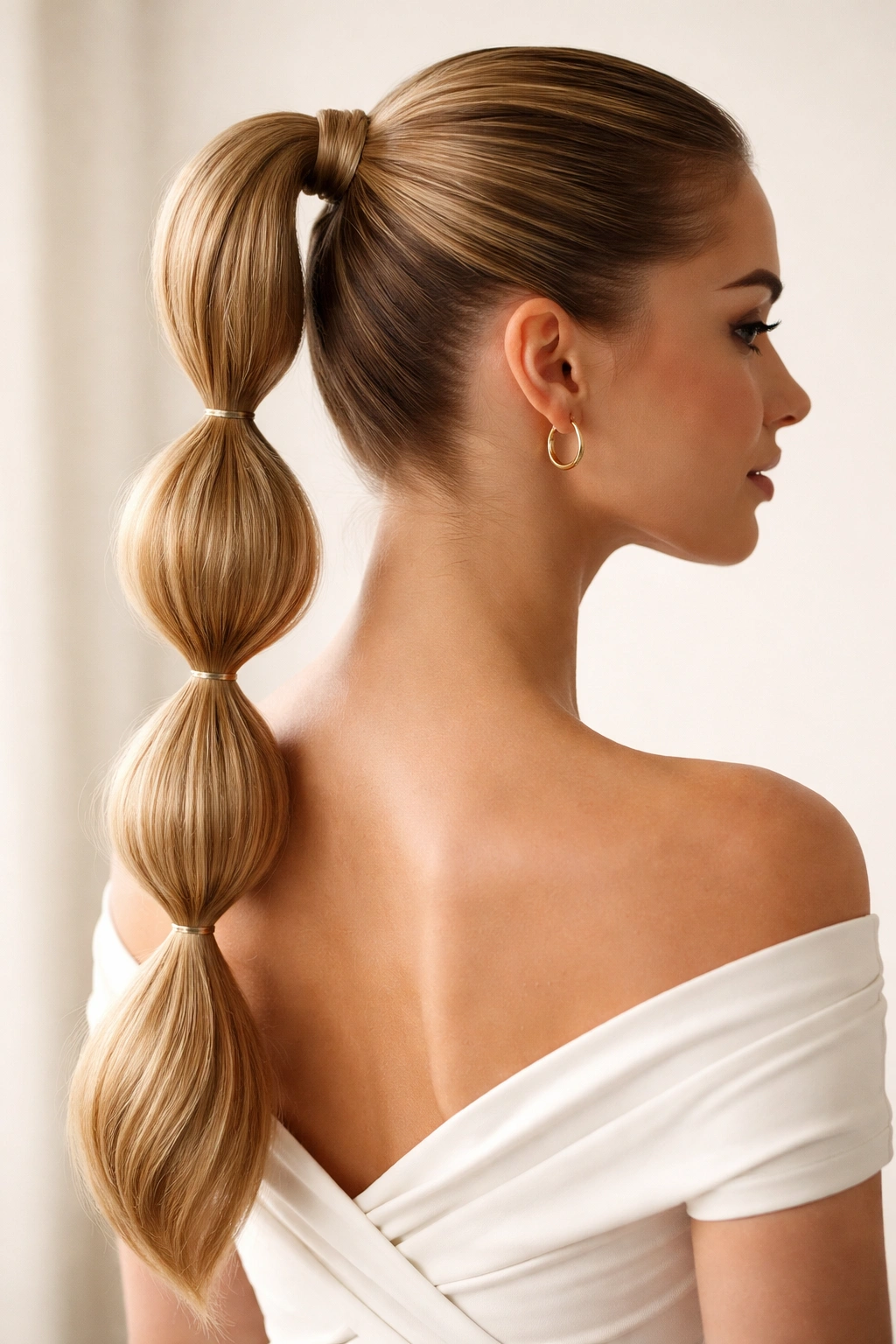
This style creates visual interest and dimension through intentional placement, which makes it read as more curated than a standard ponytail. The hair is sectioned into rounded, separated bubbles down the length of the tail, each held in place with its own small elastic. The bubbles are slightly puffy but not messy—refined and deliberate rather than trendy or playful.
Why Structured Bubbles Look Expensive
Intentional sectioning shows design thinking, which is what separates elevated styles from basic ones. The bubble effect creates volume and visual interest while maintaining the sleek, smooth aesthetic of a polished ponytail. Each bubble should have a distinct, defined shape rather than looking haphazard, which is what signals that this was a considered choice rather than a happy accident.
Building the Bubble Structure
- Create a very smooth, sleek base ponytail—any texture at the base will show through and break the polished effect
- Secure with a thin elastic at the crown or back, depending on your preferred ponytail height
- Measure approximately 1.5 to 2 inches down the ponytail from the base elastic and place a second small elastic around the entire tail at that point
- Gently push up on the hair between the two elastics to create a rounded, puffy bubble—not too full, but visible and intentional
- Repeat this process down the length of the ponytail, maintaining even spacing between bubbles (measure each section to keep them consistent)
- Make sure each section is smooth rather than frizzy—any texture will be highly visible in this style
Worth knowing: The width of your bubbles should be proportional to the thickness of your ponytail—thicker hair can support larger bubbles, while finer hair looks better with smaller, more delicate sections.
5. The Wet-Look Sleek Ponytail
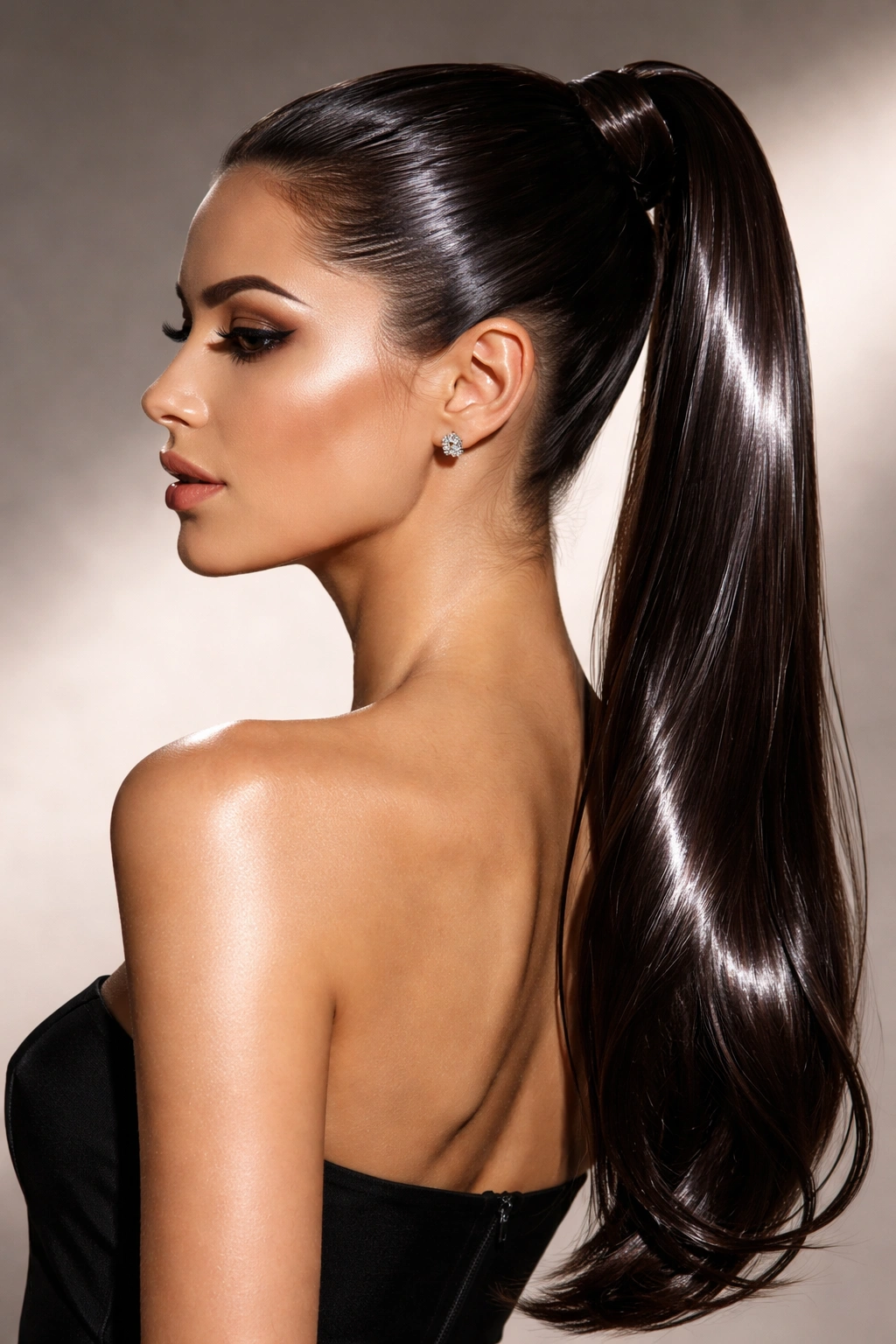
This style uses product strategically to create an ultra-shiny, almost wet appearance—a high-fashion look that’s been popular in luxury brands and editorial shoots. The ponytail appears to be made of one glossy, liquid-looking element, and the shine is so pronounced that it catches light dramatically. The wet appearance is intentional and polished, not accidental or greasy.
The Science of The Expensive Wet Look
A genuine wet-look effect comes from a combination of ultra-smoothness and strategic shine—you’re essentially creating a light-reflecting surface that appears almost liquid. This style reads as fashion-forward and intentional rather than unwashed, which is the key difference between an editorial look and an actual wet ponytail. The wet-look ponytail signals that you’re invested enough in your appearance to use product strategically and creatively.
Achieving The Glossy Wet Effect
- Start with dry or damp hair and apply a shine serum or liquid smoothing product to damp strands—not oil, which can look greasy, but a lightweight serum formulated for gloss
- Blow-dry your hair smooth using a paddle brush, allowing the serum to dry completely into the hair cuticle
- Brush your hair back very tightly into a low or high ponytail, depending on your preference
- Apply a lightweight gel or pomade designed for wet-look styling to the entire ponytail, smoothing it down with your hands to eliminate any texture
- Use a fine-tooth comb to smooth the gel through, creating a uniform shiny surface
- If you prefer even more drama, apply a tiny amount of liquid silicone shine spray as a final layer—this amplifies the glossy effect without making hair look wet or greasy
Pro tip: The key is to apply products to the lengths and ends of the ponytail rather than the roots—this keeps your base smooth and lightweight while creating maximum shine at the visible ponytail itself.
6. The Center-Parted Sleek Ponytail
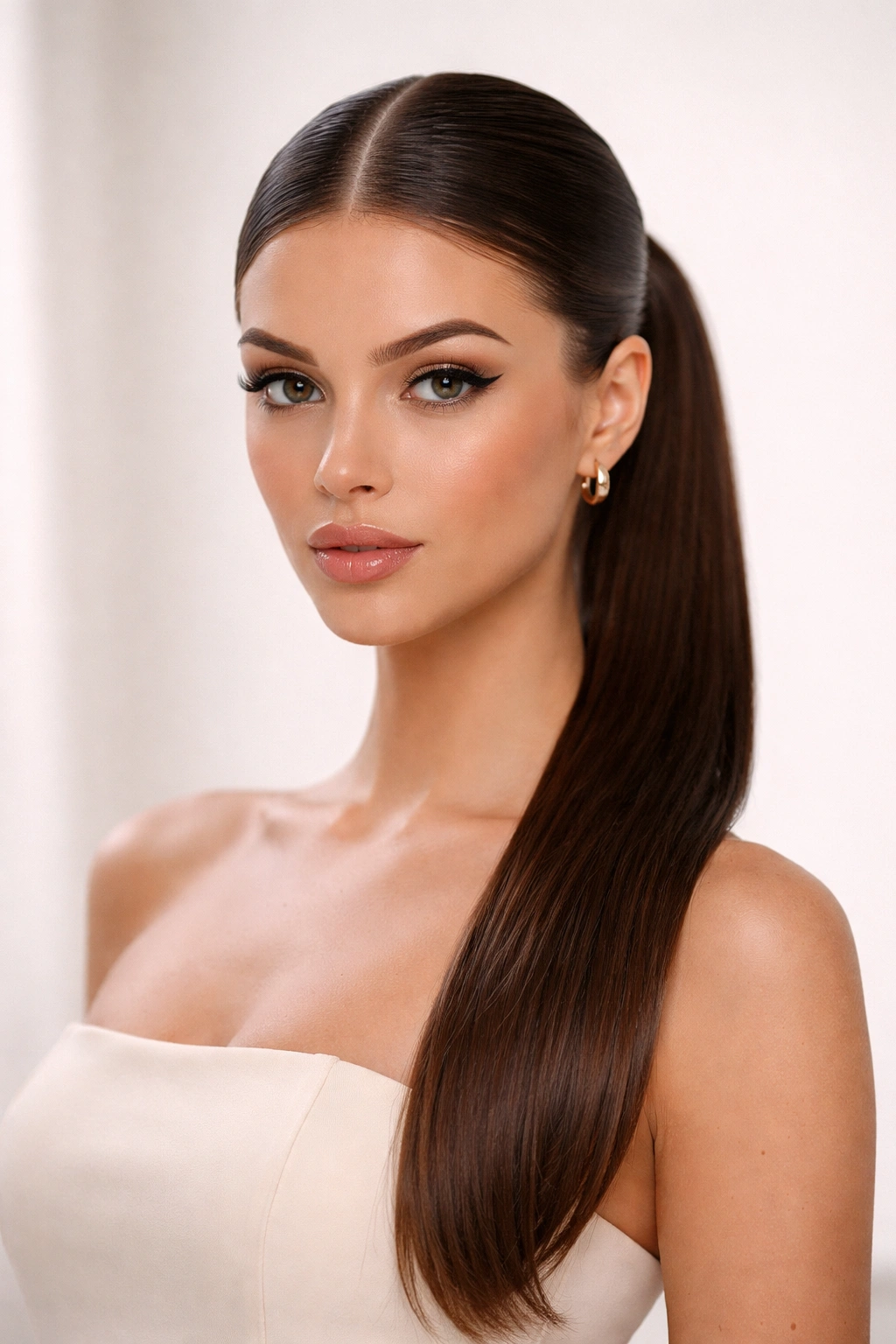
A clean center part combined with a sleek ponytail creates a symmetrical, refined aesthetic that reads as intentional and elevated. The center part creates a strong vertical line that elongates the face, and when paired with a smooth ponytail, it gives an impression of polish and precision. This style flatters most face shapes and works across age ranges, which is why it’s considered a timeless luxury look.
Why Symmetry Signals Sophistication
Perfect symmetry is associated with intentional grooming and precision—it takes effort to create a perfect center part and a perfectly smooth ponytail, which is why the combination reads as expensive. The vertical line created by the center part is also inherently flattering, as it lengthens the face. This style has the added benefit of being extremely current without being trendy, which is a hallmark of truly refined style.
Creating The Perfect Center-Parted Foundation
- Start with damp hair and use a fine-tooth comb to create a precise center part from your forehead to the nape of your neck—the line should be perfectly straight
- Apply a lightweight smoothing serum or anti-frizz cream to damp hair, concentrating on the partline and the sections you’ll be smoothing back
- Blow-dry each side of the part separately using a paddle brush, ensuring both sides are equally smooth and have similar volume
- Brush all your hair back smoothly into a sleek ponytail—the center part should remain visible at the top where the ponytail begins
- Secure with a clear or matching-color elastic, then use a small wrapped section of hair to conceal the elastic
- Make sure the ponytail sits directly at your center part (not off to one side), and that both sides of the part are equally visible
Worth knowing: If you have naturally wavy or curly hair, you may need a lightweight smoothing spray in addition to your serum—apply it to the damp partline before blow-drying to help lock in the straight part.
7. The Polished Midlength Ponytail With Strategic Volume
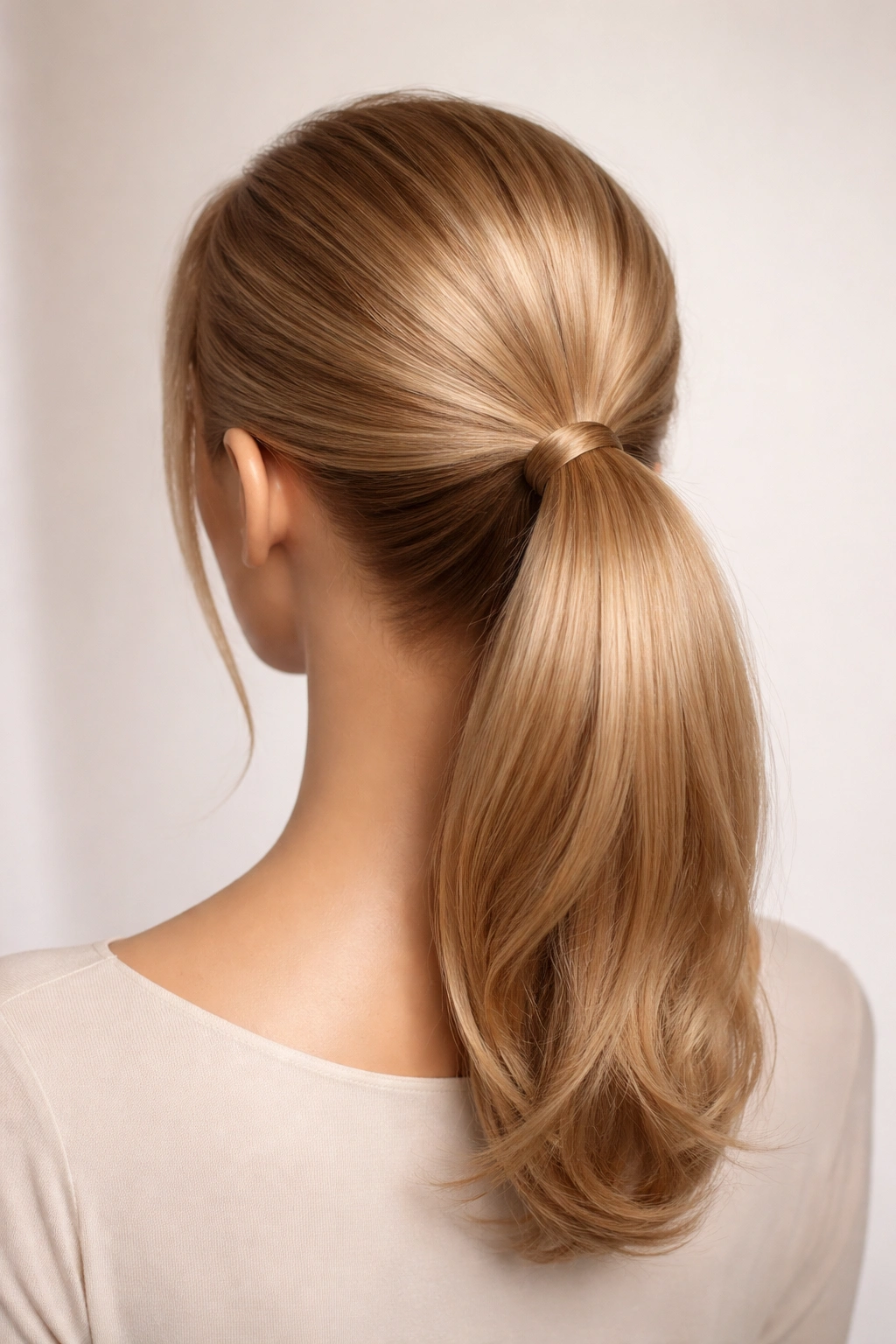
A ponytail that sits at the nape of your neck or just below your shoulders appears more refined and adult than a high ponytail, and when paired with strategic volume at the crown, it creates an elegant, balanced silhouette. The volume is intentional and sculpted rather than accidental or fluffy, which is what keeps it looking expensive rather than dated or casual. This placement is incredibly versatile and works for professional settings, casual events, and everything in between.
Why Midlength Placement Reads as Elevated
A lower ponytail placement creates a more mature, refined aesthetic than a high, tight one. The strategic volume at the crown balances the lower placement, creating a proportion that’s flattering and intentional. This style also shows off the nape of the neck and collar area, which creates an elegant line and appears more sophisticated than having hair pulled all the way up.
Building Strategic Crown Volume
- Blow-dry your roots with a volumizing spray or texturizing product applied to damp hair at the crown—you want lift, not flatness
- Use a round brush at the crown to create height as you blow-dry, directing the brush upward and away from the scalp
- Blow-dry the sides and back smoothly, creating a contrast between the textured crown and the sleek sides and back
- Gather all your hair at the nape of your neck or just below, keeping the crown elevated and slightly voluminous
- Secure with a matching-color elastic, and don’t pull too tight—the volume at the crown should stay visible and lifted
- Smooth the sides and back with a fine-tooth comb to create that sleek contrast with the textured crown
Pro tip: Use a bit of light hairspray on the crown area before you gather your ponytail—this helps lock in the volume so it doesn’t deflate throughout the day.
8. The Multidimensional Highlighted Ponytail
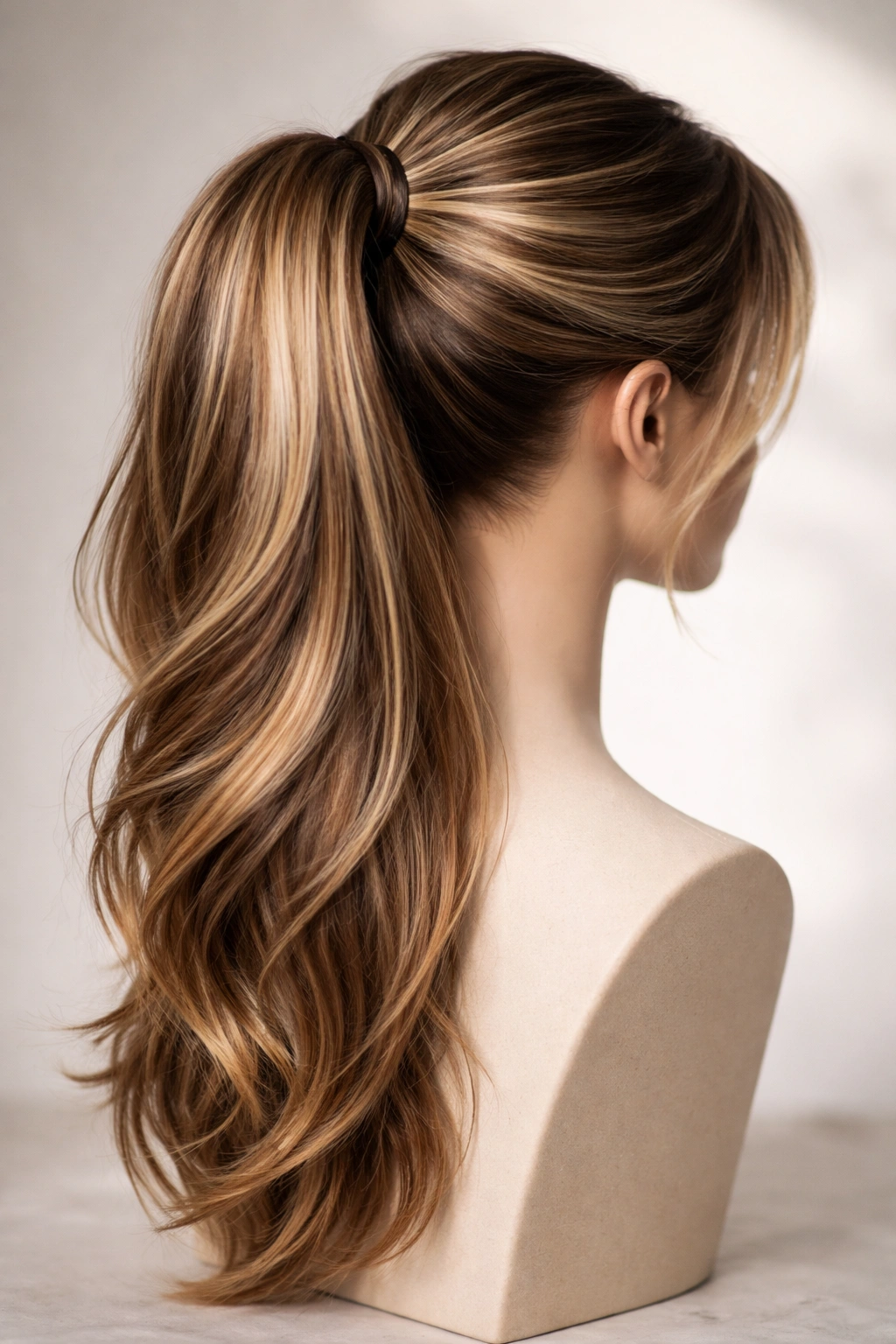
Even if your ponytail isn’t recently highlighted, the way you style it can create the illusion of dimension and movement, which reads as expensive and elevated. A ponytail that’s arranged to show off any existing highlights or color variation—whether through subtle movement, a slight twist, or strategic placement—appears more luxurious than a flat, uniform-looking tail. The visual interest created by dimension reads as carefully considered rather than basic.
Why Visible Dimension Appears More Expensive
Hair that appears multidimensional reads as more expensive because it suggests either professional coloring or high-quality, well-maintained hair with natural dimension. When you style a ponytail in a way that maximizes the visibility of any highlights, lowlights, or color variation, you’re essentially amplifying the appearance of investment in your hair. A one-dimensional, flat ponytail reads as less expensive, while one with visible depth and variation reads as more luxurious.
Styling to Maximize Dimension
- If you have highlights or lowlights, blow-dry your hair with slight texture rather than perfectly smooth—this allows light to catch the different colors more effectively
- When gathering your ponytail, don’t pull it tight enough to flatten the hair completely—allow slight movement and separation in the tail
- Consider a very subtle twist or braid woven into the base of the ponytail (before you secure it) to create texture and show off color variation
- Arrange your ponytail so the lighter pieces or highlights are visible and catchable by light—this might mean leaving the tail slightly looser at the back or creating slight waves
- Use a shine spray designed to enhance color rather than a heavy product that would flatten and darken your hair
Worth knowing: Even without color, you can create the illusion of dimension by styling your ponytail with intentional texture and movement rather than pulling it bone straight—this catches light in different ways and makes your hair appear more multidimensional.
9. The Twisted-Base Sleek Ponytail
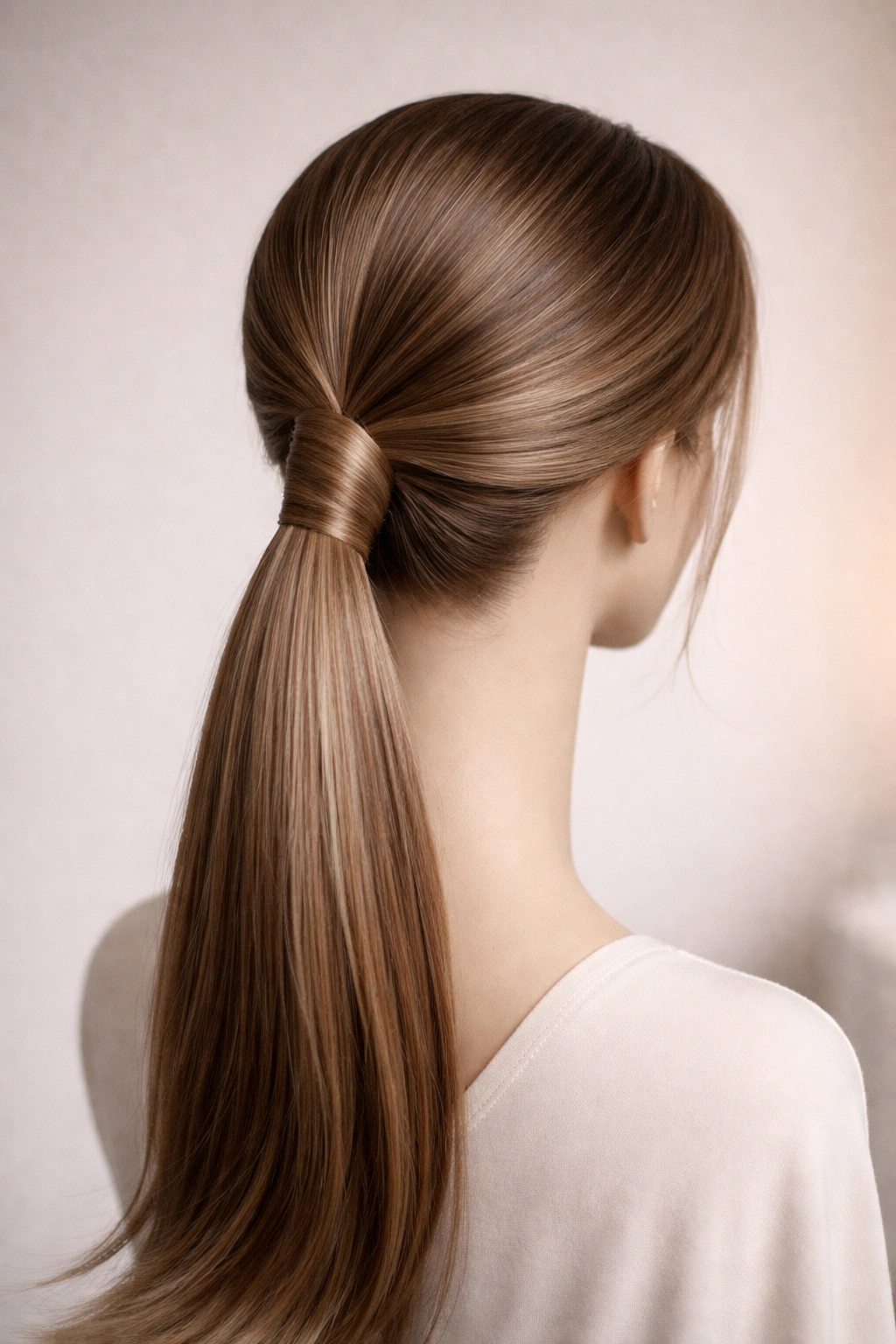
A ponytail with a twisted or braided base reads as more intentional and elevated than a simple gathered one, even if the tail itself is perfectly sleek. The twist or braid at the base creates visual interest and texture detail that signals this style was a considered choice rather than a quick five-second arrangement. The sleekness of the tail contrasts beautifully with the detailed base, creating a balanced, sophisticated look.
What Makes The Twisted Base Luxe
Detail work always reads as more expensive because it requires more thought and effort. A twisted base shows intentionality without being playful or casual—it’s the perfect balance between simple and detailed. This style works across professional, casual, and formal settings because the detail feels refined rather than trendy or elaborate.
Creating a Polished Twisted Base
- Gather your hair into a low or midlevel ponytail, leaving the base section loose and unsecured for now
- Take the gathered base and divide it into two equal sections
- Twist the two sections around each other tightly, creating a spiral effect from your scalp down to where you want your elastic to sit (usually about 2 inches down from where you gathered)
- Secure the twisted base with a clear or matching-color elastic
- Take a small section of loose hair from the underside of the twist and wrap it around the elastic to conceal it completely
- Smooth the tail section below the twist so it’s sleek and shiny, and ensure the twisted base has clean definition—comb out any flyaways from the twist itself
Pro tip: If you find twisting difficult, try a small two-strand braid instead—it creates the same detailed effect and is often easier to execute cleanly. The key is that the base has visible texture or detail, while the tail remains sleek.
10. The Face-Framing Low Ponytail With Wispy Pieces
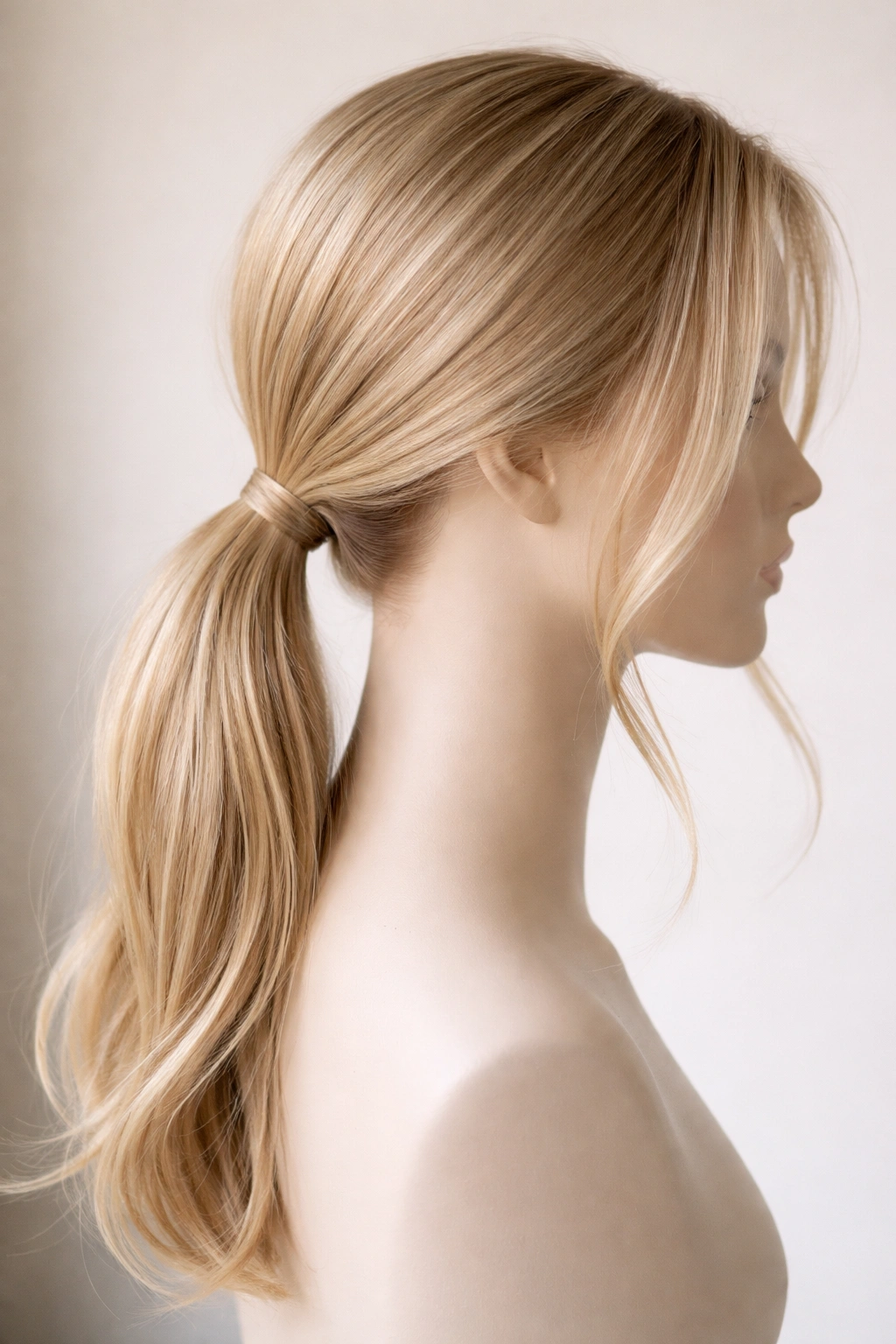
A low ponytail that includes intentionally loose pieces framing the face reads as more refined and intentional than either a completely tight ponytail or a completely loose hairstyle. The framing pieces soften the face and create movement, while the main ponytail remains sleek and polished. This combination signals that you’ve thought about what flatters your face shape, which inherently reads as more sophisticated.
Why Strategic Face-Framing Works
Loose pieces around the face break up a severe silhouette and create a softer, more approachable appearance while still maintaining the polish of a ponytail. This style shows intentional styling choices—you’ve chosen to leave certain pieces out specifically for flattery and balance, which signals thoughtfulness. It’s also a style that photographs beautifully and reads as polished in professional and social settings.
Placing The Flattering Pieces
- Gather your hair into a low ponytail, but before securing, separate out two small sections from the front—about an inch-wide section on each side of your face
- Secure the main ponytail with a matching-color elastic
- Leave the separated sections loose, allowing them to frame your face
- These pieces should be approximately jaw-length or slightly longer, creating a soft frame without feeling straggly
- Optionally, you can add a very subtle wave to these pieces using a curling iron or by twisting them gently, which adds movement and polish
- Make sure the main ponytail itself remains smooth and sleek—the contrast between the loose pieces and the polished tail is what creates the elevated effect
Worth knowing: The loose pieces should feel intentional and styled, not like random pieces you forgot to secure. If you want to keep them in place throughout the day, apply a tiny bit of lightweight styling cream to them and tuck them slightly behind your ears.
11. The High-Shine Sleek Ponytail With Clean Lines
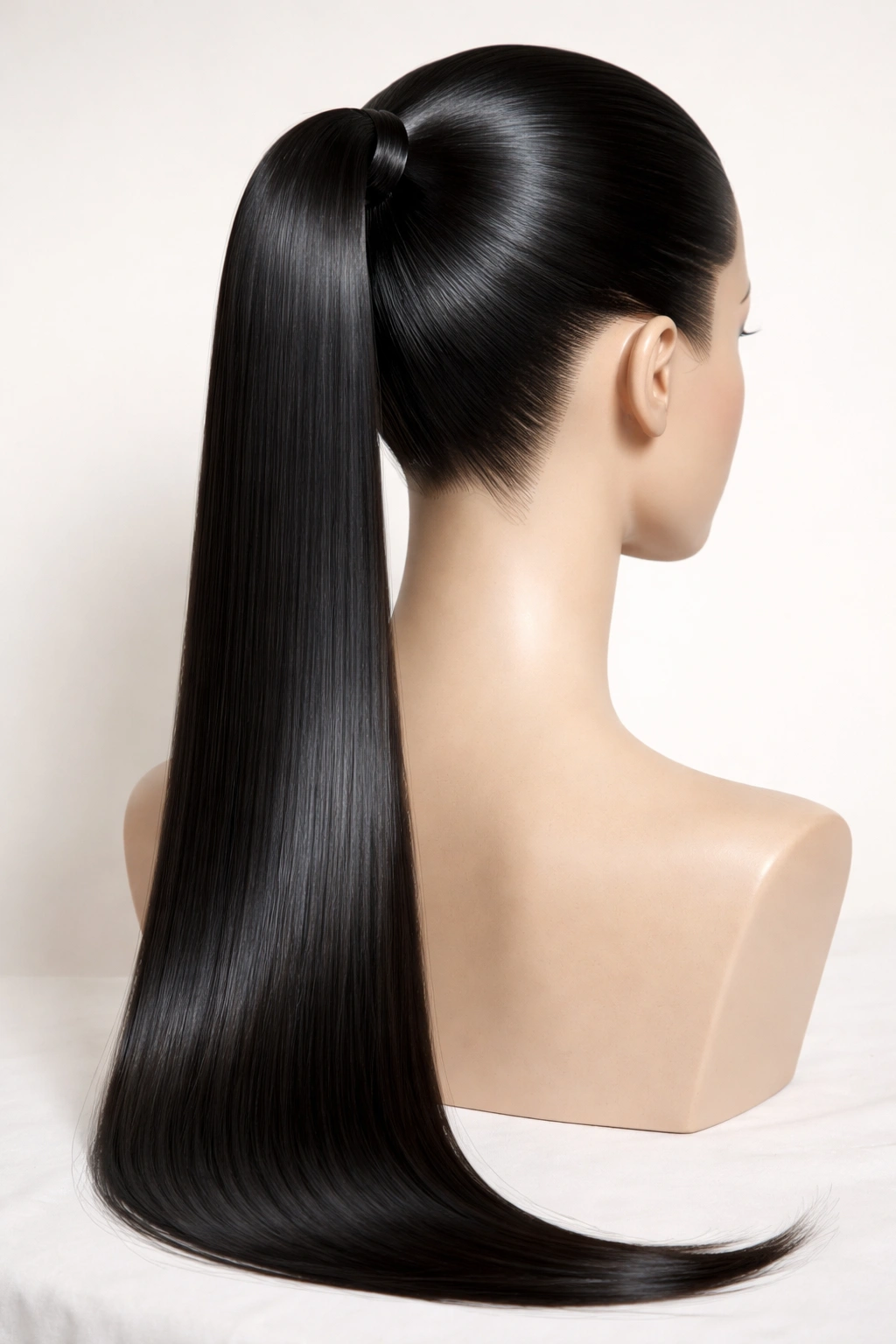
A ponytail that appears to be made of pure shine and has absolutely no texture, fuzz, or flyaways reads as incredibly polished and expensive. The hair appears almost lacquered or glazed, with perfect clean lines from the root to the tip. There’s no waviness, no texture variation, and no movement—just pure, glossy smoothness. This style reads as luxury because it requires multiple steps and genuine skill to execute perfectly.
The Elements of Ultimate Shine
Maximum shine comes from a combination of product, technique, and light reflection—each element must be present to create that expensive, lacquered appearance. The clean lines come from absolute smoothness, which means every strand is lying in the same direction. This style reads as expensive because most people simply don’t take the time to achieve this level of polish, which makes it feel aspirational.
Perfecting The Glossy Effect
- Start with completely clean hair and apply a hydrating, smoothing shampoo and conditioner—buildup will dull shine
- Apply a shine serum and smoothing cream to damp hair, distributing evenly from mid-length to ends
- Blow-dry completely smooth using a high-heat paddle brush, taking small sections and directing the brush downward in the same direction each time
- Once fully dry, apply another very light layer of smoothing serum to the ends, working it through your hands
- Gather into a sleek ponytail and secure, then wrap a small section around the elastic to conceal it
- Apply a light shine spray as a final layer—this adds luminosity without heaviness
- Use a fine-tooth comb to smooth the entire ponytail one final time, ensuring every strand lies in the same direction
Pro tip: The difference between shiny hair and greasy-looking hair is often about application technique—apply products to the hair lengths, not the roots, and use your hands to distribute them smoothly rather than applying a heavy amount to one section.
12. The Curved Low Ponytail With Gentle Shape
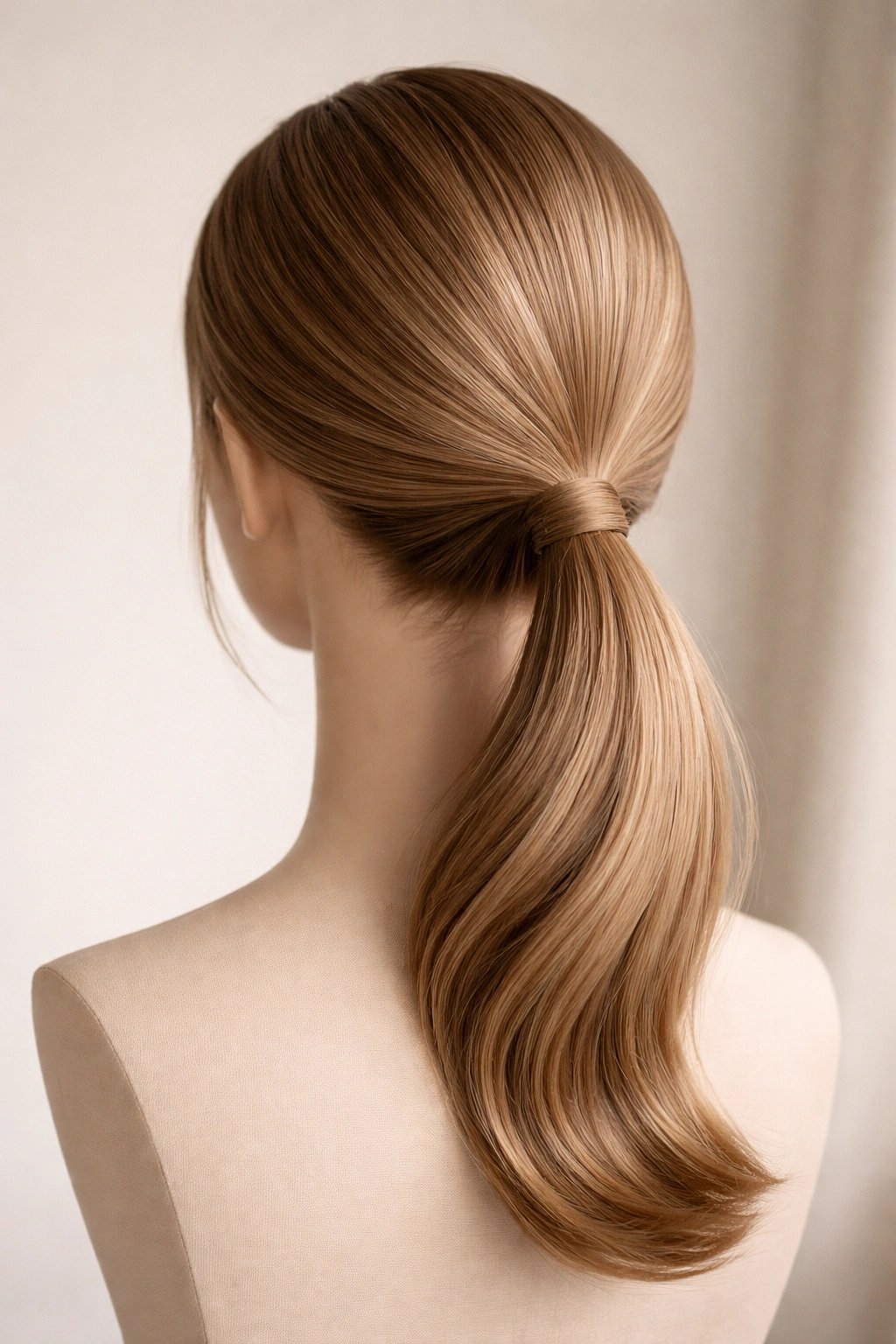
Instead of pulling hair straight back into a tight, linear ponytail, this style involves gathering hair with a slight curve or gentle shaping, which creates a more refined and intentional silhouette. The ponytail base has a subtle curved shape rather than a perfectly straight line, which makes it read as more sophisticated and thoughtfully styled. The shape is barely noticeable but creates visual interest that elevates the style.
Why Subtle Shaping Reads as Luxury
Deliberate shaping of any kind signals intentional styling rather than a basic gathering. A gentle curve creates a more elegant line than a straight, linear ponytail, and it shows that you’ve thought about the overall proportions of your head and neck. This is the kind of detail that separates a polished, expensive-looking style from a basic one.
Creating The Subtle Curve
- Gather your hair as if creating a low ponytail, but instead of pulling straight back, angle your hands very slightly to one side as you gather
- Create a slight curve in the direction you’re angling—so if you angle slightly toward your right, the ponytail base curves gently in that direction
- Secure with a matching-color elastic
- The curve should be subtle enough that it doesn’t look like the ponytail is off-center—it’s more of a gentle shaping than a dramatic angle
- Keep the tail itself sleek and smooth, allowing the subtle curve of the base to be the only textural variation
- You can optionally add a tiny bit of edge control or pomade to the curved base to define the shape slightly more
Worth knowing: This style is particularly flattering if you have a rounder face, as the gentle curve creates visual interest without severity. If you have an angular face, you might prefer an even straighter, more minimalist approach for maximum impact.
13. The Sleek Ponytail With A Silk Accessory
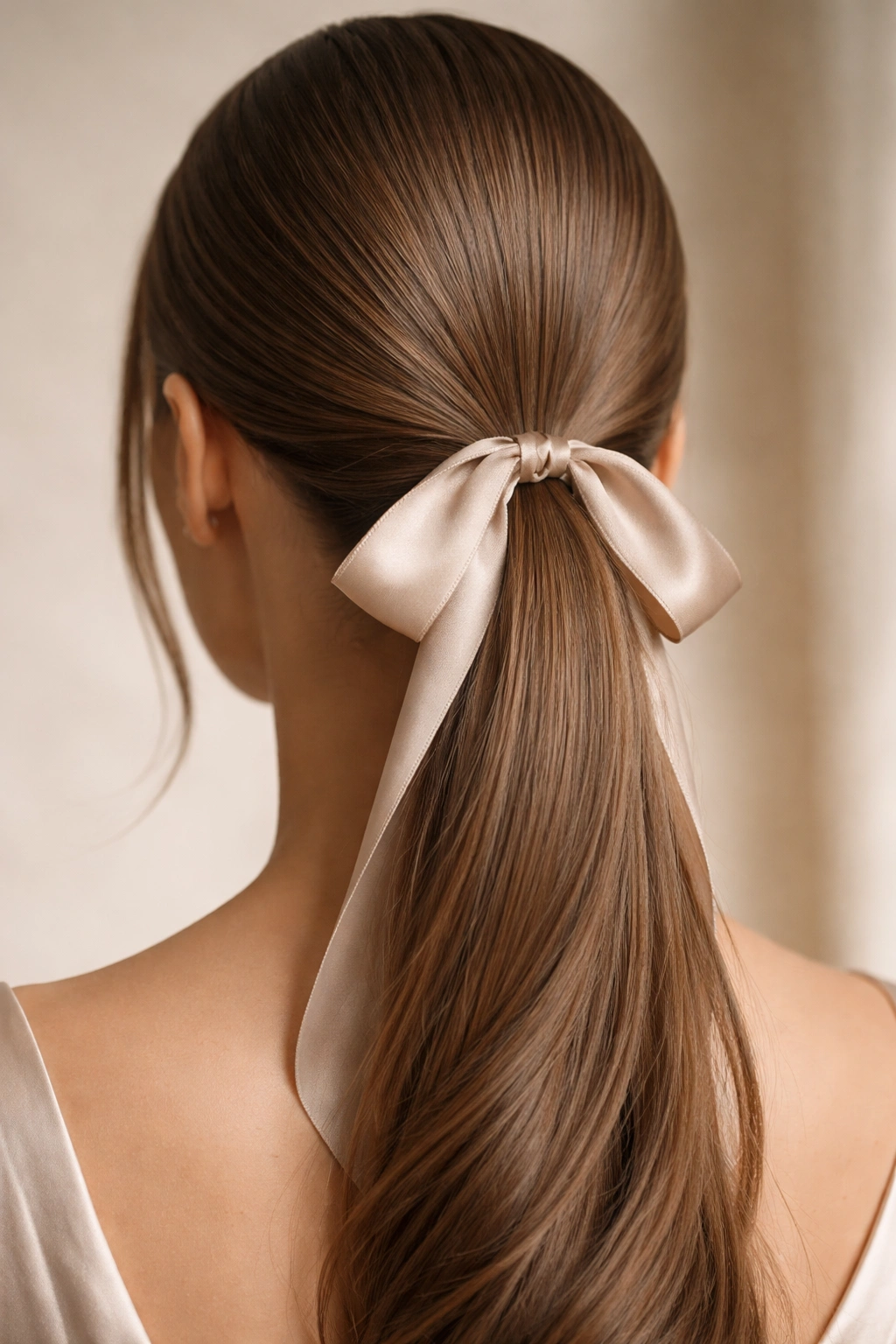
A simple sleek ponytail becomes instantly more elevated when paired with a silk or satin hair accessory at the base—a hair cuff, a silk tie, or a ribbon. The accessory should complement your hair color and overall aesthetic, creating a polished finishing touch rather than a bold statement. This detail transforms a basic ponytail into a curated, intentional style.
Why Silk Accessories Read as Expensive
Silk and satin accessories signal both style consciousness and hair care knowledge—these materials are gentler on hair and reduce breakage, which is something people with expensive hair care routines understand. An intentional accessory also shows that you’ve thought about the final details of your style, which always reads as more elevated. The accessory catches light and adds visual interest without being loud or trendy.
Choosing and Styling With The Right Accessory
- Select a hair cuff, silk scrunchie, or ribbon in a complementary color—metallics like gold and silver work universally, or choose something that matches your outfit or hair color
- Create a sleek ponytail at your preferred height (high, mid, or low)
- Secure with a clear elastic first, then slide the decorative accessory over the elastic, positioning it at the base of your ponytail
- The accessory should sit cleanly against your hair without twisting or gaps—adjust until it appears intentional and polished
- For a hair cuff, slide it down the elastic so it sits on top, with the ponytail visible below
- For a ribbon, you can wrap it around the base of the ponytail or tie it loosely around the elastic for a more delicate appearance
- Make sure your ponytail itself remains very sleek and smooth—the accessory is the decorative element, so the hair should be understated
Pro tip: A gold or silver hair cuff works with almost any hair color and outfit, making it a versatile investment piece that instantly upgrades any ponytail without requiring it to be styled perfectly.
14. The Polished Textured Ponytail With Defined Ends
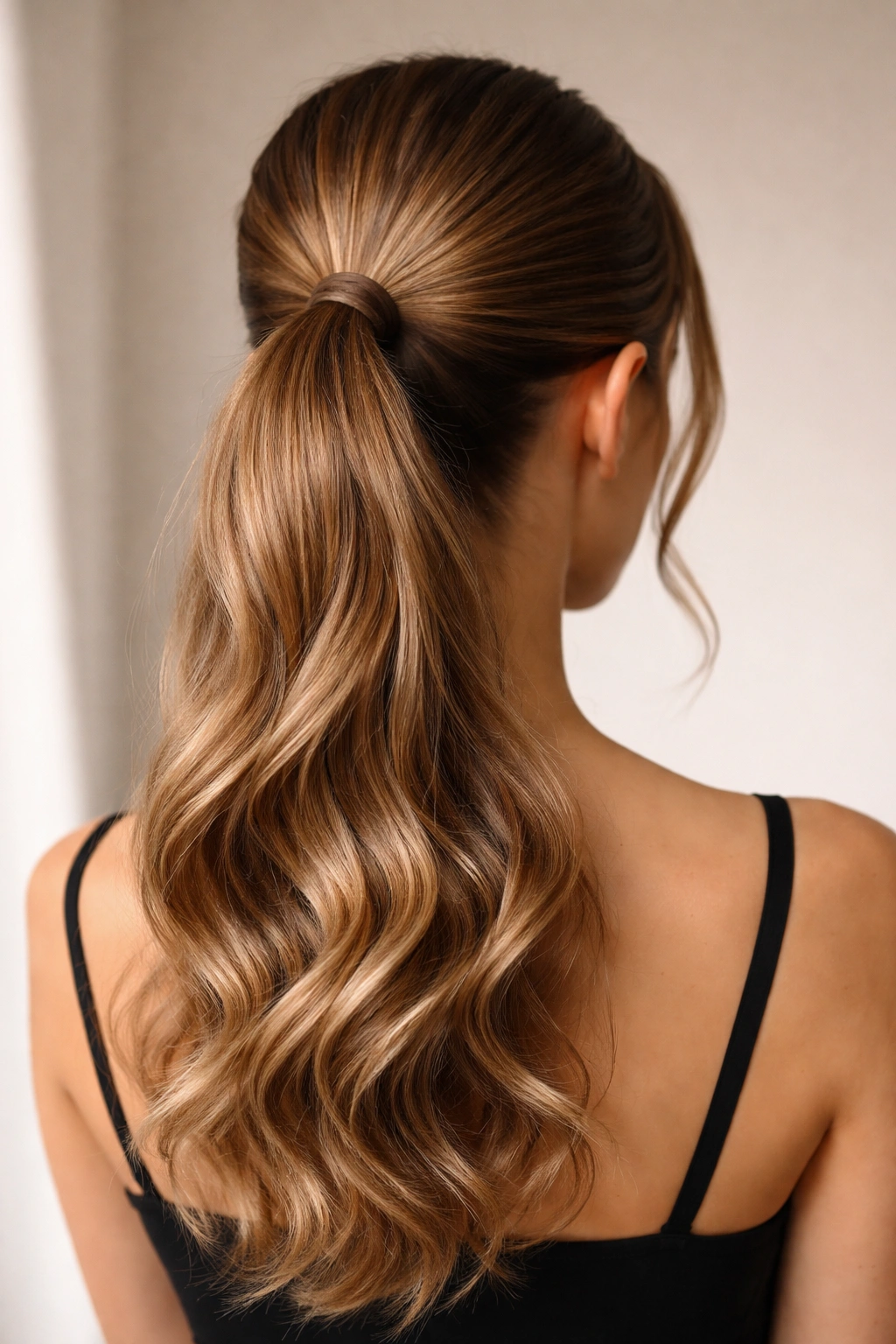
A ponytail that appears smooth and intentional at the base but has deliberately styled texture or movement at the ends reads as more interesting and upscale than a completely smooth tail. The base is sleek and polished while the ends are textured—perhaps with subtle waves, a slight curl, or intentional separation. This combination balances the elegance of a sleek base with the sophistication of intentional texture.
Why This Contrast Works
Texture at the ends alone doesn’t read as casual because the sleek base keeps everything looking intentional and polished. The textured ends add visual interest and create more surface area for light to catch, which amplifies shine and dimension. This style reads as more current and interesting than a completely smooth ponytail, while remaining elevated and refined.
Creating Polished Texture At The Ends
- Gather and smooth your hair into a sleek ponytail base using all the techniques for a smooth base—serum, paddle brush, fine-tooth comb
- Secure with a matching-color elastic, making sure the base is completely smooth and polished
- Take the ends of your ponytail and apply a light texturizing spray or sea salt spray, working it through with your fingers
- Create subtle waves in the tail using a curling iron or by twisting small sections loosely—these should look intentional, not haphazard
- Alternatively, create separation in the tail using a light pomade or smoothing product applied with your fingers, separating the hair into several distinct sections
- The texture should be visible and intentional, but not so much that the ponytail looks undone or messy
- Lock in the texture with a light hairspray that allows movement without completely hardening the style
Worth knowing: The key is that your ends look deliberately styled rather than naturally textured or accidental—this requires actually working the texture in intentionally, not just leaving your hair to do what it naturally does.
15. The Elegant Sleek Ponytail With Minimal Styling
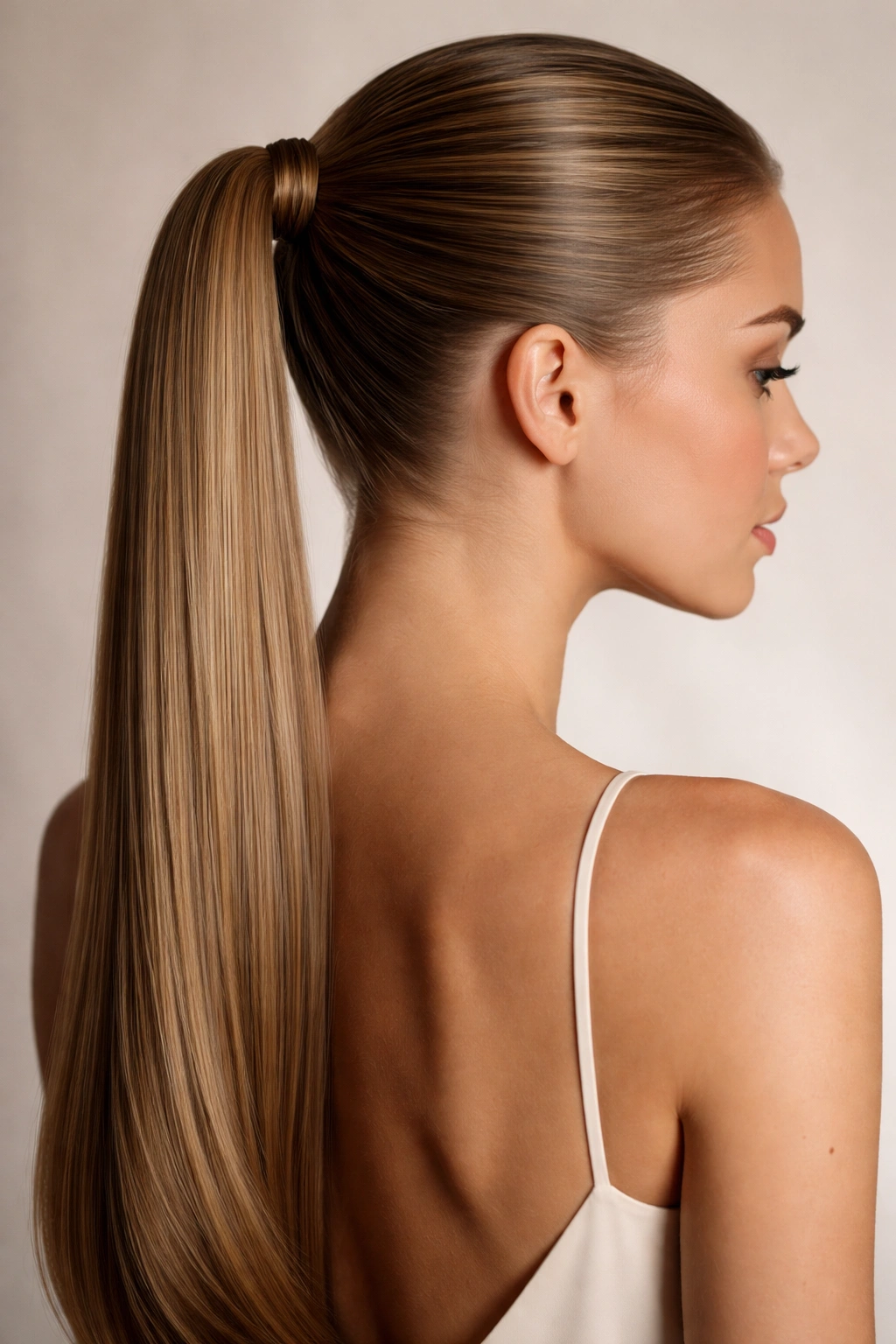
Sometimes the most expensive-looking style is the simplest one—a perfectly smooth, well-placed ponytail with no extra details, no accessories, and no texture. This style relies entirely on hair health, smoothness, and precision placement to read as polished and refined. There’s nowhere to hide, which is exactly why it reads as expensive—it requires genuinely good hair and flawless execution.
Why Minimalism Reads as Ultimate Luxury
When something appears effortless and simple, it often signals wealth and confidence—you don’t need to over-style because you’re secure in your appearance. A minimal ponytail also suggests that you’re focused on quality over trend, and that your hair is healthy and well-maintained enough to showcase without additional styling. This is the hairstyle equivalent of a perfectly cut white button-up shirt—simple, refined, and timeless.
The Absolute Essentials for Minimalist Luxury
- Start with truly clean, healthy hair—any dullness, damage, or buildup will be immediately visible
- Apply a lightweight shine serum to damp hair, distributing it evenly from mid-length to ends
- Blow-dry your hair completely smooth using a paddle brush and high heat, taking small sections to ensure uniformity
- Use a fine-tooth comb to check for smoothness—any flyaways or bumps will show in this style
- Gather into a sleek, centered ponytail at your preferred height, making sure the placement is symmetrical
- Secure with a clear elastic or one matching your hair color—any visible hair tie will stand out in this minimal style
- Optionally, wrap a small section of hair around the elastic to conceal it, or leave it visible if your elastic matches perfectly
- Apply one final coat of light shine spray to amplify luminosity
- That’s it—no accessories, no texture, no additional details
Worth knowing: This is the style that requires the most maintenance throughout the day because any looseness or texture becomes immediately visible. Make sure your hair tie is tight enough to hold, but secure it carefully so you’re not creating tension that will give you a headache.
Final Thoughts
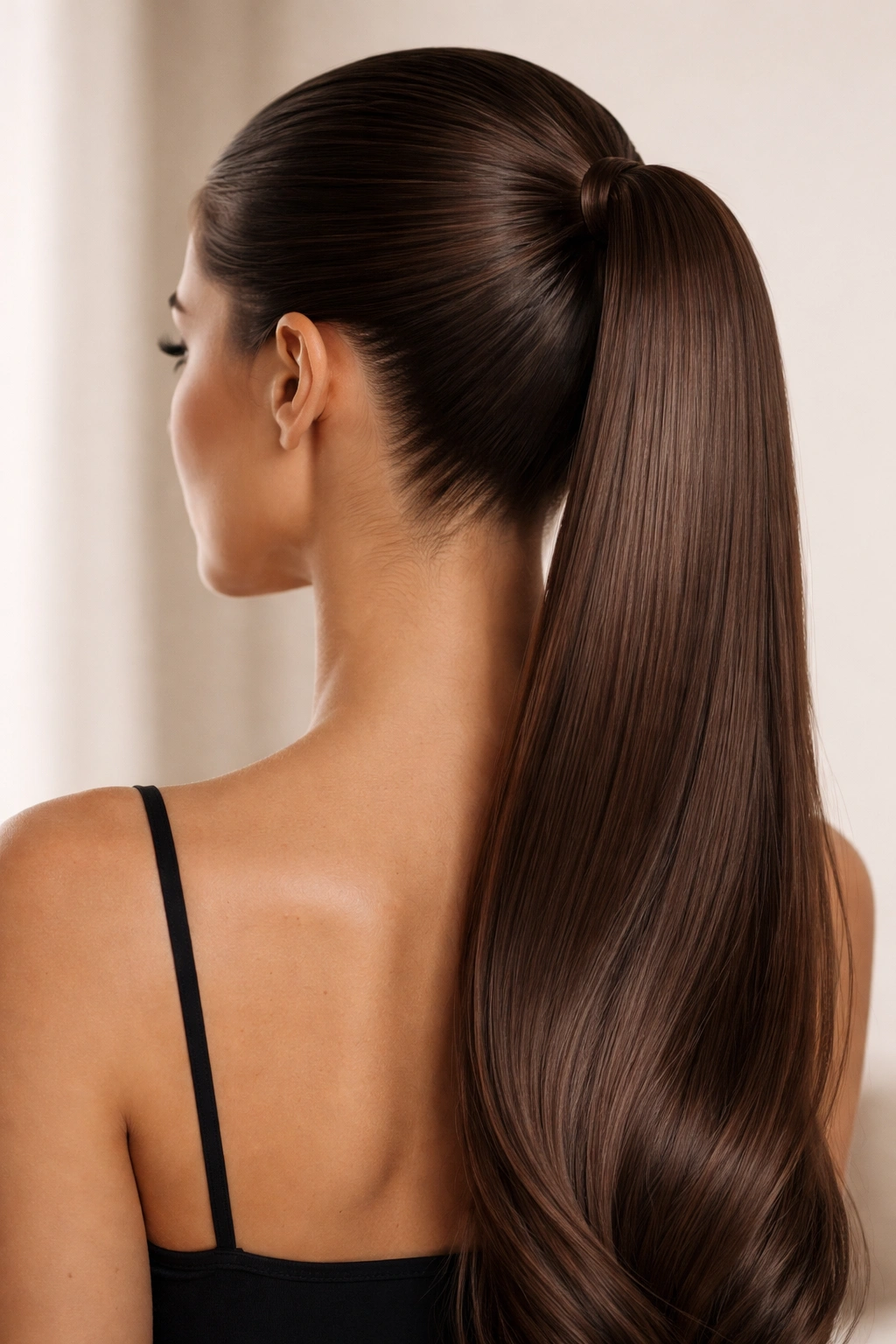
Every one of these ponytail styles proves that looking expensive doesn’t require expensive products, professional services, or complicated techniques. It requires intentionality, precision, and understanding the specific details that create polish—a matching-color elastic, a smooth base, strategic shine, or a carefully placed frame of hair around your face. Each style works because of the techniques behind it, not because of luck or inherent hair texture.
The real shift happens when you stop thinking about ponytails as a utility hairstyle and start treating them as an intentional choice. The styles that look most expensive are the ones where every element—the height, the smoothness, the placement, the finish—has been deliberately chosen and executed cleanly. Pay attention to your hair base, invest in products that create genuine shine rather than just claiming to, and take the extra thirty seconds to smooth flyaways and conceal your elastic. These small details are what transform a basic ponytail into something that actually reads as polished and refined.
