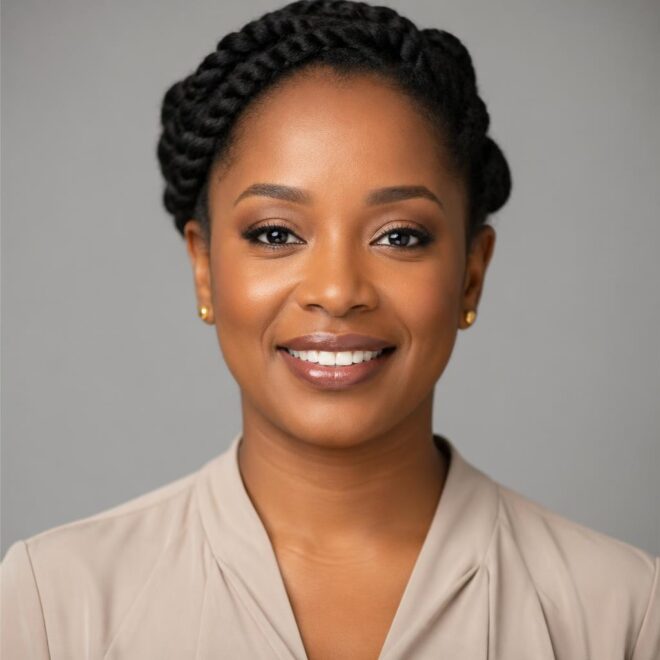


The side part has quietly become one of the most flattering ways to frame the face, and when paired with a sleek ponytail, it delivers a sophisticated, intentional look that works across nearly every occasion. There’s something about the asymmetry of a side-parted ponytail that feels both polished and effortlessly put-together—it’s the kind of hairstyle that looks intentional without demanding hours in front of the mirror. Whether you’re heading to the office, preparing for a special event, or just want to elevate your everyday hair, the side part ponytail offers incredible versatility while maintaining that clean, refined aesthetic.
What makes side part ponytails so appealing is how they work with your natural face shape rather than against it. The diagonal line of the part creates visual interest and can actually make your face appear more sculpted and defined. Unlike center parts, which can sometimes emphasize width or draw attention downward, side parts create a flattering asymmetry that most face shapes respond well to. The key is understanding which variation suits your specific hair texture, face shape, and lifestyle—because a sleek side part ponytail looks dramatically different on fine, straight hair than it does on thick, textured hair.
Beyond aesthetics, side part ponytails serve a real practical purpose. They keep hair completely off your face and neck, which is essential during workouts, long days at the office, or when you simply want to feel neat and composed. The side part element adds a style layer that transforms a basic ponytail into something that feels intentional and curated. You’re not just pulling your hair back; you’re creating a deliberate parting line that becomes part of your overall presentation.
1. The Classic Sleek High Side Ponytail
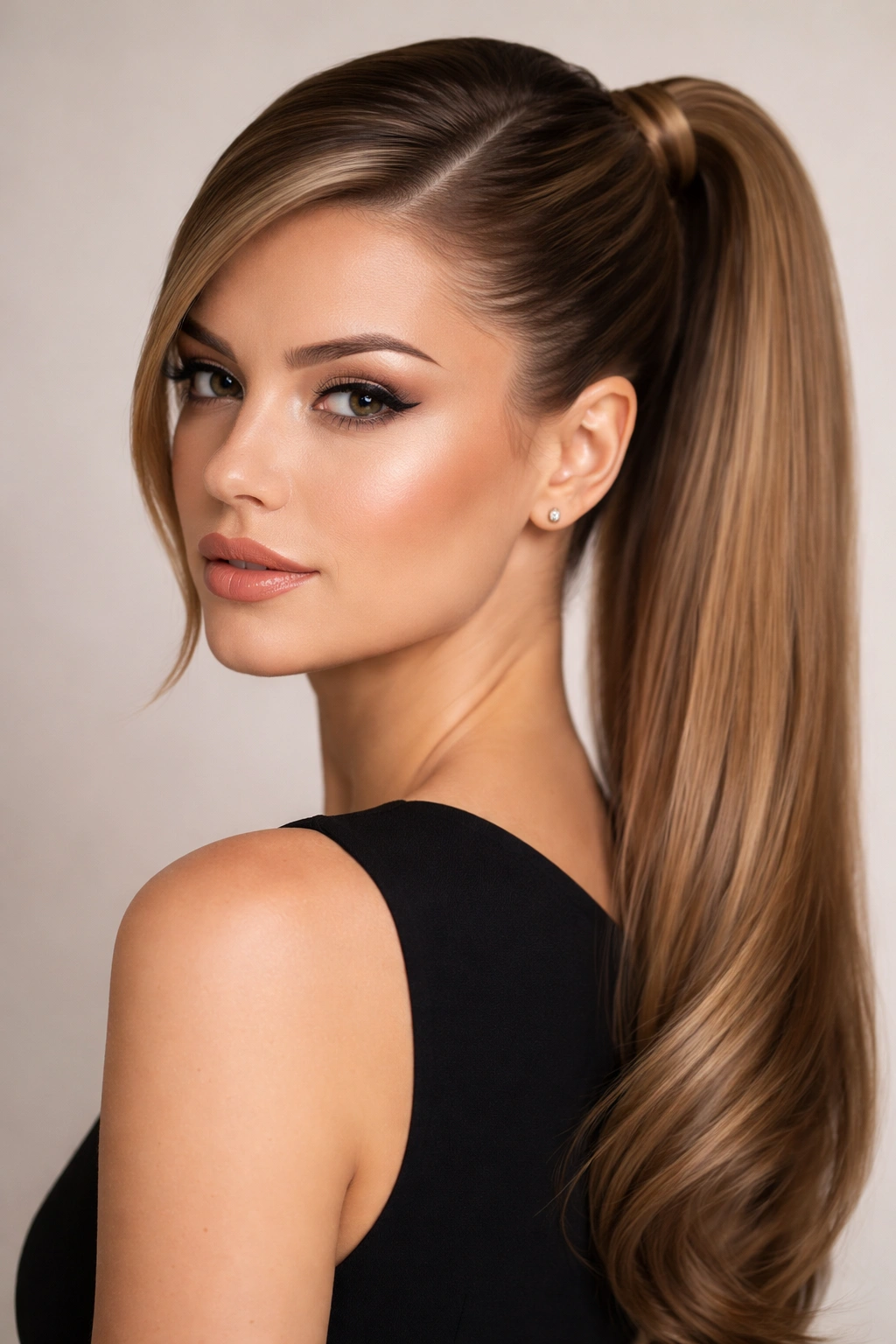
This is the foundational style that works in virtually every situation, from boardrooms to dinner dates. Start by creating a deep side part on the side that flatters your face—generally, if you have a wider forehead, a deeper part on one side creates better balance. Brush your hair smooth from the parted side, gathering it into a high ponytail positioned slightly toward the back of your crown.
The Styling Technique
Use a fine-tooth comb to smooth every piece as you gather your ponytail, eliminating flyaways before they start. A lightweight smoothing serum applied to damp hair before blow-drying creates an exceptionally polished base. Secure with a small, sturdy elastic that matches your hair color—this makes the elastic itself disappear visually. Wrap a small section of hair around the base of the ponytail to conceal the elastic entirely, securing it with a bobby pin underneath where it won’t show.
Why It Works
- Creates an instantly pulled-together appearance that reads as intentional and professional
- The high placement draws attention to your face and neckline
- Works beautifully with both straight and slightly wavy hair textures
- Takes approximately 5 minutes once you master the technique
- Stays secure throughout an entire workday without readjusting
This style pairs perfectly with a structured blazer or an elegant evening gown. The simplicity of the styling means it works whether you’re in a rush or have time to perfect it.
2. The Textured Side Part Ponytail with Volume
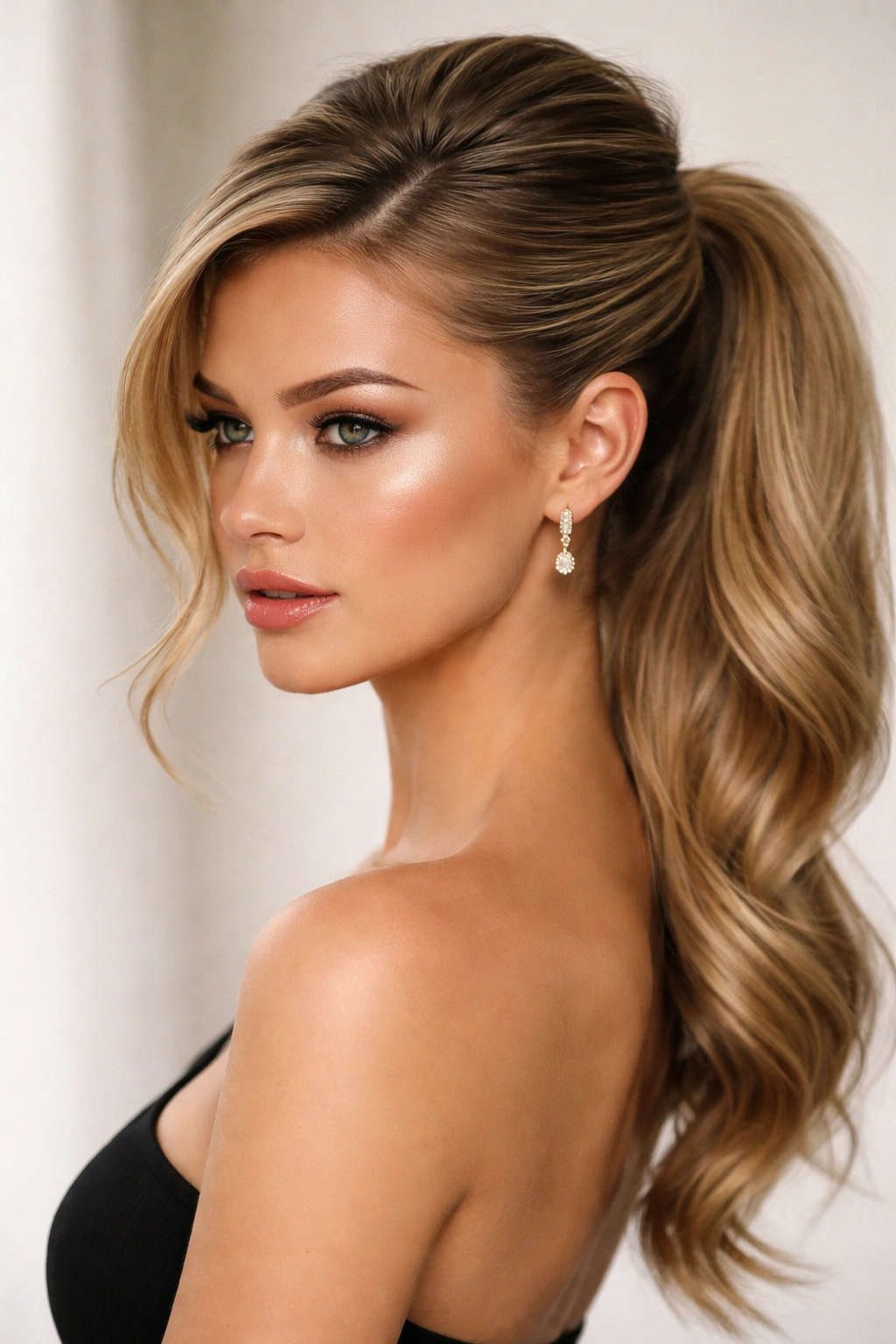
If your ponytail tends to look thin or you simply prefer movement over severe sleekness, this variation introduces texture while maintaining the clean side-part aesthetic. The secret lies in strategically backcombing sections before gathering your ponytail, which creates dimension without looking messy.
Building the Texture
After creating your side part and brushing the hair smoothly, take sections from the crown area and gently backcomb at the roots using a fine-tooth comb. Work in sections rather than throughout the entire ponytail—focusing on the crown and the sides creates the most flattering lift. Use a paddle brush to smooth the surface layer over the backcombing, maintaining a polished exterior while keeping all the volume hidden underneath.
Key Details to Master
- Backcombing at the roots rather than mid-shaft prevents that teased, damaged appearance
- A texturizing spray applied before backcombing gives the comb something to grip
- The smoother the surface layer, the more elegant the finished look appears
- This technique adds approximately 15 minutes to your styling time but creates noticeably fuller results
The finished ponytail appears significantly thicker and more voluminous while still reading as intentionally styled rather than accidentally tousled.
3. The Low Side Ponytail with a Graceful Drape
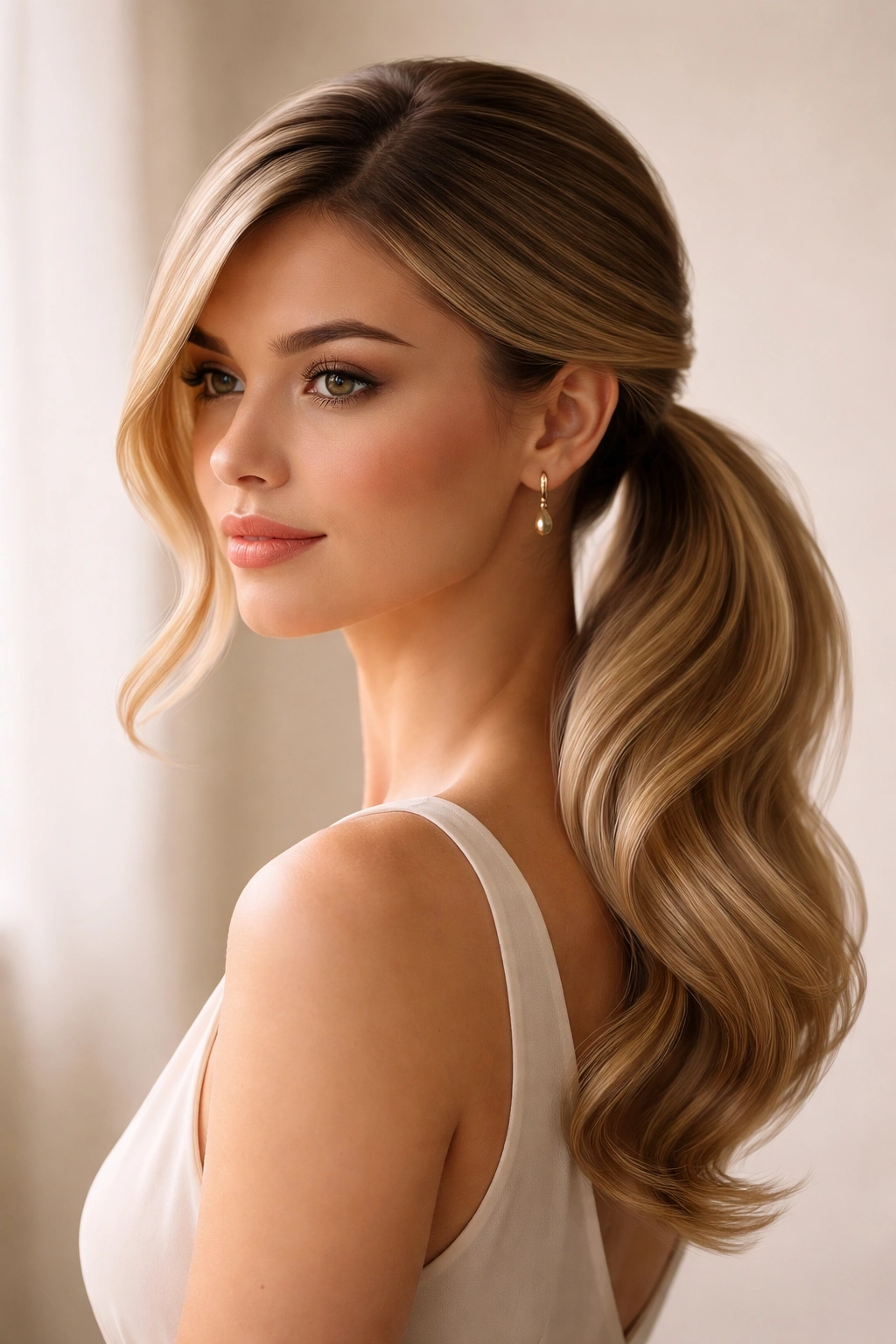
A lower ponytail positioned at the nape of the neck creates an entirely different energy—more relaxed, romantic, and suitable for situations where high, pulled-back styles feel too severe. The side part becomes even more important here because it creates balance with the lower placement.
Positioning and Proportion
Create your side part with slightly more depth than you would for a high ponytail, allowing the smaller section on one side to taper gradually into your larger gathered section. Place your ponytail at approximately the middle of your back of your head, roughly where you’d feel your occipital bone. This positioning feels effortless without appearing undone—there’s a meaningful difference between a styled low ponytail and hair that simply slipped down.
Styling Considerations
- Pair with soft waves or a gentle curve throughout your ponytail for a romantic effect
- Works especially well with medium to long hair lengths
- Creates a universally flattering neckline appearance
- Suits casual brunches, date nights, and creative professional environments
Adding a thin decorative ribbon woven around the base of this ponytail elevates it toward special-occasion territory without requiring additional styling.
4. The Side Ponytail with a Wrap-Around Bang Section
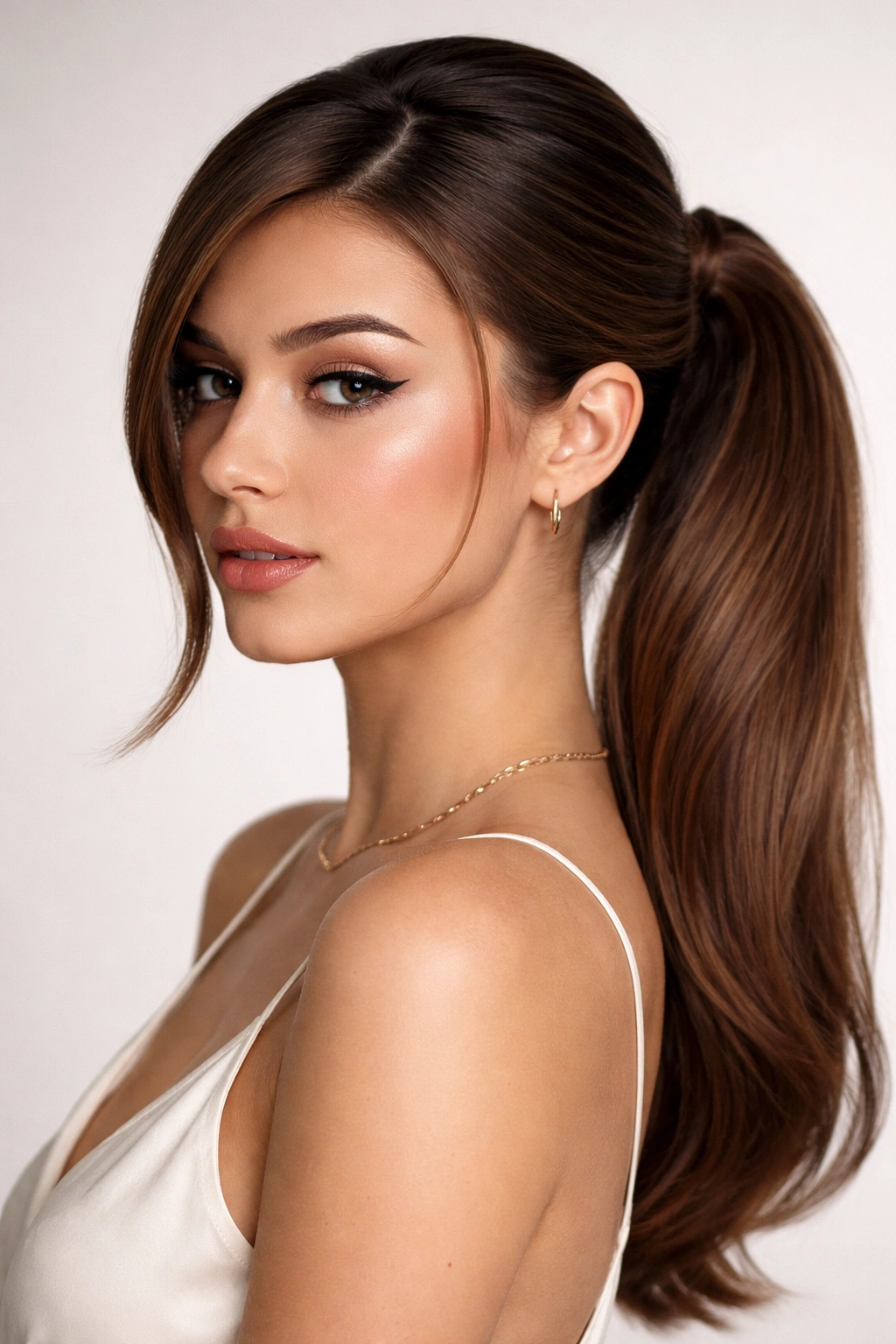
This style introduces a dimensional element by intentionally leaving a thin section of hair free from the ponytail, then wrapping it around the elastic base. It’s more intricate than a basic side part ponytail but still achievable with practice.
Creating the Wrap-Around Element
When gathering your ponytail, intentionally leave a thin section of hair (roughly one inch wide) from the front of the ponytail area unsealed in your elastic. Once your main ponytail is secured, take that remaining section and wrap it smoothly around the base of the ponytail, securing the end with a bobby pin underneath. This technique accomplishes two things: it conceals the elastic entirely and it adds visual dimension and interest.
The Visual Effect
- Creates the appearance of a more intricate style than the actual time investment requires
- The wrapped section frames the face beautifully when done on the side-parted side
- Works with all hair textures and lengths
- Makes thin hair appear fuller because the wrapping adds perceived dimension
This style works beautifully for occasions where you want to look polished and put-together but not overly formal.
5. The Slicked-Back Side Ponytail with a Gel Finish
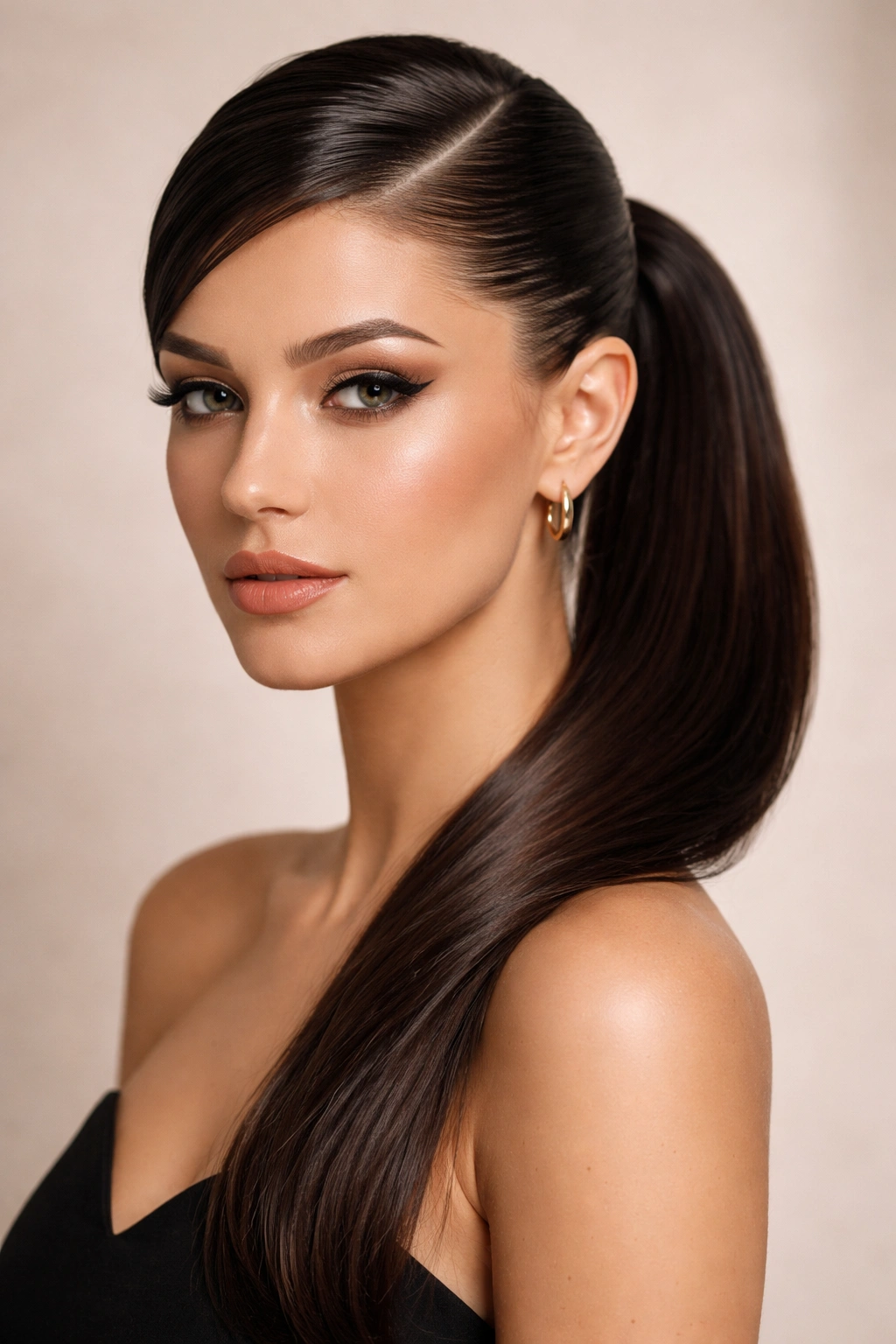
Sometimes elegance means absolute smoothness and control, which is where a gel-finished side part ponytail becomes your go-to option. This style demands precision but delivers undeniable polish, making it perfect for formal events, professional photography, or when you want a truly statement-making look.
Application Technique
Apply a strong-hold gel to damp hair before blow-drying, working it through from roots to ends. Create your side part while the hair is still slightly damp. Use a fine-tooth comb to brush every piece smoothly toward your ponytail point, applying additional gel as needed to eliminate flyaways. The gel creates a light sheen rather than a wet appearance when you use the right product and amount.
Product Selection Matters
- Gel-based products create more shine and control than creams or serums
- Look for formulas designed specifically for sleek styles, which tend to have better hold
- The finish should look intentional and polished, never stiff or crunchy
- Some gels require a light hand because a little goes a long way
This style photographs beautifully and maintains its sleekness through movement and activity without requiring midday touch-ups.
6. The Braided Side Ponytail for Textured Hair
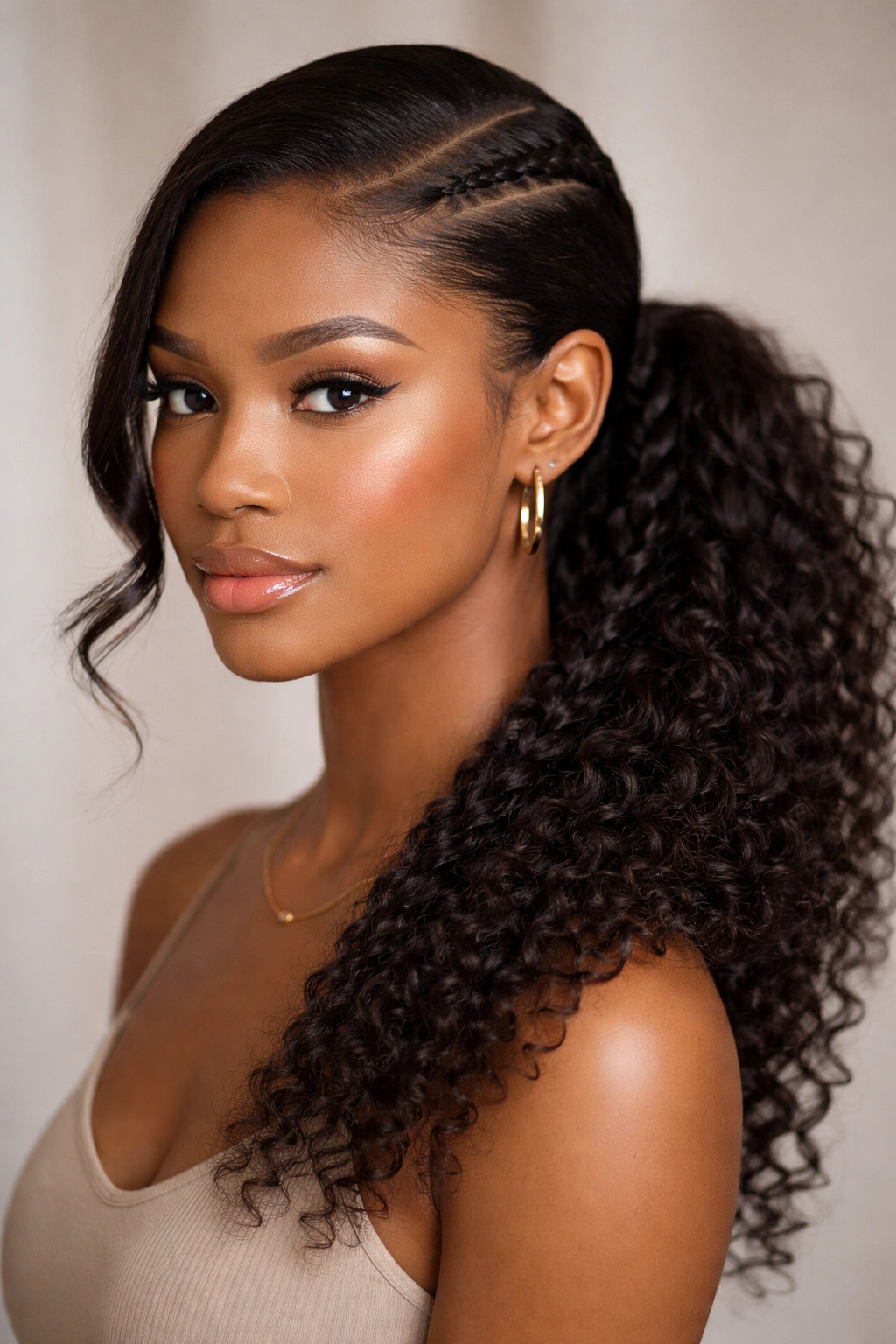
If you have naturally curly, coily, or textured hair, a side part ponytail works differently than on straight hair, and incorporating a braid into your gathering technique creates a style that’s distinctly beautiful and also practical for holding curl patterns in place.
Adapting to Textured Hair
Rather than slicking everything back, work with your natural texture by creating a side part in your curls, then braiding a section from that parted side down toward where your ponytail will gather. This braid acts as both a style element and a mechanism for controlling and directing your textured hair. Gather the remaining hair into your ponytail, allowing your curls to exist in their natural form rather than trying to force them into European straightness.
Honoring Your Hair’s Nature
- Textured hair actually benefits from a bit of lift at the roots, which a side part naturally creates
- The braid acts as a frame for your face while the rest of your curls maintain their personality
- This approach requires less manipulation and heat than trying to straighten textured hair
- Use a moisturizing styling cream rather than a slicking gel to maintain curl definition
The result is a style that feels both intentional and authentic to your hair’s natural character.
7. The Side Ponytail with Face-Framing Pieces
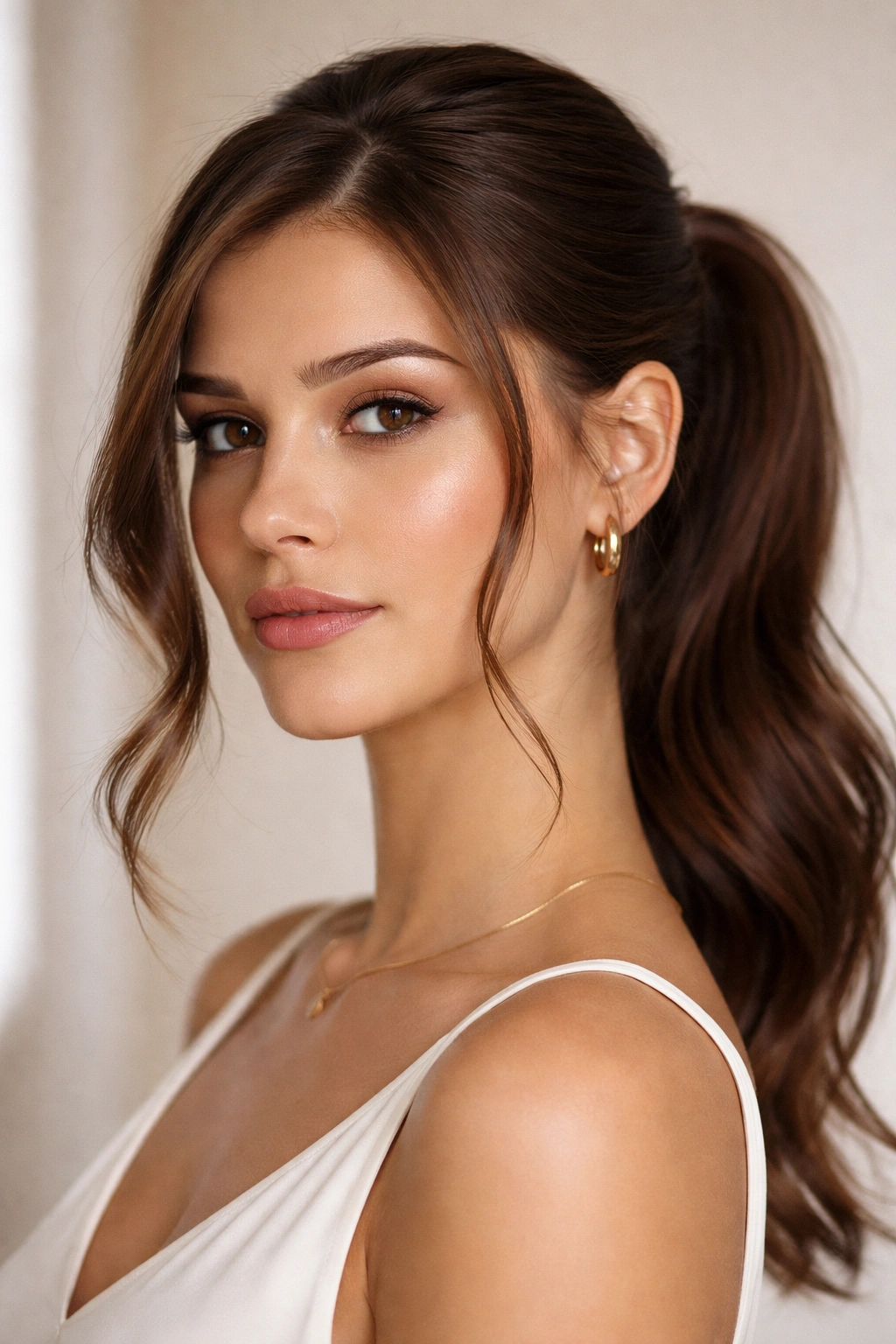
This variation deliberately leaves small sections of hair loose near the face, creating a softer, less severe aesthetic. It’s the perfect option if you want the convenience of a ponytail without the stark pulled-back appearance.
Strategic Piece Placement
Create your side part as usual, but when gathering your ponytail, intentionally leave small sections (roughly one inch wide) at your temples and perhaps one near your cheekbone on the side-parted side. These pieces frame your face and add movement while the bulk of your hair remains secured. The trick is securing your ponytail tightly enough that these frame pieces don’t accidentally slip in as the day progresses.
Styling the Loose Pieces
- Curl or wave the loose pieces gently to coordinate with the texture of your ponytail
- These pieces soften your face shape and create a romantic quality
- The style reads as intentionally styled rather than accidentally messy
- Works beautifully for casual dates, weekend outings, and relaxed professional settings
This approach gives you the practicality of a ponytail with the softness of wearing your hair down.
8. The Glossy Side Ponytail with a Deep Shine
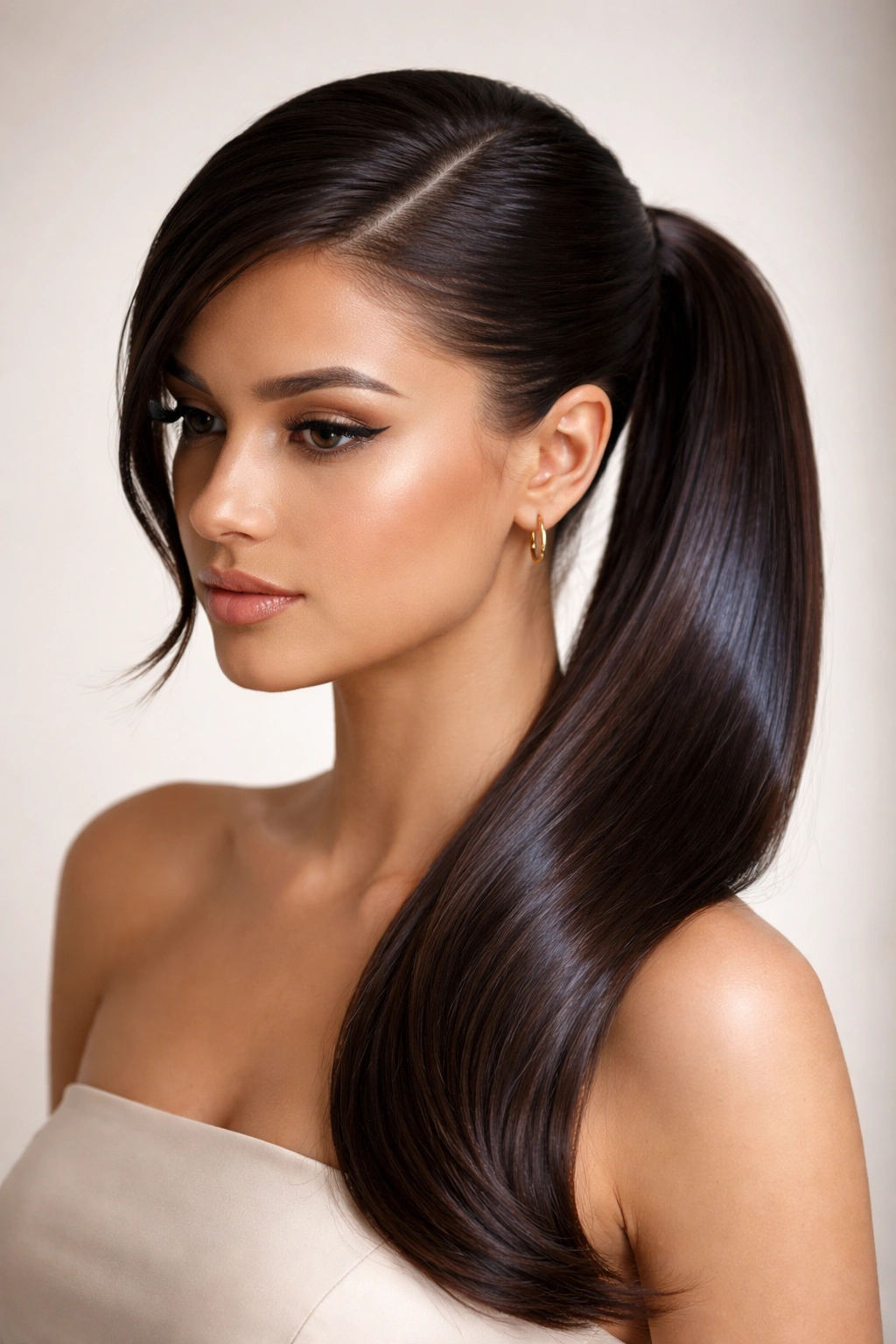
Shine and gloss elevate any ponytail from everyday to special-occasion territory. This style pairs a perfectly-executed side part with a hair treatment or styling product that creates visible luminosity.
Creating Visible Shine
Start with a deeply nourishing hair mask or oil treatment applied to damp hair before blow-drying. Blow-dry your hair smooth with a paddle brush, then create your side part. Once your ponytail is gathered and secured, apply a small amount of shine spray or hair oil to the outer surface of your ponytail, distributing it evenly with your fingers. The oil catches light and creates a luxurious appearance.
Product Recommendations and Application
- Silicone-based shine products create the most visible gloss
- Apply shine products to the outside of your ponytail rather than throughout, which prevents that greasy appearance
- Lightweight oils (argan, jojoba) provide shine without adding weight
- The shine should appear intentional and luxurious, not wet or slick
This variation makes an ordinary ponytail feel like a statement style without requiring additional complexity.
9. The Side Ponytail with a Curved Section
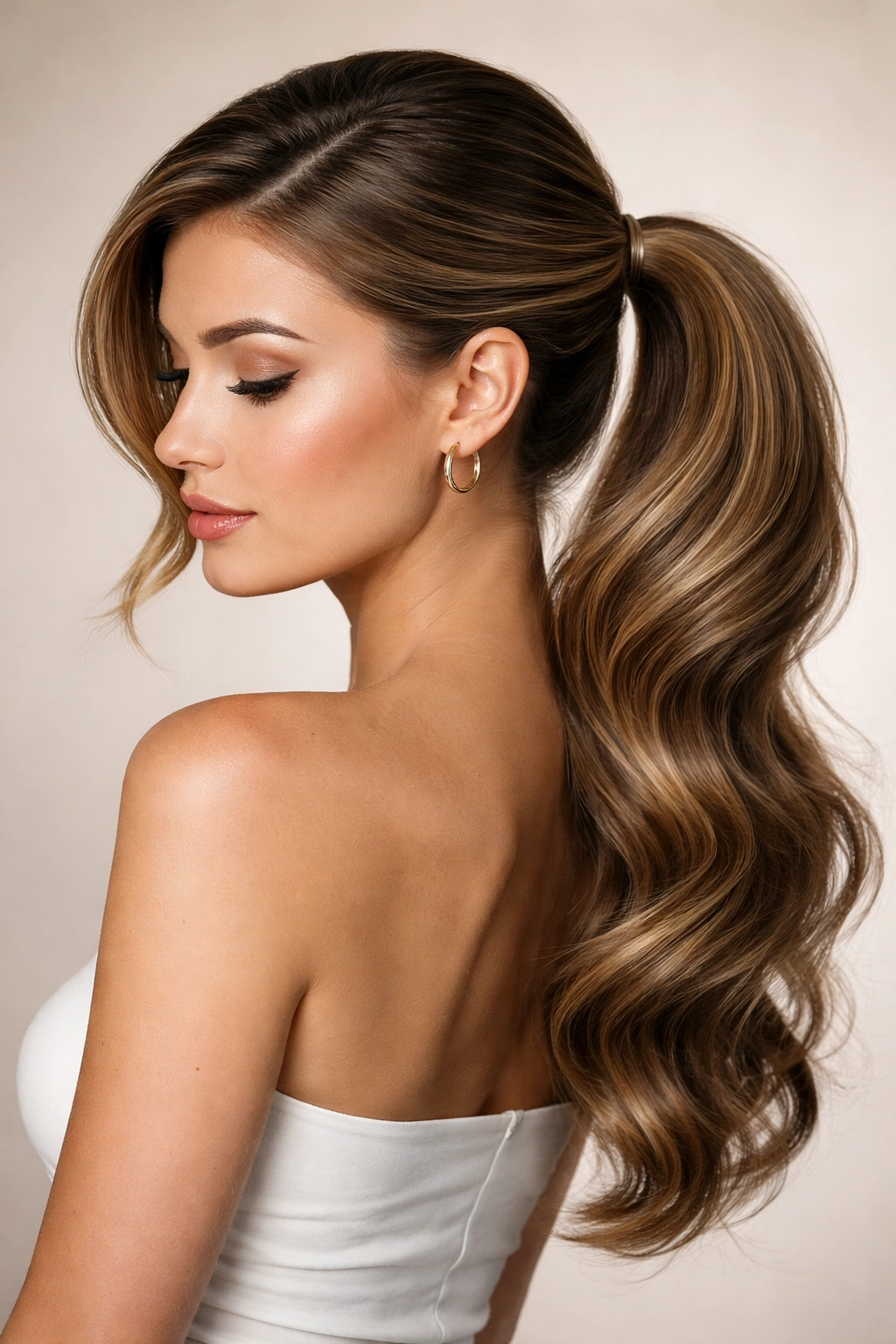
Rather than gathering all your hair straight back, this technique creates a subtle curve or wave through the gathered ponytail, adding movement and visual interest to what might otherwise be a static style.
Creating the Curve
Blow-dry your hair with a slight wave pattern throughout using a round brush or curling iron before gathering your ponytail. When you secure your ponytail, allow the waves to remain visible throughout the length rather than brushing them smooth. The result is a ponytail that curves and moves rather than hanging perfectly straight.
The Visual Impact
- A curved ponytail appears softer and more approachable than a perfectly straight one
- The waves catch light at different angles, creating dimension
- This style works beautifully with longer hair where the curve becomes more pronounced
- It’s suitable for nearly every occasion, from professional to casual to formal
The curved side ponytail strikes an elegant balance between polished and relaxed.
10. The Side Ponytail with a Statement Accessory
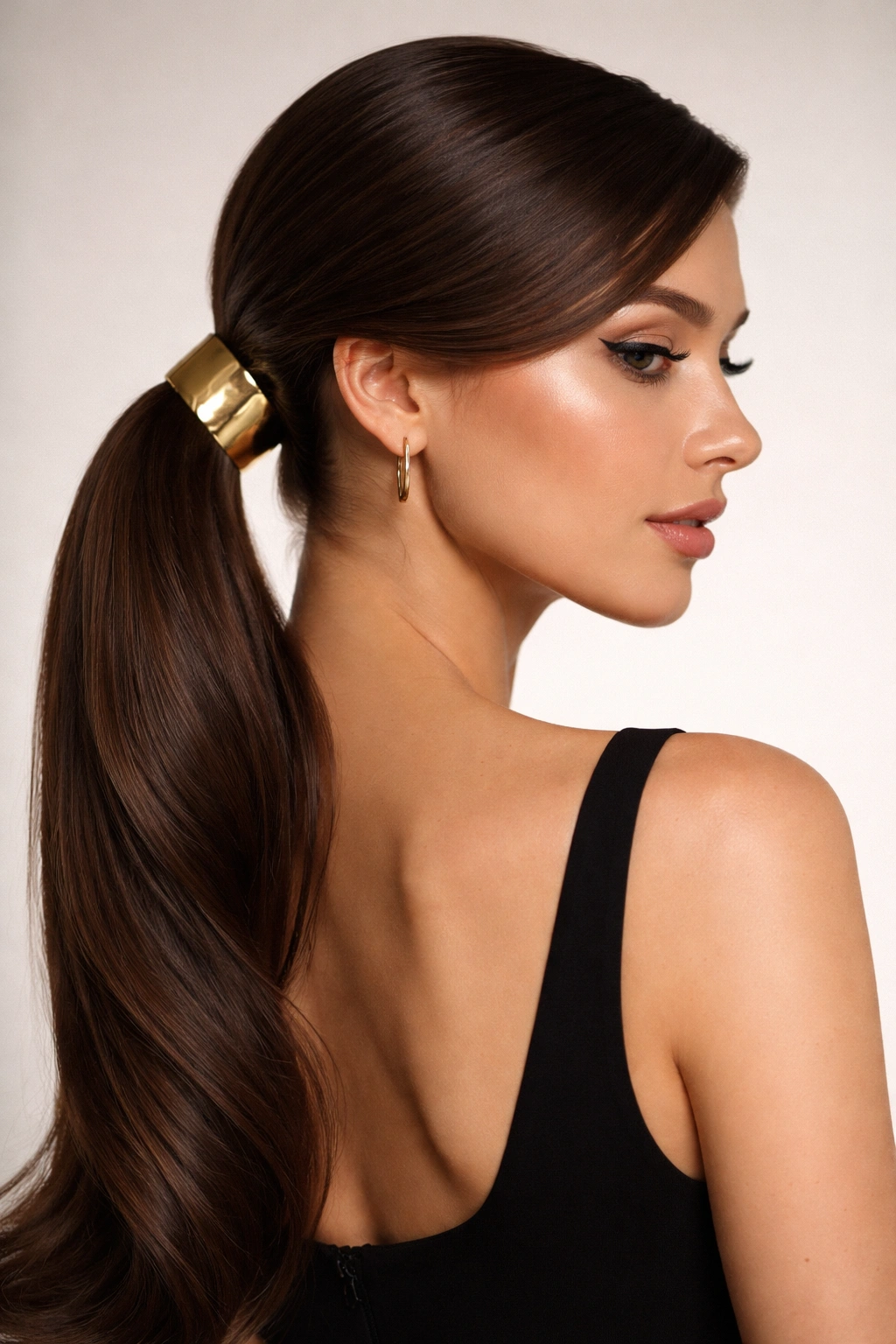
Sometimes a side part ponytail becomes your canvas for introducing an eye-catching accessory that transforms your entire look. A cuff, a clip, or a decorative elastic positioned at your ponytail’s base creates visual interest.
Accessory Integration Techniques
Gather your ponytail as usual, then position your chosen accessory at the base. If you’re using a decorative cuff, slide it over your already-secured ponytail. If you’re using a clip, position it to cover the elastic. The accessory becomes part of your overall styling rather than seeming like an afterthought.
Accessory Options That Work
- Metal cuffs in gold, silver, or rose gold add instant sophistication
- Pearl-adorned clips introduce a delicate, vintage quality
- Silk scrunchies in jewel tones create visual richness
- Leather cuffs add an edgy, fashion-forward element
An accessory transforms a basic side ponytail into a deliberately styled statement.
11. The Asymmetrical Side Ponytail with Undercut Detail
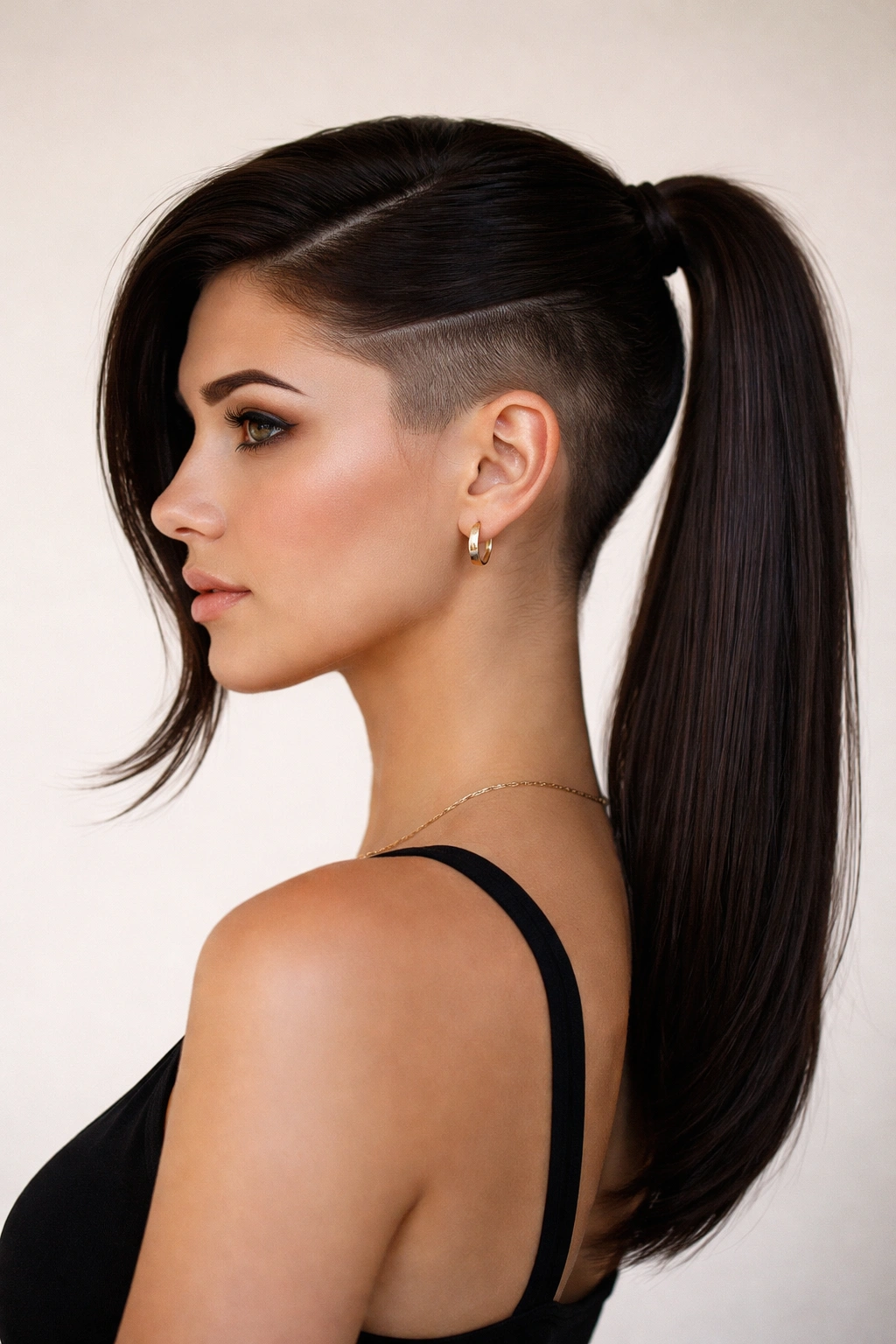
This modern variation works particularly well if you have an undercut or shaved section hidden beneath your hair. The side part draws attention to that sculptural element while maintaining a completely polished exterior appearance.
Revealing Your Undercut
Create a dramatic side part positioned to angle toward whichever side features your undercut detail. Gather your ponytail as usual, but smooth the hair in a way that subtly reveals the undercut section—not aggressively exposed, but visible to those standing beside or slightly behind you. This creates a style that appears conservative from the front but reveals an edgy, fashion-forward element when you move.
The Modern Appeal
- Creates visual intrigue and personal expression
- Allows you to wear a bold, edgy style in conservative professional environments
- The side part naturally draws attention to this detail
- Works beautifully in creative fields and modern workplaces
This style suits people who want to express their individual style without completely abandoning professionalism.
12. The Side Ponytail with Integrated Hair Extensions or a Hairpiece
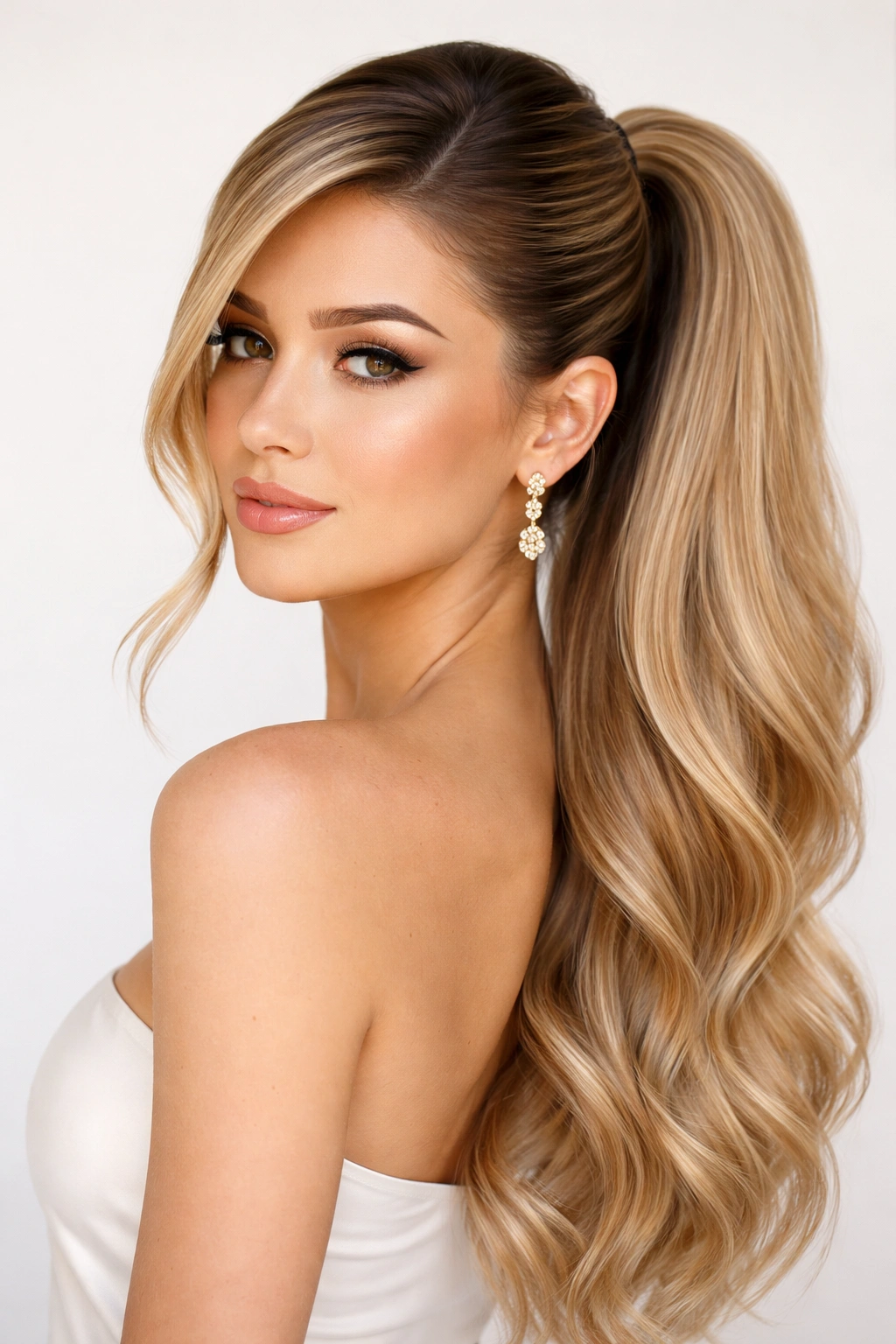
If you’re working with thinner hair, shorter hair, or you simply want to experiment with length and volume, integrating extensions or a clip-in ponytail piece creates options that wouldn’t otherwise be available to you.
Integration Methods
Gather your natural hair into a side part ponytail as usual. If you’re using clip-in extensions or a ponytail piece, secure them at the base of your natural ponytail using the clips or by tying them directly into your elastic. Ensure they blend seamlessly with your natural hair color and texture. If you’ve had extensions professionally placed, style them exactly as you would your natural hair.
Practical Considerations
- Extensions allow experimentation with length and volume without permanent commitment
- Clip-in pieces make testing a style before committing to a cut extremely practical
- Match your extension color precisely to your natural hair for seamless blending
- Extensions require slightly more careful handling when washing and styling
- Quality extensions make a dramatic difference in the final appearance
This approach opens styling possibilities for anyone regardless of their natural hair length or thickness.
Final Thoughts
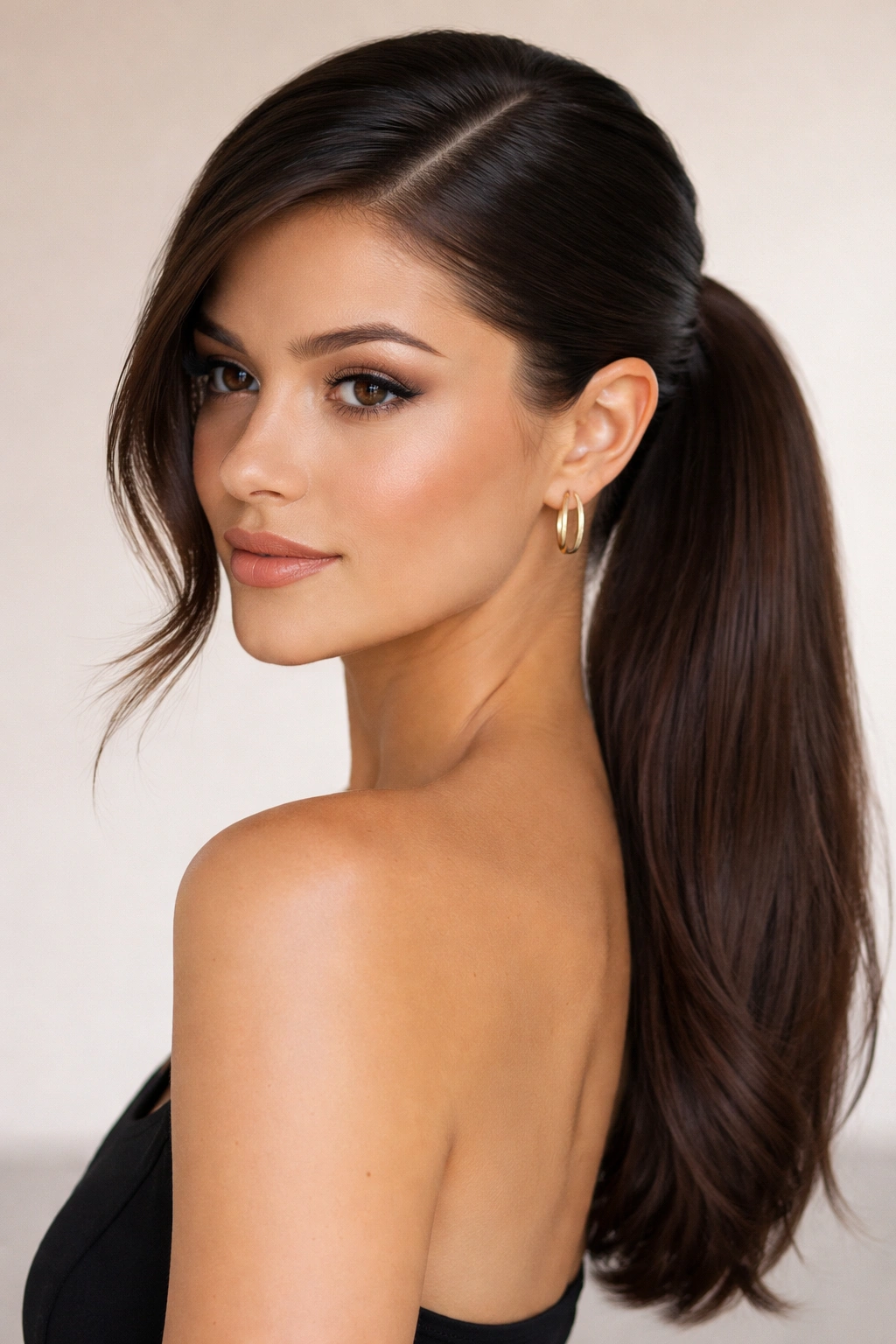
A side part ponytail seems deceptively simple on the surface, but the variations available—from sleek and severe to textured and romantic—mean there’s genuinely a version that suits every person, occasion, and hair type. The key to making any of these styles work is understanding your own hair’s texture and behavior, investing in quality products that support your specific needs, and spending a few minutes on precision during the styling process. The side part itself is what elevates a basic ponytail into something that feels intentional and polished, and that asymmetrical line translates into a more flattering frame for your face than a centered ponytail typically provides.
Don’t feel confined to just one of these variations either. You might wear the sleek high ponytail on work days, switch to the textured version on weekends, and pull out the face-framing pieces variation for dates or social occasions. Once you’ve mastered the fundamental technique of creating a side part and gathering a smooth ponytail, experimenting with these different approaches takes minimal additional effort. Each variation delivers that clean, composed aesthetic that makes a side part ponytail such a reliable go-to style for people who want to look put-together without spending excessive time on their hair.