

Short hair doesn’t mean sacrificing ponytail versatility — it just means getting creative with placement, texture, and styling techniques that work with shorter lengths. Whether you’re dealing with a pixie that’s grown out, a layered bob, or anything in between, there are more ponytail options than most people realize. The secret isn’t fighting your hair’s length; it’s using strategic styling methods to create dimension, texture, and visual interest that make even minimal hair feel polished and intentional.
The challenge with short hair is that traditional ponytail approaches often fall flat. You can’t rely on a sleek, heavy tail to anchor your style or add volume where you need it. Instead, the best short-hair ponytails embrace what shorter lengths do naturally: they hold texture, they work beautifully with layering, and they create an effortlessly polished look when styled correctly. The right ponytail can instantly elevate your appearance, add sophistication to a casual outfit, and solve the problem of hair in your face on a bad hair day — all without requiring long, flowing strands.
What makes these styles work for short hair is understanding placement, technique, and the role of texture. A low ponytail positioned at the nape of your neck works better than a high crown placement when you’re working with shorter lengths. Embracing your natural texture — whether that’s waves, curls, or straightness — creates visual volume that compensates for length. Tousled, slightly undone ponytails also tend to photograph and feel more authentic on shorter hair than slicked, overly polished versions do.
The hairstyles below represent the full range of what’s possible with short hair and ponytails — from barely-there styles that feel almost like you didn’t do anything, to more structured looks that feel intentional and styled. Each one works with different hair textures, different face shapes, and different occasions.
1. The Half-Up Bubble Ponytail
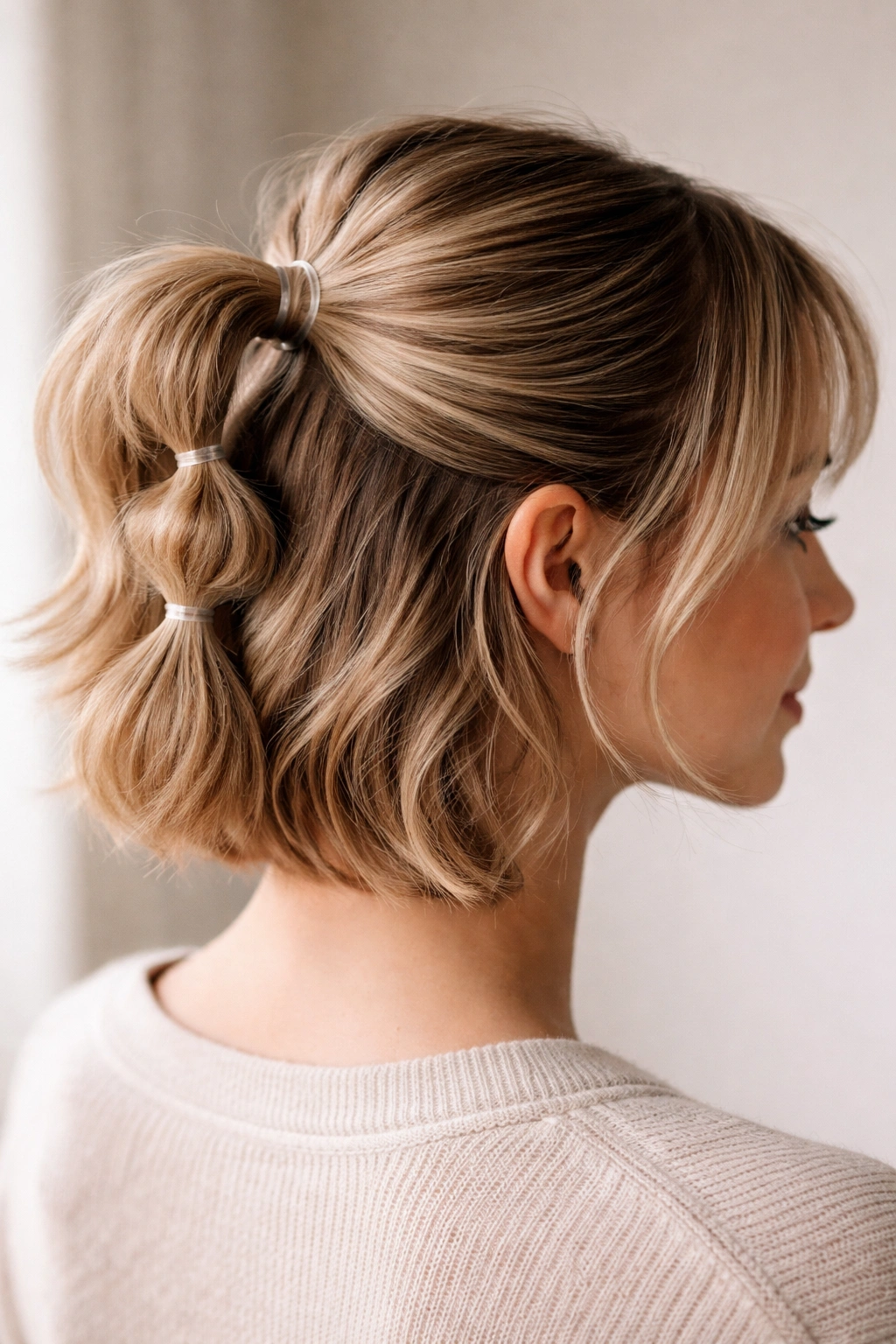
The half-up bubble ponytail works beautifully on short hair because it removes just enough hair from your face without requiring a full-length tail. This style pulls the upper section of hair into a small ponytail, then uses additional clear elastic bands placed an inch or two apart down the length of that tail to create separated bubble sections. Each bubble puffs out slightly between the bands, creating dimension and visual interest that makes your hair feel thicker and more textured than it actually is.
Why This Works for Short Hair
The bubble ponytail technique adds visual volume through strategic sectioning rather than relying on length. Each bubble section sits slightly higher than the one below it, creating a three-dimensional effect that’s especially flattering when your total hair length is limited. This style also works across all hair textures — curly hair naturally creates defined bubbles, while straight hair benefits from gently pulling each section to fluff it out.
How to Style It Perfectly
- Start with slightly textured hair (use a texture spray if your hair is freshly washed and smooth)
- Brush the top section back and secure with a clear elastic, positioning it where you’d like the first bubble to sit — this is usually 1-2 inches above where the shorter layers begin
- Take a second elastic and wrap it around the ponytail about 1.5 inches below the first band, then gently pull the hair between the two bands upward to create the first bubble
- Repeat with additional bands down the length of the tail, creating 3-4 bubbles total depending on your hair length
- Gently tease and loosen each bubble section so it appears fuller and more three-dimensional rather than tightly bound
Pro tip: Use clear elastics rather than colored ones so the bands become nearly invisible and don’t interrupt the visual flow of the bubbles.
2. The Messy Low Ponytail with Face-Framing Pieces
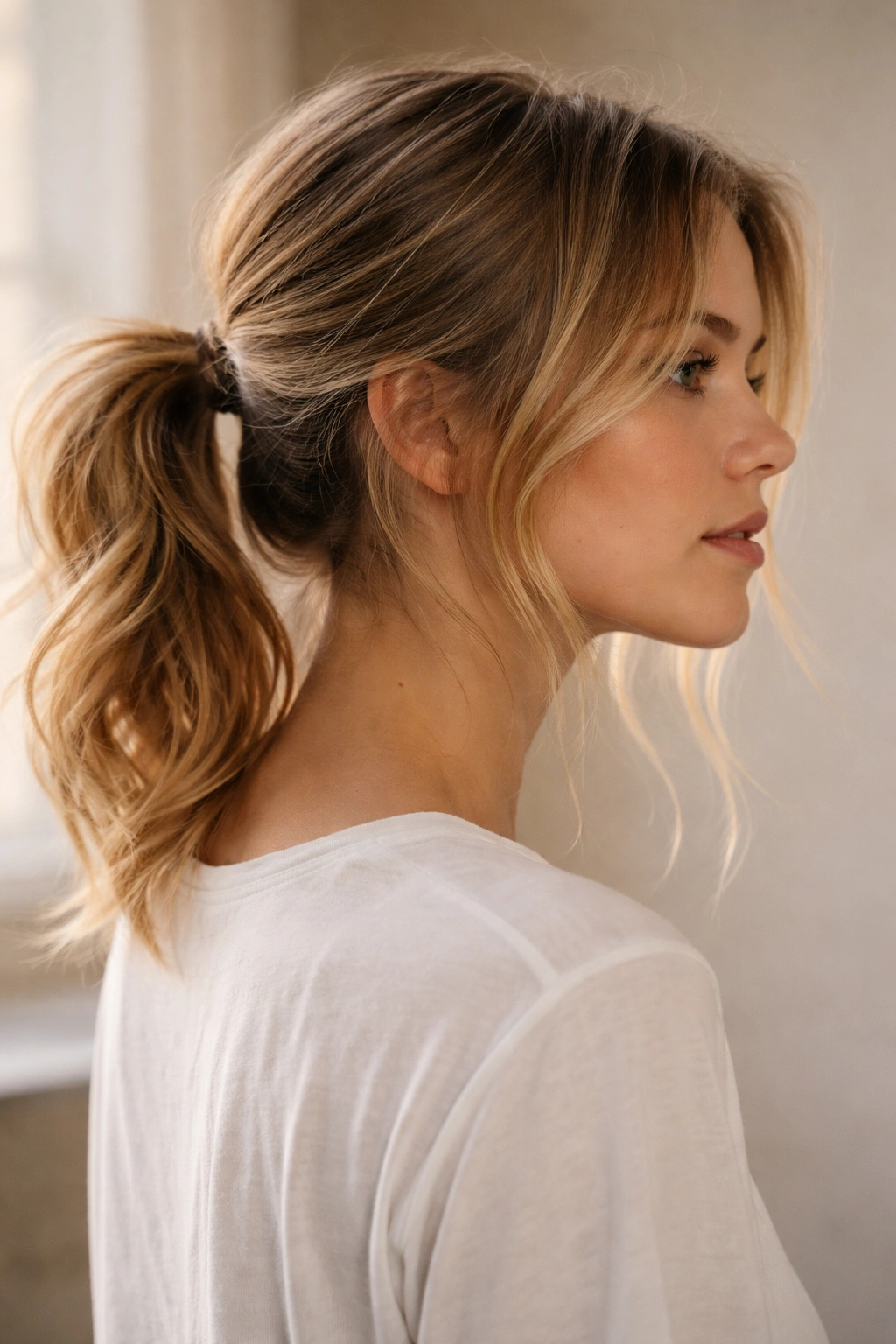
This style positions a loosely gathered ponytail at the nape of your neck, intentionally leaving small, wispy pieces out around your face and temples. The result feels effortlessly styled rather than polished, making it perfect for days when you want to look put-together without appearing to have spent time on your hair. The face-framing pieces soften the overall look and work particularly well if you have any layers in your short haircut.
Why This Works for Short Hair
The messy low ponytail is deceptively powerful for short hair because the low placement makes even a small amount of hair feel significant and intentional. Leaving pieces out around your face adds movement and softness that balances the shorter length, preventing the style from feeling too severe or pulled-back. This style also forgives imperfect execution — messiness is literally the point.
How to Style It Perfectly
- Lightly tease the crown section for subtle volume
- Brush hair back gently, deliberately leaving 1-2 pieces out on each side of your face and a few shorter pieces at the front
- Gather the remaining hair at your nape and secure it with a small elastic
- Gently pull and loosen the secured ponytail so it appears soft and slightly undone
- Use a light texture spray or dry shampoo to enhance the grip and keep pieces from slipping immediately back into your face
Pro tip: Pull the ponytail slightly to one side rather than centering it perfectly — this asymmetrical placement automatically reads as more intentional and less “just threw my hair in a ponytail.”
3. The Twisted Crown Ponytail
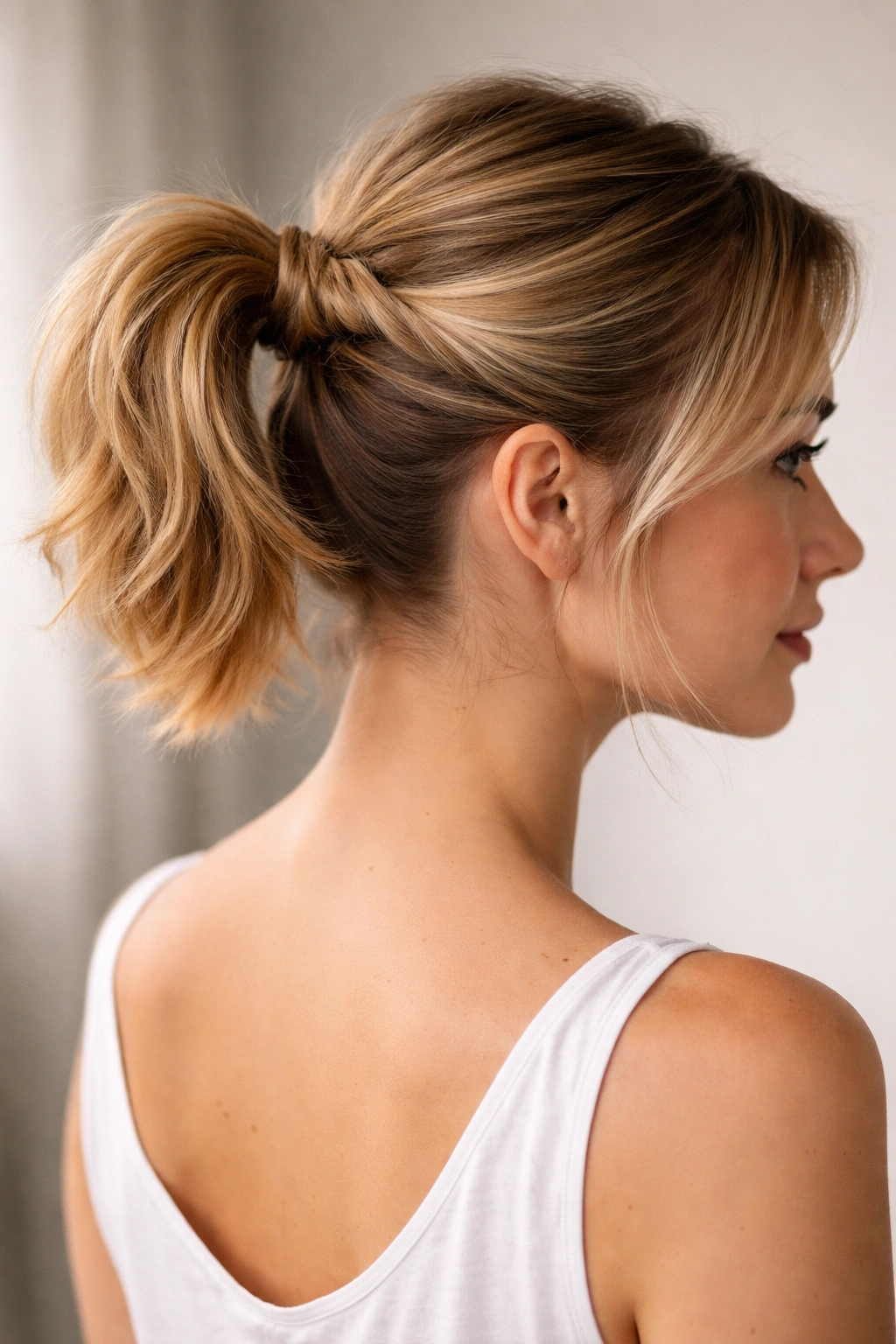
This style creates a small ponytail at the crown or slightly forward of it, but instead of a straightforward pull-back, you twist a section of hair around the base to hide the elastic and add a delicate, romantic detail. The twist becomes a decorative feature that elevates what would otherwise be a basic high ponytail, giving it more personality and visual interest. This works especially well if you have some curl or wave in your hair because the twist will sit more gracefully.
Why This Works for Short Hair
For short hair, the twisted base adds elegance and detail that compensates for the limited length of the tail itself. The twist also helps secure the ponytail more effectively, which matters when you’re working with finer or shorter hair that might otherwise slip out of an elastic. This style is sophisticated enough for professional settings or dressier occasions, but still feels fresh and modern rather than dated.
How to Style It Perfectly
- Gather hair at your desired ponytail position (crown or slightly forward) and secure loosely with a small elastic
- Take a thin section of hair from the side of the gathered ponytail
- Twist that section tightly and wrap it around the base of the ponytail, covering the elastic
- Secure the twisted section with a small bobby pin tucked underneath so it’s invisible
- Gently pull and loosen the main ponytail slightly for a softer appearance
Pro tip: Use a bobby pin that matches your hair color so it disappears completely into the twist, even if a tiny bit shows through.
4. The Sleek Gel Ponytail with Sharp Lines
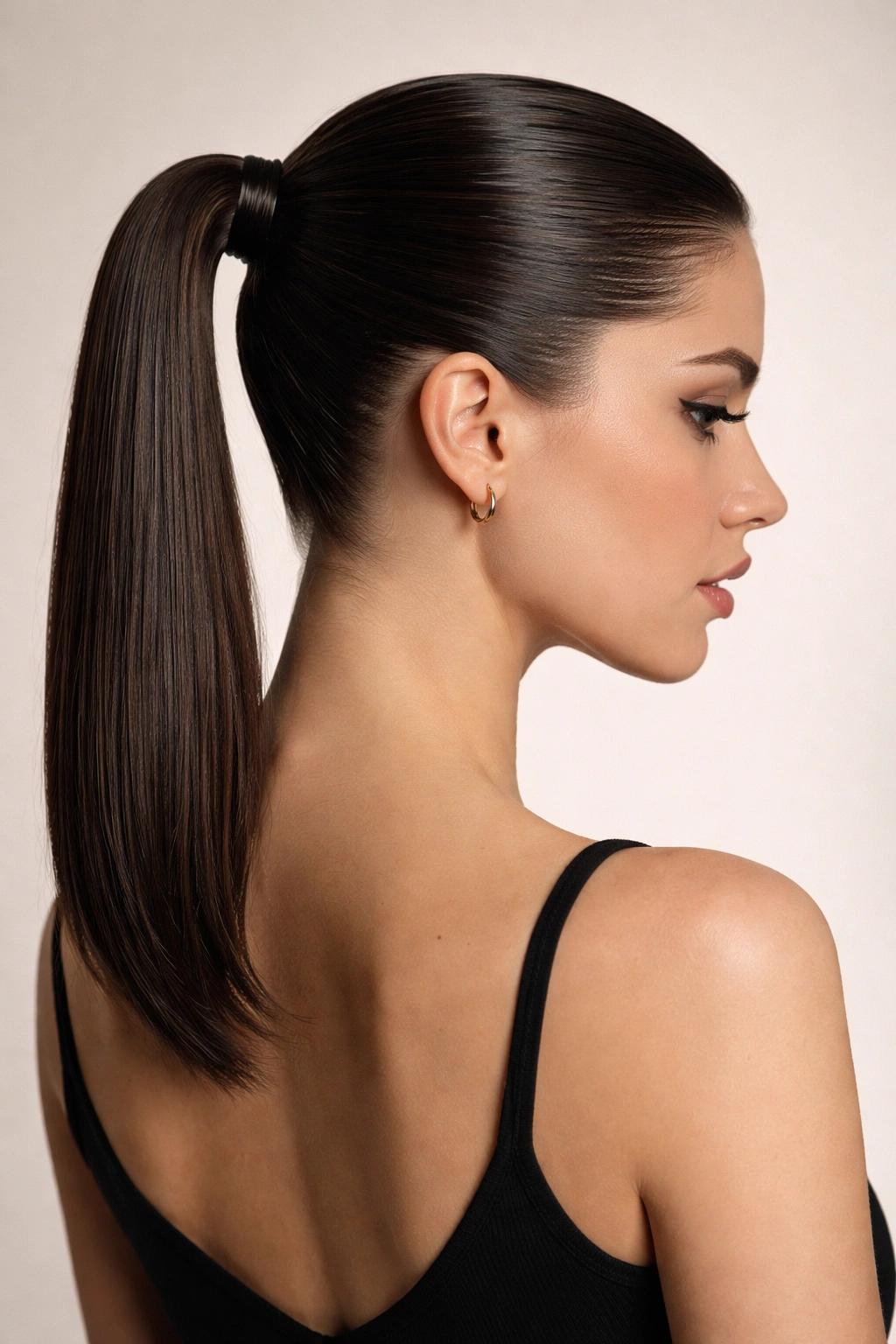
This is the polished, intentional opposite of the messy ponytail — a style that uses gel or strong-hold styling cream to smooth every hair back into a sharp, defined shape at your preferred position. The sleekness and precision of this style actually suits shorter hair beautifully because a slicked ponytail on short hair reads as deliberate and editorial rather than sparse. The smooth pull also shows off your face shape and features more clearly, making this style flattering for many face shapes.
Why This Works for Short Hair
The sleekness of this style prevents it from appearing thin or wispy the way a soft, loose ponytail might on very short lengths. The gel or cream adds shine and definition, which makes even modest amounts of hair appear substantial and intentional. This style also has the practical advantage of keeping every hair in place all day, making it ideal for active days or formal occasions where you need zero flyaways.
How to Style It Perfectly
- Apply smoothing gel or strong-hold cream to damp hair, working it through from roots to ends
- Use a fine-tooth comb to smooth hair back in your desired direction
- Gather into a ponytail at your chosen position and secure with a strong-hold elastic
- Use the comb to smooth any flyaways and reapply a tiny bit of gel to any pieces that escape
- Finish with a light hairspray to lock everything in place
Pro tip: Do this style on second-day hair rather than freshly washed hair — the natural oils help the gel sit better and create more shine.
5. The Textured Braid-Out Ponytail
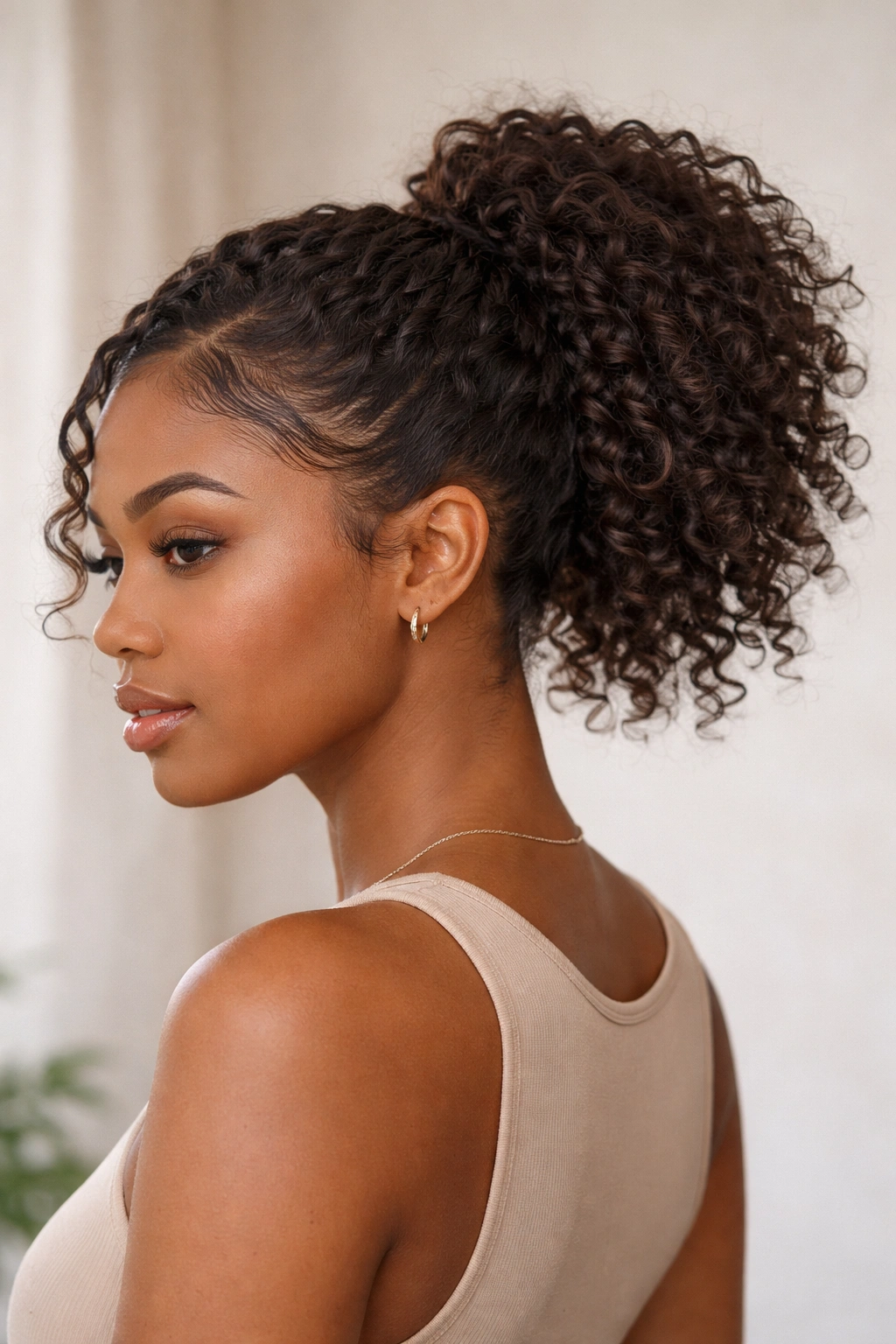
This style works beautifully if you have naturally curly, wavy, or textured hair. You create a ponytail using undone, tousled texture (or intentionally create texture through braiding the night before and releasing it), then gently work your fingers through it to enhance the natural pattern. The result is a ponytail that has tremendous visual volume and movement, making short lengths feel much fuller and more dynamic than they actually are. The natural texture also eliminates any feeling of severity that sometimes comes with short hair pulled back.
Why This Works for Short Hair
Texture is your best friend when working with short ponytails because it creates the illusion of volume and substance. A textured ponytail on short hair reads as intentional and stylish rather than sparse or pulled-back. This style also celebrates your natural texture rather than fighting it, which tends to be more flattering and requires less maintenance than constantly trying to smooth textured hair straight.
How to Style It Perfectly
- Start with hair that has natural texture or create texture by braiding damp hair overnight and releasing it in the morning
- Apply a curl-enhancing cream or texture spray to enhance and define your natural pattern
- Gently gather hair into a ponytail using your fingers rather than a comb — this preserves the texture and prevents it from looking too smooth
- Secure with an elastic that won’t snag your hair
- Use your fingers to gently pull and separate pieces of the tail to enhance the textured appearance
Pro tip: A small velvet elastic in a color close to your hair shade will grip textured hair better and cause less breakage than traditional hair elastics.
6. The Side-Swept Ponytail with Volume
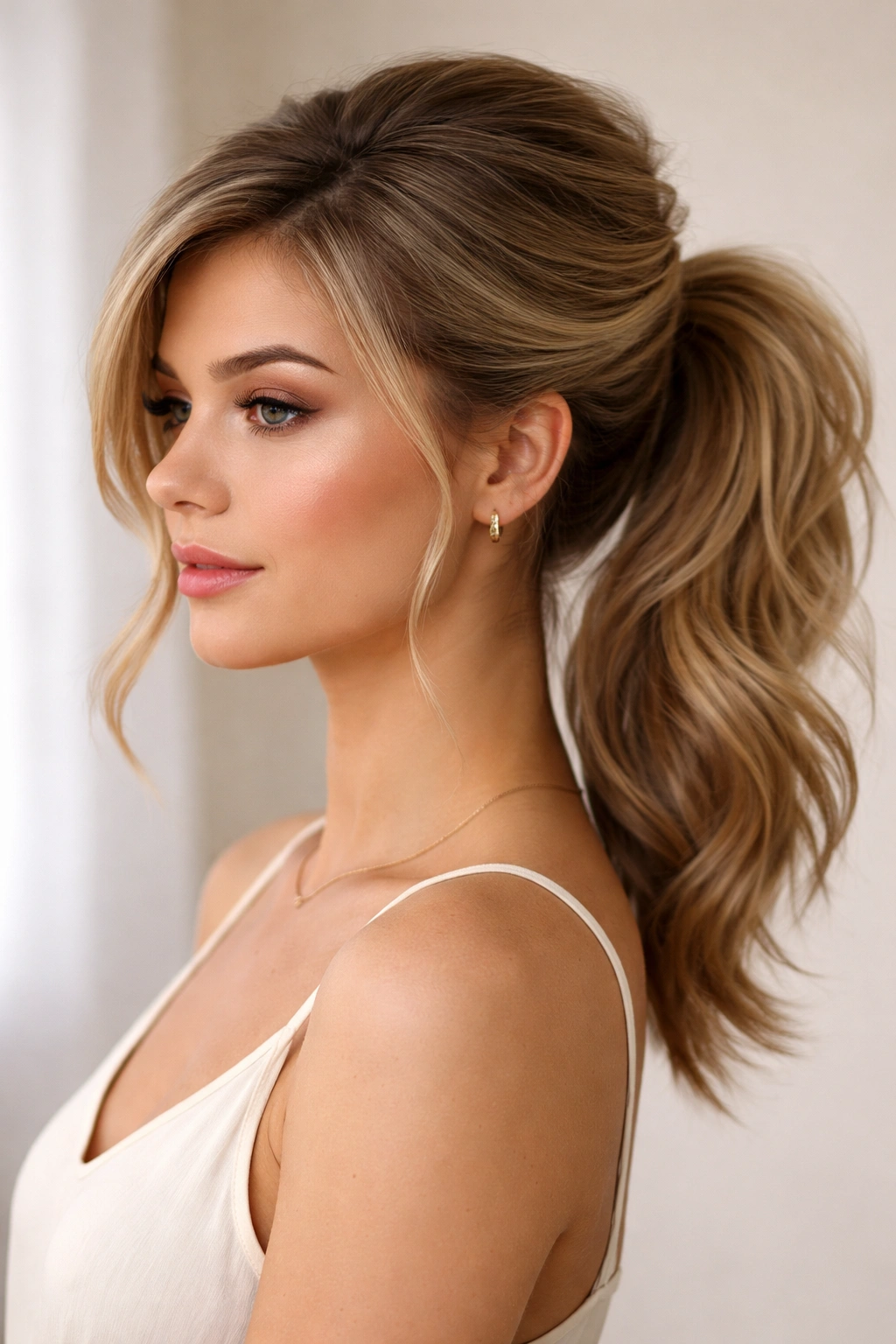
This ponytail sits off-center, swept dramatically toward one side, with strategic teasing at the crown to create height and dimension. The side placement and volume work together to create a more interesting silhouette than a centered ponytail, especially on short hair where you’re working with limited length overall. This style is modern and flattering, with enough movement and dimension to feel sophisticated even though the execution is relatively simple.
Why This Works for Short Hair
The off-center placement and crown volume create visual interest that draws the eye upward and outward rather than emphasizing the back and length of the hair. This makes short hair feel intentionally styled and stylish rather than simply pulled back for convenience. The volume at the crown also helps balance any narrowness that sometimes comes with short lengths pulled tight against the head.
How to Style It Perfectly
- Tease gently at the crown and back to create subtle volume
- Brush the top layer smooth over the teasing
- Gather hair toward one side of the back of your head, slightly lower than a traditional ponytail would sit
- Secure with a small elastic
- Gently pull and loosen the ponytail so it appears soft and full rather than tightly bound
- Leave a few wispy pieces out around your face to frame the look
Pro tip: The more dramatically to one side you place the ponytail, the more modern and editorial the style reads — it’s worth experimenting with how far to one side works best for your face shape.
7. The Faux Hawk Ponytail
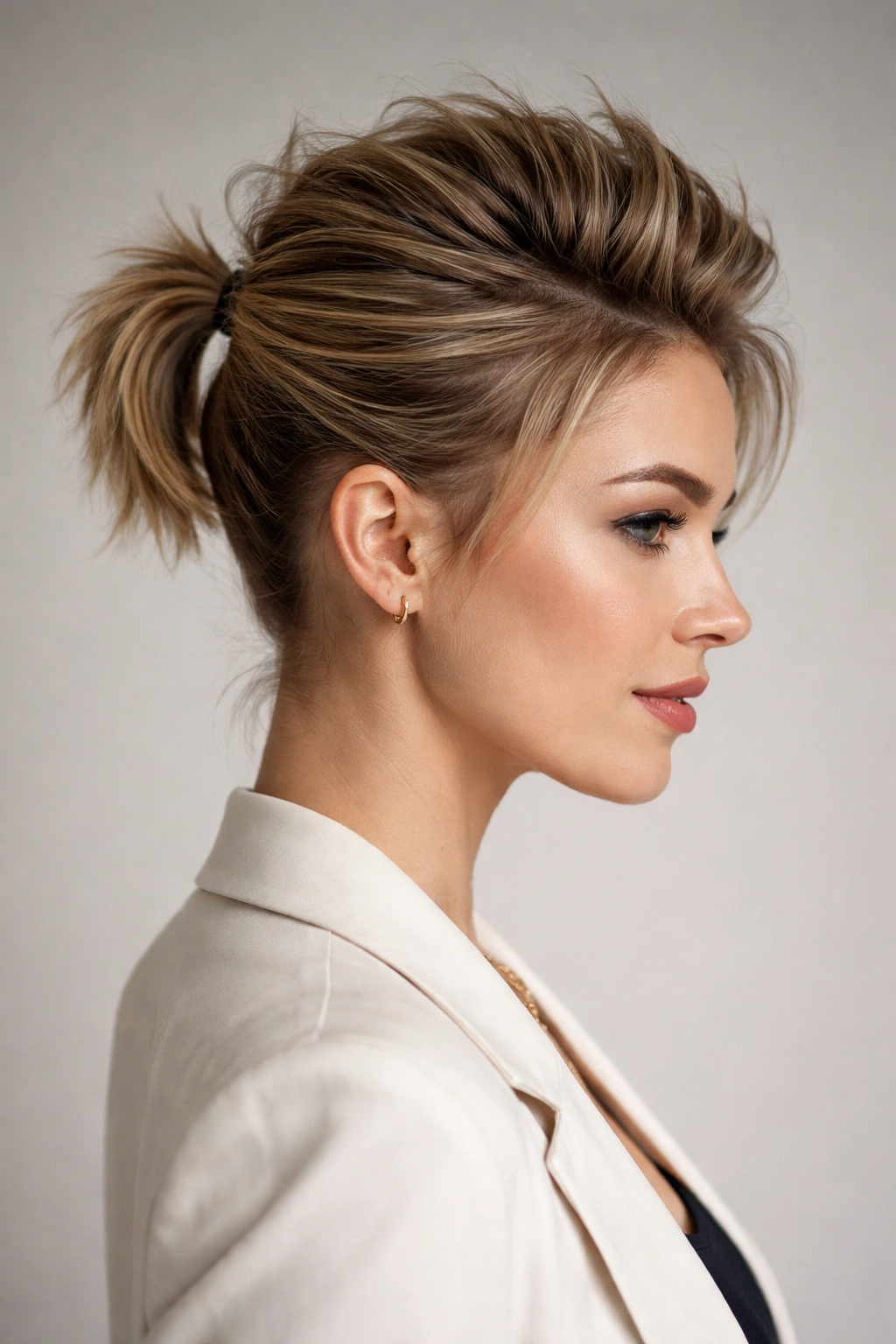
This style combines elements of a faux hawk and a ponytail by creating height and texture down the center of your head, then gathering everything into a small ponytail at the crown or slightly behind it. The result is a style that has attitude and edge while still being office-appropriate and relatively simple to execute. This works especially well on shorter, slightly choppy cuts because the layering naturally creates the dimension you need for this style to work.
Why This Works for Short Hair
The central focus on texture and height means the actual length of the tail is less important — the visual interest comes from the dimension and the gathered effect rather than from length. This style also gives short hair a modern, fashion-forward appearance that reads as deliberately styled rather than simply pulled back. It’s a great option if you want your ponytail to feel edgy or interesting rather than purely functional.
How to Style It Perfectly
- Apply texture spray or dry shampoo throughout your hair to create grip
- Tease gently along the center line of your head from your forehead back
- Smooth the top layer with your comb or fingers
- Gather the teased center section plus the sides into a ponytail at the crown, leaving any very short pieces around your face out
- Secure with an elastic
- Gently pull and fluff the front section to enhance the faux-hawk effect
Pro tip: This style photographs beautifully from the side, so if you’re taking a selfie, turn your head slightly to show off the dimension of the hawk effect.
8. The Velvet Scrunchie Ponytail
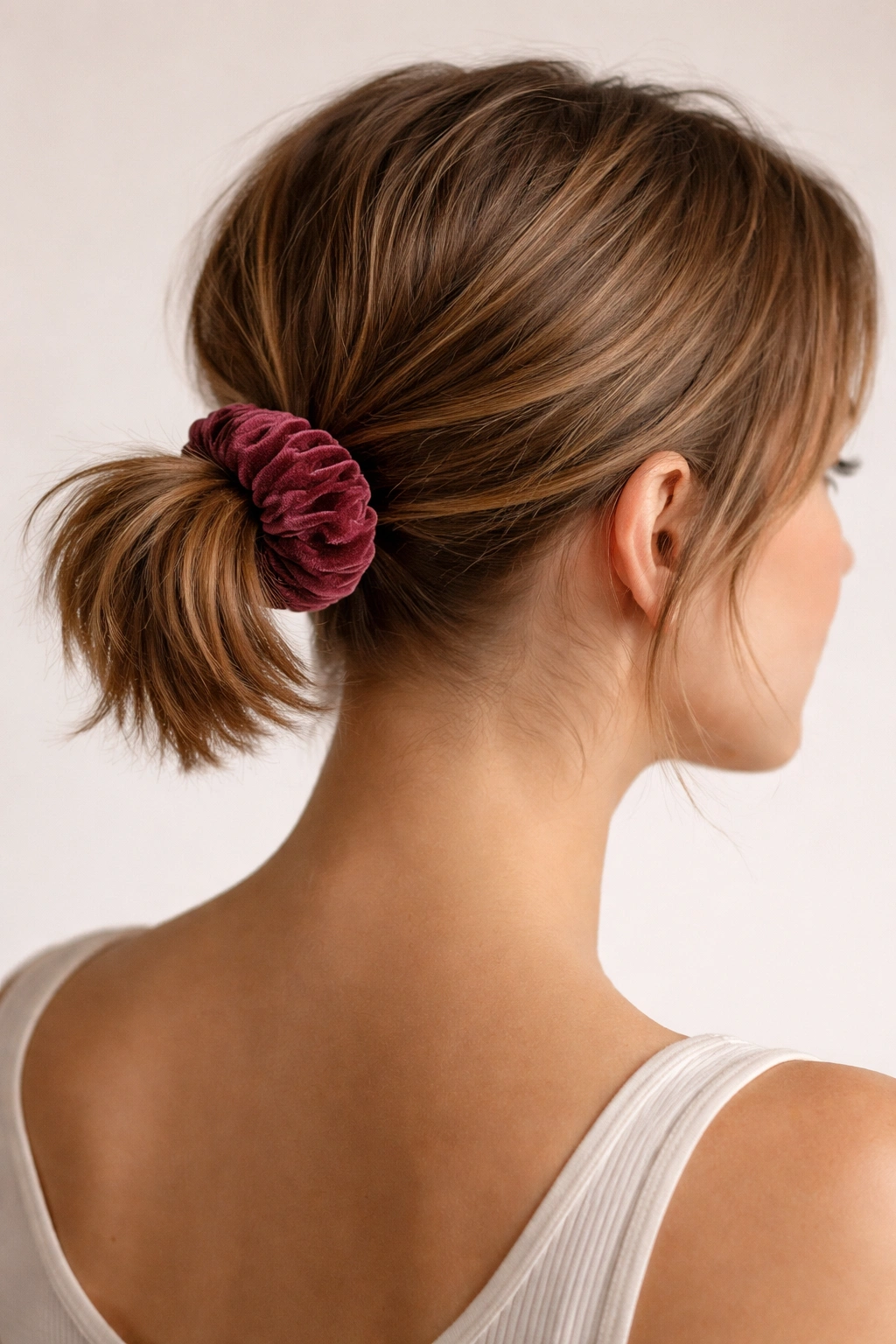
While a standard elastic ponytail on short hair can sometimes feel a bit plain, securing your ponytail with a velvet scrunchie or a decorative elastic instantly elevates the look with minimal extra effort. The scrunchie acts as a styling element as much as a functional hair holder — it can add color, texture, or a luxe feeling to your short ponytail. Velvet scrunchies in particular are gentler on your hair and create a more interesting visual element than standard hair ties.
Why This Works for Short Hair
The scrunchie becomes a visible, intentional styling choice that adds personality and visual interest to an otherwise simple ponytail. On short hair where the tail itself is modest in length, the scrunchie draws the eye and creates a focal point. Colored or textured scrunchies also give you an easy way to coordinate your hairstyle with your outfit or add a pop of color that feels intentional rather than accidental.
How to Style It Perfectly
- Create your base ponytail however you prefer — smooth or textured, high or low
- Slide a velvet scrunchie onto your elastic, positioning it so it covers the elastic and sits at the base of your ponytail
- Adjust the scrunchie so it sits evenly and looks intentional
- Gently fluff your ponytail if needed
- If desired, create small loops with the scrunchie by tucking the ponytail through it, creating a bun-like effect while still maintaining the gathered ponytail appearance
Pro tip: Velvet scrunchies in jewel tones or metallics add an unexpectedly luxury feeling to a simple short-hair ponytail, making the style feel more intentional and curated.
9. The Wispy Face-Frame Ponytail with Waves
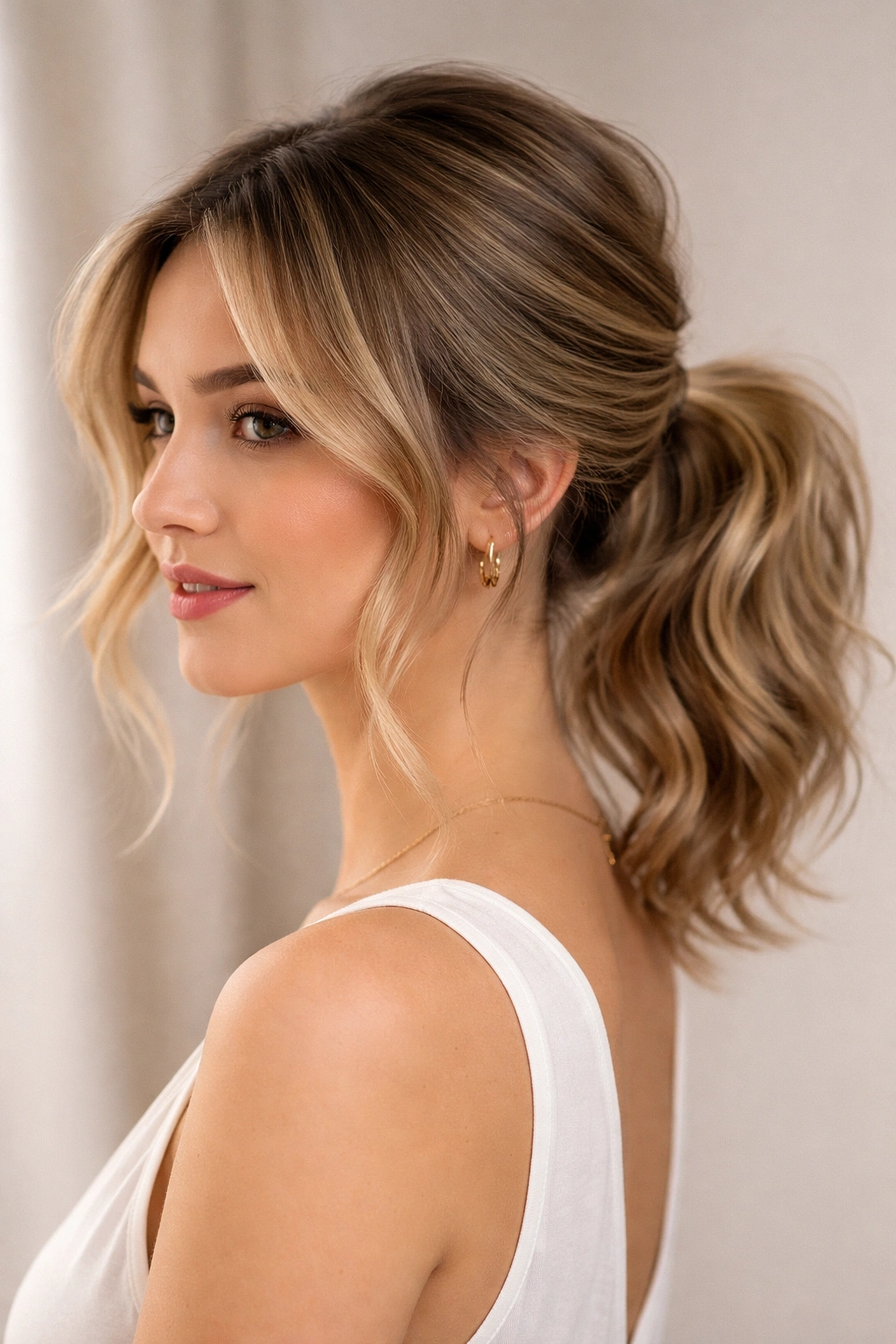
This style combines a softly gathered low ponytail with intentionally loose, wavy strands framing your face and temples. The waves add movement and dimension, while the face-framing pieces soften the overall look and prevent the ponytail from feeling too severe. If you don’t have natural waves, you can create this effect with a curling iron or by using wave-enhancing styling products on textured hair. The result is a style that feels romantic and effortlessly put-together.
Why This Works for Short Hair
The combination of waves and face-framing pieces adds softness and movement that makes short hair feel less severe when pulled back. The waves also create visual dimension that compensates for limited length. This style is flattering for many face shapes because the wavy texture softens sharp angles, and the face-framing pieces draw attention upward rather than emphasizing the back of the head.
How to Style It Perfectly
- Create loose waves using a curling iron or wave cream, or work with your natural texture
- Leave a few pieces out on each side of your face before gathering your ponytail
- Gather the remaining hair into a low ponytail at the nape of your neck
- Secure with an elastic
- Gently loosen and arrange the ponytail so it appears soft and undone
- Make sure the face-framing waves fall naturally forward rather than being pulled back
Pro tip: Use a sea-salt spray before creating this style — it helps waves hold longer and creates a beachy, effortlessly styled appearance rather than looking overly done.
10. The Slicked-Back Sports Ponytail
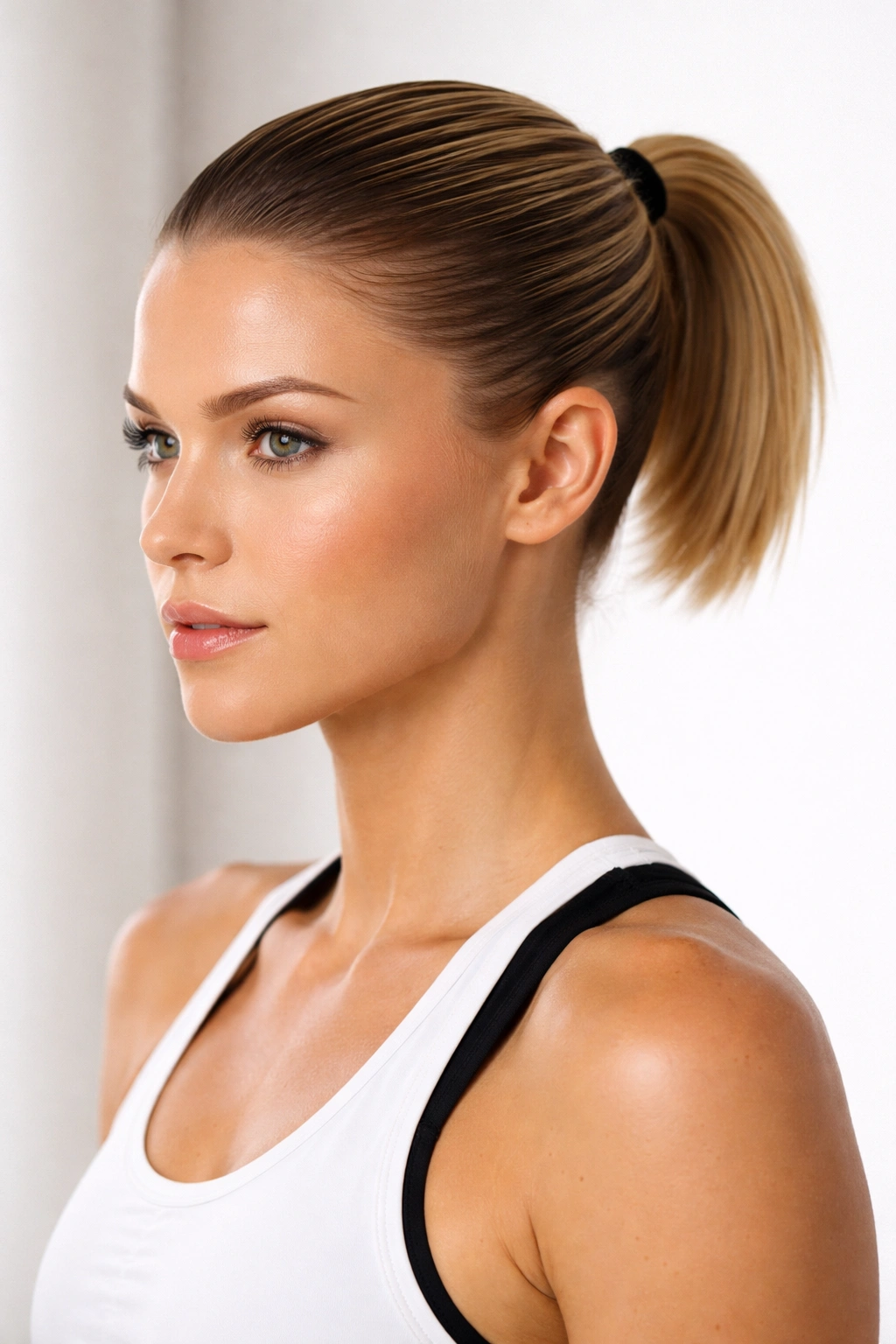
For active days, a tightly secured sports ponytail keeps hair completely off your face without any stray pieces or flyaways. This style uses gel or a strong-hold styling cream to smooth hair completely back, then secures it very close to the scalp with a strong elastic. While it might sound severe, this style actually works beautifully on short hair because the compact placement prevents the tail from looking too thin or wispy. The sleekness also reads as intentional and athletic rather than sloppy.
Why This Works for Short Hair
The tightness of this style actually benefits short hair because it creates a clean, defined shape that doesn’t depend on length for visual interest. The sleek finish also prevents flyaways and movement, which is exactly what you need for exercise, sports, or any activity where you don’t want your hair in your way. This style is also wonderfully low-maintenance once it’s secured — it will stay put all day without touch-ups.
How to Style It Perfectly
- Apply smoothing gel or strong-hold cream to slightly damp hair
- Use a fine-tooth comb to smooth hair straight back from your forehead
- Gather hair tightly at your desired position (usually slightly higher than a casual ponytail) and secure with a strong elastic
- Smooth any flyaways with additional gel and a fine comb
- Use bobby pins to secure any shorter pieces that escape
- Finish with strong-hold hairspray
Pro tip: If you’re doing this for exercise, secure your ponytail closer to the scalp than you think necessary — as you move and sweat, the ponytail will shift slightly, and starting closer prevents it from sliding too far back or becoming loose.
11. The Tucked-and-Pinned Minimal Ponytail
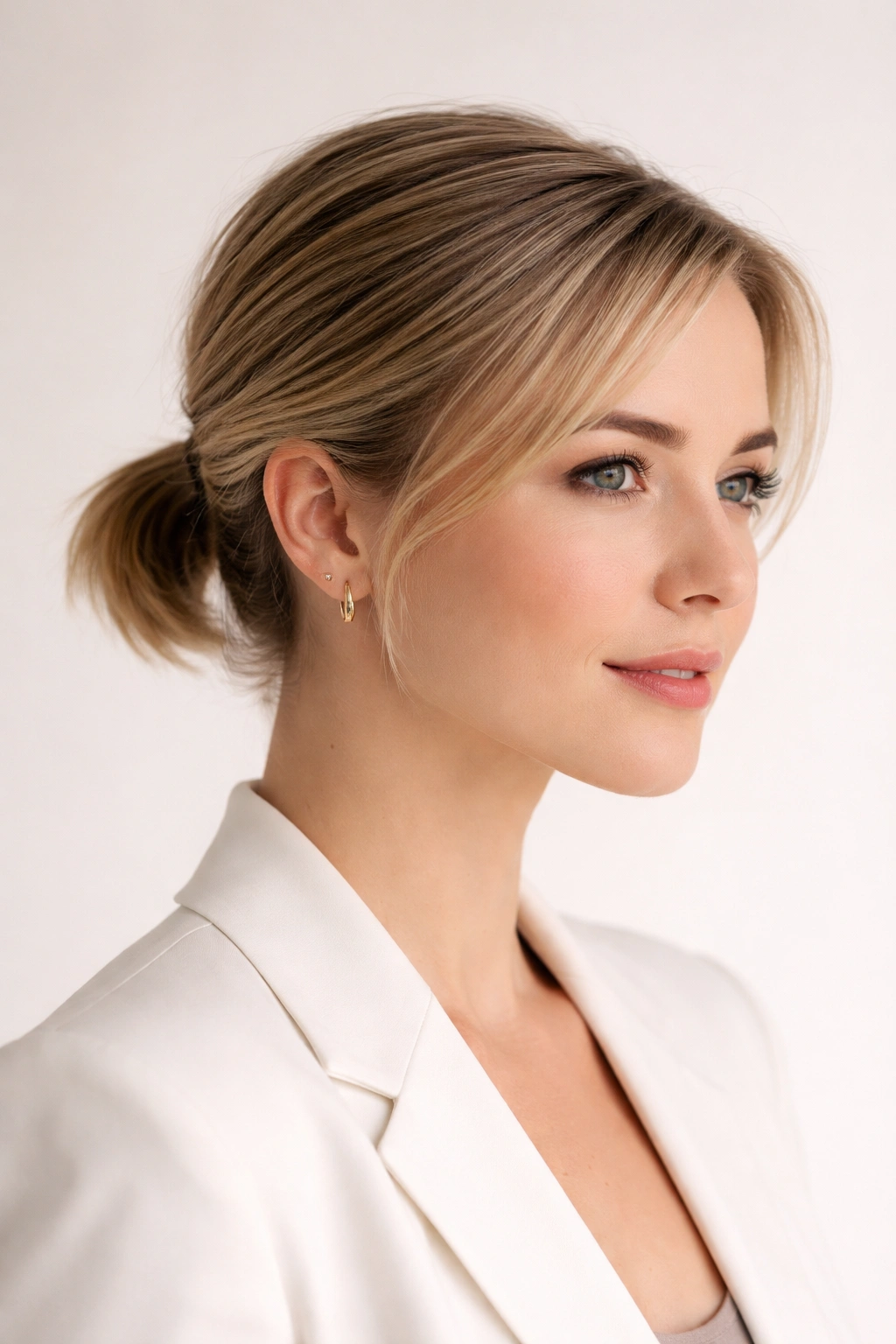
This subtle style gathers just enough hair to clear your face, then tucks the tiny ponytail discreetly and secures it with bobby pins so the elastics are completely hidden. The result looks like you barely did anything to your hair — it feels effortless and undone while still being intentionally styled. This works beautifully on very short hair where a traditional ponytail might be barely noticeable anyway. The style also works well for days when you want your hair off your face but don’t want to look like you made a hairstyle effort.
Why This Works for Short Hair
This style embraces minimalism and the understated elegance of barely-there styling. On very short hair, trying to create a visible ponytail might feel futile anyway, so tucking and pinning instead creates a polished look that doesn’t depend on having a tail to display. This style also works for professional or formal settings where you want a refined appearance without looking overly styled.
How to Style It Perfectly
- Determine how much hair you need to gather to clear your face — this might be just the front sections on very short cuts
- Gently gather these sections and secure with a very small clear elastic
- Tuck the tiny ponytail flat against your head, positioning it where the bobby pins won’t be visible
- Secure with 2-3 bobby pins in a color matching your hair
- Smooth any flyaways and check that the pins are completely hidden from the front view
Pro tip: This style works best when you come at the bobby pins from underneath, sliding them in horizontally beneath the secured ponytail so they disappear completely rather than sitting visibly on top.
12. The Double-Bubble Micro Ponytails
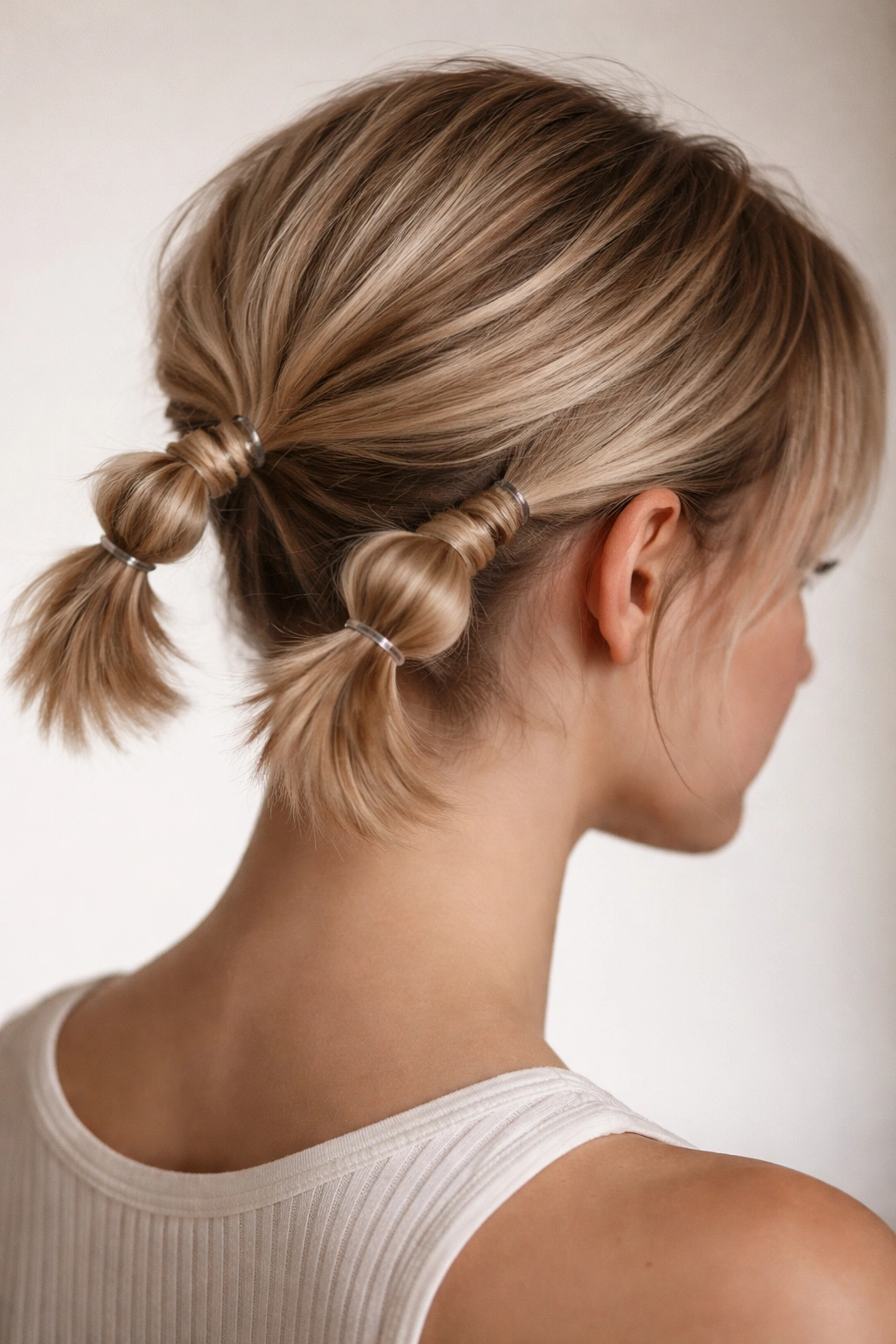
For a playful, modern take on the bubble ponytail, create two small ponytails positioned close together at the back of your head rather than one centered tail. Each ponytail gets divided into bubble sections using stacked elastics, creating a style that feels youthful and editorial. This works beautifully on short, slightly choppy hair because the twin placement and bubble divisions create enough visual interest that the modest length becomes part of the appeal rather than a limitation.
Why This Works for Short Hair
The double placement and bubble structure create visual complexity that makes short hair feel intentional and stylish rather than simply pulled back. This style also has a modern, fashion-forward feel that reads as deliberately styled. The symmetrical placement of two small ponytails also creates better balance on shorter heads of hair than a single large ponytail might.
How to Style It Perfectly
- Apply texture spray to create grip and definition
- Divide hair down the middle or slightly off-center
- Gather one half into a small ponytail just slightly to the side and back, securing loosely with a small elastic
- Gather the other half similarly on the other side
- Create bubbles in each ponytail by placing additional elastics 1-1.5 inches down the length of each tail
- Gently pull each bubble section to create dimension and fullness
Pro tip: Positioning the two ponytails slightly off-center (not perfectly split down the middle) creates a more modern, intentional appearance than perfectly symmetrical placement.
13. The Braided Wrap Ponytail
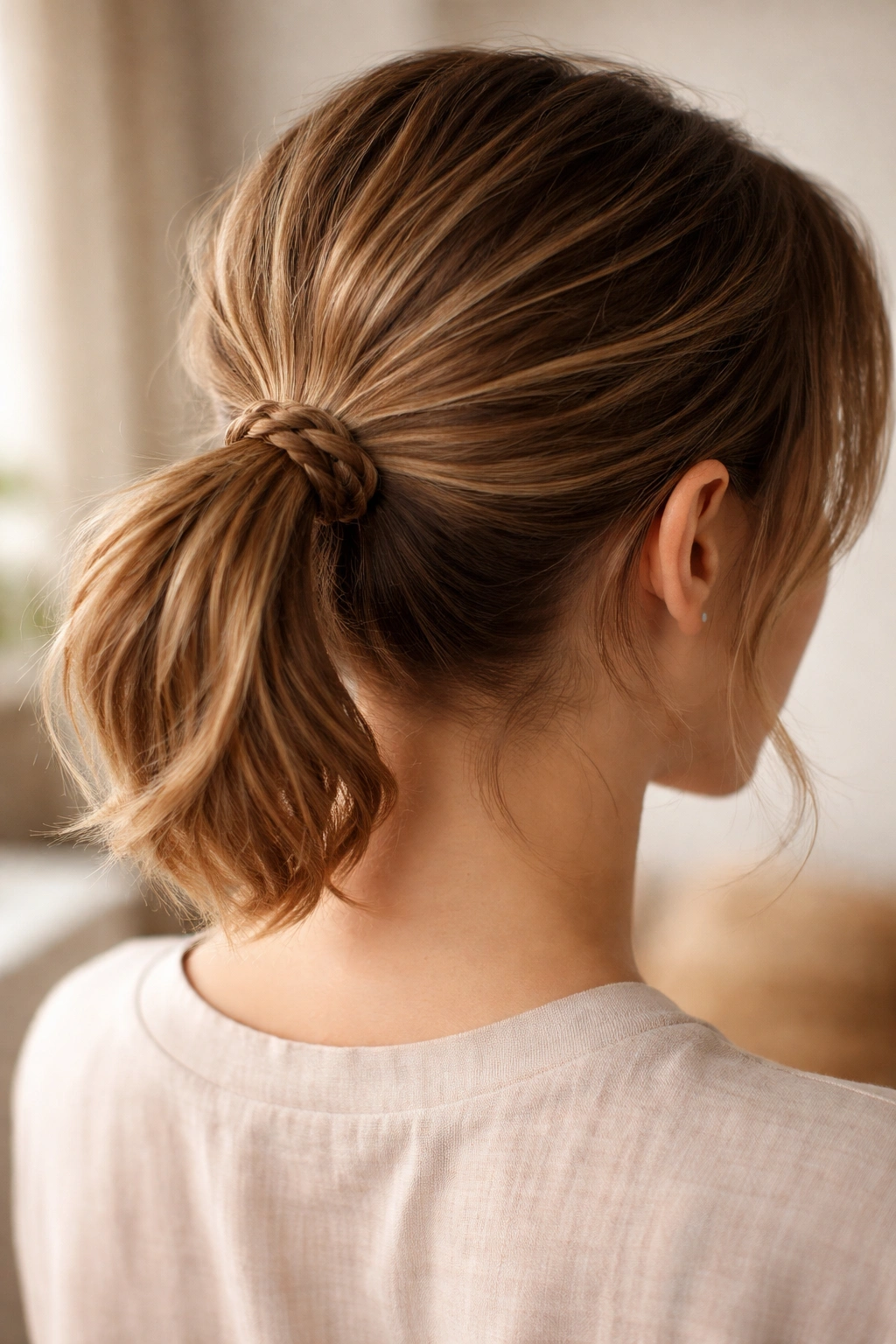
This style creates a standard ponytail, then takes a thin section of hair from the sides and braids it, wrapping the braid around the base of the ponytail to hide the elastic. The braid becomes a decorative feature that adds texture and detail. This works especially well on hair with some natural wave or texture where the braid will sit gracefully. The braided wrap elevates a basic ponytail into something that feels more thoughtfully styled.
Why This Works for Short Hair
The braided wrap adds detail and sophistication that compensates for the limited length of the tail itself. The braid also helps secure the ponytail more effectively, which is useful when working with shorter or finer hair. This style feels polished and intentional, making it appropriate for work, dates, or any occasion where you want your hair to feel deliberately styled rather than just functional.
How to Style It Perfectly
- Create your base ponytail at your desired height and looseness
- Take a thin section of hair from the outer edge of the ponytail
- Braid this section tightly (a three-strand braid or a two-strand twist both work)
- Wrap the braid around the base of the ponytail, covering the elastic completely
- Secure the end of the braid with a bobby pin tucked underneath the ponytail so it’s invisible
- Gently loosen the braided wrap slightly so it appears soft rather than severely tight
Pro tip: A two-strand twist is actually easier than a traditional three-strand braid and creates a similar textured effect — try it if traditional braiding feels finicky.
14. The Slicked Ponytail with Gloss and Shine
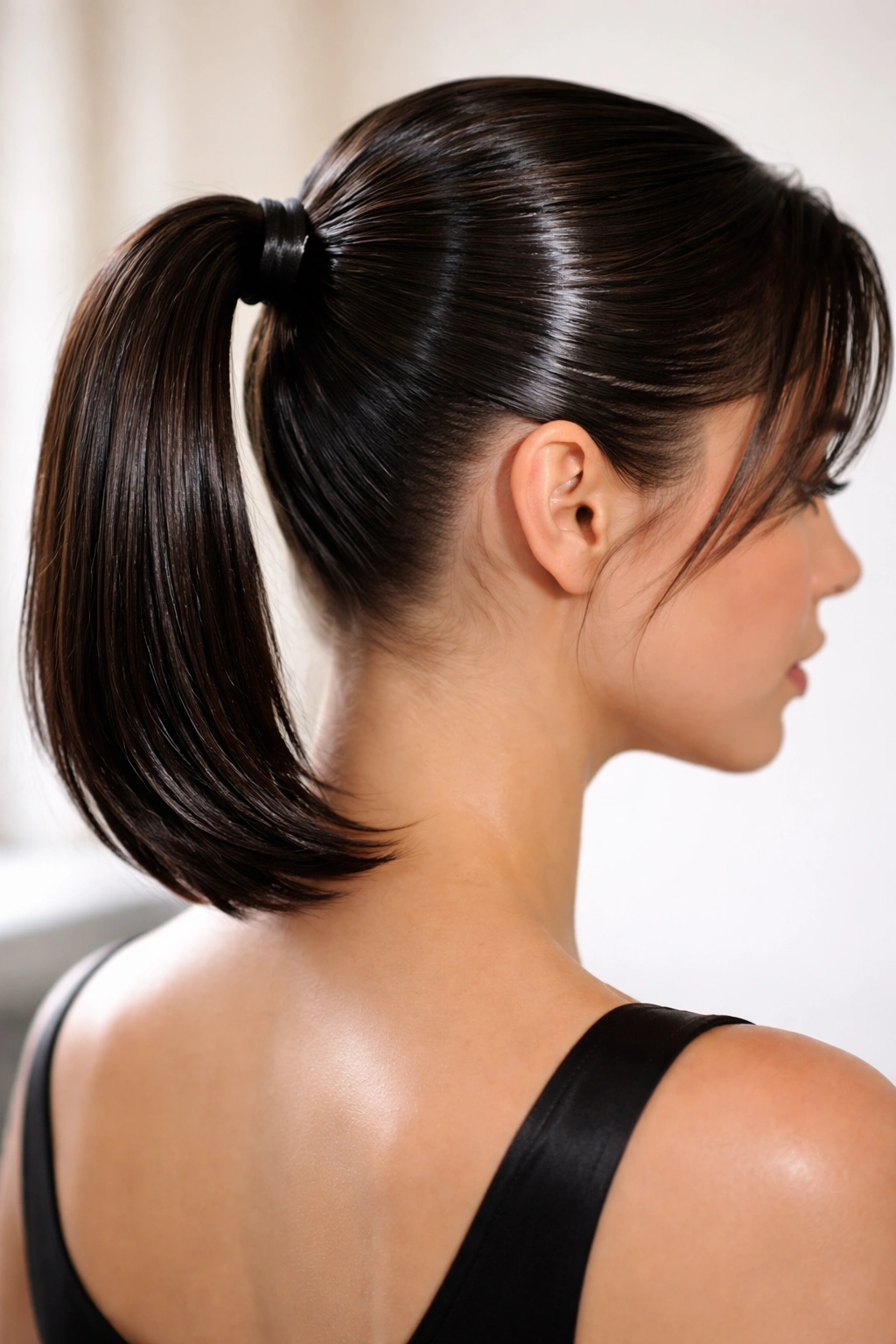
This style is similar to the sleek gel ponytail but emphasizes shine and gloss as part of the aesthetic. You smooth hair back with gel or cream, then add an extra layer of hair gloss or shine spray to create an almost wet-looking finish. The high shine actually makes even modest amounts of hair appear thicker and more substantial, while the sleekness reads as intentional and fashion-forward. This style works beautifully in photos and looks especially striking on darker hair where the shine really stands out.
Why This Works for Short Hair
Shine and gloss are secret weapons for making short ponytails appear more voluminous and intentional. The glossy finish adds a luxury feeling that elevates what might otherwise be a simple ponytail. On short hair, this polished, high-shine look reads as deliberately styled rather than sparse or casual. This style also works well if you have very straight hair, because the sleekness and shine become the focus rather than length.
How to Style It Perfectly
- Apply smoothing serum or gel to damp hair, distributing evenly from roots to ends
- Use a fine-tooth comb to smooth hair back into your ponytail position
- Secure with a strong-hold elastic
- Smooth any flyaways with additional serum
- Apply a shine spray or hair gloss over the entire ponytail and around your hairline to create luminosity
- Finish with a light-hold hairspray that won’t dull the shine
Pro tip: Apply shine spray while your hair is still slightly damp from the serum — it distributes more evenly and creates a more lustrous finish than applying it to completely dry hair.
15. The Tousled Undone Ponytail with Texture Powder
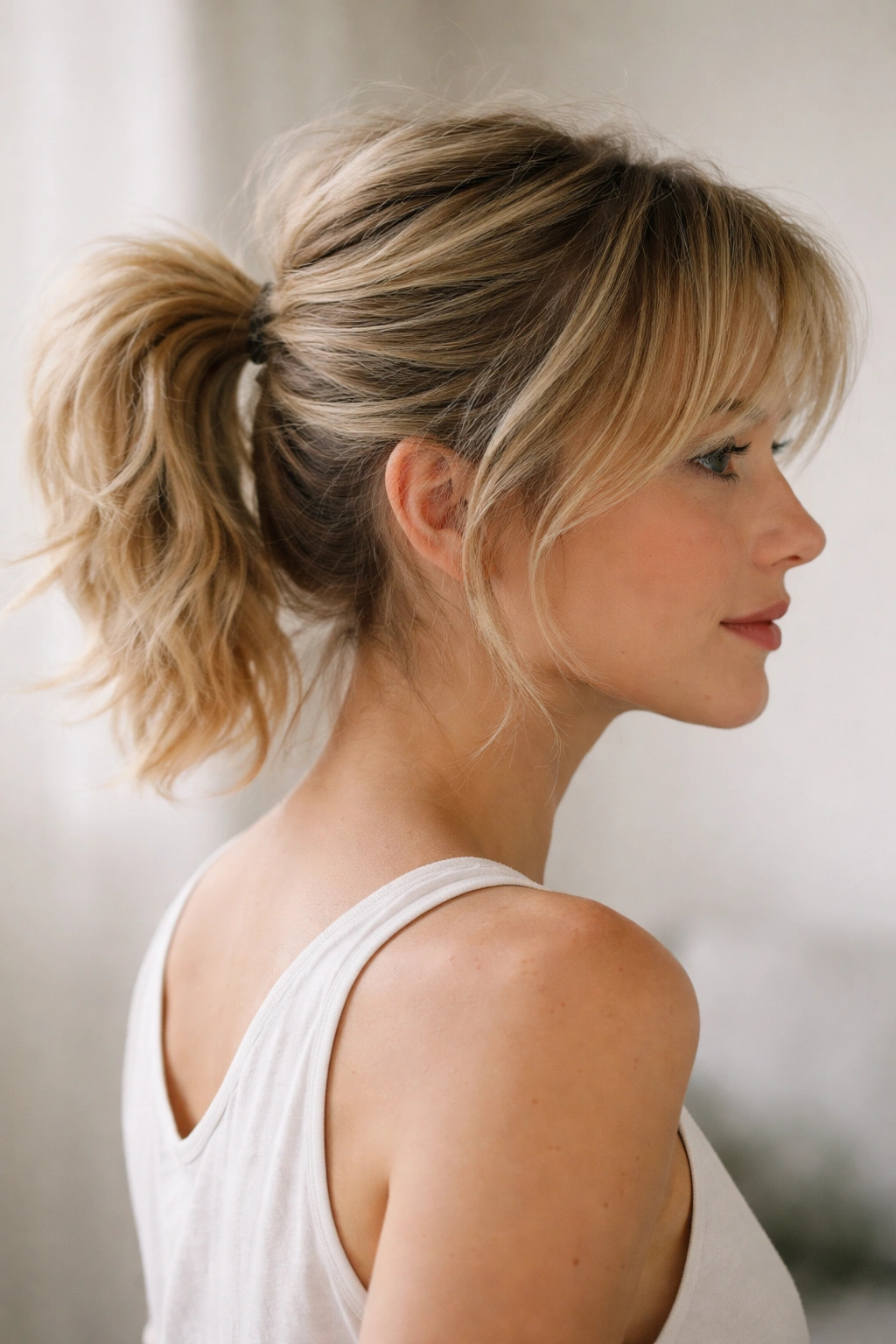
This final style embraces the “I woke up like this” aesthetic with a loosely gathered ponytail that’s intentionally messy and textured. You create texture with dry shampoo or texture powder, gather hair into a casual ponytail, then deliberately loosen and fluff it so it appears undone and effortless. The texture powder adds grip and volume, making even fine or thin short hair appear fuller. This style reads as modern and confidence-forward rather than sloppy.
Why This Works for Short Hair
Texture powder is a game-changer for short hair because it creates grip, volume, and visual interest that makes limited length feel substantial. The intentionally undone appearance prevents short ponytails from feeling severe or too tight. This style is also wonderfully versatile — it works for casual days, nights out, or even professional settings depending on how you position and style it.
How to Style It Perfectly
- Apply texture powder or dry shampoo throughout your hair, focusing on the crown and roots for volume
- Gently massage and work it through with your fingers
- Gather hair into a ponytail at your desired position, using your fingers rather than a comb to preserve texture
- Secure with an elastic
- Gently pull and loosen sections of the ponytail to create an undone appearance
- Leave face-framing pieces loose and tousled
- Use your fingers to gently tease and separate the tail for maximum texture
Pro tip: The grittier the texture powder or dry shampoo, the more it helps grip your hair and keep it in place — this matters more with short hair than with longer styles.
Final Thoughts

Short hair and ponytails are a more versatile combination than most people realize. Whether you’re looking for something sleek and polished, playful and textured, or effortlessly undone, there’s a ponytail style that works with your length and your preferred aesthetic. The key is moving past the assumption that ponytails require length and instead embracing techniques like strategic placement, texture, and details that make short ponytails feel intentional and stylish.
The real power of these styles is that they solve real problems — keeping hair off your face, adding polish to your appearance, or creating a completely different look from your usual style — while working with the hair you actually have. Many of these styles also require minimal product and minimal effort once you understand the basic technique, making them perfect for everyday wear. Start with the style that appeals to you most and spend a few minutes practicing it until it feels natural, then branch out to others as you gain confidence.