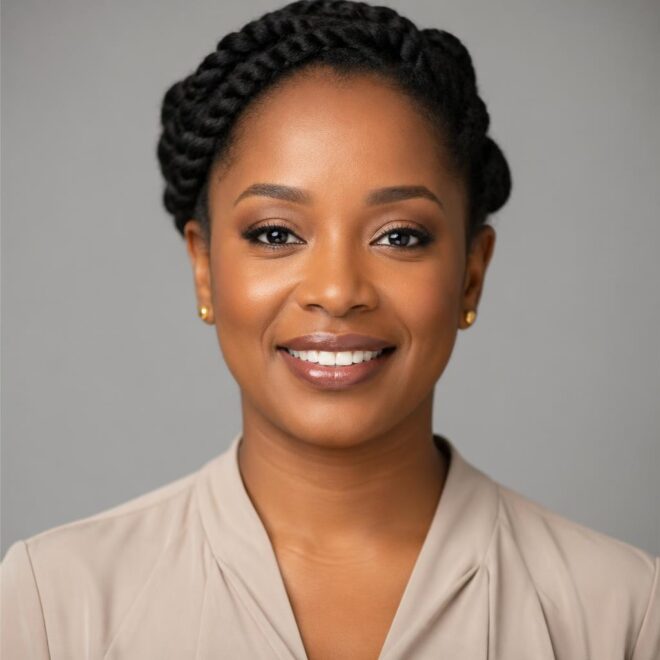


Braids can do a lot of heavy lifting when you want hair that looks finished before breakfast and still holds up after a long week. Jumbo long goddess knotless box braids do that especially well because the knotless base sits flatter at the scalp, while the curly ends keep the shape from feeling stiff or boxy.
The trick is that the style looks simple from far away and fussy up close. It isn’t. A jumbo braid can go from elegant to awkward fast if the parts are uneven, the hairline is pulled too tight, or the curls at the ends are too heavy for the braid size. That’s why the best versions feel balanced: big enough to read as bold, soft enough to move, and long enough to make the whole thing feel intentional.
I’ve always liked this style because it gives you a lot of visual payoff without demanding tiny braids or endless hours in the chair. The knotless start matters here. It reduces that bulky knot at the scalp, and on long braids the difference is easier to see because the base has to carry so much length. Add goddess curls, and the whole look loosens up a little. Better. Softer. Less helmet, more hair.
The 15 versions below are all built around that same core idea, but they solve different problems: face shape, styling flexibility, color, parting, accessories, and how the braids actually feel once you’re living in them.
1. Classic Waist-Length Goddess Knotless Box Braids
This is the version people picture first, and for good reason. Waist-length jumbo knotless braids hit that sweet spot where the style feels dramatic without dragging on every door handle you walk past. The curly ends keep the length from looking too blunt, which matters a lot with jumbo sections. Thick braids can look severe fast. The loose pieces take the edge off.
What makes this one work is balance. You want the braids large enough to show texture, but not so large that the roots puff up or the lengths feel awkwardly stiff. A clean square parting pattern keeps the base neat, and a modest amount of curl at the ends gives the style movement without turning it into a cloud.
The best versions of this look usually have:
- Smooth, flat knotless roots
- Medium-length curls at the ends, not giant ringlets
- Parts that are straight and even, not obsessively tiny
- Enough length to graze the waist, but not so much that the braids lose their shape
If you want one set of braids that can go from sneakers to a dress without a second thought, this is the safest place to start. The style reads polished on day one and still looks good when it softens a bit.
2. Deep Side-Part Goddess Braids with Face-Framing Curls
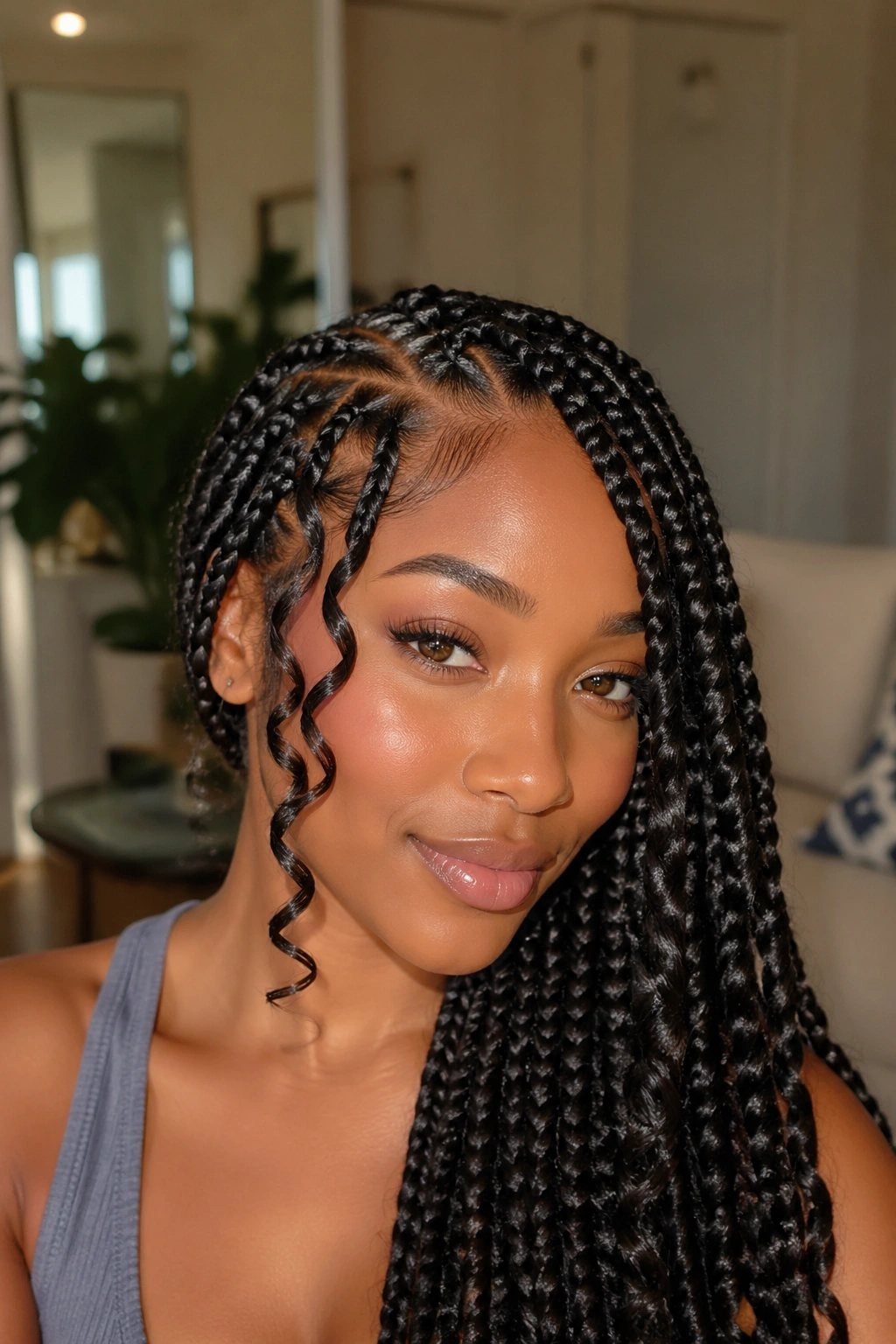
Want the braids to soften your face instead of framing it like a box? A deep side part changes the whole mood. It pulls the eye diagonally across the face, which makes the style feel less rigid and a little more flattering if you like a bit of movement around the hairline. The front braids can fall across one temple, and that alone changes the shape more than people expect.
Why the side part works
A side part gives long jumbo braids a little drama without adding extra accessories or color. It also helps if your face feels overwhelmed by a straight center part. The part doesn’t need to be extreme. Even a subtle offset can create a softer line and make the front pieces sit better around the cheekbones.
What to ask for
- A clean diagonal part that starts near the arch of one eyebrow
- 2 to 4 face-framing curls left a little longer than the rest
- Braids that fall naturally over one shoulder instead of splitting evenly down the middle
- A little extra care around the front rows so the tension stays comfortable
This version is especially nice if you wear glasses, hoops, or a bold lip. The braids become a frame instead of competing with your face. And that’s the real win.
3. Straight Center-Part Jumbo Braids with Crisp Squares
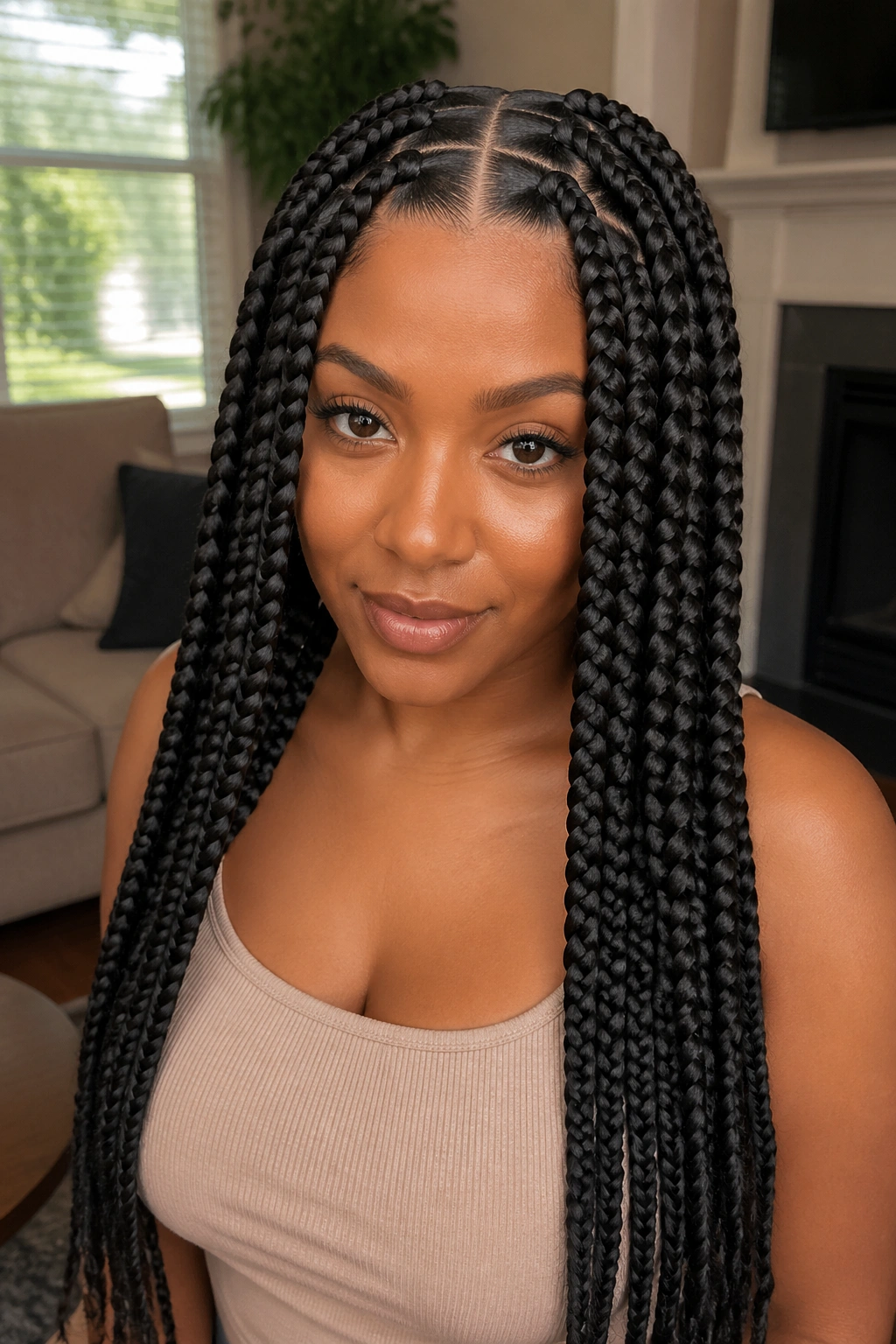
A center part is the blunt instrument of braid styling. That sounds harsher than it is. Straight center-part goddess knotless box braids look clean, calm, and expensive in the way a well-cut coat looks expensive. Everything lines up. The symmetry does the work.
The thing I like about this version is how honest it is. No hiding, no tricks, no fancy styling required. If the parts are tidy and the roots lay flat, the style does the rest. On long braids, the center part creates a strong vertical line that makes the length feel even longer. It’s a good pick if you like structure.
The squares matter here. On jumbo braids, sloppy parting shows fast because each section is large enough for the eye to catch. Ask for parts that are squared off cleanly and rows that follow the head shape instead of drifting. A neat center part with long curls at the ends can look very soft. It does not have to feel severe.
Best for someone who wants a style that looks neat in photos, neat in person, and neat after a week of wear. That kind of consistency is hard to beat.
4. Half-Up, Half-Down Braids with a High Top Section
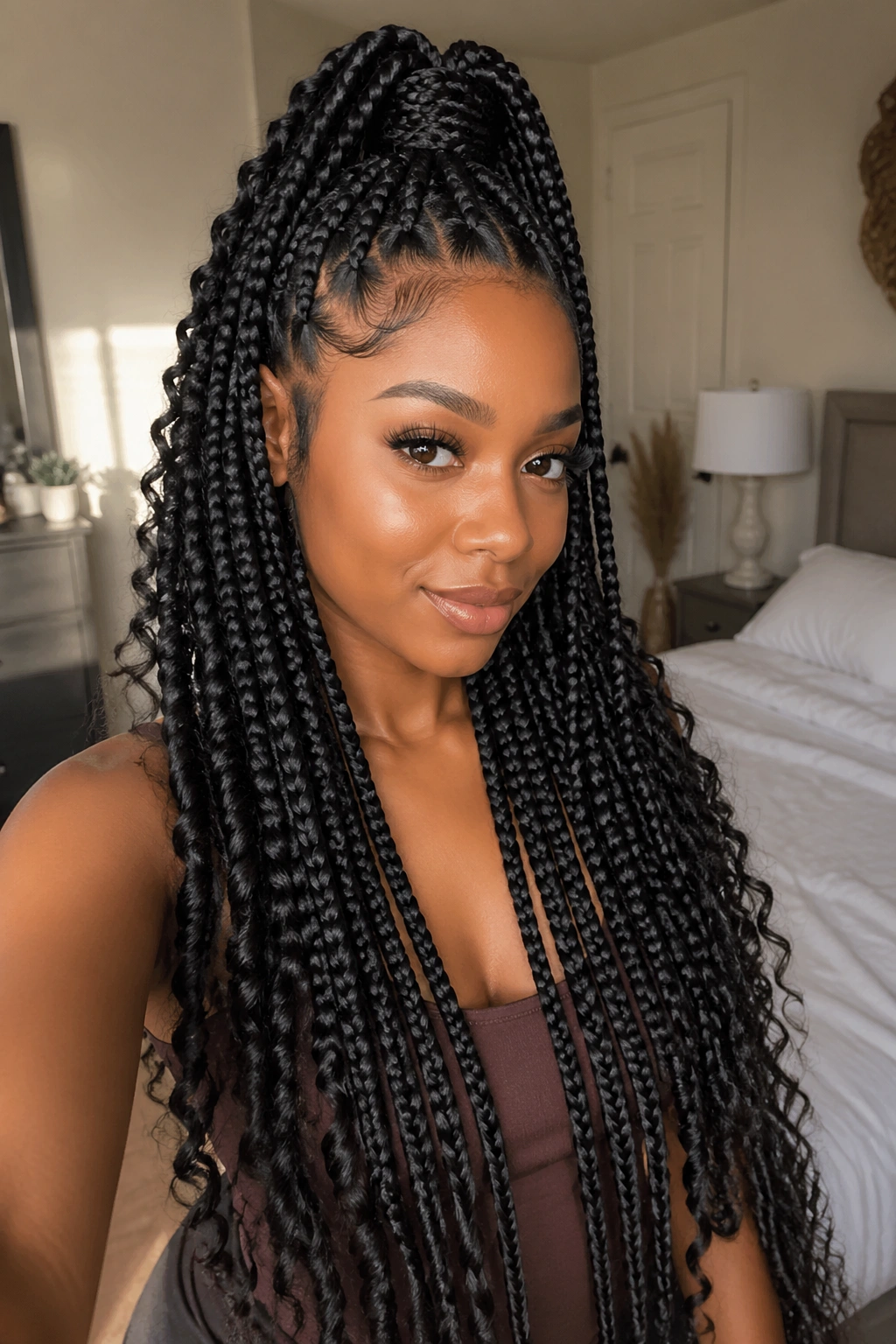
If you want long braids but don’t always want all that hair on your back, a half-up, half-down style is the move. Pulling the top section into a ponytail or small bun gives you lift at the crown, while the rest of the braids still hang long and loose. It’s practical. It also gives the curls at the ends more room to swing.
The part that matters most
Don’t yank the top section too tight. Jumbo braids already carry weight, and a hard pull at the crown turns a cute style into an uncomfortable one by the end of the day. Use a sturdy scrunchie or a wide elastic, then anchor the top with a couple of pins if needed. That keeps the front smooth without pinching your scalp.
Why people keep coming back to it
- It clears the face without hiding the length
- It works for errands, work, and nights out
- It shows off braid size from both front and back
- It gives the curls a little extra bounce
The half-up style is a good choice if your hair gets warm easily or if you want your braids to feel lighter during the day. There’s a reason people return to it over and over. It solves a real problem.
5. High Bun Goddess Braids with Long Curly Ends
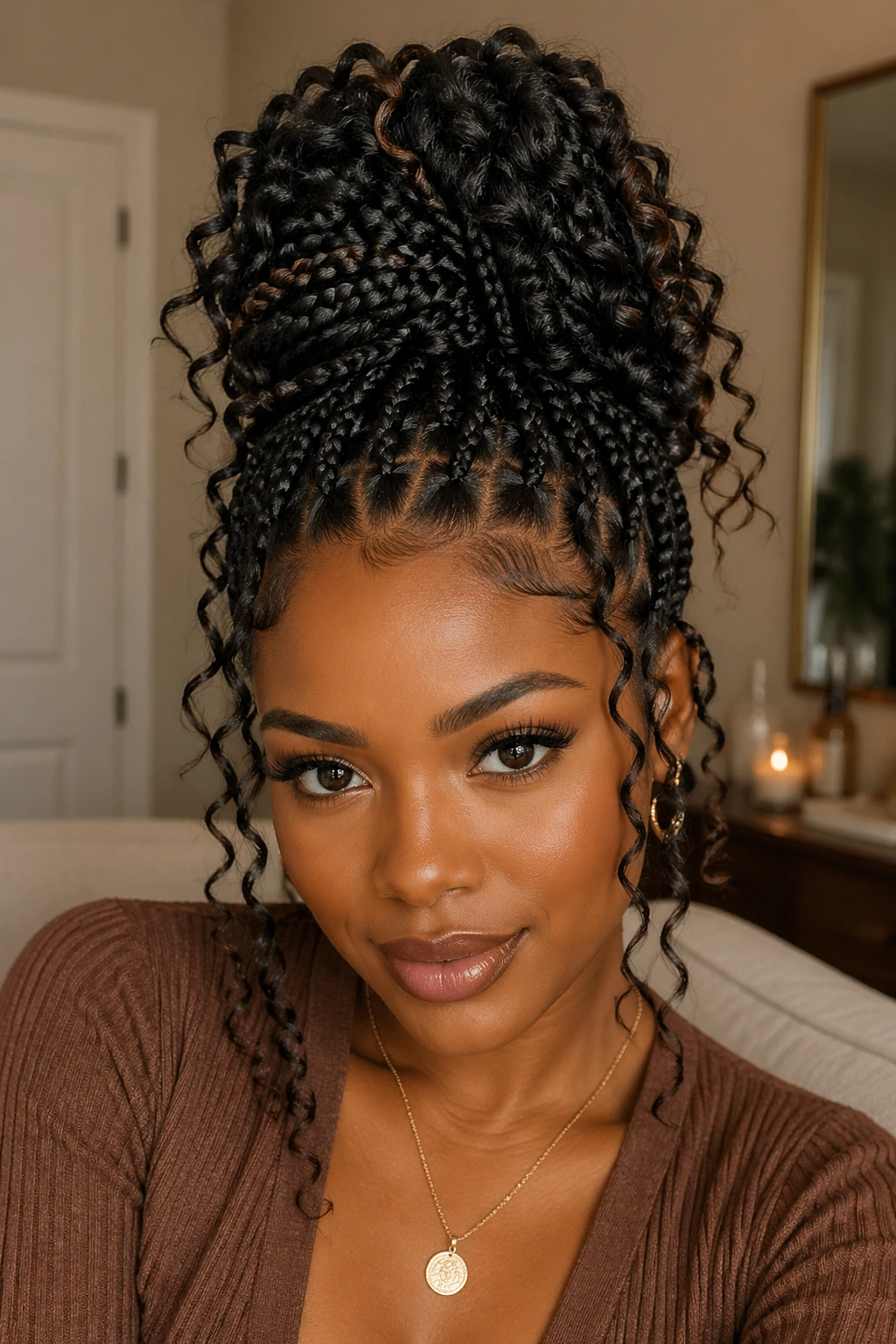
A high bun with long braided lengths sounds almost contradictory, and that’s why it works. The top bun keeps weight off the neck, while the loose braided ends spill out from the crown or wrap around the base like a soft tail. You get the height of an updo and the drama of long hair at the same time.
This style looks especially good when the bun is built from the front and middle braids, then pinned securely so it doesn’t droop by lunchtime. That part matters. A floppy bun on jumbo braids can look messy in the wrong way. You want it to sit firm, with enough body to hold shape, but not so tight that your scalp feels stretched.
It’s also one of the better choices for warmer weather or for days when you need your hair completely off your shoulders. The ends can still show off the goddess texture, which keeps the style from becoming too severe. A high bun without those loose pieces can look hard. The curls soften it. Always.
If you like the idea of a polished updo but don’t want to lose the long-braid effect, this is the version to save.
6. Honey-Blonde Goddess Knotless Braids
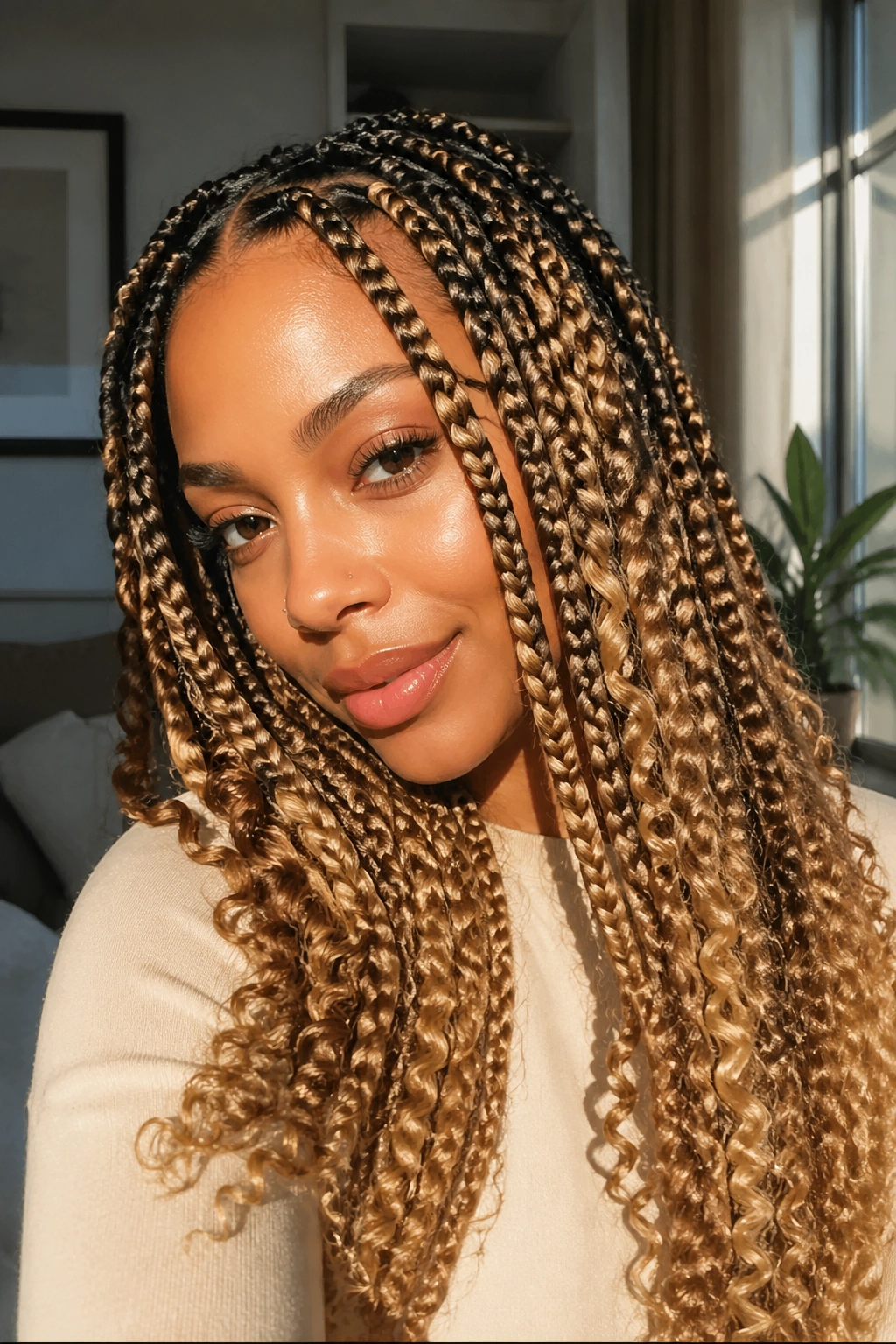
Color changes the whole conversation. Honey-blonde long goddess braids have a warmth that flat black braids don’t give you, and the curls at the ends show the tone shift even more. The best versions usually blend deeper roots into lighter ends so the color feels grounded instead of flat. That gradient helps the length pop.
Shade ideas that work well
- Dark brown roots fading into honey blonde
- Black roots blending into caramel
- Chestnut tones mixed with soft beige ends
- A warm brown base with only a few lighter face-framing pieces
On long braids, blonde can either look rich or look loud. The difference usually comes down to the undertone. Honey and caramel tend to look smoother because they echo natural hair depth. Bright platinum can work, but it asks for a lot more confidence and usually more upkeep to keep the tone from looking harsh.
The braid size matters too. Jumbo sections give blonde more visual weight, so the color feels deliberate rather than scattered. Add a few loose curls at the ends, and the whole style starts to move in a way that catches the eye without screaming for attention. It’s one of the easiest ways to make a familiar braid pattern feel fresh.
7. Auburn and Copper Goddess Braids
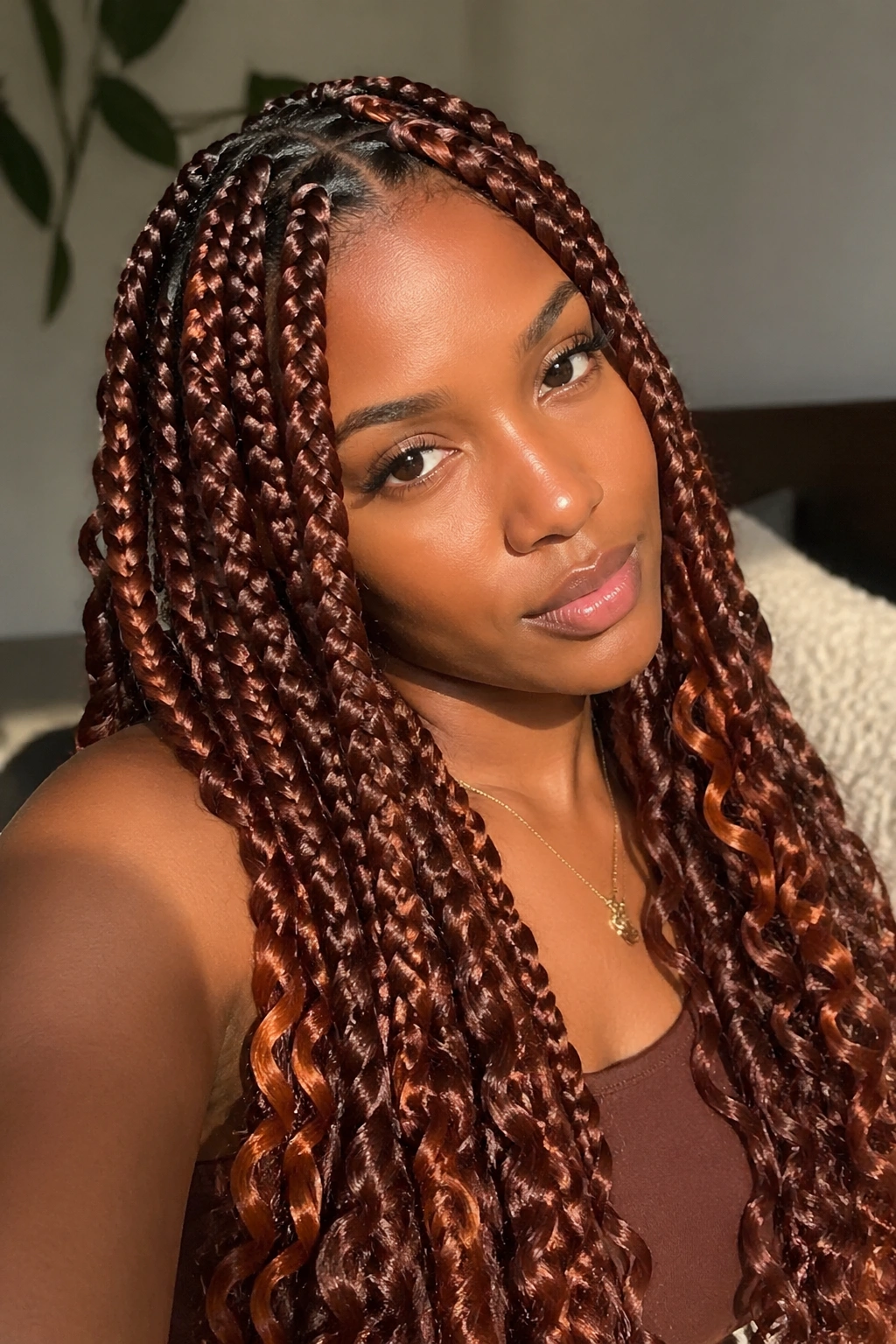
Auburn and copper braids sit in a sweet spot between natural and bold. They have warmth like blonde, but more depth, more richness, and less brightness at first glance. On darker skin tones, those shades can look especially strong because the color reads like a glow instead of a contrast.
This is the version I’d point to if you want something that feels a little moody. Not dark in the boring sense. Moody in the good way. Copper tones pick up light along the braid ridges, and the curls at the ends make the color look even softer because the texture breaks up the shine.
There’s also a practical upside. Warm reds and browns usually hide tiny bits of frizz better than lighter blondes do. That doesn’t mean you can ignore maintenance. It just means the style tends to age gracefully. A little softening at the roots doesn’t ruin the look.
If honey blonde is the sunny version of long goddess braids, auburn is the one with better music playing in the background. It feels richer. More grounded. A little more grown.
8. Triangle-Part Jumbo Braids
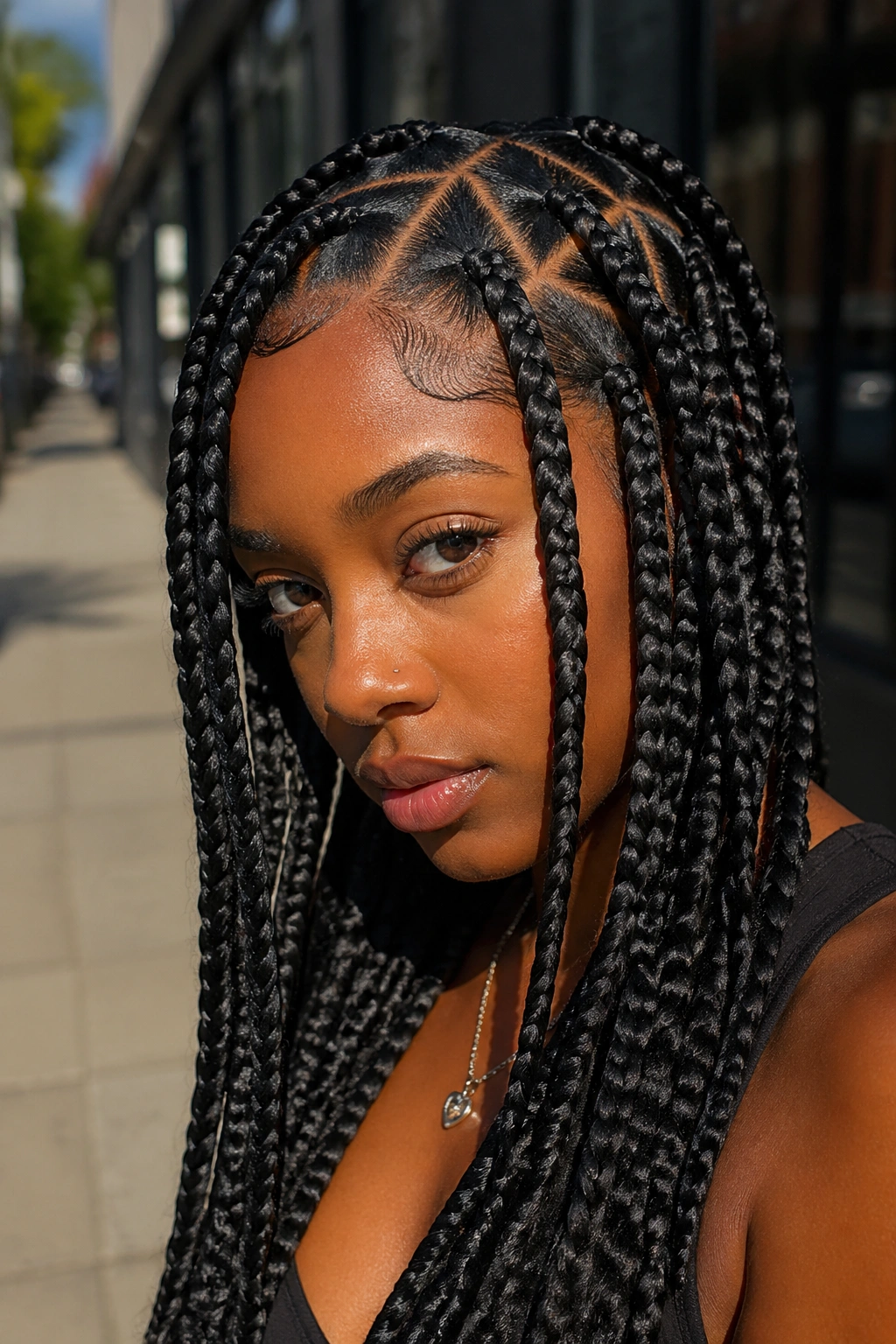
Triangle parts change the whole read of the style. Instead of the familiar grid, you get sharp geometric sections that make the braids look more fashion-forward right away. On jumbo long goddess knotless box braids, that shape stands out because each part is large enough to show clearly from a distance.
The look is not subtle. That’s the point.
Triangle parting works especially well when you want the scalp design to be part of the hairstyle, not just the hidden base. The braids themselves can stay simple, even classic, and the parting does all the talking. It’s a nice option if you’re tired of square parts but still want the style to feel clean and structured.
Best when you want:
- A parting pattern that looks different from the usual grid
- Strong visual lines at the scalp
- A braid set that feels more editorial
- Long lengths that can handle a little extra personality
The downside is time. Triangle sections can take longer to map cleanly, and sloppy triangles look worse than sloppy squares because the shape is more obvious. If your braider is patient with parting, though, the payoff is huge. The whole style looks sharper from the start.
9. Curved Parting That Follows the Crown
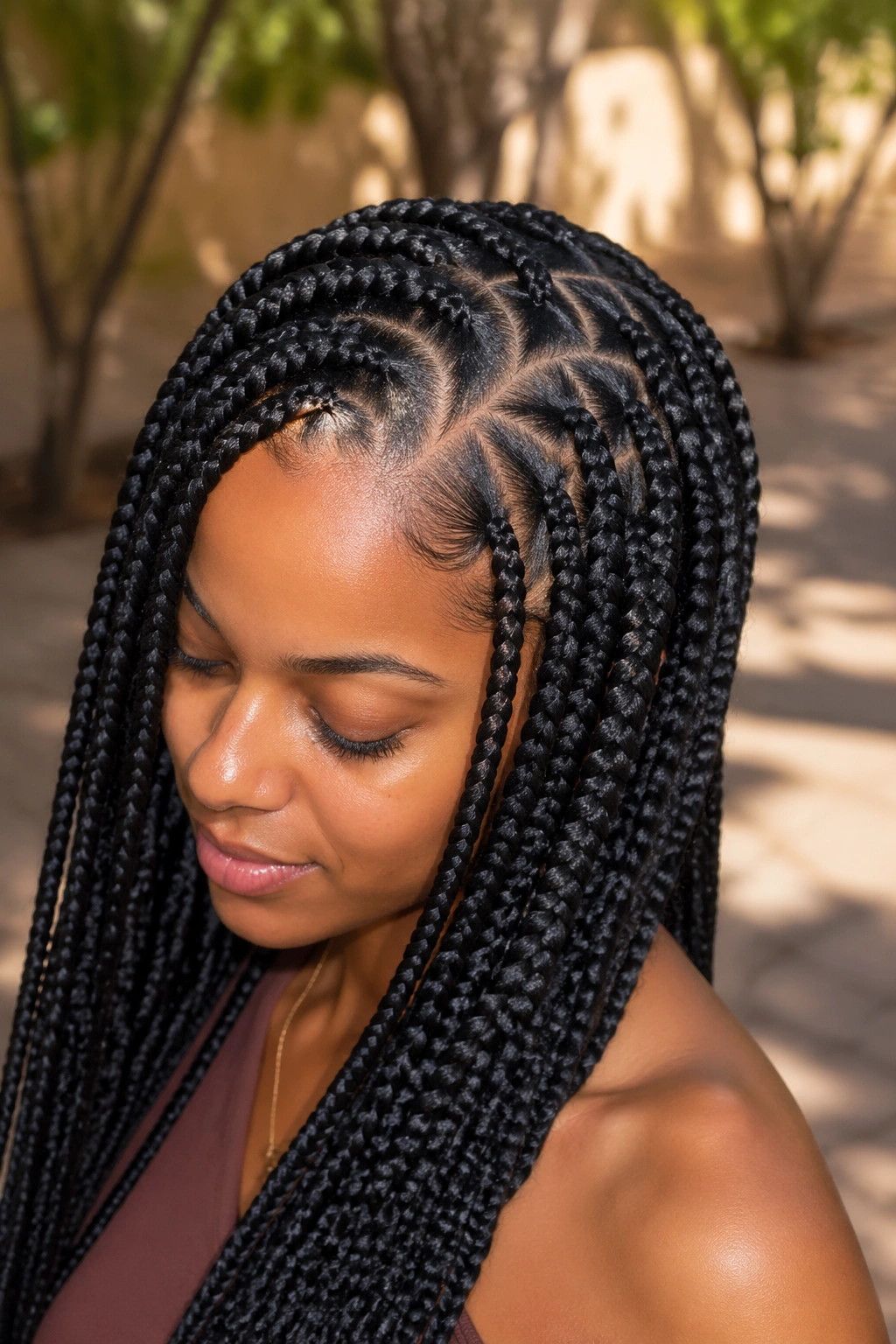
Curved parting is for the person who thinks straight lines feel too predictable. Instead of rigid rows moving straight back, the braids follow the shape of the head in soft arcs. The effect is subtle from a distance and very pretty up close. It feels custom, which is exactly why people like it.
This style is especially strong on long braid sets because the parting becomes part of the movement. The eye travels along the curve, then drops into the length of the braid and the curls at the end. It feels softer than a hard center part and less obvious than triangle sections.
There’s a craft element here. Curved parts only look good if the lines stay smooth and the spacing remains even. A wobbly curve doesn’t look artistic. It just looks rushed. Ask for a map of the parting before the braiding starts if that helps. Some stylists sketch the pattern first, and honestly, that’s a smart move when the style depends on linework.
Long goddess knotless box braids with curved parting are a solid choice if you like detail but don’t want the braids themselves to be busy. The scalp does the visual work. The length stays clean.
10. Gold Cuffs, Beads, and Small Metallic Accents
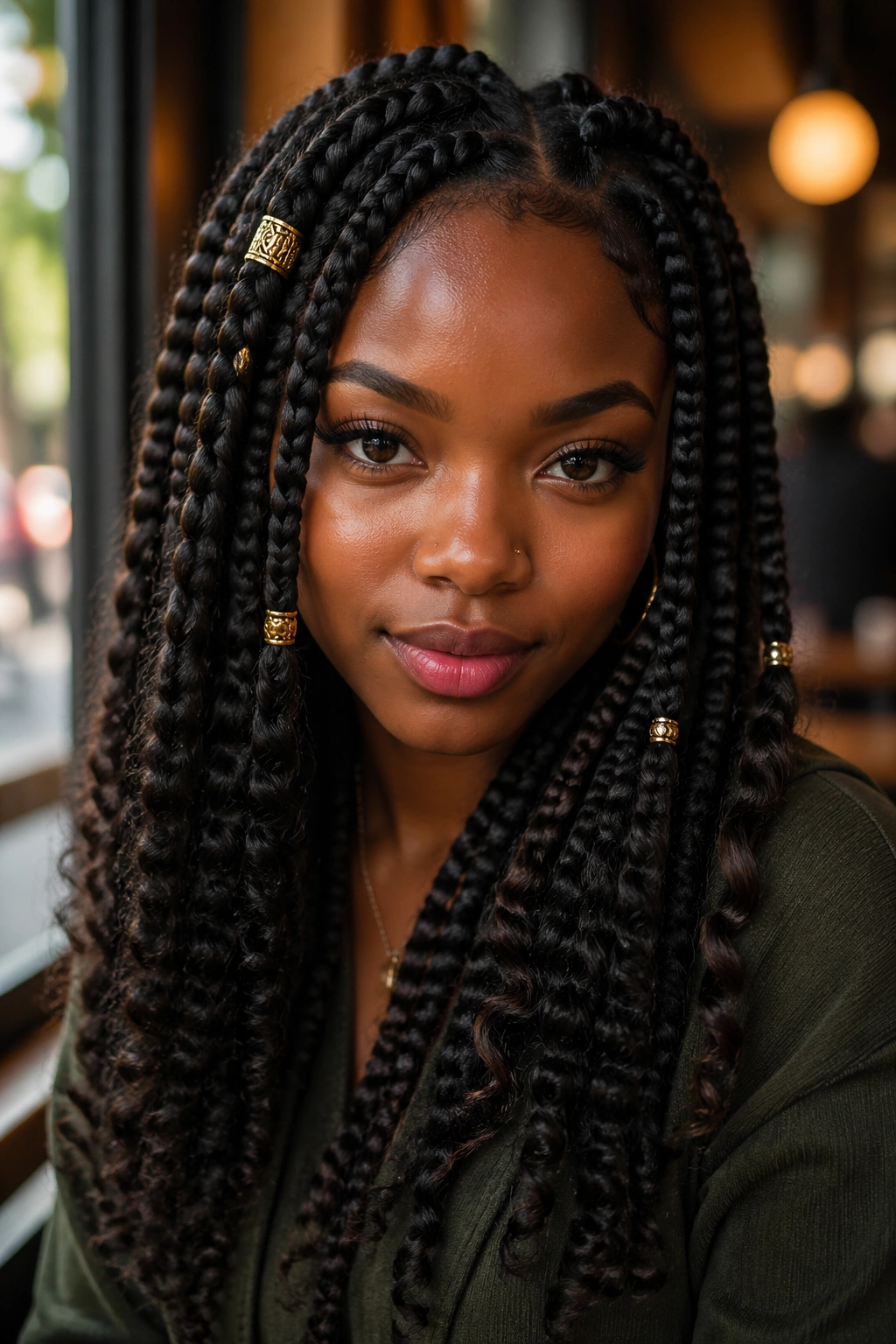
Accessories can ruin a jumbo braid set fast if you overdo them. One or two well-placed pieces? That’s another story. Gold cuffs, tiny beads, and metal rings can give long goddess braids a finished look without turning them into a craft project.
Where they work best
- Near the ends, where they catch movement
- On one or two front braids, so the detail feels intentional
- Mid-length on a braid that needs a little weight and shape
- Paired with curls, which keep the accessories from feeling too stiff
A little goes a long way here. Jumbo braids already have presence. If you add too many cuffs, the set starts to feel cluttered and heavy. That can also make the braids tug more than they should. So I’d keep the accent count low and pick one metal tone, not three.
Beads can work too, but they change the sound and movement of the hair in a way that not everyone likes. Cuffs are quieter. Cleaner. Easier to take off later. If you want a set that feels dressed up without looking formal, this is one of the easiest paths.
11. Boho Texture Throughout the Length
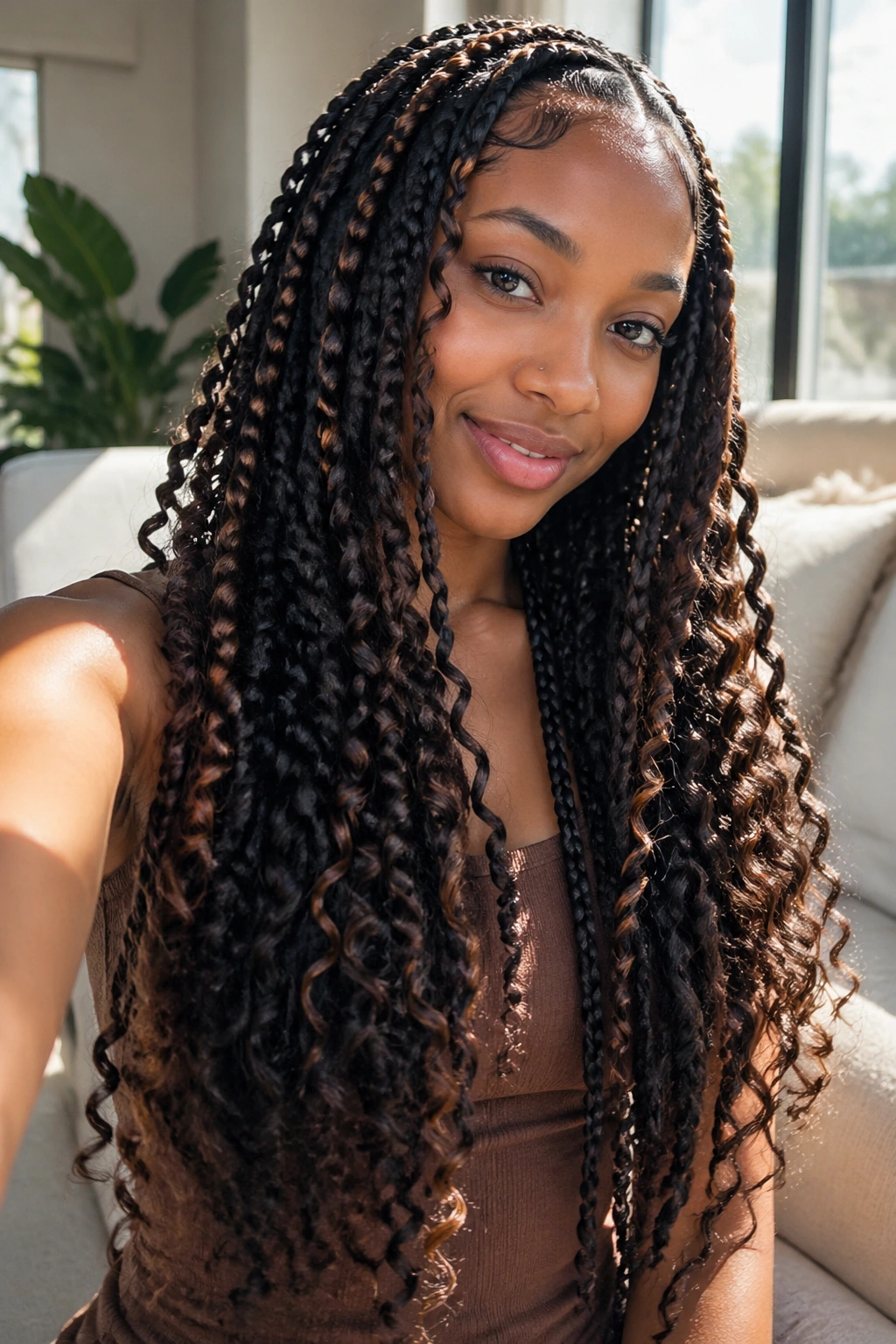
Boho texture is where this style stops looking neat and starts looking lived-in. Instead of keeping the curls only at the ends, you weave soft curly pieces throughout the braid so bits of texture escape along the length. The result is less polished, more airy, and much more relaxed.
That texture changes how the braids move. Straight jumbo braids can hang like ropes if the hair is very smooth. Add curly pieces throughout, and the whole set starts to sway. It looks lighter, even if the braids themselves are large. That matters on long lengths because heavy styles can flatten out fast.
A few things to know
- The more curl you add, the more upkeep you’ll need
- Curly strands around the length frizz sooner than curl only at the ends
- A light foam or braid mousse helps the texture stay soft
- Sleeping with a silk scarf matters more here than in a sleeker set
I like this look when the goal is movement rather than precision. If you want every braid to lie in a perfect line, skip it. If you want a softer, more lived-in braid set that still reads as long and full, this one earns its place.
12. Layered Long Braids with Different Lengths
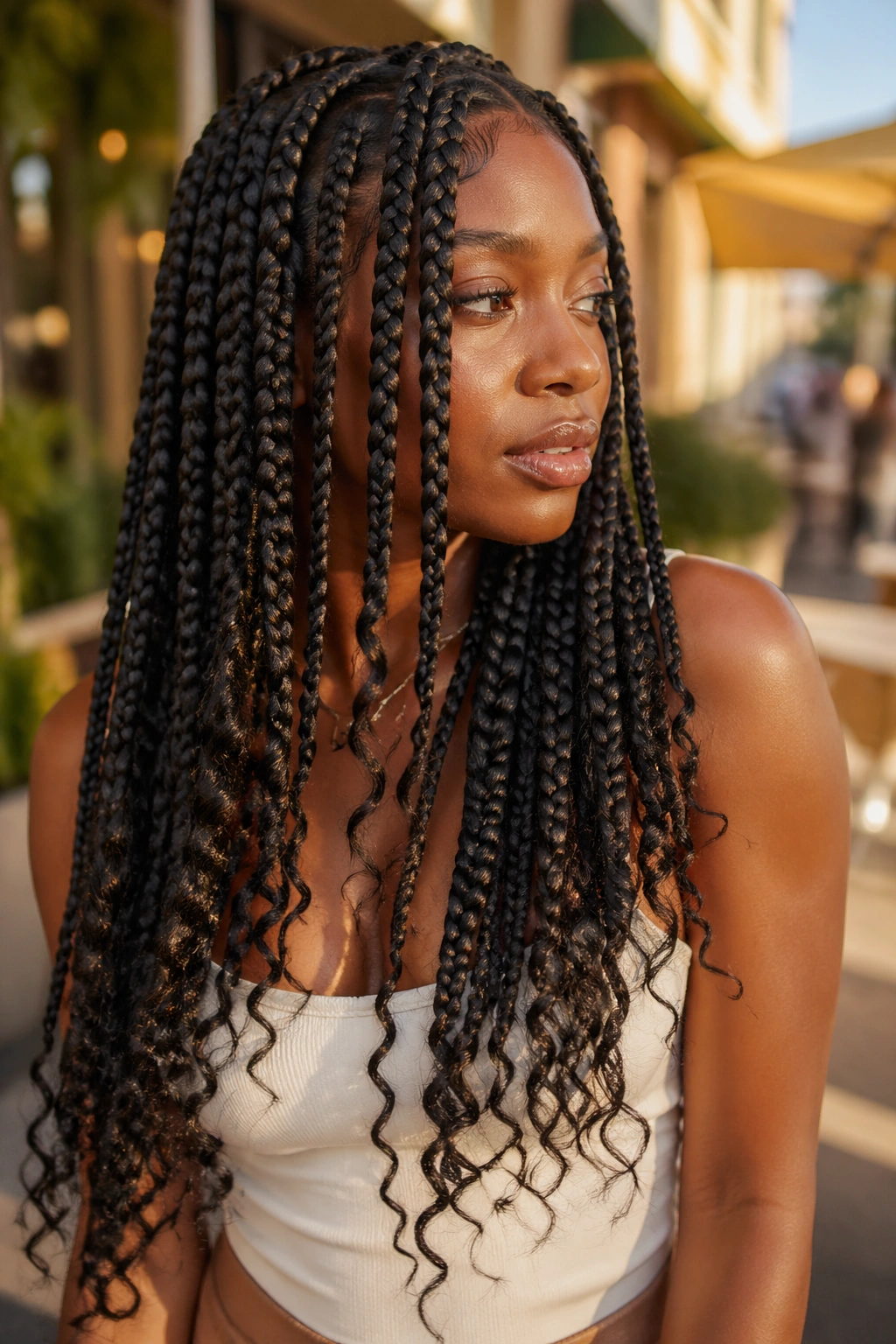
A blunt curtain of braids can feel heavy, especially when the set is jumbo and long. Layering breaks that up. Layered goddess knotless box braids usually place a few front pieces slightly shorter, then let the back rows carry the full length. That creates shape without sacrificing drama.
The best thing about layering is how it changes the silhouette. Instead of one flat wall of hair, you get a front edge that opens the face and a back that still gives you the long-braid moment. It also makes the braids easier to style over one shoulder or into a half-up look because the layers naturally fall into place.
This is a smart option if you like long braids but don’t want them to feel like a single heavy sheet. The difference is more practical than aesthetic, though the aesthetic payoff is real. Layers give you movement at shoulder level. That’s usually where the style lives or dies.
Ask for 2 or 3 distinct length zones rather than random uneven ends. Random is messy. Intentional layers look expensive even when the styling is casual.
13. Side-Swept Braids Draped Over One Shoulder
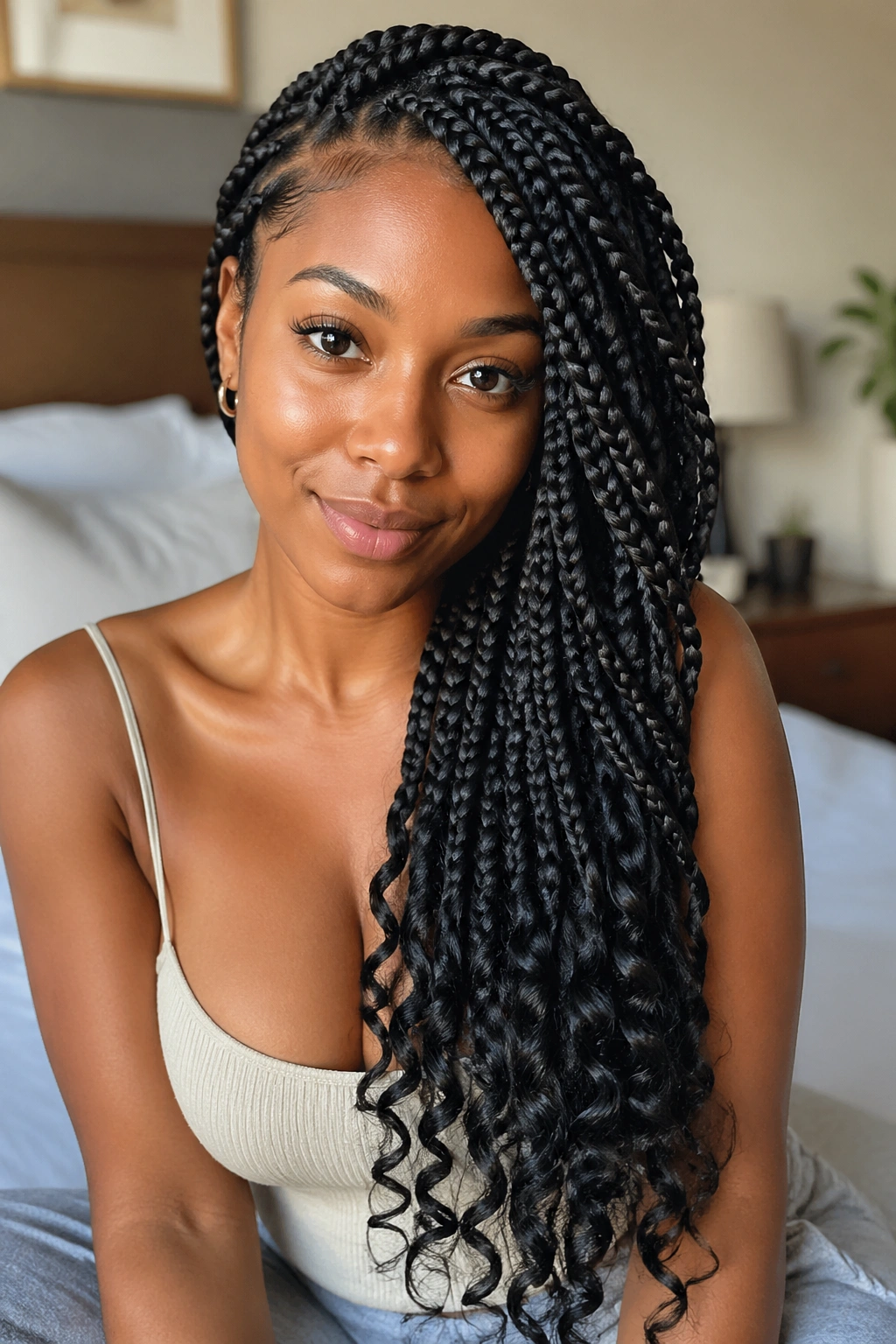
Sometimes the best styling move is the simplest one. Pull the braids to one side and let them fall over a single shoulder. That side-swept shape makes long goddess knotless box braids look even longer because the braid line is uninterrupted and the curls collect in one place instead of spreading out evenly.
The look feels softer than a center-split style. It also works well when you want to show off earrings, neckline details, or a collarbone moment. The braids become part of the outfit instead of just hair hanging down the back. That sounds small. It isn’t. Placement changes everything.
A hidden pin or two at the nape usually helps keep the set from sliding back to center. Don’t pin the braids so tightly that you create a kink in the length. You want the sweep to feel loose, not forced. A little curve at the shoulder is enough.
This version is especially good for photos, but it also makes sense for real life because it gets the hair out of your back without requiring a full updo. Low effort. Strong payoff. Hard to argue with that.
14. Thread-Wrapped Accent Braids
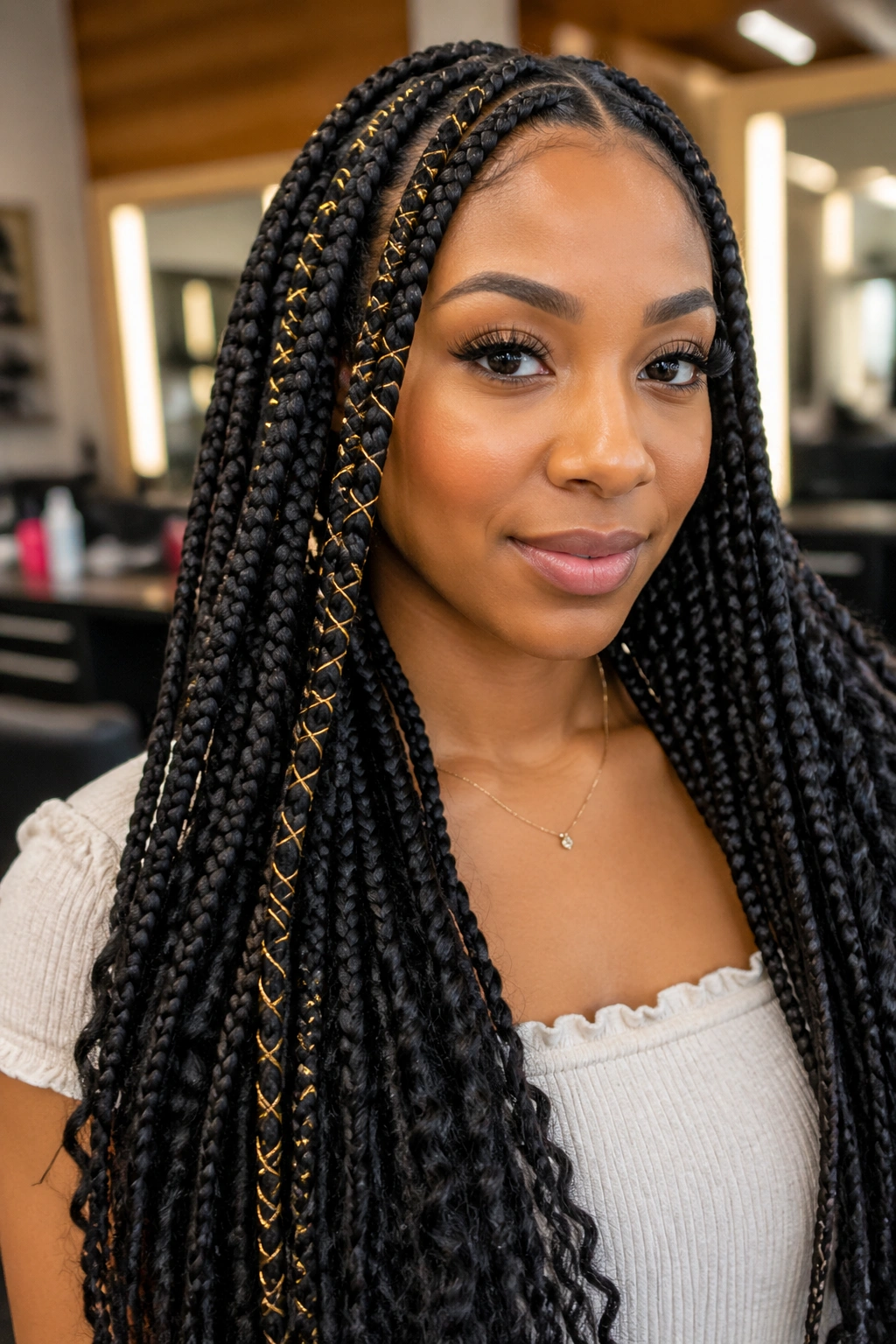
Thread-wrapped braids are the kind of detail that looks tiny until you see it in person. A few strands of gold, black, rust, or ivory thread wrapped around select braids can make the whole set feel more finished. On long goddess braids, it’s a nice way to break up the length without adding beads or cuffs everywhere.
How to keep it from looking fussy
Use the thread on only a few braids, not all of them. Two to four accent braids is usually enough. More than that, and the eye stops reading it as detail and starts reading it as clutter. Smooth thread works better than anything scratchy or fuzzy, because it slides over the braid instead of catching in the curls.
Thread accents also work well if you want a seasonal or event-specific look without changing the whole style. Wrap one front braid, one braid near the temple, and maybe one long piece toward the back. That creates repetition without making the style busy.
This is the kind of addition I like when the braids themselves are already good. You’re not fixing the hairstyle. You’re nudging it. Small difference. Big effect.
15. The Everyday Long Set That Grows Out Neatly
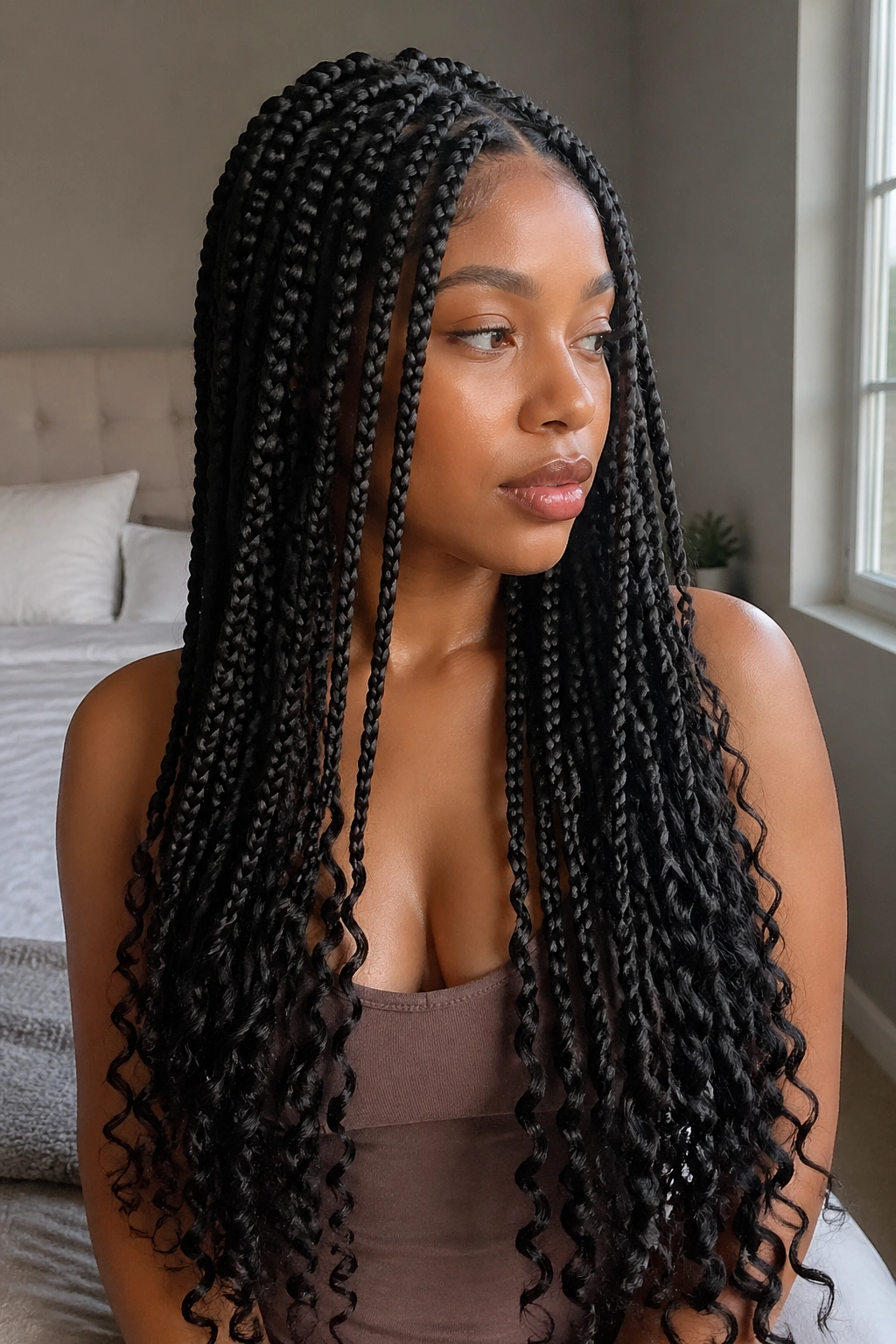
Not every braid set needs to be dramatic on purpose. Sometimes the smartest version is the one that stays tidy longest. A low-maintenance long goddess knotless set usually means medium-jumbo braids, clean square or rectangular parts, modest curls at the ends, and not too many accessories or color changes. It’s the version that still looks like a choice when it’s two weeks old.
That matters because long braids live with you. They touch your coat collars, your pillowcase, your bag straps, and your hands. If the set is overloaded with extra pieces, it can start to fight you. A cleaner version grows out more gracefully, and the curls at the ends still give it life even after the roots loosen a bit.
If you only want one braid set that can survive work, errands, dinner, and a lazy weekend without constant fixing, start here. Keep the root tension comfortable, keep the curls light, and keep the parting neat. Those three things do more for the style than any amount of decoration.
Pick the version that still looks good on day ten. That’s the one you’ll wear the most.