
Orange box braids can surprise people.
On Black women, the color doesn’t sit there politely. It glows, softens, sharpens, and pulls the whole face into focus depending on the shade you pick and how you part the hair. Copper reads warm and rich. Burnt orange feels deeper and moodier. Peach-orange has a lighter, almost glossy feel that looks especially clean when the braids are neat and the parts are crisp.
The trick is that orange is not one note. A good install can lean spicy, earthy, bright, or even elegant if the braid size, length, and accessories are chosen with some care. And yes, the hair you choose matters too — a dull synthetic braid reads very differently from one with a little sheen, especially under direct light.
What makes this color so fun is that it can go bold without looking costume-y. The right orange on textured hair has range, and that range is why so many braid looks stay interesting long after the first day.
1. Copper Orange Box Braids at Waist Length
Copper orange box braids are the classic crowd-pleaser in this whole color family. They give you enough brightness to stand out, but the copper tone keeps the look grounded instead of neon-heavy. On Black women, that warmth tends to sit nicely against deep skin because it picks up the undertones in a way that feels rich rather than flat.
I like this style when the goal is movement. Waist-length braids sway more, show off the color from different angles, and make a simple middle part look polished without much extra work. The downside is plain: long braids need a little more patience, a little more time, and a bit more care on wash days. Worth it if you want drama.
Why This Shade Works So Well
Copper hits that sweet spot between red and orange. It reads bold in sunlight and softer indoors, which keeps the style from looking harsh. If you want the hair color to feel expensive rather than loud, copper is usually the safer bet.
Best details to ask for:
- Pre-stretched braiding hair in a copper or ginger tone
- Medium-sized parts for balance and weight
- Braids ending around the waist or just below the ribs
- A clean middle part if you want symmetry
- Light mousse at the finish so the color and texture look smooth
Pro tip: keep the braid size medium, not oversized. Copper shows its depth better when the braids have enough surface area to catch the light.
2. Burnt Orange Bob Box Braids
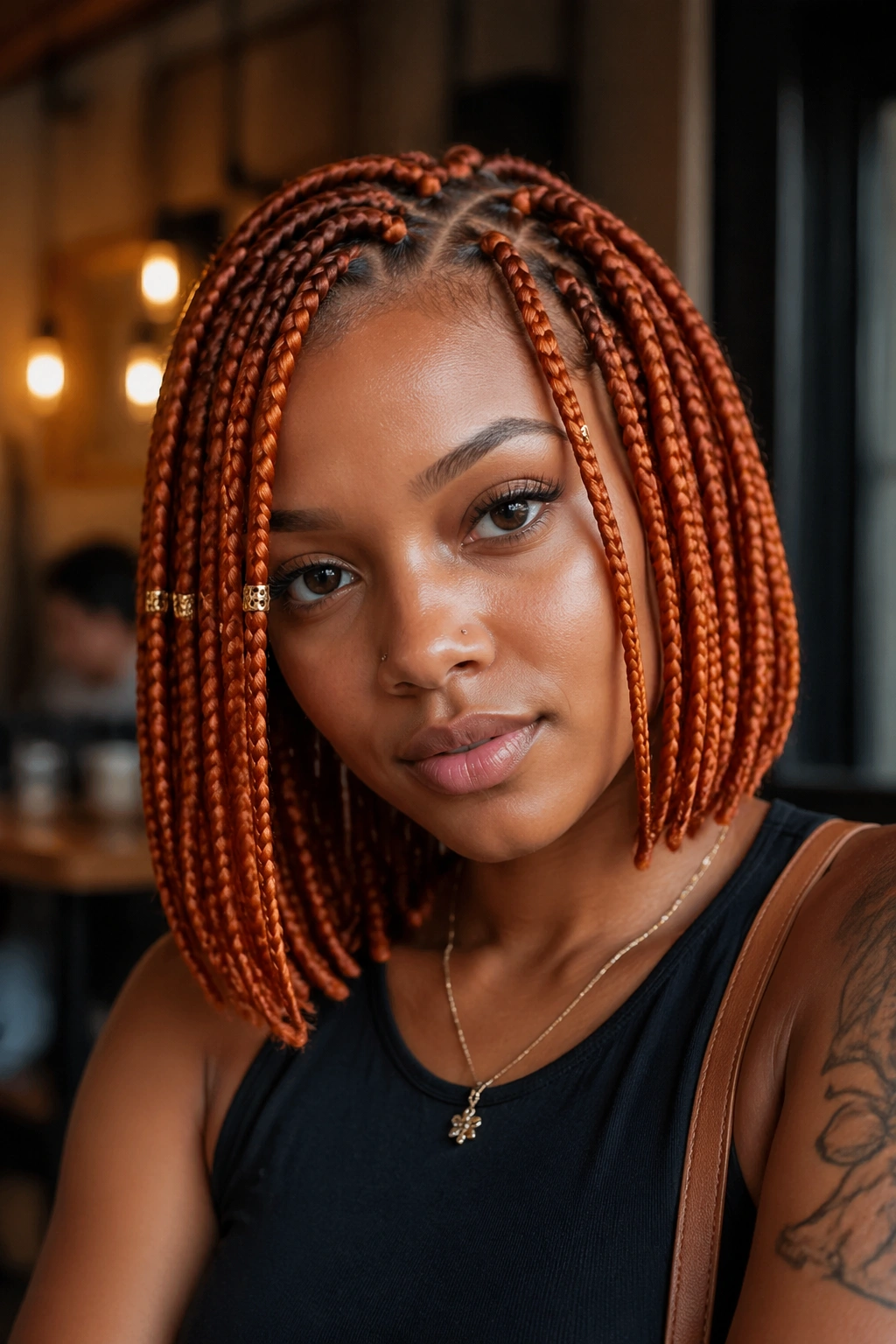
Burnt orange box braids in a bob are one of those styles that make people stop and look twice. The shorter length keeps the color from taking over the whole face, so the shade reads chic instead of overpowering. If long braids feel like too much upkeep, this is the one I’d point you toward first.
A bob also makes the texture of the braids easier to see. You get that neat grid at the scalp, a clean line at the ends, and just enough swing when you turn your head. It’s tidy. It has a little attitude too.
What Makes the Bob Different
The shorter cut makes burnt orange look denser and deeper because more of the color sits close to the face. That works especially well if you like a strong lip, statement earrings, or a sharp neckline. The hair itself ends up doing part of the styling for you.
You can wear it with a blunt finish for a crisp shape or ask for slightly layered ends so the bob doesn’t feel boxy. A side part softens the edge if you want the look to feel less severe. And if you’re the type who gets tired of braids brushing your shoulders all day, this length is a relief.
Shorter braids also tend to feel lighter on the scalp. Not feather-light. Let’s not pretend braids are feather-light. But a bob usually gives you less drag than waist-length installs, which matters more than people admit.
3. Dark-Root Orange Ombre Box Braids
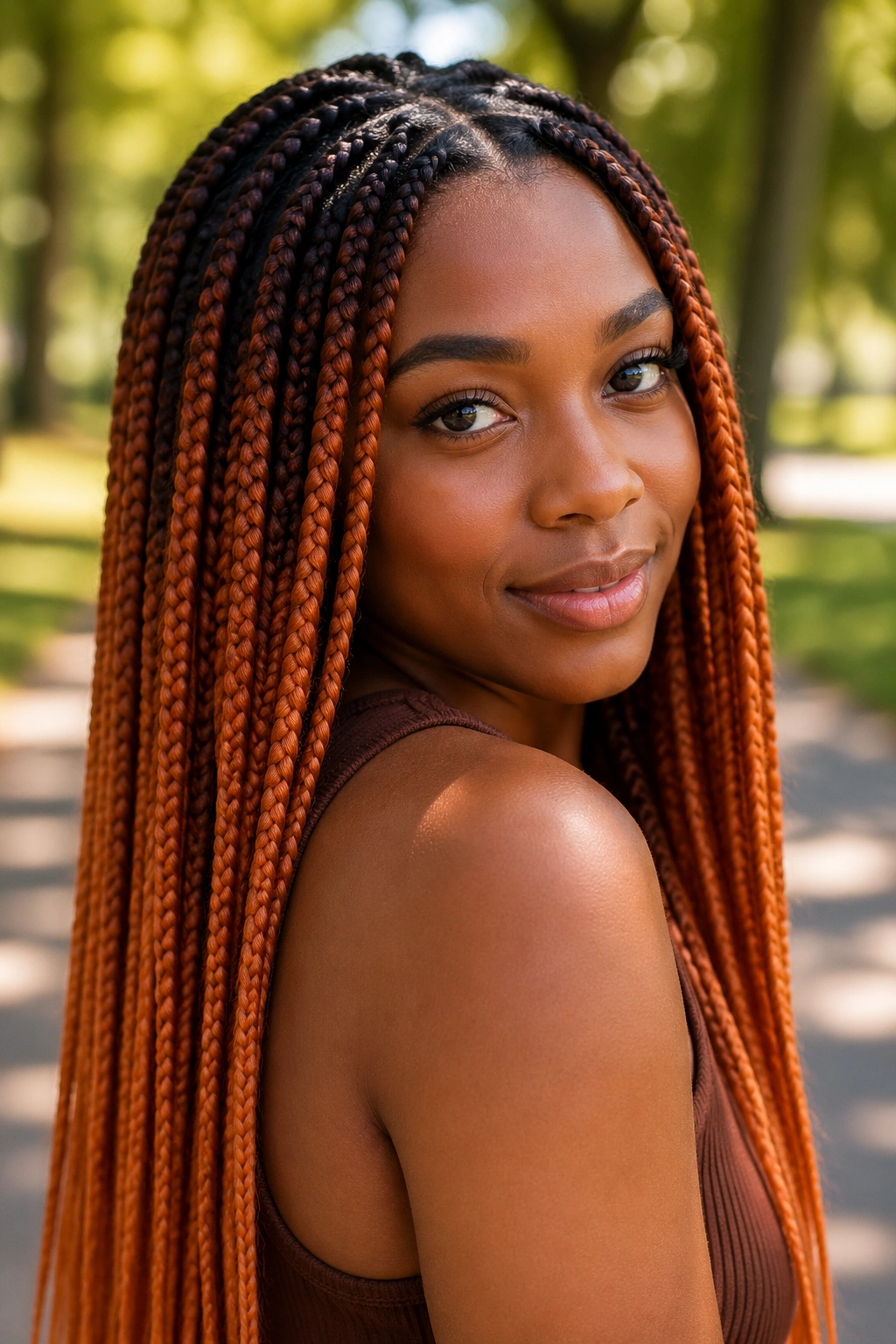
Dark-root orange ombre box braids are for anyone who wants the color without diving straight into full brightness. The darker roots make the orange ends look deeper, and they also give the style a built-in shadow line that keeps the look from feeling too flat. That matters more than most people think.
This style is one of the easiest ways to wear orange if you’re color-shy. The root area stays close to your natural hair tone, so the transition feels softer at the scalp and more dramatic near the ends. It’s a good compromise, though I honestly think it’s more polished than compromise suggests.
Why the Gradient Matters
A fade from dark to orange gives the braids more dimension. Full-head orange can be beautiful, but ombre adds a little depth and makes the color easier to wear in low-key settings. The eye follows the braid, not just the shade.
If you want the effect to look intentional, keep the fade smooth. A hard line between black and orange can look choppy unless that is the exact look you want. Ask for a gradual blend, or pick pre-mixed braiding hair that already shifts from dark roots to copper or tangerine ends.
This style also photographs in a nice way because the roots ground the brightness. That said, I’d still lean toward medium or long braids here. The fade has room to show itself better when the length gives it space.
4. Orange Box Braids with Beaded Ends
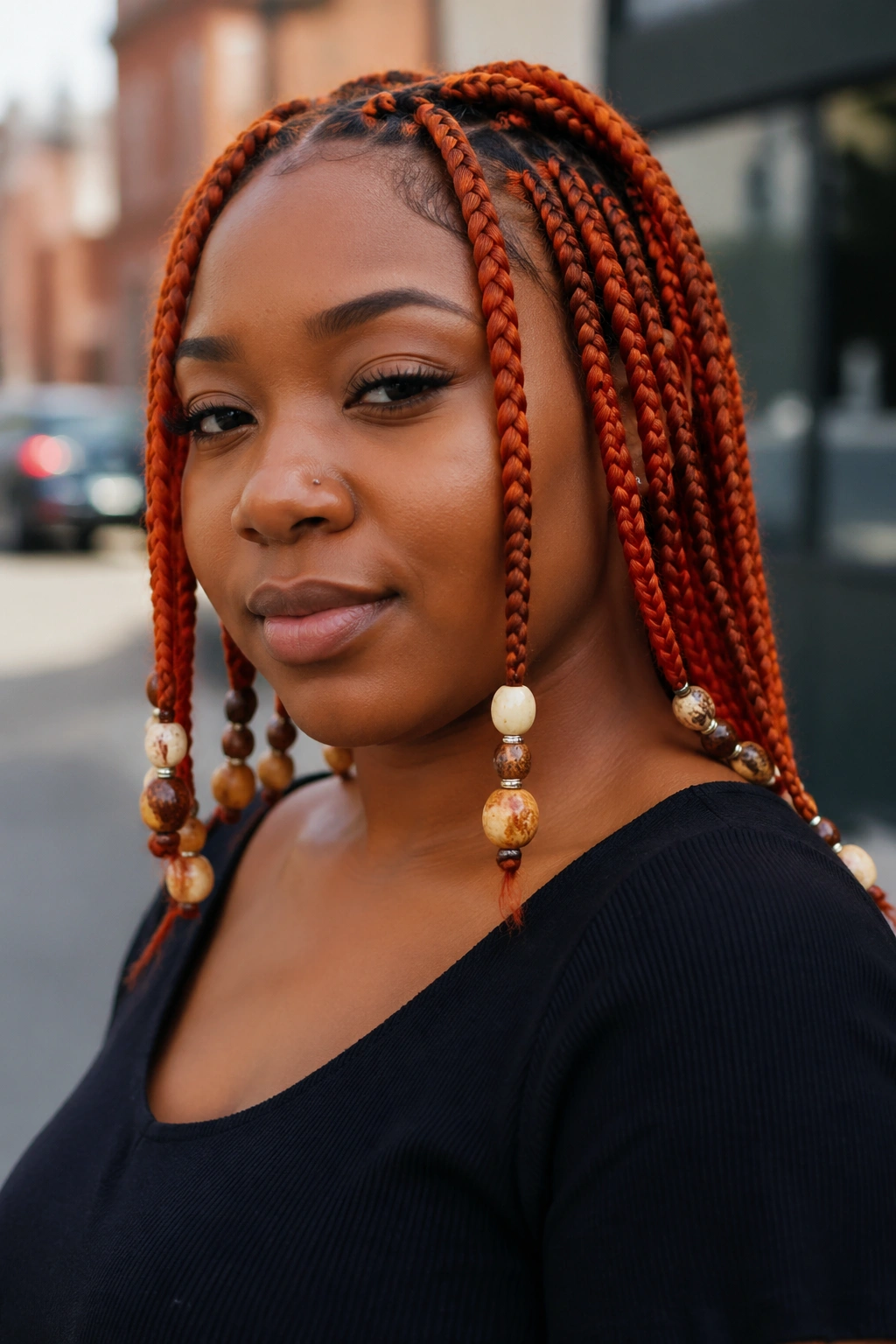
A braided style with beads changes the whole mood. Orange box braids with beads feel playful, but not childish when the bead choice is smart. Wooden beads make the look earthy. Clear beads give it more shine. Gold-toned ones push the style into dressier territory fast.
I’ve always liked beads at the ends because they give the braids a little sound and movement. You hear the style before you even see it. That tiny click when you move your head is part of the fun, honestly.
How to Keep the Beads Looking Clean
Placement matters more than bead quantity. A few beads at the ends of the front braids can frame the face without turning the whole style into a costume. If every single braid is loaded up, the hair starts to feel heavy and busy.
- Put the largest beads on the front sections
- Keep smaller beads in the back so the style moves well
- Use matching elastics if you want the color story to stay tight
- Ask your stylist to secure the ends well so the beads don’t slide
Beads also change the weight balance, so they’re better on medium or long braids than on very short ones. And if you like to wear earrings, choose bead colors that won’t fight with your jewelry. Orange plus gold is a strong combination. Orange plus too many other accents can get messy fast.
5. Triangle-Part Orange Box Braids
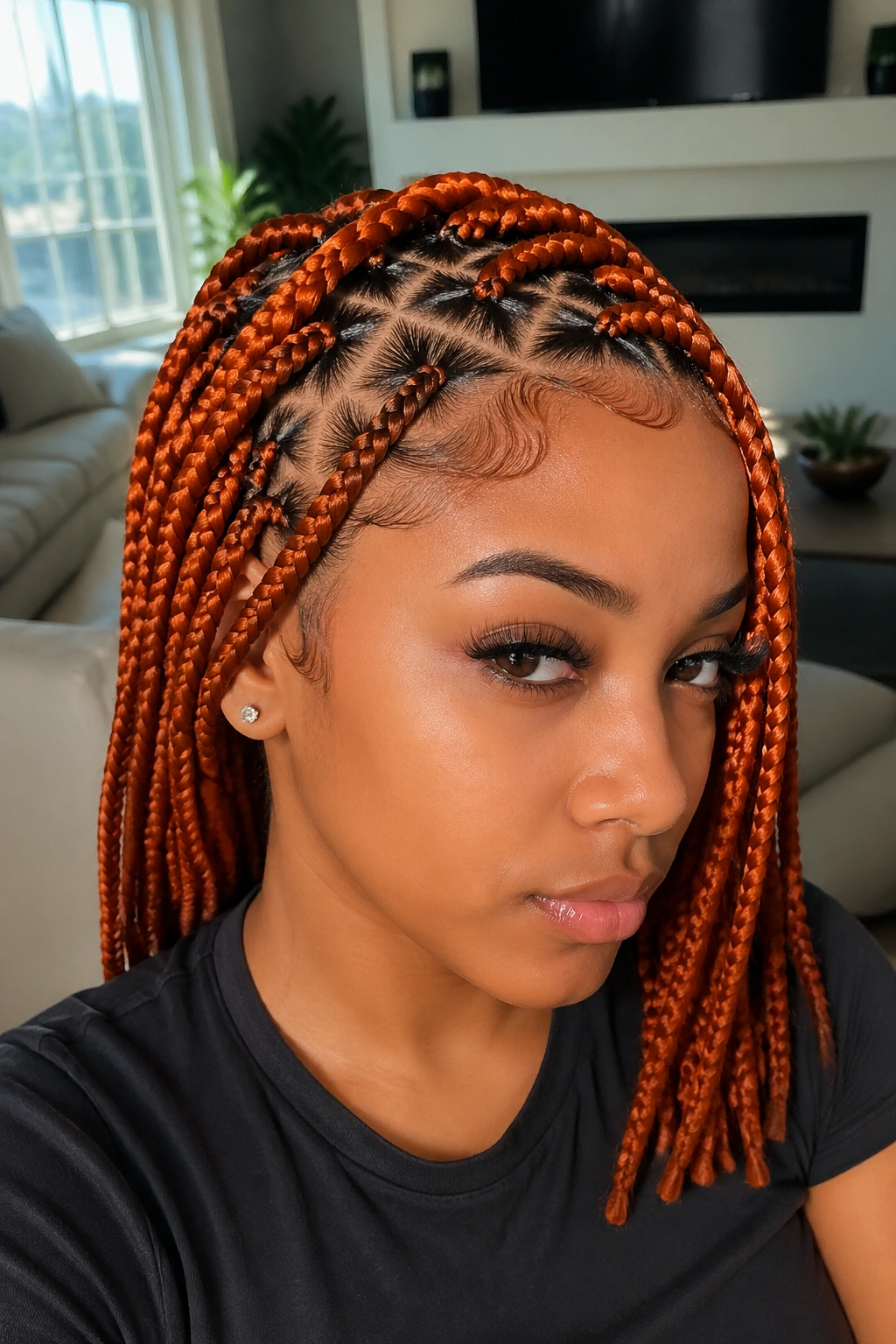
Triangle-part orange box braids are for the person who notices parting first and color second. The triangles create a little geometry on the scalp, and that shape makes the whole style feel sharper and more styled, even when the braid size is simple.
This is one of those looks that gets better the closer you stand. From far away, you see orange braids. Up close, you notice the clean angles at the roots, and that’s where the real appeal lives. It’s the kind of detail that rewards a skilled braider.
What to Watch For
Triangle parts can look amazing, but only if they’re neat and consistent. Uneven triangles show quickly because orange has enough brightness to expose every little wobble. That’s not a flaw in the color; it just means the parting has to be done with care.
If you want the style to stay wearable, keep the braids medium size and the parts clean but not tiny. Tiny triangle sections can take forever and create more tension than you need. Medium triangles give you enough pattern without turning the install into a marathon.
This style works well when you want the scalp design to be part of the aesthetic, not just a background detail. It’s a smart choice if you like ponytails, half-up styles, or top knots, because triangle parts still look interesting when the hair is pulled back.
6. Jumbo Orange Box Braids
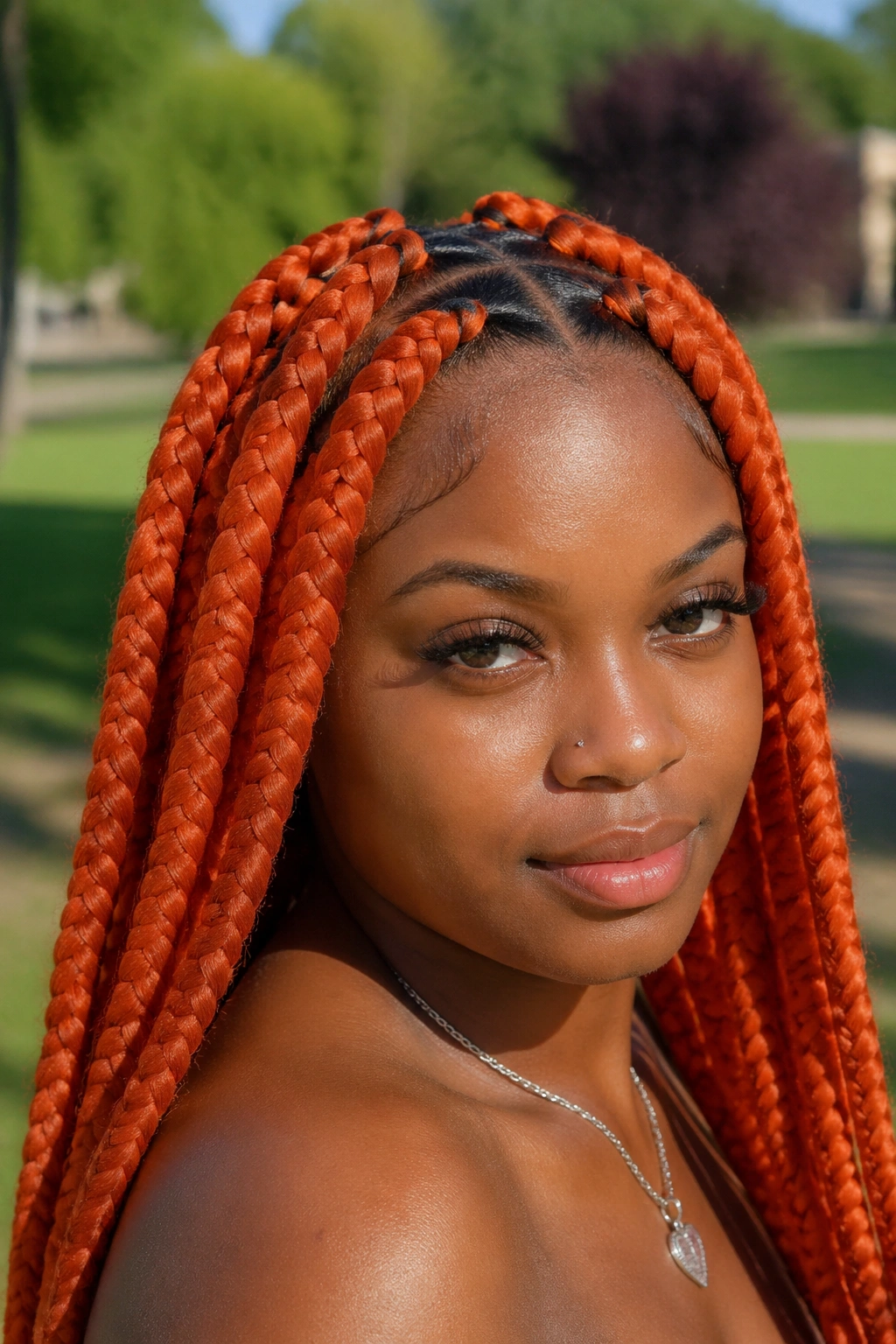
Jumbo orange box braids are not subtle. That is the point. If you want the color to read from across the room, large braids do the job faster than anything else on this list. They show off the shade in big blocks, which makes the orange look bolder and cleaner.
The nice thing about jumbo braids is speed. Fewer braids usually mean less installation time, which matters if you do not want to sit for hours and hours. The trade-off is that the style can feel heavier at the roots, so the sections should still be clean and not overly packed with hair.
Big Braids, Big Presence
This style works best when the color is rich enough to carry a large surface area. Copper, marigold, and burnt orange all do well here. A flat, pale orange can look thin in jumbo size, while a deeper orange has enough body to hold the shape.
Keep the lengths a little shorter if you want the style to stay easy. Shoulder-length jumbo braids can look clean and strong without dragging too hard. If you go long, the movement is lovely, but you’ll feel the weight more, especially after a full day.
A lot of people think jumbo braids are only for bold personalities. Not true. They’re also practical. Fewer braids mean less time in the chair, less styling fuss, and easier access to the scalp when wash day comes around.
7. Micro Orange Box Braids
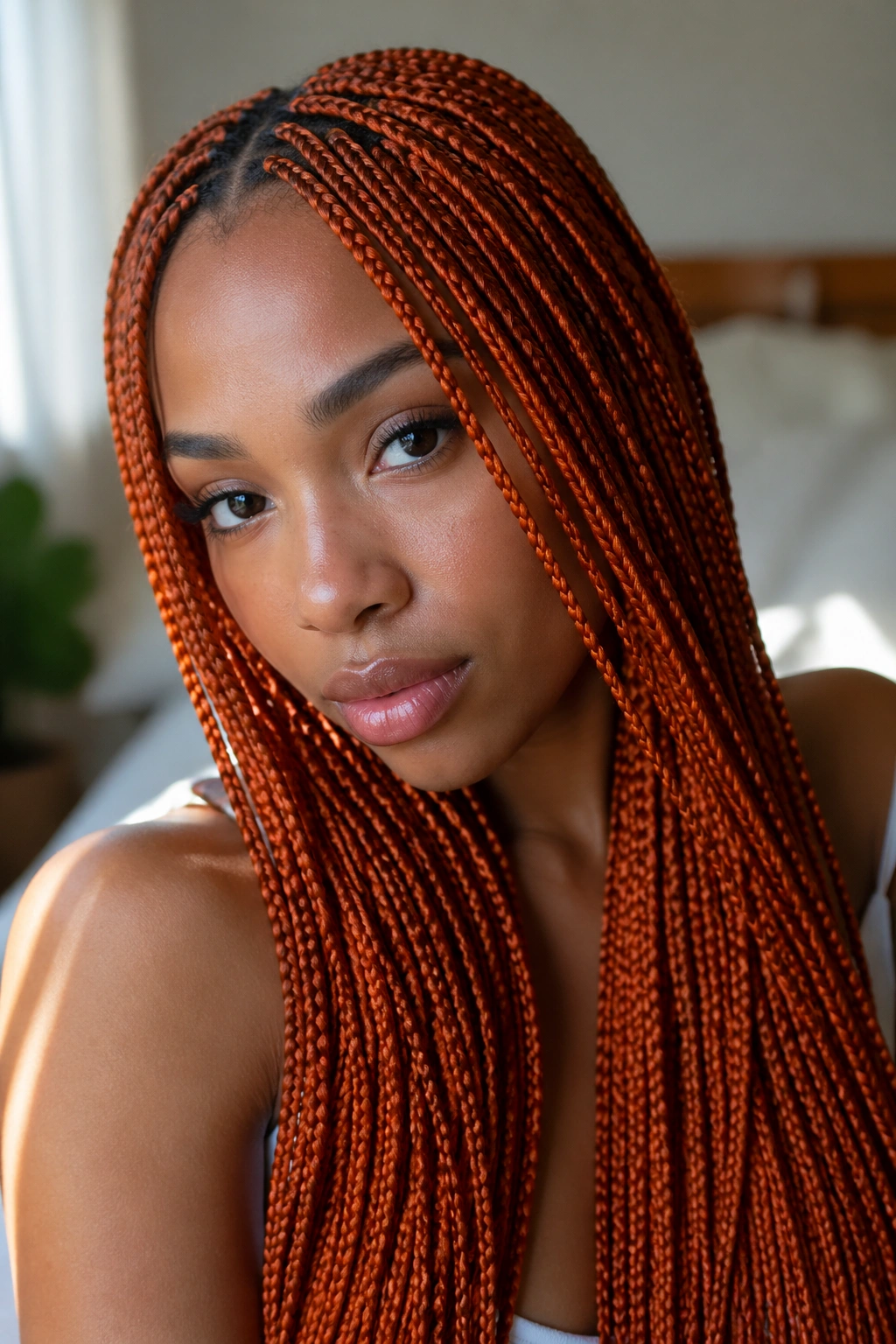
Micro orange box braids are the opposite of jumbo braids, and that difference matters. They give the color a softer, denser feel because the braid size is small enough to create texture instead of just color blocks. The overall effect is detailed and almost fabric-like.
Do they take longer? Absolutely. Anyone who has sat through a micro install knows the deal. But if you love braids that move easily and hang with a lot of swing, this style has a lot going for it. It also lets the orange shift subtly from section to section, which looks especially good in mixed lighting.
How to Wear Them Without Losing the Shape
Micro braids look best when the ends are finished cleanly and the parting is exact. Tiny braids with sloppy roots can look messy fast, and orange does not hide that. A precise grid helps the style stay crisp even after a few weeks.
You can wear micros loose, in one braid down the back, or tucked behind the ears with a simple side part. They’re also a solid choice if you like to play with accessories later, because the smaller sections leave you room for clips, cuffs, and scarves without the hair feeling overloaded.
This style is not for everyone. If you hate sitting still, skip it. If you like delicate detail and long-lasting movement, it’s one of the prettiest ways to wear orange braids.
8. Orange Box Braids in a High Ponytail
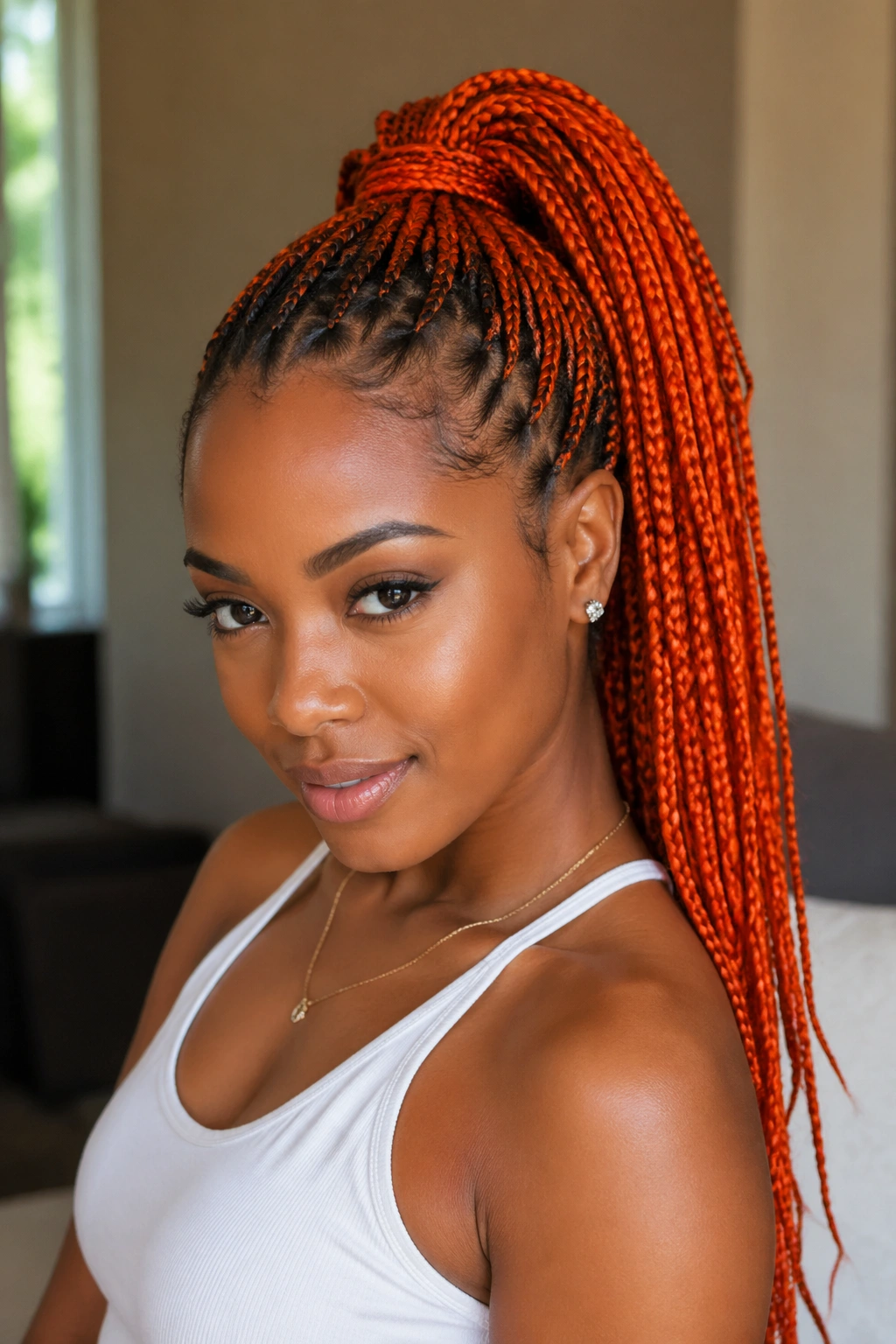
A high ponytail with orange box braids is one of the easiest ways to make the color look intentional and pulled together. Pulling the braids up gives the face a lift, puts the color near the crown, and lets the braid ends fall with a lot of motion. It’s simple, but not boring.
The main thing to watch is tension. A ponytail should feel secure, not painful. If the roots are yanked too tightly, the style stops being fun by the next morning. A soft, wide wrap or a strong scrunchie gives better hold than a thin band that digs in.
What Makes the Ponytail Work
The height of the pony changes the whole feel. A very high ponytail reads sporty and sharp. A mid-high ponytail feels softer and more wearable for everyday life. Both work, but the crown area needs to stay smooth so the orange looks polished instead of puffy.
If your braids are long, let the tail cascade over one shoulder. That keeps the weight from feeling too back-heavy. If they’re medium length, the lifted shape alone does enough. Either way, the face stays open, which is one reason this style flatters so many women.
I’d choose this when I want a style that looks done in five seconds flat. It’s the kind of updo that survives errands, brunch, and a long day without needing a lot of mirror time.
9. Half-Up, Half-Down Orange Box Braids
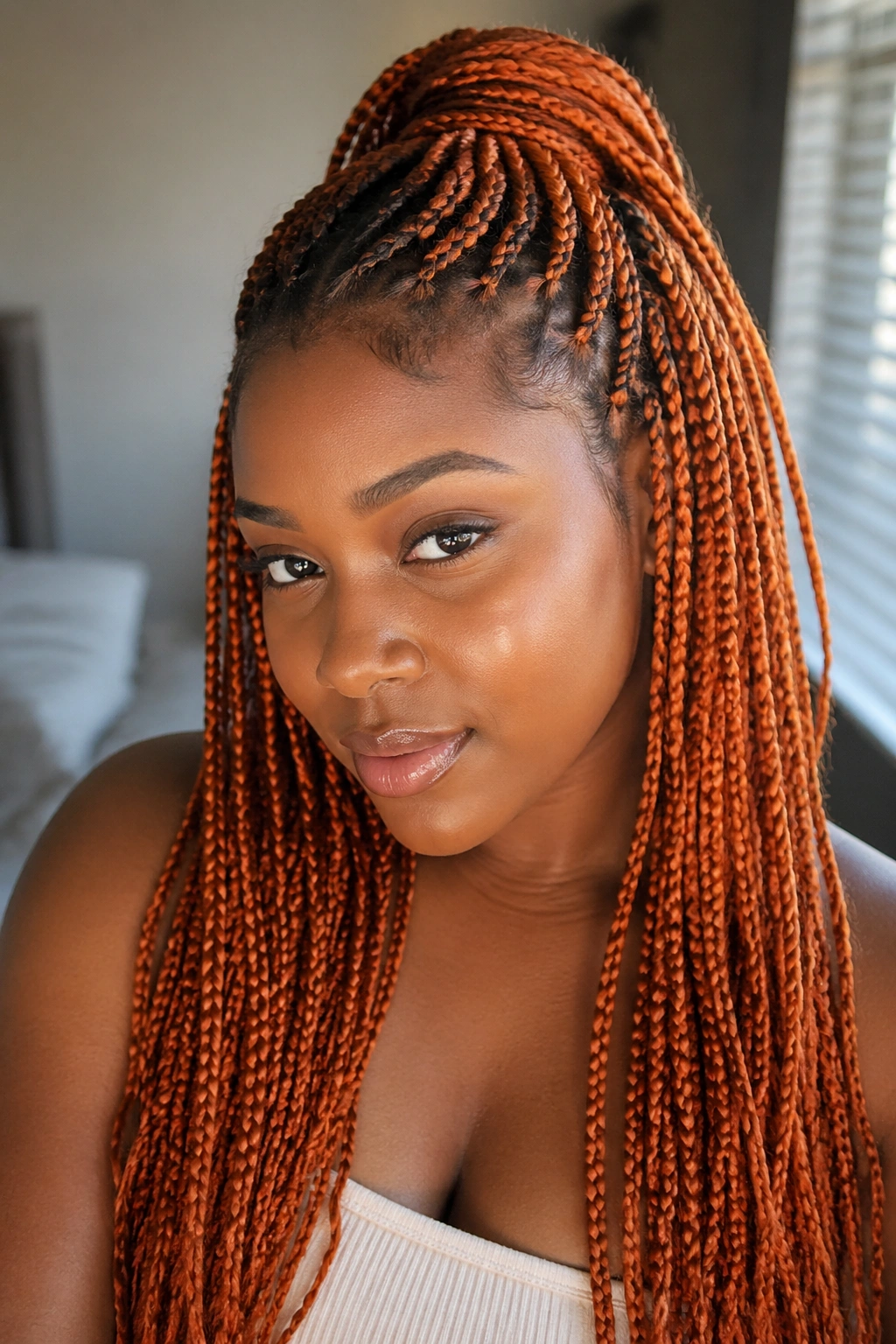
Half-up, half-down orange box braids hit a nice middle point between relaxed and styled. You keep some of the hair off the face, but you still get the full length and movement in the back. That balance is why this look keeps coming back. It works.
The style also lets the color show in layers. The top section can frame the crown while the lower braids swing around the shoulders, which gives orange a little more depth than a fully pulled-back style. You see the face, then you see the braid length. Both matter.
Who This Suits Best
This is a good pick if you want to show off earrings, makeup, or a clean neckline. The top section can be twisted, braided back, or tied with a band, and each version gives off a slightly different mood. A tiny top knot makes it playful. A neat half ponytail feels cleaner.
It also solves one practical issue: hair in your face. You get enough lift to keep things out of the way without committing to a full ponytail or bun. That small middle ground is exactly why the style is so wearable.
If your orange shade is bright, the half-up shape keeps it from taking over your whole look. If the shade is darker and more coppery, the style adds just enough structure to show that the color was chosen on purpose.
10. Curly-End Orange Box Braids
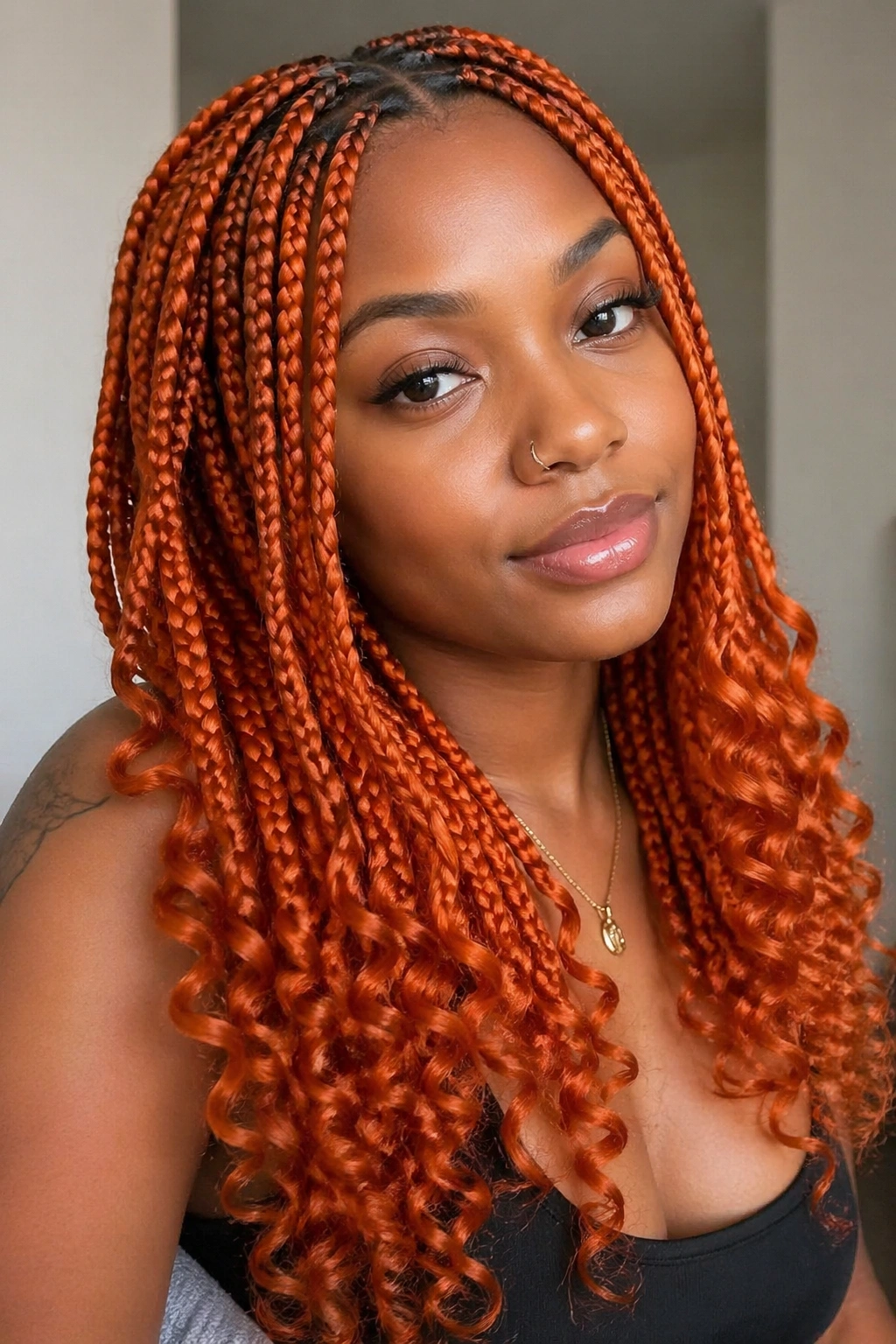
Curly-end orange box braids soften the whole look. Straight braid lengths can feel neat and linear, but curled ends add a little air and motion at the bottom, which makes the color feel lighter and more romantic. It’s a small change with a big payoff.
The ends matter more than people think. When the braid shaft is smooth and the last few inches bend or curl, your eye picks up the texture right away. That makes the style feel less rigid, especially if the braids are long.
How to Keep the Ends Looking Fresh
You want the curls to sit at the finish, not frizz out halfway down the braid. The best versions usually rely on well-set braiding hair or gently curled extensions that hold shape without looking stiff. If the curl pattern is too tight, the ends can start to look fussy.
This style is a good fit for women who want something feminine without losing the edge of orange braids. The contrast between the structured braid and the loose curl is the whole point. It keeps the hair from feeling too straight or too severe.
If you wear the style with a middle part, the curls make the face framing softer. With a side part, the ends look a little more swooped and dramatic. Either way, it’s a nice change from the usual straight finish.
11. Knotless Orange Box Braids
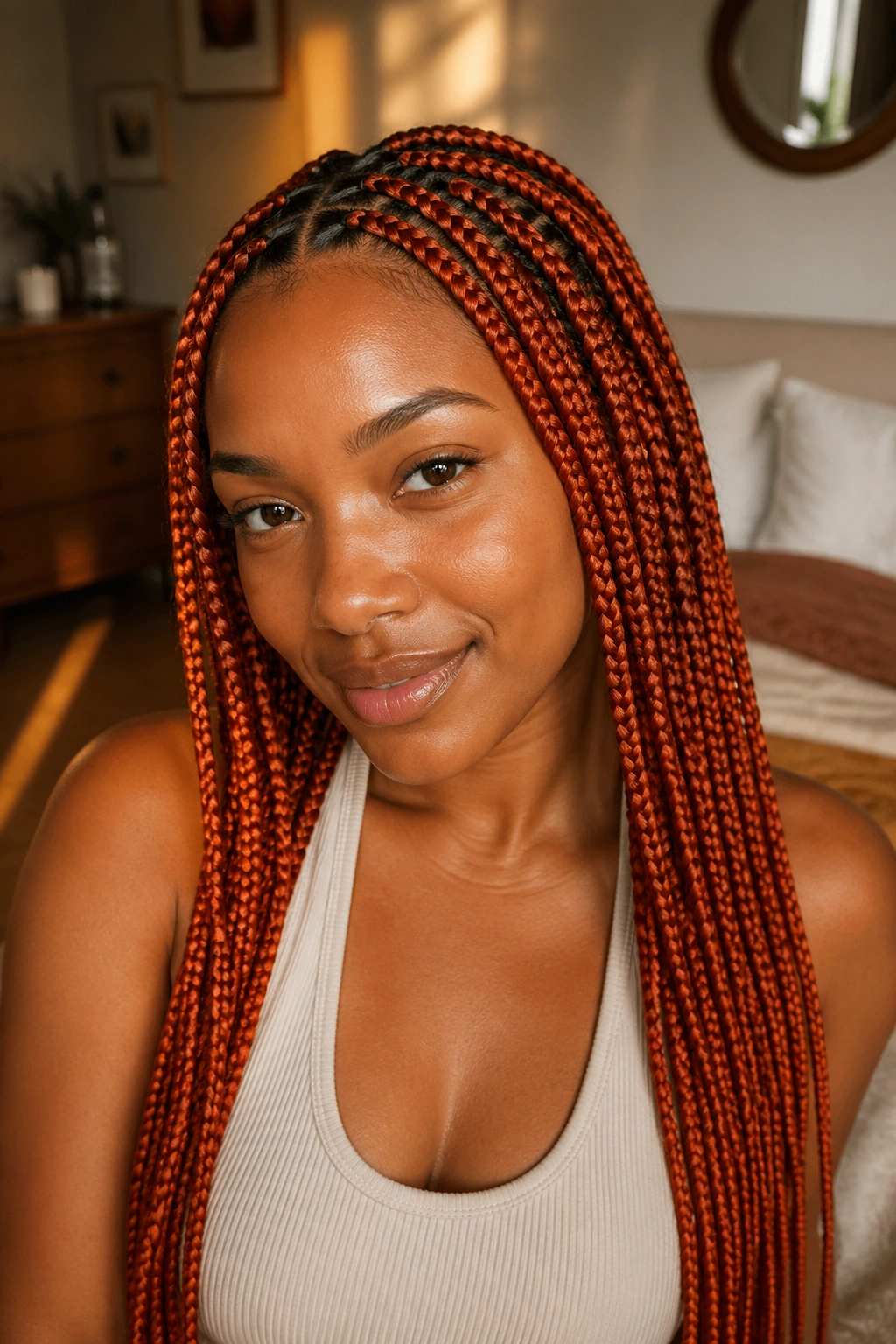
Knotless orange box braids are a smarter choice than traditional knot-heavy installs when you want the scalp to feel calmer at the start. The braid feeds in gradually, which makes the base look flatter and often feels lighter. That softness is a big deal if you wear braids often.
Color and knotless braiding work especially well together because the braid itself already has enough visual interest. You do not need a bulky root to make the style stand out. A clean base lets the orange do the talking.
Why Knotless Changes the Look
A knotless install gives the braids a more natural fall at the root. The first inch or so lies closer to the head, then the braid builds from there. That shape can make orange braids look smoother and less boxy, which I prefer when the shade is bright.
It’s also easier to pull knotless braids into buns and ponytails because the base isn’t as chunky. If you like styling flexibility, that matters. A flat root gives you more options later in the wear cycle.
I wouldn’t choose knotless just because it sounds trendy. I’d choose it because it wears better. When the color is loud, a cleaner base keeps the style looking neat instead of bulky.
12. Orange Box Braids with Gold Cuffs
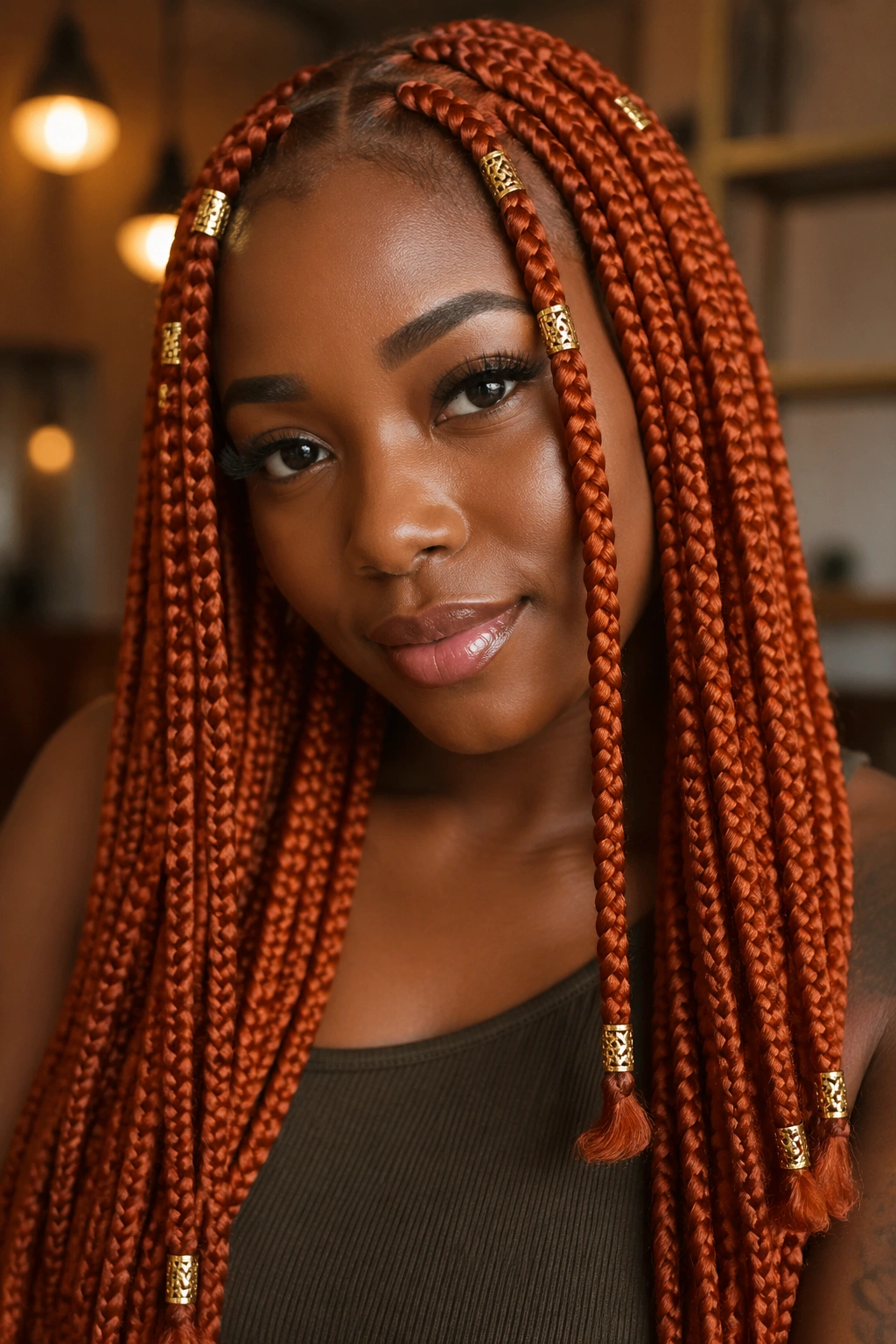
Gold cuffs and orange braids are a strong match because the metal picks up the warmth in the hair. The look can go from simple to dressed-up in seconds, and you do not need a full head of accessories to get the effect. A few cuffs go a long way.
This is one of my favorite ways to keep orange braids from feeling too one-note. The cuffs break up the length, catch the eye, and give the braids a little shine near the face. Done well, the style feels rich rather than busy.
Placement Makes the Difference
- Put cuffs near the front where they’ll frame the face
- Add a pair near the ends of a few braids, not all of them
- Keep the rest of the style clean so the metal stands out
- Match the cuff tone to your jewelry if you want the look to feel connected
Too many cuffs can start to look clunky, especially on medium braids. Two or three clusters are usually enough. If the hair is already a bright orange, the metal should support it, not compete with it.
This style is a quick fix when you want to dress the braids up for dinner, a photo shoot, or a regular day that needs a little more punch. The accessories do the heavy lifting.
13. Side-Part Orange Box Braids
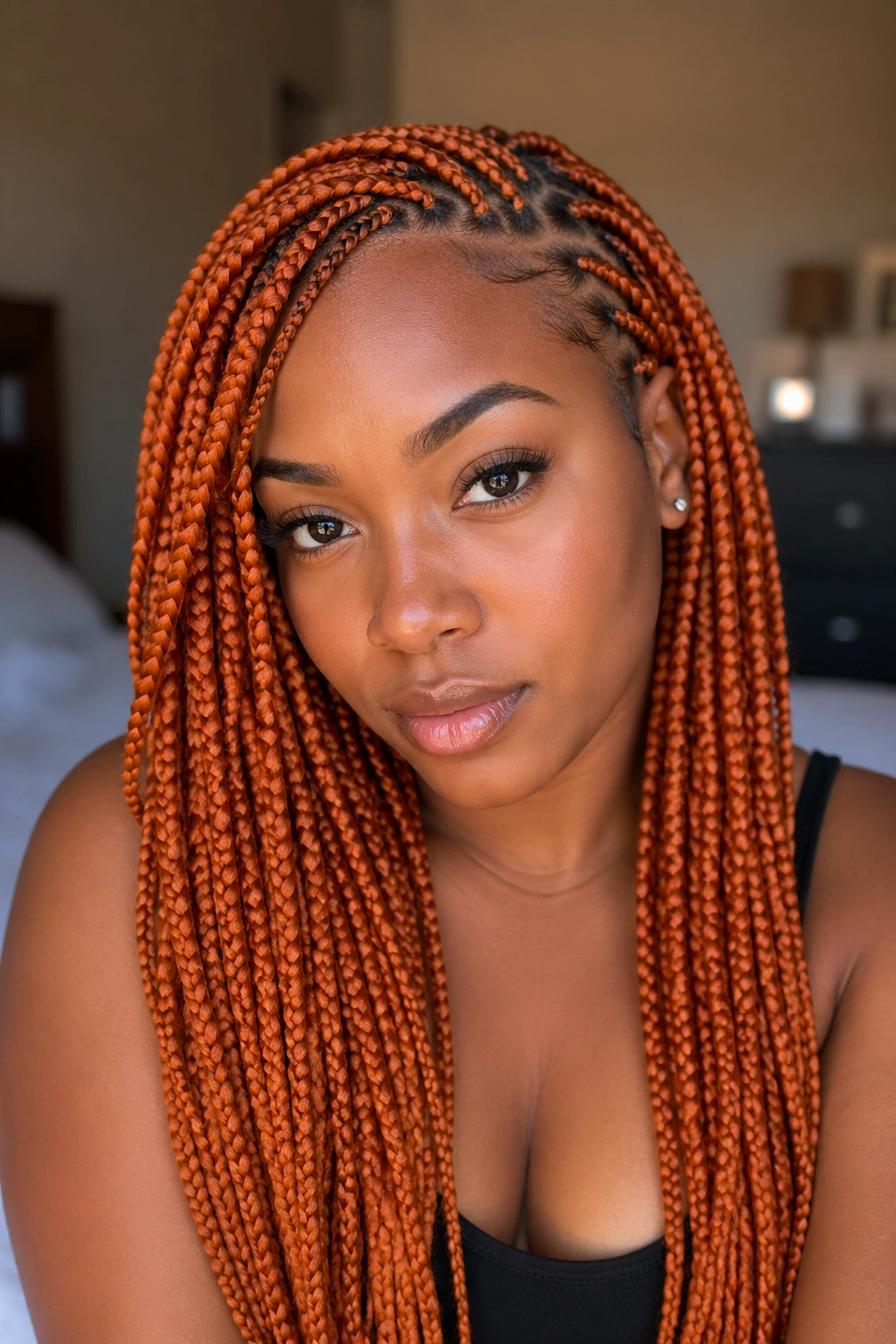
A side part changes the whole attitude of orange box braids. The color stays the same, but the asymmetry makes the style feel softer and a little more dramatic at the same time. Middle parts are clean. Side parts have personality.
The best part is how the braids frame the face. A deep side part lets some braids sweep across the forehead and temple, which can narrow the face visually and soften sharp features. If you like your hair to do some contouring, this is an easy route.
Who Should Try It
Women who feel a center part makes the face look too long usually like a side part better. The angle breaks up the symmetry and gives the style movement right from the root. It also hides a small amount of grow-out more gracefully than a perfect middle line.
If your orange shade is especially bright, a side part can make the look feel less severe. The slant adds softness, and the braids fall in a way that feels a little more relaxed. That matters if you want the color to feel wearable every day, not just on special occasions.
I also like side parts on medium and long braids because the flow looks natural when the hair moves. It’s a small change, but one that changes the mood fast.
14. Layered Orange Box Braids
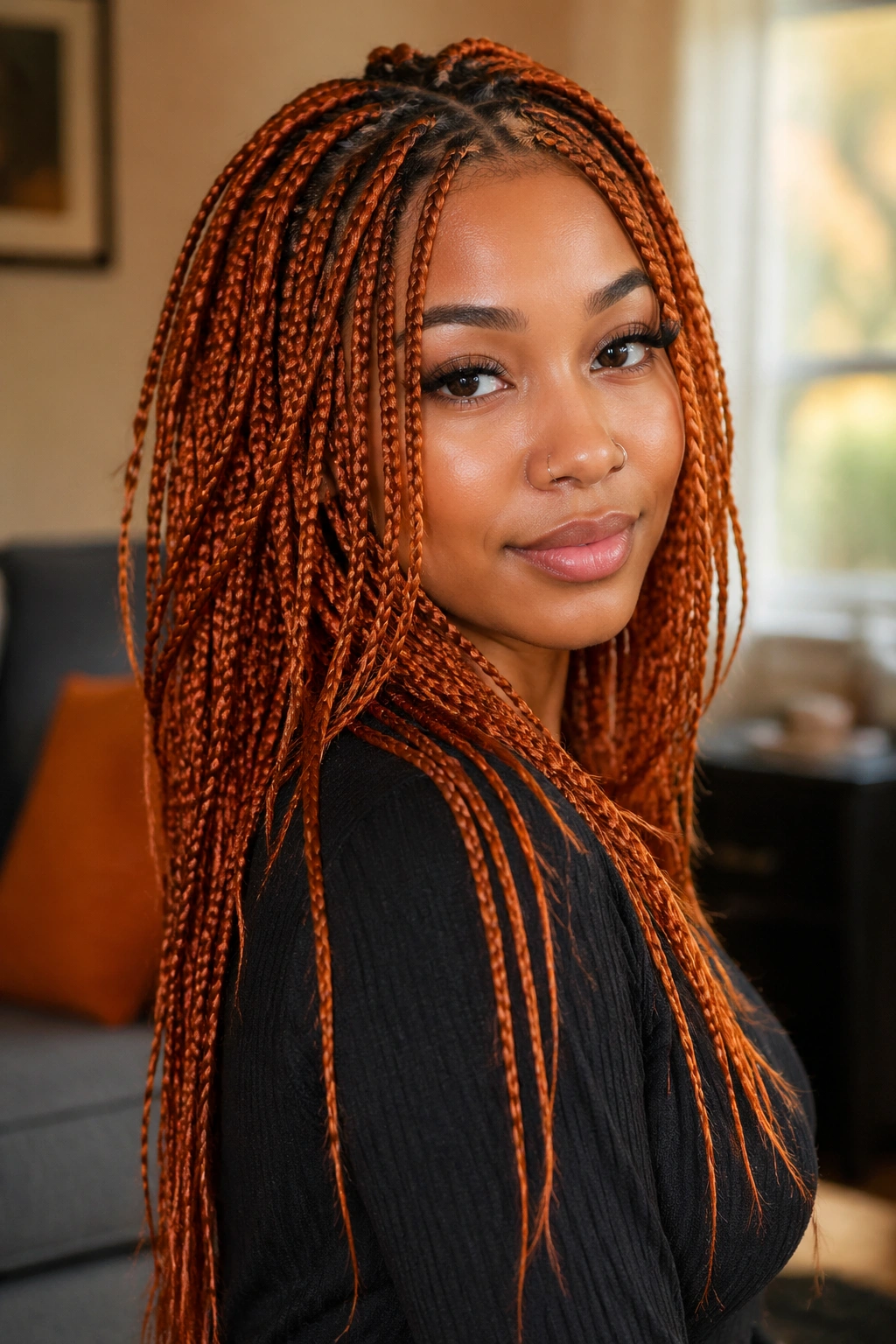
Layered orange box braids are a quiet trick that makes a big difference. Instead of one flat curtain of length, the braids hit at slightly different points, which gives the style shape and a better shape at the ends. The color gets to show off without the bottom line feeling heavy.
The layers also help break up a lot of orange. If every braid is the same length, the look can feel dense. With layers, the eye sees motion and separation, which makes the color easier to wear. It’s a useful option when you want bold hair but not a block of it.
What to Ask For at the Chair
You can ask for face-framing pieces that start a little shorter, then longer lengths toward the back. Some stylists do this with subtle variation instead of dramatic layers, and I think that usually looks better for braids. Too much contrast can make the style feel uneven.
Layers also make updos easier because the shorter pieces can sit around the face while the longer pieces stay in the ponytail or bun. That gives you two looks in one install without doing much at all.
This is one of those details people skip when they think about braids, and then wonder why their style feels flat. Shape matters. A lot.
15. Orange Box Braids in Space Buns
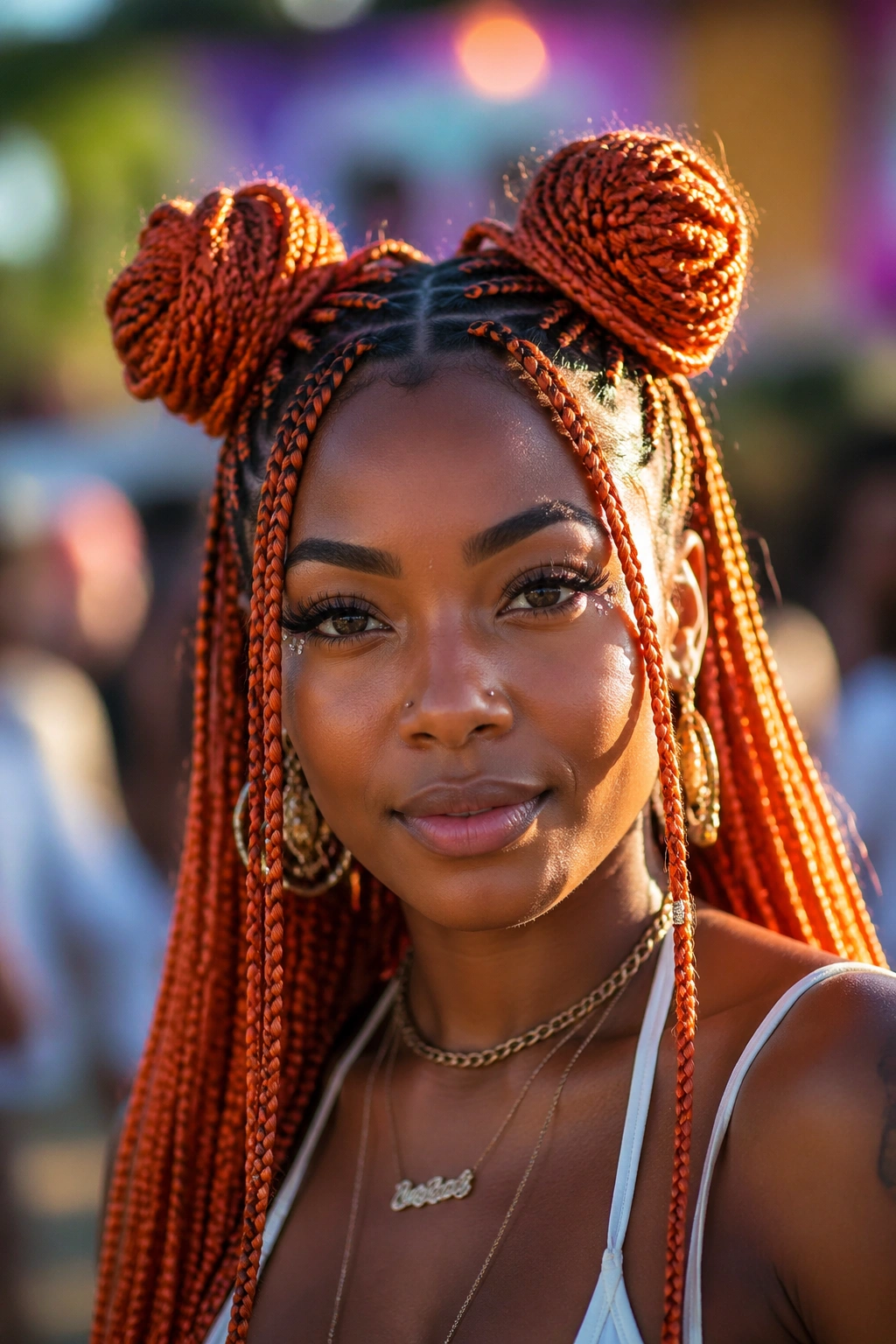
Space buns with orange box braids have a playful energy that works far better than people expect. Pulling the braids into two high buns puts the color right up top, where it reads loud and fun, and the remaining length can hang loose or be tucked in. It’s a full personality moment.
The style works because the orange braids already have enough visual weight. Two buns break that weight into sections, which makes the look feel lighter and more deliberate. If you like a style that gets compliments from strangers, this is one of the easier wins.
When the Style Makes Sense
This is a good choice for concerts, trips, or any day you want your hair off your neck but still want some drama. It also works when the braids are medium length and you need a way to make them feel different without redoing the entire install.
Make sure the buns sit evenly. One lopsided bun can ruin the balance fast. Also, don’t twist the braids so tightly into the buns that the roots ache after an hour. A soft wrap holds better than a strained one, and it looks less stiff too.
You can leave a few braids out in front if you want a gentler frame around the face. That keeps the style from feeling too hard-edged, which matters when the color is already doing plenty.
16. Auburn-Orange Blend Box Braids
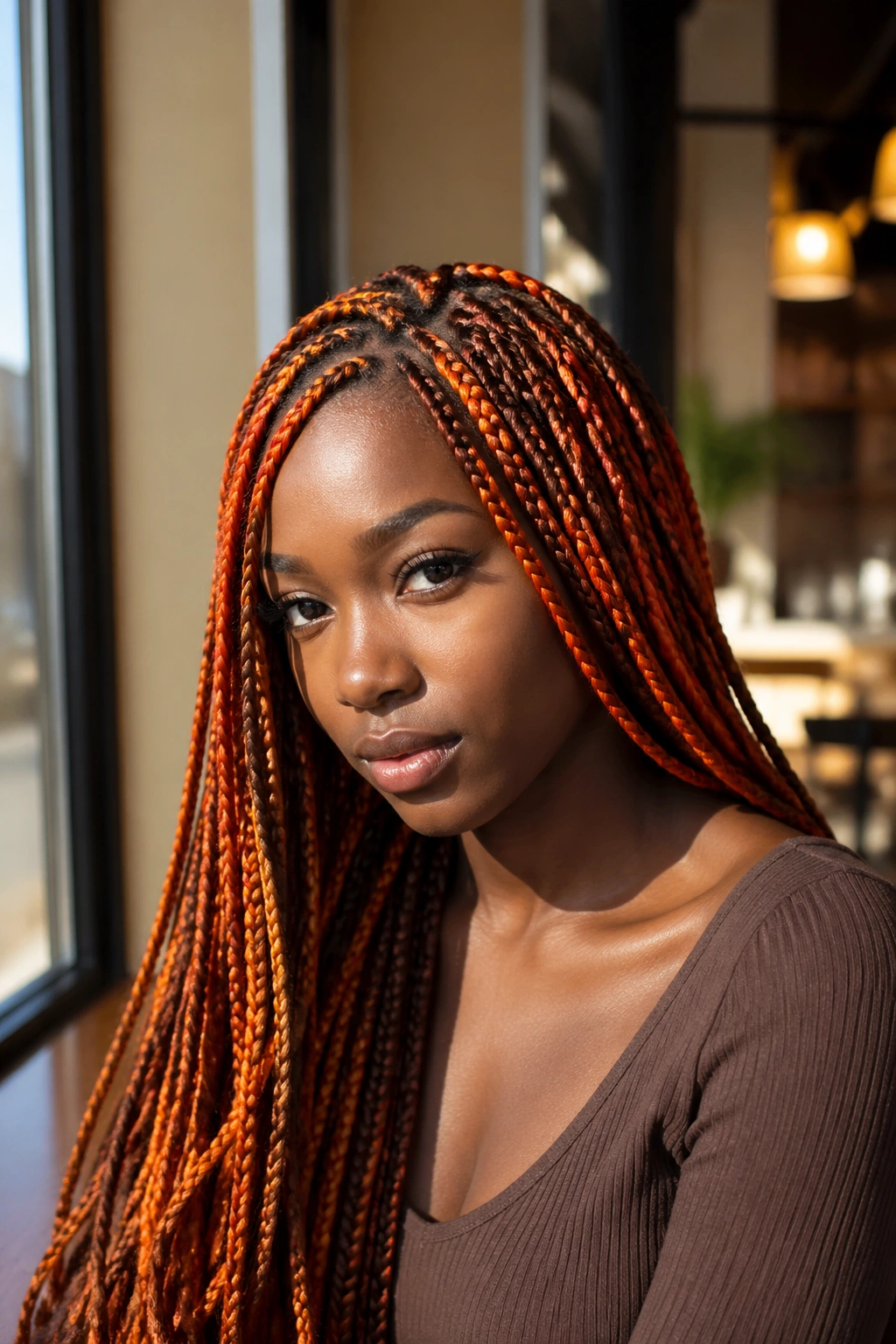
Auburn-orange blend box braids are for someone who likes warmth but does not want a single flat shade. The mix of reddish brown and orange creates a depth that looks especially good on deeper skin because the tones stack instead of fight. It feels mature without feeling quiet.
This is one of the most wearable versions of orange braids, and I mean that in the best way. The blend keeps the color rich, so you can wear it in a work setting, a dressy setting, or on a plain errand day without feeling like the hair is wearing you.
Why Blending Wins Here
A single bright orange can be striking, but it can also flatten if the finish is too glossy or the length is too long. Blended tones solve that by giving the braid more texture. Auburn adds shadow. Orange adds lift. The mix gives the eye something to follow.
If you want this style to stay soft, keep the parting clean and the accessories minimal. A few gold beads or cuffs are enough. The color blend is already doing enough on its own, which is nice because not every style needs extra decoration.
This is the version I’d point someone toward if they keep saying they want orange braids but worry the color will be too much. It usually isn’t too much when the tones are mixed well.
17. Neon Orange Statement Braids
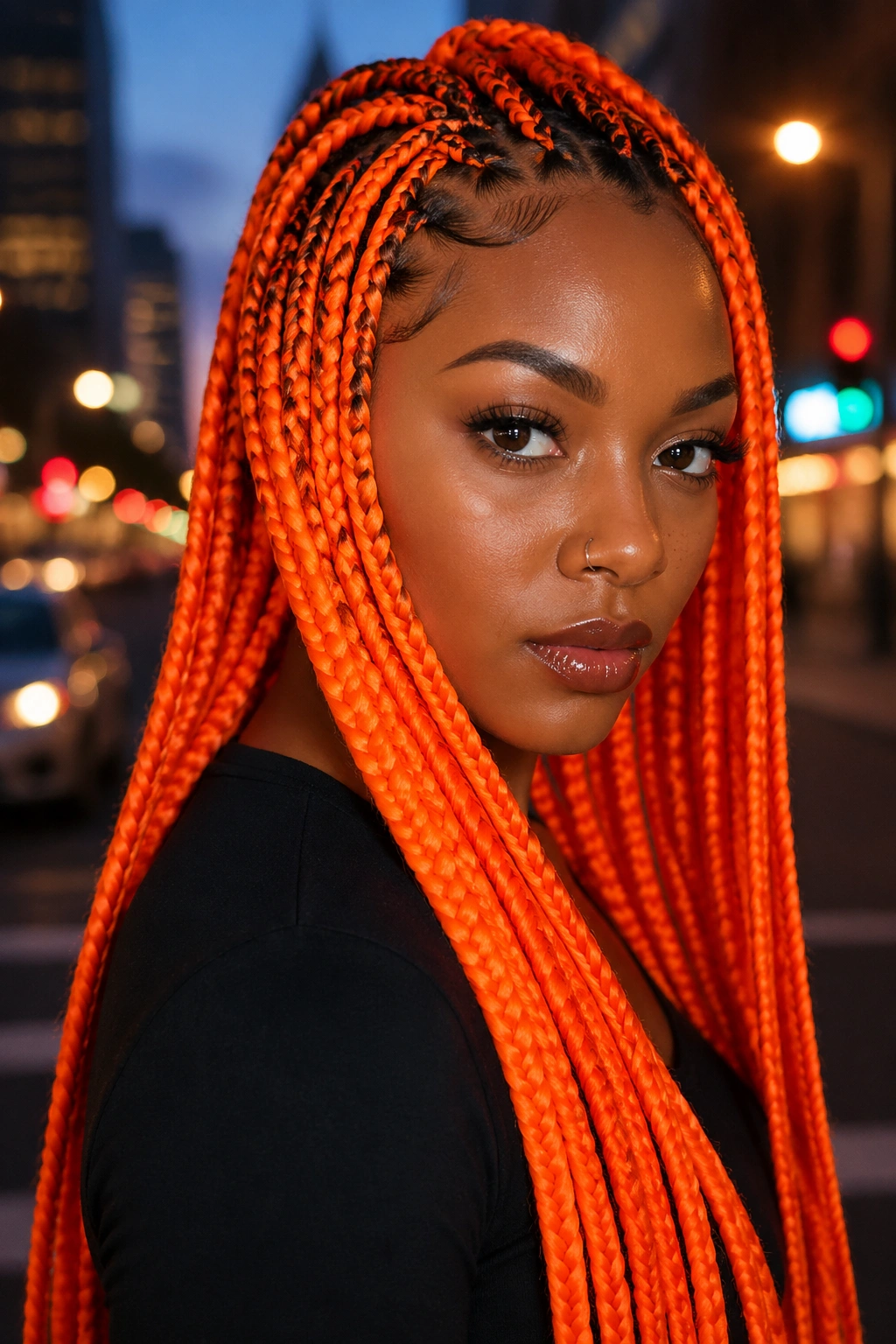
Neon orange box braids are not for the shy. They are for the person who wants the hair to be the outfit, or at least to act like it. The shade has a bright, electric edge that turns every braid into a visual cue. People notice. Immediately.
The key is confidence, but not the fake kind people talk about in a cheesy way. Real confidence here means knowing the hair is the star and dressing around it with simple clothes, clean lines, or one strong accessory. If the outfit is fighting the braids, the whole thing gets noisy.
How to Wear the Brightest Shade Well
- Keep the braid size medium or large so the color reads cleanly
- Choose simple makeup or one bold feature, not five
- Let the braids sit against solid colors like black, white, or denim
- Avoid piling on too many accessories; the color already leads
Neon works especially well if you like contrast. On dark skin, the color can look almost luminous against the face. That said, it needs a neat install. Sloppy parting or uneven ends are easy to see because the shade is so bright.
I’d save this one for when you want the hair to do the talking. It’s less “blend in” and more “yes, I meant this.”
18. Peach Fade Box Braids
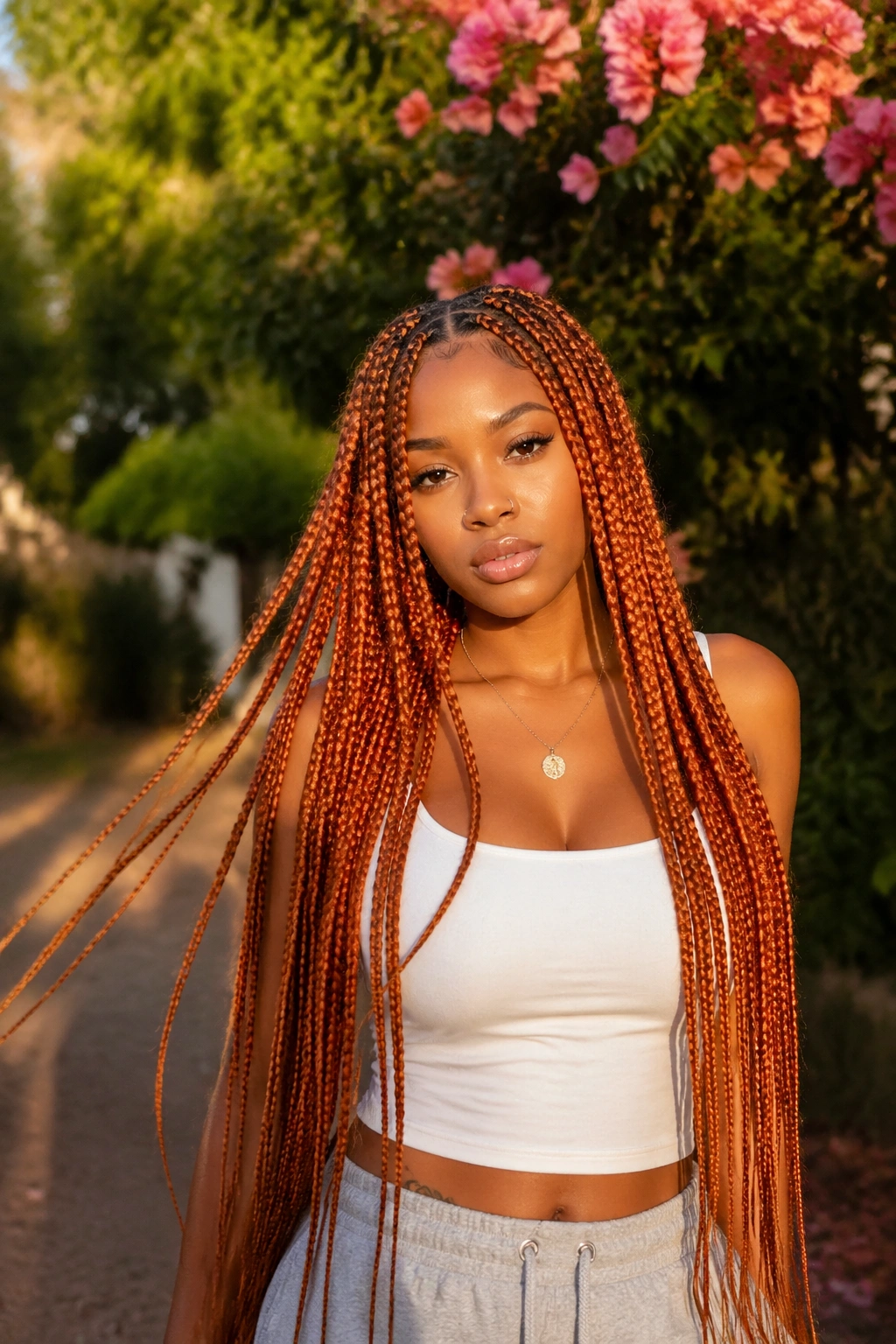
Peach fade box braids are the softer exit point after all that brightness. The shade sits between orange and blush, which makes the style feel lighter and gentler without losing the warmth that makes orange braids special in the first place. It is a beautiful way to keep the color family but cool the volume down a notch.
This shade works especially well on long braids because the lighter tone gives the length a floating look instead of a heavy one. If full orange sometimes feels too loud for your taste, peach fade gives you a calmer version that still has personality.
There’s something nice about ending a braid color story on a soft note. Peach still counts as orange in spirit, but it has enough softness to work with simple clothes, bare makeup, and everyday wear. If you have been circling around orange braids for a while, this is often the easiest place to start.
And if you want my honest take, this is the style that tends to age the least dramatically over the wear period. The color stays pretty as it settles, which is more than I can say for some of the louder shades. Sometimes soft wins.