

Medium-length knotless box braids with curly ends hit a sweet spot that longer sets often miss. They sit where you can actually live in them—at the collarbone, upper chest, maybe just brushing the shoulders—without constantly getting caught in a coat zipper or rubbing your neck raw. And the curly ends matter more than people give them credit for. Straight braids can look sharp, sure, but a soft spiral at the bottom changes the whole mood.
Knotless box braids are lighter at the root because the extension hair gets fed in gradually instead of tied off with a thick knot. That gives the scalp a flatter start and a cleaner line, which is part of why this style feels easier to wear for weeks at a time. Add curls at the ends, and the set suddenly looks less stiff, less blocky, and a lot more expensive than the effort sounds.
The parting pattern, braid size, and curl shape do most of the talking here. A middle part says one thing. A side part says something else entirely. Triangle parts, boho pieces, beads, color, blunt ends—same basic braid, different personality. That’s the fun of this style, really. The variations below show how much range you can get from one shape.
1. Classic Middle-Part Braids With Soft Curly Ends
If you want the safest place to start, this is it. A clean middle part gives medium-length knotless box braids with curly ends a balanced frame, and that symmetry lets the curls feel intentional instead of decorative.
Why It Works
The middle part pulls the eye straight down the face, which makes the braids look neat even when the ends are loose and springy. That matters at medium length, because the curls sit right where people notice movement—around the jawline, collarbone, and shoulders.
It also photographs nicely from almost any angle. The front pieces frame the face, the back pieces keep the set grounded, and the curls soften the line so the whole look doesn’t feel too rigid. If you like your hair to look tidy without feeling severe, this is a strong place to live.
- Best for oval, heart, and round faces
- Ask for partings around ½ inch to 1 inch if you want a clean grid
- Keep the curly ends about 2 to 4 inches long so the braids still read as medium-length
- Use mousse on the roots to keep the center part crisp
Tip: If you wear glasses, leave the front braids a touch looser near the temples so they don’t fight the frames all day.
2. Deep Side Part Braids With Cascading Curls
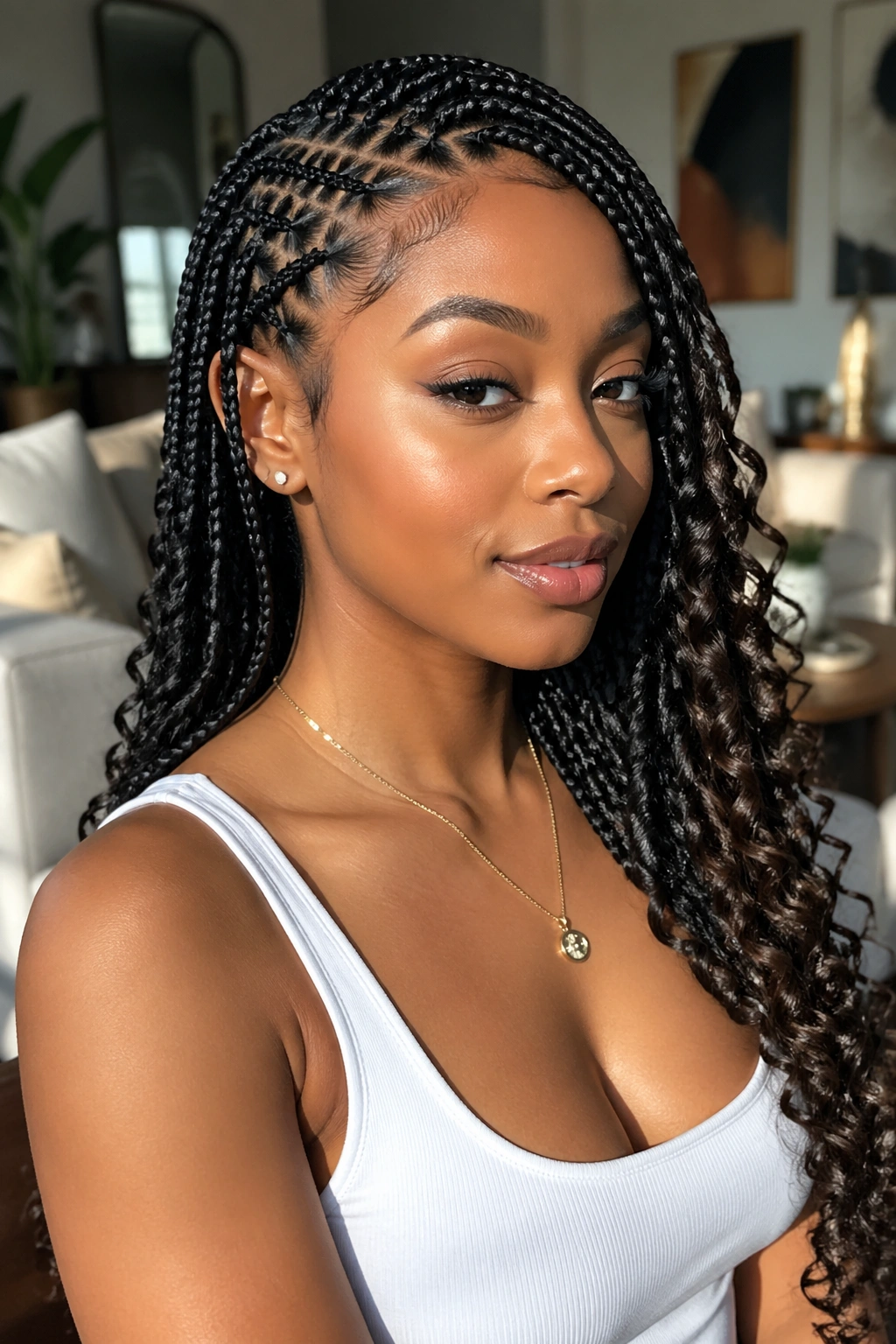
A deep side part changes the whole attitude of the style. It gives the braids a little sweep, a little softness, and a lot more movement than a center part ever will.
The part pushes one side forward and lets the curls fall across the cheekbone instead of just hanging straight down. That small shift makes medium-length braids feel richer and more styled, even when the individual braids are simple. It’s a good pick if you want your hair to look a little less symmetrical and a little more lived-in.
This version also plays well with strong earrings, soft makeup, or a crisp shirt collar. The side part creates space on one side of the face, which helps the curly ends frame rather than crowd your features. If your hair tends to puff around the edges after a few days, a side part can hide that better than a center part.
I like this style on people who wear a lot of black, white, denim, or tailored clothes. It has enough shape to feel dressed up, but it won’t look fussy when you throw on a T-shirt. Honestly, that’s the appeal.
3. Triangle Parts That Make the Scalp Pattern Pop
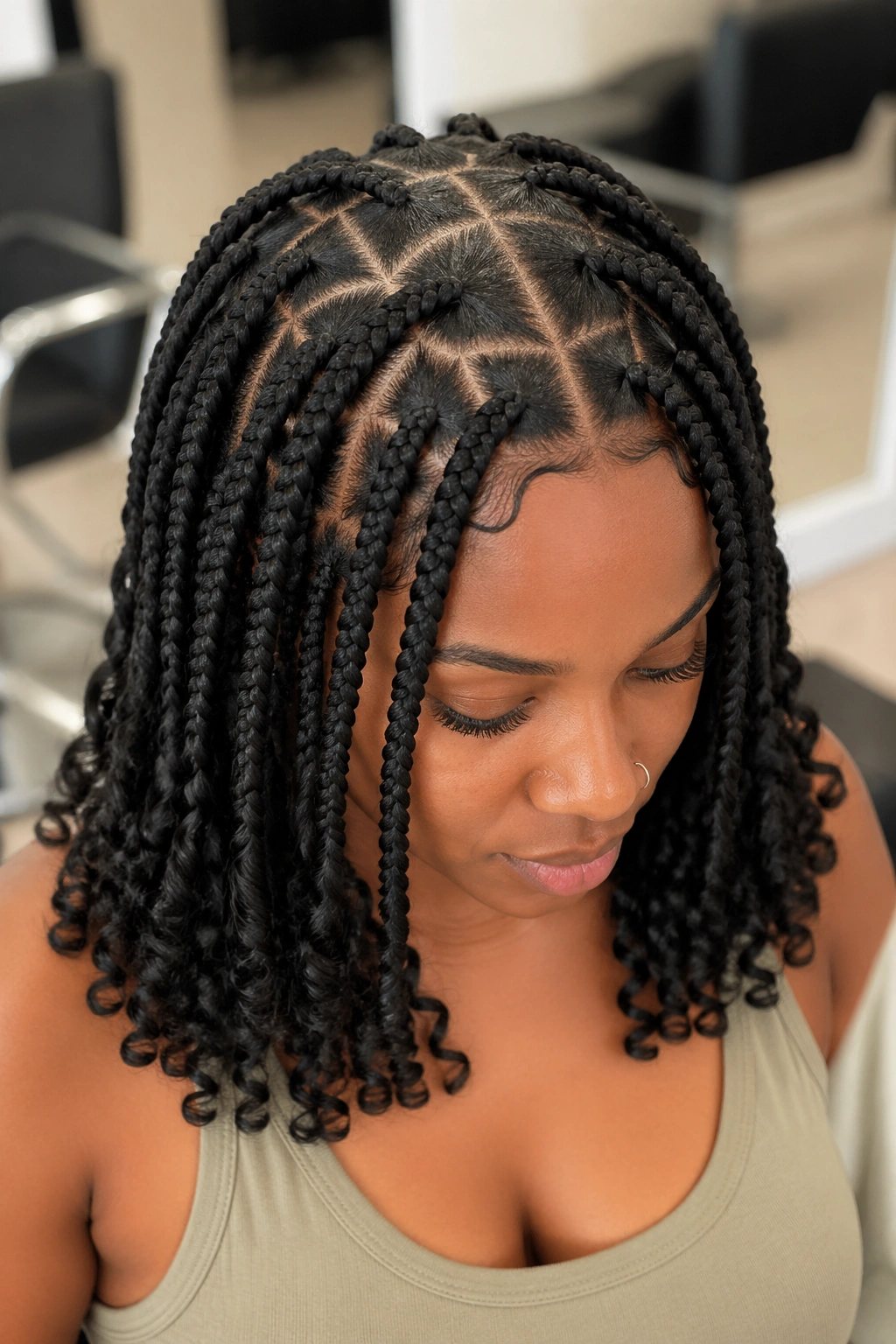
Why do triangle parts get so much attention? Because they change the braid set before the braids even start moving.
Triangle parting gives medium-length knotless braids a sharper, more graphic look. The scalp pattern shows up more clearly on a medium set than it does on long braids, where the weight can hide the details. With curly ends at the bottom, the contrast gets even better: clean geometry on top, soft texture underneath.
How To Ask For It
If you want the parting to stay readable, keep the triangles clean and the rows evenly spaced. A stylist who understands neat sectioning can make this look crisp without making it stiff. The point is contrast, not sharpness for the sake of sharpness.
- Ask for small, even triangles rather than oversized shapes
- Keep the first few rows around the hairline neat, since that’s where the pattern shows most
- Let the curls stay loose and springy so the ends offset the harder parting
- Avoid too much accessory clutter; the parting already carries the look
Triangle parts feel a little bolder than square ones, but not in a loud way. They just look thought through. And that’s what makes them worth the extra time in the chair.
4. Boho Knotless Braids With Curly Pieces Mixed In
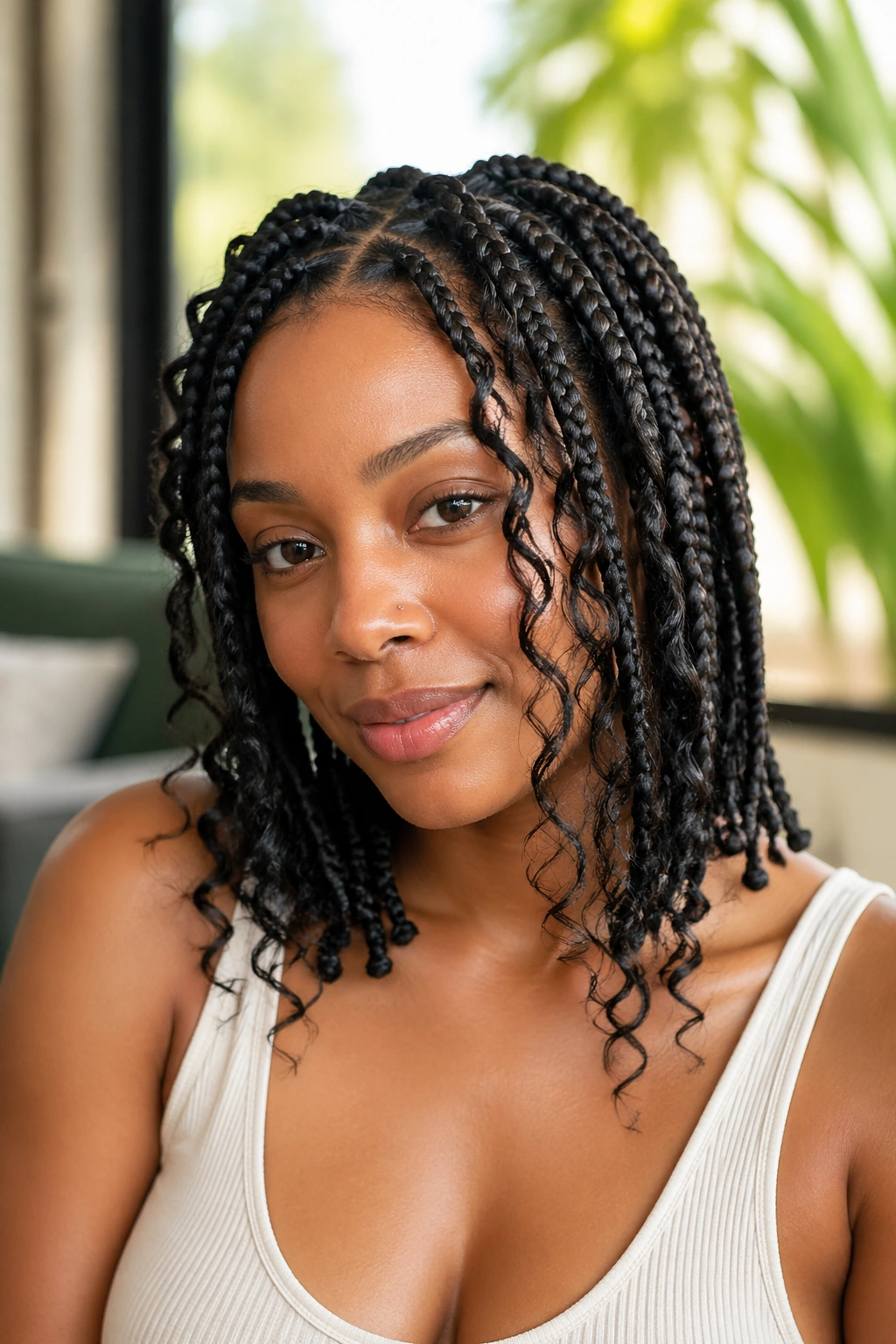
If you like hair that moves, this is the one. Boho knotless braids with curly ends already have softness, but adding a few loose curly pieces through the body of the braids makes the style feel even more relaxed and textured.
The trick is restraint. You do not need curls everywhere. A few scattered pieces near the front, around the crown, and at the ends create that easy, slightly undone look without tipping into messy. Too many loose strands and the style starts looking busy; too few and it loses the point.
- Keep the loose curls spaced out every 4 to 6 braids
- Mix in two curl sizes if you want a more natural finish
- Leave the front a little lighter so the face stays open
- Use a light mousse, not a heavy cream, or the curls can droop
I like this version for anyone who wants the braids to feel less structured and more touchable. It has that “I threw my hair up and somehow still look polished” energy, except with real craft behind it. The curly ends help the whole set blend, so the loose pieces don’t look random. They look placed.
5. Shoulder-Skimming Blunt Braids With Curly Ends
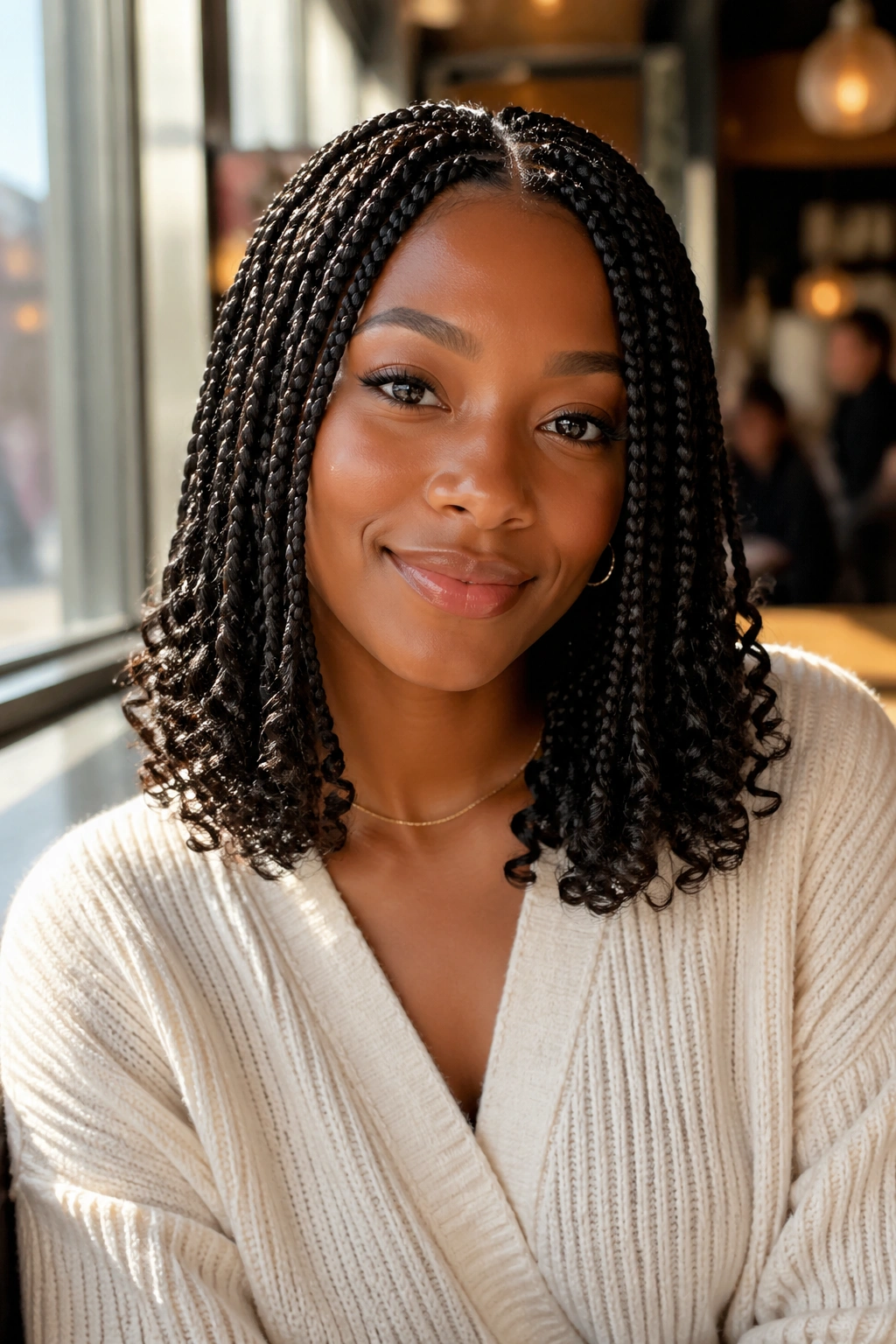
Shorter medium-length braids are underrated. When the set stops right around the shoulders, the curls at the bottom become the feature instead of the afterthought, and the whole style feels cleaner.
A blunt finish gives this version its shape. Every braid ends at roughly the same point before the curls begin, which makes the silhouette look tidy and deliberate. It’s a good option if you dislike hair brushing your back all day or if you want a style that sits neatly under jackets and knit tops.
The blunt line also makes the curls stand out more. Because the braids stop together, the loose ends create one soft edge instead of a staggered mess. That little change matters. It keeps the look crisp from the front and fuller from behind.
This is one of those styles that quietly looks better the longer you wear it, as long as the curls are refreshed with a bit of mousse or water. The braids hold their shape, the ends soften just enough, and the whole thing settles into a clean, easy rhythm.
6. Layered Braids That Frame the Cheekbones
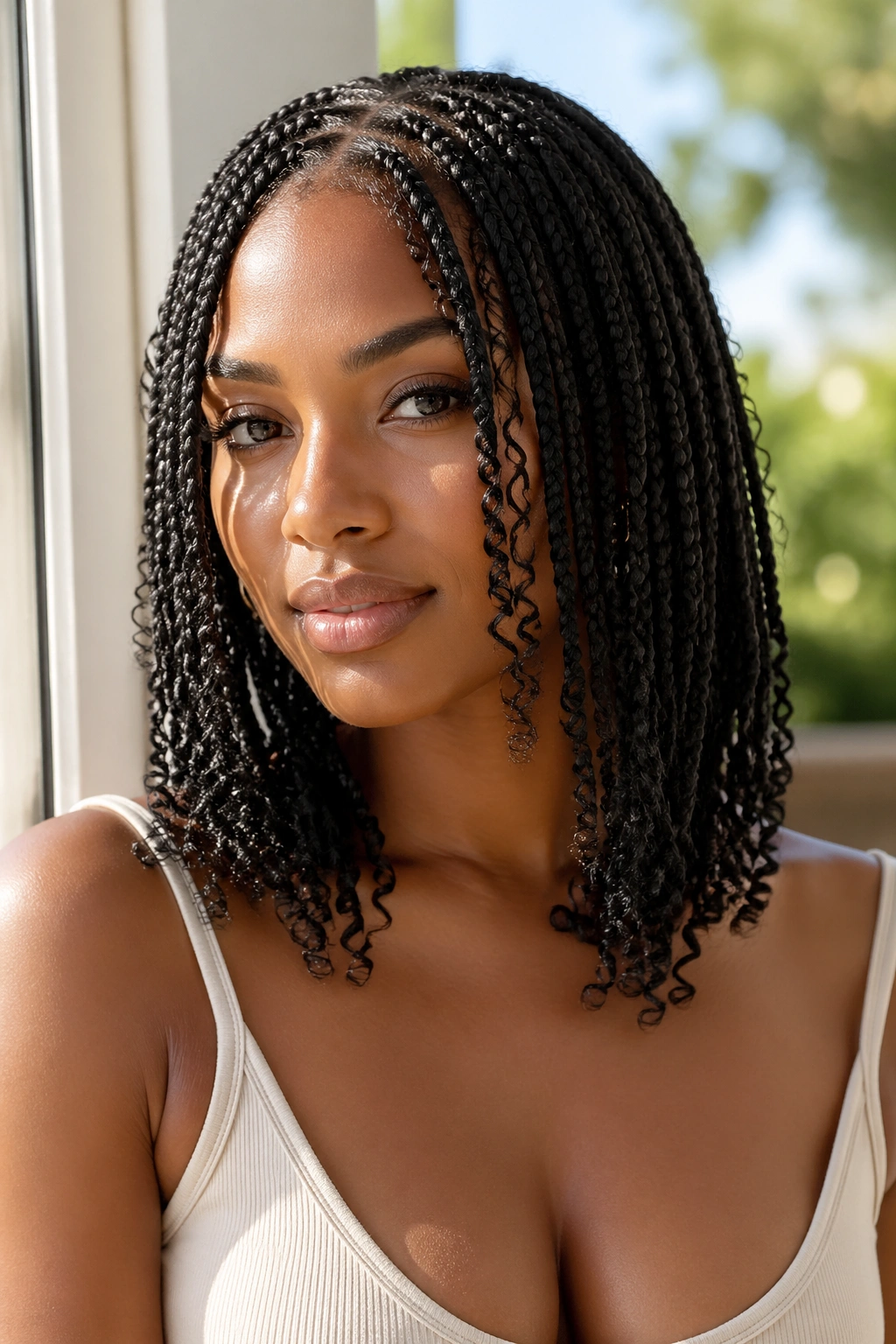
Unlike the blunt cut above, this version plays with length on purpose. A few braids around the face sit slightly shorter—sometimes just an inch or two—while the rest keep the medium-length fall and the curly ends finish the silhouette.
That tiny difference changes the way the set moves. The front pieces open the face, the longer back pieces add weight, and the curls keep everything from feeling too straight. It’s a smart pick if you like styles that do something interesting without asking for a lot of extra styling every morning.
What Makes It Different
Layering works best when the variation stays subtle. You want people to notice the shape, not count the braids. If the front pieces are too short, the style starts looking choppy. If the difference is too small, nobody sees it at all.
A good layered set gives you:
- A few face-framing braids that land near the jawline or chin
- A longer back section that still reads as medium-length
- Curly ends that stay consistent, so the shape doesn’t get scattered
- Easy tuck-behind-the-ear movement, which I love when earrings are involved
This version has a lot of everyday usefulness. It looks styled even when you haven’t done much to it, and it holds up well in real life because the face-framing pieces make it feel lighter around the front.
7. Jumbo-Medium Braids With Big, Soft Ends
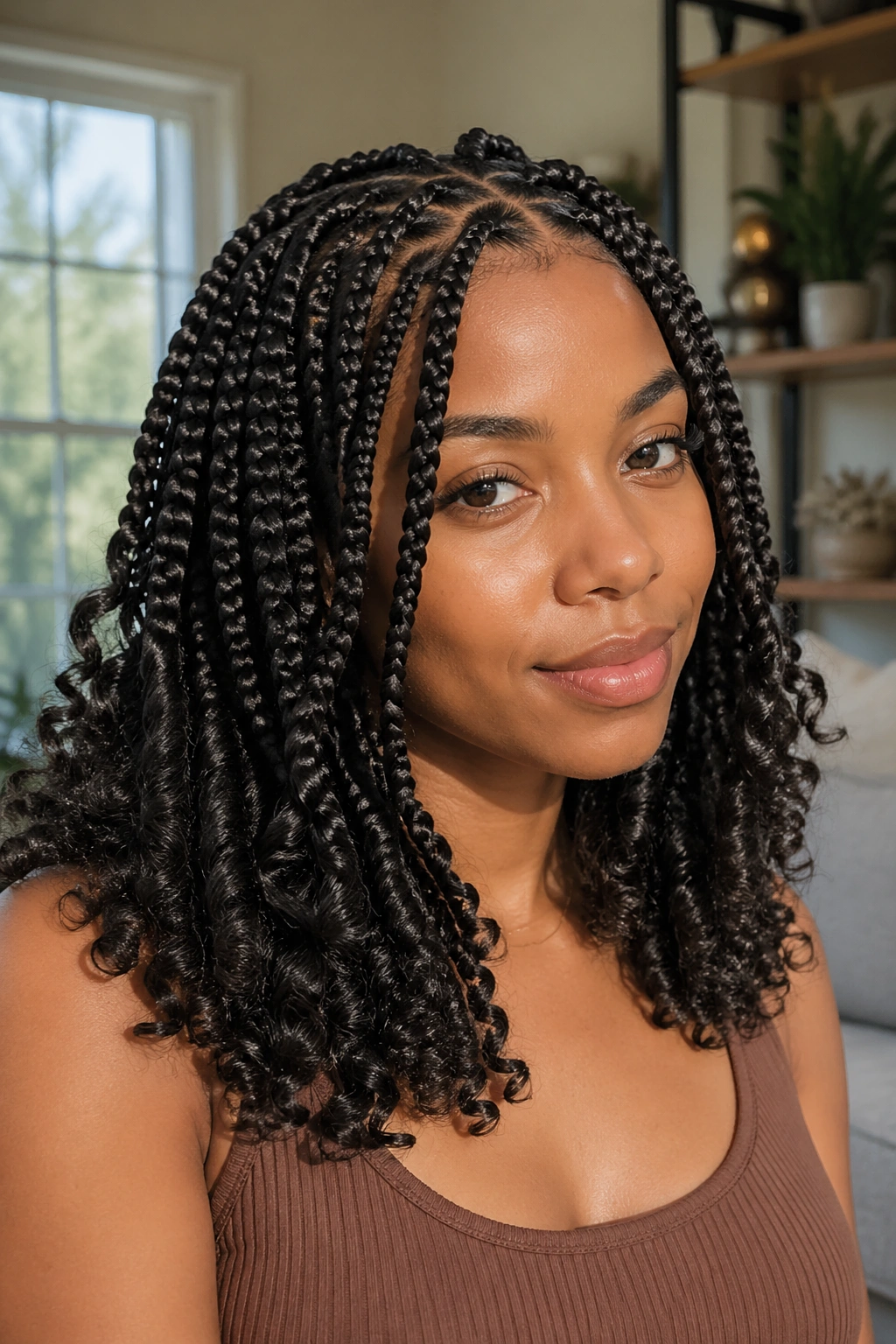
Bigger braids can look cleaner than tiny ones at this length. That surprises people, but once you see a tidy medium set with chunky knotless braids and curly ends, it makes sense.
There’s less visual noise. Fewer partings mean the scalp pattern stays simple, and the braids themselves have enough weight to hang well around the collarbone instead of fuzzing out in odd directions. The curly ends then do the softening, which keeps the style from feeling boxy.
The caveat is simple: jumbos punish sloppy parting. If the sections are uneven, the size mismatch shows fast. A jumbo-medium set works best when the rows are crisp and the front line is especially clean, because every little mistake gets magnified when the braid size is larger.
I’d choose this version if you want a set that installs a little faster and still looks full. It’s also easier to gather into a half-up style than you might expect, because the braid size gives the hair more structure. There’s a reason so many people keep coming back to chunkier braids once they try them. They’re practical. And they look good doing it.
8. Small, Dense Braids For A Fuller Curtain
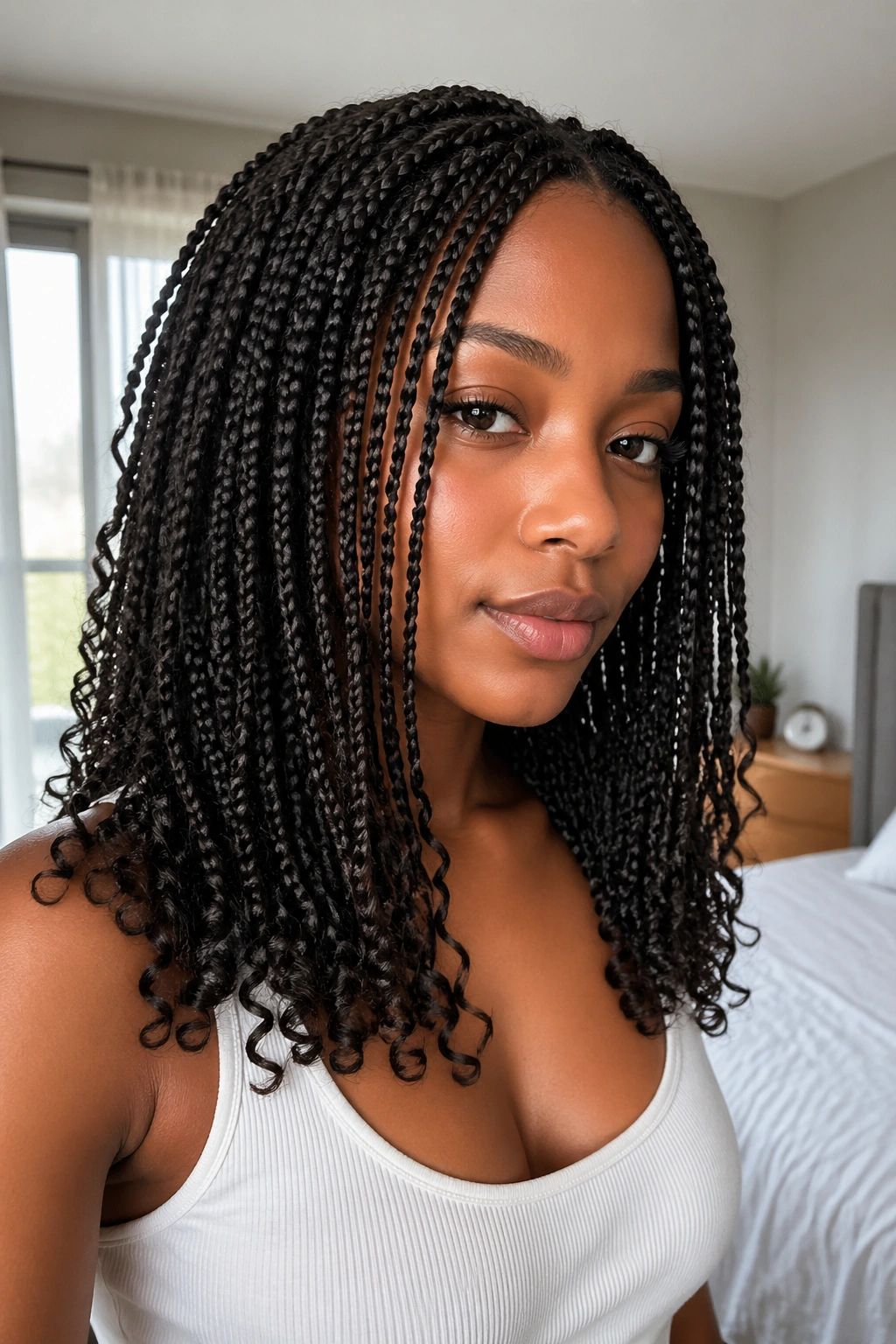
Tiny braids change the whole feel of medium-length knotless box braids with curly ends. Instead of reading as chunky or casual, the hair falls in a fuller curtain, almost like a textured frame around the face and shoulders.
The effect is more movement, more density, and a little more drama when you turn your head. Each braid is lighter on its own, but together they create a thicker surface, which makes the curly ends look more abundant. If you like a lot of hair without going long, this is the answer.
It does take longer in the chair. There’s no getting around that. But the payoff is a set that lays nicely, stays neat longer if the parting is tight, and gives you more ways to style the braids into buns, half-ups, and low ponytails.
I’d also say this version ages well. As the braids soften, the style gets less sharp in a good way, while the curls at the ends keep the bottom half from collapsing into nothing. That balance is harder to find than it sounds.
9. Half-Up Half-Down With Curly Ends Showing
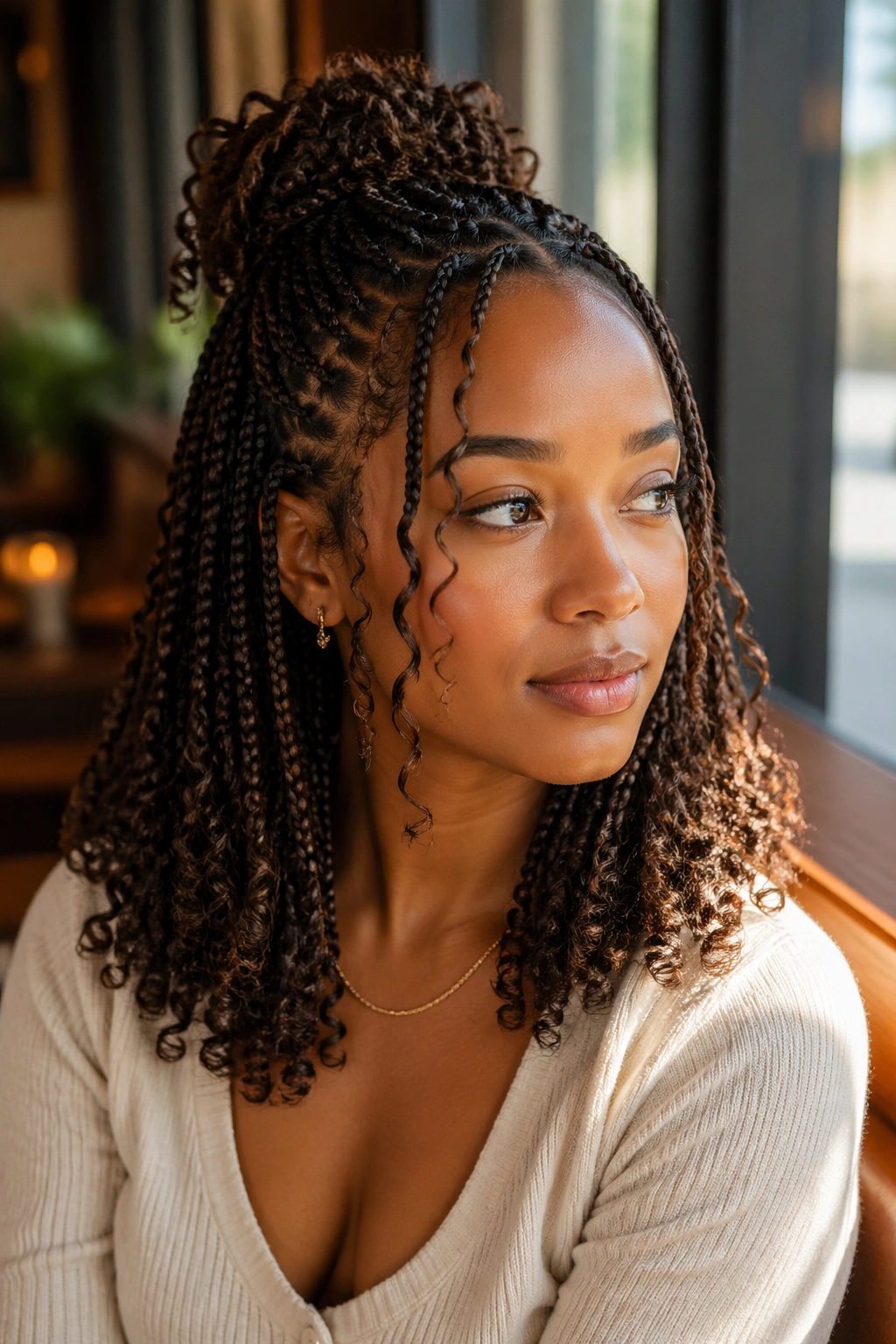
Need a style that keeps hair off your face but still lets the curls do their thing? This is the easy answer.
A half-up half-down set works especially well with medium-length knotless braids because the braid length isn’t so heavy that the top knot pulls hard, and it isn’t so short that the style disappears when you lift it. The curly ends spill from the bottom half, and a few loose spirals around the crown soften the top section.
How To Wear It Without Tension
The best version starts with a gentle lift from temple to temple, not just the top row. That gives the bun or knot more shape and keeps the front from looking scraped back. Use a satin scrunchie if you can; it grips without cutting into the braids.
- Gather the top half loosely, not tightly
- Leave a few front braids out if you want a softer frame
- Let the curly ends hang freely instead of tucking them in
- Refresh the ends with a little mousse so they don’t frizz into a puff
This style works for errands, dinners, and anything that needs your hair to look deliberate without being overworked. It has shape, but it still feels easy.
10. Braids With Beads And Gold Cuffs
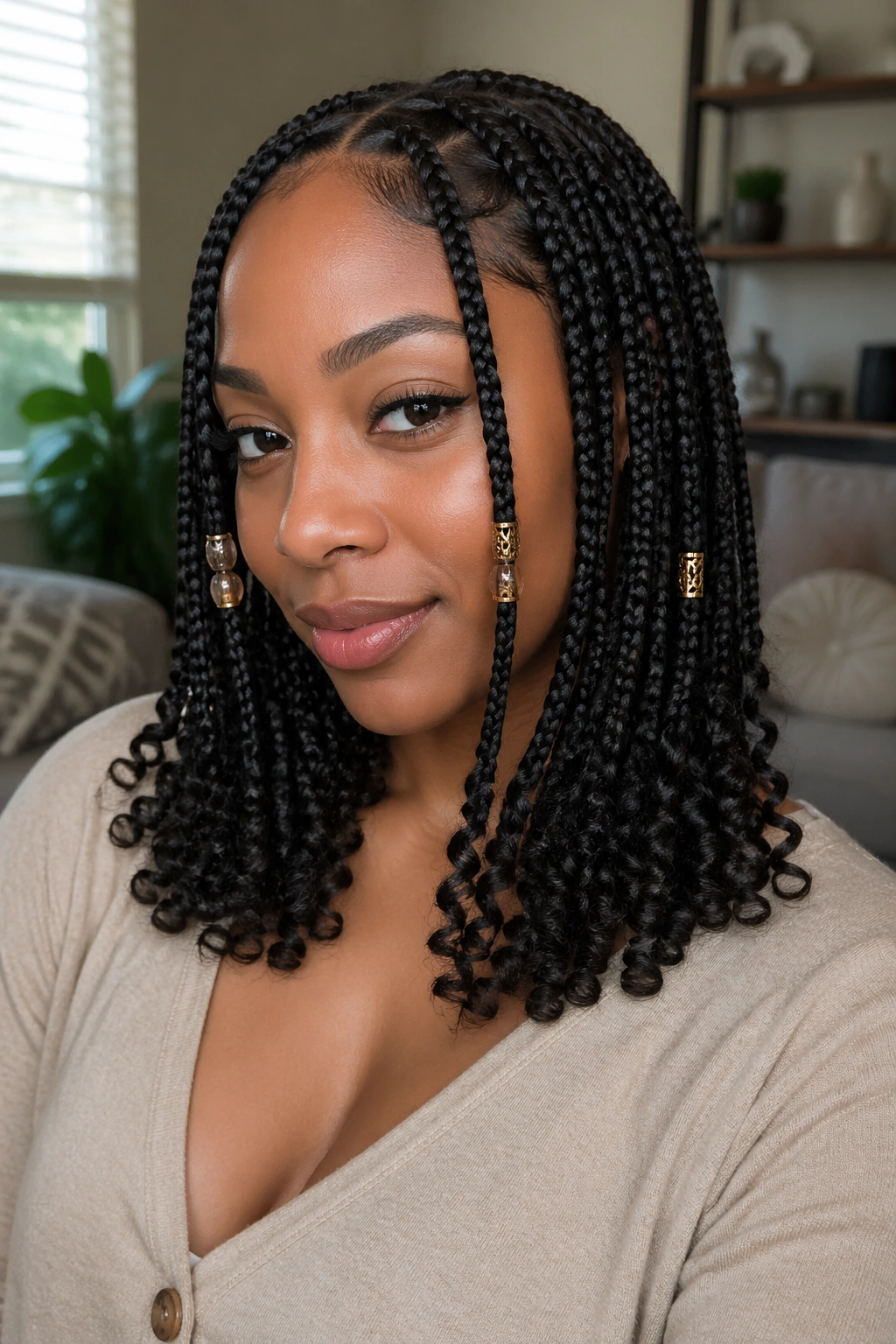
A few accessories can change the whole look, but the key word is few. Medium-length knotless braids with curly ends already bring texture, so beads and cuffs should sit on top of that, not fight it.
I like this version best when the accessories are placed near the face or at the lower third of the braid set. That keeps the top neat and lets the curls finish the line. Heavy beads all over the head can drag the braids down and make the style feel fussy, especially if the braids are already medium-thick.
- Use lightweight beads so the curls still bounce
- Place cuffs on just a few braids near the front
- Keep accessories 2 to 3 inches above the curly ends so they don’t snag
- Match the metal tone to your earrings or rings if you want the look to feel coordinated
There’s also a practical side here. Accessories give the braids a little texture in spots where the hair is otherwise smooth, which makes the set look more intentional on day two, day five, day nine. A little shine goes a long way. Too much turns into clutter.
11. Two-Tone Color That Shows Off The Curls
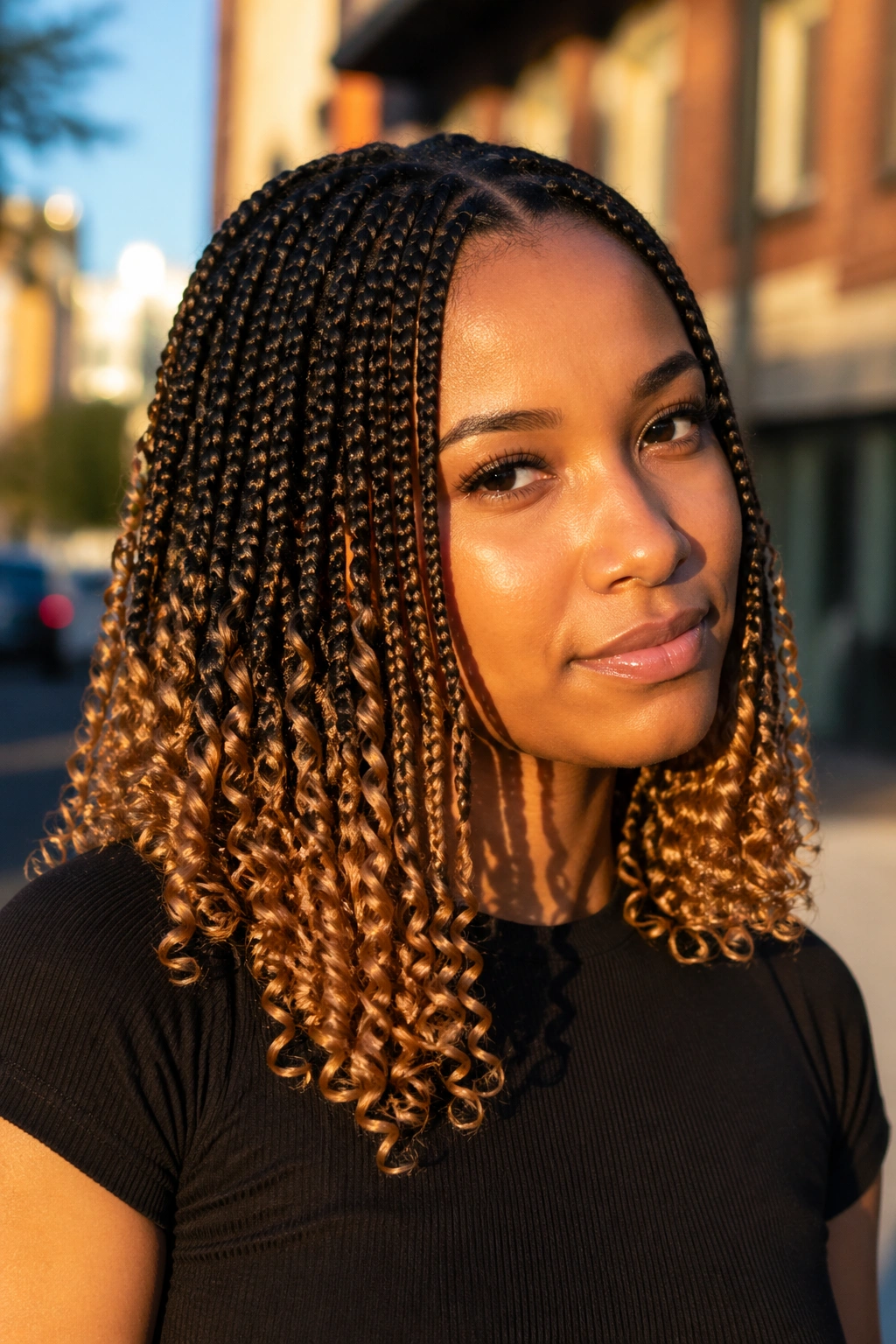
Color changes the braid set more than most people expect. A dark root fading into caramel, honey blonde, auburn, or burgundy makes the curly ends look even richer because the spiral shape catches the shift from shade to shade.
The nicest thing about medium length is that you can play with color without committing to a wall of it. You get enough surface area to show the gradient, but not so much length that the color starts to dominate the whole look. A darker base with lighter ends is especially clean because the braids still read as polished, while the curls at the bottom get all the softness.
A good ombré does not need to shout. It just needs to move. A smooth color fade along the braid and a looser curl at the end create that effect naturally, without needing beads, clips, or anything else.
If you’re trying color for the first time, this is a smart route. Medium-length braids give you enough visual impact to enjoy it, but if you miss the comfort of darker hair, you aren’t stuck waiting forever for a long set to come down.
12. Low Ponytail-Ready Braids For Tidy Days
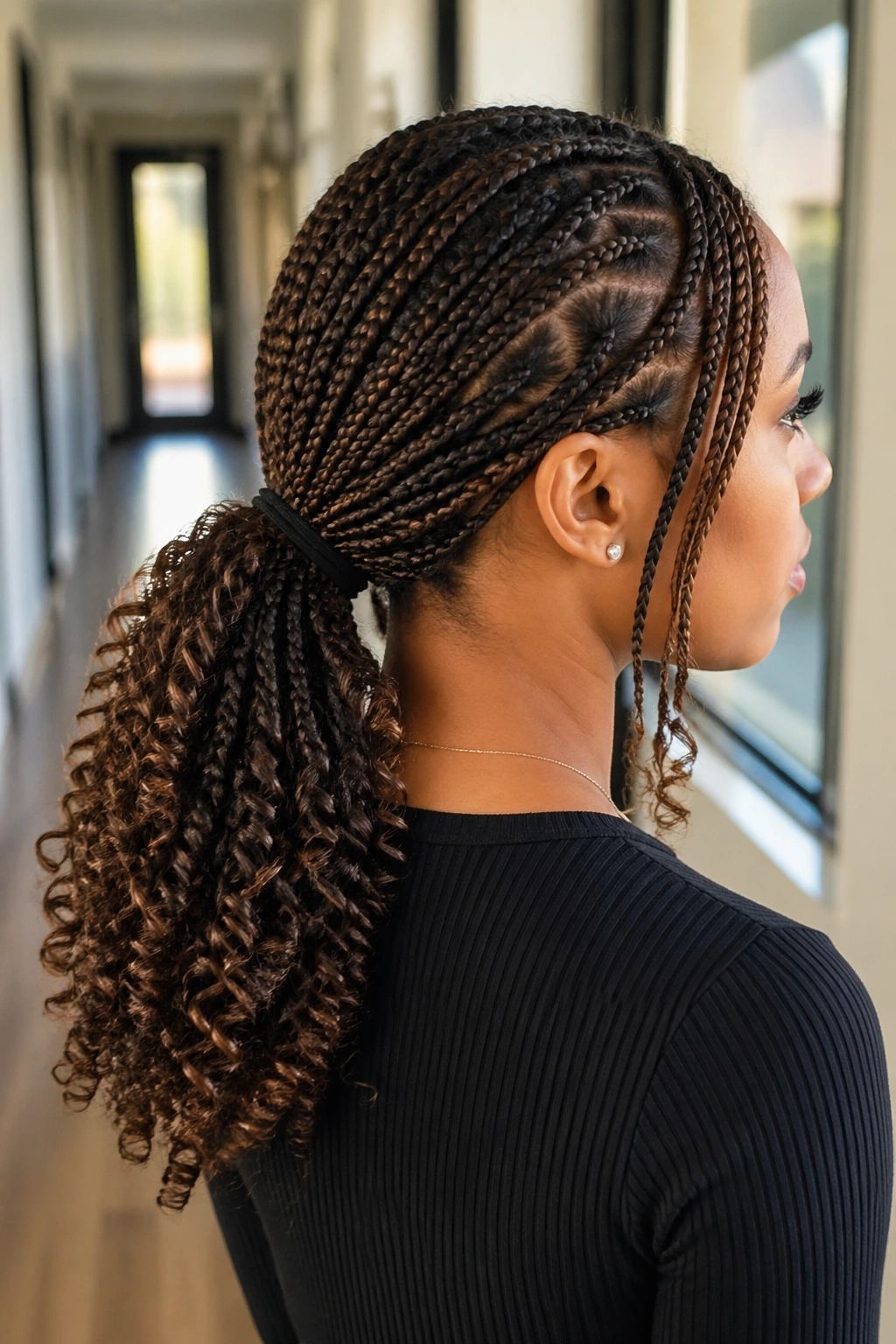
Unlike styles built to hang loose all the time, this one is meant to be swept back. The braids sit nicely around the nape, the length stays manageable, and the curly ends keep the ponytail from looking flat.
That makes it useful in real life. You can wear it down and still pull it into a low ponytail for work, a long drive, or any day when you want your hair off your neck without losing the style. A medium-length set is long enough to gather, but not so long that the ponytail becomes a heavy rope.
What Makes It Hold
The best low-ponytail versions use evenly sized braids through the back so the bundle sits smoothly. If the nape area is too bulky, the ponytail sticks out at an odd angle. If the braids are too thin, the style can feel stringy instead of full.
- Keep the braids near the nape slightly slimmer than the crown pieces
- Leave enough length for the curls to fall below the tie
- Use a satin scrunchie or soft elastic
- Wrap the ponytail low and loose, never tight
This is one of those sets that quietly earns its keep. It looks good down. It works up. That’s enough for a lot of people.
13. Curved Or Zigzag Parts For A Sharper Hairline
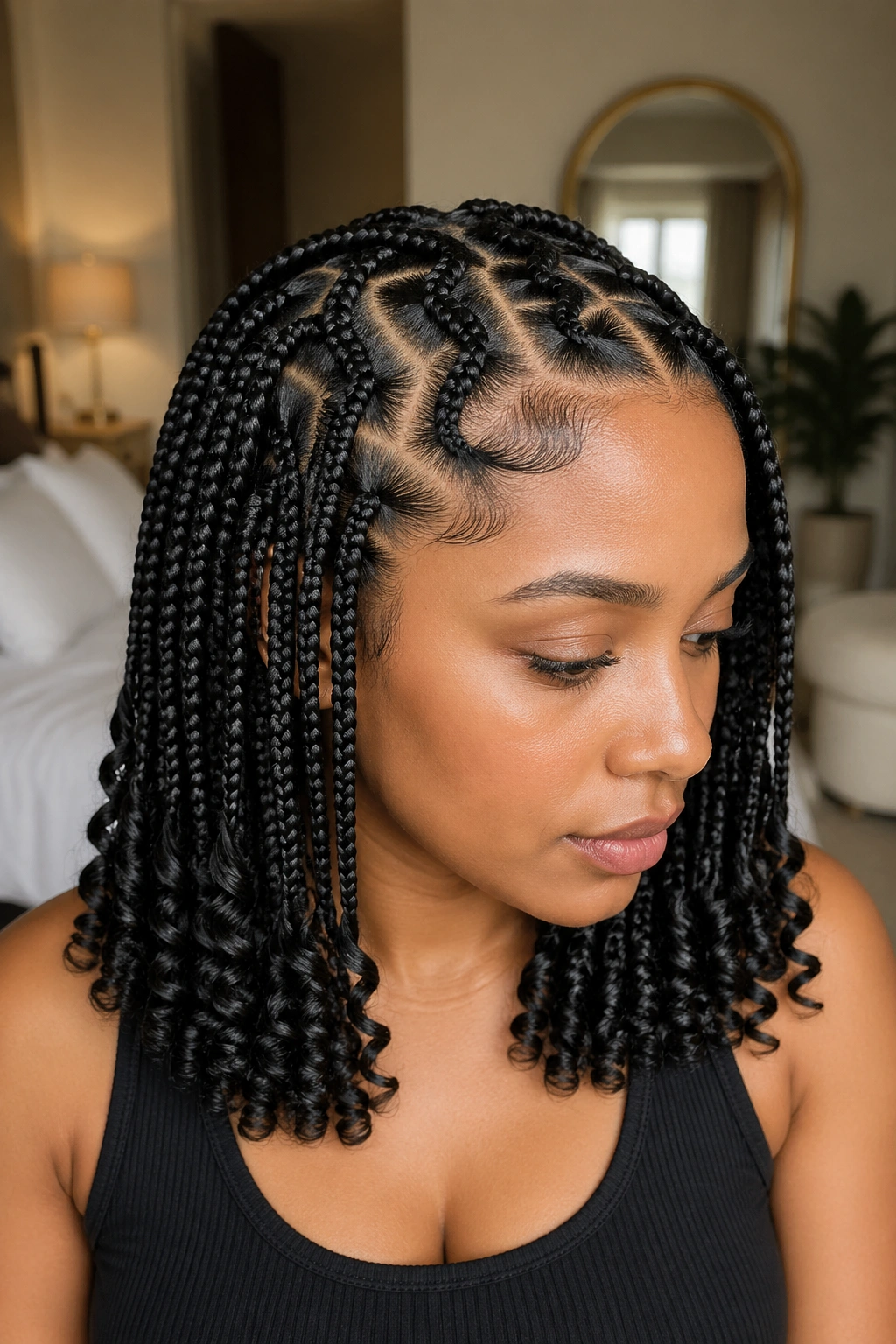
The parting pattern is the star here, not the braid itself. Curved parts soften the grid, while zigzags add edge, and both versions make medium-length knotless box braids with curly ends feel less standard.
Curved parts are my favorite when you want the scalp map to look elegant instead of rigid. The lines flow around the head in a way that feels softer, especially near the temples. Zigzags are bolder. They add a little movement before the braid even starts, which can be fun if you like your hair to have personality from the root down.
Quick Details To Ask For
- Keep the curves shallow and clean, not wobbly
- Use medium-sized sections so the pattern stays readable
- Avoid pairing wild parting with very tiny braids; it gets crowded fast
- Let the curly ends stay soft and uniform so the bottom doesn’t compete with the scalp design
These patterns show best when the braids stop around the collarbone or upper chest. Any shorter and the detail can feel too compressed. Any longer and the eye goes straight to the ends and forgets the parting. Medium length gives both ideas room to breathe.
14. Side-Swoop Braids With Careful Edges
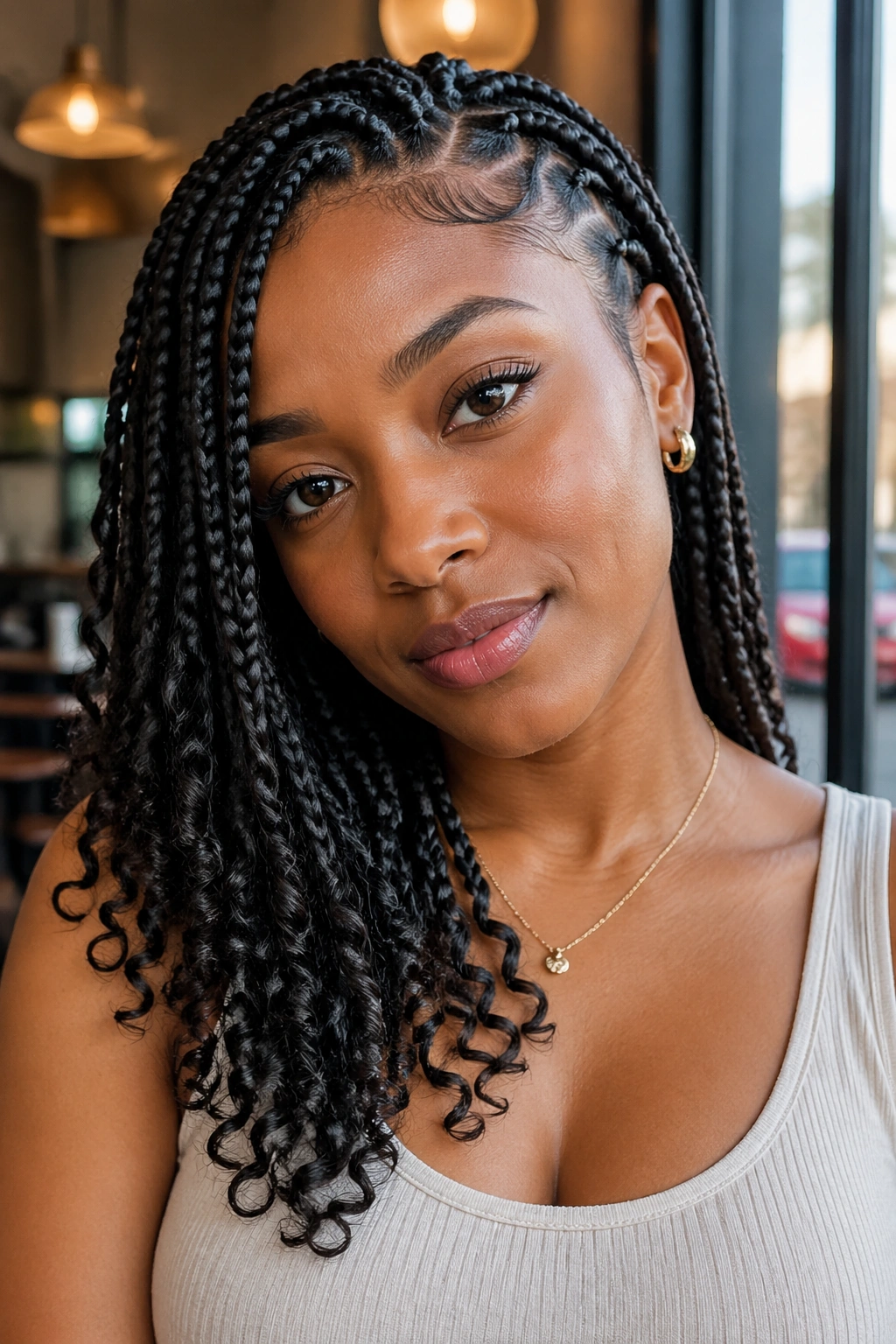
If you want the style to read dressed up fast, a side swoop and a clean edge pattern can do a lot of the work.
This version pushes the front braids over to one side, which gives the face a nice diagonal line and lets the curly ends fall with more shape. It’s especially good if you like big hoops, a strong brow, or a lip color that deserves a little framing. The swoop creates movement before the braids even hit the shoulders.
The important thing is restraint. Baby hairs should look placed, not painted everywhere. A few small swoops near the temples can sharpen the style; too much edge work makes the look busy and dates it faster than people expect. Keep the rest of the hair smooth and let the curls handle the softness.
I’d pick this when I want the braid set to feel a little more styled than a basic middle part but not as structured as a full updo. It’s a good dinner style, a good event style, and a good “I want people to notice my hair first” style. Fair warning: once you try a clean side swoop with curly ends, basic braids can start feeling plain.
15. Softly Tapered Braids With A Clean Finish
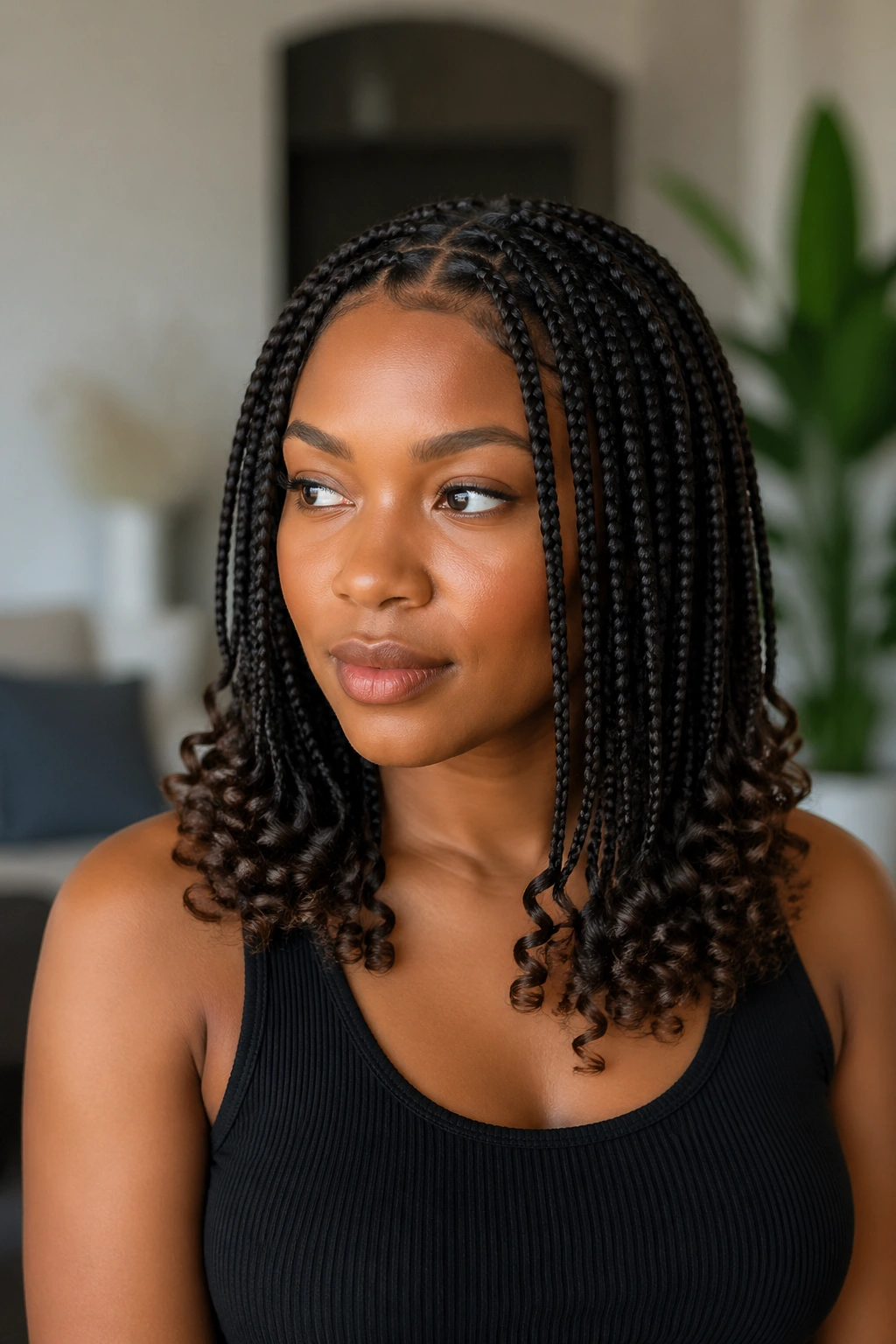
Not every braid set needs a loud trick. Sometimes the nicest version is the one that looks neat from the roots and only gets playful at the ends.
Softly tapered medium-length knotless braids start a bit fuller near the top and slim down gently toward the bottom before the curly ends open up. That gives the style a tidy line without making it stiff. It’s a good fit if you like hair that looks polished on day one and still graceful after the curls loosen a little.
This version also tends to age well. As the braids soften over time, the taper keeps them from looking bottom-heavy, and the curls stop the whole thing from falling flat. That matters more than people think, because a medium-length set can either settle into something nice or start to look bulky if the proportions are off.
I’d call this the quiet one. Not boring. Quiet. There’s a difference. It suits people who want the braid pattern to stay clean, the curls to stay visible, and the overall shape to feel easy instead of dramatic.
Final Thoughts
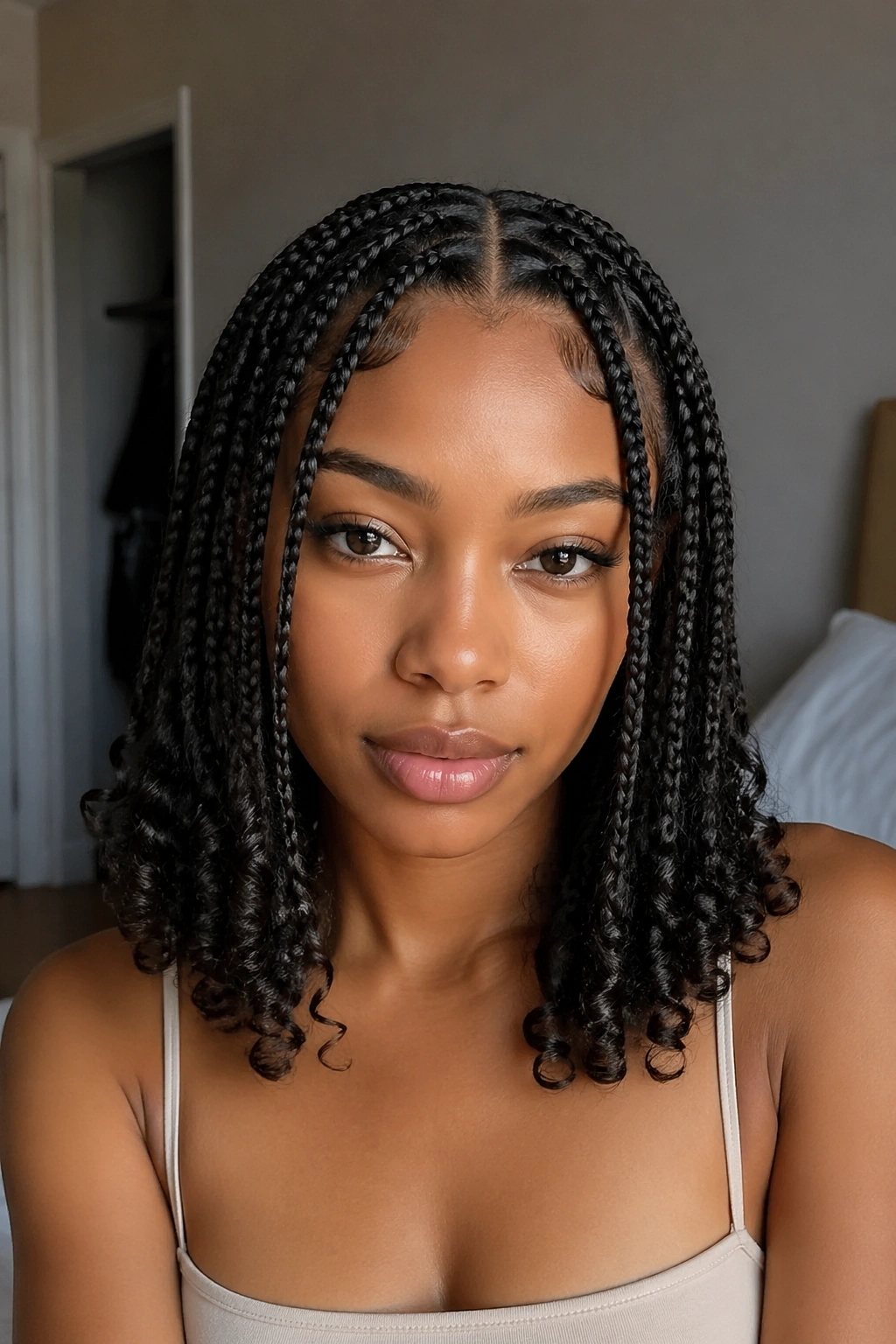
The best thing about medium-length knotless box braids with curly ends is how much room they give you to adjust the mood. A center part looks calm. A side part feels softer. Triangle parts, beads, color, and layered shapes all change the same base style without making it harder to wear.
If you’re choosing between a few versions, think about what will bother you least at the end of a long day. Neckline. Weight. How often you tuck your hair behind your ears. That little bit of honesty usually points you to the right braid set faster than chasing a picture ever will.
And if you want the style to last nicely, keep the curls light, sleep with a satin scarf or bonnet, and refresh the ends before they turn fuzzy. Small habits do more here than big gestures.