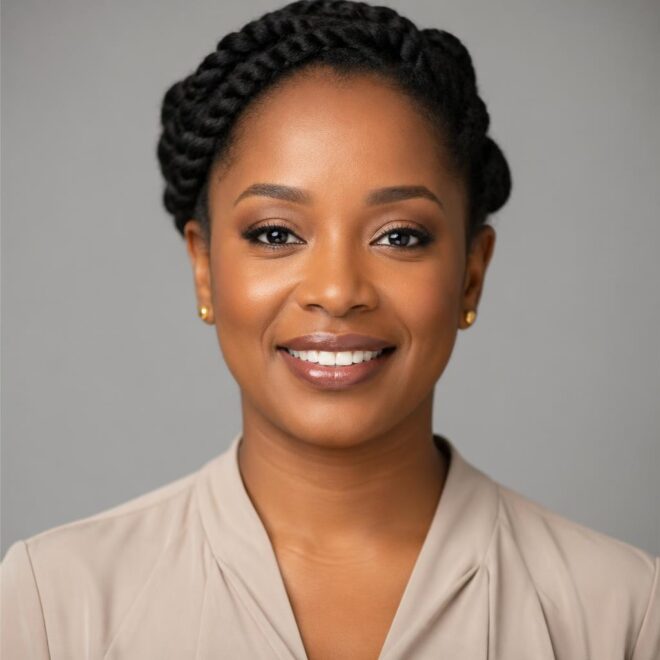


Medium blonde and brown knotless box braids have a way of looking put together even when the rest of the outfit is doing very little. The brown gives the style depth and keeps it from reading flat, while the blonde brings enough lightness to wake up the face and soften the braid pattern. Add the knotless base, and the whole thing sits with less bulk at the hairline, which matters more than people admit.
Tiny braids can feel fussy. Huge ones can swallow the color.
Medium braid size is where the balance gets interesting. You can actually see the blend of tones, but the style still moves well, still feels wearable, and still looks like something you’d choose on purpose rather than on a dare. That’s why this color family works so well in knotless box braids: it gives you warmth, contrast, and a little glow without turning the whole look into a loud color block.
The trick is choosing where the blonde shows up. A set with blonde at the ends tells a different story from one with blonde near the face, and a braid set with alternating tones has its own rhythm entirely. Start with the classic versions first, because once you see how brown and blonde play together in medium knotless braids, the rest of the options make a lot more sense.
1. Honey Brown Roots with Soft Blonde Lengths
This is the version I reach for when someone wants blonde but doesn’t want the style to shout before they even finish their coffee. The roots stay in a rich brown range, then the blonde opens up as the braids travel downward, which keeps the scalp area grounded and the overall look soft.
Why It Works
The brown near the top gives the braids a cleaner transition into the parting, and the honey blonde near the bottom catches light every time you turn your head. That matters with medium-length knotless box braids, because the length isn’t so long that the color gets lost, and not so short that the fade gets cut off.
Ask your braider for a brown-to-honey-blonde blend with a slow transition, not a hard stripe. You want the change to happen over several braids, not one obvious line. If the blonde starts too high, the style can feel harsh. If it starts too low, you lose the whole point.
Best for: warm skin tones, gold jewelry, and anyone who likes a soft, easy finish.
Try this: keep the front two braids on each side one shade lighter than the back. It gives the face a little lift without turning the whole set bright.
2. Caramel Money-Piece Knotless Braids
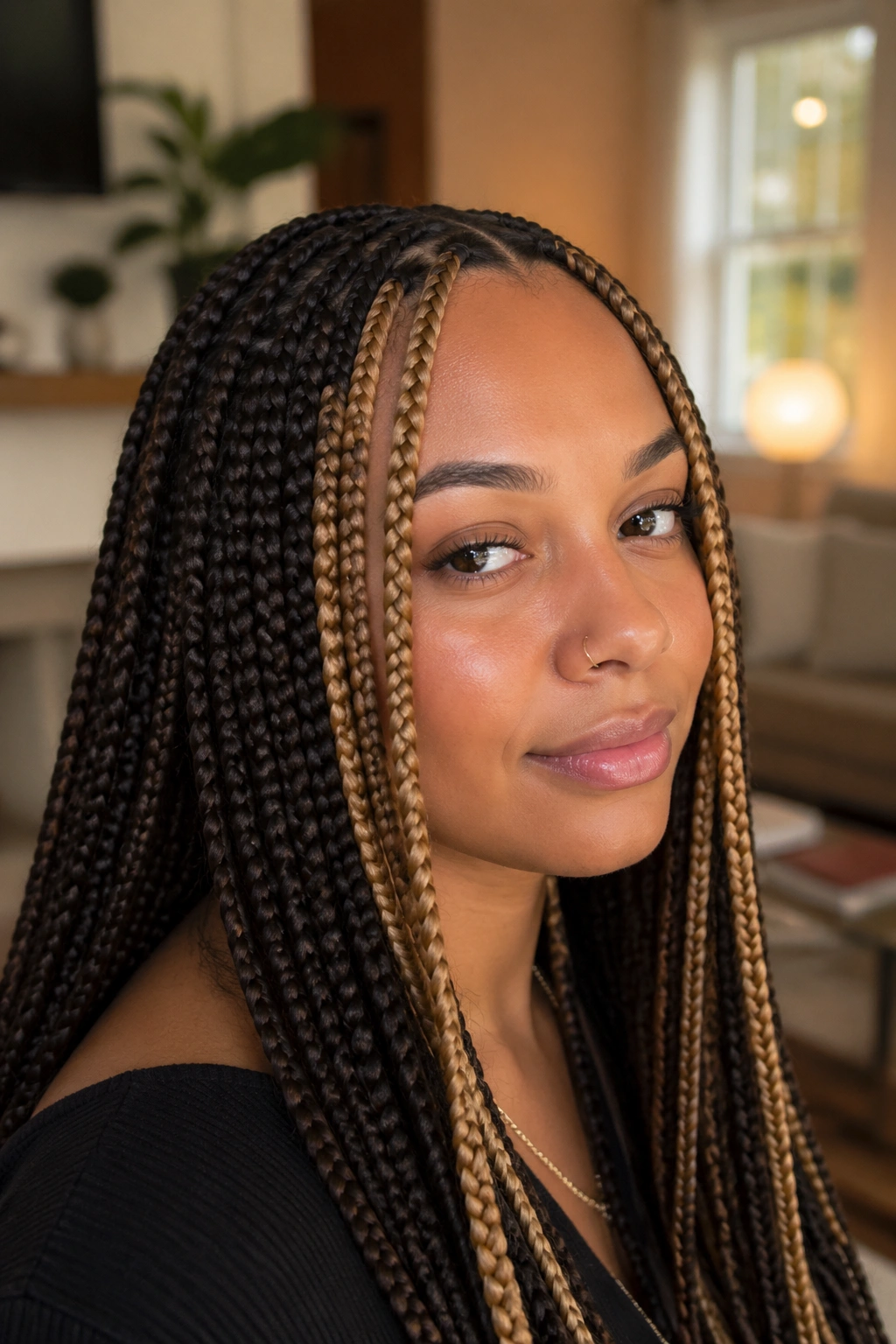
Can a few lighter front pieces change the whole mood of a braid set? Absolutely. The money-piece version is one of my favorites because it brings attention to the face first, then lets the darker brown do the rest of the work in the back.
The caramel blonde sits near the temples and front hairline, so the brightness is concentrated where it does the most. You get that face-framing effect without needing full-head blonde, which also helps if you want something easier to live with. The back can stay a deep cocoa or espresso brown, and the contrast feels intentional instead of busy.
What to Ask For
- Place 2 to 4 lighter braids on each side of the face
- Keep the crown and back in a medium or deep brown
- Use caramel or soft amber blonde, not icy blonde
- Leave the front sections slightly finer so they frame instead of overpowering
This one looks especially good with a clean middle part. A side part works too, but the middle part lets the blonde pieces act like a built-in frame. Simple. Straight to the point.
3. Mocha and Sandy Blonde Gradient
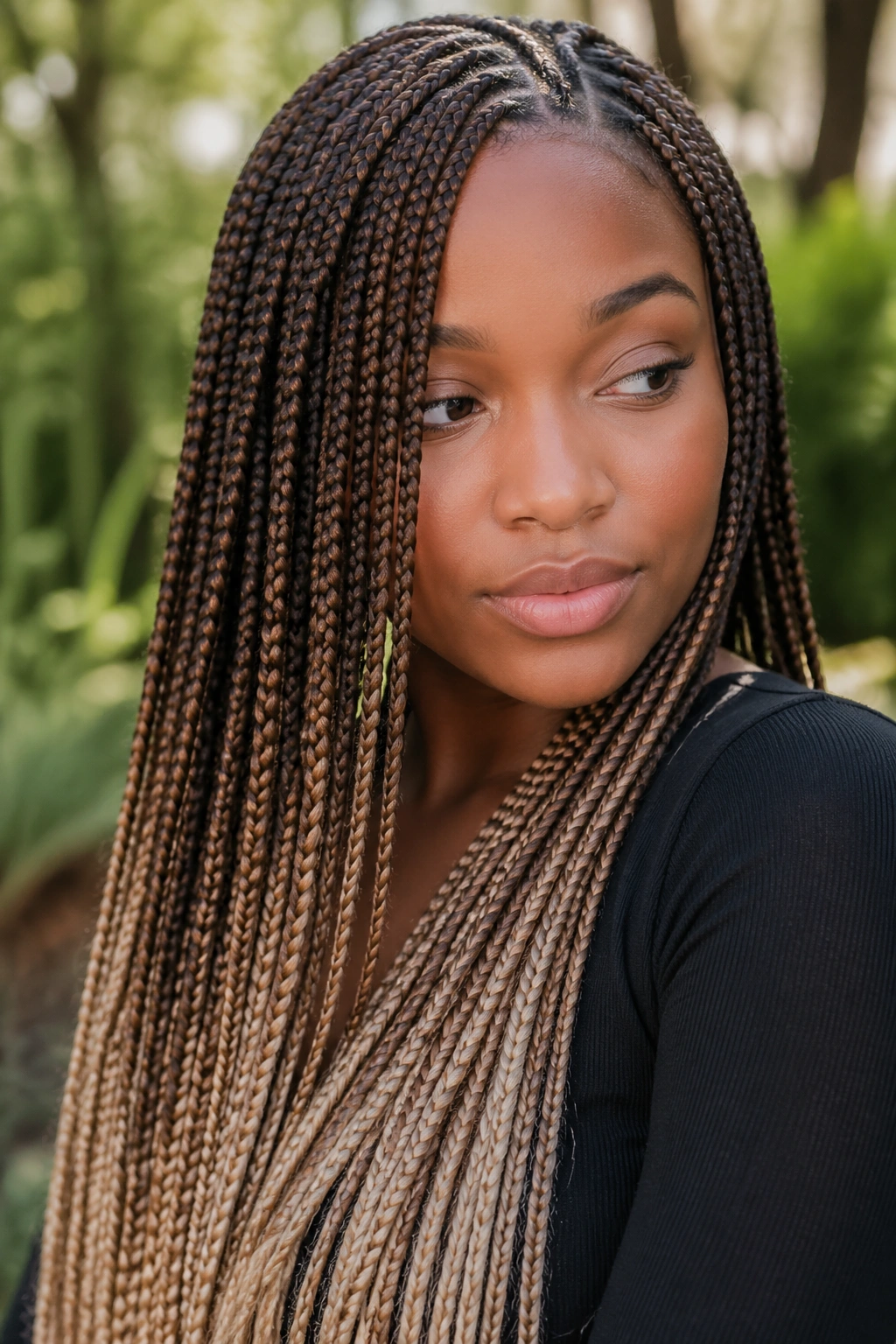
Picture a braid set that starts in mocha brown, passes through milk chocolate, and ends in sandy blonde. That is the whole mood here. It reads calm from a distance, then gets more interesting the closer you look, which is exactly what medium knotless braids are good at.
The gradient version needs a smooth fade. You do not want a banded look where the brown stops and the blonde starts like a hard line on a paint chart. A clean transition usually looks best when the braider blends the shades over several rows, especially around the mid-length zone where the braids are easiest to see.
How to Keep the Fade Smooth
Start with a Brown That Matches the Root Area
If your base is dark, keep the first color in the mocha or chocolate family. Jumping straight to light blonde makes the transition feel loud and can make the braid pattern pop harder than you want.
Fade at Mid-Length, Not at the Scalp
The softest ombre usually begins around the space between the jaw and shoulders, depending on the final length. That gives the color room to breathe.
This style works for people who want the brightness of blonde without seeing it right at the scalp every day. It also grows out well, which is a practical detail people tend to ignore until they are three weeks in and wishing they had listened.
4. Chestnut Braids with Blonde Ends
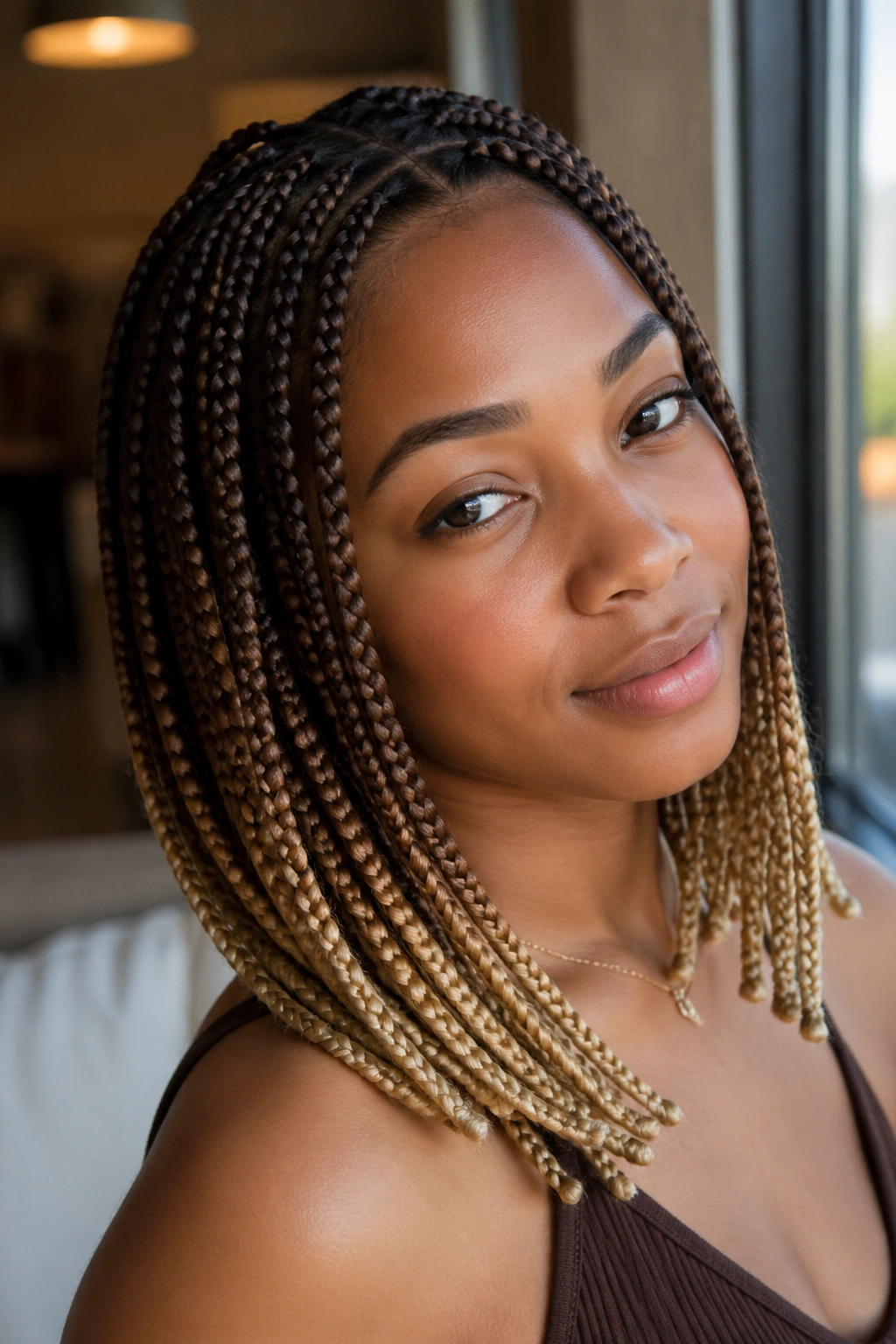
Not every blonde braid set needs a bright root. In fact, the chestnut-first version often looks better because the lighter ends do the decorating while the top stays grounded and wearable.
There’s a nice bluntness to this one. The chestnut brown near the scalp keeps the pattern neat, and the blonde tips give the braids a little flick of movement at the bottom. Medium length makes that finish easy to see, especially when the ends graze the collarbone or sit right at the upper chest.
If you like braid styles that still feel polished after a long day, this is one of the safer bets. The top stays darker, so new growth is less obvious. The ends still pop, so the style does not disappear into your outfit.
Good detail to ask for: keep the blonde tips slim and even. Thick, chunky blonde ends can look heavy. Thin tips read cleaner and move better.
One-sentence truth: this version is far less needy than a full blonde set.
5. Alternating Blonde and Brown Plaits
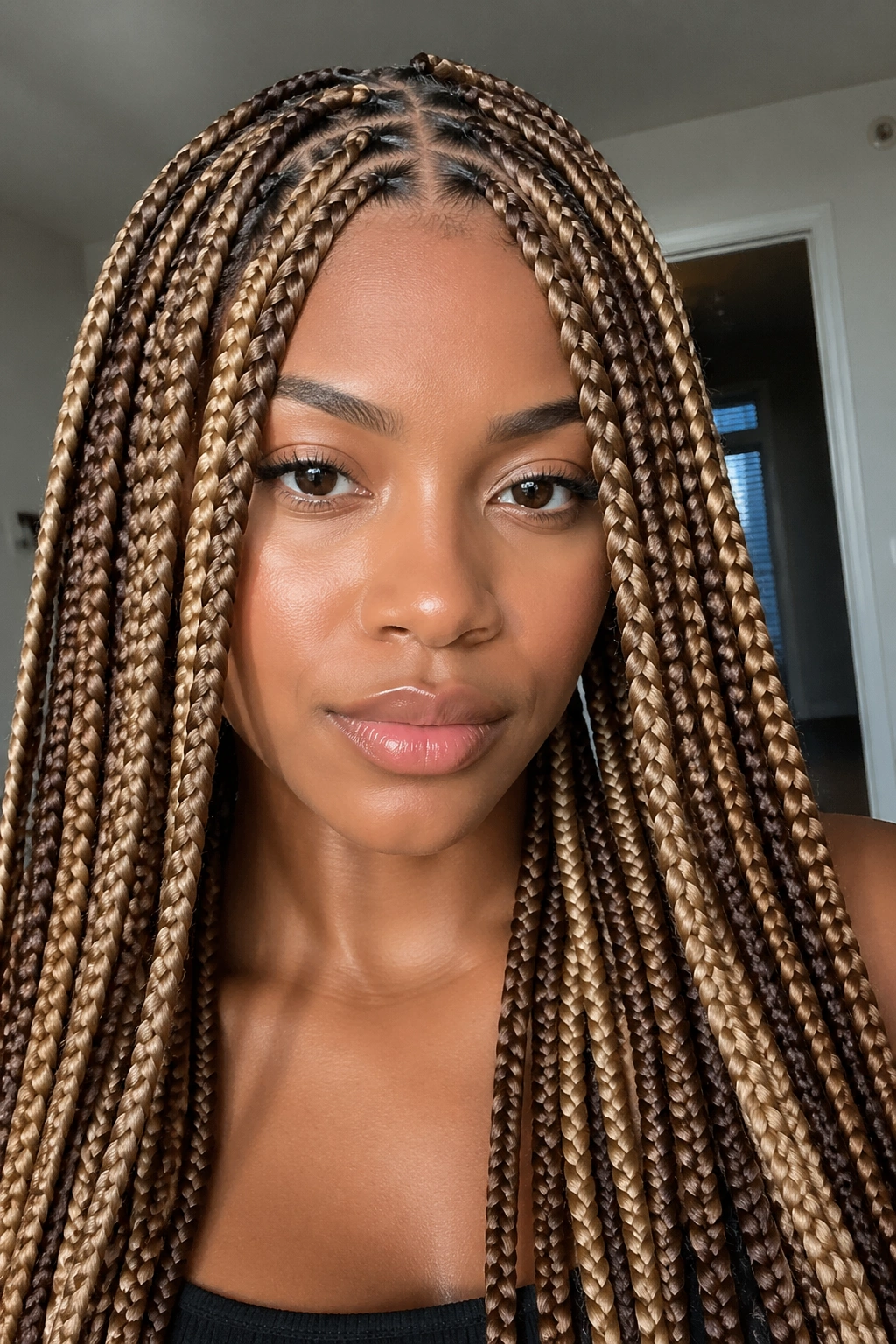
From across the room, alternating blonde and brown braids read almost like woven fabric. Up close, the contrast is sharper. That’s the appeal. It feels playful, but not childish, because the two tones are balanced braid by braid instead of dumped in randomly.
This is a strong choice if you like a set that looks done from every angle. A braid on the left might be blonde, the one next to it brown, then blonde again. The color rhythm gives the hairstyle its own pattern, and you do not need extra accessories to make it interesting.
What Makes It Different
- The color story is built into the braid placement
- It looks cleanest with consistent braid size
- A center part keeps the pattern easy to read
- A side part can make the contrast feel more dramatic
I like this one on medium lengths because the colors stay visible without becoming overwhelming. Too many alternating shades on very long braids can start to feel busy. Medium braids keep the whole thing readable.
If you want a set that feels a little bold but still practical, this is a good lane. It has personality. No question.
6. Face-Framing Blonde Streaks on a Brown Base
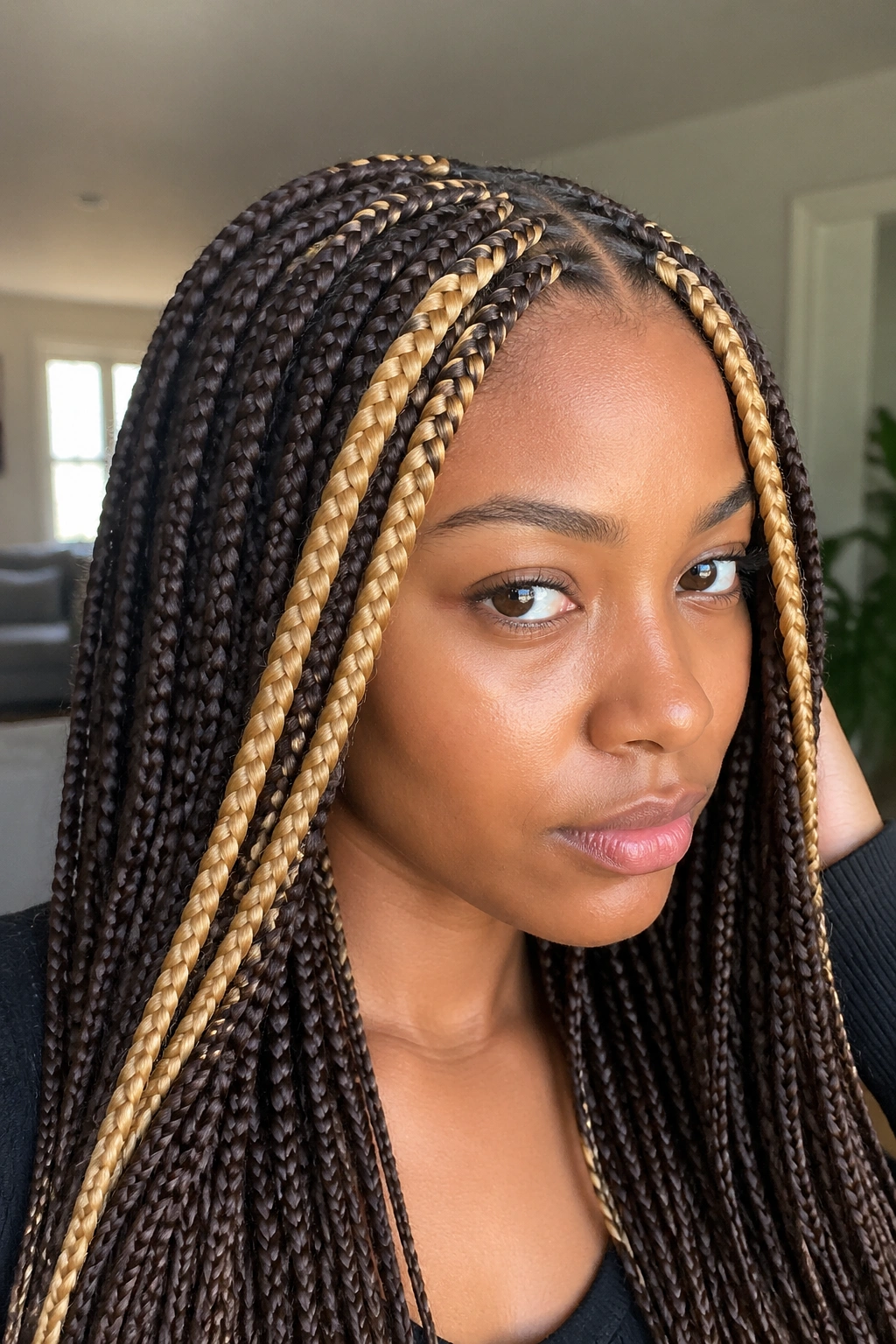
Three braids. That’s enough.
That sounds almost too simple, but it works because the eye goes straight to the front of the style. Keep most of the braids in a medium brown or mocha tone, then place the lighter blonde pieces right at the front and maybe one braid back from the hairline on each side. The result is a braid set that feels brighter without changing its whole personality.
Where the Light Pieces Should Sit
A lot of people place the blonde too far back, which defeats the point. The front pieces should sit where they can actually frame the face: along the temples, just inside the outer corners of the hairline, and maybe one or two braids that fall forward naturally when you tuck hair behind the ear.
That’s the spot. Not the crown. Not the nape.
This style is especially good if you wear glasses, hoops, or sharp neckline tops, because the lighter braids keep the area around the face from feeling visually heavy. The brown base does the grounding. The blonde does the lifting. Clean division of labor.
7. Deep Espresso Braids with Thin Blonde Highlights
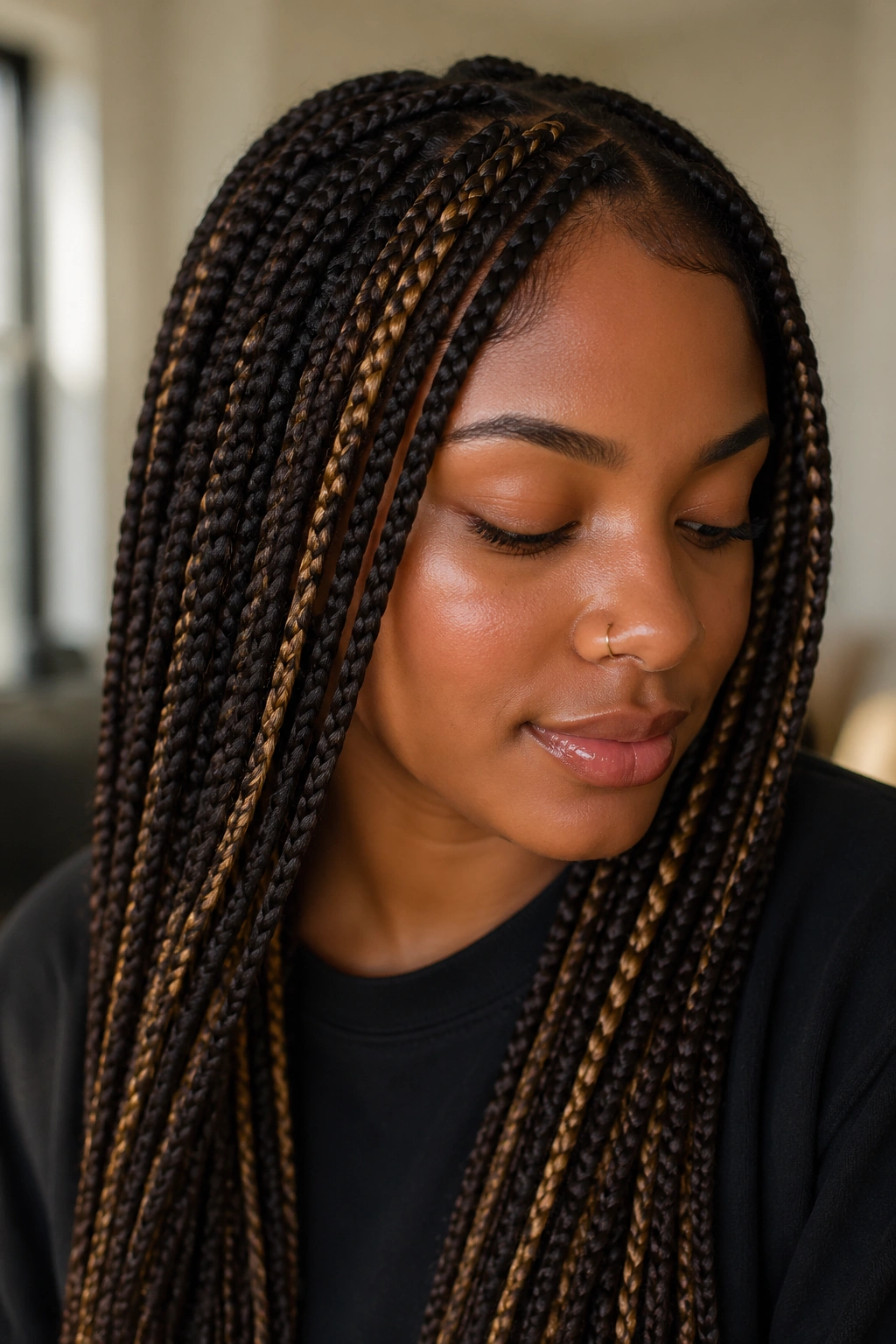
If your wardrobe leans black, cream, denim, and gold jewelry, this set makes sense. Deep espresso braids with thin blonde highlights feel restrained at first glance, then reveal themselves in motion when the lighter strands peek out between darker sections.
This one is for people who like contrast but do not want a full blonde moment. The blonde is threaded in sparingly, almost like fine streaks in a dark fabric. It keeps the braid set dimensional, and because the highlights are thin, the style still reads as dark overall.
What to Watch For
A little blonde goes a long way here. If you add too many light strands, the depth gets lost and the whole thing can start looking patchy. Keep the highlights narrow, and spread them with intention rather than clustering them in one spot.
The best part? This is one of the easier looks to wear with a heavy makeup day or a bare-face day. It does not demand anything from the rest of your styling. It just sits there and looks expensive without trying to be the main event.
8. Ombre Medium Knotless Braids from Brown to Beige Blonde
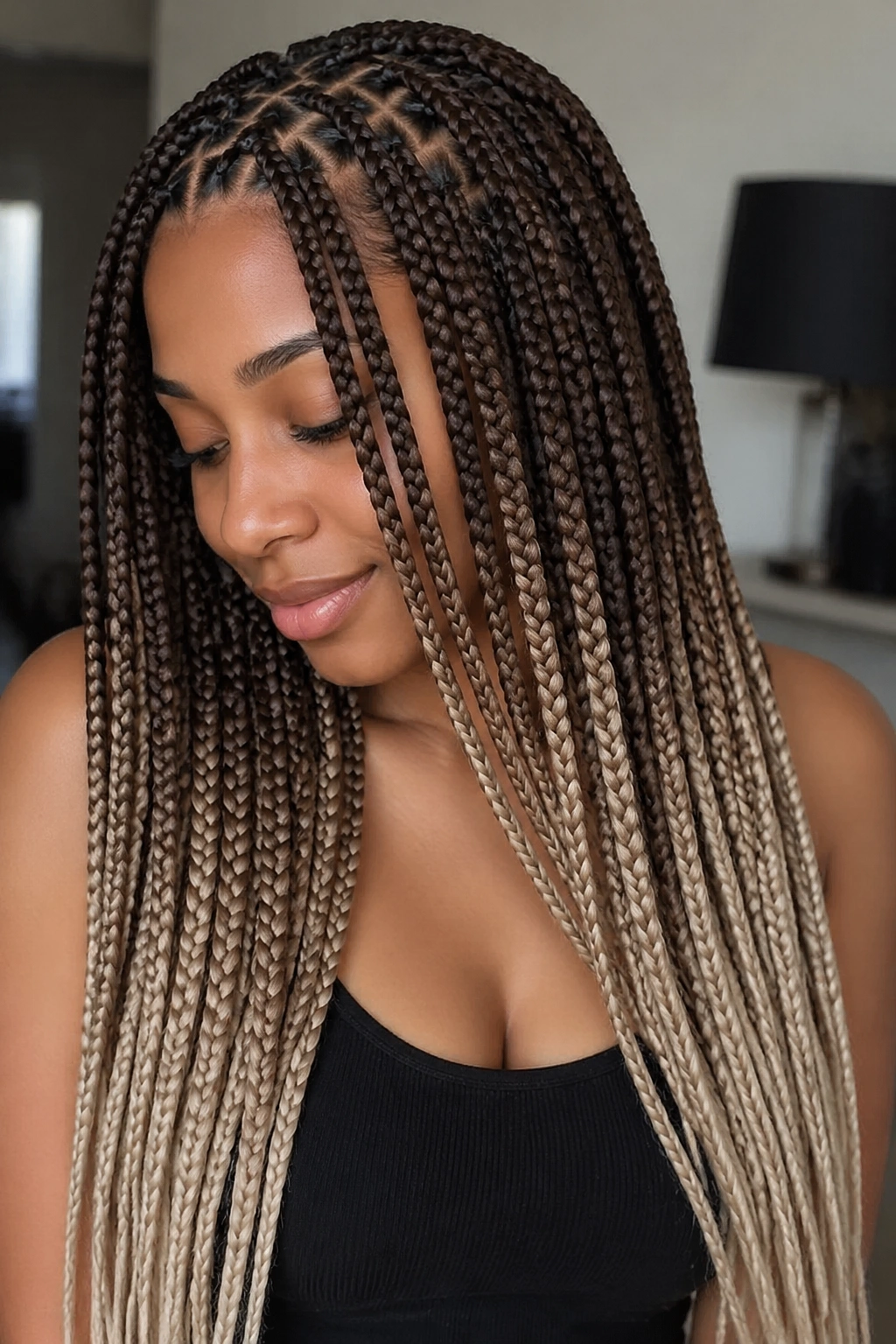
Why does ombre work so well on medium braids? Because the length gives the color story enough room to unfold. On shorter braids, the fade can feel abrupt. On medium knotless box braids, the transition has space to breathe, so the eye actually gets to enjoy the change.
This version starts in brown and ends in a softer beige blonde, which is a little cooler and a little less golden than honey or caramel. That makes it useful if you want blonde that feels cleaner and a bit more muted. It’s a nice match for neutral wardrobes, silver jewelry, and makeup looks with a cooler undertone.
The Cleanest Fade Line
The best ombre usually shifts around the point where the braids start brushing the shoulders. That gives you a visible change without making the top half too busy. If the fade starts too high, the roots can look busy. If it starts too low, you lose the gradient effect when the hair is down.
This is one of those styles that gets better when the parts are neat and the braid size stays even. Uneven sizes can interrupt the fade and make the color look accidental. Keep the structure clean, and the ombre does the rest.
9. Chunkier Medium Braids with Ribbon Color Placement
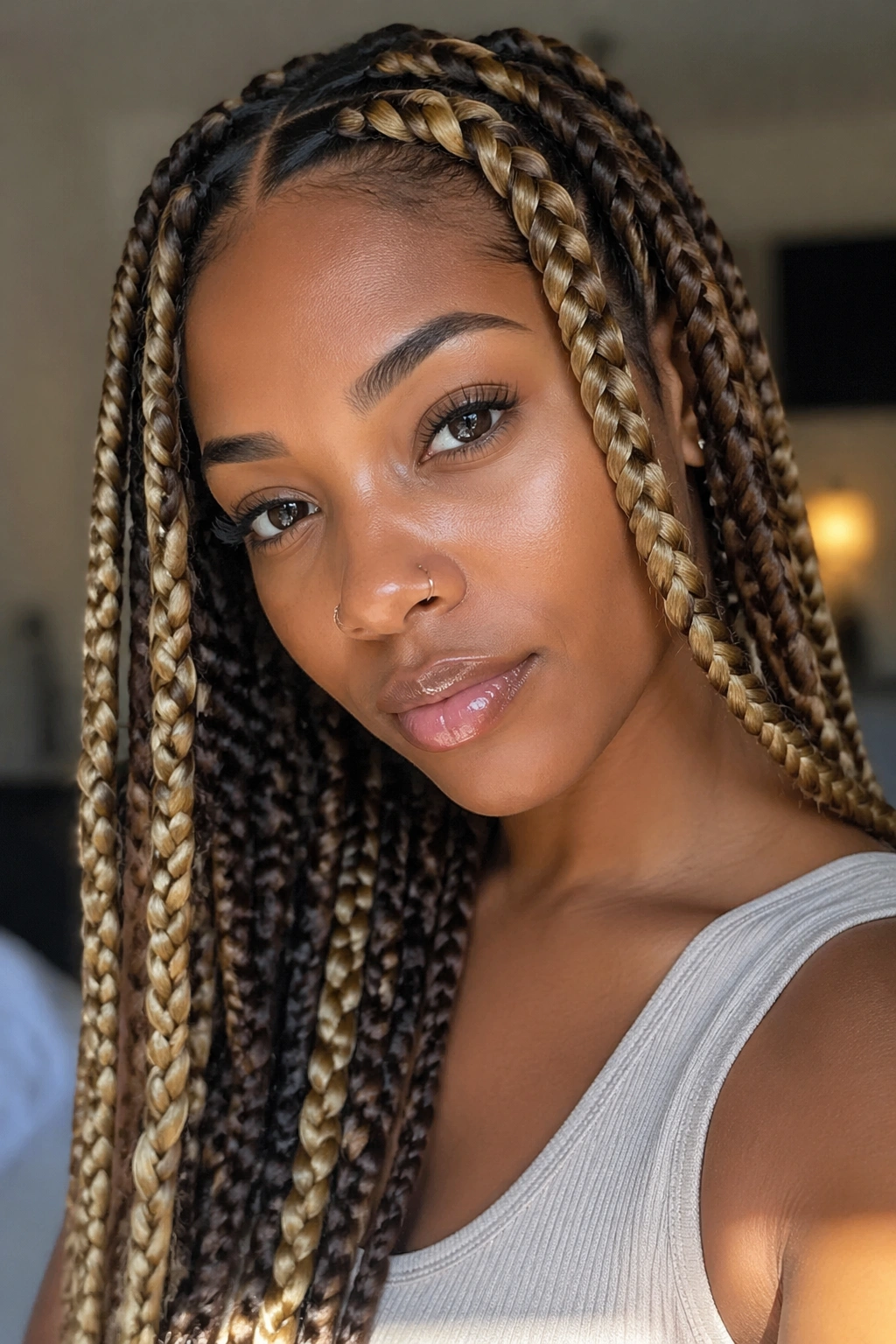
Chunkier medium braids change the way the color shows up. Instead of looking finely blended, the blonde and brown land in wider ribbons, so each braid reads like a visible strand of color rather than a whisper of tone. That gives the style more shape and a little more attitude.
I like this version when the braid set is meant to be noticed without leaning into super bright color. A few thicker blonde sections across a brown base make the whole head look sculpted. It is especially nice on medium lengths because the size of the braid can compete with the color instead of getting swallowed by it.
Use It If You Want More Structure
- Stick with consistent braid thickness so the color bands look deliberate
- Place the blonde in repeating sections, not random bursts
- Keep the parting neat and crisp
- Use a brown shade with enough depth to hold the blonde up visually
This look pairs well with large hoops, clean edges, and simple clothes. There’s no need to pile on extras. The braids already carry enough weight on their own.
10. Triangle Part Medium Blonde and Brown Braids
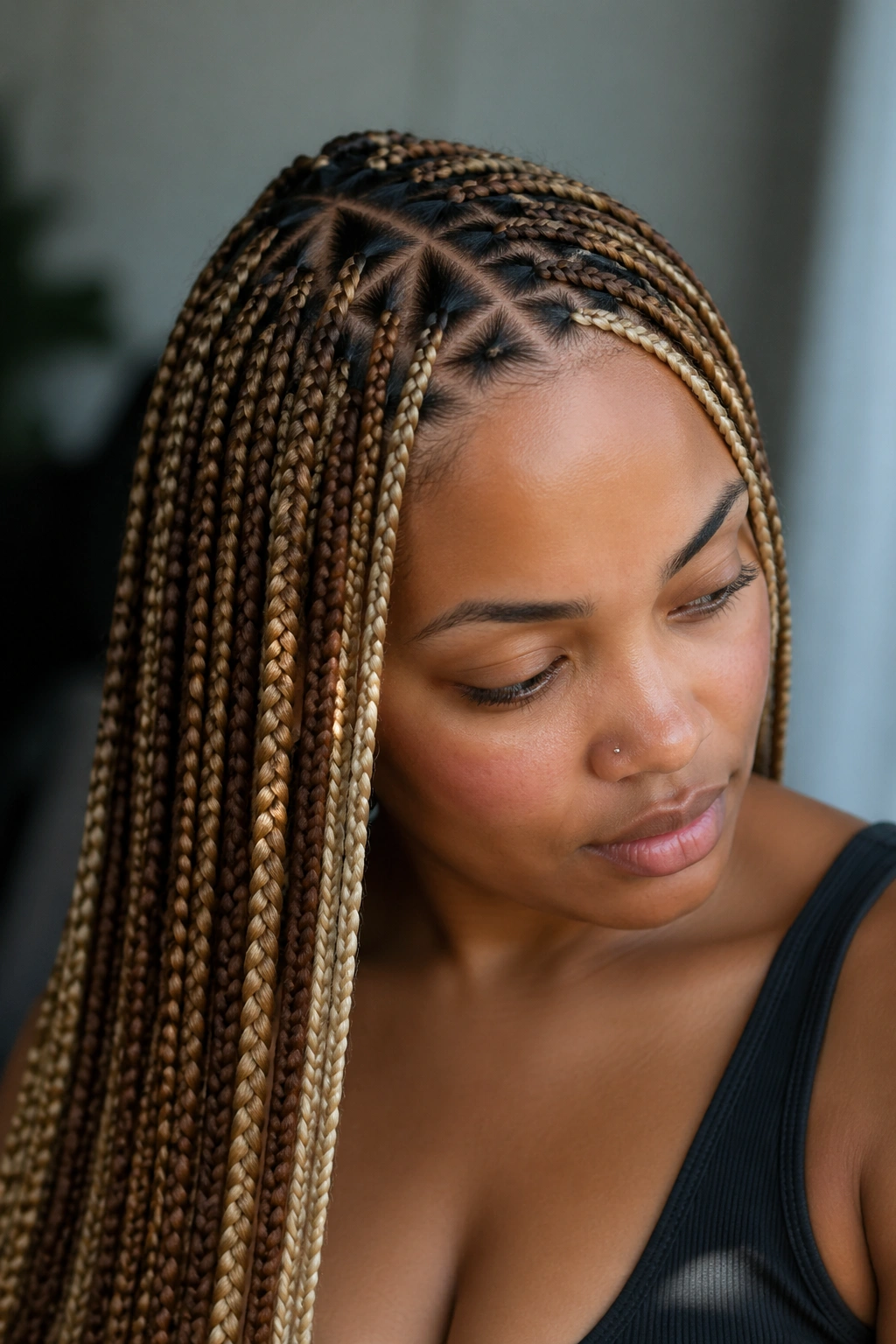
The color can be simple; the parting does the heavy lifting.
Triangle parts change the whole feel of knotless box braids because the scalp pattern becomes part of the design instead of disappearing under it. Add medium blonde and brown colors into that geometry, and the style gets even more interesting. The braid set stops looking like a plain grid and starts looking crafted.
Why the Parting Matters
Triangle sections break up the symmetry you get from standard square parts. They soften the straight lines and give the style a little movement before the braids even start. With brown and blonde mixed in, the triangles help the colors feel more intentional because the eye sees both shape and shade at once.
This is a good choice if you get bored fast. The parts alone already do something different, and the color adds another layer without turning the style into a costume. It still works with casual clothes, work clothes, errands, all of it.
A clean triangle part set needs patience from the braider. No rushing. If the sections are uneven, the whole effect falls apart fast. When it’s done well, though, it has that rare quality of looking detailed without looking fussy.
11. Half-Up Crown with Mixed Blonde Panels
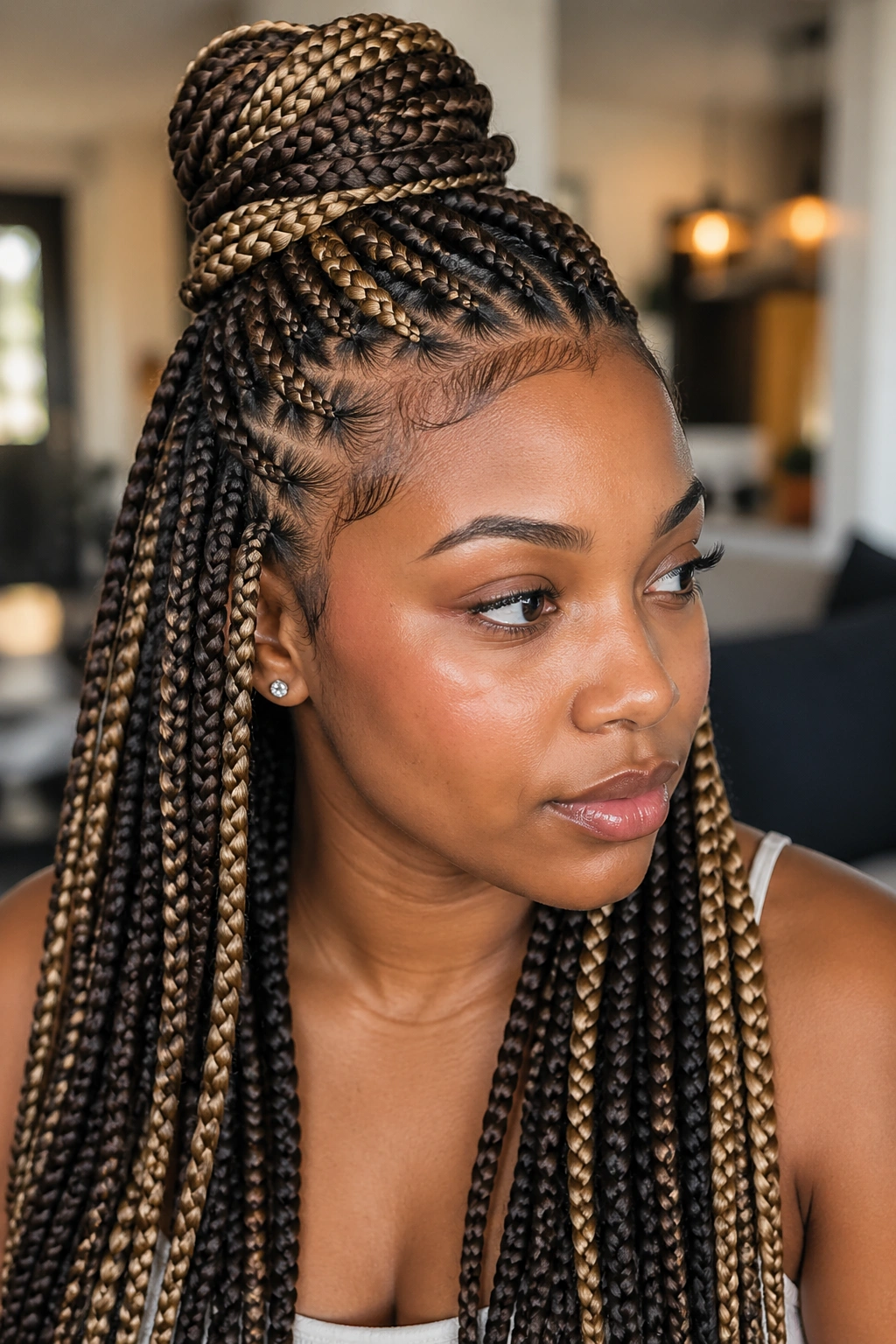
Pull these braids into a half-up style and the blonde panels suddenly show from every angle. That’s the advantage of a medium-length set: you can wear it down, twist it up, or pin just the top half back without losing the color contrast.
The half-up crown version works especially well when the blonde sits in select panels across the crown and front sides. Once the top section is gathered, the lighter pieces sit higher and the brown pieces fall beneath them, so the whole style gains depth. It’s a small trick, but it changes the read of the hairstyle fast.
When to Reach for It
- Days when you want hair off your face
- Outfits with high necklines
- Times when you want the blonde to show more clearly
- Events where a simple style needs to look a little more finished
I prefer this on medium braids because the weight stays manageable. With longer braids, a half-up style can drag on the scalp. Medium lengths hold their shape better and are easier to pin without slipping.
This one also gives you a practical break from always wearing the braids down. That matters. A hairstyle should do more than sit there.
12. Side-Part Braids with Light Front Pieces
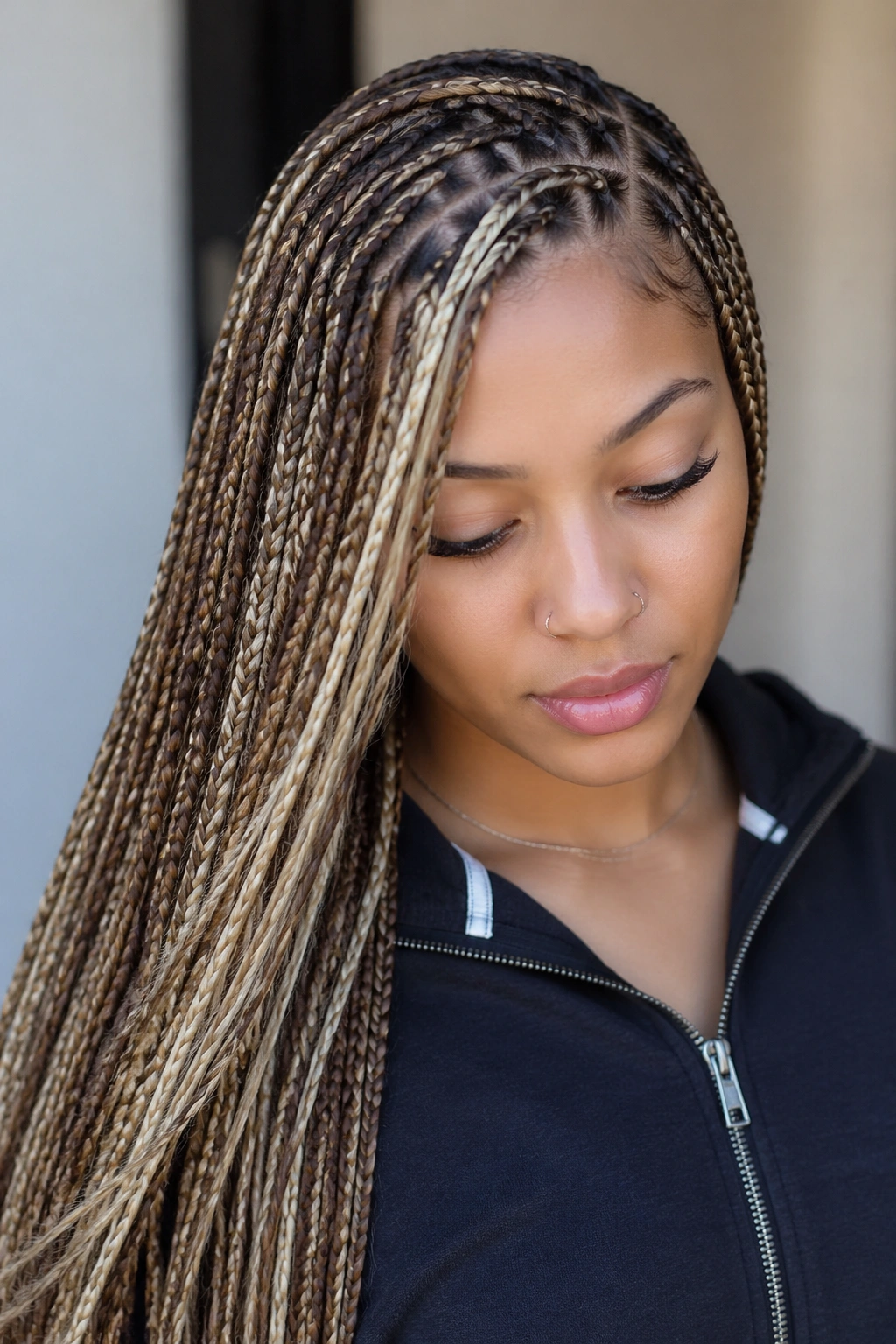
Side parts do a lot of work.
Shift the part off-center, and the whole braid set changes shape. The lighter front pieces land on one side with more emphasis, while the brown side gives the style some weight. That asymmetry is what makes the look feel modern without needing anything flashy.
A side-parted medium blonde and brown knotless set can flatter the face in a way a center part sometimes doesn’t. The front pieces sweep across the forehead and cheekbone area, which softens strong lines and creates more movement around the eyes. It also lets the blonde show up in a stronger strip instead of scattering itself too evenly.
I like this version on people who wear their hair tucked behind one ear a lot. The part shifts naturally with that habit, so the blonde front piece becomes part of the way you move instead of something you have to keep adjusting.
The biggest mistake is making the side part too shallow. Give it enough depth to matter.
13. Boho Medium Knotless Braids with Brown Base
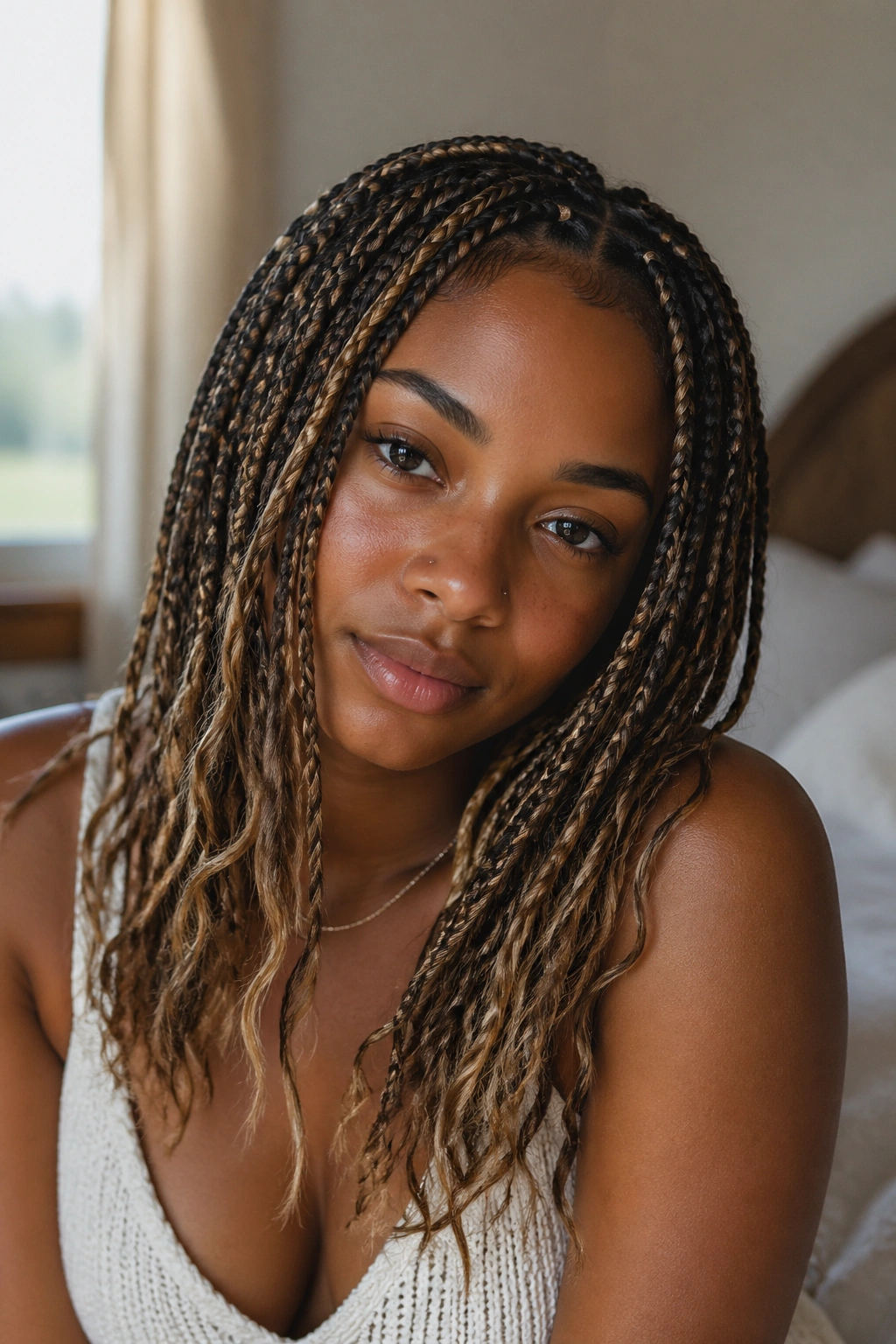
Loose curls at the ends change the whole feel. Suddenly the braids are not crisp and linear anymore; they’re a little softer, a little more undone, and a lot more playful. Put that texture over a brown base with blonde woven in, and the style gets this easy, lived-in look that works especially well on medium lengths.
Boho knotless braids are not the lowest-maintenance choice, and I’d rather be honest about that. The loose pieces need a bit more care, and the curls at the ends can lose their shape if you rough them up in sleep or skip the wrap. Still, the payoff is real. The color looks richer because the extra texture catches the eye in more places.
What Makes Boho Braids Different
- The loose curls soften the braid lines
- The blonde pieces show up in motion, not just when still
- Brown at the base keeps the style from getting too bright
- Medium length gives the curls enough room to fall naturally
If you like braids that feel a little romantic and a little messy in a good way, this is the one. It’s not stiff. That’s the whole point.
14. Beaded Blonde and Brown Braids with Gold Accents
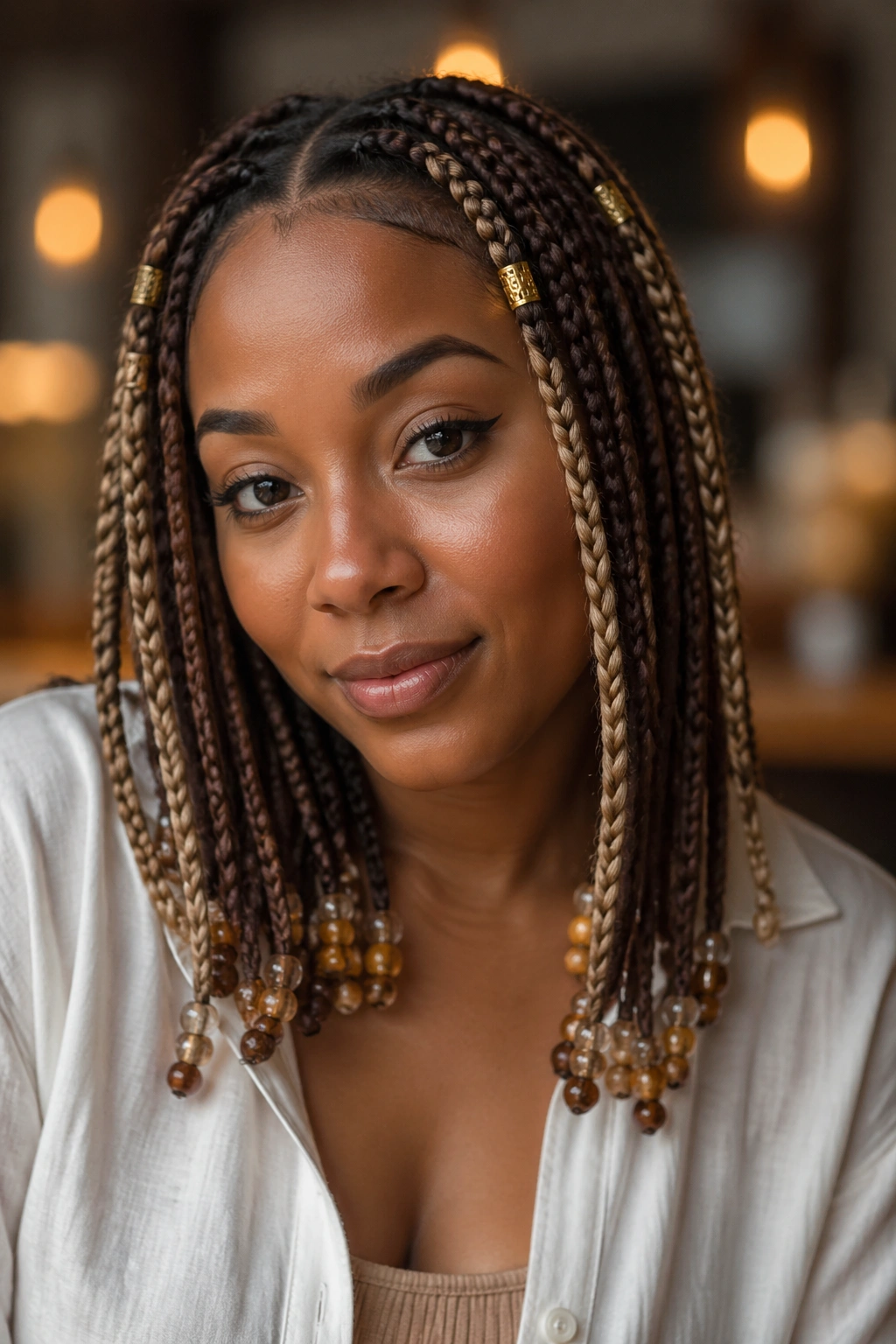
Put three gold cuffs near the blonde pieces and the entire set reads more finished. That’s the magic of accessories when the braids already have a warm brown-and-blonde mix underneath.
Beads and cuffs work best when they are placed with restraint. One or two on the front pieces, maybe a few scattered lower down, and the color story stays clean. Too many accents can crowd the braids and make the hairstyle feel noisy. Medium length helps here because there’s enough braid to decorate, but not so much that the accessories disappear.
How to Keep It Clean
Pick one metal tone and stay with it. Gold tends to look best with honey, caramel, and chestnut shades, while silver can work if the blonde is cooler and the brown is closer to espresso. Mixing metals can work too, but only if you are doing it on purpose.
This version is nice for people who like a little sparkle without going full festival. The braids do the main work. The cuffs and beads just sharpen the edges.
One-sentence truth: a few well-placed accessories beat ten random ones every time.
15. Soft Brown-First Everyday Set
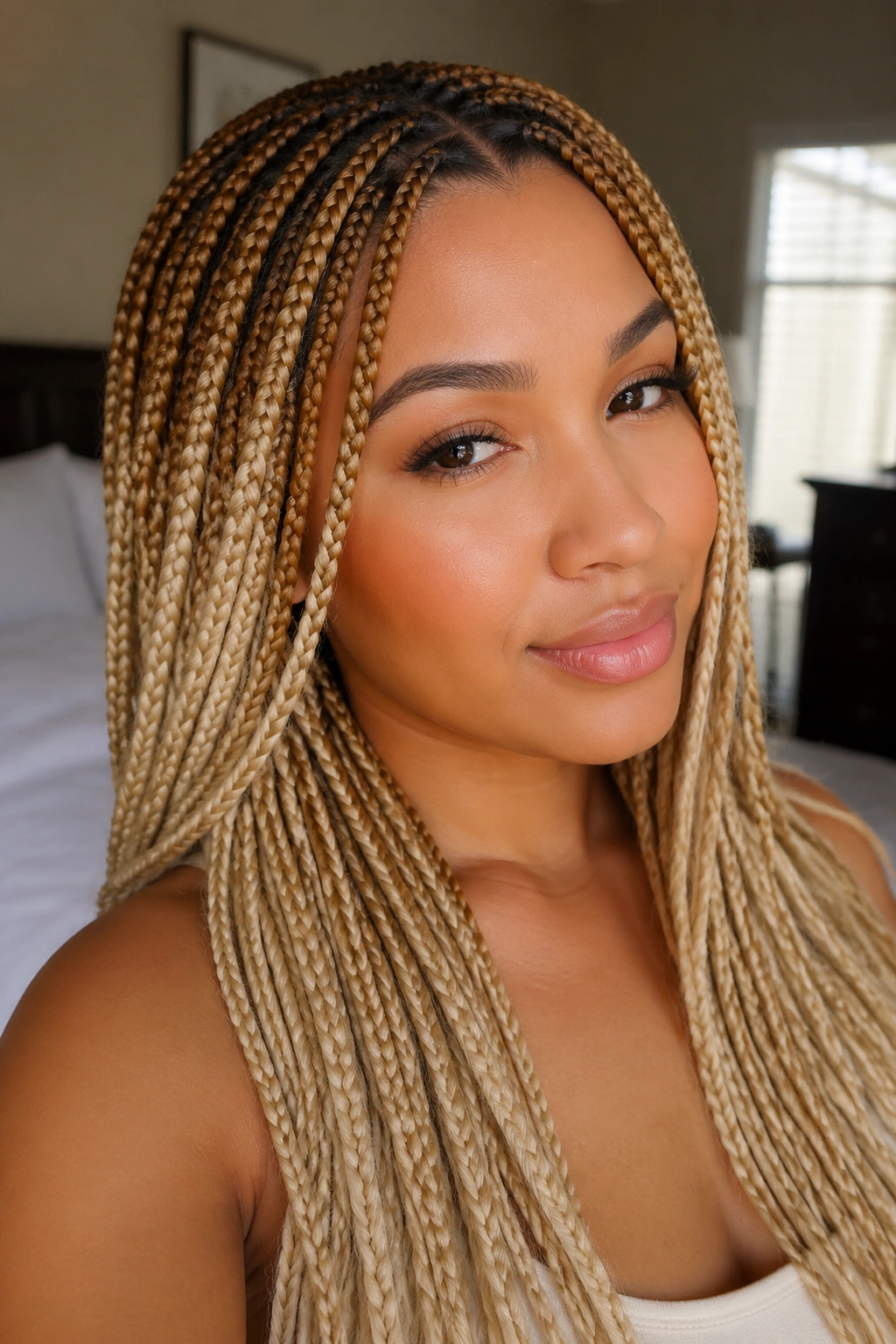
If you want one medium blonde and brown knotless braid set that works with everything, make brown the anchor. That’s the version I’d hand to someone who wants color, movement, and easy styling without having to babysit the look every morning.
Keep the blonde mostly in the front third of the set and along a few lower ends, then let the brown handle the bulk of the braid mass. The result is balanced. You get brightness where people actually see it first, but the style still feels grounded enough for daily wear, work, errands, dinner, or whatever the day decides to throw at you.
This is also the safest choice if you like your braids to grow out gracefully. The brown root area blends back in more easily, and the blonde remains an accent instead of becoming the whole story. Medium length helps again here, because it keeps the color visible without turning upkeep into a project.
If you’re sitting in the chair and unsure what to choose, start here. Brown-first, blonde as an accent, medium knotless structure, clean parts, and just enough contrast to keep it interesting. That combination rarely disappoints, and it has a way of still looking sensible after the newness wears off.