


Small box braids for boys work best when the parts are crisp, the tension stays light, and the style matches the child’s actual life — school, sports, naps, and all.
That sounds obvious, but people still get it wrong all the time. They copy a photo, ask for braids that are too thick for the hair density, pull the front too tight, then wonder why the style looks tired after a week or the scalp starts complaining. Small braids should look neat, move a little, and sit comfortably. If they do all three, you’ve got a winner.
The best part is that boys’ box braids can be as simple or as sharp as you want. You can keep them plain and clean, add a fade, bring in beads, play with parting shapes, or stretch the braids longer for a more relaxed look. The trick is knowing which version fits the boy in front of you, not the picture in your head.
And that’s where the good styles earn their keep. A tight parting pattern, a soft hairline, and the right amount of length can make small braids look polished instead of fussy. Some styles age well as the hair grows out. Others need a barber’s touch to stay crisp. The ones below each solve a different problem, which is usually what matters most.
1. Straight-Back Small Box Braids for a Clean School Look
Straight-back braids are the no-nonsense option, and I mean that in a good way. They keep the whole head orderly, the rows are easy to read, and the finish looks calm instead of busy.
Why It Works
This style shines when you want the braids to sit flat and behave. The parts run straight from the hairline toward the back, so the eye doesn’t get pulled in ten directions. For boys with thick hair, that can be a blessing. The scalp still shows through in clean little squares, but nothing looks crowded.
Ask for small sections, not tiny slivers. A part around 1/2 inch usually gives you that small-box feel without turning the install into an all-day ordeal. If the braids are too thick, the style loses the neat grid effect. Too thin, and the hair can feel overworked.
Quick notes:
- Best on short to medium hair that can grip well
- Looks sharp with a soft edge-up, not a hard pushed line
- Usually grows out neatly because the pattern is so regular
Pro tip: leave the front hairline a little softer than you think you need. It looks better on day ten than a razor-straight front that starts to lift by week two.
2. Center-Part Small Box Braids That Frame the Face
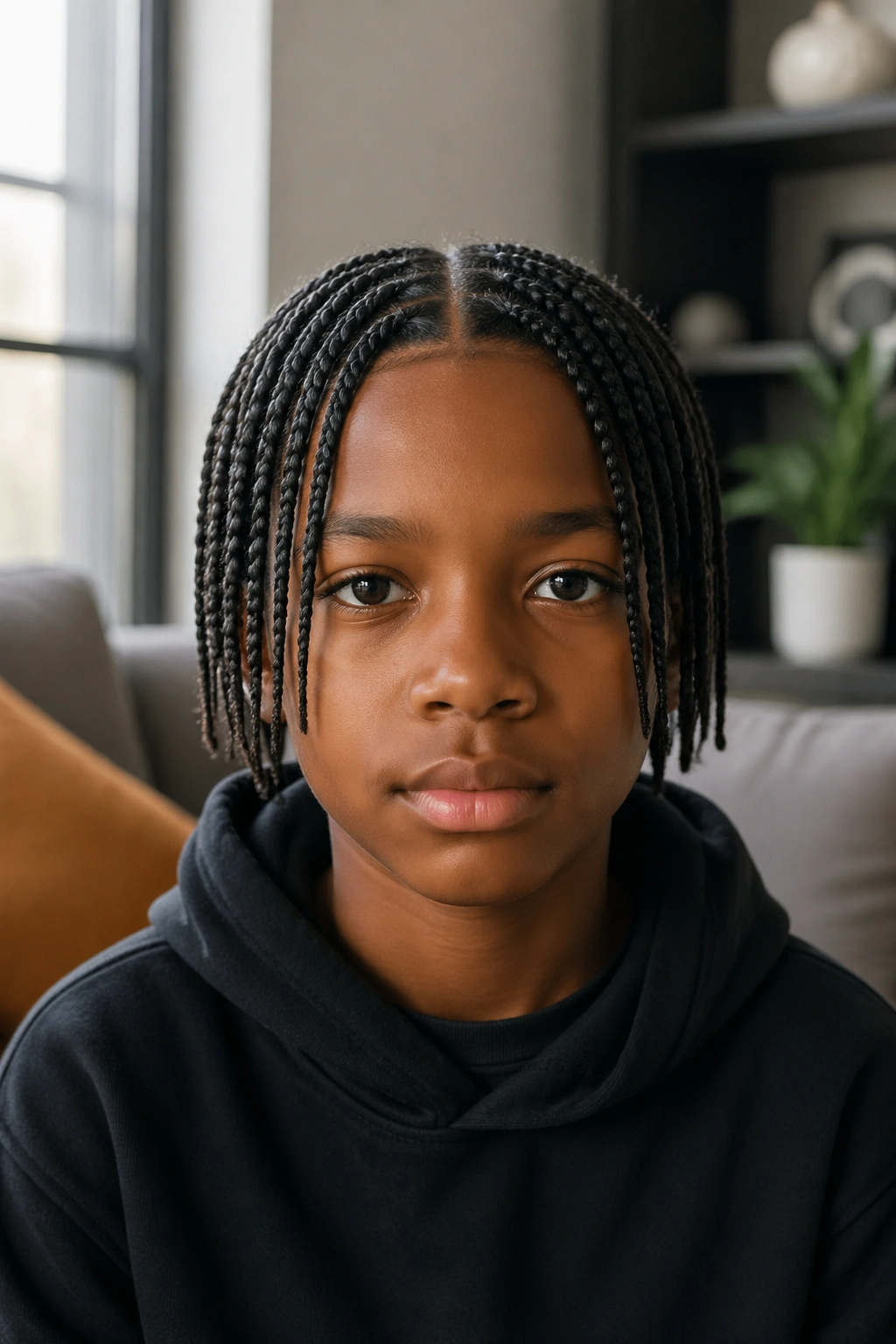
Why does a center part look so clean? Because it gives the whole head a clear anchor point. Everything falls from that line, and the style instantly feels balanced.
That matters a lot on boys who like structure. A center part works especially well when the hair is dense and the braid rows need a little visual order. It also makes the face look longer and less wide, which can be handy if the cheeks are full or the forehead is broad.
The part has to be honest, though. If the center line is a little crooked, the whole style will look off. Not ruined. Just off. And once you see it, you can’t unsee it.
I like this version on kids who keep their heads still for braiding. It’s one of those styles where the first few rows carry a lot of the visual weight, so the braider has to stay clean through the middle and keep the spacing even from front to crown. If there’s a cowlick in the middle, shift the part a hair’s width to one side rather than fighting it.
3. Side-Part Small Box Braids with a Softer Edge
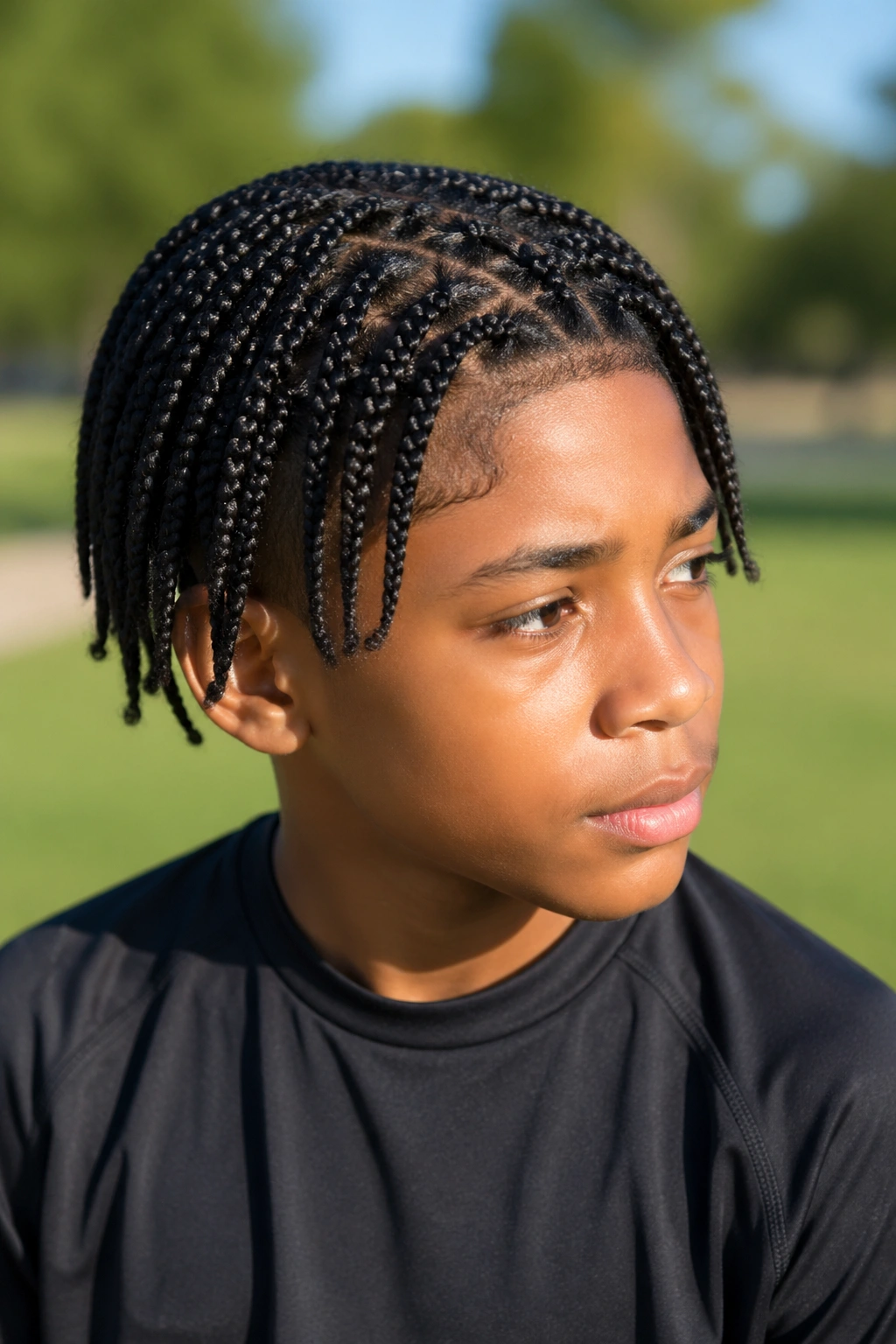
A side part changes the mood fast. The style stops feeling formal and starts feeling lived-in, which is a nice shift for boys who don’t want their hair to look overly strict.
This is the one I’d pick for a kid whose hair grows unevenly at the front or whose natural fall leans to one side. Fighting the hair’s direction is a waste of time. Work with it, and the braids settle better. The part can start just above the eyebrow arch and travel back in a clean line, or it can sit a little deeper near the temple if you want the front to feel more relaxed.
What Makes It Different
The side part gives the style motion. The rows don’t sit in a rigid school-mugshot pattern, so the braids look a little softer when they swing. That can be nice on rounder faces because it keeps the look from feeling too boxy.
It’s also forgiving when the braids start to grow out. The asymmetry hides puffiness better than a dead-straight center part. If a boy is active and tends to rub one side of his head more than the other, this version still holds up.
A side part is a smart choice when you want neat without stiff. Simple as that.
4. Feed-In Small Box Braids That Start Light at the Hairline
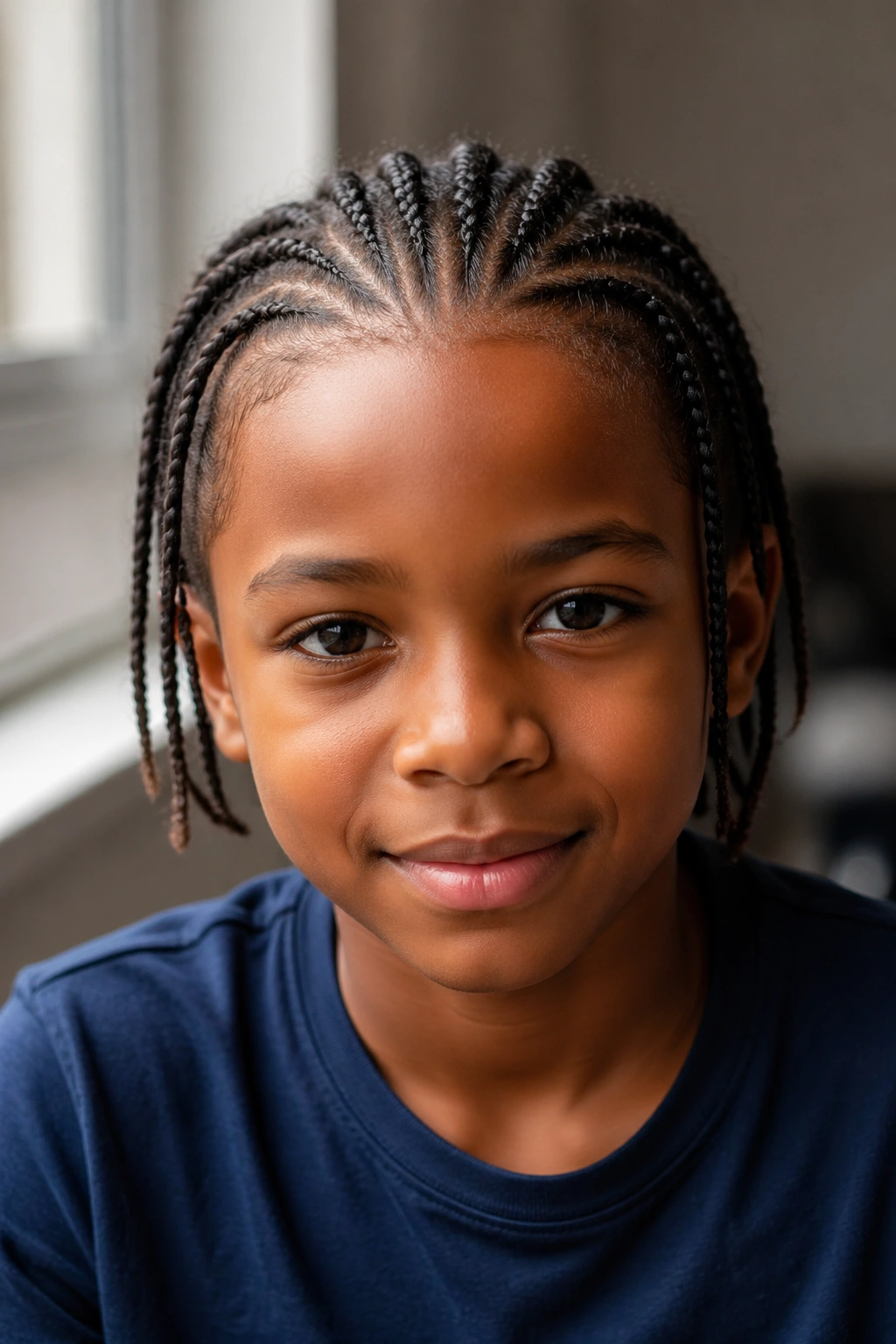
Feed-in braids are a smart move when you want the front to look lighter and the braid base to feel less bulky. The braider starts small near the scalp, then adds hair gradually so the braid grows fuller as it goes back.
That gradual build matters more than people think. On a boy’s head, especially around the temples, a heavy front can look crowded fast. Feed-in sections avoid that. The braids seem to rise out of the scalp instead of sitting on top of it like little ropes.
The style also helps if the hairline is fine or the edges are a bit delicate. You still need a careful hand — no style is worth pain — but the lighter base gives you more room to keep tension under control. The look ends up cleaner from the front and more sculpted from the side.
I like feed-ins for boys who wear hats, hoodies, or sports gear often. The front doesn’t puff up as much under pressure, which makes the style easier to live with. And yes, it can still be small and neat. Feed-in does not mean flashy. It just means smart.
5. Small Box Braids with Beads at the Ends
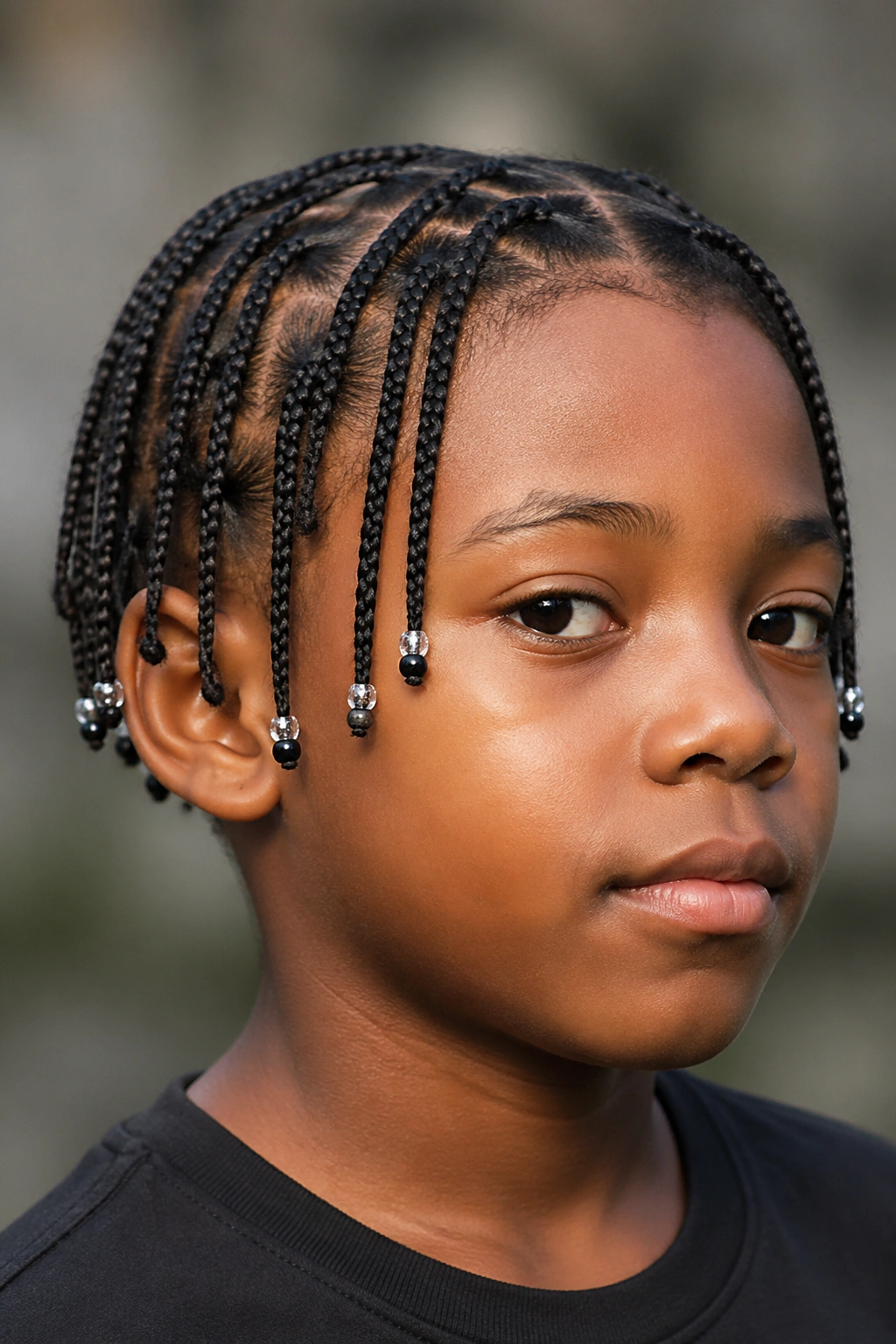
Beads change the energy immediately. A plain braid says tidy. A braid with a few beads says the kid had a little fun with it.
The key is restraint. A couple of clear or wooden beads at the ends can look sharp. Twenty beads on every braid? That gets heavy, noisy, and more annoying than cute. You want movement and a little sound, not a full percussion section every time he turns his head.
Beads work especially well on short-to-medium small braids because they give the ends a finish. Without them, tiny braids can sometimes look a little unfinished at the tips, especially if the hair is short and the braids are not extended. Beads solve that in one shot.
A few practical things matter here. Use beads that slide on snugly so they do not bounce around. Seal the braid ends cleanly first, then add the beads. If the boy plays sports or runs around a lot, keep the bead count lower near the temples and front, where they can hit the face.
6. Small Box Braids with a Taper Fade on the Sides
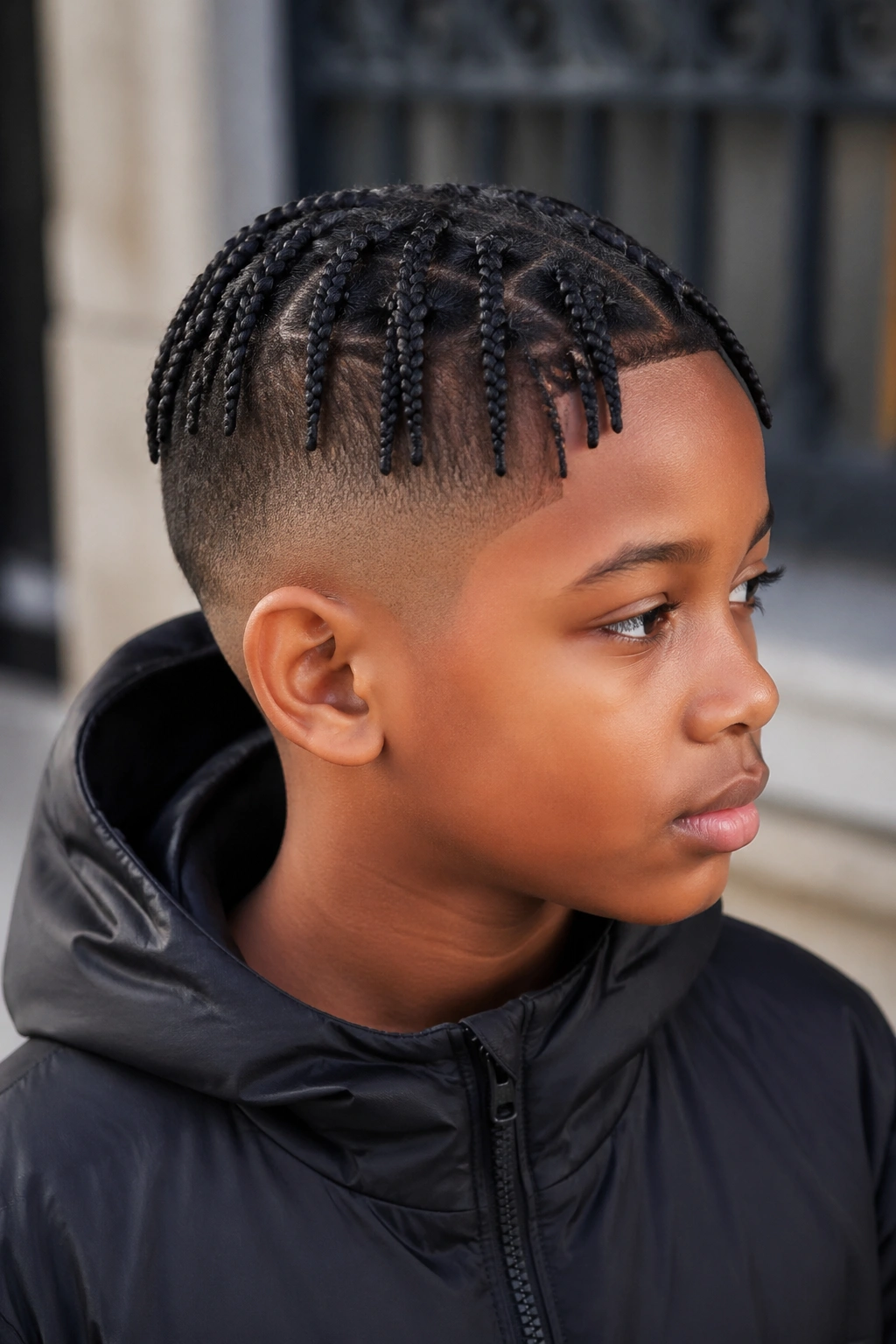
This is the sharp one. The taper fade gives the braids a cleaner outline, and the contrast between the braided top and the faded sides makes the whole style pop without needing extra accessories.
What to Ask the Barber For
You want the fade to stay smooth around the temples and neckline, not jump too high too fast. A low or low-mid taper usually plays nicest with small braids because it keeps the braids as the main event. If the fade rises too high, the top can look disconnected.
A few details help:
- Leave enough hair on top for neat sectioning
- Keep the hairline soft if the child’s edges are fine
- Shape the sideburns lightly so the fade and braids meet cleanly
The best thing about this combo is how long it stays looking fresh. Even when the braids loosen a little, the faded sides still give the head shape. That’s the part people notice from across a room.
I also like this style for boys who wear a lot of collared shirts or uniforms. It looks polished without trying too hard. A little crispness goes a long way here.
7. Half-Up Small Box Braids for Active Days
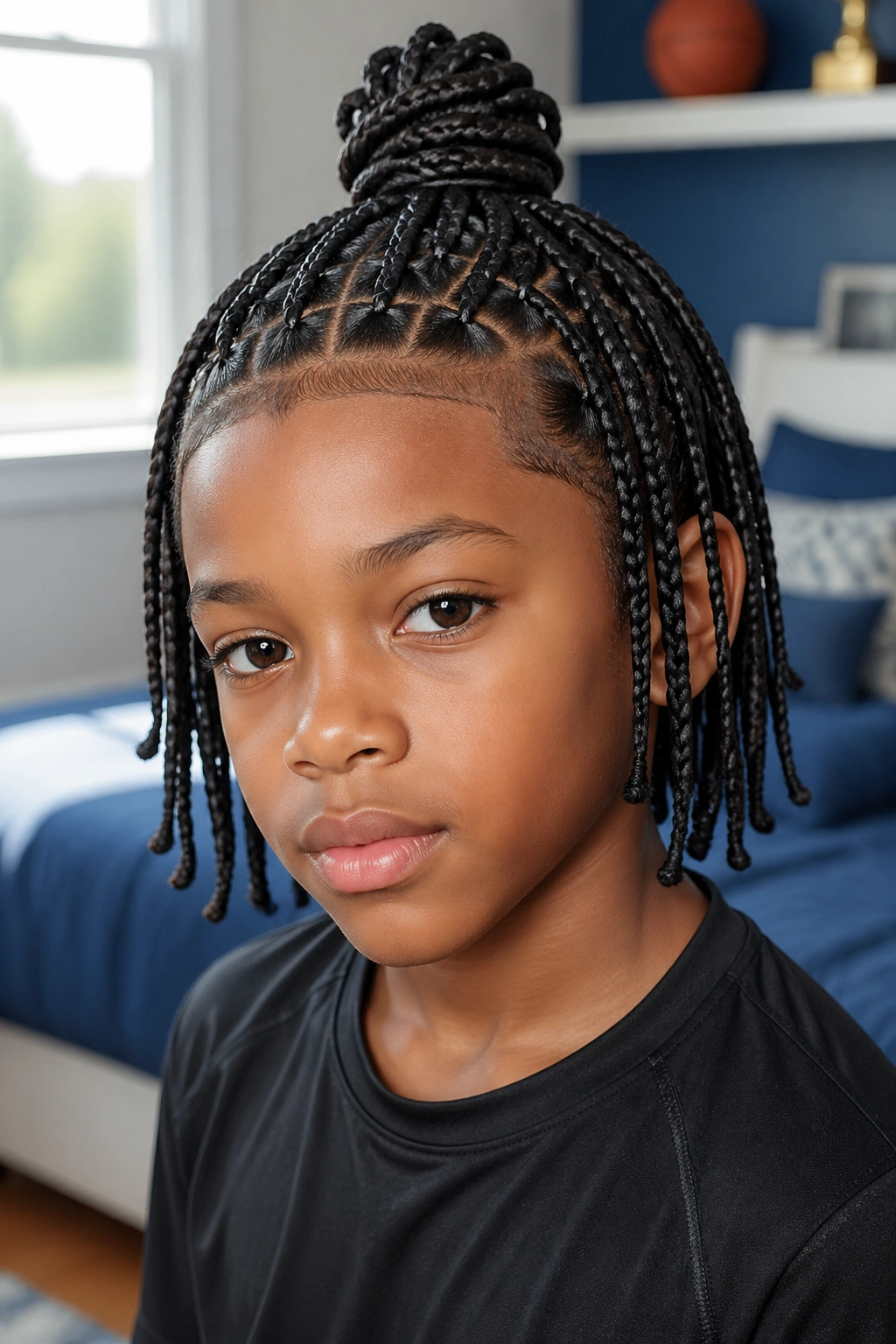
Half-up braids solve a real problem: hair in the face. If the braids are long enough to gather, pulling the top half back keeps the forehead open and lets the rest of the braids hang.
That sounds small, but it changes the whole feel of the style. A boy can run, jump, or sit through class without sweeping braids out of his eyes every five minutes. The look also gives you a little shape at the crown, which keeps the braids from falling flat all over the head.
This version works best when the braids are not too short. If they barely reach the ears, the half-up knot will look awkward. If they reach past the jaw, though, it starts to make sense fast. You can tie it with a soft band, a small bandana strip, or even a single braid wrapped around the bundle for a cleaner finish.
One nice detail: the lifted front makes the face look more open. That matters on boys with full bangs or a strong forehead line. It’s practical, but it also looks deliberate.
8. Small Box Braids with Subtle Colored Extensions
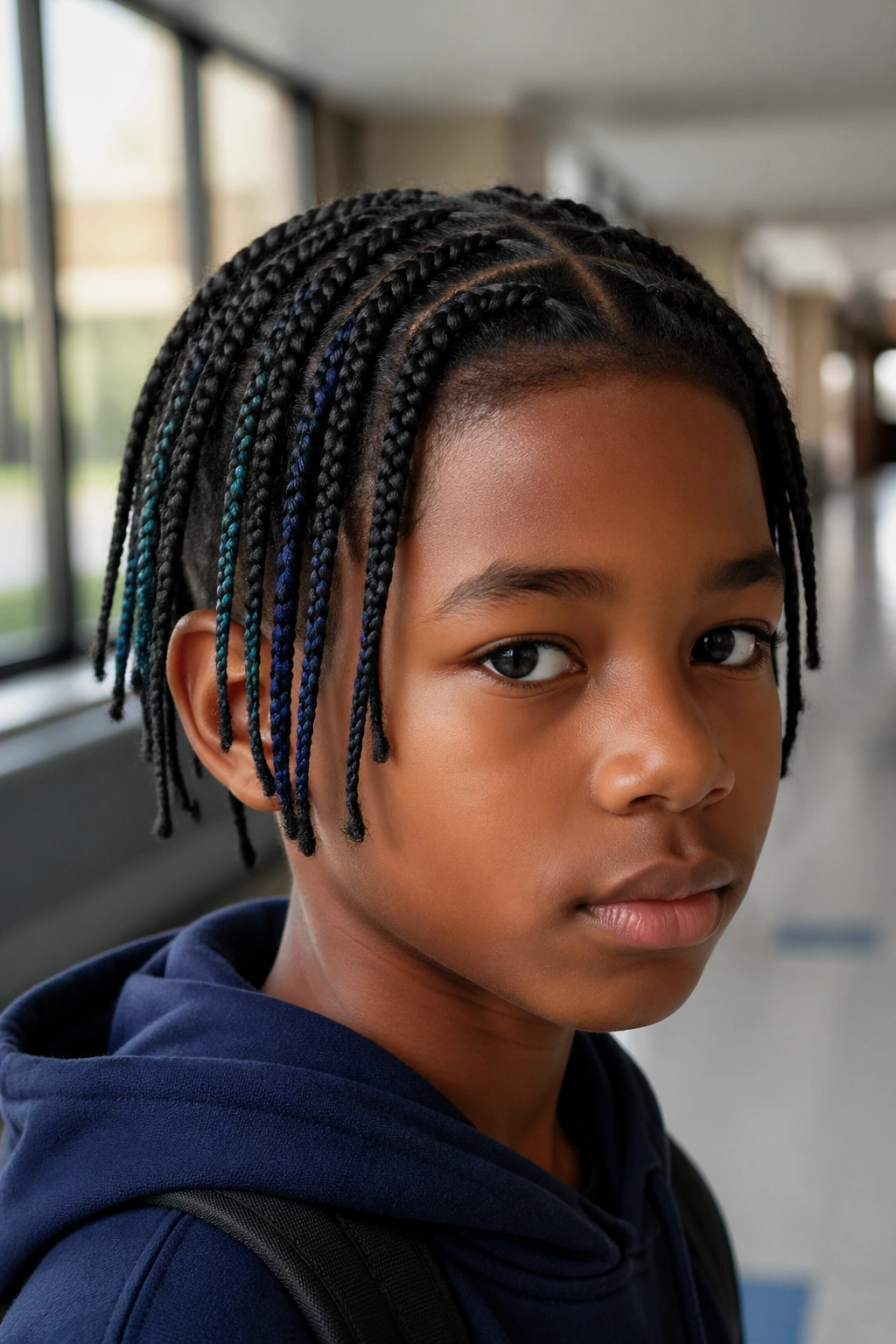
Color can be loud, or it can be tasteful. The difference is usually placement, not the color itself.
For boys, I like subtle color best when the goal is interest without distraction. Think honey brown mixed into black braids, a few burgundy pieces around the front, or a soft gold thread through a handful of rows. You do not need the whole head shouting. Three or four accent braids can change the mood enough.
The cleanest approach is to keep most of the head in the natural shade and tuck the color into the outer rows, where it catches the eye as the hair moves. That keeps the style school-friendly if rules are strict, and it also means the look does not feel dated fast. Bright blue can be fun, sure. It can also become the thing people remember for the wrong reason.
If you’re adding extensions, match the weight to the child’s age and hair density. Heavy colored hair can drag on small sections, and that is never worth it. Better to keep it light and let the color do the talking.
9. Triangle-Part Small Box Braids for a Fresh Shape
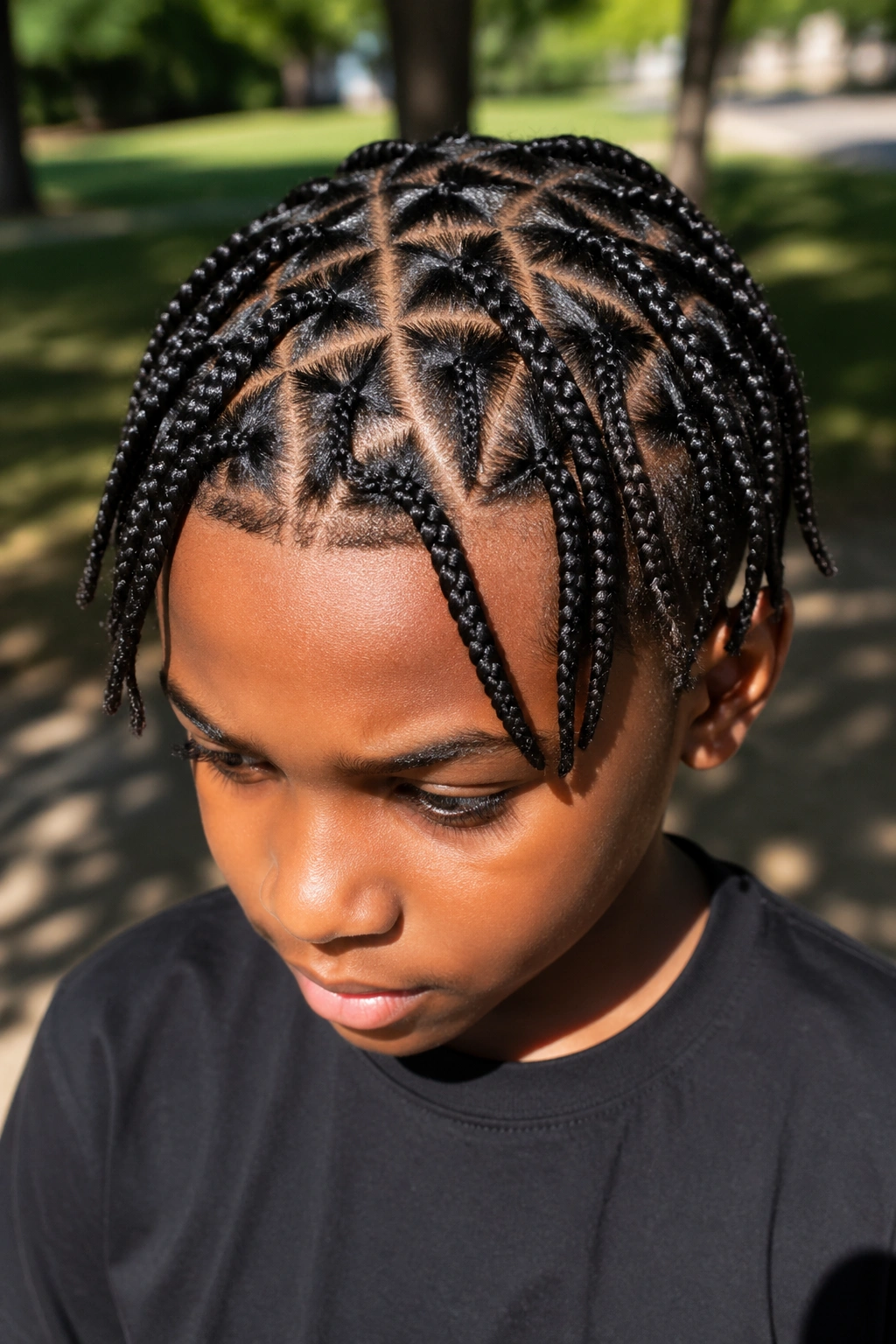
Triangle parts change the whole geometry of small box braids. Instead of neat squares, the scalp pattern becomes a set of little points, and the result feels sharper right away.
Why the Parts Matter
Triangle sections are a small detail that makes a big visual difference. They break up the grid effect, so the style looks more custom and less expected. On boys with thick hair, that can help the scalp pattern breathe a little. It gives the braids some movement before the braids even start moving.
This style works best when the triangles are even and the points line up cleanly. If the triangles are sloppy, the whole head looks messy in a hurry. That is why this one is better in skilled hands. A shaky section pattern will show.
You can keep the braids themselves plain and let the parting do the work. That’s usually my favorite version. The style already has enough personality. It does not need extra tricks piled on top.
Triangle parts also grow out in an interesting way. Even when the roots puff a bit, the shape still reads as intentional, which is more than I can say for some box-braid sets.
10. Zigzag-Part Small Box Braids for Boys Who Like a Little Edge
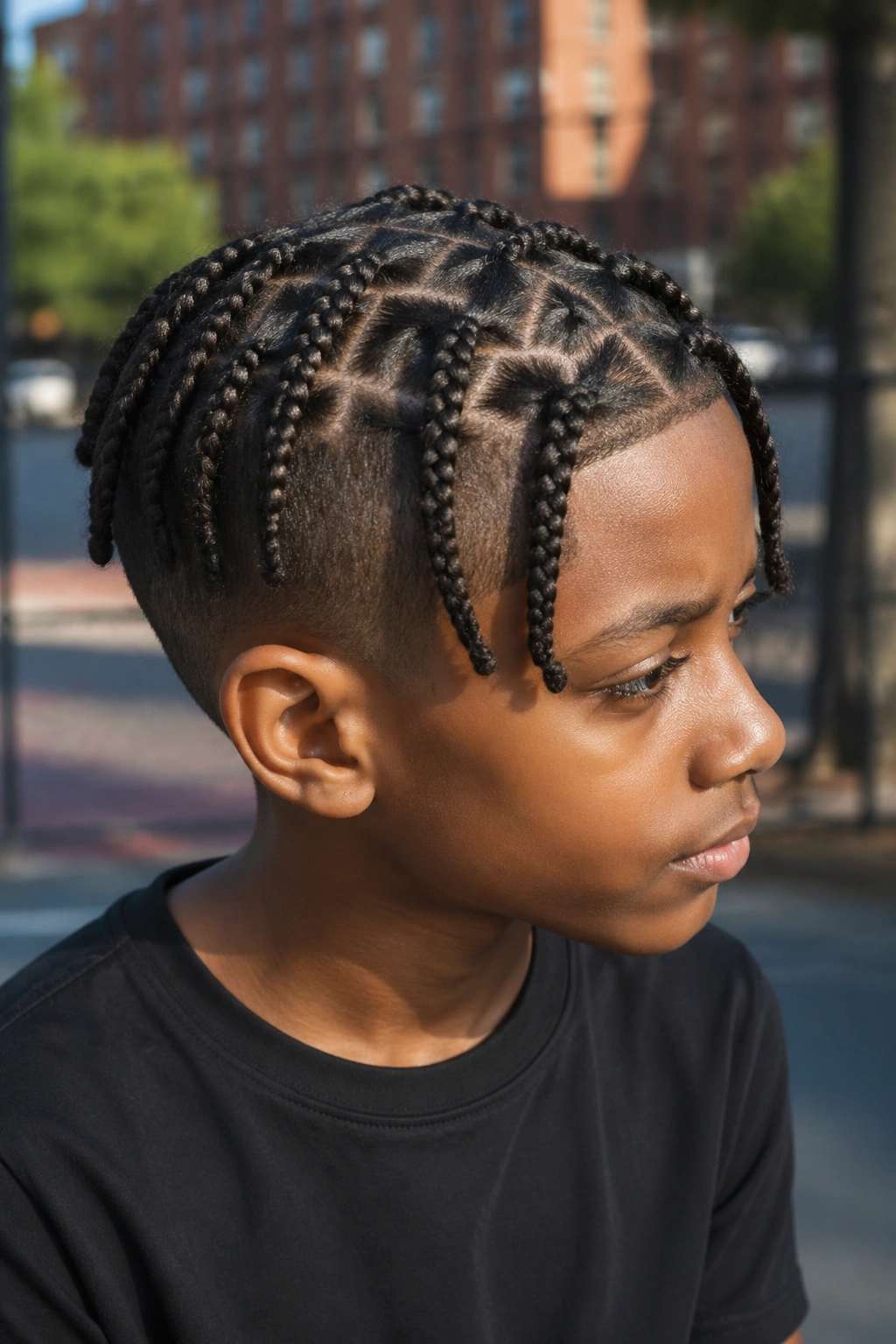
Zigzag parts are not subtle. That’s the whole point.
They make the scalp pattern feel alive, and they suit boys who want something with a little motion before the braids even start hanging. The lines can weave across the scalp in a controlled way, almost like a drawn path, and that gives the style a playful edge without turning it into a full-on statement piece.
The catch is that zigzags need a steady hand. A good zigzag part looks deliberate, with each turn carrying the same spacing. A bad one looks like the comb slipped around the head and nobody fixed it. There’s a real difference.
I like zigzags on medium-density hair because the pattern shows up better. On very thick hair, the parts can disappear a little once the braids settle. On very fine hair, the style can look a bit too busy if the braids themselves are tiny. Middle ground tends to work best.
If you want the braids themselves to stay simple, that’s smart here. The parting is already doing enough work. Let it.
11. Small Box Braids with Cornrow Sides for a Cleaner Frame
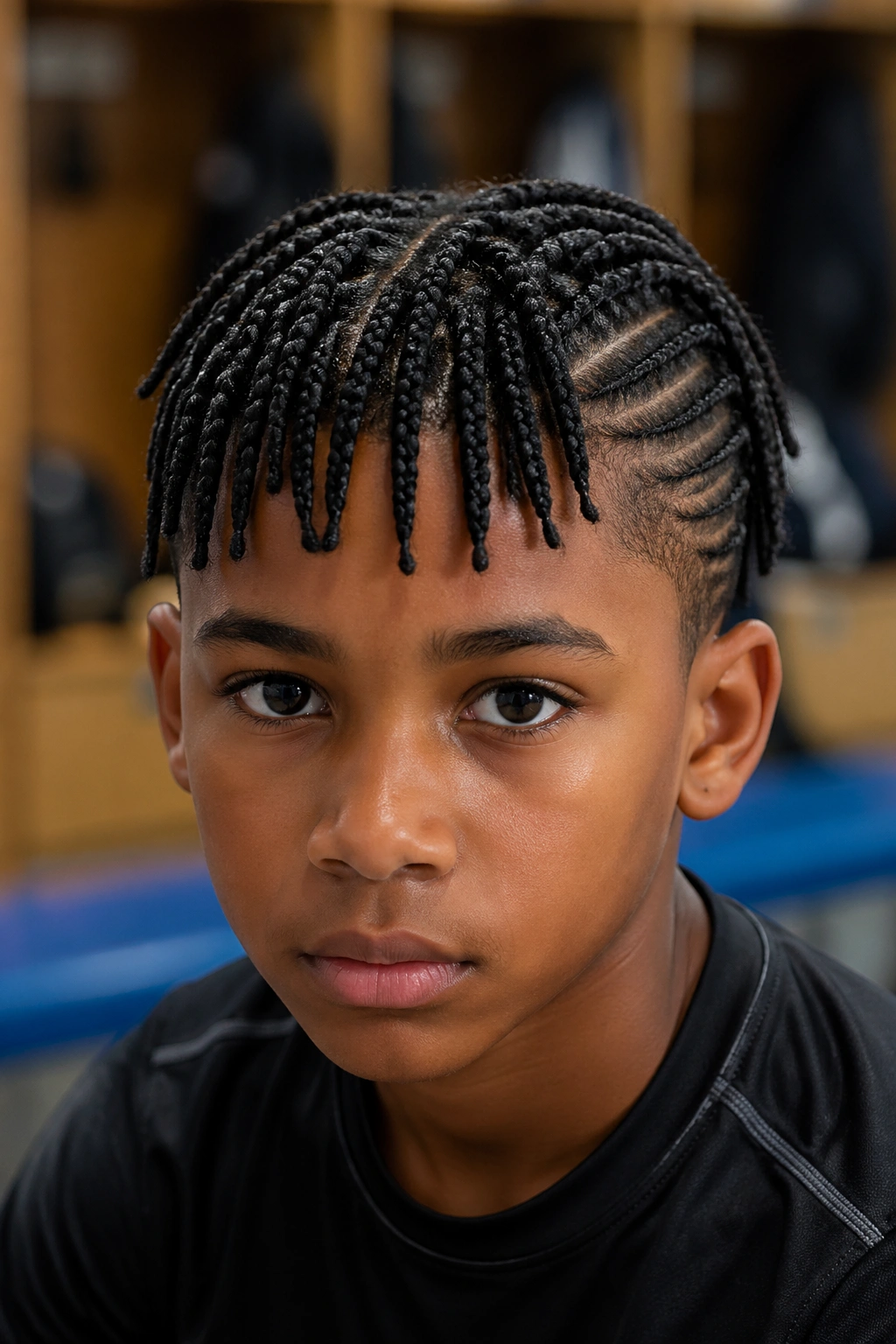
This hybrid style gives you the best part of two worlds: braids on top, tighter sides that keep the frame neat. It’s a strong choice for boys who want their hair controlled around the ears but still want the texture of small box braids up top.
The side cornrows keep everything tucked in close, which helps a lot if the child wears helmets, sports caps, or headphones. There’s less bulk at the edges, and that makes the style easier to live with on busy days. The top box braids still give length and movement, so you do not lose the fun part.
What I like here is the shape. The eye goes to the top first, then drops to the sides in a clean line. That creates a tidy outline without making the head look too narrow. If the barber cleans up the nape and temples well, the whole style looks finished from every angle.
This is one of those styles that photographs well in real life, not because it’s flashy, but because the silhouette makes sense. The shape carries the work.
12. Shoulder-Length Small Box Braids for Older Boys
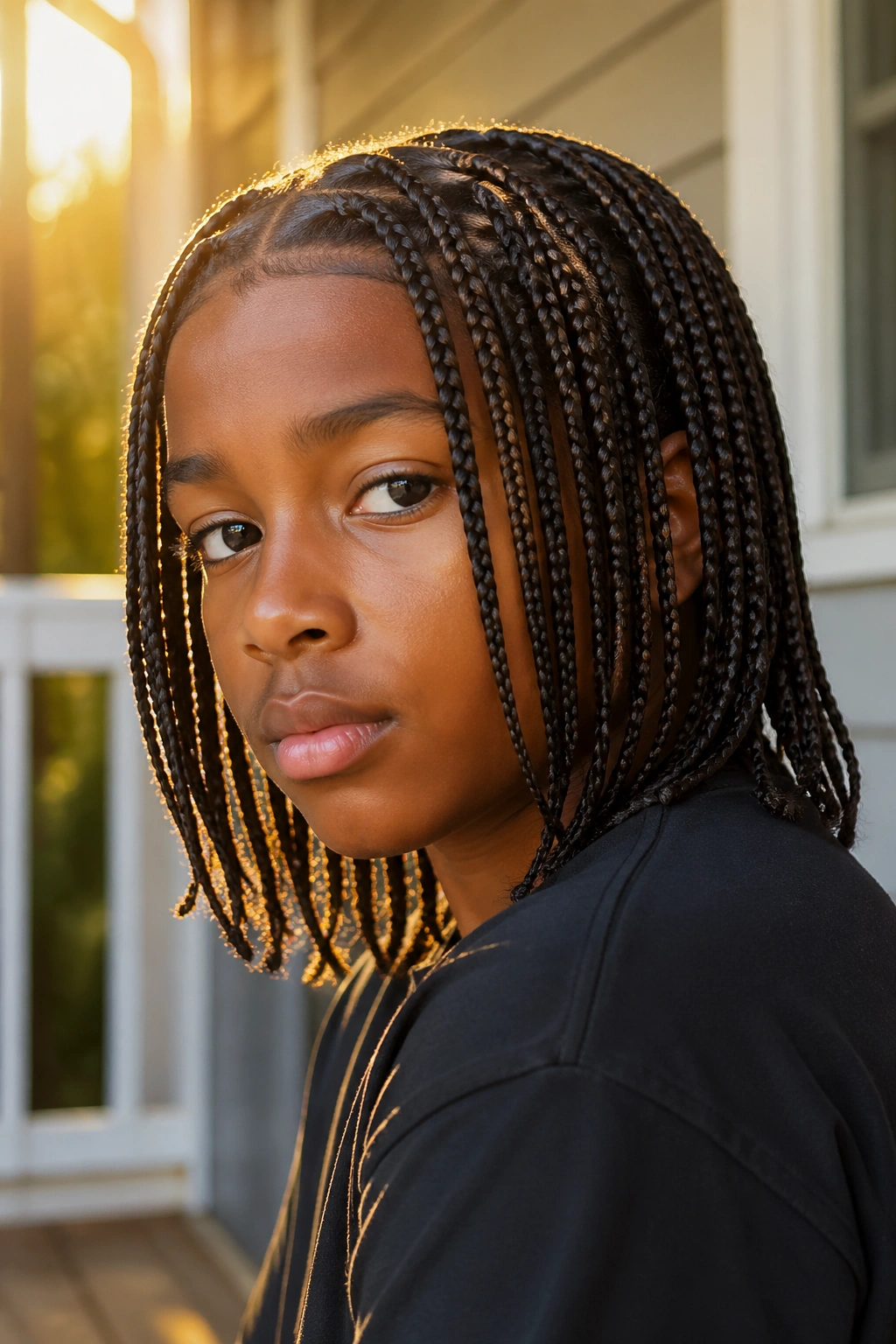
Shoulder-length braids carry a different mood. They feel looser, a little more relaxed, and they work nicely when a boy has enough hair density to support the extra length without the roots getting tired.
The obvious tradeoff is weight. Longer braids swing more, which is part of the appeal, but they also put more pull on each section if the install is too heavy. That’s why the braid size matters so much here. Small braids are ideal because they distribute the load across more sections instead of hanging all the weight on a few thick ropes.
I’d choose this version for a boy who likes touchable hair or one who’s already used to sleeping with a satin cap. Shoulder-length braids need night care. No way around it. If they’re left loose on a rough pillow, the ends fray faster and the roots puff sooner.
The style looks especially good when the ends are trimmed evenly. Jagged lengths make the whole head feel unfinished, while a level cut gives the braids a smooth swing. It’s a simple detail, but a useful one.
13. Curved-Part Small Box Braids That Follow the Head
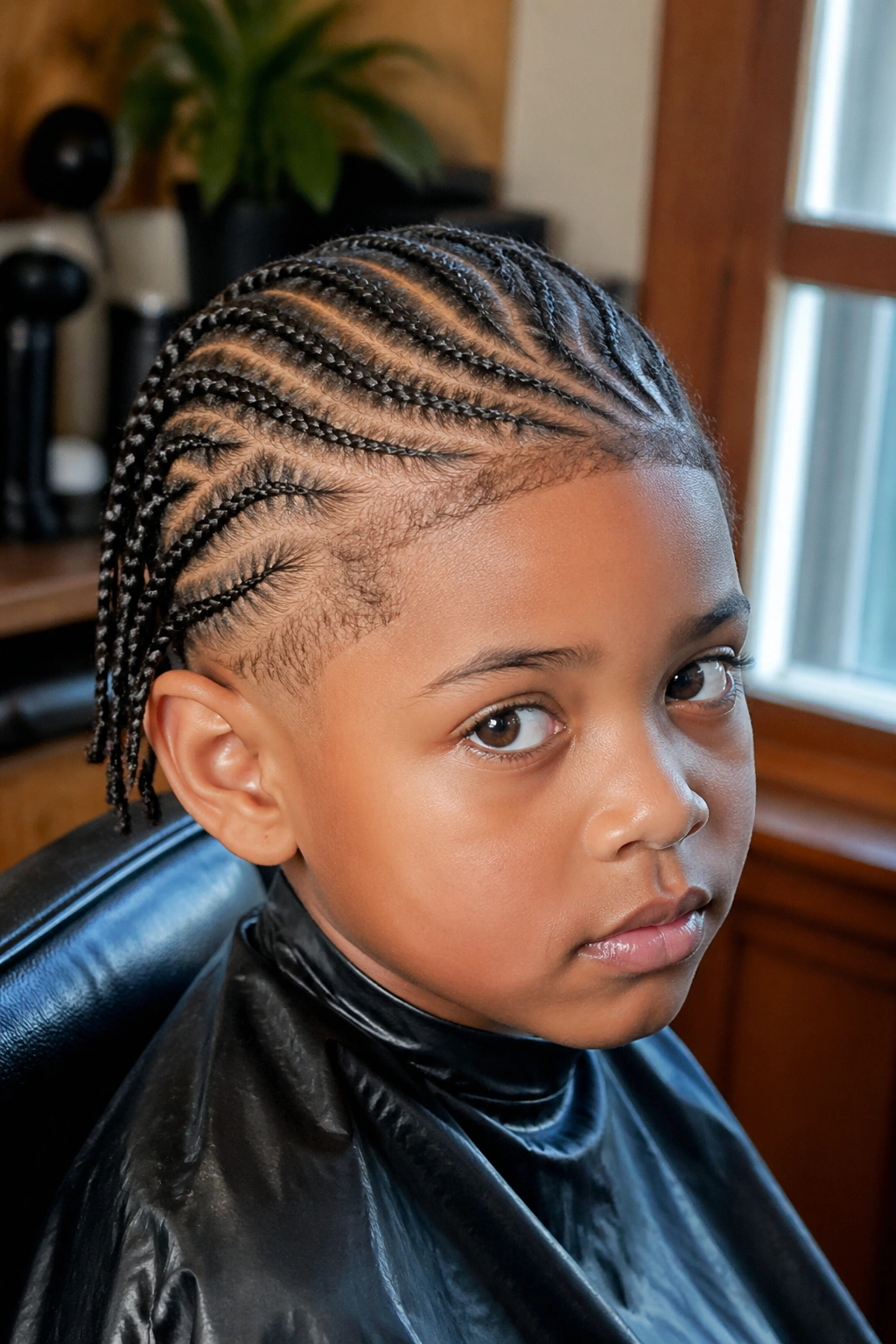
Curved parts are for boys who want the style to look shaped, not stamped on. The lines bend around the head in soft arcs, and the result feels more tailored than a straight grid.
That curve does something nice to the face. It can soften a broad forehead or round out a sharper shape, depending on how the braider places the rows. The parting should feel guided, not random. Every curve needs to make sense from the front, the side, and the crown.
This style asks for patience. The braider has to keep the spacing even while the line bends, and that’s harder than a plain straight-back setup. If the curves wobble, the pattern loses its flow. If they’re clean, though, the style looks almost sculpted.
I like curved parts when the braids are small and the scalp is healthy enough to show clean lines. The curves do not need to be dramatic. A little bend is enough. Too much, and the head starts looking overworked.
14. Small Box Braids with Twisted Ends for a Softer Finish
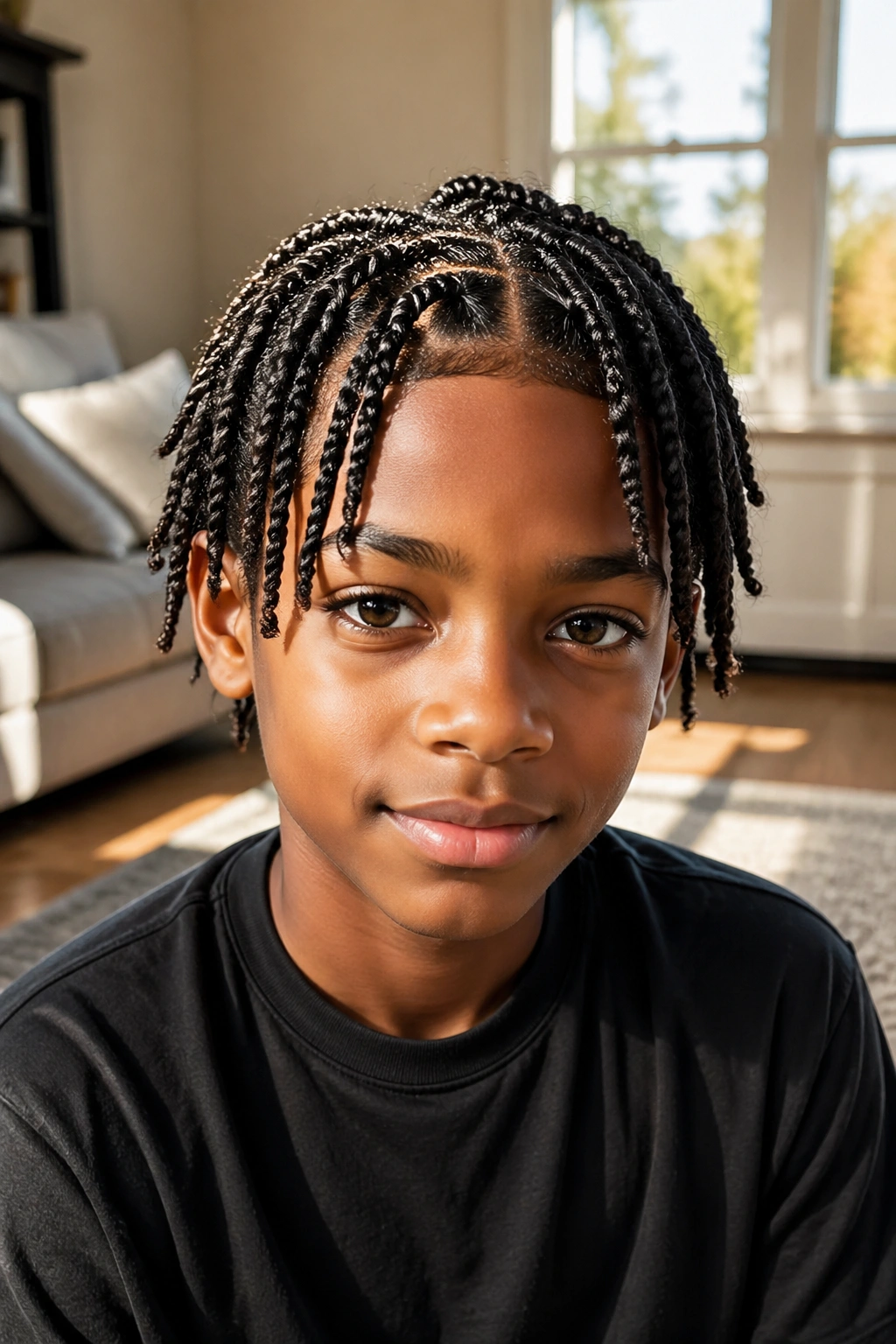
Twisted ends are a nice way to finish small box braids when you want the bottom to feel lighter and less stiff. Instead of leaving every braid in a hard straight tail, the ends turn into two-strand twists or rope-like finishes that move more easily.
That helps if the hair frays at the tips. It also softens the look on boys whose braids are meant to read as neat rather than tough. The style still has structure, but the finish is gentler. I think that balance matters more than people admit.
What to Watch For
The twist should be secure enough to hold, but not so tight that the braid end feels thin and stressed. If the ends unravel quickly, the twist probably started too loose. If the tips look pinched or sore, it’s too tight.
This finish pairs well with medium-length braids, especially when you want the style to last without the ends looking blunt. It can also help the braids swing more naturally. Straight sealed ends sometimes feel a bit stiff. Twists move with the head.
It’s a quiet detail. That’s why I like it. Not every braid needs a loud finish to look good.
15. Drop-Down Small Box Braids with a Clean Temple Fade
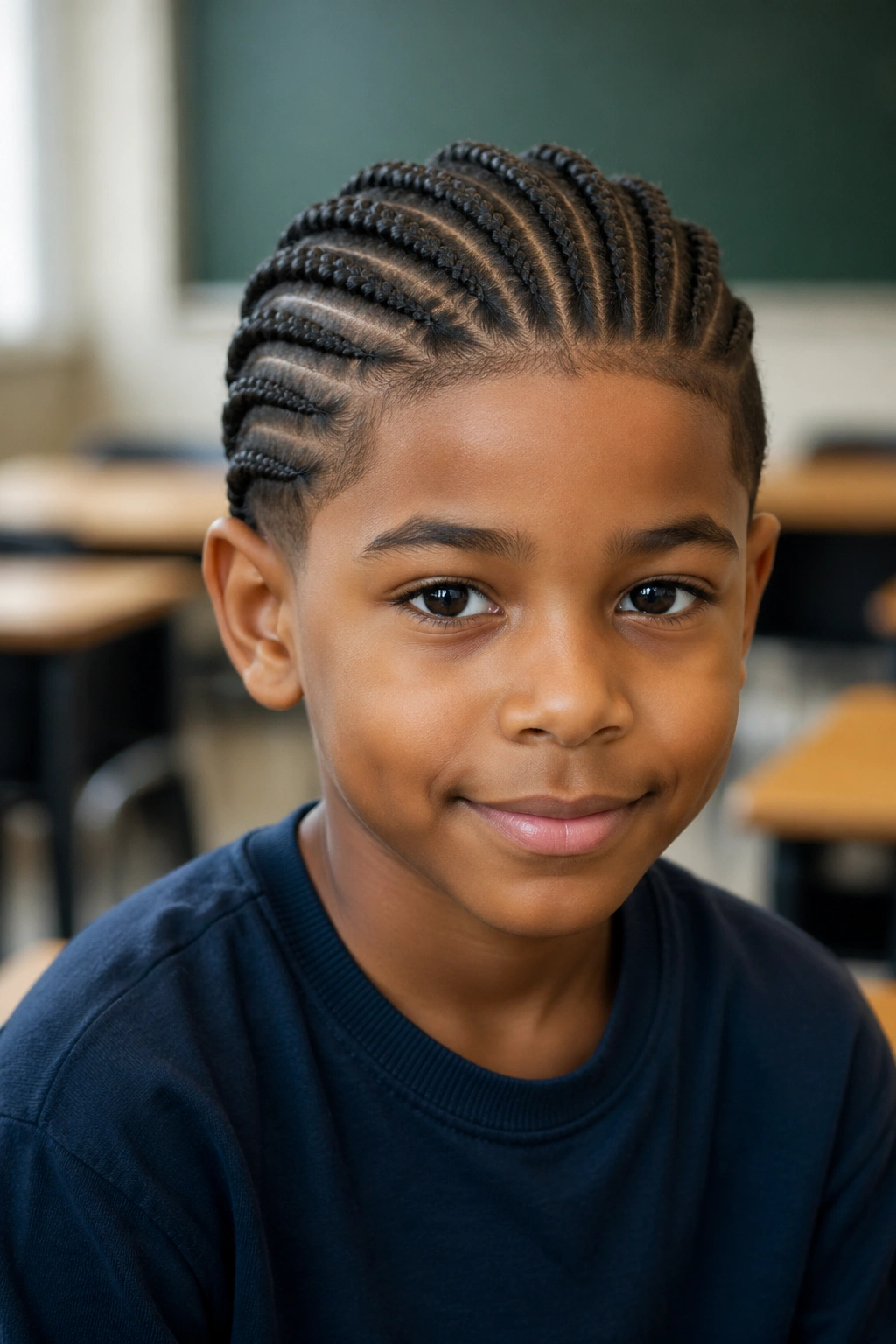
Drop-down braids are the style I’d pick for a boy who wants the braids to hang naturally and show shape from the front. The braids fall from the scalp instead of being tied up, and the clean temple fade keeps the sides sharp so the whole style feels balanced.
This works best when the front hairline is left soft and the fade is clean around the ears. The contrast between the braided top and the faded sides keeps the style from looking too heavy. If the temple area is cut neatly, the braids seem to float better around the face.
I also like this choice because it holds up well in daily life. It does not need constant restyling. A quick mist of water, a little leave-in on the braids, and a satin cap at night will carry it a long way. Nothing fancy. Just steady care.
For boys who like their hair to move but still look controlled, this is a very good finish. It has enough edge to feel cool, and enough shape to stay tidy. That’s a hard combination to fake.
Small box braids for boys look best when the style fits the child’s routine instead of fighting it. If he’s active, keep the front light. If he likes a more polished look, a fade or a center part will do a lot of work without making the hair feel stiff.
And if you’re torn between two styles, pick the one that will still look decent after a week of school, play, and sleep. That’s usually the real test.