


18 medium purple knotless box braids have a specific kind of swagger. They look polished, but not stiff; colorful, but not loud; protective, but still playful enough to make people do a double take on the train, at work, or across a room. If you mean 18-inch medium purple knotless box braids, you’re in a length range that gives you swing without turning the style into a giant curtain.
That mix matters. Purple can go soft and dreamy, deep and moody, or bright enough to read from across the street, and medium braids give the color room to breathe. Tiny braids can make bold color feel busy. Jumbo braids can make the same shade feel heavier than it needs to. Medium sits in the middle, which is why this style keeps showing up on people who want shape, movement, and a little edge without the headache of a high-tension install.
The knotless part is doing real work here, too. Instead of starting with a hard knot at the root, the braid is fed in gradually, which helps the scalp lie flatter and makes the finish look cleaner. That matters even more with color, because purple hair tends to expose bad parting and sloppy root work faster than plain black braiding hair does.
And if you’re the kind of person who wants a style that looks expensive without being fussy, this one earns its keep quickly. The trick is knowing how to choose the shade, the braid size, and the maintenance routine so the color stays rich and the roots stay calm.
What 18-Inch Medium Purple Knotless Box Braids Look Like In Real Life
These braids usually land in that sweet spot between shoulder-skimming and mid-back movement. On most people, 18 inches gives enough length for a low ponytail, a half-up style, or loose braids that tap the upper back when you walk. They move. A lot. That movement is part of the appeal, because purple shows more depth when it sways instead of sitting flat like a helmet.
Medium size changes the whole mood. Too thin, and the color can start to look busy, especially if the purple has a strong contrast against your natural hair or roots. Too thick, and the braid loses some of the sleekness that makes knotless braids feel so clean. Medium gives you a visible braid pattern, a nice weight in the hand, and enough surface area for the purple to look intentional.
Why the length matters
An 18-inch braid is long enough to style, but not so long that you’re constantly tossing it over your shoulder. That’s practical. It also means the ends are less likely to drag on clothing, which helps the style stay neater for longer and keeps the ends from fraying as fast.
What the color does at this length
Purple picks up light in a way dark colors don’t. A plum shade looks richer near the crown and nearly smoky in low light. Lavender turns softer and more visible in daylight. Orchid or grape reads brighter and gives the whole style more pop. Same braid. Totally different personality.
My honest take
If you want purple hair that feels wearable, 18 inches is a smarter choice than waist-length. You still get drama, but the style doesn’t start running your day. That matters more than people admit.
Why Knotless Roots Feel Lighter Than Traditional Braids
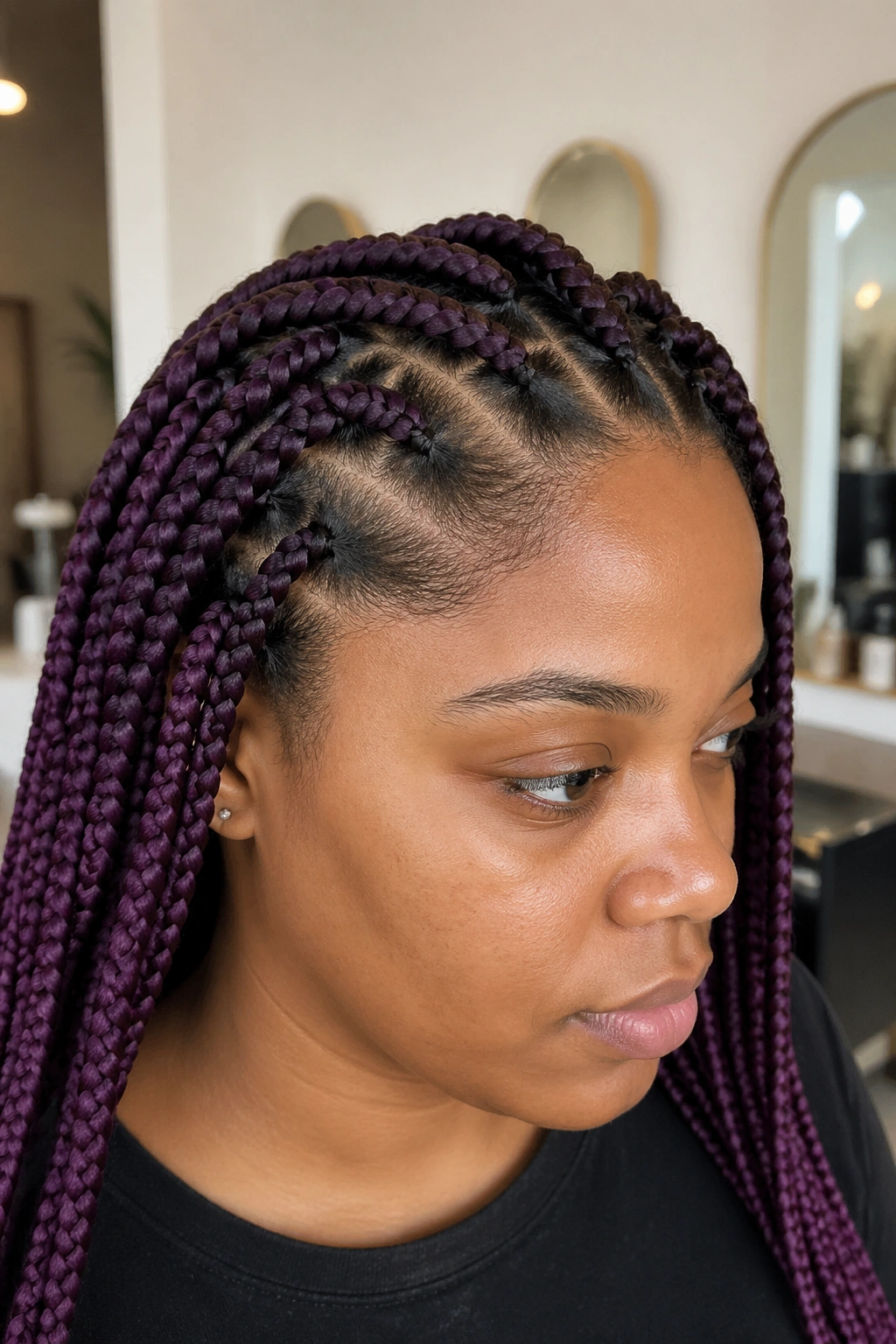
A knotless braid starts with your own hair at the root and feeds in extension hair as the braid builds. That sounds like a small technical detail. It isn’t. The whole point is to remove that hard knot sitting right on top of the scalp, which is what makes many traditional braids feel tight, heavy, and a little angry for the first few days.
The difference shows up in the first hour. Knotless braids usually lay flatter at the base, and the hairline looks smoother because there’s no bulky knot to hide. If the install is done well, the root has a soft taper instead of a stiff bump. That softer start is one reason purple knotless braids photograph so well in real life, not because of some magic lighting trick, but because the braid itself has a cleaner shape.
Still, knotless does not mean tension-free. If the stylist grips too hard, parts too small, or pulls the feed-in too tight, you’ll feel it. The style can be gentler than a classic knot braid and still be wrong for your scalp if the hands doing it are heavy.
What to feel for after install
- A little snugness for the first day can happen.
- Sharp pain at the nape, temples, or behind the ears is a bad sign.
- Headaches after a braid install usually mean the tension is too much.
- A clean part should lie flat without little lumps of natural hair poking through.
Why medium size helps
Medium braids spread the weight out better than very tiny braids and feel less bulky than jumbo ones. That balance is why this size works so well with an 18-inch length. The style moves, but it doesn’t feel like it’s fighting your scalp every time you turn your head.
Choosing a Purple Shade That Actually Flatters Your Skin Tone
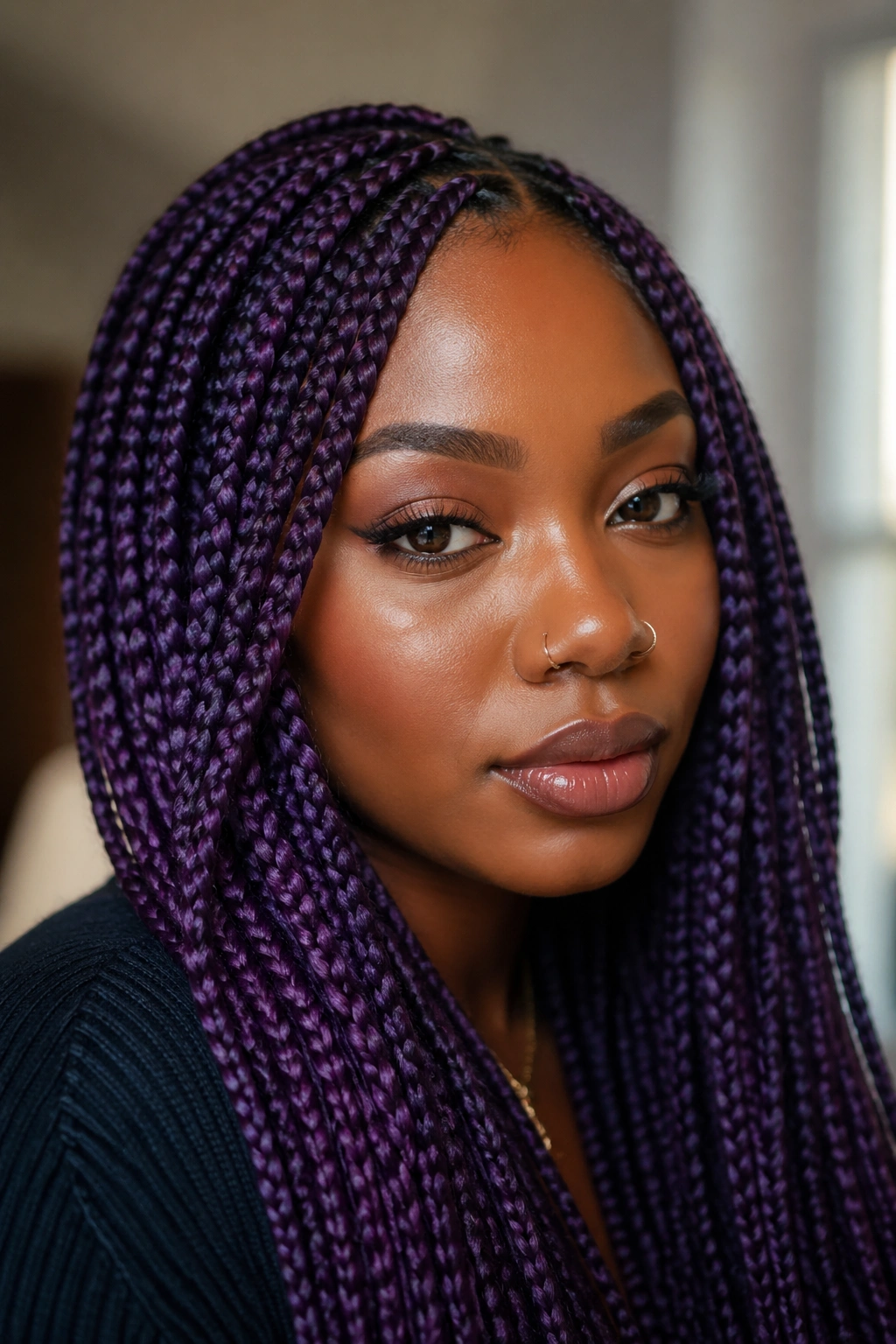
Purple is not one color. It’s a whole family of colors, and the shade you pick changes everything about the braid style. A good purple can make your skin look richer and your features sharper. A bad one can flatten your face or make the style look like an afterthought.
If your skin has warm undertones, richer shades like plum, aubergine, and deep grape usually sit beautifully against the skin because they carry enough red and brown in them to feel grounded. Cooler undertones often work well with lilac, violet, and blue-leaning purple, especially if you want the style to read bright instead of earthy. Neutral undertones have the easiest time, which is annoying if you like clear rules but handy in practice.
The thing people miss is contrast. A shade can look gorgeous on its own and still be wrong for the person wearing it if it doesn’t create enough difference from the complexion. On deeper skin, very pale lilac can disappear unless it’s paired with a darker base or a mixed-color feed-in. On lighter skin, some neon purples can go harsher than expected unless there’s a softer tone woven in.
Shade map worth thinking about
If you want soft and wearable
Lavender, orchid, dusty purple, and mauve-purple sit in a gentler zone. These work well when you want the color to feel airy and a little romantic.
If you want richer and moodier
Plum, eggplant, wine-purple, and dark violet give you depth. These shades are the easiest to keep looking polished when the hair grows out a little.
If you want bright and bold
Electric violet, royal purple, and saturated grape make the braid pattern stand out. These shades need clean parting, or the whole look gets messy fast.
One practical thing: the same purple hair looks different under indoor bulbs, daylight, and phone flash. If you’re buying hair before install, look at it near a window. A shade that looks soft in a shop can turn loud on the street.
The Hair, Length, and Parting Map Behind a Clean Install
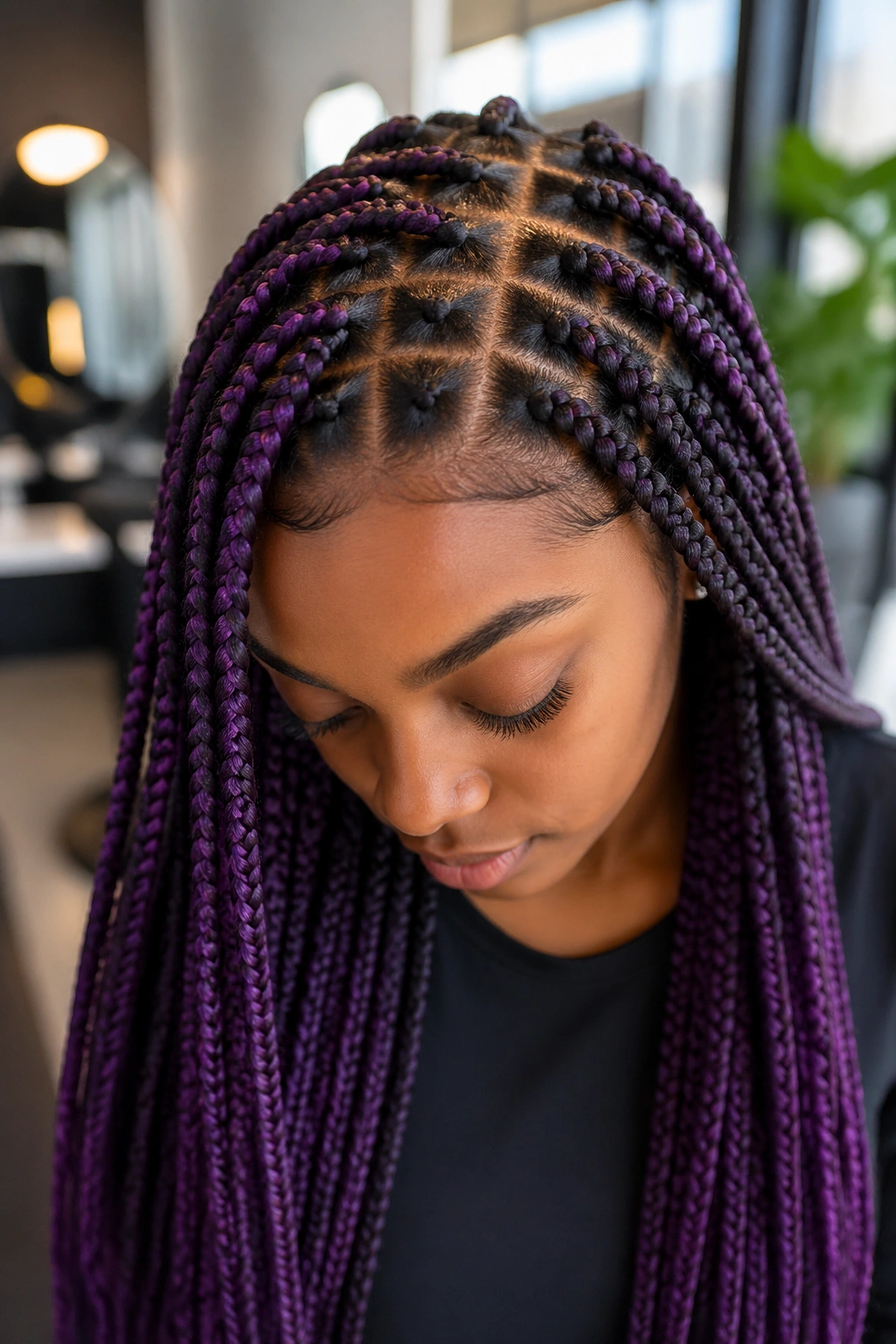
The best-looking braids usually start with boring decisions made properly. That’s the unglamorous truth.
For medium knotless braids, most stylists use pre-stretched braiding hair or a similar synthetic braiding fiber because it helps the braid taper neatly and keeps the finished length from puffing out at the ends. If you want a smoother, salon-finished look, pre-stretched hair saves time and makes the feed-in less clunky. You can use colored hair alone or mix purple with black for a shadow-root effect. I prefer the mixed look when someone wants the purple to feel richer and less flat.
What to ask for in the parting
Medium braids usually look best when each section is around half an inch to three-quarters of an inch square, depending on how full you want the set. Smaller sections give you more braids and a tighter overall look. Larger sections cut down on install time but can make the color blocks look heavier.
A clean grid matters more with purple than with black hair. Color highlights the part lines, which is flattering when the lines are neat and unforgiving when they’re not. That’s why sloppy corners show up so fast on colored braids. Every crooked part gets its own spotlight.
How much hair you may need
For an average full head of medium braids at 18 inches, people often land around 6 to 8 packs of braiding hair, sometimes more if they like thicker ends or a denser install. That number shifts with braid count, the exact hair brand, and whether the purple is layered over black or used all the way through. Buy a little extra. Running out of the exact shade halfway through an install is one of those avoidable headaches that ruins everyone’s mood.
Getting Your Natural Hair Ready Before the First Braid Is Placed
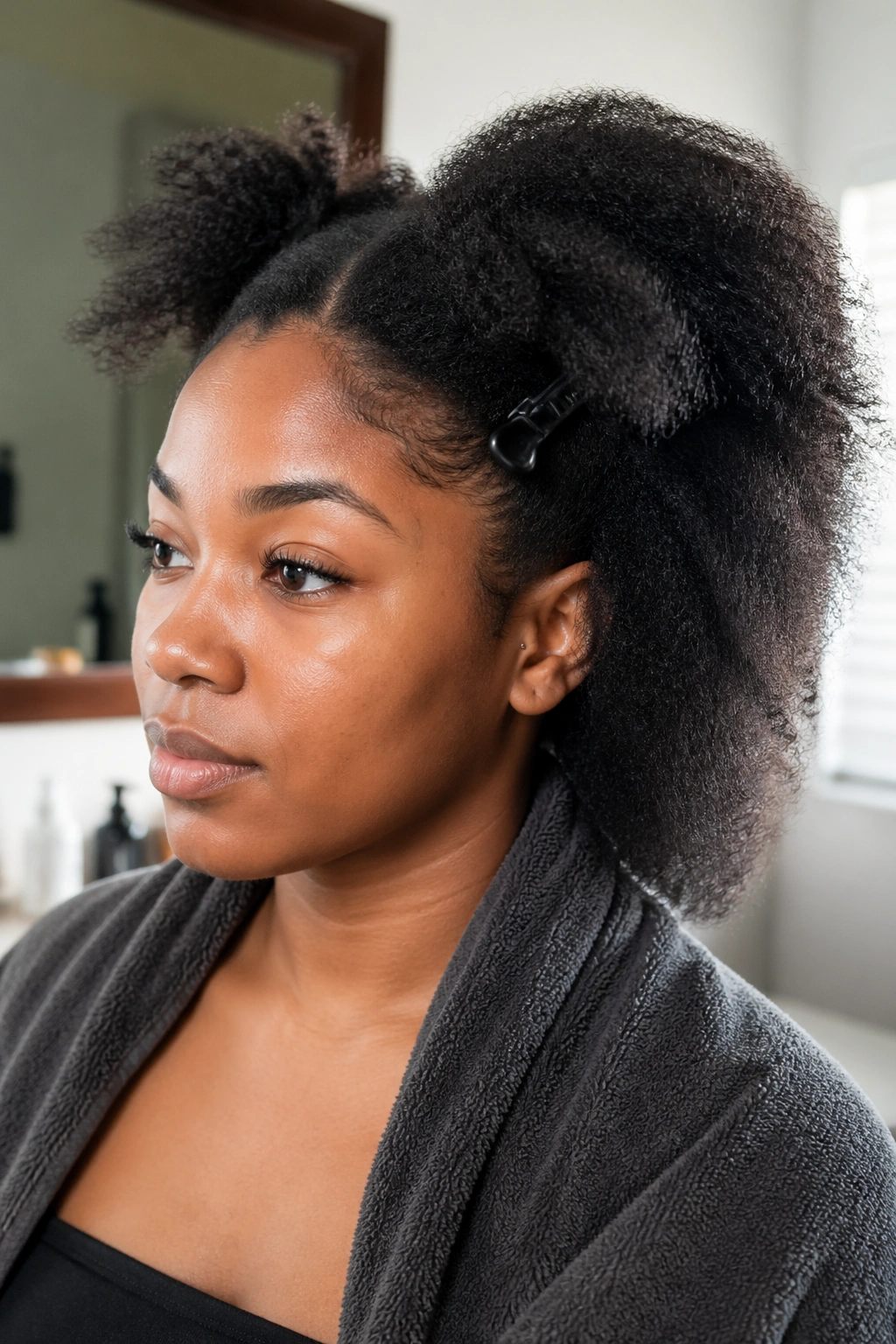
A braid install starts days before the first section gets picked up. If the hair underneath is dry, tangled, or coated in old product, the style tends to itch, lift at the root, or look dull faster than it should. Clean hair is not glamorous, but it’s the difference between a braid style that sits nicely and one that feels like it needs rescue after a week.
Wash your hair thoroughly, condition it, then make sure it is completely dry before installation. Wet or even damp hair trapped inside braids is a bad idea. It can lead to a musty smell, scalp irritation, and a style that never quite settles right. If your hair takes a long time to dry, give yourself extra time and don’t rush it because the appointment is on the clock.
A smart prep routine
- Detangle in the shower with conditioner and a wide-tooth comb.
- Rinse out all heavy leave-ins or thick oils.
- Blow-dry on low or medium heat if your hair tends to stay damp.
- Stretch the roots if your natural hair is very coily and shrinks hard.
- Trim rough ends before the install if the ends are split and snaggy.
The scalp matters here, too. If your scalp is already dry, itchy, or flaky, solve that before the braids go in. Once the style is installed, you want calm, not damage control. A light scalp treatment can help, but go easy. Heavy grease piled under braids usually creates buildup faster than it solves dryness.
The Feed-In Technique and Why Medium Braids Sit So Neatly
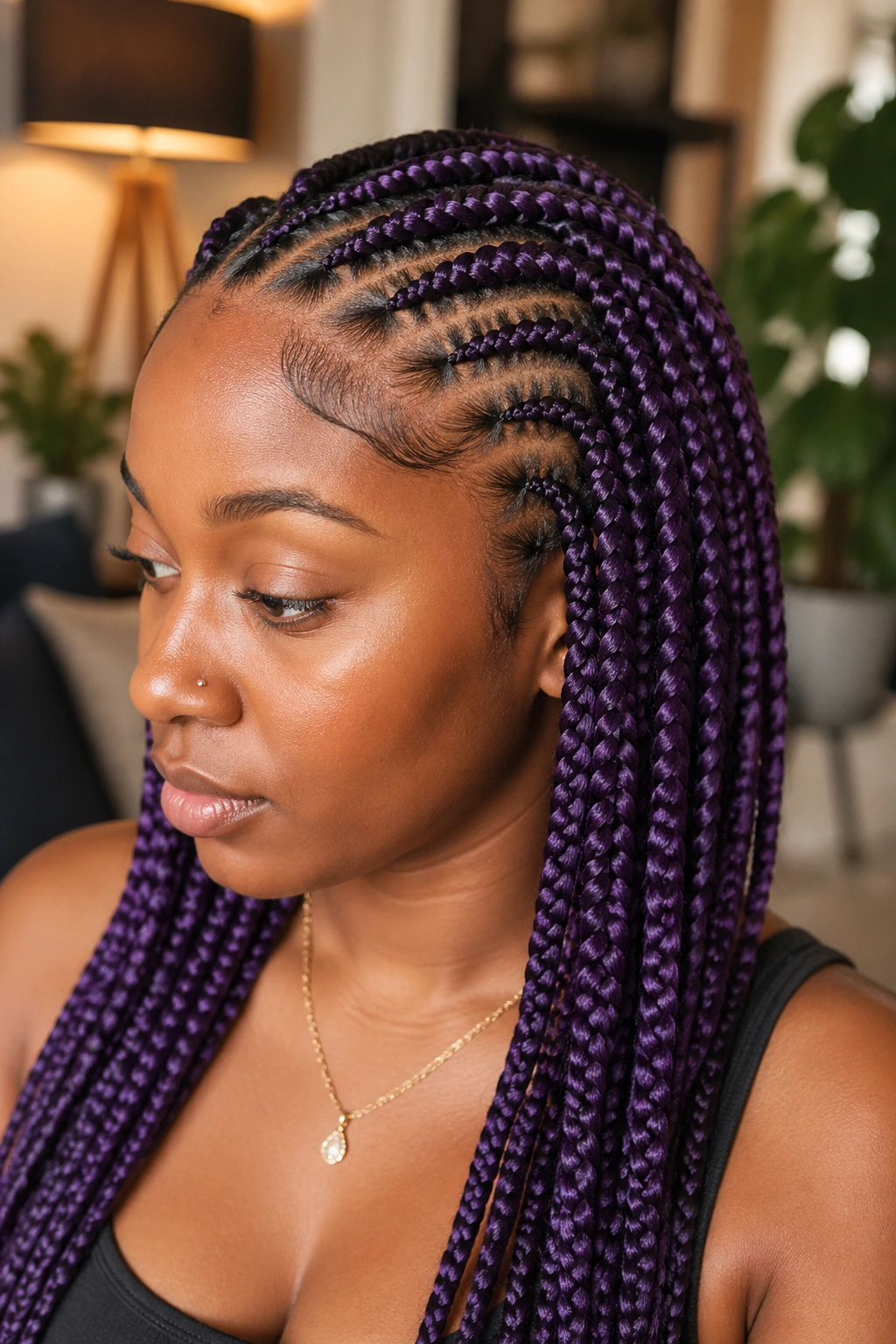
Feed-in braiding is what gives knotless braids that smooth, tapered start. Instead of attaching a large chunk of extension hair all at once, the stylist adds pieces gradually as the braid grows. The effect is subtle when done well and painfully obvious when done badly. A smooth feed-in looks like the braid grew that way. A rough one looks like someone attached a tube to the scalp and hoped for the best.
Medium braids are a sweet spot for this method because the braid has enough width to show the taper without losing shape. With tiny braids, the feed-in can disappear almost too well. With very large braids, the add-ins can look bulky. Medium size gives the braid enough body to hold the purple color while still keeping the roots soft.
What a good feed-in looks like
The root should sit flat, with no sharp lump where the extension starts. The braid should feel snug, not yanked. And the taper should be gradual, not abrupt. If the braid suddenly jumps from tiny root to thick rope halfway down, the feed-in was rushed.
Why color changes the look
Purple makes the feed-in easier to see, which is both a blessing and a curse. You get more visual movement. You also get less room for mistakes. A well-blended install looks rich and layered; a sloppy one looks patchy in bright light. That is exactly why medium purple knotless braids work best when the styling hand is clean and patient.
How to Ask for This Look at a Salon Without Guesswork
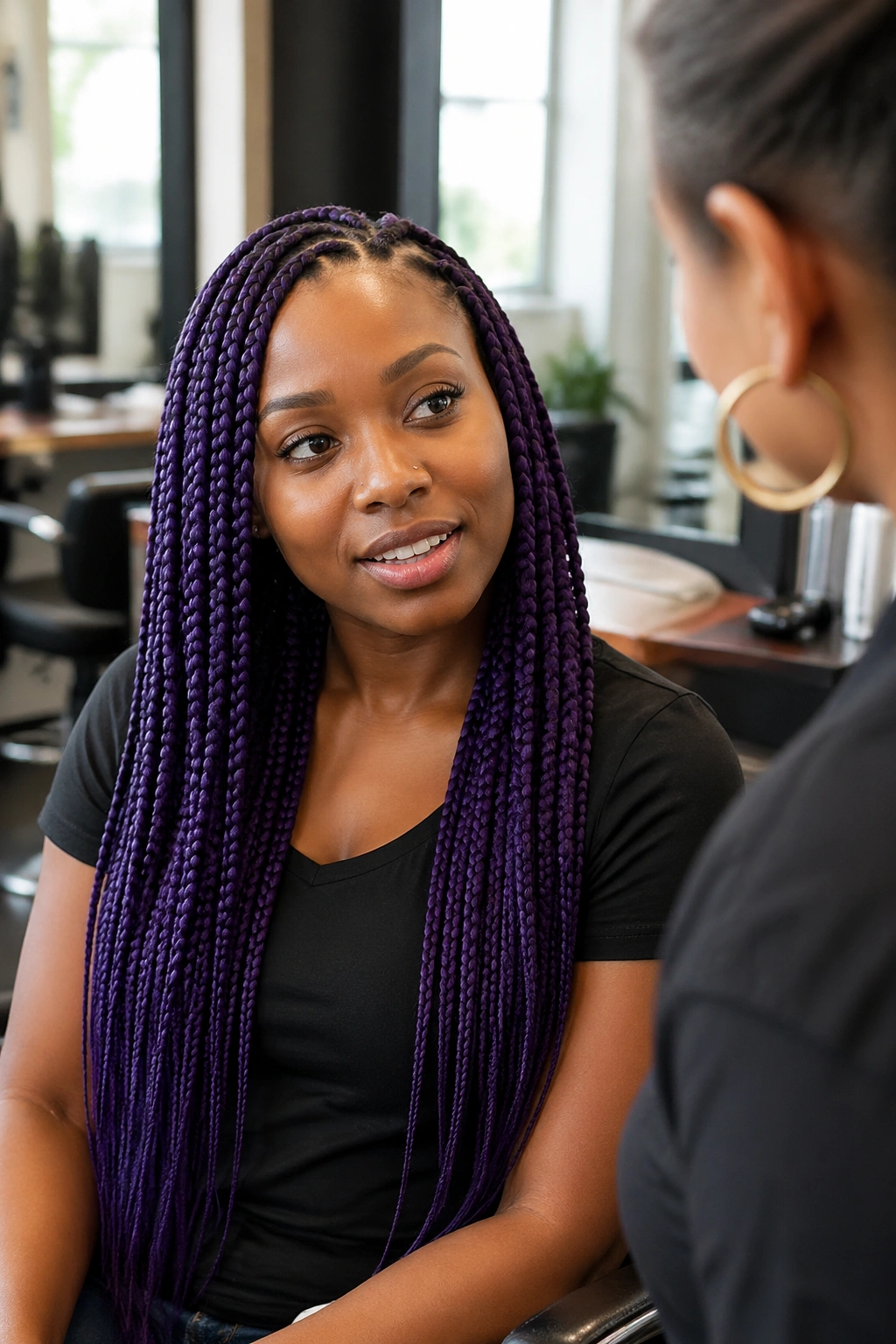
People often walk into an appointment with a vague idea and leave with a style that misses the mark by a mile. Don’t do that to yourself. Bring clear details.
Say you want 18-inch medium knotless box braids in purple, and then explain the shade you mean: plum, violet, lavender, grape, or a mixed purple-black blend. If you have a reference photo, bring one that shows both the braid size and the color. Photos are useful, but only if you know what you’re looking at. A picture that shows waist-length jumbo braids does not help when you want a medium set at collarbone-to-mid-back length.
Questions worth asking before install
- How many braids are you planning for this size?
- Will you use pre-stretched hair or regular braiding hair?
- How much tension do you apply at the crown and nape?
- Do you recommend purple all through the braid or a darker base with purple added on top?
- How long do you expect the install to take?
That last question matters because rush jobs look rushed. Medium knotless braids at 18 inches usually take a solid block of time, depending on braid count and stylist speed. If someone says they can do a full head in what sounds suspiciously fast, ask yourself what corners are being cut. I’d rather sit longer and get neat parts than save an hour and hate the roots for three weeks.
If you’re doing them yourself, be honest about your hand speed. Knotless braids reward patience. They punish impatience.
Styling Medium Purple Braids When You Want Them Sleek or Loose
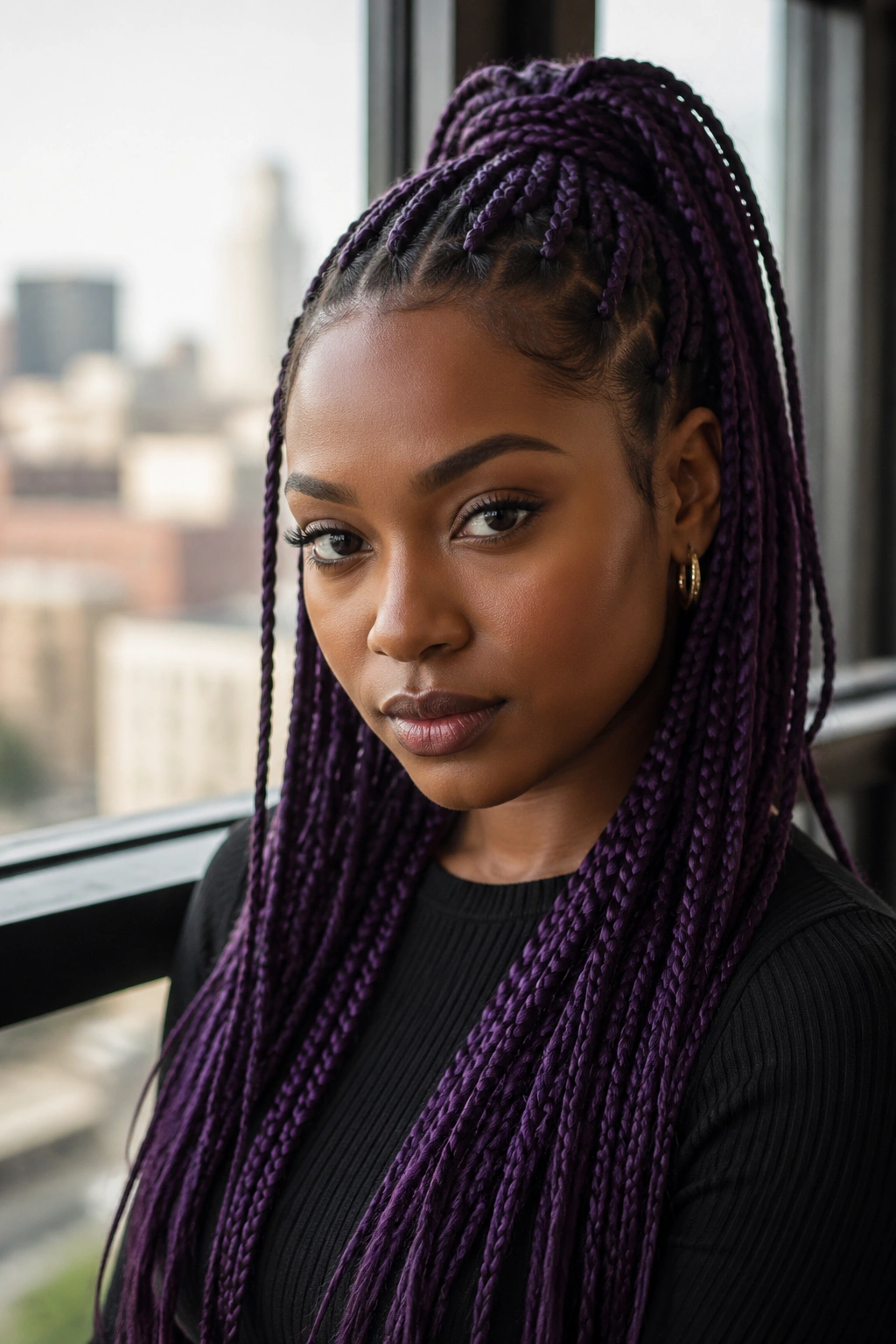
Color changes how a braid style feels, but styling changes how it reads. Pull the braids up tightly and the purple turns sharper, more graphic. Wear them loose and the color looks softer, more layered. Same hair. Different mood.
The easiest style is the half-up, half-down look. With 18-inch braids, that style gives you enough length in back to show movement while keeping the front off your face. A high ponytail works too, but it depends on braid weight and how much tension your edges can handle. I’m fond of low buns and side-swept gathers because they let the color stack on itself and show off the mix of shades, if there is one.
Styles that work especially well
Crown half-up
Pull the top third of the braids back and secure with a soft band. It keeps the face open and still lets the purple fall over the shoulders.
Low ponytail
This looks clean and polished. The color shifts as the braids move, which is half the fun of wearing purple in the first place.
Two braids or a twisted bun
Good for days when you want the style out of the way but still neat. Keep the tension low near the hairline.
Side part with one shoulder drape
A side part adds shape without requiring much effort. The braids swing against one shoulder and show the color in a long line.
A small warning: purple hair can get theatrical fast if the styling is too tight, too shiny, or too symmetrical. A little looseness keeps it wearable. You want movement, not armor.
Keeping Your Scalp Calm While the Braids Stay Fresh
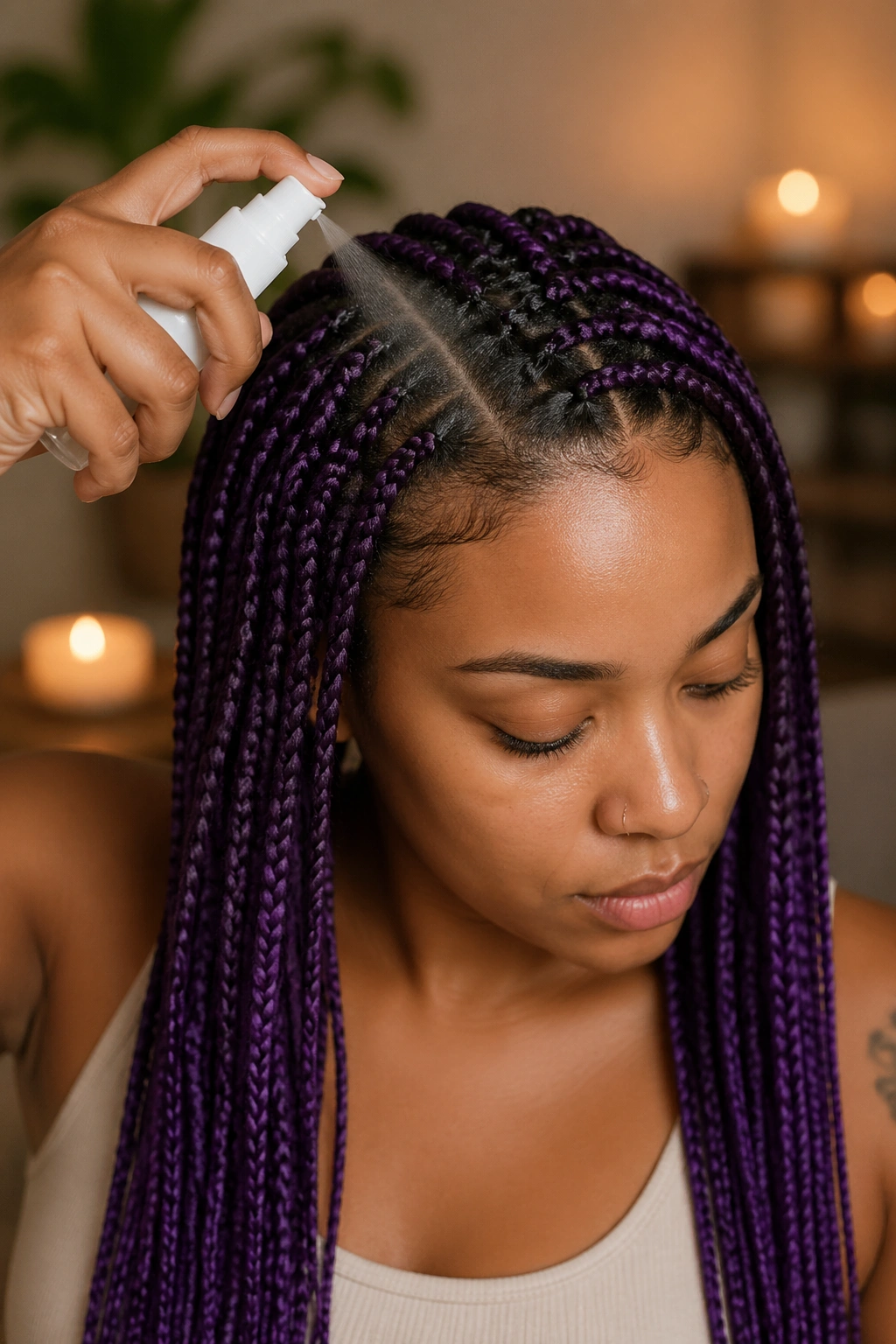
A healthy scalp makes the whole style look better. Period.
Start with a simple rule: less product, better placement. Heavy oils and thick creams tend to sit on the scalp and collect lint, which turns fresh braids into a dull, itchy mess. Use light products sparingly, and aim them where they’re needed instead of coating the whole head like frosting.
If your scalp gets dry, use a lightweight braid spray or a diluted leave-in mist every few days. Focus on the scalp line and the base of the parts, not the lengths unless the ends feel dry. A little goes a long way. If your fingers come away greasy, you used too much.
Good scalp habits
- Massage gently with the pads of your fingers, not your nails.
- Wipe away product buildup around the hairline with a soft cloth.
- Avoid scratching under the braids.
- If a braid feels painful at the root, don’t “wait it out” for a week.
- Keep sweat from sitting on the scalp for hours after workouts.
And yes, purple braids can make buildup look more obvious than black braids do. Flakes, residue, and lint all show faster on colored hair. That’s another reason to keep the routine plain and clean. You don’t need a shelf full of products to keep this style looking good.
Sleep, Sweat, and Frizz: The Daily Maintenance That Matters
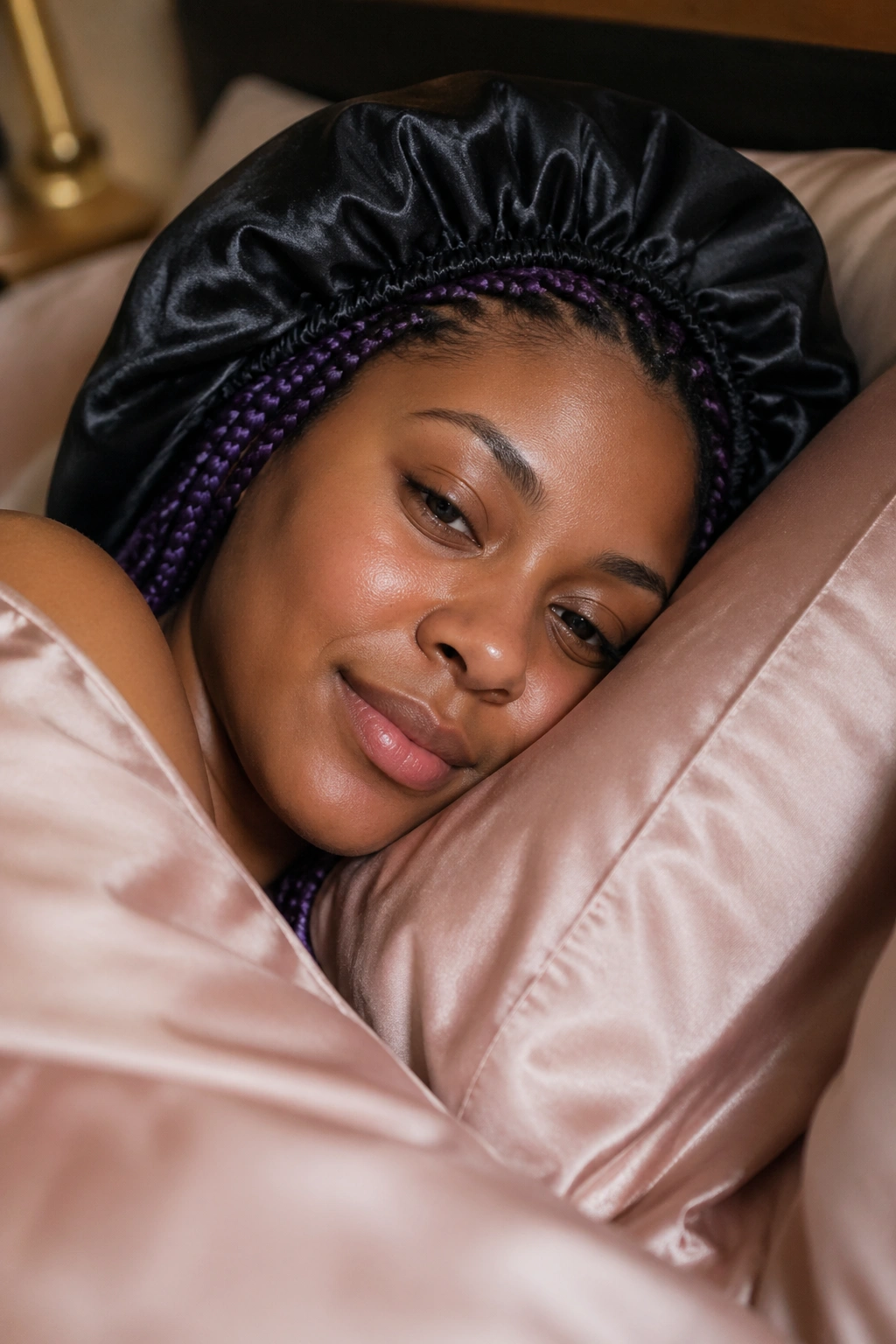
The night routine is where a lot of braid styles live or die. Sleep on them wrong, and the roots puff up. Skip protection, and the ends start looking fuzzy faster than you expected. Sleep on them right, and the style keeps that fresh, neat shape for longer.
A satin bonnet or large satin scarf is the easiest fix, especially for medium purple braids that already have a lot going on visually. If your braids are long enough to bunch up, tuck them into a loose braid or gentle pineapple before covering them. That keeps them from rubbing across your pillow all night. If you toss and turn, a bonnet with enough room tends to work better than a scarf that slides off.
Frizz control that actually helps
Mousse can smooth flyaways, but don’t drench the braids. Use a light foam on the roots and outer layer, then let the hair dry fully before you go to bed. Damp mousse trapped under a wrap is a shortcut to dull hair and a sour smell. Nobody wants that.
Sweat needs attention, too. If you work out, let your scalp dry out after exercise and don’t keep a wet wrap on for hours. A quick cool blow-dry at the roots can help if your scalp stays damp. That detail sounds fussy. It isn’t. Damp roots under braids are where freshness goes to die.
Common Mistakes That Make Purple Braids Look Rough Early
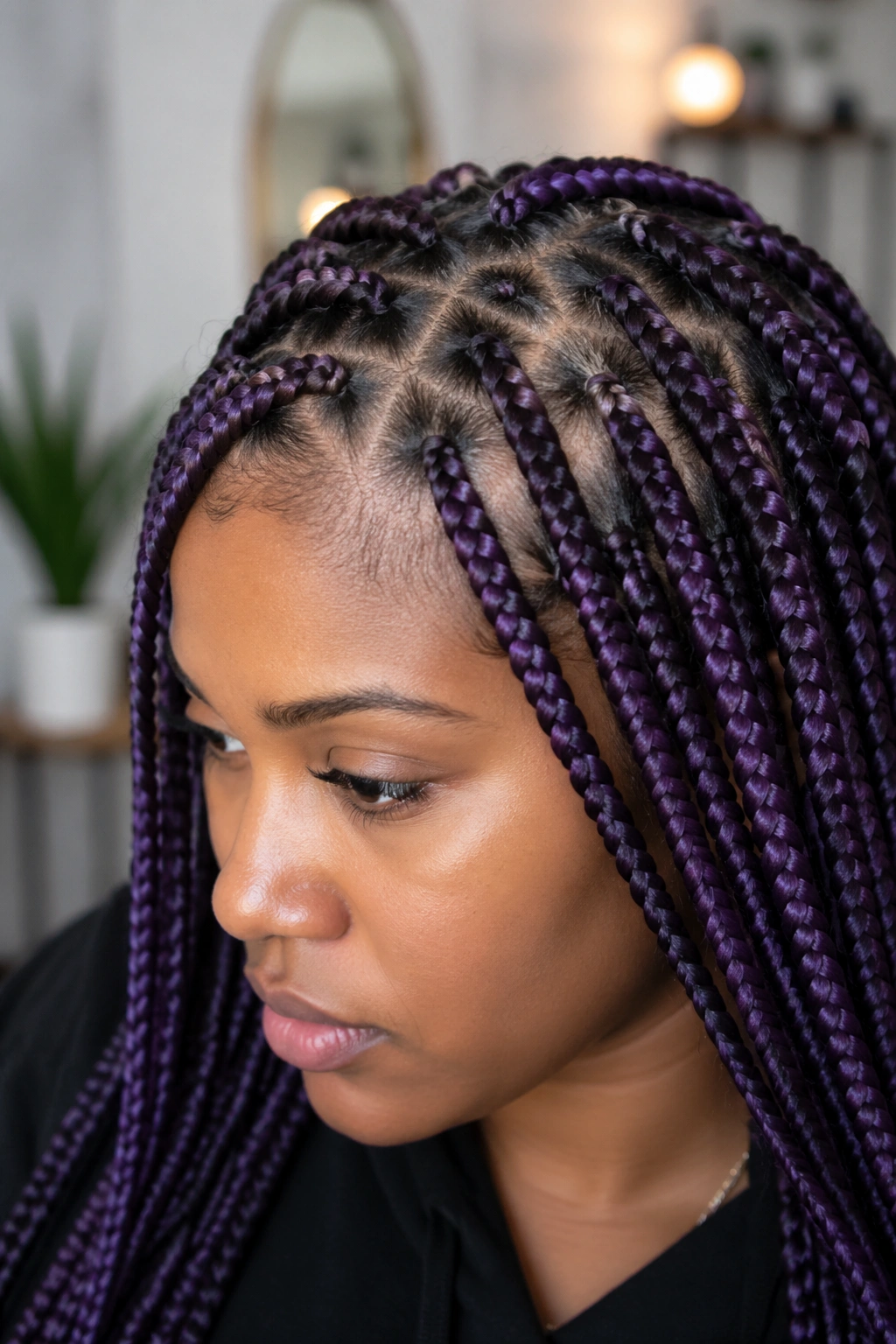
There are a few mistakes I see over and over, and they age the style faster than anything else.
The first is over-tight installation. People think tight means neat. It doesn’t. Tight often means sore, inflamed, and frizzy at the hairline before the week is done. The second is too much product. Purple hair doesn’t hide buildup the way dark hair can, so a greasy root or white residue sticks out immediately. The third is choosing a shade that doesn’t match the person’s skin tone or wardrobe, which makes the whole head look disconnected.
What to avoid
- Very large sections at the crown with tiny sections everywhere else.
- Heavy edge control piled on every day.
- Sleep without covering the braids.
- Wetting the hair and then letting it air-dry only halfway.
- Installing over hair that still has old gel, oils, or lint.
- Pulling the braids into tight styles every day without rest.
There’s also a color mistake that deserves its own mention. Bright purple can be stunning when the braid pattern is neat. Bright purple on messy parts looks messy faster. If your installation isn’t clean, a softer plum or mixed purple-black blend usually hides flaws better than a neon shade. That is not a moral failing. It’s just how color works.
When to Refresh, Take Them Down, or Rebraid the Edges
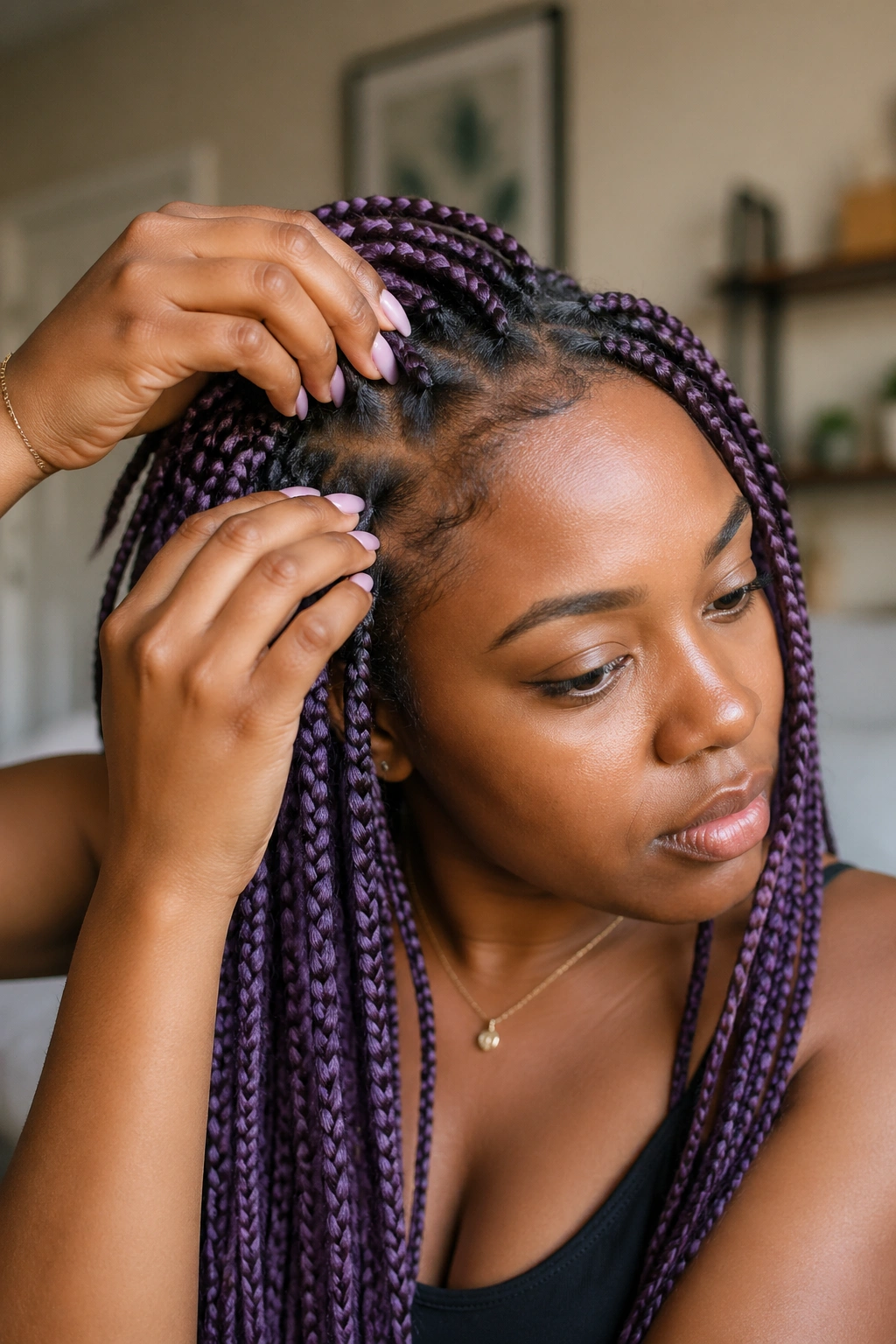
Braids don’t stay in the same state forever. They settle, puff a little, and eventually tell you they’re done.
A light refresh can extend the life of medium purple knotless braids without messing up the whole style. Rebraiding the front perimeter, smoothing the parts near the hairline, and trimming stray fuzz can make a big difference. If the roots are still healthy and the style is otherwise holding up, that kind of touch-up can buy you more good wear. If the base is loose, the scalp hurts, or the sections have started slipping badly, don’t keep squeezing value out of a style that’s already past its useful life.
Signs it’s time to act
- The roots are lifting in multiple spots.
- Your scalp itches because of product buildup, not normal dryness.
- The ends are thinning and breaking apart.
- The braids smell stale even after washing and drying.
- Tension has turned into soreness around the edges.
- The style is snagging on clothes or pillowcases more than it used to.
You do not need to hold onto braids just because they still “look okay from far away.” Up close matters. So does your scalp. If the hairline starts looking stressed, take that seriously and deal with it before it becomes a breakage problem.
Who Medium Purple Knotless Box Braids Suit Best
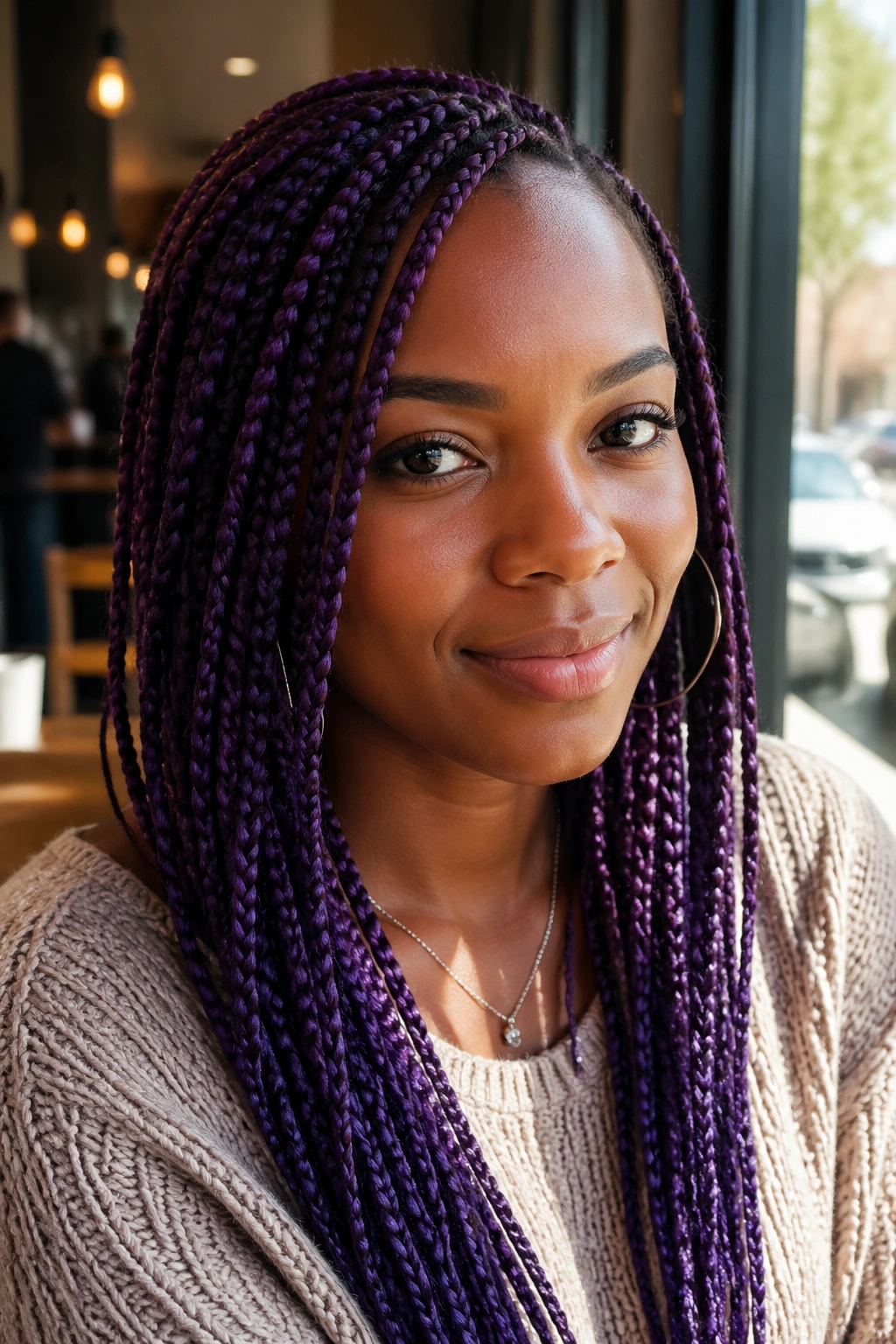
This style shines on people who want color with structure. If you like neat parts, soft movement, and a braid pattern that reads clean from every angle, medium purple knotless braids will probably make you very happy. They’re also a solid choice if you want a protective style that feels a little more expressive than standard black or brown braids.
The shade range gives this style some flexibility. Deep purple works well when you want polish and depth. Lavender and lilac skew lighter and softer. Mixed purple-black braids land somewhere in between, which is useful if you want the color to show but not dominate every outfit you own.
Best fit scenarios
- You want a look that works with both casual clothes and dressy outfits.
- You prefer braids that swing and move instead of sitting stiff.
- You like color, but you don’t want to commit to bright all-over dye on your natural hair.
- You need a style that can be tied back, pinned up, or worn loose without much fuss.
- You want a protective style that still looks styled, not just practical.
If your scalp is very tender, you may want to go lighter on size or length. If you love big, bold hairstyles, this one can still work, but you may prefer a richer plum shade or a fuller braid count. And if you want the easiest maintenance possible, purple braids are not hard, but they do ask for a little more attention than plain dark braids. Color always asks for that.
Final Thoughts
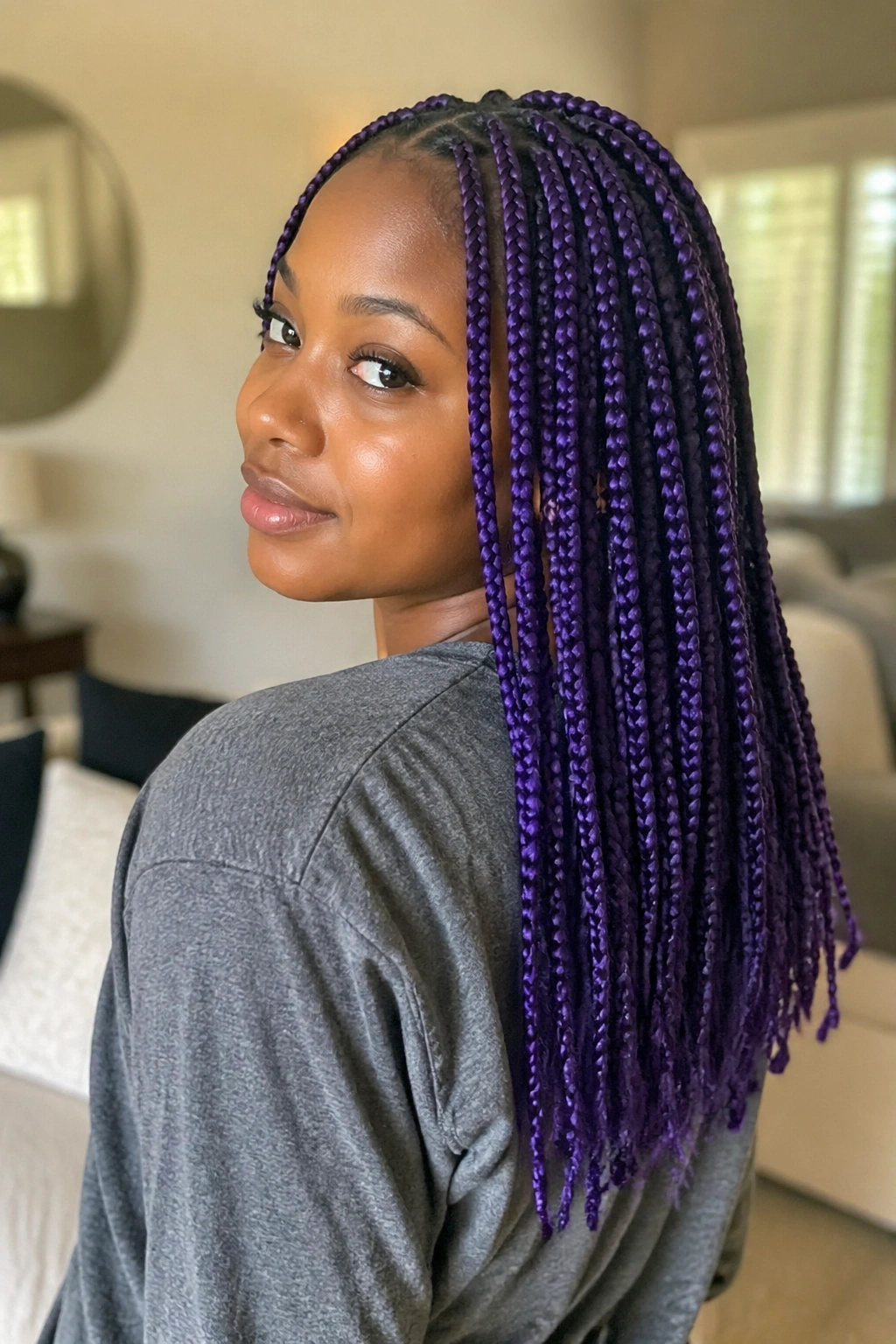
Medium purple knotless box braids work because they balance three things at once: shape, comfort, and personality. The knotless root keeps the base cleaner and softer. The medium size keeps the style wearable. The purple gives the whole look a pulse.
If you want this style to look its best, pay attention to the shade, the parting, and the first few days after install. That is where the whole thing either settles into place or starts to fray early. The braids themselves matter, sure, but the finish lives in the details.
I keep coming back to 18 inches because it’s a practical length that still feels fun. Not too short. Not so long that you’re constantly fighting the weight. Just enough to swing, stack, and show off the color the way it deserves.