

Medium box braids for boys work because they sit in the middle of the road: neat enough for school, relaxed enough for play, and heavy only when the sections are too big or the parts are sloppy. That balance is the whole trick. Get it right, and the style looks clean without looking stiff.
Tight does not mean neat.
In practice, “medium” usually means braid sections somewhere around half an inch to just under an inch wide, depending on hair density and head size. Too tiny, and you spend forever in the chair. Too large, and the braids start looking chunky in a way that can pull at the scalp and feel awkward after a day or two. The sweet spot is the one that keeps the part lines visible and the braids easy to separate when it’s time to wash, oil, or re-style.
A lot of the best versions are not fancy at all. They just get the basics right: clean parting, even tension, and a finish that matches the boy wearing it. Some want a sharper edge. Some want movement. Some want the braids to stay out of the face no matter how hard they run around. Medium box braids can do all of that if the shape is chosen with a little care.
1. Classic Center-Part Medium Box Braids
The center part is the cleanest starting point, and there’s a reason it never looks out of place. It gives medium box braids a balanced shape, with both sides falling evenly so the style reads sharp without needing accessories or extra detail. For boys who want something tidy and low-drama, this is the one that usually lands right.
A straight middle part works especially well when the hairline is even and the braids are installed at a consistent size from front to back. If one side is packed tighter than the other, the whole style starts to lean. That’s not a braid problem. That’s a parting problem.
The part line matters more than the braid length. A crisp center line from the forehead back to the crown makes the whole style feel intentional, even if the braids themselves are simple. Keep the sections square, keep the rows even, and let the braids hang naturally instead of forcing them into a perfect shape every time.
One thing I like about this version is how well it grows out. The center part hides a little unevenness better than you’d think, and the shape still looks presentable when the roots start to loosen. That buys you time. Good time.
2. Side-Swept Medium Box Braids
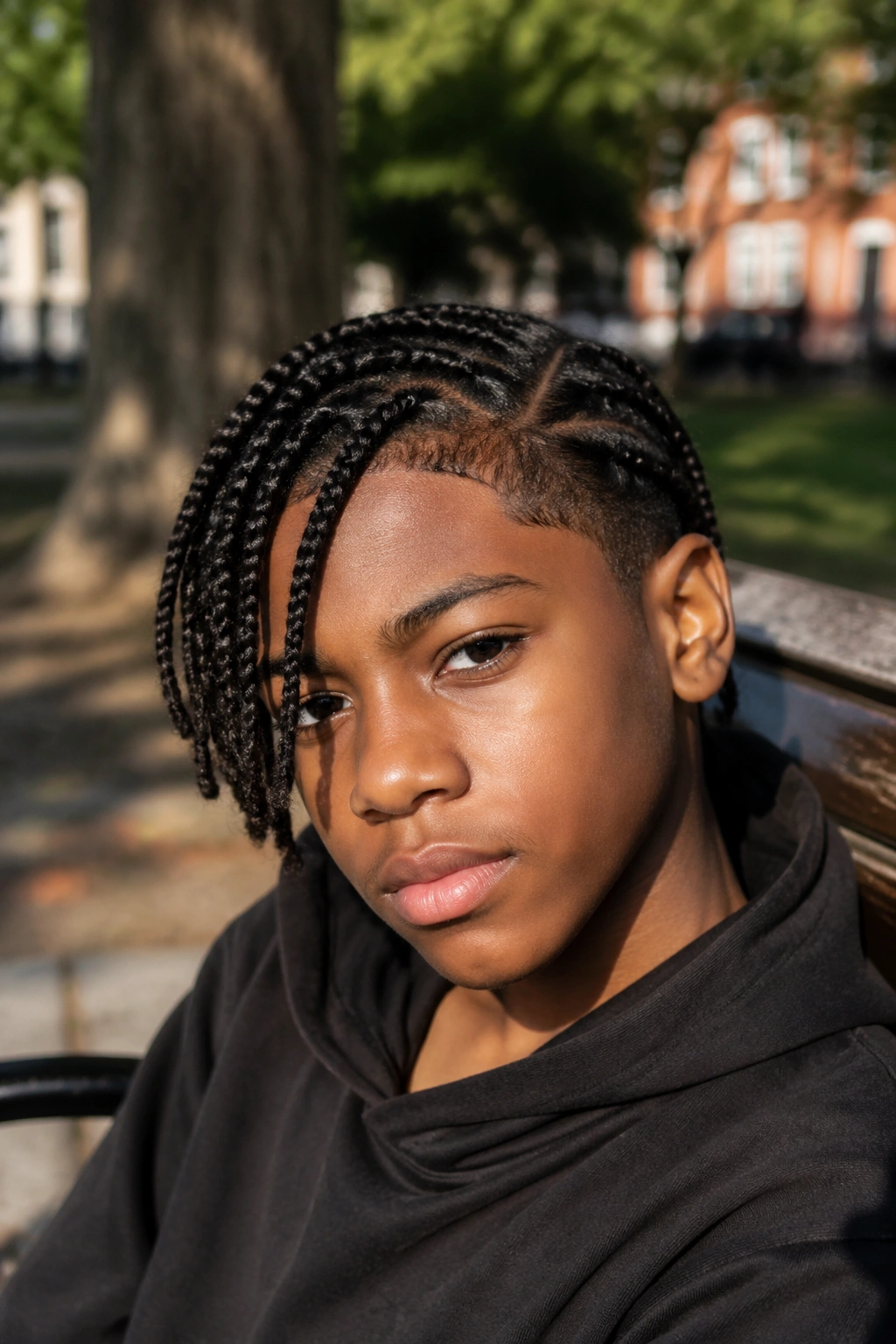
Why does a side part make medium box braids feel softer right away? Because it breaks the symmetry and lets the hair frame the face instead of splitting it in two. Boys who do not like a hard line down the middle often settle into this shape fast.
Why the Side Part Works
The braid pattern can stay medium and clean, but the parting shifts the mood. A side-swept layout works nicely when the front braids are a little longer than the rest, because the hair naturally falls across one brow and stops the style from looking too severe. It’s a small change. Huge payoff.
How to Ask for It
- Set the part about 1 to 2 inches off center.
- Keep the heavier side slightly fuller near the temple.
- Leave the front braids long enough to sweep without poking the eye.
- Ask for a soft edge around the hairline, not a sharp cut-in that fights the braid flow.
This version is a good pick when a boy wants braids that feel a little looser and more laid back. It also gives a barber or braider a chance to make the face shape look more open, which helps when the forehead is a bit broader or the features are still changing. And yes, that matters more than people think.
3. Triangle-Part Medium Box Braids
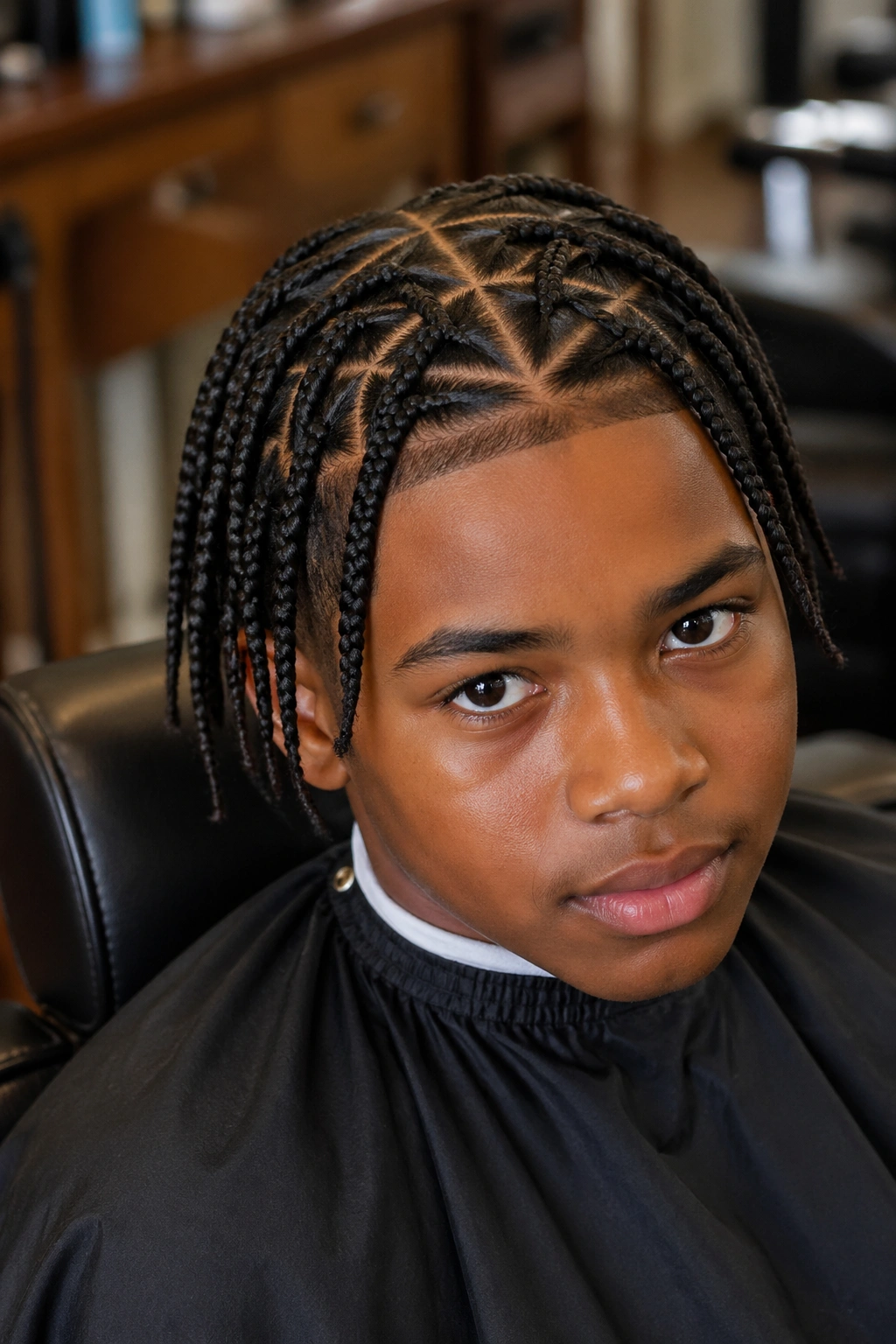
Triangle parts give medium box braids a built-in pattern, and the shape shows up even before anyone notices the braid color or length. A boy sits in the chair, looks at the first few rows, and suddenly the style feels custom instead of standard. That’s the whole appeal.
Triangle sections work best when the braids are medium rather than tiny. Tiny braids can make the parting look busy. Medium sections let the triangle shape breathe, so the pattern is visible from a distance but still neat up close. The result is clean, but not plain.
- The shape looks especially good on thick hair.
- It helps the style stand out without beads or color.
- It gives the crown a little more movement than square parts.
- The rows can be spaced farther apart near the back, which keeps the style from feeling crowded.
A good braider will keep the triangle points crisp and the sections balanced, not stretched. If one point looks longer than the others, the whole pattern starts to wobble. That detail sounds fussy until you see it in the mirror. Then it’s all you notice.
4. Zig-Zag Part Medium Box Braids
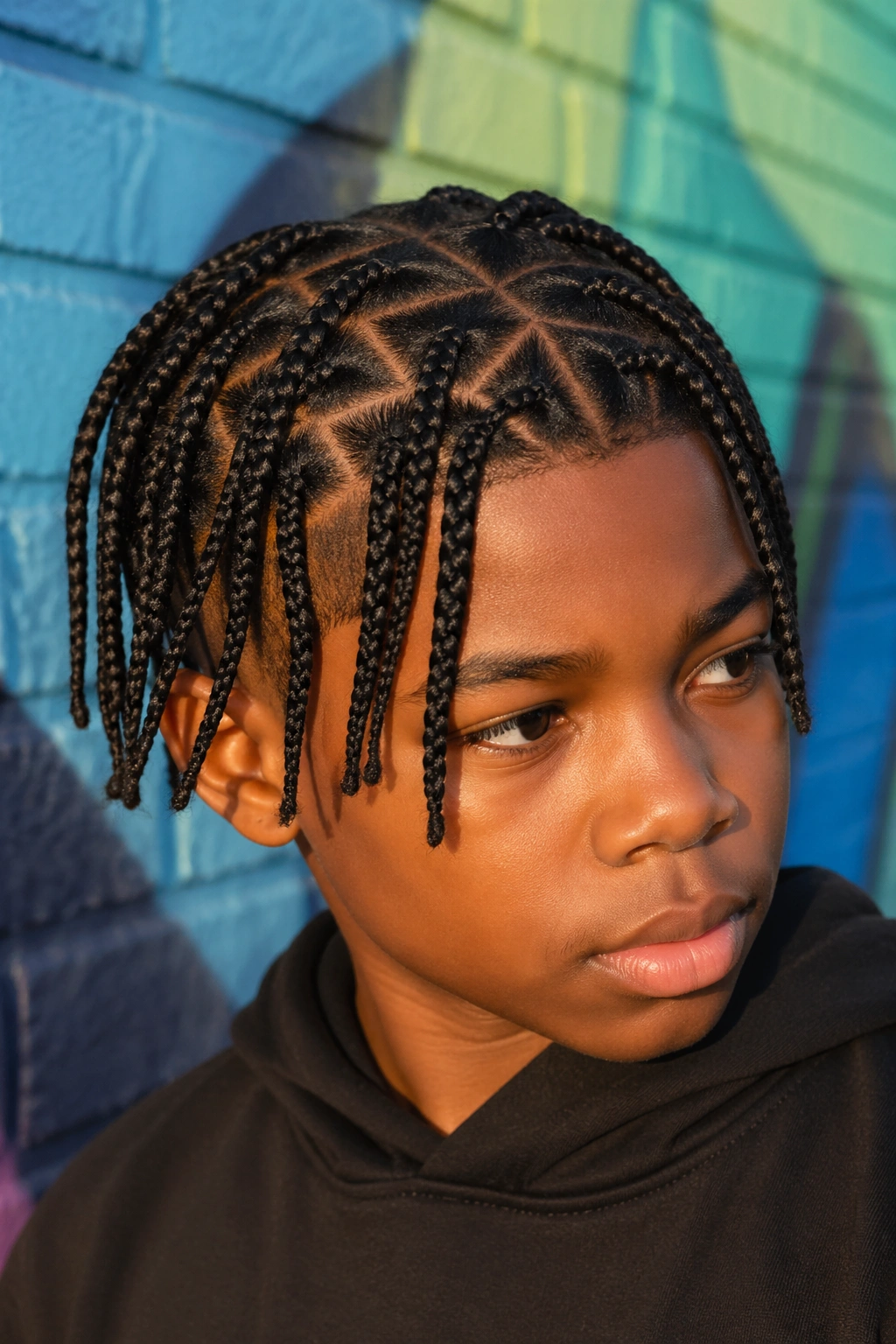
Zig-zag parts are one of the easiest ways to make medium box braids feel custom without changing the braid size at all. The braids can be the same width as any other style, but the parting lines create movement before a single braid is finished. It’s a small design choice with a lot of visual punch.
This version works well for boys who want something different but not flashy. The zig-zag pattern shows up best when the scalp is clean and the parts are neat, because sloppy lines ruin the whole point. Clean angles matter here. A lot.
The style also plays nicely with shorter sides or a tapered outline, since the parting pattern gets more room to show. If the hair is very dense, the zig-zag can look even better because the part lines create contrast against the fullness of the braids. That contrast is what keeps it from feeling flat.
A braid style like this does ask for patience in the chair. The parting takes longer, and the braider has to keep checking the angles as they move across the head. Worth it? Usually, yes, if the boy likes a style that gets noticed for the right reason.
5. Medium Box Braids with a Taper Fade
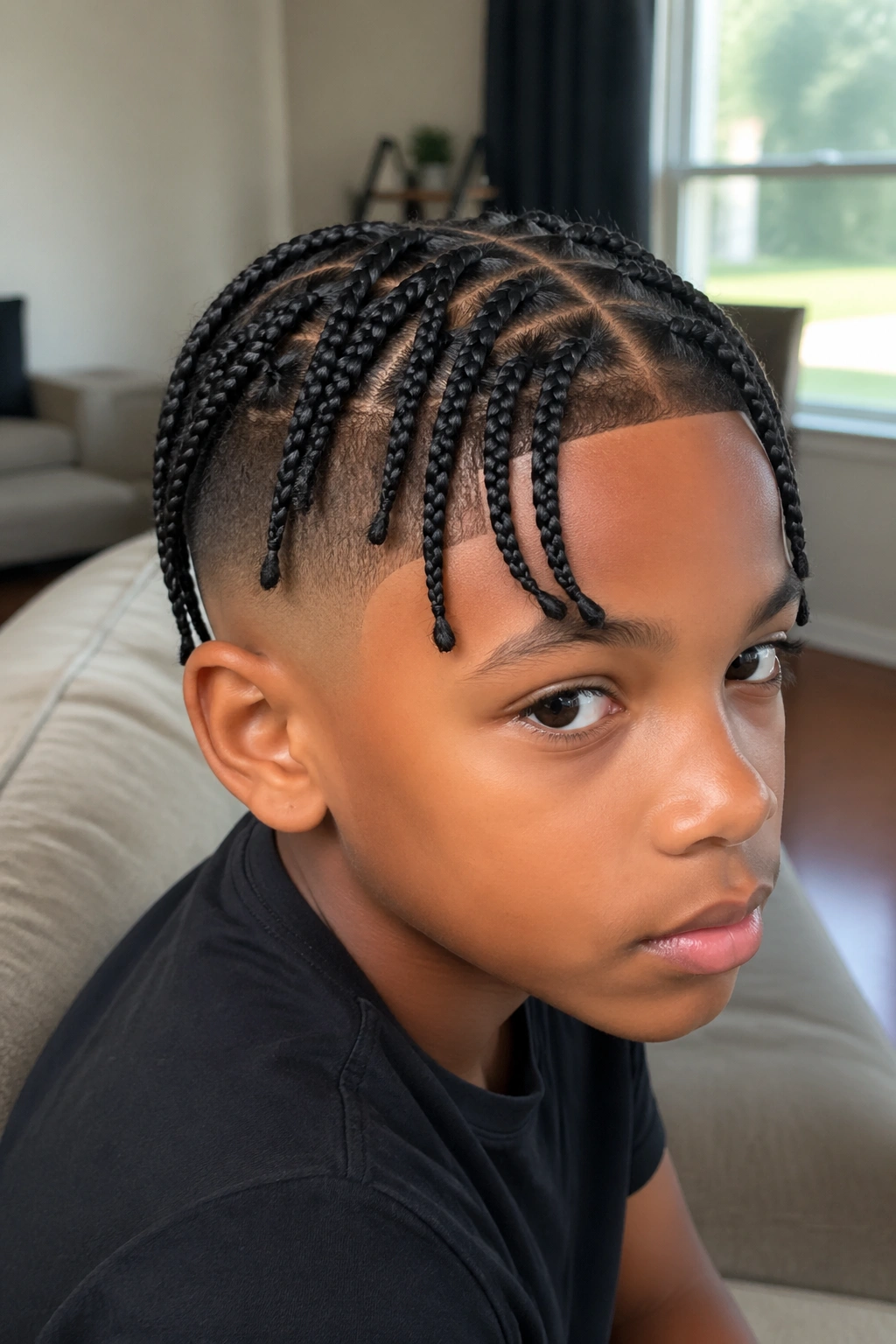
A taper fade at the sides and nape gives medium box braids a cleaner frame. The braids stay the main event, but the fade sharpens the edges so the whole style looks lighter around the ears and neckline. That matters more than people admit.
Where the Fade Changes the Look
The taper is not just about looking neat. It also reduces bulk where the hair naturally puffs out, which helps the braids sit flatter against the head. If a boy plays sports, wears headphones, or hates hair brushing the ears, this is a smart move.
What to Ask For
- Keep the taper low around the ears.
- Blend the nape gradually instead of cutting it too high.
- Leave enough hair at the sides to support the first row of braids.
- Make sure the braid base is not pulled right onto the faded area.
A high fade can start to fight the braid shape. A low taper usually works better because it keeps the transition smooth and lets the braids hold the spotlight. That’s the version I’d choose most often. Cleaner, easier, less fussy.
6. Medium Box Braids with a Drop Fade
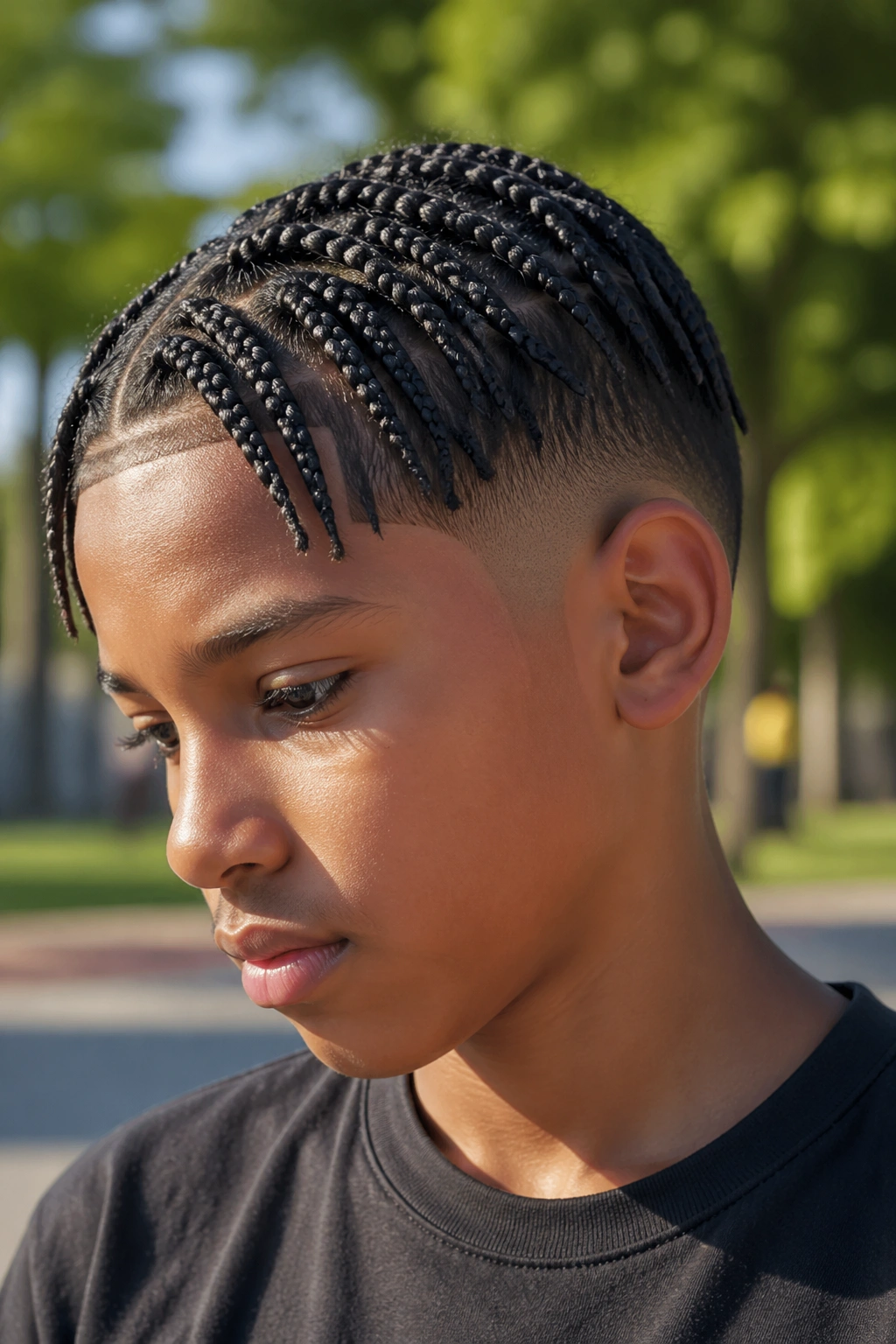
A drop fade curves lower behind the ear, and that little curve changes the whole profile of the braid style. Instead of a straight drop to the nape, the fade dips with the shape of the head, which makes medium box braids look a touch softer and more sculpted at the same time.
This is a strong choice when the hair is thick on the sides or when the boy wants the braids to sit higher on top without making the whole style feel top-heavy. The fade helps the top section breathe. It also keeps the neckline from looking boxy, which can happen when medium braids hang over a blunt cut.
The shape grows out well, too. A drop fade does not lose its line as fast as a hard edge, so the haircut can stay presentable longer between cleanups. That’s useful for busy families, and honestly, just easier to live with.
One practical note: a drop fade looks best when the braid rows are neat and the front parting is strong. If the top is messy, the curved fade only draws attention to the mess. No mercy there.
7. Beaded Medium Box Braids
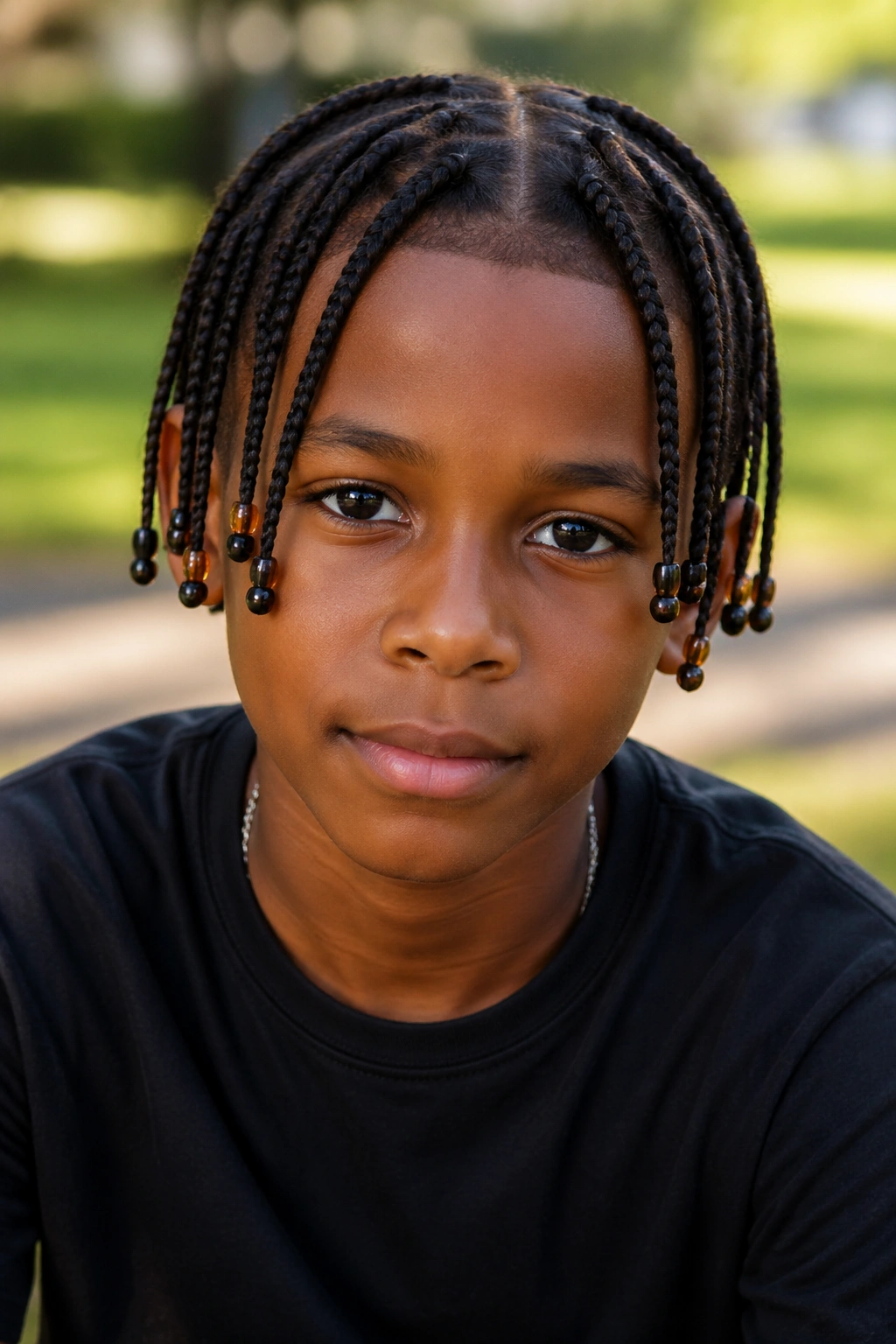
Beads change the mood fast. A few small beads at the ends of medium box braids add movement, sound, and a bit of personality without needing a complicated braid pattern. The style feels more playful the second the beads are added, which is why it works so well for boys who like something a little lively.
I’d keep the bead count modest. Four to eight braids with beads is usually enough to make the style stand out. Load every braid and the look can get noisy, heavy, and annoying during sleep. Light plastic, wood, or small acrylic beads usually behave better than bulky glass pieces.
What to Watch For
- Place beads on front or side braids if you want them visible.
- Match the bead size to the braid thickness.
- Avoid heavy sets on very small braids.
- Make sure the ends are sealed well so the beads do not slip off.
There’s also a practical upside. Beads make it easier to tell when the braids have started loosening, because the ends move more than usual. That can help with maintenance. Small detail, but useful.
8. Medium Box Braids with Gold Cuffs
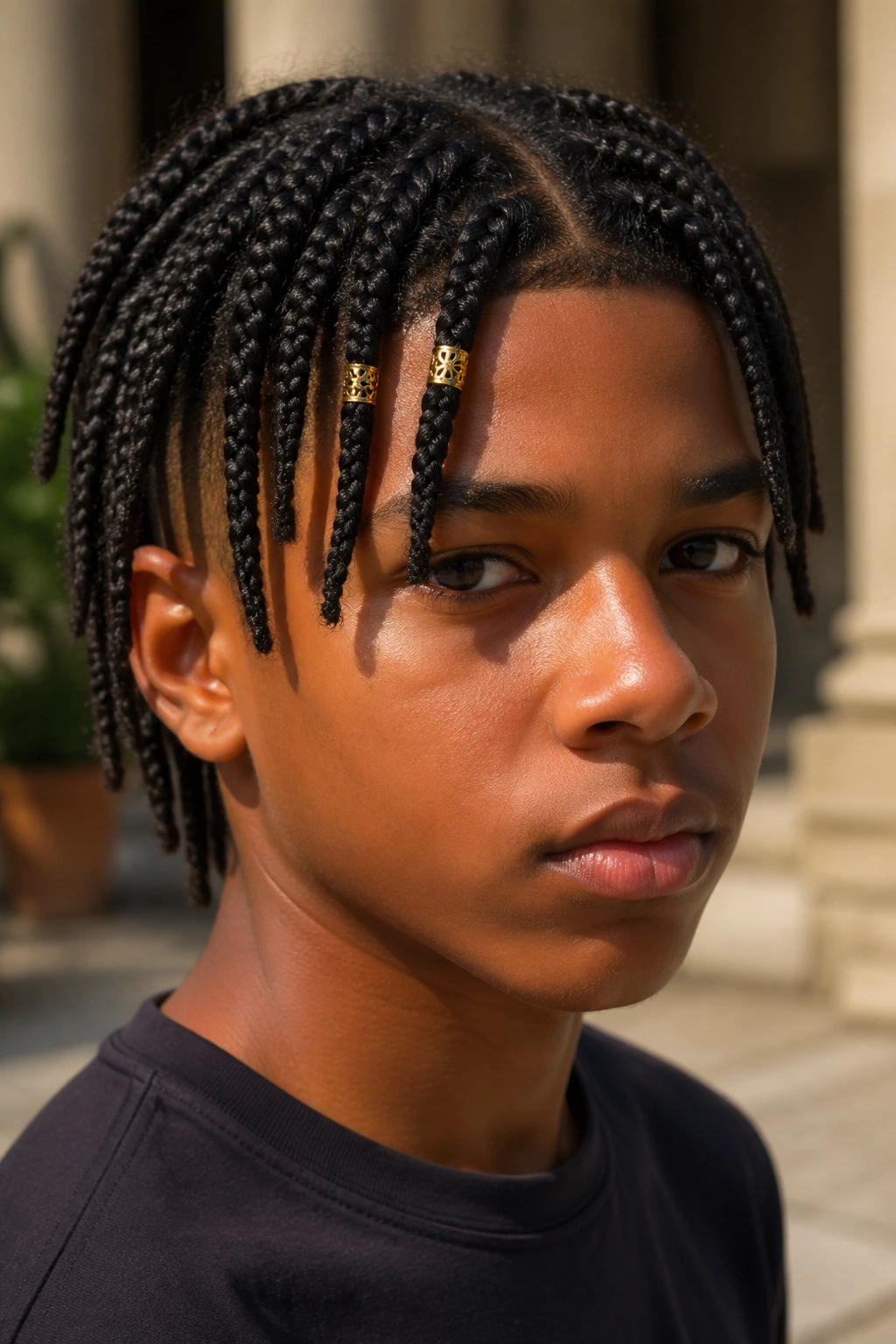
Gold cuffs are the quieter cousin of beads. They sit closer to the braid, catch the eye without adding much weight, and give medium box braids a cleaner finish than a full beaded setup. If beads feel a little too playful, cuffs are the easier answer.
Unlike beads, cuffs do not swing around much. That makes them better for boys who want the style to look polished while still staying simple. A few cuffs near the front rows can frame the face nicely, and one or two placed higher up can tie the whole braid pattern together without making it busy.
This style also works well with darker hair, because the metal stands out just enough to be seen in daylight without turning the hair into a costume. Keep the count light. A handful of cuffs is enough.
If I had to pick a small detail that changes the mood most, it would be cuff placement near the temple. That is where people look first. A cuff there says the style was thought through, even if the rest of the braids stay plain.
9. Two-Tone Medium Box Braids
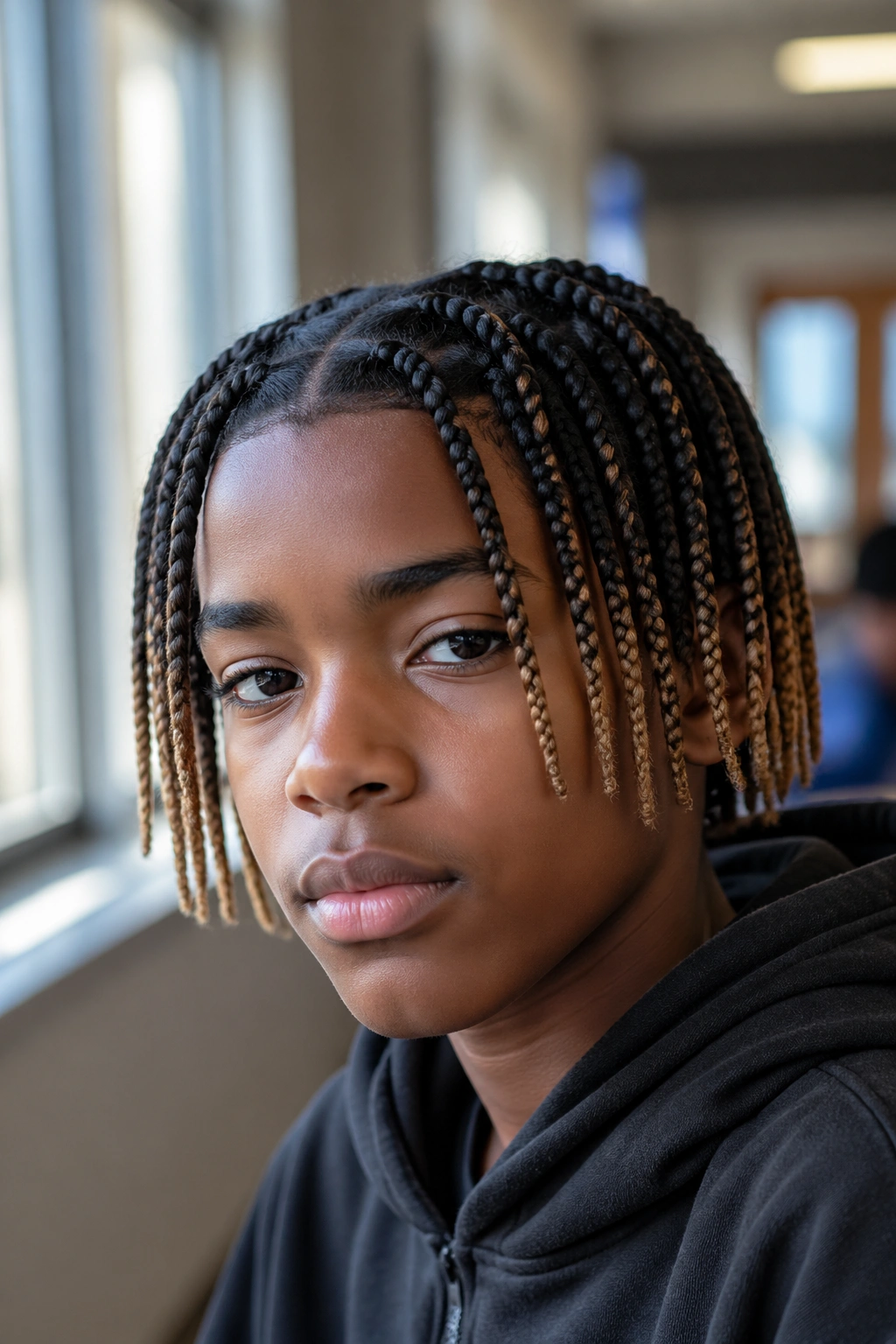
How much color is too much? For a lot of boys, the answer is less than they think. A two-tone braid style usually looks best when the roots stay natural and the second color shows up in the mid-lengths or ends. That keeps medium box braids interesting without turning them loud.
Where Color Looks Best
A honey-brown or caramel finish on black hair is a safe choice. So is a deep burgundy or a muted blonde if the goal is contrast. Bright colors can work, but they need discipline. If the braids are already medium and full, a loud shade can swallow the parting and make the scalp look busier than it is.
What to Skip
- Do not mix too many colors in one head.
- Do not put bright color on every braid.
- Do not choose a shade that fights the school dress code if that matters in your home.
- Do not let the extensions look patchy at the ends.
A good two-tone braid is about balance. The color should feel like an accent, not a fight. When the shade is placed well, the braids pick up light in a nice way and the style looks richer from across the room.
10. Curly-End Medium Box Braids
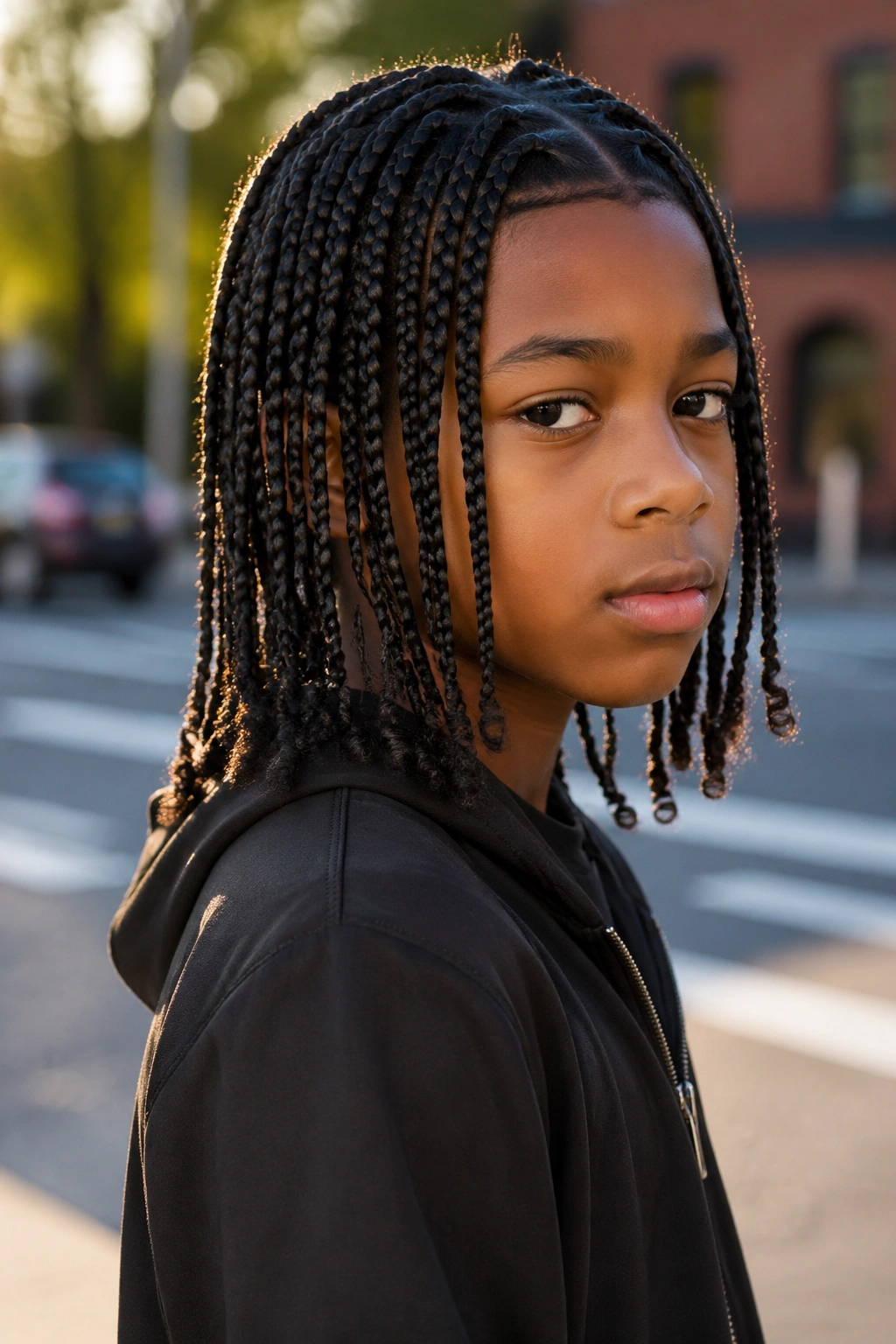
Curly ends change the finish completely. The braids still feel tidy at the scalp, but the last few inches bounce instead of hanging straight, so the whole style softens up the moment the hair moves. It’s one of those small details that looks simple and still manages to feel fresh.
The best version keeps the curl loose, not tight. A soft spiral at the end gives medium box braids a little motion around the shoulders and stops the style from reading too severe. That matters if the boy has a narrow face or just wants something less rigid. The curls do some of the talking for you.
The texture also helps the braids feel lighter. Straight ends can look heavier than they are. Curly tips break up that weight visually, which is useful when the braids sit right around the jaw or collarbone.
One caution: curls love to catch on collars, hoodies, and backpack straps. If the boy is rough on his hair or always pulling on his hoodie, keep the curl soft and the ends trimmed clean. The style should move, not snag.
11. Half-Up Top Knot Medium Box Braids
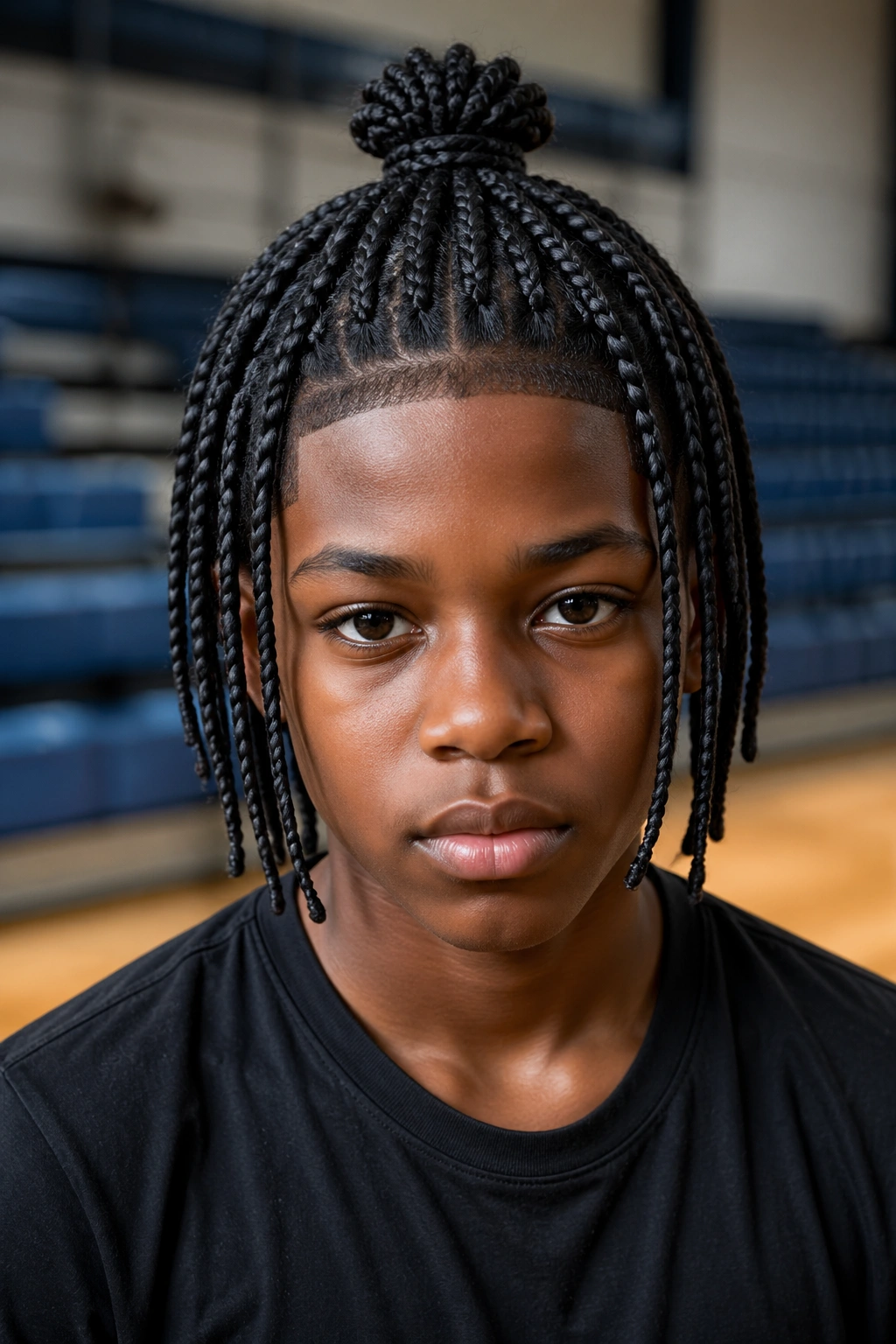
A half-up top knot is the move when the front braids need to get out of the face but the boy still wants the length to show. The top section gathers into a small knot or puff at the crown, while the rest of the braids hang loose below it. Easy shape. Strong payoff.
This style is especially handy on active days. It keeps the eyes clear during sports, stops the front rows from falling forward, and gives the whole head a bit of lift without needing a full bun. The knot does not have to be big. In fact, the smaller knot usually looks better.
When It Helps Most
- During practice or play
- When the braids are freshly installed and need a break from the face
- On days when the child wants a cleaner forehead line
- When the braids are medium length and still have enough fall to look full
A satin-covered elastic or soft braid tie is the safer choice here. Hard rubber bands can catch and tug. And if the knot sits too high, the style starts to look top-heavy. Keep it centered, keep it low enough to feel balanced, and leave the rest alone.
12. Low Ponytail Medium Box Braids
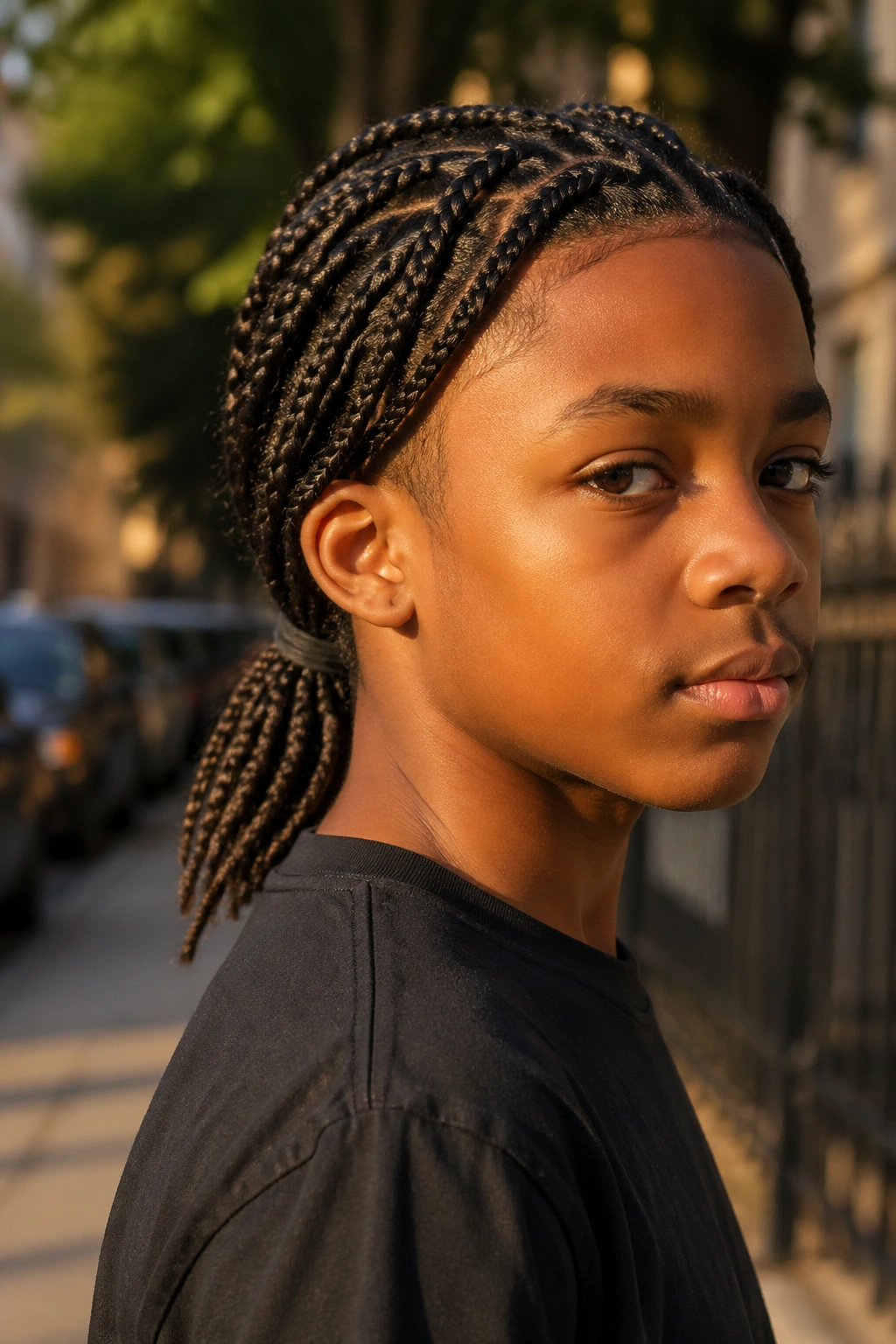
A low ponytail is boring in the best way. It gathers medium box braids at the nape, keeps them from spreading all over the shoulders, and makes the style easier to manage under jackets, hoodies, or a school uniform collar. There is nothing flashy about it. That’s why it works.
This shape is especially useful when the braids are a little longer than medium and start brushing the upper back. Pulling them low keeps the ends from tangling during the day. It also keeps the face and forehead completely open, which some boys prefer the second the weather gets warm or the activity level goes up.
Rubber bands are cheap and rude. Use a soft scrunchie, a braid tie, or a covered elastic instead. The braid ends should hang relaxed, not pinched flat where the tie sits.
The low ponytail also gives the style a bit of order when the roots are starting to loosen. Even then, the shape still looks neat from the front. Sometimes that is all you need.
13. Braided Fringe Medium Box Braids
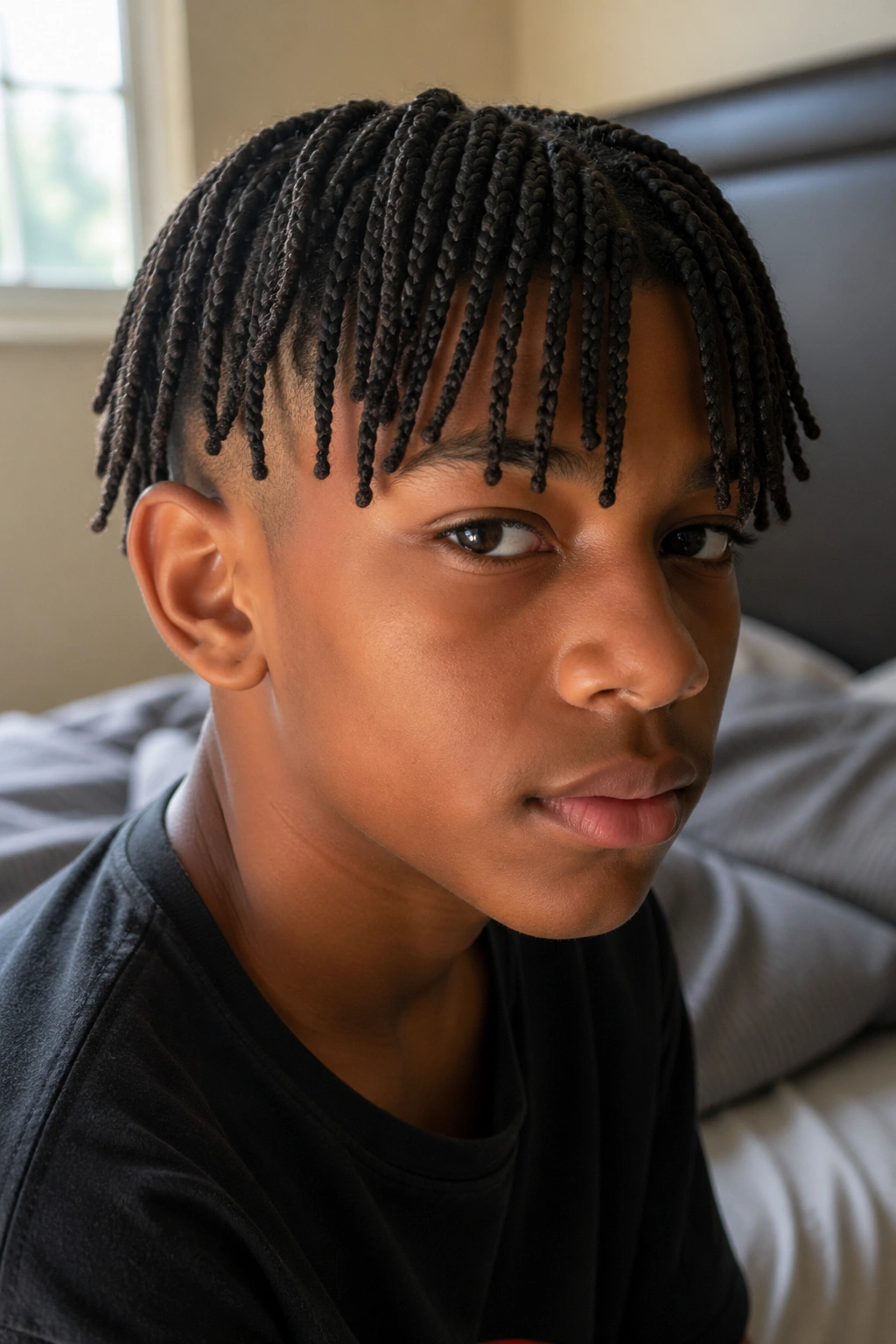
A braided fringe is for boys who like hair near the forehead. Instead of pushing every braid straight back or down the sides, the front rows are directed forward or angled to create a fringe that softens the face. It gives medium box braids a little swing without asking for a bun or a fade.
This shape can look especially nice when the front hairline is clean and the braid rows are evenly spaced. The fringe becomes the feature, so the first row has to be neat. If the front is messy, the whole style reads messy. No way around it.
There is a small tradeoff. A fringe can get in the way if the boy touches his forehead a lot or sweats during play. That doesn’t mean the style is wrong. It just means it works best for a child who likes hair near the face and does not mind brushing it back now and then.
I like this one because it feels relaxed without looking unfinished. That is a harder balance to pull off than people think.
14. Cornrow-Front Medium Box Braids
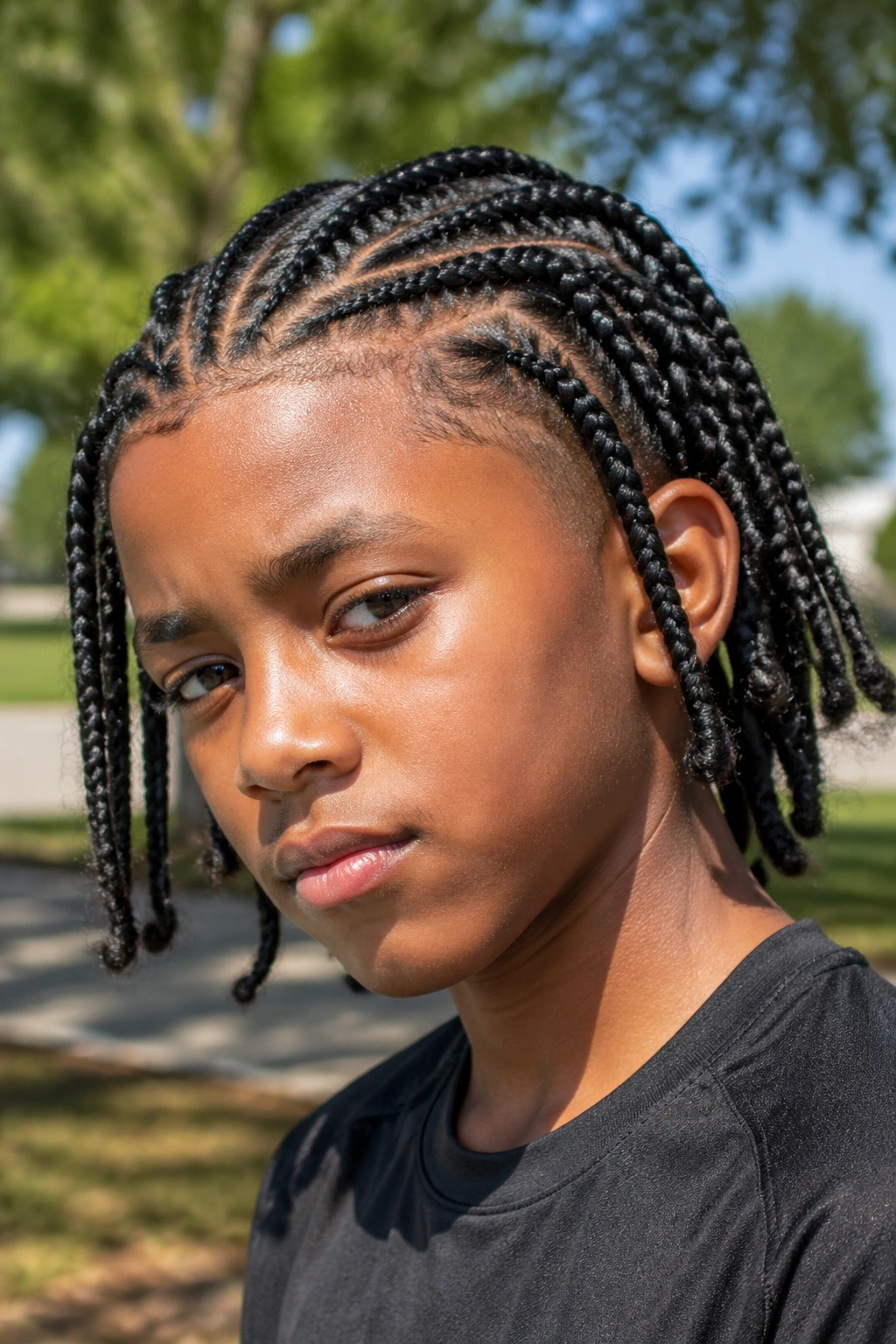
If you want the front to stay flat and the back to keep movement, a cornrow-front hybrid solves the problem cleanly. The front rows are braided close to the scalp in cornrows, then the style opens into medium box braids farther back. The mix gives the head structure without locking the whole thing down.
Why Mix Techniques
A full set of free-hanging braids can feel bulky at the hairline, especially on younger boys with softer edges or a sensitive front scalp. Cornrowing the front reduces that pressure and keeps the face line tidy. It also makes the style look more controlled from the first glance.
What the Back Gains
- More swing and movement
- Less weight around the forehead
- A cleaner transition under hats and hoods
- Better control if the boy hates hair on the temples
The best hybrid versions keep the shift from cornrow to box braid smooth, not abrupt. That means the braid sizes should stay close in scale so the style does not look like two different haircuts stitched together. When the handoff is clean, the result feels sharp and easy to wear.
15. Shoulder-Grazing Medium Box Braids
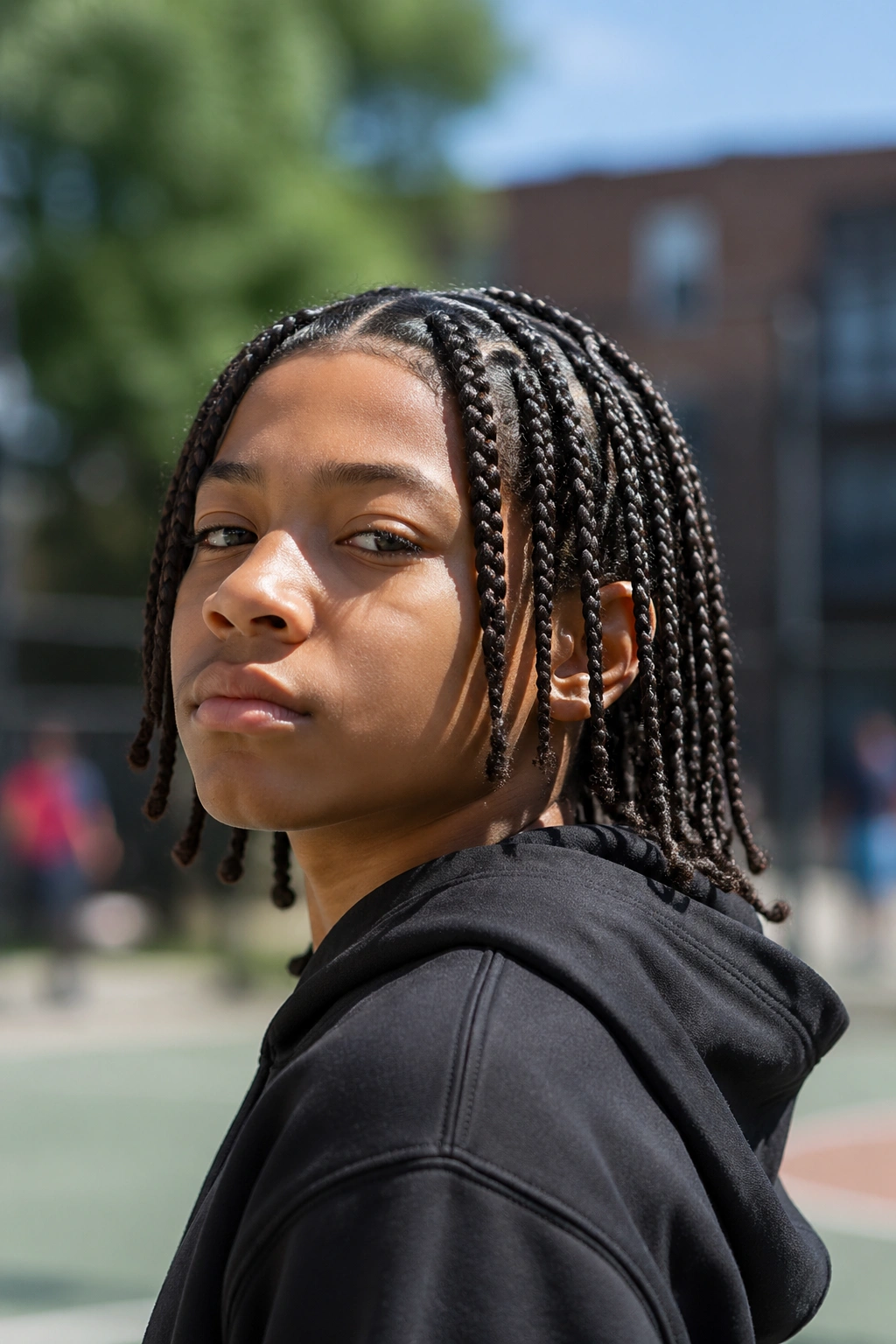
Medium box braids that stop around the shoulders hit a nice middle ground. They are long enough to move and short enough to stay manageable, which is probably why so many boys settle here after trying something shorter and wishing for a little more shape. The braids swing. They do not drag.
This length works especially well when the style needs to survive backpacks, seat belts, and daily movement. Braids that land right at the shoulder can still rub a bit, so it helps if the ends are clean and the rows are not packed too heavy. If the braids are too thick, the shoulders start doing too much work.
A shoulder-grazing length also gives the face some breathing room. The hair frames the jaw and collarbone without falling into the mouth or eyes, and that balance can make the whole style look calmer. Cleaner, too.
If the boy plays rough or hates maintenance, I would stop here rather than letting the braids get much longer. It is the point where style and practicality still shake hands.
16. Layered Medium Box Braids
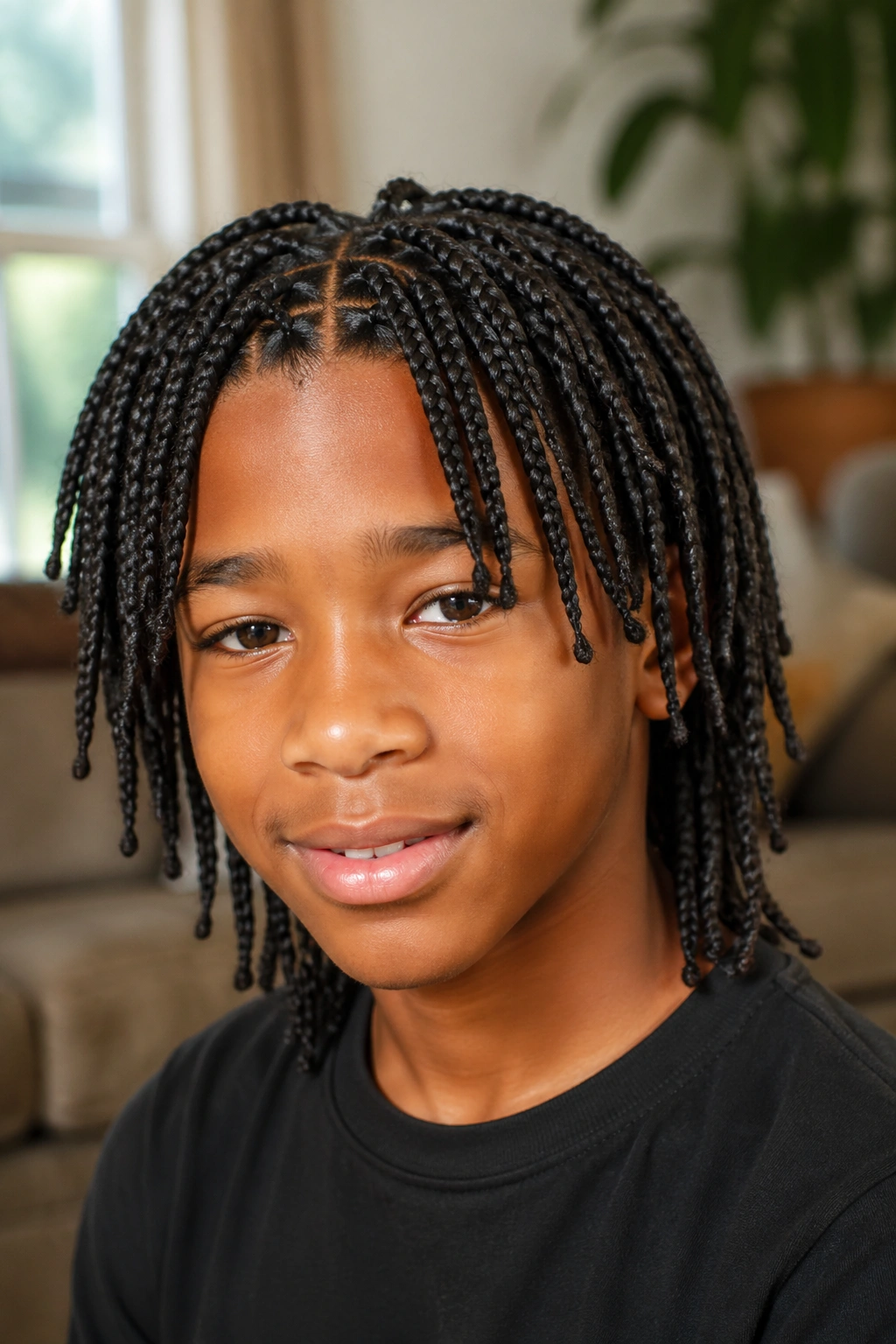
Not every braid has to end in the same place. Layered medium box braids use slight length changes to shape the silhouette, so the front may sit a little shorter while the back hangs lower. That tiny shift changes the whole outline and keeps the style from looking like a flat curtain.
Front, Sides, and Nape
- Shorter front braids open up the face.
- Mid-length side braids keep the ears clear.
- Slightly longer back braids add weight where the hair can handle it.
Layering is useful when the hair density is uneven or when the boy’s head shape needs a little balance. A flat, even bottom line can make some faces look boxy. A layered finish softens that edge and lets the braids move in different directions without losing the tidy look.
The trick is subtlety. If the layers are too dramatic, the style starts to look choppy. Keep the differences small, maybe an inch or two at most, and let the shape speak quietly. That is where this look does its best work.
17. Medium Box Braids with a Sharp Line-Up
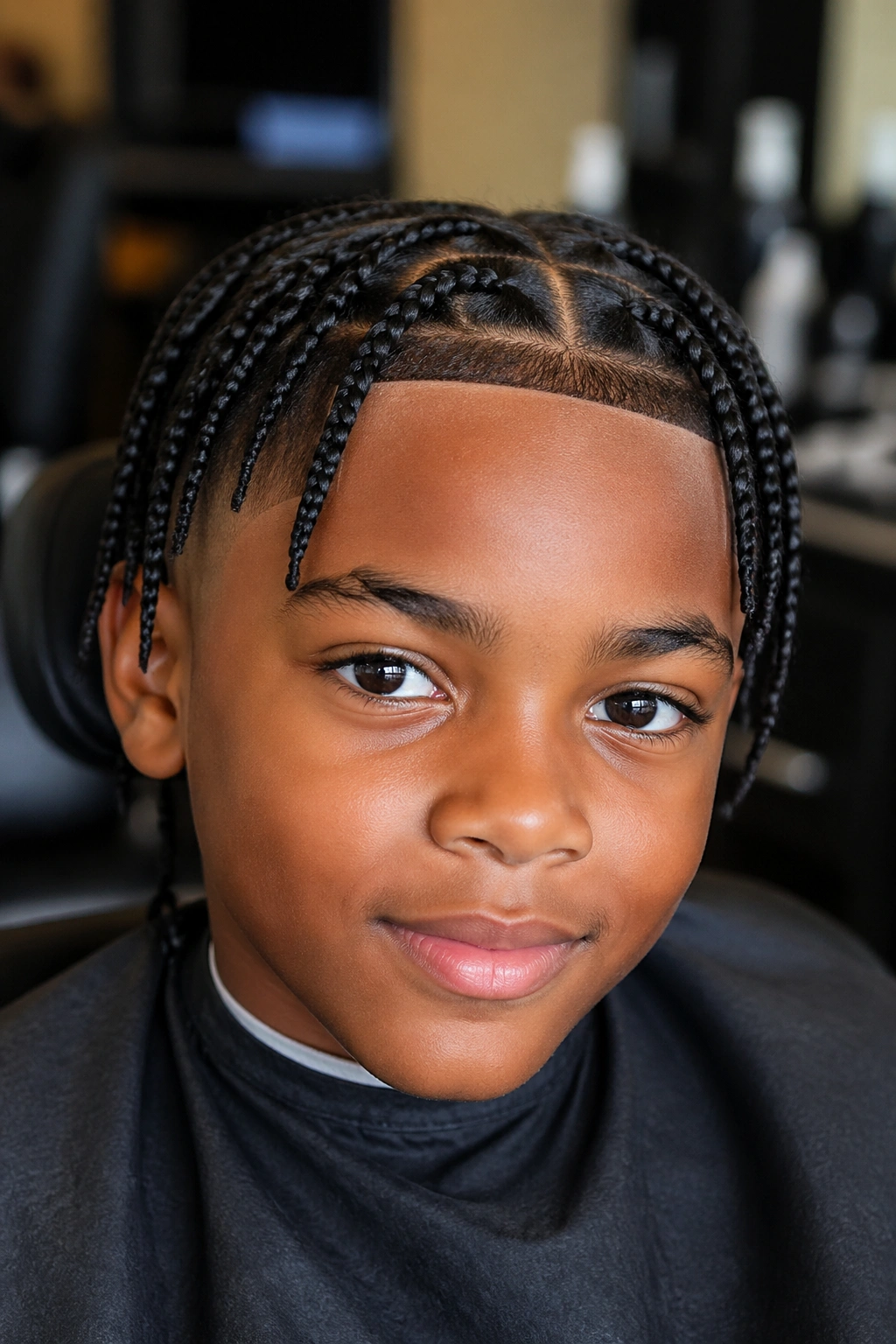
A clean line-up does more for medium box braids than most people think. The braids may be the main style, but the hairline, temples, and neckline are what give the whole look its edge. A sharp line-up turns a simple braid set into something that feels finished the second the chair turns around.
This style works best when the braid pattern is already neat. If the parts are crooked or the braid sizes vary too much, a crisp line-up only highlights the problem. So the cut and the braid work together. One does not rescue the other.
A good line-up should follow the natural hairline, not carve a fake straight line where the hair does not want to go. Too much shaping around the temples can look harsh fast, especially on younger boys. Keep the edges clean, not overdrawn.
I also like this version for between-braid maintenance. Even when the braids are still holding up, a tidy hairline can make the whole style look freshly done. Tiny detail. Big visual effect.
18. Free-Flow Medium Box Braids
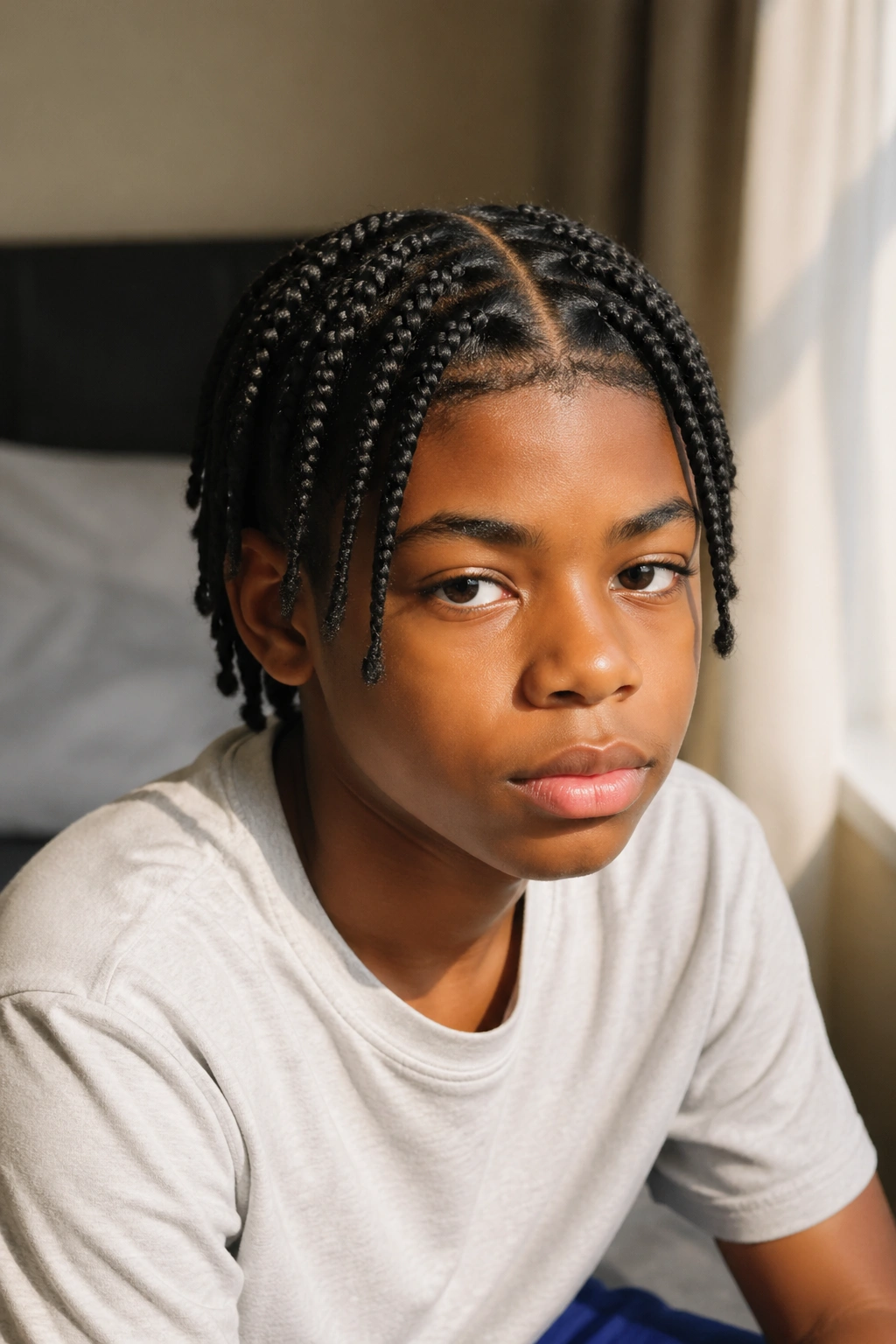
Sometimes the plain version is the strongest one. Free-flow medium box braids skip the beads, cuffs, knots, and extra color, then rely on clean parting and a balanced length to do the work. If the braider nails the sections, the style needs nothing else.
This is the look I would pick for boys who want a low-fuss braid style that still feels finished. It is easy to sleep in, easy to wash carefully, and easy to wear with almost anything. No accessories to lose. No top knot to redo. No extra weight at the ends.
The style looks best when the scalp is healthy, the parts are even, and the braids move naturally instead of sitting stiff. A light scalp spray and a satin scarf at night go a long way here. So does not overloading the hair with oil. Too much product just makes the roots look dirty faster.
When the parts are clean and the braid size is even, this is the version that gets worn the longest. It doesn’t beg for attention. It just holds its shape and keeps showing up looking right.