


Braids have been a cornerstone of Black hair culture for centuries, serving as both a protective styling method and an art form that celebrates texture, creativity, and cultural heritage. When it comes to natural hair, braiding offers incredible versatility — you can rock a style for weeks, give your hair a break from daily manipulation, and express your personal style all at once. The beauty of afro braids lies in their adaptability; whether you’re going for a sleek, polished look or something more playful and dimensional, there’s a braid style that fits your vibe and hair type.
Natural hair thrives when given space to breathe, and braided styles deliver exactly that kind of protected styling. The key is choosing a braid pattern that works with your hair’s texture and thickness, rather than against it. From intricate feed-in patterns to chunky statement braids, each style brings its own personality and maintenance requirements. Some styles are ideal for weekend outings, while others can carry you through weeks of wear without losing their shape or definition.
The 15 styles below represent the most popular and flattering braiding options for natural hair, each with its own technique, wear time, and styling potential. Whether you’re a braid veteran or trying your first protective style, you’ll find something here that speaks to your aesthetic and fits your lifestyle.
1. Box Braids
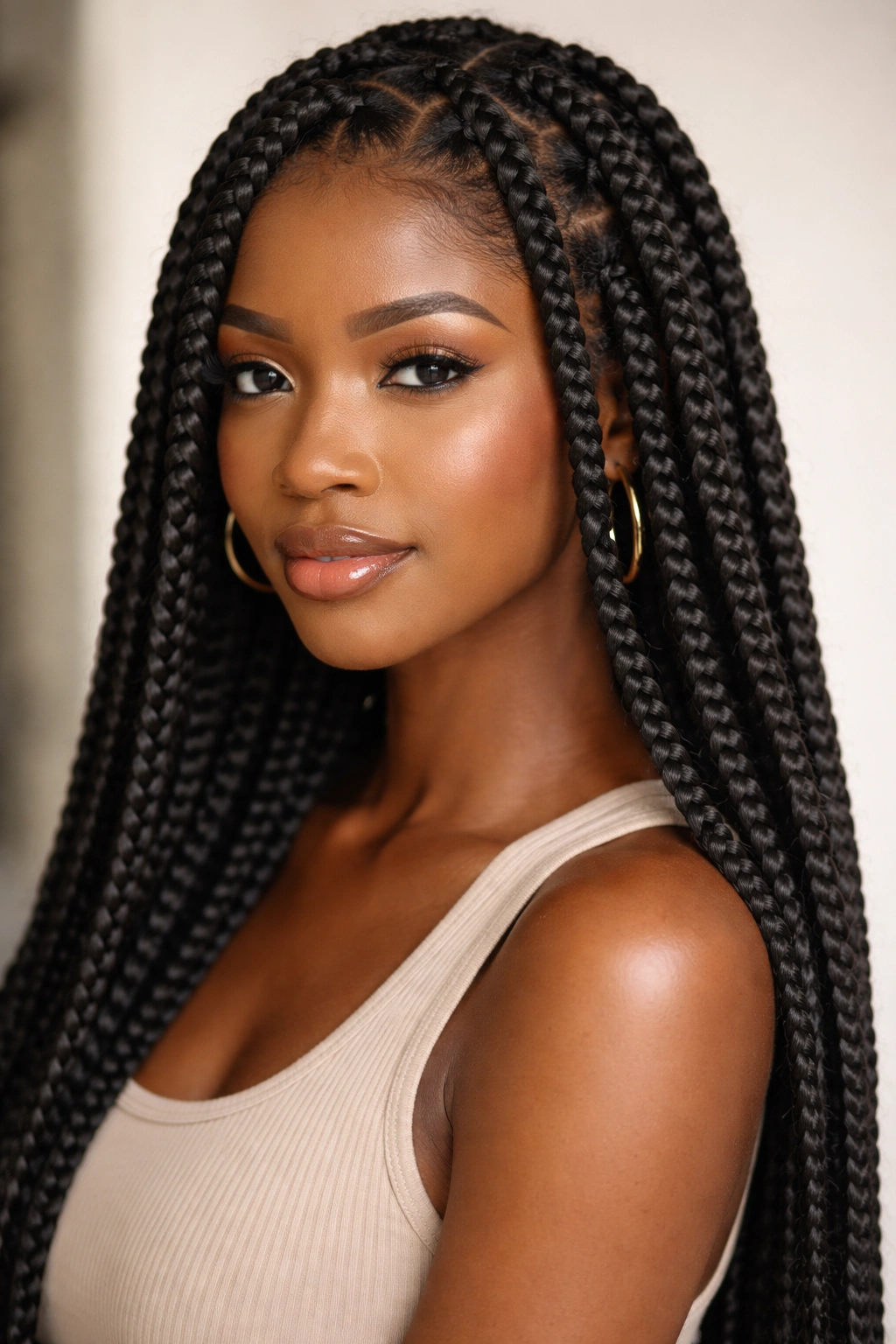
Box braids remain the gold standard of protective styling, and for good reason. These individual, square-shaped sections create a clean, organized appearance while allowing each braid to move independently. The style works beautifully on all hair types and densities, though it’s particularly stunning on thick, coily natural hair where the contrast between the braided sections and the hair texture creates visual interest.
Why Box Braids Work for Every Hair Type
Box braids distribute tension evenly across your scalp when installed correctly, which means less breakage and healthier hair growth over time. The beauty of this style is that you control the size — go small for an intricate, delicate look or jumbo for a bolder statement. The braids themselves don’t move much once set, so your style stays fresh from day one through week four or five. You can wear them down, up, half-up, or twisted into updos without them unraveling.
Key Facts About Box Braids
- Installation time ranges from 4 to 8 hours depending on braid size and whether you’re using extension hair
- Wear time typically lasts 6 to 8 weeks with proper care and nighttime protection
- Size options include micro (thin as thread), regular (pencil-sized), medium (thicker), and jumbo (thick and bold)
- Styling flexibility allows you to wear them up, down, curled at the ends, or decorated with beads and rings
Pro tip: Sleep on a silk or satin bonnet to reduce frizz and extend your style’s lifespan. This small habit can genuinely add 1-2 weeks to how fresh your braids look.
2. Lemonade Braids
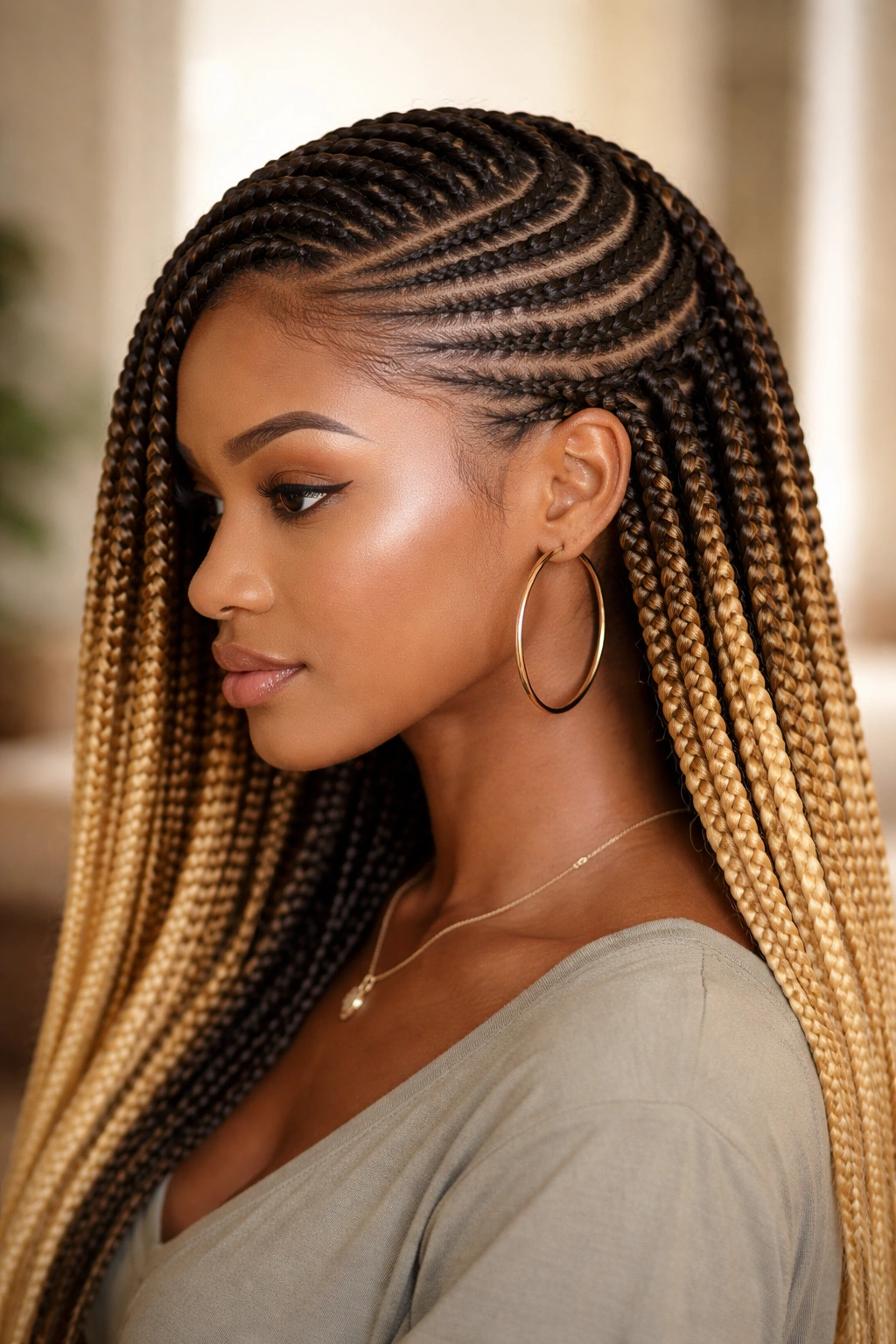
Lemonade braids are a two-toned, side-swept style inspired by Beyoncé’s iconic look — they’re feed-in braids that angle across the head from one side to the other, creating an elegant, almost crown-like effect. The curved placement gives your face an instant lift and works particularly well for people who like their hair pulled back but want something softer and more artistic than straight cornrows.
The Visual Appeal and Styling Impact
What makes lemonade braids so striking is the asymmetry and the way they frame your face. Instead of being perfectly parallel like traditional cornrows, these braids follow a curved, diagonal path that adds sophistication and movement to your overall look. The feed-in technique means your natural hair gradually incorporates into the braid, so there’s less tension on your hairline compared to box braids. You can add decorative elements — gold cuffs, pearls, or colorful thread — and the style suddenly feels completely custom and personalized.
What Sets Them Apart
- Installation time is 3 to 5 hours, typically quicker than box braids because there are fewer individual braids
- Ideal wear time is 4 to 6 weeks before needing a refresh due to the side placement and styling frequency
- Best suited for people who want a protective style that’s also a hair accessory and fashion statement
- Skill level required is moderate to advanced — a talented braider can make or break this style, so choose carefully
Worth knowing: Lemonade braids look sharper when you keep the edges smooth and laid. Use edge control on your hairline after installation and during the style’s lifespan to maintain that polished, deliberate look.
3. Feed-In Braids
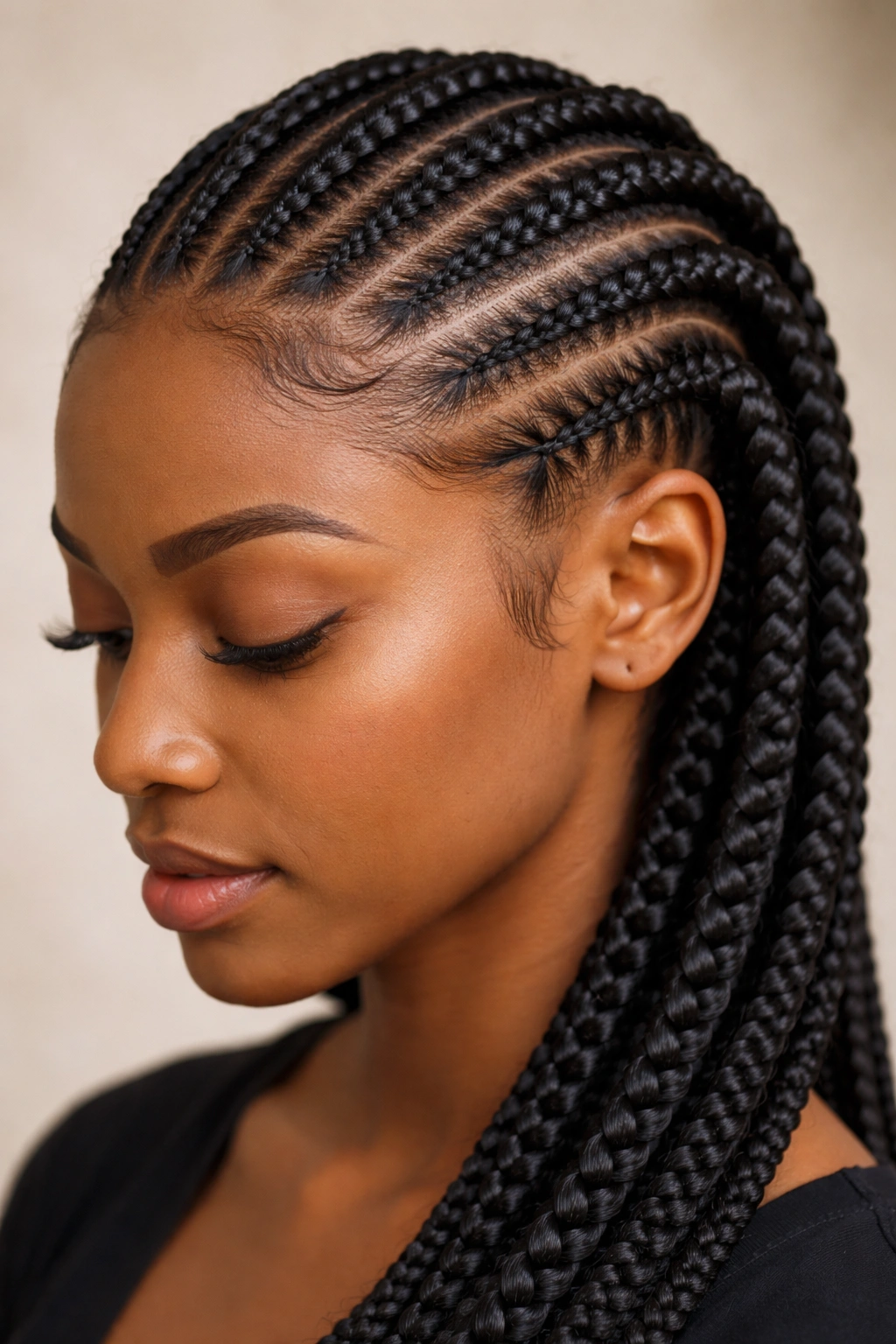
Feed-in braids are a technique where your natural hair is gradually incorporated into extension hair as the braid progresses, creating a seamless, blended appearance. This method is gentler on your hairline than traditional box braids because the braid starts thin at the root and gradually gets thicker, distributing tension more naturally across your scalp.
Why Stylists and Natural Hair Advocates Love This Method
The genius of feed-in braids is that they look intentional and polished from the very first row near your hairline. There’s no thick, obvious seam where extension meets hair — instead, everything flows together smoothly. This makes the style feel more like it grew right out of your head, and it’s significantly easier on your edges and hairline. The technique requires more skill than basic box braids, but the results are worth seeking out a experienced braider who knows how to execute it properly.
Technical Details and Care
- Installation time typically ranges from 5 to 8 hours depending on how many braids and the complexity of the pattern
- Longevity is excellent — feed-in braids usually last 8 to 10 weeks with proper maintenance
- Scalp friendliness is noticeably better than box braids, making this ideal if you have a sensitive scalp or fine edges
- Price reflects the technique — expect to pay more than traditional braids because this requires advanced skill and takes longer
Insider note: Ask your braider to feed in slightly larger sections of your hair (versus tiny pieces of extension each time) for a style that looks more like your natural hair texture incorporated thoughtfully, not just plastered on top.
4. Knotless Braids
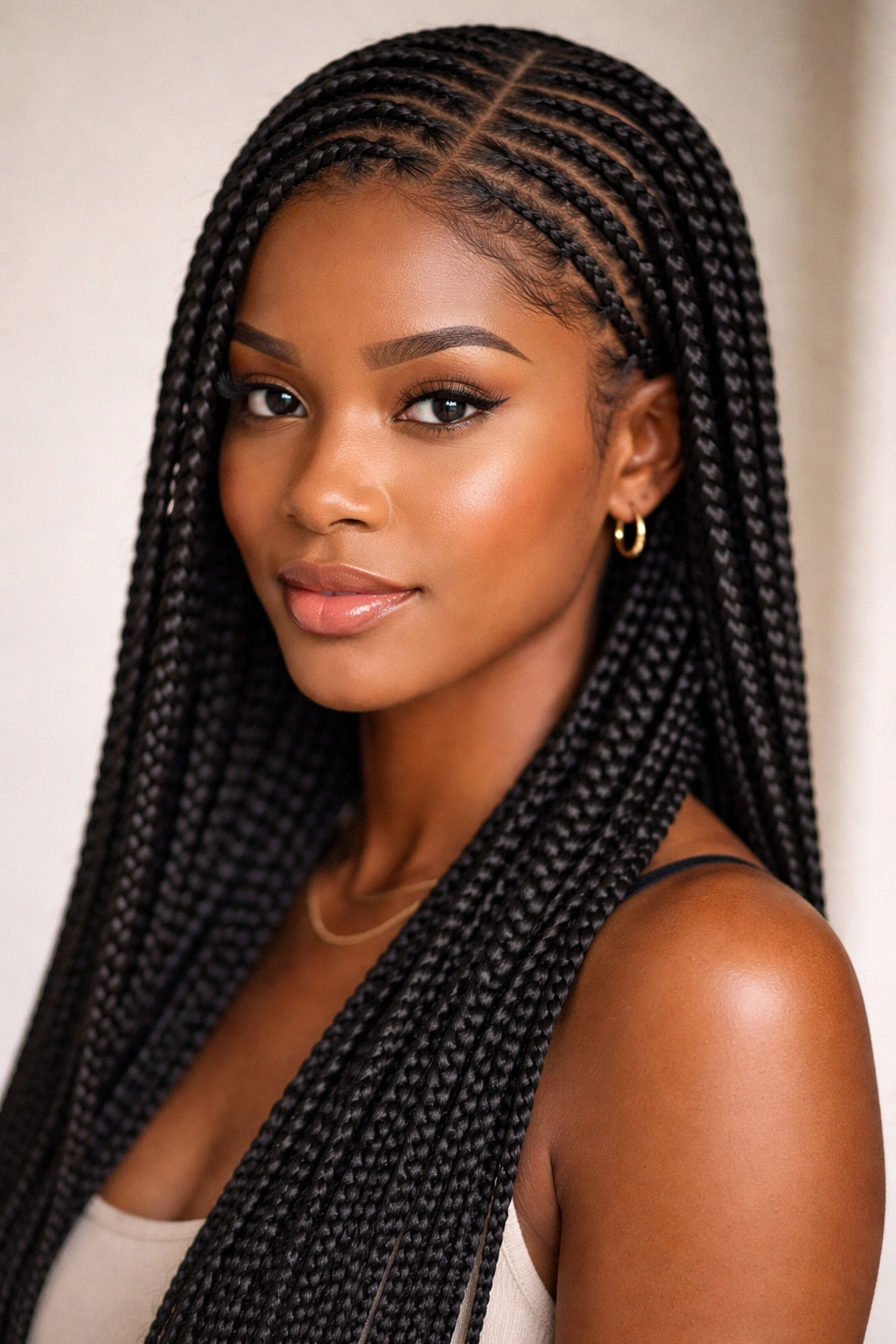
Knotless braids are the gentler cousin of box braids, using a technique where you lay your natural hair smoothly along the braid without creating the visible knot at the root that traditional box braids have. The result is a flatter, more seamless appearance at the base and a style that feels significantly lighter on your scalp overall.
The Comfort Factor and Scalp Health
Many people find knotless braids more comfortable than traditional box braids, particularly if you have a sensitive scalp or fine baby hair along your hairline. The absence of that tight knot at the root means less tension right where your hair is most delicate. The braids sit flatter against your scalp, which actually makes them easier to style — you can wear them sleeker without extra edge control products, and they look neat even on day 20 or 25 of wear.
Real Differences in Maintenance and Longevity
- Installation time is similar to box braids — 5 to 8 hours depending on size and quantity
- Comfort during installation is noticeably better for many people because there’s less tugging at the roots
- Wear time can extend to 8 to 10 weeks because the reduced tension means less stress on your hair and fewer breakage points
- Styling versatility is identical to box braids — everything you can do with traditional braids works here
Quick fact: Knotless braids will frizz slightly faster than traditional box braids because there’s no tight knot to keep everything locked down. This is completely normal and easily managed with a light gel and a satin bonnet at night.
5. Cornrows
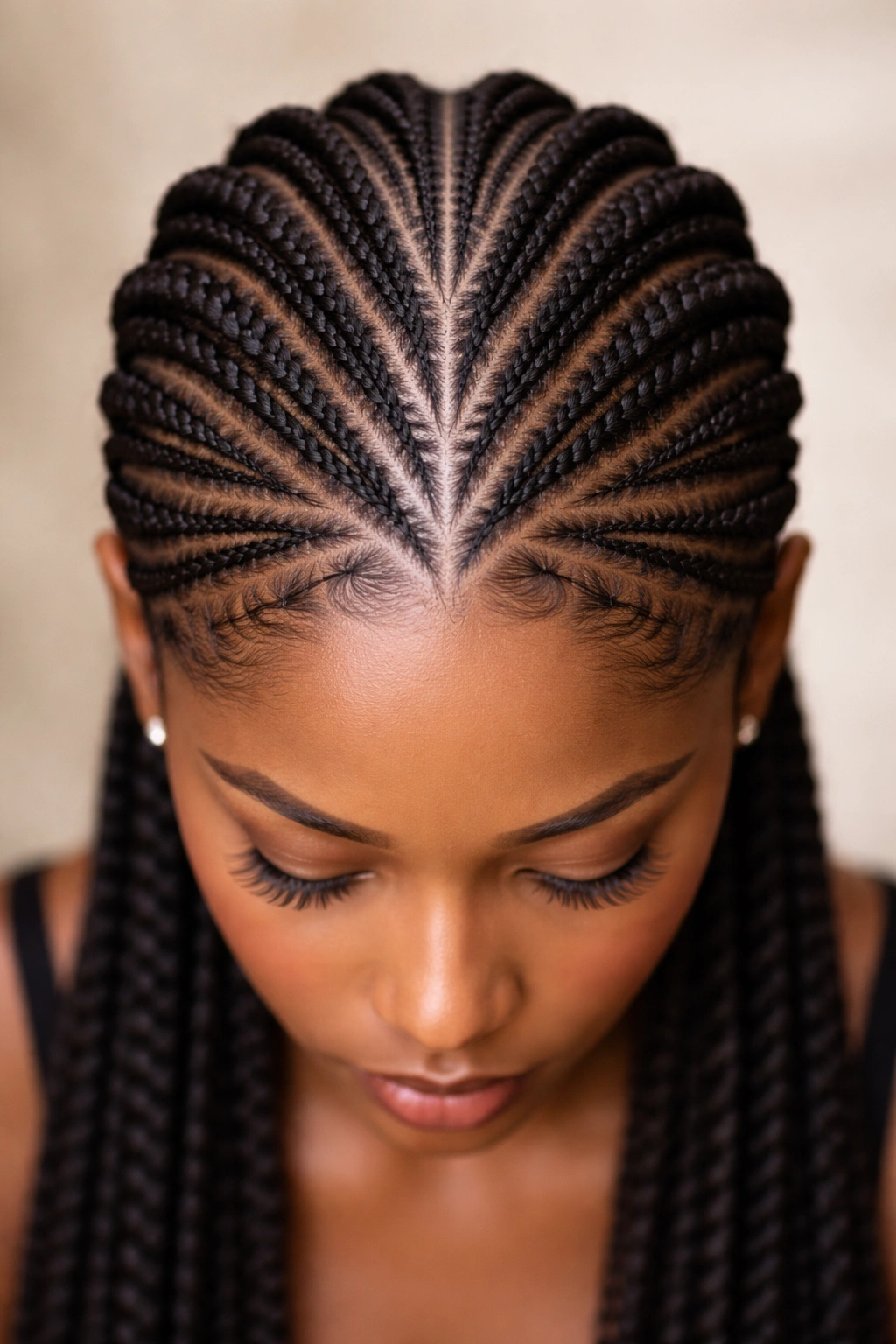
Cornrows are close-to-the-scalp braids that follow the natural contours of your head, creating geometric patterns that are both artistic and functional. This ancient style has remained popular across generations because it’s versatile, relatively quick to install, and can transition seamlessly from casual to formal occasions depending on how they’re arranged and accessorized.
The Art and Technique of Cornrowing
True cornrowing is a skilled craft — a good cornrower can create intricate patterns that look almost like wearable art on your head. You can do straight lines from front to back, curved patterns following your hairline, zig-zags, or complex geometric designs that wrap around your entire head. The style keeps your natural hair fully enclosed and protected, meaning minimal manipulation and optimal conditions for healthy growth over the weeks you wear them.
Installation, Longevity, and Styling Options
- Installation time ranges from 1 to 4 hours depending on pattern complexity and how many rows you’re getting
- Wear time is typically 2 to 4 weeks because cornrows are often restyled more frequently than other braids for aesthetic reasons
- Protective power is excellent — your natural hair is completely enclosed, so it’s getting maximum protection from environmental stress
- Styling versatility is surprising — you can wear cornrows down, pin them into buns, wrap them with thread, or add beads to each row
Real talk: Sleeping on cornrows can be uncomfortable because of how flat they sit against your head. Many people find them more comfortable to wear during the day and prefer to switch to a different protective style for evening wear, or simply sleep with a satin pillowcase to reduce friction.
6. Two-Strand Twists
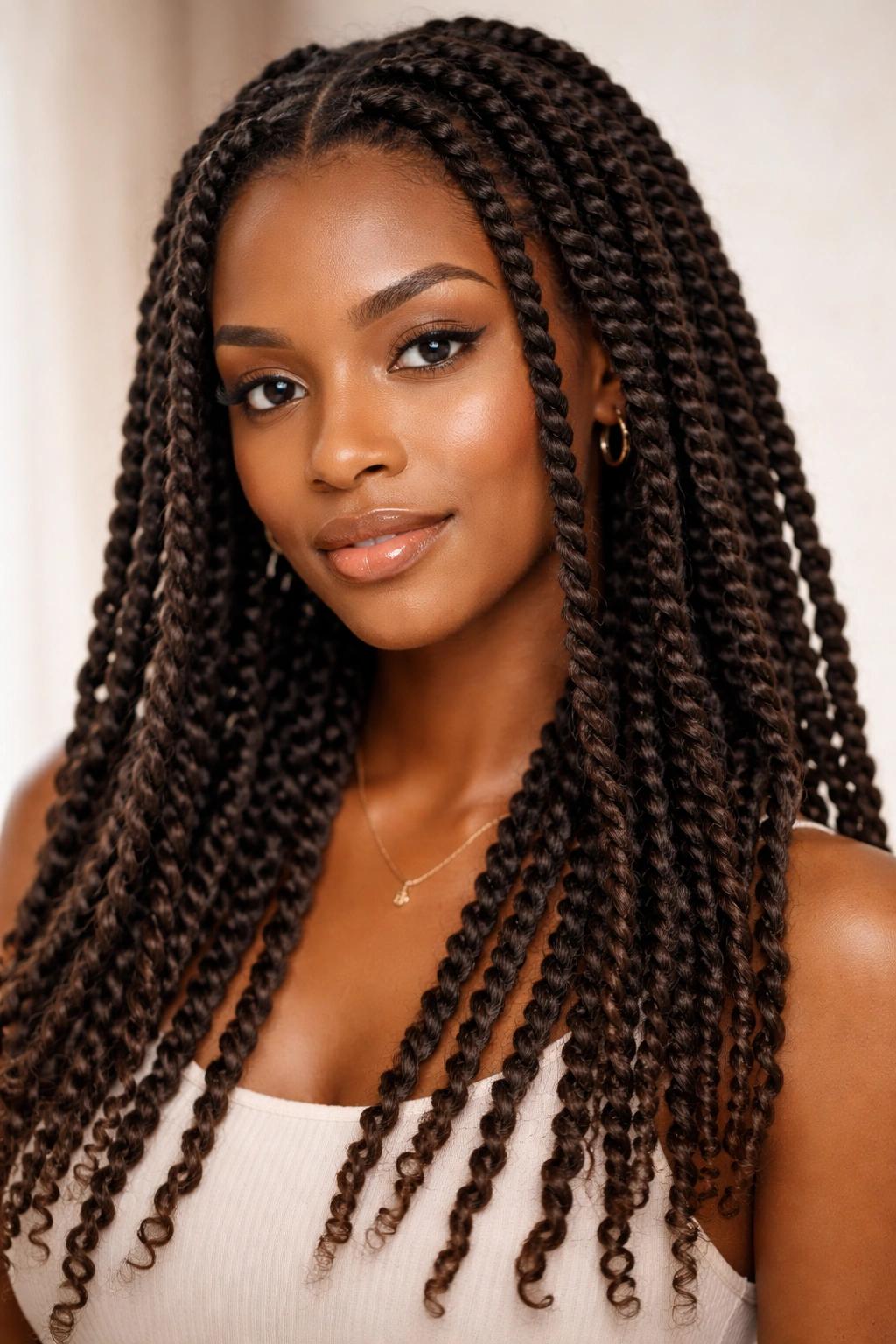
Two-strand twists are created by dividing a section of hair into two strands and twisting them around each other, creating a rope-like texture that’s thinner than braids and has a distinctly different aesthetic. These twists can be worn for weeks and actually improve in appearance as they set and mature, gaining more definition and texture over time.
Why Two-Strand Twists Offer Unique Benefits
Twists require less manipulation than braids and are gentler on your edges because there’s no crossing motion, just a twisting one. Many natural hair enthusiasts find twists more comfortable to sleep on than braids, and they’re easier to unravel if you need to take them down suddenly. The texture that develops over time makes twists look increasingly intentional and beautiful — by week three, they often look better than they did on installation day.
Installation and Wear Specifications
- Installation time is 2 to 4 hours depending on section size and whether you’re using extension hair
- You can wear twists for 6 to 10 weeks — longer than you might expect because they don’t unravel easily
- Refreshing is optional — many people find twists actually look better with a week or two of wear and retwisting at the roots
- Low manipulation means this is genuinely a protective style where you can leave your hair alone completely
Pro tip: Use a thicker extension hair or double-strand twisted hair itself for more durable twists that hold their shape longer. Single-strand twists with thin hair will loosen faster and look messier by week three.
7. Goddess Braids
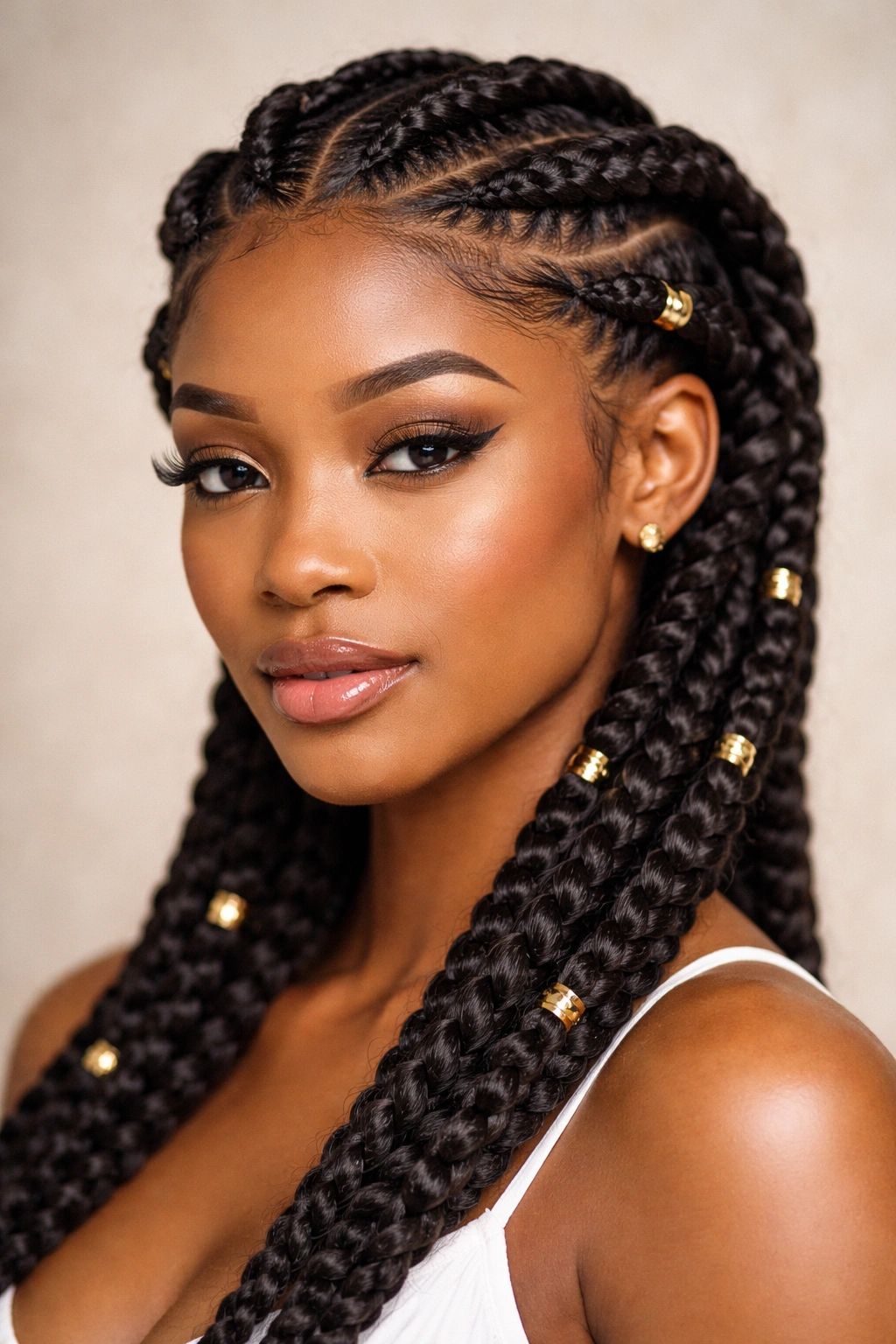
Goddess braids are thicker, more substantial braids that follow sculptural patterns around your head, typically starting near your edges and sweeping back or across your crown. They’re essentially thick feed-in braids or cornrows, but with more dimension and a more luxurious, statement-making appearance. The result is a style that looks both powerful and elegant.
The Statement and Styling Power
Goddess braids read as intentional and carefully curated — this isn’t a style you wear casually. They’re perfect for events, special occasions, or when you want to feel extra confident and put-together. The thickness of the braids means they take longer to install but also means they hold their shape beautifully for extended periods. You can add beads, gold cuffs, or decorative elements without them feeling overdone because the substantial size of the braids can carry embellishment.
What to Expect with This Style
- Installation time is 4 to 7 hours because each braid is thick and requires careful, detailed work
- Wear time extends to 8 to 10 weeks thanks to the thickness and the fact that these are typically feed-in technique
- Best for people who want a bold, high-impact protective style and don’t mind the longer installation time
- Scalp health is generally excellent because feed-in goddess braids distribute tension evenly
Worth knowing: Goddess braids look most impressive on people with medium to thick hair density. If you have finer hair, the braids won’t look as voluminous, though a good braider can still create a beautiful version tailored to your hair.
8. Fulani Braids
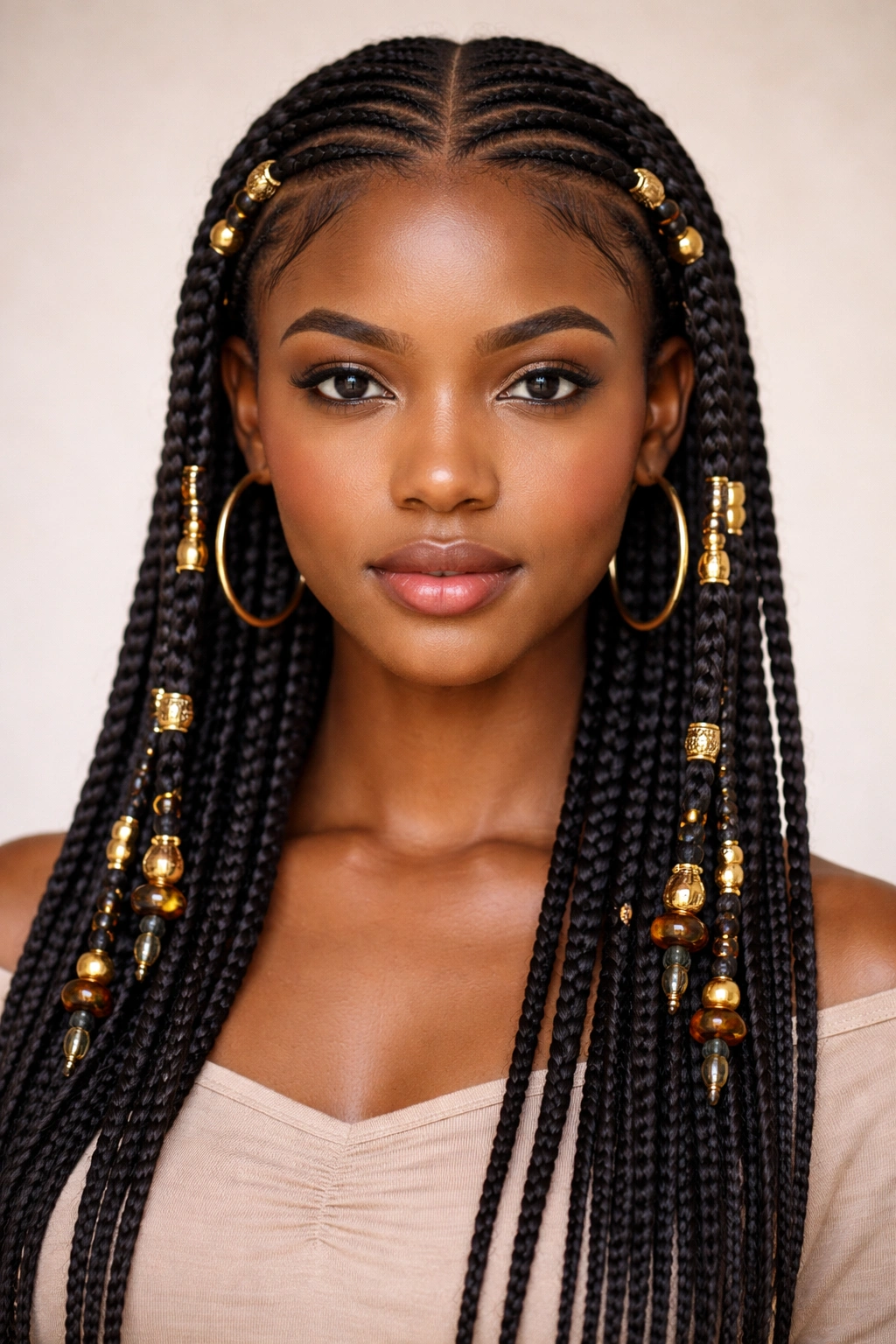
Fulani braids are inspired by the traditional hairstyles of the Fulani people of West Africa and typically feature a center part with cornrows or feed-in braids on the sides, often decorated with gold jewelry, rings, or beads. The style is ornate, culturally significant, and absolutely stunning when done well, combining protective styling with traditional aesthetic elements.
Cultural Significance and Modern Styling
These braids are more than a fashion choice — they represent a deep cultural heritage and connection to African beauty traditions. Modern Fulani braids often incorporate contemporary elements like colorful thread, metallic accents, or mixed braid sizes, creating a bridge between traditional and contemporary style. When wearing this style, it’s meaningful to acknowledge and respect its origins rather than treating it as a trend.
Technical and Practical Considerations
- Installation time ranges from 3 to 6 hours depending on the specific pattern and embellishments
- Wear time is typically 4 to 8 weeks depending on how much you manipulate the decorative elements
- Customization is key — the real beauty of Fulani braids comes from how you personalize the design, bead placement, and color combinations
- Styling requires intention — these braids deserve to be shown off, so plan to wear them down or in styles that display the intricate center section
Real talk: Fulani braids look their absolute best when worn down and displayed. Putting them up in a bun defeats the purpose of the style and hides the detailed work and cultural significance of the center parting.
9. Halo Braids
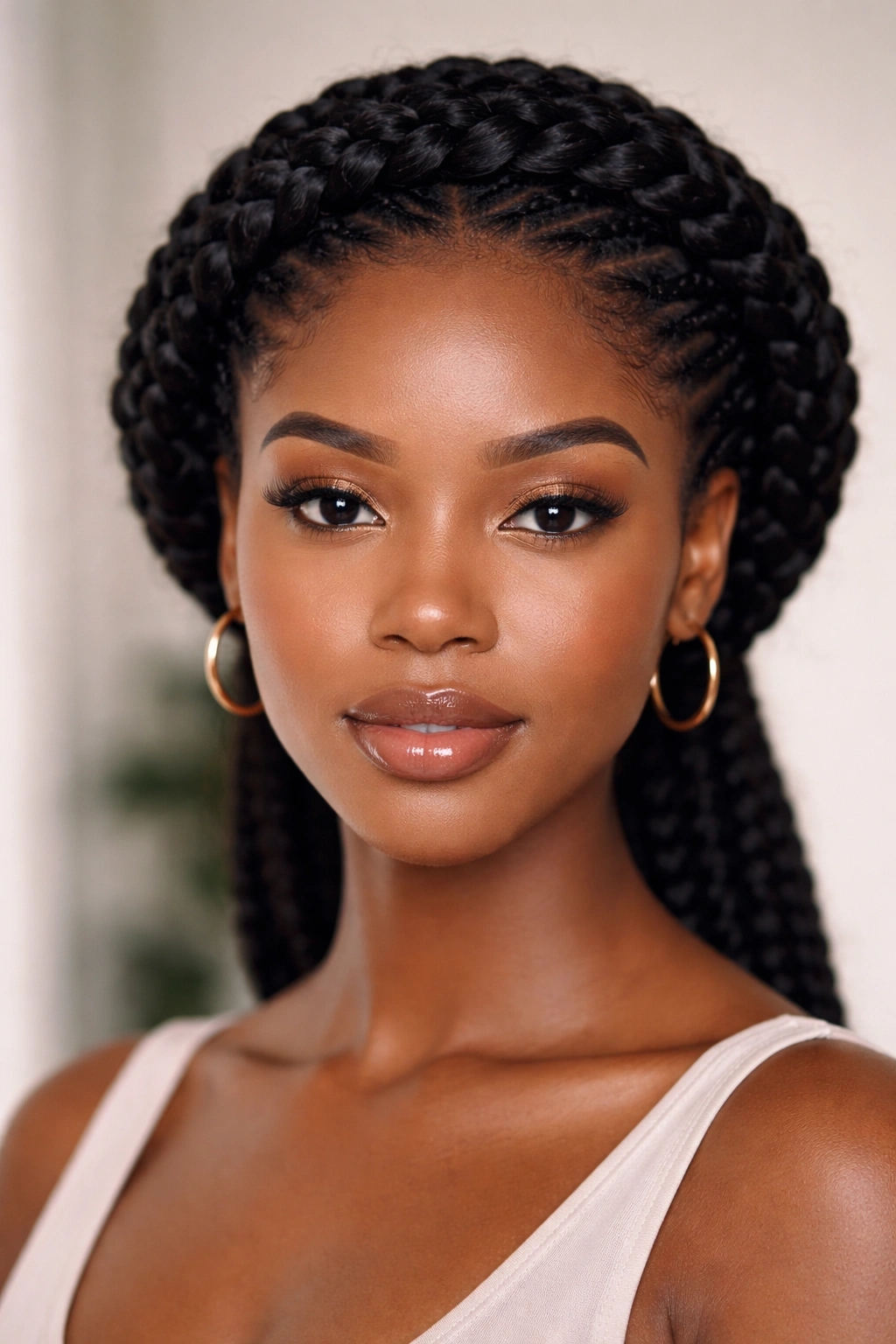
Halo braids are a crown-like protective style where one or more braids circle your head from temple to temple, creating a frame around your face and giving the appearance of a halo. This style combines the protective benefits of braiding with the face-framing appeal of a deliberate hairstyle, making it feel special enough for events but functional enough for everyday wear.
Why the Halo Effect Works So Well
There’s something inherently flattering about a halo braid — it draws attention to your face, emphasizes your bone structure, and creates an instantly polished appearance. The braids can be thin for a delicate, romantic look or thick for something bolder. You can combine multiple braids at different heights or just do one statement braid, depending on your preference and the time you have for installation.
Practical Details and Styling
- Installation time is 1 to 3 hours depending on how many halo braids you’re getting and their thickness
- These work best as part of a larger protective style — pair halo braids with box braids, twists, or your natural hair down
- Wear time varies depending on what you pair the halo with, but typically 4 to 8 weeks
- Styling flexibility is excellent because halo braids work with hair down, in buns, half-up, or any configuration
Insider note: Ask your braider to start the halo braid slightly above your ear rather than right at the temple. This positioning flatters more face shapes and creates a more intentional-looking frame.
10. Triangle Box Braids
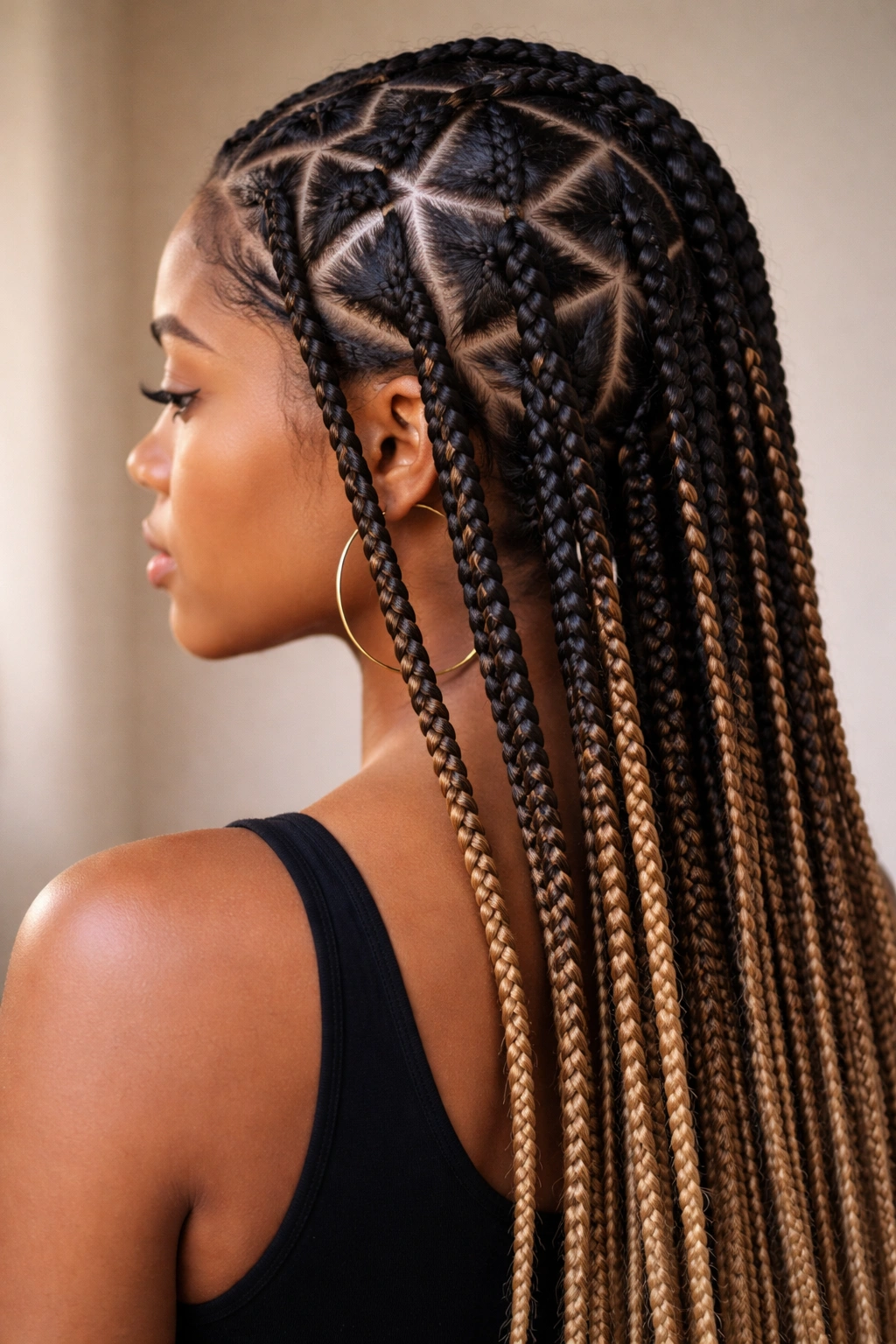
Triangle box braids use triangular sections instead of square sections, creating a geometric pattern that’s slightly different from traditional box braids. The triangular sections allow for creative patterning — you can create ombré effects, color blocking, or directional designs that wouldn’t be possible with square sections.
The Creative Potential and Visual Impact
Triangle braids open up possibilities for artistic direction that traditional box braids don’t offer. You can orient the triangles to create a specific pattern across your head, use different extension colors in each triangle, or create lines and designs that feel more intentional and custom. The technical aspect is slightly more complex, but the visual payoff is a truly unique style that stands apart from typical protective styling.
Technical Specifications
- Installation time is 5 to 9 hours because the sectioning is more complex and requires careful planning
- Wear time is 6 to 8 weeks — the same as traditional box braids, with no additional longevity
- Ideal for people who want a protective style that’s also a creative art project and conversation starter
- Styling works best with the braids down so the pattern is visible — updos defeat the purpose
Quick fact: Triangle braids will feel slightly different than square braids during wear because the connection points are different. Some people find them slightly more comfortable; others find square sections work better for their scalp. Test both to see which you prefer.
11. Crochet Braids
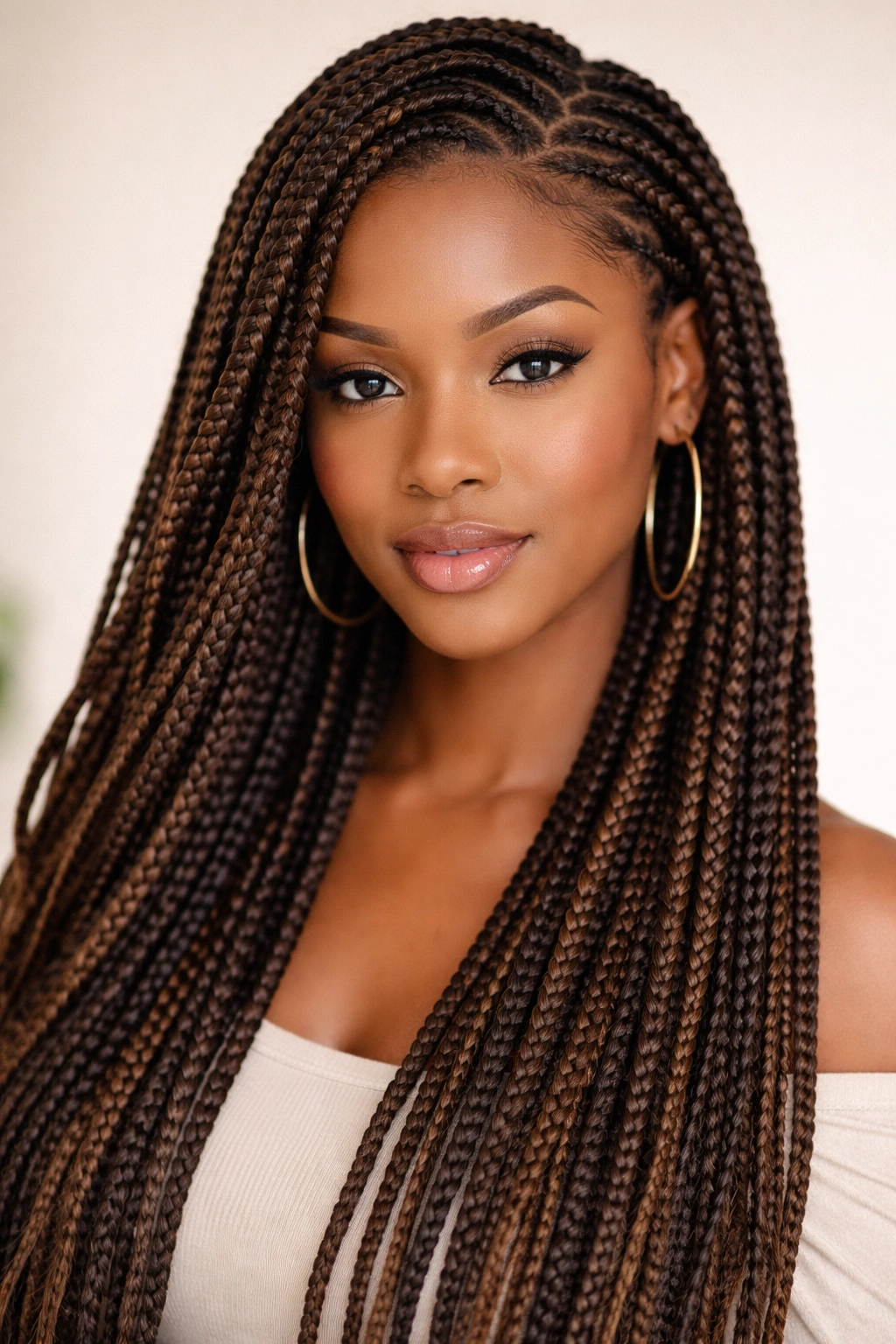
Crochet braids involve attaching pre-made braids to your hair using a crochet hook, which means the protective style is installed in 2 to 4 hours instead of 6 to 8. The braids sit on top of cornrows or twists you’ve created with your own hair, making this a hybrid style that combines speed with protection.
Why Crochet Braids Appeal to Time-Conscious People
If you love the look of box braids but can’t commit to 8 hours in a salon chair, crochet braids deliver the same aesthetic in a fraction of the time. You can get different textures and styles by choosing different pre-made braids — straight, wavy, curly, kinky — without waiting for your own hair to be braided into each section. This method is also gentler on your natural hair in some cases because your actual hair isn’t being braided; it’s being looped into cornrows that serve as an anchor.
Installation Method and Maintenance
- Installation time is 2 to 4 hours making this ideal for quick style changes
- Wear time is typically 4 to 8 weeks depending on how well the crochet attachment holds and how much manipulation you do
- Cost is lower than traditional box braids because you’re paying for labor, not extensive braiding time
- Removal is faster — you can unravel or cut the pre-made braids away without detangling as much as you would with traditional braids
Worth knowing: The cornrows or twists underneath crochet braids need to be healthy and well-maintained because they’re supporting the entire style. Use light oil on your scalp and avoid manipulating underneath the crochet sections excessively.
12. Jumbo Braids
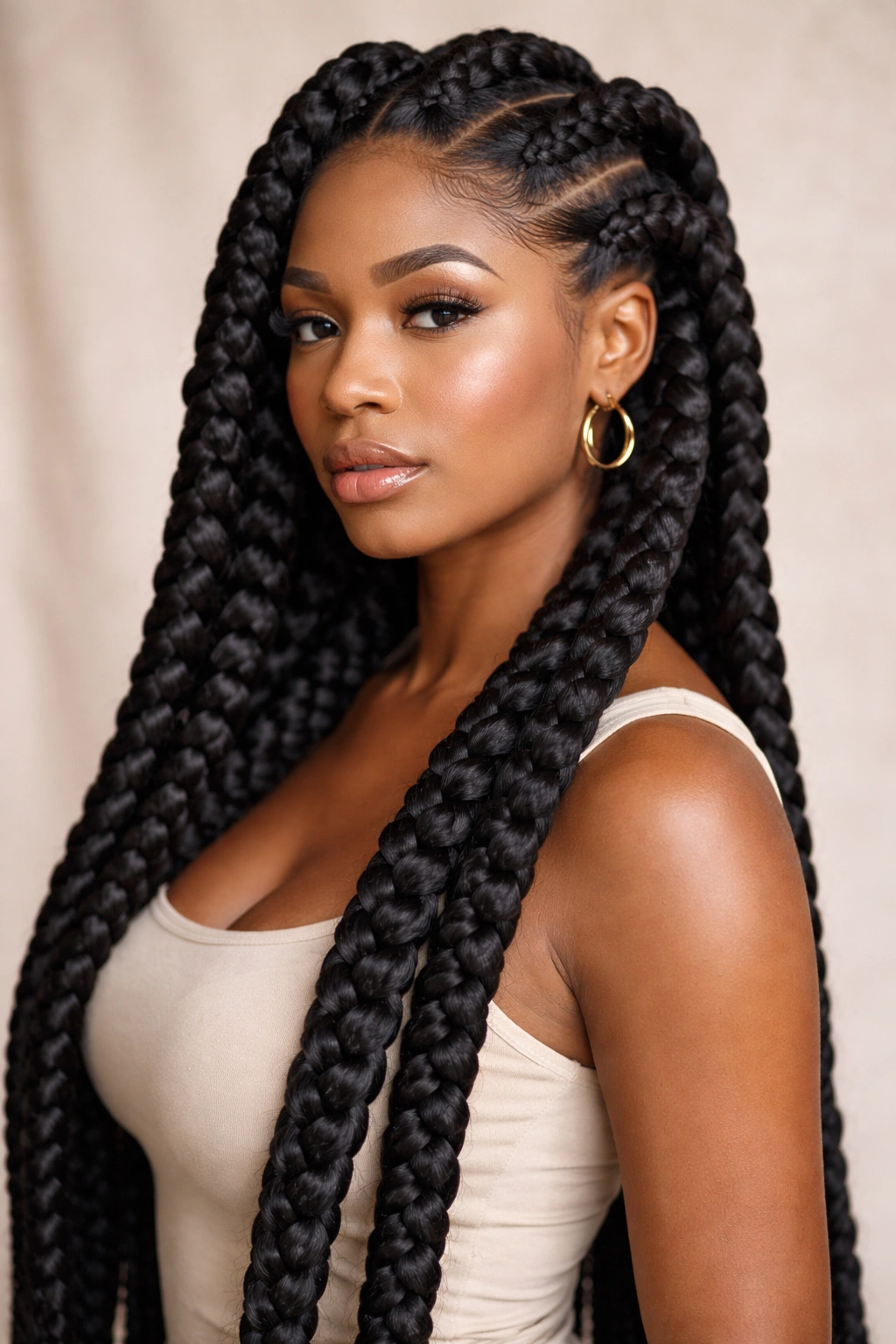
Jumbo braids are exactly what they sound like — thick, statement-making braids that use significantly larger sections than traditional box braids. These braids create bold visual impact, braid quicker (fewer of them to install), and give off a confident, doesn’t-take-itself-too-seriously energy that’s perfect for people who want protective styling without overthinking the details.
The Appeal of Bold, Minimal Detail
There’s something liberating about jumbo braids — they’re straightforward, they look good, and they require less maintenance than thinner styles. You’re also using less extension hair, which can be easier on your wallet and potentially more comfortable because there’s less weight on your head. Jumbo braids work beautifully with colorful extensions, ombré effects, or metallic thread woven through for a personalized touch.
Practical Considerations
- Installation time is just 2 to 4 hours because there are fewer braids to complete
- Wear time extends to 8 to 12 weeks — the thickness means they hold their shape longer than finer braids
- Best for people with thicker, coarser hair textures where jumbo braids look proportional and full
- Styling versatility is excellent — you can wear them down, in high buns, or half-up without them looking thin or sparse
Pro tip: Jumbo braids look best when you keep them moisturized at the scalp. Because there’s more weight hanging from each braid, dry hair breaks more easily at the attachment point. Use a light leave-in conditioner on your scalp twice weekly.
13. Faux Locs
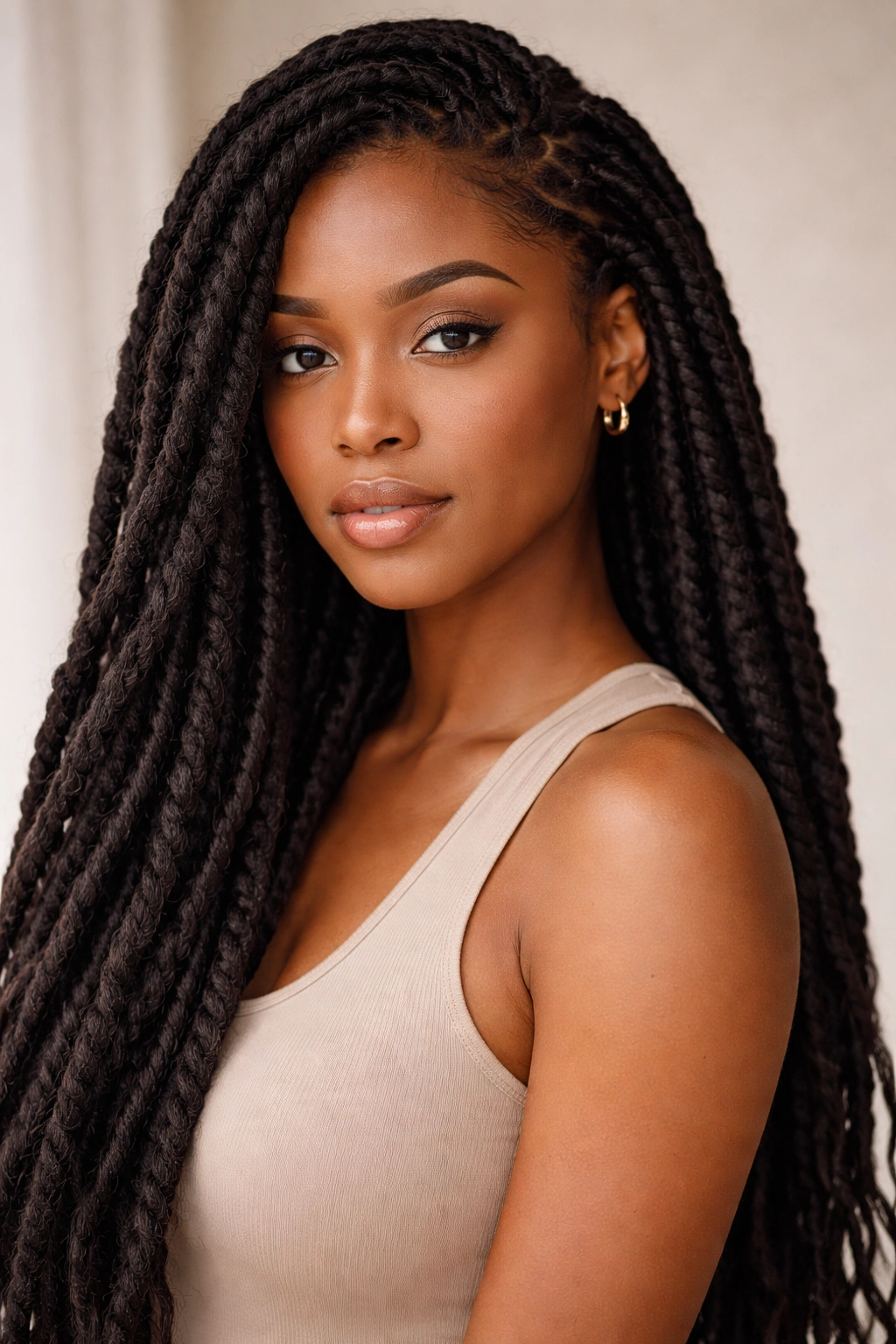
Faux locs mimic the appearance of dreadlocks using a combination of your hair and extension hair twisted together, but they can be taken down without cutting or permanent commitment. This style gives you the aesthetic of locs while maintaining the flexibility to change your style whenever you want, making it perfect for people who want to explore the look without the years-long commitment.
The Protective and Aesthetic Benefits
Faux locs offer serious protective benefits because your hair is completely enclosed and twisted, requiring minimal daily manipulation. The aesthetic is bold and beautiful, and depending on how you style them — up, down, half-up, decorated with beads and cuffs — they can feel casual or dressed up. The texture develops and improves over weeks, and by month two they look incredibly intentional and put-together.
What You Need to Know About Faux Locs
- Installation time is 4 to 8 hours depending on how many locs and whether you’re using extension hair throughout
- Wear time is excellent — 8 to 12 weeks or longer because they’re thick and hold their structure
- They feel heavier than box braids, so make sure your hair is strong enough to support the weight without discomfort
- Daily maintenance is minimal, but you’ll want to maintain them at the roots and keep your scalp moisturized
Insider note: Sleeping on faux locs is most comfortable when you pineapple them (gather them into a high ponytail at the top of your head). This reduces friction and keeps them from getting tangled while you sleep.
14. Micro Braids
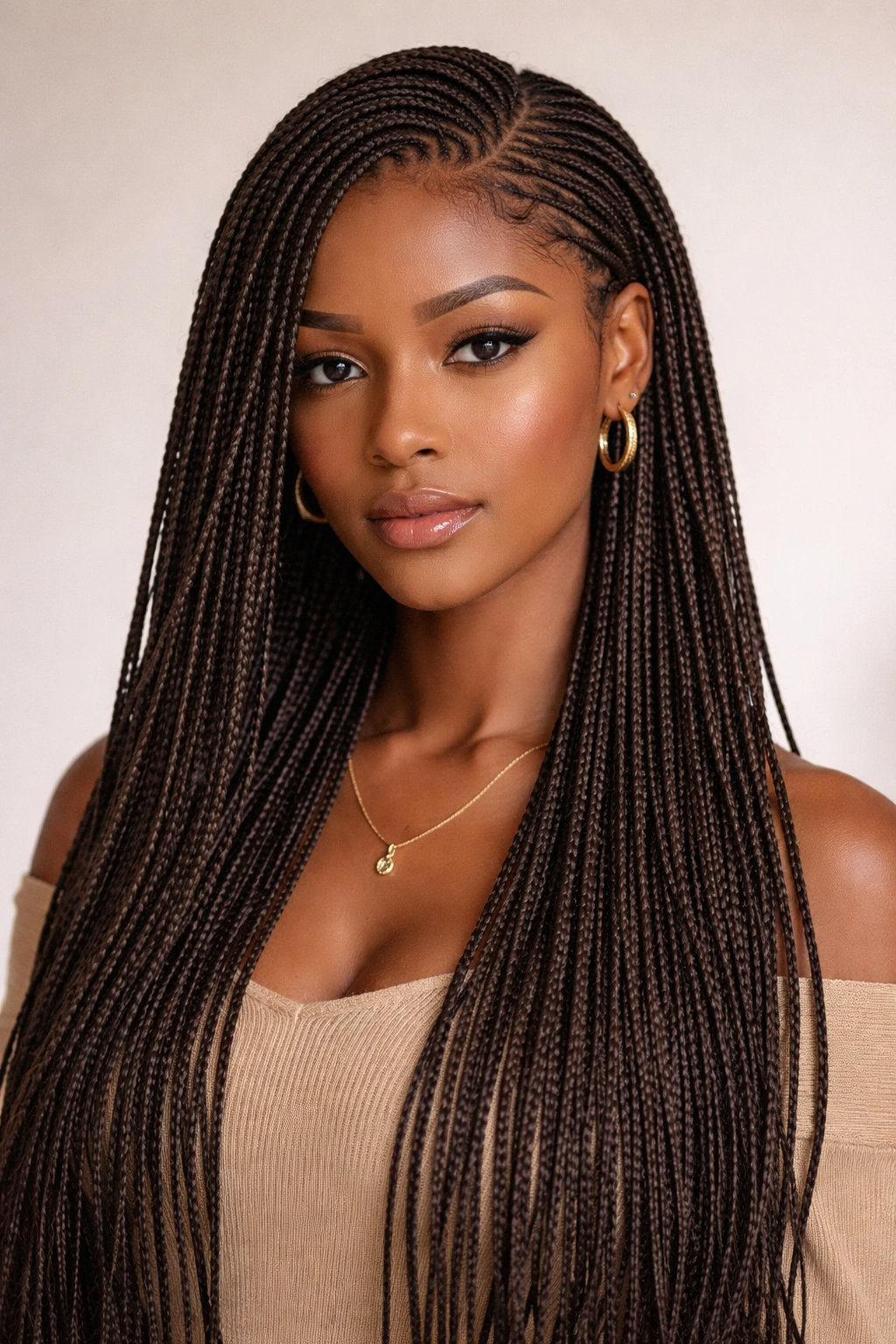
Micro braids are delicate, thin braids that create an intricate, detailed appearance. They require more time to install than any other braid style because of the sheer quantity of individual braids, but the payoff is a sophisticated, detailed look that’s practically a work of art.
When Detailed Beauty Is Worth the Commitment
Micro braids appeal to people who love detail, appreciate intricate work, and don’t mind sitting for 8 to 12 hours (sometimes even longer) to achieve a style. The result is breathtakingly beautiful — when done well, micro braids look like tiny, perfect ropes covering your entire head. The versatility is incredible too; you can wear them down, in multiple bun styles, sleek or textured, and they always look intentional.
The Reality of Micro Braids
- Installation time is 8 to 14 hours, sometimes requiring multiple visits to complete
- Wear time is the longest of any braid style — often 10 to 12 weeks or more because the thickness of work holds everything in place
- Weight is lighter than you might expect because the braids are so thin, even with thousands of them
- Care requirements are minimal because the tight braids don’t come loose easily, though you’ll want to protect them at night with a bonnet
Real talk: Micro braids are a commitment. They’re expensive, they take forever to install, and you need to plan your schedule around the appointment. But many people feel the final result is absolutely worth every minute and dollar spent because the style is stunning.
15. Senegalese Twists
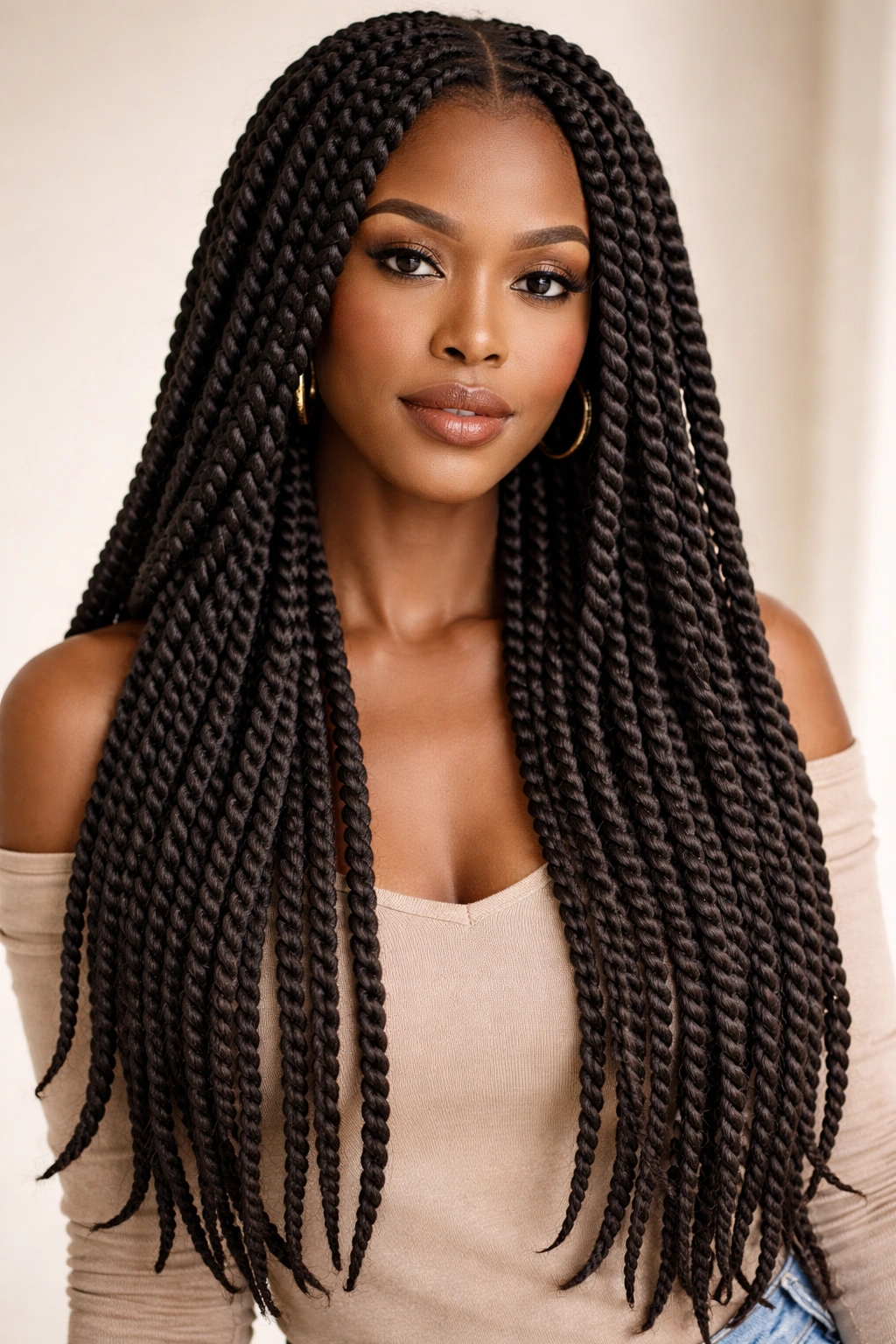
Senegalese twists are created with three strands twisted together (rather than two), resulting in a rope-like texture that’s thicker and more defined than two-strand twists. These twists hold their shape beautifully for extended periods and develop gorgeous texture and definition as they mature over time.
Why Three Strands Create Superior Definition
The three-strand twist creates a tighter, more structured spiral than two-strand twists, meaning they hold their shape longer and look better over time. The additional strand also makes them appear fuller and more intentional, even with finer hair. Senegalese twists work on all hair types and textures, and the longevity is exceptional because the three-strand construction just doesn’t unravel as easily as two strands do.
Installation and Wear Details
- Installation time is 3 to 5 hours depending on twist size and whether you’re using extension hair
- Wear time is excellent — 8 to 12 weeks because the three-strand twist is so structurally sound
- Maintenance is genuinely minimal — you can refresh the roots if you want, but it’s completely optional
- Flexibility is surprising — wear them down, up, half-up, or pin them into artistic updos without them falling apart
Worth knowing: Senegalese twists look particularly beautiful when you let them live beyond the first two weeks. The definition improves, they feel less stiff, and they develop character that looks completely intentional and expertly done.
Final Thoughts
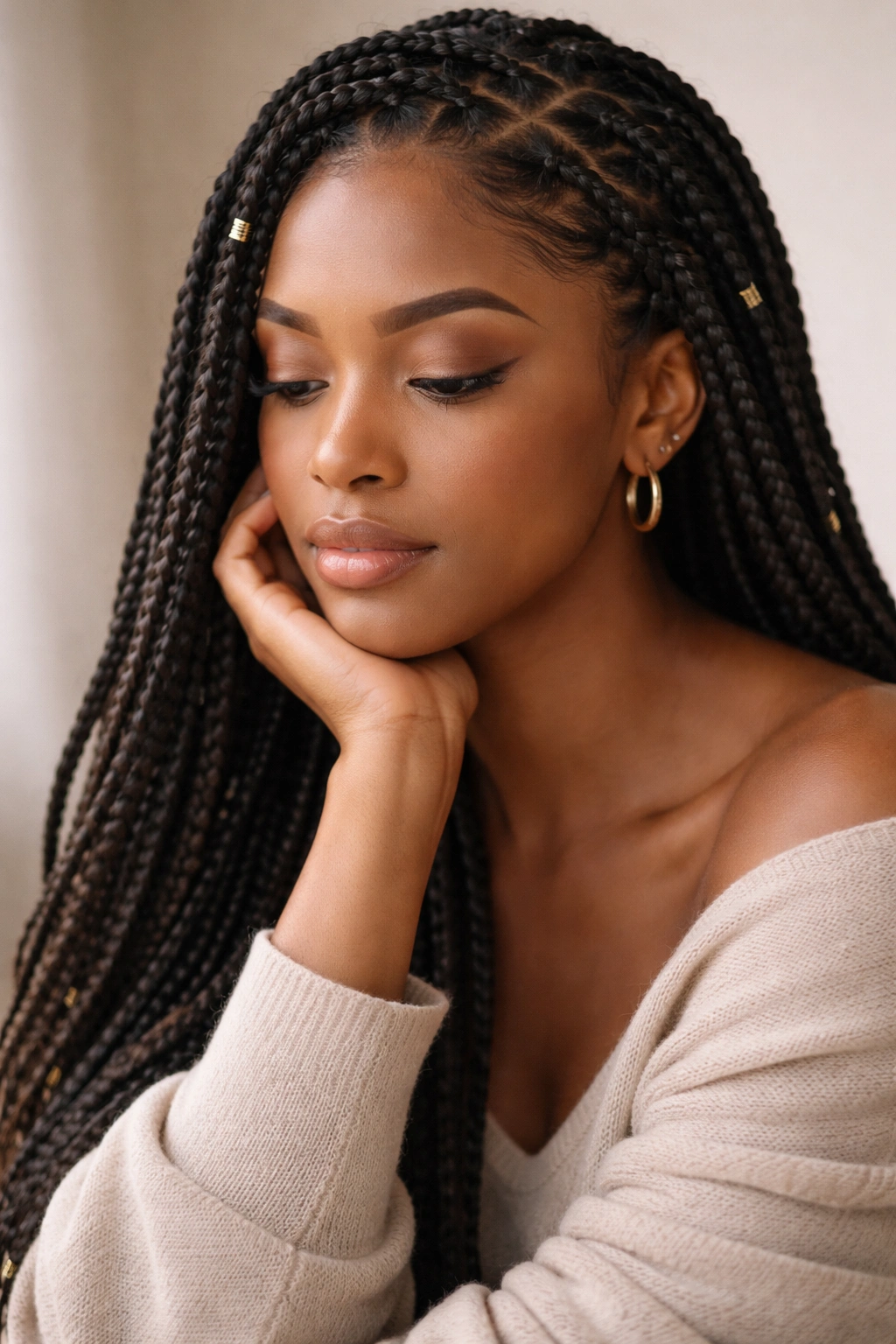
Choosing a protective braid style ultimately comes down to understanding your hair’s needs, your lifestyle, and the kind of look that makes you feel confident and beautiful. Each of these 15 styles offers legitimate protective benefits when installed and maintained properly, meaning you’re not choosing between aesthetics and health — you get both.
The investment in a quality braider who understands your hair and your preferences is genuinely worth it. A braider who listens when you describe what you want, who doesn’t pull excessively at your hairline, and who uses healthy products and techniques will set you up for success with whichever style you choose. Your braids are only as good as their installation, so don’t rush this part of the process.
Between protective styling appointments, prioritize moisture, scalp health, and gentle handling of your hair. Keep your braids clean with a lightweight mousse or dry shampoo, protect them at night with a bonnet or scarf, and enjoy the freedom that comes from a style that lets you leave your hair alone for weeks. Whether you’re drawn to the classic simplicity of box braids, the artistic complexity of Fulani braids, or the quick elegance of jumbo braids, you’re choosing a style with centuries of cultural significance and proven results for natural hair health and growth.