


Afro twists are one of the most versatile and expressive protective styling options available to anyone with natural hair, and once you master the basics, the variations become nearly endless. Whether you’re looking for a quick everyday style, a statement look for a special occasion, or a long-lasting protective style that gives your hair a break from daily manipulation, there’s a twist style that fits your needs, timeline, and aesthetic. The beauty of twists lies in their flexibility—they work on all curl patterns, they can be as simple or as intricate as you want them to be, and they genuinely protect your edges and ends while allowing your hair to thrive.
What makes twist styles particularly appealing is how they bridge the gap between creative self-expression and practical hair care. You can wear them sleek and polished, textured and voluminous, incorporated into intricate updos, or left loose and flowing. They suit every season, every mood, and every occasion. More importantly, unlike some protective styles that require hours in a salon chair and a significant financial investment, many twist styles can be done at home with just your fingers, some moisturizer, and a bit of patience.
If you’ve been staring at pictures of gorgeous twisted styles on social media and wondering which ones would actually work for your hair texture, lifestyle, and skill level, this guide breaks down 14 distinct afro twist variations—from the foundational classics that every natural-hair enthusiast should know about to more advanced and decorative options that let you truly customize your look.
1. Two-Strand Twists
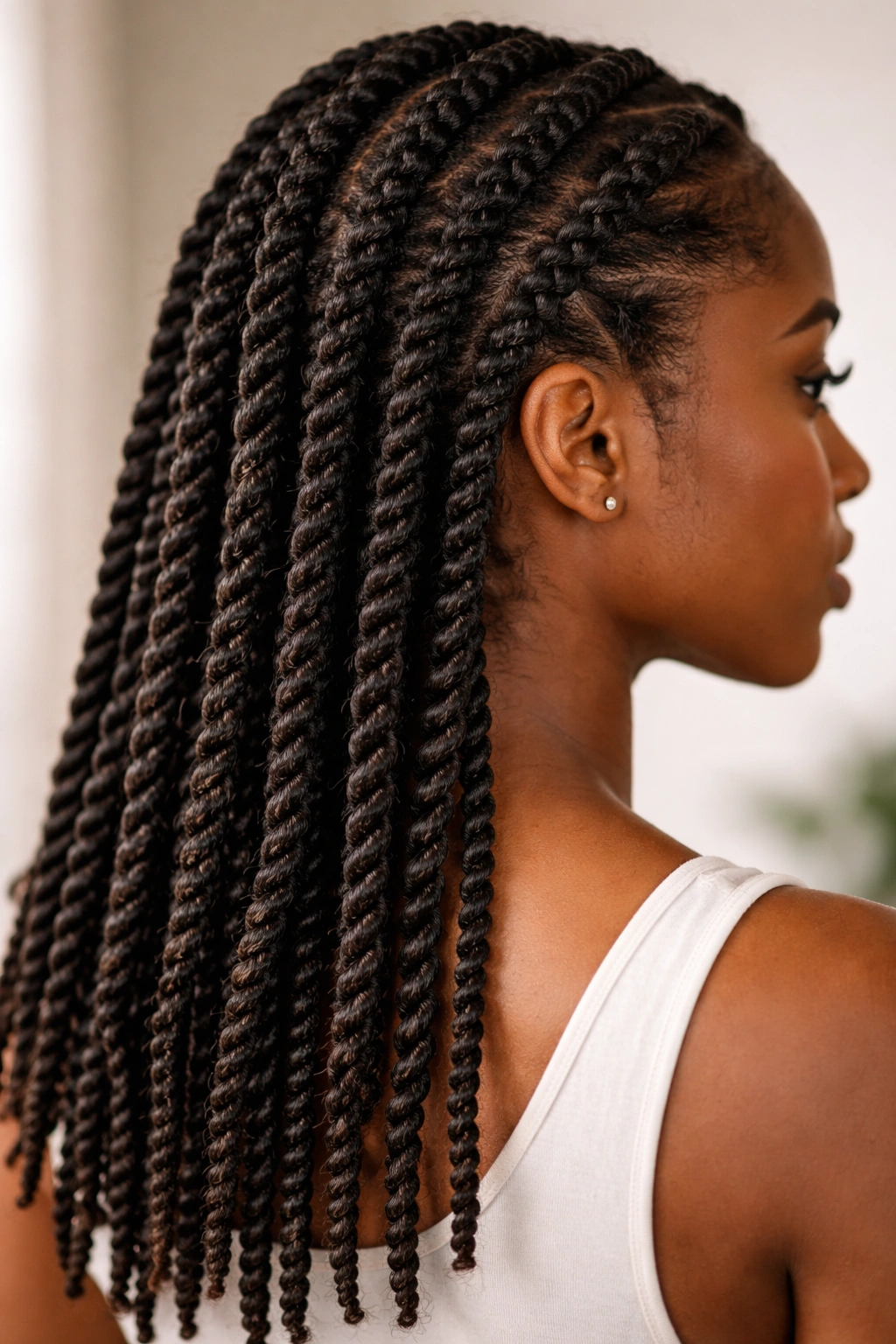
Two-strand twists are the foundational twist style that most people learn first, and for good reason—they’re straightforward enough for beginners to master but sophisticated enough to wear to professional settings or fancy events. Each twist is created by taking two sections of hair and wrapping them around each other from root to tip, creating a rope-like strand that can be as thin or as thick as you want. The beauty of two-strand twists is that they look polished when freshly done, they last for weeks with proper maintenance, and they genuinely give your hair time to rest and recover.
How to Create This Look
Section your hair into the number of parts you want—start with larger sections if you’re doing this for the first time, as smaller sections take considerably longer. Take one section and divide it into two equal pieces. Moisturize lightly with a leave-in conditioner or twist cream, then wrap one section over the other in a consistent direction (clockwise or counterclockwise—choose one and stick with it for visual consistency). Continue this wrapping pattern all the way down to the ends. Twist gently but firmly enough that the twists hold their shape; overly loose twists will unravel, while twists twisted too tightly can cause tension and breakage. The entire process typically takes 2 to 4 hours depending on hair density and desired thickness.
Styling and Maintenance Tips
Two-strand twists look fresh for about 7 to 10 days before they start to look fuzzy or lose definition—this is completely normal and not a sign of failure. To extend their lifespan, sleep on a silk or satin pillowcase or wrap your hair in a silk bonnet each night, as cotton pillowcases absorb moisture and cause frizz. Every few days, lightly re-twist any twists that have loosened, focusing on the roots where regrowth shows. You can refresh the style by spritzing with water and a leave-in conditioner, then re-twisting just the loosened sections rather than redoing the entire head. When you’re ready to take them down, apply conditioner generously and unwind them slowly and gently to minimize breakage.
2. Flat Twists
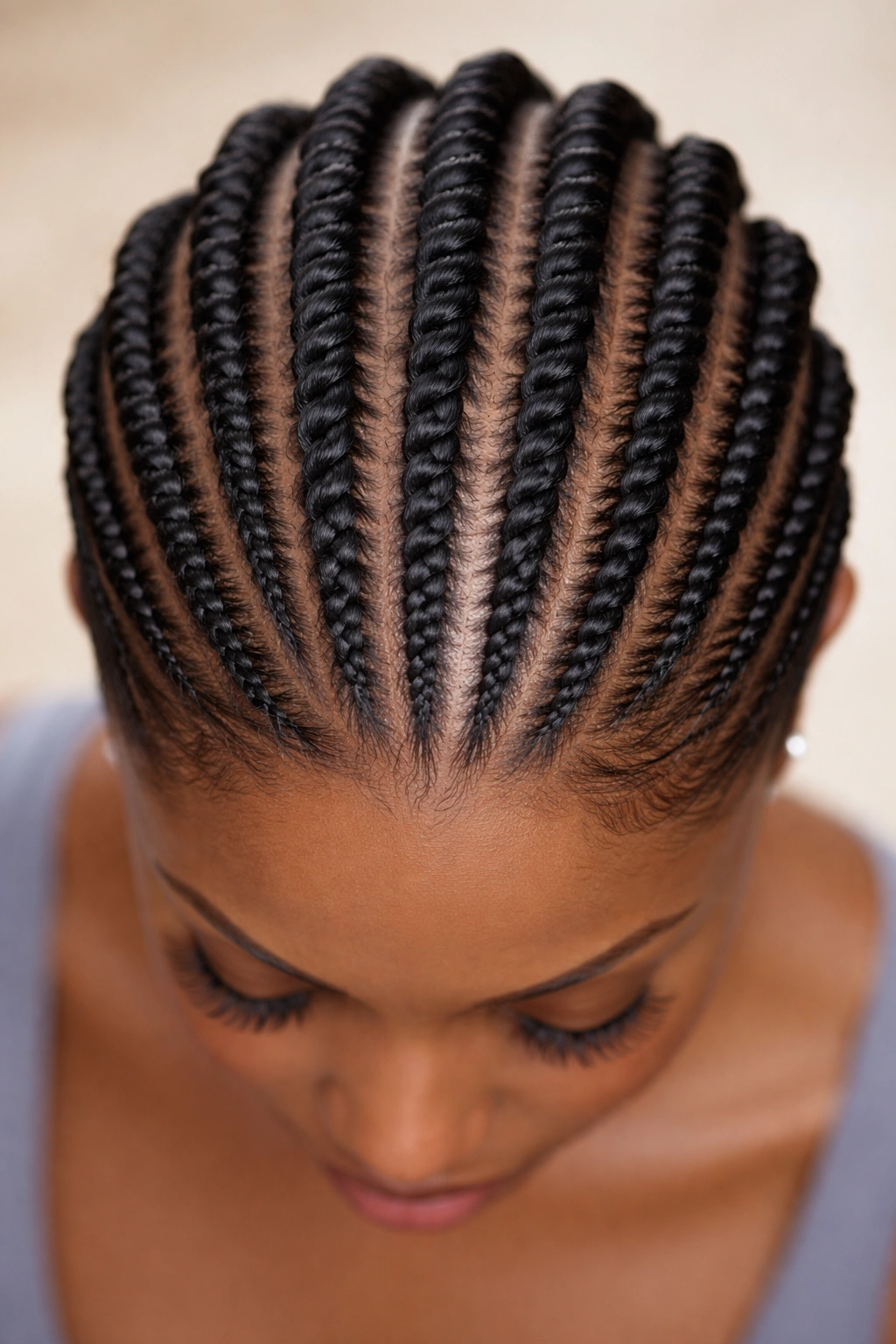
Flat twists are three-dimensional braids that use the two-strand twist technique but are laid flat against the scalp in rows, much like cornrows. They’re visually striking, incredibly elegant, and work beautifully as a standalone style or as a base for more elaborate updos and protective styles. Flat twists hold their shape longer than loose two-strand twists because they’re anchored closer to the scalp, making them ideal if you want a style that stays crisp-looking for an extended period.
How to Create This Look
Start by creating clean sections on your scalp—decide whether you want straight rows, curved or diagonal patterns, or a more freeform design. Beginning at one section, take a small amount of hair at the roots and divide it into two pieces. Start twisting these two pieces around each other while simultaneously pulling the twist toward and against the scalp, adding small sections of hair to each strand as you move down the line, similar to how you’d add hair to cornrows. The key to flat twists that look intentional and beautiful is consistency in tension and width—try to make each twist roughly the same thickness and pull them back with similar pressure throughout.
Styling and Maintenance Tips
Flat twists hold their shape beautifully for 10 to 14 days, sometimes longer depending on your hair’s texture and how gently you sleep on them. They look stunning worn loose or gathered into buns, ponytails, or other updos. The downside is that flat twists are more labor-intensive to install than loose twists and require a bit more precision, which is why many people visit a stylist for this look. If you’re doing them yourself, practice on your underneath layers first before tackling your entire head. Sleep protection is essential—use a silk or satin bonnet to prevent the twists from unraveling and to reduce frizz.
3. Chunky Twists
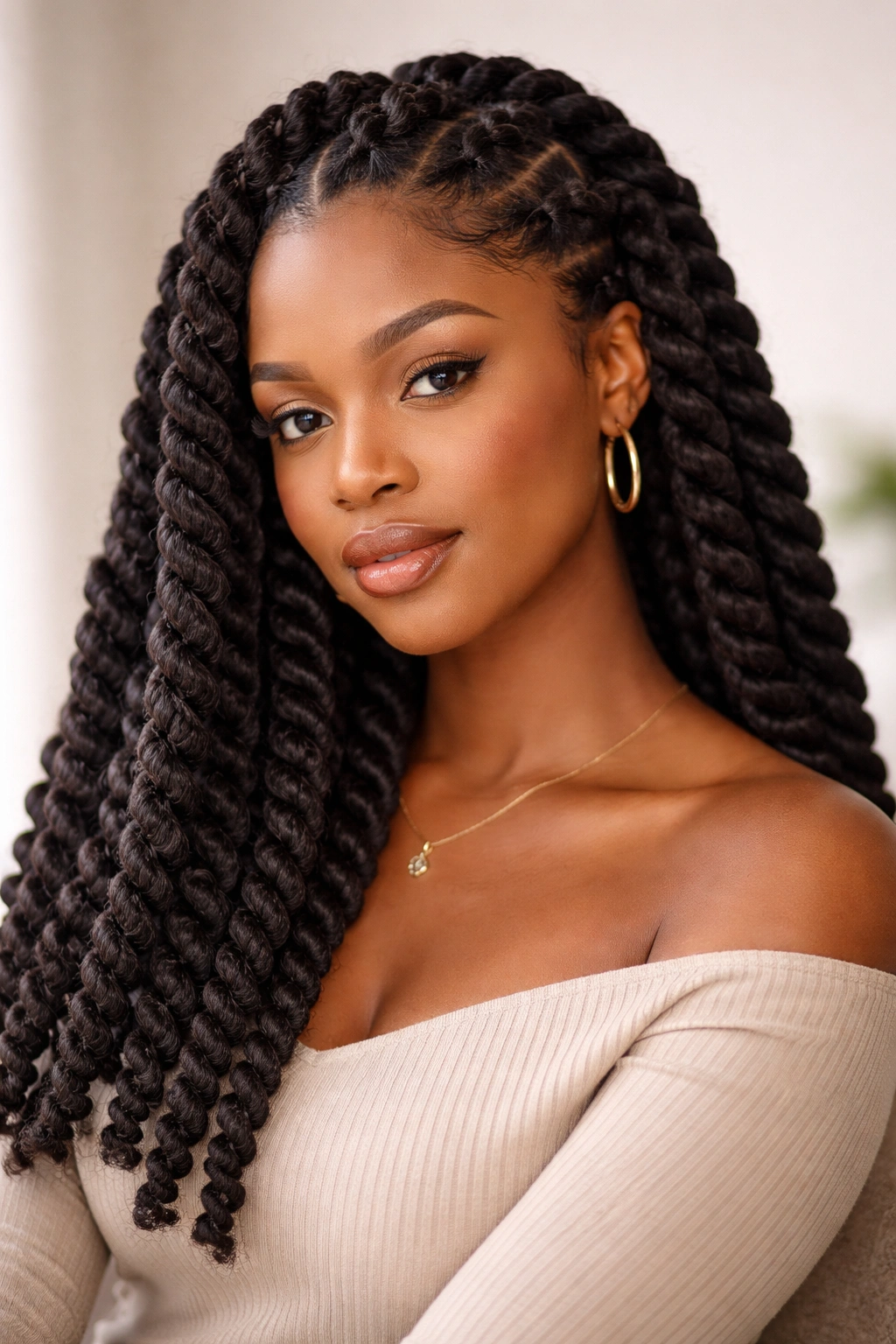
Chunky twists are exactly what they sound like—thicker two-strand twists that use larger sections of hair, creating a bold, statement-making style that reads modern and fashion-forward. Because chunky twists use fewer, thicker sections, they install much faster than smaller twists and create a very different visual impact: instead of a detailed, intricate appearance, chunky twists look sculptural and dramatic. They’re particularly striking on people with high hair density or on anyone who wants a style that makes an immediate visual impression.
How to Create This Look
Divide your head into 8 to 12 large sections—fewer sections create even chunkier twists, while more sections create something between chunky and standard thickness. Take each section, divide it in half, and twist the two halves around each other all the way to the ends. The larger the initial sections, the faster this goes—many people can complete chunky twists in 45 minutes to an hour and a half, which is significantly faster than smaller twist styles. The thickness means they hold their shape very well and tend to look intentional and polished rather than casual.
Styling and Maintenance Tips
Chunky twists work beautifully worn loose, spiraled into a curly style by unraveling them slightly after they’ve set for a day or two, or gathered into bold updos. They last 2 to 3 weeks with minimal maintenance because the thickness means less unraveling at the roots. The downside is that they can feel heavier on the scalp than thinner twists, so if you have a sensitive scalp or prefer lightweight styles, this may not be your best option. When unraveling them, they release into gorgeous, full waves of texture that can look intentional and beautiful.
4. Micro Twists
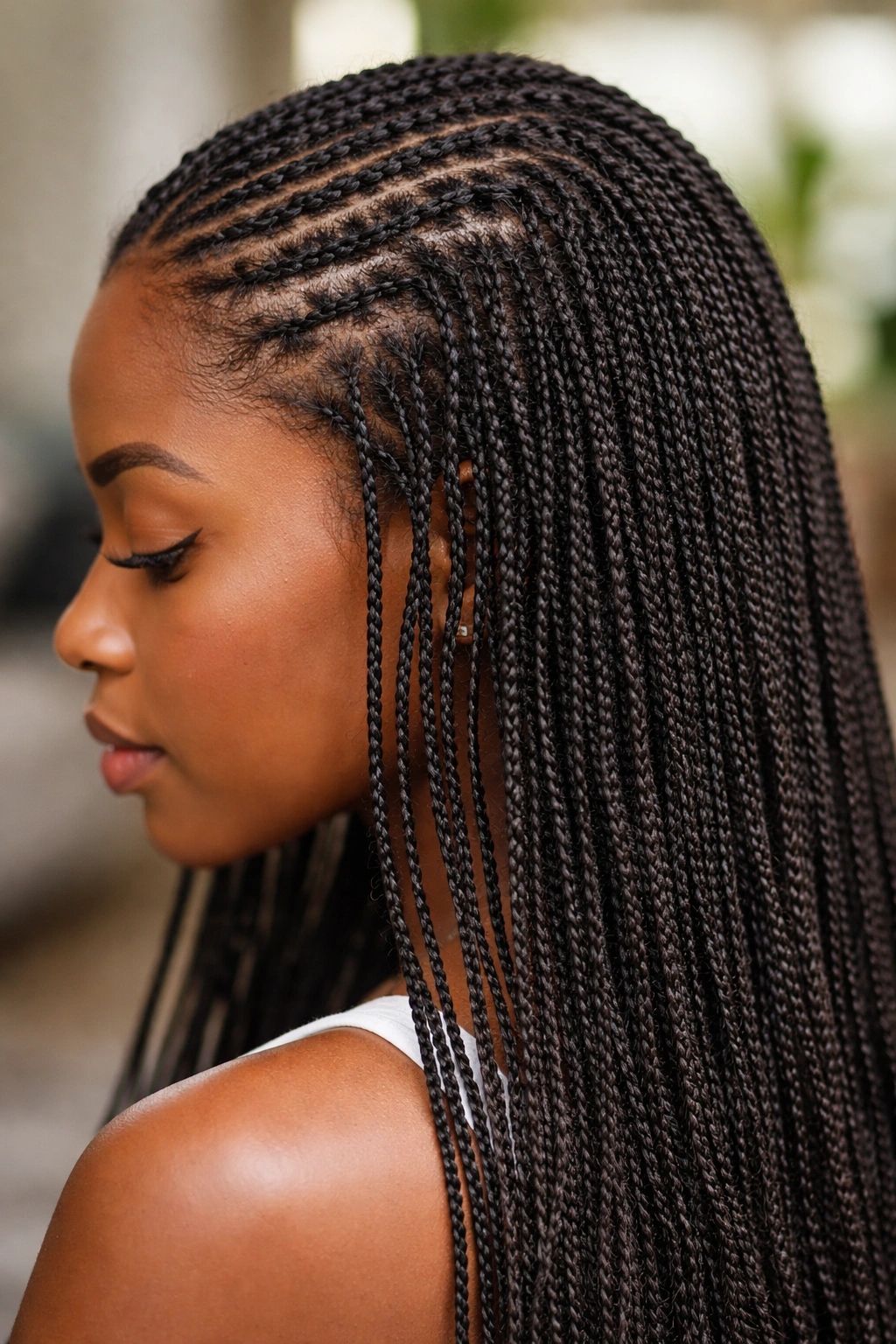
Micro twists are the opposite end of the spectrum from chunky twists—they’re delicate, detailed, and create an incredibly intricate, refined appearance. Each individual twist is quite thin, which means the entire look is very detailed and textured. Micro twists take considerable time to install (8 to 12 hours is not uncommon) but the payoff is a style that’s elegant, holds its shape for an extended period, and genuinely looks like you put serious effort into your appearance.
How to Create This Look
You’ll need patience, good lighting, and realistic expectations about time investment. Divide your hair into very small sections—the size of a toothpick or slightly larger—and twist each section carefully from root to tip. Many people tackle this style over multiple days, doing portions of their head at a time rather than trying to complete the entire head in one sitting. The precision required means this is a style many people prefer to have done professionally, though it’s absolutely doable at home if you’re willing to invest the time.
Styling and Maintenance Tips
Micro twists are a true protective style that can last 6 to 8 weeks, sometimes longer, with minimal touching and proper maintenance. Because they’re so detailed and intricate, they look polished from the moment they’re complete and don’t require as much refreshing as larger twists. The fine detail means they work beautifully in any context—professional settings, casual occasions, formal events. The primary challenge is the installation time, which is why many people treat micro twists as an occasional indulgence rather than their everyday go-to style. When you do take them down, make sure to allow plenty of time and use conditioner generously to prevent breakage.
5. Comb Coils
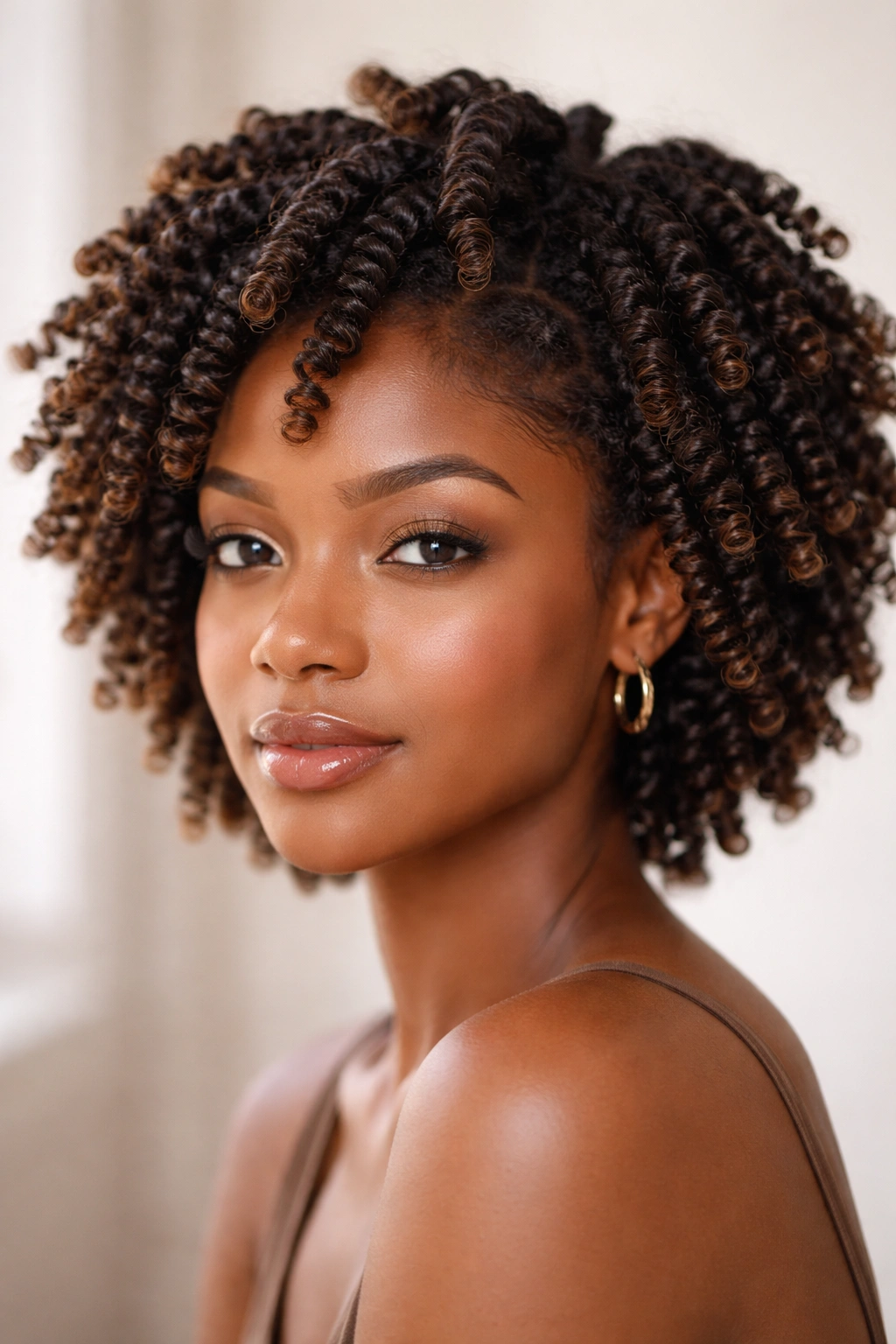
Comb coils are a variation where you use a comb or your fingers to wrap hair around itself, creating a coiled rather than a twisted effect. This creates a very different visual texture—instead of the rope-like appearance of traditional twists, comb coils look bouncy, textured, and slightly more delicate. They work particularly well on hair with a looser curl pattern because the coiling action creates definition and shape in a way that twisting sometimes doesn’t quite capture.
How to Create This Look
Section your hair and take a comb—some people use a fine-tooth comb, while others prefer a medium-tooth—and wrap a small section of hair around the comb’s teeth while simultaneously rolling the comb away from your head. This rolling motion wraps the hair tightly around the comb, creating a coil. Carefully slide the comb out and the hair stays coiled. Alternatively, you can use your fingers to create the same coiling effect without a comb, though the comb method often creates more uniform coils. This style takes similar time to two-strand twists but creates a noticeably different texture.
Styling and Maintenance Tips
Comb coils create a very textured, voluminous appearance that looks casual and carefree—they’re perfect if you want a style that feels less structured than traditional twists. They last about 7 to 10 days before they start to lose definition, similar to loose two-strand twists. The voluminous texture means they work beautifully in humid climates and don’t require the same level of frizz management as twists do. When you release them, you get gorgeous, bouncy texture that can be worn as-is or styled further into buns or other arrangements.
6. Passion Twists
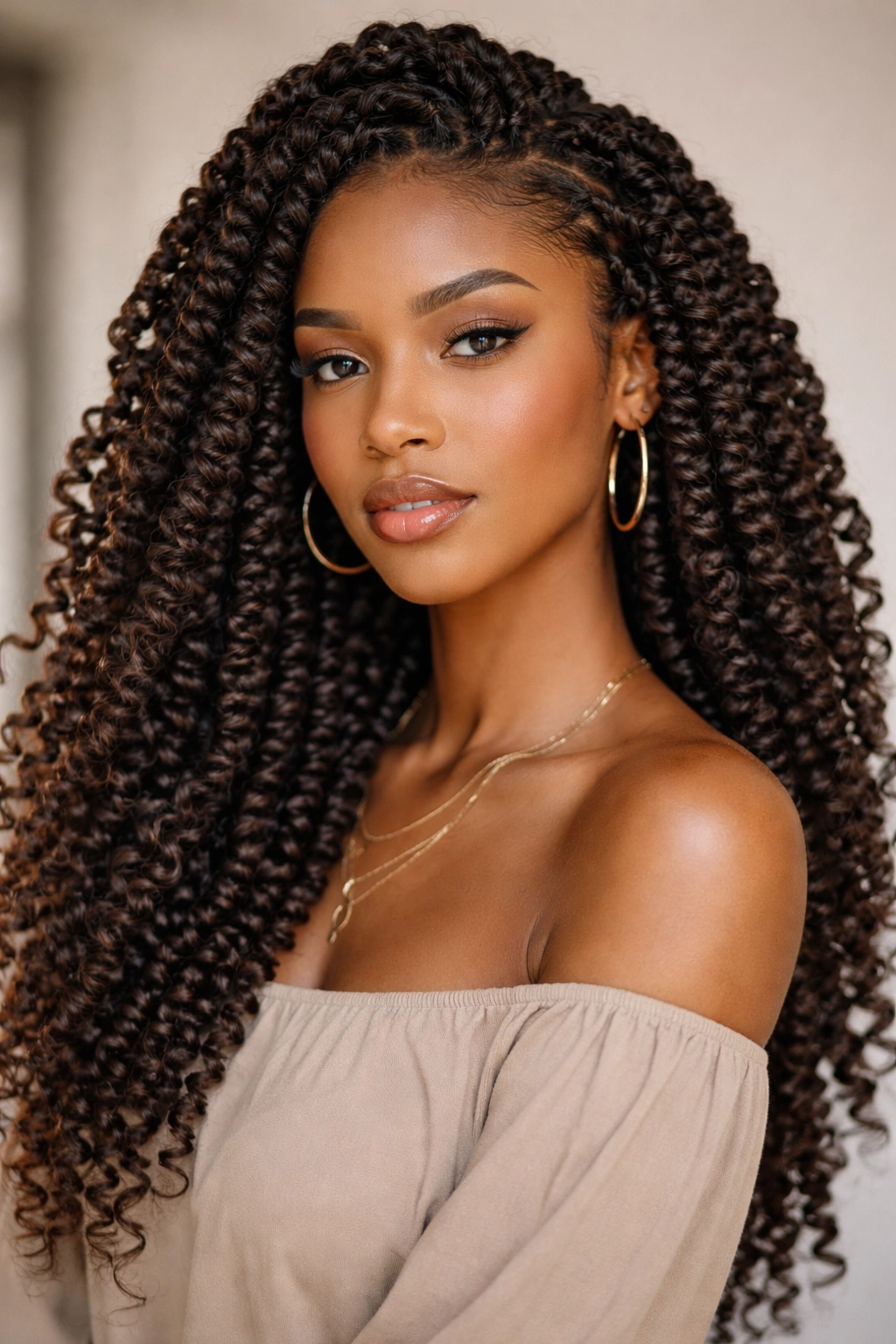
Passion twists are a modern, creative twist on traditional two-strand twists where you wrap pre-curled or textured fiber around sections of your natural hair as you twist. This creates a thicker, fluffier, more textured appearance than regular two-strand twists, and the pre-curled fiber means the style comes out looking voluminous and defined immediately. Passion twists have become incredibly popular over recent years because they require less installation time than some other protective styles but create an extremely bold, eye-catching result.
How to Create This Look
You’ll need pre-curled fiber or kinky-curly braiding hair in the color of your choice. Section your hair into the desired thickness—most people do passion twists in medium thickness, which is between standard and chunky two-strand twists. Take a section of fiber and attach it to your natural hair near the roots, then twist your hair and the fiber together as one unit all the way down. The fiber adds bulk and creates the signature fluffy, textured appearance. This style takes 3 to 5 hours depending on thickness and hair density—considerably faster than micro twists but comparable to two-strand twists.
Styling and Maintenance Tips
Passion twists create an incredibly bold, statement-making appearance that works beautifully for anyone wanting a protective style with major visual impact. They last 4 to 6 weeks with proper care, and because they’re a protective style made with added fiber, they require minimal manipulation of your natural hair. The added fiber means they may feel heavier on your scalp than twists made with just your natural hair, and some people experience slight tension, so make sure the stylist isn’t pulling too tightly. They look gorgeous worn loose, spiraled for curly texture, or gathered into updos. When you remove them, your natural hair underneath will have benefited from weeks of protection and low manipulation.
7. Spring Twists
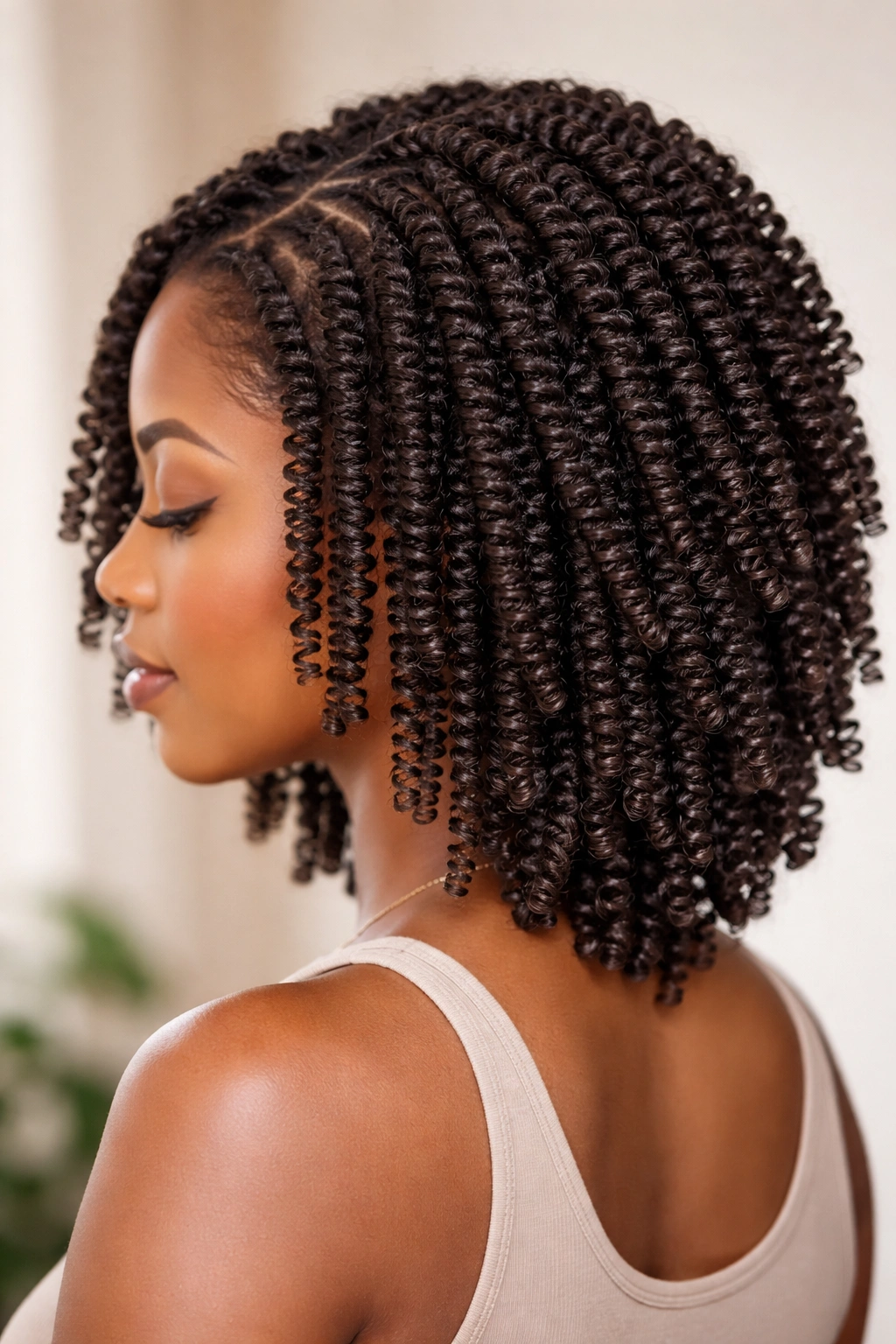
Spring twists (also called spring coils) are created by twisting your natural hair with pre-curled, springy fiber that creates a bouncy, coiled appearance. Unlike passion twists, which look more voluminous and textured, spring twists look more refined and coiled, with distinct spirals that resemble tight curls or springs. The springy fiber creates a very different aesthetic—light, bouncy, and elegant rather than bold and voluminous.
How to Create This Look
Spring twists use pre-curled, springy braiding fiber that’s much more tightly coiled than passion twist fiber. Section your hair and attach the fiber at the roots, then twist your hair and the fiber together. The springy nature of the fiber means the resulting twists spring back into shape and create natural-looking coils. Because the fiber is already pre-curled, the style comes out looking defined and bouncy immediately without any additional styling needed. Installation time is similar to passion twists—3 to 5 hours depending on thickness.
Styling and Maintenance Tips
Spring twists create a refined, elegant appearance that looks less dramatic than passion twists but more eye-catching than traditional two-strand twists. They work beautifully in professional settings because they look polished but creative. They last 4 to 6 weeks and require minimal maintenance beyond protecting them at night with a bonnet. The springy coils look beautiful worn loose and are particularly stunning if you spiralize them slightly (unraveling them partway) to create even more texture and bounce. They’re a wonderful option if you want the protective benefits and reduced styling time of a style with added fiber but prefer a more refined, less voluminous appearance.
8. Rope Twists
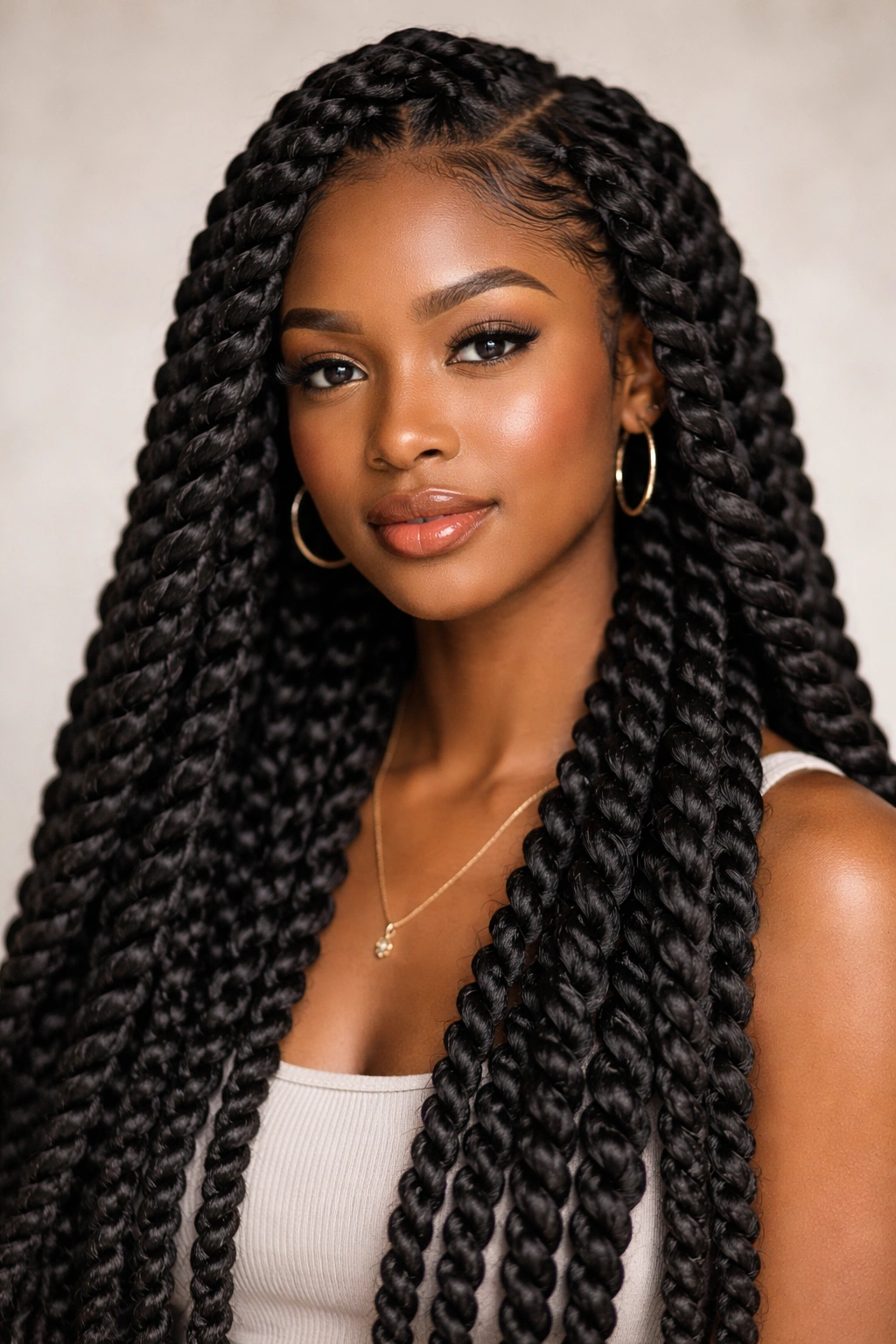
Rope twists are a variation where you combine strands of fiber or extensions with your natural hair to create a thicker, rope-like appearance. Unlike passion twists or spring twists, where the fiber wraps around your hair, rope twists involve actually incorporating the fiber into the twist itself, creating something that looks more like a rope or cord. This style creates an incredibly bold, statement-making appearance that’s perfect for anyone wanting a protective style with serious visual impact.
How to Create This Look
You’ll need thick braiding fiber or rope-like extensions in your chosen color. Section your hair and divide each section into three strands—your natural hair and two strands of fiber. Then you essentially braid these three strands together in a loose braid pattern, which creates the rope-like appearance. Alternatively, some people create rope twists by twisting two sections of fiber around one section of natural hair, which creates an even more dramatic effect. This style takes 3 to 5 hours and creates an incredibly distinctive appearance that reads more like a statement accessory than a traditional hairstyle.
Styling and Maintenance Tips
Rope twists are perfect for anyone wanting a bold, creative style that immediately gets attention. They work beautifully in casual or creative settings and are less appropriate for conservative professional environments. They last 4 to 6 weeks and require minimal manipulation of your natural hair, making them an excellent protective style. The weight and thickness mean they require good sleep protection—definitely wear a bonnet or scarf at night to prevent unraveling. They look stunning worn loose or gathered into dramatic updos and work beautifully in both warm and cool-weather climates.
9. Havana Twists
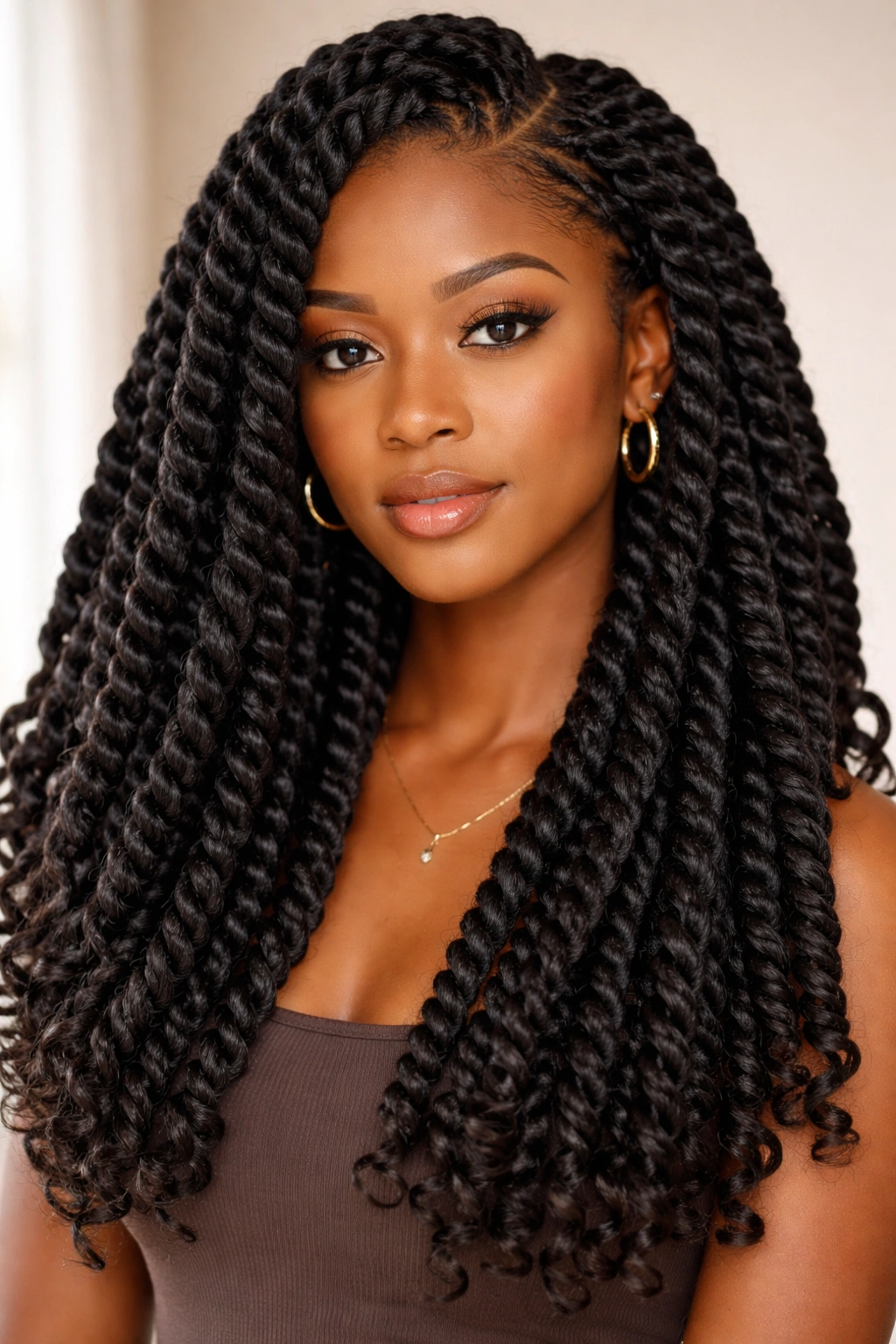
Havana twists are a style inspired by African-inspired braiding traditions where you create thick, smooth twists using heavy braiding fiber. They’re larger and fluffier than passion twists, creating a smooth, polished appearance that’s elegant and sophisticated. Havana twists are incredibly popular because they install relatively quickly, last for weeks, and create a genuinely protective style that keeps your natural hair shielded from environmental stress.
How to Create This Look
Havana twists use thick, water-wave or curly-textured braiding fiber that’s heavier and smoother than passion twist fiber. Section your hair into medium to large sections and attach the heavy fiber at the roots. Twist your natural hair together with the fiber, creating thick, smooth twists that often naturally curl slightly at the ends due to the weight and texture of the fiber. Installation takes 3 to 5 hours and creates a style that looks polished and intentional immediately. The weight of the fiber means twists set quickly and maintain their shape beautifully.
Styling and Maintenance Tips
Havana twists create a sophisticated, elegant appearance that works beautifully in professional environments and formal occasions. They last 4 to 6 weeks with proper care and require minimal day-to-day maintenance. Because of the weight of the fiber, make sure you’re not installing them too tightly—scalp tenderness is a sign the tension is too much. Sleep protection is important to prevent unraveling. They look beautiful worn loose, spiralized for additional texture, or gathered into buns and other updos. The smooth, polished appearance makes them feel less creative and more refined than some other protective styles with added fiber.
10. Senegalese Twists
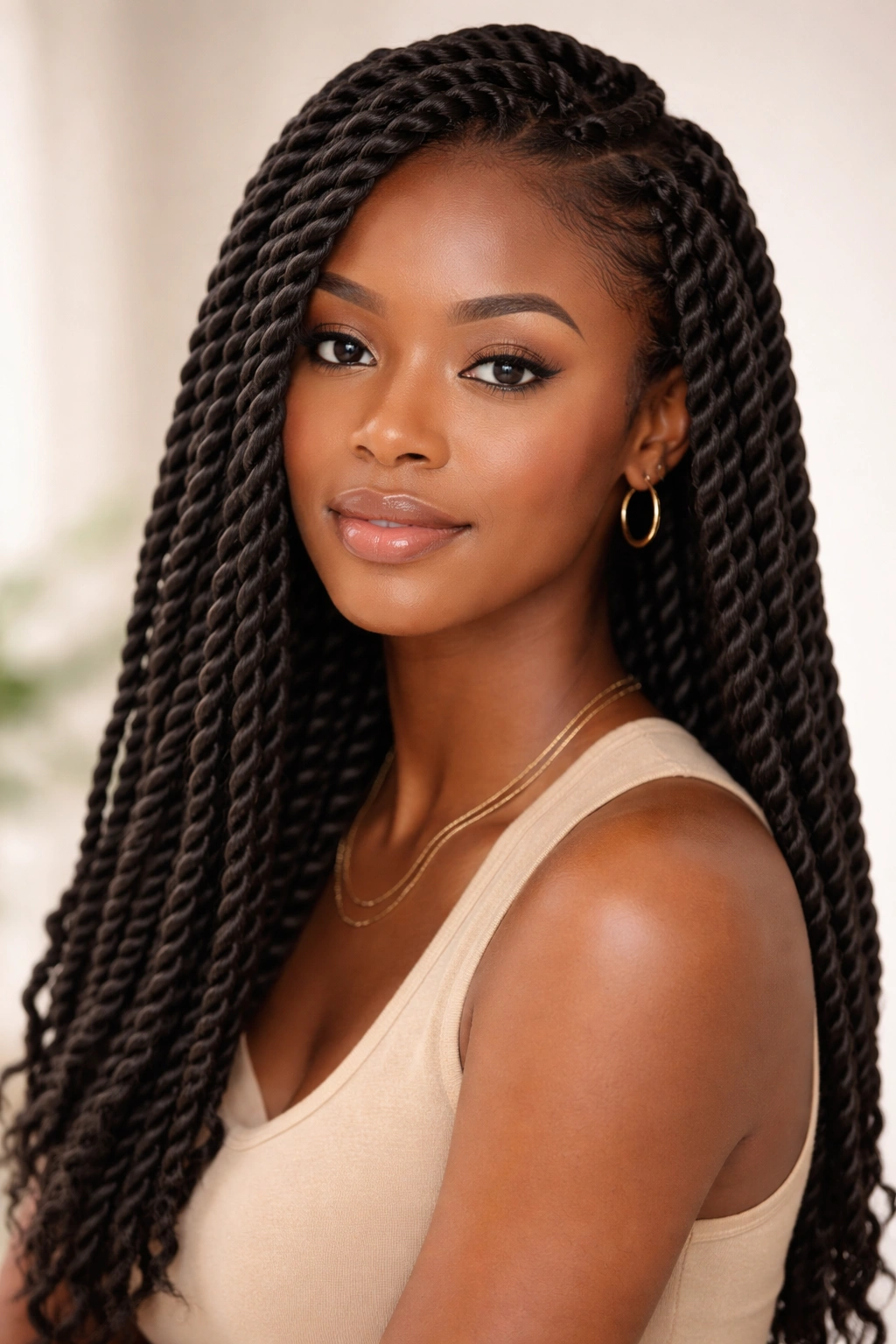
Senegalese twists are a specific type of twist that uses added fiber or extensions to create thick, smooth, defined twists. They’re similar to Havana twists but typically create a slightly more defined, rope-like appearance. Senegalese twists have historical roots in West African braiding traditions and are named for the region where this styling technique originated. They’re an excellent protective style for anyone wanting something that looks polished and professional while still being visibly creative.
How to Create This Look
Senegalese twists use medium to thick fiber that’s often straight or slightly textured. Section your hair and attach the fiber at the roots, then twist your natural hair together with the fiber using a tight, consistent twist that creates definition and shape. The technique is straightforward—it’s essentially two-strand twists made with added fiber—but the consistency and precision in tension is what creates the polished, professional appearance Senegalese twists are known for. Installation takes 3 to 5 hours and the resulting style looks intentional and refined.
Styling and Maintenance Tips
Senegalese twists work beautifully in professional and formal settings because they look polished and refined. They last 4 to 6 weeks and require minimal manipulation of your natural hair, making them an excellent protective style. The added fiber means they’re heavy enough to hold their shape beautifully without much frizz or unraveling. They work well in all climates and all seasons. The smooth, defined appearance makes them feel less creative than some other protective styles, but that refined look is exactly what some people are looking for—a protective style that looks professional and put-together.
11. Loc’d Twists
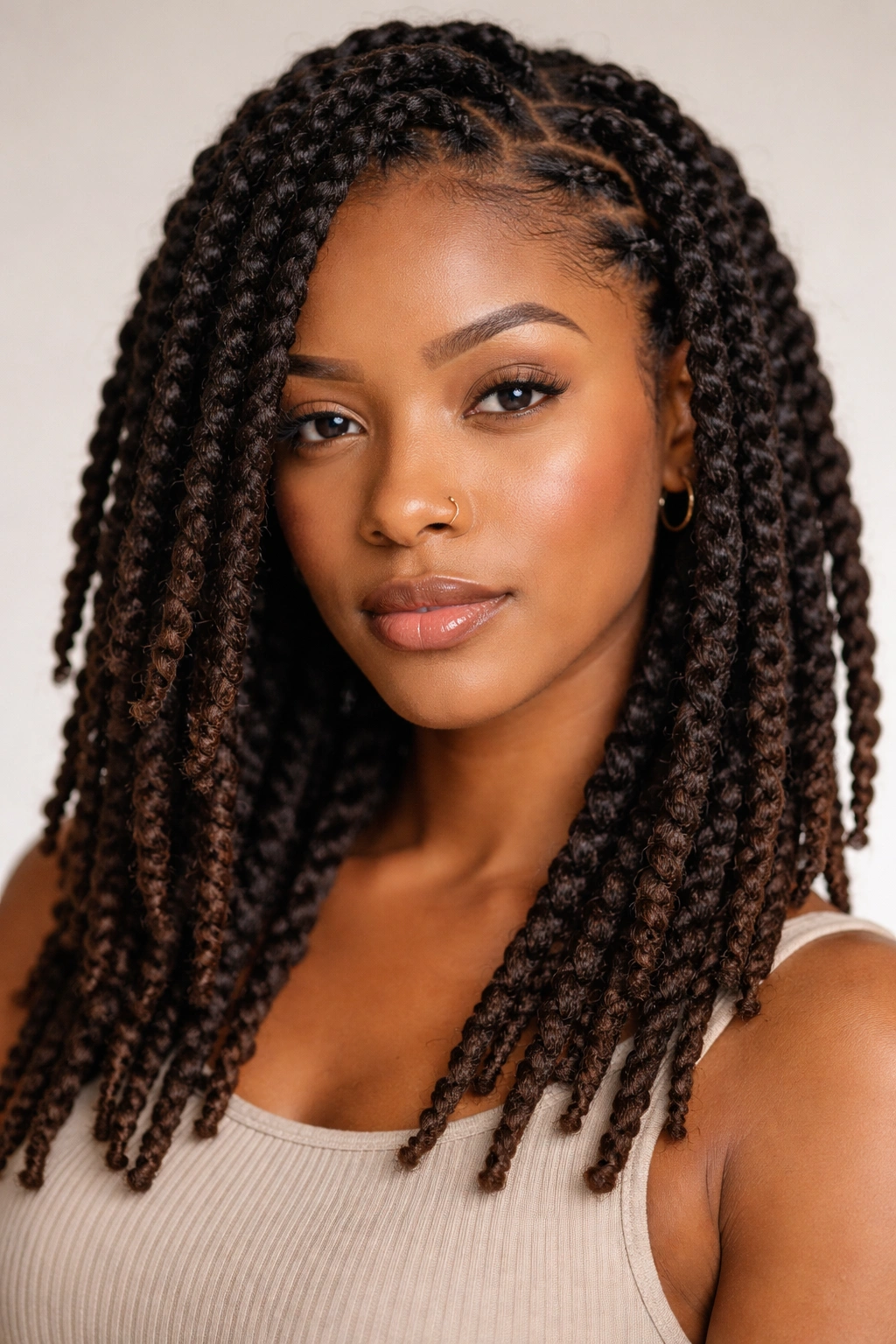
Loc’d twists are twists where you intentionally create a more permanent or semi-permanent style, often using products and techniques that encourage the twists to lock or set over time. Some people create loc’d twists as a transitional style on their way to full locs, while others maintain them as a permanent style. Loc’d twists blur the line between twists and locs and create a unique aesthetic that’s bold, intentional, and requires a different mindset about commitment than temporary twists.
How to Create This Look
Create two-strand twists using the standard technique, but use locking gel, loc butter, or other products designed to encourage locking rather than standard leave-in conditioner. Consistently re-twist at the roots every 4 to 6 weeks as new growth emerges, maintaining the twist pattern. Over time—usually several months—the twists will start to loc, meaning the individual strands will begin to mesh together and lock permanently. Some people accelerate this by using a locking gel or by having a professional use interlocking techniques. This style requires patience and commitment because once they start to truly lock, removing them requires cutting them out (though that’s not necessary if you decide you love them).
Styling and Maintenance Tips
Loc’d twists are a semi-permanent to permanent commitment, so this is a decision you should think through carefully. They require regular maintenance, including root touching and re-twisting, and they take considerable time to fully lock and mature. Once they’re established, they’re incredibly low-maintenance and look beautiful for years. They work well in creative, casual, or alternative settings and may not be appropriate in conservative professional environments. They can be styled into buns, updos, or worn loose, and they develop character and personality over time as they mature and age. This is perfect for anyone who wants a long-term commitment to a distinctive personal style.
12. Twisted Bangs
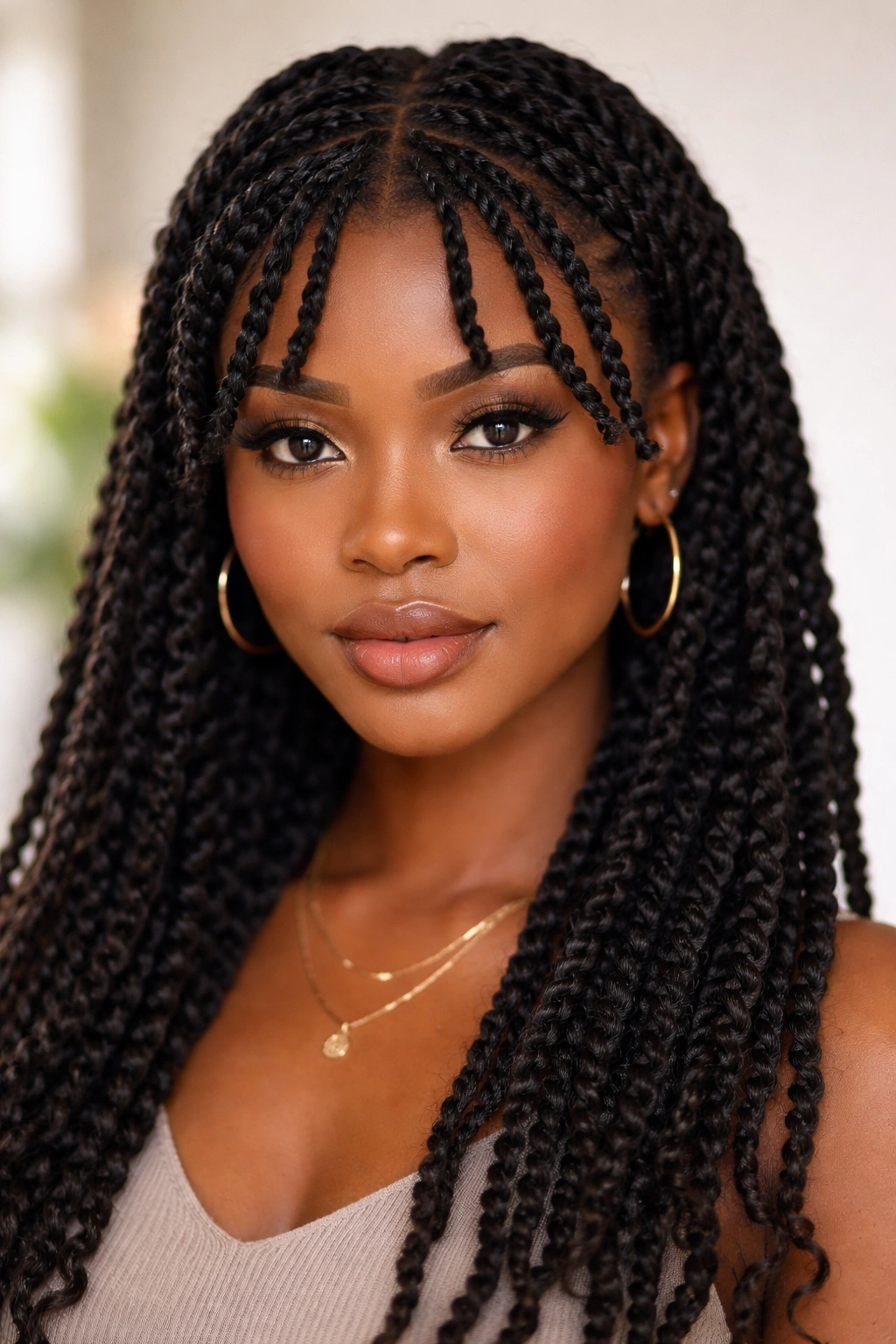
Twisted bangs are a creative styling technique where you incorporate twists into your front hairline and bang area, creating definition and visual interest at the front of your style. This works beautifully whether you’re wearing your hair in twists elsewhere or combining twisted bangs with loose natural curls or other textures. Twisted bangs can be a way to keep hair off your face while adding a creative, intentional element to your look.
How to Create This Look
Section the hair at your front hairline into smaller sections—start with 3 to 5 sections depending on how bold you want the effect to be and your hair density. Create two-strand twists (or flat twists if you want them pinned closer to your scalp) using just these front sections. You can bring them straight back and pin them, bring them to the side, or create a twisted bang situation that falls across your forehead with more length. The technique is straightforward—it’s just selectively twisting specific sections of your hair rather than your entire head.
Styling and Maintenance Tips
Twisted bangs are a creative, customizable element that can elevate many different styles. They work beautifully with a full head of loose natural curls, with braids, with other twists, or as a standalone styling choice. They last about 7 to 10 days depending on how much you manipulate them. They’re particularly useful for anyone who struggles with baby hair and hair falling in their face—the twisted bangs contain these flyaways while looking intentional and styled. You can refresh them by re-twisting just the front sections every few days. This is a great option if you want to add creative elements to your styling without committing to a full protective style.
13. Side-Swept Twisted Crown
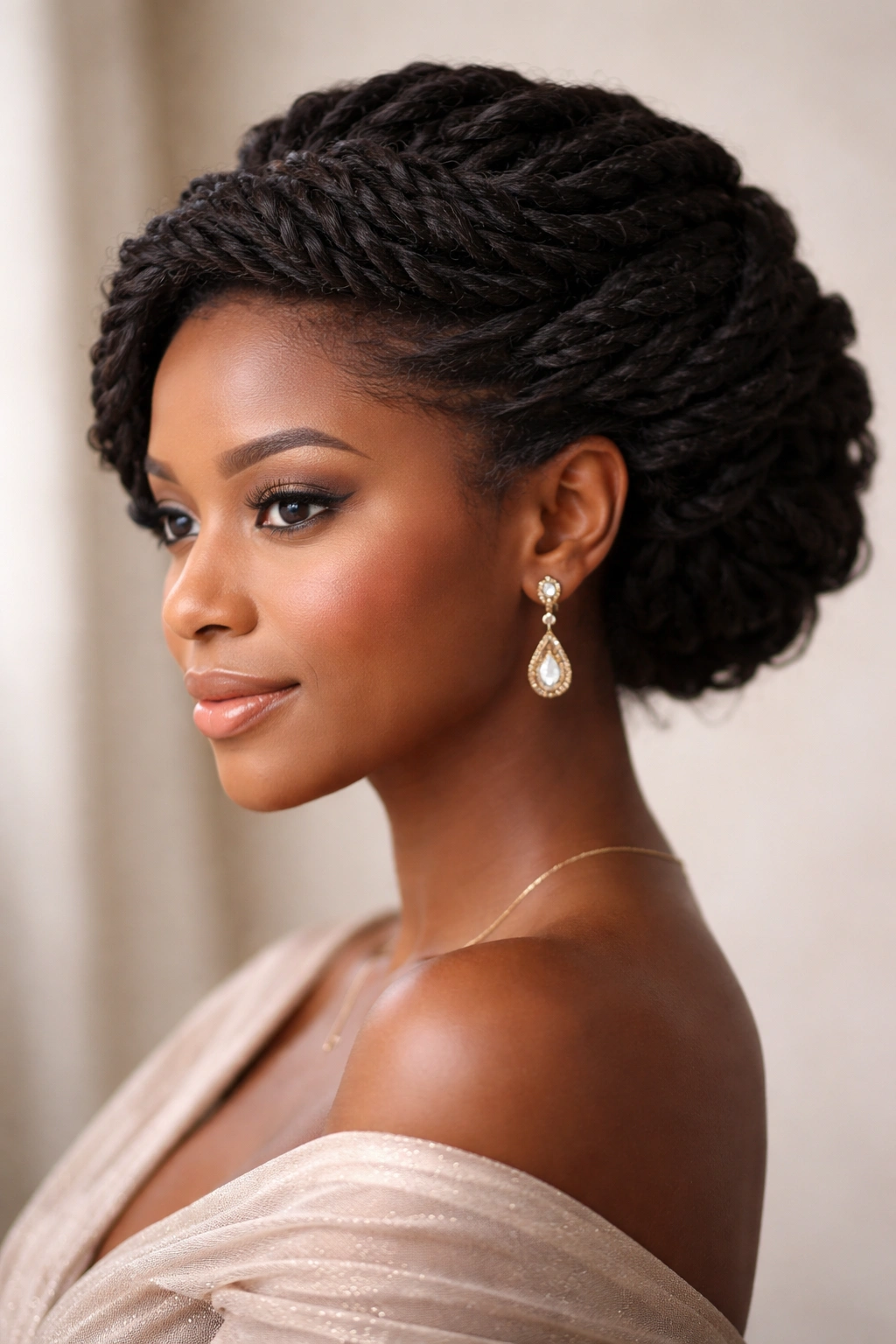
A side-swept twisted crown is an updo style where twists from one side of your head are swept across the back and pinned, creating a crown-like effect. This style is romantic, elegant, and works beautifully for special occasions or when you want a hairstyle that feels intentional and fancy while still being protective. The beauty of this style is that you can create it with loose twists, flat twists, or any variation of twists depending on your preference.
How to Create This Look
Create twists on one side of your head (either loose two-strand twists, flat twists, or any other variation you prefer). Once the twists are complete, gently sweep them across the back of your head, positioning them to create a crown-like effect. Pin them into place using bobby pins or hair clips in a color that matches your hair, making sure the pins are secure enough that the style holds throughout the day or evening. You can leave the other side of your hair loose in curls or twists, or create a completely twisted look and sweep all sections into the crown. The final effect should look elegant and intentional, like you’ve created an actual crown from your hair.
Styling and Maintenance Tips
This style works beautifully for dates, formal events, weddings, or any occasion where you want to look extra polished. It’s also a practical style for keeping hair off your face and neck in warm weather. You can prep your hair with twists the day before and then create the crown arrangement on the day you’re wearing it, which makes it lower-stress than some other styles. Sleep on it gently (or remove it before bed if it’s a style you’re only wearing for the evening) to keep it looking fresh. The protective element comes from the fact that your hair is contained and manipulated minimally—it’s a style that looks fancy but genuinely protects your ends and edges.
14. Twisted Ponytail or Updo
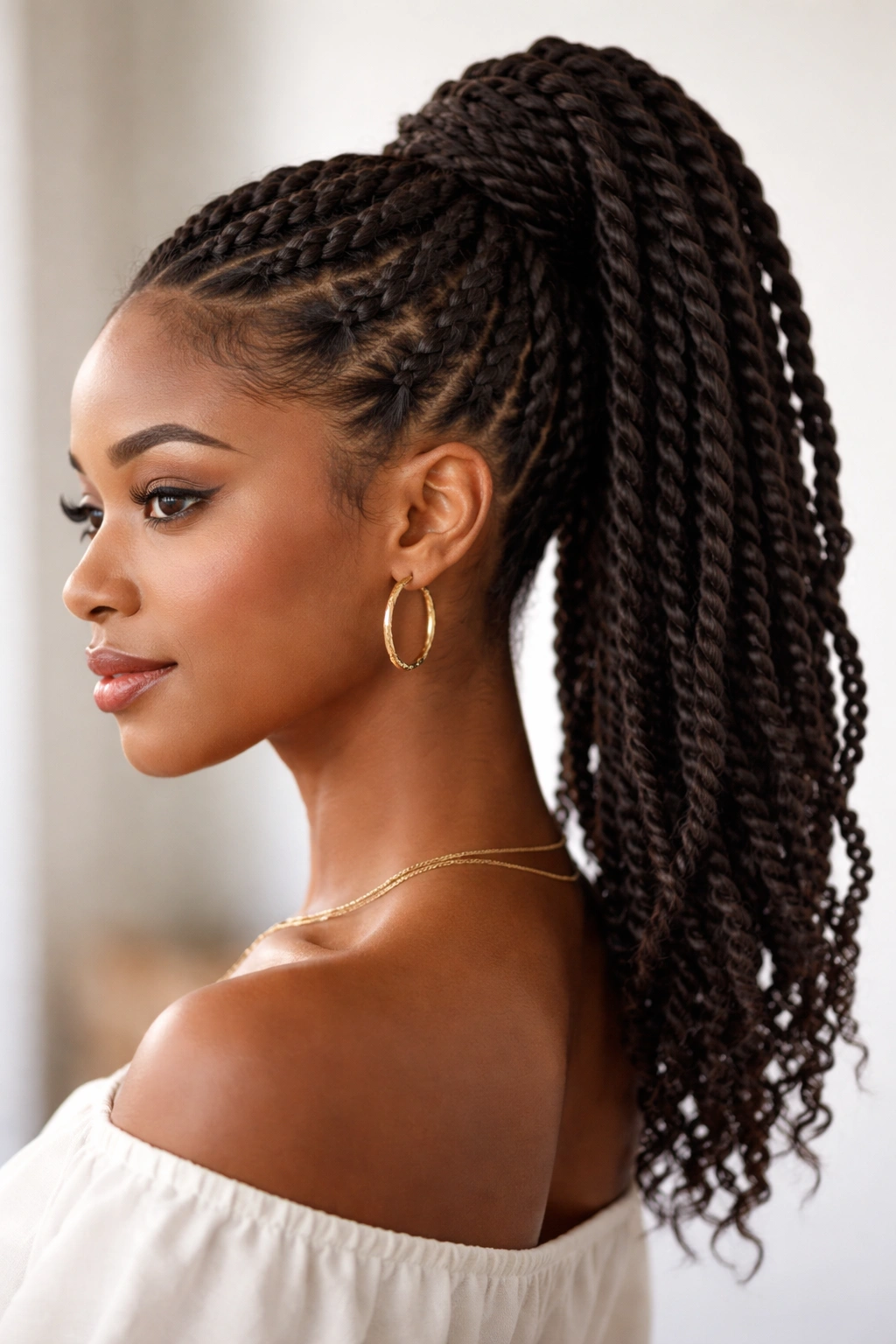
A twisted ponytail or updo is a style where your twists (freshly created or already a few days old) are gathered together and secured into a ponytail or updo arrangement. This takes the protective benefits of twists and combines them with the visual impact and practicality of a gathered style. You can create an elegant, formal updo, a playful high ponytail, a low bun, or any number of configurations depending on the occasion and your preference.
How to Create This Look
Create twists throughout your head using your preferred technique and thickness. Once they’re complete and you’re happy with them, gather them into the position where you want your ponytail or updo—high, low, to the side, or at the crown. Secure them with a hair tie or hair clip in a color that matches your twists. You can leave them gathered loosely for a relaxed vibe, or smooth them for a more polished appearance. Some people add additional styling elements like wrapping a small section of hair around the base to hide the hair tie, creating smaller accent twists around the updo, or pinning twists into elaborate updo arrangements. The possibilities are genuinely limitless.
Styling and Maintenance Tips
This style works beautifully in virtually any context—casual, professional, formal, creative. It keeps your hair off your face and neck while maintaining the protective, low-manipulation benefits of twists. The twisted ponytail looks fresh for 7 to 10 days and requires minimal maintenance beyond sleeping on a silk bonnet to prevent frizz. You can refresh it by re-securing the base or adjusting how tightly the twists are gathered. It’s perfect for anyone who wants the styling versatility of being able to wear their hair up or down—you can wear it as a ponytail during the day and then unpin it for a looser, more flowing style in the evening. The updo version is particularly elegant for special occasions and photographs beautifully.
Final Thoughts
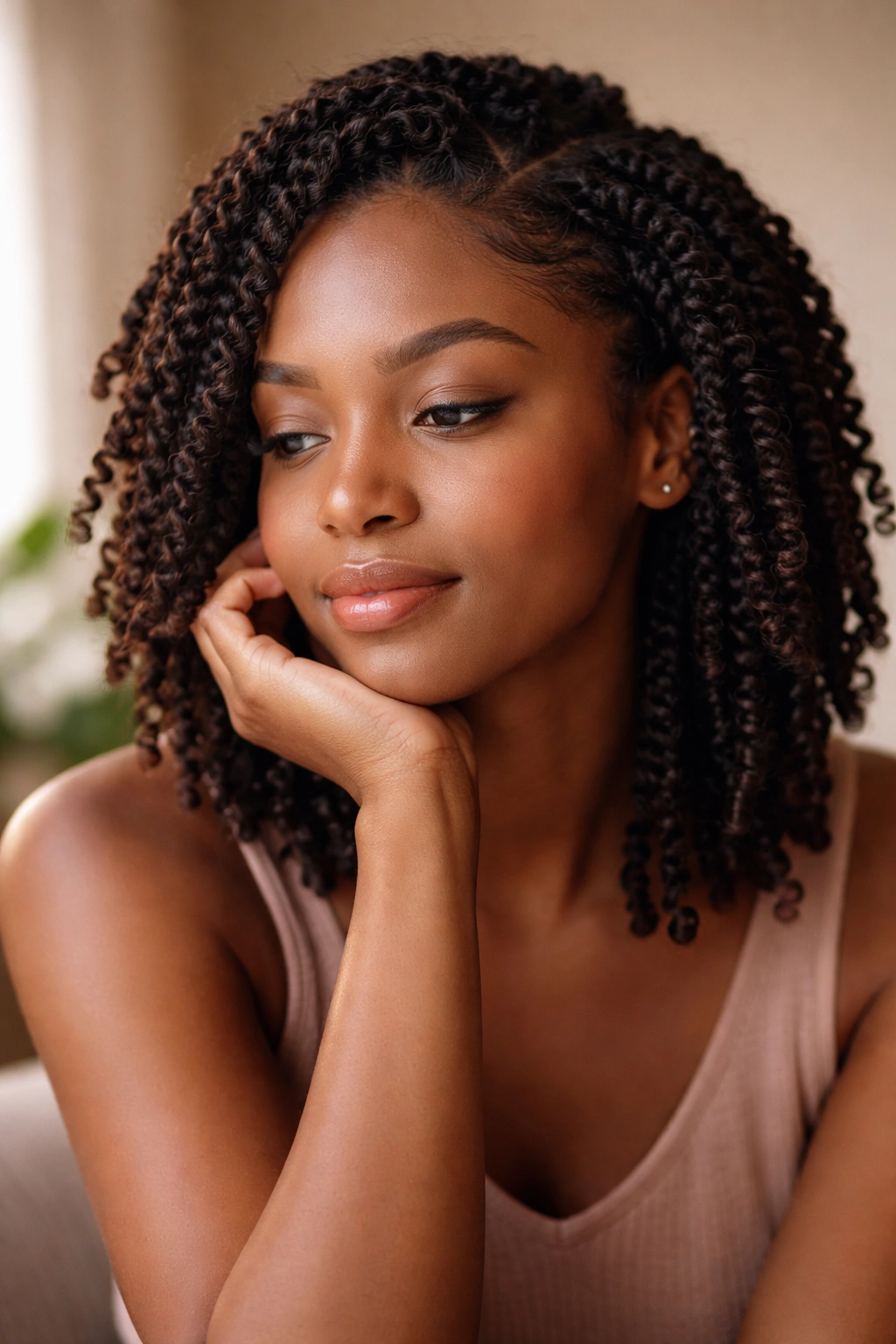
The incredible range of afro twist styles means there’s genuinely something for every occasion, lifestyle, and personal preference. Whether you’re drawn to the quick-to-install simplicity of chunky twists, the refined elegance of flat twists, the bold statement-making of passion twists with added fiber, or the long-term commitment of loc’d twists, you have options that work with your schedule, your hair’s needs, and your aesthetic vision.
The most important thing to remember is that every twist style in this guide is customizable—you can adjust the thickness, the installation method, the styling, and the maintenance approach to fit exactly what works for you. Start with a style that feels approachable and exciting rather than intimidating, and don’t be afraid to experiment with different variations as you become more comfortable with the basic twisting technique. Your hair is genuinely flexible and forgiving, and if a particular style doesn’t work the first time, you’ll learn something valuable for the next attempt.