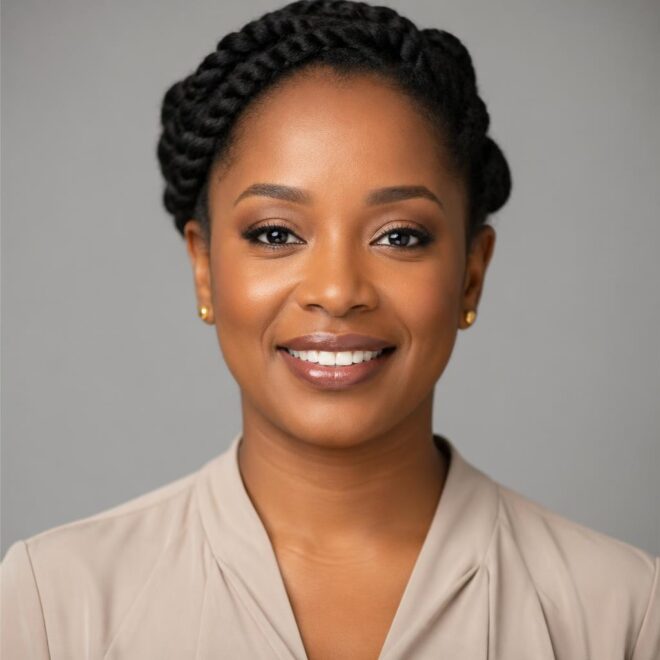


When your natural afro hair is on the shorter side—whether by choice, circumstance, or growth stage—styling possibilities might feel limited. The truth? Some of the most striking, low-maintenance, and genuinely flattering looks happen when you’re working with a smaller afro. These aren’t compromise hairstyles or temporary fixes. They’re intentional, polished, and often easier to maintain than longer styles because they require less product, less hands-on time, and less wear on your hair.
The key is understanding which styles actually suit shorter, tighter textures and how to execute them in ways that celebrate your hair’s natural texture rather than fight against it. Small afro styles work best when you lean into what makes your hair unique—its bounce, its volume, its ability to hold shape—rather than trying to force it into patterns it was never meant to follow. Whether you’re rocking a freshly cut taper, a breezy cropped afro, or a transitioning texture, there’s an approach here that’ll feel like it was made for your hair.
What makes these styles particularly appealing is their versatility. You can dress them up for special occasions, keep them casual for everyday life, and shift between looks without major commitment. Most require minimal styling products, sit comfortably under scarves and bonnets, and actually allow your hair to breathe and recover between wash days. Let’s walk through 10 genuinely beautiful small afro styles that work, and more importantly, why they work.
1. The Classic Cropped Afro
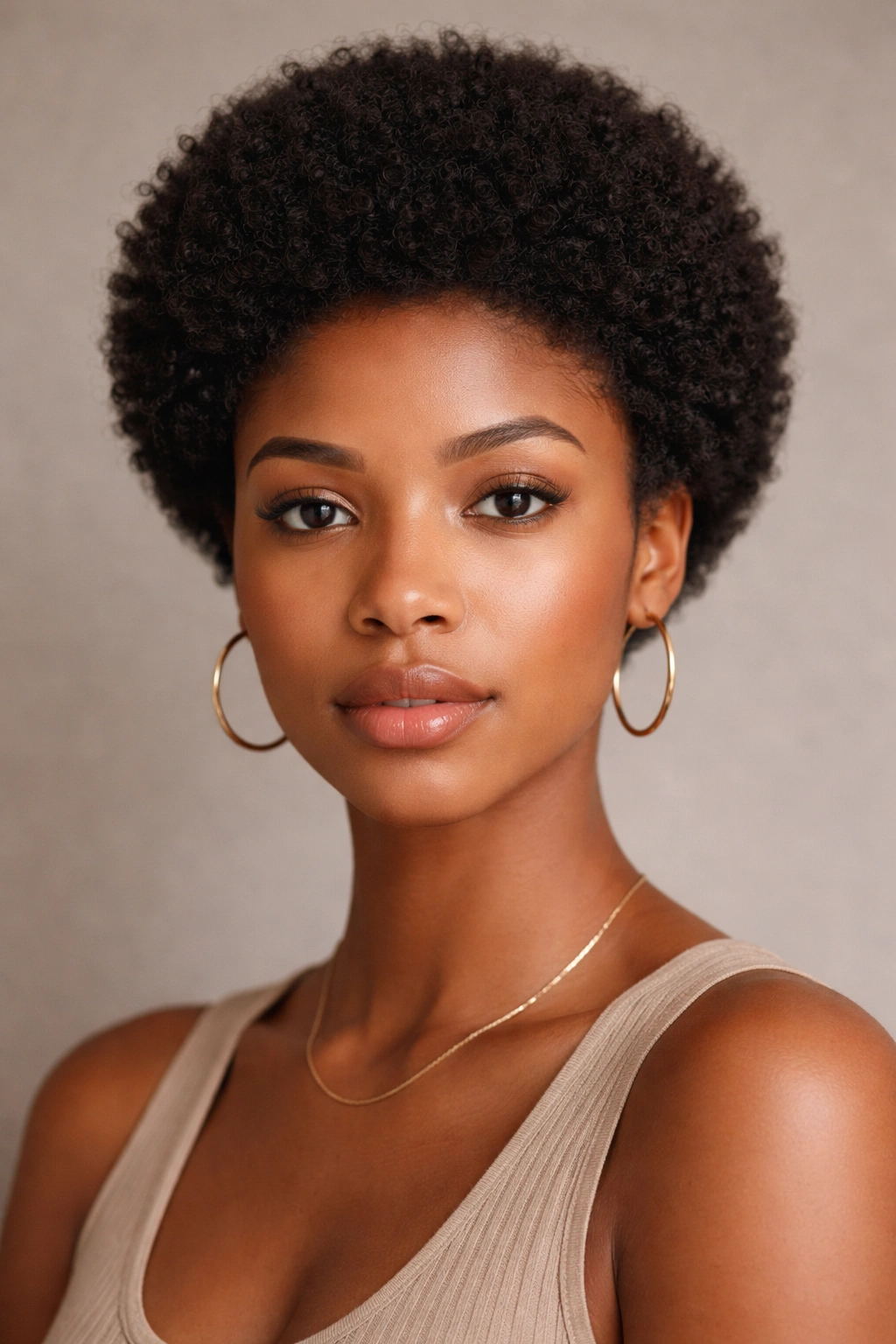
The cropped afro is the foundation—the style that proves less hair doesn’t mean fewer options. This is typically cut to about 2-4 inches, shaped into a rounded silhouette that hugs your head while maintaining visible texture and volume. What makes a cropped afro genuinely work is the cut itself, not the styling. A good barber or stylist will shape it so your natural shrinkage becomes an asset, creating definition and form rather than fighting against it.
Why This Shape Works Best
A well-executed cropped afro doesn’t look like an accident—it looks intentional and polished. The key is getting the sides and back shaped with precision so the overall silhouette reads as deliberate. This works particularly well if you have a rounder face shape, because the volume on top and the tapered sides create a flattering balance. The texture is fully visible, which means your curl pattern becomes a design feature rather than something to hide.
Styling and Maintenance Tips
- Use a light styling cream or gel on damp hair, then finger-coil or twist sections if you want more definition, or use a soft pick to fluff volume
- Refresh between wash days with a light mist of water and a dab of leave-in conditioner
- Sleep with a silk or satin bonnet to minimize frizz and preserve the shape overnight
- Trim every 6-8 weeks to maintain clean lines and prevent shrinkage from making the style look overgrown
- Keep the sides faded if you prefer a modern aesthetic, or let them grow out slightly for more texture throughout
The beauty of a cropped afro is that it requires almost no daily styling. You can wash it, let it air-dry, and go. Alternatively, you can spend 10 minutes finger-coiling for extra definition if you’re heading somewhere you want to feel extra polished.
2. The Textured Taper with Volume on Top
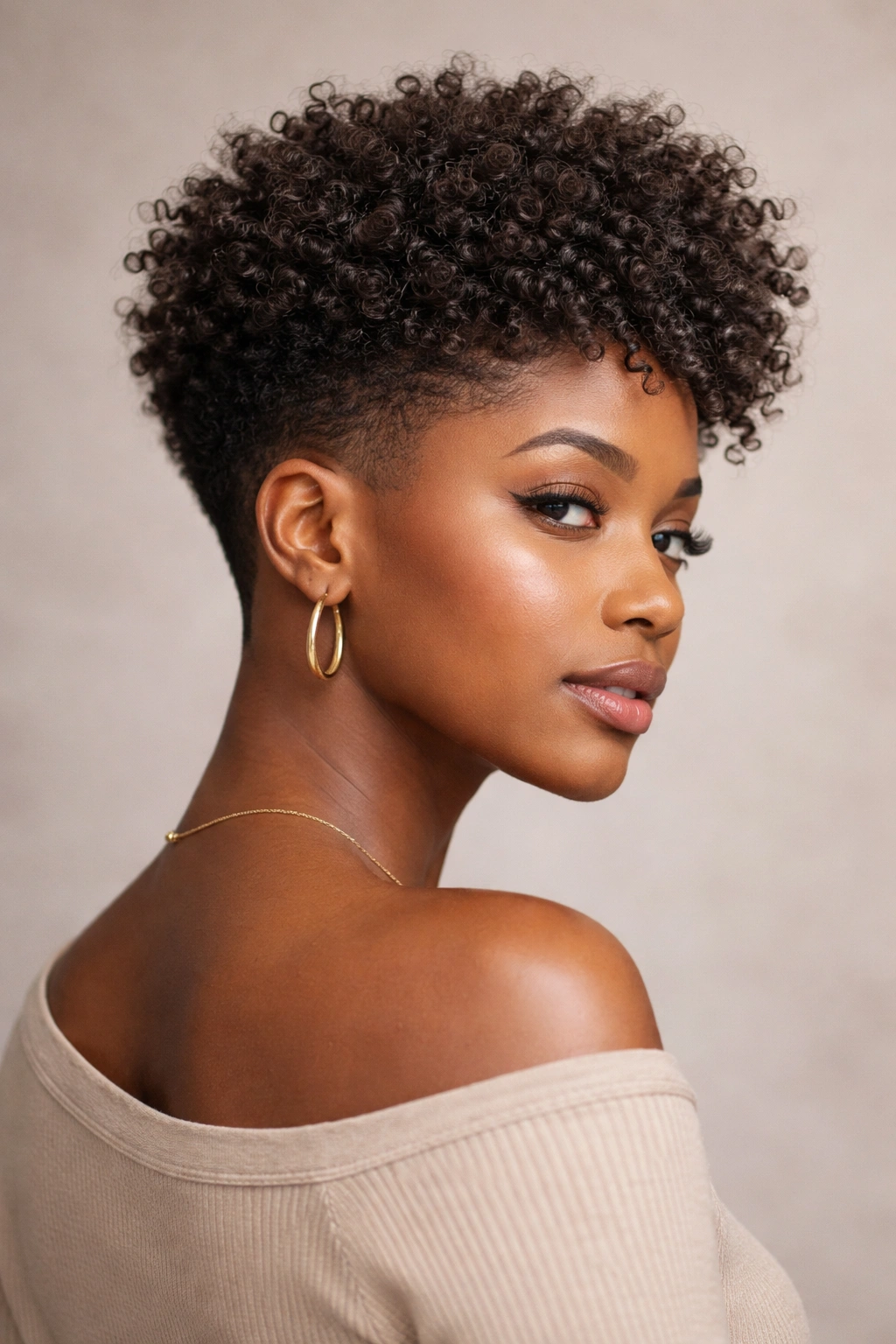
This style is part tapered cut, part intentional volume play. The sides and back are cut quite short—sometimes down to a fade—while the top is left longer, often 3-5 inches. This creates dramatic contrast and puts all the visual focus on the crown, where you can play with curl definition, texture, and shine. It’s a style that reads modern and intentional without requiring long hair.
What Makes This Different From a Fade
A textured taper keeps some bulk on the sides, just shorter than the top, so it doesn’t feel as extreme as a hard fade. This is crucial because the tapering transition should feel organic to your hair’s natural density and texture. When done well, you get that androgynous, fashion-forward energy without looking like you’re copying any particular trend. The cut becomes the statement, and your natural curl pattern does the rest.
How to Style for Different Moods
- For definition: Apply a curl-defining cream to damp hair, then finger-coil or two-strand twist the top section. Let air-dry or diffuse for soft, bouncy curls with visible pattern
- For sleekness: Use a lightweight pomade on damp hair, smooth it through, and let it dry. The top will have a subtle sheen while texture remains visible
- For maximum volume: Flip your head upside down while damp, apply a volumizing cream or light mousse, then finger-fluff while blow-drying on medium heat
- For nights out: Add a touch of edge with a gel on the tapered sides for sharp definition against the softer texture on top
3. The Defined Curl Knots
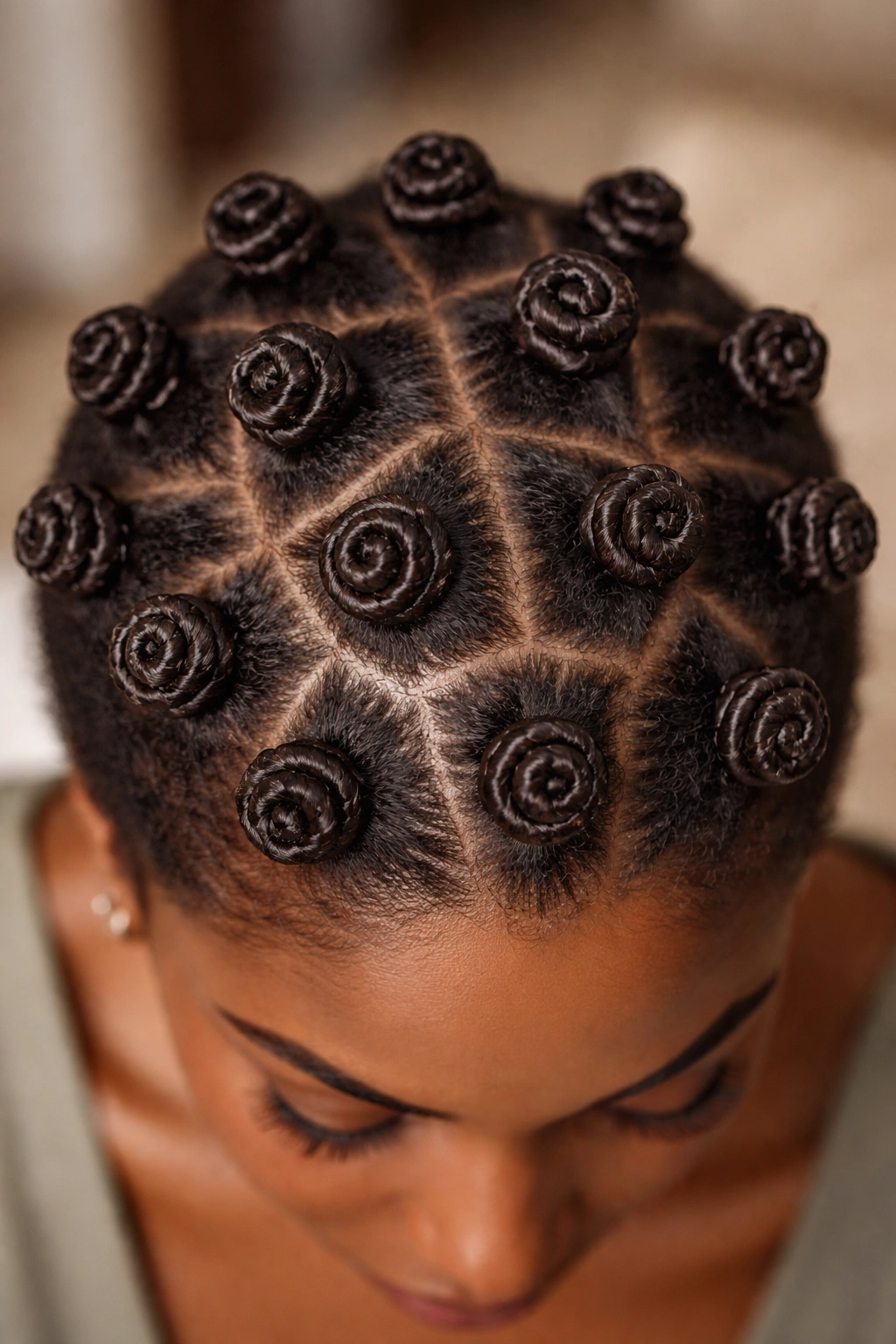
Curl knots (sometimes called Bantu knots or flat twists set in a circular pattern) are a protective style that works beautifully on smaller afros. Each section is twisted or braided from the root and coiled at the ends, creating a pattern of defined spirals across your head. When you unravel them, you get tight, springy curls with incredible volume and definition. The style takes time to install—usually 1-2 hours depending on your hair thickness and knot size—but lasts 1-2 weeks if you care for it properly.
The Real Advantage of This Style
Curl knots are genuinely protective because your ends are tucked and secured, meaning they’re protected from daily manipulation, friction, and environmental stress. This matters especially if you’re trying to grow your hair out from a small afro. The style also gives you incredible versatility—you can wear them as installed for a textured, sculptural look, or unravel them for loose curls that last several days.
Installation and Care Steps
- Wash and deep condition your hair first, then let it dry completely or mostly dry
- Section your hair into manageable parts (usually 12-20 knots depending on density)
- Starting at the root, twist or braid each section upward toward the scalp
- Coil the ends of the twist into a flat circle and secure with a bobby pin
- Sleep with a silk bonnet or scarf to protect the knots and reduce frizz
- Unravel gently by loosening the coil and slowly untwisting or unbraiding from the bottom up
- Fluff curls with your fingers once fully released for maximum volume
4. The Soft Wave Pattern
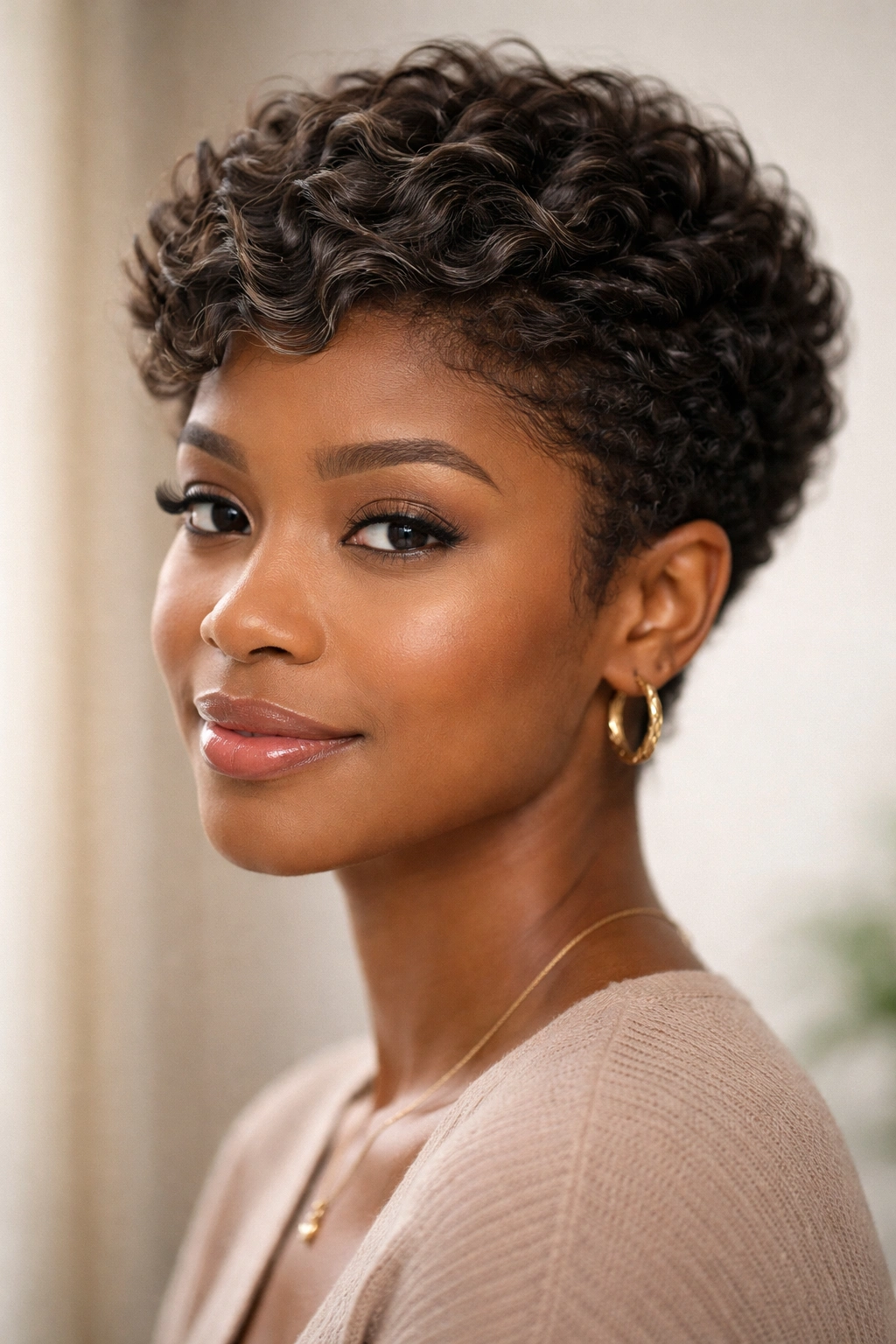
If you want texture without the tightness of traditional curls, soft waves are an elegant middle ground. This style works best on hair with natural wave or loose curl pattern, but you can create waves on tighter textures too using specific techniques. The waves create movement and visual interest while maintaining a softer, more relaxed aesthetic than defined curls. It’s a look that feels effortless even though there’s technique behind it.
How to Create and Set Waves
- Apply a lightweight wave-defining cream or gel to damp hair
- Use a wide-tooth comb or your fingers to gently comb the product through
- Create loose waves by twisting sections around your fingers or using a curling iron on the lowest heat setting
- Air-dry completely, or use a diffuser on low heat to set the pattern
- Once dry, gently separate the waves with your fingers for a softer, more tousled look
- This pattern typically lasts 3-5 days if you refresh with a light moisture mist before bed
Why This Reads as Polished
Soft waves have an inherent elegance because they suggest movement and flow. On smaller hair, they add perceived length and volume without requiring your actual hair length to be longer. The style is also forgiving—if waves fall a bit loose, it just looks more relaxed, not unfinished.
5. The High-Top Fade
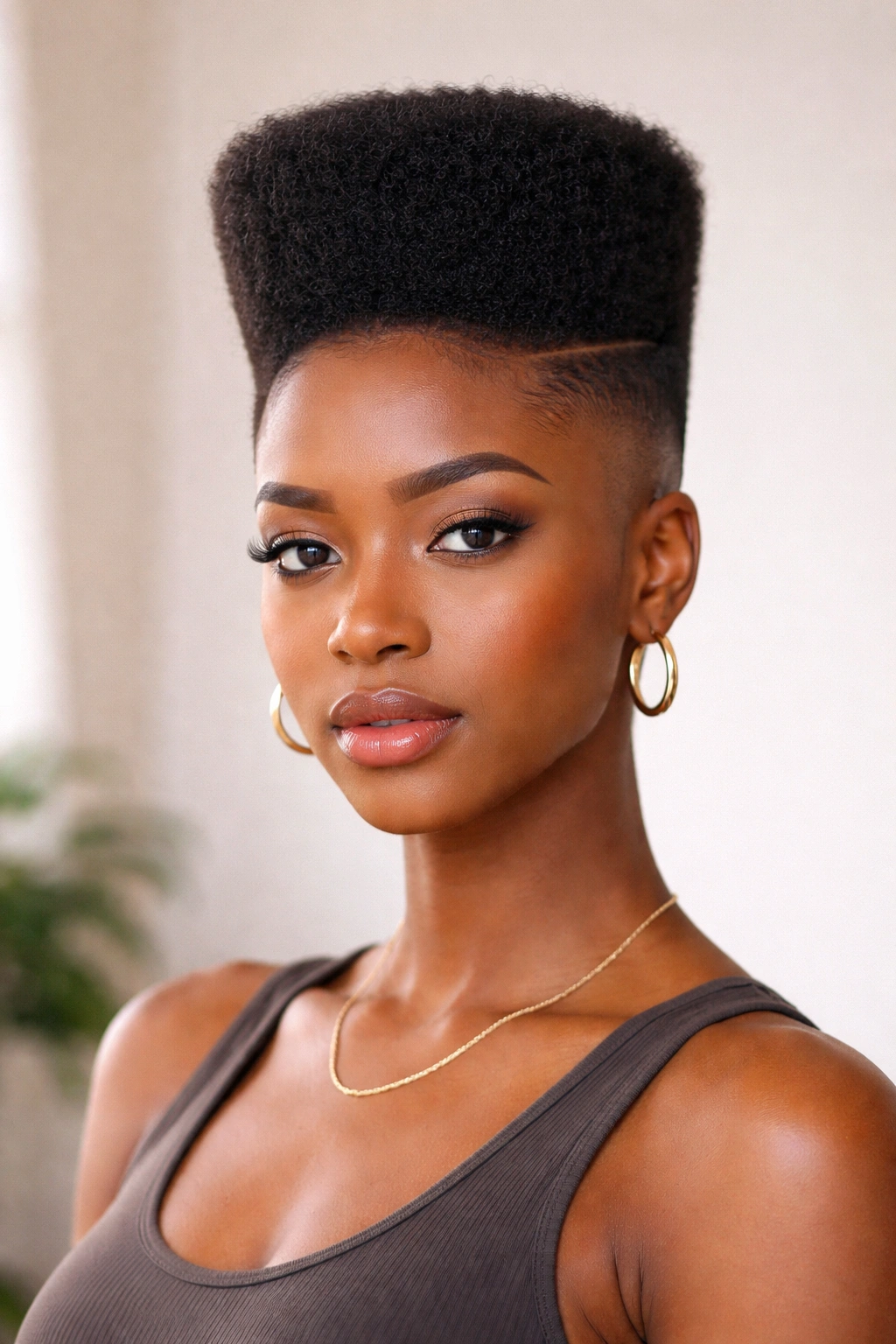
The high-top is an iconic style that’s experienced multiple comebacks for good reason—it’s striking, sculptural, and shows off the density and texture of your natural hair beautifully. The sides fade very short while the top is left significantly longer (usually 3-6 inches), creating that distinctive tall silhouette. This style demands confident styling and regular maintenance, but when executed well, it’s impossible to miss.
Getting the High-Top Cut Right
The quality of the cut determines whether this style looks intentional or messy. You need a barber or stylist with experience creating high-tops specifically on natural hair textures. The top should be shaped so it stands up and out, not drooping over, and the fade should be precise with clean lines. The transition between the fade and the full-length top should feel sharp.
Styling Techniques That Make It Pop
- Use a strong-hold styling product—pomade, gel, or a cream pomade hybrid
- Apply to damp hair and blow-dry on medium heat while using your fingers or a brush to direct hair upward and outward
- Once dry, you can tousle with your fingers for a softer look or keep it smooth for maximum height and definition
- Refresh the style between washdays with a light mist of water and a small amount of product, then blow-dry again
- The style reads best when your hair is clean, so aim for wash day styling if you want maximum impact
6. The Woven Braided Crown
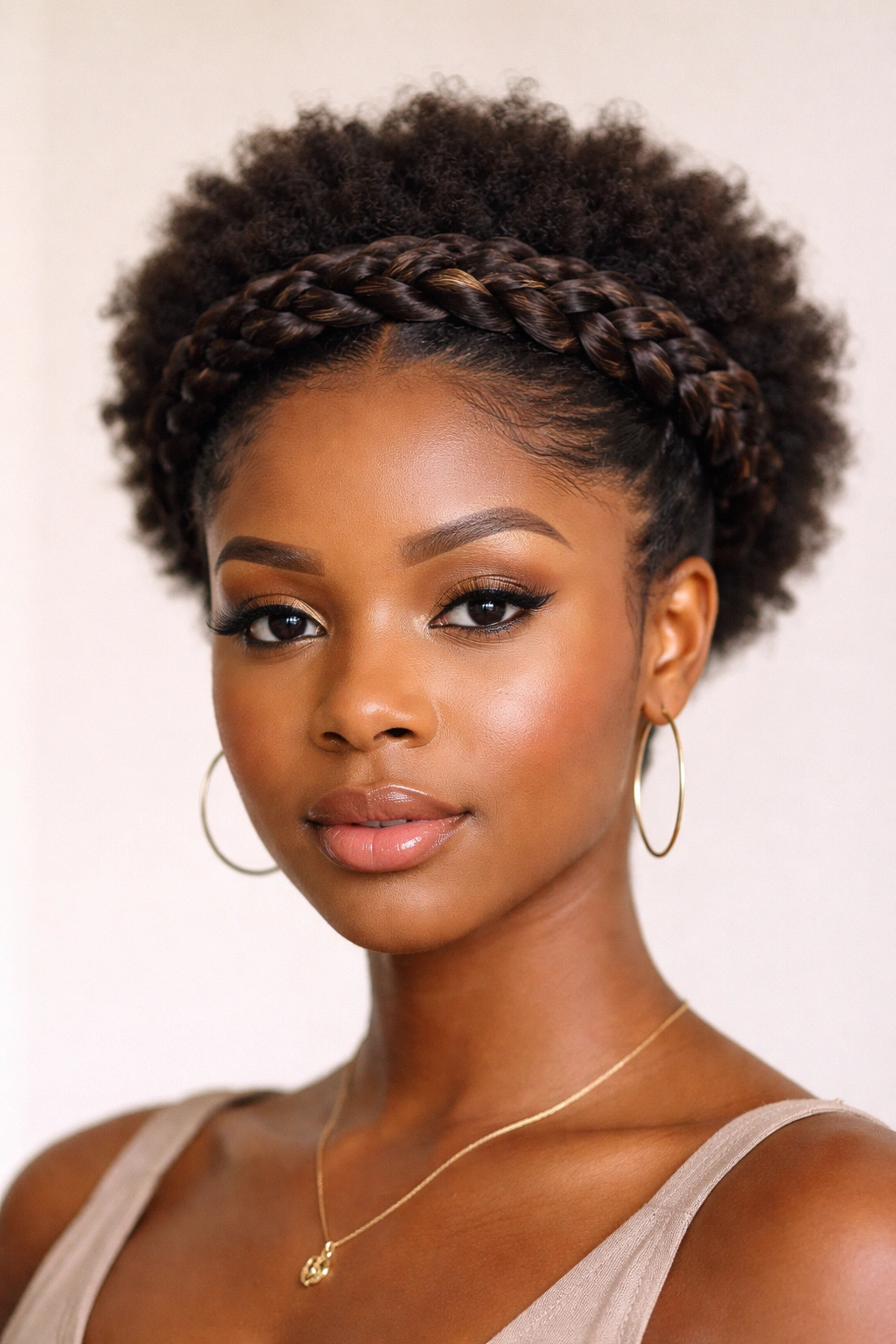
A braided crown is exactly what it sounds like—sections of your hair are braided or twisted around the top and back of your head in an intricate pattern, while texture or curls remain free below. This style works particularly well on smaller afros because the braids create visual interest and height without requiring long loose hair. It’s simultaneously protective and artistic, and you can play with different braid patterns—fishtail, box braids, cornrows, or Dutch braids—depending on your texture and preference.
Why Braids Matter on Smaller Hair
Braids create architecture that makes your overall style look more dimensional and thoughtfully crafted. They also allow you to secure the top section of your hair while keeping the underneath looser, which reduces daily manipulation stress on your ends. The braids themselves become a design element, not just a styling tool.
How to Execute This Look
- Section off the area where your braids will sit (crown, sides, or all around)
- Braid each section starting from the front or sides and working backward
- Once all braids are in place, you can leave the loose hair textured and curly, or twist it into knots or coils for added definition
- This style typically holds 5-7 days with proper care—sleep with a bonnet and refresh loose sections with a light mist and product
- Unbraid carefully from the ends upward to avoid excessive tangling
7. The Shaggy Textured Crop
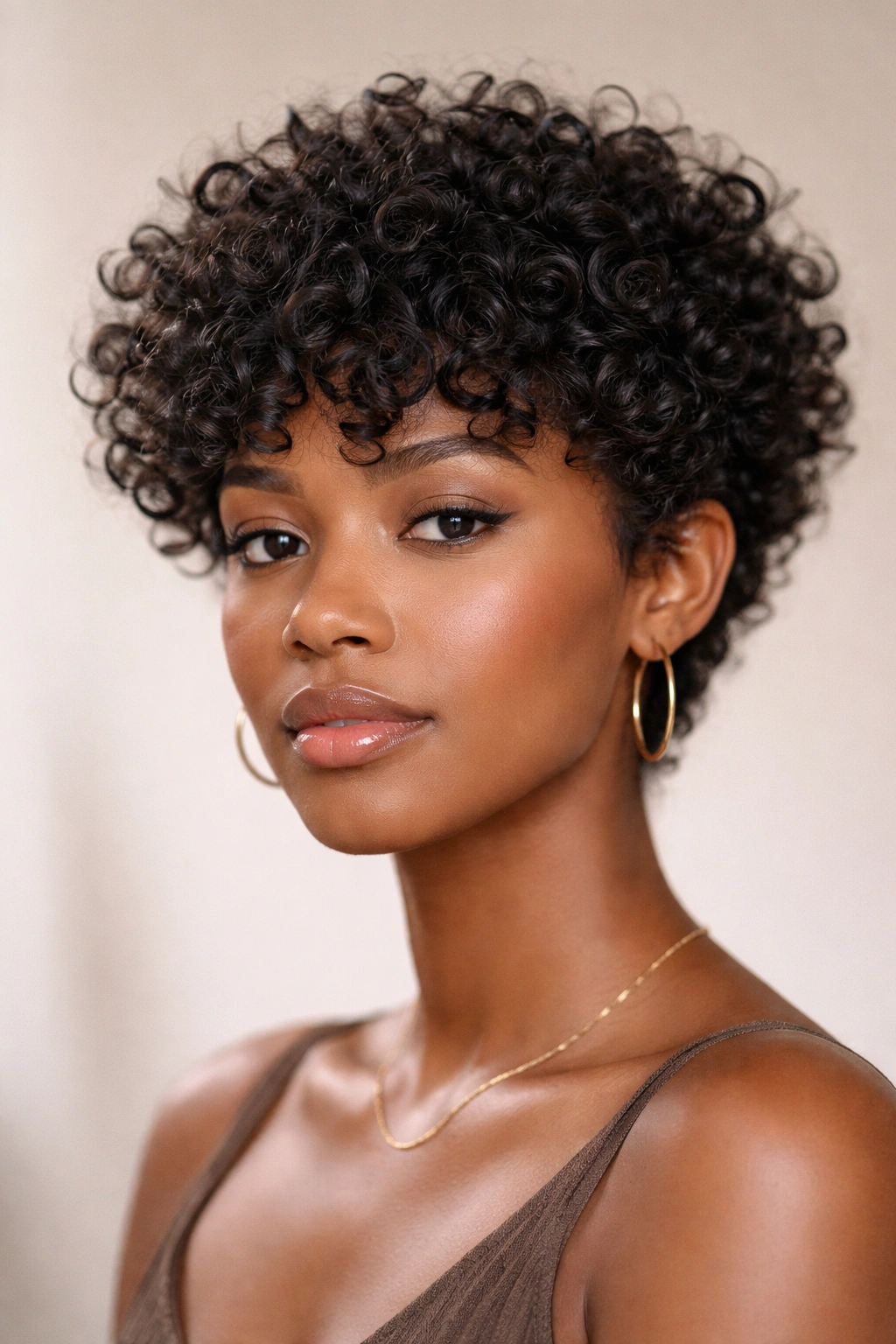
A shaggy textured crop is a cropped afro that’s been cut with layers and texture emphasis. Instead of one uniform length, the cut creates varying lengths throughout with shorter layers on top and slightly longer underneath, giving the style movement and a deliberately tousled quality. This works beautifully if you love a more undone, artistic aesthetic.
What Layering Does for Smaller Hair
Layers add movement and perceived volume because shorter sections on top can stand away from the scalp more easily than one uniform length. The cut also creates natural texture definition—as your curls shrink, they fall into shapes that were built into the cut itself. The shaggy vibe is intentional, not accidental, which makes all the difference.
Maintaining the Shag Vibe
- Wash your hair and let it air-dry completely to see the natural texture and movement
- Use your fingers to fluff and separate curls rather than combing, which can disrupt the shaggy silhouette
- Apply a light leave-in conditioner or curl cream for definition without weighing the curls down
- Trim every 6-8 weeks to keep the layers fresh and prevent the style from losing its shape
- This style works especially well on people who don’t love spending time on daily styling—it’s meant to look effortless
8. The Sleek Gelled Look with Carved Design
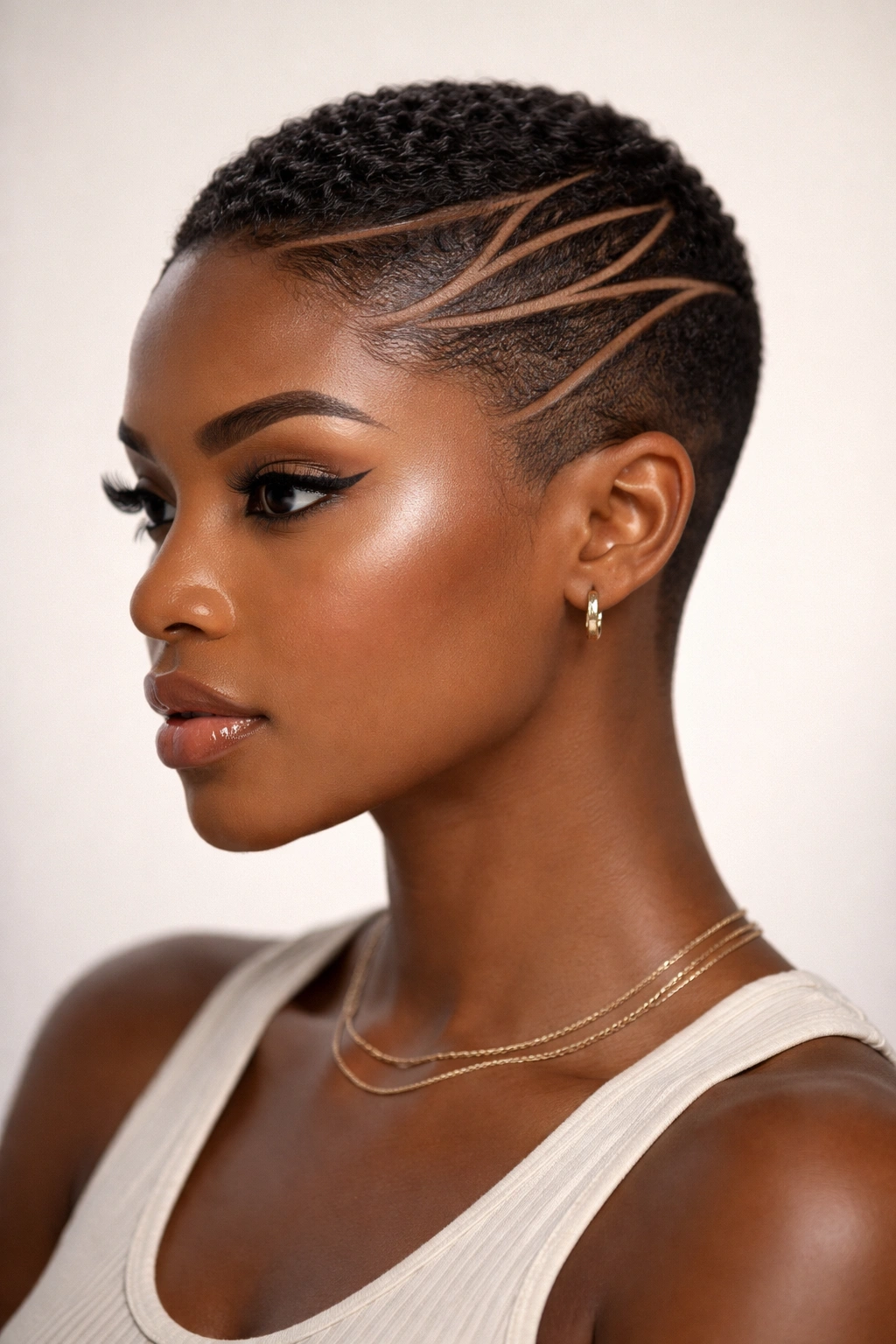
Sometimes less is more, and a sleek, gelled finish on a tapered or cropped afro is the ultimate minimalist style. You apply a firm-hold gel or pomade to clean, damp hair and smooth it down, then use an edge brush or toothbrush to carve geometric designs, lines, or patterns into the gelled surface. The style is sculptural, sharp, and incredibly modern. You can go simple with clean lines around the edges, or get more intricate with patterns and designs.
The Technique Matters
- Apply gel or pomade to damp hair, focusing on smoothing the hair down and back
- Use a fine-tooth brush or edge brush to carve lines into the product while it’s still wet
- Let it air-dry completely for the design to set
- The design stays in place as long as you maintain the gel—refresh every few days with a light mist and retouching
- This look photographs beautifully and reads polished in professional settings
Design Possibilities
- Simple clean lines around the edges (the most classic version)
- Geometric patterns carved into the top or sides
- Waves carved into the surface using a specific brushing technique
- The level of detail is entirely up to you—simple is elegant, intricate is artistic
9. The Twist-Out for Defined Texture
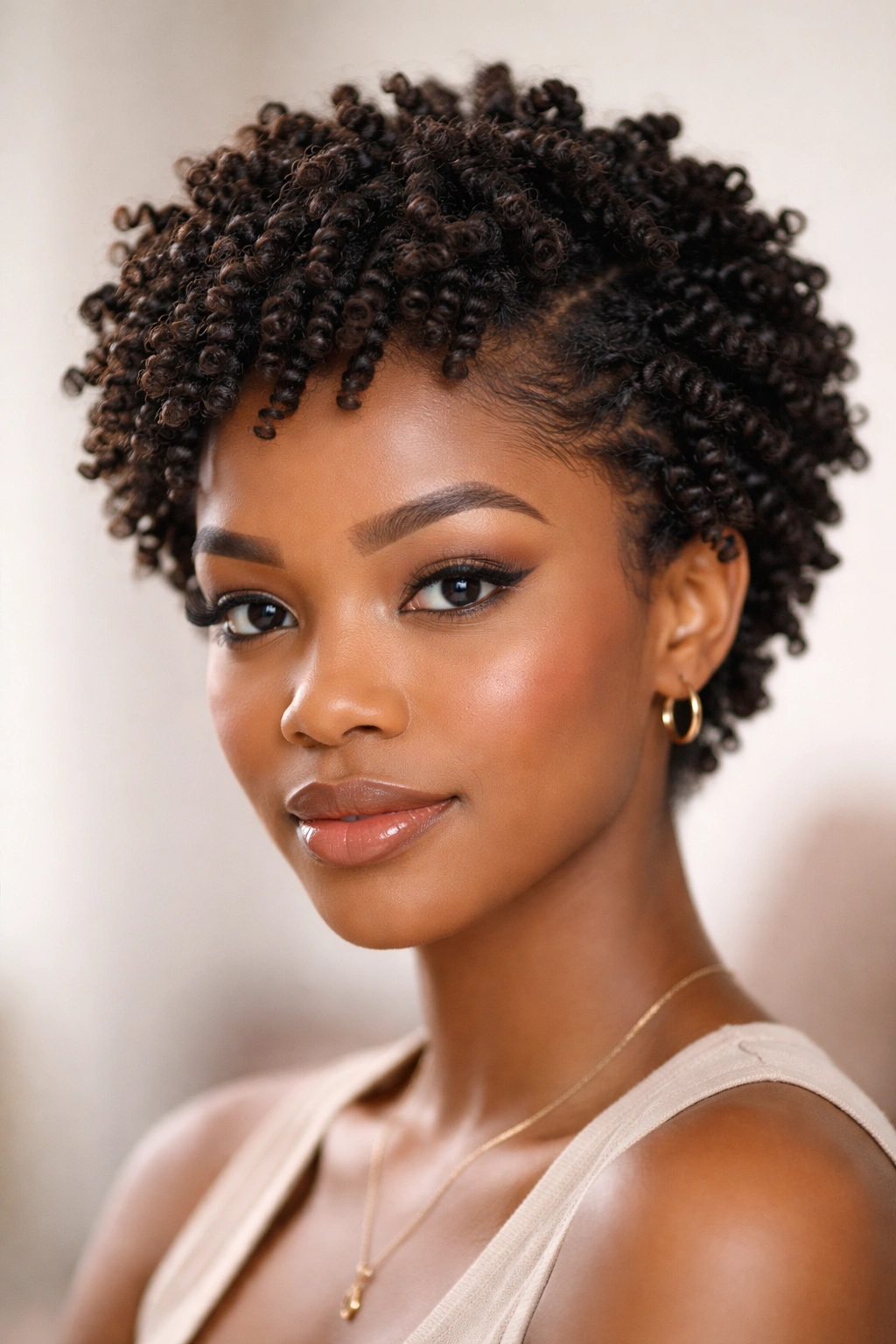
A twist-out is a style created by two-strand twisting sections of damp hair, letting it dry, then untwisting for defined, bouncy curls. On smaller afros, twist-outs create incredible texture and definition while maintaining manageable size. The style typically lasts 5-7 days with proper care, making it economical in terms of styling time. It works best on hair that has some natural curl or wave pattern, though you can create the effect on straighter textures with a bit of product and technique.
The Twist-Out Process
- Wash your hair and apply a leave-in conditioner or curl-defining cream while damp
- Section hair into manageable portions (usually 8-16 depending on density and desired curl size)
- Take one section and divide it into two strands, then twist them together away from your face
- Secure the twist at the end with a bobby pin if needed
- Repeat until your entire head is twisted
- Let hair air-dry completely, or use a diffuser to speed up drying
- Once fully dry, carefully untwist each section from the bottom up
- Fluff with your fingers or a wide-tooth comb for maximum volume and definition
Why This Style Holds So Well
The twists set your curl pattern while your hair dries, so the definition lasts much longer than if you just wore your natural curls. The tension from the twisting also enhances curl definition even if your natural curl pattern is loose. This style is protective too—your ends are tucked and relatively protected from daily friction.
10. The Structured Faux-Hawk
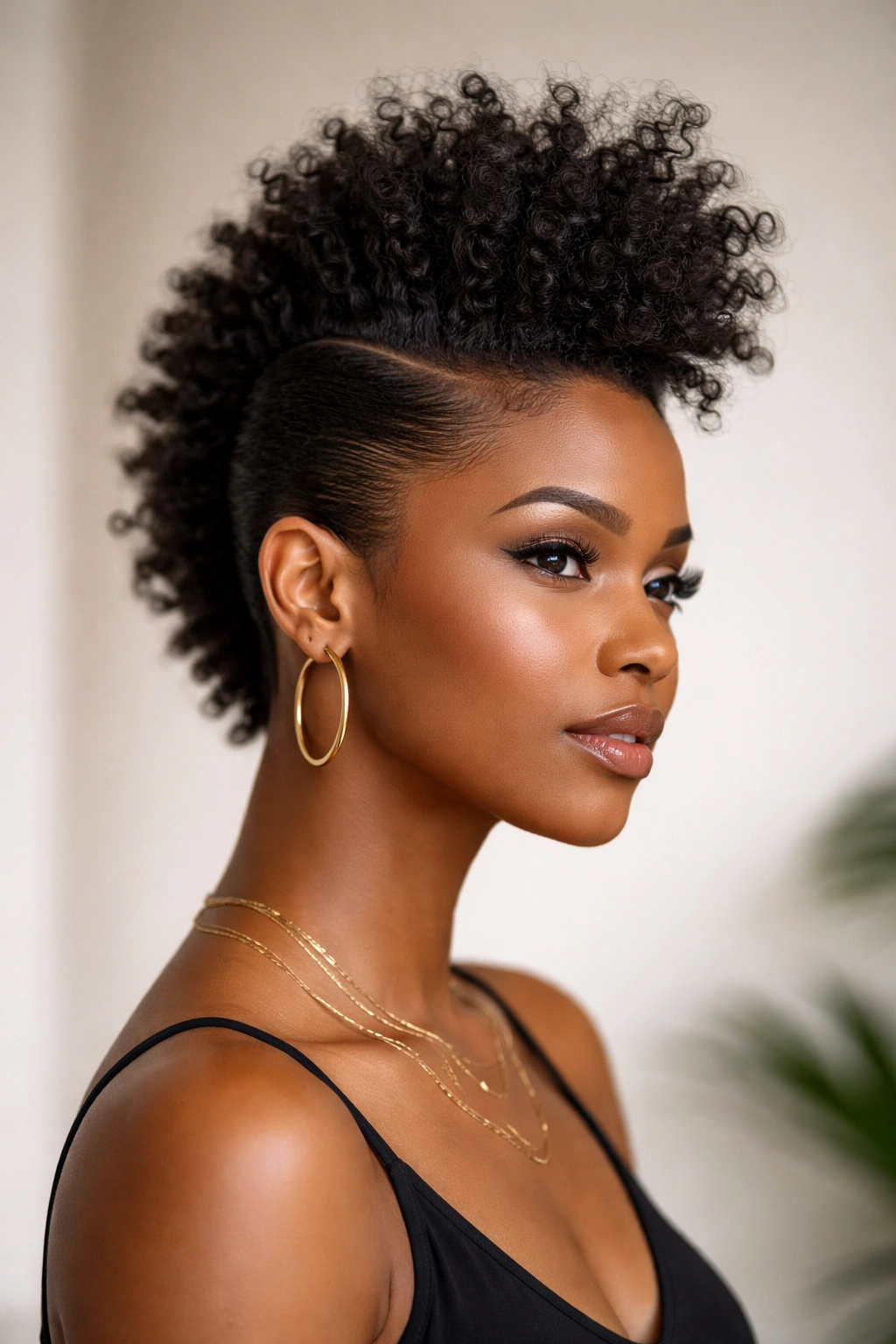
A faux-hawk uses styling product and technique to create the visual effect of height and dimension without actually cutting your hair into that shape. The sides appear shorter (usually gelled down and smoothed), while the center strip is left full and textured, creating that signature hawk silhouette. This is a bold, confident style that’s genuinely fun if you love making a statement with your hair.
Building the Faux-Hawk Effect
- Apply a firm-hold gel or mousse to the sides of your head
- Smooth and shape the gelled sides downward and backward using a brush
- Leave the center strip (from your forehead to the back) without gel
- Blow-dry the gelled sides for a very sleek finish
- Fluff the center strip with your fingers or a diffuser to add texture and volume
- The contrast between the slicked sides and the textured center creates the hawk effect
- Refresh the gel on the sides as needed throughout the day
When to Wear This Style
The faux-hawk is perfect for nights out, events, creative professional settings, or anytime you want your hair to be the statement piece. It’s bold without being extreme, and it works on virtually any hair density or texture. The key is committing to the look with confidence.
Final Thoughts
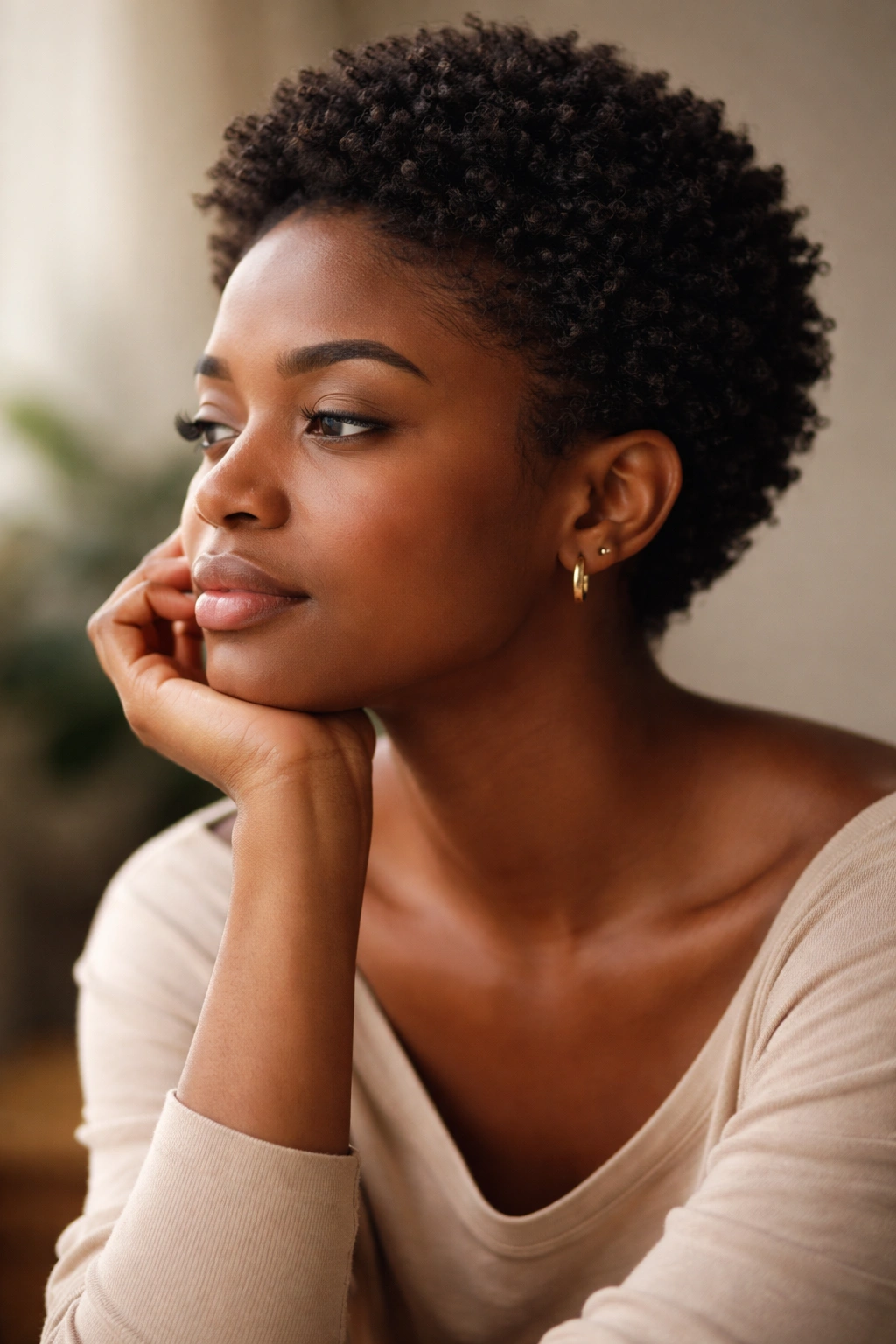
Small afro styles aren’t about making do with less—they’re about understanding that some of the most striking, manageable, and genuinely beautiful looks happen when you work intentionally with what you have. Whether you’re drawn to the minimalist elegance of a sleek gelled finish, the bold sculpture of a high-top, or the artistic texture of a twist-out, there’s a style that feels authentic to who you are.
The real secret these styles share is that they all celebrate your natural texture rather than fighting it. They work because they’re designed to move with how your hair actually behaves, not against it. Your smaller afro has incredible advantages—less product needed, less time required, less stress on your hair, and honestly, more room to experiment with different shapes and techniques without a long-term commitment.
Start with whichever style speaks to you first. Invest in a good cut if you go for a shaped style, find styling products that work with your specific texture, and don’t hesitate to revisit your stylist’s chair if something isn’t quite right. Your hair is worth the attention, and once you find the styles that make you feel like yourself, you’ll realize why so many people choose to keep their afros small intentionally.