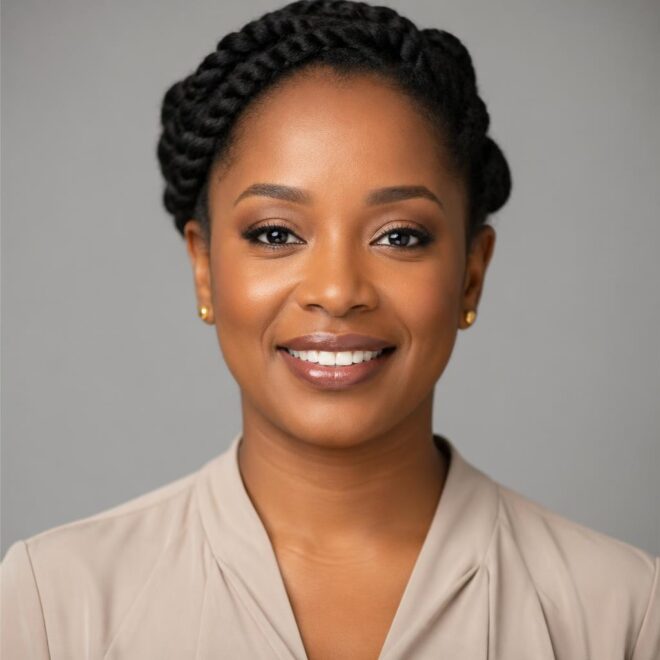


A black-tie reception is not the place for a braid that starts falling apart before dessert. A lace braid updo earns its keep because it looks polished from the front, stays controlled at the back, and can survive hugs, dancing, warm rooms, and a little humidity without turning into a fuzzy mess.
That matters more than people admit. A lace braid keeps feeding hair in from one side while the other edge stays clean, so the style has movement without losing its shape. Once that braid gets tucked into a bun, knot, roll, or coil, it stops reading like a casual braid and starts reading like formal hair.
I’m a fan of these styles because they work across textures without forcing every head of hair into the same mold. Coily hair, stretched hair, relaxed hair, and extensions can all pull this off; the real difference is how clean the parting is, how firmly the base is pinned, and how much softness you want around the face.
Some of these looks lean classic. Some carry a little edge. All 13 are formal enough for a dressy evening and practical enough to stay neat when the room heats up and the photos keep coming.
1. Side-Swept Lace Braid Into a Low Chignon
This is the style I reach for when a gown has one shoulder, an off-center neckline, or a lot going on up top. The braid starts near the temple, travels across the head, then folds into a low chignon that sits just below the ear.
Why It Works With Formalwear
The side sweep gives the whole look motion without making it busy. Your eye follows the braid first, then lands on the chignon, which is exactly where the formality lives. No extra fluff needed.
The chignon should stay compact. Not tiny. Compact. If it spreads out too much, the braid loses its focus and the style starts looking like a daytime updo that got dressed up at the last minute.
Small Details That Make It Better
- Keep the braid snug at the hairline, but not so tight that the part looks harsh.
- Cross-pin the chignon with U-pins instead of relying on only one or two bobby pins.
- Add one pearl comb or two slim crystal pins if the dress is plain.
- Finish with a light mist of shine spray on the bun, not the braid.
Best on: medium to thick hair, or stretched natural hair with enough length to tuck cleanly.
2. Crown Lace Braid Wrapped Into a Textured Bun
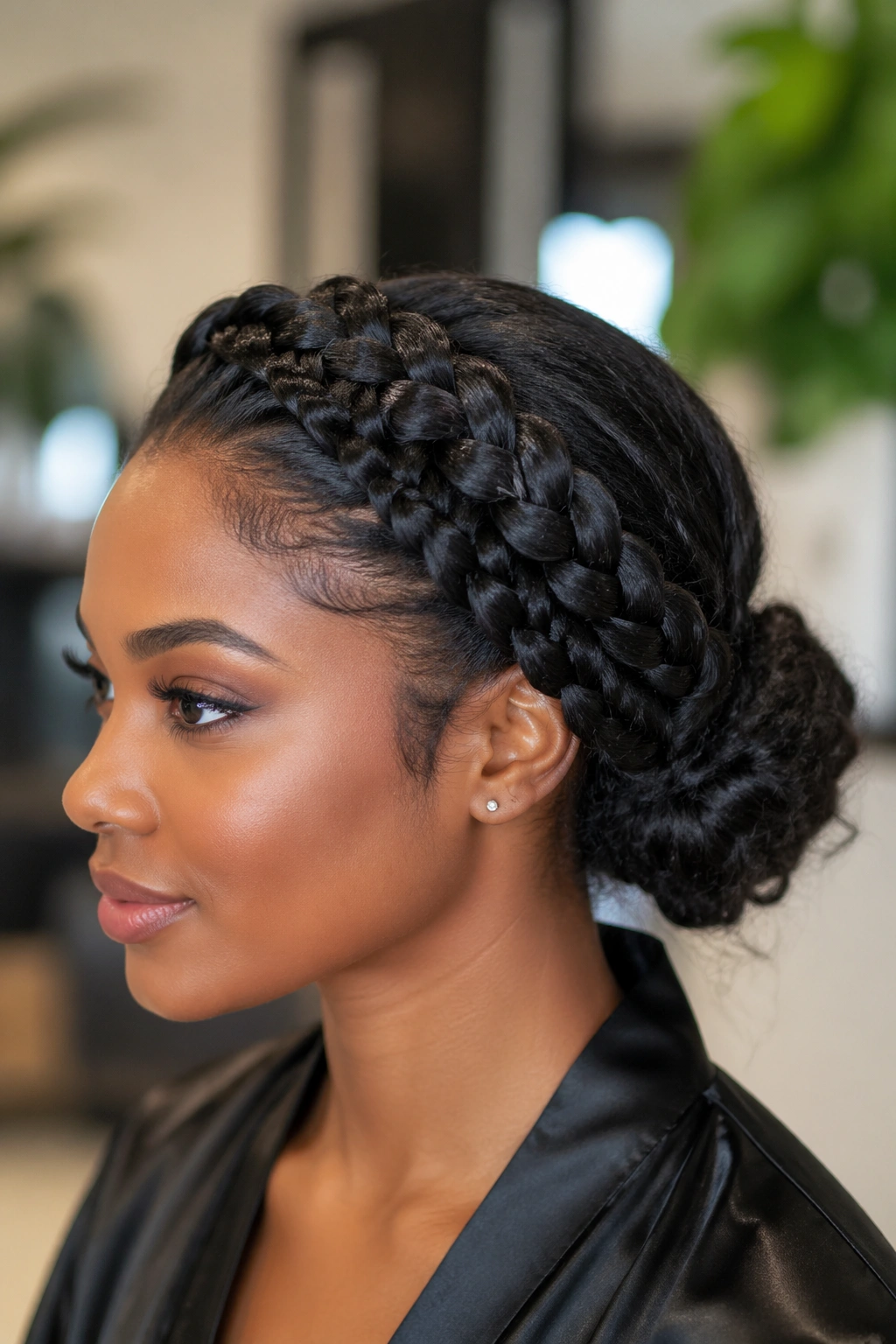
This is the style that makes thick hair look deliberate instead of bulky. A crown lace braid traces the head like a headband, then the ends wrap into a textured bun at the back or slightly off-center.
The shape is generous, but not sloppy. That’s the sweet spot. You want the braid to look like it belongs there, not like it was bolted on five minutes before the car arrived.
I like this version with high necklines, halters, and gowns that already carry a lot of detail across the shoulders. The hair stays clean, which lets the dress breathe. At the same time, the braid gives enough structure that the bun does not feel plain.
A little texture helps here. Second-day hair, a stretched blowout, or soft padding under the bun gives the pins something to grip. If the hair is too silky, the bun can slip around and make you regret every fast decision you made that morning.
Use shine spray sparingly. The braid can stay a touch softer so it still looks like hair, not a shell.
3. Center-Part Double Lace Braids Into a Sculpted Knot
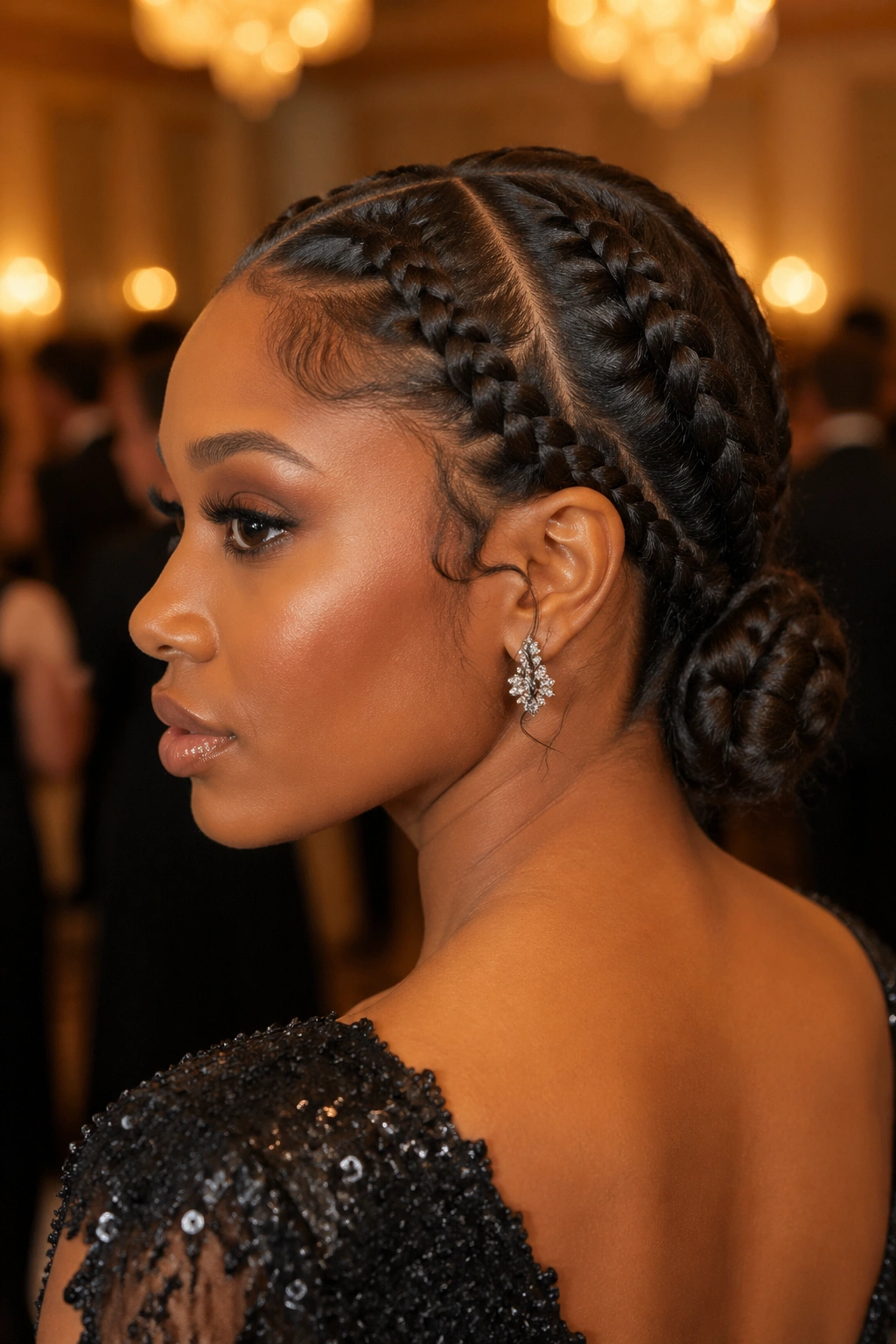
Want a formal style that looks deliberate from every angle? The center-part double lace braid into a sculpted knot is one of the neatest answers.
Two mirrored braids sweep back from a crisp center part, then meet at the nape in a knot that can be flat, folded, or twisted into a tighter coil. The symmetry is the point. It gives the face a clean frame and makes the back of the head look composed, which is no small thing at a black-tie reception.
Keeping the Part Crisp
- Map the part with a rat-tail comb before any product goes on.
- Smooth the roots with mousse or styling cream so the line stays visible.
- Braid both sides at the same tension so one side does not puff out more than the other.
- Pin the knot low enough that the top half of the head keeps its shape instead of rounding out.
This look is sharp with square necklines, column gowns, and dresses with clean beadwork. It also suits people who like a no-nonsense finish. No stray pieces. No guesswork. Just a strong line and a tidy knot.
4. Halo Lace Braid With Tucked Ends
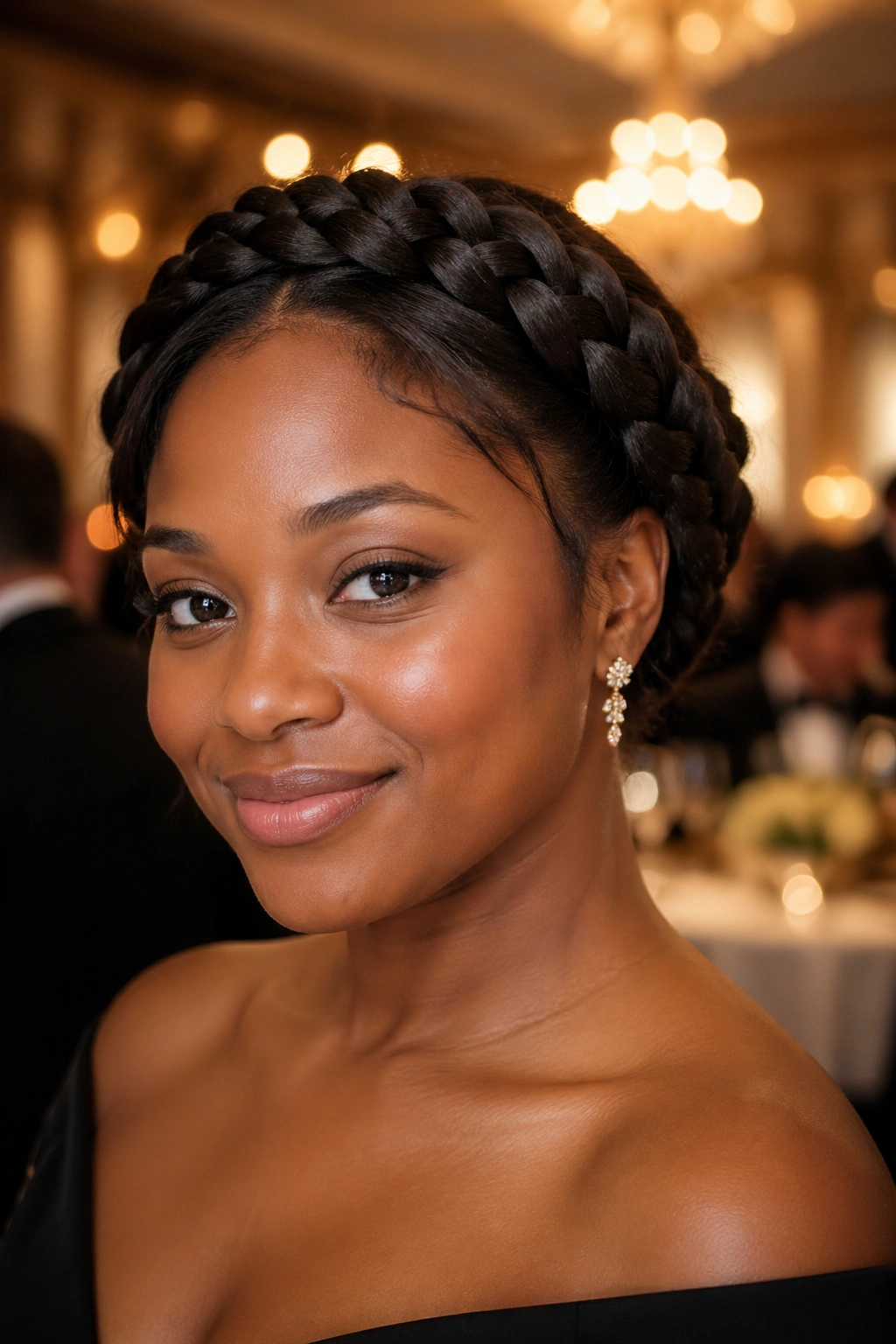
When a neckline is busy — lace, crystals, maybe both — the halo lace braid keeps the hair from competing with the dress. The braid circles the crown, then the ends tuck under one side so the finish feels complete rather than rustic.
That tucked end is the part many people miss. Leave it visible, and the style can drift toward festival hair. Hide it properly, and the whole thing reads more like formal styling with a little softness.
This one flatters drop earrings because it keeps the sides open without leaving the face bare. It also works well if you want the front of your hair to feel lifted but not severe. The braid creates a frame; the tucked finish keeps it elegant.
No loose ends. That matters.
If your hair is long, keep the braid slightly loose around the crown so it has shape. If your hair is shorter, a bit of filler under the halo helps the curve sit higher and smoother. I’d choose this style for a reception where the dress has detail near the collarbone and you want the hair to stay out of the way.
5. Deep Side Lace Braid Into a French Roll
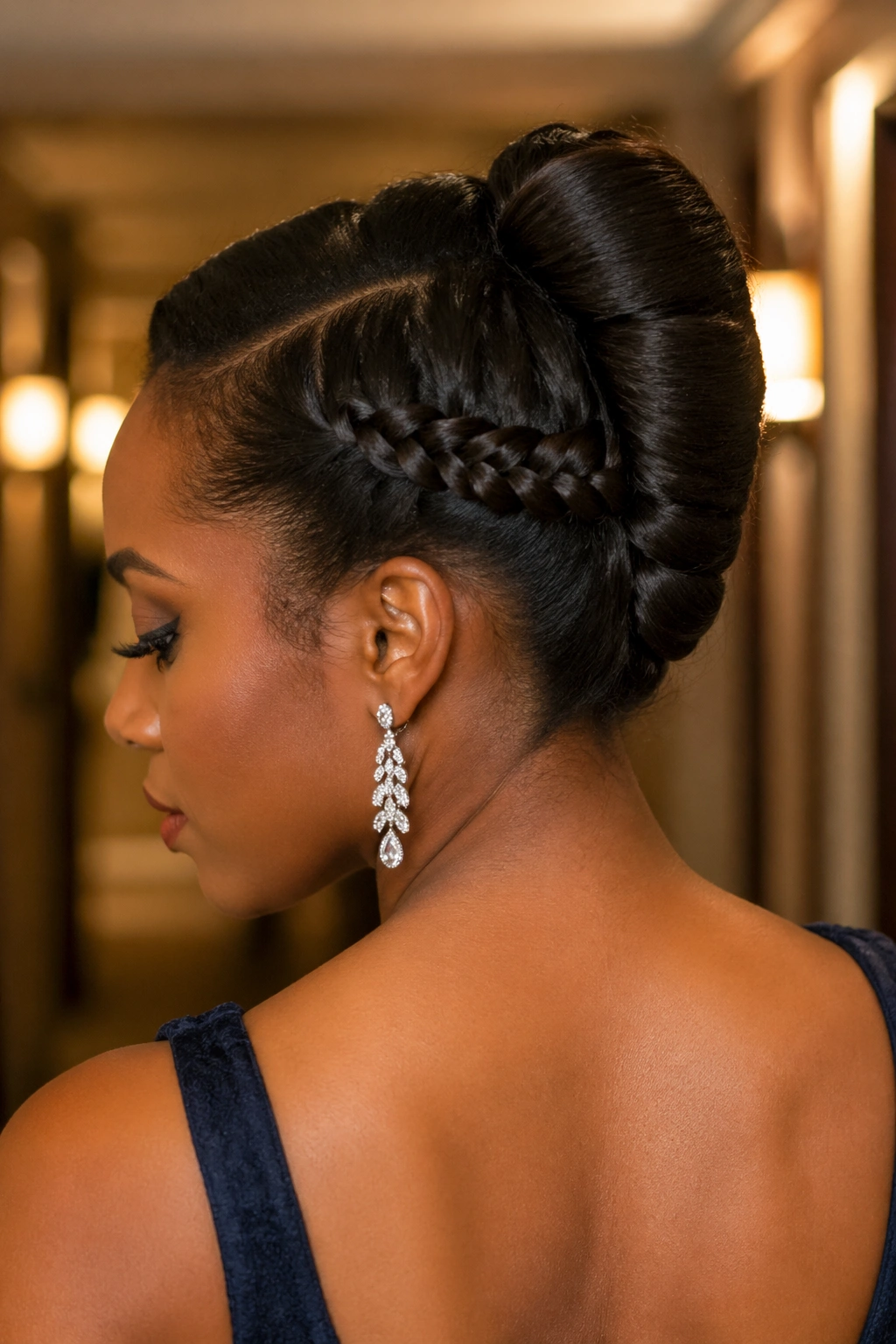
A French roll is not old-fashioned when the braid is doing the talking. A deep side lace braid feeding into a vertical roll gives the style a strong line, and that line keeps the look feeling current rather than nostalgic for its own sake.
The braid can start low near the temple or a little farther back if you want more face space. From there, it guides the eye into the roll, which should stay narrow and smooth. A wide roll can look heavy. A narrow one looks intentional.
What Keeps It Modern
Keep the finish brushed and clean, not wet and shellacked. I prefer a soft matte shine here, because too much gloss makes the roll look stiff under flash.
A few small choices matter:
- Use a smoothing cream at the roots so the braid can sit flat.
- Anchor the roll with hidden pins inserted upward and inward.
- Leave the crown slightly lifted, not puffed.
- If you add an accessory, choose one slim comb instead of a full crown of sparkly pieces.
This style works beautifully with bateau necklines, portrait necklines, and dresses that feel classic in the best sense. It also holds up well when you need something that can move from ceremony photos to a long dinner without losing its shape.
6. Lace Braid Ponytail Wrapped Into a Polished Coil
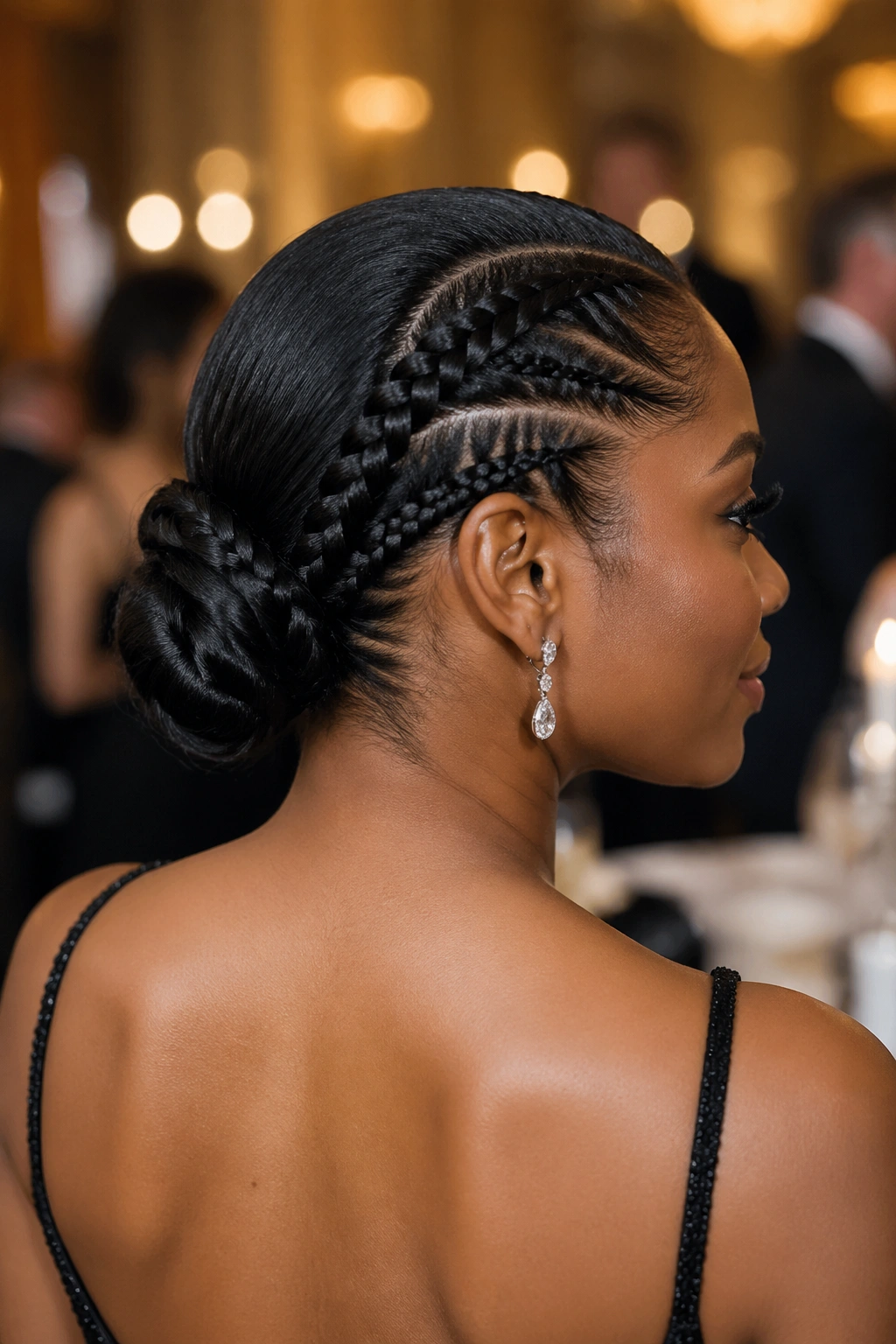
Picture the dance floor after the first slow song. Hair that looked perfect at the cocktail hour can start slipping by dessert, and that’s where this style earns its keep.
The lace braid feeds into a ponytail, then the ponytail wraps into a polished coil at the base. You get height, security, and a neat neck line without the style feeling stiff. It has a little energy.
Why It Survives a Long Reception
- A ponytail gives the style a firm anchor before the coil is built.
- The wrap hides the elastic and makes the finish look intentional.
- A coil pinned at the base spreads the weight better than a loose twist.
- Flexible-hold spray lets the hair move a little instead of freezing it in place.
This is the kind of updo I like for strapless dresses and open backs, especially when the event goes late and you want to keep adjusting your posture without thinking about your hair. It’s also a smart pick if you like the idea of an updo but hate the feeling of a bun sitting heavy at the nape.
If your hair is very dense, split the ponytail into two wraps before coiling. It gives you more control and stops the base from turning into a lump.
7. Asymmetric Lace Braid Updo With Pinned Curls
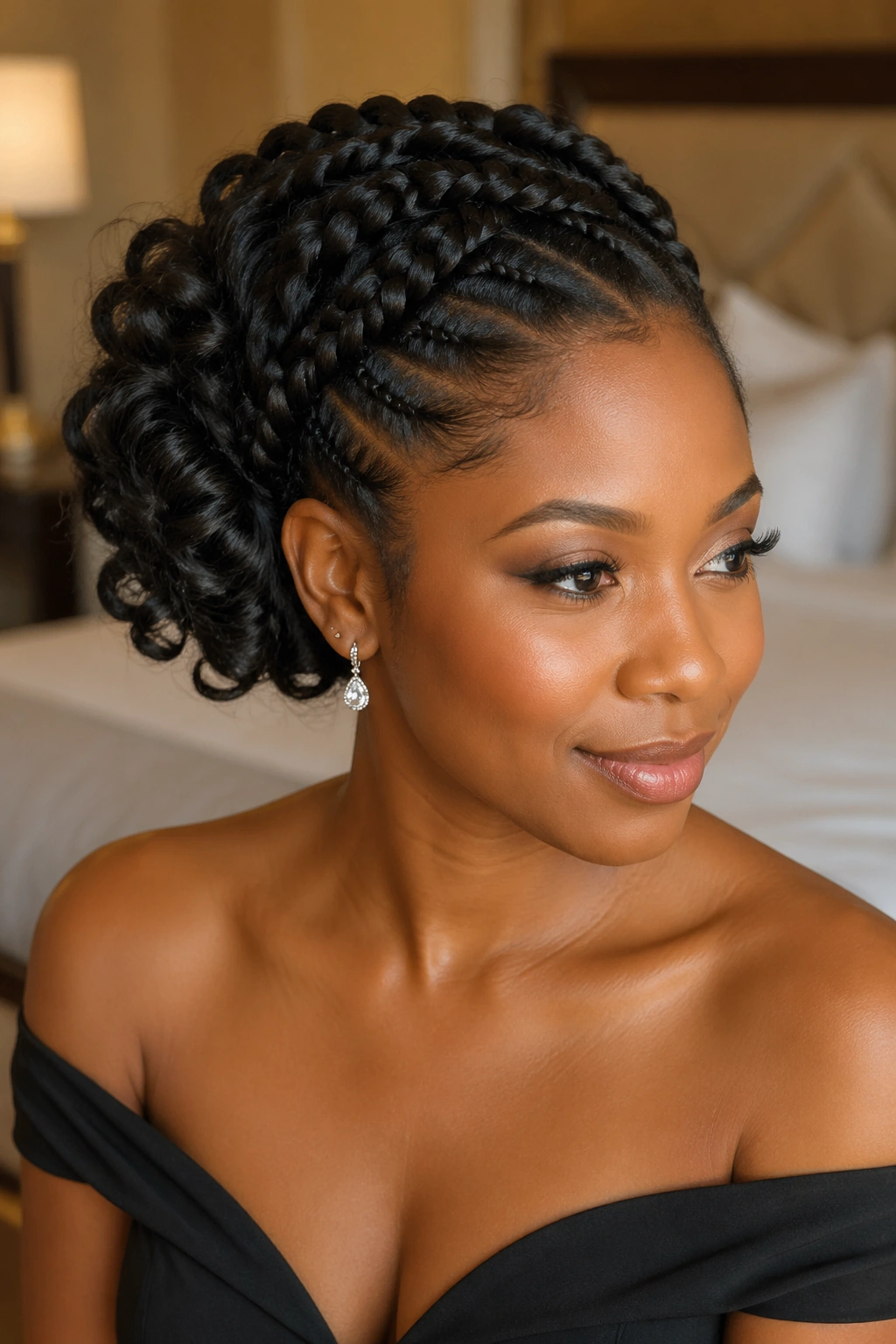
Asymmetry saves a formal updo from looking too stiff. One side carries more braid, the other side opens up with pinned curls, and the whole thing feels less like a template and more like a style chosen on purpose.
The braid usually starts heavier on one side, then sweeps back into a loose cluster of curls that are pinned low and close together. The curls should not fly everywhere. They should sit in controlled bends, with enough separation to show the shape and enough restraint to keep the look dressy.
I like this when the neckline is simple and the earrings are doing some of the visual work. A plain satin gown or a clean sweetheart neckline gives the hairstyle room to move. If the dress already has a lot of texture, I’d skip the extra curl work and keep things sleeker.
A small curl on one side of the face can soften the whole look. Just one. More than that and the style starts to feel overdone, which is the last thing you want when the dress code is formal and the room is full of sharp tailoring.
8. Lace Braid Faux-Hawk Bun
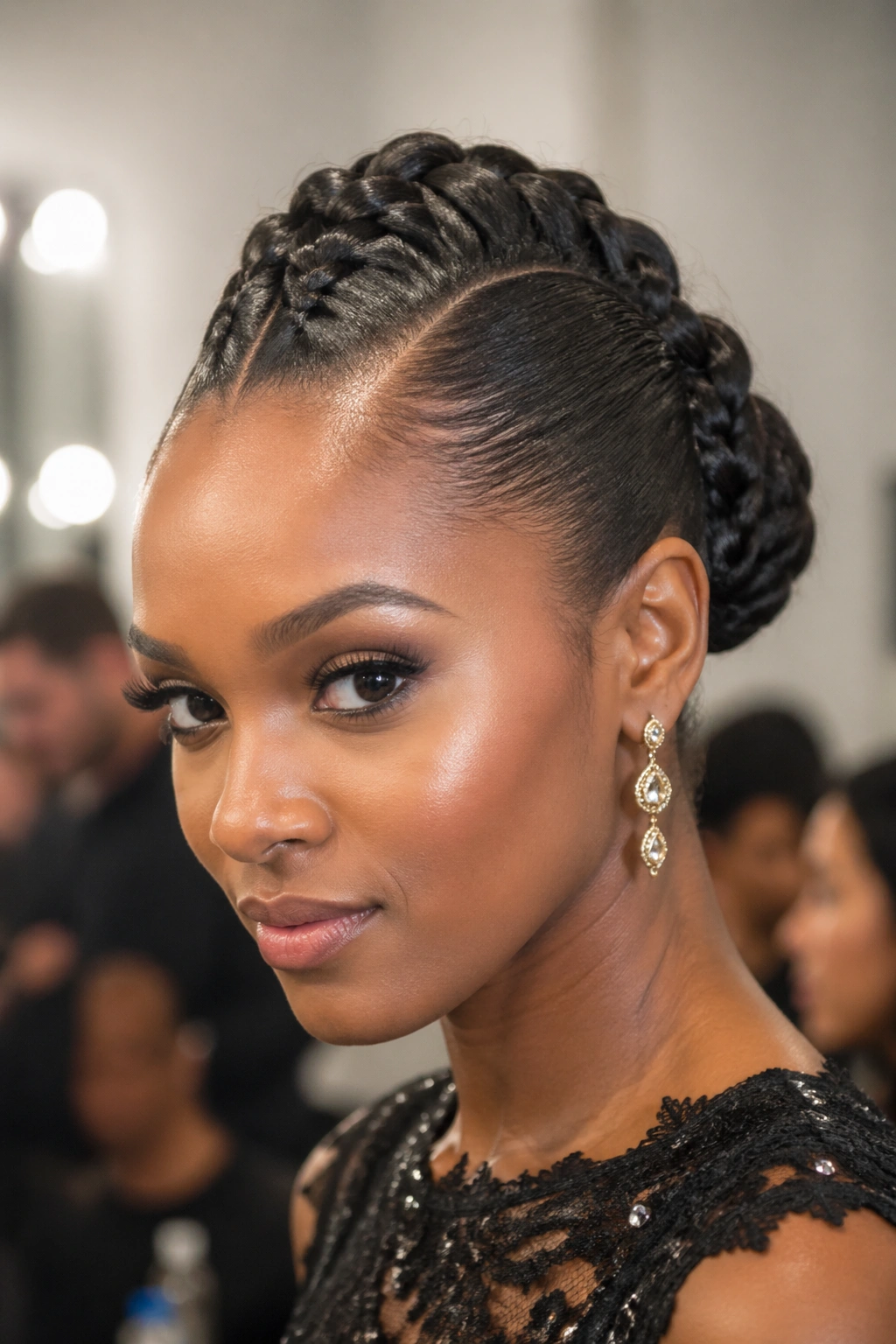
A faux-hawk can be black-tie if the silhouette is clean. That’s the whole trick. The braid runs along the center ridge, the sides stay tucked close, and the bun or knot sits back in the middle like a strong finishing point.
This is the style for someone who wants a little edge without breaking dress code. It looks sleek, confident, and a bit bolder than the usual formal bun. I like it with a dress that has clean lines, because the hairstyle already brings personality.
Skip extra volume at the temples. That’s where the style can tip into costume. Keep the sides smooth, keep the ridge controlled, and let the braid itself create the shape. If you use texture powder or a dry styling spray, use it lightly at the roots only. Too much, and the hair starts looking dusty instead of polished.
This is not the most romantic option on the list. It is one of the strongest. If you like structure and a little attitude, this one lands beautifully.
9. Soft Lace Braid With a Flat Crown and Low Twist
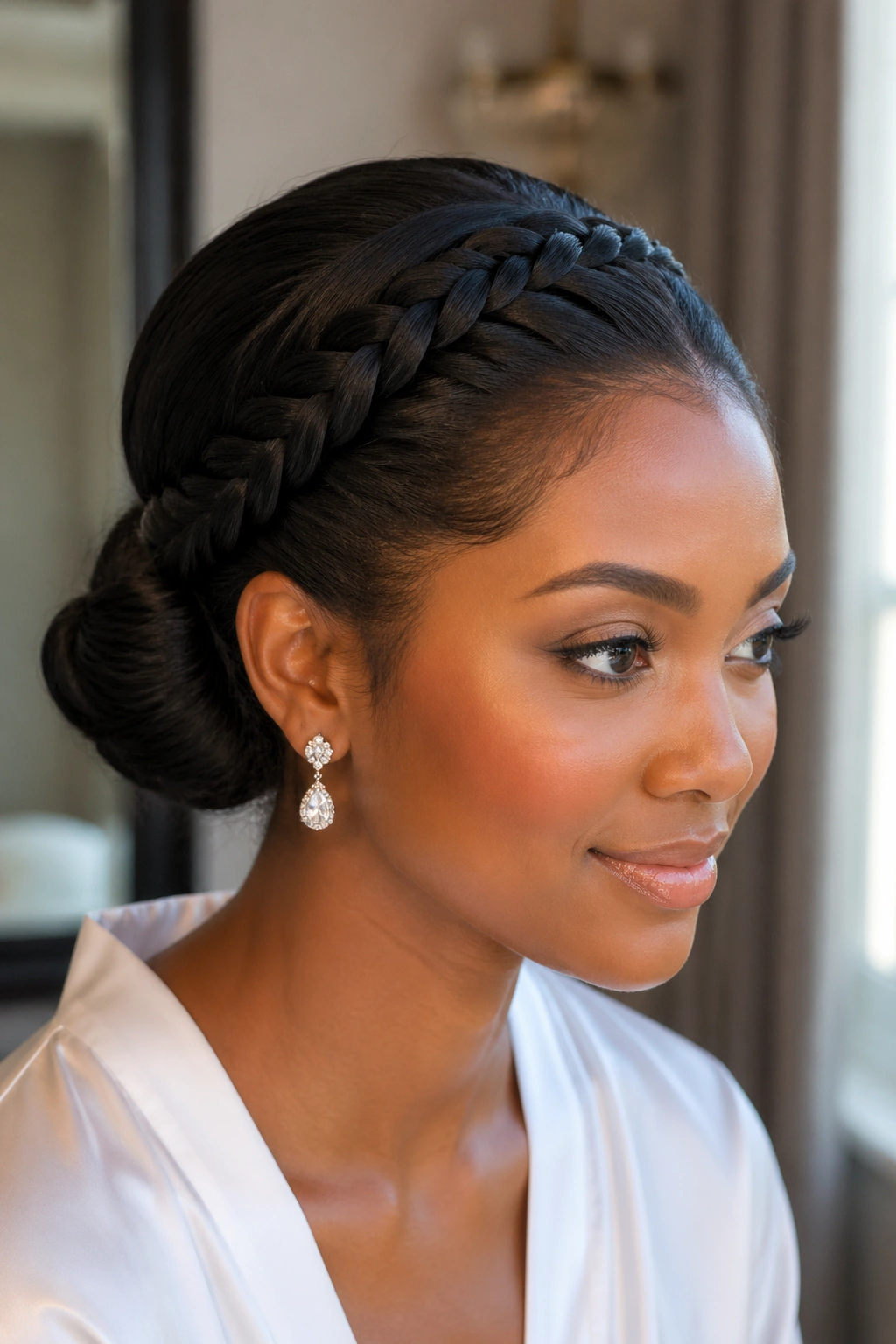
Need something formal that still leaves room for a veil or a strong hair accessory? A soft lace braid with a flat crown and low twist does that job without making the head look crowded.
The braid skims across the top with very little lift, then feeds into a low twist at the nape. The crown stays smooth, which gives the whole style a refined line. It also means the hair can sit comfortably under a comb or a slim headpiece.
Where It Really Helps
- Works well with veils or a single hair comb.
- Keeps the crown smooth under humid conditions.
- Leaves the neckline open for detailed earrings.
- Gives fine hair a cleaner shape if you add a tiny padded base under the twist.
This one reads especially well when the gown has structure through the shoulders or a lot of detail at the bodice. It does not compete with anything. It just sits there looking composed.
A few people want more height at the crown, and that’s fine. But if the dress is already doing a lot, a flat crown keeps the overall look calmer. Sometimes calmer is better. Sometimes it is the only thing that keeps the whole outfit from arguing with itself.
10. Lace Braid With Braided Bun and Face-Framing Tendrils
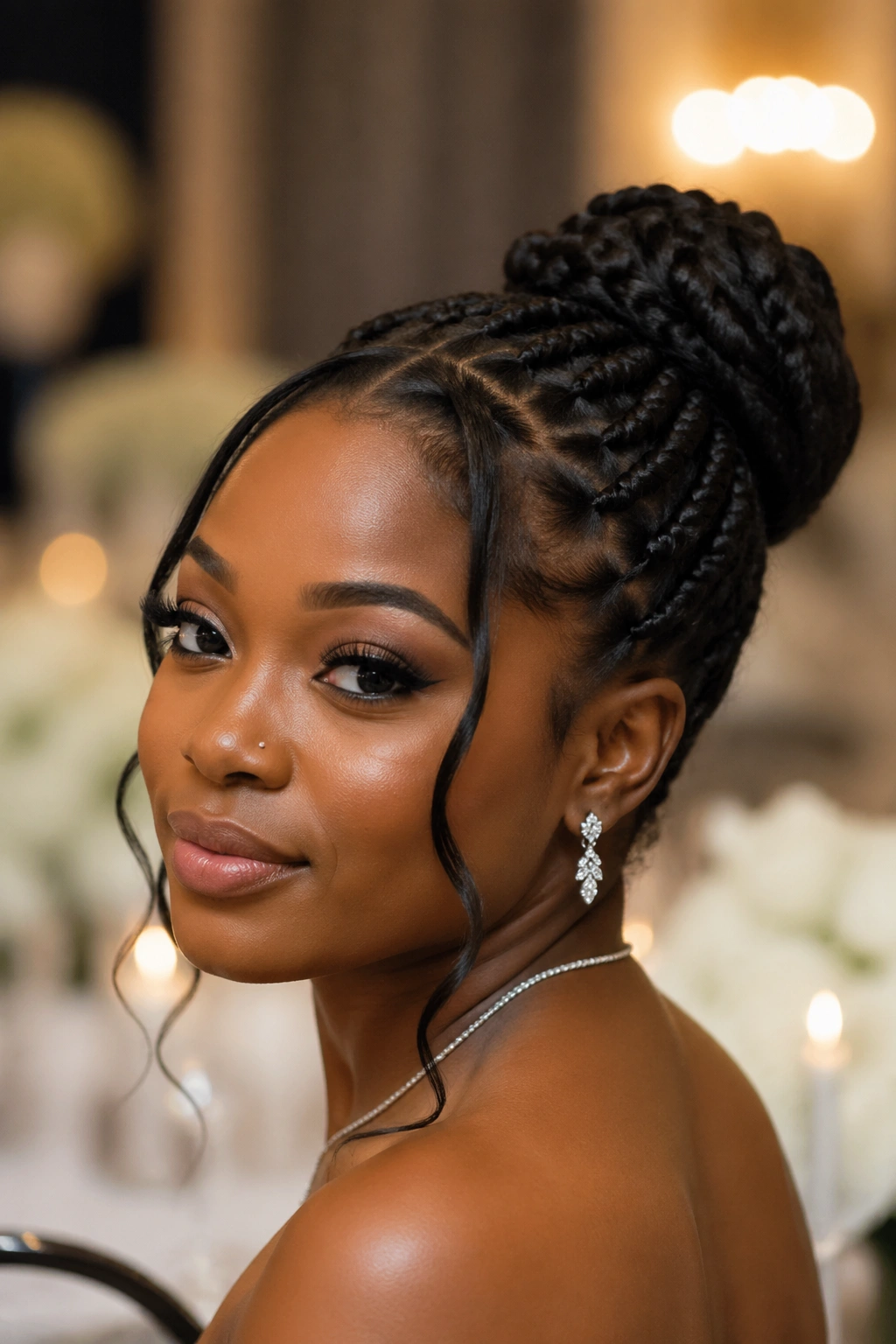
The trick here is restraint. A lace braid that feeds into a braided bun can look soft and romantic, but the face-framing pieces need to be handled carefully or the style starts to look unfinished.
Two tendrils are enough. Three if the hair is very thick. More than that and the front begins to lose the polish that black-tie hair needs. Keep the pieces slim, curl them with a 1-inch iron, and let them fall at cheekbone or jaw length.
What to Ask for
- Leave just two slim tendrils in front.
- Keep the bun compact and centered.
- Smooth the hairline with a soft brush instead of heavy, wet-looking gel.
- Pin the braid into the bun so the seam disappears from the side view.
This style works nicely with dresses that have softer shapes — sweetheart necklines, draped sleeves, anything with a little movement in the fabric. The tendrils echo that softness without making the hair look loose.
One thing I like here is the balance between structure and ease. The braid says formal. The tendrils keep it human. That mix is hard to fake if the hair is too shellacked or the front is loaded with too many loose strands.
11. Twisted Lace Braid Knot at the Nape
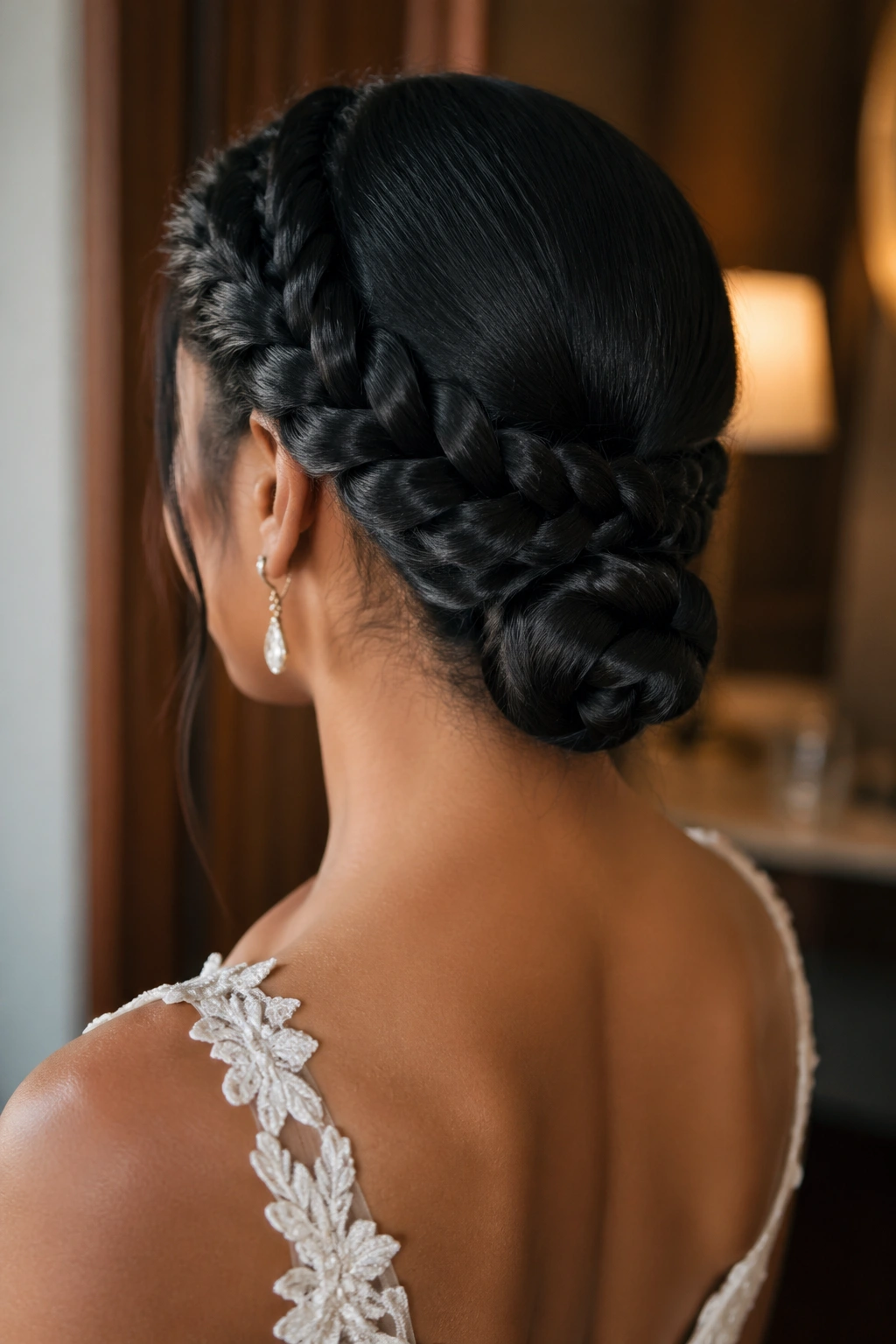
The nape knot is the quietest style in the group, and that is exactly why it works. A twisted lace braid runs back from the hairline, then folds into a knot that stays low and close to the neck.
Best When the Gown Already Has Drama
If the dress has heavy beading, a high collar, or a dramatic back, this style gives the eye a place to rest. It does not crowd the frame. It just closes the loop neatly and lets the outfit lead.
This is also a good choice for people who like clean lines but do not want a severe bun. A knot feels softer than a shellacked roll, but it still reads formal. Keep it tight enough to hold, loose enough to show the twist pattern.
For hair that tends to puff at the nape, a small amount of mousse before braiding helps the twist lie flatter. Cross-pin the knot from different angles. One pin straight across is never enough on its own, no matter how optimistic the mirror looks at home.
A flexible spray finish keeps the knot touchable. Hard shell hairspray can make this style look older than it should.
12. Braided Bun With a Side-Swept Lace Braid and Accessories
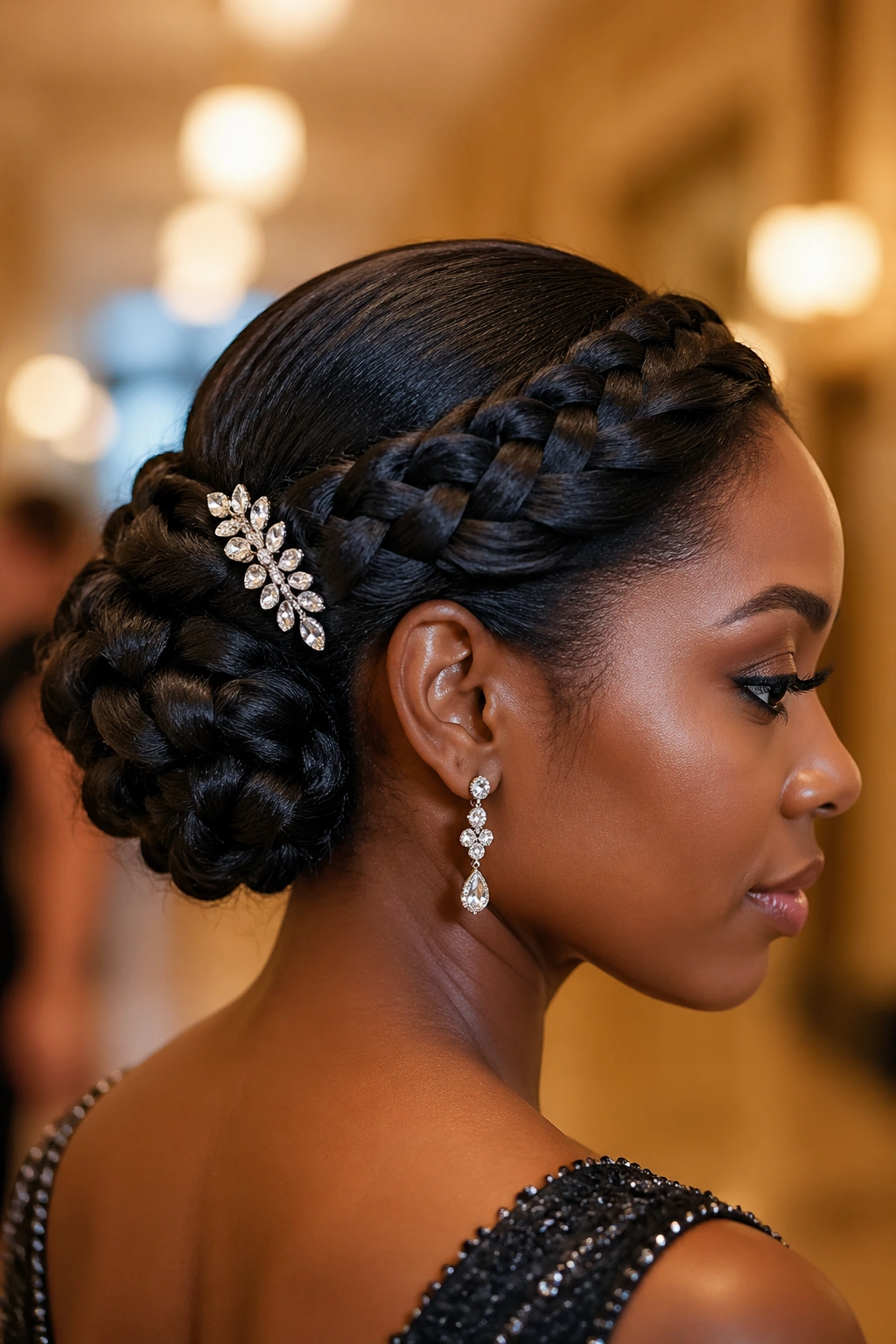
Can a hair accessory do too much? Yes. Which is why this style works best when the accessory is chosen with some discipline.
A side-swept lace braid leads into a braided bun, then one accessory — one — gets placed where the braid changes direction or where the bun sits. That could be a pearl comb, a crystal pin, or a slim metal vine. Pick one piece and let it do the talking.
Best Accessory Choices
- A pearl comb if the dress is satin or crepe.
- A small crystal pin if the outfit already has some sparkle.
- A slim gold or silver vine if you want the braid to feel more sculptural.
- Two matching pins if you want a subtle pair rather than one focal piece.
The bun itself should stay tidy and medium-sized. If it gets too wide, the accessory disappears. If it gets too small, the braid starts to dominate in a strange way. The sweet spot is a bun that looks anchored and finished.
I like this look for black-tie receptions where the gown is simple and the hair gets to carry a little of the drama. It’s a smart trade. You do not need a giant accessory wall when one clean piece placed well will do more.
13. Minimal Lace Braid Updo With a Clean Part and Low Sculpted Bun
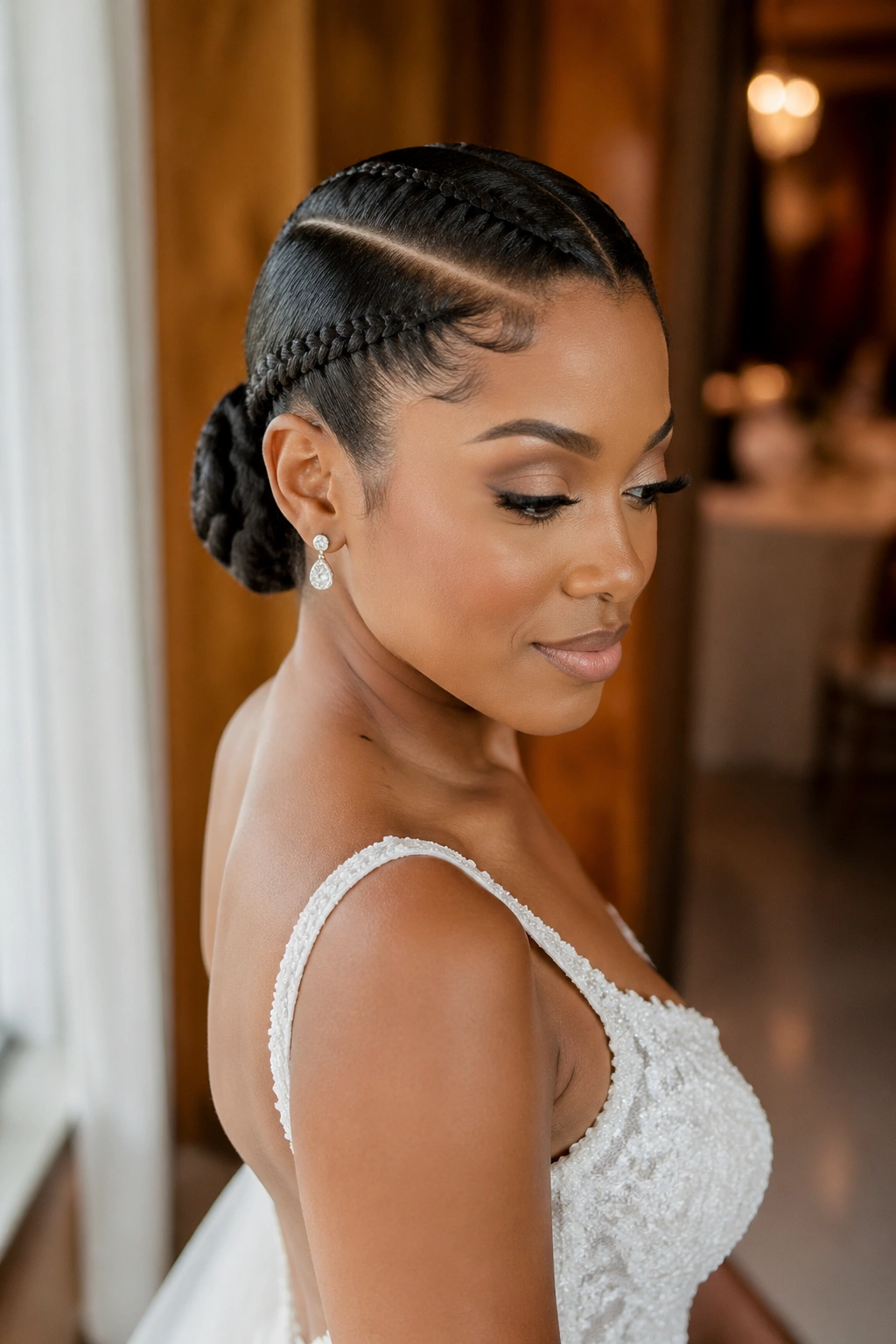
Sometimes the most formal hair is the least fussy. A minimal lace braid updo with a clean part and a low sculpted bun is proof of that.
The braid is narrow and neat, the parting stays sharp, and the bun sits low enough to feel calm rather than decorative. There is no extra curl cloud, no pile of pins, no unnecessary height. Just a clean braid feeding into a shaped bun that looks finished from every angle.
Who Should Choose This
This is the one I’d hand to someone wearing a heavily embellished gown, a big statement necklace, or a dress with a detailed neckline. The hair steps back and lets the clothes lead. That can be the smartest move in the room.
It also suits people who dislike styles that feel overworked. If your hair is already naturally beautiful in texture and shape, you do not need to bury it under extra layers. A clean part, a disciplined braid, and a low bun can do a lot without asking for attention.
Let the braid be neat. Let the bun be small. That restraint is what keeps the style looking expensive in the old-fashioned sense — well put together, not loud, not trying too hard.
Final Thoughts
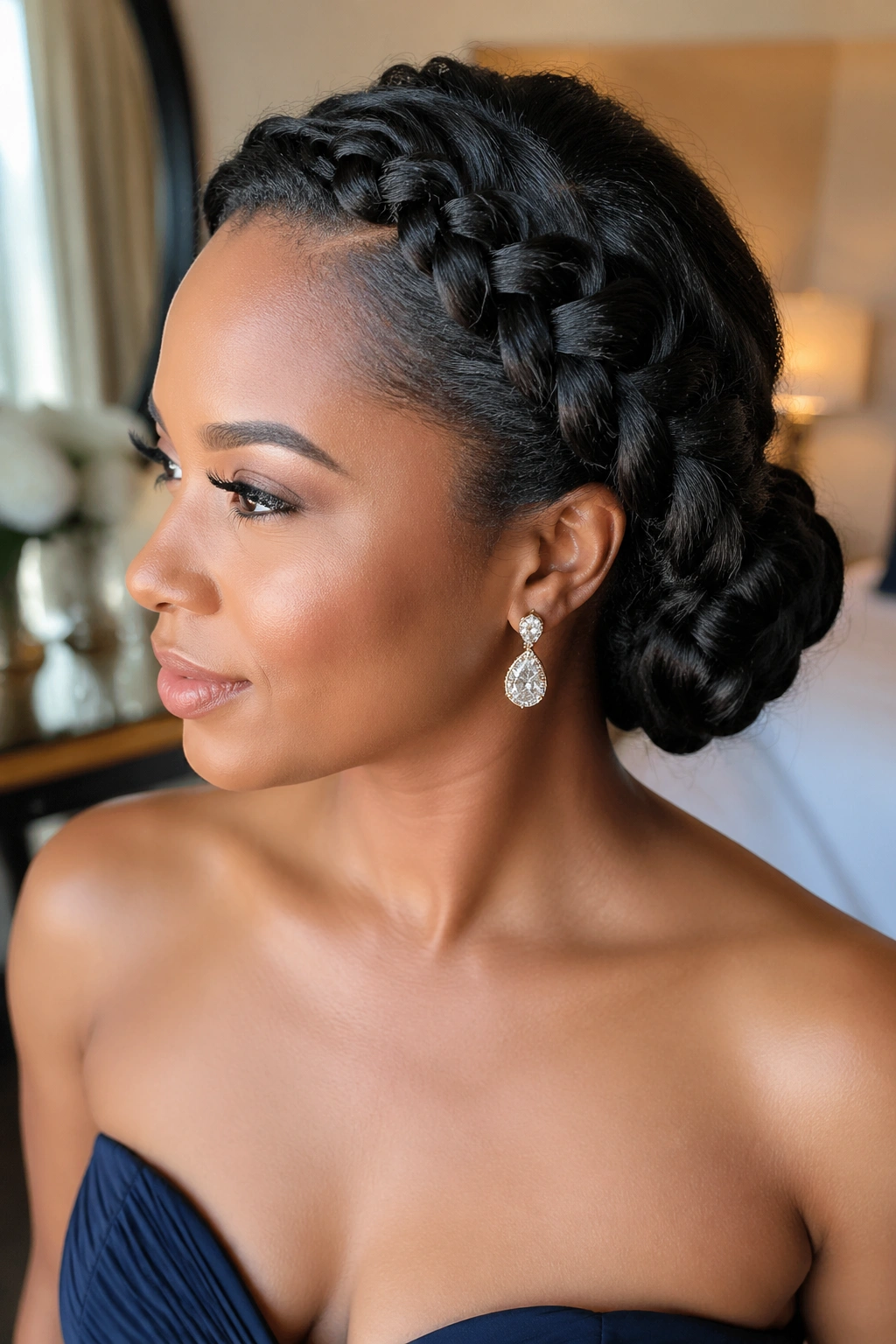
A lace braid updo works for black-tie wedding receptions because it solves two jobs at once: it looks formal, and it stays in place. That combination is rarer than it should be. Plenty of pretty styles fall apart once the dancing starts.
If I had to narrow the field fast, I’d look first at the neckline, then at the hair density, then at how much softness you want around the face. That order saves a lot of guesswork. A dramatic dress usually needs a cleaner hair shape. A simple dress can handle more braid detail.
Bring a few extra pins. Always. Then check the style from the side and the back before you leave the house, because the back view is where most formal updos either earn the room or lose it.