



Weave ponytails have become a go-to protective style for Black women who want versatility, length, and a polished look without committing to permanent hair changes. Whether you’re looking to add volume, extend your length, or try a completely new aesthetic, weave ponytails offer endless styling possibilities while giving your natural hair a much-needed break. The beauty of this style lies in its adaptability—you can wear it sleek and refined for work, voluminous and textured for nights out, or understated and casual for everyday wear. What makes weave ponytails particularly appealing is that they work with virtually any hair texture, length, or lifestyle, and they can be customized to match your personal style perfectly.
The key to a gorgeous weave ponytail starts with choosing the right hair type and understanding how different textures, colors, and lengths will frame your face and complement your overall look. Proper installation matters just as much as the style itself—a well-constructed ponytail will feel secure, look seamless, and last for weeks without slipping or matting. Beyond the basic ponytail, there are dozens of creative ways to style, accessorize, and personalize this foundation, from sleek high ponytails to textured low styles, braided ponytails to colored weave ponytails that make a bold statement. Let’s explore 12 stunning weave ponytail styles that showcase the versatility and elegance this protective style can bring to your beauty routine.
1. Sleek High Ponytail with Curved Baby Hairs
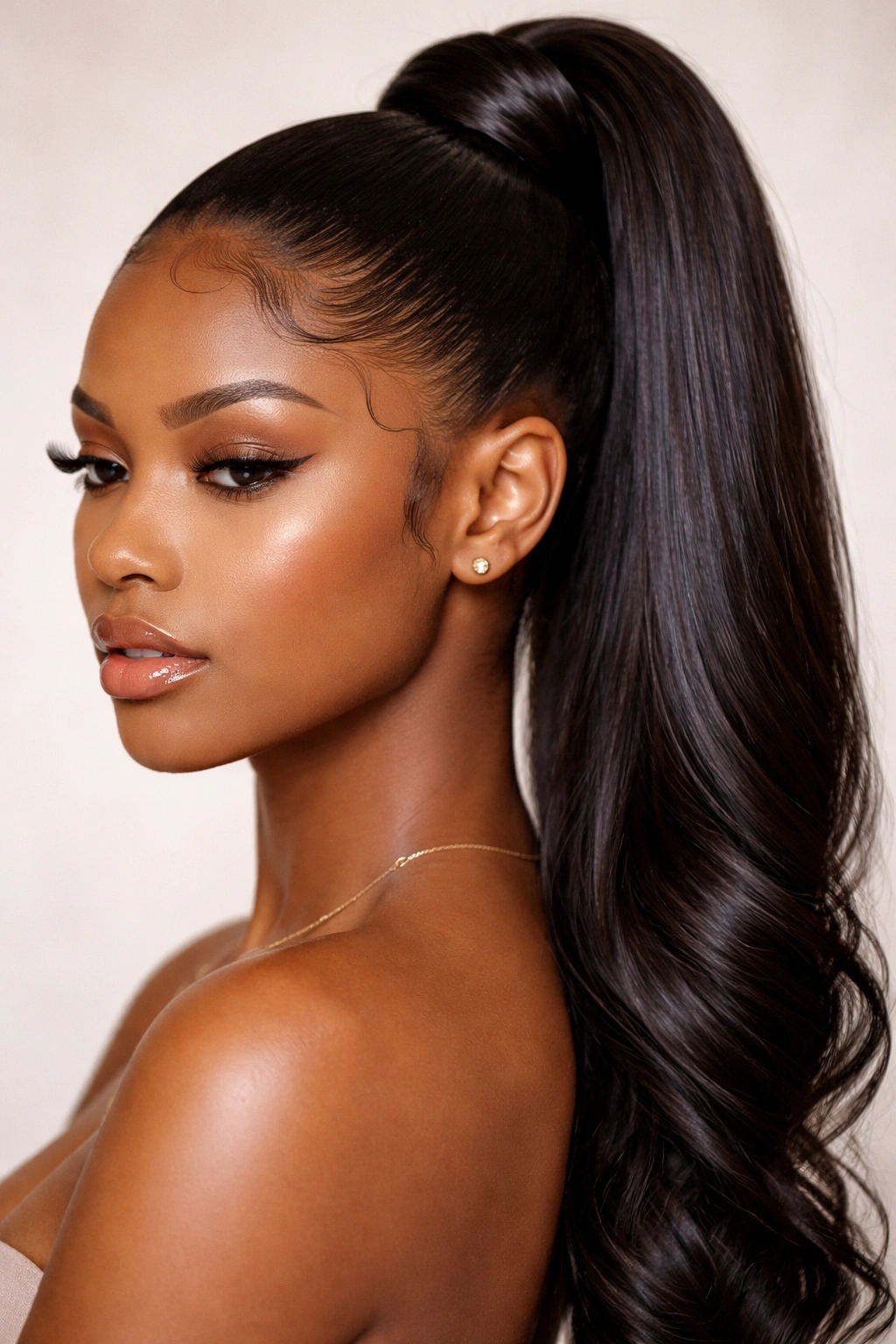
The sleek high ponytail is the epitome of polished sophistication. This style pulls hair straight up from the crown and secures it at the top of the head, creating clean lines and an instantly put-together appearance. The magic happens when you perfectly smooth every section, tame flyaways with gel, and create beautifully sculpted baby hairs along the hairline. This look works beautifully for professional settings, special events, or anytime you want to feel confident and refined.
Why It’s a Timeless Choice
A sleek high ponytail elongates the face and accentuates your features beautifully. The upward pull creates a flattering effect that works across different face shapes, and the clean lines project confidence and intentionality. This style is also incredibly practical—it keeps hair completely off your face and neck, making it perfect for workouts, warm weather, or long work days. The simplicity of the design means it never looks dated or trendy; it’s simply elegant and always appropriate.
Installation and Styling Tips
- Install the weave ponytail at the crown using either a standard thread-and-needle method or pre-made ponytail hair bases designed for this exact application
- Use a fine-tooth comb and edge control gel to smooth the hair at the roots, creating a polished finish that hugs the scalp
- Wrap a small section of weave hair or your own natural hair around the base of the ponytail to hide any visible elastic or clips
- Create baby hair designs using a toothbrush and gel—try curved edges, swoops, or geometric patterns that frame your forehead
- Keep the hairline moisturized throughout the week to prevent breakage from the gel and tension
Pro tip: A sleek high ponytail looks even more striking when you leave out two face-framing sections in the front and curl them into soft waves for contrast and dimension.
2. Voluminous Low Ponytail with Textured Ends
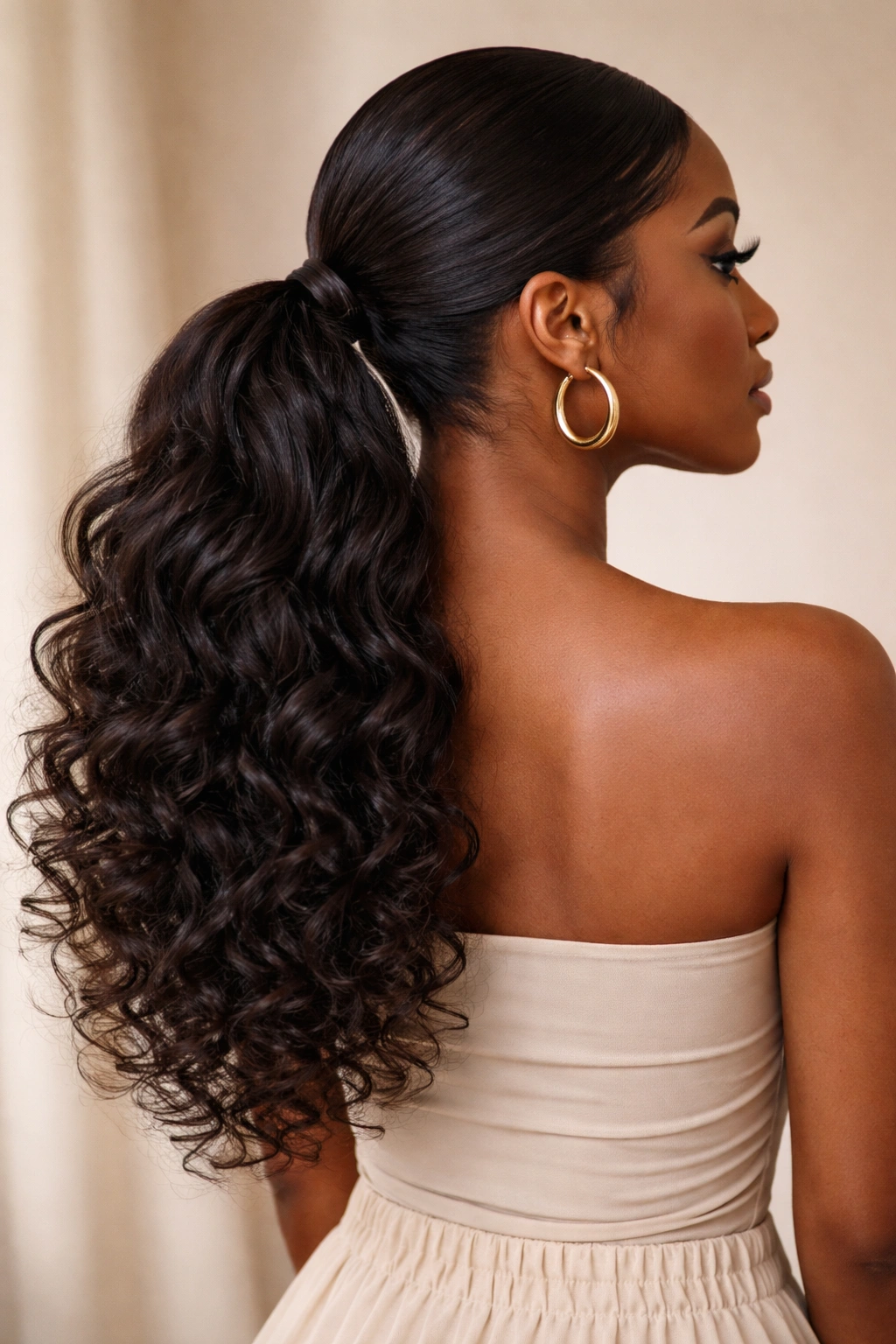
The voluminous low ponytail brings drama and texture while keeping hair off your shoulders and face in a more relaxed, approachable way than a high style. This ponytail typically sits at the nape of the neck or mid-back, and the magic comes from using textured weave hair—curly, wavy, or coily—that creates instant fullness and movement. The lower placement makes this style feel more casual and wearable for everyday occasions while still looking intentional and styled.
What Makes This Style Stand Out
Volume at the ends creates a striking visual impact that photographs beautifully and feels luxurious in person. The textured weave adds dimension and makes the ponytail look fuller than it actually is, which is perfect if you’re working with a limited amount of weave hair or want an especially dramatic effect. The lower placement is also gentler on your hairline than high styles, making it an excellent choice if you have tension-sensitive edges or want to reduce the daily stress on your hair. This style photographs exceptionally well and catches light beautifully, which is why it’s a favorite for social media and special occasions.
How to Achieve Maximum Volume
- Use curly or textured weave hair in a generous amount—don’t skimp on volume if you want a truly full effect
- Secure the base at the nape of the neck using a sturdy method, as the weight of textured hair is heavier than straight hair
- Gently separate and fluff the textured sections to encourage them to expand and create airiness
- Use a curl-defining cream or mousse on the ends to enhance the texture and keep curls defined throughout the week
- Consider adding a hair topper or extensions at the crown if you want extra volume where the ponytail connects
Worth knowing: Textured weave ponytails require slightly more maintenance than straight styles—refresh the curls with a light water mist and product every 2-3 days to keep them looking bouncy.
3. Braided Weave Ponytail with Mixed Braids
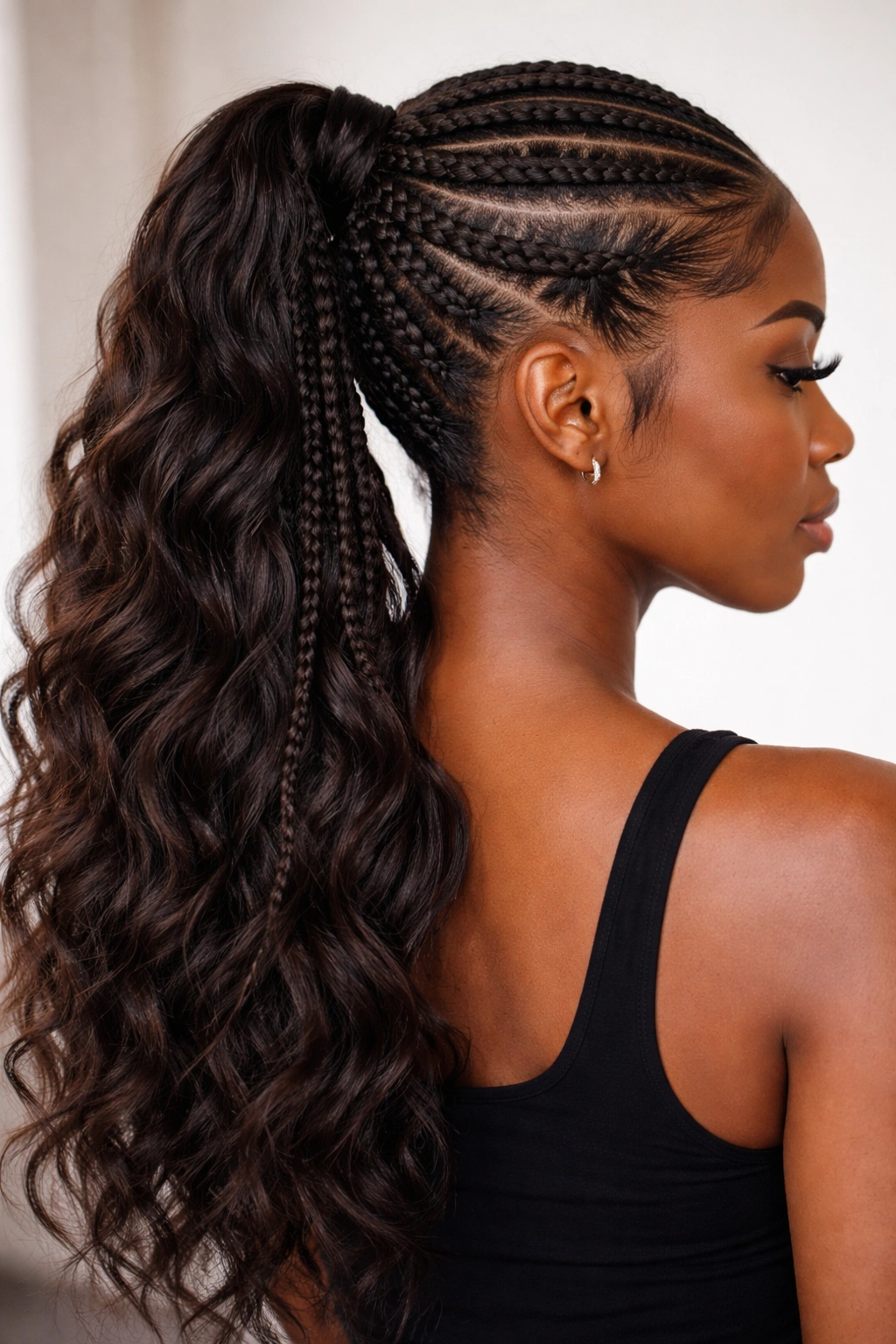
Combining braids with weave ponytails creates a style that’s both intricate and wearable for extended periods. This look typically features cornrows or Dutch braids leading back to a central ponytail, or braids woven throughout the ponytail itself, creating texture and visual interest. The mix of braids and smooth weave hair gives this style dimension and showcases technical skill while remaining practical for daily wear. It’s a perfect middle ground between simple and elaborate styling.
The Appeal of Mixed-Texture Designs
Mixing braids with ponytail sections creates a multidimensional look that’s more interesting than either style alone. The braids add an element of artistry and craftsmanship that elevates the overall aesthetic, while the weave ponytail keeps the style wearable and practical. This combination works beautifully because the braids frame the face and add structure, while the ponytail moves freely and creates movement. The mixed textures also allow you to play with color blocking—use different weave colors in the braids versus the ponytail for striking contrast.
Braiding Techniques and Combinations
- Create cornrows or Dutch braids in geometric patterns leading to a center ponytail base
- Weave smaller braids directly into the ponytail hair for added texture—these can be thin accent braids or thicker sections
- Use the twist method instead of traditional braids for a different texture and slightly softer appearance
- Combine different braid thicknesses for visual interest—alternating thick and thin sections creates rhythm
- Leave small braids unraveled or partially unraveled at the ends to create a textured, bohemian effect
Insider note: If you’re new to braiding, practice the basic three-strand braid first, then move to cornrows or Dutch braids once you feel confident. YouTube tutorials in slow-motion are incredibly helpful for learning the technique.
4. Colored Weave Ponytail with Blonde Highlights
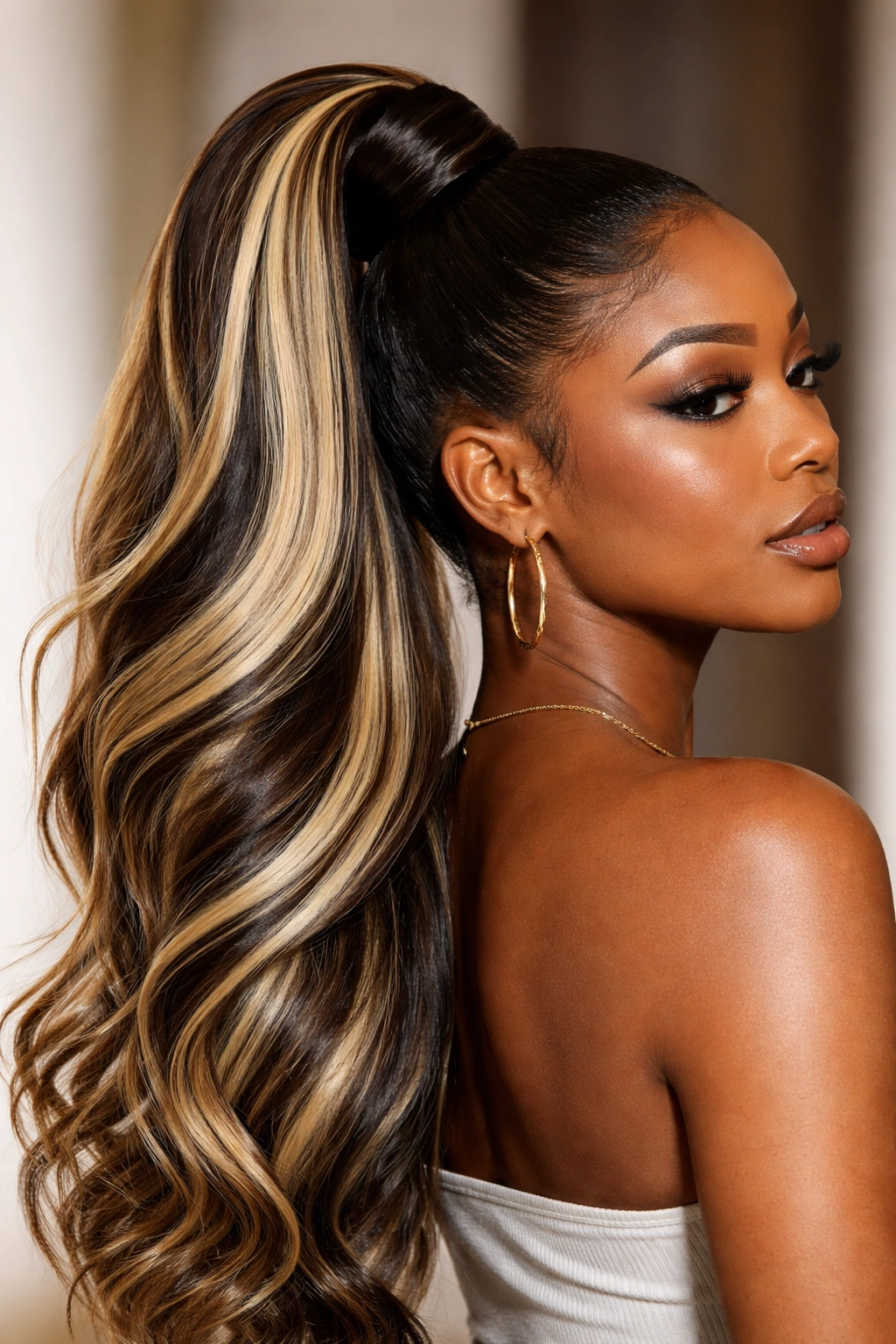
Introducing color through weave ponytails is a bold, low-commitment way to experiment with shades you might not be ready to commit to permanently. Blonde highlights, caramel tones, burgundy, or even pastel colors can completely transform your look when added through ponytail weave. This style is particularly striking for Black women because the contrast between darker natural hair at the roots and lighter weave colors creates depth and visual interest that photographs beautifully and turns heads in real life.
Why Colored Weave Creates Impact
Colored weave allows you to make a statement without the damage of chemical processing on your natural hair. The color gets all the attention while your hair remains protected underneath, making this the ultimate low-risk way to explore color. This style also offers flexibility—you can change colors weekly if you want to, mixing and matching weaves to coordinate with your outfit or mood. The contrast between your natural roots and the colored weave creates a fashionable, intentional two-tone effect that looks especially striking in high ponytails where the color gradient is visible.
Color Combinations That Work Best
- Jet black natural hair paired with honey blonde or light caramel weave creates warm, flattering contrast
- Dark brown or black roots with burgundy or wine-colored weave makes a rich, elegant statement
- Deep black paired with rose gold or copper tones for a warm, luminous effect that flatters all skin tones
- Multiple colors within the ponytail itself—alternating sections of blonde, pink, and silver for a rainbow effect
- Balayage-style weave where colors gradually shift from darker to lighter from root to tip
Pro tip: Choose weave colors that complement your skin tone—warm undertones look best with golden, caramel, and rose gold shades, while cooler undertones are flattered by platinum, ash blonde, and cool-toned reds.
5. High Puff Ponytail with Lifted Roots
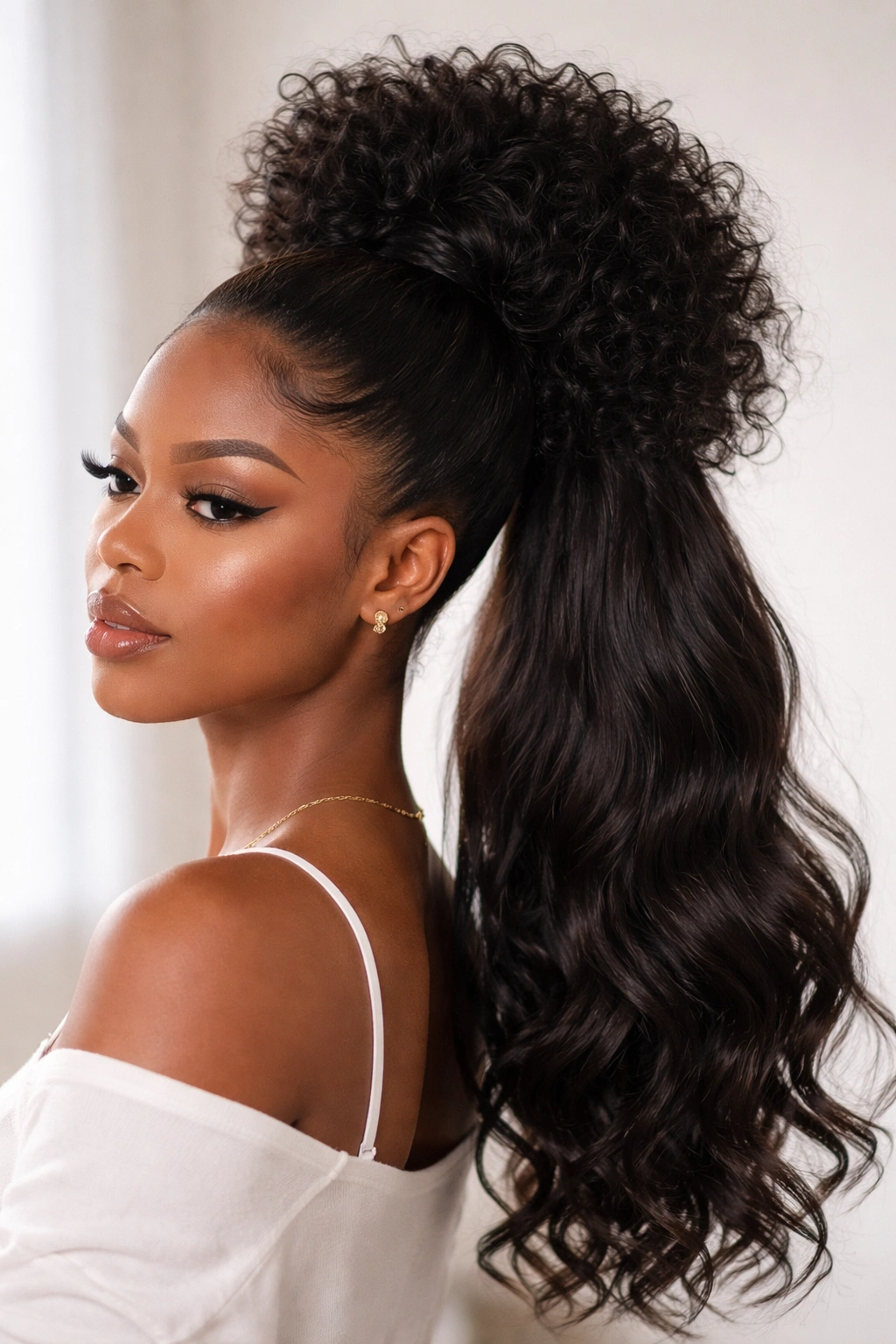
The high puff ponytail combines the cozy, rounded shape of a puff with the length and movement of a ponytail. The hair gathers at the crown and creates fullness at that point, then extends down the back in either straight or textured weave. This style offers the best of both worlds—the height and volume of a puff draws attention upward and flatters the face, while the ponytail length provides versatility for styling and movement. It’s a playful style that feels youthful and energetic without sacrificing sophistication.
The Visual Impact of Crown Volume
A high puff at the crown creates instant face-framing that’s deeply flattering—the volume draws the eye upward and creates proportion for different face shapes. The lifted, rounded silhouette is cheerful and approachable, making this style perfect for anyone who wants to feel confident and comfortable simultaneously. This style also photographs beautifully from the side and back, creating a striking profile that shows off your styling. The combination of fullness at the crown with length below creates a balanced, harmonious proportion.
Building the Puff Structure
- Gather hair at the crown, leaving enough weave hair below to create the ponytail length you want
- Create fullness at the gathering point by teasing gently or backcombing to give the puff structure
- Use a sturdy elastic or clip to secure the puff base, then smooth the outer surface for a polished look
- Separate the ponytail hair below the puff so it hangs cleanly without blending into the puff
- Wrap a small piece of weave or natural hair around the base to hide the elastic and create a finished appearance
- Fluff and shape the puff gently, creating a rounded, voluminous dome
Worth knowing: The puff sits best when your natural hair or underlayer provides a solid foundation—this style works particularly well if you have some natural hair volume at your crown to build upon.
6. Side-Swept Ponytail with Curved Edge Design
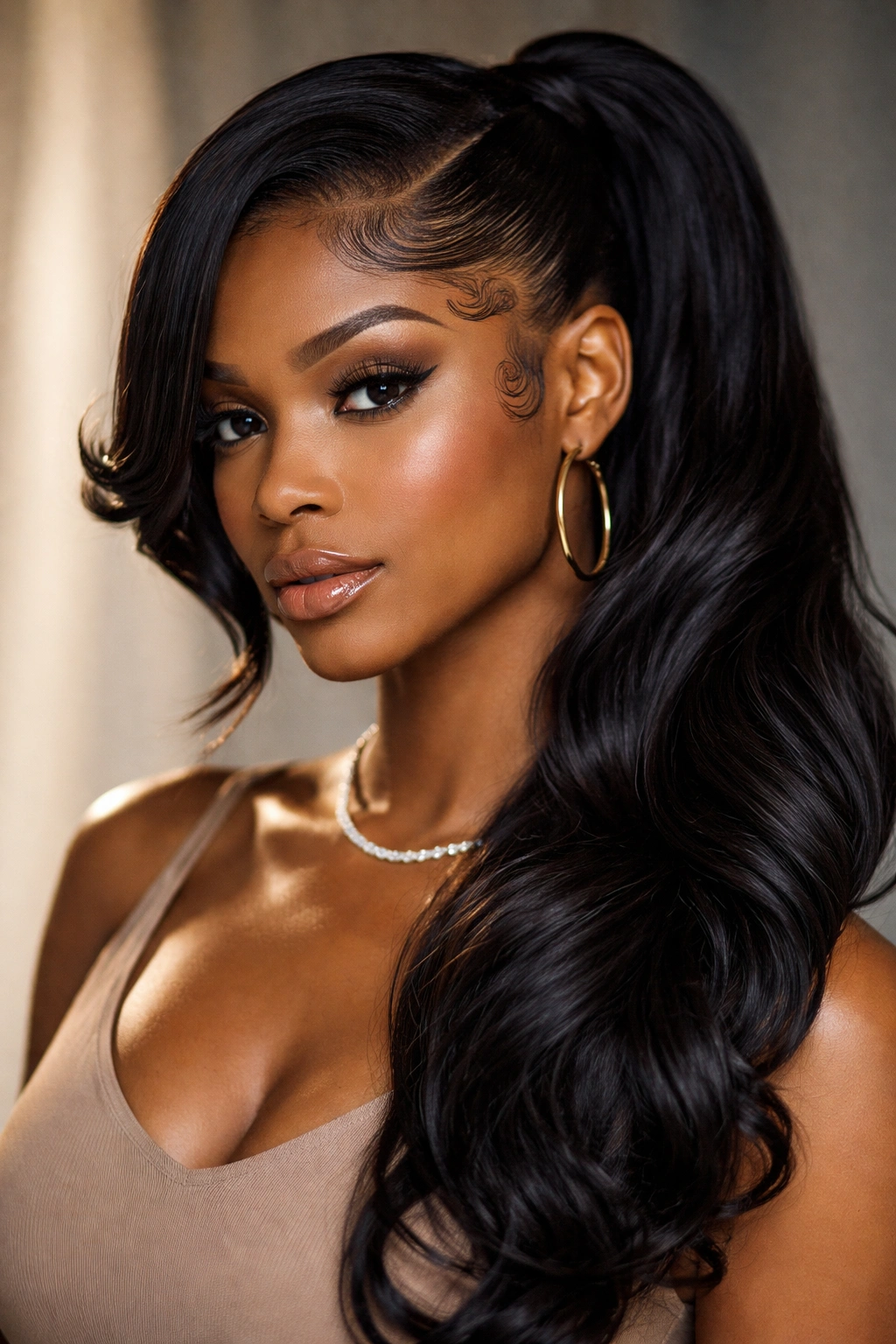
The side-swept ponytail breaks away from the center-parted, pulled-straight-back aesthetic, creating a more dynamic, fashion-forward look. Hair gathers to one side of the head—typically at ear level or the nape of the neck—creating asymmetrical balance that’s modern and flattering. The side placement allows you to show off beautifully carved baby hair edges and creates a frame that accentuates one side of your face, making it perfect for highlighting cheekbones and jawline.
The Modern Appeal of Asymmetry
A side-swept ponytail feels intentional and current without being trendy in a way that will date the style quickly. The asymmetry draws attention to one side of your face, which is psychologically flattering because it allows you to highlight your best features. This style is also incredibly practical—it keeps hair off one shoulder completely while the other side remains more open, making it comfortable for side-sleeping or leaning against surfaces. The side placement photographs beautifully and creates dimension that a center part can sometimes flatten.
Creating Perfectly Carved Baby Hairs
- Section off the ponytail to one side, creating a clean diagonal or curved line from temple to ear
- Use an edge control gel with strong hold and a small brush or toothbrush to sculpt baby hairs around the side and back
- Create curved designs that follow the natural contours of your hairline—think swoops, waves, or geometric patterns
- Keep designs proportional to your head shape and face size
- Refresh baby hair designs daily with a light misting of water and gel to maintain crisp edges
- Use a silk scarf or bonnet at night to preserve the carved design while you sleep
Pro tip: The side-swept style looks especially striking when you use contrasting weave color on one side for additional dimension and visual interest.
7. Goddess Braid Ponytail with Flowing Length
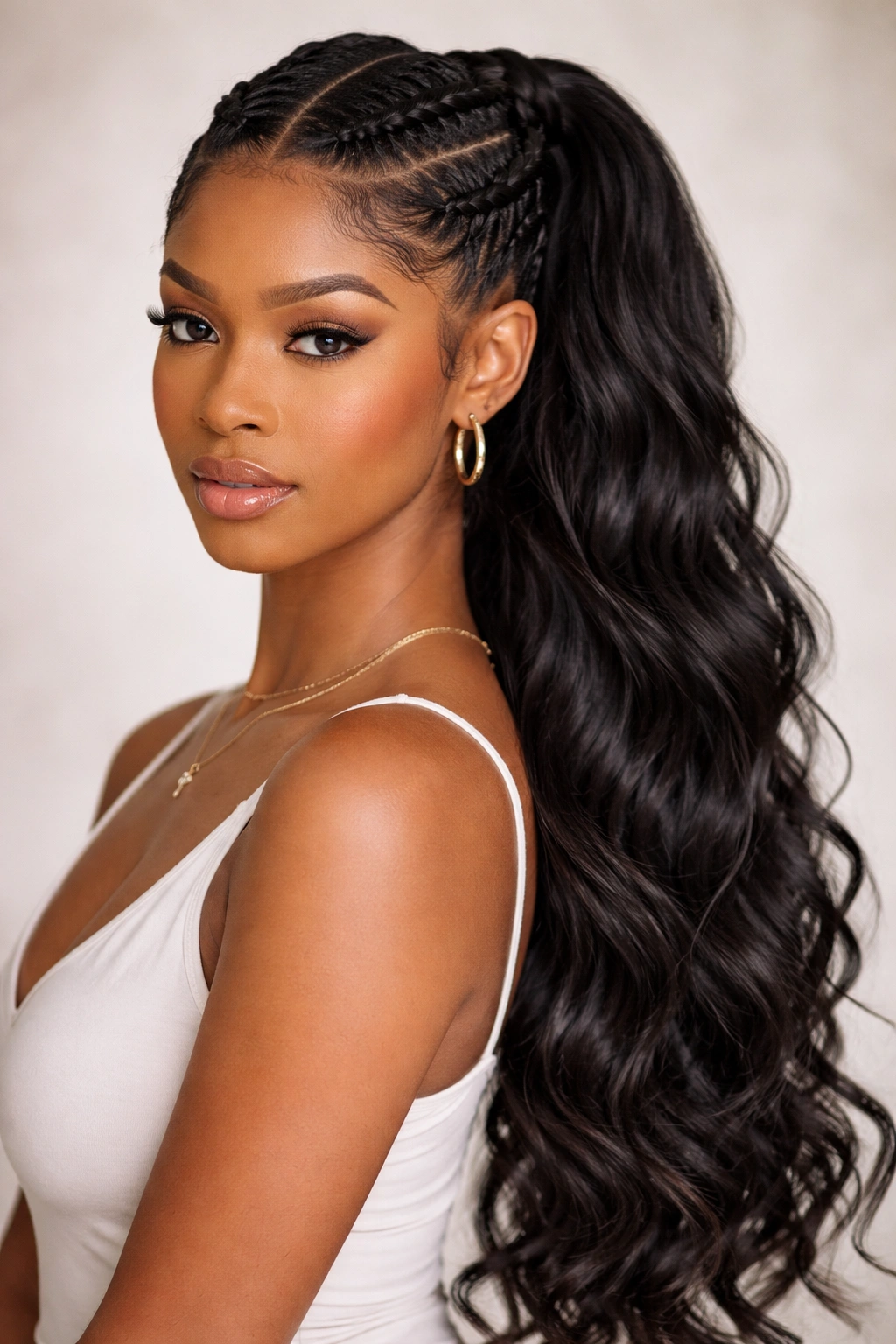
Goddess braids leading into a flowing weave ponytail create an ethereal, romantic look that feels both elaborate and effortless. Typically two large, thick braids frame the face and meet at the back of the head, where they connect to a weave ponytail that flows down the back or side. This style borrows from protective styling traditions while adding the drama and length of weave extensions, creating something that feels special and occasion-worthy. It’s the perfect style for events, photoshoots, or any time you want to feel absolutely stunning.
Why Goddess Braids Feel Elevated
Goddess braids instantly elevate any ponytail style because they add artistry and intentionality to your look. The braids are substantial enough to feel sculptural and create real structure, while still being loose and romantic enough to feel soft and approachable. This style works beautifully because it combines the protective benefit of braids with the versatility and movement of ponytail weave—you get the best qualities of both styles. The framing effect of the braids is incredibly flattering, drawing attention to your face and creating a halo-like effect that’s deeply complimentary.
Constructing Goddess Braids
- Create two thick Dutch or French braids starting from the front hairline and moving back toward the crown
- Keep braids loose and relaxed rather than tight—this creates the “goddess” effect and prevents tension on your hairline
- Feed weave hair into the braids as you create them, increasing the thickness and length dramatically
- Converge the two braids at the back of the head where they meet a central weave ponytail
- Gently separate and fluff the braids to increase their apparent volume and create a luxurious appearance
- Leave some braids slightly undone at the ends or gently unravel sections for a soft, romantic aesthetic
Insider note: Start your goddess braids higher on the head if you have a rounder face shape, which elongates the face and creates better proportion.
8. Bubble Ponytail with Stacked Height
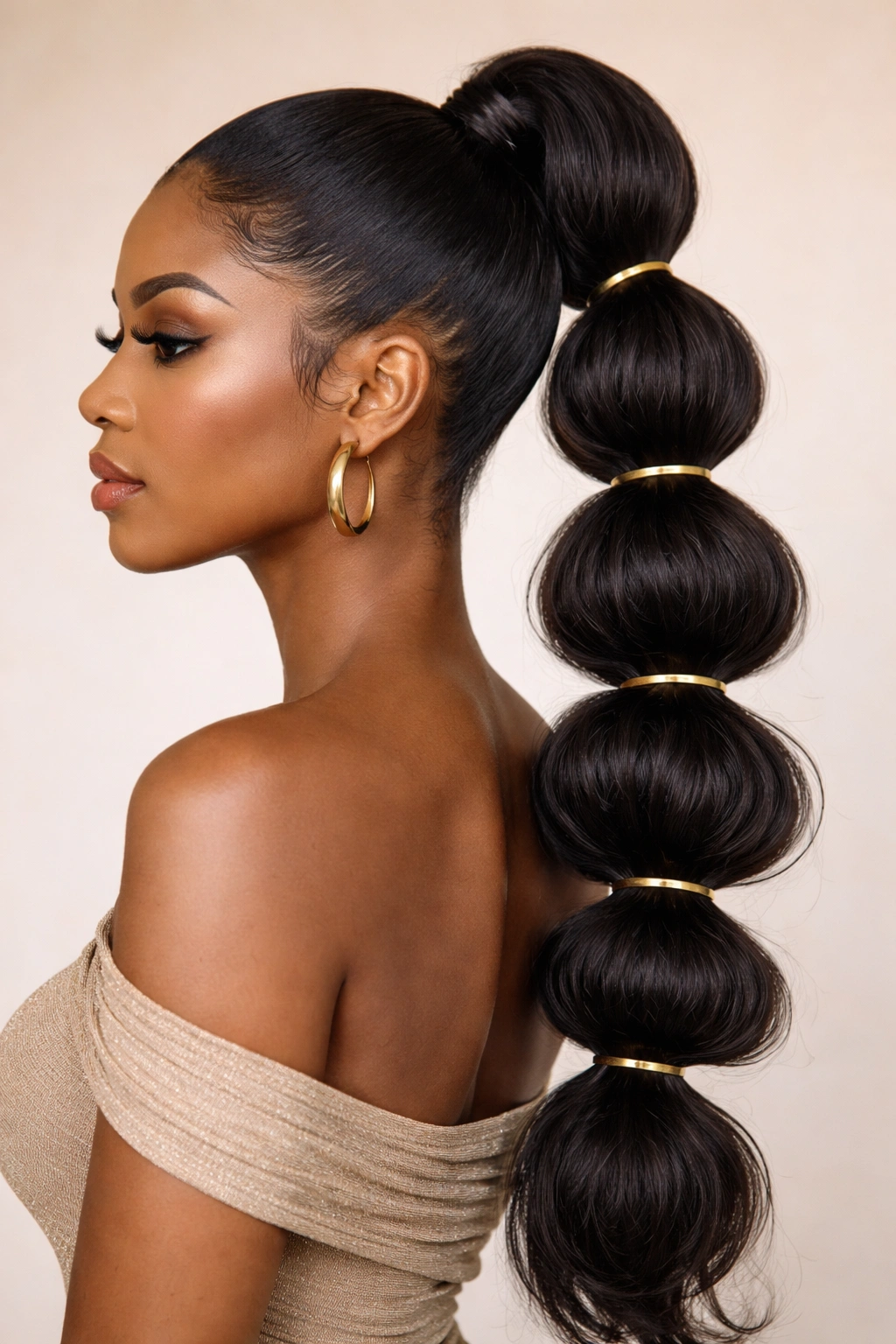
The bubble ponytail creates a playful, dimensional look by using multiple elastic bands or clips spaced evenly down the ponytail length, creating rounded “bubbles” between each section. This style transforms a basic ponytail into something eye-catching and architectural, with each bubble adding height and visual interest. The stacked, segmented appearance is modern and Instagram-worthy while remaining appropriate for virtually any setting. It’s a particularly fun option for anyone who wants their ponytail to be a statement rather than a basic style.
The Charm of Segmented Styling
Bubble ponytails work because they create visual rhythm—your eye travels down the segmented ponytail sections, making the style feel more interesting than a single continuous ponytail. The bubbles also create the illusion of extra volume because each section is fluffed and separated, making the hair appear thicker and fuller. This style is also incredibly versatile—you can make the bubbles tight and structured for a dramatic effect, or loose and relaxed for a softer appearance. The segmented design allows you to incorporate multiple colors, textures, or even accessory placement between bubbles.
Creating Picture-Perfect Bubbles
- Secure your base ponytail high on your head with a sturdy elastic band
- Space elastic bands or small claw clips evenly down the ponytail length—typically every 2-3 inches
- Fluff and separate each bubble gently, pulling it outward and slightly upward to maximize fullness
- Use a teasing brush between bubbles to add texture and prevent sections from flattening
- Add decorative clips, beads, or cuffs between bubbles for extra glamour and visual interest
- Ensure bubbles are evenly sized for a polished, intentional appearance
Worth knowing: Bubble ponytails are easier to create and maintain with textured weave hair because the texture naturally holds the bubble shape—straight hair requires more fluffing and product to maintain the effect throughout the day.
9. Slicked-Back High Ponytail with Rhinestone Detail
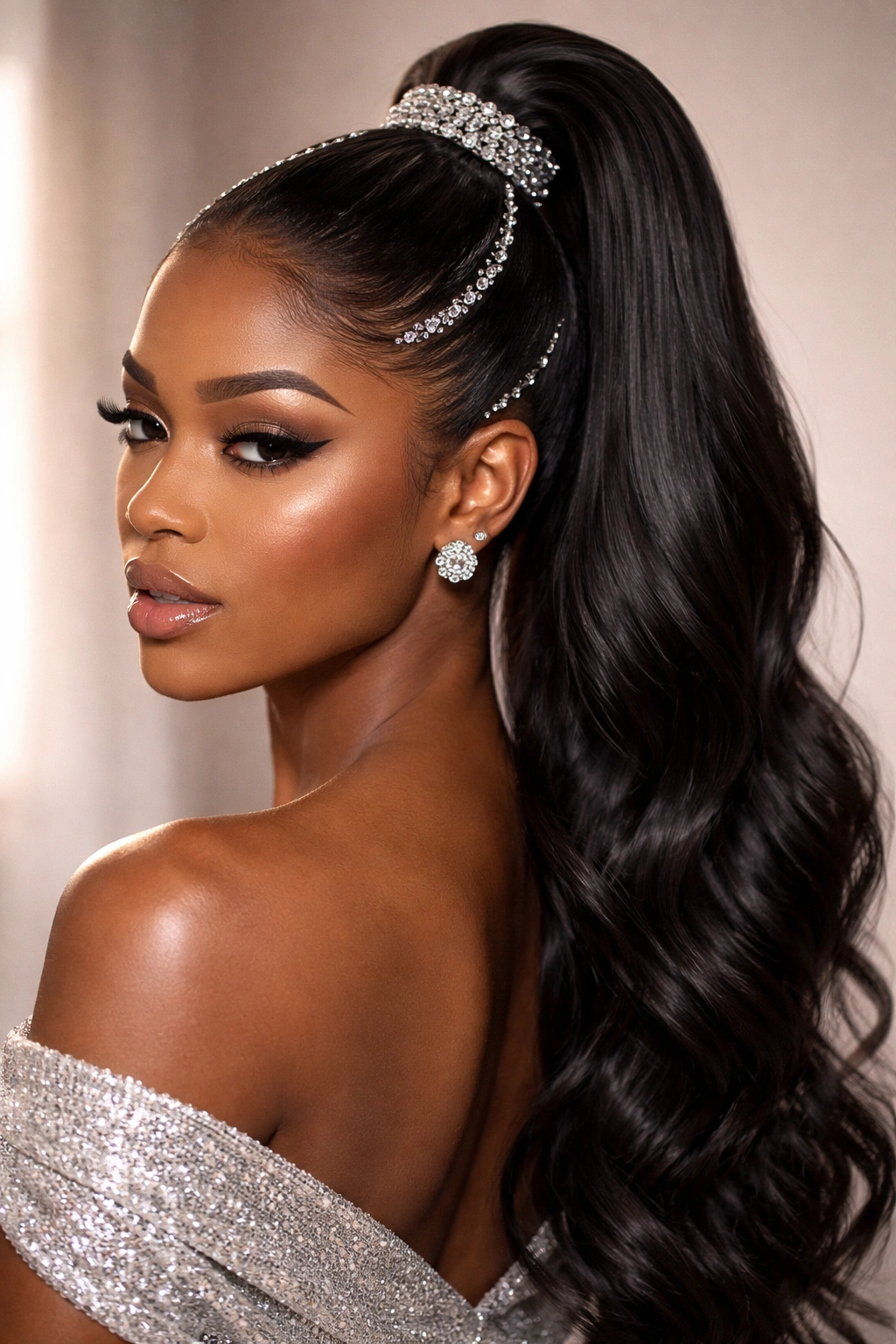
For those moments when you want to feel absolutely fierce and glamorous, a slicked-back high ponytail adorned with rhinestones or jewelry delivers maximum impact. Every hair is smoothed back and sealed with strong-hold gel, creating a sleek canvas that’s intensified by sparkling embellishments along the hairline or at the base of the ponytail. This style is bold, confident, and undeniably eye-catching—it’s perfect for nights out, performances, or any time you want to command attention and feel powerful.
The Confidence Factor of Slicked Styles
A completely slicked ponytail requires confidence because there’s nowhere for any stray hair to hide—everything is exposed and visible. This openness is actually part of the appeal; it shows that you’re comfortable with yourself and intentional about your look. The sleekness also creates a clean, architectural aesthetic that’s both minimalist and maximalist simultaneously—the style itself is simple, but the impact is undeniable. Adding rhinestones or jewelry to this canvas elevates it from sporty-sleek to haute couture, transforming a basic style into something truly special.
Achieving Flawless Slickness
- Start with hair that’s been moisturized but not overly oily—slightly damp hair applies gel more evenly
- Apply strong-hold edge control or styling gel to small sections, working from the roots outward
- Use a fine-tooth comb to smooth each section, distributing gel evenly and eliminating any bumps or patterns
- Wrap hair around your fingers as you comb to smooth and compress it toward the center
- Secure the ponytail tightly enough to maintain the slicked effect throughout the day
- Apply a light finishing spray to seal everything and prevent frizz or flyaways
- Add rhinestones using eyelash glue or jewelry adhesive along the hairline or ponytail base
Pro tip: Apply gel in thin layers rather than one thick application—this creates a smoother, more polished finish without crunchiness or visible product buildup.
10. Wavy Middle-Part Ponytail with Volume
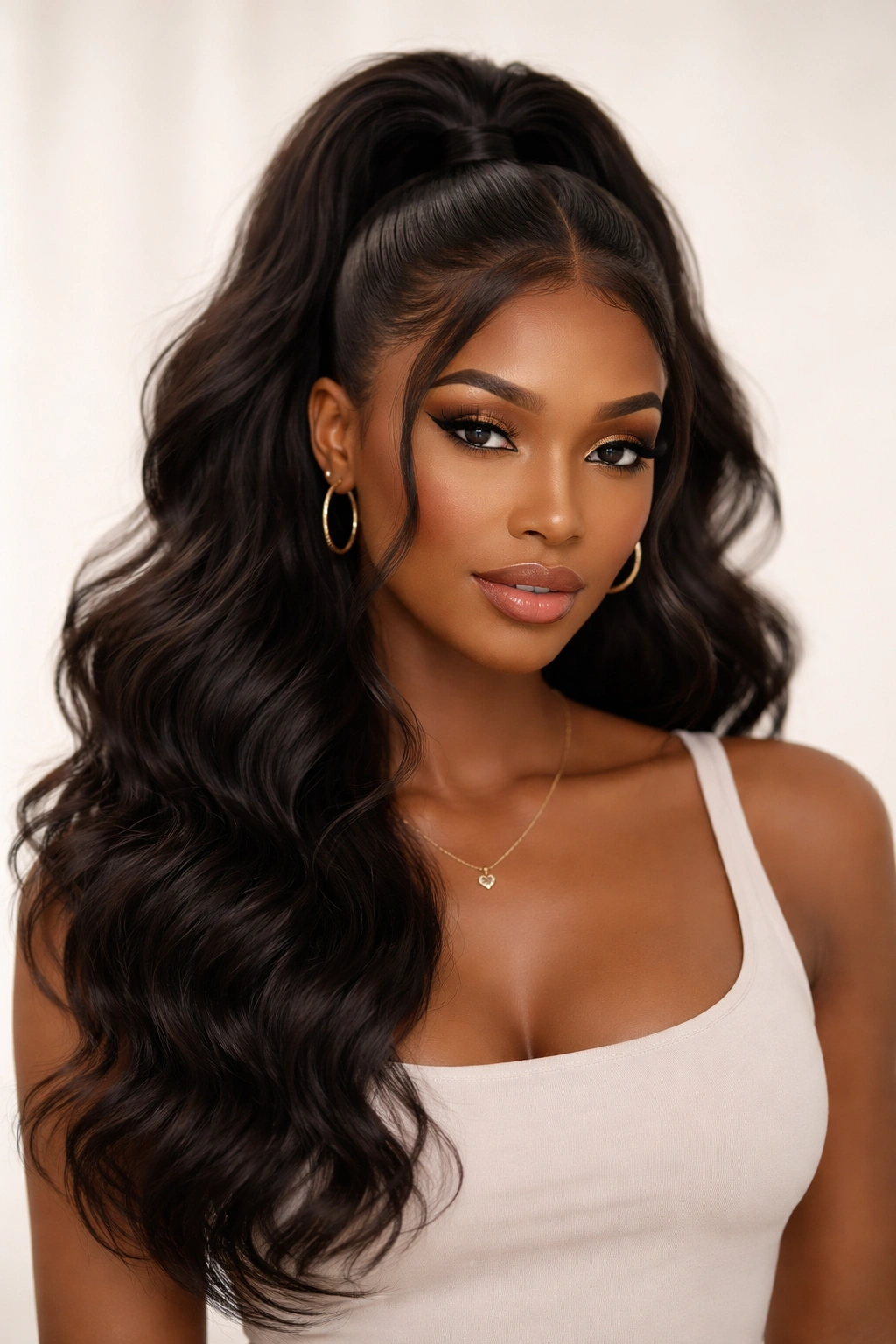
A middle-parted ponytail with soft waves offers a balanced, romantic aesthetic that feels current and photogenic. Hair parts cleanly down the center from forehead to crown, then gathers into a voluminous ponytail with weave hair that’s been curled or waved. The center part creates symmetry and balance while the waves add texture and movement, making this style feel effortless despite being carefully constructed. It’s versatile enough for work or casual wear while still feeling intentional and styled.
Why Center Parts Are Having a Moment
Center parts have cycled back into popularity because they’re deeply flattering—the symmetry is psychologically appealing and creates balance across the face. When paired with wave-textured weave, the soft movement prevents the style from feeling too severe or architectural. This style photographs beautifully because the symmetry photographs beautifully—straight-on shots show perfect balance, while side angles show the dimension of the waves. The combination of clean parting with soft texture creates an interesting contrast that feels both put-together and approachable.
Creating Defined Center-Parted Waves
- Create a precise center part from your forehead down the back of your head using a rattail comb or pointed brush
- Use small braids or flexirods to set waves in your weave hair while it’s damp
- Heat waves gently with a curling iron for a more defined, bouncy effect
- Leave waves slightly loose and separated rather than tightly defined for a romantic, effortless appearance
- Apply a curl-defining cream or mousse to enhance wave texture and keep waves separated
- Refresh waves throughout the week with a light water mist and product, then finger-style to reactivate texture
Worth knowing: Wavy styles look best when the waves are intentionally sized to be roughly proportional to your head size—larger waves suit bigger heads, while smaller waves work better for more delicate facial proportions.
11. Crown-Braided Ponytail with Accessory Wrap
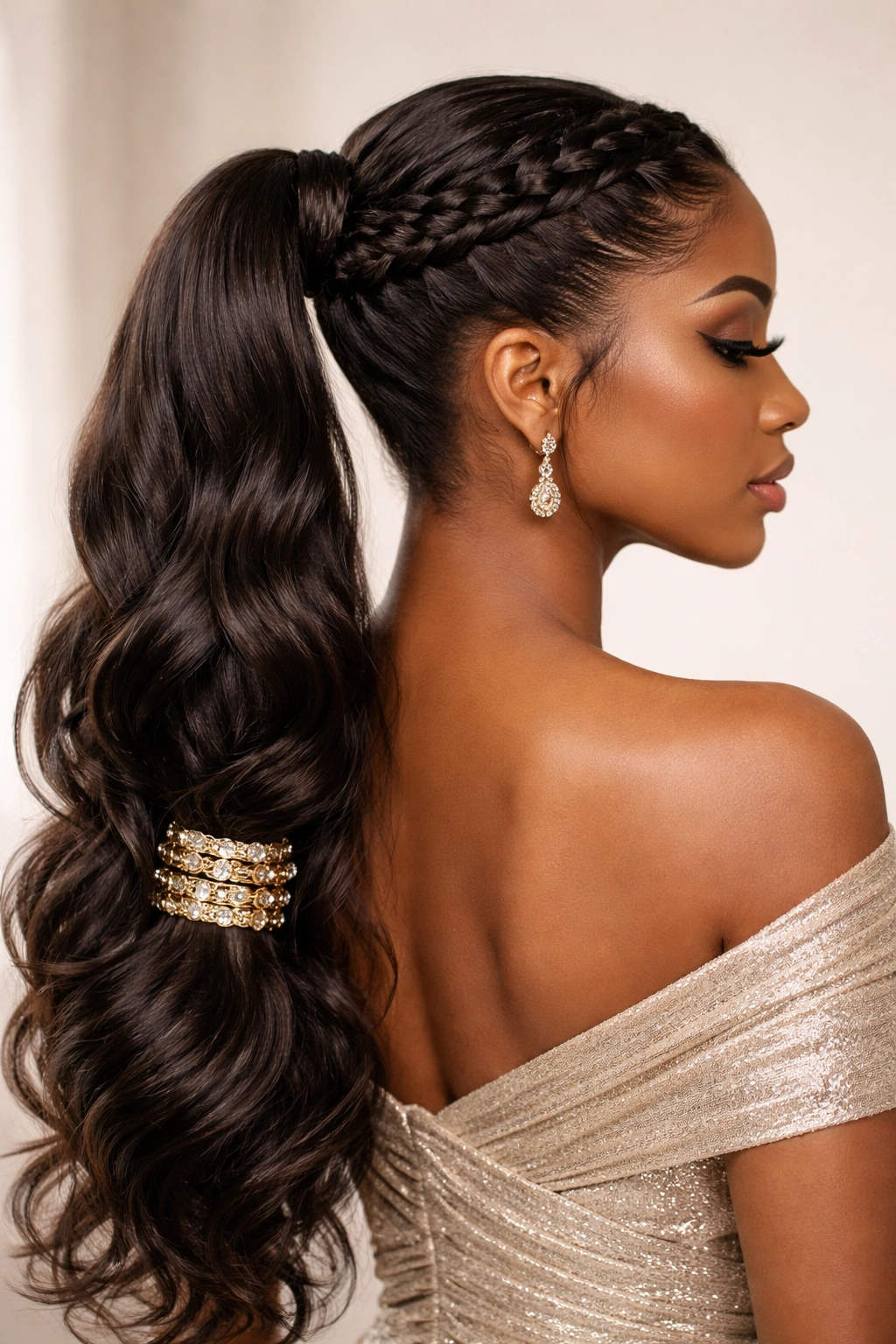
Incorporating a braid around the crown that leads into a flowing weave ponytail creates a style that’s both ornate and practical. A halo-style braid circles the head, with a weave ponytail flowing from where the braid ends, creating the impression of an intricate updo while maintaining the simplicity of a ponytail. Adding a fabric wrap, scarf, or decorative cuff around the base transforms the style into something special enough for weddings or formal events. This style is the perfect choice when you want something that feels elaborate without the actual complexity or time commitment of a traditional updo.
The Elegance of Crown Braids
A crown braid automatically elevates any ponytail because it adds artistry and intentionality to your styling. The braid frames the face and creates a focal point at the top of the head, making even a simple ponytail below feel special and carefully constructed. This style works beautifully across hair types and textures because the braid can be woven tight or loose depending on your preference. The crown placement is also psychologically flattering because it draws attention upward and creates height, which is universally complimentary to all face shapes.
Building a Crown-Braided Ponytail
- Create a Dutch or French braid starting from one temple and moving across the back of the head to the opposite temple
- Keep the braid loose and full rather than tight—this creates the “princess” or “crown” effect
- Leave the braided crown area full by pulling gently on the braid edges to increase volume
- Gather a weave ponytail at the point where your braid ends, typically at the back of the head
- Wrap a fabric strip, scarf, silk cord, or decorative cuff around the base where the braid meets the ponytail
- Allow the ponytail below the crown to flow freely with waves or curls for contrast
Insider note: This style works particularly well for events and occasions because you can swap out different wraps and accessories to match your outfit or desired level of formality.
12. Textured Low Ponytail with Lace Closure
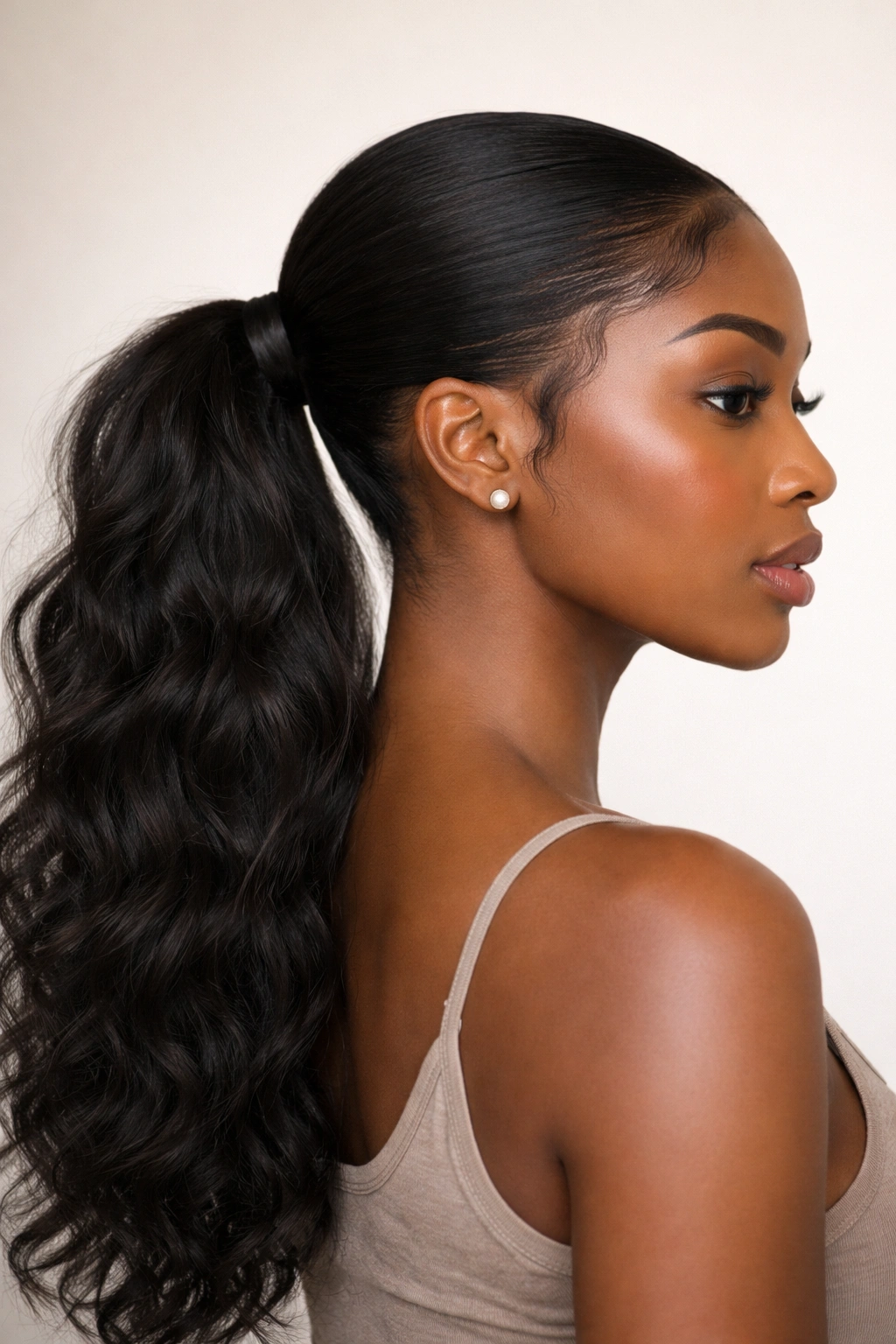
The textured low ponytail using a lace closure creates a seamlessly blended look where weave and natural hair merge invisibly. A lace closure—the mesh base that protects your hairline while providing a realistic appearance—connects your natural hair to the weave ponytail, creating a unified, cohesive style that looks like it’s growing directly from your scalp. This method is particularly popular because it delivers a completely undetectable blend and allows you to style your natural hairline while the weave extends length and thickness. The result is a style that photographs beautifully and feels incredibly natural to wear.
The Realism of Lace Closure Integration
Using a lace closure completely transforms the weave ponytail experience because you get the protected styling benefits without any visible line of demarcation between your hair and the weave. The lace melts seamlessly into your hairline when properly installed and styled, creating an illusion of length and fullness that appears completely natural. This method is especially valuable if you want to maintain your edges while still enjoying the benefits of protective styling. The investment in a quality closure is worthwhile because it extends the lifespan of your weave ponytail and dramatically improves the overall aesthetic.
Installing and Styling with a Lace Closure
- Select a closure size and style that matches your hairline width—closures typically come in 4×4 or 5×5 sizes
- Install the closure at your hairline using lace glue or thread-and-needle method, ensuring it sits flush against your skin
- Pluck the closure hairline or bleach knots according to your preference to create a more realistic, undetectable edge
- Style your natural hair into a low ponytail at the nape of your neck, incorporating the closure into the base
- Blend your natural hair and the closure with a small curved brush and edge control
- Apply baby hair designs to the closure hairline using gel and a small brush for a finished, polished look
- Maintain the lace throughout the week by keeping it clean and moisturized
Pro tip: Lace closures require regular maintenance to prevent the material from deteriorating—keep the lace dry, avoid excessive moisture or sweat accumulation, and refresh the installation every 4-6 weeks for best results.
Final Takeaways
Weave ponytails offer Black women an incredible range of styling options that combine protection, versatility, and confidence-boosting aesthetics. Whether you choose a sleek, polished style or something textured and voluminous, a simple ponytail or an elaborate design with braids and accessories, the foundation remains the same—a well-installed weave ponytail that protects your natural hair while allowing you to express yourself through your style. The key to wearing any of these styles successfully is choosing quality weave hair, ensuring proper installation, and maintaining your hair diligently throughout the wear period.
Each of these 12 styles offers something different depending on your mood, lifestyle, and the occasion you’re dressing for. You might rotate between a sleek high ponytail for work, a textured low ponytail for weekends, and a dramatic colored or braided style for nights out. The beauty of having multiple weave ponytail options in your styling repertoire is that you never feel stuck or bored—you can completely transform your look in the time it takes to put on a new weave or restyle the one you’re wearing.
Remember that the best weave ponytail for you is one that makes you feel confident, comfortable, and authentically yourself. Take time to experiment with different textures, colors, and styles until you discover the looks that resonate with you personally. Invest in quality weave hair, take care of your natural hair underneath, and don’t hesitate to visit a professional stylist when you want expert installation or help executing more complex designs. Your weave ponytail is more than just a hairstyle—it’s an expression of your creativity, confidence, and personal aesthetic.
