

Short curly hair doesn’t have to limit your styling options — in fact, it opens up a world of gorgeous textures and movement that straight-haired friends often envy. The right ponytail can showcase your natural curl pattern, keep hair off your face, and give you a polished look in minutes. The challenge is finding styles that work with your curls rather than fighting against them, which is exactly what we’re covering here.
Whether you’re heading to the gym, stepping into the office, or going out for the evening, there’s a ponytail style that fits. Some of these styles celebrate your curls at full volume, while others use sleek techniques to create definition and control. The beauty of short curly hair is that you can switch between textured, playful looks and more refined, pulled-together styles depending on your mood and the occasion.
The techniques and products you use matter just as much as the style itself. Most of these ponytails work best when your curls are refreshed with a light mist of water and a dab of curl cream or gel to reactivate the curl pattern. You’ll also want a few essential tools: a wide-tooth comb or brush designed for curls, sturdy elastic bands, and maybe some bobby pins for securing flyaways. Let’s explore twelve ponytail styles that truly work for short curly hair.
1. High Curly Ponytail
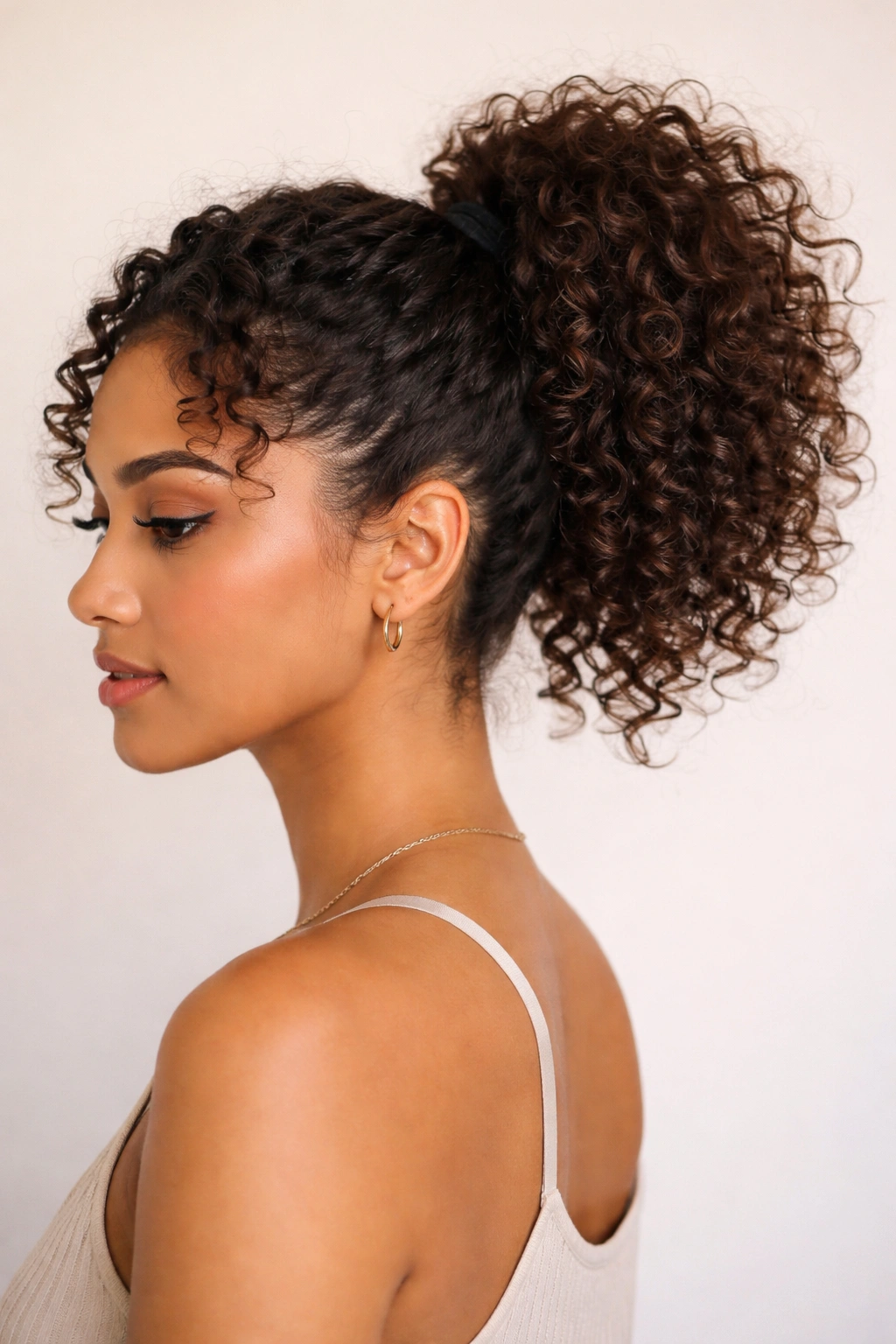
The high ponytail is the classic go-to, and it’s especially striking with short curls because it puts your natural texture on full display. This style works best when you gather your hair at the crown — roughly where you’d place a tiara — and let all those coils spring freely below the elastic. It’s the most energetic and youthful option, perfect for active days or when you want to show off the fullness of your curl pattern.
Why It Works for Short Curly Hair
The high placement actually helps short curly hair look fuller and bouncier. Because your curls have natural volume, positioning them high up creates a flattering frame for your face and elongates your neck. Unlike straight hair that needs lots of length to make a high ponytail look substantial, short curls already have the density and texture to create visual impact. The style also keeps hair completely off your shoulders, so any excess heat or humidity won’t frizz your neck or collar area.
How to Create the Perfect High Ponytail
- Spritz your curls lightly with a water and curl cream mix to refresh the pattern if they’ve fallen flat
- Use a wide-tooth comb to gently gather hair toward the crown without disrupting individual curl coils
- Secure with a strong elastic band that won’t slip — look for ones designed specifically for textured hair, which grip better than standard bands
- Use a second, smaller elastic positioned just below the first one to prevent the ponytail from slipping down throughout the day
- Smooth any baby hairs or flyaways with a tiny dab of gel on your fingers, working gently so you don’t disturb the curls
Pro tip: This style looks even fuller if you tease gently at the crown before gathering into the ponytail — just don’t brush it out after you tease, as that’ll disrupt your curls.
2. Low Messy Ponytail
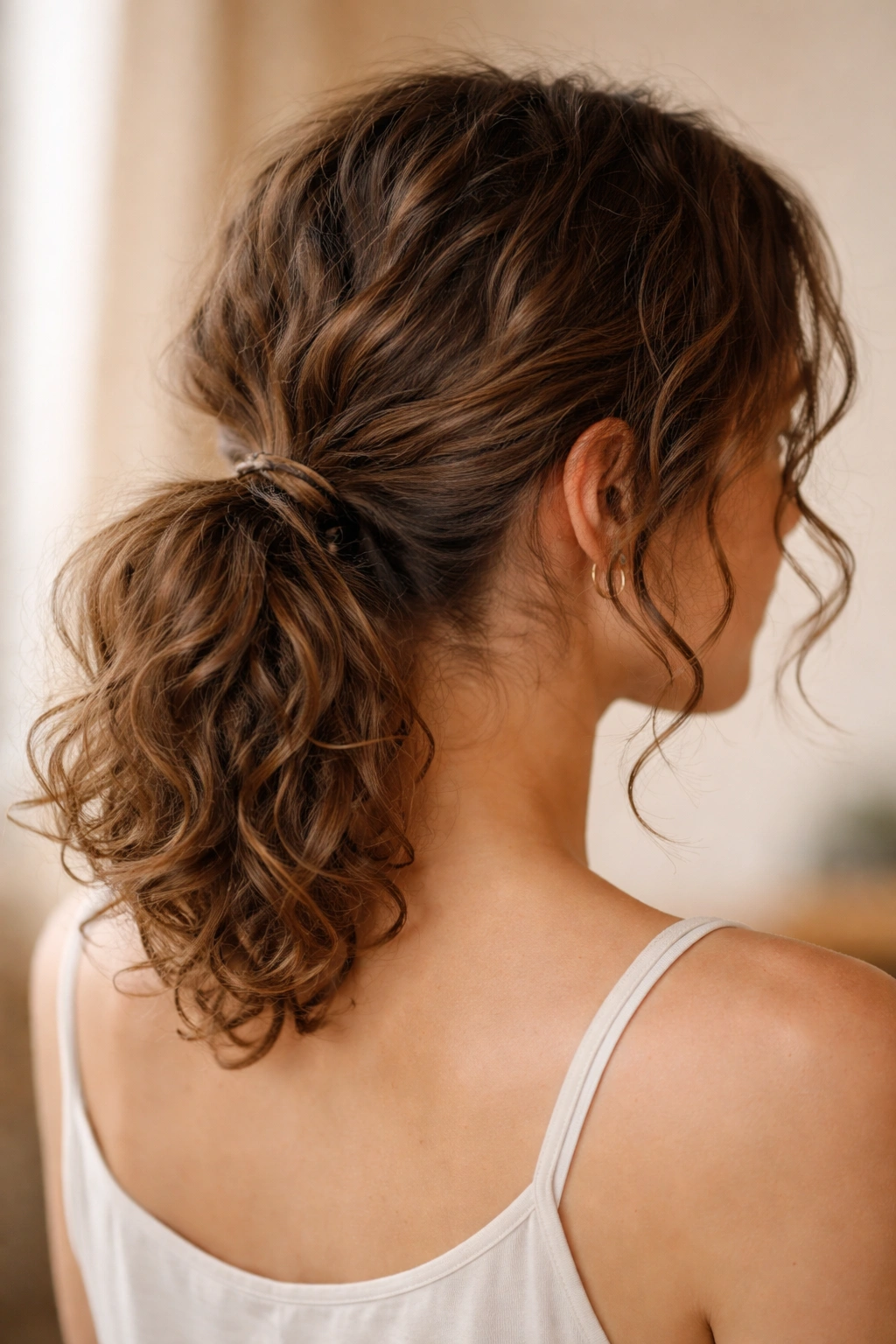
If the high ponytail feels too formal or sporty, a low messy ponytail offers a softer, more relaxed vibe. You’ll gather hair at the nape of your neck and intentionally leave some curls loose around your face and crown. This style celebrates the beautiful randomness of curls while still getting hair off your shoulders, making it ideal for when you want to look effortlessly put-together without trying too hard.
What Makes This Style Feel Modern
The messy low ponytail has become more sophisticated over the years — it’s not actually messy, just intentionally textured and loosely gathered. This approach honors short curly hair’s natural tendency toward volume and movement rather than fighting it. You’re basically saying yes to your hair’s personality instead of trying to force it into submission. The result is a style that looks lived-in, confident, and honest about what short curls actually do.
Steps to Achieve the Low Messy Look
- Allow your curls to air dry or use a diffuser on your blow dryer to maintain full texture
- Use your fingers rather than a brush to gather hair loosely at the nape of your neck — this preserves individual curl definition
- Pull the ponytail together without making it tight; you want a relaxed, almost-falling-apart energy
- Leave 2-3 inches of curls framing your face on both sides, gently releasing them from the elastic
- Wrap a single strand of hair around the base of the ponytail to hide the elastic, securing the strand with a bobby pin tucked underneath
Worth knowing: This style actually improves as the day goes on — by evening, a few more curls will have worked loose, making it look even more artfully disheveled.
3. Half-Up Ponytail
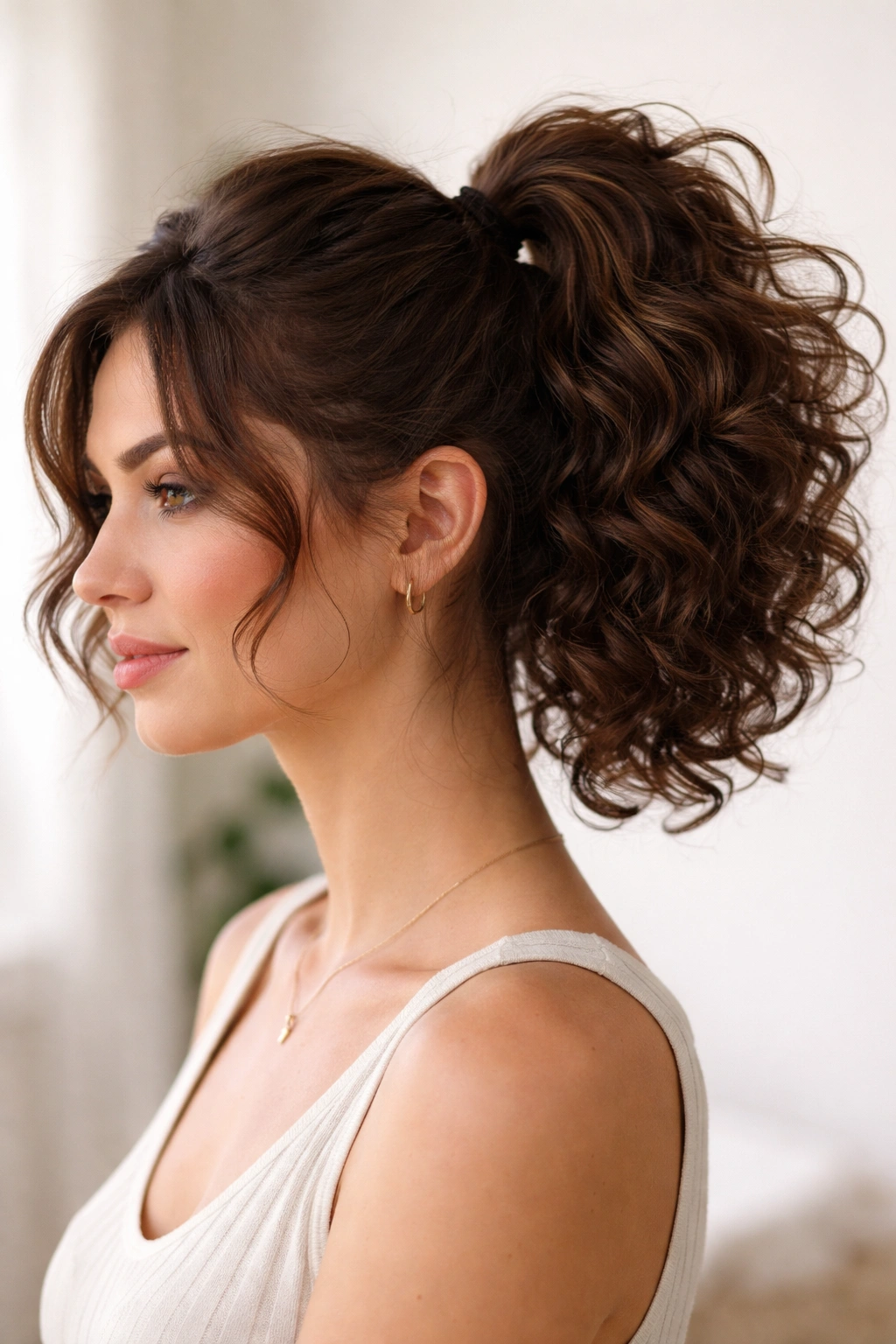
The half-up style splits the difference between wearing your hair down and pulling it all back. You’ll gather the top half of your curls into a ponytail while letting the bottom half flow freely. For short curly hair, this is a game-changer because it keeps hair off your face without committing to a full ponytail, and it doubles your hair’s apparent volume by creating height at the crown.
Why Half-Up Works Magic on Short Curls
Short curly hair naturally creates volume at the crown, and pulling up the top section amplifies this effect dramatically. The style is versatile enough for casual days, work settings, or date nights — just adjust how loose or polished you make it. Half-up also solves the problem of hair falling in your face when you’re dealing with shorter length; you get the benefits of a ponytail without the commitment, which means you can switch styles more easily throughout the day.
Creating a Polished Half-Up Style
- Section off hair from your temples back toward the crown, dividing it horizontally across the top of your head
- Gather only this top section at the crown using a comb to smooth it without flattening your curls underneath
- Secure with an elastic band, then wrap a thin strand of hair around the base to conceal the elastic
- For a polished version, smooth the gathered section slightly with a dab of gel or mousse
- Let the bottom half of your curls fall naturally, and run your fingers through them to break up any sections that have stuck together
Pro tip: If you want more definition between the top and bottom sections, try securing the half-up with a clip or claw instead of an elastic — it creates a more distinct visual separation.
4. Braided Ponytail
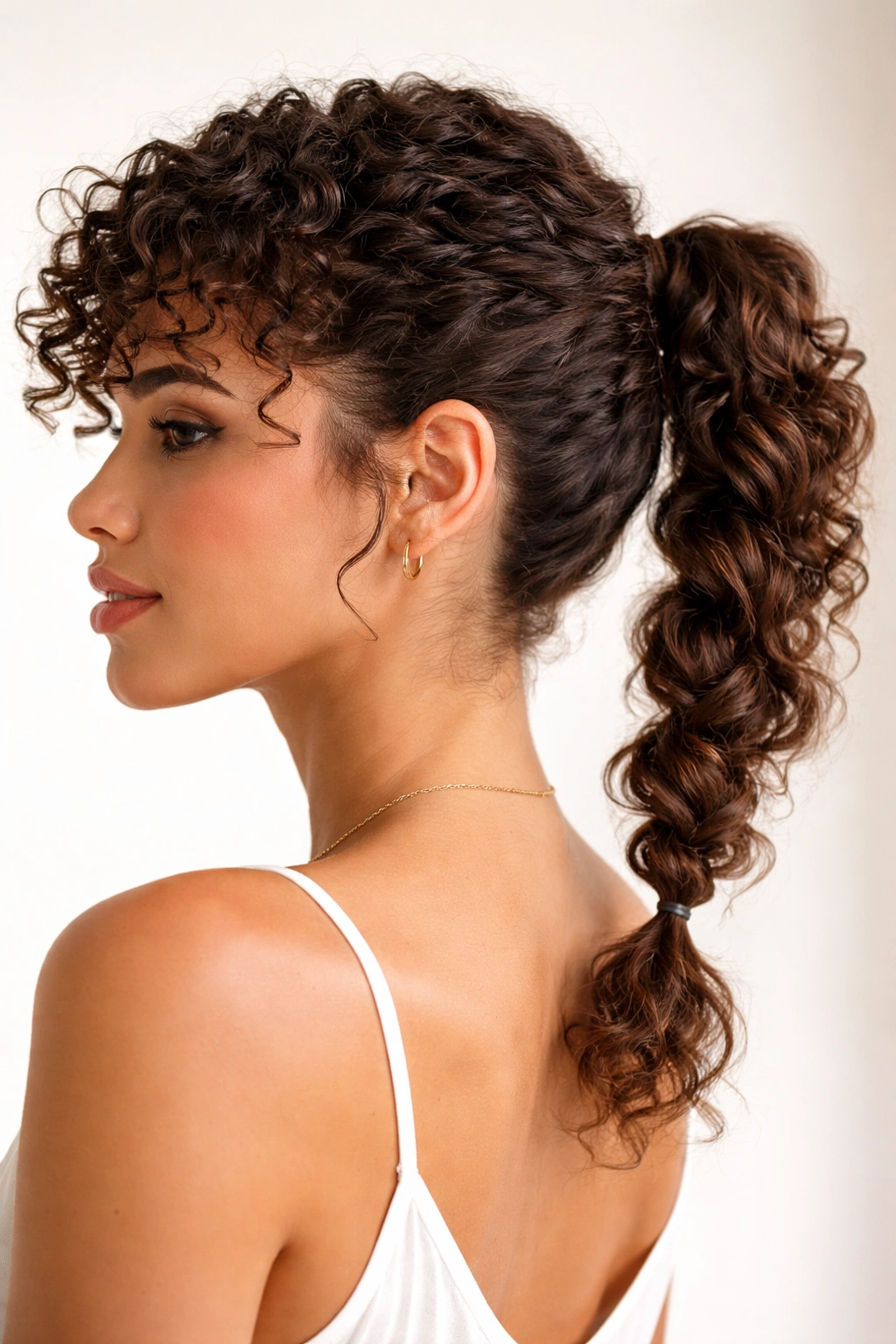
A braid woven into your ponytail adds texture, dimension, and an undeniably sophisticated touch. You can braid a section of the ponytail itself, weave a braid from the side of your head into a gathered ponytail, or create a full Dutch or cornrow braid leading into a curly ponytail. For short curly hair, braids work exceptionally well because your natural curl pattern actually helps hold the braid in place longer than it would on straight hair.
How Braids Enhance Short Curls
Braids add an entirely new textural layer to your styling toolkit. Rather than competing with your curls, a braid works alongside them — the individual strands of the braid sit nicely against your curl coils, creating an interesting interplay of patterns. A braid also helps control any flyaways or frizz that might occur during the day, while still letting your curls show their beautiful texture. The style reads as intentional and polished, perfect for professional settings or special occasions.
Braid Techniques That Work Best
- For a simple approach, create a loose three-strand braid using a section of your gathered ponytail, securing it with a tiny elastic
- Try a Dutch braid from your temple back toward your crown, then gather all hair (including the braided section) into a low ponytail
- Loosely twist sections of your ponytail and pin them together along the elastic to create a braid-like effect without actual braiding
- Use a braid spray or lightweight mousse on the section you’re braiding to make it easier to work with
- Don’t pull the braid too tightly — short curly hair looks better with relaxed, slightly loose braiding that shows off texture
Insider note: Braids actually last longer in curly hair because the curls grip the braid strands. You can often wear the same braid for two or three days before it starts to loosen.
5. Side Ponytail
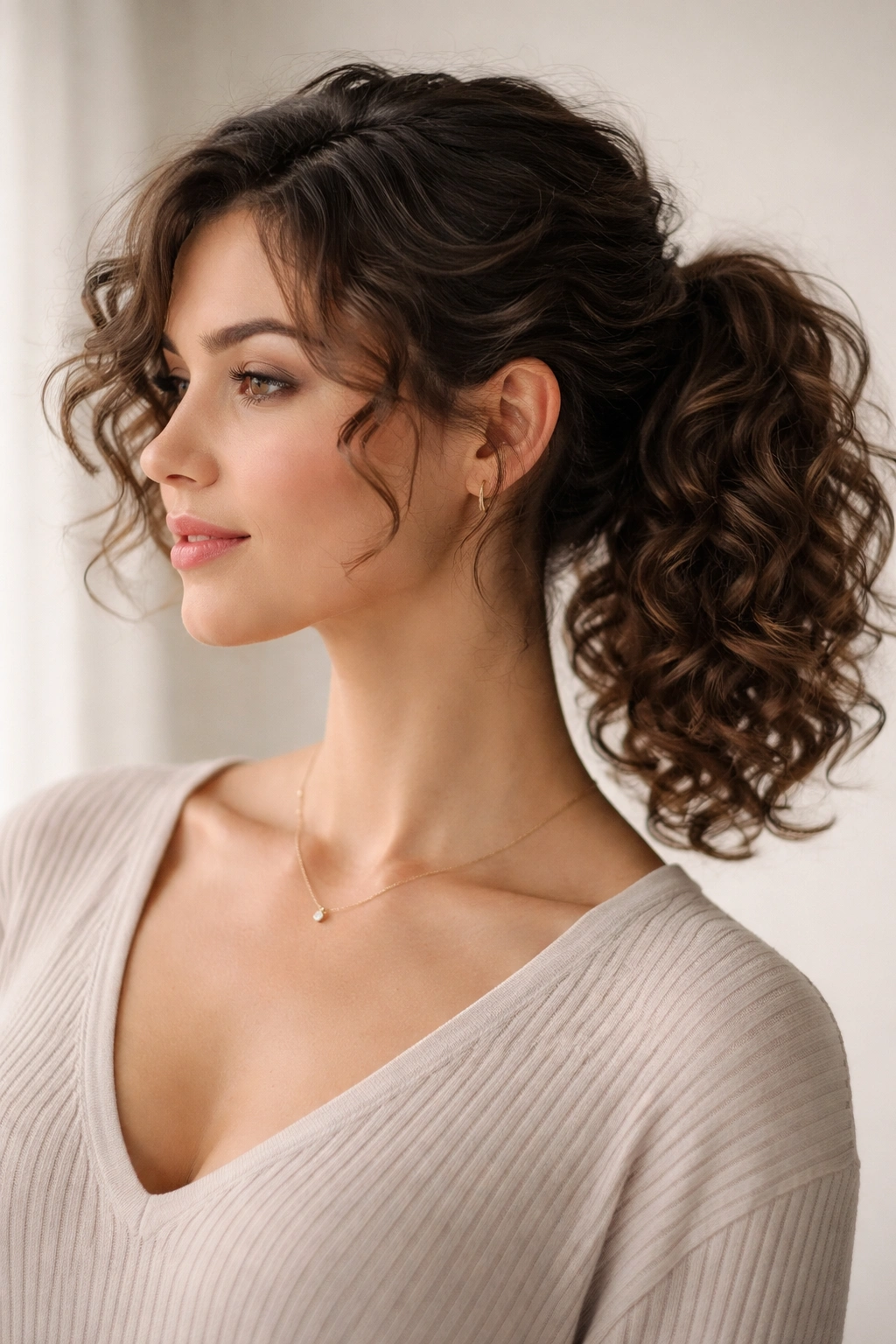
Pull your curls to one side of your neck rather than the center, and you’ve instantly created a different silhouette. A side ponytail feels playful and feminine, and it’s especially flattering if you have face-framing layers in your short curly hair. This style works beautifully for casual days, and you can dress it up with accessories or keep it relaxed depending on your plans.
The Appeal of Side Placement
A side ponytail draws attention to one side of your face, which is flattering for almost every face shape — it creates asymmetry that feels more interesting than a centered style. For short curly hair, the side ponytail allows you to show off dimension in your curl pattern that might get hidden in a centered ponytail. The style also tends to feel less severe than a high center ponytail, making it a great option when you want polish without looking too formal.
Building Your Side Ponytail
- Brush or comb your curls gently to one side, gathering them at the level of your ear or slightly lower
- Use a strong elastic band to secure the ponytail, and don’t pull it too tight — you want to maintain your hair’s natural bounce
- Release a few curls around your face if you gathered too much, letting them frame your cheekbones
- Wrap a section of hair around the elastic to hide it, securing with a bobby pin
- Tuck the wrapped section behind your ear or let it blend into the side ponytail, depending on how polished you want the look
Worth knowing: A side ponytail photographs beautifully from the opposite side of your face, which is why it’s a favorite for special occasions and photo sessions.
6. Sleek Low Ponytail with Defined Edges
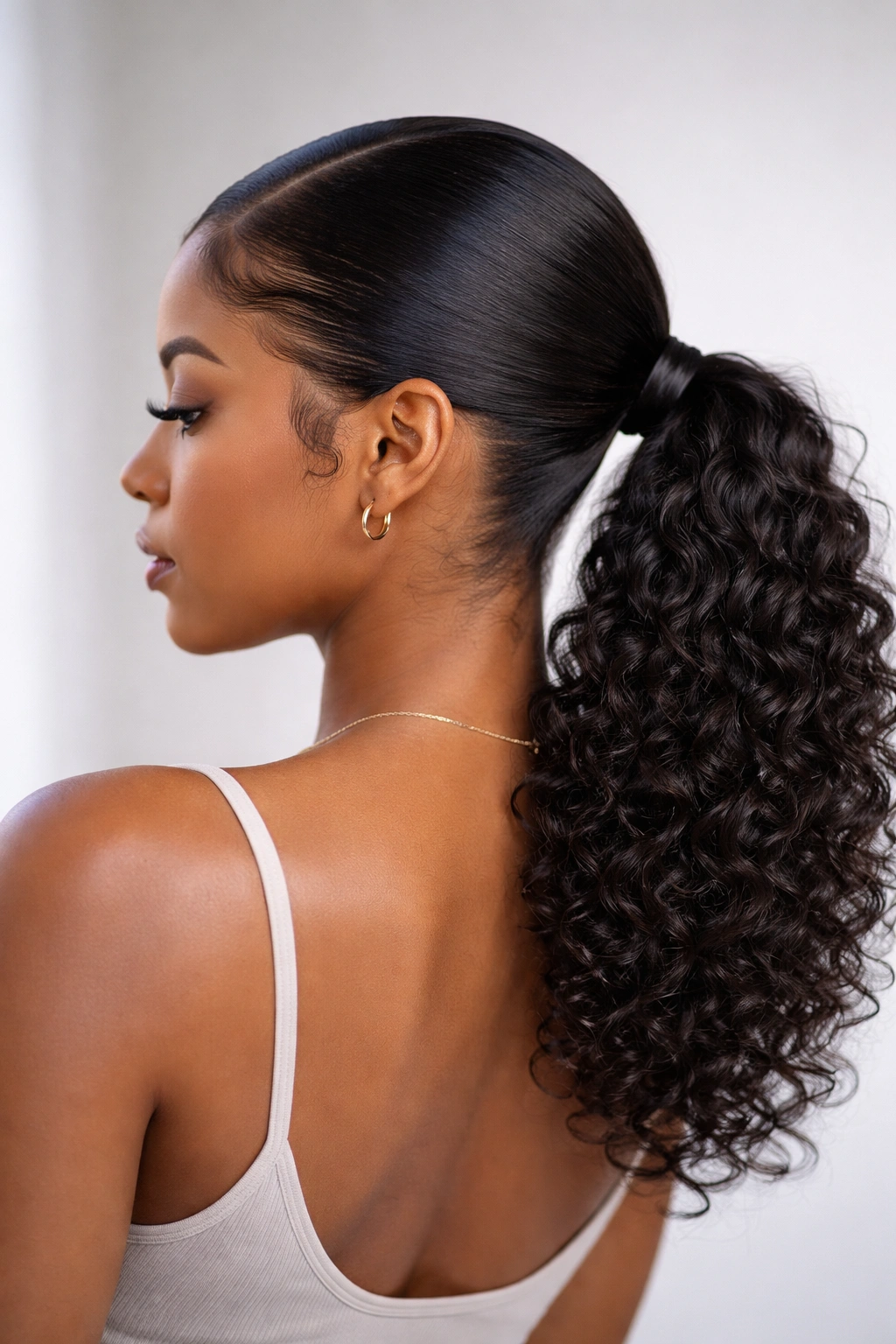
This is the sophisticated, put-together option — it’s what you wear when you want your curls to work hard while still looking intentional. You’ll smooth your hair back to the nape of your neck using gel or mousse, creating defined edges and a sleek surface while keeping the ponytail itself curly and voluminous. It’s the bridge between wearing your curls all out and pulling them back completely.
When to Wear This Polished Style
The sleek low ponytail is your answer for professional settings, formal events, or when you want to look exceptionally groomed. The controlled top creates a neat appearance, while the curly ponytail itself maintains softness and femininity. It’s proof that pulling your curls back doesn’t mean abandoning your natural texture — you’re just controlling it strategically. This style also photographs beautifully because the defined edges look sharp and intentional from every angle.
Creating Polished Definition
- Use a smoothing gel or mousse on damp or slightly dampened curls, applying it with a brush or comb
- Brush your hair smoothly back from your face toward the nape of your neck, creating defined lines along your hairline
- Gather into a low ponytail at the base of your neck using a strong elastic
- Smooth any baby hairs or flyaways with a small brush and extra gel, working very carefully so you don’t disturb your curl pattern
- You can tease the ponytail itself slightly to create volume at the base while keeping the top portion smooth
- Use bobby pins to secure any ends that want to frizz or pop out
Pro tip: Apply your smoothing product to damp hair rather than dry curls — this gives you much better control and reduces the frizz that comes from trying to force product through dry curls.
7. Textured Crown Ponytail with Uplift
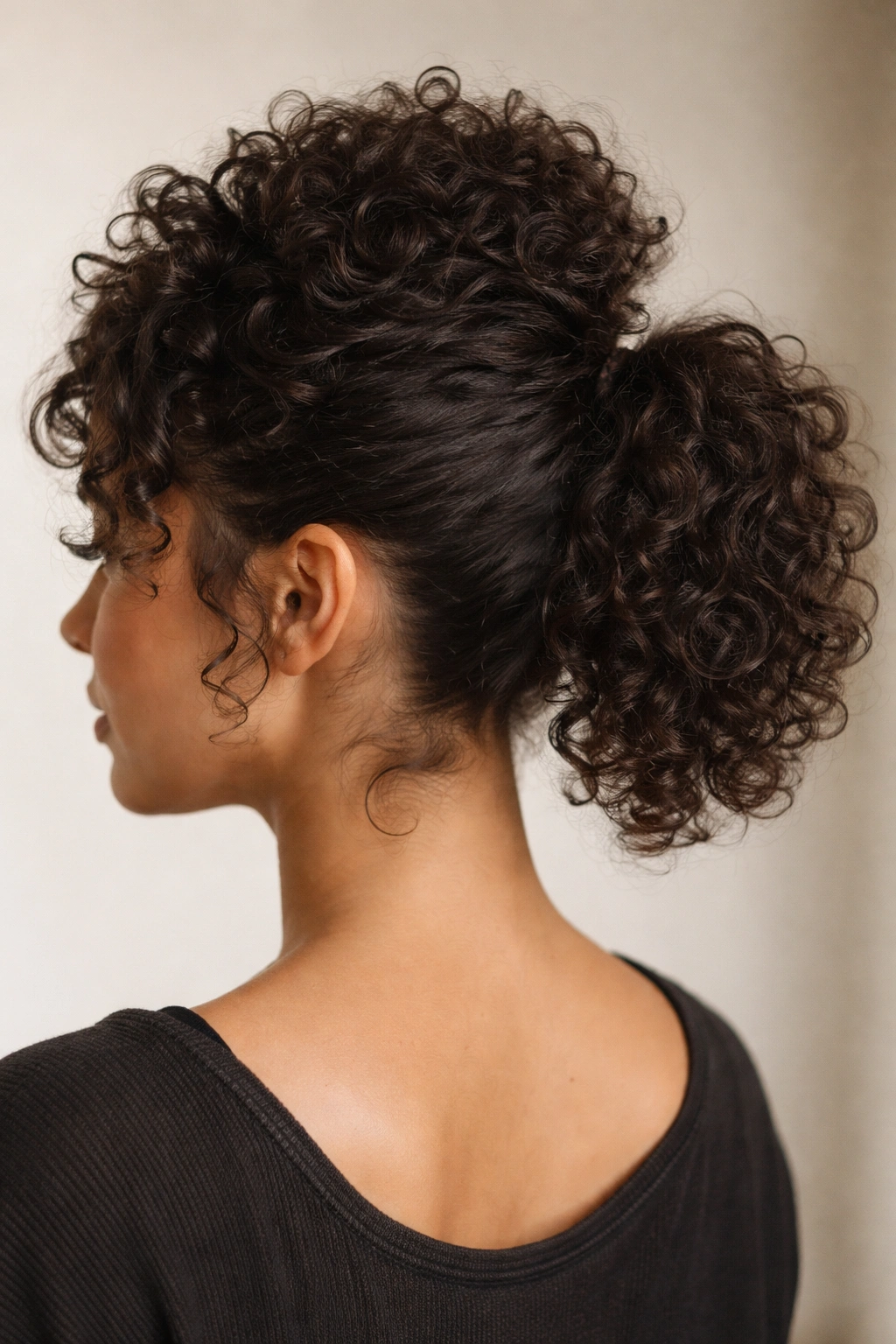
This style uses your natural curls as architectural elements, creating a full, dimensional look at the crown before gathering into a ponytail. Instead of slicking your curls back, you’ll leave the crown area intentionally textured and full, then gather everything together lower on your head. The result is a style with incredible dimension and movement.
Why the Lifted Crown Works for Short Hair
Short curly hair naturally wants to lift and expand from the roots — this style leans into that tendency instead of fighting it. By leaving the crown full while gathering below it, you create a visually taller silhouette and draw the eye upward. The contrast between the textured crown and the gathered ponytail creates visual interest that a smooth pulled-back style can’t match. It’s effortless looking while still being intentional.
Building Texture and Lift
- Apply a lightweight mousse or curl cream to damp hair, scrunching upward to encourage curl clumping
- Use a diffuser while blow drying, or allow hair to air dry while scrunching occasionally
- Once your curls are dry, gently separate curl clumps at the crown to create extra volume without frizzing
- Gather hair loosely at the nape of your neck, intentionally leaving the crown area lifted and full
- Wrap a strand around the elastic to hide it, but keep the gathered section loose rather than pulling it tight
- You can leave a few curls completely loose around the elastic for a softer, less structured look
Insider note: This style looks best on day-two or day-three curls when they’ve settled slightly and become more defined — your curls will have better clump definition to create that textured crown effect.
8. Two-Strand Twist Ponytail
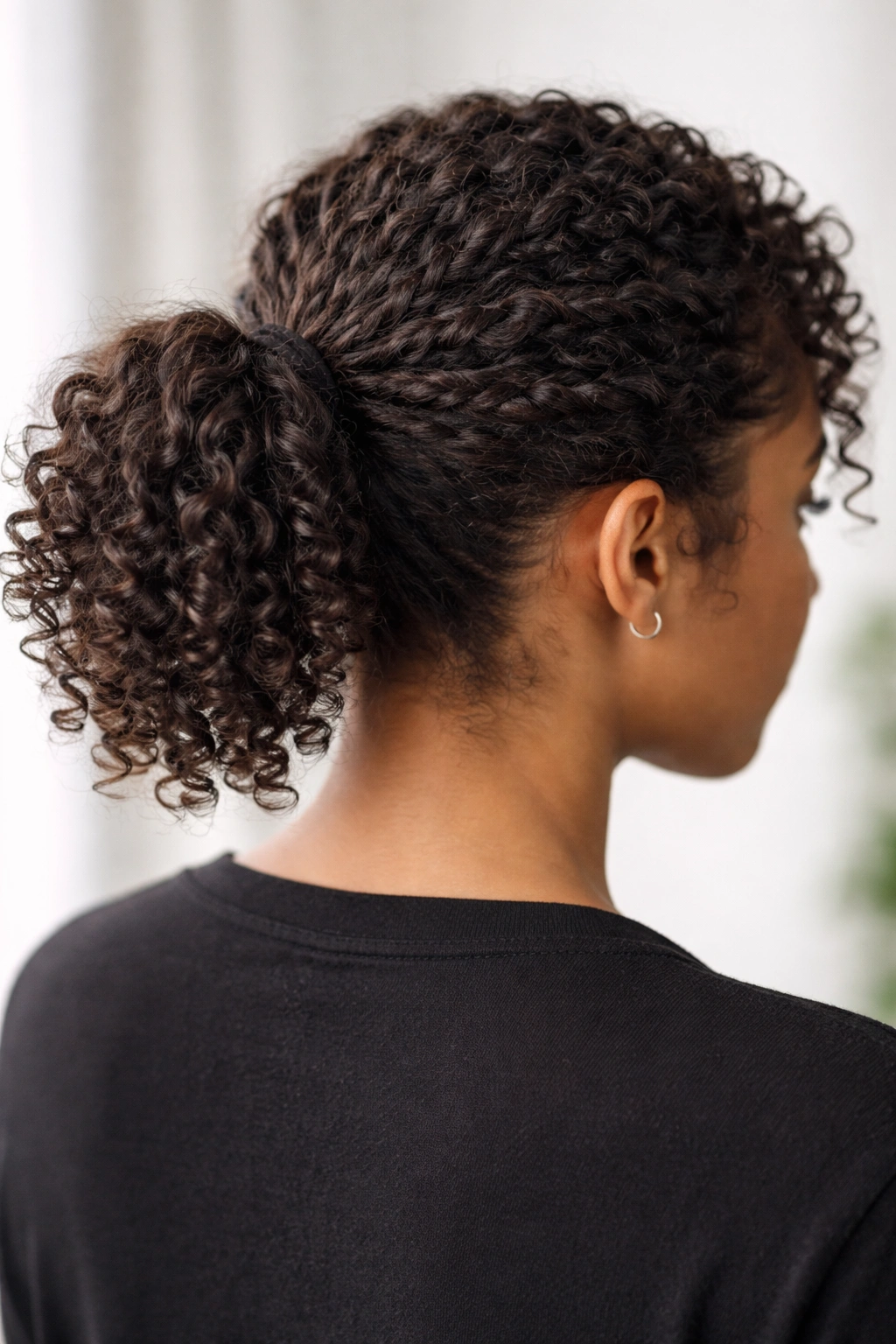
Instead of a traditional braid, use two strands of hair twisted together to frame your ponytail. You can twist from one or both sides of your head, then gather everything into a ponytail at the back. This technique is faster than braiding, and it creates a sophisticated look that’s less common than standard ponytails, making it a great option when you want something a bit different.
The Simplicity and Impact of Twists
Two-strand twists are easier to execute than braids, especially in curly hair where individual strands are more delicate. The twist creates a rope-like texture that plays beautifully against your curls, adding dimension without requiring intricate braiding skills. A twisted ponytail looks intentional and polished, but it’s genuinely quick to do — most people can master this in just a few practice attempts.
Executing Perfect Twists
- Section off a small portion of hair from one temple, about an inch wide
- Divide this section into two strands and twist them around each other, moving from your temple toward the back of your head
- As you twist, you can incorporate additional hair from the sides if you want a thicker rope (this is called a twist-and-tuck or rope braid)
- Once you’ve twisted to the back, gather all your hair together with the twist and secure into a ponytail
- Repeat on the other side if you want symmetrical twists framing both sides
- You can loosen the twists slightly by gently pulling at the twisted sections to create more texture and dimension
Worth knowing: Two-strand twists actually hold really well in curly hair because the curl pattern helps grip the twisted sections. They’re one of the longest-lasting protective styling techniques for textured hair.
9. Curly Top Knot Ponytail
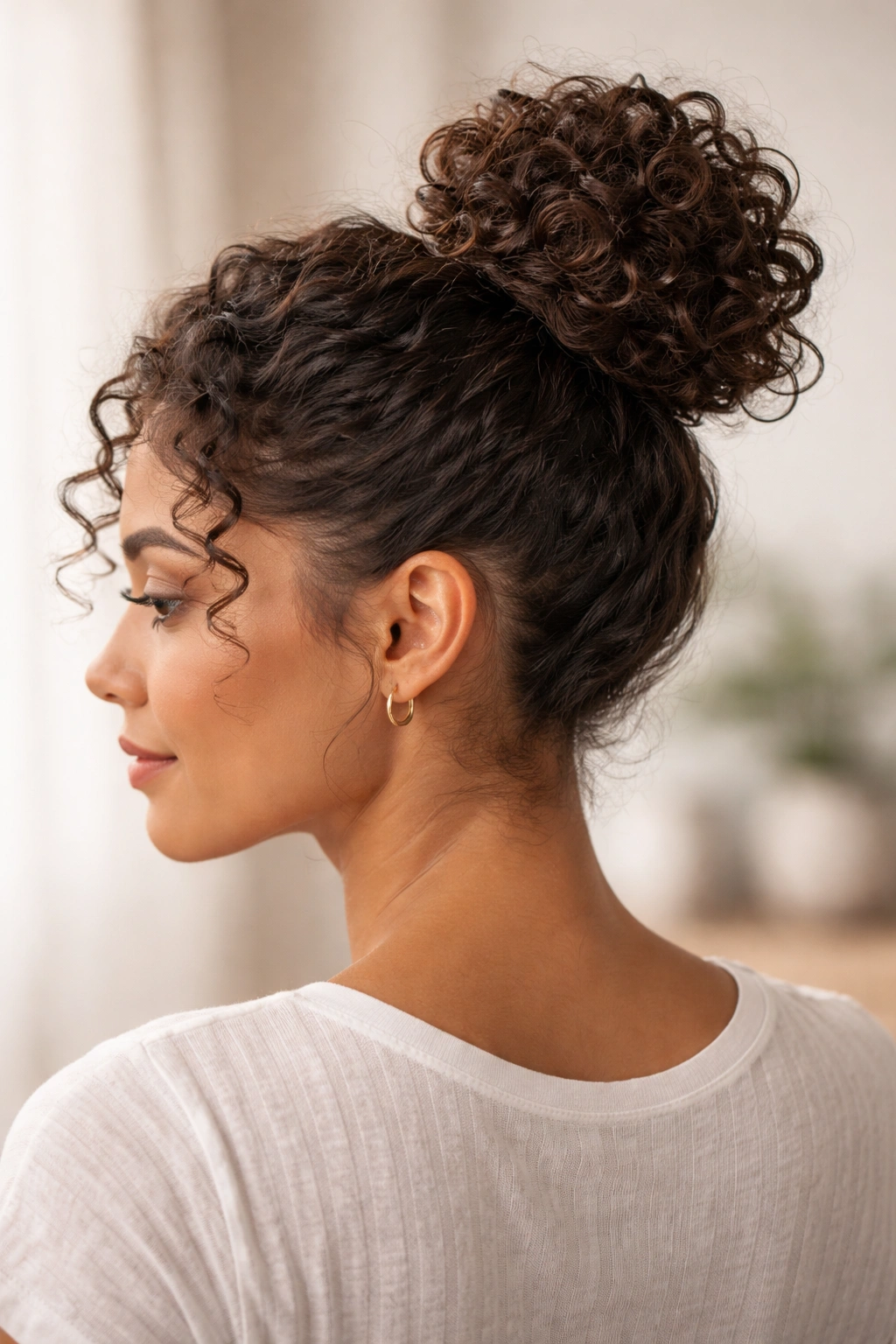
This is essentially a ponytail that you then wrap and pin into a knot shape at the crown or nape of your neck. It’s the next evolution of a ponytail — a style that gives you the benefits of having hair off your face while also creating a neat, compact shape. Top knots work beautifully with short curly hair because the naturally voluminous curls fill out the knot shape without needing any extra layers of length.
Why Short Curls Make the Best Knots
A top knot on short curly hair looks full and luxurious because your curl pattern adds instant volume and dimension to the knot. You don’t need long, thick hair to make this style work — in fact, short curls create a more playful, textured knot that’s actually more interesting than smooth, straight-haired versions. The knot sits compactly but still shows off your beautiful curl texture throughout.
Creating a Textured Knot
- Gather your hair into a ponytail at your preferred height (high for a crown knot, low for a nape knot)
- Twist or loosely braid the ponytail section, or just leave it as-is for a fuller effect
- Wrap the twisted ponytail around the base (or around your fingers at the gathering point) to create a circular shape
- Secure the wrapped knot with bobby pins inserted from underneath, so they’re hidden within the curl texture
- Gently tease and separate the curls throughout the knot to create maximum fullness and texture
- Release a few curls from the ponytail before wrapping if you want face-framing pieces, or keep everything tucked for a neater look
Pro tip: A top knot actually works better when you don’t pull it perfectly tight — the looser, slightly messy version shows off more curl texture and looks more intentional on short hair.
10. Bubble Ponytail
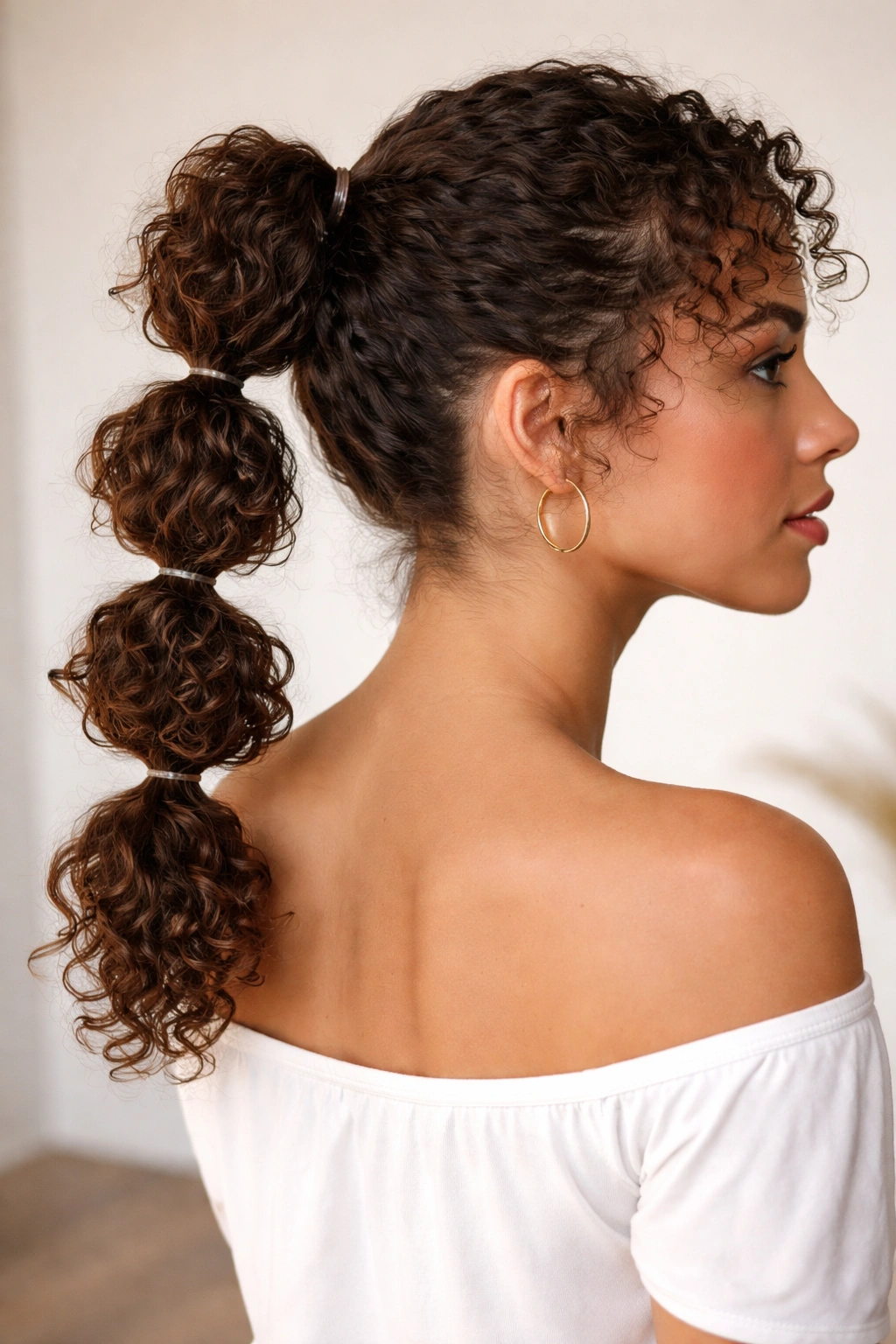
The bubble ponytail is pure fun, and it looks amazing with short curly hair because each bubble section shows off your curl pattern individually. You’ll create a regular ponytail, then divide it into sections and secure each section with smaller elastics positioned every inch or so down the ponytail. The result is a stacked, almost sculptural style that’s playful and eye-catching.
When to Wear Bubbles
The bubble ponytail is your go-to when you want to have fun with your styling and show off your personality. It works for casual days, and younger wearers often choose this style, though anyone who loves a bold hair moment can pull it off. The style is especially striking with short curly hair because each bubble is full and dimensional rather than sleek — the curls create natural texture within each bubble section.
Building Your Bubble Sections
- Start with a gathered ponytail secured at your preferred height with a strong elastic band
- Measure down the ponytail about 1 to 1.5 inches and secure with a second elastic, creating the first “bubble”
- Continue measuring and securing with additional elastics down the length of your ponytail, spacing them evenly
- Once all elastics are in place, gently pull and separate each bubble section to puff them out and create fullness
- You can leave the sections relatively neat, or tease each bubble slightly for extra volume
- For a softer look, release a few curls from the bottom of the ponytail so they’re not contained in a bubble
Insider note: Bubble ponytails actually look best with a little extra texture — try this style when your curls have been set for a day or two and have naturally separated into beautiful clumps.
11. Twisted-Around Ponytail with Wrapped Base
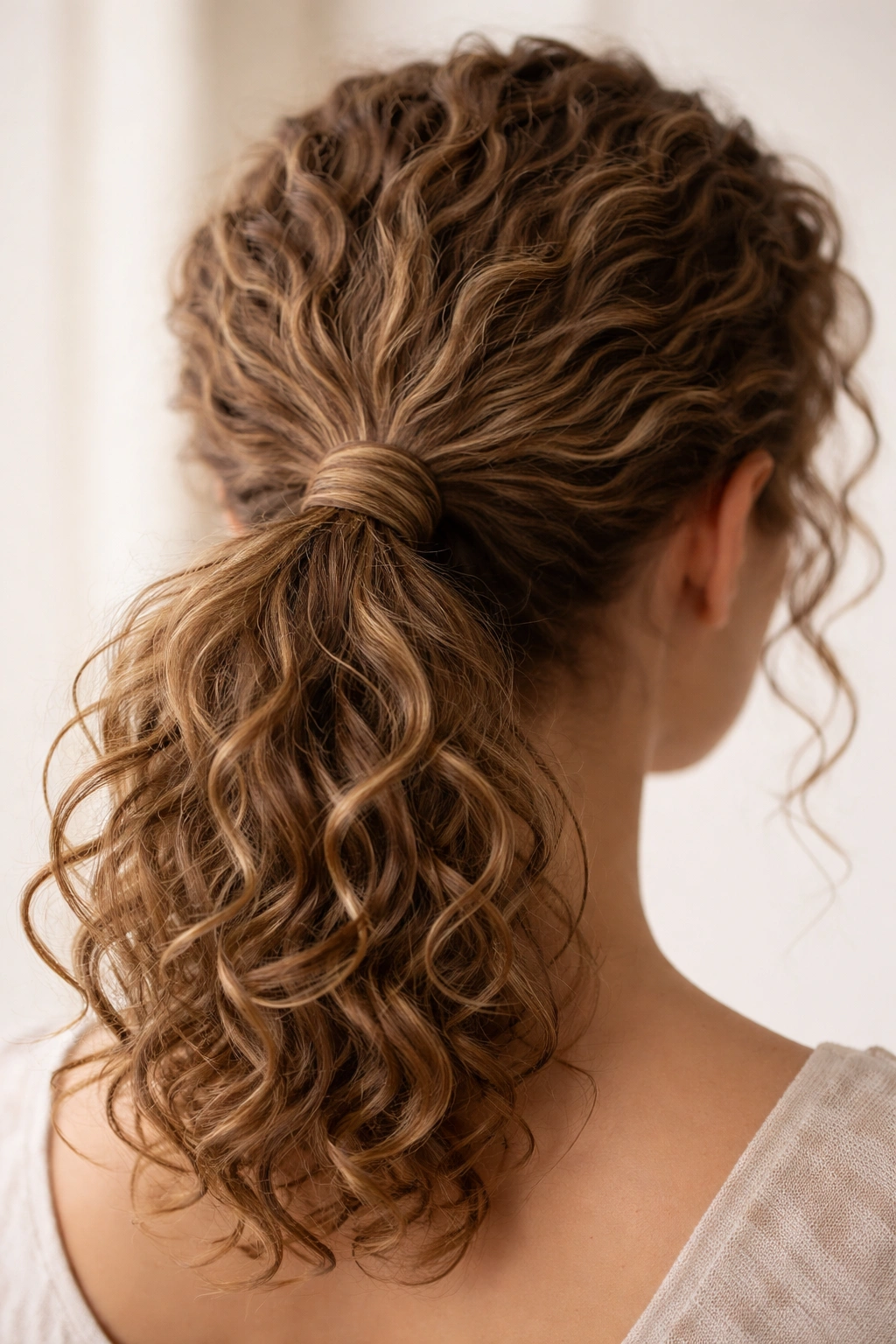
Create a simple ponytail, then take a thin section of hair and wrap it repeatedly around the elastic to create an elaborate, decorative base. It’s a subtle style upgrade that transforms an ordinary ponytail into something that looks more intentional and polished without requiring any complicated techniques. This approach also helps hide the elastic, which is always a plus for a cleaner overall look.
The Power of a Wrapped Base
The wrapped base technique elevates any ponytail style by creating a finished, intentional appearance. It’s especially effective on short curly hair because the wrapped section adds definition right at the point where your ponytail begins. A neatly wrapped base makes even a casual ponytail look like you took extra care with your styling, which is always impressive when the whole style takes just a few minutes.
Wrapping Your Ponytail Base Beautifully
- Gather your hair into a ponytail at your preferred height and secure with an elastic band
- Take a thin, dime-sized section of hair from the underside of the ponytail
- Wrap this section around the elastic multiple times, overlapping the wraps slightly
- As you wrap, twist the section slightly to create a rope-like effect that looks more polished
- Continue wrapping until the elastic is completely hidden and you’ve used up most of the section
- Secure the end with a bobby pin inserted underneath, into the ponytail itself
- You can leave the wrapped section smooth, or gently pull at it to loosen and create texture
Worth knowing: This wrapping technique actually helps prevent the elastic from slipping and loosening throughout the day — you’re essentially creating extra grip around the ponytail base.
12. Puffed Ponytail with Separated Curls
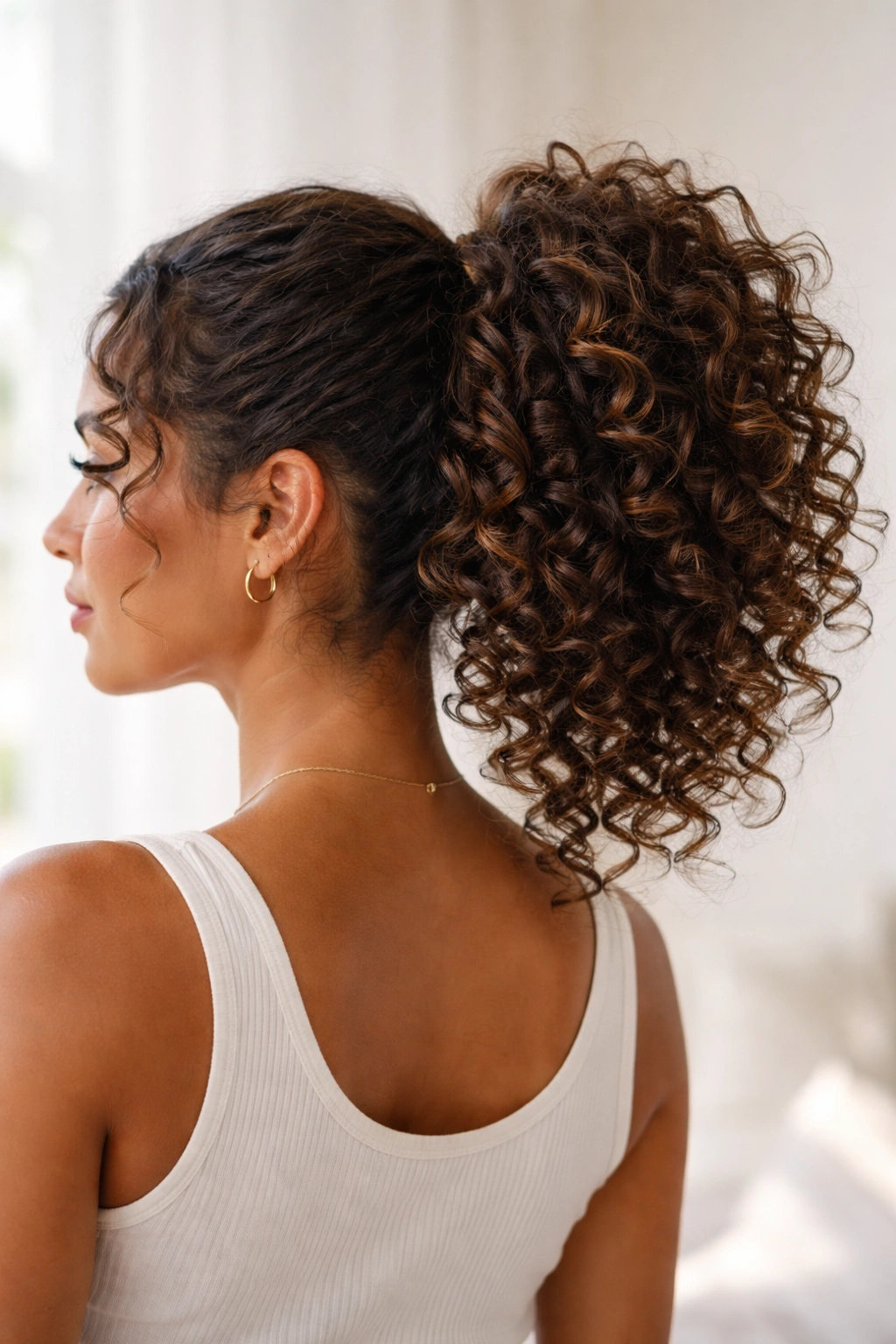
The puffed ponytail celebrates your curl pattern to the absolute maximum, intentionally leaving curls separated and distinct rather than blending them together. You’ll gather your hair loosely into a ponytail, then use your fingers to lift and separate individual curl clumps throughout the ponytail section. The result is a style bursting with texture, volume, and personality — unmistakably curly and proud of it.
Why This Style Honors Your Hair
The puffed ponytail is all about accepting and celebrating what your curls naturally do. Rather than trying to blend curls into a sleek unified shape, this style emphasizes the individual character of each curl. It’s a great option when you want to look effortlessly beautiful without spending a lot of time styling — your curls are doing the work for you, and you’re just getting them off your face. This style also photographs gorgeously because all that texture and dimension creates visual interest.
Creating Maximum Curl Definition
- Use a curl-defining cream or mousse on slightly damp hair, encouraging your curls to clump together
- Allow your curls to fully dry before gathering them into a ponytail — this preserves clump definition
- Gather loosely at your preferred height, being gentle so you don’t disrupt the individual curl pattern
- Use a flexible elastic that won’t crease your curls or create dents
- Once gathered, use your fingers (not a brush or comb) to gently lift and separate curl clumps throughout the ponytail
- Work from the outer edges toward the center, creating space between each cluster of curls
- The ponytail should look almost like it’s about to explode with texture — that’s the goal
Pro tip: This style looks best when you refresh your curls in the morning with a light water mist and curl cream — it reactivates your curl pattern and gives you maximum clump definition to work with.
Final Thoughts
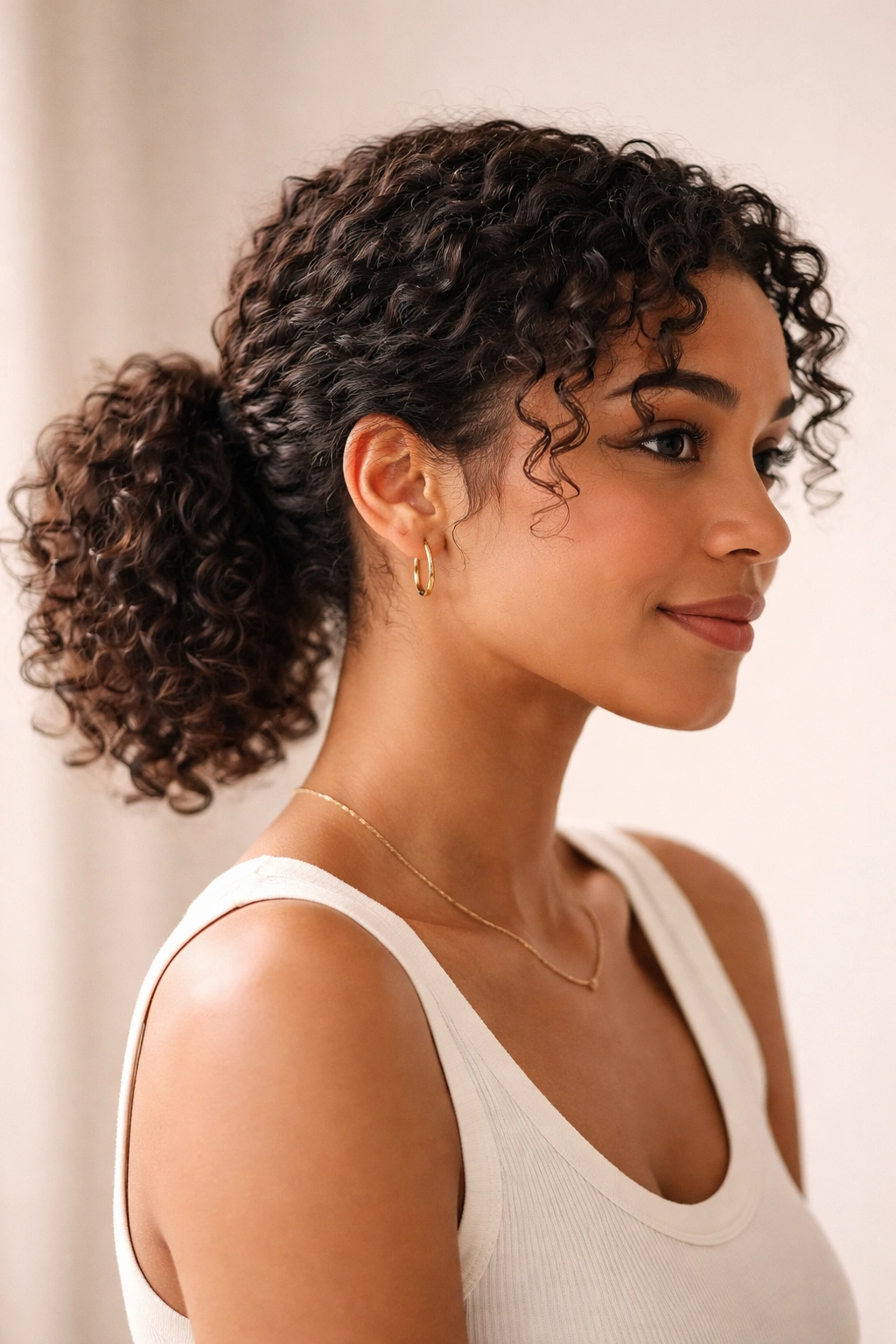
Short curly hair gives you the gift of versatility — you can go from sleek and professional to textured and playful, sometimes within the same day. The ponytails that work best are the ones that work with your curl pattern rather than against it, which means embracing your natural texture whether you’re smoothing it or celebrating its maximum volume.
Experiment freely with these styles, and don’t be discouraged if a style doesn’t come together perfectly on your first try. Short curly hair has a mind of its own, and sometimes the best styling results come from happy accidents — you gather your hair one way thinking you’re doing the sleek low ponytail, and it naturally creates that textured crown effect you were going for on your third attempt. That’s not failure; that’s your hair teaching you what it does best.
The secret to making any of these styles work is preparation — refreshed, well-hydrated curls with a little curl cream or mousse applied will cooperate with you far more readily than dry, tired curls. Invest in a good elastic band designed for textured hair, grab a couple of bobby pins, and give yourself five to ten minutes. Your short curly hair deserves a style that makes you feel confident and beautiful.