



Red hair is a bold, confident statement, and a well-executed ponytail can elevate that color from “nice” to absolutely showstopping. The thing is, finding a red ponytail style that genuinely works with your skin tone, face shape, and lifestyle can feel surprisingly tricky. Red is unforgiving in ways other colors aren’t—a shade or style that looks stunning on someone might clash with someone else’s complexion or proportions. But here’s the good news: red is also incredibly versatile when you know how to work with it.
The key to pulling off a red ponytail isn’t just about the shade of red you choose (though that matters). It’s about understanding how different ponytail styles interact with your skin tone, how the placement of the style affects your face, and which textures and finishes actually flatter red hair across the full spectrum of complexions. Whether you’re a cool-toned, warm-toned, or neutral-toned person—whether your skin is fair, medium, deep, or anything in between—there’s a red ponytail look that will make you feel genuinely stunning.
This guide walks you through ten distinct red ponytail styles, each selected specifically because it works beautifully across a wide range of skin tones when styled with intention. Some of these looks are sleek and polished, designed to command attention in professional settings. Others are textured and relaxed, perfect for weekends or casual confidence. A few are intricate enough to turn heads at special events, while others are simple enough to throw together on a rushed morning. The goal isn’t to follow these styles exactly as described—it’s to understand the mechanics of what makes each one work, so you can adapt it to your hair texture, face shape, and personal aesthetic.
Understanding Red Tones and Skin Tone Compatibility
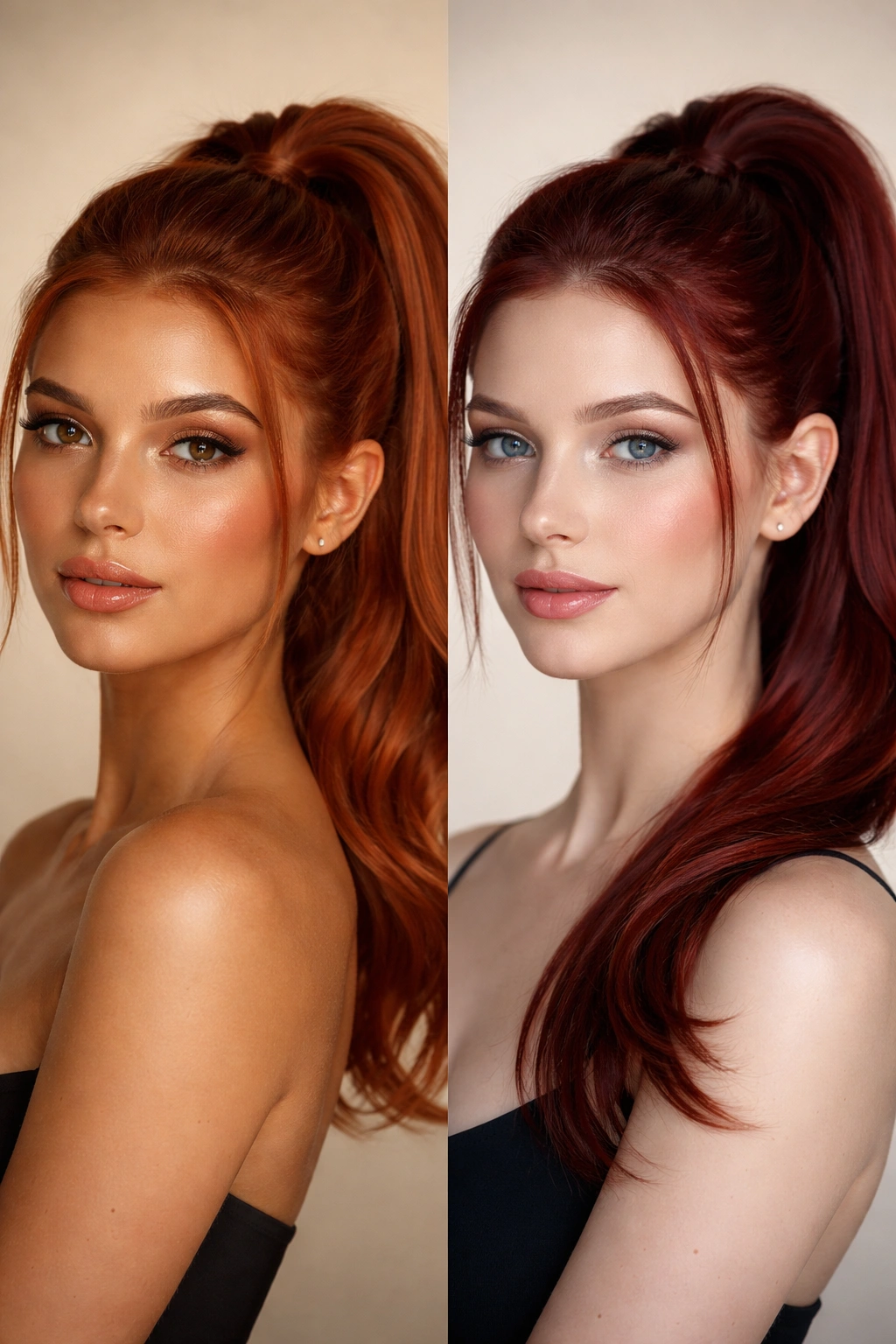
Before diving into specific ponytail styles, it’s worth spending a moment on the relationship between the red you’re wearing and the undertones in your skin. This isn’t about rigid rules or the myth that certain people can’t wear certain colors—that’s nonsense. It’s about understanding which reds harmonize with your natural coloring to create that “this looks effortless on you” effect that makes people wonder if you were just born looking that good.
Warm-toned reds—think copper, burgundy, honey-amber, and burnt orange—tend to harmonize beautifully with warm skin undertones (olive, golden, warm brown). These reds create a glow when paired with warm complexions because they’re speaking the same color language. Cool-toned reds—think crimson, cherry, blue-based reds, and jewel-tone scarlets—sing against cool skin undertones (pink-based, pale, ashy). Neutral skin tones sit somewhere in the middle and often pull off both warm and cool reds equally well, though they might create slightly different vibes.
Here’s what matters most: the ponytail style you choose can actually shift how well a specific red works for you. A sleek, shiny finish emphasizes undertones more dramatically, so if undertone harmony matters to you, a highly polished look asks for closer attention. A textured, matte finish, by contrast, softens the impact of undertone mismatches and creates more visual interest through dimension and movement. A style that pulls hair completely off the face will show more of your skin, making color harmony more visible. A style with face-framing pieces can create a visual break that makes undertone relationships feel less important. Use these mechanics as tools to style strategically.
1. The Sleek Low Ponytail
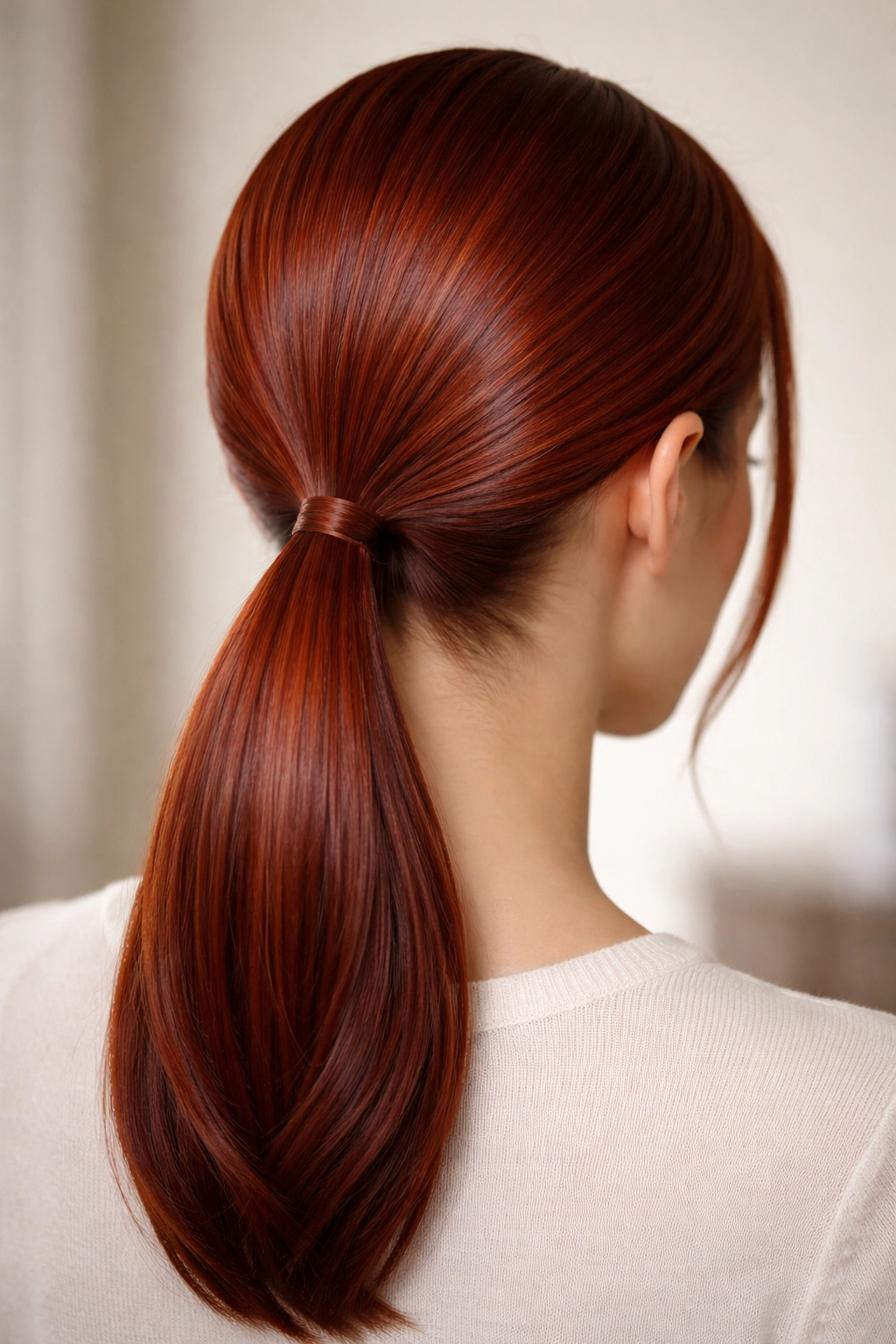
The sleek low ponytail is a masterclass in timeless elegance, and it’s genuinely one of the easiest ponytail styles to execute if you understand the few technical details that separate “polished” from “messy.” Pull your red hair straight back into a low ponytail positioned at the nape of your neck, using a small elastic. The key to making this look work is smoothness—use a fine-tooth comb, a light smoothing serum, and a flexible-hold hairspray to keep every piece locked in place. This style works for all skin tones because the simplicity means your face becomes the focal point, and the clean lines create a visual “frame” that draws attention to your features rather than competing with them.
Why It Works Across Skin Tones
The sleek low ponytail is agnostic about undertones because its impact comes entirely from its architectural simplicity. The clean line emphasizes your bone structure and facial features, not the relationship between your hair color and complexion. Cool reds look sharp and sophisticated against this style, while warm reds look approachable and glowing. The real magic is that your face becomes so visually prominent that the hair almost acts as a supportive backdrop rather than the main attraction.
How to Make It Your Own
- Sleekness level: Adjust how shiny and polished you want the finish. A heavily smoothed, high-shine version reads formal and dramatic; a slightly softer, matte version feels approachable and everyday.
- Placement: Experiment with where you position the ponytail—directly at the nape is classic, but slightly off to one side creates movement without sacrificing the sleek aesthetic.
- Face-frame: Leave two thin pieces out, one on each side of your face, and allow them to curl slightly forward. This softens the severity of the style while keeping the overall effect clean.
- Texture at the base: Use a fine elastic that matches your hair color, then wrap a small section of hair around the elastic base and pin it in place to hide the elastic entirely. This detail transforms the look from “quick ponytail” to “intentional style.”
Pro tip: If your hair doesn’t naturally lie completely smooth, a lightweight smoothing balm applied to damp hair before blow-drying will do more for you than anything you can apply after. Apply it, blow dry with a paddle brush for maximum smoothness, then lock it down with hairspray.
2. The Textured High Ponytail
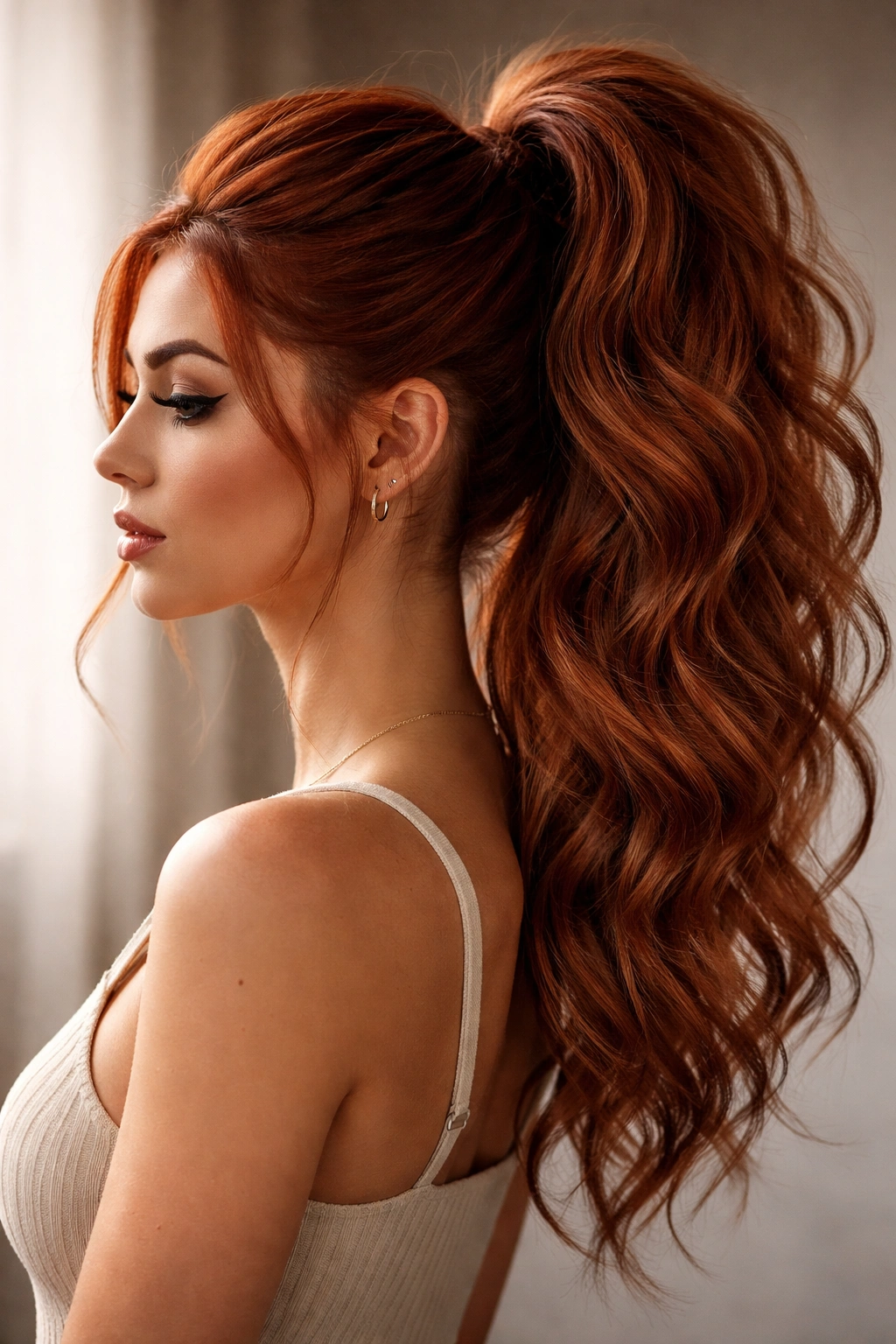
A high ponytail instantly lifts your face and creates visual height, making it particularly flattering for people who prefer the elongation effect around their features. For this style, pull your red hair into a ponytail positioned high on your crown, then work texture throughout. You can create this texture in multiple ways: use a texturizing spray and scrunch your damp hair before blow-drying, create waves using a waver or curling iron after the ponytail is secured, or tease gently at the crown and smooth the surface layer while keeping the interior full. The texture means this style works beautifully for all skin tones and hair types—the movement and dimension of the texture create visual interest that balances your overall look rather than making your hair color the singular focus.
Why It Works Across Skin Tones
Textured high ponytails automatically create visual softness through movement and shadow. The texture breaks up any sense of a harsh color statement, making the style feel approachable and modern rather than severe. Lighter reds read more youthful and playful in this style, while deeper reds look rich and intentional. The height also naturally draws the eye upward toward your eyes and bone structure rather than emphasizing undertone relationships.
How to Make It Your Own
- Texture type: Decide whether you want loose waves, tight curls, piece-y separation, or just general volume. Each creates a subtly different vibe with the same foundational style.
- Tease level: A subtly teased crown creates gentle height; an aggressively teased crown creates drama. Go with what feels authentic to your usual aesthetic.
- Pieces out: Pull out a few smaller pieces around your face and allow them to curl downward. This frames your features and adds softness to the top-heavy nature of a high ponytail.
- Base treatment: Like the sleek version, wrap hair around the elastic base and pin it. With this textured style, you can also incorporate a thin metallic hair cuff or delicate chain headpiece threaded through the base for added interest.
Pro tip: The secret to a textured high ponytail that doesn’t look like you’re trying too hard is to tease strategically rather than all over. Tease only at the crown where you want height, smooth the surface layer for a polished top, and leave the ponytail itself textured. This balance reads intentional but effortless.
3. The Side-Swept Ponytail
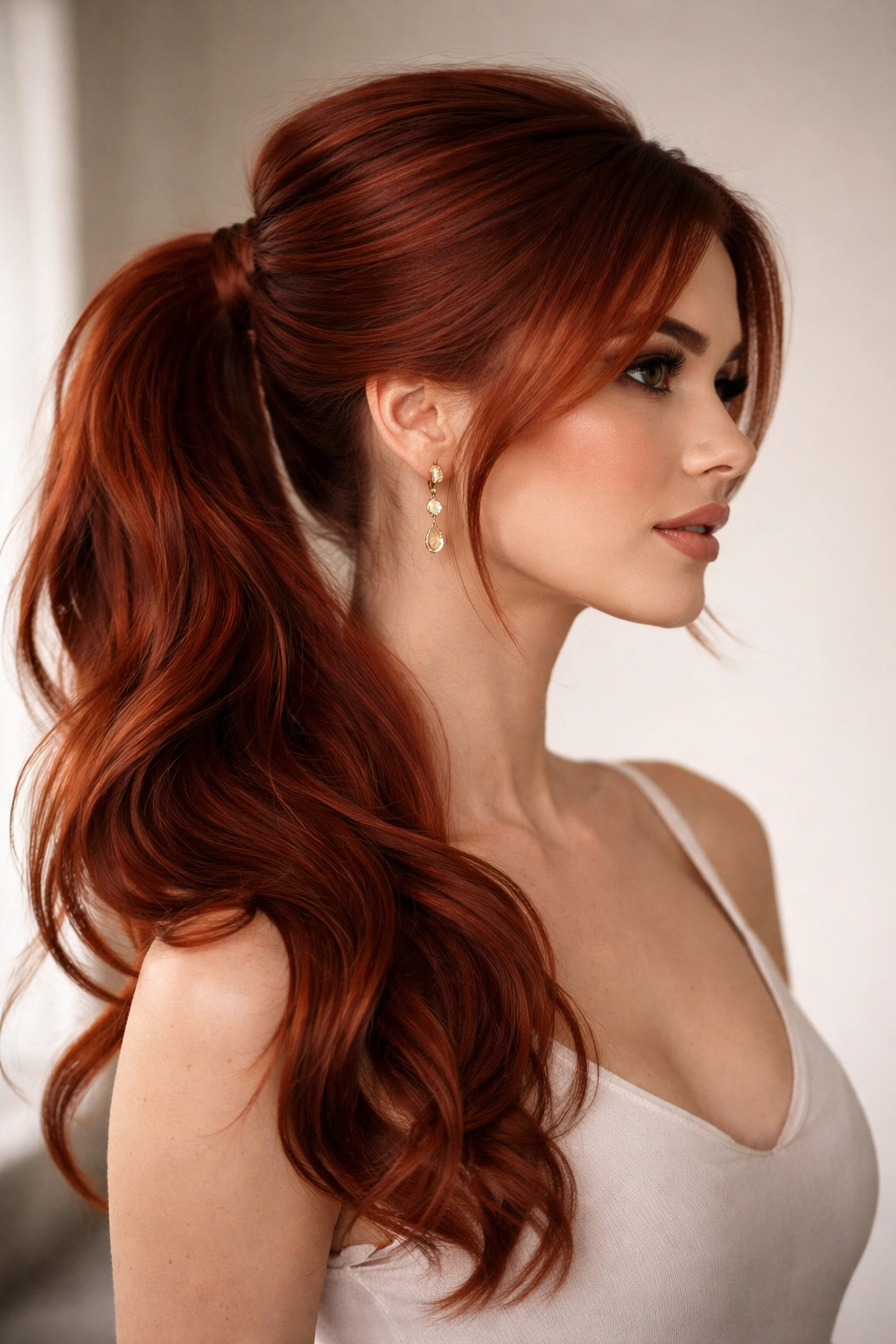
The side-swept ponytail is a style that genuinely flatters almost every face shape because it creates visual asymmetry, which is inherently interesting. Pull your red hair back and to one side, creating a ponytail that sits somewhere between the nape and your ear. The exact position depends on your face shape—if you prefer to visually widen your face, position it more toward the nape; if you prefer to narrow it, sweep it more dramatically to the side. This style creates an instant sense of movement and creates space on one side of your face, making it particularly flattering for people with very round or very angular face shapes who want visual balance.
Why It Works Across Skin Tones
The asymmetry of a side-swept ponytail means that your skin is visible on both sides of your face, but in different proportions. This asymmetry actually helps neutralize any potential undertone clashes because the imbalance feels intentional and fashion-forward. The swept placement also creates shadow and visual interest that prevents the style from reading as a single, flat color statement. Warm reds look sun-kissed and dimensional in this style, while cool reds look sculptural and deliberately styled.
How to Make It Your Own
- Sweep angle: A dramatic side sweep (ponytail positioned more toward your ear) creates a bolder, more fashion-forward look. A gentler sweep (positioned closer to center-back) reads softer and more everyday.
- Texture: Keep it sleek for a sophisticated vibe, or add texture for a more relaxed feel. The side placement works with both aesthetics equally well.
- Face-framing: Allow longer pieces to fall naturally on the unswept side of your face. These pieces should curve slightly forward, creating a soft asymmetrical frame around your features.
- Base detail: Since the ponytail base is visible, consider adding a decorative element—a velvet ribbon, a metallic cuff, or a delicate hair clip—that you might skip with a style where the base is completely hidden.
Pro tip: To figure out which side to sweep toward, look at which side of your face you naturally prefer to show the camera. Most people have a favored side—use that preference to guide your sweep direction.
4. The Bubble Ponytail
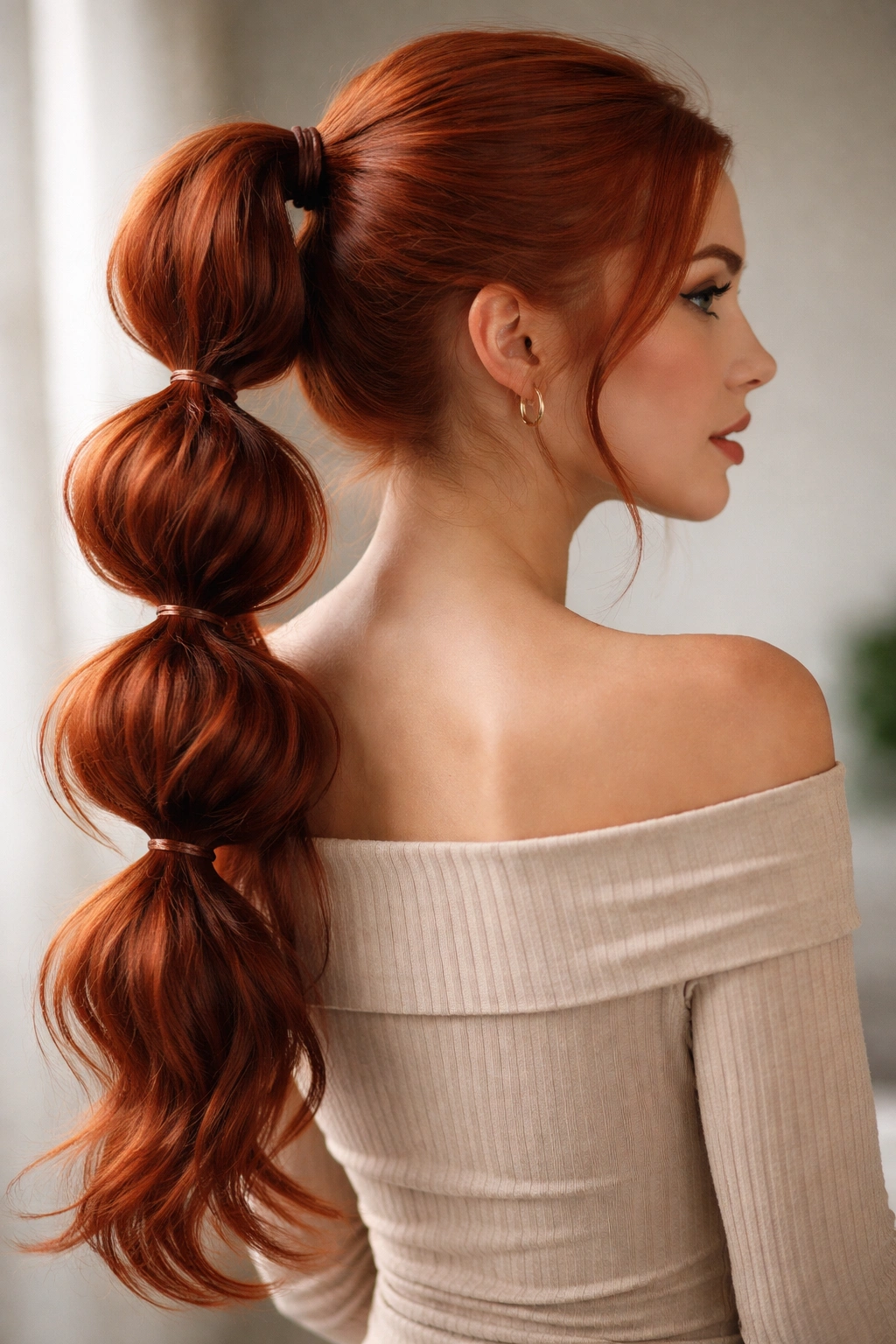
A bubble ponytail uses multiple elastics spaced evenly down the length of the ponytail to create distinct, puffy “bubbles” of hair texture. This style is surprisingly modern despite seeming trendy, and it works beautifully for red hair because the sections and shapes create visual rhythm that breaks up the flatness of a single-color statement. To create it, secure a low or mid-height ponytail with one elastic, then add additional elastics approximately 2 inches down the ponytail, pinching and puffing the hair between each elastic for volume. You can make the bubbles tight and defined, or gently tousled for a more relaxed effect.
Why It Works Across Skin Tones
The bubble ponytail is inherently playful and textured, which means it reads as a style choice rather than a statement about your hair color. The visual movement created by the bubbles pulls attention across the ponytail rather than focusing it on a single expanse of color. This breaks down any potential undertone concerns and makes the style feel fashion-forward and intentional. All skin tones read beautifully with bubble ponytails because the style has its own visual drama that doesn’t rely on color harmony.
How to Make It Your Own
- Bubble placement: A low bubble ponytail reads classic and polished; a high bubble ponytail reads playful and youthful; a mid-height version splits the difference.
- Bubble size: Tighter, more defined bubbles create a structured, almost architectural look. Looser, more textured bubbles create a relaxed, dimensional effect.
- Fuzz factor: Leave the bubbles relatively smooth for a sleek version, or gently tease each bubble section for more volume and texture.
- Elastic visibility: Use elastics that match your hair color to make them disappear, or use colored or metallic elastics if you want them to be a decorative accent.
Pro tip: If you want your bubbles to stay puffy throughout the day, spray each section lightly with texturizing spray after you create it. This adds grip and helps the hair hold its shape without feeling stiff.
5. The Slicked-Back High Ponytail
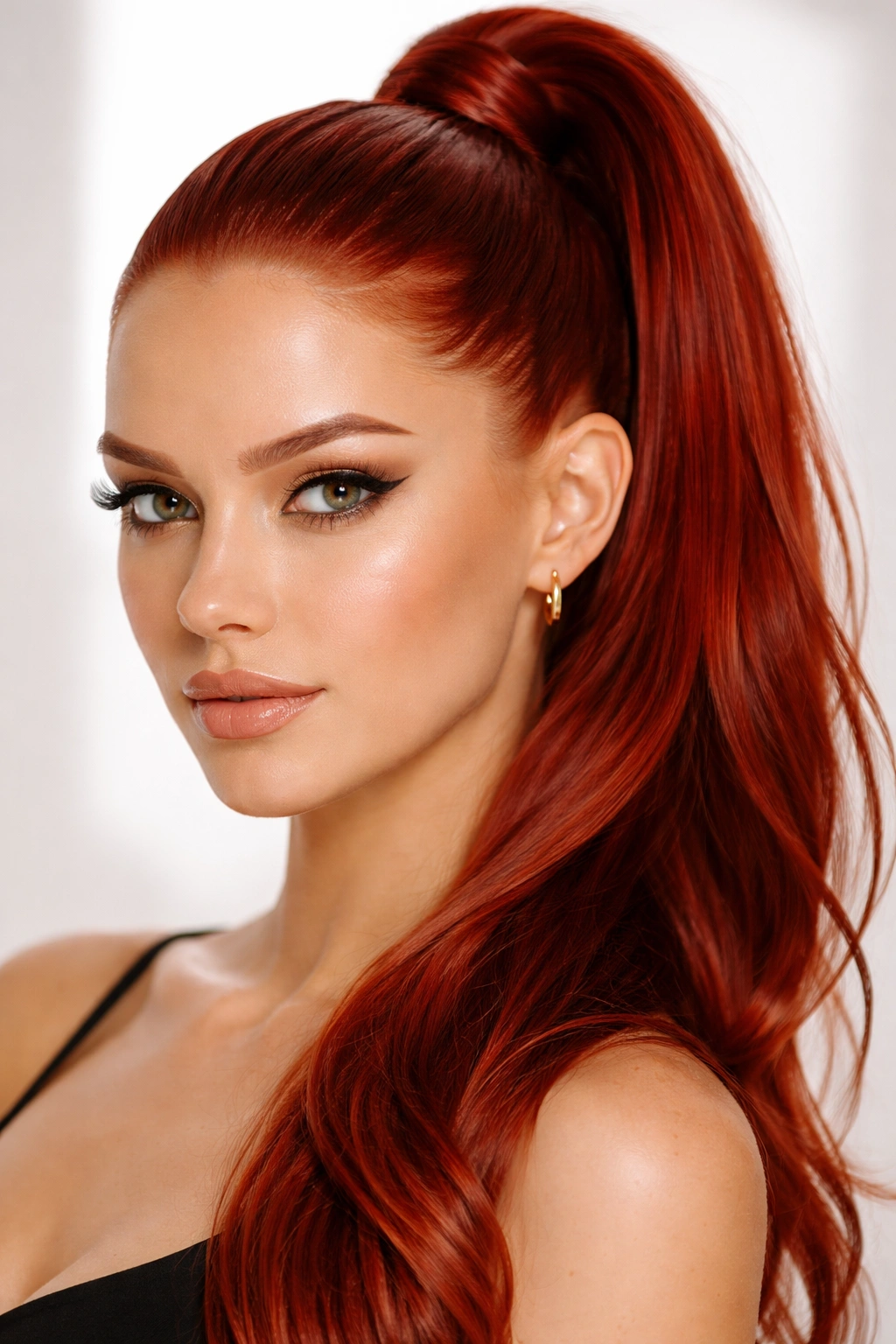
A slicked-back style pulls your hair completely away from your face and scalp, smoothing it dramatically backward and securing it high on the crown. This is a bold, confident look that absolutely requires the right mindset to pull off—it’s not subtle. Use a smoothing gel or strong-hold styling cream, blow dry your hair while pulling it straight back, and secure it with a strong elastic. This style is particularly striking on people with defined facial features and strong bone structure because nothing visually competes with your face. It works wonderfully for all skin tones, but it’s definitely a statement.
Why It Works Across Skin Tones
A slicked-back style is so architecturally bold that it actually transcends undertone concerns. The style demands such visual confidence that it reads as intentional and fashion-forward on anyone brave enough to wear it. Warm reds look glowing and warm against the smooth surface; cool reds look jewel-like and dramatic. The key is that your face and features are completely exposed, so the style is fundamentally about your features first, hair color second. This balance actually helps across all skin tones.
How to Make It Your Own
- Smoothness level: A mirror-shine slicked back is ultra-dramatic; a smooth-but-not-shiny version feels slightly less severe while maintaining the style’s impact.
- Height of ponytail: The higher on your crown, the bolder the look. A more moderate height reads slightly more wearable for everyday situations.
- Pieces out: If you want to soften the severity, pull out a few smaller pieces around your hairline after slicking everything back. Allow them to rest against your face or curve slightly downward.
- Scalp detail: Since your scalp is completely exposed, consider adding a thin, delicate hair part down the center or to one side. This adds visual interest without breaking the slicked-back aesthetic.
Pro tip: A slicked-back style is easiest to achieve on second-day hair or hair with some natural texture. Freshly washed hair can be too slippery for smoothing gels to grab. If you’re starting with very clean hair, apply your smoothing product to damp hair and blow dry completely before attempting to slick everything back.
6. The Twisted Rope Ponytail
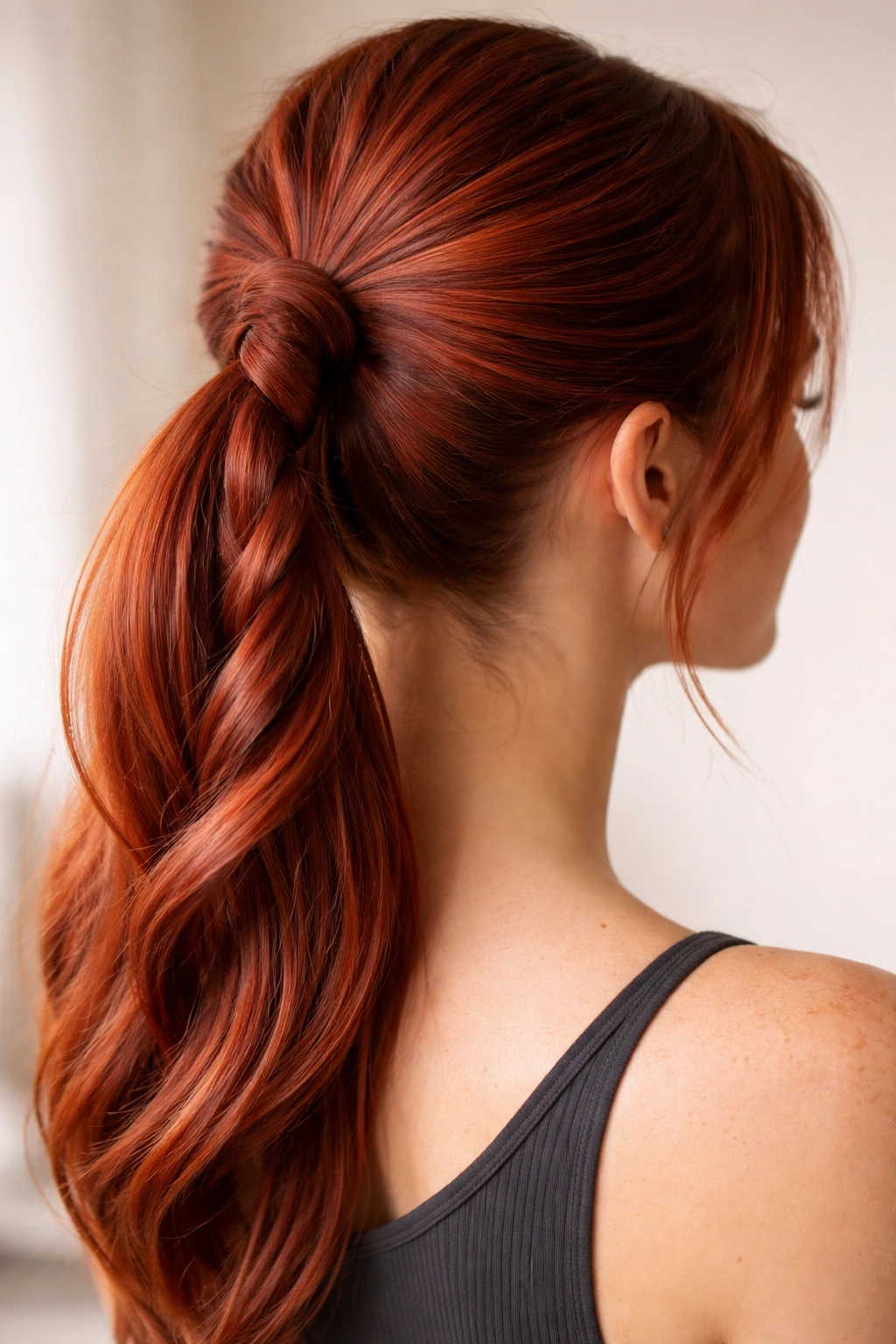
A twisted rope ponytail creates the visual effect of a traditional braid using only two sections of hair twisted around each other. Start by dividing your hair into two equal sections at your crown, then twist each section, and finally twist the two sections around each other as you move toward the back of your head. Secure everything into a ponytail at your desired height. This style looks elegant and intentional while being faster to create than a braid, and it adds instant dimension and texture to red hair. The twisting creates visual interest through shape and shadow, which works beautifully across all skin tones.
Why It Works Across Skin Tones
The twisted rope style creates its own visual narrative through shape and dimension, which means the style itself becomes the focus rather than the hair color alone. The twisting creates shadow and line that adds depth to your overall look. This is particularly flattering on people concerned about undertone matching because the twist pattern creates enough visual complexity that color harmony becomes almost secondary. Warm reds look luminous as the twists catch light; cool reds look sophisticated and intentional.
How to Make It Your Own
- Tightness: A tighter twist creates a structured, polished look. A looser twist with slightly separated sections reads softer and more romantic.
- Starting point: Beginning at your crown creates maximum visual impact; starting lower creates a subtler effect.
- Ponytail position: Pair a rope twist with a high ponytail for drama, a side ponytail for movement, or a low ponytail for elegance.
- Face-framing: Pull out small pieces before you twist, or gently pull smaller pieces out of the completed twist and allow them to curl forward around your face.
Pro tip: To make a rope twist faster and easier, apply a light texturizing spray to your dry hair before starting. This adds grip and keeps the sections from sliding around as you twist.
7. The Braided Crown Ponytail
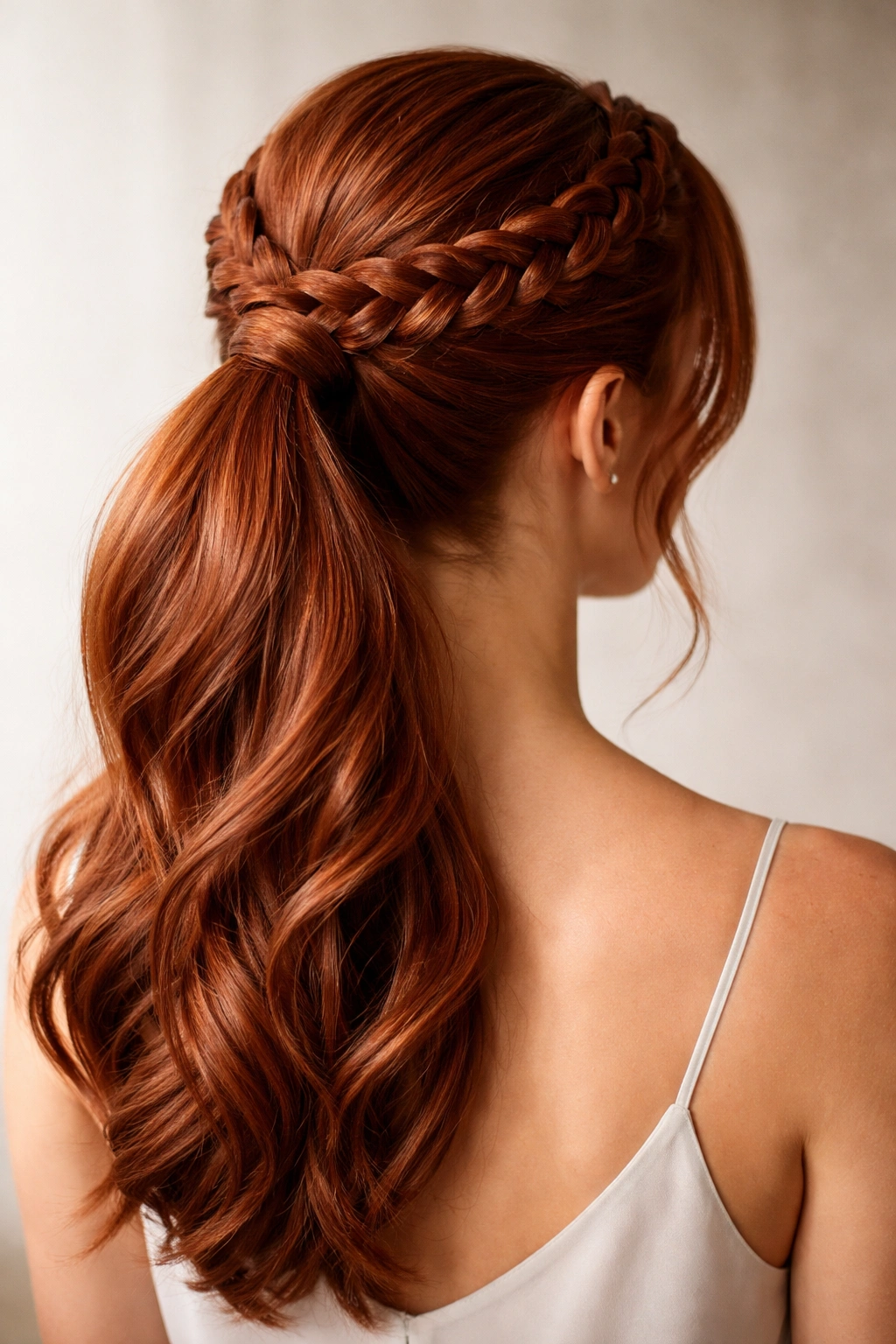
A braided crown ponytail combines the elegance of a braid with the practicality of a ponytail. Start by creating one or more braids that wrap around the back of your head (you can do a single braid from one side to the other, or two braids positioned symmetrically, or even a crown of multiple braids). Once the braids encircle the back of your head, gather all your hair into a ponytail at the nape or side of your neck. The braids act as a decorative frame for your ponytail and add instant visual sophistication. This style reads particularly elegant for events, but it works equally well as an everyday style with a textured ponytail.
Why It Works Across Skin Tones
The braided crown creates so much visual interest through texture and pattern that it actually minimizes any potential color-matching concerns. The style feels intentional and carefully crafted, which reads as confident across all skin tones. The braids themselves create shadow and dimension that adds depth to your appearance. All skin tones read beautifully with this style because the focus is on the style’s architectural merit rather than on color harmony alone.
How to Make It Your Own
- Braid number: One braid is elegant and simple; two braids are symmetrical and classic; three or more braids create maximum texture and visual interest.
- Braid style: Traditional three-strand braids read classic; Dutch braids (inverted braids) read modern; fishtail braids read delicate and romantic.
- Braid tightness: Tight braids read formal and polished; loose, piecey braids read relaxed and textured.
- Ponytail style: Pair your braided crown with a sleek, polished ponytail for elegance, or a textured, voluminous ponytail for relaxed confidence.
Pro tip: To make braids stand out and last all day, apply a texturizing spray or dry shampoo to your hair before braiding. This adds grip and prevents slipping, and it makes the braid slightly fuller and more visually interesting.
8. The Messy Bun Ponytail Hybrid
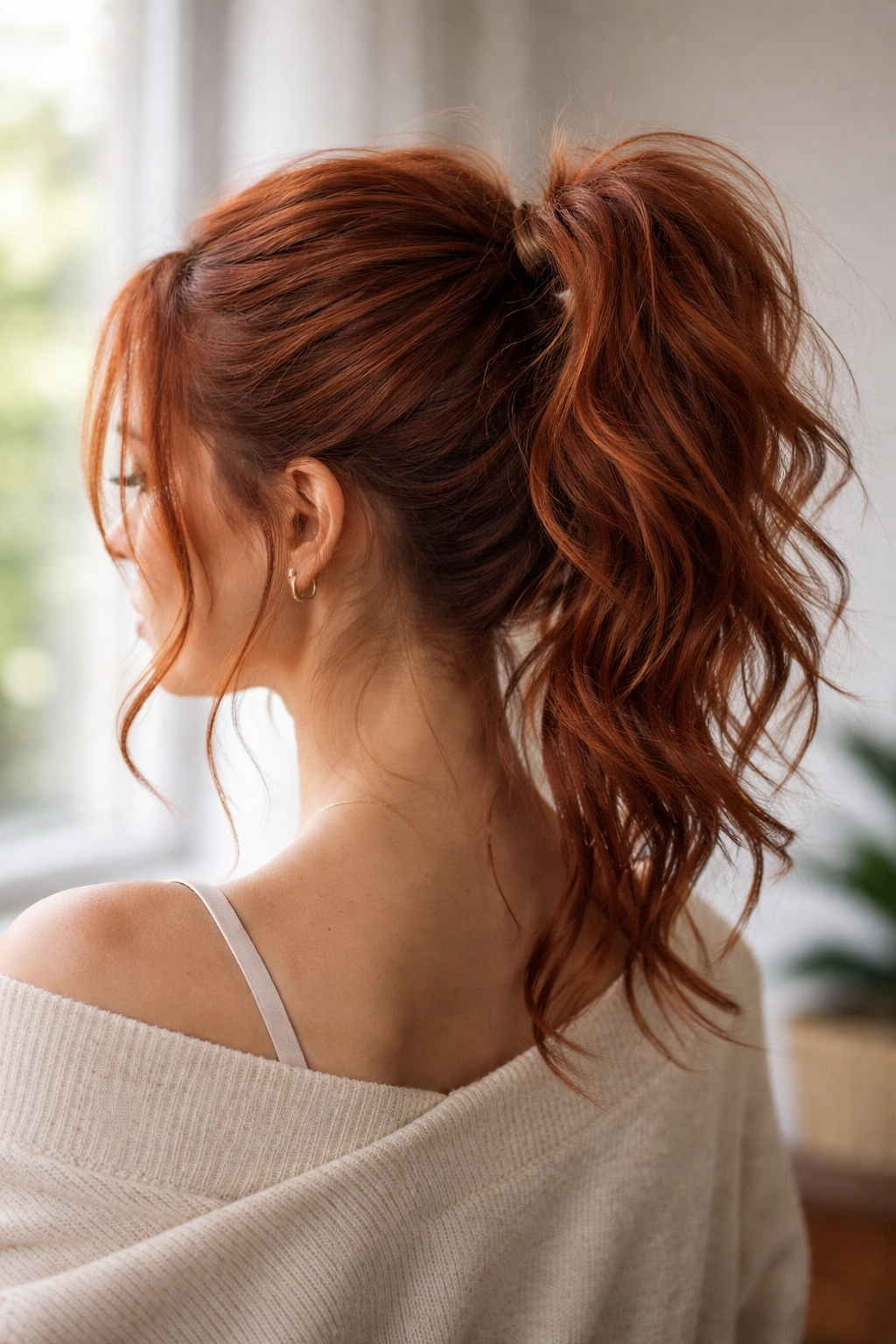
A messy bun ponytail hybrid is exactly what it sounds like—gather your hair into a high ponytail, then loosely twist or fold the ponytail and secure it against your head to create a relaxed, intentionally undone bun shape. This style skips the tight, structured aesthetic of a traditional bun in favor of something that looks effortlessly beautiful. Leave pieces out around your face and allow them to fall naturally. This style works for all skin tones and all hair types because it’s inherently soft and approachable. The looseness means there’s no sharp color statement—just a warm, textured, dimensional look.
Why It Works Across Skin Tones
The messy bun ponytail hybrid is intentionally undone and textured, which means it feels approachable and genuine regardless of your skin tone. The looseness and piece-y nature of the style create visual softness that transcends color matching. Warm reds glow warmly in this casual style, while cool reds look sophisticated and deliberately styled. The key is that the style itself prioritizes ease and confidence, which reads beautifully on everyone.
How to Make It Your Own
- Messiness level: A loosely twisted bun reads romantic and soft; a barely-twisted bun that’s almost just a textured ponytail reads more casual and everyday.
- Piece placement: Pull out substantial pieces around your hairline and face, or keep most hair in the bun with just a few wisps loose. Both versions read intentional and beautiful.
- Texture: Create the bun on day-two or day-three hair when your hair has some natural texture and movement. Freshly washed hair creates too-perfect ringlets; older hair creates that intentionally undone effect.
- Bun position: A bun positioned high on your crown reads playful and youthful; a bun positioned lower reads softer and more elegant.
Pro tip: The secret to a messy bun that looks intentionally undone rather than actually messy is to secure it very firmly with bobby pins, then strategically pull smaller pieces out and arrange them exactly where you want them. This creates the visual effect of casual while maintaining the structural integrity the style needs to last.
9. The Sleek Ponytail with Face-Framing Layers
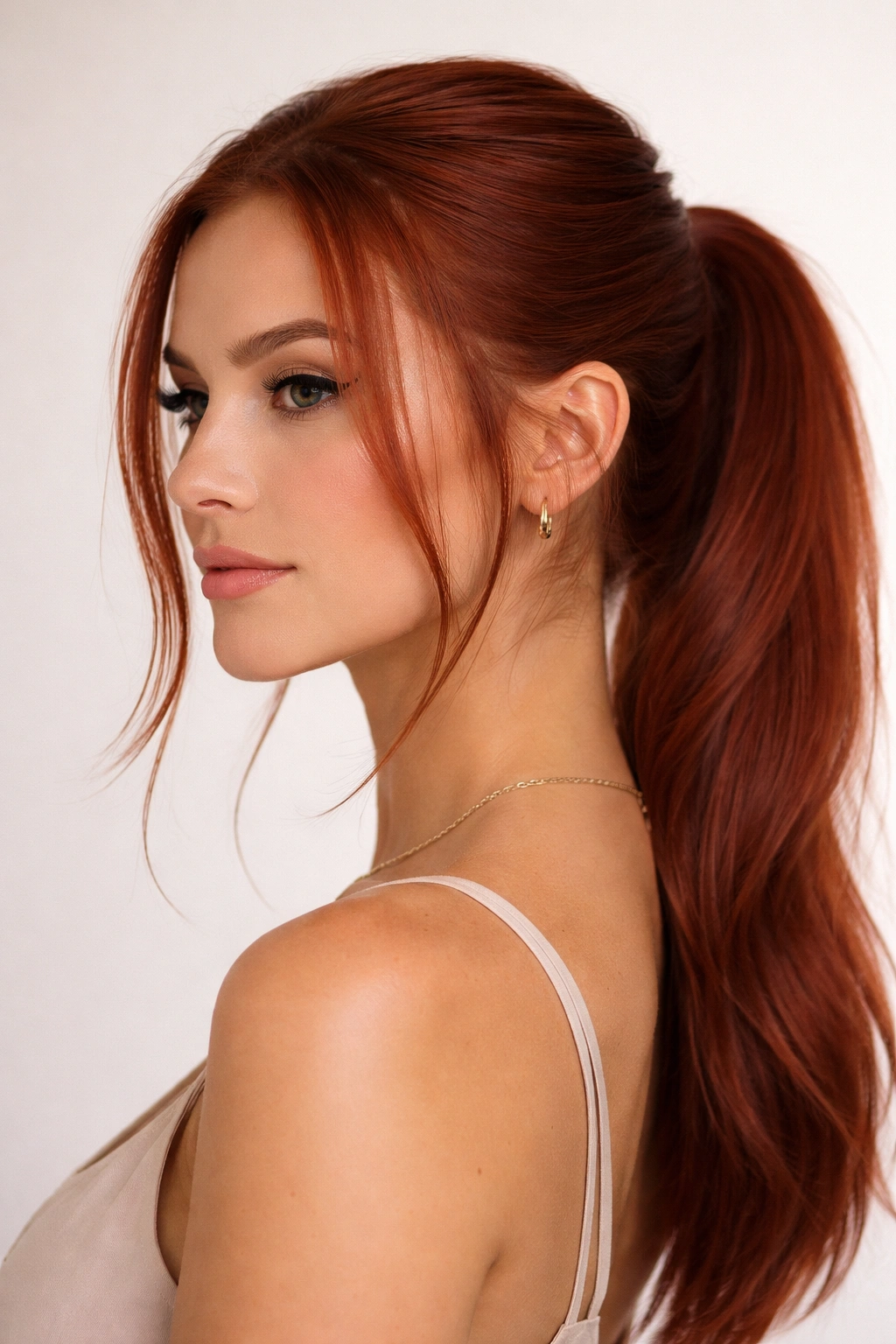
This style combines the sophistication of a sleek ponytail with the softness of face-framing pieces that fall around your features. Pull your hair into a sleek, low ponytail, then take several smaller sections from around your hairline and face and don’t include them in the ponytail elastic. Blow dry or curl these face-framing pieces so they create a soft frame around your features. This style works beautifully for all skin tones because the face-framing pieces add softness and dimension to what could otherwise feel like a severe style. The pieces themselves catch light and create movement, which adds visual interest beyond just the color statement.
Why It Works Across Skin Tones
Face-framing pieces create an intentional visual break between your hair color and your skin, which actually helps with color harmony across all skin tones. The pieces frame your face and draw attention to your features first, hair color second. This balance means the style reads beautifully regardless of undertone relationships. Warm reds look luminous as the face-framing pieces catch light and reflect onto your skin; cool reds look jewel-like and deliberately styled. The key is that the pieces themselves become a decorative element that transcends simple color matching.
How to Make It Your Own
- Piece size: Thin, delicate pieces read sophisticated and polished; thicker, more substantial pieces read bolder and more fashion-forward.
- Piece length: Pieces that hit around your chin read classic and flattering; pieces that extend to your collarbone read softer and more romantic; shorter pieces read modern and sharp.
- Piece curl: Straighten them for a sleek version, create soft waves for elegance, or curl them more dramatically for volume and movement.
- Ponytail position: Pair face-framing pieces with a very low, formal ponytail for elegance, or a slightly higher, more relaxed ponytail for everyday confidence.
Pro tip: The best face-framing pieces are cut into the style itself rather than just pulled out of a regular ponytail. If you’re wearing this style regularly, ask your stylist to cut subtle face-framing layers into your hair. They’ll fall naturally around your face and create intentional dimension that lasts between cuts.
10. The Sleek Side-Parted Low Ponytail with a Wrap
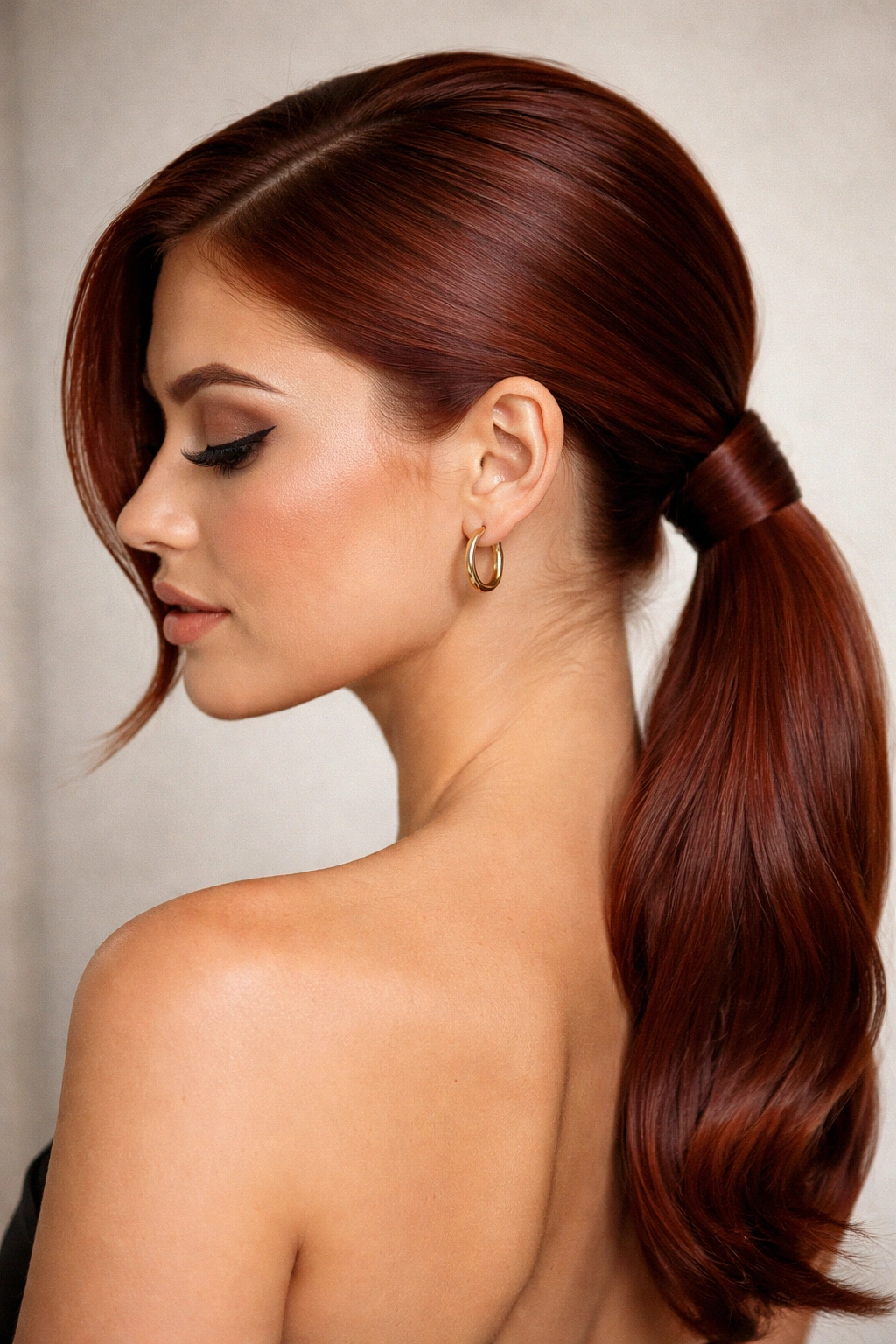
This style combines the elegance of a side part with the sophistication of a sleek low ponytail, and then adds a decorative wrap around the base—either a complementary ribbon, a piece of fabric, or even a section of hair wrapped and pinned. Create a deep side part, smooth your hair back into a sleek low ponytail positioned slightly to the side (on the heavier side of the part), and secure it with a small elastic. Then wrap your chosen material around the base to hide the elastic. This style reads incredibly polished and intentional, and it works for all skin tones because the focus is on the sophisticated overall composition rather than on color alone.
Why It Works Across Skin Tones
A wrapped ponytail with a side part creates such visual sophistication that the style itself becomes the focal point. The wrap—whether ribbonlike, fabric-based, or hair-based—adds a decorative element that draws attention away from simple color matching and toward the overall composed aesthetic. The side part creates asymmetry that’s inherently flattering and interesting. All skin tones read beautifully with this style because the visual interest comes from proportion, line, and composition rather than from color harmony alone.
How to Make It Your Own
- Side part deepness: A deep part is dramatic and fashion-forward; a more moderate part reads softer and more everyday.
- Wrap material: A velvet ribbon feels luxe and romantic; a metallic chain feels modern and edgy; a wrapped section of your own hair feels classic and timeless.
- Wrap width: A thin wrap reads elegant and understated; a thicker wrap reads bolder and more statement-making.
- Ponytail finish: Pair your wrap with a completely sleek ponytail for maximum polish, or add subtle texture for a more relaxed version of the style.
Pro tip: If you’re using a ribbon or fabric wrap, secure the ponytail first, then wrap the material around the base tightly several times, and secure it with bobby pins in the back where they won’t be visible. The wrap should feel secure enough to last through your entire day without shifting.
Final Thoughts
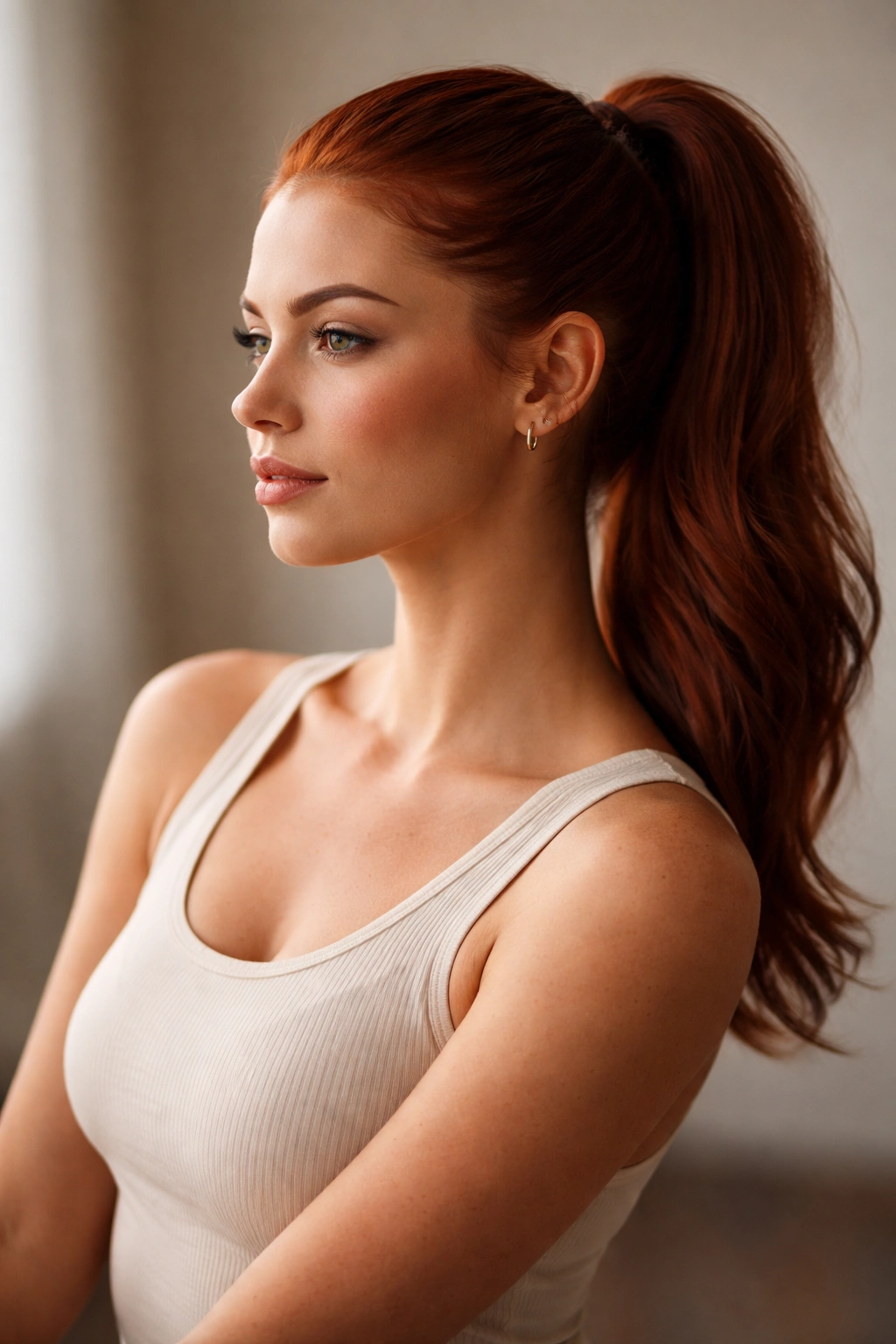
The red ponytail looks that genuinely work across all skin tones aren’t the ones that claim some magic color-matching formula. They’re the ones that use style mechanics—placement, texture, dimension, and strategic styling details—to create visual interest and confidence that transcends simple color relationships. Whether you choose a sleek style that showcases your features, a textured style that creates visual movement, or an intricate style that demonstrates intention and care, the key is understanding why that style works, then adapting it to match your personal aesthetic and daily needs.
Red hair demands confidence, and the right ponytail amplifies that confidence rather than fighting it. These ten styles give you a framework for experimenting with what feels authentic to you—not following trends blindly, but understanding the principles that make a style work so you can make it genuinely yours. The best red ponytail you can wear is the one that makes you feel like yourself, just with a little extra polish and intention.
