



A side bang ponytail might seem like a simple style, but it’s actually one of the most versatile ways to frame your face and enhance your best features. The magic of this look lies in how the side-swept bangs can instantly soften harsh angles, add fullness where you need it, or create the illusion of better proportions. Unlike a traditional center-parted ponytail that treats everyone the same way, a side bang version allows you to customize the placement, angle, and texture of the bangs to suit your specific face shape. Whether your face is round, angular, long, or somewhere in between, there’s a side bang ponytail variation that will feel like it was made specifically for you.
The beauty of working with side bangs is that they don’t just sit there—they actively work with your bone structure. They can widen a narrow face, narrow a wide one, soften a sharp jawline, or add dimension to a flat forehead. Combined with the neat, pulled-back structure of a ponytail, side bangs create a balanced, intentional look that feels both effortless and polished. The key is understanding your face shape first, then choosing the right bang length, density, and styling technique to maximize the effect.
1. Wispy Lightweight Side Bangs for Round Faces
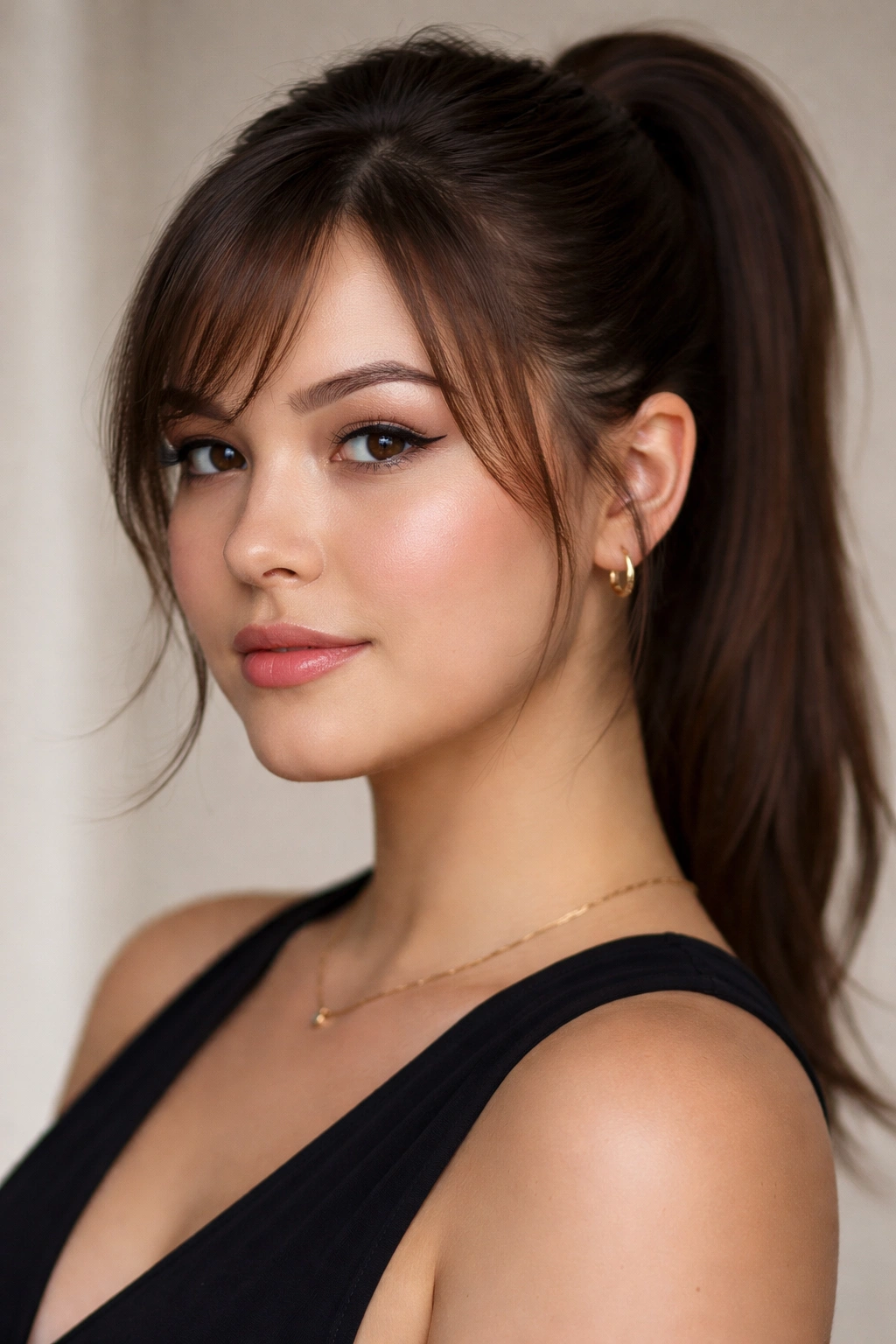
Round faces have soft, curved features with width across the cheeks and a rounded jawline. A side bang ponytail designed for this face shape should create the illusion of length and angularity, drawing the eye upward and outward rather than emphasizing the width of the face.
The wispy lightweight side bang works beautifully here because the delicate texture creates visual lightness rather than adding bulk. These bangs should be cut at a longer length—around cheekbone or even slightly below—so they don’t sit flat against the face. Ask your stylist to cut them with lots of texture and choppy layers, so individual pieces fall separately rather than forming a heavy sheet.
Why This Works for Round Faces
Wispy bangs elongate the face by creating vertical lines through their thin, separated strands. The softer texture prevents the visual heaviness that would come from blunt, thick bangs. When paired with a sleek, moderately high ponytail, these bangs frame the face while the pulled-back structure lifts the features, counteracting the roundness.
How to Achieve This Look
- Blow-dry your bangs with a round brush, directing them diagonally across your forehead from one side
- Use a straightening iron on very low heat to smooth each individual strand while maintaining the bend
- Tousle with your fingers or a texturizing spray to separate the wispy pieces
- Keep the rest of your hair in a smooth, high or mid-height ponytail to emphasize the lifted cheekbones
Pro tip: Don’t let wispy bangs get too long or heavy—they need regular trims (every 3-4 weeks) to maintain their light, separated texture. As they grow, they’ll start to feel thicker and less elongating.
2. Sleek Angled Side Bangs for Square Faces
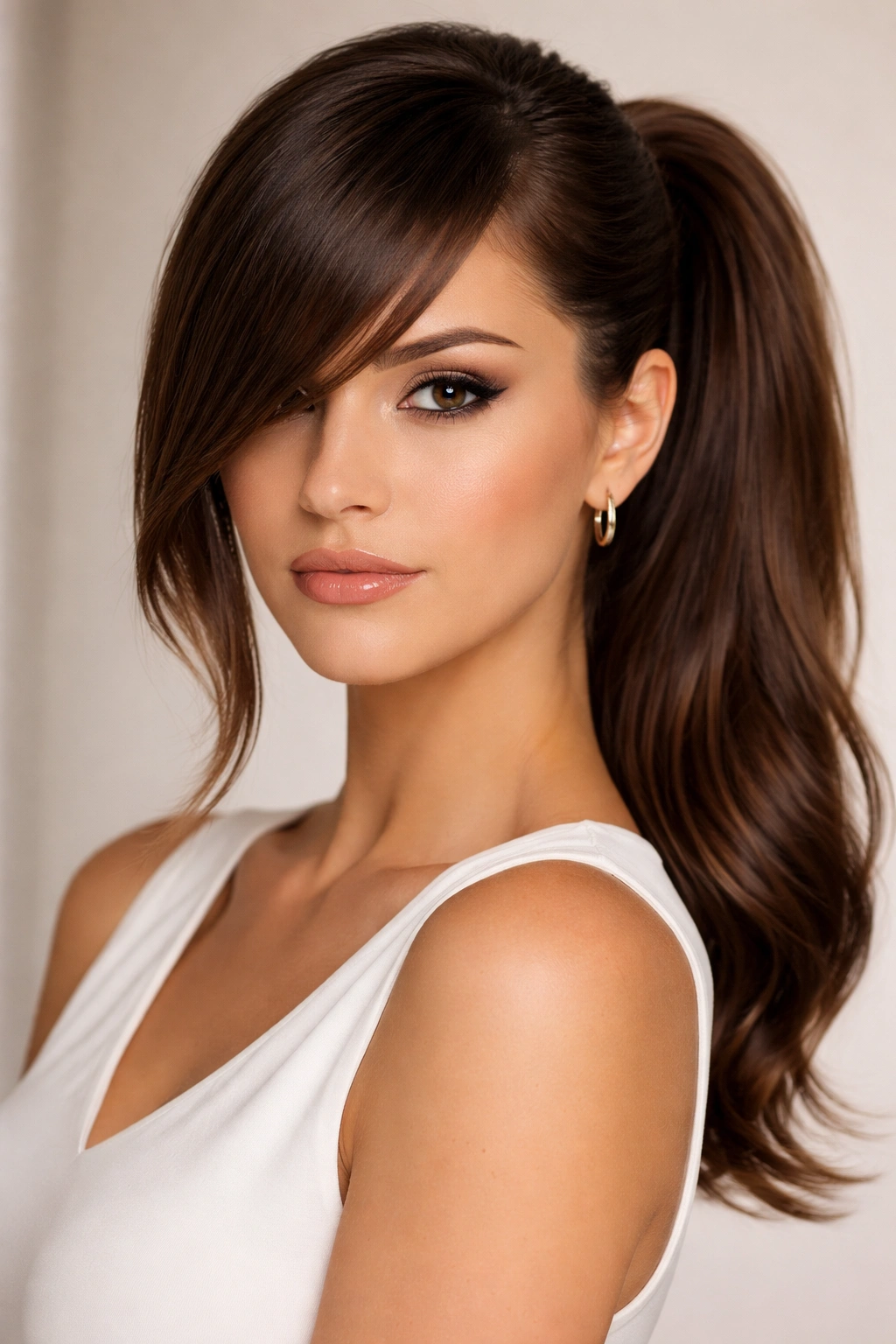
Square faces feature a strong, defined jawline with similar width across the forehead, cheeks, and jaw. The goal with a side bang ponytail for this face shape is to soften that angular jawline and draw attention away from its sharpness.
Sleek angled side bangs accomplish this by creating a diagonal line across the face that counters the horizontal and vertical lines of the face shape itself. These bangs should be blunt but smooth, falling at mid-cheekbone length, and angled dramatically from short on one side to longer on the other. The sleekness matters here—this isn’t a textured, choppy cut, but a polished, intentional angle.
Why This Works for Square Faces
The angled line of the bangs naturally softens the hard angles of the face structure. By directing the bangs toward one side and keeping them smooth and polished, you create a sophisticated frame that guides the eye along a curve rather than emphasizing the square proportions. Pairing this with a polished, sleek ponytail positioned slightly to the opposite side of the bangs creates balanced asymmetry.
How to Achieve This Look
- Blow-dry bangs smooth and sleek, using a paddle brush to direct them diagonally across your forehead
- Flatten with a straightening iron, maintaining the angled direction
- Pull the rest of your hair into a sleek, low ponytail positioned slightly away from where the bangs fall
- Smooth any flyaways with a lightweight smoothing serum
Worth knowing: This style benefits from very straight hair or hair that’s been smoothed with a blow-dryer and straightener. Any natural texture will soften the intentional geometry that makes this cut work for square faces.
3. Longer Side-Swept Bangs for Oval Faces
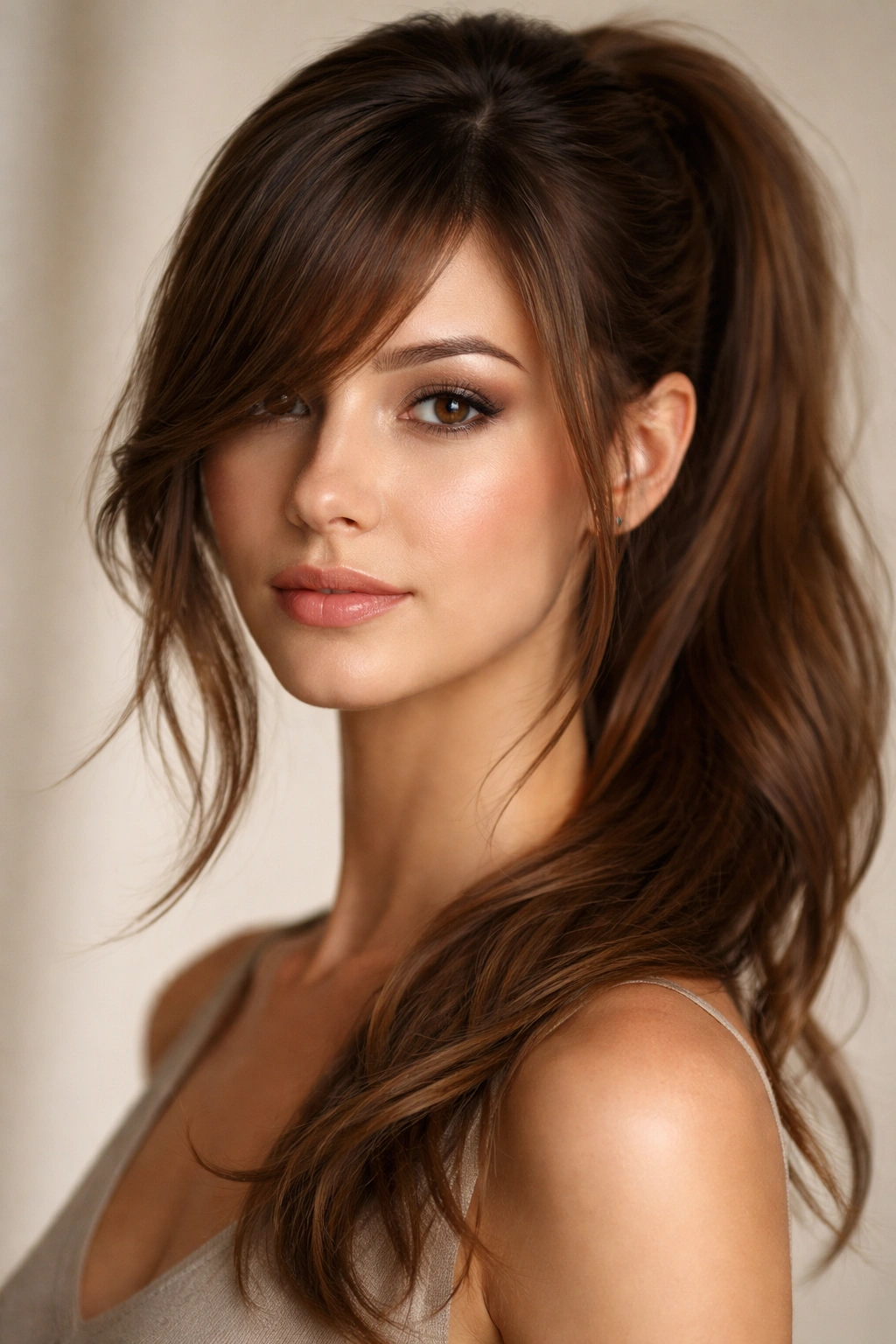
Oval faces are balanced and proportional, with slightly broader foreheads and narrower chins. The good news is that oval faces can pull off almost any hairstyle, including multiple side bang variations. Longer side-swept bangs work particularly well because they elongate the already-balanced proportions even further.
These bangs should be cut longer than cheekbone length—ideally falling around the bottom of your cheekbones or even shoulder-length—creating a smooth, sweeping curve across the face. The key is that they should move and flow with your hair, blending seamlessly from your bangs into the ponytail so they appear like one continuous style rather than a separate element.
Why This Works for Oval Faces
Longer bangs on an oval face don’t need to correct anything; instead, they add elegant length and a romantic quality. The sweeping motion flatters the balanced proportions, and because oval faces are naturally harmonious, almost any angle works. The flowing, connected look between bangs and ponytail creates an intentional, high-style appearance.
How to Achieve This Look
- Blow-dry bangs in a side-swept direction, curling them slightly with a round brush for movement
- Create soft waves or curls throughout your hair using a curling iron or wand
- Gather hair into a mid-height or high ponytail, leaving the longer bangs out to frame the face
- Use a light hairspray to hold the sweep without stiffness
Insider note: The longer these bangs are, the more important it is to keep them well-maintained. Split ends become very visible when bangs are long and fall across the face constantly. Plan for trims every 6 weeks.
4. Textured Choppy Bangs for Heart-Shaped Faces
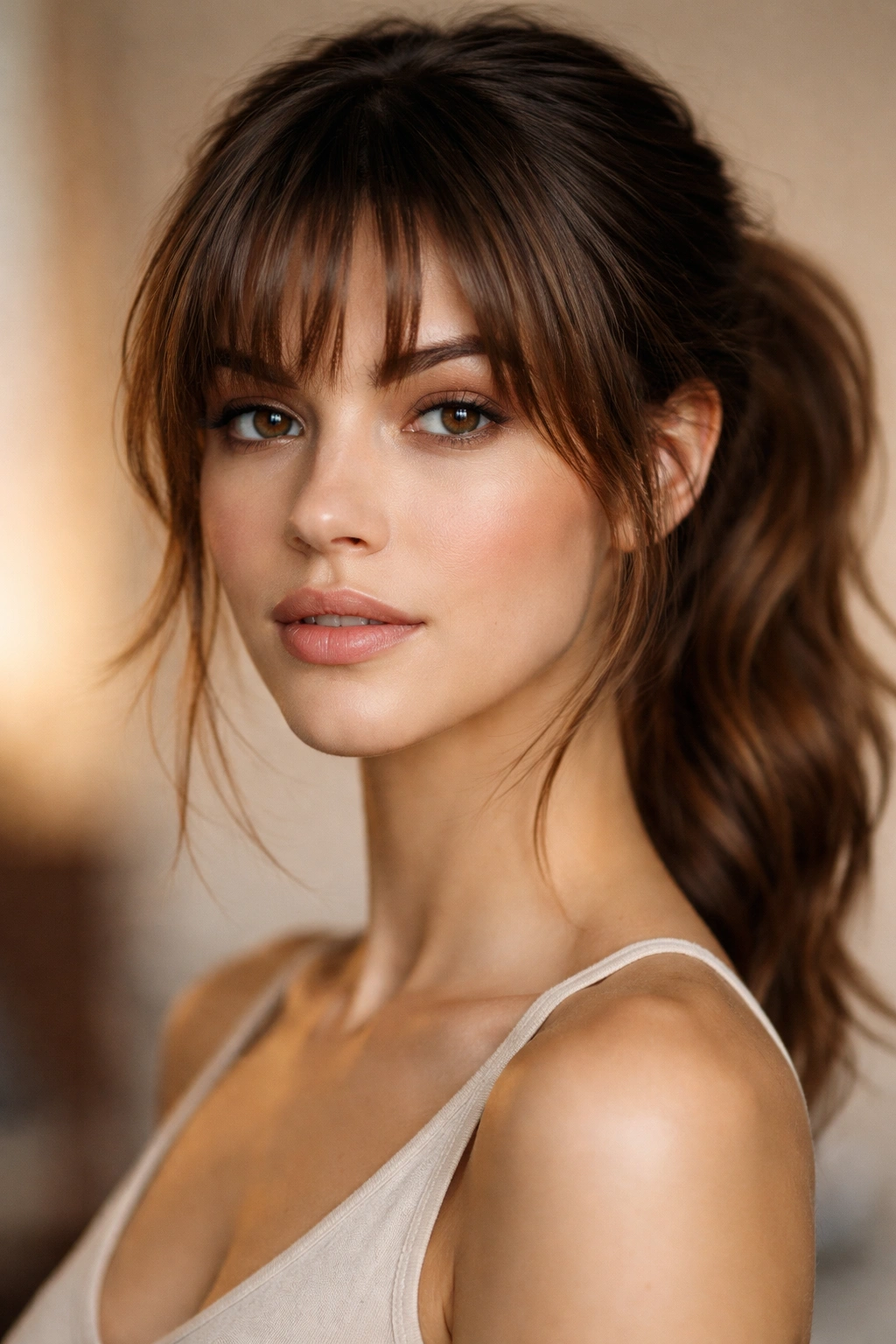
Heart-shaped faces are wider across the forehead and cheekbones, then taper to a narrower chin. The goal with side bangs for this shape is to soften the broader upper face while adding fullness to the narrower lower face.
Textured choppy bangs are perfect here because the texture and movement break up the width of the forehead while the shorter overall length keeps focus from resting on the broader upper third. These bangs should be cut with significant layers and choppy pieces, ideally falling just above or at cheekbone length. The texture should feel playful and dimensional, not sleek or blunt.
Why This Works for Heart-Shaped Faces
Choppy, textured bangs visually reduce the perceived width of the forehead by creating dimension rather than a solid block of hair. The movement and layers make the forehead feel less prominent. When paired with a ponytail positioned slightly lower on the head, this style brings balance back to the face proportions.
How to Achieve This Look
- Blow-dry bangs with a medium round brush, creating slight waves as you dry
- Finger-style or use a texturizing product to enhance the choppy, separated pieces
- Pull hair into a slightly lower ponytail to balance the wider upper face
- Tousle bangs gently with your fingers for that undone, textured quality
What to watch for: Choppy bangs require styling almost every time you wash your hair. If you blow-dry them flat or skip styling, they can lose their intentional texture and look bedraggled. This is a higher-maintenance style that rewards daily effort.
5. Curved Blunt Bangs for Oblong Faces
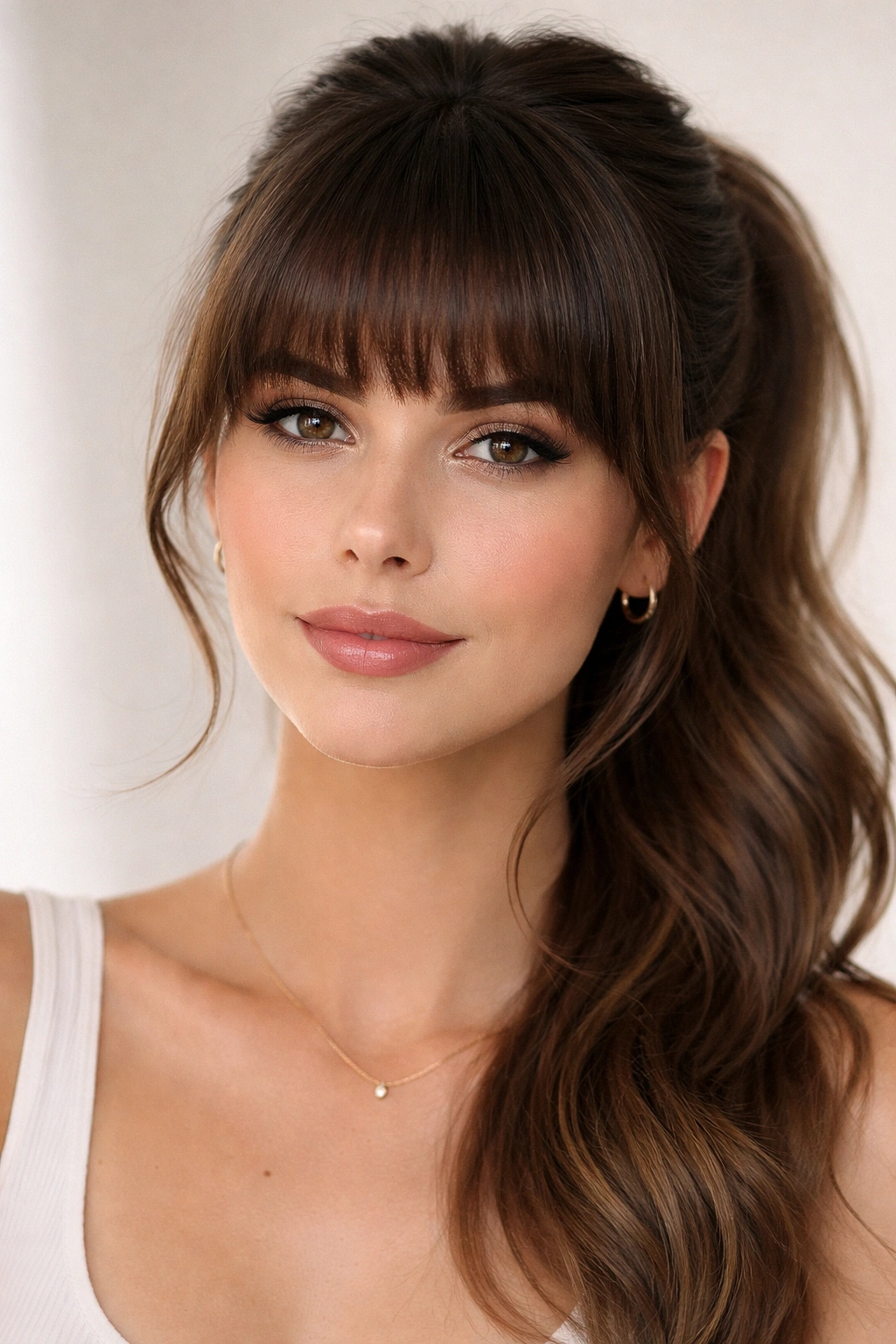
Oblong or rectangular faces are longer than they are wide, with length through the forehead, cheeks, and chin. The objective with side bangs for this face shape is to create horizontal width and break up the vertical length.
Curved blunt bangs achieve this by creating a strong horizontal line across the forehead while the curve prevents them from feeling too severe. These bangs should be cut at a slightly shorter length—around eyebrow to just-above-eyebrow—with a subtle curve rather than a harsh angle. The bluntness creates a defined statement, while the curve keeps it modern and softer than a straight blunt cut.
Why This Works for Oblong Faces
The horizontal line of curved blunt bangs visually widens the face and shortens the perception of its length. Unlike straight blunt bangs which can feel harsh, the subtle curve adds femininity while maintaining the structural benefit of the horizontal line. The shorter length prevents the bangs from adding to the vertical length of the face.
How to Achieve This Look
- Blow-dry bangs very smooth, using a round brush to create a gentle downward curve at the ends
- Straighten with a flat iron, allowing the iron to curve slightly at the ends for that subtle bend
- Pair with a mid-height ponytail to avoid adding more length to the face
- Keep bangs very neat and well-maintained for this polished, blunt look to work
Real talk: Curved blunt bangs can look amazing or unflattering depending on your hair texture. Straight or wavy hair works beautifully with this cut. If your hair is very curly or coily, you may struggle to maintain the bluntness unless you style with heat every single day.
6. Longer Feathered Bangs for Diamond-Shaped Faces
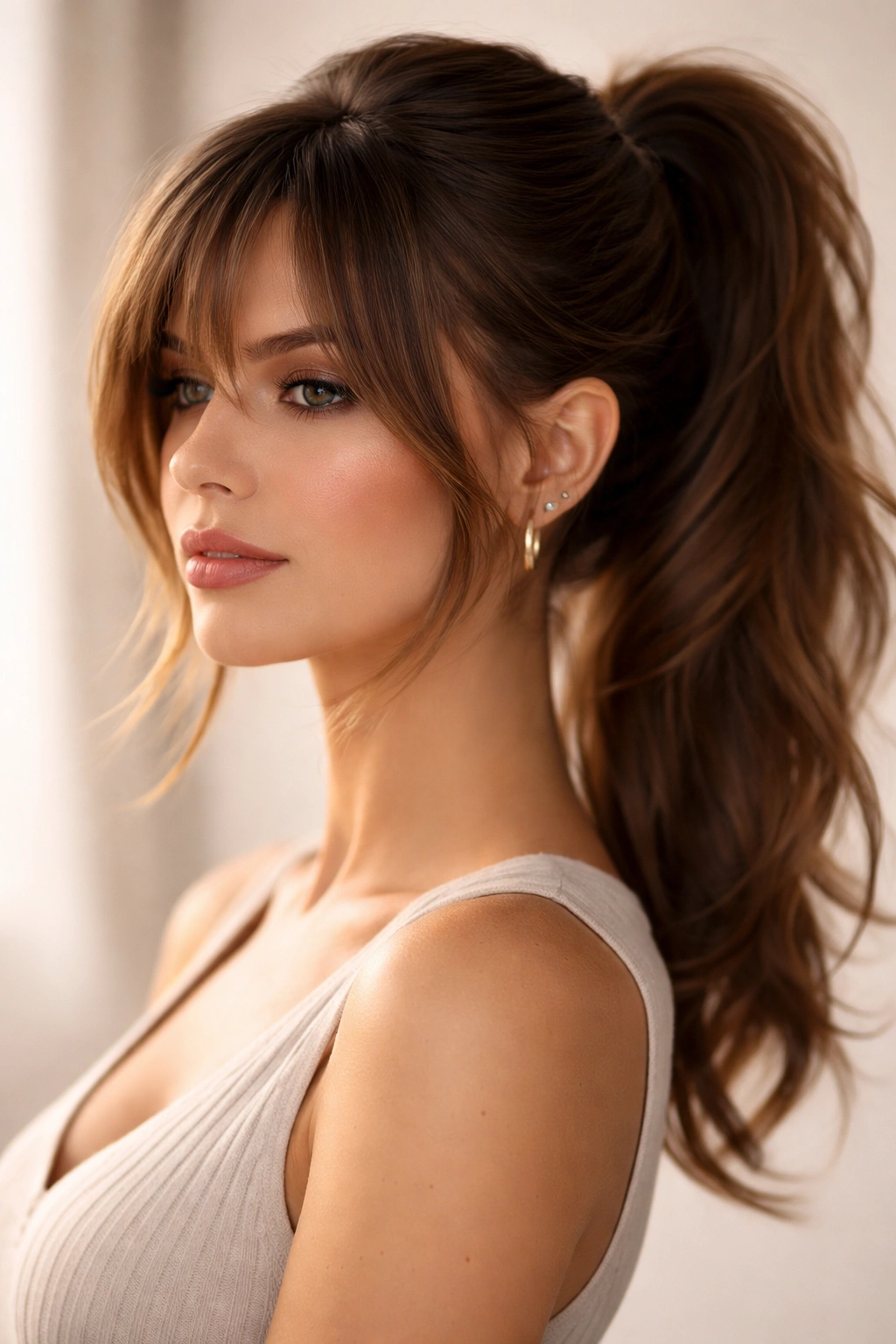
Diamond-shaped faces are narrow through the forehead and chin, with width concentrated at the cheekbones. The challenge with this face shape is balancing the prominent cheekbones without adding width where it already exists.
Longer feathered bangs work well here because the length past the cheekbones prevents the bangs from sitting right at the widest point of the face. Feathering—where the stylist cuts gradual layers throughout the bang—creates softness and movement while maintaining sufficient length. These bangs should fall at or slightly below cheekbone length, with lots of feathering so they flow and separate rather than sitting heavy.
Why This Works for Diamond-Shaped Faces
Longer feathered bangs draw the eye downward past the prominent cheekbones, balancing the narrow forehead and chin. The feathering creates texture and movement that prevents the bangs from adding bulk at the widest part of the face. The flowing quality softens the angular cheekbones without fighting against them.
How to Achieve This Look
- Blow-dry bangs with movement, using a round brush or your fingers to create separation in the layers
- Use a curling iron on medium-low heat to create soft waves through the feathered pieces
- Pair with a high or mid-high ponytail to keep focus on the balanced frame of the feathered bangs
- Finish with a light texturizing spray to maintain separation between the layers
Pro tip: Ask your stylist specifically for “feathered, not chunked” bangs. There’s a difference—feathering creates gradual layers throughout, while chunky layering creates distinct thick and thin sections. For diamond faces, you want the gradual, flowing feather texture.
7. Soft Layered Bangs for Pear-Shaped Faces
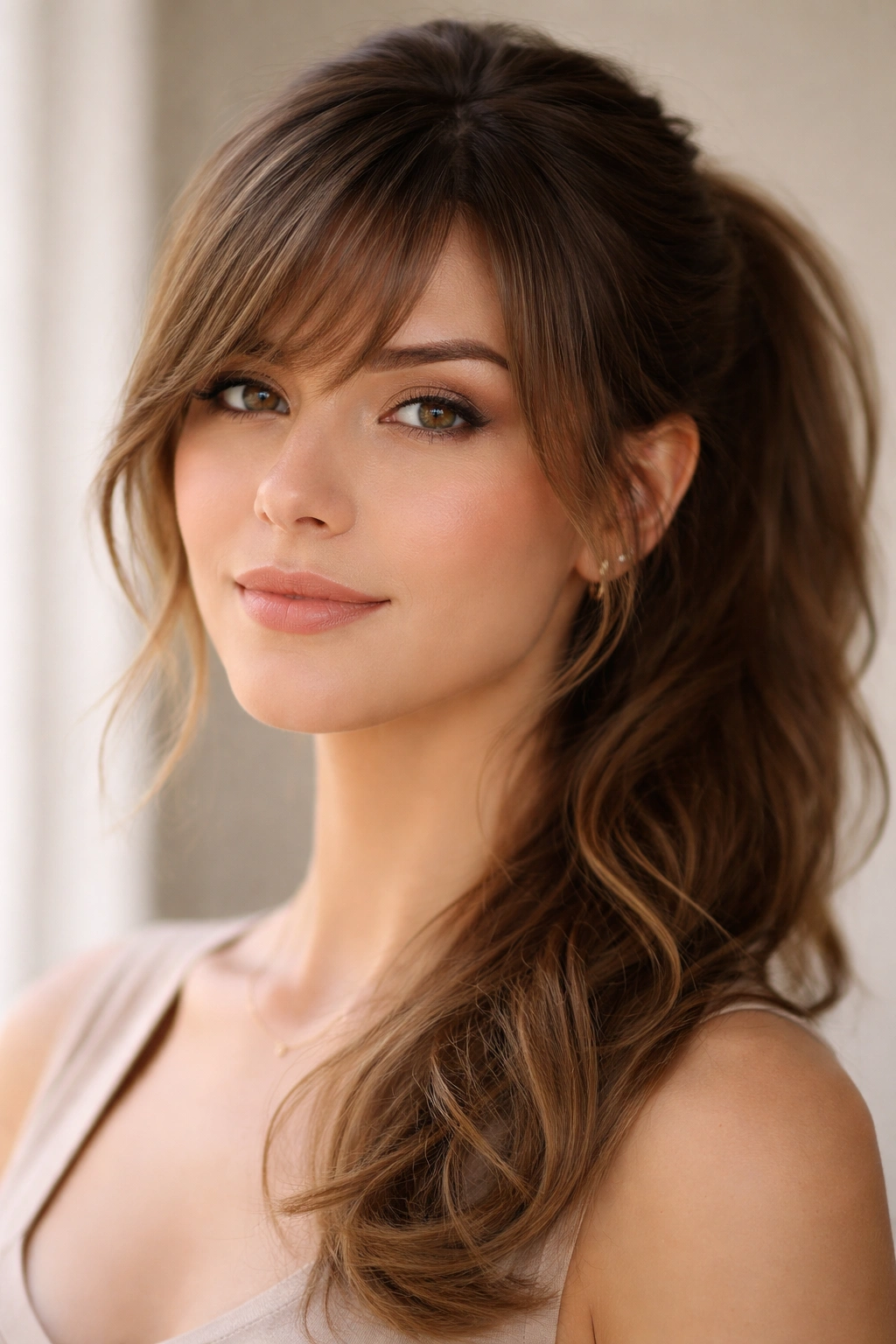
Pear-shaped faces are narrow at the forehead and temples, then widen significantly at the cheekbones and jaw. The goal is to add fullness and width to the narrower upper face while minimizing emphasis on the wider lower face.
Soft layered bangs accomplish this beautifully because the layers create volume and texture at the forehead level, making that narrower area feel fuller. These bangs should be cut at a longer length—around mid-cheekbone or longer—with multiple soft layers throughout that create volume when styled with movement. Unlike choppy, pronounced layers, these should be subtle and flowing.
Why This Works for Pear-Shaped Faces
Soft layers in the bangs create the illusion of fullness across the forehead and temples, balancing the narrower upper face against the wider lower face. The longer length keeps visual weight from sitting solely at the jaw and chin area. The softness prevents an overly textured, chaotic look that could emphasize facial width.
How to Achieve This Look
- Blow-dry bangs with volume at the roots, using a round brush or blow-dryer brush to lift
- Create soft waves or curls through the entire bang area using a large-barrel curling iron
- Pair with a mid-height ponytail positioned slightly off-center to balance face width
- Use a volumizing product or texturizing spray to enhance the fullness of the layers
Worth knowing: This style benefits from regular conditioning treatments and deep moisture masks. Layered bangs can look dry and thin if your hair is dehydrated. Keep them healthy and full-looking with consistent hair care.
8. Dense Side-Swept Bangs for Wide Faces
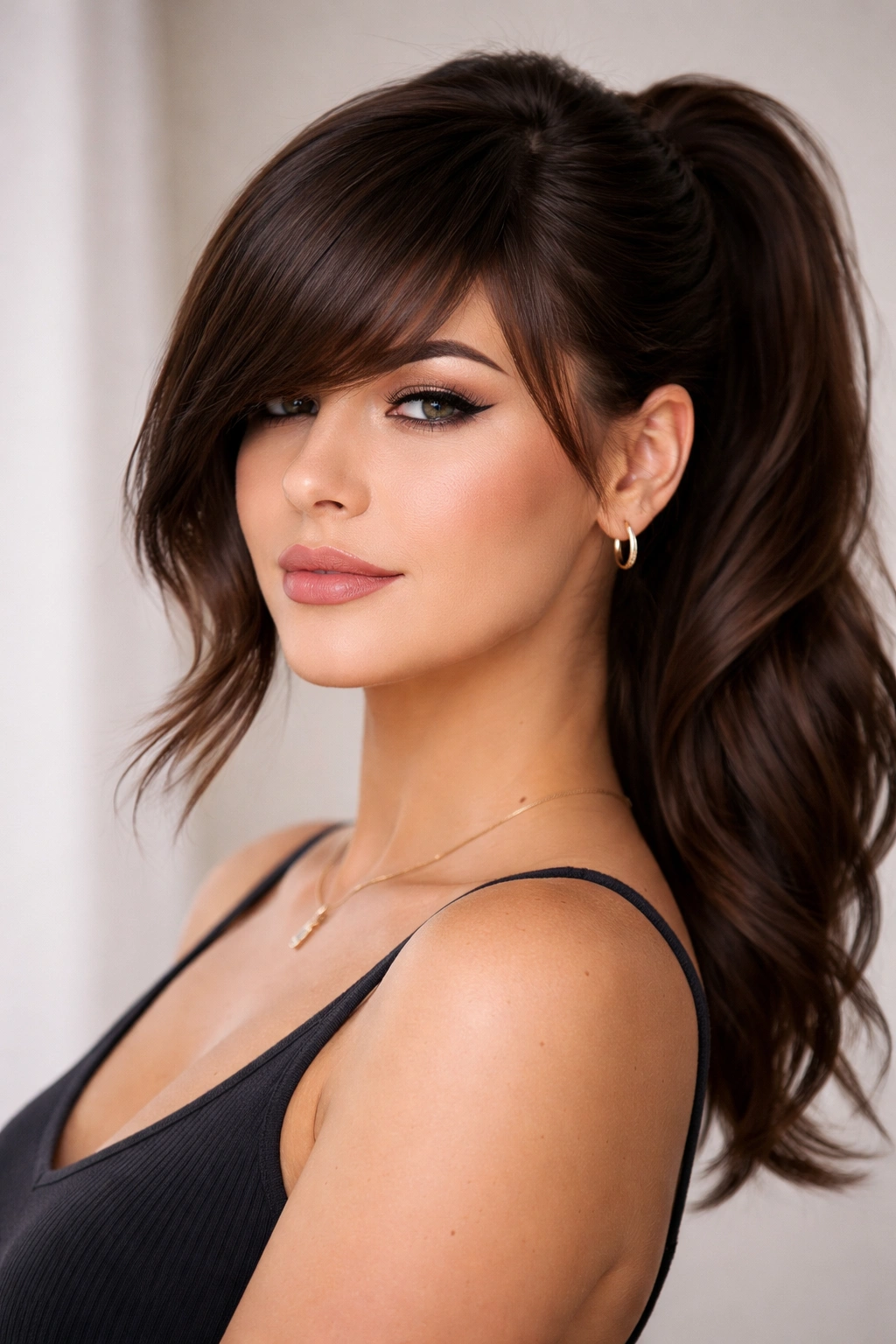
Wide faces have significant width across the cheekbones, often with fuller cheeks and a broader overall structure. The objective with side bangs for this face shape is to create a vertical line that narrows the perception of facial width while adding softness.
Dense side-swept bangs work by creating a diagonal line that guides the eye downward rather than across the width of the face. “Dense” means the bangs aren’t wispy or see-through, but have enough substance that they read as a clear frame on the face. These bangs should be cut at mid-cheekbone length and swept dramatically to one side, creating an obvious diagonal rather than a subtle angle.
Why This Works for Wide Faces
The diagonal line of dense bangs creates a visual pathway that breaks up the horizontal width of the face. Because the bangs are substantial enough to be visually prominent, they become a focal point that draws the eye vertically rather than allowing it to travel across the width of the face. The sweep to one side adds an additional diagonal element.
How to Achieve This Look
- Blow-dry bangs smooth and in the direction of the sweep, using a paddle brush
- Straighten bangs with a flat iron to maintain smoothness and the clear diagonal line
- Create a side part at the point where your bangs transition, emphasizing the off-center placement
- Pair with a slightly low or center-back ponytail to keep visual weight away from the sides of the face
Insider note: Dense bangs require more frequent maintenance than wispy ones. Plan for trims every 4-5 weeks to keep them looking intentional and neat. As they grow, they become harder to style in the desired swept direction.
9. Piece-y Textured Bangs for Angular Faces
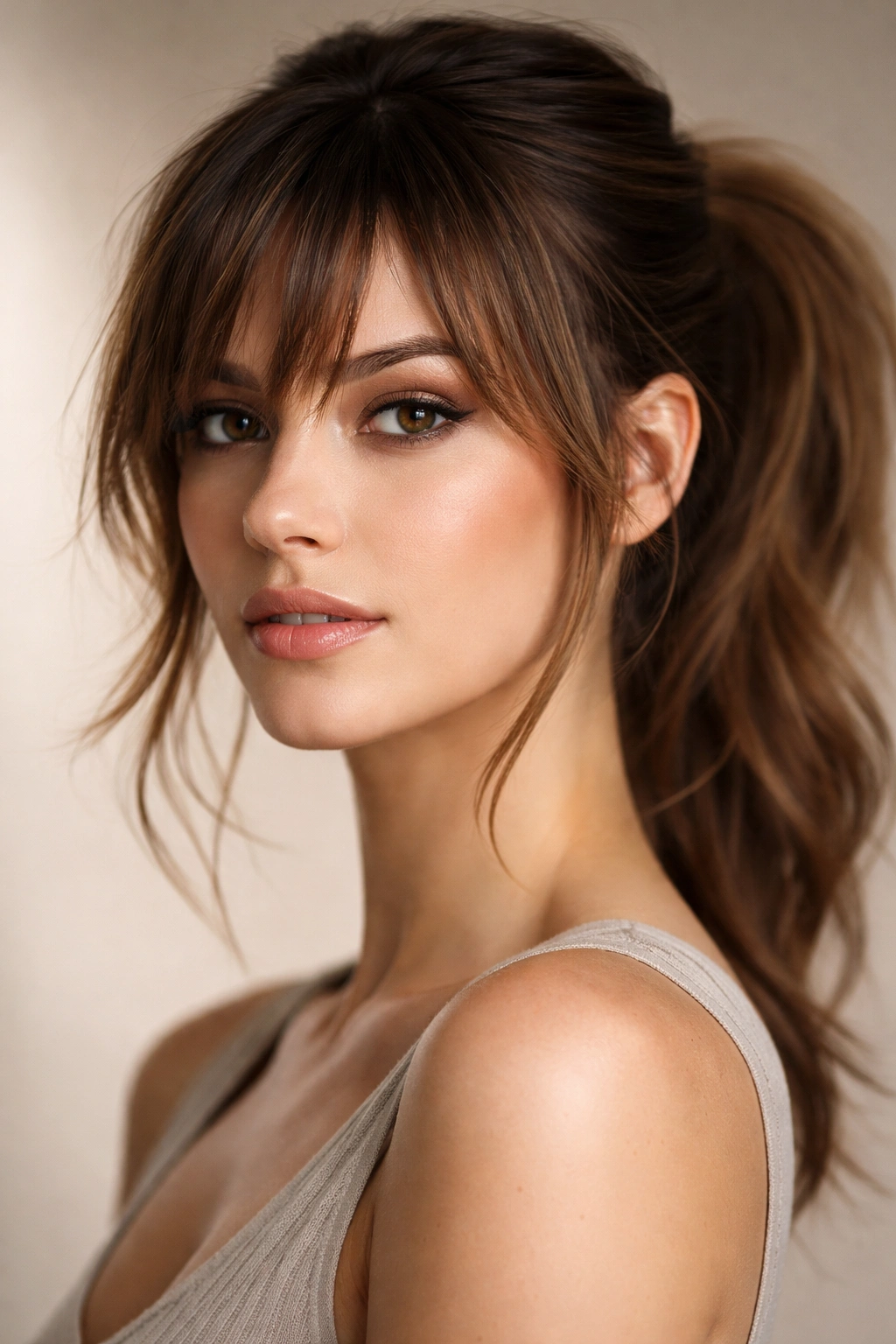
Angular faces feature prominent cheekbones, a defined jawline, and sharp facial planes. Rather than trying to soften these angles, piece-y textured side bangs actually work with the angularity to create a sophisticated, chiseled appearance.
Piece-y textured bangs are cut with distinct, pronounced layers that create obvious separation and movement. These bangs should be cut at a slightly shorter length—around eyebrow to just-above-cheekbone—with very choppy, separated pieces that almost look individually styled. The key is that each piece should be visually distinct, not blended together.
Why This Works for Angular Faces
Piece-y bangs complement rather than contradict angular facial structure. The distinct pieces echo the defined planes of the face, creating visual harmony rather than fighting against the structure. The movement and texture add a modern, edgy quality that takes the severity out of sharp angles while celebrating the face’s natural definition.
How to Achieve This Look
- Blow-dry bangs with movement, separating the pieces as you dry rather than directing them smoothly
- Use texturizing spray or sea salt spray to enhance the separation and piece-y quality
- Finger-style the bangs to maintain distinct pieces rather than blending them together
- Pair with a sleek or slightly textured ponytail depending on the overall vibe you want
What to watch for: This style can look trendy in a way that feels dated fairly quickly. If you love the piece-y texture, commit to it as part of your overall aesthetic rather than treating it as a quick trend. Styling this look requires product and hand-styling every day—it won’t work as a wash-and-go style.
10. Thick Blunt Bangs for Delicate, Narrow Faces
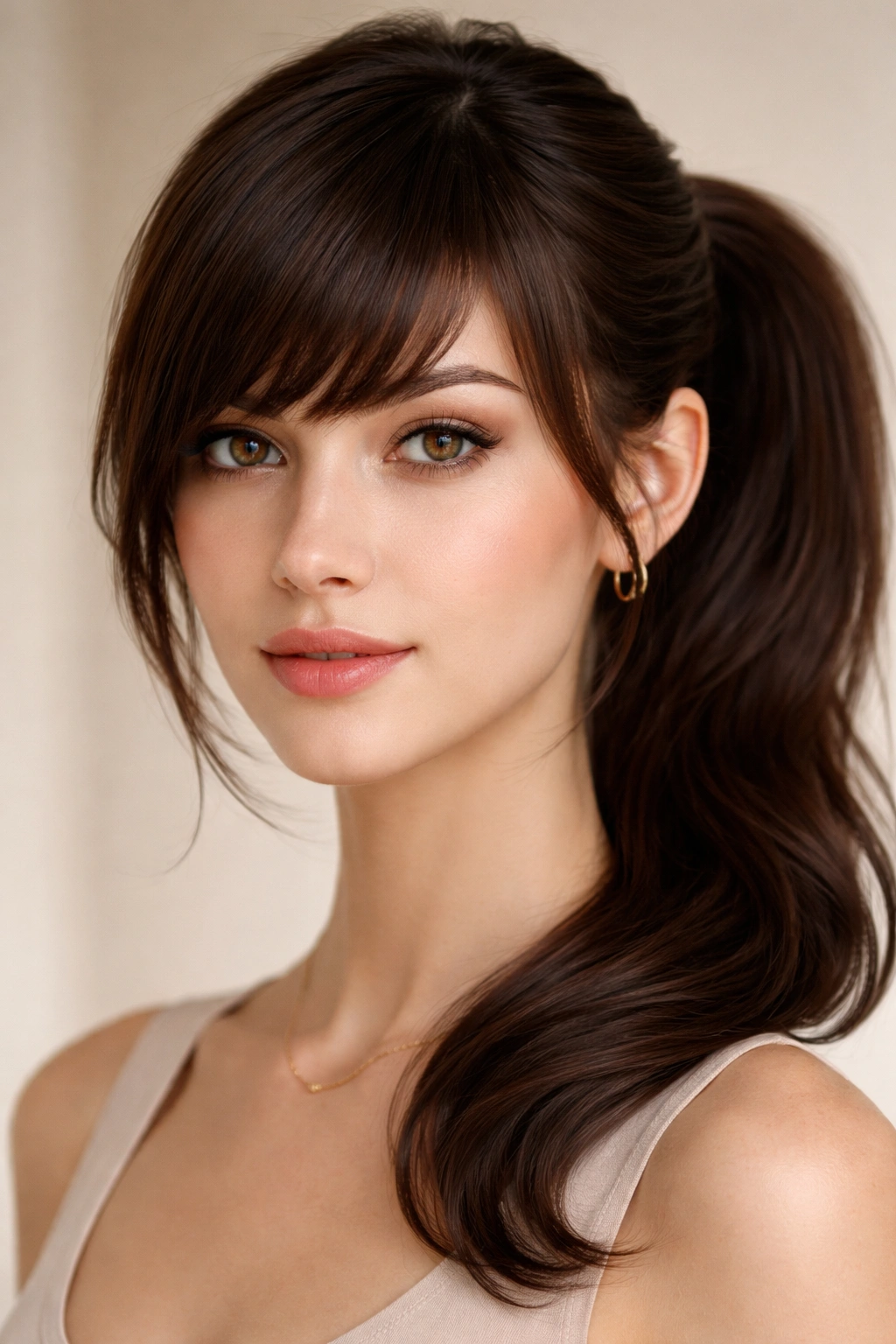
Delicate or narrow faces have fine bone structure, a smaller chin, and overall softer proportions. The goal with side bangs for this face shape is to add visual weight and structure without overwhelming the delicate features.
Thick blunt side bangs create this balance by providing substantial visual presence without being overly long or fussy. “Thick” doesn’t mean unhealthy or damaged—it means the density and width of the bang area is considerable, creating a bold statement that matches the strength of the facial structure. These bangs should be cut at a blunt, precise line at cheekbone length, with the thickness creating clear, defined edges.
Why This Works for Delicate Faces
Thick, blunt bangs add presence and definition to a delicate face without overwhelming it. The substantial, solid line of the bangs creates structure that complements fine-boned features. The bluntness gives the style a polished, intentional quality that feels sophisticated on narrower faces. The side-sweep prevents the bangs from being too severe while maintaining their visual weight.
How to Achieve This Look
- Blow-dry bangs very smooth and sleek, directing them to the side with a paddle brush
- Straighten with a flat iron to maintain the blunt line and smooth finish
- Keep the rest of your hair in a sleek, well-defined ponytail—loose texture would work against the structured bangs
- Use a lightweight smoothing serum to enhance the polished finish without adding bulk
Real talk: This style requires straight or very manageable hair to work properly. If your hair has significant natural texture or wave, blunt bangs will look choppy or unintentional even when freshly cut. Alternatively, you’d need to straighten them every single day, which isn’t sustainable for everyone.
Final Thoughts
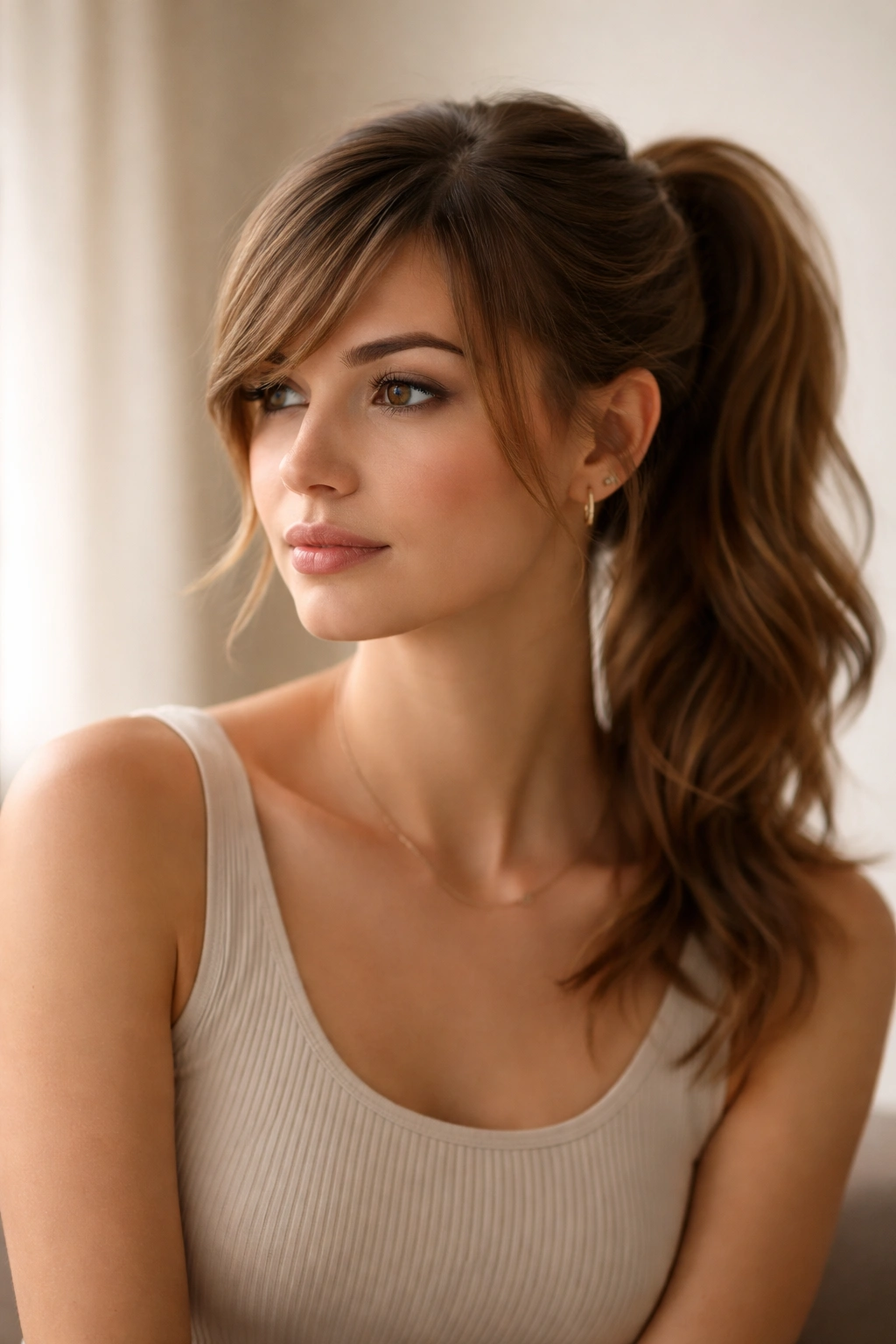
The right side bang ponytail can transform your entire face, but the key is starting with an honest assessment of your face shape and choosing a style that works with your natural structure rather than against it. A side bang that flatters a round face might actually emphasize the width of a wide face, and vice versa. That’s why the same haircut doesn’t look the same on everyone—it’s not about the cut being good or bad, it’s about whether the cut matches the canvas it’s being applied to.
Once you’ve chosen the right style for your face shape, the real magic happens in the styling. How you blow-dry, what products you use, and whether you take time to style the bangs every day will determine whether your side bang ponytail looks effortlessly chic or rushed. Give yourself grace during the awkward growth-out phase—all bangs look weird for a week or two as they transition. That’s completely normal and temporary.
Finally, maintain a relationship with a stylist you trust. Your face changes subtly over time, your hair texture might shift, and the style that worked perfectly five years ago might need updating now. A good stylist will notice these shifts and adjust accordingly. Come back every 3-5 weeks for bang maintenance, and your side bang ponytail will stay looking intentional and polished rather than overgrown and tired.
