



Ginger hair has an undeniable charm that works beautifully in long, wavy styles. Whether you’re drawn to warm copper tones, deep auburn undertones, or vibrant strawberry shades, ginger pairs perfectly with the movement and dimension that waves provide. The combination creates a look that feels both romantic and effortlessly put-together, catching light in all the right ways and adding instant visual interest to your overall appearance.
Long wavy hairstyles offer versatility that few other cuts can match. You can wear them down for a soft, flowing aesthetic, pin sections up for a half-up moment, or style them sleek when you need polish. The beauty of ginger tones is that they naturally show off the texture of waves—the dimensional nature of the color highlights each ripple and curve, making the waves appear fuller and more dynamic than they might in a flat color.
If you’ve been considering a ginger transformation or are simply looking for fresh wave inspiration to pair with your existing ginger shade, you’re in the right place. Each of these styles showcases how versatile long wavy ginger hair can be, from the beachy and relaxed to the sophisticated and intentional.
1. Beachy Waves with Copper Highlights
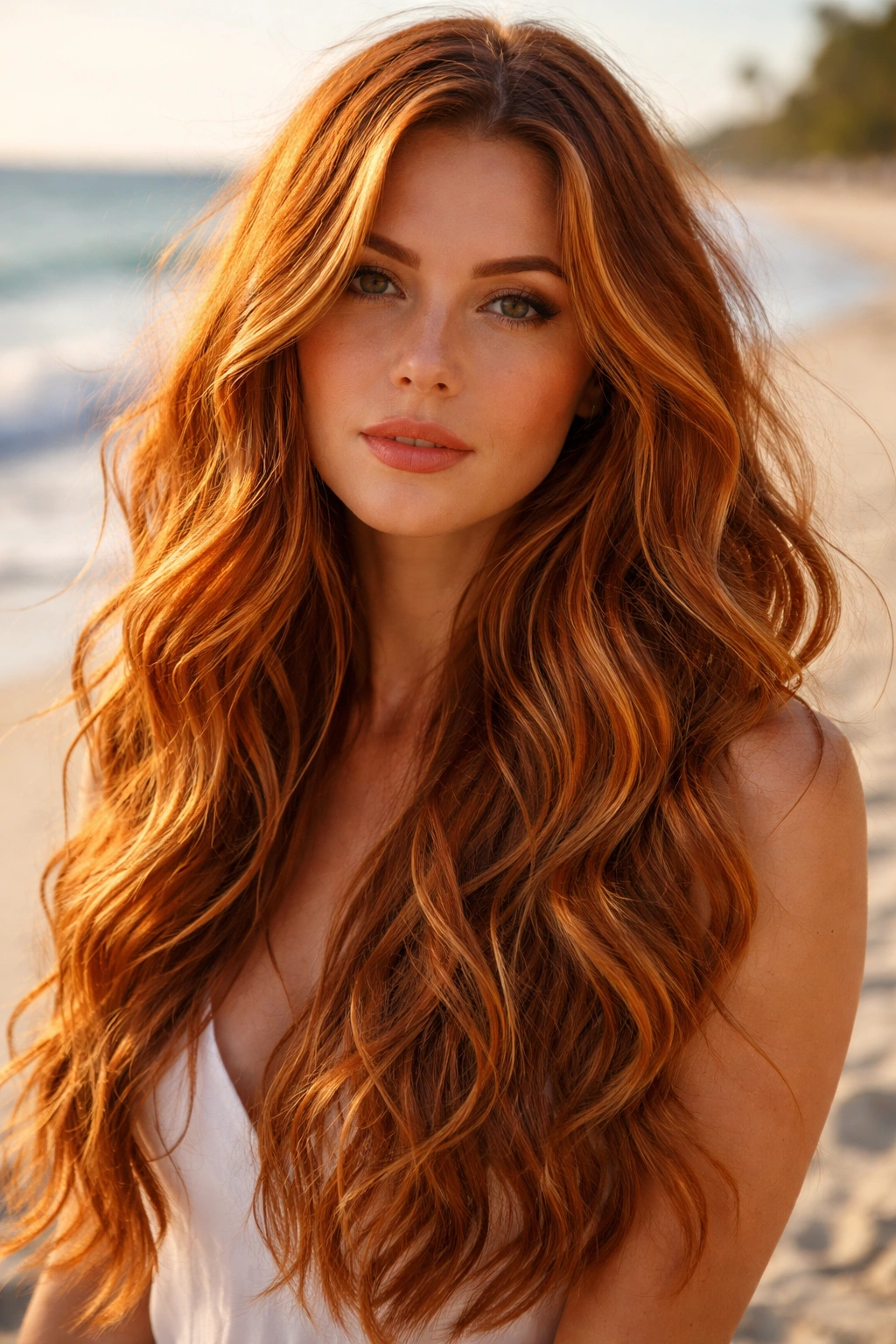
Beachy waves in ginger are the ultimate combination of effortless and eye-catching. This style leans into the natural texture of your hair while maintaining a relaxed, undone quality that feels modern and wearable. The waves start roughly at the mid-length and flow all the way down, creating that signature “I just got back from the beach” vibe, even if you haven’t been near saltwater.
The beauty of this style is that it works with ginger tones in a special way. As you move and the light hits your hair, the waves show off depth and dimension that flat hair simply cannot capture. Your ginger base acts as the anchor while lighter copper or honey highlights run through the waves, creating a lived-in, sun-kissed appearance.
Why This Works in Ginger
Copper highlights in ginger hair create a natural gradient effect that makes the waves appear more voluminous. The lighter tones sit on top of the deeper ginger base, and when the waves catch light, they create a shimmering quality that’s impossible to ignore. This technique doesn’t require constant maintenance if done right—the blended nature means your regrowth blends naturally.
How to Style and Maintain
- Use a sea salt spray on damp hair and scrunch toward the roots for that effortless texture
- Consider getting waves enhanced with a beachy wave perm if your natural texture doesn’t hold waves easily
- Refresh waves between washes by lightly misting with water and re-scrunching
- Sleep on a silk pillowcase to prevent frizz and preserve wave pattern overnight
- Deep condition weekly since ginger hair can be more porous and prone to dryness
Pro tip: Apply your sea salt spray to hair that’s about 60% dry rather than soaking wet—this gives you more control over where the texture lands and prevents the waves from looking stringy.
2. Side-Parted Long Waves
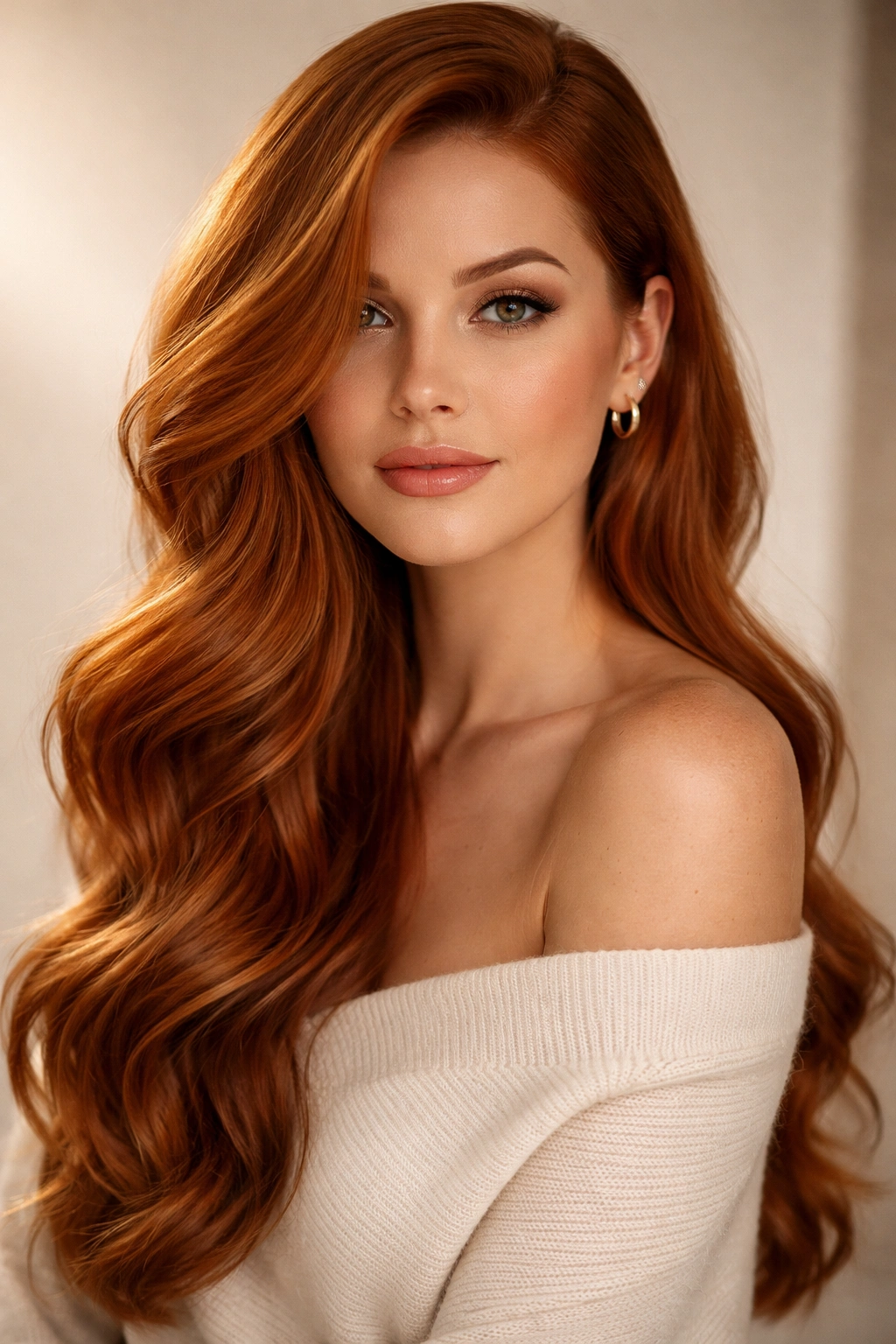
The side part is a timeless choice that instantly elevates your look, and when paired with long waves in ginger, it becomes sophisticated without feeling overdone. A deep side part creates asymmetry that’s naturally flattering, adding dimension to your face while the waves cascade down one side more prominently than the other. This creates a cascading, almost romantic silhouette.
Ginger hair responds beautifully to a side part because the color variation naturally emphasizes the movement of the waves. The side that has more hair catching the light shows off the ginger tone more dramatically, while the lighter, more exposed side of your face gets framed by waves that add softness.
The Visual Impact of Side Parting in Ginger
A side part in ginger hair doesn’t just change your hairstyle—it changes the entire way your face is framed. The waves on the fuller side create a curtain effect that’s both glamorous and practical. The ginger tone, especially if you have dimension through highlights or balayage, creates movement that a solid color might not achieve in the same way.
Styling Techniques for Maximum Impact
- Create the part when hair is dry for the cleanest line
- Blow dry the fuller side away from your face with a round brush for smooth waves
- Use a 1.25-inch curling iron to create defined waves, curling away from your face on both sides
- Apply smoothing serum to the top section to keep your part crisp throughout the day
- Consider a side-swept bang variation if you want to soften your forehead area
Worth knowing: If you naturally part your hair in the center, training it to side part takes about two weeks of consistent styling. Sleep with your hair pinned to one side to help train the new direction.
3. Loose Romantic Waves
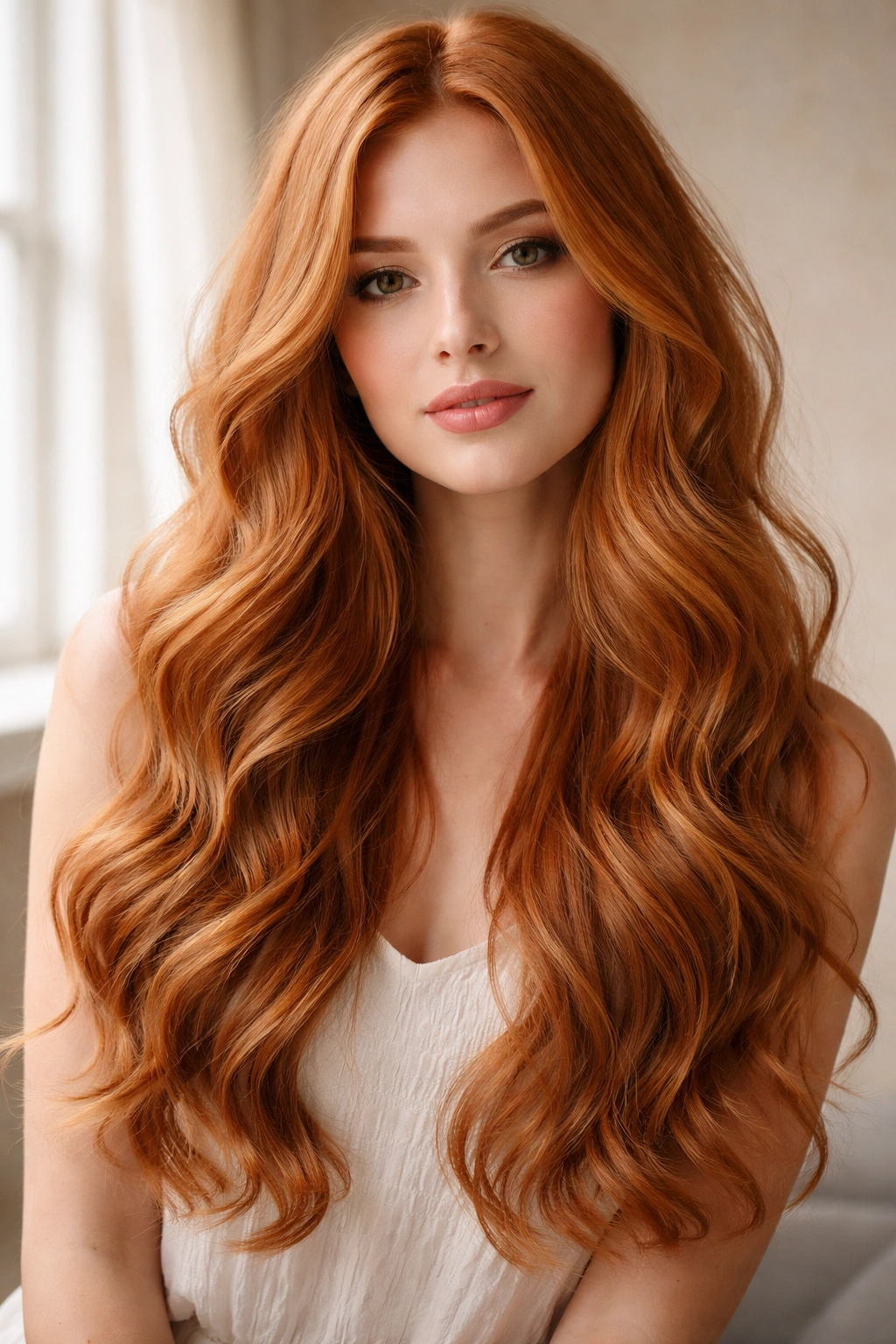
Loose romantic waves feel inherently feminine and elegant, especially when they’re flowing through long ginger hair. This style prioritizes softness and flow over defined texture, creating waves that are more about movement than structure. The waves are loose enough to feel relaxed but intentional enough to look intentionally styled.
In ginger tones, loose waves have a dreamy quality. The light naturally finds the curves and variations in your hair, making even subtle dimension pop. This style works whether you have a warm, peachy ginger or a deeper, more burgundy ginger tone—the waves show off whatever color you’re working with.
What Makes Loose Waves Different from Beachy Waves
Loose romantic waves are more refined than beachy waves. While beachy waves embrace a tousled, undone aesthetic, loose romantic waves feel intentionally styled and polished. The waves are typically created with a larger barrel curling iron, producing bigger, more uniform curves. In ginger hair, this creates an almost liquid appearance—like the color is flowing and moving even when you’re standing still.
Steps to Achieve and Maintain Loose Waves
- Start with slightly damp hair and apply a heat protectant spray
- Section hair into four quadrants and work on one section at a time
- Use a 1.5-inch or larger barrel curling iron, wrapping hair around the barrel for 8-10 seconds
- Alternate the direction you curl for a more natural, non-uniform look
- Let curls cool completely before running your fingers through them
- Use a light hairspray to hold without creating a rigid appearance
Insider note: Loose waves hold better if you let them cool completely before touching them. Many people make the mistake of immediately breaking up the curl while it’s still warm, which weakens the wave pattern.
4. Textured Shag Waves
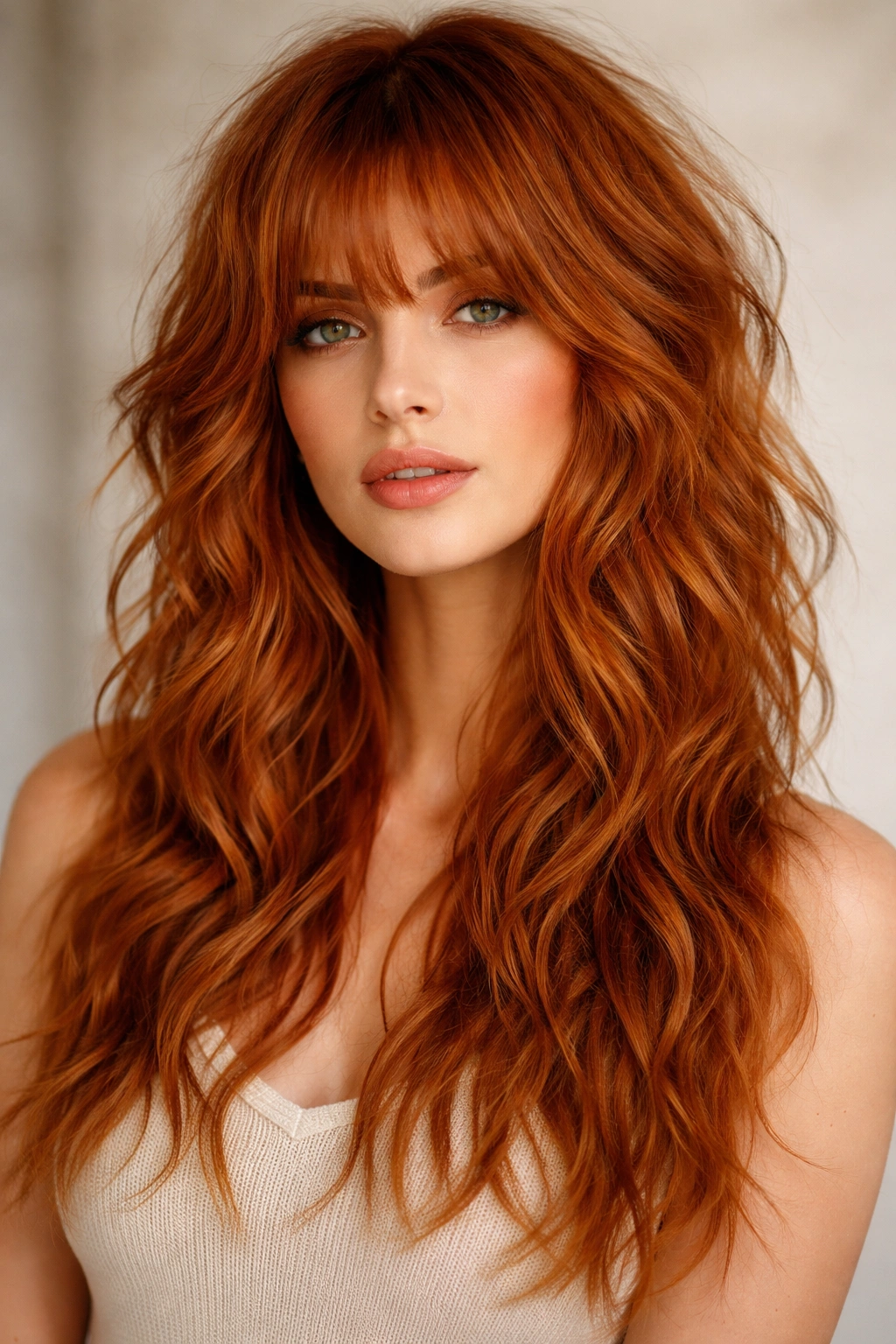
A shag cut with waves in ginger hair brings retro energy into a completely modern context. This style uses layering and texture to create movement at every level of your hair, from the roots all the way to the tips. The shag cut itself is designed to create that lived-in, rock-and-roll aesthetic, and waves enhance this vibe tenfold.
Ginger hair naturally suits a shag because the dimension can be emphasized through the layers. Each layer catches light differently, and waves amplify this effect. You get movement not just in the overall shape of your hair, but in the way each section interacts with light and motion.
The Shag Cut Breakdown
A shag isn’t just one length—it’s a strategic layering system. Shorter layers at the crown create volume, mid-length layers add movement, and longer layers provide length and flow. When you add waves to this structure, you’re essentially multiplying the movement factor. In ginger, you can see exactly how each layer contributes to the overall texture because the color shows off every curve and angle.
Creating Shag Waves That Last
- Ask your stylist for choppy, textured layers rather than blunt layers for maximum wave-holding
- Use a combination of different barrel sizes when curling—larger barrels for bottom layers, smaller for top
- Apply texturizing spray to damp roots for grip and volume before styling with heat
- Consider a perm or wave-forming treatment to make waves semi-permanent
- Embrace some frizz and texture—the shag actually looks better with a slightly undone quality
Real talk: A shag cut requires styling to look intentional. If you’re looking for a wash-and-go style, this isn’t it. But if you enjoy having a styling routine and want maximum texture and movement, a shag is incredibly rewarding.
5. Wavy Layers with Movement
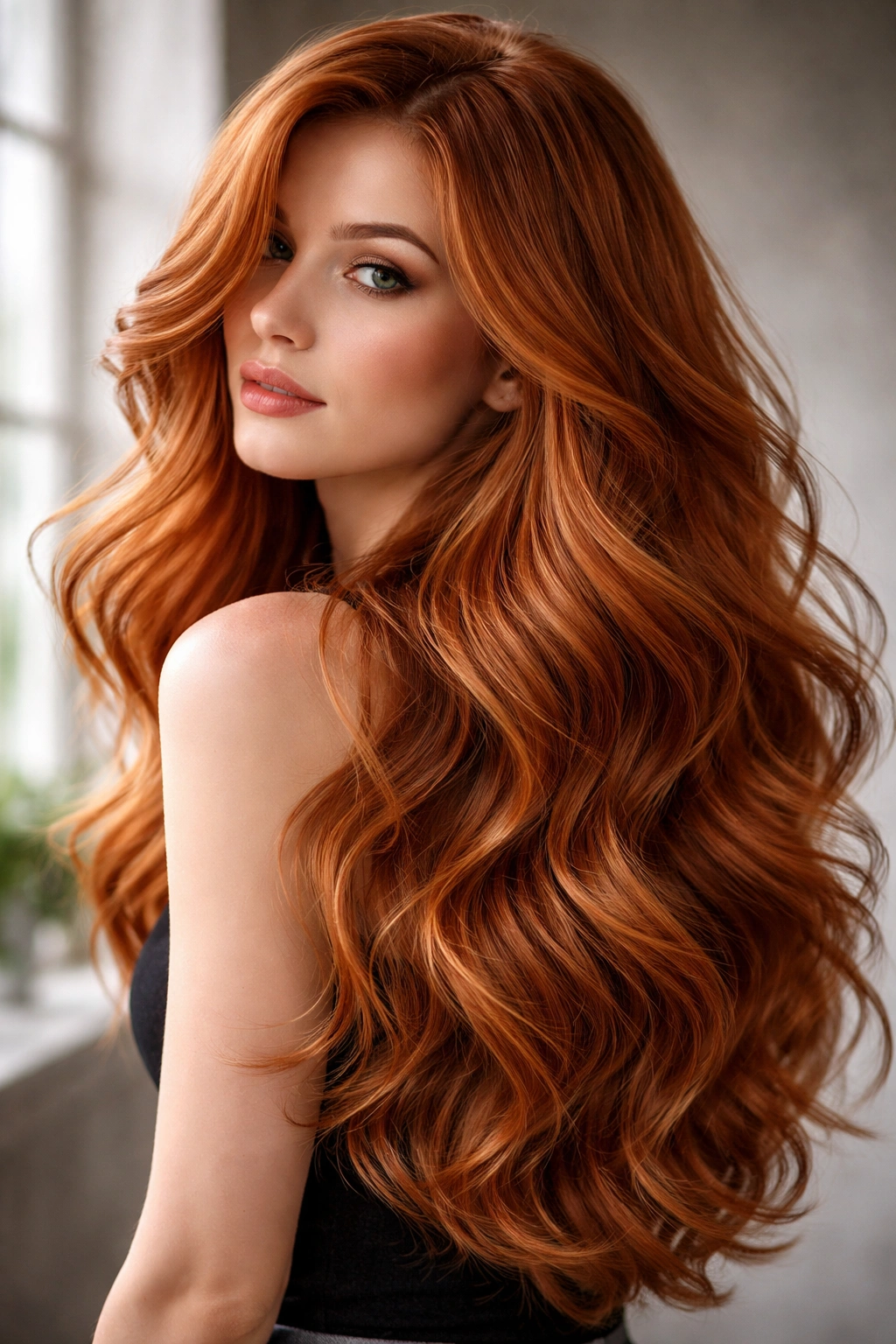
Layered waves create a style that’s all about movement and flow. Unlike a blunt cut with waves, layers ensure that your hair moves independently in sections, creating an almost liquid effect as you move. This approach is especially striking in ginger because each layer can be cut at a slightly different length, showing off dimension in the color and texture simultaneously.
This style works beautifully for people with thicker hair who want to remove bulk while maintaining length. The layers eliminate weight from the interior of your hair while keeping plenty of length at the bottom, creating a flattering silhouette that doesn’t feel heavy or overwhelming.
How Layers Enhance Wave Texture
Layers create what stylists call “visual dimension.” Even if your ginger color is solid, the way layers fall creates the illusion of more texture and movement. Add waves on top of that, and you’ve created a style with three different types of dimension: the color, the layers, and the waves themselves. The result is incredibly visually interesting and catches light from multiple angles.
Layering Patterns That Work Best with Waves
- Face-framing layers that start at your cheekbones add softness and frame your features
- Mid-length layers around your shoulders create natural breaking points for waves
- Long layers that blend into your longest sections create seamless flow
- Shorter pieces at the crown add volume without making your style feel choppy
- Avoid too-short layers that create a feathered effect unless that’s your specific goal
Worth considering: Layered waves require a cut every 6-8 weeks to maintain shape. As hair grows and waves relax, the layered shape can become less defined. If you’re not willing to commit to regular trims, you might prefer a longer, less layered approach.
6. Braid-Integrated Waves
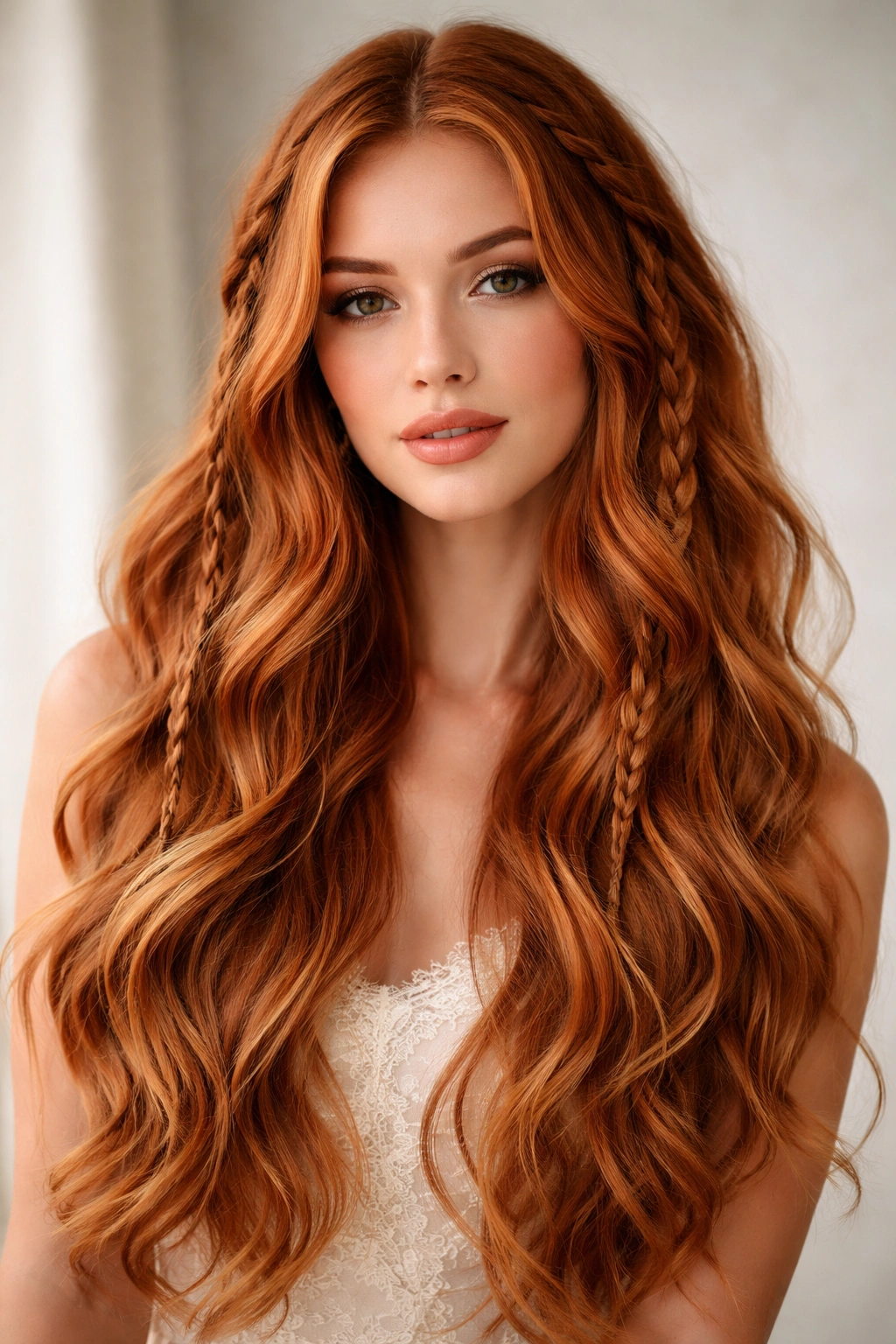
Incorporating braids into long wavy ginger hair creates a romantic, bohemian aesthetic that feels intricate and intentional. This style works by braiding sections of your hair—either loose, loose Dutch braids, or even just small accent braids—and weaving them throughout your wavy hair. The braids add structure and interest while the waves provide softness and flow.
What makes this style special in ginger is the way the braids highlight the color. A braid shows off texture in a way that loose hair can’t—you see every strand, and in ginger, you see all the tonal variation. The combination of braided sections and wavy sections creates a style that’s complex enough to look intentionally styled but relaxed enough to feel natural.
Types of Braids That Work with Waves
Loose, slightly messy braids work best with waves because overly-tight, perfectly-executed braids can look formal and at odds with the relaxed wave texture. A loose three-strand braid, a Dutch braid, or even a simple rope braid woven through the side of your hair all work beautifully. You can do a full braid down the back, a half-braid starting at your temples, or multiple small accent braids scattered throughout.
Styling Approach for Braids Plus Waves
- Create your braids on day-one hair (hair that’s been down for a day or two) for easier braiding
- Braid loosely enough that waves can still be visible within and around the braids
- Add waves to the unbraided sections using a curling iron after braiding
- For a more romantic look, gently pull and tousle your braids slightly to loosen them
- Use a lightweight hairspray to keep fly-aways in place without stiffening the style
Pro tip: If you struggle with braiding your own hair, practice on damp hair where braiding is easier. Once you get the technique down, you can apply it to dry or styled hair.
7. Voluminous Curled Waves
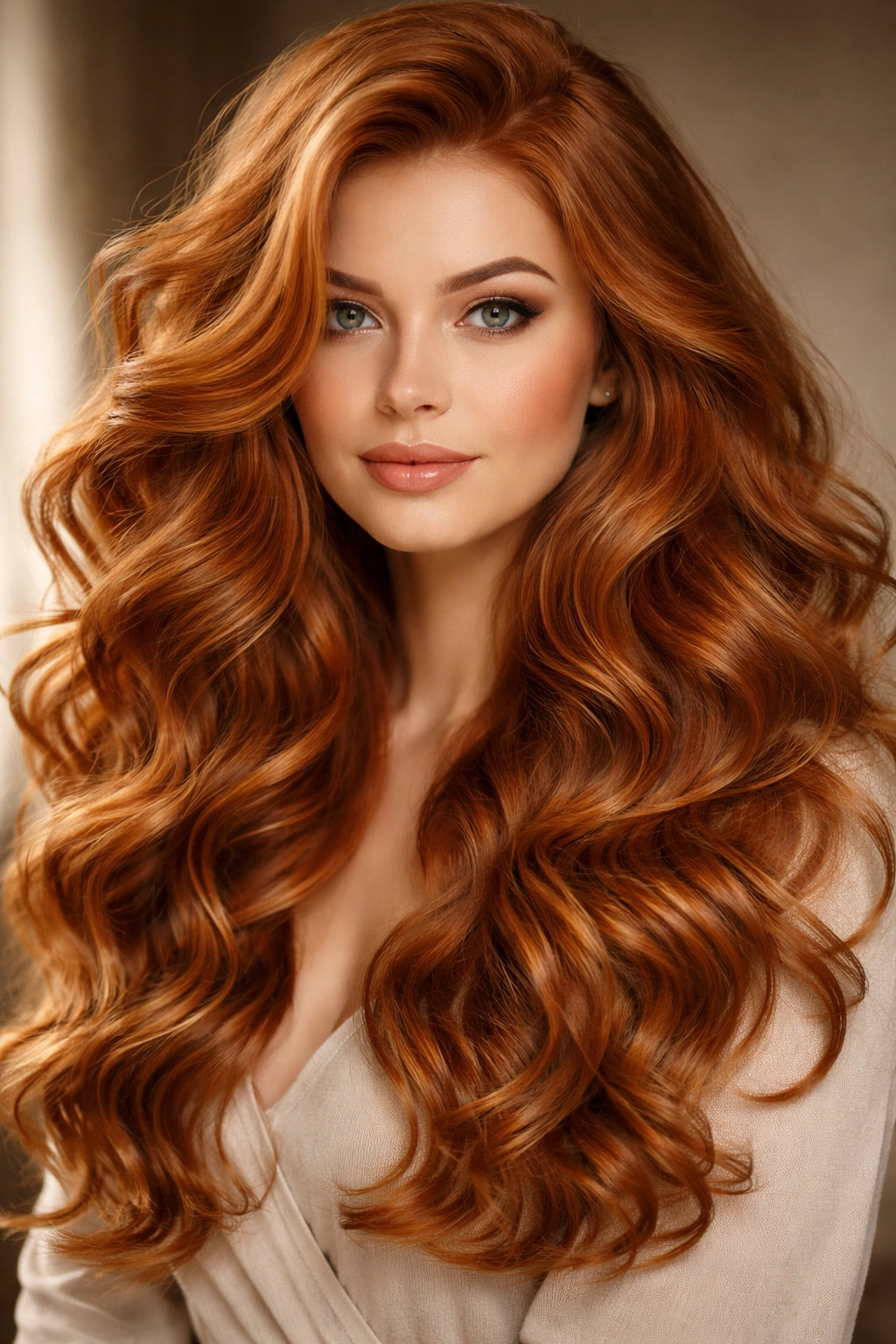
Voluminous curled waves take the wave concept further into curl territory, creating a fuller, more dramatically textured style. This works especially well for ginger hair because the color adds depth to the texture—as your hair moves and waves catch light at different angles, the ginger tone shifts slightly, enhancing the three-dimensional effect. The volume adds presence and drama while remaining wearable.
This style is achieved through strategic blow-drying with a round brush combined with curling iron work. The goal is to create waves that have more defined curl at the ends while remaining soft and voluminous through the mid-lengths and roots. In ginger, this creates an almost cascading effect—your color moves as dramatically as your texture.
Creating Volume Without Heaviness
The trick to voluminous waves is lifting from the roots without creating the appearance of height that makes you look like you have an unusually large head. This means your volume comes from the width and flow of your waves rather than from towering crown height. In ginger, this works because the color naturally draws the eye, so you don’t need extreme height to create visual interest.
The Blow-Dry Foundation
- Apply volumizing mousse to damp roots before blow-drying
- Blow dry sections with a round brush, lifting away from your scalp
- Flip your head upside down for the final few minutes to boost root volume
- Allow hair to cool completely before adding waves with a curling iron
- The cooler temperature helps set the volume you’ve created
Wave Enhancement
- Use a 1.25 to 1.5-inch barrel for defined waves
- Wrap hair around the barrel, holding for 8-10 seconds per curl
- Alternate curl direction for the most natural appearance
- Work in small sections—this takes time but the results are worth it
- Finish with a flexible hold hairspray that moves with your hair
Worth knowing: Voluminous waves work best on hair that has some natural texture or body to begin with. If your hair is very fine or thin, focus on creating waves with good shape rather than worrying about maximum volume.
8. Tousled Beachside Waves
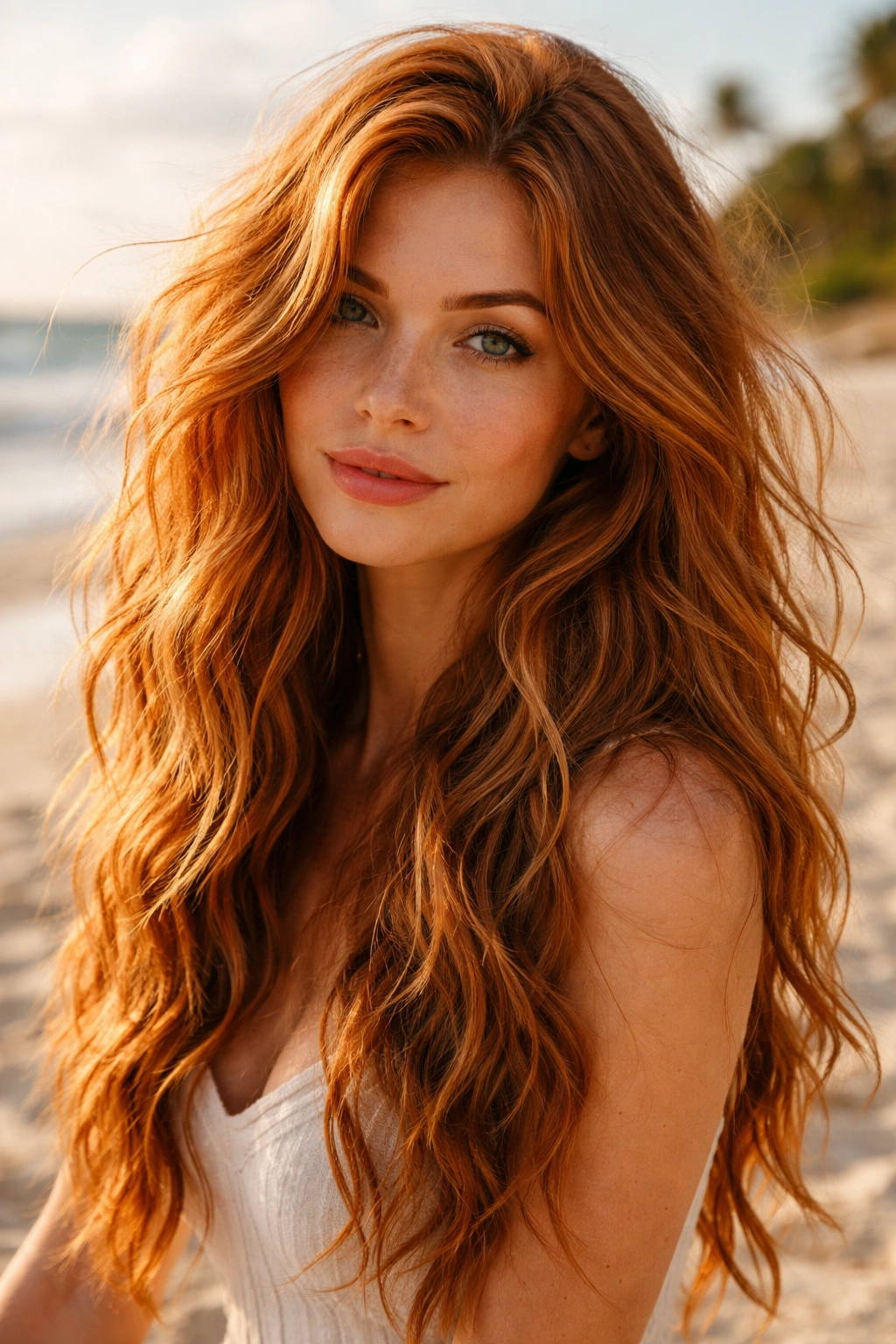
Tousled beachside waves lean into a more undone, lived-in aesthetic than some other wave styles. The goal is waves that look like you’ve been in the ocean and dried off in the sun—relaxed, textured, and somewhat randomly placed. In ginger, this style shows off color dimension beautifully because the tousled quality means light hits your hair from every angle as it moves.
This style is lower maintenance than some others because the point is to look somewhat undone. You’re not aiming for perfect uniformity or precision; you’re aiming for texture and movement. For ginger hair, this actually works to your advantage—any color variation or slight unevenness in your tones gets absorbed into the tousled aesthetic and actually enhances the look.
Achieving the Tousled Effect
Start with your hair in waves (created through curling iron work, a perm, or natural texture), then deliberately mess them up slightly. Use your fingers to break up the waves, separate strands, and create a textured appearance. The goal is for someone to see your hair and think you woke up that way—even though you spent 45 minutes styling it (they don’t need to know that).
Steps to Create and Maintain Tousled Waves
- Create loose waves using a 1.5-inch barrel, working in large sections
- Let waves cool completely, then use your fingers to separate strands
- Apply texturizing spray or sea salt spray throughout, scrunching as you go
- Flip your head and apply texture spray at the roots for lift
- Use a very light hand with product—you want barely-there hold
- Avoid smoothing or flattening any sections
Real talk: Tousled waves can look amazing or they can look like you just rolled out of bed on a bad hair day. The difference is intentionality—your waves should be textured and separated, not matted or clumpy.
9. Gentle Pin Curls and Waves
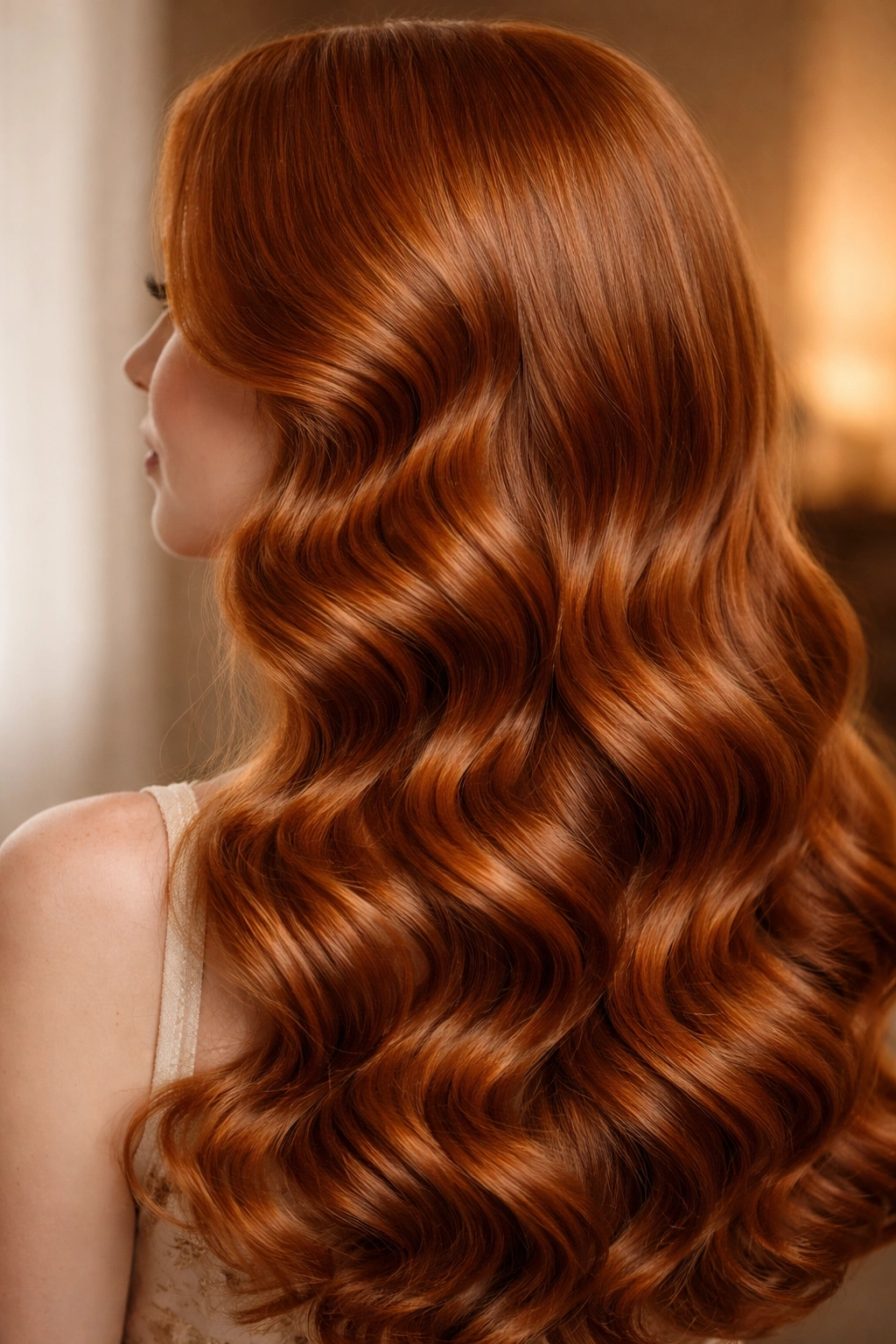
Pin curls are a vintage technique that creates beautiful, defined waves with a romantic, feminine quality. This style involves rolling sections of damp hair around your finger or a curling rod, pinning them in place, and allowing them to dry or setting them with heat. Once released, pin curls create waves that are soft but defined—not too tight, not too loose. In ginger, pin curl waves have a refined, polished appearance that’s perfect for special occasions or anyone who wants their waves to feel intentional and elegant.
Pin curls are also surprisingly low-heat if you do them correctly. Instead of using a curling iron that applies heat directly to your hair, you can set pin curls with just a blow dryer on low heat, or even allow them to air dry. This is gentler on your ginger hair and helps maintain color vibrancy and hair health.
The Pin Curl Technique
Pin curls work by creating tension around a core point. You section hair, roll it around your finger to create the curl, pin it in place with a bobby pin, and let it set. When you remove the pins, you have soft waves. The size of your curls depends on the size of the section and how tightly you roll it—larger sections create bigger waves, smaller sections create tighter curls.
Setting Pin Curls for Long-Lasting Waves
- Work with damp hair for easier rolling and better wave-setting
- Roll hair around your finger, smoothing as you go to avoid kinks
- Use a bobby pin to secure each curl flat against your scalp
- Apply a light wave-setting mousse before rolling for better hold
- Allow pin curls to set for at least 30 minutes (longer is better)
- You can air dry or use a blow dryer on low heat to speed the process
Pro tip: Sleep in pin curls for effortless waves the next morning. Your waves will be beautifully set and feel soft rather than stiff from heat styling.
10. Long Waves with Lowlights
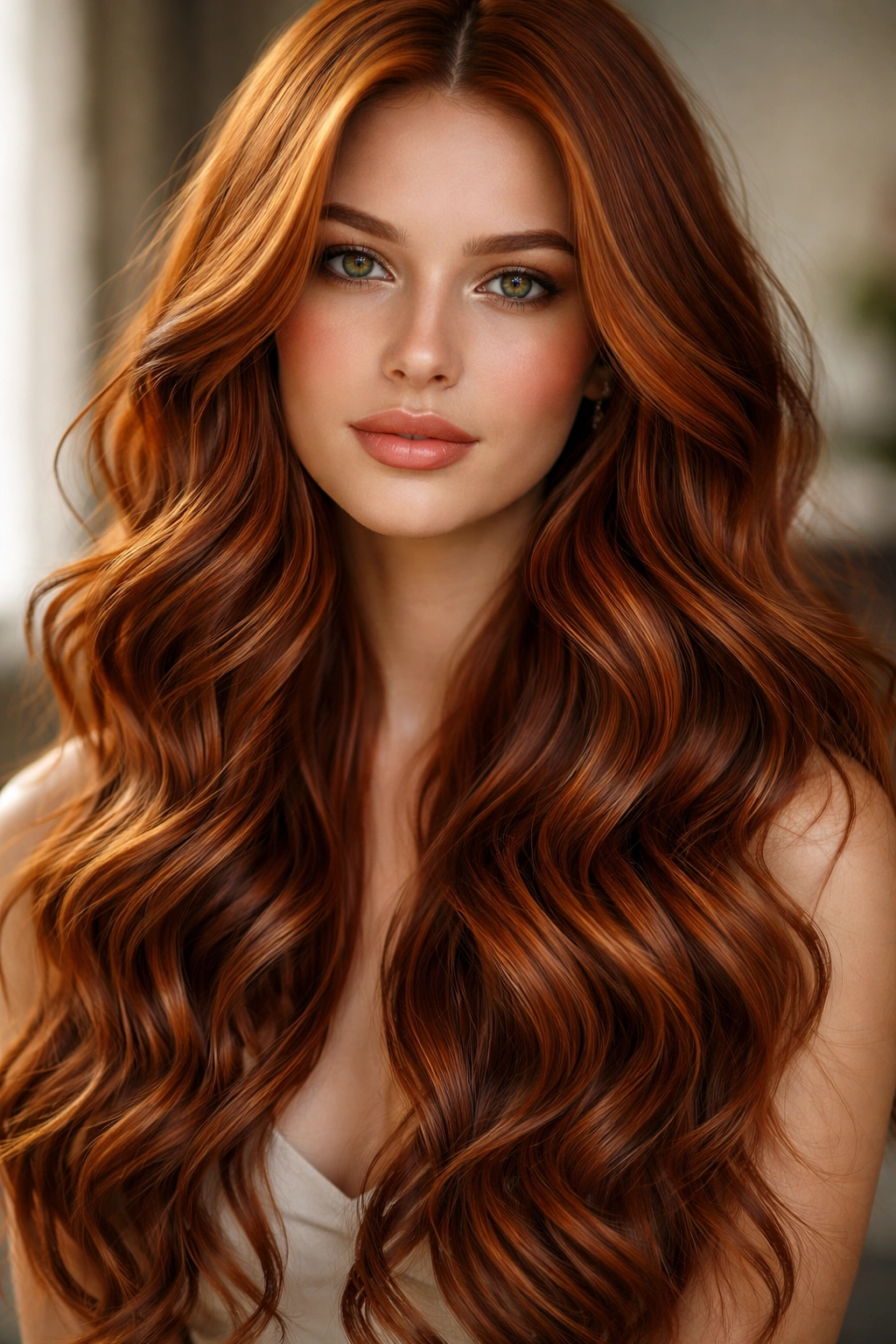
Long waves become even more visually interesting when you add lowlights—darker tones woven throughout your ginger base. While highlights brighten, lowlights add depth and dimension. In ginger hair, lowlights might be a deeper auburn, a rich mahogany, or even a subtle chocolate brown. The contrast between the brighter ginger and the deeper lowlights means your waves show off incredible texture and movement as light hits different tones.
This coloring technique is particularly smart because it creates visual movement even when your hair is still. The lowlights sit deeper in your hair, creating shadows and dimension. Add waves on top of that, and you’ve created a style with multiple layers of visual interest. The waves show off the lowlights as they move, and the lowlights make the waves appear even more dimensional.
How Lowlights Enhance Wave Texture
Lowlights create what’s called a “shadow effect”—darker tones positioned strategically make everything else appear brighter and more three-dimensional. In long wavy hair, this effect is magnified. As you move and waves catch light, you see the interplay between the brighter ginger tones and the deeper lowlight tones. This creates an almost moving, shimmering effect that solid color simply cannot achieve.
Strategic Lowlight Placement
- Place lowlights around your face to add definition and dimension to your features
- Weave lowlights throughout mid-lengths and ends to emphasize wave texture
- Keep lowlights slightly less dense than your ginger base for a natural, blended look
- Consider face-framing lowlight pieces that bracket your face for a sophisticated effect
- Maintain lowlights every 8-10 weeks as they’ll lighten and fade over time
Worth considering: Lowlights are easier to maintain than highlights because they blend naturally as they lighten. You have more flexibility with maintenance timing, and regrowth is less obvious.
11. Soft Waves with Center Part
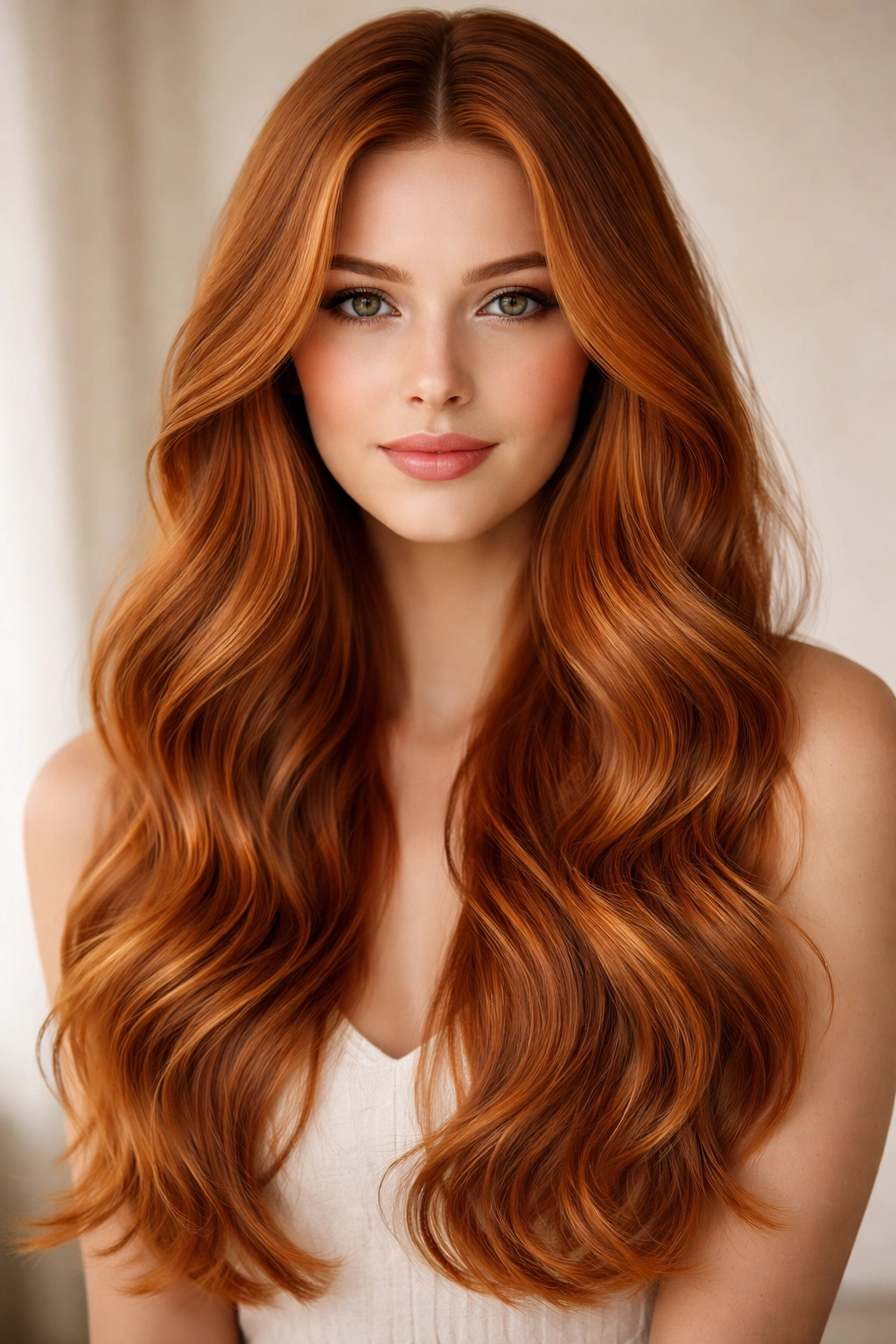
A center part is the classic choice for long wavy hair, and when paired with ginger tones, it creates a balanced, symmetrical look that’s both flattering and timeless. Soft waves cascading down both sides of a center part frame your face evenly, creating a polished appearance without feeling overdone. The ginger color, whether warm or cool-toned, gains prominence with a center part because it’s displayed equally on both sides.
This style feels sophisticated and intentional, perfect for anyone who prefers classic styling over trend-chasing. In ginger, a center part with soft waves is inherently elegant—the symmetry of the part is balanced by the organic, flowing movement of the waves. You get structure from the part and softness from the waves, creating a harmonious overall appearance.
Why Center Parts Flatter Most Face Shapes
A center part works well for most face shapes because it’s essentially neutral—it doesn’t add emphasis to either side of your face. Instead, it creates balance. Your ginger color frames your face equally on both sides, and soft waves add softness without harshness. If you have an angular face shape, the waves provide roundness and softness. If you have a rounder face shape, the waves add movement without adding visual width.
Creating Soft Waves with a Center Part
- Create your center part when hair is dry for the cleanest, straightest line
- Blow dry the front sections backward and to the sides, using a round brush
- Create soft waves using a 1.25 to 1.5-inch barrel, starting from mid-length
- Alternate wave direction away from your face on both sides for flattery
- Use a flexible-hold hairspray that allows movement rather than rigid hold
- Refresh your waves between washes with a light mist of water and a curling iron
Real talk: Center parts require relatively straight hair to look polished. If you naturally have waves or curls that make a precise center part difficult, you can create a more intentional, slightly softer version that’s equally beautiful.
Final Thoughts
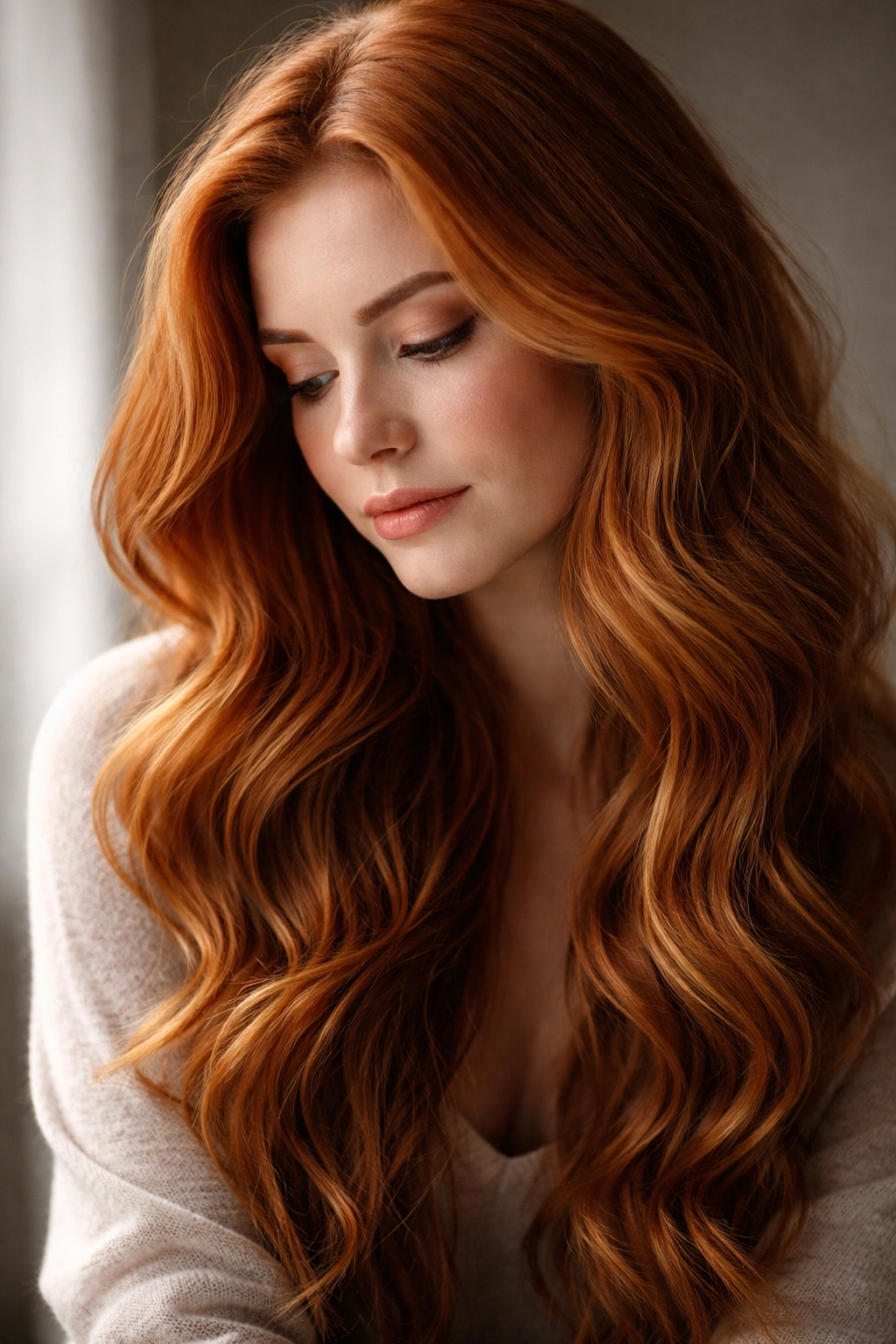
Long wavy hairstyles in ginger offer incredible versatility, whether you prefer romantic, loose waves or textured, defined waves. The beauty of ginger as a color choice is that it naturally highlights texture and movement—your waves don’t just feel dynamic, they look dynamic as the color catches and reflects light.
The key to making any of these styles work is understanding your hair type, your styling commitment level, and which aesthetic speaks to you personally. Someone with fine hair might lean toward a loose wave style that doesn’t require heavy products or intense styling, while someone with thicker hair might embrace a shag or heavily layered approach. Someone who enjoys daily styling might gravitate toward pin curls or voluminous waves, while someone who prefers low-maintenance looks might choose beachy or tousled waves.
Remember that your ginger tone is doing work for you—it’s adding dimension and showing off texture in ways that solid colors simply can’t match. Invest in color-safe products to keep your ginger vibrant, use heat protectant sprays before styling, and consider regular deep conditioning treatments since ginger tones often exist in hair that’s been lightened and may need extra nourishment. With the right cut, the right styling technique, and a little bit of commitment, long wavy ginger hair becomes a statement all on its own.
