


There’s something undeniably appealing about the pixie cut—that confident, effortless vibe that suggests you don’t need much to look put-together. But if you’ve ever sat in the stylist’s chair and worried a pixie would demand constant trimming and styling, here’s the truth that changes everything: a wavy grown-out pixie haircut gives you the best of both worlds. You get the initial chic, textured look of a short pixie, but as it grows, your natural waves transform it into something entirely different—a tousled, dimensional style that actually looks better with length and texture.
The grown-out pixie is having a major moment precisely because it solves so many styling contradictions. It works for people who love short hair but can’t commit to frequent salon visits. It flatters wavy and curly hair types, which often struggle with typical pixie styles designed for straight hair. And unlike a traditional pixie that requires constant maintenance, this version improves as it grows, transitioning gradually into a shaggy bob or layered crop without requiring a complete style reset.
Whether you’re considering taking the pixie plunge or looking to transform the pixie you already have, understanding the different directions you can take a grown-out wavy pixie makes all the difference. Each variation has its own personality, styling approach, and transition timeline. Let’s explore ten stunning interpretations that prove the wavy grown-out pixie is far more versatile than people realize.
1. The Textured Crop with Longer Bangs
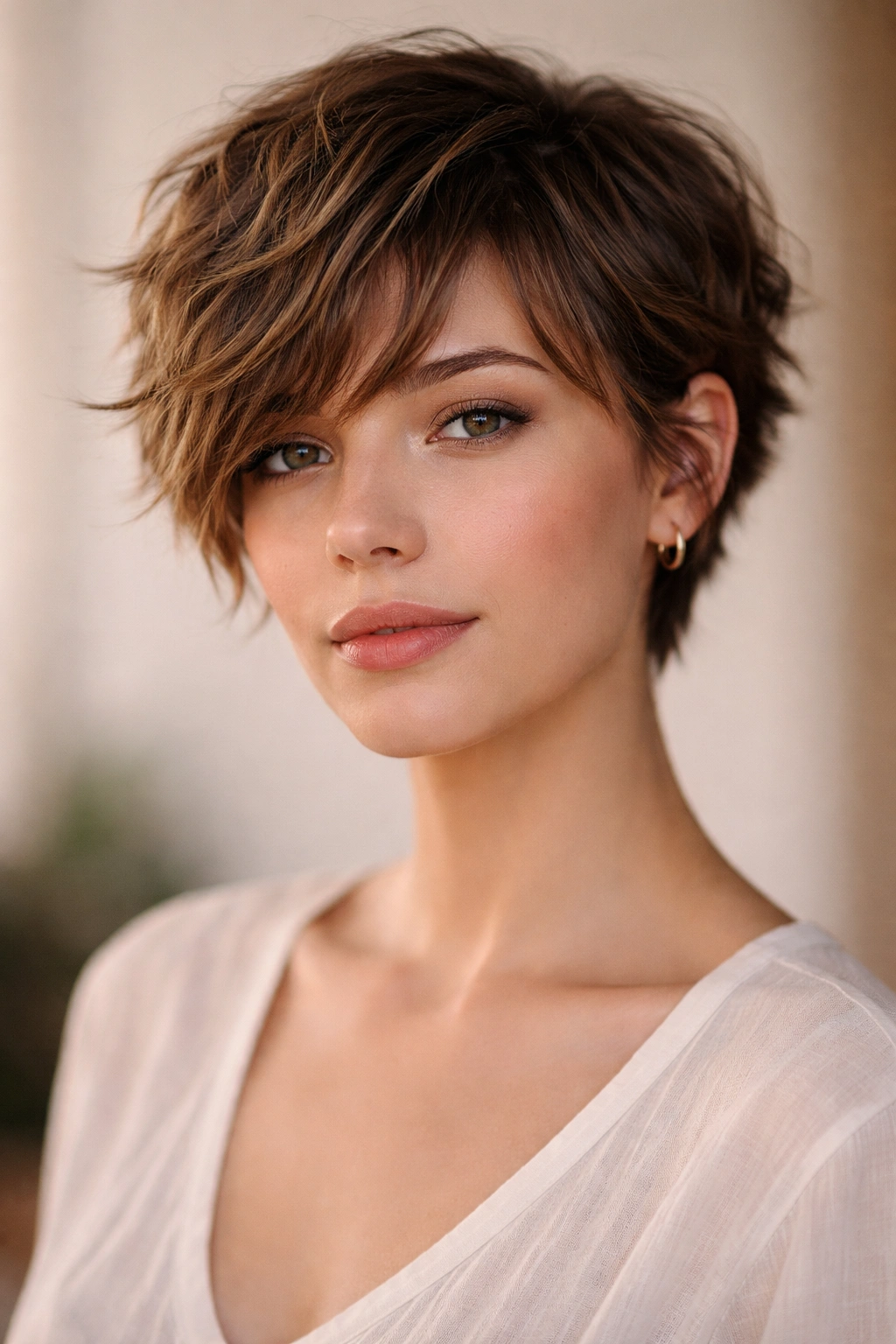
This style keeps the overall length crop-short but allows the front sections and bangs to grow noticeably longer than the sides and back, creating an intentional, modern silhouette. The longer front pieces frame the face beautifully and give you something to work with as your hair grows, while the closely cropped sides showcase your face shape and keep the style from feeling heavy.
Why This Works for Wavy Hair
Wavy hair naturally wants volume at the crown and texture throughout, so this cut plays directly into your hair’s strengths rather than fighting them. The longer bangs or face-framing sections get shaped by your waves, creating a soft, dimensional look that reads as intentional and editorial rather than like you just got a traditional pixie cut and let it grow out. The contrast between the short back and sides and the longer front gives you dimension and movement without requiring blunt, geometric precision.
How to Ask Your Stylist
- Request a textured, choppy crop with bangs or face-framing layers that are at least 2-3 inches longer than the sides
- Ask for point-cutting or texturizing rather than blunt lines—this lets your waves move naturally
- Specify that you want the sides and back to sit close to the head (think 1-2 inches) while front sections reach toward the jaw or chin as you grow it out
- Get comfortable with regular texturizing appointments every 6-8 weeks rather than full trims—this maintains movement without cutting away your length
The beauty of this version is that it works equally well styled slicked back with texture spray or piece-y and tousled. You’re never stuck looking one specific way, which makes it perfect if you get bored easily or like matching your hair to your mood.
2. The Shaggy Pixie with Choppy Layers
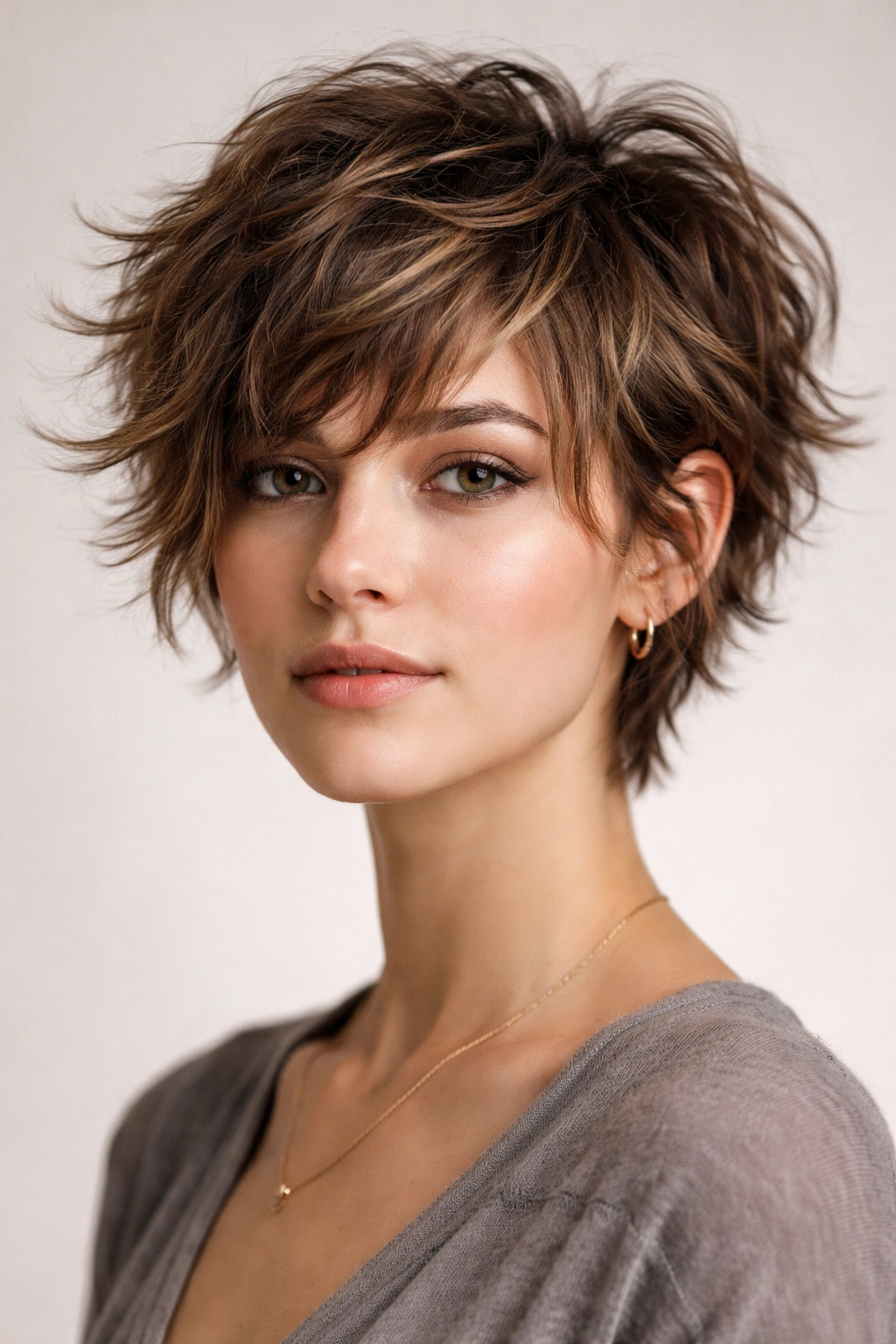
This is the grown-out pixie for people who actively want a messy, undone vibe. Instead of one uniform length, choppy layers throughout create peaks and valleys of texture that give your waves room to express themselves. It’s the opposite of a sleek, manicured pixie—this one celebrates every bit of texture and movement your hair naturally has.
What Makes It Stand Out
Choppy layering works because of your waves, not in spite of them. Each wave gets its own movement pathway, and the shorter, longer, and in-between pieces all work together to create a dynamic, almost wild-child aesthetic. This cut actually looks fuller and more voluminous than a blunt pixie because the layers catch light at different angles and allow your curls to stack on top of each other.
Styling Specifics
- Works best with salt spray or texture cream applied to damp hair for that “I woke up like this” effect
- Diffuser-dry for maximum volume and wave definition, or let it air-dry for an even more relaxed finish
- Side-parting emphasizes the asymmetry and lets you showcase longer layers on one side
- Runs hands through it throughout the day to keep pieces separated and textured
If you’re the type who loves a low-maintenance vibe and doesn’t mind your hair looking intentionally tousled, this is your cut. You’re essentially committing to celebrating messiness rather than fighting it, which is incredibly freeing for wavy-haired folks who’ve spent years being told their texture is unruly.
3. The Tapered Pixie Growing Into a Shag
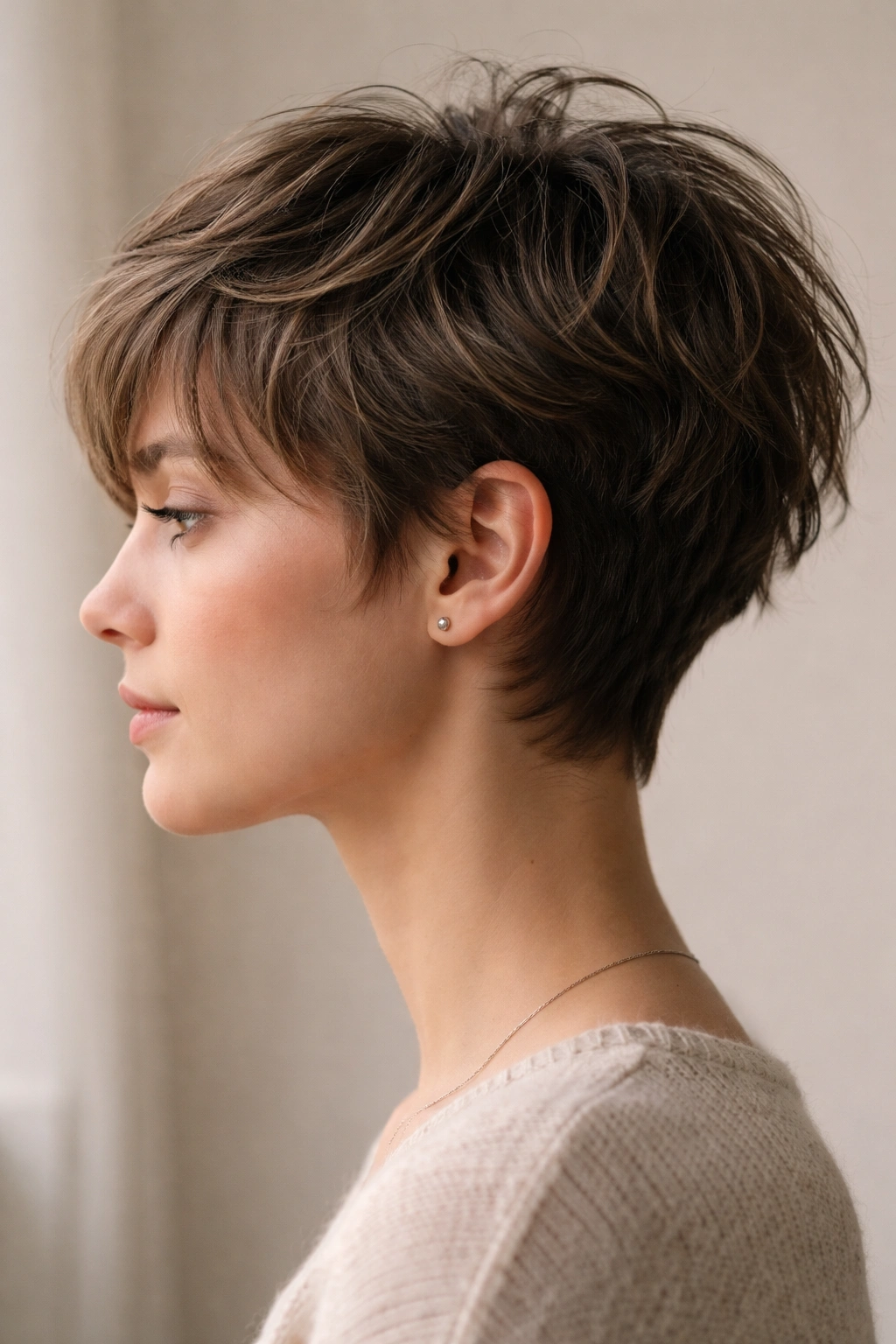
This version starts as a very tapered, fitted pixie at the sides and back but grows out strategically, transforming into a shag cut as the layers lengthen over several months. It’s structured for someone who wants to commit to the pixie initially but also has a clear exit strategy toward a longer, shaggier style.
Why the Transition Works Beautifully
When you taper the back and sides very short initially—think 1 inch or less—you can grow that out for 6-8 months and end up with exactly the mid-length shag you might want anyway. Your stylist essentially plants the seeds for the next cut during the first pixie appointment. As everything grows, you’re not fighting awkward in-between lengths because the taper means there’s natural variation in the length already built into your hair.
Growth Timeline and Styling Phases
- Months 1-2: Pure short pixie. Texture spray and air-drying is all you need.
- Months 2-4: Longer face-framing pieces emerge, and you can start wearing it styled back or forward depending on your mood
- Months 4-6: You’re firmly in shag territory. Layers become obvious, and you get tons of styling flexibility
- Months 6+: Full grown-out pixie/shag hybrid with options to either cut it shorter again or continue growing toward a longer style
The genius of planning this cut is that you’re never actually stuck looking one way. You’re continuously evolving, and because your waves add texture at every stage, it always reads as intentional rather than like you just haven’t made it to the salon.
4. The Asymmetrical Wave Cut
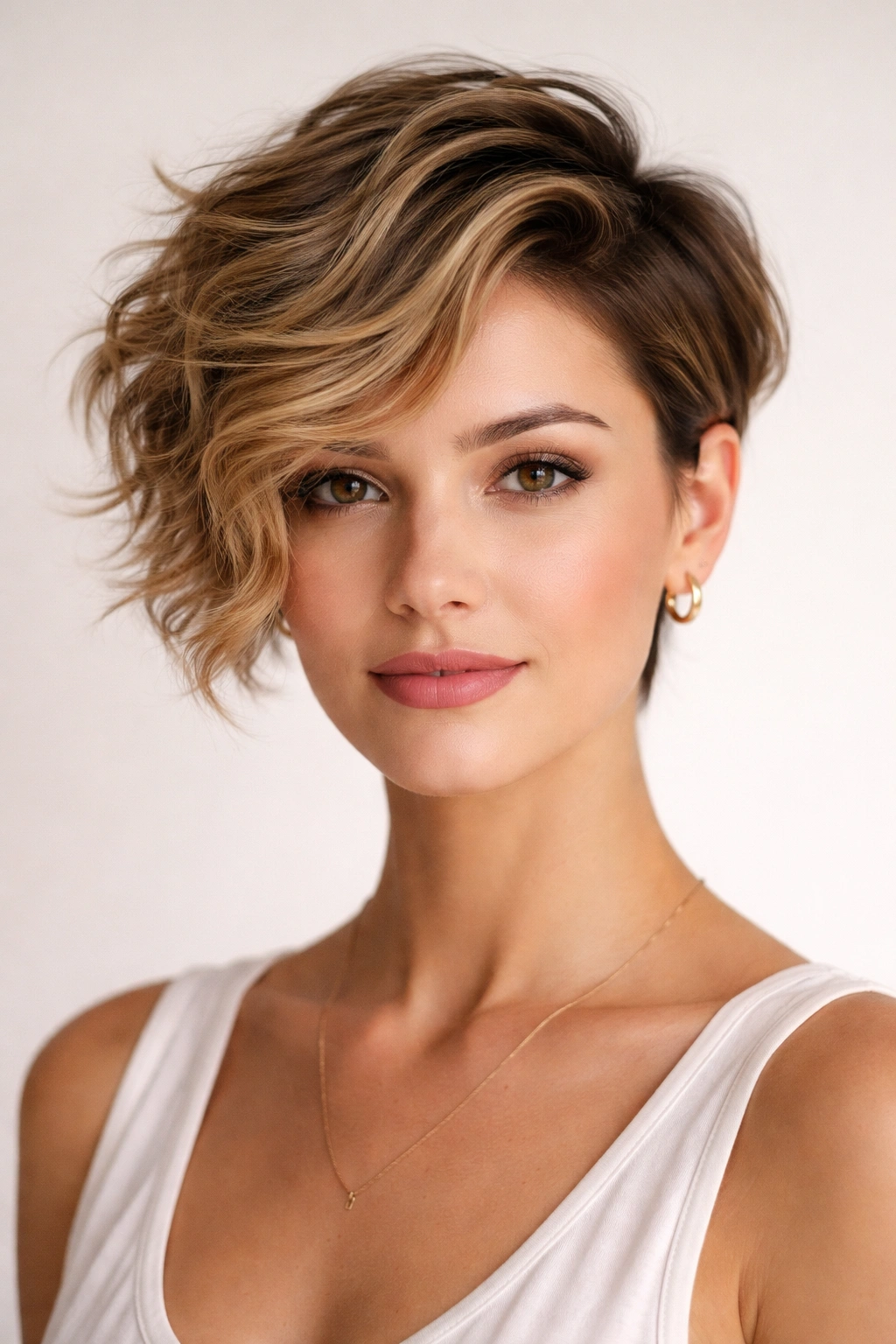
This cut is deliberately longer on one side and shorter on the other, which sounds edgy but actually becomes incredibly wearable as it grows out. The asymmetry plays into the natural shape of wavy hair, where waves often want to fall in specific directions anyway, and it lets you style it multiple ways—tousled back, swept to the longer side, or parted and tucked behind an ear.
How Asymmetry Flatters Waves
Symmetry is actually tricky for wavy hair because waves are inherently directional and flow-oriented. An asymmetrical cut honors that natural movement rather than fighting it. Your longer side might reach your ear or jawline while the other side sits closer to the head, and this creates the illusion of more dimension and movement than a symmetrical cut would give you. It’s a style that looks like your waves naturally want it that way.
Versatile Styling Options
- Pin or tuck the longer side back for a sleeker daytime look
- Sweep everything over to one side for evening or a dressier vibe
- Let both sides fall forward and part down the middle for symmetrical styling
- Use clip pins to create texture and dimension while you’re growing it out
This cut is genuinely flattering for longer face shapes because the shorter side shows more of your face and features, while the longer side adds balance and softness. It’s a chameleon style that reads differently depending on how you style it on any given day.
5. The Side-Swept Grown-Out Pixie
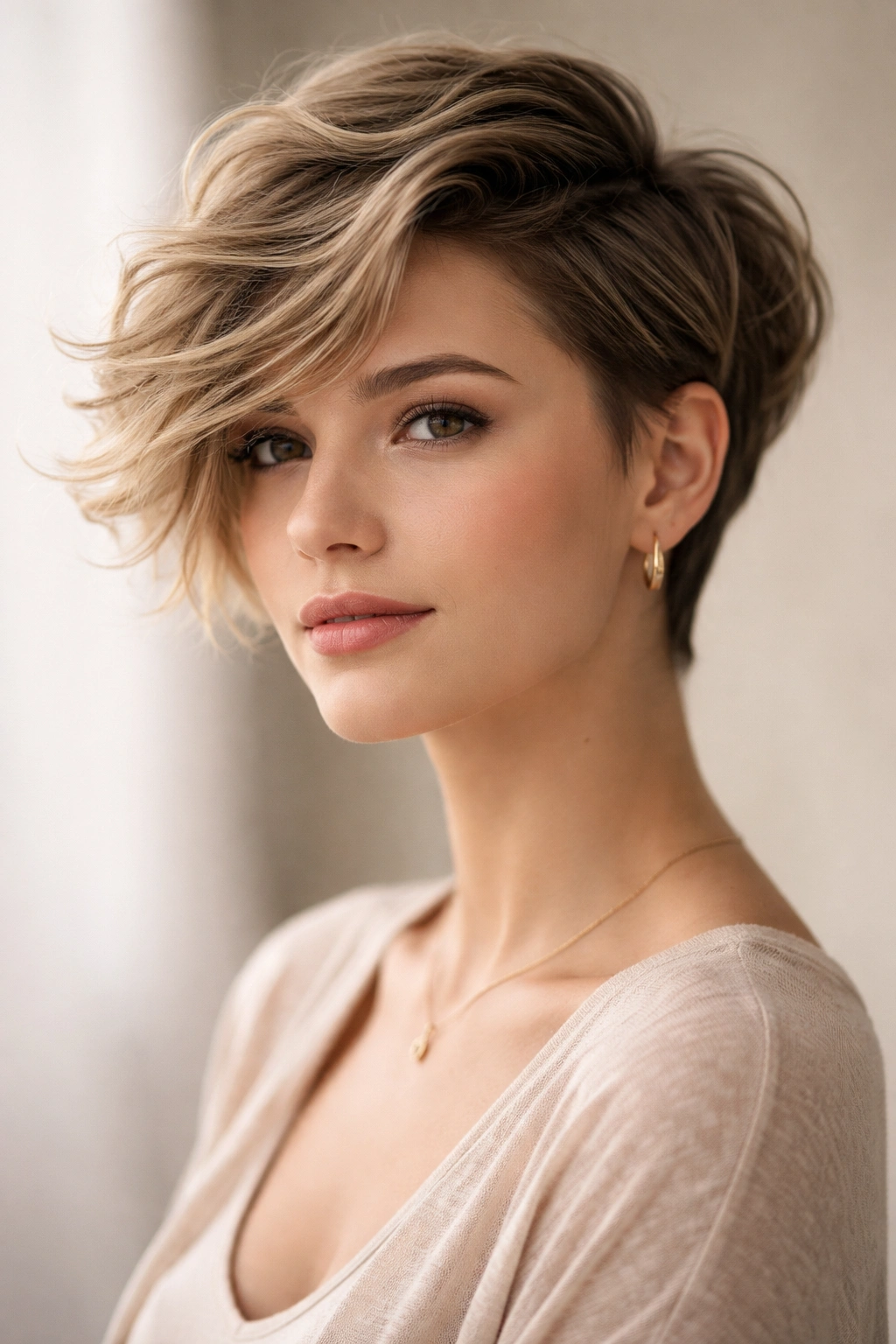
This version favors one side significantly, with most of your length swept in that direction while the other side is very close-cropped. As it grows, the length cascades across your head in a way that feels romantic and editorial. It’s less aggressively asymmetrical than the asymmetrical wave cut but still offers direction and intentionality.
The Appeal for Wavy Hair
Your waves naturally want to fall and flow, so the side-swept direction works with your hair’s inclinations rather than against them. The longer, swept side showcases the wave pattern beautifully, while the shorter side keeps the overall look from feeling heavy or one-sided. This cut is particularly flattering if you have a prominent forehead or cheekbones you want to balance, because the swept length creates a soft veil of texture.
Styling Approach
- Use a round brush and blow dryer to encourage the direction, or use texture spray and sweep it over while damp
- The side-swept look actually improves with greasy or textured hair, so you can go longer between washes
- Pin back the shorter side occasionally to reveal your face, or let it all fall forward for a more dramatic moment
- Works beautifully with velvet scrunchies or clips on the shorter side to keep pieces in place
The side-swept grown-out pixie has a slightly softer, more romantic quality than other pixie variations. If you want to be adventurous without looking drastically different from yourself, this is the goldilocks version of a pixie that offers change without radical transformation.
6. The Barely-There Pixie Fade
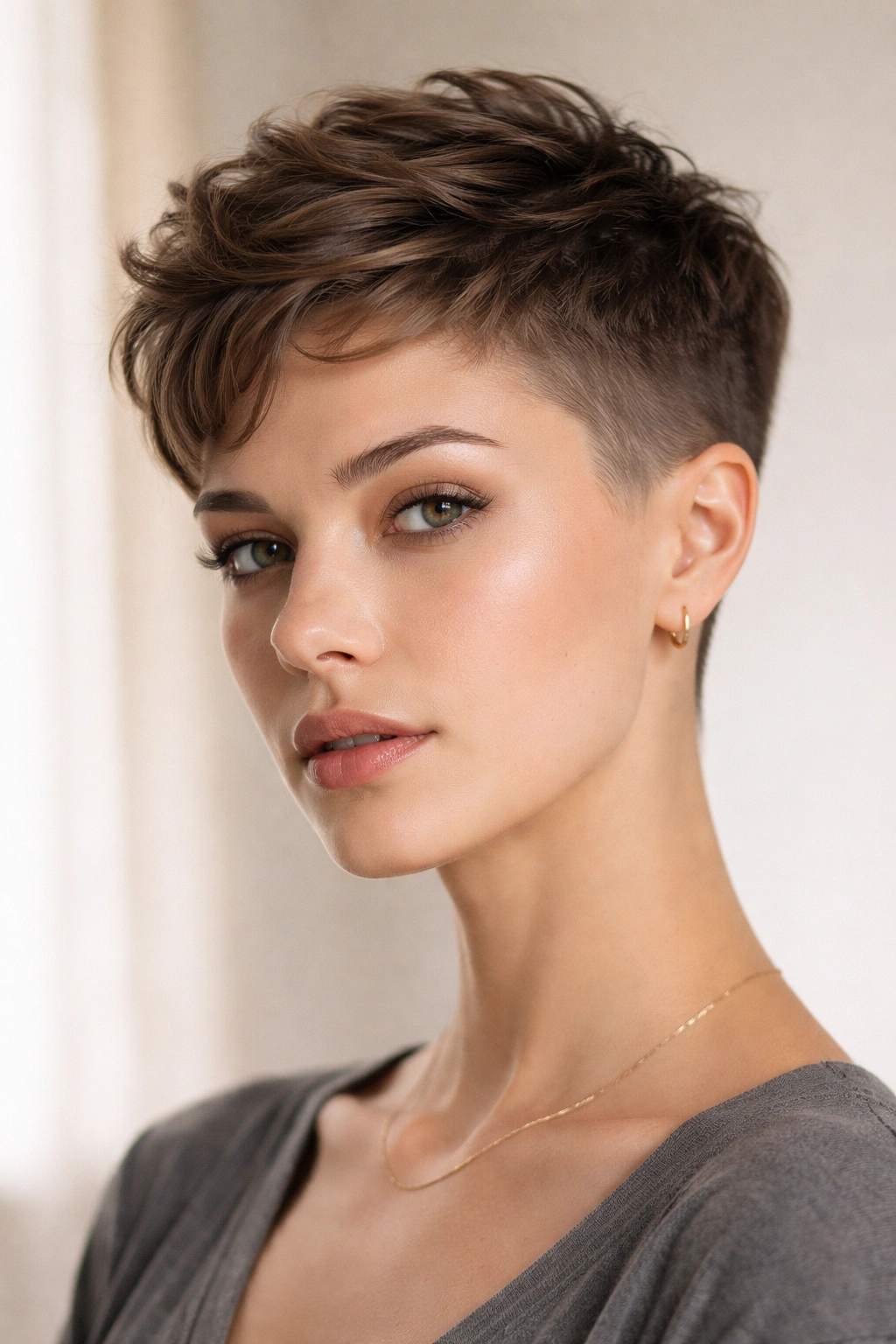
This is the most subtle grown-out pixie option—where the back and sides fade very gradually rather than cutting short. Instead of a defined short section and longer section, there’s a seamless gradient from tiny at the nape and sides to longer at the crown and face-framing pieces. It’s less “I have a pixie cut” and more “I have strategically textured short hair that happens to be longer on top.”
Why Gradual Fades Work for Waves
Fades without hard lines let your waves express themselves naturally because there’s no abrupt length change to interrupt the pattern. The gradual length increase means your hair doesn’t have to transition dramatically from super short to longer—it’s more of a conversation between different lengths. This also means as you grow it out, you don’t hit an awkward phase nearly as hard, because the fade is already built to accommodate growth.
Maintenance Reality
- Requires frequent fade maintenance—every 3-4 weeks ideally—to keep the gradient looking intentional rather than shaggy
- The upside is that these appointments are quick and affordable since you’re only touching up the shortest sections
- You’ll need a stylist who’s skilled with clippers and can execute a clean, precise fade that follows your head shape
This is the pixie for someone who wants the vibe of having short hair without committing to a blunt cut. It’s sophisticated and deliberately groomed without feeling like you’re high-maintenance about it. The fade says “I got this intentionally cut” rather than “I’m growing out a haircut.”
7. The Curly-Textured Pixie with Defined Waves
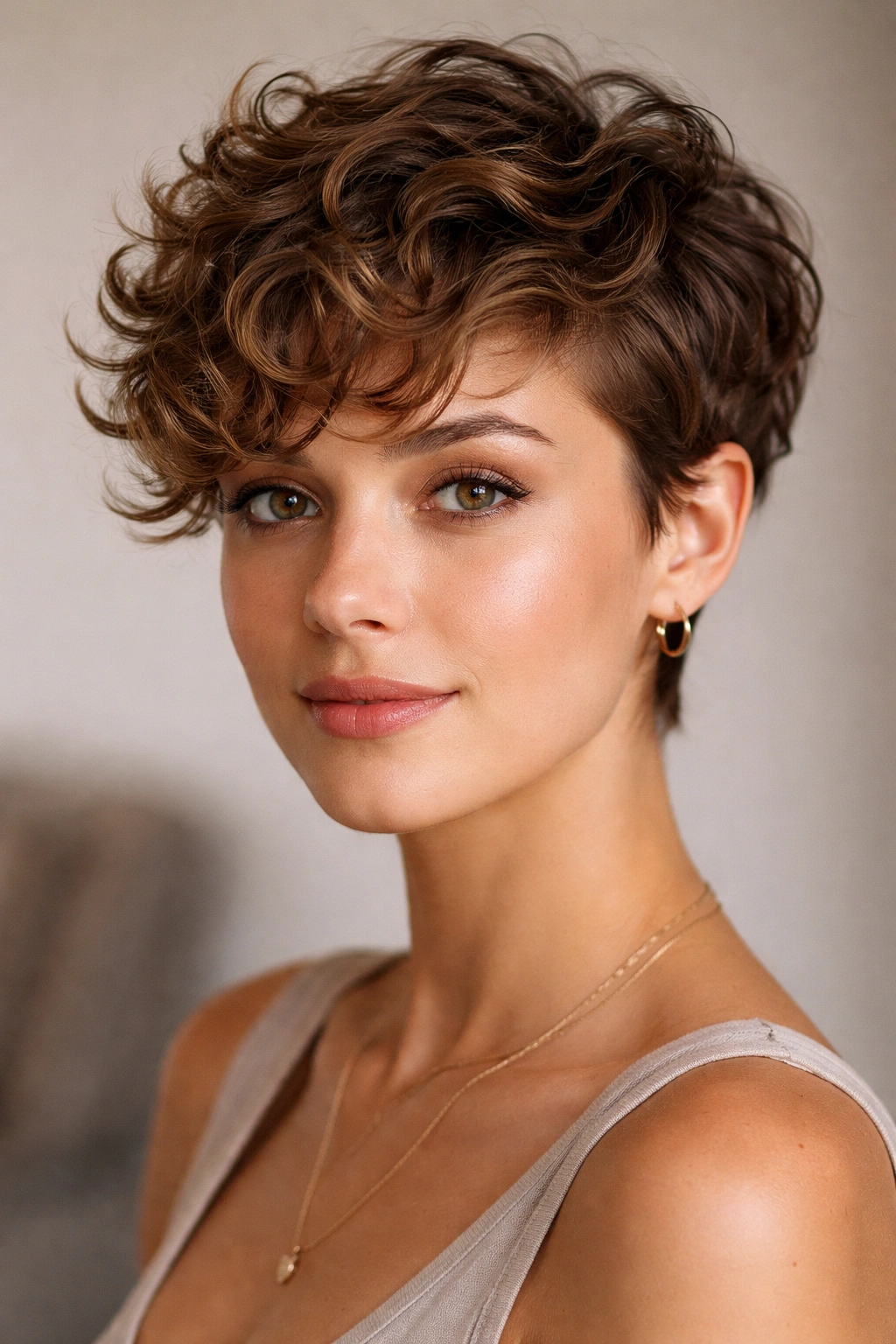
This version embraces the curl pattern directly, working with a stylist who cuts specifically for curl or wave texture rather than cutting to dry hair or assuming straight hair. The cut is shaped to let your curls and waves spiral and stack naturally, with shorter layers throughout that let each curl have room to spring up without weighing down.
How This Differs from Standard Pixie Cuts
Standard pixie cuts are often designed for straight hair and simply don’t account for how curl and wave patterns actually need to be cut. A curl-aware pixie cut means your stylist understands that 2 inches of hair on your straight-haired friend is not the same as 2 inches on you. Your natural texture means those 2 inches might spiral up and become 1 inch when dry. So the cut is executed differently, with the understanding that your waves and curls are a feature, not a bug.
What to Expect in a Curl-Focused Pixie Appointment
- Cut your hair when it’s wet and in its natural state, not blown straight
- Expect a longer appointment so your stylist can assess your wave or curl pattern carefully
- Look for a stylist who specializes in curly or textured hair rather than a general salon stylist
- Ask them to show you how to style it post-cut, because the way you dry it absolutely matters
This cut actually looks more voluminous and interesting than a straight-hair pixie, and once you grow it out, the wave pattern becomes more pronounced and dimensional. You’re genuinely celebrating your texture rather than pretending to have straight hair that you can blow straight into submission.
8. The Modern Tousled Pixie with Wispy Bangs
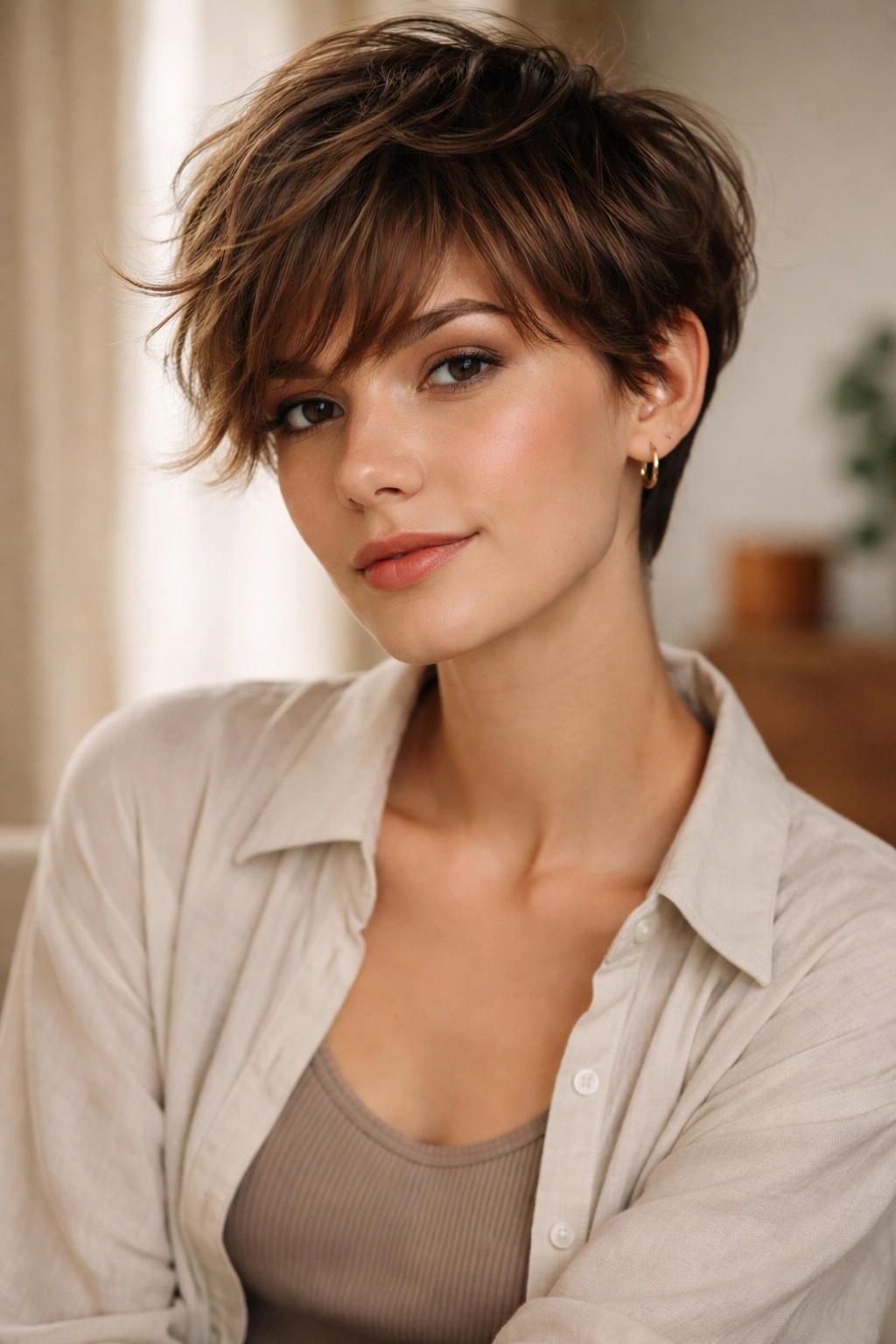
This cut combines the cropped pixie silhouette with intentionally longer, wispy bangs or face-framing pieces that get texture and movement. Think modern, lived-in, and slightly romantic rather than sleek and sculptural. The bangs are the real show-stopper here—they’re long enough to move and create softness around your face while the back and sides remain cropped.
Why Wispy Bangs Transform a Pixie
Bangs are incredibly powerful for changing how a short haircut reads. Blunt pixie bangs feel severe and defined. Wispy, textured bangs feel romantic and approachable. For wavy hair, wispy bangs are actually ideal because your waves create the texture and movement naturally. As you grow out the bangs, they become longer face-framing pieces that soften the overall cropped silhouette and give you something to play with as your hair lengthens.
Styling the Wispy Bangs
- Apply lightweight texture spray or sea salt spray to damp bangs and sweep them to the side or let them fall forward
- A round brush and low-heat blow dryer helps you create dimension without frizz
- Clip them back occasionally with a barrette to show your full face, or wear them swept and tousled
- They work beautifully tucked behind one ear or parted down the middle as they grow longer
This version photographs beautifully and reads as effortlessly chic rather than aggressively trendy. The wispy bangs soften the pixie’s natural boldness and add an element of romance that appeals to people who like the idea of short hair but worry it might be too severe on their face.
9. The Layered Crown Pixie with Close Sides
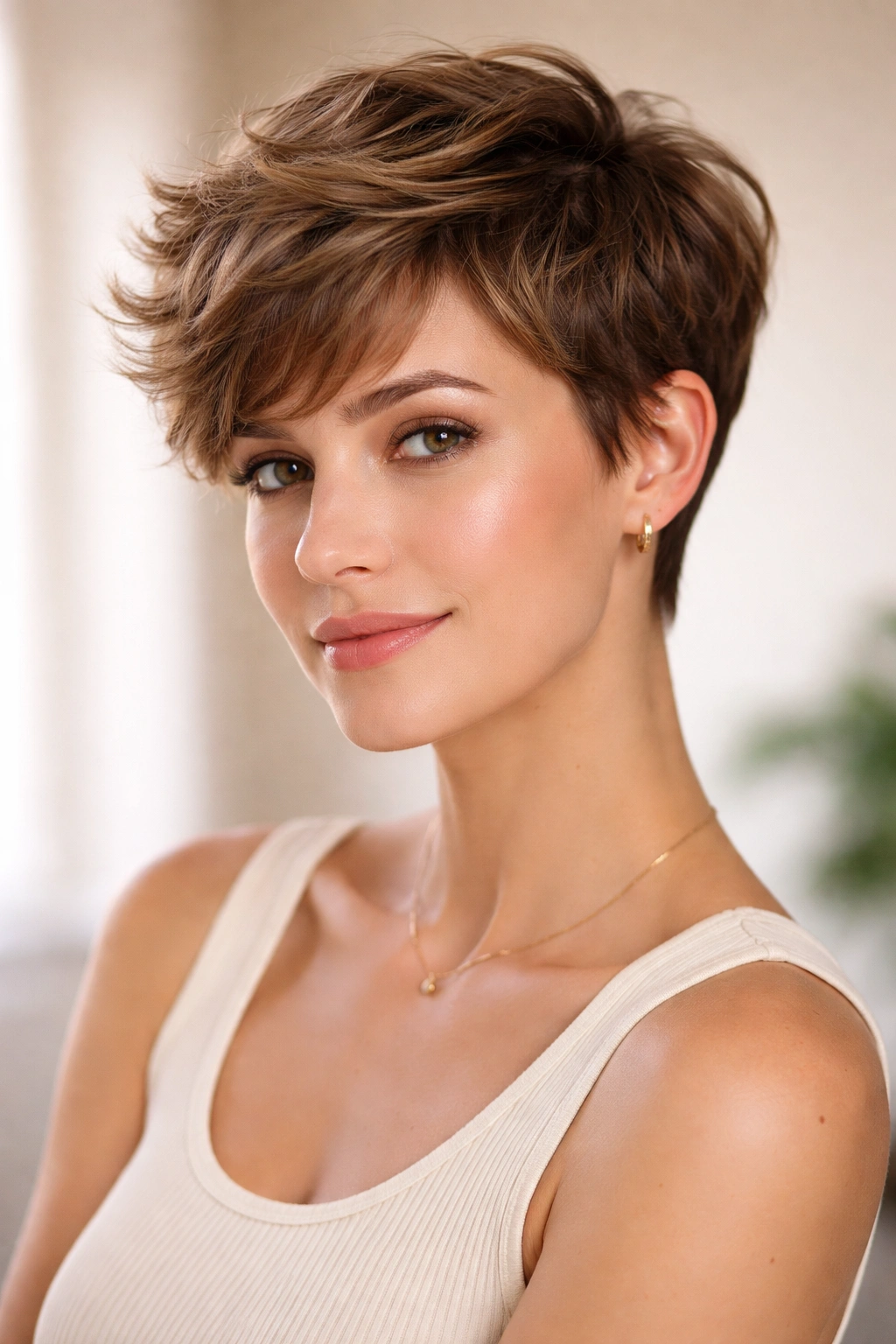
This cut creates maximum volume at the crown with closely cropped sides, so you get height and dimension on top while keeping the look compact and neat at the perimeter. Lots of short, choppy layers at the crown catch light and create movement, while the clean lines at the sides keep the overall shape defined and modern.
The Volume and Shape Appeal
If you have a round face or worry about looking matronly with short hair, this cut addresses both concerns. The height at the crown elongates your face proportions, while the shorter sides don’t add width. The layering means your waves create actual dimension rather than the solid, heavy look that can happen with one uniform length. You get movement, shape, and visual interest without a complicated styling routine.
How the Crown Layers Work as You Grow
- Initially, the layers create spiky, textured volume at the crown
- As you grow it out over 2-3 months, those layers become longer face-framing pieces
- By month 4-6, you have a genuinely shaggy, layered cut that feels completely intentional
- The close sides mean you’re not dealing with that awkward mullet phase where the back gets long before the front
This is the pixie for someone who actively wants volume and dimension and doesn’t mind spending 5 minutes styling with a round brush and texture spray. It’s a low-commitment cut with high-impact results.
10. The Undercut Pixie Growing Into a Mullet-Adjacent Style
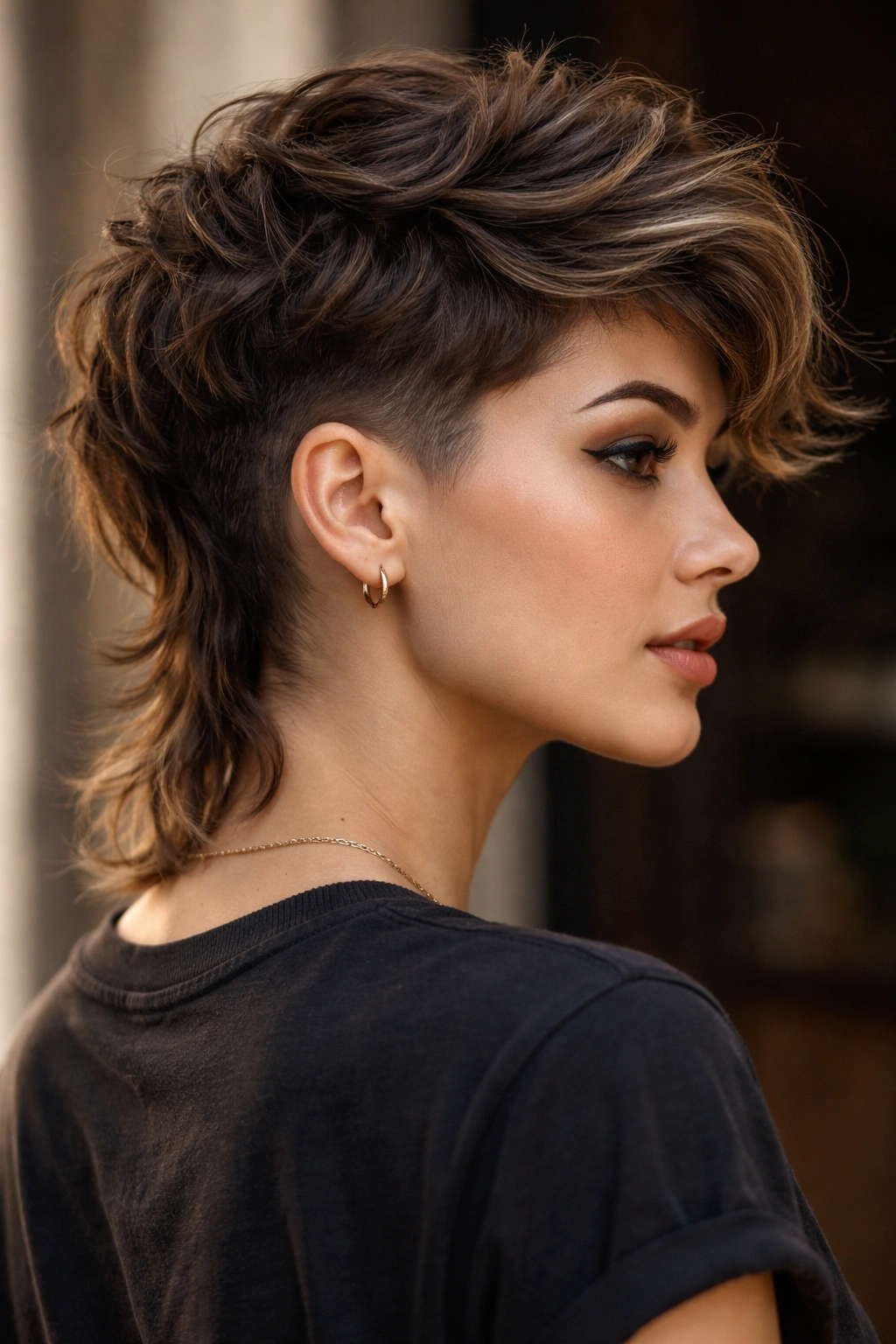
This is the boldest option on the list—where the back and sides are extremely tapered or even shaved while the top is longer and wavy. As it grows, this intentionally creates that modern mullet-adjacent aesthetic: short at the sides, longer and wavy on top and at the back. It’s unapologetically trendy and definitely not for everyone, but if you’re confident in your style choices, it’s a genuinely interesting grow-out journey.
The Modern Mullet Moment
The new version of the mullet isn’t the 1980s hair-metal version. It’s more about contrast, with a heavily tapered or undercut back and sides that showcase your neck and nape, while the top is deliberately wavy and longer. The undercut part requires very close maintenance initially—you’ll need to visit your stylist every 3-4 weeks for the first few months to keep that shaved or ultra-tapered section looking sharp and defined. But once you start growing the top longer, you hit a genuinely interesting in-between phase where you have serious dimension and the ability to style it multiple ways.
Styling the Undercut Pixie
- Slicked back is dramatic and shows off the undercut detail
- Piece-y and tousled softens the boldness and lets the waves shine
- Swept to one side balances the extreme contrast
- Clips and pins let you show off or hide the undercut depending on the occasion
This cut is a commitment and definitely a statement, but if you’re someone who likes being visually interesting and your lifestyle allows for bold style choices, it’s an incredibly cool option. The grow-out timeline is actually pretty interesting—you’re never boring, and you’ve got a clear finish line of a cool medium-length shag or bob.
Final Thoughts
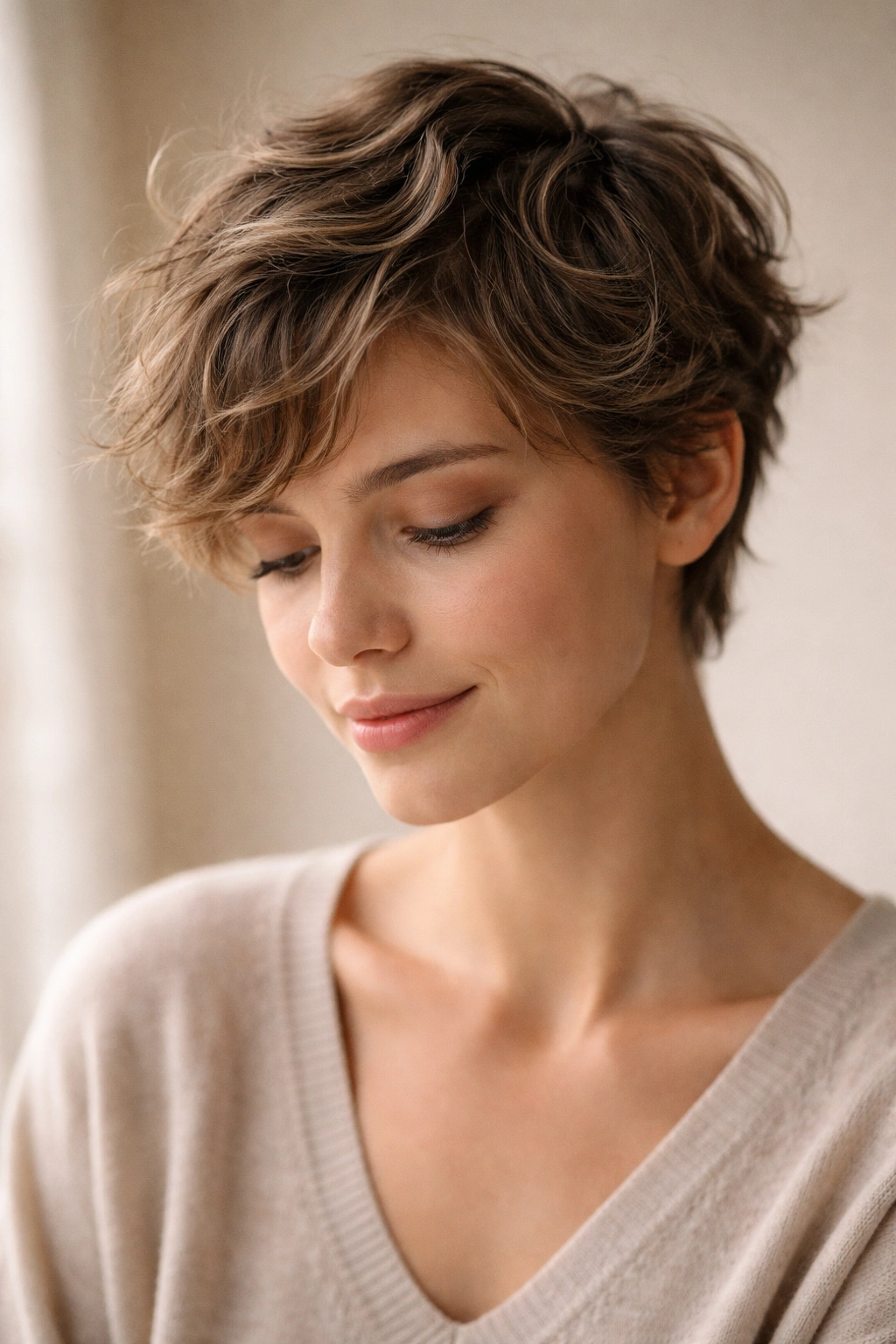
The wavy grown-out pixie works because it honors what your hair actually wants to do rather than forcing it into an unforgiving shape. Whether you choose something subtle like the barely-there fade or bold like the undercut pixie, what matters is that your cut is designed intentionally and that you understand how it’ll evolve as it grows.
The best version of any of these cuts is one that matches your daily styling tolerance and your genuine style aesthetic. If you hate blow-drying your hair, the choppy shaggy pixie with texture spray is infinitely better than the layered crown pixie that needs a round brush. If you have fine hair, an undercut might feel too sparse, while a curl-textured pixie designed for your specific wave pattern could look absolutely stunning.
Before you book your appointment, show your stylist multiple photos of the specific variation you want—not just “pixie cut” or “grown-out pixie,” but the exact direction, length, and texture you’re envisioning. Have a conversation about your hair’s natural wave pattern, how often you’re willing to maintain it, and what your life actually looks like day-to-day. The perfect pixie is the one that makes you feel confident without requiring you to become a professional stylist yourself. Once you’ve got that foundation, your wavy hair does most of the heavy lifting—all you have to do is let it grow.