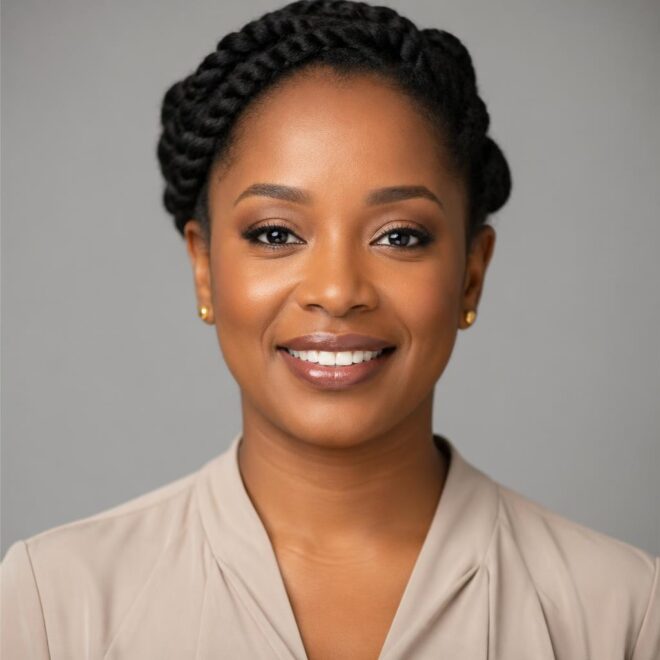


Double ponytails have made a serious comeback, and for good reason — they’re playful, practical, and way more versatile than most people realize. Whether you’re going for Y2K nostalgia, a sleek professional vibe, or something genuinely unique, there’s a double ponytail style that fits your look. The beauty of this style is that you can customize it endlessly: stack them high and low, position them asymmetrically, braid them, wrap them with accessories, or combine them with bangs for instant personality. Beyond just looking great, double ponytails actually solve real styling challenges — they keep hair off your face while adding volume and movement, and they work on every hair texture and length. Let’s explore twelve distinct approaches to double ponytails that go way beyond the basic two-tails-on-top look you might remember from childhood.
1. The Stacked High-Low Ponytail
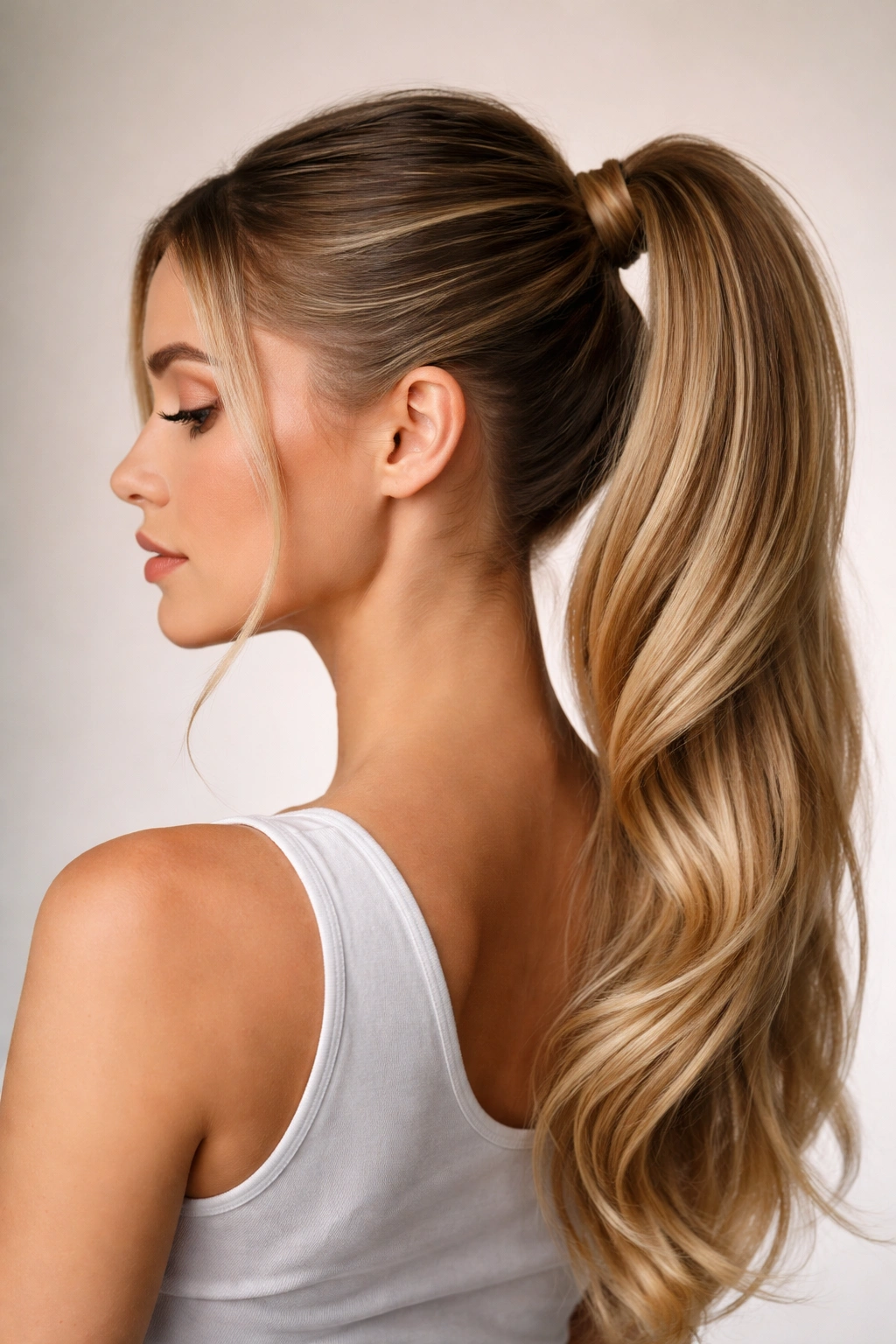
This approach creates dramatic height and visual interest by placing one ponytail significantly higher than the other. The top ponytail sits near your crown, gathering hair from roughly the upper third of your head, while the lower ponytail uses the remaining hair and sits closer to the nape of your neck. The height difference creates a naturally cascading effect that’s both elegant and youthful.
Why This Style Stands Out
The stacked high-low ponytail works because it plays with proportions in a flattering way. The elevated top section draws the eye upward, creating the illusion of a longer neckline and more delicate features. This style also creates volume without requiring any teasing or product — the simple act of separating the hair into two tiers automatically creates dimension. Whether you have fine hair or thick hair, the separation means each ponytail looks fuller than it actually is, since you’re not trying to pull all your hair into a single tie.
How to Execute It Perfectly
- Brush hair smooth and section off the top third of your head, from ear to ear
- Secure the top section into a high ponytail, leaving it slightly loose for now
- Take the remaining hair below and secure it into a lower ponytail near the nape
- Go back and tighten the top ponytail, adjusting both until they feel balanced
- Use a texturizing spray on both tails to add grip and prevent slipping throughout the day
- Optional: tease the base of the top ponytail slightly for added height and hold
Pro tip: If you have shorter or finer hair, backcomb just the roots of your top section before securing it — this creates an anchored base so the ponytail sits even higher and stays in place all day without getting pulled down by gravity.
2. The Sleek Symmetrical Double Ponytail
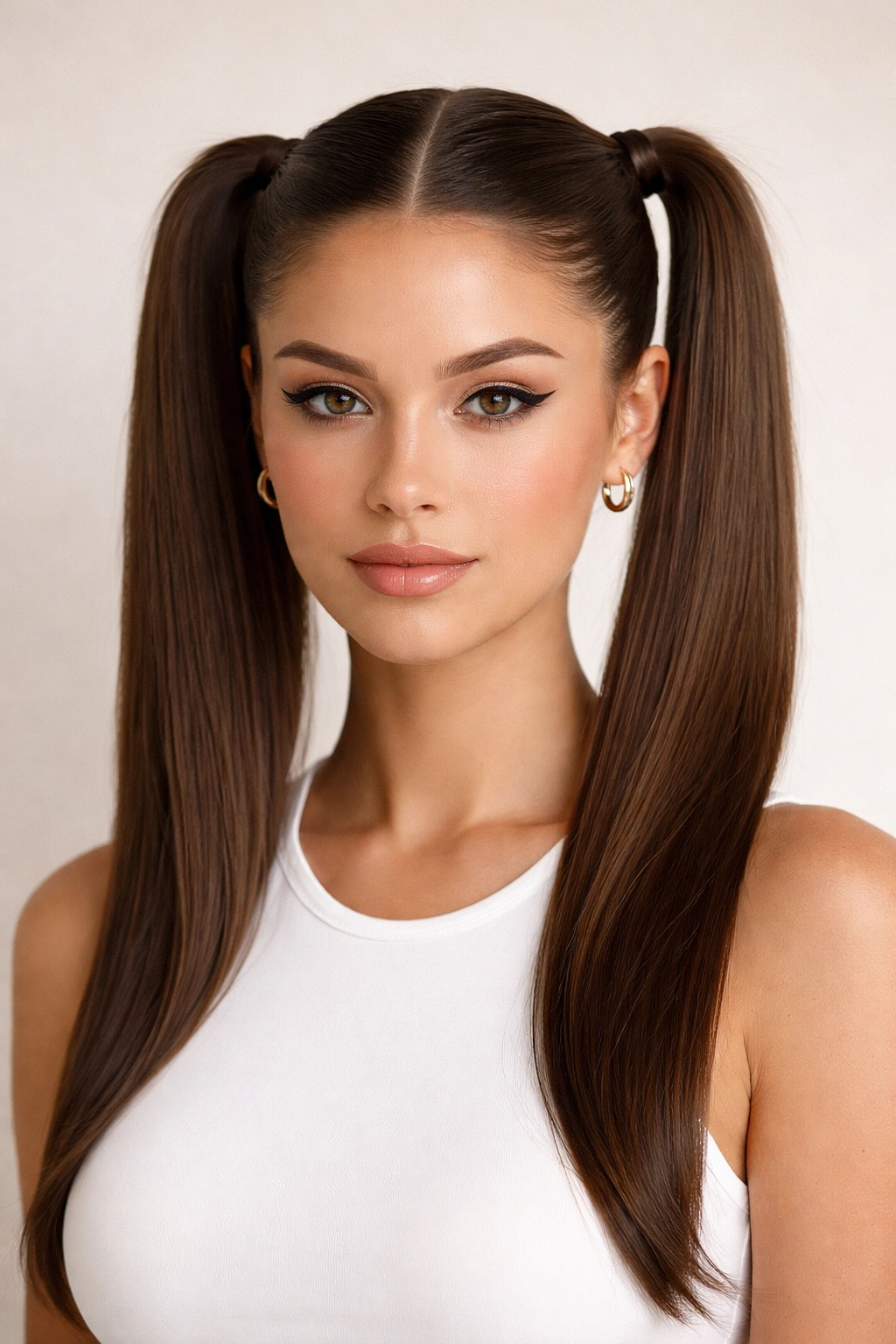
This is the purest, most balanced version of the style — two ponytails positioned at equal height on either side of your head. Both ponytails sit at approximately the same level, usually around ear height or slightly higher, creating a perfectly symmetrical, polished appearance. The key to making this work is precision sectioning and smooth, tension-free hair.
What Makes It Different
Symmetrical double ponytails feel inherently organized and put-together, which is why they’re beloved in corporate offices, creative studios, and anywhere polish matters. The symmetry is psychologically satisfying to look at — our brains read symmetry as intentional and refined. This style also creates a visual widening effect across the face, which can be flattering if you have an elongated or narrow face shape. The symmetry also makes it easier to achieve a “no-makeup makeup” vibe where the hairstyle does the heavy lifting on visual interest.
Step-by-Step Instructions
- Part your hair down the center from forehead to nape, creating two equal sections
- Brush one section smooth and secure it into a ponytail at your desired height
- Mirror that exact height and positioning on the other side
- Check that both elastics are at the same level by looking in the mirror from both profile angles
- Smooth any flyaways with a fine-tooth comb and a light hairspray
- For extra sleekness, wrap a small section of hair around the base of each elastic to hide it
Worth knowing: This style looks sharpest with a center part, but you can also do it with a slightly off-center part for a more approachable, less formal feel. The off-center version reads as polished without feeling too corporate.
3. The Bubble Ponytail Double Stack
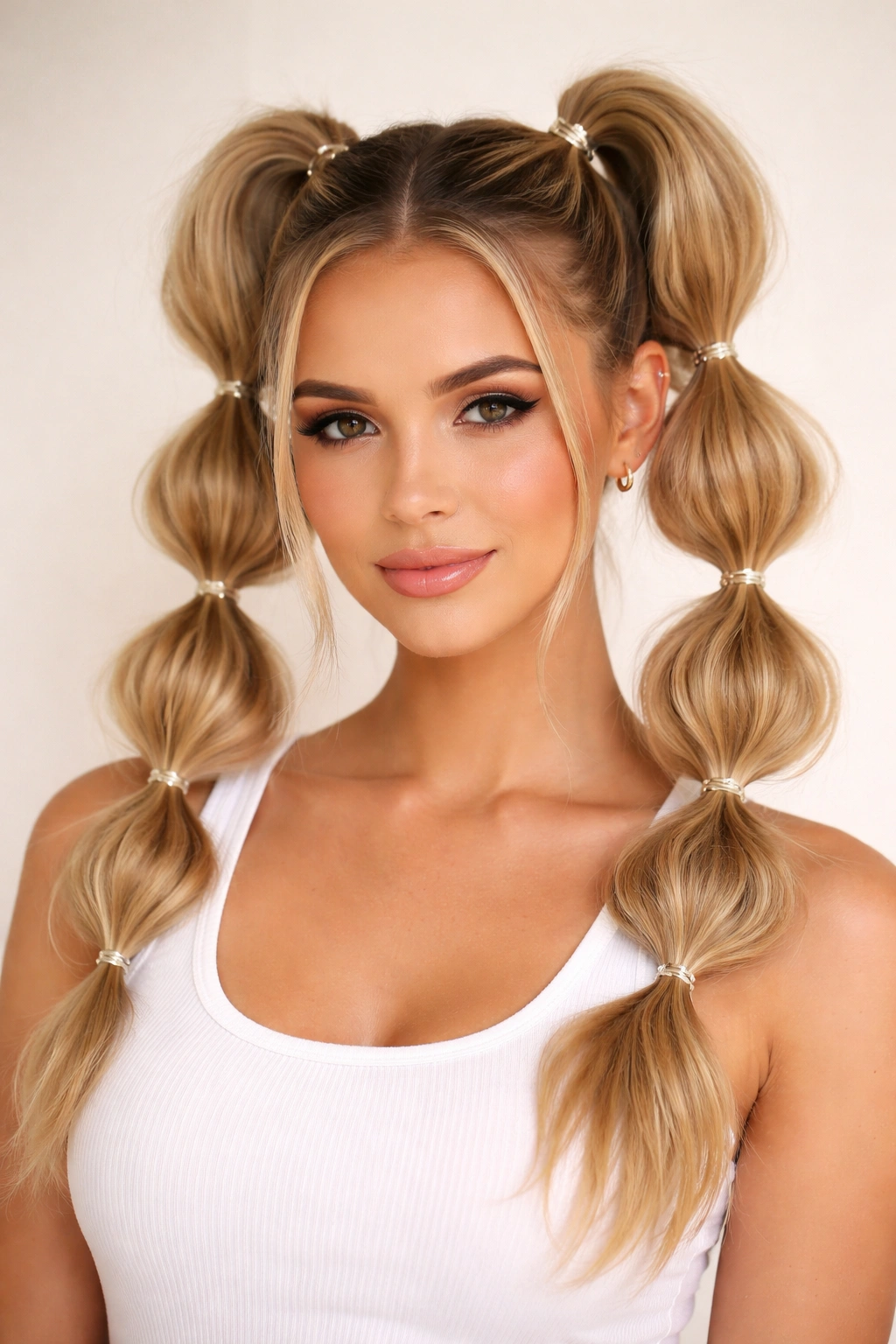
Create bubble-like sections along two stacked ponytails by securing the hair with multiple elastic bands placed an inch or two apart down the length. Each “bubble” poofs out between the elastics, creating a playful, dimensional look that’s especially striking when you have thicker hair.
The Visual Impact
Bubble ponytails instantly read as fun and creative — the repeated segments create a visual rhythm that’s impossible to ignore. This style adds apparent volume without backcombing, which means it’s actually gentler on your hair than some other volume-boosting techniques. The bubbles also break up the visual length of the ponytails themselves, making them feel shorter and more manageable even if you have hair past your shoulders.
Making It Look Intentional
- Create your two stacked ponytails (high and low or symmetrical, your choice)
- Starting about an inch below the elastic, secure a second thin elastic around each tail
- Gently tease the hair between the first and second elastic upward to create a bubble
- Continue this pattern down the length of each ponytail, spacing your elastics evenly
- Fluff each bubble to your desired puffiness — more dramatic or subtle, it’s entirely your call
- Use bobby pins to anchor any sections that want to slip out of place
Insider note: The thinner and more numerous your elastics, the more defined and intentional the bubbles look. Thick elastics create a messier, more casual vibe, while thin clear elastics keep the focus on the bubbles themselves.
4. The Braided Double Ponytail
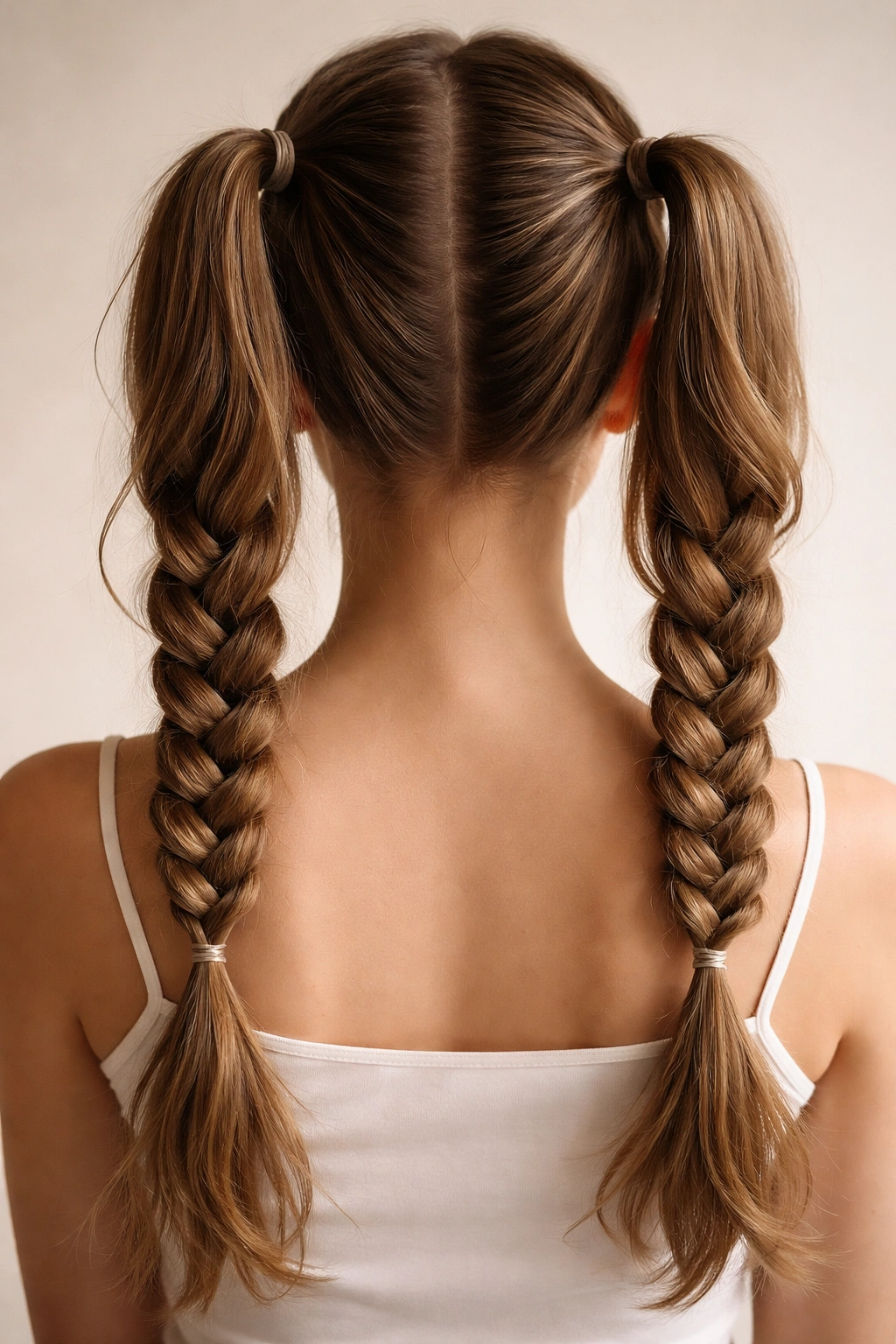
Take each of your two ponytails and braid them from the elastic down to the ends, creating a more intricate, elegant texture. You can use traditional three-strand braids, French braids that incorporate new hair as they go, or even thinner micro-braids for a more romantic aesthetic.
Why Braiding Transforms the Look
Braids add texture and dimension instantly, transforming simple ponytails into something that reads as more intentional and designed. Braids also give you a practical benefit — they keep the hair more secure throughout the day, especially if you’re moving around a lot. A braided double ponytail is formal enough for weddings and special events, but can also feel playful and casual depending on your braid style and how loosely you construct the braids.
Braiding Technique Basics
- Once you’ve secured your two ponytails, separate one tail into three equal sections
- Cross the right section over the middle, then the left over the middle, repeating to the ends
- For a looser, more romantic braid, pull gently on each completed section to widen the braid slightly
- Continue braiding the second ponytail with the same tension and style
- Secure the end of each braid with a thin elastic or bobby pin
- For extra dimension, gently pull the edges of each braid to create a wider, more interesting texture
Pro tip: If you’re braiding on day-two hair (hair that’s been down for a day), the braid will hold together more securely because there’s slightly more texture to grip. Fresh, freshly washed hair actually slides apart more easily, so a tiny bit of dry shampoo or texturizing spray helps.
5. The Twisted Double Ponytail
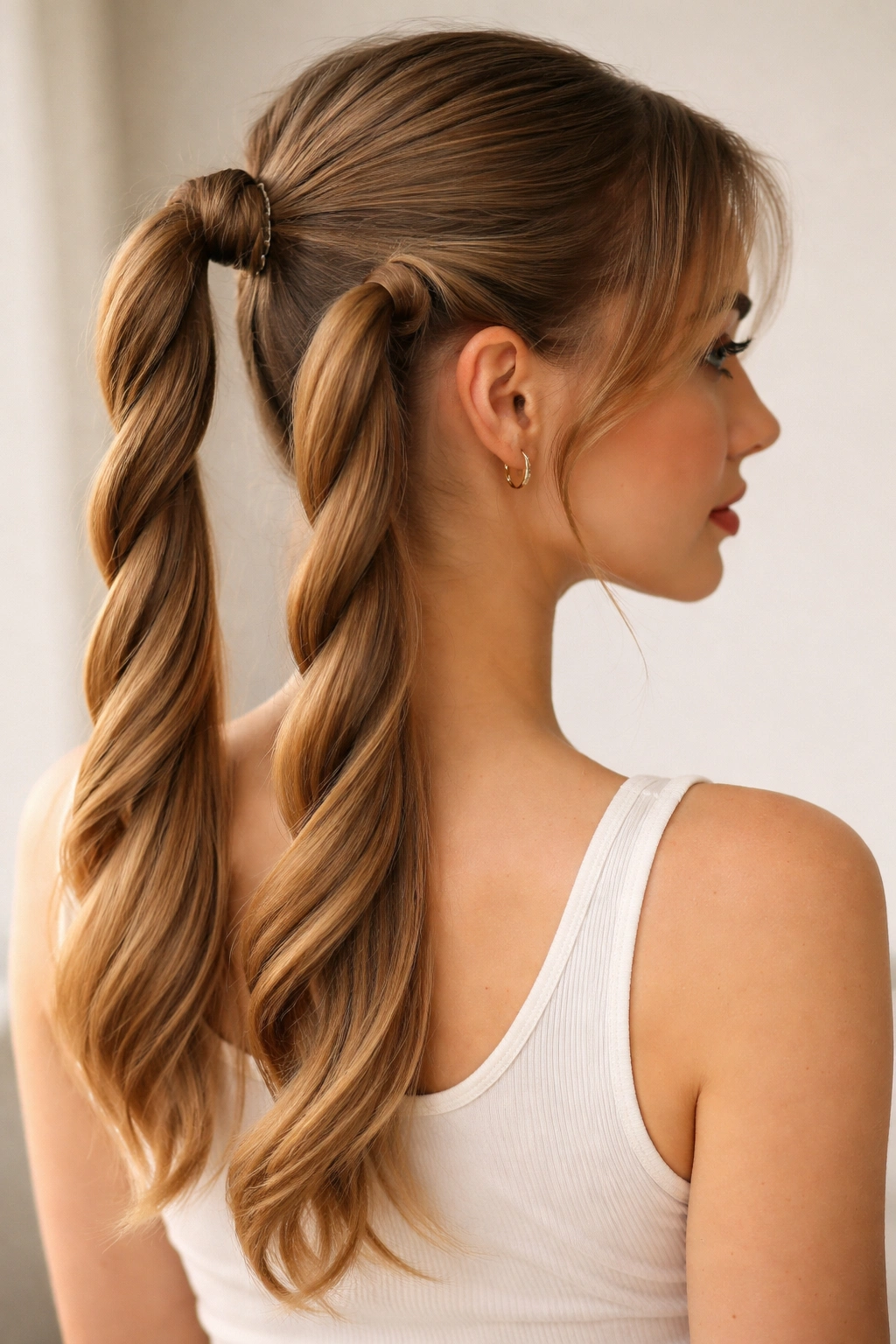
Instead of braiding, twist each ponytail around itself, creating a rope-like texture that’s elegant and surprisingly easy to execute. This works especially well if you have straight hair, since the twist creates visual interest without requiring multiple sections.
The Appeal of Twist Over Braid
Twists take about half the time of braids and create an equally polished appearance. They’re also more forgiving — if a twist starts to unravel slightly, it still looks intentional, whereas a messy braid can read as sloppy. Twists work particularly well on finer hair because you don’t need the thickness to support three braid sections; a two-section twist holds beautifully even on delicate hair.
Creating the Perfect Twist
- Secure your two ponytails at your desired height
- Divide the first ponytail into two equal sections
- Twist one section clockwise and one counterclockwise, wrapping them around each other
- Continue twisting to the ends, keeping the two sections taut but not uncomfortably tight
- Secure the end of the first twist with a bobby pin or elastic
- Repeat the exact same process on the second ponytail for matching results
- Loosen the twist slightly by gently pulling on the outer edges to add dimension
Worth knowing: If you want the twists to look extra intentional and structured, apply a light hair wax or mousse to each ponytail before twisting. This helps everything grip together and prevents tiny flyaways from escaping.
6. The Side-by-Side Asymmetrical Double Ponytail
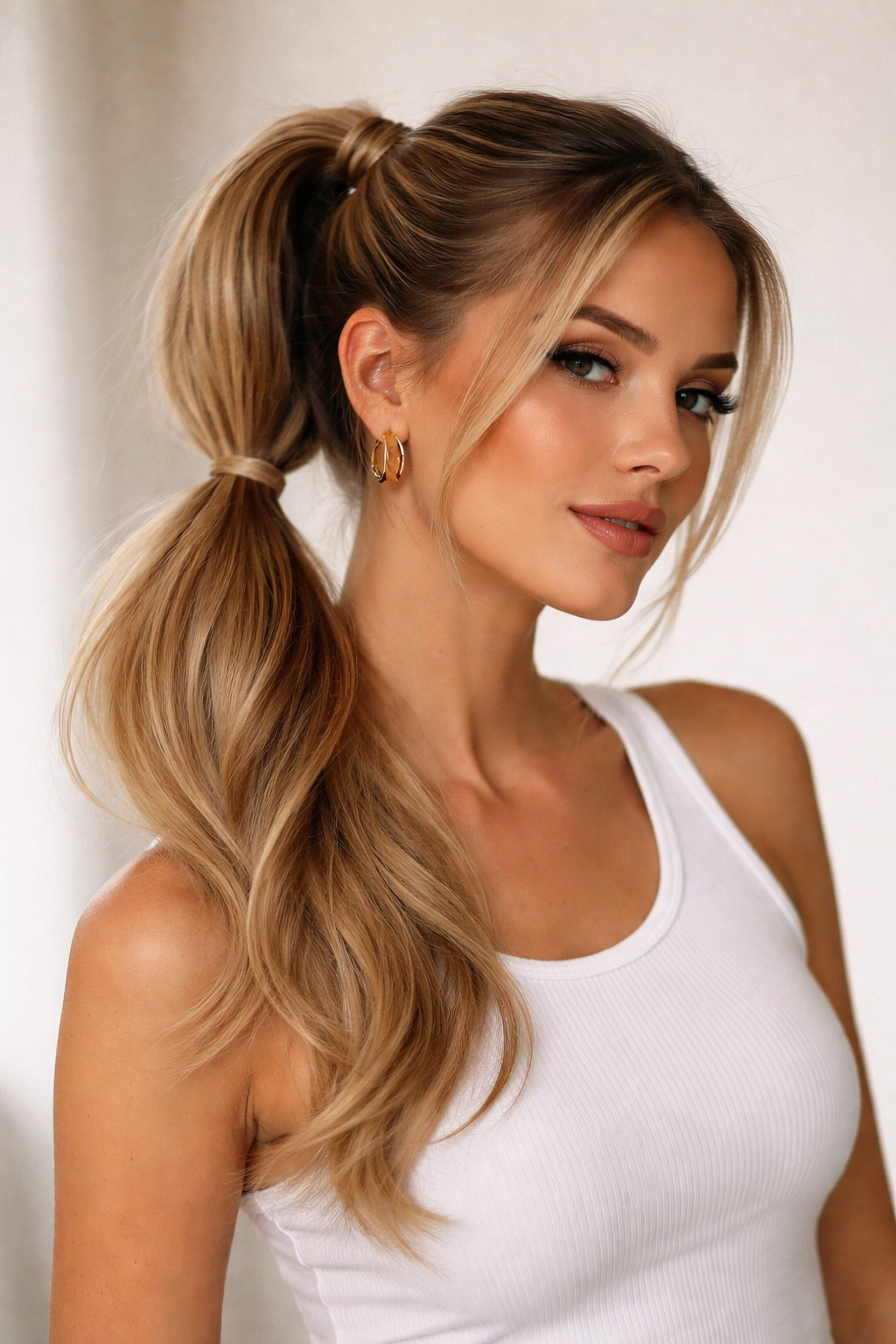
Position both ponytails on one side of your head rather than splitting them down the middle — one slightly higher than the other, both angling toward that same side. This creates an artfully off-balance look that feels modern and intentional.
What Makes It Work
Asymmetrical styling is inherently eye-catching and signals confidence in your style choices. Positioning both ponytails to one side creates negative space on the other side of your head, which can flatter various face shapes depending on which side you choose. This style also feels less “cute” and more “cool” — it reads as sophisticated rather than playful, making it perfect if you want the double ponytail with a more mature edge.
Getting the Positioning Right
- Section your hair as if you were making a center part, but don’t actually separate them
- Gather the hair from roughly your left crown area and secure the first ponytail
- Just below it, gather the remaining hair and secure the second ponytail
- Both tails should angle slightly toward that same side, creating a visual diagonal
- Check the balance — ideally, one tail sits near ear level and one sits lower
- Smooth the exposed side of your head with hairspray and a fine comb
- Consider adding a decorative clip or bobby pin to the exposed side for extra visual interest
Pro tip: This style looks stunning with a slicked-back, wet-look finish on the exposed side. It creates drama and makes the asymmetry feel completely intentional rather than accidental.
7. The Space Buns Double Ponytail Hybrid
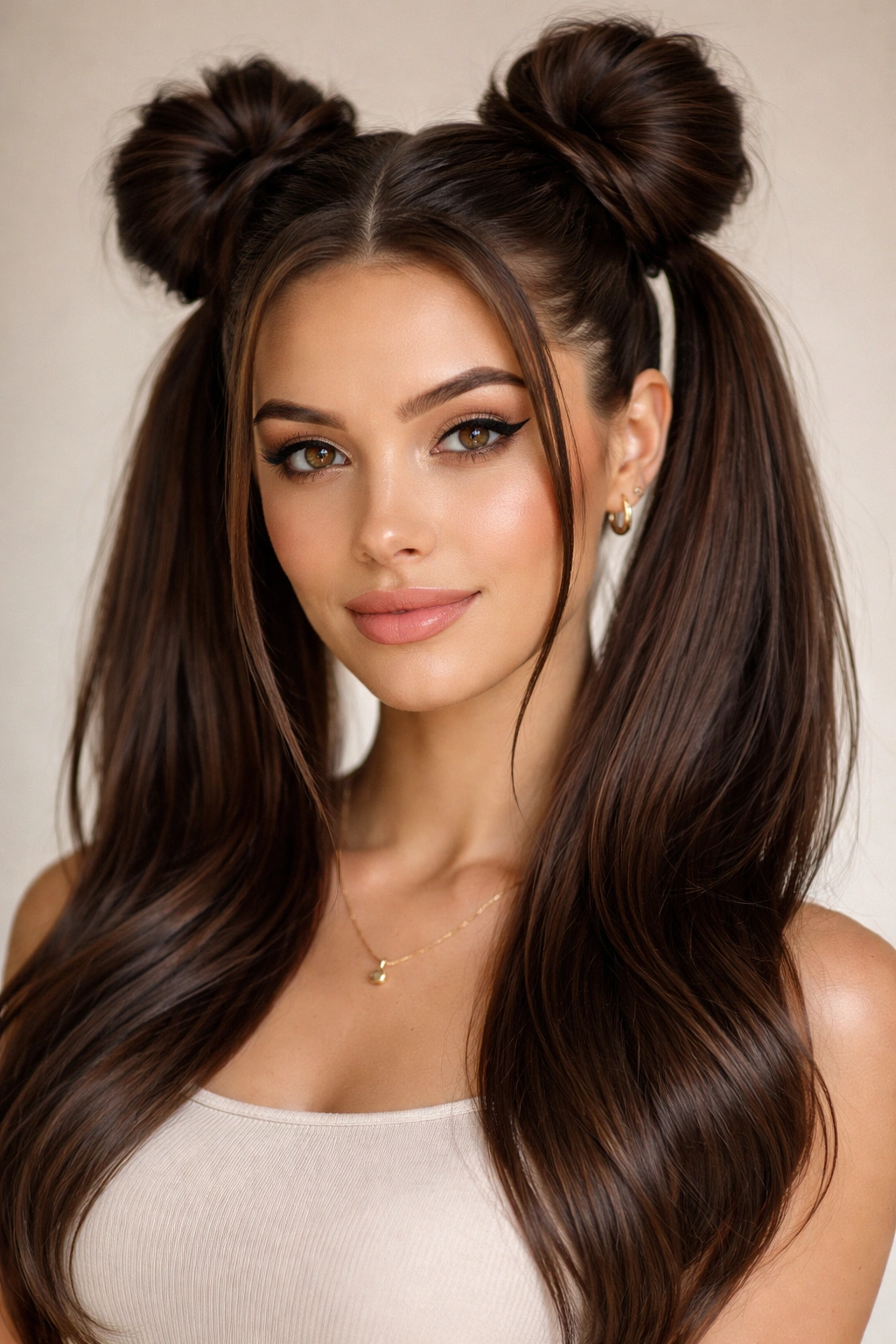
Create two buns by wrapping each ponytail around the base of its elastic, pinning the wrapped section into a bun shape. This creates a higher, rounder silhouette than traditional ponytails while maintaining that double-tail aesthetic.
Why This Hybrid Works
Space buns give you the volume and visual interest of ponytails while offering more height and a more sculptural appearance. The wrapped bun sections create natural, gorgeous volume without requiring any teasing or complex styling. This style works at literally any formality level — casual with a t-shirt, romantic with a dress, even edgy with the right accessories.
Constructing Your Buns
- Create your two ponytails at your desired height
- Starting at the elastic, wrap the first ponytail around the base, coiling it up on itself
- Pin the coiled section with bobby pins, securing it firmly to create a bun shape
- Gently tug the coiled section to create a fuller, rounder appearance
- Repeat on the second ponytail, matching the size and fullness of the first bun
- Use bobby pins that match your hair color to keep them invisible
- If you want a looser, messier bun style, pull out some pieces and let them fall around the bun
Insider note: If your hair is very long and thick, you might need 6-8 bobby pins per bun to keep everything secure. Fine hair might only need 3-4. The key is distributing the pins throughout the wrapped section rather than clustering them in one spot.
8. The Half-Up Double Ponytail
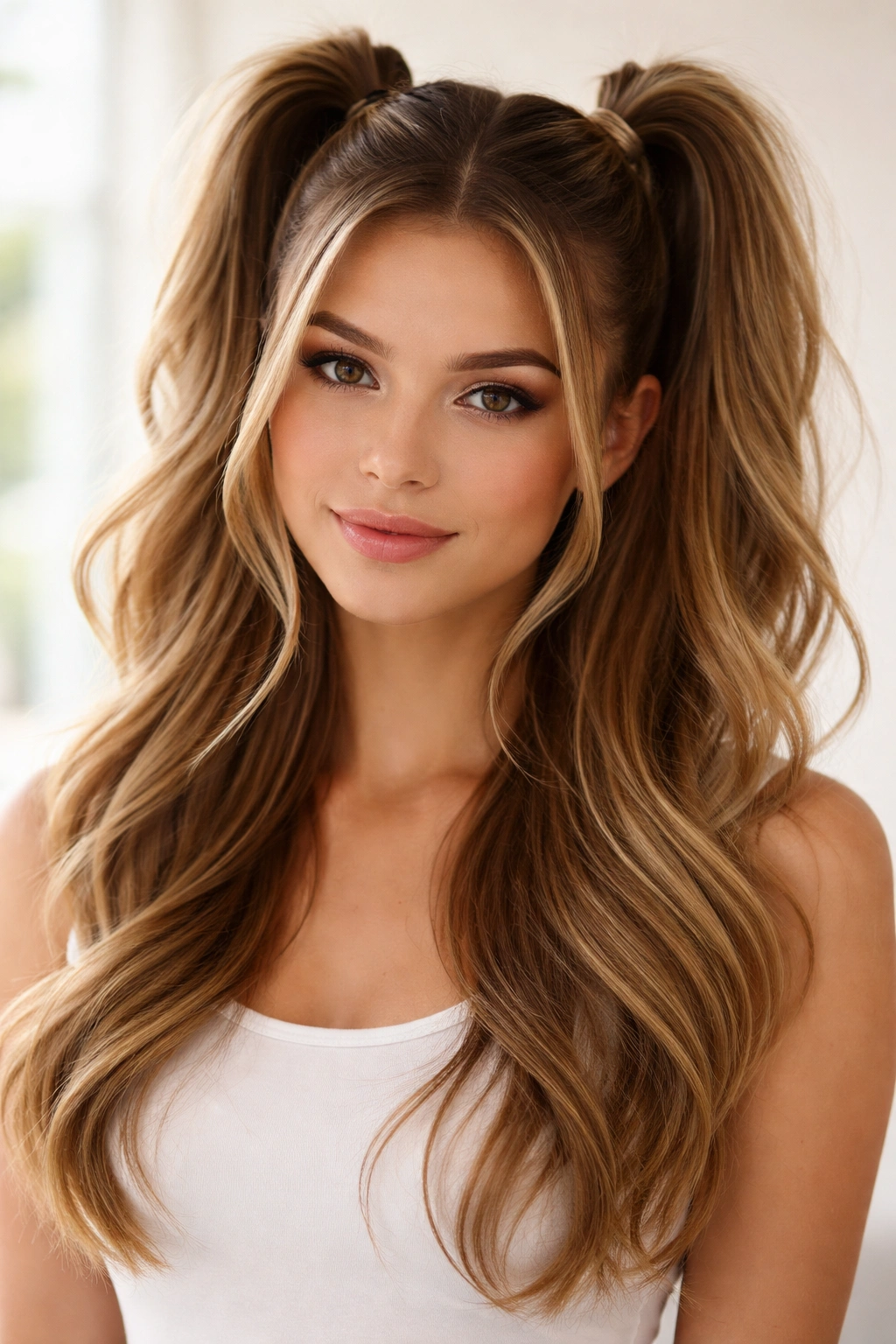
Gather the top half of your hair into two higher ponytails while leaving the bottom half of your hair completely down, creating a hybrid between a half-up style and a full double ponytail.
The Best of Both Worlds
This style gives you the face-framing softness of wearing your hair down while providing the security and lifted appearance of pulled-back hair. It’s genuinely practical — the pinned portion keeps hair out of your face while the down portion adds movement and flow. This works especially well if you have longer, thicker hair because the down portion adds enough weight to make the overall look balanced.
Constructing the Style
- Brush your hair smooth and identify where you want to make your vertical sections
- From the top of your head, section off the hair you want in the top ponytails (usually from ear to ear)
- Divide that top section down the middle and secure two ponytails side by side
- Leave the hair below the section completely down, allowing it to fall naturally
- For extra dimension, lightly tease the roots of your top ponytails before securing them
- Optional: braid or twist the top ponytails for added texture and interest
- Smooth the down portion with a flat iron if you prefer a sleeker appearance, or leave it textured for more casual vibes
Pro tip: This style shines if you add soft waves to the down portion — it creates a romantic, effortless look that reads as both polished and relaxed.
9. The Sleek High Double Ponytail with Wrap Detail
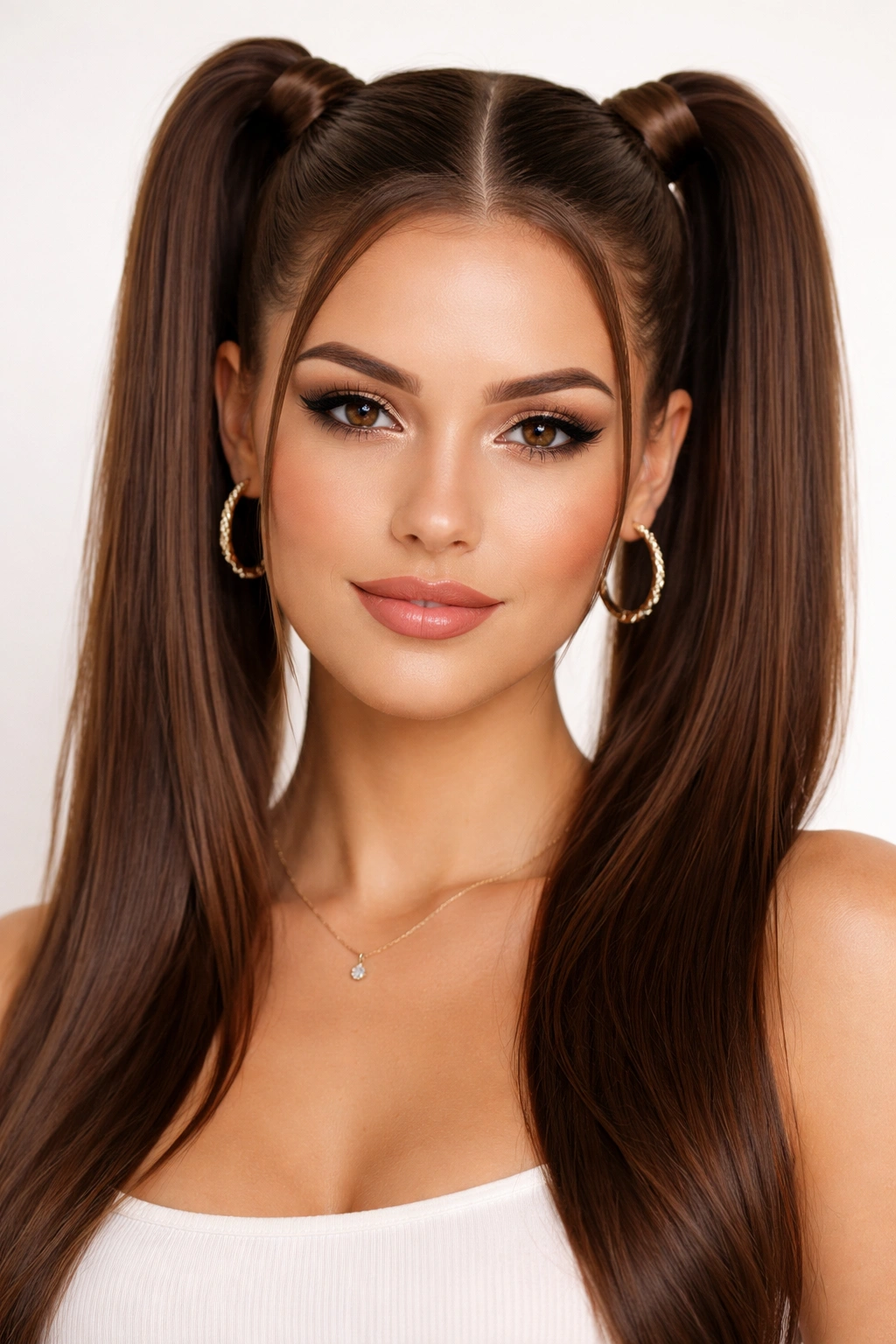
Position two symmetrical ponytails as high as possible on your head, then take a thin section from one ponytail and wrap it around the base of both tails, creating a unified, refined appearance.
The Sophistication Factor
This style feels expensive and intentional — like you spent time getting ready even if the whole process took less than five minutes. The wrap detail creates visual interest and hides the elastics, which automatically makes any ponytail look more polished. This is a go-to style for anyone who wants to look put-together without looking overdone.
Creating the Wrap Detail
- Create two high symmetrical ponytails, securing them firmly
- From one ponytail, separate a thin section (about the thickness of a pencil) of hair
- Wrap this thin section around the base where both elastics meet, covering the elastics themselves
- Pin the end of the wrap section with a bobby pin to keep it in place
- Adjust the wrap until it looks even and intentional
- The wrapped section should create a unified appearance, making the two tails feel like one cohesive style
- You can make the wrap as prominent or subtle as you like depending on your preference
Worth knowing: This wrap detail works even better if you use a hair wrap or a thin scarf tied around the base instead of just hair. Silk scarves, metallic wraps, or even thin ribbon can elevate this style into something even more special.
10. The Textured Shag Double Ponytail
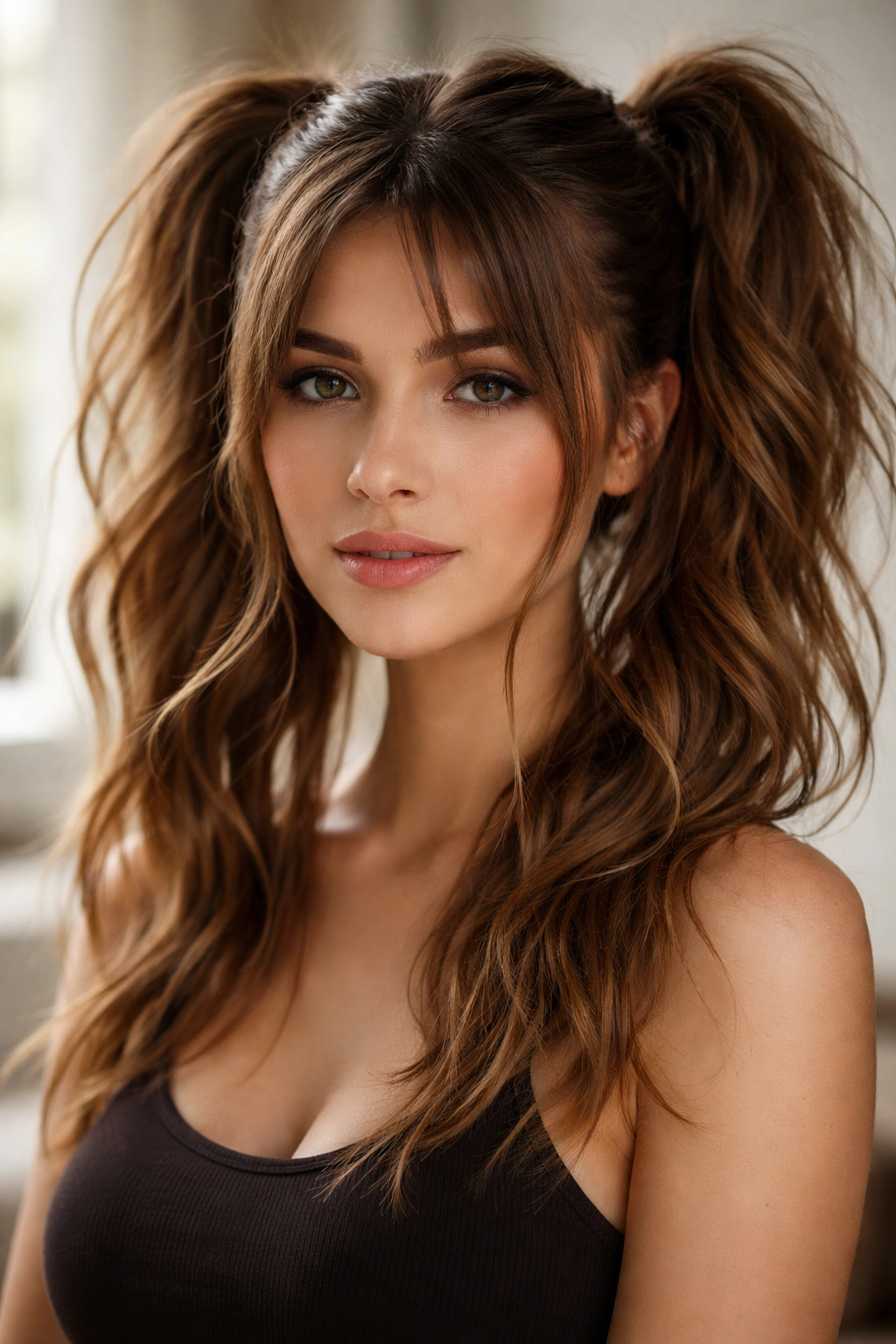
Create two ponytails using slightly undone, textured sections rather than smooth, slicked-back hair — embracing a more relaxed, tousled aesthetic.
Casual Sophistication
This version of double ponytails feels current and effortless, like you grabbed your hair and styled it in a second without overthinking it. The texture adds movement and dimension, making even fine hair appear fuller. This style works particularly well on second-day or third-day hair because it already has the texture and grit that makes shag ponytails work.
Achieving the Textured Approach
- Start with textured hair — either from waves, a braid out, or a texture spray
- Instead of brushing everything smooth, use your fingers to gather the top sections loosely
- Don’t worry about flyaways or imperfect sections — they’re part of the appeal
- Secure each ponytail with an elastic, but leave a few face-framing pieces out
- Gently pull at the ponytails to make them look fuller and less controlled
- Use a texturizing spray or dry shampoo to enhance the tousled, undone feeling
- The goal is controlled chaos — it should look intentional, not like you didn’t finish styling
Pro tip: This style looks best with a slightly messy part or an off-center part. A perfectly precise center part fights against the textured vibe.
11. The Dual-Height Braided Double Ponytail
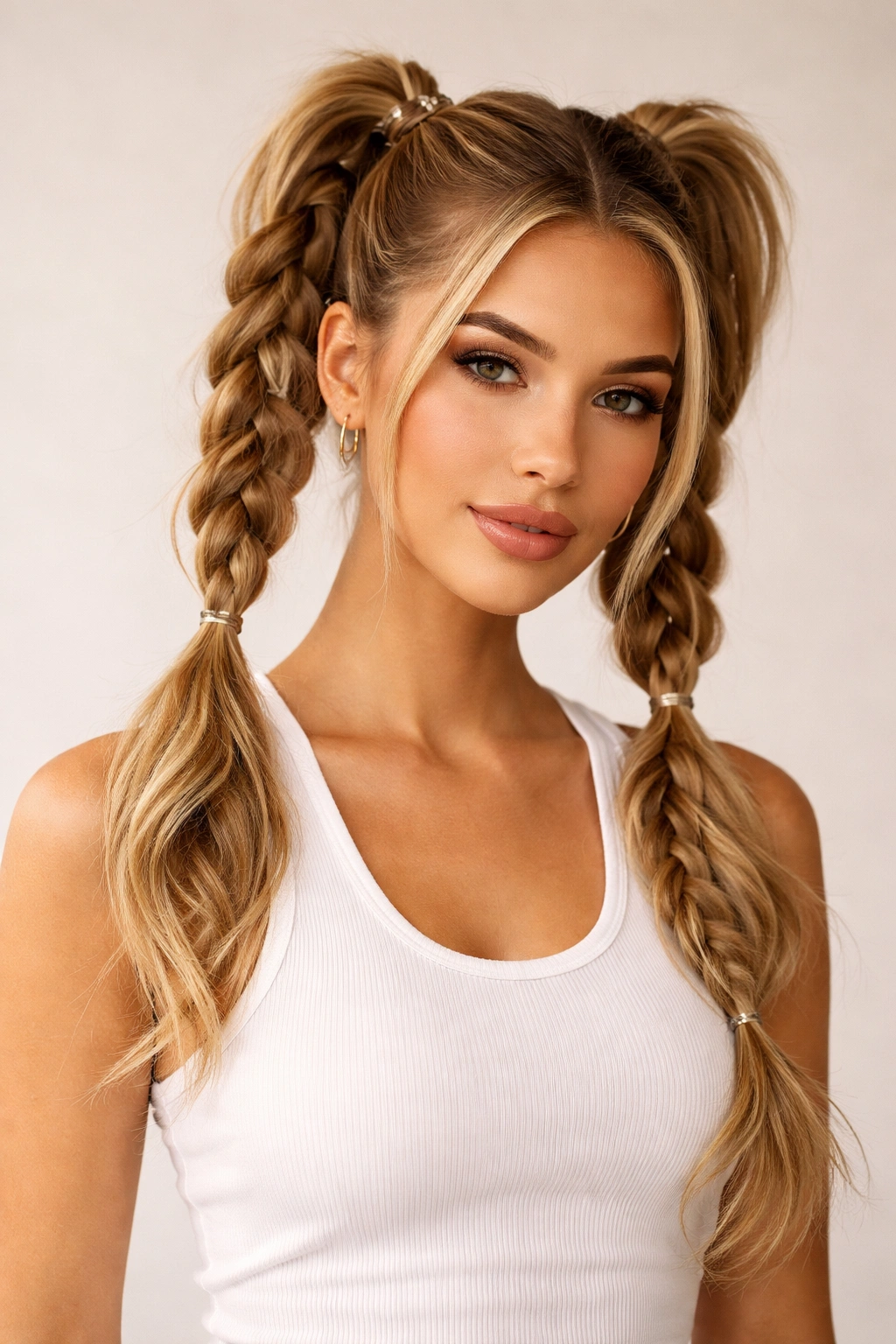
Combine the stacked high-low ponytail approach with braiding — creating two braided ponytails at different heights for maximum texture and visual interest.
Maximum Impact with Texture and Height
This style is genuinely show-stopping because it combines two of the most visually interesting techniques: the height variation and the braided texture. Each element adds something different — the height creates lift and draws the eye, while the braids add texture and movement. This is the style to choose if you want something that clearly took effort and thought, even if it actually took less time than you’d think.
Building Dual-Height Braids
- Brush hair smooth and divide into high and low sections
- Secure the high section into a high ponytail, creating the foundation for your first braid
- Secure the remaining hair into a low ponytail
- Starting at the elastic of the high ponytail, divide it into three sections and begin braiding
- Braid to the ends and secure, then repeat on the low ponytail
- Use matching elastics for a cohesive appearance, or contrast them for more visual interest
- Gently pull the edges of each braid to create a wider, more dimensional appearance
- The combination of height difference plus braided texture creates incredible visual impact
Worth knowing: If you want this style to look extra polished, use the same braid style (French, Dutch, traditional three-strand, whatever) on both tails so they feel unified despite being at different heights.
12. The Decorative Pin and Ribbon Double Ponytail
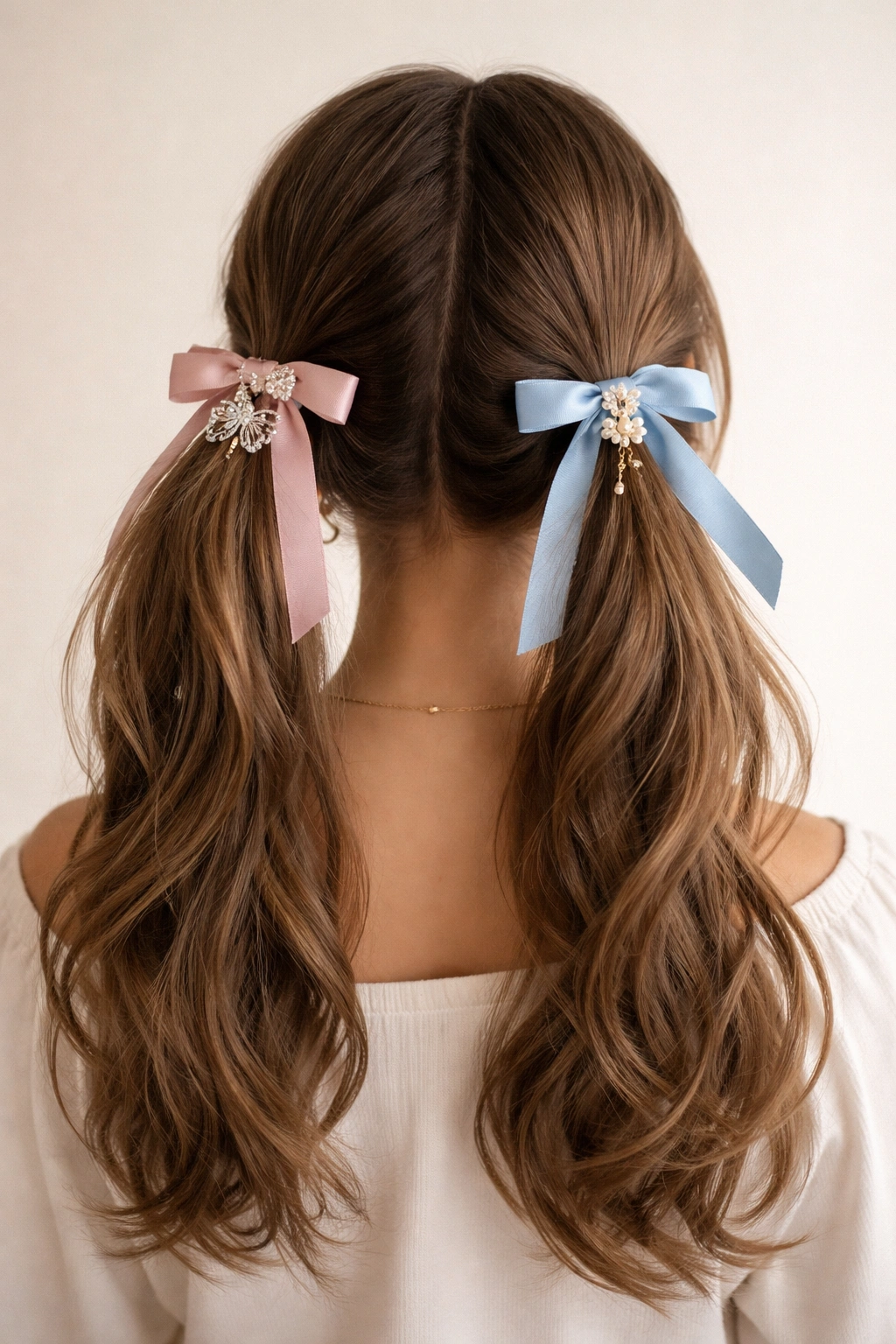
Create clean, simple double ponytails and embellish them with decorative pins, ribbons, clips, or accessories that add color, personality, and visual interest.
Personalization Through Accessories
Accessories are the fastest way to completely transform a simple style — the same basic double ponytails look completely different with silk ribbons versus metallic clips versus delicate pearl pins. This is your opportunity to make the style feel uniquely you, matching your outfit, your mood, or your personality. Accessories also serve a practical purpose beyond looks — they help secure the ponytails in place and prevent them from slipping throughout the day.
Accessory Application Methods
- Create your base double ponytails with whatever placement and height you prefer
- Wrap a ribbon around the base of each ponytail, covering the elastic
- Use decorative clips, barrettes, or pins positioned at the base or mid-ponytail
- Thread thin ribbons or chains through the ponytails themselves for a woven effect
- Add hair cuffs or sleeves that wrap around the ponytails for metallic interest
- Use coordinating hair ties that match your outfit or mood
- Combine multiple accessories on each tail for maximalist impact, or keep it minimal with just one piece per tail
Pro tip: If you’re using ribbons, choose silk or satin over cotton — they feel softer, look more luxe, and don’t snag your hair the way rougher materials do. Metallic accessories with matte finishes look more sophisticated than shiny, reflective ones.
Final Thoughts
Double ponytails are infinitely customizable, and the approach you choose should reflect both your hair texture and the vibe you’re going for. Whether you’re drawn to the clean symmetry of a sleek style, the texture of braids and twists, the volume of bubble ponytails, or the accessory-forward approach, there’s a version of this style that feels authentically you. The wonderful part about double ponytails is that they’re genuinely forgiving — even if you’re not a styling expert, you can create something that looks polished and intentional. The best part? You can completely transform your look in five minutes or less, and you’ve got a dozen distinct styles to rotate through depending on your mood, your outfit, and what your hair is doing that day.