



Low ponytails have become a go-to styling choice for Black women who want an elegant, protective look that doesn’t sacrifice style or versatility. Whether you’re managing textured hair, protecting your edges during transitions, or simply looking for an effortless way to pull your hair back without heat damage, the low ponytail offers endless creative possibilities. The beauty of this style lies in its adaptability—from sleek and polished to textured and bohemian, low ponytails work across different hair lengths, curl patterns, and lifestyle situations.
What makes low ponytails particularly valuable for textured hair is that they keep tension away from the hairline and crown while still giving you a finished, put-together appearance. Unlike high ponytails that create stress on delicate edges and vulnerable areas of the scalp, the low placement distributes weight more evenly and allows your natural hair to rest and recover. You can wear them for weeks at a time if properly maintained, making them not just a style choice but a practical strategy for hair health and growth.
The versatility of the low ponytail means you can wear the same basic style in radically different ways depending on your mood, occasion, and the texture you’re working with. A sleek low ponytail with a wrap reads as professional and polished for work or formal events, while the same placement can feel casual and effortless with softly gathered curls and a few face-framing pieces. This flexibility is exactly why so many Black women keep the low ponytail in their regular rotation—it adapts to whatever you need it to be.
Understanding Low Ponytails for Textured Hair
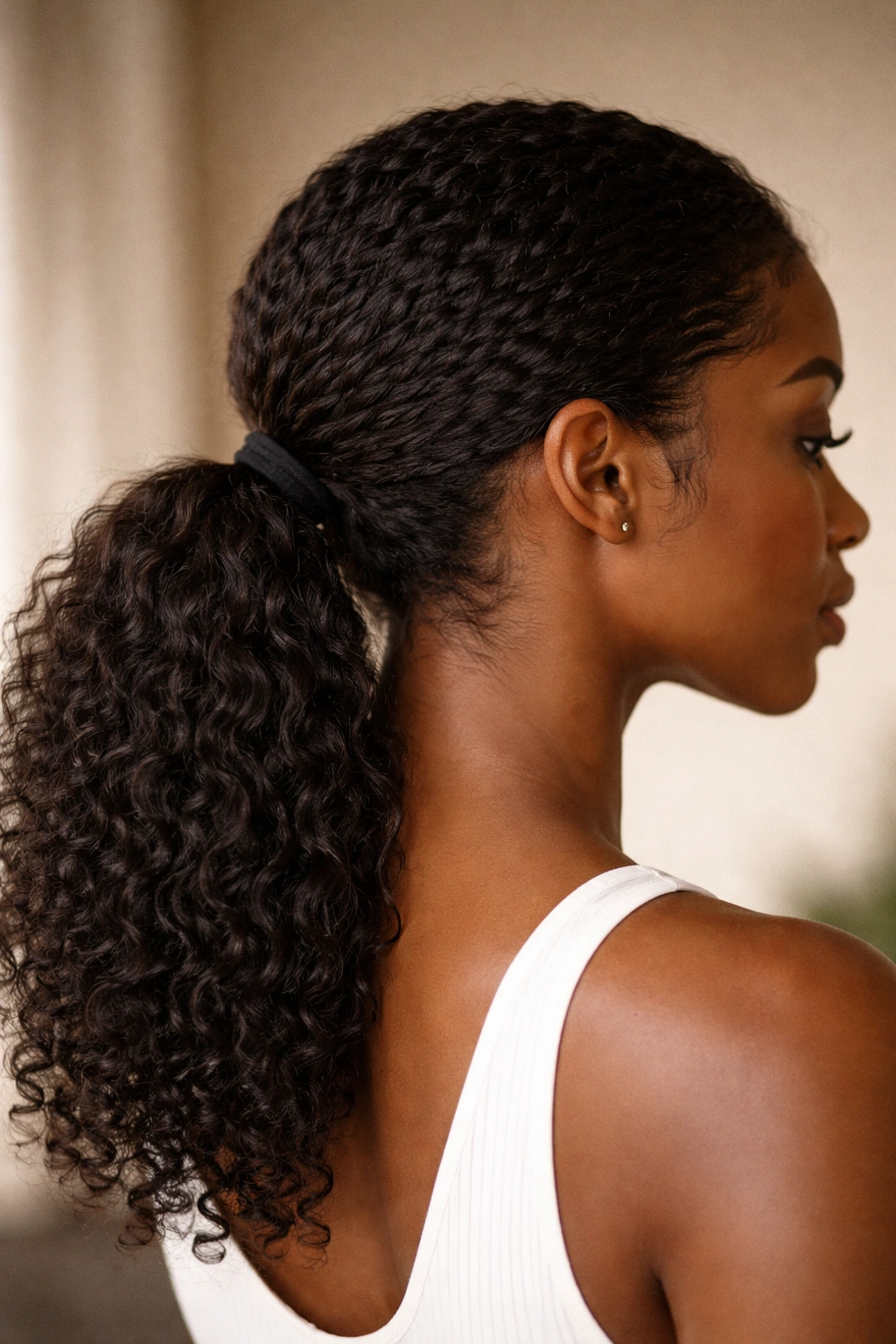
A well-executed low ponytail begins at the nape of your neck, roughly an inch or two above where your neck meets your shoulders. This placement is purposefully lower than traditional ponytails because it reduces tension on your hairline and the crown area—the parts of your scalp most prone to damage and breakage when pulled too tightly. For Black women with textured hair, this distinction matters tremendously.
The key to protecting your hair while wearing a low ponytail is understanding that tightness and tension are different things. Your ponytail should feel secure and stable without feeling like it’s pulling your roots. If you finish your ponytail and your scalp aches, or you can see tension lines forming across your hairline, you’ve pulled too tight. You want a snug gather that holds all day without causing discomfort or stress.
Consider your hair’s natural moisture needs when styling. Textured hair tends to be drier than straight hair because natural oils from the scalp don’t travel down the hair shaft as easily—the curves and coils get in the way. A low ponytail that’s too tight can restrict blood flow to hair follicles, making it even harder for your hair to retain moisture. Looser, more flexible ponytails allow better circulation and help your hair stay hydrated throughout the day.
Preparation and Foundation
Before you even gather your hair into a ponytail, spend time on your foundation. Start with hair that’s been moisturized and detangled. If you’re working with dry hair or it’s been a few days since you last washed, apply a leave-in conditioner and gently work through any tangles with a wide-tooth comb or your fingers. A slick gel or edge control might look neat initially, but protein-heavy products can actually make your edges brittle over time. Opt for lightweight, moisturizing products instead.
Invest in quality hair ties that won’t snag or break your hair. Avoid tight elastic bands that pinch and pull. Silk or satin-lined hair ties, spiral hair ties, or flexible coils designed specifically for textured hair are excellent choices. These alternatives grip your hair without creating the stress points that regular rubber bands cause.
1. The Sleek Low Ponytail with Gel
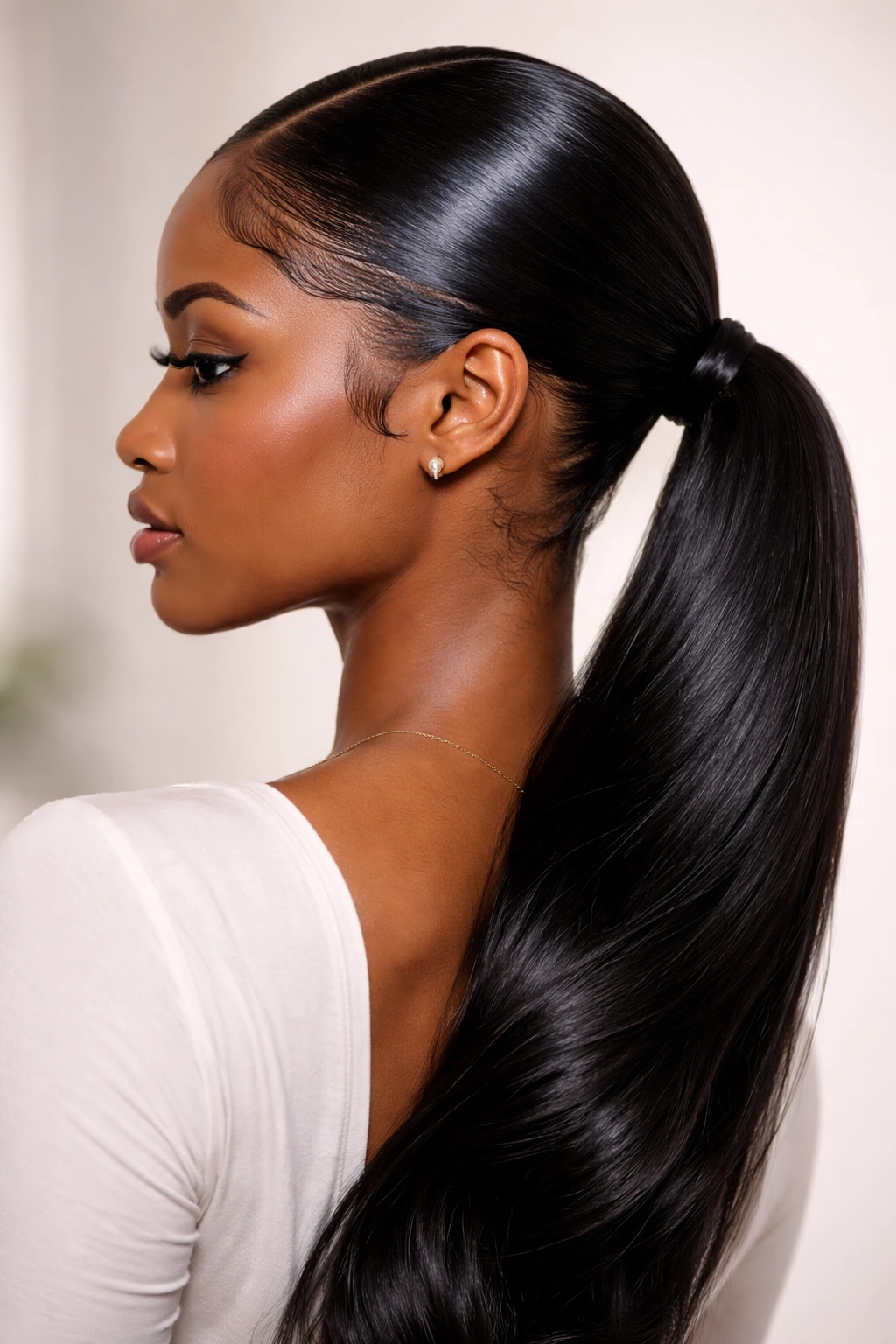
This is the power move of low ponytails—clean, professional, and undeniably polished. A sleek low ponytail communicates sophistication without trying too hard, which is exactly why it’s perfect for work environments, formal occasions, or any time you need to look intentional and put-together. The key is achieving that glossy smoothness without flattening your natural texture or damaging your edges.
Achieving the Perfect Smooth Finish
Start by applying a lightweight smoothing cream or edge control to your hairline, concentrating on the baby hairs and sides. Use a soft-bristled brush or a boar-bristle brush to gently direct your hair backward and downward, smoothing as you go. The goal is a sleek surface, not a flattened, lifeless appearance. Work the brush through your hair slowly, section by section, to avoid creating frizz or pulling strands out at the root.
Gather your hair at the nape of your neck using a silk-lined hair tie. Position it low—you want at least two inches of space between your ponytail base and the start of your shoulder. Once secured, you can add a small section of hair wrapped around the base of the ponytail to cover the elastic and give it a finished, intentional look. Take a thin strand of hair from the ponytail itself, wrap it around the base once or twice, and pin the end underneath with a bobby pin.
Why It Works for Professional Settings
The sleek low ponytail reads as intentional grooming—you look like someone who planned their appearance, which translates to competence and attention to detail in professional contexts. It keeps your face fully visible and your neck exposed, which research suggests people unconsciously associate with approachability and openness. You’re not hiding; you’re presenting yourself clearly and deliberately. This style can be maintained for several days if you sleep on a silk pillowcase, making it efficient for busy work weeks.
Pro tip: If you notice your edges starting to frizz throughout the day, keep a small bottle of lightweight oil or hair serum in your bag for quick touch-ups. A few drops smoothed over stray hairs takes thirty seconds and keeps your style looking fresh.
2. The Curly Low Ponytail with Volume
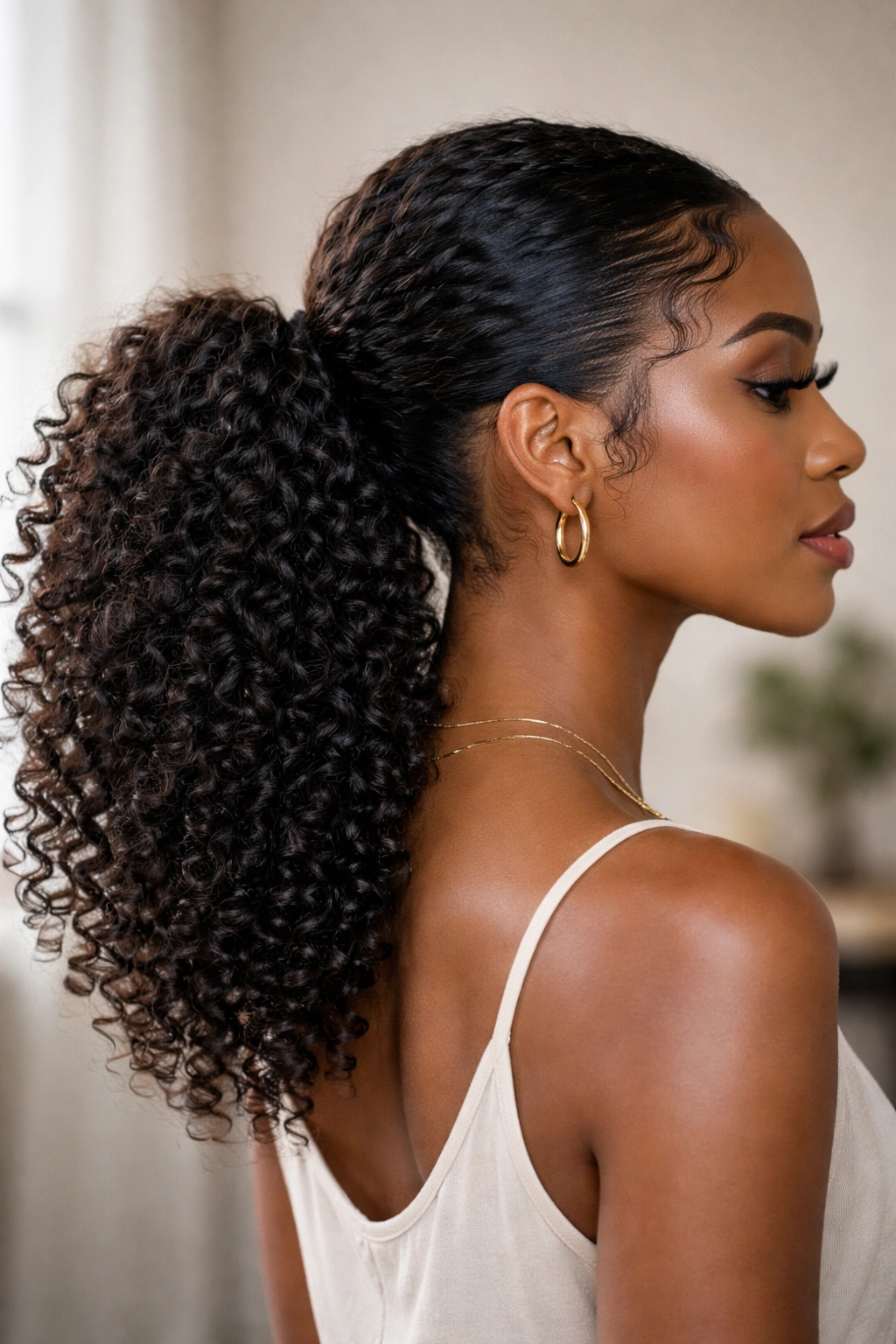
This version celebrates your curl pattern instead of fighting against it, gathering your curls into a soft, voluminous shape at the nape of your neck. It’s the low ponytail for women who want the protective benefit without sacrificing their texture or spending an hour on styling. The beauty of this approach is that it works beautifully with curls that range from loose waves to tight coils.
Building Volume and Shape
The secret to a gorgeous curly low ponytail is preparation with moisture and definition. Start with freshly washed or refreshed hair. Apply a curl-defining cream or gel while your hair is still damp, using the praying hands method or the scrunching method to enhance your curl pattern. You want each curl to feel defined and distinct, not clumpy or crunchy.
Once your curls are dry, gather them loosely at the nape of your neck. Don’t use a brush—use your fingers to gather the hair, allowing your curls to maintain their individual shape rather than being smoothed flat. Secure with a flexible hair tie, and then gently arrange the ponytail so the curls fall naturally and frame your neck. The ponytail should look like an intentional grouping of curls, not a flattened mass of hair.
The Plopping and Refresh Strategy
Between washes, you can refresh a curly low ponytail by misting it lightly with water, applying a tiny amount of leave-in conditioner, and gently separating any curls that have stuck together overnight. Plop the ponytail in a t-shirt or microfiber towel for ten minutes to rehydrate. This refresh method keeps your style looking fresh for five to seven days, which means you’re styling once and wearing it multiple times.
A curly low ponytail works for casual settings, creative workplaces, and anywhere you want to look effortlessly put-together. The texture reads as intentional styling—you’re not trying to hide your curls, you’re highlighting them. Pair it with the right outfit and this style elevates your whole look.
3. The Wrapped and Pinned Low Ponytail
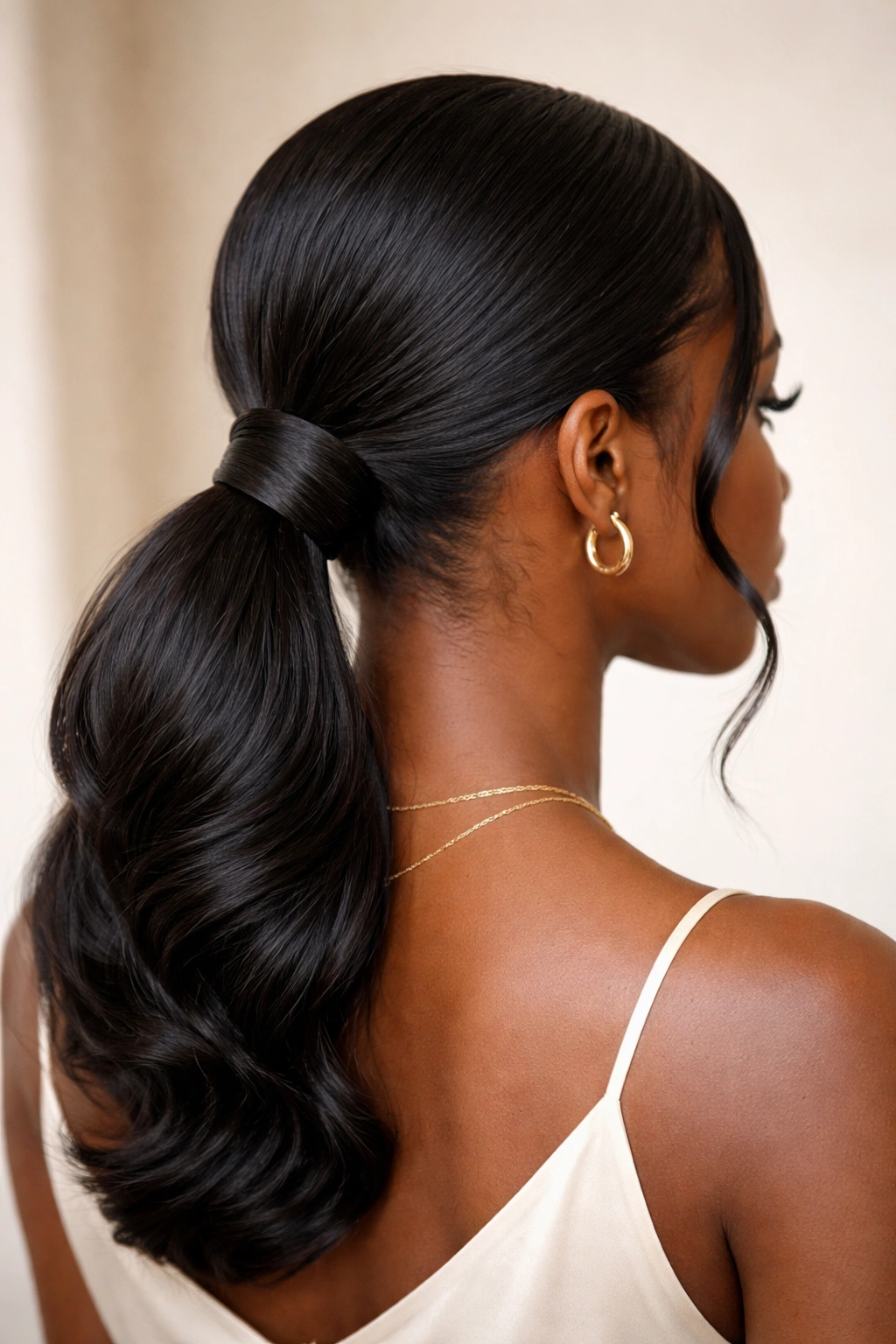
This style takes the basic low ponytail and elevates it with strategic wrapping and pinning that creates visual interest and a more deliberate aesthetic. It’s the perfect option when you want your low ponytail to feel special and polished without being overly complicated. The wrapping technique is simple, but it transforms how finished your style looks.
The Wrapping Technique
Gather your hair into a low ponytail at the nape of your neck and secure with a flexible hair tie. Take a thin section of hair from the bottom of the ponytail—about the width of a pencil—and wrap it around the base of the ponytail, covering the elastic completely. Wrap it around once or twice, then secure the end by tucking it underneath and pinning it with a bobby pin. Smooth the wrapped section so it sits neatly against the ponytail base.
For added interest, you can take additional thin sections and wrap them around the base at different heights, creating a tiered effect. This technique works especially well if you’re using decorative bobby pins or if you want to add a subtle metallic element to your style. The wrapping draws the eye to the base of your ponytail and gives the impression of careful, intentional styling.
Customizing with Accessories
Once you’ve mastered the basic wrapping, you can customize with various accessories. A decorative cuff, a small clip, or even a slim scarf wrapped around the base adds personality and makes the style feel special. Gold-toned bobby pins catch the light beautifully and add sophistication, while rose-gold or black pins offer a more subtle aesthetic. The wrapping-and-pinning technique is a foundation you can build on according to your personal style.
This style works for dates, special events, professional settings where you want to look extra put-together, or any occasion where you want your styling to look intentional. It’s also surprisingly practical—the wrapping actually helps distribute tension more evenly across your ponytail base, which means less stress on your scalp.
4. The Twisted and Textured Low Ponytail
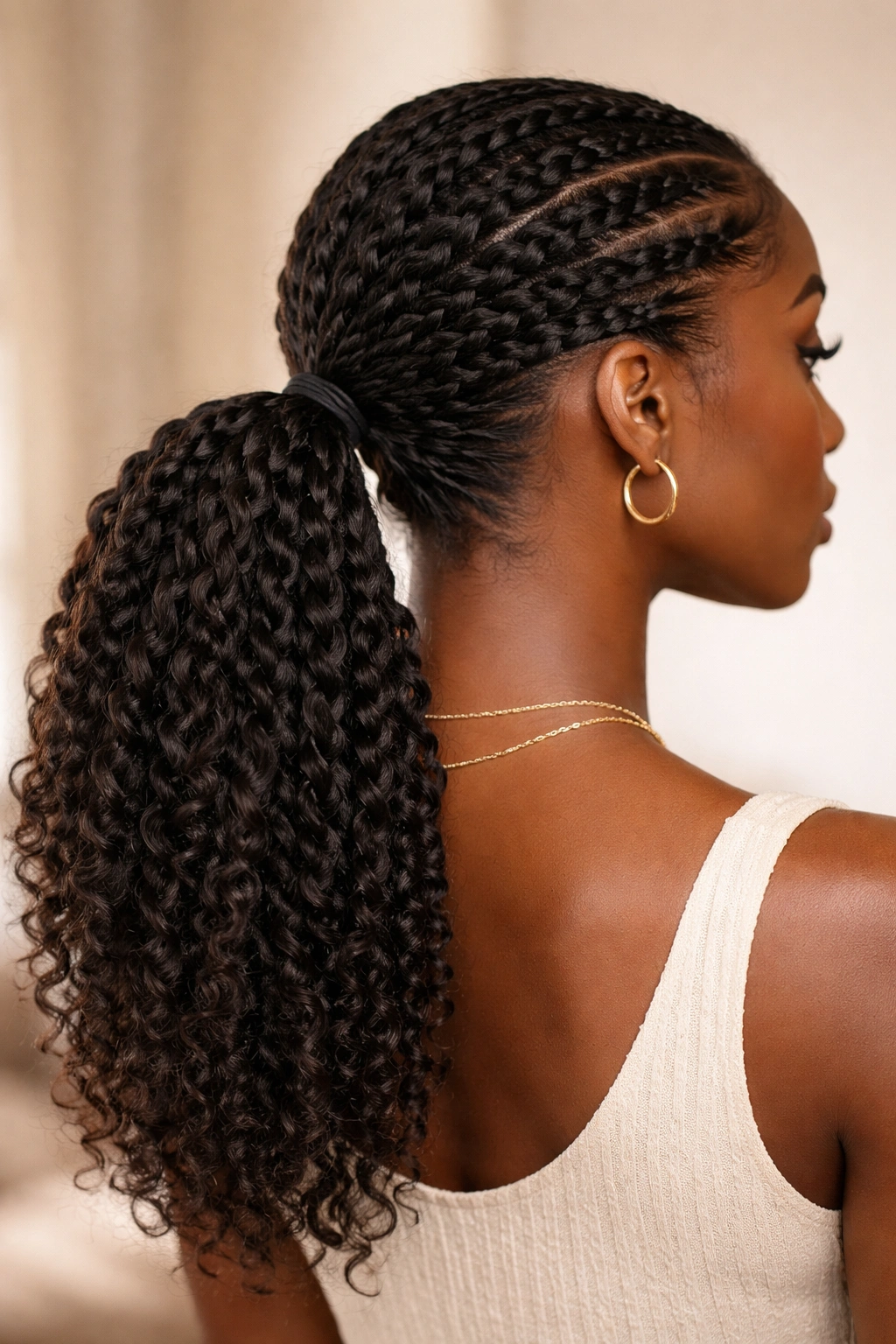
Two-strand twists gathered into a low ponytail create a style that feels both protective and beautifully textured. Instead of pulling your straight hair back into a ponytail, you’re creating small twists throughout and then gathering those twists at the nape of your neck. This variation is protective because twists engage your hair in a specific pattern that’s gentler than the constant tension of a standard ponytail.
Creating the Twist Pattern
Divide your hair into four to six sections, starting from your hairline and moving backward. Apply a lightweight cream to the first section and divide it into two strands. Twist the two strands around each other, working from the roots down to the ends. Secure the end temporarily with a small clip. Repeat with each section, creating multiple twists that flow backward toward the nape of your neck.
Once all your twists are complete, gather the ends together at the nape of your neck and secure with a flexible hair tie. The twists should fan slightly around the ponytail base, creating dimension and texture. If you want extra security, you can take a thin section of hair and wrap it around the ponytail base as described in the previous style.
Longevity and Refreshing
A twisted low ponytail can last five to seven days with minimal maintenance. Between washes, sleep on a silk pillowcase or wrap your ponytail loosely in a silk scarf. In the morning, you might need to gently separate any twists that have stuck together overnight, but the style remains intact and beautiful. This is an excellent protective option if you’re between wash days and want to extend your styling without resorting to high-manipulation techniques.
The twisted texture creates visual interest and movement that a standard ponytail doesn’t offer. It also demonstrates intentional styling—you’re not just pulling your hair back, you’re creating a specific pattern. This works beautifully for casual settings, creative workplaces, or any time you want to showcase your styling skills.
5. The Low Ponytail with Face-Framing Pieces
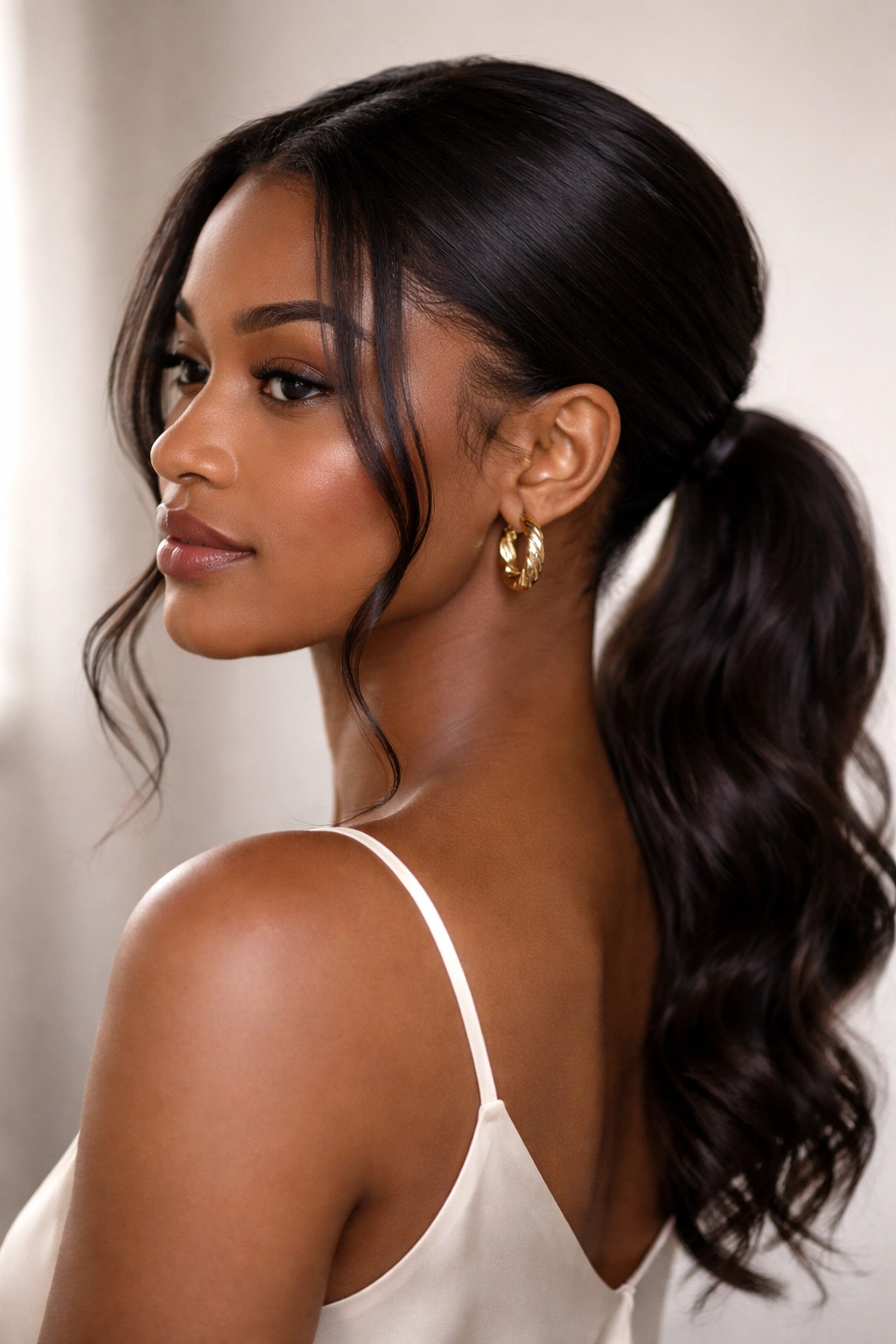
This style softens the lines of a traditional ponytail by leaving a few small sections of hair out around your face. Instead of pulling everything back severely, you’re creating a more balanced, approachable look while still gathering the bulk of your hair into a ponytail for manageability. Face-framing pieces add sophistication and help connect your hairstyle to your face shape.
Selecting and Styling the Frame
Before you create your ponytail, decide which pieces you want to leave out. Typically, you’ll leave a small section on each side of your face—about the width of your thumb—plus potentially one or two pieces at the very front. These pieces should start somewhere at your temple or cheekbone and extend down to frame your face naturally.
Once you’ve designated your framing pieces, pull the rest of your hair back into a low ponytail. Now you can style your frame pieces however you like. You might twist them gently, smooth them with edge control, or leave them wavy or curly to create textural contrast. Some women pin the frame pieces behind their ears with a decorative clip, while others let them fall naturally in front of their shoulders.
Adjusting for Face Shape
Heart-shaped faces often look best with slightly longer frame pieces that extend down and create visual weight lower on the face. Round faces benefit from frame pieces that are twisted or pulled back slightly, creating a slight lift without being too severe. Oblong faces look great with frame pieces that sit closer to the cheekbone, creating horizontal visual interest. The beauty of this technique is that it’s completely customizable based on what works best for your face.
This style is perfect for situations where you want your hair out of your face but don’t want to look too severe or pulled back. It works for work settings, casual outings, dates, or anytime you want a sophisticated but approachable appearance. The frame pieces create visual softness while the gathered ponytail offers practical manageability.
6. The Braided Low Ponytail
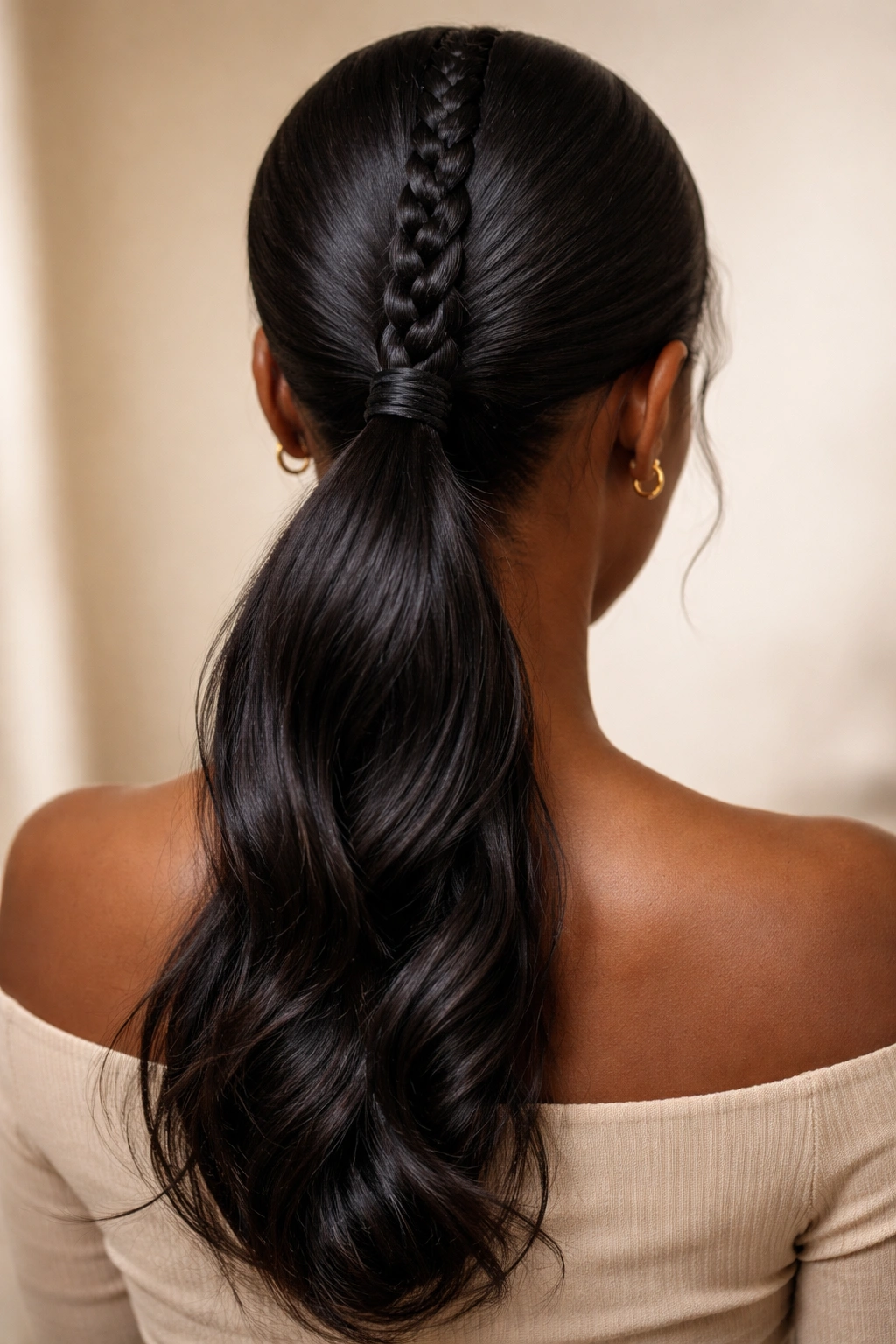
Instead of twists, you can incorporate one or more braids into your low ponytail for a style that’s both protective and visually striking. A single braid down the back, multiple small braids woven throughout, or even a Dutch braid along your hairline can all feed into a gathered low ponytail. This approach works beautifully for protective styling because braids distribute tension evenly across your scalp.
Single Braid Down the Back
Start by creating a single braid down the center back of your head, starting at your crown and working all the way down to the nape of your neck. Section your hair into three strands and braid using the traditional over-under pattern, keeping the braid relatively loose so you’re not pulling tension through your roots. Once you’ve braided all the way down, gather the braid and any loose hair at the nape of your neck into a low ponytail. The braid becomes the focal point of your style.
Multiple Braids for Texture
For a more textured approach, create multiple smaller braids throughout your hair. You might do two braids on either side, starting at your temples and traveling backward toward the nape. Or create four to six thin braids throughout your crown and sides. Gather all these braids plus your remaining hair into a low ponytail. The result is visually complex and interesting while being completely protected underneath.
Styling Variations
You can make your braided low ponytail as casual or formal as the occasion demands. For a polished look, tighten your braids and secure them neatly. For a relaxed vibe, leave your braids slightly loose and pull out a few small sections to create a softer appearance. You can add beads, cuffs, or colorful thread to your braids for extra visual interest, or keep them simple and let the braiding pattern speak for itself.
A braided low ponytail typically lasts five to ten days, making it one of the most protective styles you can wear. It’s excellent for active lifestyles, sports, or any time you want your hair completely secure. The braiding also minimizes frizz and keeps your curl pattern intact better than looser gathering methods.
7. The Sleek Low Ponytail with Scarf Accent
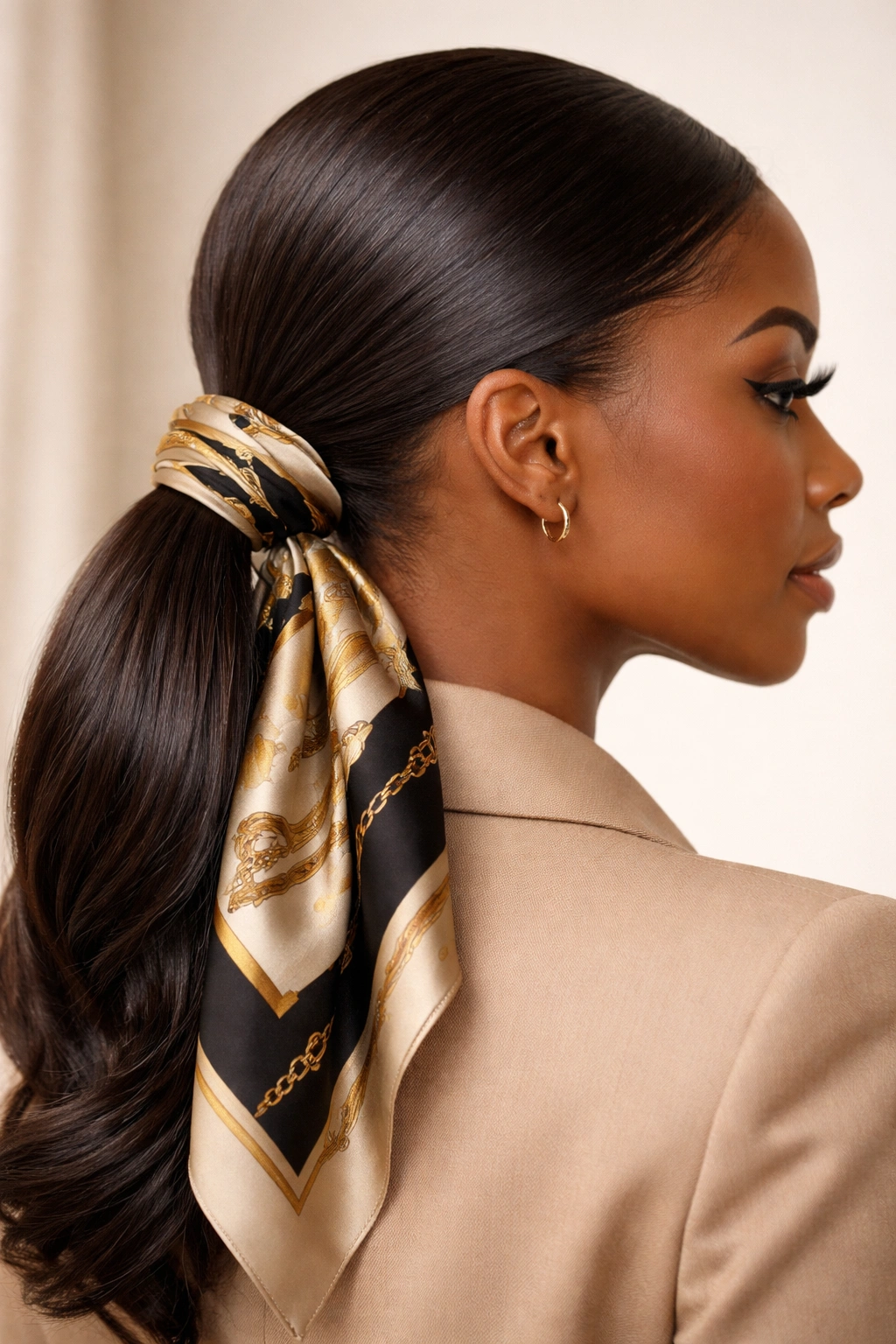
This style combines the polished look of a sleek low ponytail with the added dimension and personality of a silk or patterned scarf wrapped around the base. The scarf serves both practical and aesthetic purposes—it protects your hair while adding color, pattern, and intentional style to your look. This approach is particularly popular for professional settings and special occasions.
Choosing and Tying the Perfect Scarf
Select a scarf that complements your skin tone and outfit. Silk or satin scarves are preferable because they don’t absorb moisture from your hair the way cotton does. You can use a square scarf, a long rectangular scarf, or even a small head wrap. For a low ponytail accent, a rectangular or square scarf works best.
Create your sleek low ponytail first, securing it tightly with a flexible hair tie. Then fold your scarf into a triangle or a long thin strip, depending on its original shape. Wrap the scarf around the base of your ponytail, covering the hair tie completely. Tie the scarf ends together at the back of the ponytail, adjusting so the knot sits neatly. Some women create a decorative bow with their scarf ends, while others tuck the ends underneath and pin them.
Styling Opportunities
A scarf accent completely changes the feeling of a ponytail. A solid jewel-toned scarf reads as sophisticated and professional. A patterned or brightly colored scarf adds personality and whimsy. A metallic or shimmery scarf elevates the style for special occasions. You can swap out your scarf daily without changing your actual ponytail, which means you get multiple style variations from a single hairstyle.
This approach is excellent if you’re looking to add visual interest to your wardrobe while keeping your styling routine simple. The scarf also helps hold your ponytail in place throughout the day, reducing the need for adjustment. For professional Black women particularly, the scarf accent nods to cultural styling traditions while maintaining a polished, work-appropriate appearance.
8. The Textured Low Ponytail with Bantu Knots
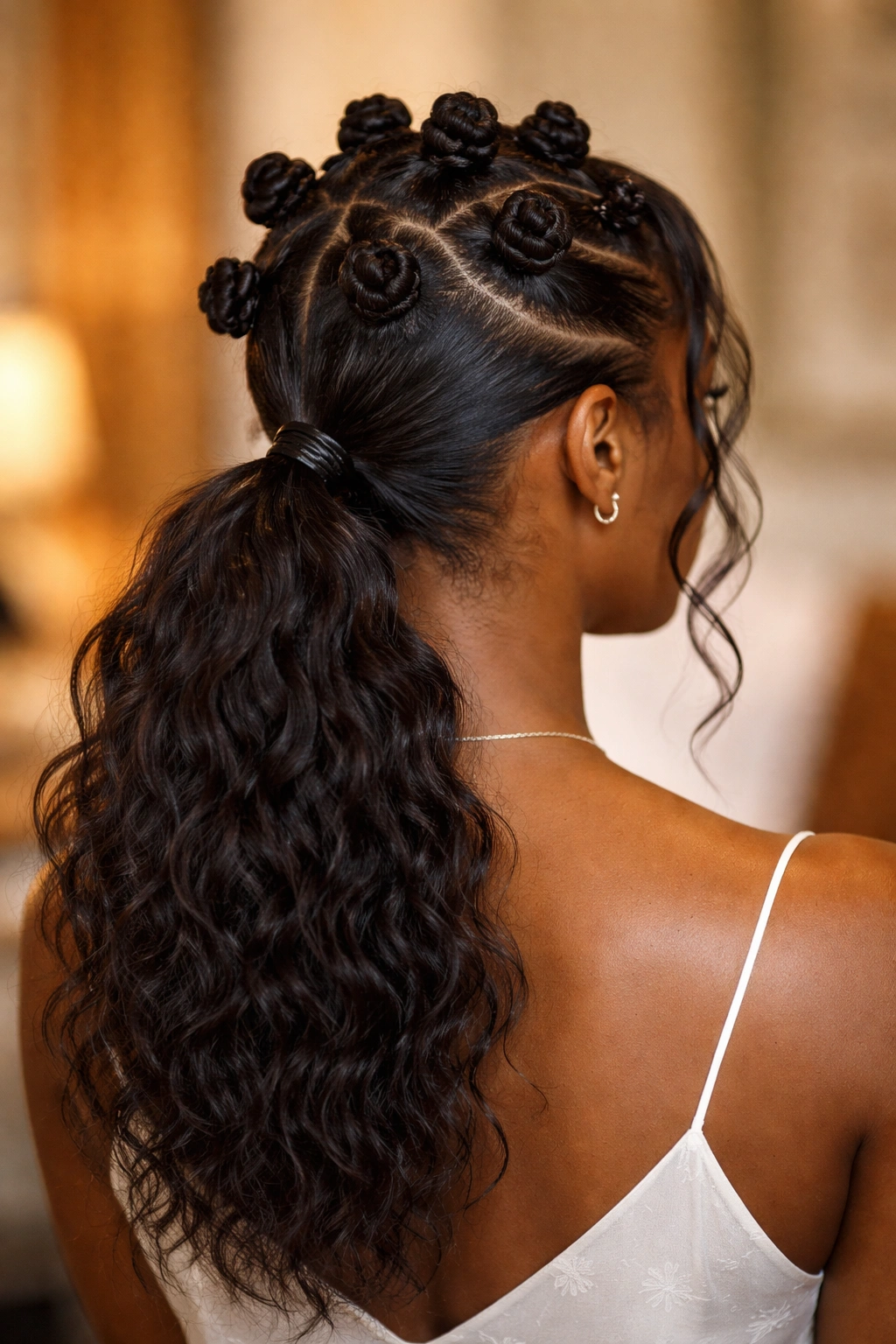
Bantu knots are protective spiral coils formed by twisting and wrapping sections of hair around themselves. When you undo bantu knots, they create beautiful waves and texture. You can create bantu knots throughout your hair, undo them before gathering into a low ponytail, and the result is gorgeously textured waves that are secured in a practical style. This approach combines protection with stunning texture.
Creating Bantu Knots for Wave Pattern
Divide your damp hair into six to ten sections. Take the first section, divide it into two strands, and twist those strands around each other. Once you’ve twisted the two strands together, wrap the twisted section around itself to form a coil. Secure the coil with a bobby pin. Repeat with each section, working throughout your head. Sleep in these bantu knots overnight or leave them in for a few hours.
Carefully unwind each bantu knot, running your fingers through the waves to separate them gently. Gather all the wavy sections into a low ponytail at the nape of your neck. The waves cascade beautifully within the ponytail, creating depth and dimension that looks intentionally styled. You can leave the waves loose or gently smooth them with a light oil or serum.
Longevity and Refreshing
Bantu knot waves in a low ponytail last several days if you sleep on a silk pillowcase and avoid excessive touching. You can refresh the waves by misting with water, applying a light mousse or curl cream, and gently scrunching. This style is both protective and beautiful, making it perfect for women who want to create their own texture without heat styling. The combination of protective coiling and the gathered ponytail offers excellent security for your hair.
This style celebrates natural texture and demonstrates that you’re intentional about your styling. It works for casual settings, creative environments, or any occasion where you want to showcase beautiful waves and texture. The bantu knots themselves are rooted in African hair traditions, and wearing them as part of your low ponytail honors that heritage while creating a contemporary, fashion-forward look.
9. The Low Ponytail with Curly Defined Ends
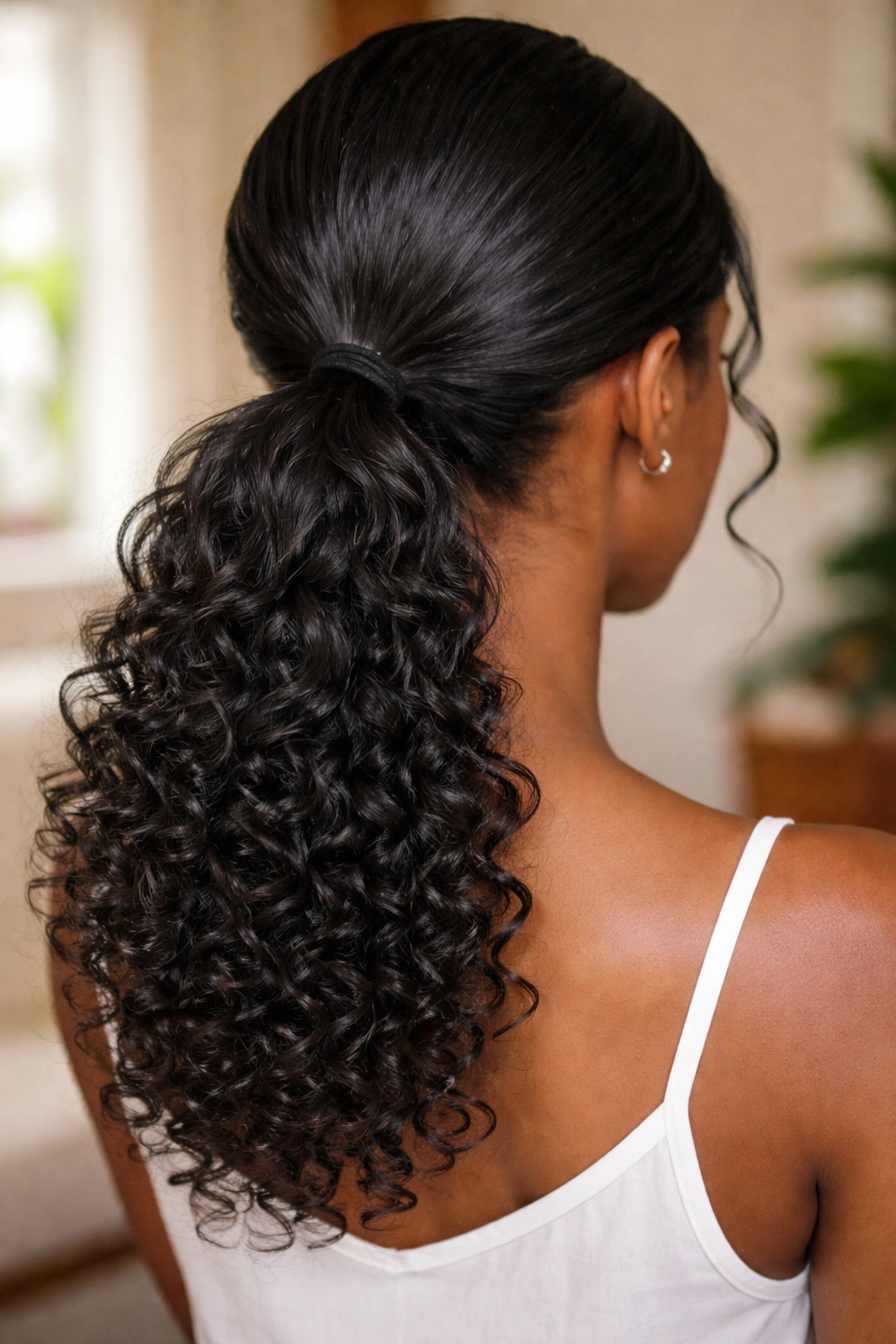
This variation gathers your hair into a low ponytail while allowing the ends to remain loose and curly. Instead of creating a standard ponytail that extends straight down your back, the gathered section stays compact while your curl pattern flows freely from the elastic. This style offers the practical benefits of a gathered ponytail with the visual interest of loose curls.
Preparing for Maximum Curl Definition
Start with moisturized, freshly detangled hair. Apply a curl-defining cream or gel to your ends first, scrunching upward to encourage curl formation. Work the product through your hair, section by section, making sure your curl pattern is well-defined before you gather your ponytail. The better defined your curls are at this stage, the more beautiful they’ll look once you’ve created your ponytail.
Gather your hair into a low ponytail at the nape of your neck, but leave the last two to three inches of your hair length loose and uncaptured by the elastic. Secure the ponytail base, then gently arrange your loose ends so they cascade naturally around and below the elastic. Your curls should feel full and voluminous, not compressed.
Creating Dimension and Movement
As your curls dry completely, the defined ends will show off your natural texture beautifully. You can enhance the visual impact by gently separating curls that have clumped together, creating more dimension. Some women add a lightweight mousse to their loose ends for extra bounce and definition. The combination of the gathered base and the loose, curly ends creates visual interest and movement that a fully gathered ponytail doesn’t offer.
This style works beautifully for professional settings where you want to show some personality through your texture, casual outings, or any time you want a polished but playful appearance. It’s also excellent for women with thick, voluminous hair because it allows that volume to show without being overwhelming. The loose ends move naturally, creating visual interest as you move throughout your day.
10. The Side-Swept Low Ponytail
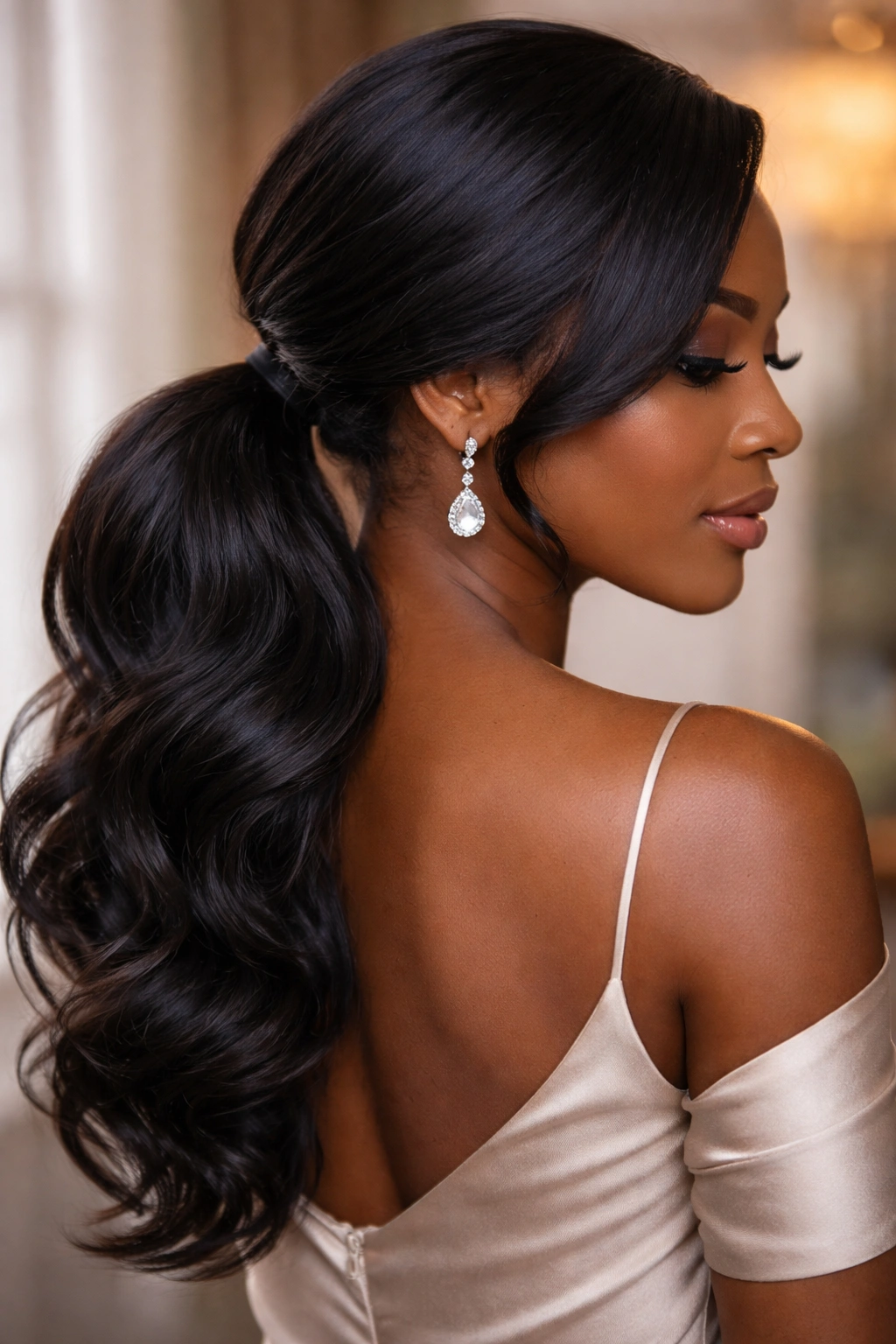
Instead of gathering your hair at the very center back of your neck, a side-swept low ponytail sits more toward one side of your neck. This variation is softer and more romantic than a centered ponytail, and it works beautifully for dates, special occasions, or any time you want to look intentionally styled. The asymmetry creates visual interest and flatters a wide range of face shapes.
Creating the Side Sweep
Start by creating a deep side part, running from one temple diagonally back toward the opposite ear. Smooth one side of your hair, and gather all your hair into a low ponytail positioned on one side of your neck—not directly at center back, but shifted toward your shoulder. You can make the shift subtle or dramatic depending on how much you want the asymmetry to show.
Smooth your ponytail with edge control or a light serum, and add a wrapped base as described earlier to make the style look finished. You can also add a scarf, a cuff, or decorative bobby pins to your ponytail base to make the side-swept style feel extra intentional.
Styling for Different Occasions
A sleek side-swept low ponytail feels sophisticated and date-ready. A textured or curly side-swept ponytail feels bohemian and relaxed. A braided or twisted side-swept ponytail feels artistic and creative. The side placement gives you tremendous flexibility in how you present the style. You can even leave a few face-framing pieces on your forward side to soften the look further.
This style is perfect if you want something different from a traditional centered ponytail but still want the practical benefits of a gathered style. It works for dates, special events, professional settings where you want to stand out slightly, or casual occasions where you simply want to look more intentional with your styling.
11. The Stacked Low Ponytail
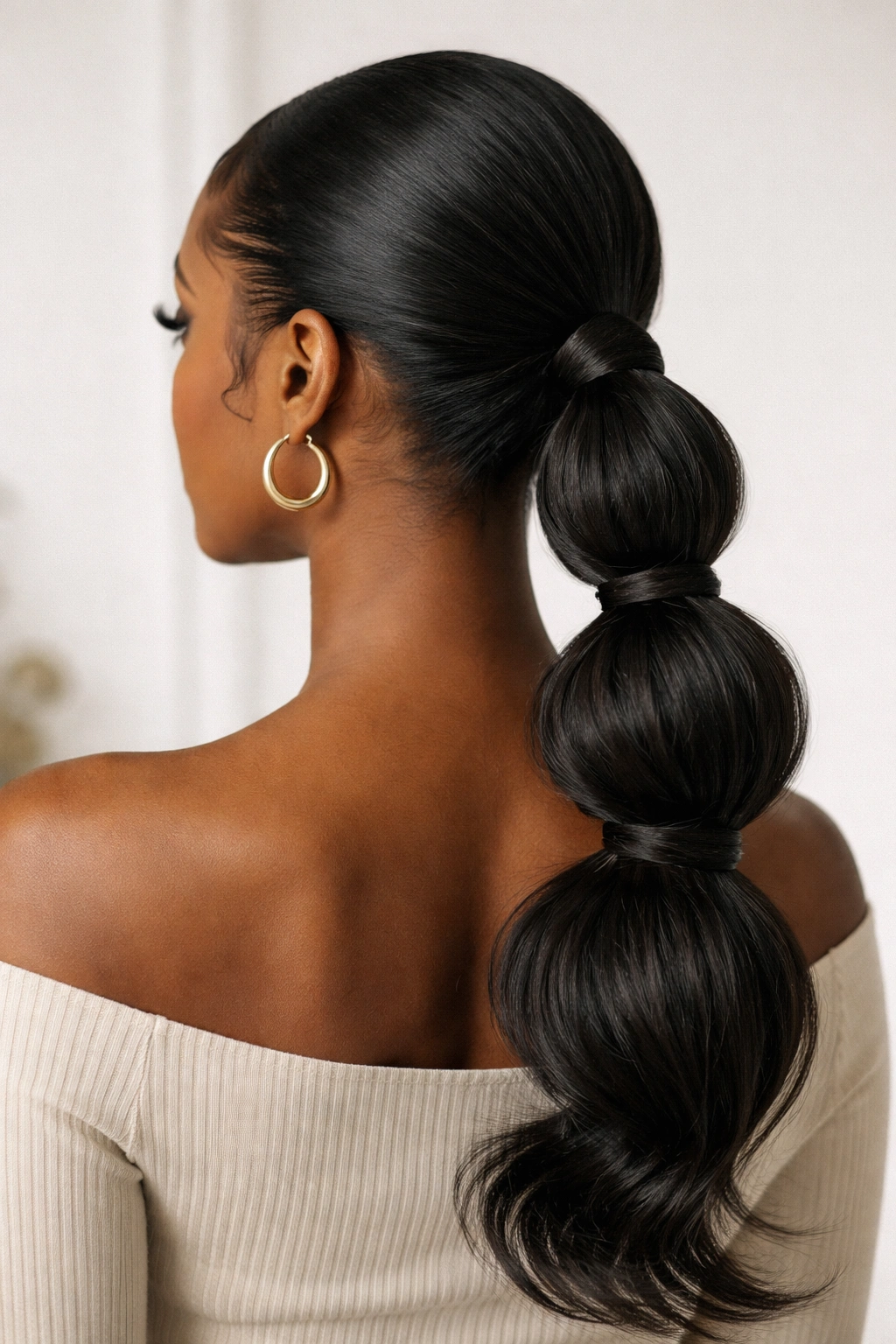
A stacked low ponytail creates multiple ponytail sections, one on top of the other, from the nape of your neck down your back. This creates visual dimension and helps distribute the weight of a full ponytail across multiple sections, making it more comfortable and less stressful on your scalp. The stacking effect also looks visually interesting and modern.
Creating the Stacked Effect
Gather your hair into a low ponytail at the nape of your neck and secure with a flexible hair tie. Now take another small section of hair from below your first ponytail—the hair that would normally hang below the gathered section—and wrap it around the base of your first ponytail, creating a second ponytail that incorporates the first. Secure this second section with another hair tie.
You can continue this pattern, creating a third or even fourth stacked section if you have long, thick hair. Each section sits slightly lower than the previous one, creating a cascading effect. The stacked approach actually distributes the weight of your ponytail more evenly across your scalp, which means less tension on any single point. This makes it a genuinely protective style despite its visual complexity.
Variation and Customization
You can stack with all smooth sections for a sleek look, or incorporate texture by twisting or braiding each stacked section. You can make your stacks tight and defined or slightly loose and flowing. The stacking technique is flexible enough that you can make it work with your personal aesthetic preferences.
This style is excellent if you have very thick or very long hair and want to create a more comfortable, balanced ponytail. It also creates visual interest that makes people notice your styling. The stacked look feels modern and intentional, making it perfect for occasions where you want to stand out.
12. The Flexible, Loose Low Ponytail
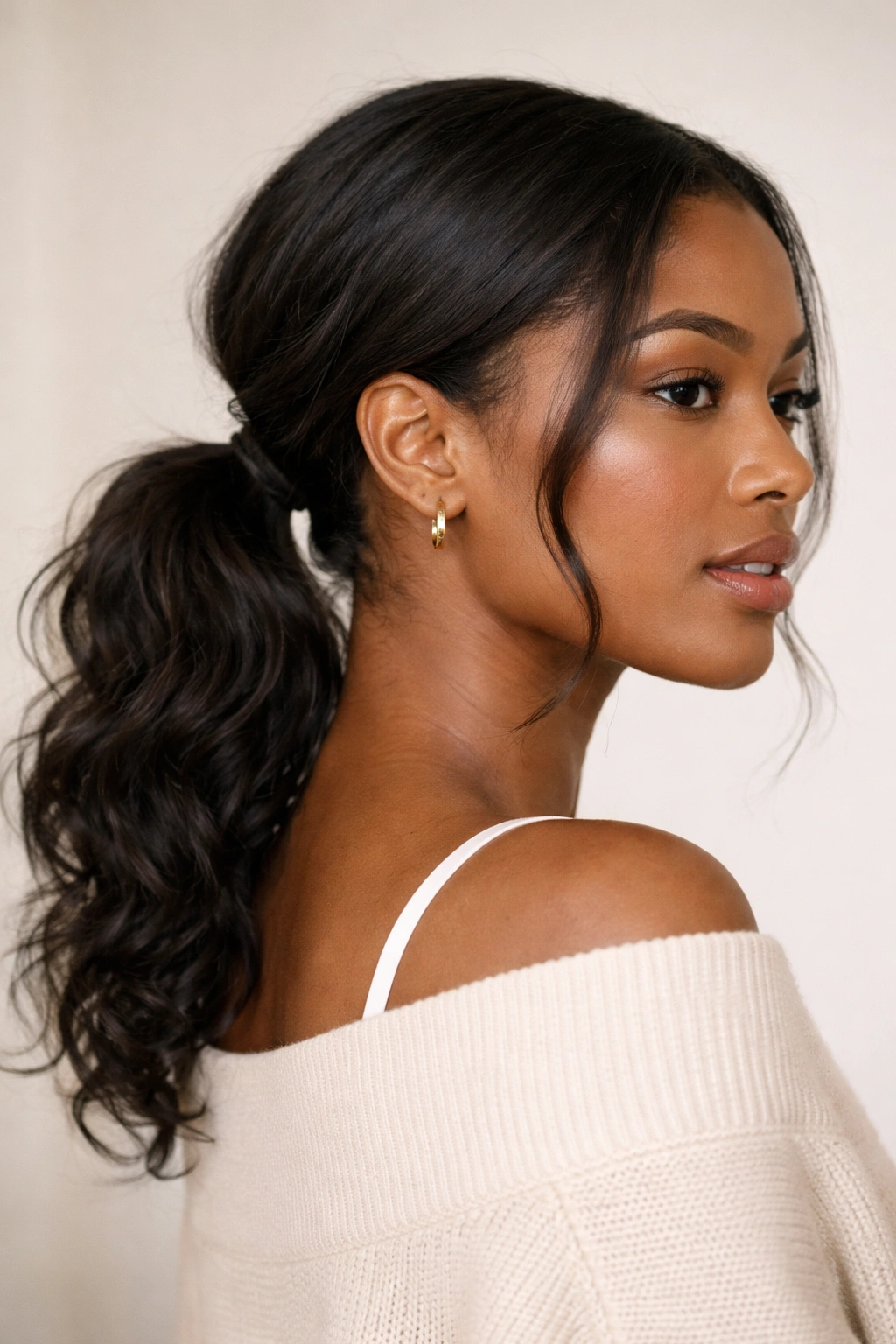
Not every low ponytail needs to be tight and structured. A loose, flexible low ponytail is incredibly comfortable, allows for maximum circulation and hair health, and still looks intentional when styled properly. This version is perfect for everyday wear, active lifestyles, or any time you want your ponytail to feel comfortable and relaxed rather than rigid.
Building a Comfortable Gather
Gather your hair at the nape of your neck with your fingers rather than a brush, creating a loose, relaxed grouping. Secure with a flexible hair tie, but don’t pull the tie tight against your scalp. You want the hair tie to hold your ponytail secure without creating visible tension lines across your hairline or making your scalp ache.
Once gathered, gently arrange your ponytail so it looks intentional rather than accidentally messy. You might smooth the top section slightly with a light product, but leave the ponytail itself soft and flowing. Some women add a thin wrap around the base to make the gathered section look more finished, but this is optional with a loose style.
The Science of Comfort
A loose ponytail is actually the most sustainable style for long-term hair health. Tight ponytails create traction alopecia—hair loss caused by constant tension on follicles. A loose style eliminates this risk while still providing the practical benefit of gathered hair. You’re not sacrificing hair health for aesthetics; you’re choosing a style that works with your hair’s needs rather than against them.
This style is perfect for everyday wear, especially if you work from home or in a creative environment where you don’t need to look extremely polished. It’s also excellent for active lifestyles, exercise, or any time you want your hair secure without discomfort. A loose low ponytail still reads as intentional styling when you’ve taken care to make it look purposeful, but it feels infinitely more comfortable than a tight gather.
Tips for Maintaining Your Low Ponytail
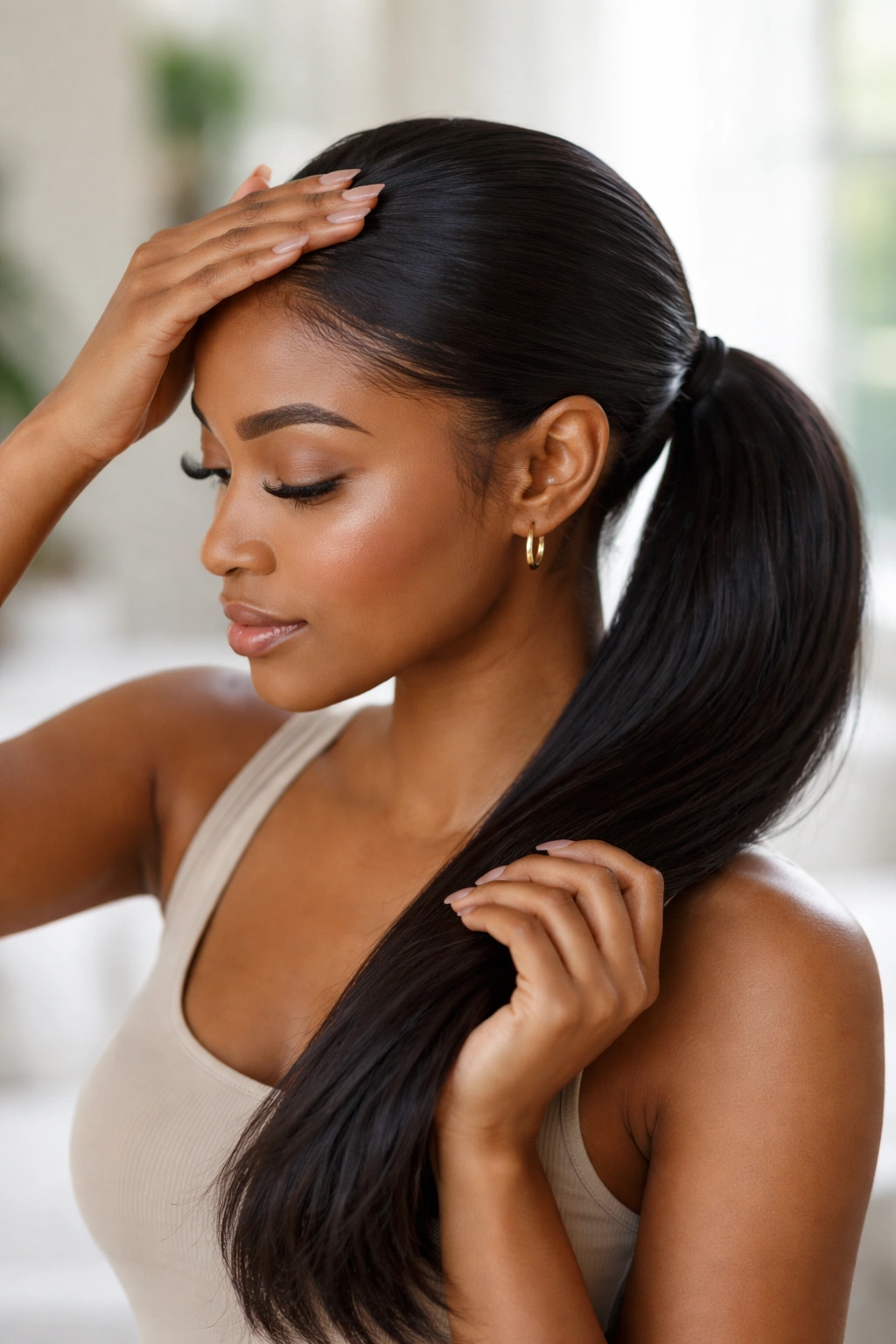
The longevity and health of your low ponytail depends heavily on how you care for it. Moisture is non-negotiable—before you ever gather your hair, make sure it’s properly hydrated. Apply a leave-in conditioner and seal with a lightweight oil or butter. Hydrated hair is more elastic and less prone to breakage, making it better able to withstand the tension of being gathered.
Sleep on a silk or satin pillowcase every single night you’re wearing a low ponytail. Cotton pillowcases create friction that causes frizz and breakage, while silk pillowcases allow your hair to slide smoothly without damage. You can also wrap your ponytail loosely in a silk scarf before bed, which protects the edges and ends while you sleep.
Avoid adjusting your ponytail frequently throughout the day. Every time you touch it, tighten it, or move the hair tie, you’re creating small stresses on your hair. Secure it properly the first time and resist the urge to fidget. If your ponytail does start to feel loose as the day progresses, gently tighten it by moving the hair tie down slightly and then back up, rather than pulling your hair tighter.
Hydration and Product Selection
Lightweight products are your friend—heavy butters and oils can weigh down your ponytail and make it look limp. Instead, use moisturizing creams designed for textured hair, leave-in conditioners with a balanced protein-to-moisture ratio, and lightweight serums. These products hydrate without creating buildup that requires frequent washing.
Wash your low ponytail every seven to ten days, depending on your scalp’s oil production and your activity level. Use a sulfate-free shampoo and focus on cleansing your scalp rather than the length of your hair. A co-wash—using conditioner instead of shampoo—can extend the time between full washes. When you do wash, be gentle with your ponytail section; don’t aggressively scrub or wring out your hair.
Protective Nighttime Routine
Before bed, gently take down your ponytail and apply a light moisturizing product to your edges and the ends of your hair. Wrap your hair in a silk scarf using the method that works best for your style—whether that’s a loose wrap, a pineapple method (gathering into a high, loose bundle on top of your head), or a bonnet. This nighttime routine prevents moisture loss and protects your hair from friction damage.
If you’re wearing the same ponytail style for multiple days in a row, don’t sleep with your ponytail fully intact and tight. Take it down at night, moisturize, wrap your hair, and allow your scalp to rest from the tension. You can re-gather the same ponytail the next morning, or create a fresh one. This daily removal and re-gathering actually distributes tension more evenly across your scalp over time.
Final Thoughts
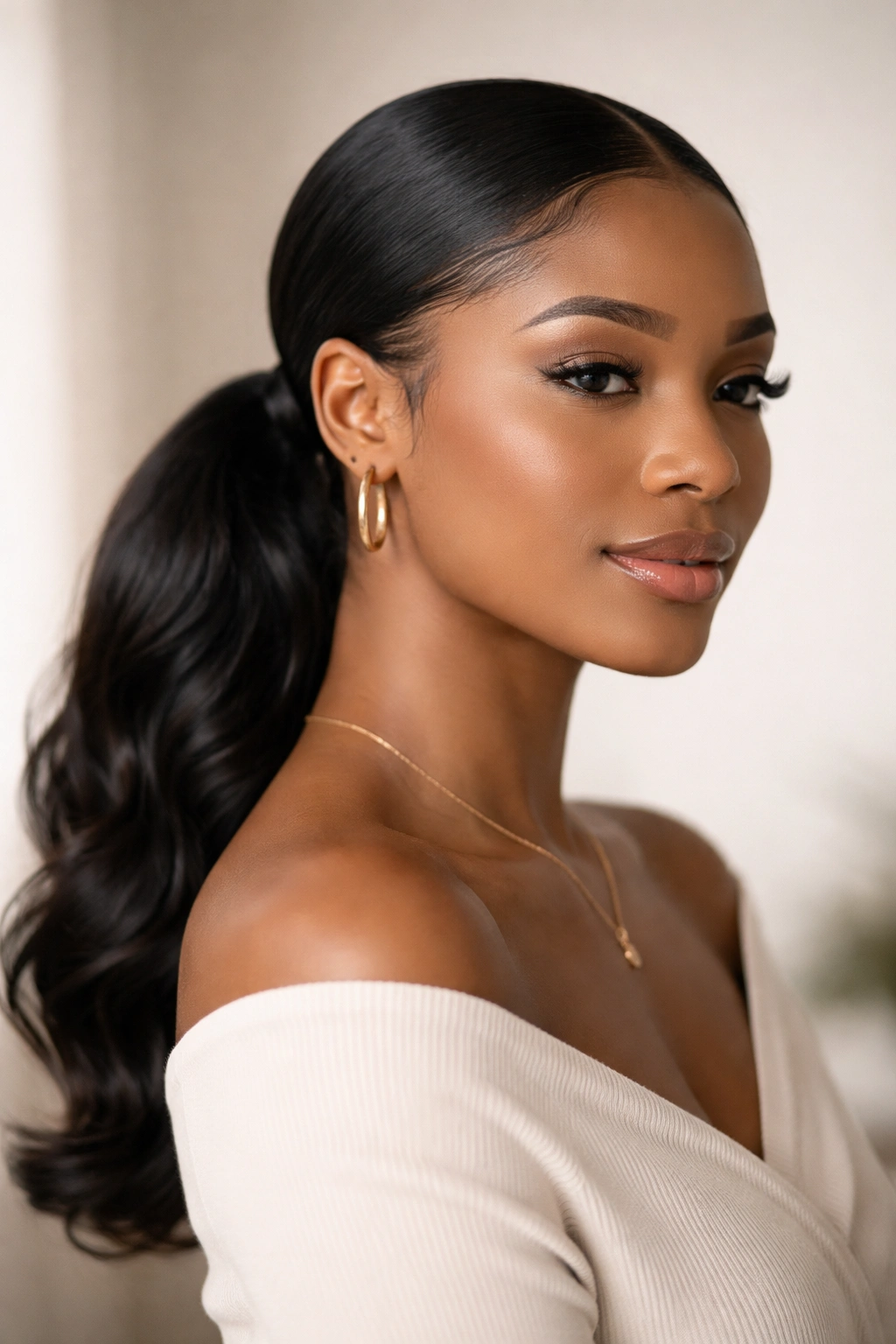
A low ponytail offers Black women a styling option that’s both protective and endlessly versatile. From sleek and professional to textured and creative, these twelve variations prove that the low ponytail isn’t a one-note style—it’s a foundation you can customize based on your mood, your occasion, and what your hair needs in that moment. The key to success is prioritizing comfort and hair health while still expressing your personal style.
Remember that the best low ponytail is one you can wear comfortably for hours without your scalp aching or your hairline feeling stressed. Tight is not better; tight is actually harmful. A well-gathered low ponytail sits secure but gentle, held in place by a quality hair tie and maintained with regular moisture and gentle handling. This is the approach that keeps your edges strong, your ends healthy, and your style sustainable long-term.
Experiment with different variations until you find the ones that resonate with you. Some women rotate through several of these styles depending on their schedule and mood, while others find one or two that become their go-to look. Either approach is valid. The goal is finding a style that works with your hair’s needs, fits your lifestyle, and makes you feel confident and beautiful—and low ponytails accomplish all three of those things beautifully.
