



Korean hairstyling has mastered something that feels almost magical: creating ponytails that look effortlessly beautiful rather than severely pulled back. If you’ve scrolled through Korean beauty and fashion content, you’ve probably noticed this signature softness—the way these styles frame the face with intentional texture, the loose wisps that feel romantic rather than messy, the balance between polished and undone that makes every woman look younger and more elegant.
The secret isn’t a single trick. It’s a philosophy that rejects the corporate slicked-back ponytail in favor of something more nuanced and forgiving. Korean stylists understand that the most flattering ponytails aren’t about pulling every single hair back ruthlessly. Instead, they layer in softness through strategic placement, controlled texture, and face-framing details that draw attention to your features rather than away from them. This approach works beautifully for all face shapes, hair types, and occasions—whether you’re heading to work, meeting friends, or wanting to feel put-together without looking overly styled.
What makes these styles particularly appealing is their versatility. Many of these techniques translate across different hair lengths and textures. You can recreate them whether your hair is naturally straight, wavy, or curly. They work on freshly washed hair and second-day hair alike. Some take five minutes; others reward a few extra minutes of effort with visibly more polished results. Each style in this guide offers a distinct aesthetic while maintaining that hallmark Korean softness that feels both sophisticated and approachable.
1. Glass Skin Sleek Low Ponytail
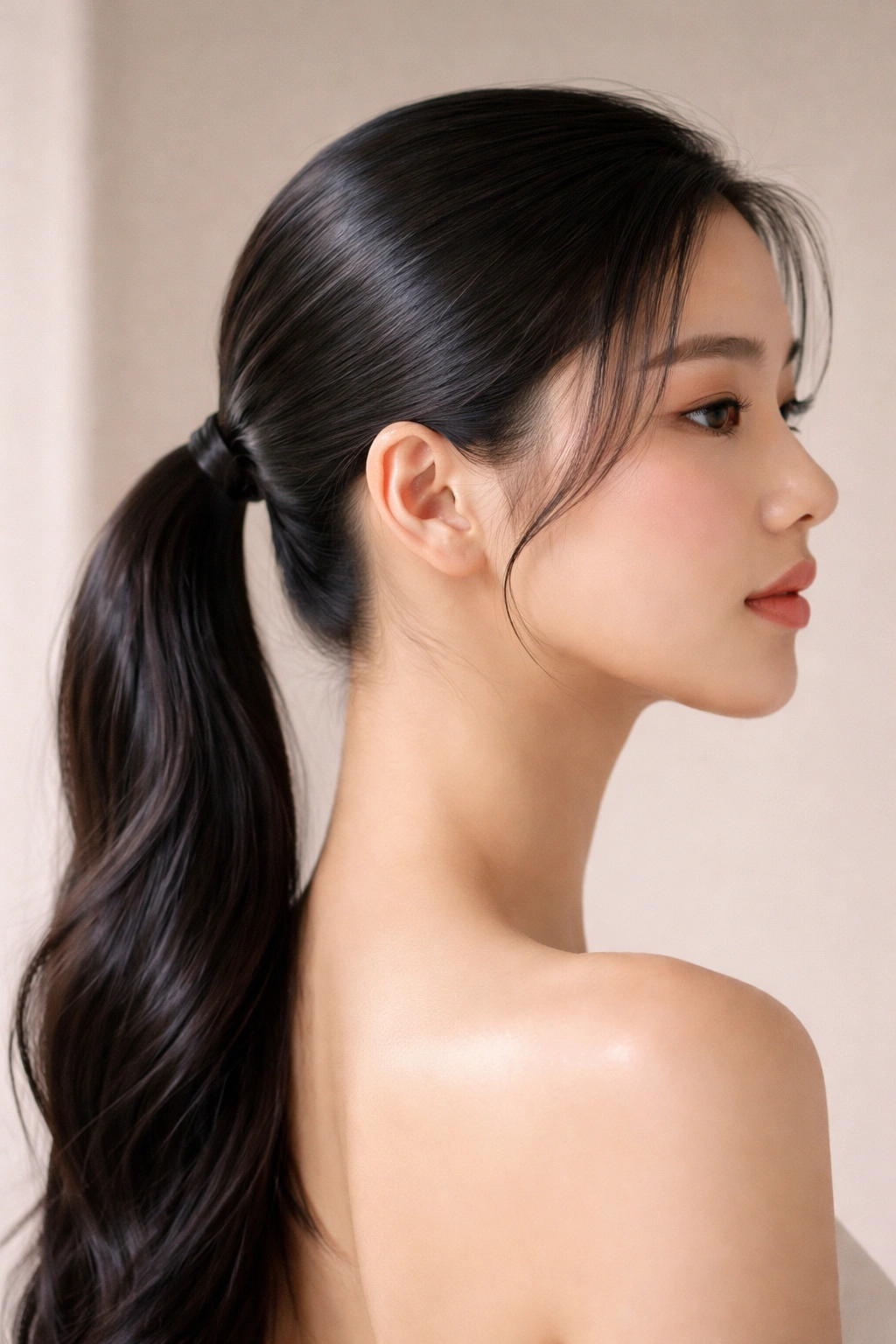
This is the Korean go-to when you want minimal fuss but maximum elegance. The style pulls hair back smoothly without the severity of a traditional sleek ponytail, sitting low at the nape of the neck and using reflective shine to complement clean, dewy skin (hence the “glass skin” reference). The front hairline stays smooth and uninterrupted, which means you’re not fighting flyaways or loose pieces—everything stays exactly where you place it.
Why This Style Creates That Soft Aesthetic
The low placement immediately softens your overall look compared to a high ponytail, which can sometimes look too youthful or playful. The sleek finish emphasizes the back and sides of your head rather than pulling everything up, which creates a longer, more elegant neck line. Because nothing is intentionally textured or loosened, the style reads as intentional and polished rather than trying too hard. This is the hairstyle Korean women reach for when they want their skin, not their hair, to be the focal point.
How to Create It
- Brush your hair backward smoothly using a paddle brush, working from the crown down to the nape
- Apply a lightweight smoothing serum or gel to tame any flyaways and add shine without weighing hair down
- Gather hair into a low ponytail positioned at the nape, about 2 inches below where you’d place an average ponytail
- Use a fine-tooth comb to smooth any bumps or loose pieces at the crown and sides
- Secure with a thin elastic that matches your hair color; wrap a small section of hair around the base to hide the elastic completely
Pro tip: Use a lightweight gel rather than heavy pomade—Korean beauty products specifically formulate gels that provide hold without the stiffness that makes hair look wet or damaged.
2. Fuzzy Cloud Ponytail
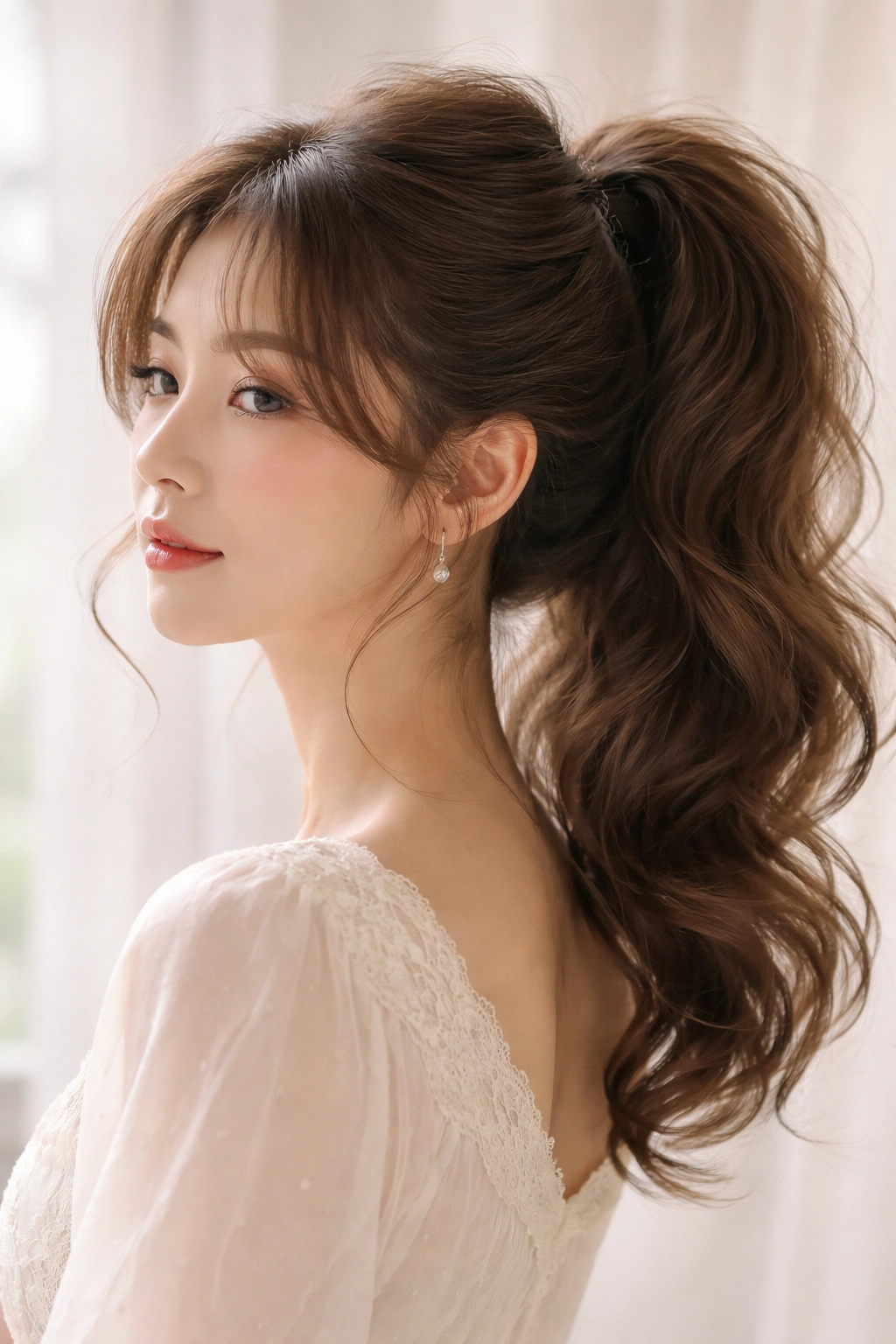
This style embraces fullness and texture in the most enchanting way. Instead of a sleek gather, the ponytail base has intentional volume and softness that resembles a cloud. Hair is pulled back, but loosely enough that it maintains dimension and shape. The result looks generous, youthful, and undeniably soft—it’s the hairstyle equivalent of wearing cashmere instead of a structured jacket.
The Psychology Behind the Softness
A fuzzy cloud ponytail works because it refuses to fight against your hair’s natural texture. Rather than smoothing and controlling every strand, this style celebrates volume and movement. The roundness at the crown creates a frame around your face that’s inherently flattering. This approach also means less tension on your hairline, which many people find more comfortable, especially if you wear ponytails frequently. The visual softness comes from the way light hits the textured surface rather than reflecting off a smooth, uniform shape.
Building the Volume the Right Way
- Start with dry or nearly-dry hair; damp hair won’t hold the fluffy texture
- Tease gently at the crown, building height without creating a messy appearance
- Smooth the teased section very lightly with your brush to blend it—you want height, not obvious backcombing
- Gather hair at the crown into a ponytail, but hold the elastic loosely; don’t pull taut
- Use your fingers to gently pull and loosen the hair around the base, creating a softer perimeter
- Secure the elastic and then lightly tease the ponytail itself to add texture throughout
Insider note: The fuzziness should look intentional, not accidental—use a texturizing spray before gathering to enhance the effect subtly.
3. Feminine Half-Up Ponytail Hybrid
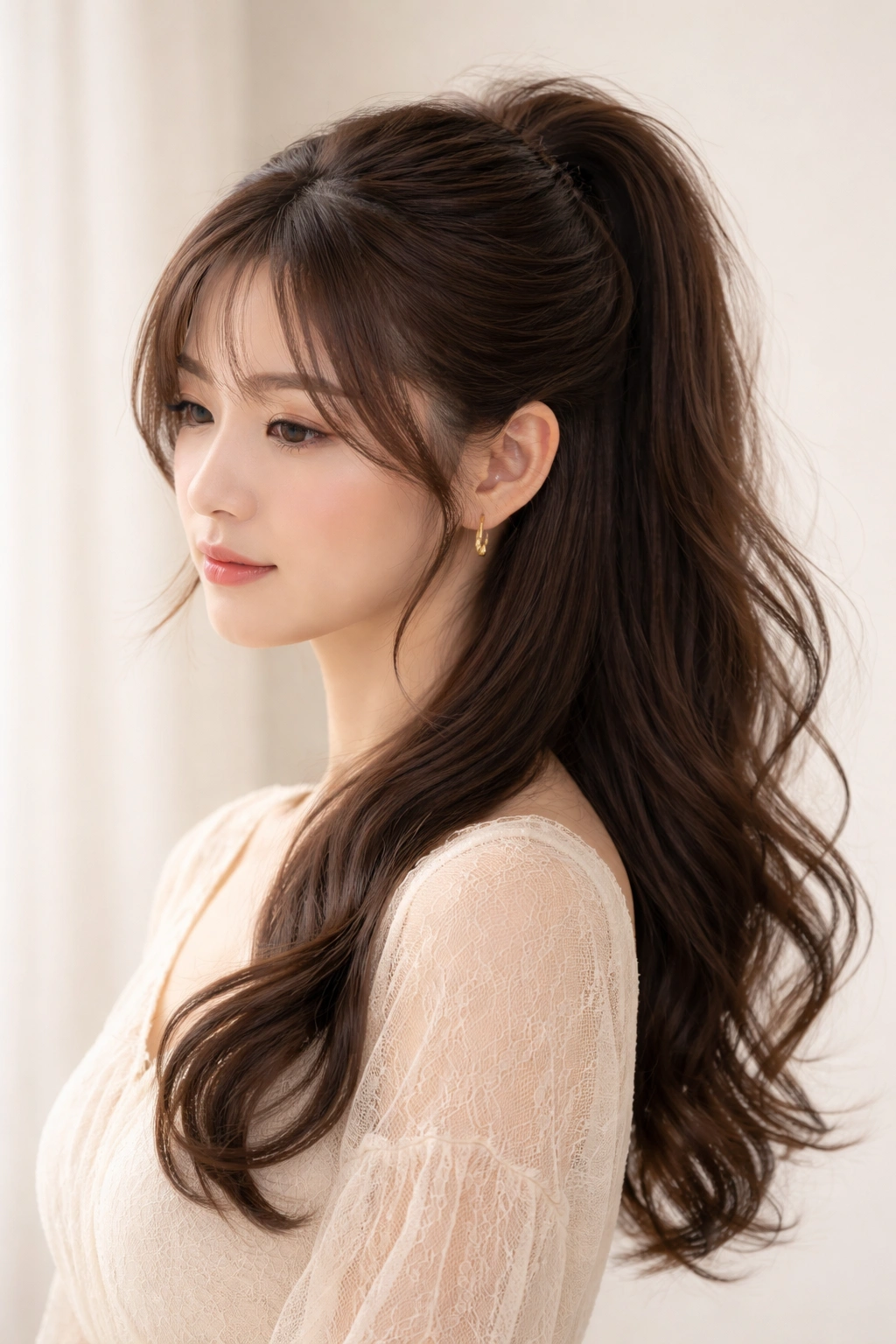
This style splits the difference between wearing your hair down and pulling it back completely. The top half of your hair is gathered into a small ponytail at the crown, while the bottom half flows freely. It’s the perfect choice when you want to keep hair off your face without committing to a full ponytail, and the layered effect creates inherent softness through contrast and movement.
Why Half-Up Styles Feel So Effortlessly Soft
The half-up approach is fundamentally softer than a full ponytail because it maintains length and flow while still providing functionality. Your face gets framed by hair, which feels more romantic and less severe. The visible length and movement of the lower half contrasts beautifully with the controlled upper portion. Korean stylists love this style for everyday wear because it reads as “I made an effort” without looking overdone or costume-like. It also works across all hair types and lengths—even shoulder-length hair can carry this look with sophistication.
Creating the Layered Effect
- Section off hair from your temples to behind your ears, leaving the back and underside completely down
- Gently brush the top section to smooth it without removing all texture
- Gather the top section at the crown and secure with a small elastic
- Take a thin section of hair from the lower portions and wrap it around the base elastic to hide it
- Use a curling iron to add gentle waves to the bottom half, curling away from the face
- Lightly backcomb the crown section for subtle volume without a severe appearance
Worth knowing: This style works beautifully with side-swept bangs or face-framing pieces that can be left out of the ponytail, amplifying the softness.
4. Tousled Texture Ponytail
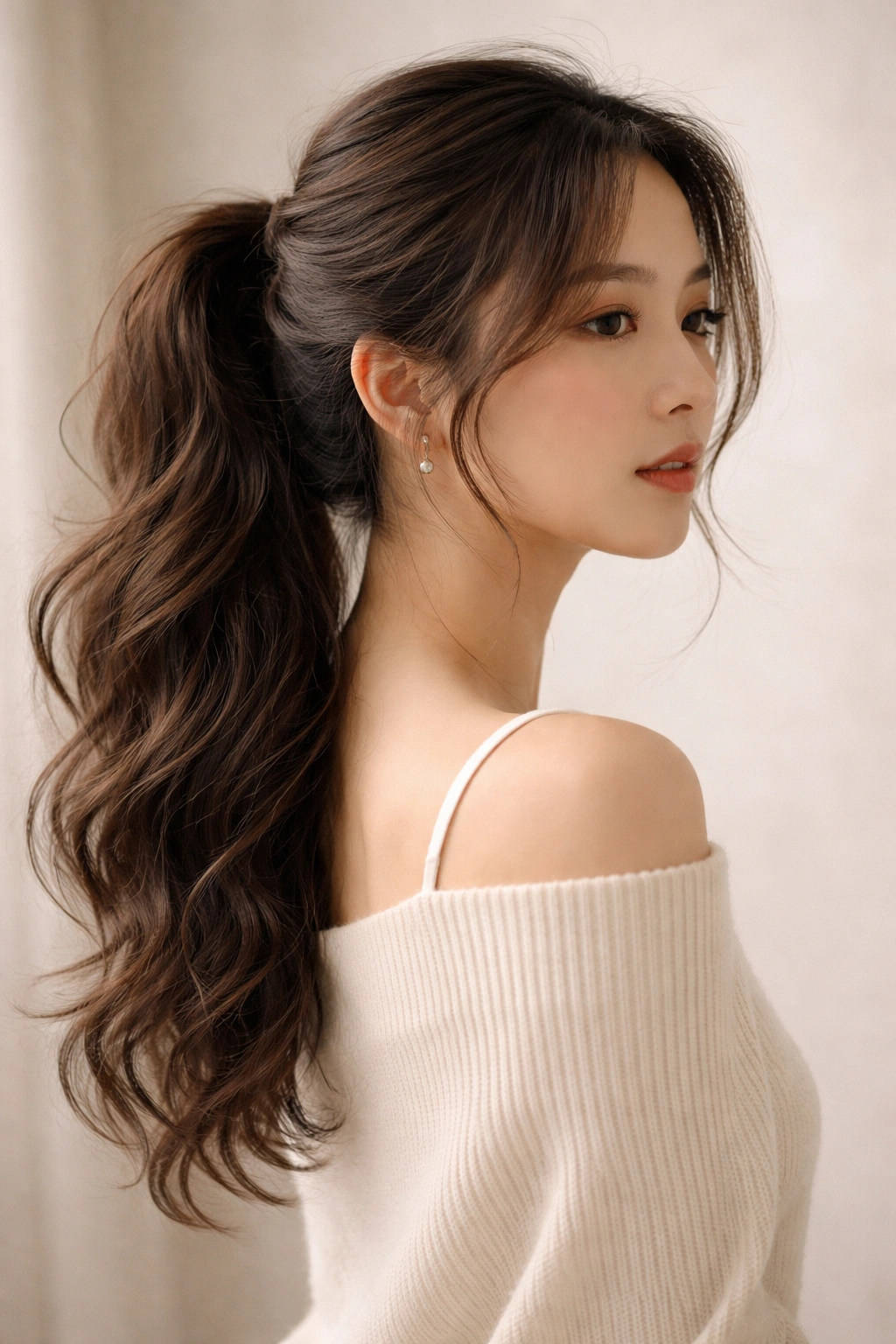
Korean stylists have elevated the tousled ponytail to an art form. This style uses deliberate texture, controlled looseness, and strategic placement to create a ponytail that looks like you simply twisted your hair up without thinking—except every element is actually carefully considered. The texture throughout makes the style feel approachable and youthful while remaining elegant.
The Art of Intentional Messiness
There’s a critical difference between a messy ponytail and a tousled one, and Korean styling masters that distinction. Tousled means textured with purpose, loose with direction, and soft without being undone. The texture comes from wave or curl, not from haphazardly pulling hair. The looseness is distributed strategically rather than concentrated in one unflattering area. This paradox—polished messiness—is what makes the style work. It signals confidence and beauty that doesn’t require perfection.
The Step-by-Step Tousling Process
- Blow-dry your hair with a round brush to add foundational volume and movement
- Use a 1.25-inch curling iron to create loose waves throughout, curling alternate sections away from your face
- Let waves cool completely before touching them
- Gather hair into a high or mid-height ponytail, but don’t pull tight; leave it slightly loose
- Take small sections of the ponytail and gently pull to loosen them, creating a textured, undone appearance
- Use your fingers to separate and tousle the gathered hair, breaking up any uniform texture
- Spray lightly with texturizing spray to hold the tousled shape without stiffness
Pro tip: The difference between beautiful tousled and accidentally sloppy is in the direction—all your looseness should point slightly outward and downward, not bunching randomly.
5. Baby Hair Framing Ponytail
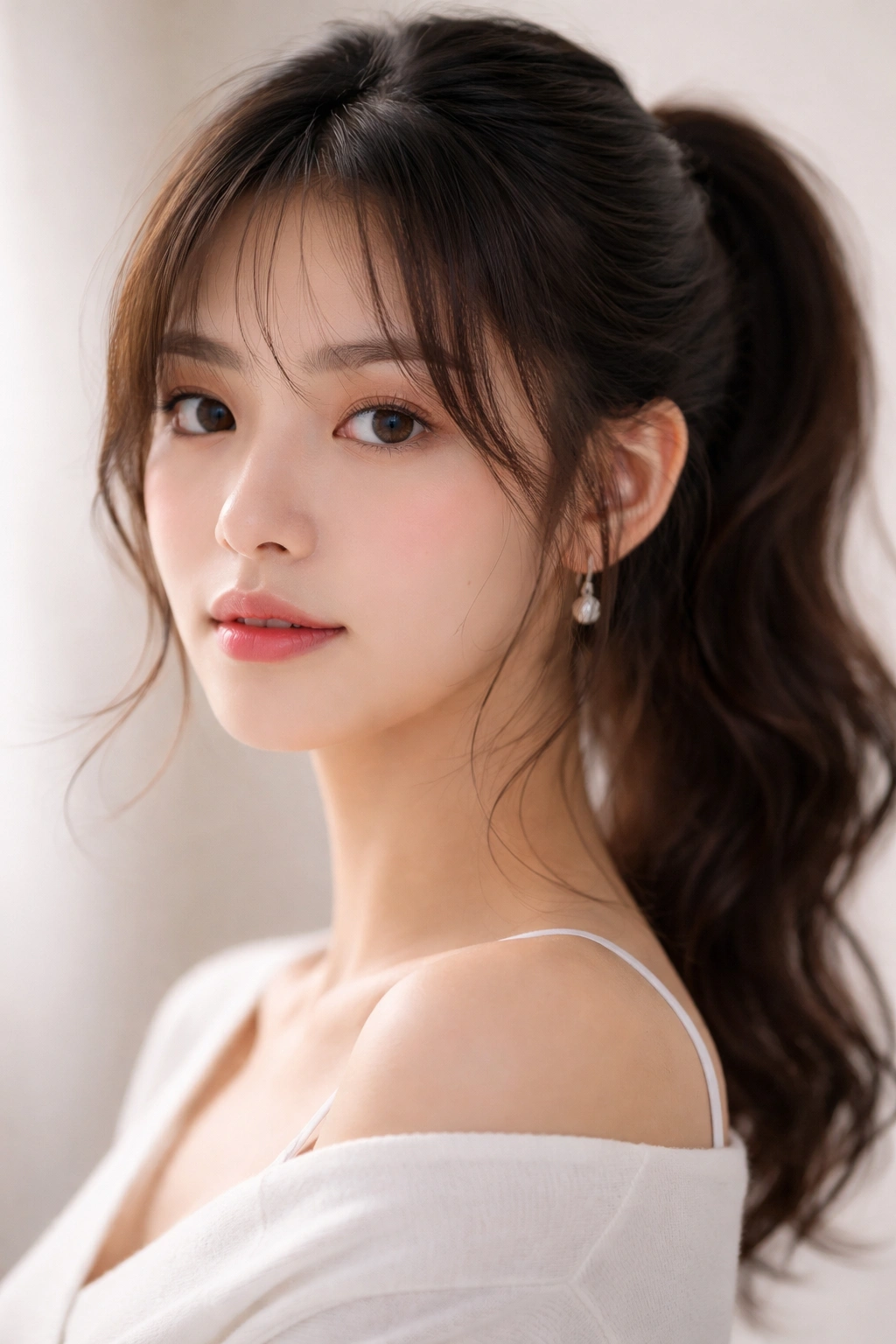
This distinctly Korean technique keeps intentional wisps of hair loose around the face and temples, creating a frame that softens your features and prevents the ponytail from looking harsh. The “baby hairs” (fine, delicate strands left loose) catch light beautifully and draw attention to your face rather than your pulled-back hairline. This style is particularly flattering for anyone with a broader forehead or who typically feels self-conscious with hair pulled back.
Why Baby Hair Framing Changes Everything
A completely pulled-back ponytail puts your entire face on display, which can feel unflattering if you’re self-conscious about your hairline, forehead, or face shape. Baby hair framing softens this by creating a visual boundary and adding dimension. The loose strands catch light, which draws the eye to your features rather than the shape of your head. This technique is used in Korean bridal styling and high-fashion editorials because it universally flatters while maintaining sophistication. It’s not about covering up—it’s about creating a softer frame.
Placing Baby Hairs Strategically
- Leave small sections at your temples (about 1 inch on each side) completely loose before gathering
- Pull your main ponytail at the crown, incorporating everything except those temple sections
- Leave 3-4 individual strands loose in front of each ear, creating a soft frame
- Gently curl the loose baby hairs around your face using a small curling iron, curling toward your face
- Use a tiny amount of smoothing serum on the loose pieces to add shine and definition without making them look wet
- The loose pieces should follow the contour of your face, not stand away from it
Insider note: Korean stylists often curl baby hairs in the opposite direction of the cheekbone curve to create a flattering, lifting effect around the face.
6. Twisted Base Elegant Ponytail
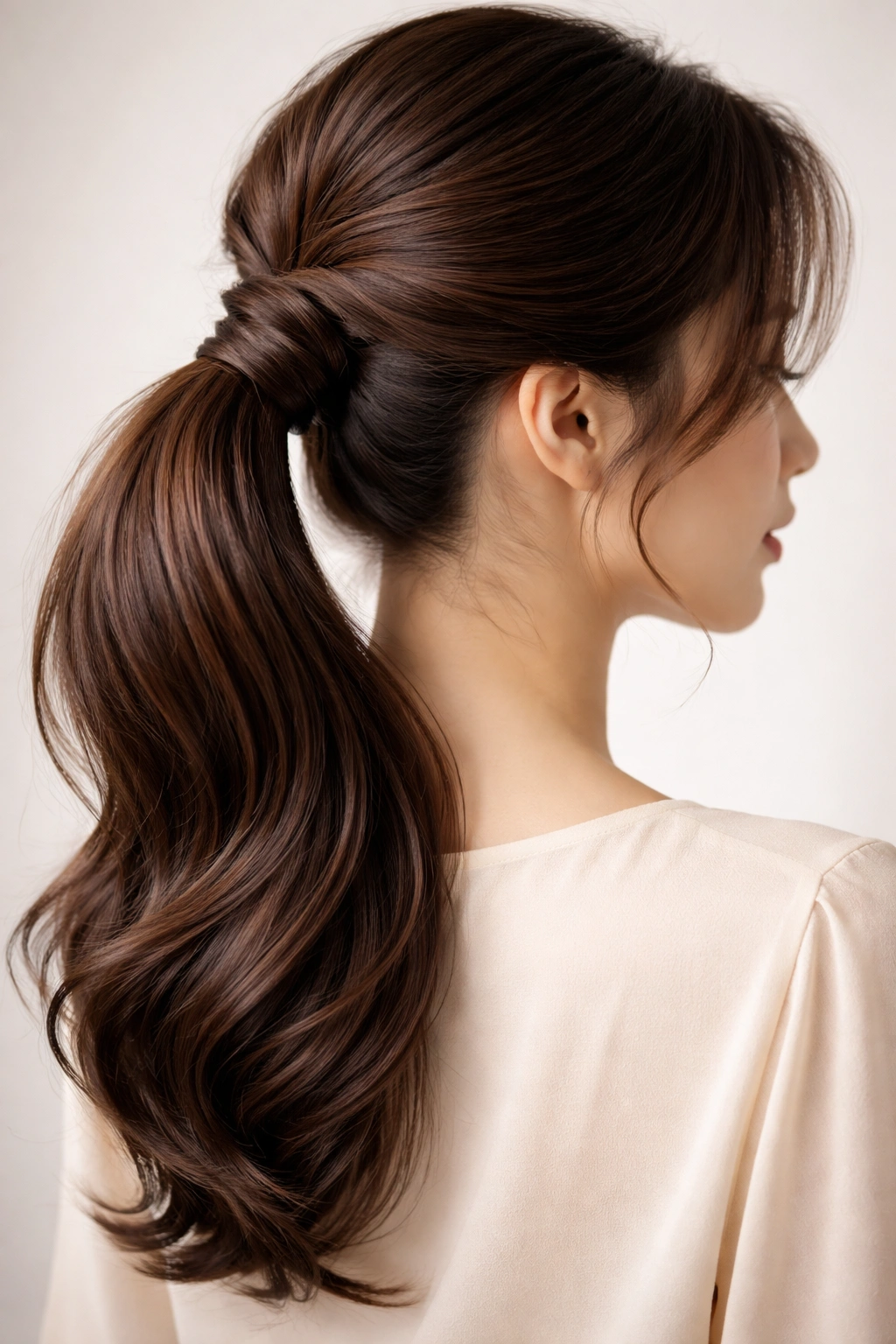
This technique creates visual interest and softness at the base of the ponytail by twisting sections of hair before securing them. The twists catch light differently than a smooth ponytail, creating dimension that reads as more sophisticated and carefully styled. This is the ponytail Korean women wear to important events, client meetings, or anywhere they want to look polished and effortlessly elegant.
How Twists Add Softness and Sophistication
Twisting accomplishes what smoothing can’t: it creates texture that’s intentional, beautiful, and refined. Where a sleek ponytail can sometimes look severe or aging, twisted details add playfulness and movement. The twists also create pockets of light and shadow that make the hairstyle more visually interesting. This is particularly valuable if you have thicker hair or want your ponytail to look full without resorting to extensions. The twists distribute volume more flattering than a simple gathered ponytail.
Creating the Twisted Base
- Brush your hair smoothly back, but separate the crown area into 3-4 distinct sections
- Take the first section and twist it gently, moving from your crown toward the back of your head
- Pin or clip this twist temporarily at the nape, leaving the end untwisted
- Repeat with remaining sections, creating parallel twists that converge at the nape
- Gather all the twisted sections plus any remaining hair into a single ponytail, incorporating the untwisted ends
- The result is a ponytail with a visually complex, twisted base that transitions into a smooth gathered tail
- Secure with an elastic, then wrap a thin section of ponytail hair around the base to hide the elastic
Worth knowing: Use a styling cream or serum before twisting to make the twists look intentional and smooth, not rough or frizzed.
7. Voluminous Crown Ponytail
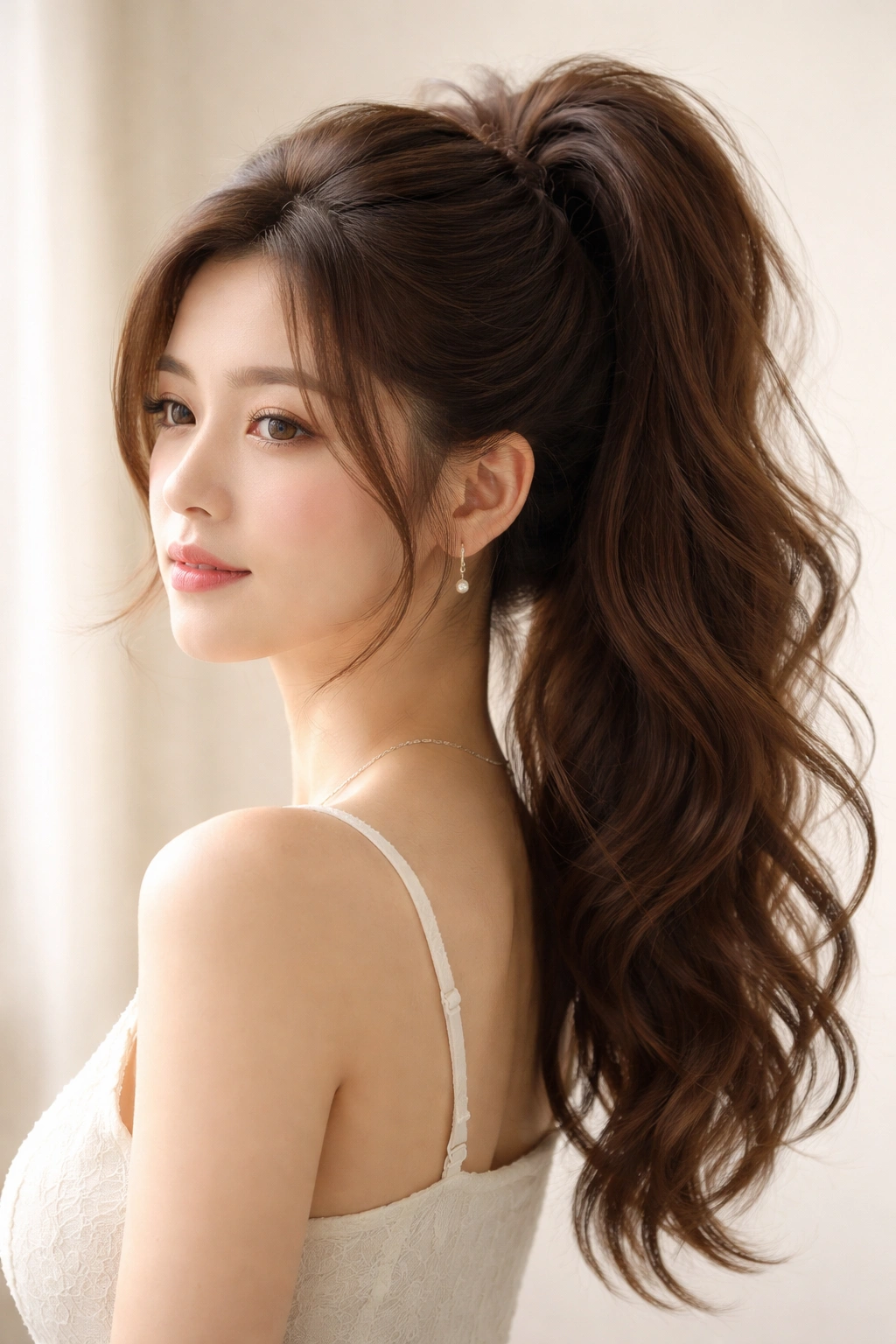
This style creates impressive height at the crown while maintaining softness through texture rather than severity. The volume sits specifically at the very top of your head, making your ponytail look fuller and more luxurious while the rest of the style remains soft and approachable. This is the style Korean celebrities wear on red carpets and in editorials when they want to look glamorous but not overly styled.
The Science of Crown Volume
Volume at the crown is flattering because it elongates your face and balances proportions. Where an under-styled ponytail can sometimes make your head look smaller or your face wider, crown volume creates a lifted, refined appearance. The key to keeping this soft rather than dramatic is using distributed texture throughout rather than concentrating all volume in one tight area. This prevents the “I’m wearing a wig” effect while still delivering noticeable fullness.
Building Strategic Crown Height
- Start with hair that has natural texture or waves; blow-dry with a round brush for volume
- Use a medium curling iron to add waves to the crown area specifically, creating lift
- Once waves cool, flip your head upside down and backcomb very gently at the crown, using a fine-tooth comb
- Right your head carefully and smooth the backcombed section with your brush, blending the texture
- Gather hair at the crown, but position your ponytail holder slightly forward of where you normally would
- This placement allows crown hair to poof up behind the elastic rather than getting flattened
- Gently pull the crown sections upward and outward to enhance height without creating harshness
- Smooth the sides minimally—you want volume, not a severe look
Pro tip: Use volumizing mousse at the roots before blow-drying to create volume that lasts all day without the need for teasing.
8. Curved Undercut Ponytail
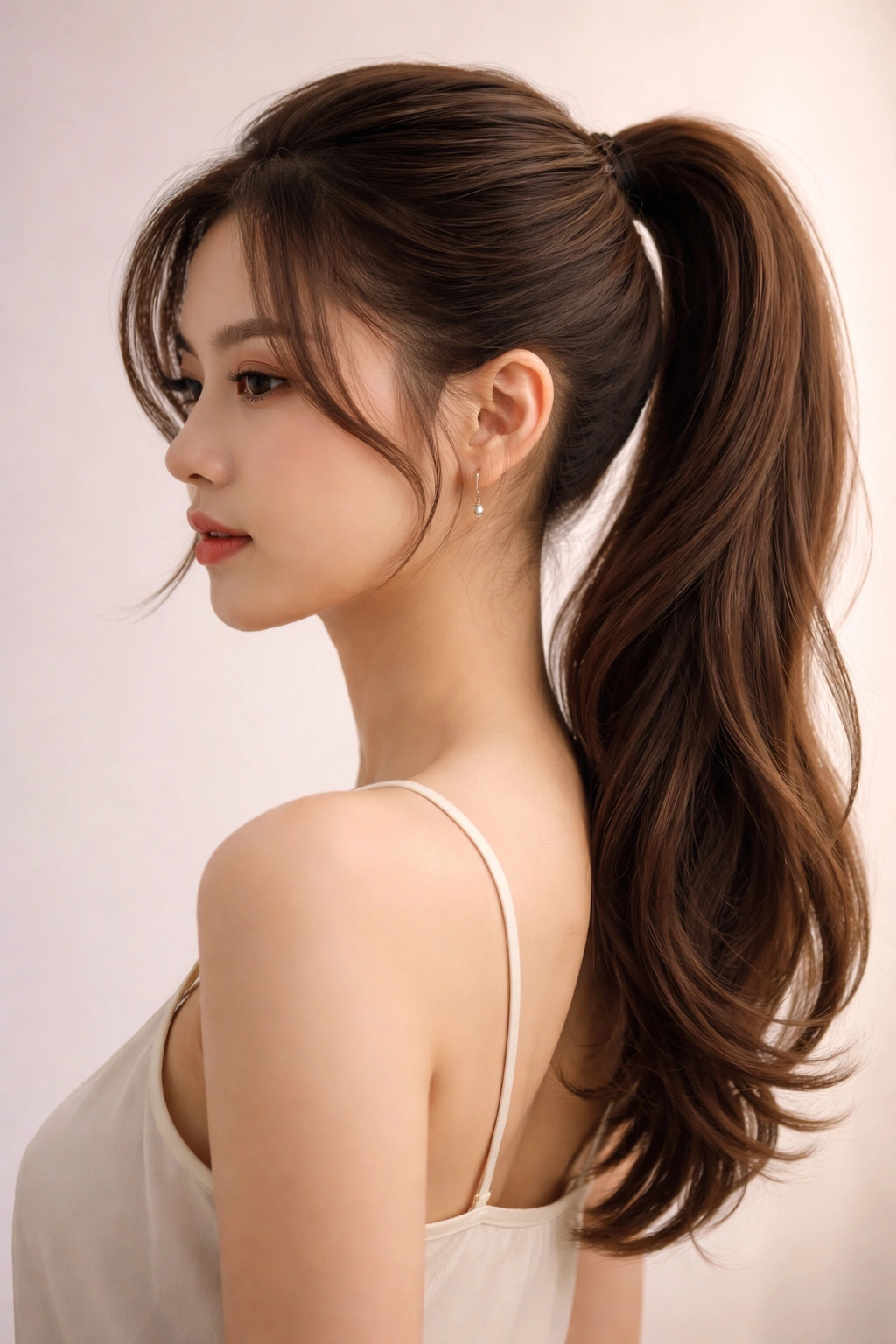
This modern Korean style creates a subtle curve or swoosh at the sides of the head where hair transitions from the face to the gathered ponytail. Instead of pulling straight back, the hair curves slightly inward at the temples and cheekbones before sweeping back. This gentle curve is infinitely more flattering than a straight pull because it respects the natural contours of the face and head.
Why Curves Flatter More Than Straight Lines
Geometric straight lines can sometimes emphasize the width or length of your face, depending on your face shape. Curves, by contrast, create visual softness and follow the natural structure of your head more harmoniously. A curved undercut also naturally accommodates different face shapes—the curve provides a frame that works whether you have a round, long, square, or heart-shaped face. This is pure Korean styling philosophy: work with your natural proportions rather than against them.
Creating the Subtle Curve
- Brush hair back gently, but as you approach the crown, angle your brush slightly inward toward the center
- This creates a subtle curve rather than a straight pull; your hands guide the direction
- Gather hair at the crown, positioning the elastic at the very top of your head
- Before securing fully, adjust the curve by gently pulling the side sections backward and slightly upward
- The curve should be subtle—noticeable to someone looking at you from the side, but not dramatic or obvious
- Secure the elastic and smooth any flyaways
- Use a light hairspray to hold the curve without making it look stiff or controlled
Insider note: The curve is more apparent with sleeker styling; if you add texture, the curve becomes softer and more organic-looking.
9. Gradient Texture Bubble Ponytail
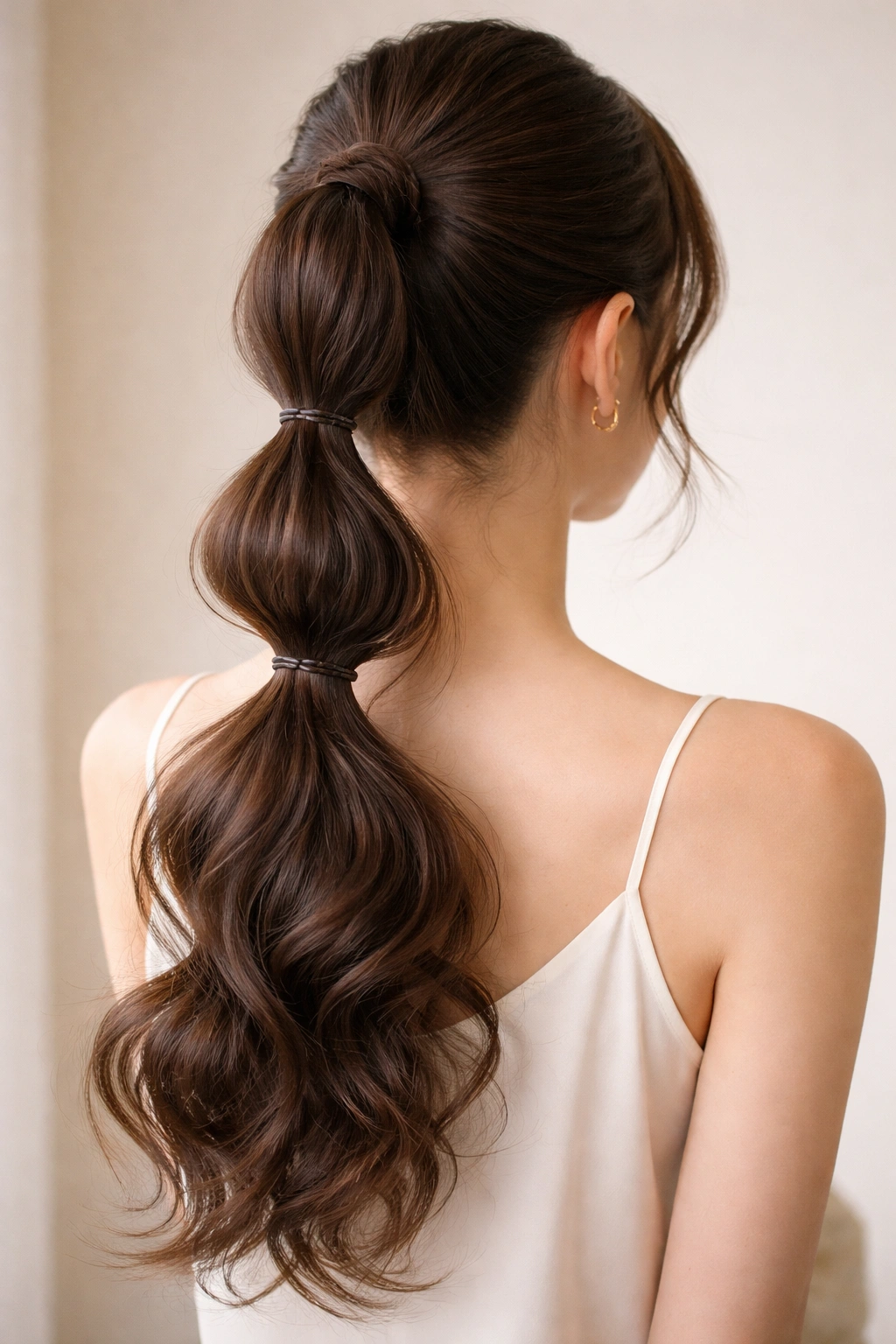
This playful yet sophisticated style creates multiple “bubbles” or gathered sections down the length of the ponytail, with texture that increases progressively from top to bottom. The result is a ponytail that looks more complex and interesting than a standard style, yet remains soft because each bubble has intentional looseness rather than tight gathers. This is the style Korean influencers wear when they want something eye-catching but still effortlessly beautiful.
Why Bubble Ponytails Feel Soft Rather Than Costume-Like
A bubble ponytail could easily look overly playful or costume-like, but the Korean approach keeps it refined. The difference is in texture and proportion. Instead of creating tight, obvious bubbles separated by clear gaps, Korean stylists create bubbles with graduating softness—the top section is tighter and more polished, while lower sections become progressively looser and more textured. The texture throughout prevents any single bubble from looking like an isolated element; instead, they feel like a natural progression.
Building Your Bubble Ponytail
- Create your initial ponytail at the crown, pulling back smoothly for a polished top section
- Secure with a small elastic and tighten the ponytail fully
- Position a second elastic 2-3 inches below the first, then very gently pull and loosen the hair between the two elastics, creating the first bubble
- Repeat this process down the length of your ponytail, spacing elastics evenly (every 2-3 inches)
- As you move down the ponytail, pull each bubble slightly looser than the one above it
- Add texture by gently teasing the lower bubbles with a fine-tooth comb
- The finished style should show a progression from polished top to soft, textured bottom
Worth knowing: Use elastics that match your hair color precisely to make them less visible and maintain the soft aesthetic.
10. Long Flowing Romantic Ponytail
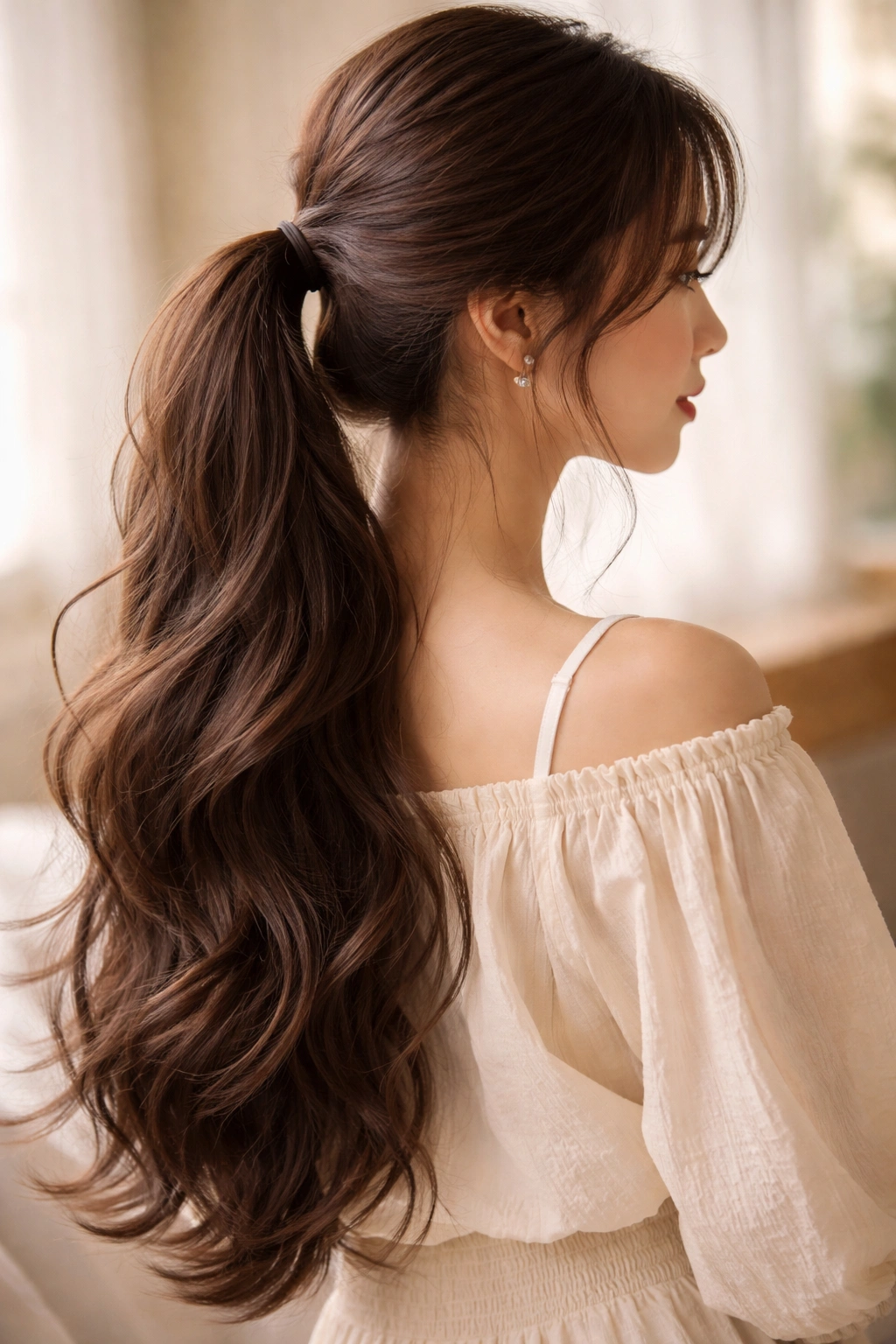
This style is less about holding hair back and more about creating a gathered base while allowing the length to flow freely and romantically. The ponytail holder sits low, often with pieces left down around the face, and the emphasis is on the movement and texture of the long hair rather than the tightness of the gather. This is pure romance—the style Korean women wear when they want to feel beautiful and approachable simultaneously.
The Philosophy Behind Romantic Hair
There’s something inherently flattering about flowing hair that’s been softly gathered rather than tightly constrained. This style works because it maintains femininity while still providing the practicality of hair off your face and neck. The low placement and loose gather mean minimal tension on your hairline, and the loose pieces around your face create a frame that softens your entire appearance. Texture in the length creates movement that photographs beautifully and feels luxurious in person.
Achieving Effortless Romance
- Leave face-framing pieces down around your temples and cheekbones before gathering
- Brush hair back gently from the crown, gathering at the nape rather than the crown
- Use your fingers to create looseness at the gathering point; don’t pull taut
- Secure with an elastic, wrapping a small section of hair around the base to conceal it
- Create soft waves throughout the length using a 1.5-inch curling iron, curling away from your face
- Let waves cool completely, then lightly separate them with your fingers
- The result should look like your beautiful long hair simply decided to gather itself
- Use a light texturizing spray to enhance movement without stiffness
Pro tip: This style is most beautiful with a slight shag or layered haircut that creates natural movement, but it works with one-length hair too—just add more dramatic waves for texture.
Final Thoughts
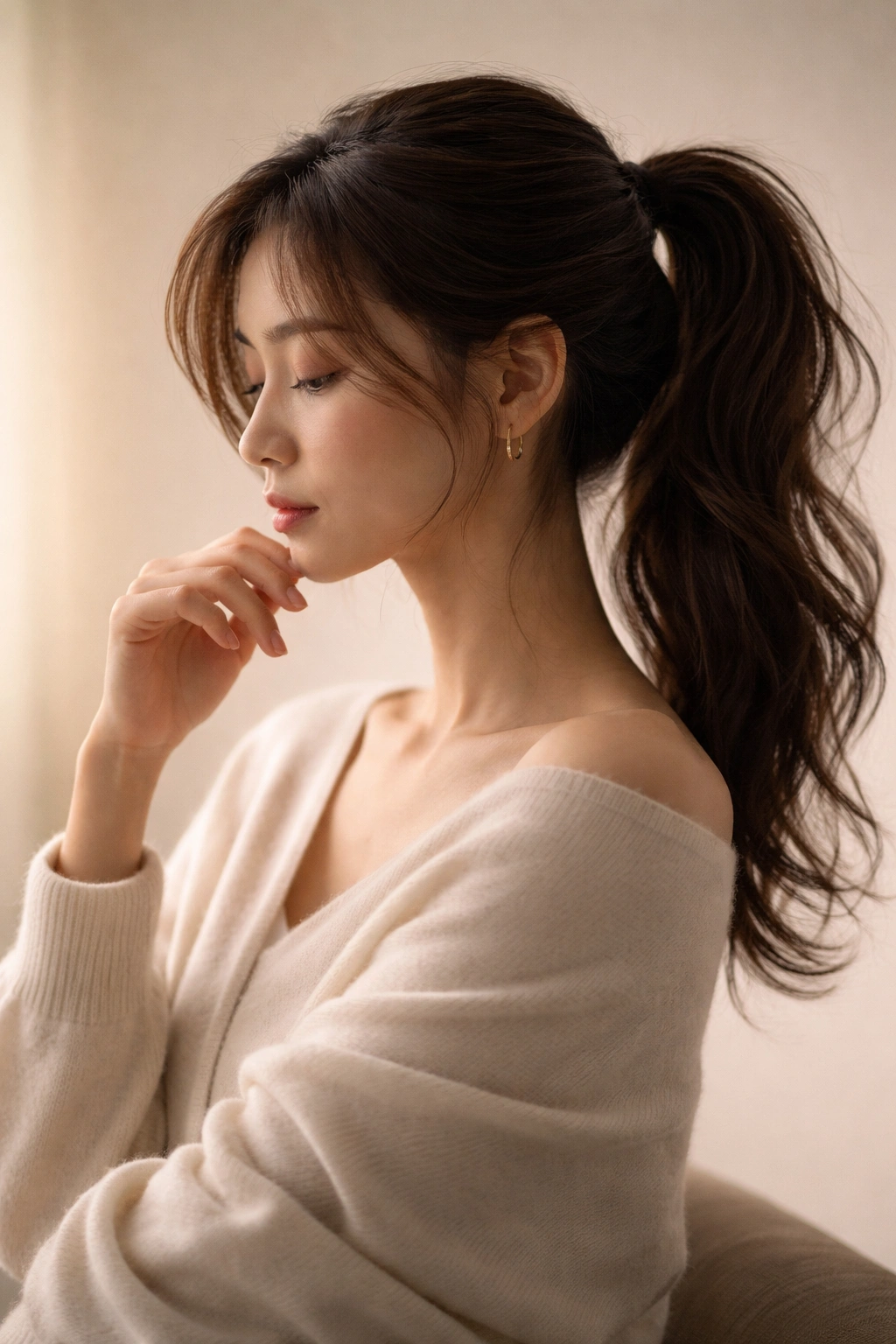
Korean ponytail styling teaches a valuable lesson that extends beyond hairstyling: softness and sophistication aren’t opposites. You can pull your hair back completely and still look approachable, youthful, and elegant. The difference lies in intentional choices about texture, placement, face-framing, and how much you’re willing to loosen your grip—both literally and philosophically.
Each of these ten styles offers something distinct, but they all share the fundamental Korean approach of prioritizing how the style makes you feel and how it frames your face, not just whether it keeps your hair in place. You might find yourself rotating through several of these depending on your mood, your hair’s natural texture that day, how much time you have, and what kind of energy you want to project. Some days you’ll want the polished sleekness of the glass skin ponytail; other days you’ll reach for the romantic flowing length or the playful bubble texture.
The beautiful part is that none of these styles require expensive salon visits or complicated tools. They work with your natural hair texture once you understand the underlying principles: soften the gather, keep some pieces loose, add texture deliberately, and let movement be your ally. Start with whichever style calls to you, practice it once or twice, and notice how differently you feel. That subtle shift in how a hairstyle makes you feel—from severe to soft, from controlled to confident, from trying-too-hard to effortlessly beautiful—that’s the real magic of Korean styling.
