



12 Protective Styles for Natural Afro Hair
Protective styling isn’t just about changing your look—it’s about giving your natural hair a genuine break from daily manipulation, environmental stressors, and heat damage. When you tuck away your ends and minimize day-to-day handling, you’re creating the conditions for healthier growth and reduced breakage. The thing is, not all protective styles work the same way for everyone, and the wrong style—one that’s too tight, poorly maintained, or incompatible with your hair texture—can actually cause damage instead of preventing it.
The best protective styles are the ones you’ll actually wear consistently while keeping your natural hair moisturized, your scalp clean, and the tension comfortable. Whether you’re recovering from heat damage, giving your hair time to gain length, or simply wanting a low-manipulation routine, finding the right protective style for your lifestyle and hair needs makes all the difference. Some styles require weekly maintenance; others can last weeks with minimal upkeep. Some work beautifully on coily, tightly textured hair; others shine on looser curl patterns.
What matters is understanding why each style protects your hair, how to install and maintain it properly so it actually benefits rather than harms you, and which options align with your daily routine, hair goals, and personal aesthetic. The styles in this guide are some of the most effective, versatile, and accessible protective options for natural Afro hair—but the best one for you depends on your specific hair type, lifestyle, and what you’re trying to achieve.
1. Box Braids
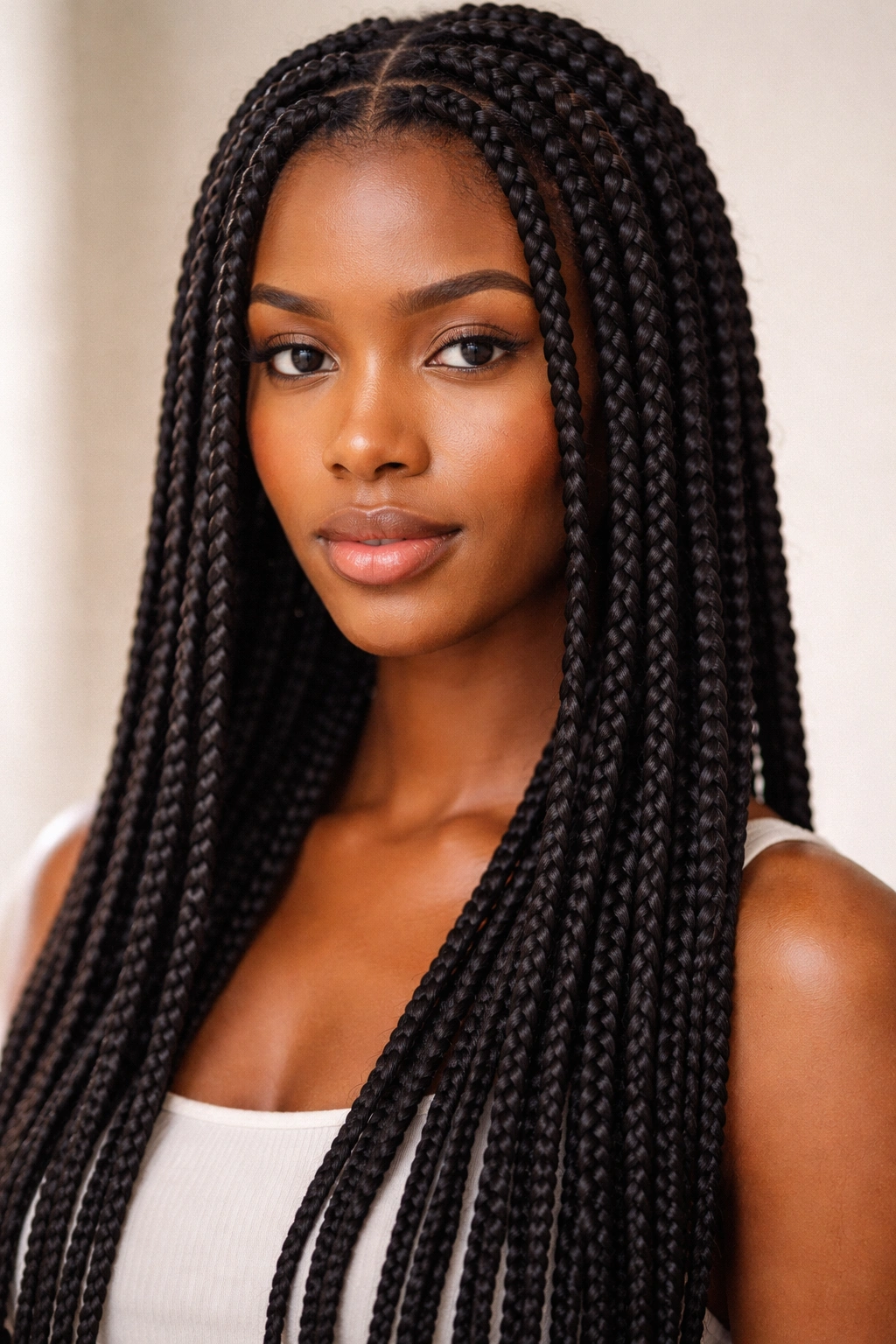
Box braids are one of the most recognizable and versatile protective styles, and for good reason. Individual plaits of hair are sectioned into square-shaped boxes and braided from root to tip, creating a clean, geometric look that can be styled countless ways. You can wear them down, in a high ponytail, in an updo, or even wrapped into a crown. They’re a true workhorse protective style—low-manipulation, durable, and suitable for nearly every hair type and texture.
Why They’re a Top Protective Choice
Box braids excel at protection because they keep your hair ends completely secured and tucked away, minimizing the friction and breakage that happens from daily handling and contact with clothing. When braided, your hair isn’t moving around constantly, which means less tangling, less shedding, and less damage. The individual braid structure also means each section of hair is working independently, so tension can be distributed evenly if installed correctly. You’re also reducing your daily styling time dramatically—just wash and go, or refresh with dry shampoo and a quick re-braid at the front. They can last 6 to 12 weeks depending on how well you maintain them and how fast your hair grows.
Maintenance and Upkeep
- Washing: Wash every 2-3 weeks using a diluted shampoo (mix shampoo with water) applied to the scalp with a spray bottle or applicator bottle, focusing on the roots. Avoid getting the braids overly wet if possible.
- Moisturizing: Apply lightweight oils or leave-in conditioner to your braids between washes, concentrating on the mid-lengths and ends. Don’t oversaturate—you want moisture, not greasiness.
- Refreshing edges: Lay down your edges with a lightweight gel or edge control to keep them smooth throughout the wear period.
- Night protection: Wrap your braids in a silk or satin bonnet or scarf to reduce friction and prevent frizz while sleeping.
Pro tip: The size of your braids matters for longevity. Smaller, thinner braids last longer but take more time to install; medium and larger braids are faster to do and less strain on your scalp, but may shed more easily.
2. Cornrows
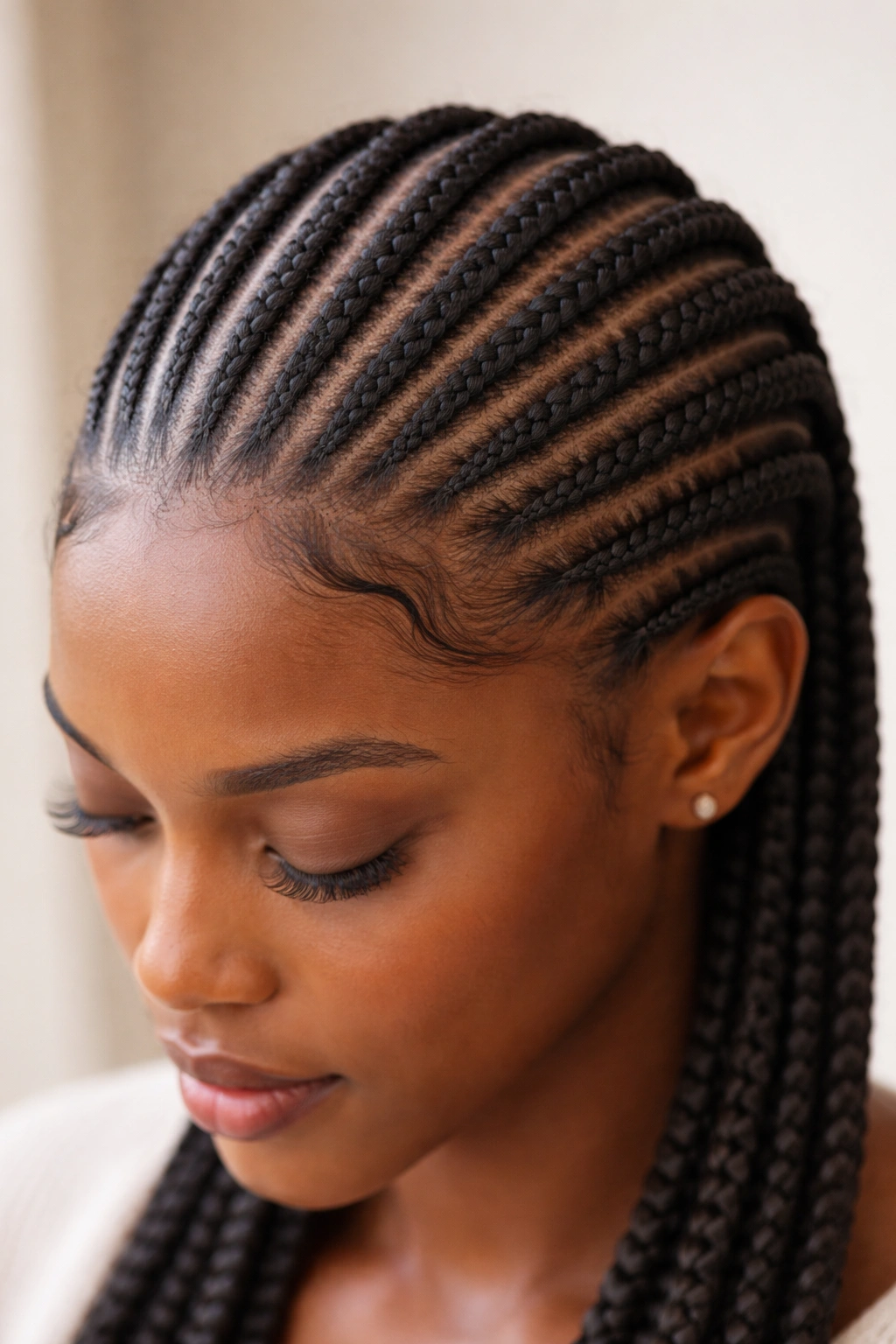
Cornrows are a foundational protective style—tight, flat braids that are plaited close to the scalp in straight lines or curved patterns. This style is deeply rooted in African culture and has been worn for thousands of years, offering both protective benefits and stunning aesthetic possibilities. From simple straight-back rows to intricate curved designs and geometric patterns, cornrows are endlessly customizable and work beautifully as a standalone style or as a base for other protective looks.
Why They’re Powerful Protective Styles
Cornrows protect your hair by creating a close, secure arrangement that keeps ends tucked and minimizes movement and manipulation. Because the braids sit so close to the scalp, there’s less dangling hair getting caught on clothing, touched frequently, or damaged by environmental factors. The tension is distributed along the entire length of the braid rather than concentrated in one spot, which actually makes them less damaging than looser styles if installed with appropriate tension. Cornrows also last surprisingly long—between 2 to 8 weeks depending on your curl pattern and how fast your edges grow.
Installation and Care Considerations
- Installation tension: This is critical. Cornrows should feel snug but never painful or pulling so hard that you feel discomfort hours later. Too-tight cornrows can cause traction alopecia over time, so insist on comfortable tension when someone is braiding your hair.
- Scalp health: Since cornrows sit directly on your scalp, keeping it clean is essential. Wash every 1-2 weeks, and use a lightweight oil or moisturizing spray on your scalp between washes.
- Duration: Aim to take cornrows down every 6-8 weeks maximum to give your scalp and hairline a break, even if the braids still look good.
- Sleeping: Use a silk or satin bonnet or pillowcase to reduce friction and frizz.
Worth knowing: Cornrows can work on any hair texture, but installation takes genuine skill. A braider who doesn’t understand how to work with your specific curl pattern may create a style that looks good but doesn’t actually hold up well or provide the protective benefits you want.
3. Two-Strand Twists
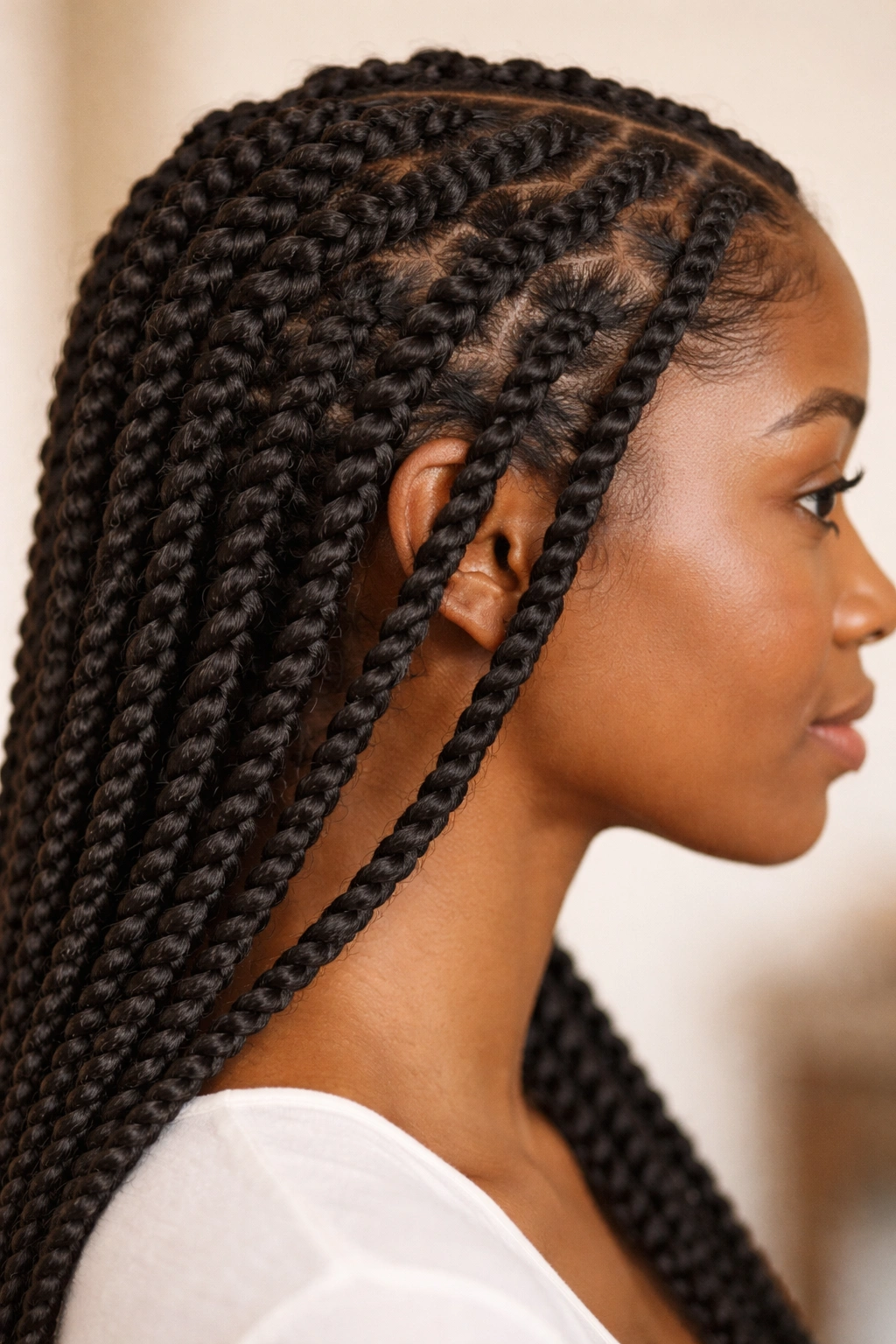
Two-strand twists involve dividing your hair into sections and twisting two strands of hair around each other from root to tip, creating a rope-like, textured look. They’re similar in appearance to regular braids but involve a simpler, faster installation process. Twists can be worn individually, gathered into an updo, or arranged into creative patterns, and they work beautifully on coily and kinky textures where the natural curl pattern helps hold the twist structure together.
Why They Protect and How They Compare
Two-strand twists protect your hair through the same fundamental mechanism as braids—they keep your ends secured, minimize manipulation, and reduce friction damage. What makes twists special is that they’re actually easier to install than braids, which means you can do them yourself at home without special skills, and they require less time investment. They also shed less as they loosen because the twist structure is more forgiving than a braid. The downside is that twists don’t last quite as long as braids—typically 4 to 8 weeks depending on your hair type and how well you maintain them. On looser curl patterns, twists can unravel faster, but on tightly coiled hair, they hold beautifully.
Practical Installation and Wear Tips
- Sectioning: Divide your hair into even sections before you start—the number depends on how thick or thin you want each twist to be. Larger sections mean faster installation but thicker twists; smaller sections take more time but look more refined.
- Moisture before twisting: Apply leave-in conditioner or a lightweight moisturizing cream to each section before twisting. This helps them last longer and keeps your hair hydrated under the twists.
- Longevity tricks: Twists last longer if you sleep in a bonnet or on a satin pillowcase, and they hold better if you use a light gel or twist cream to define them during installation.
- Unraveling management: As twists naturally begin to unravel at the roots, you can re-twist just the roots (a quick maintenance style) without taking down the entire look.
4. Faux Locs
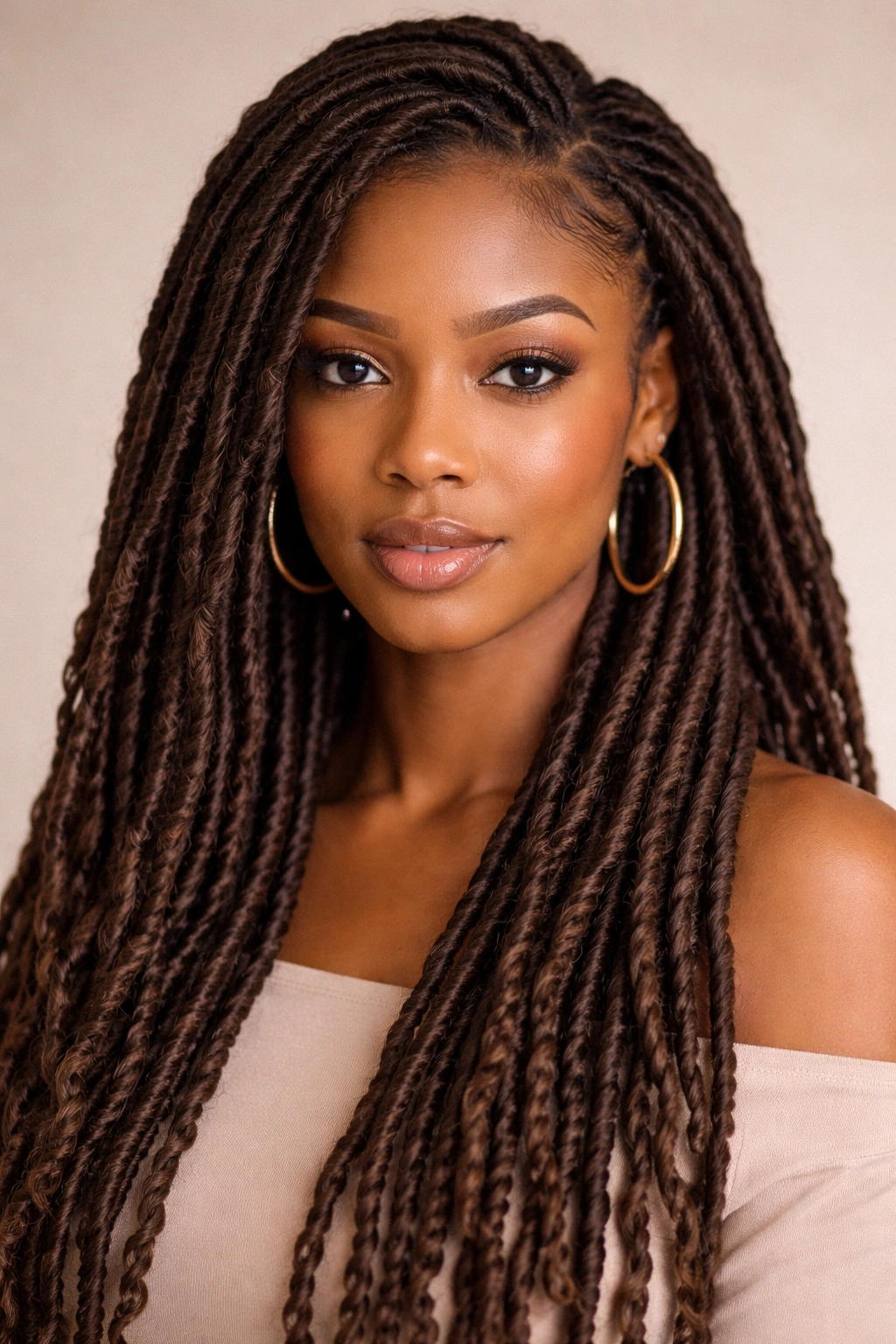
Faux locs are a protective style that mimics the appearance of dreadlocks without the permanent commitment. Synthetic hair or your natural hair is wrapped, twisted, or braided to create the loc aesthetic, and the style can last anywhere from 6 weeks to several months depending on the installation method and how well you care for them. Unlike permanent locs, faux locs are temporary, fully reversible, and give you the freedom to experiment with the look and then transition back to wearing your natural hair in other styles.
The Protective Appeal and Considerations
Faux locs offer excellent protection because your hair ends are completely enclosed and hidden within the synthetic wrapping or braiding. There’s virtually no external friction, no breakage from daily handling, and no shedding of individual hairs. They’re a go-to style for people recovering from significant damage or wanting an extended break from styling their natural hair. The catch is that faux locs are heavier than other protective styles, which means more weight pulling on your scalp and roots—so proper installation (not too tight) is absolutely essential. They also require consistent moisture maintenance because the wrapping can trap moisture against your scalp, leading to mildew or mold if not kept clean and dry.
Essential Maintenance for Faux Locs
- Washing: Wash every 1-2 weeks using a diluted shampoo and focusing on your scalp. You can wash faux locs more thoroughly than braids since the synthetic hair won’t be damaged by water. Squeeze (don’t wring) excess water and allow to air-dry fully.
- Drying: This is critical. After washing, make sure your locs dry completely—dampness trapped inside can lead to mildew. Sit under a hood dryer for 30-45 minutes or air-dry for several hours.
- Moisturizing: Apply lightweight oil to your scalp and roots, but avoid getting the synthetic hair too wet or oily, which can cause slipping.
- Retwisting: As your hair grows, the roots loosen. Retwist every 4-6 weeks if you want to maintain a clean look, or leave them loose for a more relaxed aesthetic.
Pro tip: The weight of faux locs depends partly on the thickness of the loc and the type of synthetic hair used. Thinner, lighter locs put less strain on your scalp than very thick, heavy ones.
5. Crochet Braids
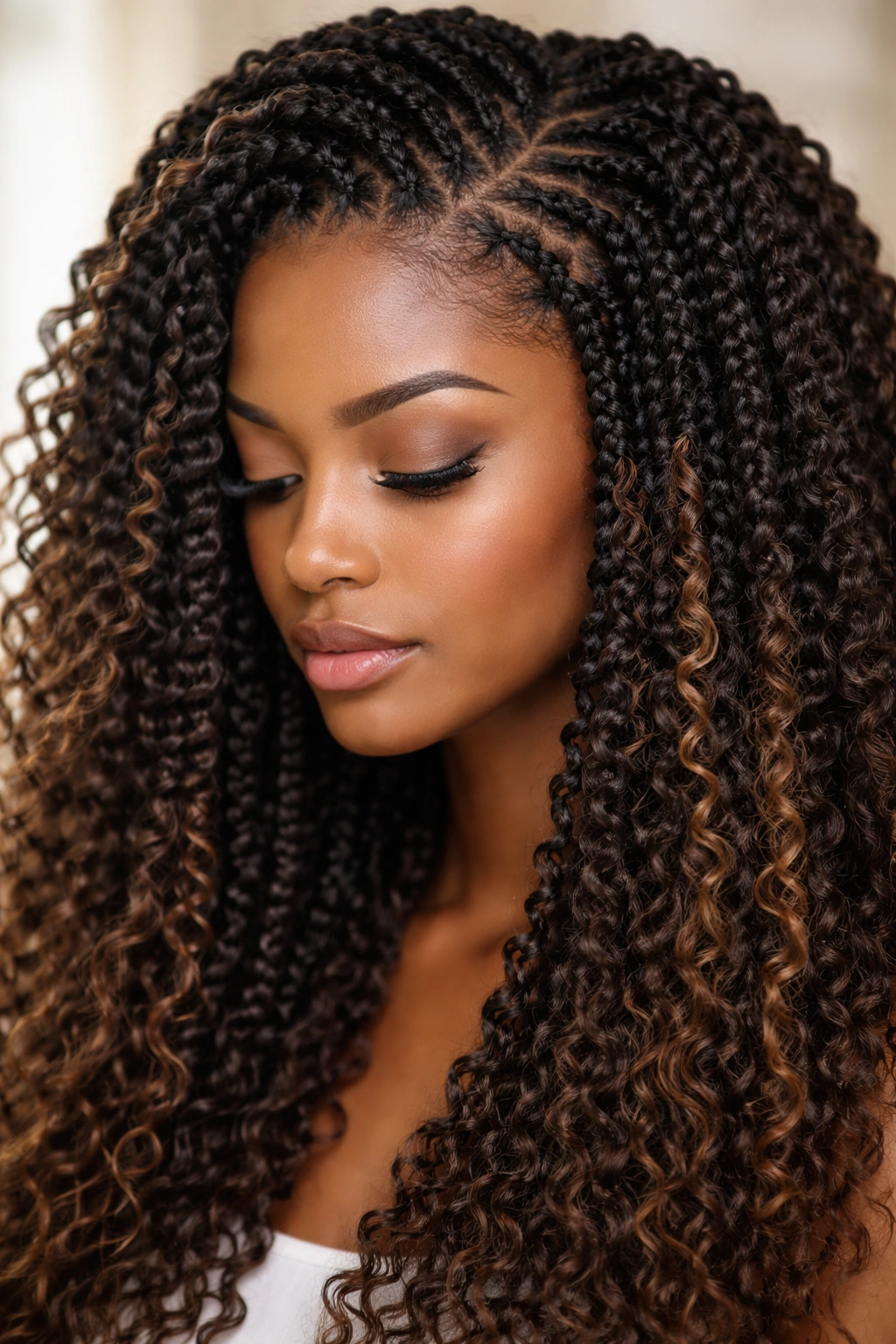
Crochet braids involve using a crochet hook to loop synthetic hair (usually braiding hair, Marley hair, or curly synthetic textures) through your natural hair that’s been cornrowed or twisted into a base. The result is a style that looks like full braids, twists, curls, or waves—depending on the texture of the synthetic hair you choose—without the installation time of actually braiding your entire head. You can achieve almost any look imaginable with crochet braids, and they’re relatively quick to install compared to traditional braids.
Why They’re Protective and How Installation Works
Crochet braids protect your hair because your natural hair serves as a base and anchor, while the synthetic hair does the visual work and takes most of the physical stress. This means your natural hair is under minimal tension and manipulation during wear. The synthetic hair protects your natural ends from environmental damage, friction, and daily handling. Installation is faster than hand-braiding—a professional can typically crochet your entire head in 3 to 5 hours, compared to 8 to 12 hours for traditional box braids. They also last 4 to 8 weeks, and you can remove and reinstall new synthetic hair without taking down your base rows, extending the lifespan of this style.
Installation Base and Aftercare
- Base preparation: Most crochet braids require a cornrow base or twisted base. Some people prefer a flat cornrow pattern; others do individual cornrows. The base needs to be secure but not uncomfortably tight.
- Choosing your synthetic hair: Braiding hair creates a thinner look; Marley hair or crochet curl hair gives a thicker, fuller appearance. Try different textures to find what you prefer.
- Washing: You can wash crochet braids more freely than traditional braids. Wash every 1-2 weeks, and the synthetic hair will dry quickly compared to hand-braided styles.
- Moisturizing roots: Apply lightweight oils to your natural hair roots between washes to keep them hydrated under the synthetic covering.
6. Protective Locs (Sisterlocks or Traditional Locs)
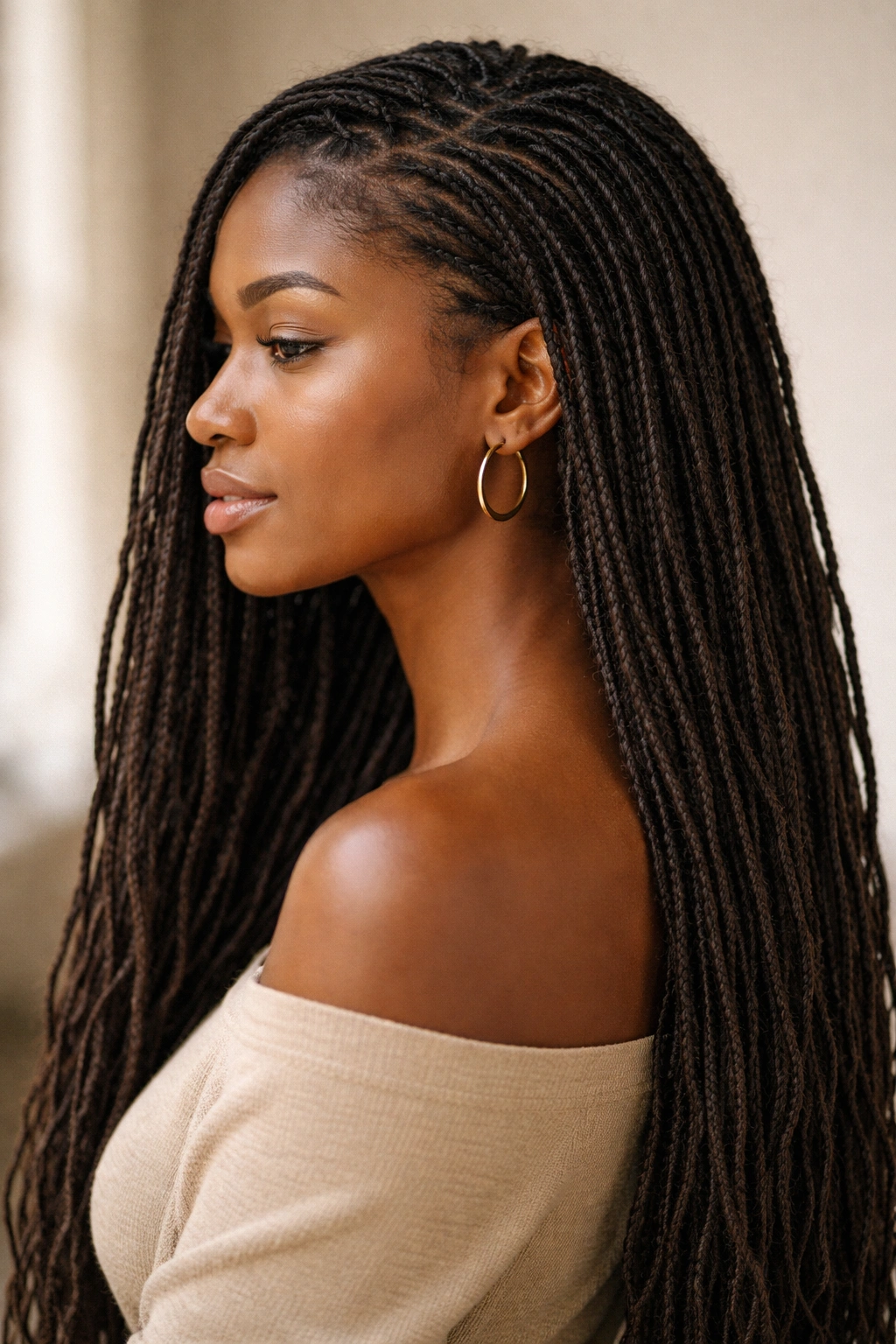
While permanent locs are a long-term commitment rather than a temporary protective style, they deserve mention because they offer unparalleled protective benefits for your hair. Locs—whether Sisterlocks (a specific micro-loc technique), traditional hand-rolled locs, or other loc methods—completely eliminate manipulation, provide structural support for long-term growth, and create a low-maintenance routine that’s protective by nature. Once locs are established, you’re not combing, brushing, styling, or otherwise handling your hair, which means virtually zero breakage from daily manipulation.
The Protective Power and Commitment Level
Locs are among the most protective styles possible because your hair is never manipulated, combed, or styled in ways that create friction or stress. Your hair is simply left to grow and strengthen within the loc structure. For many people with natural Afro hair, locs are a game-changer for length retention and overall hair health. The catch is significant: locs are permanent (or at least very long-term), take months to years to fully mature, require consistent maintenance through retwisting or palm-rolling, and represent a major lifestyle and aesthetic commitment. They’re not a style you install for a few weeks and then take out.
Types of Locs and Upkeep
- Sisterlocks: Tiny, uniform, interlocked locs created with a specific tool and technique. They mature faster than traditional locs and require less frequent maintenance, but professional installation and retwisting is recommended and can be expensive.
- Traditional locs: Hand-rolled or palm-rolled locs that vary more in size and shape. Installation is simpler and less expensive, but retwisting maintenance is more frequent and time-consuming.
- Maintenance: Locs need retwisting every 4-6 weeks to maintain a neat appearance and keep new growth incorporated into the loc structure. Washing is simple—just water and mild shampoo—and your locs actually get cleaner and stronger with age.
Worth knowing: Locs are not the right choice if you’re uncertain about long-term commitment, but they’re an excellent investment if you know you’re ready for a protective style that doubles as your everyday look.
7. Bantu Knots
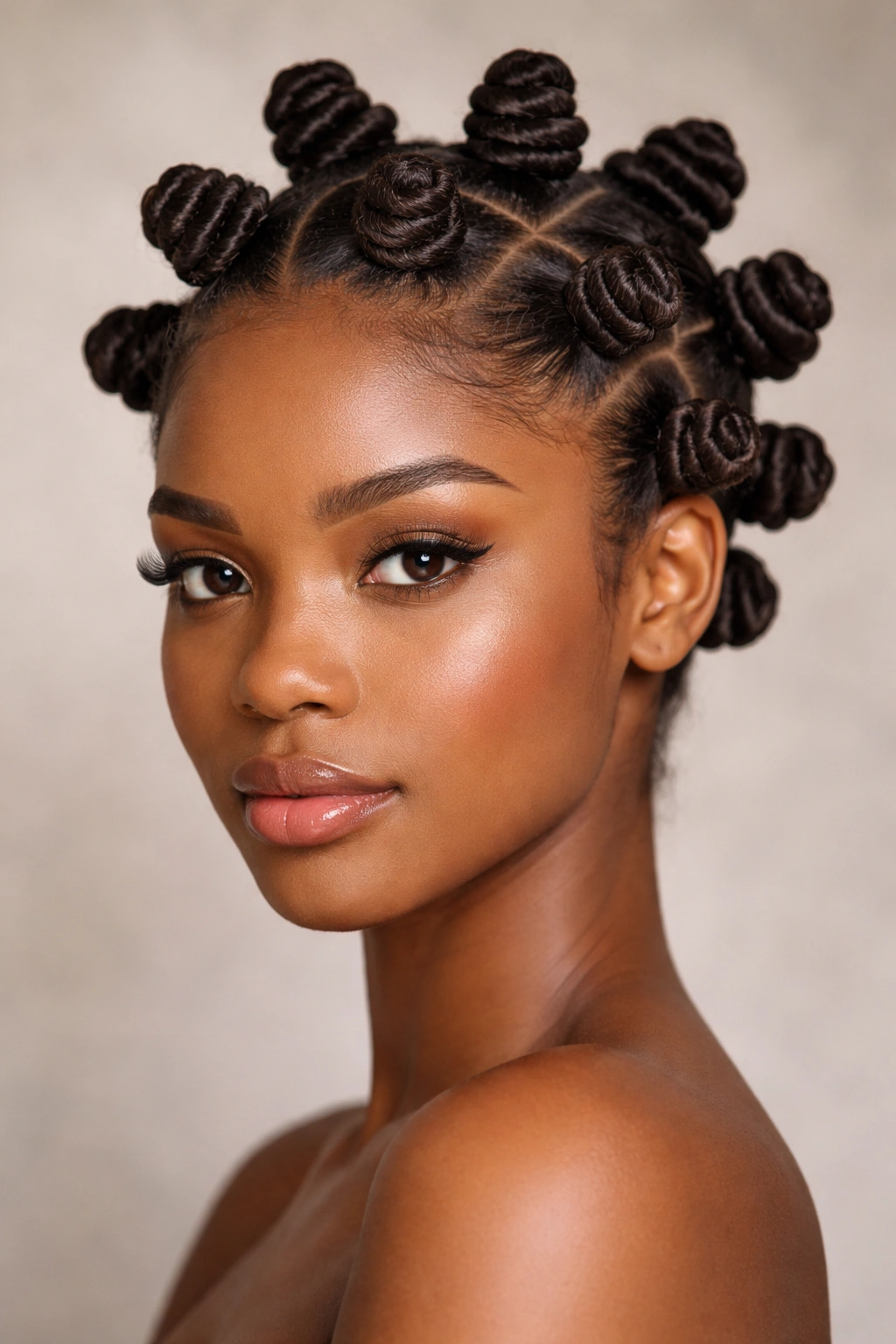
Bantu knots are small, coiled knots created by sectioning your hair and twisting each section into a spiral knot at the base. The style looks sculptural, bold, and absolutely stunning, and it’s one of the easiest protective styles to create yourself at home. You can wear them as-is for a textured, dimensional look, or unravel them after a day or two to create a gorgeous, bouncy wave or curl pattern. Bantu knots also work beautifully as a heatless curling method and protective style combined.
Protection and Styling Versatility
Bantu knots protect your hair by keeping ends tucked securely into the knot structure and minimizing daily manipulation and friction. The individual knots don’t create the weight load of some other protective styles, so they’re gentler on your scalp. They’re quick to create—you can do a full head in 30 minutes to an hour once you get the technique down. The main benefit beyond protection is versatility: you can wear the knots themselves as a statement style for several days, then unravel them and enjoy bouncy, curled hair for another few days. This means you’re getting two distinct looks from one installation, maximizing the benefit of your styling time.
Installation and Unraveling Tips
- Sectioning: Create even square or triangular sections throughout your head. The size of your section determines the size of your knot—larger sections create bigger knots; smaller sections create smaller, more defined ones.
- Twisting and coiling: Twist your hair and then coil it around itself at the base to form a knot. Secure with a bobby pin or small clip while they set.
- Setting time: Leave knots in overnight or for 1-2 days. The longer they set, the more defined your curl pattern will be when you unravel them.
- Unraveling: Gently unwind each knot to reveal springy, voluminous waves or curls. Don’t rush this process or you’ll break your hair.
Pro tip: Apply a light curl cream or styling gel to each section before twisting for better hold and more defined curls when you unravel.
8. Senegalese Twists
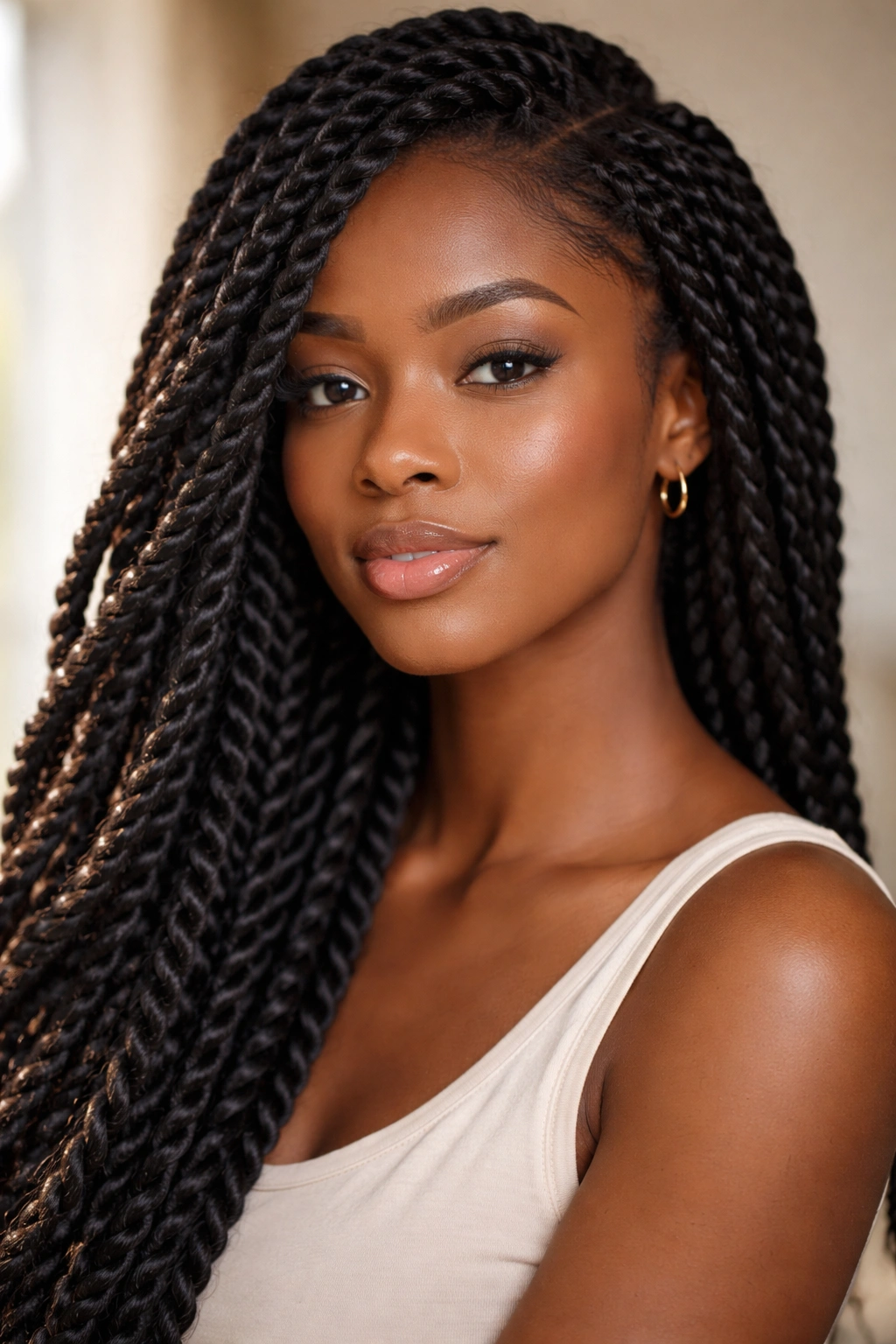
Senegalese twists are similar to two-strand twists but typically use synthetic hair twisted together with your natural hair, creating a thicker, fuller-looking style than natural hair twists alone. The synthetic hair is twisted with small sections of your natural hair from root to tip, and the result is a style that has excellent hold, lasts longer than regular twists, and creates a gorgeous textured aesthetic. They’re named for the West African tradition and are a protective style staple for many people with Afro hair.
Protective Benefits and Longevity
Senegalese twists protect your hair through several mechanisms: your natural hair is secured within the synthetic twisting (minimizing external friction), you have minimal daily manipulation (the style is low-maintenance), and your ends are tucked securely within the twist structure. They last significantly longer than two-strand twists made with natural hair alone—typically 6 to 10 weeks—because the synthetic hair holds the twist structure firmly. The downside is that installation takes time (similar to box braids) and the synthetic hair can cause slightly more scalp tension than twists made with natural hair alone. However, if tension is kept appropriate, Senegalese twists are a reliable, long-lasting protective style.
Installation Considerations and Care
- Hair preparation: Start with clean, moisturized hair. Damp (not soaking wet) hair actually takes Senegalese twists better than completely dry hair, as it’s slightly easier to manipulate.
- Synthetic hair choice: Kanekalon hair is the most common choice and comes in many colors. Choose a color that blends well with your natural hair or contrasts intentionally for a design you like.
- Installation: A professional installation typically takes 6-10 hours depending on the thickness of your twists and how much hair you’re having done. You can do them yourself, but it’s more time-consuming.
- Washing: Wash every 2-3 weeks, being gentle with the twists to avoid unraveling. Use diluted shampoo on your scalp.
9. Ghana Braids
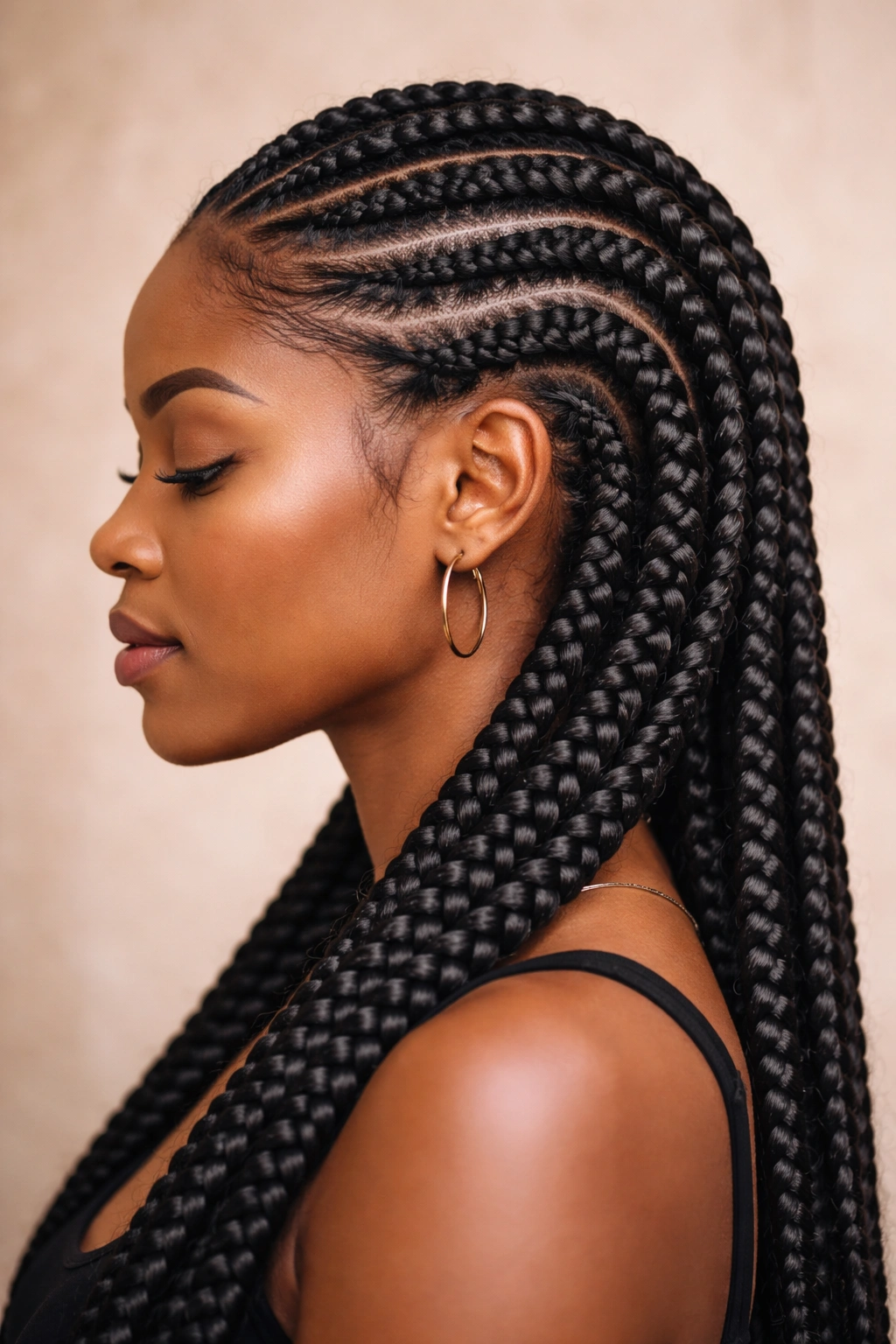
Ghana braids (also called Ghanaian braids or feed-in braids) are a variation of cornrows where synthetic hair is added gradually as you braid, creating the appearance of thick, dimensional braids that seem to grow directly from your scalp. The braids sit close to the head like cornrows but have the fuller, more sculptural appearance of box braids. They’re a stunning style that’s become increasingly popular for their aesthetic versatility and protective benefits.
Why They Stand Out as Protective Styles
Ghana braids excel at protection because they combine the close-to-scalp security of cornrows with the visual fullness and end-tucking benefits of box braids. Your natural hair is secured to your scalp, and the synthetic hair wrapped throughout provides additional protection for your ends and minimizes external friction. Installation takes less time than box braids (typically 4-8 hours) because you’re not braiding through your entire hair length—just anchoring the synthetic hair and braiding it together. They last 6 to 10 weeks, and they’re particularly stunning when you create curved patterns, geometric designs, or color combinations with the synthetic hair.
Specific Care and Maintenance
- Feed-in technique: The key to Ghana braids is the feed-in process—adding synthetic hair gradually as you braid so the braids look seamlessly integrated and not bulky at the roots.
- Synthetic hair selection: Choose hair that complements your natural texture and color. The synthetic hair is visible throughout, so you have more control over the overall aesthetic than with cornrows.
- Scalp care: Because Ghana braids sit close to your scalp, keep your scalp clean and moisturized. Wash every 1-2 weeks with diluted shampoo.
- Unraveling: When you’re ready to take them down, gently unravel each braid rather than cutting the synthetic hair away, which can damage your natural hair.
Worth knowing: Ghana braids look stunning but require a skilled braider who understands feed-in technique. A poorly executed Ghana braid will look lumpy and may not last as long.
10. Flexi-Rods or Curl Rods
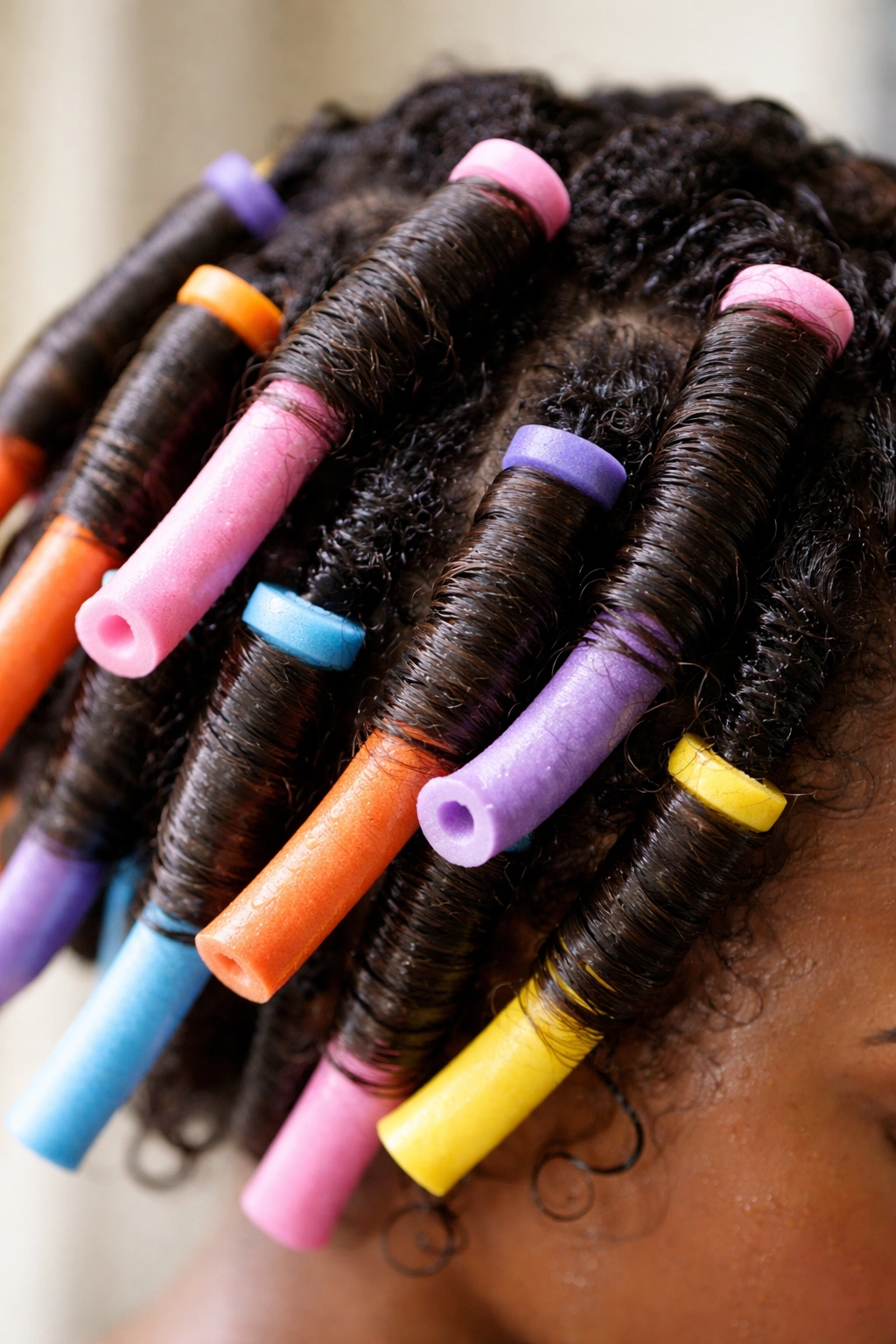
Flexi-rods (also called curl rods or bendy rods) are foam or rubber rods that you wrap your hair around, similar to traditional perm rods but in a more flexible, easier-to-use format. Your damp hair is wrapped around the rod from the ends upward, and as it dries (either naturally or under a hood dryer), it takes on the rod’s cylindrical shape. The result is bouncy, springy curls or waves, and the style can last 1-2 weeks without reapplication.
The Protective Appeal of Rod-Set Curls
Flexi-rods offer protection through heatless curling—you’re creating curl definition without using a blow dryer, curling iron, or flat iron, which means zero heat damage. Your hair is manipulated only during the initial wrapping and removal process, and the rest of the time it’s simply resting in a defined curl pattern. This is an excellent protective method for people who want to wear their hair in curls but are trying to avoid heat styling. The style also lasts fairly long without much maintenance—just wear it as-is, refresh with a light spritz of water, or wrap it at night in a bonnet to maintain the curl definition.
Application and Longevity Tips
- Hair moisture: Start with damp (not soaking wet) hair. Hair should be moist enough to hold a style but not dripping wet, or the rods will take too long to dry.
- Rod size: Larger rods create looser, bouncier waves; smaller rods create tighter, more defined curls. Choose based on the curl definition you want.
- Setting method: Sit under a hood dryer for 30-60 minutes for faster, more reliable setting, or allow rods to air-dry overnight. Heat accelerates the process significantly.
- Removal: Gently unroll each rod—don’t pull your hair out of the rod. Take your time, and you’ll have beautiful, bouncy curls that last days.
11. Marley Braids
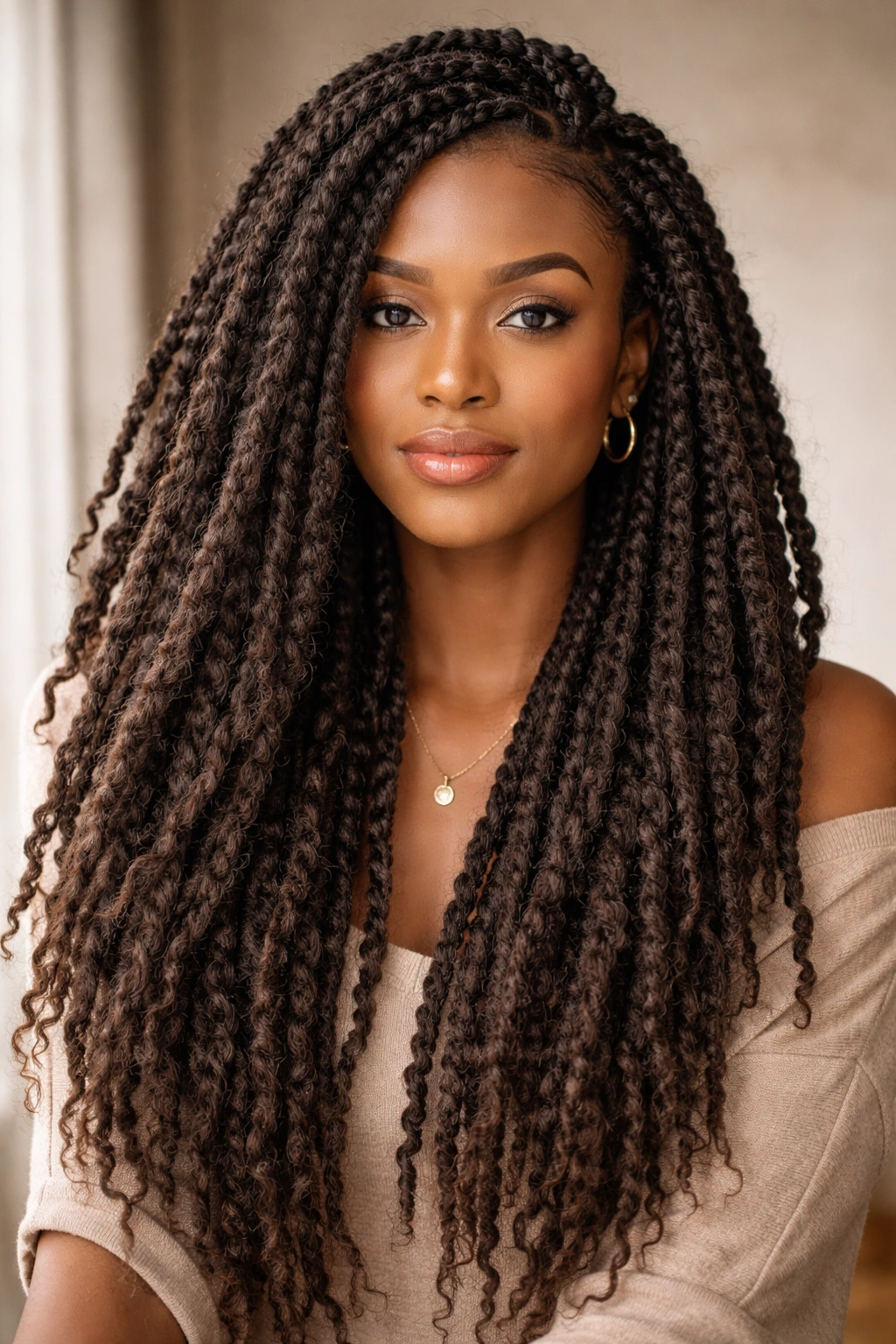
Marley braids use a textured, nappy synthetic hair (typically called Marley hair or Marleys) twisted or braided together with your natural hair, creating a braided style that has an earthy, textured aesthetic. Unlike smooth Kanekalon braiding hair, Marley hair has texture built in, which adds dimension and movement to your style. The result looks organic, bouncy, and beautiful, and the textured synthetic hair offers excellent hold and longevity.
Protective Qualities and Styling Flexibility
Marley braids protect your hair through the same mechanisms as other protective styles: your natural hair is secured within the braiding, your ends are tucked away, and you have minimal daily manipulation. What makes Marleys special is their texture—because the synthetic hair has built-in texture, your braids maintain dimension and movement as they loosen, which means they look good longer before needing retwisting or replacement. They typically last 6 to 12 weeks depending on how fast your hair grows and how well you maintain them. Marley braids are also incredibly versatile for styling—you can wear them down, in ponytails, in updos, or wrapped and pinned into sculptural shapes.
Installation and Aesthetic Considerations
- Braiding method: Marleys can be hand-braided (like box braids) or twisted (like Senegalese twists). Hand-braiding takes longer but creates a cleaner look; twisting is faster and creates a more textured aesthetic.
- Hair texture: The beauty of Marley hair is that it has natural texture. Choose a marley texture that complements or contrasts with your natural hair texture.
- Styling options: Because Marleys have built-in texture and movement, you can style them more freely than smooth braids. You can fluff them, separate them, wrap them into designs, or leave them as-is.
- Maintenance: Wash every 2-3 weeks using diluted shampoo. The textured synthetic hair is durable and holds up well to regular washing.
Pro tip: Marley braids look particularly stunning when you create patterns or designs with different-colored marleys, or when you combine marleys with beads, shells, or gold cuffs for personalization.
12. Wigs and Protective Hairpieces
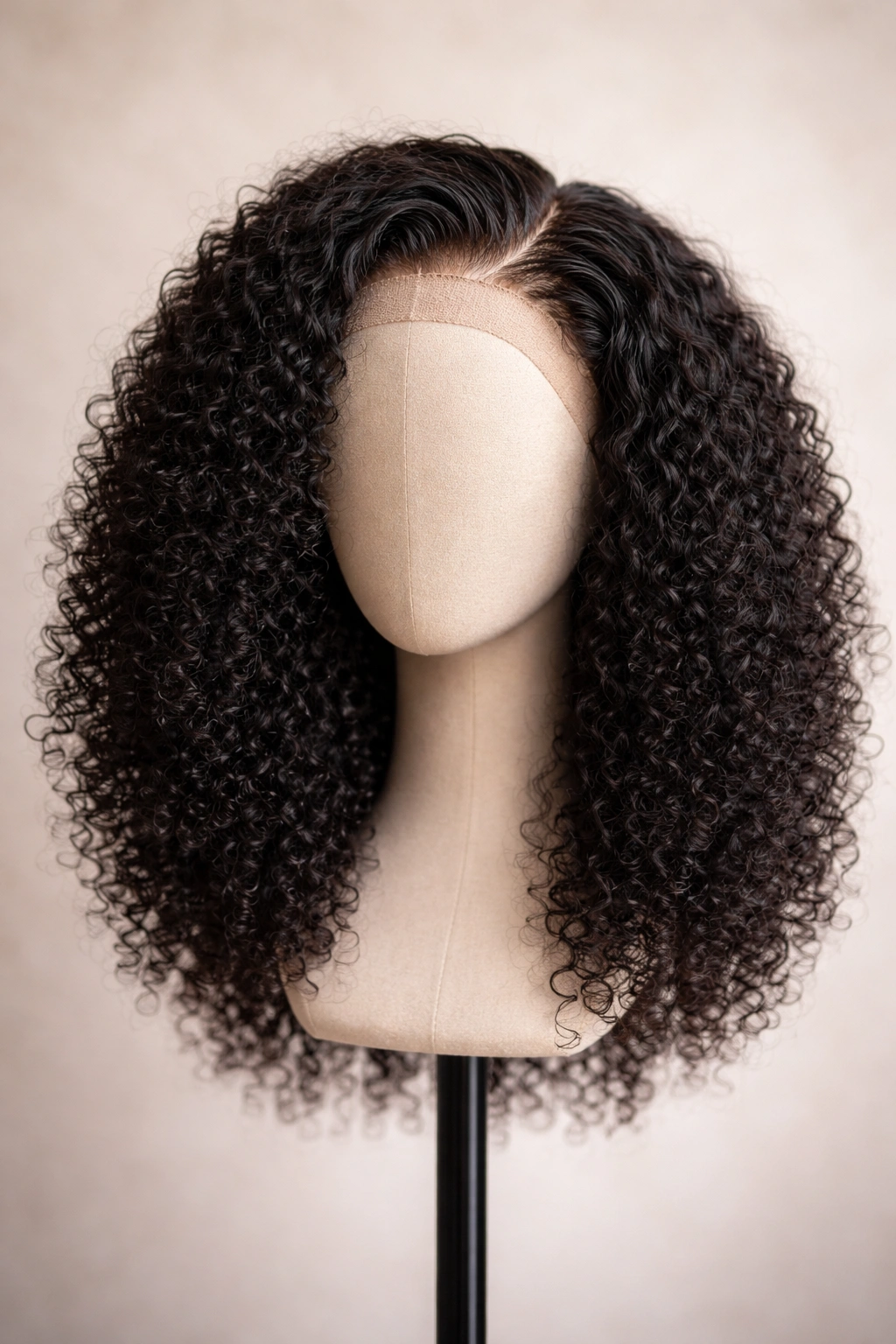
While wigs aren’t a style applied to your natural hair directly, they deserve mention as one of the most effective protective options available. A well-fitted, high-quality wig (human hair, synthetic, or a blend) completely covers your natural hair, protecting it from environmental stressors, UV damage, friction from clothing, and all daily manipulation. Your natural hair sits safely underneath while you enjoy the freedom to change your look, texture, and length without any physical or chemical alteration.
The Ultimate Protective Coverage and Flexibility
Wigs offer unmatched protective benefits because your natural hair is completely untouched for the entire duration you’re wearing the wig. There’s zero manipulation, zero friction, zero heat damage from styling, and zero exposure to environmental factors. For people recovering from significant damage or trying to retain length, wigs can be game-changing. They also offer incredible flexibility—you can switch between a sleek straight wig one day, a curly textured wig the next, and a long wavy wig the following week, all while your natural hair grows and heals underneath. The main consideration is investment: quality wigs are expensive, and proper wig care (washing, conditioning, styling) requires knowledge and effort to maintain the wig’s longevity and appearance.
Wig Selection and Hair Care Under the Wig
- Wig types: Human hair wigs offer the most natural appearance and versatility for styling but require more maintenance. Synthetic wigs are lower-maintenance and more affordable but can’t be heat-styled and sometimes look less natural. Blended wigs offer a middle ground.
- Fit and comfort: A well-fitting wig is crucial for comfort and natural appearance. Have your wig properly fitted, and use wig caps and grips to secure it without putting tension on your hairline.
- Protecting your natural hair: Your natural hair under a wig should be moisturized, clean, and kept in a low-manipulation style (braids, twists, or buns). Wash your hair every 1-2 weeks even while wearing a wig.
- Wig maintenance: Wash your wig every 7-10 days (or more frequently if you wear it daily). Use sulfate-free products, and allow it to air-dry on a wig stand to maintain its shape and quality.
Worth knowing: Wigs aren’t a trend or a temporary style—they’re a legitimate protective choice for many people, and high-quality wigs are an investment that pays for themselves through the hair health and length retention you gain.
Final Thoughts

The best protective style for your natural hair depends on your lifestyle, your specific curl pattern, how much time you’re willing to invest in installation and maintenance, and what look you’re drawn to. A style that’s absolutely perfect for your friend might feel uncomfortable or impractical for you—and that’s completely valid. The key is choosing a style you’ll actually wear consistently, maintaining it properly so it genuinely protects rather than damages your hair, and being willing to switch it up if it’s not working for your hair’s needs.
Protective styling is an investment in your hair’s health and longevity, but only if the style itself isn’t causing tension, moisture loss, or scalp problems. Pay attention to how your scalp feels, whether you’re experiencing itching or pain, and how your hair looks when you take a style down. If something isn’t working, don’t force it just because you love the aesthetic. Your hair will thank you for choosing styles that actually protect and nourish it, and you’ll see the results in growth, strength, and overall health over time.
