



The combination of a low messy bun and bangs is one of the most forgiving and versatile hairstyles around—and honestly, it’s harder to mess up than you’d think. There’s something inherently chic about the pairing: the bun keeps things pulled together while the bangs frame your face with softness and personality. Whether you’re going for effortlessly cool, romantically undone, or polished-but-still-casual, this style adapts beautifully to different textures, hair lengths, and face shapes. The magic is that bangs draw attention to your eyes and cheekbones, while a low bun at the nape of your neck creates an elongating, sophisticated silhouette that works for nearly any occasion—from a lazy weekend to a professional meeting.
The real genius of pairing low messy buns with bangs is the balance they create. Bangs can feel heavy or strict on their own, but when you soften them with a relaxed, textured bun, the entire look becomes more dimensional and interesting. A low bun also eliminates the need for a perfectly smooth style everywhere else, which means you can embrace texture, movement, and a little bit of controlled chaos that feels current without trying too hard. This style also works across different hair types: straight hair can rock sleek, dramatic contrast between bangs and bun, while wavy or curly hair naturally creates the kind of tousled, undone vibe that makes this look feel effortless.
What makes this hairstyle so practical is that it solves multiple styling dilemmas at once. Your hair is off your neck and face, so you won’t feel hot or bothered. Your bangs stay visible and frame your features. You can move around freely without constantly adjusting your style. And unlike an upswept high bun, a low bun reads as more sophisticated and works in professional environments while still feeling relaxed enough for casual days. Let’s explore six distinct ways to wear this style, each with its own personality and technique.
1. The Textured Low Bun With Straight Bangs
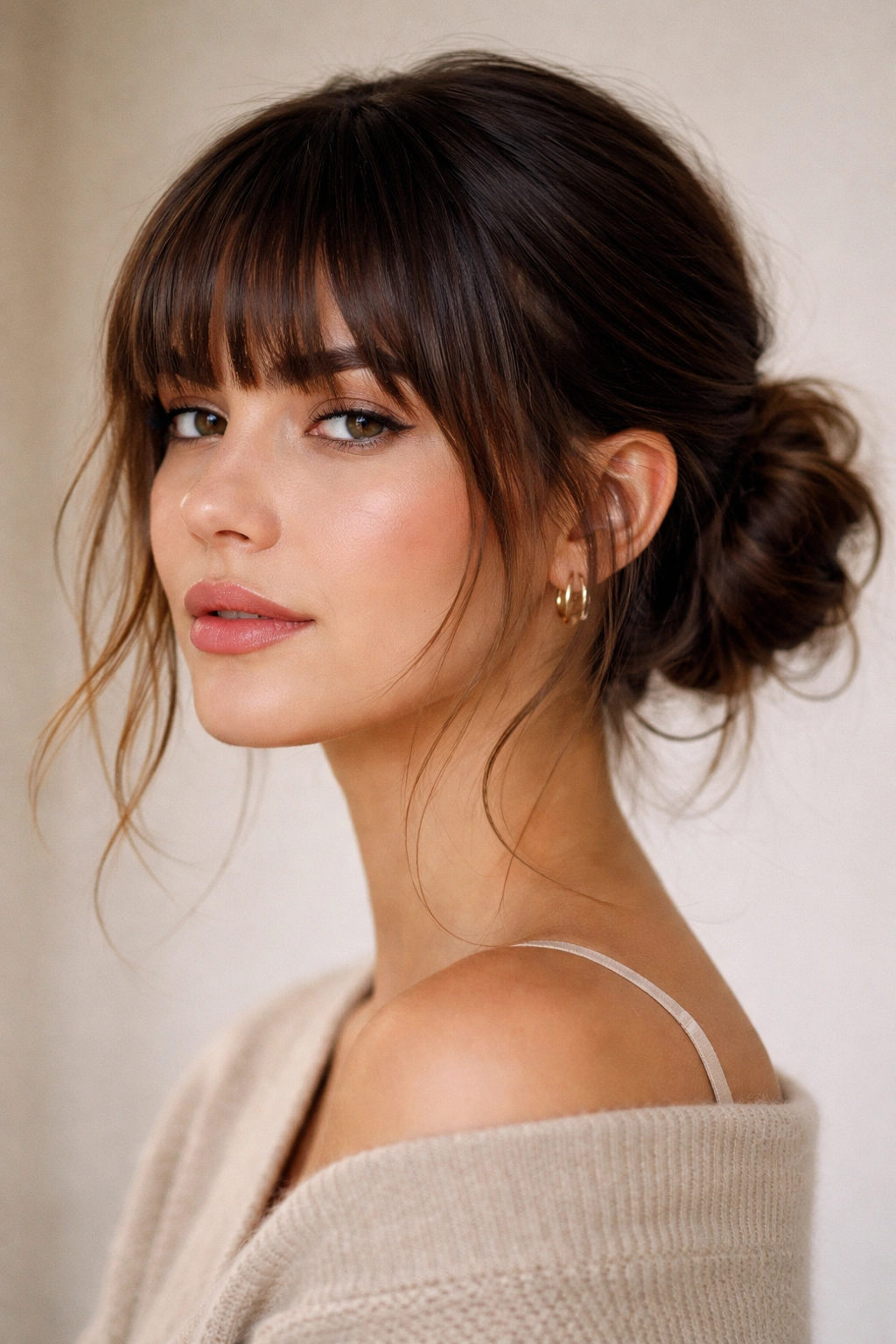
This is the version that walks the line between intentional and effortless. Your bangs are cut or styled blunt and straight—either chin-length or slightly longer—while the bun at your nape has real texture and movement, with pieces intentionally pulled out to catch the light and add dimension. The contrast between the clean geometry of the bangs and the organic, tousled quality of the bun creates visual interest without looking like you tried too hard.
Why This Combination Works
Straight bangs create a strong, modern frame for your face and draw focus to your eyes and cheekbones. Pairing them with a deliberately undone bun prevents the overall look from feeling too polished or severe. The textured bun softens what could otherwise feel like a stark fringe, while the straight bangs keep the textured bun from looking too disheveled. It’s the styling equivalent of wearing a structured blazer with distressed jeans—polish and ease in one look. This style particularly flatters angular or longer face shapes because the horizontal line of the bangs balances vertical features, while the soft bun at the base of the neck elongates without severity.
How to Achieve It
Start by applying a texturizing spray or dry shampoo to your hair at the roots and throughout the lengths—this gives you grip and makes the style hold longer. Blow-dry your hair with some movement if you have naturally straight hair; if you’re naturally wavy or curly, you’re already halfway there. Section off your bangs with clips to keep them separate. Take the rest of your hair and create a low ponytail at the nape of your neck, positioning it slightly off-center for a more relaxed vibe.
Twist or braid the ponytail loosely, then wrap it around the base to form the bun shape. Don’t worry about making it neat—the goal is deliberate texture. Secure with bobby pins as needed, tucking them out of sight. Pull out a few face-framing pieces around your ears and temples, and let a few shorter pieces escape from the bun itself. Use a fine-tooth comb or your fingers to gently tease the bun and separate the sections so it looks full and intentional rather than slicked down.
Now style your bangs: blow-dry them straight and smooth if you want a clean line, or if they’re already naturally straight, a quick pass with a flat iron ensures they’re perfectly blunt and framey. Use a light hairspray to lock them in place without making them look stiff or heavy.
Pro tip: If your bangs tend to get greasy before the rest of your hair, dry shampoo is your secret weapon. A light spritz on your bangs in the morning keeps them looking fresh and textured all day, even if the rest of your hair could use a wash.
2. The Romantic Wispy Low Bun With Soft Bangs
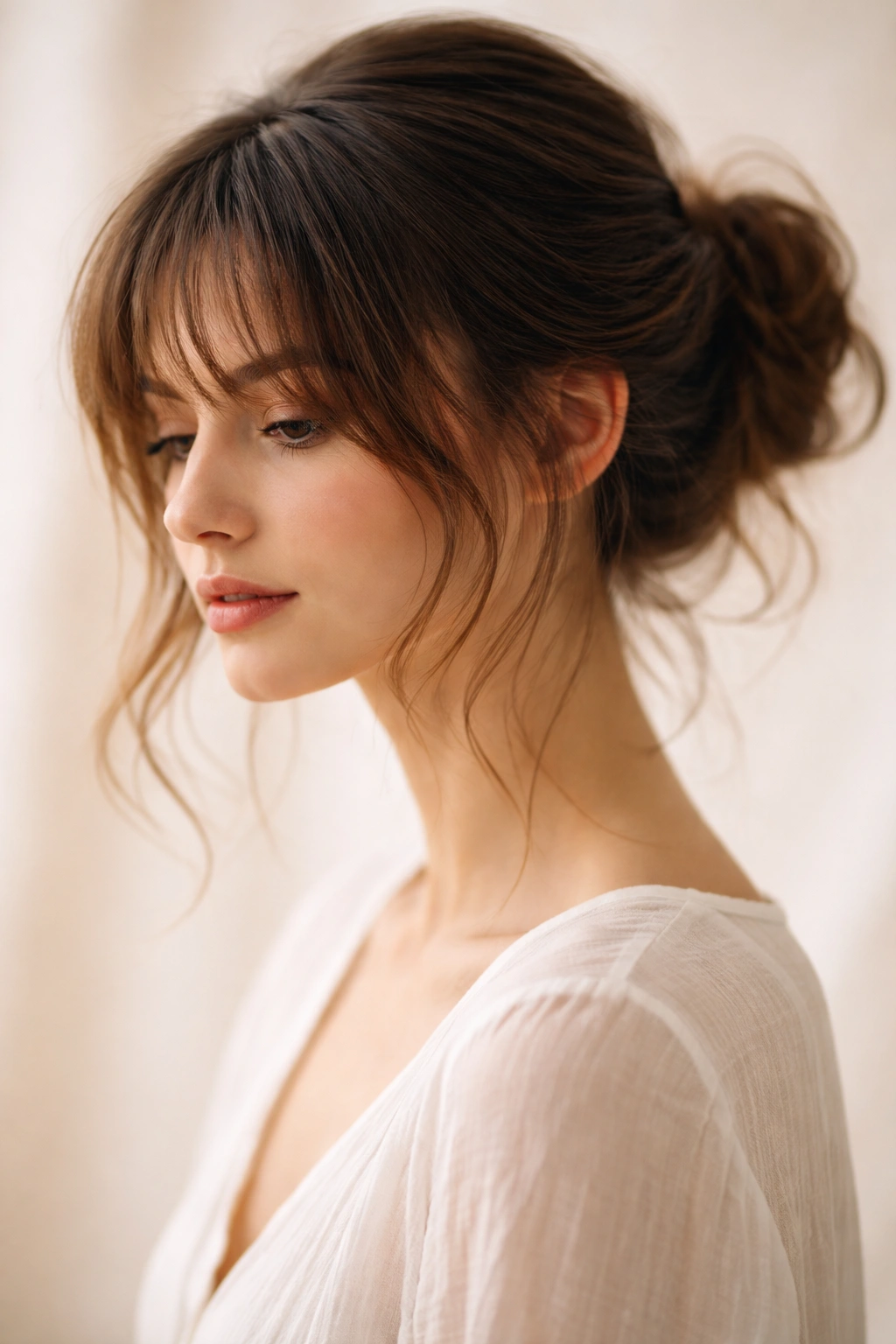
This version leans into softness and femininity. Your bangs are longer, lighter, and wispy—they might be a curtain style or just naturally longer strands that frame your face with movement rather than a blunt line. The bun is loose and romantic, with lots of intentional wisps and tendrils creating an almost ethereal quality. This is the hairstyle you wear when you want to feel effortlessly pretty and approachable.
The Aesthetic Appeal
Soft, wispy bangs create a gentle frame that feels more romantic than a blunt cut—they blur the edges of your face slightly and add movement without severity. This style reads as more vulnerable and approachable than a structured bun with straight bangs, which is part of why it feels so inherently feminine and soft. The combination works beautifully on oval, heart-shaped, or even rounder faces because the wispy texture and movement prevent any hardness or severity. The overall effect is undone elegance—the kind of look that makes people think you woke up like this, even if you actually spent 15 minutes styling it.
Key Styling Steps
Curl or wave your hair first—this is the foundation for making this look work. If you have naturally wavy hair, enhance the waves with a curl-enhancing cream or gel and let them air dry or diffuse-dry. If your hair is straight, use a curling iron or waver to create soft waves or curls throughout. The texture will give the bun that romantic, voluminous quality and make the wispy strands around your face naturally frame your features beautifully.
Create a low ponytail, but leave out face-framing sections around your temples and cheeks—these will become your wispy bangs or foreframe pieces. Make the ponytail intentionally loose and uneven, positioning it slightly to one side. Divide the ponytail into two sections and loosely twist each section separately, then wrap both twisted sections around the base of the ponytail in opposite directions, creating a soft, textured bun that looks almost like a rose. Secure with bobby pins, but leave the ends of the twisted sections slightly loose and undone.
Release your face-framing pieces and scrunch or twirl them around your fingers to emphasize the waves and create that wispy, romantic quality. Use a light, flexible hold hairspray—something that won’t make your hair feel crunchy or stiff. You want movement and softness, not architectural precision.
Pro tip: This style looks even more romantic when you curl your bangs away from your face rather than straight forward. Curl them gently backward using a small curling iron or by wrapping them around your finger as you blow-dry—this creates a soft frame rather than a hard line.
3. The Sleek Low Bun With Blunt Bangs
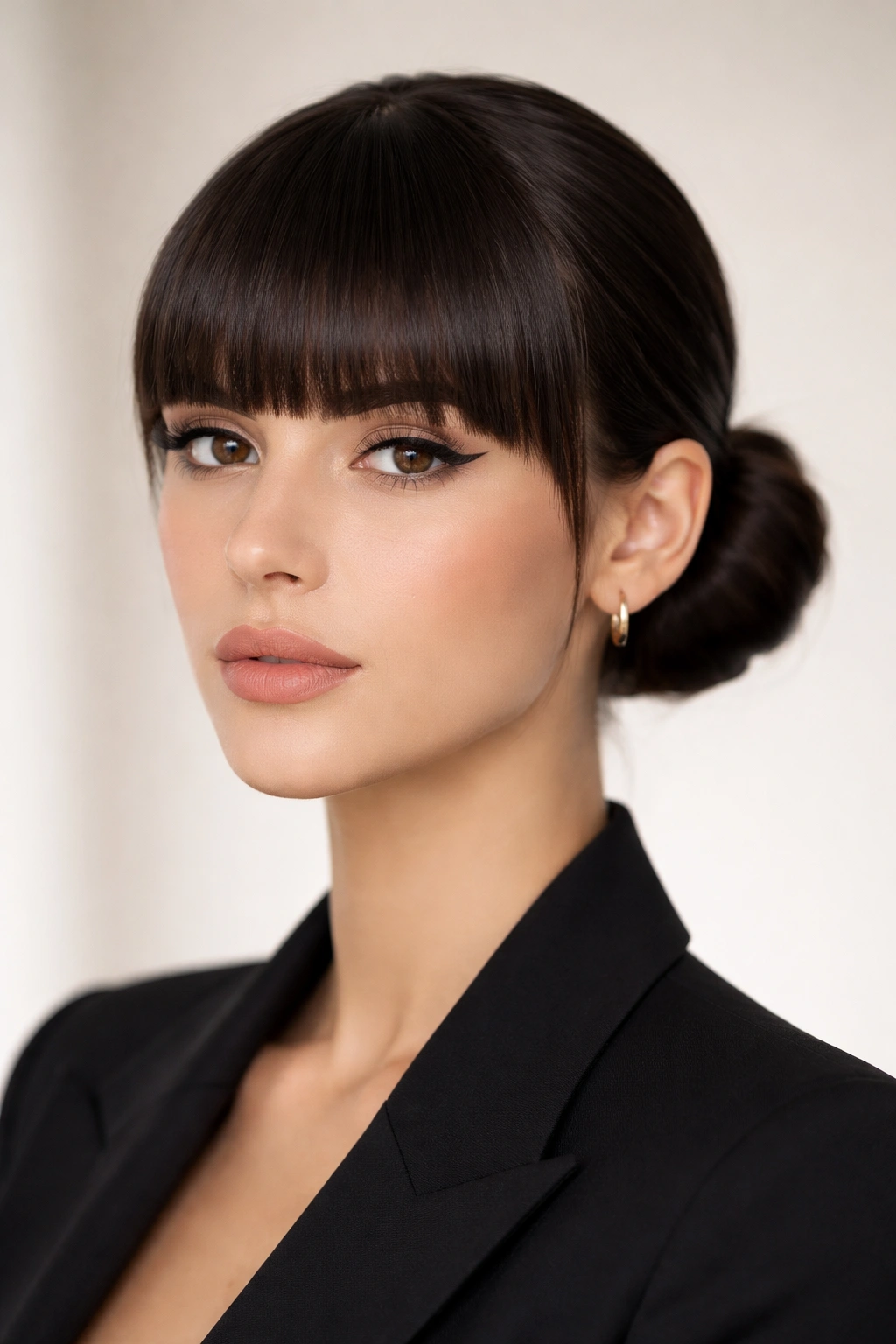
If you want a style that reads as polished and put-together, this is your answer. Everything is intentionally smooth and refined: your bangs are cut blunt and straight across your forehead, and your bun is sleek, smooth, and precise at the nape of your neck. There’s no texture or wisp here—just clean, deliberate lines. This style works beautifully for professional settings, formal events, or anytime you want to feel seriously put-together.
Creating Maximum Contrast
The power of this combination comes from the deliberate contrast between the blunt geometry of the bangs and the smooth, rounded shape of the bun. Blunt bangs are inherently modern and striking—they demand attention and confidence. A sleek bun balances this boldness by keeping the rest of your hair neatly contained and refined. The overall effect is high-fashion and sophisticated without looking cold or unfriendly. This style particularly flatters people with strong bone structure and confidence to carry off a more dramatic look.
The sleekness also makes this style feel very intentional and controlled, which reads as professional and competent in workplace or formal settings. Unlike a textured bun, which can read as relaxed or casual, a sleek bun paired with blunt bangs says you’re taking yourself—and the occasion—seriously.
Step-by-Step Guide
Start with very smooth hair. This might mean blow-drying with a paddle brush for a smooth finish, or using a straightening iron to ensure zero frizz or texture. If you have naturally curly or wavy hair, you’ll need to straighten it to achieve the sleek effect.
Apply a smoothing serum or anti-frizz cream to damp hair before blow-drying, and finish with a light hairspray for a polished look that lasts. Use a fine-tooth comb to smooth any flyaways. Create a low ponytail at the very base of your neck, using a smooth, sculpted approach: pull your hair back tightly enough that it looks intentional and refined, but not so tight that you feel uncomfortable or you’re pulling your hairline.
Divide the ponytail into two equal sections and twist each section tightly, then wrap the twisted sections around the base of the ponytail in opposite directions, creating a smooth, compact bun. Secure very well with bobby pins, tucking them completely out of sight and ensuring no flyaways escape. Use a smoothing spray or gel designed for slicked styles to tame any stray pieces and give the entire bun a polished, finished appearance.
For your bangs, use a flat iron on a medium-high temperature to create a perfectly blunt, smooth line. They should be perfectly straight, with no wave or texture. A light hairspray keeps them looking crisp without heaviness.
Pro tip: If you have a widow’s peak or uneven hairline, creating a sleek style with blunt bangs is actually a smart choice—the smooth pull-back and blunt fringe create such a strong, intentional line that any irregularities essentially disappear into the overall design.
4. The Tousled Low Bun With Curtain Bangs
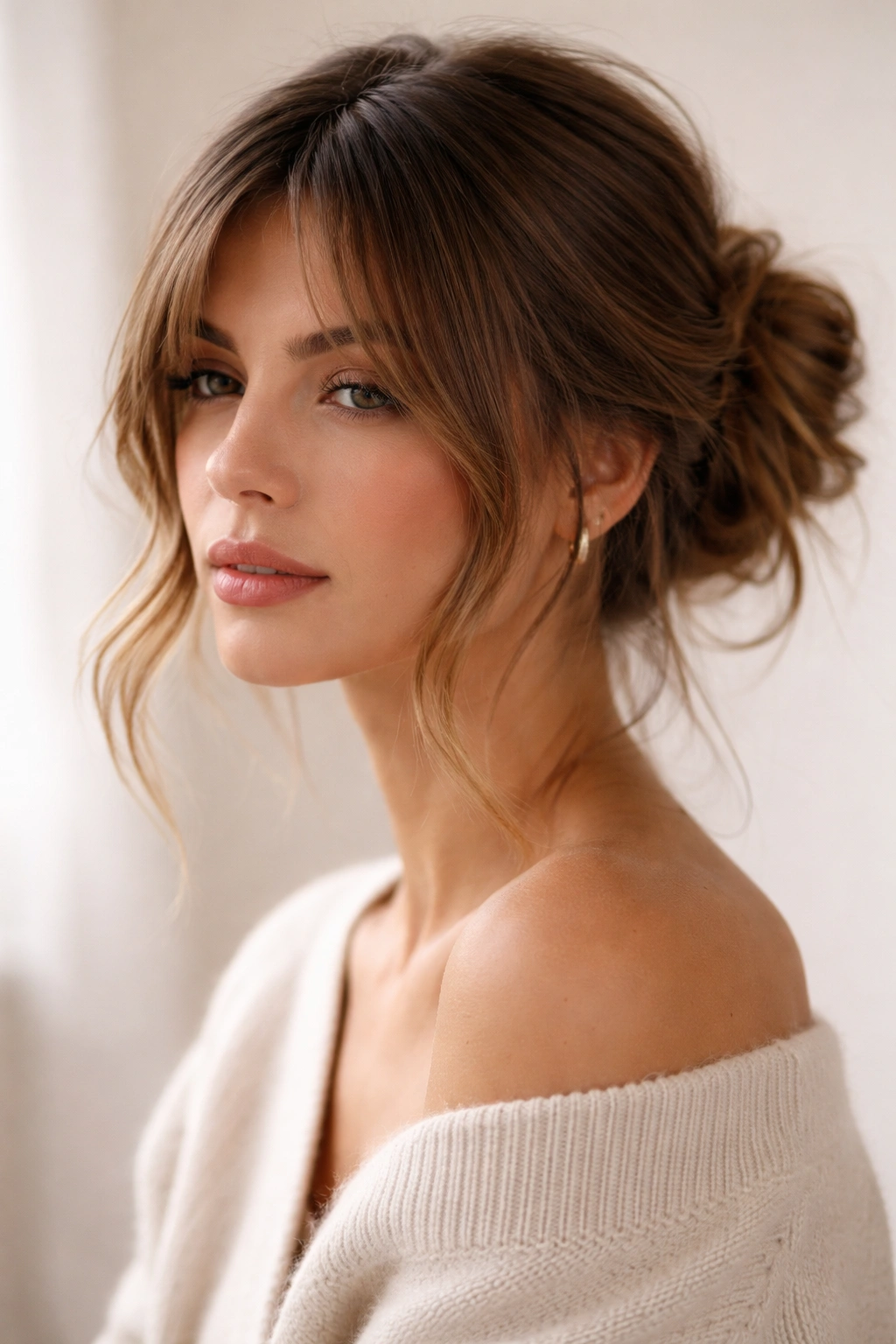
Curtain bangs have a special quality: they part in the middle and fall to frame both sides of your face, creating a soft, elegant look. When you pair curtain bangs with a tousled, textured low bun, you get a style that’s both sophisticated and undone—like you got dressed up for something casual. This combination works beautifully across different hair textures and has a naturally flattering, dimensional quality.
Why Curtain Bangs Add Movement
Curtain bangs are inherently flattering because they don’t cover your entire forehead, which means your face feels open and approachable. They also create vertical movement that elongates the face and draws attention to your eyes and cheekbones. When you pair curtain bangs with a bun, the eye travels from your face down to the textured, voluminous bun at your neck, which creates a balanced, complete look. The bangs keep your face feeling soft and framed while the bun keeps everything else clean and organized.
Unlike blunt bangs, which create a strong horizontal line, curtain bangs flow and move, which means your overall style feels more dynamic and less severe. This makes the look work in more settings and on more face shapes. Even if you typically shy away from bangs because you worry they’ll make you look too young or make your face too heavy, curtain bangs often feel like the bridge between no bangs and full coverage.
Achieving the Look
Start by creating soft waves or texture throughout your hair. Use a curling iron to create loose waves from mid-length to ends, or enhance natural waves with a curl cream. The texture will make both your bangs and bun look more interesting and dimensional.
Section off your curtain bangs—the section should start at your center part and extend back toward your temples on each side, roughly creating a rectangular frame for the front of your face. Clip these sections away from the rest of your hair. Take the remaining hair and create a low ponytail at the base of your neck, keeping it intentionally loose and textured.
Twist the ponytail loosely and wrap it into a soft, undone bun, leaving the ends slightly loose for a romantic quality. Secure with bobby pins. Now release your curtain bang sections and style them: blow-dry or curl them so they fall away from your face with movement. If you’re blow-drying, use a round brush and direct the air so the bangs curve away from your face rather than falling straight down. They should frame your face with soft curves, not create a heavy veil.
Use a flexible-hold hairspray to keep the bangs in place while maintaining movement and natural texture.
Pro tip: The key to curtain bangs looking effortless rather than overdone is keeping the texture soft and the volume minimal. Don’t tease or backcomb your bangs—just let them fall naturally with the waves built in. If they feel too heavy or too much in your face, they’ve either been cut wrong or you’re styling them too dramatically.
5. The Bubble Bun With Feathered Bangs
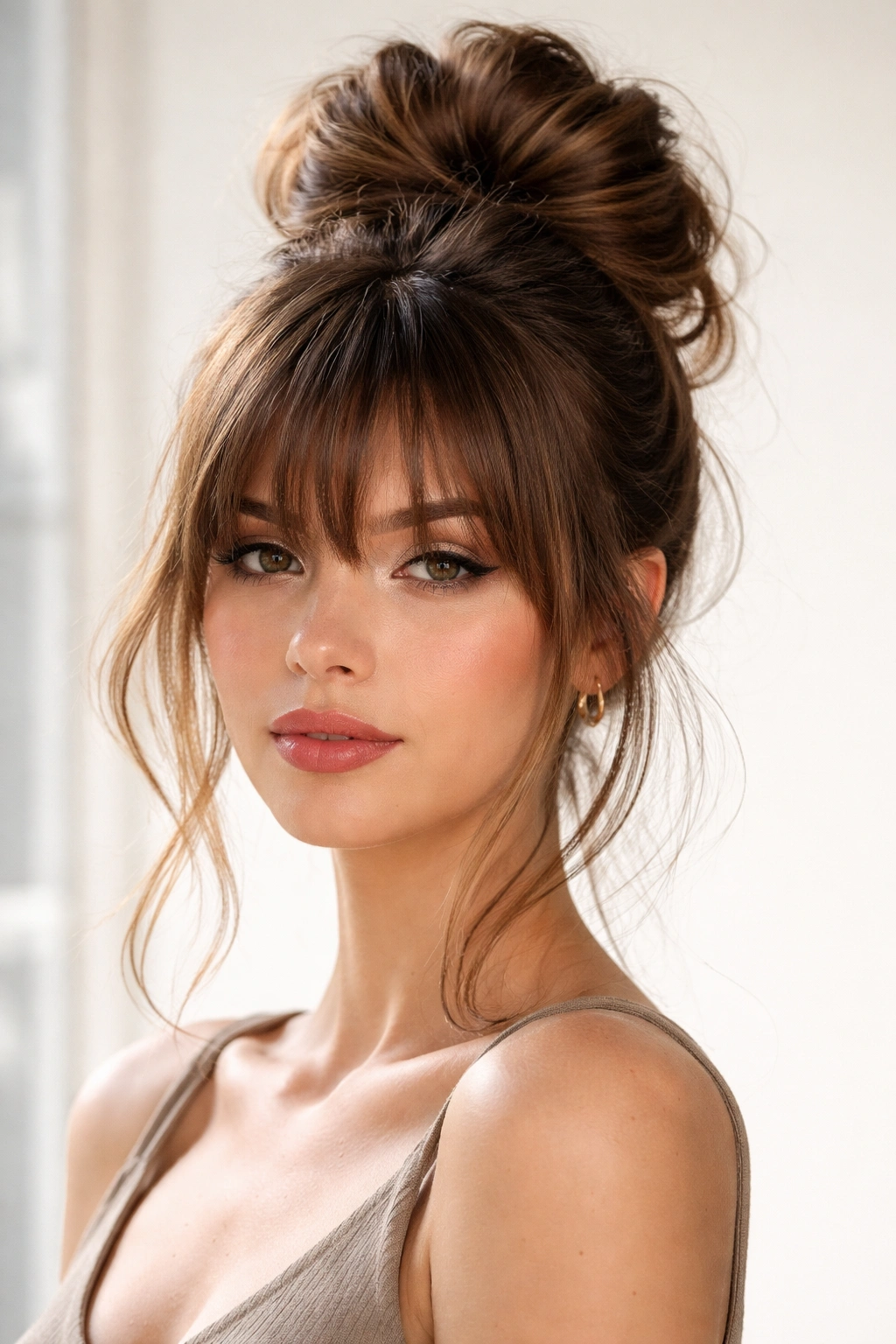
This style adds an element of playful fun to the low bun and bangs combination. A bubble bun is made by creating multiple ponytails stacked vertically, then puffing out each section to create a bubbled effect—it’s eye-catching and undeniably trendy. Pair it with feathered bangs (shorter, choppy, textured bangs with lots of individual pieces and movement) and you’ve got a style that feels young, fashion-forward, and bold.
The Playful Contrast
Bubble buns are inherently playful and youthful—they have a sculptural quality that reads as intentional and fashion-conscious. Feathered bangs complement this energy perfectly because they also have texture and movement rather than severity. Together, they create a look that’s fun and experimental without looking childish or costumey. This is the style you wear when you want to make a statement and have fun with your hair. It works particularly well if you have thicker hair that can support the volume, or if you love bold, statement-making styles.
The combination of structured volume (the bubble bun) and textured movement (the feathered bangs) creates a balanced, complete look that photographs well and turns heads in the best way.
How to Build the Look
Start with hair that has some texture or wave. If your hair is very straight, add some waves first using a curling iron or by setting your hair in braids while damp and letting them air dry. This creates the foundation for volume and movement in both the bun and the bangs.
Style your feathered bangs first: they should be choppy and textured with lots of individual pieces. If you already have feathered bangs, make sure they’re clean and styled with movement. If not, you can create a temporary feathered effect by taking small sections and curling or waving them individually with a small-barrel curling iron, then scrunchily separating the pieces.
Now create your bubble bun. Start by creating a low ponytail at the base of your neck and secure it with a small elastic. Create a second ponytail just above the first one using the same section of hair (above the elastic), and secure it with another elastic. Repeat this process, creating 3-4 stacked ponytails depending on the length of your hair and how tall you want the bubble bun to be.
Now comes the fun part: puff out each section. Take the first (lowest) section between the first and second elastic, and gently pull the hair outward to create a bubble or puff. Tease it slightly with a fine-tooth comb to add volume. Do the same for each section moving upward. The result is a sculptural, dimensional bun with clear, separated “bubbles” stacked vertically.
Secure the entire structure with bobby pins and finish with a strong-hold hairspray that will keep the bubbles defined without looking crunchy.
Pro tip: Bubble buns photograph incredibly well but they do require some maintenance throughout the day—if you’re wearing this style somewhere you’ll be moving around a lot, carry bobby pins and hairspray with you to touch up any sections that start to droop.
6. The Braided Low Bun With Layered Bangs
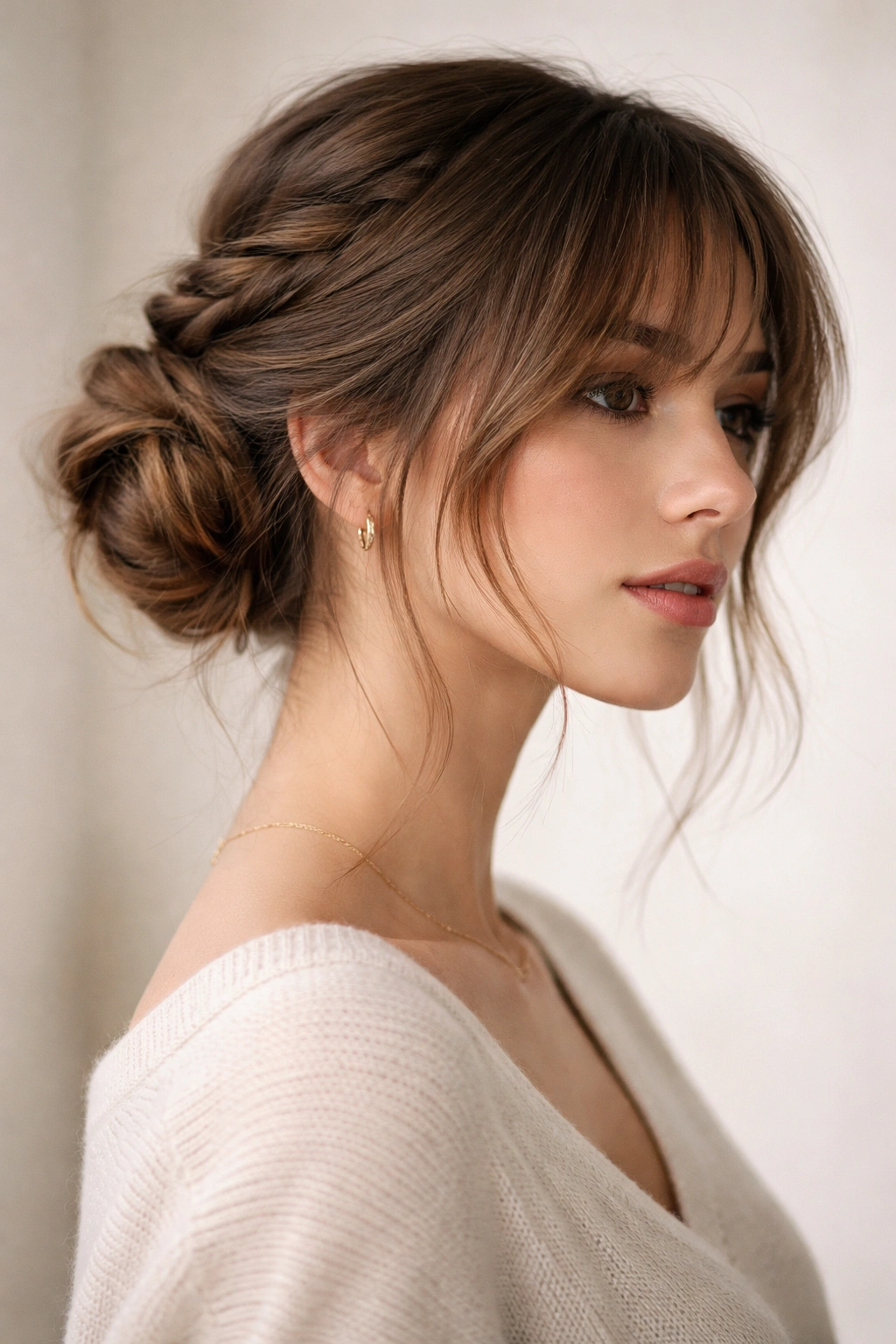
This version adds texture and visual interest through braiding, paired with layered bangs that have movement and dimension. Braiding creates a sophisticated, intricate quality that reads as intentional and skilled, while layered bangs add softness and movement to frame your face. This is the style for when you want to look genuinely put-together and impressive without going full-formal.
Adding Texture and Interest
Braiding is a timeless technique that immediately elevates any hairstyle—it shows intentionality and skill. When you braid your hair before forming it into a bun, you create texture that catches light and adds visual depth. Layered bangs (which are longer at the temples and shorter at the center of your forehead, creating choppy, dimensional movement) complement braided texture beautifully because they echo the textured, dimensional quality of the braids. Together, they create a look that’s intricate and interesting from every angle.
This combination works beautifully for special occasions, date nights, or any time you want your style to feel special and thoughtful. It also works well on different hair types—straighter hair will show off the braid pattern clearly, while wavy or curly hair will make both the braids and bangs look fuller and more textured.
Technique Breakdown
Start by styling your layered bangs: if you don’t already have them cut, you can create a temporary layered effect by curling different lengths of hair to different degrees using a curling iron. Curl the shorter, center pieces more tightly and the longer, temple pieces more loosely. This creates dimension and movement that mimics layered bangs.
Now create your braided bun. Section off a small subsection of hair on each side of your head near your temples and braid each section with a three-strand or Dutch braid (depending on how prominent you want the braids to appear). Dutch braids (which sit on top of the hair rather than nestled within it) create more visual texture and dimension.
Bring all your hair, including the braids, together into a low ponytail at the base of your neck. Create the bun by taking the braided ponytail and wrapping it around the base, ensuring the braids spiral outward and remain visible. The braids should spiral around the outside of the bun so they’re visible and create texture. Secure everything with bobby pins, making sure all the ends are tucked in and the overall shape is balanced and rounded.
Finish by using a light hairspray that won’t make the braids feel stiff or heavy, but will help them hold their shape throughout the day.
Pro tip: If you’re nervous about incorporating braids into your style, start with simple three-strand braids. They’re the easiest to master and still create a beautiful textured effect. Once you’re comfortable, experiment with Dutch braids, French braids, or even incorporating smaller, decorative braids into a larger braided bun structure.
Tips for Styling Low Messy Buns With Bangs
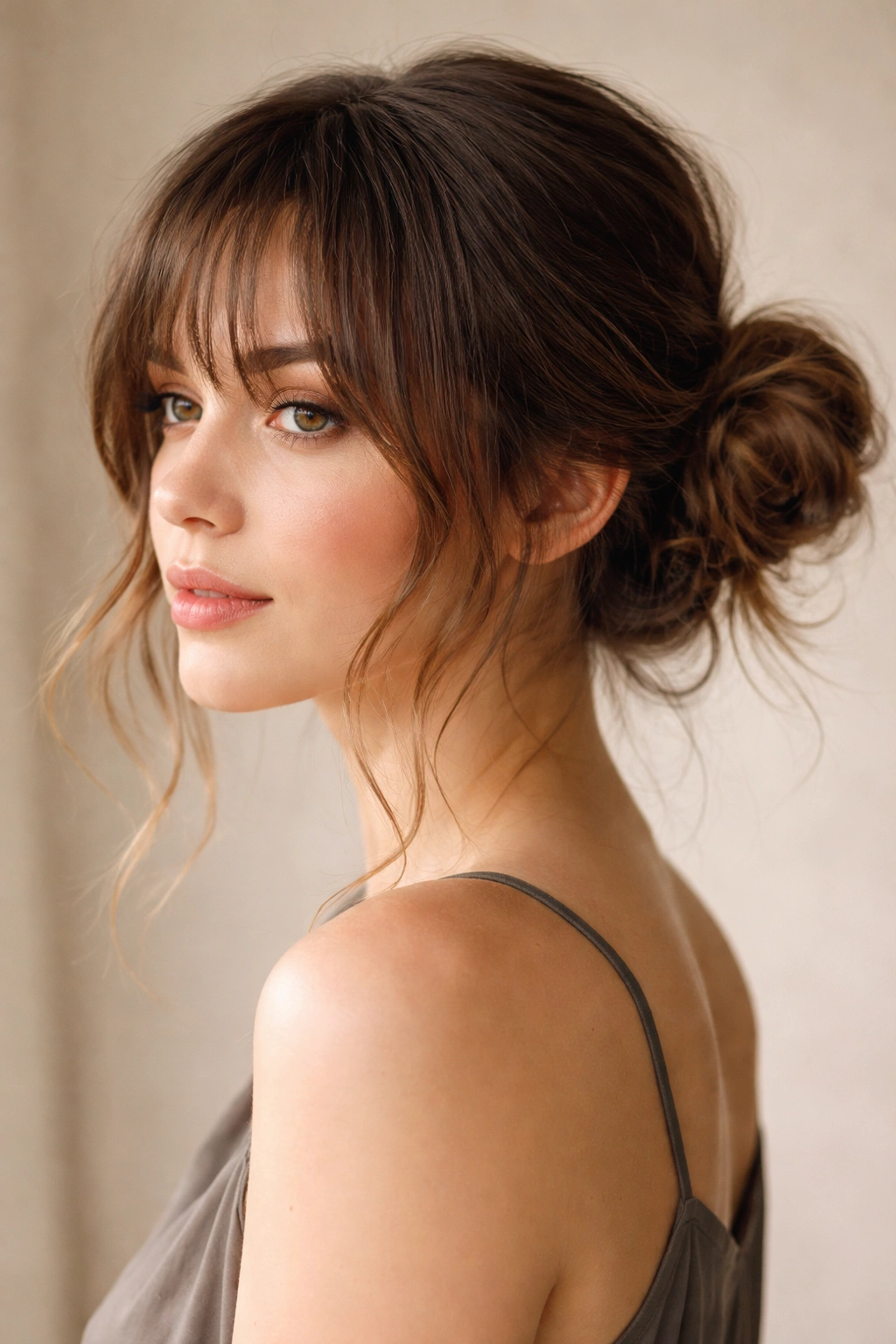
Making this style work consistently requires understanding a few key principles that apply across all six versions. Your hair preparation is everything—a great style starts before you even touch the bun. Using texturizing spray or dry shampoo before styling adds grip and volume, making both the bun and the bangs hold their shape longer. If you’re using any of these products, apply them about five minutes before styling so they dry and activate fully.
The relationship between your bangs and your bun is delicate. If your bangs are too heavy, they can overwhelm your face and make you look like the bangs are weighing you down even though your bun is styled beautifully. Conversely, if your bangs are too light or wispy while your bun is very structured and polished, the look can feel unbalanced. Think about the weight and texture of your bangs and choose a bun style that complements rather than contradicts that energy.
Hair type matters more than you might think with this style. If you have fine or thin hair, avoid the sleek bun because keeping everything smooth requires either very skilled styling or product that can make fine hair look limp. Instead, embrace texture—the textured, tousled, braided, and bubble bun versions will all work better and easier for you because texture creates the illusion of volume. If you have thick, dense hair, all six versions work beautifully, but you’ll want extra bobby pins and strong-hold products to keep everything in place.
The position of your bun matters more than people realize. A bun positioned right at the base of your neck creates an elongating, elegant effect. A bun positioned slightly higher on your head can look accidentally messy rather than intentionally so. For all these styles, position your initial ponytail just above the first bump of your neck (your cervical vertebra) and work from there. This creates a consistent, flattering silhouette.
Bobby pins should match your hair color as closely as possible so that any that escape remain invisible. Always use enough bobby pins—at least 4-6 well-placed pins for a secure hold. X-cross the pins underneath the bun rather than placing them all in the same direction; this creates a more secure structure. If you’re wearing your low bun with bangs for a full day or overnight, hairspray is your friend. A light, flexible-hold spray will maintain the style while keeping your hair from feeling crunchy.
Common Mistakes to Avoid
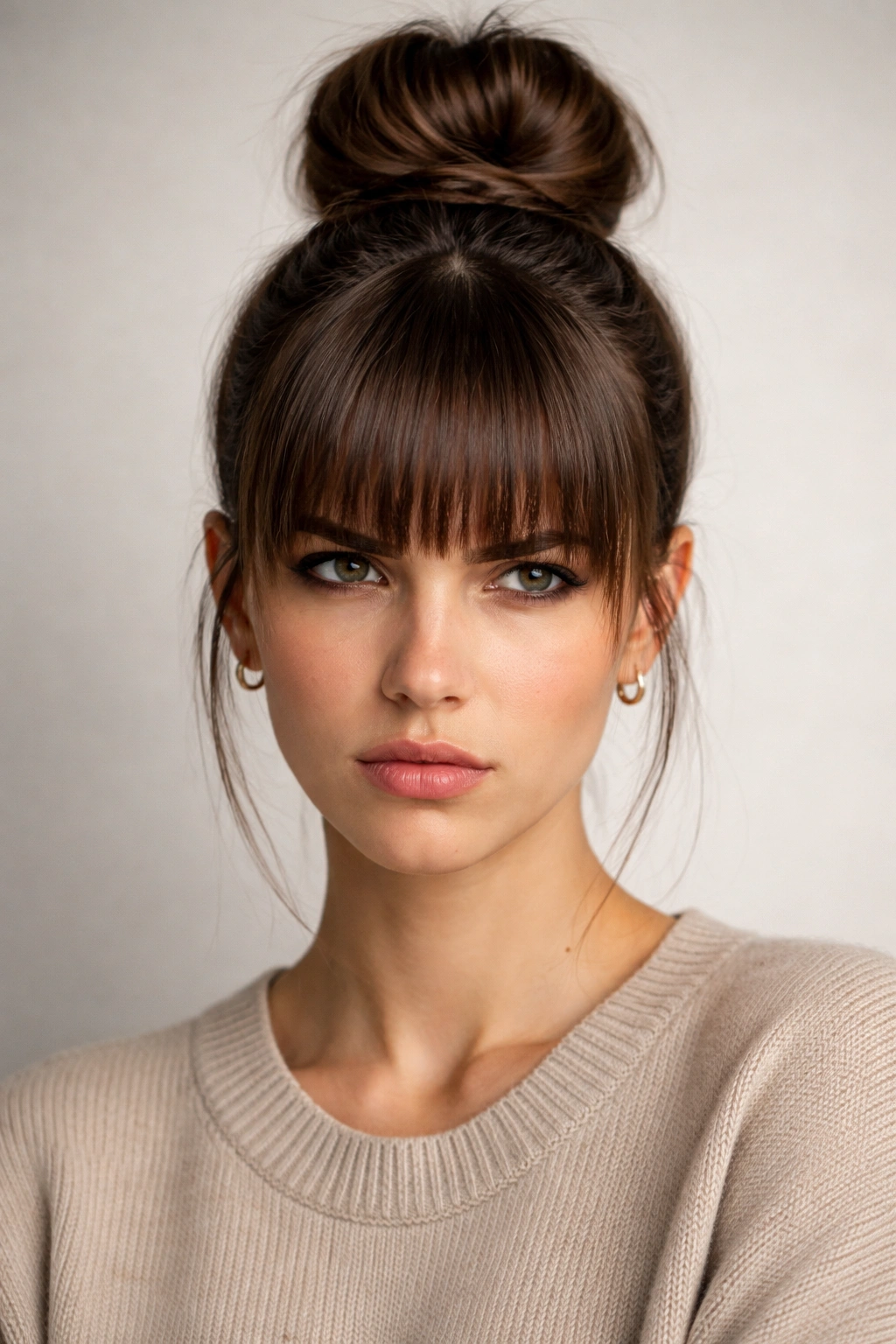
The number-one mistake people make with low buns and bangs is creating a bun that’s positioned too high. When your ponytail starts at your crown rather than your nape, it looks less intentional and can actually make your head look shorter. A low bun that sits at the nape of your neck is always more flattering and more sophisticated.
Another common issue is making your bun too tight and compact. A low bun works best when it has volume and movement—when it looks like you gently formed it rather than slicked and pinned everything down aggressively. Even if you’re going for a sleek version, the bun should have some shape and dimension rather than looking like a tiny, hard knot. If your bun ends up too small or tight, release it slightly, tease it with a fine-tooth comb to add volume, and re-form it more loosely.
People also often style their bangs in a way that contradicts the energy of their bun. If you’re going for a romantic, wispy bun with soft bangs, don’t then blow-dry your bangs straight and harsh—they’ll look disconnected from the rest of your style. Conversely, if you’re creating a sleek, polished bun with straight bangs, don’t leave flyaways or let your bangs curl—it breaks the intentionality of the look. Your bangs should feel like they belong with your bun, not like two separate styling moments happening on the same head.
A third mistake is underestimating how much product and tools help. If your hair is very straight and you’re trying to create a textured, romantic bun without any texturizing spray, dry shampoo, or heat tools, you’ll end up with something slippery and disappointing. These products aren’t cheating—they’re tools that make professional-looking styles possible at home. Use them generously.
Finally, people sometimes overcomplicate the process. You don’t need to wash and blow-dry your entire head every time you want to wear your hair in a low bun with bangs. If your hair has texture from the day before or even two days before, that’s actually better for this style because it grips and holds better. The easiest versions of this style often come from working with hair that’s been worn in other styles previously.
Final Thoughts
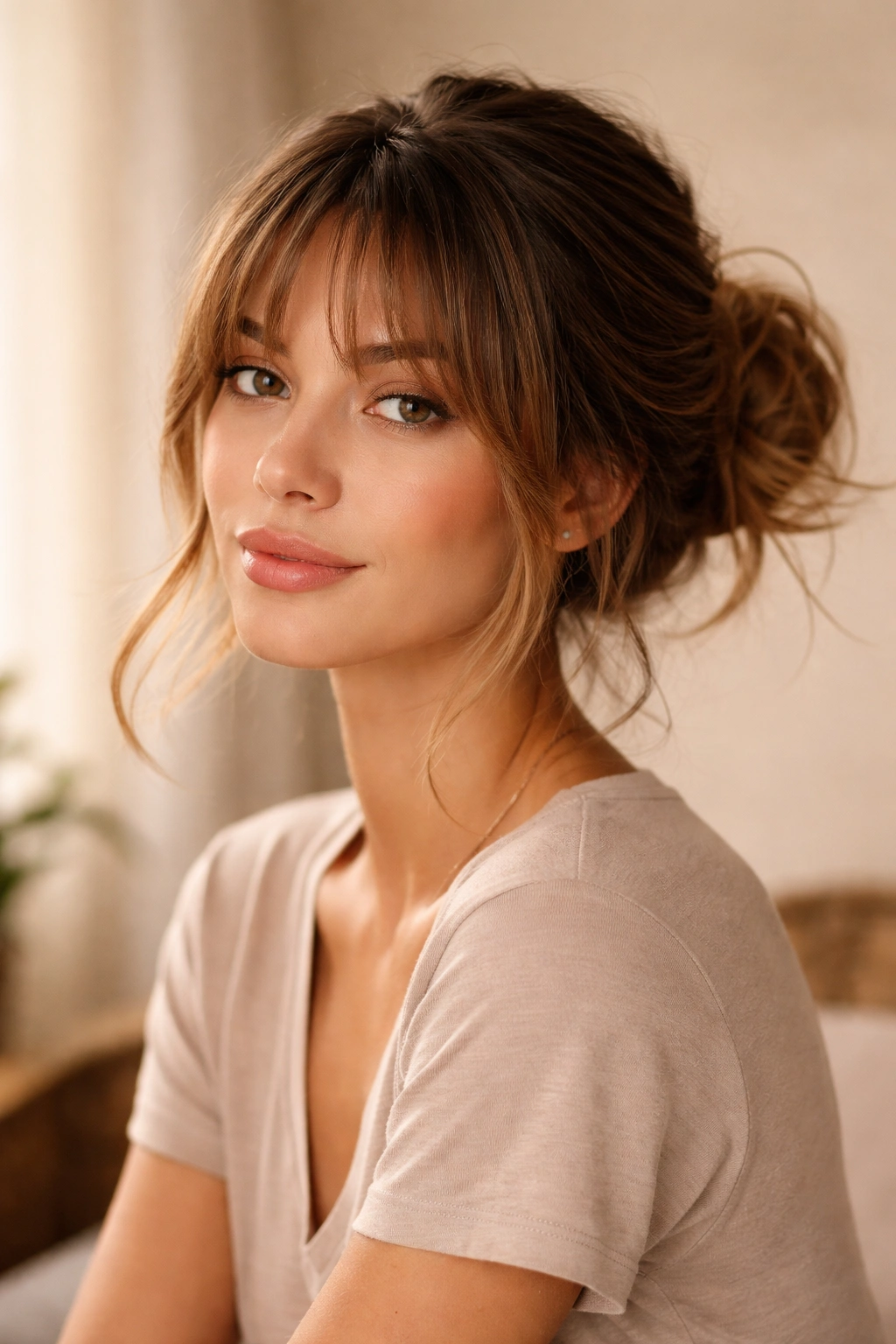
A low messy bun paired with bangs is such a forgiving, flattering, and genuinely useful hairstyle that it deserves a permanent spot in your regular rotation. What makes it so powerful is the versatility—you can dress it up or down, adjust the level of polish, adapt it to your hair texture, and completely change the vibe by choosing different types of bangs or bun textures. Whether you’re feeling romantic and soft, sleek and professional, playful and bold, or anything in between, there’s a version of this style that matches your mood and works with your hair.
The best part is that this style actually gets easier the more you practice it. The first time you create a braided low bun, it takes time and concentration. By the fifth time, your hands know what to do and the whole thing takes five minutes. Start with one or two versions that feel most natural to you, practice them until they become second nature, then branch out to other variations. Pretty soon you’ll have a whole arsenal of low bun styles to pull from depending on your hair, your outfit, and how much styling energy you have on any given day.
