



Layered haircuts have a reputation for being high-maintenance—the kind of cut that demands styling tools, products, and daily effort to look intentional. But the truth is far more nuanced. Some of the most striking layered styles actually thrive on being left alone, looking effortlessly cool whether you’ve blow-dried them smooth or let them air-dry into natural texture. These cuts work with your hair’s natural movement instead of fighting against it, which means they can deliver salon-quality results even on days when styling feels like too much.
The magic lies in how the layers are cut and placed. A truly low-maintenance layered cut uses the natural texture of your hair as its styling medium. Rather than depending on precise blow-drying angles or curling iron work, these cuts are engineered to look intentional and polished through the way the layers sit and move. The placement of each layer is calculated to create shape, dimension, and visual interest without requiring you to do anything more than wash and go. This approach is particularly valuable for people with naturally textured hair, those who prefer a minimal beauty routine, or anyone who just wants a haircut that works as hard as they do.
The key distinction between a layered cut that needs constant styling and one that doesn’t is all about the cutting technique and how it interacts with your specific hair type. A cut designed with this philosophy in mind takes your natural hair texture—whether that’s straight, wavy, or curly—and enhances it rather than fighting it. The layers are positioned to encourage your hair’s natural fall and movement, and the overall shape is constructed so that even undone hair reads as intentional.
1. The Shag
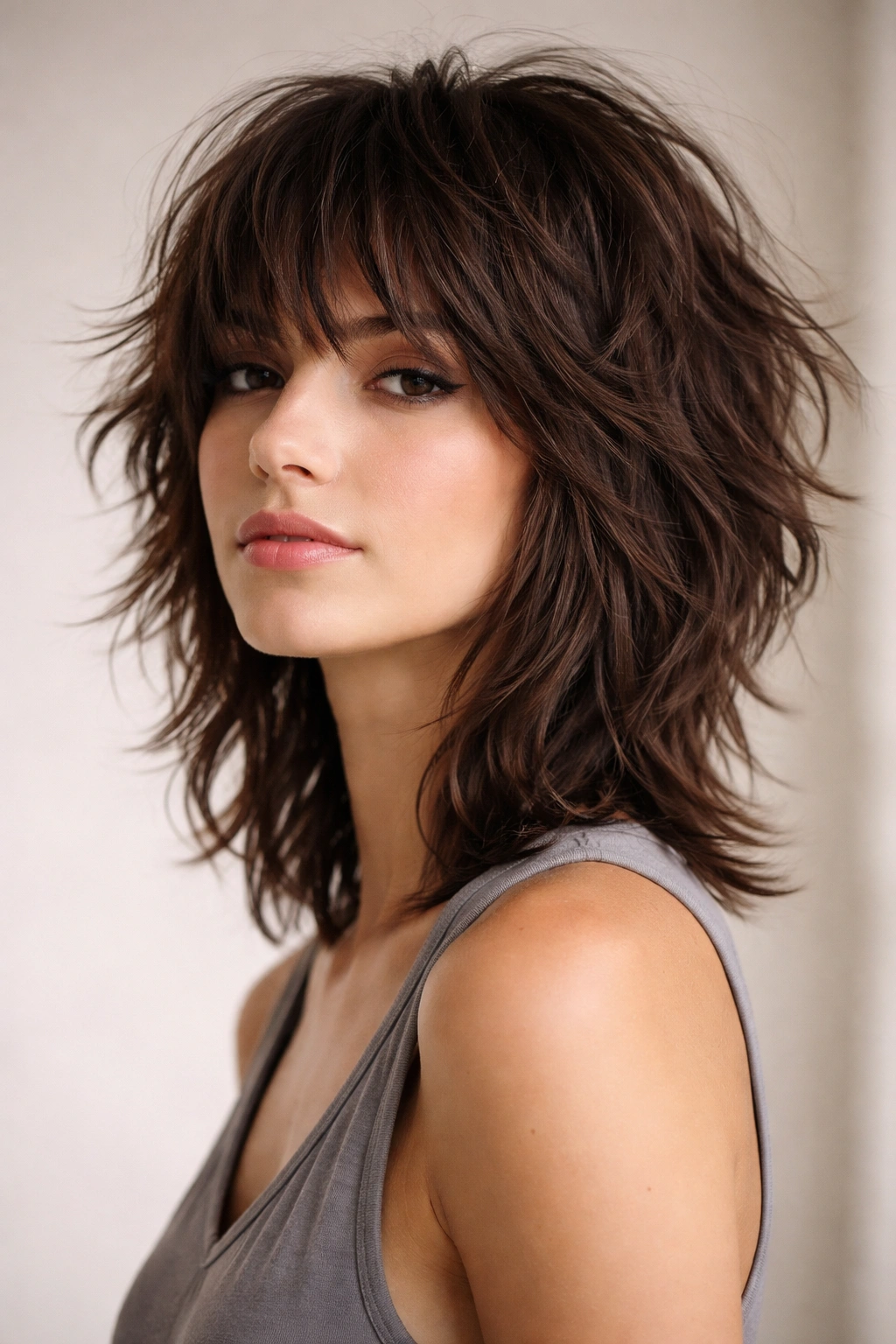
The shag is experiencing a genuine renaissance, and the modern version is built entirely around looking effortlessly cool with minimal intervention. This cut features shorter, choppy layers throughout that create movement and texture at every level, with particular emphasis on the crown for lift and around the face for dimension. The beauty of a well-executed shag is that it expects you to have some texture—whether that’s natural or created by salt spray, dry shampoo, or simply the way your hair falls when it air-dries.
Why It Embraces Natural Texture
A shag works because the layers are cut at angles that encourage your hair to move rather than lay flat, which means you don’t need to force movement with tools. If your hair is straight, the layers still create visual shape and dimension. If your hair is wavy or curly, a shag becomes almost effortless—your natural texture is the entire point, and adding product or scrunching it a bit while air-drying is usually enough.
What to Know Before Asking for One
- Works beautifully on fine, medium, or thick hair types—the cut just adapts slightly based on your density
- Requires regular trims every 4-6 weeks to maintain the textured shape as layers grow out
- Looks best with a little bit of texture, whether that’s natural curl, beachy waves, or just the rumpled look of air-dried hair
- The shorter layers around the face can take some adjustment if you’re used to longer hair near your cheekbones—but most people embrace this once they see how it frames their face
- Low-maintenance doesn’t mean no-maintenance; you’ll likely want to scrunch product into damp hair or use a salt spray, but no blow-dryer required
Pro tip: Ask your stylist for longer choppy layers if you want a softer, less rock-and-roll aesthetic, and shorter choppy layers if you want maximum texture and movement right from the scalp.
2. The Wolf Cut
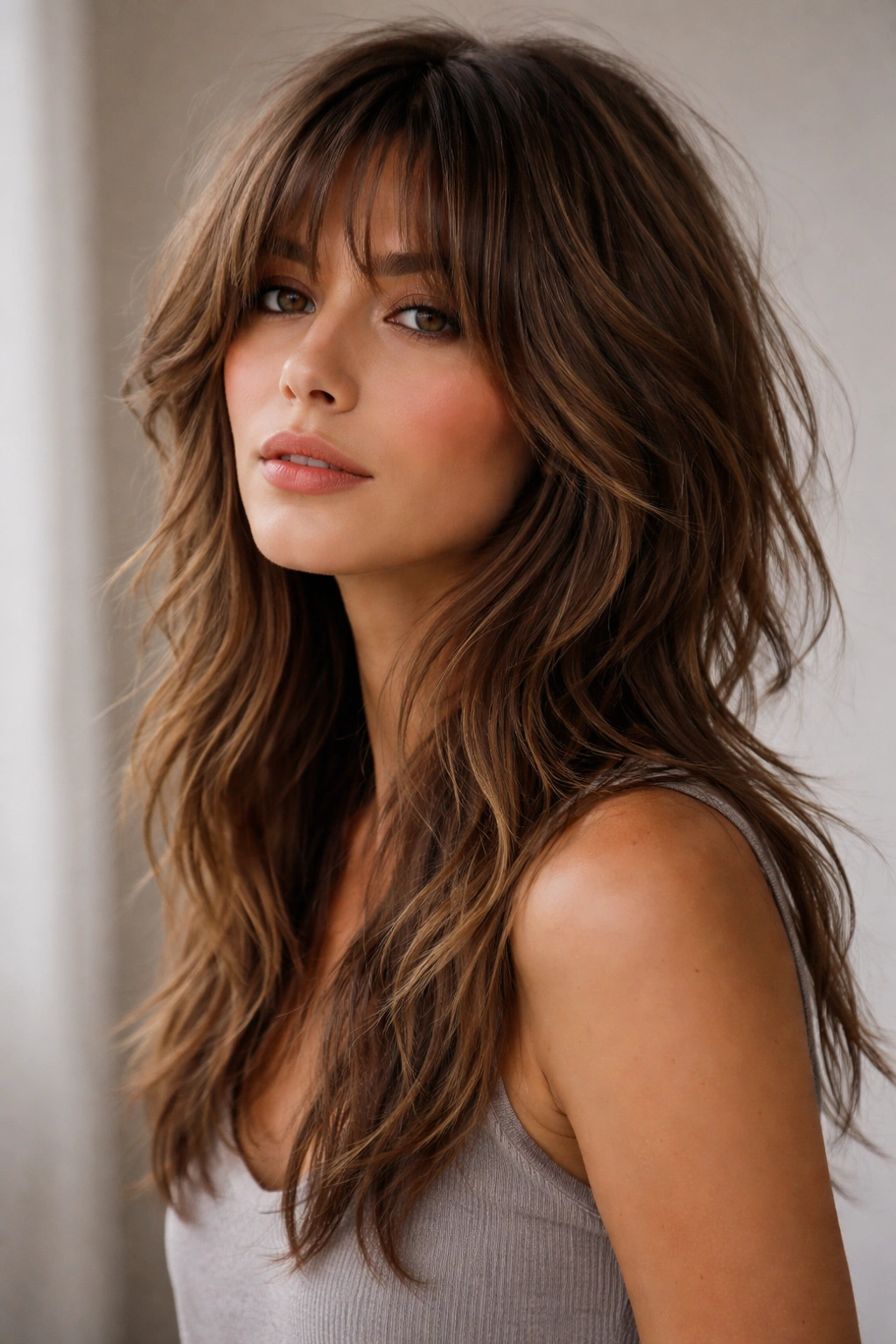
The wolf cut blends the tousled, lived-in vibe of a shag with longer length, creating a style that genuinely gets better the less you fuss with it. Named for its wild, slightly undone appearance, the wolf cut is essentially a long shag—it keeps the textured, choppy layers throughout but maintains more length overall, often grazing the shoulders or longer. The cut is designed so that longer pieces frame your face while shorter layers throughout the crown and mid-lengths create texture and movement without any styling.
How the Wolf Cut Adapts to Your Hair
The genius of this cut is how it works across different hair types. For straight hair, the layers create volume and prevent that flat, shapeless look that longer hair sometimes develops. For wavy or curly hair, the wolf cut becomes a celebration of your texture—the layers help organize your natural curl pattern while embracing the natural movement. For thick hair, the layers prevent the heavy, dense feeling that longer cuts can create.
Getting the Right Version for Your Lifestyle
- Choose this cut if you genuinely prefer longer hair but want more movement and shape than a straight long cut provides
- The wolf cut looks intentional whether you air-dry it completely or blow-dry it roughly with your fingers for texture
- It pairs beautifully with waves, either natural or created by braiding damp hair overnight, but looks equally good completely straight or tousled
- Maintenance is minimal—you need a trim every 6-8 weeks to keep the shorter layers sharp, but the longer length means you’re not constantly chasing growth
- This cut actually looks better slightly undone, which makes it ideal if you’re not interested in perfecting your styling every day
Worth knowing: If your hair is very curly or coily, a wolf cut works best when cut by someone experienced with textured hair, as the layering technique needs to account for how your curls will shrink and arrange themselves as they dry.
3. Choppy Layers on Short Hair
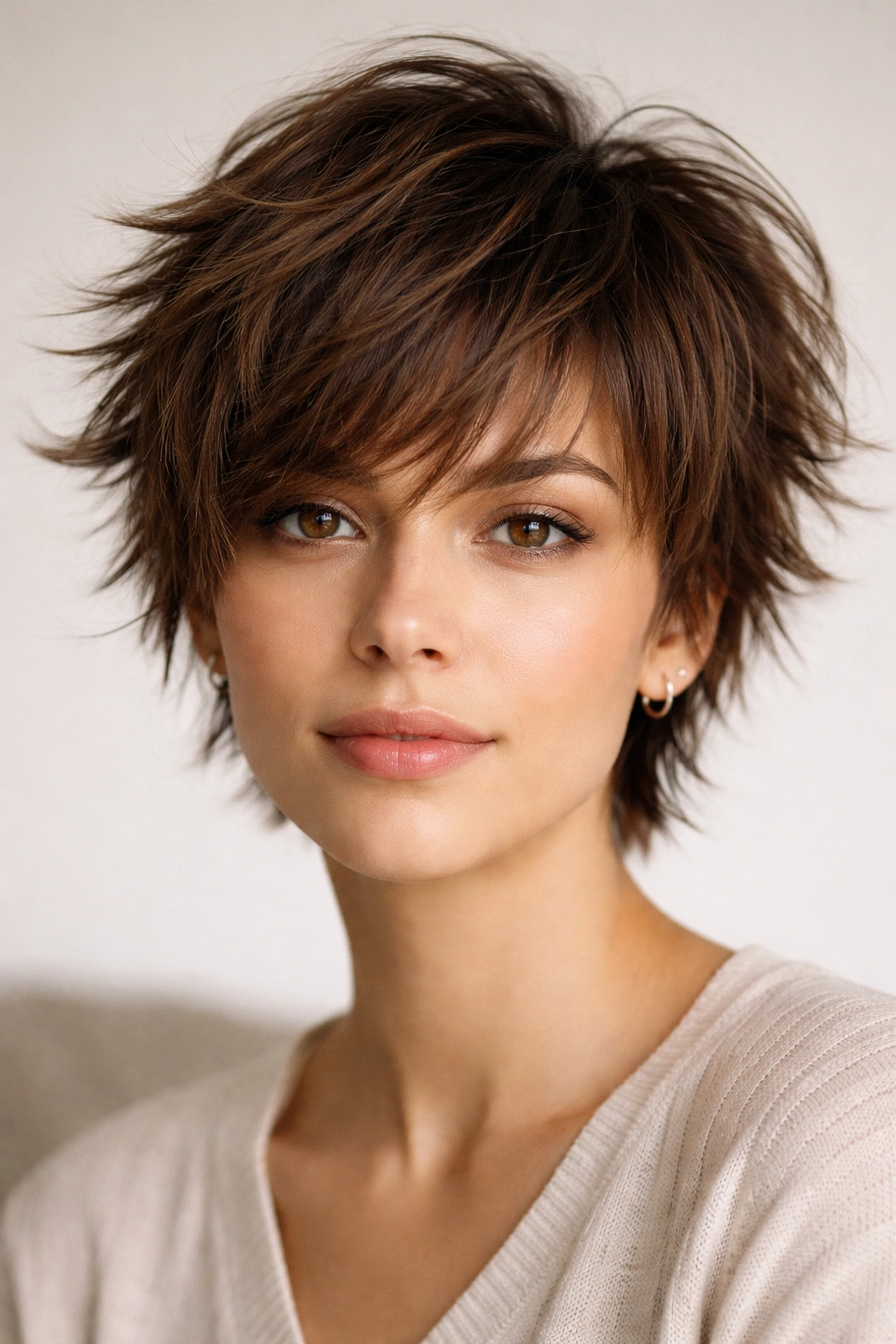
Short choppy layered cuts are the definition of wash-and-go styling. By chopping up a short cut with lots of texture and movement, you create a style that looks intentionally disheveled even when you literally just washed your hair and let it air-dry. The short length means there’s less weight to manage, and the choppy layers do all the visual heavy lifting for you. This cut works particularly well if you have fine hair that needs texture to look full, or if you simply love the ease of very short hair but want more visual interest than a blunt bob offers.
The Mechanics Behind Effortless Short Layers
Short choppy cuts work without styling because the layers are so pronounced that they create shape and movement just by existing. Your natural hair texture—even very subtle waves—becomes visible in a short cut, which makes the style look intentional. If your hair is straight, you get clean, geometric texture. If your hair has any wave or curl, the choppy layers emphasize it beautifully.
Practical Details for Daily Life
- These cuts look their absolute best on people who genuinely like the minimal styling approach and won’t feel frustrated if their hair doesn’t look “done”
- Best suited to people with fine, medium, or wavy hair—if your hair is very thick and coarse, short choppy layers can read as wispy unless cut precisely
- A short choppy cut requires trims every 4-5 weeks because the shape is so dependent on precise layer placement
- Styling is literally optional: air-dry for a textured, undone look, or blow-dry quickly with your fingers for slightly more polish
- Pair with a bit of matte texturizing product (dry shampoo, sea salt spray, or a matte pomade) for extra dimension, but it’s not necessary
Insider note: If you’ve never had short hair before, a short choppy cut is less intimidating to commit to than a blunt crop, because the texture makes it look intentional even if you change your mind partway through the grow-out process.
4. Feathered Layers
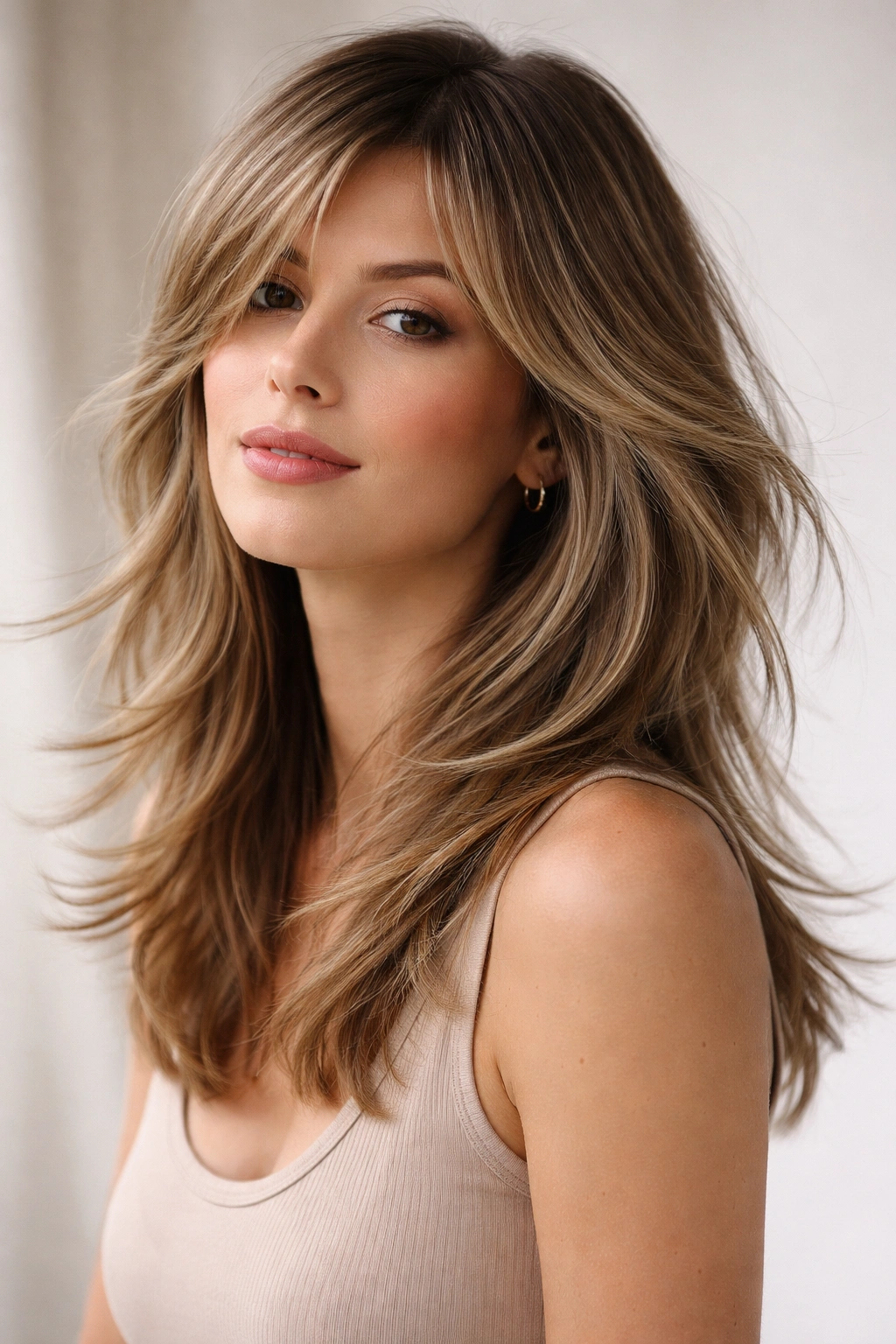
Feathered layers are the opposite of choppy and disconnected—instead, they’re gently tapered layers that create movement and dimension while maintaining continuity throughout the cut. Rather than stacked, dramatic layers, feathered layers blend smoothly from longer underneath to shorter on top, creating a feathery, almost windswept effect naturally. This style is perfect if you want the benefits of layering (texture, movement, dimension) without the heavily textured, undone aesthetic.
Why Feathered Layers Feel Effortless
Feathered layers work because they’re cut to follow your hair’s natural fall and movement. You’re not fighting gravity or your hair’s natural texture—you’re enhancing it. The gradual transition from layer to layer means your hair looks polished even without styling, because the cut itself is designed for a soft, flowing appearance. This style reads as intentionally styled even when it’s completely unstudied.
Making Feathered Layers Work for You
- This style works beautifully on medium to long hair and flatters almost every face shape
- Best on people with straight to wavy hair—very curly hair can make feathered layers look less defined, though it’s still possible with the right cut
- Requires regular trims every 6-8 weeks to maintain the feathered shape as layers grow out
- Air-drying is genuinely enough; your hair will naturally fall into the feathered pattern the cut was designed for
- Adding subtle waves or a light blow-dry makes the feathering more pronounced, but it’s completely optional
- Works well with all hair thicknesses, though the technique might vary slightly for very fine or very thick hair
Pro tip: If you have naturally straight hair and want feathered layers to be as effortless as possible, ask your stylist to cut them in a way that encourages slight movement even when dry—this usually means slightly shorter layers at the crown and around the face.
5. Textured Long Layers
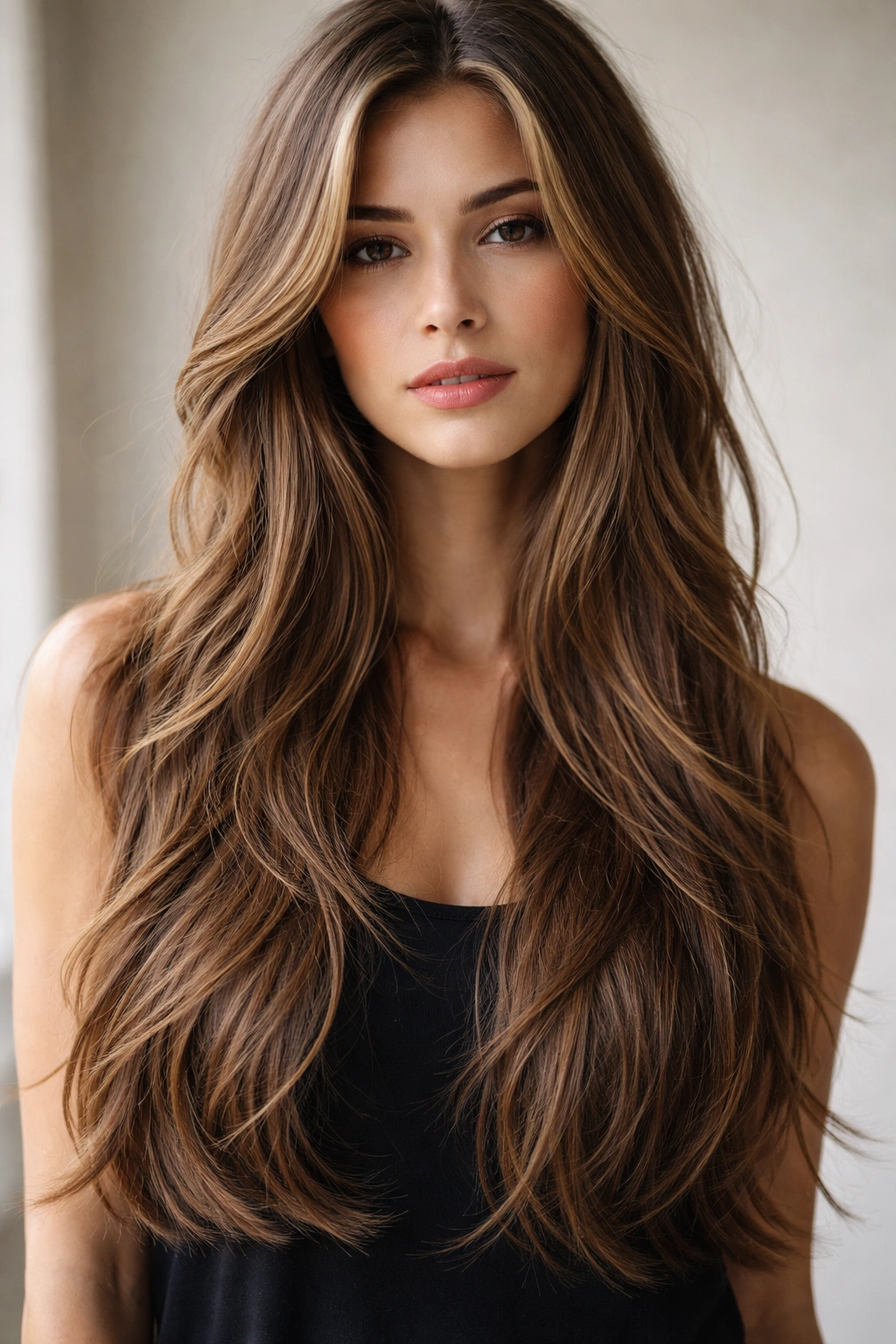
Textured long layers keep substantial length while using carefully placed, choppy layers to create movement, texture, and dimension throughout. Unlike feathered layers that blend smoothly, textured long layers embrace more obvious layer breaks, creating visible texture and a lived-in aesthetic. This cut is perfect if you’re attached to longer hair but find that very long, blunt cuts feel heavy and one-dimensional, or if your hair naturally has texture that you want to enhance rather than straighten down.
How Texture Creates Built-In Style
The beauty of textured long layers is that the texture is the style. You don’t need to create waves, texture, or movement with tools—it’s already built into the cut. If you run your fingers through damp hair or apply some product and scrunch lightly, the layers organize into intentional-looking texture. If you just air-dry, you get a softer, more natural-looking version of the same thing. The cut works with what you’ve got rather than demanding a specific styling routine.
Details for Long Textured Layers
- Works on medium to long hair lengths, and is particularly effective if your hair hits the shoulders or longer
- Best on hair with at least some natural texture (straight hair can look sparse in long textured layers; it still works, but requires a bit more maintenance)
- Requires a trim every 6-8 weeks to keep the layers sharp, since longer hair shows wear on cut edges more obviously
- Layering thick hair is especially effective because it removes weight and prevents that dense, limp feeling
- Fine hair looks fuller and more dimensional with textured layers, because the layers create the illusion of volume
- Styling is optional: air-dry for a soft, natural look, or lightly scrunch with product for more defined texture
Worth knowing: If you have very long hair (think waist-length or longer), textured layers can actually make styling easier because they reduce the weight that drags straight hair down and makes it look limp.
6. Curtain Bangs with Layers
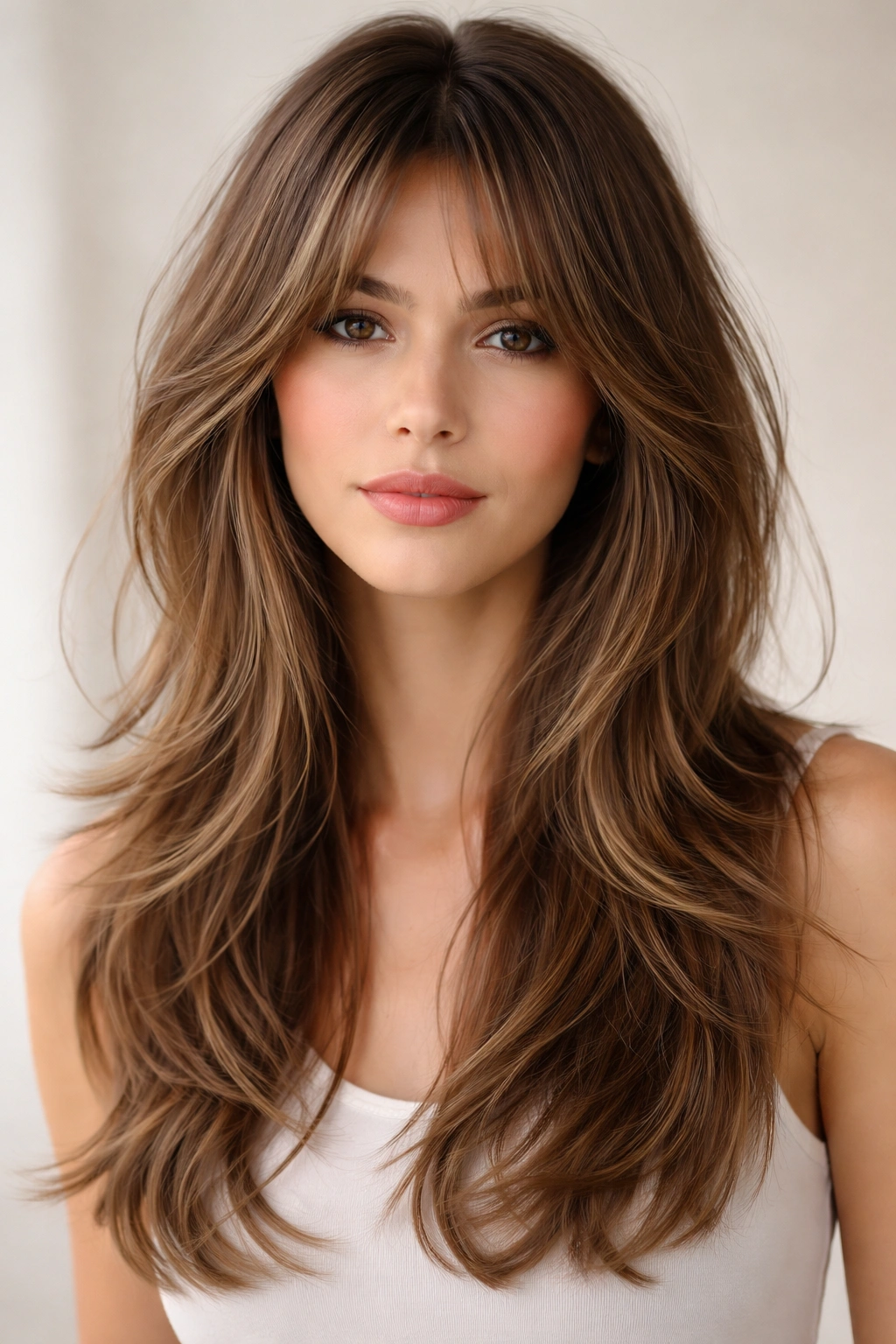
Curtain bangs paired with layered hair creates a complete package that frames your face beautifully while the layers throughout add movement and prevent the whole look from feeling heavy. Curtain bangs are longer pieces at the center of your forehead that sweep to either side, and when combined with a layered cut, they become the focal point of an effortlessly cool style. The bangs create instant dimension and draw attention to your face, while the layered structure throughout prevents that blunt, heavy feeling.
Why This Combination Is So Effortless
Curtain bangs with layers work because every element of the cut is designed to enhance your natural hair movement. The bangs frame your face and create movement just by existing, and the layers throughout encourage texture and dimension without requiring blow-drying or curling. Even if your hair is completely straight, the way the bangs part and the way the layers sit create visual interest and a polished appearance. If your hair has any natural wave or texture, this style becomes almost effortless.
Getting the Right Curtain Bangs and Layers
- This combo works on most face shapes, though it’s particularly flattering if you have a rounded or square face that benefits from the softening effect of side-swept bangs
- Best on medium to long hair (short hair with curtain bangs often reads as too severe)
- Straight to wavy hair is ideal, though very curly hair can work—you just need a stylist experienced with how curly hair behaves
- Curtain bangs require a trim every 4-5 weeks to maintain the shape and prevent them from getting in your eyes
- The rest of the cut needs a trim every 6-8 weeks
- Style-wise, you can wear this completely air-dried for a soft, undone look, or lightly blow-dry and scrunch for more texture
- The bangs look best with a tiny bit of texture; if you want them completely smooth, you’ll need to blow-dry them, but that’s optional
Pro tip: Ask your stylist to cut curtain bangs slightly longer than you think you want them—they’ll feel shorter as they grow in and settle, and longer bangs are easier to style off your face on days when you want them out of the way.
7. The Modern Bob with Layers
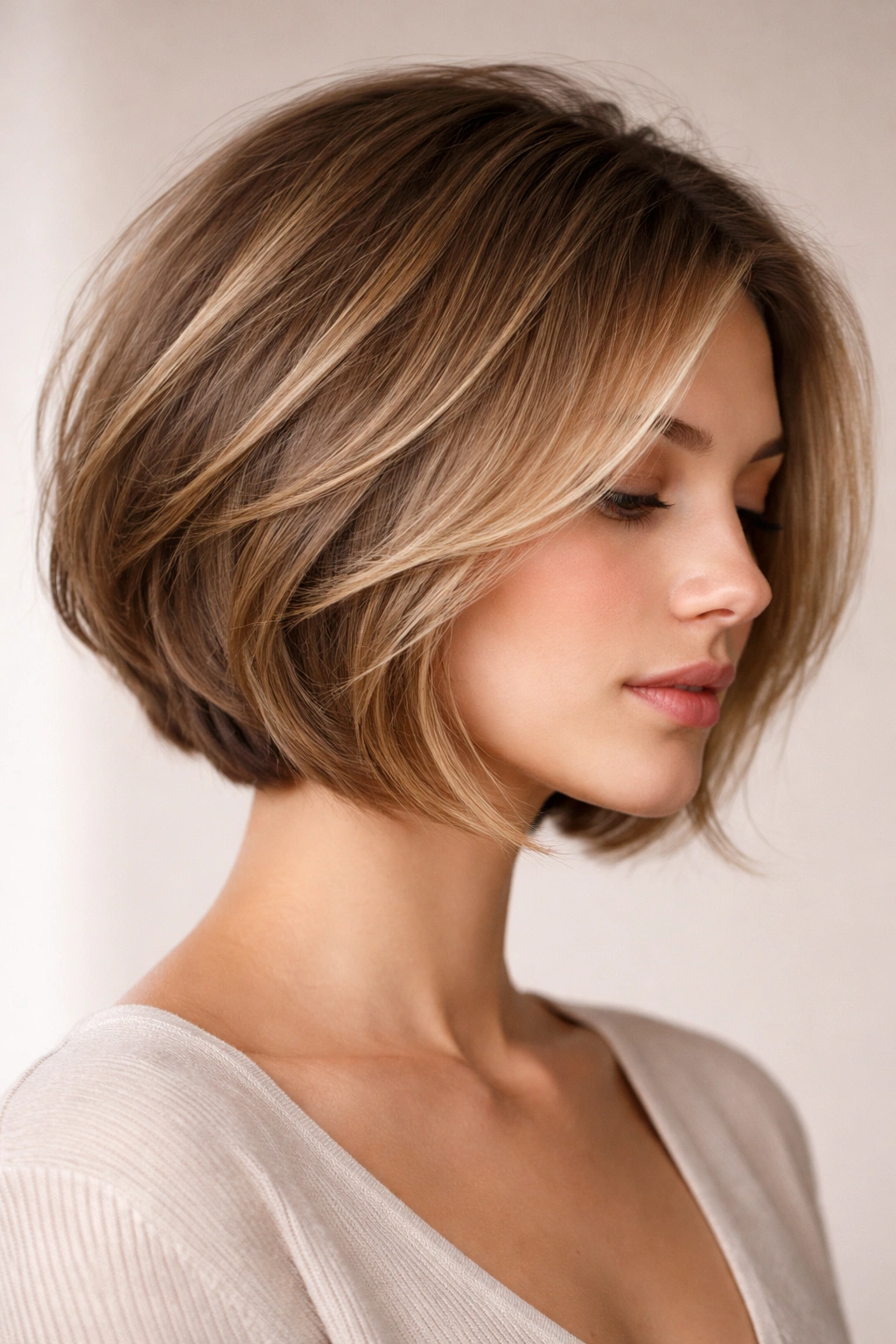
A modern layered bob is a short, structured cut (usually hitting around chin length or slightly shorter) that uses internal layers to create movement and texture without looking choppy or undone. Unlike a blunt bob that requires precise styling, a layered bob is cut so that the layers create shape and dimension on their own. The result is a style that looks intentional and polished whether you’ve styled it or simply let it air-dry, which makes it perfect for people who want the classic appeal of a bob without the daily blow-dry requirement.
How Layers Transform a Bob
A straight blunt bob needs to be blown out and styled to look polished; without that effort, it can look limp or flat. A layered bob, by contrast, is structured so that the layers create volume and movement naturally. The cut is designed so that shorter layers around the crown provide lift, pieces around the face have movement, and the overall shape reads as intentional even without styling. This makes the modern layered bob a genuinely low-maintenance cut for people who want short hair but don’t want to sacrifice style.
Understanding the Modern Layered Bob
- This cut works on most hair types, though it’s particularly effective on fine or medium hair that benefits from the volume the layers create
- Best on straight to wavy hair; very curly hair can work but requires a stylist experienced with cutting textured hair
- Requires regular trims every 5-6 weeks because the shape is so dependent on precise layer placement and the ends show wear quickly
- Styling is completely optional: air-dry for a textured, undone look, or rough-dry for slightly more polish
- Works on most face shapes, though your stylist might adjust where the layers fall based on your face shape
- Very forgiving in terms of day-to-day maintenance—a layered bob looks fine slightly grown out, and actually improves with a bit of texture
Worth knowing: A modern layered bob is different from a choppy, heavily textured short cut—it maintains more structure and sophistication while still being low-maintenance.
8. Messy Wavy Layers
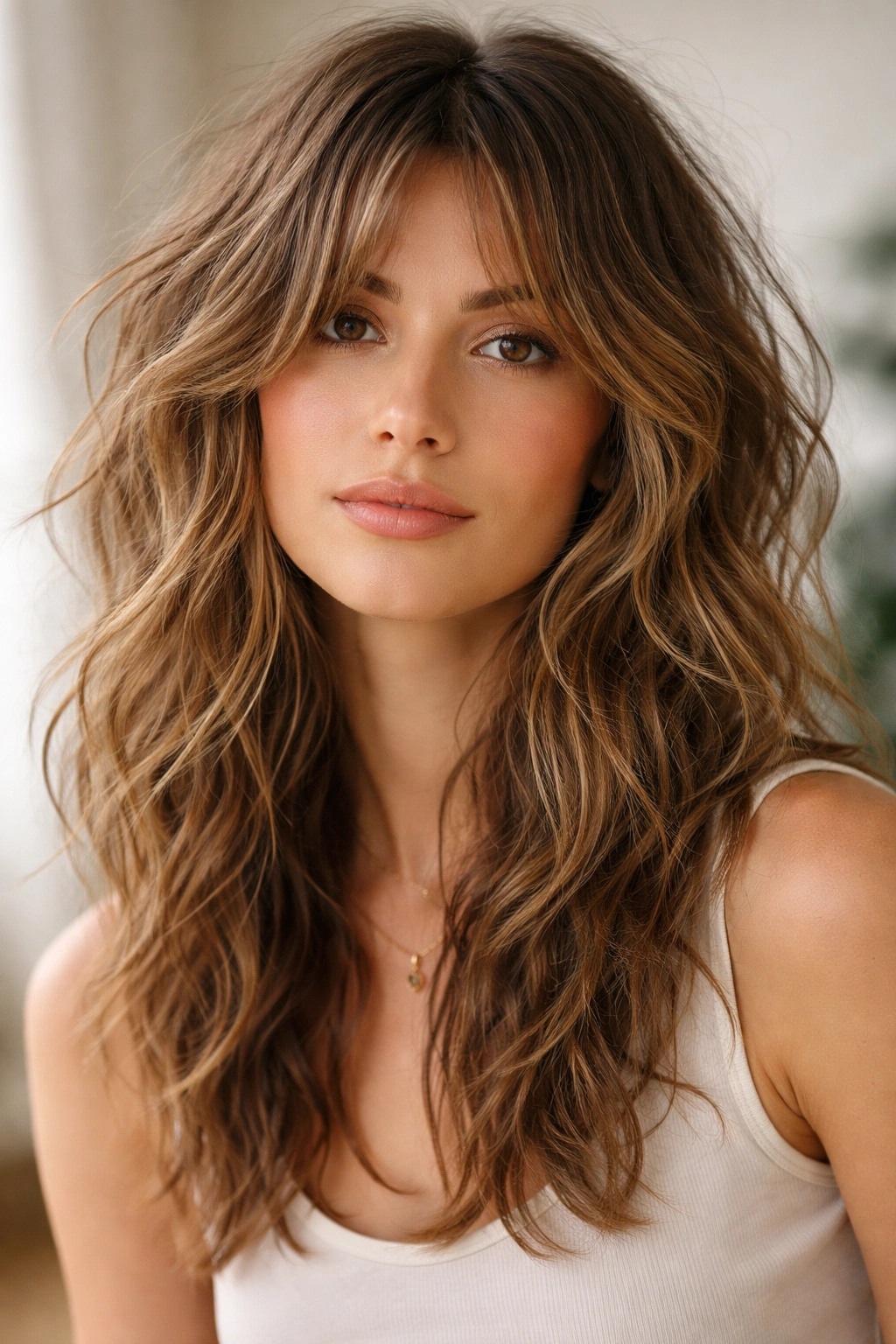
This style embraces the beauty of waves and layers working together to create an intentionally undone, textured look. Rather than fighting your natural wave pattern or trying to smooth everything out, messy wavy layers celebrate texture and movement. The cut is designed with waves in mind—the layers are placed to complement how waves naturally fall and move. This means the style looks its best when you lean into your texture rather than trying to tame it, making it genuinely effortless for anyone with naturally wavy hair.
The Chemistry Between Waves and Layers
Layers and waves are a perfect pairing because waves create their own movement and texture, and layers amplify that effect. The cut uses the wave pattern as a styling tool—each layer sits at a different angle, which means your waves naturally fall into interesting, dimensional patterns without you having to do anything. If you apply a bit of wave-enhancing product to damp hair and scrunch it as it dries, the effect is even better, but even without that, the cut looks intentional.
Making Messy Wavy Layers Work
- This style is genuinely effortless only if you have naturally wavy hair; if your hair is straight, you’d need to create waves with styling tools
- Works on medium to long hair lengths
- Best on people who embrace their wave pattern rather than fighting it with straighteners
- Requires a trim every 6-8 weeks to maintain the shape as layers grow out
- Styling is minimal: wet your hair, apply a wave cream or curl cream, scrunch gently as it air-dries, and you’re done
- The more your waves are encouraged to develop and dry naturally, the more effortless this style becomes
- Works on all wave patterns, from subtle S-waves to more pronounced curls
Pro tip: If you have waves but they’re very subtle, ask your stylist to cut the layers in a way that helps encourage more visible wave formation—shorter layers throughout tend to make waves more apparent than one solid length.
9. Disconnected Layers
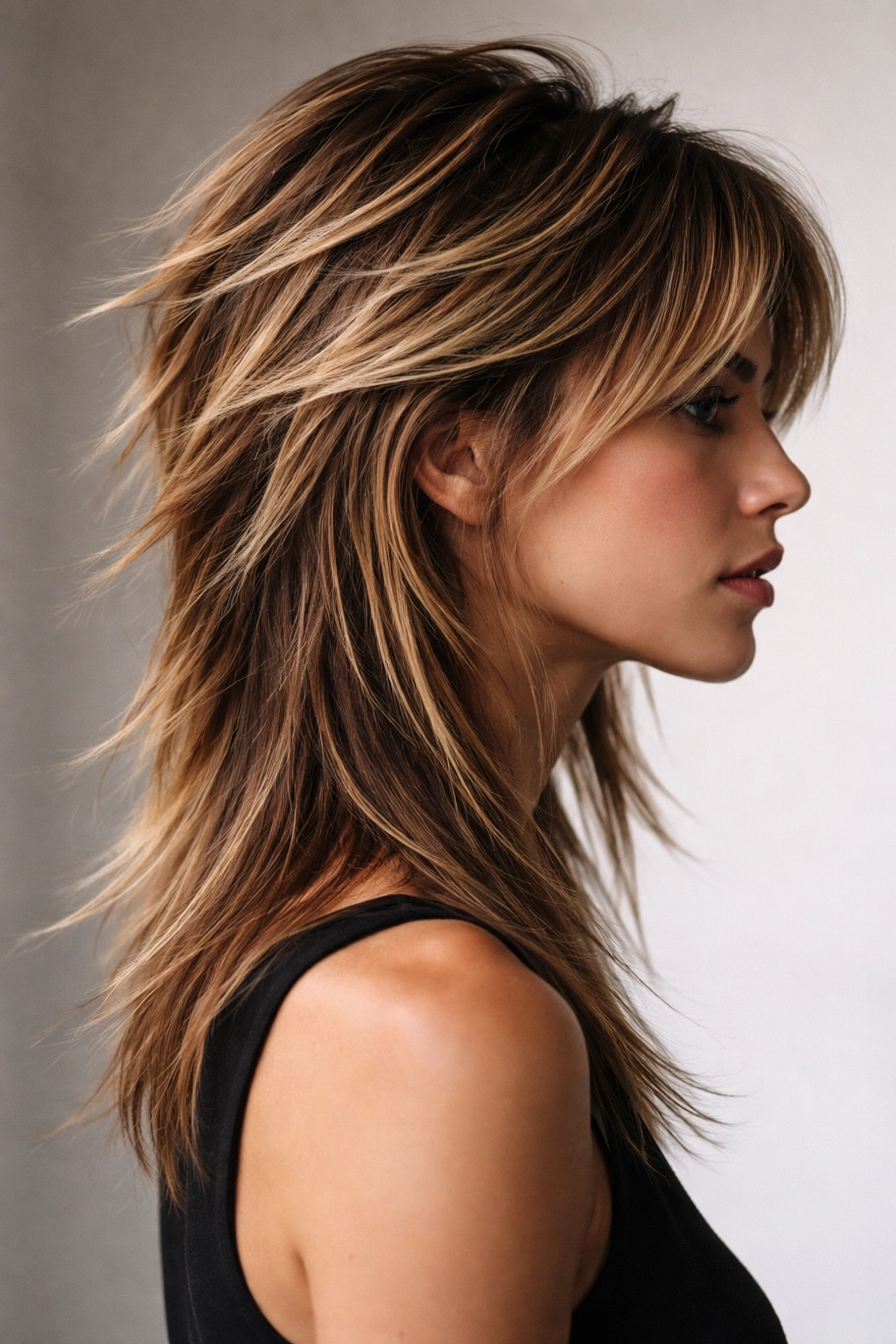
Disconnected layers create sharp visual separation between different sections of the cut, with some pieces intentionally shorter and others noticeably longer, creating a bold, textured look. Unlike feathered or blended layers that transition smoothly, disconnected layers embrace contrast and are designed to look deliberately modern and edgy. This style is perfect if you want layers that read as obviously intentional and styled, and if you genuinely embrace an undone, textured aesthetic—because that’s what this cut delivers.
Why Disconnected Layers Look So Effortlessly Cool
The beauty of disconnected layers is that they look intentionally styled because they’re textured and slightly chaotic. This cut thrives on looking undone, which means you don’t need to achieve a polished, perfect aesthetic—quite the opposite. The more your hair has natural texture, the better this cut looks. The more slightly messy it appears, the more intentional it reads. This makes it genuinely low-maintenance because the whole aesthetic is built around not being overly styled.
What You Need to Know About Disconnected Layers
- Works best on people who genuinely love an undone, textured aesthetic and won’t feel uncomfortable with hair that looks slightly chaotic
- Best on straight to wavy hair with at least some natural texture or willingness to add texture with products
- Requires a trim every 4-6 weeks because the disconnected nature of the cut means grown-out layers lose their visual impact
- Styling is optional: air-dry for maximum texture, or roughly blow-dry with your fingers for slightly more definition
- The cut is versatile enough to look good on multiple face shapes, though your stylist might adjust where the disconnection happens
- Works on all hair types, though the visual impact is most dramatic on medium to thick hair
Insider note: If you’re considering disconnected layers but worried they might be too edgy for your lifestyle, talk to your stylist about making the disconnection less severe—shorter layers that still blend somewhat can give you the textured look without the full rock-and-roll vibe.
10. Piece-y Layers
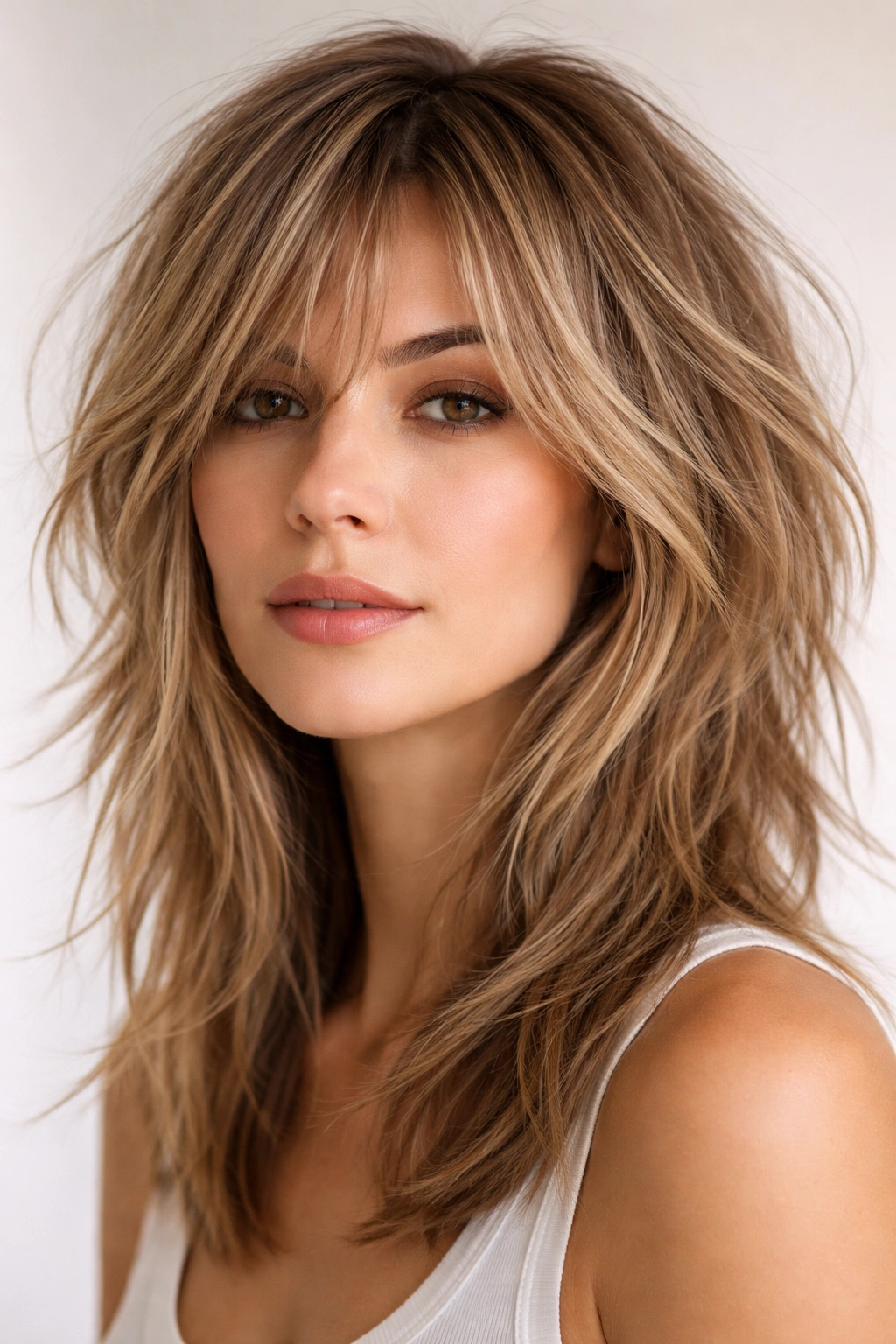
Piece-y layers are highly textured layers that create individual, visible pieces throughout the cut, giving hair an intentionally fragmented, dimensional look. Unlike layers that blend smoothly or create a cohesive shape, piece-y layers embrace separation and texture, with each layer visible and distinct. This cut is ideal if you want dimension and movement without any blunt edges, and if you love the look of hair that’s been textured and separated with product. The beauty of piece-y layers is that they look better with a little texture and product than they do completely smooth, which makes them genuinely low-maintenance in terms of actual styling effort required.
How Piece-y Layers Create Dimension
Piece-y layers work because each individual piece of hair is a different length, which means they sit at different angles and create obvious texture and movement. The cut uses separation and fragmentation as its styling tool—you’re not trying to create a smooth, cohesive shape, you’re embracing the chaos of individual pieces. This means the style looks intentional whether you’ve applied product or not, though product definitely amplifies the effect.
Understanding Piece-y Layers
- Works on all hair types, though the effect is most visible on medium to thick hair
- Best on straight to wavy hair; very curly hair can become too voluminous with this many short layers
- Requires regular trims every 5-6 weeks to maintain the textured shape and prevent the layers from becoming too grown out
- Styling involves applying a texturizing product (matte pomade, texturizing spray, or sea salt spray) to damp or dry hair and separating pieces with your fingers
- The more product you use and the more deliberately you separate pieces, the more styled it looks—but this is optional; you can also just let it air-dry with minimal product
- Works on most face shapes, though shorter pieces around the face create the most flattering framing
- This style celebrates texture and separation, so air-dried, slightly tousled hair looks intentional rather than undone
Pro tip: If you try piece-y layers and find the texture overwhelming, your stylist can create slightly less aggressive layering that gives you the textured look without quite as much fragmentation—it’s easy to dial the style up or down.
Final Thoughts
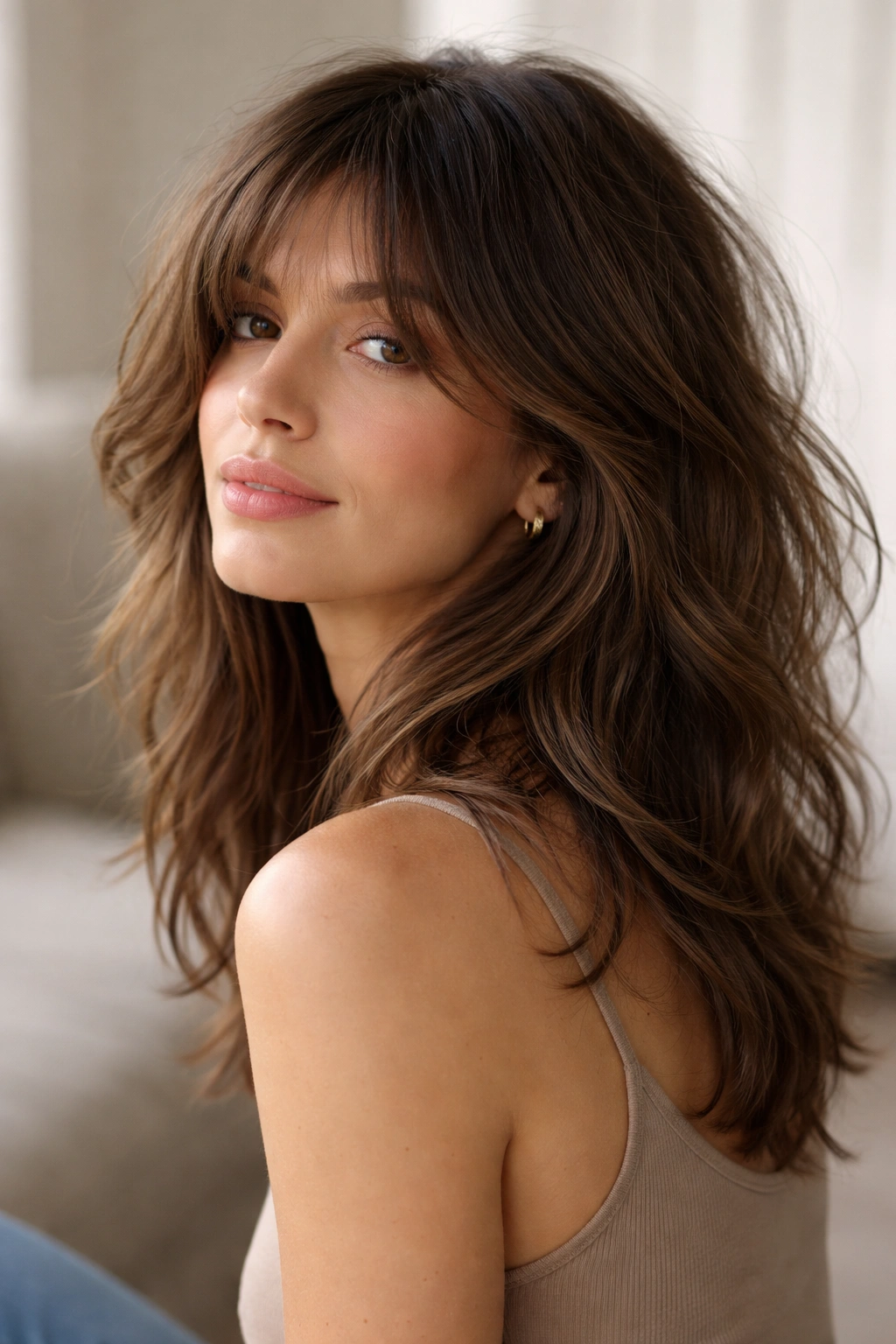
The best layered haircut is one that works with your hair’s natural texture rather than against it. Whether you’re drawn to the undone shag aesthetic, the soft movement of feathered layers, or the bold texture of disconnected or piece-y cuts, the magic is in choosing a cut that’s engineered for your specific hair type and your actual styling habits. You don’t need to blow-dry, curl, or straighten any of these styles into submission—the cut does the heavy lifting for you, which means you get that effortlessly cool look without the daily effort.
The key is communication with your stylist. Show them photos of styles you love, be honest about how much time you actually want to spend styling (which is probably not much if you’re reading this), and ask them to explain how the cut they’re suggesting will look if you do absolutely nothing to it. A great stylist will cut with your actual life in mind, not some imaginary version where you blow-dry your hair every morning. The right layered cut becomes your favorite style because it looks intentional whether you’ve put in effort or not—and that’s the whole point.
