



Afro haircuts are fundamentally different from other hair types because they celebrate texture, volume, and natural movement. But here’s what many people don’t realize: not every afro style works equally well for every face shape, lifestyle, or maintenance commitment. The best afro haircuts are the ones that sit at the sweet spot between looking effortlessly sharp and actually being manageable on a day-to-day basis. These are the cuts that photograph well, hold their shape between barber visits, and actually get compliments instead of questions about whether you’ve been meaning to get a trim.
The haircuts on this list have proven staying power because they work with your hair’s natural texture rather than fighting against it. Each one can be customized for your face shape, adjusted based on how thick your hair is, and styled in multiple ways depending on the occasion. Whether you’re looking for something corporate and clean, street-style bold, or somewhere in between, one of these cuts will absolutely deliver.
What makes these specific styles timeless is that they blend classic barbering techniques with an honest respect for afro hair’s unique structure. They look good at one week out from the barber, at three weeks out, and anywhere in between. That’s the real test of a great afro haircut—not how it looks immediately after a fresh cut, but whether it stays looking intentional as your hair grows.
Let’s get into the cuts that actually work.
1. The Fade with Defined Texture
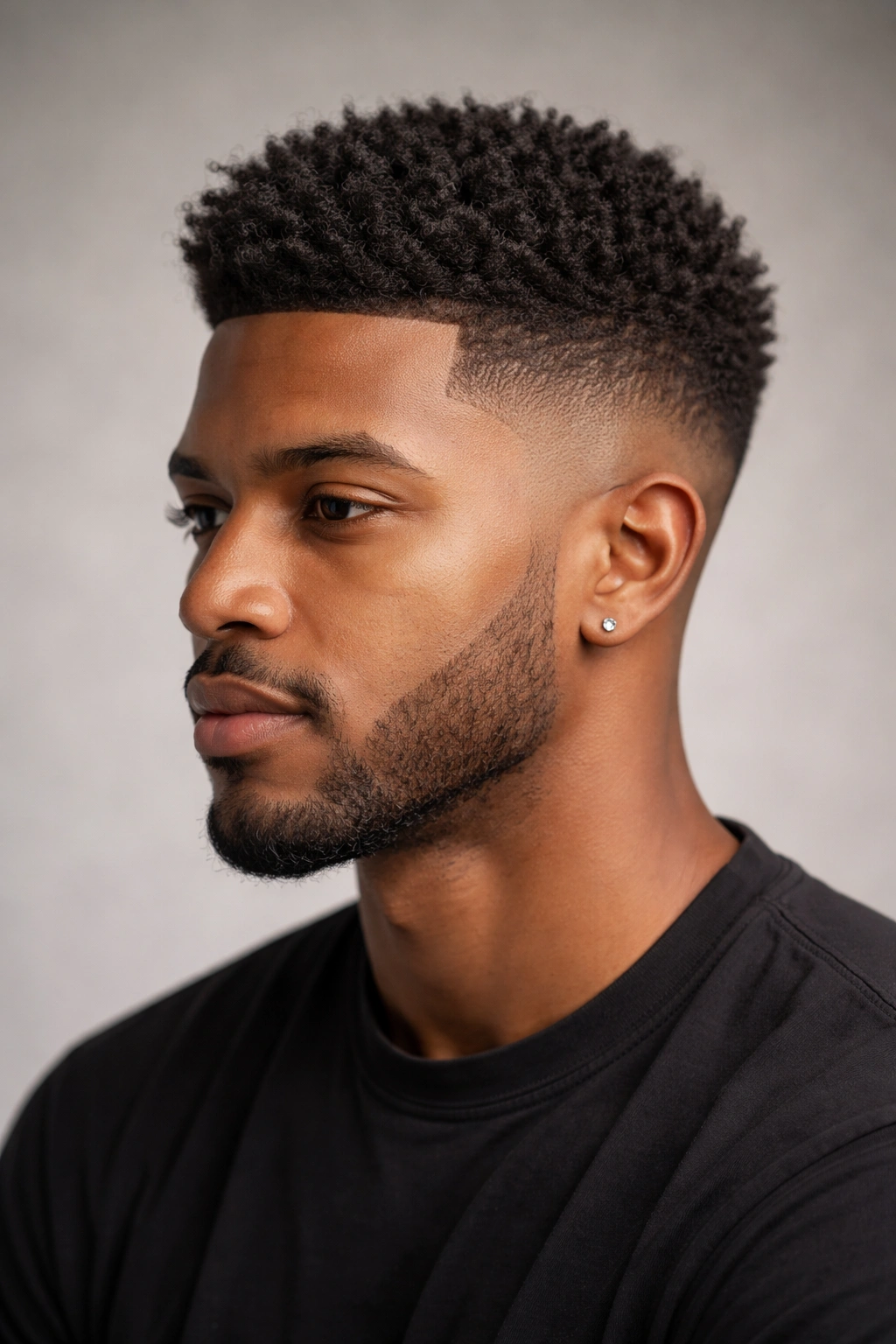
This is the foundation cut that works for basically everyone because it scales beautifully across face shapes and hair densities. The sides fade down progressively—usually starting around a number 2 or 3 grade at the temple and dropping to a skin fade by the neckline. The top stays full, textured, and natural, giving you volume and dimension without looking overgrown.
Why It’s Timeless
The fade with defined texture strikes the hardest-to-achieve balance: it looks professionally groomed without feeling like you’re trying too hard. The contrast between the clean sides and the full textured top naturally draws the eye upward and frames the face intentionally. This is the cut barbers recommend when you walk in unsure of what you want, because it genuinely suits most face shapes. The fade works as a confidence builder—those clean lines read as intentional and sharp, while the natural texture on top keeps the whole look relaxed and authentic.
How to Style and Maintain It
- Keep the fade crisp by visiting your barber every 3 to 4 weeks, before the sides get noticeably fuzzy
- Define the natural texture on top with a light leave-in conditioner and your fingers or a pick—don’t oversaturate
- Sleep on a silk or satin pillowcase to preserve definition overnight and reduce frizz
- Edge up your own hairline between barber visits with careful clippers if you’re comfortable, but let a professional handle the fade lines
Pro tip: Ask your barber for a 1.5-millimeter or number 1.5 grade line at the fade transition point. This creates a crisp but not overly dramatic shadow that ages extremely well and looks fresh at three weeks out.
2. The Taper Fade Afro
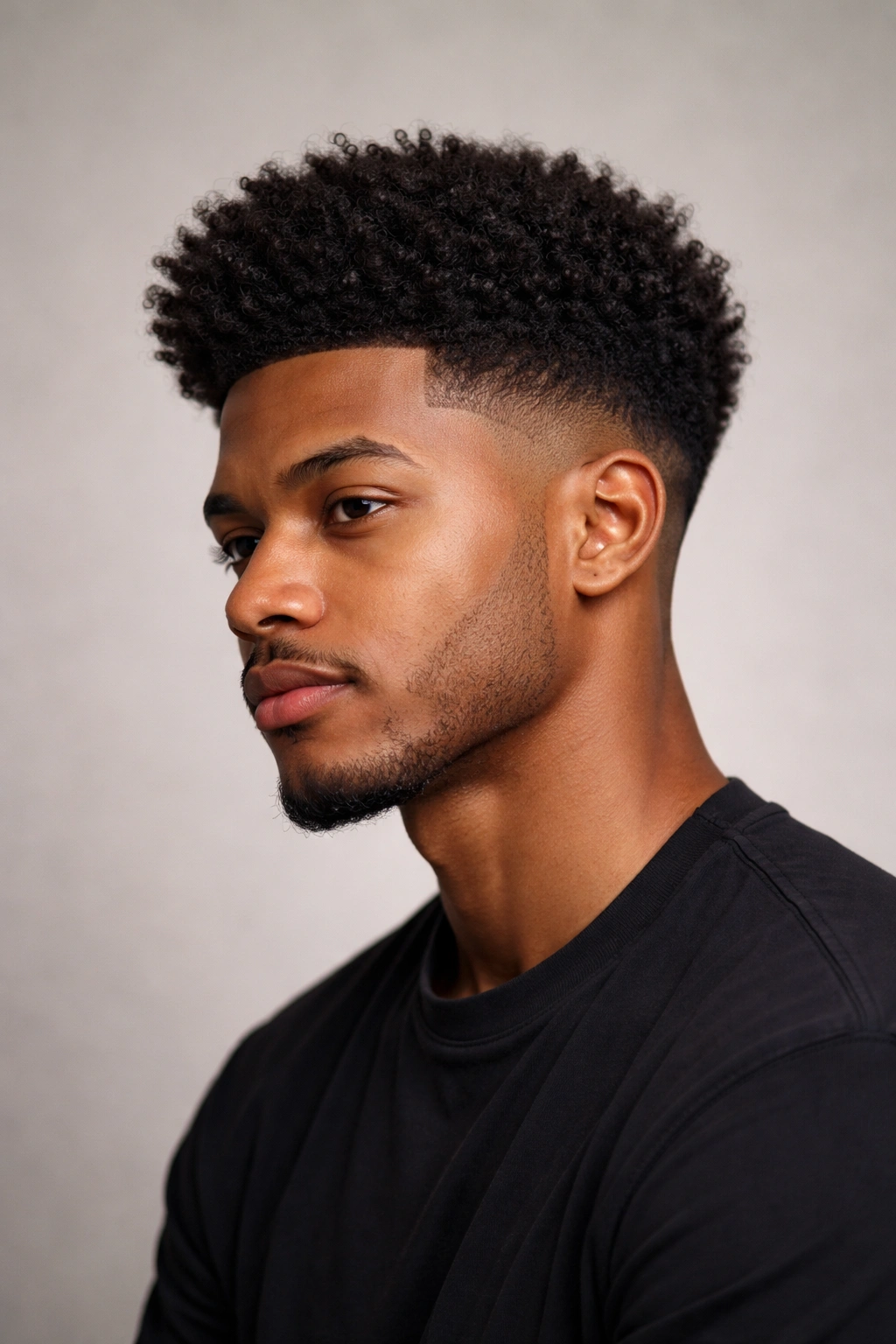
The taper fade is lighter, softer, and more subtle than a full fade because it doesn’t drop all the way to skin. Instead, the hair gradually tapers down from full length on top to about a half-inch or less at the sides, with maybe a small skin fade strip right around the ear and neckline. This creates shape without that hard contrast, which many people find more versatile across different situations and outfit styles.
Why This Cut Works So Well
A taper fade reads as polished without being aggressive. It’s the choice for people who want visible cut lines and intentional grooming, but who also want something that feels less architectural and more naturally contoured. The gradual length progression is actually harder to execute than a sharp fade, which is why this cut separates a good barber from a great one. When done correctly, the taper creates the illusion of fuller hair because the lines are so smooth and the transition is so gradual that your eye doesn’t register it as a “fade” at all—it just looks naturally shaped.
Key Styling Points
- This cut benefits from slightly longer hair on top (at least two to three inches of natural texture) so the taper has somewhere to taper toward
- A taper fade is more forgiving between cuts because the soft lines don’t look as obviously grown out at week four or five
- Use a curl cream or light pomade on the top section to enhance definition and control frizz without making it look wet or greasy
- The neckline needs regular attention since the back can grow out quickly—clean it up yourself with clippers every two to three weeks
Worth knowing: Taper fades work especially well if you have hair that’s finer or less densely packed, because the gradual length reduction distributes volume more naturally across your head.
3. The High-Top Fade
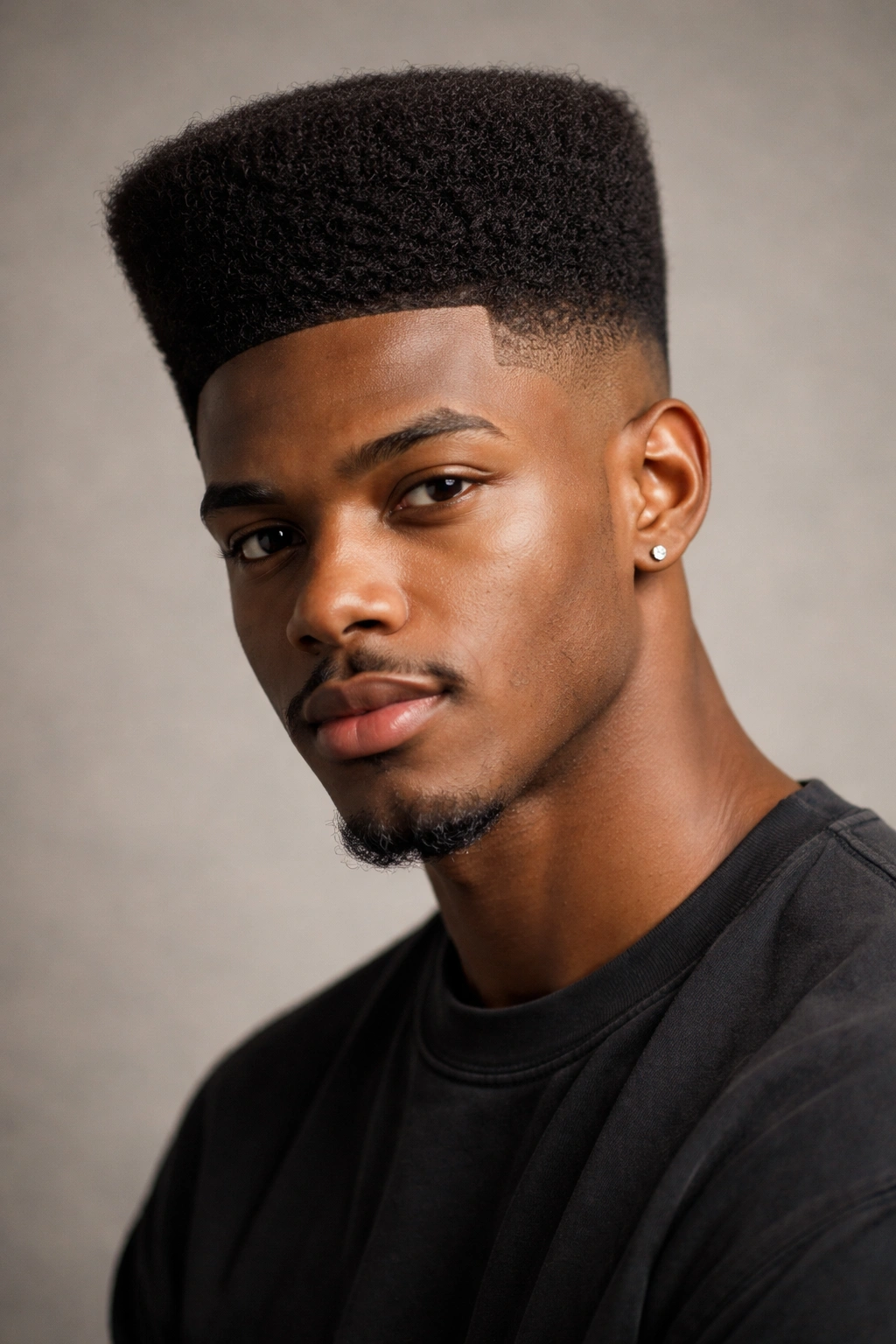
This is the statement cut—the one that says you’re confident and you’re not trying to blend in. The sides fade short (usually a skin fade), while the top is grown out significantly longer and kept full and rounded, creating that distinctive rounded-rectangle shape that sits tall on your head. The contrast is dramatic, but when it’s done right, it reads as intentional and sharp instead of gimmicky.
What Makes It Powerful
The high-top fade draws immediate attention because it’s visually striking and it takes courage to commit to. It works best on people who have naturally full, dense hair on top—this isn’t the cut to get if your hair thins out or has very fine texture across the crown. What makes this style timeless rather than trendy is that the proportions are balanced: the top isn’t so tall that it looks unstable, and the fade is clean enough that the focus stays on the shape rather than the contrast. A well-executed high-top has a sculptural quality that feels both classic and contemporary at the same time.
Maintenance and Styling Specifics
- Plan to visit your barber every two to three weeks—this cut doesn’t work if you’re trying to stretch it out beyond that
- The top needs to be cut with significant weight on the edges to maintain the rounded shape as it grows out
- Edge your own hairline and sideburns between cuts to keep the transition crisp (this is a low-risk area to practice if you’ve never used clippers on yourself)
- Moisturize the top section well because the fuller hair collects less sebum (natural oils) than shorter hair
Real talk: This cut commands attention, so be prepared for compliments and questions. The actual styling is simple once you understand your hair—usually just pick it out or define the natural texture with a light product—but the psychological commitment to rocking a high-top is bigger than most people expect.
4. The Twisted Knots Fade
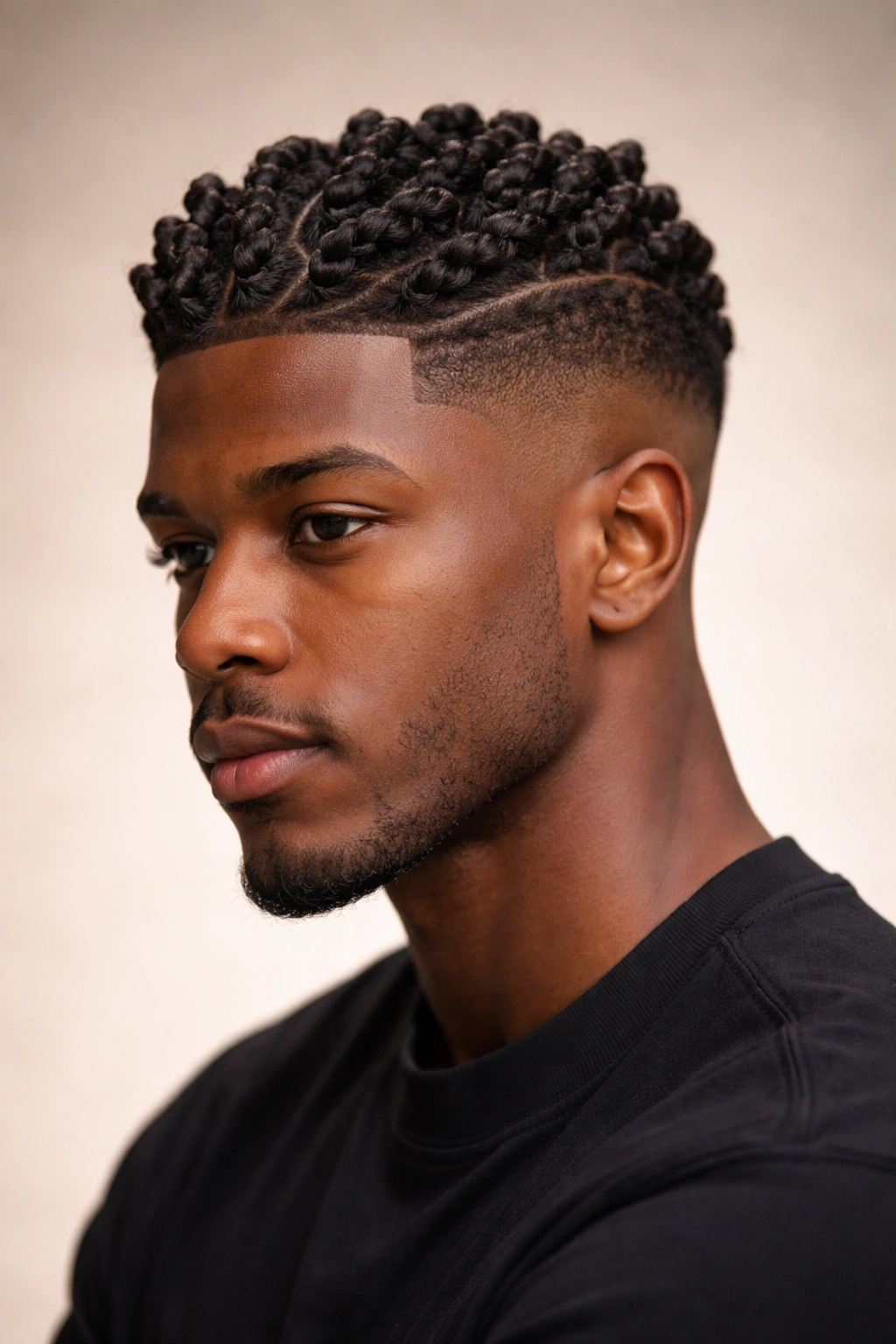
If you’ve got some patience and vision for creativity, the twisted knots fade takes a clean fade and adds deliberate texture detail on top. Small sections of hair are twisted (not braided, but tightly twisted) or shaped into defined knots that create a three-dimensional patterned texture across the top and sides. When done well, it’s sculpture-level barbering—intricate, intentional, and visually compelling.
Why This Style Stands Out
The twisted knots fade is for people who want their haircut to be conversation art. The design requires a skilled barber because the twisted sections need to be consistent in size, tension, and shape for the overall effect to read as intentional rather than messy. The contrast between the clean fade lines and the detailed texture work on top creates visual depth that a simple fade can’t achieve. Depending on the pattern—whether it’s geometric, freeform, or follows a grid—this cut can communicate a lot about who you are and what you value aesthetically.
Styling and Upkeep
- Visit your barber every three to four weeks to re-twist or refresh the knot definition, because some flattening is inevitable as the hair grows
- Sleep with a head wrap or durag to preserve the twist definition overnight
- Light products work better than heavy ones because they won’t weigh down the intricate texture work
- Let the barber know what pattern or design you’re drawn to, and trust them to adapt it to your hair texture and head shape
Insider note: The quality of this cut is almost entirely dependent on barber skill, so it’s worth seeking out someone who has a portfolio of twisted knot work you actually like. Don’t settle for a first attempt at a new barber.
5. The Undercut Afro
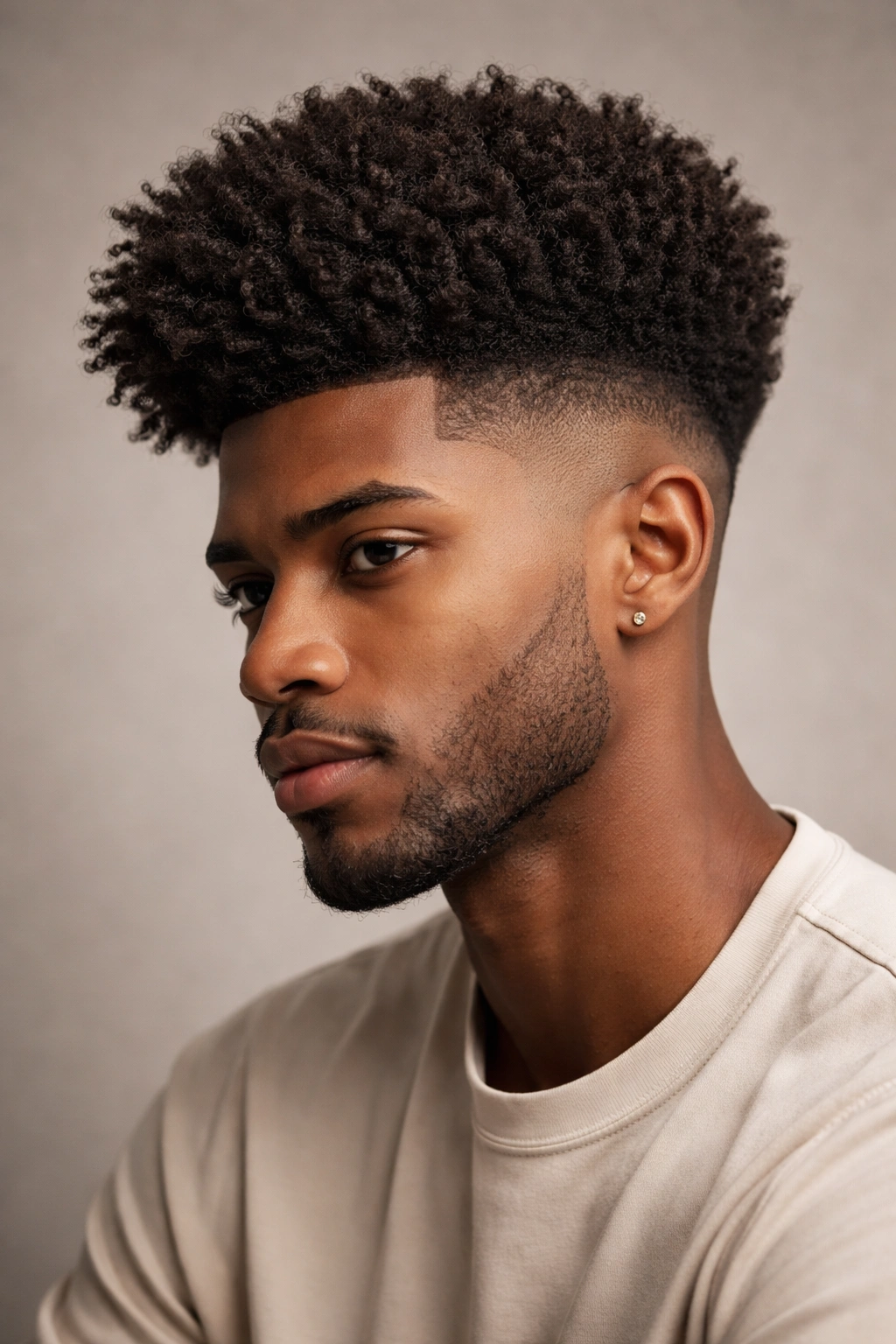
An undercut has longer hair on top that’s disconnected from shorter hair on the sides and back—there’s an intentional gap in length rather than a gradual fade. The undercut can drop all the way to skin in some areas or taper more gently; the key is that the contrast is visible and intentional rather than blended. With an afro on top, the contrast is striking but not jarring because the natural texture softens the line.
The Appeal of This Style
The undercut reads modern without being trendy because the fundamental concept—disconnected length—is versatile enough to feel fresh across any era. What’s brilliant about an undercut with an afro is that the shorter sides actually allow you to grow the hair on top longer than you could with a fade, because the shorter sides provide visual balance. The cut gives you options too: you can style the top up and away from your head for maximum impact, or you can pick it down for a softer look depending on the context. It’s versatile in a way that some of the more architectural cuts aren’t.
How to Get the Best Results
- The line between the long top and short sides should be clearly defined but not razor-sharp—ask your barber for a clean but not aggressively cut transition line
- This cut requires fairly regular maintenance (every three to four weeks) because the length difference becomes more pronounced as everything grows out
- The top section can be worn in multiple ways: picked straight out, shaped into a rounded form, or even styled with a part if you want a different vibe
- Condition the longer top section consistently because the hair on top is living in a different climate than the shorter sides (more exposed to air, less sebum protection)
Key insight: Undercuts work best if you have at least two to three inches of hair on top to work with. If you’re coming from a very short cut, expect to grow it out a bit before an undercut will read properly.
6. The Low Fade with Natural Top
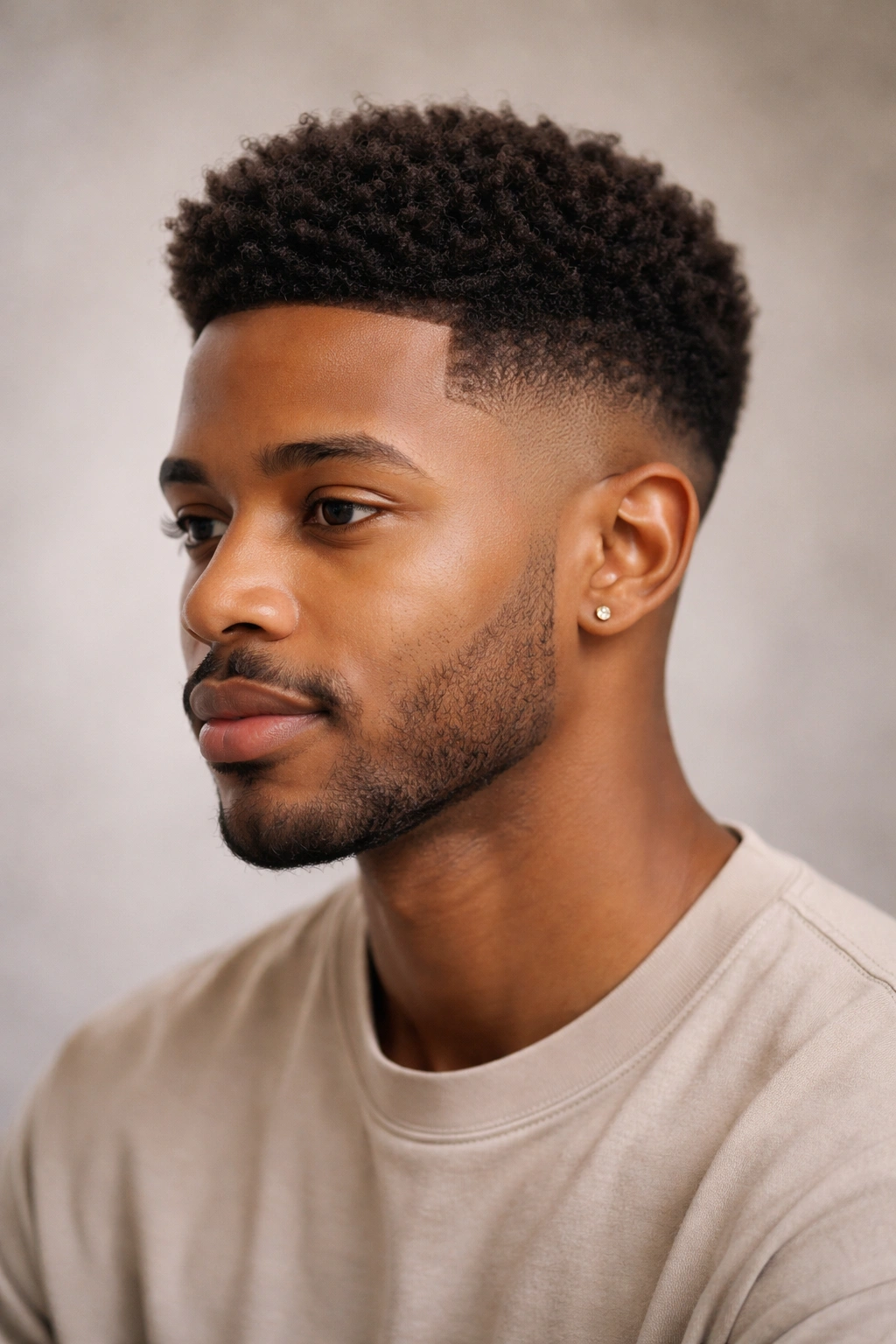
This is the cut for people who want something sharp and intentional without a huge amount of visible fading. A low fade starts the fading process lower on the head—usually around mid-ear level—which means more of your sides and back retain substantial length. The top stays natural and textured, and the overall effect is much less austere than a full fade, while still being unmistakably intentional.
Why It’s So Wearable
The low fade with natural top is the Goldilocks option: it’s groomed without being overly styled, sharp without being severe, and works across an incredibly wide range of face shapes, head shapes, and personal styles. This is the cut that looks good on a teenager and still works perfectly well on a forty-year-old. It’s the cut that feels appropriate in basically any context—corporate offices, creative environments, casual settings. The psychological ease of wearing this cut matters because you’re not managing anyone’s perception of how bold or unconventional you’re being.
Practical Styling Guide
- A low fade is extremely forgiving between cuts because the fade line is far enough down that growth isn’t immediately visible
- You can stretch this cut to five or even six weeks if needed, which is a real advantage if regular barber visits aren’t accessible
- The top requires basic maintenance—pick it out or define it with a light product—but nothing elaborate
- Edge your own hairline if you want to keep it crisp, since the neckline is relatively simple to maintain solo
Pro tip: Specify a “low fade” rather than just “fade” when you book your appointment, because the height where the fade starts completely changes how the cut reads. A full fade looks totally different from a low fade, even if the top is identical.
7. The Hard Part Afro
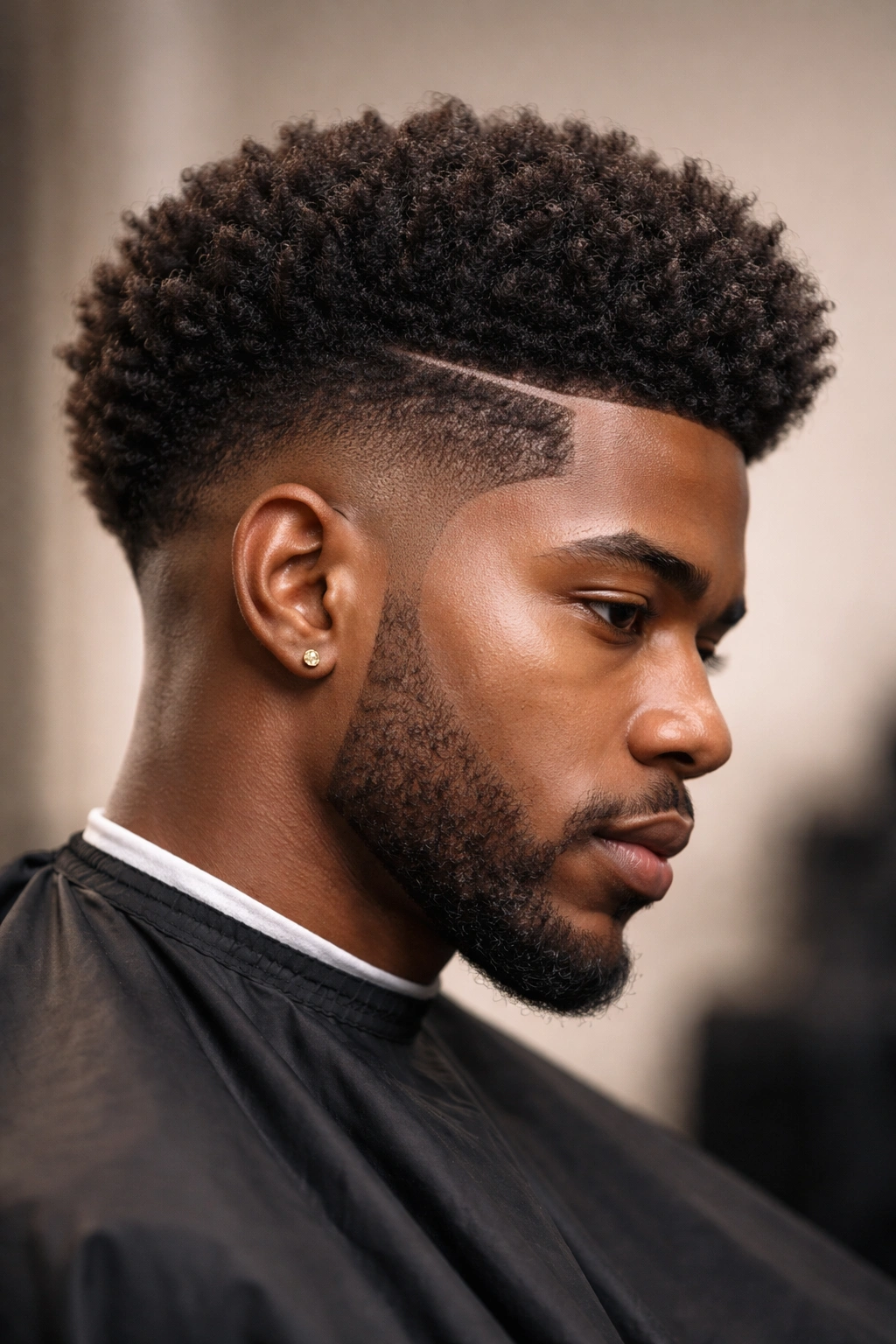
A hard part is a precise, deliberate line shaved or cut into the hair, running vertically down the side of your head (usually from temple to ear). The hair on either side of the part is usually styled in different directions—one side swept back, one side swept down or across. This creates immediate visual structure and a formal, intentional look. Paired with a fade, it’s sharp and architectural; paired with a taper, it’s more refined.
What Makes This Cut Special
The hard part works because it appeals to a basic principle of grooming: visible intentionality reads as polish. When someone can see that you’ve made a deliberate choice about how your hair sits, they register that as evidence that you care about your appearance. The hard part is a fairly neutral element—it works with almost any top style—but it completely changes how a cut is perceived. A simple fade with a hard part reads more formal than the exact same fade without one. It’s a psychological trick that actually works.
Maintenance Specifics
- The hard part line needs to be touched up every two to three weeks as hair grows back in, either by your barber or yourself with very careful clippers
- You’ll need to restyle your hair after sleeping because the part won’t hold on its own (unless you’re using a heavier product to set it)
- Light products work better than heavy ones for maintaining definition without looking wet or plastered
- The part itself should be crisp enough to be clearly visible but not so aggressively cut that it looks cut—there’s a skill element to getting this right
Honest note: If you prefer a wash-and-go approach to hair, a hard part adds a styling step that you’ll need to maintain daily. It’s worth it if you like the look, but it’s not minimal-effort grooming.
8. The Lined-Up Mohawk
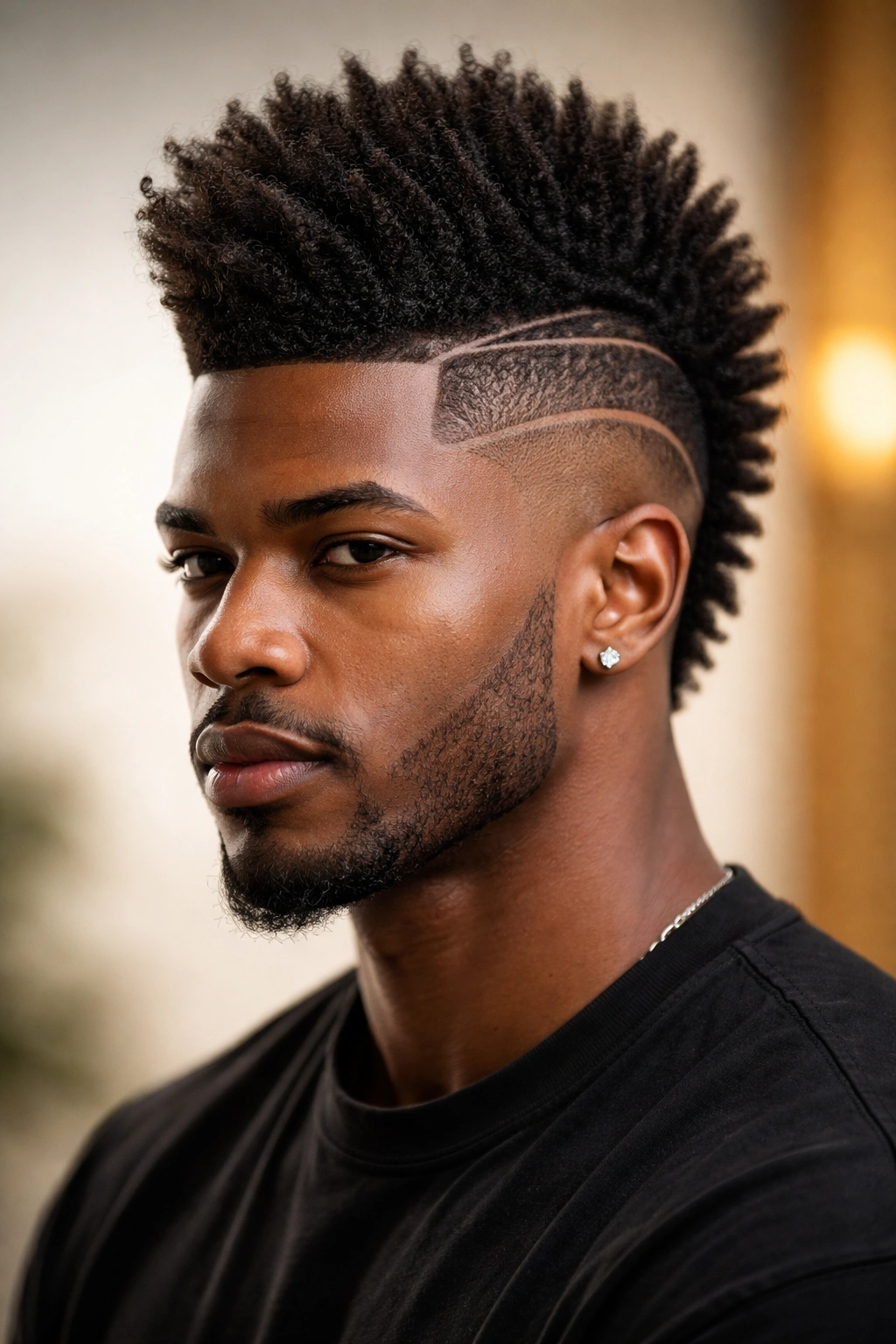
This is where artistry and barbering merge. Hair down the center of the head is kept longer and fuller, while the sides are faded very short or down to skin. But here’s what separates a lined-up mohawk from a sloppy one: the sides of the mohawk strip (where the longer hair meets the fade) are cut with precise, clean lines. Usually there are intentional design lines or patterns cut into the sides as well. It’s architectural and bold.
The Appeal and Psychology
A mohawk is a statement. It says you’re confident, creative, and not interested in blending in. What makes it work as a legitimate haircut rather than just a gimmick is the craftsmanship: the clean lines, the precise fade, the balanced proportions. A well-executed mohawk is actually harder to do than most people realize, which is why seeking out a truly skilled barber matters here. The cut demands attention, but when it’s good, it’s genuinely impressive from a barbering standpoint.
How to Rock It
- Book with a barber who has explicitly done mohawks before and has photos you actually like—this isn’t a cut to learn on
- Plan for very regular maintenance because the contrast between the long center and the short sides means growth is immediately visible
- The center section can be styled flat, picked up and away from the head, or even twisted or shaped depending on your preference
- This is genuinely a style choice that will get noticed, so make sure you’re genuinely interested in that level of visibility
Real talk: A mohawk requires a certain amount of confidence in your appearance, or at least willingness to stand out. It’s not a cut for people who prefer to blend in. That said, when someone commits to it fully and owns it, it reads as genuinely cool rather than trying-too-hard.
9. The Buzz Cut Afro
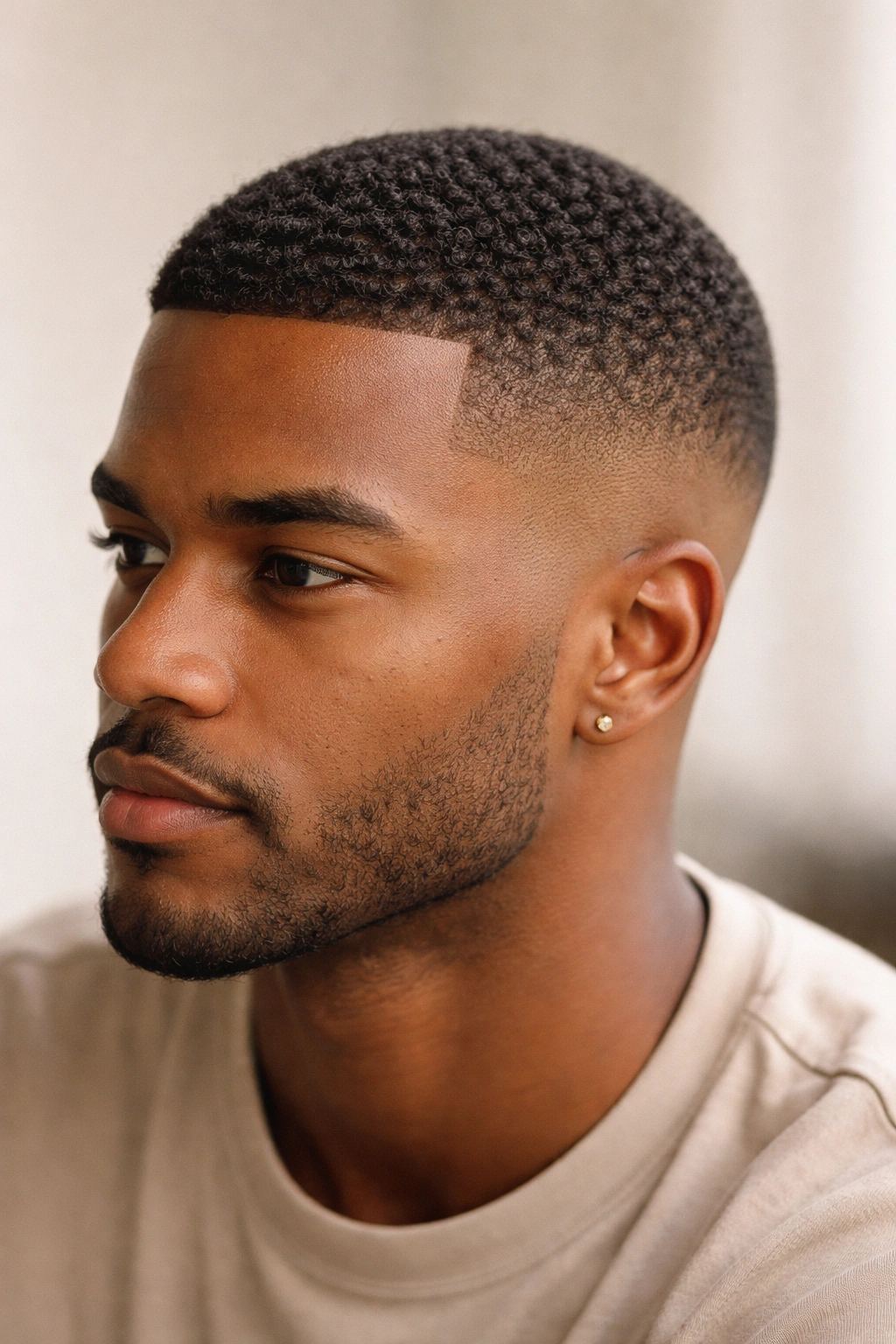
A buzz cut might seem simple, but with afro hair texture, it becomes something much more interesting. Instead of looking scalp-flat, a buzzed afro has dimension and texture because the curl pattern creates natural volume even at extremely short lengths. Usually this means a number 1, 1.5, or 2 blade all over—short enough to read as intentionally minimal but long enough that your hair’s natural texture is still visible and the cut has visual interest.
Why This Works Better Than You’d Expect
Most people assume a buzz cut means looking military or utilitarian, but afro hair subverts that assumption completely. Because of the natural curl and texture, a buzz cut on afro hair has a softness and organic quality that a buzz cut on straight hair doesn’t have. It’s minimal without being harsh. It works across basically every face shape because there’s no styling to overwhelm anything. And practically speaking, it’s the lowest-maintenance option on this entire list.
Minimal Maintenance, Maximum Impact
- Visit your barber or touch up your own fade every two to three weeks to keep the length even as it grows
- No products needed—just water and maybe a light oil if your scalp is dry
- No styling required—your hair naturally finds its shape
- Edge your own hairline easily with clippers, since there’s very little risk of making a visible mistake on such short hair
Worth knowing: The quality of a buzz cut is entirely dependent on how evenly the hair is clipped. A skilled barber will create a cut that looks intentional and clean; an unskilled one will leave it looking patchy or uneven. This is actually harder to execute well than people realize.
10. The Design Fade
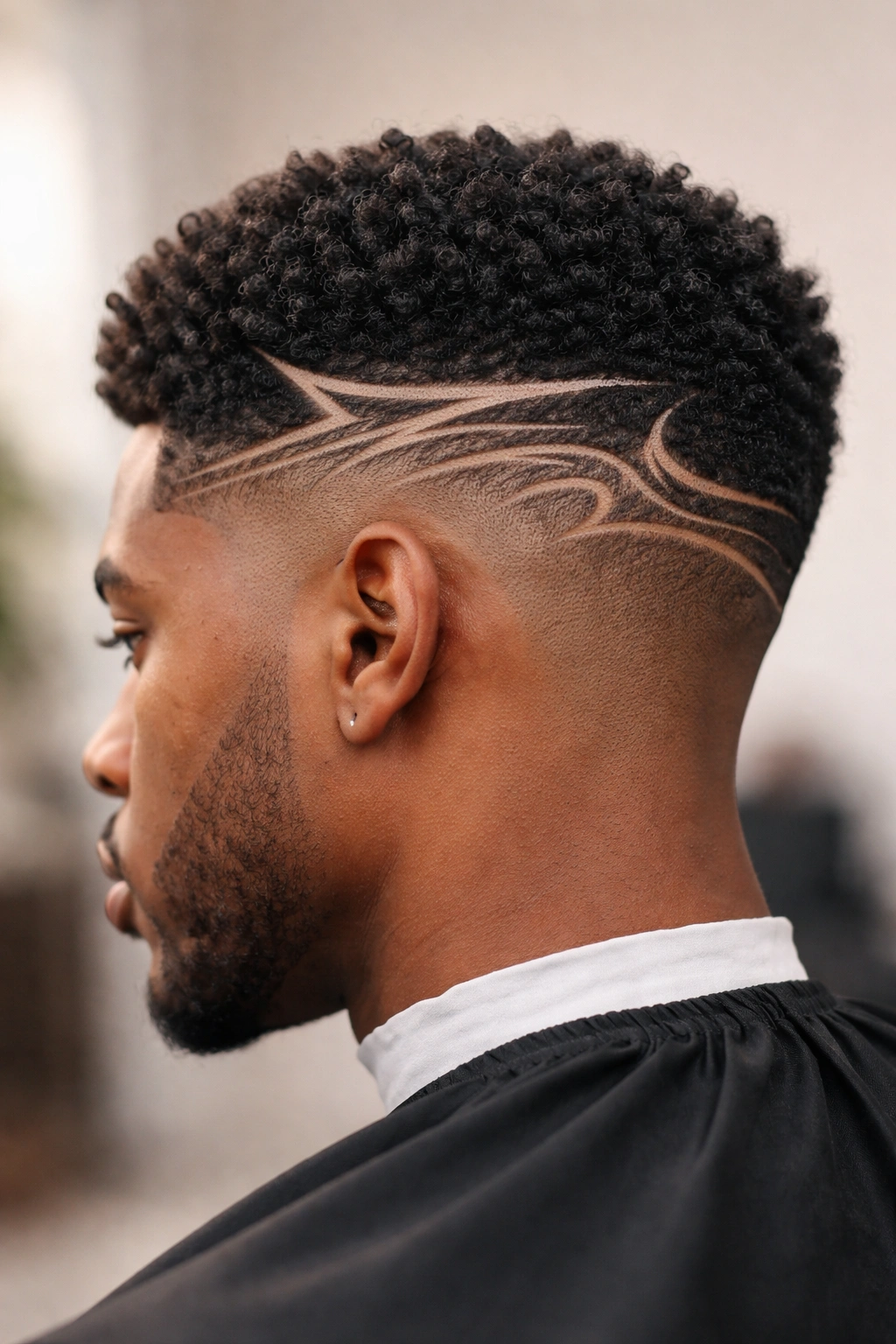
If you’re genuinely interested in making your haircut a form of personal expression, design fades take the concept to its highest level. This is where barbers use multiple blade grades and precise clipper work to cut intricate patterns, lines, waves, geometric shapes, or even custom designs into the sides and back. The fade is still clean and crisp, but the surface is now a canvas for artistic expression.
The Art Behind the Design
A design fade requires serious barber skill because the designs need to be proportional, balanced, and intentional-looking. They can be simple (geometric stripes or waves) or extremely elaborate (portraits, logos, custom patterns). What separates amateur design fades from professional-level work is consistency, precision, and an understanding of how patterns work with the shape of your head. A great design fade looks like planned art; a mediocre one looks like a mistake happened.
Making It Work Practically
- Invest in finding a barber who specializes in design work and has a portfolio of designs you genuinely love
- Plan for a longer appointment because designing takes significantly more time than a standard fade
- Maintenance is similar to a regular fade (every three to four weeks), but the barber will need to maintain the design lines as they touch up
- Designs hold up better on the sides and back where the hair doesn’t move as much, so side designs are more stable than top designs
- Consider starting with something relatively simple if it’s your first design fade—it’s easier to evolve the design next time than to commit to something extremely elaborate immediately
Key insight: Design fades are trend-responsive, meaning what looks cool right now might look dated in a few years. That’s not necessarily bad, but it’s worth thinking about whether you want something timeless or something that’s specifically of-the-moment.
Final Thoughts
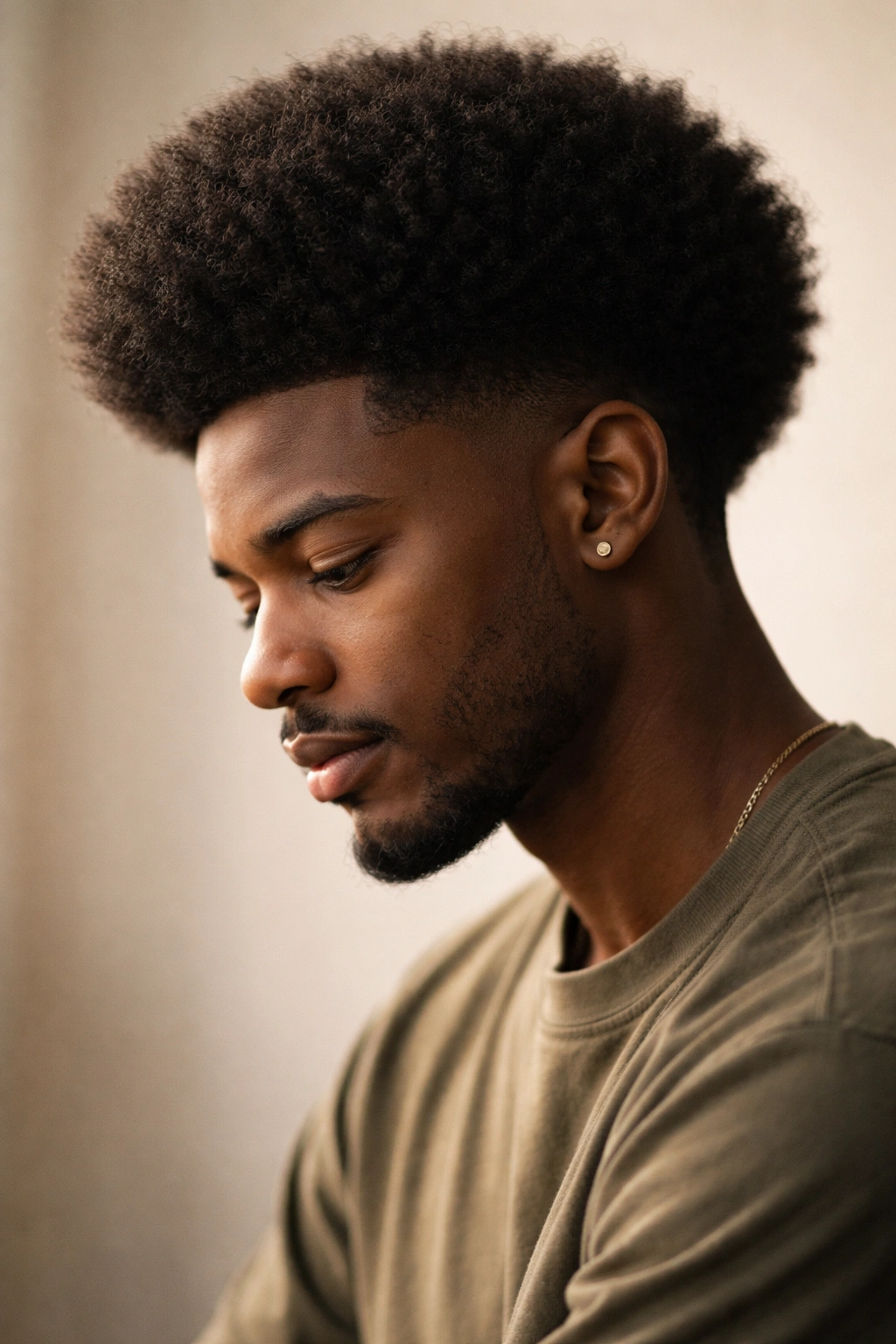
The best afro haircut is the one that fits three criteria: it looks intentional and sharp, it actually works with your lifestyle and maintenance commitment, and it reflects something honest about how you want to present yourself. Not every cut on this list works for everyone, and that’s completely fine.
What matters is that you pick something you genuinely like and find a barber who can execute it well. A mediocre barber with an excellent cut design will still disappoint you; an excellent barber can make even a simple cut look phenomenal. That relationship—finding someone who understands your hair and your vision—is actually the most important ingredient in having great-looking hair consistently.
Spend a little time looking at photos, thinking about what draws you aesthetically, and being honest about how much maintenance you actually want to manage. Then book that appointment with confidence. Your hair deserves to be cut with skill and intention, and you deserve to feel good about how you look.
