



Bangs can feel like a risky move when you’ve got wavy or curly hair. The concern is real — texture plus the wrong bang style creates a frizzy mess that fights against your natural pattern instead of working with it. But here’s what most people miss: the right bangs can actually enhance your wave or curl by adding dimension, framing your face beautifully, and giving your whole look a polished intentionality that makes your texture feel deliberate rather than accidental.
The key isn’t fighting your hair’s nature — it’s choosing a bang style that honors the movement you already have. When you work with your wave pattern instead of against it, bangs become one of your most powerful styling tools. Whether you’re dealing with loose waves, defined ringlets, or everything in between, there’s a bang style that’ll make you wonder why you didn’t try it sooner.
What makes bangs work on textured hair comes down to two things: the cut and the styling approach. A stylist who understands how waves and curls move can create a bang that looks intentional whether it’s air-dried or styled, wet or dry. And knowing how to work with your natural texture — not constantly fighting it with heat tools and product — makes the difference between gorgeous and frustrating.
1. Curtain Bangs With Soft Waves
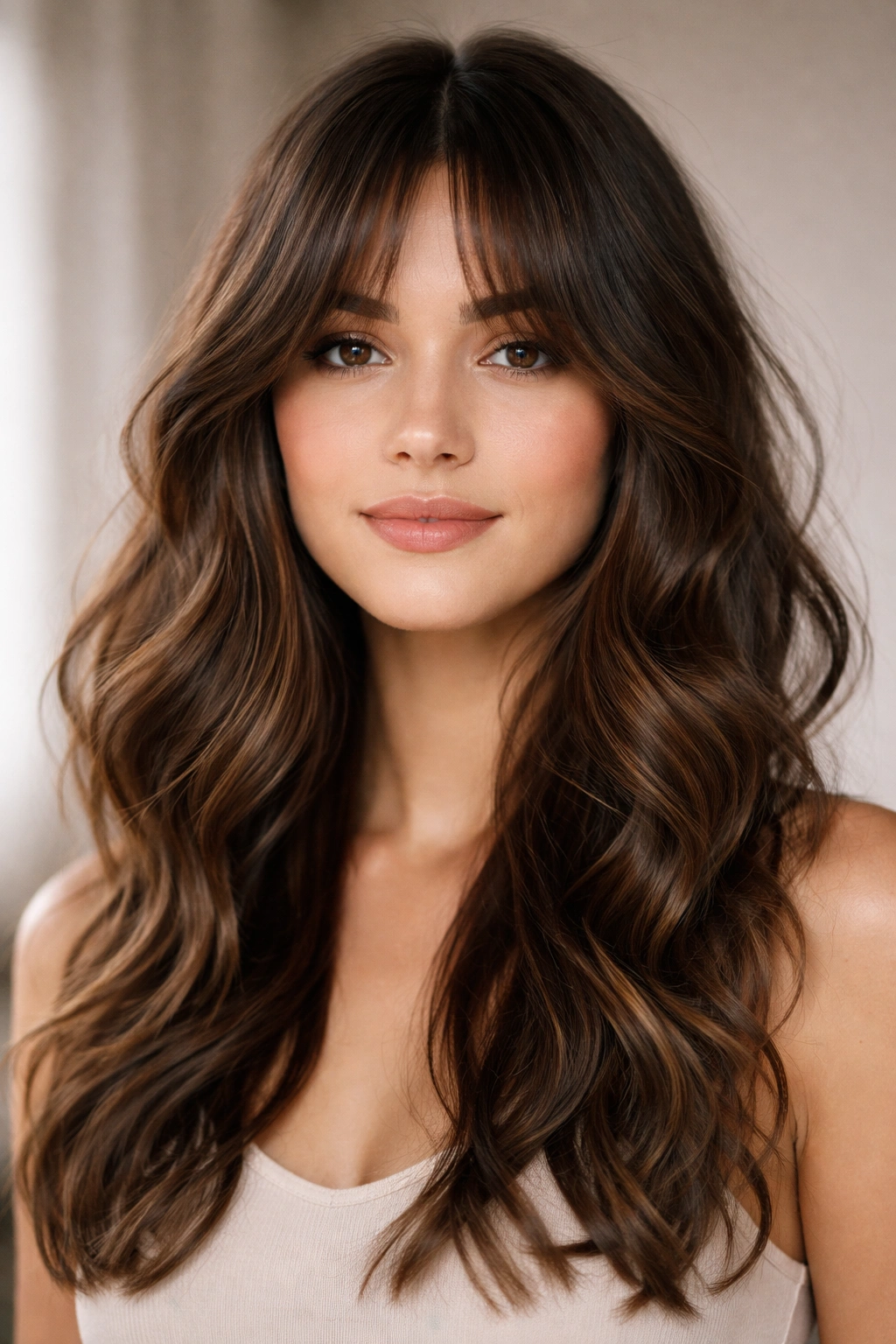
Curtain bangs are the most forgiving option for wavy and curly hair, and honestly, they’re having a moment for good reason. These bangs frame your face by sweeping away from the center part, creating a soft, undone look that works beautifully with your natural movement rather than against it. They’re longer than traditional bangs, typically hitting around cheekbone length, which means they fall gracefully into your wave pattern and create depth without the commitment of shorter styles.
Why Curtain Bangs Work So Well With Waves
The genius of curtain bangs is that they bend with your texture. When your waves or curls dry naturally, curtain bangs follow the movement of your hair rather than standing against it. This means less frizz fighting and more of that intentional, undone-but-polished vibe that textured hair does best. The longer length also gives you styling flexibility — you can pin them back on days when you want a fully-off-your-face look, or let them frame your features when you want more dimension.
How to Cut and Style Them
Ask your stylist for bangs that follow your natural parting line and fall on either side of your face at a slightly longer length than you think you want — you can always trim them shorter, but you can’t grow them back. When they’re slightly longer, they integrate better with your waves instead of standing alone. If you’ve got looser waves, air-drying with a touch of curl cream or mousse usually creates the right shape naturally. For tighter curls, you may need to lightly diffuse the bangs to enhance definition while letting the rest of your hair dry.
Maintenance and Styling Tips
- Curtain bangs need slightly less frequent trims than blunt styles since the movement hides a bit of growth and unevenness
- On humid days, apply a frizz-control product to the bangs before your hair dries completely to keep them looking smooth
- If your bangs feel flat after sleeping, mist them with water and rewet them into shape rather than using heat
- Pro tip: Sleeping on a silk or satin pillowcase reduces the creasing that can make bangs look flat or awkward in the morning
2. Shag With Textured Longer Bangs
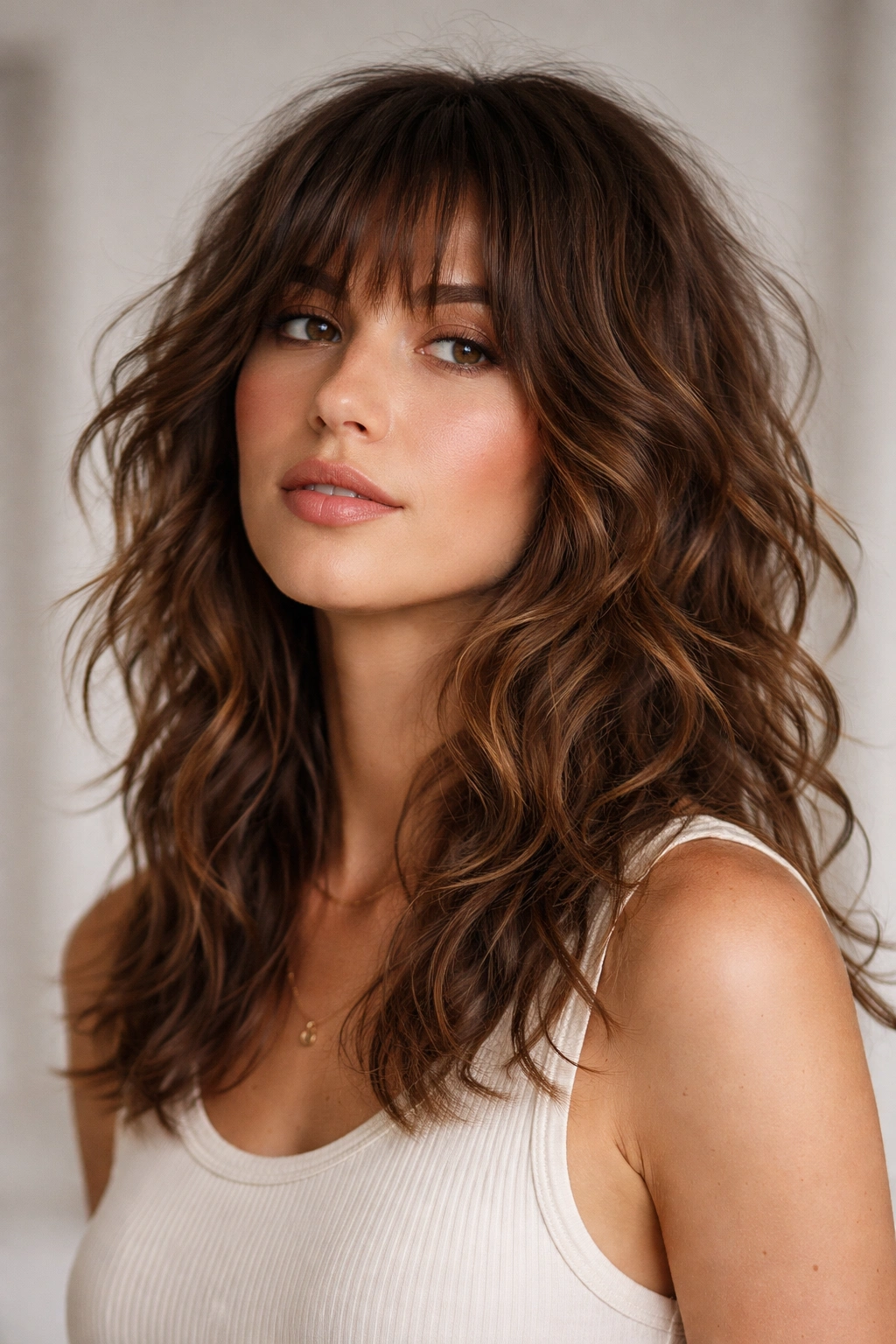
A shag haircut with wavy or curly hair is a total showstopper, especially when the bangs are incorporated into the overall layered texture rather than cut as a separate piece. These bangs are typically longer and choppy, blending seamlessly into the rest of your layers. The whole style celebrates movement and dimension, so your natural wave or curl pattern becomes the star rather than something to manage around.
Why Shags Embrace Your Texture
Shags work because they’re designed to be choppy and textured — which is exactly what wavy and curly hair does naturally. Instead of fighting against your texture, a shag cut plays into it by creating intentional layers that catch light and movement. The longer bangs as part of the shag don’t sit heavily on your forehead; they’re already choppy and textured themselves, so any pieciness or waviness reads as intentional style rather than styling mishap.
Cutting and Styling Considerations
The difference between a beautiful shag and a disaster comes down to the stylist understanding how your specific curl or wave pattern moves. They need to cut in a way that accounts for shrinkage if you’ve got tight curls, and that creates movement without bulk if you’ve got looser waves. When you style a shag with wavy or curly hair, you’re usually just enhancing what’s already there — a diffuser attachment, some curl cream, and letting it dry naturally usually creates the right effect.
Maintenance and Long-Term Care
- Shags need regular trims every 6-8 weeks to keep the choppy layers defined and prevent the style from collapsing into a frizzy blob
- Layers create more surface area, so focus on deep conditioning and protein treatments to keep ends healthy
- Bangs in a shag style integrate with the rest of your cut, so they grow out more gracefully — your stylist can adjust them during regular trims
- Worth knowing: This style looks best when your hair has some length — the layers need room to breathe, so if you’re thinking about chopping everything off, a shag might not be your best bet
3. Blunt Bangs for Defined Curls
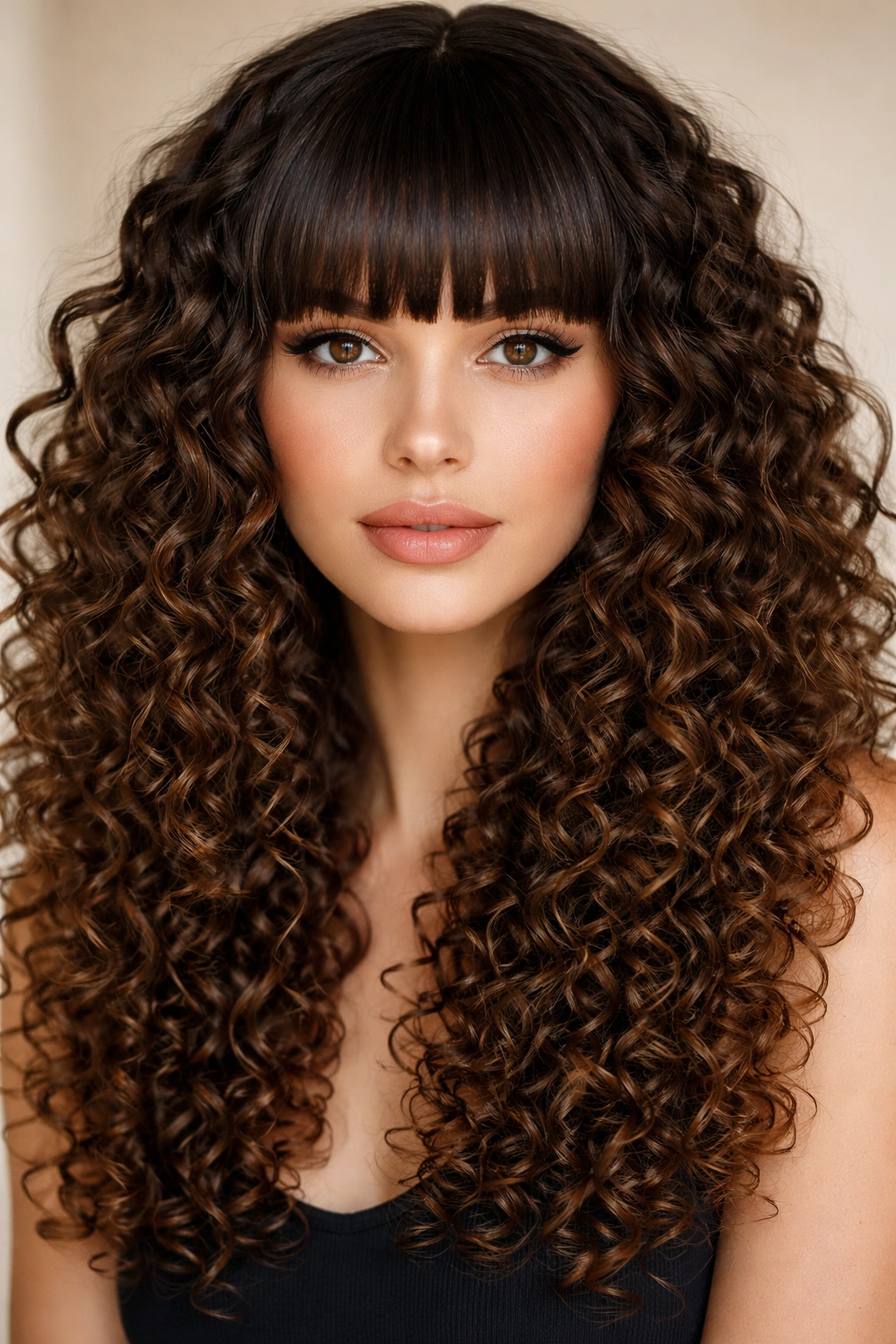
If you’ve got defined, tighter curls and you want a bold statement, blunt bangs can look absolutely stunning. These are cut straight across, hitting the brow or just above, and they create a striking frame for curly hair. The key is that blunt bangs only work beautifully with curls if your curl pattern is consistent and you’re willing to work with your texture rather than against it. This isn’t a low-maintenance option, but the payoff is dramatic.
Why Blunt Bangs Work for Tight Curls
Blunt bangs work on curly hair because curls have natural texture and definition that makes the cut look intentional. When every single curl in your bang area is popping with definition, a blunt line read as a deliberate, cool choice. The cut also creates a beautiful frame for your face — that straight line contrasts with the roundness of your curls, creating visual balance. It’s a high-fashion, high-impact look that very few people pull off, partly because most people with curly hair are scared to try it.
The Reality of Styling and Managing Them
Here’s the honest part: blunt bangs on curly hair need consistent styling. You can’t just air-dry and hope they look right. You typically need to set your curls with a gel or mousse while wet, then either air-dry with a diffuser or sit under a hooded dryer to get the bang curls to set properly. On days when you want the look perfect, you might need to mist the bangs lightly and re-curl them around your finger to refresh the shape.
Who Should Actually Try This Style
- You’ve got tight, consistent curls from root to tip (not hair that’s wavy on top and curly underneath)
- You’re willing to spend a few extra minutes styling in the morning
- You’re committed to regular trims every 4-6 weeks to keep the blunt line sharp
- You understand that humidity and water will affect how your bang curls sit, and you’re cool with that fluidity
- Insider note: Blunt bangs look especially dramatic on textured hair with lighter or highlighted ends, because the contrasting color highlights the curl definition
4. Feathered Bangs With Lots of Movement
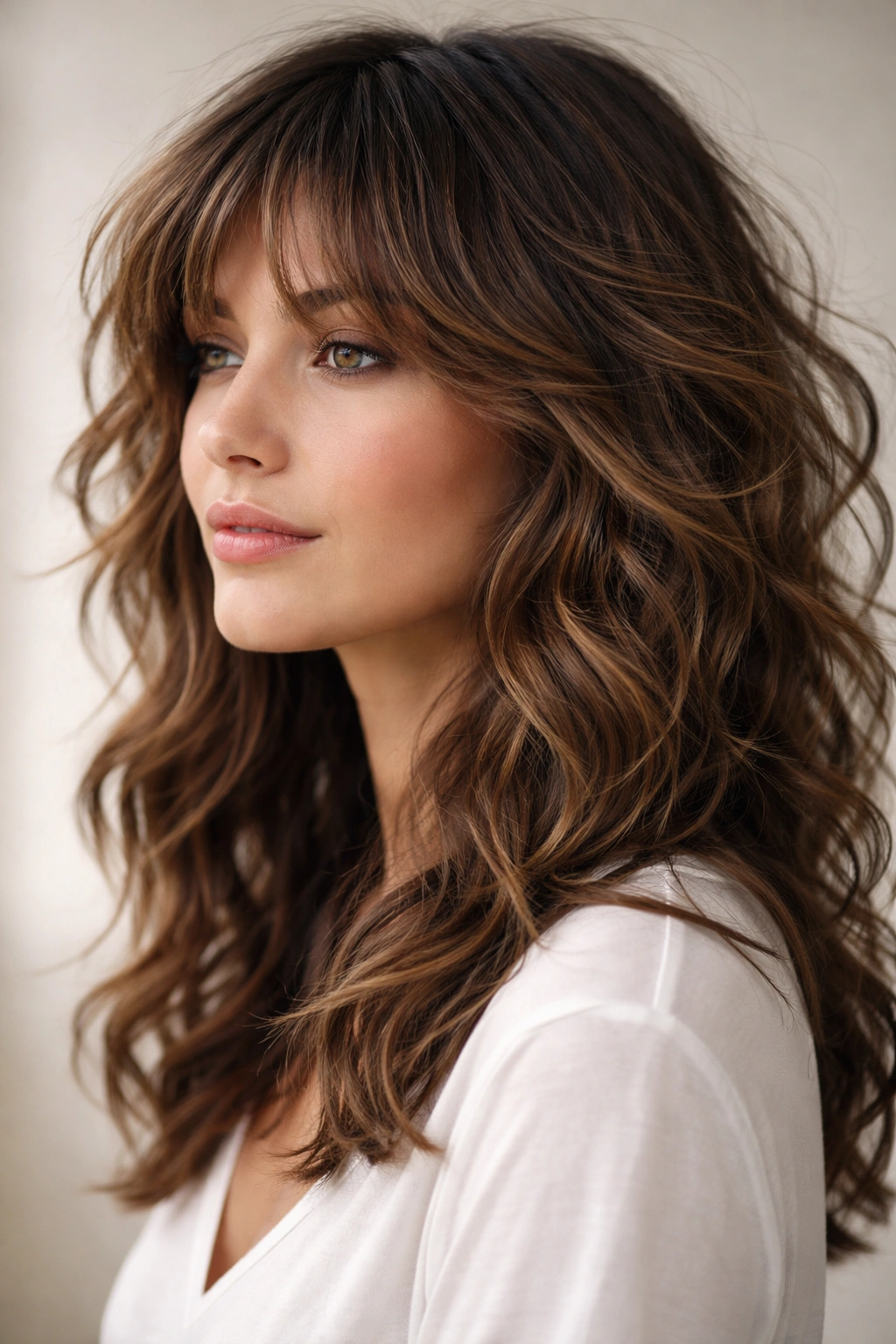
Feathered bangs are a softer, more effortless take on texture-friendly bangs. These are cut with lots of layers throughout, so instead of one solid line across your forehead, you’ve got shorter and longer pieces that create a feathery, piece-y effect. They work beautifully with wavy hair especially, where they can create a soft, almost cloud-like frame without the weight of blunt or longer styles.
The Appeal of Feathered Texture
Feathered bangs work because the layering creates movement instead of a hard line. Your waves flow through the shorter and longer pieces naturally, and the overall effect is soft and romantic. There’s no one line for frizz or humidity to fight against — the pieciness is the whole point. This makes them one of the most low-stress bang options for textured hair, because a little frizz or flyaway actually adds to the intentional undone vibe.
Styling to Enhance the Feather Effect
The beauty of feathered bangs is that they style in several ways. If you want a polished look, blow-dry them smooth while directing them back and to the side. If you want a softer, more textured look, apply curl cream and let them air-dry or diffuse with your natural waves. Some days they’ll look perfectly feathery and effortless; other days they’ll read as subtly tousled. That’s not a bug with this style — it’s kind of the point.
Who This Works Best For
- You’ve got wavy or loosely curly hair (this style is less successful on very tight curls where individual feathers can disappear)
- You’re not a person who wants to spend significant time styling daily
- You like the idea of bangs but prefer a softer, less defined look
- You’re open to the natural variation in how your hair sits day to day
- Pro tip: Feathered bangs photograph beautifully from the side, showing off the layered texture way better than blunt or curtain styles do
5. Side-Swept Bangs That Blend Into Layers
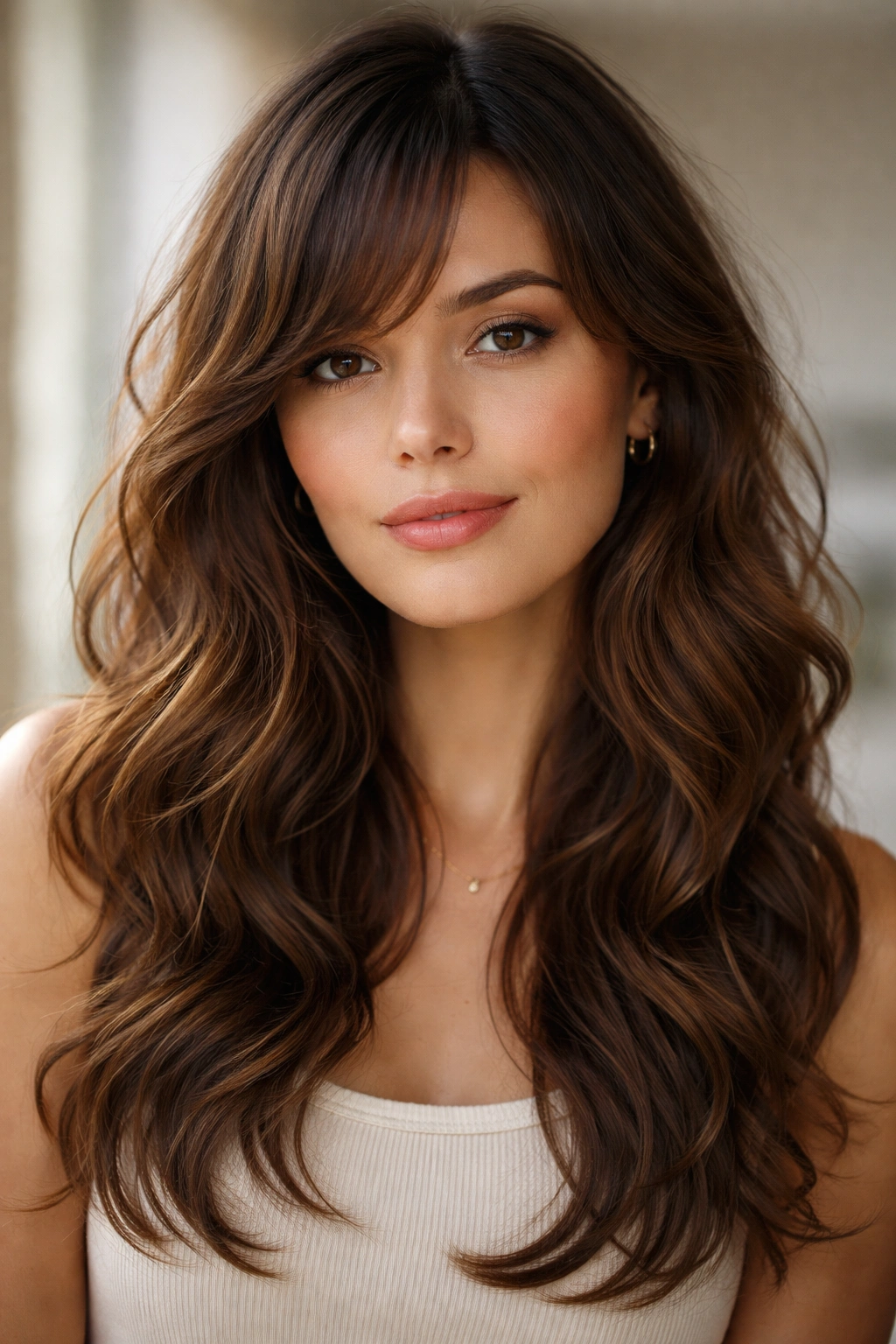
Side-swept bangs are cut longer on one side and shorter on the other, creating a diagonal line that sweeps across your face. They’re particularly gorgeous on wavy hair because the sweep follows your natural movement, and they can be cut so they blend seamlessly into your longer layers. This style gives you the framing effect of bangs without the commitment of a more defined bang style.
Why Side-Swept Works Especially Well for Waves
Side-swept bangs feel less dramatic than blunt or curtain styles, but they’re actually incredibly flattering. They frame one side of your face while allowing the other side to stay open, which creates subtle asymmetry that’s deeply flattering. The longer side blends into your layers so you don’t have an obvious “bang” — instead you’ve got a seamlessly layered style that happens to frame your face beautifully. For waves especially, this feels like a natural evolution of your layers rather than a separate piece.
How Your Stylist Should Approach the Cut
The key is that your stylist needs to understand where your natural part falls and how your waves move. They should cut the bangs so the shorter side falls at your natural part line, and the longer side sweeps back with your wave pattern. If you naturally part your hair on the left, your bangs should be cut slightly shorter on the left side, longer on the right, so they fall toward your natural part line.
Styling and Daily Wear
- Side-swept bangs need minimal styling — your waves will usually carry them where they naturally want to go
- On days when your waves are particularly flat or uncooperative, you can tuck the bangs back into a pin or clip and suddenly you’ve got a fully off-your-face look without committing to a different haircut
- These bangs don’t need constant trimming like blunt bangs do, since the sweeping motion hides some of the growth
- Worth knowing: This style is incredibly forgiving with styling mistakes or bad hair days, because the asymmetry actually makes intentional imperfection look like a choice
6. Long, Graduated Bangs That Transition to Layers
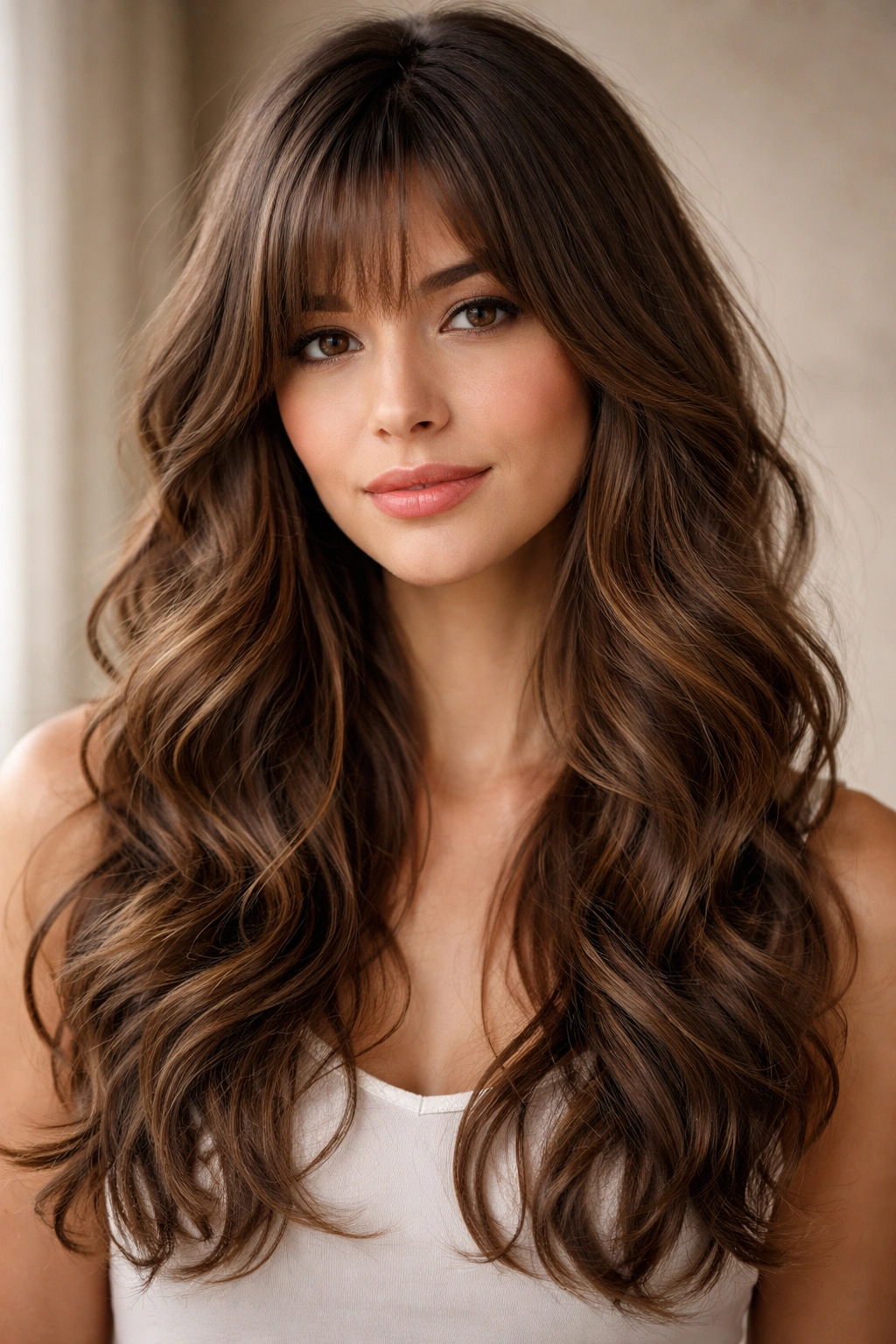
Graduated bangs are cut longer than traditional bangs but shorter than your longest layers, creating a subtle transition that frames your face while maintaining length overall. They’re cut with a graduated angle that gets progressively longer as it moves toward the sides of your face, so they blend into your layered cut instead of appearing as a separate piece. This style works beautifully on wavy hair where you want definition without a dramatic change.
The Subtle Sophistication of Graduated Bangs
Graduated bangs are sophisticated and intentional without being as bold as blunt bangs. They frame your face with clear definition while still maintaining a sense of flow and movement. Because they’re longer, they feel less severe and work with a wider range of face shapes. They’re also incredibly versatile — on a day when you want your bangs blended back, you can pin them, and they look like you just have excellent layers.
How to Style Them for Maximum Impact
Graduated bangs benefit from being styled with a slight curve or wave, which means a diffuser and some curl cream work beautifully. You can also blow-dry them smooth if you want a sleeker look. The graduated length means they sit naturally when you air-dry, but they also respond well to a little intentional styling when you want them to look polished.
Maintenance and Sustainability
- These bangs grow out gracefully because the graduated angle means there’s no obvious line to look messy as they get longer
- Trims every 8-10 weeks keep them looking sharp, but the window is wider than it is for blunt styles
- The transition to your layers means you’re not managing a separate piece — they integrate into your whole cut
- Pro tip: These bangs look especially great when your hair is styled with some texture or wave, so they work best if you’re comfortable with air-drying or using heat tools to enhance your natural pattern
7. Choppy, Textured Bangs for Tight Curls
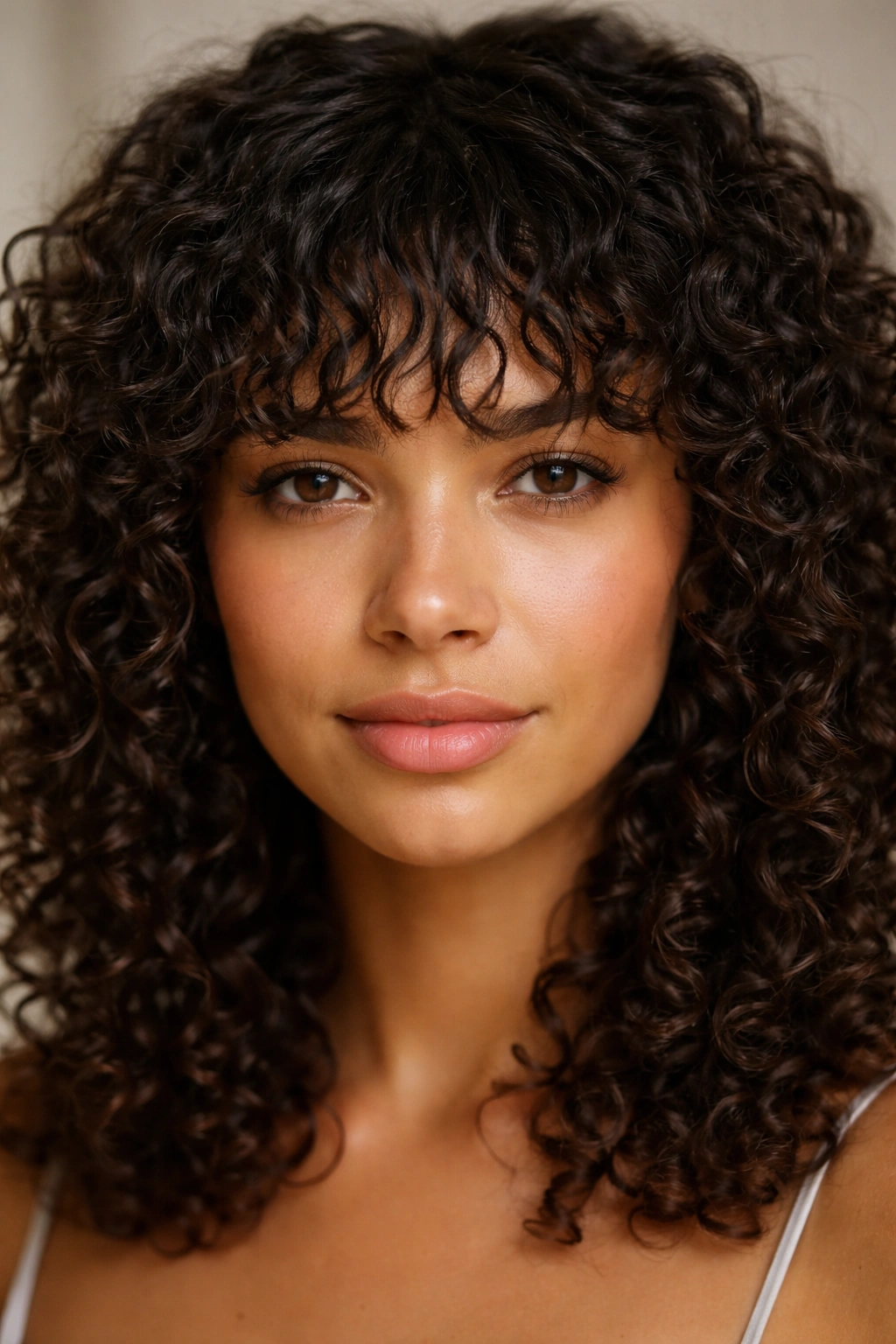
Choppy bangs are cut very short, with lots of texture and layers built in. They sit close to your forehead and create a playful, high-fashion look that works particularly well on people with very curly, textured hair. These bangs celebrate the individual curl pattern rather than trying to create one smooth line, so they look best when your curls are defined and popping.
Why Choppy Bangs Celebrate Curl Texture
Choppy bangs work on curly hair because each curl can stand independently and the choppiness becomes part of the style. You’re not trying to create one unified bang — you’re working with the natural variation of your curls. On very curly hair, this style reads as bold, artistic, and intentional in a way that speaks to people who love their texture rather than fighting it.
The Styling Commitment
This is a style that requires consistent styling. Your curls need to be set with gel or mousse while wet, and they’ll look best when you give them time to dry completely and fully set. A diffuser or hooded dryer speeds this up, but the key is allowing your curls to fully dry before you touch them. Once they’re dry, they’ll hold the shape beautifully, but you can’t rush them.
Who This Style Is For
- You’ve got curly hair that you actually like and feel confident wearing textured and undone
- You’re a person who naturally puts time into styling your hair anyway
- You want people to notice your hair (this is not a subtle style)
- You’re willing to trim every 4-5 weeks to keep the choppiness defined
- Insider note: Choppy bangs look especially good in natural light and in photos because the texture and movement is visually interesting rather than falling flat
8. Micro Bangs or Modern Minimalist Bangs
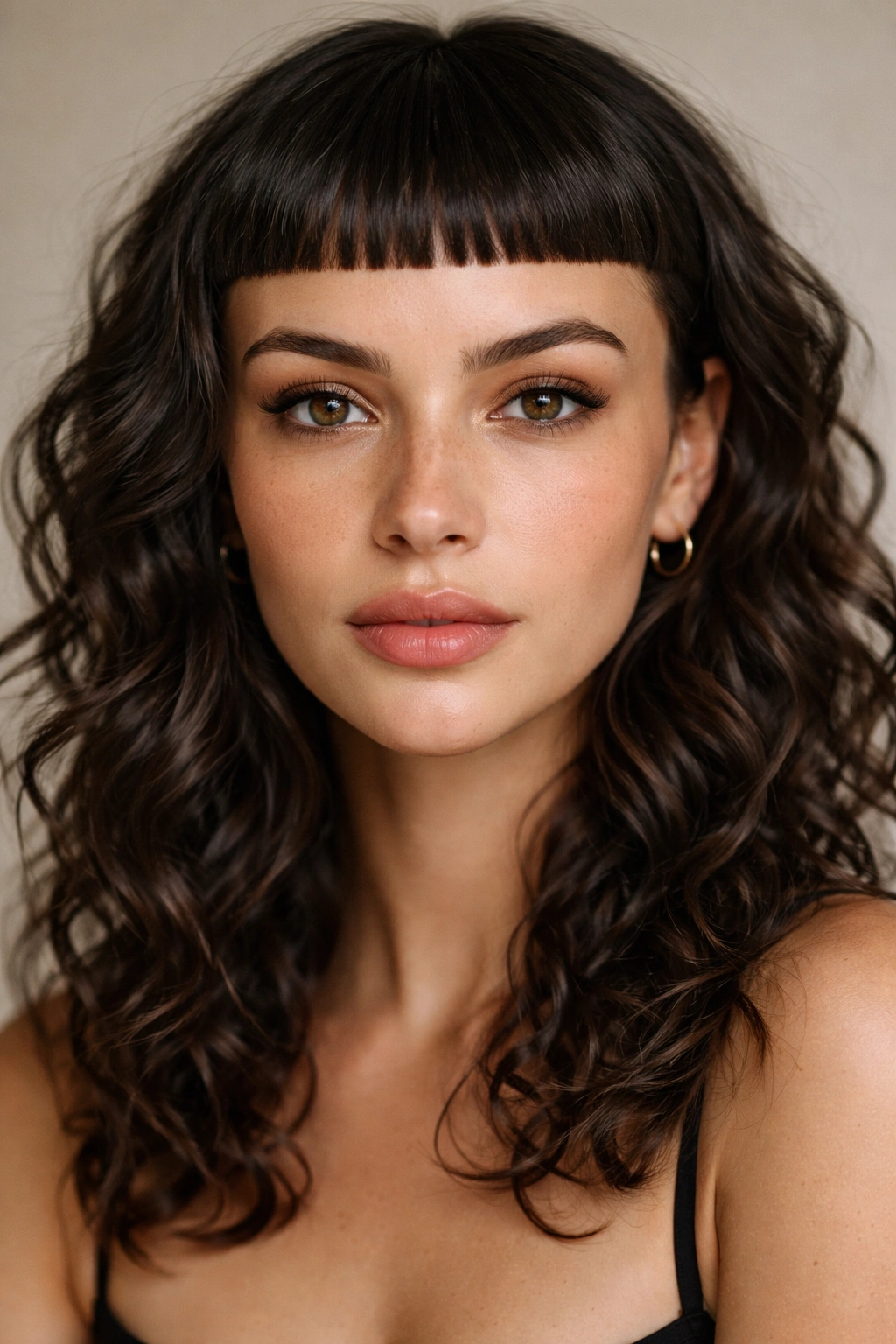
Micro bangs sit high on your forehead, just above where most people would wear them, creating a bold, modern look that’s all about making a statement. They’re cut extremely short and straight across, and they work best on people with very straight or very curly hair — the extremes of the texture spectrum. On curly hair, micro bangs create a striking, fashion-forward frame that feels editorial and intentional.
The Bold Statement of Micro Bangs
Micro bangs are not for people who want to blend in. They’re for people who want to be noticed and who feel confident enough to carry off an unconventional look. On curly hair, they’re particularly striking because they contrast sharply with the texture of the rest of your hair. The short, blunt line draws attention to your eyes and face shape, making them a powerful styling tool for people with beautiful bone structure.
Styling and the Reality Check
Here’s the honest truth: micro bangs on curly hair are high-maintenance. Your curls will pull up and shrink, so what looks hip and perfect at your stylist’s chair might feel way too short once your curls are fully set. You need regular trims — every 3-4 weeks — to maintain the look. And on days when your curls are particularly bouncy or when humidity is high, your bangs might sit higher than you expect.
Is This Actually for You?
This is the most committal bang style on this list, so think carefully before going for it.
- You have extremely confident personal style and regularly take fashion risks
- You’re willing to visit your stylist every 3-4 weeks without fail
- You understand that on some days your bangs will look shorter than others, depending on your curl pattern’s mood
- You prefer bold, fashion-forward looks over classic or timeless ones
- You’re ready for people to comment on your hair (this is a conversation-starter style)
- Worth knowing: Micro bangs look stunning in person but can photograph strangely depending on angles and lighting, so Instagram pictures might not capture how cool they actually look
Final Thoughts
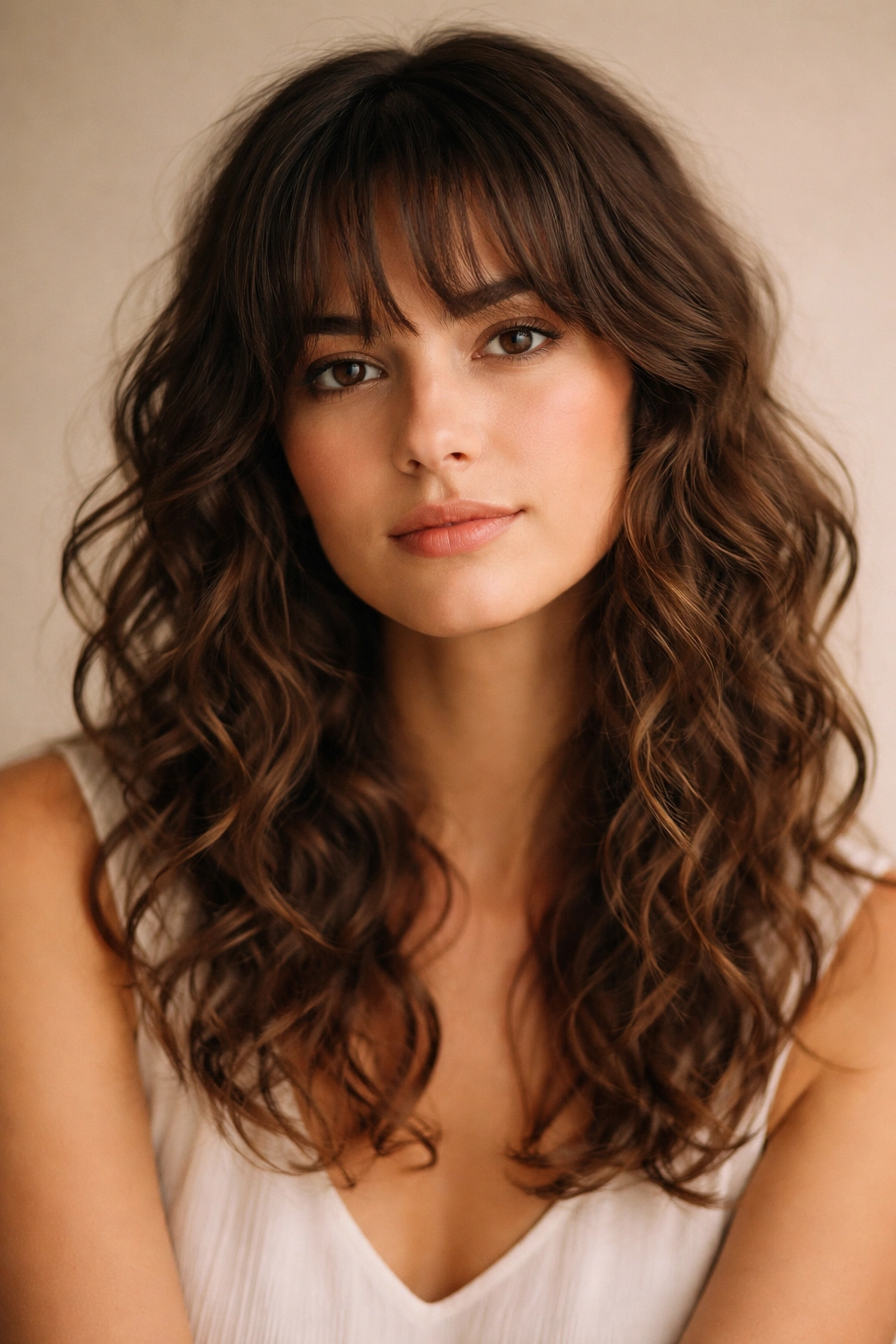
Finding the right bang style for wavy or curly hair is about honoring your natural texture instead of fighting it. Every style on this list works with your wave or curl pattern, but they demand different things from you in terms of styling time, maintenance commitment, and comfort with how your hair sits naturally. The curtain bangs and side-swept styles offer maximum flexibility with minimal fuss. The shag and feathered options celebrate texture without requiring precision. The blunt, choppy, and micro styles are for people who want a bold statement and are willing to show up consistently to maintain them.
Your best bet is to go into a consultation with a stylist who specifically works with wavy and curly hair regularly. Show them photos of styles you like, be honest about how much time you’re willing to spend styling each morning, and ask them to be real about the maintenance commitment each style requires. The right bang style won’t just look good — it’ll make your whole routine feel easier and more intentional, because you’re working with your hair’s nature rather than constantly working against it.
