



Shoulder-length hair with wavy texture is already a winning combination—it sits at that sweet spot where it’s not so short that you lose the movement of your waves, but not so long that styling becomes a daily battle. Add curtain bangs to the mix, and you’ve got a hairstyle that’s flattering, versatile, and genuinely works with your natural wave pattern instead of against it. The thing is, curtain bangs aren’t a one-size-fits-all situation. The way they frame your face, interact with your waves, and blend with the rest of your hair depends entirely on the cut’s structure, layering strategy, and how much texture is built into the overall style.
The best shoulder-length cuts with curtain bangs for wavy hair account for how your curls shrink, how they move when they dry, and where the weight naturally falls. Some styles benefit from choppy, piece-y layers that embrace the texture of your waves, while others look cleaner with subtle, feathered dimension. Your face shape, the density of your hair, and how pronounced your wave pattern is all play a role in determining which cut will look best on you. What works beautifully on someone with loose, relaxed waves might feel too heavy or disconnected on someone with tighter, more defined curls—and vice versa.
The curtain bang element adds an extra dimension because it needs to frame your face while also working with the wave pattern around your crown and sides. A curtain bang that’s cut straight might spiral into a tighter curl by midday if your hair is particularly wavy, so the cut itself has to account for that movement and shrinkage. When done right, curtain bangs on wavy hair create this effortlessly textured, lived-in vibe that actually looks easier to maintain than it is. Let’s explore nine shoulder-length styles that prove curtain bangs and waves are genuinely made for each other.
1. Choppy Textured Curtain Bangs With Piece-y Layers
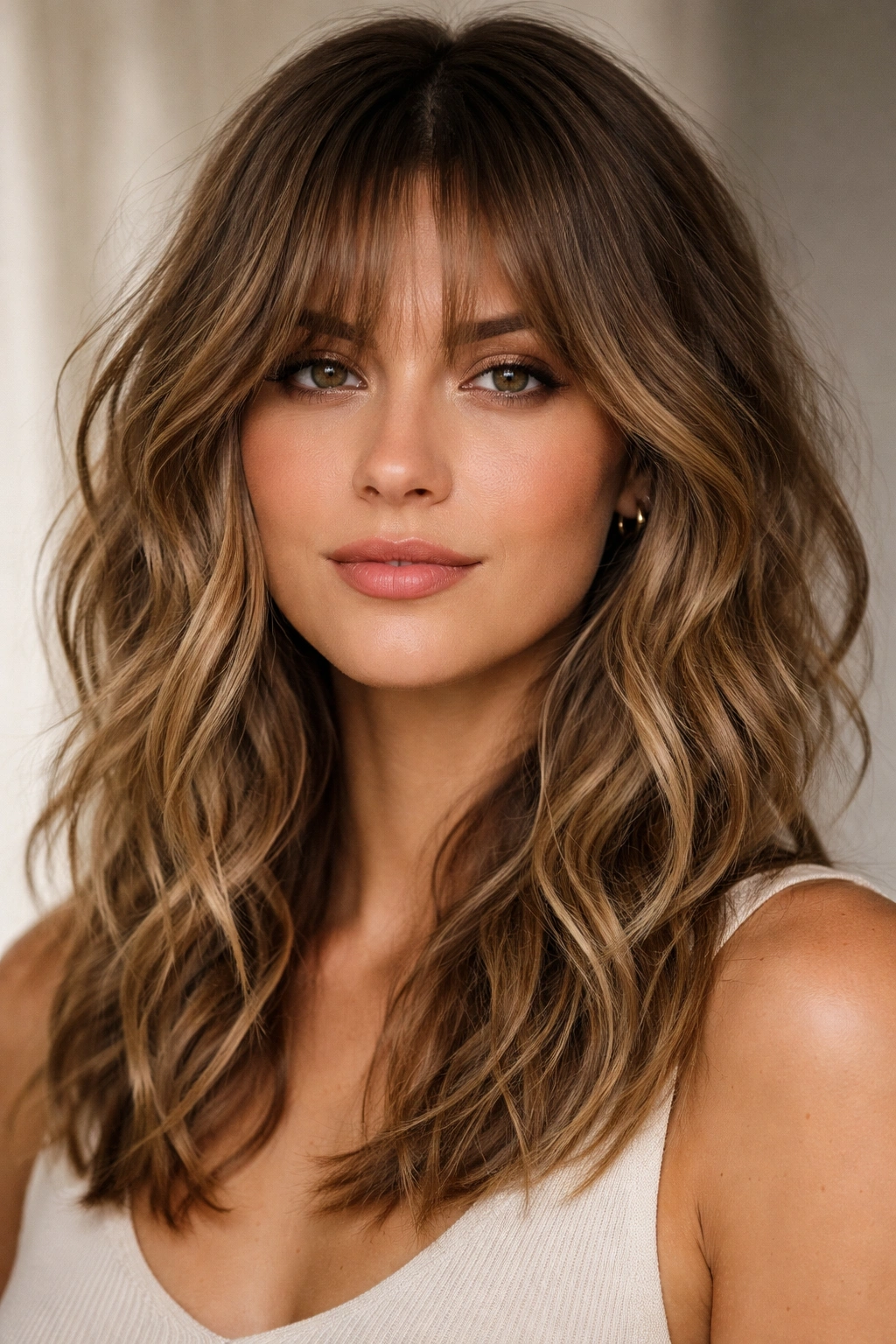
This style leans fully into the texture of wavy hair by using choppy, disconnected layers throughout. The curtain bangs are cut with sharp, intentional choppy sections that separate into distinct pieces rather than blending seamlessly into the rest of the style. Because the bangs themselves are textured, they won’t look blunt or rigid even as your waves dry and settle—the choppiness is supposed to look broken up and dimensional.
What Makes This Cut Work
The key to making choppy texture work is that the layers throughout the entire cut are cut at varying lengths and angles, not just the bangs. This means the weight is distributed unevenly in the best possible way—some sections hang longer, some are shorter, and everything has space to move independently. When you have naturally wavy hair, this kind of cutting technique actually enhances your waves rather than fighting them. Each choppy piece can follow its own wave pattern without pulling on the surrounding hair.
Styling and Texture Considerations
With this cut, you’re looking at a style that’s genuinely pretty hands-off once you understand the movement pattern. Scrunching your waves with a curl cream or gel as your hair dries will enhance the choppy texture and separate the pieces even more. The curtain bangs will naturally frame your face and part down the middle because of how they’re cut—you’re not forcing a part, the cut itself creates it. This style is particularly forgiving if your waves are unpredictable, because the choppiness actually reads as intentional texture rather than looking messy.
Who It Suits Best
Choppy textured curtain bangs work beautifully on people with medium to thick hair density and waves that are on the looser to medium side. If you have very fine, thin wavy hair, the choppiness can look sparse rather than intentionally textured. This style also suits faces that can handle more movement and visual texture around the face—if you prefer clean, minimal lines, this might feel too busy for you. Round or square face shapes particularly benefit from the movement and dimension this cut creates.
2. Long Layers With Wispy Curtain Bangs
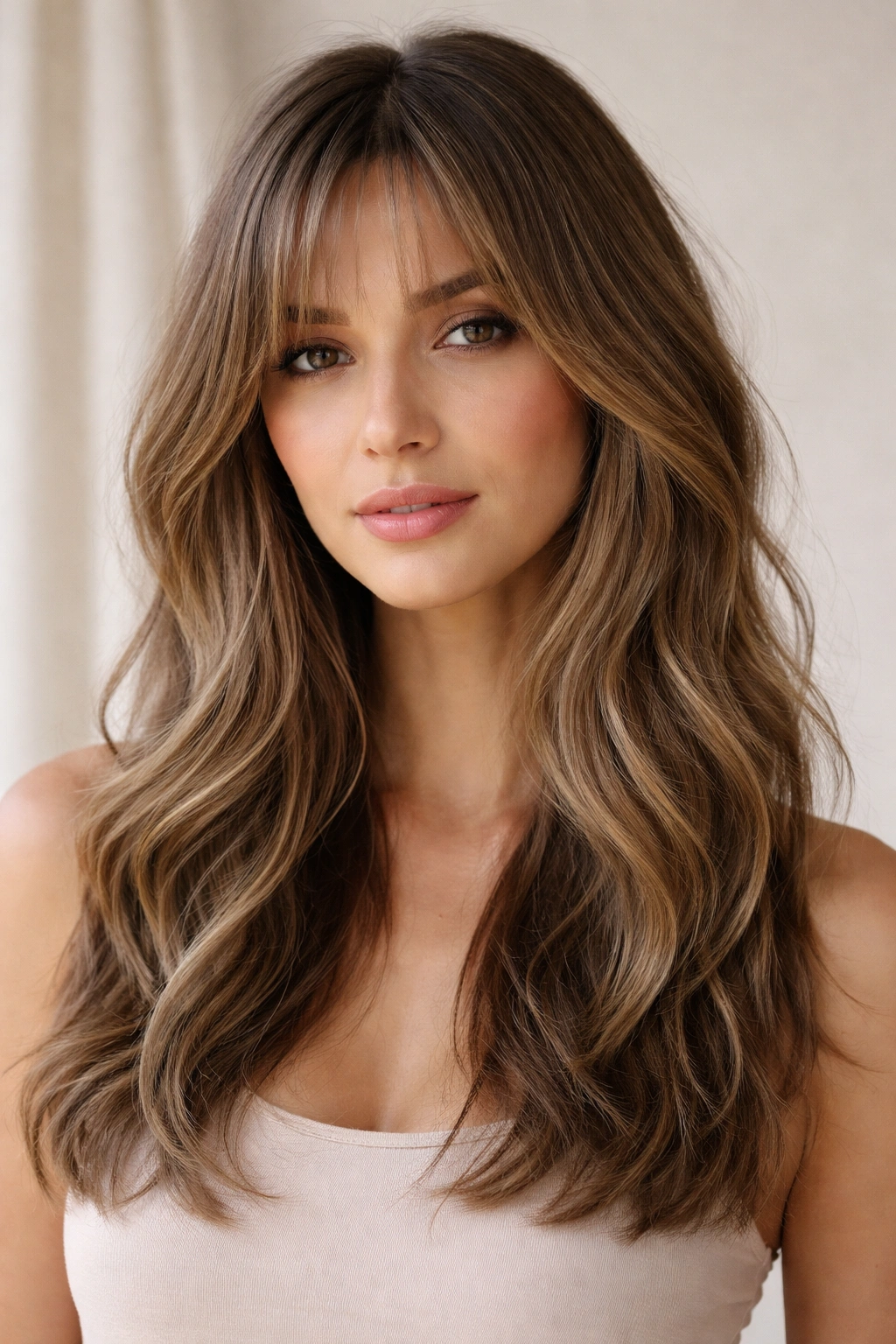
This style takes a gentler approach than choppy texture, using longer layers that blend more smoothly while still creating movement and dimension. The curtain bangs are wispy and feathered—cut so they taper gradually toward the ends rather than being blunt. The overall effect is softer and more romantic than a choppy version, while still working perfectly with wavy hair.
How the Layers Work Together
Long layers in a shoulder-length cut sit right at chin-level or slightly longer, creating a graduated length from the shortest pieces around your face to the longest pieces at the back. This creates a shape that actually encourages your waves to fall in a flattering way rather than all the length pulling everything straight. The wispy curtain bangs are typically cut to fall somewhere between your eyebrows and upper cheekbones, and they taper so gradually that they blend seamlessly into the longer layers on either side of your face.
The Styling Approach
Because the layers are longer and less choppy than the previous style, this cut has a slightly more polished, intentional feel—but it’s still low-maintenance. You can wear your waves naturally with just a curl cream, or you can brush through them slightly for a softer, wavier (rather than curly) texture. The wispy bangs work particularly well when you apply a little extra product to them and scrunch slightly to enhance any natural wave or curl they have. Unlike blunt bangs that need a specific part, wispy curtain bangs are forgiving about where you part them.
Who It Flatters Most
This is the style for someone who wants dimension and movement but prefers a softer, more polished overall aesthetic. It suits people with finer to medium hair density beautifully because the longer layers don’t create bulk—they just create shape. Wispy curtain bangs are also excellent if you have any concerns about your forehead—they cover it without feeling heavy or blunt. This style works on most face shapes, though it’s particularly flattering for oval, heart-shaped, and oblong faces.
3. Blunt Shoulder Length With Soft Curtain Bangs
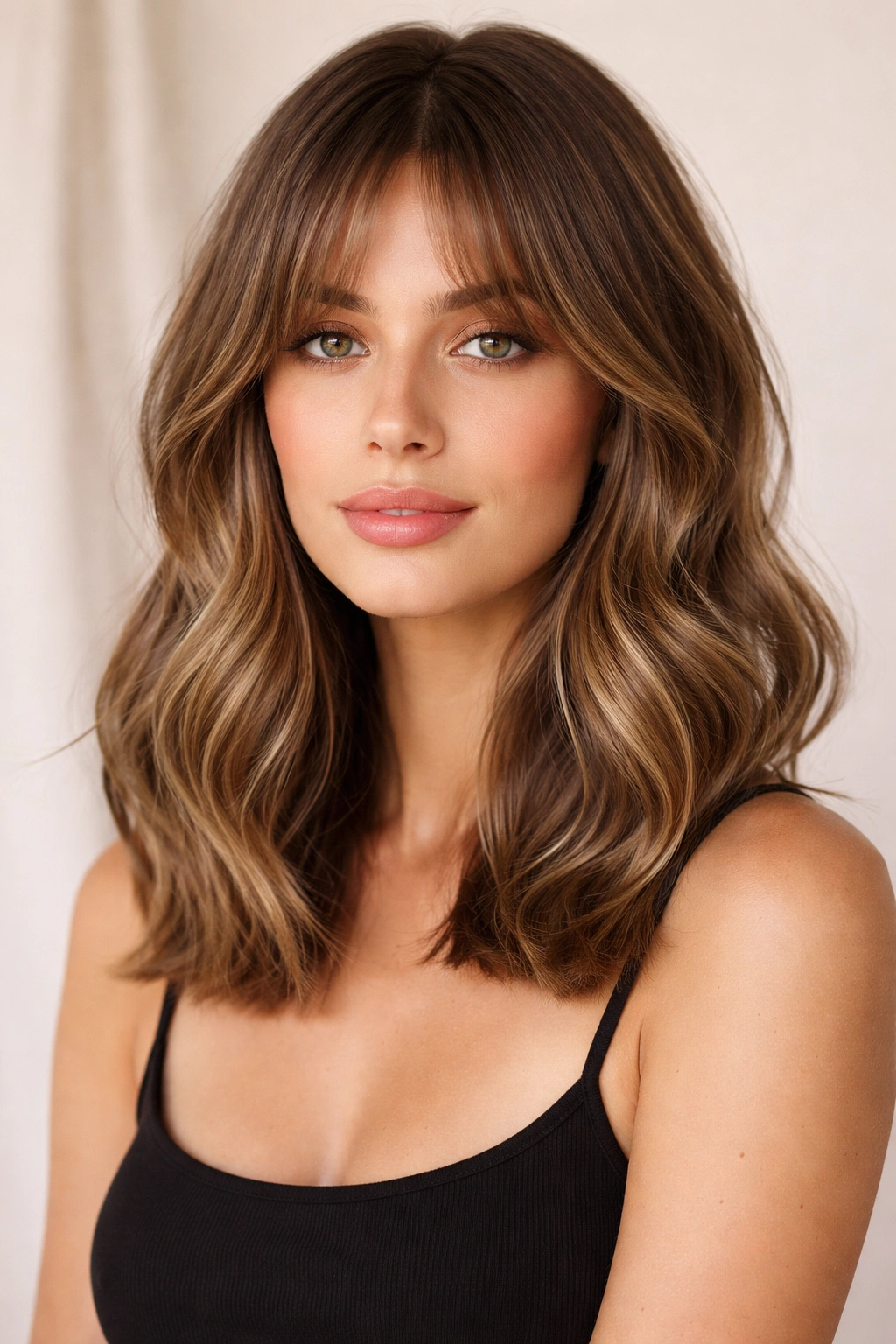
This cut keeps most of the length pretty even and blunt at a true shoulder level, creating a defined perimeter while the curtain bangs provide all the softness and face-framing dimension. It’s a more structured, intentional-looking cut than the previous two, which makes it ideal if you want something that reads as clearly “styled” rather than effortlessly tousled.
The Structure and Weight Distribution
A blunt shoulder-length cut creates a solid line at the bottom that actually helps contain and shape your waves instead of letting everything fan out. The bluntness at the perimeter means the weight is concentrated along that line, which can actually work in your favor with wavy hair because it prevents that frizzy, scattered ends look. Inside that blunt perimeter, there’s subtle layering and texturing, particularly around the crown and through the bangs, but nothing dramatic that disrupts the overall clean shape.
How Curtain Bangs Soften It
The contrast between the structured blunt length and the soft, divided curtain bangs is what makes this style interesting. The bangs essentially say “yes, this is textured and soft,” while the rest of the cut says “but also intentional and shaped.” The curtain bangs typically fall to around cheekbone length and have feathering or subtle texturing, so they part naturally down the middle and frame your face without looking severe.
Styling Considerations
This cut actually benefits from styling—it looks best when you enhance your natural waves or soft curls rather than leaving your hair completely flat. Using a diffuser on your blow dryer to encourage wave definition, or scrunching in a curl cream while your hair air-dries, will make the cut look intentional rather than limp. The blunt length at the ends needs to stay healthy and fairly blunt (not stringy), so this is a cut that requires more frequent trims than some others—every 6-8 weeks to maintain the shape.
Face Shapes and Hair Types
Blunt shoulder-length with soft curtain bangs works beautifully on people who have medium to thick hair density and clear to medium wave patterns. If your hair is very fine, the blunt length can look thin and stringy, and the cut won’t have the same impact. This style particularly suits square, rectangular, and oblong face shapes because the soft bangs break up the angles while the blunt length provides grounding. It’s less ideal for round faces where you’re trying to elongate, since the length ends right at the widest part of the face.
4. Shaggy Curtain Bangs With Textured Layers
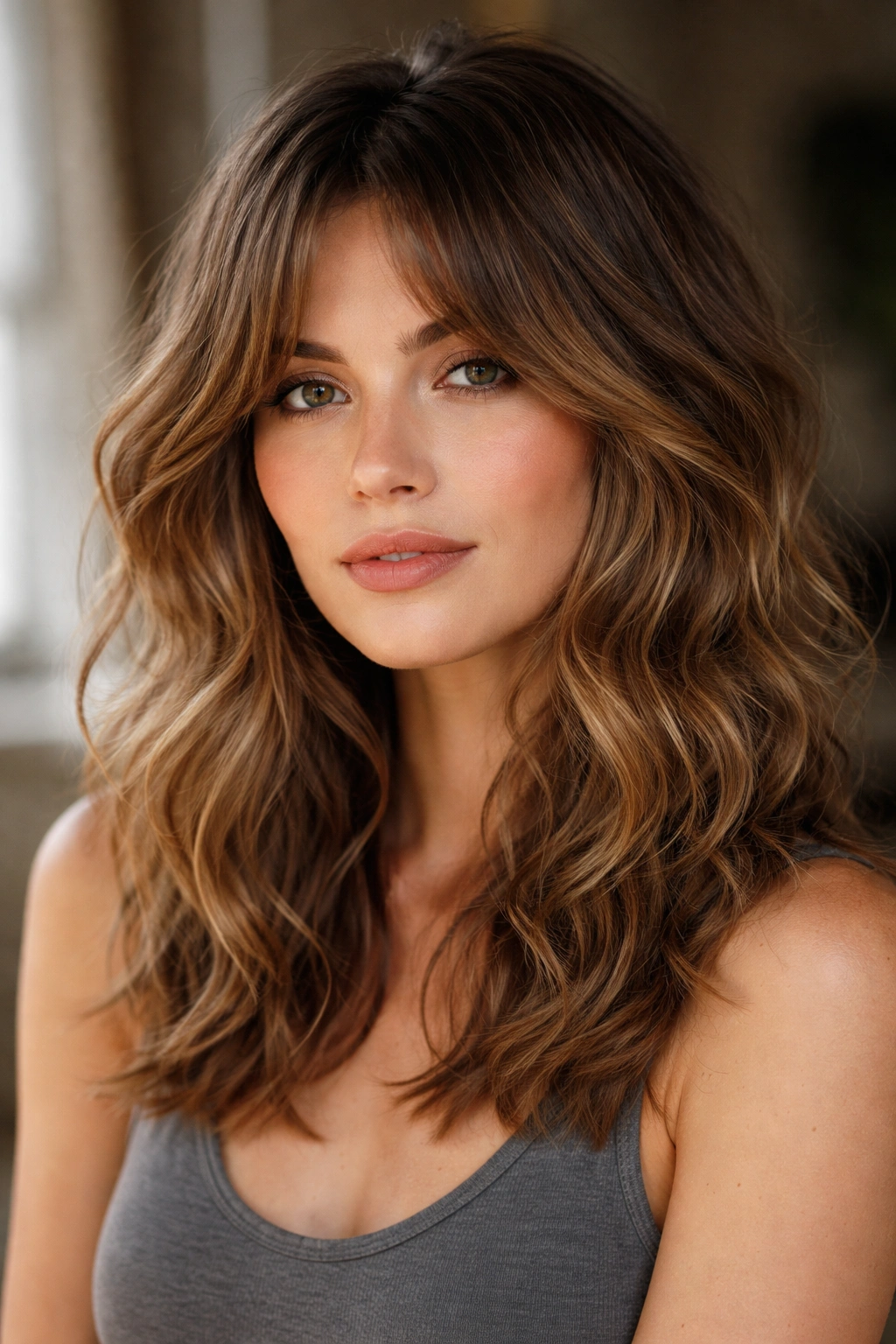
Shaggy is having a genuine moment for good reason—on wavy hair, it looks effortlessly cool and vintage-inspired while still being modern. This style uses heavily layered, choppy sections throughout, creating that signature shag texture where shorter, textured pieces sit on top of longer layers underneath. The curtain bangs are an integral part of the shag, not a separate element—they’re cut with the same choppy, piece-y technique as the rest of the cut.
Understanding the Shag Architecture
A shag isn’t just “lots of layers”—it’s specifically about creating different lengths that work independently while still connecting as one cohesive shape. The shortest layers sit around crown level and get progressively longer as you move down and back, creating texture and movement at every angle. The curtain bangs in a shag are typically pretty short (sometimes grazing your eyebrows or falling just slightly below), and they’re cut with that same choppy separation, so they feel like a natural part of the overall movement rather than looking like a separate bang situation.
The Movement and Texture Play
What makes a shag work on wavy hair is that the texture of your waves actually completes the cut in a way it does on straight hair. With straight hair, a shag requires a lot of blow-drying and styling to look intentional. With wavy hair, your natural texture immediately makes the cut look dynamic and three-dimensional. The shorter, choppy pieces have space to curl and wave independently, creating depth that you literally cannot achieve on straight hair.
Maintenance and Styling Reality
Shag styles require more regular trims than most other cuts—typically every 5-6 weeks—because the layers lose their shape and impact pretty quickly as your hair grows out. That said, day-to-day styling is actually pretty forgiving if you embrace the textured, tousled vibe that’s inherent to the cut. Scrunching gel or curl cream through damp hair and letting it air-dry (or using a diffuser) is often all you need. You can also wear it slightly brushed out for a softer, wavier shag versus a tighter, more curly shag, depending on your preference.
Who It Looks Best On
Shag with curtain bangs looks incredible on people with wavy to curly hair and light to medium density. If your hair is very thick and coarse, a shag can look overwhelming and difficult to manage. This style is particularly stunning on younger-looking people or anyone wanting a more edgy, fashion-forward vibe—it reads as intentionally cool rather than just “layered.” It suits oval, heart-shaped, and oblong face shapes beautifully, and it can work on round faces if you want to add some movement and dimension rather than softness.
5. Subtle Face-Framing Layers With Curved Curtain Bangs
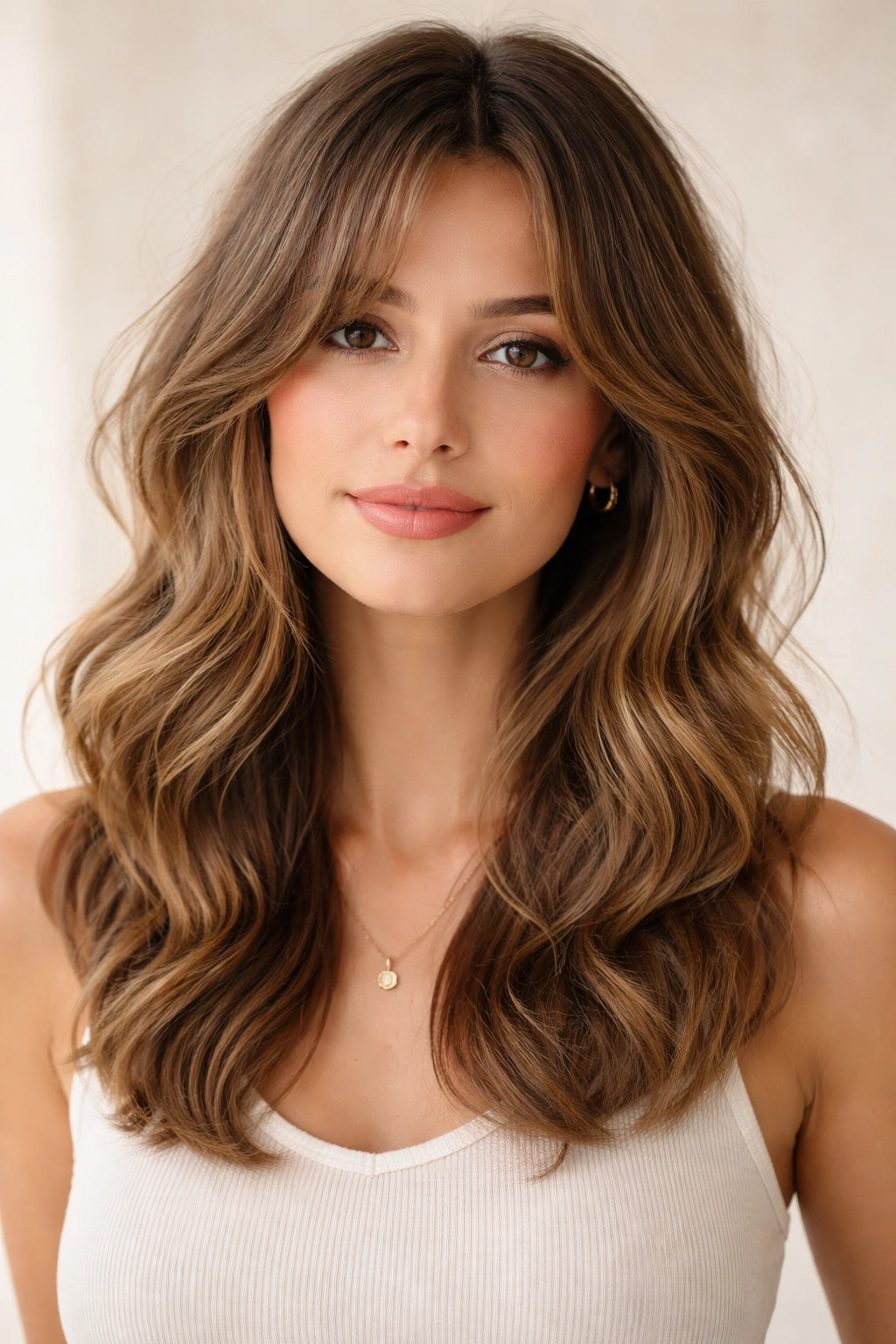
This style takes a more conservative, polished approach by using subtle layers that don’t create dramatic texture throughout the cut. Instead, the dimension is concentrated in the face-framing area. The curtain bangs are cut with a slight curve—almost like a gentle arc rather than a straight line—which creates a very soft, romantic look that works beautifully with waves.
The Layer Strategy
Face-framing layers sit just in front of your ears and are cut slightly shorter than the surrounding hair, creating a flattering frame around your face while maintaining a mostly consistent length through the rest of the style. These aren’t choppy or disconnected—they blend smoothly into the rest of your hair. The back and sides maintain more length and weight, which actually helps contain and shape the wave pattern rather than letting it get away from you. This creates a more conservative silhouette that’s still dimensional and interesting.
Curved Curtain Bangs Explained
Curved curtain bangs are bangs that follow a subtle arc shape—they’re not straight across, and they’re not dramatically choppy. Instead, they curve slightly outward as they get longer, so when you part them down the middle, each side curves gently away from your face. This creates an incredibly flattering frame that works with most face shapes. The curve also means that as your bangs grow out, they don’t suddenly look long and awkward—they have a built-in shape that works at multiple lengths.
Styling for Maximum Flattery
This style shines when you enhance your natural waves rather than fight them. Using a curl cream and a diffuser on lower heat creates soft, defined waves that make the cut’s shape really apparent. You can also brush through your waves for a softer, more relaxed look if you prefer. The curved bangs typically don’t need much styling—they fall naturally into their intended shape, though you can scrunch them slightly with product if you want more definition.
Perfect Face Shapes and Hair Types
Subtle face-framing layers with curved curtain bangs are genuinely flattering on almost everyone, which is part of why this is such a popular style. It works beautifully on round, square, heart-shaped, and oval faces. It suits fine to thick hair density equally well because the layering is subtle enough not to create sparseness on fine hair, and concentrated enough not to overwhelm thick hair. If you have very textured, tight curls, curved bangs can sometimes look blunt rather than soft, but this works on the full spectrum of wavy hair.
6. Curtain Bangs With Minimal Layers
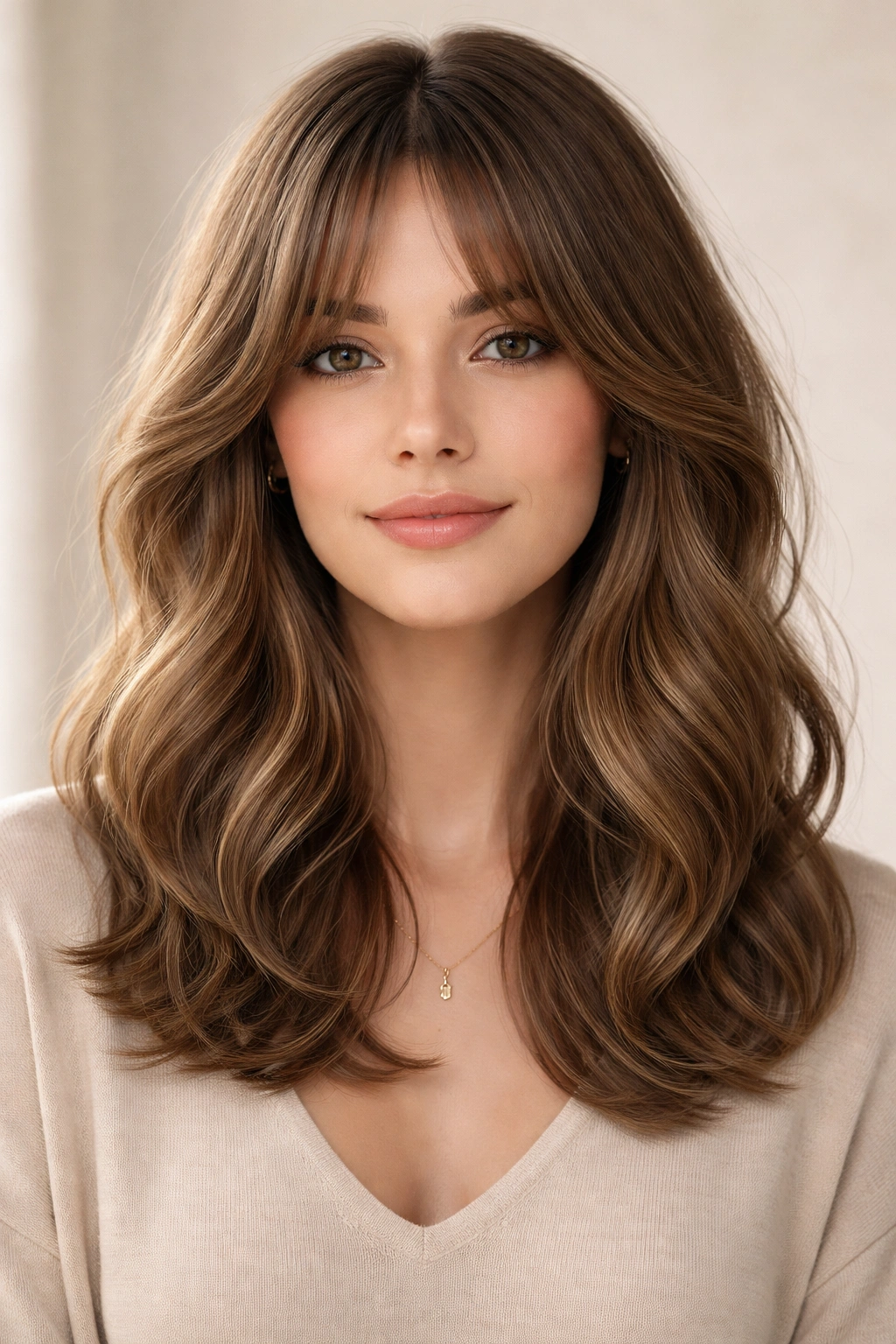
Sometimes less is more, and this style proves it. Minimal layering keeps most of your hair at a consistent length—shoulder length—with subtle texture and movement added only through the curtain bangs and perhaps some very light texturing at the ends. This is the most conservative cut on this list, perfect for someone who wants the softness of curtain bangs without dramatic layering throughout.
Why Minimal Layering Works With Wavy Hair
You might assume that wavy hair needs lots of layers to look good, but that’s not actually true. A solid, shoulder-length cut with minimal internal layering can look beautiful on waves because the weight of the hair actually helps shape and define your wave pattern. Without too many short layers competing for attention, your waves read as waves rather than frizz. The style has a cleaner, more intentional appearance while still maintaining all the softness and movement that makes wavy hair special.
The Curtain Bang Element
With minimal layering in the rest of the cut, the curtain bangs become the focal point of the style’s texture and dimension. They’re typically cut a bit shorter—somewhere between eyebrow and cheekbone length—and they’re textured or wispy so they separate and divide rather than hanging as one solid piece. This creates the visual interest and face-framing that you’re looking for, without requiring layers throughout the rest of your hair.
Maintenance and Styling Ease
This is genuinely one of the lowest-maintenance cuts on this list because you’re not dealing with multiple lengths that need to be shaped and maintained regularly. You still want to trim every 8-10 weeks to keep the shoulder-length blunt (or nearly blunt) and the bangs in good shape, but the overall upkeep is minimal. Styling-wise, you can simply enhance your natural waves with product and let them dry, or you can blow-dry with a diffuser for more defined waves. Either way, the style works.
Who Should Choose This Style
Minimal layering with curtain bangs is ideal for someone with medium to thick hair density who has waves that are pretty consistent and predictable. If your waves are very variable—spiraling curls in some spots, straight sections in others—you might want more layering to help blend those differences. This style looks most polished on people who prefer a cleaner, more intentional aesthetic rather than a super textured, piece-y vibe. It’s flattering on most face shapes and works beautifully at any age.
7. Curtain Bangs With Choppy Ends
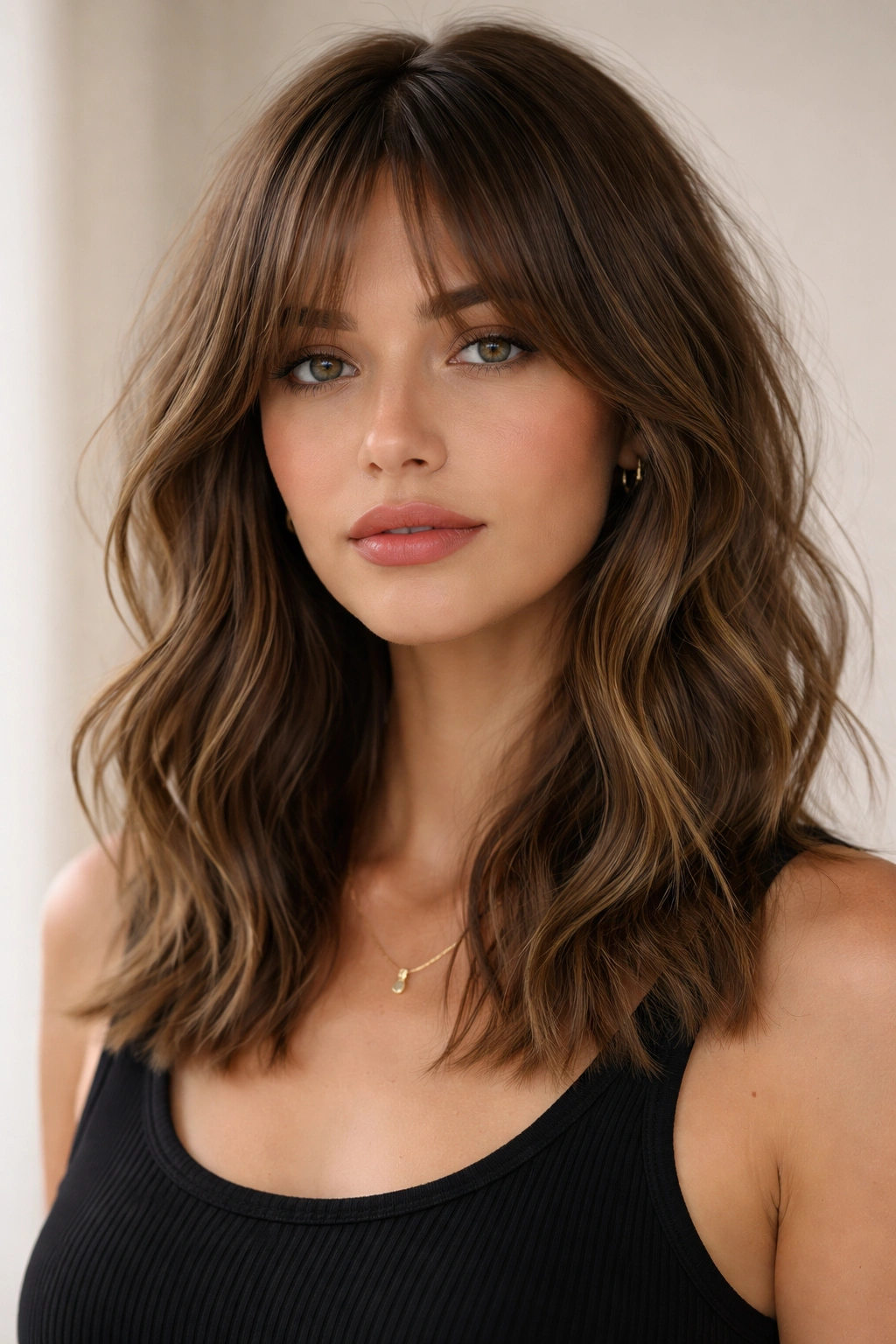
This style keeps the length mostly consistent at shoulder level but adds choppiness and texture only at the very ends of the hair, creating an interesting visual effect where the perimeter is deliberately jagged rather than blunt or smooth. The curtain bangs coordinate with this choppy-ends treatment, creating a cohesive, textured look throughout.
The Choppy-Ends Technique
Choppy ends are created by cutting the hair in a way that creates intentional separation and texture right at the perimeter—almost like you’re cutting into the ends at different angles so no two pieces end at exactly the same length. This sounds like it could look messy, but when done well on wavy hair, it looks incredibly intentional and cool. It’s particularly effective for wavy hair because your waves naturally create separation at the ends, and the choppy cutting technique just enhances what’s already happening.
How It Works With Curtain Bangs
The curtain bangs in this style are typically textured or choppy as well, so they feel connected to the rest of the cut rather than being a separate element. Because the bangs are divided and piece-y, and the ends are choppy and separated, you get this cohesive, textured vibe throughout the style. It’s very modern and fashion-forward without being extreme.
Styling Strategies
Choppy ends actually look best when you’re not obsessively styling them—letting your natural waves dry relatively undisturbed and then scrunching in some product looks more effortless and cool than trying to blow-dry everything smooth. If you want more defined waves or curls, a diffuser works beautifully, and the choppy texture reads as intentional rather than frizzy. The key is using enough product to define your wave pattern so the choppy ends look textured rather than just dry and split.
The Right Hair and Face Match
Choppy ends with curtain bangs look best on people with wavy to curly hair—the choppiness gets lost on very straight hair. This style suits medium to thick hair density beautifully and reads as very cool and current. It’s particularly stunning on younger faces or anyone wanting an edgy, fashion-forward vibe. Round and square face shapes especially benefit from the softness of the face-framing curtain bangs balanced against the edgy choppy ends.
8. Feathered Curtain Bangs With Soft Layers
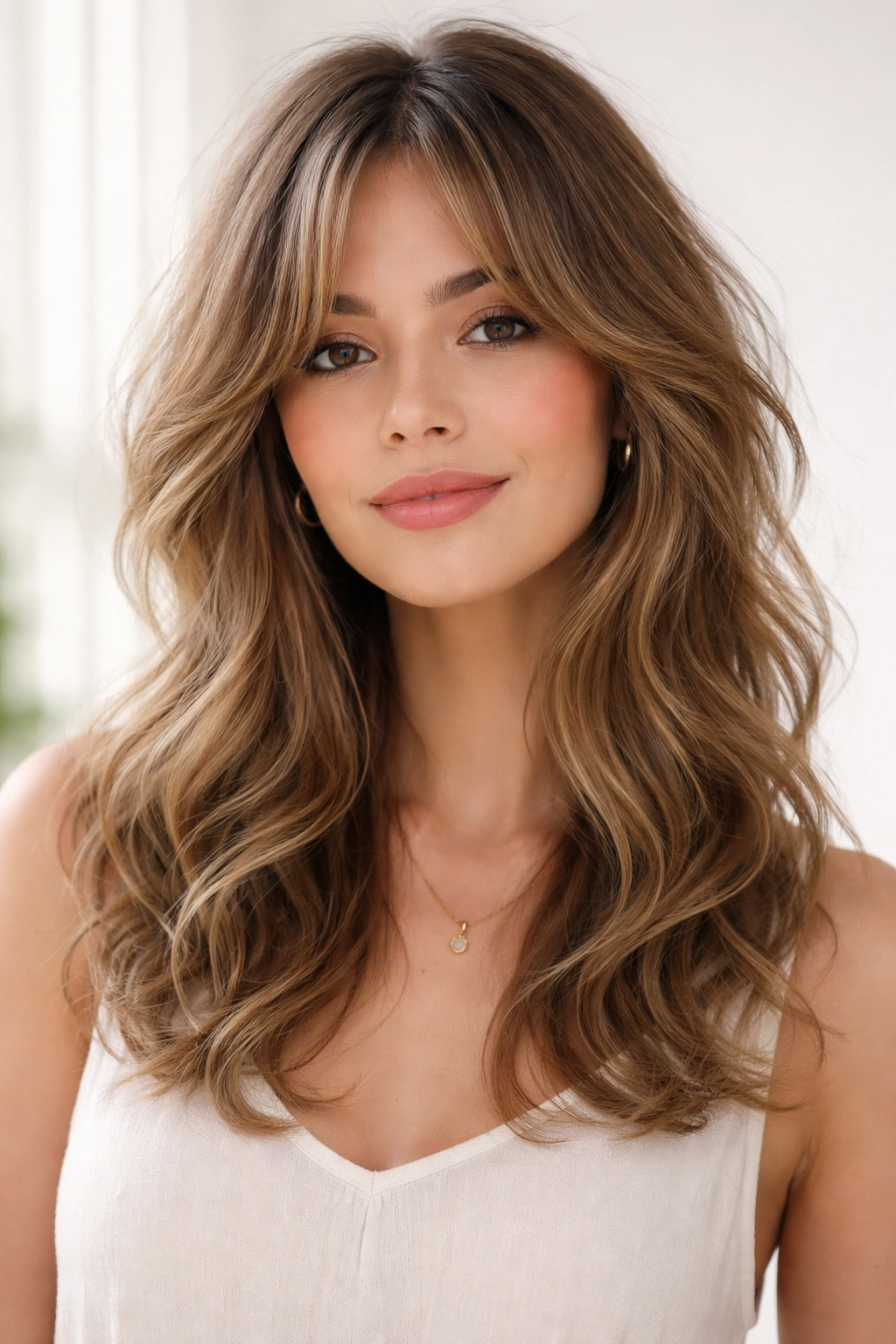
Feathering is a technique where the hair is cut in a way that creates light, airy texture throughout—individual hairs are tapered gradually rather than cut bluntly, so everything feels delicate and soft. This style uses feathering throughout the cut, with the most pronounced feathering happening in the curtain bangs and the face-framing pieces.
Understanding Feathering on Wavy Hair
Feathering is particularly beautiful on wavy hair because it creates texture without bulk. Each feathered piece can follow its own wave pattern, and the tapered ends mean you don’t get that heavy, blunt edge that can look stringy or frizzy on wavy hair. The feathering essentially works with your wave pattern rather than against it, creating a style that looks naturally textured rather than overly styled.
The Curtain Bang Component
Feathered curtain bangs are typically longer than choppy or blunt bangs—often falling to cheekbone length or even lower—and they taper gradually so each side seems to feather outward from the center part. This creates an incredibly soft, romantic look that’s flattering on almost everyone. The feathering means the bangs won’t look blunt or heavy even if your waves are loose and relaxed.
Styling for That Feathered Look
To maximize the feathered effect, use a diffuser on your blow dryer or let your hair air-dry entirely and enhance the waves with curl cream. The feathering means you don’t need choppy texture to create dimension—your natural waves do that for you. You can brush through slightly for a softer, wavier look, or leave the waves tighter and more defined. Either way, the feathering creates a light, airy quality that makes this style feel effortless.
Best Suited For
Feathered layers with feathered curtain bangs work beautifully on people with fine to medium hair density and loose to medium waves. If your hair is very thick and coarse, feathering can sometimes look wispy and unintentional. If your curls are very tight, feathering might disappear entirely into your curl pattern. This style is incredibly flattering on most face shapes and reads as soft, romantic, and intentionally styled without looking overdone.
9. Curtain Bangs With Brow-Grazing Length
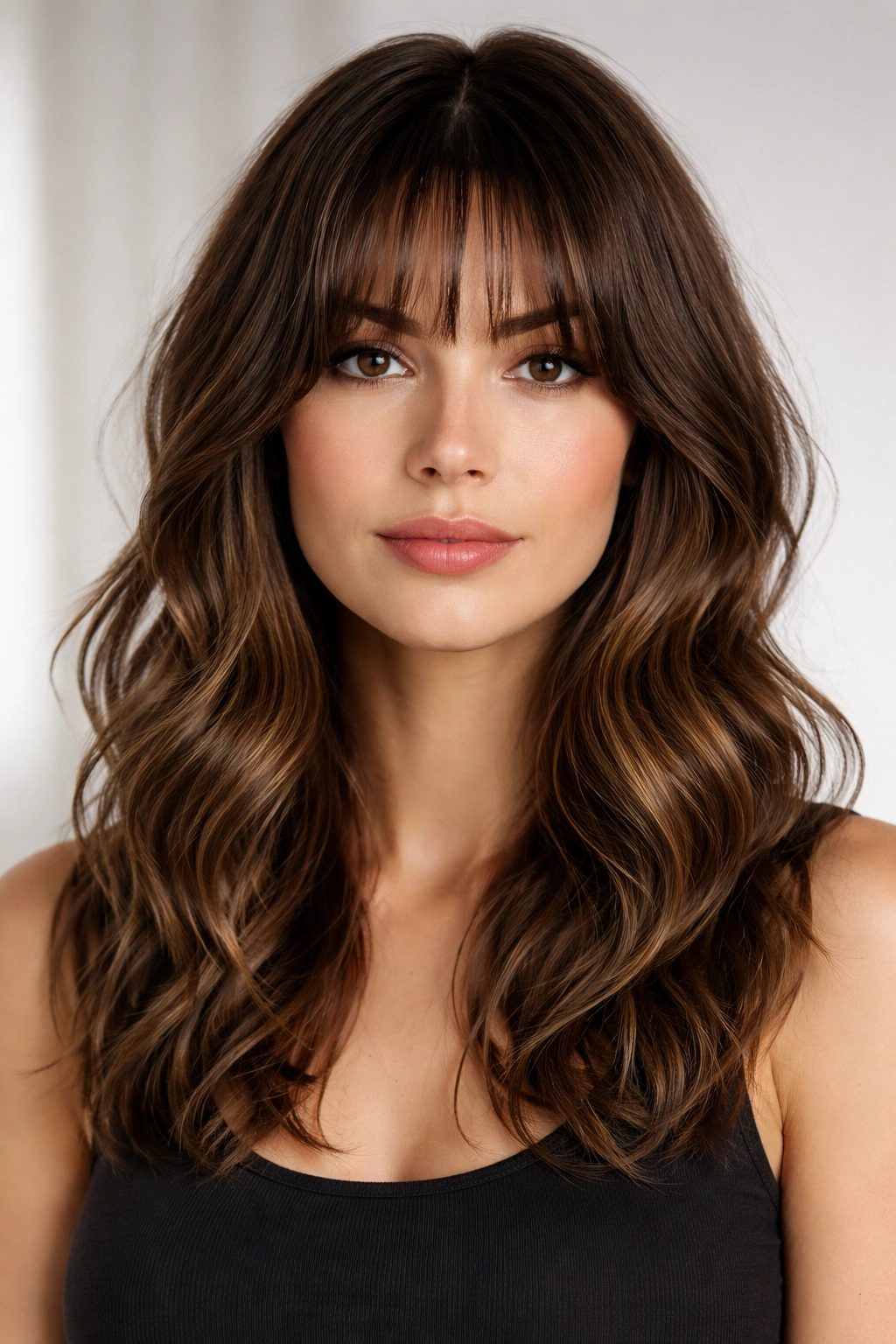
This final style takes a bold approach by cutting the curtain bangs much shorter—right around eyebrow length—while maintaining longer, shoulder-length hair in the back. The contrast between the short, textured bangs and the longer length creates visual interest and a very modern, cool aesthetic.
The Impact of Brow-Grazing Length
When your curtain bangs are cut to brow-grazing or even slightly shorter, they become a major style statement rather than a subtle frame. This length works beautifully with wavy hair because the shorter pieces around your face can have tighter wave definition without looking wispy or disconnected. The brows are naturally framed by the bangs, and because of their length, they really define your eye area.
Balancing Short Bangs With Longer Length
The key to making brow-grazing curtain bangs work is ensuring the longer length in the back and sides is substantial enough to balance the shorter bangs visually. Most of these cuts include subtle to medium layering throughout so the shorter bangs don’t look jarring against much longer length. The layers also help blend the bangs into the rest of the style so it reads as one cohesive cut rather than just “short bangs on long hair.”
Styling and Movement
Brow-grazing bangs need a bit more daily attention than longer bangs because they’re right in your sightline and movement is more noticeable. You can style them in a few different ways—pin them back with a clip for a fuller face, sweep them to the side for asymmetrical interest, or let them part down the middle and frame your face. With wavy hair, the bangs naturally have movement and texture, so they rarely look flat or limp unless your hair is very straight.
Who Should Try This
Brow-grazing curtain bangs suit people with oval, heart-shaped, and oblong face shapes beautifully—the shorter length balances longer faces. If you have a very round face, shorter bangs can sometimes emphasize the roundness, though it depends on how much the rest of the cut adds dimension. This style is bold enough that it suits younger faces or anyone confident in a more fashion-forward look. It’s particularly stunning on people with medium to thick hair density and visible wavy texture.
Final Thoughts
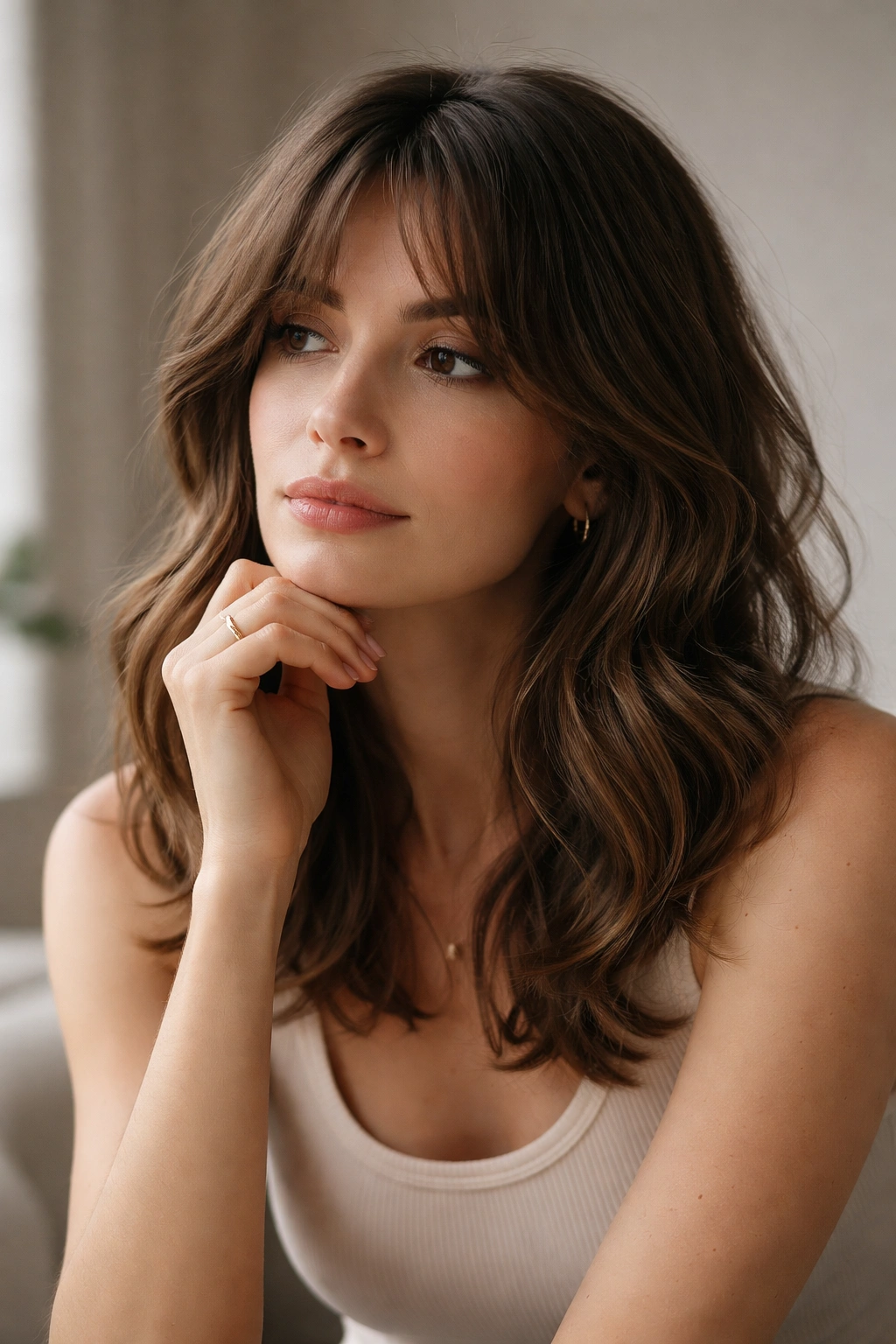
The best shoulder-length cut with curtain bangs for your wavy hair ultimately depends on how much texture you want throughout the cut, what kind of styling commitment you’re willing to make, and what aesthetic you’re drawn to—whether that’s effortlessly tousled or intentionally styled. All nine of these styles work genuinely beautifully with wavy hair texture, which is really the point. None of them fight your natural wave pattern or require you to blow-dry everything straight to look good.
When you’re consulting with a stylist about any of these cuts, show them photos of the specific style you want, but also talk through the texture and movement in your waves. Let your stylist know whether your waves are consistent throughout or variable, whether they’re on the looser or tighter side, and how much daily styling you’re willing to do. A great stylist who understands how to cut wavy hair will adjust any of these styles to work perfectly with your specific hair type and face shape.
The beauty of curtain bangs on shoulder-length wavy hair is that you get dimension, softness, and face-framing without sacrificing the ease of working with your natural texture. Whether you choose choppy, feathered, shaggy, or minimal, you’re starting with a foundation that actually enhances your waves rather than trying to tame them into submission.
