



Layered haircuts have quietly become a game-changer for people with coily natural hair—and for good reason. While many styling options flatten texture or create awkward bulk, well-designed layers actually work with your curl pattern instead of against it. The right layering technique removes weight in strategic places, lets your curls breathe and separate naturally, and creates movement that makes your hair look fuller and more defined. Plus, layers give you styling flexibility you might not have with a blunt cut—you can wear your curls tight and bouncy, stretched out for more length, or anywhere in between.
The challenge is finding a haircut that respects your curl pattern while still delivering real style and dimension. Not every layered cut translates well to coily hair, and a stylist who doesn’t understand curl mechanics can easily create a disaster. You need cuts that account for how your hair shrinks when wet, how curls stack on top of each other, and what happens when gravity pulls on textured strands differently than it does on straight hair.
The eight haircuts below have been chosen because they genuinely enhance coily natural hair when cut properly. Each one works with your curl pattern rather than fighting it, and each offers distinct advantages depending on your curl type, desired length, and styling preferences. Whether you’re looking for something dramatic or subtle, low-maintenance or statement-making, you’ll find real options here that actually work.
1. The Textured Shag
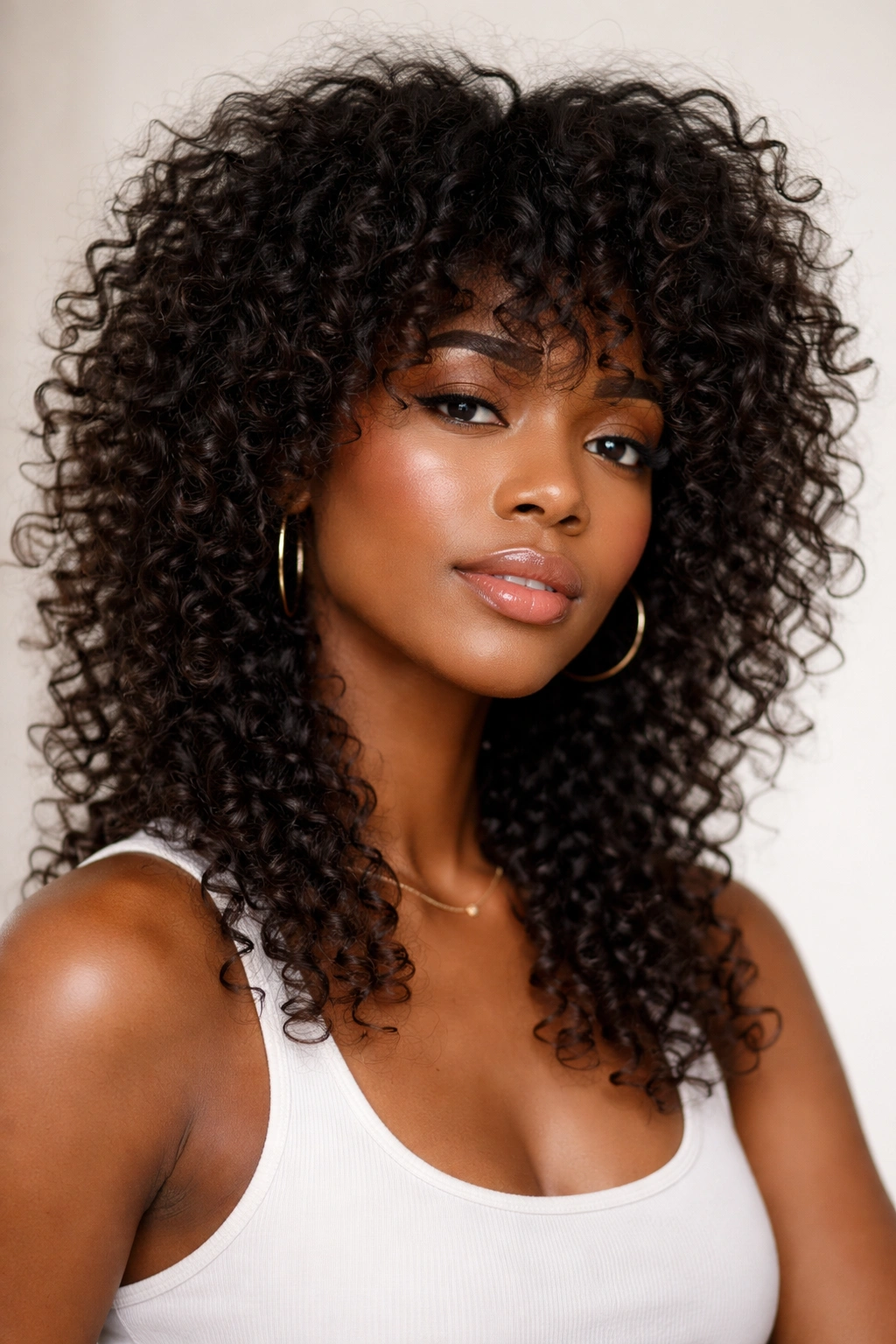
A textured shag is basically the cool older sibling of the classic 1970s cut—updated for curls and way more intentional about how the layers work. This cut features choppy, disconnected layers throughout, shorter on top and longer underneath, with plenty of movement and texture at every level. When done right on coily hair, the layers fall at different lengths so your curls can spread out and show dimension, rather than all sitting at the same line and looking like a solid block.
Why It Works for Coily Hair
Shags are designed for movement, and curls need movement to look their best. The choppy nature of the layers means there’s built-in texture that complements your natural texture rather than fighting it. Each layer can curl independently without being weighed down by the layer beneath it. The shorter layers on top create volume at the crown, which prevents that flat-hair look that longer cuts sometimes create on curl-prone heads. Because the layers are disconnected (not blended smoothly), the cut reads as intentional and edgy rather than accidental or grown out.
How to Style and Maintain It
Shags need regular definition work to keep the choppy texture looking intentional rather than scraggly. Use a curl cream or gel on soaking-wet hair and finger-coil or manipulate your curls into place. A styling brush or denman brush helps define individual curl clumps. The cut looks best with regular trims every 6-8 weeks to maintain the choppy silhouette—let it go longer and it starts looking less polished. Dry styling with a diffuser attachment (or air-drying with a leave-in cream and gel) keeps the texture elevated and prevents the layers from looking flat.
Pro tip: Shags photograph beautifully and work especially well if you love a bold, fashion-forward aesthetic. They’re not the most low-maintenance option, but they’re worth it if you enjoy styling your hair regularly.
2. The Curtain Cut with Texturized Layers
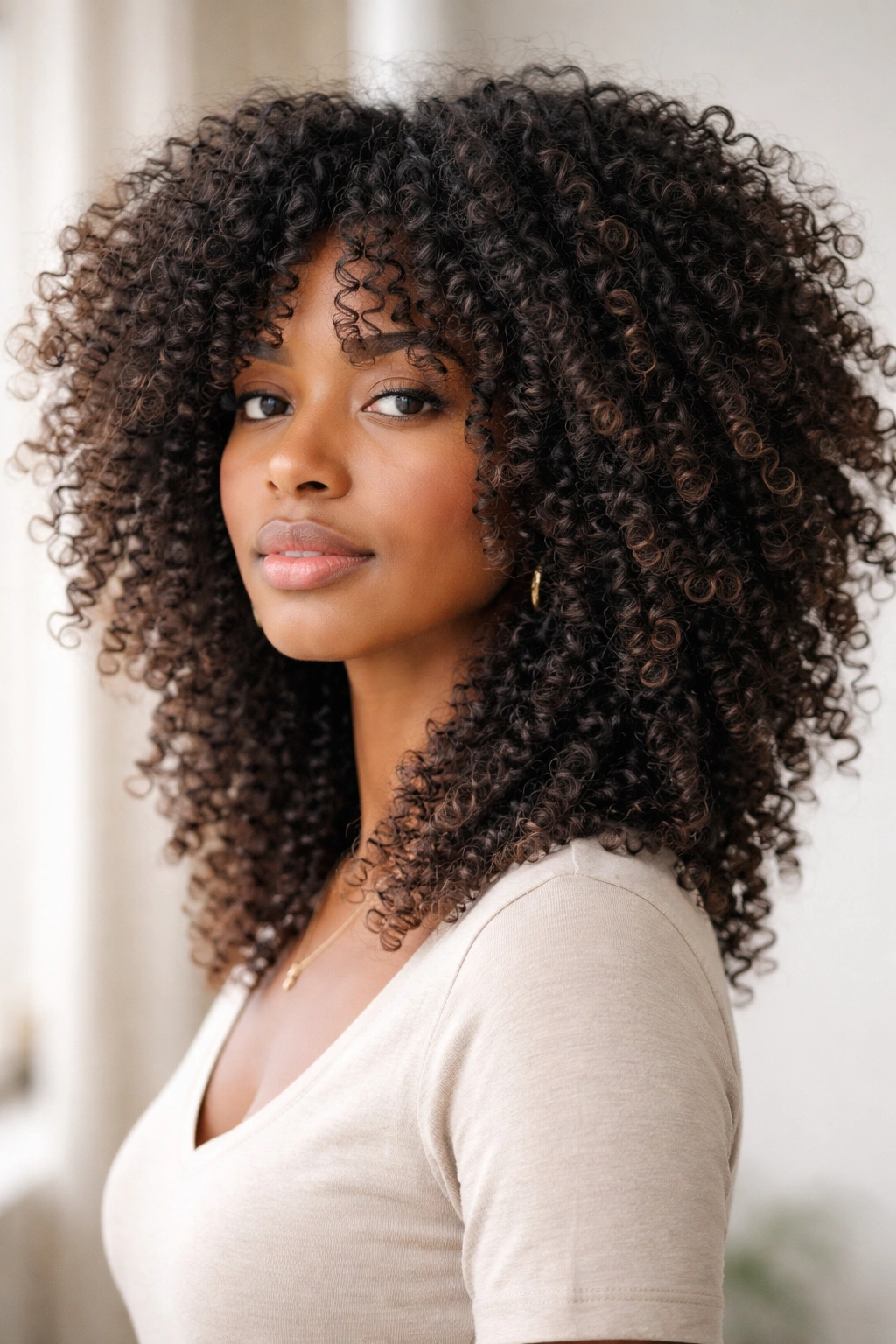
A curtain cut frames the face with longer pieces that move away from your features, while shorter layers in the back and crown create dimension. When adapted for coily hair, the texturizing is key—instead of blunt lines, your stylist carves out individual curl patterns to encourage separation and movement. Think of it as a cut that literally highlights the best parts of your curl definition while creating a face-flattering shape.
Why It Works for Coily Hair
Curtain cuts are inherently flattering because they move away from your face, and the longer front pieces help elongate your features visually. For coily hair, the texturizing creates a feathered effect where curls at different levels can separate and show their individual texture. The shorter back and crown layers provide lift, and the longer face-framing pieces give you soft movement without sacrificing the definition of your curls. This cut works especially well if you have a rounder face or want softer, more romantic styling.
How to Style and Maintain It
Curtain cuts benefit from deliberate styling to show off the texturizing work. Styling gel applied to soaking-wet curls, with intentional finger-coiling of the face-framing pieces, ensures those longer front sections dry in a way that frames your face beautifully. You can style it with your curls densely packed and defined, or stretch sections out for a more elongated look. The back can be styled sleeker or more textured depending on the day. Trims every 8 weeks keep the shape sharp and prevent the longer front pieces from looking stringy.
Pro tip: This cut is incredibly versatile for both casual everyday wear and more polished occasions. It’s the choice if you want something flattering and feminine without being high-maintenance.
3. The Tapered Undercut with Layered Top
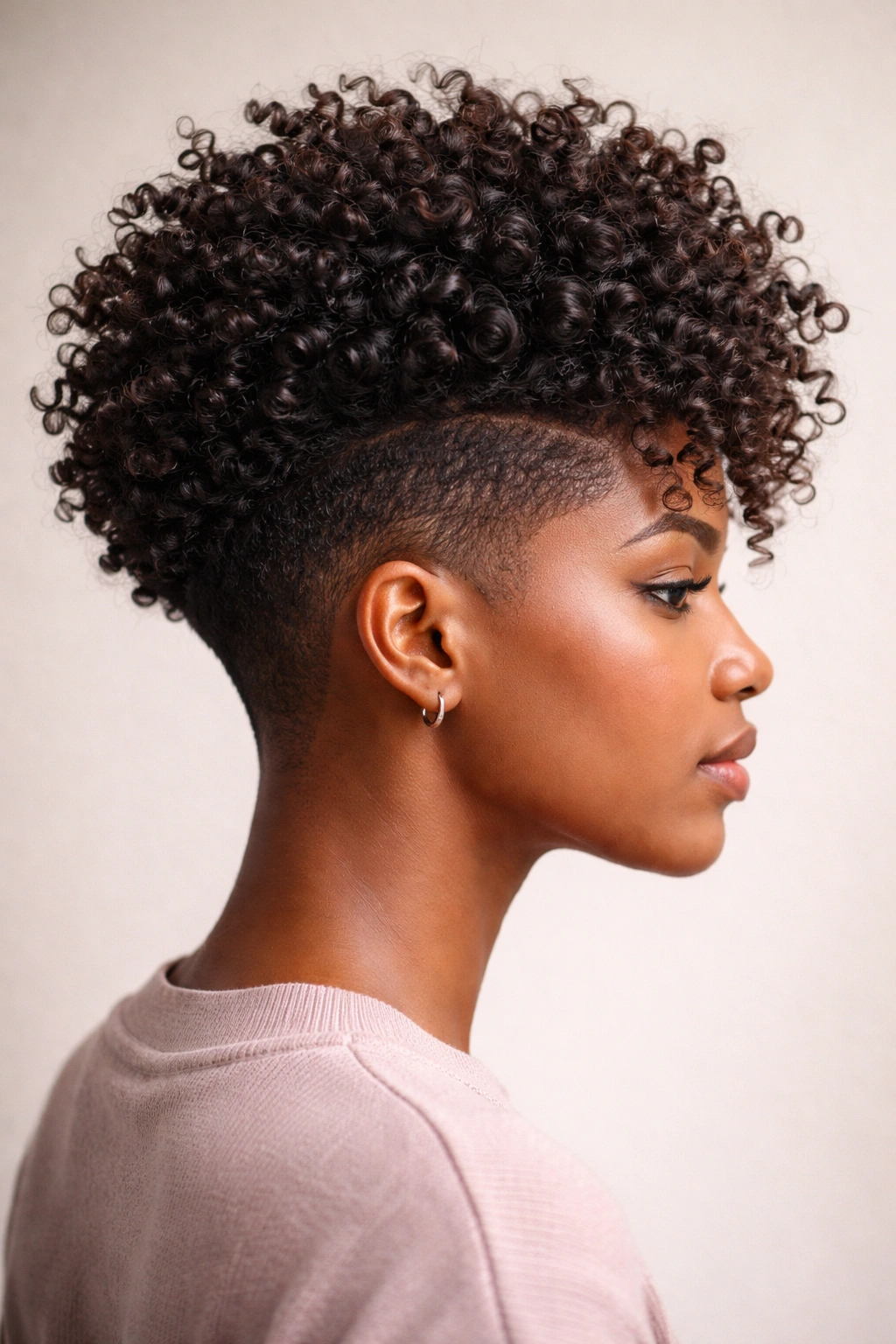
An undercut means the sides and back are cut short (sometimes very short), while the top is left significantly longer and heavily layered. On coily hair, the undercut keeps things neat and low-maintenance on the sides while the layered top creates a stunning shape and shows off your curl definition. This cut reads bold and intentional—it’s for people who love a visible silhouette and don’t mind the contrast between short and long hair.
Why It Works for Coily Hair
Undercuts solve a major problem for people with coily hair: bulk and weight around the ears and nape. Shorter sides and back eliminate that weight, letting the longer, layered top sit independently without being crushed by excessive density underneath. The layering on top gets all the attention, and each layer can spring up and express its curl pattern fully. For people with very dense or thick coily hair, an undercut is genuinely transformative—it’s sophisticated, modern, and actually makes styling easier because you’re not fighting against a heavy foundation.
How to Style and Maintain It
The sides and back need maintenance every 3-4 weeks to keep the undercut sharp and prevent shadow growth from looking messy. The top layers can be refreshed every 6-8 weeks. Styling is usually pretty simple—just apply your curl products to soaking-wet hair and let it air dry or diffuse dry. The shorter sides keep things sleek and polished, while the textured top provides visual interest. You can wear the top slicked back in a bun or ponytail, or let it flow for more volume and movement.
Pro tip: This cut pairs beautifully with braids, twists, or buns if you want low-manipulation styling on the days you’re not wearing it down. The undercut stays looking fresh even when you’re styling your top layer into updos.
4. The Wolf Cut
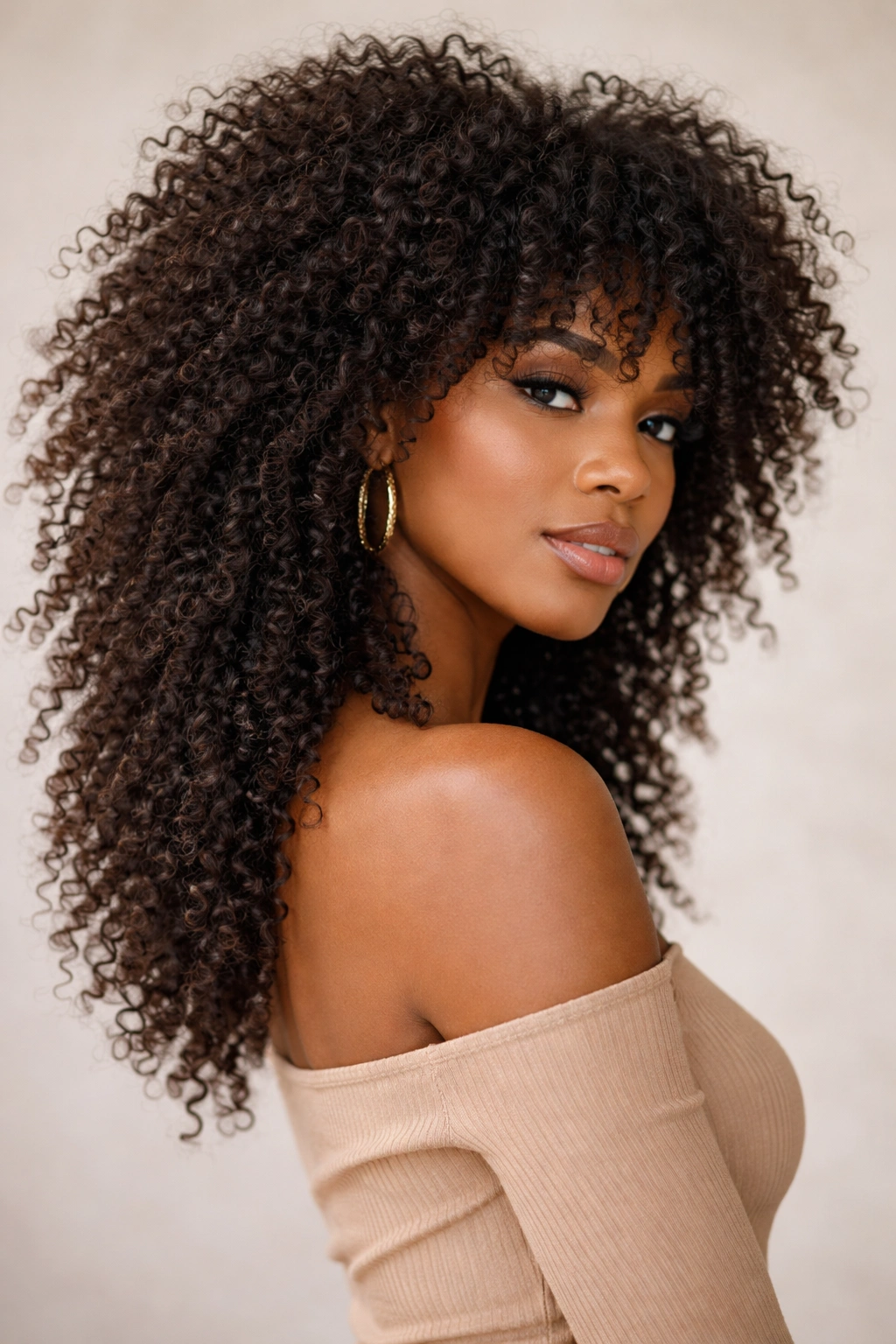
A wolf cut is a hybrid between a shag (choppy, disconnected layers) and a mullet (shorter in front, longer in back). It creates a wild, voluminous silhouette with serious texture and movement throughout. For coily natural hair, a wolf cut is exactly what it sounds like: textured, fierce, and unapologetically full.
Why It Works for Coily Hair
Wolf cuts are designed for texture. The layers are specifically meant to create separation and movement, which is exactly what coily hair excels at when given the right cut. The shorter front layers provide face-framing and dimension without requiring length sacrifice, and the longer back creates length and drama. Because the cut is intentionally choppy and textured, your natural curl shrinkage actually works in your favor—the layers stack beautifully and create definition. This cut is especially stunning on people with ringlets or well-defined curl patterns.
How to Style and Maintain It
Wolf cuts need regular maintenance to keep the layers looking intentional rather than shaggy. Trims every 6 weeks help maintain the shape. Styling involves generous curl product applied to soaking-wet hair—gel, cream, or both—and either air-drying or diffuse-drying to encourage the layers to separate and dry in place. Many people with wolf cuts find that plopping (wrapping wet hair in a microfiber towel to encourage curl definition) really helps the layers dry in a gorgeous, separated pattern.
Pro tip: Wolf cuts are perfect for anyone who loves an alternative or edgy aesthetic. This is the cut for people who want to make a statement and don’t mind spending 20-30 minutes on styling.
5. The Textured Lob with Face-Framing Layers
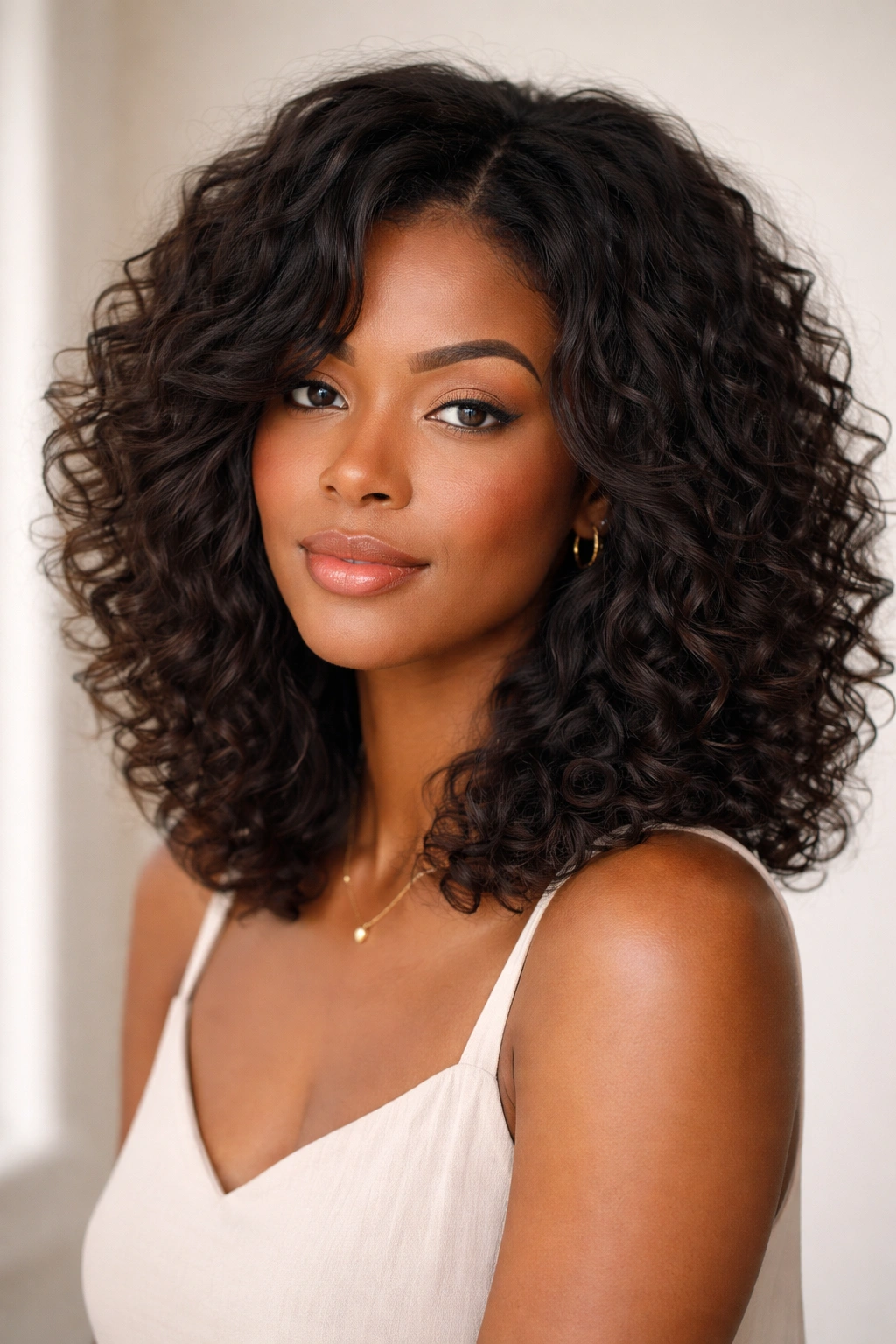
A lob (long bob) sits somewhere between shoulder-length and mid-back length, and when textured properly for coily hair, it’s a sweet spot between “enough length to play with” and “short enough to maintain without constant work.” Heavy face-framing layers—combined with texture cuts throughout the mid-lengths and ends—create definition and movement without a choppy or shaggy appearance.
Why It Works for Coily Hair
Lobs are naturally flattering because they’re long enough to show off your curl pattern but short enough to avoid the bulk and weight that sometimes comes with longer coily hair. Texturizing layers (where your stylist cuts into the curl to remove weight within individual curls) creates separation and encourages curl definition throughout the length. The face-framing layers draw attention to your features without making the front feel disconnected from the rest. For people who want length without constant maintenance, a textured lob is the answer.
How to Style and Maintain It
A textured lob is one of the more low-maintenance options on this list. You can apply curl products to soaking-wet hair and let it air-dry, or diffuse-dry for more volume. Deep conditioning treatments help keep the mid-lengths and ends (which are older hair) healthy and soft. Trims every 8-10 weeks keep the texturizing fresh and prevent ends from looking scraggly. You have flexibility with styling—you can wear it loose and curly, stretch sections out with a brush for more length, or twist it up into a bun.
Pro tip: A textured lob is an excellent choice if you’re transitioning from relaxed or damaged hair, or if you want a cut that reads “styled” without requiring complicated styling routines.
6. The Textured Pixie with Longer Curls on Top
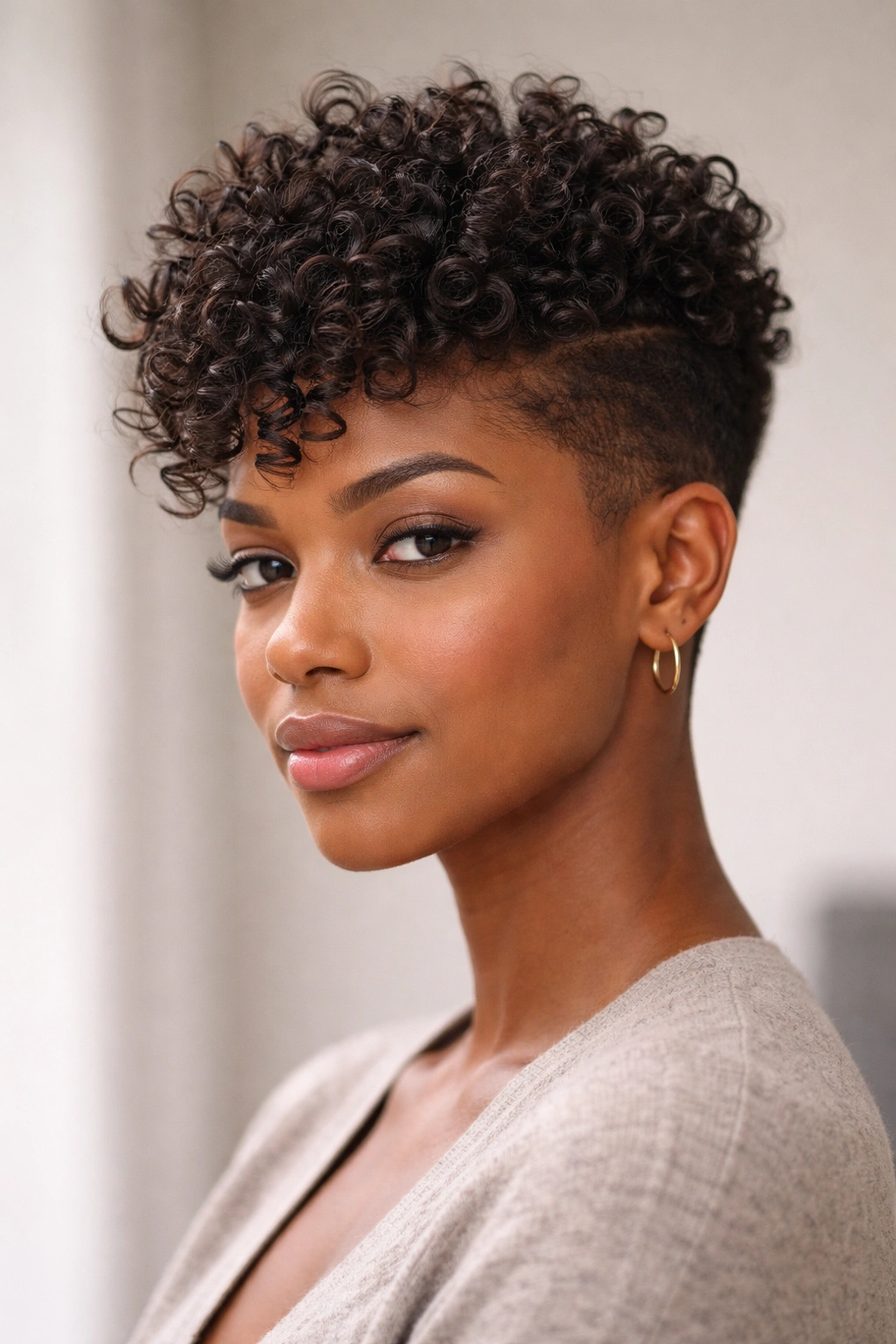
A textured pixie keeps the sides and back short (1-3 inches), with longer, layered curls on top that can sit anywhere from 3-6 inches or longer. The longer curls on top are heavily textured to encourage individual curl separation. This is a daring, confident cut that prioritizes curl expression over length.
Why It Works for Coily Hair
Pixies are transformative on coily hair because they eliminate weight completely while still allowing curl expression on top. The short sides and back won’t hold curls the same way longer hair does—instead, they’ll shrink tightly and create a clean, polished look. The longer top gets all the personality, with individual curls able to express themselves fully without fighting against length or weight. If you have a short, tight curl pattern, a pixie can be absolutely stunning because it shows off the beautiful texture without requiring manipulation.
How to Style and Maintain It
Pixies need the most frequent maintenance of any cut on this list—trims every 3-4 weeks keep the sides and back sharp, while the top can go 4-6 weeks between trims. Styling is simple: apply curl products to soaking-wet hair and let it air dry or diffuse dry. Some people finger-coil the top curls for more definition. The short sides stay sleek without any effort, which is one of the major benefits of the cut.
Pro tip: This cut is the most “alternative” option on the list—it’s bold, it reads clearly as a deliberate style choice, and it’s perfect if you’re someone who loves the idea of short hair but wants to keep your curl expression visible. It’s also the coolest cut during hot, humid months when length feels unbearable.
7. The Layered Cut with Blended Texturizing
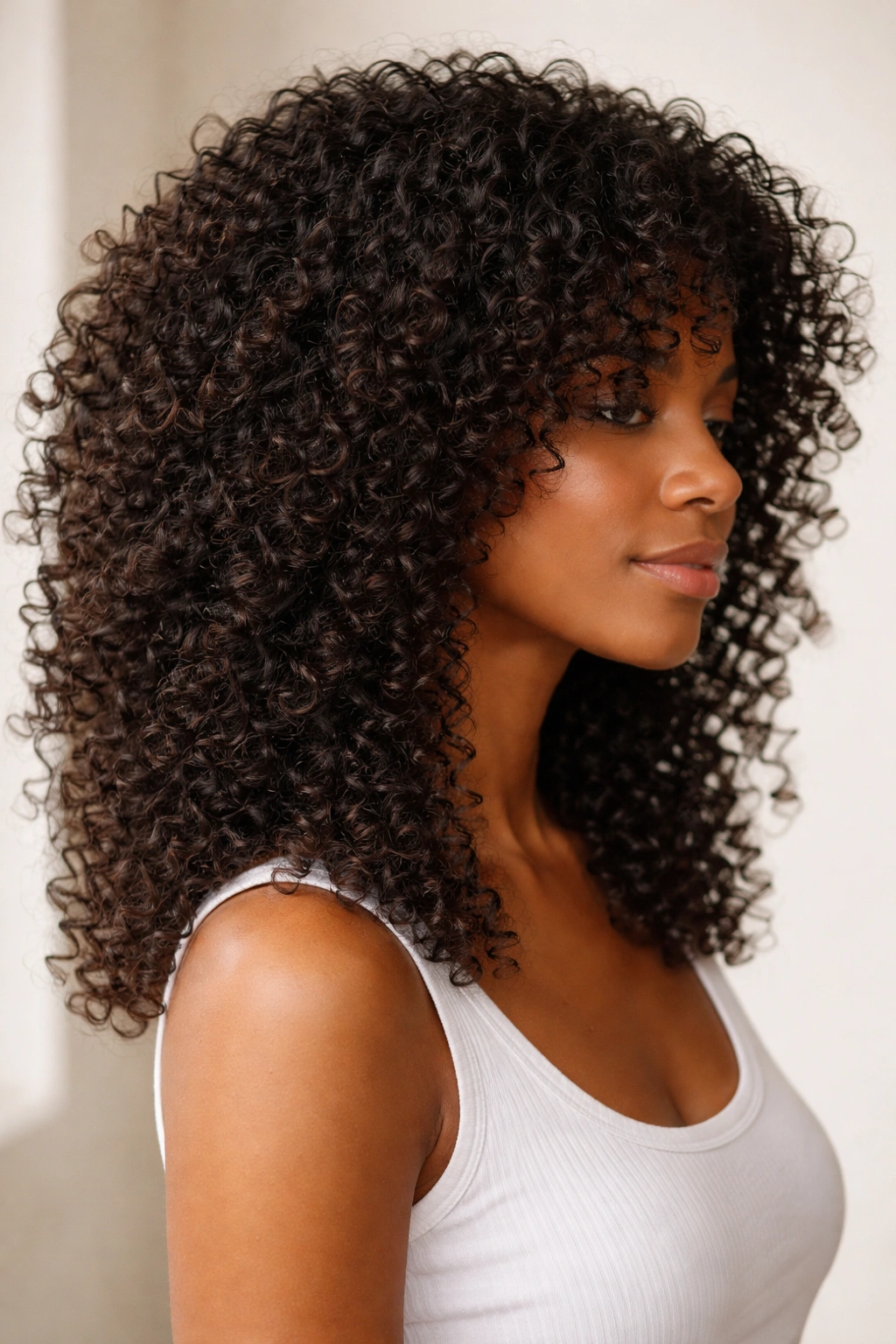
This is a more “classic” layered cut where the layers are blended and feathered together (not choppy or disconnected) but texturized throughout with strategic weight-removal cuts inside individual curls. The result is a cut that looks polished and intentional while maintaining strong curl definition and separation.
Why It Works for Coily Hair
Blended layers feel sophisticated and works-appropriate in a way that choppy or shag cuts sometimes don’t. The texturizing still removes weight and encourages curl separation, but the overall silhouette reads smoother and more refined. This cut works for people who want their curls to be the star of the show without the cut itself being super noticeable. You get all the curl-enhancing benefits of proper layering without a dramatic silhouette change.
How to Style and Maintain It
This cut is very low-maintenance. Apply your curl products to soaking-wet hair and let it air dry or diffuse dry—the layers and texturizing handle the separation and definition work for you. You can refresh your style every 1-2 weeks with a wet pout-and-pray method (just spray your hair with water and let it re-dry). Trims every 8-10 weeks keep the layering and texturizing fresh. This cut works beautifully with protective styling like braids or twists on days you’re not wearing it down.
Pro tip: If you’re unsure about more dramatic cuts, this is the perfect introduction to layering for coily hair. It delivers real results in terms of curl enhancement without requiring you to commit to a bold new look.
8. The Choppy Layers with Face-Framing and Extended Fade
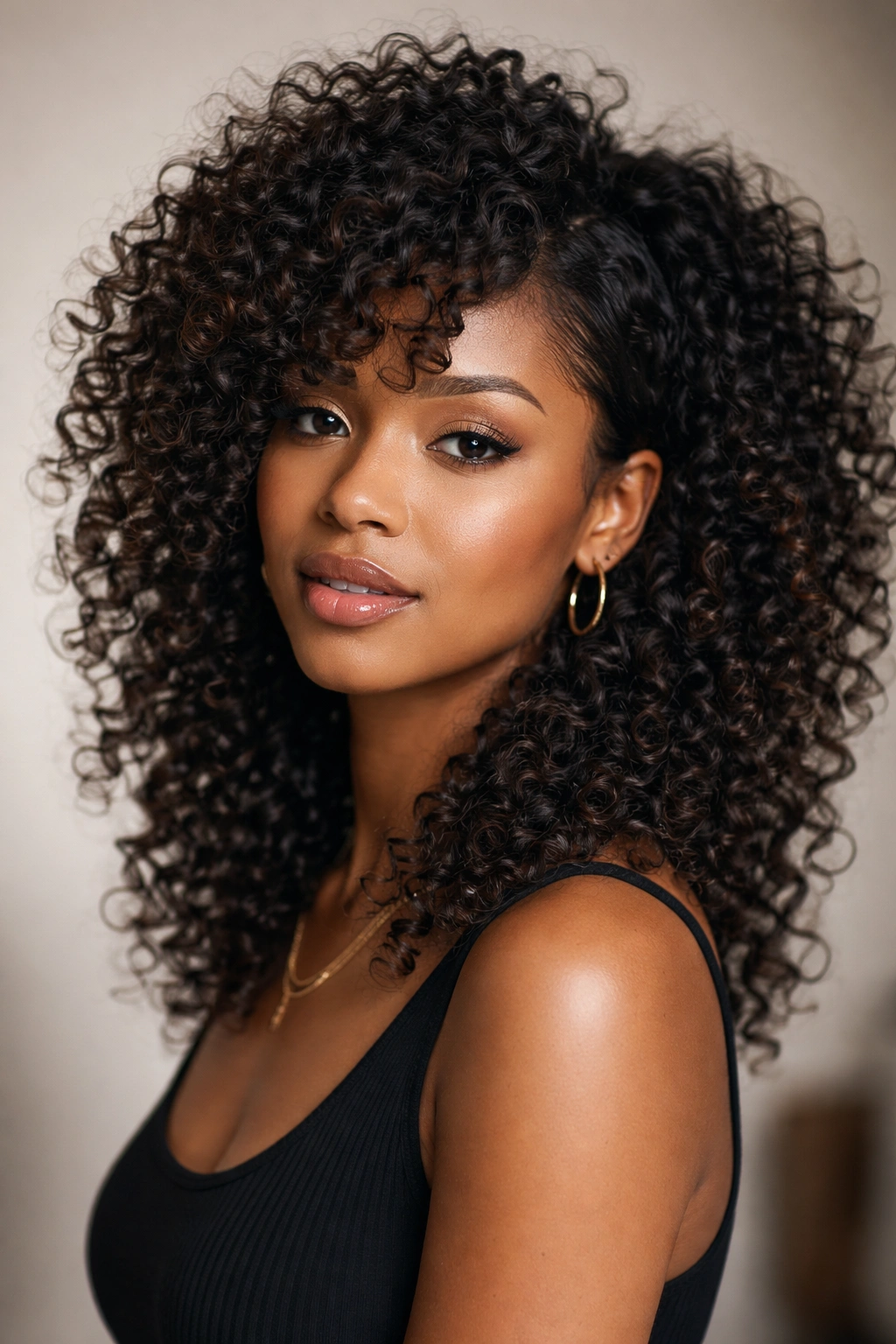
This cut combines choppy, textured layers (like a shag) with a subtle fade on the sides—shorter than the back but not as short as a full undercut. The face-framing layers are longer and more detailed, creating movement and definition around your features. This is a modern, refined take on the textured cut that feels intentional and fashion-forward.
Why It Works for Coily Hair
This cut gives you the curl-enhancing benefits of choppy layers while the subtle side fade adds sophistication and prevents the look from feeling too shaggy. The extended fade (which can be customized to be super subtle or more visible) manages density on the sides without committing to a full undercut. Face-framing layers ensure that your curls frame your features beautifully, and the choppy texture throughout means every curl can separate and shine. This works especially well for people who like edgy cuts but want something slightly more polished than a full shag.
How to Style and Maintain It
The sides and back need refreshing every 4-6 weeks to keep the fade looking intentional. The top layers can go 6-8 weeks between trims. Styling involves applying curl products to soaking-wet hair and air-drying or diffuse-drying—the cut does the work of creating separation and definition for you. Many people with this cut find that styling with a brush while their hair is soaking wet (before product application) helps encourage curl clumps and definition.
Pro tip: This cut is the sweet spot if you love the aesthetic of choppy, textured cuts but want something that works for professional or business-casual environments. It reads “styled” and intentional without being too wild or alternative.
Final Thoughts
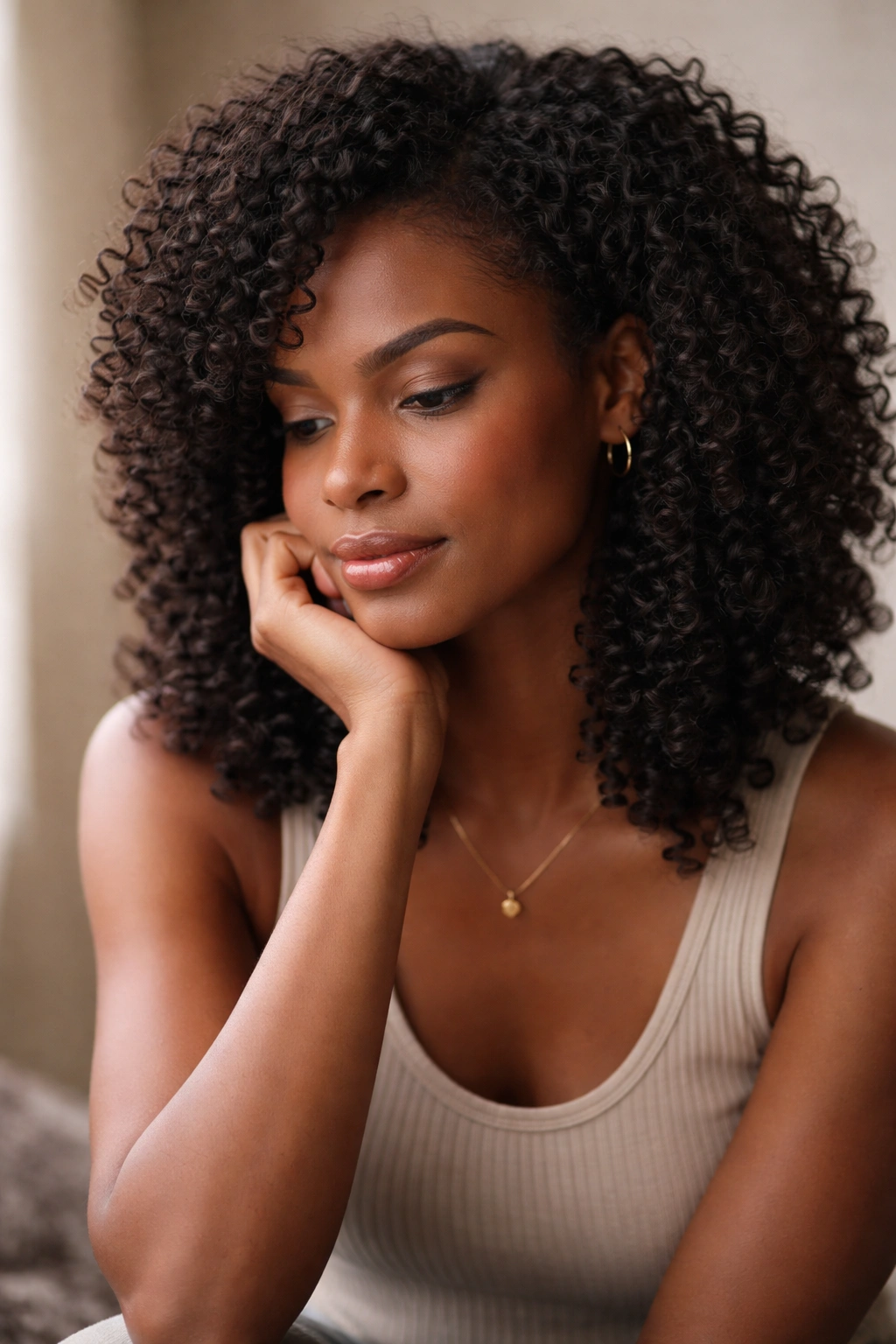
The right layered cut can completely change how your coily hair looks and feels. The key is finding a stylist who understands how layers work on your specific curl pattern and who takes time to texturize properly rather than just hacking away with blunt scissors. Your curl type, face shape, density, and lifestyle should all influence which cut you choose.
Before booking, bring pictures of the exact cuts you’re interested in—not just random curly hair pics, but the specific style with the specific layering pattern you want. Talk to your stylist about how often you’re willing to do maintenance trims, how much time you want to spend styling, and whether you prefer your curls tight and defined or stretched and elongated. A good curly-hair stylist will customize any of these cuts to work with your curl pattern, not against it.
Remember that how a cut looks when you first leave the salon might be different from how it looks after a few weeks once the hair has been washed and your curl pattern has fully settled in. Give yourself grace during the first 2-3 weeks—your curls might feel different or look different as they adjust to the new shape. If something genuinely isn’t working after that adjustment period, don’t hesitate to go back for a modification. A stylist who understands your hair should be willing to refine the cut to make sure you love it.
