

Long hair can look glamorous right up until it starts hanging like a wet towel. Flat length is common, and it happens fast when every strand is the same size and the weight sits at the bottom. The right layered haircut changes that balance. It lightens the shape, pushes motion through the mid-lengths, and gives the crown somewhere to breathe.
The part people miss is placement. A chin-length layer, a collarbone layer, and a hidden internal layer all create different kinds of lift, even if the hair is the same length overall. Drying technique matters too. Blow-drying upward with a round brush does one job; air-drying with a bit of scrunching does another. The haircut and the styling have to cooperate.
Good volume on long hair should look soft, not stiff. You want movement through the ends, lift at the roots, and a shape that still feels like long hair instead of a chopped-up compromise. Some of these looks lean polished, some are messy, and some need almost no effort at all once the cut is right. The common thread is simple: they keep the length, but they refuse to let the length drag everything down.
1. Face-Framing Layers for Long Hair With Volume
This is the safest starting point if you want lift without a dramatic change. The shortest pieces sit around the cheekbones and jaw, so the front of the hair bends inward instead of hanging straight down.
Why It Works
Face-framing layers pull the eye upward. That sounds small, but it changes the whole read of the haircut. When the front sections skim the face, the rest of the length feels lighter and the crown looks less heavy.
A 1.5-inch round brush is the friend here. Blow-dry the front pieces away from the face first, then set the top section with a cool shot. If your hair is fine, a light mousse at the roots will help the style hold its shape for a few hours longer.
- Best for medium to thick hair that needs movement near the face.
- Works well with a middle part or a soft off-center part.
- Looks polished with loose blowout ends or soft bends.
- Avoid over-thinning the front; too much removal makes the style look stringy.
Pro tip: Ask for the shortest face frame to land near the cheekbone, not the chin, if you want more visible lift.
2. Curtain Bangs and Long Layers
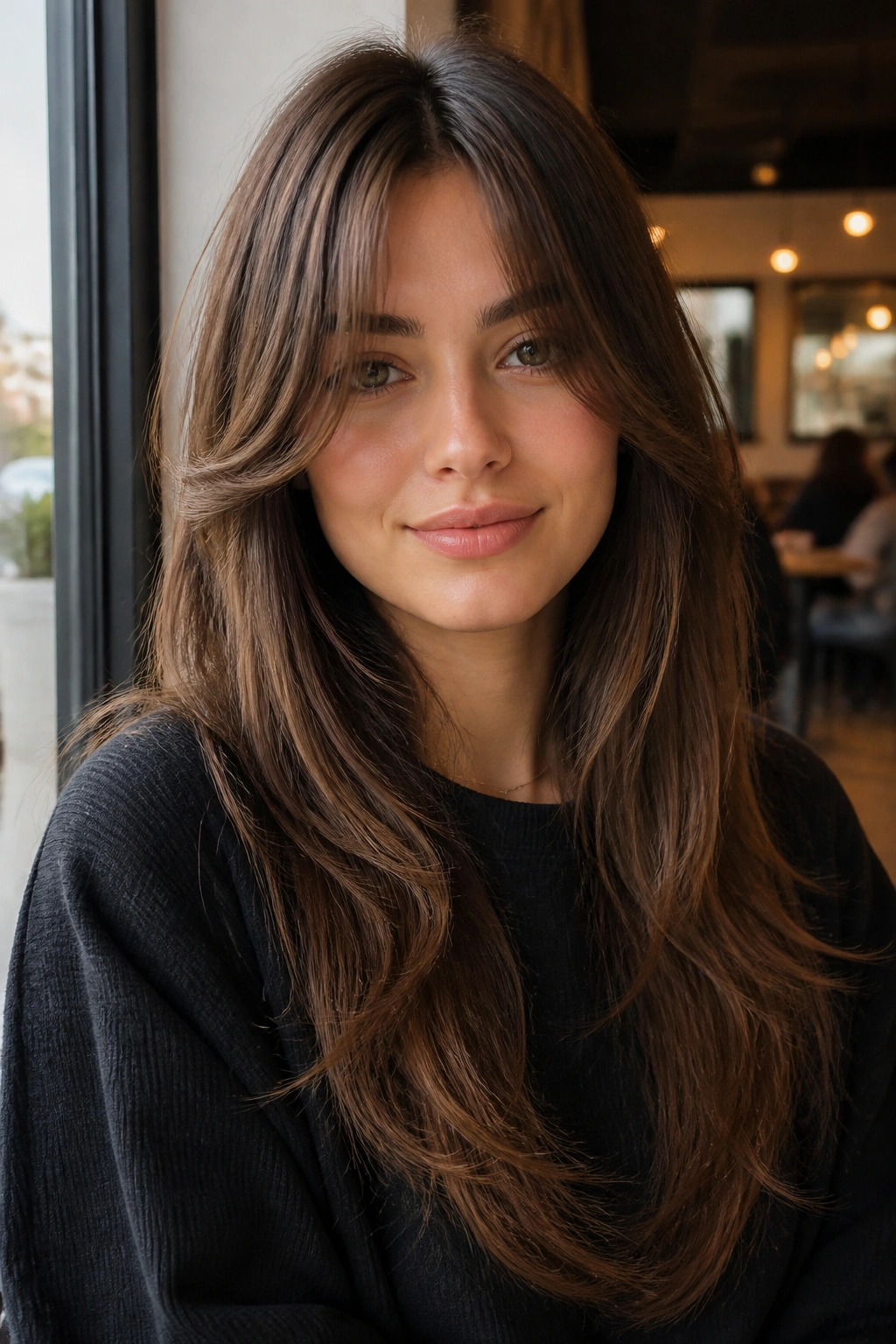
Why do curtain bangs look so full? Because they split the front of the hairstyle in a way that makes the crown feel taller, not flatter. The hair opens at the center, then sweeps out and down, which gives the whole style some breathing room.
Curtain bangs work best when they blend into long layers instead of stopping like a hard fringe line. The transition should feel soft around the temples and through the sides. If the ends are too blunt, the bangs do all the work and the rest of the hair still looks heavy.
A small round brush and a quick bend at the front make a big difference. Dry the bangs forward first, then roll them away from the face while they’re still warm. That tiny detail keeps them from sticking out like a shelf.
3. Butterfly Layers With Crown Lift
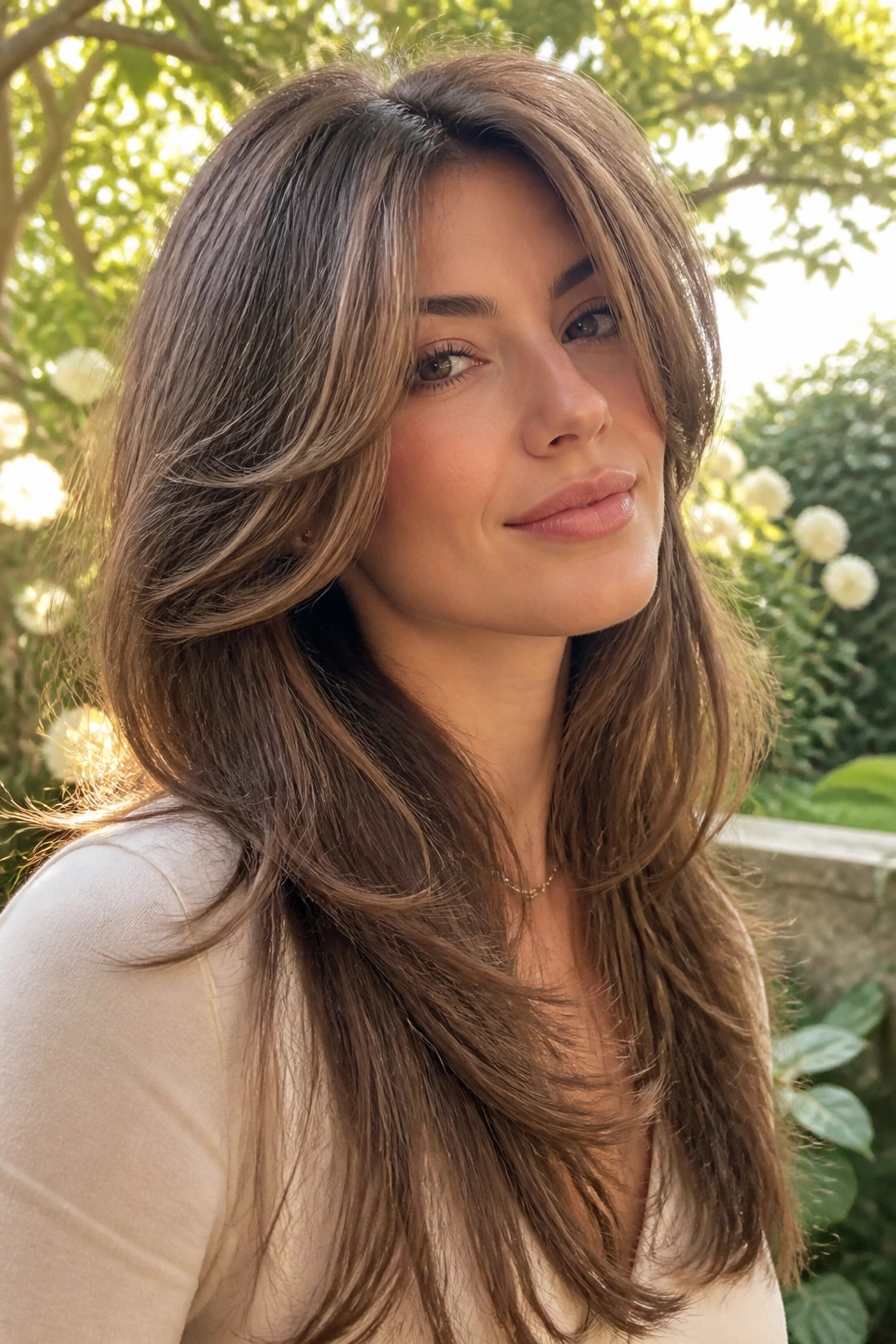
A butterfly cut gives you two shapes in one: a shorter, airy top layer and long hair underneath. It sounds dramatic, but the result is often softer than people expect. The hair around the crown and upper sides gets enough weight removed to rise, while the lower length stays long and swishy.
What Makes It Different
The shortest pieces usually sit somewhere between the chin and collarbone. That placement matters because it makes the top half look fuller without exposing too much scalp. On thick hair, the cut can remove a lot of bulk. On finer hair, it can fake a lot of movement without making the ends too thin.
How to Style It
- Blow-dry the top section first with a round brush.
- Keep the lower lengths smooth or slightly waved.
- Use a flexible hairspray, not a stiff one.
- Clip the crown up for 10 minutes after drying if you want extra lift.
This one is a favorite when you want movement and a little drama. It looks especially good when the shorter layers flick away from the face.
4. Feathered Side-Part Layers
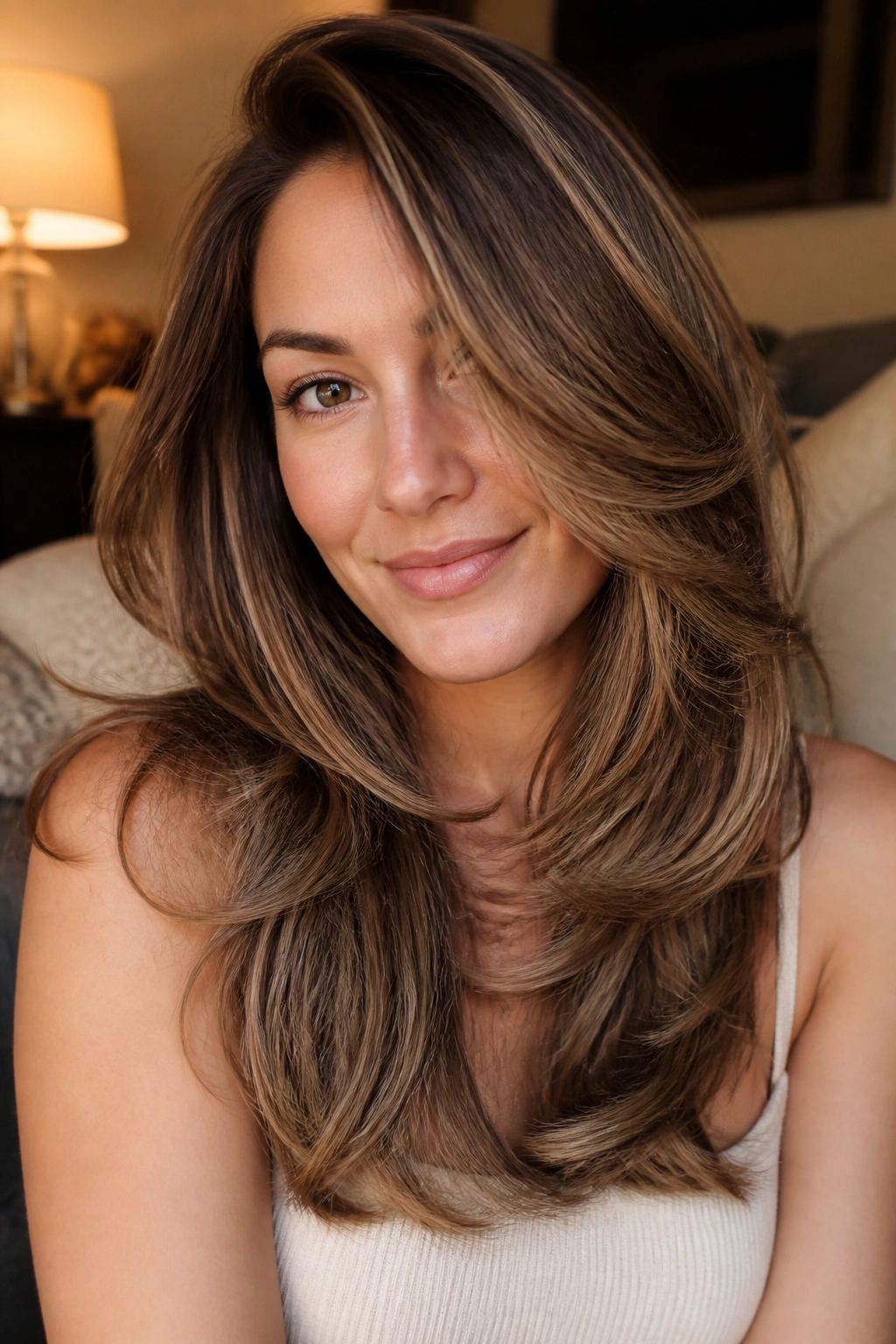
A deep side part can do more for volume than a whole shelf of styling products. Seriously. When hair is shifted off its usual center line, the roots on one side lift, the front falls with more sweep, and the whole style gains body without needing a huge amount of heat.
Feathering is what keeps the shape from looking blunt. The ends are softened so they move like little wisps rather than slabs. That works especially well on long hair that tends to go limp by midday, because the hair gets shape without losing length.
Flip the part while the hair is still warm from drying. Then mist a light spray at the root near the higher side and let it cool there. That tiny reset often does more than another pass with the brush.
5. U-Shaped Invisible Layers for Long Hair With Volume
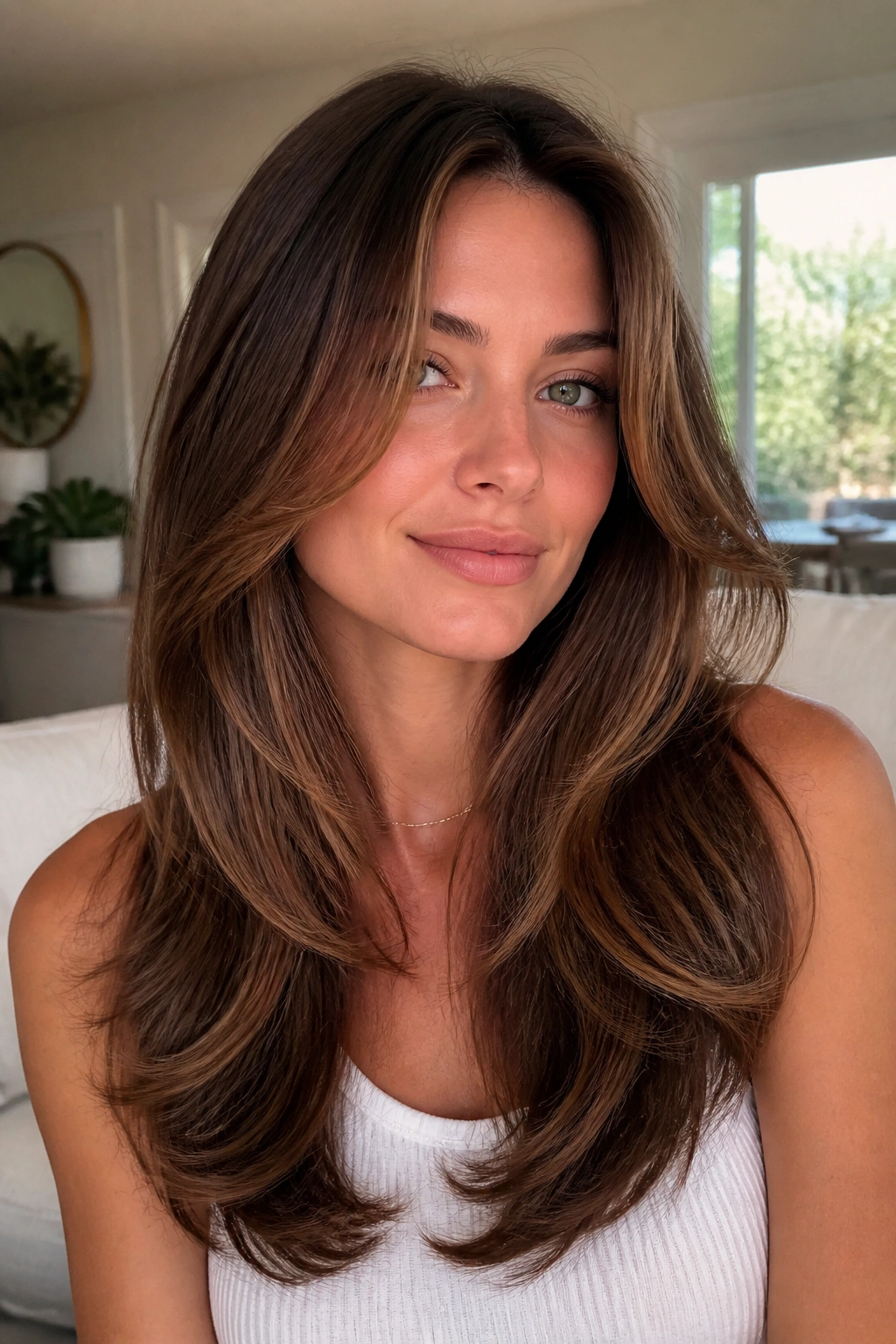
It looks almost plain at first glance. Then the hair moves, and the shape makes sense. A U-shaped cut keeps the perimeter soft and curved, while invisible layers remove weight from the inside so the top does not collapse.
These layers are a good choice if you hate obvious chopping. The outside line stays smooth and long, which makes the haircut easy to wear straight, wavy, or curled. The volume comes from the internal structure, not from short pieces shouting for attention.
Best For
- Long, thick hair that feels heavy at the bottom.
- People who want movement without a shaggy finish.
- Anyone who likes to tuck hair behind the ears and still keep shape.
A tiny amount of texturizing spray through the mid-lengths will show off the layers without breaking the silhouette. Clean, controlled, and not fussy. That’s the whole appeal.
6. Waterfall Waves on Layered Long Hair
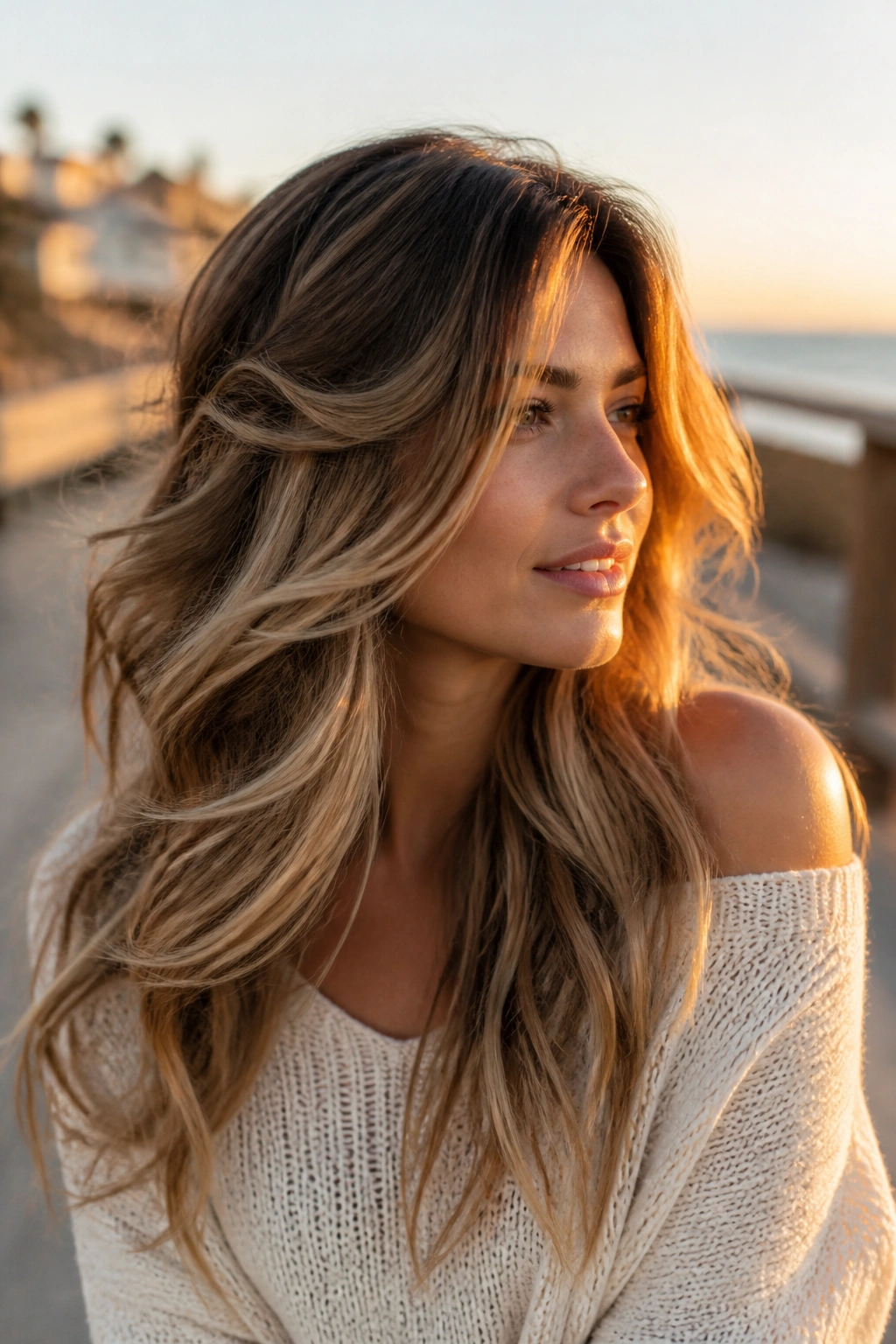
Picture soft waves that start around the ears and tumble down in loose, stepped ribbons. That’s the basic effect here. Waterfall waves use long layers to keep the bend from stacking into one giant wave, which is what makes many long styles look bulky instead of full.
Use a 1.25-inch curling iron and alternate directions as you go. Leave the last inch or so out on a few sections so the ends stay soft. Then brush the curls out with a boar-bristle brush or wide-tooth comb once they cool.
The layers do the heavy lifting. They break up the wave pattern just enough to keep the style airy. If your hair is stubbornly straight, set each curl with a clip while it cools. It takes a few extra minutes, but the wave lasts longer and the crown stays lifted.
7. Shaggy Layers With Piecey Ends
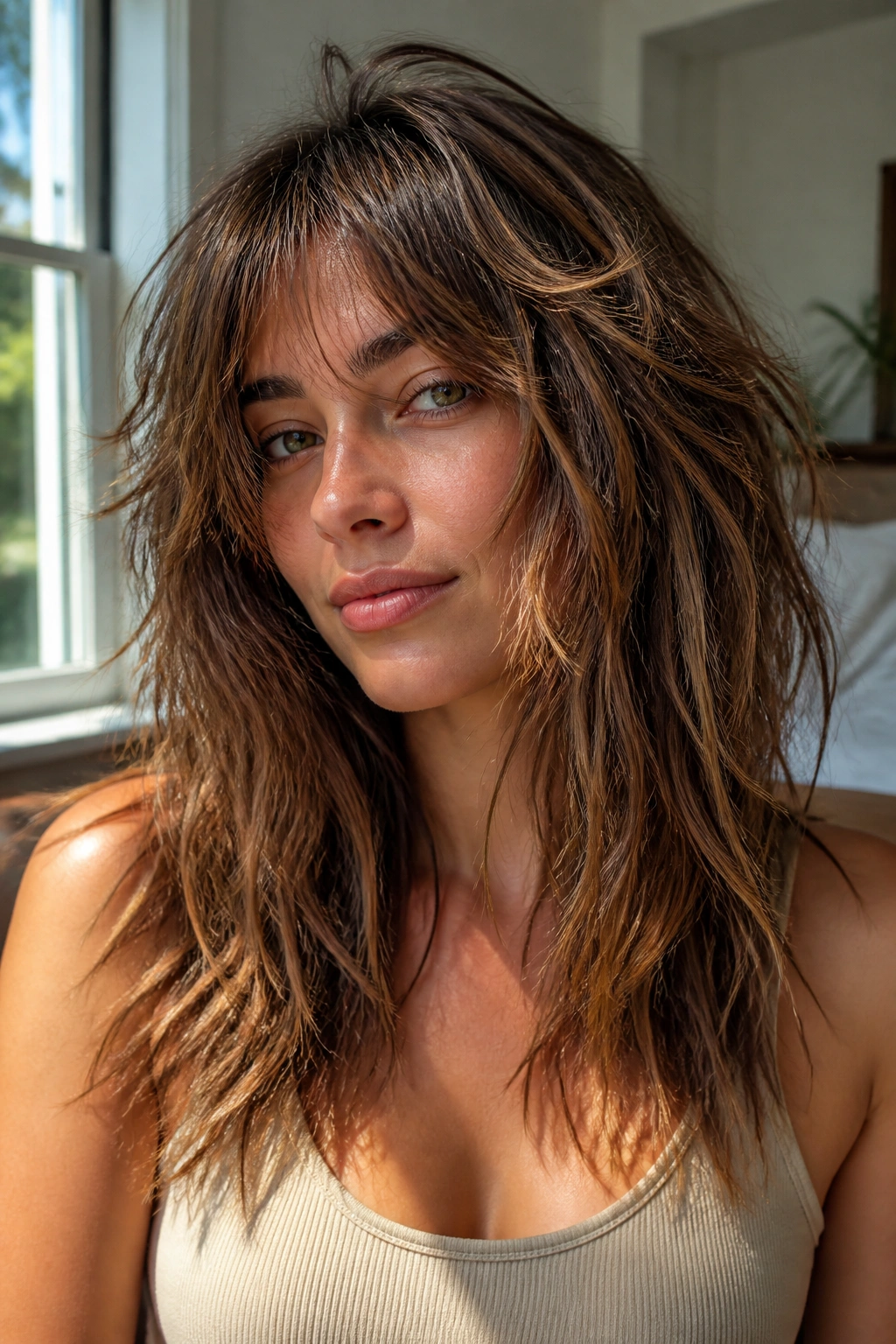
If flat hair is the problem, a shag is not shy about answering back. The cut is choppier, the crown is lighter, and the ends have that separated, piecey feel that makes the whole head look fuller. It is a little messier by design.
What to Watch For
A shag works best when the layers are deliberate, not random. Too many short chunks can make long hair look thin at the tips, which is exactly what you do not want. Ask for enough texture to create movement, but keep the very bottom line substantial.
Styling Notes
- Work in a pea-size amount of styling cream through damp hair.
- Scrunch in a sea-salt spray if you want grit.
- Diffuse on low heat for a softer finish.
- Avoid brushing it out too much; that kills the texture.
This style has a bit of edge, and that’s the point. It suits hair that likes to bend and separate instead of lying flat and obedient.
8. Big Barrel Curls on Graduated Layers
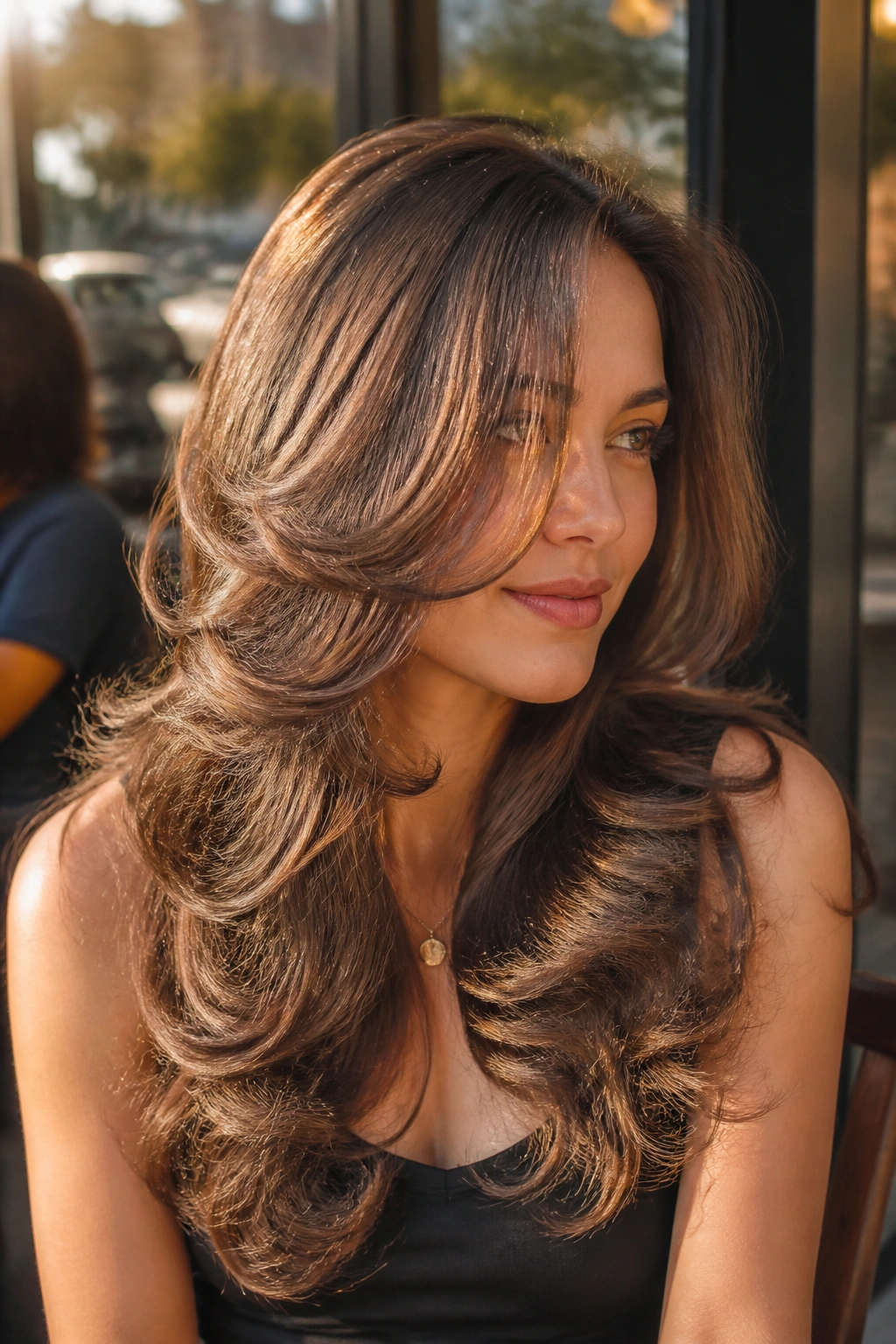
Can long layered hair hold a curl without looking too round? Yes, if the barrel is big enough and the layers are placed well. A 1.5-inch curling iron gives a fuller bend rather than a tight curl, which makes the hair look plush instead of puffy.
The trick is to leave the ends slightly loose on each section. That keeps the curl soft and prevents the length from looking overly springy. Once the curls cool, brush them gently into each other so the layers blend instead of sitting in hard sections.
Use a clip on the top crown while the curls set. That one move adds lift right where long hair tends to sink. A light mist of flexible hold spray is enough. Anything heavier weighs the style down and turns the ends sticky.
9. Rounded Layers With a Center Part
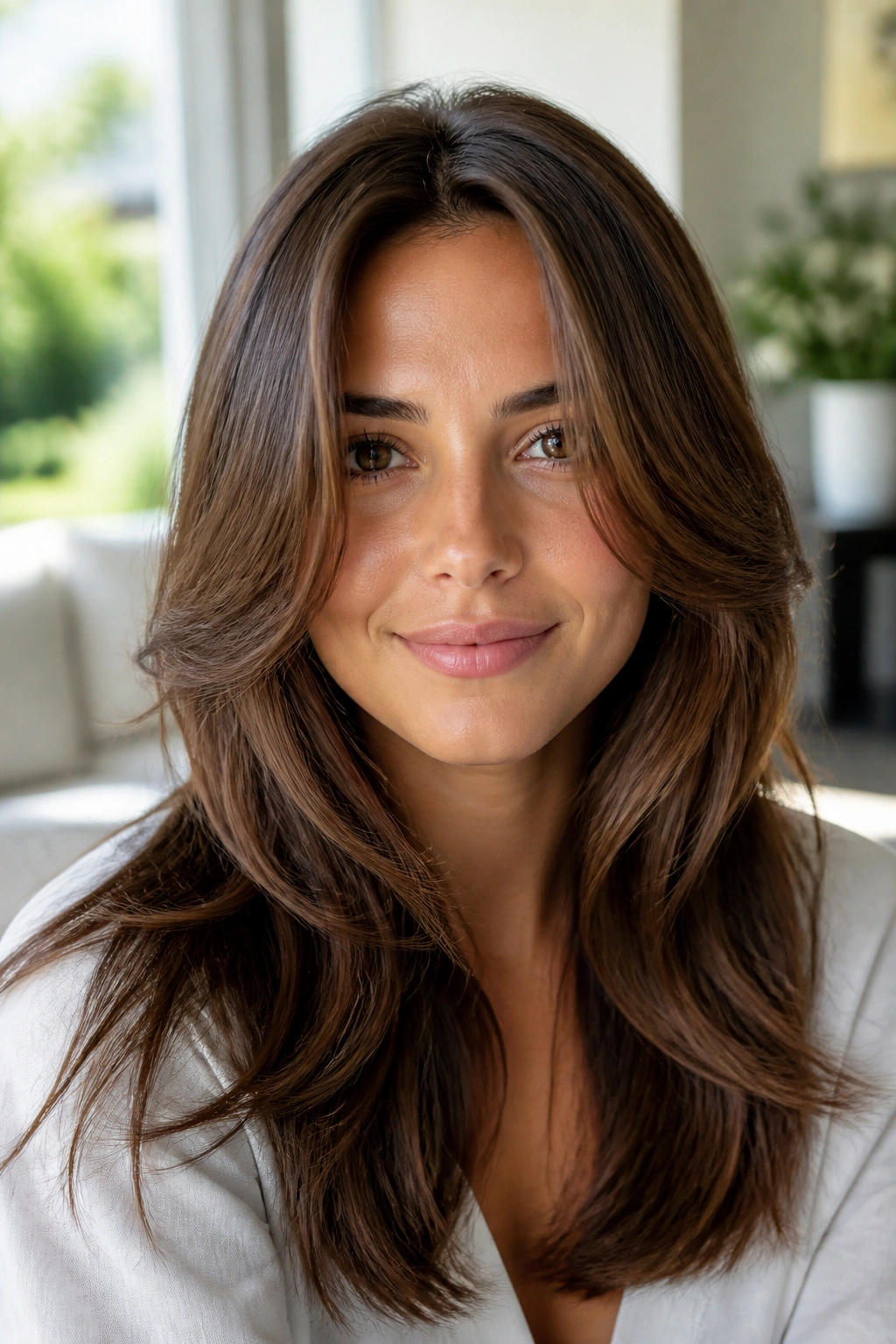
Rounded layers keep the silhouette soft. Unlike a V-cut, which narrows toward the bottom, a rounded shape carries fullness through the sides and lets the long hair expand a little around the shoulders. That’s why it works so well on straight and slightly wavy hair.
The middle part gives the style a calm, balanced feel. It also exposes the crown more, which makes root lift matter even more. Blow-dry the top section upward with a round brush, then roll the sides under just a touch so the shape stays plush.
This cut is underrated on dense hair. It spreads the weight in a way that feels controlled, not bulky. And if you wear your hair behind one ear or tuck it into a coat collar, the rounded shape still holds up instead of collapsing into a flat curtain.
10. V-Cut Layers With Sleek Length
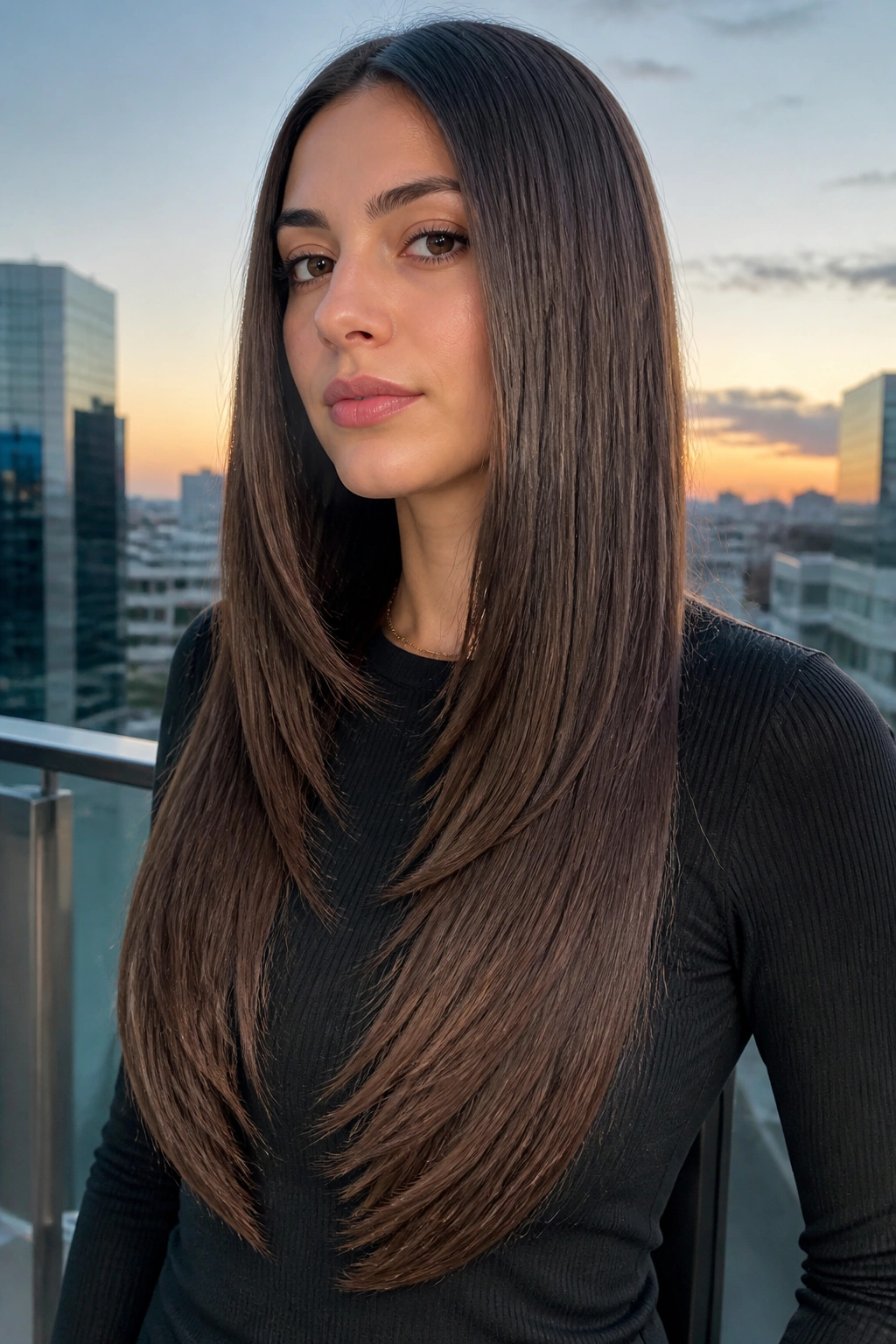
A V-cut gives the longest point of the hair a sharp, clean finish while the sides sit a little higher. That shape creates movement on its own, which is useful when you want volume at the back without losing the feeling of length.
The look is strongest on thick hair. A sleek blow-dry shows off the point and keeps the sides from puffing out too much. If your hair is coarse, a smoothing cream from mid-length to ends will help the layers lie in the right direction.
This one is a good match for people who like seeing the cut itself. The silhouette is obvious even when the hair is straight. Not subtle. That’s why some people love it and others walk right past it.
11. Textured Layers With a Messy Top Knot
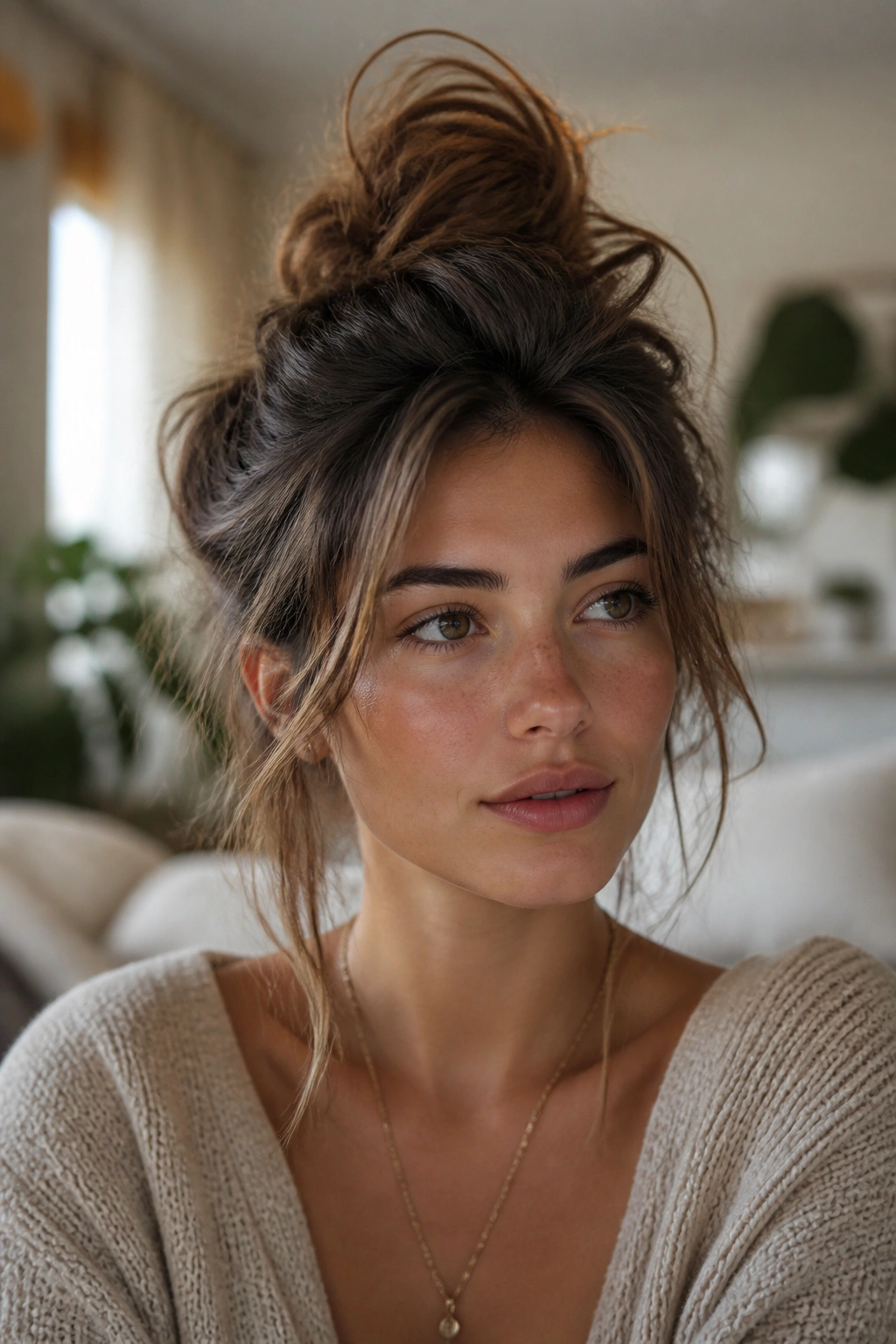
A messy top knot on layered hair has one job: show off movement while keeping the crown from going limp. The shorter pieces fall out on purpose, and the longer lengths wrap around the bun in a loose, broken way that looks fuller than a tight twist ever could.
Pull the hair up loosely, not slicked back. Leave the top a little soft before you secure it, then tug a few pieces around the face and ears. If the bun is too neat, you lose the whole point.
Quick Adjustments
- Tease the crown once before you tie it.
- Use two pins instead of one elastic if your hair is very thick.
- Pull a few ends free for texture.
- Finish with dry shampoo at the roots if the hair feels too smooth.
It’s fast, casual, and better than it sounds when the cut has layers worth showing.
12. Glossy Straight Layers With Flipped Ends
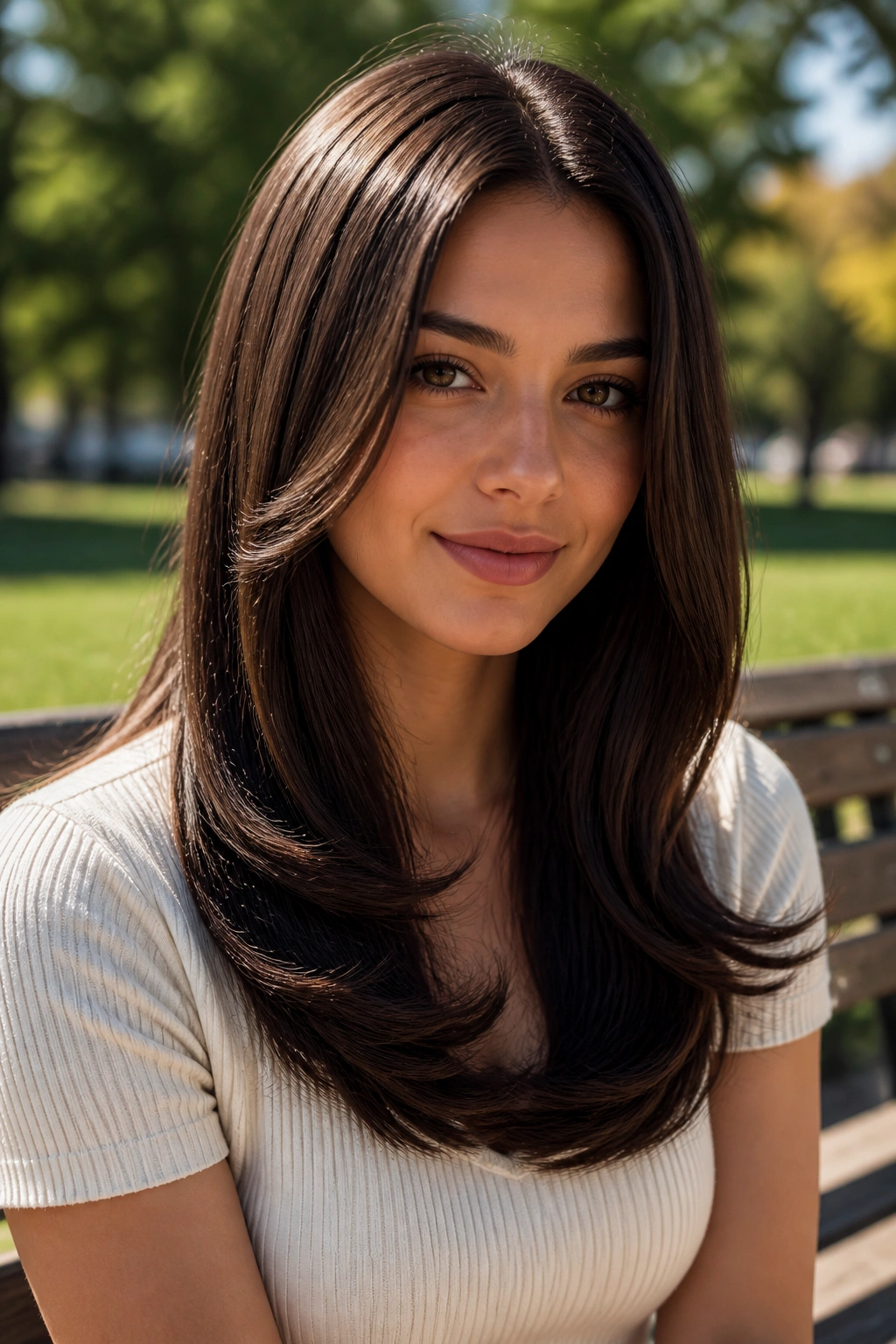
A straight style does not have to mean flat. If you flip the ends outward just a little, the whole haircut wakes up. The body comes from the bend at the bottom, and the shine makes the layers look clean instead of stringy.
Use a flat iron or a round brush, then flick the last inch or two away from the face. Keep the movement soft. You want a bend, not a hard retro curl. A drop of shine serum on the mid-lengths keeps the style smooth without flattening the roots.
This look works well on long hair that already has some natural thickness. It can also rescue second-day hair. The ends get shape, the top stays sleek, and the style reads polished even when it took ten minutes.
13. Tousled Bedhead Layers
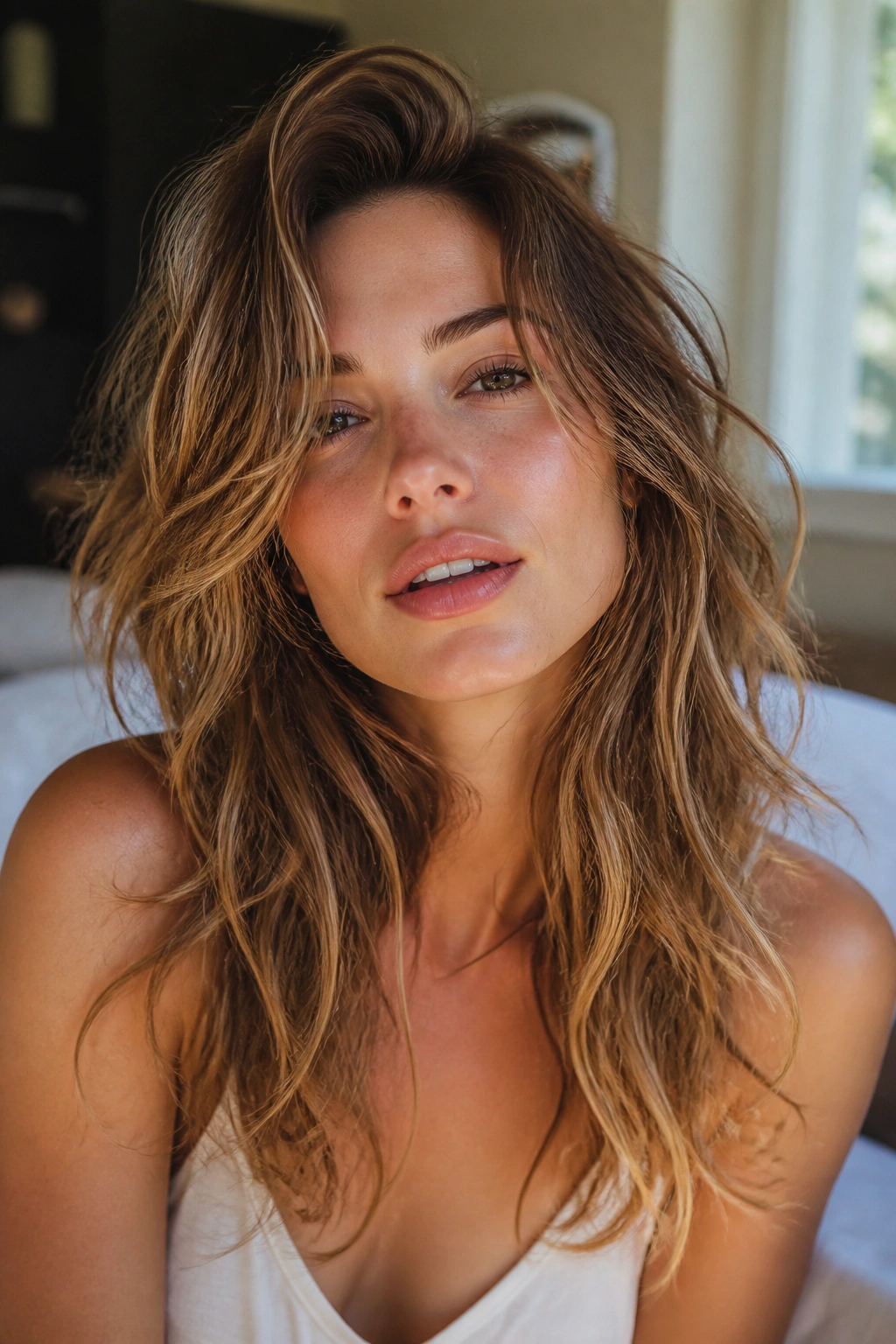
Can messy hair still look finished? Absolutely, if the mess has shape. Tousled layers rely on bend, not precision, so the haircut needs enough internal movement to keep the ends from clumping into one heavy line.
Rough-dry the roots first. Then twist random 2-inch sections around your fingers while the hair is still warm. A small amount of salt spray or dry texture spray will give the strands a little grip. That grip matters. Without it, the style slips right back to flat.
This look is a good match for wavy hair that wants to do its own thing. It’s also one of the easier styles to keep alive on busy days, because it gets better when it’s slightly imperfect.
14. Layered Half-Up Ponytail
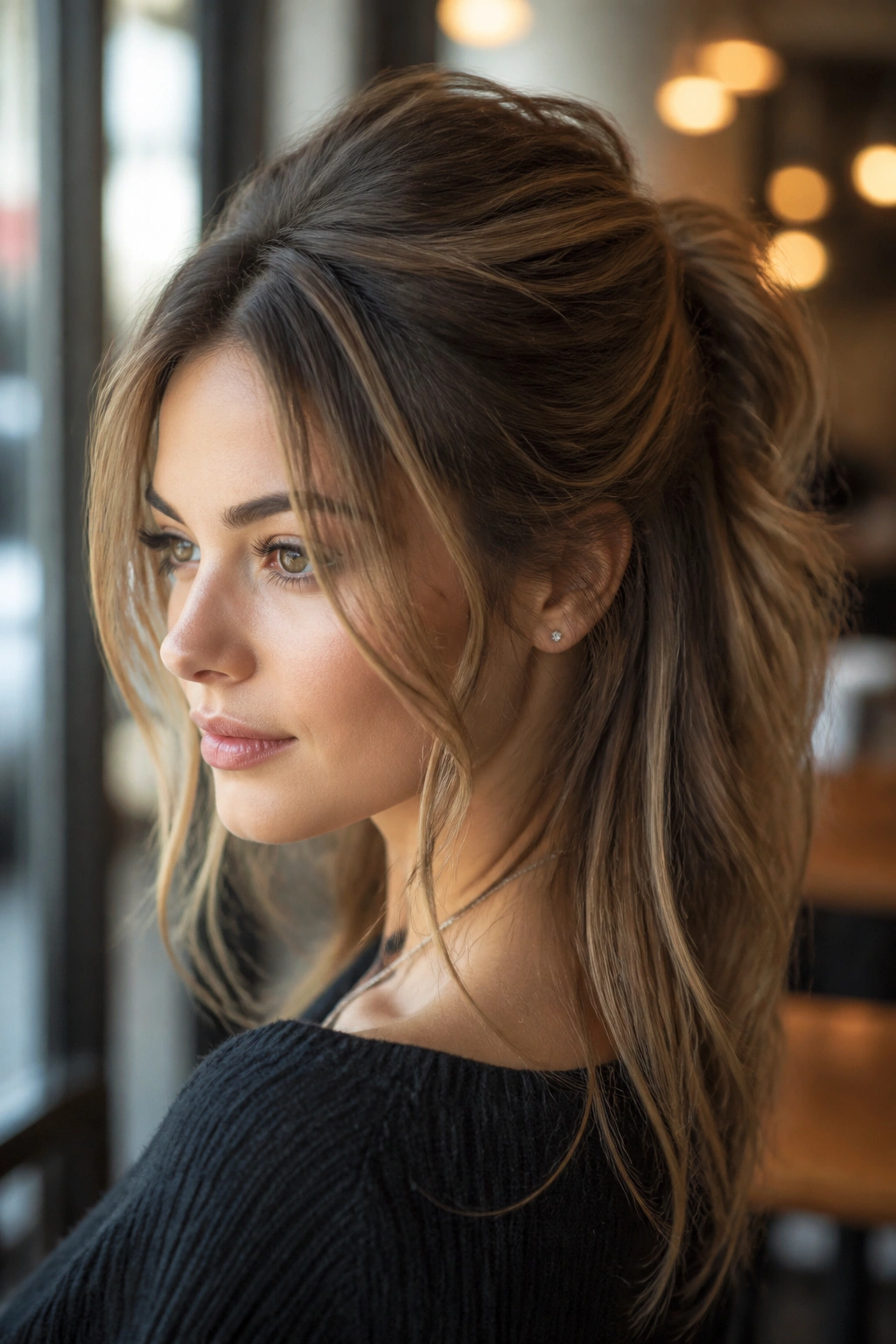
Half-up styles can look plain on one-length hair. On layered hair, they gain height and movement without much effort. The top section pulls back, the layers around the face stay loose, and the ends drop in a softer cascade than a blunt cut ever could.
A small tease at the crown helps here. Not a nest. Just enough lift to keep the base from flattening. Secure the half ponytail a little higher than you think you need; low placement makes long hair drag backward.
A few face-framing pieces should stay out. They keep the shape relaxed and stop the style from looking severe. This is one of those styles that works for errands, dinners, or anything in between.
15. High Ponytail With Cascading Layers
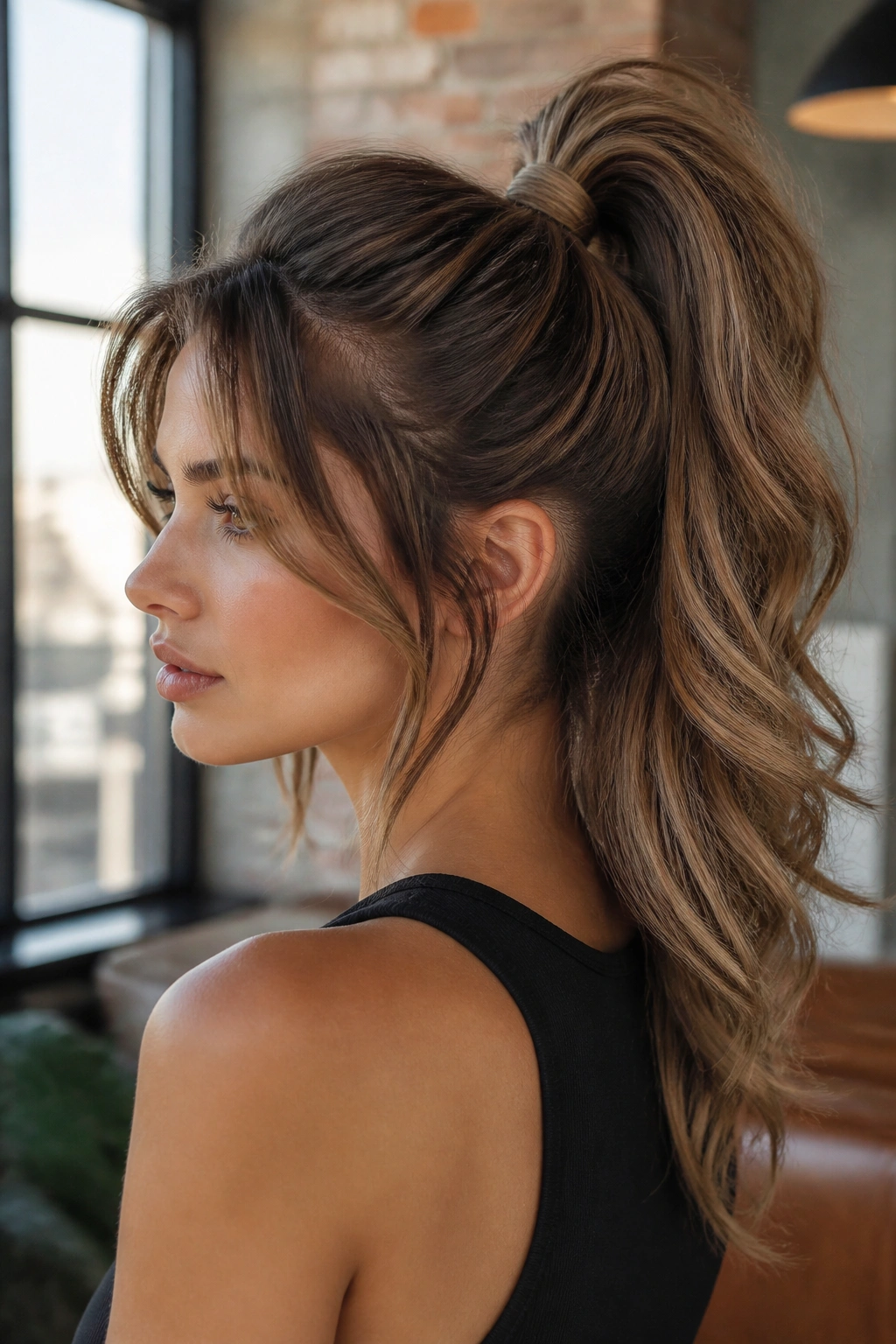
A high ponytail is not only a gym style. On layered long hair, it can look full and swingy, especially when the shorter pieces create movement around the crown and temples. The ponytail itself sits high, but the layers keep it from looking like a single stiff rope.
Wrap a thin strand of hair around the elastic for a cleaner finish. Then gently tug the hair at the crown to add height. The ponytail should feel secure, but not so tight that it pulls every root flat.
If the ends are curl-friendly, a quick pass with a large barrel iron before you tie the ponytail adds bounce. One small curl at the tail makes the whole thing look more intentional. Easy. But not boring.
16. Pull-Through Braids on Layered Hair
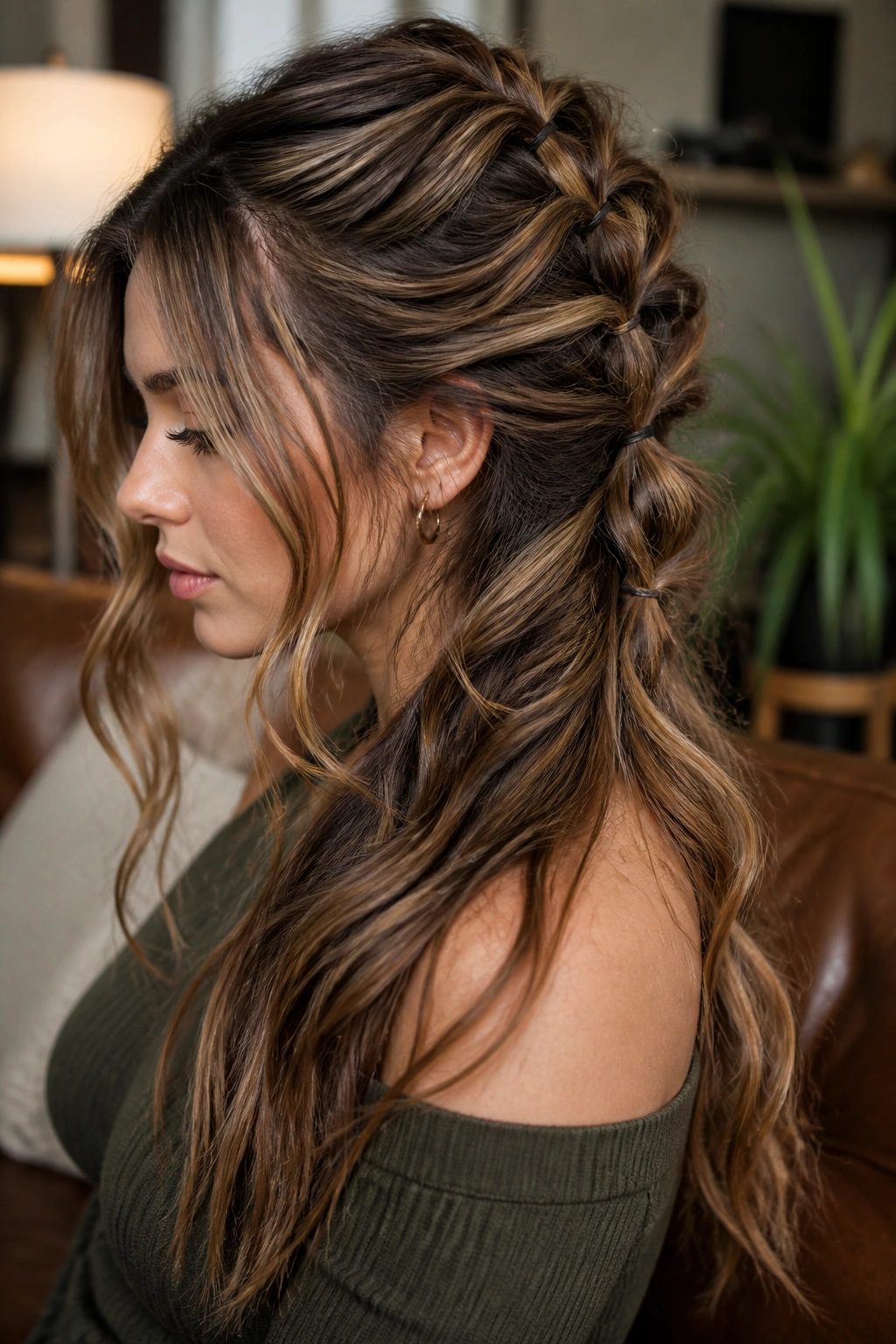
Pull-through braids are a cheat code for long layers. They create the illusion of thickness because each section is puffed slightly before the next one goes on top. The braid looks substantial even if your actual strands are fine.
Start with two or three ponytails down the back, each secured with a small elastic. Split and pull the sections apart a little after each step. That tiny loosening is what gives the braid its body.
Why Layers Help
- Short pieces fall out around the face and soften the braid.
- Longer lengths feed the braid and give it swing.
- A little texture spray keeps the sections from slipping.
This style is good for hair that looks too thin in a single braid. It has more presence, and it holds well for long hair because the weight is distributed across several ties.
17. Low Bun With Loose Layered Pieces
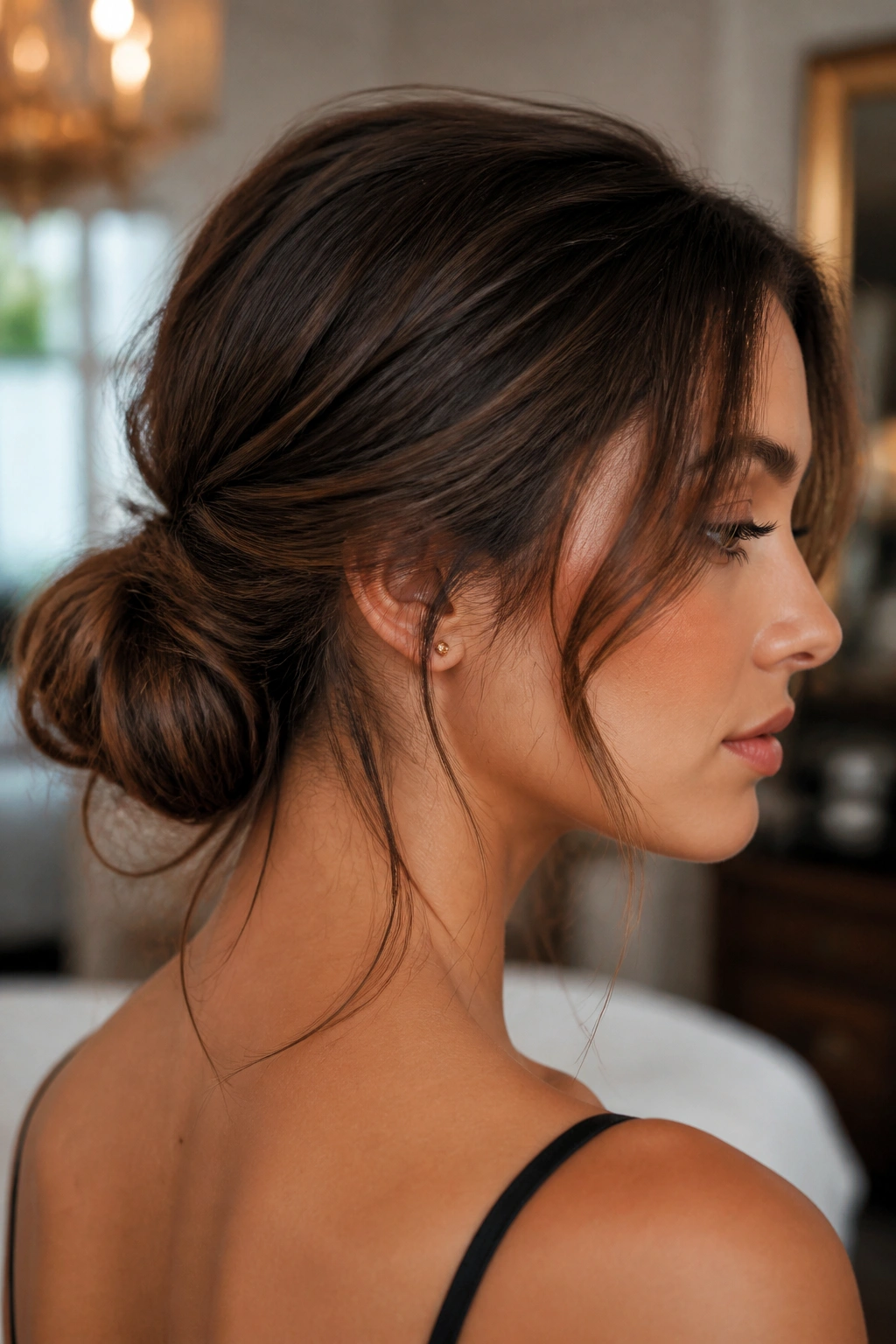
A low bun can look flat if everything is pulled tight. On layered hair, though, the loose pieces around the temples and nape create a softer outline that feels fuller. The bun sits low, but the shape around it carries the volume.
Leave out a few shorter front layers before you twist the rest into the bun. That keeps the face from getting swallowed by the style. If the bun is too polished, it can make the hair look smaller than it is.
Use pins rather than one heavy elastic when possible. Pins let the bun keep a bit of shape without squashing the crown. That tiny bit of looseness is the difference between elegant and dull.
18. Beach Waves on Long Layers
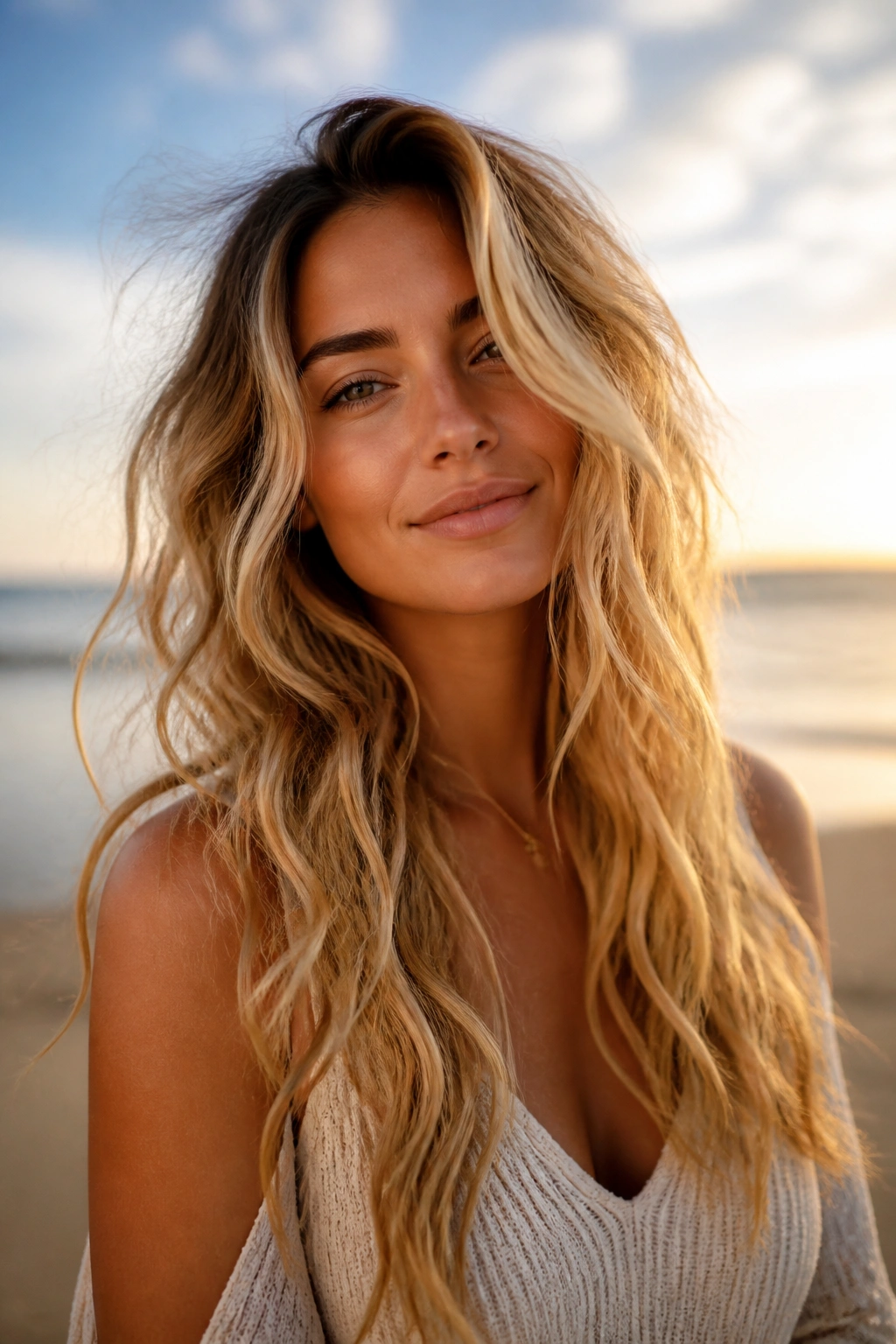
The smell of salt spray and the rough feel of air-dried hair tell you where this style is going. Beach waves rely on bend, not perfect curls, so long layers keep the look from turning into one giant triangle of texture.
Work a wave cream through damp hair, then twist sections as they dry. A diffuser on low heat helps if your hair is naturally wavy and needs a nudge. Once dry, break up the wave with your fingers instead of a brush.
This look gets better when the parts are not too perfect. Slightly uneven bends make the layers show up more clearly. And if the roots need a lift, a quick blast of dry shampoo at the crown is often enough.
19. Deep Side-Part Hollywood Layers
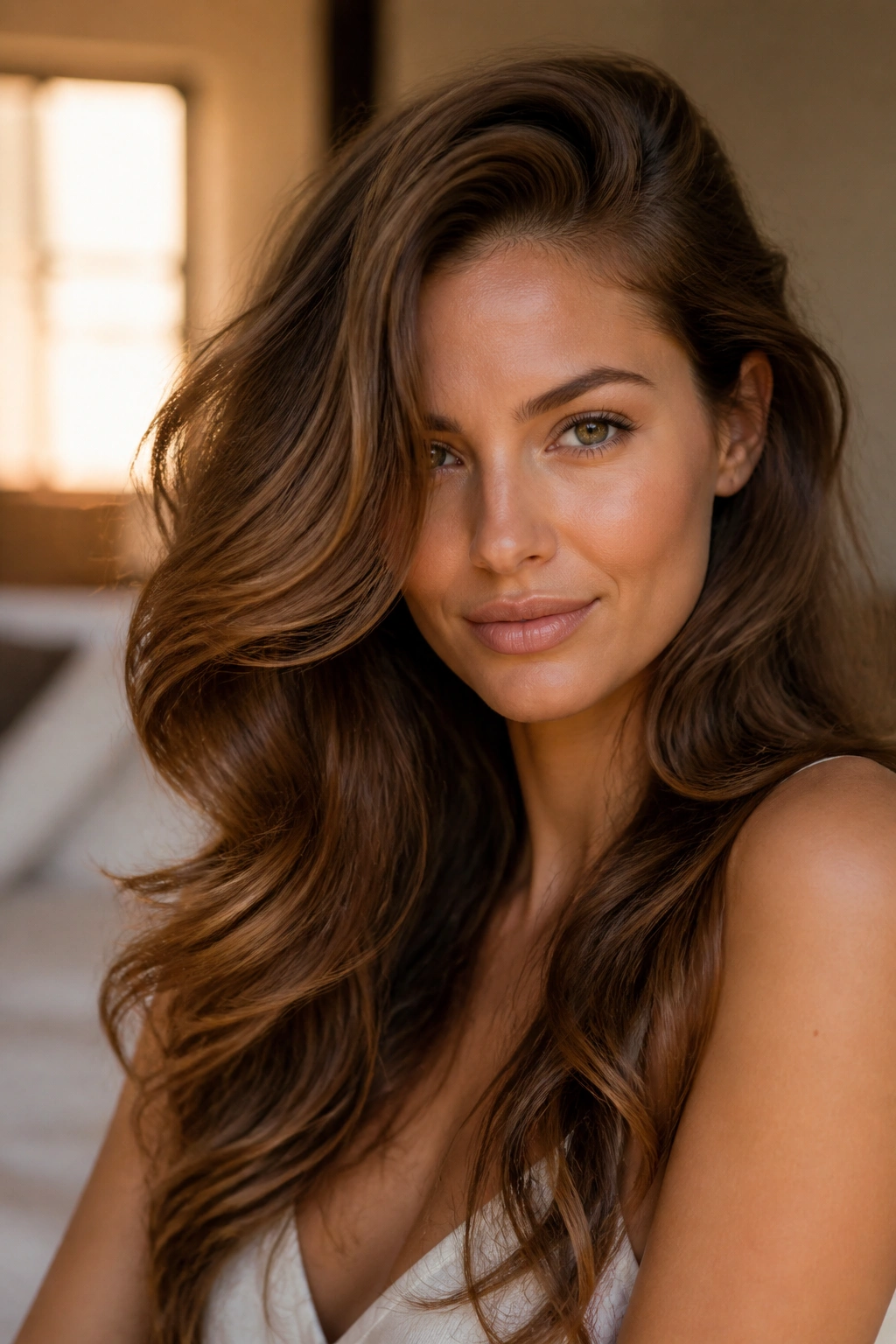
Why do old-school side-part waves still hold up? Because the shape is doing the work. One side carries more hair, the front sweeps across the face, and the layers stack in a way that looks rich and full instead of stiff.
Set the hair in large curls with a 1.5-inch iron or hot rollers, then pin each curl until it cools. Brush everything out in one direction. That’s the part people rush, and it shows. The wave needs time to settle into that glossy, smooth bend.
This is one of the most polished layered looks on the list. It suits long hair that has enough length to drape and enough layering to keep the sides from dragging the whole shape down.
20. Flipped-Out Layers With a 90s Blowout
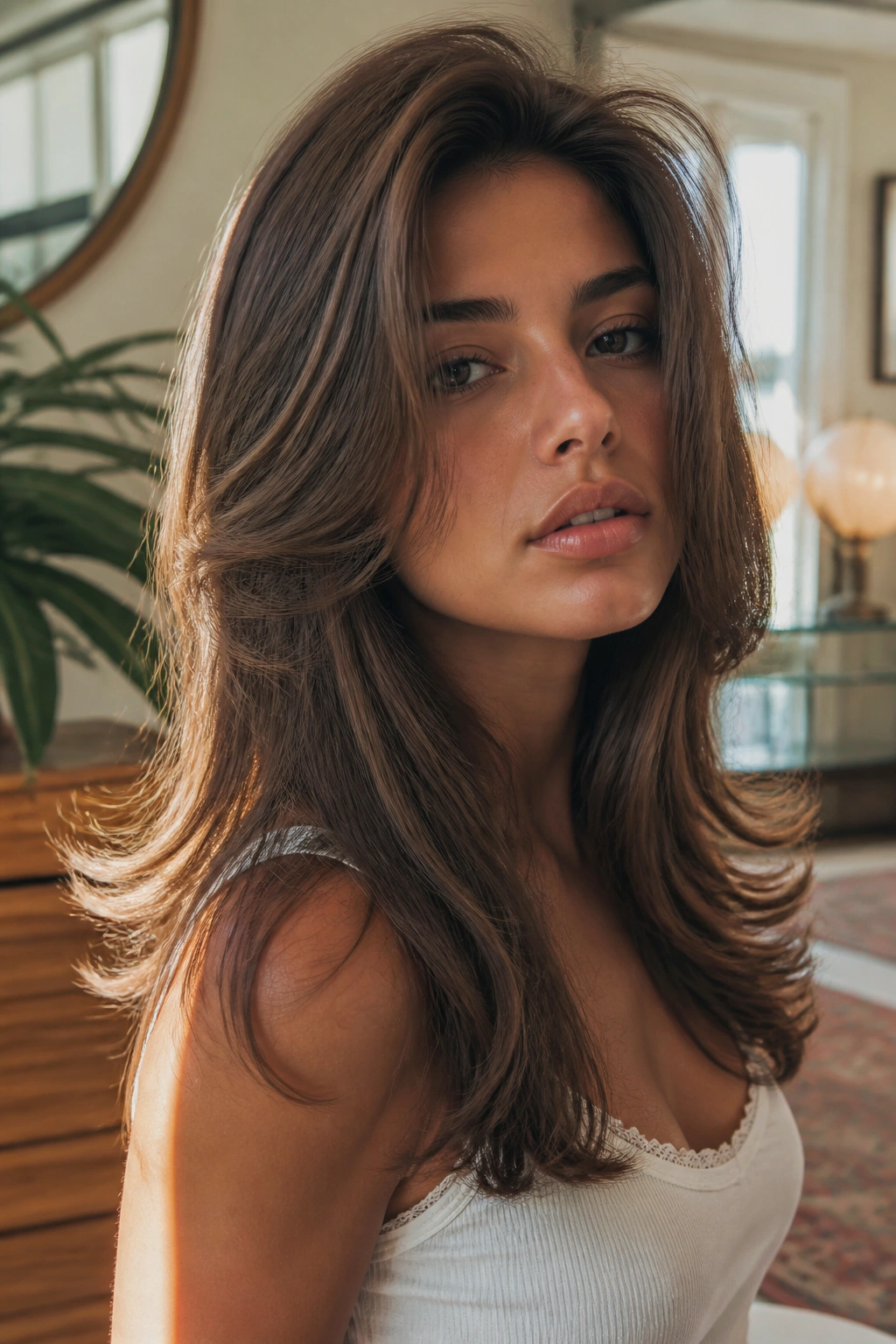
This is the loudest volume look here. The hair gets blasted at the roots, brushed outward, and finished with ends that kick away from the neck and shoulders. It has a lot of energy, and that is why it works.
Use a round brush under each section and turn the wrist outward as you reach the ends. Add mousse at the roots before drying if you want the crown to stay lifted longer. The layers should be obvious, but not choppy. The style lives or dies on that smooth bend.
A Small Warning
Too much flip can look dated fast. Keep the curve soft at the ends and the body bigger through the middle. That way the volume feels fresh instead of costume-like.
21. Claw Clip Twist for Layered Hair
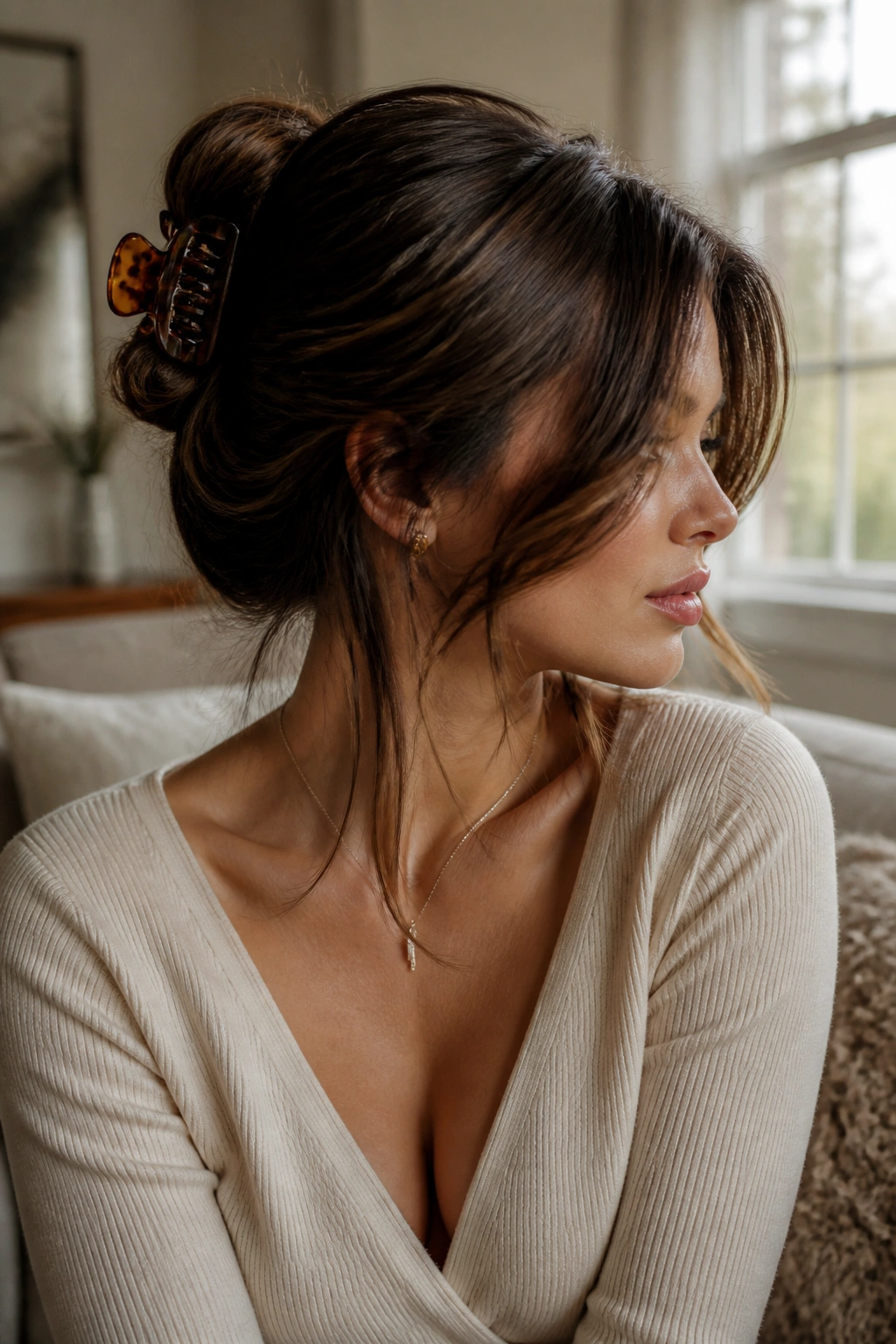
A claw clip twist is one of those fast styles that looks better on layered hair than on blunt ends. The shorter pieces escape around the face, the longer pieces fold into the clip, and the whole shape gets a little movement even when the hair is pinned up.
Twist the hair loosely first. Don’t overthink the base. If the twist is too tight, the layers can’t fall in a flattering way. Let the front pieces float out a bit, then use the clip to hold the middle section in place.
This is the style you reach for when you want your hair up but still want the layers to show. It also handles second-day texture nicely, which is a small but useful win.
22. Root-Lift Roller Set With Long Layers
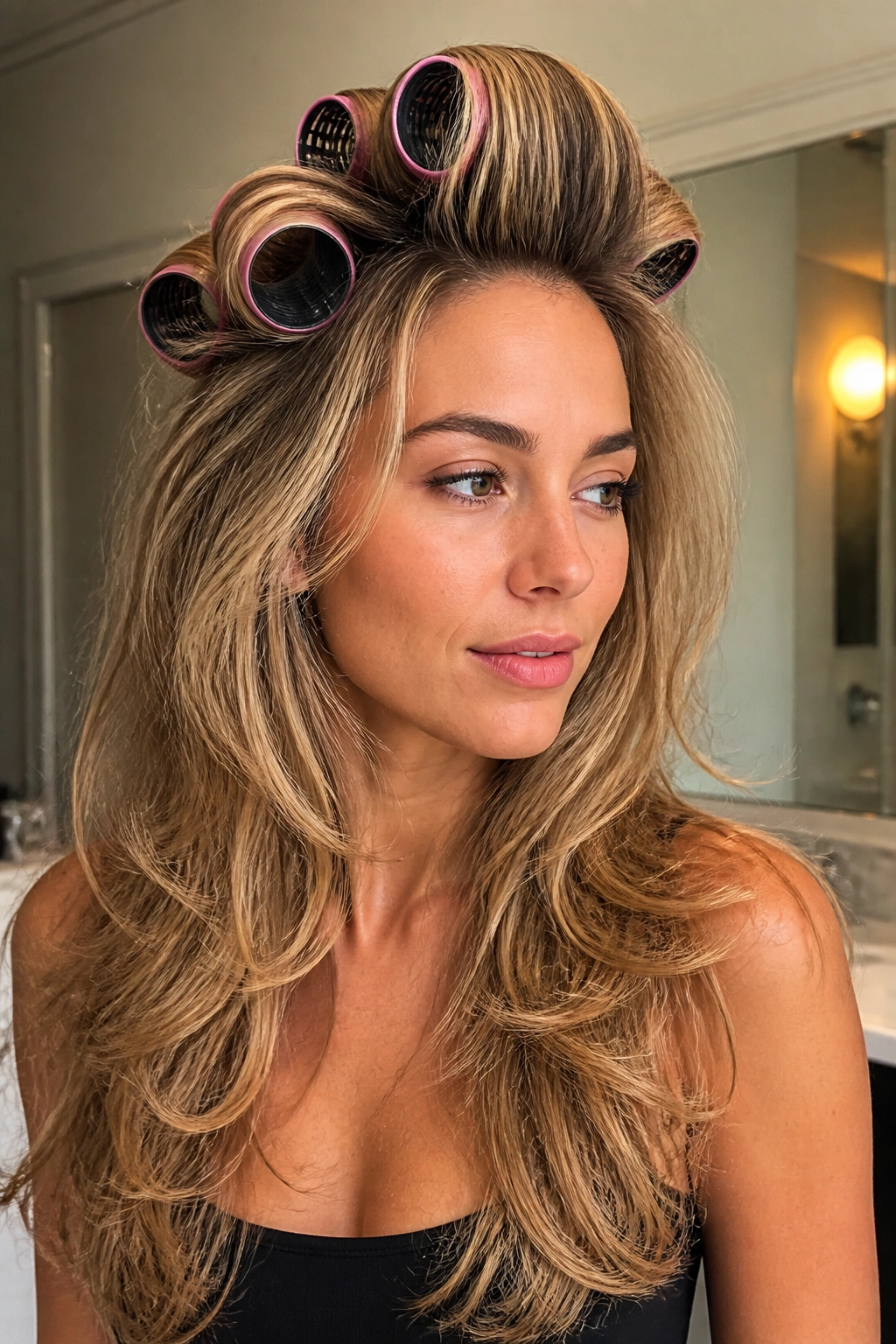
Unlike hot tools, a roller set gives volume with less direct heat on the lengths. That matters on long layered hair, because the ends can get tired fast if they’re constantly being ironed or curled. Velcro rollers lift the crown and set the shape while the hair cools in place.
Put the rollers in while the hair is still about 80% dry. Focus on the top and front sections first, then move back. A 10- to 15-minute set can help, but the hair should cool fully before you pull the rollers out. Warm hair falls faster.
This style is old-school for a reason. It gives you root lift, soft bend, and a lot of body without needing a full styling session every time. If your hair is fine and loses shape fast, this one earns its keep.
23. Soft Curls With Curtain Fringe
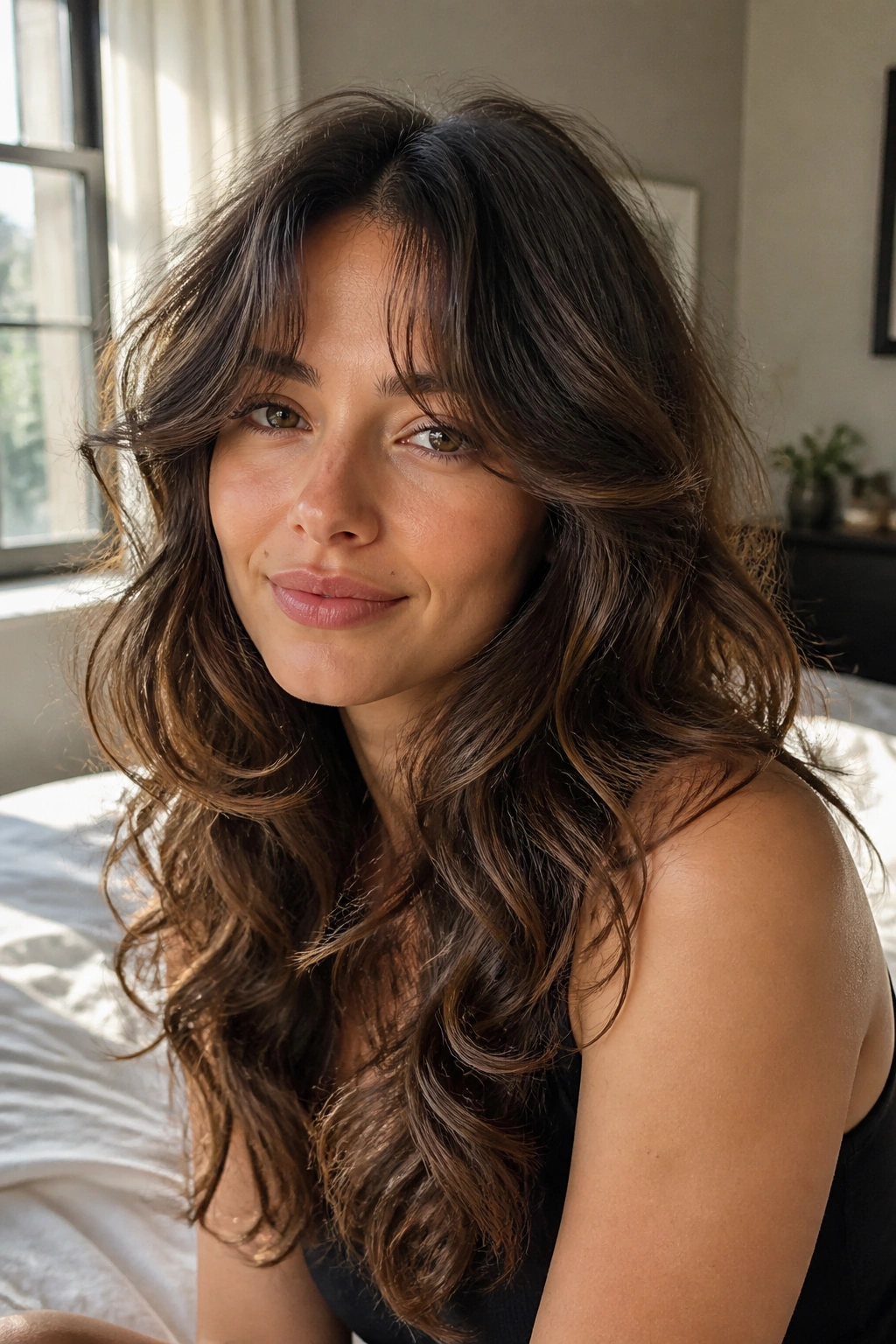
Soft curls and a curtain fringe are a good match because they balance each other. The fringe opens the front, the curls fill out the body of the hair, and the layers keep the sides from feeling too heavy. It’s romantic, but not fussy.
Curl 2-inch sections away from the face near the front, then alternate directions through the rest of the hair so the shape stays loose. Once the curls cool, rake your fingers through them instead of brushing hard. That keeps the volume from disappearing in one sweep.
A flexible hold spray is enough here. The style should move when you turn your head. If it feels locked in place, you’ve used too much product.
The Bottom Line
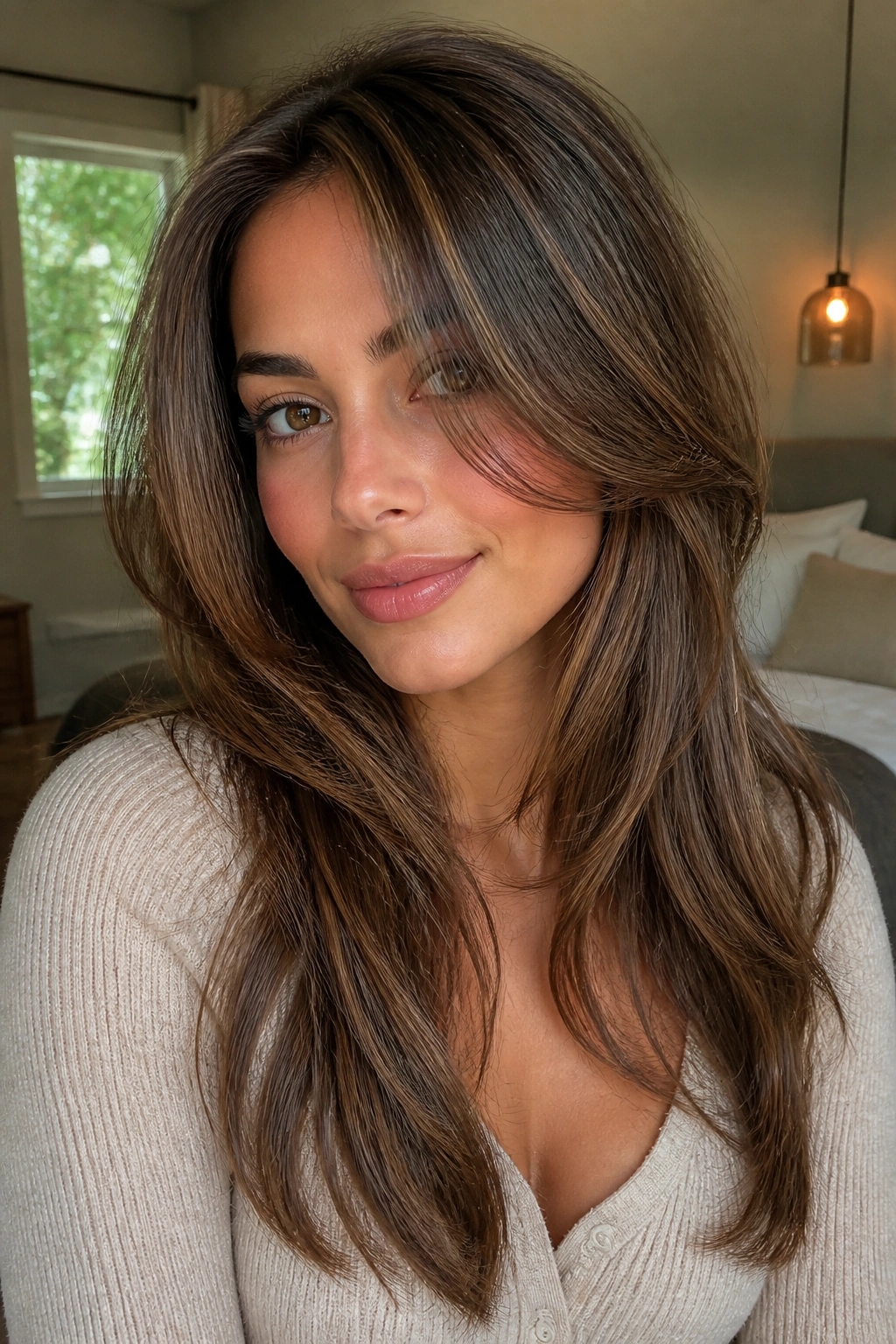
Long hair looks fuller when the weight gets moved around instead of sitting at the very bottom. That can mean face-framing pieces, hidden internal layers, feathering, or a cut like the butterfly and shag that removes bulk with more attitude. The hairstyle matters too. A round brush, a side part, or a loose wave can change how the layers sit.
The best layered hairstyles for long hair with volume are the ones that make the roots look lifted and the ends look alive. Flat length is the enemy. Movement is the fix.
If you want the most reliable place to start, pick one cut that suits your hair density, then pair it with one styling habit you can repeat. A good cut gives the hair shape. A smart styling pattern keeps that shape from collapsing by lunch.