



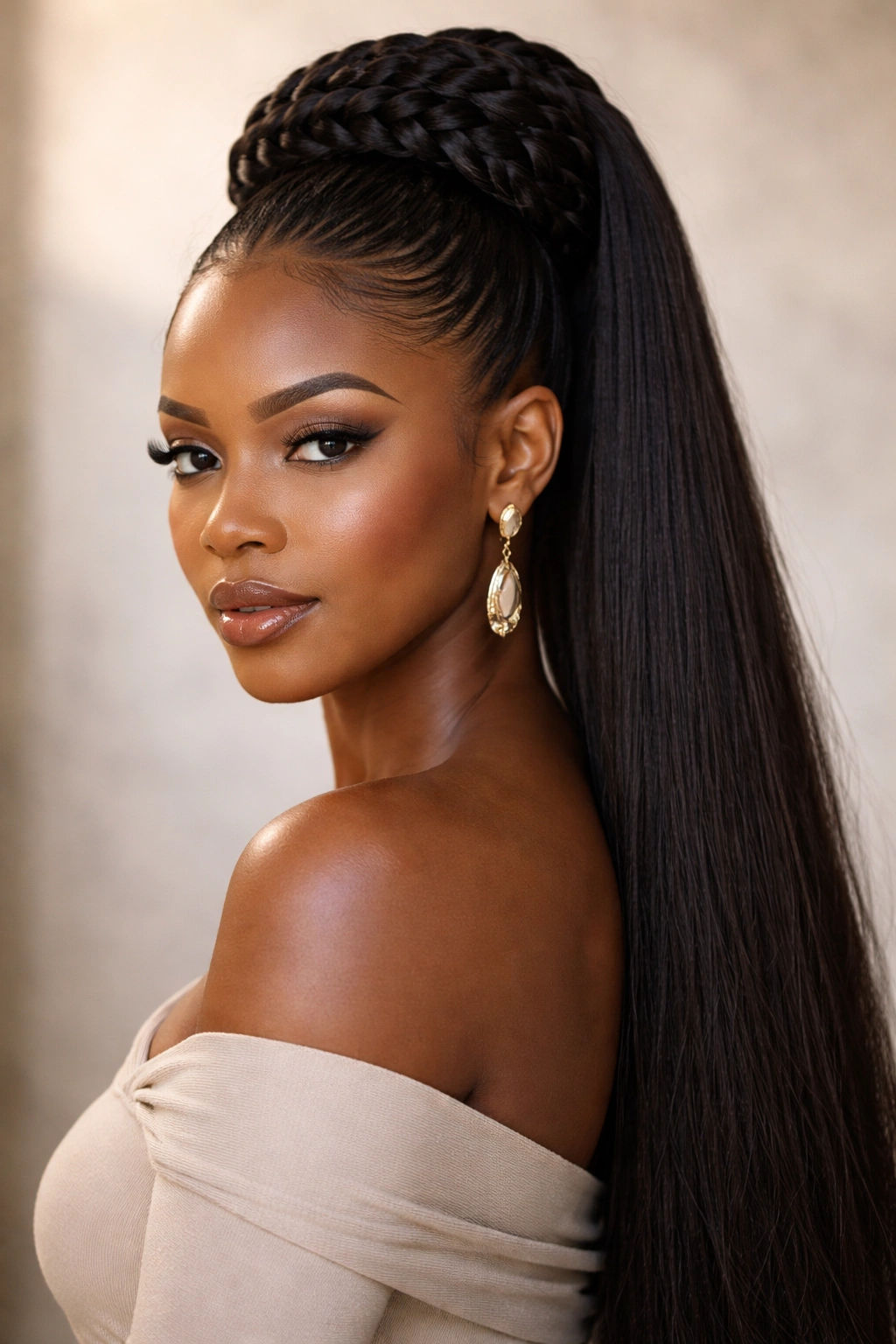
Pondo styles have become a go-to protective styling choice for people with long, textured hair who want to look polished while keeping their strands healthy and low-maintenance. If you’re working with substantial length, pondo styling offers the perfect balance—it’s sophisticated enough for professional settings, versatile enough to adapt to any aesthetic, and practical enough to last for weeks with minimal daily fuss. The beauty of pondo hairstyles lies in their ability to combine multiple braiding techniques, hair wrapping, and strategic sectioning to create styles that feel both intentional and effortlessly chic.
What makes pondo styles particularly appealing for long hair is how they distribute weight evenly across your head, reducing tension on your edges and hairline. Unlike some protective styles that can feel heavy or strain your scalp, a well-executed pondo allows your natural hair underneath to rest while you enjoy a completely transformed look. The wrapping and interlocking techniques used in pondo work also mean your style stays intact longer, meaning fewer touch-ups and more time between salon visits.
Whether you’re preparing for a major life event, transitioning between seasons, or simply want a break from daily styling routines, these eight pondo styles showcase exactly how versatile and stunning this braiding technique can be when you’re working with length.
Understanding Pondo Styles and Why They Work for Long Hair
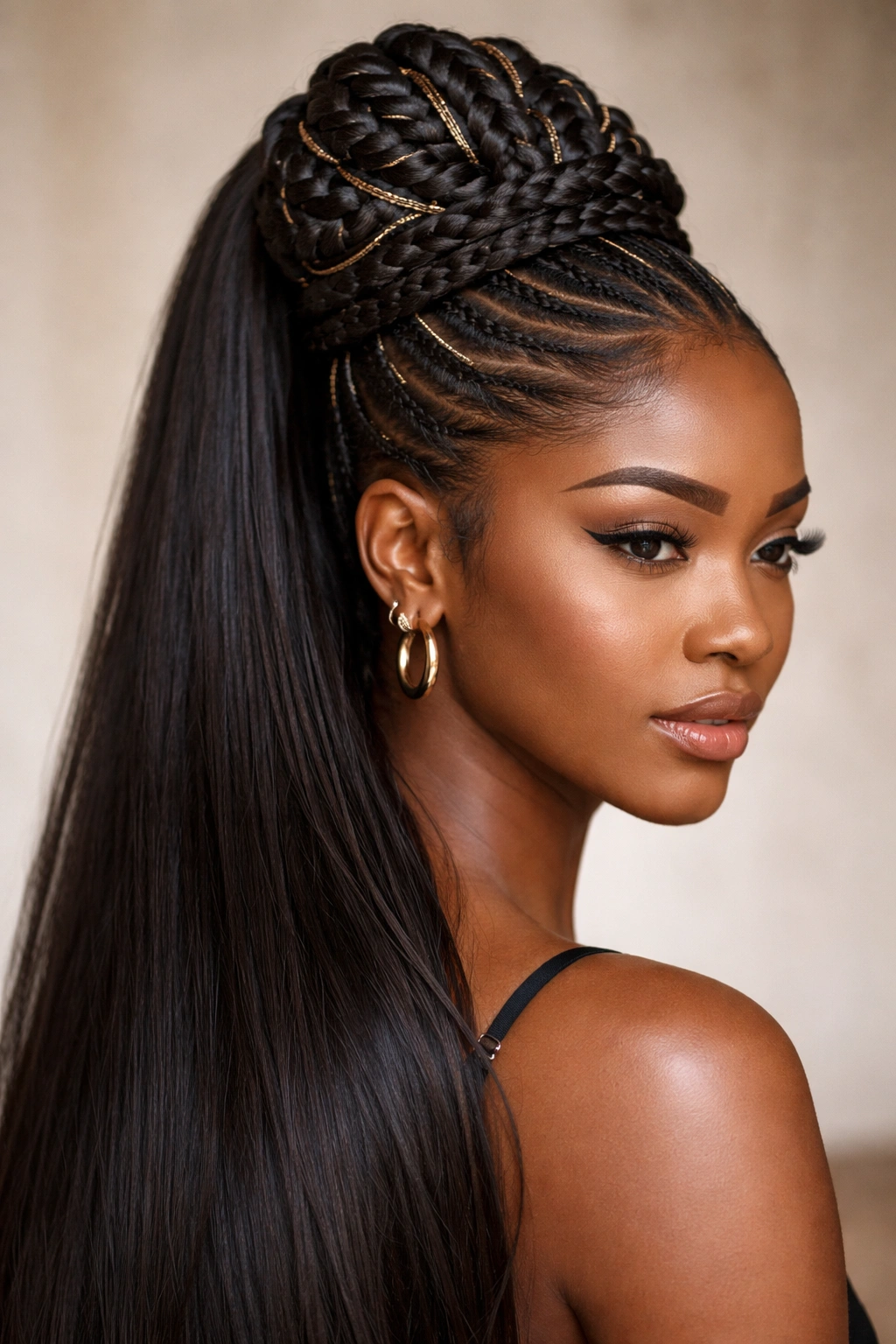
Pondo styling is a South African braiding tradition that’s gained significant popularity worldwide. The technique involves creating what’s essentially a sculptured crown or patterned overlay across your natural hair using thin synthetic or human hair braids, often with decorative wrapping, beads, or intricate designs woven throughout. What sets pondo apart from other protective styles is the intentional artistry—these aren’t just functional braids, they’re wearable art.
The reason pondo works so beautifully for long hair is rooted in practical hair science. When your hair is lengthy, daily manipulation and environmental exposure increase the risk of breakage, split ends, and moisture loss. Pondo styles tuck your hair safely inside the braided structure while the outer design commands attention. Your long hair rests completely undisturbed for weeks, allowing it to retain moisture, strengthen, and grow.
The protective nature of pondo styling also means you can maintain your length without constant trimming. Many people find that a single pondo style worn for four to six weeks can make an enormous difference in how healthy their long hair looks and feels when they finally take the braids down. The low manipulation combined with the tension distribution means your edges stay intact and healthy throughout the wear time.
1. The Classic Crown Pondo with Box Braid Details
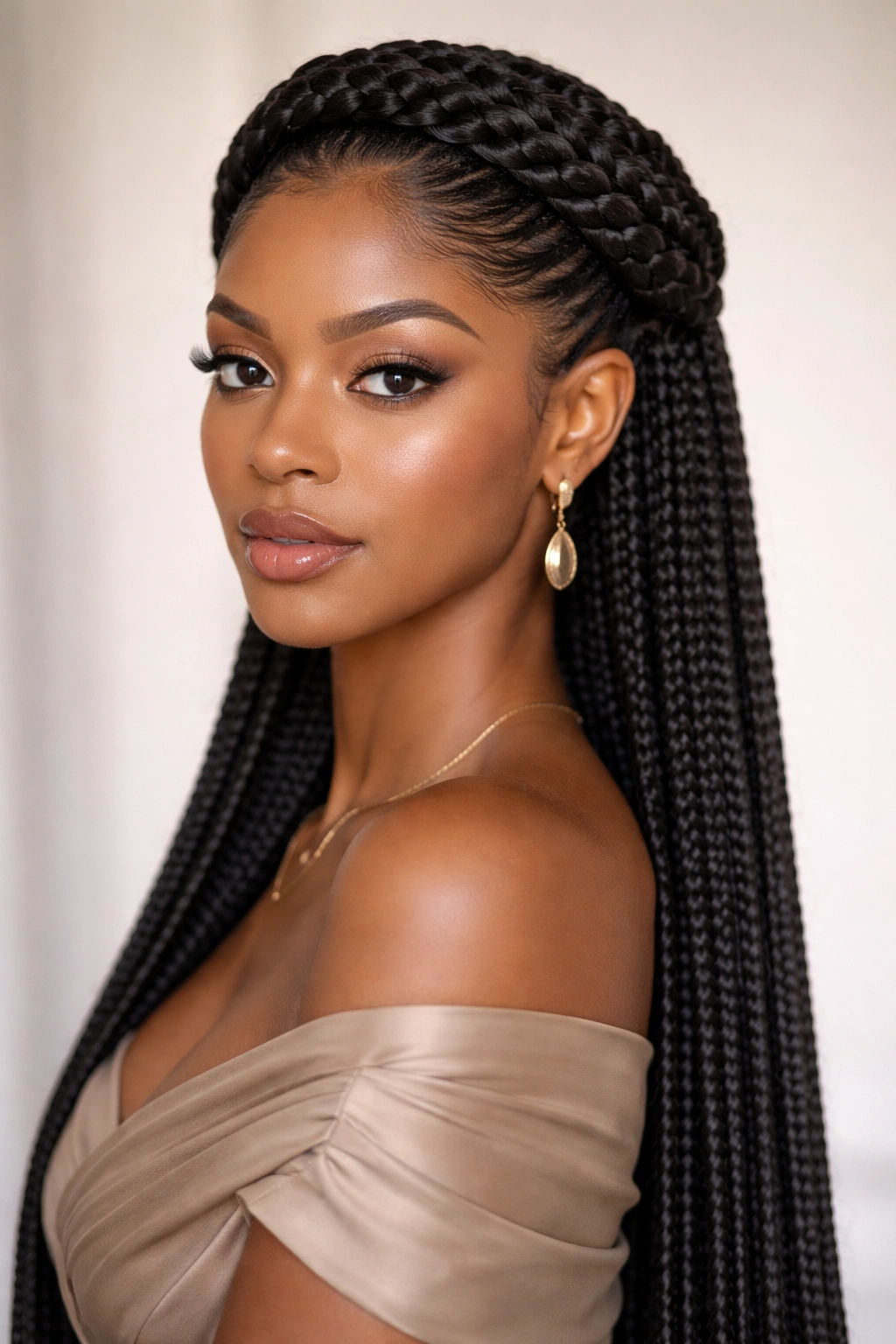
The classic crown pondo is the perfect starting point if you’re new to the style, yet it remains sophisticated enough for those with years of pondo experience. This design features a thick, sculptured braid that wraps around your head like a crown, with coordinating box braids flowing down the back or sides, creating a cohesive, intentional look that works equally well for formal events, creative professional settings, or everyday wear when you want to feel elevated.
Why This Style Stands Out
The crown pondo creates a flattering frame for your face while keeping your hair completely protected underneath. Because the braiding pattern draws the eye upward and around your face, it’s exceptionally flattering for elongating your face shape and highlighting your features. The combination of the structured crown with looser box braids down the back creates visual interest and movement without requiring daily styling work.
How to Create This Look
- Start with clean, moisturized hair and apply a lightweight leave-in conditioner from roots to ends
- Section your hair into a crown pattern across the top of your head, leaving the back section free for box braids
- Begin your crown braid by taking a thick section from one temple, braiding loosely across the crown to the opposite temple, securing the braid as you go
- Wrap the crown braid with contrasting thread or yarn in a color that complements your skin tone
- Create box braids in the back section, keeping them a medium thickness so they blend visually with the crown braid
- Add beads or cuffs every few inches down the box braids for additional dimension and a finished feel
- Style the front braids softly around your face, allowing a few baby hairs to frame your forehead for softness
Pro tip: This style works beautifully when you wrap the crown braid with a shimmery thread or metallic yarn—it catches the light as you move and makes the style feel more polished and intentional.
2. The Geometric Pondo with Triangular Sections
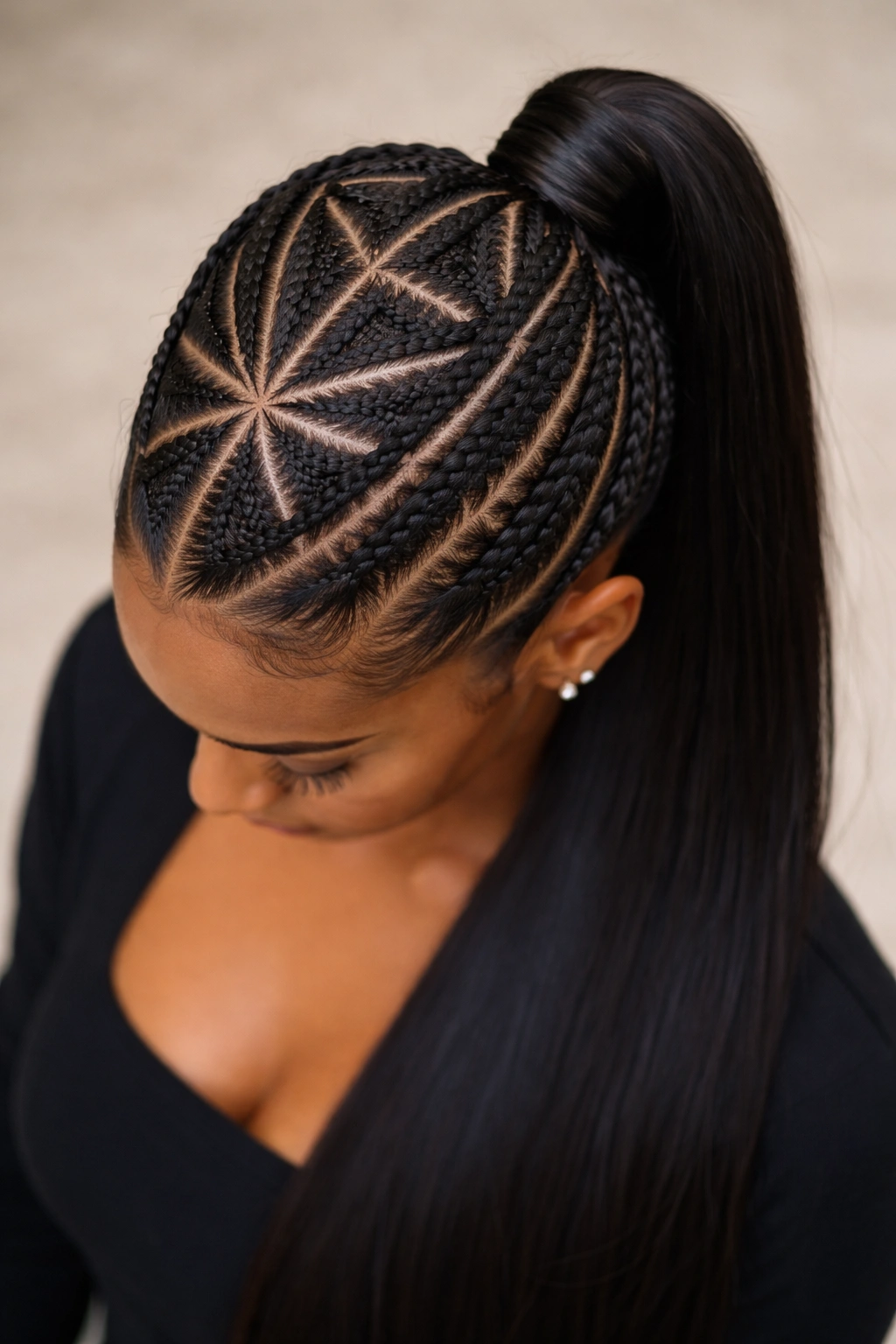
For those who love precision and artistic design, the geometric pondo takes the style into high-fashion territory. This approach uses clean triangular or diamond-shaped sections across your scalp to create a grid-like pattern, with each section featuring braids that run parallel to one another. The result is strikingly mathematical and modern, yet deeply rooted in traditional braiding heritage.
What Makes It Different
Geometric pondo requires careful planning before your braider even touches your hair. The sections must be exactly proportioned, and the braids themselves must be perfectly parallel to create that optical illusion of order and intentionality. This style photographs beautifully and tends to make a statement—it’s not subtle, and that’s the entire point.
Key Characteristics
- Requires a consultation with your braider beforehand to map out the exact pattern
- Works best when you choose either a monochromatic color scheme or bold color contrasts that emphasize the geometric pattern
- The style tends to age beautifully, with the geometry becoming even more visible as the braids settle and smooth out
- Takes longer to install than other pondo styles, often requiring 4-6 hours depending on the complexity and your hair length
- Remains a strong style choice for three to five weeks before needing touch-ups
Insider note: If you’re going for this style, bring visual references to your appointment and discuss exactly how tight you want your sections. Perfectly executed geometry should feel intentional and striking without causing scalp tension.
3. The Waterfall Pondo with Cascading Side Braids
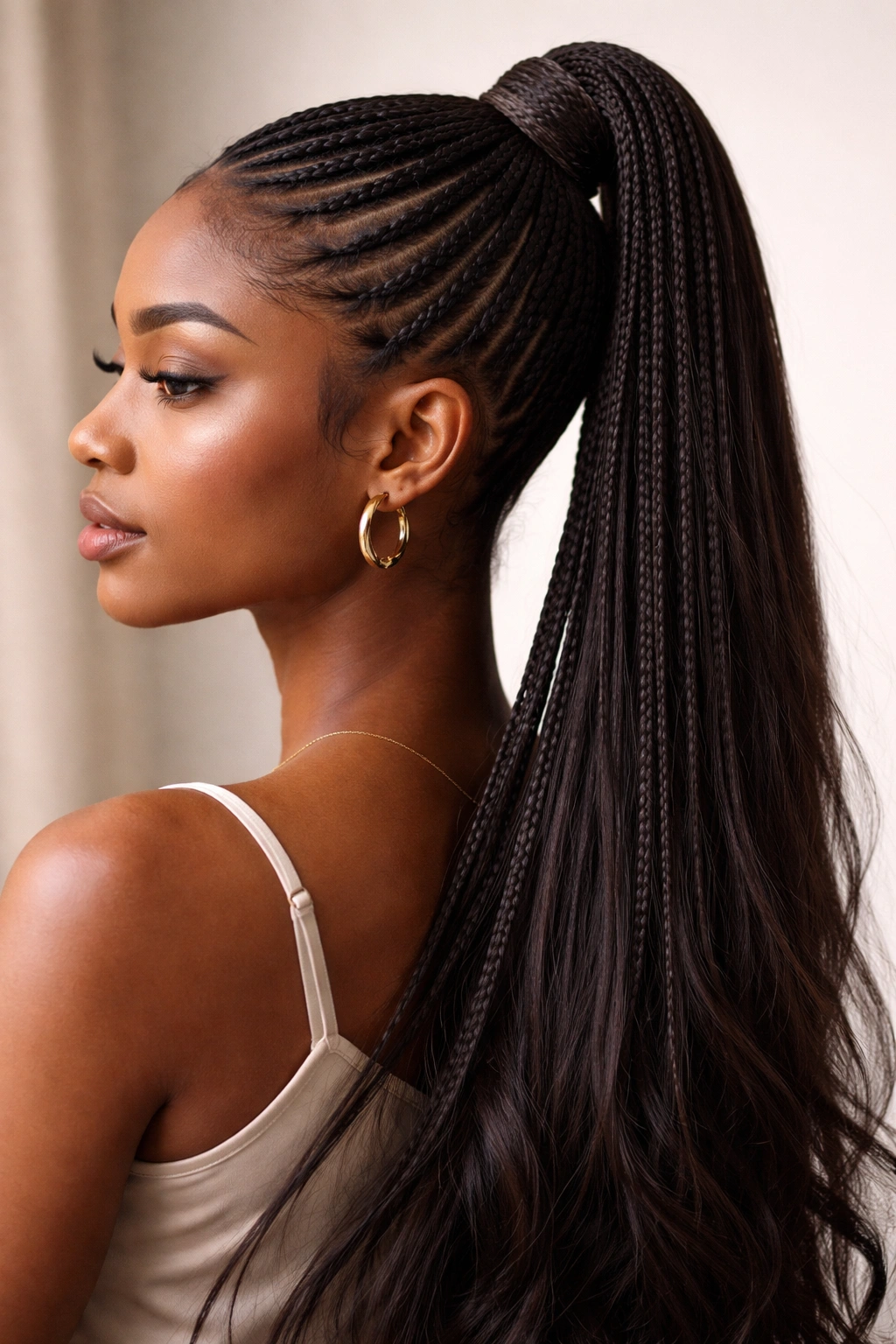
The waterfall pondo combines the sculptured elements of traditional pondo with the romantic, flowing aesthetic of waterfall braids. This style features a series of thin braids that begin at your crown and cascade down one or both sides of your head, creating the illusion that your braids are literally flowing like water. It’s one of the most feminine and dynamic pondo interpretations available.
Why It’s a Top Choice for Long Hair
The waterfall technique is exceptionally flattering for people with long hair because it shows off length while maintaining complete protection. The cascading braids draw attention downward, which is perfect if you want to emphasize the length you’ve worked hard to maintain. It also moves beautifully—as you turn your head, the braids shift and create this fluid, living quality that feels more organic than a static style.
How to Execute This Style
- Create a parting line from your crown to behind one ear where your waterfall will begin
- Start with a three-strand braid at the top of that parting, then drop one strand and pick up new hair from the side, creating that waterfall effect
- Continue the braids down the side of your head, each braid feeding into the next
- Wrap each section with thin thread in a coordinating color
- Allow the braids to flow freely down your back or side, adding beads or cuffs for visual punctuation
- Consider leaving a small section of box braids in the back to balance the asymmetry if you’ve only done one waterfall
- Pin or secure the waterfall braids behind your ear or at the base if you want to wear your hair up
This style can be worn loose, pinned back, or even swooped to one side for different occasions.
4. The Sleek Pondo with Accessory Details
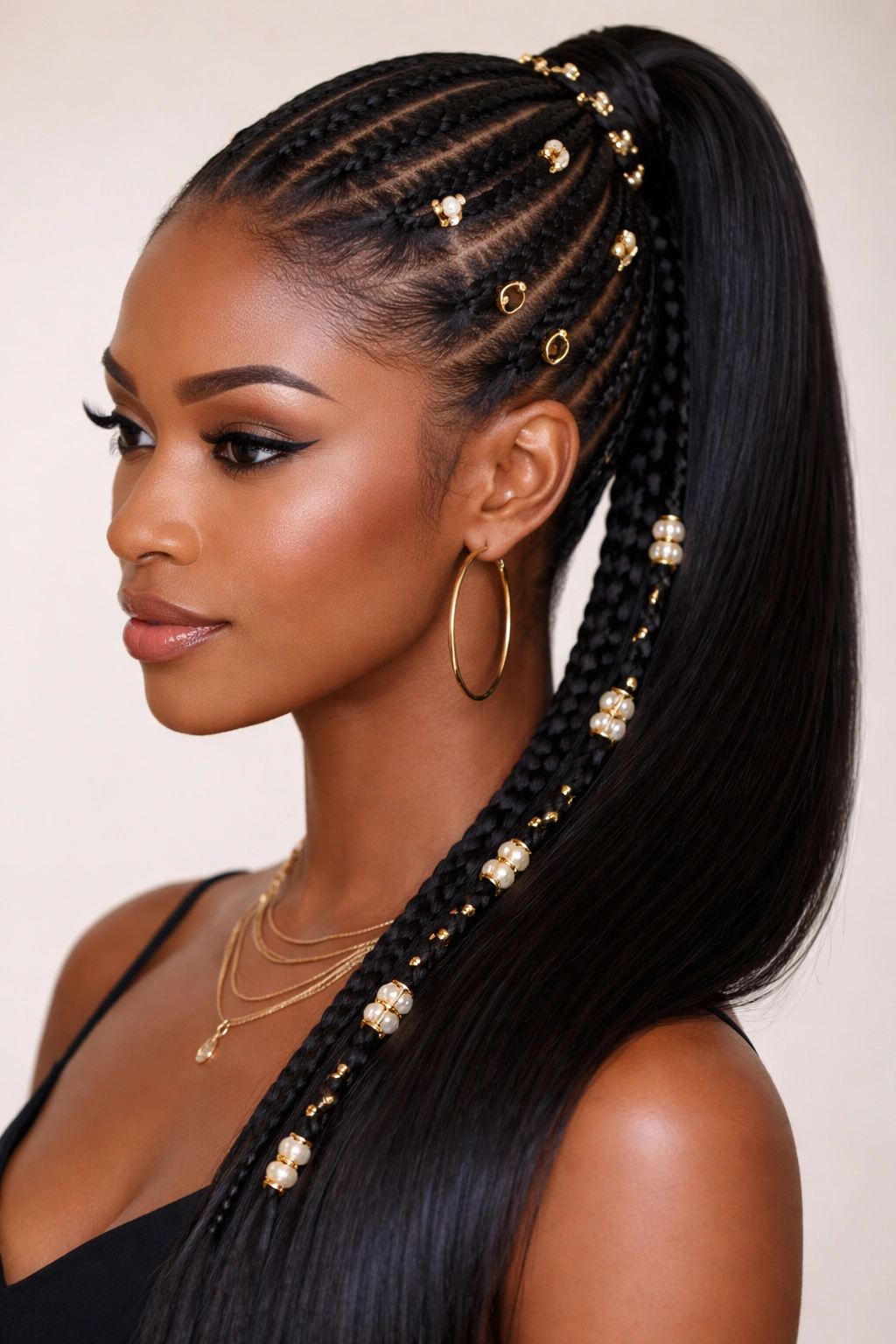
Sometimes the most striking pondo styles are the ones that prioritize clean, intentional simplicity. The sleek pondo features smooth, flat-lying braids that follow close to your scalp without extra texture or bulk, allowing decorative elements—beads, metal cuffs, rings, or even lightweight chains—to take center stage. This approach transforms your braids into a canvas for jewelry and adornment.
What Makes It Stand Out
The sleek pondo works beautifully for professional settings and formal occasions because the flat braids feel refined and controlled. When you layer in quality accessories, the result feels curated and intentional rather than casual. This style is also surprisingly quick to install compared to more textured pondo options, making it a smart choice if you’re working within a time constraint.
Quick Facts About This Style
- Requires careful tension control during installation—you want the braids snug and smooth without causing scalp discomfort
- The flat-lying braids mean moisture retention remains excellent despite the tight installation
- Pairs beautifully with gold, silver, or copper cuffs and rings
- Allows for frequent style changes simply by switching out accessories
- Works with synthetic braiding hair or human hair depending on your preference and budget
- Can be dressed up or down depending on your accessory choices
Worth knowing: If you go with a sleek pondo, invest in quality cuffs and rings that won’t oxidize or turn your hair green. Cheap metal accessories can damage your braids and stain your hair over time.
5. The Pondo with Braided Crown and Feed-In Details
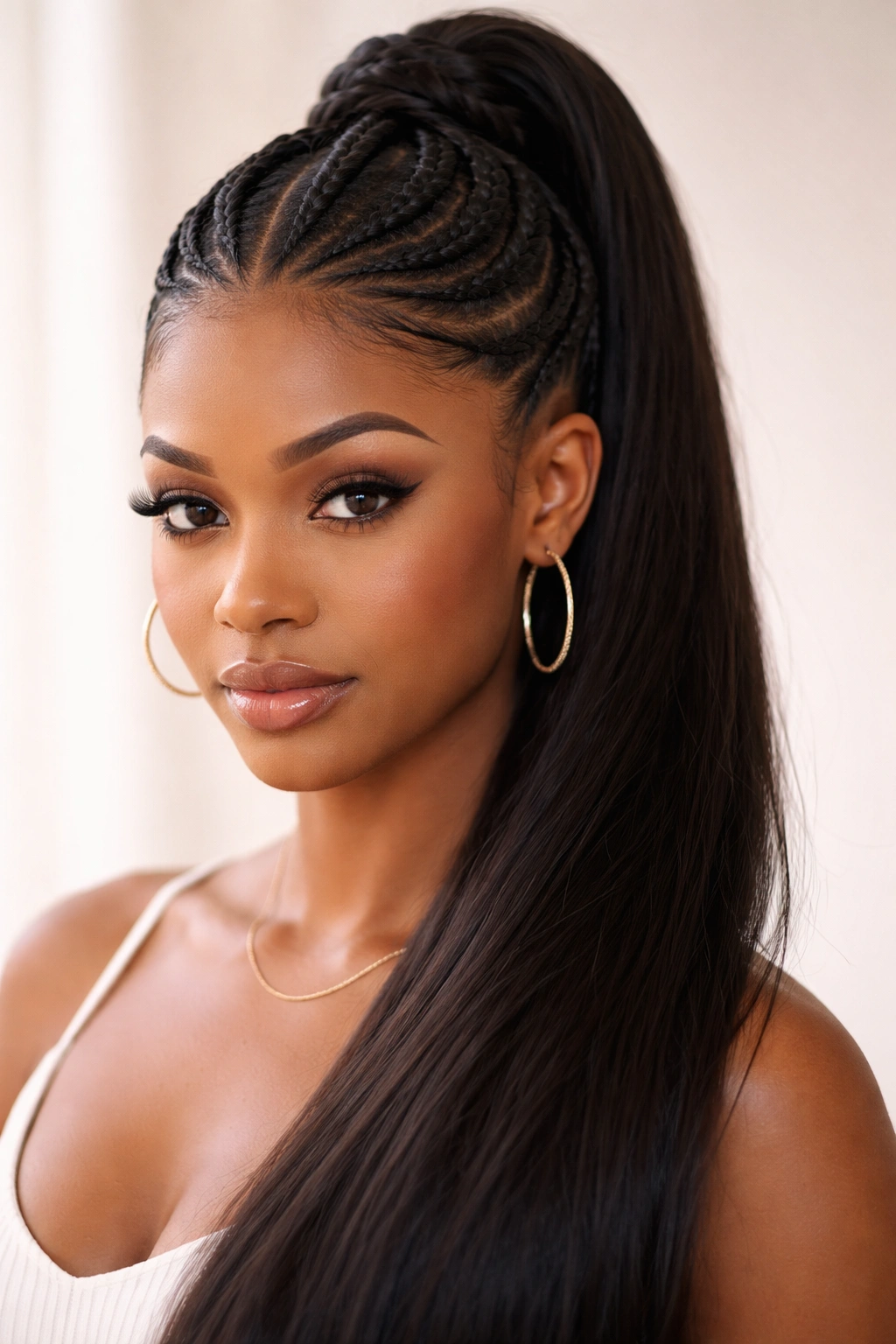
This style combines feed-in braid techniques—where you’re continuously adding hair as you braid rather than braiding from the scalp—with traditional pondo elements to create a style that looks absolutely custom-fitted and high-fashion. The feed-in creates a three-dimensional, almost sculptural quality that’s different from standard tight braiding.
Why This Approach Delivers Results
Feed-in techniques distribute tension much more evenly across your scalp because the braids aren’t pulling directly from the root of each hair. Instead, hair is gradually fed into the braid, which means less stress on your hairline and edges. For people with long hair who’ve had previous tension issues or are trying to grow out their edges, this method can be genuinely transformative.
How to Identify Quality Feed-In Work
- The braids should look naturally dimensional and slightly raised from your scalp
- There should be no visible scalp showing between braids
- The tension should feel snug but not painful
- The braids should have a smooth, almost ombré appearance where the synthetic hair blends seamlessly with your natural hair
- Well-executed feed-in work means the style will last four to six weeks without looking loose or messy
This is a style where investing in a highly skilled braider really pays off—the difference between good and exceptional feed-in work is immediately visible.
6. The Pondo with Colored Hair Accents and Pattern Wrapping
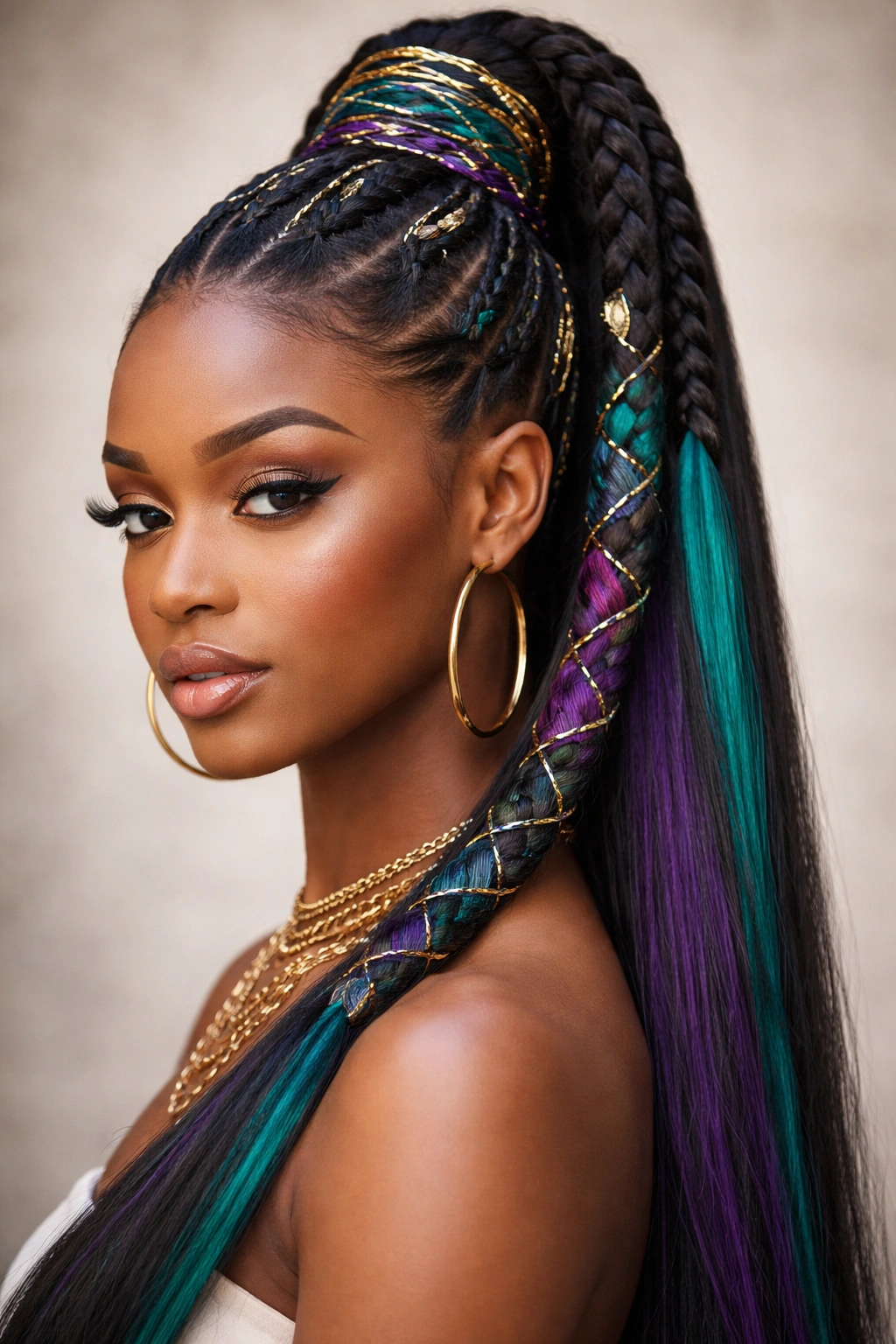
If you want to push your pondo into bold creative territory without committing to permanent color on your natural hair, adding colored synthetic hair to specific sections or incorporating patterned wrapping throughout your braids allows for completely transformative visual impact. This version of pondo is for people who love color, pattern, and artistic expression.
Why Color Creates Impact
Colored synthetic hair and pattern wrapping instantly elevate a pondo from everyday protective style to statement accessory. The color doesn’t fade quickly if you’re using quality synthetic hair, and you have complete control over where the color appears—concentrated in one section, scattered throughout, or reserved just for the outer braids. This approach also means you can change your color vibe with your next style without touching your natural hair.
Popular Color and Pattern Combinations
- Jewel tones like emerald, sapphire, or amethyst paired with metallic thread wrapping create a luxe, high-fashion feel
- Neon or bright colors work best when used strategically—perhaps just in the front section or as accent threads throughout
- Two-tone braids (sections of different colors within the same braid) create optical movement and depth
- Ombré coloring that fades from one hue to another looks sophisticated and intentional
- Metallic or iridescent wrapping without colored hair adds shine and catches light beautifully
Pro tip: If you’re using colored synthetic hair, bring swatches to sunlight before your appointment. Colors look dramatically different in natural light versus artificial salon lighting, and you want to make sure the shade you chose works in real-world conditions.
7. The Pondo with Half-Up Styling and Flowing Free Section
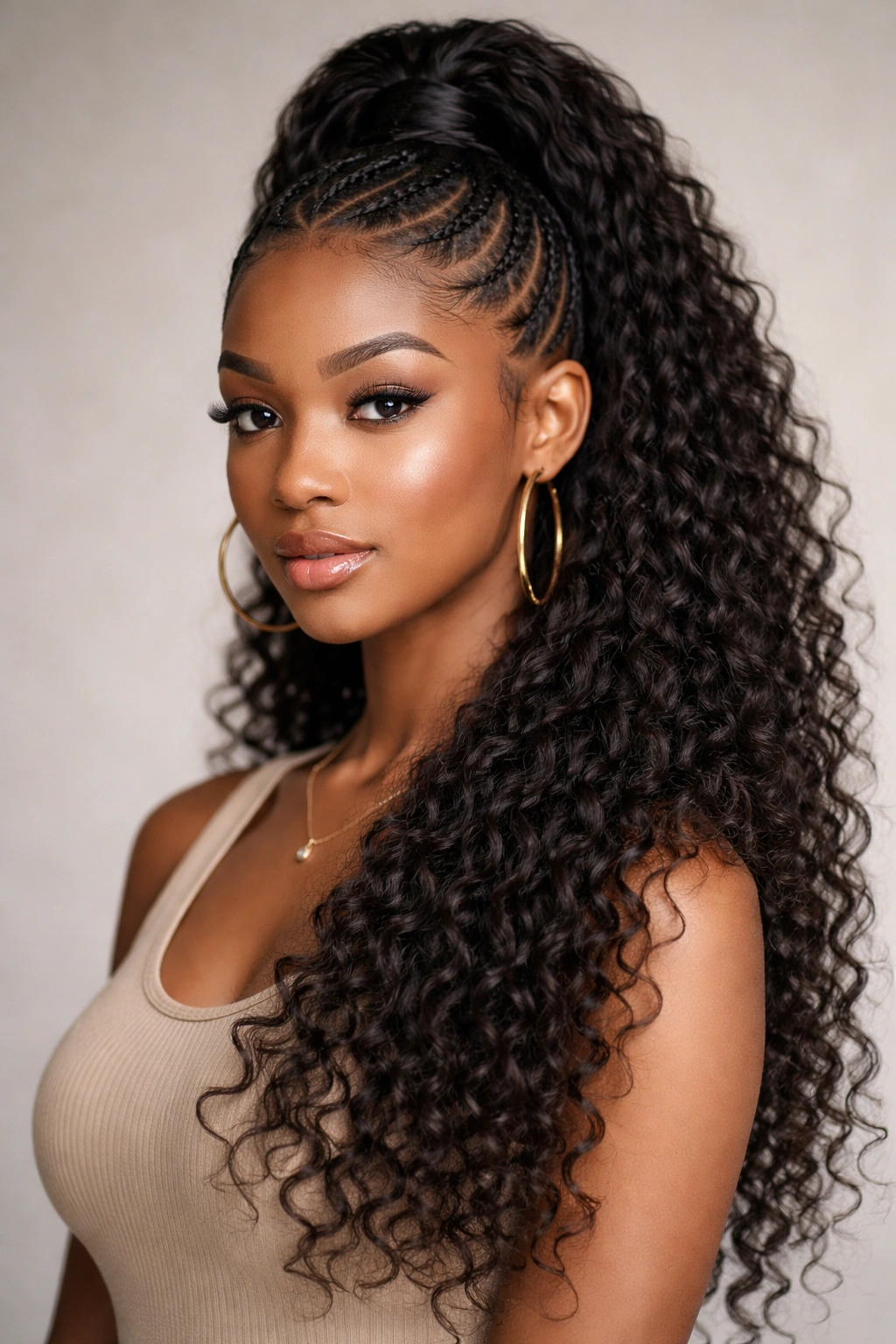
This hybrid approach offers the best of both worlds—the protection and polish of pondo styling combined with the freedom and length display of partially unbraided hair. This style features elaborate pondo braiding across the top and crown of your head, with the lower section left in its natural curled or textured state, creating a dramatic contrast between the controlled, intentional braiding and the organic movement of your natural curl pattern.
Why This Hybrid Works for Long Hair
The half-up pondo is exceptionally practical for long hair because it protects the most vulnerable section (your crown and the area closest to your face and neck, which gets the most friction and environmental exposure) while allowing you to show off the full length and texture of your natural hair underneath. This style also offers the most versatility—you can style the free section into an updo for formal occasions, leave it down and loose for everyday wear, or even pull it up into a high ponytail.
Installation and Styling Tips
- Have your braider execute the pondo section across your crown, then leave the lower section completely free and unbraided
- Style the free section by washing and deep-conditioning it separately from the pondo braids
- Create definition in your curls using a curl cream or gel if you want more structure, or leave it natural for organic texture
- You can wash the pondo section gently every few weeks and allow it to air dry, keeping it fresh without disturbing your natural hair underneath
- Use a silk or satin bonnet to protect both the pondo section and the free-flowing section while you sleep
- Refresh the texture of your free section by lightly misting it with water and a leave-in conditioner if it starts to look flat
This style genuinely works for six to eight weeks if you maintain it properly.
8. The Goddess Pondo with Thick Statement Braids
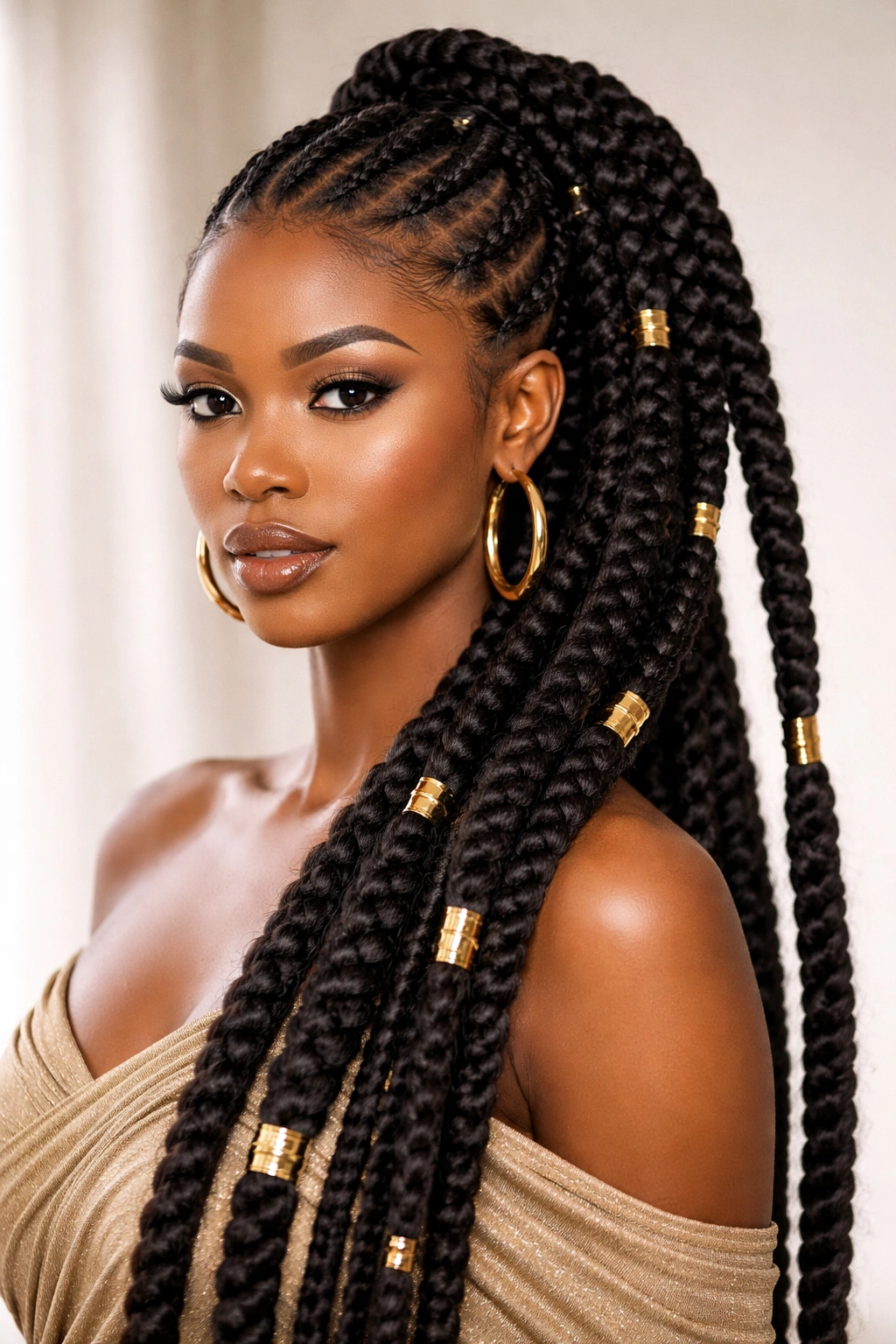
For the ultimate in bold, confident styling, the goddess pondo features thicker, more substantial braids that create visual drama and sculptural presence. These braids are architectural—they demand attention and showcase the artistry and skill of the braider. This style is less delicate than other pondo options and more purely statement-making.
What Makes the Goddess Pondo Iconic
Thick braids mean fewer individual braids overall, which means the style installs faster and your scalp gets a longer break between styles. The braids also age beautifully—they actually look better and more intentional as they soften slightly over the wear period. This is a style that photographs incredibly well and makes you feel powerful and intentional.
Key Characteristics of This Style
- Typically features 6-12 main braids across the entire head depending on your head size and hair volume
- Can be styled with elaborate wrapping, beads, or cuffs, or worn completely plain for minimalist impact
- Works beautifully with gold, silver, or wooden jewelry integrated throughout the braids
- Lasts four to six weeks comfortably because the thicker braids don’t loosen as quickly as thinner ones
- The thicker braids mean less tension overall, making this an excellent choice if you’re sensitive to scalp tension
- Creates a finished, intentional look immediately—there’s no question that this is a deliberate styling choice
Worth knowing: Goddess pondo works best when you’re already comfortable with your natural hair and secure in drawing attention to your head. This isn’t a subtle style, and it shouldn’t be. The whole point is to feel powerful and present.
Essential Tips for Maintaining Your Pondo Style Throughout the Wear Period

Once you’ve invested hours and money into getting your pondo installed, you’ll want to keep it looking fresh and intentional for the entire four-to-eight-week wear period. The maintenance routine isn’t complicated, but it does require consistency and care. Your scalp is working hard underneath those braids, producing natural oils and processing dead skin cells, and you need to help it stay healthy and balanced.
Wash your pondo braids approximately every two weeks using a gentle sulfate-free shampoo diluted with water. Mix your shampoo with water in a spray bottle to create a cleansing solution that you can apply directly to your scalp and braids without oversaturating them. Focus the spray on your scalp and part lines where buildup accumulates, gently massaging with your fingertips rather than your nails. Allow the cleansing solution to sit for a few minutes, then rinse thoroughly with lukewarm water, making sure no soap residue remains.
Follow every wash with a lightweight leave-in conditioner applied to your braids and scalp—this is non-negotiable for maintaining moisture balance and keeping your hair healthy underneath the braids. Avoid heavy oils and creams that build up quickly and can create an uncomfortable, sticky feeling on your scalp. Instead, opt for water-based moisturizing products or light serums that hydrate without weighing your braids down.
At night, protect your pondo by wearing a silk or satin bonnet or sleeping on a silk pillowcase. Cotton pillowcases absorb moisture from your braids and create friction that causes frizz and loosening. The silk or satin creates a smooth surface that allows your braids to glide without disruption, meaning they stay fresher longer and you wake up without that awkward flat spot where your head rested on your pillow.
If frizz develops—and it will to some degree, that’s completely normal—use a fine-tooth comb or edge brush to smooth any fuzzy sections, then apply a tiny amount of edge control or lightweight serum to those areas. Smooth the braids in the direction they’re meant to lay and allow them to dry. Resist the urge to fix frizz daily; addressing it once a week is plenty and prevents you from over-manipulating your style.
Common Mistakes to Avoid When Getting and Wearing Pondo Styles
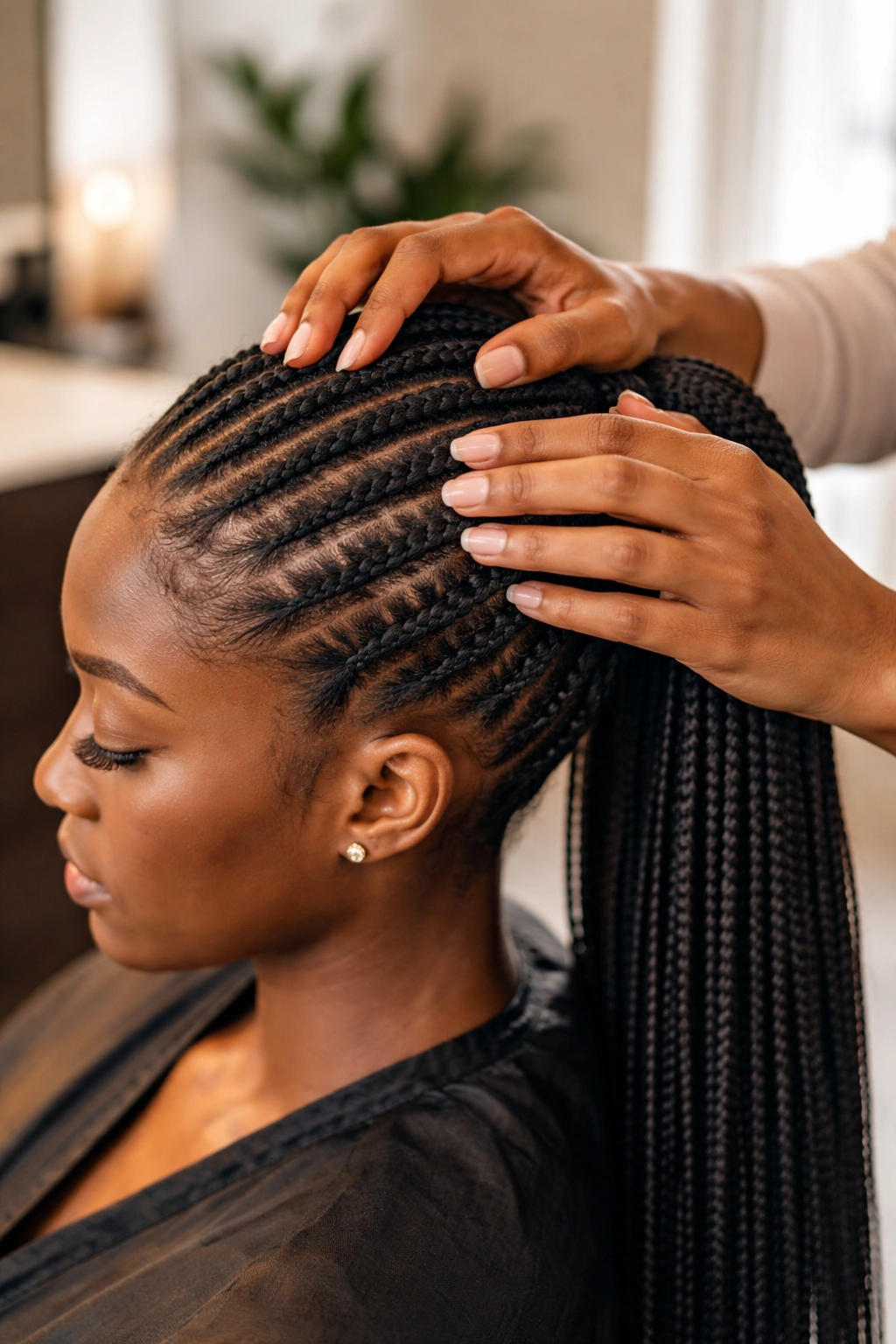
Understanding what not to do is just as valuable as knowing what to do. One of the most common mistakes people make is choosing a braider based solely on price rather than experience and portfolio. Pondo styling is genuinely skilled work, and someone new to the technique is not the place to save money. Look at their previous work, ask for references, and if something doesn’t feel right during your consultation, trust that instinct and find someone else.
Another frequent error is installing pondo styles too tightly. Yes, the braids should feel secure and snug, but they should never cause pain or create a constant pulling sensation on your scalp. If you feel tension headaches, scalp tenderness, or throbbing after your braids have been in for a few hours, something is too tight. Go back to your braider immediately—they can loosen the style, and you won’t have wasted weeks of wear with an uncomfortable installation.
Many people also make the mistake of waiting too long between washes when wearing pondo. Your scalp still produces oil and sheds skin cells, and allowing buildup to accumulate creates itching, potential for fungal growth, and an overall uncomfortable experience. Washing every two weeks keeps everything balanced and actually extends the life of your style because the braids don’t slip as quickly when your scalp is clean.
Additionally, avoid using heavy pomades or thick oils on your pondo braids. While moisture is crucial, heavy products create buildup that’s difficult to remove and can leave your braids looking dull and weighed down. Stick with lightweight, water-based products that hydrate without creating residue.
Finally, don’t attempt to force your pondo style to last longer than it naturally will. Once your braids are significantly loose, frizzy, and showing roots, it’s time to take them down and give your hair a break. Wearing a deteriorating style doesn’t save money—it just damages your hair in the process and means you’ll need more recovery time before your next protective style.
How to Protect Your Long Hair During the Pondo Installation Process
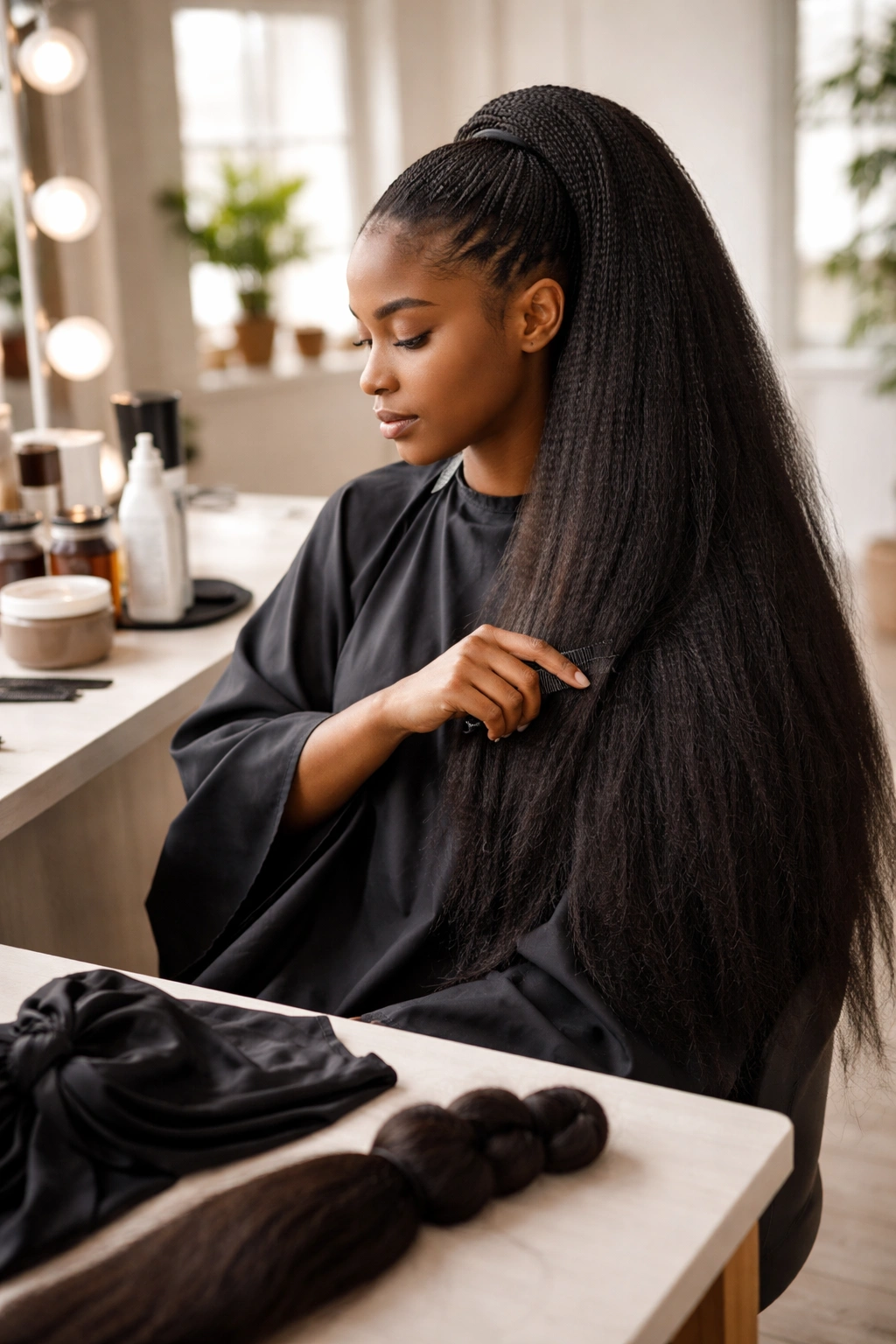
The installation process itself is when your hair is most vulnerable. During the hours you’re sitting in the chair while braids are being created, your hair is being manipulated, twisted, and potentially exposed to tension. Taking steps to minimize potential damage during installation is just as important as caring for the style once it’s complete.
Before your appointment, make sure your hair is deeply conditioned and moisturized. Dry, brittle hair is more prone to breaking during the manipulation of installation. Aim to do a deep conditioning treatment three to four days before your appointment—not the day before, because hair that’s too soft can slip and require your braider to work extra hard to keep the braids secure.
When you arrive at your appointment, communicate clearly with your braider about tension. Tell them specifically if you’ve had scalp sensitivity in the past, if you have thin edges, or if you prefer looser braids. A good braider will listen to these concerns and adjust their technique accordingly. You should never feel like you’re being difficult for asking for comfortable tension—your hair health is the priority.
During the installation, take breaks to stand up, walk around, and give your scalp a rest if you’re feeling uncomfortable. Most good braiders will suggest this automatically, but don’t hesitate to ask. If something starts to hurt about halfway through, speak up immediately rather than suffering through it and then living with discomfort for weeks.
After installation is complete, avoid washing your braids for at least five to seven days. This gives the braids time to fully set and lock into place. Washing too soon can cause loosening and slippage. When you finally do wash them for the first time, be especially gentle and avoid manipulating the braids excessively.
Styling Versatility: How to Wear Your Pondo for Different Occasions
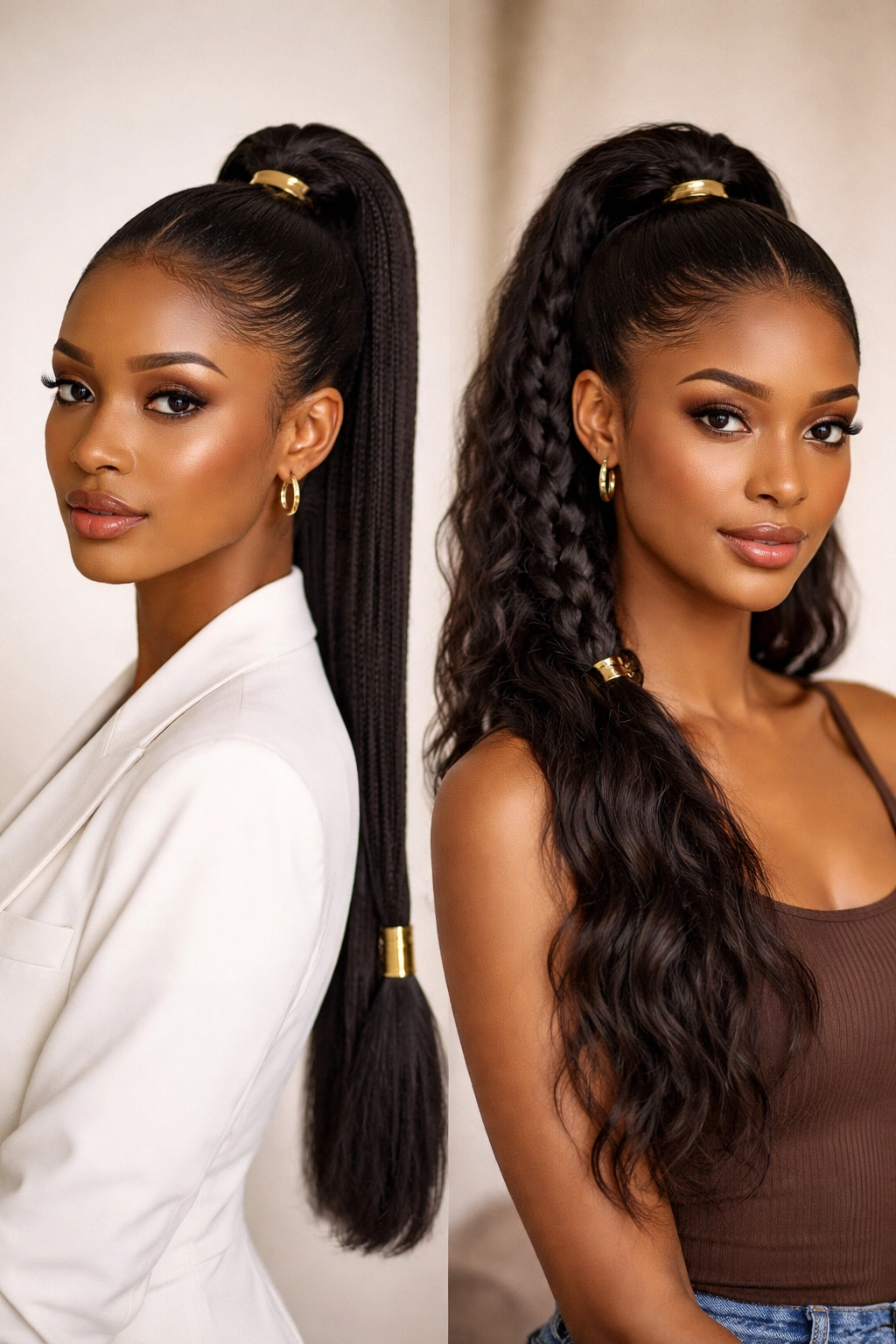
One of the most beautiful aspects of pondo styling is how much versatility is built in. The same pondo style you wear casually to the grocery store can be transformed for completely different occasions with nothing more than different accessories, a changed part, or strategic styling of any loose sections.
For professional or formal settings, keep your pondo sleek and unadorned, or pair it with minimal, quality jewelry. A pondo that looks fresh and intentional reads as sophisticated and professional. If your style includes a free-flowing section, secure it into a clean updo using bobby pins or a decorative clip, which transforms the entire aesthetic into something more formal and controlled.
For creative or artistic settings, this is where you can embrace the full artistic potential of pondo. Layer in colorful accessories, experiment with unusual adornments, or let loose sections flow freely. Pondo is rooted in artistic expression, and many professional and creative communities absolutely celebrate that aspect.
For casual everyday wear, let your pondo be exactly what it is—a beautiful, low-maintenance protective style. You don’t need to do anything special; the style itself is the statement. Add a light scarf tied around your edges if you want to frame your face differently, or change up your accessory vibe day to day.
The flexibility to transition the same style across multiple settings and occasions is one of pondo’s greatest strengths, especially for people with long hair who might otherwise feel locked into one look for weeks.
Key Takeaways
Pondo styling offers sophistication, protection, and artistic expression all in one package—which is exactly why it’s become such a popular choice for people committed to maintaining and protecting long hair. Whether you choose a classic crown pondo, a bold geometric pattern, or a hybrid style that blends braiding with your natural texture, the fundamentals remain the same: excellent braider skill, realistic expectations about maintenance, and genuine commitment to keeping your hair healthy underneath.
The eight styles covered here represent just the beginning of what’s possible with pondo—your braider might suggest variations or entirely new interpretations based on your hair type, head shape, and personal style preferences. The most important thing is working with someone you trust, choosing tension levels that feel sustainable and comfortable, and maintaining your style consistently throughout the wear period.
Long hair is an investment that requires protection and intentional care. Pondo styling is one of the most effective, beautiful, and empowering ways to safeguard that investment while looking absolutely stunning in the process. Your next pondo style could be waiting—the only question is which one calls to you.
