



The sensation of a fresh set of braids is hard to beat. There is a specific kind of weight—a gentle, rhythmic swing against your shoulders—and a sudden, liberating lack of a morning hair routine that feels like a gift. For many Black women, reaching the milestone of 50 doesn’t mean stepping back from bold styling; instead, it often marks a shift toward prioritizing hair health, scalp comfort, and styles that reflect a refined sense of self. It is a time when the “why” behind a hairstyle matters just as much as the “how.”
Choosing a braided style at this stage of life requires a different set of considerations than it did decades ago. The scalp often becomes more sensitive over time, and the hair itself may change in texture, especially as silver and gray strands—which are often coarser or more porous—begin to dominate the crown. Traction alopecia is a very real concern for those who have spent years in high-tension styles. Because of this, the best choices for mature women are those that offer maximum impact with minimum strain.
It isn’t just about protection, though. It is about versatility. Whether you are still in the thick of a demanding career, enjoying the freedom of a more flexible schedule, or traveling more frequently, your hair needs to keep up. Braids offer that rare combination of elegance and ease. They can be dressed up with silver cuffs for a formal event or pulled into a soft, low bun for a morning walk.
Finding the right style is about more than just picking a photo from a magazine. It involves understanding how the weight of the extensions will interact with your natural hair density and how long you want to commit to a specific look. In the sections that follow, we’ll look at 33 distinct ways to wear braids that celebrate maturity while keeping hair health front and center.
1. Medium Knotless Box Braids
Knotless braids have fundamentally changed the landscape of protective styling for women over 50. Unlike traditional box braids, which start with a tight knot at the scalp, the knotless method begins with your natural hair, with extensions added gradually. This significantly reduces the weight and tension on the hair follicle, which is essential if you are dealing with any thinning or a sensitive scalp.
Why the Knotless Method Works
The beauty of this technique lies in its flexibility. Because there is no bulky knot at the base, the braids lay flat against the head from day one. You don’t have to wait a week for the tension to “relax” before you can comfortably put your hair in a ponytail.
- Tension reduction: The gradual addition of hair prevents a heavy “anchor” point.
- Natural appearance: The braid appears to grow directly from the scalp.
- Styling ease: These are incredibly lightweight and move like natural hair.
- Longevity: With proper care, these can last six to eight weeks.
Pro tip: Ask your stylist to use a soft-hold edge control instead of a heavy-duty gel during the parting process to prevent the scalp from becoming overly dry or flaky.
2. Silver-Toned Feed-In Cornrows
Embracing gray hair is one of the most powerful style statements a woman can make. Feed-in cornrows that incorporate silver or salt-and-pepper braiding hair create a seamless, sophisticated look that highlights your natural transition. The feed-in technique ensures the cornrows aren’t too bulky at the hairline, protecting those delicate “baby hairs” that often thin out over time.
This style is particularly effective because it works with your natural color rather than trying to hide it. By choosing extensions that match your graying pattern—perhaps a bright silver at the temples and a darker pewter at the back—you create a customized look that feels intentional and high-fashion. The lack of a “knot” at the start of each row means less pulling on the forehead area, which is a common site for tension-related hair loss.
3. Goddess Box Braids with Human Hair Curls
Who says braids have to be uniform from top to bottom? Goddess braids take the classic box braid and add loose, flowing curls throughout the length and at the ends. For women over 50, this style adds a soft, romantic frame to the face, which can be more flattering than the sharp, blunt lines of traditional braids.
What Makes Them Different
The key to getting this right at a mature age is the quality of the loose hair. Using human hair for the curly tendrils, rather than synthetic, prevents the dreaded tangling that often happens after just a few days.
How to Maintain the Texture
- Separate the curly tendrils every morning with a tiny bit of lightweight oil.
- Finger-comb the ends to prevent matting.
- Use a silk or satin scarf to keep the curls from frizzing while you sleep.
- Avoid heavy mousses that can make the synthetic braid sections feel crunchy.
4. The Braided Bob with Tapered Ends
Short hair is a classic choice for a reason—it’s punchy, easy to manage, and frames the jawline beautifully. A braided bob, usually ending somewhere between the chin and the shoulders, is an excellent way to get the braided look without the weight of long extensions.
By tapering the ends—either by dipping them in hot water for a slight curve or using a lighter amount of hair toward the bottom—you avoid a bulky, “heavy” look. This style is an absolute winner for women who find that long braids cause neck strain or simply feel too cumbersome for their daily lifestyle. It is a “one-and-done” style that requires almost no daily manipulation.
5. Fulani Braids with Minimalist Beads
Fulani braids, characterized by a central cornrow and side braids that hang forward, offer a beautiful, architectural look. For a more mature aesthetic, skipping the bright, heavy plastic beads in favor of a few strategically placed gold or silver cuffs adds a touch of “grown-up” glamour.
Why does this work so well for women over 50? It keeps the hair off the neck while still providing the visual interest of a complex style. The side braids can be tucked behind the ears or allowed to hang, providing a slimming effect for the face. It’s a heritage style that feels timeless rather than trendy.
6. Jumbo Knotless Braids
Sometimes, less is more. Jumbo braids use larger sections of hair, which means fewer braids overall. This results in much less time spent in the stylist’s chair—a major plus if sitting for eight hours isn’t your idea of a good Saturday.
Who This Is Best For
This style is perfect for women with thick, healthy hair who want a bold look. However, a word of caution: because the sections are larger, each braid carries more weight. If your hair is currently on the finer side or if you are experiencing any shedding, you might want to opt for smaller sections to distribute the weight more evenly.
- Installation time: Usually two to three hours.
- Visual impact: Clean, large parts create a very modern, graphic look.
- Maintenance: Very easy to wash the scalp between the large parts.
- Weight: Can be heavy if the extensions are too long.
Pro tip: Keep the length at mid-back or shorter to ensure the weight of the jumbo sections doesn’t pull on your roots.
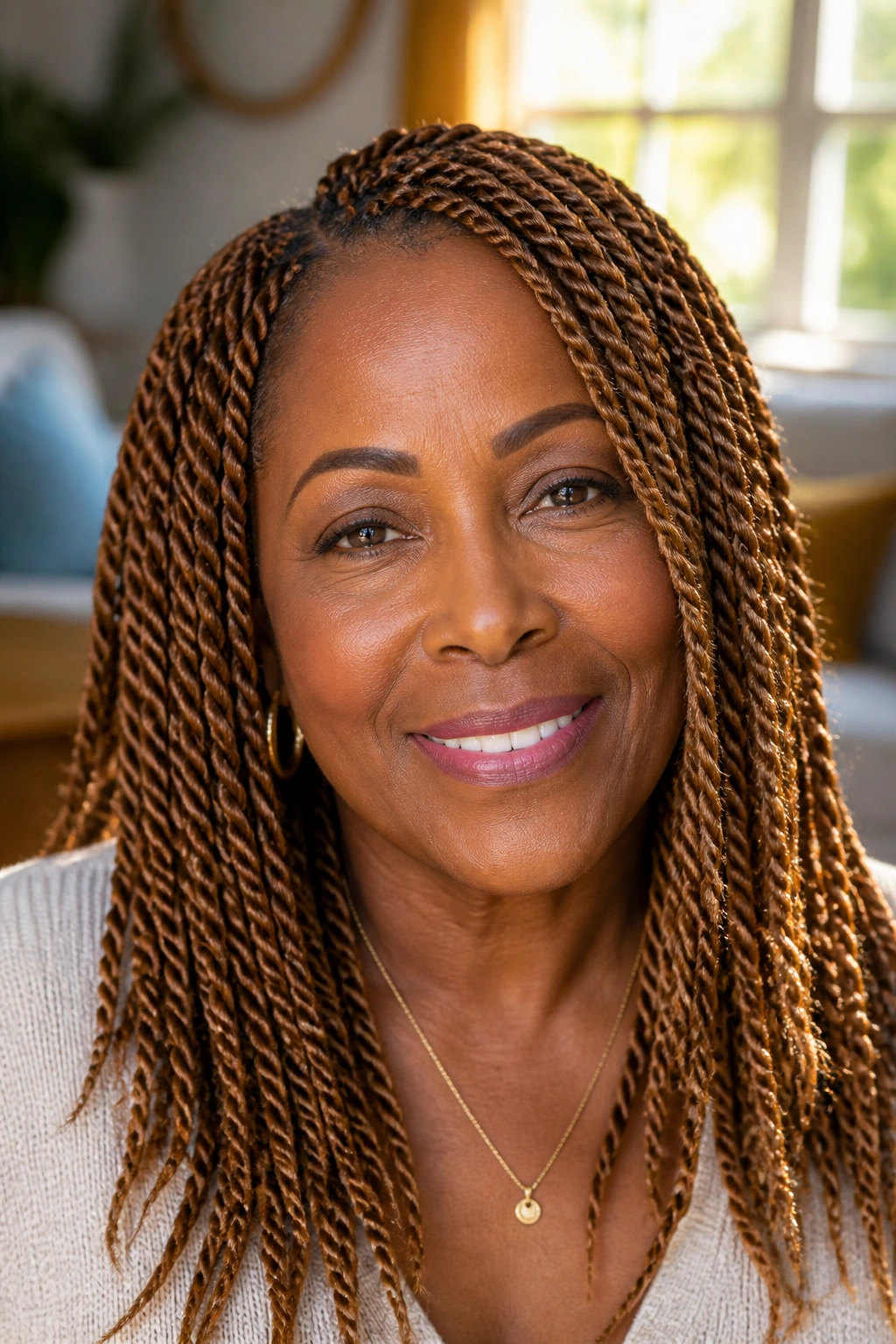
7. Senegalese Twists in Honey Bronze
Twists offer a different texture than braids—they are smoother, silkier, and often feel a bit more formal. When done in a warm, honey-bronze or copper shade, they can add a beautiful glow to your complexion.
Choosing a color that is just a shade or two lighter than your natural base can act like a “built-in” highlighter. For mature skin, these warmer tones often feel more vibrant than a stark, jet black. The two-strand twist method is generally faster to install and take down than a three-strand braid, making it a great option for those who want a quicker turnover between styles.
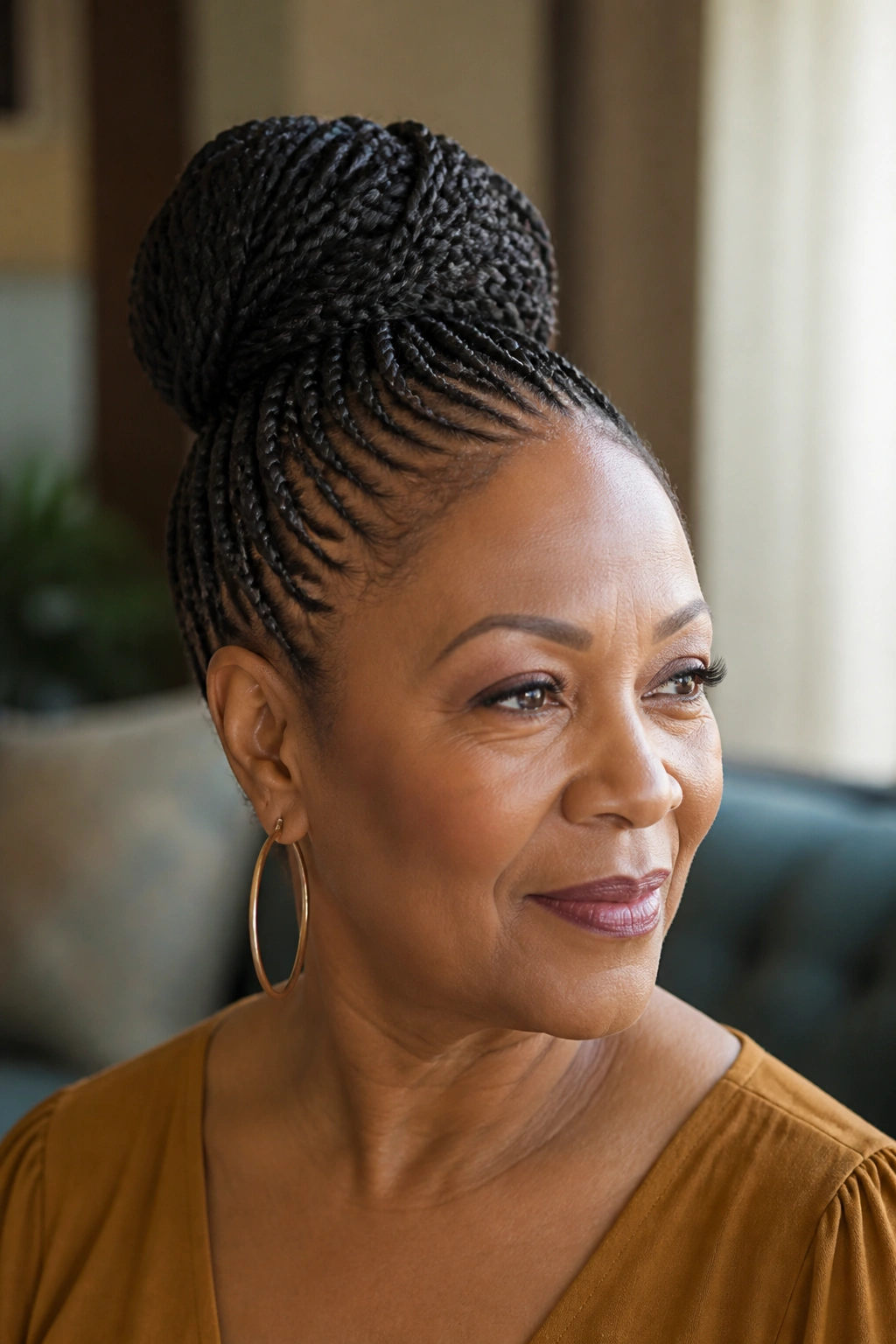
8. Braided High Bun (Crown Updo)
If you prefer to keep your hair away from your face entirely, a permanent braided updo is a stunning choice. This usually involves cornrowing the hair upward toward the center of the crown and finishing with a large, braided bun.
This style provides a natural “lift” to the face and is incredibly regal. It is also one of the most protective styles available because the ends of your hair are completely tucked away and shielded from the environment. Just ensure the stylist doesn’t pull the cornrows too tight around the nape of the neck or the ears, as these are “high-risk” areas for breakage.
9. Marley Twists with a Natural Texture
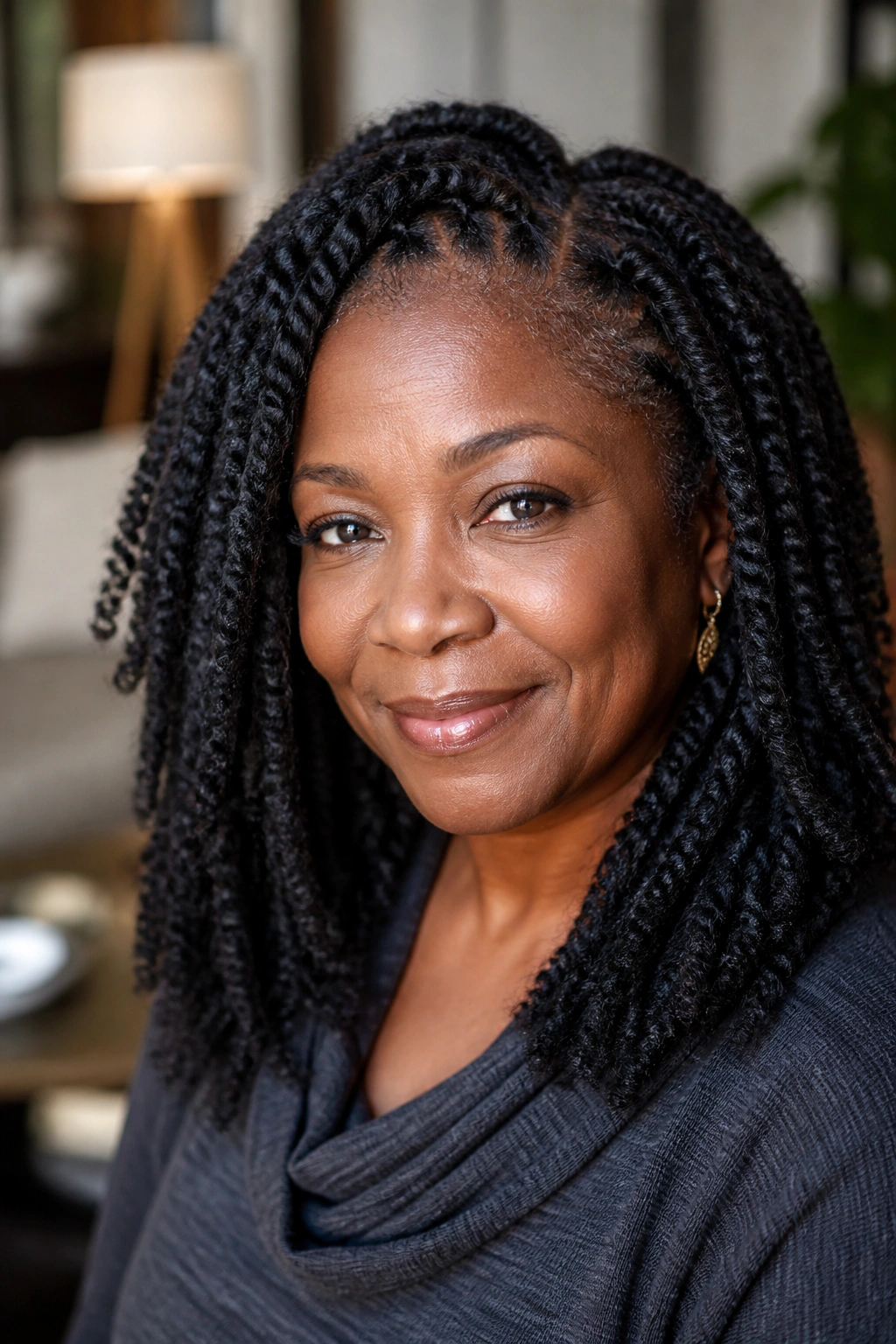
Marley twists use hair that is coarser and more similar to natural 4C texture. For women over 50 who want a look that is virtually indistinguishable from their own hair, this is the gold standard.
The Marley hair is lightweight and has a matte finish, avoiding the “shiny” look of some synthetic fibers that can sometimes look artificial. Because the hair is so light, you can often wear these much longer and thicker than traditional box braids without feeling any scalp strain. They age beautifully, too—as they get a little frizzier over time, they actually look more natural.
10. Side-Swept Goddess Cornrows
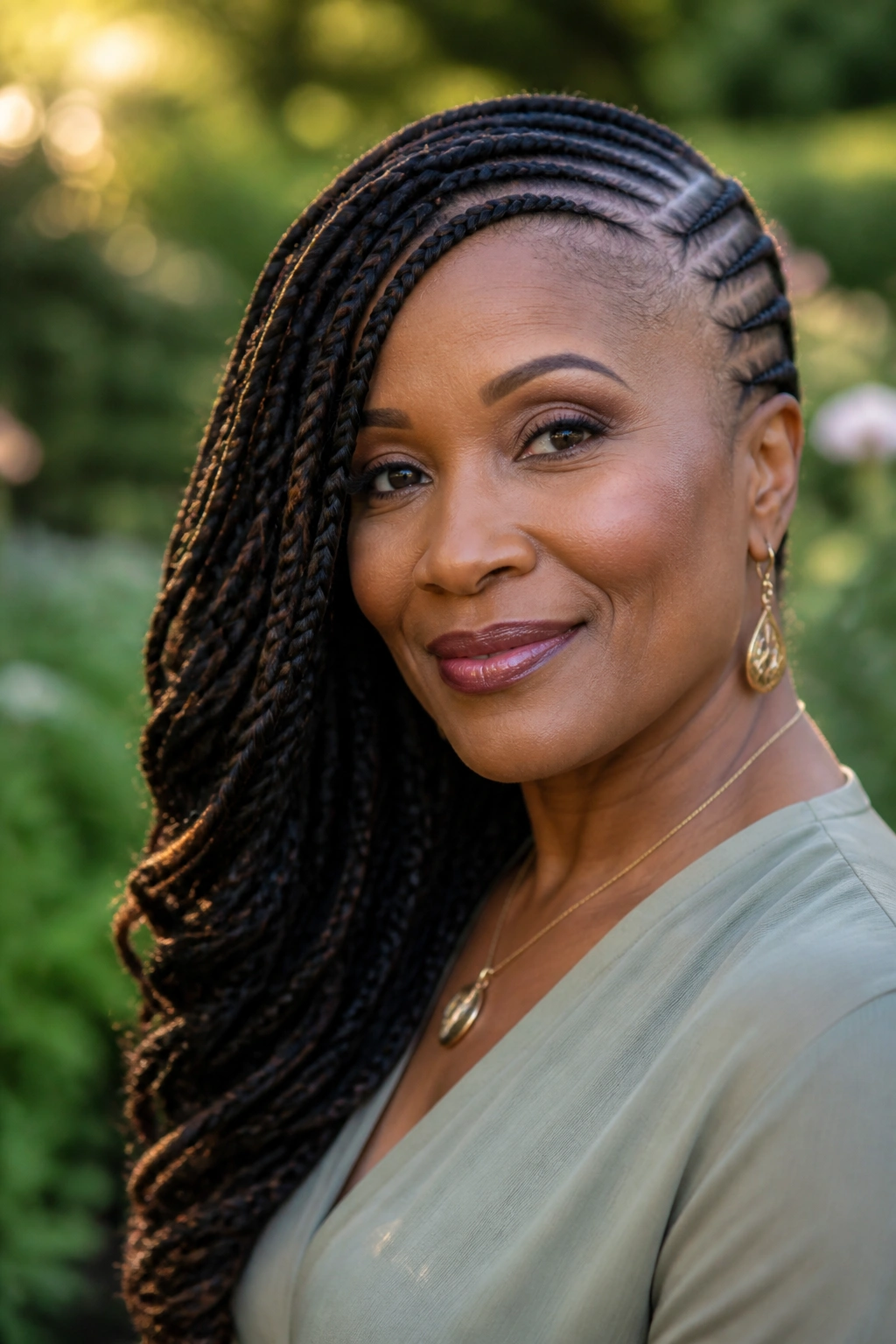
There is something inherently elegant about an asymmetrical look. Side-swept cornrows—where all the braids are directed toward one shoulder—create a soft, romantic silhouette.
Why It Flitters
This style breaks up the symmetry of the face, which can be very softening. It also allows you to showcase a favorite pair of earrings.
Key Considerations
- Scalp health: Ensure you aren’t always braiding to the same side every time you get this style, as the constant pull in one direction can weaken the follicles on the opposite side.
- Longevity: Because the scalp is more exposed with cornrows, you’ll need to stay on top of moisturizing.
- Product choice: Use a lightweight braid spray with tea tree or peppermint oil to keep the “exposed” side of the scalp from itching.
11. Passion Twists for a Bohemian Vibe
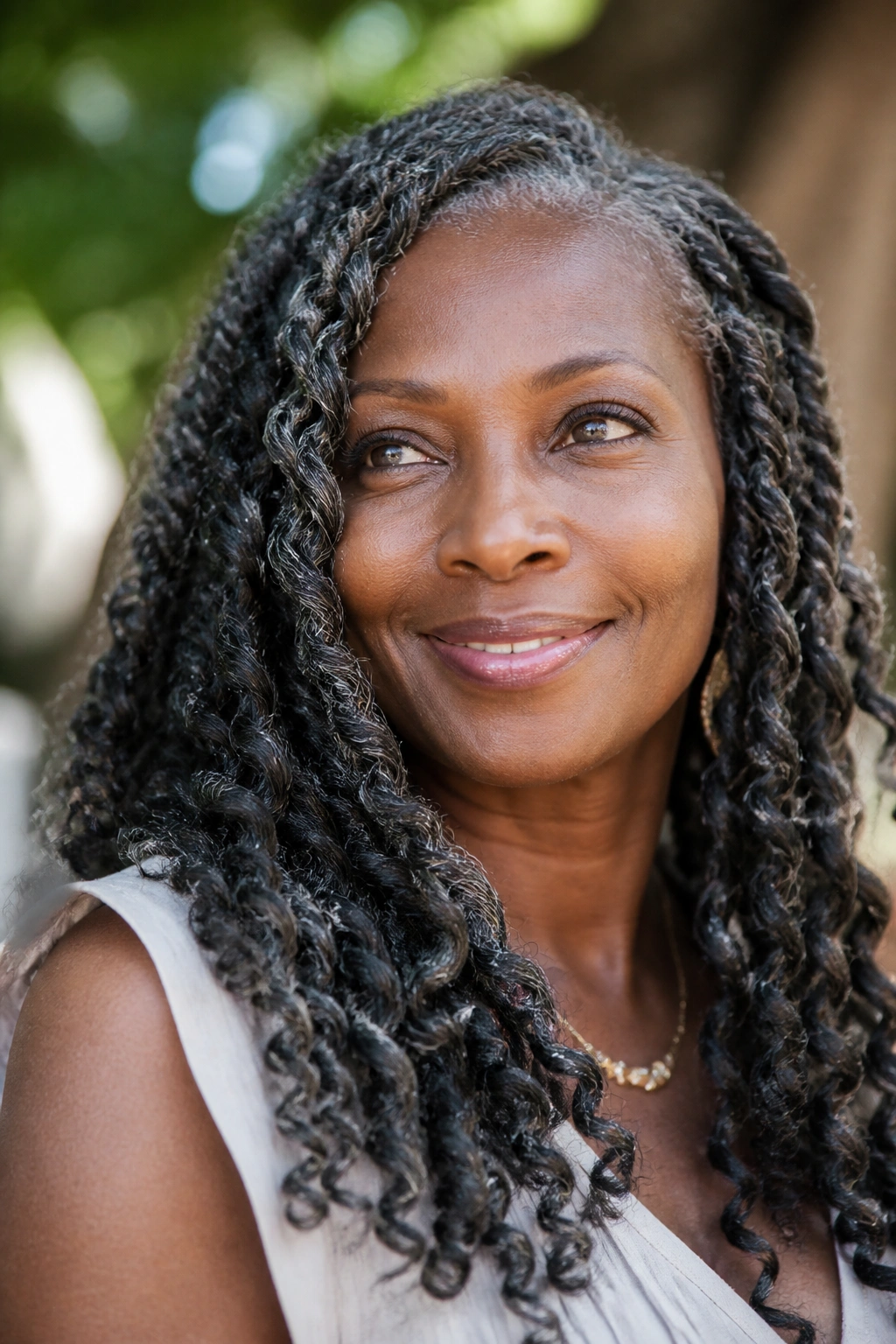
Passion twists are a hybrid between Senegalese twists and Goddess braids. They use a specific type of curly hair (Freetress Water Wave) to create a “distressed,” curly twist. This style is incredibly lightweight—often much lighter than it looks—making it a fantastic option for women who want volume without the heavy lifting.
The “messy-on-purpose” look of Passion Twists means you don’t have to worry about every single hair being in place. If a little of your natural gray hair peeks through the twists, it actually adds to the dimension and beauty of the style. It’s a relaxed, vacation-ready look that transitions perfectly into everyday life.
12. Micro-Braids (The Small-Scale Classic)
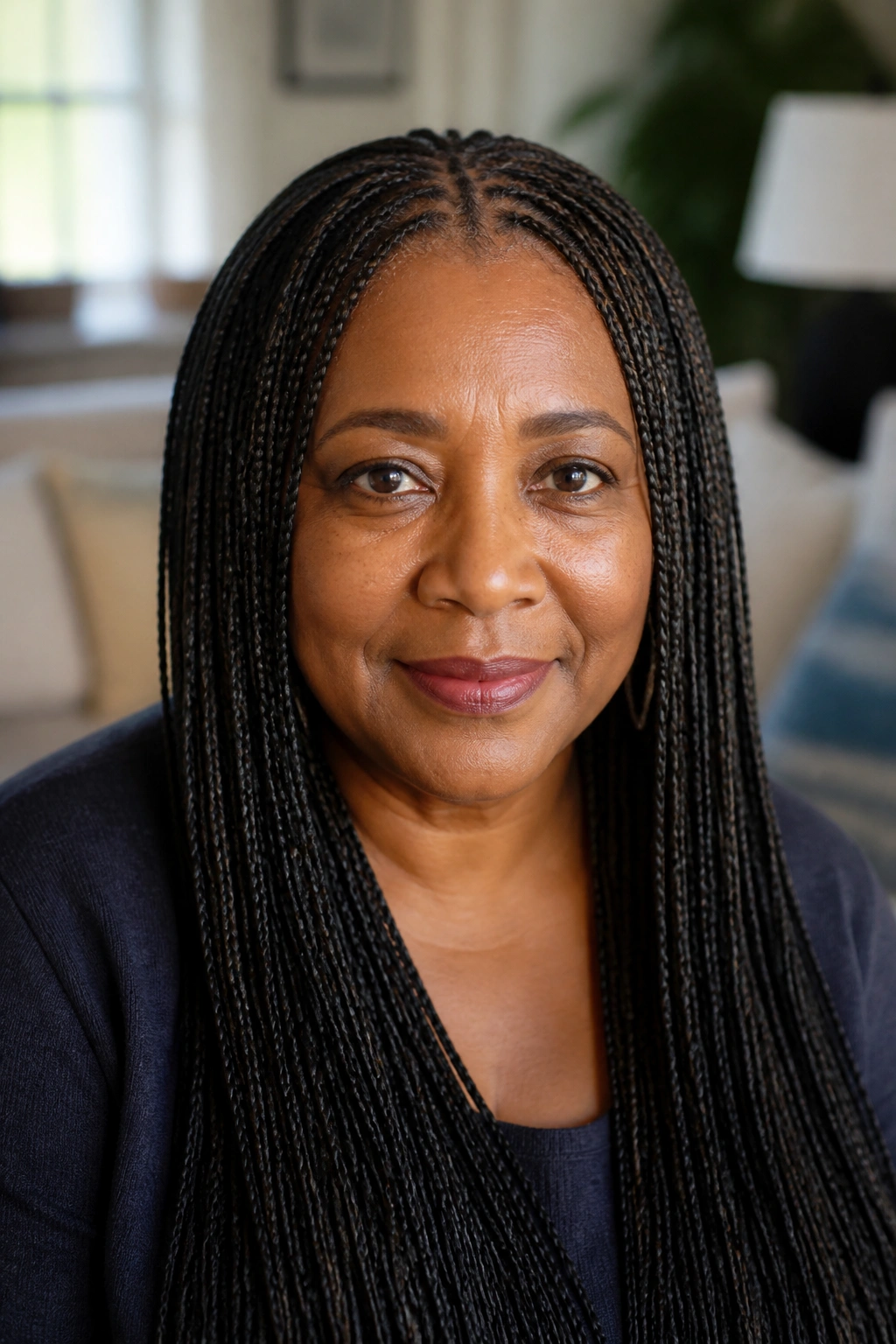
Micro-braids have been a staple for decades, and for good reason. They offer the most versatility because they can be styled almost exactly like loose hair. You can curl them with rollers, put them in a French twist, or wear them in a high ponytail.
However, a serious warning for the over-50 crowd: micro-braids involve very small sections of hair. If your hair is thinning or fragile, the weight of even a small extension on a tiny amount of natural hair can cause “snapping.” If you choose this style, ensure you have a stylist who prioritizes health over “neatness” and doesn’t braid all the way down to the tiny hairs at the very edge of your hairline.
13. Crochet Braids with Pre-Twisted Hair
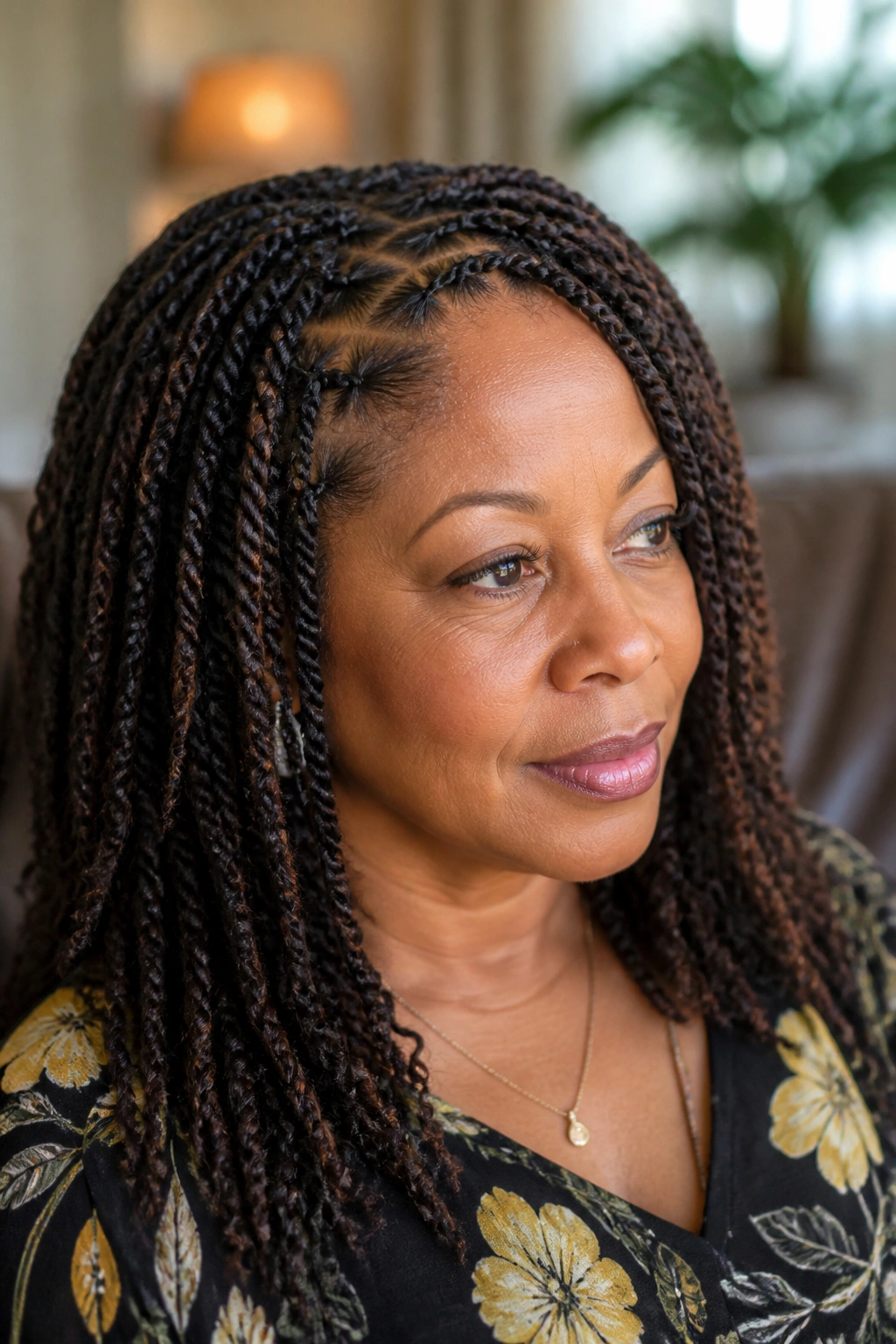
If you want the look of braids but can’t bear the thought of sitting in a chair for six hours, crochet is your best friend. Your natural hair is cornrowed down, and then pre-made braids are looped through the cornrows with a crochet needle.
The Benefits of Crochet
The most significant advantage here is the time. A full head of crochet braids can be finished in under two hours. Furthermore, the tension is placed on the cornrow base rather than on individual strands of hair, which can be much safer for women with localized thinning.
- Ease of removal: Taking these out is a breeze compared to individual braids.
- Scalp access: You can still get to your scalp to oil it through the gaps in the cornrows.
- Variety: You can find almost any style—from twists to locs to box braids—in crochet form.
Pro tip: Don’t make the base cornrows too tight. The crochet hook needs a little “give” to pass through without tugging on your scalp.
14. Fishtail Braid Updo
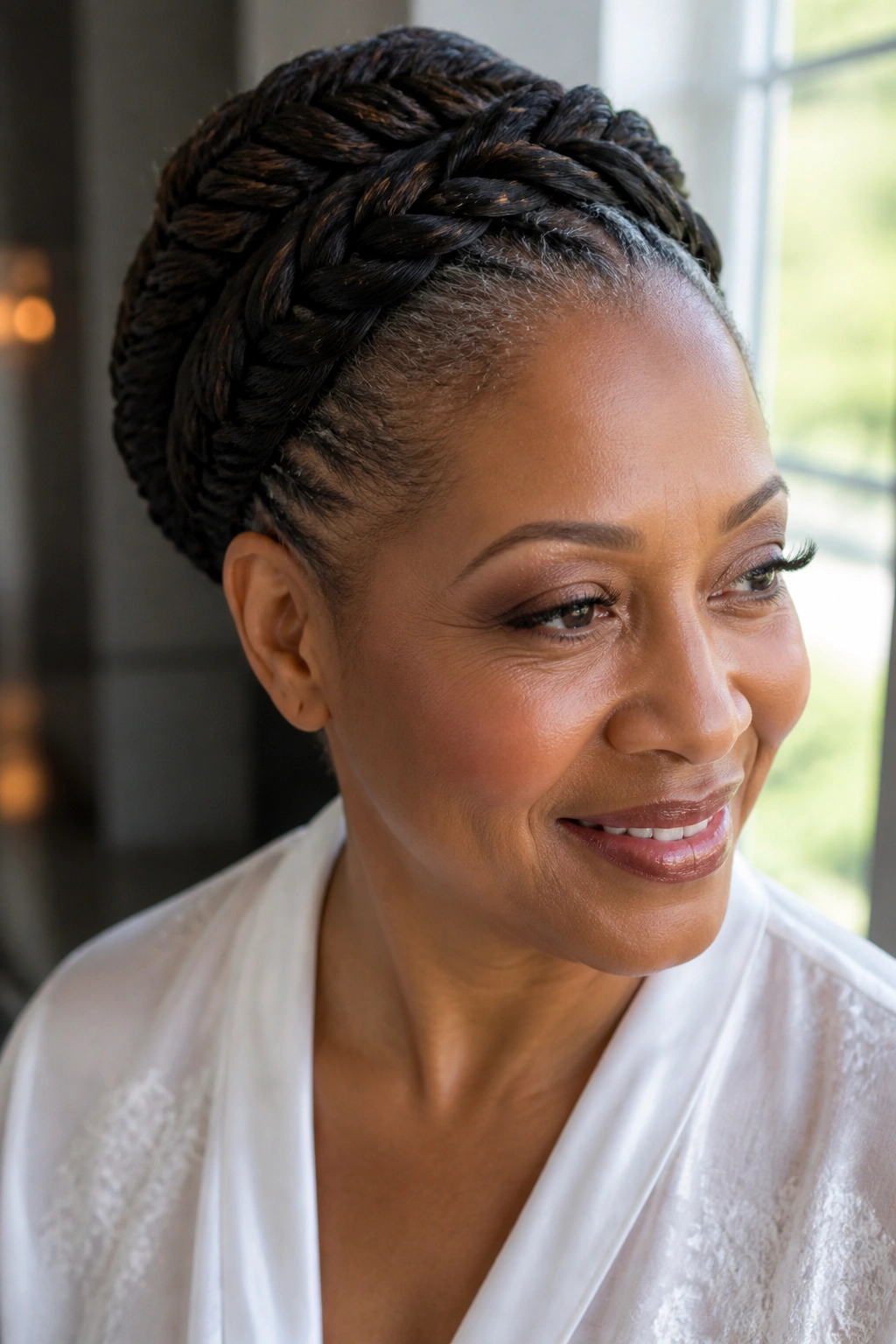
For a special occasion, like a wedding or an anniversary dinner, a fishtail braid updo offers a level of sophistication that is hard to match. This usually involves braiding the hair into two large fishtail braids and pinning them across the top of the head or at the nape in a low chignon.
It’s a style that looks far more complicated than it actually is. It works best on hair that has been stretched or blown out, or on hair that already has small individual braids installed. The texture of the fishtail weave catches the light beautifully, especially if you have highlights or gray strands mixed in.
15. Half-Up, Half-Down Box Braids
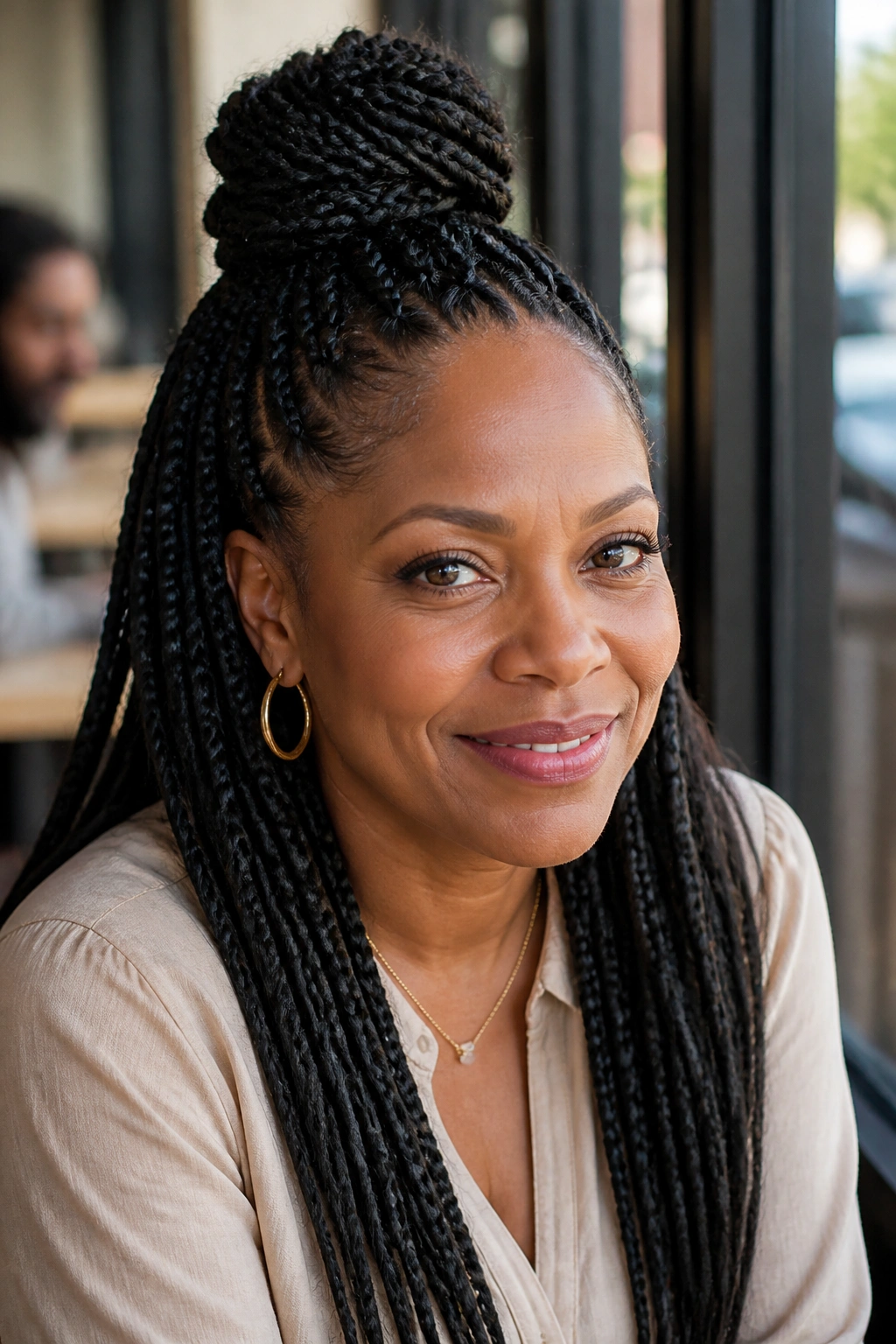
This is the ultimate “best of both worlds” style. By pulling the top half of your braids into a bun or a ponytail and leaving the back to hang loose, you keep the hair out of your eyes while still enjoying the length.
For women over 50, this style is particularly functional. It provides a bit of “lift” to the face—almost like a natural mini-facelift—while the hair in the back provides a classic, feminine frame. It’s a great way to transition a style from a day at work to an evening out.
16. Snake Cornrows
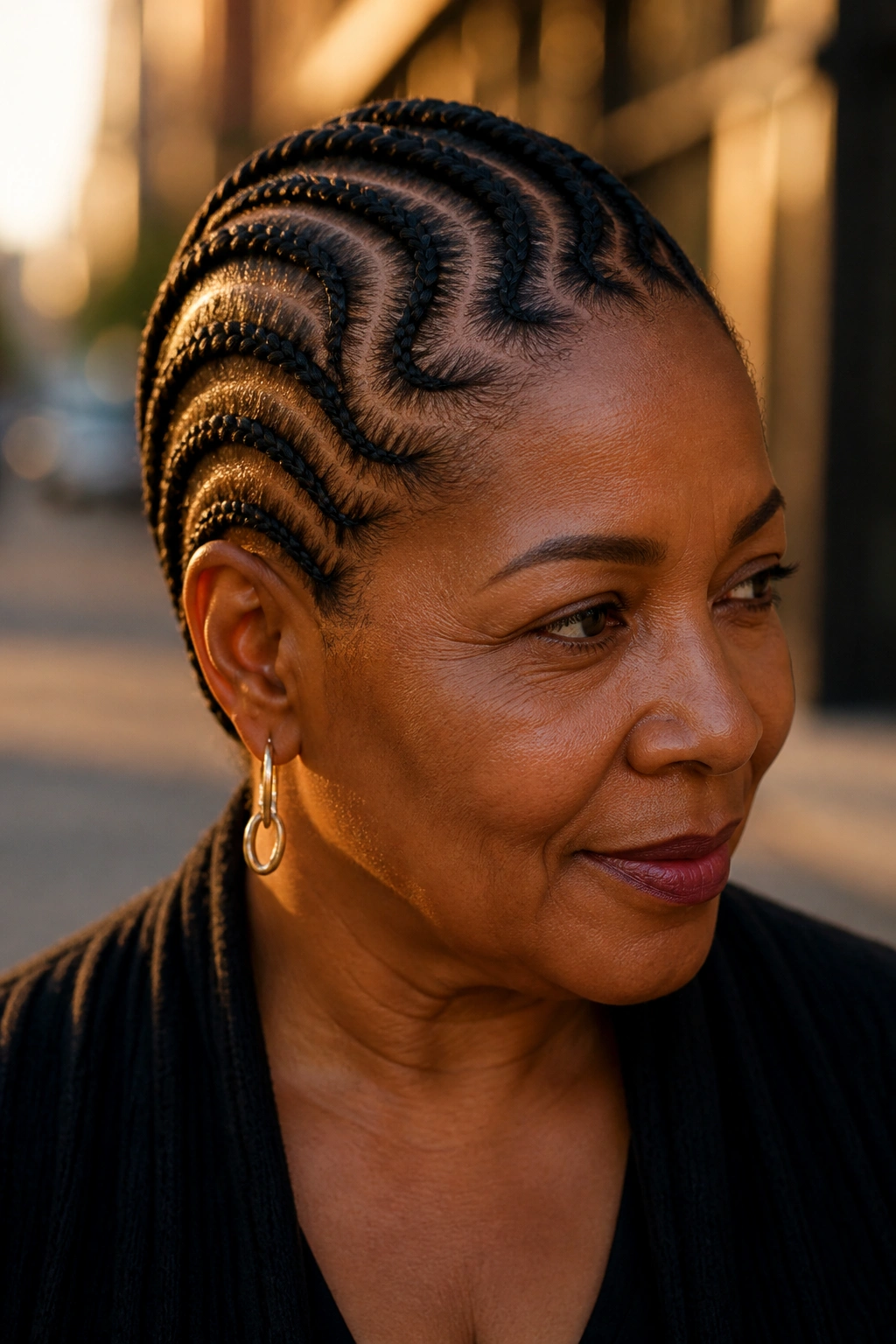
Snake cornrows follow a curving, “S” shaped pattern across the head. This is a brilliant way to add visual interest to a basic cornrow style without needing beads or extra accessories. The curves of the braids can be designed to follow the natural shape of your head, which often feels more comfortable than straight-back rows that can pull on the forehead.
Because the pattern is so intricate, it usually looks best with medium-sized braids. It’s a sophisticated, artistic choice that shows you aren’t afraid to have a little fun with your look.
17. Braided Mohawk (Frohawk)
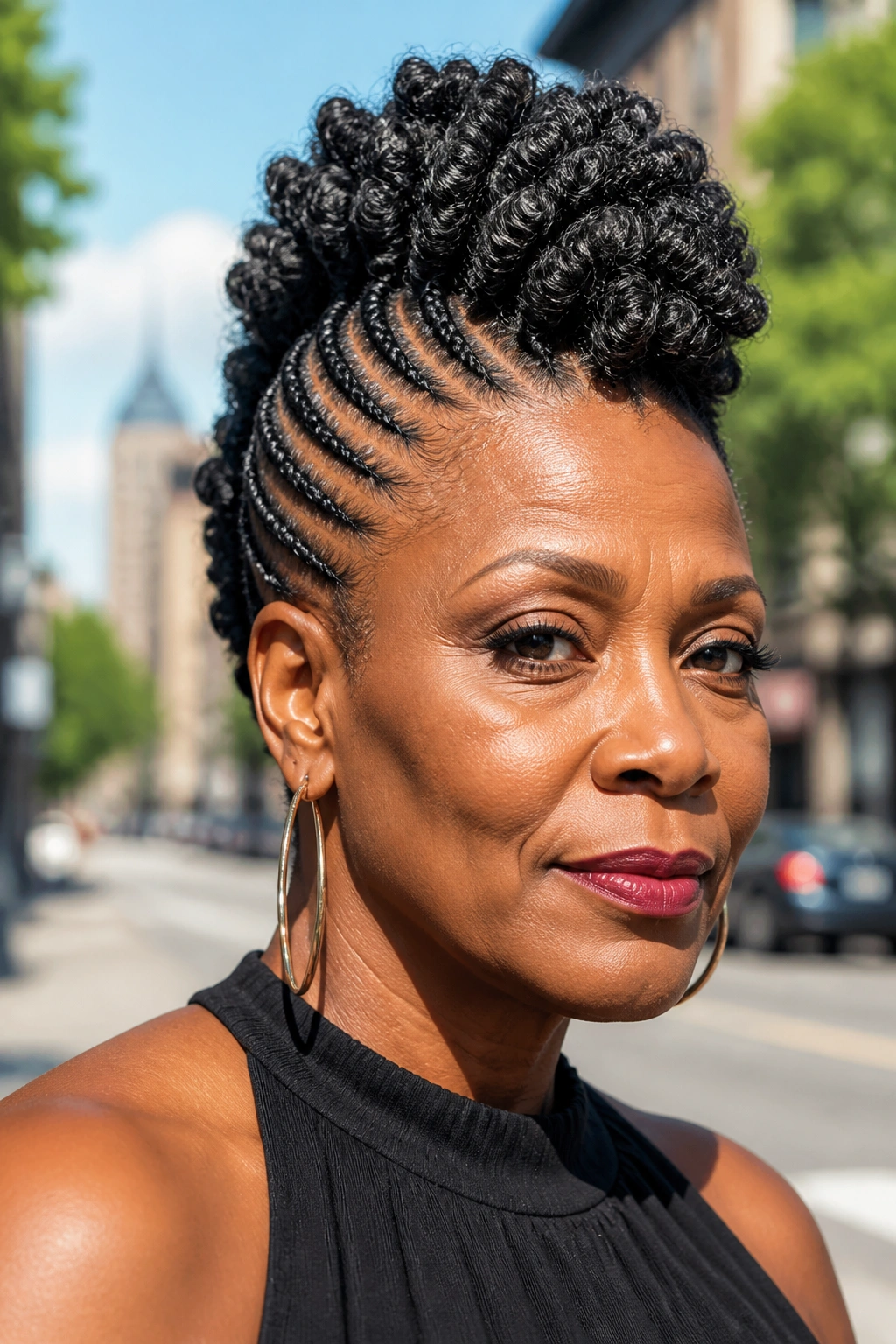
If you have a bold personality and love a bit of edge, the braided Mohawk is a showstopper. The sides are cornrowed upward toward the center, and the middle section is either left as a “puff” of natural hair or finished with long, hanging braids.
Why It Works for Mature Women
It draws the eye upward, highlighting your cheekbones and jawline. It’s also incredibly practical for hot weather, as it keeps all the hair off the sides of your neck.
Styling the “Center”
- For a softer look, use Marley hair for the center section to create a textured, “fro-like” appearance.
- For a more dramatic look, use long box braids that can fall to one side.
- Keep the side cornrows simple to let the center volume be the star of the show.
18. Tree Braids (The “Hidden” Braid)
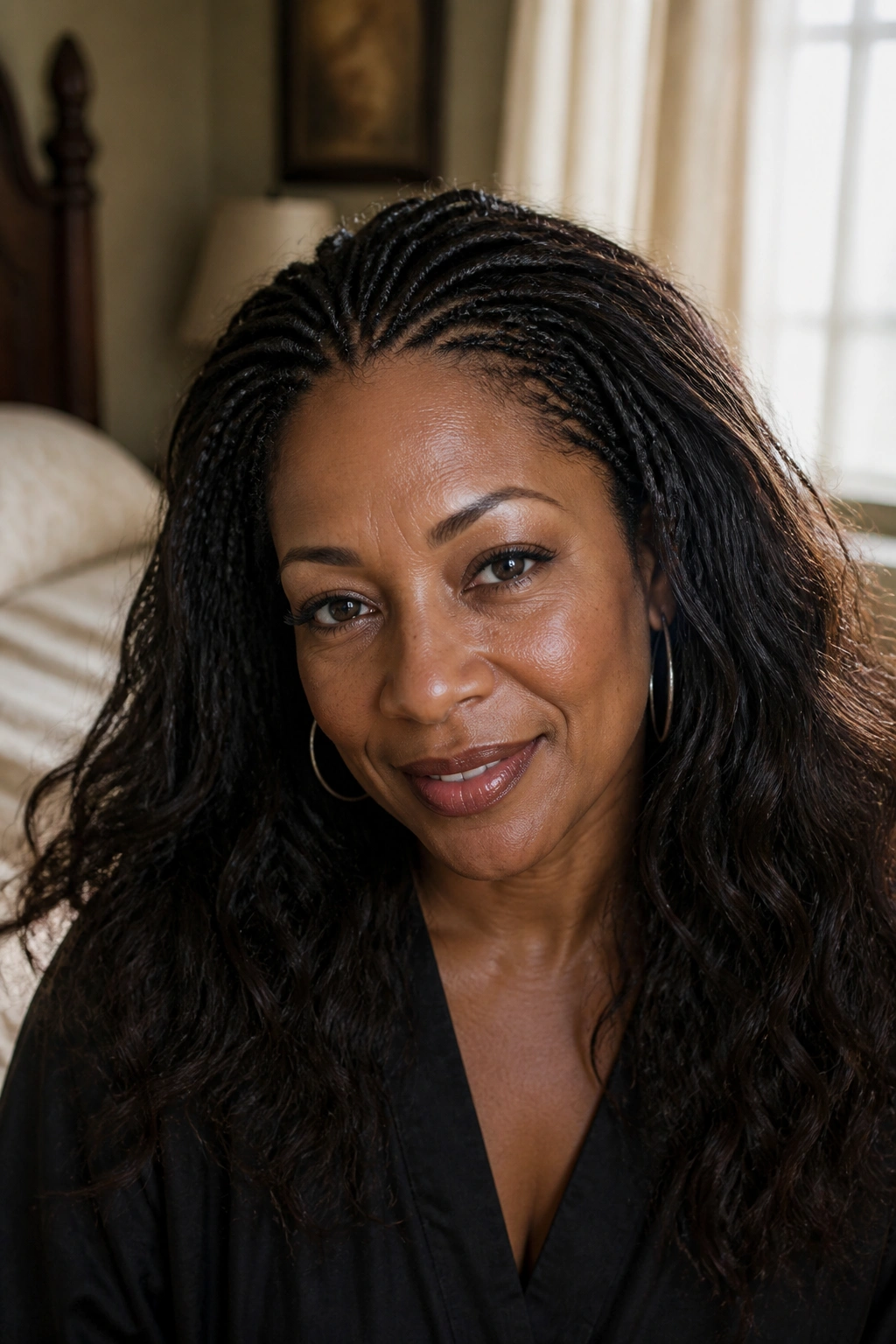
Tree braids are a unique technique where the hair is braided at the root for only an inch or two, and the rest of the extension hair is left loose. This gives you the look of a full weave or a wig but with the security and scalp access of braids.
For women who love the look of loose hair—be it straight, wavy, or curly—but want a protective base, tree braids are perfect. Your natural hair is tucked into the small braid at the scalp, protected from heat and manipulation. It’s an “invisible” protective style that is very popular for those who want a more “natural” or “un-braided” appearance.
19. French Braid Pigtails (The Elegant Version)
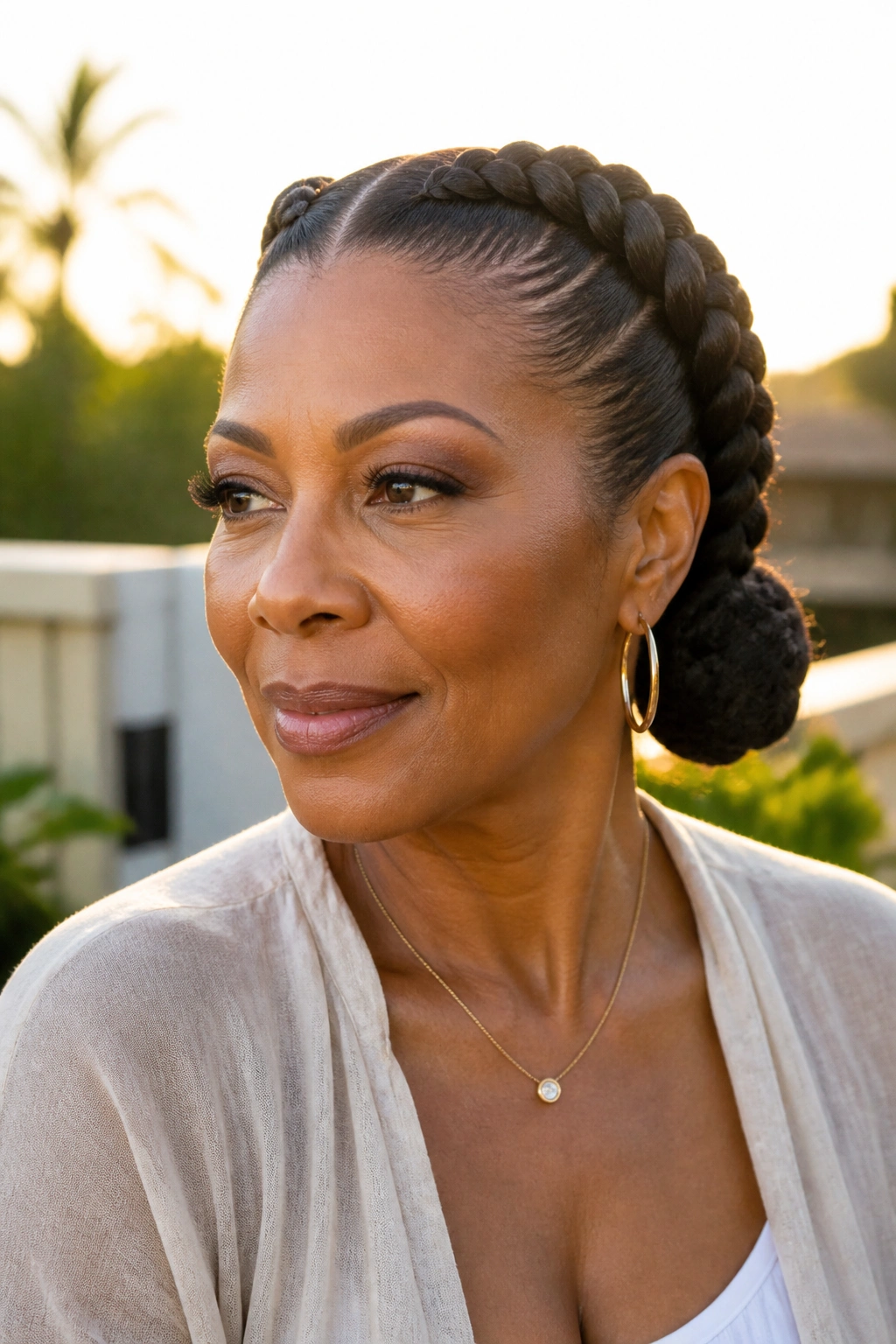
Forget the schoolgirl connotations; two large French braids (often called “boxer braids” or “goddess cornrows”) can look incredibly chic on a mature woman. The key is in the execution—keep them sleek, use high-quality braiding hair that matches your texture, and ensure the parts are perfectly clean.
This is a fantastic “vacation” style. It’s easy to swim with, easy to sleep on, and keeps you looking put-together with zero effort. If you find the two braids a bit too “young,” you can always wrap the ends of the braids into two low buns at the nape of the neck for a more “chignon” feel.
20. Skinnier Ghana Weaving
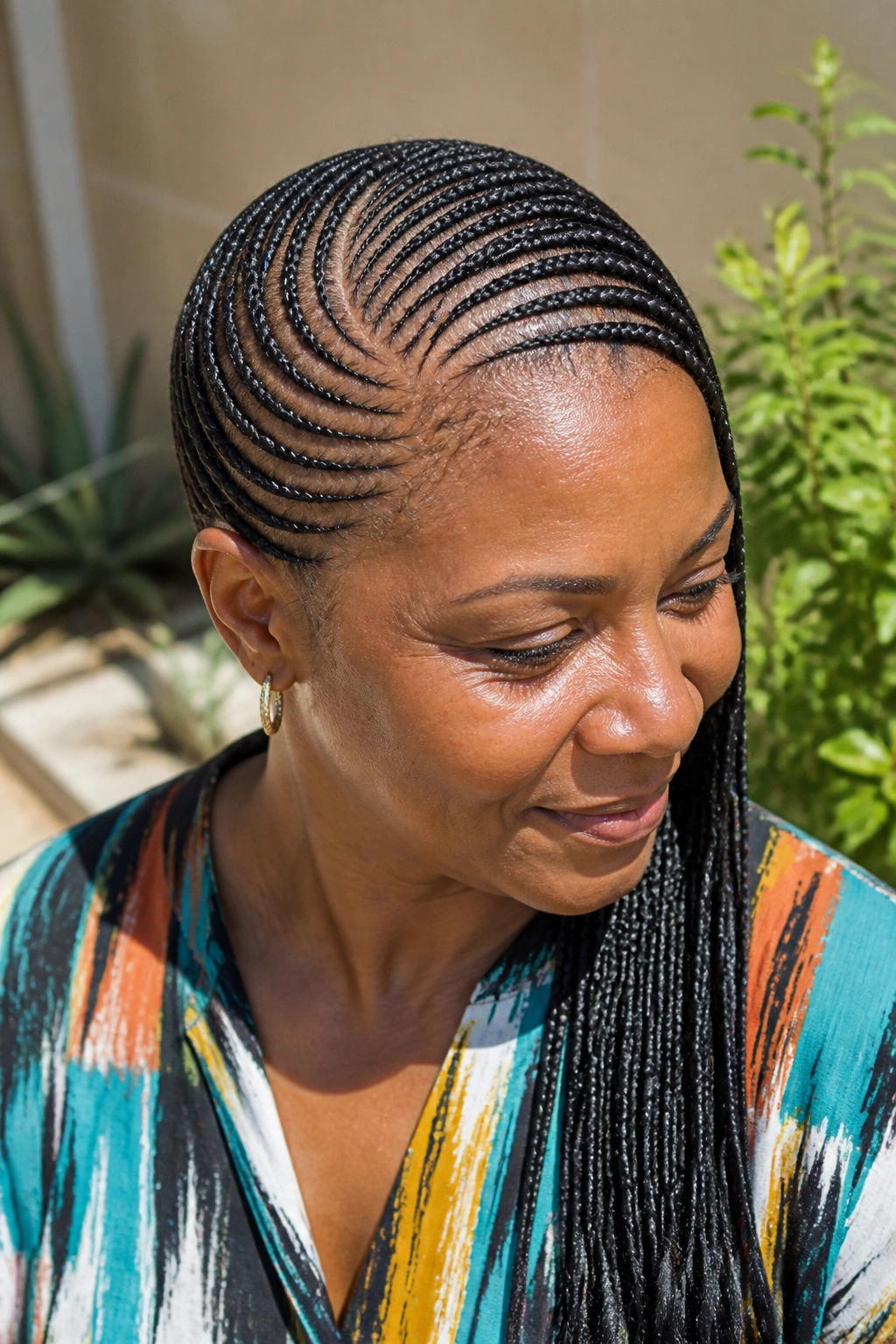
Ghana braids (or banana braids) are a form of feed-in cornrows where the braid gets progressively thicker as it moves back. While jumbo Ghana braids are popular, the “skinnier” version—using more rows of medium-thickness—is often more flattering for women over 50.
The extra rows provide more detail and allow for more complex patterns. They also distribute the weight of the extensions across more of the scalp, reducing the risk of tension in any one spot. This style looks particularly stunning when the braids follow a circular or “swirl” pattern from a side part.
21. Zig-Zag Parted Braids
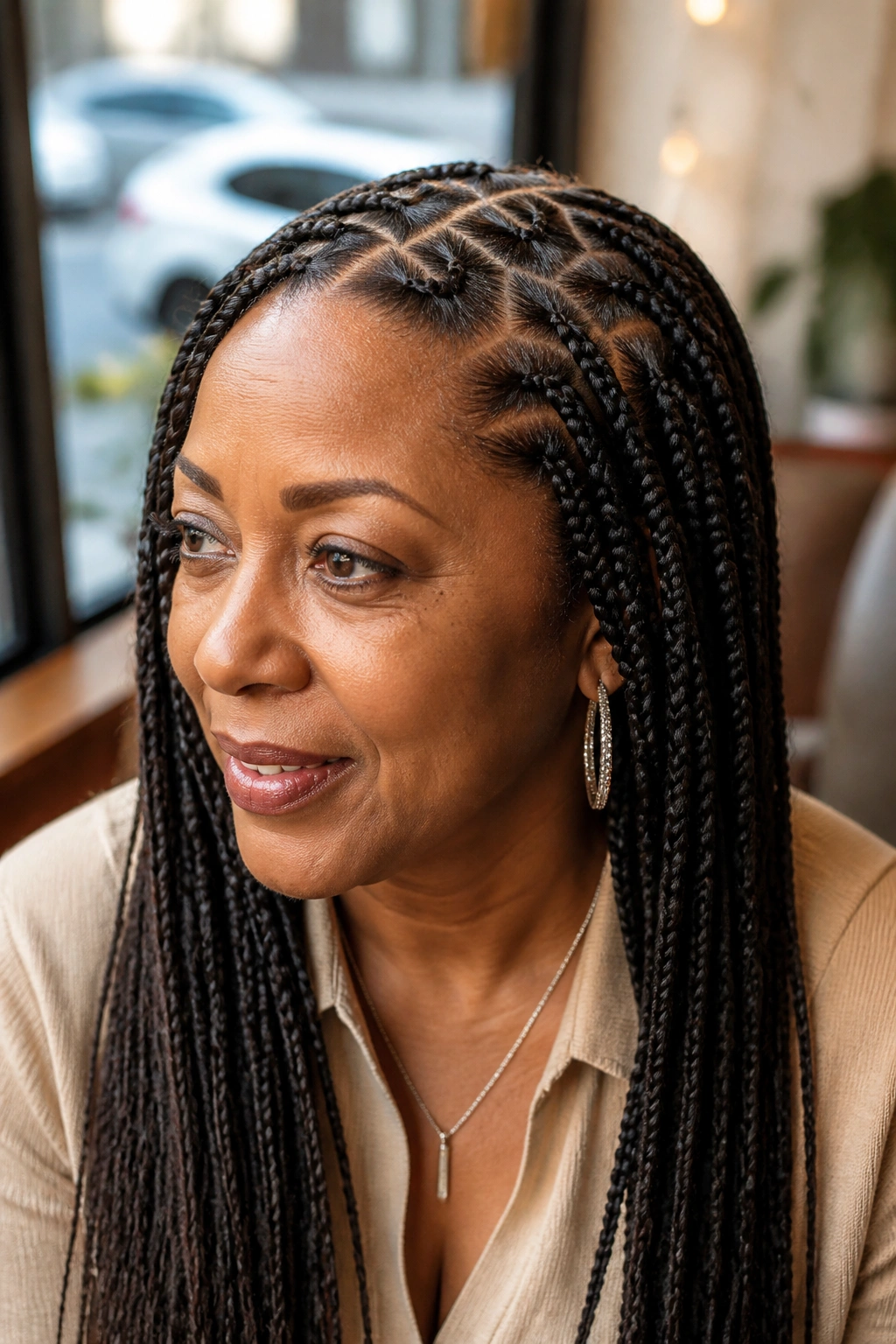
Sometimes, the simplest way to update a classic style is to change the parting. Instead of straight lines, ask your stylist for zig-zag parts between your box braids or twists.
It’s a subtle change, but it makes the style look much more modern and custom-designed. It also helps to disguise any areas of the scalp where the hair might be a little thinner, as the “busy” parting pattern draws the eye away from the skin and toward the hair itself.
22. Waterfall Braids with Loose Ends
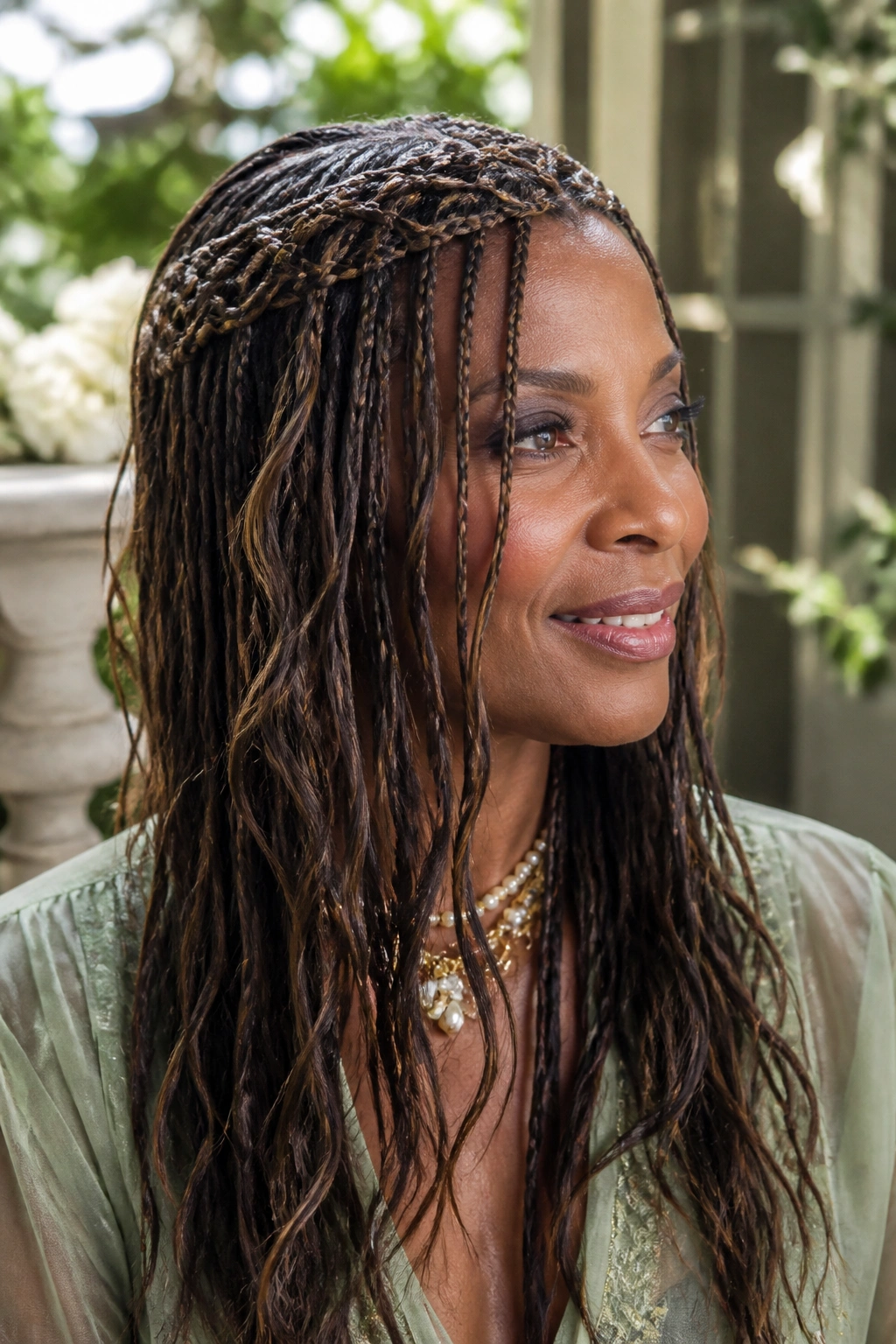
A waterfall braid involves a horizontal cornrow across the back of the head, with “strands” of hair left to hang down like a fringe. This can be done on natural hair or with extensions added for length.
For a woman over 50, this is a beautiful, soft style that works well for semi-formal events. It has a “bohemian chic” feel that is very age-appropriate. It’s less “stiff” than a full head of cornrows and allows for a lot of movement.
23. Crochet Faux Locs
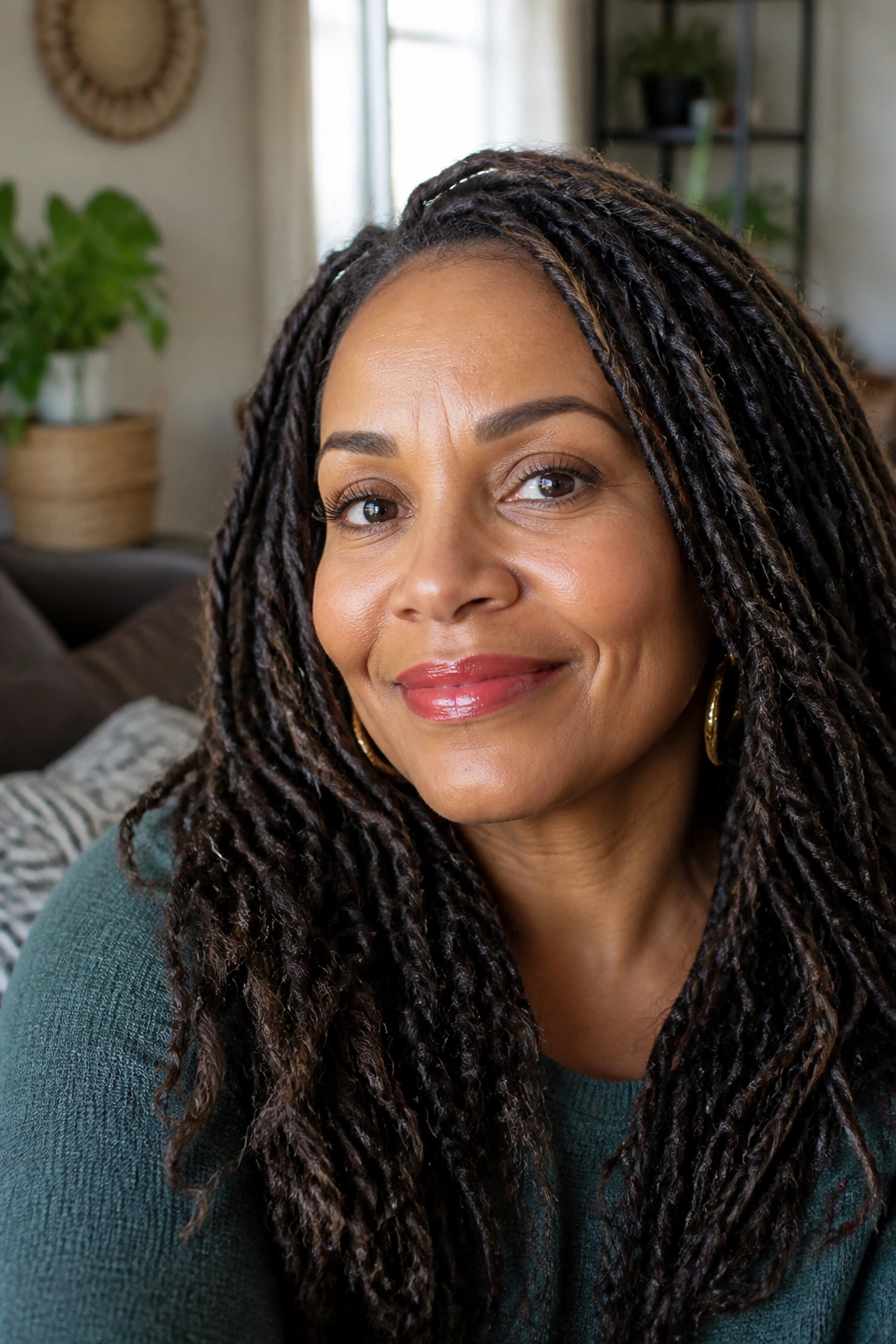
If you’ve always loved the look of dreadlocks but didn’t want the permanent commitment, faux locs are the answer. Using the crochet method (looping pre-made locs through a cornrow base) is much safer for mature hair than the “wrap” method, which can be very heavy and stiff.
Choosing the Right Loc
Look for “distressed” or “butterfly” locs, which have a more irregular, natural texture. These are generally lighter and more flexible.
Why They Age Well
The best thing about faux locs is that they look better the longer you keep them in. A little bit of frizz at the roots just makes them look more authentic. They are the ultimate “low-maintenance” style because they don’t require the “neatness” that box braids do.
24. Low Braided Ponytail with a Wrapped Base
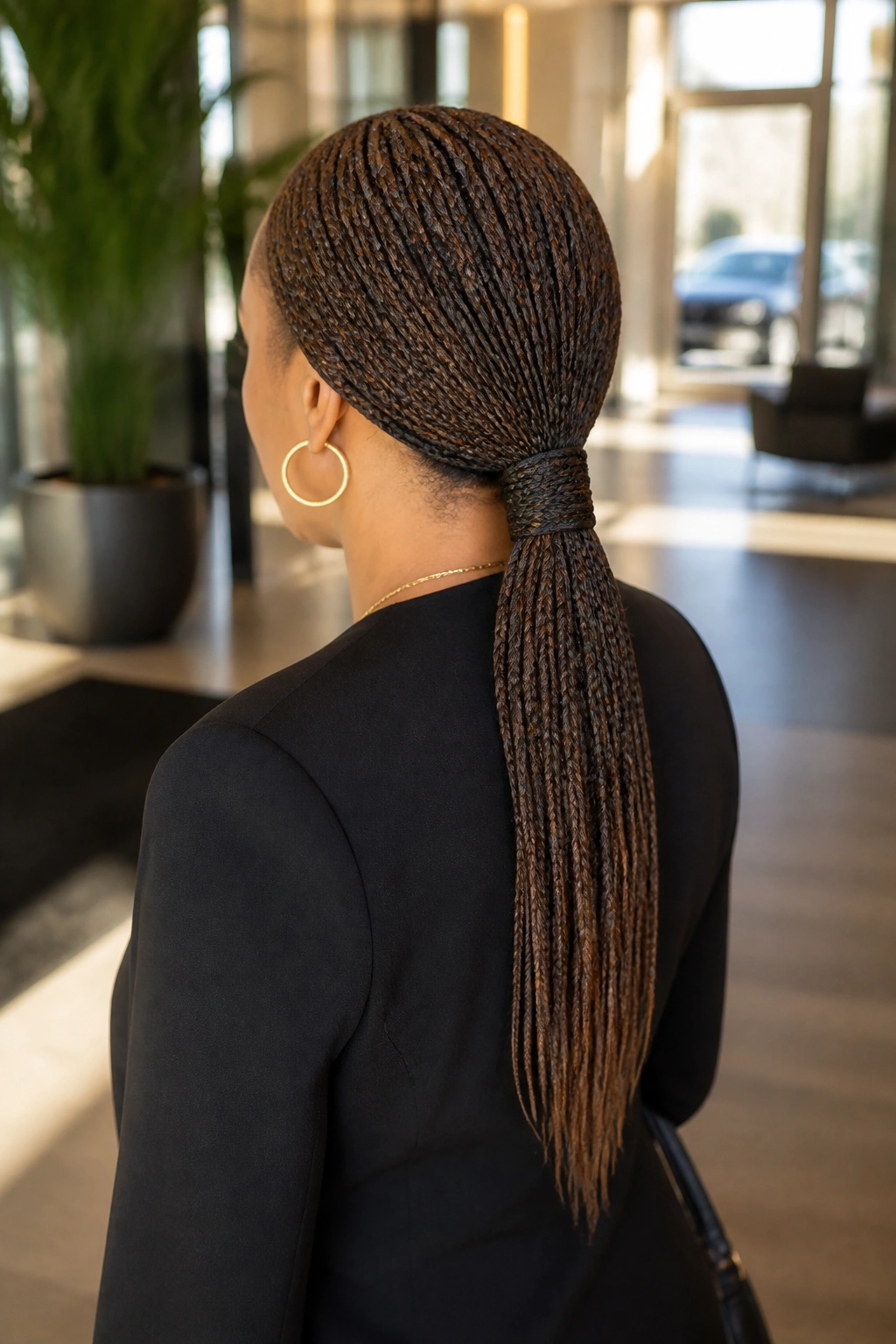
A simple, low ponytail is the height of sophistication. To make it special, have your stylist install medium-sized knotless braids and then wrap one or two of the braids around the base of the ponytail to hide the hair tie.
This creates a very “clean” look that is perfect for the office or a formal dinner. The low position of the ponytail is also much better for your scalp, as high ponytails can put significant stress on the hair at the nape and the temples.
25. Spiral-Ended Twists
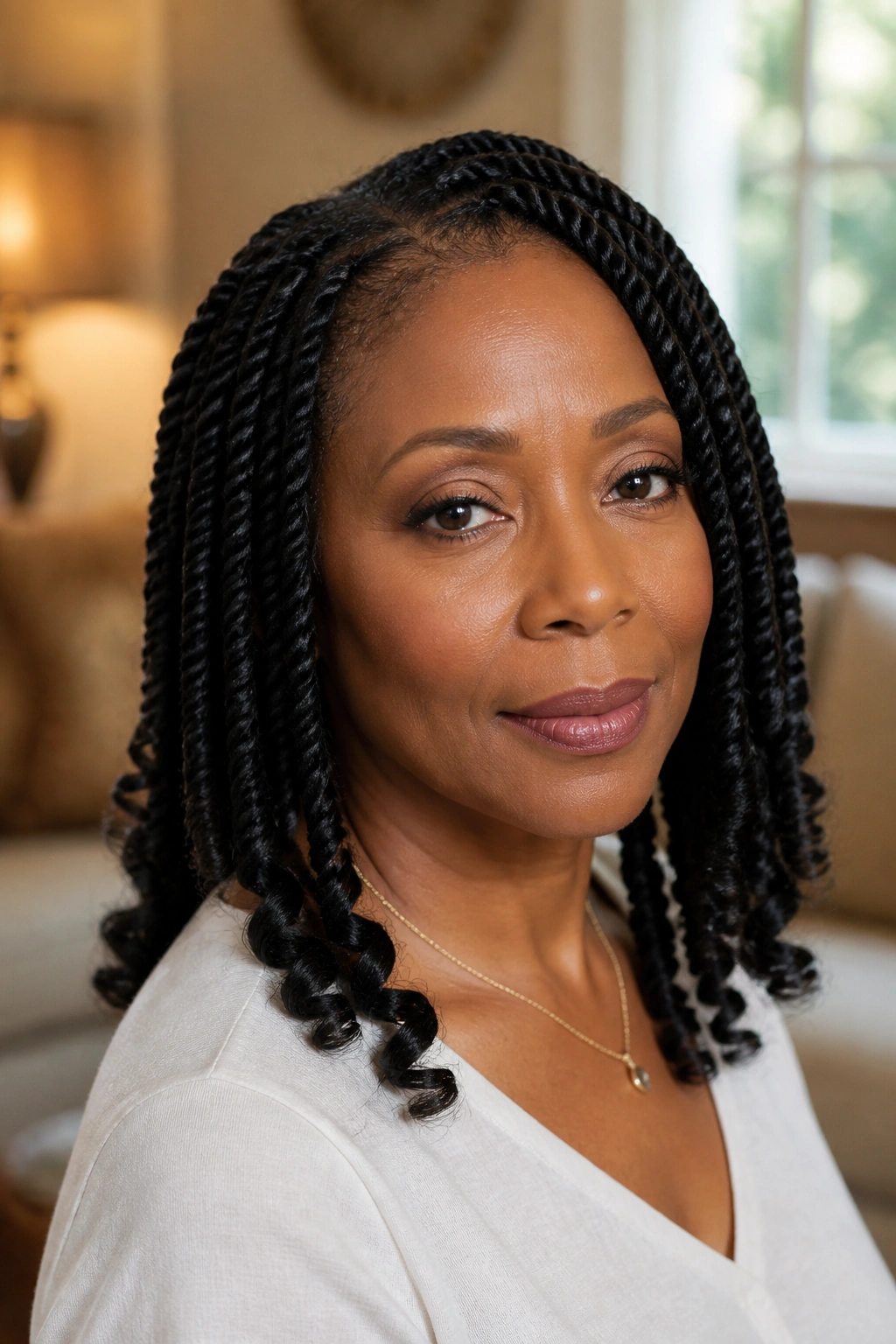
Instead of sealing the ends of your twists with hot water or a knot, leave the last two or three inches un-twisted and use a perm rod to create a tight spiral curl.
This adds a “bounce” to the style that is very youthful without being “young.” It gives the twists a finished, polished look and prevents them from looking like “string.” It’s a small detail that makes a big difference in the overall aesthetic.
26. Braided Halo (Crown Braid)
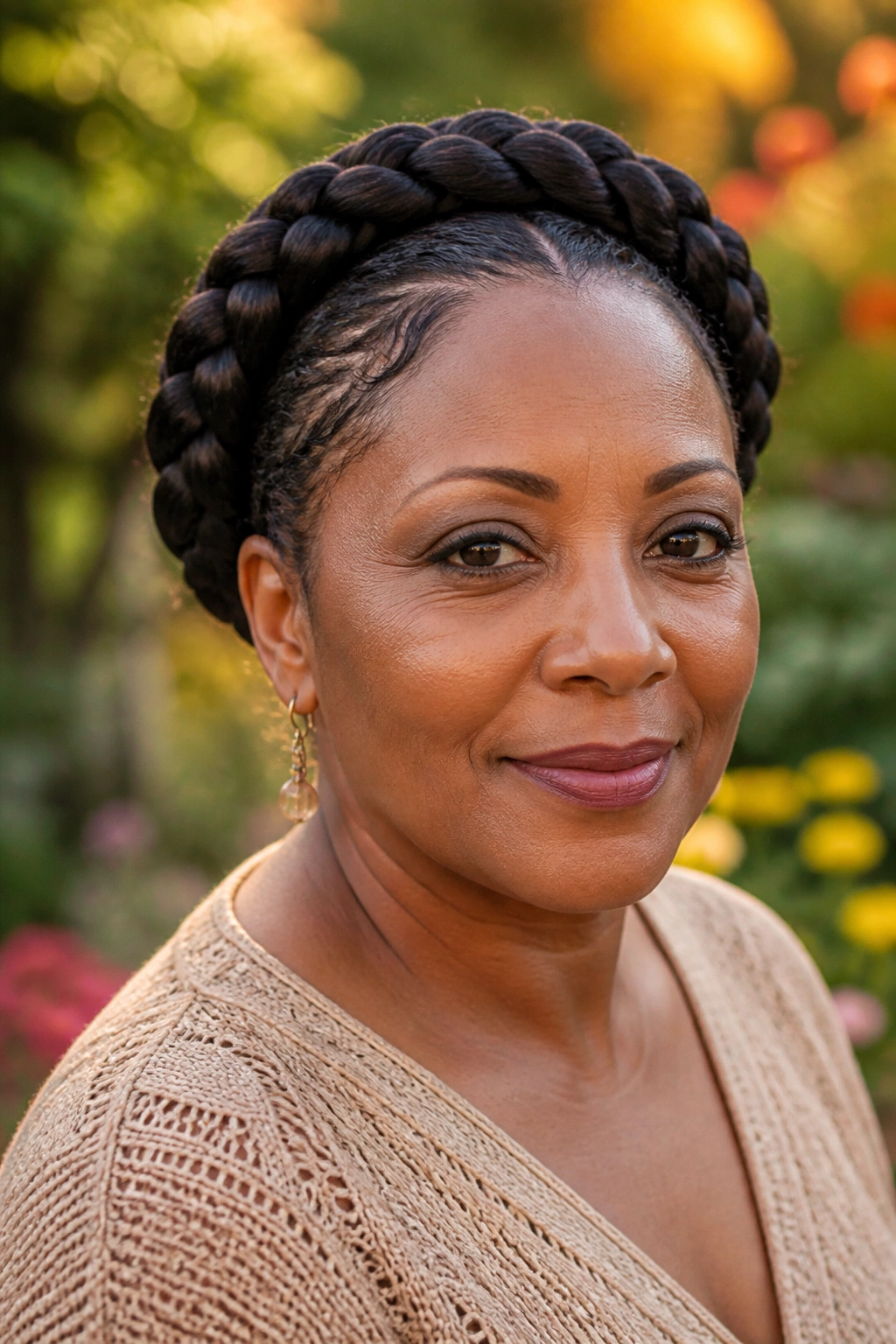
The halo braid is a single, large braid that circles the entire head like a crown. It’s the ultimate “queen” style. For women over 50, it acts as a beautiful frame for the face and keeps the hair completely protected.
If your natural hair isn’t long or thick enough to achieve a “chunky” halo, you can use a “braid-on-a-headband” or wrap a long braided extension around your own pinned-back hair. It’s an instant style-up that takes five minutes once you have the hair piece.
27. Ombré Braids (Natural Tones)
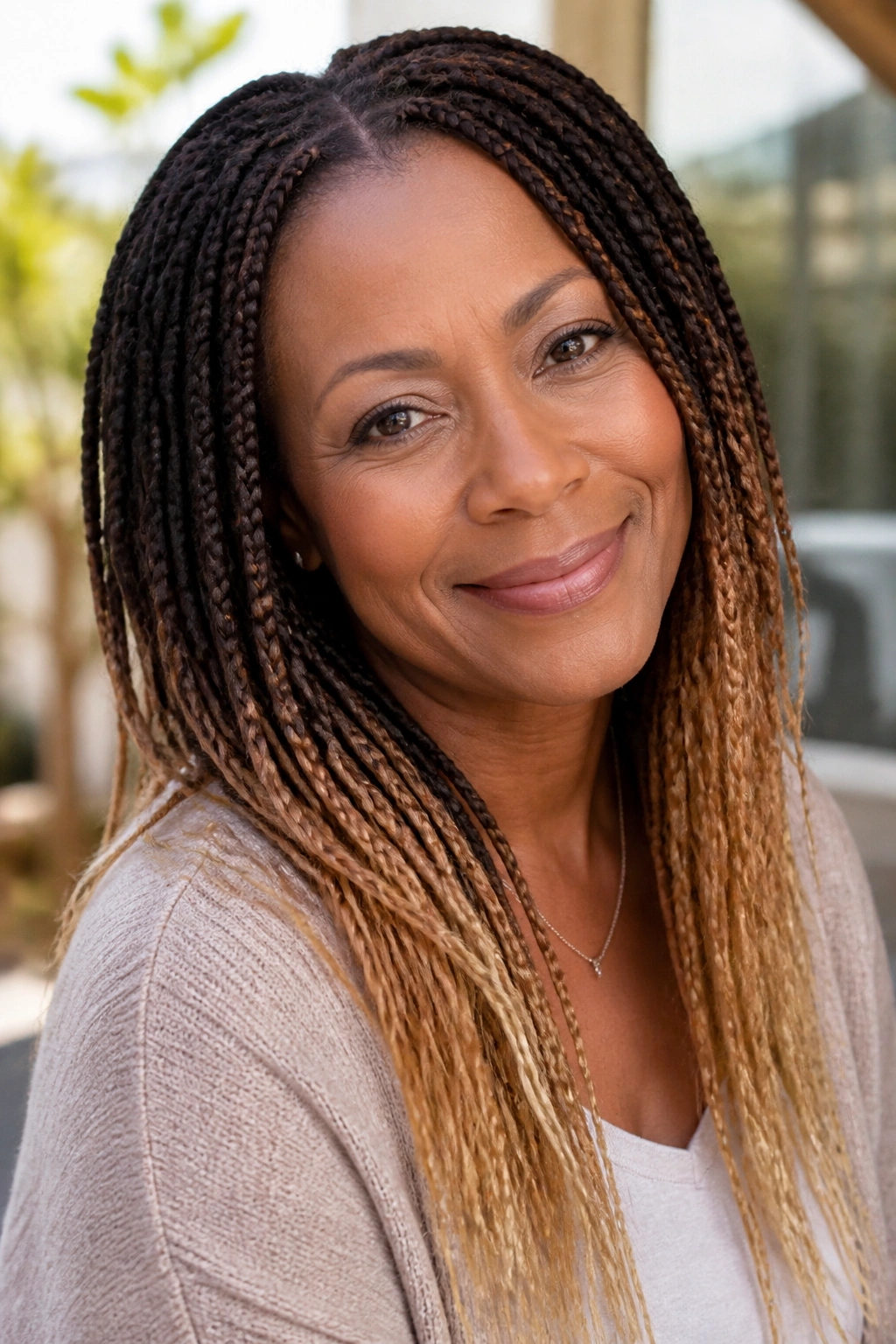
Color can be a great way to express yourself, but you don’t have to go for neon blue to make a statement. Ombré braids—where the color shifts from dark at the root to a lighter shade at the ends—are incredibly popular.
For a mature look, try an ombré that transitions from a deep espresso to a warm honey or a cool silver. This keeps the “brightness” away from your face (where a stark color might clash with your skin tone) but adds a pop of interest at the ends. It’s a sophisticated way to play with color.
28. Tucked-In Cornrow Updo
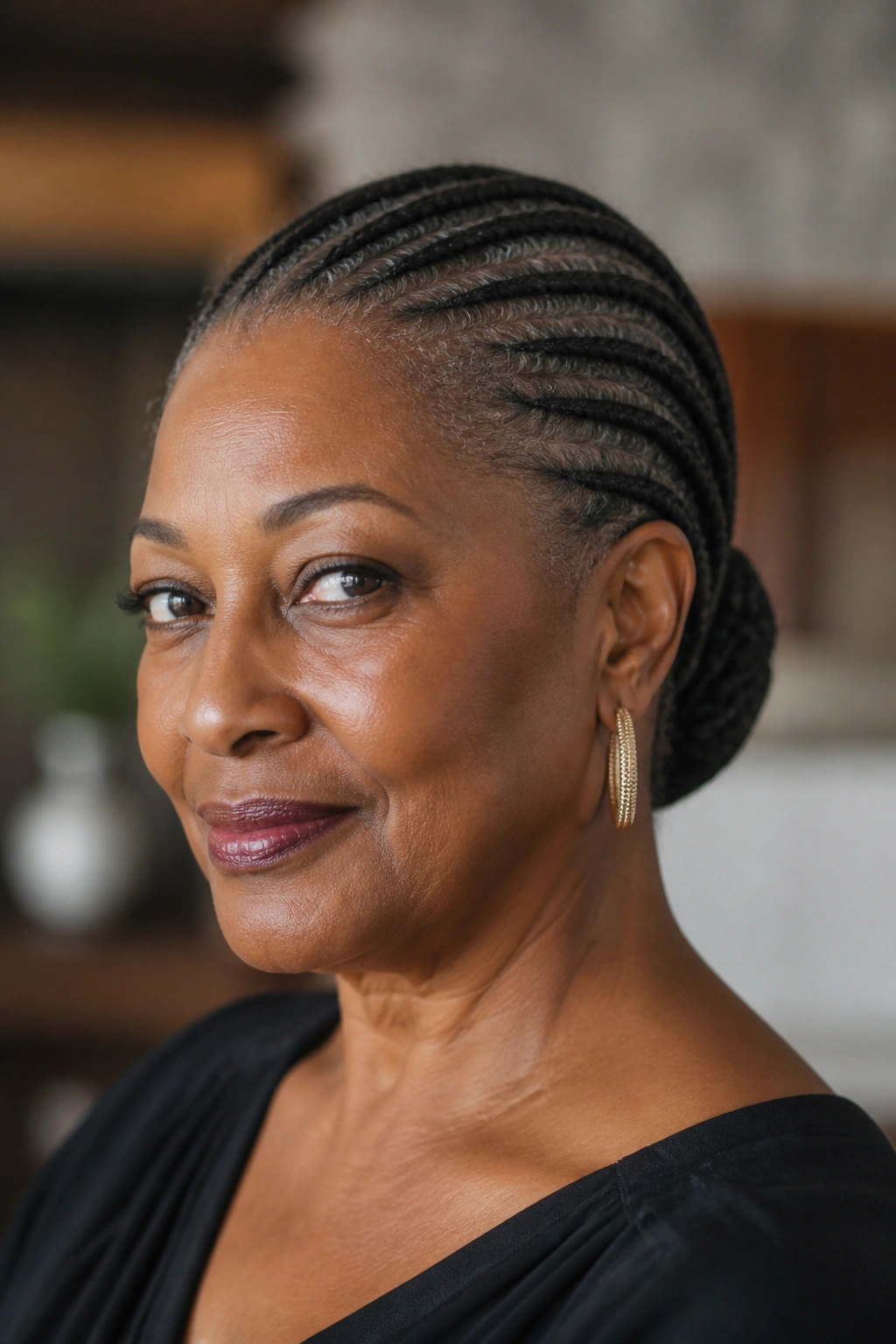
This style involves cornrowing the hair toward the back and then tucking the ends of the braids underneath themselves to create a flat, “chignon” look. There are no hanging braids and no loose ends.
It is perhaps the most “professional” braided style. It’s sleek, it’s tidy, and it won’t get in your way. It also happens to be very comfortable for sleeping, as there are no bulky braids to lie on.
29. Triangular Parted Box Braids
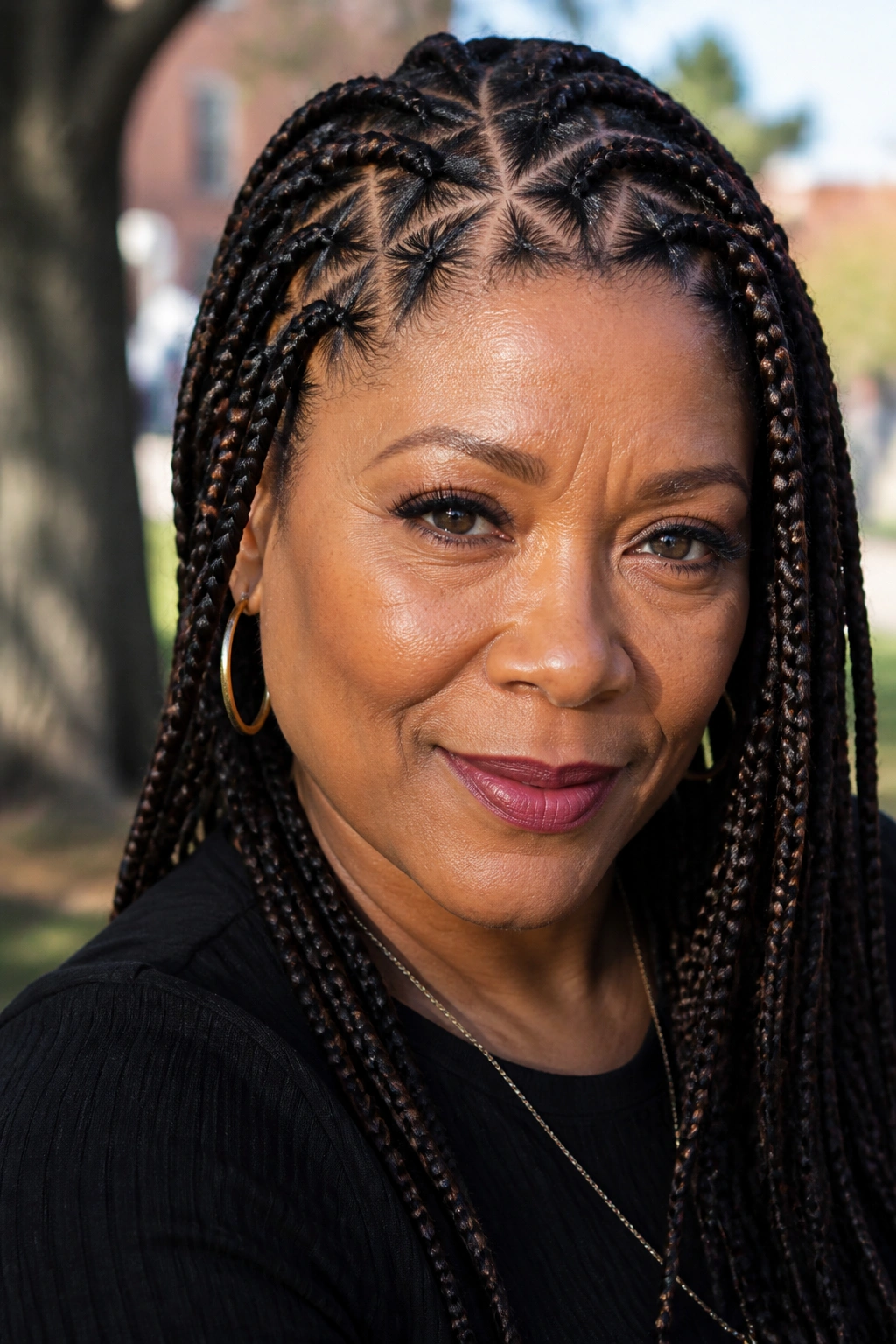
If you want to deviate from the standard square parts, triangular parts are a great alternative. They create a “starburst” effect on the scalp that is very visually appealing.
From a practical standpoint, triangular parts can sometimes allow the braids to fall more naturally, as the parts don’t create “lanes” the way squares do. This can give the hair more volume and movement.
30. Braided Space Knots (The Refined Version)
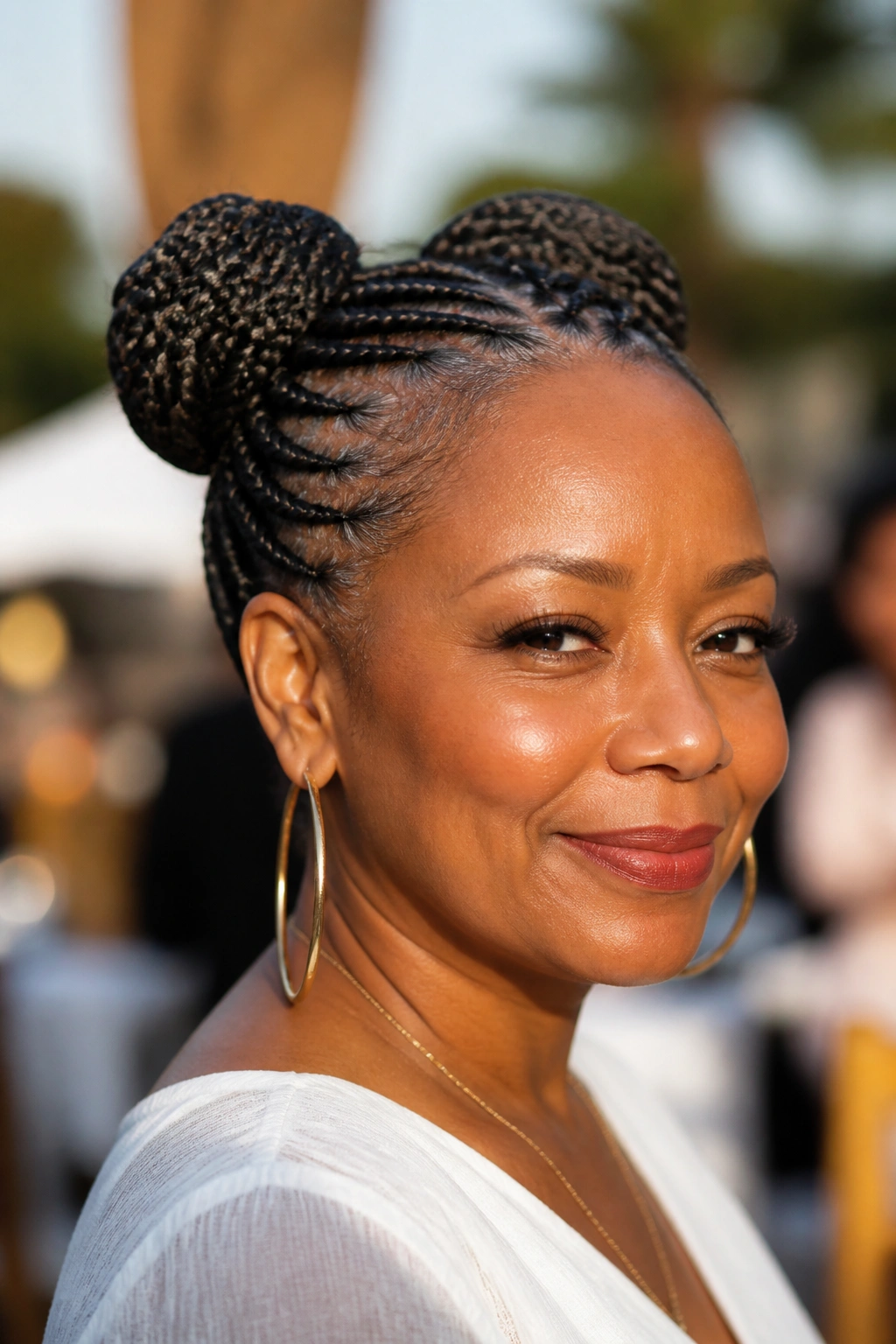
Two buns (space knots) at the top or back of the head can be a fun, playful style. To make it age-appropriate, keep the buns low and large, rather than high and tiny.
Using braided extensions to create the buns ensures they have enough volume to look intentional. It’s a great style for an outdoor event or a day of light exercise, as it keeps the hair completely secure and off the neck.
31. Side-Parted Chunky Twists
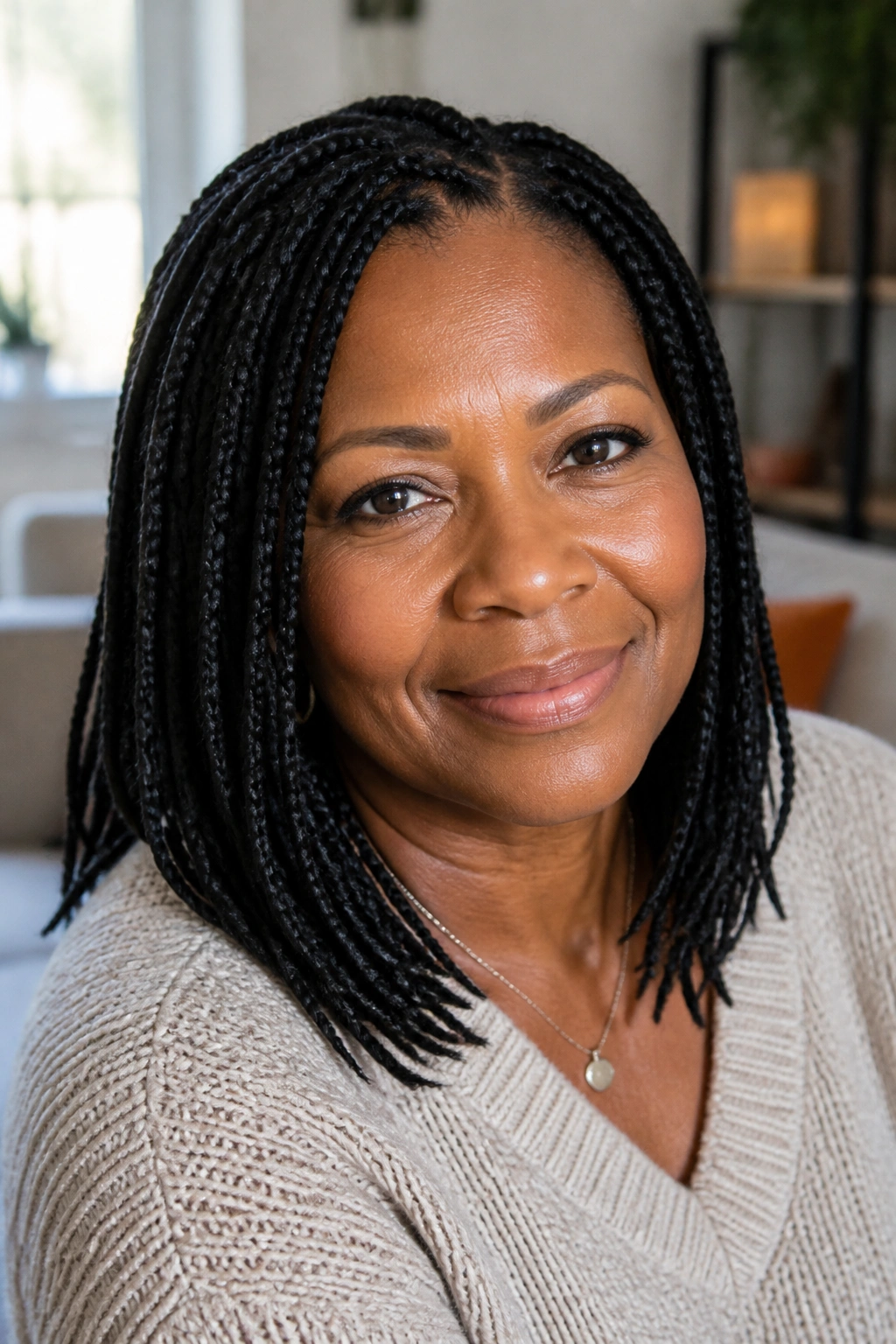
A deep side part adds instant drama to any hairstyle. Chunky twists (using more hair per twist) are very quick to install and offer a “bold” look that is very stylish.
The side part allows the hair to drape over one side of the forehead, which can be very flattering if you have a high forehead or want to soften your features. Because the twists are chunky, you only need about 20 to 30 of them for a full head, making the take-down process much easier.
32. Goddess Locs with Tassels
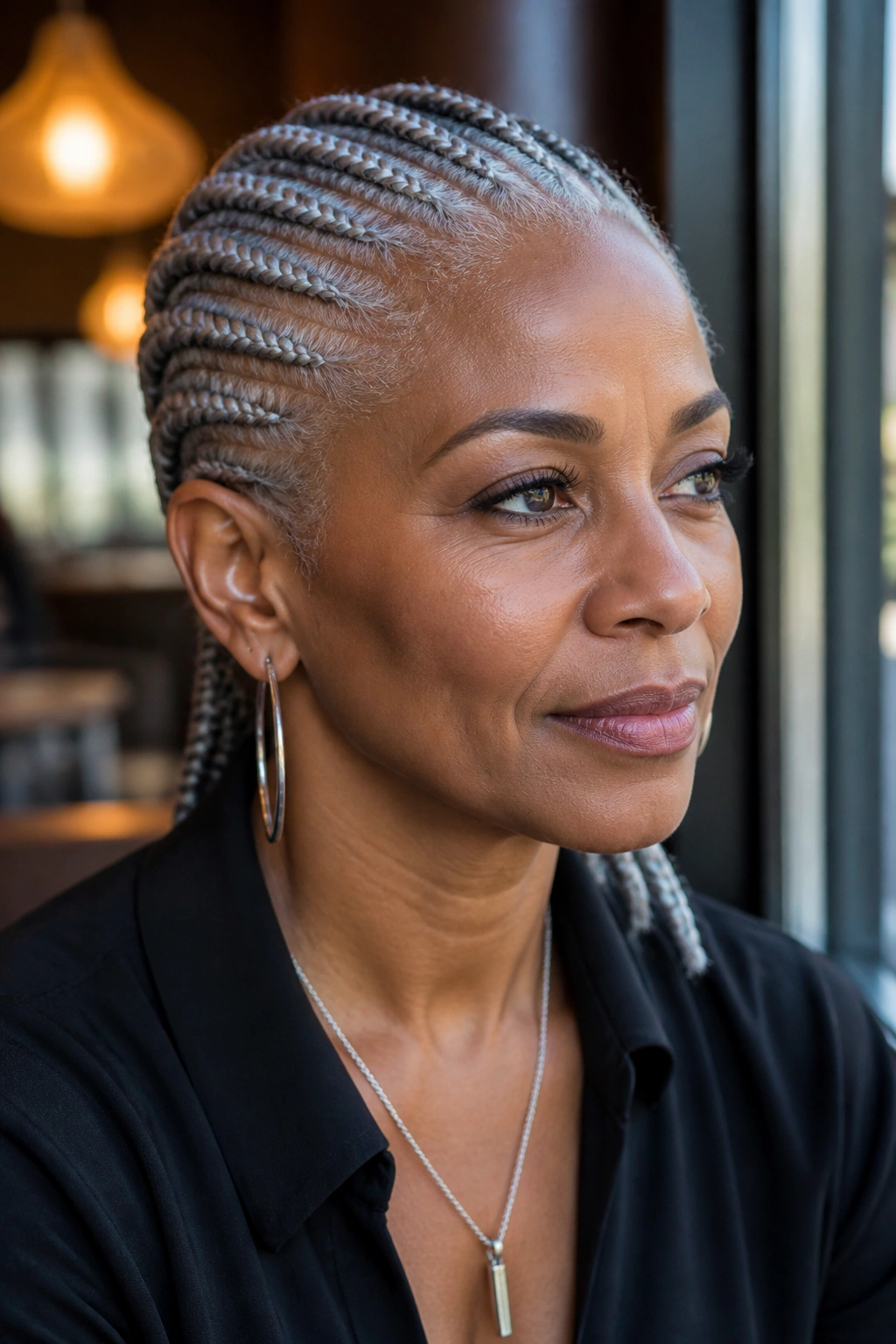
Goddess locs are a variation of faux locs where the ends are left loose and wavy. Adding a few small “tassels” or wraps of silver wire can give this style a very “artistic” or “creative” vibe.
It’s a look that says you are confident in your style and aren’t afraid to be unique. It works particularly well for women in creative fields or those who enjoy a “boho-chic” wardrobe.
33. Classic Mid-Back Box Braids
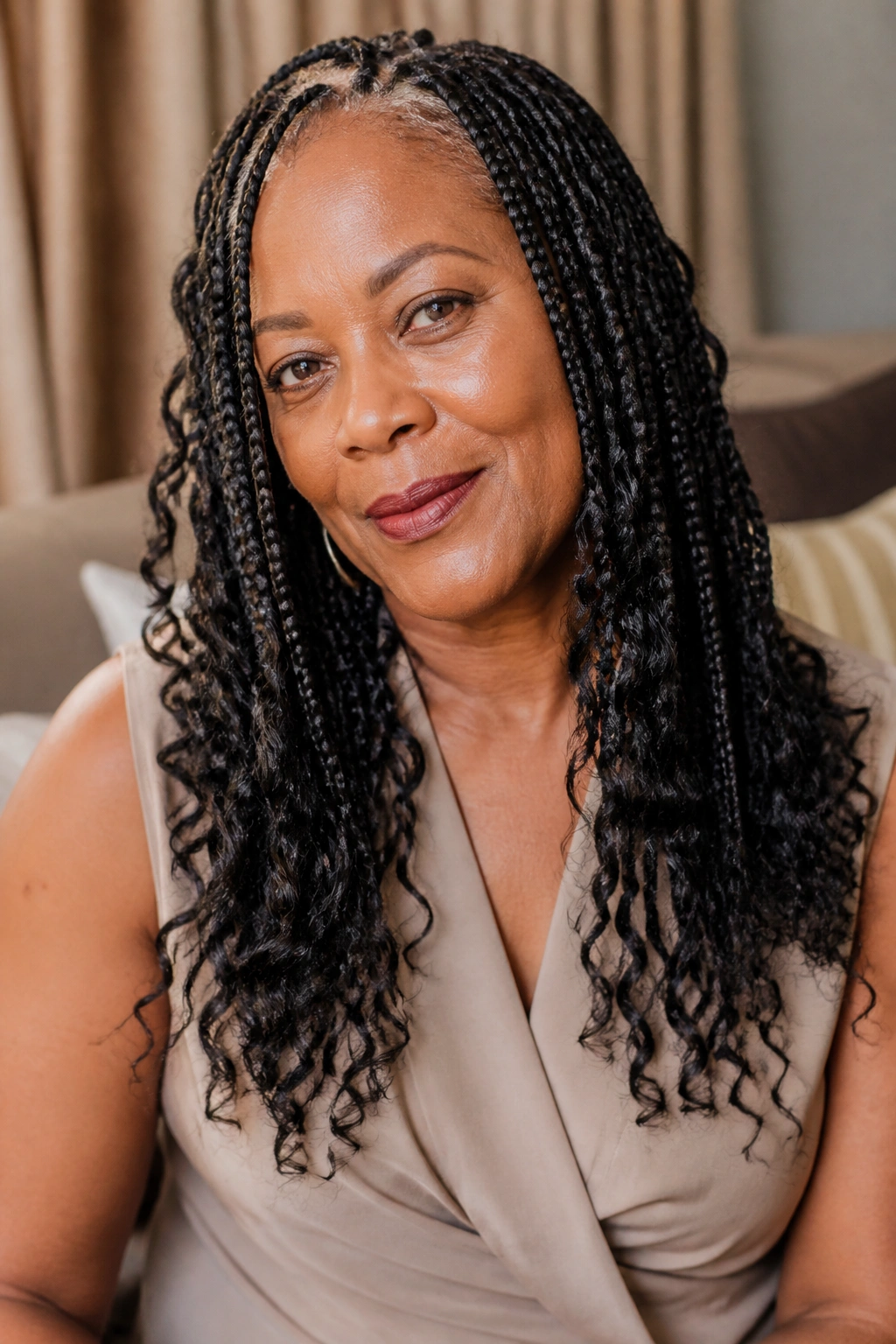
We can’t end the list without the classic. Mid-back length box braids are the “little black dress” of the hair world. They are reliable, they are beautiful, and they never go out of style.
For women over 50, the key to the classic box braid is the size. “Small-medium” is usually the sweet spot—large enough to be installed quickly, but small enough to not be overly heavy. When in doubt, this is the style that works for everyone, every time.
Preparing the Scalp and Hair
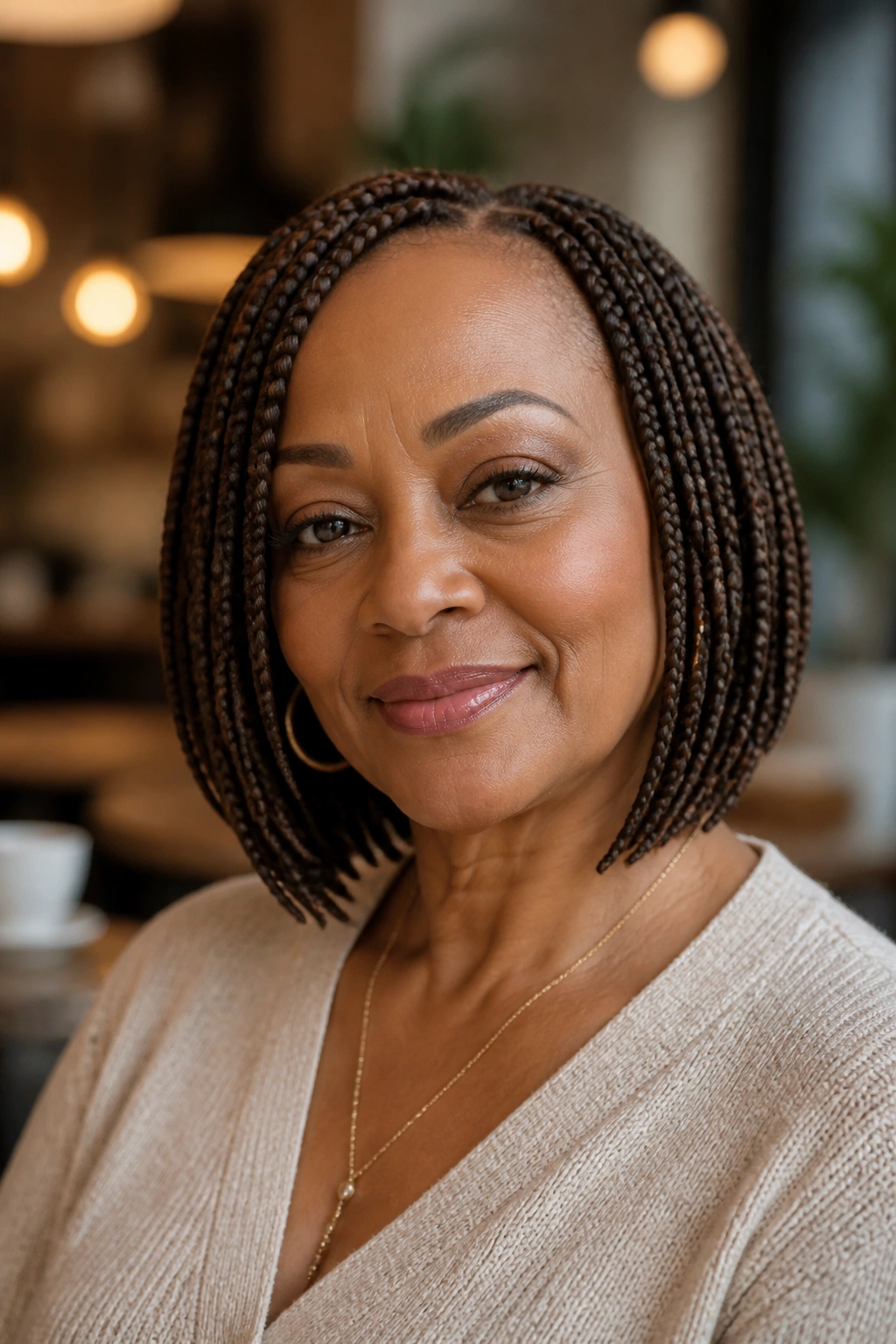
Before you even step foot into a salon, the state of your natural hair will determine how successful (and comfortable) your braids will be. As we age, our hair tends to produce less natural oil, and the hair shaft itself may become more brittle. A “braid-ready” head of hair must be deeply hydrated and strong enough to withstand the weight of extensions.
A week before your appointment, consider a protein treatment. This helps to temporarily fill in any gaps in the hair cuticle, giving the strands a bit more “backbone” for the braiding process. Follow this with a heavy-duty deep conditioning mask. You want your hair to be at its maximum elasticity. When the hair is dry and “snappy,” the tension of braiding can cause micro-tears in the shaft.
The day of the appointment, ensure your hair is thoroughly detangled but avoid using heavy oils or “grease” on the scalp. Most stylists prefer a clean, “naked” scalp so that their parting gels and edge controls can adhere properly. If you have any specific “sore spots” or areas where the hair is thinning, point them out to your stylist immediately. A good professional will adjust their tension or the size of the braid in those areas to protect your follicles.
Managing Tension and Edges
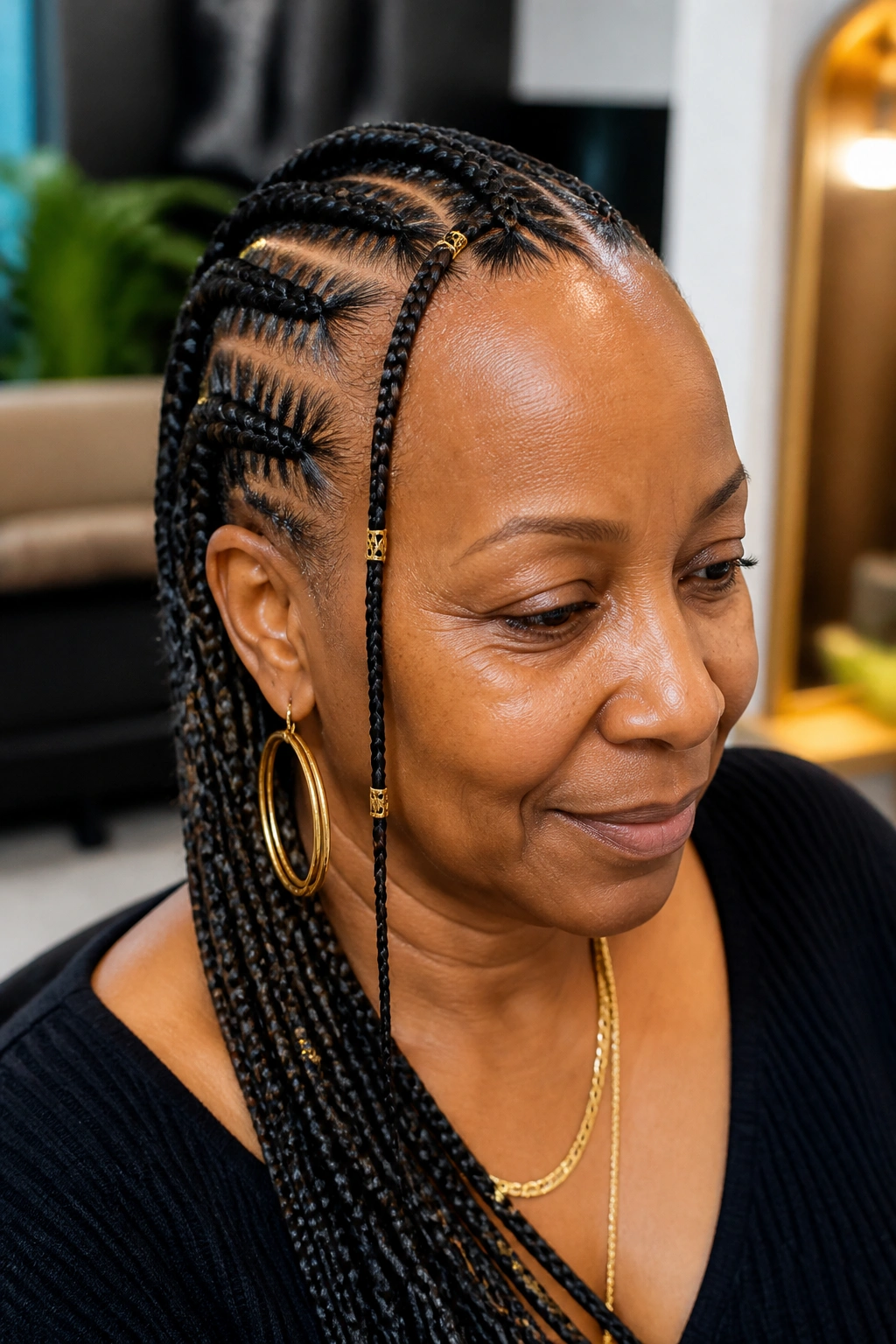
The most common mistake women make with braids is equating “tightness” with “neatness.” While you want your braids to look fresh, they should never be painful. If you feel a constant “pull” or if you see small white bumps (tension bumps) appearing at your hairline, the braids are too tight. This can lead to permanent hair loss known as traction alopecia.
Be especially protective of your “edges”—the fine hairs along your forehead and temples. As we enter our 50s and beyond, these hairs often become finer. Ask your stylist to “leave the baby hairs out.” It is much better to have a slightly less “perfect” hairline than to have no hairline at all in six months.
If you do feel tension after you get home, don’t just “tough it out.” You can use a warm washcloth pressed against the scalp to help the hair fibers relax, or apply a dedicated “braid tension relief” spray. If the pain persists for more than 48 hours, the only safe solution is to have the offending braids removed or loosened. No hairstyle is worth losing your hair over.
Washing and Refreshing Braids
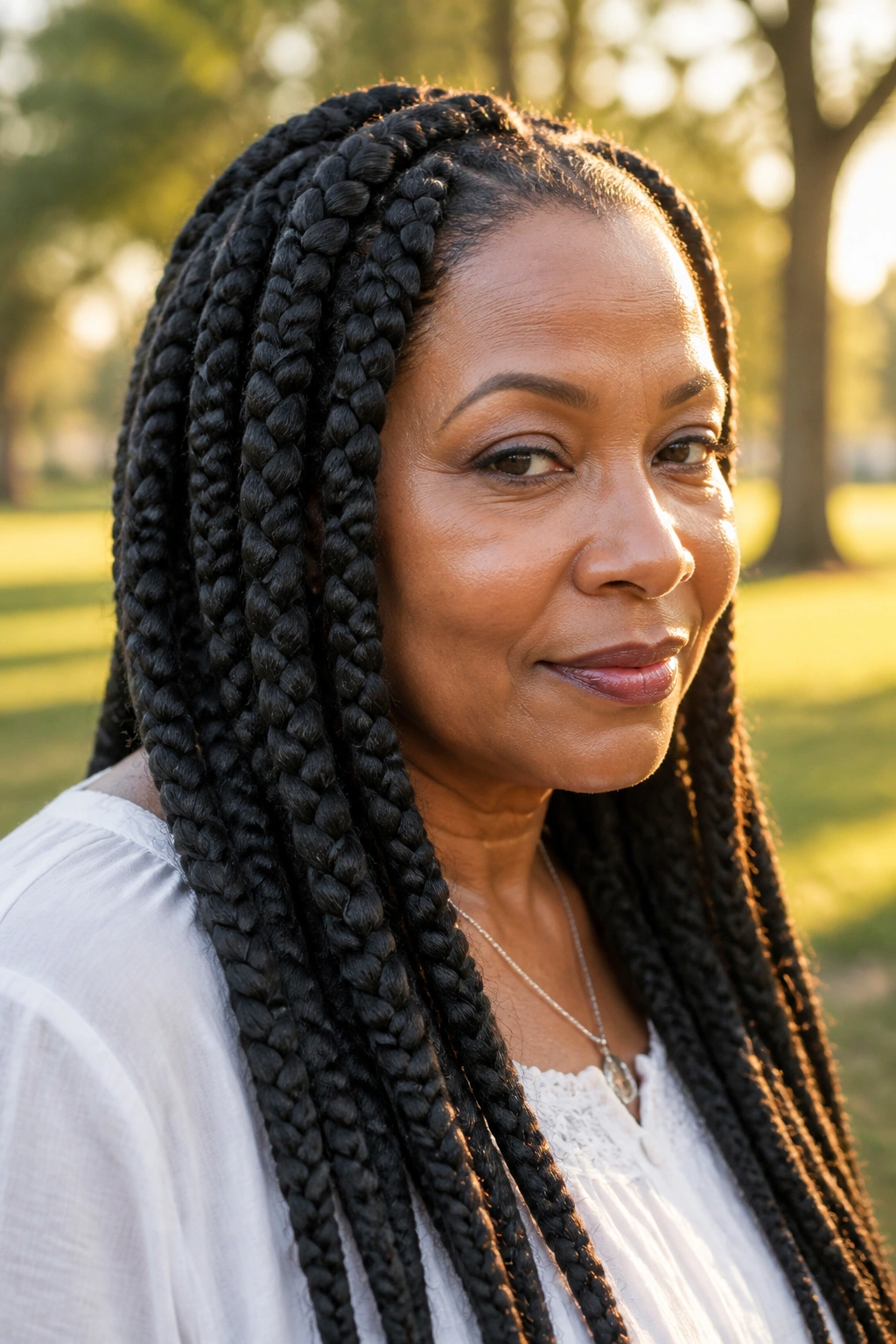
A common myth is that you shouldn’t wash your hair while it’s in braids. In reality, a clean scalp is essential for hair growth. Sweat, environmental dust, and product buildup can clog the follicles and lead to itching or even “braid dandruff.”
However, you don’t want to soak the entire length of the braids every week, as this makes them heavy and can cause the extensions to “slip” or your natural hair to frizz. Instead, focus on the scalp.
- Mix a sulfate-free shampoo with water in a spray bottle.
- Spray the mixture directly onto your scalp between the parts.
- Gently massage with your fingertips (never your nails).
- Rinse with a handheld showerhead, letting the water run down the braids.
- Most importantly: Dry your braids completely. Using a hooded dryer or a blow dryer on a cool-medium setting is vital. If the interior of a braid stays damp for too long, it can develop a “musty” smell or even mild mildew—an issue often jokingly but accurately called “braid funk.”
Nighttime Care Routine
How you sleep will determine whether your braids last four weeks or eight. Friction is the enemy of neat braids. When you toss and turn on a cotton pillowcase, the fibers catch on your hair, pulling out those tiny “flyaways” and making the style look fuzzy prematurely.
Invest in a high-quality silk or satin bonnet or a long “braid scarf.” The goal is to keep the braids immobilized and smooth. If your braids are very long, you can loosely braid them into one or two large plaits before putting on your bonnet to prevent them from tangling or pulling on your neck during the night.
Additionally, use the nighttime as an opportunity to nourish your scalp. Two or three times a week, apply a few drops of a lightweight oil—like jojoba, almond, or a dedicated scalp serum—to your fingertips and massage it into your parts. This keeps the skin hydrated and prevents the “tight” feeling that can come from the scalp drying out under the weight of the extensions.
The Bottom Line
Braids are more than just a convenience; they are a celebration of Black hair’s versatility and strength. For women over 50, they offer a way to stay stylish and “put-together” while giving the hair a much-needed break from the daily grind of heat styling and manipulation. Whether you choose the sleek elegance of knotless box braids or the creative texture of faux locs, the most important thing is that the style makes you feel like the best version of yourself.
Prioritize your scalp health, listen to your body when it tells you a style is too heavy, and don’t be afraid to experiment with color and length. Maturity is a time of confidence—let your hair reflect that. With the right technique and a solid maintenance routine, your braids can be a source of joy and a testament to the timeless beauty of a woman who knows exactly who she is.
